A Daily History of Holes, Dots, Lines, Science, History, Math, Physics, Art, the Unintentional Absurd, Architecture, Maps, Data Visualization, Blank and Missing Things, and so on. |1.6 million words, 7500 images, 4.9 million hits| Press & appearances in The Times, Le Figaro, Mensa, The Economist, The Guardian, Discovery News, Slate, Le Monde, Sci American Blogs, Le Pont, and many other places… 5000+ total posts since 2008.

Category: History of Holes

  • A History of Holes: Electric “Holes”

    JF Ptak Science Books  Quick Post   [Part of a series on the History of Holes.]

    Well, this really isn’t a “hole” per se, but it, the “hole”, certainly behaves like one, at least metaphorically.  The concept occurs in the title of this famous work by the problematic William Shockley (below)–it was the bible, really, of all early things relating to the semiconductor–the electron hole being the mathematical opposite of an electron  (e– ).  (The electron is a subatomic particle with a negative charge, explained very early on in its first format as “radiant energy” by William Crookes in 1879, who built on the earlier work of Hittorf and then on Goldstein, with the name “electron” finally coming to the particle by George F. Fitzgerald.)

    Shockley208The “hole” is a metaphor, a useful use of a word to explain the absence of an electron from a full outer shell.  In a semiconductor, an electric current is carried not only by the flow of electrons but also by the flow of positively charged holes where the electron absence occurs–the hole is an electronic absence charge carrier, and it the basis for modern electronics.

    [This book may be purchased by the person who cannot live without it on our blog bookstore site.]


  • The Department of “What is It?” (#7): What are the Ultra Famous Holes that this Hole Puncher Punched?

    JF Ptak Science Books Quick Post

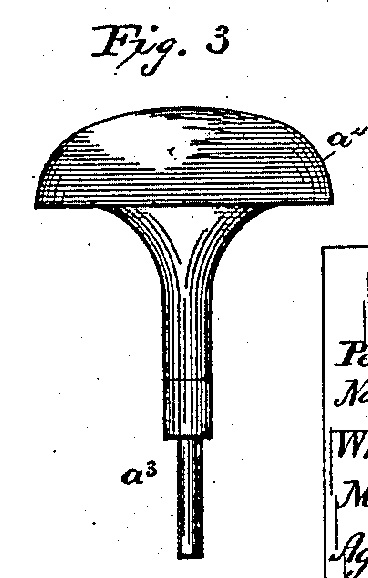
    This is one of the most important hole punchers in the history of holes, and also in the history of counting and figuring out what to do with counted things.  Do you know who filed this drawing as part of their patent report, and what famous contribution this thing made? 

    What is Itt ollerith hole puncher detail


  • Some Lincoln Ephemera: Audio of the Voice of J.W. Booth, the Last Man to See Lincoln Shot (& on TV), and the Last Man to See Lincoln Dead

    JF Ptak Science Books  Quick Post  

    What did the voice of John Wilkes Booth sound like?  There are certainly a  number of testimonies to what his voice was like, but since he died a dozen years before it was possible, really, to have his voice recorded, nothing exists for us to listen to of him.  One could though stretch credulity a bit and say that he perhaps sounded similar to his brother Edwin–another actor–and there are recordings of him speaking.  So, by long extension, this may be what John Wilkes sounded like. 

    Edwin Booth:

    Somewhat related is this, a 1956 appearance on the television program “I’ve Got a Secret” by Mr. Samuel J. Seymour, who’s secret was that he was a witness to John Wilkes Booth assassination of Abraham Lincoln.  He was five years old at the time and his abiding memory was being concerned for the man who fell onto the stage from the balcony. Seymour evidently died two months later from complications of a fall he took while traveling to appear on the show.

    In another vaguely related historical bit, the last person to see Abraham Lincoln did so in 1902.  There had been a number of attempts to steal the body of the president–one of which came very close to completion–and so in the final move of Lincoln’s body to a burglar-proof resting place on 20 September 1902 his coffin was opened.  John Bowlus was there, and he related what he remembered as a nine-year-old boy viewing Lincoln 37 years after his death.

    Bowlus stated:

    “I can see his face as if it were yesterday,” Bowlus recalled. “Even in death he was an awe-inspiring figure.” A boy of 14 at the time, Bowlus said he had stood on tiptoe and gazed, awestruck, on the majestic features of Lincoln, almost too afraid to peer into the glass-topped casket. “The body was almost perfectly preserved,” Bowlus remembered. “The face was darker… he lay with his head and shoulders and tips of his hands visible where they were crossed on his chest.” It was awe-inspiring, almost frightening,” he said. “The beard appeared to have grown longer, but the dignity of the great man could almost be felt through the air-tight casket which had preserved his body,” Bowlus said. –“The Last Man to See Lincoln”, by Lance J. Herdegen, [source].

    I looked for a recording of Robert Todd Lincoln (who died in 1926) but could not find none.

    And just for the sake of it, a list of early recordings of U.S. Presidents:

    ·Posted by :

    ·in:

    — —

  • Depression-era Photographs of Miners from the Library of Congress

    JF Ptak Science Books   Quick Post

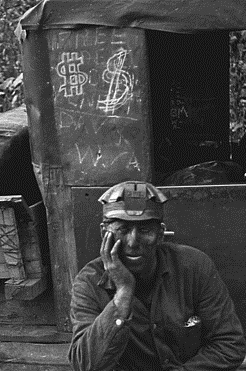
    Miner waiting for ride home.  Each miner pays twenty-five cents a week to owner of car. Capels, West Virginia.

    I doubt that it was this truck that was going to make the commuter run, but it might well be.  There’s a tool chest in the truck bed, along with what looks like an upholstered truck bench next to it–it certainly wasn’t abandoned because the truck still has its wheels.

    Miner waiting for ride home. Each miner pays twenty-five cents a week to owner of car. Capels, West Virginia

    In the detail of the picture it seems as though someone made repairs to the truck bed’s wooden racks with wire or rope rather than with nails (jsut to the left of the miner’s right shoulder). Picture source: Library of Congress Prints and Photographs, ca. 1938.)

    Mining photo waiting large det


    ·Posted by :

    ·in:

    —

  • The History of Blank, Empty & Missing Things–When Everything was Missing

    JF Ptak Science Books   Post 1624   (Part of the series on the History of Blank, Empty and Missing Things.)
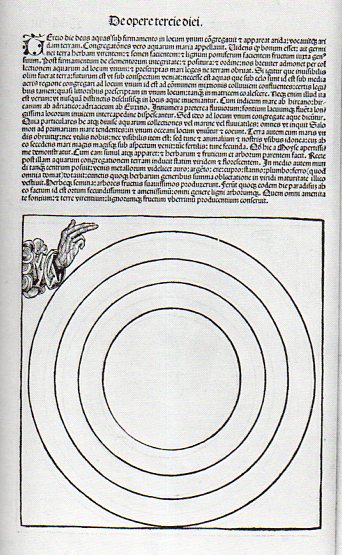
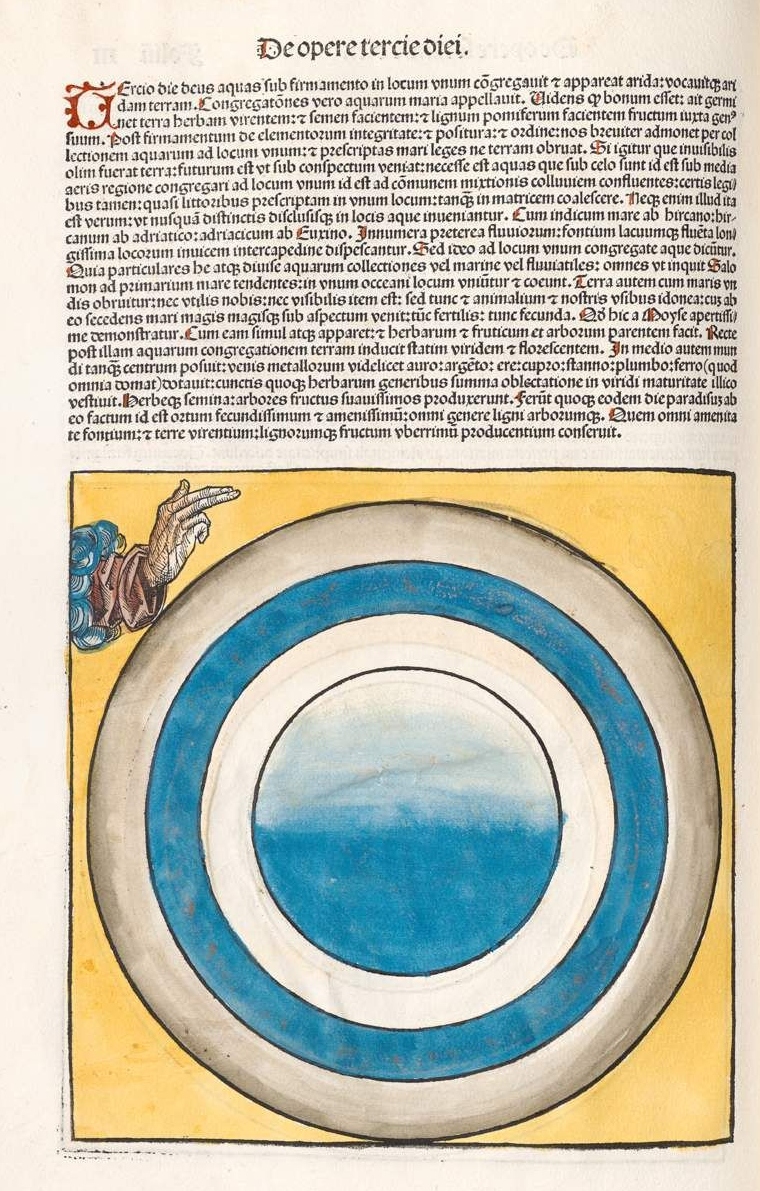
    Koberger bw884

    Perhaps “everything” wasn’t missing, but almost everything was.  Certainly the ancients and even the more-moderns, even the scientists of the 16th and into the 17th centuries (until von Guericke in 1672), could not abide the idea of the existence of nothing.  The vacuum, a space in which there was nothing at all, was seen to be an anathema to the creations of the great creator, that the vacuum was antithetical to what was understood to be the nature of nature. (I wrote a post here earlier on when nothing was almost something.)

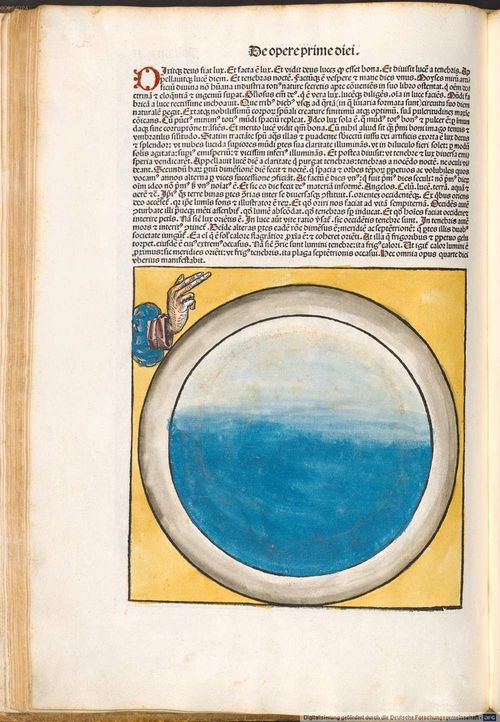
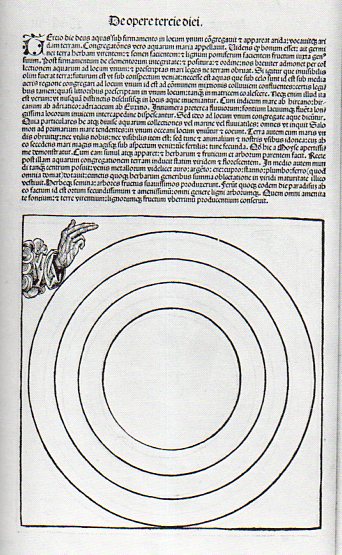
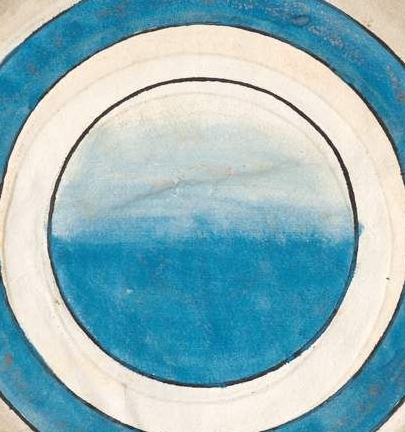
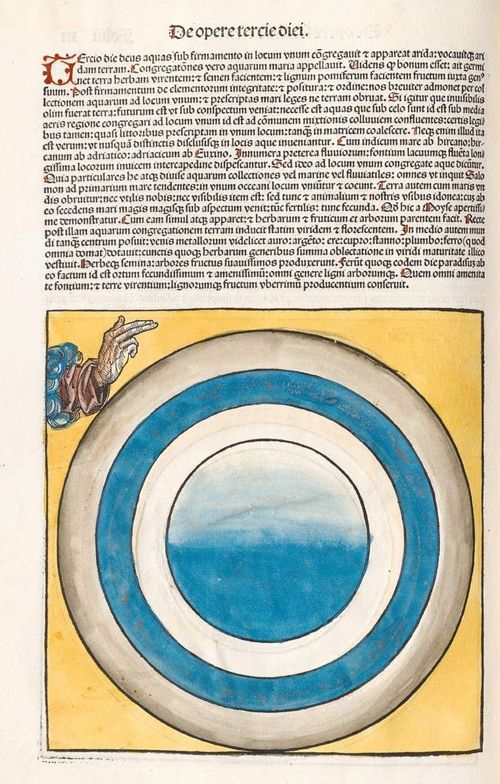
    But what we see here, above, is the third day of creation as presented in one of the most significant books printed in the 15th century, and it is somewhat problematic, because it depicts almost-northing.  That, or almost-everything. 

    The book was written in Latin by Hartmann Schedel (1444-1514, with the German translation by Georg Alt) , with the illustrations under the control of Michael Wohlgemut (1434-1519) and his stepson Wilhelm Pleydenwurff (c. 1450-1494), .and was published in Nuremberg in 1493 by Anton Koberger as Liber Chronicarum–known best to English-pseaking readers as the Nuremberg Chronicles (and to Germans as Die Schedelsche Weltchronik).  It is perhaps one of the greatest illustrated works in the first half-century of movable type printing, using more than 1800 woodcuts to tell the story of the world–according to the Bible, mostly.  (The book deals with the history of world in its seven ages–the first five of which deal with cumuulative history to the birth of Jesus Christ, while the sixth ages handles the history from Christ to the present day, and teh seventh carries along the future history of the world to the Last Judgment.  Not much then is devoted to the 1500 years preceding the publication of Koberger’s book. The author, Schedel, was a very religious man, and considered the work of teh Bible to come from the hand of god and therefore was infallible; on the other hand (so to speak), everything written outside of the Bible was that of humans, and so fallible, and therefore open to interpretation.)

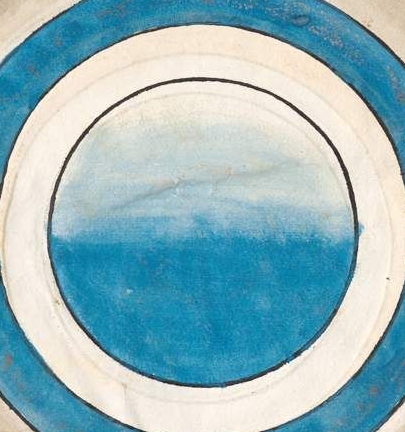
    Here is a colored version of the third day in the creation cycle mythology, which opens itself to much more visual congruence. (“On the third day God gathered together unto one place the waters under the firmament; and the dry land appeared. And God called the dry land Earth; and the gathering together of the waters he called Seas; and God saw that it was good, and said, Let the earth bring forth the green grass, the herb yielding seed, and the fruit trees yielding fruit after their kind.[Genesis 1:9-13.]”)
    Koberger color

    Koberger color b

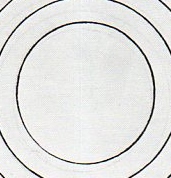
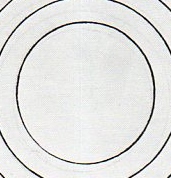
    And the uncolored version, third day:
    Koberger bw det

    This sort of “nothingness” is not unique, as we can see in this example from the Mantegna Tarocchi, showing the creator as Primum Mobile, the First Mover, holding what may well be our universe in its hands (and standing on another sphere of nothing, god knows what that might be):
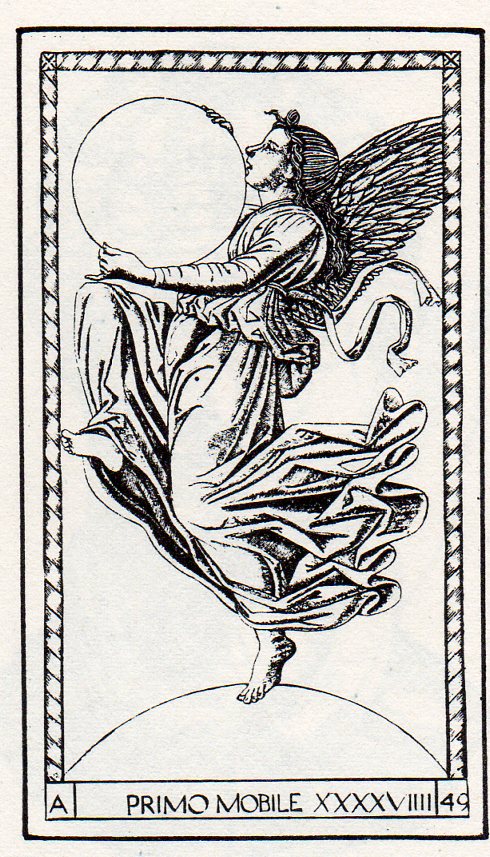

    https://historyofideasblog.com/a/6a00d83542d51e69e20133f47ca205970b-piPerhaps I’m missing the larger picture, and that the circles/spheres are the things created, and that they are contained in the square surrounding them; and that the boundaries marked by the circular lines are not necessarily empty, and that it is the suggested of the circles that is the stuff created, placeholders, contained within the square of the creator’s domain.  Or maybe not. Perhaps the circles are signifiers for the elements–earth at the center, surrounded by water/air/fire. Perhaps the woodcut was just waiting for some color. 

    Notes:

    The English translation of the Nuremberg chronicle used here is from Beloit College (here) which also has a very lovely scholarly treatment of their copy of the Nuremberg Chronicle (here).

    Here’s the rest of the cycle, in color:

    “For he spoke and they were made: He commanded and they were created”  (Psalm 33)., so says the legend (IPSE DIXIT ET FACTA SUNT; IPSE MANDAVIT ET CREATA SUNT Psalm 32) which floats above god enthroned–but it is difficult to see the progress in the un-colored version of day three.  

    http://www.beloit.edu/nuremberg/graphics/Layout%20and%20Design-Full%20Page_lg.jpg

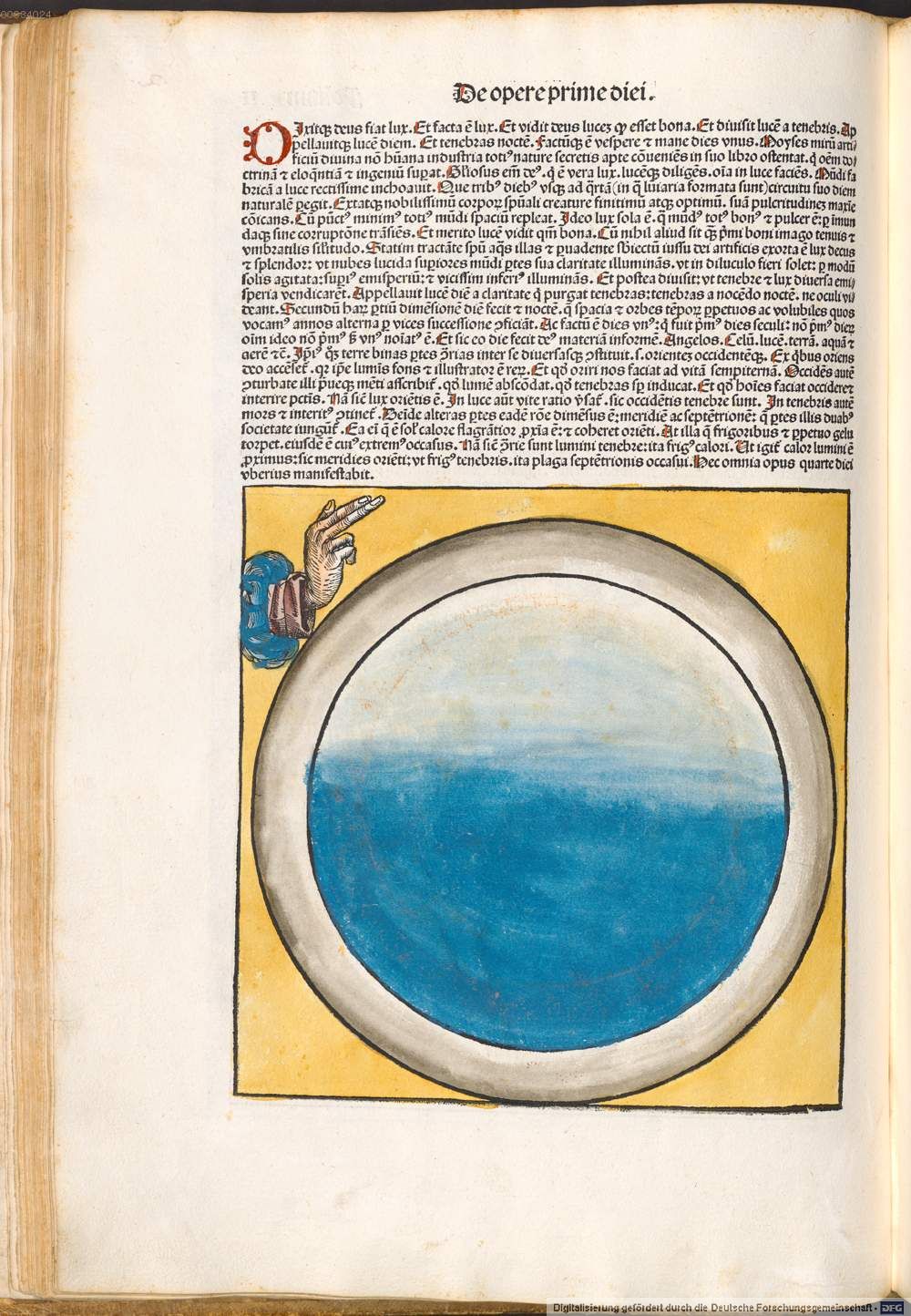
    The first day:

    Korberger 1st day real


  • Curious Cuts: Books in Bosch

    JF Ptak Science Books    Quick Post

    Bosch cure of folly book detail
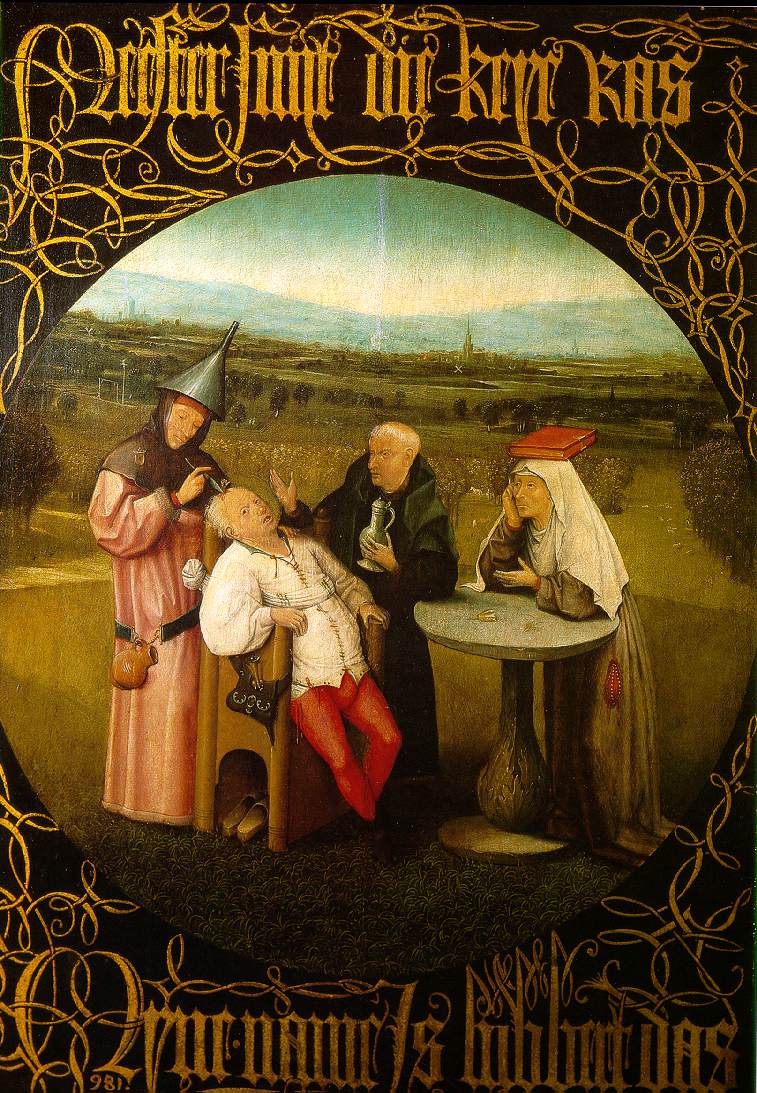
    Books are a favorite symbol, a venerable icon, a useful tool for developing ideas in Renaissance paintings.  They do sometimes make unusual appearances, this time–and not too unexpectedly–in the work of Hieronymus Bosch.  The painting, Cutting the Stone, (also called The Extraction of the Stone of Madness or better yet The Cure of Folly) was completed by Bosch in 1494 and lives today in the Prado. 

    Bosch cure of folly
    Bosch was at the very least a very curious character, hardly a man of his time–he seems difficult for us to place in the 15th century given the extraordinary range of his deep imagination.  He seems to be more a man of the modern times rather than one of the Renaissance.  I mention that the painting is in the Prado, finding its way there from the collections of Spanish sovereigns, who collected Bosch as a deeply Christian painter who depicted the travesty of sin and moral neglect rather than his own deep fantasy.

    Bosch cure of folly brain
    The scene is described by the inscription above and below it:

    Meester snyt die keye ras
    Myne name Is lubbert Das

    (in English: “Master, cut away the stone
    my name is Lubbert das”).

    The man in the chair, the man undergoing some sort of cranial/brain surgery is an everyman of sorts, a Dutch Everyman Fool named Lubbert (translated to “castrated dachsund”)..  A charlatan medico stands and removes symbols of lunacy and foolishness from his brain, images of flowers standing for the fool’s stone of long folklore.  The medicine man wears an inverted funnel for a hat, a symbol for emptiness, nothingness.  Likewise his purse is stuffed with straw, another iconic display of greed compounded and gaining nothing at all. 

    But what I am attracted to right now in this painting is the woman on the right balancing a book on her head.  It seems to me to be a very rare case of a Renaissance image of  a book displayed in this manner–usually books are simply held and are symbols of learning or wisdom or piety.  In this case, the woman is just part of the general folly which is the concern of the quack surgeon, a closed book (impossibly?) balanced in tribute to the craziness before her, perhaps hoping for the words to seep through the pages and into her own head. 

    There are a number of other images of this operation, which was in its way a standard procedure for the relief of insanity, or depression, or lunacy, or basically of any mental complaint or “error”, which can be found (along with description) on the bioephemera blog, here. 

    For example, there is this scene of mass extraction of the stones of madness by Peter Brueghel (painted ca. 1550)

    Bruegelmadness.jpg

    Its a pretty miserable scene.

    Again, I’m really just after the book in the Bosch. 


  • History of Holes: Making Tiny Holes & the Art of Compiling Statistics (I)

    JF Ptak Science Books     Post 1612

    Part of this blog’s  History of Holes series.  (See, for example: An Episode in the History of Holes: Electricity, Punched Cards and the Computer, 1878, here; History of Holes–Filing Holes Up, here.  And fifteen others. 

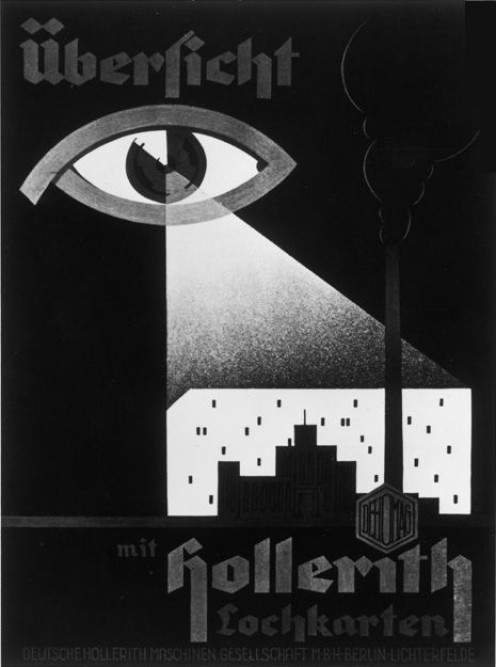
    I was thinking about holes and hole-making in the history of the art form of compiling statistics, and in the process of accumulating a few images of the machines that actually made the holes in tabulating cards, I found an interesting/unfortunate/depressing illustration.  It  belonged to the Deutsche Hollerith Maschinen Gesellschaft (“Dehomag”), which was the German arm of IBM. (Herman Hollerith created his Tabulating Machine Company in 1896; it was consolidated with the International Recording Company and Computing Scale Company of America into Computing Tabulating Recording Corporation (CTR) in 1911, and then, in 1924, changed once again into something with the name that we all recognize , International Business Machine (IBM).)

    Edwin Black’s one-trick pony, IBM and the Holocaust, I’m sure was a consolidation of grand assertions that helped to sell a book.  As a history I find it manipulative, like a person on a mission to say something and uses only what is positive to that end.  On his website, Black states: “IBM and its German subsidiary custom-designed complex solutions, one by one, anticipating the Reich’s needs. They did not merely sell the machines and walk away. Instead, IBM leased these machines for high fees and became the sole source of the billions of punch cards Hitler needed.” If you read between the lines this sounds like standard operating procedure that IBM would’ve followed with anyone; but on the face of it Black creates the case for IBM automating the Holocaust. 

    Keypunch hollerith det
    The poster has a very provocative cache, and taken somewhat out of context it might be viewed as dustjacket artwork for Black’s book.  The all-seeing eye absorbing the information of teh punched card, with the unfortunate, looming, belching smokestack there in the foregoround, reminiscent of the chimneys in the concentration and extermination camps.  But this poster was executed around 1925, well ahead of any of those events–the design by serendipity happens to visually support the author Black’s assertions.  Its just a nasty-looking object.

    Keypunch hollerith


  • Filling Holes Up: the Reverse, “Two-Sided” Holes of Marcel Duchamp.

    JF Ptak Science Books  Post 1592  [Part of the History of Holes series.]

    “Let each man proclaim: there is a great negative work of destruction to be accomplished”–Tristan Tzara

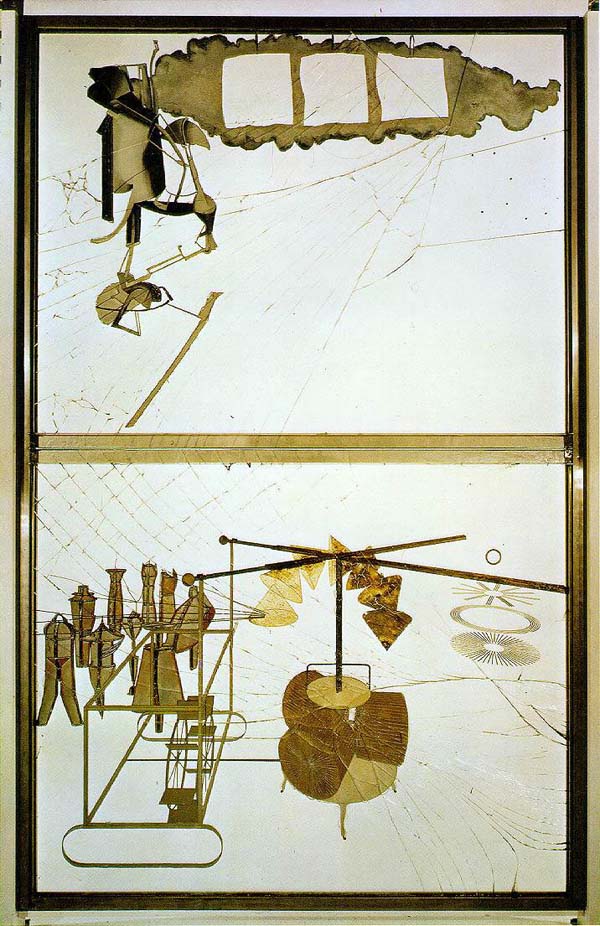
    Duchamp Bride Stripped Bare by Her Bachelors, Even1915-23 detail
    I guess that “up” would be a redundancy in this post’s title, since we can’t really fill a hole going down, filling from the top of the cavity to its base, the reverse of digging a hole.  Or perhaps not if the task was given to M. Duchamp.

    But in this longish, developing thread on the history of holes it occurred to me that I hadn’t included anything on filling/stopping holes,the realization coming to me while browsing the lovely and very inclusive paper ephemera site of SHeaff-Ephemera.com

    RossellCorksTC

    [The original site for the above three images:  sheaff-ephemera.com; other images in Notes, below.]

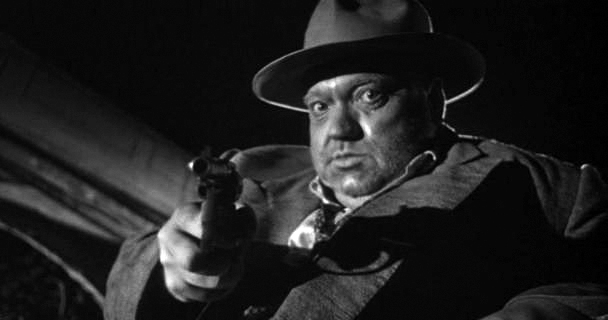
    Touch-of-evil-quinlan1 There have been a number of posts here about existing holes, but none thus far about making them (except for a few posts on aerial bombing) or filling them up–so far, the series has been in a hole-stasis.  There really should be a section on making high-speed hole-making (with bullets, like our friend Hank Quinlan, with Uncle Orson in the role in the magnificent Touch of Evil), and another on long, longitudinal and laboriously slow hole-making (with say foundation/caisson work in constructing the Brooklyn Bridge).

    But for right now I’d like to address the crafty M. Duchamp as a hole-filler, a  man who created a two-sided literal and figurative hole-making and hole-filling event, and what may be the first of its kind in the history of art.  Figuratively, Duchamp’s approach to art in the nineteen-‘teens was seen by many as a process to “destroy” art itself:  finding things like a bicycle wheel and implanting it on a stool and calling it art was seen by his friends as an event and not as art per se, but as a perversion.  Even Duchamp’s own group at the epochal 1916 international art show rejected his first “Readymade”2 (not yet then called so) as not art, leading Duchamp to abandon even them. (This had also happened three years earlier with his “Nude Descending”.)

    I don’t think that Marcel Duchamp was trying to “destroy” art, though I do believe that he was trying to force a conversation in which he had no interest in participating–a written conversation in which there was no real end or beginning, and so no middle, on top of which the punctuation would be removed and re-applied by chance. 

    Even the idea of a “hole” could be viewed differently in such circumstances–like the one that appears in his “The Bride Stripped Bare By Her Bachelors, Even” in the top part of the bottom (“Bachelor” panel, the detail of which appears at the head of this post, and the full version below).  Perhaps we should be talking about constructing something around a space, the remaining bit once encircled becomes a “hole”:  a reverse hole?  That would be similar to both constructing and filing the hole, almost at the same time; Duchamp included this hole in this artwork, and then covered it on both sides with glass, the self-described “lazy” Duchamp finishing it after many years of labor, a work he said to be “unanalyzable by logic”. 3

    It seems a little like making empty space inside a vacuum.

    http://4.bp.blogspot.com/_5fO6S8XT1sk/TMra2qt5_1I/AAAAAAAAANs/hI9G_RFH0mU/s1600/Duchamp+Bride+Stripped+Bare+by+Her+Bachelors,+Even1915-23.jpg

     [“The Bride Stripped Bare By Her Bachelors, Even (The Large Glass)” by Marcel Duchamp, is installed at the Philadelphia Museum of Art.]

    Notes:

    RossellCorks(back)

    [The original site for the above three images:  sheaff-ephemera.com.)

    2.  “The Bicycle Wheel is my first Readymade, so much so that at first it wasn’t even called a Readymade. It still had little to do with the idea of the Readymade. Rather it had more to do with the idea of chance. In a way, it was simply letting things go by themselves and having a sort of created atmosphere in a studio, an apartment where you live. Probably, to help your ideas come out of your head. To set the wheel turning was very soothing, very comforting, a sort of opening of avenues on other things than material life of every day. I liked the idea of having a bicycle wheel in my studio. I enjoyed looking at it, just as I enjoyed looking at the flames dancing in a fireplace. It was like having a fireplace in my studio, the movement of the wheel reminded me of the movement of flames”
    -and-
    “Please note that I didn’t want to make a work of art out of [Bicycle Wheel]. The word ‘Readymade’ did not appear until 1915, when I went to the United States. It was an interesting word, but when I put a bicycle wheel on a stool, the fork down, there was no idea of a ‘readymade,’ or anything else. It was just a distraction. I didn’t have any special reason to do it, or any intention of showing it, or describing anything. No nothing like that…”

    –http://www.toutfait.com/unmaking_the_museum/Bicycle%20Wheel.html
    3.  Calvin Tomkins, Duchamp, a Biography, p. 6.

  • History of Holes: the most Famous Hole in Art?

    JF Ptak Science Books  Post 1583   [Part of the History of Holes series]

      Holes--brunelleschi2_large

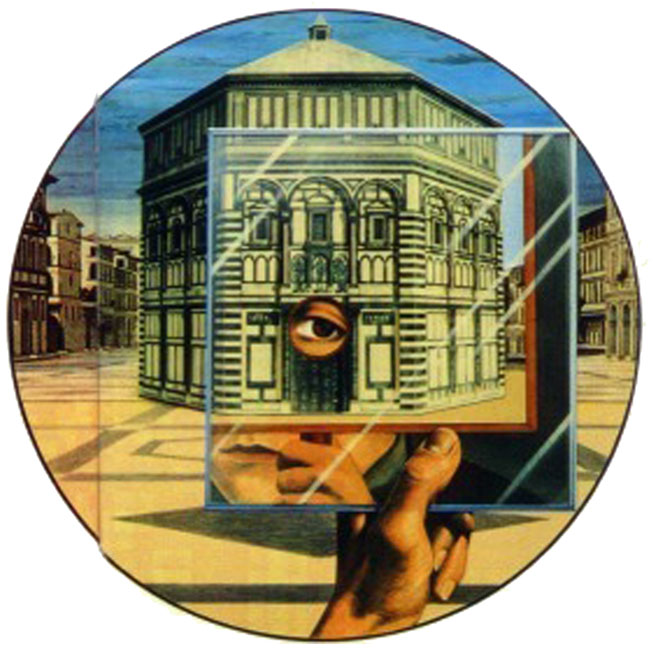
    Filippo Brunelleschi is most often credited–from Vasari to Kemp–as the modern discoverer of linear perspective (or re-discoverer in the eyes of Samuel Edgerton Renaissance Rediscovery of Perspective, 1975 or John White, The Birth and Rebirth of Pictorial Space, 1987).  The Greeks most certainly had mastered some aspects of perspective as is in evidence in their surviving architecture (though not artwork remains exhibiting this), but Brunelleschi for all intents and purposes1 discovered it for the rest of humanity. 

    Edgerton remarked that the discovery “marked an event which ultimately was to change the modes, if not the course of Western history”, with one reason for this magnitude being that technological and architectural ideas could be far more easily intellectually-transmitted as societal property rendered in perspective than had they not been issued so.  (I wonder, for example, if this might have been the reason why there was no Chinese technological renaissance during the Renaissance–because the idea of linear perspective was not adopted until relatively late, meaning that transmitting complex technical ideas was far more difficult.)

    Brunelleschi employed a brilliant method to capture the depth of his scene–in this famous case, the Baptistery in

    peepshow.gif

    Florence.  Employing this method helped the architect to understand the mathematical principles of perspective and to become its earliest master. 

    Perspective is the romance of balance and the mathematics of proportion, at the center of which is the vanishing point, an interestingly-named point of departure and similarity, where parallel lines not parallel to the image plane appear to come together, in an early singularity.  So it is this great and famous hole helping to establish a great and famous dot (which I guess could make an appearance of its own in this blog’s series on The History of Dots). 

    Perspective c

    Another famous hole that comes a little later (a hundred years or so later) belongs to Albrecht Durer (The Painter’s Manual, 1525)

    http://www.oneonta.edu/faculty/farberas/arth/Images/ARTH_214images/Durer/durer_perspnude_large.jpg

    where Durer illustrates the artist at work using a perspective device along with a vielo. 

    There are other holes in the history of art to be sure, but these are perhaps the most significant ones that appear in the Renaissance–there are others in architecture, for example, but my thinking is that the Brunelleschi hole takes precedence.  Other interesting and significant holes begin to appear a little later on, for the development of peep machines, and the camera obscura, and then of course photography, but they will come in a later post. 

    Notes: 

    1. Earlier though not complete efforts were made in Alhazen’s Perspectiva, c. 1000 A.D., Roger Bacon’s Opus Majus, c. 1260 A.D., John Pecham’s Perspectiva communis, c. 1270 A.D..,  and Alberti’s  Della pittura (1435).

    Another perspective machine of Durer: 

    ·Posted by :

    ·in:

    — —

  • History of Lines: Looking Straight Down from Straight Up, 1786

    JF Ptak Science Books   Post 1581

    Looking down656
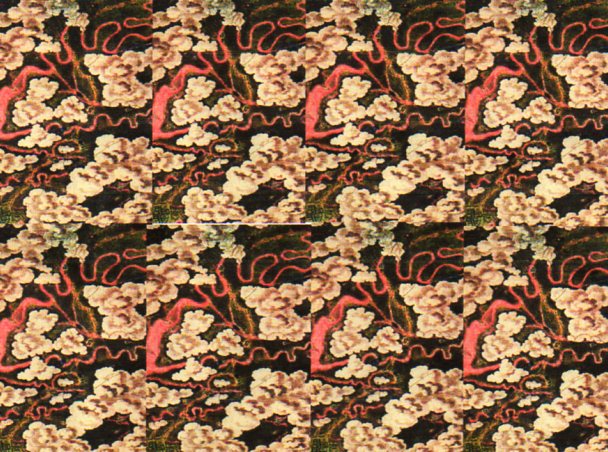
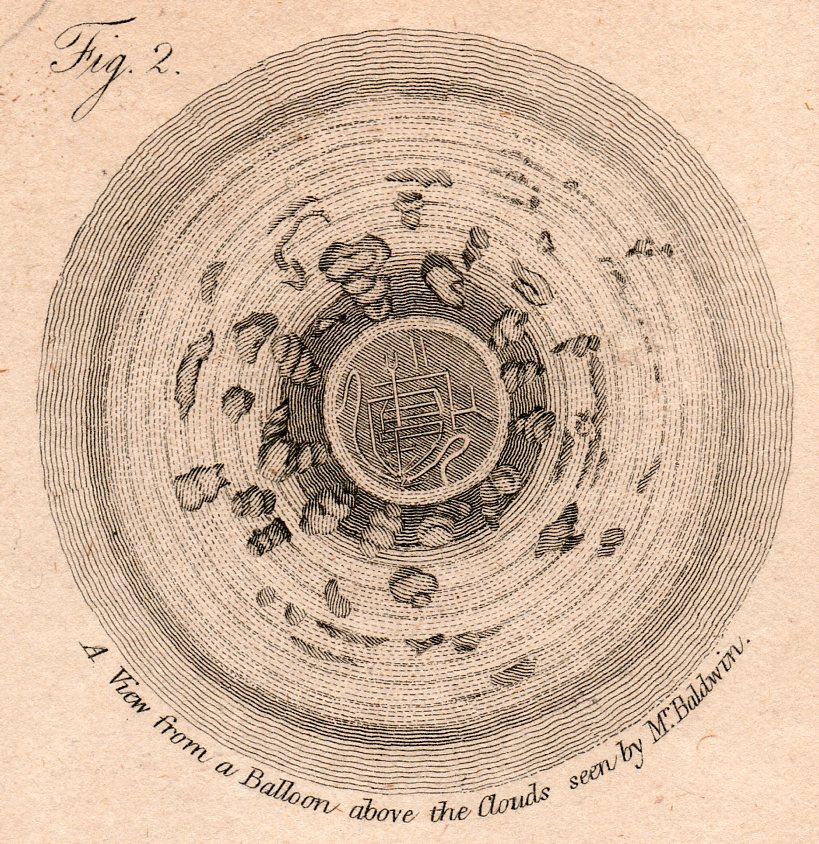
    I was struck by the mosaic possibilities of the image (below) found in Thomas Baldwin’s Airopaidia (printed in 1786) and so made it into one.  But what the engraving is,m really, is a view from a balloon, looking straight down.

    Looking down655

    We’re looking straight down, through the clouds, seeing two towns (at bottom-left and top-center)–why the rivers are red, I don’t know.

    There are other posts on this blog on looking straight down, which is an attractive subject–to me, at least. First-hand images of looking straight down fro a balloon are rare things, even through the early 19th century, and offer a prospective seldom seen in human history.

    Another view from this work attempts to show some depth:

    http://vintageprintable.com/wordpress/wp-content/uploads/2010/09/Science-Flight-View-from-Balloon-18thC.jpg

    Here’s another view of that same image from the Baldwin experience, reprinted around 1810, and left in black-and-white:”

    Looking str8t Diwn-balloom det220

     Halton Tuner makes these observations on Baldwin’s flight in his iconic Astra Castra: Experiments and adventures in the atmosphere 1(published in 1864 in London):