A Daily History of Holes, Dots, Lines, Science, History, Math, Physics, Art, the Unintentional Absurd, Architecture, Maps, Data Visualization, Blank and Missing Things, and so on. |1.6 million words, 7500 images, 4.9 million hits| Press & appearances in The Times, Le Figaro, Mensa, The Economist, The Guardian, Discovery News, Slate, Le Monde, Sci American Blogs, Le Pont, and many other places… 5000+ total posts since 2008.

Category: Blank and Empty Things; A History of

  • Heart, Head, Heresy and Burning at the Stake: a Cordial Memory of Michael Servetus on St. Valentine’s Day

    JF Ptak Science Books LLC  Post 938

    Harold,
    like the rest of us, had many impressions which saved him the trouble of
    distinct ideas 
    George Eliot.

    A novel is balanced between a few true impressions and
    the multitude of false ones that make up most of what we call life.

    Saul Bellow


    No, this isn’t a story about the great saint but a much
    lesser one.  For centuries the pulse was
    a vaguely understood thing reaching back into the murky medical past as far
    back as Galen.  The association of course
    was with the heart, and the association of the heart was as the great
    controlling center of all function and control of the human body—a theory that reached
    far forward into the 16th century. 

    It is generally established that it was the fabulous work of
    William Harvey (1578-1657) that brought into light the idea of pulmonary circulation,
    but the idea was buried in a vastly-suppressed work by the brilliant and highly
    problematic Michael Servetus (Spanish, 1511-1553).Servetus
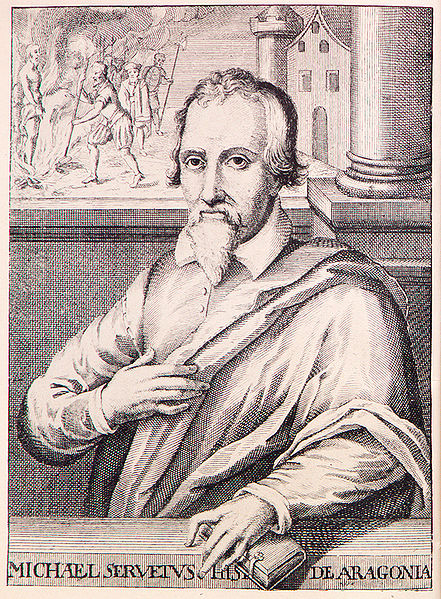
    Servetus (physician, cartographer, theologian, writer and
    general all-adept Humanist of a high order) was in trouble with the church for
    many reasons, not the least of which was trying to dislodge the theory of the
    heart as sacred and the seat of wisdom. 
    But he did establish that the heart was an organ, which didn’t sit well
    with very many people, least of all the Calvinist court in Vienna
    which found him guilty on many anti-Humanist grounds, including his
    anti-Trinitarian Christology, which made him a reviled figure to Catholics and
    Protestants.  He was tried and found to
    be dangerously heretical, and sent to the flames.  (There was a practice at the time to burn
    people alive using wet wood, providing a slow, baking environment in which the
    subject was painfully nearly-baked alive before he/she was actually consumed by
    the flames.  People thought about this….In the engraved portrait of Servetus we see him being burned–along with his books, which are slow burning things, at upper right.  As a matter of fact Servetus’ effigy was burned in some places along with his books, which explains the scarcity of some.)

    Later on, Harvey
    withstood blistering attacks on his correct statements on the circulation of
    the blood (costing him nearly all the patients in his practice), though he at least
    lived to see a brighter day:  Servetus, on the other hand, didn’t, and was
    burned at the stake for his heresies, one of which his attack on the spiritual
    heart. (Plenty of others have paid for their insight and invention and would be
    later celebrated  Semmelweis wasn’t killed but did wind up in an asylum;
    Galileo didn’t wind up in an asylum but did wind up imprisoned; Copernicus
    wound up in neither place, escaping possible clerical criticisms by dying just
    as his revolutionary work was published.  Phillippe Lebon’s ideas for
    illumination by gas were seen as ridiculous, as were the revolutionary ideas of
    Edward Jenner and Luigi Galvani.  Einstein’s 1905 ideas weren’t happily
    received in France
    for a decade, and David Hilbert’s impressions of mathematics in the middle of
    the third decade of the 20th century was that it was “done”. )

    And so I think we might as well remember Servetus today at
    least as often as we do St. Valentine. Or multiple St. Valentine units—the name
    seems to have been canonized in 496 ACE in memory of several people by this
    name.  At least Servetus had an
    association with the heart in a positive way—I don’t know the Valentine/heart
    connection though I suspect that at least one of them had their beating heart
    ripped from their body. 

    Well.  Happy Valentine’s
    Day.


  • Blank and Missing Things: German Submarine Importance in Graphical Comparison, 1912.

    JF Ptak Science Books  Post 937

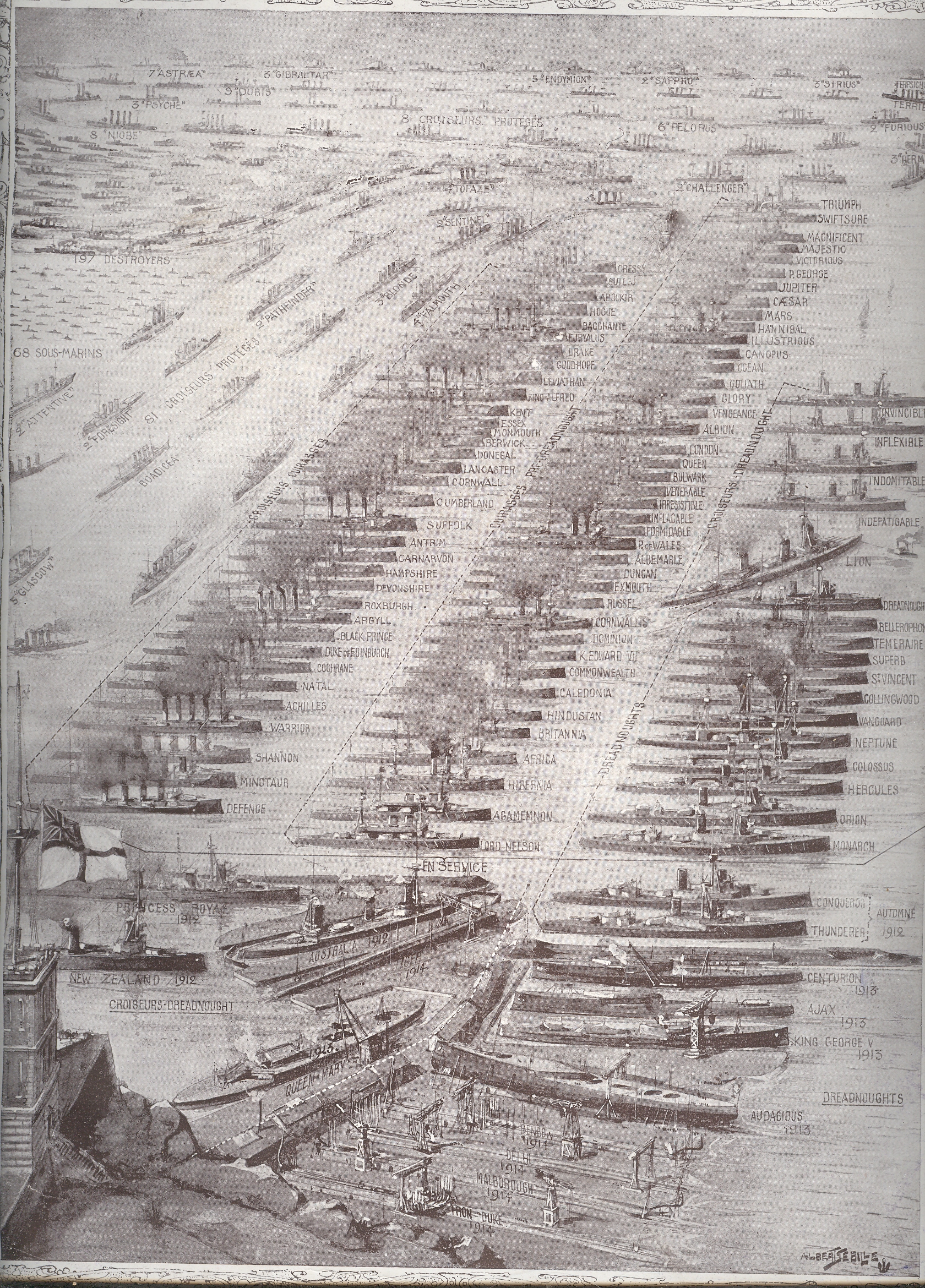
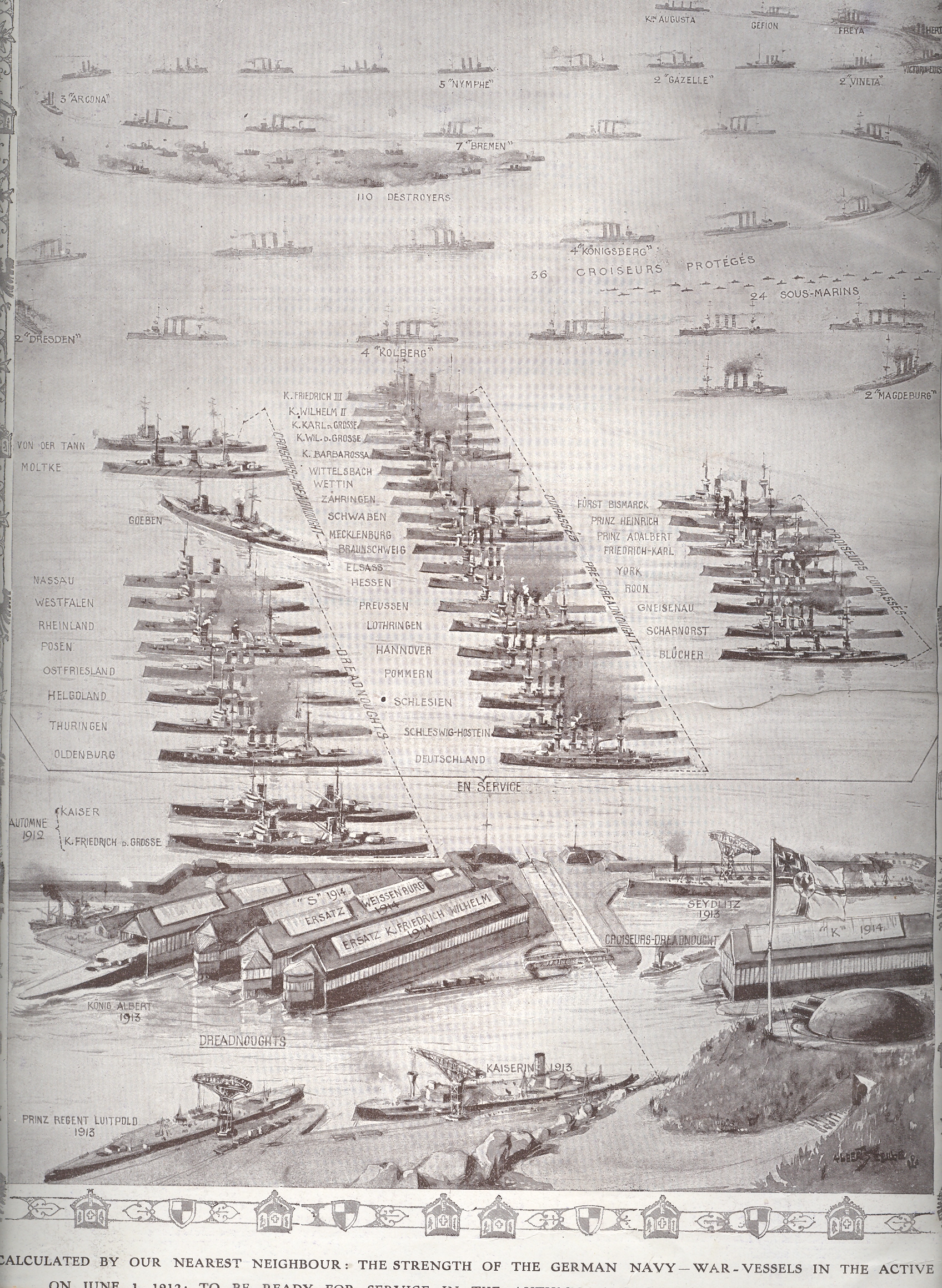
    In the midst of a massive building campaign by Germany and a building-response by England the French journal L’Illustration published these two side-by-side pictorial comparisons of their two navies, which wound up being reprinted in the Illustrated London News soon afterwards in June 1912.  [Royal Navy, left; German Navy right]

    2--brit navy big 2--brit navy germany


    2--brit navy big

    Germany began a rebuilding campaign in 1902 which by 1908/9 was seen by the British Admiralty as a “stab at the heart” of England’s military supremacy, and so the construction wars were undertaken.  It’s a complicated period and a complex race, which I just can’t get into in a short post, so let’s just say that the Brits wound up the winners of the competition  when these images were printed in June 1912.  

    The hidden element of some great importance, a trump card that would  played in just 750 days, would be the small dot-like drawings  labeled “sous marins”. These would be the submarines, and it would be the subs that would be perhaps the most significant aspect of the entire German navy.

    2--brit navy germany

    This was true in spite of what looks like an overwhelming preponderance of subs in favor of the Royal; Navy, where the count was 68 to Germany’s 24.  It was really a question the type of sub, and as it turns out there were only 8 or 9 of the English count that could’ve been considered for blue water ops.

    Germany began the war with 24 submarines in 1914; they recognized the ship’s importance and by war’s end ramped up production, winding up with 351 in total production and with 178 in action in 1918 alone. Of that overall number fully half (178) had been destroyed in combat, with another 11% sunk via other means.  There were more than 12 million tons of Allied shipping destroyed by the German sub forces from 1914-1918 (half of that in 1917). 

    So these two illustrations do portray an overwhelming Royal Navy, but they certainly do not give any hit whatsoever to the coming importance of the German submarine fleet.


  • Hiding Diseases: Plague and Smallpox

    JF Ptak Science Books LLC Post 936

    “Ring
    around the rosies, a pocket full of posies,

    Ashes,
    ashes, well all fall down.”

    This
    old nursery rhyme has more to do with plague than a skipping-and-falling song, more
    like the Tom Wait’s version of the “Dwarf’s Marching Song” (“Heigh Ho”, see
    below) than anything t0 blog jan 24ars mor424hat could ever be dreampt of in a Disney film. It was the
    mater-of-fact way of dealing with the vast death brought on by the various
    Plagues:  saying a round of rosaries to
    try and invoke divine intervention to keep the disease away from the prayer-mender;
    posies as a fragrant flower to mask the stench of those actually afflicted with
    the disease; and then of course the ashes from the piles of burnt corpses of
    Plague victims, fallen down to death. 

    These
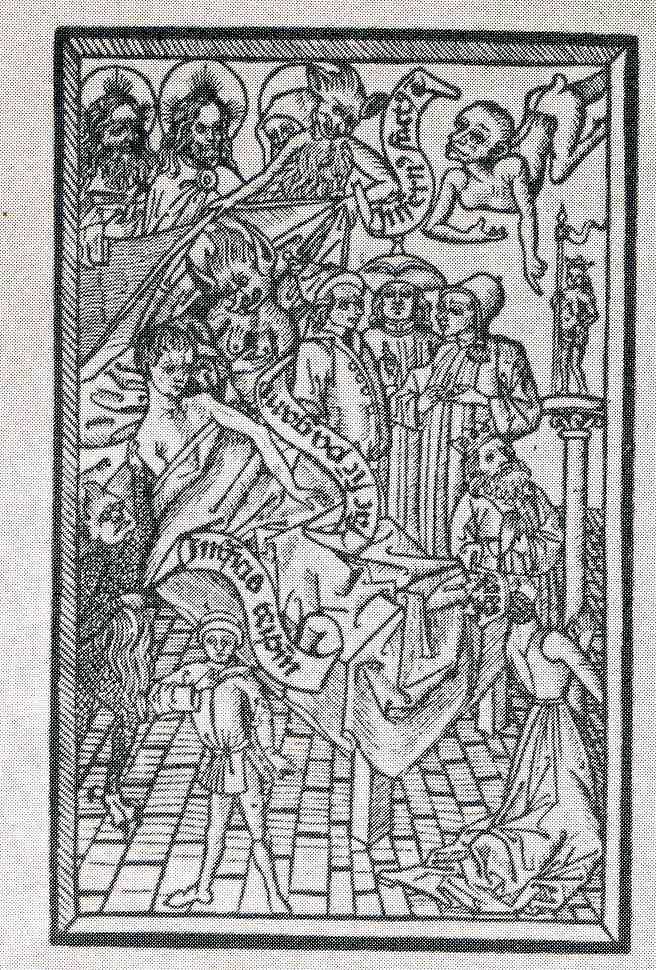
    two images show different aspects of segregating—if not hiding—disease.  The first is a propagandistic portrayal of a
    man dying of the Plague.  This snippet of
    plaguaganda was an ars morendi
    published in the 1460’s, and depicts a not-gruesome portrayal of what was
    generally a very gruesome death.  The
    inflicted lies there in bed, with sheets
    and
    a pillow, looking faint and removed in the retiring Victorian fashion
    (removed 400 years), surrounded by images of his faith/belief. 

    I
    suspect that anyone who knew anything about the Plague knew that this scene
    wouldn’t be truthful, necessarily, but I guess if it could even momentarily confuse
    the viewer into thinking that the visitation of Death could be so composed in
    the face of this horrendous disease, I guess that’s the hope you hang
    onto.  There is a minor battle between
    the possible claimants of the soul of The Sick, but that would be going on
    anyway whether the coming death was relatively peaceful, or not. There wasn’t
    much to be done—as the feeble attempts of preventing the disease would
    indicate, what with choices like urine baths, bleeding, leeching, bell ringing,
    pus-sucking, rotten animal corpse talismans, incense burning being some of the
    preventative choices—so like a belief in Heaven or Nirvana or whatever, the hopeful
    consolation of a possibly decent dying could keep people from running
    amok. 

    1-floating hosp

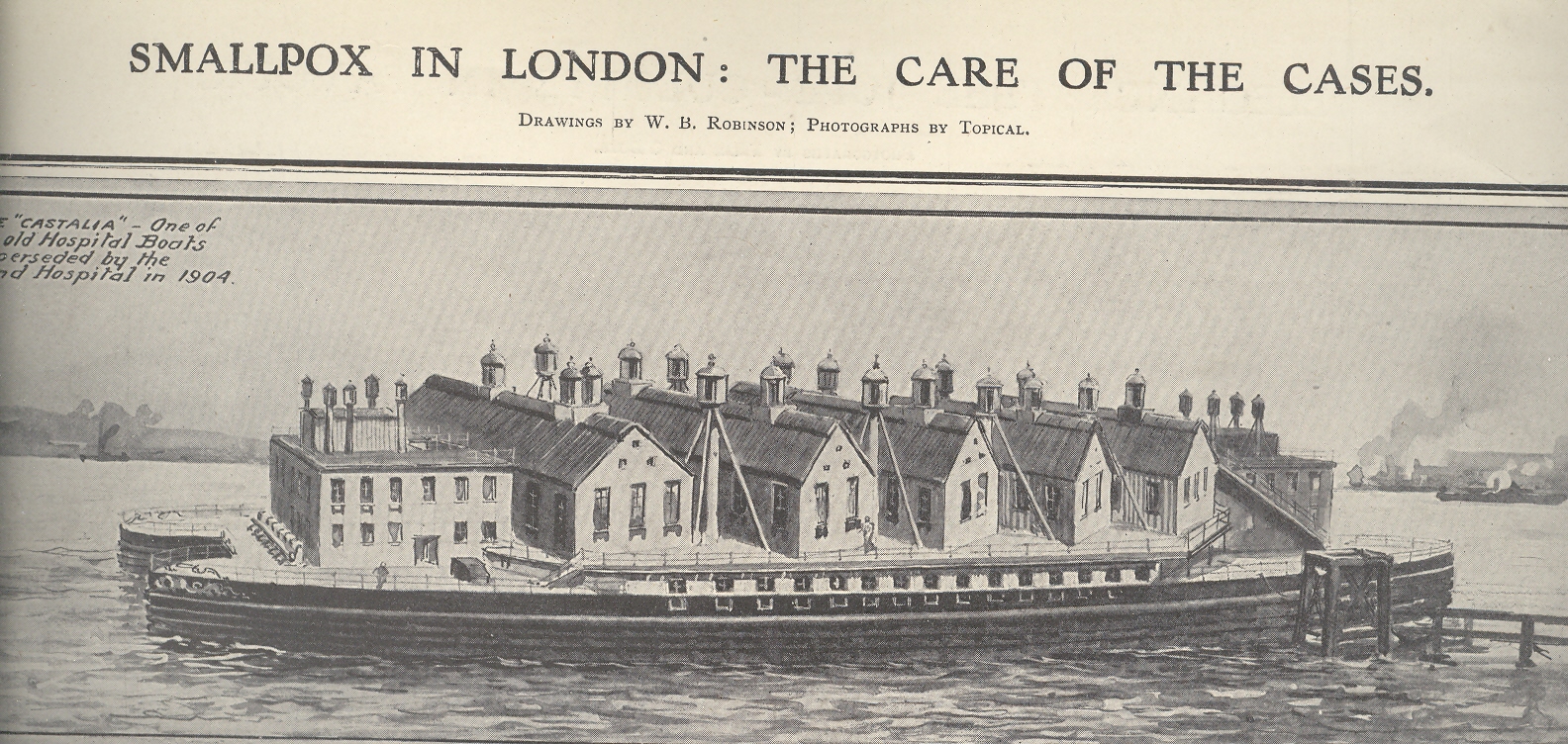
    The
    second shows the hospital hulk Castalia, “one of the old Hospital Boats superseded
    by land hospitals in 1904”, which was more a floating street than a hospital.  It was a complex of five buildings nested on the
    hulk of the double-hulled paddle steamer Castalia—appropriately named, as it refers
    to the Delphian  fountain that Apollo fabricated
    from the nymph “Castalia” and alludes to the possibility of rejuvenation and
    cleanliness, or health, perhaps).  The
    hospital held hundreds of smallpox patients, sent there by the Metropolitan
    Asylum Board in an effort to stem the flow of the disease and infection rates
    from the rest of the population of London.  Smallpox 
    was still a vast killer in mid-/late-Victorian England, and given the information
    available at the time this was a good social inoculation by distance and
    segregation.  (It is interesting to note
    that out-of-service de-masted, defrocked and striped ships of the line were
    used to house prisoners (though generally prisoners of war); in particular,
    those kept in the East River housing American soldiers inflicted vast death
    tolls via maltreatment and urgently hideous living conditions.)  This really doesn’t fit with the
    propagandist/suppressing model of the above, and its removal did prevent the
    contagion from spreading, but, well, it does look like the Asylum Board was trying to hide the sick.

    Notes:


  • Three Map Fits: a Color Map with Color and No Map, a Color Map in Black & White; AND a Black & White Map in White (only).

    JF Ptak Science Books  Post 934

    This confusing title is accurate without very much grant in license and tells a short and true story of three fitful maps, two of which are beautiful and one just so-so.  

    Color--color map  

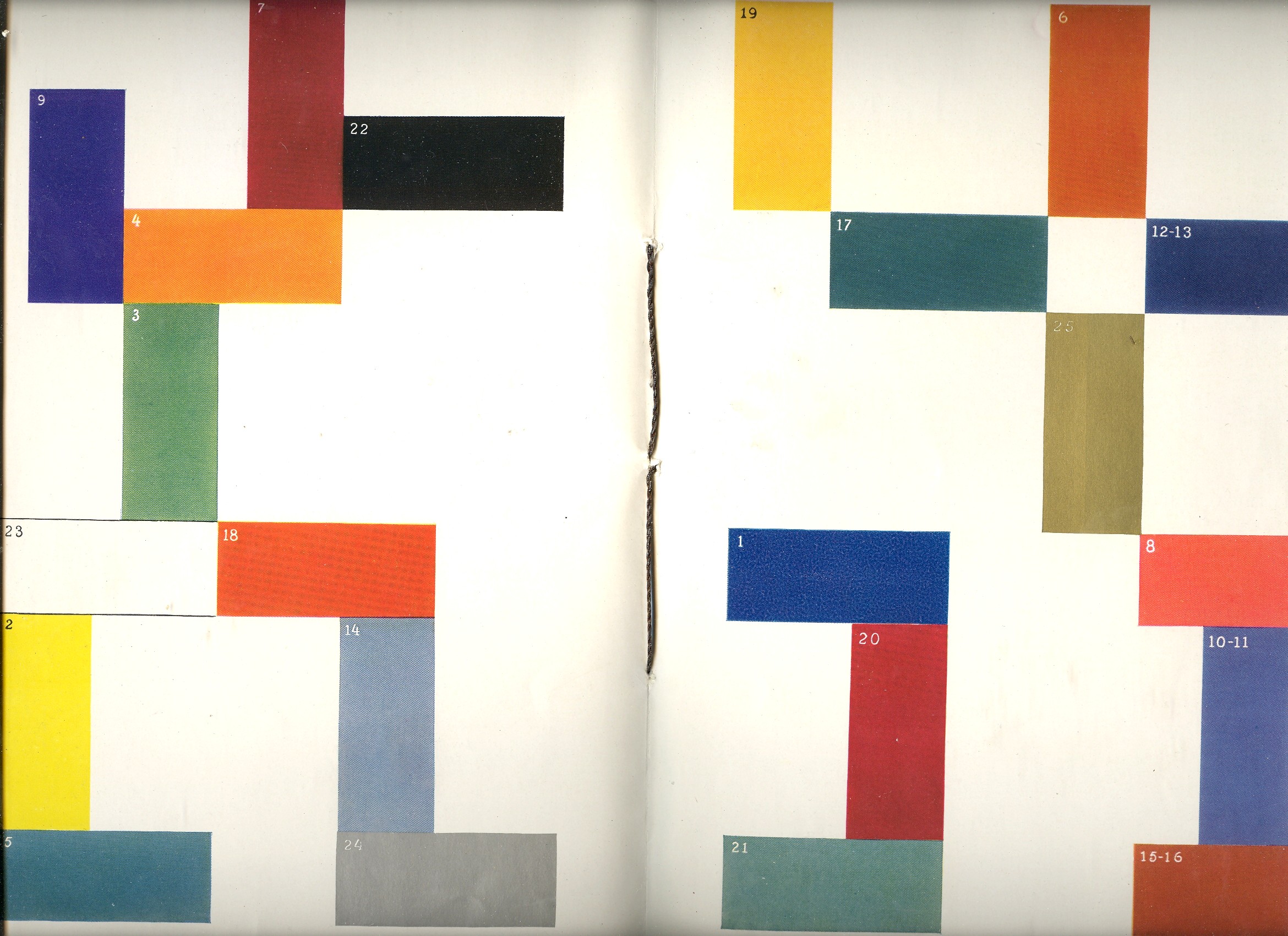
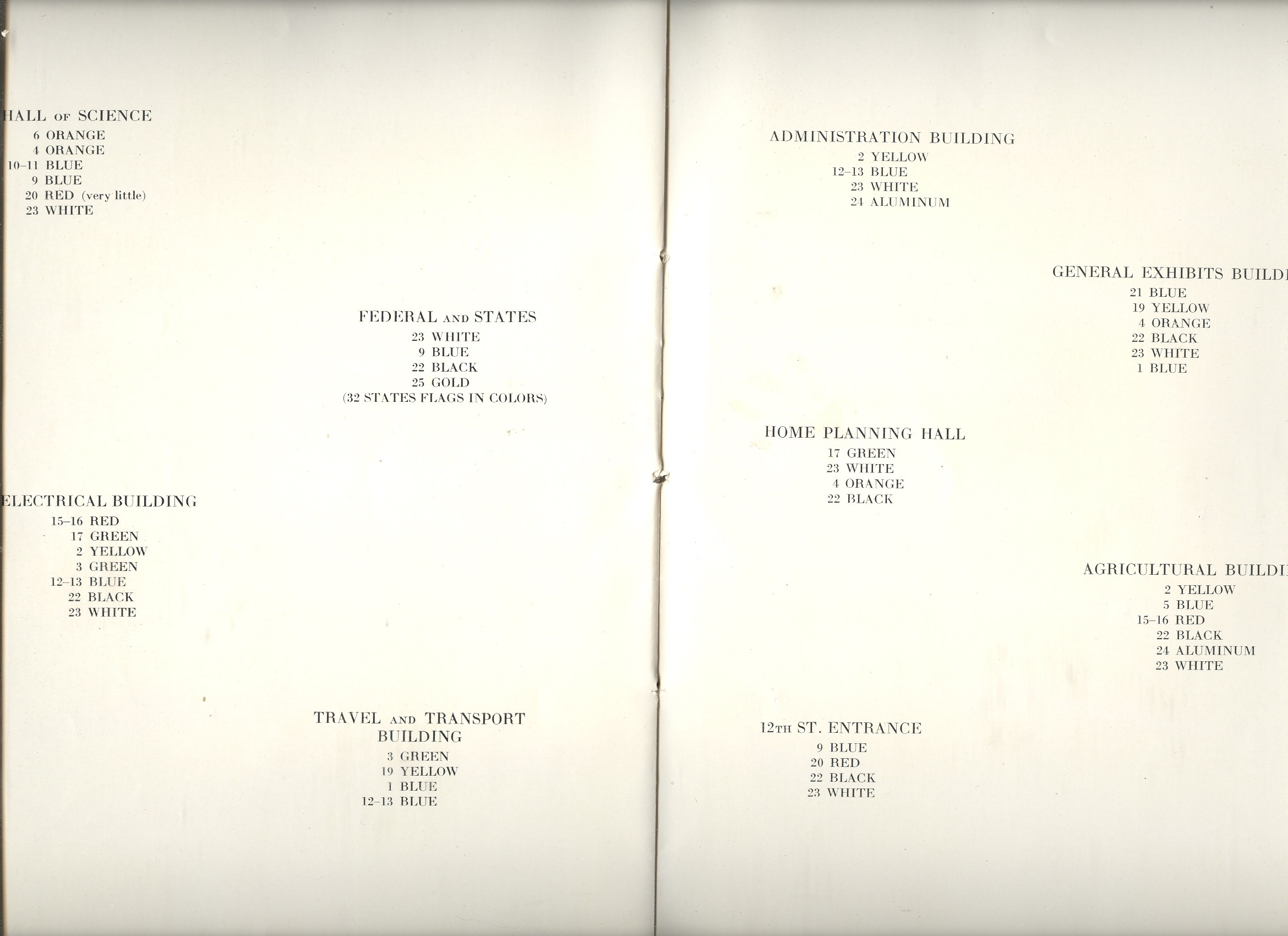
    The first map fit is featured in a beautiful pamphlet called A Century of Progress Colors and was issued by the Textile Color Card Association of the USA.(The title being a small play on the 1933 world’s fair in Chicago called “A Century of Progress”. The Textile Color Card Association was created to standardize color nomenclature and composition in industrial colors (and is still in existence.)  The map distributed the major pavilions at the fair by their dominating colors, naming those colors in the unusually-sequenced double-page key on the following pages (below1).  I can certainly appreciate the effort and the beautiful design it produced, but as a map of the fair it leaves much (if not everything) to be desired.


    Color--color map inside

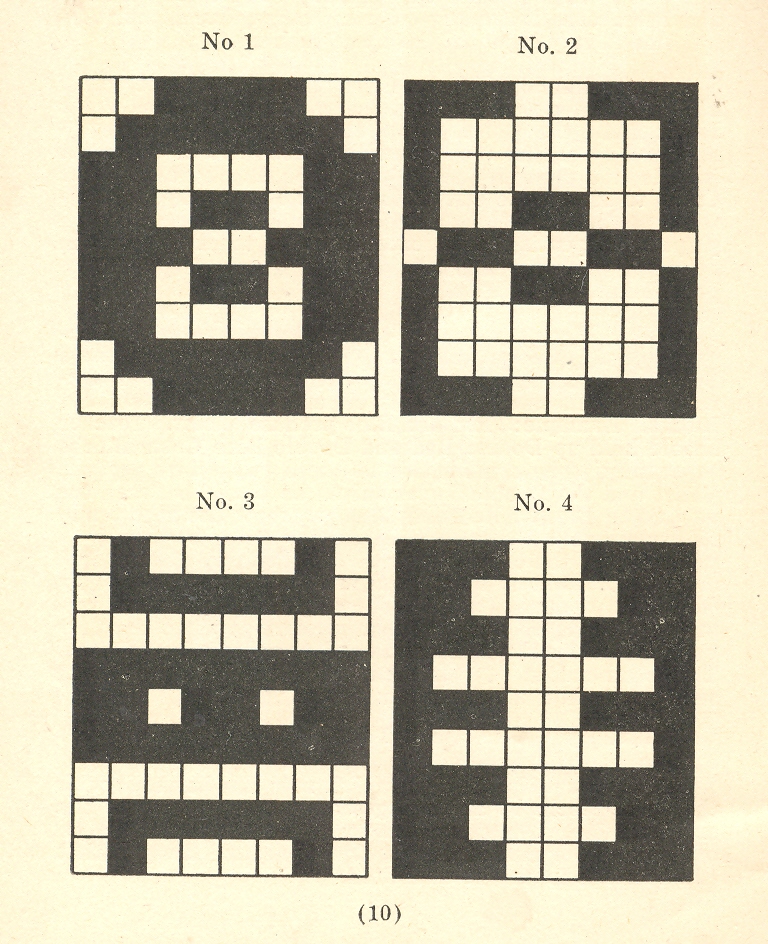
     The second map fit belongs to a small pamphlet published by Albert Coble called Games of Colors, Kindergarten and Primary Exercises.  Its actually an enterprising little book about reaching into the minds of little ones and explaining how colors are put together and how they relate to one another.  It is unfortunate that the drawings used to illustrate the color map part of the pamphlet were done in black and white.  Which is a little on the self-defeating side.  


     Color--b+w 001
     

     But the finest fit of the three fits is fit number three, which is the map of the Bellman’s tale, starting the second fit of Lewis Carroll’s The Hunting of the Snark, an Agony in Eight Fits.


    Color map snark


    But the map that I think I love the most illustrates Lewis Carroll’s The Hunting of the Snark, an Agony in Eight Fits, and occurs in the Bellman’s tale, starting the second fit1. It is simply magnificent. 

    Then, of course, there is this:


    Notes:

    1. The key:


    Color--color map inside text


    2. The fit begins so:

    The Bellman himself they all praised to the skies-
    Such a carriage, such ease and such grace!
    Such solemnity too! One could see he was wise,
    The moment one look in his face!

    He had bought a large map representing the sea,
    Without the least vestige of land:
    And the crew were much pleased when the found it to be
    A map they could all understand.

    “What’s the good of Mercator’s North Poles and Equators,
    Tropics, Zones, and Meridian Lines?”
    So the Bellman would cry: and the crew would reply,
    “They are merely conventional signs!

    “Other maps are such shapes, with their islands and capes!
    But we’ve got our brave Captain to thank”
    (So the crew would protest) “that he’s bought us the best-
    A perfect and absolute blank!”


  • Unexpected Sense Impressions from Antique Prints: Sound

    JF Ptak Science Books LLC  Post 631

    [A continuation of the blog series “A History of Blank, Empty and Missing Things“]

    The
    sweetest pleasures come from unexpected sources. Mozart–who loved the game of billiards
    and was an exceptional aficionado1 of the game while playing it with little
    skill– enjoyed composing on the table as well,  rolling balls in geometric patterns across it
    while working. To observers it might have seemed as though he was interested in
    the patterns themselves; it delightfully turns out that what he was really looking at were
    the changing reflections in the surface of the balls. 

    Years
    ago my wife (Patti Digh) and I visited an artist in his studio at the lovely
    high-road-to-Taos town of Truchas, New Mexico.  We watched the artist at work for quite some
    time—well, actually, we listened to him work. 
    Although he was a lovely painter, the visual impact was overwhelmed by the sounds that he made padding back
    and forth (he was working on a big canvas) across an old and musical wooden
    floor –it deeply interesting, and the sound stays with us to this day. 

    I
    enjoy these quasi-synesthesic experiences a great deal, though they are very
    hard to “find”. Sometime though they slip into the print world, and I include three
    examples below. 

    (1)
    Putting the Pulp in Fiction, and Fact: the Sharp First Step in Paper-Making

    Ebay Feb 6 paper

    Just
    about the first step in making paper is collecting and preparing the raw
    materials from which the paper is made. 
    Linens, cottons, wood and straw (among other things) would be reduced to
    a pasty pulp through vigorous pounding, tearing, wetting stabbing and rending,
    all of which would be reduced to a pasty, fibrous pulp which would wind up after
    a bit spread over a wire mesh until dried and then, through a great
    non-miracle, becoming paper.  This is a
    process that was little changed in the Western world for many centuries.

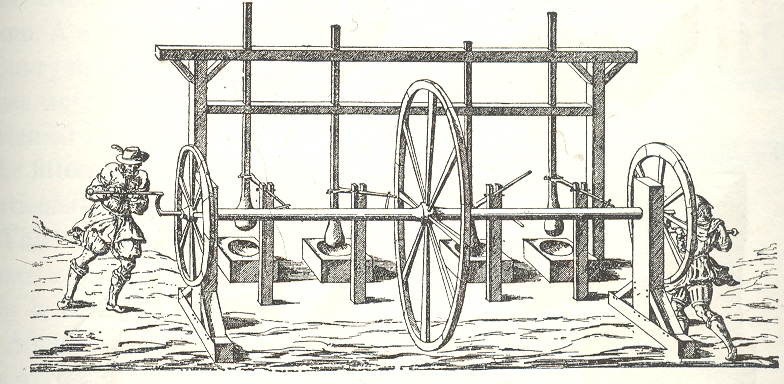
    The
    most lovely of these early pulp-rendering, “stamping” machines, to me is the
    fabulous two-person human-powered stamper/shredder, published in 1579. (I don’t
    know the original source for the wood engraving; this image appears in Charles
    Singer’s monumental History of
    Technology, from the Renaissance to the Industrial Revolution
    , vol III.

    The
    men turn crank, crank turns wheels and rod, rod turns arms, arms forced to move
    vertical poles up and down, stampers on the end of poles pound the rags.  Actually the stampers had changeable stamps
    so that the man-machine could start with a spiked stamper for rendering and
    then move to a roundish stamp for pounding into decomposition in a wooden bowl
    with mushy water. 

    I
    just really like the machine and its representation, and of course the round
    stampers and bowls of mush.  It all seems
    so innocent in a creaking antiquarian way—but the great surprise for me is that
    I can just about hear this machine at work. 
    The all-wooden structure with slowing-turning wheels grinding against
    its constituent parts, worn smooth from use; the slow pounding of the stampers
    into the thick paste; the creaking motions of the too-slender
    superstructure.  I can hear it about as
    clearly as I can hear the soft/high clinking of the bottles in the milkman’s
    tray.

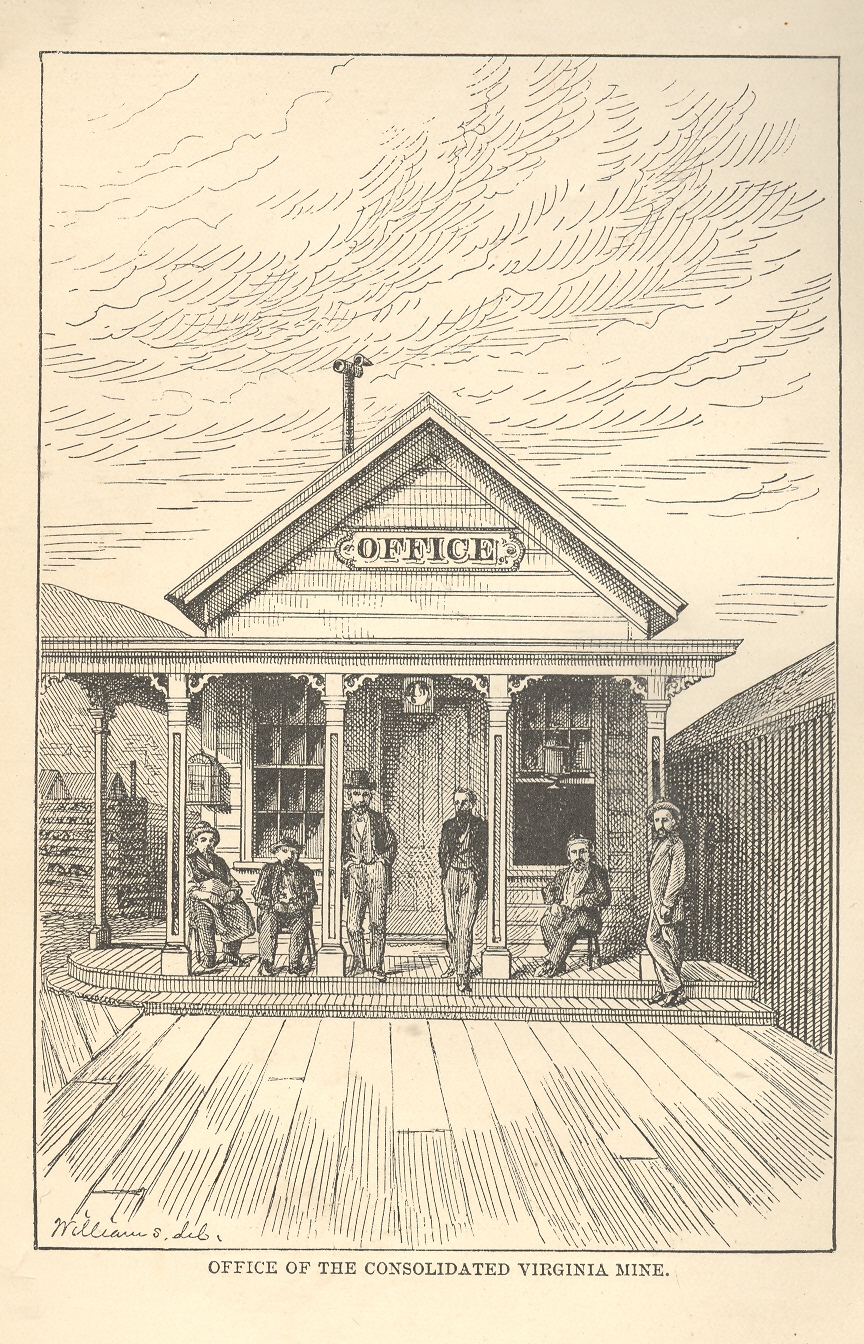
    (2)  A Scene of Western Quiet

    Ebay Feb 6 virginia mine

    The image comes from William Wright’s The History of the Big Bonanza and was published in 1877.  It is a very
    simple scene (“Office of the Consolidated Virginia Mine”), nicely and
    proportionally arranged, though somewhat challenged by its understanding of linear
    perspective. For reasons I don’t quite understand it might as well have been a
    picture of the high desert with no settlement whatsoever.  It simply seems still, and very quiet.

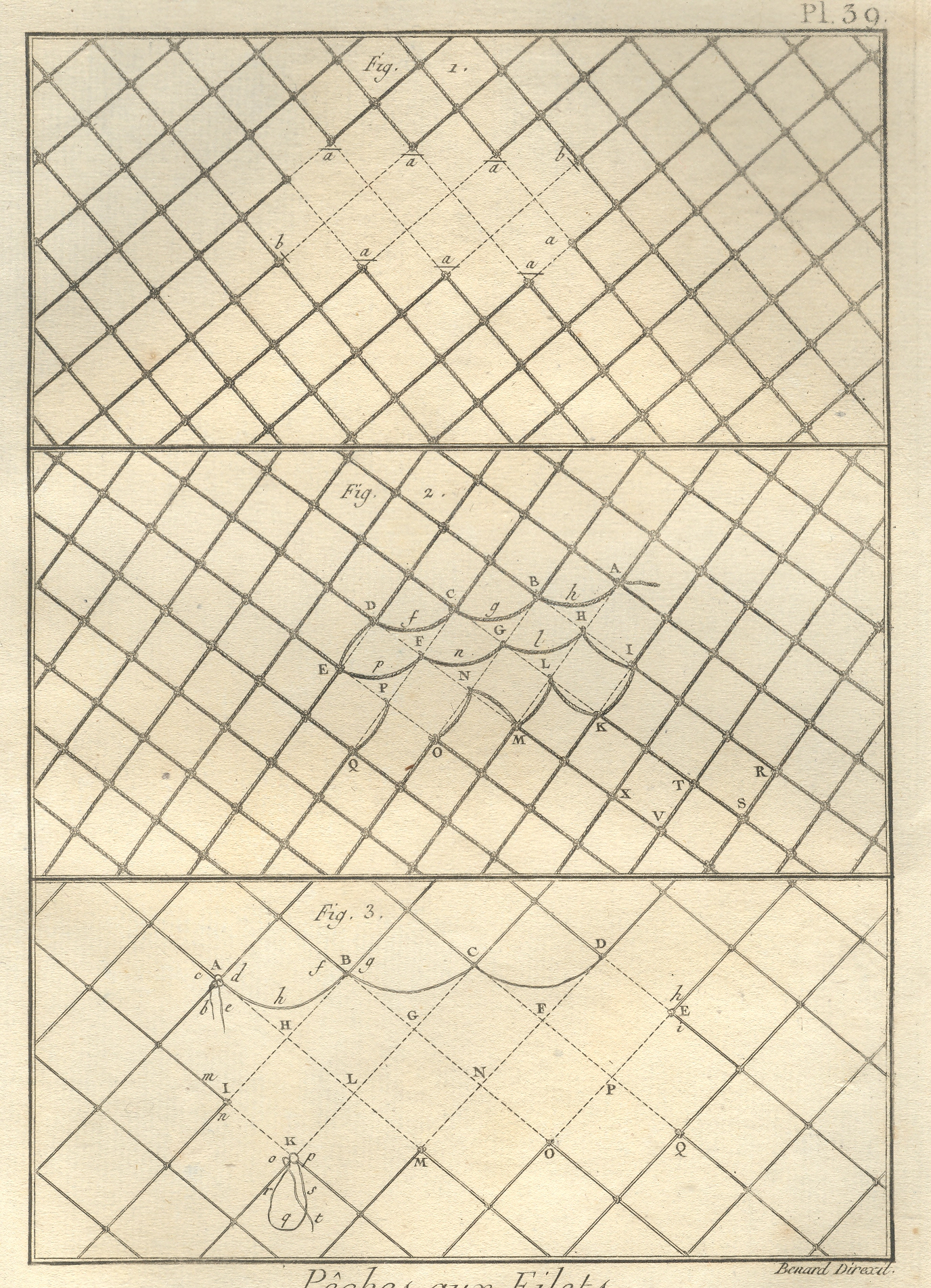
    (3)
    Electrical Hum (and Ozone) Fishing Nets

    Ebay Feb 6 fishing net

    This
    image, from the quarto edition of the great Diderot and d’Alembert Encyclopedie (published over a number of years in the late 18th century), shows (I think) the
    ways to mend broken fishing nets. I have a definite sense of a high electrical
    hum from this, along with the added whiff of ozone.  Its hardly something that was intended by the
    artist, but it was the first thing that registered with me when I bought this
    print 25 years ago. 

    Things
    like this are available to us all of the time, simply waiting to be heard while
    being seen. 

    Notes

    1. After his death Mozart’s estate was reckoned, and the contents of his house and belongings were catalogued.  It was recorded that he had a very nice billiard table, and that he also had 12 cues.  Now 12 cues might’ve been there because he liked the feel of the wood, or that he liked their artistic merit on the wall or in the corner.  That, or he had a lot of people coming over to play.  I like the later interpretation.  Also, I cannot remember the reference for the ball/reflection story; please don’t tell me that it is wrong.  


  • Missing “Dots” and Not Seeing the Discovery of Platelets, 1842

    JF Ptak Science Books LLC  Post 918

    {This post continues some new and unusual cross-categories in this blog, like Missing Things Making Holes; Bombs as Breads.  Today’s bit combines the “Blank, Empty and Missing Things” with “The History of Dots” categories.]

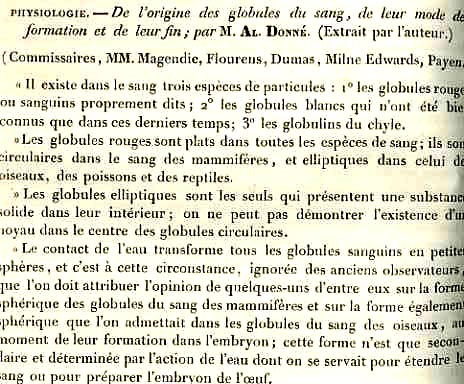
     blog 13 donne703Alfred
    Donne (1801-1878), physician, experimenter, microscopist and
    photographer, is best known for things other than what he should
    probably be best known for:  his discovery of the third element of the
    blood, platelets.  Donne had a wonderful vision, and was among the very
    first on the scene to write about and employ the spectacular invention
    of the daguerreotype in chemistry and microscopy.  As a matter of fact,
    Donne, along with his collaborator Leon Foucault,  produced the very
    first engraved images of photomicrographs for his cytology paper of
    1840. (He was also the first to use electricity in producing a medical
    illustration, and was among the first modern physicians to write on the
    great efficacy of mothers using their own milk in breast feeding their
    children.)  The discovery of platelets paper of 18421–preceding two
    other works published in the same year–does indeed identify the new
    object, but actually fails to make a methodological examination of the
    new body, calling the new units “globulins du chyle” (or small globules, derived
    from plasma).  He also fails to make a drawing of what he saw; so, the
    combination of these two important elements asked the reader to accept
    his findings on faith, the tools of reproduction of his observations
    not being present. 

    And so we remember Donne for some other significant
    things, and less so for his lightly-interpreted and un-illustrated, and missing, “dots”.

    Notes
    1.Donne, Alfred. De l’origine des globules du sang, de leur mode de formation et de leur fin. Comptes rendus de l’Académie des Sciences, Paris, 1842, 14: 366-168. 

    (Overall the history of the
    discovery of platelets is complicated: 
    Leewenhoek (1675) and Henson (1782)  were the first to fully describe the “undefined”
    particles of the blood; Donne’s work was then more fully described by Beale in
    1850, and then again (identified as “small corpuscles” by Zimmerman in 1860 and
    then again by Schultze in 1874 and Laptschinski (also in 1874). William Osler
    then enters the scene in 1880, followed by Giulio Bizzozzero who was the
    first, in the years 1881 -1882, to establish central role of platelets
    not only in physiological haemostasis, but also in thrombosis.  Anyway it is a longish and not-clear-to-me
    history.)


  • Missing Things Making Holes: Soviet Bread-not-Bombs in Finland, 1940

    JF Ptak Science Books LLC   Post 917

    [This post is a hybrid category bridging “Blank and Empty
    Things” and “A History of Holes”—it is really an entry for blank and missing
    things making holes]

    1.  The Soviet Union’s foreign minister Molotov1 wanted to make it very clear
    to the rest of the world that his country was not bombing civilian targets in Finland during
    the winter war of 1939/1940.

    Blog jan 23 bomb

    2.  Molotov insisted that targets that were being bombed near
    Finnish cities were actually airbases.

    2.1   Also, since the
    complaining FDR was over 4000 miles away there was no way that he could “see”
    what was being bombed.

    3.  If there were civilian targets that looked as though they
    were being bombed, then

        3.1   they weren’t being bombed; and

        3.2   if anything at all was going on the Union of
    Soviet Socialist Republics was  dropping
    bread on the town’s/city’s starving inhabitants.

    4.   So far as
    undefended, non-military targets were concerned, the Soviet
    Union
    redefined “bomb” as “bread”.

    5.   Therefore, what
    we’re seeing in this image above are not bombs, but bread; that, or the houses
    were airbases, which would turn the bread back into bombs.

    Molotov insisted that no civilians were direct targets of
    Soviet bombing campaigns in Finland.  Also, if there were people being killed in
    these bombing raids they would necessarily and by definition be aircraft
    workers or air bases support staff or other military personnel.  

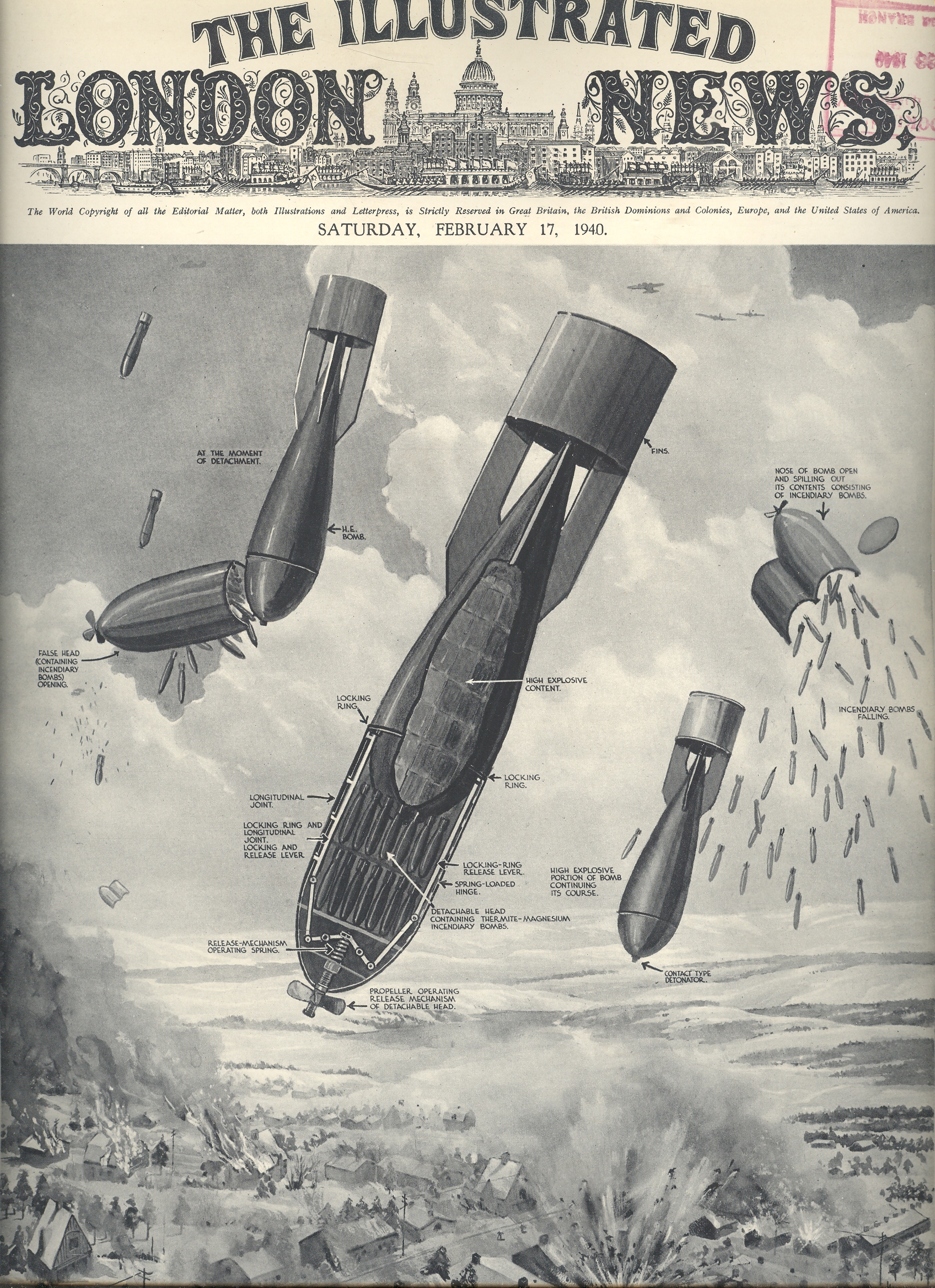
    This strikingly designed image is from the 17 February 1940
    issue of The Illustrated London News;
    the design is by G.H. Davies, the phenomenal ILN draftsman, and elegantly (and forcefully) depicts the innards
    of the bomb and its effect on its target.

    It is a spectacular and brilliant presentation of the
    new(ish) Soviet hybrid terror bomb that was being used in the non-existent
    attacks on Finnish cities.  [The 5’ bomb
    was made to be deployed in two sections: 
    the front end of the bomb inside the false nose cone contains dozens of
    incendiary bombs, released by a revolutions-generated cap propeller, which fall
    away from the main section of the bomb, which contains a high explosive.]

    Since the non-existent bombs that were not being used against
    non-military installations and were actually bread, the Finns gave the weapons
    the nickname of “Molotov’s Breadbaskets”.

    This was just a down-right nasty bomb, and the illustration
    shows it falling on and destroying a quiet town with no visible military
    advantage. The town not being bombed was called Sortavala, which—after numerous Soviet
    attacks in December 1939—was in actuality destroyed by Soviet air power on 2
    February 1940.

    The man ultimately responsible for this campaign and the
    murder of millions of his own countrymen through means of induced starvation,
    disappearances and ruthless killings—Joseph Stalin—was post mortem dispatched
    in much the same manner as the reasoning listed above.  Stalin was ignored to the point of
    non-existence, de-Stalinized and  left
    entirely out of the 50-volume second edition of the Great Soviet Encyclopedia2  published just a few years after his 1953
    death. Stalin executed his brutal and long-time political compatriot Lavrentii Beria, (1899 – 1953)
    right before his own death, ordering that people who owned the GSE to physically cut out the
    Beria entry
    . It is unfortunate that Stalin could not have been denied his
    existence 30 years earlier.

    Molotov, on the other hand, in spite of his enormous sins
    against humanity (as principle architect of the Great Terror, the extermination
    of millions of Ukranians, and etc.) was finally removed from government
    following Khrushchev’s de-Stalinization campaigns (i.e. by 1962)  and managed to live out the rest of his life
    alive, not dying until 1986 at the age of 96.

    (The “Molotov Cocktail” by the way was not named for him by
    Soviet soldiers or freedom fighters or whatever fighting for the USSR—it was
    named for the petrol bomb used by Finnish soldiers and civilians fighting
    against the Soviets invading their country  in 1939/11940 and again in 1943/4)

    Notes

    1. In 1940 Molotov was the foreign minister of the Soviet Union, and had just completed negotiating the
    Non-Aggression pact with Nazi Germany. 
    This gave the USSR free range for its relations (read “occupy/annex”)
    Estonia, Bessarabia, Latvia and the Ukranian/Belorussian-occupied section of
    Poland (to the Curzon Line), and to also conduct its war with Finland.  The fierce Finns never lost their
    independence, though they did lose a part of their country. 

    2. The GSE had a somewhat complicated publishing history,
    winding up with 65 volumes over its two editions, constructed with very
    questionable state-controlled X-Ray communist vision spectacles. There is so much in these volumes that is wrong/sanitized/fiction that I have no idea how a non-specialist might be able to use the thing.


  • “The First Thing is to Find Some Men” How to Get a Boy-Date, 1941

    JF Ptak Science Books LLC  Post 914

    [Continuing the posts “What Makes Human Robot Girls, 1941” and The Missing Pieces of Women, Pope Joan and the Proper Girl]

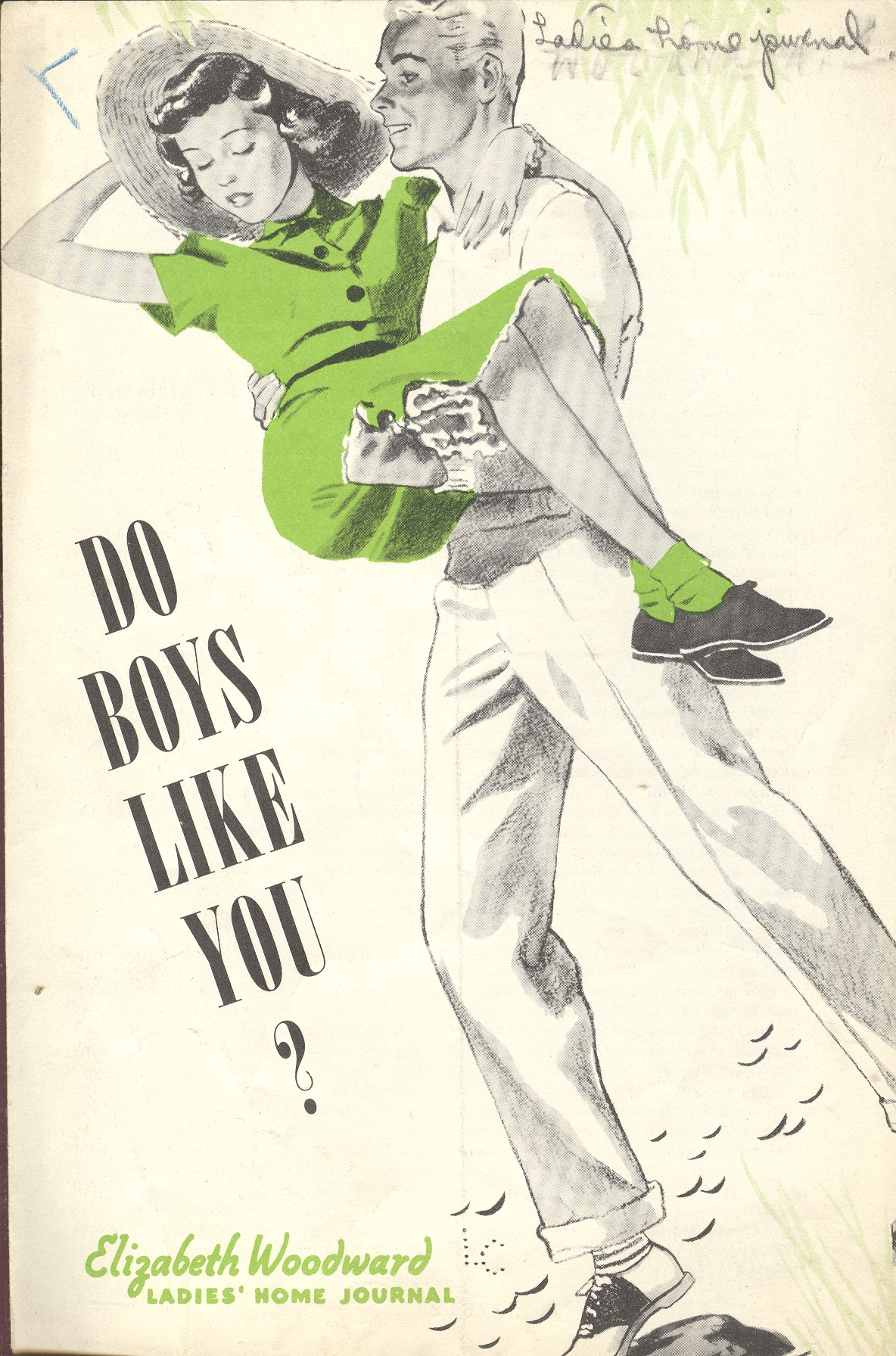
    Do Boys Like You? is
    the name-of-the-game for girls, evidently (“set out to make yourself worthy of a boy’s
    affection.  Just one boy—any boy…”),
    brought to you as a part of a long, continuing series by Elizabeth Woodward in
    the Ladies’ Home Journal in the early
    1940’s. Blog jan 20 boys like you

    This installment is about getting a boy for a date, and how to make
    oneself getable and datable and boy-friendly, all while maintaining the
    thinnest veneer of self-acknowledgment (“be adaptable as a chameleon”) as possible while staying true to “yourself”.  It is a cocktail of overall old-lady sense
    and deep ruffled bows writ by the hand of gender entrapment and not-so-subtle
    subjugation. Let’s get to it with some of the more archaeologically-interesting
    statements of this social-norms-establishing pamphlet:

    Paragraph: (Intro):

    “Do boys like you, or don’t they? Its as easy as that!  Either you have dates and go places with lots
    of boys, or they don’t pay any attention to you at all.”

    Paragraph: “A Female World”

    “…the first thing is to find some men.” (Which is odd
    because “men” is used only one other time beyond this reference—its all boys
    and nothing but boys.)

    “Short of throwing yourself on their (boys’) mercy, see if
    you can’t wrangle an introduction out of the girls who do know boys…”

    “Your parents could invite their friends over for dinner and
    ask them to bring along their son. And you do a good job on him!” (I’m not sure
    what that “job” is.)

    “They (boys) can’t find you if you’re packed away in a mob
    of females.”

    Paragraph: “A Rank Outsider” (on being the new girl in a
    community):

    “The girls have things under control and they don’t want any
    interference from you.”

    “You might know more than they do, and you just might talk
    down your pug nose at them.”

    “…you’d better get accustomed to traveling alone…”

    “Give them every chance to find out that you aren’t high
    hat, that you like the same things they do, that you aren’t out to sniggle
    their men away…”

    “When they (the girls) accept you, the boys will too…”

    Paragraph: “an Old Story”

    “(Boys) are so used to looking at you that they think of you
    as furniture.You’ve got to be new!”

    “If you’re fat and pudgy, make yourself lean, sleek and
    smart.”

    Paragraph “Take it Easy”

    “…its going to take practice to make boys like you. Take it
    easy. Set out to make yourself worthy of a boy’s affection.  Just one boy—any boy…”

    Paragraph “A Few Gentle Hints” (Seems that we’ve gone way beyond this by now.)

    “Don’t run around with girls who are dud.”

    “Don’t go in pairs with a girl who is overwhelmingly popular…Better
    pick a girl who will give you an even break.”

    “Don’t languish for some local ‘hero’ who is sought after by
    all the girls in town.  He may be
    good-but he’s far out of reach…”

    “Don’t pick on a lad who has never had a date with a girl.”

    “Don’t be careless or sloppy when you’re talking with boys…”

    “Don’t expect (or even hope) that every boy you meet will
    ask you for a date.”

    And (not quite) lastly, but should’ve been:

    “Don’t go around thinking about boys constantly.”

    But lastly thus:

    “Act as though you are having fun. Be alive, gay and enthusiastic. Be interested in what’s going on. Be sweet, tactful, and adaptable as a chameleon. Have definite likes and dislikes, but don’t be so rigid
    that you are stubborn, opinionated and difficult to get long with. Be carefree,
    casual, easy, willing to play and fun to play with. And don’t be shy about
    liking the boys.

    THEN THE BOYS WILL LIKE YOU! [Emphasis in the original.]

    My poor mother would’ve been reading this…

    (Thanks to Jeff Donlan for pointing out that the chap on the
    cover carrying the girl away has joined the fabric of her skirt to (1)  hold
    onto and steady her and (2) make sure her skirt doesn’t fly up and out and is not actually touching her thigh…)


  • When a Compliment is Not: Newton and Hooke and the “Shoulders of Giants”

    JF Ptak Science Books LLC  Post 912

    I
    was tooling looking for vision quotes and came upon this by Samuel Taylor
    Coleridge (an unusual stomping ground for me) from The Friend (published in 1828):

    “The dwarf sees farther
    than the giant, when he has the giant’s shoulder to mount on.
    “

    This
    made me think of the over-quoted sentiment quoted again by Isaac Newton

    “What Descartes did was a good step. You have added
    much several ways, and especially in taking the colours of thin plates into
    philosophical consideration. If I have seen a little further it is by standing
    on the shoulders of Giants.
    “

    Newton wrote this in a
    letter (5 February 1676) to the immensely creative workhorse Robert Hooke1.  He was a tireless, relentless observer and
    experimenter, who lost little effort in a stranded idea and pursued interesting
    and problematic questions relentlessly.  More than others too he chased
    his won glory—minor but long and insistent—the years of which wore thin on many
    people in the scientific community.  But there were many characteristics
    of the man that made him not quite so lovable and endearing—not that Newton was
    any of those things, as he was not, but if you are going to be a secondary luminary
    to a super nova you’ve got to have something else going for you that the other
    man doesn’t have—sharing, helpful, greatly generous—to get you into the long
    pre-dusty pages of history. Also it would’ve helped if Hooke chose his battles
    with a little more aplomb and ingenuity—the war which began in 1672 with Newton
    went very badly for Hooke and followed him to the grave (and far beyond). 
    Newton and Hooke had many disputes—most notably
    in optics—basically because Hooke pursed Newton
    (among many others) for expropriating his ideas.  Hooke was over the line on this and probably
    pushed the point too far—Newton
    was enormously annoyed by this and other Hooke contacts and wasted no effort in
    trying to pay Hooke back the favor over the years.  Newton
    was famously sharp and could fashion that intelligence and wit into a terrifically
    nasty tool against those who bothered him.

    And
    so back to the “shoulders” letter. This always struck me as a bit too
    melodramatic for a Newton,
    and also a little too congratulatory for a field that he basically owned,
    especially since he was a towering egoist (and not without cause).  But he did pay Descatres (“des Cartes” in the
    original) a compliment; though I could not at all think of Newton referring to the dreaded Hooke as one
    of the giants’ shoulders he was standing upon. 
    Newton’s
    reference to “giants” might also have been a swipe at Hooke’s physical stature,
    which was terribly slight, small and crooked. 
    SO I think that Newton
    was referring to Descartes, and decidedly not Hooke.

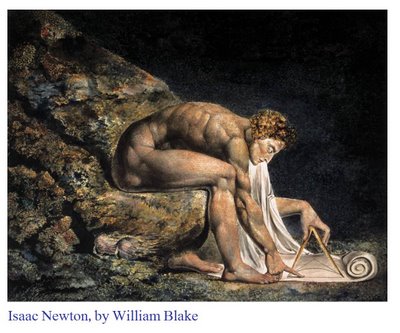
    Blake_Newton

    So
    this semi-ubiquitous scientific laudatory quote is perhaps not quite so.  Kinda like the very well known painting by
    William Blake featuring Newton
    as a naked geometer, figuring out the world, a color-tone praise of the great
    physicist.  Or perhaps not.  Blake I think simply didn’t like Newton, didn’t
    care for the scientist taking away the mystery of the world that Blake loved so
    much—especially in regards to color, which Blake needed to stay interpretative
    and mysterious.  Newton took part of that away, and I think
    Blake exercised a little payback in his artwork. 

    It
    seems to me that if one looked at the “shoulder” quote and the Blake artwork as
    works that were insults and not praises, they can be easily seen that way.  Its all a matter of perspective.

    Notes

    1.
    The 28-year old Hooke published the results in a gorgeous and revolutionary
    book, Micrographia (a lovely e-text edition appears at Gutenberg, here)
    in 1665, which became an instant best seller and highly praised and valued.
    (Samuel Pepys, perhaps among the shiniest stars whose imprimatur was like a
    royal blessing, said the book (was) “the most ingenious book that I ever
    read in my life.”) There is no telling what the people of the mid-17th
    century thought of seeing such incredible discoveries in the little
    semi-invisible stuff that made up their normal, daily lives.  The only
    thing that somewhat equates to this would be if the first images of the Hubble
    were those of Earth-bound objects whose detail had previously been
    unknown.  Hooke’s observations and drawings of things like the common flea
    were just an astonishment—that such a creature of “low order” could have such
    intricate detail and design was a complete revelation.  The drawings of
    the fly’s eye, too, was an inescapable wonder, an incredible object to consider
    as having any detail pre-microscope, and then revealed to have
    unimaginable design and elegance. 


  • Missing Pieces of Women: Pope Joan & the Proper Popular Girl of “The Ladies’ Home Journal”

    JF Ptak Science Books LLC  Post 910Pope joan weltknronik

    Listening
    to these dreadful stories this morning on NPR about the Vatican’s relations
    with the Roman Jewish community and the abortive WWII papacy of Pope Pius XII—the
    papacy of blank and missing compassion—I thought about the missing Papacy of
    Pope Joan.  Whether or not she existed is
    a question of debate; whether she was a pope or not is perhaps even less
    debatable.  What seems not impossible
    though is the ability of a large institution like the Catholic Church to make
    the entire issue of unwanted history or legacy to go away. 

    The
    historicity of this papacy is long and shows the murkiness of the earliest
    writers on Joan. She was supposed to have served as pope between Leo IV and
    Benedict III around the year 850.  The
    fuller versions of her history turn up in the 14th century, although
    the earliest mentions of a female bishop of Rome go back to the 9th
    century—Joan remains unnamed though until the 13th century when
    Martin of Opava’s Chronicon Pontificum et Imperatorum1(referring to
    Joan as “John Anglicus” or “John of Mainz”) does so for the first time.

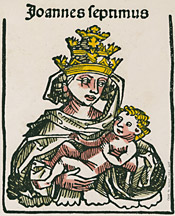
    Joan apocJoan
    escapes the Middle Ages with a little flair, but doesn’t do so well in the
    Renaissance.  As a Missing Piece in the
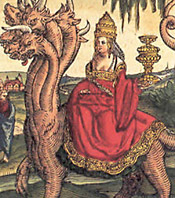
    history of the Papacy she turns up not-so-well represented:  for example, she is seen here looking good
    but turning up bad overall as the Whore of Babylon2.  She was treated as a disgrace, and impostor,
    someone who demeaned the Catholic institution by her sex and deception, though
    god knows that the history of the papacy is filled with horror stories3 that
    far exceed the reach of mere deception.

    So
    I was thinking about the piecing-together of the Pope Joan jigsaw and
    remembered an actual “womanly” jigsaw that could actually be pieced
    together.  This bit came together as a
    result of a post I did here just two days ago (What Goes Into Making Human Robot Girls, 1941), and was one of a series of
    intolerably heavy eight-page pamphlets cementing the structure of female social
    intercourse at the hands of the magazine The
    Ladies’ Home Journal
    . 

    Blog jan 13 Puzzle cvr

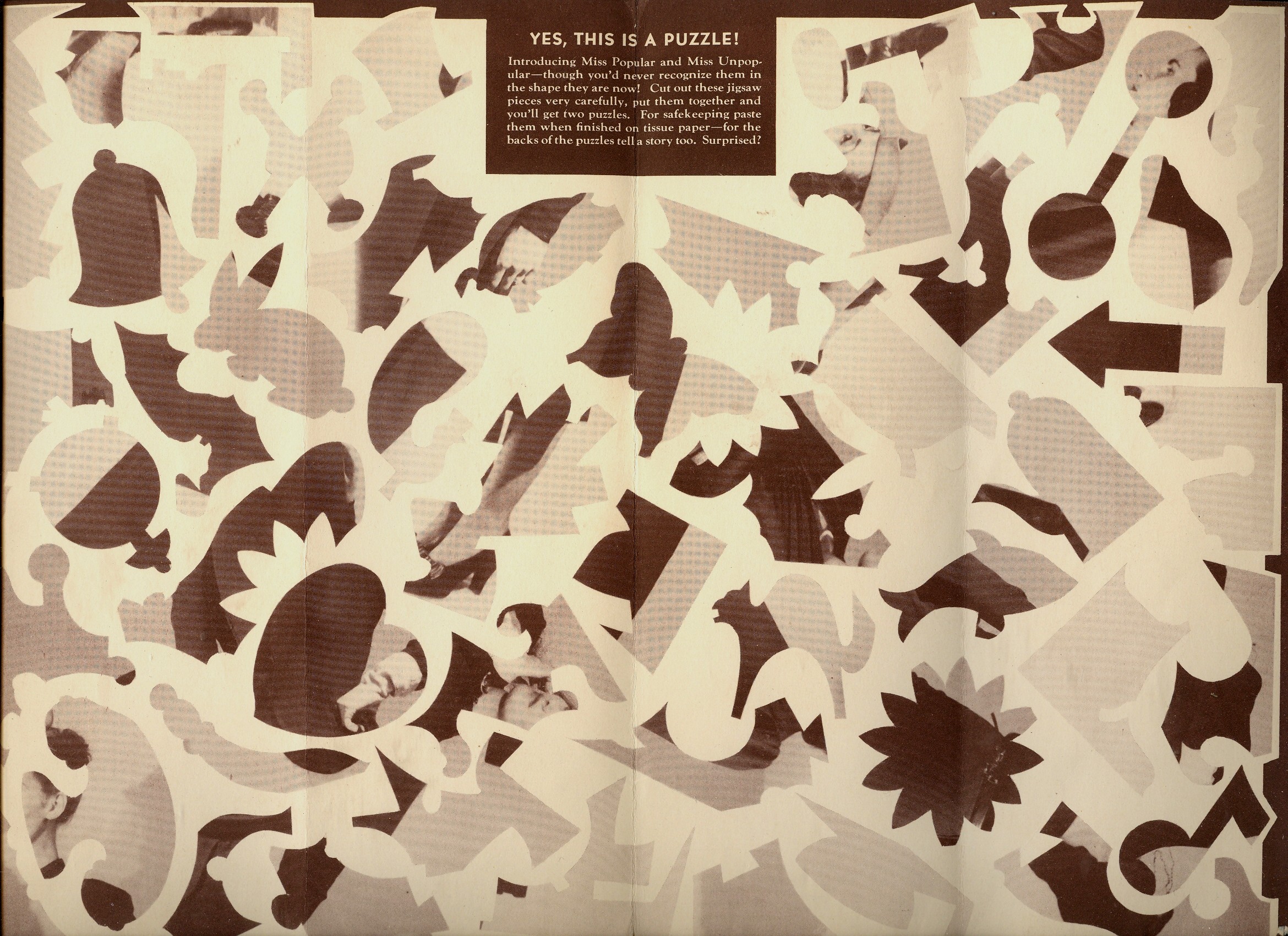
    One of these
    publications—hardly a pamphlet per se, just a folded 11×8 inch sheet of heavy
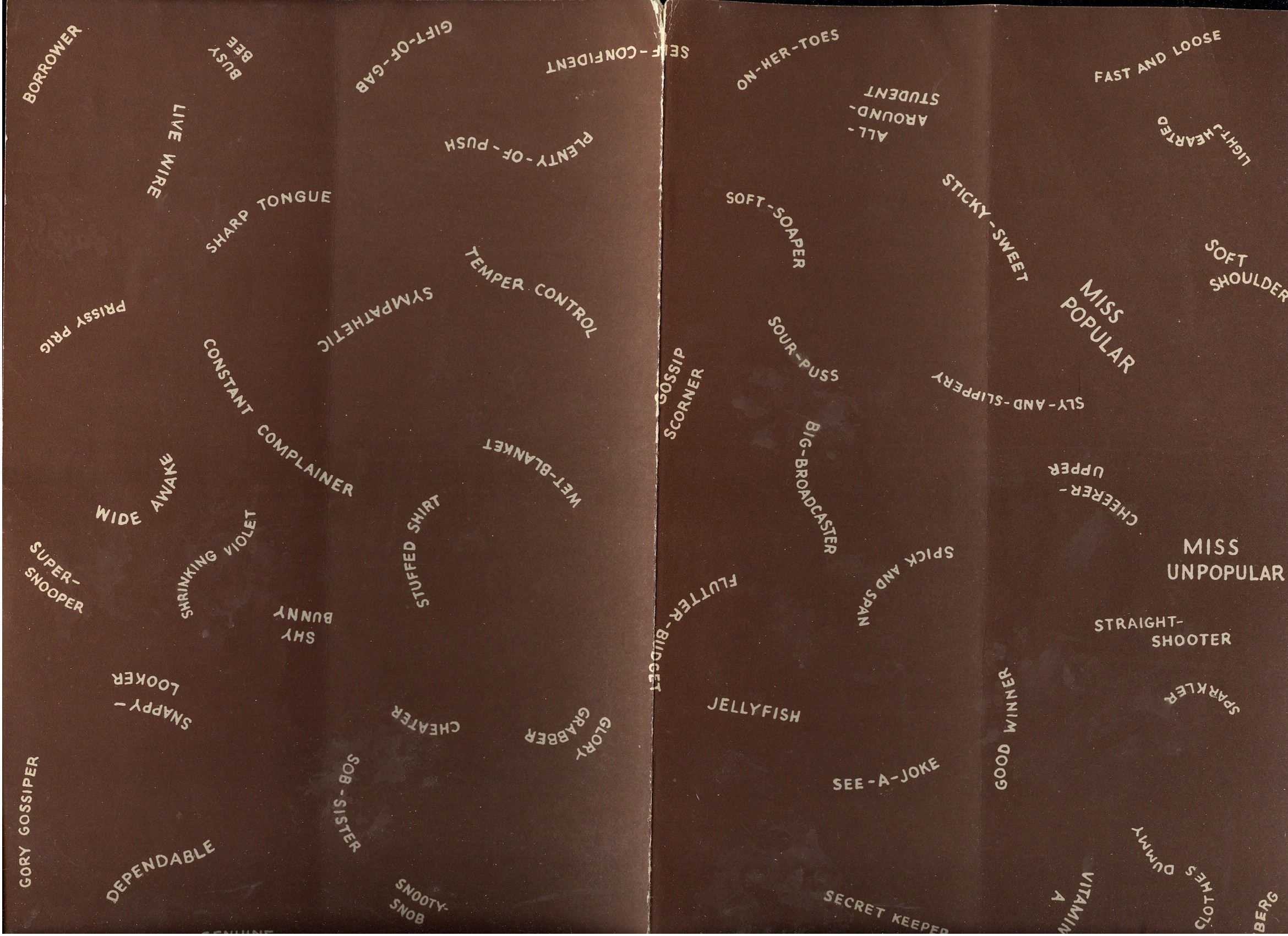
    stock—came without a title, presenting itself as a puzzle. The puzzle pieces
    are parts of two women, “Miss Popular” and “Miss Unpopular”: the reader was to
    take the publication, cut out the pieces, and reassemble them into hidden role
    models, with phrases describing each on the back of each puzzle piece, all done
    without the slightest possible understanding of metaphor or irony.

    Miss
    Popular phrases/descriptors
    : live wire, plenty of push, wide awake, snappy
    looker, dependable, genuine, secret keeper, on-her-toes, spick and span, light
    hearted, all-around-student, straight-shooter, gossip scorner, sympathetic,
    cheerer-upper, sparkler.

    Blog jan 13 Puzzle pzl

    Miss
    Unpopular’s phrases/descriptors
    : glory grabber, sour puss, cheater, sob-sister,
    snooty-snob, wet-blanket, borrower, prissy prig, sharp tongue, gory gossiper,
    clothes dummy, iceberg, sly and slippery, jellyfish, sticky-sweet, soft soaper
    (?) and of course fast and loose.

    And
    so girls—or young women—picking up this publication in 1941 were expected to
    cut this thing up and piece together the proper (paper) role model using the
    reinforcing traits of meager acceptance printed on the back of the puzzle
    piece. And poor Pope Joan, whether she was real or not, whether she was
    imagined or sunk purposefully away into the Pandora’s sisters’ boxes of forced
    forgetfulness—it really doesn’t matter—is just another woman or part of woman’s
    puzzle whose blank or missing piece has been extruded, forced into a form more
    friendly to a world less friendly to women. 

    Notes

    1.According
    to the Chronicon:  “John Anglicus,
    born at Mainz,
    was Pope for two years, seven months and four days, and died in Rome, after which there
    was a vacancy in
    the Papacy
    of one month…” [See continued reading section below for more]

    2.
    Babylon was the
    representation of the seat of evil on the Earth.  From the “Book of Revelation” (17:3–4):
    “And I saw a woman sitting on a scarlet beast, full of names of blasphemy
    with seven heads and ten horns. The woman was garbed in purple and scarlet, and
    gilded with gold, gems, and pearls, and bearing a golden goblet in her hand
    full of abominations and filthiness of her fornication.”

    3.
    Borgia and the Medicis not being the least of the story: see E.R. Chamberlin’s The Bad Popes, (1969)