A Daily History of Holes, Dots, Lines, Science, History, Math, Physics, Art, the Unintentional Absurd, Architecture, Maps, Data Visualization, Blank and Missing Things, and so on. |1.6 million words, 7500 images, 4.9 million hits| Press & appearances in The Times, Le Figaro, Mensa, The Economist, The Guardian, Discovery News, Slate, Le Monde, Sci American Blogs, Le Pont, and many other places… 5000+ total posts since 2008.

Category: Blank and Empty Things; A History of

  • The Sanctity of Sainted Truck Drivers, 1942

    JF Ptak Science Books LLC  Post 1005

    April 15 trucker 1

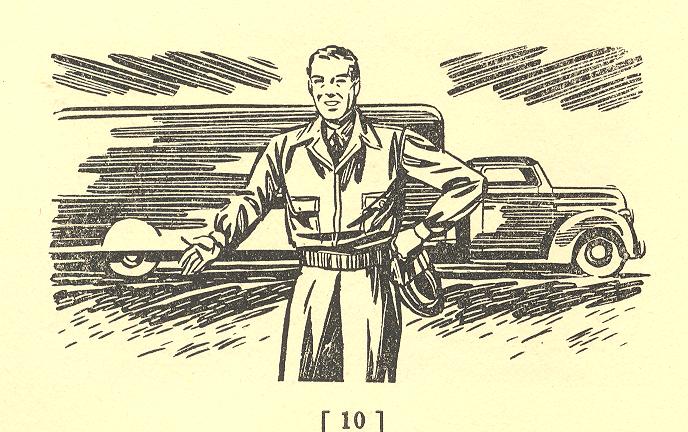
    Every so often I meet a pamphlet that makes me want to travel back in time, even if that time was mostly a wispy bit of creative analogy.  Men You Like to Meet (subtitled Stories of Highway Heroes), written and published by the American Trucking Association in 1942, is one such example:  what a handsome truck!  The driver greets you with his snappy brimmed cap in hand, neat jacket and a tie (!), looking like he takes his job seriously.  (On the other hand, I take my job seriously, and I don’t wear a tie; I do know though that people take me more seriously the more clothing I wear.) 

    April 15 trucker 3
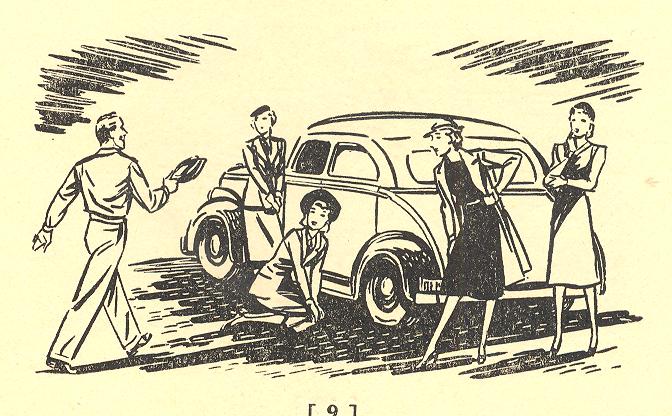
    The Trucking Association wasted absolutely no time in this publication in telling he very many stories of the superb highway behavior of its members-it fills the publication with stories of heroism, courtesy, delightfulness, courage and general human respect with as much as could possibly fit in 23 pages including illustrations). Here, four women can do nothing with their tire but look at it, waiting for the knoght of the road to come and help them out.

    April 15 trucker 2
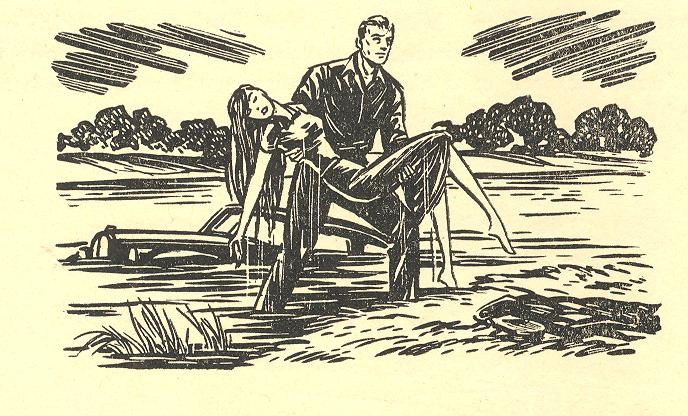
    (I’m not sure why this woman is unconscious and missing her shoes–the car seems to be only about half covered.  I’m surprised that the trucker lost his hat, though he did have the presence of mind to make sure that the unconscious woman’s blouse covered her knees.)

    Well.  The roads were evidently filled with Good Trucking  Samaritans, and the Trucking Association wanted the public to know that–especially when they were butting heads in D.C. with the railroads and battling a poor public image.  I’m not saying that truckers weren’t/aren’t saints–I’m just saying that I like the idea of truckers with caps nd ties.  


  • Monetizing Madness

    JF Ptak Science Books LLC  Post 1004

    Hail, horrors! hail
    Infernal world! and thou profoundest hell,
    Receive thy new possessor, one who brings
    A mind not to be chang’d by place or tie.–Milton

    I wonder when it was that people began to institutionally
    capitalize the monetary value of madness? 
    People of course have been “mad” for as long as there have been people;
    but the issue of centralizing them, of locating people with mental disorders,
    or collecting folks who displayed far-ranging attributes of the norm, I think
    is relatively recent.  Certainly it is a
    more modern invention of capitalizing on madness, as “hospitals for the insane”,
    “institutions for the feeble-minded”, “lunatic asylums” and so on are mostly an
    invention of the 17th century. 

    In many instances these institutions were for-profit
    ventures, and most of these were run for the benefit of making money more
    helping the people who would be confined there. 
    It was certainly not pretty.

    The conditions for being sent to one of these places varied
    from country to country, region to region, judge to judge.  Insanity was not a necessary condition,
    either—many wives who stood in the way of mistresses wound up conveniently
    out0of-the-way in mental institutions; it was also a way to gain control of a
    relative’s estate.

    The later may be true in the very celebrated case of William
    Belcher, who spent seventeen years in a private asylum (from 1778 to 1795).  Belcher wrote (as “a victim of the trade of
    lunacy”) about his experience with vindictiveness and vitriol in his Address to Humanity: Containing a Letter to
    Dr. Thomas Monro, a Receipt to Make a Lunatic and Seize his Estate, and a
    Sketch of a True Smiling Hyena
    (1796, which can be seen in full here).

    Another famous case was that of John Perceval, who recounted
    his story in his 1838 book, A narrative of the treatment experienced by a
    Gentleman during a state of mental derangement designed to explain the causes
    and nature of insanity, and to expose the injudicious conduct pursued towards
    many unfortunate sufferers under that calamity.
     Perceval did actually have some
    sort of something going on, a suspension of his normal facilities, as he says
    in the first lines of his book: “
    “In the year 1830, I was
    unfortunately deprived of the use of my reason. This calamity befel me about
    Christmas. I was then in Dublin.
    The Almighty allowed my mind to become a ruin under sickness – delusions of a
    religious nature and treatment contrary to nature. My soul survived that ruin.”  But the base of it all was  the seizure of his considerable property,
    against which he could barely fight. 
    Perceval continued his fight against the lunacy trade for the rest of
    his life (he died in 1876). As a matter of fact Perceval was one of the founders
    of one of the first patients’-advocacy groups, the very bouncily-named Alleged Lunatics’ Friend Society. 

    Evidently the was a
    certain porosness to the definitions of “normalcy” and “lunacy”, the
    distinctions between the two sometimes settled for a cool lump payment. 


  • Lonely Man-Rakers in a Dry Lake Bed, 1567

    JF Ptak Science Books LLC  Post 1001       

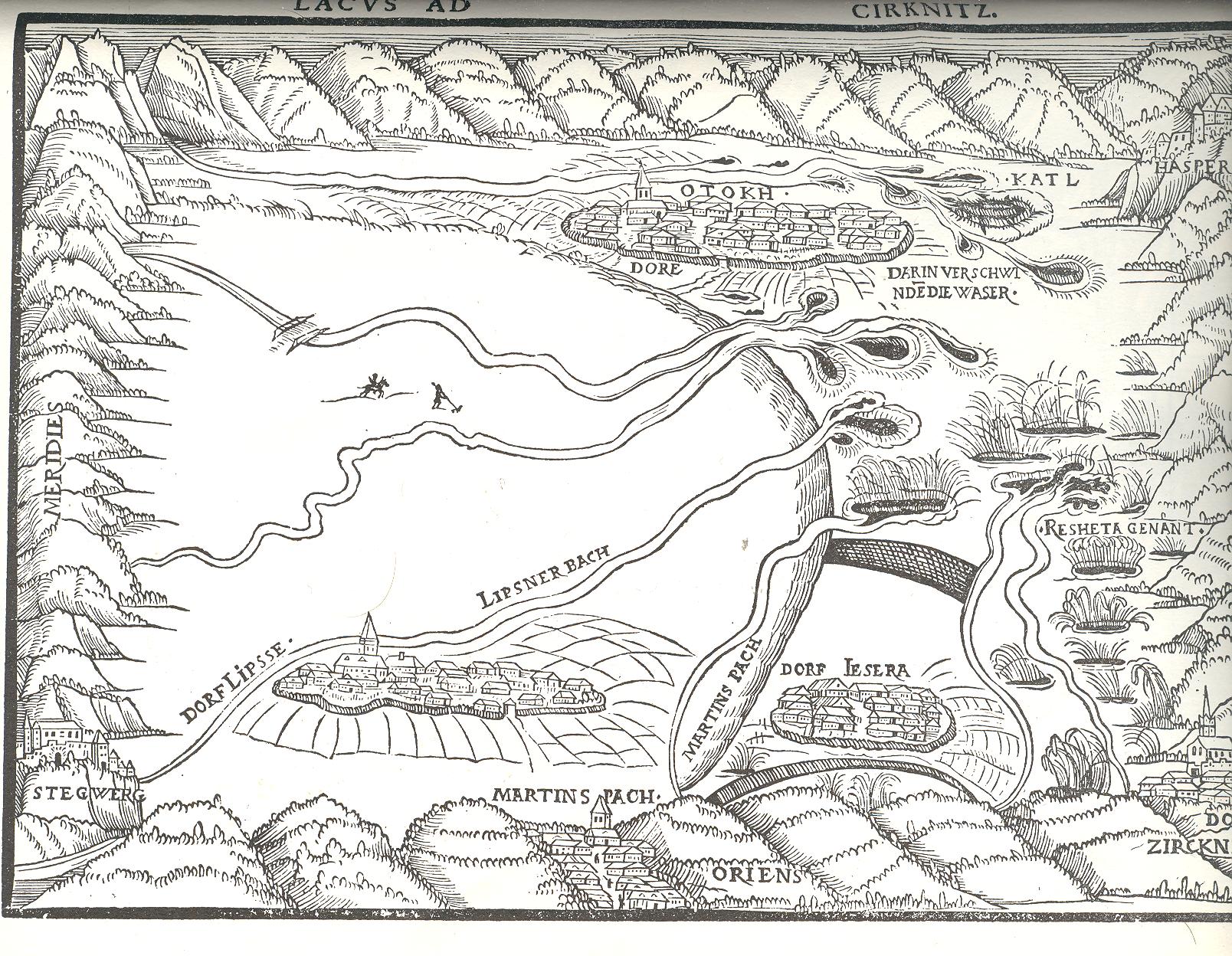
    This odd, semi-naïve “outsider-esque” map is found in George
    Wernher’s (d. 1567)  De admirandis Hungariae aquis hypomnemation depicts
    an intermittent lake region of the Inner Carniola region of Slovenia—more  precisely it shows the “disappearing” lake of Cirnitz,
    which is near the town of Otokh.  The map
    (which is oriented west/east

    Blog--april 8 rake

    at top/bottom) I think is showing the lake when it
    is “disappeared”.  What happens evidently
    is that when the water table rises it causes the groundwater and underground streams
    to also rise, seeping through the limestone lake bed and rising through caverns
    and sink holes; it becomes a periodic lake, though the appearance and disappearance
    of the water has been the subject of wide mytho-specuilation for the folks who have
    lived in the region for the last few thousands years.  

    The towns of Otokh and Lipsse are shown as walled entities,
    and according to some old gazetteers that I’ve consulted would actually be
    surrounded by the lake from time to time. 
    To further enunciate this the cartographer seems to have included cultivated
    lands around these towns–no doubt the resulting soil would’ve been rich I nutrients.  Also the eight rivers that feed the lake are
    shown here, ending at this time in small lakelets. 

    Although I liked the feel of this map it is not what
    attracted me enough to write this post—the main point of interest is at the center
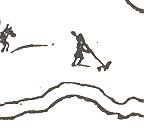
    of the map.  There, standing to the right
    of the horse and rider is a man working with a rake.  Blog--april 8 rake det
    These are the only two human figures in the
    map, and one of them is holding a rake. 
    Probably the person, along with the horse-and-rider and the small lake-bed
    bridge across one of the rivers were included to hammer home the point that the
    lake was gone, and that someone might be farming it. 

    In any event, the stick person looks like a lonely figure.

    I think that a good dictionary could be compiled of lonely
    figures like this that appear as “fillers” in maps and prints. These people have made a number of appearances in this blog, such as

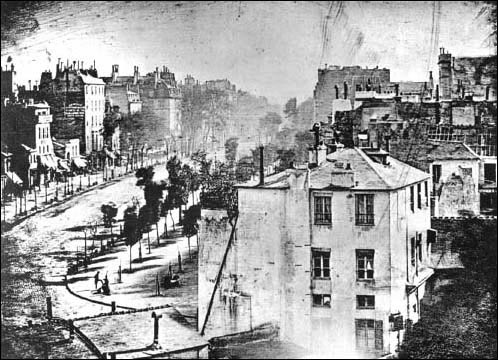
    in the case of the first photograph of a human
    being. Well, actually, it is the first photograph that just happens to capture
    a human in the emulsion. Since the  exposure time was so terribly long for
    this image to be made, the moving people and horses and carriages on the
    street, all of the city-life bits, were necessarily spectral, and mostly  invisible, in the photograph.  Only the
    stationary

    April 8 street items were captured, and the only people captured here were two
    figures in the foreground, doing something or other (shoe shine?) that made
    them still for at least five minutes–long enough for their anonymous but
    famous photonic impressions to be captured.  April 8 detail


  • The Big Lonesome: Masterpieces of Architectural Loneliness–Elevated Roadways

    JF Ptak Science Books LLC  Post 994

    [This post part of a long and continuing series on Blank, Missing and Empty Things, #54]

    Blog--mar 31--lonesome 1
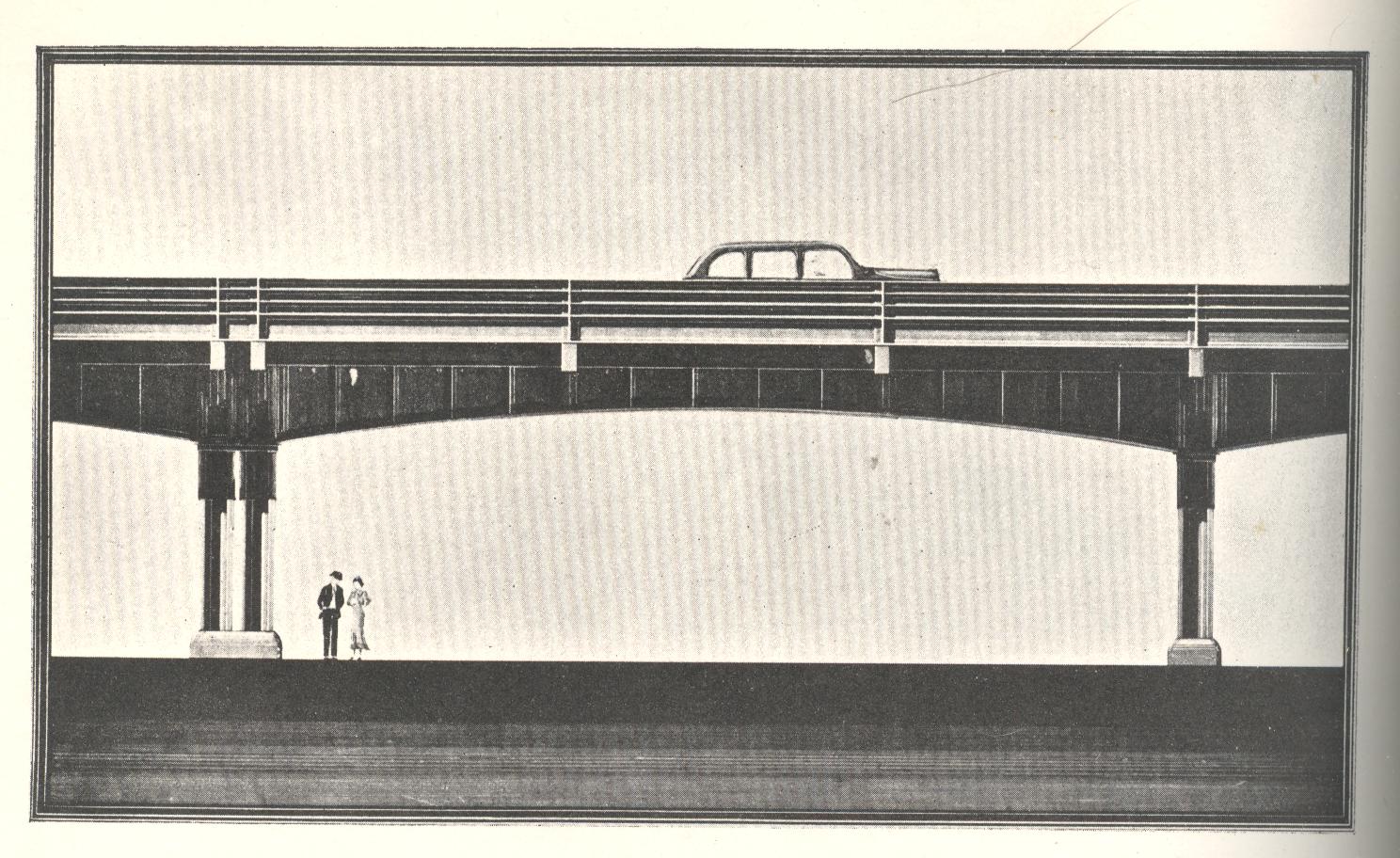
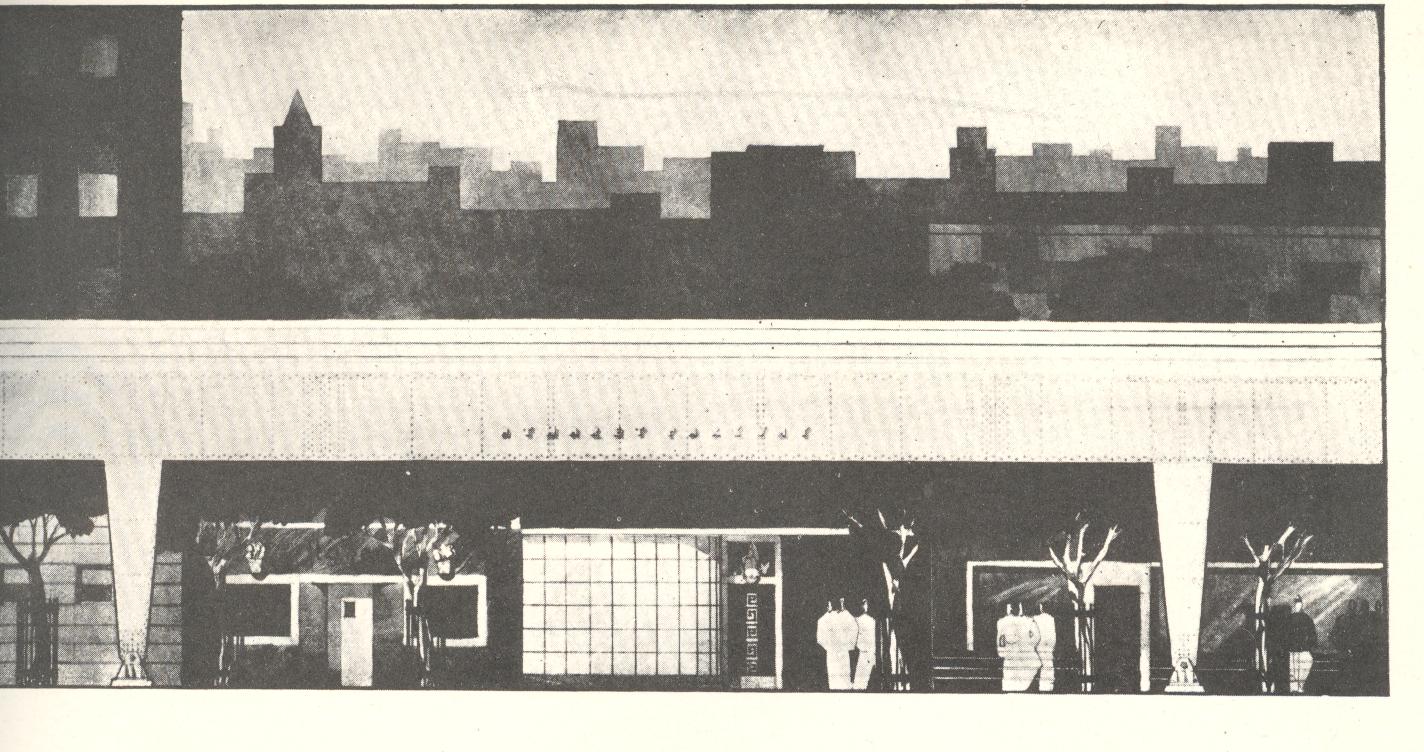
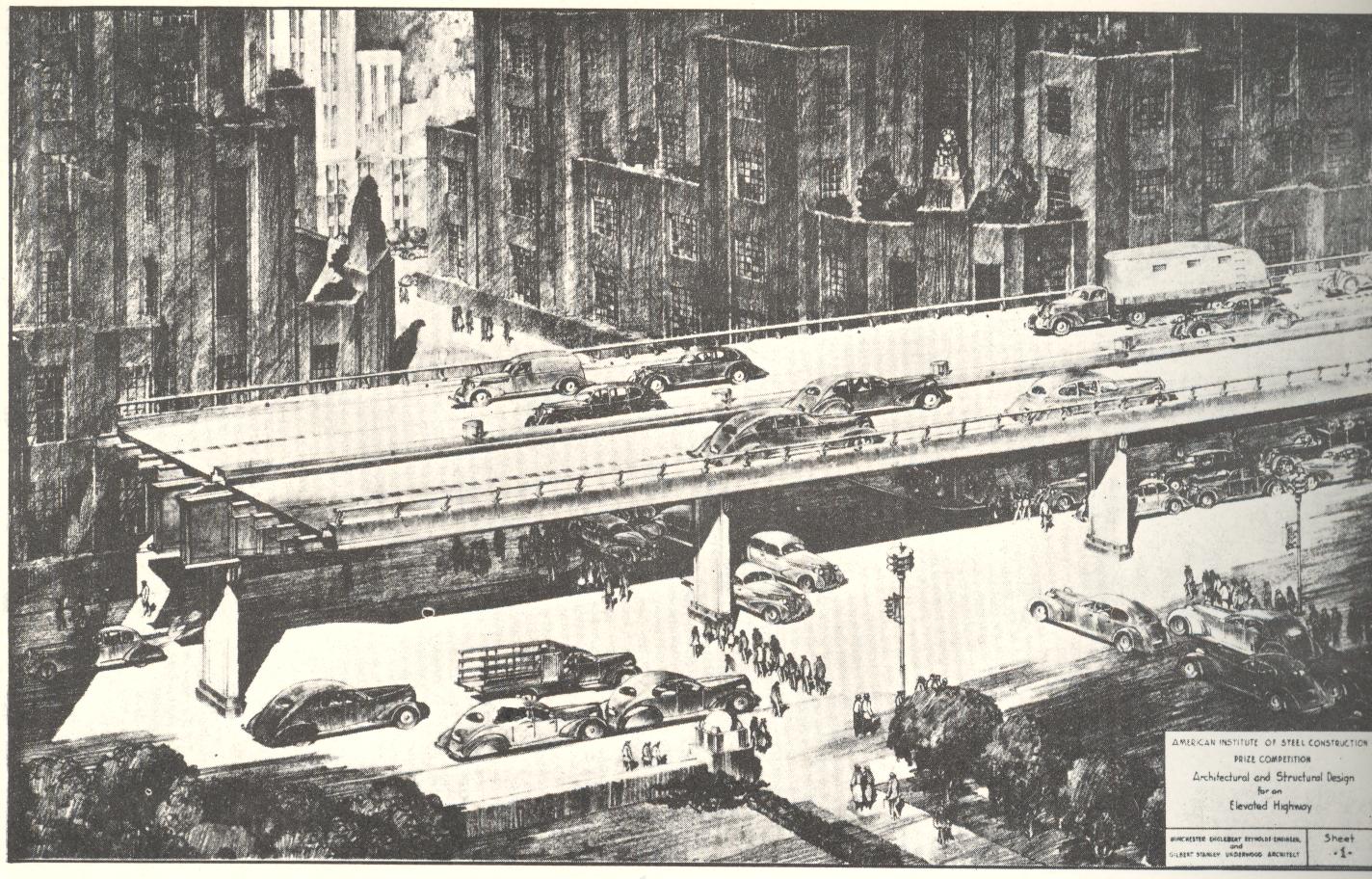
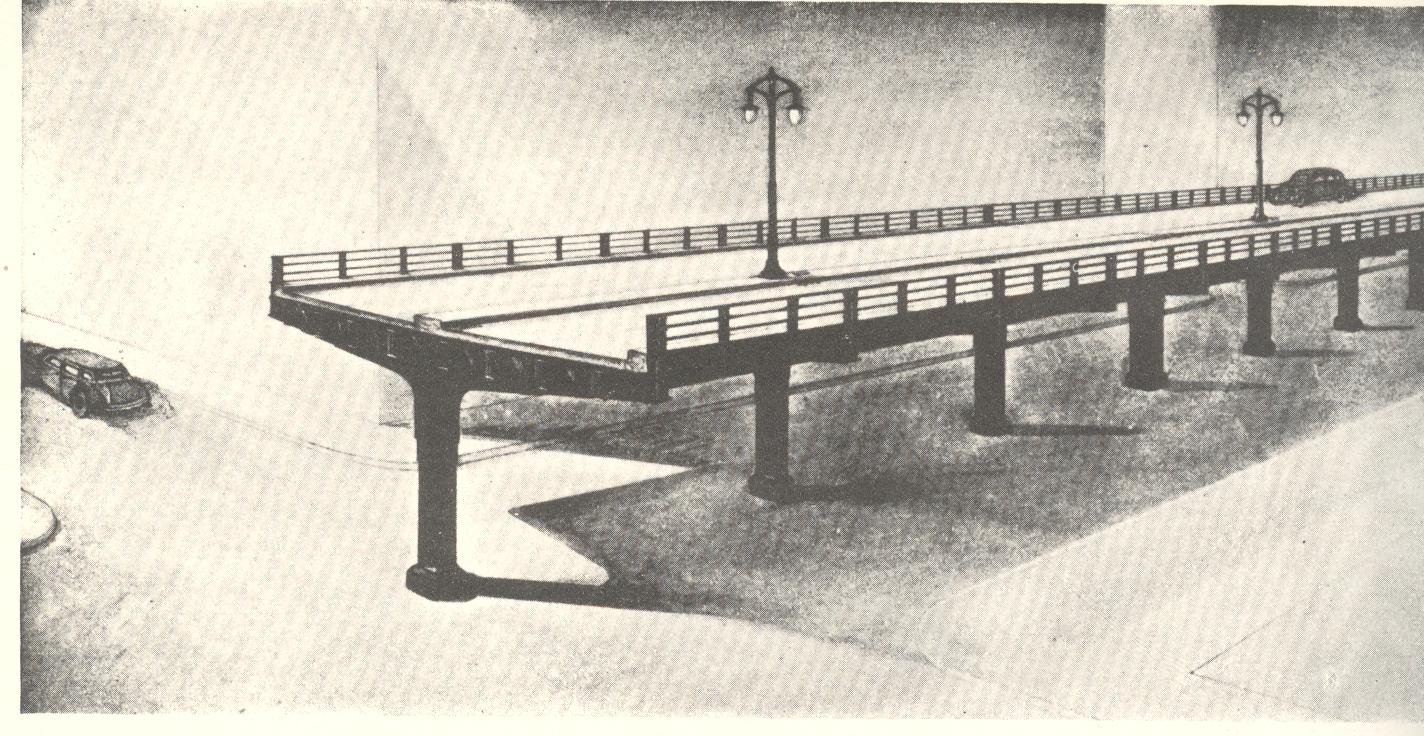
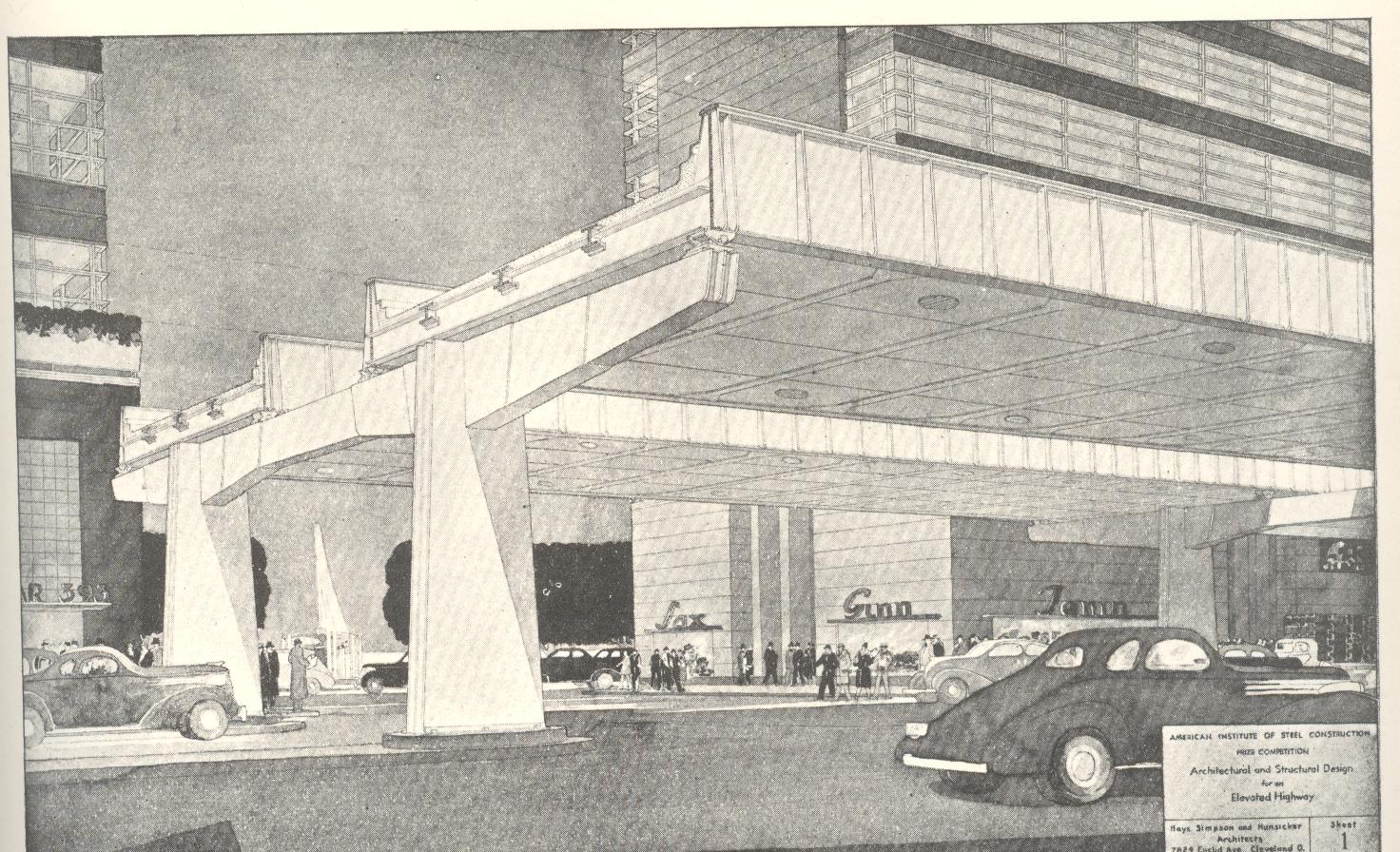
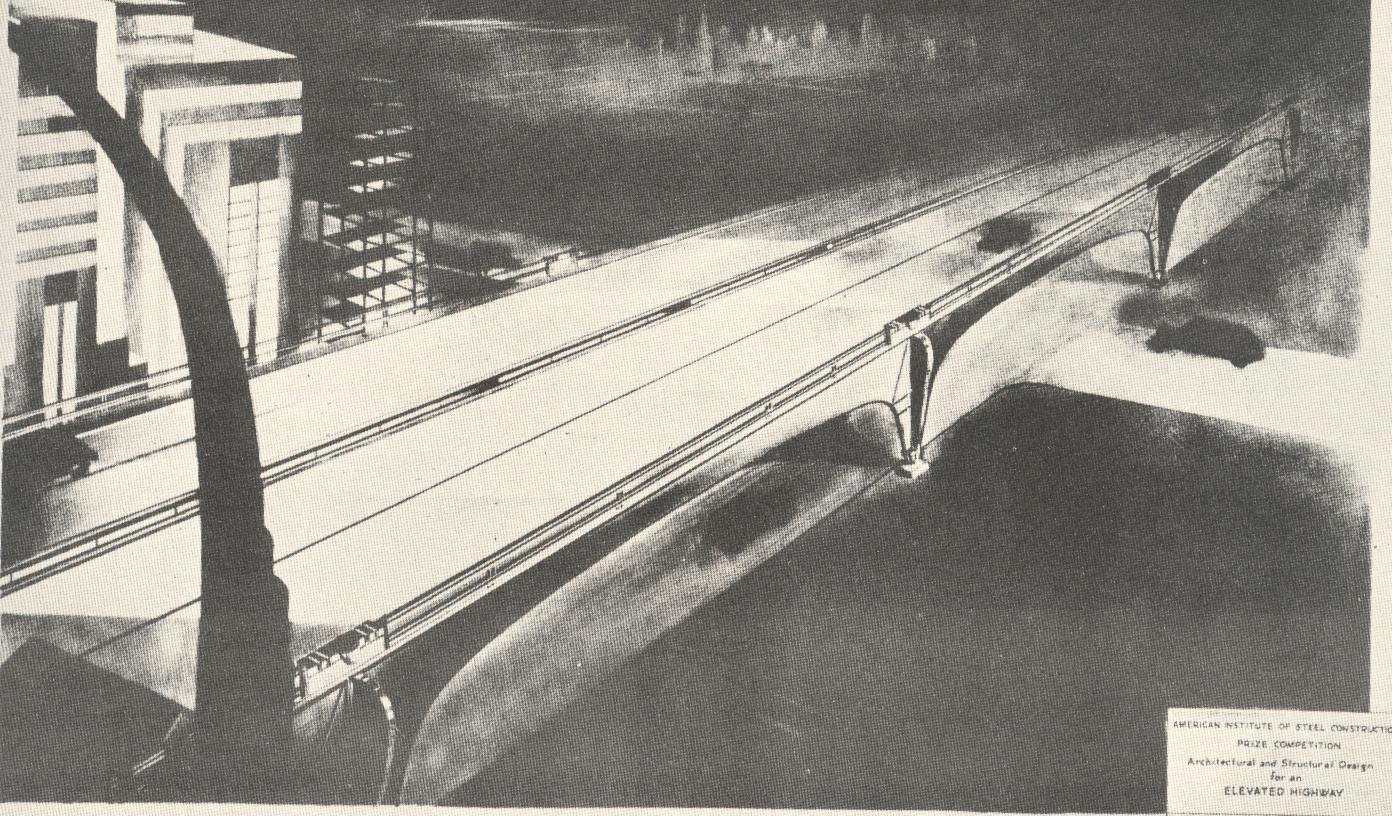
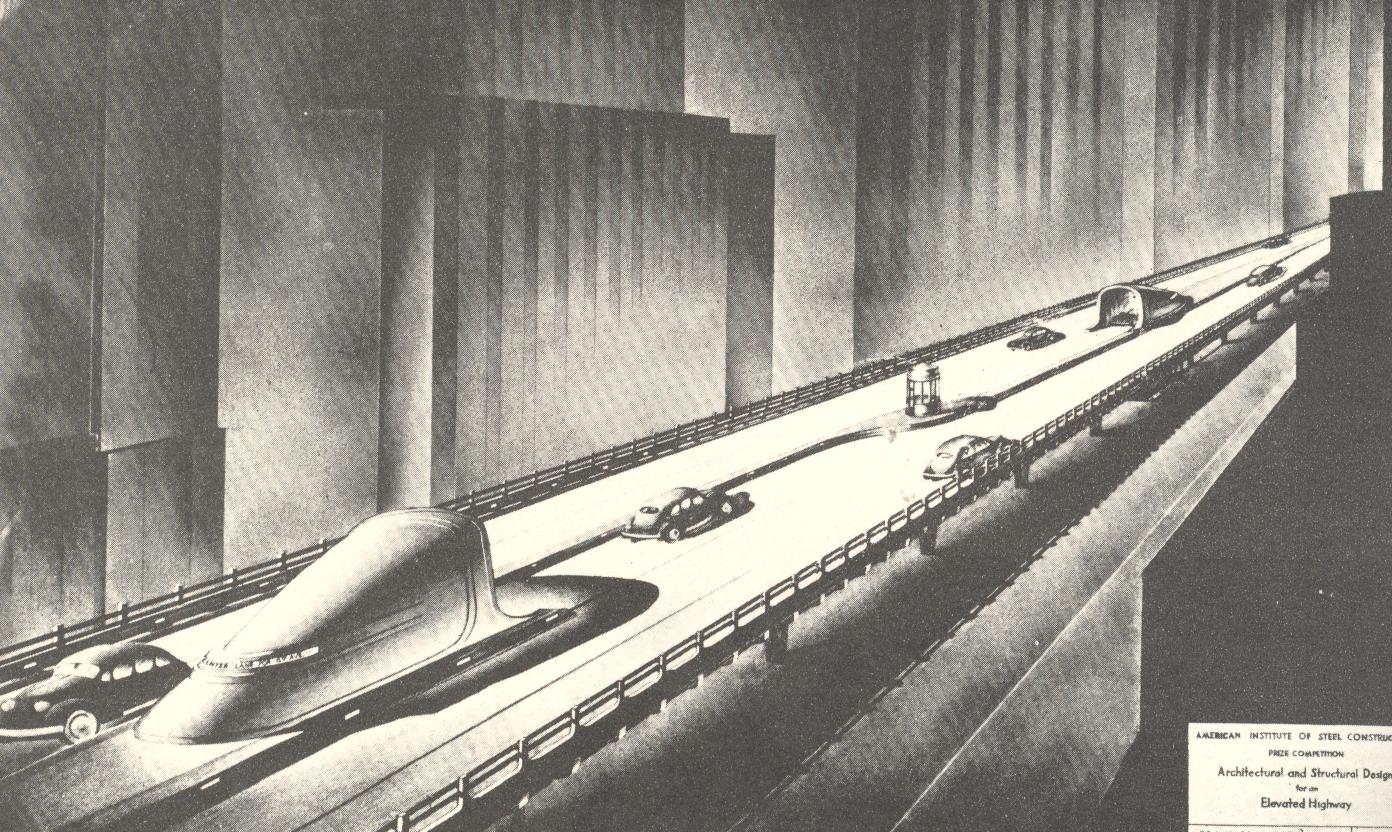
    If Edward Hopper was a practicing member of the American Institute of Steel Construction and was a civil engineer, he may have rendered his creations much in the same curious way as  those seen below.  I found these designs in an obscure publication, Prize Designs Submitted in the Elevated Highway Competition for 1938, and I found them to be utterly fantastic, lost bits of artistic expression and strong emotion sucked into a vortex of automotive steel and concrete.  They are just superb examples of found art that seems to play utterly against the purpose of the object, and do seem masterpieces in an unusual (and instantly-created) genre of “Unintentionally Cross-Expressive Art”.  They have a feel of Outsidery-Edwardy-Hoppery to them–they feel cold, a wet chill, with a coppery audio quality to them…images that make you want to go home and sit in a comfortable chair.

    Blog--mar 31--lonesome 2 

    And not only are they lonesome; they are also foreboding:

    Blog--mar 31--lonesome 3
    Blog--mar 31--lonesome 4
    Blog--mar 31--lonesome 5
    Blog--mar 31--lonesome 6
    Blog--mar 31--lonesome 7

    Magnificent! And all once hidden away, but no longer.


  • Outsider Logic Department: the Fabulous Curative Necessity of Fatty Meats

    JF Ptak Science Books LLC    Post 989

    [see also my related posts on Women Meat Pioneers and of course Meat String and Curled Hair]

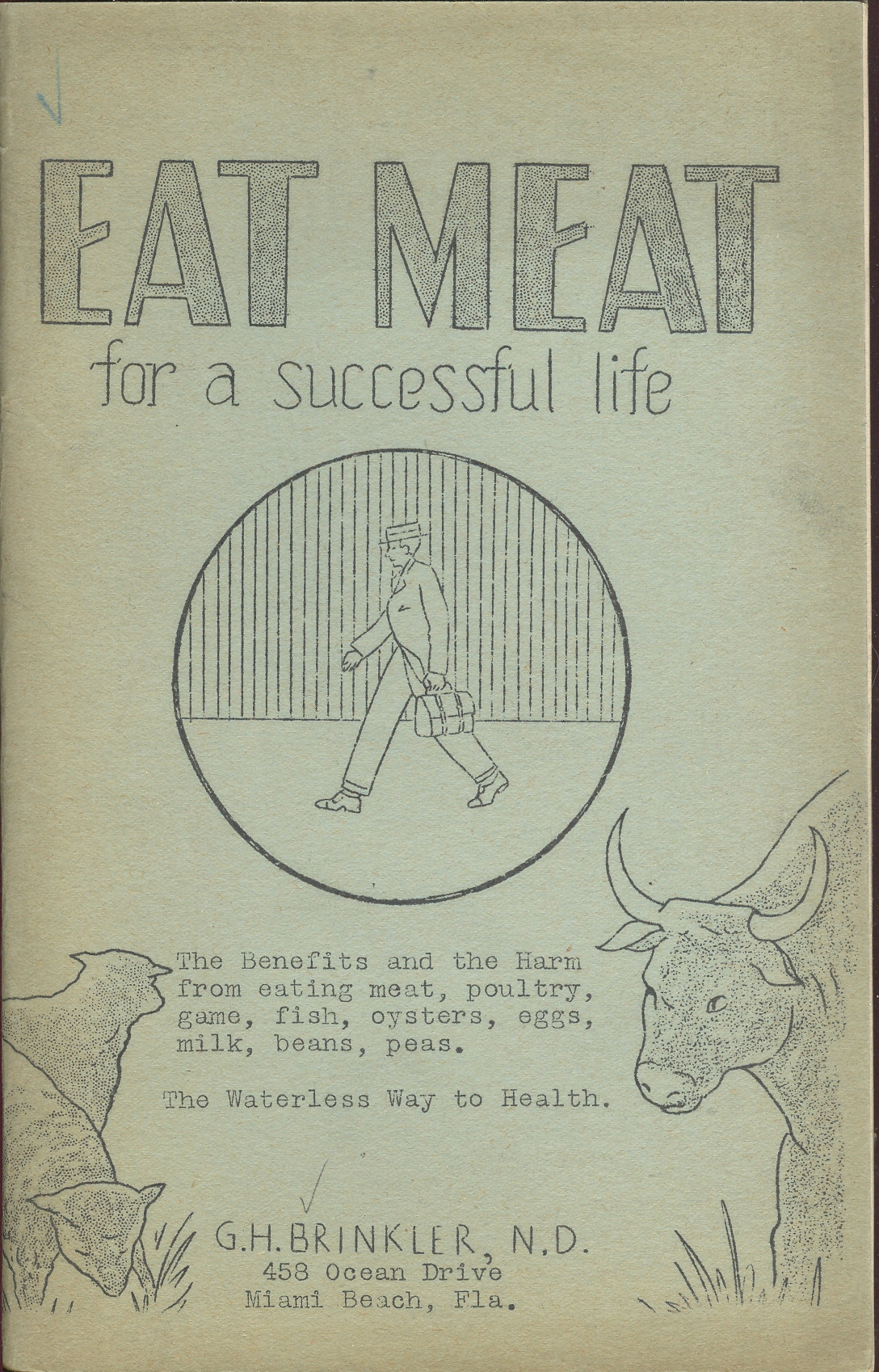
    I have a suspicion that the author of Eat
    Meat for a Successful Life
    , G.H. Brinkler 
    (a “N.D.”, doctor of nauturopathy,  from the American School
    of Naturopathy and the tautologically-surprising “founder” of the “Brinkler
    Club”) had a compromised and possibly antagonistic personal history with
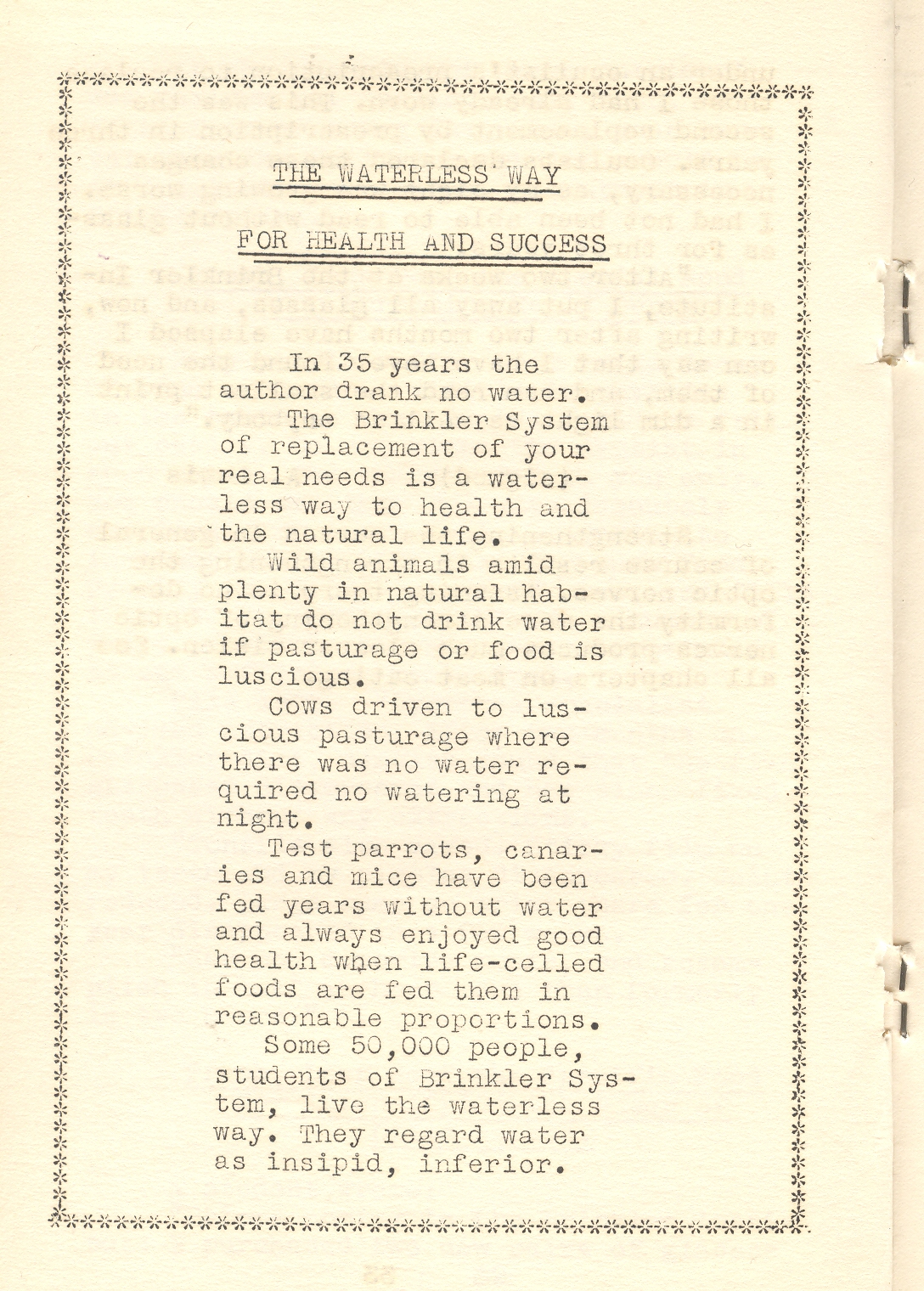
    vegetables.  And water, as Mr. Brinkler
    is also the originator of the “Brinkler
    Waterless Way
    to Health”, and a man who claims not
    to have drunk any water in 35 years. 

    Mar 26 eat meat

    Most humans don’t do so well without water after a few days, though there
    are extreme cases where people have survived for several weeks without water.
    To have survived 1,820 weeks seems pretty much to be well on its way to being a
    vastly under-appreciated record of human endurance.

    Mar 26 eat meat water 001

    But the main story here of course is the meat, with the waterless bit woven
    through it like heart-ending marbling in a butt chop.  Meat, as we are told by Mr. Brinkler, is
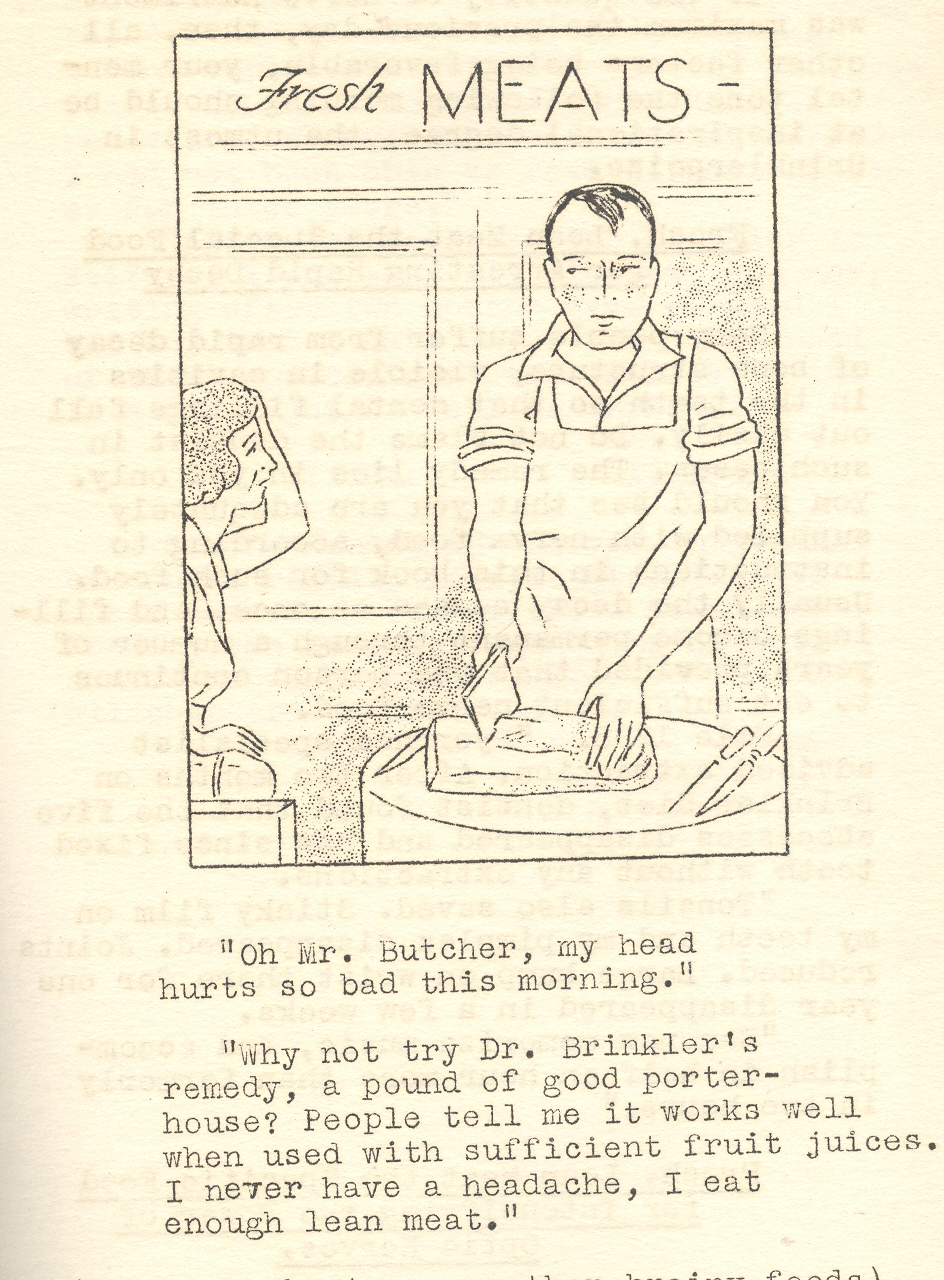
    pretty much a “natural fixer” for just about anything.  Lazy in the morning?  A pound of pork on the broiler will cure
    that.  Sexual inadequacy?  Solved with meat (ingestion).  Poor memory?–the answer:  meat, and lots of it. And not only just meat;
    it definitely needs to be not lean. Big fatty meats are the greatest source of the
    desired “muscle food”; lean meats, unfortunately, are only “nerve foods”. Somehow
    the meat mixed with the waterless way induces the “nerve-ends” into a “more
    natural” and strengthened existence.

    Mar 26 eat meat water

    The Brinkler follower should also chew their meat less.  “The masticating fad might result in tiring
    the jaws and gross undernourishment”.

    I could go on and pull further quotes out of context from this piece, but
    that would be mean. The pamphlet (1934) I have is the U.S. Copyright Deposit copy, and I suspect that there may not have been many copies other than mine. I think that all the
    man was trying to do was sell broilers. 


  • “Women are Human, too”: Human Resource Workbook for Females, 1943

    JF Ptak Science Books LLC  Post 988

    In the history of archaic thought it doesn’t take very much at all to reach
    the uncomfortable bits in the sulfurously tangled history of the subjugation
    of women. But it is most interesting when you find the points at which the “backward-looking”
    archaic parts are actually somewhat forward-looking for their time.

    Mar 25 women equals but

    Mar 25 women are humans cvr

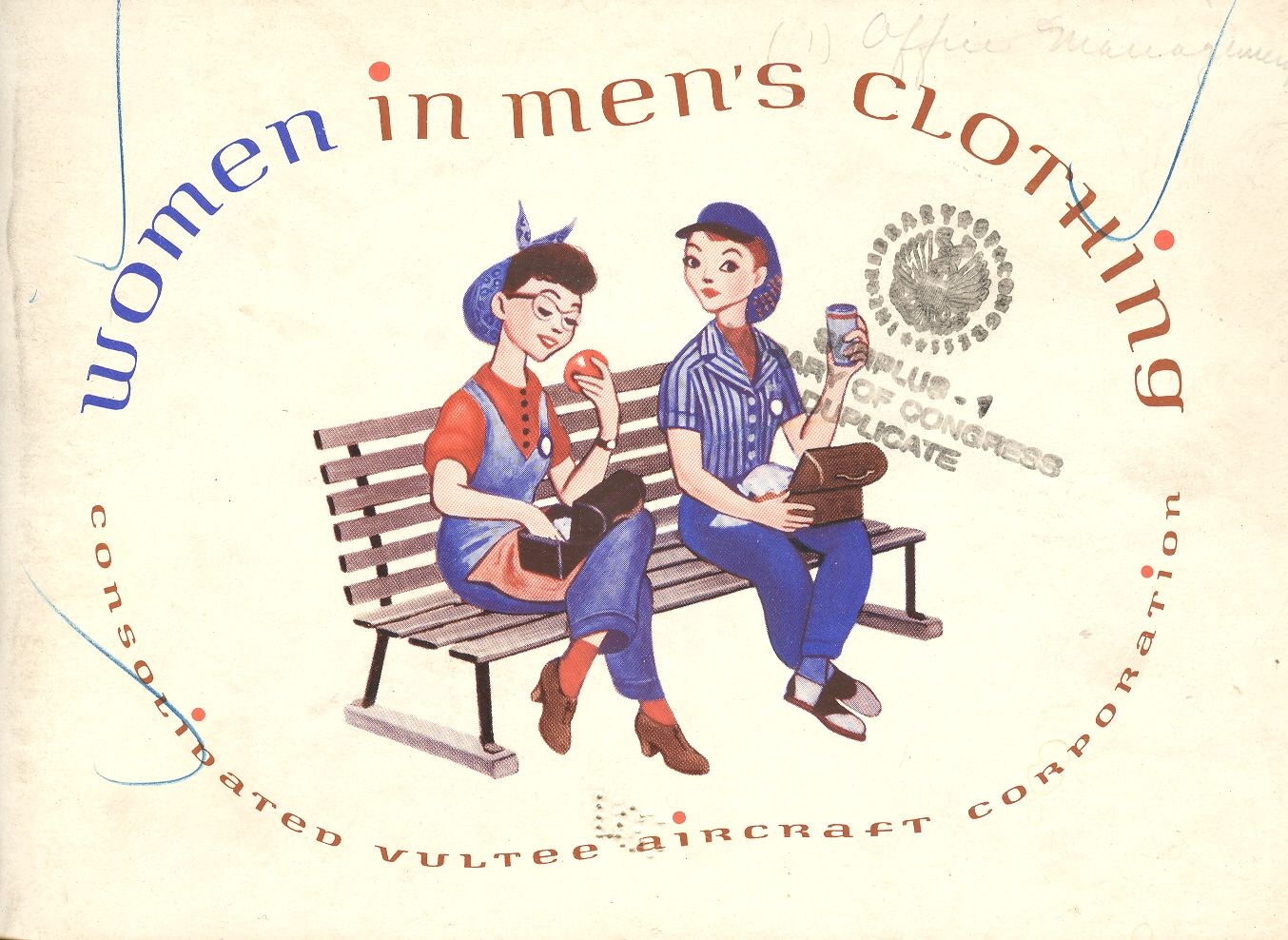
    Such is the case with this odd and interesting little pamphlet, Women in Men’s Clothing, published by
    the Vultee Aircraft Corporation, and published in 1943—it can be simultaneously
    awkward as a broken product of its time and oddly, slightly, futuristic (with a grudging and clawing recognition of women as possible equals as members of the work force).  Overall the publication looks pretty painful from today’s perch, but when you look a little past the winces you can see a little bit of recognition for women in general; at least this is far forward from anything that might’ve been published slightly before the war. 

    Mar 25 women are humans cvr title

    The pamphlet was intended as a human resources tool for managers and
    supervisors in an aircraft production facility where women had been sought and
    recruited to fill the very many vacancies brought on by the war.  (Millions of women entered the workforce for the
    first time between 1942-1945; millions of them exited too once the servicemen
    returned from active duty to reclaim their jobs.)  For most industrial supervisors, the prospect
    of women in the workforce was not a welcomed one, and many had never before needed to think of such a diversified workplace. This slight publication translated the idea of “women/”wimmin” for these
    men. 

    Mar 25 women human too

    The “translation” of the understanding of women from home to the workforce doesn’t go very far to advancing the understanding of women at work–they’re pretty much the same (dogmatic, condescending, sexist, domineering).

    Mar 25 women strange creatures

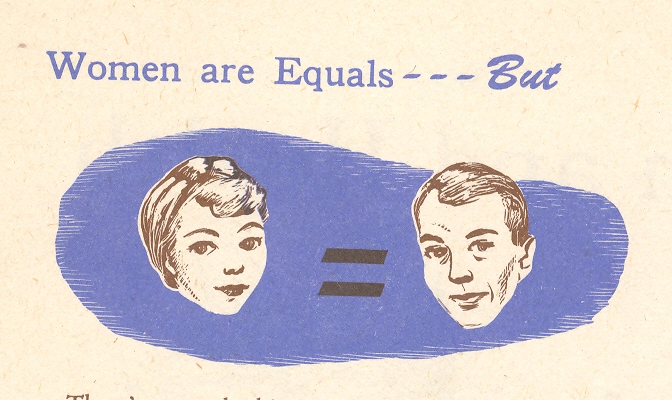
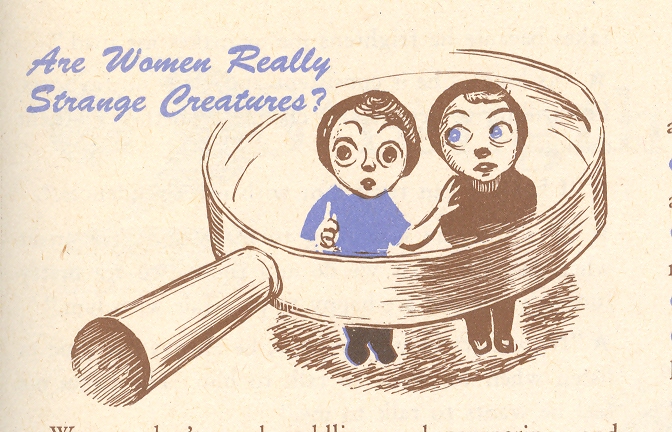
    All of that is pretty well summed up by the first picture in this series–the asterisked “equality” between men and women.  I must admit that I don’t think I’ve ever seen this “equals, but” label before, or at least so deep into the century. 

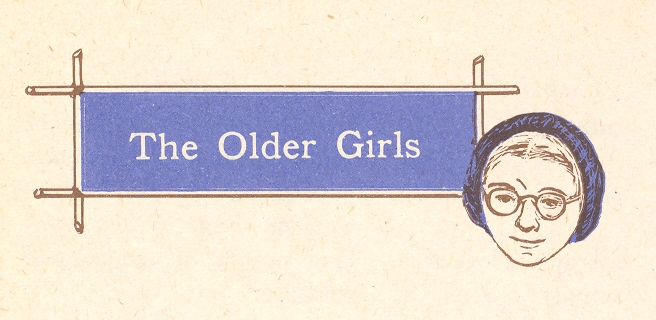
    Mar 25 women older girls

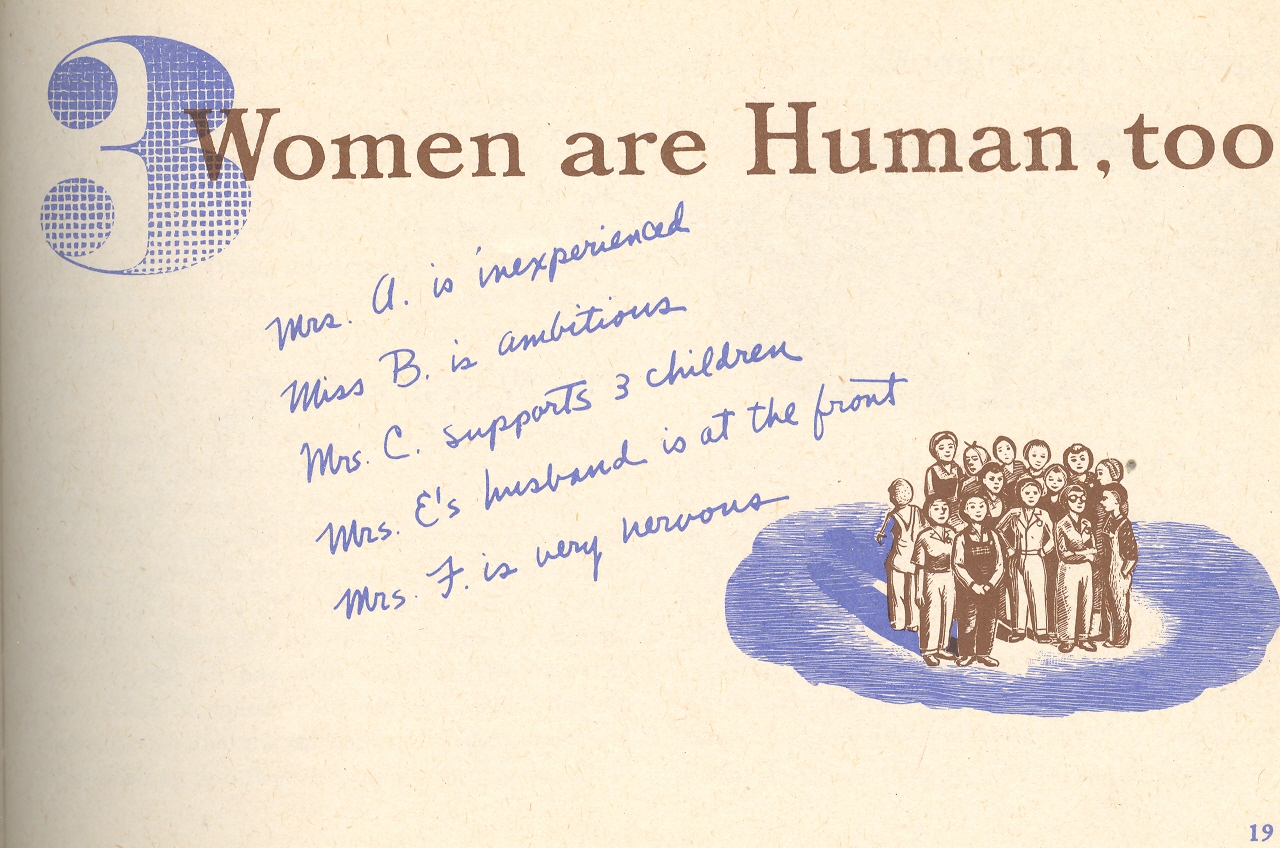
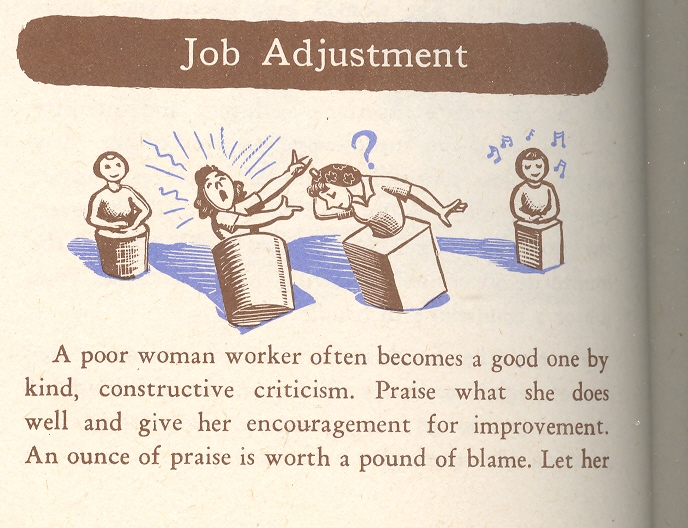
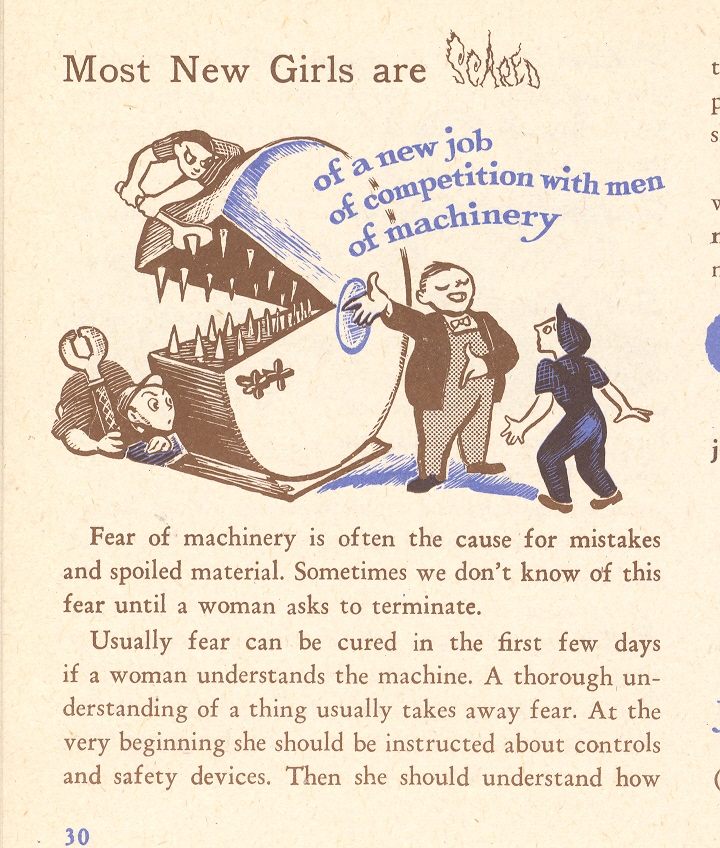
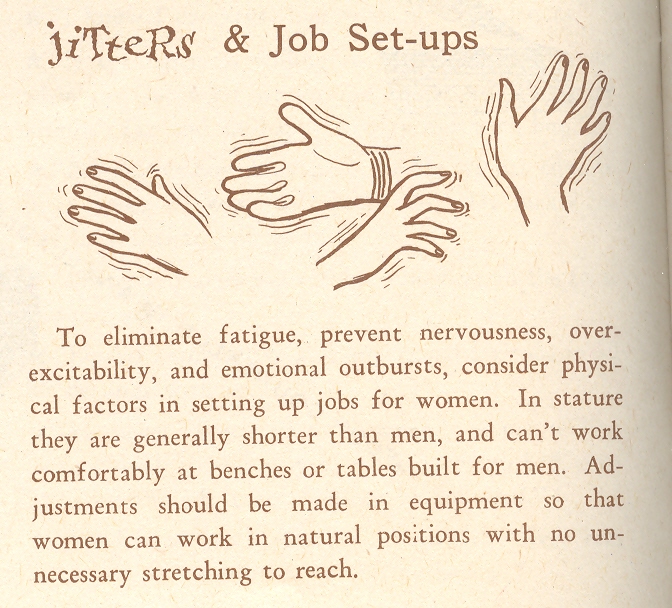
    And of course “women are Human, too” needs very little comment…as is the case for most of the images in the pamphlet.  

    Mar 25 women job adjust

    Mar 25 women chompers 

    Mar 25 women hands


  • Human Experimentation on Children in an Orphanage: the Borden Company, 1924

    JF Ptak Science Books LLC     Post 980

    Nothing
    quite makes a profound statement like simplicity—the same sentiment applies
    to   the incredible, or impossible, or
    inconceivable statement as well.  For
    example, Gertrude Gates Mudge’s “An Interesting Experiment with Malnourished
    Children” (The Nation’s Health, August 15, 1922) seems quite an
    exclamation without an ounce of emphasis in sight, a vast oversight of decency
    compounded in its inelegant simplicity. Evidently acceptable (at some level) in
    its own time, the announcement today seems criminal. 
    Mar 19 human exp det
    The
    world is full of such pronouncements—perhaps they’re the very bones on which we
    all walk.  I was drawn to this subject
    this morning, finding a bit of undoubtedly long-lost historical reporting on
    medical experimentation which (in its second paragraph) makes the following
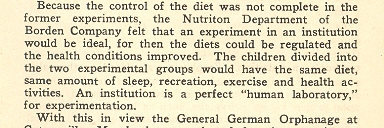
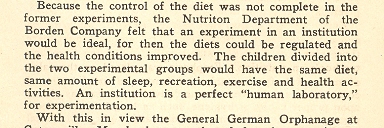
    overwhelming understatement: “an institution is a perfect ‘human laboratory’
    for experimentation”.  It comes from a
    small pamphlet published in 1924 by the Borden Company called The Catonsville Experiment   It seems that Borden (a famous and large
    dairy company) was trying to experiment with children to determine the
    effectiveness of their new sweetened condensed milk over “regular” milk.  They attempted experimentation in public
    schools, but could only statistically control for milk intake at the school
    itself, finding it  “impossible to have
    complete control over the rest of the childrens (sic) diets”.  In the free school situation the Borden
    company could also not control for exercise, sleep and “health concerns”.
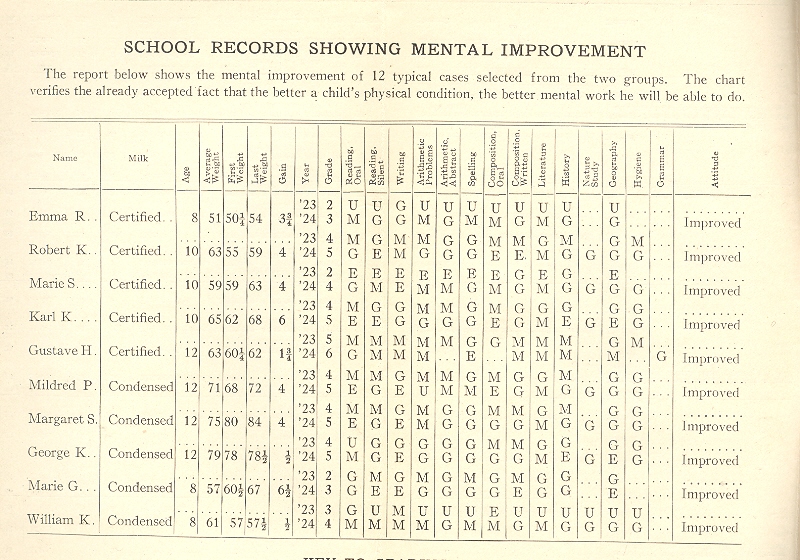
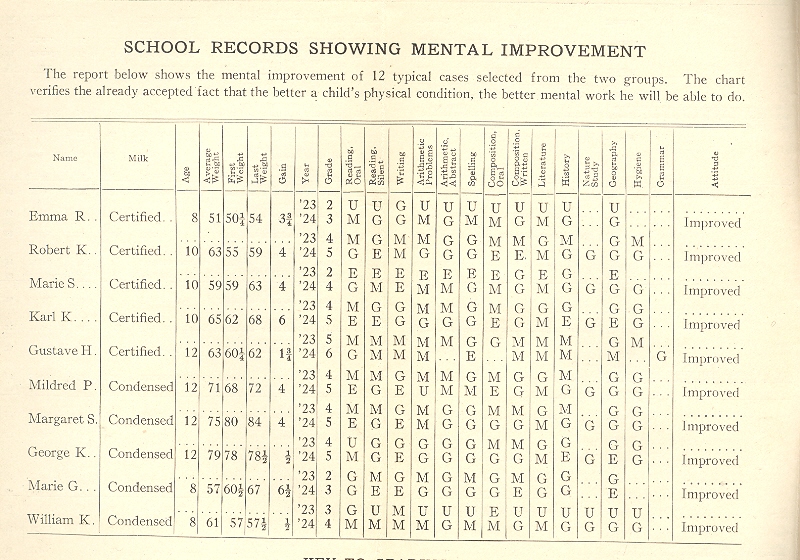
    Mar 19 human exp school records

    That
    is when the idea struck the Borden Nutrition Department to conduct their study
    in an orphanage. Borden’s aim was to test the healthy effectiveness of their sweetened
    condensed milk, and to also show that “no abnormalities in physical growth,
    bone development, blood count, and kidney function would result from such an
    experiment”.  What this means is that
    there events were a possibility, but it was worth it to Borden to test their
    hypothesis out on actual human children. 

    There
    were 60 children in the “experiment”, divided into two groups, one of which was
    the control.  All facts of the lives of
    the children were controlled from March 15, 1924 though November 30, 1924—play,
    regulated sunshine, sleep, schooling, rest, and of course food intake.   Medical tests were conducted (frequencies not
    specified), including general overall medical evaluations as well as blood and
    urine tests—there were (at least) 18 sets of x-rays over 270 days.
    Psychological and intellectual tests were also conducted, with the children
    measured over dozens of different categories, including 14 classroom
    activities.

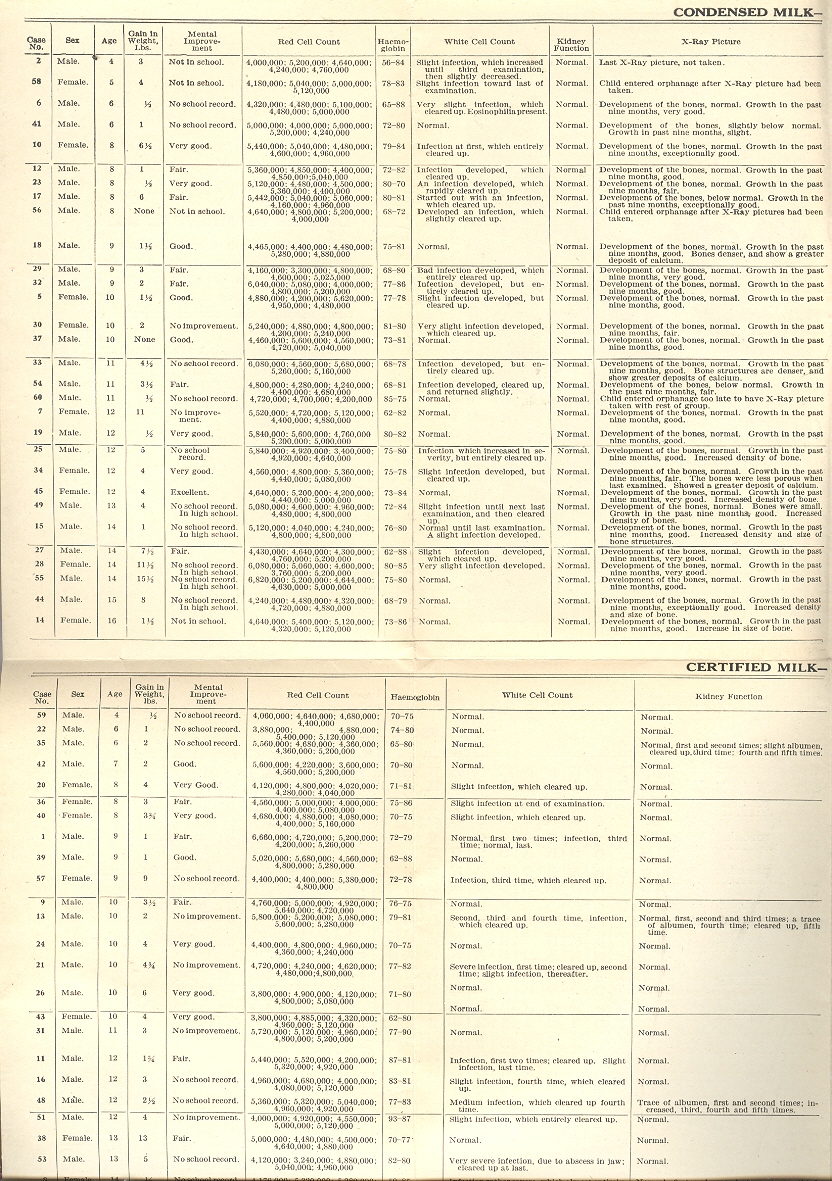
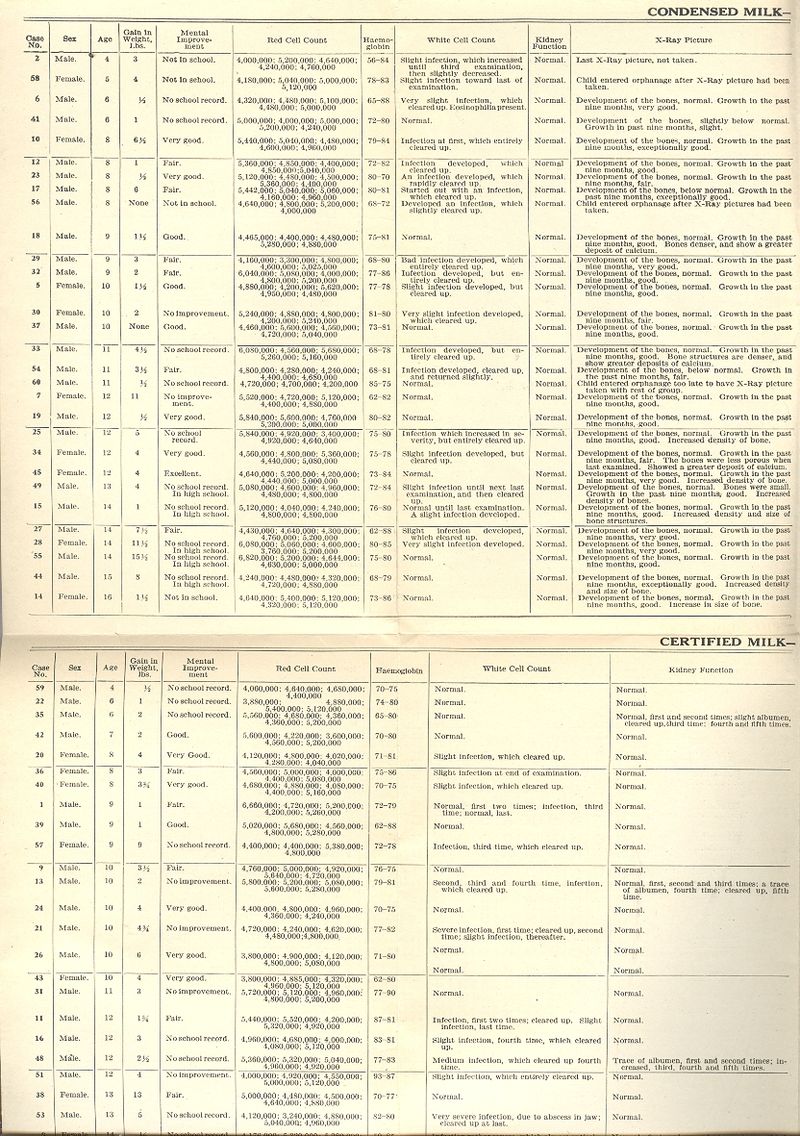
    The
    Borden Company published the results of all of these experiments in this small
    pamphlet, with one large (and impressive) folding diagram outlining some of the
    medical results (shown below). 
    Mar 19 human exp big chart

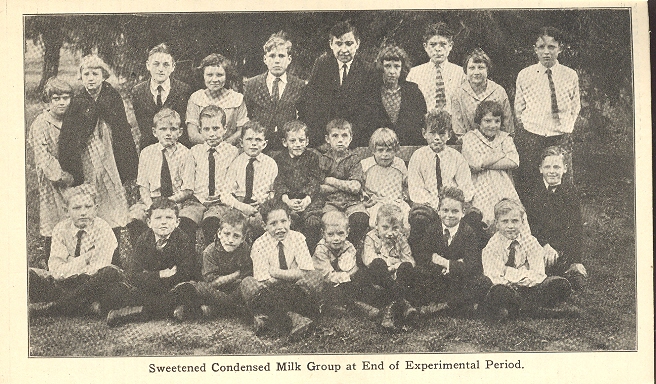
    There
    were also two photographs of the test subjects. 
    Undoubtedly they were not intended to look as though they were trophies,
    but that is the general feeling I get when looking at the photographs.

    The
    bottom line was that Borden found their own product to be safe, and to not cause
    kidney, liver or bone damage.  Which was
    good news to the children who were their test subjects.

    Remarkably
    Borden published these results two months after the test ended, evidently
    without any assumption whatsoever that if there were to be negative effects
    that they would occur immediately, and that a longitudinal study was wholly
    unnecessary. Once the experiment ended, so too did the nee for testing their
    short-term hypothesis of damage to the children.
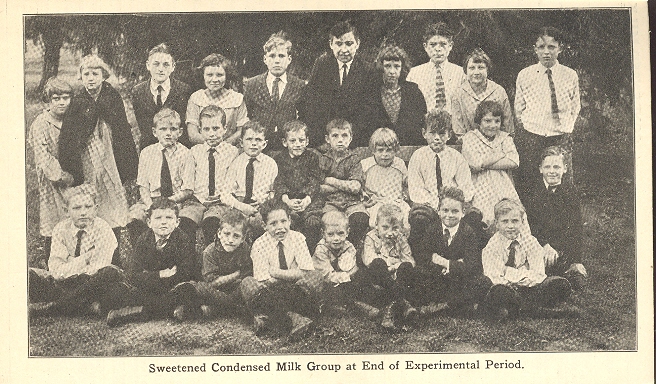
    Mar 19 human exp pic

    I
    wonder about what the effects of the 18 rounds of x-rays in 270 days  were on these children, over time.

    Mar 19 human exp pic control 

    No doubt that in the dark history of human experimentation the Borden exploit would find itself in somewhat mild company–this of course hardly relieves them of their gross injustice of subjecting children to this sort of control and possible danger just so that the company could sell a milk product. It is an action that makes me think more of Lizzie (“I gave my mother forty whacks…”) when I think of Borden than Elsie the Cow. After a long run of financial successes, including being one of the leading dairy companies in America (and the owner/producer of Elmer’s and Krazy Glue, among many other diversified things), the Borden Company was completely and totally divested in 2005.
    Logo_borden


  • Alpha and Omega Department, #3

    JF Ptak Science Books LLC

    Sometimes the beginnings and ends of things show up in unexpected places.  Penzias and Wilson at Bell Labs in Holmdel, New Jersey, discovered that the reason for the “interference” readings  that they were receiving in their instrument was not due to pigeon poop, but was actually the remnant radiation of the Big Bang.  And it didn’t look like much, but the stuff that caused the end of the great American Western frontier was found in simple lines:  ribbons of steel for the railroads, on the one hand; and twisted bits of sharp metal wrapped around wire, the barbed wire fence ultimately and very cheaply closing off the vast land into manageable parcels, on the other. Stories like these are legion.
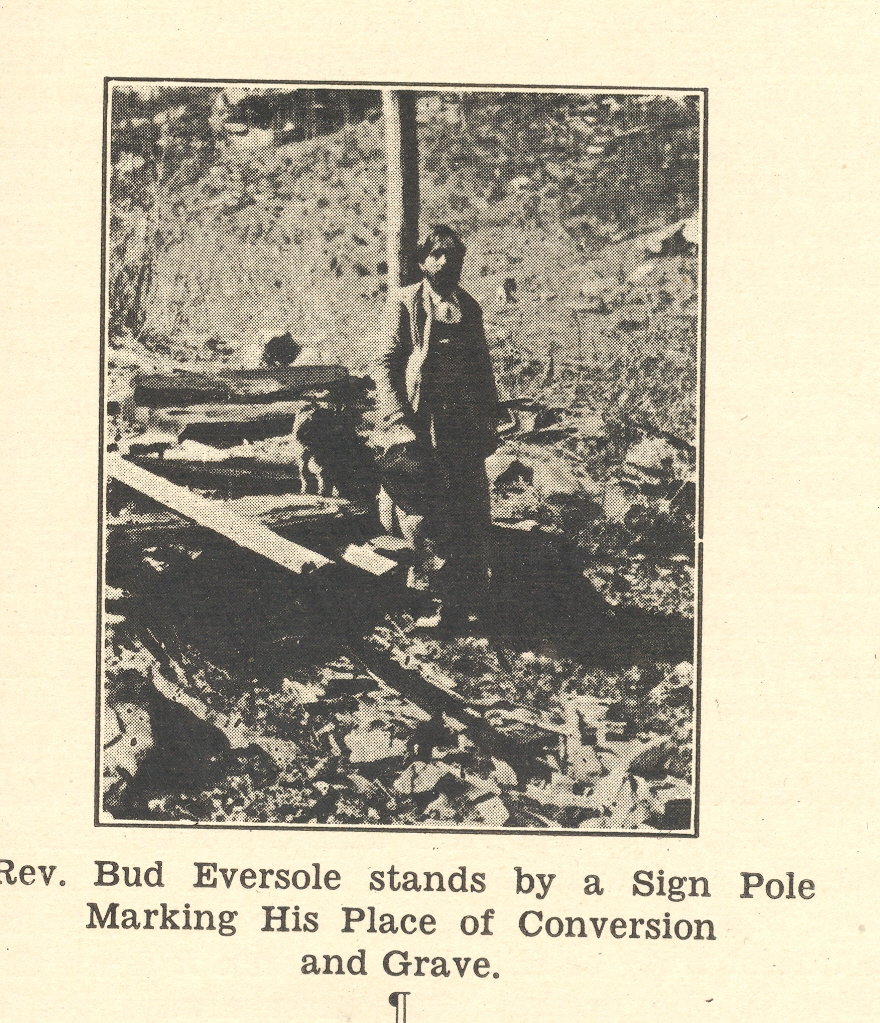
    It is infrequent to find the two combined though in a simple, single photograph.  This is the case, for me, in this small (1-inch tall) image found in an obscure publication called The Kentucky Mountain Echo, a True story of the Mountains, published in 1929.  The small, delicate pamphlet seemed the physical opposite of the stories that it told, rocky and rough bits of life from the Kentucky mountains, hardscrabble farms, luscious woods and company coal mining towns.  

    The Rev. Bud Eversole is pictured here–along with his dog–at the spot in his farm in which he was taken by the guiding light, the holy spirit; an invincible vision took hold of him and never let go.   Rev. Eversole continued to work his farm and taught the scriptures for free for many years afterwords as a roving minister.   He marked the spot of his conversion with a pole; he also determined that the pole would mark his grave, the ultimate place of rest for him at the very spot where he was “born”. 

    For all that it symbolizes, the image looks pervasively  unsettled to me–Rev. Eversole (I have no idea if that was his real name or if it was a post-conversion creation) looks like he is waiting for something, anything, even for the late afternoon sun to just hurry up and warm his back.  This area of his farm just looks a mess, not like a small farm kept between and along rolling hills (no treat, that). The Rev. doesn’t tell me much, except that he was obliged to allow his dog in the photo, and took off his broad-brimmed hat to have his picture made.  Perhaps that is all that he wanted to say.

    Ebay mar 18 grave 

    Ebay mar 18 grave2


  • Hiding Diseases: Plague and Smallpox

    JF Ptak Science Books LLC Post 936

    “Ring
    around the rosies, a pocket full of posies,

    Ashes,
    ashes, well all fall down.”

    This
    old nursery rhyme has more to do with plague than a skipping-and-falling song, more
    like the Tom Wait’s version of the “Dwarf’s Marching Song” (“Heigh Ho”, see
    below) than anything t0 blog jan 24ars mor424hat could ever be dreampt of in a Disney film. It was the
    mater-of-fact way of dealing with the vast death brought on by the various
    Plagues:  saying a round of rosaries to
    try and invoke divine intervention to keep the disease away from the prayer-mender;
    posies as a fragrant flower to mask the stench of those actually afflicted with
    the disease; and then of course the ashes from the piles of burnt corpses of
    Plague victims, fallen down to death. 

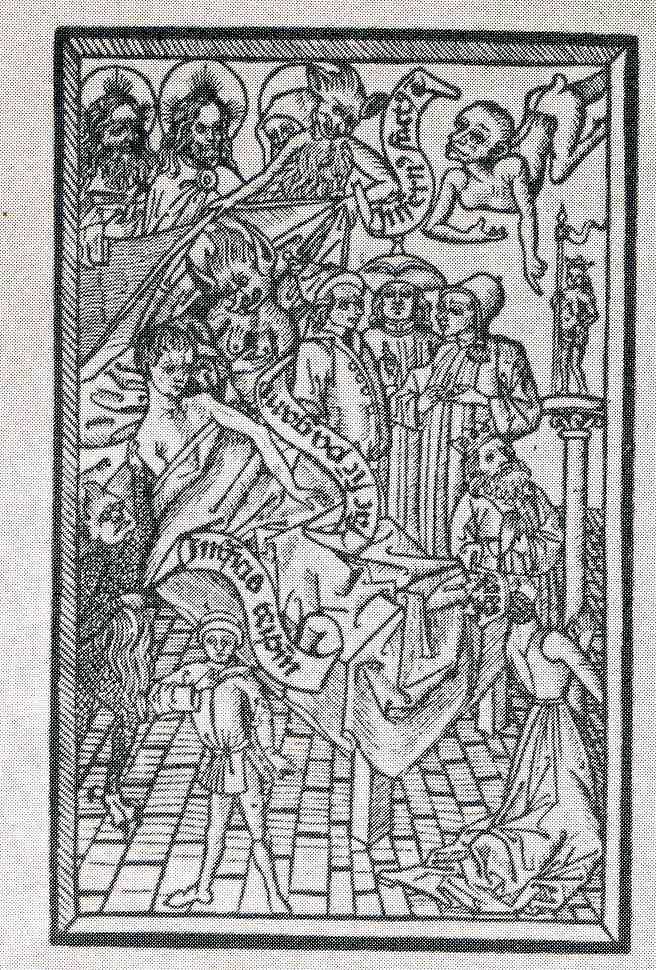
    These
    two images show different aspects of segregating—if not hiding—disease.  The first is a propagandistic portrayal of a
    man dying of the Plague.  This snippet of
    plaguaganda was an ars morendi
    published in the 1460’s, and depicts a not-gruesome portrayal of what was
    generally a very gruesome death.  The
    inflicted lies there in bed, with sheets
    and
    a pillow, looking faint and removed in the retiring Victorian fashion
    (removed 400 years), surrounded by images of his faith/belief. 

    I
    suspect that anyone who knew anything about the Plague knew that this scene
    wouldn’t be truthful, necessarily, but I guess if it could even momentarily confuse
    the viewer into thinking that the visitation of Death could be so composed in
    the face of this horrendous disease, I guess that’s the hope you hang
    onto.  There is a minor battle between
    the possible claimants of the soul of The Sick, but that would be going on
    anyway whether the coming death was relatively peaceful, or not. There wasn’t
    much to be done—as the feeble attempts of preventing the disease would
    indicate, what with choices like urine baths, bleeding, leeching, bell ringing,
    pus-sucking, rotten animal corpse talismans, incense burning being some of the
    preventative choices—so like a belief in Heaven or Nirvana or whatever, the hopeful
    consolation of a possibly decent dying could keep people from running
    amok. 

    1-floating hosp

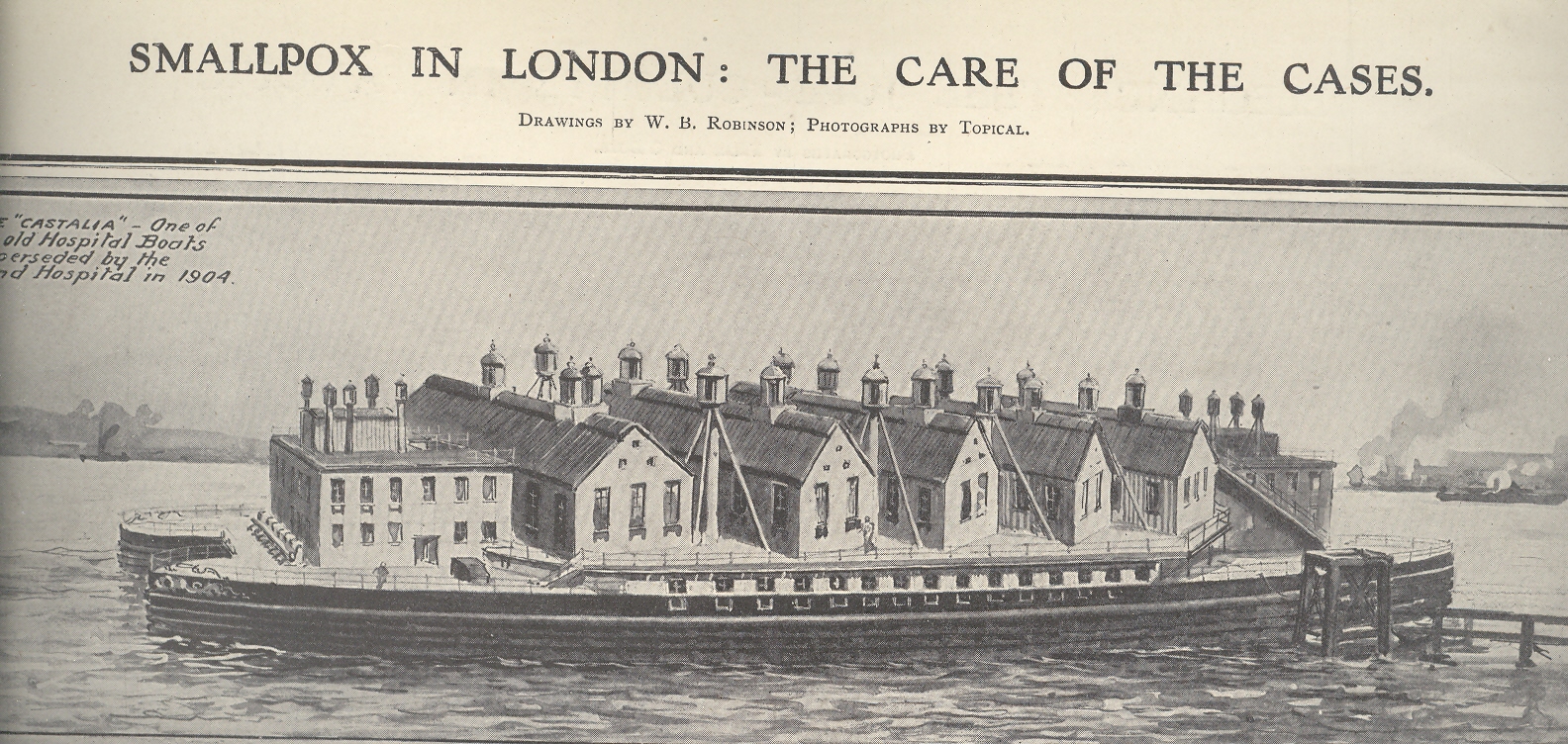
    The
    second shows the hospital hulk Castalia, “one of the old Hospital Boats superseded
    by land hospitals in 1904”, which was more a floating street than a hospital.  It was a complex of five buildings nested on the
    hulk of the double-hulled paddle steamer Castalia—appropriately named, as it refers
    to the Delphian  fountain that Apollo fabricated
    from the nymph “Castalia” and alludes to the possibility of rejuvenation and
    cleanliness, or health, perhaps).  The
    hospital held hundreds of smallpox patients, sent there by the Metropolitan
    Asylum Board in an effort to stem the flow of the disease and infection rates
    from the rest of the population of London.  Smallpox 
    was still a vast killer in mid-/late-Victorian England, and given the information
    available at the time this was a good social inoculation by distance and
    segregation.  (It is interesting to note
    that out-of-service de-masted, defrocked and striped ships of the line were
    used to house prisoners (though generally prisoners of war); in particular,
    those kept in the East River housing American soldiers inflicted vast death
    tolls via maltreatment and urgently hideous living conditions.)  This really doesn’t fit with the
    propagandist/suppressing model of the above, and its removal did prevent the
    contagion from spreading, but, well, it does look like the Asylum Board was trying to hide the sick.

    Notes:


  • Three Map Fits: a Color Map with Color and No Map, a Color Map in Black & White; AND a Black & White Map in White (only).

    JF Ptak Science Books  Post 934

    This confusing title is accurate without very much grant in license and tells a short and true story of three fitful maps, two of which are beautiful and one just so-so.  

    Color--color map  

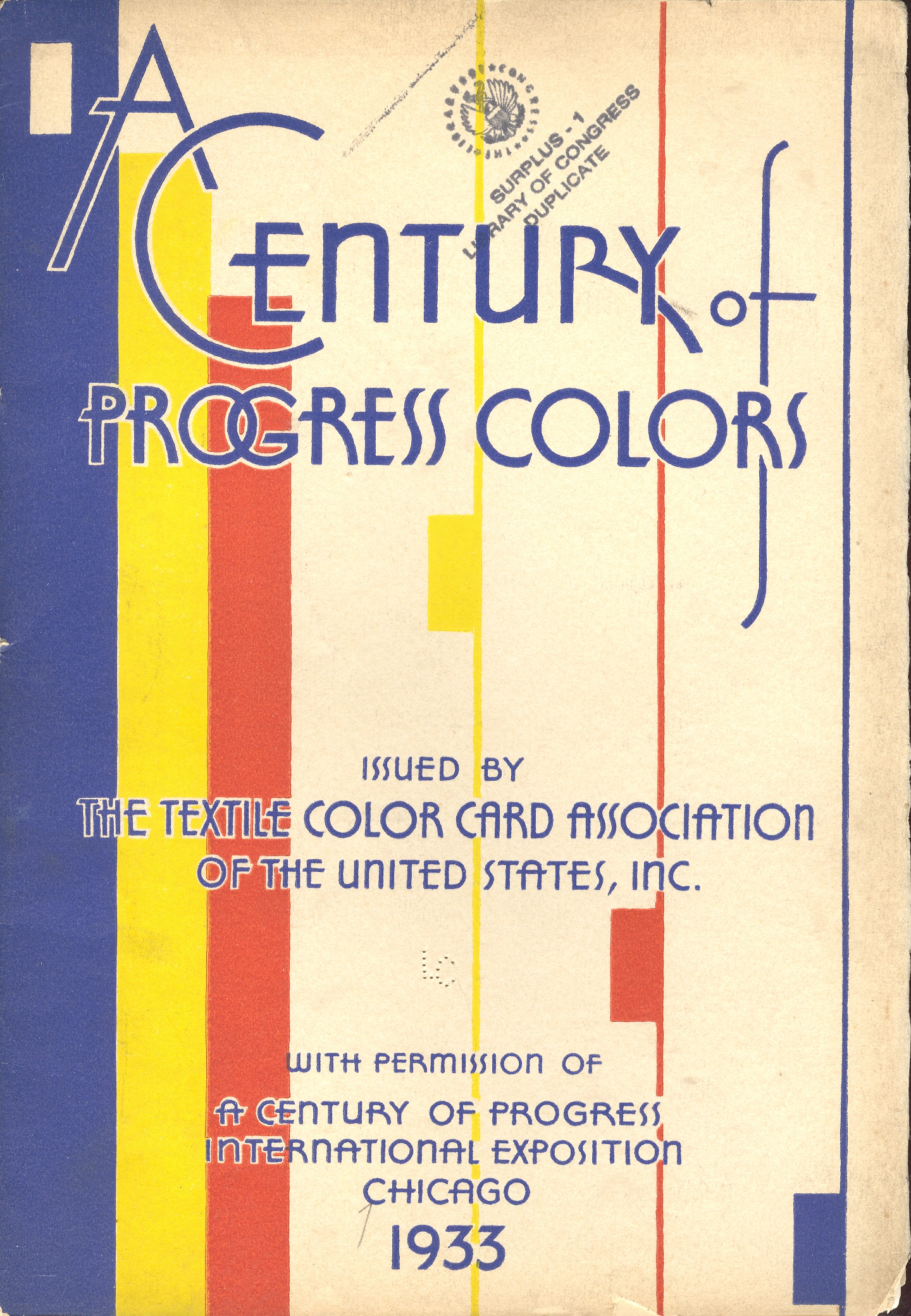
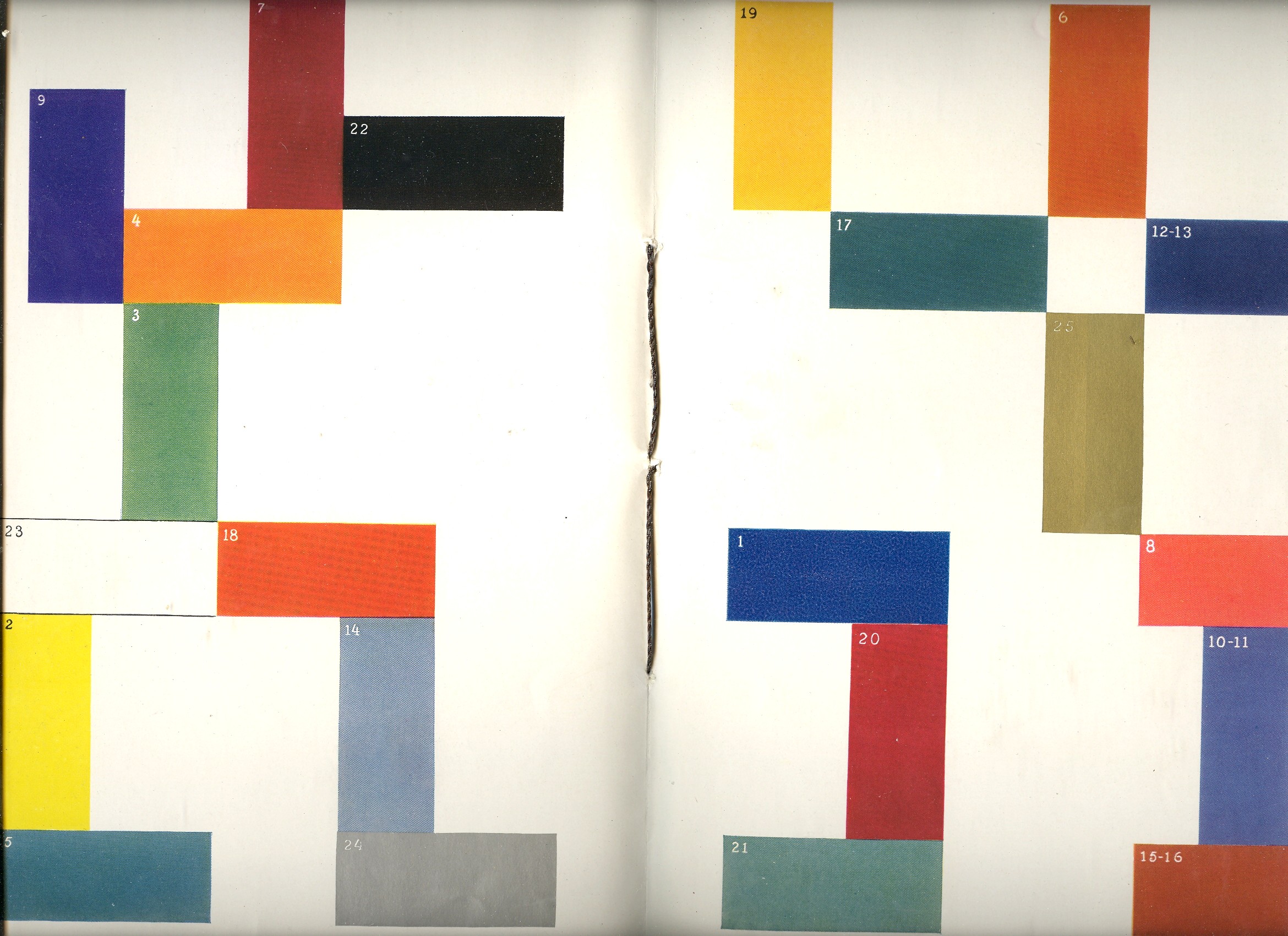
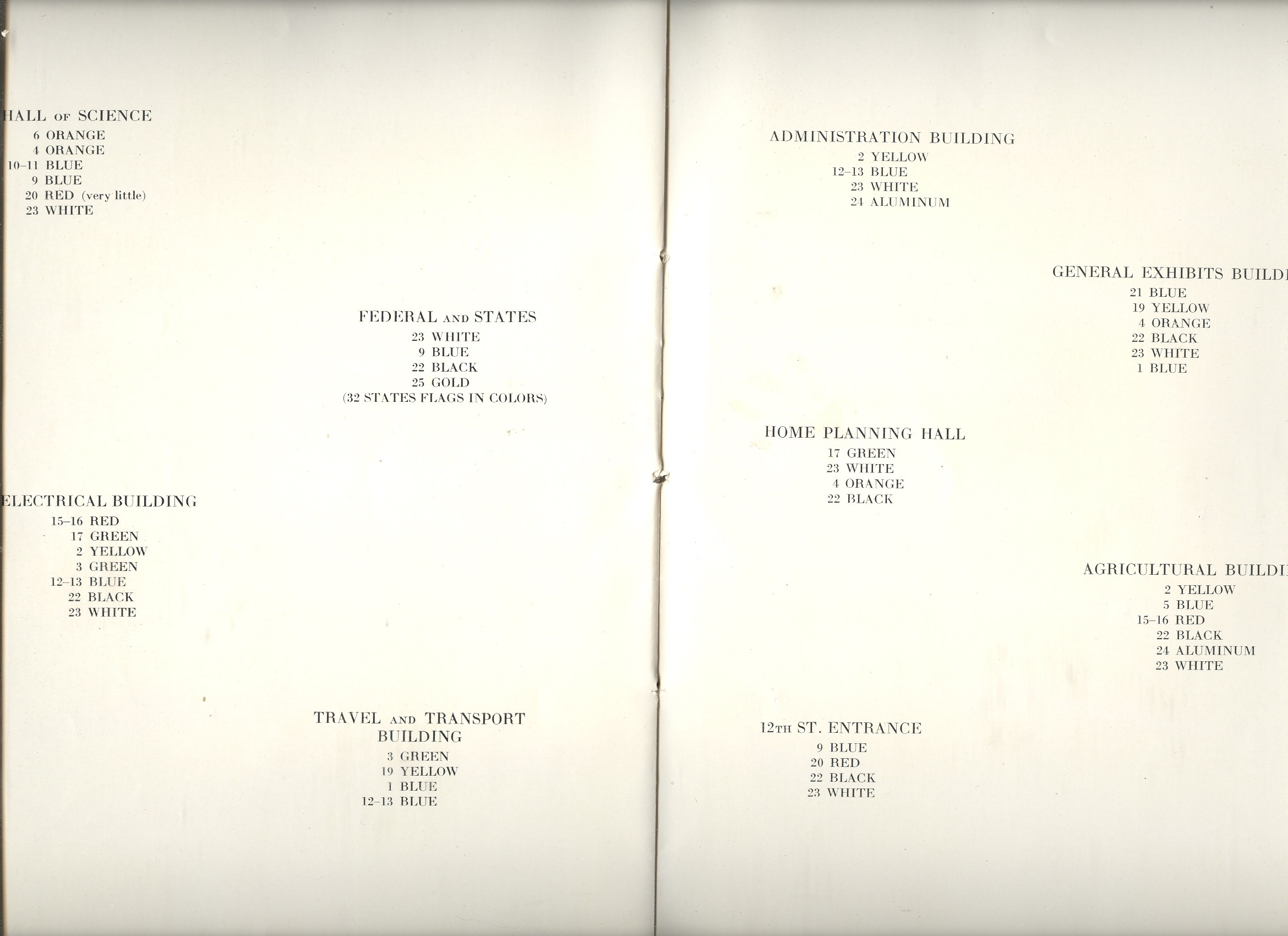
    The first map fit is featured in a beautiful pamphlet called A Century of Progress Colors and was issued by the Textile Color Card Association of the USA.(The title being a small play on the 1933 world’s fair in Chicago called “A Century of Progress”. The Textile Color Card Association was created to standardize color nomenclature and composition in industrial colors (and is still in existence.)  The map distributed the major pavilions at the fair by their dominating colors, naming those colors in the unusually-sequenced double-page key on the following pages (below1).  I can certainly appreciate the effort and the beautiful design it produced, but as a map of the fair it leaves much (if not everything) to be desired.


    Color--color map inside

     The second map fit belongs to a small pamphlet published by Albert Coble called Games of Colors, Kindergarten and Primary Exercises.  Its actually an enterprising little book about reaching into the minds of little ones and explaining how colors are put together and how they relate to one another.  It is unfortunate that the drawings used to illustrate the color map part of the pamphlet were done in black and white.  Which is a little on the self-defeating side.  


     Color--b+w 001
     

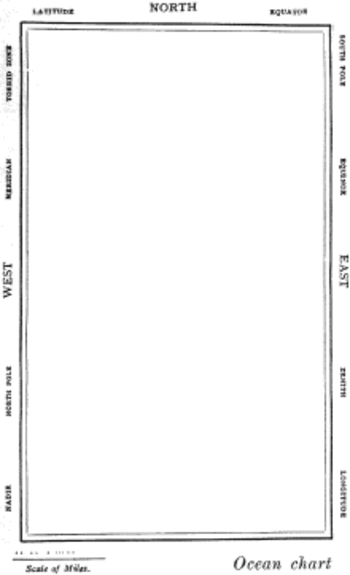
     But the finest fit of the three fits is fit number three, which is the map of the Bellman’s tale, starting the second fit of Lewis Carroll’s The Hunting of the Snark, an Agony in Eight Fits.


    Color map snark


    But the map that I think I love the most illustrates Lewis Carroll’s The Hunting of the Snark, an Agony in Eight Fits, and occurs in the Bellman’s tale, starting the second fit1. It is simply magnificent. 

    Then, of course, there is this:


    Notes:

    1. The key:


    Color--color map inside text


    2. The fit begins so:

    The Bellman himself they all praised to the skies-
    Such a carriage, such ease and such grace!
    Such solemnity too! One could see he was wise,
    The moment one look in his face!

    He had bought a large map representing the sea,
    Without the least vestige of land:
    And the crew were much pleased when the found it to be
    A map they could all understand.

    “What’s the good of Mercator’s North Poles and Equators,
    Tropics, Zones, and Meridian Lines?”
    So the Bellman would cry: and the crew would reply,
    “They are merely conventional signs!

    “Other maps are such shapes, with their islands and capes!
    But we’ve got our brave Captain to thank”
    (So the crew would protest) “that he’s bought us the best-
    A perfect and absolute blank!”