A Daily History of Holes, Dots, Lines, Science, History, Math, Physics, Art, the Unintentional Absurd, Architecture, Maps, Data Visualization, Blank and Missing Things, and so on. |1.6 million words, 7500 images, 4.9 million hits| Press & appearances in The Times, Le Figaro, Mensa, The Economist, The Guardian, Discovery News, Slate, Le Monde, Sci American Blogs, Le Pont, and many other places… 5000+ total posts since 2008.

Category: Blank and Empty Things; A History of

  • Trying Hard Not to See the Jews: American Immigration Practices, WWII

    JF Ptak Science Books LLC  Post 1237

     This pamphlet holds an insight into a period, and also to one of he greatest stains of American foreign policy/humanitarianism of the last seventy years. And somehow this prolonged act is still a semi-secret, still I think not very widely known or acknowledged.

    April 17 jewishYour Help for Refugee Children (March 1939)  is the text for a radio broadcast by Chicago-based Dr. Charles Copeland Smith for his “The Neighborhood Guild” series.  (The document is also available from our blog bookstore.) Actually, Smith gave the broadcast over to his wife (for some reason) to make this appeal– I guess because the subject was children, and that it would best be made by a woman.  Mrs. Smith made the case for the relaxation or extension of American immigration policy to accommodate the newly-minted refugees of Hitler’s Nazi Germany. 

    The European war was just about started by the point–Czechoslovakia and Austria were already done, and Poland and the rest of the beginning of the war was just six months away.  By this point, however, the war was considered a foregone conclusion by most thinking people.  

    I have to give credit to the Smiths, as they did recognize the coming threat of Nazism, and did make the appeal for a more expansive inclusive of the relatively stingy American immigration policy.  They figured that the children of refugees would be their main concern, and that accommodation should be made to accept 10,000 of them per year.  

    That would be 10,000 “extra” children, I’m assuming, since the Smiths make the case that the current levels for allowable immigration was an at “inadequate” 27,000 per year.  In 1938 there were more than 300,000 applications for U.S. visa from German Jews alone, about 20,000 of which were accepted.  In 1939, a smaller number of Jews would find themselves allowed into the United States. From 1933 onwards, the case can be clearly made for the State Department, Congress and the Executive branch actively engaged in restricting immigration to the U.S. by many hundreds of thousands of European Jews.  Even after it became apparent that not only were Jews being sent to concentration camps by the millions, but they were also being exterminated , that the U.S. policy for acceptance of Jewish refugees barely changed.

    It is at the Jewish question that the Smiths got things wrong in their broadcast.  Mrs. Smith made “another attempt” to make the case for the refugee issue was not “predominately a Jewish problem”, the argument being that there were so many more Catholics than Jews in places like Czechoslovakia and Austria.  She went on: “I believe that Nazism is determined to stamp out liberalism.  The movement is political, not racial, not religious.”

    The undercurrent of their argument for saving (“not just”) Jewish children was based on a very selective use of out-of-context statistics, concentrating on numbers of refugees coming out of Austria and Czechoslovakia, and not, somehow, out of Germany.  I’m not sure how they could have gotten to their argument on refugee status for Europeans while ignoring the six years worth of anti-Jewish legal abominations perpetuated upon the German Jewish population.  

    The “Law for the Restoration of the Professional Civil Service” was passed in April 1933 (the first official banishment of the Jewish people as menials, second-class citizens,  banning them Jews from government jobs). The Jews had already been established by the Nazis as being the cause for the loss of WWI, the debacle at Versailles, the ruination of German culture and mortal enemy of the Aryan German. Many hundreds of laws like this would be instituted over the coming few years, establishing the legality of the supposed inferior nature of the Jewish people.  (Also in July 1933 came the underpinning legislation of some future nasty thinking, Ernst Rudin’s “Law for the Prevention of Hereditarily Diseased Offspring”, which established health courts and compulsory abortion and sterilization for a variety of physical and hereditary traits found to be unacceptable for the promulgation of a superior German race.) And this is all before the Nuremberg Laws of 1935/1936, (specifically the “Reich Citizenship Law” 1936)  which basically established the fate of the Jews, removing their citizenship and making them “subjects of the state”.Do I really need reiterate the case for the Nazi subjugation of the Jews, and their making the social and legal basis for the coming extermination policies which were codified at Wansee in 1942?  I think not–though it seems to me that for whatever reason the Smiths decided to not utilize this already well established (even by 1939) information.I think that at the very least they did not want to know.
                                        
    I’d like to focus on this self-deception, the welcoming of not knowing something, of not wanting to know, of stopping: of doing nothing in the face of something needing to be done.

    The destruction of the Jewish people during World War II is a history with many bearings, a complex of actions that seem to have been both elusively unstoppable and eminently addressable.  The psychology of why this occurred is forensically comprehensible; the ultimate question, after everything is said and done, is why the extermination was allowed to continue for years on end. There is a considerable catalog of demons of non-actions and deceits that I just can’t address now in a short post like this. Though I would like to know why was it so difficult/impossible for the British government (and in particular, Anthony Eden) to allow Palestine as a safe haven for desperate Jews, engaging in torturously long non-decisions and bureaucratic inscrutability to emergency situations?  Why did Franklin Roosevelt take so long to come acknowledge the documentation of the Holocaust and then cause almost nothing to be done about it?  Why did Sumner Welles act decidedly against any real action in presenting the full case of the Holocaust to American leaders?  Why would the War Department (represented by Assistant Secretary McCloy) respond in 1944 that  Auschwitz was both beyond the reach of tactical bombers and not be of sufficient military interest to divert Air Force resources away from other areas of interest?  The knowledge of vast extermination of Jews in Europe was known by early 1943, and yet, there was little action taken to do anything to stop it.  Not only that, the issue of emigration for Jews to the United States or any other country that would have them was caustic and slow; it was in short a history of the use of the word “no”.

    Henry Morgenthau (1891-1967), an old-line politician, was Secretary of the Treasury under Roosevelt and was also the only Jew in the cabinet.  It was he who in 1944 produced one of the most compelling, and damaging, documents questioning the American government’s culpability in doing nothing concerning the Holocaust, when “officials dodged their grim responsibility, procrastinated when concrete rescue schemes were placed before them, and even suppressed information about atrocities.”

    Its title left nothing to question:

    Report to the Secretary on the Acquiescence of this Government in the Murder of the Jews (1944).

     It starts so:

    “One of the greatest crimes in history, the slaughter of the Jewish people in Europe, is continuing unabated.

    “This Government has for a long time maintained that its policy is to work out programs to serve those Jews of Europe who could be saved.
  • Millions of Miles of Hole-Filled Paper–Dystopia, Entertainment, Vonnegut and Prison

    JF Ptak Science Books  Poat 1236

    {Part of this blog’s History of Holes and History of the Future series.]

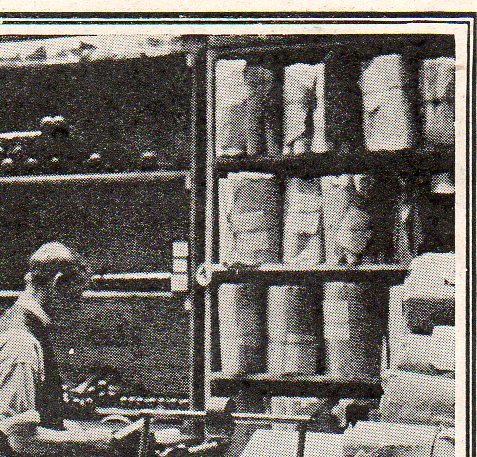
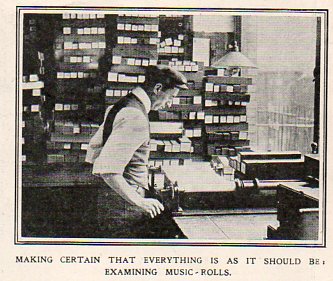
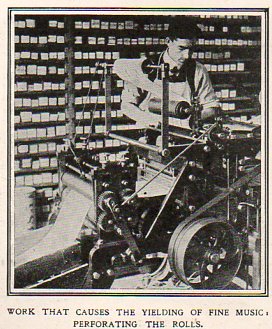
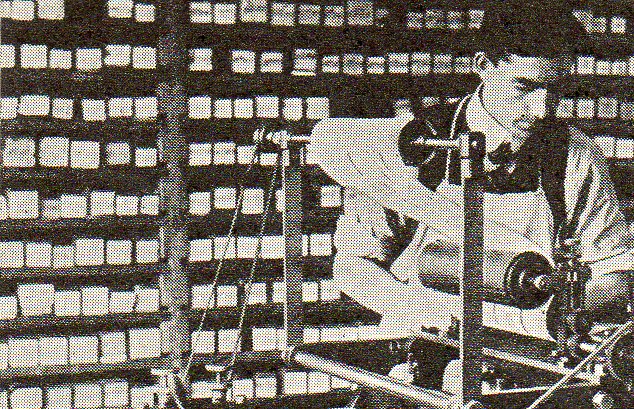
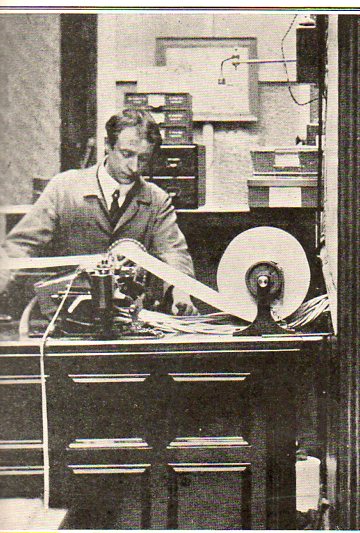
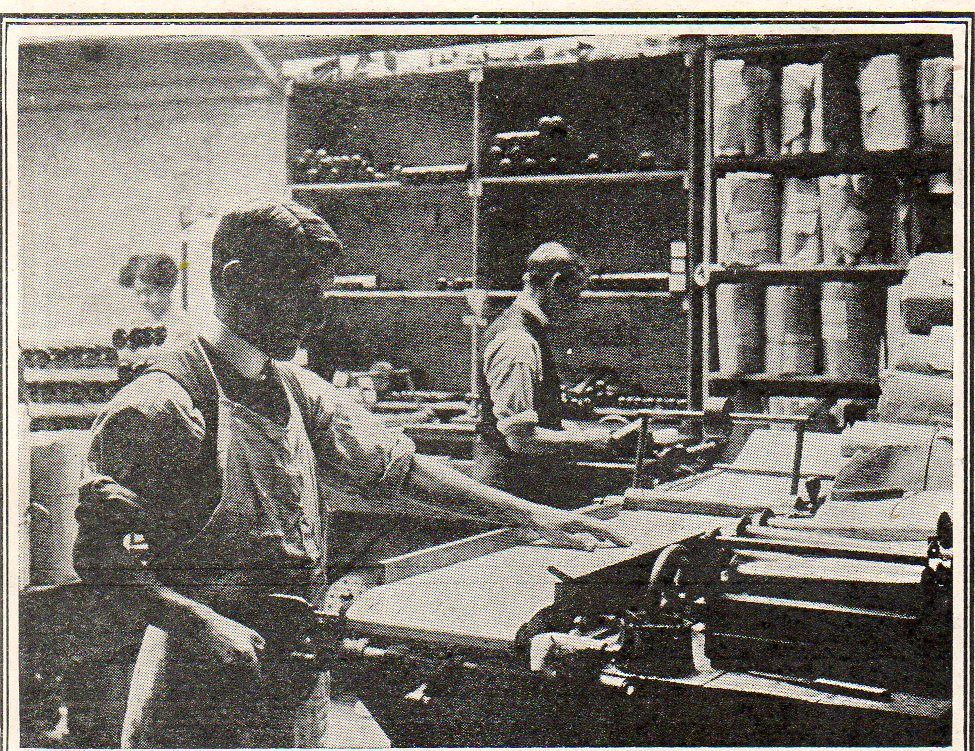
      Music role making--1871 There is a certain layered, geological dystopic quality to the  images of these men laboring at producing piano rolls for player pianos (and found in The Illustrated London News for 18 December 1909). This is true especially for the details, the small boxes in the background to where the rolls are being “processed”–music pounded out with metal points on a hard surface, as though produced by whatever it was that was in those little labeled wooden containers, far removed from the artistry of melody. These are images of a culture being made into hundreds of thousands of miles of hole-filled paper.

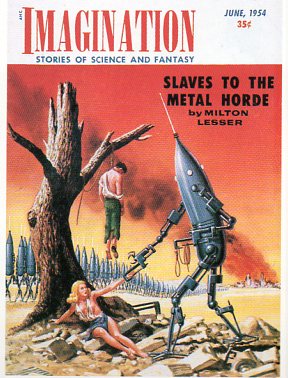
    The piano roles remind me of automatons replacing humans in entertainment, and then replacing the humans making the piano roles; of machines taking over the jobs of people writ large.  There’s a long and rich literary history of this idea, not the least (or first) of which is the appropriately-named Player Piano, Kurt Vonnegut’s first novel, written in 1952.  Like a tiny idea-machine, Vonnegut manufactured part of his tale from Brave New World, with Huxley having taken his bit from an earlier novel, We, written by Yevgeny Zamyatin in 1921–they’re all bleak images of a future dominated by machines, the humans acquiring numbers for names, like the replaceable and expendable units they became. 
    (Artwork by Malcolm Smith for Imagination, June 1954.)

    Robots in ocntrol--hanging human879

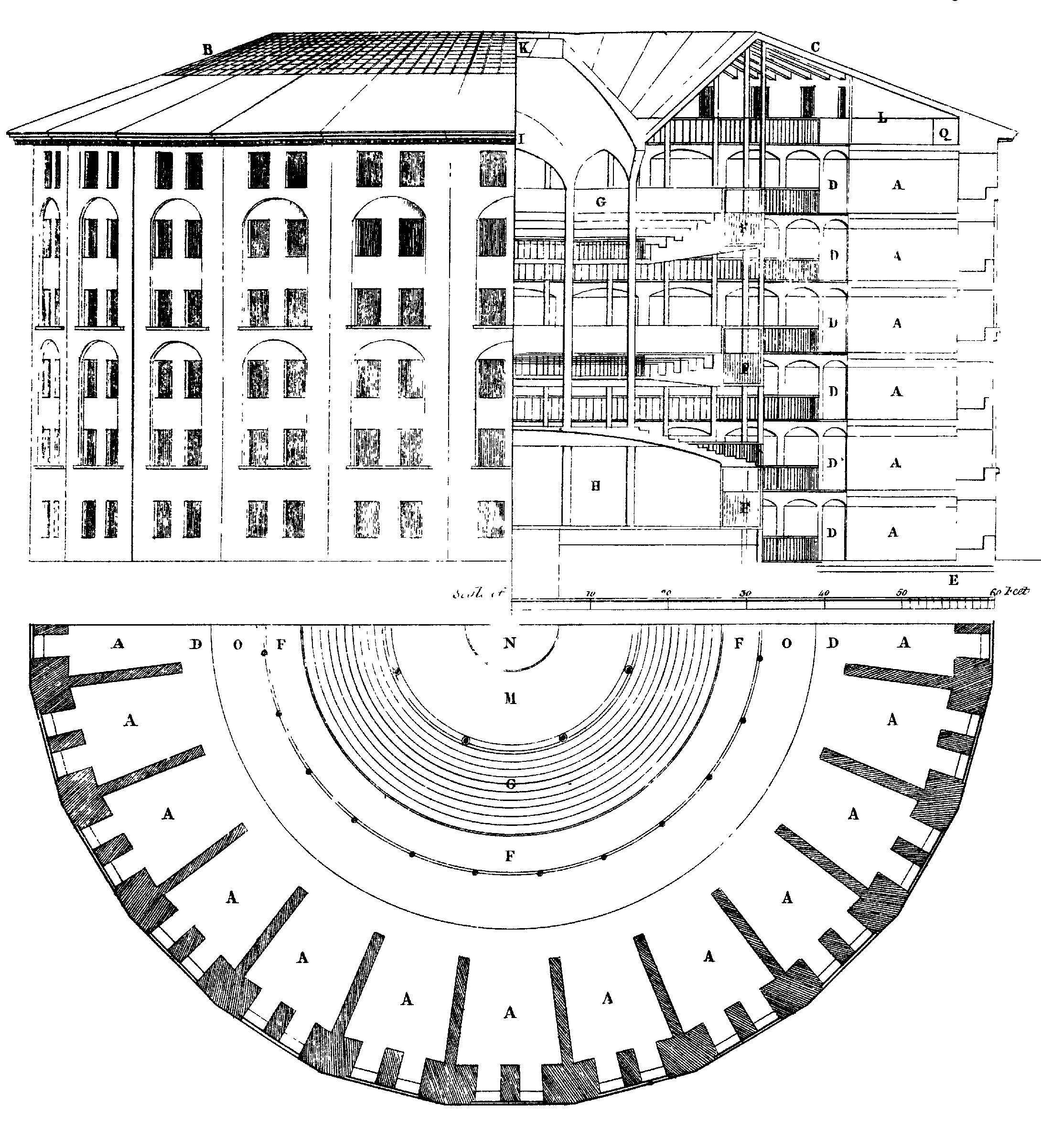
    The devices for producing the roles remind me of Jeremy Bentham’s panopticon, a functional prison designed so that all of the prisoners could be viewed from one central point.  The profile of the place reminds me of the geared punch machine for the piano roles; I’m not at all sure about what the function of the prison reminds me of.  But in the history of holes, I guess all it foes it fill u its empty holes with people, keeping them there for months or years or decades, and then replacing them with other people, part of a long and continuing series.

    File:Panopticon.jpg

    Here’s the panopticonal prison at Presidio Modelo, Isla De la Juventud, Cuba–with the walls laid flat, and some cells filled-up, and reduced, you may be able to make a certain music with it, like reading the scores made by pigeons roosting on a five-wire-strung staff of utility poles. My daughter Emma just suggested that there could be a Morse Code crossover as well!)

    File:Presidio-modelo2.JPG

    The plan and elevation of these prisons relate to the player paino paper, like the early dots and dashes of communication, like the punched cards that Vonnegut had in mind when he was writing his early classic. 

    Now, the rest of the Illustrated London News story (available here on my blog bookstore):

      Music role making--1det872
      Music role making--3865

    Music role making--4866

    Music role making--4det870
    Music role making--5867


  • A Paper Mirror and the History of Blank Things–Illusory (Sea) Power

    JF Ptak Science Books  Post 1228

    [This is a part of our History of Blank, Empty and Missing Things series.]

    Mirrors don’t necessarily have to reflect something to show  reflection–they merely need to offer you a picture of something that can show the difference of something real versus a false image of that same thing.  “Through a glass darkly” (1 Corinthians 13:12) isn’t necessarily a reflecting surface though it is a reflective one; neither is the painting in The Picture of Dorian Gray.  Harry Potter’s Erised mirror does act like a mirrorish mirror, and Narcissus does come to a bad and wasted end in front of his pondside reflection (the “perilous mirror”of the Romance of the Rose).  The queen’s mirror in the tale of Sleeping Beauty doesn’t reflect but does give advice, and Alice’s Adventures…  in 1871 begin with wondering what was on the other side of a mirror (“looking-glass”) above her mantel–in a similar vein Kurt Vonnegut introduces a mirror as a “leak” into another dimension rather than a reflection.   Sometimes you get a hand-held thing with glass, and sometimes you just get a piece of paper.

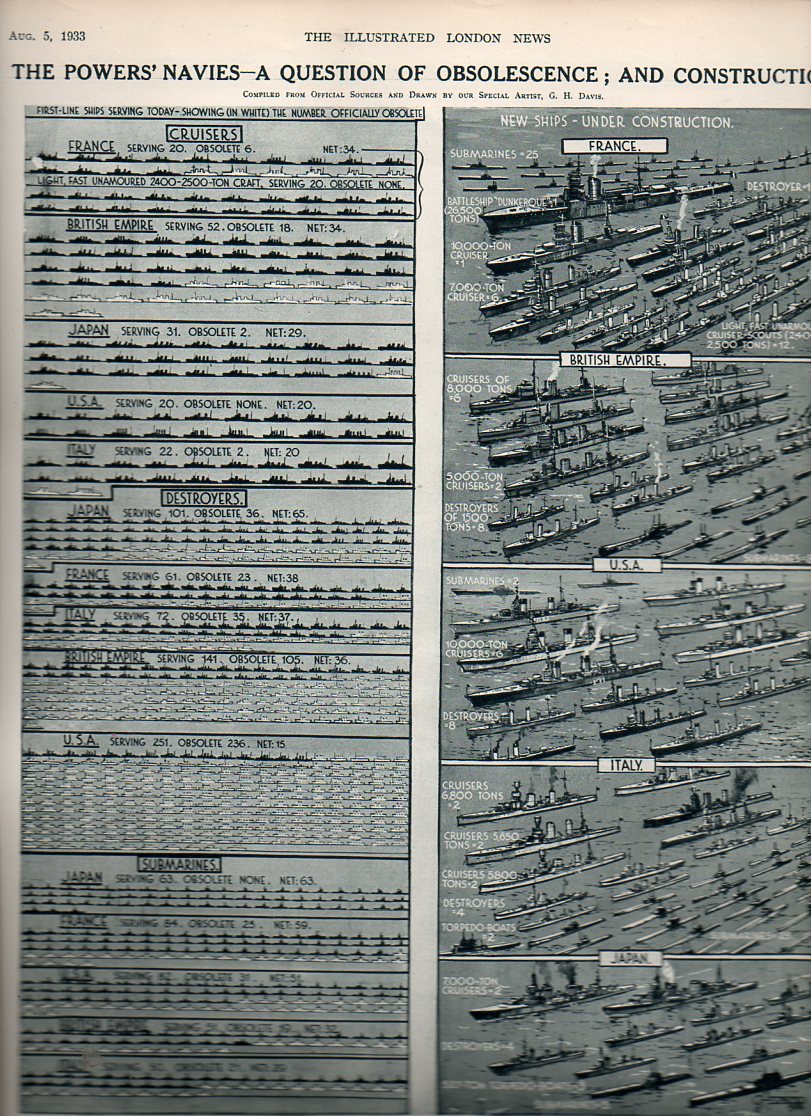
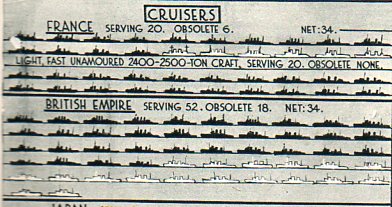
    Navy obsol818 This graphic from The Illustrated London News (5 August 1933, and available for purchase here) is an interesting case in point for a paper mirror.  It is interesting in how it presents a reported state of affairs and its actual condition.  In this case, the artwork shows the supposed/reported strength of the navies of the five major seafaring powers (France, British Empire, Japan, United States and Italy) and what those navies wpuld look like if the outmoded and obsollete ships were removed.  The modern and servicable ships are shown in black silhouette; the numbers of obsolete vessels were shown in white.  The dipiction of blank or empty of missing ships was a very convincing tool depicting the actual state of the major powers’ navies compared to a more romantic means of reporting naval strength. It must have been an excellent wake-up  to thopse with the capacity to see the truth, presented on one piece of paper, a mirror by any other name.
    Navy obsol cruisers819


  • 1 Inch=$370 Million: a Great Height of Graphical Representation of Quantitative Data

    JF Ptak Science Books  Post 1227

    0 ebay 13 graphs268[Click image to enlarge; both original images are available for purchase from our blog bookstore.]

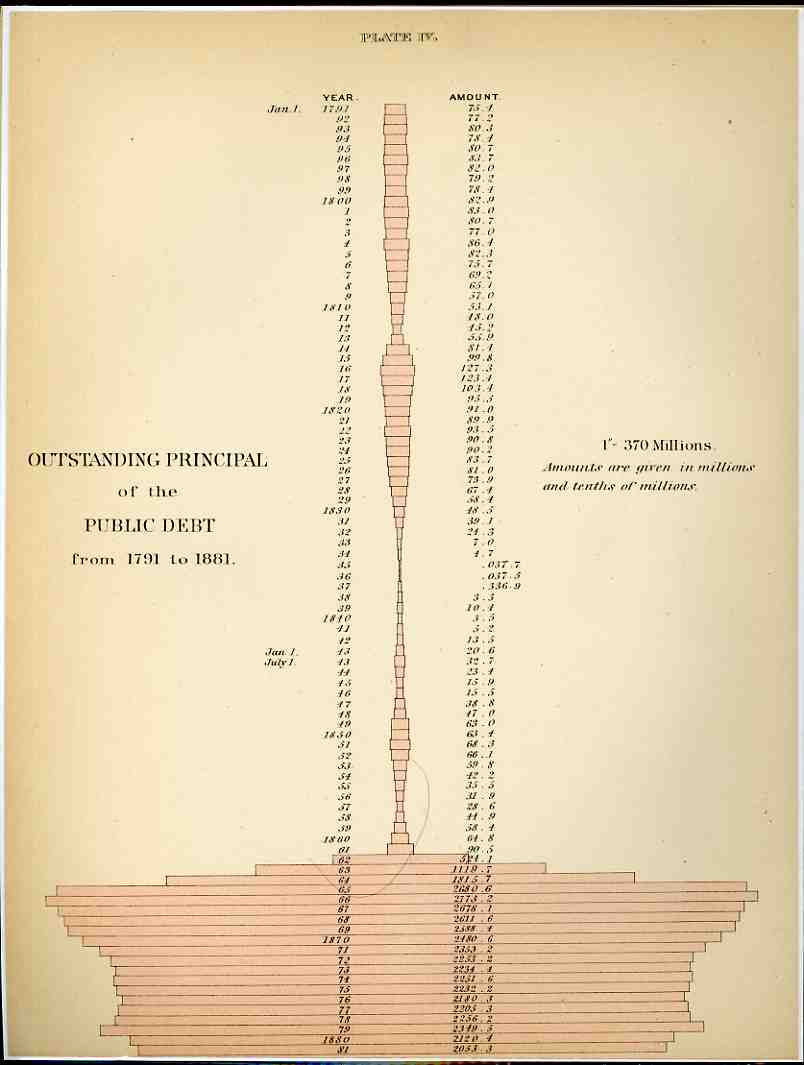
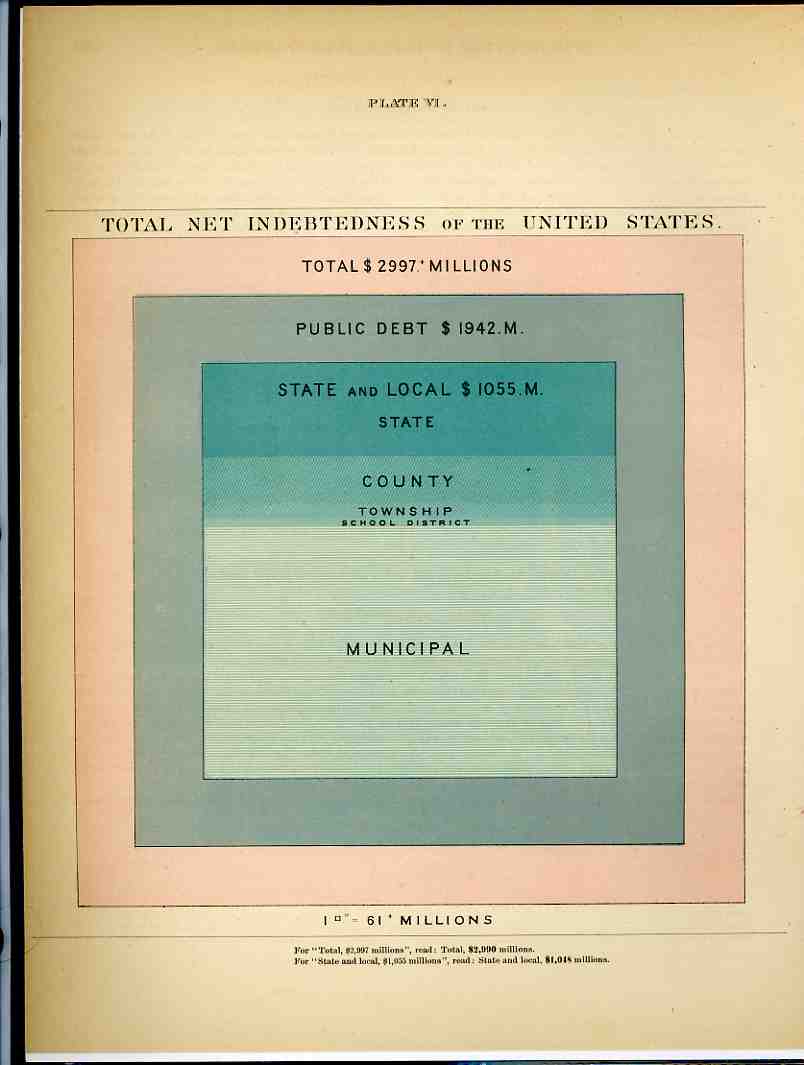
     It isn’t often that you see money represented by dry measure, but that’s what happened here in these two examples from the fantastic Walker Statistical Atlas ( Statistical Atlas of the United States based on the results of the tenth census 1880 with contributions from many eminent men of science and several departments of the government Comp. under the authority of Congress by Francis A. Walker, M. A., superintedent of the tenth census … and published in 1884).  What we see here is a history of American federal indebtedness from 1791 (when the public debt stood at 75.1 million dollars) to 1881 (about 2 billion).  Using the CPI (consumer price index) as a factor to translate that number in 2008 dollars (or so), the 2 bil grows to about $40 billion (a nickel then is about a dollar now). The interesting part of the legend–and what drew me to this graphic even before its somewhat unique shape–state “1”–370 millions”, that is one inch of pink horizontal bar stands for about $370,000,000, and the last bar on this graph is about 6 inches long, which, adjusted for inflation, would now be about 10 feet long. .That said, the really interesting part comes next–if we use this measure to graph a horizontal bar for the American debt as it stands in 2008, it would pink a pink bar that was about a HALF MILE long to express our 10(+) trillion dollars of debt.  OR, somehow, the old debt of 1881 would be about 1 story of a house, while the 2008 version would be up one side of the Empire State Building and down the other (and yes that includes the aerials).  I don’t know how to put this comparison in context, the differences are so staggering. 

    0 ebay 13 graphs269
    After having popped a neuron or two trying to get my head around that one, we’ll further confuse the situation with the second chart, which shows the total net indebtedness of the U.S. in 1881 in terms of square inches; or, at the bottom of it all, a 7×7 inch square represented the entirety of the $3 billion owed out.  49 square inches. Working backwards this time, our $10 trillion (or $10,000,000,000,000.00 writ large) adjusted back to a CPI value in 1881 would have covered about 88 PAGES of the atlas or 9,000 square inches.  Again, the numbers are just almost too big to mean anything. 

    We, as a country, owe one hell of a lot of money.

    And yes there are many different ways of trying to figure out what one 1881 dollar “means” in terms of 2008, but the CPI is the most simple to use and least argumentative and at least gives a pretty good idea of scale.  It would be more useful to try and establish the degree of difficulty  of turning the corner on the debt in 1881 compared to doing that today, but this is just a late-night post at the end of the week, and I don’t have a good clue about how to try and measure that bit simply.


  • History of the Federal Minimum Wage and Its Deeply-Past Present

    JF Ptak Science Books   Post 1226

    0 blog jan 30 substandard489I’ve included this post in the Blank/Missing/Empty thread of this blog because the Federal minimum wage has been proportionally increased more so in th e last two years than at almost any time in its history, the increases really only get it up to what it niormally has been, maybe a little higher, with CPI-adjusted. This post is in response to an article in the New York Times today saying that the new minimum wage is equal to that of 1968, which is probably accurate.  The real point is that during the mid- Clinton years and the early Bush yeras the minimum wage languished during a time of tremendous growth for those who already had money–the poor for the years of 1992-2005  were left largely unprotected, unmolested by fortune.
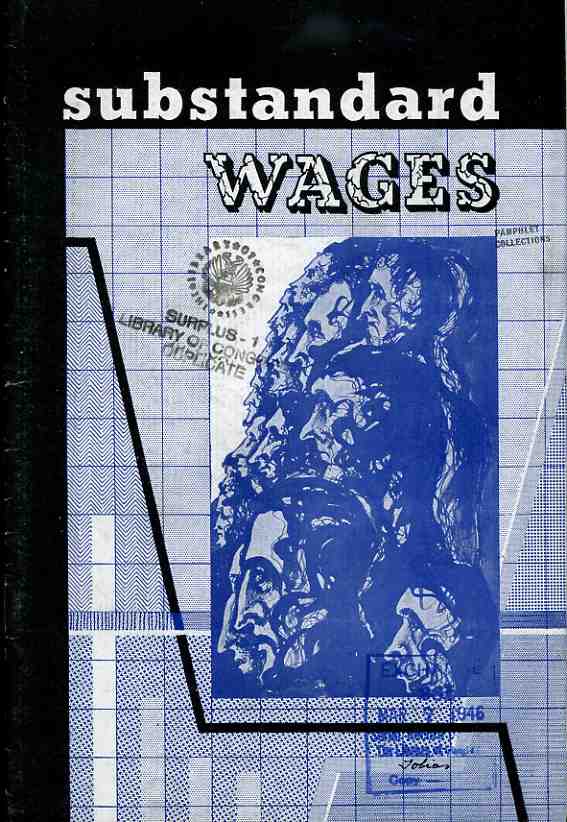
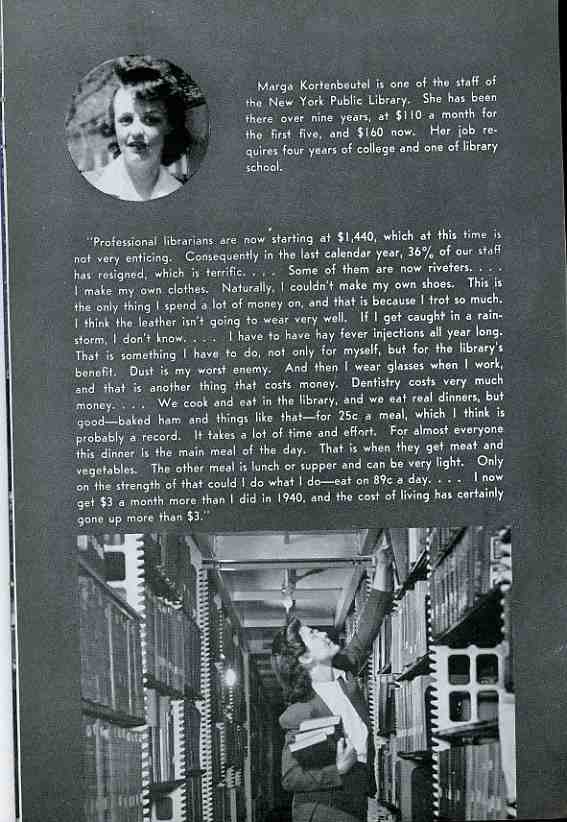
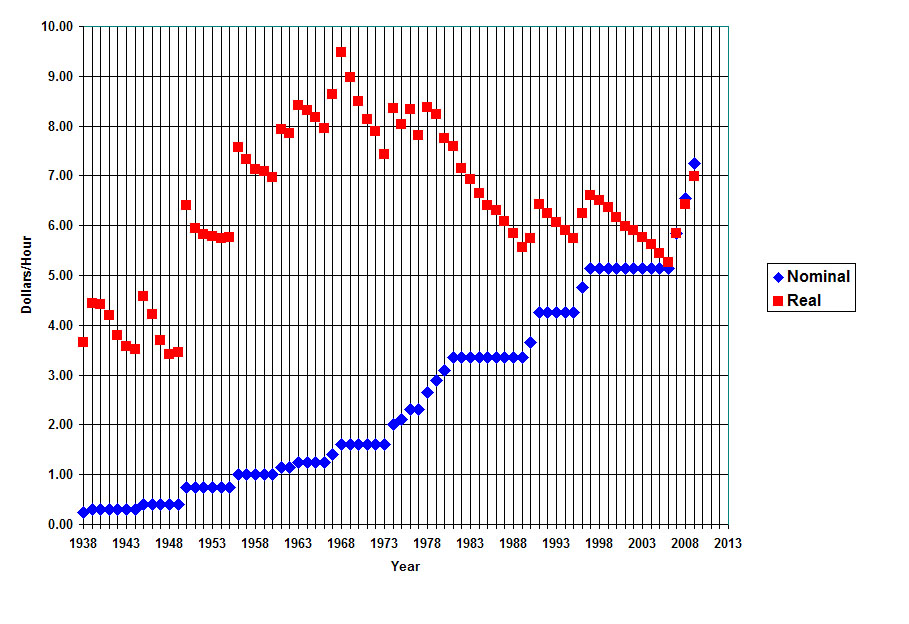
    Leafing my way through this interesting pamphlet, Substandard Wage, an Analysis of their Extent and Effect, and What Must be Done to Establish a Higher Wage Level, design “and presentation” by Abraham Joel Tobias for the Textile Workers Union of America, CIO, and for the Congress of Industrial Organizations, I found some very interesting bits.  First of all, the work was done to aid the working poor, people who were employed and making a wage, but the wage just wasn’t enough necessarily to being them out of poverty.  (The poverty line wasn’t invented as an economic bell weather until 1959.)  The first of the working poor that I read about was a librarian, Marga Kortenbeutel* (of the NYPL) who was working for $1,440.00 a year in 1945, which was just keeping her barely afloat, what with cutting out her 89-cent lunches and all.   That’s the equivalent (CPI adjusted) to about $17,500 a year in 2008 dollars.  Of course, the general economy was not doing well during the war, though it would rebound substantially by the late ‘40’s. The minimum wage, first established in 1938, was equal to about $3.50 2008n dollars in 1945. By 1950 this jumps to $6.25, and from there to about 1988 the minimum wage stays at at least that rate, with the period 1958-1978 soking aqt an average of about $8.hour.  From 1988 forward the minimum wage falls, winding up at about 5 dollars/hour in 2008, with the period 2003-2008 being the lowest level of real wages since World War II.0 blog jan 30 substandard490

    But what was this in terms of the rest of the population; what did these figures for minimum wages mean in the  society at large?  Was this a livable wage?  If we define “livable” as above what the government considered to be the “poverty level”, and “working” is a 40-hour work week and a 50-week working year, the answer is a quick “no”.  In 1959, when the poverty level was established, the minimum wage for the working person brought them to 67% of the income necessary to be “poor”; that left a gap of 33%, and that isn’t good.  That gap continued to close to 1968, when minimum wage go to within 10% of the poverty level, and then it began a slow and steady-ish decline.  The spiral down bottomed out for a bit in 1989, when it hit 52%,   building back up to just a touch over 60% in 1997.  From 1997 until the new minimum wage was instituted in 2006, the gap widened steadily, hitting 50%.  In 2008, with the new minimum wage in place , the gap is still at 41%, meaning that the new wage levels still only come to within 59% of what is supposed to be the poor line in the United States.  59% stops things from being a ridiculous slap in the face of American working poor, but not by much.  And it affects too few:  the minimum wage applied to a high of about 17% of the entire working population in the U.S. in 1979; today, the minimum wage which gets the working poor a little more than half-way to poor, applies to only 2.5% of the population. 
    *As it runs out, I found a little bit about Ms. Koretenbeutel; at the time of the publication of this pamphlet, Margathe was 35 years old.  She married someone named Voorhis in 1960, and died in 1971.  That’s all I’ve got.

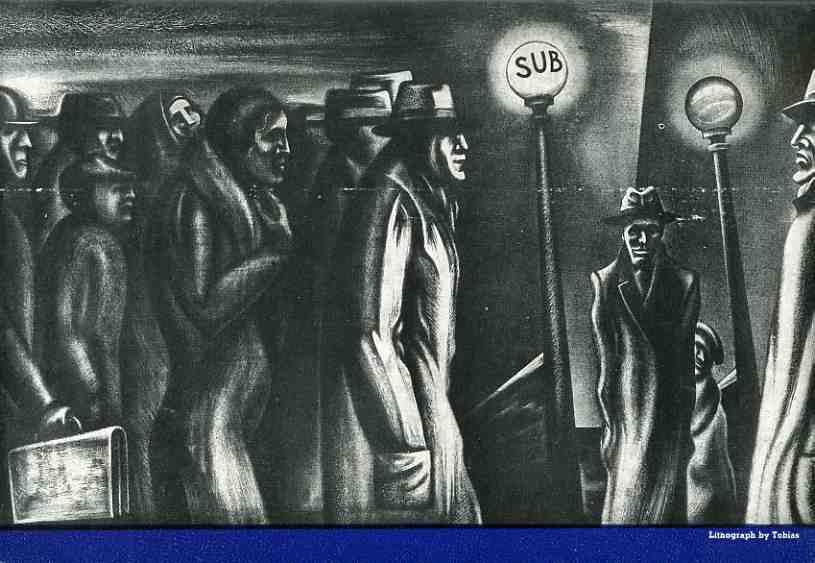
    The image below is from the back cover of the pamphlet, described as a “lithograph by Tobias”. 

    0 blog jan 30 substandard491


    A Timeline of Minimum Wage Levels, 1938-2009  (in continued reading section)

    Minwage The graph, above, is from Oregon State University website on the history of the minimum wage.  The accompanying text to it is also below.  The graph depicts “nominal” versus “real” minimum wages by year, the red dots (the nominal) showing what the original minimum wage translated to in 2008 dollars.

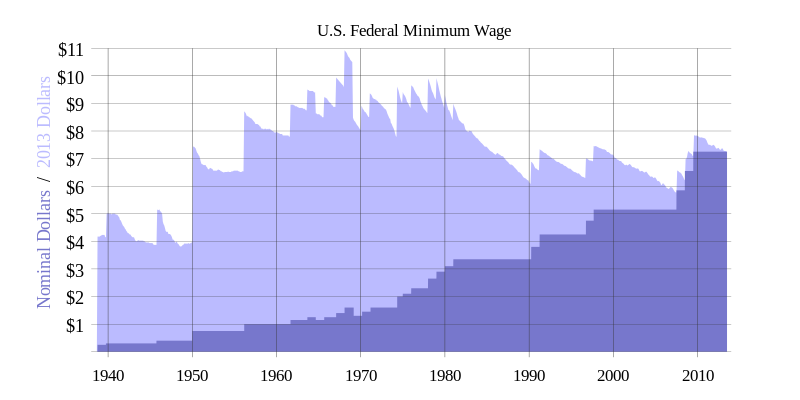
    A federal minimum wage was first set in 1938. The graph shows nominal (blue diamonds) and real (red squares) minimum wage values. Nominal values range from $0.25/hr in 1938 to $6.55/hr as of July 2008. The graph adjusts these wages to 2007 dollars (red squares) to show the real value of the minimum wage. Calculated in real 2007 dollars, the 1968 minimum wage was the highest at $9.47. The real dollar minimum wage (red squares) falls during periods Congress does not raise the minimum wage to keep up with inflation. The period 1997-2007, is the longest period during which the minimum wage has not been adjusted. The minimum wage increases in three $0.70 increments–to $5.85 in 2007, $6.55 in mid 2008, and to $7.25 in mid 2009. The real values after 2007 are projected for future decline in purchasing power. 

    Minimum wage History_of_US_federal_minimum_wage_increases


    [Graph from Wikipedia on the minimum wage, here]

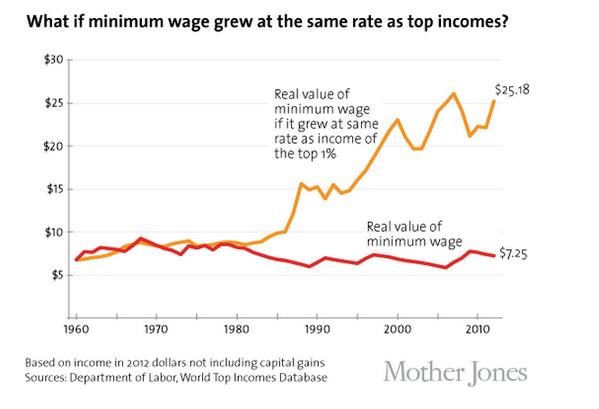
    And this interesting graph from MotherJones, showing what the minimum wage would look like if it had kept pace with the salary increases for the top one percent:


     Minimum wage top income


  • Attacking Darwin’s Descent of Man in The London Times, 1871.

    JF Ptak Science Books   Post 1225

    “But with regard to the material world, we can at least go so far as this—we can perceive that events are brought about not by insulated interpositions of Divine power, exerted in each particular case, but by the establishment of general laws.” W. WHEWELL: Bridgewater Treatise.

    “To conclude, therefore, let no man out of a weak conceit of sobriety, or an ill-applied moderation, think or maintain, that a man can search too far or be too well studied in the book of God’s word, or in the book of God’s works; divinity or philosophy; but rather let men endeavour an endless progress or proficience in both..” BACON: Advancement of Learning.

    The quotes above stand alone, the first things that the readers see, sitting on the half-title page of  Charles Darwin’s On the Origin of Species (first published in 1859 in an almost-immediately sold out run of 1250 copies) an extraordinary, epochal book that was a lightning rod for reception both good and bad, heaven and hell, the Boschian hells of which were clearly not deserved, then or now.  (It is easier to understand a poorly-reviewd Origin in 1859 or through the 1860’s or even through the rest of the 19th century or even somehow through the early twentieth, but not afterwards.)

    Twelve years after the first edition of the Origin (and two years after the appearance of the Origin in its fifth edition) came his elegant and formibible The Descent of Man, and Selection in Relation to Sex

    The Times of London gave such an awful review of the book that a review of this review was published in the April edition of Nature [(Darwin),  Charles.  REVIEW of Review: The Descent of Man.  London:  Nature,  1871, volume 3, 20 April 1871].   It was Thomas Stebbing who wrote the response to The Times‘ incitful, hateful attack upon the Descent of Man. The Times saw Darwin’s work as an attack upon society,  accusing him of undermining authority and principles of morality, opening the way to “the most murderous revolutions”.  A “man incurs a grave responsibility when, with the authority of a well-earned reputation, he advances at such a time the disintegrating speculations of this book.” Stebbing’s review of the review is drippingly sarcastic, pointing out obvious errors in specific and the tone of the article in general in the defense of the book. Darwin’s “facile method of observing superficial resemblances” (says The Times) incites Stebbing to issue the following: “they may fancy that truth is worth discovering , even when it seems to involve some contradictions to our pride and some loss of comfort to our finer feelings…” (What a great line!) The article runs about 1000 words, and is a two-column, 1-page bit. [This issue of Nature may be purchased from our blog bookstore, here.]

    “No one ought to feel surprise at much remaining as yet unexplained in regard to the origin of species and varieties, if he makes due allowance for our profound ignorance in regard to the mutual relations of all the beings which live around us.” Darwin, leading the last paragraphs of the end of the introduction to the Origin, page 7.


  • The Invisible Influence of the Highly Visible? Comets and Meteors in Astrology

    JF Ptak Science Books   Post 1176

    “When beggars die there are no comets seen; The heavens themselves blaze forth the death of princes.” – Shakespeare.

    “Threatening the world with Famine, Plague and War: To Princes, Death! To Kingdoms, many Crosses; To all Estates, inevitable Losses! To Herdsmen, Rot; to Plowmen, hapless Seasons; To Sailors, Storms, To Cities, Civil Treasons!” De cometis by John Gadbury, London, 1665

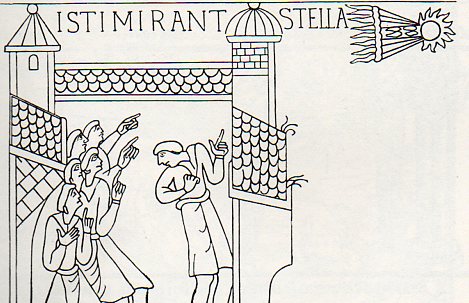
    It is unusual to me that in the long history of early astrology, some of the greatest elements of the night sky–comets and meteors–are little used, perhaps even unuseful outside of adding flavoring to readings given the time and place of their appearance. They had been seen for milennia–appearing in Gilgamesh and the Book of Revelation for two samples– as prognostic of future events, John of Damascus and Aritotle and Ptolemy and Albumasar all writing about that quality.

    Comets 5564
    [The Bayeux Tapestry illustrating the appearance of the comet of 1066, later to be known as Halley’s comet.]

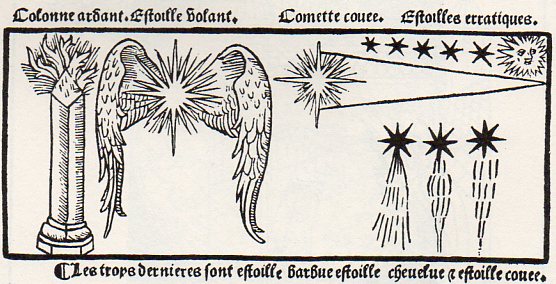
    Comets and meteors didn’t really affect anything in the physical world, and in the astrological one their purpose was to perhaps predict a kingly death or the appearance opf warts on women. They were also seen by people like Aristotle to be atmopsheric events, living out their exsitence in close proximity to the Earth, incapable of having any undue affect on Earthly matters.  Meteors would appear and then disappear, comets were surprises and visible for just short amounts of time; the rest of the night sky remained the same, intact and unaltered after their appearances.  They were not understood, though they were seen by some as raging battles between forces of good and evil, personifications of the struggle between the angels of god and the elements of the devil. Meteors and comets were mysterious, unconquerable, unknowable, suspicious elements, and were evidently not useful to the early astrologers.

    Comets 1560
    [Nicolas Le Rouge, Le Grand Kalendrier et Compost des Bergieres, published in 1496 in Troyes. 

    The night sky is a mnemonic device, a place to store memory and a holder of the alphabet of myths and beliefs of all, a culture written large across the sky. Meteors and comets were not predictable, and could add nothing insofar as a consistent bit of storytelling was concerned, though they certainly created their own stories in each observed appearance; they could also add punctuation and exclamation to whatever constellation they appeared in. For example if one appeared in a juncture with Jupiter, a major event for royalty would possibly be foretold.   But as a permanent element to the visualization of the night sky, they had little power even though they seemed to be displays of fantastic energy and power in themselves.

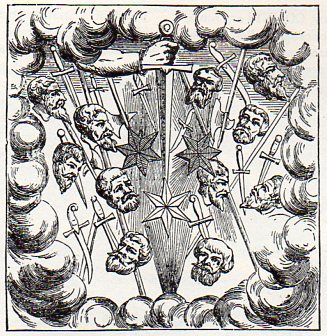
    Comets 2561

    [Amrose Pare illustrated the comet of 1528 in his Livres de Chirurgie (in a chapter titled “Des Monstres Celestes”), published in Paris in 1597. Even though Pare was a towering figure and great intellect, he still personified the wandering stars with human faces, with hair and beards, accompanied by swords and shields.  There were many other scholars who saw such things in comets and meteors, not the least of which was Maupertuis, who envisioned the tails as clusters of jewels; many others seeing many other things.

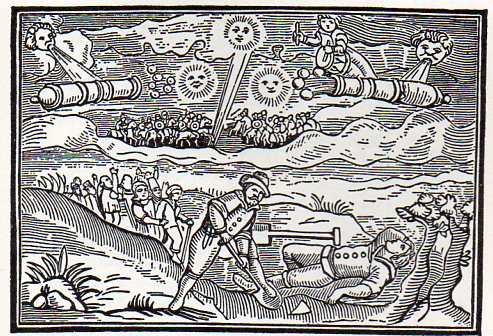
    Comets 3562
    [For some reason the celestial court, divided by sunlight and flanked by two other sources of light, have ofund it expedient to issue comets from the mouths of Heaven Canon.  I’m not sure what’s going on in the forground with the fellow working his spade next to the triangular blankness.  the man to his right seems to have been overtaken in fear (as have the group of people visible to the left over the shoveler’s shoulder).]

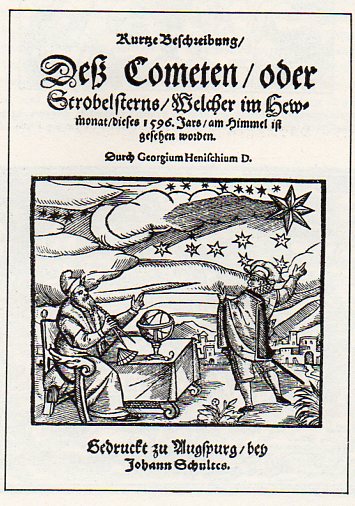
    Comets 4563

    [Halley’s comet appears again on the title page of this work by the Hungarian George Henischius, a prfoessor of rhetoric, mathematics and medicine at Augsberg.]


  • Little Bizarredness: Bland Hyper-oddness in Published Works

    JF Ptak Science Books LLC  

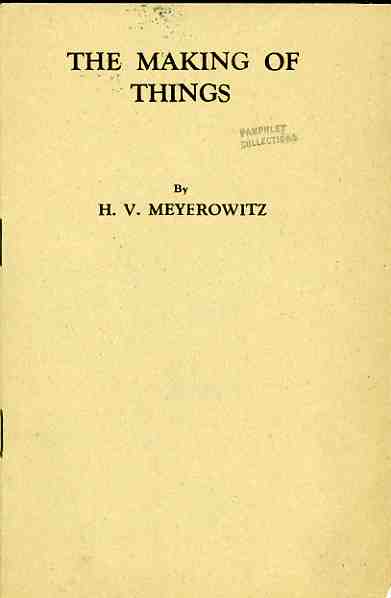
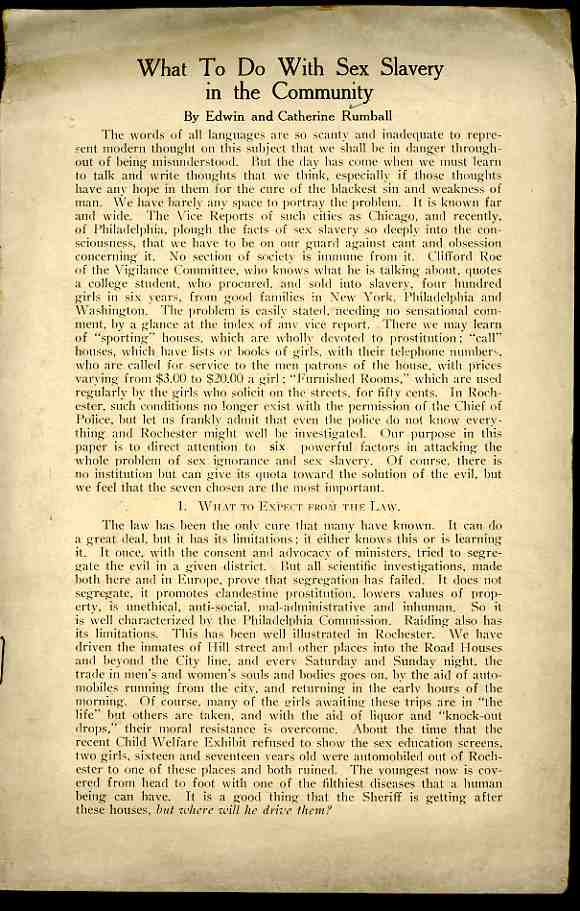
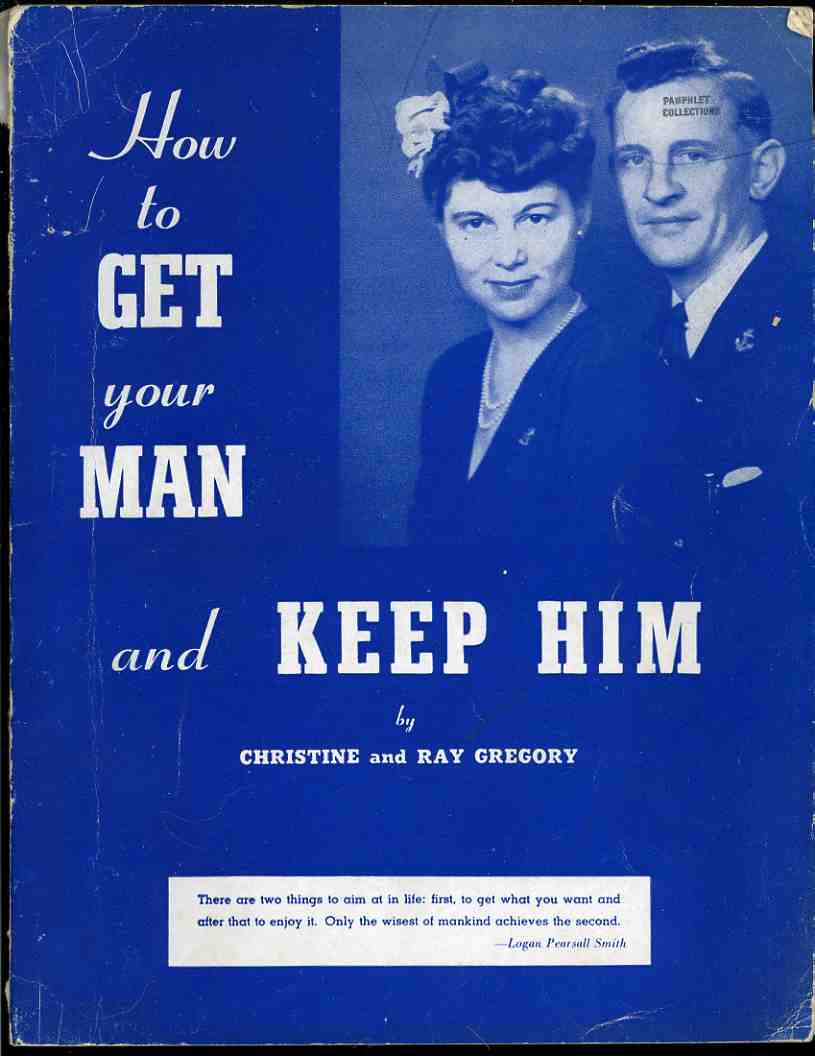
    These pamphlets are samples from a larger collection whose attention to the detail of boredom and blandness and relative inexplicability are extraordinary.  The titles intact, it mostly doesn’t matter what the contents have to say for themselves–everything, really, is right there on the front page, the meaning best left to the imagination. 

    0 blog march 9 titlitle that which661

    0 blog jan 30 substandard493
    0 blog jan 30 substandard492

    0 blog jan 02 keep man340

    Small history--penny465

    Small history--gum466

    0 blog march 9 titles making of things660

    0 blog dec 19 tnazi america302

    0 blog jan 02 keep man339


  • A History of Blank, Empty and Missing Things: the Importance of Nothing

    JF Ptak  Science Books  Post 1145

    {This is one in a longish series on the the History of Blank, Empty and Missing Things]

    There is importance and elegance, grace, necessity in nothingness.  That nothing happens is exceptionally important in almost all areas:  the meaning of silences between notes and longer pauses in musical compositions, the essential aspect of timing in a comedic routine, the special place that one goes in meditation, the distinction of wide margins in a beautifully designed book (magic that hasn’t been remotely approached by Kindle & Co., though it said that they have their own hidden beauties), and sometimes just the place where ideas are born.  The places for the beauty of nothing are endless.

    The use of nothingness in art compositions an designs is of course essential–it is sometimes just a little odd to think of it as its own special, spatial element, as its own force of creation or design. 

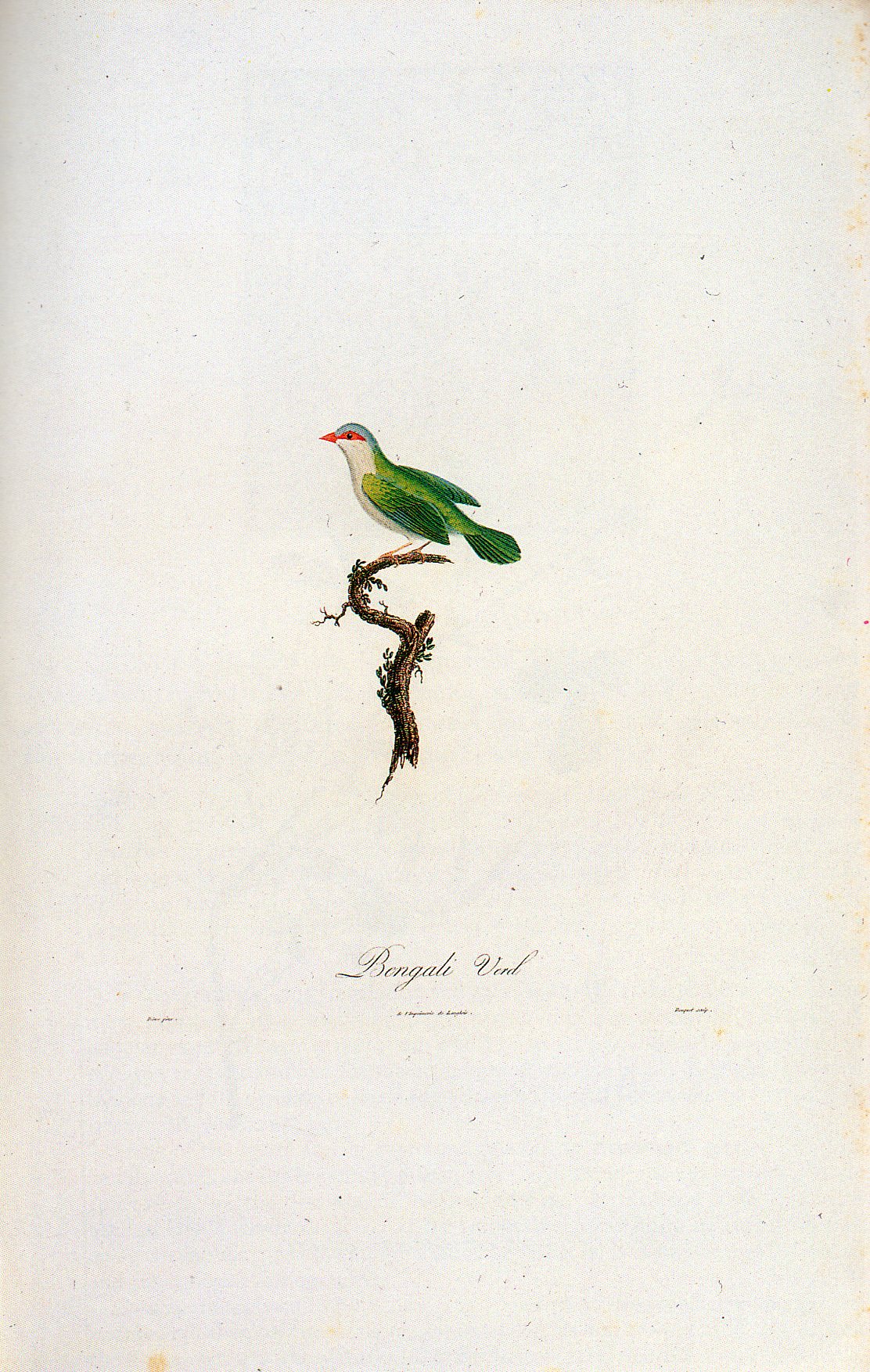
    Take for example this beautiful use of not filling up space by Louis Jean Pierre Vielliot in his 1805 work on natural history:

    Patti--WIWFY-Cover design Bird407

    It would be so easy to crop out these gorgeous margins, and so kill the power of this image–you’re left with the main ingredient of the effort, but without its necessity, or power.

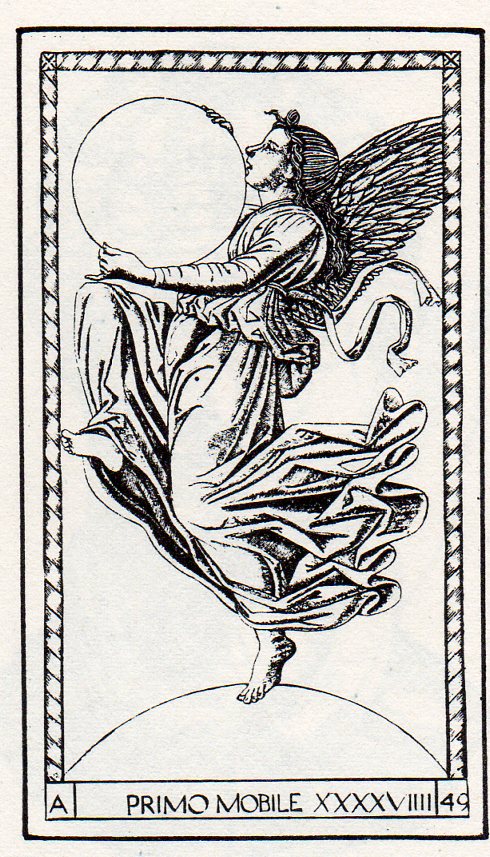
    Empty--tarocchi412 And of course there’s sometimes everything in nothing, seen here, with the universe in the hands of the Primum Mobile, (one image among 50 in a series known as the Mantegna Tarocchi,
    drawn and engraved by artists unknown ca. 1465, though it was once
    believed to be the  work of the great master Andrea Mantegna (and later
    the possible work of Bacci Baldini)). From my reading of this image, the universe is held  in the hands of the primum mobile,
    a spherical container of not-quite-nothing, waiting for the creator to
    breathe life into it.  The possibility of absolutely nothing was seen as
    an impossibility, a perfect vacuum, a space of certain nothingness, was
    a violation of theological belief.  That the sphere existed was a proof
    that–in the 15th century–you simply couldn’t have a container of
    nothingness. The very presence of the sphere confirming that there was
    something being contained by it.

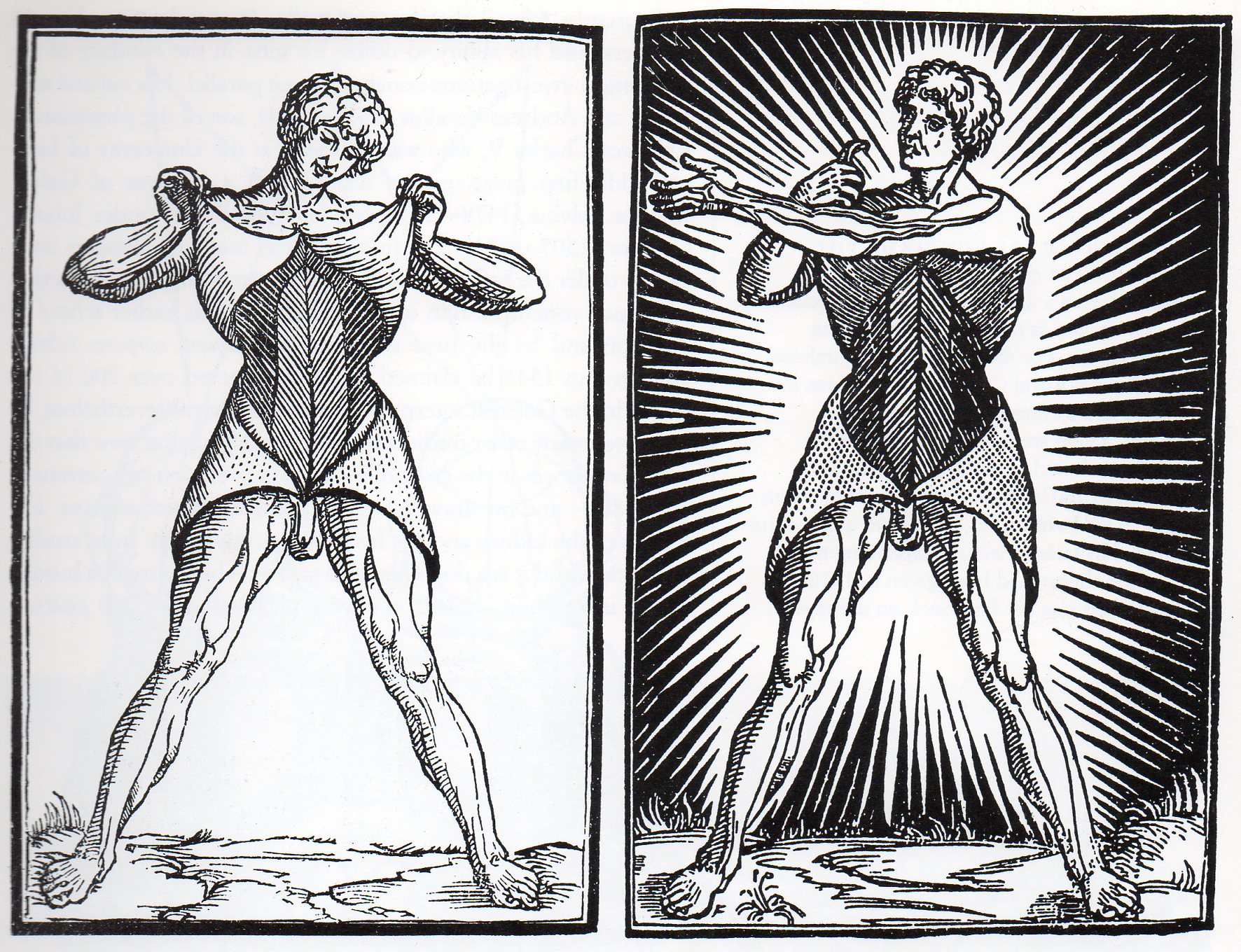
    Here’s an excellent example of the use of nothing as a design force (from Berengario da Carpi’s Commentaria siper Anatomia Mundini, published in Bologna in 1521), where we see what is basically the same exact dissection, except for changes in the internal shading and of course the lightning bolt background.  The simpler design is by far the superior.

    Empty--anatomy411

    It does take some confidence and courage sometimes to use big wide swaths of white, using complementary nothingness–and that’s a good thing.  Sometimes too much “something” isn’t nearly as useful or important as a little bit of “nothing”.


  • Comfortable Bones, the Skeletons of Adam and Eve–Dissecting a Dissecting Theatre Print, 1616

    JF Ptak Science Books  Post 1143

    “You can have it all, my Empire of Dirt”–Mr. Cash  “We are but dust and shadow”–Mr. Horace

    Can there be anything more comforting than for a believer to see the
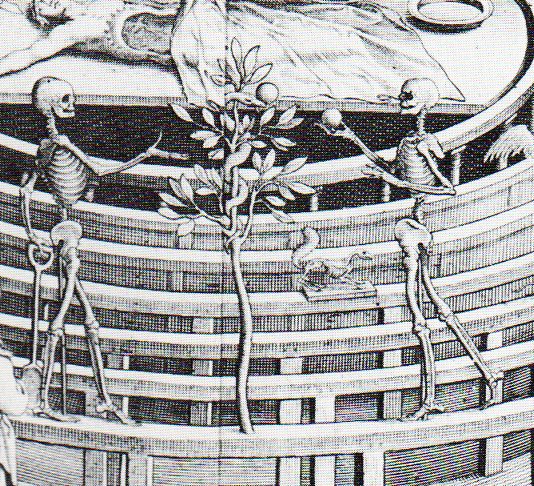
    skeletons of Adam and Eve, the proof of the origins of all anxiety? 
    Probably not.  But their skeletons displayed in this engraving by
    WiIllem Swanenburgh (after

    Adam skeleton det389

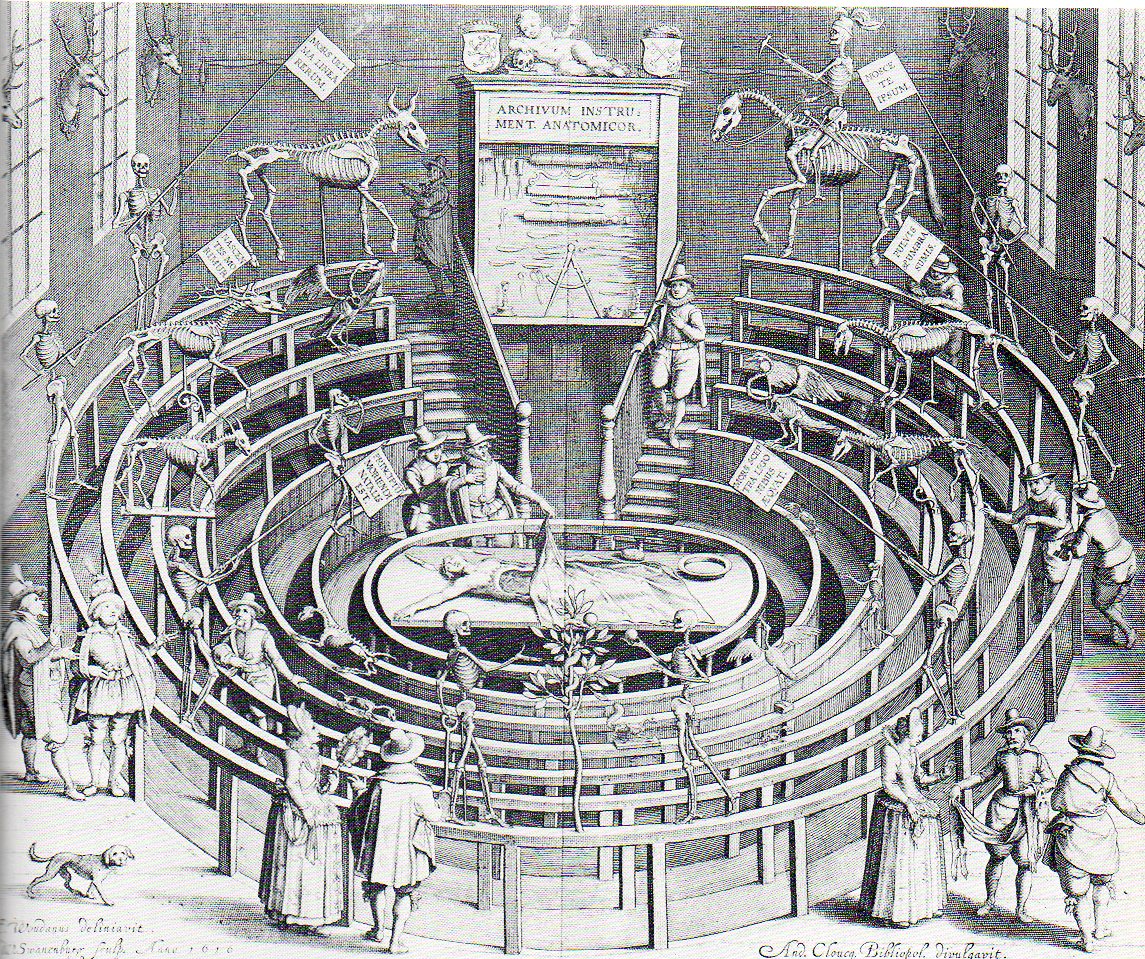
     the painting by J.C. Woudanus) published in 1616 were recognized as pure iconographic ornament.  They decorated the last layer of the dissecting laboratory/pit, an immortal reminder of mortality–perhaps aggressively so, since people were there to watch other people take apart humans and animals and such, which would seem to be a nice reminder of the Big Sleep that awaits all. But no matter, they wer there, Eve with apple, Adam with spade (?), the tree with the forbidden fruit flourishing still around all of the bones, the snake surviving as well.

    Adam skeleton388
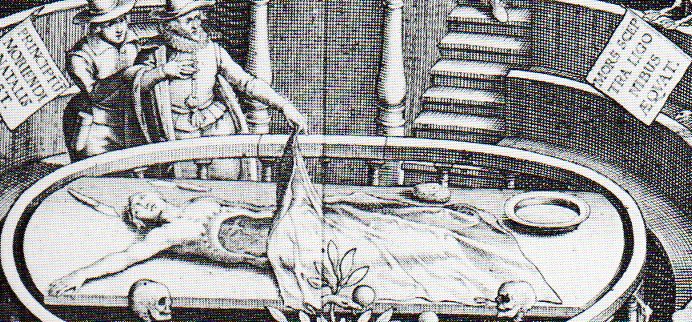
    Visitors to the dissecting amphitheatre here in Leiden were treated to a bone museum during the days in which the place was not being used for its main purpose, though we do see here that a cadaver is being semi-privately displayed, a burgher taking a reticent look (cloth held between thumb and index finger?) while the compatriot takes cover behind him. 

    Adam skeleton cadaver393

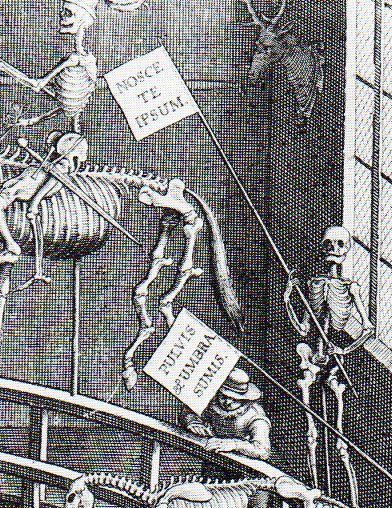
    There are plenty of other onlookers to this scene, though most of them are dead,.  It doesn’t prevent them from holding up sings/banners with messages for the living, though.  


    Adam skeleton signs391

    “Pulvis et umbra sumus” (“we are but dust and shadow”, Horace) hangs just above the head of the man who looks as though he might be anxiously fiddling with a mole.

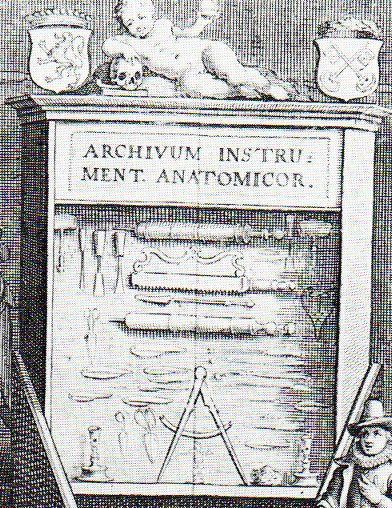
    The tools of the trade hang in an auspicious place, attracting only the attention of two horse skeletons.–scalpels, scissors, maws, a crowbar, a big backsaw-like device, and of course two giant syringes for drawing out “fluids”.

    Adam skeleton tools390 

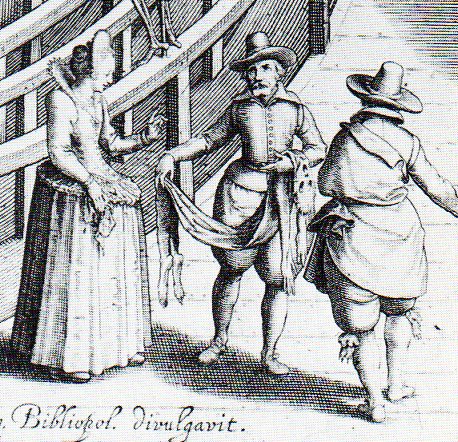
    Lastly, I couldn’t tell what the people were doing in the far right bottom corner until I magnified the image a bit–the man is holding the entire envelope of skin of a human, flayed in one piece.  What is it that they’re saying?  What does one say when offered an armful of skin?  The image of whole-body flayed skin isn’t terribly uncommon in 16th and 17th century anatomy books–except that they’re usually being held by the disectee, and not by a living/walking/talking person. 
    Adam skeleton people392