A Daily History of Holes, Dots, Lines, Science, History, Math, Physics, Art, the Unintentional Absurd, Architecture, Maps, Data Visualization, Blank and Missing Things, and so on. |1.6 million words, 7500 images, 4.9 million hits| Press & appearances in The Times, Le Figaro, Mensa, The Economist, The Guardian, Discovery News, Slate, Le Monde, Sci American Blogs, Le Pont, and many other places… 5000+ total posts since 2008.

Category: Blank and Empty Things; A History of

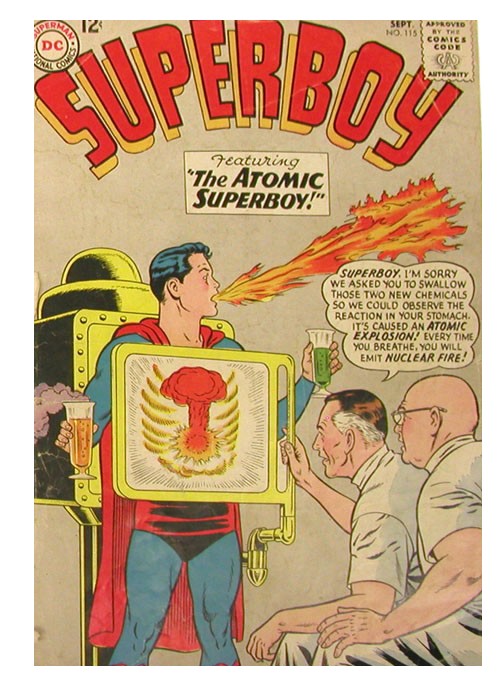
  • The First X-Ray of an Atomic Explosion Inside of a Person (1964)

    JF Ptak Science Books  Post 1140

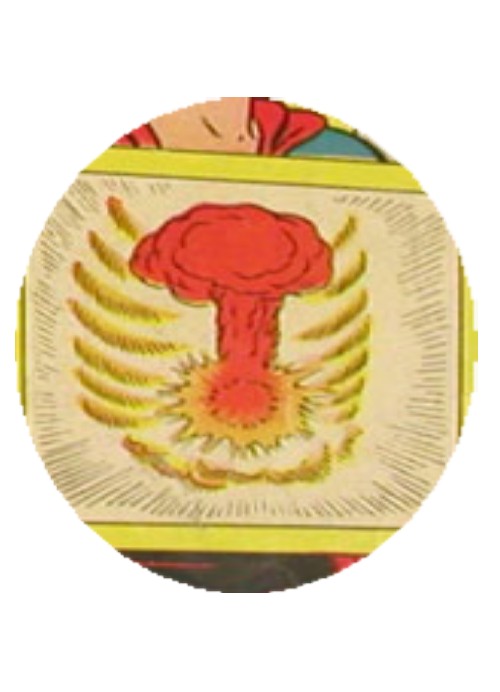
    I don’t know why, but I cannot remember ever having seen an x-ray of an atomic explosion taking place inside of a person, before today.  I guess that Superboy’s body is susceptible to x-rays but is also at the same exact time capable of preventing a nuclear explosion from escaping his body–all except for the “nuclear fire” coming from his mouth.Now that’s some sort of body control! The men in white seem pretty confident, being so close to the Trinity-like action and all.

    Atomic explos superboy
    Superboy evidently needs fewer ribs than humans, and it looks like the detonation point is right on the transpyloric plane, taking out kidney, liver, gall bladder and just about everything else.  And his spine doesn’t show up, either–along with a lot of other innards.

    Atomic explos superb deta 

    The original (published in September 1964) comes from the Oak Ridge Associated Universities, and they point out that this issue comes right after the signing of in-air nuclear weapons testing ban (after a speech by JFK in June 1963, marked by a memorial that was about 10 feet away from where I used to practice the shot put in D.C.)


  • Radioactive Suppository Sex Aids & Radium Toothpaste: Shining Lethal Nonsense

    JF Ptak Science Books  Post 1139

    Radium chemical co385

    “Radium was what was bad and worse
    a shiney and shining curse,
    till we stuck uranium in there,
    to make me have my ‘splodin’ hair…”–Lyrics to the nonexistent song “Satan’s Tooth in Me”, (1946),  by Blending “Loose Tooth” Bender

    If this was 15 May 1915, we could all be attending the Illinois State Medical Society’s annual meeting at the Masonic Temple in Springfield, Illinois.And if we went to booth 18, we could’ve bought some fine, newish radium-based products that would be enjoyed drinking or bathing in.  And all for the cause of human progress, the radium-based nonsense promised cures for all sorts of ills:  rheumatism, dandruff, dull teeth, gout, sexual problems, general malaise, and on and on. 


    The exceptionally important discovery by the Curies was made 17 years before this event, with the medically-unknown problems of radium waiting in the wings for another decade or so after this.  In the meantime, there were many companies that took advantage of the unknown qualities of radium (as happened with the use of X-Rays for all sorts of quack applications) using it as a shining addition to dozens of products.

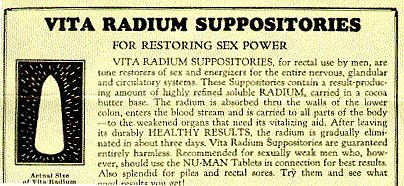
    Many of these companies employed the real stuff, affecting thousands of people, radium-based cure-alls being ingested, injected, applied and bathed-in. For example, there were numerous companies distributing ‘radium water” (such as “Radithor” by William J.A. Bailey’s company), radium suppositories (“in a cocoa butter base”), toothpaste (“Doramad”, distributed by Doramad Radioaktive Zohncreme during WWII, to Germans), cosmetics (“Tho-Radia”), and many different varieties of radium-enriched healing belts (to be worn or slept on).  There were plenty of other products that used the “radium” name but didn’t actually use the substance itself, further selling the idea of its usefulness on the individual level.  There was radium beer, nail clippers, starch, cigars, polish, headache tablets, razor blades, butter and of course, condoms.

    Radium--suppositories

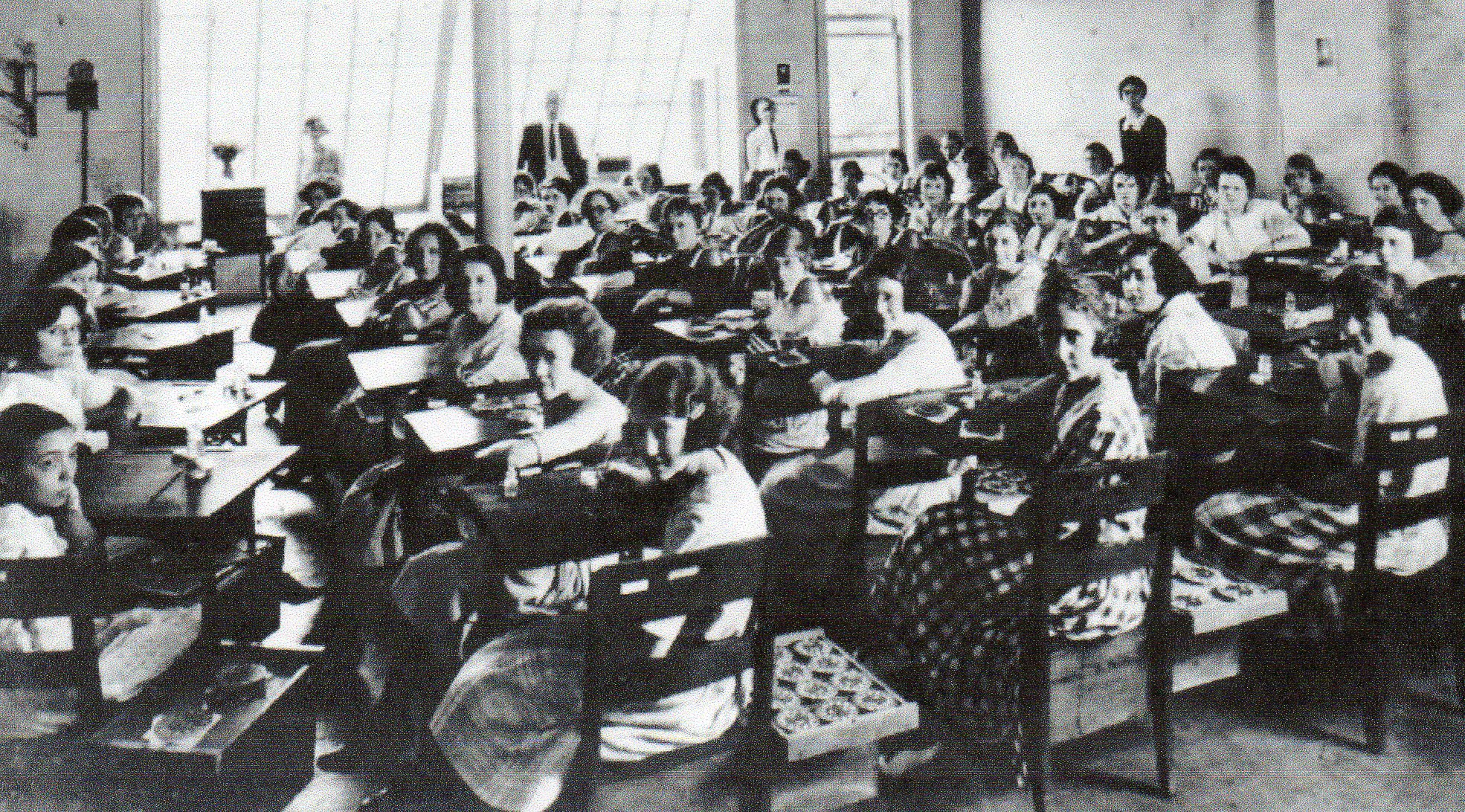
     Perhaps the most famous case of misguided application of radium was in the case of the radium dial painting women, more than 1200 employed by four companies1 during the ‘teens and ‘twenties (and some later) to apply radium-laced paint to make watch face/dials luminous in the dark.  It wasn’t necessarily the radium in the paint that got to so many of these women and killed them–it was the fact that they would generally put their paint brushes on the tips of their tongues to get a better painting point with the camel hairs.  Ingesting the radium paint like that was

    Radium women 2384
    [Image: Oak Ridge Associated Universities, radium dial painters, ca. 1920.]

    the killer.  The manufacturers said, basically, that they “tried” to discourage this behavior, but there was nothing that they could do about it, and so the brush-to-mouth to cancer/necrosis continued until people started dying.  It was then that the whole connection between radium and cancer was discovered.  Of course some of this continued into the ‘forties and ‘fifties, with “safeguards” in place, but, well, something else just needed to be done.  

    I guess that the point of telling this story is that we can shake our heads at this sort of behavior now, but it is assured that entire populations will be shaking their quizzed-up collective noggins with what we practice now (that is deemed to be “safe” or “appropriate”), and all in just a few short decades.  This is always the case.  Its just hard, sometimes, to identify what these practices are while they’re happening, and then have the willingness to do something about it. 

    Notes

    1. The four main companies included Radium Dial Company (with 213 such workers), Waterbury Clock (with 404), US Radium Company (with 73), and Luminous Processes (with 608).


  • History of Blank and Missing Things: Who is Albert Einstein?

    JF Ptak Science Books   Post 1137

    Einstein patent [Part of the History of Blank, Empty and Missing Things series.]

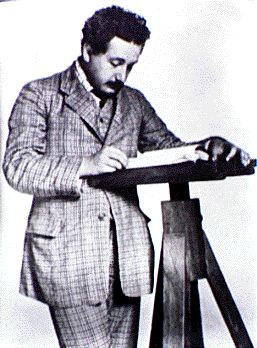
    There was a time when this was a real question, even though the subject of that question was in the process of changing physics. One of the most enigmatic strings of 12 words and numerals in the history of science, “Bern, June, 1905″ appeared at the end of Albert Einstein’s special relativity paper, setting the question in motion..

    This difficult publication–one of the most revolutionary in the history of physics–was written by a mystery man.  Its author was basically unknown–when readers tried to find Einstein, they went to the universities in Bern, naturally, but of course didn’t find him there.  No one would have guessed that he was a patent office grunt, one window at work to call his own.  There were no clues in the paper about the other, not really–not even a footnote.  An invisible man was changing the face of physics. 

    1905 was, well, “busy” for Einstein.  Perhaps no one person has ever had a year like this, in any discipline. His four papers delivered during this time was nothing short of miraculous.  To start,  Einstein turned 26 on 14 March, and sent his magnificent  photoelectricity paper1 to the Annalen der Physik  three days later.  At the end of April, Einstein sent in his doctoral dissertation to the University of Zurich2 (the paper accepted and approved in July  and degree formally awarded on 15 January 1906). A few weeks later (a) his son Hans Albert celebrated his first birthday and (b)he got his big idea on the special theory.  Also in this same extraordinary month of May he sent the Annalen his Brownian Motion paper3, and then, a little more than a month later, Einstein sent his SRT 4 paper in to the same Annalen, and saw it published 26 September.

    As Einstein’s great paper awaited publication he returned from a short vacation with his family and sent in his (a)  dissertation (on 19 August, and which is published in February 1906) and (b) his mass-energy equivalence paper5 (E=mc2). I can think of no other time for any other scientist in the history of the sciences who had so much fabulous stuff up in the air at the same time. Impossible, really.  And then, after most of the papers are published and appeared in the orange-wrappered physical journal Annalen der Physik, Einstein got a part-time job tutoring a student.

    At the end of 1905 Einstein was becoming less Blank, but considering the power of his publications, I can’t think of anyone of equal power who was unequally unknown. 
       
    Notes   

    1. “On a Heuristic Point of View concerning the Production and Transformation of Light.” published June 9.
    2. “A New Determination of Molecular Dimensions.” (Published in 1906.)
    3. “On the Movement of Small Particles Suspended in Stationary Liquids Required by the Molecular-Kinetic Theory of Heat.” published July 18.
    4. “On the Electrodynamics of Moving Bodies.” Received June 30, published 26 September.
    5. “Does the Inertia of a Body Depend upon Its Energy Content?”


  • History of Blank, Missing and Empty Things: Niagra Falls

    JF Ptak Science Books  Post 1130   

    [This is a very short entry in  the series on the History of Blank, Empty and Missing Things]

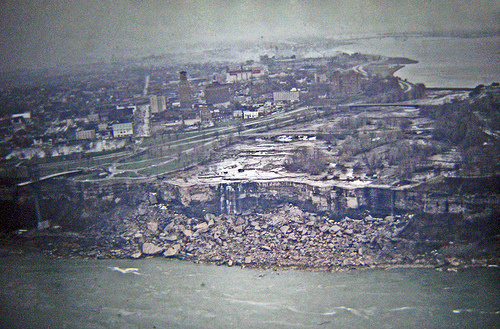
    Perhaps one of the most difficult places in North America to collect thrown coins is at the base of Niagra Falls.  This was all made possible in the summer of 1969 when the water flowing over the falls went missing.  It actually was re-routed via a cofferdam which effectively turned off the falls so that engineers could clear debris and do scientific/geological work.

    Blan missing Niagra Falls
    Nowadays there’s about 100,000 cubic feet per second that flows over the
    falls, fixed at about this level for the amusement of tourists.  At
    night, when viewing is limited, the flow is fixed at about 50,000 cubic
    feet, the water diverted to produce hydroelectric power.   But in the
    summer of 1969, the flow was virtually zero.  

    So, officially, Niagra Falls didn’t go missing–only the water did. 


  • History of Blank and Missing Things: Telescope Tubes

    JF Ptak Science Books  Post 1127

    One of the greatest missing things in the history of astronomy thankfully never came to be.  When the Hubble space telescope was having its very early problems, Senator Barbara Mikulski (D, MD) suggested and pursued the idea for bringing the Hubble down and end the program rather than repair it–for financial reasons, or something, I dunno.  It was an toweringly bad idea that keep itself alive for too long (and was just so bad that NASA I recall had a hard time getting their head around such a bizarre problem-solving approach to a fixable problem)–Mikulski went on to not think about other things, the Hubble was fixed, resulting in a simply astonishing amount of discoveries and data that could absorb astronomers worldwide for generations. (In another part of the wanting-to-make-things-disappear is House Speaker Dennis Hastert, who wondered why exactly in the days after Katrina if we should rebuild New Orleans.  But that’s another story.)  Hubble is still there; so is Mikulski, who now is the champion of “the people’s telescope” and who chairs the committee responsible for NASA’s funding. 

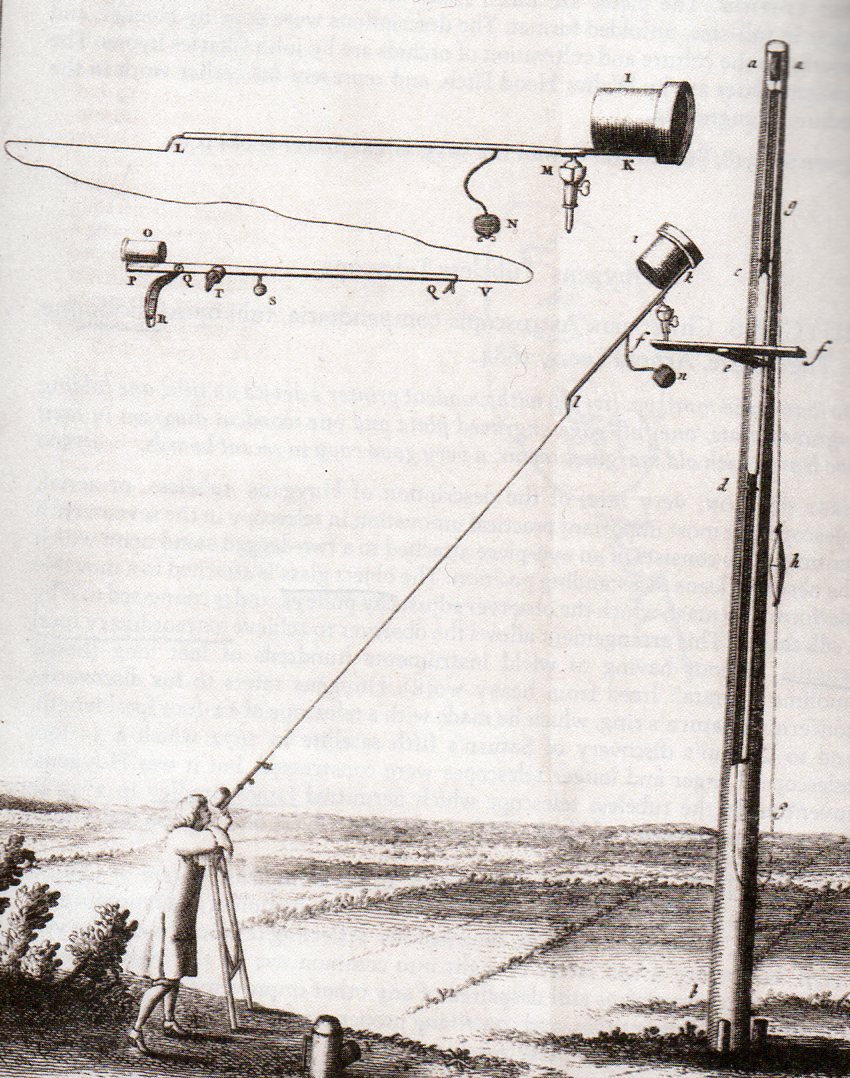
    One of the most powerful blank/missing or empty things in the history of astronomy that did come about may very well be Christiaan Huygen’s telescope1 without a telescope tube. Presented to the Royal Society in 1691, Huygens instrument (also known as an “aerial telescope”) was meant to perform the world’s most powerful optical observational instrument, having a focal length of 122′.  Monster telescopes were not practical at that time given the weight and flexure and movement of what would be a massive multi-hundred-foot-long telescope tube.  And so Huygens came up with the idea of doing away with the cumbersome part of the large telescope.

    Huygens was a very smart man, and one of very few people acknowledged in Newton’s Principia (along with “Dr. Hollis” and Christopher Wren, the three referred to as “the greatest geometers of our time”)), a man who Newton found to be “the most elegant of any mathematical writer of modern time”. He was extraordinarily accomplished, almost so as much as the half-forgotten Robert Hooke…Huygens was by far Hooke’s superior in mathematics, but Hooke was probably more accomplished across a wider variety of fields, which is saying mounds because Huygens did about everything..  In any event, Newton found Huygens to be an extraordinary scientist, even though Huygens didn’t really quite ever get Newton’s universal gravitation–a high elevation, perhaps among the highest, coming from the cranky Newton. 
    Blog--huygens347

    Getting back to the telescope–its missing section was perhaps one of the most important developments in astronomy in the second half of the 17th century.  Its arrangement was very elegant, and simple–the mast held the object glass whose position could be changed with a series of simple pulleys and pulls; the eyepiece was placed on a table, aligned with string and rope.  And that was it.  By the first third of the 18th century, James Bradley was able to construct a telescope of this type with a focal length of 212 feet, and used it to measure the diameter of Venus.

    Technology would soon catch up to the Huygens invention, but not really for another 75 years. 

    Notes.
    See:  “Christian Huygens and the Development of Science in the Seventeenth Century”, by E. N. DA C. ANDRADE, in Nature 162, 472-473 (25 September 1948). 

    1. Astroscopia Compendiaria tubi optici molimine liberata (compound telescopes without a tube), published 1684.


  • On 19th Century Back-of-the-Head Portraits

    JF Ptak Science Books   Post 1125

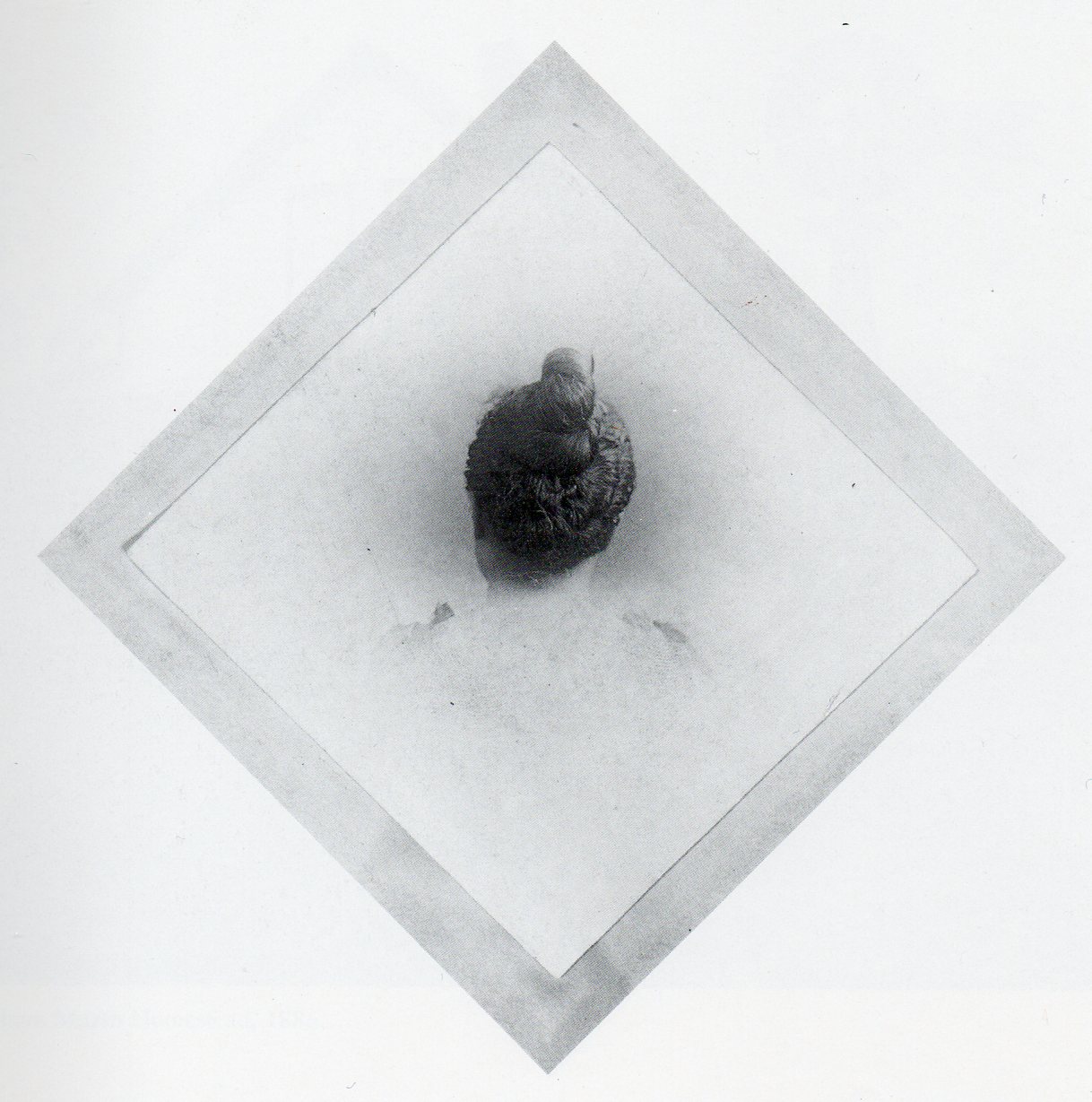
    Back of head back342

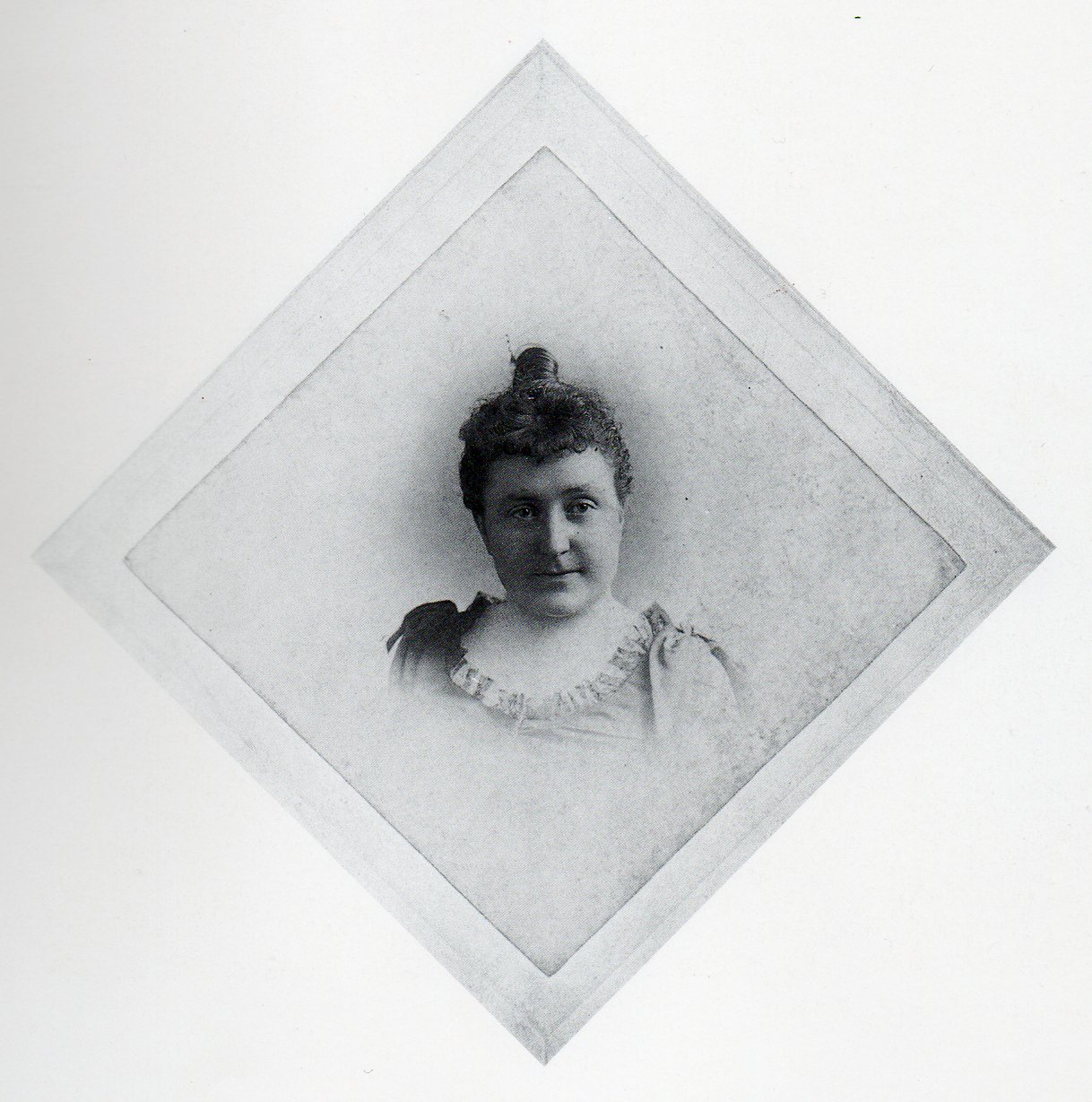
    I honestly cannot say when I first started noticing photographs in this odd category–it may have been from police images, early mugshots, that started with (the first) antropometrist  Alphonse Bertillon, showing deformities and cracks and creases and blemishes and tattoos on felons; or in the earlier and  floundered phrenological work of Franz Gall1, who looked pretty much for the same but with more  liberal doses of social philosophy But it is a restricted category, that’s for sure.  Even when you look closely at paintings and engravings it is rare to see even a secondary image of someone’s head squarely, directly form the back. 

    And then came this pair of photographs presented on the endpages of Cathy Luchetti’s Women of the West (Antelope Island Press, 1982)–its a wonderful book about 19th and early20th century women as pioneers int he American West, told mostly in their own words.  It wasn’t until I closed the book that I found this picture (which is odd for me as I’m mostly back-to-front with a new book) and decided on this post.  The photos do tickle some old memories of 19th c back-of-the-head photos featuring extraordinary hair length,  Civil War wounds, spinal and neck injuries, young Hopi girl hairstyles, and that sort of thing–but in this case, I can’t see anything unusual about the back of this woman’s head.  It looks as though it is just the back of her front.  I think that most of the time that we see back-of-the-head it is for something special or unusual in some way (and I won’t even get into 20th/21st century stuff like Valdemort’s surprising hiding spot)–it seems in this case, it is not.  Its just the back.

    Back of head front343

    Notes:

    1.  Gall’s book’s title really lays it all out: The Anatomy and Physiology of the Nervous System in General, and of
    the Brain in Particular, with Observations upon the possibility of
    ascertaining the several Intellectual and Moral Dispositions of Man and
    Animal, by the configuration of their Heads,
    published 1819.


  • A Domesday Book for Missing and Blank People

    JF Ptak Science Books   Post 1122

    I’ve long been interested in the added, extra stuff found in the foregrounds and empty places of artwork, the eclectic extraiana, the not-necessary pieces, the microworlds of antiquarian visual anthropology. (See here for example, an earlier post in this blog, “Hidden Children, Found Art and Social Vignettes Inside Art”.)  In towns views and architectural studies, where the primary interest is geography and, well, architecture, people are sometimes added to literally flesh out the bank spots, and to add a point of reference and perspective for the viewer.   In many circumstances these added bits turn out to be extremely interesting insights into everyday street life for the period of the artwork, also including societal exuda and discarded people, the social “rejects”, the underclass, the classless, the workers, the laborers, people.  That would be most fo the population of a place. 

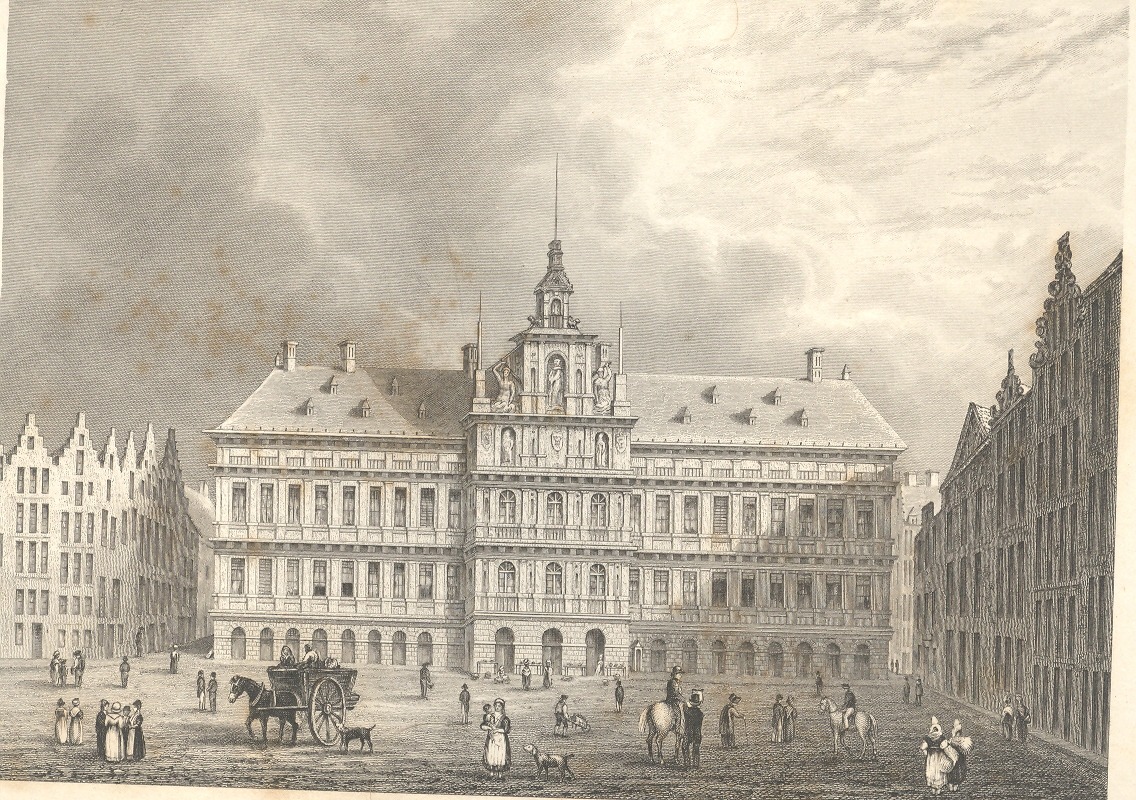
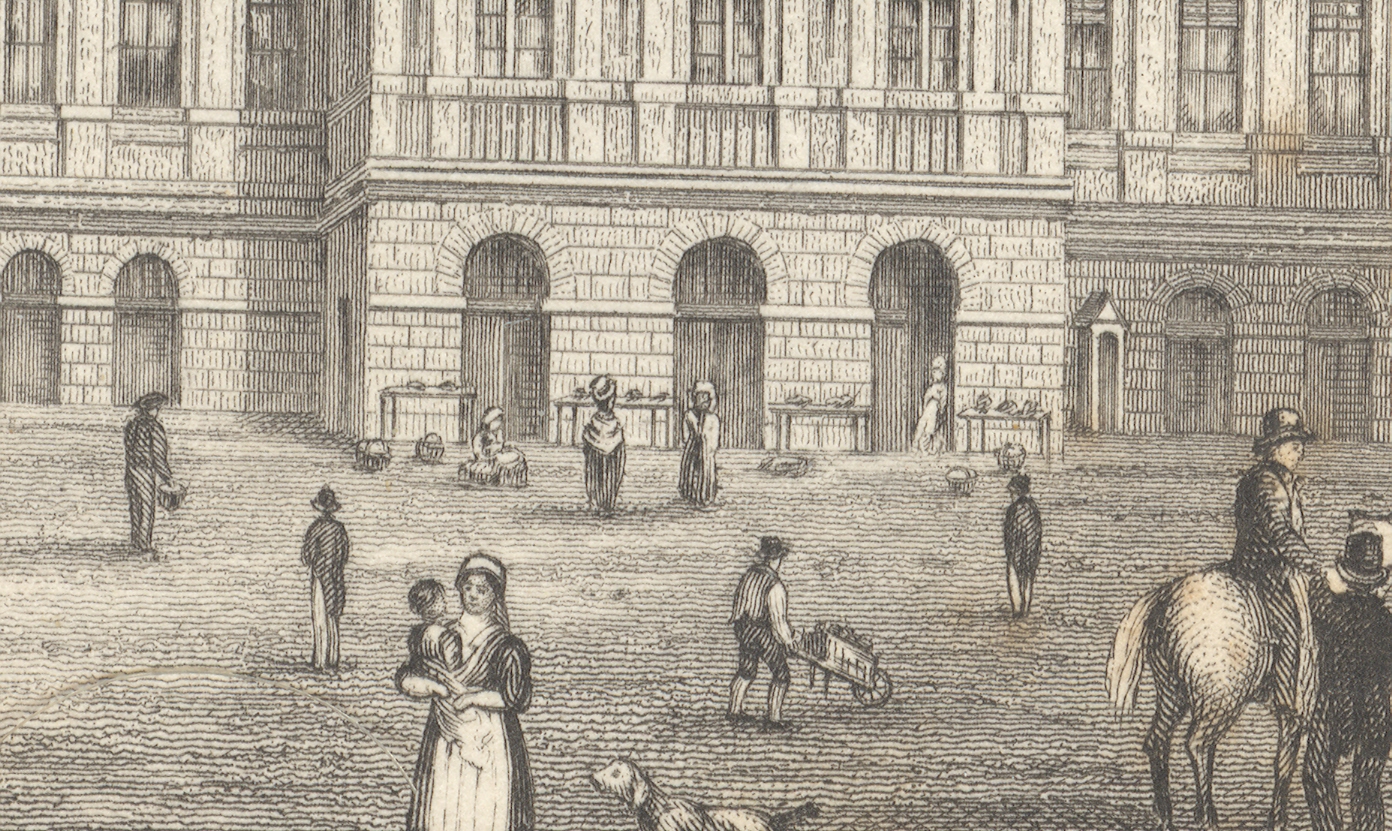
    For example in this application of the imaginary forensic arts microscope, we see this series of pictures of a standard view of the town hall of Antwerp; but what we see advancing under magnification is a very interesting set of occupations displayed in absolutely minute detail (seen in more detail in this earlier post, from which I quote below).

    First, the majority of the engraved image, followed by a close-up of the center of the building (the three doorways), and then by a closer view still of doorway three:
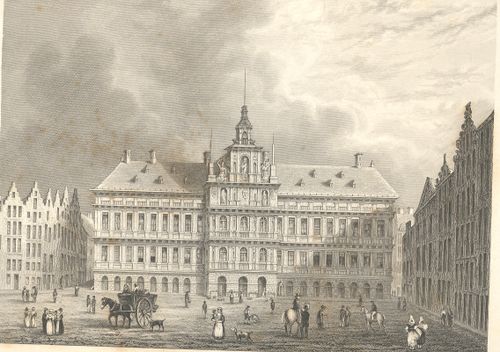
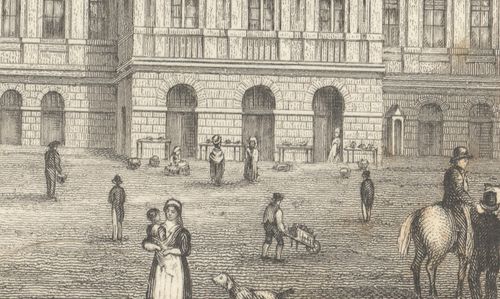
    +++looking closely

    +++looking closely detail

    The
    truly interesting bit here is barely observable in the original; but,
    under magnification, we see a very rich and minuscule “engraved
    photograph” of a slice of daily commerce and street life in Antwerp.  If
    you look at the central entrance to the town hall you can see three
    main (and large) doorways, and if you look clos+++looking closely detail2er still, you’ll see something leaning against the portal at right.
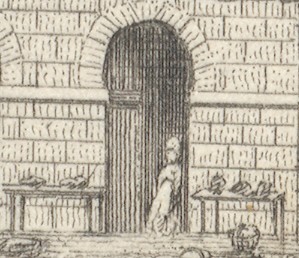
    Extraordinarily, what the artist snuck into the original is a tiny
    (2mm) figure watching over several tables of her (fruits?/vegetables?)
    ware, waiting for a customer. There doesn’t seem to be much interest in
    her stuff, currently, and she has allowed herself a little relaxation,
    leaning against the doorway.  I’ve found this sort of extremely minor
    subject matter and its ephemeral connection to the larger work at hand
    to be just fascinating.  I wonder why such detail would be added–why
    would the artist, or engraver, take such care and interest in such minor
    visions.  Perhaps this is just what was at hand on the days the artist
    fleshed out his work; perhaps it was the work of the engraver, alone,
    incising yet another semi-boring architectural image; desperate for a
    little artistic activity, adding some interesting, almost-invisible
    touches, here and there.  Perhaps no one would ever really notice them,
    but whoever was responsible for adding such incredible,
    extra-dimensional details would certainly enjoy knowing they were there,
    recognized or not.

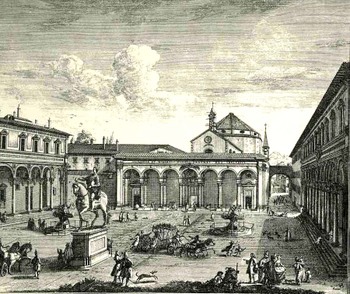
    Here’s another example (seen in an earlier post here) from Giuseppe Zocchi (1711-1767) who was commissioned by he Marchise
    Andre Gerini at mid century to record the greatest of Florentine
    landmarks.  The plaza scene offers a great view for all sorts of people, and the artist/engraver take great advantage of the possibilities:
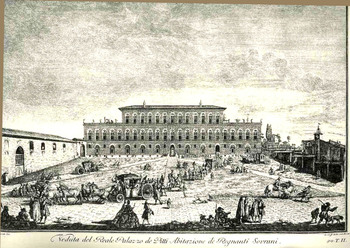
    Bloglooking_closely_b124

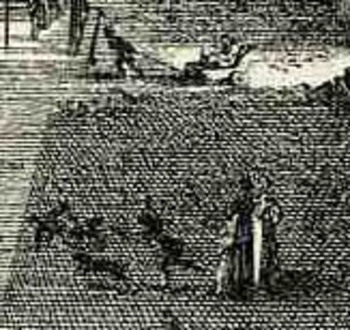
    Among the many people populating the image we find folks interested in a dogfight:
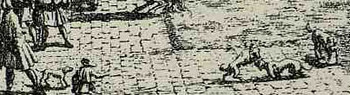
    Bloglooking_closely_b_dog_fight


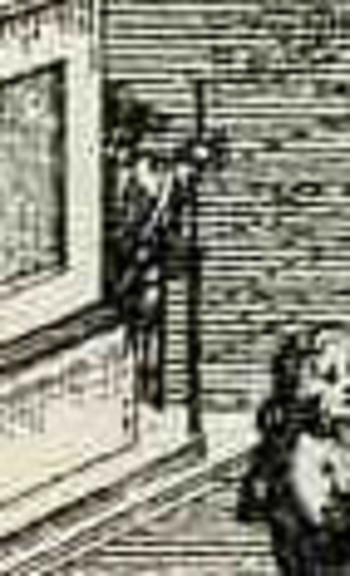
    Another image by Zocchi, Veduta della Piazza della SS Nunziata Statua Equeftre di Ferdinando Primo, Fonti, e Loggie Lateral, shows more good work with the possibilities of ephemeral populations, where among the many details we see an invalid being pulled in a small cart, and a half-obscured  man with a staff leaning against the back of the monument.  And of course there’s much more–you just need a little magnification to see the human element of the artwork. 
    Bloglooking_closely_1_96123

    Bloglooking_closely_1__carriage_2


    Bloglooking_closely_1__man_cane

    There was a class of illustrator that drew on their surroundings, or
    what they saw on their walks, or from their window–the incidental
    people in their artwork were people that they saw, who meant something
    or other to them, who formed an impression in their brains.  There were
    other artists who were perhaps not quite so fortunate in their daily
    lives to come into contact with a variety of people like this–perhaps
    they were sheltered, perhaps they were privileged and of a class that
    would not put them into contact with ordinary people. 

    Perhaps it was this class of artist who need William Pyne’s great-ish
    1845 work, Picturesque groups for the
    embellishment of landscape…1
      It was a work of clip art for its day, really, showing,
    detailing, the attitudes and occupations of working people.  It was a
    book filled with the people who might ordinarily have gone missing from
    the work of the artists needing their images displayed in their brains
    by someone else’s labor; a book filled with figures to plug-up the blank
    spaces, round out that unkind bits that called out for a human touch.

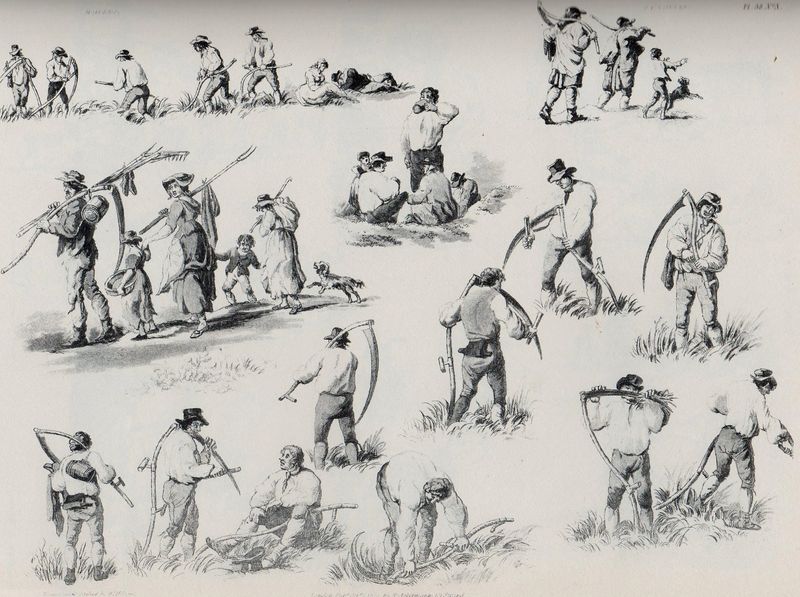
    Interestingly, it shows people at their professions but more often than
    not , it doesn’t actually show people working–its more like people
    readying themselves for work, getting materials ready, sharpening
    things, ordering.   It is impressive nonetheless for its found,
    pre-photography snapshots of working life in England in the 1830’s.  It
    shows potters, leather dressers, gravel diggers, itinerant mowers,
    hay-makers, gleaners, paviers, shepherds, fishermen, knife grinders,
    quarrymen, foresters, woodmen,  basket-makers, coopers, horse rollers,
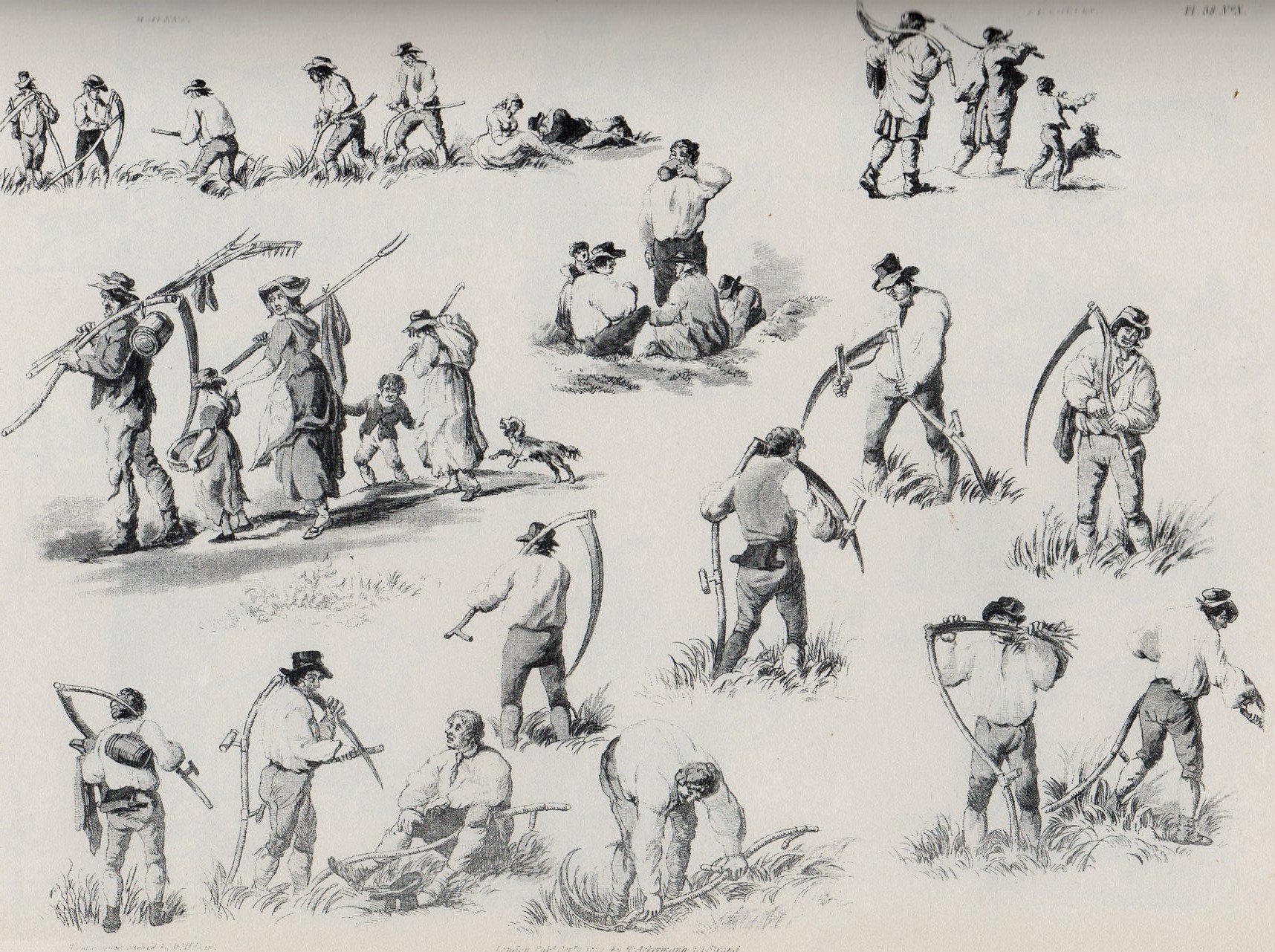
    cider-makers;  and images of boats, barrels, gypsies, games, county fairs, and on and on. For example, here’s the multi-image engraving for “itinerant mowers”:
    Mowers340
    Perhaps it was only a practice-book of images for people who wanted to
    practice–if so, it wasn’t a book for just anyone, as (so far as I can
    determine) it would’ve cost a working person week’s worth of labor to
    purchase it.    And there are certainly pictures of people doing unusual
    and rare things even for 1843–like sailors washing sails,
    maybe–actions that were not commonly seen.  And it also placed people
    in attitudes of unusual poses, so some people may have looked at the
    book with an eye for artistic anatomy.  But by and large, to me, it
    looks like a missing persons book.  

    Notes:

    1. William Henry Pane (1769-1843), Picturesque groups for the
    embellishment of landscape : in a series of above one thousand subjects :
    comprising the most interesting accessories to rural and domestic
    scenery, shipping and craft, rural sports, pastimes and occupations,
    naval, military and civil employments, implements of trade, commerce and
    agriculture, etc. , the whole forming an encyclopaedia of illustration
    of the arts, agriculture, manufactures, &c. of Great Britain 
    Publisher: London (Bedford Street, Covent Garden) : M.A. Nattali, 1845.

  • History of Blank, Missing and Empty Things: Colorful Emptiness

    JF Ptak Science Books  Post 1111 [Part of the History of Blank, Missing and Empty Things series.]

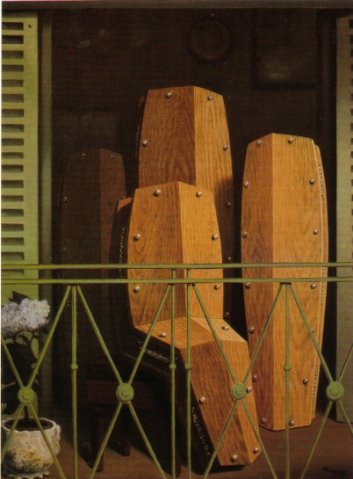
    Magritte balconyStandard introductions to Magritte miss what I most see in his work–it seems to be in a constant state of removal, of emptying, and blankness.  And this is the case even when the canvas is full of images, even when it is full of people, raining people–the underlying effect to me is still the same.  The man just painted blank spaces in full color, some of the most colorful nothingness I’ve ever seen.

    Many of Magritte’s strikingly delineated paintings suggest and portray missing things and emptiness with shadows and barren places, but even when they’re populated by human figures there’s a long memory of the same sort of thing: half torsos, bagged heads kissing, the backs of people facing a mirror in which their back is reflected, empty feet, half-humans, hidden faces, floating hats, draped bodies, the half-disappeared, and so on, all speak to the same emptiness.

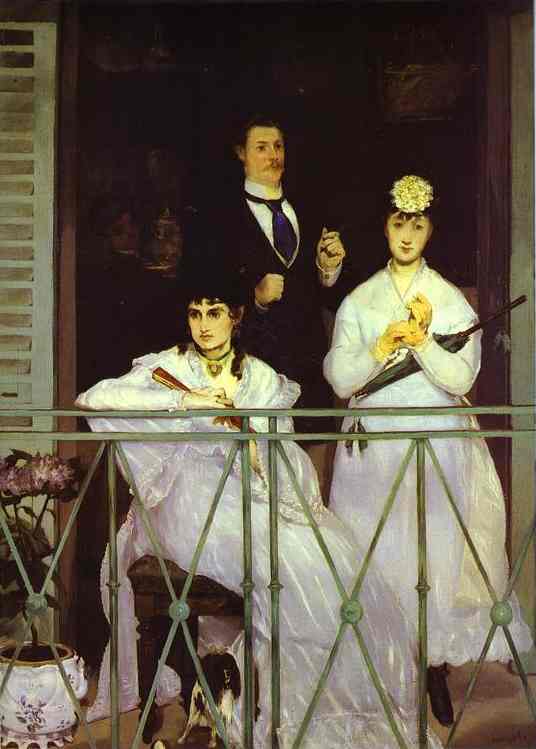
     Perhaps this sense is strongest in me when I see his Perspective: the Balcony of Manet (ca. 1945), especially side by side with the Edouard Manet The Balcony (1868).  I know its unfair to compare the two–but Magritte started it–but Manet is hardly an empty, blank painter.  Once Manet moves through the 1860’s and into real modernity, he is able to paint colossal senses in the boundaries between objects, boundaries that are really mostly suggestions than demarcations.      
    Manet_The_Balcony_1868

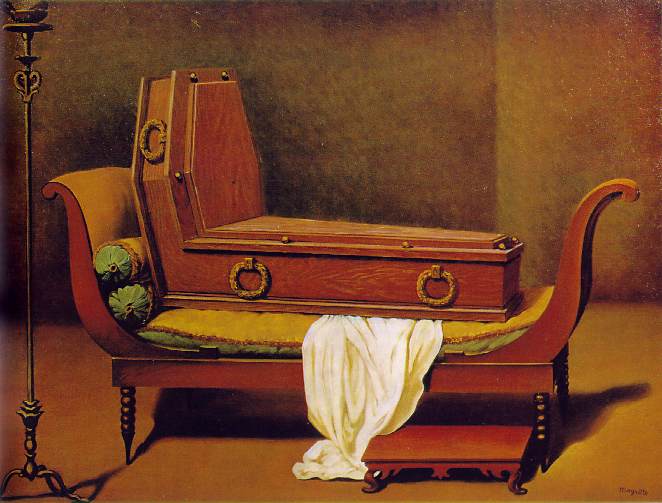
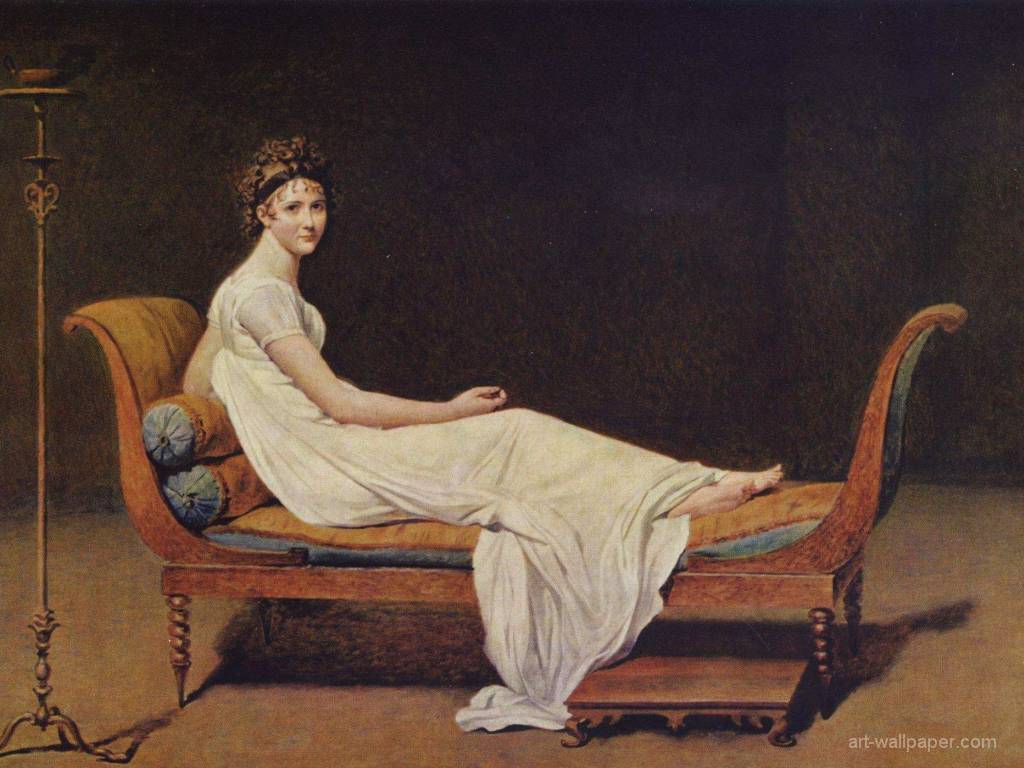
    (This Perspective is from a short series done by Magritte which replaced the subject of a great painting with a coffin.  Another example is Jacques-Louis David’s Madame Recamier and Magritte’s answer.  David’s painting may have been about as avant-garde as Magritte’s, given the time and expectations of artists.)
    Magritte david 
    David's Madame best
         

    Notes:
    From Columbia Encyclopedia online: “Magritte, René  1898–1967, Belgian surrealist painter. Strongly influenced by Chirico, Magritte developed a style in which a misleading sort of realism is combined with mocking irony. His paintings are dominated by an intense quietude and restraint, despite a startling juxtaposition of images. Characteristic works, such as The Red Model (1935; Modern Mus., Stockholm), contain elaborate fantasies constructed around commonplace situations.”


  • Ovaries and Ovens–a Chance Encounter in the History of the Subjugation of Women

    JF Ptak Science Books   Post 1109

    A friend of mine started her facebook post writing “Ovary shipped out…”, a great piece of found story-beginnings, a great opening line, especially when ovariotomically removed from the rest of the sentence.  Alex is an artist and medical/anatomical illustrator by trade, so I knew what she meant–but forgetting that made the segment even more lovely. 
    Ovary homunuclus 1
    Aside from the fiction that the three words created and the half-word that I created/butchered, I wondered about when ovaries were first surgically removed, and then about how the ovary was seen (almost forever) as the home and birthing place of the fully-formed human delivered to it by men in the act of ya’ know.  Ovarian surgery really didn’t exist until the early 19th century, when it was practiced with great success (especially for its time1) by Ephraim McDowell (1771-1830), in 1809 in Virginia–and it was also about the first great American contribution to gynaecology as well  His first patient (“Mrs. Crawford”) sang her way through an anaesthesia-less procedure, surviving her illness and the surgery at a time when non-amputational surgery was half-fatal.2 There were other, limited reports of this procedure, but for reasons not clear to me it didn’t really start appearing as a general procedural possibility until mid-century.  Anyway, before the 19th century, women with ovarian cysts were pretty much out of luck.       

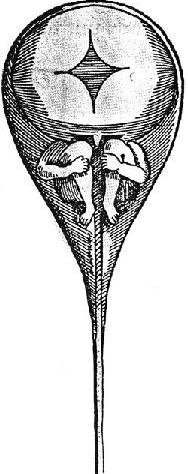
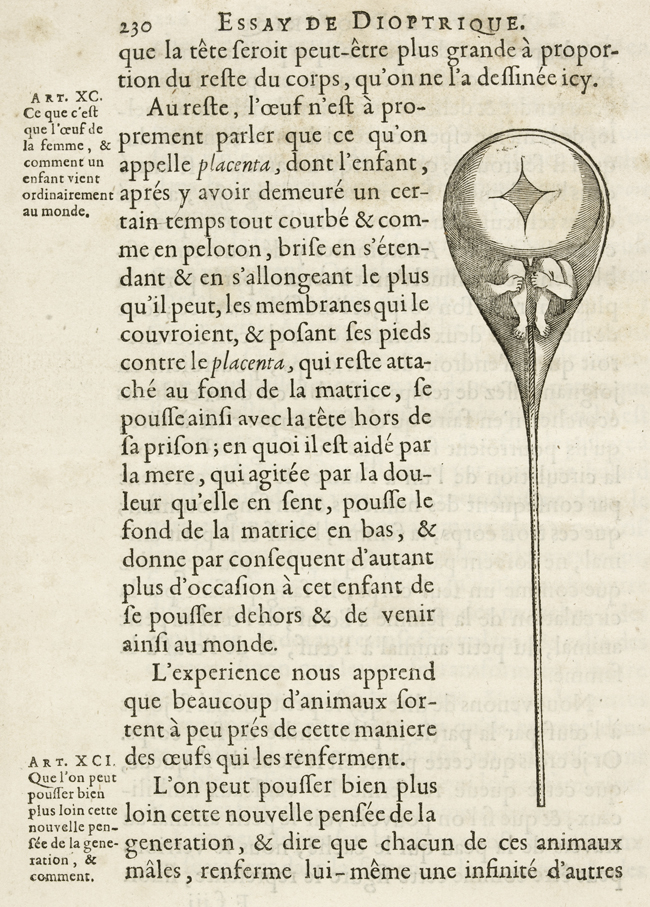
    But the issue of the ovaries as ovens–of homunuclus and palingenesis and epigenesis, the imaginary male-dominant anatomy of reproduction–was pretty much somewhat solved by the end of the 18th century.  Or at least the homunculus, the tiny but perfectly formed miniature human traveling along in sperm, was.  This character is pictured here, riding in the squinty-eyed imagination of researcher  Nicholas Hartsoeker3, who desperately wanted to see the thing, and which found itself published in his book Essai Dioptrique  in 1695. 

    The woman as a simple baker of a gift of preformed life was a medical belief that helped perpetuate the supposed inferiority of women, and that the woman’s part in the procreative process was a simple oven.  It was a difficult image/belief to resist, persisting well into the 19th century.  Anyway, this is where my thinking took me–to the anatomically-inspired subjugation of women–from Alex’s comment.
    Ovary Hartsoeker
    ____
    Notes

    1. This was still in the deep, dark time for hospitals and surgery, in general.  Remember that Joseph Lister was still a half-century in the future with his revolutionary surgical practices that were invaluable to the cause of successful surgery.  And hospitals in general were bad throughout Europe, though their story in England at this point was entirely different.  The Brits really took steps forward in the treatment of the sick, and especially in the treatment of the poor sick, thanks to being a little awash, splashing around in waves of money provided by their contributions to the industrial Revolution.  Funny how it takes major mounds of money-making to initiate good works like that, but, never mind the details–it was done, and hospitals in England during this period were comparative oases in regards to European/Continental hospitals. 

    ** McDowell’s first three cases were all successful , finally published in the Eclectic Repository for 1816.  This was the first real foray into this field by the pioneering American medical institutions; obstetrics and gynaecology before this, and particularly in the 18th century, was pretty much in the hands of the French (especially obstetrics) and the English, and to some degree the Italians (particularly with Mascagni, Santorini and Spallanzani).

    **This is probably unkind and not particularly true of Hartsoeker, who never said that he actually saw the little men of sperm, and had simply postulated them.  Maybe the squinty-eyed part was imbued in the minds of others, though it was Hartsoeker who drew the images of the homunucli to begin with.  I think that he should’ve rested in his better cups–he was a gifted mathematician and a particularly good microscopist and optical person, and probably should’ve restricted his published biological theories to his notes. 


  • History of Goodbye Series: the Latrine Sarcophagus and the Slave Hangman

    JF Ptak Science Books   Post 1101

    Hangman-games I’m not so sure that it was the cold that kept Mathieu Leveille  in hospital for all of those years–as bad as hospitals would’ve been in Quebec in 1730–but I would rather have been there than at his work.       

    Leveille (1709-1743) was a slave bought for 800 pounds by the French ministers in New France (Canada), brought to the cold north from Martinique to do the job that they could find no man to do.  Or no competent man.  The history of executioners in New France–nearly from the very beginning of hanging people there beginning in the very early 17th century1–reads like a bad Italian farce sounds, filled with nothing but drunkards and incompetents, brawlers, muggers, crooks and thieves.  And the condemned–there are several accounts of men awaiting execution who were spared because the executioner had died (some from drunkenness), and there was no one there to kill them.  And so to fill the gap, the authorities offered the condemned the chance to live if they lived so as executioners.  I haven’t read any accounts of anyone turning down the offer, but I wouldn’t be surprised if that were so.

    The executioner in that society for the 1600-1750 period or thereabouts was not happily assimilated into society.  They found themselves–and their families–pariahs, living on the outskirts, or beyond the literal confines, of the city.  They were the last step in their judicial system, the great threat, the punishment with hellfire link to fearful retribution, that no one wanted to live next door to. 

    In the decades preceding Leveille’s arrival, there was a succession of horrorshow stories of executioners of drunk and low orders, two  selected from the list of the condemned, including incompetent sons of incompetent and drunken hangman fathers, as well as periods ion which the office simply could not be filled.  One of the executioners in this long list of doomed men was a Halifax hangman named “Tomahawk”, whose own body, after death, was stolen, paraded, and then dumped into the latrine of the old blockhouse where he once worked.  According to Howard Engel, in his Lord High Executioner, an Unashamed Look at Hangman, Headsman, and their Kind (1996), Tomahawk’s “bones could be seen by curious townsfolk for the next seventy years”.  At least the latrine at that time had been abandoned.

    Leveille was the beyond-pre-Dickensian solution to the judicial managerial problems in Quebec, the bright idea in a feathered cap of Jean-Frédéric Phélypeaux, comte de Maurepas (1701 – 1781), an ascendant French statesman recovering from disgrace.  On the heals of their latest bungle–a drunk imported from France to replace a drunken dead hangman and who maintained his drunkenness and sent back to France drunk–the judicial establishment listened to de Maurepas’ suggestion, and bought and then imported a black slave from Martinique to do the job.

    And that’s when Leveille’s story–no matter how bad it was for him in Martinique–gets worse.  He arrived in Quebec in 1733, and was almost immediately sent to the Hotel-Dieu.  (As it turns out, this is the first hospital in North America north of Mexico). I don’t know if he was told what was in store for him, or what he knew of the job, or what he did in Martinique.  It is established though that Leveille was sick on and off for the next ten years, finally dying there in the hospital in 1743.  Engel correctly assumes (I assume) that Leveille probably performed his job adequately for the powers that be to have spent so much attention on him, trying to have him finally recover. They even purchased a bride for Leveille, but he died just as she arrived. 

    I could imagine wanting, or needing, to spend as much ill- and off-time as possible, even in the grips of an ancient hospital.  The memory of sea spray  hitting Leveille’s face on the trip north from the Caribbean must’ve seemed like needles.

    The slave bride to the dead hangman was renamed Angélique-Denise and sold on the heels of Leveille’s death in 1743.

    Notes:

    1.  There was evidently an earlier semi-recorded hanging of a 16 year old girl, convicted of petty theft and punished.