A Daily History of Holes, Dots, Lines, Science, History, Math, Physics, Art, the Unintentional Absurd, Architecture, Maps, Data Visualization, Blank and Missing Things, and so on. |1.6 million words, 7500 images, 4.9 million hits| Press & appearances in The Times, Le Figaro, Mensa, The Economist, The Guardian, Discovery News, Slate, Le Monde, Sci American Blogs, Le Pont, and many other places… 5000+ total posts since 2008.

Category: Blank and Empty Things; A History of

  • Electronic, Santa and Reagan Cancers–Selling Cigarettes at Christmas & the Cigarette Highway

    JF Ptak Science Books  Post 1293

    Mmmmm…Can’t you just taste the goodness, the frivolity, the downright holiness of these seasonal ads?  What an odd set of emotions these images are able to surface on quick-boil.  Who knew (in this first image) that this LIFE magazine ad from 1954 would reveal the true value of electronics–managing cancer sticks?  (These same folks are today working on quantum computing multi-universe porn–stay tuned.)  The model still has pearly-white teeth while smoking and drinking coffee, radiant in her  half-a-halo of cigarettes. The lit cigarette between her fingers is at first almost invisible (or at least it was to me), seeming to be just another of those rolling off the AccRay Electro-conveyor belt, an endless supply for her pleasure. (The “electronic” part of this ad are also Lilliputian; its a nonsensical drawing with no scale, unless the cig company wanted to get across to its potential smoking community how “big” their cigarettes are.)

    . Cigarettes--electronic cancer193

    Blogsanta_cigs317And could poor old Santa get any lower than this?  Out of all the things he has carried in his sack over the years, Chesterfield Cigarettes may very well be the worst of them.  Plus, not only is Santa delivery them as presents, he’€™s decorating the tree with them as well, and hardly acting the camera-shy sort that he is.  Chesterfield (Leggett & Morris Tobacco Co.) combined some of the best loved elements of childhood (the ABC’s “€œAlways Buy Chesterfield”) and Santa Claus to not only convince adults to think of the product as a Gift(ing) Unit, but also to lull children into a sleepy, memory-clouding  impression of Chesterfields being somehow good (what with these two primary associations and all).  “€œChesterfields have all the benefit of Smoking Pleasure (capitalized in the original) “they’re givable, acceptable and enjoyable¦”  I wonder what they, meant, exactly, by using the word “€œacceptable”? 

    I’€™ve seen Santa in other embarrassing poses like this in the pages of LIFE magazine for this period:  €”flying through the air in his sleigh loaded down with boxes of cigarettes, placing boxes of them under the tree, stuffing stockings with cartons, and the like.  I’€™m sure that he regrets it now, though.

    All sorts of people were pressed into the service of selling tobacco products like this—sports figures, movie stars, doctors, adventurers; an entire alphabet of personalities and personality types got into the act.  A sitting president had never been involved, though a person who would become president was. Blogsanta_lreagan_chesterfield_ad
    I’m sure Ronald Reagan regretted this ad at some point in his life as well (“beautiful Christmas Car Carton” or not), though I suspect that he would’ve kept that close to the vest. 

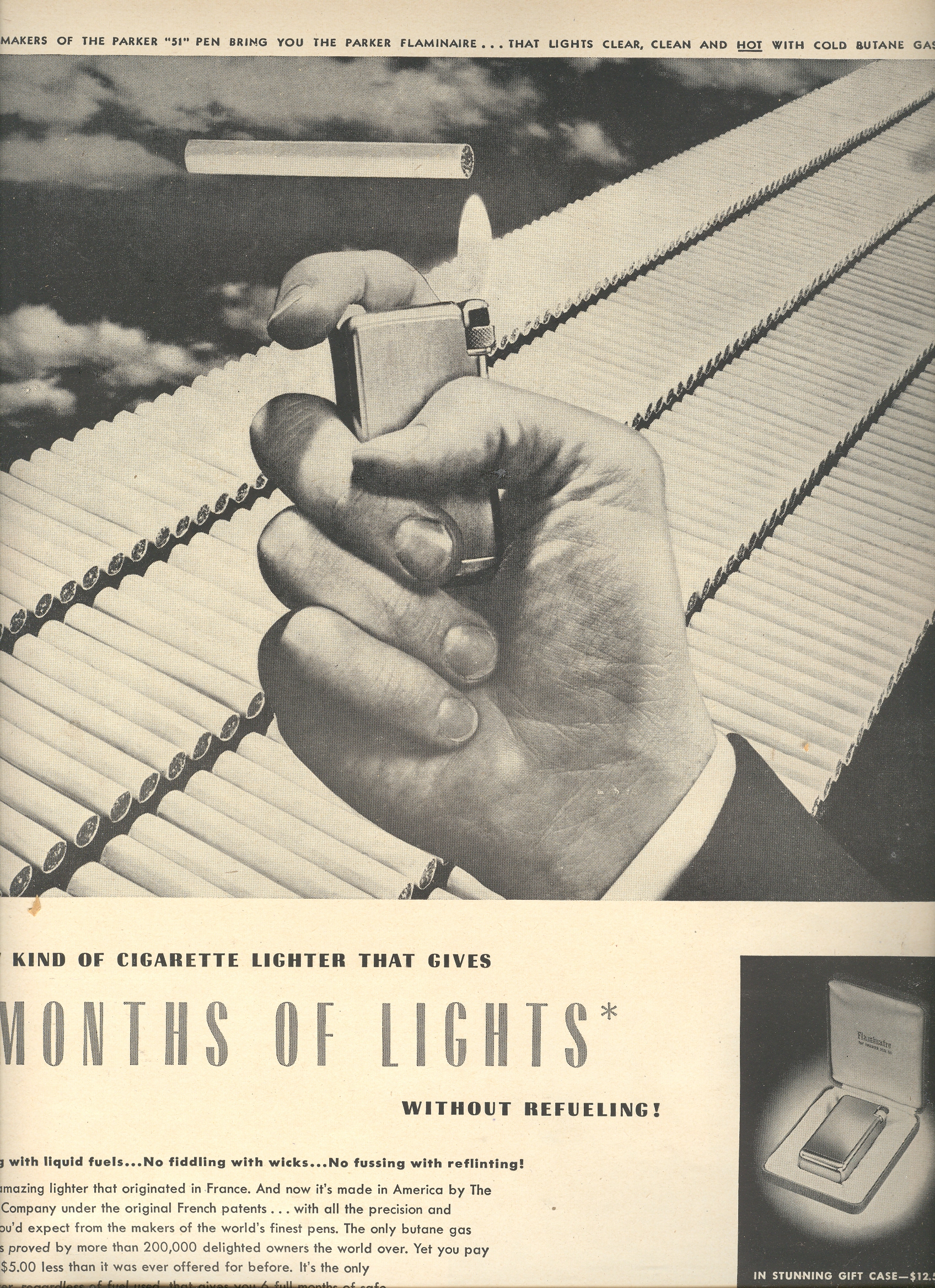
    This is a simple ad for a butane-based lighter (appearing in LIFE magazine for 18 December 1950), lighting the way down Cigarette Road.  Actually, it was more a highway than a road, and a superhighway at that. Government-sponsored warnings about tobacco health issues was still more than a decade away:  medical doctors were part of the advertising machine, as were actors (including RWR), sports figures, and virtually anyone else with a mouth.

    This is a simple ad for a butane-based lighter (appearing in LIFE magazine for 18 December 1950), lighting the way down Cigarette Road.  Actually, it was more a highway than a road, and a superhighway at that. Government-sponsored warnings about tobacco health issues was still more than a decade away. 

    ==Blog July 27=cis It seems to me that there are about 300 cigarettes in this ad, and that looks like a lot—point of fact though is that in 1950, the average American (of 18+ years) smoked about 3,522 cigarettes a year, which means about 10 cigarettes a day for everyone in the country.  Not 10 per smoker; 10 for everyone in the entire country, smoker or not, who was over 18 years of age.

    The average smoker in 1950 smoked about 2.5 packs a day, or 50 cigarettes or so—that’s equal to this line of cigarettes being smoked every six days. 
    There were virtually no brakes.


    Even Santa (a pipe smoker) got into the business. This was a standard, acceptable, vanilla-packaged advertisement.

    ==Blog July 27=cigs xmas


     United States Cigarette Consumption, , 1900–2007

    First number is total consumption in billions; second number is per capita yearly consumption for people 18+.


    1915   17.9   285

    1920   44.6   665

    1925  79.8  1,085

    1930 119.3 1,485

    1935 134.4 1,564

    1940 181.9 1,976

    1945 340.6 3,449

    1950 369.8 3,522

    1955 396.4 3,597

    1960 484.4 4,171

    1965 528.8 4,259

    1970 536.5 3,985

    1975 607.2 4,123

    1980 631.5 3,851

    1985 594.0 3,461

    1990 525.0 2,827

    1995 487.0 2,515

    2000 430.0 2,092

    2005 376.0 1,716

    2007 360.0 

    Source: Tobacco Outlook Report, Economic Research Service, U.S. Dept. of Agriculture. 

    JF Ptak Science Books LLC  Post 699  Blog Bookstore


  • Autopsies of a Famous Cookie and Mocha the Whale–Proust and Melville on the Table

    JF Ptak Science Books   Post 1276

    Following up on yesterday’s autopsy of a snowman comes two fictional autopsies: that of Mocha Dick (the spiritual and motivational father of Moby) and a cookie.  Moby first; the famous cookie, second.

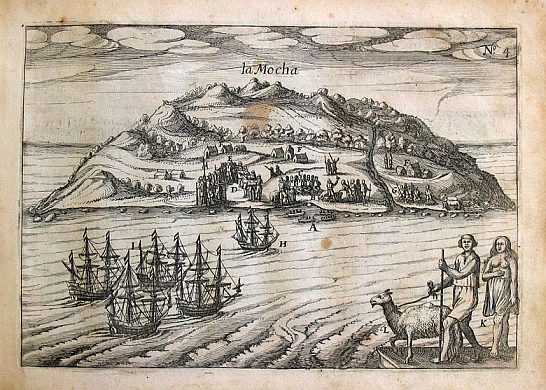
    Mocha Dick was a terrorizing self-defender of the Pacific, a giant the size of a whaler (something like 110 feet) who makes his first appearance in the year that Herman Melville was born, 1819.  He crushes and flips and bites and flukes ships and outboats for another forty years, nine past the publication of Moby Dick and in the same year (and nearly month) as the first edition of On the Origin of Species. 

    Mocha may have come into Melville’s consciousness in Jeremiah Reynold’s piece in the May 1839 issue of Knickerbocker Magazine (article here, just months before the first newspaper arrivd from Europe with the announcement of Daguerre’s process), and was certainly in the minds of two generations of whalers until he was caught twenty years later.

    (Just a note–Mocha took his name from a mountain on Mocha Island off Chile where Reynolds sited him.  Melville’s desk at Arrowhead in Pittsfield faces a window that faces a mountain that looks like the Great White Whale.  I’ve seen it from a seated position there, and the man could definitely see the mountain from where his desk stood.) File:Van spilberger in mocha 1616.jpgFile:Carahue sector costero lafquenche.JPG

    When caught Mocha was a half-blind, snub-toothed shadow of himself, with a battered head and missing eight teeth.  Or at least that’s how the story or legend of his lazy capture by a Swedish whaler goes.  After all of that, after the adventures that Mocha or other whales mistaken for him were on, he almost made it to the end of his life at the end of his life.  He was captured and killed just before he could die.

    It was perhaps Madeleine Paulmier from Commercy, France, who gave her name to the cookie that when eaten gave birth to one of the most famous personal memoirs (in eight volumes) in literature.  (The OED and various French resources differ on this–no matter.) Marcel Proust took a nip from the madeleine (at least in the novel, the cookie in real life was different, or so I have read) that brought on a flush of memory. 
    “And suddenly the memory appeared. That taste was the taste of the little piece of madeleine which on Sunday mornings at Combray […], my aunt Léonie would give me after dipping it in her infusion of tea or lime blossom.” (In Search of Lost Time, Swann’s Way: Proust page  47).

    The cookie that caused this fabulous composition had little to be composed of, itself.  Flour. Butter. Sugar. Eggs.  All in equal parts.  Then lemon rind.  Bake.  Voila.  Reverse engineering the cookie is simple.  Actually making it taste like what it is supposed to taste like, is, well, something else. 

    But the autopsies of a half-sighted, semi-toothless, shriveled and scar-worried whale and four common kitchen ingredients and a snap of lemon don’t lead to much, except for the spectacular imaginations that the autopsies missed.


  • Maps of Invasions of Great Britain and the United States

    JF Ptak Science Books  Post 1274–Real and Imagined

    America has almost never been invaded. I should clean that statement up a bit: the United States has almost never been invaded.  America–which included North/Central/South once upon a time long in the dim past–was constantly invaded until the invasions no longer counted themselves as such, which I guess means that the “invasion” forces became  “resupply”. (Perhaps an invasion is over once you surpass a certain ratio of houses : forts.)

    “Invasion” does not include “attacks”.  A few guys getting off a Nazi sub and wandering around until they got picked up (with some (all?) being executed) does not an invasion make.  9/11 was not an invasion, though the subsequent invention of impending and pervading fear was–that’s why we have “storm centers” rather than “weather reports” on broadcast news–but even that fear business was more home-grown than anything else.

    The Japanese Army were on two small islands in the Aleutian chain (which may have been closer to Tokyo than NYC) for a bit in WWII–also does not make for an invasion, even if they were there for a long time.  Or even if they were still there.  Nor does sending hundreds or thousands of paper incendiary balloons across the Pacific an invasion make. 

    UFOs don’t count, either.  (I still find it remarkable that such a large percentage of the hundreds of thousands of “sightings” has the UFO with landing or whatever lights on it. I figured out at one point that there has been a report on one of these critters every ____ minutes since Roswell. And in all of those hundreds of thousands or reports, if you took them all and stacked them one on top of the other, they would reach perhaps the height of a grain of sand.)  The Beatles don’t count, either.   

    What also doesn’t count (but probably should) but which is not military–not really, though it may have the impact of a military force at some time in the future–are Chinese-made imports of, well, everything.   At Thanksgiving I wondered how much of a dinner could be composed of foods that were shipped from China and to no great amazement an almost-complete table of food could be set, plus napkins, flatware, plates, candles, tablecloths, tables, chairs, paper turkey decorations, carpet, flooring, wallpaper, paint for the walls and ceiling, screws for the Chinese-made door hinges, lighbulbs, tubes for the McIntosh preamps, all of the clothing worn by the guests, and so on.  The electricity is still American-made. The fact that Mott’s Apple Juice is coming from Chinese apples is a bad sniff of the future. The country of origin is usually on juice bottle necks-check it out.)  

    Certainly something that does count is the invasion by Great Britain of the United States in the War of 1812–they invaded long and deep enough to burn the White House and cause general havoc.  We won that one.  But of course the Brits were otherwise involved on the Continent.

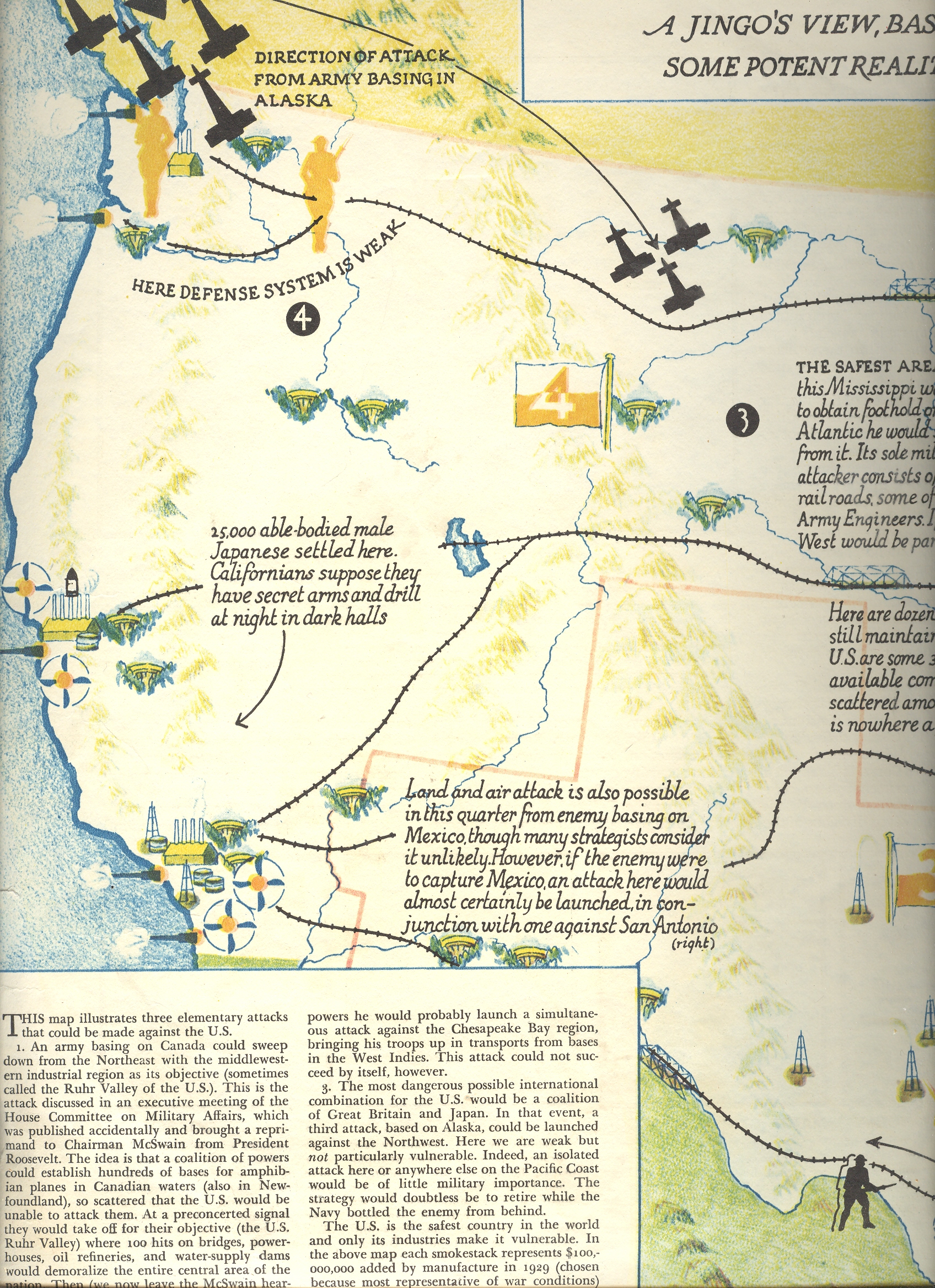
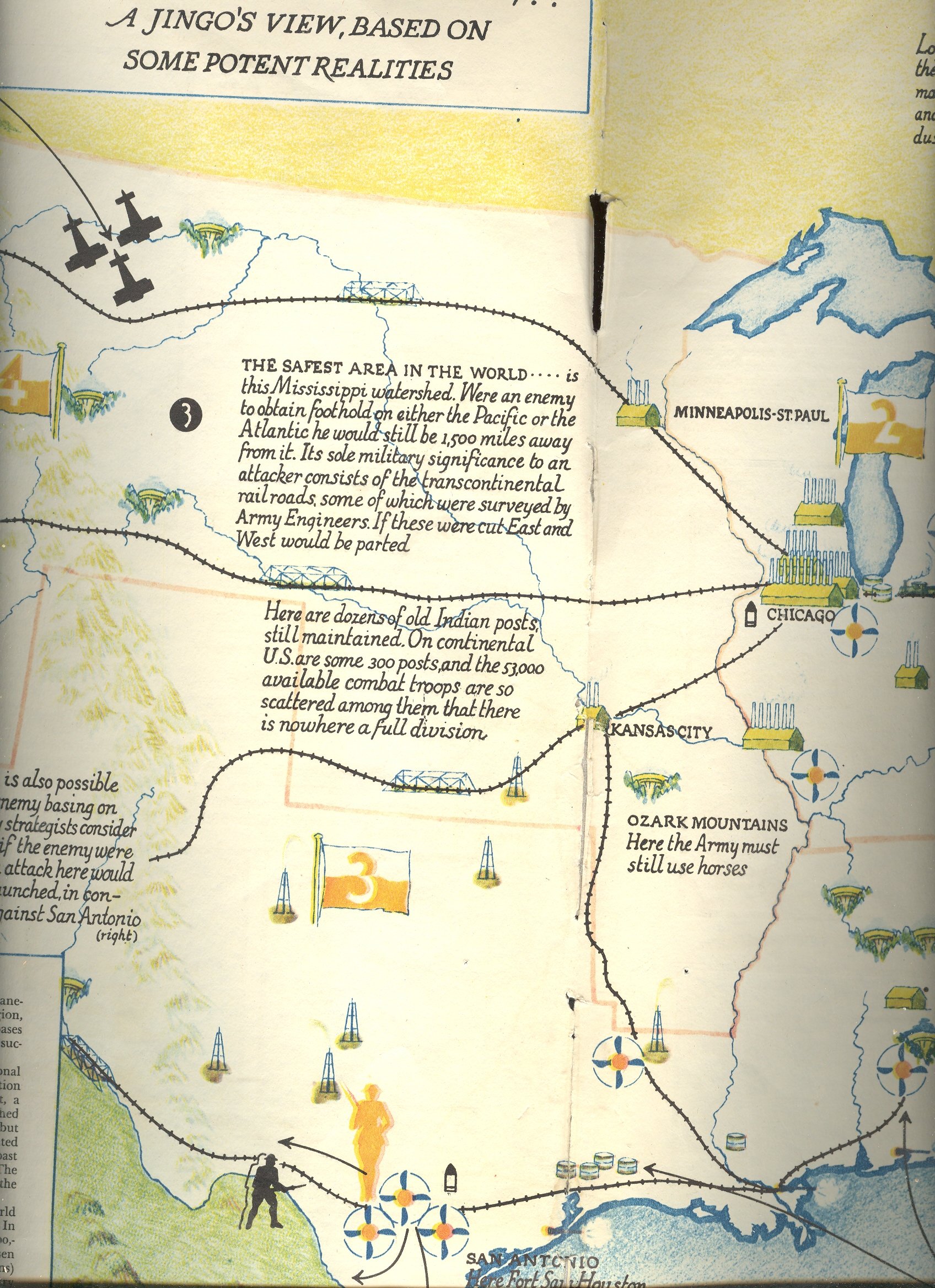
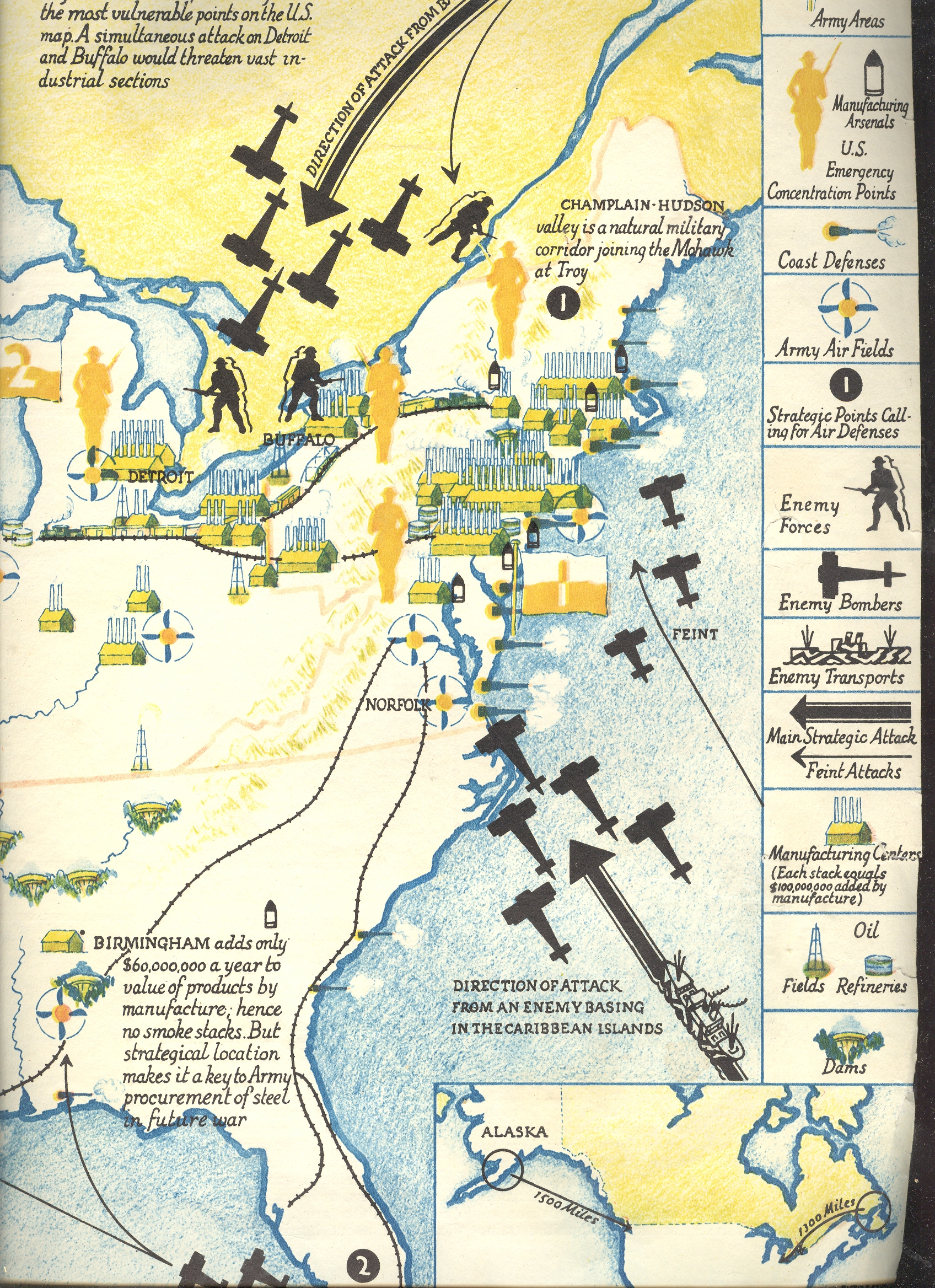
    Perhaps this non-invaded bit explains why the most-viewed post on this blog (with at last count was 400,000 views) was a LIFE magazine article from 1942 on the possible invasion routes to the U.S.  Maybe the volume was driven by war-gamers, though I suspect it was made up largely of the curious who weren’t used to seeing “Invasion of” and “America” together in a military sense.

    https://historyofideasblog.com/a/6a00d83542d51e69e20120a7a3225e970b-pi

    https://historyofideasblog.com/a/6a00d83542d51e69e2012876a5a4b4970c-pi

    https://historyofideasblog.com/a/6a00d83542d51e69e2012876a5a5e4970c-pi

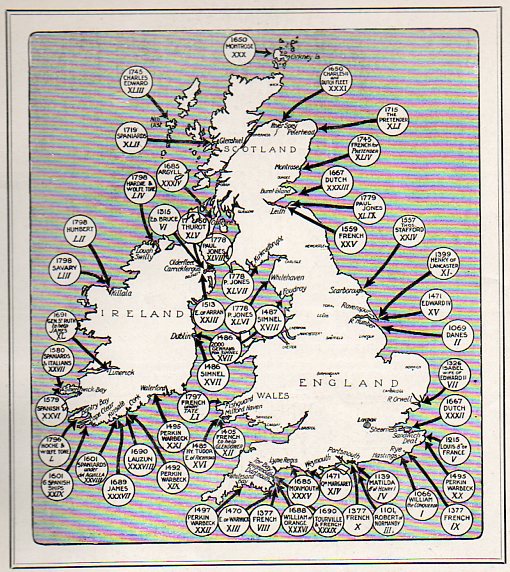
    But now for the  real stuff:  a map of the 54 invasions of Great Britain (and “the places at which foreign troops have landed on British soil since 1066 (and all that), seen in the Illustrated London News for 27 March 1909):

    Invasion--Us and England120

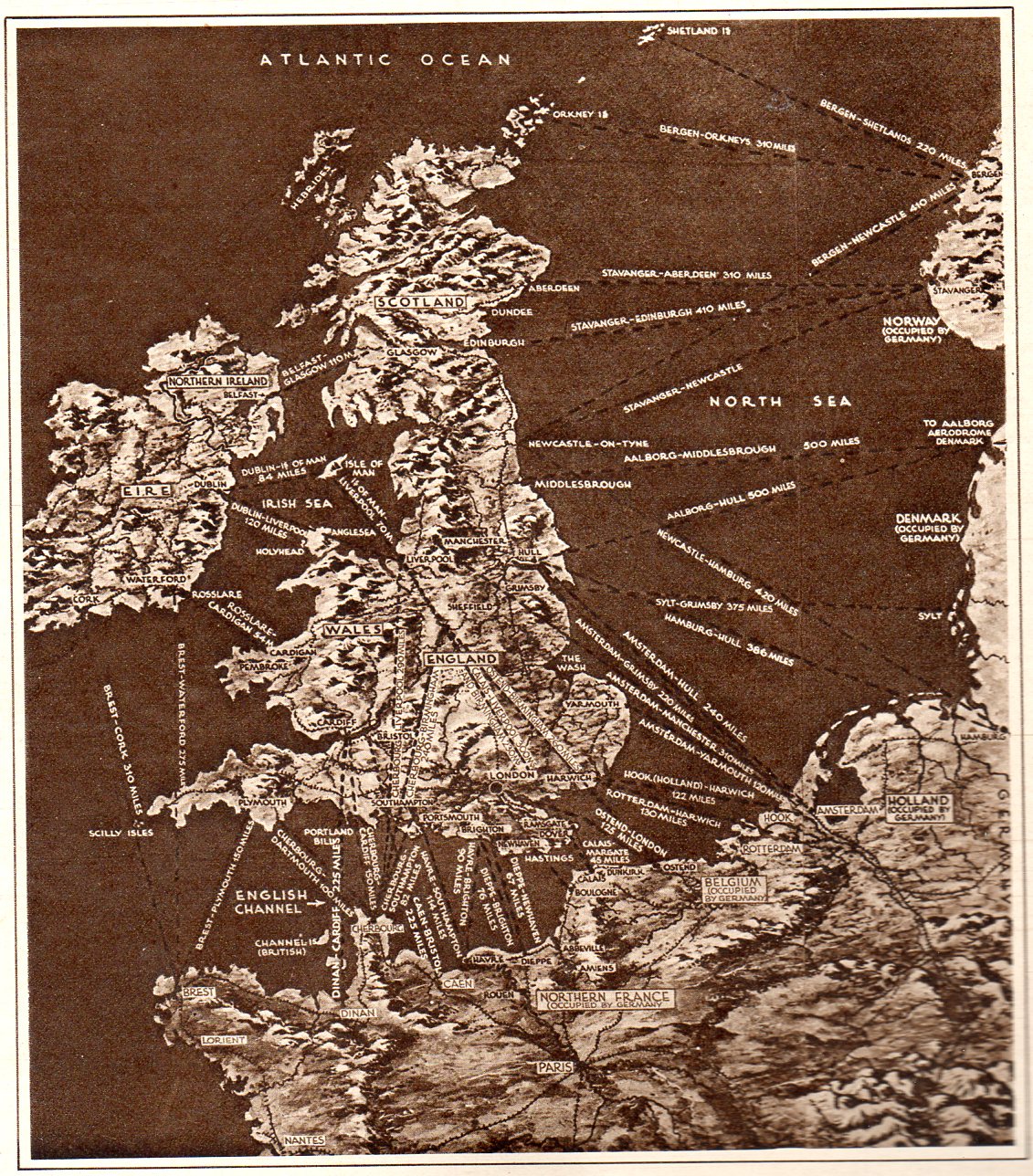
    And then this, where the WWII invasion routes were turned around: 

    Dunkerque124

    This map pretty well tells the story of the perilous situation of Europe and England at the beginning of June, 1940.  It appeared in the Illustrated London News on the heals of Churchill’s “Blood, Soil, Sweat and Tears” speech, and was a very frank presentation of the wearing of the war.  By this point in the war Nazi Germany had successfully invaded Belgium, France, Luxembourg and the Netherlands, sweeping across Europe in a broad westward movement, backing up British and French troops all the way to the sea at Dunkerque, where a monumental rescue operation (“Operation Dynamo”) saved them.  (There was an enormous amount of materiel left there on the beach, a devastating loss for the British Expeditionary Force, nearly crippling it.) This was a bad time for the Allies, this part of the war coined by Winston Churchill in 18 June 1940 in the House of Commons by:  “The Battle of France is over. I expect the Battle of Britain is about to begin”. There was very little good that came of these few months for the U.K and the Allies, though four things do stand out: (1) as I just mentioned, the saving of 300,000+ troops at Dunkerque; (2) the resignation of Neville Chamberlain, (3) the coming of Winston Churchill  as Prime Minister of the U.K., and (4) the first deciphering of the Enigma at Bletchley.  Other than that, the situation was dim, and these invasion routes (published at t he very time that Germany was studying such a feat in its “Operation Sea Lion“, or “Unternehmen Seelöwe”). The endgame at Dunkerque took place almost four years to the day of the invasion of Europe, when the intent (though not placement) all of these arrows were turned around for the Allied operation at the Normandy beaches on 6 June 1944..

    And so, there it is–a presentation of several maps showing invasions, real and imagined 


  • Keeping 1935’s Secretaries Unmarried

    JF Ptak Science Books  Post 1261    Part of the History of Women series

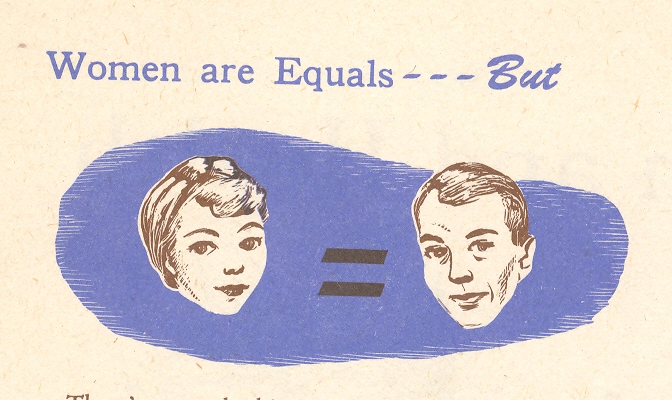
    .Mar 25 women equals but

    It good to remind ourselves of how we got so comfortable here in the present by looking at the uncomfortable parts of the past, and remembering those people who made the sacrifices necessary to ameliorate those differences.  Sometimes that spiked memory looks small but isn’t so, sometimes it’s a tidy and explosive nugget nestled in decent surroundings, but explosive nonetheless.

    Secretary marry cvr021 That’s what I found looking through this very considered, nicely designed and well written vocational pamphlet for the Katherine Gibbs School (of New York, Providence, Boston and Bermuda).  The Private Secretary, Qualifications and Requirements (1935) laid out all of the necessaries for the better-placed secretary, many of which no doubt were the teaching specialty of Ms. Gibb.

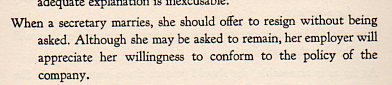
    The pamphlet described plenty of excellent qualities for anyone seeking any sort of employment–then or now–all of which could be supplied to any student of Ms. Gibb–I kept climbing over them looking and waiting for the now-severely-dated practices to appear.  Mainly they didn’t appear in whole so much as in bits and pieces, sprinkled well throughout the work. But on the last page came this nugget, which I think pulls all of the disparate pieces together in a general statement about the position of women in the workplace in 1935:
    Secretary marry det020

    And there you have it. A key to understanding the status of women in 1935.  You’ll notice that the “company policy” is generic, which means that the practice was wide-spread.  And remember too that this is just for marriage–not pregnancy, which is implied in the company’s dissociation with the married secretary, cutting their ties now before any pregnancy begins.

    [This pamphlet is available for purchase from our blog bookstore.]


  • Abbreviating Auschwitz: a Document for the Construction of the Buna Works

    JF Ptak Science Books  Post 1258 (continuing Post 274)
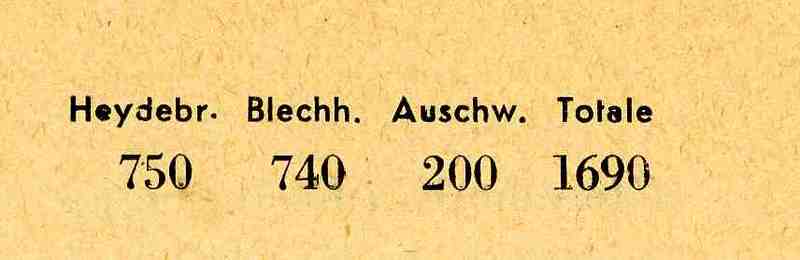
    Itz abbrev

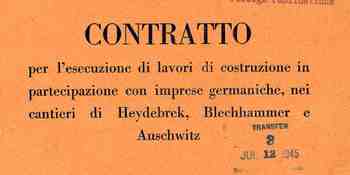
    1blogsept_23_astro_cvr_detail643 This document of death, this pamphlet is the Auschwitz III Construction Contract between IG Farben and the Confederazione Fascista degli Industriali for Construction of the Buna Works at Auschwitz III, as well as construction at Heydebrek and Blechhammer, and was printed in 1942.  I’ve only been able to scan five pages as the document is fairly weak and I have a flat bed scanner–I just don’t think it would take much more abuse without falling out of its binding.  But I have scanned some of it, notably the participatory Italian companies and some of the allocation of workers to the different concentration camps–I’ll just have to return top scanning the rest of the document when I find a better (inclinded) scanner. 
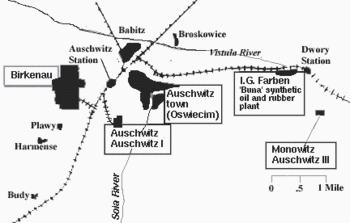
    Auschwitz_12map
    The full title reads of the work reads:

    Contratto per l’escusione di lavori di construzione in partecipazione con imprese germaniche, nei cantieri di Heydebrek, Blechhammer e Auscwitz. It was printed by Tipografia del Gianicolo, in Rome, 1942, by the Confederzione Fascista degli Industriali, Federazione Nazionale Fascista Raggruppamento Germania.  The document measures a fragile 30.5 x 21 cm,  and is 29 pages long.  Like dozens of thousands of other things here at the store, this was formerly in the “Pamphlet Collection” of  the Library of Congress (which received the publication 12 July 1945) until we purchased the collection at the end of 1999.  (This document is also availableat our blog bookstore.)

    This is also probably the most awful thing I own.  Its like looking at those blueprints for the crematoria and the barracks–so precise, swimming in their blue pool, these concise, sure, white lines; designs for one of the worst things built in the 20th century–just drawings, lines on a long sheet of paper, for building something.  Completely removed from the breathing world, just cold logical constructions for someone else’s end.  That’s the feeling I get from handling this thing–the Italians and Germans figuring out where to put the thousands of workers, making sure
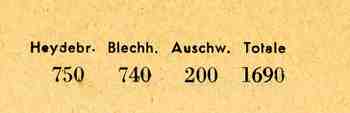
    1blogsept_23_astro_det641_2that they get paid, providing for some sort of maintenance for the workers’ health, salaries, benefits, work schedules, breaks, vacations, incentives, mailing and the post, and so on.  All of the bits of the most mundane things that go into a large construction projects, like building a highrise, or a tunnel, or a highway, or a bridge to hell.  This contract could’ve been for just about anything at all.  But it isn’t.  Its for building a part of Auschwitz when anyone with any sense whatsoever knew what was already going on there.

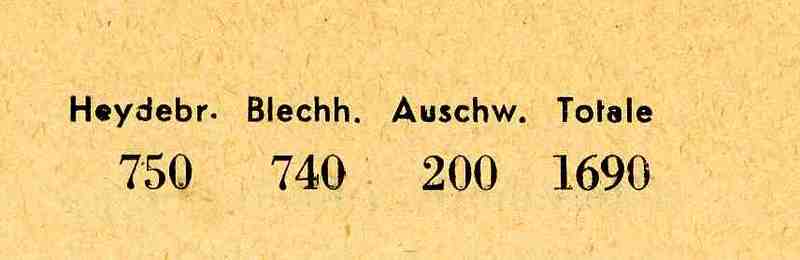
    Of the many terible things in this document I was really bothered to see Heydebrek, Blechhammer and Auschwitz abbreviated at the top of some of these pages.    This is just so wrong. Wrong on every level, being an attribute of the nothingness, of the emptiness, of this document. 

    It is a simple, basic document on one of the least simple and basic things of the 20th century.  The contract detailed labor expectations, needs and regulations from both the German and laboring Italian sides for the construction of these three concentration and slave labor camps in 1942.   Subjects of interest in this document include salaries, housing, vacations, health care and insurance, as well as the application of German laws to the workers, qualifications, and classification of occupations.

    Perhaps the part of most interest is the short list—reprinted below—on pages 3 & 4 of the firms and engineers taking part in this agreement..

    ***

    The names that are attached to this document and signing off on the contract of this agreement (of 2 March 1942  which provided 8,636 Italian laborers for this construction) include:

    1)    for IG Farbenindustrie AG, Heydebreck, Heydebreck OS
    Adolf Mueller and (Hans) Deichmann

    Hans Deichmann served as (senior) legal representative for IG Farbenindustrie in Rome and Milan from 1942 to 1945 and in 1942 was responsible for recruiting Italian workers for construction in the above-named concentration camps.

    2)    for Oberschleische Hydrierwerke AG, Blechhammer, Kreis-Consei       
    Schlick

    3)    for IG Farbenindustrie AG Auschwitz, Auschwitz OS
    Adolf Mueller and (Hans) Deichmann

    The signatures representing Italian interests include:
    Aurelio Aureli
    Giacomo Milella

    Notes:
    –Blechhammer was a satellite camp of Auschwitz III (Monowitz)
    –Auschwitz III, also called Buna or Monowitz, was established in nearby Monowice to provide forced laborers for the Buna synthetic rubber works. The German conglomerate I.G. Farben established a factory in order to take advantage of cheap concentration camp labor and the nearby Silesian coalfields. It invested more than 700 million Reichsmarks (about 1.4 million U.S. dollars in 1942 terms) in Auschwitz III.

    On Italian labor being used at Nazi Concentration camps, as found in Vol  VIII, pg 749, 
    Nuremberg War Crime Tribunals:

    Q. Did you go to ter Meer* to get Italian workers — I am thinking of a prosecution exhibit, the one which was shown to ter Meer on cross examination.

    A. I was told at the time by an official source that Italian industry, after the collapse, would no longer produce because there was no coal, no current, or something. I was also told that since the Italian State obtained goods from Germany — buna, for example — the Italian State would be willing to enter into an agreement with Germany to make labor available, as was always the case from Italy. I said to him: “In case that is so” — neither ter Meer nor I knew whether that really would be the case — I said, “help the people at Auschwitz; help them to get workers if now” — I believe this was in 1944 — “the plants gradually go into operation.” For in these plants we wanted to have skilled workers — as I said yesterday, it is very important whether or not the man in charge has knowledge of the work he is doing.   –Vol  VIII, pg 749,  Nuremberg War Crime Tribunals. 

    *”Fritz ter Meer served on the IG Farben [Farben was Hitler and Hitler was Farben. (Senator Homer T. Bone to Senate Committee on Military Affairs, June 4, 1943.] board of directors from 1926 to 1945 and was the head officer directing the operations of the IG Farben factory at Auschwitz. The Nuremberg War Crimes Tribunal sentenced him to seven years in prison. He was released after serving only four years. Not long after, in 1956, Ter Meer was elevated to the chairman of the supervisory board at BAYER, a position he held for seven years. His grave in Krefeld has a meter-high wreath on it – donated by BAYER in recognition of his services.”

    Farben & American Business, 1930-1943

    It is a very long and twisted and very crowded road to the source of intelligence on the involvement of American corporate citizens in the rise of Hitler, but the directorship roles and participation of American citizens in Farben from its formation in 1928 to the beginning of the war does provide an interesting insight to the international flavor of what was perhaps THE principal Nazi company.   Again, this is an exhausting process which I cannot even begin to undertake here, but suffice to say that American involvement and participation in Nazi war interests lasted well into the beginning of 1943.

    (The following information on American involvement int the directorship of IG Farben comes from Reformed Theology website.  Many thanks!)

    The Directors of American I.G.(FARBEN Chemical)  as of  1930 (with their citizenship and other corporate identities) providing guidance, leadership and investment in the backbone of the Nazi rise to power:
    Carl BOSCH  German  FORD MOTOR CO. A-G

    Edsel B. FORD U.S.  FORD MOTOR CO. DETROIT

    Max ILGNER  German Directed I.G. FARBEN N.W.7  (INTELLIGENCE) office. Guilty at Nuremberg War Crimes Trials. F. Ter MEER German Guilty at Nuremberg War Crimes Trials

    H.A. METZ  U.S.  Director of I.G. Farben Germany and BANK OF MANHATTAN (U.S.)

    C.E. MITCHELL U.S. Director of FEDERAL RESERVE BANK OF N.Y. and NATIONAL CITY BANK

    Herman SCHMITZ German On boards of I.G. Farben (President) (Germany) Deutsche Bank (Germany) and BANK FOR INTERNATIONAL SETTLEMENTS. Guilty at Nuremberg War Crimes Trials.

    Walter TEAGLE  U.S. Director FEDERAL RESERVE BANK OF NEW YORK and STANDARD OIL OF NEW JERSEY 
    W.H. yon RATH  Naturalized Director of GERMAN GENERAL U.S. ELECTRIC (A.E.G.)

    Paul M. WARBURG U.S. First member of the FEDERAL RESERVE BANK OF NEW YORK and BANK OF MANHATTAN

    W.E. WEISS U.S. Sterling Products

    Source: Moody’s Manual of Investments; 1930, p. 2149. Note: Walter DUISBERG (U.S.), W. GRIEF (U.S.), and Adolf

    KUTTROFF (U.S.) were also Directors of American I.G. Farben at this period.

    Again, more from Reformed Theology:

    “Directors of American I.G. were not only prominent in Wall Street and American industry but more significantly were drawn from a few highly influential institutions:”

    “The remaining four members of the American I.G. board were prominent American citizens and members of the Wall Street financial elite: C.E. Mitchell, chairman of National City Bank and the Federal Reserve Bank of New York; Edsel B. Ford, president of Ford Motor Company; W.C. Teagle, another director of Standard Oil of New Jersey; and, Paul Warburg, first member of the Federal Reserve Bank of New York and chairman of the Bank of Manhattan Company.”

    “Directors of American I.G. were not only prominent in Wall Street and American industry but more significantly were drawn from a few highly influential institutions. (See chart above.)”
    “Between 1929 and 1939 there were changes in the make-up of the board of American I.G. The number of directors varied from time to time, although a majority always had I.G. backgrounds or connections, and the board never had less than four American directors. In 1939 — presumably looking ahead to World War II — an effort was made to give the board a more American complexion, but despite the resignation of Hermann Schmitz, Carl Bosch, and Walter Duisberg, and the appointment of seven new directors, seven members still belonged to the I.G. group. This I.G. predominance increased during 1940 and 1941 as American directors, including Edsel Ford, realized the political unhealthiness of I.G. and resigned.”

    Well, I don’t know where I am going with this, it is just such a big, monstrous story.  Please forgive me this ramshakle post.  I really just wanted to get the information out on the contract and will return to it later. 


  • The Ghetto as a “Threat to Tax Values”–On Missing People

    JF Ptak Science Books   Post 1252 (Rapid Post)

    Part of the series Blank, Empty and Missing Things

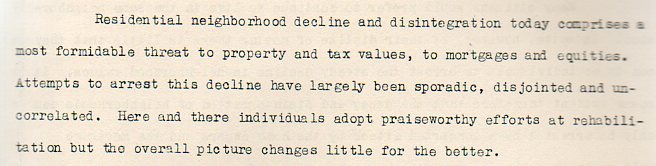
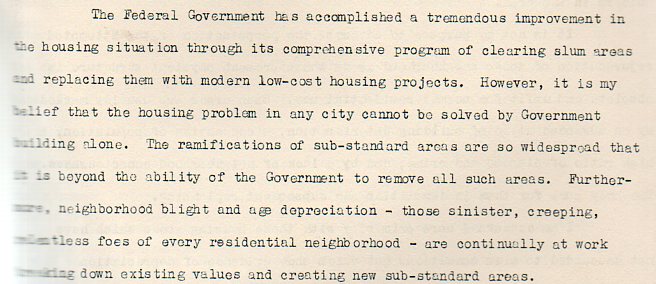
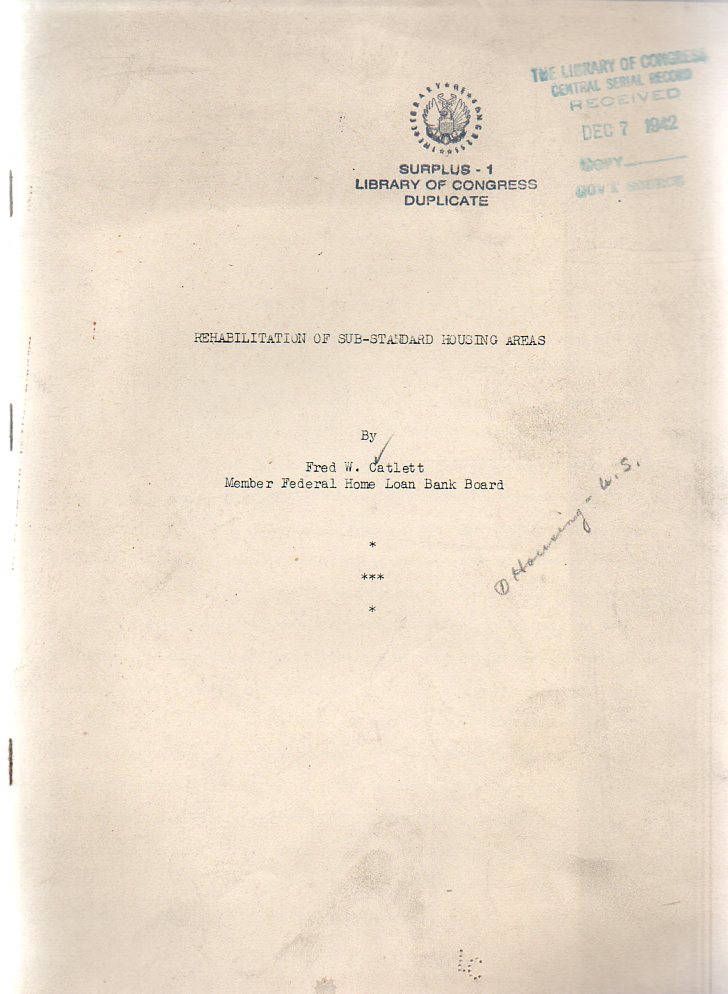
    Fred Catlett’s Rehabilitation of Sub-Standard Housing Areas (1942) isn’t so much about “rehabilitation” of the houses themselves but to their  neighborhoods and surrounding areas–the “inadequate” housing would be demolished, disappeared, replaced, to re-insure the valid tax basis of the larger area/neighborhood.  Nothing is said about where the original people would go while their old neighborhoods were being razed or whether or not they would return to the new housing. 

    Jghetto study b961 The vocabulary here isn’t so surprising in and of itself, but rather with teh overwhelming completeness of it.  I’d suspect that at some point Mr. Catlett  (“Member Federal Home Loan Bank Board”) would throw some sort of bone to the interests of the occupants of those substandard houses, some interest or emphasis to the people involved.  And even though the pamphlet is only 12 pages long, maybe 5000 words, it was certainly long enough to share some concern or kindness to the occupants of those houses.

    Jghetto study c962

    Jghetto study cover963 “Better housing projects break up slums but not until fine homes have decayed and been ruined and many thousands of dolalrs in loses have been suffered”writes the author.  I understand that the man was protecting the material bases of his institution, but ot have the entire document be absent of any consideration to the people being houses I find remarkable. (The original pamphlet is available from our blog bookstore.)


  • A Paper Mirror and the History of Blank Things–Illusory (Sea) Power

    JF Ptak Science Books  Post 1228

    [This is a part of our History of Blank, Empty and Missing Things series.]

    Mirrors don’t necessarily have to reflect something to show  reflection–they merely need to offer you a picture of something that can show the difference of something real versus a false image of that same thing.  “Through a glass darkly” (1 Corinthians 13:12) isn’t necessarily a reflecting surface though it is a reflective one; neither is the painting in The Picture of Dorian Gray.  Harry Potter’s Erised mirror does act like a mirrorish mirror, and Narcissus does come to a bad and wasted end in front of his pondside reflection (the “perilous mirror”of the Romance of the Rose).  The queen’s mirror in the tale of Sleeping Beauty doesn’t reflect but does give advice, and Alice’s Adventures…  in 1871 begin with wondering what was on the other side of a mirror (“looking-glass”) above her mantel–in a similar vein Kurt Vonnegut introduces a mirror as a “leak” into another dimension rather than a reflection.   Sometimes you get a hand-held thing with glass, and sometimes you just get a piece of paper.

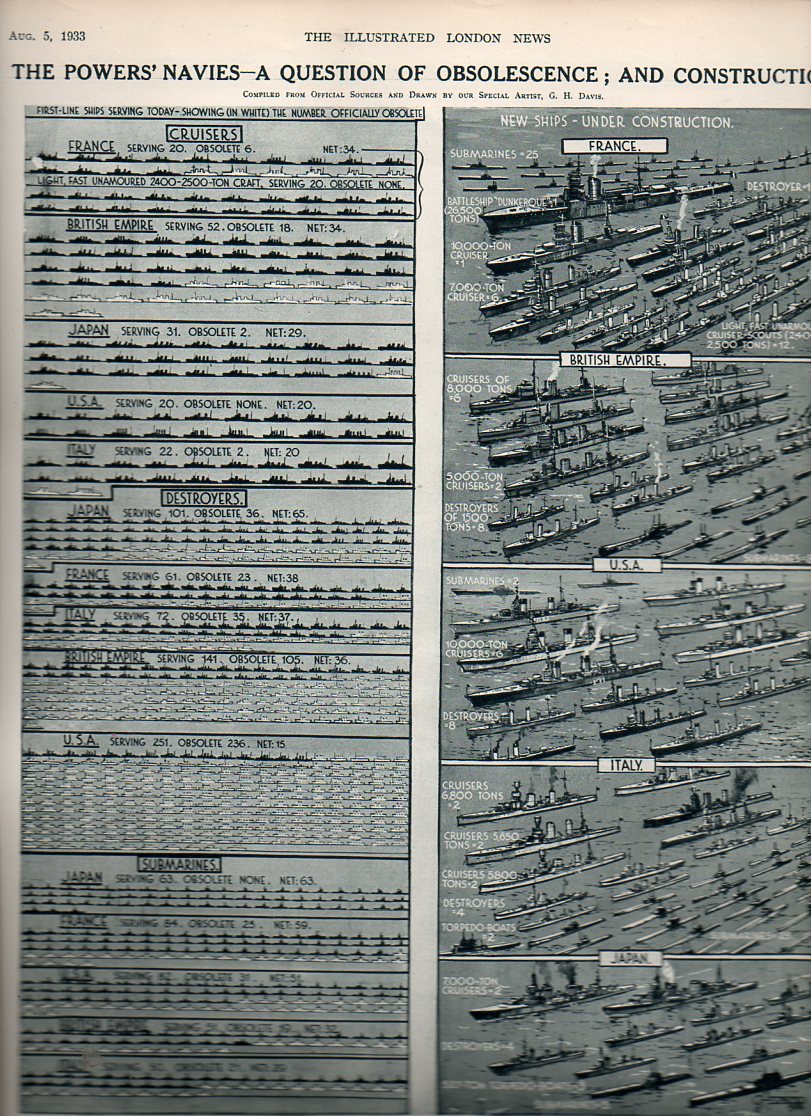
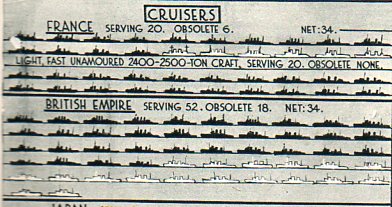
    Navy obsol818 This graphic from The Illustrated London News (5 August 1933, and available for purchase here) is an interesting case in point for a paper mirror.  It is interesting in how it presents a reported state of affairs and its actual condition.  In this case, the artwork shows the supposed/reported strength of the navies of the five major seafaring powers (France, British Empire, Japan, United States and Italy) and what those navies wpuld look like if the outmoded and obsollete ships were removed.  The modern and servicable ships are shown in black silhouette; the numbers of obsolete vessels were shown in white.  The dipiction of blank or empty of missing ships was a very convincing tool depicting the actual state of the major powers’ navies compared to a more romantic means of reporting naval strength. It must have been an excellent wake-up  to thopse with the capacity to see the truth, presented on one piece of paper, a mirror by any other name.

    Navy obsol cruisers819


  • 1 Inch=$370 Million: a Great Height of Graphical Representation of Quantitative Data

    JF Ptak Science Books  Post 1227

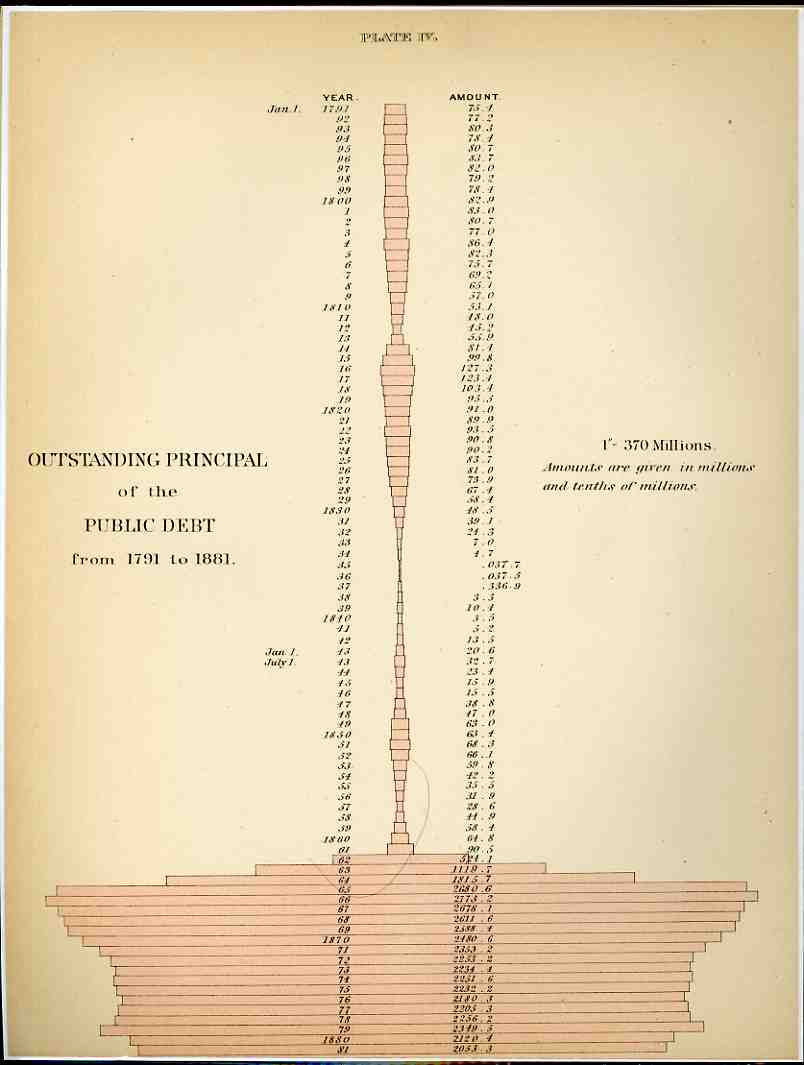
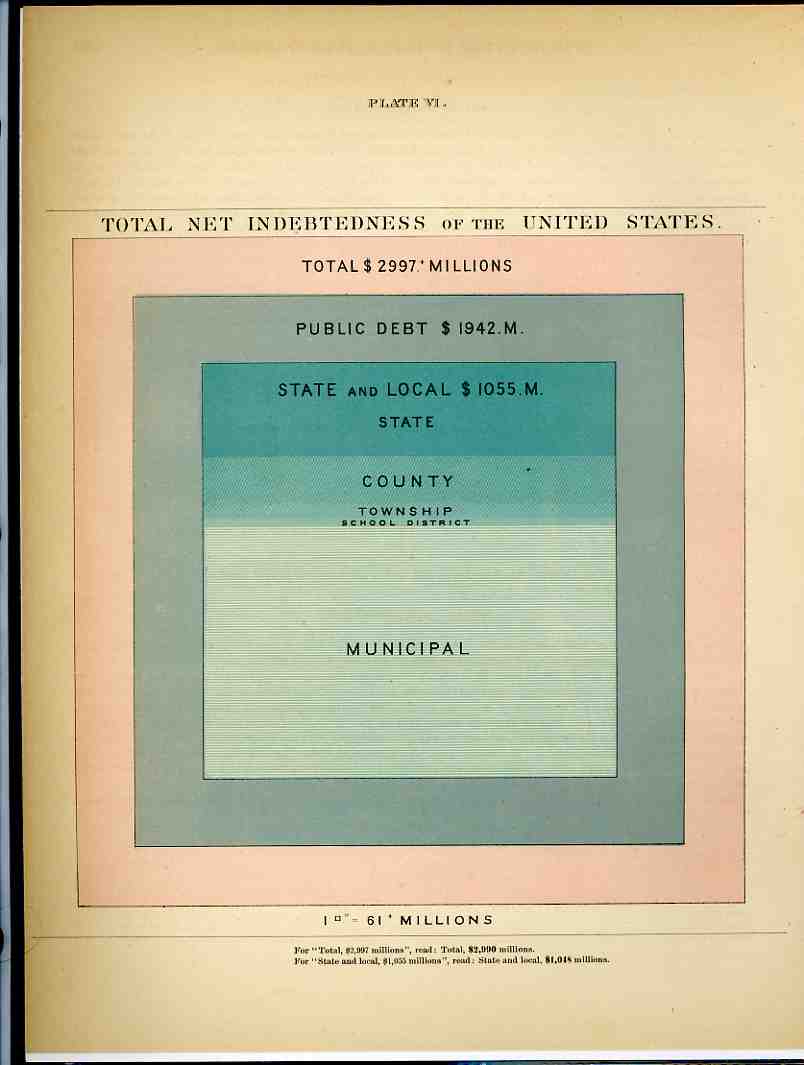
    0 ebay 13 graphs268[Click image to enlarge; both original images are available for purchase from our blog bookstore.]

     It isn’t often that you see money represented by dry measure, but that’s what happened here in these two examples from the fantastic Walker Statistical Atlas ( Statistical Atlas of the United States based on the results of the tenth census 1880 with contributions from many eminent men of science and several departments of the government Comp. under the authority of Congress by Francis A. Walker, M. A., superintedent of the tenth census … and published in 1884).  What we see here is a history of American federal indebtedness from 1791 (when the public debt stood at 75.1 million dollars) to 1881 (about 2 billion).  Using the CPI (consumer price index) as a factor to translate that number in 2008 dollars (or so), the 2 bil grows to about $40 billion (a nickel then is about a dollar now). The interesting part of the legend–and what drew me to this graphic even before its somewhat unique shape–state “1”–370 millions”, that is one inch of pink horizontal bar stands for about $370,000,000, and the last bar on this graph is about 6 inches long, which, adjusted for inflation, would now be about 10 feet long. .That said, the really interesting part comes next–if we use this measure to graph a horizontal bar for the American debt as it stands in 2008, it would pink a pink bar that was about a HALF MILE long to express our 10(+) trillion dollars of debt.  OR, somehow, the old debt of 1881 would be about 1 story of a house, while the 2008 version would be up one side of the Empire State Building and down the other (and yes that includes the aerials).  I don’t know how to put this comparison in context, the differences are so staggering. 

    0 ebay 13 graphs269
    After having popped a neuron or two trying to get my head around that one, we’ll further confuse the situation with the second chart, which shows the total net indebtedness of the U.S. in 1881 in terms of square inches; or, at the bottom of it all, a 7×7 inch square represented the entirety of the $3 billion owed out.  49 square inches. Working backwards this time, our $10 trillion (or $10,000,000,000,000.00 writ large) adjusted back to a CPI value in 1881 would have covered about 88 PAGES of the atlas or 9,000 square inches.  Again, the numbers are just almost too big to mean anything. 

    We, as a country, owe one hell of a lot of money.

    And yes there are many different ways of trying to figure out what one 1881 dollar “means” in terms of 2008, but the CPI is the most simple to use and least argumentative and at least gives a pretty good idea of scale.  It would be more useful to try and establish the degree of difficulty  of turning the corner on the debt in 1881 compared to doing that today, but this is just a late-night post at the end of the week, and I don’t have a good clue about how to try and measure that bit simply.


  • History of the Federal Minimum Wage and Its Deeply-Past Present

    JF Ptak Science Books   Post 1226

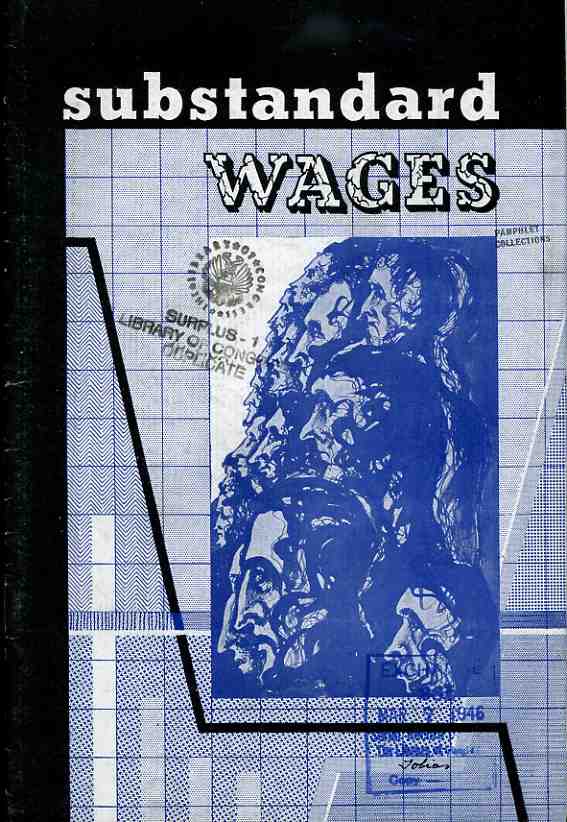
    0 blog jan 30 substandard489I’ve included this post in the Blank/Missing/Empty thread of this blog because the Federal minimum wage has been proportionally increased more so in th e last two years than at almost any time in its history, the increases really only get it up to what it niormally has been, maybe a little higher, with CPI-adjusted. This post is in response to an article in the New York Times today saying that the new minimum wage is equal to that of 1968, which is probably accurate.  The real point is that during the mid- Clinton years and the early Bush yeras the minimum wage languished during a time of tremendous growth for those who already had money–the poor for the years of 1992-2005  were left largely unprotected, unmolested by fortune.

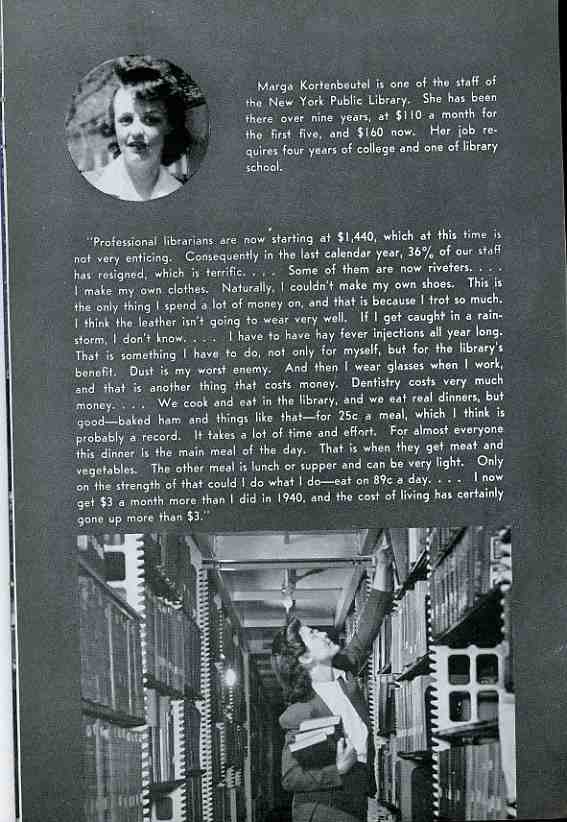
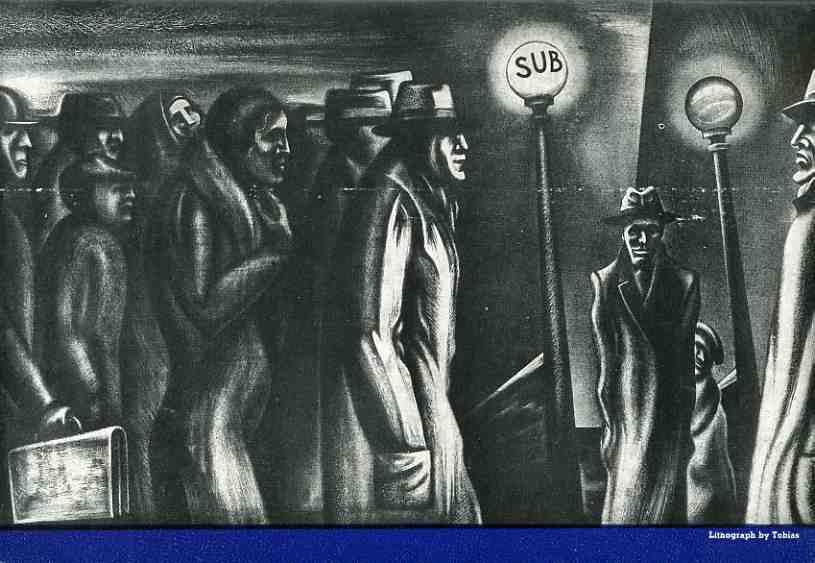
    Leafing my way through this interesting pamphlet, Substandard Wage, an Analysis of their Extent and Effect, and What Must be Done to Establish a Higher Wage Level, design “and presentation” by Abraham Joel Tobias for the Textile Workers Union of America, CIO, and for the Congress of Industrial Organizations, I found some very interesting bits.  First of all, the work was done to aid the working poor, people who were employed and making a wage, but the wage just wasn’t enough necessarily to being them out of poverty.  (The poverty line wasn’t invented as an economic bell weather until 1959.)  The first of the working poor that I read about was a librarian, Marga Kortenbeutel* (of the NYPL) who was working for $1,440.00 a year in 1945, which was just keeping her barely afloat, what with cutting out her 89-cent lunches and all.   That’s the equivalent (CPI adjusted) to about $17,500 a year in 2008 dollars.  Of course, the general economy was not doing well during the war, though it would rebound substantially by the late ‘40’s. The minimum wage, first established in 1938, was equal to about $3.50 2008n dollars in 1945. By 1950 this jumps to $6.25, and from there to about 1988 the minimum wage stays at at least that rate, with the period 1958-1978 soking aqt an average of about $8.hour.  From 1988 forward the minimum wage falls, winding up at about 5 dollars/hour in 2008, with the period 2003-2008 being the lowest level of real wages since World War II.0 blog jan 30 substandard490

    But what was this in terms of the rest of the population; what did these figures for minimum wages mean in the  society at large?  Was this a livable wage?  If we define “livable” as above what the government considered to be the “poverty level”, and “working” is a 40-hour work week and a 50-week working year, the answer is a quick “no”.  In 1959, when the poverty level was established, the minimum wage for the working person brought them to 67% of the income necessary to be “poor”; that left a gap of 33%, and that isn’t good.  That gap continued to close to 1968, when minimum wage go to within 10% of the poverty level, and then it began a slow and steady-ish decline.  The spiral down bottomed out for a bit in 1989, when it hit 52%,   building back up to just a touch over 60% in 1997.  From 1997 until the new minimum wage was instituted in 2006, the gap widened steadily, hitting 50%.  In 2008, with the new minimum wage in place , the gap is still at 41%, meaning that the new wage levels still only come to within 59% of what is supposed to be the poor line in the United States.  59% stops things from being a ridiculous slap in the face of American working poor, but not by much.  And it affects too few:  the minimum wage applied to a high of about 17% of the entire working population in the U.S. in 1979; today, the minimum wage which gets the working poor a little more than half-way to poor, applies to only 2.5% of the population. 

    *As it runs out, I found a little bit about Ms. Koretenbeutel; at the time of the publication of this pamphlet, Margathe was 35 years old.  She married someone named Voorhis in 1960, and died in 1971.  That’s all I’ve got.

    The image below is from the back cover of the pamphlet, described as a “lithograph by Tobias”. 

    0 blog jan 30 substandard491


    A Timeline of Minimum Wage Levels, 1938-2009  (in continued reading section)

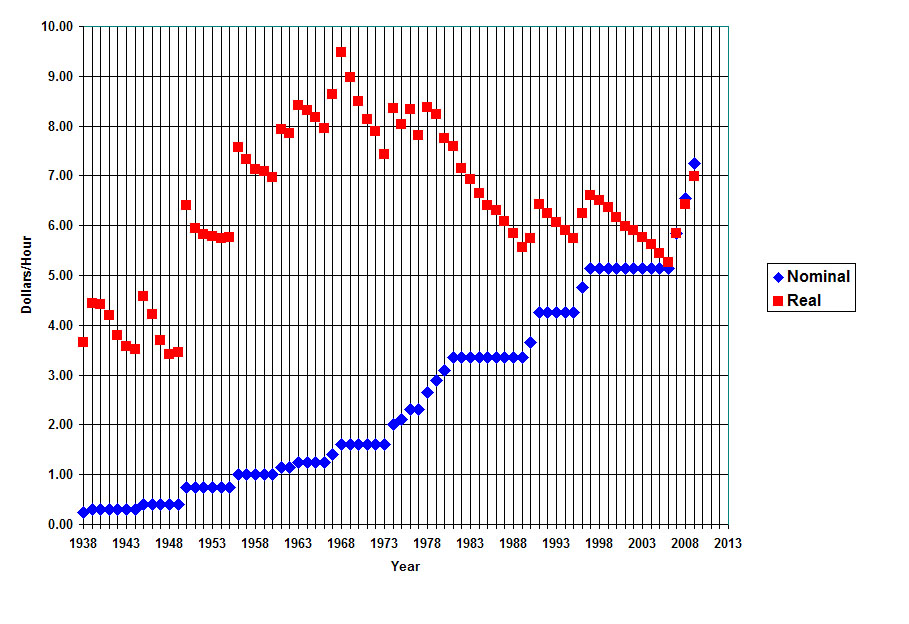
    Minwage The graph, above, is from Oregon State University website on the history of the minimum wage.  The accompanying text to it is also below.  The graph depicts “nominal” versus “real” minimum wages by year, the red dots (the nominal) showing what the original minimum wage translated to in 2008 dollars.

    A federal minimum wage was first set in 1938. The graph shows nominal (blue diamonds) and real (red squares) minimum wage values. Nominal values range from $0.25/hr in 1938 to $6.55/hr as of July 2008. The graph adjusts these wages to 2007 dollars (red squares) to show the real value of the minimum wage. Calculated in real 2007 dollars, the 1968 minimum wage was the highest at $9.47. The real dollar minimum wage (red squares) falls during periods Congress does not raise the minimum wage to keep up with inflation. The period 1997-2007, is the longest period during which the minimum wage has not been adjusted. The minimum wage increases in three $0.70 increments–to $5.85 in 2007, $6.55 in mid 2008, and to $7.25 in mid 2009. The real values after 2007 are projected for future decline in purchasing power. 

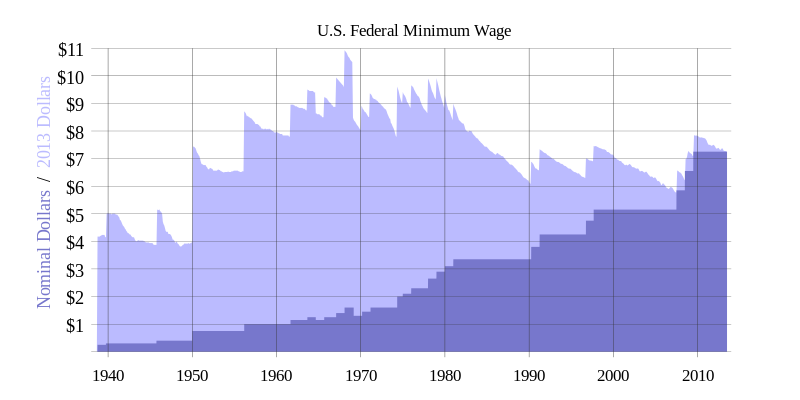
    Minimum wage History_of_US_federal_minimum_wage_increases


    [Graph from Wikipedia on the minimum wage, here]

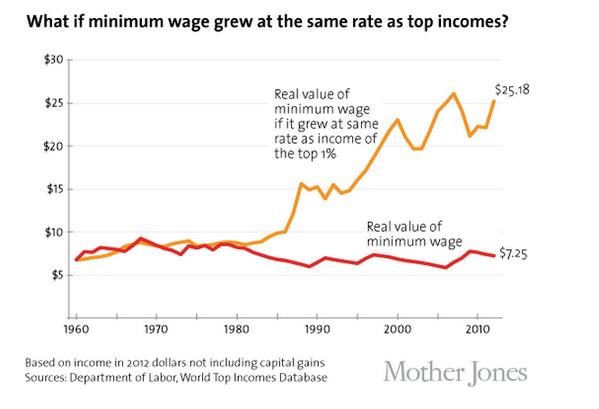
    And this interesting graph from MotherJones, showing what the minimum wage would look like if it had kept pace with the salary increases for the top one percent:


     Minimum wage top income


  • Attacking Darwin’s Descent of Man in The London Times, 1871.

    JF Ptak Science Books   Post 1225

    “But with regard to the material world, we can at least go so far as this—we can perceive that events are brought about not by insulated interpositions of Divine power, exerted in each particular case, but by the establishment of general laws.” W. WHEWELL: Bridgewater Treatise.

    “To conclude, therefore, let no man out of a weak conceit of sobriety, or an ill-applied moderation, think or maintain, that a man can search too far or be too well studied in the book of God’s word, or in the book of God’s works; divinity or philosophy; but rather let men endeavour an endless progress or proficience in both..” BACON: Advancement of Learning.

    The quotes above stand alone, the first things that the readers see, sitting on the half-title page of  Charles Darwin’s On the Origin of Species (first published in 1859 in an almost-immediately sold out run of 1250 copies) an extraordinary, epochal book that was a lightning rod for reception both good and bad, heaven and hell, the Boschian hells of which were clearly not deserved, then or now.  (It is easier to understand a poorly-reviewd Origin in 1859 or through the 1860’s or even through the rest of the 19th century or even somehow through the early twentieth, but not afterwards.)

    Twelve years after the first edition of the Origin (and two years after the appearance of the Origin in its fifth edition) came his elegant and formibible The Descent of Man, and Selection in Relation to Sex

    The Times of London gave such an awful review of the book that a review of this review was published in the April edition of Nature [(Darwin),  Charles.  REVIEW of Review: The Descent of Man.  London:  Nature,  1871, volume 3, 20 April 1871].   It was Thomas Stebbing who wrote the response to The Times‘ incitful, hateful attack upon the Descent of Man. The Times saw Darwin’s work as an attack upon society,  accusing him of undermining authority and principles of morality, opening the way to “the most murderous revolutions”.  A “man incurs a grave responsibility when, with the authority of a well-earned reputation, he advances at such a time the disintegrating speculations of this book.” Stebbing’s review of the review is drippingly sarcastic, pointing out obvious errors in specific and the tone of the article in general in the defense of the book. Darwin’s “facile method of observing superficial resemblances” (says The Times) incites Stebbing to issue the following: “they may fancy that truth is worth discovering , even when it seems to involve some contradictions to our pride and some loss of comfort to our finer feelings…” (What a great line!) The article runs about 1000 words, and is a two-column, 1-page bit. [This issue of Nature may be purchased from our blog bookstore, here.]

    “No one ought to feel surprise at much remaining as yet unexplained in regard to the origin of species and varieties, if he makes due allowance for our profound ignorance in regard to the mutual relations of all the beings which live around us.” Darwin, leading the last paragraphs of the end of the introduction to the Origin, page 7.