A Daily History of Holes, Dots, Lines, Science, History, Math, Physics, Art, the Unintentional Absurd, Architecture, Maps, Data Visualization, Blank and Missing Things, and so on. |1.6 million words, 7500 images, 4.9 million hits| Press & appearances in The Times, Le Figaro, Mensa, The Economist, The Guardian, Discovery News, Slate, Le Monde, Sci American Blogs, Le Pont, and many other places… 5000+ total posts since 2008.

Category: Absurdist, Unintentional

  • Terrific Understatement Department; the Kaiser and the T.V.

    JF Ptak Science Books   Post 1273

    There are some combined image/narrative displays that are quietly spectacular, soaringly spectacular in very not-provocative, subtle ways. Here are two that popped up last night. 

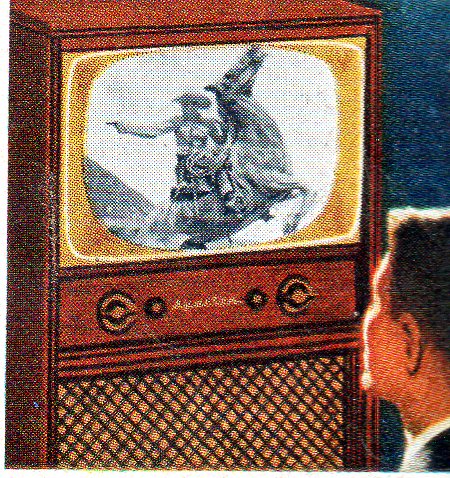
    Out-of-place Department tv118
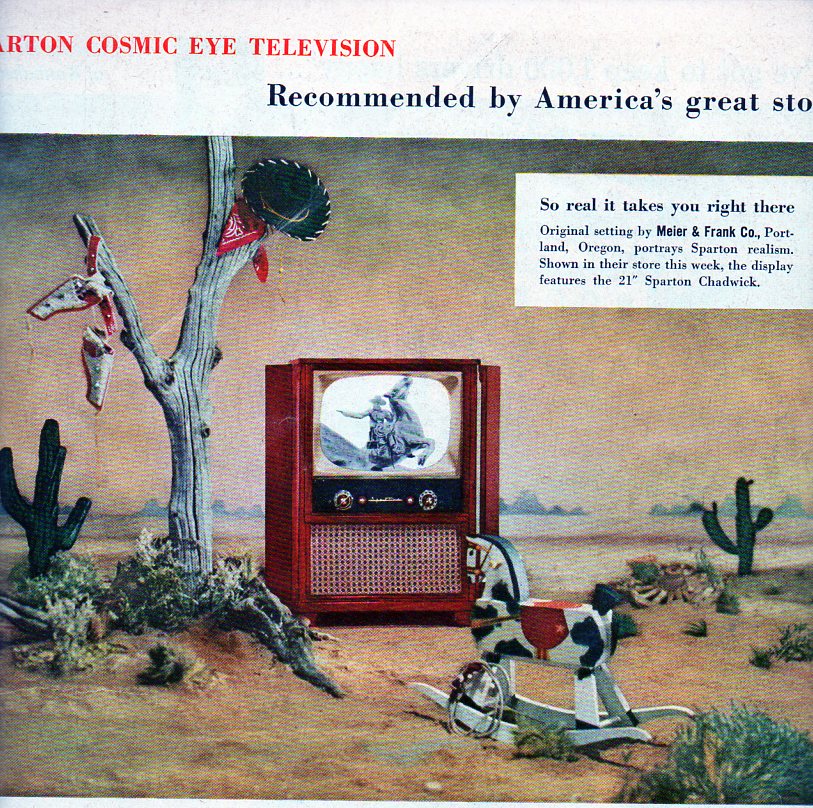
    Out-of-place Department tv b119 The Sparton TV ad (from LIFE 1954) dares us to believe that it will get us to the thing that we are watching–a tremendously invasive lie, a Big Lie, buffeted by placing the TV in the middle of a desert from the scene it was/is projecting, along with the toys of a child.  And in glorious black and white.  We can obviously see that the television can’t get us there, not really, not at all, not better than a book (an enormous creative implement compared to the television), by the tv-set’s absurd appearance in the desert.  Plus, well, the TV isn’t getting “you” to the place, it is getting itself there.
                           
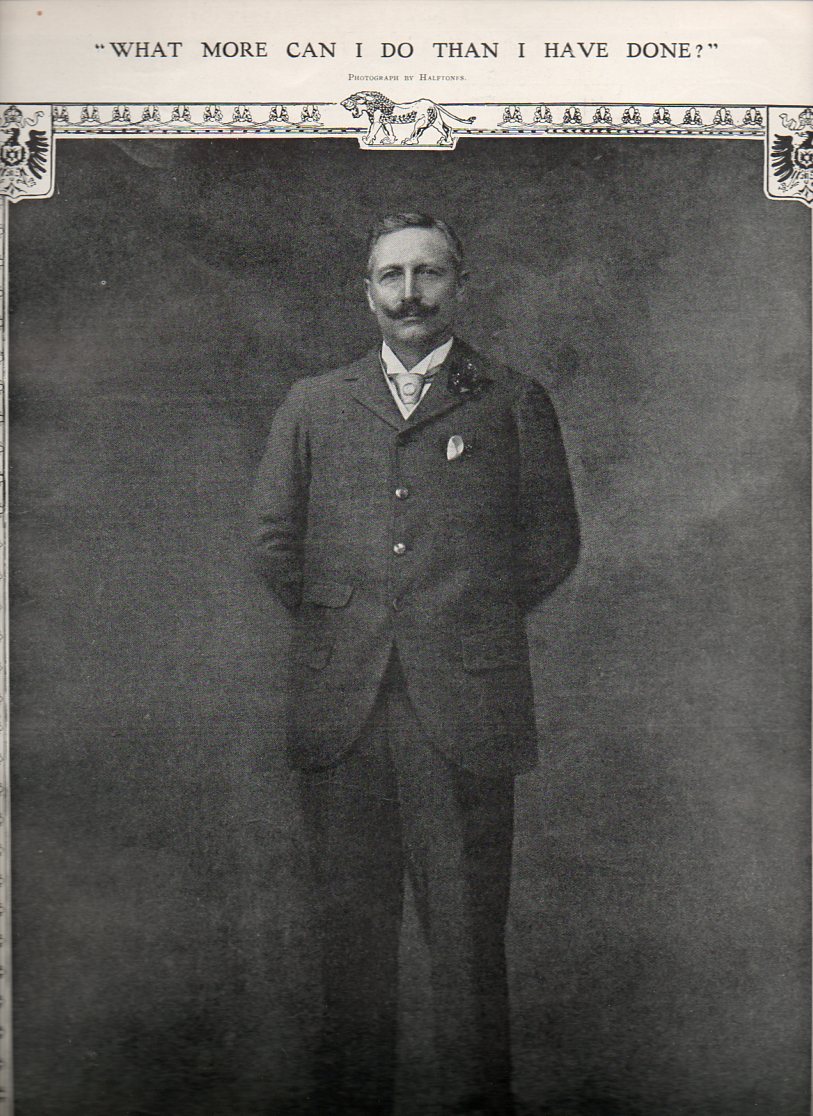
    Now,  Kaiser Wilhelm II–looking like quite the entry into the Anglosphere in this photo, which came easily for him since he was the grandson of Queen Victoria–was depicted in this image (appearing in the Illustrated London News for 7 November 1908 as a great peacemaker.  Or at least a man who had extended himself to find solidarity with Great Britain–so much of himself in fact that he could extend no further, that he could do no more, hence the question “what more can I do than I have not done?”
    Out-of-place Department Kaiser116
    IT has the quality of a post office “wanted” poster, which may actually be sort of true, what with what would happen in the next six years and all.

    By 1918 the Kaiser was hiding in the neutral Netherlands, caught unawares out-of-town in Belgium when things went to hell in Berlin for him.  And after the war with the signing of the Treaty of Versailles, Wilhelm II found himself in early 1919 facing Article 227 of that treaty, “for a supreme offence against international morality and the sanctity of treaties”.   But he wasn’t extradited by a friendly Queen Wilhelmina (hint) in spite of the international call to do so.  Well,  “International” except for the United States, where President Wilson sought to infringe on Lincoln’s post-bellum treatment of the Confederacy by letting Wilhelm go, not prosecuted for the larger hope of keeping alive a chance for peace.  Wilson should’ve looked a little harder for peace than in the Kaiser’s direction, as the Treaty really didn’t end the war as much as it started the next one. 

    The Kaiser last until 1951.

      Out-of-place Department Kaiserb117


  • Reverse Autopsies of Stick Women–Blank and Empty Art Anatomy, 1941

    JF Ptak Science Books   Post 1304

    Part of our Blank, Missing and Empty series.

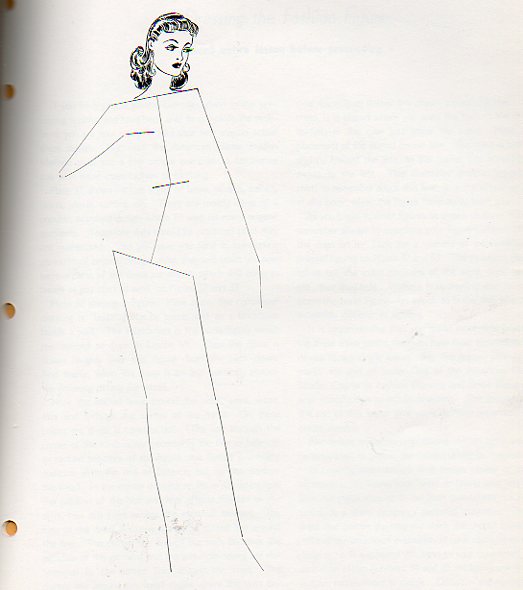
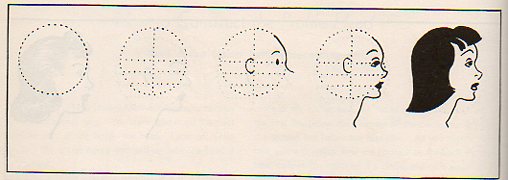
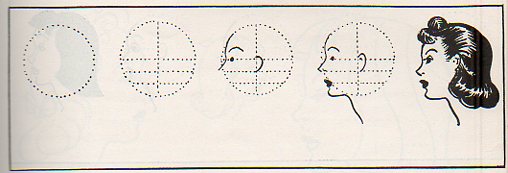
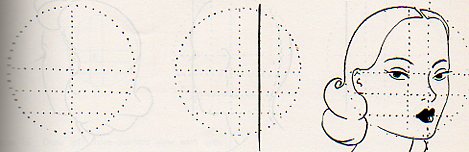
    Coming on the heels of my posts of autopsies of snowmen and donuts comes this semi-remarkable pamphlet (available for purchase here), published by  American Home Studies (of 1700 Eye Street, NW, Washington D.C.1), displaying very restricted instructions on anatomy for art students.  The drawings really work better in reverse, I think, because you really can’t get to the final product from the illustrated series in its how-to sequencing unless you already were finished.

    Blank women--anatomy art full286

    What happens throughout this pamphlet is what we see below–draw a circle, then divide it by drawing lines over imaginary bones, pop in some eyes and lips, and then fill in the rest.  Not too very helpful.  This is especially so when we look at the image above, which the student was supposed to simply cover with clothing after having added the head.  If this was an animated figure, I think I  would find it disturbingly creepy.

    Things become clear by the time you reach the end of the pamphlet, when you are told that you can detach any page from the work and send it to the D.C. address for correction and advice, for a dollar a page.  That’s when the real education occurs. (Many others have done this–the two guys responsible for creating Superman started out selling their services in just this how-to way.)

    Blank women--anatomy art profile284
     
    Blank women--anatomy art profile283

    Blank women--anatomy art profile285


    But I guess as a sort-of artist one would need to have something else going on for themselves so far as business goes, because its painfully clear that the maker of this pamphlet had special but very limited talent. I think that the faces given to these women are drawn by someone who does not like them, given their emotional range and all:  peevish, dull, bored, haughty, disinterested and, well, dead. 

    Notes

    1.  The building at 1700 I is gone now, replaced by another building of the many nameless buildings that create the corridors of I and K streets.  1700 I is basically right across the street from Farragut Square, and only a few blocks from Lafayette, which is across the street from the White House. Nice location.


  • Protopunk: Steampunk during the High Steam/Low Electric Age

    JF Ptak Science Books  Post 1270

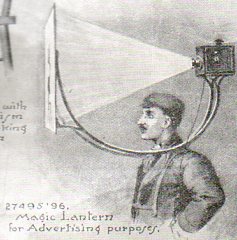
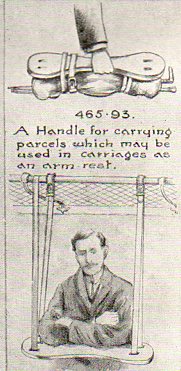
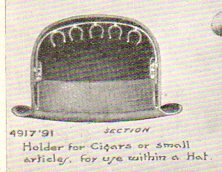
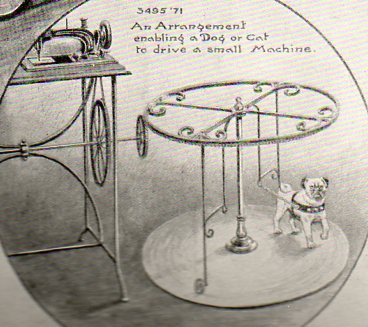
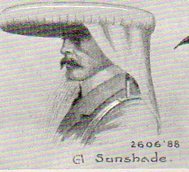
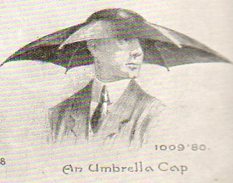
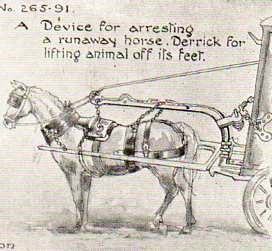
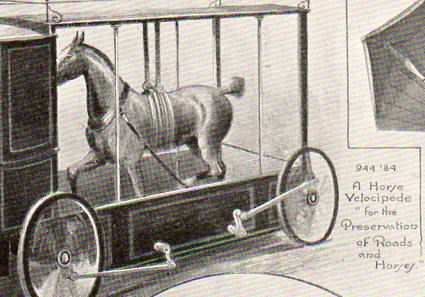
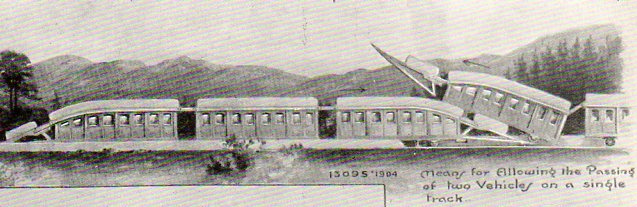
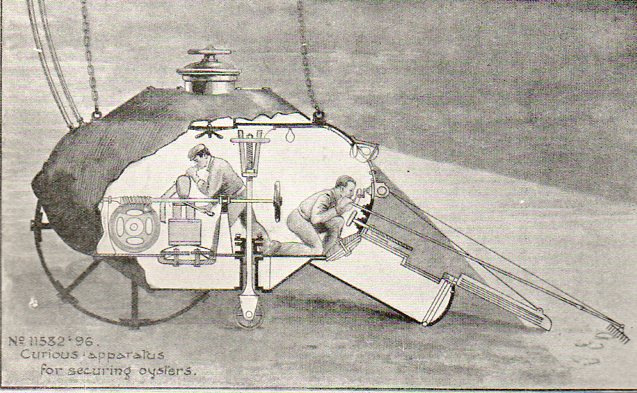
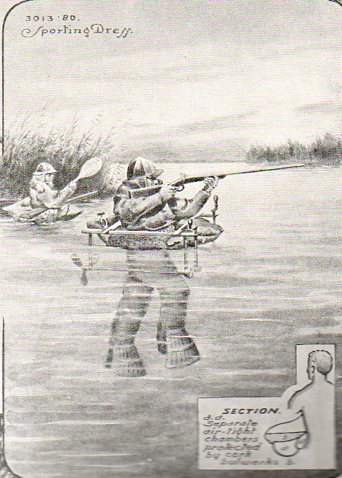
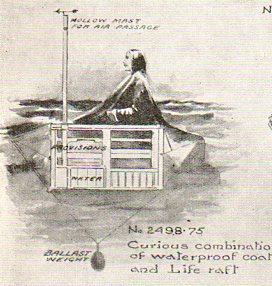
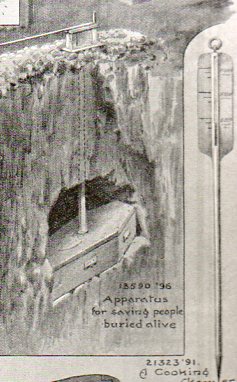
    I was drawn to this Steampunky collection of inventions because they were semi-futuristic inventions done at the time when the inventions could actually be fabricated–the idea was there and so was the material and expertise.  The only thing left was the will to do it and the fortitude to use it.  Perhaps the only thing lacking in all of it was that last part. 

    Certainly people were getting used to technical and physics breakthroughs when these images were published in 1908:  the advancement of powered heavier-than-air flight since 1903, wireless transmission across the Atlantic in ’01, quanta in 1900, X-Rays in ’95, radium in ’98, automobiles, motion pictures, electric toasters, Gilette’s disposable razor (use and throw away!), and so on  (I’ll not mention Einstein because he wasn’t really in the public eye in 1908), so taking an extra and probably unnecessary step in these inventions seen below felt natural.  They were just a little on beyond necessary.

    Steampunk 2  magic lantern104

    Steampunk 2 armrest094
    Steampunk 2 cigar holder095

    Steampunk 2 dog walker102
    Steampunk 2 hat a096
    Steampunk 2 hat b097
    Steampunk 2 horse093
    Steampunk 2 horse b101
    Steampunk 2 lsingle train trac100
    Steampunk 2 oyster collection091
    Steampunk 2 shooting103
    Steampunk 2 watrproof coat092

    Steampunk 2  burial105


  • Examples of Colossally Bad Ideas–Sterilization, Eugenics and Soviet Racial/Genetic Domination Theory

    JF Ptak Science Books Post 1301

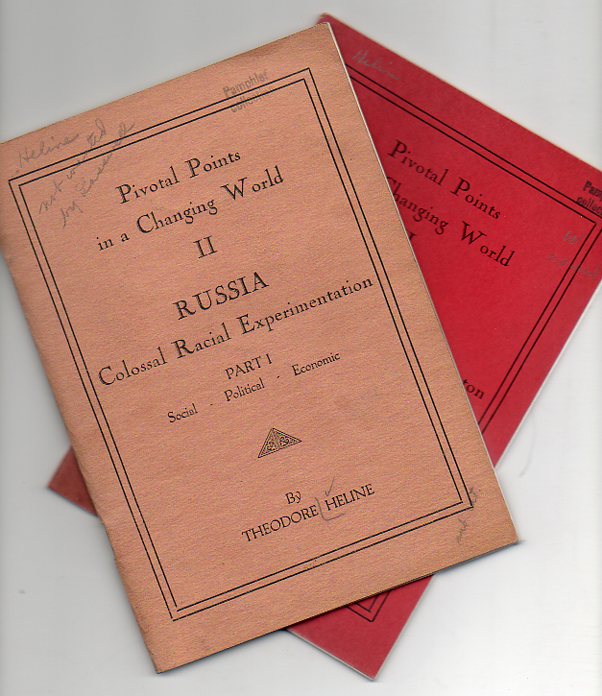
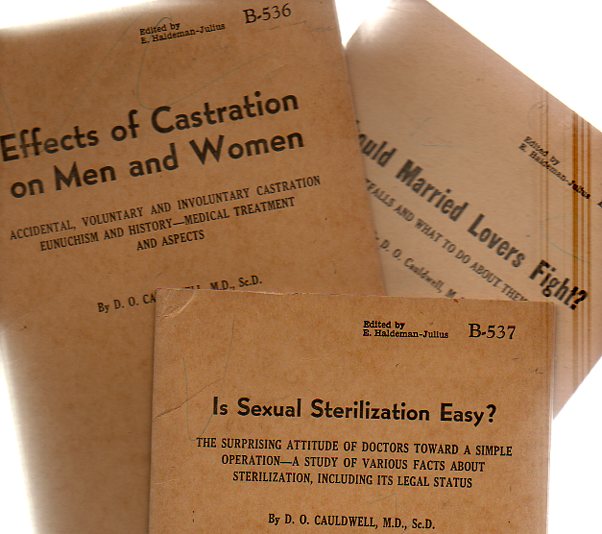
    Sometimes I need to make a post about a book simply to get it out of my system–once I’ve said something about a numbingly bad book, it usually just goes away, falling off the edge of the flat Earth rather than having its mast sink peacefully below the horizon. Such is the case with these pamphlets, one of which is so bad that its badness could not be contained in just one “volume” that it needed another. I almost wrote ” ‘little’ pamphlets” because they are, well, little–but little in size only, their badness easily transcending their size, and the idea of “size” in general. 
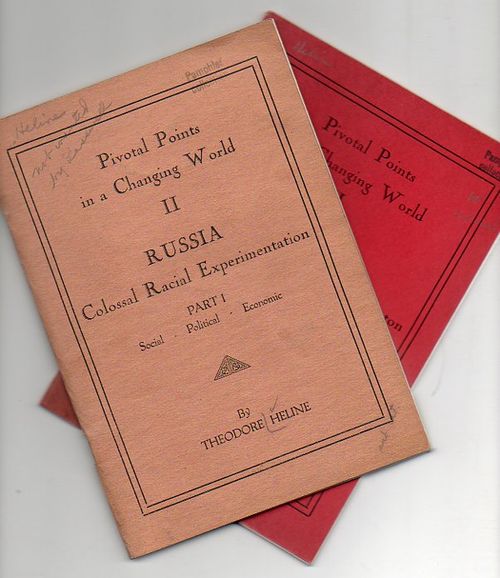
    Russia colossal Racial265

    [Note:  all pamphlets pictured here are available at our blog bookstore.]

    I never really liked the word “colossal” in the title of any book other than say a joke or magic book for children–outside that, I think the author is asking for trouble.  And trouble is the seat of reason in this work, which was published in 1939.  It is too painful to quote much from the text, but, right from the outset the reader gets a taste for what is ahead, being told that the New Russia (the Russians being “the most elemental of all white peoples”) is one way of saving the Nordic race, quoting The Rosicrucian Cosmo-Conception as a part-source, saying that “this race will collectively make up the sixth of the seven sub-races tat will constitute the present Aryan or Fifth Root Race” and it will “be expected to develop certain attributes that will contribute toward humanity’s ultimate perfection”.

     The author is enamored of the free voting system in the Soviet Union.  “No one visiting the Soviet’s pictorial Exhibit at the World’s Fair om New York could fail to be impressed by the dignity and attractiveness of the pictured polling places and the freshness and eagerness animating the faces of those figures who entered t perform their civic duty…” An incredible statement, validating the democratic freedom of the Soviet Union at a particular time in it history when millions of people had recently been starved to death, among other things.  The photographs of the coming genetic masters was proof enough of freedom than anything else. 

    The pamphlets grow heavier and more dense with each paragraph, the edges of the pages bending under their own filthy weight of vast stupidity and understated racial hatreds.  God and the superiority of whiteness and the gross disabilities of Catholics and Black people come along after a bit.  Jewish people aren’t even mentioned.   But the author states that it is a genetic “tick”, some sort of “genetic conscience” that comes into play that has prevented the “inferior races” (like Catholics or Blacks) to have come anywhere near attaining the presidency.  It is a spiteful, hateful pamphlet that is completely myopic about the rich, savory goodness that is the highest attainment of spiritualism/intellectualism/modernism and civilization that was the Soviet Union.  There would be little left to say about this work ten years hence, when the real stuff of the Soviet Union became more publicly common knowledge, and it became more difficult–I would think–for the author to reconcile his witches’ brew of Biblical nonsense, genetic debauchery and Cool-Whip history.
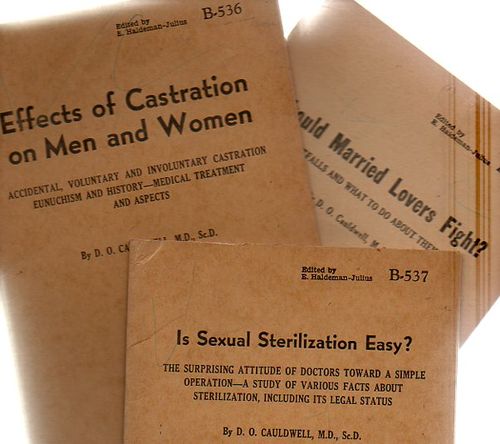
    Sexual sterilization Easy266The next assortment–all written just after WWII–asks some questions that one probably has never heard before.  “Should married lovers fight?” and “Is sexual castration easy?” are probably a pair of interrogatories that would never be heard in conversation in a hundred years of boring parties.  The contents of the pamphlets are a genuine struggle to get through–I picked my way through each for about 20 minutes before declaring defeat, except that I know enough to not have to think about these works again.

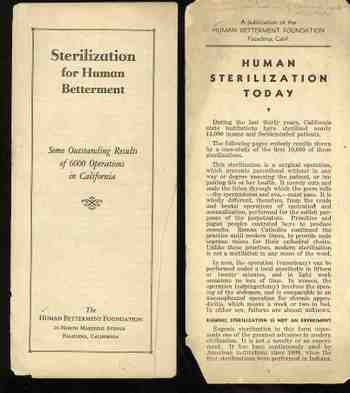
    The pamphlet Sterilization for Human Betterment, published by the Human Betterment Foundation (Pasadena, California),  states that 13,000 people in this category had been “asexualized” between 1909 and 1939 in California. (I should point out that California was the sterilization capital of the United States, with a third of all the national eugenics procedure performed in this state for this period of time) It defends this practice, saying emphatically that “eugenic sterilization is not an experiment”, and that “sterilization in this form represents one of the greatest advances in modern civilization”. 
     

    Blog1sept_10_sterilization538

    It continues:  “(sterilization) has been continuously used by American institutions since 1899, when the first sterilizations were performed in Indians”.  What?

    “Patients, relatives of patients, state officials, physicians,parole and probation officers, social workers, agree on the value of this practice” which was actually the “prevention of producing defective and handicapped children”.  I’m relieved that the probation officers were consulted.

    The Betterment people shed more light on the role of sterilization and sex offenses by women. (My bold.)  “Of 304 feebleminded girls sterilized and paroled, 9 out of every 12 had been sex offenders before commitment.  After sterilization, only one out of every 12 became a sex delinquent on parole”. 

    If this wasn’t such an awful story, “sex delinquent on parole”, a phrase I’ve never seen before, might make for a great 1950’s trashlit title. (It could’ve been a series, too:  all you need to do is take the title “Sex Delinquents on Parole” and add something to it, like “…on Parole from Outer Space” or “…on Parole:  Queenie the Slip Crown Breaks Her Knuckles” and so on.)

    The sorry story that I’ve interrupted with this bit of frivolity is that the “sex offenses” that are being discussed here is actually “prostitution”.  These young women weren’t committing violent acts of sexual savagery, they were just prostitutes, which meant that in most state they were “depraved”.  The “feebleminded” girls I would guess were poor or working poor, without the best education, and didn’t do well on whatever test was being administered to them to determine their test-taking intelligence. It seems to me that if  the goal was to liquidate prostitution that perhaps the men “seeing” these women should’ve been the ones faced with the operation. But that isn’t how the dominant culture viewed the situation, and that the best way to approach the problem was to remove the reproductive capacities from the weakest members of society.

    (Click on this table for a larger, clearer version of the number of forced sterilizations by state.)
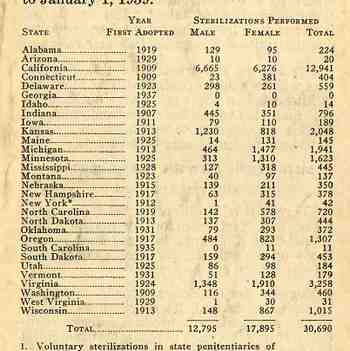
     Blog1sept_10_sterilization539This pamphlet was the co-authored spawn of Paul Popenoe (1888-1979) and E.S. Gosney (1855-1942) while both were on the board of the Human Betterment group. In addition to a strict diet of superior morality and race,  Gosney seems to have been the money behind the organization. Popenoe had a background in agricultural genetics with an overdrive taste for eugenics and race, somehow intersecting them with social hygiene and marriage relations. The “dr.” that Popenoe loved to insist attaching to his name was an honorary, unearned degree, which he must have felt he needed in order to secure the proper amount of intellectual identification necessary to write on intellectual identification. The Nazis wasted little time in translating and publishing this work, adding it to their official publications list in 1939. It was one of a significant number of intellectual imports that came into poor, besotted Germany; the imports came nowhere close to the amount of information banished, exported to the necessarily beautiful non-Aryan non-Nazi inferno. It was just the sort of thinly distributed stain that interested people like the Nazis.

    I wonder what “Dr.” Popenoe thought of this Nazi honor?

    The second pamphlet by the same people, Human Sterilization Today,. is in a swift eight pages in which the Betterment Foundation makes it case to use sterilization to check “the misery spread through the community by the unchecked reproduction of the human unit” (italics mine)..  They are closing in on the Big Picture in this work, aiming at the 5,000,000 “who will be at some point committed to state hospital as insane” and the other 5,000,000 “who are so deficient intellectually (with less than 70% of average intelligence) as to be, in many cases, liabilities rather than assets to the race”.

    This is exhausting reading, but it is a story that shouldn’t be forgotten, and could remind us that what we’re doing or practicing today might look  like the Human Betterment stuff 25 years down the road. 

    What is also deeply unsettling about Popenoe is that from this vast miasmaic idea set of misguided and forced statistics, philosophical racial extremism, “social hygiene”, eugenic sterilization of the enfeebled and socially undesirable, he managed to create the very first marriage counseling service/practice in the United States.  The American Institute of Family Relations opened its doors in 1930 (in L.A.!) with this dizzying philosophical semi-brew of sterilization and marriage talk-therapy, happily correlating the whole thing with exploding axis of divorce, love, social failure, racial impurity and castration.  And somehow it all seemed to make sense to allot of people, back there in the past.


  • Steampunk Anatomy–Cancer Holes, Nut and Bolts, Oil, Outer Space Belly Shirts and Heavy Things of the Future

    JF Ptak Science Books  Post 1269

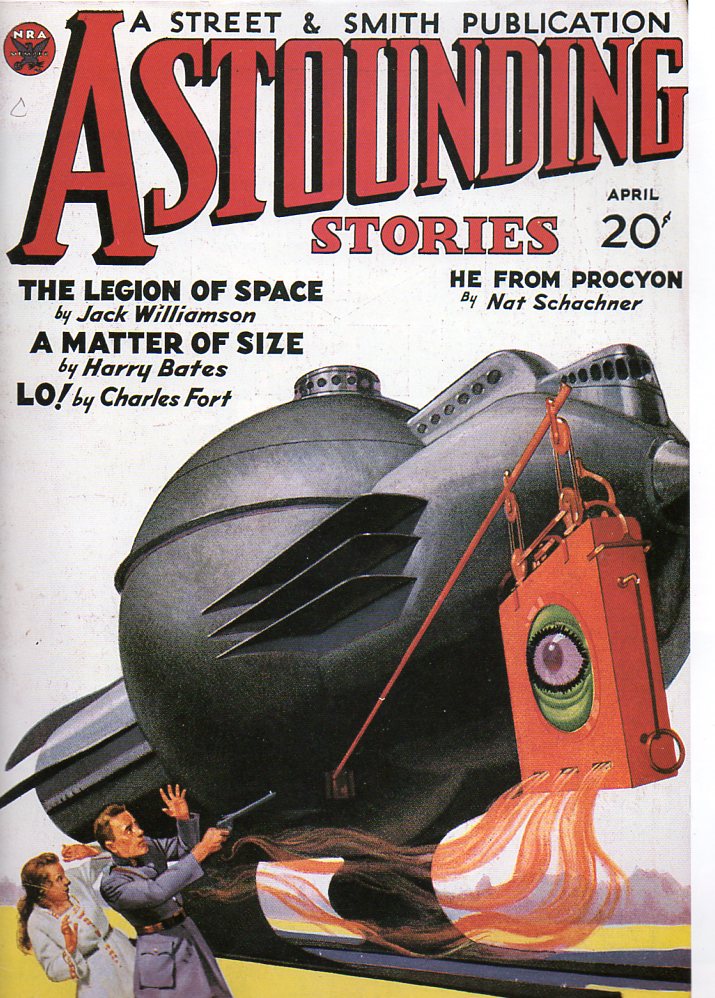
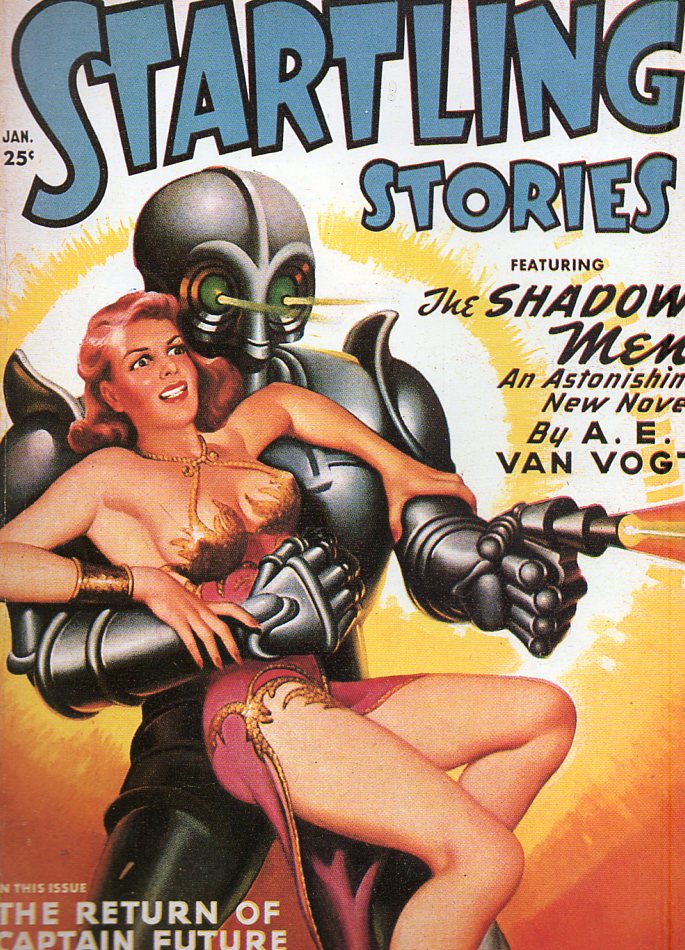
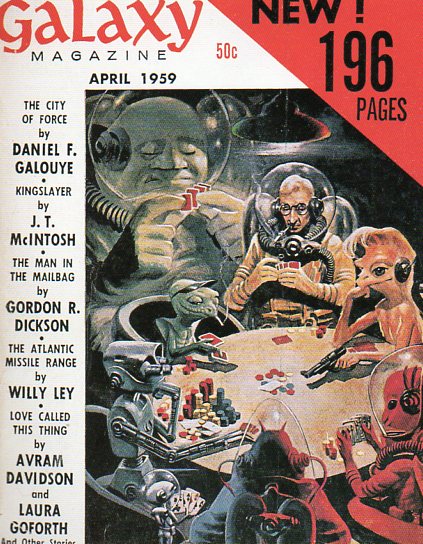
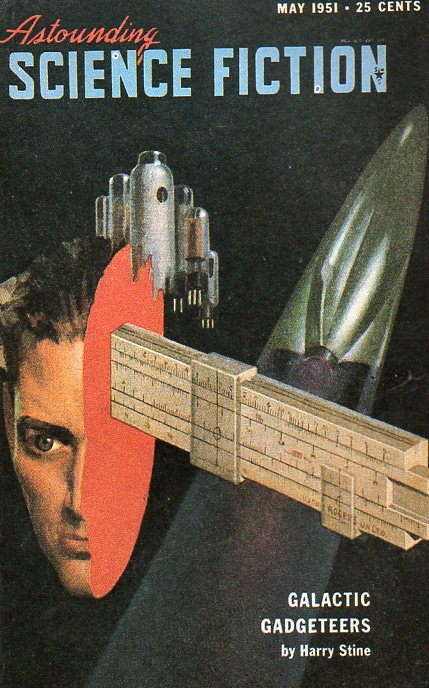
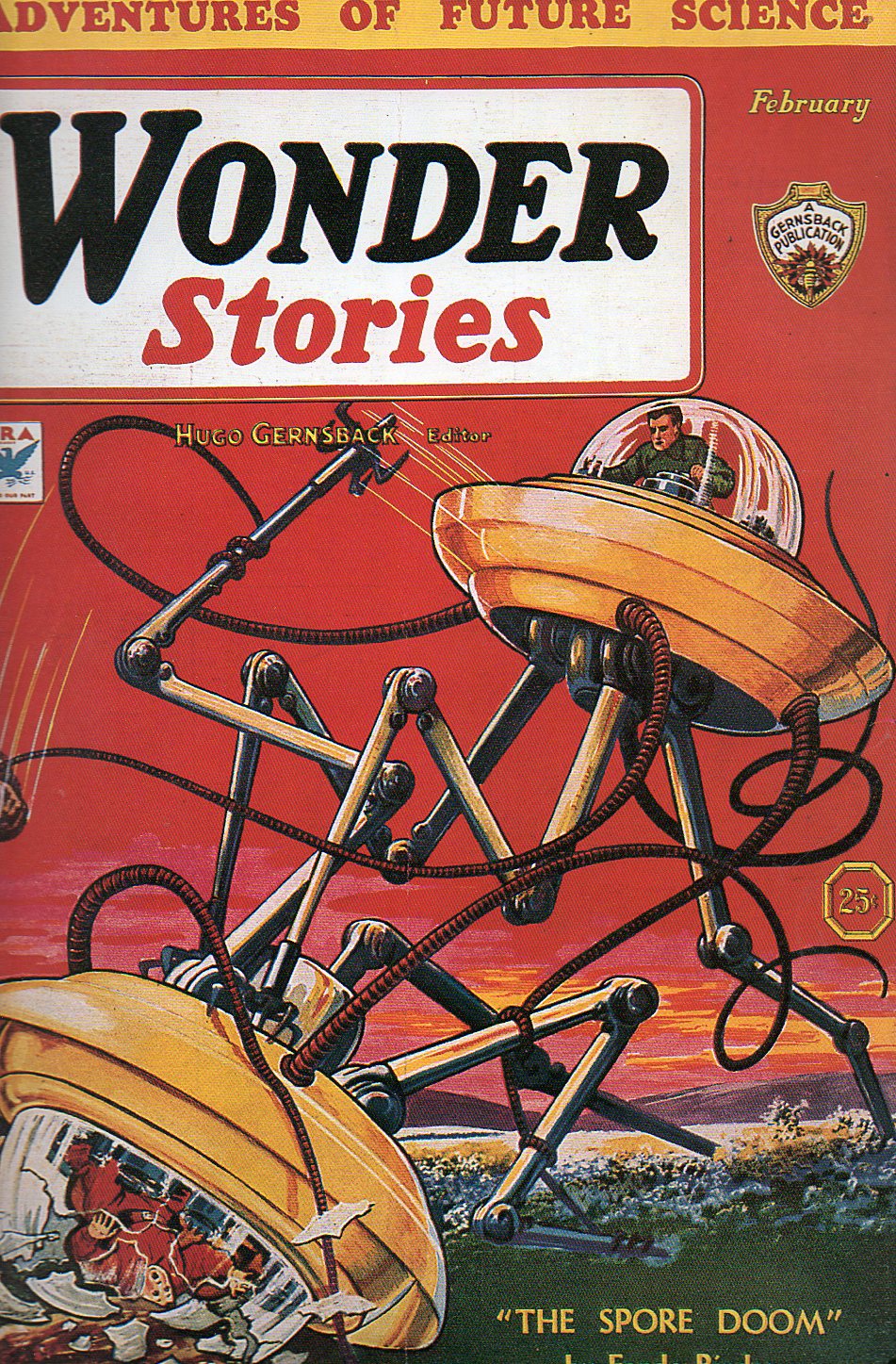
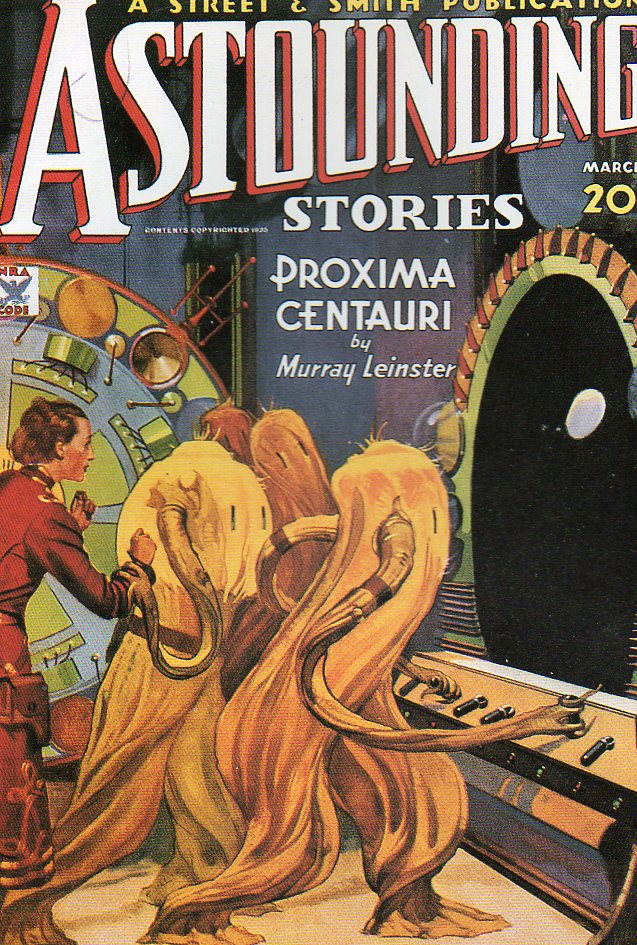
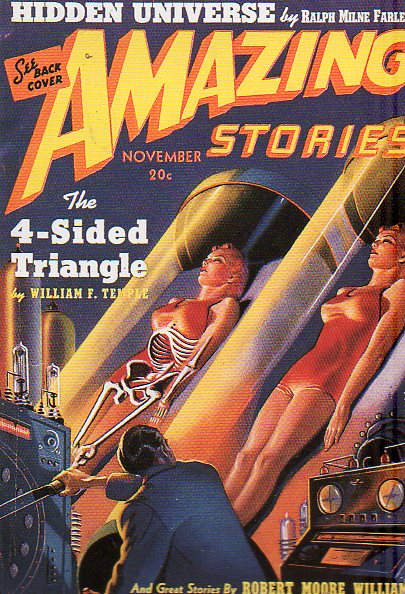
    What is it about science and the future and how the scifiction of the past (pre-1950’s) almost never could encapsulate the superior scientific innovation and discovery of its near future?  It is marvelous and wickedly magnificent to look at some cover art and illustration for the pulp and not-so-pulpy science ficton, images that not only have a certain look and feel, but also a smell, a particular bookstore/basement pulp-paper-not-exposed-in-forty-years smell.

    Steampunk Eye–that enormous ship, governed by a long, long pole with a small box witn an eye in it, being raised and lowered on pulleys:

    Steampunk a077

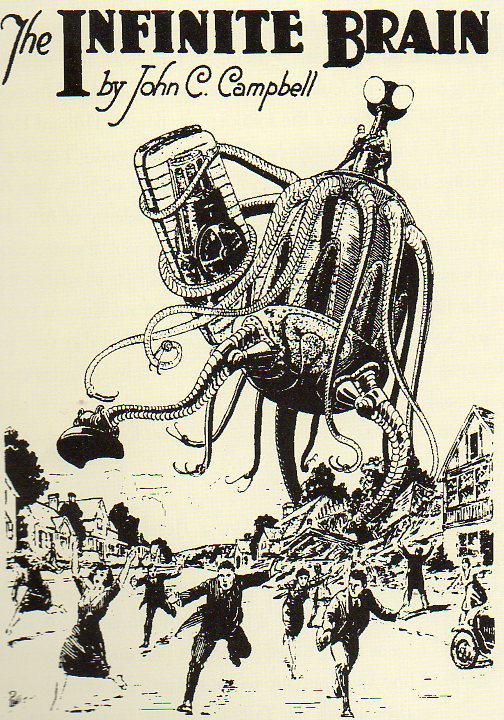
    The Steampunk Gigantic Enormous Stupendous Infinite Brain (also notice that folks are fleeing, running for their lives, witt heir arms thrown high into the air, running like SpongeBob SquarePants–its hard to run like that):

    Steampunk brain084

    Steampunk Lust:

    Steampunk lust085

    Steampunk Addiction & Cancer Hole:

    Steampunk cancer hole088

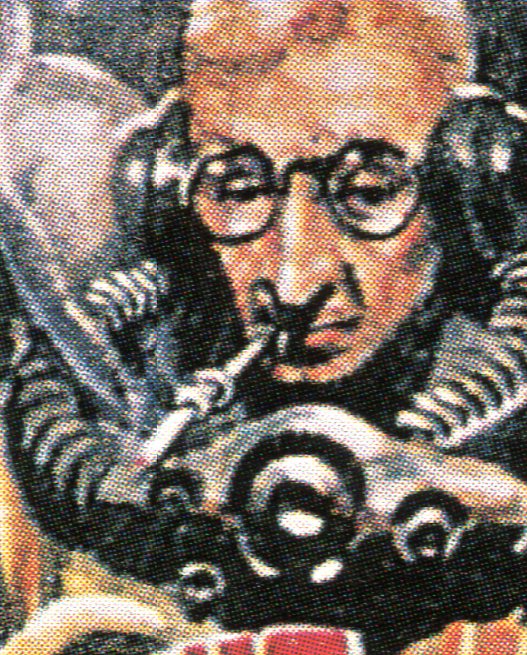
    And the Philip -Morris contribution for smoking in alien space:

    Steampunk cancer hole089
    Steampunk Humano-Robot Replicant:

    Steampunk human robot081

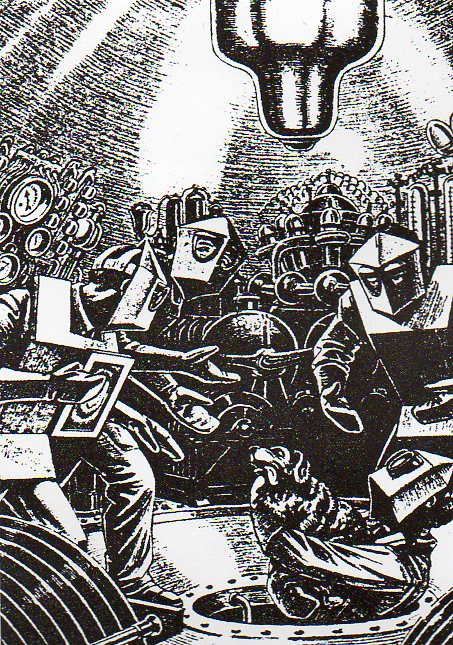
    Steampunk Thinking (the slide rule really didn’t give out until around 1970):

    Steampunk calculating086 Steampunk Legs:

    Steampunk legs083

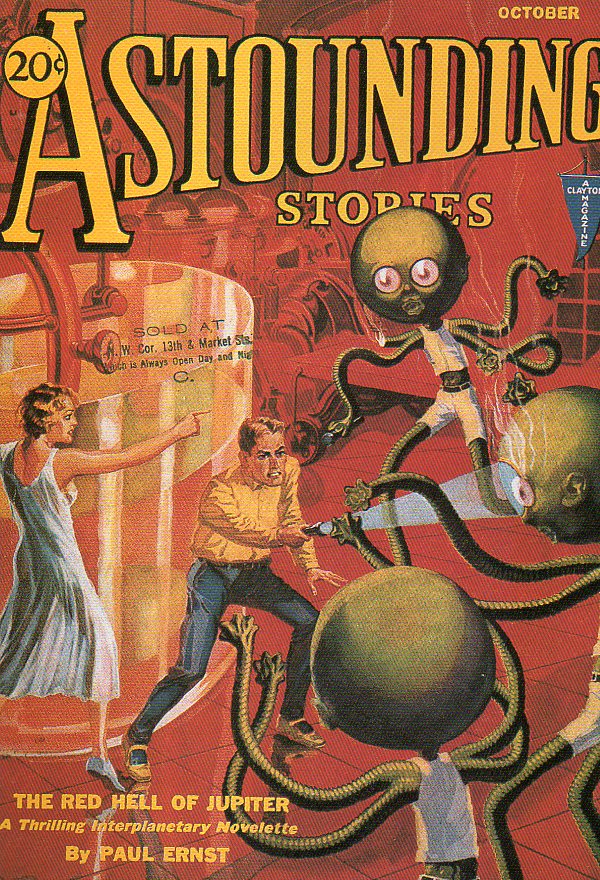
    Steampunk Abs:  humans are surrounded by arm-waving large-headed belly-shirted aliens, the man using a flashlight for defense )burning the alien eye even though they’re all in bright light) while the woman points really hard:

    Steampunk abs090
    Steampunk Hair–and with all of that vast technology and futurismo, there are still unruly locks here and their:

    Steampunk hair082
    Electro/Steampunk Body Replicator

    Steampunk body replicator087


  • Discovering Something Not Discovered–or, How to Best Figure Out What You’ve Got Left After Being Nuked

    JF Ptak Science Books   Post 1300

    Bomb damage261

    The spoiler answer to this:  make sure to account for the nukes dropped on you  when figuring out what you’ve got left to work with.

    This seems a tautologically  tongue-twisting, not-quite-right title for this post, and indeed it might be.  But that’s the way the pamphlet I’m reporting on read, a sometimes resilient-to- inspection rubbery beastie whose basis for being written was to report on an great oversight that doesn’t really want to be recognized, even if it is the title of the work.

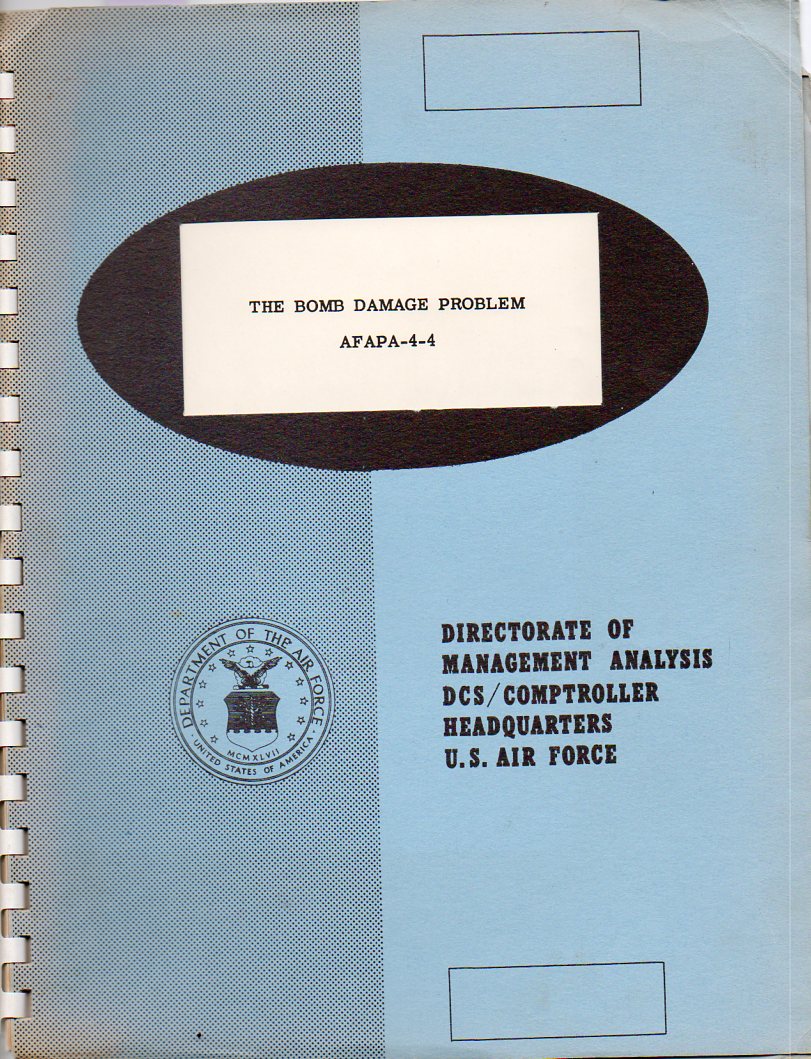
    The Bomb Damage Problem, AFAPA-4-4, published in 1954 by the Directorate of Management Analysis (DCS/Comptroller at the  Headquarters of the U.S. Air Force) is a pamphlet of discovery–or rather, the discovery of the lack of discovery.  (The pamphlet is available from our blog bookstore, here.)

    The work is an introduction to some aspects of  nuclear exchange post-attack predictive capacity–particularly with the ability of American industry “to support a war plan”. 

    The anonymous pamphlet gets straight away to the discovery part–that previous predictions of post-attack capacity were “probably completely unrealistic” because “[they] did not take account of the likely bomb damage to the U.S. production facilities”. 

    I would think that even at this relatively early point of planning for possible Soviet nuclear attack that war game scenarios would have taken bomb damage to industry a”and accompanying manpower losses” into account of how the war machine would react after the bombs began to explode.  Though it seems not. I’ve looked to see how I could be misreading this thing because it seems like too monumental an oversight to make. But I can’t find where I’m making my interpretative mistake. 

    Ultimately the authors focuses on saving the corpus of the overall works, saying that this oversight does not damage the “important thinking” that had gone on it spite of this error.

    The word “error: is not used in the text of course.  This is how it is described: “In connection with this critical new obstacle to intelligent military planning, it is essential that speculation be minimized.” The error is actually redefined as a “critical new obstacle” the effect of which heightens “speculation”.   Which is all true.

    I suppose what is really going on his the formation of some bedrock stuff formulating information gathering for creating a computer program for deeper analytical study of the effects of nuke warfare on post-attack industry.  1954 is about right for the time for this to happen, and the DMA–as the home for the creation of linear programming among countless other things–would’ve been the place for this work to happen. 

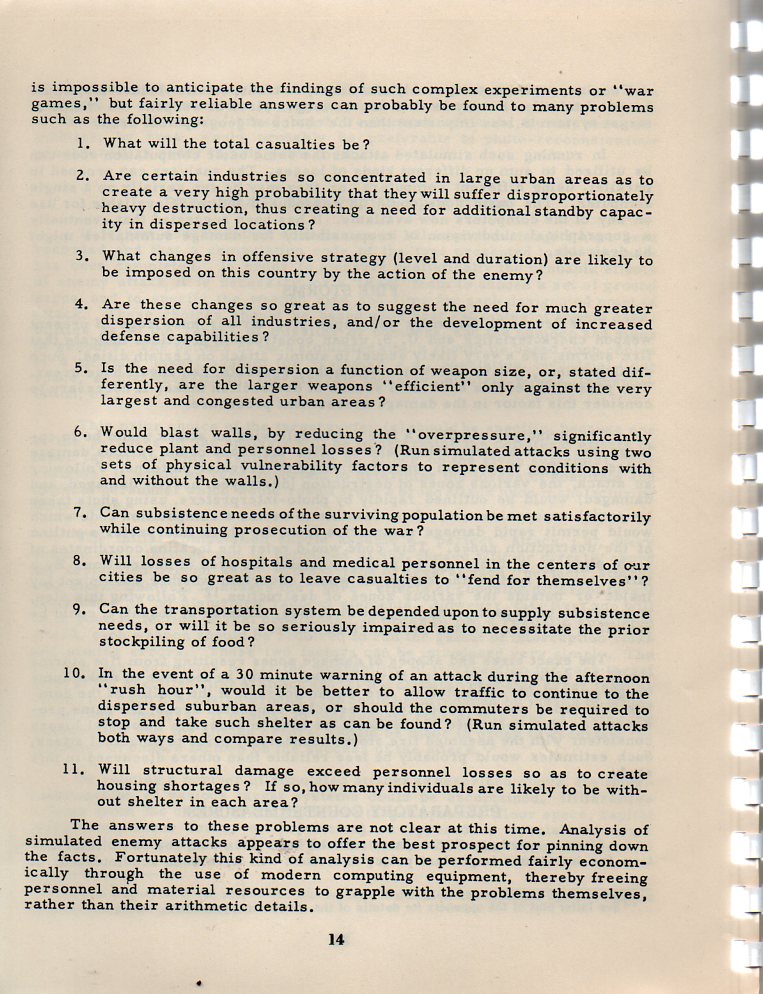
    But I keep coming back to what seem to be enormous understatements–even giving plenty of allowance for the time–that keep cropping up in the pamphlet.  Perhaps it is just stating the obvious for the first time that makes all of these seem so potentially underwhelming, like this nugget:   “numerous measures of the importance of each target may eventually be needed….” (Page 7). 

    There’s plenty of more detail though that occurs in the pamphlet, as in figuring out damage to structures by the yield of the explosion and distance from the target and the composition of the target’s structure, and so on.

    And then we get back to the obvious: “the principal effect of a fire storm following an attack would be to enlarge the area of destruction and to alter the shape of the various damage zones, changing them from concentric rings to irregular patterns. “.  As I said, maybe it is just a case of a “Call me Ishmael”, or stating that lines and points in space exist for the purpose of geometry.  Still, it rubs me the wrong way, all over.

    And just to make this point perfectly clear:  the “bomb damage” problem is to take into account bomb damage to U.S. war-making, bomb-producing capacity, in a sort of BIBO (bomb in, bomb out)  version of a SISO (shit in, shit out).

    Bomb damage b262


  • VIDEO: Smashnose Grindkiss of Lady Archaeology of 1950’s B-Movie Posters.

    I posted something yesterday on this, but made a video of the whole thing (plus extras) this morning, with some decent music.


  • The Big Lie–Poland as an Aggressor Against the Reich, 1939

    JF Ptak Science Books  Post  1298      (This is the second post written on this pamphlet–it is a stunner to me every time I see it. The earlier post was written in September 2008 and can be found here.)

    Here’s an interesting entry from the instrumental librarians’ tool WorldCat, a massive 75 million item book database that I use with some frequency, trying to determine whether some obscure-sounding/looking pamphlet or book is actually Not Around, like not in library collections.  (When something just isn’t there, not located, it makes the work even more interesting to me.)

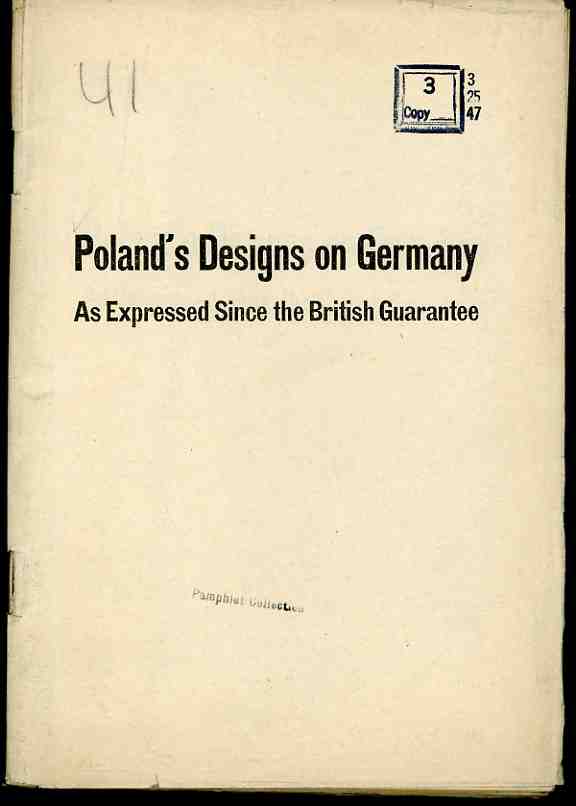
    Poland’s Designs on Germany has the sound and feel of a piece of propaganda, right from the start, just from the supra-obvious title page and the very feel of the production.  Looking for my proof-in-the-pudding–the printing information and source for the information–I found none.  Another strike for the propagandist.  (And another interesting point: the phrase “Poland’s designs on Germany” is a non-starter on Google, not located on the web, or in JSTOR, or in other pay-for web commercial communities.)

    Photo

    (This item is available for purchase at our blog bookstore.)

    Then of course there was the content, which is a simple, serial distribution of The Big Lie, painting Poland as an aggressor, hungry for German land and people. So far as I can tell there is nothing truthful in this work whatsoever, or at least I should say nothing that is assertive to the point of Poland being an “aggressor”. There are seven maps illustrating the points.  These are the great hallmarks of The Big Lie–a lie so vast that no one is supposed to think it possible that someone would tell a lie so fantastic, that no broadcast lie could be so incredibly big as to have been invented and told,  and so the lie must be true.  Hitler wrote about this admiringly in Mein Kampf, expressing an idolotry for the idea in print, recognizing it as a powerfull tool of subversion and propaganda, and then went ahead and followed the instructions. 

    Then comes the entry in the WorldCat–I found that the year was 1939.  It would be in September of the year that Hitler would attack Poland and the war would begin.  Who would have thought that the Nazis were acting in self defense?

    The WorldCat entry:

    Poland’s Designs on Germany as expressed since the British guarantee.  [Berlin W 62, Rauchstr. 27]  [Dt. Informationsstelle],
    1939
    23 S. : 7 gez. Kt. ; 8.
    Other Titles:     Polnische Ansprüche auf deutsches Reichsgebiet. engl.
    Locations    Library    
    Germany    BAYERISCHE STAATSBIBLIOTHEK     
    Germany    BIBLIOTHEK DES HERDER-INSTITUTS     
    Germany    DIE DEUTSCHE NATIONALBIBLIOTHEK   
    Germany    STAATSBIBLIOTHEK ZU BERLIN

    And there it is: “Dt. Infomrationnsstelle” is the Deutsche Informationnsstelle, the German Information Centre.  The  GIC exists today in name only, but during the National Socialist period leading up to the war and during WWII it was an outlet for German propoagandistic works. There are no copies of this particular work, evidently, in libraries in the United States. This is too bad, because this is a tremendously insulting document, an insistent, insinuating, unforgiving document to the ridiculous, perverted manner of thought and logic of the Nazis.


  • The Lady Archaeology of Smashnose B-Film Movie Posters.

    JF Ptak Science Books  Post 1254

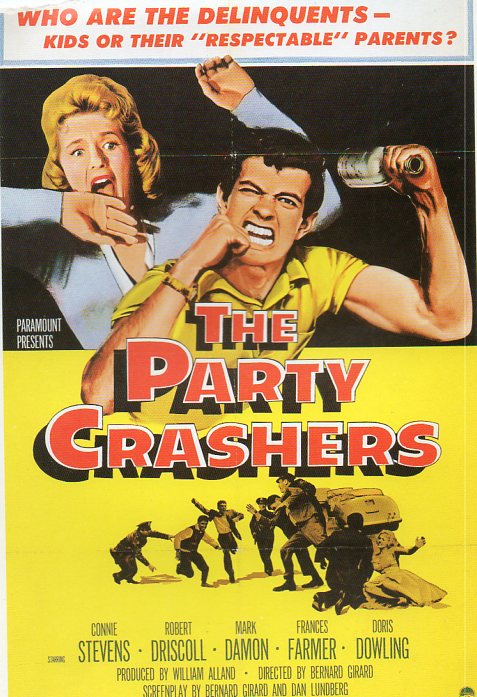
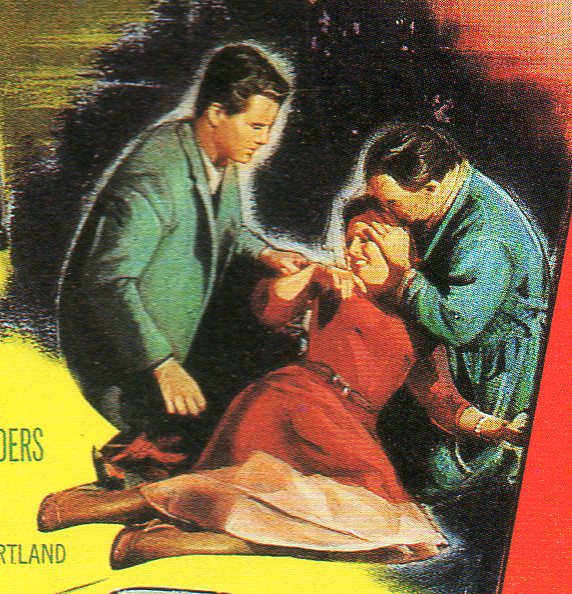
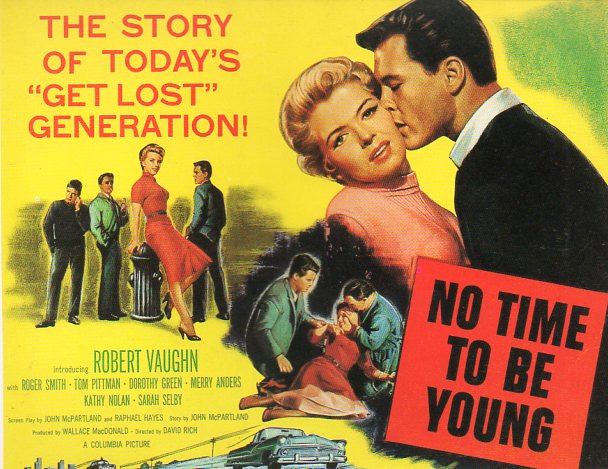
    Aberrant--party crashers SCream992 There was a certain something going on in the 1950’s with nova-express B-film ladys-in-trouble/bad girl/smashnose kissing  movies that were made for $5,600 in three days with two days of quality control.  The posters made for these beauties were a thing unto themselves, a self-contained and self-limiting genre, a found case of bizarro design and muted inelegancies.

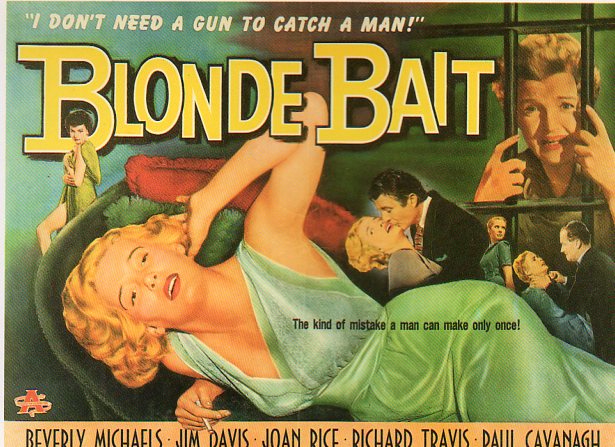
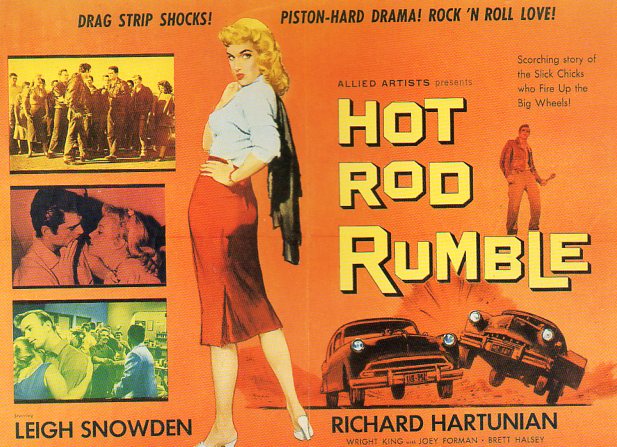
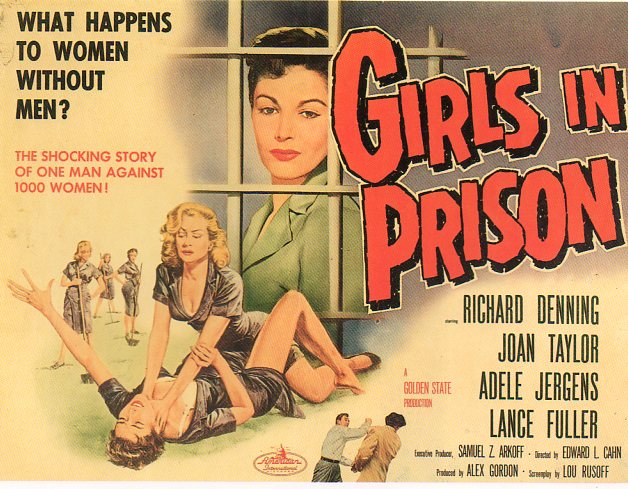
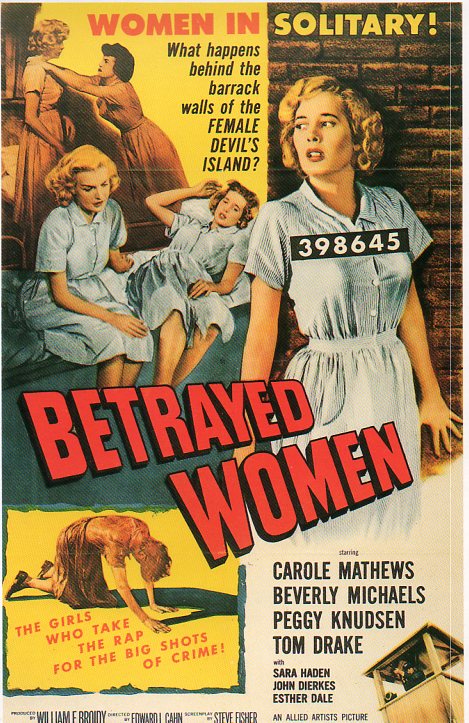
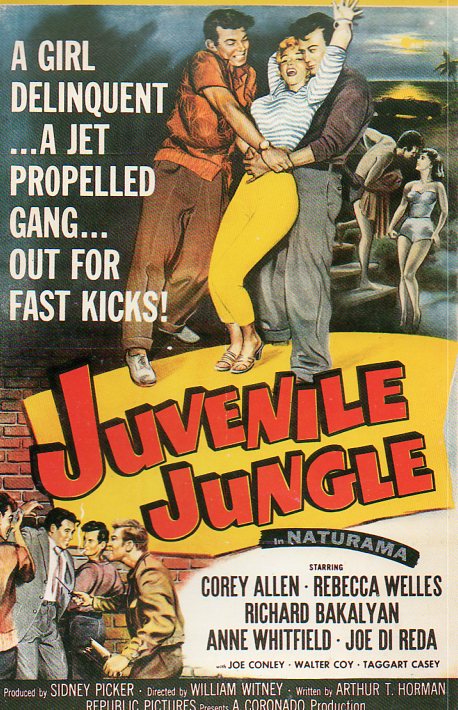
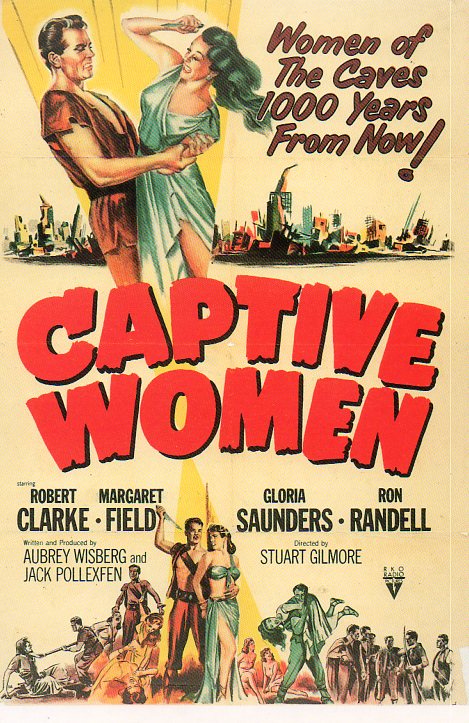
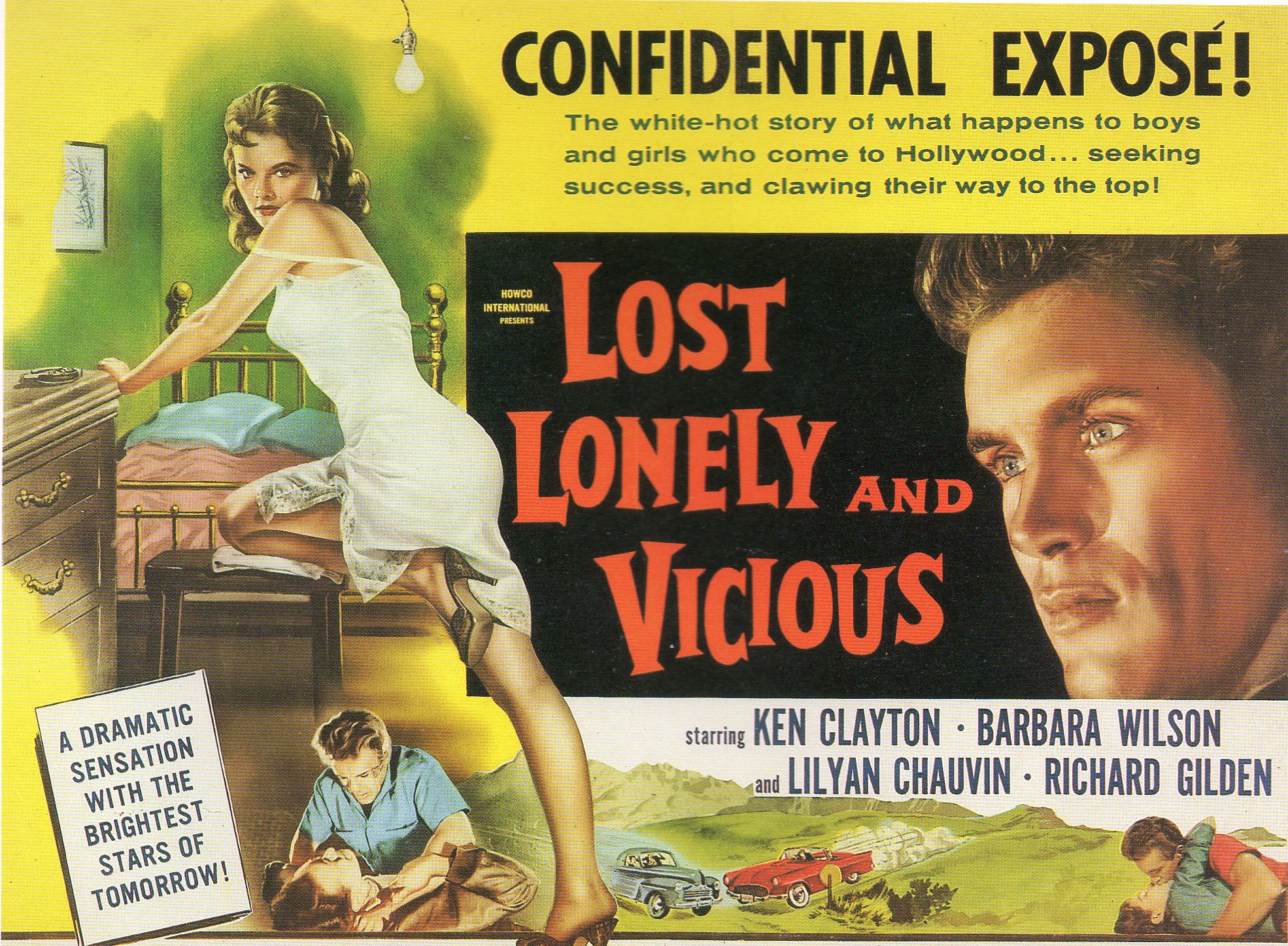
    The posters look like their movie names:  Juvenile Jungle, Betrayed Women, Girls in Prison, One Girl’s Confession, Dragstrip Girl, Girls on the Loose, Pick Up, Girls in the Night, Live Fast Die Young, Alimony Running Wild, Hot Rod Rumble, Running Wild, Blonde Bait, Captive Women, The Party Crashers and of course Lost, Lonely and Vicious.

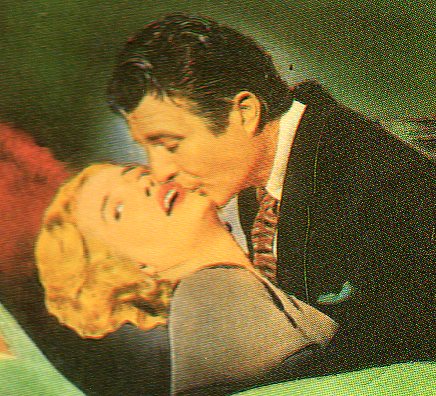
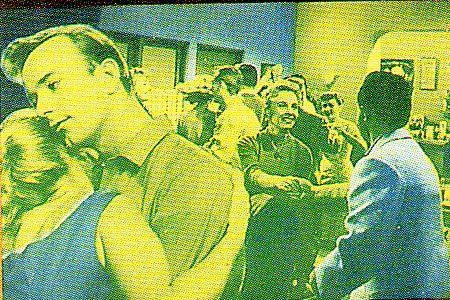
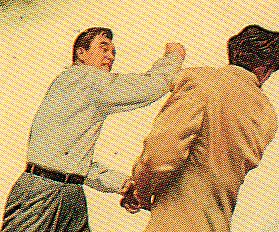
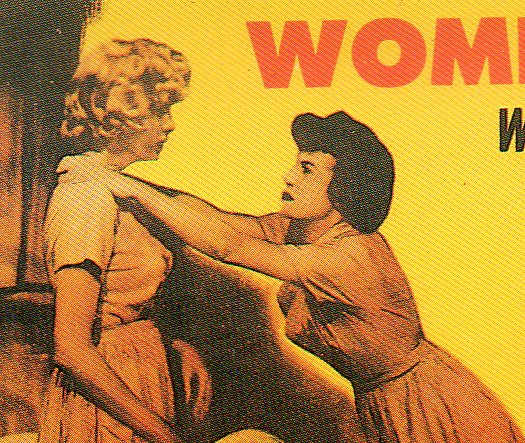
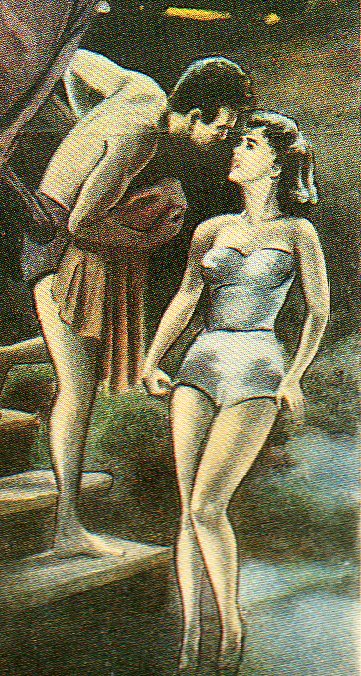
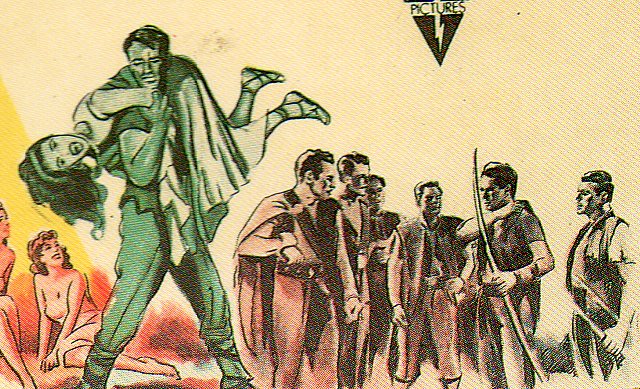
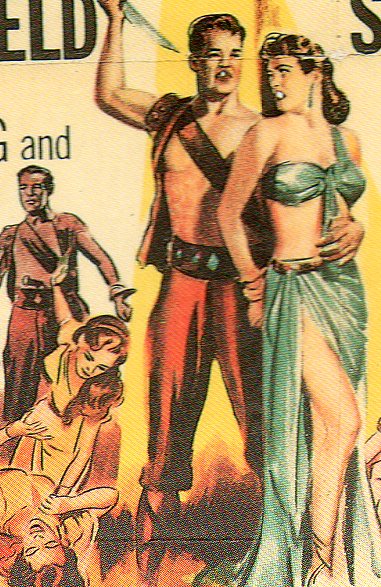
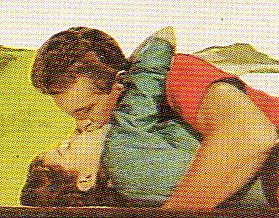
    Generally I think that folks see the big design and the colors, but lurking behind all of that are usually image-bits that sorta tell a part of the story of the film, but in a stubby, grubby way.  So I decided to do a little archaeological dig into some of these and give those small images some life through magnification.  Sometimes they’re surprising and look good big; sometimes they’re just badly design and goofy, and would look better smaller, very much smaller—dot-small.  Here’s a few examples (I’ll show the detail first and then the larger, full image of the poster after):

    Detail

    Aberrant--no time to be young kiss966

    Full poster:

    Aberrant--no time to be young laying down965

    Full poster:

    Aberrant--no time to be young964

    Detail

    Aberrant--blonde bars975


    Aberrant--blonde bait kiss971

    Full poster:

    Aberrant--blonde bait cvr970

    Detail:

    Aberrant--hot rod rumble 967

    Detail:

    Aberrant--hot rod rumble b968

    Full poster:

    Aberrant--hot rod rumble cvr969

    Detail

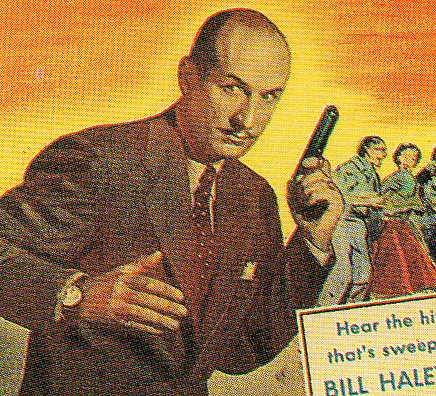
      Aberrant--running wild gun972
    Detail

    Aberrant--running wild face973
    detail

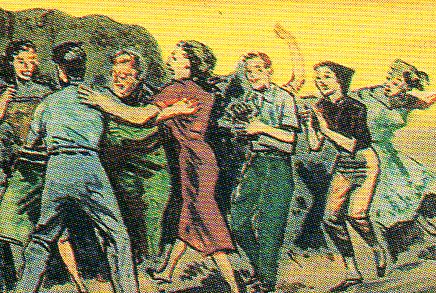
    Aberrant--running wild crowd974

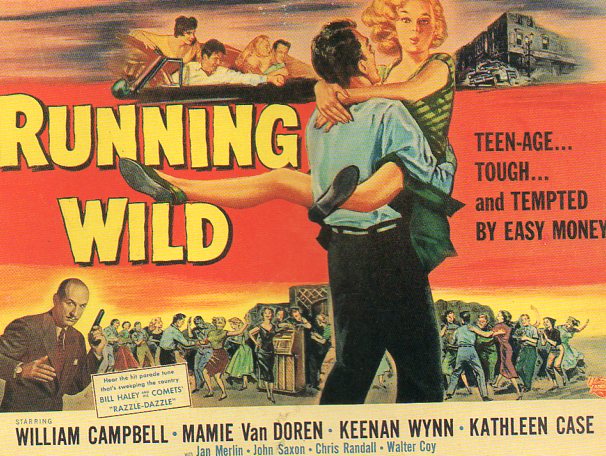
    Full poster, 1955.

      Aberrant--running wild cvr976

    Detail:

    detail:

     Aberrant--girls prison sm978

    Aberrant--girls prison sm979


    Aberrant--girls prison977

    Detail:

    Aberrant--betrayed women det986

    detail:

    Aberrant--betrayed women det987

    Full poster, Betrayed Women, 1955:

    Aberrant--betrayed women cvr990

    Detail:

    Aberrant--juvenile jungle cvr det985 |Full poster, Juvenile Jungle, 1958

    Aberrant--juvenile jungle cvr984

    detail:

    Aberrant--cative women sm983

    Full poster, Captive Women, 1952

      Aberrant--cative women sm982
    Full poster,Captive Women, 1952

    Aberrant--catpive owmen cvr991

    Detail:

    Aberrant--lost lonely sm980
    Full poster, Lost, Lonely and Vicious, 1952:

    Aberrant--lost lonely cvr981

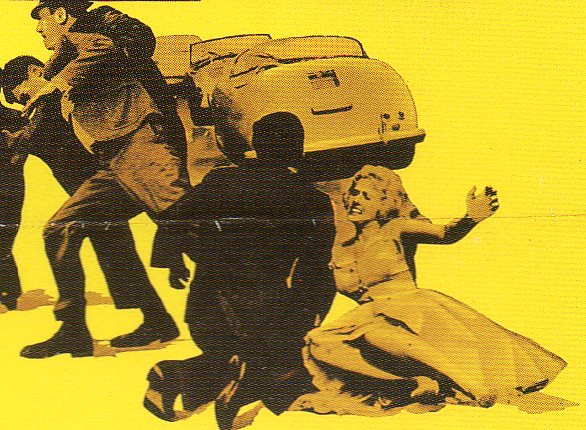
    Detail:

    Aberrant--party crashers det989

    Detail, Party Crashers, 1958

    Aberrant--party crashers988


  • The Not-Yet Iconic Hamburger, 1956

    JF Ptak Science Books   Quick Post

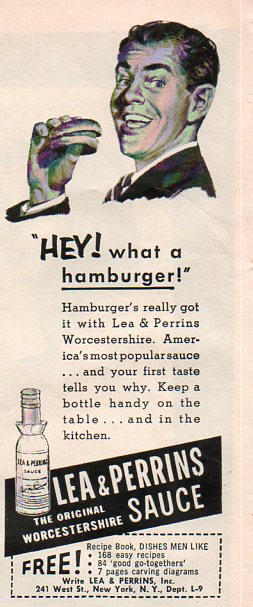
    Hamburger236 I was looking for something completely different when I stumbled over this simple ad for Worcestershire Sauce. What was instant recognizable to me was that the hamburger was just exactly that–a hamburger.  There was the burger and the buns, and that was it.  except of for the fancy Worcestershire sauce, brought to America from the old country.  In the ultra-centrifuge micro-cautionary ads of today, it would seem impossible to show a food product in such simplicity and so remarkably unposed–the buns are uneven, and imperfect, and there’s nothing about the burger to suggest itself as good except for the smiling, suited man. 
    McDonalds was selling burgers at this time, and for 15 cents a pop.  I’ve seen television commercials advertising burgers  for a buck here in the present, cheaper than what the thing was in 1956, that dollar covering only 12 cents of expense then. The current burger is cheaper still if you consider it as part of an hourly minimum wage; the 1956 minimum was 75 cents/hour, while 2010 is about ten times that; that means that the 1956 hamburger was 1/5 of the hourly wage, while the product in 2010 was 1/7 of the minimum wage.  The extreme cheapness of the current hamburger must make it seem a good deal for people working at or below the minimum wage, providing a food-like product to fill the belly for very little money in exchange, and with very little nutritional value. Perhaps that explains why 50 million Americans eat a a hamburger place of some sort every day–it is a vastly successful  business model predicated on delivering an almost entirely valueless version of an essential component of daily life, with constant advertisement duping people with greasy heart clogging goodness delivered by a bouncing clown or a little girl with freckles.  But of course there were worse things–this one just happened to catch my attention this morning.

    The hamburger has maintained its cheapness over the years, and certainly is one of those things from the ’50’s whose back-then price has translated into a more-expensive price with CPI-adjustments over time.  There are other staple-like thingas that were more expensive in 1956 than now: milk/gallon:  92 cents  1956 and $7.44 in 2010 dollars) and coffee,  93 cents (1956) or  $7.52 (2010).  Gasoline was 23 cents/gallon or $1.86 in 2010 dollars. (Gasoline pricing is another, more complicated story, for another time.)

    Don’t forget to order  your copy of Dishes Men Like! It has seven pages of carving diagrams.