A Daily History of Holes, Dots, Lines, Science, History, Math, Physics, Art, the Unintentional Absurd, Architecture, Maps, Data Visualization, Blank and Missing Things, and so on. |1.6 million words, 7500 images, 4.9 million hits| Press & appearances in The Times, Le Figaro, Mensa, The Economist, The Guardian, Discovery News, Slate, Le Monde, Sci American Blogs, Le Pont, and many other places… 5000+ total posts since 2008.

Author: JF Ptak

  • A Note on the History of Simultaneity

    JF Ptak Science Books     

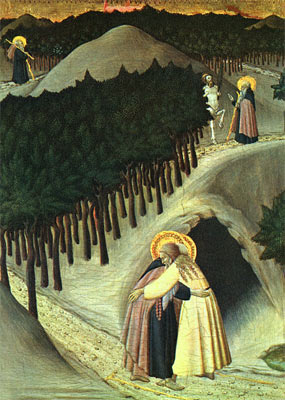
    There is a great, unifying factor drawing together Aztec glyphs, Little Nemo in Slumberland, Marcel Duchamp, the Renaissance Sienese Sassetta, Guillaume Appolinaire, William S. Porter—they all display disparate chronological sense to a single story.
    Blog--may 25--st. anthony
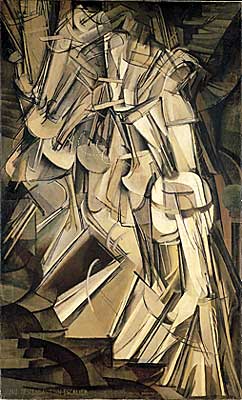
    The concept of displaying the passage of time, relating multiple events taking place at the same (or different) times, is really quite a lot older than the what is generally considered to be its recent modernist beginning.  Duchamp’s Nude Descending, which is a masterpiece of modernism displaying unfolding time and multiple perspective views across time of the same object, is the direct descendant of centuries-old artworks.  The Egyptians and the Aztecs certainly made use of this idea of multiple stories at multiple times in their stone storyboards.  Closer to the present is the genre of early Renaissance painting like Sassetta’s The Meeting of St Anthony Abbot and St Paul the Hermit (painted circa 1440), which shows several aspects of the story over time, and depicted on the same canvas. (We see the beginning of St. Anthony’s journey at top left, heading out on his journey as a younger man, winding his way through dark wood and along a curving trail; we see him a second time as an old man, and then lastly at bottom, elderly, finally meeting the other monk.)

    Blog--may 26--nemo

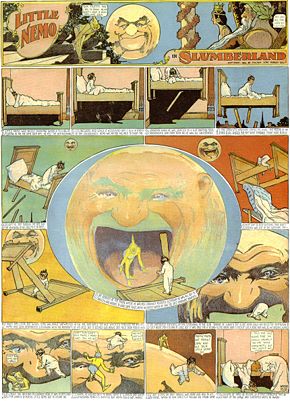
    The rollout of the Sassetta masterpiece (hanging happily at  the National Gallery in D.C.) reminds me a lot of the great hallmark of storytelling at the beginning of the twentieth century—no, not Barzun or Cendars, but Little Nemo (who predates all of the other greats who were to come in the next ten years or so).  Winsor McCay’s (1871-1934) Little Nemo in Slumberland (appearing in the Hearst newspapers beginning in 1902)—better yet, the comic strip in general—adopts a platform for storytelling that is nothing short of revolutionary.  By breaking out the development of the narrative in front of the reader and on one single sheet of paper gives the author fantastic maneuverability.  This is also seen in the early motion pictures of Edwin S. Porter (like The Ex Convict, 1905) and D.W. Griffith (The Lonely Villa, 1909) who both use a new concept of contrasting editing—cutaways from the main action and pace of the.
    Blog--may 26--nude descending


    film and incorporating vignettes of actions that are related and happening elsewhere, sometimes all of it happening at once.   The story is able to develop multiple themes that are occurring at the same time but in disparate locations—the artwork of futurists Balla and Boccioni and the unclassifiable Duchamp reach for the same end, and so to (again) with Apollinaire and Cendars and the rest…and all of them coming into view in 1912/1913 or so.

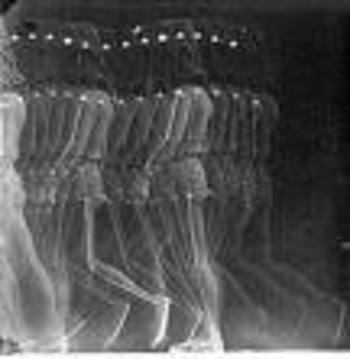
    There’s a lot to talk about on the tech end of this too, not the least of which is the work of Etienne Marey who made highly successful photographic investigations (in the 1870’s and 1880’s)
    of all manner of locomotion, some of the results of which look like the x-ray of Duchamp’s Nude.  Perhaps the greatest early enablers of technological simultaneity are the telegraph and (more impressively) the telephone, both of which allowed people to be in two different places at the same time (so to speak).
    Blog--may26--marey

    Again, this is just a note, thinking out loud, about the concept of simultaneity, and I doubt that I’ve even broken the surface…I’ve not even considered the math and physical aspects of it all, not even a whisper about Einstein and Schroedinger.  I’ve just done a search and found two works by eminent historians of science on this topic which I should think would demand reading:  Max Jammer’s Concept of Simultaneity (2005) and Peter Galison’s Einstein’s Clocks, Poincare’s Maps and the Empire of Time (2003).  I’d like to return to this post when I think I might have an idea of what I’m talking about…


  • Detail in Renaissance Paintings: Carpaccio’s Venice

    JF Ptak Science Books LLC  Post 627   Blog Bookstore

     While finishing yesterday’s post on the occasional
    nothingnesses of details in Renaissance painting and using one of the painting
    by Vittore Carpaccio to make my point, I stumbled upon another image by this
    Renaissance master that was almost all detail,
    and of great somethingness. 
    Blog--may 25--madmanThe painting
    is
     Il miracolo della reliquia
    della Santa Croce
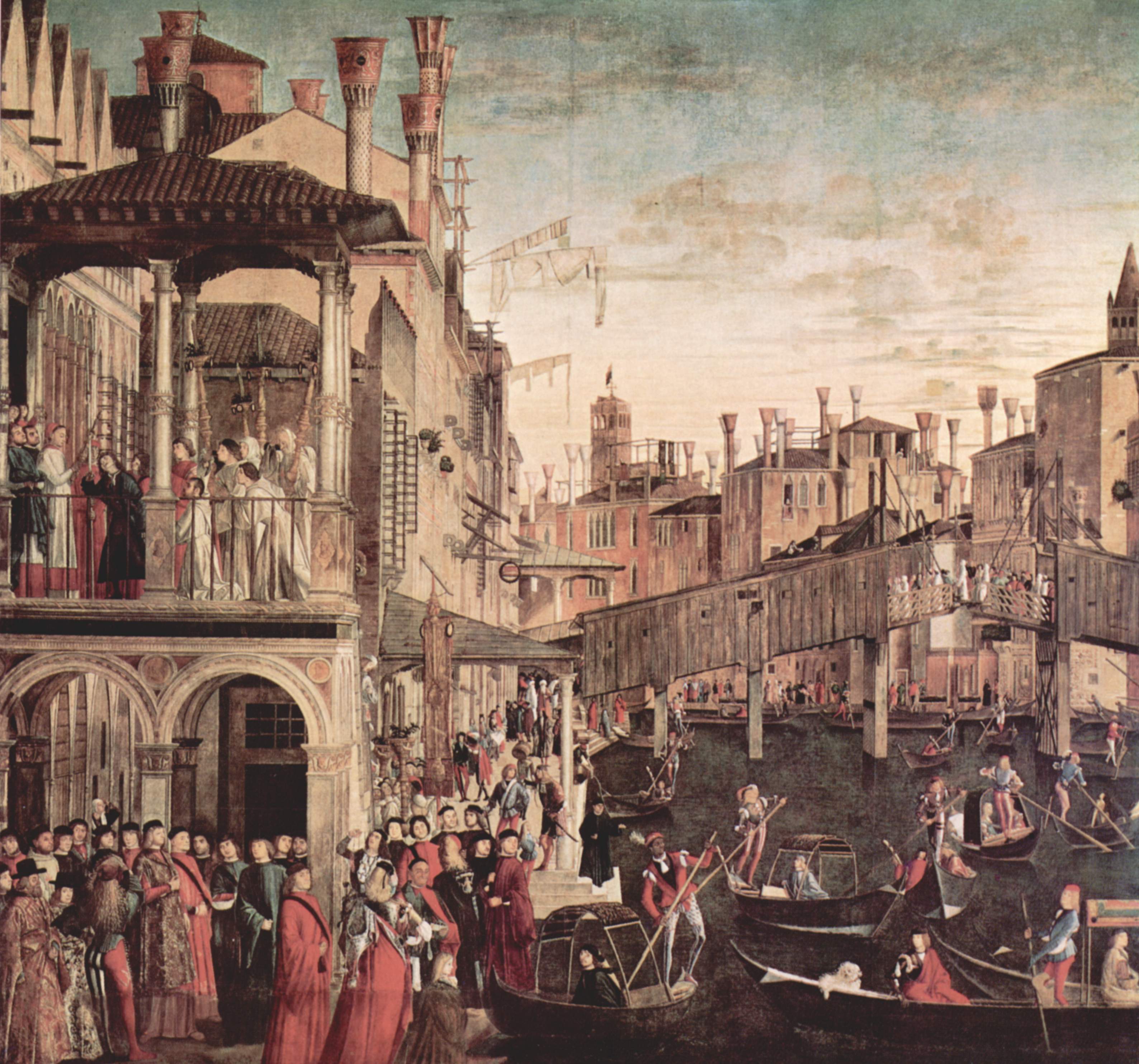
    (“The Healing of a Madman”, painted in 1494), which is a
    large, extraordinary and detail-filled canvas of a street scene in Venice. The subject of the painting is Francesco
    Qerini, the Patriarch of Grado (which was the old name for the Patriarch of
    Venice, one of the four Sees, with patriarchs reaching back to the 6th
    century), who was healing a mad/possessed man of whatever aliments finding
    safety in him, and evidently accomplishing the task with a tiny piece of the original
    cross of Jesus, given to Qerini ‘s patriarchy in the 14th
    century.

    The miracle itself takes up only a very small portion of the painting—you
    can find it in the upper left, in a spacious loggia, the “madman” (I think)
    crooking his head to look up at the outstretched crucifix; a quiet, almost
    secondary acquiescence to all of that other energy in the painting.  Even though not the intentional subject of
    the painting, it is the wooden  Rialto Bridge  (the version built in 1458) that takes center
    stage, though I guess one could say that the key area of interest was the city
    of Venice 
    itself.  Or the throngs of its citizens
    enjoying the airy passage through the city. 
    The focal point does seem to be the bridge, which had the capacity to
    open for taller ships, and was a focal point of transfer for the
    community. 

    There is some reason for this outside of the artistic sense—the paining was
    one of nine commissioned by the Confraternity of the Scuola Grande di San
    Giovanni Evangelista, which was a major concern in Venice.So it would seem that Venice
    was meant to be as much a part of the appeal of the painting as was the miracle
    that called for the attention in the first place.  

    This was a very crowded scene, the foreground and background material and
    subjects as important as the subject itself; it was a greatly democratized work
    calling as much attention to the city of Venice as the miracle being worked
    within it—and it still remains a calm and quiet vision  Perhaps it is the steadfast of the objects
    above the street, like the pot-like chimneys (at least 26 showing) and the
    clothes-drying poles with their flag-like fare that contribute to the quietness
    above the bustling city street.  Experts
    say that this is a superb rendering of the cityscape, with accurate coloring, a
    beautiful documentary of life in Venice 
    just at the end of the 16th century. 
    In addition to the cityscape we see all manner of small life in the many
    people in the painting:  passengers in
    the gondola are carrying pets (at least one dog and a bird), the stores at the
    foot of the bridge, an open air market (with sellers lined up with small
    tables), plus all manner of styles in dress.

    It is a wonderful example of the opposite of yesterday’s post:  something where all of its comparative “nothings”
    were the most important part of the unit.


  • Seeing Renaissance Pillows: a Short Bit on an Unnecessary Topic

    JF Ptak Science Books LLC  Post 626  Blog Bookstore

    Evelyn, a dog, having undergone

    Further modification

       Pondered the significance of short-person behavior

    In pedal-depressed panchromatic resonance


    And other highly ambient domains…


    “
    Arf” she said.
    —F. Zappa, One Size
    Fits All
    (“Evelyn the Modified Dog”)

    Blog--may 25--garofalo

    I was going to write something completely different about
    these images for this post—but I fell completely into the beds of these
    paintings—actually, I missed the beds and made straight for the pillows.  I really didn’t have anywhere to go with
    this–no point, no cozy tie-ups—and when I told about my wife Patti Digh about
    this problem she wisely told me to forget about a point, and “send it out into
    the world”.  (Patti has no doubt that the
    subject of this post sounds like an unending and probably unendurable doctoral
    dissertation.)  And so when faced with my
    own set of sensory inputs that couldn’t come to some sort of comprehension, “arf”  sounded pretty good.

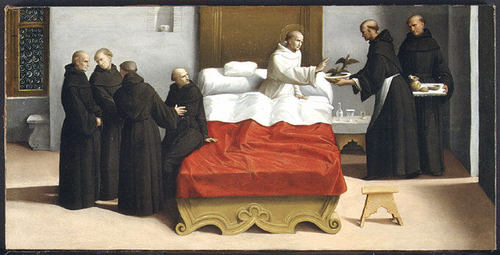
    The first image is an oil on canvas (transferred from wood)
    by Garofalo (Benvenuto Tisi da Garofalo, Italian, Ferrarese, 1476?–1559) called Saint Nicholas of Tolentino Reviving the Birds and painted around 1530. The
    man in the bed is a deathly sick St. Nicholas, an Augustinian monk, who was
    attended by no fewer than six of his brethren. 
    They are shown offering him a plate of roasted birds, but Nicholas, a
    vegetarian, rose from his bed and in rejecting the food brought the birds back
    to life.  We see that long, bed-width
    pillow with a small cozy on top of it

    Blog--may25--lorenzo

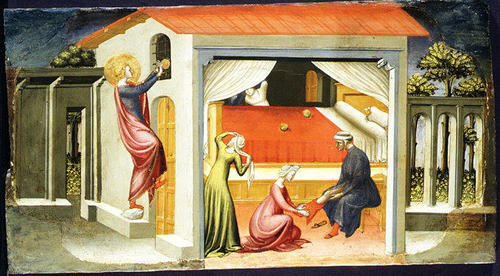
    In another painting of another Nicholas, Bicci di Lorenzo’s
    (Italian, Florentine, 1373–1452) Nicholas Providing Dowries (date

    1433–35), we see the Bishop of Myrna in Asia Minor Nicholas pushing bags of
    gold through a transom and into a house. Sounds a little like St. Nick of
    Christmas lore, though this St. Nick was providing the dowries to three
    daughters of a destitute man unable to provide his offspring with money of his
    own. (Not having money for a dowry was a major deal in these times—without the
    money the women probably would not have been able to marry, forced to other not
    savory means for providing money for their daily needs to survive.  Here again we have a big red bed, with a
    bed-width pillow, and the smaller pillow on the top of it all.

    Blog--may 25 --carpaccio

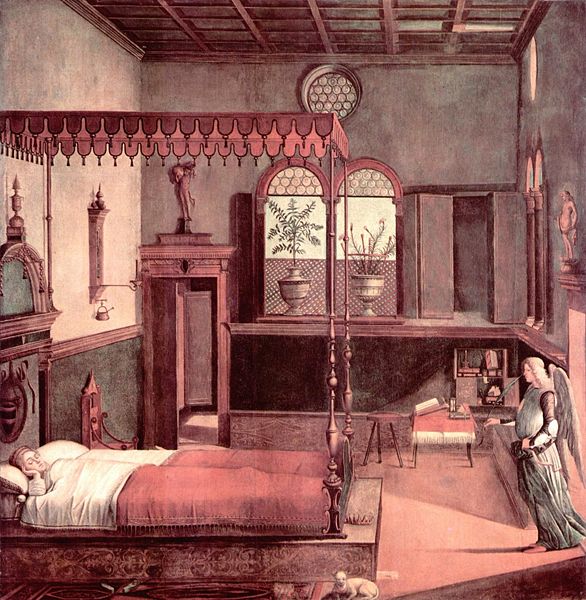
    The last example belongs to Vittore Carpaccio (c. 1460 – 1525/1526), in his The Dream of St.
    Ursula
    (painted 1495).  Again, the same:  red bed, big pillow (though no little fellow
    is visible).  There is a strange small
    ball-like object near her head at the base of the pillow, and her slippers are
    where they were when she stepped from them into the bed.  It looks like she has six books in her work
    area at the back of the room (as well as an hour glass on the desk).   There is a problematic burst of light on the
    ceiling from the high window to the left of the door—it doesn’t seem likely
    that this splash of light could be on the ceiling given the shadows in the
    room.  Oh well. 

    And so.  There are
    more examples of these pillows, but we probably don’t need to look at more
    right now—just noticing them is probably enough. Sometimes finding interesting
    detail in the detail leads somewhere, and sometimes not. There is a continuing
    thread
    in this blog that looks at the importance of incidental detail in art,
    though today’s  post chooses the “sometimes
    not” option.


  • History of Normalcy, Part 1: “Girls”

    JF Ptak Science Books LLC  Post 625   Blog Bookstore

    My wife, Patti Digh, and I have long talked about the
    history of normalcy—a history of what looks to be “normal”, or standard, or
    acceptable at one time that became not so over the course of time.  Buying and selling human beings, women and
    their children being property of her spouse, Chinese immigrants not have (any)
    legal rights, are three good candidates (among thousands) for this history.  It is an interesting proposition to think
    about—what things around you, or better yet, what thing you think or say or do,
    that look good and acceptable today might look Blog--May 24--girlembarrassing and unacceptable thirty
    years hence.  In 1935 one issue might’ve
    been accepting the codified behavior of treating women as less than equal of
    men, deserving less in the workplace (if they were in the workplace), less
    rights in the courts, less deserving of equality in general; by 1965, this
    viewpoint may have well been in the minority; by 1995 it begins to look
    fossilized; by 2025 it might well be unbelievable.  What are the issues of 2009 that could be the
    equivalent of the 1935 issue?

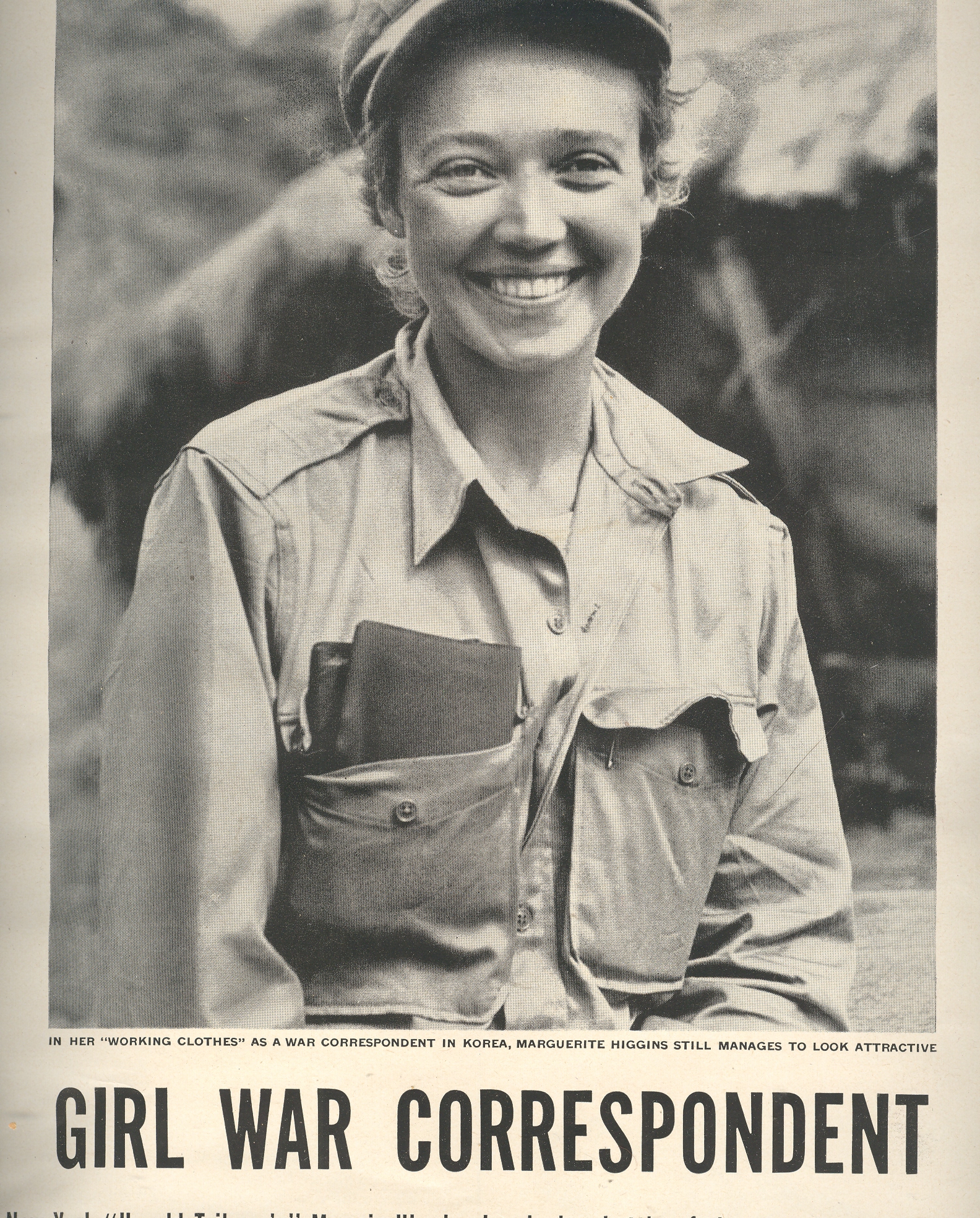
    And so the first in th is series:  the October 1951 issue of Life magazine’s article
    by Carl Mydans (the great and esteemed war and documentary photographer), “Girl
    War Correspondent”.  It is a sympathetic
    look at a sharp minority in the American newspaper business:  the female war correspondent.  Or, in this case, the “girl” correspondent.
    One would hardly refer to Edward Murrow as “the male correspondent Edward R.
    Murrow”, or “Edward R. Murrow, Boy Correspondent”.  The “girl” in this case was Miss Marguerite
    Higgins (1920-1966), aged 30.  She was a
    correspondent for the New York Herald Tribune, and covered the war,
    boots on the ground, covering the war in Korea.  Mydans gives a creditable review of Higgins very active and
    dangerous participation in the war effort. 
    It was not the intention of the article though to look at where Higgins
    had been before Korea;
    particularly, what she had been doing in 1944 and 1945.  AS a matter of fact Higgins was a
    correspondent for the Herald Tribune in Paris and London in 1944/5, and later sent to Germany in
    March 1945.  She received a combat ribbon
    for helping in securing the surrender of SS guards when she witnessed the
    liberation of Dachau.. Afterward she covered the Nuremberg
    trials and the Soviet blockade of Berlin.

    In spite of all that she was banned from covering the war in Korea.  If not for the personal appeal/demand of
    Douglas MacArthur (who telegraphed Higgins’superiors at the Herald Tribune “BAN ON WOMEN
    CORRESPONDENTS IN KOREA HAS BEEN LIFTED. MARGUERITE HIGGINS IS HELD IN HIGHEST
    PROFESSIONAL ESTEEM BY EVERYONE”) she and all other female correspondents would’ve
    been kept out of the war. She was the first woman to win the Pulitzer Prize for
    international reporting (in 1951, for Korea),
    and would go on to cover international affairs, winding up in Vietnam for
    Newsday in 1963.  As a result of her
    years of experience she wrote, in 1965 (!), Vietnam U.S. Our  Nightmare: The story of involvement in the Vietnamese tragedy, with
    thoughts on a future policy
    New York (Harper and Row).

    In spite of it all,
    given her experience in WWII and her developing coverage in Korea , she was,
    in October 1951, still a girl. 

    ·Posted by :

    ·in:


  • Nazi Propaganda and the Battle for Europe, 1941: the War at Sea

    JF Ptak Science Books  Post 624   Blog Bookstore 

    Propaganda Series #  14  (See listing below)
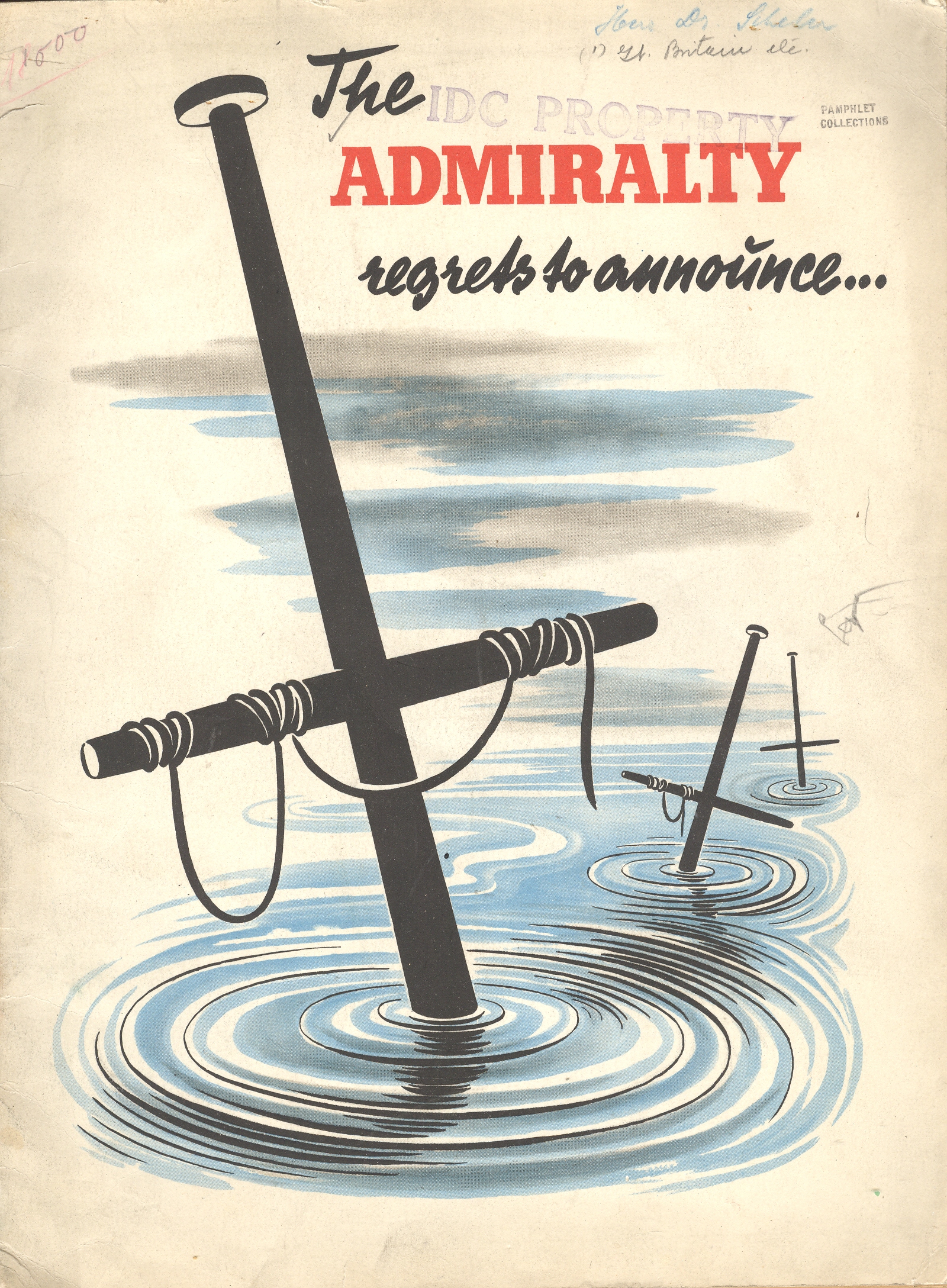
    Blog--May 24--regrets The Admiralty Regrets to Announce… was for years the standard beginning to an official British announcement concerning the loss of ships and sailors.  The phrase is used as the title to this work (by an unattributed writer known only as “an expert”) to immediately introduce the reader to the failings of the British navy.  It is of course a piece of Nazi propaganda, issued some time in 1941. (My copy is he U.S. copyright deposit copy and is stamped with a transfer date of September 1942; the pamphlets reads to me as though the U.S. had not yet entered the war.)  The great strengths of the German air force and navy are extolled and the failings of the British mercantile elaborated at great—and sometimes greatly imagined—lengths.  The booklet was published in French (except for the title) and answers its own repetitive question: “quelle est donc la situation relle de la marine commerciale anglais?”

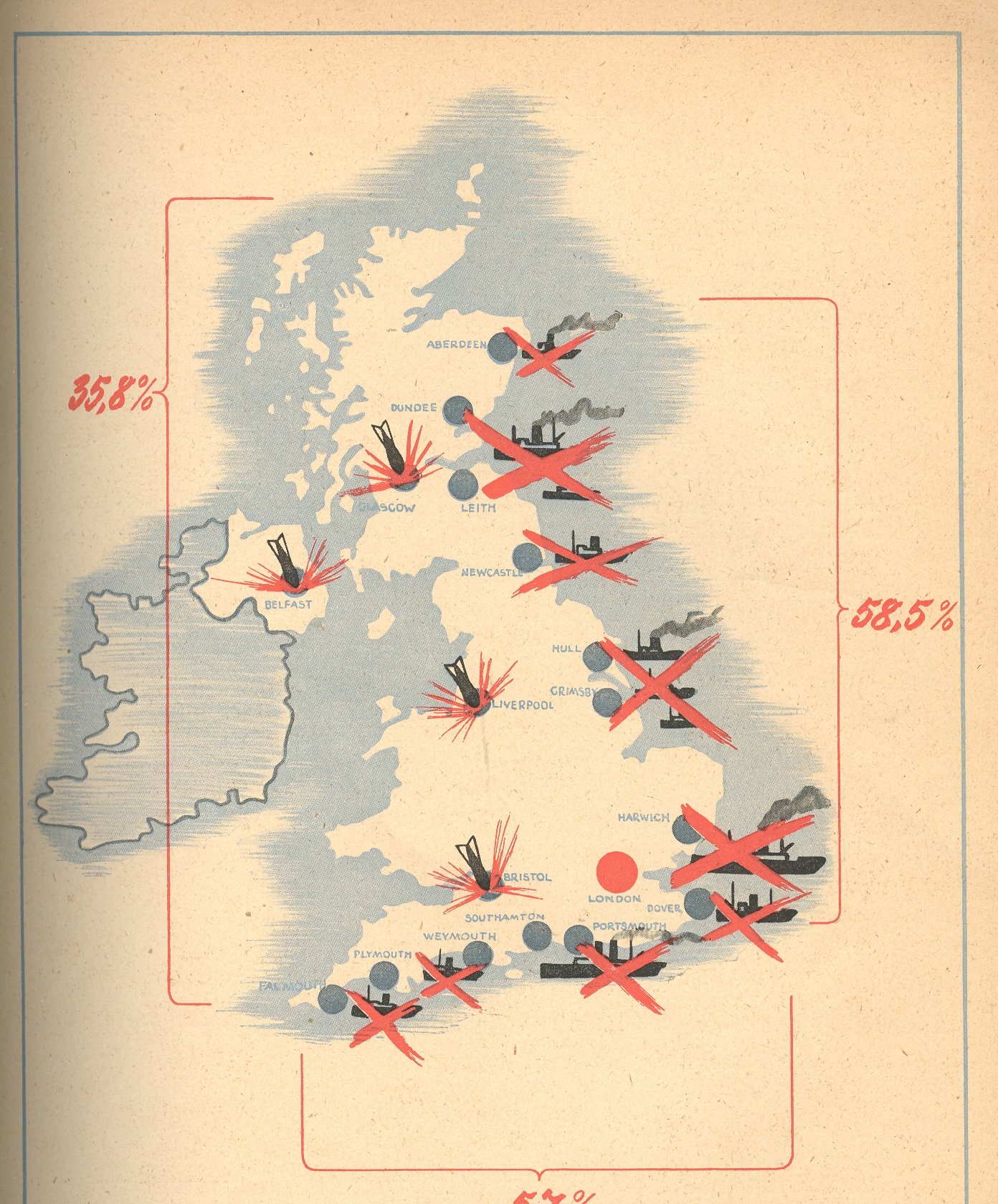
     The pamphlet’s 32 pages (illustrated with 2Blog--May 24--map14 photographs of various blow-ups and bombings, plus one graph and three maps) are dedicated to winning the French hearts and minds, trying to convince the conquered population that there really wasn’t any help coming, and that the British could not even supply themselves with the necessaries to run a country, let alone a war.

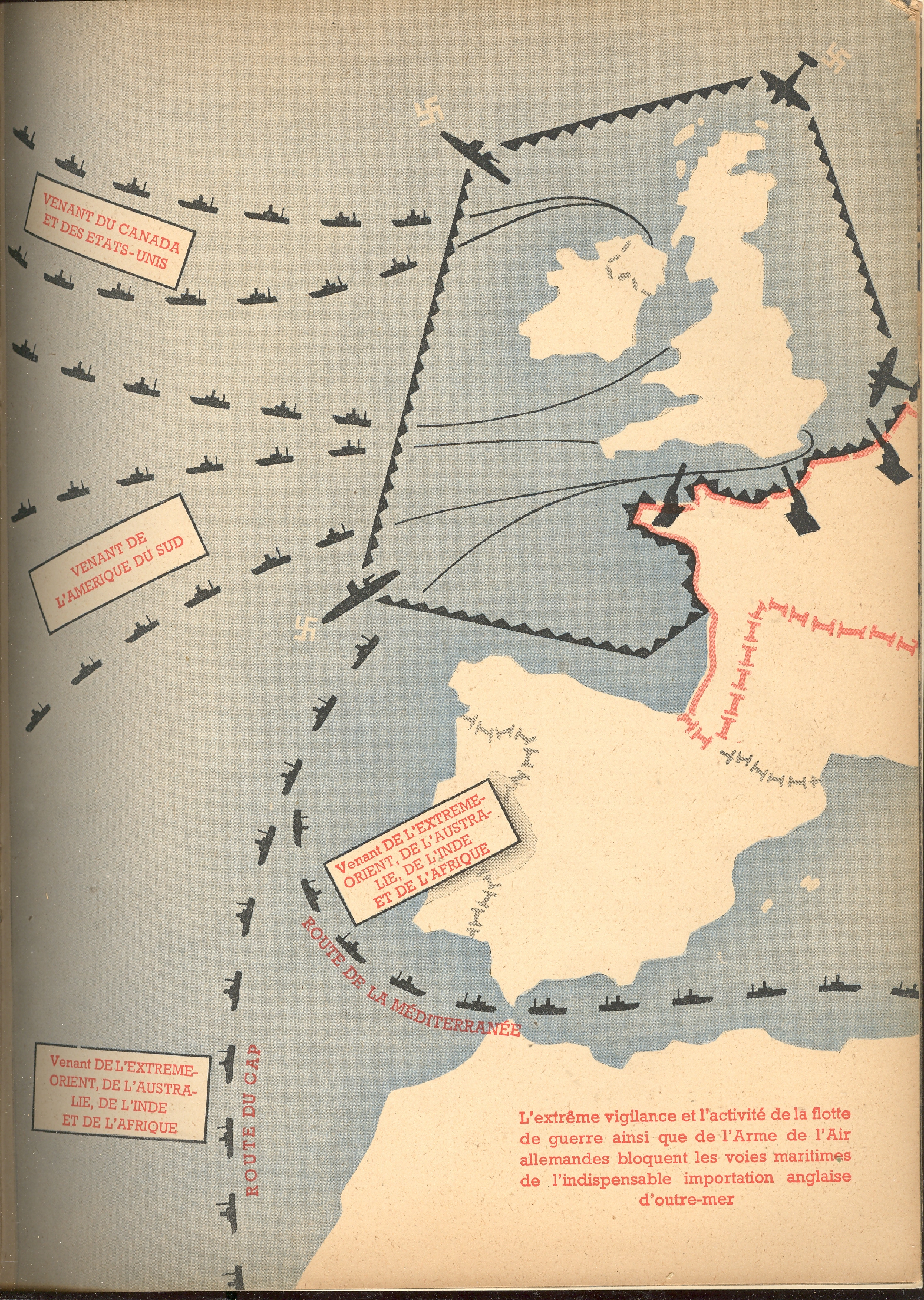
    In the map at right we see the  ports and shipping centers that were bombed by the Luftwaffe (with London located by a big red dot).  Another map shows the stockade-like presence of the Nazi navy securing its impregnable wall against the arrival of foreign trade and supplies to Britain.  

    Blog--May 24--map2

    This post is one of a series on propaganda maps which occasionally appear in this blog.   Like Thomas Nast political cartoons and war photography, a map can instantly and overwhelmingly display not only data but sentiment as well. The maps published in this pamphlet by the Nazis are were certainly immediately understandable to just about anyone, French-reading or not, literate or not–the images needed no words, especially when surrounded in the text by vicious images of German military might.  OvBlog--May 24--map2 001errun or not, Petain-ized as it was, France was still offering aid to its allies and resistance to the Germans–the more minds that could be won over with propaganda of this sort meant one less to have to worry about as an active enemy.

    A Listing of Some our the Propaganda-related posts in this Blog

    Nazi Propaganda: Scaring the Will-to-War, 1935

    Maps as Propaganda: the Nazi’s Use of Maps in the Hearts and Minds Campaign in Occupied and Holland and France, 1943


    The Propaganda of Restricting Infomration: Dorothea Lange’s Photos at the Japanese “Relocation” Camp, Manzanar, 1942

    Psychological Warfare--Aerial Propaganda Leaflets and Surrender Tickets, WWII.

    Maps as Propaganda: the Turning of the Tide, January 1943


    Humanitarian Propaganda–Hope for those at Home, September 1944.

    Nazi Propaganda: Scare Tactics in a Hearts and Minds Campaign, 1940

    A Propaganda Effort Equating the New Deal and Nazism, 1935: the Power of Willful Forgetting

    The Atomic Bomb: 6 August 1945. Propaganda Leaflet Dropped on Japanese Cities

    The Polish “Threat” to Germany, 1939:   Nazi Propaganda on the Perceived Polish “Invasion”


    Propaganda Maps #2: the Nazis. the Big Lie, and Cartography


    Graphical Display of Data: the R.A.F. and Luftwaffe Present Their Cases, 1938-1940


  • San Francisco, 1906: Pictures within Pictures. The Great Earthquake and Fire.

    JF Ptak Science Books Post 623  Blog Bookstore

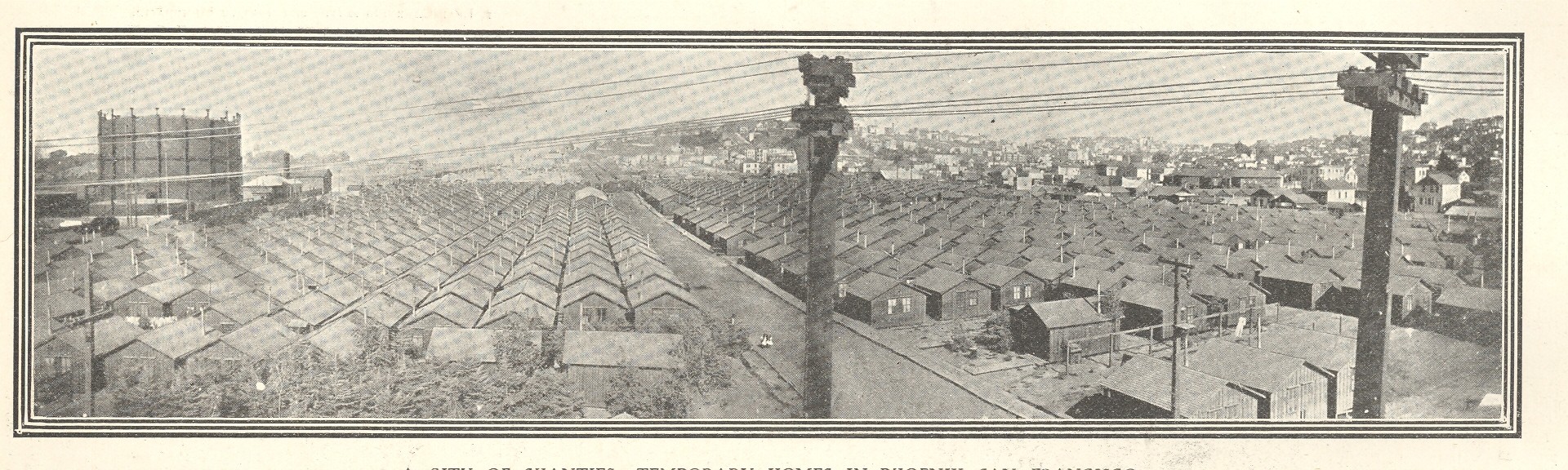
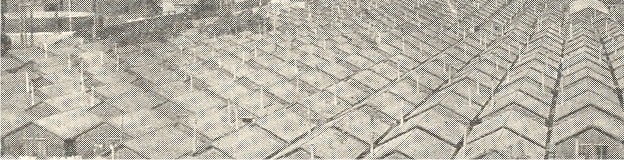
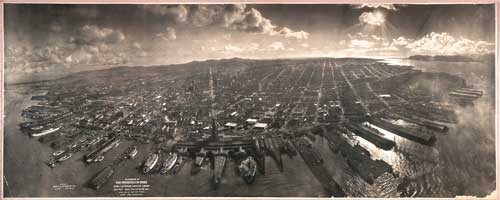
    The following two images were found in the Illustrated London News for 30 April 1906, and shows the “shanty town” built near the site of the major destruction in San Francisco following the earthquake of 18 April 1906.  Actually the tragedy is more appropriately called the “San Francisco Fire” of 1906, as the major destruction was caused by the raging fires set off by the earthquake.  The end result was 485 or so blocks of the city were destroyed leaving a quarter-million people homeless.  That this orderly development was referred to as a “shanty town” by a sniffy Brit reporter is appalling–unless of course the offending word meant something different 103 years ago.  It looks orderly and well-developed to me.  I also happened to notice two small girls in the detail–just about the only people in the picture.  They could still be alive….

    Blog--May 22--san fran

    Blog--May 22--san fran2

    Blog--May 22--san fran3


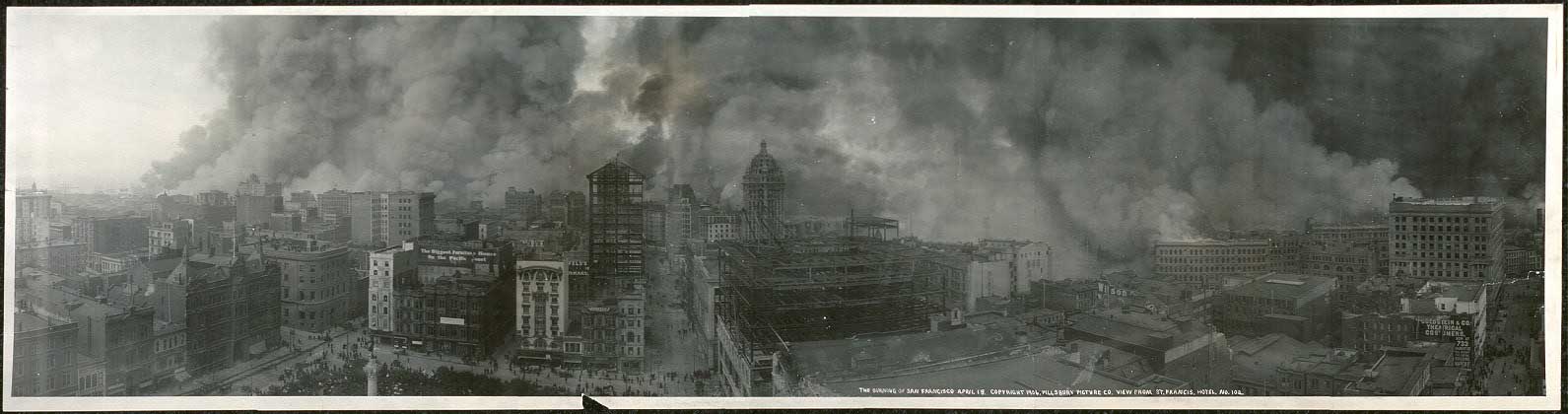
    The bottom two pictures were taken during the conflagration:  the first was the fire still raged, and the second was made days after the fire  from a  tethered balloon observation point. 

    I made myself 6-foot-long prints of these images; nearly every 2×2 inch area of the enlargement is a picture in itself.  These images are clickable and will expand if you click in the expanded version.  


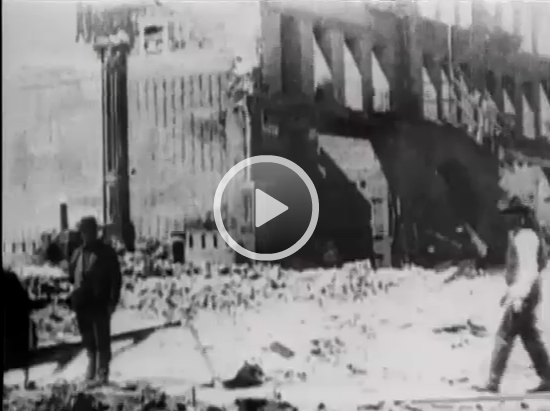
    For a contemporary film of the event via the Library of Congress, see here: http://loc.gov/item/00694425

    San Francisco film 1906 still

    SanfranciscoiburningT1

    SanFRansmallT2


    Panoramic images via the Library of Congress Prints and Photographs Division, see the following link for these and a number of others:  http://loc.gov/search/?in=&q=panorama+san+francisco+fire&new=true&st=

    A few eyewitness reports, from the Eyewitnesstohistory.com website: 

    “Of a sudden we had found ourselves staggering and reeling. It was as if the earth was slipping gently from under our feet. Then came the sickening swaying of the earth that threw us flat upon our faces. We struggled in the street. We could not get on our feet. Then it seemed as though my head were split with the roar that crashed into my ears. Big buildings were crumbling as one might crush a biscuit in one’s hand. Ahead of me a great cornice crushed a man as if he were a maggot – a laborer in overalls on his way to the Union Iron Works with a dinner pail on his arm.” (P. Barrett).

    “When the fire caught the Windsor Hotel at Fifth and Market Streets there were three men on the roof, and it was impossible to get them down. Rather than see the crazed men fall in with the roof and be roasted alive the military officer directed his men to shoot them, which they did in the presence of 5,000 people.” (Max Fast).

    “The most terrible thing I saw was the futile struggle of a policeman and others to rescue a man who was pinned down in burning wreckage. The helpless man watched it in silence till the fire began burning his feet. Then he screamed and begged to be killed. The policeman took his name and address and shot him through the head.” (Adolphus Busch).


  • Fossils of Almost No Value? Statistics, Prisons, and Meaninglessness

    JF Ptak Science Books    Post 622   Blog Bookstore

    Blog--May 23--convict The fossil record is generally one of the richest and most
    compelling histories of the development of life on earth, a far-reaching,
    cumulative record of extraordinary importance. 
    There are the other, occasional, fossils that stand only by themselves,
    and seem to have almost no use in the current time, living almost entirely
    within themselves. The following statics seem to fall into that category—they
    seem to be only a tombstone for an era, providing nothing except to tell the story
    of what happened, existing only for that purpose, with no compelling
    utilization for anything outside understand a small piece of life for the year
    the stats were gathered. 

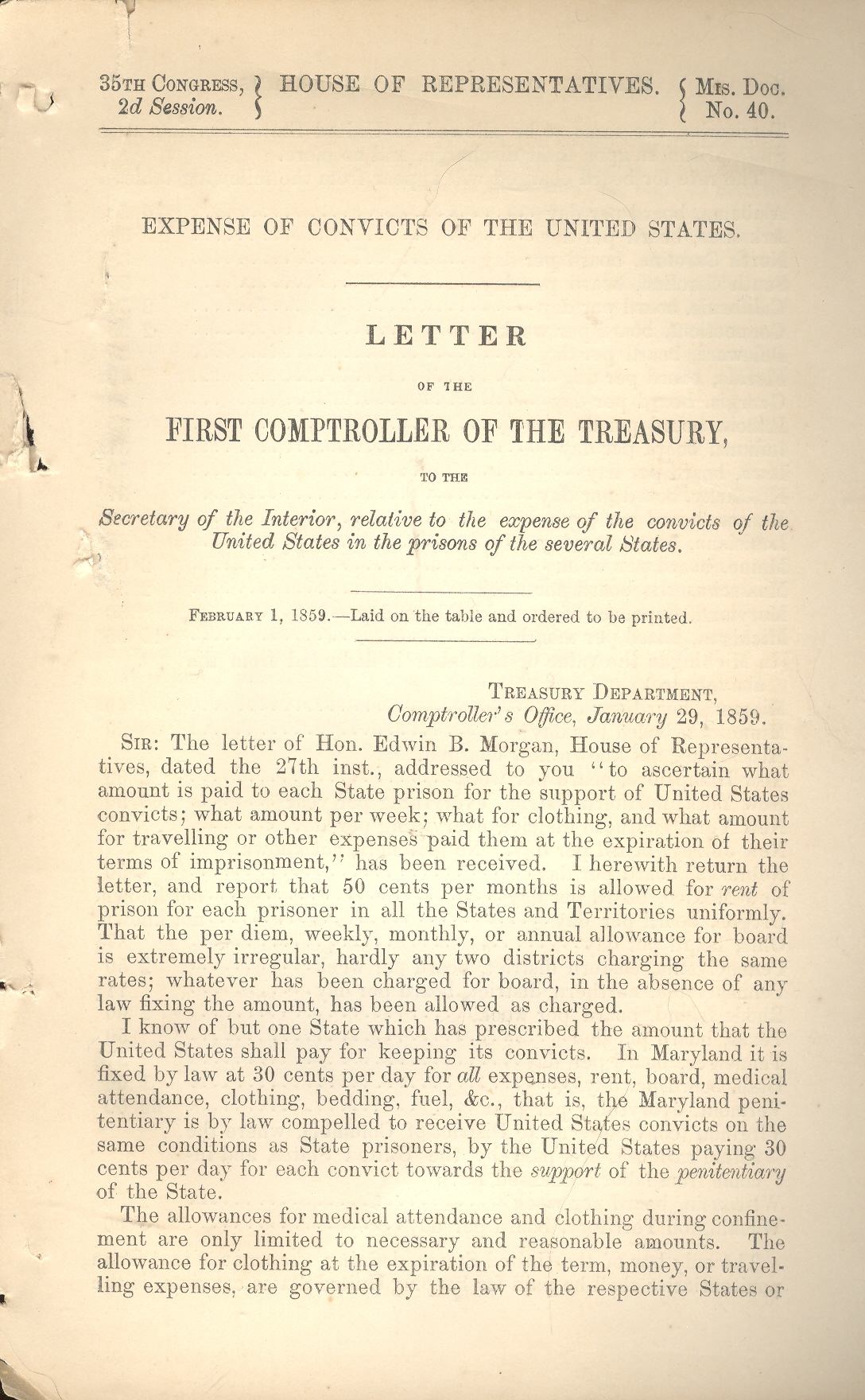
    The cause for this sentiment was found in a government
    publication called Expense of Convicts of the United States  (Letter from the
    Comptroller of the Treasury…)
    , 1 February 1859).  The following comes in the first paragraph:

    “I….report that 50 cents per months is allowed for rent of
    prison for each prisoner in all the States and Territories uniformly.”

    What this means is that the U.S. Treasury would pay 50 cents
    to the state for keeping a federal prisoner. 
    That is 50 cents per month, or about 1.7 cents per day. And that was
    also for rent of the cell, exclusive of all else, each state furnishing the
    government with the added cost, separately.

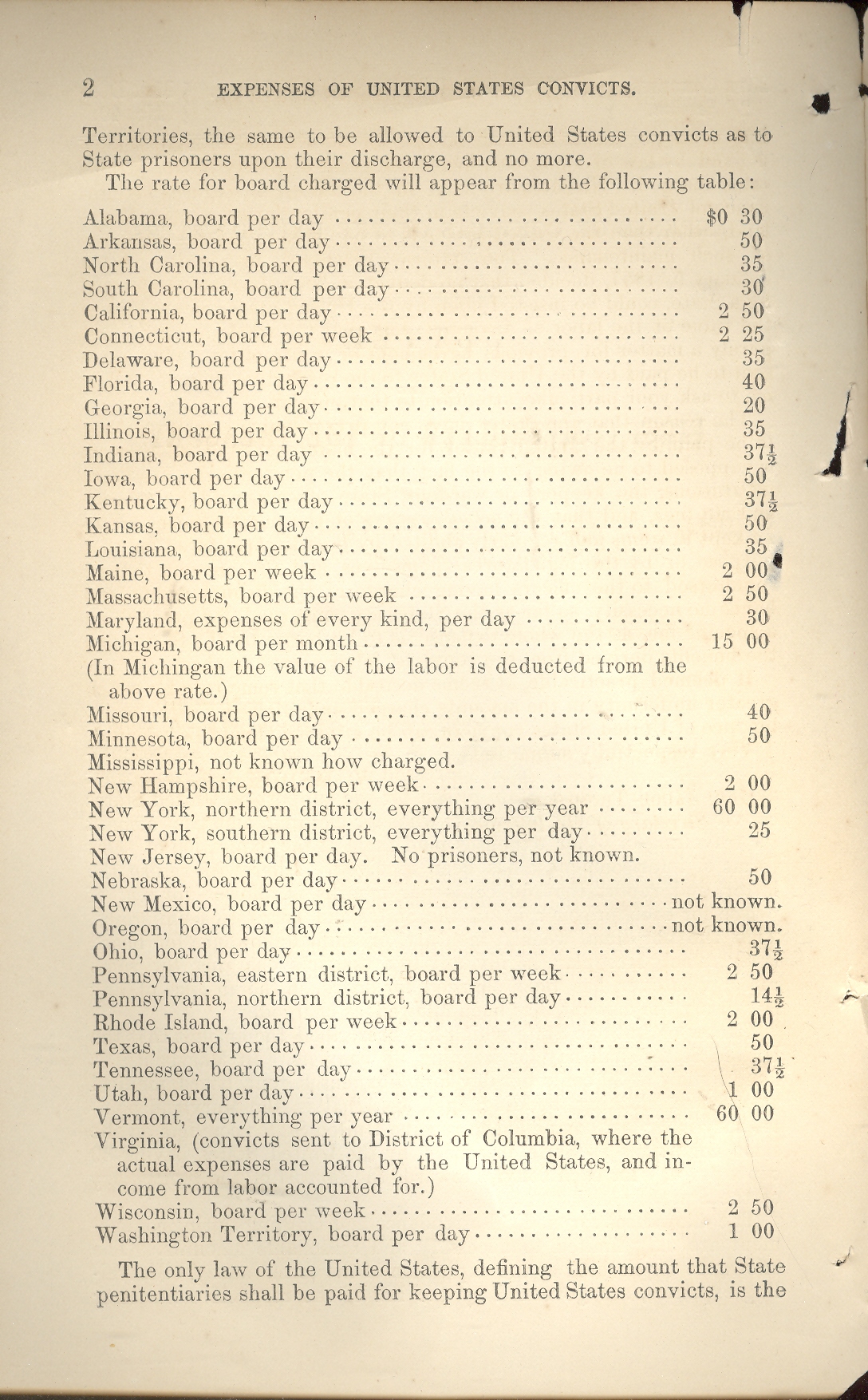
    Evidently the only state in the country that prescribed an
    exact amount for keeping a federal prisoner in a state institution was
    Maryland, “which received 30 cents per day for all expenses, rent, board, medical attendance, clothing, bedding,
    fuel, and etc” (italics in the original). 
    The rest of the states and territories had diverging and different
    expenses, from the southern district of New York at 25 cents a day for board,
    and ranging up to about 50 cents per day in  Michigan. Vermont charged an extra 60 dollars a year, in addition to the 6 bucks that they would
    get for the rent of a Vermont
    cell, to keep a prisoner—all expenses included—for one year, or about 18 cents
    per day, total. 

    Unfortunately I don’t have the stats of how many federal
    prisoner there were in 1859, so I don’t know how much of a percentage of the
    budget was occupied by prison expenses. 
    But what I do know is that even with tossing around the CPI with
    multiplier effects and so on the figures translate in no way to keeping a
    person in prison today.   The cost of
    housing someone in prison per year is around $35,000 a year, or $100 or so a
    day.  Adjusting the 1860 dollar via CPI
    for 2009 makes that dollar worth about 25 dollars today, which would be a
    doubling and a doubling again of keeping someone in prison. 

    I’m not so sure that those figures tell us much about what
    we pay, today. 

    Next, I was having a breeze through The Prison System of the United States by S.J. Barrows
    (Commissioner of Prisons for the U.S.) which was published in Washington  in 1900.  One particularly interesting
    section was the publication’s solitary statistical table, “Appendix A”, which
    detailed the crimes of the 625 men incarcerated in the state of Michigan  in 1900.  Well over half of all those in prison were
    there for larceny and burglary, while about 12% were in the big house for
    violent crimes.  (Evidently 95% of this
    number were literate and 70% could “cipher” (that is, produce basic arithmetical
    skills)).  The total crime list (such as
    it was) includes the following:

    Capital crimes (murder in the first and second degree) and
    manslaughter, along with murderous assault comprised about 1% of the total
    prison population.  Other violent crimes
    included assault with intent to do great bodily harm, rape, attempted rape,
    rape and assault composed another 3%. Further assaults were classified under
    (a) with intent to do great harm;  and
    then as assault on a female under 14 years; and on a female under 16 years  There were also the sexual assaults:  taking indecent liberties with female; with
    male child;  unlawful and carnal
    knowledge of a young child;   inducing female to enter house of ill fame.  These last two categories included about 5%
    of the prisoners.  Set aside form these
    were the crimes of adultery, abduction, incest and sodomy, which included
    another 3%.  So it seems that the violent
    offenders in prison in  Michigan 
    in 1900 totaled out at 12% or so. 

    Burglary and larceny were the  largest categories, being subdivided into (a)
    burglary accompanied by actual assault; (b) larceny; (c) larceny from a
    dwelling;  (d) larceny from a shop in daytime; (e) attempting larceny from
    the person; (f) entering a church in daytime to steal; (g) breaking and
    entering a store in daytime;   (h) breaking and entering a store in
    nighttime;(I)  breaking and entering a
    dwelling in daytime; (j)  breaking and
    entering a dwelling;  (k) breaking and
    entering a railroad car.

    Then there were a few largely vacant offenses:  Resisting an officer; Uttering and publishing
    a forged note, breaking out of prison, perjury, arson, false pretense, and
    malicious destruction of personal property, all combing for less than 2% of the
    jailed population.

    Blog--May 23--convict 001

    The vast majority of prisoners in Michigan were imprisoned for non-violent
    crimes.  The federal fathers, in the
    meantime, recognized that people in prison shouldn’t be idle while paying their
    debts to society, and should fill their time with work that would occupy the
    prisoner and bring some income into the prison system:

    “The moment we apply to the convict a
    different system of economics because he is in prison we go astray. When we
    subject to analysis the plans proposed for abolishing the competition of
    convict labor we find them based on false principles or expecting results not
    to be realized. The wiser way for the peace of society and the interest of the
    State is to place prison industries on the same ground as free industries, and
    defend that.
    It is also said in opposition to the contract system that
    contractors do not pay as much for the labor of convicts as free laborers
    command.”

    In 2005 the federal offenses for which people are incarcerated include: Drug
    Offenses 59.6%; Robbery 9.8%;  Property
    Offenses 5.5%;  Extortion, Fraud, Bribery
    6.8% ; Violent Offenses 2.7% ; Firearms, Explosives, Arson 8.6% ; White Collar
    1.0%; Immigration 2.8%;  Courts or
    Corrections 0.8%;  National Security
    0.1%;  Continuing Criminal Enterprise
    0.8%;  Miscellaneous 1.5% .  54% of prisoner in state custody for the same
    time were incarcerated for violent crimes, with drug offenses coming in at 20%
    and property crimes at 19%.  The racial
    breakdown of prisoners in the U.S. is another tragedy: of the prison population
    in toto of 2.3 million in 2008 there
    were 4,777 black male inmates per 100,000 black males held in state and federal
    prisons and local jails, compared to 1,760 Hispanic male inmates per 100,000
    Hispanic males and 727 white male inmates per 100,000 white males—that means
    that the black incarceration rate was double and then double and then
    half-doubled again that of whites.  What
    this also means is that there were more blacks in jail cells than in college
    dorm rooms in 2008.

    I’m not sure that any amount of creative statistical mathemartistry could bring these figures to life for some sort of practical application in 2009, the present situation in the prisons being so immense and pervasive.  Numbers and assorted data from the past usually have the capacity to help us see where we are today; as I said earlier, I think that these fossils are simply that:  dead.


  • Zeppelin Paper Model, 1924

    JF Ptak Science Books Post 621  Blog Bookstore

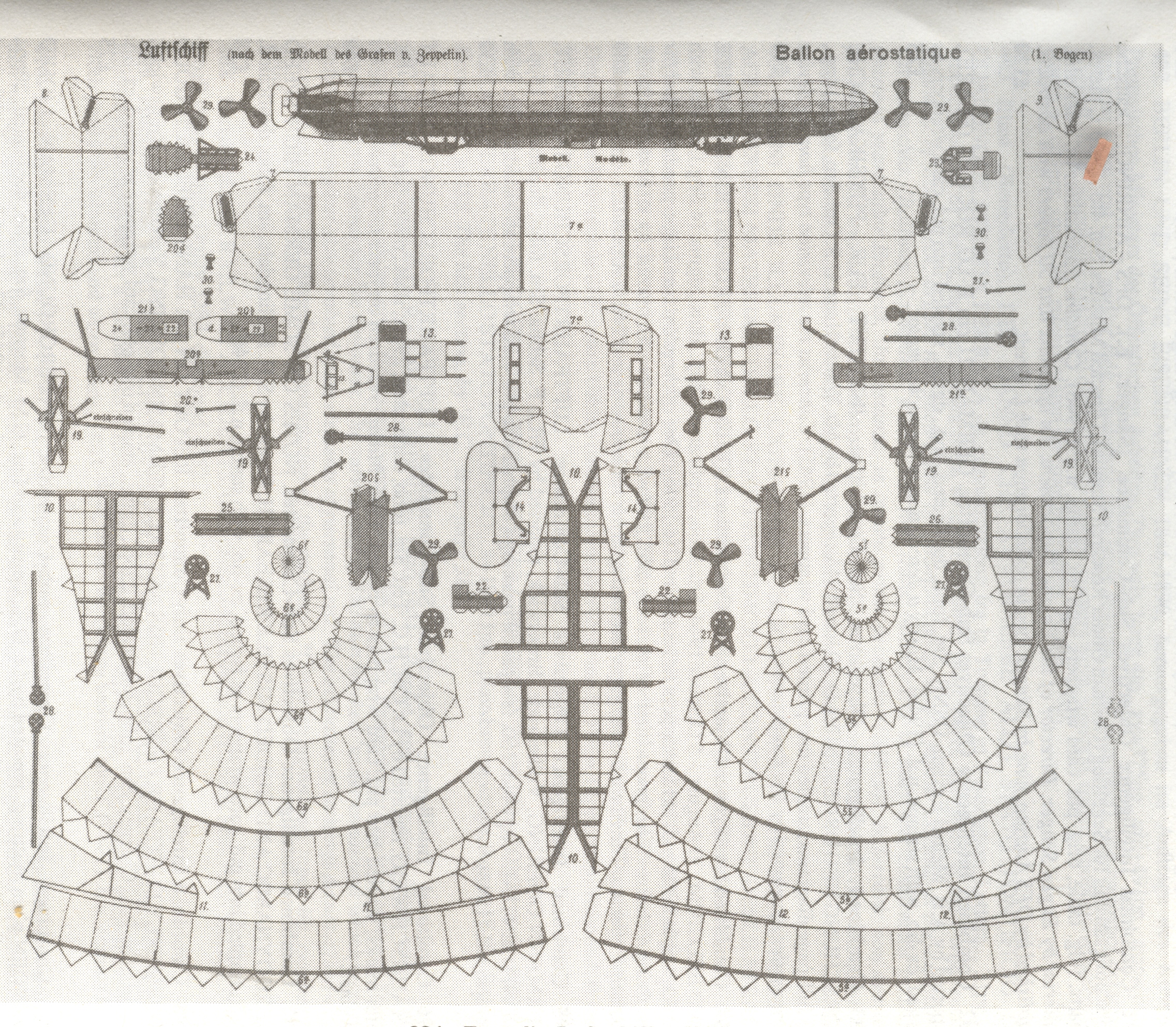
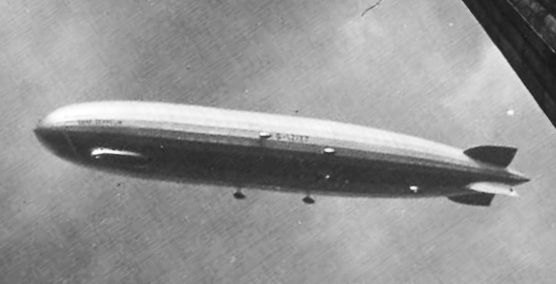
    This is a downloadable, clickable image of the makings for a zeppelin paper model–it is a lovely thing, and I just needed to share with anyone with a sharp exacto or a real pair of scissors. Pieces of the image should be printed so that the zep could be 18 inches long; or, of course, if you had a good steady hand, you could make a mini version, at this size.  The model itself is entitled Technisches Modell, Das Zeppelin Luftschiff (Modellierbogen Nr. 531, 532) and was printed and glued to cardboard by Esselingen at Munich ca. 1924.  The size of the original is 36 x 86 cm.

    Blog--May 20-zep

    Zeppelin2

    ·Posted by :

    ·in:


  • On Learned Ignorance: George Hartgill’s Astronomical Tables

    JF Ptak Science Books  Post 620    Blog Bookstore

    According to negative theology, ‘there is not found in God anything other
    than infinity.’  (Cusa, De Docta Ignorantia, vol. I, § 26)

    “With respect to the intellectus, reason (ratio) is at the horizon…but with respect to the
    sense, reason is at the zenith, things that are within time and things that are beyond time
    coincide in reason.”(Cusa, De DoctaIgnorantia, vol. III, ch. 6, § 216


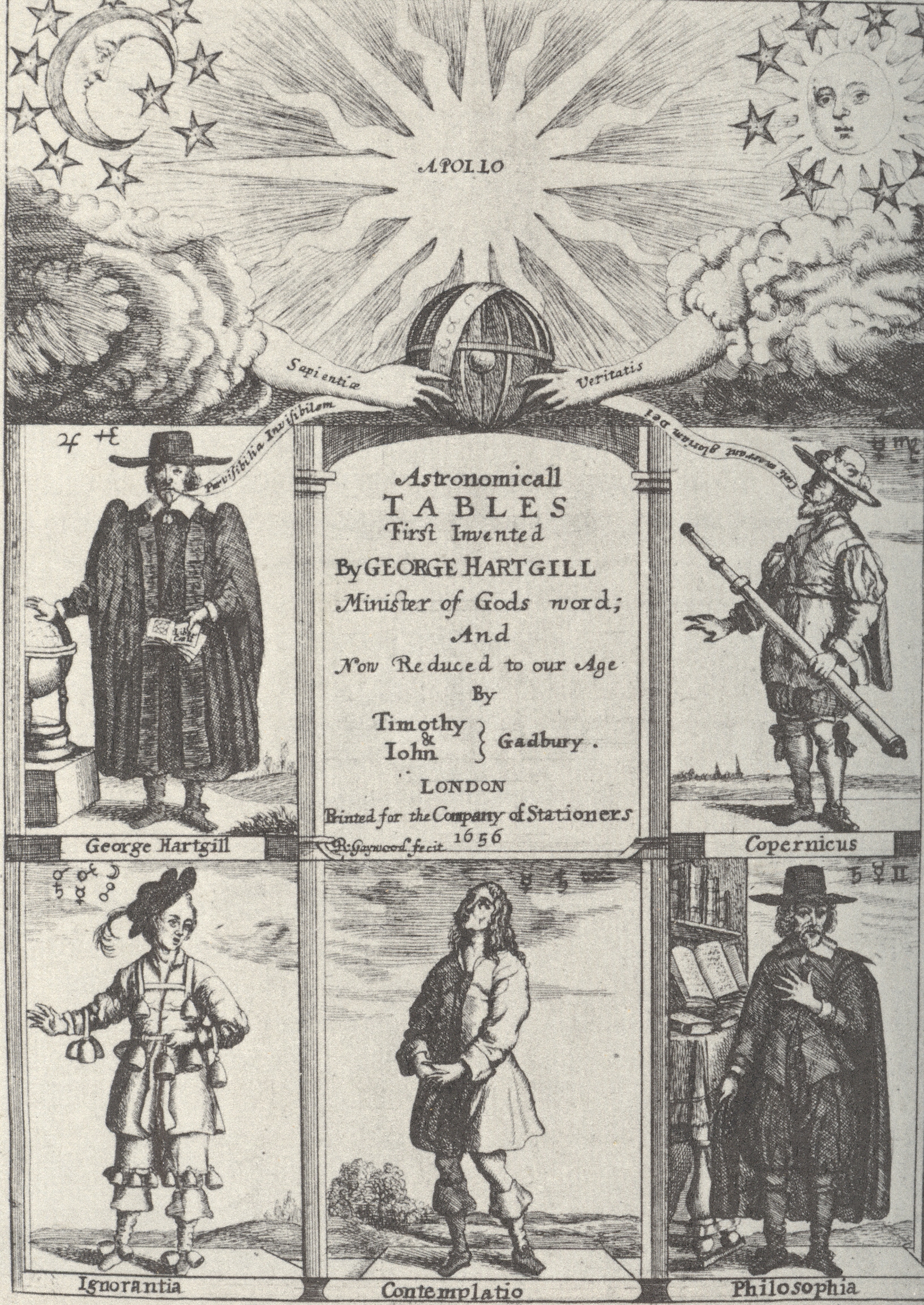
    Blog--May 20-hartgill In my imaginary Encyclopedia of Interesting Title Pages, the Astronomical Tables shewing the Declinations….* by  George Hartgill** is very much middle fare,  very interesting but not overly so (I say sniffily), but very much worthy of attention.  The initial bit that caught my attention was small and sort of trifling: it seemed that the writer possessed  the temerity to place his own portrait on the title page across from that of Copernicus.  As it turns out, the selection was obvious and logical, though I wouldn’t know that until I pieced together the symbolisms of the page.  Aside from that, there was a fair amount of action on the title page, and for all of that it retained a certain spareness, a lightness in spite of itself.

    The title page is an elegant call to synthesis of science, philosophy and religion in the understanding of astronomy. To start: at the top-center is the burning sun, “Apollo”, the great and perhaps most important of all the Olympians, the god of sun and light (among other things).  The arms of the heavens (signified by the arms reaching out from the Moon and Sun) embracing a globe of the earth within an armillary sphere. The arms carry the legends of “spientiae” (“wisdom”) and “veritatis  (“truth’).  Surrounding the title proper are five figures, the upper two being Hartgill and Copernicus.  The word balloon coming from Hartgill’s mouth says “per vidibilia invisibilem” or “ the visible and the  inivisible”, and touches the hand of wisdom; Copernicus’ balloon I can only partially read, but it seems to end “gloria dei” (to the glory of god), and ends under the arm of truth.  In turn these two figures rest on three others:  Ignorantia, Contemplatio and Philosophia. 

    Ignorantia here is depicted by an entertainer decked out in bells.  He isn’t necessarily “ignorant” per se: the “ignorance” comes in multiple forms: one is of the intelligent and educated person knowing the things that weren’t yet known; another in terms of a belligerent ignorance, insisting on the known and the comfortable in the face of compelling new evidence stating otherwise; and also of simple ignorance of not knowing and not caring.  Contemplatio and Philosophia pretty much speak for themselves.  The three of them seems to support the advanced “ignorance” of Hartgill and the mathematical/philosophical Copernicus, all of which are illuminated by the wisdom and truth of the source of all light.  Its simply a wonderful, well-designed title page.

    *Astronomical tables shewing the declinations, right ascentions, and aspects of three hundred sixty five of the most principall fixed stars and the number of them in their constellations after Aratus : as also the true oblique ascentions and descentions of all the said stars upon the cusps of every of the twelve houses of heaven according to their latitude….1656.

    **Granger’s Biographical History of England (1824), says of Hartgill: (he was)…”chaplain to the Marquis of Winchester, was a painful preacher, a reverend divine, and a most excellent mathematician, as appears by his ” Astronomical Tables;” which, according to the judgment of the best astronomers, could not have cost him Jess than seven years’ labour, considering the perfection of the work.”


  • A Question of Appearance: Picasso, Jung, Miss California and Hungry Joe

    JF Ptak Science Books Post 617  Blog Bookstore

    Blog--criminal 004


    I heard an interesting bit this week by Scott Simon of NPR.  He asked his audience to identify a British politician, asking us to listen to a news snippet—what he was after was for the audience’s reaction to the message.  It was an actor reading a widely circulated statement by Carrie Prejean (Miss California) in which she expresses her opinion on gay marriage and other topics.  Evidently people reacted more thoughtfully to the “educated” accent than to the same statement issued by a contestant in a beauty contest–the British pol vs. the dizzy right-wing blond.  The same message, different packages and appearances, different reactions.  

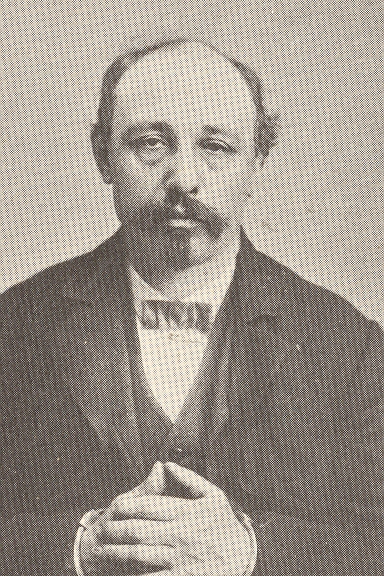
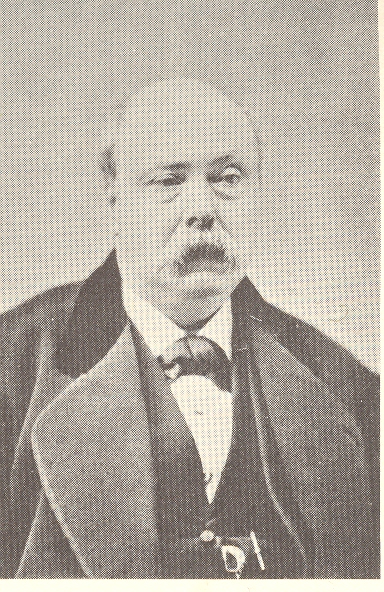
    The three 19th century photographic portraits illustrating this post could well be images of the faculty at a modest New England institution of higher learning; professors with decent taste and posture, reasonably interesting-looking, confident.  But their names really didn’t have much pull in the history of academic names:  the list of PopWhite, Hungry Joe, Grand Central Pete, Boston Charley, Pugsey Frank, Paper Collar Joe, Curly Chuck, and Deafy were criminals, and all of these pictures are from Inspector Thomas Byrnes’ 1886 Professional Criminals of America, an early “mug book”.  Their specialties weren’t in the maths and physics; rather they were listed as “sneaks”, “butcher cart sneak”, “saw dust worker”, “till tapper”, “highwayman”. “banco”, “wagon thief”, “house sneak”, “hotel sneak”, “general sneak”, “general common thief”, and so on.  The portraits don’t betray the person, by any means. Blog--criminal 001

     How this all comes to me was from reading a publication of the Analytical Psychology Club of New York City for 1940—I’ll keep the author and subject quiet for the moment.  It was an odd experience, reading this, because, well, I wanted to believe the author/analyst because he was in deep attack on his subject (an artist) whose personal life I’ve never cared for; on the other hand the attack was so myopic that I took offense with that, too.  I wanted to believe the analyst’s overall appreciation of the artist, but the means of getting their, the intellectual foundations, was just awful.  I wanted to believe the analysis, built as it was ruinous and a waste; and I wanted to believe that it was true for the subject—but if I removed the weight of their names, I’d have to come to an instant defense of the attacked party.  Pablo Picasso.

    The analyst is none other than Carl Jung—who as a collector and interpreter of images I’ve long admired.  I don’t know what to say, really, about the psychology part of it all.  Jung begins by saying that he had “nothing to say on the expression of his (Picasso’s) ‘Art’ “, and needed to “put aside the question of aesthetics”.  To me , this is sweeping Picasso’s trade under the rug, which is something that needn’t and shouldn’t be done, of course.Blog--criminal 003  

    Jung continues:  “the psychic structure of Picasso’s problem, in so far as it expresses itself in his art, is thoroughly analogous to that of my (psychiatric) patients”.  He then starts a quaky, impenetrable paragraph that stretches out over two pages:  “non-objective art comes by its contents essentially from the ”inner” side.  This “inner” side cannot correspond to the conscious, because the conscious contains images of objects as they are generally seen, and they must of necessity appear in the way that conforms to general expectations…”   Then, to my reading, Jung seems to classify Picasso in one of two categories:  schizophrenic or psychotic.

    Now as much as I’ve disliked the destructive personal path of Picasso, this is just altogether too much.  But it was the retained memory and associations of the names of these two men that so challenged (and at first conquered) my own analysis.

    _______________________________


    ·Posted by :

    ·in: