A Daily History of Holes, Dots, Lines, Science, History, Math, Physics, Art, the Unintentional Absurd, Architecture, Maps, Data Visualization, Blank and Missing Things, and so on. |1.6 million words, 7500 images, 4.9 million hits| Press & appearances in The Times, Le Figaro, Mensa, The Economist, The Guardian, Discovery News, Slate, Le Monde, Sci American Blogs, Le Pont, and many other places… 5000+ total posts since 2008.

Author: JF Ptak

  • Blank and Missing Things: Backgrounds in 15th Century Prints

    JF Ptak Science Books LLC  Post  Post 607  Blog Bookstore
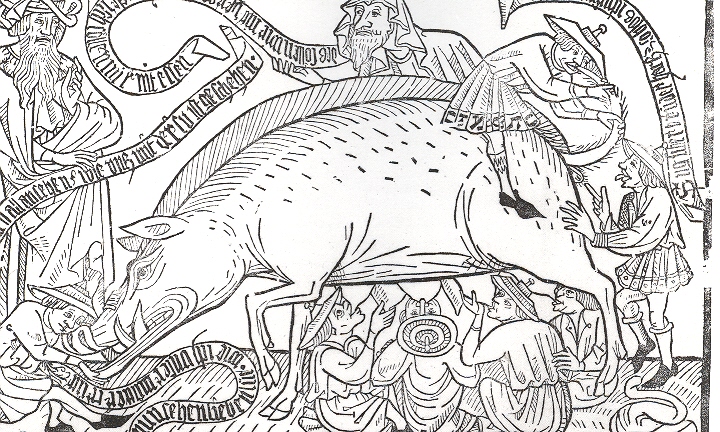
    Blog--may 4-- blank drunkenmohammedGenerally speaking, printmaking (in Europe)  began in the early 15th century.  It was, as Peter Parschall* elegantly says, “the
    earliest efficient means of reproducing a complex image in large numbers”.  The method of pressing wood blocks onto paper
    started in the as early as the 1420’s; the intaglio process—printing from
    engraved metal plates—began a little later, in Germany, in the 1430’s.  This places the mass-distribution print distinctly
    ahead of the Gutenberg curve by at least a generation. (It is interesting to
    note here that the great Vasari wrongly put the beginning of print making
    considerably later, around 1460.)   Of
    course in China the practice
    of making prints on papers was already many hundreds of years old at this
    point, but Asia was still a world awayBlog--may 4--blank christ, its
    influence not to be really felt for hundreds of years.

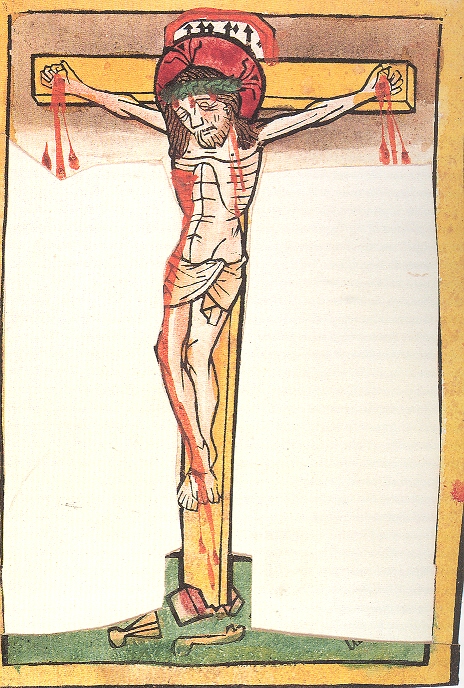
    What strikes me is the lack–and absence–of backgrounds in many of these early, pre-1490 prints. 

     Once you start paying attention to the non-backgrounds in these prints, they seem to be everywhere.  This print of Christ Crucified (German, ca. 1460.) is an excellent example of completely-blank blank background.  The most emotional of all the scenes of the Passion, the Pieta from Stilft Lambach (South Germany, ca. 1420-1430, “Now there stood by the cross of Jesus, his mother…”, John 19:23) is blank–save for a chair and part of the cross–though deeply and bloodily colored. 
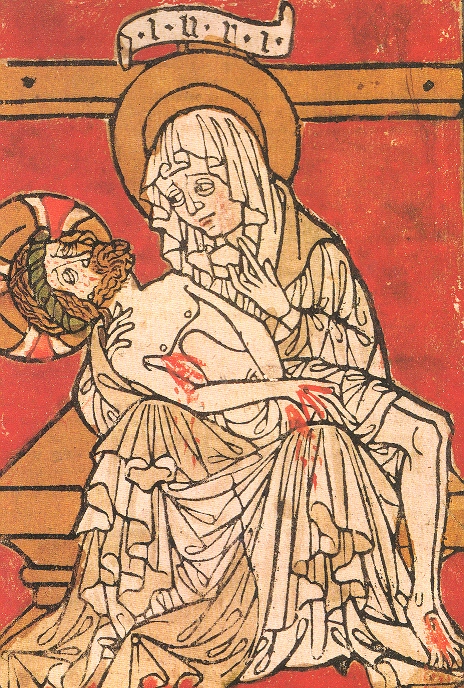
    Blog--may 4--blank pietaThis is also one of the visualizations of the scene in which Mary cradles the body of her dead son in her lap; many other images do not show this close contact.  Also, even though the blood of the wounds of Christ are exceptional and highly visible–and perhaps the main object of veneration in this print–Mary’s very great grief , depicted mainly in her oversized and mournful eyes, may well be the real chief object of interest in this image, abandonment of Mary cults or not.


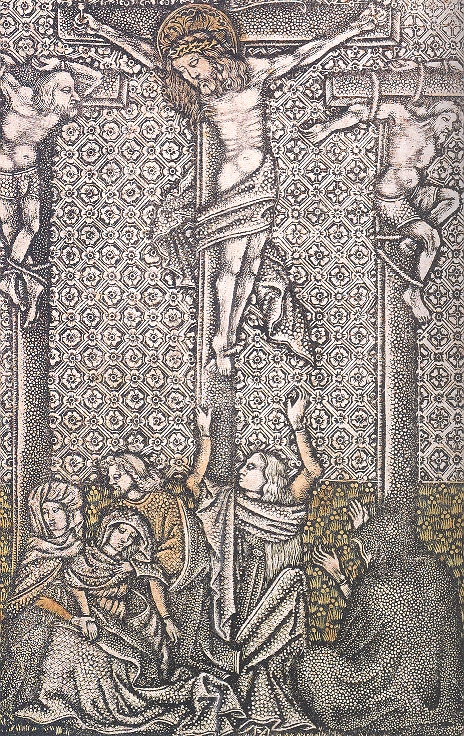
    On the other extreme of the Blank Background is the ornamented and highly designed background, as in the example below.  Calvary was printed in Bavaria in 1460 or so and is a metal cut print, meaning that the image was literally hammered and cut, which gives the paper such incredible depth and detail.  I’ve noticed a number of these designs in metal prints though none in wood–again, I’m not a scholar in this area; my observations are just that, from an accumulation of looking at prints for decades on end. 
    Blog--may 4--blank not blank

    Blog--may 4--blank not blank detail

    Blog--may 4--blank not blank2

    I don’t have anything to offer here on this–just the observation. 

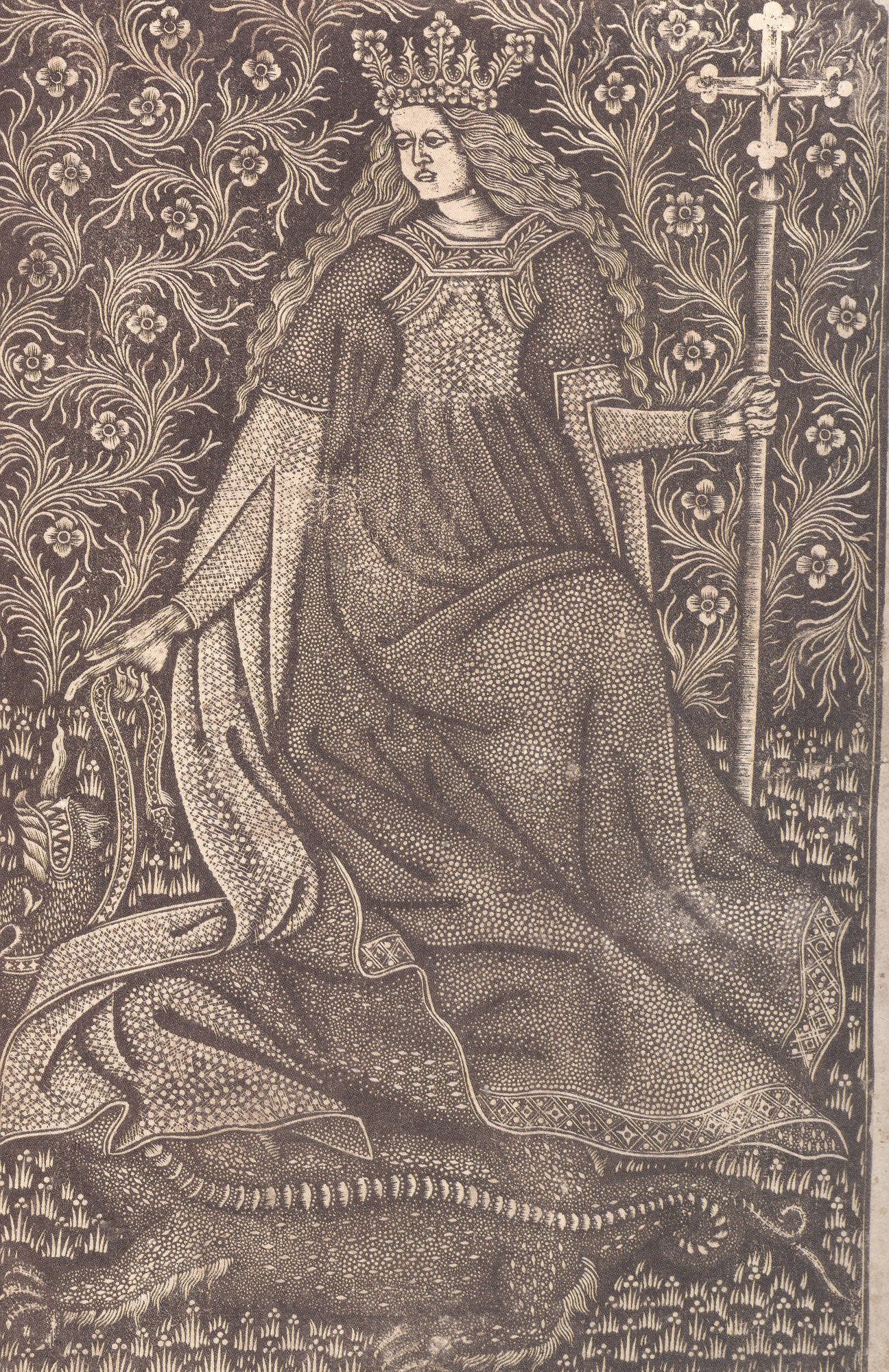
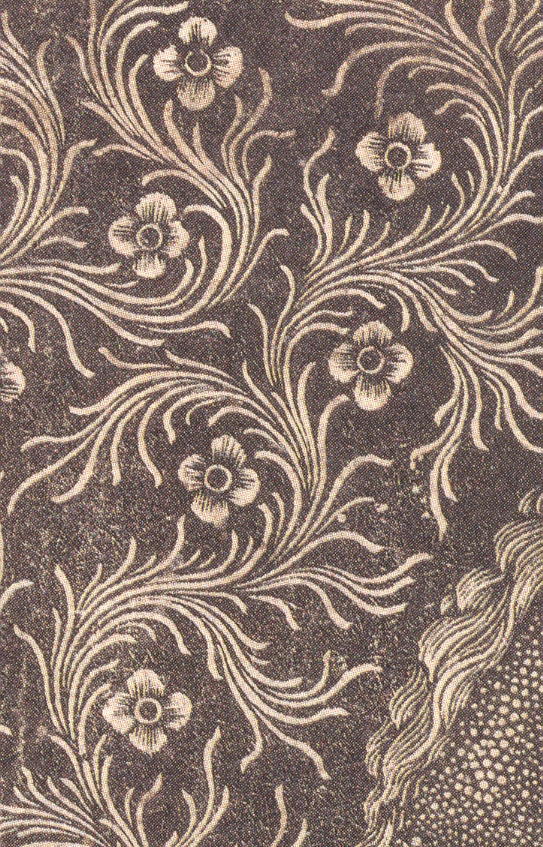
    The last image is that of St. Margaret, a south German metal cut print in the last quarter of the 15th century.  This is a simply extraordinary print, the whole having the feeling of a finely embroidered work.  The swirling grape vine background (?) is moving and fine and fluid, and so unlike anything else at this time in print history.  It was a glorious way to render a background that was both there and not there.

    *[Parshall, Origins of European Printmaking, National Gallery of Art, D.C., 2005.]
    Blog--may 4--blank not blank2 001


  • Sesame Street: Ray Charles, Johnny Cash, Stevie Wonder, Los Lobos

    JF Ptak Science Books LLC   Post 605

    Just a fun post tonight, having bumped into these wonderful pieces of music performed by the High and Mighty on Seasame Street. Below are Yo Yo Ma (who winds up very bluesy), Ray Charles, Stevie Wonder (doing an almost seven minute long version of Superstition), Tito Puente, Los Lobos, Randy Travis, and Johnny Cash.  Enjoy!  Stevie.


    ·Posted by :

    ·in:


  • Slave-Catching in D.C. in the Month Before Emancipation, 1862

    JF Ptak Science Books LLC  Post 606   Blog Bookstore
    (All images are expandable)

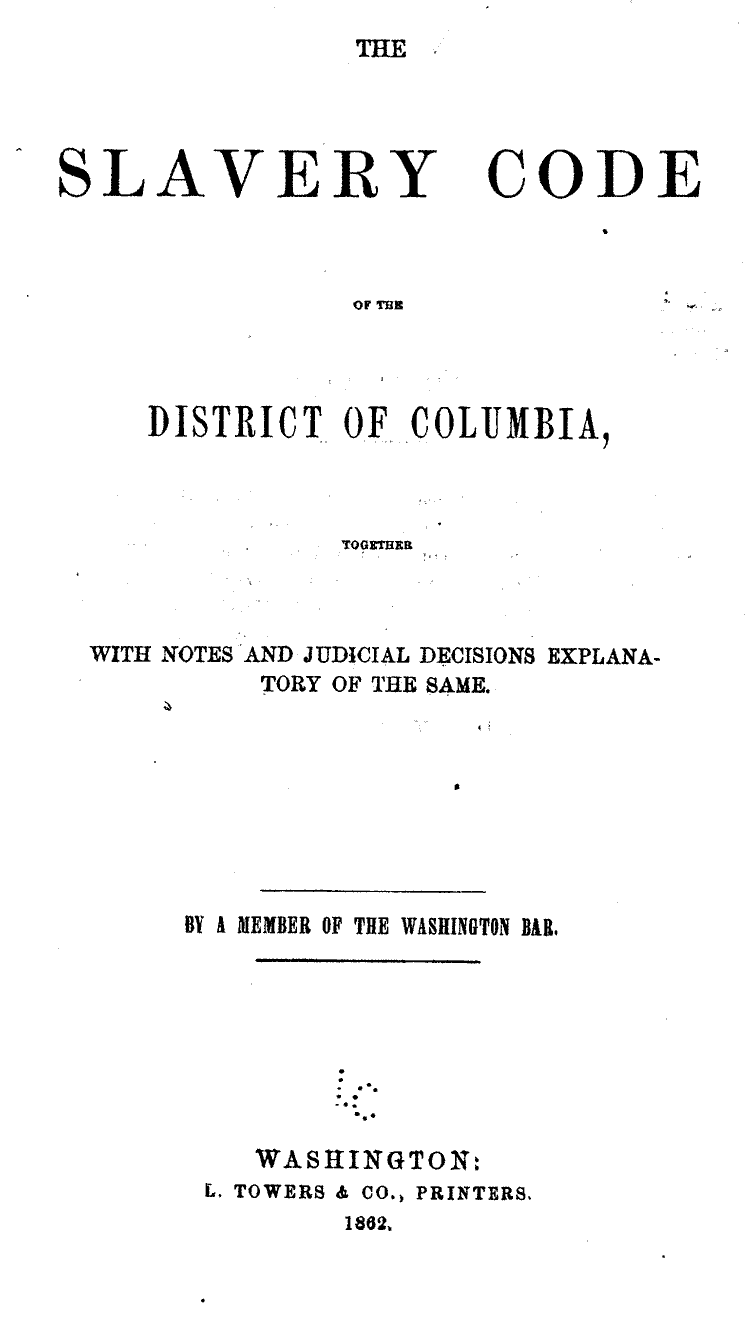
    Blog--may 6--slavery Slave-catchers were busily and profitably at work in Washington right up to the last moments before the issuing of the abolition of slavery in the District on April 16, 1862–this coming several months before the Emancipation Proclamation. (Congressman Abraham Lincoln, R-IL, sought the abolition of slavery in the District in 1849 but was shot down, mainly by a coalition led by Democrat J.C. Calhoun.)  Historically D.C. had a relatively small slave population, around 6800 in 1830 and  3800 in 1860–Maryland, its neighbor, did not, having upwards of 100,000 slaves at the beginning of the war, making it one of the most densely-slaved state by area in the South.,  “Absconders” from the counties of Maryland surrounding D.C. often made their way to the District, perhaps thinking that it would be a friendlier place:  and it was, comparatively, but the escaped slave was not immune to being hunted and prosecuted, recoverable like any other piece of stolen personal property, the slave in this case basically stealing themselves.

    D.C. was a small place, and the slaves were concentrated mainly in what we would today call downtown.  There was in fact a slave pen right there on the Mall, very close by the entrance to the Smithsonian. (To this day there is no marker.)  So the slave population in the District was highly visible.  As Charles Ball writes:

    “…I generally went up into the city to see the new and
    splendid buildings; often walked as far as  Georgetown , and made many new acquaintances
    among the slaves, and frequently saw large numbers of people of my color
    chained together in long trains, and driven off towards the South.” –“Fifty Years in Chains or The Life
    of an American Slave
    ,” 18-19,in First-Person Narratives of the
    American South, 1860-1920.

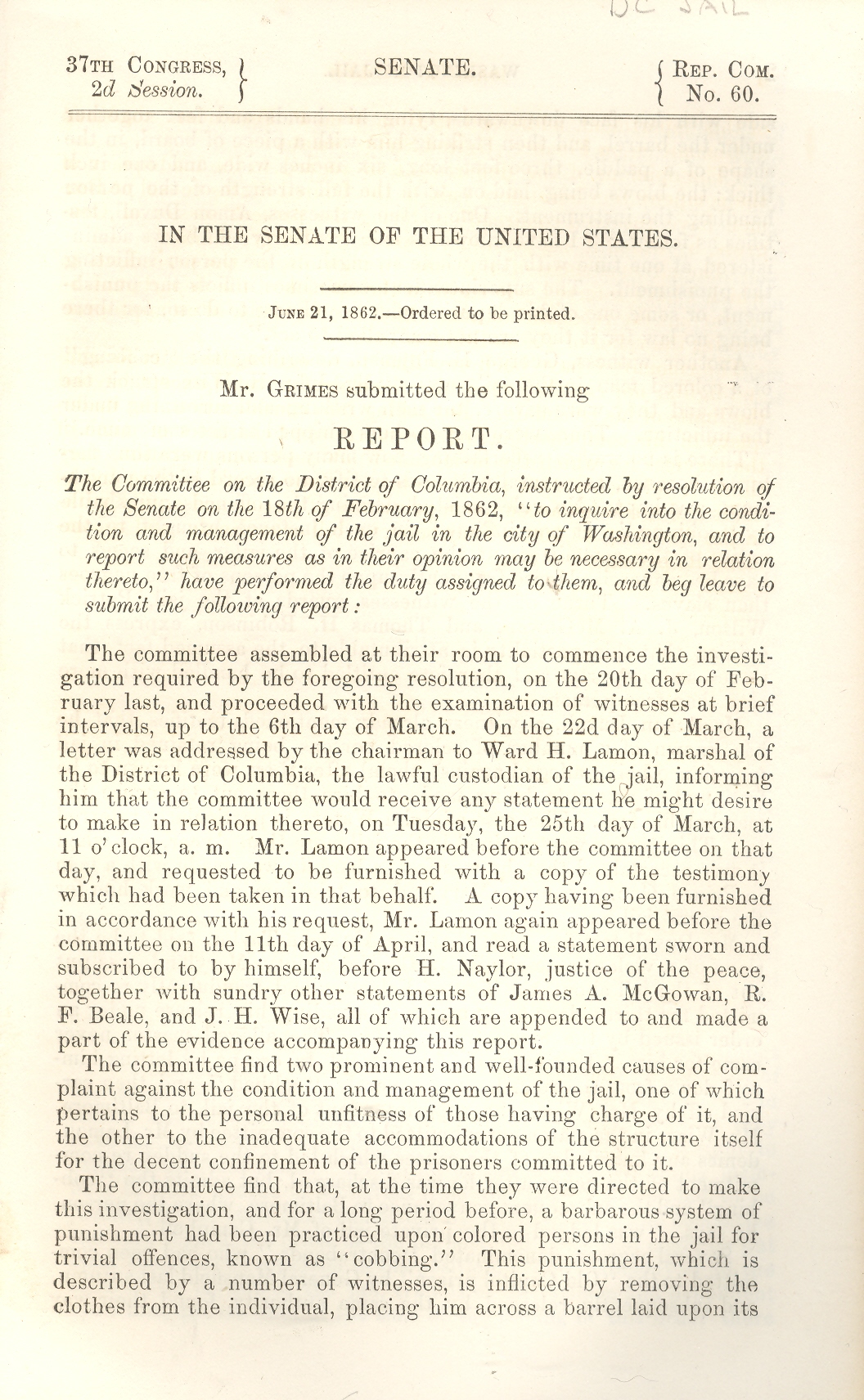
    This all comes to my mind after bumping into this government-printed document at right—it was keeping track of its part of eternity in the bottom of one of my boxes of pamphlets, shaking its way into a disturbing consciousness. Blog--may 6 dc jail

    This unhappy pamphlet details the intolerable conditions of the D.C. Jail, which at the time (February, 1862)  housed 300 prisoners, nearly five times the amount it was designed for.  Aside from bad/no food, hot/cold conditions, physical torment, and not-discernible terms of imprisonment, the prisoners were desperately overcrowded, sometimes ten to an 8×10 cell. 

    Conditions were worse for the blacks in the jail—these men were often arrested and imprisoned on no real charge, kept by the DC jailer, in prisoner, at their own expense. 
    The report states:

    “Mr. Amon Duvall, a witness already mentioned, testifies that he has known of a number of colored persons being retained in jail (no offence being alleged against them) after they were known to be free, and of attempts being made to hire them out to secure the marshal his fees. The case of John Waters is particularly referred to. This person was retained in the jail more than a year, and when it was ascertained that he was free a bargain was made with a man in Prince George county, Maryland, to take him and work him for the years’ jail fees.”

    The longer they stayed, the more they owed. Of course, if you had no money, and you were kept in jail a year—even by fraud—you accumulated quite a debt to the prison.  At this point the blacks were “hired out”, enslaved if free, to work for a year or whatever appropriate time to pay for their own (undeserved) incarceration. When these men ran from this service, they were further pursued, now doubly-damned: 
    “…absconded and ran away from said Prince George County, and are now fugitives from service and labor lawfully due to said affiant in said Prince George County and has reason to believe and does believe that all of the said slaves are now in the District of Columbia; he prays for process and that said slaves may be taken and delivered up to him by order of this court receiving & the statute in such cases made and provided.”[ George Duvall, Dist. Court of the U. S. for the Dist. of Col. Clerk of the Court “Fugitive Slave Cases, 1862,” May 15-19, 1862.]

    It was an insidious system that provided strong income for those with the power to demand it. 

    ·Posted by :

    ·in:


  • A Bit on the History of the Insides of Things: Renaissance Anatomy

    JF Ptak Science Books LLC  Post 604   Blog Bookstore                                                      

    Much of human intellectual history has been dedicated to looking inside, seeing
    the unseen, the stuff underneath, the invisible, the clouded, the inscrutable, the
    things-behind-something-else.   If you could somehow weigh all of the stuff that
    we know that is “visible” versus all of the other stuff that is not, I think that
    the scales would fly over instantly into the world of the unseen. Some of this
    material though does not have a measure:  for
    example, numbers are part of the unseen world, ideas made of nothing, points
    and lines in an imaginary series of planes and dimensions, and so have no mass
    themselves. Everything that is alive on and in our bodies, on our skin,

    Blog--may 5 skeleton

    in our
    water and food, and which were all basically unknown until the invention if the
    microscope, have little weight in and of themselves, but when  you add the whole biota together…well, then
    you’ve got a whole weighty lot of nothing  Then there’s the stars unseen beyond the six
    or eight thousand that we can see without a telescope, the rest of the universe
    waiting, discovered only 400-odd years ago, a very weight affair (and that’s not counting the dark matter). 
    I know that this is sort of a horrible argument, a beery and inelegant way
    to describe the path of human knowledge, but it strikes a (dis)chord with me.  

    One part of this invisible empire is within us—the elements of our bodies.  The Egyptians knew enough to do very simple
    surgery and to perform a more-complicated mummification ritual, but in general
    the body remained fairly well undiscovered until relatively recent times.  Publishing findings on those dark
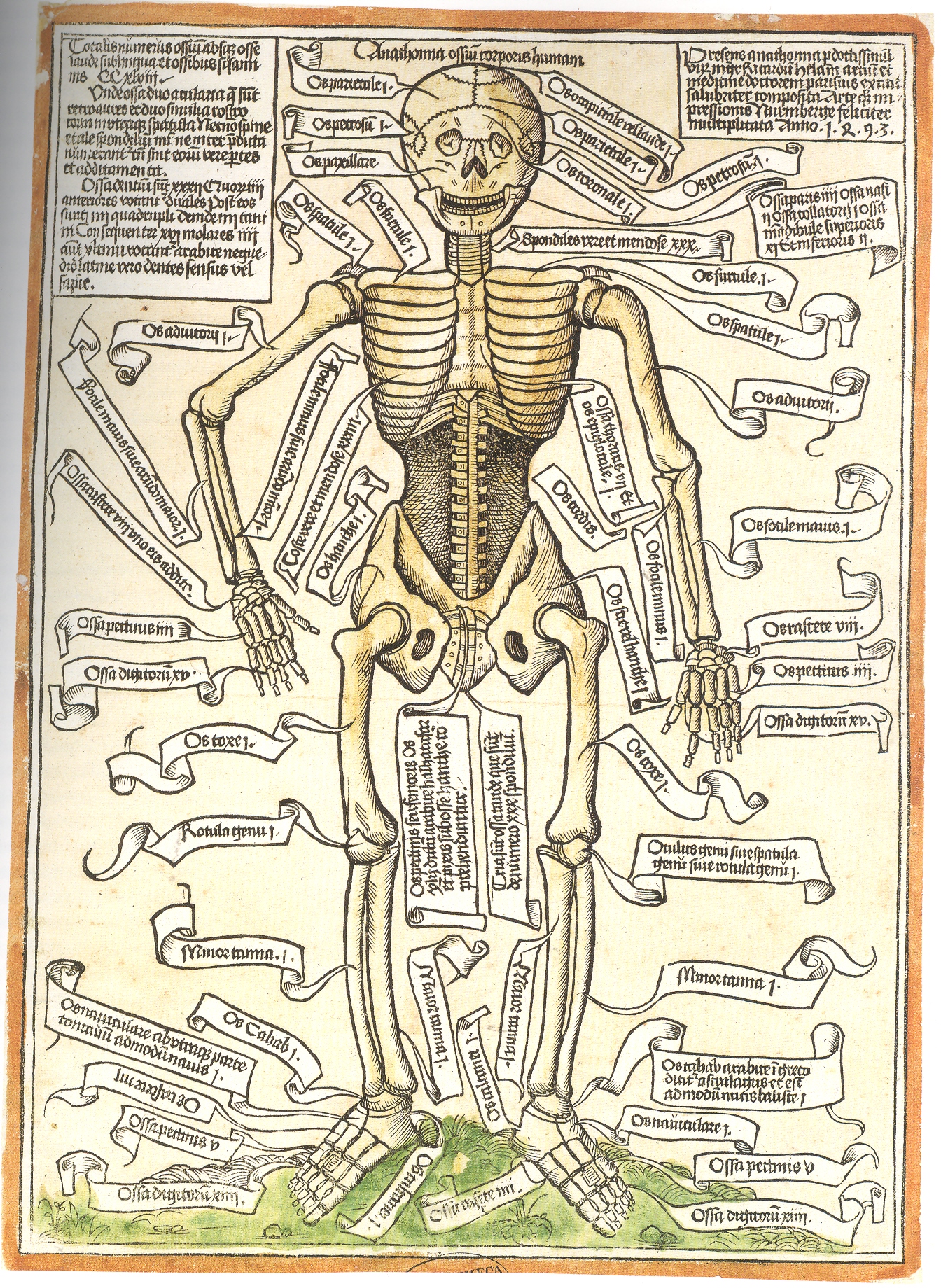
    explorations was another matter, the first image of a human skeleton not
    published until 1493 (shown here, the Anathomia ossium corporis humani)–this was the first revelation to the real world of science following a sleepytime of about 8oo years under the very heavy gaze of institutional religions. 

    This all changed in 1543 with the publication of the first modern anatomy , Vesalius’s revolutionary De Humani Corporis Fabrica—it proved to
    work as a template for the display and presentation of anatomical practices and
    medical rigour for many years to come, solidifying the pursuit of the knowledge
    of the human body into a discipline.  

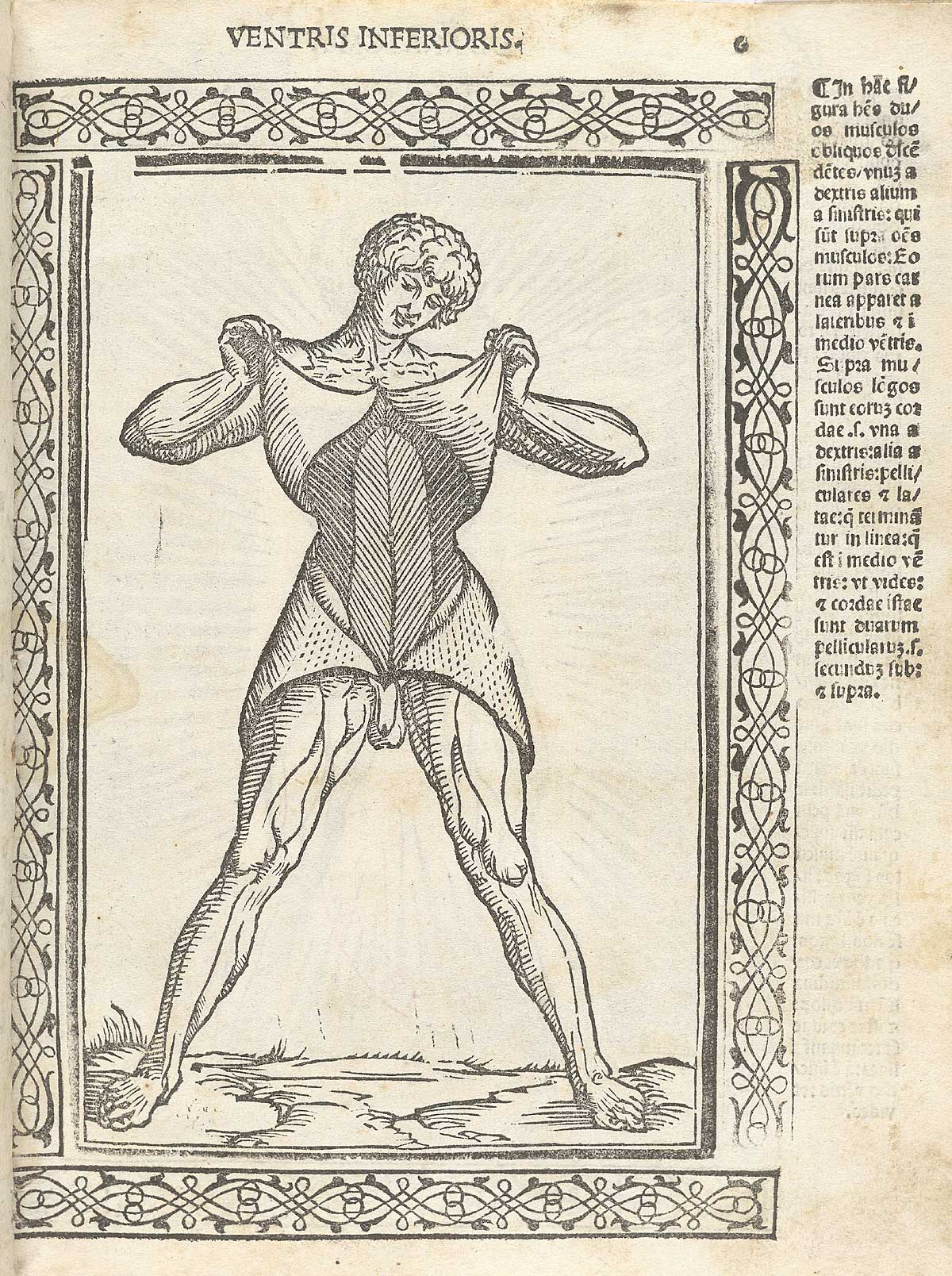
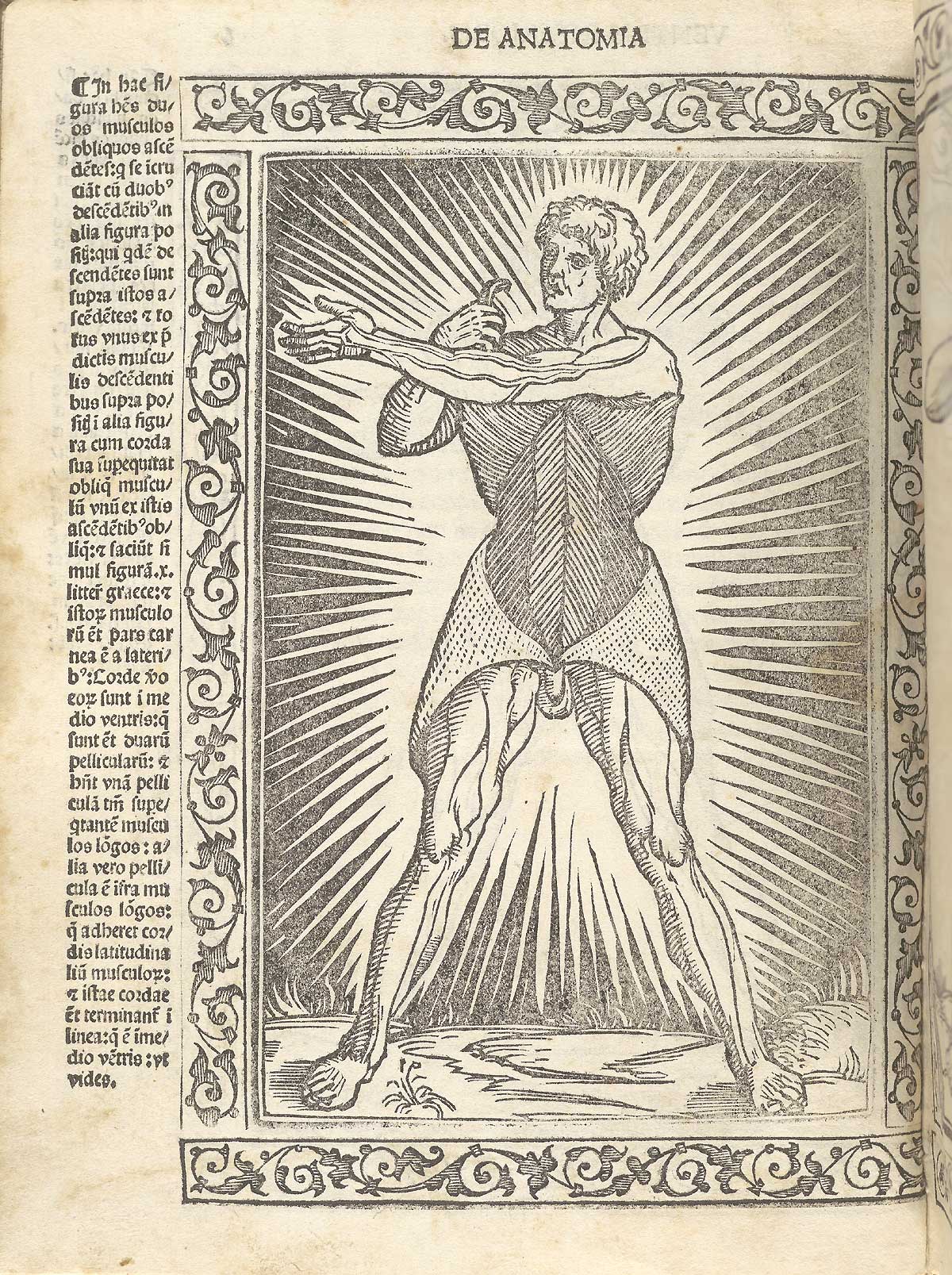
    Berengario_p06r Some of the predecessors weren’t
    so rigorous, as with 
    Jacopo Berengario
    da Carpi’s (ca. 1460-ca. 1530)
    Isagogae breues, perlucidae ac uberrimae in anatomiam humani corporis, who used several of the same images to illustrate different anatomical aspects.  (In  the  two examples right and below show the same anatomical display–the difference is the rather extraordinary background, and that’s it.) An
    other example is 
    Charles Estienne’s 1545
    De dissectione
    partium corporis
    (“On the dissection of the parts of the human
    body”) who simply ran out of scientific steam int the preparation of some of its
    many (lavish) illustrations—he used existing artwork of torsos and simply performed
    a printectomy on them, replacing some of the sections of the print with some anatomical
    detail.  The practice worked well enough,
    but the overall effort did not make it a landmark in the history of medicine. 

    Berengario_p06v

    I just wanted to touch very briefly on the rediscovery of the body in the 1490-1535 period.  To that end I’ve constructed this  table with data  pulled directly from the National Library of Medicine pages
    for anatomies on the web–all I did was place the records in a table so
    that they could be listed chronologically.  The numbers at left are
    clickable
    and will take you directly to the images of the work at the
    NLM site.  This is just a sampling of anatomies, though it may prove to
    be highly useful for folks in the science and the arts. 


    Chronological list:

        Author: Mansur
    ibn Ilyas (fl. ca. 1390).
       Title:
    Tashrih-i badan-i insan. [Anatomy of the Human Body].  Publication Information: [
    Iran, ca. 1390].            

       Author: Ketham,
    Johannes de (15th century).
      Title:
    Fasiculo de medicina.   Publication
    Information:

    Venice: Zuane & Gregorio di Gregorii, 1494.                 

          Author: Hundt,
    Magnus (1449-1519)
    Title:
    Antropologium de hominis dignitate…                          Publication Information:
    Leipzig: Wolfgang Stöckel, 1501.                              

        Author: Berengario
    da Carpi, Jacopo (ca. 1460-ca. 1530).
    Title:
    Isagogae breues, perlucidae ac uberrimae in anatomiam humani corporis.              Publication Information:
    Bologna: Beneditcus Hector, 1523.        


  • The Fantastic Self-Portraits of the Visionary Architect, Jean-Francois Lequeu

    JF Ptak Science Books LLC  Post 603   Blog Bookstore

    I guess it is easy to want to call M. Lequeu (1757-1825 (?)) an outsider, though
    he was hardly that.

    He was an exceptional talent who was exceptionally well-trained (and who won
    the highest awards offered by his school), and started out in a staid and
    brilliant way, a successful draftsman in his own right, and student of
    Scoufflot, helping to design ancient-inspiration buildings for the super
    rich. He was at the pinnacle of the drafting trade, though not so on the
    designing end.  Along came the Revolution
    and away went his architectural career—he wound up a surveyor and a
    cartographer until his retirement in 1815, after which he enters social and
    historical oblivion, until he finally dies in total obscurity ten years later
    (or so, the date is unclear).  His post-revolutionary vision was as
    phenomenal as his success in selling his ideas were dismal.  Well, this is
    really a cheap shot—his imagination was shockingly large, enormous, his designs
    fantastic and beautiful, and completely unexpected, and they seemed to grow
    larger/loftier and more interesting as time wore away at him. But he was far in
    front of the curve so far as popular (public) opinion was concerned.  Even among the other visionaries of the time
    (like Ledoux and Boullee) it was Lequeu who staked out the furthest reaches of
    architecture, and also with great depth and virtuosity.

    I think that as Lequeu was cleaved away, cell by cell falling through the
    floorboards of his single rented room, he reached further into time and deeper
    into space than almost any architect of that hundred-year period.   I
    also think that he was very well aware of his genius being seen as pure
    eccentricity—his half-dozen or so self portraits are among the most reaching
    that I’ve seen (in the pre-modern era). 

    If Lequeu’s visions existed at all in the world of French architecture it
    was in the Deep Underground—a place that he may have founded.  He was certainly, at the very least, its
    geologist.

    His self portraits are striking, but perhaps not so much more so than those by Rembrandt–he was certainly exploring modes of expression (Raphael’s series of engravings on the emotion of the human face is a good example of this study)–Lequeu though seems to always manage to suggest that he is an observed inmate somewhere.  There is a great undercurrent of “otherness” and great remove to them–something that makes places the self portraits into a different–empty, lonely–class.


  • Letters from the Dead and Dead Letters, Part I: Letters from the Condemned, 1719

    JF Ptak Science Books LLC  Post 602    Blog Bookstore

    Hanging offenses in England  in the
    18th century reached considerably far down into common crime.   The practice of printing a broadside detailing
    the crime with the prisoner’s lament below was also a common practice—it fueled
    public introspection/fear about keeping the laws of the King, provided them an
    entertainment (as the hangings were public), and helped to sustain a minor
    industry of grubby little Grub Street presses that produced such things. Very
    early on in my bookselling career I sold a collection of upwards of 500 of
    these broadsides—I remember clearly that young boy(s(!) were hanged for the
    theft of handkerchiefs,  men hanged for
    the theft of a goat, a chambermaid for stealing some tableware; people were
    hanged for house breaking, “threatening”, shooting a stag, fraud, damaging
    public buildings, and the like.  Under
    James I in 1603 there were 50 crimes with punishments of death; by 1783 there
    were 200. As James Briggs (et al) wrote in Crime
    and Punishment in
    England ,
    an Introductory History, “the death penalty was a leading feature of penal
    thinking”. 

    Crimes against code, the basic public
    sensibility, and common discussion were also punishable by death.  Homosexuality was one offense in this
    category—in 1769 William Blackstone’s foundation work on English law  (Commentary….,
    chapter 15, Book IV, pp 205-217) described homosexuality as the “crime  that could not be named”, and both active and
    “passive” partners to such a crime were eligible for hanging.  I wonder about the statistics for crimes like
    this, and also about the number of Lesbians who were hanged for their love.

     Adultery was another crime for which one
    could swing, and the broadside that I’ve reproduced here details just one such
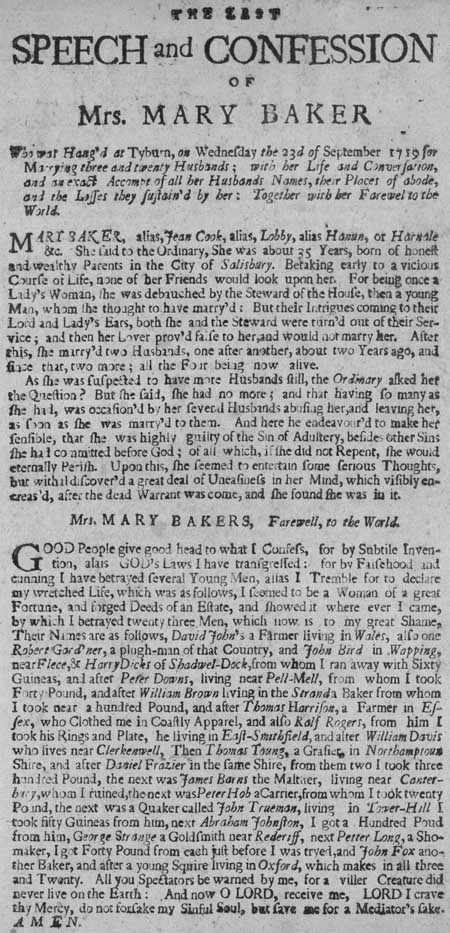
    criminal.  It is the hanging confession
    of Mary  Baker , who was convicted  of defrauding “several” men of money, and
    also of the sin of multiple marriages, and adultery.  The case was quickly heard and the sentence
    quickly delivered

    Blog--may 4--
    Mary was interviewed and she allowed that she had taken two
    husbands; but the legal representative convinced her to tell the whole story,
    as she would be soon be judged by god. 
    This was sooner than she thought, evidently, because she was convicted
    on these two admitted counts (though she was suspected of many more).  Convicted and sentenced, and sentenced to
    death.  It was after she received the
    death warrant that she confessed to more than the original two.  As the broadside states: “She seemed to
    entertain some serious Thoughts, but withal discover’d a great deal of Uneasiness
    in her Mind, which visibly enereas’d, after the dead Warrant was come, and she
    found she was in it”.  Finding yourself
    in a death warrant would increase your uneasiness, I’m sure. 

    I’ve got no idea why Mary would go into
    such detail; perhaps it  was a natural
    reaction, trying to rescue the soul by confession; maybe she was enticed by the
    legals, somehow (threat against her, threat against family, a more “pleasant”
    (i.e. less painful, immediate) death at the hands of the hangman.  I don’t know. ) But this is the list of the
    men she married, or didn’t marry, outlined in her confession. 

     She starts with a general appeal to her readers:

    “GOOD People give good head to what I Confess, for by
    Subtile Inven-
    tion, alyis GOD’s Laws I have transgressed: for by Falsehood and
    cunning I have betrayed several Young Man, alias I Tremble for to declare
    my wretched Life, which was as follows:

    I seemed to be a Woman of a great Fortune, and forged Deeds
    of an Estate, and showed it where ever I came, by which I betrayed twenty three
    Men, which now is to my great Shame, Their Names are as follows:

    [And making a list of these names, we have:]

    David John’s a Farmer living in Wales,
    Robert Gard’ner, a plugh-man of that Country,
    John Bird in Wapping,near Flece,
    Harry Dicks of Shadwel-Dock, from whom I ran away with Sixty  Guineas
    Peter Downs, living near Pell-Mell, from whom I took Forty
    Pound
    William Brown living in the Stranda Baker from whom I took
    near a hundred Pound,
    and after Thomas
    Harrison, a Farmer in Essex, who Clothed me in
    Coastly Apparel, and Ralf Rogers, from him I took his Rings and Plate, he
    living in East-Smithfield
    William Davis who lives near Clerkenwell
    Thomas Young, a Grasier in Northamptoun Shire
    Daniel Frazier in the same Shire, from them two I took three
    hundred Pound
    James Barns the Maltner, living near Canterbury, whom I ruined,
    Peter Hob a Carner,from whom I took twenty Pound,
    Quaker called John Trueman, living in Tower-Hill I took
    fifty Guineas
    Abraham Johnston, I got a Hundred Poud
    George Strange a Goldsmith near Rederiff,
    Petter Lang, a Shoemaker, I got Forty Pound from each just
    John Fox another Baker, and after a young Squire living in Oxford, which makes in all
    three and Twenty.

    I don’t know anything about Mrs. Baker.  It does seem as though she was out and up to not-much-good, an defrauded a bunch of guys.  Seems that she met a very stiff end for what harm she actually caused.  Then again, when kids were hanged for plucking two hankies from a gent’s pocket, her crimes seem large in the redded eyes of the Bloody Code.  

    ·Posted by :

    ·in:


  • Crowds Series: Berlin Expectations. Zeppelin 1909 vs. Springsteen 1988

    JF Ptak Science Books LLC  Post 601   Blog Bookstore

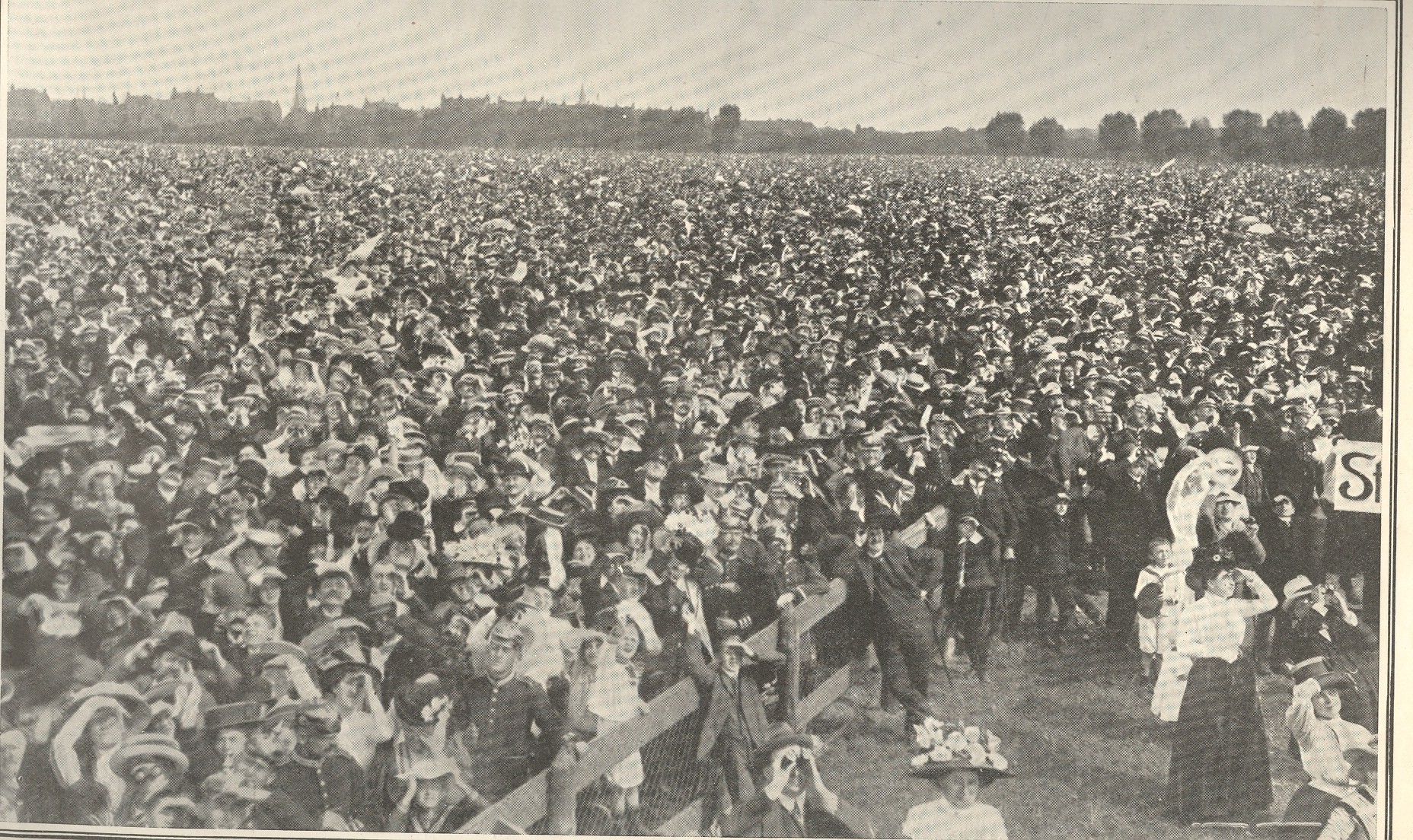
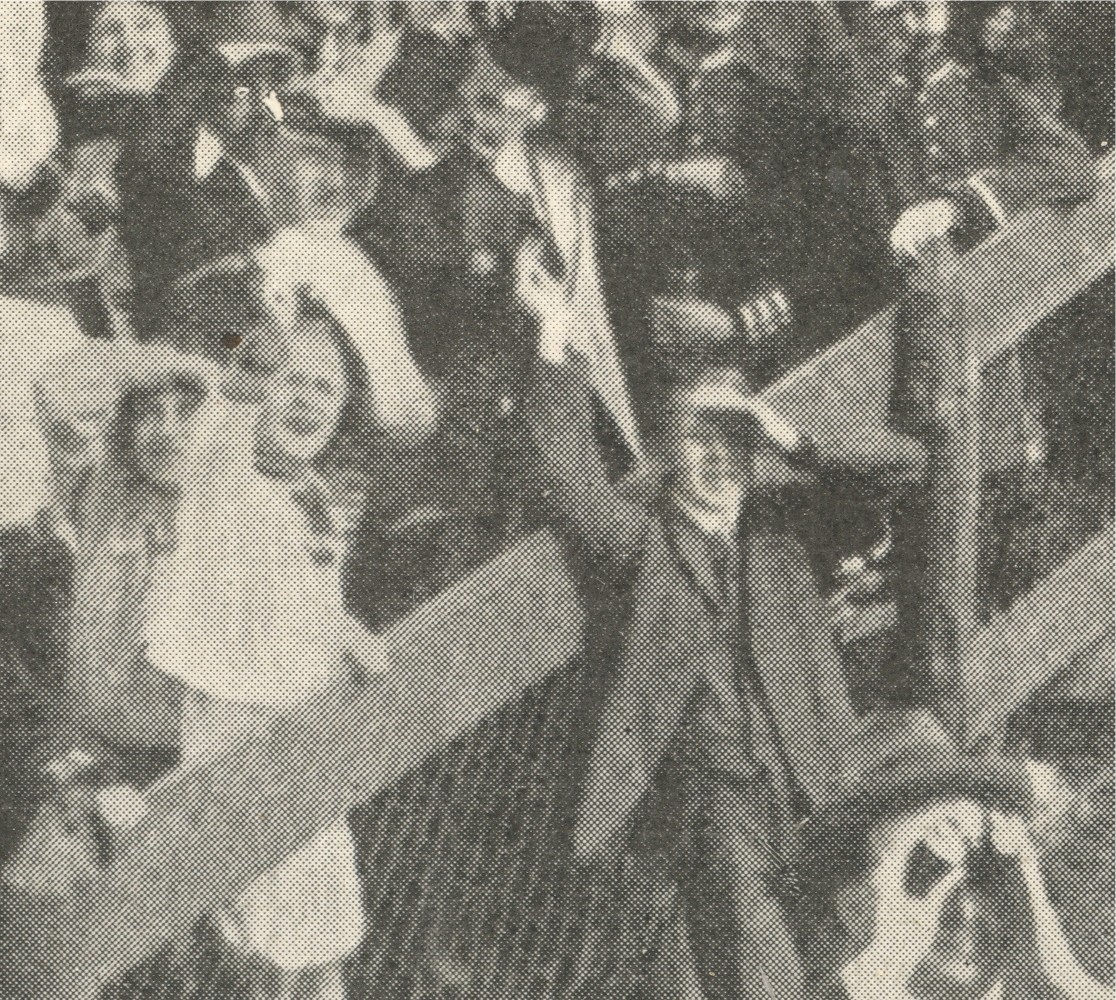
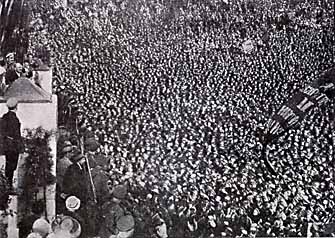
    This image emerged from the pages of The Illustrated London News for 14 September 1909 and shows “nearly the entire city of Berlin” coming out for the arrival of the Zeppelin III.  And, as you can see (click into the image for a larger view) there are at the very least hundreds of thousands of people present. And most of them seem to be waving–it must’ve been extraordinary.  I’ve done a little detail work for the larger image, concentrating on the guy in the front foreground with the binoculars–I love the kid to his upper left waving a handkerchief, filled with every expectation. 

    Blog-may 1--looking3

    Blog-may 1--looking2


    Perhaps a similar sized crowd (some estimates putting the number at a million) showed up to listen to Bruce Springsteen perform in East Berlin in 1988.  I have no idea what the East German government was thinking when they allowed him to perform.  Listening to hundreds of thousands of people singing along to “Born in the USA” is monumental and very emotional–the video stays like that the whole way through, but the crowd really seems to find its voice at 2:52.   Both scenes are pretty ecstatic, all those people seeing something that they’d never seen before…  I guess it woul dbe possible for someone to have been in both crowds in their lives–a little tottering, and watching at the fringes of a brittle-bone-cracking crowd, but certainly possible. (And definitely possible for certain enhanced crowds in that same city in the 1930’s, but I won’t go there.)  Somehow I’ve got a connection going between the kid in the 1909 scene and the kid in the Springsteen video at 5:02

    ·Posted by :

    ·in:


  • Common Views of the Uncommon–Non-Combatant Photography in WWI

    JF Ptak Science Books LLC   Post 600    Blog Bookstore

    There are many histories of photography in wartime:  early images show cavalry standing at the
    ready, troops marching, piles of munitions, heaps of food; later on (as late as
    WWI) come actual scenes during the course of battle.  War photography changes forever beginning in
    the Spanish Civil War, and then of course WWII. 

    Korea, Vietnam,
    and then into the more recent past elevates the camera to being a third-person
    and fifth column.

    Blog april 29 trench Looking through the WWI years in the Illustrated
    London News
    I experienced a creeping realization of a different sort of
    perspective in war photography:  turning
    the camera to look behind the battle. 

    Turning the camera exactly around, away from the action, hasn’t a good
    history in itself.  There are some great
    examples:  when the Golden Spike was
    driven at Promontory Point in 1869 someone had the foresight to look the other
    way and make a photo—it shows a vast plain, a long double ribbon of rail, a
    long series of telephone poles receding into the horizon, and one man. It is
    also a scene that looks pretty much the same today, if you took away the small
    dedication center that is there.  That
    was the reality of the day, not all of those RR workers gathered around the two
    hot locomotives, the cleanest of them toasting each other and the camera. (If
    you look closely you can find some Chinese laborers in among the crowd and also
    occasional bits of Confederate uniforms.)  
    Elsewhere in this blog I told the story of Ed Clark, the LIFE
    magazine photographer who wheeled his camera away from where the hundreds of
    other cameras were recording the removal of Franklin Roosevelt’s casket from Hot Springs and made
    perhaps the greatest photograph of the FDR years. 

    But it is a different sort of turn-around that struck me for WWI.  These are the photographs of the liminal
    spaces after the fight, the clean up, the gathering of spent ammo, the cleaning
    of the clothing, the care of the soldiers, the rehabilitation. And I’m not talking
    about the Matthew Brady after-battle battlefield photograph style.  What I’m referring to is all of the “little”
    things that happen when the battles aren’t being fought and the troops weren’t
    on the move. There some images for thing that appeared in Harper’s Weekly and
    Frank Leslie and so on during the U.S. Civil War, but so far as I can tell the
    vast majority of them are drawings. 
    Having looked through popular illustrated magazines that covered the
    Franco-Prussian War, the Spanish American War and all of the conflicts
    in-between, I just don’t have much of a sense at all that this life was
    recorded very well photographically.

    I can understand this—there’s not that mBlog april 29 trench 2uch glory in sandbagging Red Cross
    stations, or hauling away dead horses by the thousands, or cooking thousands of
    loaves of bread in primitive conditions; they certainly aren’t a good case for
    a hearts-and-minds campaign.  The camera
    has enough power to go ‘round, giving and taking, usually at the same
    time. 

    But to my brain these photographs really come into being in the second half
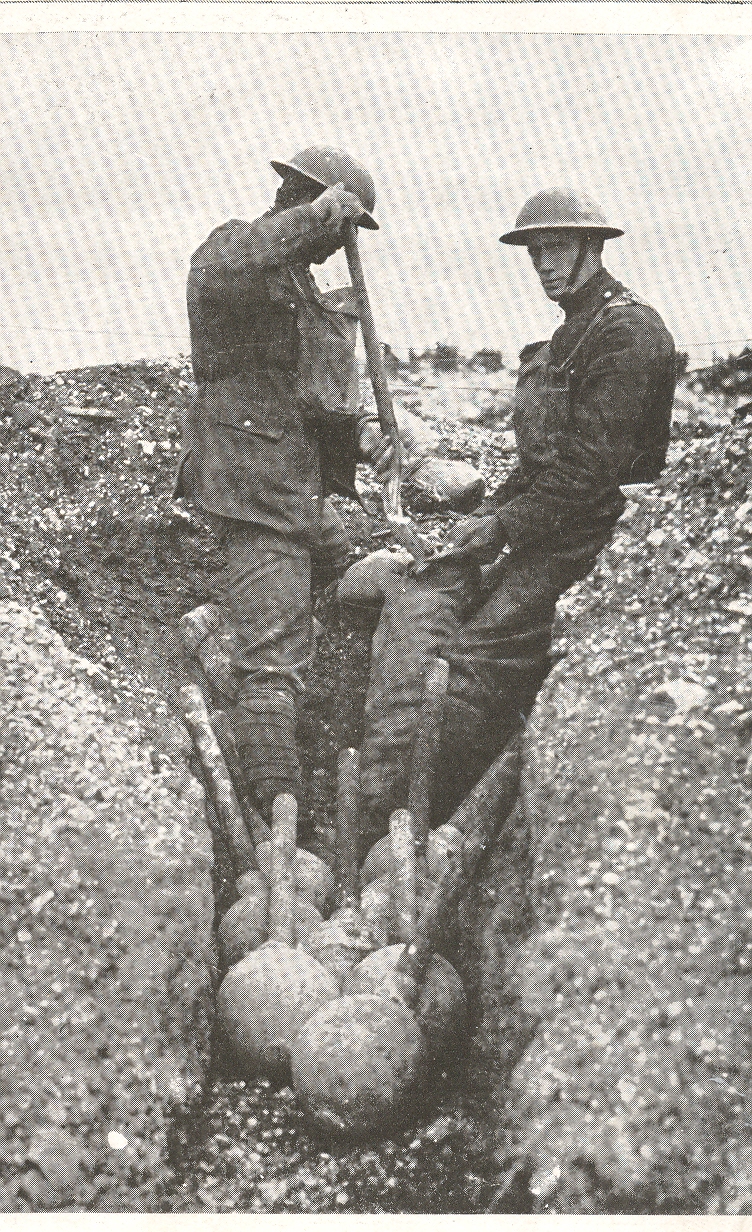
    of WWI., and they tell an other, integral, more human story of that same war.  The first image (above) shows two soldiers
    cleaning up cartridge cases after a fight—when you look closely at the photo
    you see that the place is littered with those cases.  I suspect that there were hundreds of
    millions of these cases ejected from rifles. 
    Billions, probably.  I wonder how
    long it would take a thousand soldiers to shovel a billion shells into canvas
    bags?  The picture reveals a very deep
    image of the ways of war at the most basic level. Blog april 29 trench 3

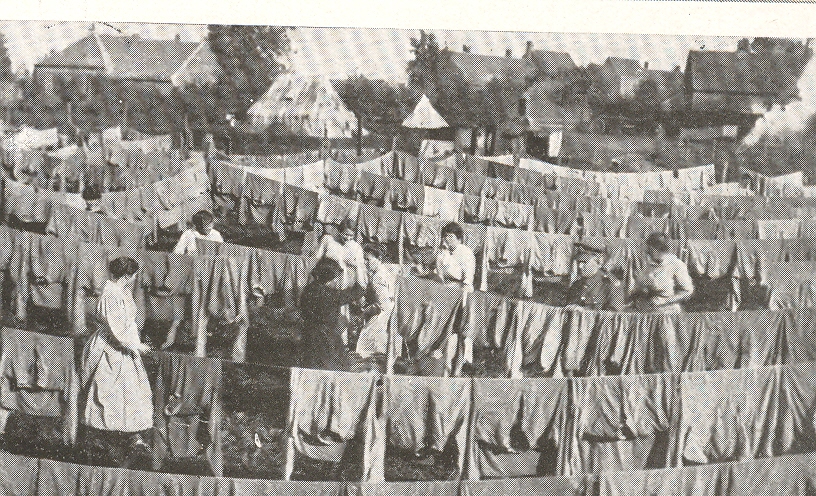
    The next photo is a “simple” image of clothing out for a dry—except of
    course that the clothing lines go on and on, railroad tracks into the sun,
    tended by hundreds of women, getting the shirts ready for the “men in the trenches”,  many of whom won’t need those shirts by the
    end of the month. 

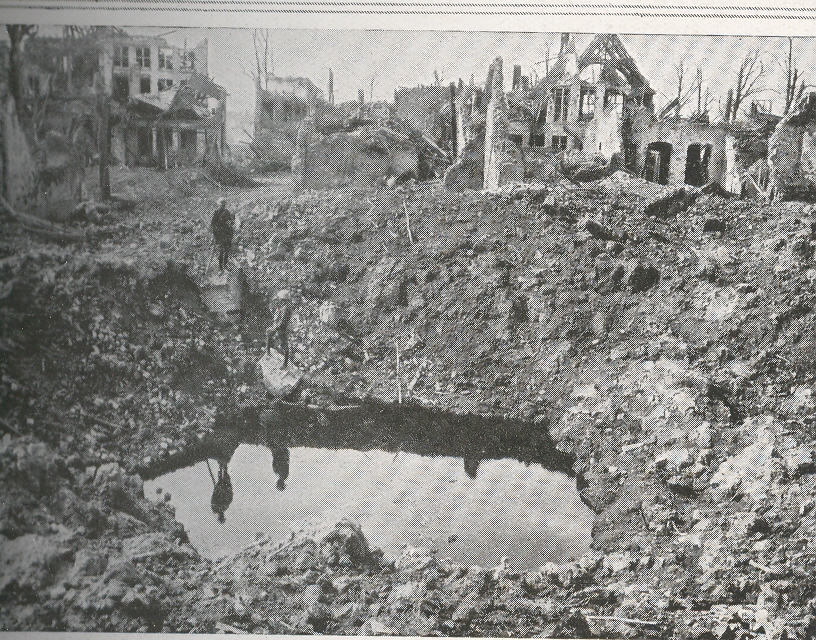
    Many of these men and women wound up being consumed–this photo at right shows one of the ways how that happened. It is an extraordinary crater some 75 yards in circumference created by a massive shell.  It is a massive image–brutal, lonely, and speaking the quiet of the end.  And it was a different sort of image that people were used to seeing in war reporting. 

    These three photos appeared on only three successive pages of the 15 October 1917 issue of the Illustrated London News.

    ·Posted by :

    ·in:

    —

  • French Visionary Architects–Boullee, Ledoux, Lequeu

    JF Ptak Science Books LLC  Post 599      Blog Bookstore

    I’ve been collecting images by some of  the great, visionary architects of 18th century France:  Etienne Boullee (1728-1799), Claude-Nicolas Ledoux (1736-1806) and the semi-impossible Jean-Jacques Lequeu (1737-1825).  It was a tough time for these architects to see far into the future at the time of the Revolution, as people who were even less deserving than these men lost their heads.  In any event I’ve compiled a short three minute video exhibiting some of their works, using the music of Wim Mertens for Peter Greenaway’s love poem to M. Boullee called The Belly of an Architect.  I couldn’t but help using this music in this context, sorry to say–it just goes perfectly with these images.  (Also, I’ve written about M. Ledoux here.)

    ·Posted by :

    ·in:


  • Missing People: Flerov, Nuclear Fission, and the Development of the Bomb

    JF Ptak Science Books LLC  Post 598  

    In the history of science there are a number of instances where discoveries
    get passed by, or un-noticed, or un- (or under-) appreciated.  Gregor Mendel’s 1865/6 paper embodying the
    discovery of genetics didn’t get noticed (for real) until 1899.  The Alpher-Gamow-Herman paper (1948)
    postulating the background radiation for the Big Bang went unnoticed even after
    Penzias and Wilson found it (by accident) right where it was supposed to
    be.  And so on.  There’s another whole category of names
    associated with discoveries that have faded into obscurity even though their
    idea has not:  Walter Pitts (neural
    networks), Vannevar Bush (the internet), Michael Servetus (pulmonary circulation,
    Rosalind Franklin (DNA), Robert Hooke (too much to mention), and so trippingly
    on.

    I had this second category in mind while grazing through the year 1940 in
    the Physical Review.  I came across a
    very significant paper—a paper of exceptionally high standing, of direct
    interest to hundreds of working nuclear physicists—that, after publication,
    became invisible—or actually publicly invisible.  The problem was that it was also of very high
    interest to the war effort, and it was published by a Russian.  By a Soviet. 
    The paper was by G.N. Flerov and K.A. Petrzhak (Spontaneous fission of uranium  volume 58, page 89, 1940), and it addressed isotopes
    U-238, U-235 and U-234 and the influence of neutrons of different energies; their
    experiments revealed a new type of nuclear transmutation  and observed the world’s first occurrence of spontaneous
    fission.  And this of course was a big
    deal because of the military applications of the continuing series of
    discoveries on nuclear fission, and so the paper—as monumental as it was—passed
    without comment and without notice.  Not
    because the paper didn’t merit it, of course, but because the powers that be
    thought it most prudent not to tip the very secret developmental hand of
    creating an atomic bomb. 

    Years later in his book The Advisers, Oppenheimer, Teller and the Superbomb,
    Herbert York recorded the thoughts of Igor Golovin, who supported the work of
    Kurchatov who sponsored the research of Flerov and Petrazhak:  “the complete lack of any American response
    to the subject of this discovery was one of the foundations which convinced the
    Soviets that the Americans were developing the bomb”.  As was everyone else,  probably. 
    Peter Kapitza, one of the greatest Russian physicists of the century noted
    (on 12 July 1941) that—based on this work— it was entirely possible that a bomb
    could be developed that could kill millions of people.  And it was right after this that these papers
    were no longer published in the Physical Review—for national security
    reasons. 

    There was another reason for not responding to the Soviet paper.  On August 14, 1939, Josef Stalin started a letter
    so:

    To the chancellor of
    the German Reich, Herr A. Hitler.

    And finished it thus:

    I thank you for your letter. I hope
    that the German-Soviet Nonaggression Pact will mark a decisive turn for the
    better in the political relations between our two countries. .

    J. Stalin

    The Nazi-Soviet Nonaggression Pact was a pretty good reason for not wanting to “share” with the Soviets.

    The Soviets wouldn’t see the light until the Nazis ripped off the curtains
    with the start of their June 1941 offensive  in Operation Barbarossa, beginning
    a brutal attack on Mother Russia that wouldn’t end until the Germans where
    defeated by Winter.  Keeping the Soviets
    out of the loop was a good policy decision.

    In a way though it may not have mattered.  The only country on earth that had the facilities and resources to develop the bomb was the United States–the sheer amount of energy alone would’ve consumed something like the majority of all energy resources needed to fight the conventional war for both the Japanese and the Germans.  This list goes well on, but that’s another story.