A Daily History of Holes, Dots, Lines, Science, History, Math, Physics, Art, the Unintentional Absurd, Architecture, Maps, Data Visualization, Blank and Missing Things, and so on. |1.6 million words, 7500 images, 4.9 million hits| Press & appearances in The Times, Le Figaro, Mensa, The Economist, The Guardian, Discovery News, Slate, Le Monde, Sci American Blogs, Le Pont, and many other places… 5000+ total posts since 2008.

Category: Perspective

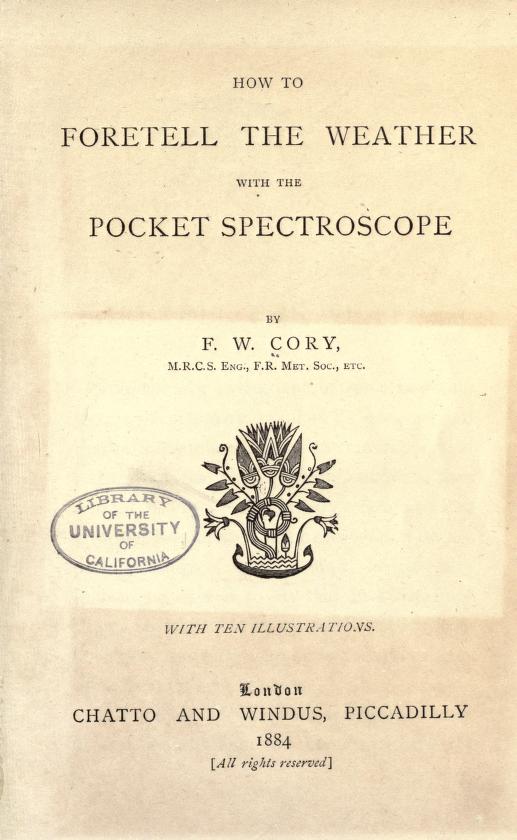
  • On Using the Pocket Spectroscope to Foretell Weather, 1884

    JF Ptak Science Books    Quick Post

    I was working my way through an edition of Nature for 1884 (23 October, page 606) when I found a review of F.W. Cory’s How to Foretell the Weather with the Pocket Spectroscope (1884).  The title was enough, and the review even more so–I knew this was an obscure work, but not so much anymore, as the entire book is located online! Sometimes I get used to the sci-fi aspect of the intertubes, but when I make discoveries like this I am reminded all over again how magnificent all of this is. 

    Howtoforetellwea00coryrich_0005[Source:   University of California Libraries via Internet Archive, here.]

    ·Posted by :

    ·in:

    —

  • An Interesting 3-Section Perspective, 1560

    JF Ptak Science Books    Post 2069


    Cousin_p09 det
    [Detail from engraving in the seventh image, below]

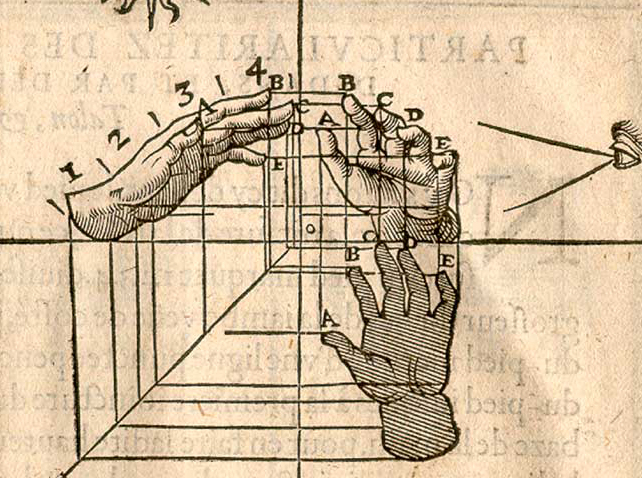
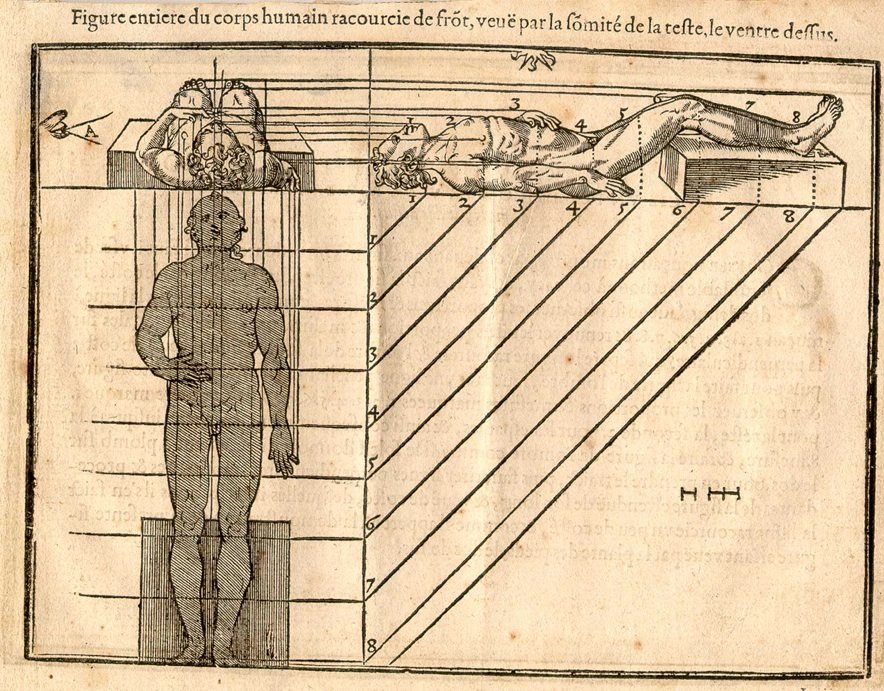
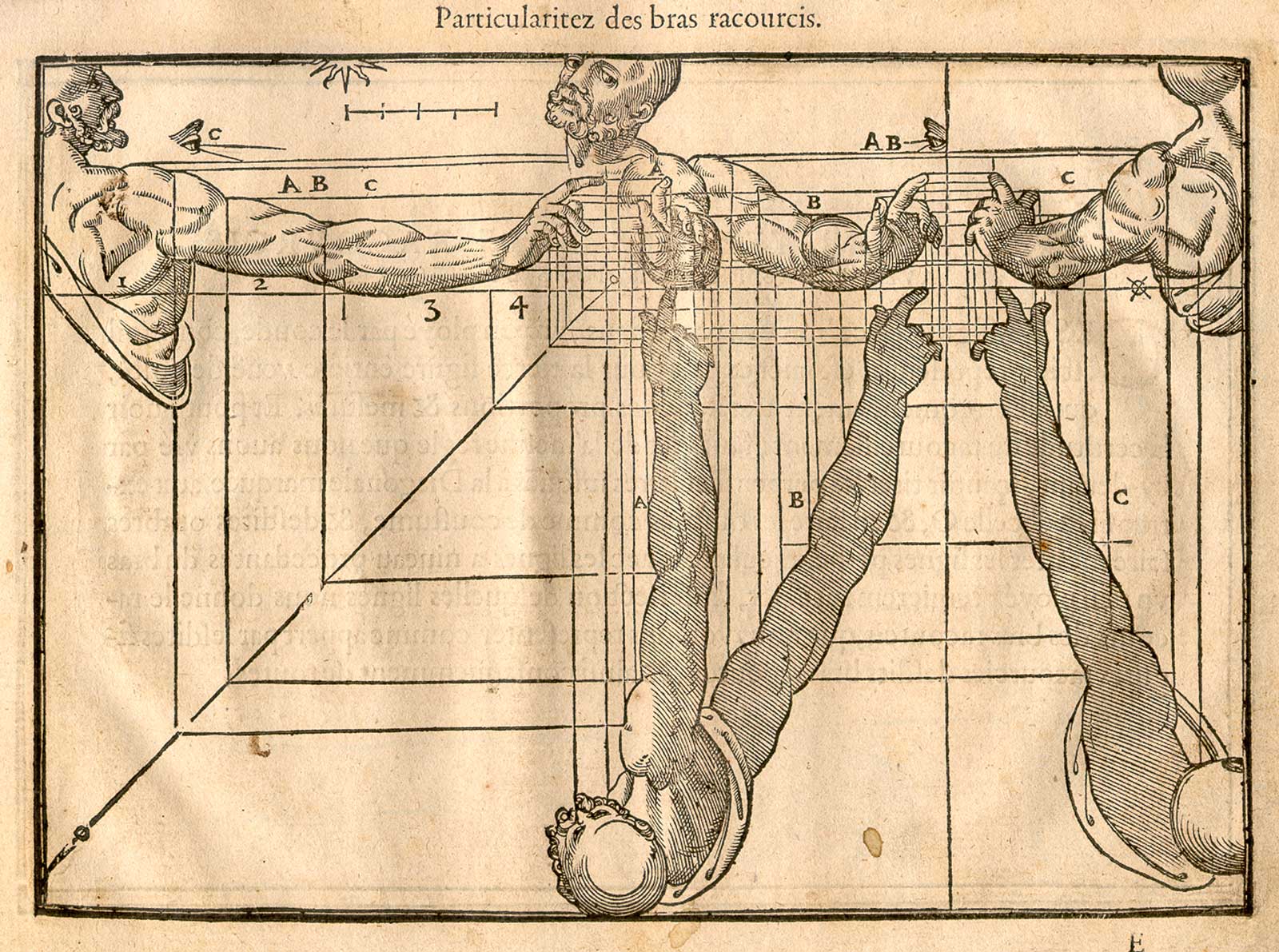
    I’m not sure if I’ve ever seen a 16th century human perspective drawing showing the body in plan and elevation and cross-section.  Jehan Cousin the Younger (1522-1595, in France), the son of Jean Cousin the Elder 91490-1560), a painter and sculptor, produced such an image in his Livre de Perspective, which was published in 1560. Well, the image definitely was published in 1560, though the artist may have been father and it may have been son–they worked closely together, and the Younger was taught at great length by the Elder, so much so that their work became indistinguishable. Nevertheless, the images I think are quite extraordinary, as we see below: 


    And so by Andreas Mantegna, a classic example:

    The following images come from the 1608 edition of the Cousin Perspective. a number of which are fairly unusual (all from the Library of Congress site, here):

    Cousin_p16


  • Notes on the History of Lines: Sight Lines

    JF Ptak Science Books   Quick Post    History of Lines 

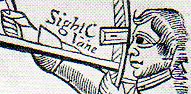
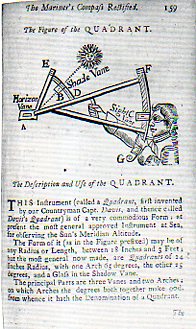
    These are particularly fine and relatively early printed images depicting a specific kind of line of sight–this one, a positioning, rather than a line of sight in fire control, or radial velocity, EM radiation or acoustics wave propagation, or targeting…this instrument was used to establish an imaginary line in perceived objects. 

    Sextant 237This is a detail from Andrew Wakley’s  The mariner’s compass rectified : containing tables, shewing the true hour of the day, the sun being upon any point of the compass ; with the true time of the rising and setting of the sun and stars, and the points of the compass upon which they rise and set … With the description and use of those instruments most in use in the art of navigation. Also a table of the latitudes and longitudes of places, published in 1763 and reprinted many times after that. (Full text is available from Google books and also from the Haithi Trust which offers a text version of the book as well.)

    The full page from which the detail is drawn:

    Sextant 236


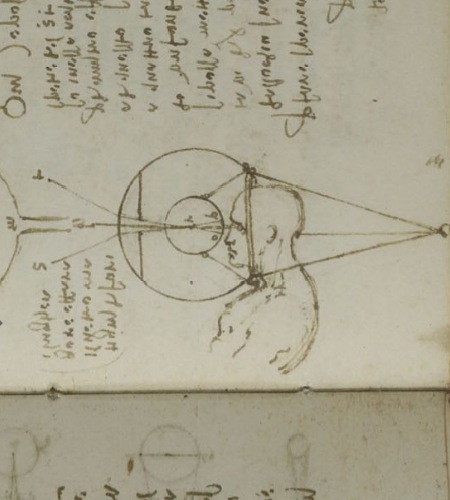
    There is a certain continuum in developing sight lines that comes to mind, as with this famous image drawn by Leonardo in 1508, perhaps the first modern interpretation of how the eye functions, kept privately in manuscript, the result of theory and experimentation:

    Leonardo eye

     Which leads us to the sigh lines of Albrecht Durer, illustrating (some 17 years later) the use of a perspective tool, the vielo, in his work The Drawing Manual published in 1525:

    http://www.oneonta.edu/faculty/farberas/arth/Images/ARTH_214images/Durer/durer_perspnude_large.jpg


  • Dots and Lines in Optical Diversion

    JF Ptak Science Books     Part of the History of Dots series  Post 2007

    Follow Me on Pinterest

    Long is the line in the history of art–far less so the dot. 
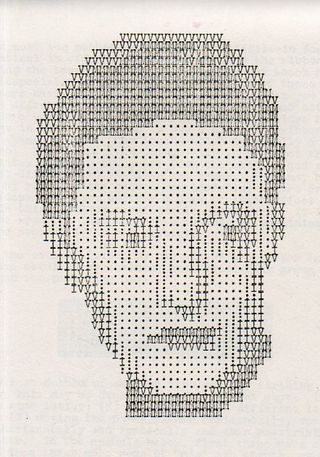
     
    Artyping216

    The line has been part of a long and deep inheritance of rendering a truth, factual, perspectival presence–in general, at least. Certain symbolic and metaphoric elements will sometimes confuse and collapse bits of the image, but the effort for centuries has been to present a balanced nature as close as practicable to its perfection.  That was the strength of the line. 

    The strength of the dot was in doing something not quite the opposite but approaching it. 

    It is interesting to think of the importance of dots in the first revolutionary changes in 500 years in the history of art.  Honestly, there wasn’t anything epochal that happened between the re-discovery of perspective (ca. 1330-1400) and the arrival of Impressionism (and just afterwards of non-representational art) in the 1872/3/4-1915 period.  
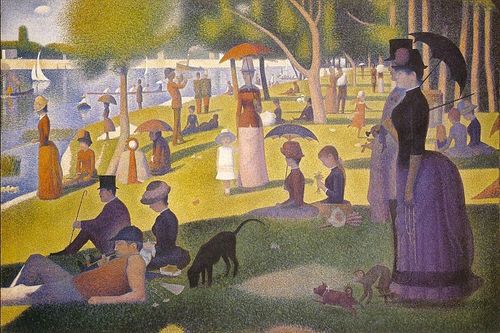
    Suerat Dots aren’t brought to bear formally in the revolutionary movement until the early 1880’s.  Impressionism for all intents and purposes is formed with the Societe Anonyme in 1872 (whose members included Monet, Pissaro, Degas, Sisley, Morisot and eleven others), and perhaps more realistically in 1874 when the Societe exhibited its first salon.  (The first show held at the Nadar Studio in Paris in April 1874; a tiny, one month long affair, compared to mammoth exhibitions like the Universal Exposition in Paris in 1867.) 

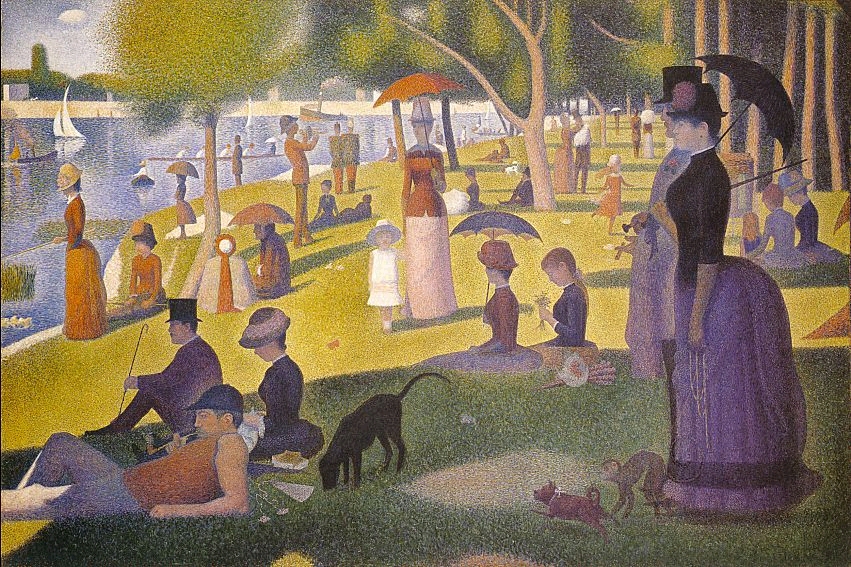
    It was Georges Seurat who brought the whole world to the dot experience with his artistic method of Pointilism, in particular with his magnificent Un dimanche après-midi à l’Île de la Grande Jatte, an enormous work given its composition—dots.  The dots replaced the brushstroke, and their placement in relation to their color was an absolutely brilliant innovation, establishing a perfect result for the viewer when examining the work as a whole.  (It may well be that the French chemist an designer Michel Chevreul made this discovery a few decades earlier, noticing the effect and changes in color depending on placement and—in his case, with fabric—color in the dyes for his material.)

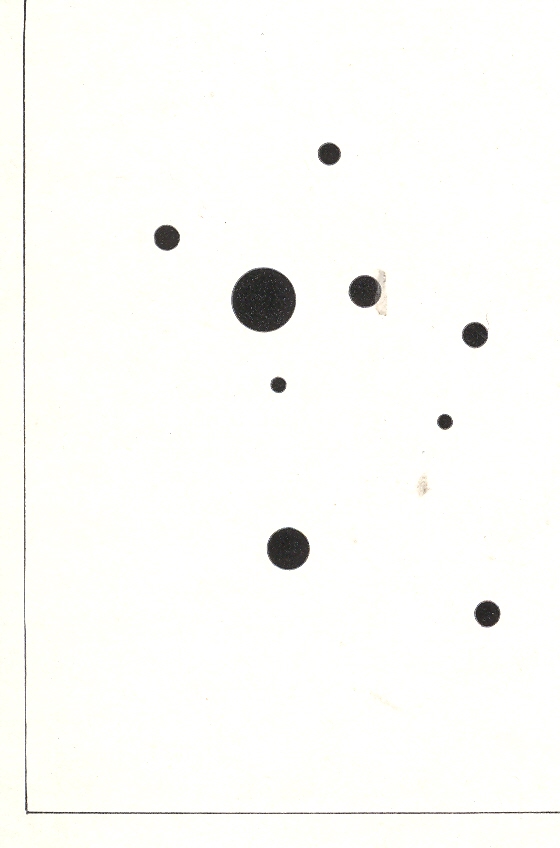
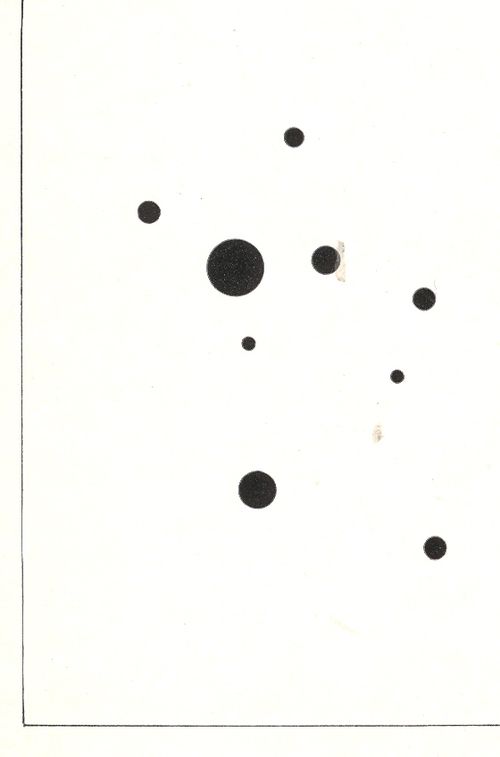
    Wassily Kandinsky (1866-1944), the discoverer of nothingness in art and the introduction of the first BLOG==july 13=kamd non-representational paintings in art history (1913) used his fair share of dots in his exploration of the previously invisible.  One good example is his 9 Points in Ascendance (1918), which is nothing but black dots, an impossible composition just two decades prior to its creation. 
    In the middle of this appeared the half-tone illustration, the great liberator of photographic illustration in popular publication.  Invented in the late 1870’s by Stephen Henry Horgan and used in the Illustrated London News for the first time in 1881, it made the publication of accurate images much feasible and economical.  No longer were readers dependent on the accuracies of artists interpreting photographs or photographed scenes—the photographs themselves were now publishable at little cost and in high quality, vastly increasing the veracity of published reports dependent upon images.  This was revolutionary in its own way, democratizing the sharing of images and icons.


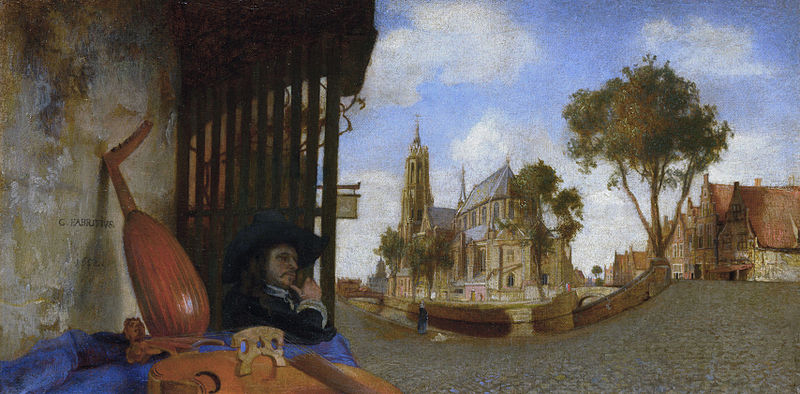
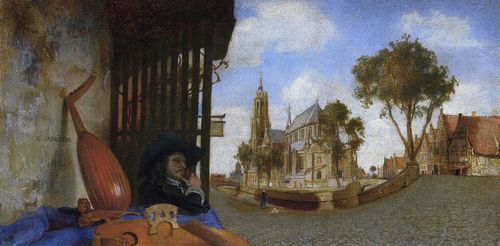
    That said about dots, the line was surely used to transport a bit of reality in art, even before the 18th century–among the earliest appearances being with Hans Holbein in his The Ambassadors of 1533, and a beautiful and very famous use was made by Andrea Pozzo in his illusionistic works at S. Ignazio in Rome in 1685 (and which I mention in an earlier post).  Certainly Carel Fabritius attempted and succeeded in this throughout his career, playing with the substance of perspective, as we can see here in his View in Delft, in 1652:
    Fabritius
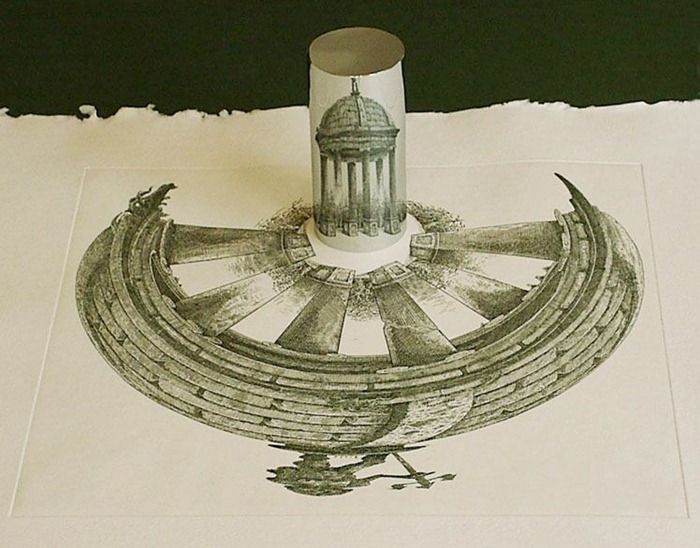
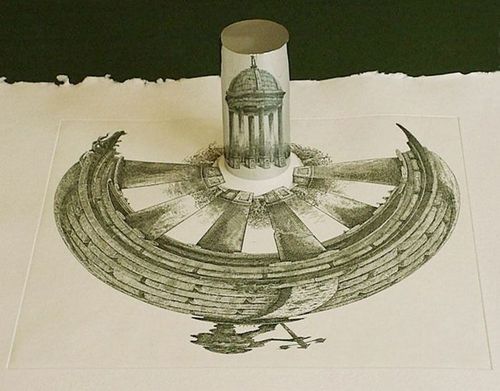
    Also the lines of the anamorphic image severely distorted the presentation of reality–if you had the mirror to distort it and if you had the mirror to reconstitute it:
    Anamorphic art
    Source:  Anamorphic Art

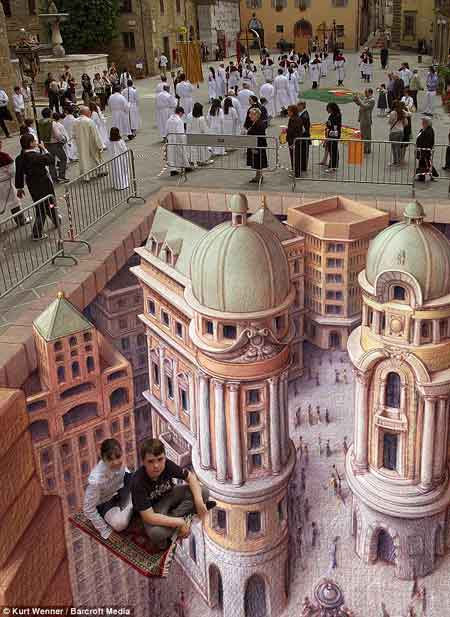
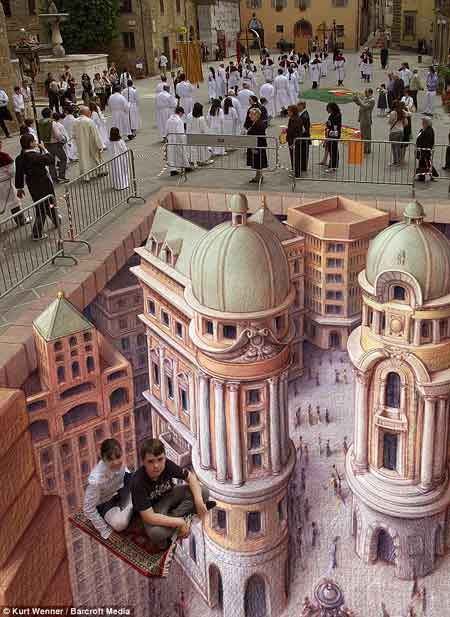
    This example is much more recognizable in widely-circulated images of the modern work of  people like Kurt Wenner, who have continued in the tradition of Leonardo’s researches in the difficulties of wide angle distortion:
    Anamorphic art b
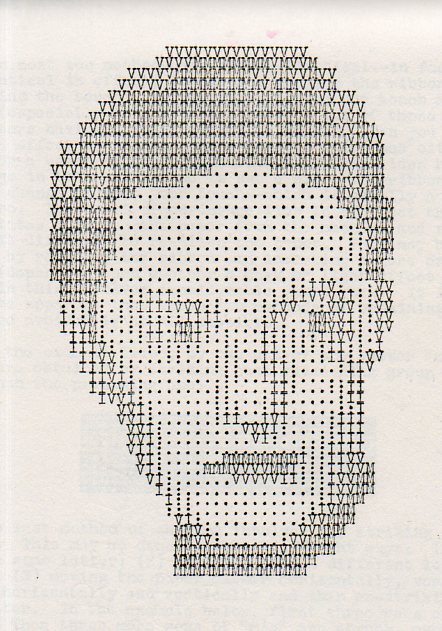
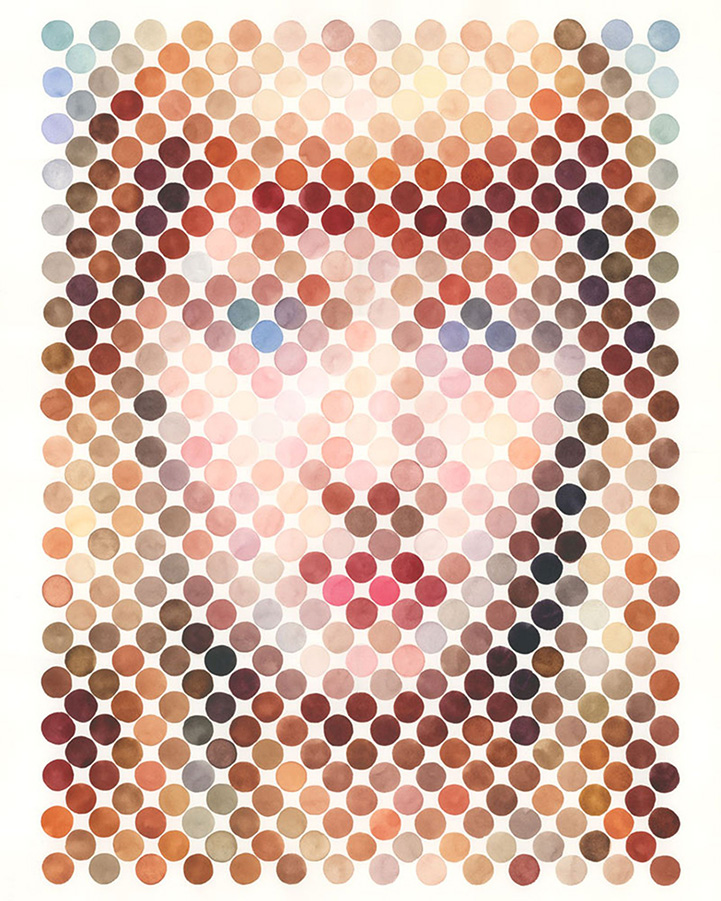
    Seeing this collection of dots in the construction of human faces I was reminded very strongly of the portraits made on the typewriter by Julius Nelson in his work, Artyping, published and sold for a dollar by the Artyping Bureau of Johnstown, Pennsylvania, in 1939 (and pictured first, above).  Nelson was an instructor in “secretarial science” in Windber High School in Pennsylvania and no doubt put together this pamphlet as something expressive of his artform and as an advertisement for his profession.  This was hardly the first time that anyone used the typewriter artistically, as I can recall some measure of artistic expression in type in Punch magazine as far back as 1869, though portraiture by typewriter does not appear to be a very wide section in the art world between those times. In any event, a portrait that he made here is rather close to those presented on the Modern Metropolis site–the “Dot Portraits”  Nathan Manire.
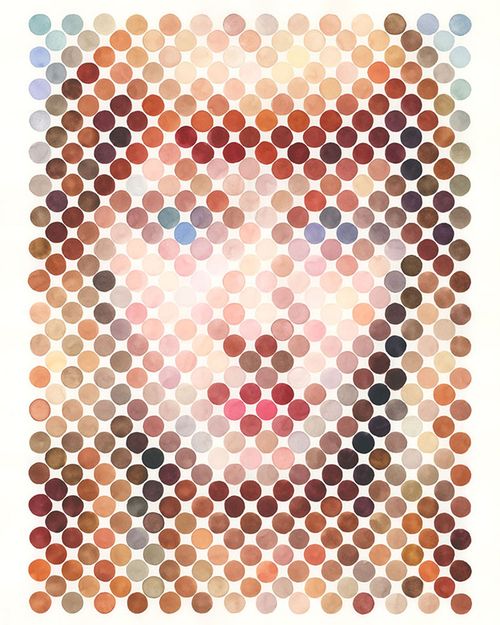
    Dot portraits

     Modern Art would have the final dispositional comment on the typewriter as an instrument of art, when Claes Oldenburg made his Soft Typewriter in 1963:
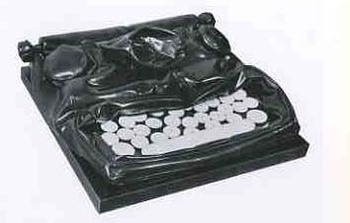
    Blogtypewriter_nwrriter_soft036_2 

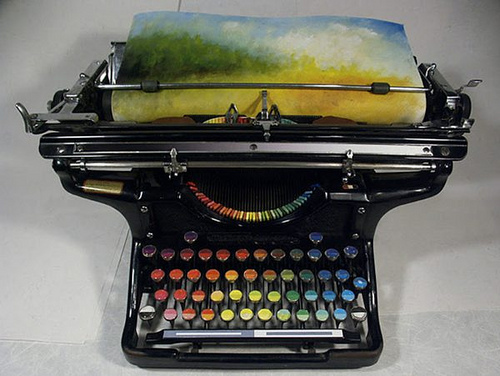
    And then, of course, the magnificent resurrection of the typewriter artform, replacing the spplication of black or red with something a little more complex:
    Typewriter chromatic
    [Source: the chromatic typewriter, by Tyree Callahan, found here  http://www.samanthahahn.com/blog/2012/01/16/chromatic-typewriter/]


  • Paper Microscope: a 10 Millimeter Photographic View of Great Complexity, 1917

    JF Ptak Science Books   Quick PostFollow Me on Pinterest

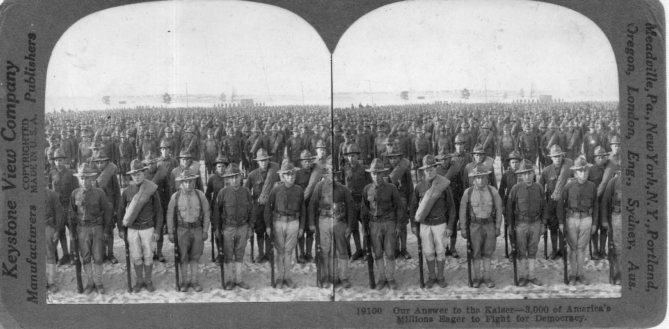
    Wwi stereo194

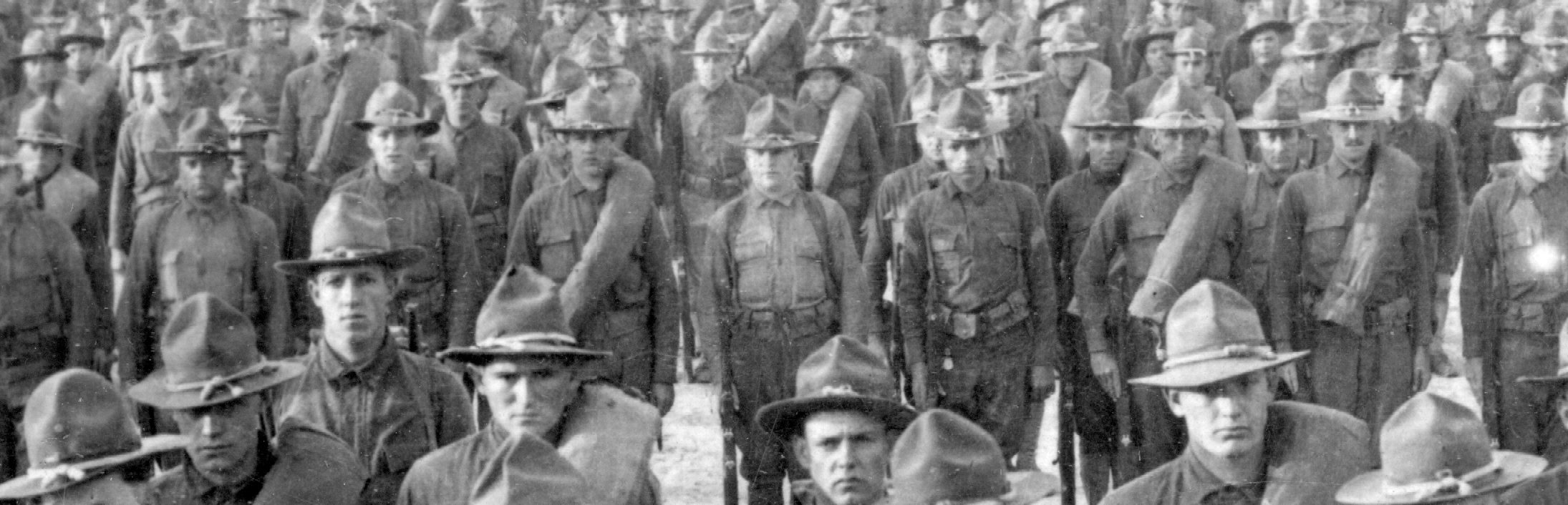
    In this stereographic photograph of a group of 3,000 U.S. soldiers (prepared to fight in Europe in WWI, ca. 1917/1918), there is a smaller contingent in two rows, in front, consierably removed from the rest of the formation.  This is difficult to see in the first image.  However, with a more concentrated view and deeper scan, this is a little more evident, below:

    Wwi stereo195
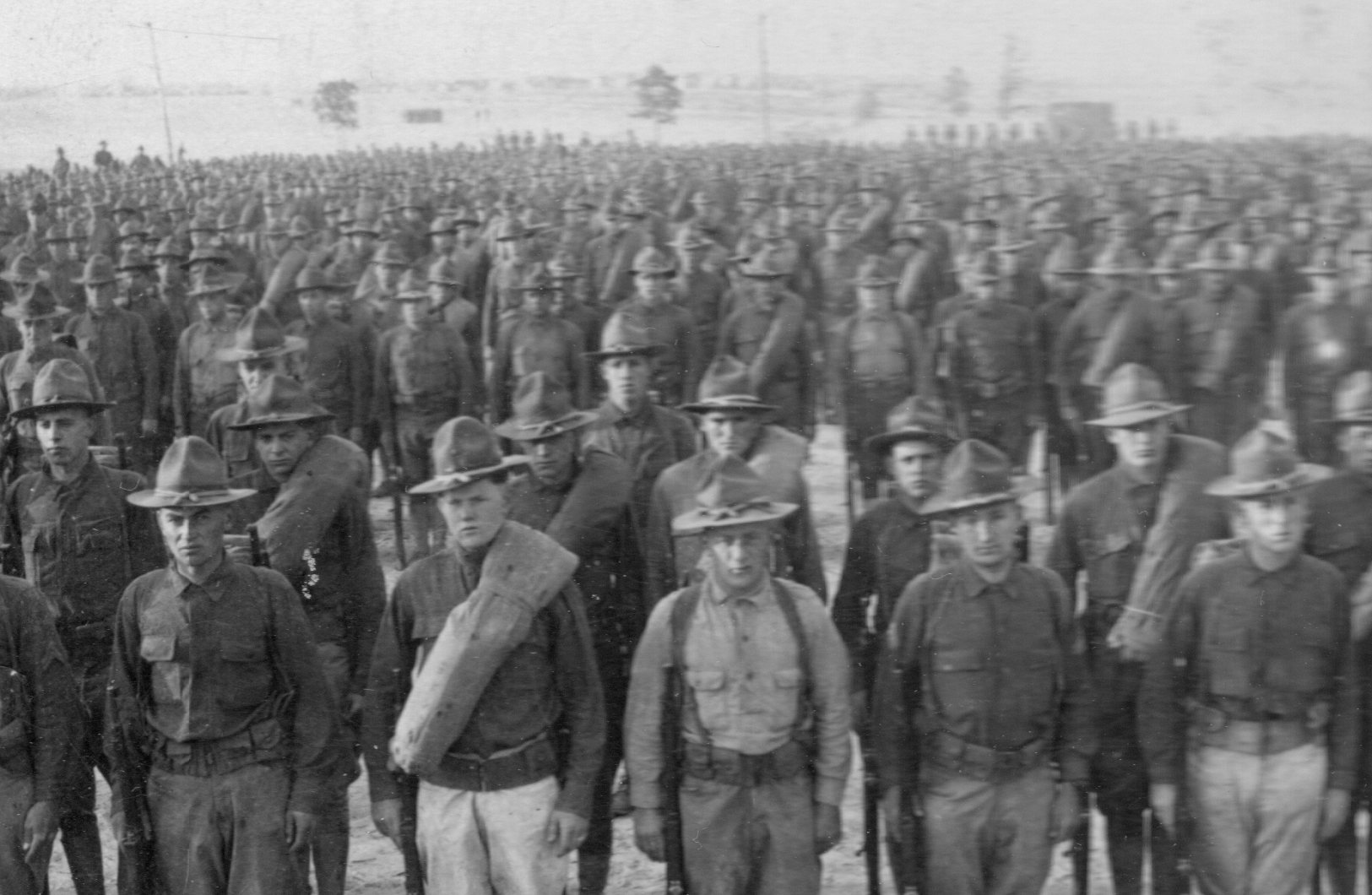
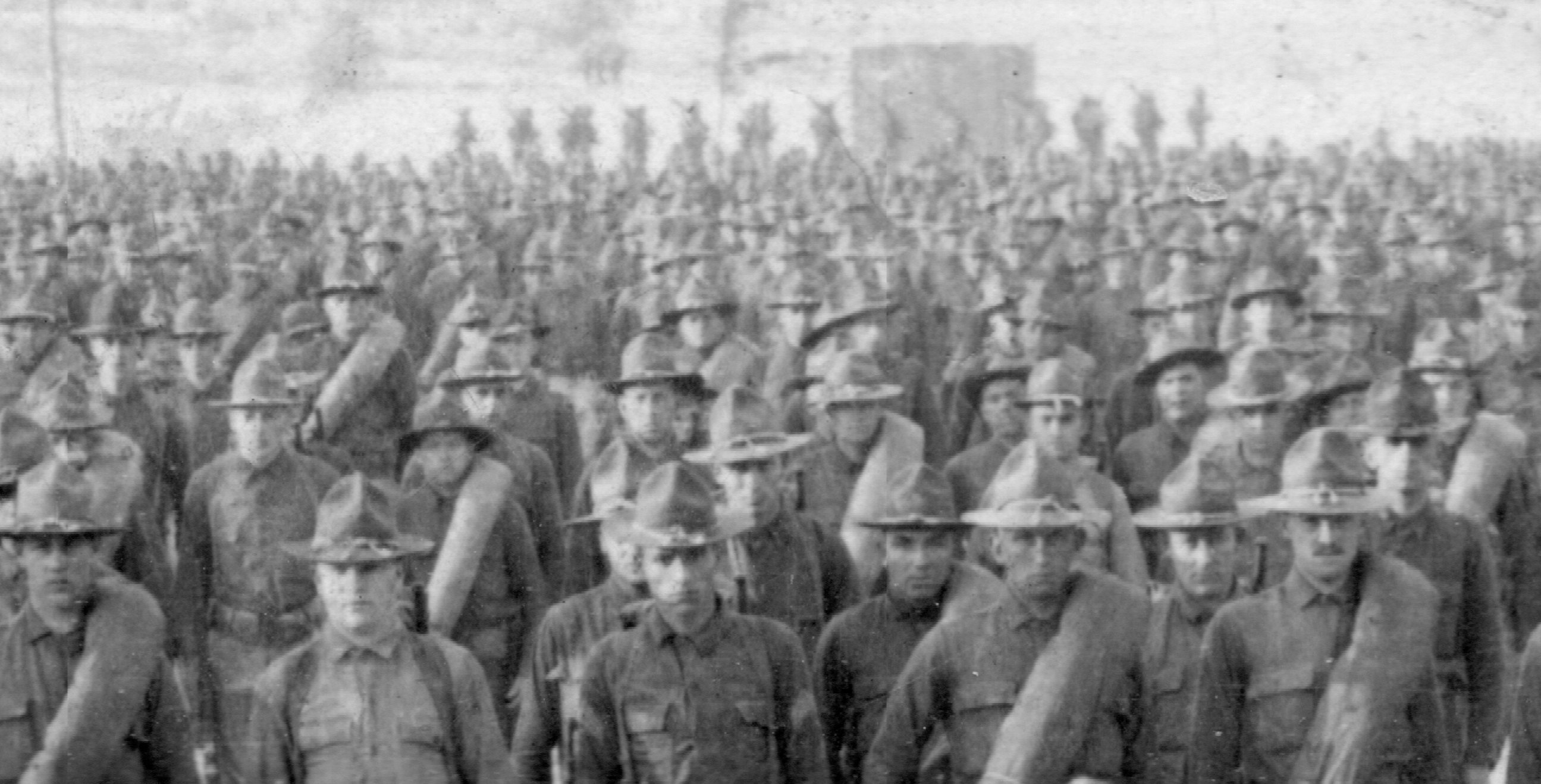
    This view still shows the first row of soldiers; that more-distant third row differentiation is much more defined here–the depth of the mass of the formation is starting to really come into focus.  The next image shows the heads of the men in the second row, but mostly concentrates on that third row, and beyond:

    Wwi stereo196
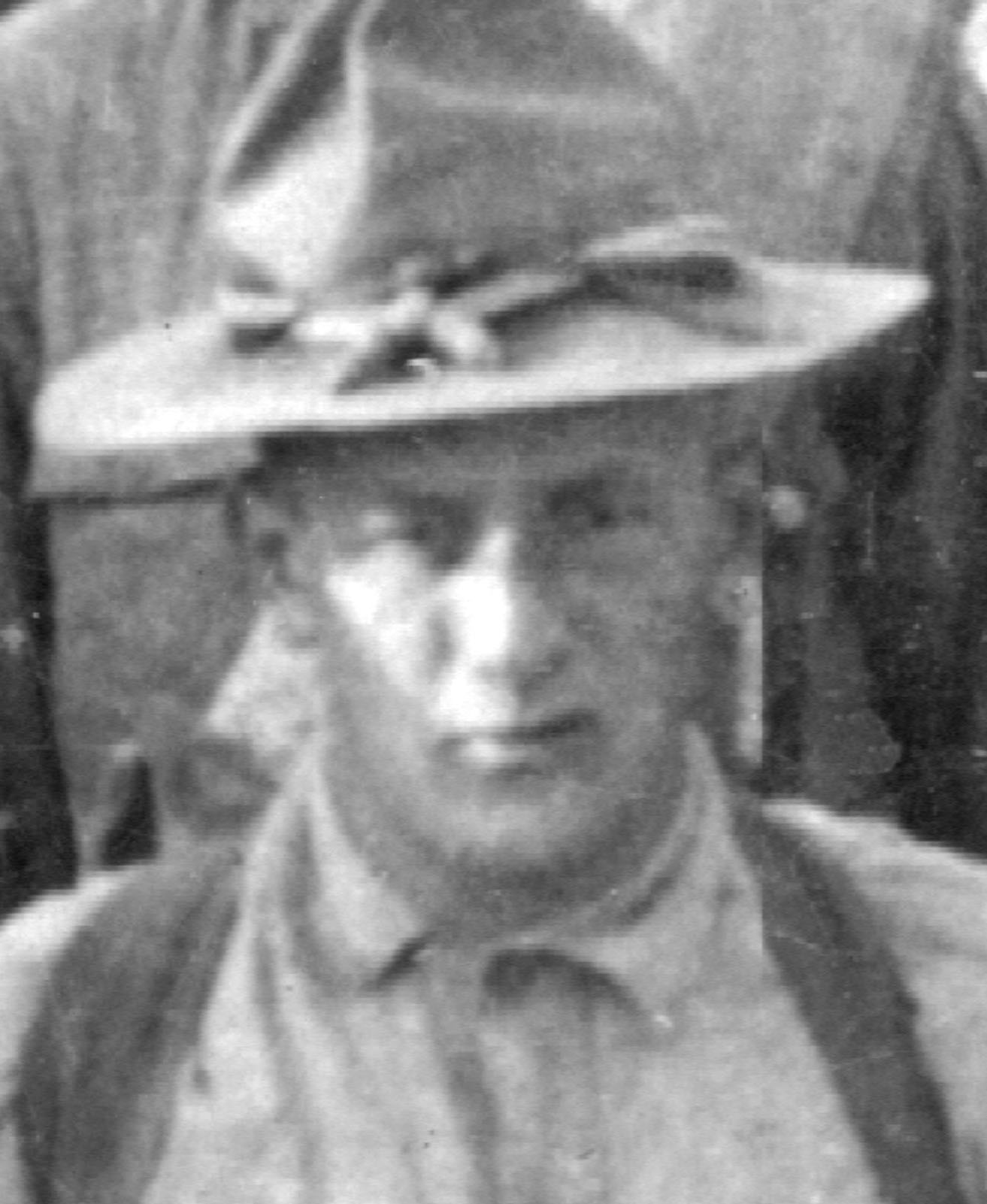
    The final view is just above the heads of the sldiers in the third rank, and more clearly shows the those men in the rear of the formation, including that final rank, which is a profile of men marching.  This enlargement represents a section in the original photograph that measures less than 10x6mm–60 square millimeters of great density, complexity, insight, and beauty. 

    Wwi stereo197

    And finally,

    Wwi stereo198

    ·Posted by :

    ·in:

    — —

  • On Interior Views–Looking Someone Else’s Inside, Out

    JF Ptak Science Books  Follow Me on Pinterest Post 1996

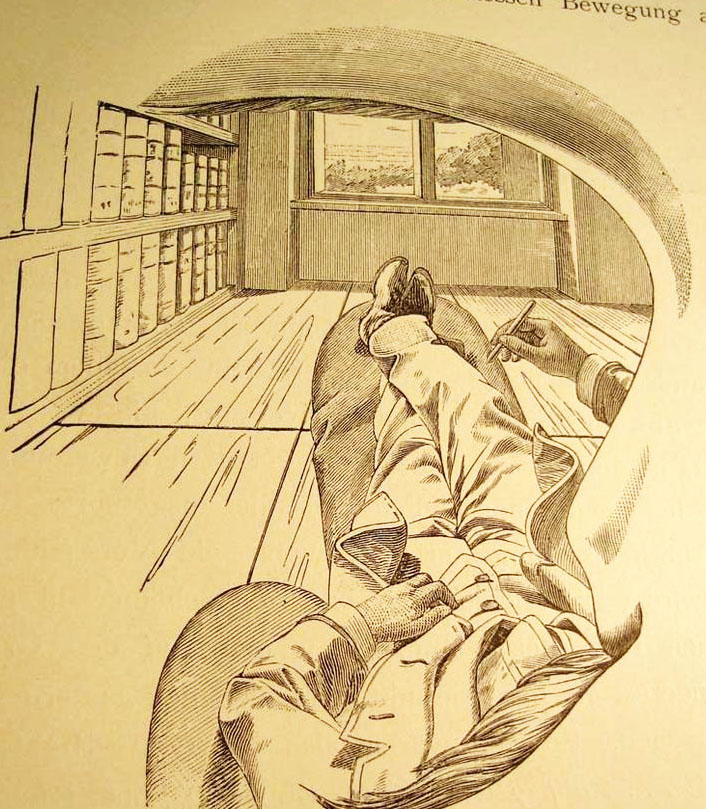
    I cannot think of another illustration by a scientist or philosopher who attempts to explain their own–literal, interior, physical–view of the world and then offer what this looks like to the reader from inside his own head, looking out through his own eye.  That’s exactly what the (unnamed but very Escher-esque?) artist did for Ernst Mach, who is doing precisely that right here on page 15 of his influential book  Die Analyse der Empfindungen. (That’s the  fourth German edition, also known in translation as The Analysis of Sensations and the Relation of the Physical to the Psychical, published in Jena in 1903.) It is a very unusual point of perspective, seeing the world under someone else’s eyebrow and over their moustache.Mach perspective copy
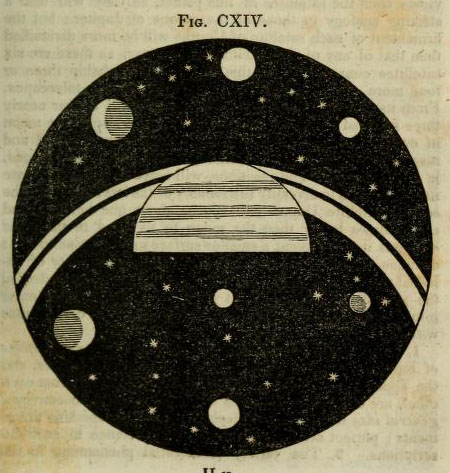
     In a sort-of-similar vein, there is another point of view that is extremely uncommon, another you-are-there perspective, though not interior to the person making the observation, but nearly so.  Here’s an example, just found, and an early one, this imagined from the far side of one of Saturn’s rings, looking back on the planet, and experiencing the distorition in perspective due to the closesness of the observer. 

    Astronomy dick view of sat from ring
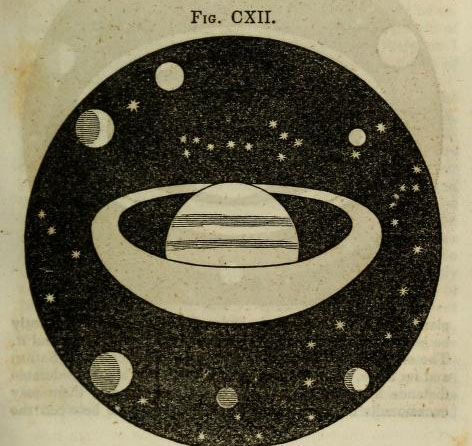
    Another image, this one showing the view directly from “the first or second satellite” of Saturn, looking back and across the planet’s rings:

    Astronomy dick view saturnn's rings from satellite
    [Source:  Thomas Dick, Celestial Scenery, 1838, available in full at the Internet Archive, here.]


    ·Posted by :

    ·in:

    — —

  • History of Holes–the First Images of Holes Made by Insects?

    JF Ptak Science Books   Post 1995   Part of a series on The History of Holes #45Follow Me on Pinterest

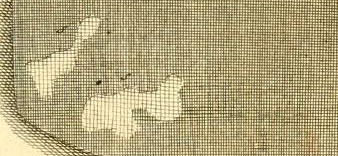
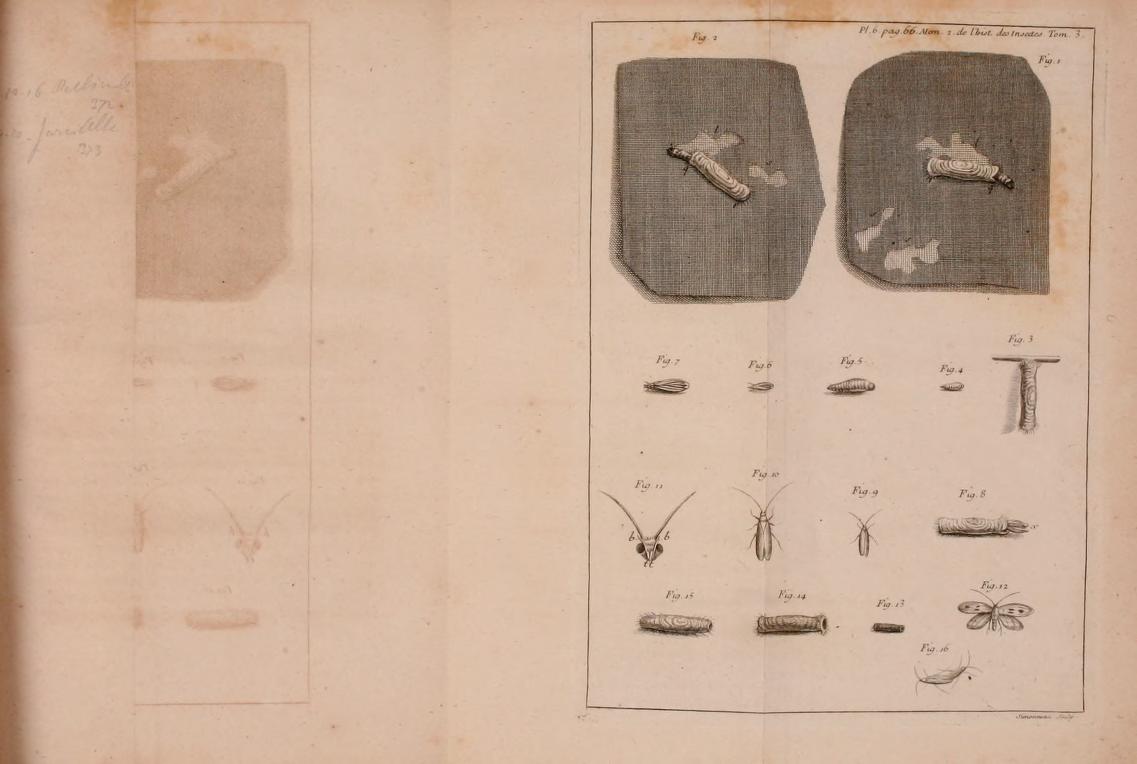
    Reaumur close-up det
    [Detail from one of the earliest images of holes made by insects? From Reaumur, citation following.]

    There are many different ways of looking at antique (or any other) scientific images.  Sometimes you see exactly what they’re supposed to be showing, and other times the viewer sees something more. Sometimes this “something more” is useful, and sometimes it is simply a side bit, not adding to the understanding of the image content, but curious nonetheless, useful in other ways.

    And so is the case with this miniature/micro observation of this engraving which appears in the great work on the lives of insects by  René-Antoine Ferchault de Réaumur:  Memoires pour servir a l’histoire des insectes, which was printed in six impressive volumes (some 26cm tall) in Paris from 1734 through at least 1742,  illustrated throughout with 269 engraved plates, many depicting more than one subject. This was the masterwork of its time on insects, a great effort made and achieved on insect architecture, biology, and behavior–it was a careful and exacting work, magisterial.  Reaumur (1683-1757) was an exceptional talent and observer, writing for the Academie des Sciences on a really wide variety of subjects for over fifty years–and even with this large output, most of his work was delivered posthumously to the Academy.   

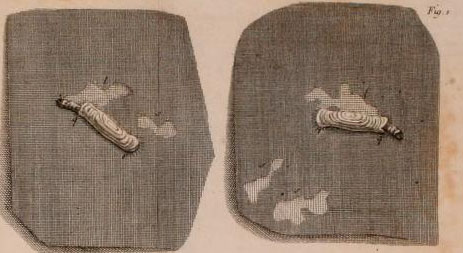
    My attention was drawn to him from an illustration in Barbara Maria Stafford’s Good Looking, Essays on the Virtue of Images (MIT, 1996, palte 93), which depicted the holes made by moths in cloth in volume 3 of the Memoires.  The first image, above, is a detail from the Reaumur engraving, with the full plate, following:

    Reaumur holes detail
    [Reaumur, Memoires pour servir a l’histoire des insectes… volume III,  from the Internet Archive, here.]

    And more:

    Reaumur holes
    The series on this blog concentrating on the history of holes may or may not make any contribution to anything at all, save for perhaps serving as an outpost on looking at images from a different perspective. 

    And just for good measure, here’s an image of the ghost of the image of the mothy hole, an image imprinted on the page opposite the page on which the original image was printed, the ghosted mirror image of the hole captured in an ink/iron impression on paper. 

    Reaumur holes ghost

     Here are the links for the six volumes of Reamur’s Memoires:

    Mémoires pour servir à l’histoire des insectes (1734-1742)

    • Tome I : Sur les Chenilles et les Papillons, Imprimerie royale, Paris, 1734, 654 p., 50 pl. ;
    • Tome II : Suite de l’Histoire des Chenilles et des Papillons et l’Histoire des Insectes ennemis des Chenilles, Imprimerie royale, Paris, 1736, 514 p., 38 pl. ;
    • Tome III : Histoire des Vers mineurs des feuilles, des Teignes, des fausses Teignes, des Pucerons, des ennemis des Pucerons, des faux Pucerons et l’Histoire des Galles des Plantes et de leurs Insectes, Imprimerie royale, Paris, 1737, 532 p., 478 pl. ;
    • Tome IV : Histoire des Gallinsectes, des Progallinsectes et des Mouches à deux ailes, Imprimerie royale, Paris, 1738, 636 p., 44 pl. ;
    • Tome V : Suite de l’Histoire des Mouches à deux ailes et Histoire de plusieurs Mouches à quatre ailes, savoir des Mouches à Scies, des Cigales et des Abeilles, Imprimerie royale, Paris, 1740, 728 p., 44 pl. ;
    • Tome VI : Suite de l’Histoire des Mouches à quatre ailes avec un supplément des Mouches à deux ailes, Imprimerie royale, Paris, 1742, 608 p., 48 pl. ;
    • Tome VII : Histoire des fourmis, Paul Lechevalier éditeur, Paris, 1928, 116 p. & Histoire des scarabées, Paul Le Chevalier éditeur, Paris, 1955, 340 p., 21 pl.

    ·Posted by :

    ·in:

    — — —

  • A Telephone Call From TomorrowLand and the Idea of Weighing Antique Surprise

    JF Ptak Science Books   Post 1973  Follow Me on Pinterest


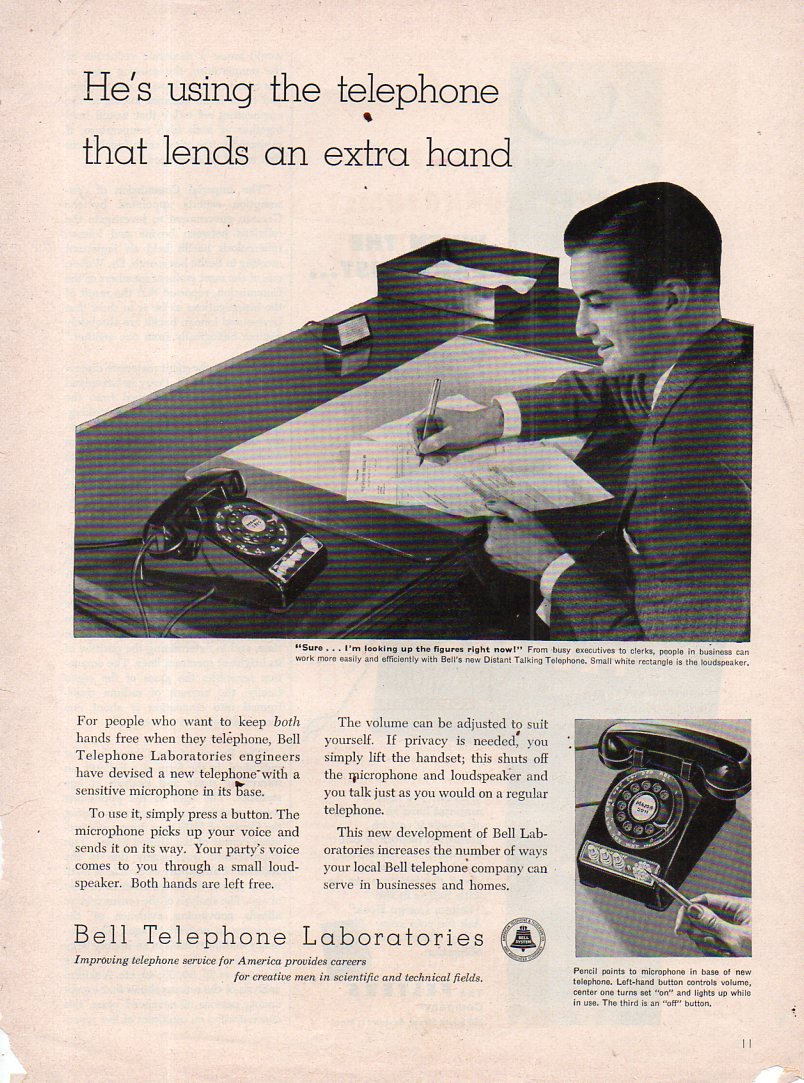
    This ad appeared only 59 years ago–that’s four generations in dog years, two human generations (or one for the more later-in-life crew, which is appealing as I knew a man whose grandfather was born in the 18th century), and 15 generations in managing data and communications. Perhaps more.  It is difficult to imagine the intense surprise that attended this ad showing a practical and popular adaptation of a communications breakthrough. 

    Telephone future064

    The electromagnetic telegraph, which is arguably the first electrically-powered iteration of the internet, was in the works from the 1820’s until it was nailed by Samuel Morse in 1837.  It was 40 years to the development of the Bell telephone (another dramatic example of an invention/technological idea/breakthrough that was “in the wind”, a popular undiagnosed monumental meme, some decades in the making in the hands of Bell anbd Reiss and Meucci and Gray and even Edison). Two more decades (just past the turn of the century) until more-widespread wireless telegraphy, another two decades after that (1920’s) for poular radio, and another two decades after that (post WWII/1950’s) for popular television broadcating. 120 years between the patented invention of the Morse telegraph to 50 million Americans with televisions in 1955. 

    The “telephone” of 2013 is as removed as the telephone of 1955 as the telephone of 1955 was removed from the electromagnetic telegraph–we’re not meeting half-way in the meeting of improbable impossible worlds, of worlds of the future unimagined in the past.  That is what comes to mind when I see this add for the speaking telephone in 1954–the astounding, astonishing, speaking telephone, the phone that allowed you to not have the receiver to the ear, tht allowed you to do free-hand work and communicate at the same time.  It was an ambitious improvement, and as soon as the phone appeared, it became a standard of necessity if that necessity was within budget. 

    It is the weight of surprise that is so abundant looking at pictures like this, giving us the opportunity to imagine the surprise elements of another time. It may well be that the new 1954 user of the speakerphone would have looked at the first telephone systems of 1894 as we look on that 1954 telephone today.  Probably not so, though, probably it was much more imaginable to have forseen the 1954 possibilities in 1894 than for 1954 to have seen in the same amount of time to 2013:  the technological pieces necessary for part of that imagination had not yet been invented, the science ahead of the scifi. 

    The other part of this surprise element is that 1954 is well within living memory, and that this combinaiton of technology and physics and mathematics has grown so incredibly from the speakerphone to the massive changes in 2013–it is as surprising to imagine this as to imagine the same scenario for what ahppened a year before in biology:  it is difficult to grasp the  sweeping changes in that field from the identification of DNA in 1953  and how far those fields have come since. 

    I think that if one could quantify this sort of “surprise” that the greatest amount of “Surprise Integers” (or whatever) ever recorded would have taken place within these past 50 or 60 years. Which makes me wonder–will people 59 years hence see the pictures of our fabulous accomplishments in 2013 as quaint reminders of how much things changed between 2013 and 2072?  Will those “Surprise Integers” be as great for that period of time as the (“our”) preceding period with concomitant revolutions in thought?  My guess is “yes”–its just hard to imagine. 


  • On Looking at Things Straight Down

    JF Ptak Science Books    Daily Dose from Dr. Odd

    Follow Me on Pinterest


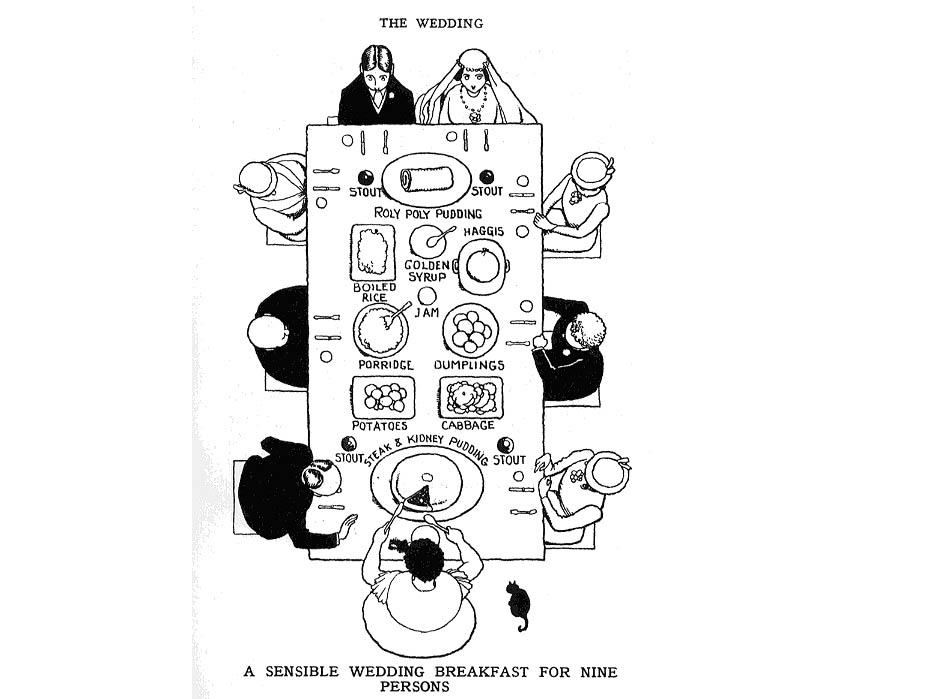
    This Daily Dose from Dr. Odd combines two interesting categories today, “Looking Straight Down” and “Display of Information”, and they involve food. Rather, its the placement of food, and maps of dinner tables, seen from above–directly above–and looking straight down.

    The idea of representing a view straight down, of looking straight down from some height, is a relatively recent occurrence, this view being somewhat rare in the antiquarian world pre-balloon or pre-heavier-than-air flight.  The pre-human-flight reason for its scarcity is understandable, but even after the first Montgolfier ascension in 1787, there’s another 120+ years of scarcity yet to come before these views would start to pop up in common (and uncommon) literature..  Now I’m not talking about cartography, which is basically a straight-down view of the world—what I’m referring to is that same view but not as a map per se, but what you would see if you were dangling out of a plane or balloon. It is an unusual and scarce perspective.

    Maps--Imaginary--Map of a Wedding Table


  • The Origin of Shadows and Directions of Vanishing Points

    JF Ptak Science Books  Quick Post

    Dubreuil origins of shadows det 1_edited-1

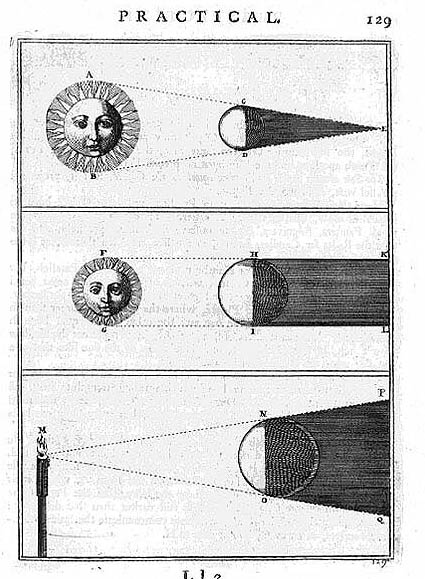
     Shadows must come from somewhere, and it is that “somewhere” that this beautifully-titled chapter addresses.

    Dubreuil origins of shadows det 1

    In another unusually-titled piece, we find a “shadow-maker” embedded within  patented “cloud creator”, as so

    this taken from the 25 May 1892 patent granted to Steele MacKaye, though his apparatus was only for generating special effects for the theatre.  Still, the title of the patent was pretty catchy, as was the “shadow-maker” part, which is evidently the only time that phrase is used in U.S. patents through 1900.