A Daily History of Holes, Dots, Lines, Science, History, Math, Physics, Art, the Unintentional Absurd, Architecture, Maps, Data Visualization, Blank and Missing Things, and so on. |1.6 million words, 7500 images, 4.9 million hits| Press & appearances in The Times, Le Figaro, Mensa, The Economist, The Guardian, Discovery News, Slate, Le Monde, Sci American Blogs, Le Pont, and many other places… 5000+ total posts since 2008.

Category: Blank and Empty Things; A History of

  • Relief as Pleasure–William Burroughs and the Sleep Cure

    JF Ptak Science Books LLC  Post 846  Blog Bookstore

    William_S._Burroughs_1179258258051597 William Burroughs—one of America’s
    great 20th century humorists (closer to Bierce/Mencken than
    Thurber/Woollcott, like Twain with a rainbow coalition of nasty addictions and outré
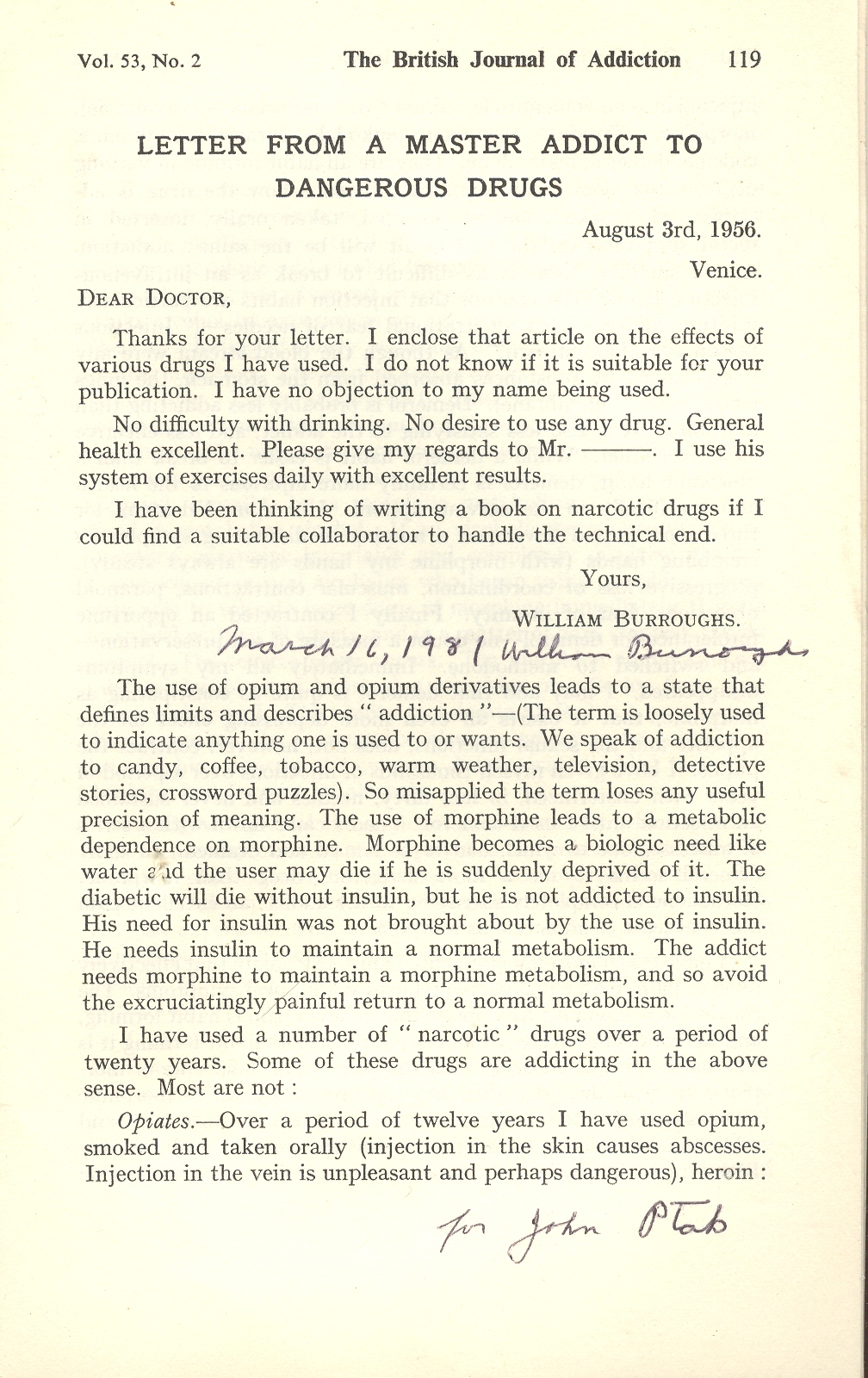
    social habits)—wrote this cookbook article of drug addiction in the British Journal of Addiction in
    1956.  Considering it is only twenty-two
    pages long, it is an Encyclopedia Brit-burroughanica for its quick
    contents. 

    “Letter from a Master Addict to Dangerous Drugs” is crisp
    and concise, a clinical horror story of addiction and cure.  I say “and cure” because of the low trials
    Burroughs went through in some of the ten attempts/cures he experienced to
    clean himself up.  (Burroughs had already
    been using narcotics for twenty years by 1956. 
    By a mixture of good genetics and miracles Burroughs (1914-1997)  made it to his 83rd year.)  Burroughs describes one of the treatments,  the “prolonged sleep” cure, (excerpted below),
    in singular terms, revealing a particularly gruesome adventure into lost
    health:

    “Prolonged Sleep.–The theory sounds good. You go to sleep
    and wake up cured. Industrial doses of chloral hydrate, barbiturates,
    thorazine, only produced a nightmare state of semi-consciousness. Withdrawal of
    sedation, after 5 days, occasioned a severe shock. Symptoms of acute morphine
    deprivatio00 blog Nov 23 burroughsn supervened. The end result was a combined syndrome of unparalleled
    horror. No cure I ever took was as painful as this allegedly painless method.
    The cycle of sleep and wakefulness is always deeply disturbed during withdrawal.
    To further disturb it with massive sedation seems contraindicated to say the
    least. Withdrawal of morphine is sufficiently traumatic without adding to it
    withdrawal of barbiturates. After two weeks in the hospital (five days
    sedation, ten days “rest”) I was still so weak that I fainted when I
    tried to walk up a slight incline. I consider prolonged sleep the worst
    possible method of treating withdrawal.”

    If as Burroughs says, all pleasure is nothing but
    relief, then this cure didn’t offer any, and certainly must rank high in the Bad Ideas Department of Caustic Non-Cures.


  • The Truth Behind Cuckoo’s Nests–Ken Kesey

    JF Ptak Science Books LLC  Post 840

    This post nominally belongs in the Blank and Empty Things thread, but barely. 

    Robert Burton’s Frontispiece

    Many years ago a friend at PEN/Faulkner let me impersonate
    an usher at a Ken Kesey evening so that I could be the last person to see the
    man before he disappeared into the night. 
    He was lovely and charming and entertained the evening, winding up
    signing books at the end.  What I wanted
    from the man was to hear him recite the nursery rhyme that formed the title of
    his first book, One Flew Over the
    Cuckoo’s Nest
    .  He wrote it in 1962,
    an odd book coming from an odd man—Kesey had been in academia on the high-end
    at Stanford, buddying up with Larry McMurtry and Robert Stone and getting
    instruction from Stegner and Cowley; he became something different, a figure
    with literary studs while bouncing between the beats and the rad ‘60’s.  Anyway I read the book when I was young and
    liked it a lot, and still do.

    So I approached the tired Kesey and made my request.  He was amused that I only wanted to hear him
    recite something rather than sign a book—honestly I just wanted to take the
    memory with me into the future.  And as a
    matter of fact, I had/have a nice first edition of the thing but didn’t have it
    that day, forgetting it at home, or not thinking to take it with me.  Just before leaving for the event, I stopped
    at Olsson’s Books in Georgetown
    and bought a paperback copy of OFOTCN, sticking it in my back pocket just in
    case.

    So.  Kesey was amused,
    and asked if I’d like a copy of his new kid’s book, Little Tricker the Squirrel…. (published 1991), from which he had
    just done a very animated reading.  He
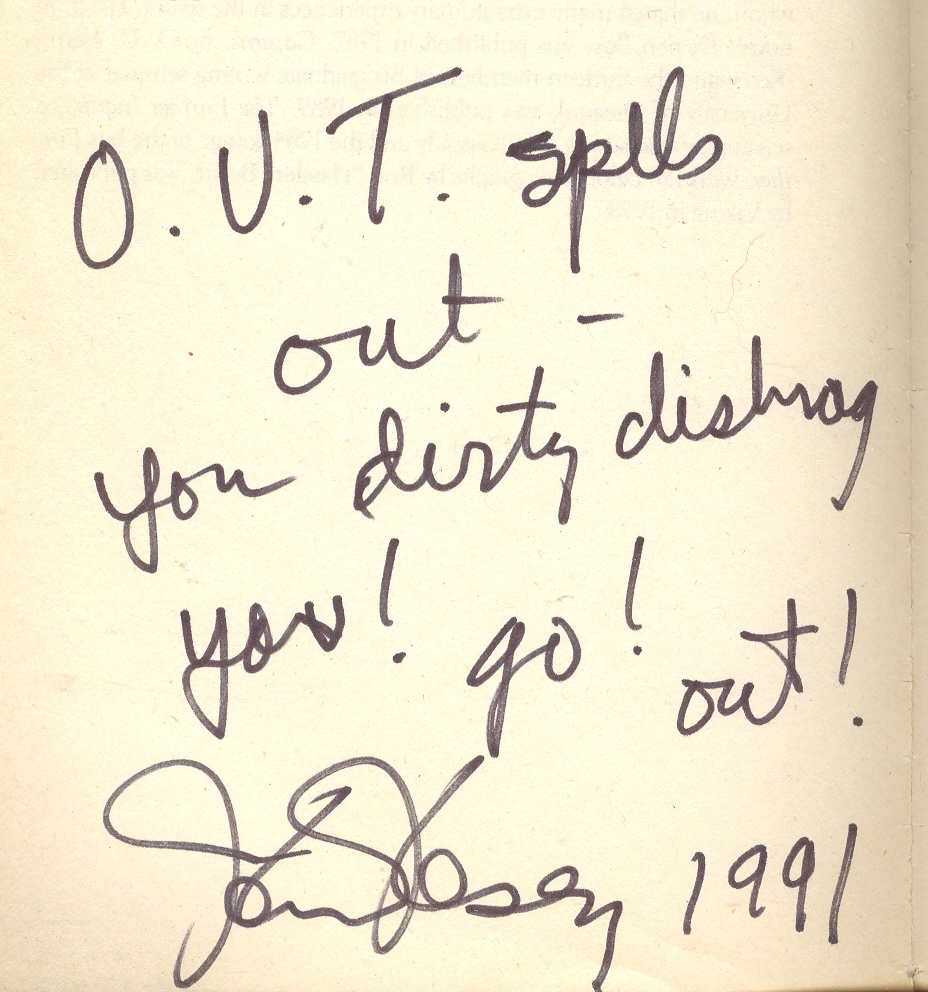
    pulled a copy out of his sack, opened a gold magic marker, and signed the book IN
    GIANT LETTERS  to my very-soon-to-be-wife
    Patti Digh, “Dear Patti, sometimes ink can be a great potion” (alluding to his
    classic book, Sometimes a Great Notion).  Fabulous.  Kesey then started to talk about the fairy
    tale and cuckoos and what a nasty habit they had of laying their eyes in other
    birds’ nest to have their young be “raised by strangers in a strange land”.  He recited the version he had heard from his
    grandmother.

    0 ebay nov 19 kesey

     I finally brought out my paperback copy of his book, and he
    signed it with the final flourish from his version of the old poem.  The man was very gracious.     


    Another version goes like this:


    “Tingle, Tingle, Tangle Toes
    She’s a good fisherman
    Catches hens, puts’em inna pens
    Wier blier, limber lock
    Three geese inna flock
    One flew east, One flew west,
    One flew over the cuckoo’s nest
    O-U-T spells out
    Goose swoops down and plucks you out.”


  • Early Ennui in Art–a Peek at the Illustrated History of Boredom

    JF Ptak Science Books LLC  Post 839  Blog Bookstore

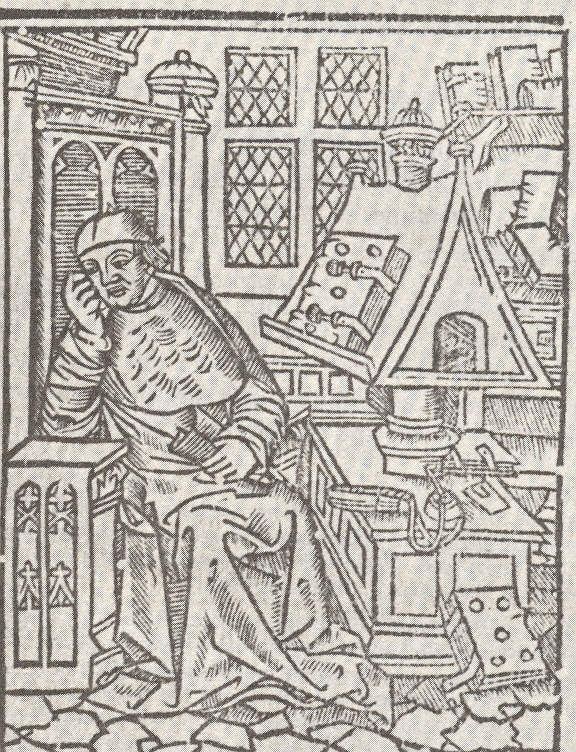
    0 ebay nov 18 ennui What struck me about this print–instantly–was the emotion of our languid reader: ennui.  Ennui is a very uncommon emotion in early prints, at least for my experience.  As a matter of fact only .75% of all published prints exhibited “ennui” as its “reigning and ruling emotion”. Of course that’s an imaginary statisitc–after all, made-up and imaginary statistics (yes, there is a difference) are much more reliable to their subjects than are real statistics, which  can offer problems in envisioning a particular reality.  But ennui really is uncommon, and this man is wrapped in nothing but.

    0 ebay nov 18 ennui 001

    Perhaps we don’t see ennui, or boredom, earlier on in art (and
    in literature for that matter) because the free time for feeling these emotions
    hadn’t yet been invented.  So to speak.  Boredom is a luxury affordable by the few.  Certainly this reader, seated near his Jacobian
    bookcase with several large books in a comfortable setting, could certainly afford
    the idea of free time and thus the added fabulousness of boredom.  And so it is that we see him enjoying his shroud,
    here.  


    The woodcut comes from a famous and early work on family medicine,
    hygiene really, Healthe, for all manner of
    syckenesses and diseases…
    by Andrew Borde, and printed in 1557.  

    A history of boredom might well be in order…


  • A Note on Poe, Babbage and Thinking Machines, 1836

    JF Ptak Science Books LLC  Post 838  Blog Bookstore

    This is part of a longer piece I’m doing on Man in the Machine—Early Days of  Man-Machine Singularity

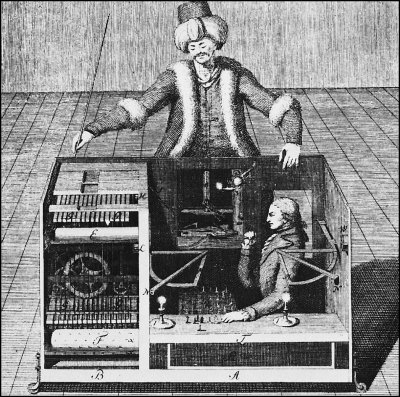
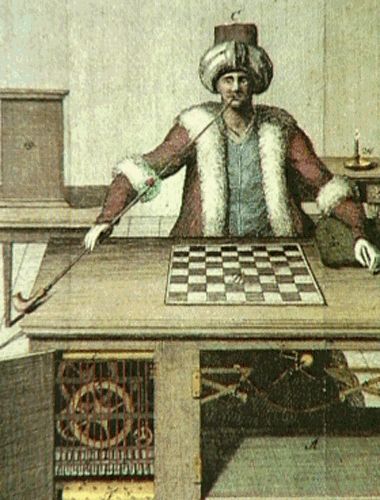
    Continuing from yesterday on Poe’s untitled books in “The Raven”, and making my way backwards through his Collected Works (from his criticism in volume XI to his short essays in volume X), I found an extraordinary piece on computers and a chess-playing machine.  Poe addresses a touring wonder called the Maelzel Chess-Playing Machine, which theoretically was a stand-alone device which thought and played the game, beating all-comers. (The version of the works that I own was published by Harper’s around the turn of the century—they didn’t bother to date their own work or give any references to the origins of Poe’s, which is awful  The essay1 though originally appeared as Edgar Allan Poe, “Maelzel’s Chess-Player” in the  Southern Literary Messenger, April 1836, 2:318-326.)  
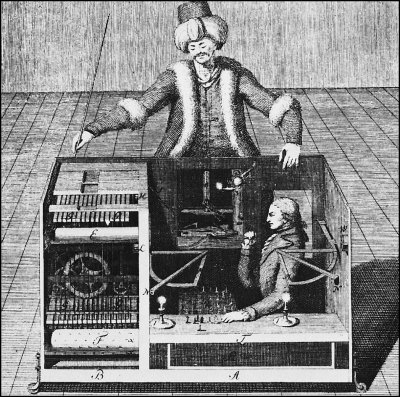
    Kempelen The machine was actually in its 65th year or so on tour, starting out life with Baron Kempelen, the original inventor of the device in 1769.   Maelzel was a shuckster who happened to be one of the machine’s final owners–touring with it in America in the 1830’s–before the thing burned to bits in 1854.

    But before he deals with the innards of the automaton, Poe writes on its history, and touches on some very deep understanding of the Babbage Difference Engine, “computers”, and thinking machines.  This is especially interesting because the Babbage machines hadn’t yet been given wide public conversation—that would come in 1843 with Babbage’s somewhat unlikely bulldog, Lady Ada Lovelace, who published an account of his work in Taylor’s Scientific Memoirs.  Poe’s work predates this by seven years, though
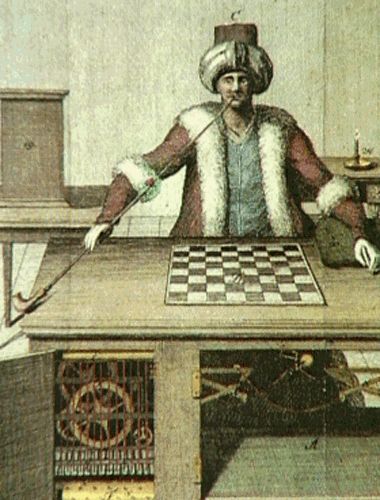
    Kempelen4 Lovelace’s commentary is far more robust, more mathematical, and longer and deeper2. Beautiful, even. (For example: “We may say most aptly that the Analytical Engine weaves algebraical patterns just as the Jacquard-loom weaves flowers and leaves.”)

     Poe states the difference between Babbage’s machine and a thinking machine.  First up, his paragraph on Babbage’s engine, rearranged for easier consumption:

    (1)   “Arithmetical or algebraical calculations are, from their very nature, fixed and determinate.

    (2)   Certain data being given, certain results necessarily and inevitably follow.

    (3)   These results have dependence upon nothing, and are influenced by nothing but the data originally given.

    (4)   And the question to be solved proceeds, or should proceed, to its final determination, by a succession of unerring steps liable to no change, and subject to no modification.”

     The thinking machine (chess-player) occurs later in the same paragraph:

    (1)   “But from the first move in the game of chess no especial second move follows of necessity. In the algebraical question, as it proceeds towards solution, the certainty of its operations remains altogether unimpaired. The second step having been a consequence of the data, the third step is equally a consequence of the second, the fourth of the third, the fifth of the fourth, and so on, and not possibly otherwise, to the end.

    (2)   But in proportion to the progress made in a game of chess, is the uncertainty of each ensuing move. A few moves having been made, no step is certain.

    (3)   Different spectators of the game would advise different moves. All is then dependent upon the variable judgment of the players.

    (4)   Now even granting (what should not be granted) that the movements of the Automaton Chess-Player were in themselves determinate, they would be necessarily interrupted and disarranged by the indeterminate will of his antagonist.

    (5)   There is then no analogy whatever between the operations of the Chess-Player, and those of the calculating machine of Mr. Babbage…”

    [The full quote is below as well as the link for the entire piece.]

    This is an interesting and fundamental understanding of the differences between a calculating device and a computer capable of iterative deduction.  I think also that both he and Lady Lovelace thought of the Babbage machine in terms of an added, extra intelligence for the human brain.

    After dealing with the machine’s history, and after looking at other explanations on how the thing could work, Poe delivers his conclusion:  that the machine wasn’t a machine after all, and that it could not function in this way unless it was being guided by a human inside the machine, which in fact, of course, it was.  Even after displaying the internal clockworks of the device, whoever it was exhibiting the machine would open and close the three doors covering the machine’s inner workings would do so in such a way that a small person could scoot back and forth to avoid detection, all of the exhibition being done at a safe distance  After that, the confederate would follow the game on his own board after hearing the moves announced by the showman, and then move the arm of the automaton via levers and such to produce his move, the taking of pieces done by Maelzel. (How this went undetected for so long is a sacred mystery.  It would seem as though someone at some point would’ve seen a faint light of a candle coming form inside the box, or smoke, or something.) The machine was originally designed for a brilliant Polish cavalryman who lost both legs in combat and was not above this deception.  Poe’s unraveling of the story and display of reasoning and getting to this conclusion is a pretty powerful display.

    It is interesting to note here that, without going all-academic about it, it seems to me that Babbage’s work on the computer passed without mention in the experiences of the earliest computer pioneers of the 1930’s-1950’s.  At least I don’t think I’ve ever seen mention of Babbage in any way, at least through the construction of UNIVAC II.  And so we have an instance of someone being recognized as the founding father of something without actually exerting any influence on anyone else working in that that field’s early future.  This is not the case with another person who actually did have an influence on those who followed him but has never received full public recognition for his efforts—that would be Vannevar Bush and his MEMEX as the precursor to the internet.  I’ve never looked for Poe’s name in conjunction with modern computing history (outside of cryptology), though I have a sneaking suspicion that if Babbage wasn’t there then neither would Poe.

    NOTES

    1. The paragraph in its entirety:

    But if these machines were ingenious, what shall we think of the calculating machine of Mr. Babbage? What shall we think of an engine of wood and metal which can not only compute astronomical and navigation tables to any given extent, but render the exactitude of its operations mathematically certain through its power of correcting its possible errors? What shall we think of a machine which can not only accomplish all this, but actually print off its elaborate results, when obtained, without the slightest intervention of the intellect of man? It will, perhaps, be said, in reply, that a machine such as we have described is altogether above comparison with the Chess-Player of Maelzel. By no means — it is altogether beneath it — that is to say provided we assume (what should never for a moment be assumed) that the Chess-Player is a pure machine, and performs its operations without any immediate human agency. Arithmetical or algebraical calculations are, from their very nature, fixed and determinate. Certain data being given, certain results necessarily and inevitably follow. These results have dependence upon nothing, and are influenced by nothing but the data originally given. And the question to be solved proceeds, or should proceed, to its final determination, by a succession of unerring steps liable to no change, and subject to no modification. This being the case, we can without difficulty conceive the possibility of so arranging a piece of mechanism, that upon starting it in accordance with the data of the question to be solved, it should continue its movements regularly, progressively, and undeviatingly towards the required solution, since these movements, however complex, are never imagined to be otherwise than finite and determinate. But the case is widely different with the Chess-Player. With him there is no determinate progression. No one move in chess necessarily follows upon any one other. From no particular disposition of the men at one period of a game can we predicate their disposition at a different period. Let us place the first move in a game of chess, in juxtaposition with the data of an algebraical question, and their great difference will be immediately perceived. From the latter — from the data — the second step of the question, dependent thereupon, inevitably follows. It is modeled by the data. It must be thus and not otherwise. But from the first move in the game of chess no especial second move follows of necessity. In the algebraical question, as it proceeds towards solution, the certainty of its operations remains altogether unimpaired. The second step having been a consequence of the data, the third step is equally a consequence of the second, the fourth of the third, the fifth of the fourth, and so on, and not possibly otherwise, to the end. But in proportion to the progress made in a game of chess, is the uncertainty of each ensuing move. A few moves having been made, no step is certain. Different spectators of the game would advise different moves. All is then dependent upon the variable judgment of the players. Now even granting (what should not be granted) that the movements of the Automaton Chess-Player were in themselves determinate, they would be necessarily interrupted and disarranged by the indeterminate will of his antagonist. There is then no analogy whatever between the operations of the Chess-Player, and those of the calculating machine of Mr. Babbage, and if we choose to call the former a pure machine we must be prepared to admit that it is, beyond all comparison, the most wonderful of the inventions of mankind. Its original projector, however, Baron Kempelen, had no scruple in declaring it to be a “very ordinary piece of mechanism — a bagatelle whose effects appeared so marvellous only from the boldness of the conception, and the fortunate choice of the methods adopted for promoting the illusion.” But it is needless to dwell upon this point. It is quite certain that the operations of the Automaton are regulated by mind, and by nothing else. Indeed this matter is susceptible of a mathematical demonstration, a priori. The only question then is of the manner in which human agency is brought to bear. Before entering upon this subject it would be as well to give a brief history and description of the Chess-Player for the benefit of such of our readers as may never have had an opportunity of witnessing Mr. Maelzel’s exhibition

     –The Maelzel essay:

    –And here as well. 

    2) Ada Lovelace writing on the computer “program” from her extensive “Notes” section in her translation of Menabrea’s work on Babbage, appearing in Scientific Memoirs, Selections from The Transactions of Foreign Academies and Learned Societies and from Foreign Journals, edited by Richard Taylor, F.S.A.,Vol III London: 1843, Article XXIX. “Sketch of the Analytical Engine invented by Charles Babbage Esq.”

    “The distinctive characteristic of the Analytical Engine, and that which has rendered it possible to endow mechanism with such extensive faculties as bid fair to make this engine the executive right-hand of abstract algebra, is the introduction into it of the principle which Jacquard devised for regulating, by means of punched cards, the most complicated patterns in the fabrication of brocaded stuffs. It is in this that the distinction between the two engines lies. Nothing of the sort exists in the Difference Engine. We may say most aptly that the Analytical Engine weaves algebraical patterns just as the Jacquard-loom weaves flowers and leaves.”

  • The Value of Money and Almost-Useful Information

    JF Ptak Science Books LLC  Post 814   Blog Bookstore

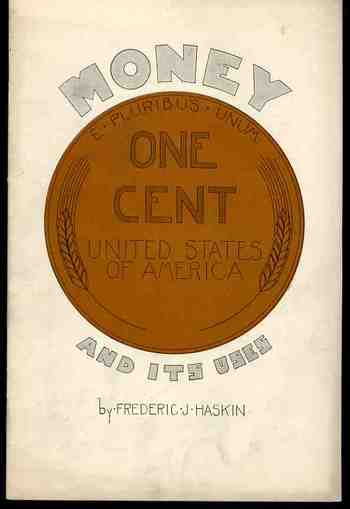
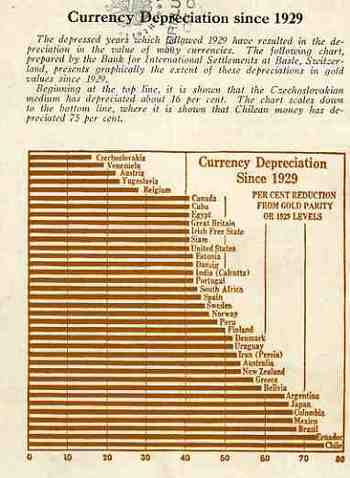
    I initially chose this pamphlet to be part of a larger series on terrific/unusual/bizarre cover designs–unfortunately its contents got in the way, a little.  The cover still borders safely on the unique, and so does most of its contents, except for the graphical analysis of the depreciation of worldwide currencies that appears on its back cover.  Here the information is actually pretty useful and unusual. It would’ve been more useful had the author included an end date for his comparisons–all we know is that he is looking at 1929 and the beginning of the Depression as a jump-off point, and we can assume that the end date is before the date of publication of the pamphlet (which actually isn’t stated).  Still, the graph is almost very useful.  It is for this reason that Money and its Uses Winds Up in the “Blank and Empty Department” for its diligent but ultimately useless graphical display of data.

    1blog_oc_t_9_money795

    1blog_oc_t_9_money796


  • A Map of the Kingdom of Corsets, 1939

    JF Ptak Science Books  Quick Post

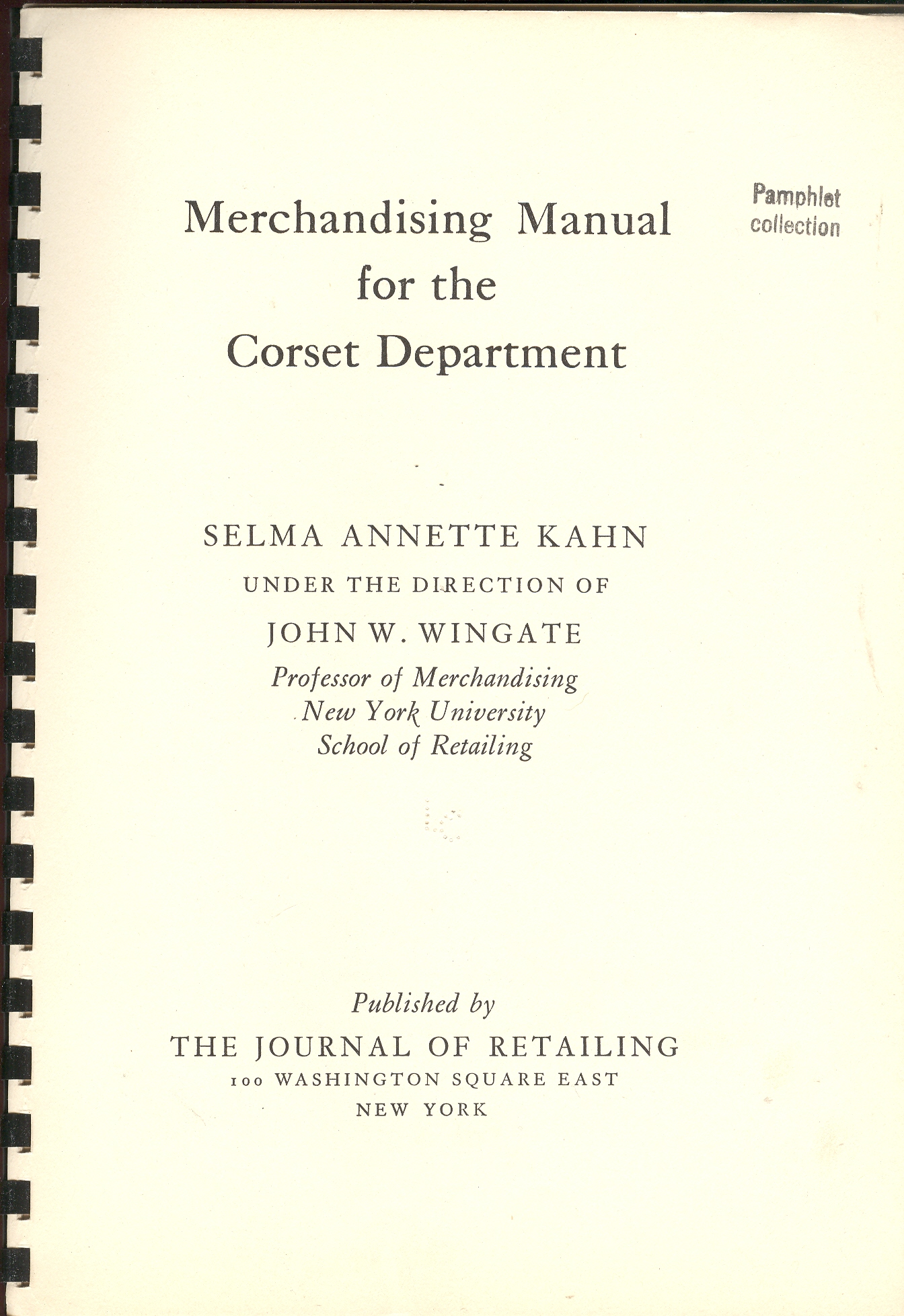
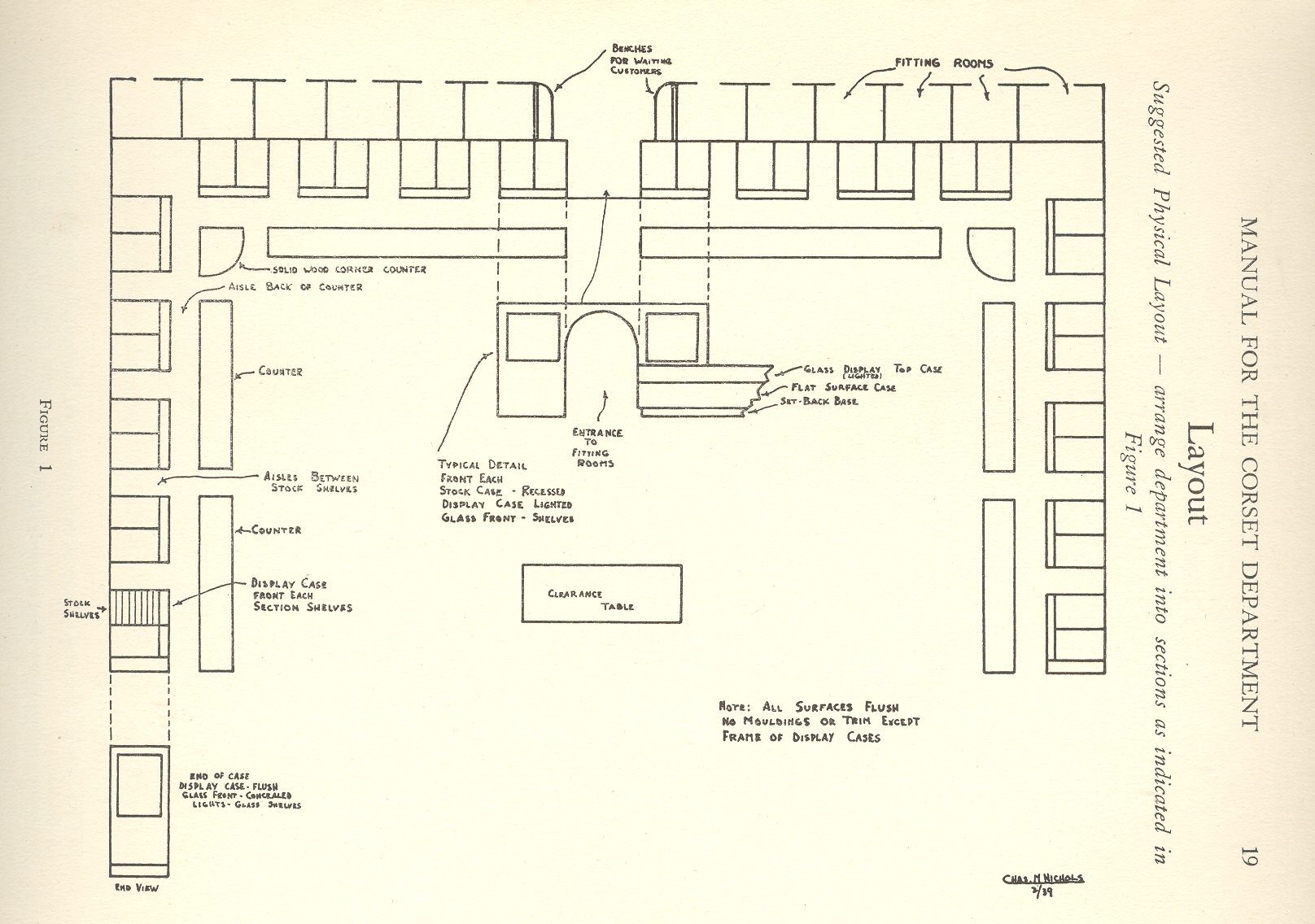
    + blog 10.26 corset tpThis finely produced, 75-page pamphlet lists all you need to know about marketing and maintaining a corset department in 1939–all except how to actually get back to 1939 to utilize this font of knowledge.  It was published with great seriousness for a serious business by the School of Retailing at New York University, a serious object for serious people.   Among the many things I’ve never thought of before thinking with this pamphlet were corset maps–and one of these happens to appear in this publication,  a map of an idealized corset department, which to me looks to be large, sanitized and medicinal, an oddly institutionalized presentation of an intimate something, something more of artistry and chance and possibility than an orthotic. 

    I should think that I would like to make a Kingdom Map for his image, some day.  It looks to me ready to accept the responsibilities of landforms or ideas or statistics or changes or comparisons in place of its plain nature of counters and countertops and display cases, empty boxes waiting for something a little more invigorating to depict.  Or maybe not, maybe the chance of display of transformations is enough to suit its peculiar, perhaps singular, needs.

    Or maybe on the Corset Map  instead of  substituting land and sea for corsets and boxes, one could substitute the noises of a quiet house at night, or the sound of heavy boots in a brittle-dry snow in the deep cold.  Or maybe a map of the discovery of children’s laughter, or inconvenient pauses in conversations through the history of human speaking…or a map of lost ways.

    Maybe the Corset Map could be used for a template for the things we will forget and the things we’ve forgotten, in which case the boxes need not be filled in, giving us a new version of the Bellman’s Map from Mr. Dodgson, a new subcategory of maps–the blank map.  Or it could be the outlines for a map of the places that you meant to say something, but didn’t.  Perhaps it could be used to outline where and how many times that people tell/told you that they’ll miss you if you step away, making hollow boxes of simple loneliness because we can’t be there all of the time.

    Or maybe the corset map is just a corset map.

    [This item is available for purchase, here.] The other surprise is how expensive these undergarments were.  For example, the Lily of France and Mme. Irene Corset Company (NYC) sold a girdle “for the heavy figure” (liberally sprinkling the word “heavy” throughout the description of the product like, well, sprinkles) for $132. The $132 corset is equal to about $2000 in today’s currency, or roughly a 15:1 increase. There were girdles and etc. in all price ranges, but the (1939) $30-$60 range seems to have been the most common; even still, the $30/low-medium quality item is about $430 in today’s dollars, and the cheapest of them all at 5 bucks goes in today’s economy at 75 dollars or so.  I’m not familiar with the value of undies today, but this sure sounds like a whole hell of a lot of money. 

    $132 for underwear in 1939 was a tremendous amount of money for the average person—even for the upper-middle class, it was a bunch, considering that you could buy a decent new car for $700.  It would also be equal to a half year’s worth of an average house rent ($28/month) and 1320 gallons of gasoline. 

    + blog 10.26 corset map
     

    It sounds like it was very expensive to keep the up with the idea of an ideal figure, which of course was partially create by this same sort of company, creating both need and demand for its product. 

    1939 Price Comparisons:

    Wages per year, average:  $1,730.00
    Minimum wage: 30 cents/hour
    Milk, by the gallon: 35 cents
    Postage stamp, 1st class: 3 cents
    Dow Jones: 131
    Gas, average price of a gallon:  10 cents
    Bread, by the loaf:  8 cents
    Hamburger Meat, by the pound: 14 cents
    Automobile, new, average:  $700.00
    House, new, average: $3,800.00
    House rent, average: $28.00/month


  • History of Boredom: “Nothing” in the Window

    JF Ptak
    Science Books  Post 802  

    + window statrers

    Looking at little things has its rewards, though what rewards those are may be a little oblique.  Today’s post is relegated to looking at the sidewalk on a stroll rather than the surroundings, and the sidewalk view is more like Baudelaire’s sidewalk botanist than Proust’s golden Parisian sidewalks. So it goes.

    + window statrersdet

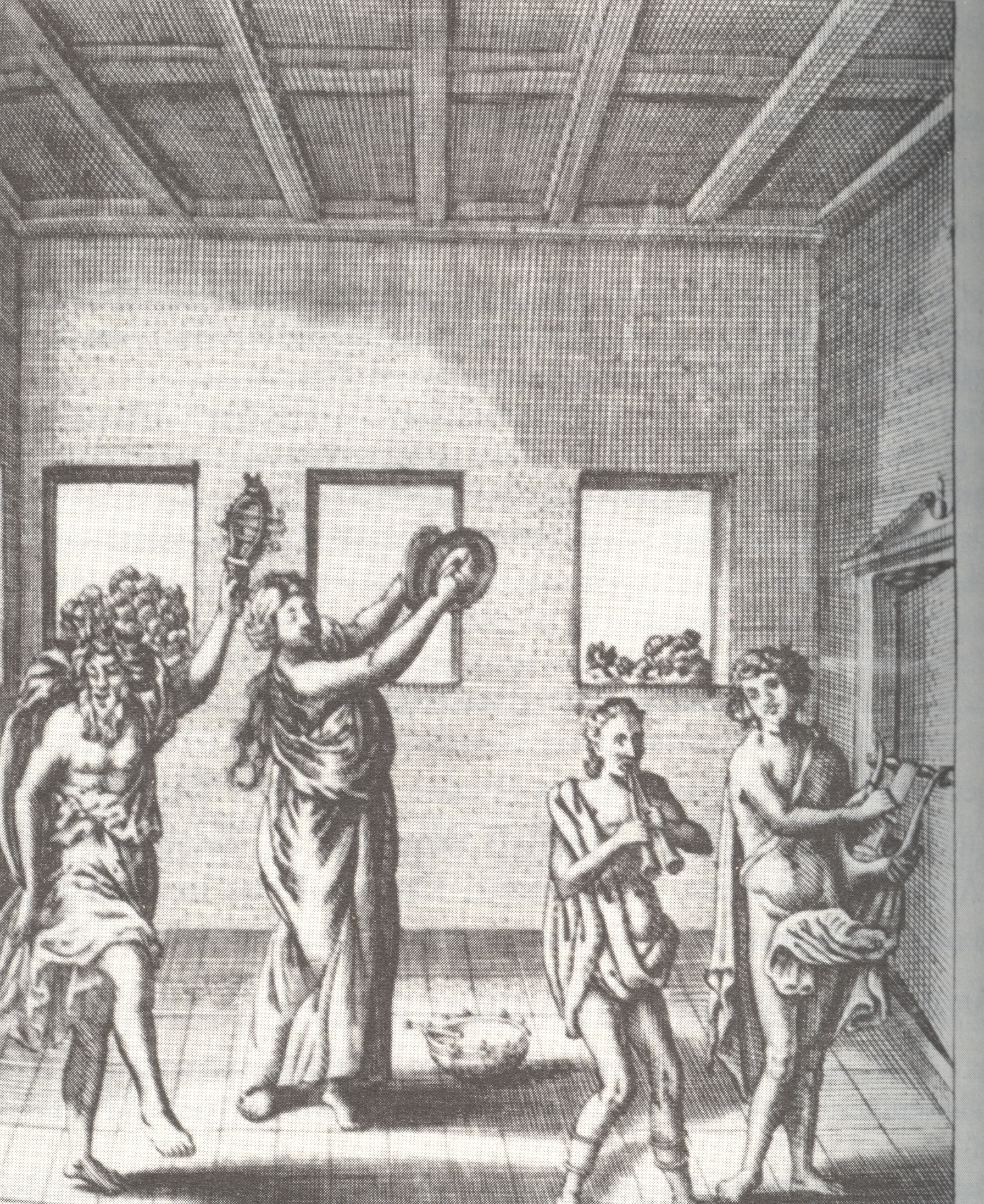
    Petrus Ciacconius Toledanus (Pedro Chacon,1525-1581) was a scholar who wrote on many things; this book, De Triclinio sive De modo co
    nvivandiapud priscos Romanos…(printed in 1664, 63 years after the author’s death) , takes a wide and classically scholarly look at bathing practices…and that includes bathing in water or in wine, and bathing once or six times a day, with dinner in the water or not, what to wear bathside, and all sorts of other bathing entertainments and necessaries.

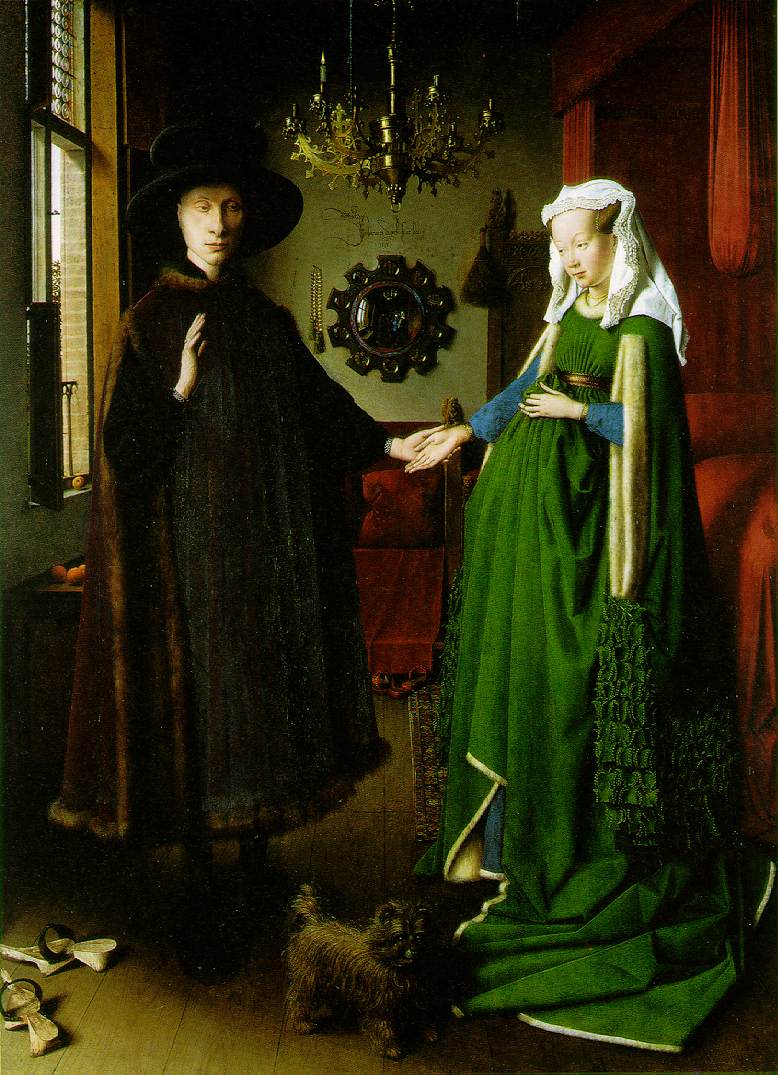
    Arnolfini

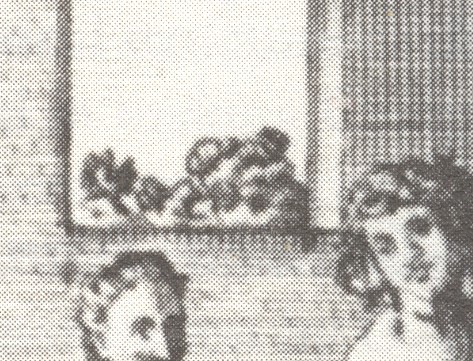
    But that’s not why I’m making this short stop here—it’s the odd bit in this illustration that has my attention.  I’m also not sure about the activity in the print—I’m fixed on the little bit of shrubbery that we can see in the background windows.  Having looked at thousands and thousands of images like this, I must say that seeing natural nothingness like this outside a window is very unusual.  In the unknown, unused and non-existent
    art appreciation genre of “Boring Things Seen Through Windows”, this print would be standard fare.

    But the real issue here for me is that the window is just a window in this print.  It doesn’t have any of the heavy significance associated with windows-in-art of the past, the window dripping with symbolic/spiritual significance (illumination, enlightenment, vision, godhead, divinity).  The window as a simple source of light or vehicle to relieve crowded interiors seems to be

    VanEyck_TheArnolfiniMarriage,detail

    overwhelmed by the religious/needy windows at least t
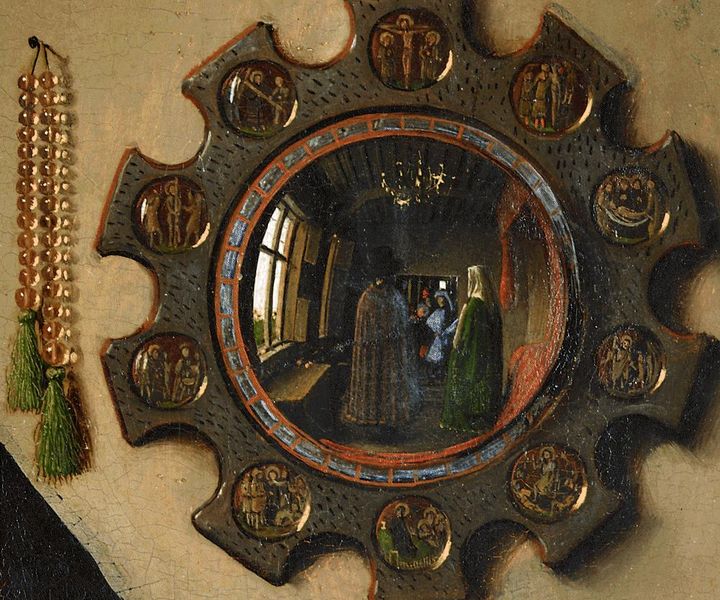
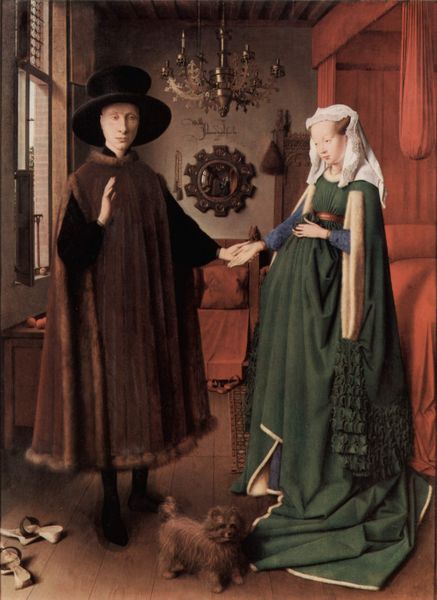
    hrough the first half of the 17th century.  (At least that’s my sense of it—I haven’t a single figure to back anything up.) The little windows that creep into the work of Van Eyck–especially in the famous “The Marriage of Giovanni Arnolfini and Giovanna  Cenami” of 1434—are interesting examples of the window as a simple source of light. (In the “Marriage” painting the window is much more visible in the iconic reverse double-painting seen in the mirror on the wall in the background.)

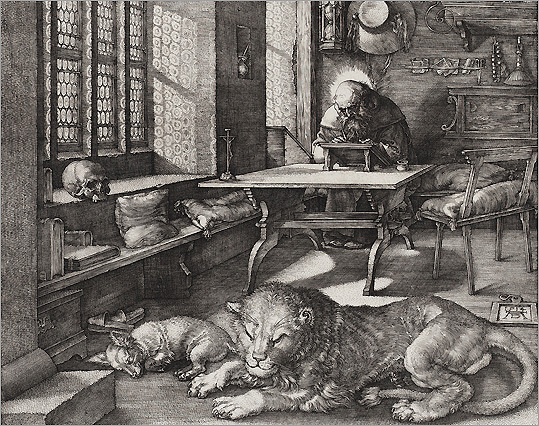
    St. Jerome

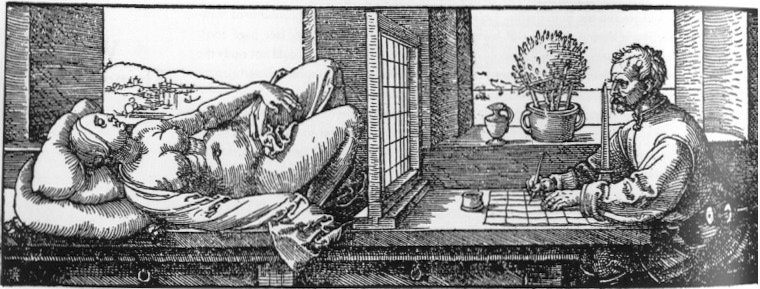
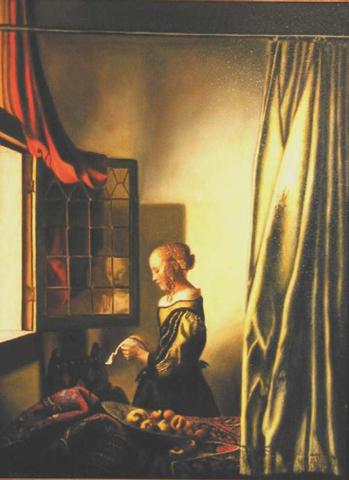
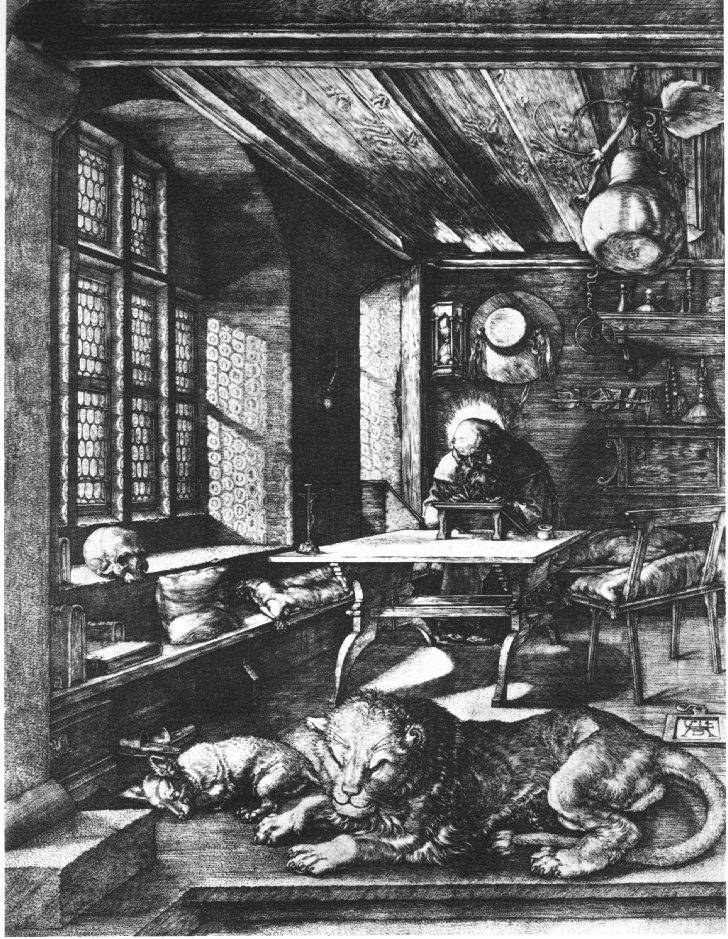
    Same too for the windows in some Vermeers, where you can virtually feel the breeze coming through them and into the  occasionally stuffy rooms.  And also for Durer:  while his great study of St. Jerome has a presiding possibility of Pure Holy Light coming into his room, it might also just be sunlight; on the other hand there is little doubt that the windows in his famous depi
    ction of an artist working a perspective study of a model through a dividing screen have nothing to do with the spiritual, and are just simple mundane windows.

    Durer


    By the 17th century there is a new genre of paintings having people looking out of windows (as with the case of Gerrit Dou, where we observe what seems like every one of his subjects looking out through a window),

    VermeerGirlAtOpenWindowLetter

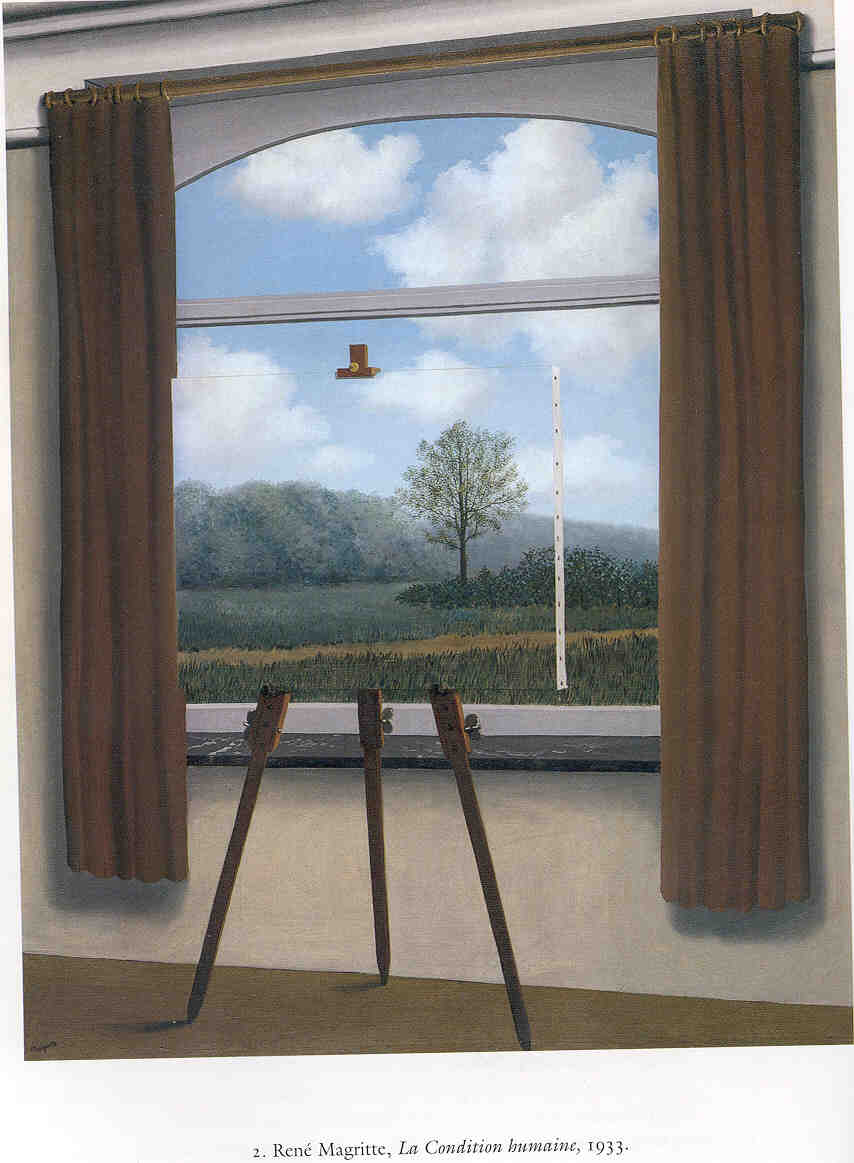
    which means I guess that the observer is the one who might shine in.  Enter the 20th century and the window takes on new meanings, as in bent/draped windows in Dali, or floating windows looking into the lonely world of Magritte, or the solitary nothing-but-a-window sculpture of Duchamp. 

    Magritte

    The unintended nothingness of the 16th century is what I think I like the best.

    Notes:

    For some pretty interesting books written on the window in art, see: Carlo Gottlieg, The Window in Art (University of Michigan, 1981, and which is a nice chronological treatment of the window, plus some psychological stuff) and Suzanne Delehenty, The Window in Twentieth-Century Art (1986), among others.  These will point the way.


  • History of Blank & Missing Things, #55: Empty Theory from Good Data

    JF Ptak Science Books LLC  Post 801  Blog Bookstore

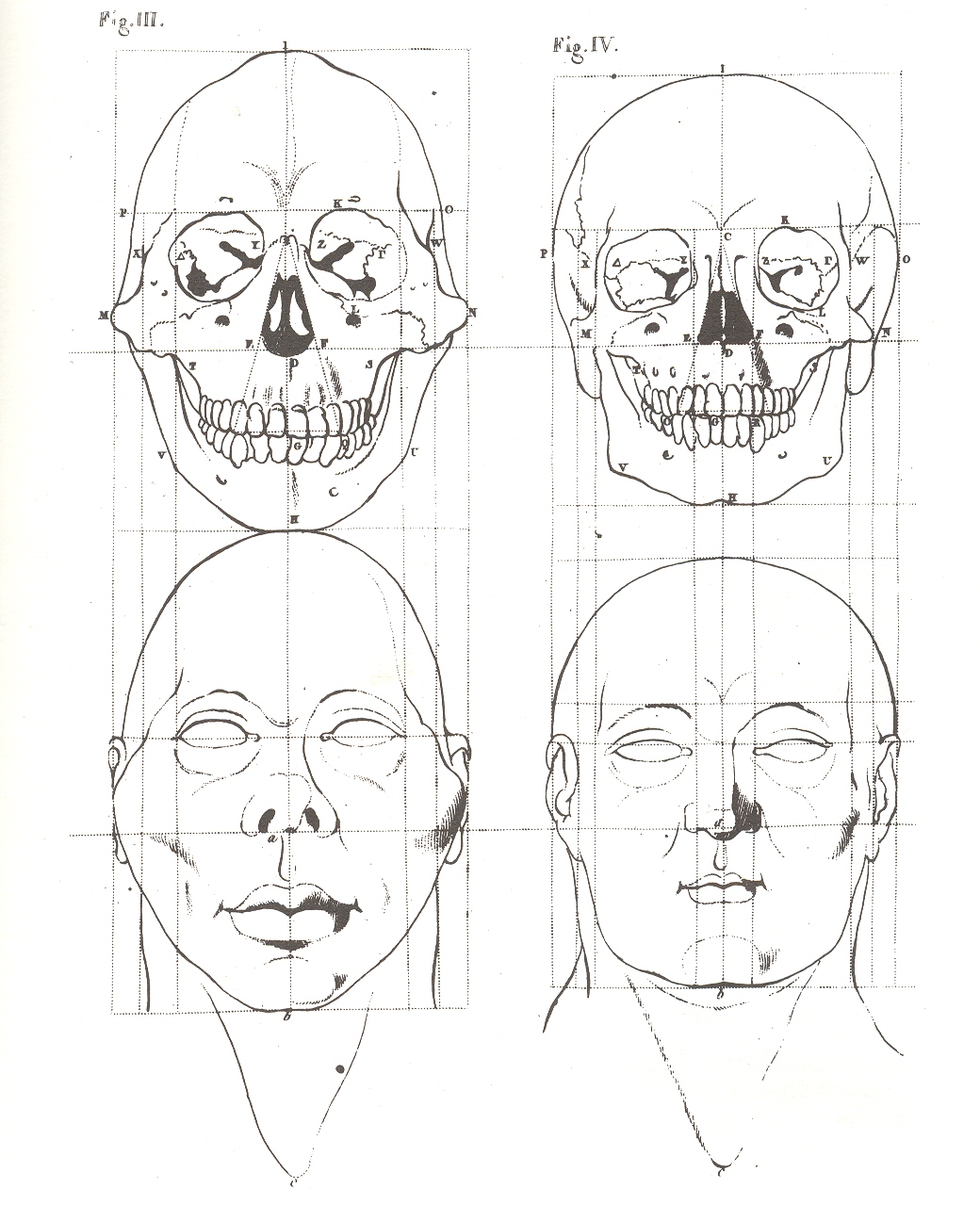
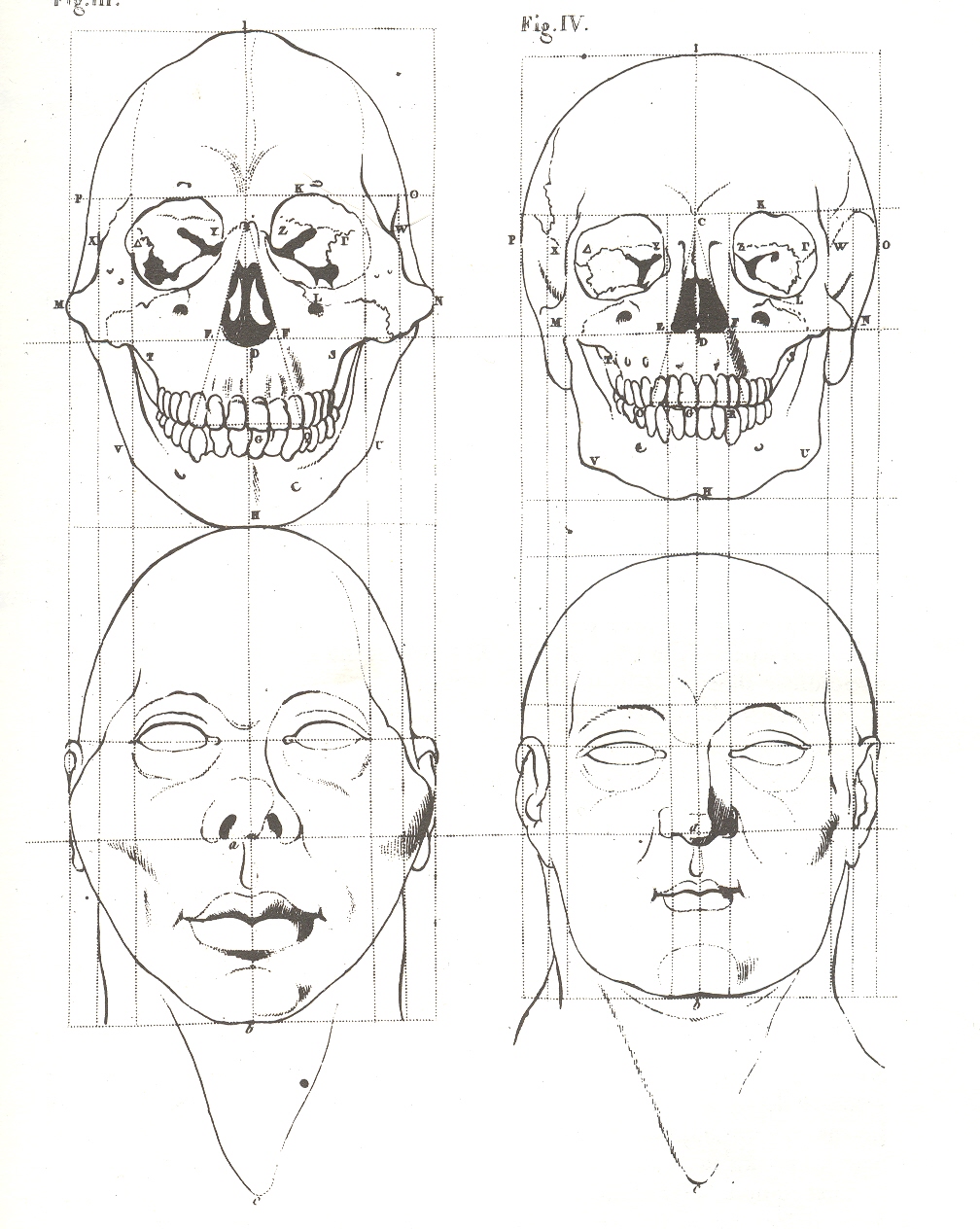
    It is difficult to imagine the impact that Pieter Camper’s intellectual leap had on his fellow anatomists back at the turn of the 19th century with this image1–with a mass of collected data, Camper was able to realistically suggest the facial qualities of a skull.  I’m not sure exactly when this effort was first made, but it seems to my memory that this is a very early effort.  But the mass of Camper’s work generally takes a bad turn turn when it came to representing his findings with theory. + skull

    I wrote about Camper earlier on this blog addressing his  “Bad Ideas of 1778”, in which it seemed as though he was doing anatomic transformations of animals into humans. Camper  (1722-1789) was a determined and excellent observer, which led to him understanding the skull like no other, but who was also lost among the numbers.  He was full of angles and degrees, articulating genetic possibilities by the measure of a face and the sentiments of its accumulated measurements.  He was also in his mind fully capable of judging a person by the physical measurement of their faces, which led to publications like his 1764 Oration on the Origin and Colour of the Blacks, in which he writes:

    “…some attribute peculiar to the quarter of the world; or the specifications of some singular ornament, peculiarity of dress, or of custom…. Thus, an Asiatic is distinguished from an European by colour and dress: the African and American, being somewhat similar in colour and dress, are known by the addition of a crocodile and elephant, a cargo of tobacco, incision of the skin, tatowing [tattooing], plumes of feathers, &c.“

    Which leaves us, well, nowhere.

    He collected some great data, but Camper was able to advance little beyond its diagrammatic representation:  theory was not his calling.

    Notes:
    1  The engraving comes from Camper’s posthumous  Dissertation sur les variétés naturelles qui caractérisent la physiognomie des hommes de divers climats et des différens ages suivi de réflexions sur la Beauté; particulièrement sur celle de la tête; avec une Manière nouvelle de dessiner toute sorte de têtes avec la plus grande exacitude.


    \


  • The Importance of Bridges in the Invisible Evolution of Meat

    JF Ptak Science Books LLC  Post 794  Blog Bookstore

    I wonder when it was that humans developed the extra senses that were able to “intuitively” determine (1) when
    something is missing, and (1.5) when something is just wrong?  I’m sure that these blood-bumpers were developed
    soon after the recognition that the face in the primordial goo staring back at
    its owner wasn’t something drowning. 

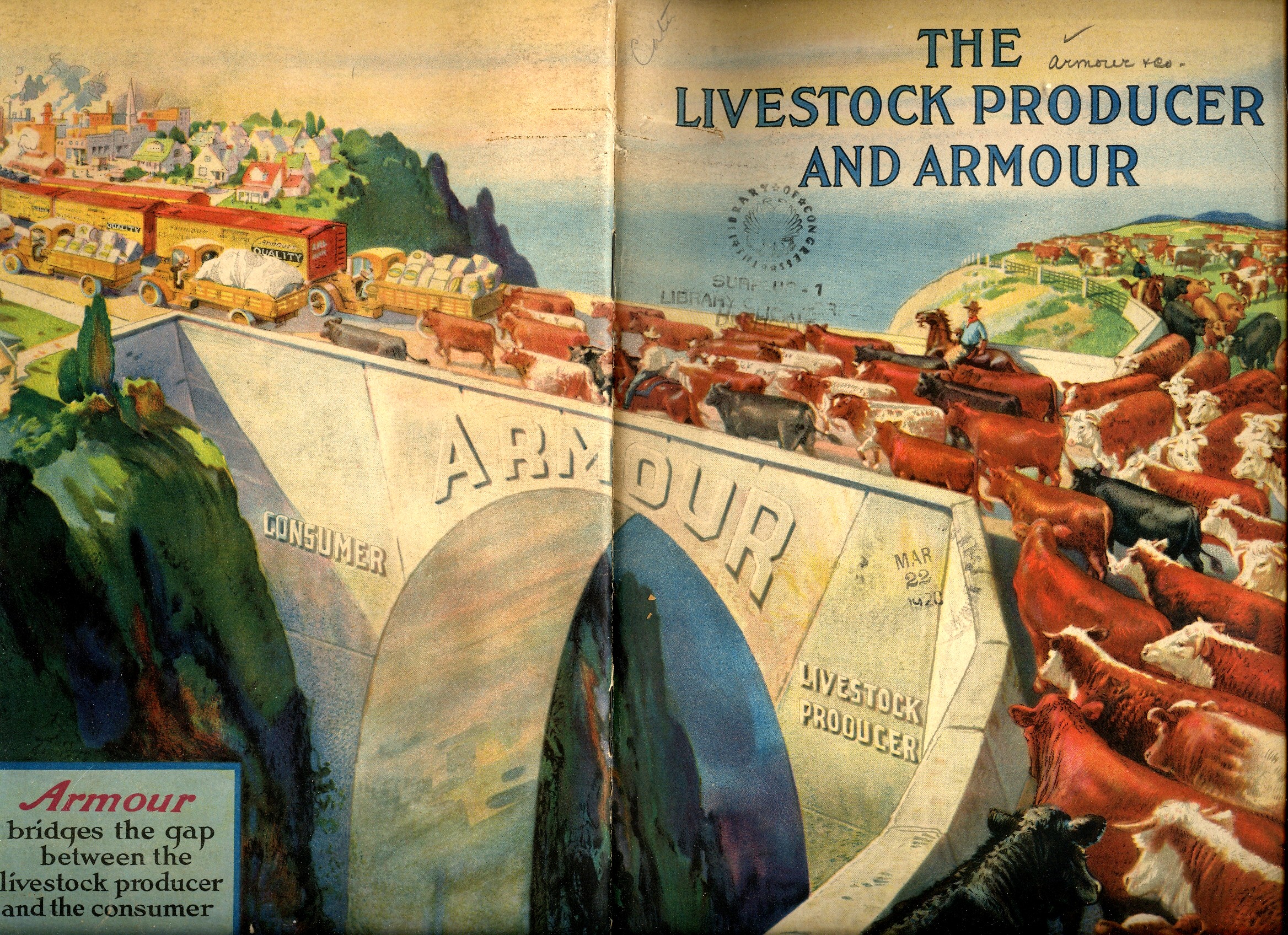
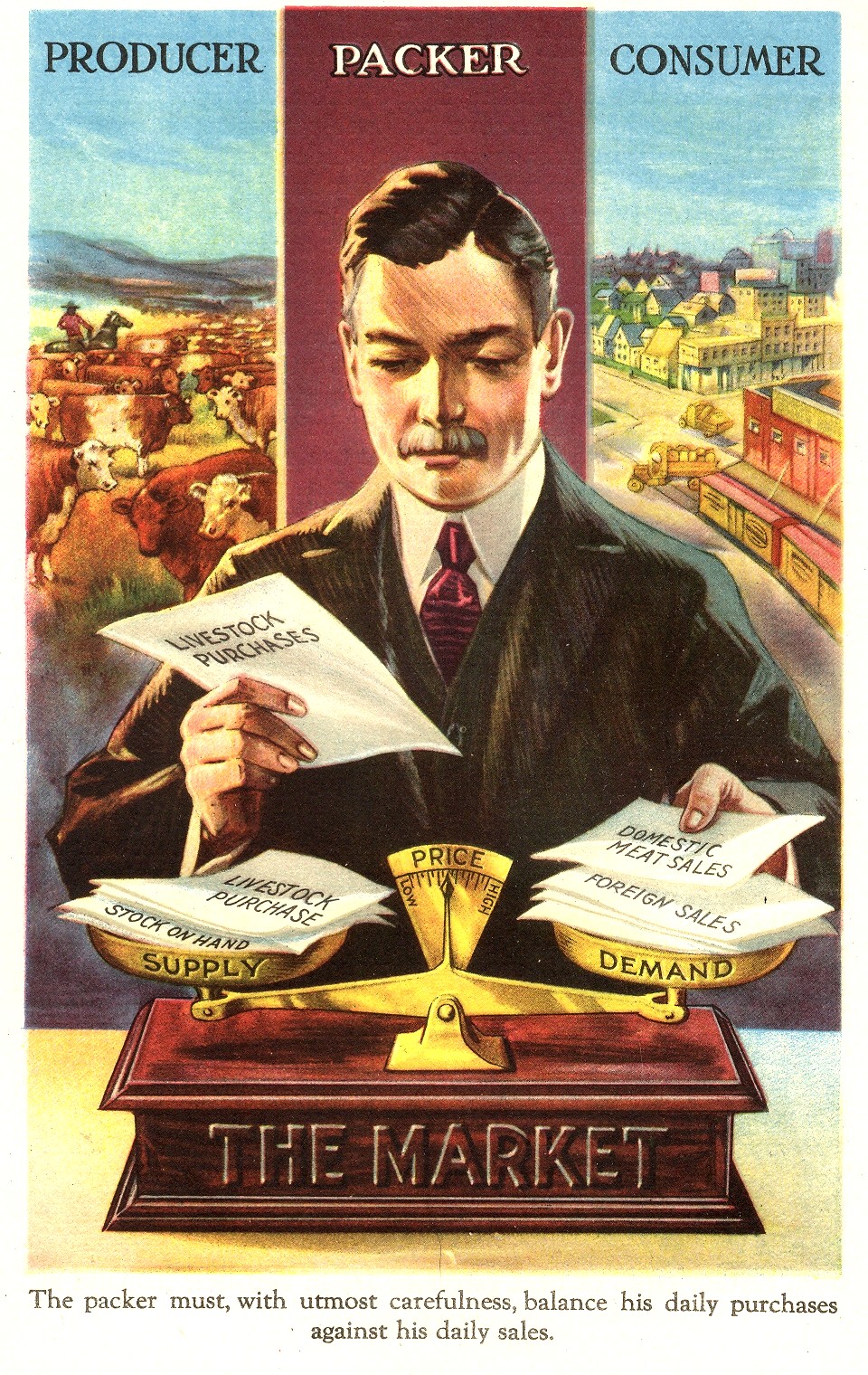
    + The Kodacolor Bridge of Evolving Meat

    This fast-forwards us through Wilberforces ultradense 6,000 years to the
    near-present: when looking at the explosively chromaticized picture of the progress
    of meat, brought to you by the invisible packing empire of Armour & Co. (of
    Chicago, of course), one gets the ancient immediacy of something being missing
    and just plain wrong.

    The cows being herded from their pastures are being led to the Armour bridge
    of Meat Evolution, where by some miracle the process of turning cows into
    packaged goods—like Leda and the swan—takes place over the “A” in Armour, three-quarters
    of the way over the bridge.  This process
    is wholesome in its invisibility, the walking product on the one side of the
    bridge getting ready for transubstantiation for the nested hu+ The Kodacolor Bridge of Evolving Meat 2manity on the
    other side.

    The picture of the packer weighing the elements of the mysterious
    gold-plated market rams this invisibility home as well:  the “producer” and “consumer” columns behind
    him are prettily illustrated with referential scenes, while the “packer” column
    just gets a single slab of color.  A
    singularity of nothingness in regards to what goes on behind the packer’s head
    is all the consumer would want, then and now, ‘cause certainly nobody wanted to
    know what the hell was going on in the packer’s den to hasten the evolution of
    cows from muddy hooves to the dinner table–especially in 1926, when this
    pamphlet was printed.  The vast
    conspiracy of people not-wanting-to-know-what-happens-at-the-packing-house continues.

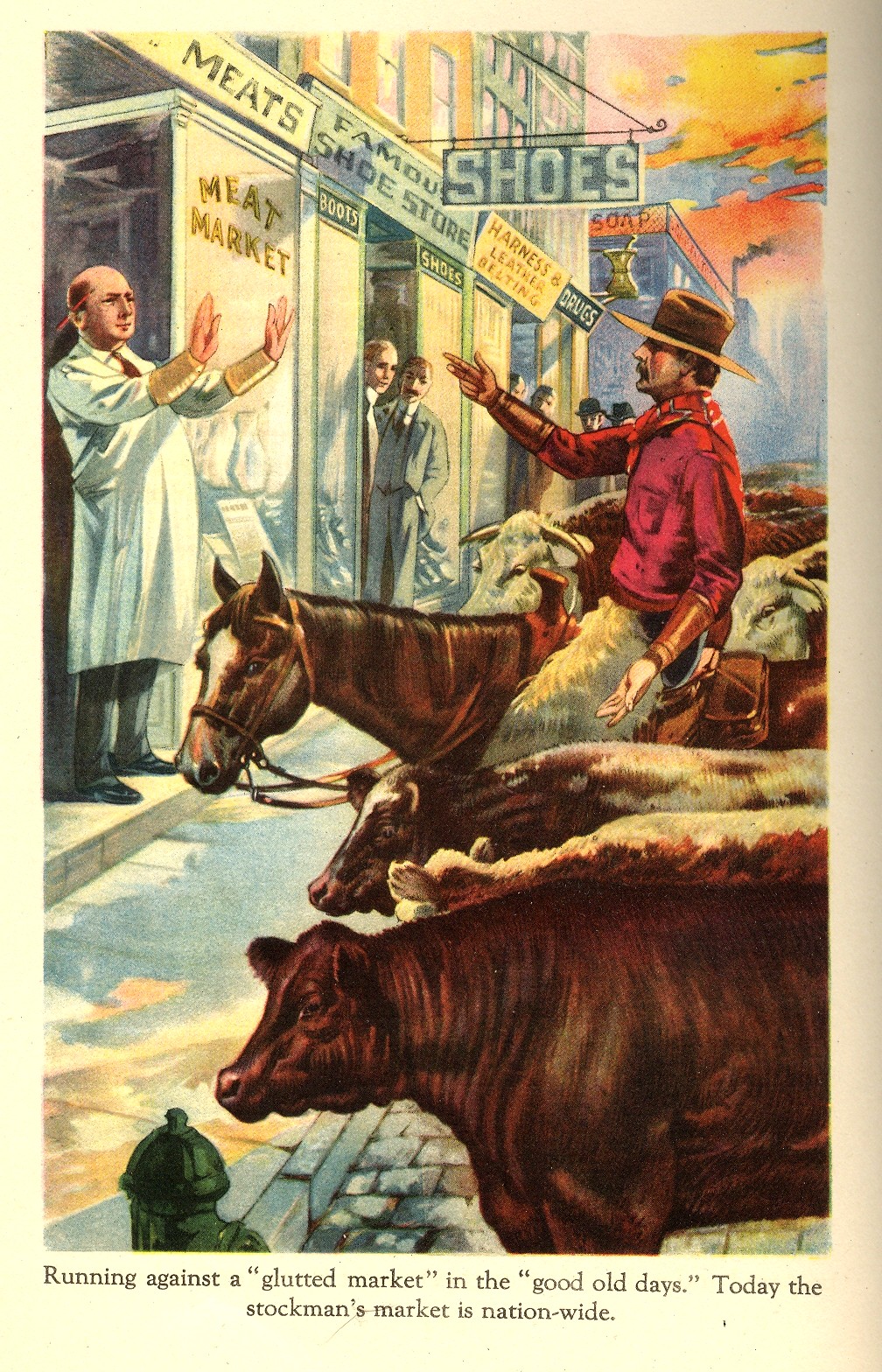
     + The Kodacolor Bridge of Evolving Meat 3 I can’t leave this short post without a nod to another extraordinary image
    from the Armour pamphlet:  the butcher
    waving off the drover and his herd because of a glutted market.  The “good old days” here doesn’t look very
    much like the 1870’s to me:  I can’t
    recall a single drover/cowboy image in my  very long experience that showed a cow
    sniffing a fire hydrant.  Plus everything
    else in the picture is pure 1920’s, except for the drover, who—although wearing
    skins in the city for some unknown reason—at least looks mostly like he should
    and isn’t packing an endlessly bouncing-on-your-thigh revolver.  Sorta. 

    The horse looks embarrassed and surprised at the same time. Is there an English word for that?  


  • Einstein as Subverting Flag-Burning Commie? What his FBI Files Look Like

    JF Ptak Science Books LLC  Post 793  Blog Bookstore

    Einstein--FBI detail 21950

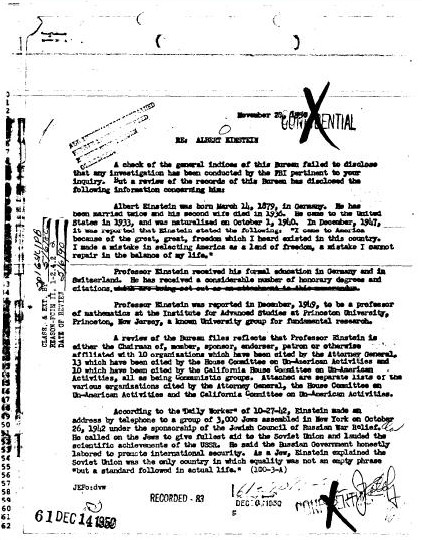
    While looking at the FBI files for Leo Szilard, a great physicist who had liberal-left ideas about peace and strategy and the use of the atomic bomb (in June 1945), I stumbled onto the files for one of the people sought by the Bureau to talk about Szilard:  Albert Einstein.  He and Szilard went back a long way, and Szilard’s advanced physics supra-intelligence and illuminated social outlook was instantly recognizable to Einstein, making it easy for Einstein to give him an excellent recommendation.  Which of course is something the FBI didn’t want to hear, as Szilard was mucking around in the national will to use the ultimate weapon, among other things.

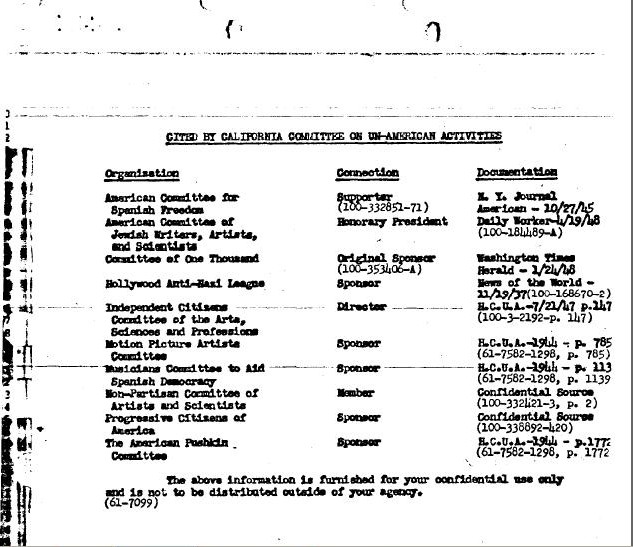
    I knew a little about the FBI’s interest in Einstein, but I had never actually looked at any of the declassified files, which as it turns out live at the FBI site, all 1600+ pages of them.  Hoover had some sort of special need to fill with looking after Einstein, whose nearly 20-year-long file is just not pretty. The Director was sniffing around the edges of Einstein’s social life, trying to make them into centers to do god knows what with them.  One of the files details the subversive organizations that Einstein was associated with–some of the hundreds and hundreds of groups that he lent his name to over the years. 

    Einstein--fbi--bad association

    Here’s some of those threatening organizations:

    Einstein--fbi--bad groups list 2 

    Not much to look at, really.  

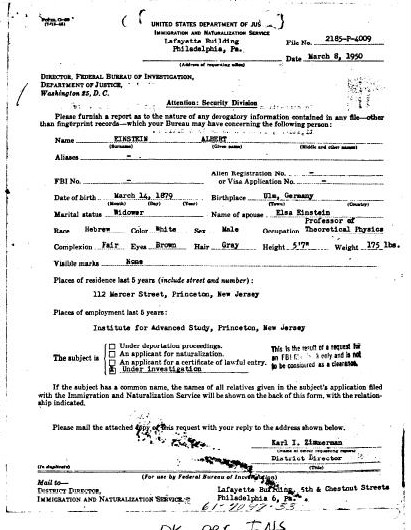
    But it is this gentle, subtle, horrible document below that causes real grief, the “under investigation” part at the end is just heartbreaking, a Lilliputian effort to control forces beyond their comprehension.  Such is the power of ignorance.

    Einstein--FBI 1950 

    Einstein--FBI detail v 1950