A Daily History of Holes, Dots, Lines, Science, History, Math, Physics, Art, the Unintentional Absurd, Architecture, Maps, Data Visualization, Blank and Missing Things, and so on. |1.6 million words, 7500 images, 4.9 million hits| Press & appearances in The Times, Le Figaro, Mensa, The Economist, The Guardian, Discovery News, Slate, Le Monde, Sci American Blogs, Le Pont, and many other places… 5000+ total posts since 2008.

Category: Blank and Empty Things; A History of

  • Straight Lines and Blank Space in Early Western Cartography

    JF Ptak Science Books LLC  Post 788   Blog Bookstore

    Blank and Empty Series #53

    It is sobering to look at the work of the early cartographers and see how much space in their maps they were willing to relinquish  to the blank unknown.  For example, Jacobus Ziegler, in his Quae intus continentur Syria,
    Palestina, Arabia, Aegyptus, Schondia,
    Holmiae, Regionem superiorem, singulae tabulae geographicae
    , published in 1532, was among the first to publish anything at all about Scandanavia and Greenland, wasted no effort in trying to add detail where there wasn’t any, a trait that was lost on many other cartographers and mapmakers in the centuries to follow.  His book was mostly about travel in Palestine, but at the end of the book he deals with the new and problematic geographic areas, featuring them in his eighth map, announcing the contents as follows:

    The western half of the map, featuring Sweden, Norway, Finland, Lapland and Greenland, is spectacular, and features an enormous, flat-detail, straight-edged Greenland as the bulky land mass in the west (“ulte Gron/rio/lan”, a terra incognita).  The extremely angular Greenland coastline stands in sharp contrast to the lovely wavy ocean, the mapmaker unafraid to stake his claim in what he didn’t know. 

    The eastern half of the map, Scandanavia, is more recognizable (if you focus on Denmark and Germany in the south and then work your way north):

    <

    Though the unencumbered line, far from the fractal nature of Mandelbrot’s coastline of Britain, appeared everywhere in the eight maps of Ziegler’s work, as we  can see in this intestinal-appearing Dead Sea (below).  The fact of the matter is that this was the state of the art in the first third of the 16th century, and there was in general not a great effort to embellish guesses and gloss over the areas where there was no information.  Of course there was still mythical placements of beings and locales and willing things into existence (like Prester John, sea monsters, El Dorado, no-headed men of South America, Patagonian giants, monsters, and so on), but I still find it remarkable to see how much rigor was given known geographic detail. 

    The Nile too received this unrelenting treatment of calm appraisal:

    I do admire this effort for not making things up, or covering areas for which there wasn’t good data with ephemeral and unnecessary features that would swallow up large swaths of white, empty space, as in this map of the lands eastern Syria:

    Though there were still no problems including sea serpents, even so close to the Syrian coast:

    On the whole though Ziegler’s stylized effort is quite beautiful and truthful,  and I enjoy the depiction of the sea giving way to the chunky, rectangulariness of even such decently known forms such as Cyprus.

    The bottom line here is that folks seeing this work for the first time in 1532 would have had a similar reaction to it as you had when you zoomed in on your house in Google Earth for the first time–it was an extraordinary display of information for the time. 

  • An X-Ray of the Earth, 1756

    JF Ptak Science Books LLC   Post 787   Blog Bookstore

    I’m not sure why there was so much included in this engraving that had
    nothing to do with its subject matter. 
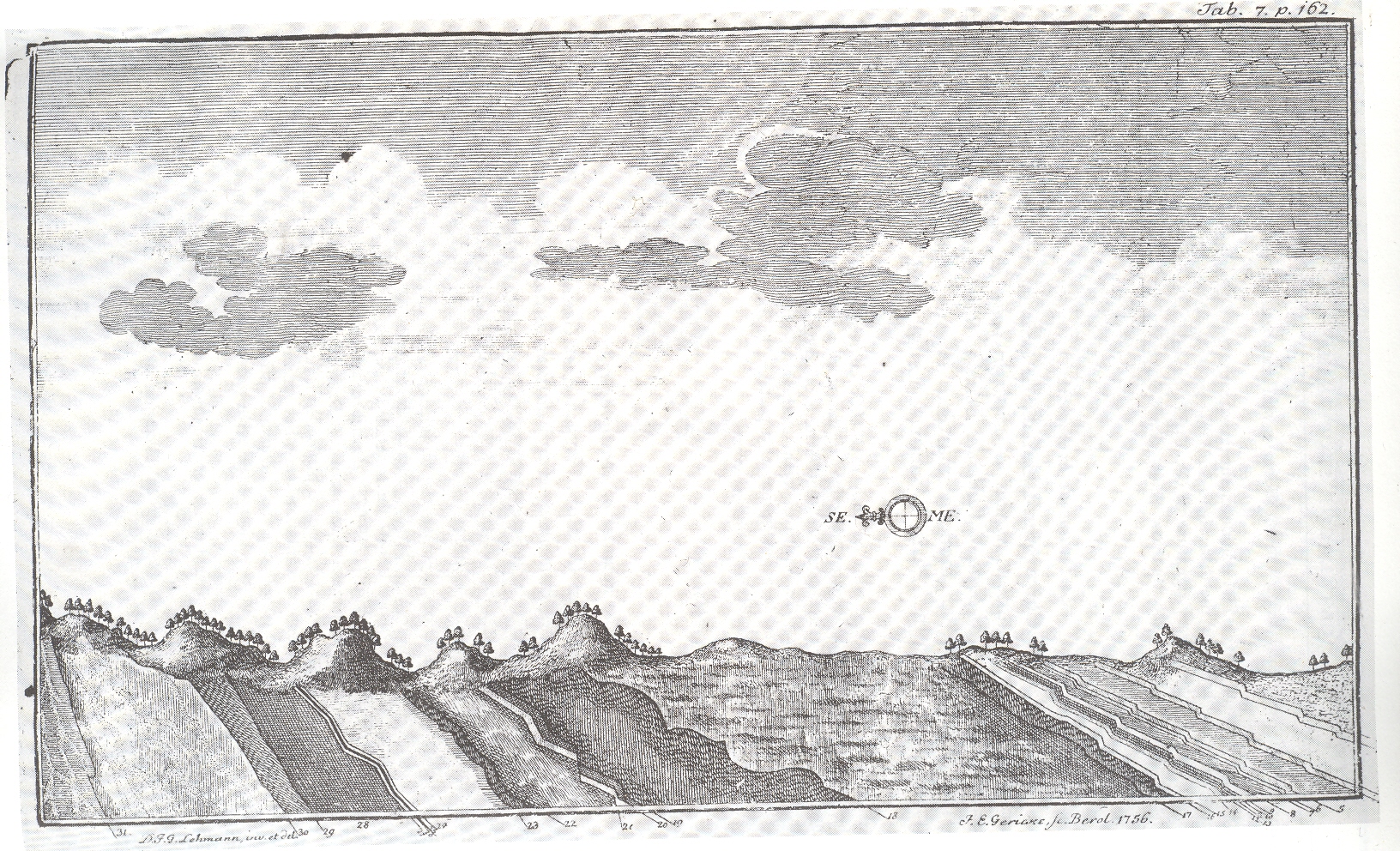
    The essential part of the image is the cross section at bottom:  the image of landforms, created by the man
    most responsible for the establishment of stratigraphy, the German
    physician/chemist/mineralogist/geologist Johann Gottlieb Lehmann (1719-1767).  What Lehmann accomplished was a sensational,
    x-ray-like interpretation of the surface of the earth, a privileged vision
    distant from the real birth of the science of geology in the work of James
    Hutton more than 50 years later. (Hutton was about the first to treat the entire
    corpus of the geology of the earth and which was also completely removed from myth
    and fable.  His work formed the basis for
    that of Charles Lyell who in turn provided some of the intellectual basis for Charles
    Darwin.)  He seems to be the first to
    create such a slice of the earth, illustrating an orderly, historical formation
    of the various layers (and not an unrelated jumble), and the first steps
    towards establishing the laws of formation of geological sequence.

    + lehmann

    Outside of the spectacular introduction to the workings of earth in this cross
    section, I’m taken by the enormous sky, and the very lonely compass, placed,
    seemingly haphazardly in a blank field, creating a very considerable blank space above the great discovery.
    The scientific greatness of the images aside (can I even say such a
    horrible thing?), the engraving looks to me like a modern surreal work. 

    Book Note:  Lehmann, Johann. Versuch einer Geschichte von Flotz-Gebuergen,…1756, printed
    in Berlin
    .  “This unpretending treatise must be
    ranked as one of the classics of geological literature”—Archibald Geike


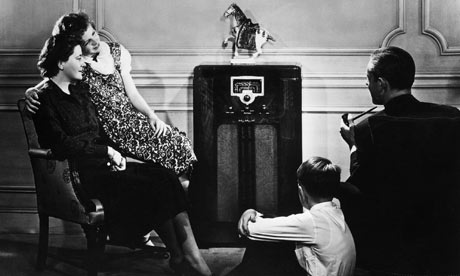
  • History of Dis-Inventing Sex, 1: 1930’s American Radio

    JF Ptak Science Books LLC  Post 775 Blog Bookstore

    Radio--family listening

    (Also part of the Blank and Missing Things series: Sex)

    The classes in the Western world for the most part enjoyed
    their own social amusements:  the rich
    had opera, theater, concert halls; the working poor and associated classes had
    burlesque, minstrel and variety shows.  The
    invention of the motion picture began to draw a common thread between these two
    classes, a place where anyone from anywhere could enjoy themselves for a nickel
    (or whatever).  Commercial radio came
    into being in the late 1920’s, growing enormously in the 1930’s and ‘40’s
    before encountering its mortal enemy of television in the early 1950’s.  Since radio was free (minus the cost of brain
    rot from listening to the underwriters who commercials were interrupted by the
    stuff people wanted to listen to) it became for those decades a superb democratizer
    of American entertainment and (to some degree) culture. 


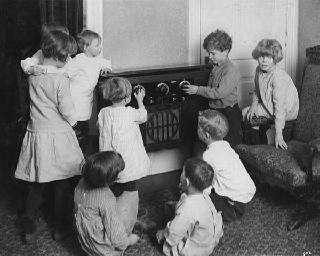
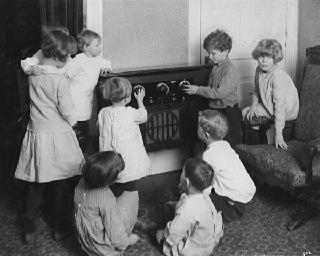
    Radio_kids

    Opera, vaudeville, minstrel shows, theater and so on enjoyed
    their own segments of saucy visions and rakish stories, with sex certainly not being
    necessarily prohibited.  This was absolutely
    not the case with radio, which in the 1930’s and ‘40’s held strict standards
    against suggestive behavior that might hint of sexual meanings.  There was plenty of sotto voce sexual innuendo to be found, but you really had to look
    for it and pay attention.  The feeling
    among the broadcasters was that since radio was being invited into the very
    homes of its listeners that there was a deeper responsibility to keep the shows
    clean and relatively wholesome. And so sex took a holiday.

    Its not that movies and television in the 1950’s were
    rampant Decameron (with all of its semi-comic/tragic half eroticism)  or Caligula spas, but
    they certainly “showed” more skin than radio from that period ever talked about
    or alluded to, even if the first TV married couples beds weren’t pushed
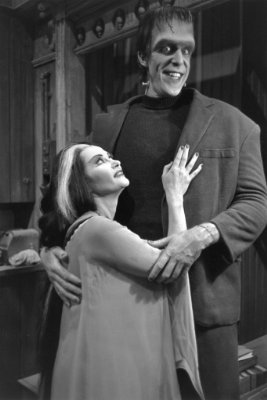
    together until  the Munsters shared a big double in the 1960’s.

    (No,
    the Ricardo’s never did push their twin beds together; it really was  the mores-bending Munsters, who are  pictured below. Perhaps the great “first” of a couple sharing the same bed needed to remove the human aspect of the reaching act, placing the responsibility in the attached-hands of a Frankenstein’s monster-like character and his bride.  This happened too with tv’s first interracial kiss–between Capt. Kirk and his communications officer, can’t remember her name–making the encounter between humans of incredible accomplishment and remove, and of course set centuries in the future.)

    Munsters

    Be that as it may, Lee DeForest (1873-1961), the inventor of the audion
    which made the whole industry possible (after Hertz and Marconi) complained in
    1947 of the enormous silliness and suggestive nature of the new medium.  He loftily wrote about what could’ve been “a potent instrumentality for culture, fine music, and the uplifting of American mass inteliigence” but instead was a ‘laughing stock”, the medium addressed to what he thought was the average national intelligence of a thirteen year old.  Maybe he was right, and the man simply couldn’t stand it.  61 additional years would’ve made the De Forest explode–but then again, he was already close to that hearing saxophone players; who knows what the man would’ve thought of cable television.  But the one thing he really couldn’t compalin about with radio was eroticism or sexual conduct, because that really wasn’t there. 


  • The Stillness of High-Victorian Action (Blank & Empty Things Series #55)

    JF Ptak Science Books LLC  Post 770
    Follow Me on Pinterest

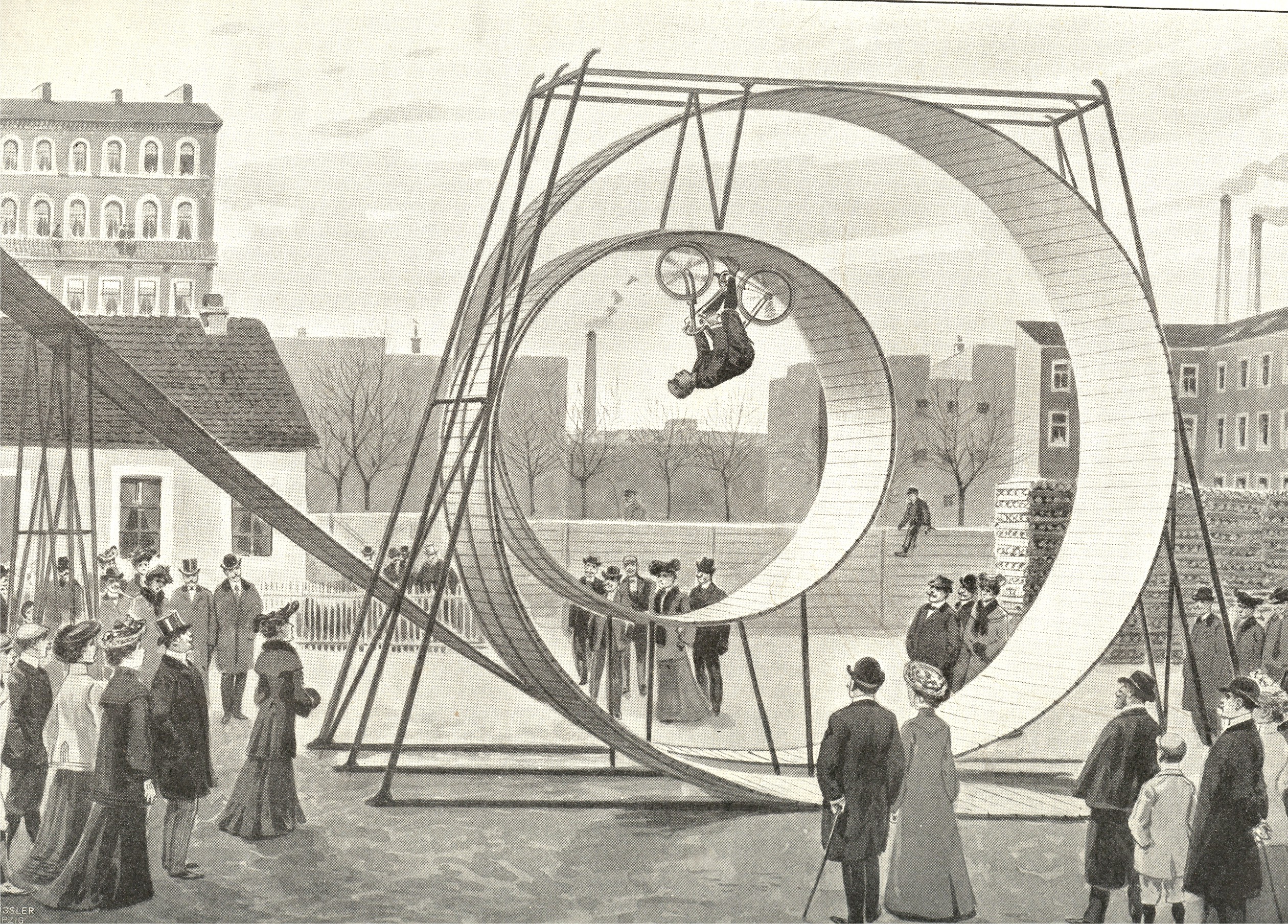
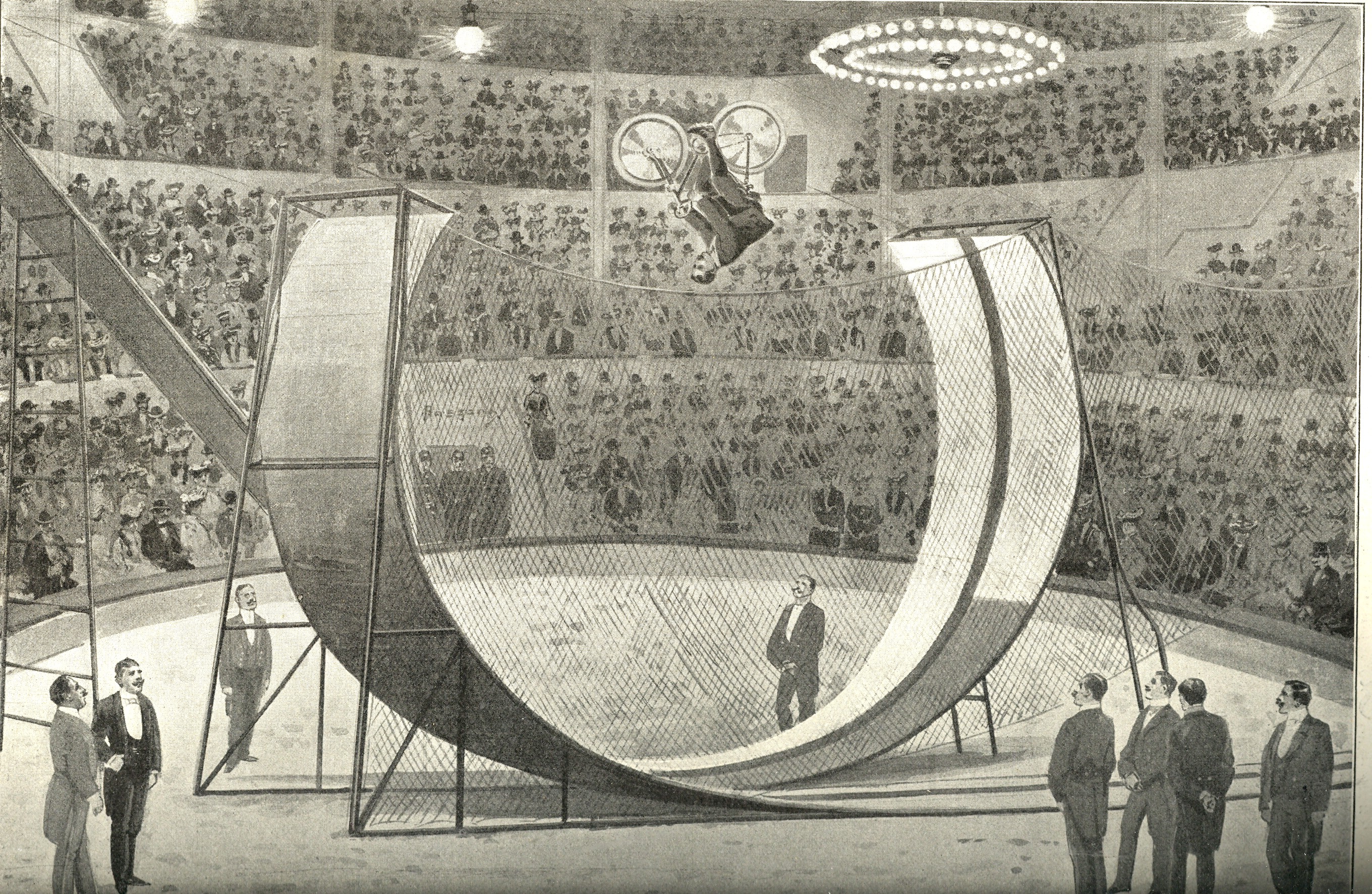
    ++00++ 9.25 bike acrobaticsIt seems to me that even when the Victorians1 were busy doing
    something, nothing seemed to be happening–true too for me with this later period in Germany, under the command and control, for good and for ill, of Kaiser Wilhelm, German Emperor and King of Prussia from 1888 to the end of the Great War.  There’s a certain something
    to illustration at this time, creating wooden
    humans manikins, watching other wooden figures doing something at elevated speeds that
    made them seem motionless.  I’m not sure what it is–perhaps propriety,
    perhaps the need to be visibly invisible, the sine qua non of behaving
    correctly. 

    I’m not sure what sort of special, invisible addition needs to be
    applied to Victorian/Wilhelmian Nothingness to add up to Something. There’s a
    certain unexplained emptiness, motionlessness, nothingness to illustration in this period, and I’m always at a loss to save good examples of it–though today I have two good examples, found in the 7 April and 28 January 1904 issues of the Illustrirte Zeitung (Leipzig).  For all of the excitement and action and crowds given in these daredevil bicycle demonstrations there seems to be not a breathe being breathed, or perhaps it was breathe breathed slowly.  In any event, the situations seemed suspended in action and belief. Ironically this was also the age when the concept of “speed” was at the beginning of being completely re-written with the introduction of the car, airplane, internal combustion engine, widespread electrical networks, motion pictures, and so on–but none of this mattered in images like these, outstanding as they are for being scenes of action presented in a mosaic of stillness and quiet.

    1. Yes, the Queen expired in January 1901, but the influence didn’t necessarily die with her.

    ++00++ 9.25 bike acrobatics2


  • Blank and Empty Things Post 54: The Cowboy Race of 1893

    JF Ptak Science Books LLC  Post 769   Blog Bookstore

    Some other posts on the Cowboy and the West:  The
    Advancing Frontier and the Increase in Bloody Names of Literary Heroes
    ;  
    Where is the West? 
    How to Find Nowhere
    ;  
    Lines that Closed the West: 
    Wires, Rails and Words

    ++00++ 9.25 coboy

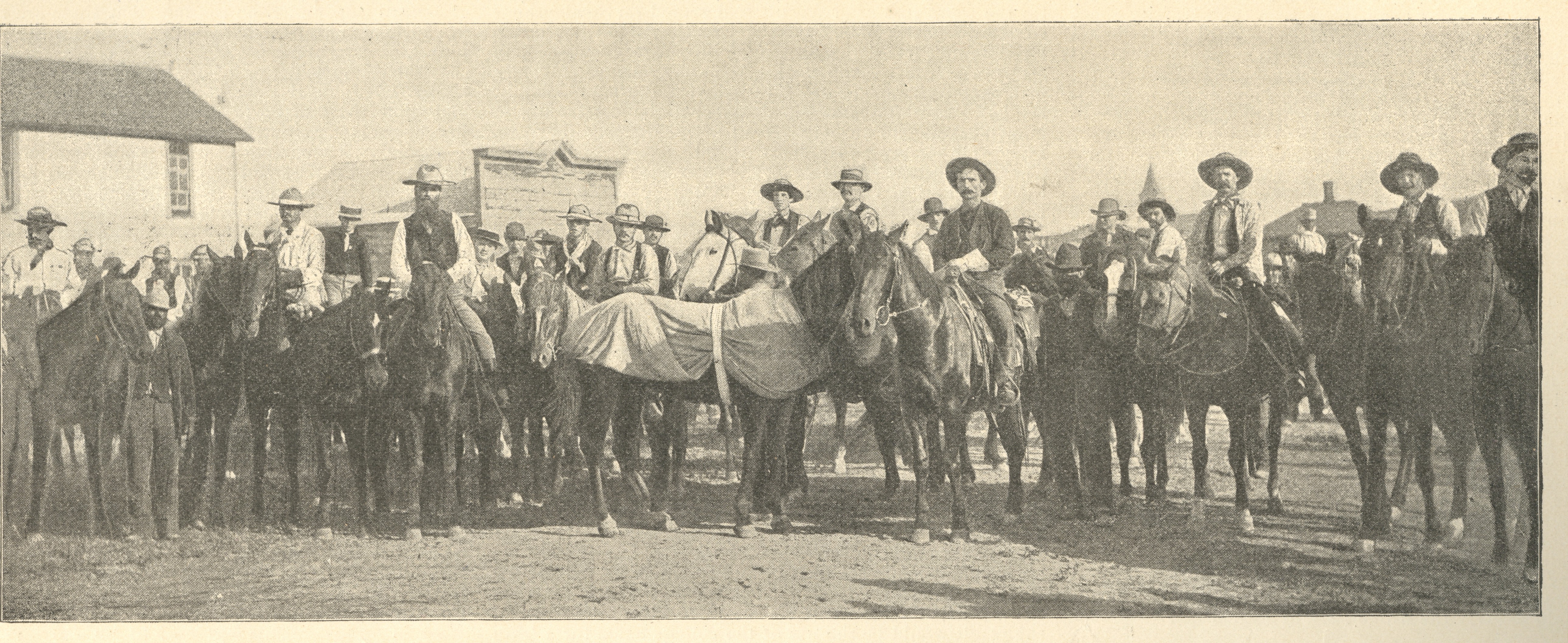
    I’ve not seen this picture of the nine cowboys who starred
    and started the Great Cowboy Race of 18931. 
    They gathered with a frenzy on the little town of Chadron, Nebraska
    (population 2,000, which doubled in size as the event’s opening grew near)
    determined to announce the “best “ cowboy, the first to cross the finish line
    near the Chicago World’s Fair of 1893 and shake the hand of Buffalo Bill
    Cody (well on his way to becoming a shell of what used-to-be).  The contest was supposed to take
    two weeks and average 50-75 miles a day, which is a lot to ask of a team of
    horses (and the riders).  So there was
    the expected shenanigans, and the man who “won” evidently helped plan the secret
    route, and someone else rode a trains with his horses for a bit, and so
    on. 

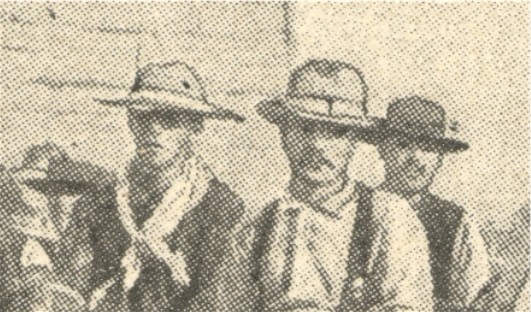
    The result doesn’t matter–it seems an overall sad story, these guys winging their way to the windy City, a race to oblivion. (Some of the cowboy contestants were already about half-faded away into Limbo judging from the photo touch up that had to be done of their faces.)  

    ++00++ 9.25 coboydet2

    Ironically these cowboys were racing to the cosmopolitan
    host of the World’s Fair in which the historian Frederick Jackson Turner read
    his paper “The Significance
    of the Frontier in American History
    ,” —a
    significant theoretical piece announcing why Americans are so different from Europeans, and
    also that the American frontier had clearly, absolutely, been broken and installed in the gauzy national psyche.  The fate of the Cowboy had already been determined 20 years before with the introduction of refrigerator cars, railroad expansion and barbed wire–all of which cut the West into smaller and smaller parcels, until they restricted the Cowboy to its own Reservation. A crooked race to Chicago seemed to crystalize the Cowboy’s tenuous grasp on  existence, depicted finally by the new(ish) half-tone photo process of Stephen Henry Horgan, making a half-portrait of empty circles, the image disappearing more and more the closer we look at it..

    ++00++ 9.25 coboydet

     It was just a sorry show for the cowboy all
    the way around, and a story that doesn’t need to be told here.  I did just want to publish this picture.  There’s a long and good story here http://www.thelongridersguild.com/chadron2.htm
    about the entire affair. 


    I include the list of the riders, mainly for the names of
    their horses:

    Emmett
    Abbott riding Outlaw and Joe Bush.

    Joe
    Campbell riding his one horse, Boom-de-aye.

    Davy
    Douglas riding Wide Awake and Monte Cristo.

    Old Joe
    Gillespie riding Billy Mack and Billy Schafer.

    George
    Jones riding Romeo and George.

    Charlie Smith
    riding Dynamite and Red Wing.

    Rattlesnake
    Pete Stephens riding General Grant and Nick.

    Doc
    Middleton riding Geronimo and Bay Jimmie.

    John Berry
    riding Poison and Sandy

    .


  • Racing Houses and Lost Cemeteries: Ochiltree, Texas, 1920

    JF Ptak Science Books LLC   Post 768  Blog Bookstore

    ++00++ 9.25 ochiltree, texas

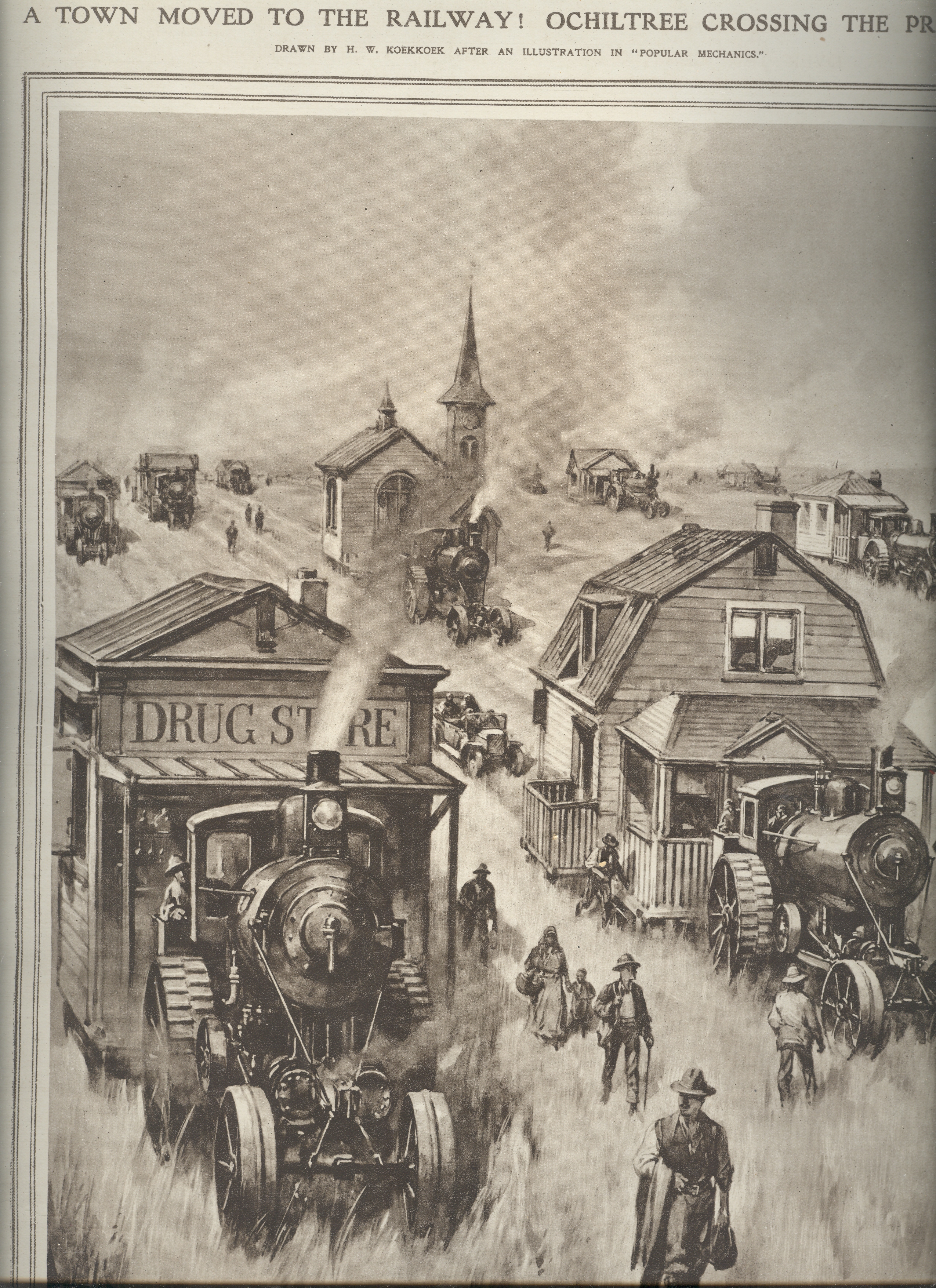
    Dateline:  Ochiltree, Texas, 20 October 1920.  Mr. Ralphsted Winston has been racing houses for the 30 years.  “Yep.  House racing is older’n auTOWmobiles by a large space; we’ve had tractors for a good time longer than cars, and more powerful, too.  It was just natural to do something with them more than find black soil”.  And so evidently came house racing.  A reporter wondered if there was one particular house that was best to race with.  “Sure” replied Mr. Winston, “houses with porches.  Let’s the breeze to let the breeze come out to show them” he explained, somewhat. 

    For the last ten years Mr. Winston has been racing a different sort of house.  “God’s house” he said firmly.  “Churches.  Round here, in North Texas, they’re small-built with wood and such, and aren’t too heavy, makes for nice tight turns and a solid straightaway”. 

    “And chapels?” came a question.

    “Not allowed.  Got to be a church” came Mr. Winston’s reply, his jawline cracking.

    “The only problem with churches”, he continued, “is that not one of them has ever won a race.  Ever. Even in the best conditions, we get bested by porches, schoolhouses, even soddies”.  “Yup”, and then came a long, ponderous spit, “not a one, won”, extended a chuckling Mr. Winston.

    A reporter asked, “Why don’t you have a race with nothing but churches. Then at least you’ll have a winner.”

    “There will be a whole LOT of losers.  Maybe ever one” replied an eyebrow-raised Winston. “I do guess that someone would have to win, even if they were from Oklahoma, they’d be a winner too.  Not everybody has to wind up in a drown ditch.  But in the land of the blind , you don’t have to be a happy one-eyed king.”

    Well, this really isn’t a race of houses, though I’d much rather think of this picture in these terms.  (The church is passed on the left, on the right! There’ll be hell to pay for those maneuvers!”) What is happening here is that the town of Ochiltree is being moved closer to the railroad that passed the town by, by 15 miles or so. It was the North Texas and Santa Fe RR (Shattuck, Oklahoma to Spearman, Texas) that left Ochiltree behind; and just after that, a new town called Perryton appeared, established there on the railway line, taking all of the interest (and the county seat) away from Ochiltree.  So what happened was that Ochiltree decided to move to Perryton, to become part of that town, evidently leaving nothing but space wherer the town used to be. (The Handbook of Texas said that the town “disappered completely”.) I wonder though if there weren’t a few people who decided to stay, who just wouldn’t move; who in 1921 found vast new distances between them and whoever else was left, all of the other buildings gone, pulled up out of the ground, lock, stock and barrel.  And what about the cemeteries for the two churches that were moved? According to the good folks at the Perryton Memorial Library, the cemeteries were left, and still there, in a town that isn’t.  (On the other hand I can’t imagine how a small town would’ve moved a cemetery–there may have been 500 people in Ochiltree at the point of departure, and perhaps another250 or so who were over the years already departed…that means that every able-bodied person would have had to dis-and-re-inter one fallen town member, which may have been way to much to ask of anybody given that they were already moving the entire town.)


  • Missing Body for a Famous Head: Ernest Solvay at the Solvay Conference, 1911

    JF Ptak Science Books LLC  Post 761.5  Blog Bookstore

    Blank and Missing People, #54 (Continued from yesterday’s post.)


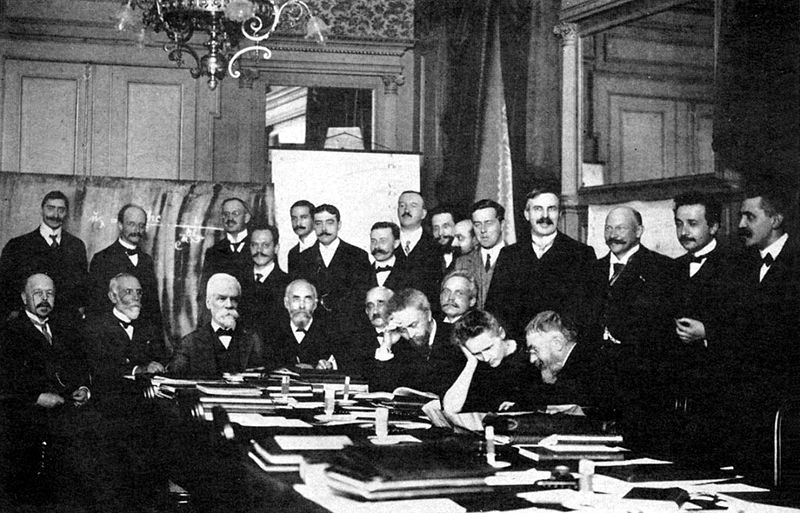
    I wonder who the missing man is in this photograph of the
    great 1911 Solvay Conference on Physics? 
    Ernest Solvay (1838-1922), a wealthy industrialist who funded the event,
    was absent when this photo was made, but is certainly pictured here, seated
    between Brillouin and Lorentz.  If you
    look closely you can see that M. Solvay’s head is far larger than it should be,
    the result of a poor paste-up of a darkroom artist who fit Solvay’s head over
    the torso of a sit-in for the sponsor.  I
    wonder who this bow-tied fellow was, and what he was thinking about sitting
    there in the midst of such high-caliber intellectual firepower. 

    Solvay


    Invited attendees for the 1911
    Solvay Conference at the Hotel Metropole. included   Seated
    (L-R): W. Nernst, M.
    Brillouin
    , E. Solvay, H.
    Lorentz
    , E. Warburg, J. Perrin, W. Wien,
    M. Curie,
    and H. Poincaré. Standing (L-R): R. Goldschmidt, M. Planck,
    H.
    Rubens
    , A. Sommerfeld, F. Lindemann, M. de Broglie, M.
    Knudsen
    , F. Hasenöhrl, G. Hostelet, E. Herzen, J.H. Jeans, E.
    Rutherford
    , H. Kamerlingh Onnes, A.
    Einstein
    and P. Langevin.


  • Skeleton of the Sun and Sky: Henry Van de Velde pre-Abstract Art, 1884

    JF Ptak Science Books LLC  Post 758  Blog Bookstore

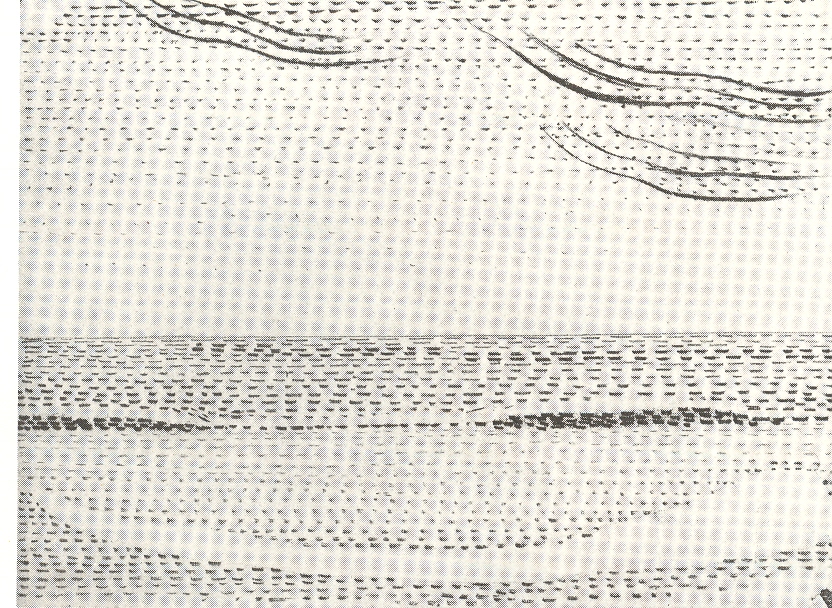
    I wonder if Henry van de Velde (1863-1957) as one of the earliest people to paint what he saw as an x-ray of the stuff of existence.  His artwork, “Sun at Ocean (Rhythmic Synthesis”) which I found in  Werner Hoffman’s Turning Points in Twentieth century Art, 1890-1917 and which was executed in 1888/9, looks to me to be absolutely incredible
    ++00++ 9.17 vna de velde
    for its time, a nearly non-representational, proto-abstract something, done three decades before these genres came into being.

    His representation of known objects seems to be nearly, completely, removed—what we have left here is the representation, or impression, of the subject of the painting.  We can see the sky and sun and ocean there still, but just barely: their representation in skeletal form shows us the bare bones of the world, like a pre-X-Ray X-Ray (which didn’t come around until the very ready and able Wilhelm Roentgen bumped into it in the winter of 1895).

    It is hard to think of how unusual this artwork would’ve been, even given some historical consulting. The Impressionists, who had crept up into the artworld existence to their first show in 1874, were seen as being a radical, revolutionary, avant garde movement.  Their reception was not a cordial one, as they were threatening the established order of the instructionally-regulated world of art that had stood for centuries.  Van de Velde’s work was far outside of Impressionism, or at least it would seem so to me, making it more radical still.

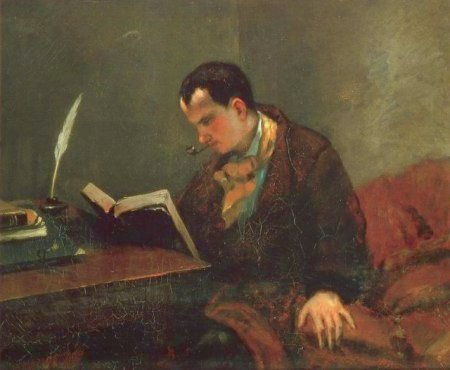
    I’m not sure where van de Velde’s work stands in the history of Modernism (ca. 1875-1916, when virtually very major discipline encountered massive change).  It doesn’t seem to be a prototype for abstract art, which doesn’t seem to have precedents in the 19th century outside of found-art in mathematics of the fourth dimension.  This new world of art seems to begin suddenly in 1907 with the work of Braque and Picasso, and then Marcel Duchamp, and Nayral (1910) and Gris (1911), followed by many others including Gleizes and Marcoussis and Metzinger and Villon (all in 1912).  The Impressionists on the other hand have a very rich history of impressionistic works leading up to their major debut in 1874:  like Courbet’s “Portrait of Baudelaire” (1848/50), or Cezanne’s “Man with a Blue Cap” (1865), or Bourdin’s “Cloud Study” (ca. 1859), on Monet’s “Still Life” (1859, with the disappearing bread), or Degas’ “Semiarmis…” (1861) or Pissarro’s “The Road” (1864), or the glorious modern self portrait of Cezanne done in 1865.  There are many others.

    Van de Velde’s art leaves me puzzled, probably because I really don’t know about the painting phase of his life (an activity he gave up in 1892); probably because I just don’t know enough, and am not art scholar.  I don’t know why this isn’t significant, unless, of course, the work was not seen, or was unknown, or was simply rejected.

    But that still leaves us with the artwork itself: a skeleton. Scaffolding.  Stage setting.  Fragments of the remaining object.  Simplification: a rediscovery of the material of the world reduced to its barest essentials, to a geometrical simplicity of nothing but lines, dashes, suggesting a larger form.  It is the amount of weight in the “suggestion” of form that makes this work so incredible—up to this time, I think, there weren’t any other works of art where so much was open to interpretation, and so much of the optical characteristics of the subject had been removed.  (Rodin’s statue of Balzac, showing the author seemingly ripping himself from his stone, was much hated when it was shown in 1897, the “unfinished” parts seen as ugly and crude by many.  This would seem a good example of the weight of suggested form in pre-20th century art.)

    1889.  Decades before Malevich, Rodchenko, Balla, Severini, Tatlin, El Lissitzky, Klee, Kandinsky.  (And Mondrian, the biggest question mark for me and greatest possible inheritor of this work.) I just don’t get it where van de Velde “went”.  He did go on to a terrific career in design and architecture  in worlds outside of this effort; I just don’t know what happened to “Sky and Sea’…maybe Henry just didn’t like itpreferring his gorgeous nouveau design motifs.  After all, he survived this artwork by almost 70 years (!), and perhaps he laid it aside as a youthful flourish.  As I said, I really don’t know.  


  • A History of Blank and Empty Things #53: Painting by Number and Pop Art

    JF Ptak Science Books LLC  Post 740  Blog Bookstore

    I wonder if Mr. Billy Collins has ever approached the
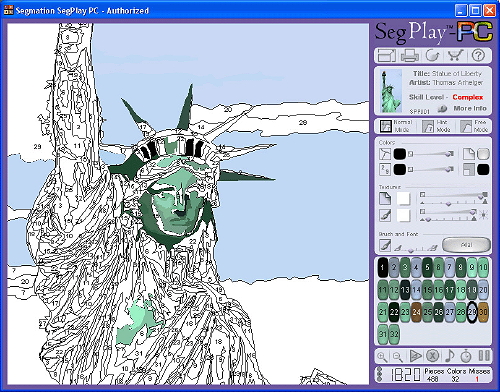
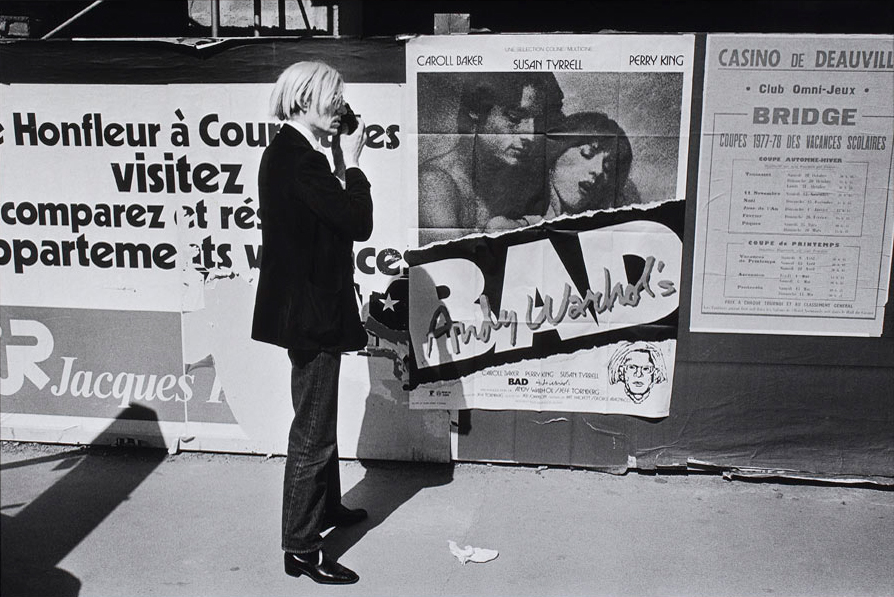
    ineffable connection between paint-by-number art and Andy Warhol?  It seems that paint-by-number (PBN) came from
    nearly nowhere, a near state of being nowhere and nothing, just after WWII, to
    the point of selling millions of sets by 1952. 

    Paint by number 1

    It was an astonishing thing, really, how the PBN craze took over America.  And it just so happens that 1952 was the
    first one-man show for Andy Warhol, and was also the beginnings of the Pop Art
    movement, which seems to me a rush to the most common denominator trough the commoditization
    of consumerism and popular culture, creating art out of visible
    nothingness.   Warhol in particular
    trained his sites on images that were already twisted around people’s neurons
    and living in their memories.  Art was
    made from images injected into the heads of consumer buying units, a delightful
    confusion of imagination and the already imagined, a reaction to a familiar sub
    rosa
    advertised image.

    Perhaps Warhol’s art was part of a larger whole, an
    illustrator to a bigger point, a performance unintended to stand alone.  But that is what happened, the art separated
    from the wider message, and soared to great acclaim. 

    Paint by number 2

     Warhol seems more like a paint-by-number color memorist,
    filling in the blanks of an already-mostly-formed memory burned into the long
    term memory via years of advertising and severe repetition.  Nearly the entire broadcast industry was
    created to support this memory-making process: 
    Seinfeld, Spongebob, The Office, Your Show of Shows, and all the rest,
    created not necessarily for your pleasure but as a series of  interchangeable 11-minute-long placeholders
    to hold the viewer/listener to the point where they would be exposed to 180
    seconds of product identification.  It is
    the repetitious memory formation that the folks depended upon so that when you
    go down the supermarket aisle looking for an 89-cent can of tomato squeezings
    called “soup” that the 799 exposures to the Campbell Soup Company’s product
    line will direct you their way, a primitive bit of biological programming.  And for all of the trimmings and
    philosophical-critical digressions, Warhol capitalized on creating art on vast
    shared memories, coloring in a shared image, reaching into the minds of
    millions for something that everyone could see and understand—and not have to
    think about, not lose one neuron in interpretation, and enjoy it like an comfy
    old slipper. 

    Paint by number 3

    Where Warhol succeeds and PBN fails is at the art/appreciation
    point—few people took the PBN seriously as an art form, mainly because it wasn’t
    presented as such, except for those who somehow took the thing too seriously.
    Warhol took his creations seriously from the very beginning—and perhaps there
    was really nothing more than the defense of his art that was the art
    itself.  It just seems to me that, in the
    history of art, it tool 1500 years or so for linear perspective to be
    rediscovered, another 500-odd years beyond that to bend and mystify nature in
    the form of Impressionism, and another 30 years to lose all recognizable
    natural forms all together.  And then after
    Braque and Duchamp and Kandinsky and the Blaue Reiter, and the Fauvism,
    Suprematism, Vorticism, Dadaism, Deco, De Stijl, Surrelaism, Concrete art,
    Abstract Impressionism, and on and on, that after all of this since Nude
    Descending, that we are lead to Pop Art and silkscreens of soup cans.  It just seems to me to be more about the
    packaging than the package, which might just well be a wrapped bit of
    nothing. 


  • Bubble Cosmology: J.J. Grandville and a Soapy, Watery “Little Bang”, 1844

    JF Ptak Science Books LLC  Post 705  Blog Bookstore

    Finding the Big Bang in a bowl of soapy water.

    ==Blog August 5=primum

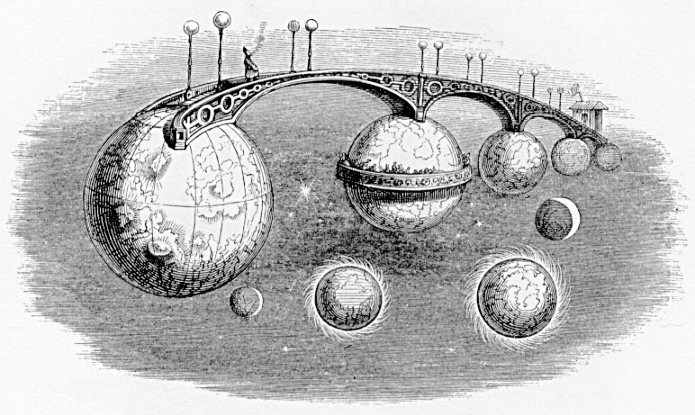
    Last year I wrote a little aboutJ.J.Grandville’s interplanetary
    bridge connecting some of the planets (and including a balcony constructed of Saturn’s
    ring [sic] in an early Victorian Grad Tour solar system walkabout.  Grandville (the pseudonym of Jean Ignace Isidore Gérard,
    born in 1803 and staggering too quickly out of life in 1847) was an extraordinary
    talent working somewhat out and ahead of his time; he had superb visions of the
    future, and of the past, and most of them were fantastic and fanciful, though
    not without some very stinging social commentary.  He has been called a proto-Surrealist and I’d
    have to agree, though for me he had a larger production of social commentary in
    his work than any of the “real” Surrealists of the 20th
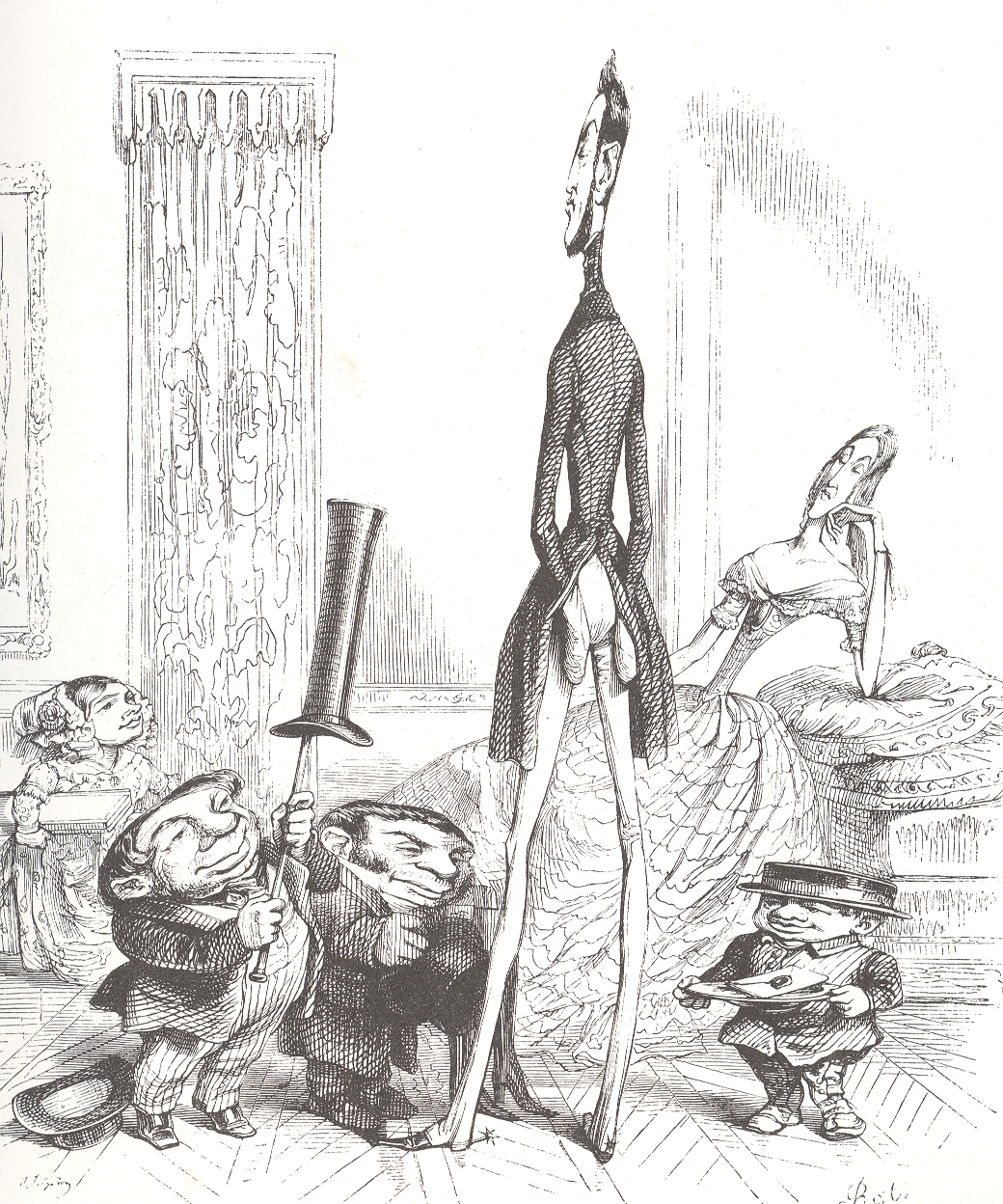
    century.  For example, in his Un Autre
    Monde
    (“Another World”) he depicts people’s 
    social stature literally—the taller and thinner, the more socially important;
    the shorter and stouter, the more disposable/replaceable; the images are funny,
    convincing and wincingly penetrative.

    Grandville-large

    This being said, I have a special interest in the
    astronomically-based images that he produced, and so far as I can tell, there
    weren’t many of them in his vast output. 
    In chapter 25 (“The Mysteries of Infinity”) of Un Autre Monde
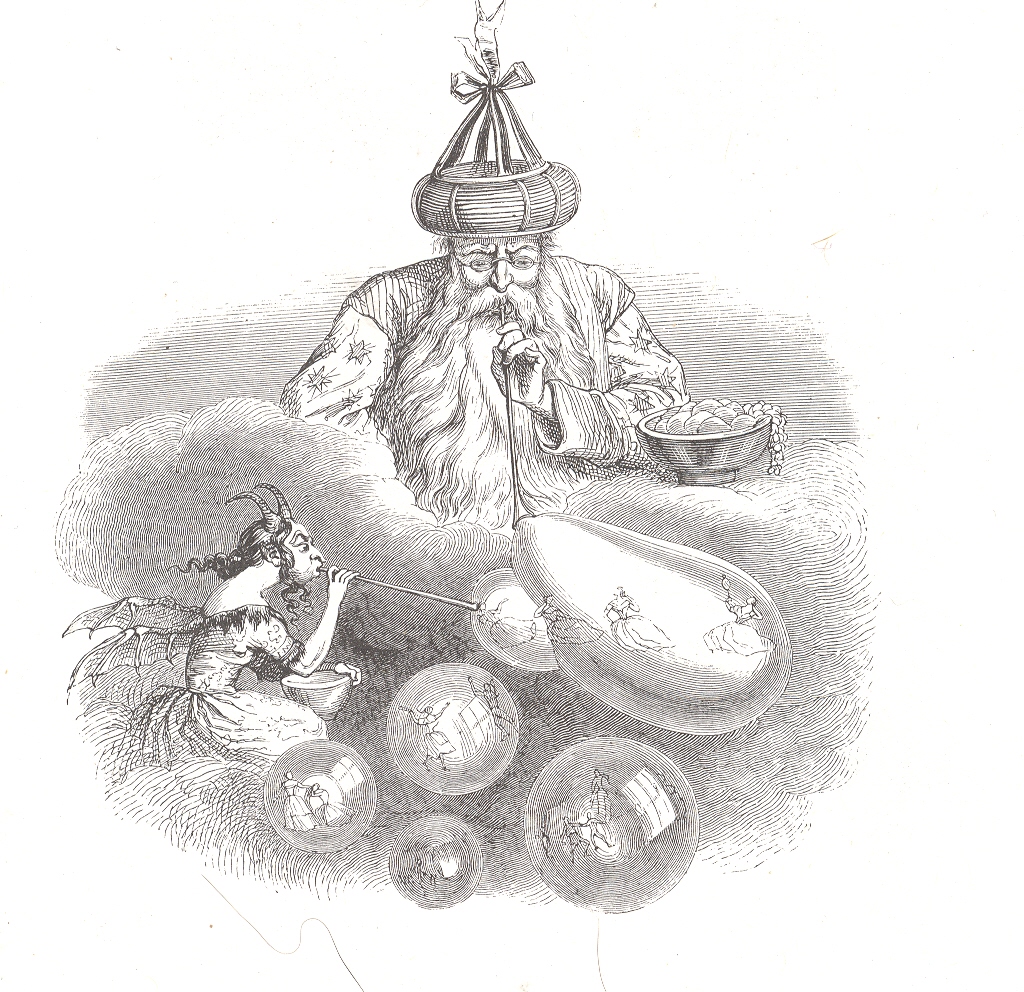
    Grandville rolls out the great maker of the universe, the Primum Mobile, the
    Motive Force, the First Mover.   The old scamp was busy and on display for Grandville’s character Hahbble, who
    floats around in the cosmos, and comes face-to-face with what in the end is
    Einstein’s dice thrower, as much as the great physicist didn’t want him to be,
    nor is he subtle (Raffiniert ist der Herr Gott,  aber boshaft ist er nicht!)  The malicious (“boshaft”) part would be
    supplied by someone else looking intent and dangerous, while the great maker turns out to
    be a magician who is happily creating the matter of all stuff by making it all out of
    bubbles.

    (I feel relatively certain that Grandville is the first artist to propose the
    bubble theory of cosmology, and he is among a select and restrictive minority
    who allocated such a seemingly meaningless activity with the creation of creation.  I like its playful nature, though I wonder if
    his approach was seen as a deep mockery and perhaps heretically insulting to
    the religco-forces that helped and plagued the 19th century. Mostly it seems he was left behind int he appreciation part of acknowledgment, glory faded before his eyes; his work wasn’t necessarily prized during his lifetime, and
    he had his share of brutal reviews for his great adventures.  Paul St. Victor, art critic, wrote that
    Grandville “wanted to dance on the clouds in leaden shoes”and “tried to get to
    heaven on a bus”.  That’s a tough go. Death did bring him some fame as M. Grandville slept with the worms; publishers used his illustrations mostly without gratuity to any estate, the images showing up all over the place through the end of the 19th century.  His cuts were used again and again,the blocks being progressively degrade until the fineness of Grandville’s eye and incision were lost to overuse–it is easy to see the difference in crispness and clarity between the early printngs of his pictures with the later ones, his sharp edges getting rounded by greed and use and time.3)

    I imagine this magician to be “almost” infinitely large and
    small (what does “almost” infinitely mean?) , blowing bubbles on a large galaxy
    scale, the bubbles containing other 
    galaxies; or smaller yet, other solar systems; and smaller yet, other
    planets.  And taking it down to the other
    extreme, he could be sub-atomic, blowing bubbles of existence and shaping the bumpies
    of quantum foam in spacetime, letting loose the primordial bits that would
    become molecules that would or would not rise from the unpretty Dirac sea,
    living just on the other side of measureable in space and time, shaving
    barely-measureable slivers away from Planck length1 and Planck time2.  Or maybe the old man is putting the white
    into Schwarzchild wormholes. 

     Maybe he’s just blowing the bubbles of possibility and
    chance, and his unacknowledged accomplice is injecting the mote in god’s eye.

    Notes:

    1. The Planck length 1.616 x 10 -35 (meters) which is the
    smallest measureable space in the universe (comprised of Planck’s constant, the
    gravitational constant and the speed of light) which in turn leads to

    2.  Planck
    time, which is the amount of time it takes for light to traverse one Planck
    length in a vacuum,  5.39 x 10 -44 seconds),
    which is basically the smallest measureable unit of time, or for time that
    would mean anything. 

    3.  While ill with his own fatal bit, he composed
    his own epitaph;  Here Lies Grandville;
    he loved everything, made everything live, speak and walk, but could not make a
    way for himself”. 

    There’s actually quite 
    a nice turn of phrase in the wiki article on Grandville—quite nice,
    really—which I include here:  “Though the
    designs of Grandville are occasionally unnatural and absurd, they usually
    display keen analysis of character and marvelous inventive ingenuity, and his
    humour is always tempered and refined by delicacy of sentiment and a vein of
    sober thoughtfulness.” He evidently lived a hard-ish life, not the least of which
    were the deaths of his wife and two children in the early 1840’s.  

     Some of Grandville’s other interesting works include:

    Les petites miseres de la vie humaine (The Petty Sorrows of
    Human Life) 1843

    Un Autre Monde  1844

    Cent Proverbes  1845

    Jerome paturot 1846

    Les Fleurs animees (The Personified Flowers) 1847

      ==Blog August 5=tall