A Daily History of Holes, Dots, Lines, Science, History, Math, Physics, Art, the Unintentional Absurd, Architecture, Maps, Data Visualization, Blank and Missing Things, and so on. |1.6 million words, 7500 images, 4.9 million hits| Press & appearances in The Times, Le Figaro, Mensa, The Economist, The Guardian, Discovery News, Slate, Le Monde, Sci American Blogs, Le Pont, and many other places… 5000+ total posts since 2008.

Category: Blank and Empty Things; A History of

  • Maps of the Cosmos of Moles, 1671: Astrology, Pseudoscience & Furious Belief

    JF Ptak Science Books LLC  Post 646  Blog Bookstore

    “The first principle [in science] is to not fool yourself.”  R.P. Feynman

    “The Woo-woo
    is all the same, everywhere, anytime, everytime.”
    —James Randi on the
    history of   the pseudosciences .

    Self-deception and belief in Woo-woo (spurious pseudo-scientific beliefs) is some of the stuff that separates humans from animals.  And not in a good way, unless it was all chalked up to an expression of creativity and imagination.  I started this post as an entry in the History of Dots category, then in the Blank and Missing Things department, and then simply to the Bad Ideas category.  But the more I thought about mole mapping and how extraordinary it was, the less extraordinary it became, especially once the veil of age has been removed. As it turns out, mole mapping is neither more nor less extraordinary than any other system of belief.

    Here’s
    a sentence one doesn’t get to write very often: 
    Richard Saunders (1613-1692) was perhaps the foremost historian, astrologer and seer
    of human moles and their predictive forces who ever lived.  He was far from being the solitary member of
    a one-unit class:  the use of moles as
    predictive and interpretive agents stretches back dozens of
    Blog--jun 11 circ mole

    centuries, so the
    claim of Saunder’s being its most famous practitioner is not empty,
    mega-pseudo-scientific or not.  The
    mystical commentary on the Torah, the Zohar (a part of the Kabbalah), gets
    right to the point of the significance of moles (“the stars of the body”),
    transferring the structure of the cosmos and the constellations to the
    skin.  The seer and soothsayer Melampus
    from Greek mythology, in one of his necessarily pseudographic works, writes on
    the importance of moles of the face and their zodiacal relations—an idea that
    was picked up 2000 years later by the extremely significant mathematician
    Jerome Cardano.  There was a decent
    amount of argument regarding the location of zodiac symbols on the face, as it
    turned out.

    But
    the leading exponent of moles is Saunders, who was also one of the leading
    figures in a wide and very powdery period of European non-scientific
    sciences.  These wonderful images come
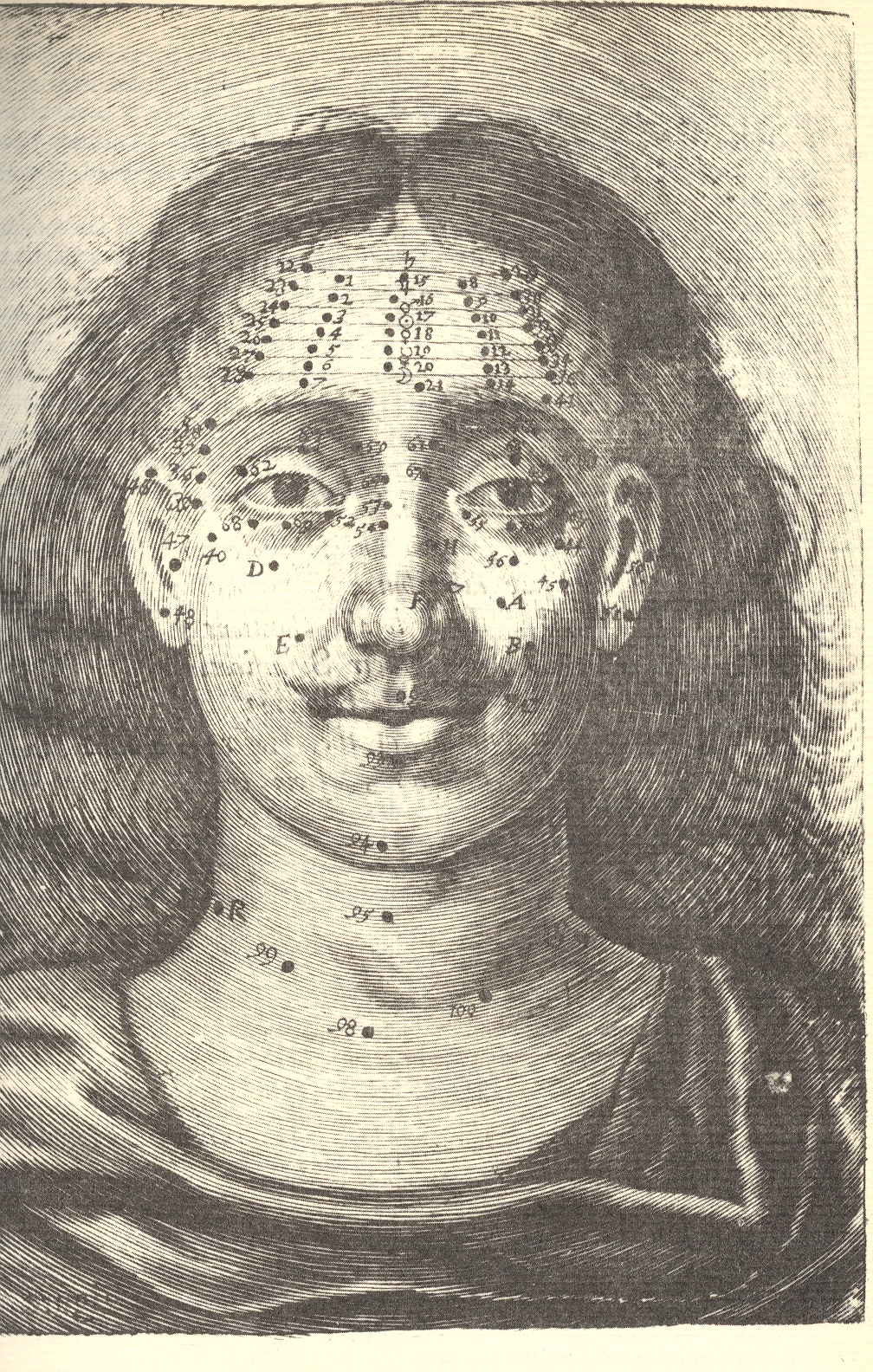
    from the second (!) edition of his cumbersome but accurately-titled work Saunders Physiognomie and Chiromancie,
    Metroscopie, the Symmetrical Proportions and Signal Moles of the Body, Fully
    and Accurately Explained; With Their Natural Predictive Significations Both to
    Men and Women
    (published in London, 1671, by Nathaniel Brook), in which he
    divines the psyche and the future with peoples’ moles. 

    The
    first figure, detailing the mole locations of a man’s face, is a remarkable,
    weird accomplishment, not only because of the exhaustive treatment that is
    given to every location of every mole (g_d help us), but also because of the
    manner of the engraving.  If you look
    closely, you can see that it is Fresnel lens-like—it is an engraving composed
    of (almost) concentric circles.  I cannot
    recall seeing such a thing before—needless to say the practice of engraving
    would be laborious, and not much practiced. 
    I’m not even sure what great good it causes, though it does give a
    little different idea of depth and dimensionality to the image.  The effect that it achieves here though is to
    give a solar-system-like background to the moles—something that is much more
    spectacularly achieved in the next image.
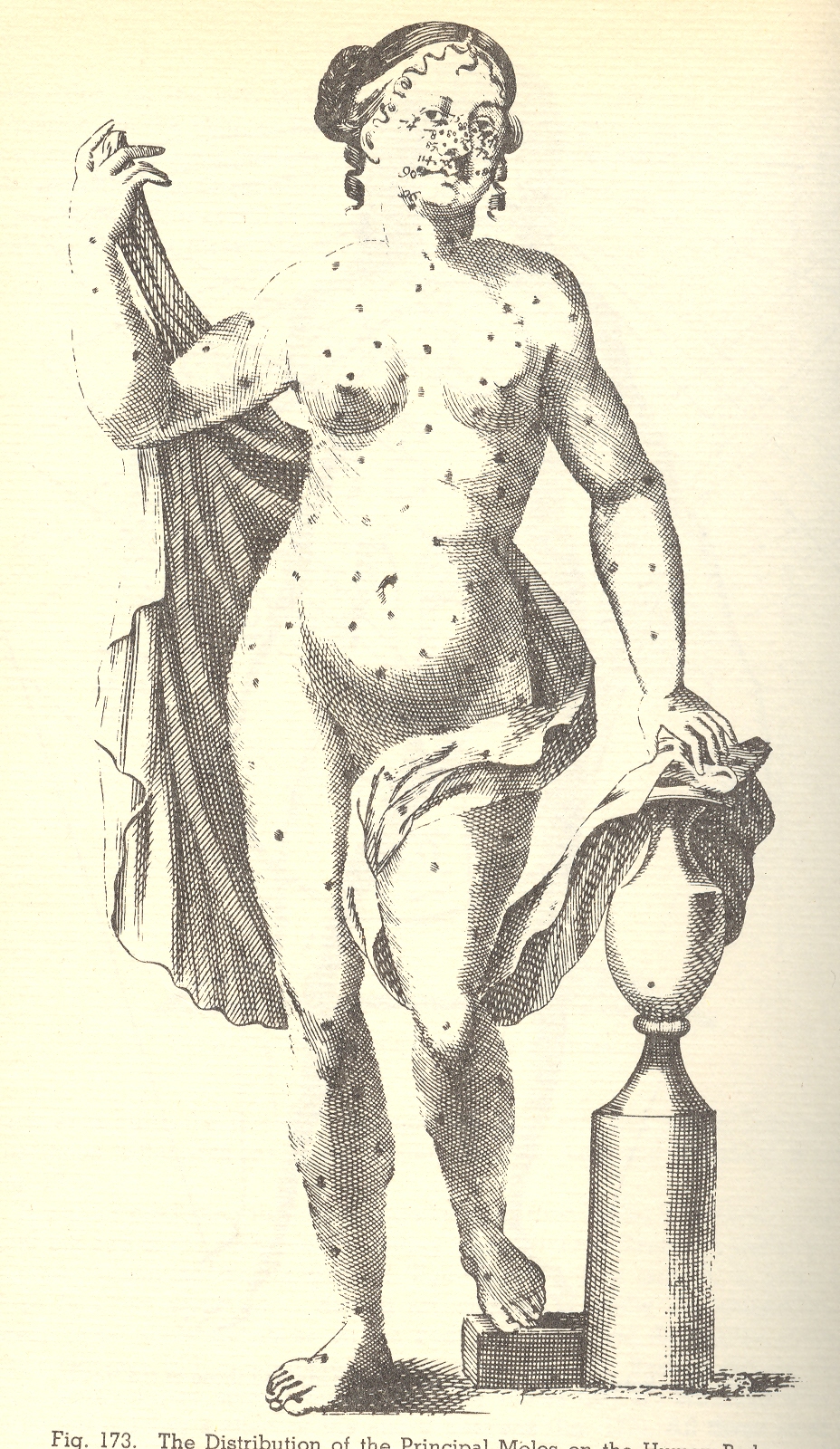
    Blog--jun 11 mole lcosmos The
    map of the moles of this woman’s body looks to me just like a constellation—and
    a constellation is just what they were for Saunders, who viewed the arrangement
    of moles on the body like an astronomer searching the night sky for a new
    comet.   But an astronomer would not be
    trying to force governing connections in the starry realms to occurrences on
    earth (or heaven, or whatever)—that would be the job of an astrologer, whose
    job would be enormously simplified since everything it conjures is
    fictional.  Had Robert Hooke been Richard
    Saunders-like when he made virtually the first microscopic investigations in
    human history, he would have been correlating the hairs and pores of the flea
    rather than making his minute and beautiful observations.

    Saunders
    sees mole connections everywhere, even developing sub-classifications to
    sub-classes: this is seen in the lovely relational map of face moles to moles
    on other parts of the body. (I like the spare curved lines most.)Blog--jun 11 mole lines
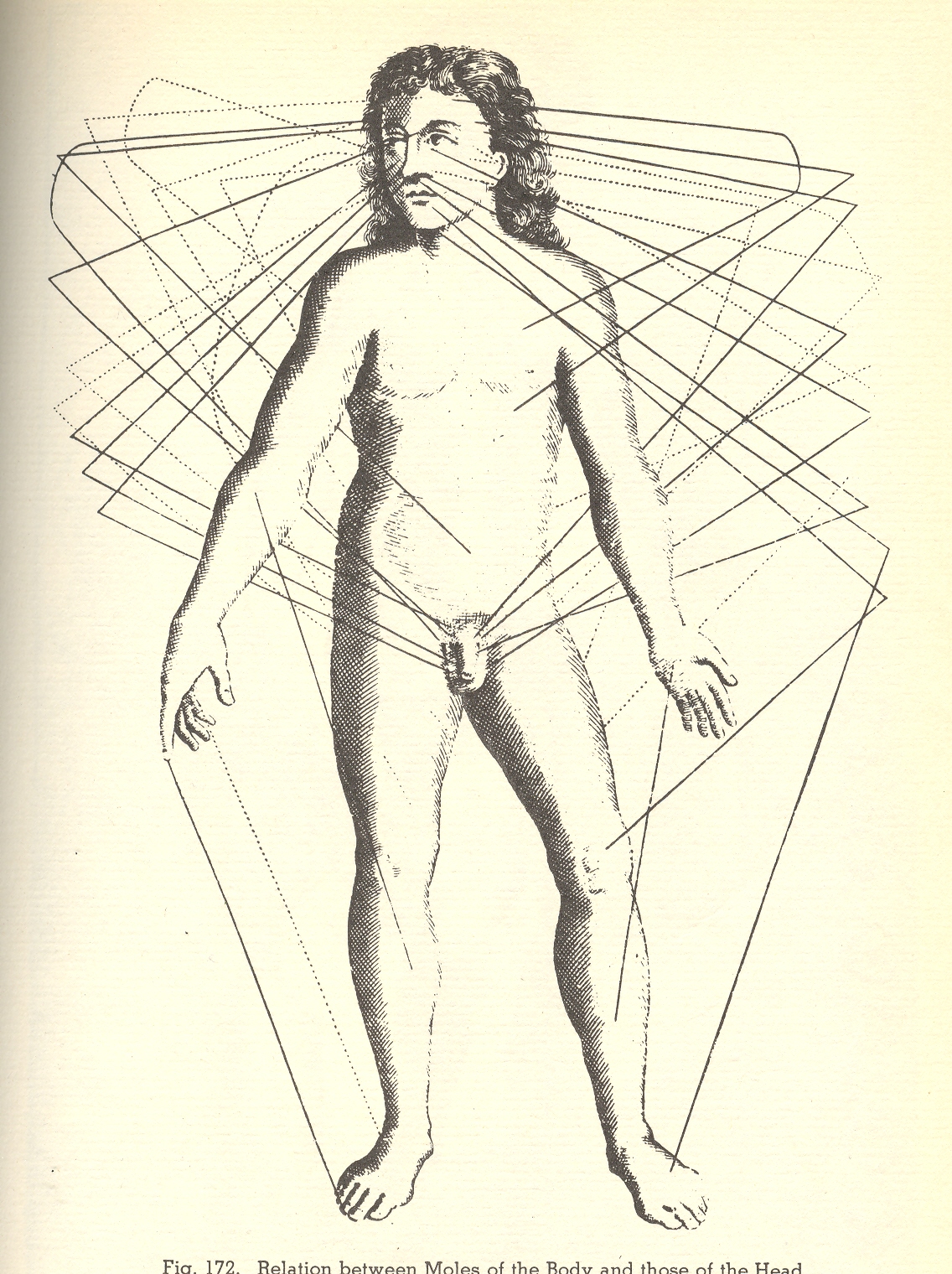
    This
    all looks perfectly phenomenal, unbelievable even,  from out here in 2009.  The fact remains though that the vast
    majority of newspapers in his country still carry horoscopes, and most Americans
    believe in UFOs, and a not-small percentage of those folks say that they’ve
    actually been abducted by Outer Space Aliens. (I calculate that from the
    “first” UFO sighting near Roswell 50 years ago that a sighting has been made about every ten seconds since
    then.  Why all of this interest?  And here’s a question among the many that I
    have about this stuff–outside the astronomical chances of actually
    encountering the other life forms in the universe that do undoubtedly
    exist:  why do these crafts, which have
    spectacular, beyond-physics capacities, have little dotty lights on them?)

    And
    so as bizarre as images like this might look, many (most?) folks in the present
    really haven’t left these ideas behind—they just get changed a little,
    upfitted, retro-ripped, and outfitted with flashing lights.

    In a
    very long career of getting people to think  in spite of themselves, James Randi (scientific
    investigator, keeper of the scientific method, head of the James Randi
    Educational Foundation
    , and formerly “The Amazing Randi” from years ago) has
    one particular mythbust-lecture that I find phenomenal, with a very large “oh
    my good god!” capacity for the students at the end of it–if they would but allow it.  Listen: 
    Mr. Randi would explore the possibilities of astrology, asking the group
    or class who there believed in it, taking a census of belief.  He would then make a very strong, convincing
    case for the application of this hope in astrology (he is a very determined and
    logical speaker), and then give astrological “readings” to each member of the
    group.  The readings would turn out to be exact and persuasive—a second tally would be taken of  believers, with
    the usual results being that (unless they knew who Mr. Randi was or was already
    a skeptic or logically un-needy thinker) the class would now consist of an
    overwhelming percentage of astrology-believers.

    Then
    Mr. Randi lets the high-wind boom swing free: 
    everyone received the same reading. (You can see a short snippet for one of these experience HERE–Mr. Randi has conducted this lecture many times for many different audiences.)  The shock of realization is palpable.

    On
    the telephone this morning Mr. Randi graciously explained this lovely lesson—he
    also explained that even after the key ingredient of the lesson was revealed,
    and even after he lectured on thought and belief and superstition and logic and
    so on, that the people who had already believed in astrology would almost in every circumstance still
    maintain that belief.  Even in the face
    of overwhelming evidence, the idea of belief was no match for fact.  Truth, fact, explanation, method, logic—none
    of these could put a chink in the armor of belief, and is no match for self-deception.

    “The
    Woo-woo is always the same, everywhere, all the time.  If its not astrology its something else, the basis for all of it is the same” (my
    paraphrase) says Mr. Randi. After approaching belief
    systems like UFOs and astrology and mentally bending spoons and mind-reading
    and on and on, Mr. Randi says that at their base, the stories have a common heritage of need.
    And they’re unbendable, and certainly unbreakable, for all of those who need
    the belief.  There’s no room for
    constructive debate and exchange in such belief systems, whether it is
    astrology or creationism (I just can’t call it by its other, cleaned-up
    name), as they cannot satisfy the basic tenets of knowledge growth and scientific inquiry which, according to RP Feynman, is the willingness to test your beliefs against falsity and to investigate all possibilities that might make them invalid.*  Mole mapping predictions and the
    fate of a life is no different from any of these other derivations in wishful/hopeful pseudosciences, either—just a different name
    for the same underlying system of beliefs, though the moles are a little long in the tooth. 

    Anyway, creationism or astrology or life-after death–they might as well all be mapping moles.

    As Feynman said:

    The first principle [in science] is that you must not fool yourself — and you are
    the easiest person to fool. So you have to be very careful about that.
    After you’ve not fooled yourself, it’s easy not to fool other
    scientists. You just have to be honest in a conventional way after that.

    * Feynman on the scientific method:  “It’s a kind of scientific integrity, a principle of scientific thought
    that corresponds to a kind of utter honesty–a kind of leaning over
    backwards. For example, if you’re doing an experiment, you should
    report everything that you think might make it invalid–not only what
    you think is right about it: other causes that could possibly explain
    your results; and things you thought of that you’ve eliminated by some
    other experiment, and how they worked–to make sure the other fellow
    can tell they have been eliminated “
    RP Feynman quoted by Ralph Leighton,  1985, p. 341
    ).

  • Blank, Empty and Missing Things #44: Missing Detail in Illustrations

    JF Ptak Science Books LLC  Post 631   Blog Bookstore

    The History of Blank, Empty & Missing Things #44

    Blog--may 29--alexander In America
    and Europe for much of the 19th century
    books with illustrations received their color by the labor of small-handed
    women and older children.  For popular,
    inexpensive and widely distributed books engravings and woodcuts were often
    given their color by an assembly line process: 
    one person applying the red, another the blue, the third the green, and
    so on, until image was completed.  This
    was a fairly quick process—more than five colors was rare—and once done the
    sheets were left to dry before being sent off to be cut, folded, sewn, trimmed
    and bound.  The colorists wouldn’t really
    survive past the 1880’s or so, being replaced by machines and different sorts
    of coloring processes—the last book to be published for the mass market being
    the 1896 edition of Johnson’s Cyclopedia. 

    This sort of distribution of artistic labor was not new to
    the 19th century by any means. 
    Guilds dictating the strict observance of a painting’s preparation—making
    the canvas or preparing the wood, gathering the ingredients for making colors, making
    the colors, and so on—stretches back at least 600 years. Blog--may 29--alexander 001

    I’m wondering about this because of an illustration that I
    found of extremely uneven accomplishment. 
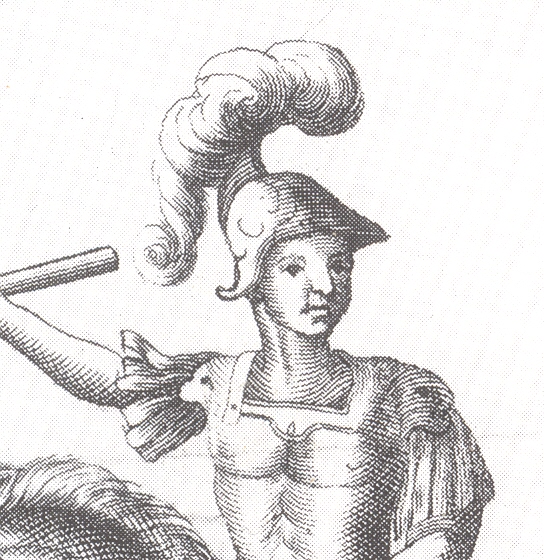
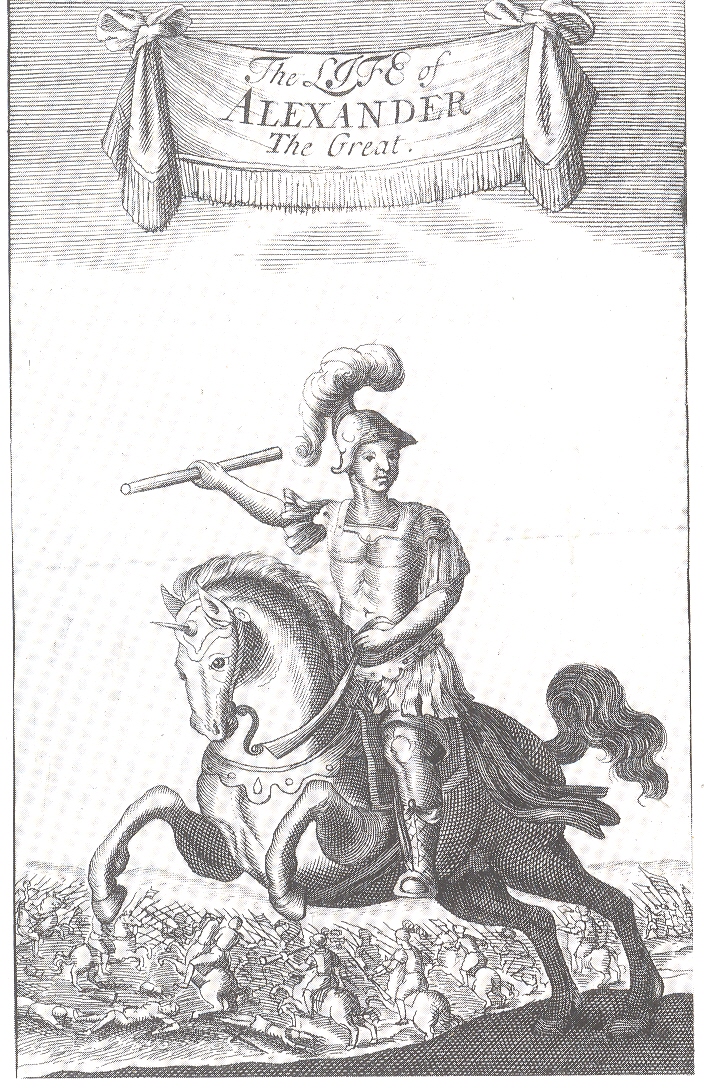
    It occurs in Quintus Curtius Rufus
    The Life of Alexander the Great
    (“translated by several Gentlemen in the University of Cambridge”) and printed for Gilbert
    Cownly in 1687. (I can never let it pass that this is the year that modern
    science really began, with the publication of Newton’s Principia…
    .)  The engraving is the book’s
    frontispiece, and shows Alexander on horseback.

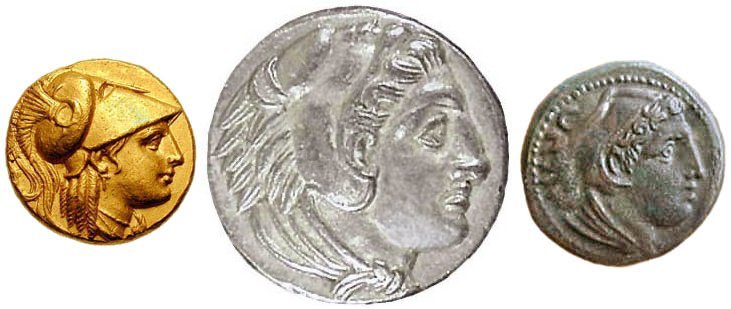
    Of course there’s no real portrait of Alexander, though his “likeness”
    appears on coins from that period.  But
    the face in the engraving just doesn’t match up to the quality of the rest of
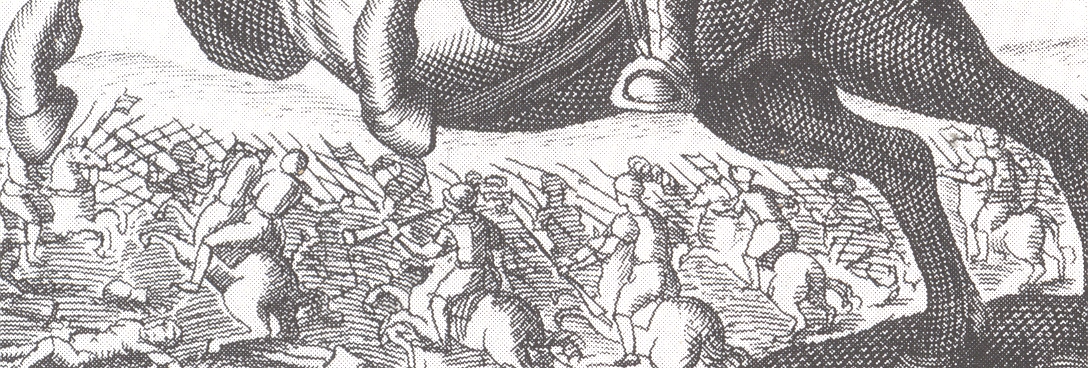
    the image.  The horse is a little nicer
    than standard for the period, and there’s a fair amount of detail in the
    background. 

    Alex_trio

    The face of the great
    Alexander though is pretty bad, drawn in almost as an afterthought even though
    he is the subject of the book.  Maybe the
    engraving’s elements were divided and distributed in the workshop to, say
    someone good at horses doing the horse, another good at executing armor doing
    that, and so on, until someone realized that no one was there to engrave the
    face. And so perhaps it came to pass that Alex received this cheeky/jowly face with a single-muscled skinny neck.  (I notice that none of the riders in the background have faces.)  Maybe there was only one artist, and they just got tired or figured this face was good enough, and moved on to the next project; perhaps there was just one engraver who was late for dinner and did a too-fast job on the face.  And maybe the face was just good enough, no matter who did or or how many people worked on it.  I’ve seen this sort of uneven effort, this missing detail in a detailed work, many times over the years, and I’ve always wondered what the story was.  And I guess I always will. 

    Blog--may 29--alexander 002


  • Blank and Missing Things: Backgrounds in 15th Century Prints

    JF Ptak Science Books LLC  Post  Post 607  Blog Bookstore

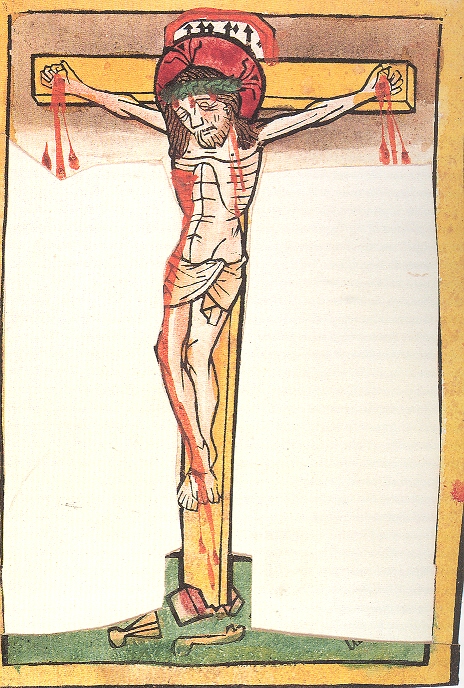
    Blog--may 4-- blank drunkenmohammedGenerally speaking, printmaking (in Europe)  began in the early 15th century.  It was, as Peter Parschall* elegantly says, “the
    earliest efficient means of reproducing a complex image in large numbers”.  The method of pressing wood blocks onto paper
    started in the as early as the 1420’s; the intaglio process—printing from
    engraved metal plates—began a little later, in Germany, in the 1430’s.  This places the mass-distribution print distinctly
    ahead of the Gutenberg curve by at least a generation. (It is interesting to
    note here that the great Vasari wrongly put the beginning of print making
    considerably later, around 1460.)   Of
    course in China the practice
    of making prints on papers was already many hundreds of years old at this
    point, but Asia was still a world awayBlog--may 4--blank christ, its
    influence not to be really felt for hundreds of years.

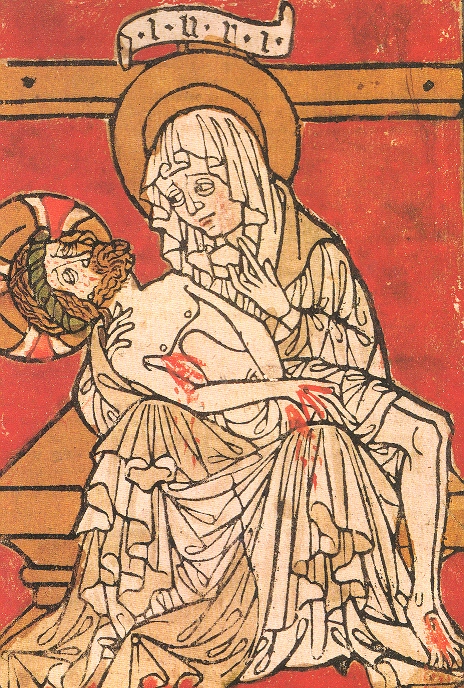
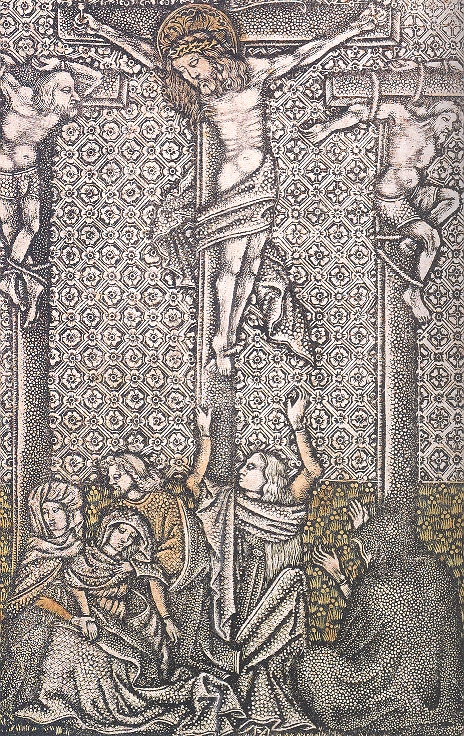
    What strikes me is the lack–and absence–of backgrounds in many of these early, pre-1490 prints. 

     Once you start paying attention to the non-backgrounds in these prints, they seem to be everywhere.  This print of Christ Crucified (German, ca. 1460.) is an excellent example of completely-blank blank background.  The most emotional of all the scenes of the Passion, the Pieta from Stilft Lambach (South Germany, ca. 1420-1430, “Now there stood by the cross of Jesus, his mother…”, John 19:23) is blank–save for a chair and part of the cross–though deeply and bloodily colored. 
    Blog--may 4--blank pietaThis is also one of the visualizations of the scene in which Mary cradles the body of her dead son in her lap; many other images do not show this close contact.  Also, even though the blood of the wounds of Christ are exceptional and highly visible–and perhaps the main object of veneration in this print–Mary’s very great grief , depicted mainly in her oversized and mournful eyes, may well be the real chief object of interest in this image, abandonment of Mary cults or not.


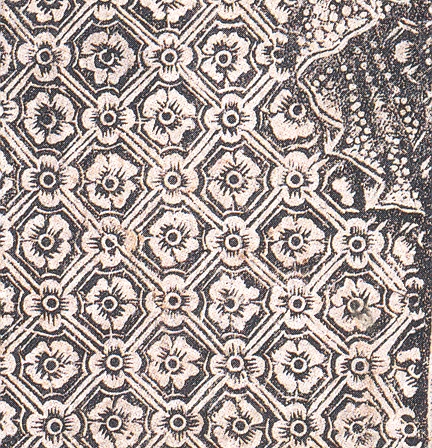
    On the other extreme of the Blank Background is the ornamented and highly designed background, as in the example below.  Calvary was printed in Bavaria in 1460 or so and is a metal cut print, meaning that the image was literally hammered and cut, which gives the paper such incredible depth and detail.  I’ve noticed a number of these designs in metal prints though none in wood–again, I’m not a scholar in this area; my observations are just that, from an accumulation of looking at prints for decades on end. 

    Blog--may 4--blank not blank

    Blog--may 4--blank not blank detail

    Blog--may 4--blank not blank2

    I don’t have anything to offer here on this–just the observation. 

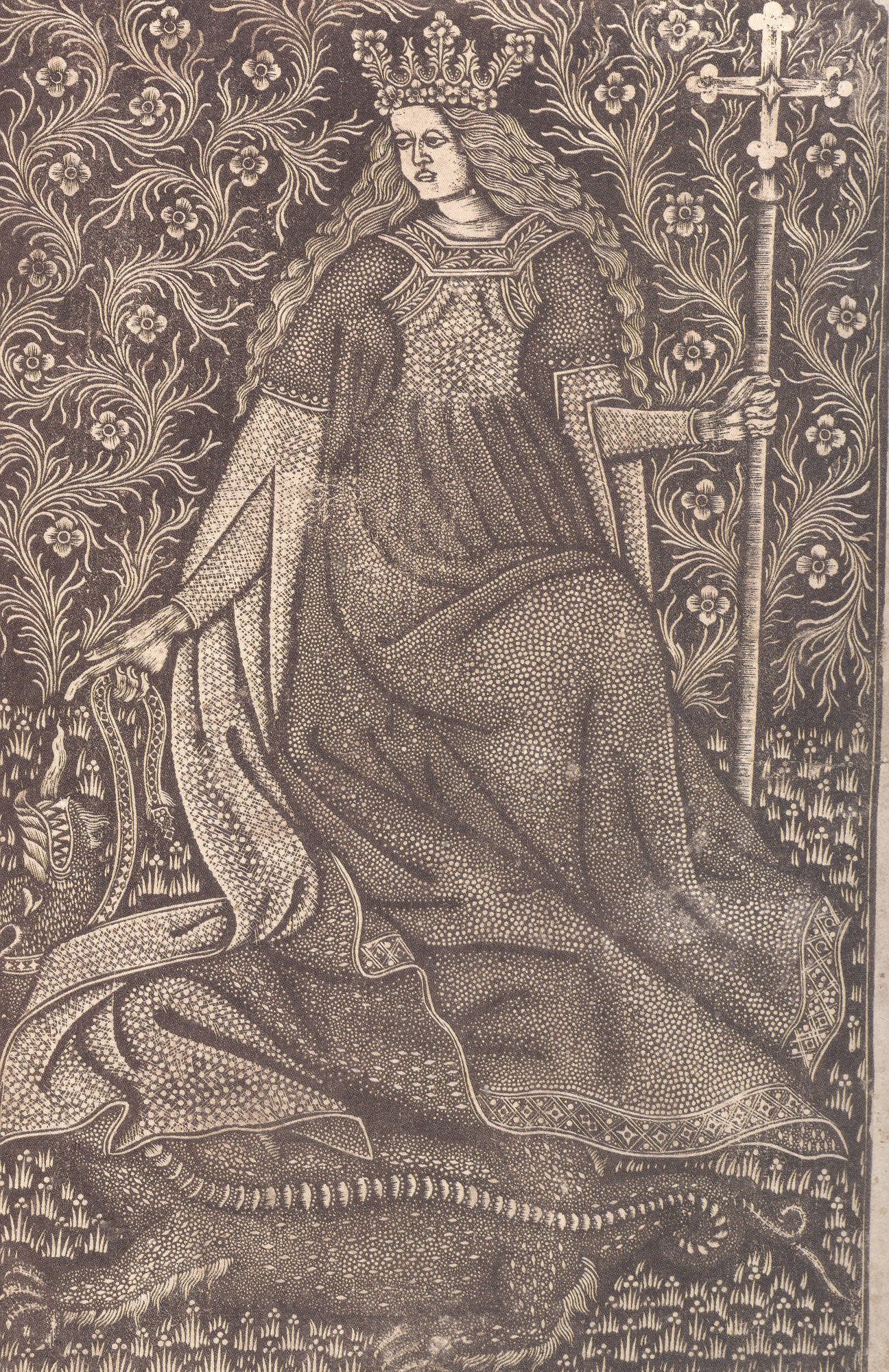
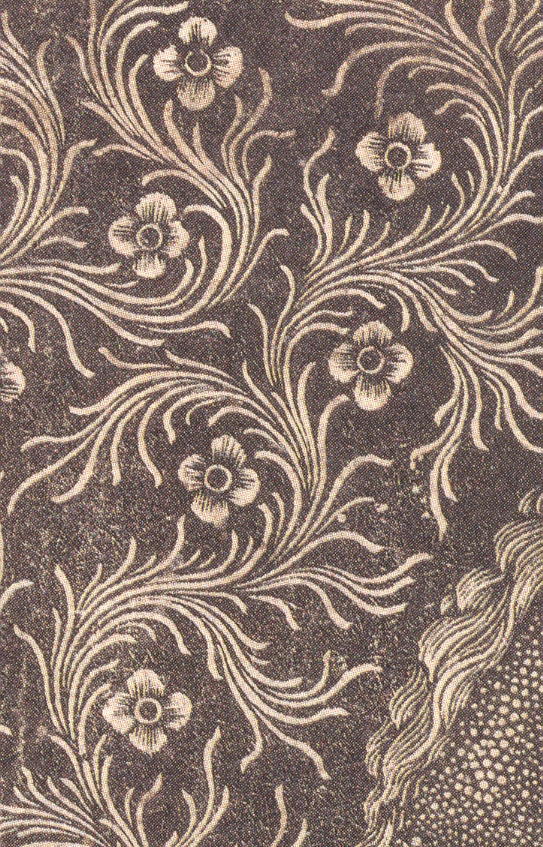
    The last image is that of St. Margaret, a south German metal cut print in the last quarter of the 15th century.  This is a simply extraordinary print, the whole having the feeling of a finely embroidered work.  The swirling grape vine background (?) is moving and fine and fluid, and so unlike anything else at this time in print history.  It was a glorious way to render a background that was both there and not there.

    *[Parshall, Origins of European Printmaking, National Gallery of Art, D.C., 2005.]

    Blog--may 4--blank not blank2 001


  • A Bit on the History of the Insides of Things: Renaissance Anatomy

    JF Ptak Science Books LLC  Post 604   Blog Bookstore                                                      

    Much of human intellectual history has been dedicated to looking inside, seeing
    the unseen, the stuff underneath, the invisible, the clouded, the inscrutable, the
    things-behind-something-else.   If you could somehow weigh all of the stuff that
    we know that is “visible” versus all of the other stuff that is not, I think that
    the scales would fly over instantly into the world of the unseen. Some of this
    material though does not have a measure:  for
    example, numbers are part of the unseen world, ideas made of nothing, points
    and lines in an imaginary series of planes and dimensions, and so have no mass
    themselves. Everything that is alive on and in our bodies, on our skin,

    Blog--may 5 skeleton

    in our
    water and food, and which were all basically unknown until the invention if the
    microscope, have little weight in and of themselves, but when  you add the whole biota together…well, then
    you’ve got a whole weighty lot of nothing  Then there’s the stars unseen beyond the six
    or eight thousand that we can see without a telescope, the rest of the universe
    waiting, discovered only 400-odd years ago, a very weight affair (and that’s not counting the dark matter). 
    I know that this is sort of a horrible argument, a beery and inelegant way
    to describe the path of human knowledge, but it strikes a (dis)chord with me.  

    One part of this invisible empire is within us—the elements of our bodies.  The Egyptians knew enough to do very simple
    surgery and to perform a more-complicated mummification ritual, but in general
    the body remained fairly well undiscovered until relatively recent times.  Publishing findings on those dark
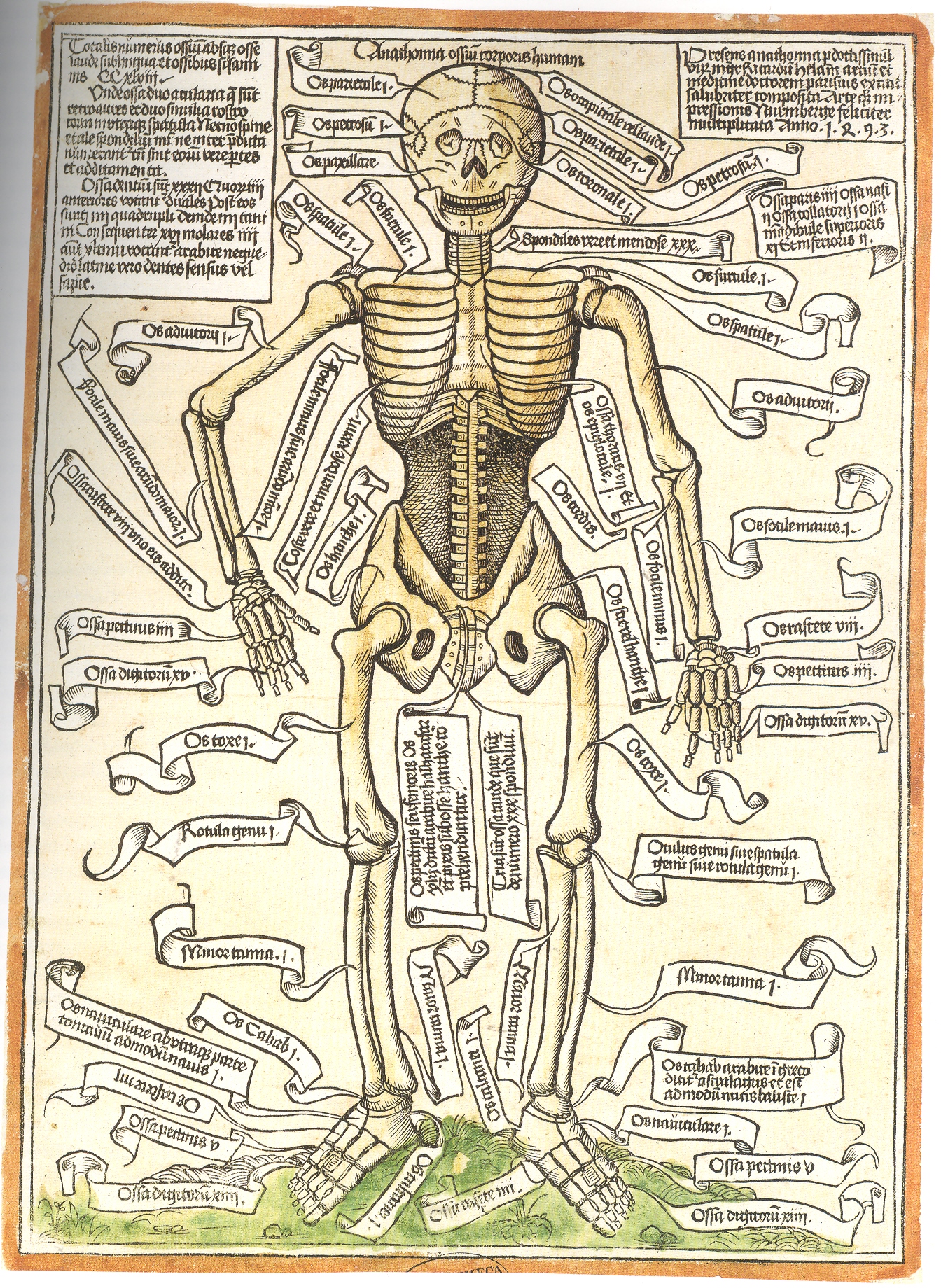
    explorations was another matter, the first image of a human skeleton not
    published until 1493 (shown here, the Anathomia ossium corporis humani)–this was the first revelation to the real world of science following a sleepytime of about 8oo years under the very heavy gaze of institutional religions. 

    This all changed in 1543 with the publication of the first modern anatomy , Vesalius’s revolutionary De Humani Corporis Fabrica—it proved to
    work as a template for the display and presentation of anatomical practices and
    medical rigour for many years to come, solidifying the pursuit of the knowledge
    of the human body into a discipline.  

    Berengario_p06r Some of the predecessors weren’t
    so rigorous, as with 
    Jacopo Berengario
    da Carpi’s (ca. 1460-ca. 1530)
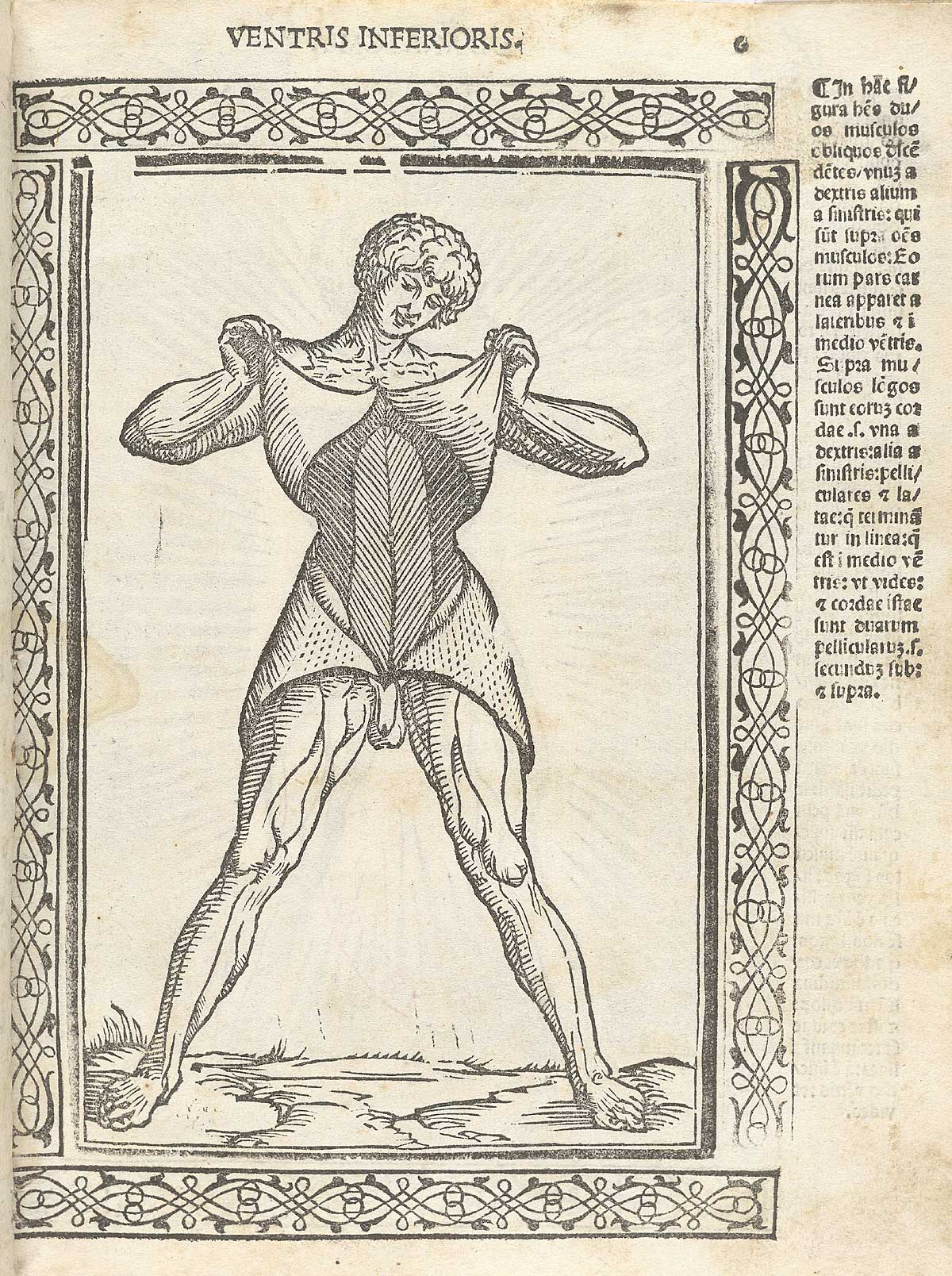
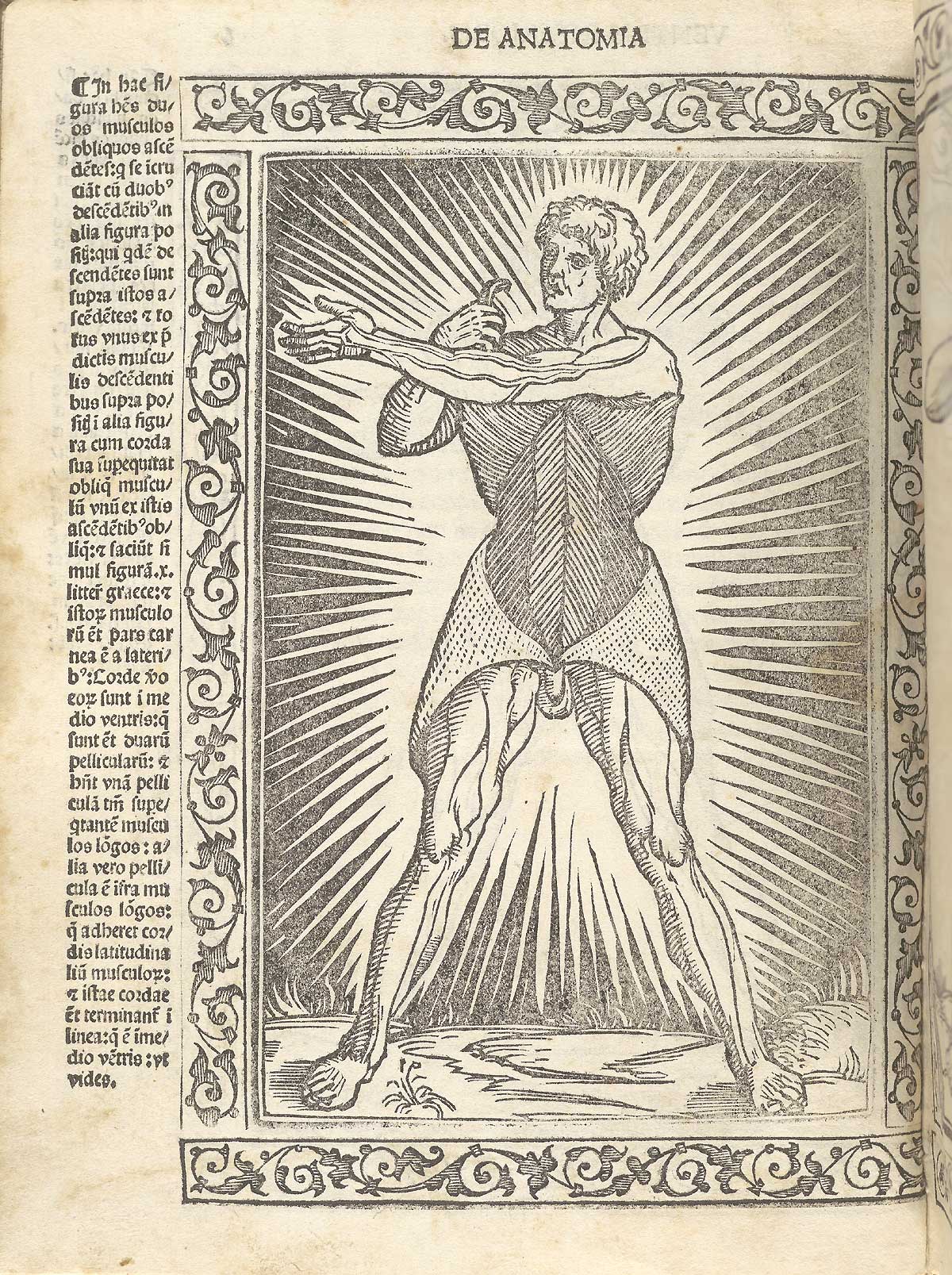
    Isagogae breues, perlucidae ac uberrimae in anatomiam humani corporis, who used several of the same images to illustrate different anatomical aspects.  (In  the  two examples right and below show the same anatomical display–the difference is the rather extraordinary background, and that’s it.) An
    other example is 
    Charles Estienne’s 1545
    De dissectione
    partium corporis
    (“On the dissection of the parts of the human
    body”) who simply ran out of scientific steam int the preparation of some of its
    many (lavish) illustrations—he used existing artwork of torsos and simply performed
    a printectomy on them, replacing some of the sections of the print with some anatomical
    detail.  The practice worked well enough,
    but the overall effort did not make it a landmark in the history of medicine. 

    Berengario_p06v

    I just wanted to touch very briefly on the rediscovery of the body in the 1490-1535 period.  To that end I’ve constructed this  table with data  pulled directly from the National Library of Medicine pages
    for anatomies on the web–all I did was place the records in a table so
    that they could be listed chronologically.  The numbers at left are
    clickable
    and will take you directly to the images of the work at the
    NLM site.  This is just a sampling of anatomies, though it may prove to
    be highly useful for folks in the science and the arts. 


    Chronological list:

        Author: Mansur
    ibn Ilyas (fl. ca. 1390).
       Title:
    Tashrih-i badan-i insan. [Anatomy of the Human Body].  Publication Information: [
    Iran, ca. 1390].            

       Author: Ketham,
    Johannes de (15th century).
      Title:
    Fasiculo de medicina.   Publication
    Information:

    Venice: Zuane & Gregorio di Gregorii, 1494.                 

          Author: Hundt,
    Magnus (1449-1519)
    Title:
    Antropologium de hominis dignitate…                          Publication Information:
    Leipzig: Wolfgang Stöckel, 1501.                              

        Author: Berengario
    da Carpi, Jacopo (ca. 1460-ca. 1530).
    Title:
    Isagogae breues, perlucidae ac uberrimae in anatomiam humani corporis.              Publication Information:
    Bologna: Beneditcus Hector, 1523.        


  • The Fantastic Self-Portraits of the Visionary Architect, Jean-Francois Lequeu

    JF Ptak Science Books LLC  Post 603   Blog Bookstore

    I guess it is easy to want to call M. Lequeu (1757-1825 (?)) an outsider, though
    he was hardly that.

    He was an exceptional talent who was exceptionally well-trained (and who won
    the highest awards offered by his school), and started out in a staid and
    brilliant way, a successful draftsman in his own right, and student of
    Scoufflot, helping to design ancient-inspiration buildings for the super
    rich. He was at the pinnacle of the drafting trade, though not so on the
    designing end.  Along came the Revolution
    and away went his architectural career—he wound up a surveyor and a
    cartographer until his retirement in 1815, after which he enters social and
    historical oblivion, until he finally dies in total obscurity ten years later
    (or so, the date is unclear).  His post-revolutionary vision was as
    phenomenal as his success in selling his ideas were dismal.  Well, this is
    really a cheap shot—his imagination was shockingly large, enormous, his designs
    fantastic and beautiful, and completely unexpected, and they seemed to grow
    larger/loftier and more interesting as time wore away at him. But he was far in
    front of the curve so far as popular (public) opinion was concerned.  Even among the other visionaries of the time
    (like Ledoux and Boullee) it was Lequeu who staked out the furthest reaches of
    architecture, and also with great depth and virtuosity.

    I think that as Lequeu was cleaved away, cell by cell falling through the
    floorboards of his single rented room, he reached further into time and deeper
    into space than almost any architect of that hundred-year period.   I
    also think that he was very well aware of his genius being seen as pure
    eccentricity—his half-dozen or so self portraits are among the most reaching
    that I’ve seen (in the pre-modern era). 

    If Lequeu’s visions existed at all in the world of French architecture it
    was in the Deep Underground—a place that he may have founded.  He was certainly, at the very least, its
    geologist.

    His self portraits are striking, but perhaps not so much more so than those by Rembrandt–he was certainly exploring modes of expression (Raphael’s series of engravings on the emotion of the human face is a good example of this study)–Lequeu though seems to always manage to suggest that he is an observed inmate somewhere.  There is a great undercurrent of “otherness” and great remove to them–something that makes places the self portraits into a different–empty, lonely–class.


  • Missing People: Flerov, Nuclear Fission, and the Development of the Bomb

    JF Ptak Science Books LLC  Post 598  

    In the history of science there are a number of instances where discoveries
    get passed by, or un-noticed, or un- (or under-) appreciated.  Gregor Mendel’s 1865/6 paper embodying the
    discovery of genetics didn’t get noticed (for real) until 1899.  The Alpher-Gamow-Herman paper (1948)
    postulating the background radiation for the Big Bang went unnoticed even after
    Penzias and Wilson found it (by accident) right where it was supposed to
    be.  And so on.  There’s another whole category of names
    associated with discoveries that have faded into obscurity even though their
    idea has not:  Walter Pitts (neural
    networks), Vannevar Bush (the internet), Michael Servetus (pulmonary circulation,
    Rosalind Franklin (DNA), Robert Hooke (too much to mention), and so trippingly
    on.

    I had this second category in mind while grazing through the year 1940 in
    the Physical Review.  I came across a
    very significant paper—a paper of exceptionally high standing, of direct
    interest to hundreds of working nuclear physicists—that, after publication,
    became invisible—or actually publicly invisible.  The problem was that it was also of very high
    interest to the war effort, and it was published by a Russian.  By a Soviet. 
    The paper was by G.N. Flerov and K.A. Petrzhak (Spontaneous fission of uranium  volume 58, page 89, 1940), and it addressed isotopes
    U-238, U-235 and U-234 and the influence of neutrons of different energies; their
    experiments revealed a new type of nuclear transmutation  and observed the world’s first occurrence of spontaneous
    fission.  And this of course was a big
    deal because of the military applications of the continuing series of
    discoveries on nuclear fission, and so the paper—as monumental as it was—passed
    without comment and without notice.  Not
    because the paper didn’t merit it, of course, but because the powers that be
    thought it most prudent not to tip the very secret developmental hand of
    creating an atomic bomb. 

    Years later in his book The Advisers, Oppenheimer, Teller and the Superbomb,
    Herbert York recorded the thoughts of Igor Golovin, who supported the work of
    Kurchatov who sponsored the research of Flerov and Petrazhak:  “the complete lack of any American response
    to the subject of this discovery was one of the foundations which convinced the
    Soviets that the Americans were developing the bomb”.  As was everyone else,  probably. 
    Peter Kapitza, one of the greatest Russian physicists of the century noted
    (on 12 July 1941) that—based on this work— it was entirely possible that a bomb
    could be developed that could kill millions of people.  And it was right after this that these papers
    were no longer published in the Physical Review—for national security
    reasons. 

    There was another reason for not responding to the Soviet paper.  On August 14, 1939, Josef Stalin started a letter
    so:

    To the chancellor of
    the German Reich, Herr A. Hitler.

    And finished it thus:

    I thank you for your letter. I hope
    that the German-Soviet Nonaggression Pact will mark a decisive turn for the
    better in the political relations between our two countries. .

    J. Stalin

    The Nazi-Soviet Nonaggression Pact was a pretty good reason for not wanting to “share” with the Soviets.

    The Soviets wouldn’t see the light until the Nazis ripped off the curtains
    with the start of their June 1941 offensive  in Operation Barbarossa, beginning
    a brutal attack on Mother Russia that wouldn’t end until the Germans where
    defeated by Winter.  Keeping the Soviets
    out of the loop was a good policy decision.

    In a way though it may not have mattered.  The only country on earth that had the facilities and resources to develop the bomb was the United States–the sheer amount of energy alone would’ve consumed something like the majority of all energy resources needed to fight the conventional war for both the Japanese and the Germans.  This list goes well on, but that’s another story. 


  • Unfinished, Blank and Empty: Durer, Gaudi, Schubert, Mozart, West, Stuart

    JF Ptak Science Books LLC  Post 588       Blog Bookstore

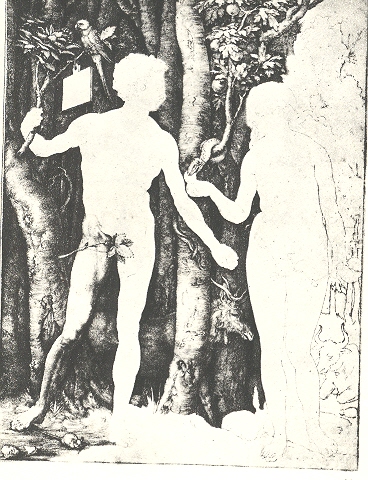
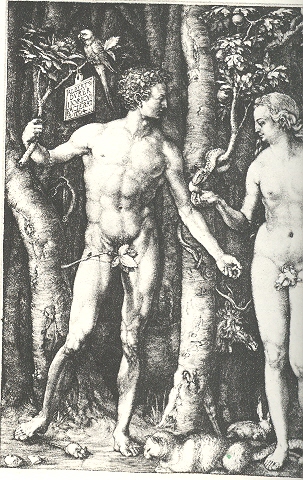
    Unfinished in some ways is part of something that is not there, part of the missing, the blank, the empty.  One aspect of this calling to emptiness is seen in this semi-completed, semi-empty trial proof version of Albrecht Durer’s intaglio Adam and Eve (1504) , the finished and full state of which is seen below.  The unfinished bit is easier to see but hard to find, sometimes.  Leonardo comes to mind several times:  the magnificent Sforza equestrian statue and St. Jerome Praying in the Wilderness come to mind, as with his Study for the Adoration of the Magi.  Gilbert Stuart’s ultra-famous mostly-finished portrait of George Washington wound up in thousands of schoolrooms across the United States as well as—cropped—one the one dollar bill. Nearly-as-famous Benjamin West left unfinished another icon of revolutionary American history, the American Peace conference, half of the historical figures faded unfinished into history.

    There are some things that are unfinished but really aren’t so:  say, for example the not-endable Ulysses, complete and incomplete in its circularity.  Mozart’s Requiem, a piece of music that helped drive the poor man to his death, was unfinished though completed by another hand.  Blog--blank durer 001

    There are unfinished examples of architecture bounding into the urban landscape, fantastic examples of extraordinary things.  The great Schloss Neuschwanstein, the empty and unfinished dream of the “mad” and mysteriously murdered King Ludwig of Bavaria, is certainly one.  This building ironically seems for me more compelling, filled far more than Uncle Walt’s doppelganger in Orlando.  The greatest structure of the Drippingly Baroque is another unfinished masterpiece, the work of Gaudi in Barcelona, the Sagarda Familia.  Started in the 19th century and stopped with Gaudi’s death in 1926, the Sagarda’s forest of towers was only 15% complete—the city is still at work on it, with 40% more to go.  

    We could look at these images while listening to audio examples of the unfinished:  the tidied-up requiem of Mozart, Schubert’s unfinished 8th Symphony, and Mahler’s unfinished 10th  come to mind.

    There are spectacular monuments to unfinished business: American Federal treaties with Native Americans (almost all of which were signed, documented and not enforced; empty, blank, broken); the assurances to the millions still waiting for some verifiable change in the townships of South Africa; promises of decent wages and health coverage for the marginalized “partners” of oblivious behemoth  monsterstores. [I can think of one major player whose corporate name spelled backwards relates to railroading the law, driving that point home to employees, suppliers and patrons.  “Tram Law.”] A history of unfinished business would be massive, and then, once you got to the end, all you’d be doing would be driving a Ford Pinto off the end of an unfinished bridge.
    Some things that looked sort-of finished are later revealed to be not so:  Einstein’s Unfinished Symphony of relativity (titled so in Listening to the Sounds of Space-Time  by Marcia Bartusiak) is one. Mathematics—all of mathematics—also comes to mind, the great edifice nearly “completed” by Hilbert until one of his famous questions got answered by Goedel, and then all became unfinished again.  One day everything seemed filled-up; the next, well, it wasn’t.


  • Bad Resurrections: 19th Century Cadaver Trade in New England

    JF Ptak Science Books LLC  Post 585       Blog Bookstore

    History of Missing Things Part XXXVII

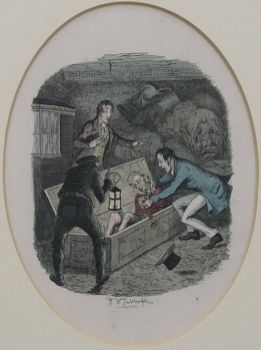
    Grave rob For some, “anatomy is
    destiny”, but not in the way the reach-y Sigmund Freud meant–their
    anatomy quite literally was their destiny, their bodies resurrected (in the bad
    way) from their coffins by chin hooks and sent to the local med school for
    quick and dirty study.  This night-time
    version of ice fishing for cadavers was addressed in a sniffily conceited but
    informative book by A.M. Lassek, Human Dissection:  Its Drama and Struggle (1958).  Lassek, professor of anatomy at Boston University ,
    presides over all aspects of the history of anatomy, but I somehow found my way
    instantly to the cadaver-catching mechanical operations end of it: specifically
    the work of American specimen providers in
    in the early part of the 19th century. 

    Listen:  if I found my way back in time in the Boston area in 1835 and
    was the night jobber and bad-‘un for the local apothecaries hunting down the
    lonesome freshly dead, I think–with praise to Lassek–that I’d be
    able/equipped to do the job.  I hadn’t
    really thought very deeply about the supply of cadervous specimen for the
    thriving medical schools before, but there are many considerations to the
    proper way of stealing a body. (And by “proper” I mean “not
    being caught doing it”.) First of all, there was a serious spike in the
    creation of medical schools, the number of recognized institutions in America
    increasing from seven in 1810 to 33 in 1840 (and 90 in 1870), with a huge new
    population of data-thirsty students to go along with it.  Human anatomy was an exceptionally difficult
    subject to demonstrate with actual specimens (due to moral and legal
    restraints), so the med schools (including the Harvards) had to resort to
    creative solutions:  the bodies had to be
    “found”. And finding bodies had more to do with stealing them than
    arranging for the corpse of a condemned criminal to be purchased from the
    sheriff. 

    The local townsfolk and neighbors of
    medical schools knew this all too well. 
    There were a number of precautions that the bereaved could undertake to
    prevent the resurrection of their departeds. 
    One simple way was to have a guard at the grave all night long–that
    would certainly cause some pain and consideration for the grave robber, though
    it has been the case where the guards were plied with money and alcohol to
    effect a soft gaze on the grave.  Since
    the newly interred laid under six feet or so of newly churned earth, there was some
    amount of extra stuff that was thrown into the pit.  Stones, and rocks and tree limbs were added
    to the hole to make a tougher and noisier go for the robbers; also, wide heavy
    planks were placed width-wise across the coffin and then covered so that the
    robbers would have to dig much wider in order to pull up the boards before
    getting to the coffin.  Another fantastic
    bit that I had never thought of but which falls into the category of branding
    cut lumber for the ride down the river: 
    intricate designs were placed on top of the grave with sticks and stone
    and such so that the family members would be able to detect a defiled
    grave site.  All of this attention would be
    heaped on the grave site for ten days or so–after that the body was deemed too
    far deteriorated as to he of any use to the medical school.

    “Detect?”  Yes, indeed. The grave robber needed to be
    stealthy, leaving no indication of the dark and stinking deed.  Working in very low or no light, the robbers
    would find their mark and lay at least two tarpaulins on the ground. they would
    collect all of the dirt in these catch-alls so as to not excite any attention
    that the grave had been disturbed.  They
    would dig a 3×4 foot hole towards the head of the casket, and, once reaching
    their prize, would drill holes (quietly!) into the wood, break it, and then
    attach a hook under the chin of the corpse and yank it out.  Placed on another tarp, the body would be
    stripped of all clothing, and then wrapped securely to prevent anything
    incriminating falling from it during the trip across town.  Once received by the medical school, the
    hair, teeth and other distinguishing characteristics would be removed to
    prevent detection and identification.  I
    imagine that the skin of the face would also have been peeled away, skillfully
    removed with one cut and a careful pull. 
    All of this was precautionary, in case the relatives of the now-specimen
    suspected foul play and came looking for their beloved.  It would be a corpse among other
    corpses.  Or not. Lassek writes that the
    bodies would be hidden, secreted in different and obscure places around the
    campus, in “domes, belfries and observatories”.  Observatories?  Well! 
    I’m not so sure about that aspect of Lassek’s report on grave robbing,
    but I was pretty impressed with his knowledge on the other aspects of the
    business. 

    I am
    indebted to Dr. Lassek for the image of the grave-marking anti-theft
    artwork.  I may have fabricate a grubby
    1837 cemetery keeper’s chapbook with drawings of their designs and make an
    entry for it in my imaginary museum catalog for
    things-that-don’t-exist-but-should.


  • History of Dots AND Blank & Missing Things: Particles, Galaxies and Missing Middles

    JF Ptak Science Books LLC Post 533

    0 blog march 4 cuyama 2647
    (Forcibly!) joining a continuing series of posts on Blank and Missing Things and a History of Dots, we’ll look today at intellectual hermorphiditism, alpha omegas, nuclear particle tracks, negative galaxies and the wanderings of a centenarian vegetarian pro-lefty Vermont commie’s middle-missing thoughts. 

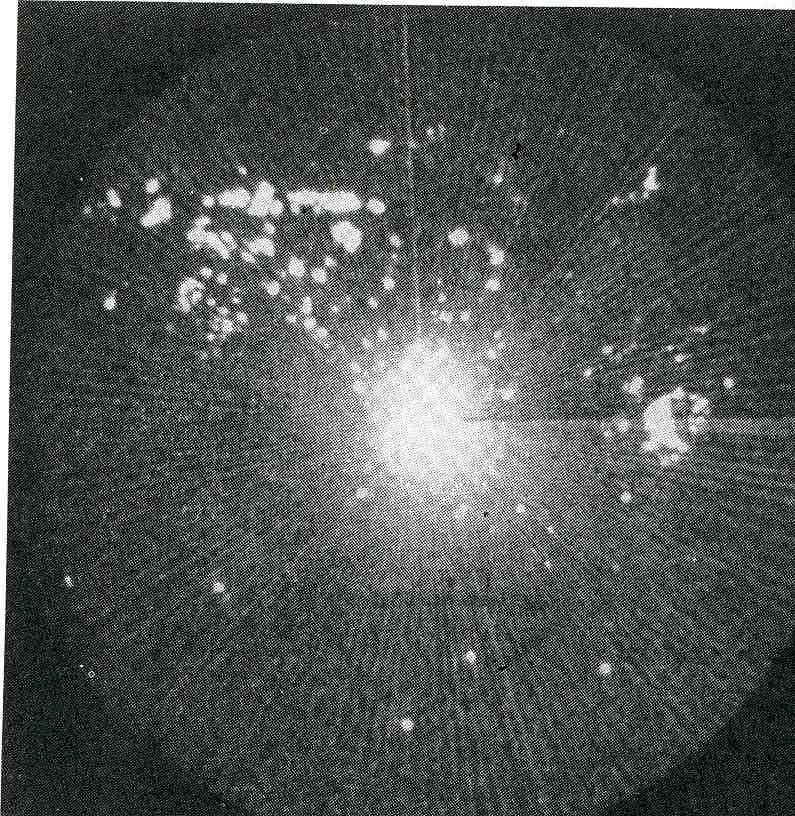
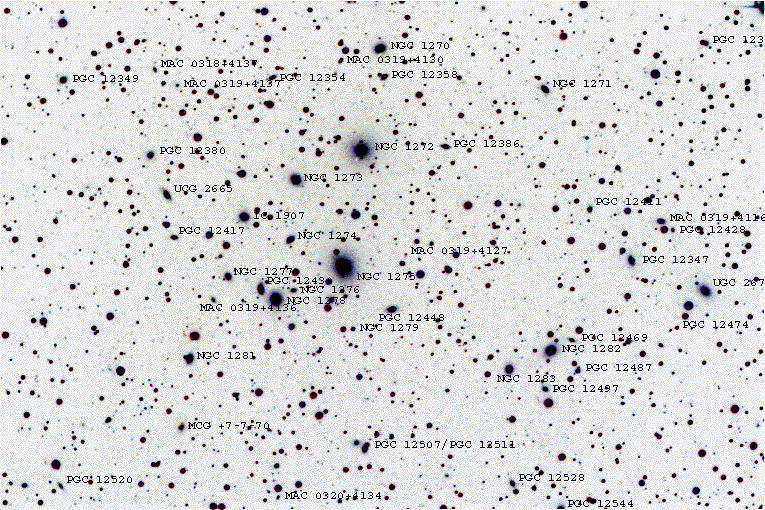
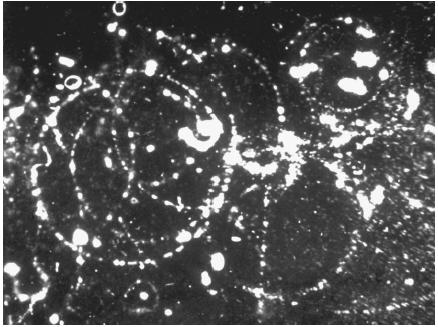
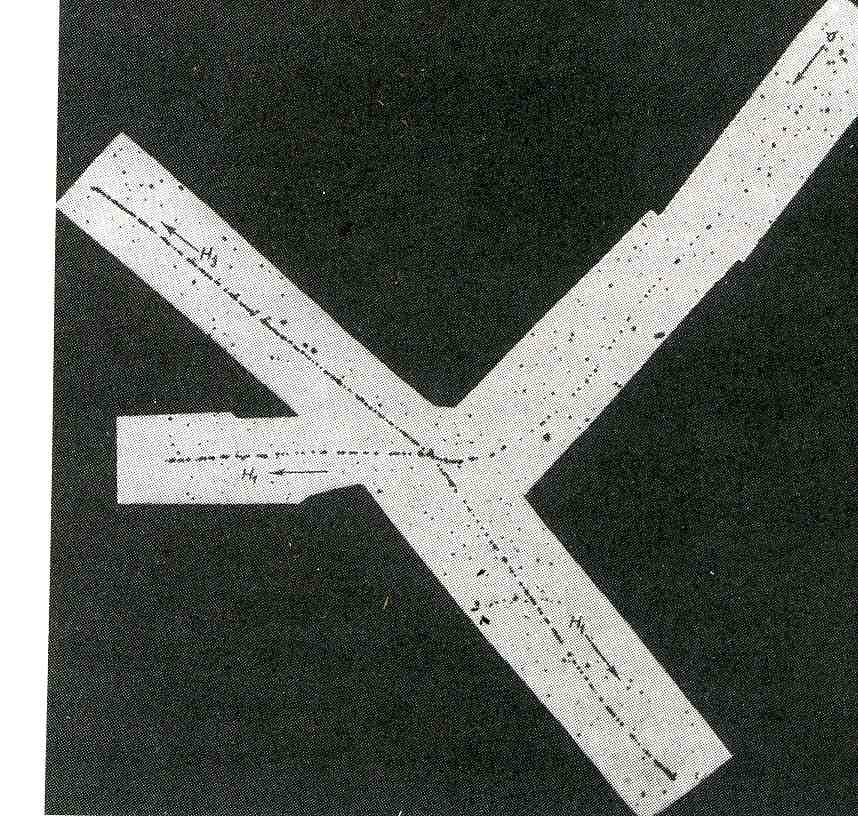
    I know that you can find dots everywhere if you look hard enough, or magnify things enough, or get far away from them enough….it seems that once you start on either route in the powers of ten game that getting to 10 (7th) things start to look very dotty indeed.  What was on my mind was the similarity between particle tracks (and particularly the photographs of the very earliest ones) and negatives of images of galaxy clusters.  The image to the left, to encumber things a little further, is another look-alike from 1947:  a moving target indicatorPerseus_GC_Neg_8_bit_14_Oct_2001 (showing the cluttered field of a Japanese freighter convoy at sea).  A negative photo of a section of a galaxy cluster in Perseus is directly below, while just below that is a cloud chamber of what is probably the first photo showing the track of a cosmic ray (1927 by Dmitry Skobeltzyn).

    Uesc_03_img0160

     The next image,  also from 1947, is the first observation of the disintegration by a negative meson (appearing in Nature Magazine #126 for 1947). 

    0 blog march 4 cuyama646

    The galaxy and particle images, at nearly-opposite ends of the existence spectrum:  from 10 (-10) meters (or .0000000001) to 10 (+14) meters (and actually 10 +14 through 10+25 meters, looking pretty much the same), the story is all pretty much dots, from the deepest buzzy  recesses of a proton to the outer reaches of the outermost bits of the outer universe.  The middle part is where all of the “stuff” is,  the (near) alpha and omega of whatever there *is*. 

    0 blog march 4 cuyama 3 nearing648

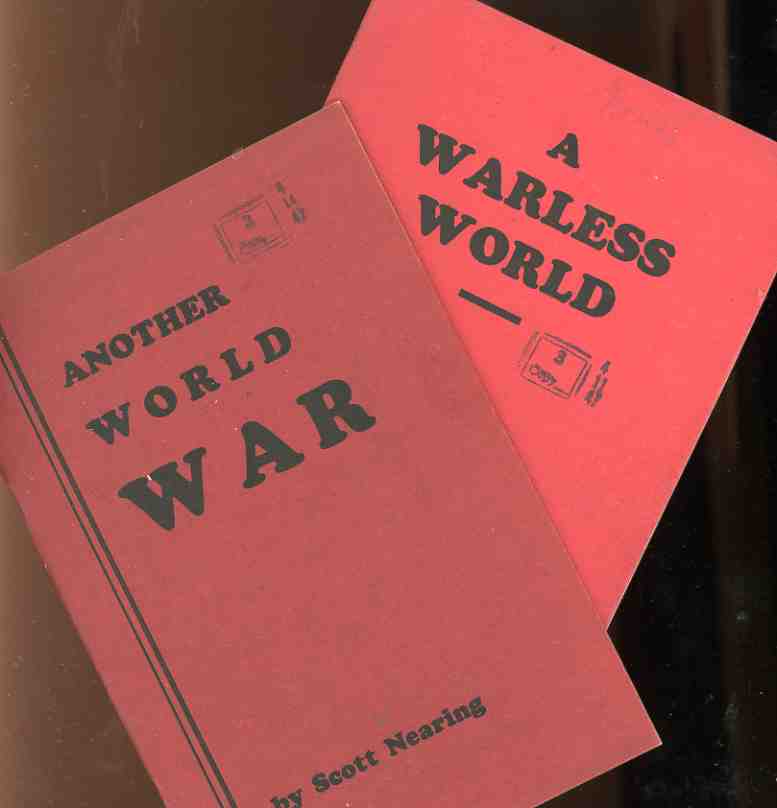
    And somehow this gets me to the two works here, both issued in 1947, by Scott Nearing, our centenarian Vermonter communist, who manages his very own alpha and omega, who covers the very ends of the spectrum without getting bogged down with the slumpy middle part….which of course is just about everything. 


  • Blank and Missing Things 33: (Disembodied) Hands of Creativity

    JF Ptak Science Books LLC  Post 532

    0 abay feb 23scheiner623

    [Last year’s post for this day: The Wrong Stuff, Righted–the Attack on Darwin’s Descent, 1871]

    I wish that I had kept track of all of the images of “holy/phenomenal” disembodied body parts sprouting from nothingness or from pure creator-of-the-universe light that I have seen populating antique prints over the years.  Much more popular in displaying the indisputable are the images of the Primum Mobile,  the Hebrew word for Y_w_h, the smiling countenance of the creator itself, or doves arising from a shining star or sun–far less seen are the images featuring seemingly floating disembodied body parts.  Had I kept track of all of these magnificent things in the sky or air I’d really be able to compare them; but I haven’t, so I just need to rely on a generalized memory of what seems to me to be uncommonly seen images, and then wax away like a groaning and saggy Moon. 

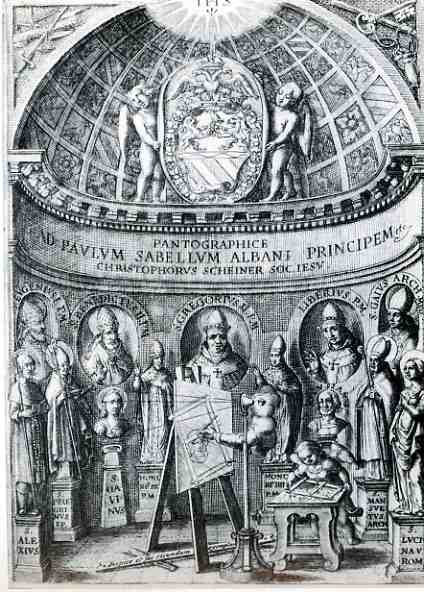
    The image to the left is the decorated title page of the great Christoph Scheiner’s (1573-1650) Pantographice sev ars Delineandi  res Quasilbet per Parallelogrammum Lineare..., published in Rome in 1630.  The book was about one of the most-employed inventions

    0 abay feb 23scheiner624

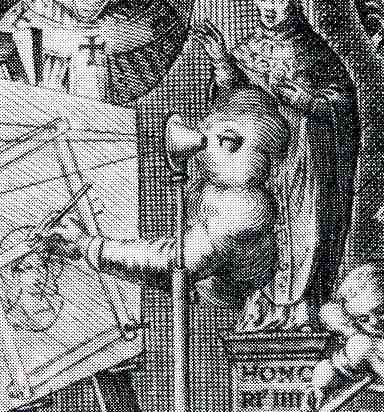
    of the 17th century,  Scheiner’s very own pantograph, which was/is a very versatile tool used to project an object from one scale to a greater one, and used by grateful sculptors and architects and mapmakers and astronomers and engineers for hundreds of years. What we see in detail in the engraving (right) is the disembodied squinty-eyed-cloud-arm of creativity, using the pantograph, and copying a painting (in a chapel?)  But is this the soul of creativity, really, since the arm-eye is using a device to copy something?  I’m not saying that there is no art involved in this practice, because if that was the case then I could use this device with positive results–but I can’t, and so there must be artistic merit involved.  Perhaps this curious image celebrates the art in the copied elements and not the use of the pantograph.  

    0 blog march 3 kircher635

    Another interesting example of disembodied genius occurs in the
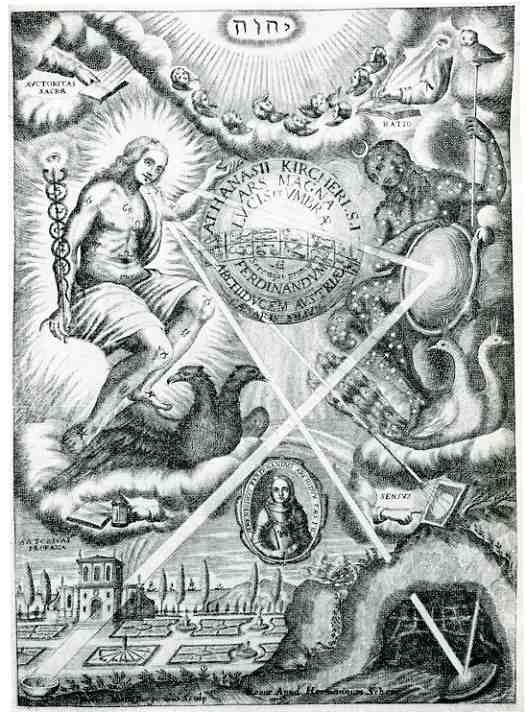
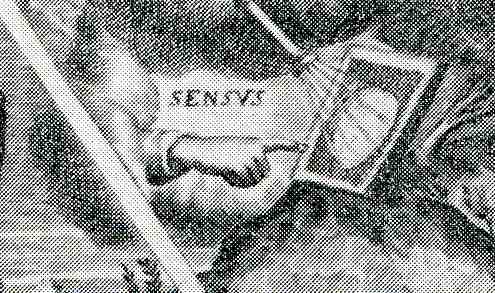
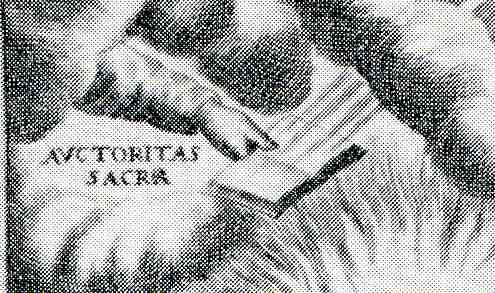
    title page (at left) of the transubstantiated and sometimes-impossible Athanasius Kircher’s encyclopedic Ars magna lucis et unbrae in decem libros digesta, published in Rome in 1646.  Of his very many works, this is perhaps one of the most important, and includes the first descriptions of (his discovery/invention?) of the magic lantern, of luminesence, and of the camera obscura.  (Among much else are Kircher’s drawings of his microscopic investigations, which were very major contributions, and which predate the works  of Hooke and Leeuwenhoeck.)  This complex and iconographically-layered title page engraving contains (almost offhandedly) three disembodied hands, the first of which displays camera obscura image.  Given everything else that is going on in the image, the holy hands are the those demanding the least amount of interpretative skill. 

    0 blog march 3 kircher detail636


    0 blog march 3 kircher detail637