A Daily History of Holes, Dots, Lines, Science, History, Math, Physics, Art, the Unintentional Absurd, Architecture, Maps, Data Visualization, Blank and Missing Things, and so on. |1.6 million words, 7500 images, 4.9 million hits| Press & appearances in The Times, Le Figaro, Mensa, The Economist, The Guardian, Discovery News, Slate, Le Monde, Sci American Blogs, Le Pont, and many other places… 5000+ total posts since 2008.

Category: Bad Ideas

  • Atomic- , Vacuum- , & Solar-Powered Dirigibles with Built-in Airports–Bits of a Bad Historic Future

    JF Ptak Science Books   Post 1487

    A post (“Nuclear Everything”) over at Dark Roasted Blend that featured a magnificent and stodgy atomic-powered zeppelin pushed me into this short visual note on differentially-powered airships, and then in general about airships with airports on them. (There’s a whole other category for planes-of-tomorrow that were so enormous that they had landing strips on their wings, but that’s another story.)

    And they remind me of things that just aren’t “right”, because these things just weren’t.  I’m not sure why, but I’m drawn into an old story about the legendary Charlie Goodnight, Texas pioneer, one of the creators of the idea of the cattle drive (the Goodnight-Loving Trail), a man who lived an extraordinary and powerful life.  He lived for a long time, too, from 1836 to 1929 (almost to the year of the birth of Larry McMurtry, who told a version of Goodnight’s story so spectacularly well in Lonesome Dove), well into a future so far advanced from the year of his birth that he could scarcely have imagined it.  Anyway, towards the end of his life, in 1916, Goodnight had the idea of making a movie of the Old West that included a “final” Indian buffalo hunt.  I’ve seen the film, and it is a fascinating, heartbreaking, wonderful/awful thing, that somehow might appeal to almost no one.  It certainly didn’t appeal to the folks at the time looking for a cowboy film, because much like Mr. McMurtry’s cowboys, Goodnight’s reality didn’t much resemble the cowboys that the public wanted to see.  In a sense Goodnight lived beyond the history that he so much helped to create, and that his old, passed “present” was something that the people in his future really didn’t want to recognize. Then of course one of the things that made it all seem “not right” to me was seeing a vignette of Goodnight entering into one of the scenes, in  a car, making the whole thing a little spooky.

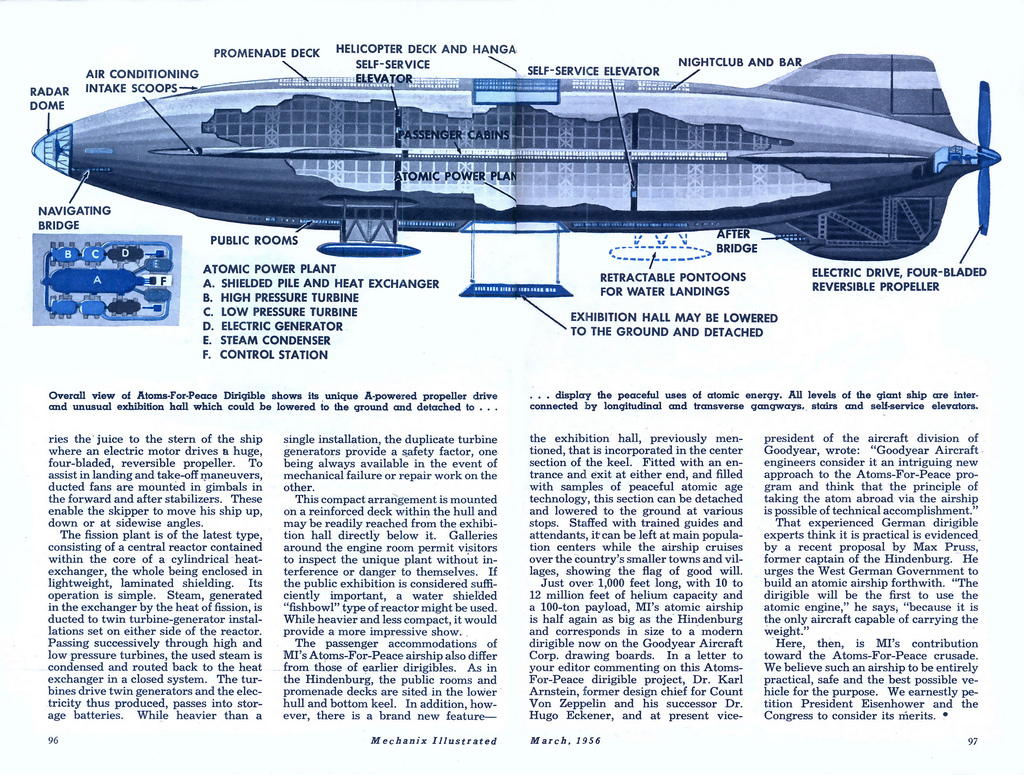
    First up is this mammoth flying advertisement to both peace and war, a nuke-powered dirigible proposed by Eisenhower in 1953 as part of the Atoms-for-Peace push, a move which by this point was already entirely too late.

    Atom everything zep for peace

    For some reason it was seen as a good idea to have a detachable convention hall built for the airship. \

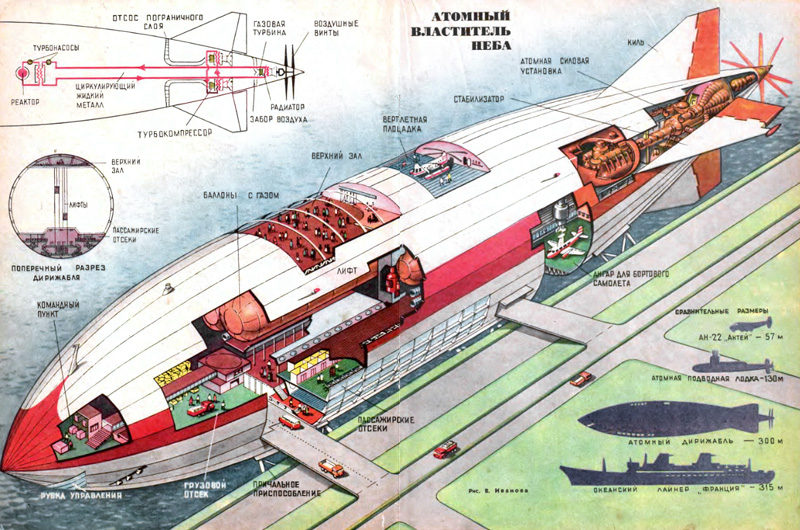
    And of course there is no greater element of a Something-for-Peace anything unless there was a competing idea, as seen in this mammoth Soviet atomic zeppelin, a ship completely absorbed in being bigger than the big thing that it already was:

    Atom everything zep

    At 300 metres this monster had room enough for virtually anything, though it didn’t have the retractable/detachable convention hall–it did however have a small airport. 

    Another dirigible approached the airport-on-board idea, but preferred solar power for its energy source.


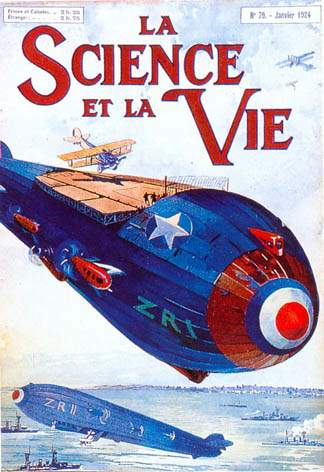
     The magnificent possible, 1924, saw another kind of airborn airport:

    https://historyofideasblog.com/a/6a00d83542d51e69e2012875ea3636970c-pi

    Guido Tallei’s 1932 Diri-Disk was a combination airplane/dirigible, and looked as though it could harbor an expansive airport on its NCC-1701-like wing, but didn’t, alas:

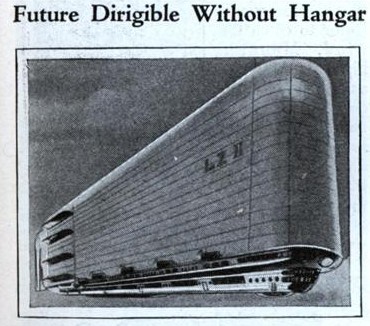
    Konstantin Eduardovich Tsiolkovsky (1857-1835), the Russian/Soviet space pioneer who was nearly without peer (and who somehow survived the bloodlust of Stalin which sucked up and murdered so many of his scientific colleagues),  stepped outside his spaceflight bubble to write about this monster with collapsing sheathing:

    https://historyofideasblog.com/a/6a00d83542d51e69e20128769ed30d970c-pi

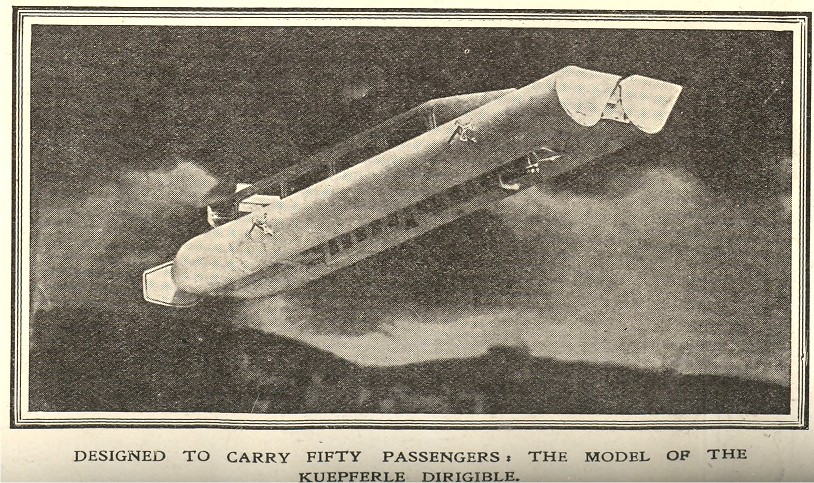
    The Kueperle dirigible, planned in 1909, was nothing if not pretty, and pretty is pretty much what the whole thing consisted of:

    https://historyofideasblog.com/a/6a00d83542d51e69e2012875ea2c87970c-pi

    And lastly, this example of the tracked airship–this must have been a popular notion because I’ve seen perhaps 15 different plans and I don’t spend much time at all reading in this area.  But harnessing the power of the balloon or dirigible or (kite!) whatever to a track system seemed to be a good idea, once upon a time:


  • Architecture of Insanity

    JF Ptak Science Books   Post 1474

    Insane asylum485

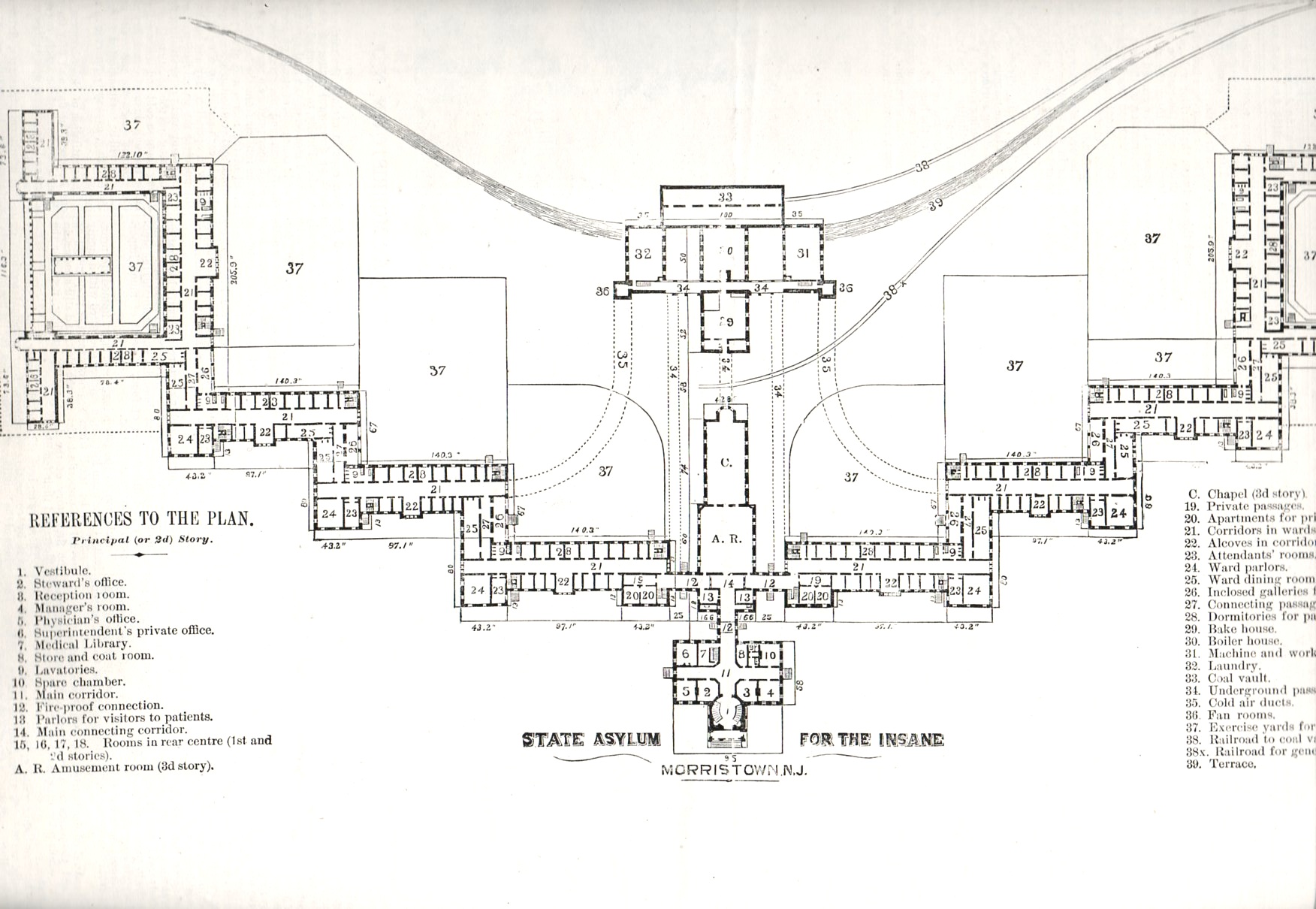
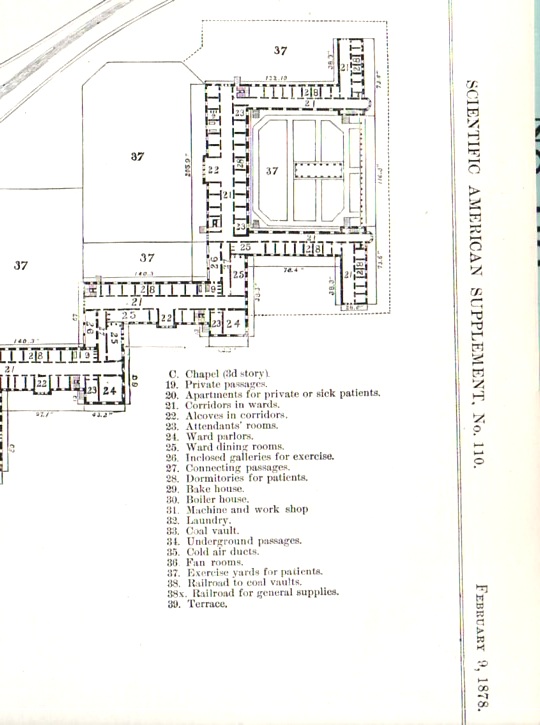
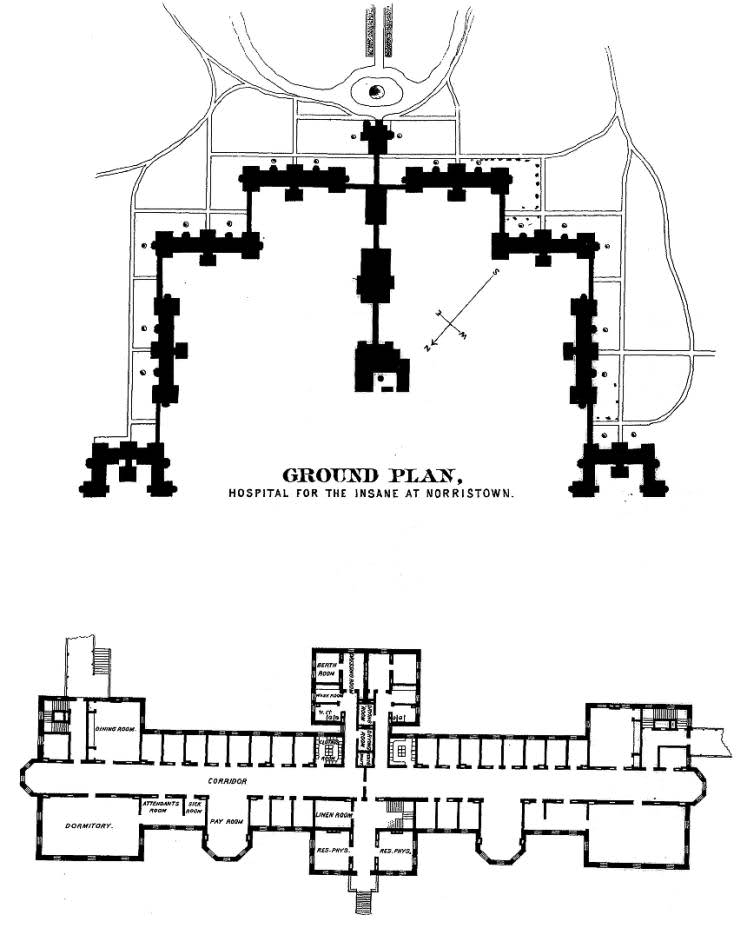
    I was browsing an 1878 issue of The Scientific American, looking for an article on torpedoes, when I came across this stunning architectural plan of the Morristown (New Jersey) State Asylum for the Insane–I recognized its design as something I had seen before, several times, at least.  This design required a lot of land and a lot of bricks–the building was a few stories high and laid out far and wide, built to accommodate 2,000 patients.  The design was intended to allow patients comfortable living space, room for privacy as need be, exercise area and plenty of open yards around the structure for sun and fresh air.  Of course building like this were quickly filled and filled some more, requiring the space for rehabilitation to be used for stockpiling other patients until more appropriate situations arose, which they mostly seemed not to.

    Insane asylum486

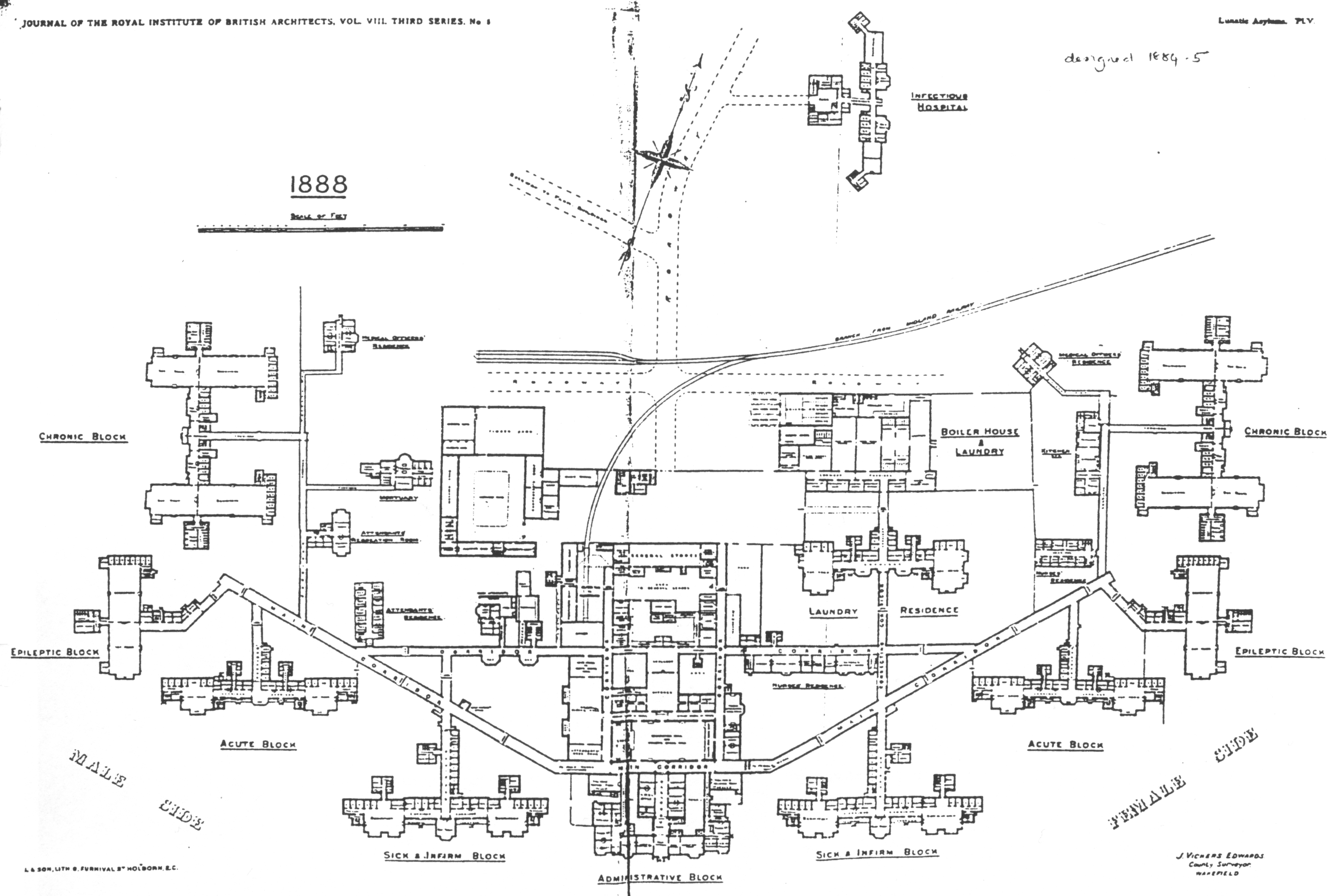
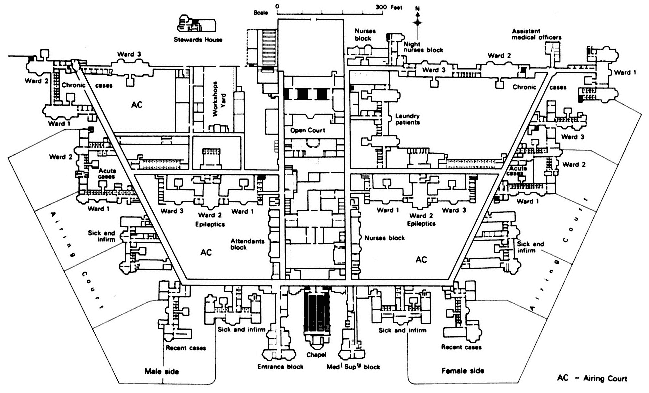
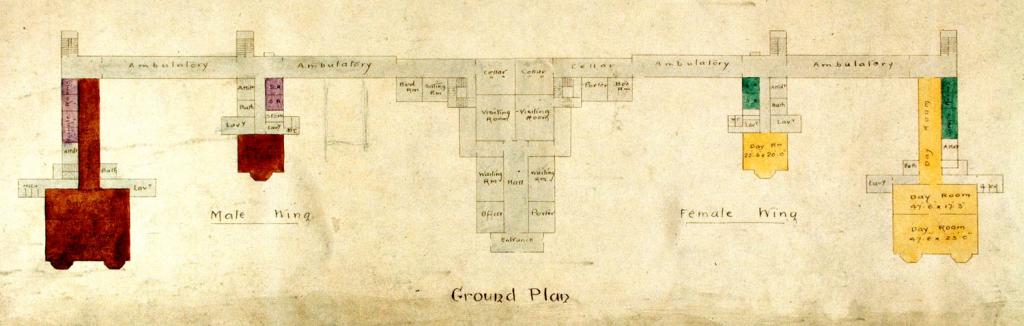
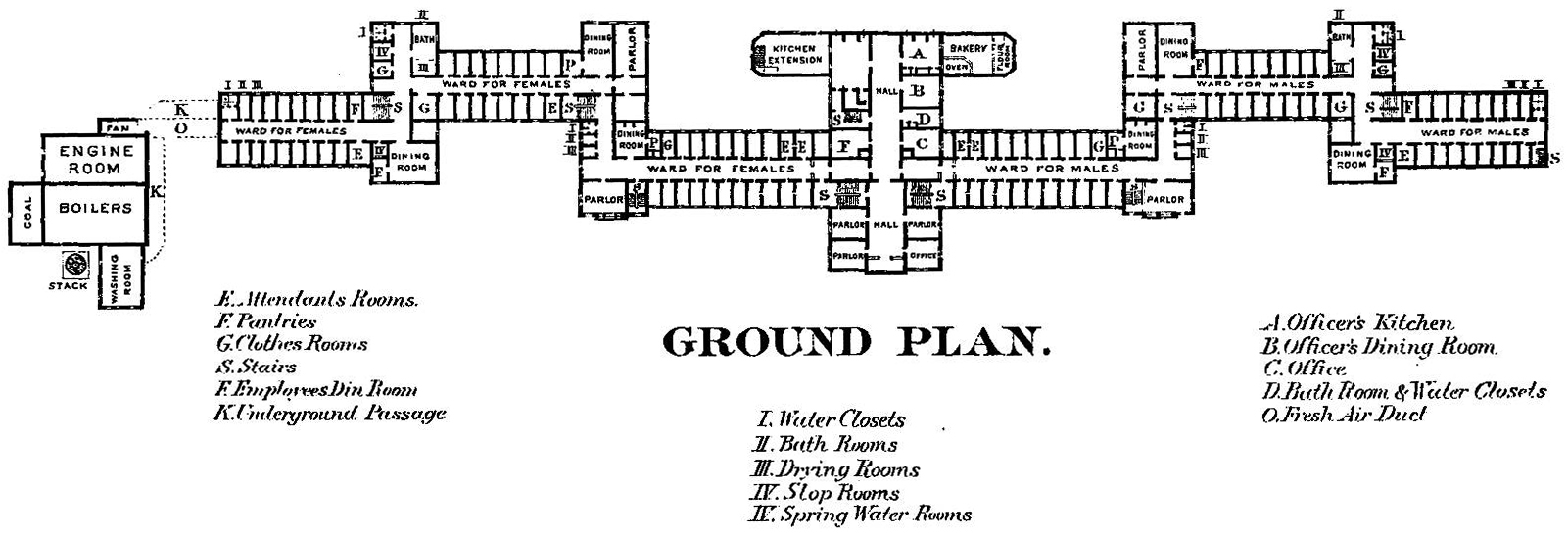
    And so I went looking around the web for other examples of mental/insane asylums, places constructed for the good of the society and partially to aid people who were suffering from some sort of yet-to-be-defined mental illness.  From what I have found so far, there is a definite them to a good many of them, resembling in some fair manner the Morristown design (above). 

    (An interesting and lush/ruinous photo essay on Morristown can be found here.)

    I suppose that in some ways these architectural plans are maps, outlines to an elusive wellness; given the (generally) small staffs, the abilities of the time to diagnosis mental illnesses, the limited capacities for treatment, and general overcrowding, that the “wellness” part of the desired ends of these plans/maps was almost entirely allegorical. I suspect that if for some reason you found yourself in an extended stay in a place like this and weren’t insane, then you would be after a while.

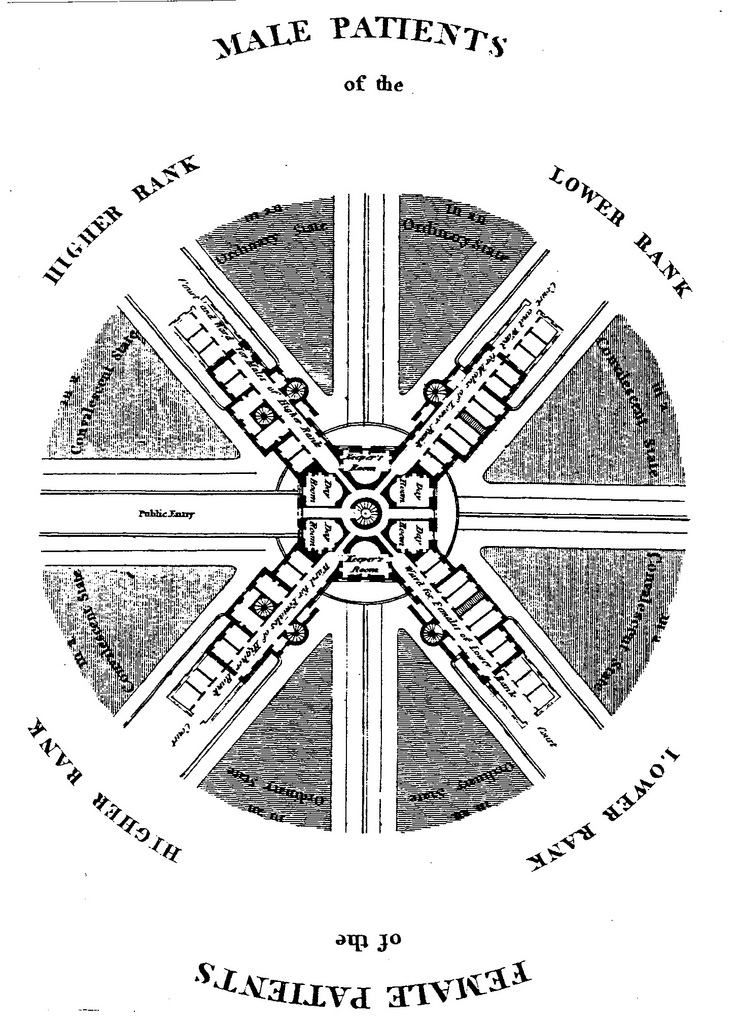
    The Glasgow Lunatic Asylum, designed by the  architect William Stark (1770 – 1814):

    Lunatic  glasgow

    [From:  Thompson, John D. & Grace Goldin. The Hospital. A Social and Architectural History. Yale University Press, New Haven and London. 1975.]


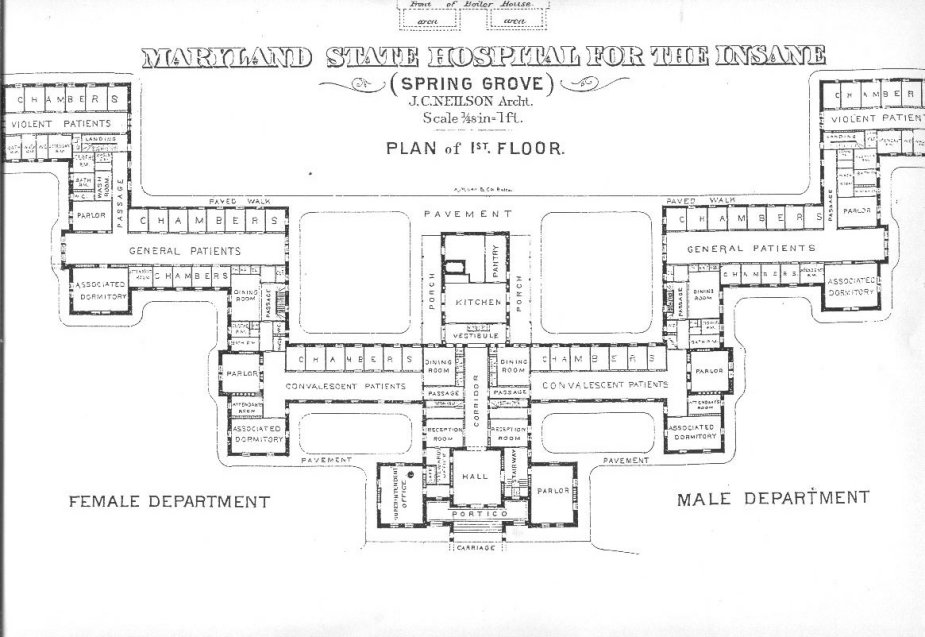
    Insane asylum maryland state hospital

    Maryland State Hospital for the Insane (here)–in this plan, the further away you get from the main entrance, the more deeply “disturbed’ the patients.  It must have been a long walk from the “violent” ward to freedom. 

    Lunatic cane hill

    Cane Hill, the Third Surrey County Pauper Lunatic Asylum, built 1882 (details here)


    Lunatic claybury county

    Claybury Lunatic Asylum, Woodford, Essex:

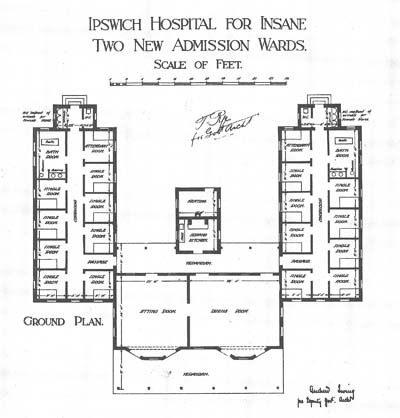
    Insane ipswich

     The Byron House, constructed 1915, at the Ipswich Lunatic Asylum (Byron house was to become the infamous Karrala House.)

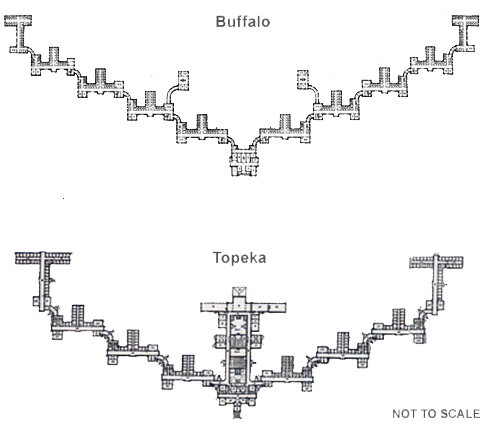
    Lunatic buffalo richardson

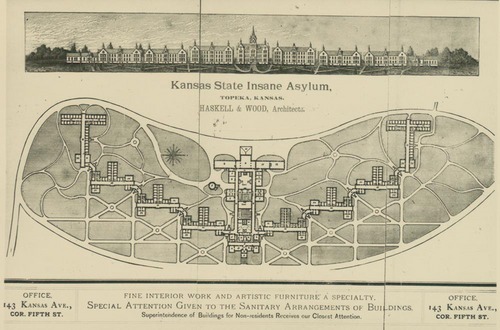
    Buffalo lunatic asylum, a spectacular structure designed by H.H. Richardson, with grounds and landscaping by none other than Frederiick Law Olmstead and Charles Vaux  The image above (and below) are the Kansas State Lunatic Asylum constructed 1880.  Information on these two institutions and the man who brought them about is located at the Kirkbride Buildings blog, here.

    Lunatic kansas


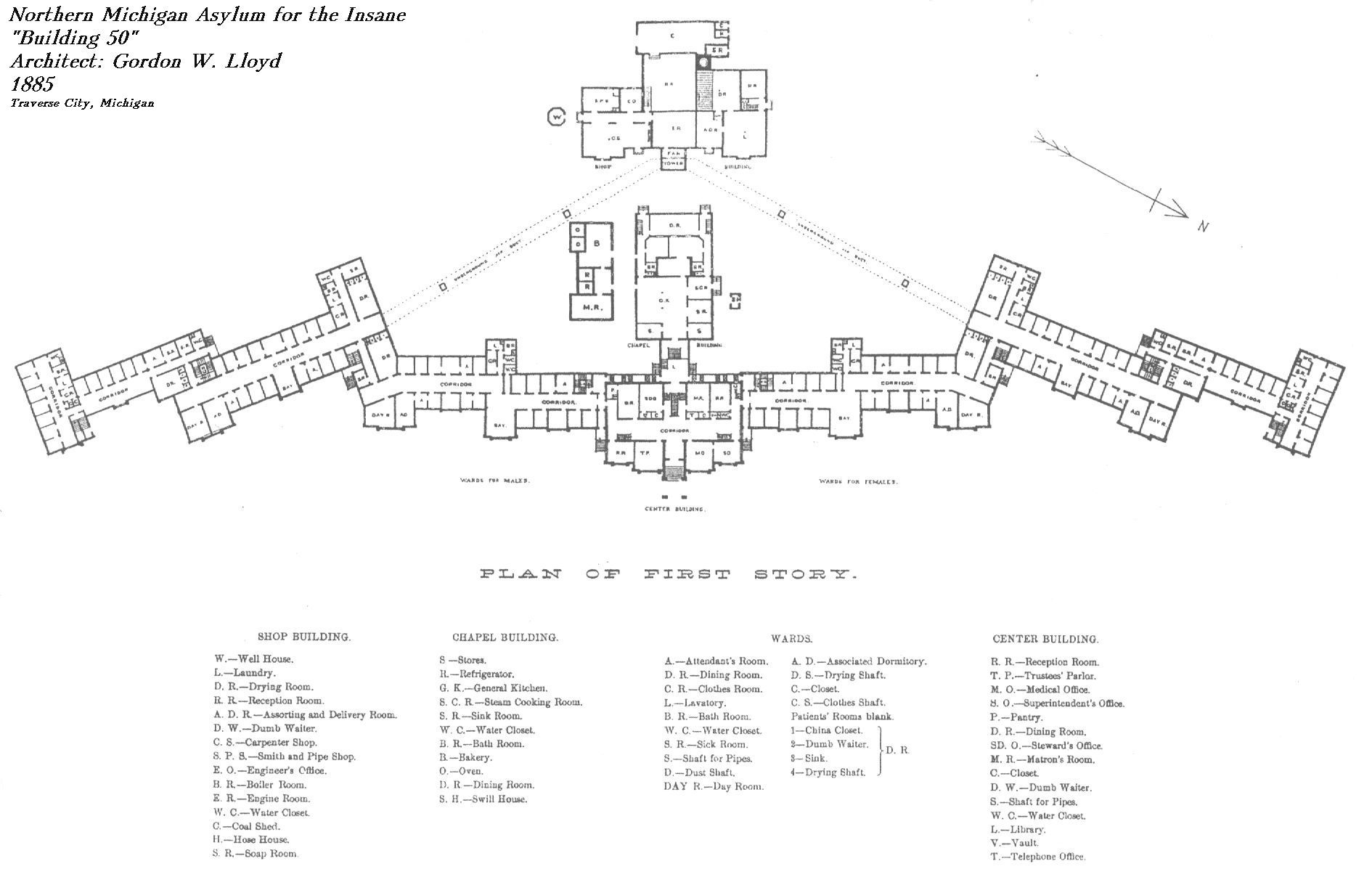
    Northern Michigan Asylum for the Insane, built by Gordon W. Lloyd in 1888:

    Lunatic  northern michigan

    Seacliff Lunatic Asylum, New Zealand:

    Lunatic seacliff


    HArrisburg (PA) State Lunatic Asylum, the first to be built according to the Kirkbride Plan:

    Lunatic  harrisburg

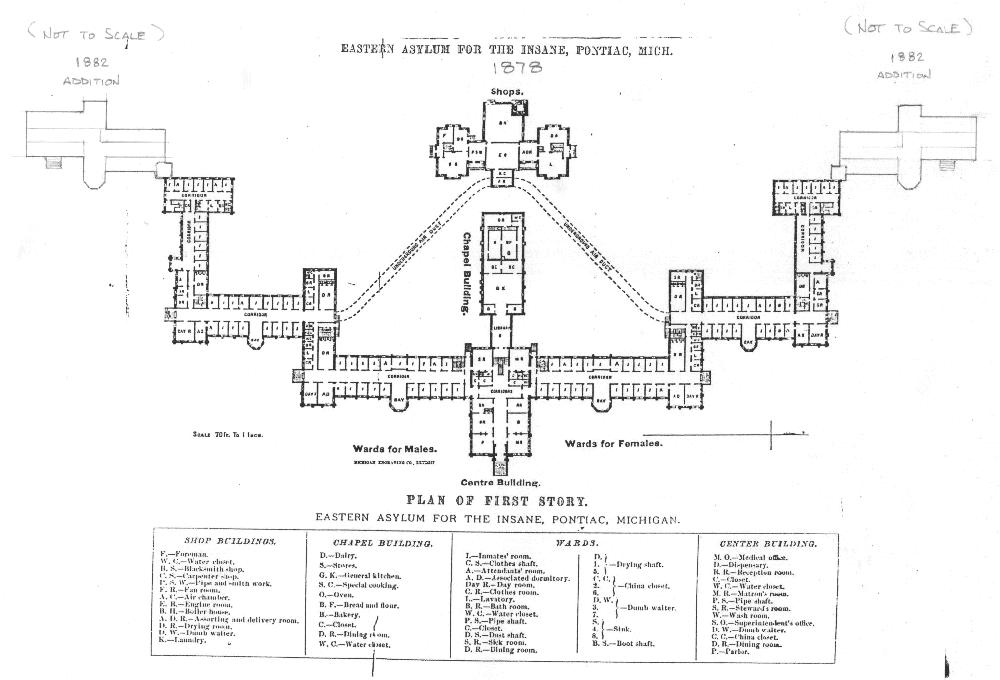
     Eastern Asylum for the Insane, Pontiac, Michigan, constructed 1882:
    Lunatic  eastyern asylum


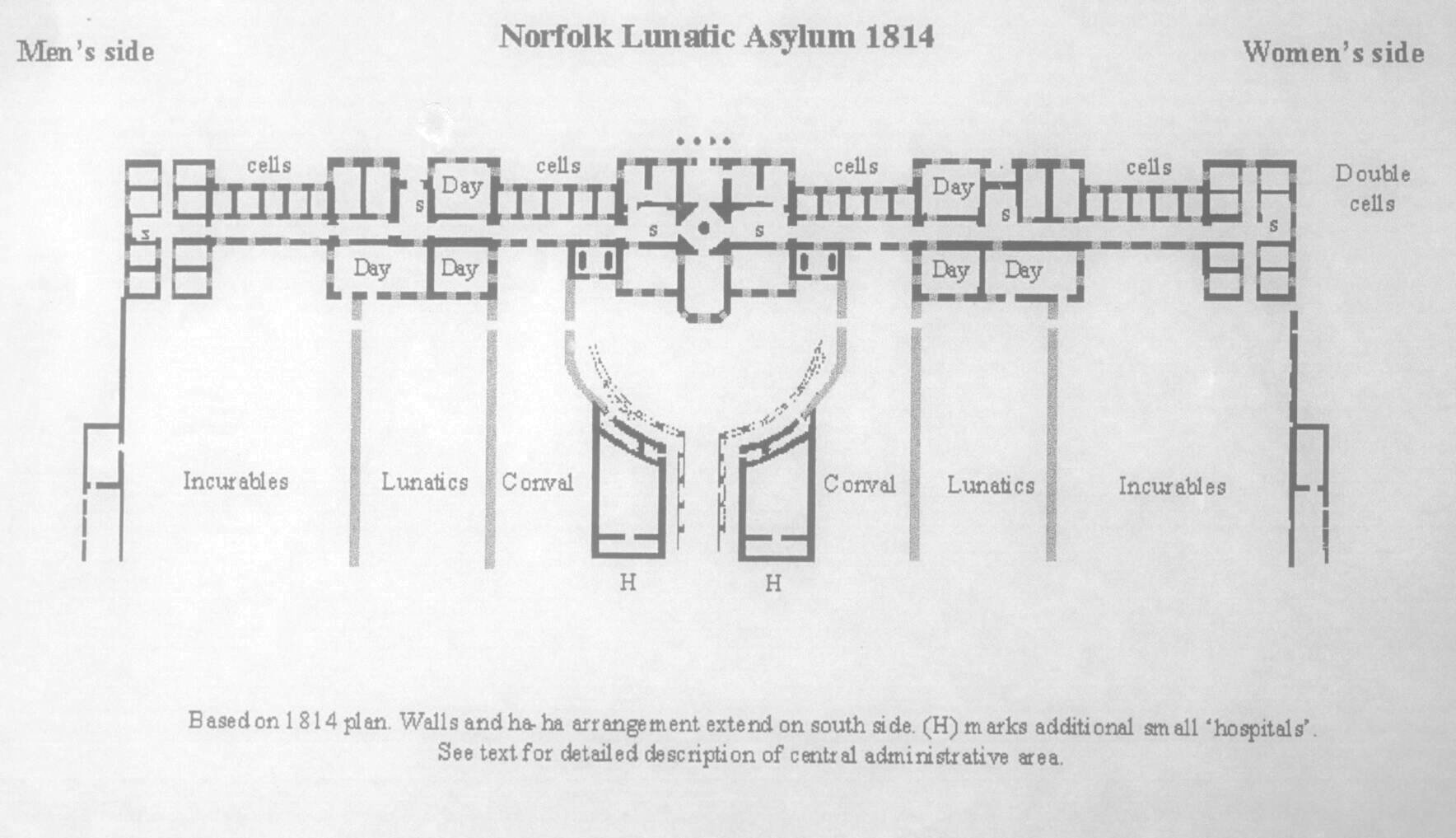
    Norfolk, England, Lunatic Asylum, 1814

    Lunatic norfolk

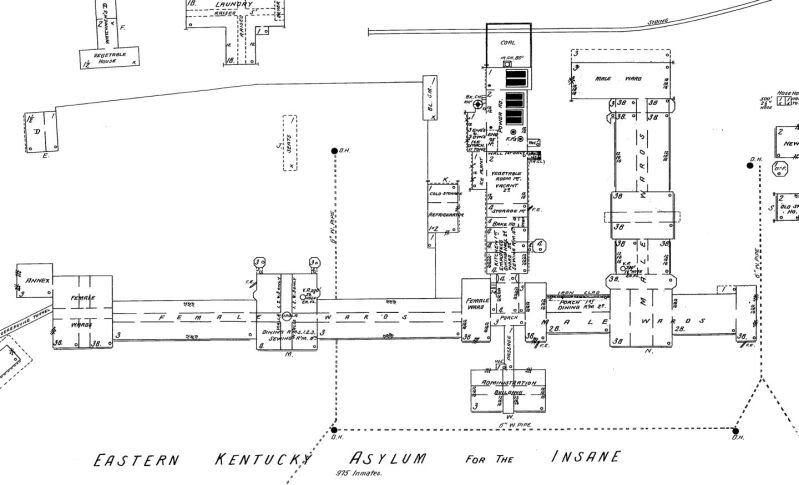
     Eastern Kentucky Asylum for the Insane:

    Lunatic--eastern KY hospital for the insane


    Norristown Hospital for the Insane:

    Lunatic--norristown hop for the insane


  • Really, Really Big Plans: Filling in the East River and Parts of NYC Bay, 1911-1916

    JF Ptak Science Books   Post 1470

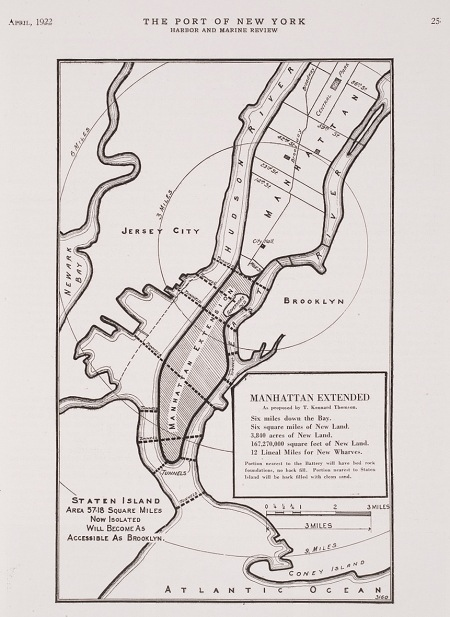
    Last week I wrote a post on  Herman Soergel’s  plan for extending the landmass of the countries around the Mediterranean Sea by damming the straits of Gibraltar, lowering the sea and irrigating the Sahara–an original, interesting but not very good idea, filled with briney cultivation and racial politics. In the past on this blog I’ve written about other city plans–and in particular, for New York City–that have involved floating Manhattan into the harbor, or filling up large chunks of the Narrows, or floating the city on an enormous anti-gravity platform, and so on. Some of those plans were real, some science fiction, and some were plainly beyond both.  The plan presented above is another monster, but at least this one could work, if not for the doing of it, and the expense. And the will.

    NYC Really Big
    But the bottom line, according to the engineer doing the thinking on this project, Kennard Thomson, would supposedly net the city a cool billion dollars after everything was said and done, and that would be 1916 dollars–that was equal to about 5% of the American GDP (!) in 1916, which would be about $400 billion in terms of 2010 GDP.  I’m not sure how Thomson came up with this very big/very round number, though it must have been done for effect–I can just imagine him standing before a smokey room filled with civil engineers talking about his massive plan for enlarging NYC and throwing out the billion-dollar figure, watching the cigars glow red in exhaled disbelief.

    Thomson did know what he was talking about–he was a busy (and “leading” according to the NYT) Manhattan civil engineer of stature, working on the Canal Barge and being the principal engineer for the Municipal and Singer buildings, for example–and his project seems to be well within the scope of possibility.  Their sensical aspects however are, well, questionable. 

    Here’s the story–around 1911, while examining proposals to repair and extend New York’s wharves, Thomson came upon the idea–a magnificent, fabulous idea–of adding new wharves by adding new lands to the city.  In short, the overall plan was to fill in the East River (!!) and reclaim the new land for city living,  dam Hell Gate,  construct a New East River (from Flushing to Jamaica Bay),  extend the tip of Manhattan Island from the Battery to within a quarter-mile of Staten Island (!), create a new 40-square-mile island between Sandy Hook and Staten Island, extend the Jersey shoreline, add two new Manhattan-sized appendages to the east shore of Staten Island, and more.  All of this would be connected by various new bridges and roads and tunnels, as well as a 6-track elevated railway that would circumnavigate the city.  The purpose of all of this would be to add 100 miles of new docks, an enormous amount (“50 square miles of reclaimed land”) of new land and the capacity for NYC to house 20+ million people, all of which would be worth a billion dollars. 

    Thomson really meant “really” in the title for the proposal. There have been reclamation projects undertaken in New York Bay since then of course, and I think that virtually all of what Thomson talked about could be done.  I think it would be a very interesting project for a class of some sort to undertake an estimation of what such a thing would cost today (and I would guess to duplicate the idea in real terms now would take up a sizable chunk of the GDP).  Maybe all of this will make sense at some more future point. 


  • A Vision of the Future: Filling Up Manhattan, 1887

    JF Ptak Science Books   Quick Post

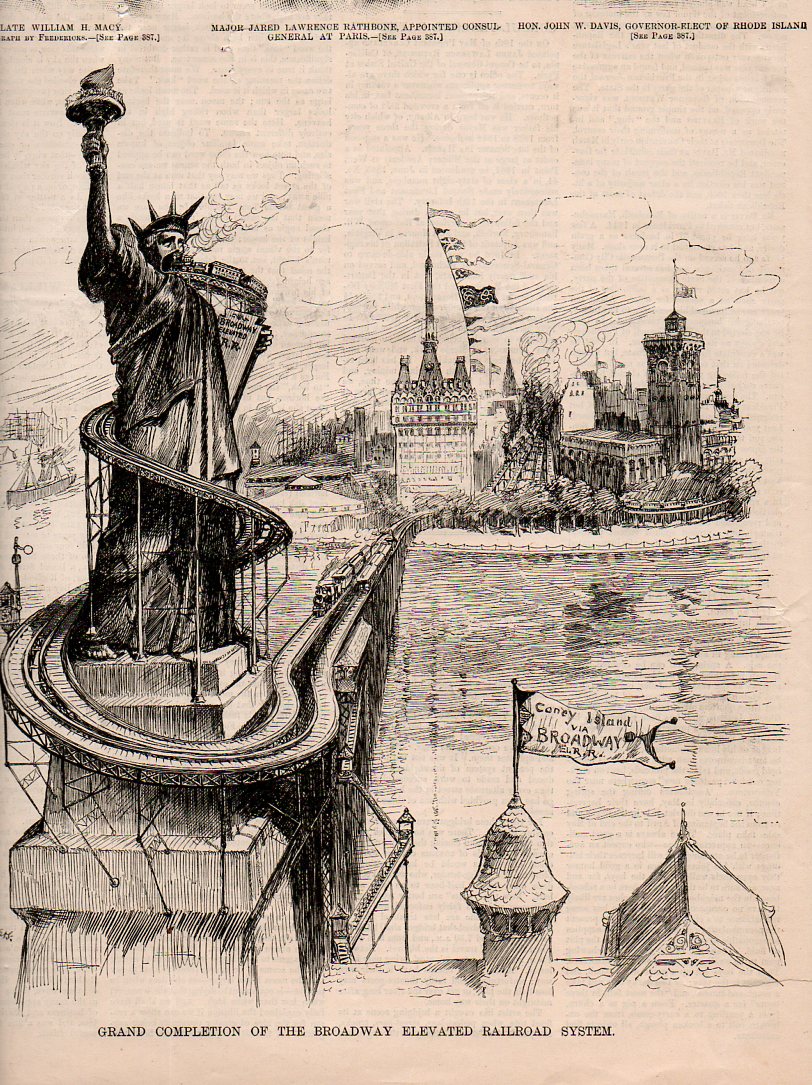
    This peep into a possible future appeared in Harper’s Weekly on 18 May 1887.  It is the work of artist W.A. Rogers and depicts a filling-up lower Manhattan, complete with broad avenues lined by elevated trains whose reach evidently knows no bounds. The new elevated subway winds its way across the harbor to Liberty Island, where it wraps itself around the feet and up the body of the newly-dedicated Statue of Liberty (opened in October of the previous year).  In the foreground is the cupola of a transit station with a fluttering flag advertising “Coney Island via Broadway”–I’m not sure what this is all about, as the placement of the island has nothing to do with anything except making a point in the cartoon. 


    Statue liberty407


  • A Monumental and Fantastically Bad Idea: Draining the Mediterranean

    JF Ptak Science Books   Post 1460 

     “Simply the thing I am shall make me live.”–from Jorge Luis Borges, “Shakespeare’s Memory”

      Soergel403
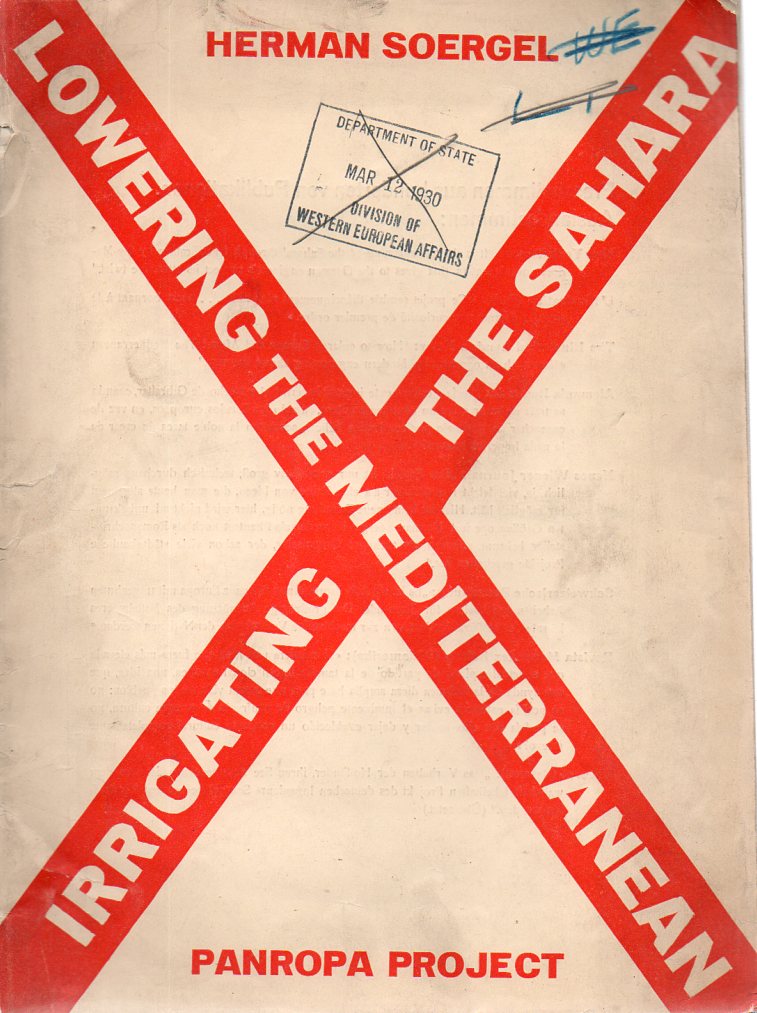
    It would be a Purgatory, or worse, to suddenly wake up one morning with another person’s memory–worse yet than to have wished it, only to find that you didn’t want it at all.  This evidently works out with memories high and low, though it is tempting to want to wish to see what the inspiration looked like for one idea located in a particular memory.  Or maybe not.  But I am curious about when and here the author of the pamphlet above got his idea, and what it looked like to him–did he hear or see or smell something that prompted the inspiration for this reverse-monumental jolt, something that may well be one of the worst engineering ideas of the 20th century? [This pamphlet is available for purchase at our blog bookstore, here.]

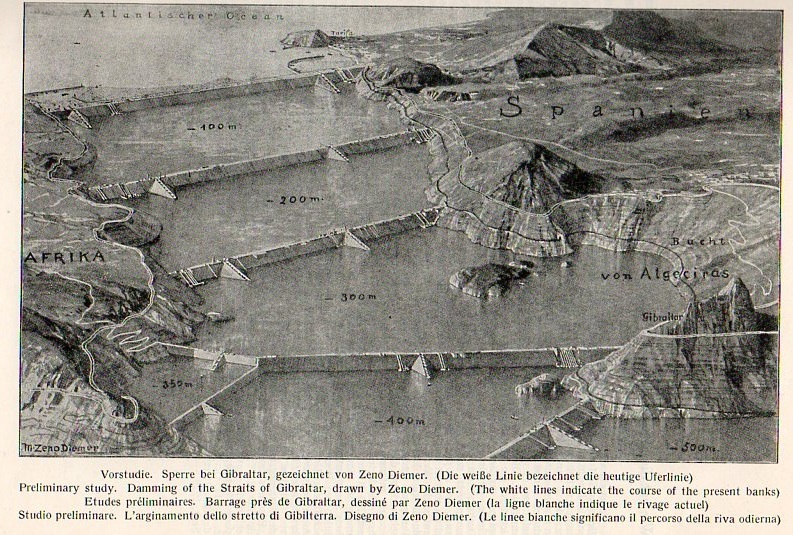
     It is interesting to pursue a loose thought like this to its not-necessarily logical end.  Such is the case with the self-styled Paneuropic ideas of Hermann Soergel (1885-1952), the author of the above. Soergel was a Bauhaus architect and author of a number of works on design and far more ethereal, floating-castle ideas. His most spectacular contribution—incubated in the mid-1920’s and still clinging by its fingertips as an idea among some current thinkers—was to put a dam across the straights of Gibraltar.  The dam would generate electricity of course, but most importantly to Soergel, it would also empty an enormous amount of water (lowering the sea by 200 metres)  from the Mediterranean leaving vast new expanses of land to be developed and colonized over generations into the future.  The water of course would have to go somewhere, and that somewhere was the Sahara Desert, somehow in its wake creating farmable and productive lands. Soergel was creating a certain, very wide, fantastical future of uncertain monumental prospects.

    Soergel405
    A “brief outline” of the idea was published in this four-language pamphlet, Lowering the Mediterranean Irrigating the Sahara (Panropa Project), which was published by J.M. Gebhardt in Leipzig in the very bumpy year of 1929. (The Weimar years in Germany were already into deep bumpiness; the rest of the world would follow suit in October of that year.)  To be fair, Soergel didn’t plan on emptying the entire Mediterranean, just a bunch of it–at least enough to be able to rename it.

    Soergel404
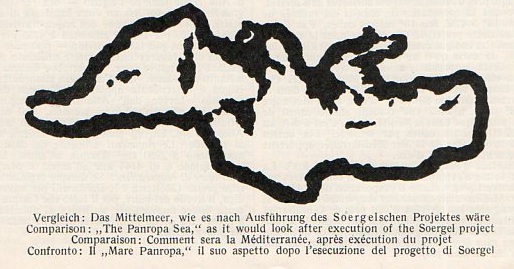
    [Here’s a map of the new Mediterranean, or the Mediterranean that would be made to go away.  As you can see at this point Sicily and Italy become enormous, and the Greek Islands are combined to form one large land mass–this last bit alone is enough to form total and complete reisstance to this idea. Also at this stage perhaps 150 or so miles of new lands have been reclaimed from the sea all along its former borders–more so in Turkey.  There is no mention as yet of any new islands that are formed in the sea water’s wake.]  As it turns out Soergel thought that this plan would add at least 660,000 KM2 to the base of the surrounding countries of the Mediterranean, or roughly the equivalent of the combined land masses of Italy and Germany.  Having the sea pulled back from hundreds if not thousands of seaside towns and cities would no doubt be a “problem”, for them; but that doesn’t matter to Soergel, as they were inferior thoughts to the grand idea of emerging a new continent.  Great bog (and a good simulation with a powerful computing capacity) only know how the changes in the Mediterranean would affect the climate–well, that in combination with the thousands of new square miles of inland sea and canals in the previous Sahara desert.  There are of course many other problems. 

    The master plan at work was that the world would be divided into three economic spheres in the future, all beginning with the letter “A”:  American, Asia, and the new land to be created by Soergel, “Atlantropa”, which was the former Europe expanded into the new dry beds of the Mediterranean and North Africa.  And also of course Egypt, which would be covered with “thousands” of canals and become semi-submerged by the new borders of the meandering sea.  This would be the way for Europa t==Blog July 21==shakespeares memorieo compete with the rest of the world in the future. 

    [I should point out that the image above comes from the Illustrierte Zeitung (Leipzig) for August 1931, and is a drawing by an artist named “AS. Christ” depicting a cross section of one of the bridge/dams of Soergel’s Panropa’s ideas.]

    Perhaps it is actually three steps to get from the idea of damming up the straits of Gibraltar to the osmosis of Shakespeare’s memories into someone else’s brain—a squinting acquiescence of the middle touch being the brilliant Jorge Luis Borges.  You see it was in the Argentine master’s last published story, “Shakespeare’s Memory”, that we meet Herr Soergel (as Hermann Sorgel) again.  But so far as I can remember Soergel exists only as a fictional character, with no reference to his real-life self.  In this wonderful story, Soergel inherits the memories of William Shakespeare—these bits come to him slowly but surely, until they start to conflict with his own memory, and things get difficult.  The man with Shakespeare’s memories winds up phoning strangers on the telephone, giving them away at random, until Soergel is left with his own mind again.  Superior as Bill’s memories were, they still weren’t Hermann’s, who wanted his own life back in the end. 

    And so from the titanic, pan-europic technodream of Bauhausian Hermann Soergel to the dead brains and living memories of William Shakespeare, all through the fingers of the beautiful Jorge Luis Borges.  

    I’m sorry to report that at the end of it all, near the end of the pamphlet, Soergel releases his opinion on the political importance of his project.  And yes, his aim was to form an alliance between the new PanAmerica (of the “three Americas” with the new Pan-European African Union to thwart “the yellow peril” which “arises from the racial antipathy of India, China and Japan.  Soergel writes that “the fate of occidental civilization…will be settled on the Mediterranean”. 

    After it is all said and done, perhaps the best reiew of the work by Soergel is provided by the graphic designer who put the Big Red X on the cover of his work.  It fits. 


  • Paradise–Millennium–End of Days: Thomas Burnet, 1684

    JF Ptak Science Books   Post 1455

    Burnet
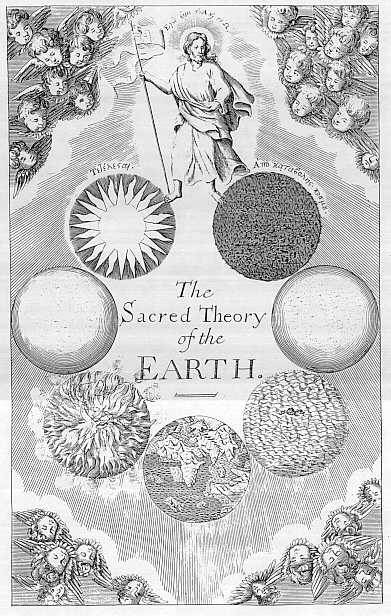
    It is uncommon to see the life stages of the life of the Earth depicted in seven stages, seven Earths at seven different epochs, alpha to omega–but it is particularly rare to see them illustrating the fronstipiece of a book, and an antiquarian one at that.  But that this  is exactly what happened with Thomas Burnet’s Theory of the Earth, in the English translation of 1684.1  Burnett was a quietly agitated writer whose underlying viewpoint of the existence of life on Earth and the planet itself was that it was the scourge of millennialism, that the cycle of seven Earths depicted on his book ws the life and death of the planet, all wrapped around the coming kingdom of Christ and teh book of Revelation. 

    And perhaps the most impressive image on the page is that the Earths of Paradise and the millennium were pretty much the same, perfectly well across from one another on a level plane. 

    Paradise is self-explanatory; the “millennial” part maybe less so–in Christian thought this is when after Certain Things have happened that Jesus Christ would come back to Earth and reign in a terrestrial kingdom, a heaven-on-earth, for a period of a thousand years.  Or more.  The eschatology is not clear on this so far as I can tell.  It seems as though the Earth is devoid of whatever it is that clogs nature’s bowels, as the planet looks remarkably sparse and tentative.

    The business end of the image is this:  rounding the images clockwise, the first is Chaos; the second,  Paradise; the third shows the Deluge; the fourth depicts the present world; the fifth is the Conflagration; the sixth is the long-awaited  Millennium; and the seventh, and last, the final seal, is the Consummation.  So the Paradise/Millennial Earth are figures 2 and 6, and they do look pretty much the same.

    And so the Earth is a thing of three distinct periods:  the first is the lost Paradise, the fated failure in the fall of man; the second is the world of today with its constancy of ruination and upheaval; and the third, paradise regained (but at a cost).   As Kerry V.  Magruder points out in his “Global Visions and the Establishment of Theories of the Earth”2  points out in his  there are “transitions between these scenes are four ‘Revolutions
    of our natural world’, accomplished through natural causes: chaos Noah’s universal deluge, a future conflagration, and a final consummation when the Earth will be transformed into a fixed star…”

    Burnet (1635-1715) poured out his pounding heart into these pages, teaching people about the structure and history of the  Earth with little or unsuccessful regard to science–but no matter.  (Burnet did try to figure out where all of the water came for the flood, which is  a great question.  It is impossible for it to come from a natural rain of any sort, and Burnet probably came to the conclusion this the answer for the flood couldn’t come from the surface of the Earth.  So to keep things in compliance with his faith, Burnet established that the water necessary for the flood came not from the surface of the sphere, but below it, in the hollow Earth which was actually filled with water.) This was a work of structured faith and a belief  system, and wasn’t seen as much more than that except to the initiated.

    Notes:

    1. Telluris Theoria Sacra, or Sacred Theory of the Earth was first published in 1681 in Latin and then again in English in 1684.  Latin was after all the language of science.  Newton’s Principia remember wasn’t translated into English 

    2. …which appeared in Centarus in 2006 volume 48, pp. 234–257


  • Strange Things in the Sky Department: the Suburbs

    JF Ptak Science Books   Post 1434

    A continuing thread on this blog (this post is a good example) has surfaced unusual thing that have been found floating in the sky in prints, photographs and ideas:  there have been “extra Earths”, holes leading to heaven, massive stone tetrahedra, swimming pools, hangars, airports, downloaded aliens from extra moons, flying Woolworth buildings, and much else (not limited to 19th century balloon-hoisted horses, here). Today’s unusual thing to be found in the sky is the suburbs.

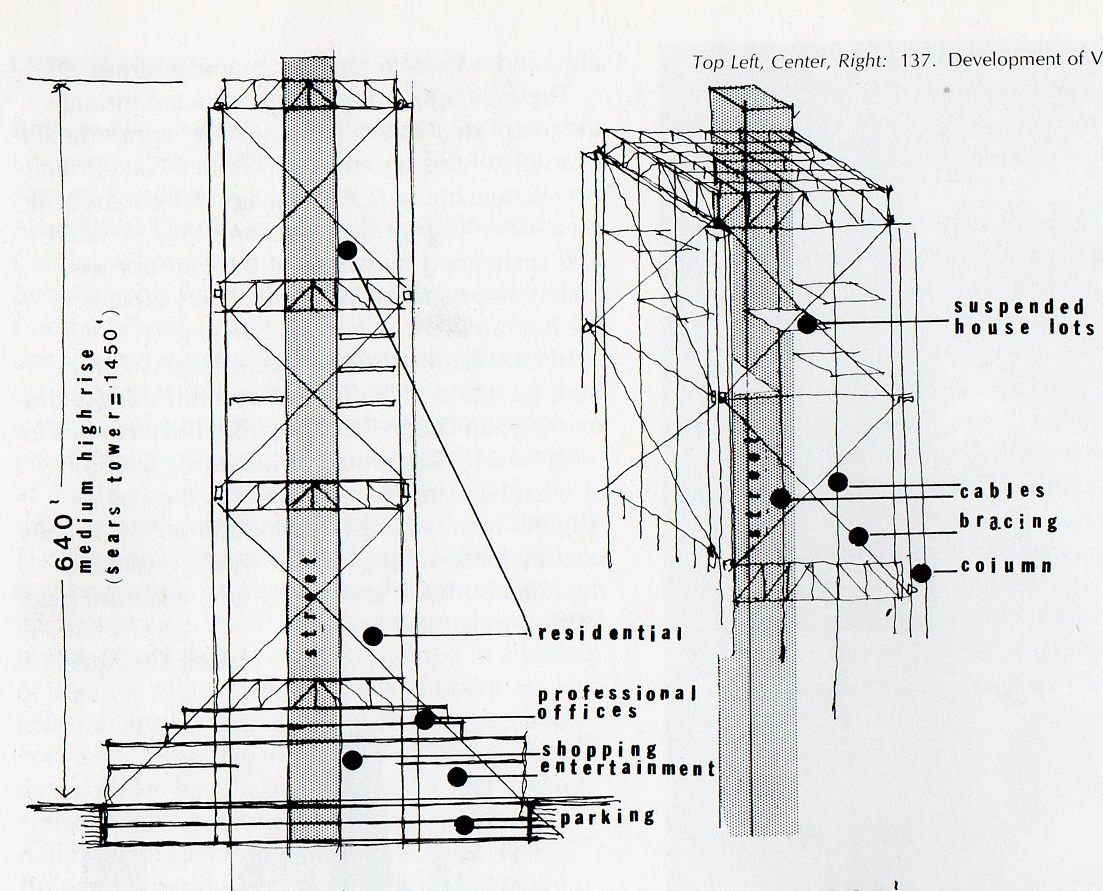
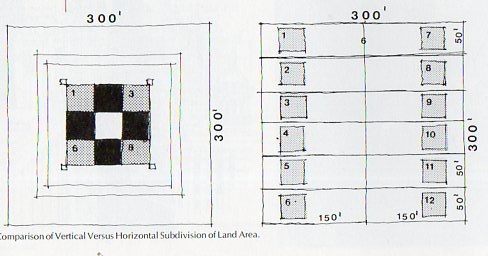
    The Romanian architect Harlan Georgesco came up with an idea to prevent suburban sprawl from making one city out of the land from San Diego to San Francsico–put the suburbs in the sky.  The story is in the wonderful Unbuilt America by Sky and Stone under the subheading “Relocation of Los Angeles”, where they quote Mr. Georgesco saying that the sprawl of a plan to develop 300×300 foot “horizontal plots” in a larger scheme of an endless horizon of such housing could be made into “vertical tracts”.

    Vertical suburbs360

    The vertical tracts of 300×300 feet (90,000 square feet or about two acres) oe chunks thereof would be suspended via “steel in tension” (giving the Golden Gate Bridge as an example of this system) in a structure 640 feet tall, which is labeled as a “medium high rise”).  (I should point out that the WTC was 208′ square.)

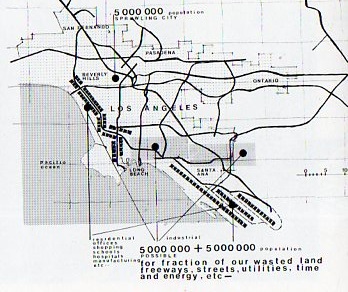
    Mr. Georgesco’s proposal called for a total reorganization of dwelling life in California–he was thinking of housing 5 million people in this way.  The little squares on his map (below) shows the emplacement of colonies like this vertical city. 

    Vertical suburbs362

    It seems to me that as a futurist the architect’s plans contained an abundantly fatal flaw in assuming the construction of suburban houses on a platform 600′ tall.  To be concerned with waste by stacking cul de sacs one on top of one another seems to miss the point, some. 

    Vertical suburbs361

     Notes:

    I would be curious to know about Mr. Georgesco’s life in Romania during the 1939-1945 period.  He certainly became successful and accomplished, though the period in Romania was–lightly put–complicated.  Starting out the war as a neutral, Romania moved quickly to be an ally of the Nazis, participating in Barbarosa, and over the next 3 years lost hundreds of thousands of soldiers, and civilians.  And of course there was a participation in the Holocaust.  By 1944 the King of Romania was able to lead a revolt and Romania joined the war on the Allied side, declaring war on Germany.  They were almost immediately overtaken by the Soviets, who would stay for quite a long time.  When the Soviets arrived, they basically “took” the Romanian army (of 130,000 men or so) back to the Soviet Union–the vast majority never to return.  Mr. Georgesco left in ’47.


  • Monumentally Bad Writing: Recovery from Thermonuclear War, Loan Forgiveness, and Taxes, 1966

    JF Ptak Science Books   Post 1430

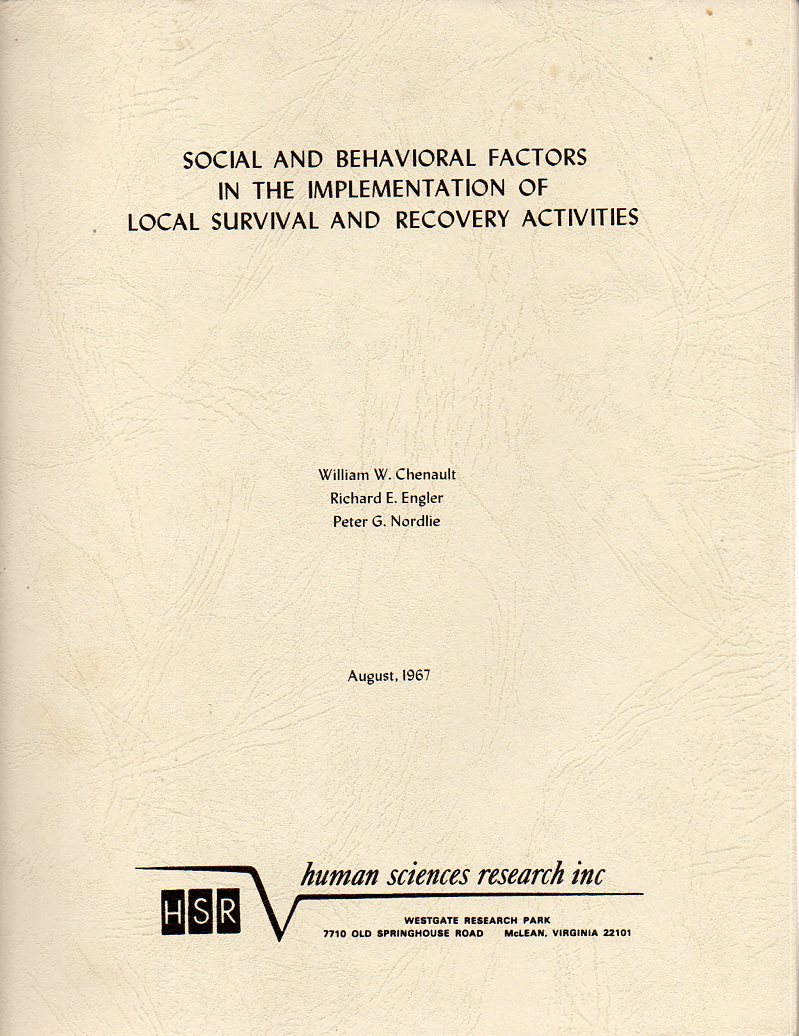
    In the entirety of the text of Social and Behavioral Factors in the Implementation of Local Survival and Recovery Activities (written by William Chenault, Richard Engler and Peter G. Nordhie in August 19671) there is little evidence that its authors fought to rid themselves of their Thesaurus of Obfuscation.  A dissected version of their effort would’ve made for good, clean fun, adding their bits to a Menckenian database of extraordinarily-written governmentese, but since all of this involved surviving thermonuclear war, the “fun” part is obliterated.  What, exactly, was it that the authors were trying to accomplish?  Perhaps in all of it they weren’t constructing anything devious at all–perhaps their incredible assault on meaning was simply written in a language understood by their audience.  That, or they really didn’t intend to have heard what they were trying to say,, if there was anything that was being said at all. (This report is available from our blog bookstore.)
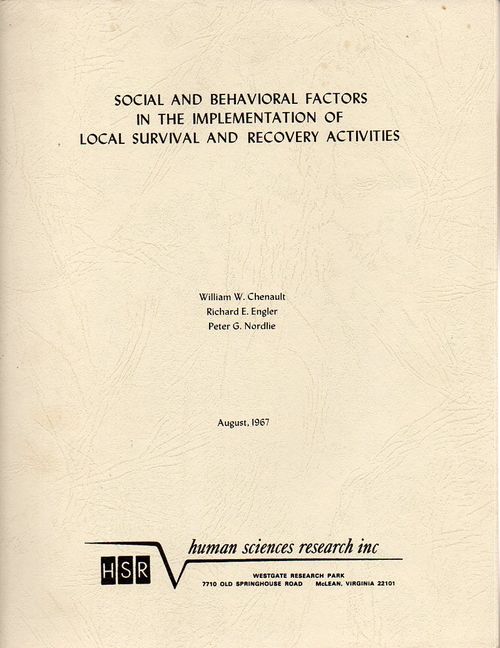
    Nuclear war surviva;355

    The baseline to this pamphlet is this:  that in a post-thermonuclear war United States there will be survivors; the survivors will have “hardships”, but the hardships will be overcome; the key issue is to get survivors to work together to put the country back on its feet militarily and economically;  survivors will need “incentives” to work together; the strong will survive, and others will have to be thrown under the bus.  There will be worries about compensation for destroyed property, shipping schedules, trust in money, and a certain amount of debt forgiveness.  There will be tax–sales tax.

    There is no mention of the amount of death or the continuation of the dying in the year or two post-attack, but there is a graph, and the graphs not pretty.  It doesn’t get very much mention. 

    “…communities of [nuclear] disaster struck individuals need to define their needs and activities in the immediate context of the community”. pg. 5.

     “The tendency of nuclear disaster is to isolate communities..” pg 6

    I’ve written often on this blog1 about spectacularly bad thinking in planning for post-Apocalypse thermonuclear war America, mostly on government/agency reports that write about the impossible being done by survivors in impossible ways, painting the specter of impossibility and liquid death in turgid, unprovable prose.

    This study reports of the ways in which American society can survive and rebuild following a devastating nuclear/thermonuclear war. The authors list five consequences of “severe attack”:

    #1. Tremendous destruction of property…

    #2. Disruption of transportation and shortage of fuel for motive power together with an associated disruption of regional specialization and significant breaks in geographical continuity.

    #3. Drastic reorientation of effective economic demand”

    #4 . General disruptions of normal interindustry flows

    #5. Shortages of technical and professional manpower in some fields.

    I particularly like #3. Also the use of words like “shortages” and “disruption”.  And why they stopped there I really don’t know. 

    Much of the report is an examination of how to get the surviving elements of society back on its feet via carrot-and-stick methods, coaxing people into working together, with the eventual goal of restructuring the country, building America back again, observing capitalism, the tax codes, exchanging labor exchange units for goods and services.

    “Personal and group motivations would continue to be related to economic organization and production as they are in the preattack society” (pg 1)

    “It follows that the nature and direction of many recovery activities will be determined by national, not local, requirements” (pg 3)

    “Individuals must be motivated to implement policies and perform activities dictated by national economic interests”. (pg 4)

    It is assumed that the character of the post-attack country would be pretty much the same as it was before thermonuclear war, and that we all want to return there. The report states that one of the most important elements of that society is the military and its capacity to protect people and industry. Therefore the survivors of nuclear war must be induced to work on a national scale to maintain the military and thus the stability of whatever was left of society, in spite of the fact that “in the heaviest attack, the loss of familiar landmarks, relationships and dependencies would be unsettling to survivors”.  (I’m not sure what “dependencies” relates to, whether they are child or the need for pharmaceuticals or the need to watch the news on television. This is unclear.)

    Generally, there are a host of activities suggested to compel compliance, depending on where a community is in a 9-part destruction grid. There are incentives like food and water, medical treatment, and of course loan forgiveness. These inducements must be considered because enforcing compliance militarily is not an option, as the report states:

    “It is doubtful whether a very widespread employment of a force to secure participation in recovery activities is feasible” (pg 7)

    Meaning I guess that the U.S. Armed Forces will no the enforcing mandatory compliance schedules for recovery—or at least they weren’t writing about it “preattack”.

    But the authors clearly assume that there will be something approximately preattack life in the post-attack world. Amidst the horror and chaos, we read that

    “Businessmen, in particular, but others as well, would experience disturbing and subtle changes in familiar institutions and in such bases of mutual trust as methods of establishing or verifying credit…or estimating delivery dates”–pg 11.

    “Disturbing and subtle” changes to delivery, indeed.

    We further read of “widespread readjustments of status, status symbols, and values” (page 11) which no doubt would come if all of your possessions were burned up, or lost or destroyed in some way, along with the owner. It is definitely difficult to maintain status relationships in the evidence of no status and no relationships. Of course this whole deal is complicated by the issue that status symbols are also relationships and associations, much of which could also be gone in the same fire cloud.

    If your valuables and house and such weren’t destroyed, then you were expected to go out and work for the community, and not spend your time inside your house protecting it from people who didn’t have anything.  This issue is sort of addressed here:

    “Measures for the control of displaced persons, obviating the necessity of individuals devoting their time to the protection of their homes, represent one form of indirect influence on the motivation of potential workers to abandon maintenance activities.” (pg 50).

    Which means, I think, that there will be some sort of control or protection so that people don’t need to spend their time securing their possessions. 

    But the thing that will make people work for the greater good, the compliance with the orders of rebuilding the country, will be “economic incentives…or a penalty for nonparticipation)”.  Payment would be made with money or food.  The next incentive:  housing, or “more desirable dwelling places for those participating in recovery activities”.    It remained to be seen though in this report what it was specifically that represented “recovery activities” or how the compensation per work bit was handed out. 

    One way to raise the necessary capital to fund this post-attack world was through taxes, “a structure of indirect taxes could be developed, with higher rates applied to non-essential goods”.  (pg 53).    On the other hand, just a few paragraphs later, the authors discuss getting rid of an income tax in favor of direct taxes, which means that taxes survive  the atomic nightmare. 

    This continues on and on, a cascade of some wincing ideas tumbling over themselves, settling into a confusing mist of wording and logic that is difficult to translate.  Perhaps that was the inention.  Perhaps not.  There’s not much left in the bottom of a smoking, radioactive hole, except for smoke and radiation.

    Lastly, I wonder why “post-attack” is hyphenated in these reports and “preattack” isn’t?

    Notes

    1. See for example Bad Grandeur, Predicting Post-Nuke USA (1966) and the Loss of 76% of all Authors

    The Nonsense of Strategically Meaningful Phrases, Finding Pillows int eh Post-Nuclear Attack World, 1968

    Ueber-Spectacular Understatement Department, the Happy Post-Apocalyptic America and the “Awkwardness of Nuclear Holocaust, and others.)
  • Miss Atomic Bomb: the A-Bomb in Popular Culture–Comics, Cakes and the Will of God

    JF Ptak Science Books   Post 1425 
    Follow Me on Pinterest


    I’ve written dozens of posts on this blog about atomic bomb history and where the bomb has shown up in popular culture.  This installment is on the bomb in very popular culture

    Miss Atomic Bomb is an icon of some sort for the relationship of the bomb with society, or, perhaps the bomb and Vegas, which is where this picture was taken. I guess there are reasons to put pretty women in front of computers (in the 1950’s/60’s), cigarettes and automobiles–why not with The Bomb?

    Atomic Bomb Miss
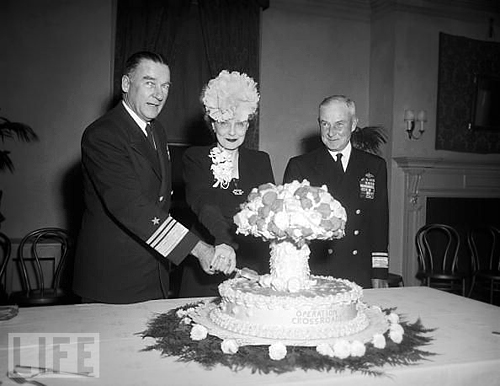
    The atomic cake (with matching headware):

    Atomic cake

    The caption to this story from Life magazine (1946) reads: “U.S. Navy Vice Admiral William H. P. Blandy, his wife, and Rear Admiral Frank J. Lowry cut a cake made in the shape of a mushroom cloud at a reception for Operation Crossroads, November 6, 1946.”  Actually Blandy was an early (August 1945 or thereabouts) forward thinker about how to deal with the U.S. owning the bomb and  international control.  I have little doubt that he probably thought that the cake was a bad idea, but, well, he did what he needed to do.

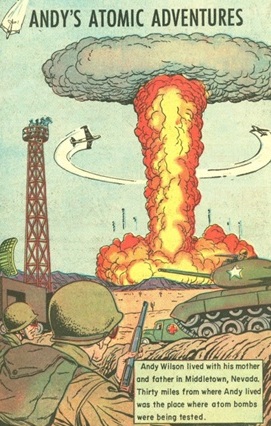
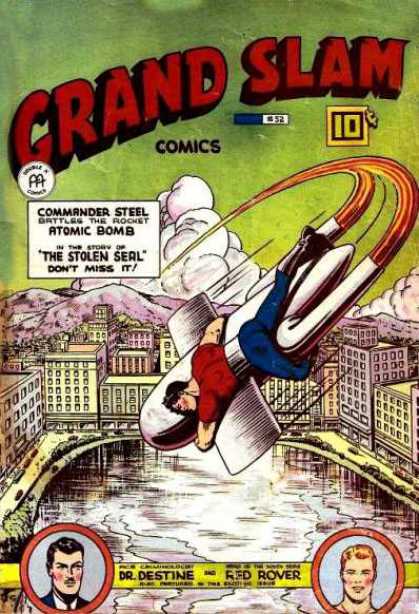
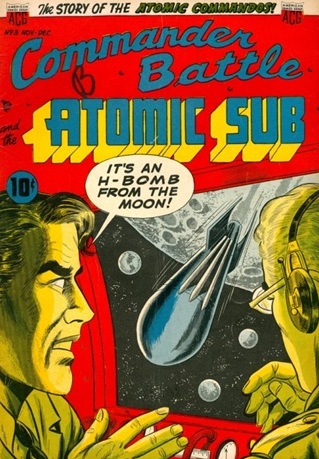
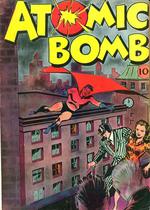
    There were all sorts of comic book adventures dealing withe the atomic bomb, right from the very beginnig (as it seems the earliest of them appears a month after the Hiroshima bombing).  These are just a few examples with the a-bomb on the comic’s cover(s):

    Atomic andy

    Atomic grand slam
     
    Atomic  h bomb from moon

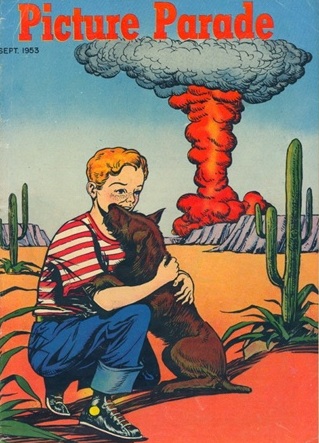
    AtomicbombBizarro–I don’t know the story of this image in Picture Parade, only having the cover graphic–perhaps that’s enough, perhaps we don’t need anything more, perhaps the backstory would spoil a perfectly bizarre image with something perfectly benign.  Or perhaps not. 

    Atomic bomb biazzaro
    Bizarre but for different reasons–a pocket-sized ball bearing patience game. Tokyo is included as a target for this game but in actuality was not considered atomic-bomb-worthy, mainly because it was decimated,  blanketed with a firebombing  that destroyed a host of the city just weeks before the first blast. (On March 9-10, 1945, 339 B-29’s dropped 2000 tons (4 million pounds, about 496,000 bombs) of the incendiary M-69 on Tokyo.  Two initial passes were made on the city, marking a large, burning “X” in the city.  Each plane had the capacity to cover a drop area of 350 feet by 2000 feet, which means a much greater area was affected. The citizens of Tokyo met their ends with buckets of water and brooms in defense. Hours later fifteen square miles of the city were destroyed.  In the months prior to Hiroshima and Nagasaki, 66 cities were bombed with M-69, killing about a million people, and wounding more.)  Fresh cities were needed for the atomic weapons so that there effectiveness could be judged against a palette of a normal. intact city, and not one that had been previously attacked. 

    Atomic Bomb dexterity game
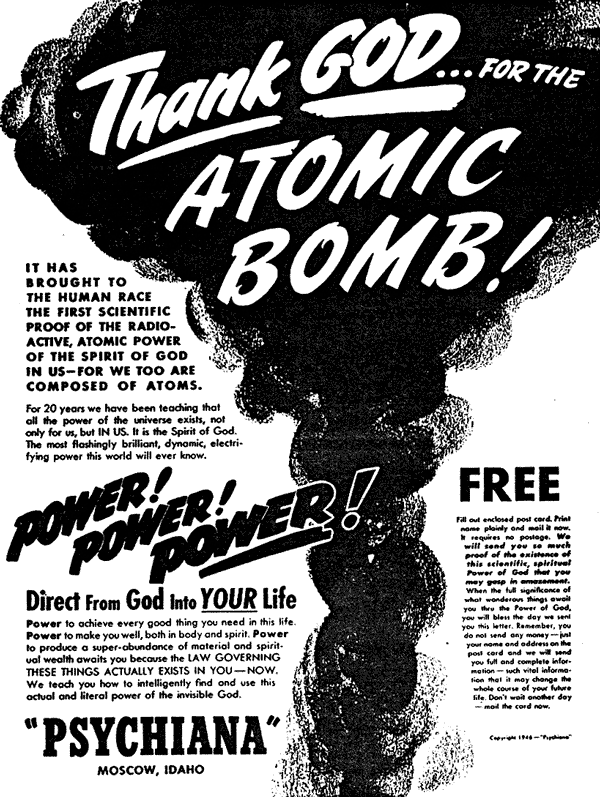
      And still more bizarre, when you combine all of the aspects of the race to the bomb with the race to god and the people who would believe such a thing.  This advertisement belonged to a mail order religico empire builder, Frank B. Robinson, (1886-1948), who claimed himself to be a prophet of god, had conversations with the Creator, and in general used whatever was of interest in the newspapers to drive interest in his ministry by mail.  It looked like his creation–Psychiana–wasn’t much more than a feel-good, self affirming, positive-thinking enterprise driven by a man with a personality big enough to be on speaking terms with the god, who in the ad below somehow was selling “the atomic power of the spirit of god in us”  because we are composed of atoms.

    Atomic bomb thankgod

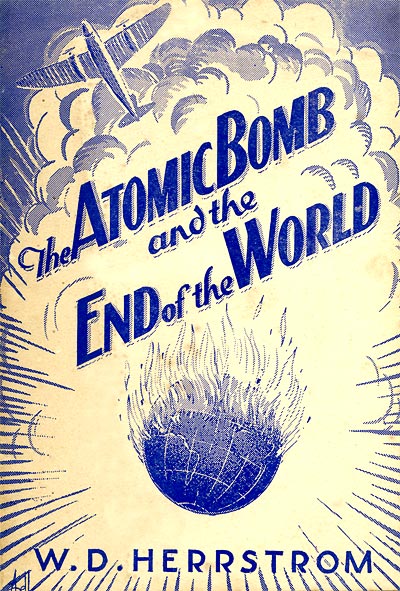
    And of course on the other end of this:

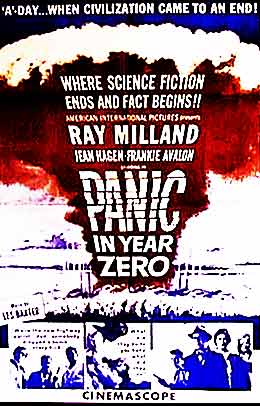
    Atomic_bomb_end_of_world

    This is an example of a host of end-of-the-world, post apocalypse movies (and books, and short stories, and so on) made to scare and entertain.  Judging from the trailer the more-modern television series Jericho owes a lot to Ray Milland. 
    Atomic panic-in-year-zero

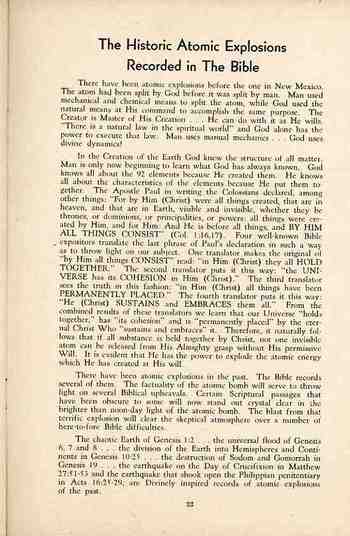
    Mel Morris  published God’s Atomic Bomb  in 1945, which means he must’ve worked a little feverishly to pump up his bible prophesy and history to include the new atomic weapon to replace whatever else he had been using as a prophecy for end of times.  (As it turns out, “God’s Atomic Bomb” was more tempest and disaster in the bible, and not (whew!) the bomb itself.  Though as we’ve learned from scientologists and the sort-of creative mind of Ron Hubbard, a civilization came to the earth thousands of years ago and pummeled it with “atomic bombs” and other nastiness, polluting humans for milennia to come.  But that’s another story–suffice to say that Morris found many dozens of examples of “God’s Atomic Bomb” being used in the deep biblical past, and that the use of the real atomic bomb in 1945 was pre-ordained, and not without its figurative historical counterparts.  I’m not sure why any of this was necessary outside of proving to some small minority that these preachers could at least be contemporary and topical. 

    Blogsept_2_atomic_bomb_god_2txt483

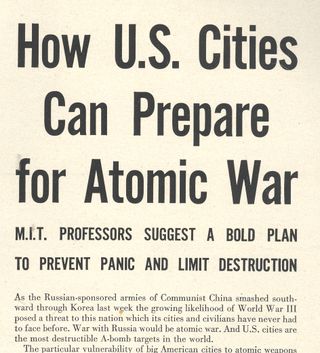
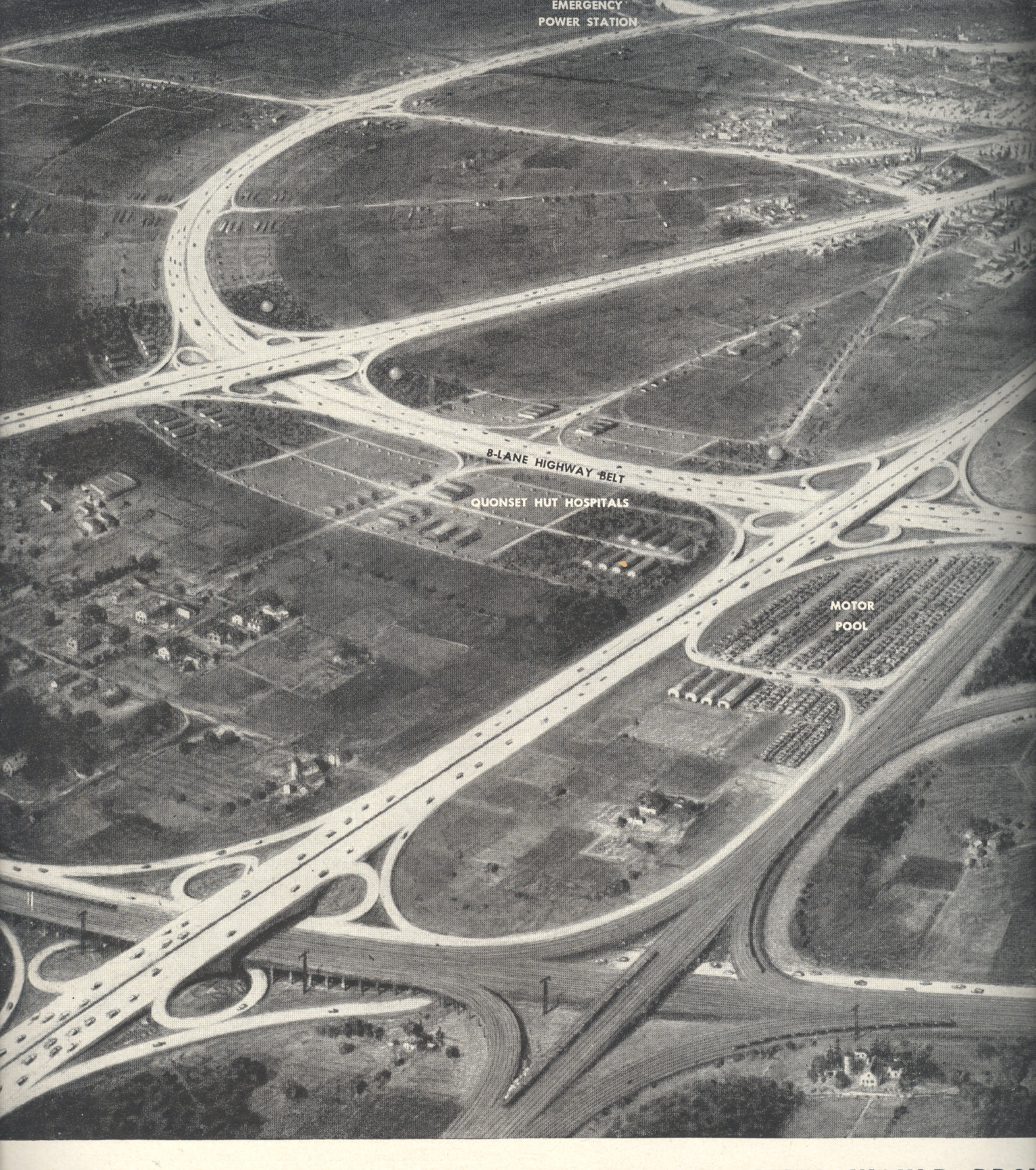
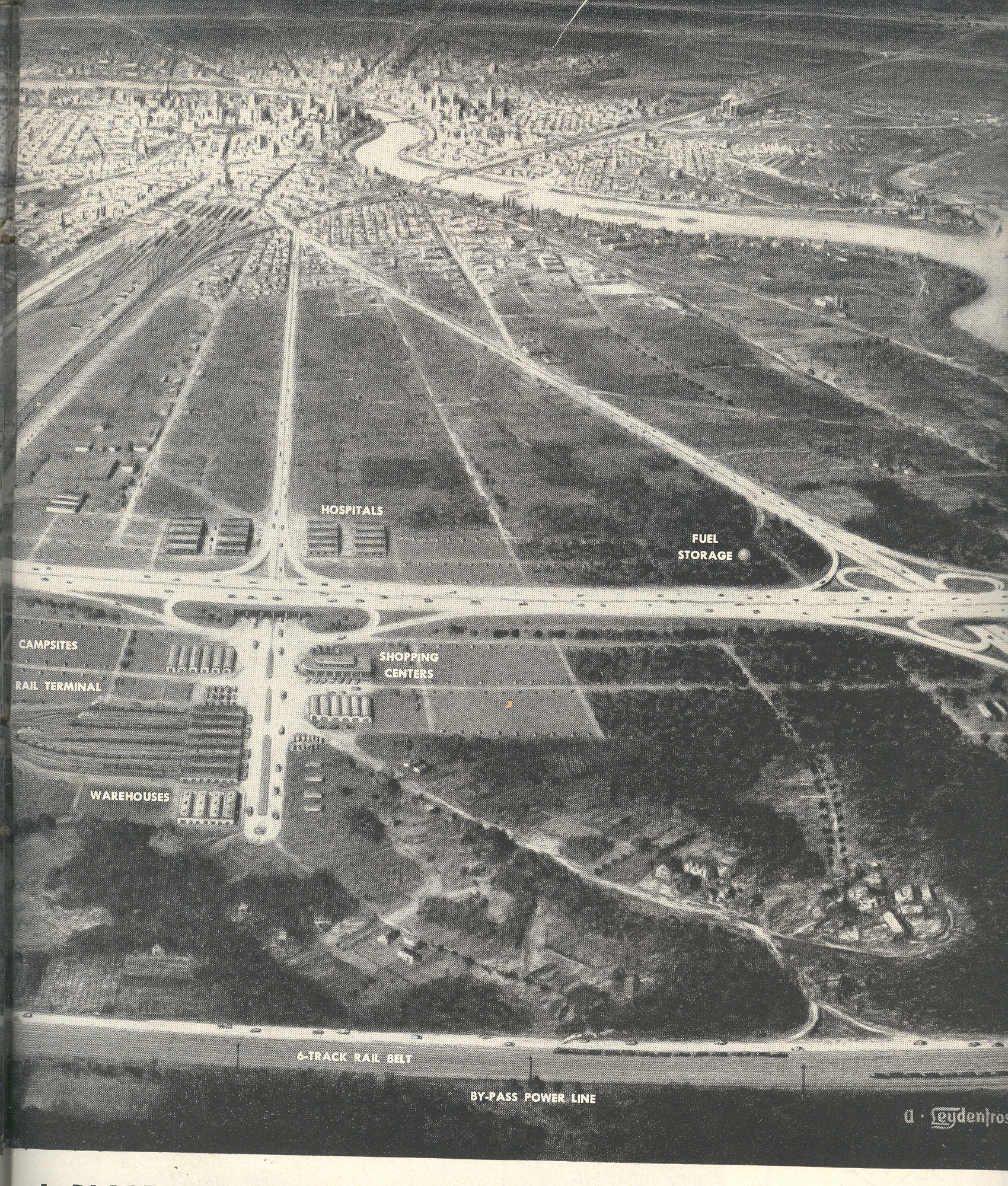
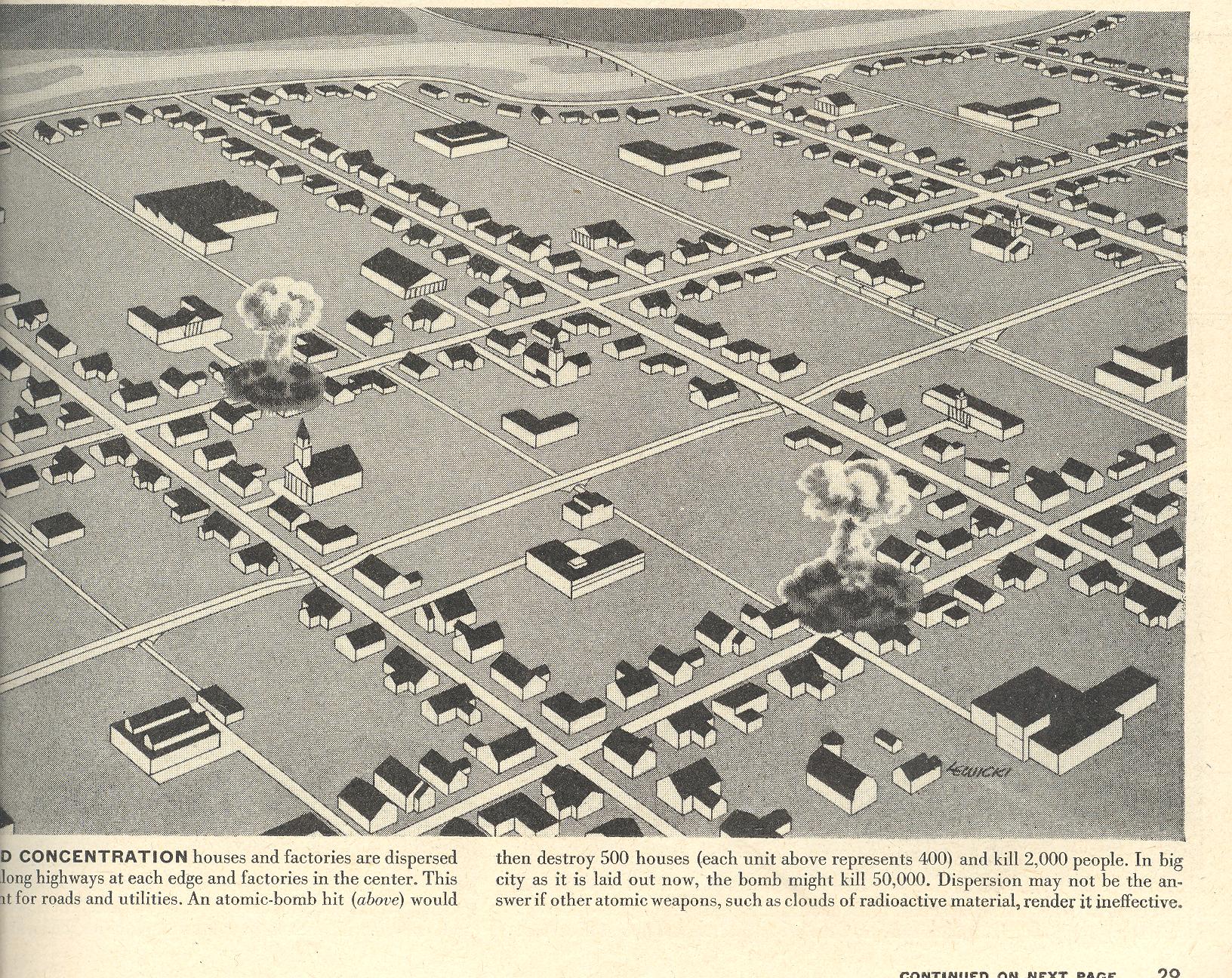
    The following is not the worst idea regarding the survival of nuclear holocaust, though it is an extremely bad one.  (Atomurbia, which makes the entire country a suburb to itself and therefore nothing, and which I write about below, is perhaps the worst idea that I have seen on combating the Soviet menace.)   But this one, which appeared in Life magazine in 1950, does come close, setting up post-attack suburbs (for “refugees”) and which takes some pre-attack city planning into some account.  There is a lot of planning for people in cars to make their way out of the city, which reminds me of the evacuation maps of Washington D.C. (which were still being handed out in the early 1980’s), which sends people on their way east and west depending upon the last digit of their car’s license plate being an odd or even number. 

    Atomic city plan war

    ==Blog July 27=wiener left

    One reaction to impending Doomsday was to construct concentric outer highways around metropolitan areas, “life belts around cities (which) would provide a place for bombed-out refugees to go”. In the birds eye view provided here, we see the plan in action, the main parts of which are an 8-lane “express” highway belt 10 miles away “from the built up edges of the city” , and a 6-track railway belt five miles further out, these accompanied by various feeder arms stretching straight-away from downtown.  In between the two outer rings would be land that would be kept free of development, so that farms and tent cities could be constructed after the attack. There would also be major collections of hospital and fuel depots in the greenbelt area.  Infrastructure would already be in place (gas and electricity, supplied with power from who-knows-where).   Shopping centers and a giant “motor pool:” would also already be in place, waiting for the Doomsday clock to strike midnight. 

    ==Blog July 27=wiener right

    This idea of city planning was one of many offering the prospect of safety from nuclear attack by spacing out the population of the United States so that the Soviet Union wouldn’t have enough nuclear warheads to take everyone out.  It called for the redistribution and resettlement of virtually everyone in the country, and is one of the most spectacularly bad ideas that I have come across in this field.  (I wrote about it earlier in this blog, here.)

    1-may 3-atomic 4

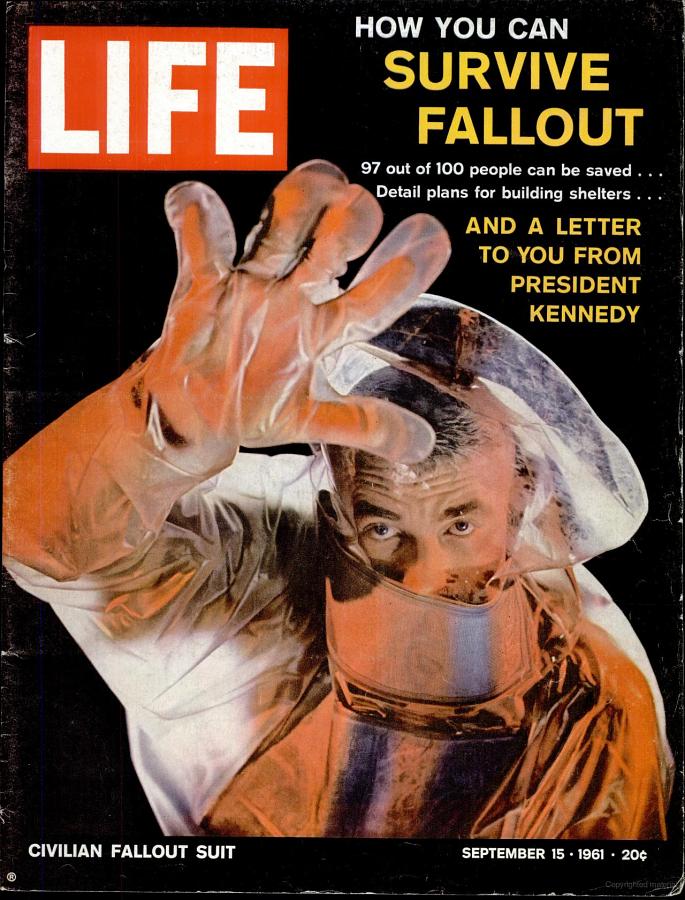
    This issue of Life offered the possibility of hope that 97% of the American population could survive a nuclear attack by the Soviet Union. It was a hard sell of a bad idea of insane optimism.

    Books_004


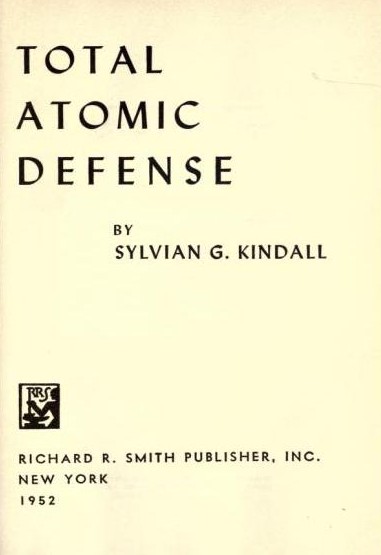
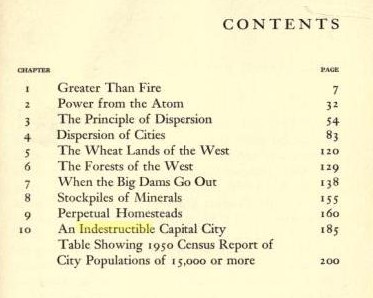
     Sylvian Kindall’s Total Atomic Defense (published by a very severely right-wing publisher in 1952) is one of a series of books made for a deceived American population, offering the general reader both fear and hope, often from the same, exact source. But Kindall has a  somewhat diffident approach, offering his belief that the country and its population can largely  survive an all-out nuclear waBlog--untinkable tpr–intact.  Chapter 10 tells the remarkable story of how to make the captial city of America atom-bomb proof, mostly by digging it into the side of a mountain.

     
    Blog--unthinkable


    Again, this is just the barest touch of the top of a huge pile of such stuff–and I’ve not even mentioned duck-and-cover films.


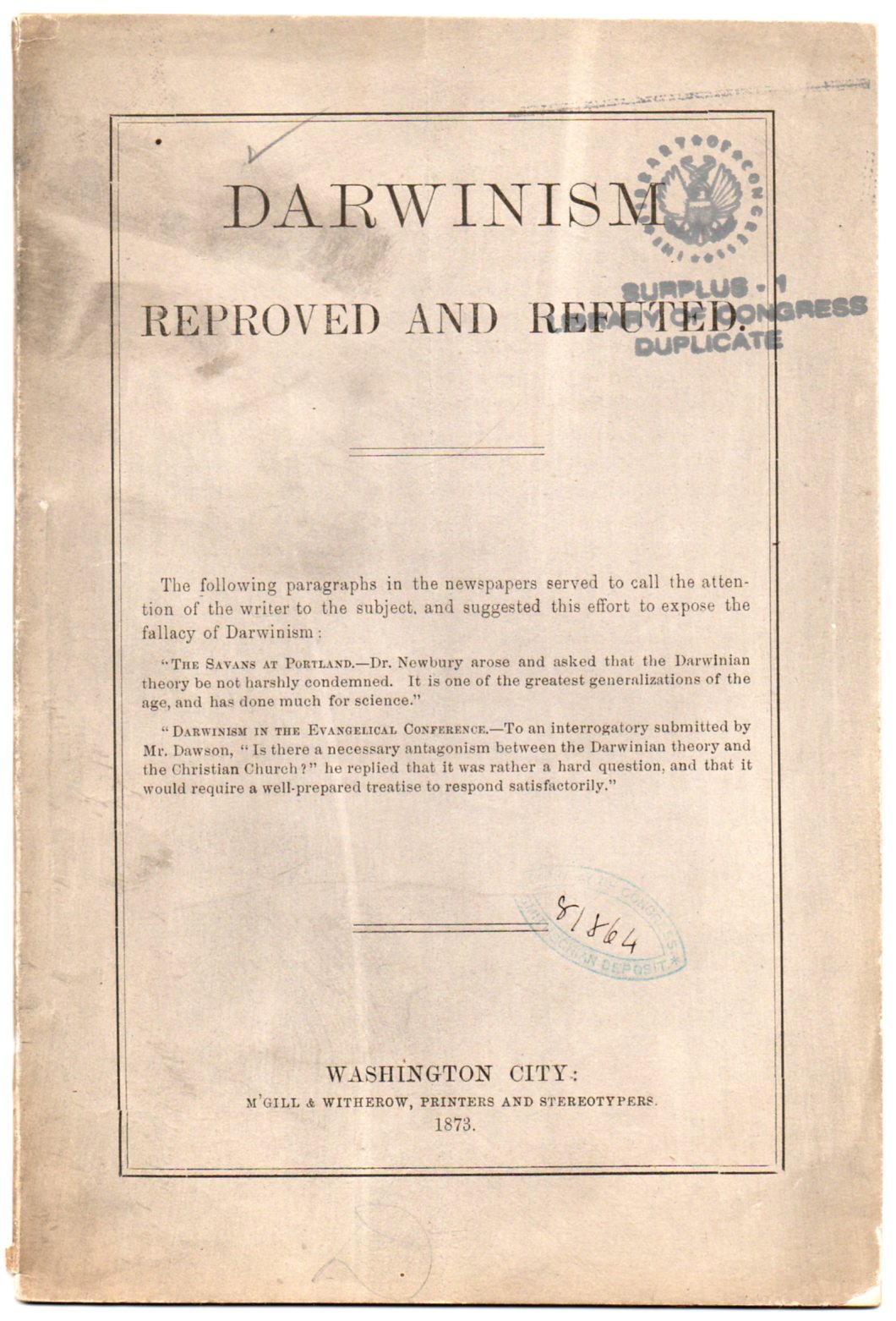
  • The Old is New Department: Refuting Darwin with Commas, Adjectives, and the Creator (1873)

    JF Ptak Science Books    Post 1423

    Darwin refuted296 I wasn’t going to write anything at all about this pamphlet, but the vocabulary was so strong and vehement, and reminded me so much of what we can read in today’s daily press, that I thought to at least pick out some of the choice morsels. 

    Darwinism Reproved and Refuted, published in Washington D.C. in 1873, is left without any attribution to the author, the writer not caring to sign his/her name, not even to use as the wood into which some shingle with a weak social sciences/psych/religious Ph.D. could be nailed.  It is just left to the imagination or indignation that the writer didn’t or couldn’t feel confident enough to actually sign their work.  It is also one of hundreds if not thousnads of anti-Darwin vehemence–there is a chance I guess that there were more of these things written than there are visible-to-the-naked-eye stars in the night sky.  (The original pamphlet is available at our blog bookstore.)

    The author has little room for Mr. Darwin’s work1, clearly on a super-rant over The Descent… and on the theory of evolution, using such colorful words in runny purple prose like “\repugnant, revolting, unsophisticated, outrage, deadening influence, peculiar, fallacious, cunning”–and this coming from the first two paragraphs.  Needless to say, even though  the writer was too weak to sign their name, they did have some strong opinions. 

    “Utterly false, radically and fundamentally wrong, futile in the extreme, unreliable, ungrounded, false, short-sighted (in relation to god), ridiculous…” continues the author. The endowments of the Creator stuff doesn’t work its way in until the third page, when the adjectival and adverbial assault was already on it way, all without the assistance of any scientific counterexamples–but then the rest of the work is dedicated to proving the godless nature of Darwin’s work and its escape from scientific reality.

    We find this:  “Evolution is founded on materialism, which is another term for atheism”….”let this doctrine be compared with the Mosaic account of creation, and then the student of nature determine if he will choose for his progenitors Darwin’s pair of ring-tailled [sic] monkeys, or ‘Adam…’ “

    And so that’s what we get to in the refutation:  the Creator.  Old version of a contemporary complaint to get Darwin tossed out of classrooms to protect the youth of America, replacing it with divination.  The author writes:  “In the investigation of nature which is the proper province of the scientist, the most effectual method of studying it, in order to render this subject clearly intelligible to the human mind, is to regard the economy of nature as a form of government, having God for its founder, its Supreme Ruler, and Law-giver.”

    There’s not too much one can do with that, and even though it sounds antique, isn’t necessarily so, because the philosophy exists today, only with fewer commas. 

    Notes:

    1.  By 1873 Darwin already had produced an epochal body of work, including but not limited to On the Origin of Species by Means of Natural Selection, or the Preservation of Favoured Races in the Struggle for Life (1859),  On the various contrivances by which British and foreign orchids are fertilised by insects (1862), On the Movements and Habits of Climbing Plants  (1865), The Variation of Animals and Plants under Domestication (1868), The Descent of Man, and Selection in Relation to Sex (1871), and  The Expression of Emotions in Man and Animals (1873)