A Daily History of Holes, Dots, Lines, Science, History, Math, Physics, Art, the Unintentional Absurd, Architecture, Maps, Data Visualization, Blank and Missing Things, and so on. |1.6 million words, 7500 images, 4.9 million hits| Press & appearances in The Times, Le Figaro, Mensa, The Economist, The Guardian, Discovery News, Slate, Le Monde, Sci American Blogs, Le Pont, and many other places… 5000+ total posts since 2008.

Category: Bad Ideas

  • The Geology of Hair

    JF Ptak Science Books   Quick Post

    “The geological formations of the globe already noted are catalogued thus: The Primary, or lower one, consists of rocks, bones or mired mules, gas-pipes, miners’ tools, antique statues minus the nose, Spanish doubloons and ancestors. The Secondary is largely made up of red worms and moles. The Tertiary comprises railway tracks, patent pavements, grass, snakes, mouldy boots, beer bottles, tomato cans, intoxicated citizens, garbage, anarchists, snap-dogs and fools“. (Ambrose Bierce, from the entry “Geology” in The Devil’s Dictionary.)

    AS it turns out, the geology of replaced hair, of hair lost, hair forgotten, is rather sedimental.  Its a surface category only, with so little underneath, so little actual “geology”, that the underneath part is almost on top. The only thing that seems to have any geological depth to it in the history of toupees is the part, which in most cases doesn’t even exist.


    And of course the Trumpian Flip:

    ·Posted by :

    ·in:

    —

  • Darwin, the Movie “Tremors” and the Attack of Giant, Human-Heritage-Eating Worms, 1881

    JF Ptak Science Books   Post 1517

    In the last year or so of his life, Mr. Darwin (who died 19 April 1882, aged 73) published a work that was somewhat outside his main thrust in publishing for the preceding 25 years or so–a work that proved to be quite popular, evidently selling at a better clip than the Origin of Species of 1859.  

    http://www.astrolabium.be/IMG/jpg/img10.jpg

    This was a book on mould, and earthworms. 

    The formation of vegetable mould, through the action of worms, published in  London (in October)  by John Murray in 1881, actually went through a number of printings, with more than 7,000 copies sold by the end of 1882.  It is a delightful book, and I can well picture the Old Man at Downs, studying the Worm Stone, thinking deeply about these little dirt-eating bits of nature, thinking about their actions on the landscape and what it meant over Very Long Periods of Time.  The book of course is a tour de force, a lovely piece of thinking.  It was also the target of this popular, anti-intellectual stab at the man’s work, a cartoon appearing in the satirical Punch magazine for 1881, decrying The Descent of Man for bringing the lofty human down to less lofty heights, and then stating that Darwin’s newest reached even lower and into the very muck.  Well that certainly wasn’t the reach of this work, which was a pretty straightforward affair hailing back to Darwin’s early interests in geology, returning to a subject of moulds which he had published on in 1839 and 1840.  Punch did take a stab at Darwin, trying to open up a hole into which the man might follow his worms, but of course that dog just wouldn’t hunt.

    Formation... is just a very smart book, with fantastic observations and ideas.  And it hasn’t much to do with getting Man muddy. Or dirty, for that matter.

    On the other hand….

    http://3.bp.blogspot.com/_WkKZJVG5wTk/TCRgu4bhEQI/AAAAAAACl-k/vPXu6kJS-cA/s1600/tremors-poster.jpg


  • Electro-IronPunk Centrifugal Birthing Machine–a Fantastically Bad Idea

    JF Ptak Science Books   Post 1500

    I found this by accident, and needed to share it immediately, because in the splendid and chilly vastness of the infinite Encyclopedia of Bad Ideas, this entry would seem quite the poster child for such a stupendous effort–the mud to which all dust aspires. 

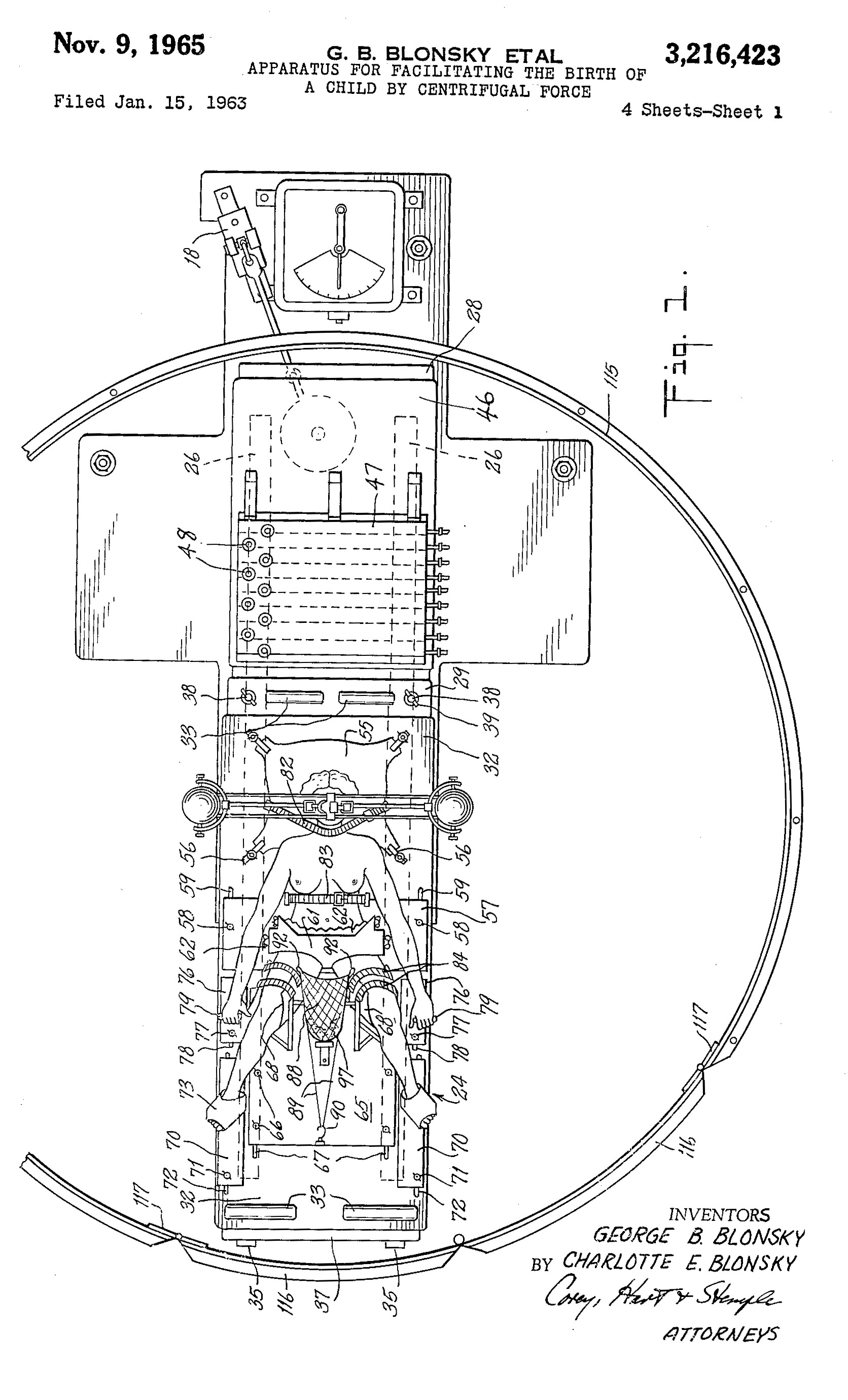
    The centrifugal machine for human birth…its hard to even finish that sentence, let alone finish it without wincing. What could possibly go wrong, or right, with spinning a pregnant woman strapped like Hannibal Lechter on a spinning turntable?  

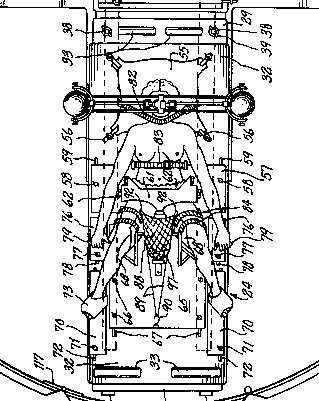
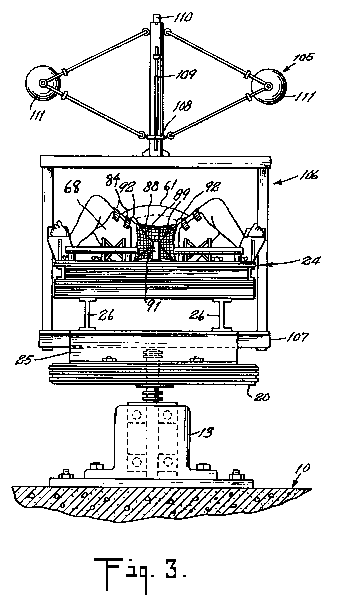
    I think what we have here is the Vitruvian Woman of Bad Ideas relating to human birth, the patent described more fully in this great piece by Marc Abrahams (of the Annals of Improbable Research) in The Guardian, 2006). And how could the symbology of the thing get any weirder? It looks like this poor woman has her head resting on a stretched piece of animal skin, all of which is located on a cross–but since there is a person on it the medical device become a crucifix. And let’s not forget the counterweights on either side of the governor, which in detail below are suspend to either side of the woman’s head; and also the baby sack, for, well, catching the baby…

    Image source:  Google Patents

    Centrifugal birth patent a overview fixed

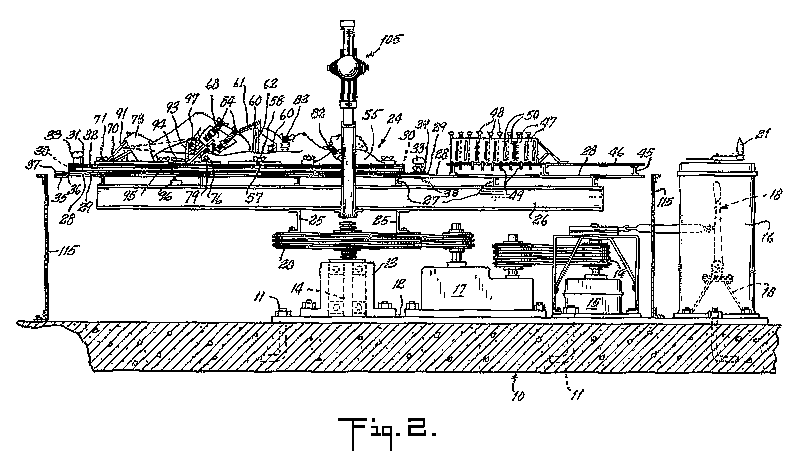
    And the excruciating, inexorable detail:

    Centrifugal birth

    In their patent application, Blonsky and Blonsky explained the grievous and imaginary need:

    “In the case of a woman who has a fully developed muscular system and has had ample physical exertion all through the pregnancy, as is common with all more primitive peoples, nature provides all the necessary equipment and power to have a normal and quick delivery. This is not the case, however, with more civilised women, who often do not have the opportunity to develop the muscles needed in confinement.”–from the Blonsky patent.

    “Therefore, wrote Blonsky and Blonsky, they would provide “an apparatus which will assist the under-equipped woman by creating a gentle, evenly distributed, properly directed, precision-controlled force, that acts in unison with and supplements her own efforts”.–Marc Abrahams, quoting the Blonsky patent in The Guardian (referenced above).

      Centrifugal birth b

      Centrifugal birth c


    The text of the patent report, below, in full:


  • Atom Bombs: the Game.

    JF Ptak Science Books   Post 1497
    Atomicbomb pieces I do not know the precise date when displaying the death of children was used to sell detergent.  There were deep hints of a child’s death in a Twilight Zone episode (selling Borax) in the ate 1950’s, but in general I think that killing kids on television for story development and entertainment is more an ’80’s creation than anything else.  Children dying in stories on television had been verbotten, a non-starter, for decades; now kids die in Dr. House’s hands and all over the rest of that wasteland place and there’s barely a wrinkle in the entertainment continuum.

    Killing children in literature is entirely different, and of course much older.  Given the overwhelmingly and horrible basis of the news reports of the Old Testament, I wonder what the great flood would’ve looked like on OT TV?  After all, it was reported that the creator did away with almost everything on Earth–men, women, and of course  every child and baby on the planet, drowned like rats in a bag, but without a bag–kids left to float away from their parents, and then drown, sinking into the cold black sea created by the very thing that created them.

    Kids killing things in play is another matter, especially since it is done so for fun. I guess they smote or smitted things for time immemorial, but it wasn’t until very recently, and mostly with the invention of the middle class and the creation of disposable income, that killing toys were sold to kids in stores. Toy guns and knives and other implements of destruction at least made whatever the kids were doing a face-to-face activity.  When the atomic bomb toys started to appear in the late  ’40’s, killing stuff took on the potential of worldwide destruction.  Of course I doubt that any kid playing with these atom bomb toys had an inkling of what it meant to use the weapon in the real world, but the appearance of atomic bomb toys–while not quite yet at the level of Auschwitz board games–is on the revolting side.  On the other hand the destruction of entire galaxies has been witnessed by kids in any number of movies and television programs, what with billions of living being killed in the process.

    I don’t know what the effect is of exposing children to mass killings in the name of grand theft auto, let alone opening apocalyptic floodgates by putting nuclear weapons within their reach.  It just isn’t right.

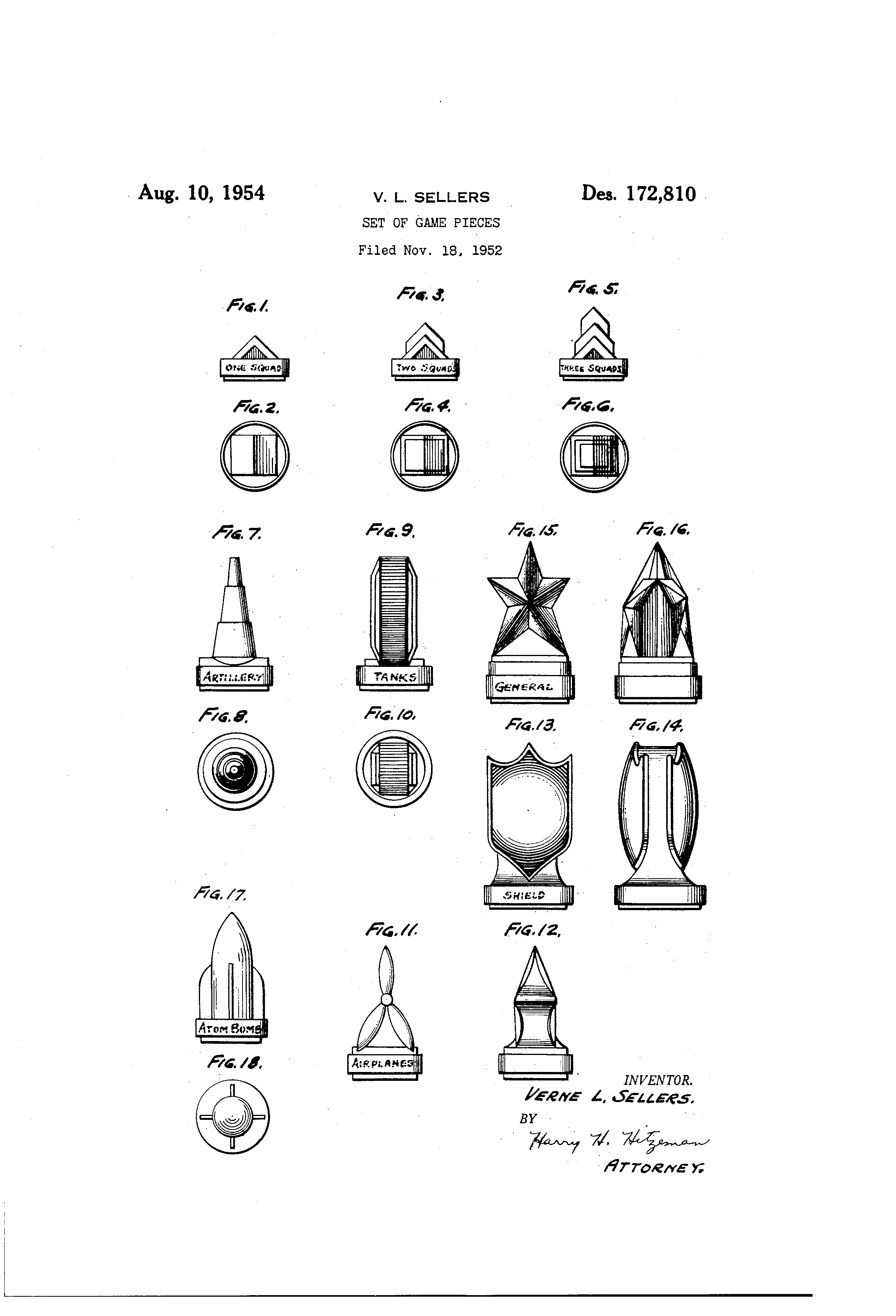
    Does these things, below, seem appropriate to you?  Take for example a simple matter in this detail from a U.S. Patent Office report for game pieces for a board game–the pieces were described; the game wasn’t.  The inventor, Verne Sellers, provided tanks, artillery, an air power of some sort, a “shield”, a general, a few undesignated items, and of course an atom bomb.  The atom bomb would make things all right. 
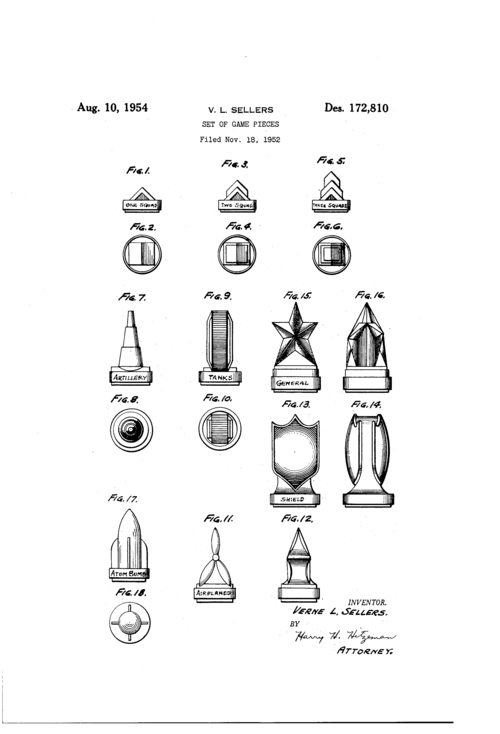
     

    Games atom bomb[Source: atomic bomb game pieces from US Patent and Trademark Office via Google Patents: http://www.google.com/patents/USD172810?dq=atom+bomb+game]

    And then there is the “Safe, Harmless, Giant Atomic Bomb”, which is something that is made to sound so much like nothing that it gives “nothing” a new meaning.

    Atomic bomb toy

    [Source: Pinterest https://www.pinterest.com/electrichermit/atomic-age-america/]


    Then this lovely thing, a small and cheap dexterity toy that places atomic destruction in the sphere of a semi-mindless time-killing toy, a real neutralizer to the significance of the thing it portrays:

    Atomic Bomb dexterity game

      I can’t imagine many people wouldn’t feel some sort of sympathy for this gigantic King Kong, who looks up just in time to see the massive nuke falling on his head, personalizing the delivery system of mass destruction:

    http://4.bp.blogspot.com/_xKCH2IWimP8/TKo0NZZutWI/AAAAAAAABgY/RbpLA7QTTD8/s1600/Konga+Atomic+Bomb.jpg

    Total destruction as a game, or game piece; an oxymoronic trivial pursuit.


  • Questionable Quidity: the Preservation of Decay–Atomic Bomb Suits

    JF Ptak Science Books   Post 1486

    Part of this blog’s long series on Atomic and Nuclear Weapons


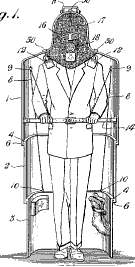
     Is there anything more revolting than this solitary, encapsulated,  iron maidenesque survival sarcophagus and its promised hope of survivability? 

    Perhaps not.  This patent application for an individual survival suit from 1958 gives us something to think about, perhaps gives us the cause to imagine what the world would look like from the inside of that portable evacuation chamber (that had its own attache case for storage).

     
    Atomic suit 2
     
     
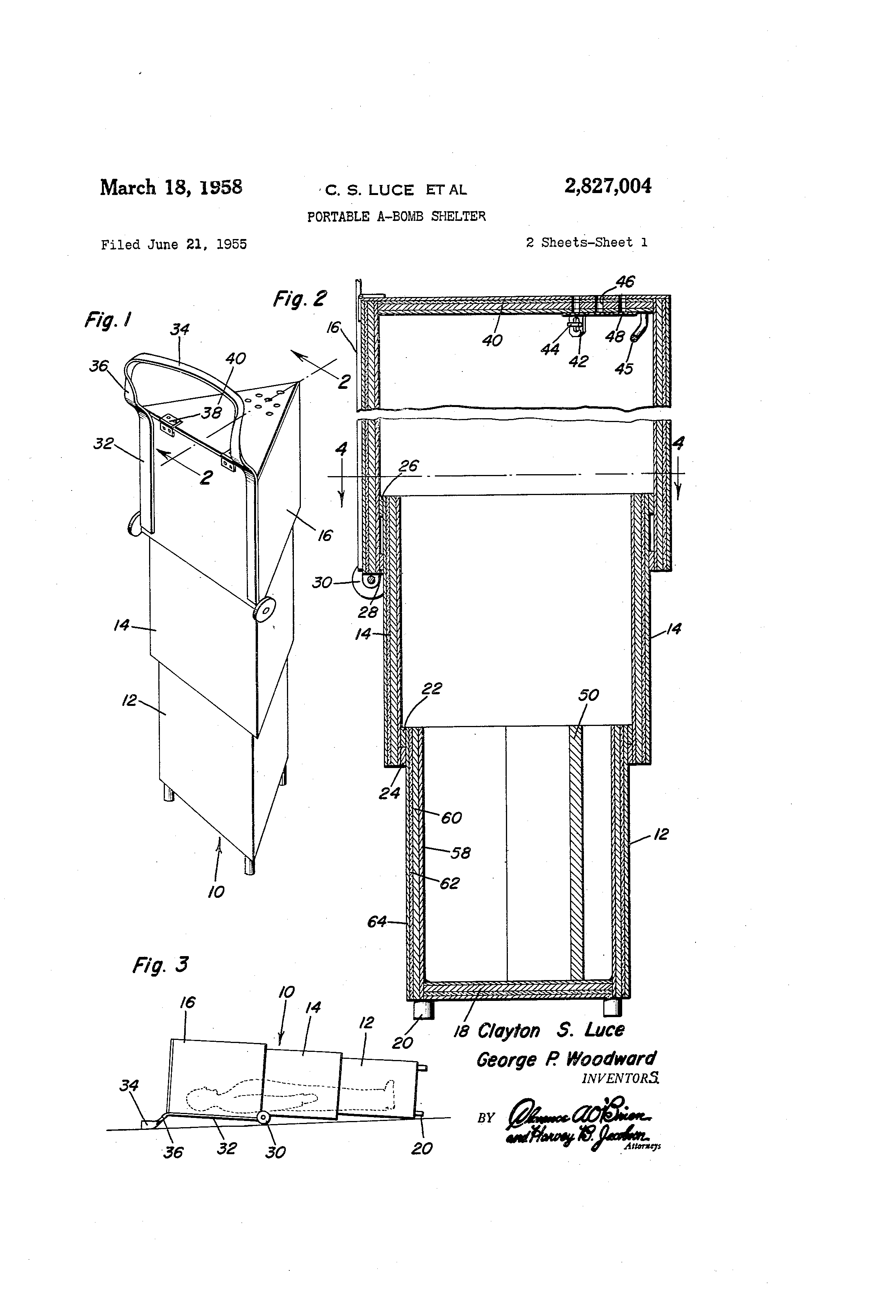
    Another variant, from 1958, shows a handy, mobile triangular leaf-incinerator-like environment that you wheel into position, put on its side, and then crawl into and die:
     
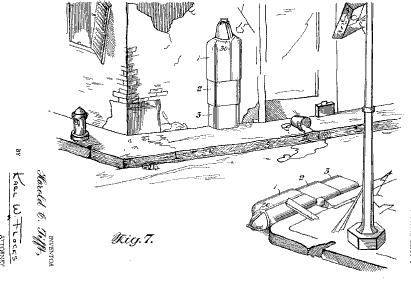
    The bomb(s) would go off, and there you would be, standing with your back against the wall, or laying in the gutter pressed against the curb, just another piece of the dead city, another piece of metal waiting to decay.  I’m not sure what is going on in this scene, which while being crude is still steeped in a high-creep factor.  I get the impression of slow time in these images, as though the atom-bomb-suited people have been there for a long time, though I suspect that we are seeing an urban area just after a blast.  It is a wincingly bad scene. 


    Atom bomb suit
    (Why is it that when seeing Civil Defense films and etc from this period we see people ducking-and-covering from one bomb?  Since the great majority of Americans lived in one of the 75 “essential delivery acquisitions” areas (I forget now the source for this phrase) it was exceptionally unlikely that people would be dealing with a single acquisitions implement, since the Soviet stockpile of nuclear weapons would’ve been at probably half-par with the U.S., which at this point (1958 or so) would be around 18,000.)
     
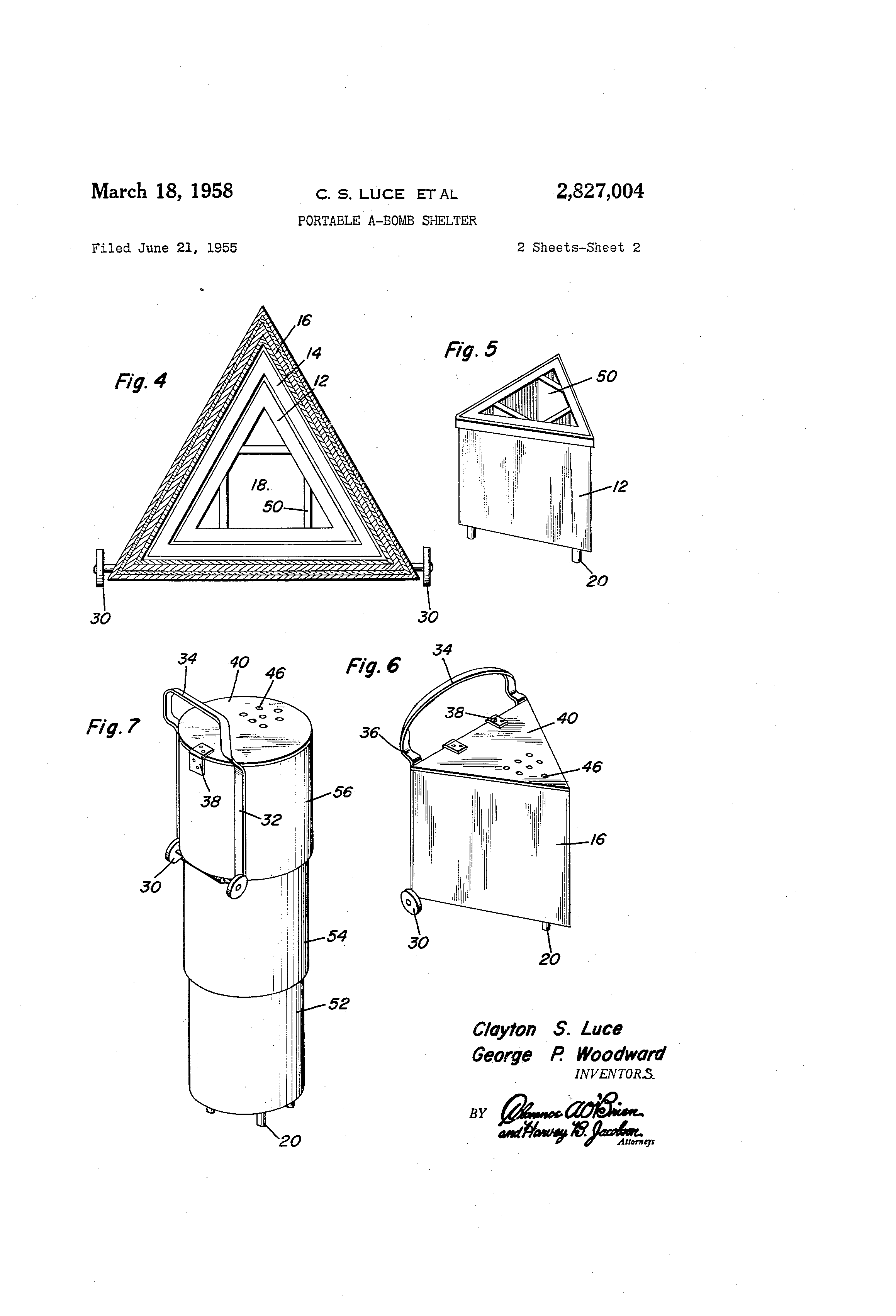
    Here’s another example of some unusual thinking on surviving nuclear holocaust, 1958, only these–while solitary–are not terribly mobile, even if they did come with wheels. (Didn’t it bother anyone that something that was supposed to prevent you from flying glass and bricks and the terrestrial ring of fire could be moved around on such tiny wheels?) They look more like waste receptacles.  Maybe that’s what they would wind up being, if they were ever used for their intended purpose. 
    Atom bomb proof suit prone

    [Source: Google patents, http://www.google.com/patents/US2827004]

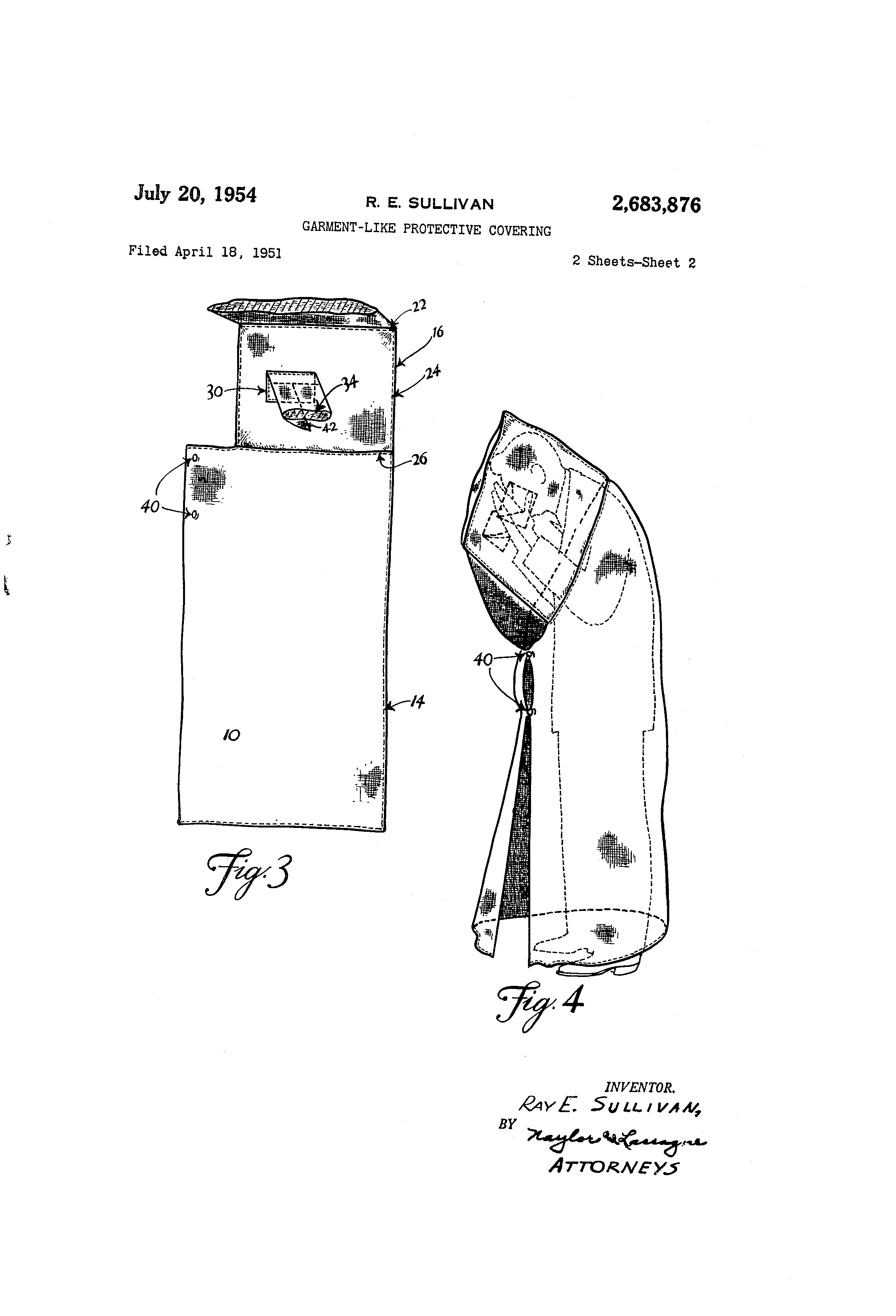
    And another atomic bomb “garment-like” thing–this looks like it might actually be useful on airplanes, because most people who die in crashes do so from smoke inhalation…but providing one of these per person would be a bad flying vibe, just like seat belts (so ferociously resisted by Mr. Iacocca) were seen by the car industry as an unnecessary reminder of how dangerous cars were/are).

    Atom bomb proof suit 1958

    [Source: Google patents, http://www.google.com/patents/US2827004]

    Anyway, the only way these things might be useful in times of such an emergency as atomic holocaust would be as a burial shroud.  And since a bunch of people would (presumably) already be wearing them at the time of attack, the job of burying them would be that much less work, since they were already shrouded.  Of course, that’s assuming (a) that people would or could be buried, and (b) that there was anyone left to do the burying. 

    Atom bomb suit bent over

    [Source: Google Patents, http://www.google.com/patents/US2683876]


  • Questionable Quidity: Fireworks Boxing

    JF Ptak Science Books   Quick QUIDITY Post

      Quidity514
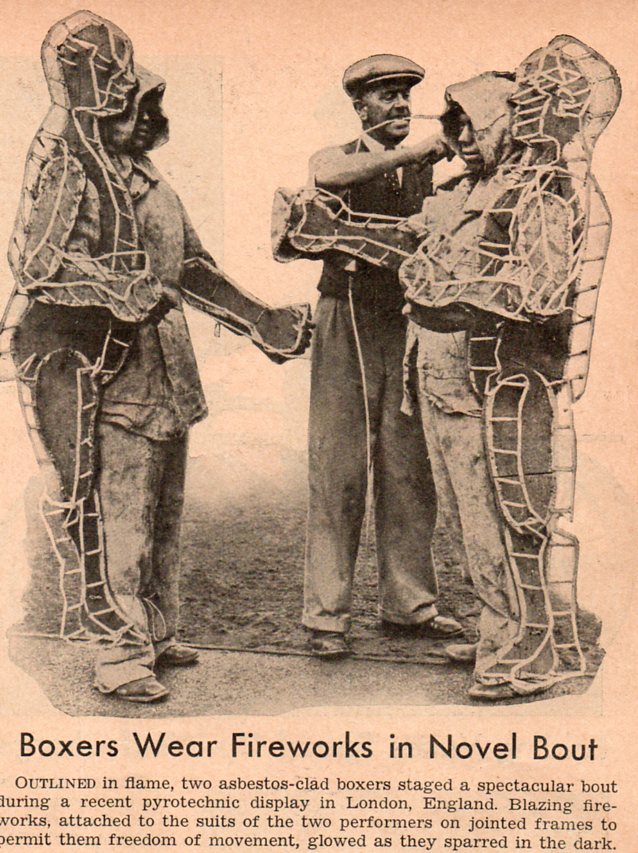
    Certainly in the history of creative chemistry there were more reasonable things to do than this.  But perhaps not, perhaps the folks in 1934 had come to the realization that the idea of creativity was spent, that there were not going to be any new, good ideas, that the era of reasoned inquiry was gone–and to celebrate, the sport of fire boxing was born. 

    These realizations came in 1934, and 1935, and every year, before and since.  The struggle with or for creativity and genius is a second-by-second bout, and there is no doubt that the quidity of what passes for a “good idea” for x^x ideas must surely fill the middle of the infinite Encyclopedia of Stuff that Doesn’t Make Sense. 

    My guess is that the number of bad ideas stays a relative constant among humans.  The only difference over time is the number of humans having the bad ideas and the ways in which everyone hears about them. 

    Note:

    The guy on the left bears a small resemblance to Augustus Saint-Gauden’s Adams Memorial (sometimes called “Grief”). 

    Quidity515 Adams-memorial-2


  • Electro-LUXurious 15: Electroplating the Human Dead, 1891

    JF Ptak Science Books   Quick Post

    This is the 15th installment of a new series on United States Patent Reports on electrical quackery and unsubstantiated bric–a-brac from the newly-electric world of the period of 1870-1900–the following is a little outside the norm, being French, but I couldn’t resist it. 

    Electropunk electro the dead
    When a picture just isn’t enough…

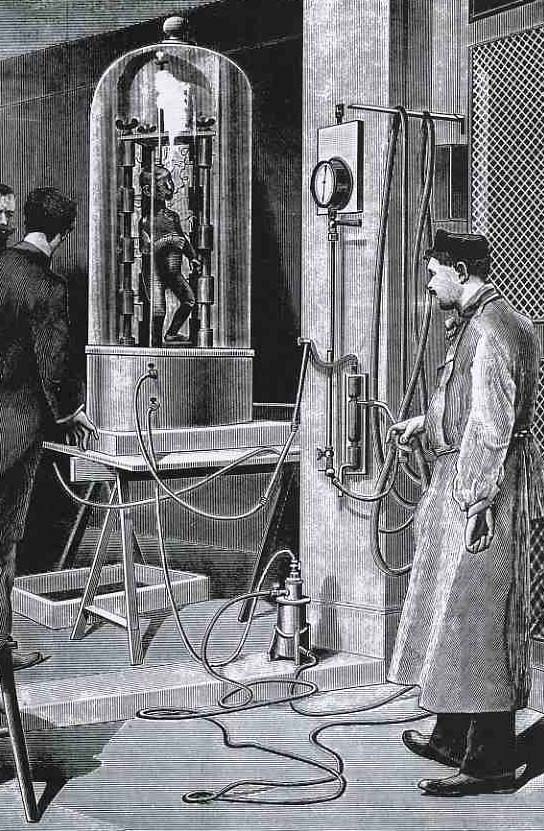
    And while we’re at it, let’s consider the work of Dr. Varlot (of the Paris Hospital) in electrocuting the dead.  Actually, what he proposed was another pretty gruesome use of electricity, though this one didn’t make promises of miraculous cures, or execute anyone.  Varlot proposed to “metalize” the dead (as we see in this very unsettling image of a child being electroplated) for, well, some purpose, purpose unknown.  It just seems and seemed like a bad idea, all the way around–a poster child for Bad Ideas everywhere. The medical uses of an electroplated baby seem very limited, and I can’t imagine anyone wanting to do such a thing to a dead child of their own.  It is wrong on every level.

    The engraving comes from Leonard de Vries, Victorian Inventions” (1971), who quotes the original source (the Scientific American for 1891) with this description of the procedure:

    “Dr Varlot, a surgeon in a major hospital in Paris, has developed a method of covering the body of a deceased person with a layer of metal in order to preserve it for eternity.  The drawing illustrates how this is done with the cadaver of a child.  The body is first made electrically conductive by atomising nitrate of silver on to it.  To free the silver in this solution, the object is placed under a glass dome from which the air is evacuated and exposed to the vapours of white phosphorous dissolved in carbon disulphide.  Having been made conductive, the body is immersed in a galvanic bath of sulphate of copper, thus causing a 1 millimetre thick layer of metallic copper to be deposited on the skin.  The result is a brilliant red copper finish of exceptional strength and durability.”

    Another method of electroplating the dead (in 1934) is discussed in the interesting blog, Quigley’s Cabinet, here. 


  • Electro-LUXurious 14: The Happy Electric Chair, 1890

    JF Ptak Science Books   Quick Post

    This is the 14th installment of a new series United States Patent Reports on electrical quackery and unsubstantiated bric–a-brac from the newly-electric world of the period of 1870-1900.

     The history of the electric chair is odd, and ironic.  The “electric chair” that we think of first when we hear the phrase is actually the “electrocution chair”, and it comes into being after the introduction of the medicinal electric chair, which was designed as a palliative, electrical ointment of sorts for people with virtually any form of physical complaint.  Thomas Edison introduced the notion of the lethal use of punitive electricity in a brilliant if not diabolical ploy, suggesting in 1888 that Hew York State  pursue the new procedure of executing its condemned via the use of an electrified recliner, using the Westinghouse AC system–and thereby forcing the association of his competitor Westinghouse’s  electricity with electrocution in the mind of the general public. (I can only imagine being a Westinghouse exec and waking up to that bit of Edisonian showmanship; there’s an earlier post on this blog here that discusses the electric chair in more detail.)

    These chairs below are good examples of the earlier quack/medicinal sparking loungerettes, even if they are dated a little later (1890). 


  • Nazi Propaganda on Propaganda: on British “Atrocity Propaganda” (1938/9)

    JF Ptak Science Books   Post 1490

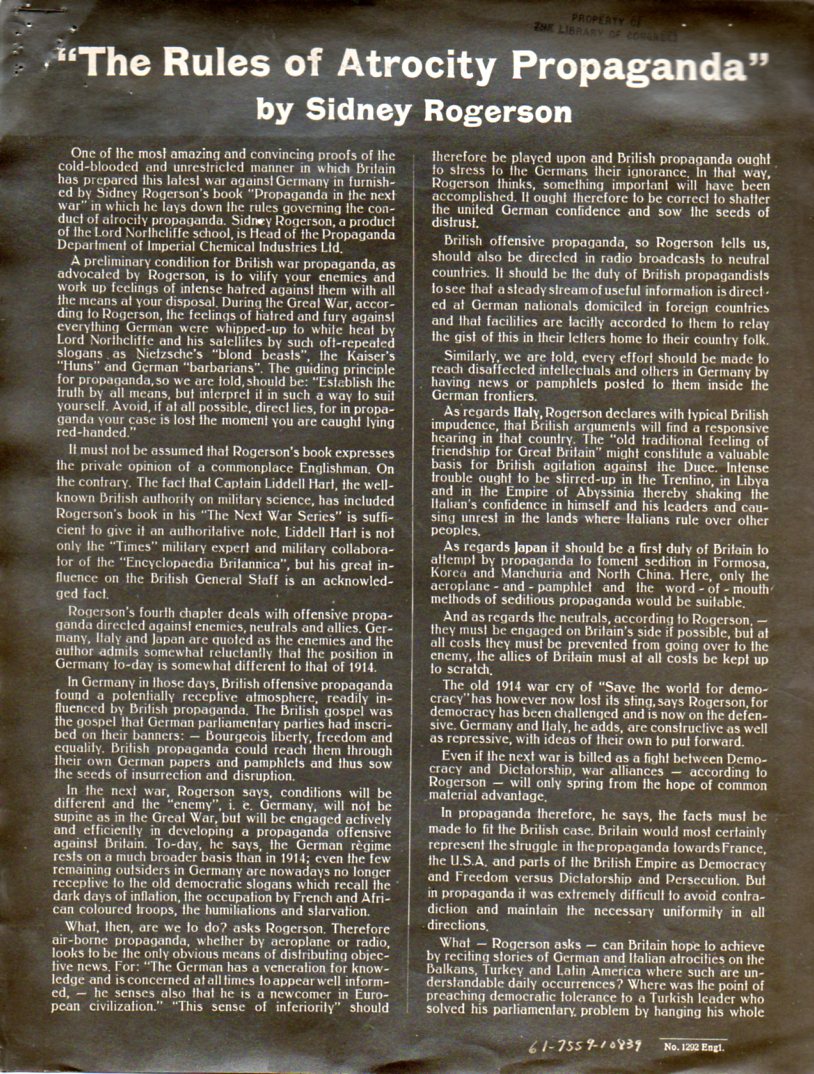
    As a small cog in the machinery of the Nazi Big Lie, this short sheet (supposedly written by a ” Theodore Kesselmeier”1), outlines a campaign of British anti-Nazi psychological warfare, and was written around 1938/9.  It is written in a book review format whose aim was the 1938 publication by Sidney Rogerson2,  Propaganda in the Next War, which was an alert (described as “brilliant” by John A. Pollard in The Public Opinion Quarterly for Autumn 1945) to the British government to establish central coordinating offices for information and communication for what the author felt to be the impending war with Germany.  In many ways Rogerson was responding to an enormous flood of information coming out of Germany about its own impending future, from the election and seizure-of-power by Adolf Hitler, to books like Ewald Barnse Raum und Volk im Welkriege (translated into Germany Prepares for War) of 1933, and on and on, a growing high tide that was without end. (Even from the most base popular study of Germany’s desires, for example, looking at every issue of the Illustriete Zeitung (Leipzig) from 1933 to 1939 as I have done, it is overwhelmingly obvious that Germany was preparing for the next war.  ThNazi propagandae case is made constantly and boldly in the magazine, which served in a way as Germany’s version of LIFE magazine.) [This item is available for purchase through our blog bookstore, here.]

    But the “reviewer” finds  the Rogerson work insulting and militaristic, hateful; an attack upon Germany.  He/they write(s) that the book is an offense, and part of an effort of  “the cold-blooded and unrestricted manner in which Britain has prepared this latest war against Germany”.  This part is odd because even at this late date, and given what the knew about the German war aims, Great Britain had done very little about preparing for war even until Munich. 

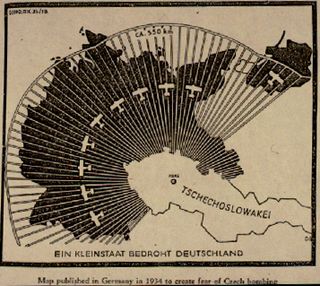
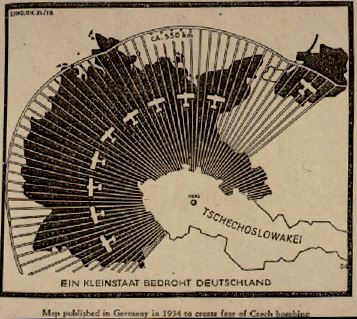
      I have aNazi prop number of these propagandistic pieces that came out of Germany at this time, some of which have been written about on this blog, and it seems no surprise now to see how many of them paint Germany as a victim of the war aims of the countries nearby:  Poland and Czechoslovakia were both presented as late as 1938 as having designs on Germany. This is just one of many examples of Nazi propaganda on propaganda, issues of lies within lies to the secret house of even-more-inner lies.  For example, this incredible map showing the Czech threat to Germany, above [source] and the shrinking  pamphlet, left [source].


               Rogerson496


    [page 2 is in the “continued reading” section, below.]

    Notes:

    1.  I suspect that “Kesselmeier” was the nom de plume of a section of writers laboring away in the dream factory of the psych-ops part of the Nazi war machinery.  It is much easier to produce reports when you have an entire group of people working on the project without need for the benefit of proof–or, for that matter–of truth. 

    2. Rogerson’s entry in Who’s Who:  “Publicity and Public Relations Consultant and author. Born 22nd of October 1894. Son of the Reverend S. Rogerson. B.A. in Modern History 1916; Served in the European War;

    ·Posted by :

    ·in:

    — — —

  • Spaghetti Map of the Army-McCarthy Hearings, 1954

    JF Ptak Science Books   Post 1489

    Some things are complex, and complicated and pretty–you don’t realize that they are this involved, exactly, because of the elegant way in which they are presented.  An anti-gravity undertaking by Brunelleschi, in creating his dome, was an enormous challenge,  solved with circles within circles, a series of nine of them enclosed in a polygon, the result being one of the most beautiful and iconic achievements in the history of architecture (and engineering).

    And then sometimes things are complicated and complex and look and behave that way, their messiness outdistancing their own necessities.

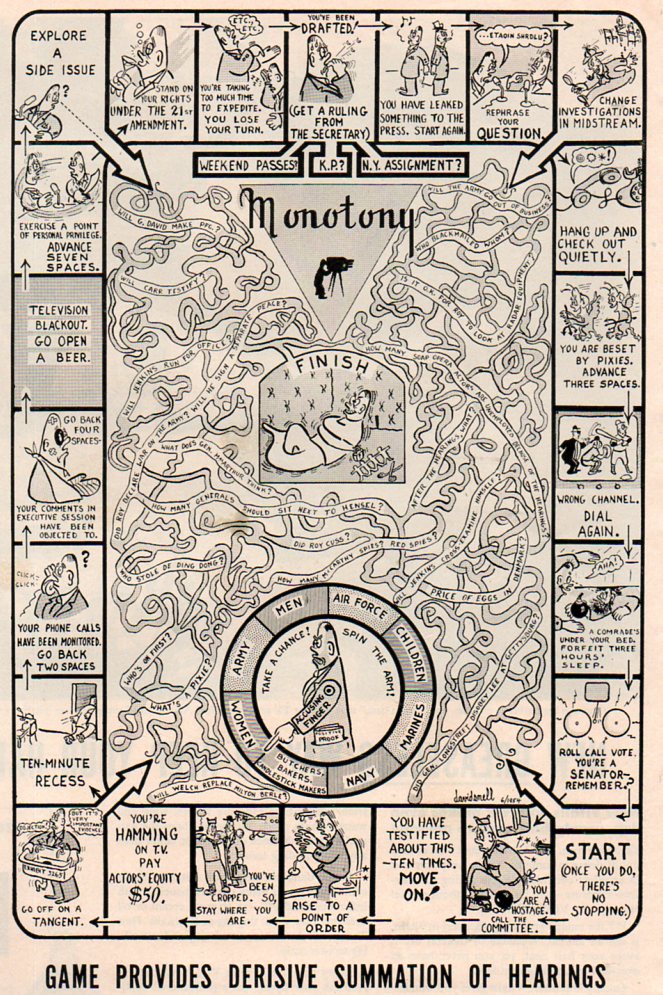
    Which gets us now to this game, a mass of entwined spaghetti, which was a tongue-in-cheek poke at the Army-McCarthy Hearings of the spring of 1954, a popular review in the tradition of Thomas Nast that is very effective.. The “Army” was the U.S. Army, and the “McCarthy” was Senator Joesph McCarthy, of Appleton, Wisconsin, a man who was about at the end of a short, meteoric career of vast unsubstantiated accusation, discord, lies and fraud. The hearings were supposed to sniff out Communists in the Army and the defense industry, because that’s what McCarthy did, being a rabid impersonator of a man with a decent mission. The hearings were long, involved, and traveled nowhere fast although much ground was covered.

     The bottom line to the whole affair was that as the first televised Senate hearings, McCarthy drew a huge audience, estimated at some 80 million people over the course of the event. And what happened was that “Tail-Gunner Joe” (an appellation he gave to himself that among many other things in his personal and public life were exaggerations) found out that he was seen better int eh minds of Americans when he was not being televised. In short, he was outed for many as a crude, threatening liar, and his career of ruining people in his quixotic quest for deeply-rooted Commies was about over when the last lights in the hearing room went out.

     Joe McCarthy would be dead in about three years, his liver failed, evidently (as his biographers say) from too much drink. He was a dangerous and divisive man, but one who had many friends and supporters to keep him re-elected and in power. (He was a darling of the Kennedys, being a favorite of Joe Kennedy, the godfather of Robert Kennedy’s first child, and one who dated two of the JFK’s sisters. Being Catholic and a vehement Commie-hunter went a long way with Joseph Kennedy, who had his own set of issues with power and rule.)

    McCarthy hearings495

    [Image source:  LIFE magazine, 21 July 1954, page 42.]