A Daily History of Holes, Dots, Lines, Science, History, Math, Physics, Art, the Unintentional Absurd, Architecture, Maps, Data Visualization, Blank and Missing Things, and so on. |1.6 million words, 7500 images, 4.9 million hits| Press & appearances in The Times, Le Figaro, Mensa, The Economist, The Guardian, Discovery News, Slate, Le Monde, Sci American Blogs, Le Pont, and many other places… 5000+ total posts since 2008.

Category: Bad Ideas

  • The Taking of Pelham One Two Three– in 1909

    JF Ptak Science Books   Quick Post

    Pelham 123192
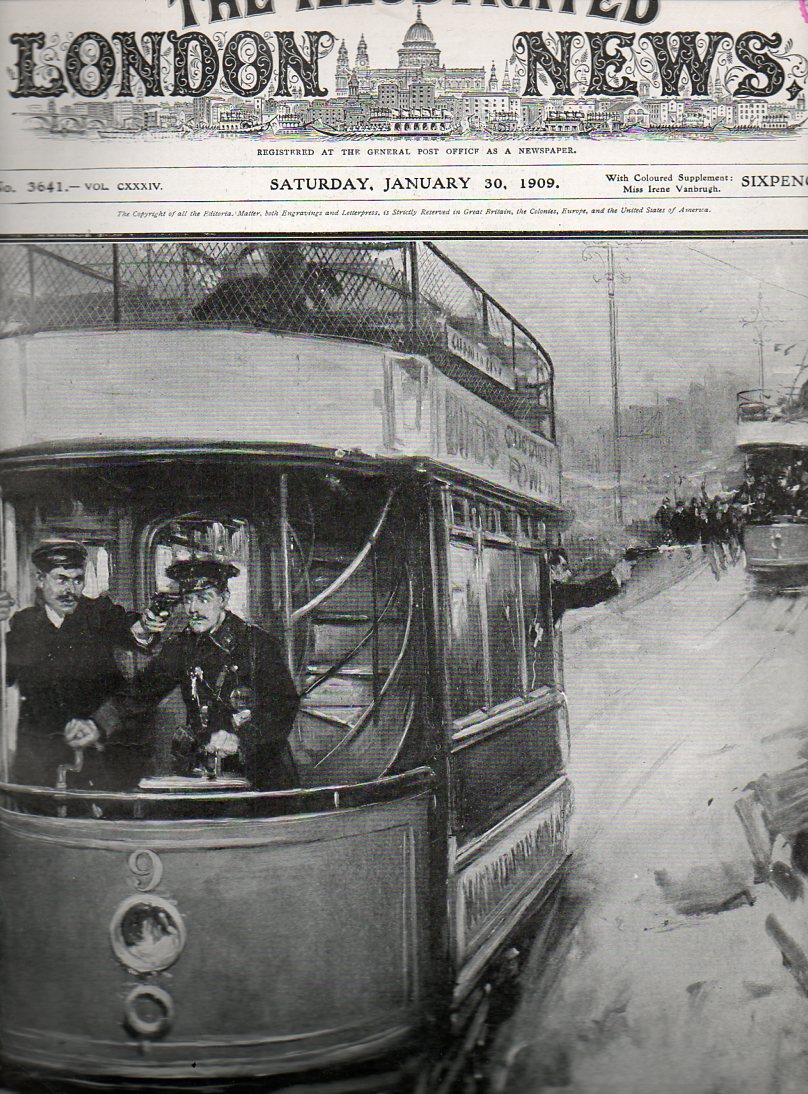
    No, this really isn’t a time tunnel to London in 1909 aboard the <6> train down Lexington Ave picking up speed from the Pelham Bay Park Station.  No, it didn’t travel back in time from the 1974 or from the great movie The Taking of Pelham One Two Three (and definitely not from 2009’s far-inferior John Travolta remake of that Walter Matthau/Martin Balsam classic). 

    Pelham 123191

    The Taking of Pelham One Two Three was a work of fiction, a book and movie about thugs hijacking a New York City subway train–complications ensue.  This image above shows a similar case, the Tottenham Affair, where robbing murderers–two “Russian Anarchists run amok”– hijacked an electric tram after their rampage, fending off the police, who pursued in another tram.  The episode lasted for a while, the two robbers winding up dead shortly thereafter.

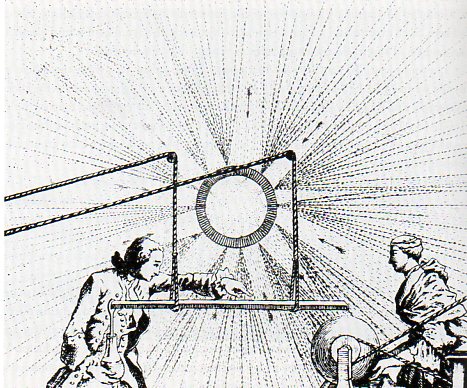
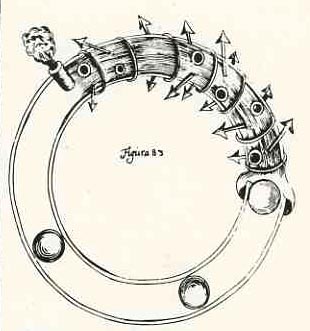
    The image at top is not opening a hole in the space-time continuum–it was the illustration of a functioning Leyden jar, found in a work by Peter van Musschenbroek (1692-1761)  published in 1745. 

    ·Posted by :

    ·in:


  • Titanic Understatement Department: The Trail of Tears and “Beneficial Exercise”, 1838

    JF Ptak Science Books   Post 1387

    “…strong men, women, boys and girls, not only capable of marching twelve or fifteen miles a day, but to whom the exercise would be beneficial.”  —General Winfield Scott, military leader in charge of the removal of the Cherokee nation, 1838, on the benefits of enforced marching of men, women and children over a thousand-mile course.

    Most people are familiar with the story of the Trail of Tears, the epic tragedy of the “removal” of a class of people—the Cherokee Indians in this case—from their homes in the east to a new land appropriated for them in Indian Territory (present-day Oklahoma). (In the Cherokee language, the event is called Nu na da ul tsun yi (the place where they cried), another term is Tlo va sa (our removal).) The Cherokees were given the ultimatum to leave their homes in Georgia, Texas, Tennessee, Alabama and North Carolina, doing so in the period from 1836 to 1839—the first part of the exodus was prompted by the U.S. Government but not necessarily enforced. The later part, however, in the spring of 1838, was absolutely enforced, with General Winfield Scott arriving on the scene with 7,000 U.S. Troops to round up the last of the remaining Cherokees and take them—by force if necessary—to Indian Territory.

    There were approximately 12,0001 Cherokees left in the east by the time of Scott’s arrival—by the time their enforced march to the west was completed, around 4,000 Cherokees would be dead.

    The ease with which this re-settlement was partially removed from the broader moral and ethical implications of marching 12,000 men, women and children a thousand miles west in the fall and winter of 1838/9 was accomplished with abstract language in the government reports describing the affair.

    For example, in the Executive Documents published by the U.S. Government printing office, 25th Congress, 3rd session, 1838, volume 1, documents #s1-9, part of the 609pp document #2, Message of the President of the United States to the Two Houses of Congress…., contains a 94-page section called “Report of the Commissioner of Indian Affairs” (occupying pp 410-506), and in that section is the compelling sub-document, “Emigration of Indians”. It is there that we find the clinical appraisals of the government efforts to scoop the Cherokees up and deposit them far west. For example, we are told that “(an) aggregate of 18,000 Cherokees…have ceased to live east of the Mississippi during the Spring, Summer and Autumn”, this after General Winfield Scott had “collected them”. Removing an entire Indian tribe had been a simple matter of that tribe no longer living there anymore, having been “collected” by the Army and “emigrated” to points west.

    The “collection” part is told elsewhere and often and more brilliantly than I can relate here—it is the material of a deep national tragedy. Suffice to say presently that 10,000+ people were herded together at bayonet and gunpoint, given scant opportunity to collect themselves, and then brought together in concentration camps to await the arrival of the last of their tribe. After that, most were marched in stages to Oklahoma, through bad weather of all descriptions—from drought to rain to high heat and bitter cold—sometimes encamped in stockades to wait for river levels to rise and fall, allowing dysentery and other diseases to come into the population and take hold.

    The section on the emigration of the Indians is alternately heart-breaking and infuriating. There is a series of correspondence between John Ross, representing the leadership of the Cherokees, and General Winfield Scott, regarding the mechanics and monetarization of removal. The Cherokees at this point make every attempt to accommodate their pending future with dignity and humility, acquiescing on almost all government points in what I think were the hopes of gaining a few extra necessities for the people making the trip. Generally, the requests were rejected. Coffee and sugar were at one point presented to Scott as a necessary—Scott refused, saying that the disbursements for the removal had already been made, even though all of the monies were coming from government funds allocated to the Cherokees for the lands they were having stolen on the heals of their exit.

    Another particularly infuriating example of misogynistic governmental neutral-speak—a towering example, really, an incredible, unspeakably-wrong statement—occurs on page 435 in a letter from Scott to John Ross et alia. In response to a request from Scott for extra wagons to help transport the young and the old and possessions and food, Scott refuses, saying that the allocated wagons were enough to carry food and belongs and provisions and 35 people. And for those who could not ride in the wagons, Scott said the following:

     “…strong men, women, boys and girls, not only capable of marching twelve or fifteen miles a day, but to whom the exercise would be beneficial.”3

     And just to set the record straight on this, we are talking about 1,000 miles of marching, in weather good and bad, over a period of many months (and sometimes extending to a year).

    There were allocated 50 wagons and teams for the journey for all of those thousands of people, the teams costing $28,000 in rent for the entire journey, ironically paid for by the Cherokees. The sugar and coffee which had not been provided for in the original rations list and which were excluded, would’ve raised the cost of the average daily ration allowance a few cents too many, exceeding the 16 cents per day/person for the journey.

    This of course was not the only Indian “removal”, not even the only removal for this year—it was the stage of affairs for many dozens of tribes over the course of two centuries, revisited and replayed and reprise d over and over again, with different actors, different agents, different tribes and different places—all with the similar result. (For example, even among just the Five Civilized Tribes, the Choctaw were the first to be removed in 1831, then the Seminoles in 1832, the Creeks in 1834, the Chickisaw in 1837, and then the Cherokees in 1838.)

    As awful as Scott’s correspondence reads to me I am reminded that among the general staff it was Scott who was seen as sympathetic to the Indians’ plight, that it was Scott who was ostracized for being too accommodating. This may have actually been the very best that the U.S. Government could offer, which is ____________________ .

    Notes:

    1. In the fall of 1835, a census was taken by civilian officials of the U.S. War Department to enumerate Cherokees residing in Alabama, Georgia, North Carolina, and Tennessee, with a count of 16,542 Cherokees, 201 inter-married whites, and 1592 slaves (total: 18,335 people).  The total number of casualties for the Removal is much studied and debated–estimates range from 2,000 to 6,000 people. 

    2.  Message of the President of the United States to the Two Houses of Congress…. page. 412 for both quoted phrases.

    3.  Ibid, Page 435.


  • Monumentally Bad Writing: Recovery from Thermonuclear War, Loan Forgiveness, and Taxes, 1966

    JF Ptak Science Books   Post 1430

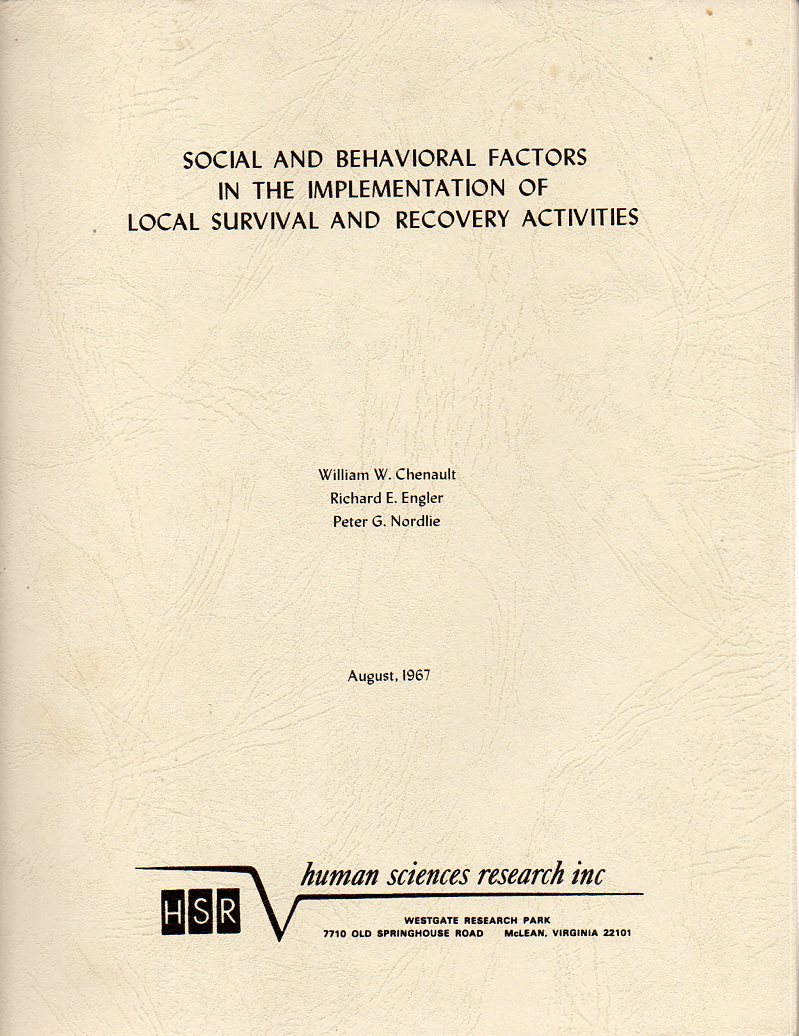
    In the entirety of the text of Social and Behavioral Factors in the Implementation of Local Survival and Recovery Activities (written by William Chenault, Richard Engler and Peter G. Nordhie in August 19671) there is little evidence that its authors fought to rid themselves of their Thesaurus of Obfuscation.  A dissected version of their effort would’ve made for good, clean fun, adding their bits to a Menckenian database of extraordinarily-written governmentese, but since all of this involved surviving thermonuclear war, the “fun” part is obliterated.  What, exactly, was it that the authors were trying to accomplish?  Perhaps in all of it they weren’t constructing anything devious at all–perhaps their incredible assault on meaning was simply written in a language understood by their audience.  That, or they really didn’t intend to have heard what they were trying to say,, if there was anything that was being said at all. (This report is available from our blog bookstore.)
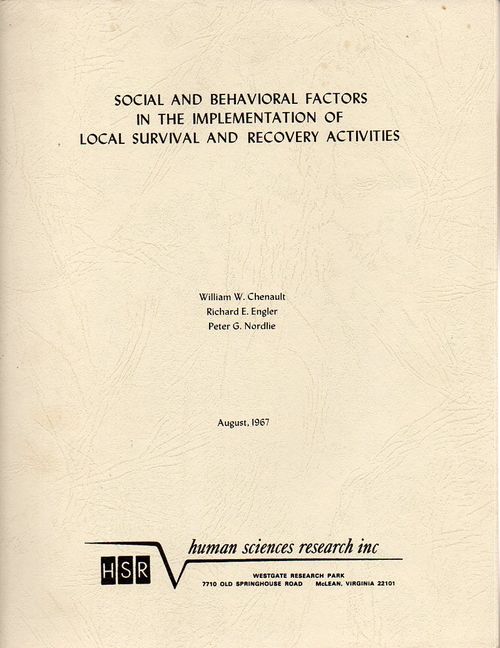
    Nuclear war surviva;355

    The baseline to this pamphlet is this:  that in a post-thermonuclear war United States there will be survivors; the survivors will have “hardships”, but the hardships will be overcome; the key issue is to get survivors to work together to put the country back on its feet militarily and economically;  survivors will need “incentives” to work together; the strong will survive, and others will have to be thrown under the bus.  There will be worries about compensation for destroyed property, shipping schedules, trust in money, and a certain amount of debt forgiveness.  There will be tax–sales tax.

    There is no mention of the amount of death or the continuation of the dying in the year or two post-attack, but there is a graph, and the graphs not pretty.  It doesn’t get very much mention. 

    “…communities of [nuclear] disaster struck individuals need to define their needs and activities in the immediate context of the community”. pg. 5.

     “The tendency of nuclear disaster is to isolate communities..” pg 6

    I’ve written often on this blog1 about spectacularly bad thinking in planning for post-Apocalypse thermonuclear war America, mostly on government/agency reports that write about the impossible being done by survivors in impossible ways, painting the specter of impossibility and liquid death in turgid, unprovable prose.

    This study reports of the ways in which American society can survive and rebuild following a devastating nuclear/thermonuclear war. The authors list five consequences of “severe attack”:

    #1. Tremendous destruction of property…

    #2. Disruption of transportation and shortage of fuel for motive power together with an associated disruption of regional specialization and significant breaks in geographical continuity.

    #3. Drastic reorientation of effective economic demand”

    #4 . General disruptions of normal interindustry flows

    #5. Shortages of technical and professional manpower in some fields.

    I particularly like #3. Also the use of words like “shortages” and “disruption”.  And why they stopped there I really don’t know. 

    Much of the report is an examination of how to get the surviving elements of society back on its feet via carrot-and-stick methods, coaxing people into working together, with the eventual goal of restructuring the country, building America back again, observing capitalism, the tax codes, exchanging labor exchange units for goods and services.

    “Personal and group motivations would continue to be related to economic organization and production as they are in the preattack society” (pg 1)

    “It follows that the nature and direction of many recovery activities will be determined by national, not local, requirements” (pg 3)

    “Individuals must be motivated to implement policies and perform activities dictated by national economic interests”. (pg 4)

    It is assumed that the character of the post-attack country would be pretty much the same as it was before thermonuclear war, and that we all want to return there. The report states that one of the most important elements of that society is the military and its capacity to protect people and industry. Therefore the survivors of nuclear war must be induced to work on a national scale to maintain the military and thus the stability of whatever was left of society, in spite of the fact that “in the heaviest attack, the loss of familiar landmarks, relationships and dependencies would be unsettling to survivors”.  (I’m not sure what “dependencies” relates to, whether they are child or the need for pharmaceuticals or the need to watch the news on television. This is unclear.)

    Generally, there are a host of activities suggested to compel compliance, depending on where a community is in a 9-part destruction grid. There are incentives like food and water, medical treatment, and of course loan forgiveness. These inducements must be considered because enforcing compliance militarily is not an option, as the report states:

    “It is doubtful whether a very widespread employment of a force to secure participation in recovery activities is feasible” (pg 7)

    Meaning I guess that the U.S. Armed Forces will no the enforcing mandatory compliance schedules for recovery—or at least they weren’t writing about it “preattack”.

    But the authors clearly assume that there will be something approximately preattack life in the post-attack world. Amidst the horror and chaos, we read that

    “Businessmen, in particular, but others as well, would experience disturbing and subtle changes in familiar institutions and in such bases of mutual trust as methods of establishing or verifying credit…or estimating delivery dates”–pg 11.

    “Disturbing and subtle” changes to delivery, indeed.

    We further read of “widespread readjustments of status, status symbols, and values” (page 11) which no doubt would come if all of your possessions were burned up, or lost or destroyed in some way, along with the owner. It is definitely difficult to maintain status relationships in the evidence of no status and no relationships. Of course this whole deal is complicated by the issue that status symbols are also relationships and associations, much of which could also be gone in the same fire cloud.

    If your valuables and house and such weren’t destroyed, then you were expected to go out and work for the community, and not spend your time inside your house protecting it from people who didn’t have anything.  This issue is sort of addressed here:

    “Measures for the control of displaced persons, obviating the necessity of individuals devoting their time to the protection of their homes, represent one form of indirect influence on the motivation of potential workers to abandon maintenance activities.” (pg 50).

    Which means, I think, that there will be some sort of control or protection so that people don’t need to spend their time securing their possessions. 

    But the thing that will make people work for the greater good, the compliance with the orders of rebuilding the country, will be “economic incentives…or a penalty for nonparticipation)”.  Payment would be made with money or food.  The next incentive:  housing, or “more desirable dwelling places for those participating in recovery activities”.    It remained to be seen though in this report what it was specifically that represented “recovery activities” or how the compensation per work bit was handed out. 

    One way to raise the necessary capital to fund this post-attack world was through taxes, “a structure of indirect taxes could be developed, with higher rates applied to non-essential goods”.  (pg 53).    On the other hand, just a few paragraphs later, the authors discuss getting rid of an income tax in favor of direct taxes, which means that taxes survive  the atomic nightmare. 

    This continues on and on, a cascade of some wincing ideas tumbling over themselves, settling into a confusing mist of wording and logic that is difficult to translate.  Perhaps that was the inention.  Perhaps not.  There’s not much left in the bottom of a smoking, radioactive hole, except for smoke and radiation.

    Lastly, I wonder why “post-attack” is hyphenated in these reports and “preattack” isn’t?

    Notes

    1. See for example Bad Grandeur, Predicting Post-Nuke USA (1966) and the Loss of 76% of all Authors

    The Nonsense of Strategically Meaningful Phrases, Finding Pillows int eh Post-Nuclear Attack World, 1968

    Ueber-Spectacular Understatement Department, the Happy Post-Apocalyptic America and the “Awkwardness of Nuclear Holocaust, and others.)
  • Miss Atomic Bomb: the A-Bomb in Popular Culture–Comics, Cakes and the Will of God

    JF Ptak Science Books   Post 1425 
    Follow Me on Pinterest


    I’ve written dozens of posts on this blog about atomic bomb history and where the bomb has shown up in popular culture.  This installment is on the bomb in very popular culture

    Miss Atomic Bomb is an icon of some sort for the relationship of the bomb with society, or, perhaps the bomb and Vegas, which is where this picture was taken. I guess there are reasons to put pretty women in front of computers (in the 1950’s/60’s), cigarettes and automobiles–why not with The Bomb?

    Atomic Bomb Miss
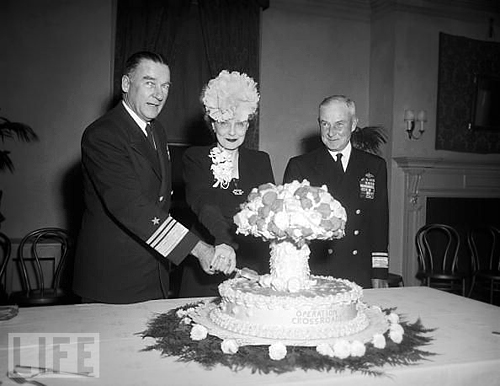
    The atomic cake (with matching headware):

    Atomic cake

    The caption to this story from Life magazine (1946) reads: “U.S. Navy Vice Admiral William H. P. Blandy, his wife, and Rear Admiral Frank J. Lowry cut a cake made in the shape of a mushroom cloud at a reception for Operation Crossroads, November 6, 1946.”  Actually Blandy was an early (August 1945 or thereabouts) forward thinker about how to deal with the U.S. owning the bomb and  international control.  I have little doubt that he probably thought that the cake was a bad idea, but, well, he did what he needed to do.

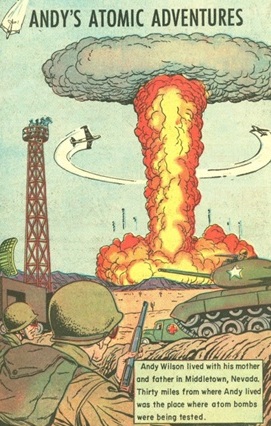
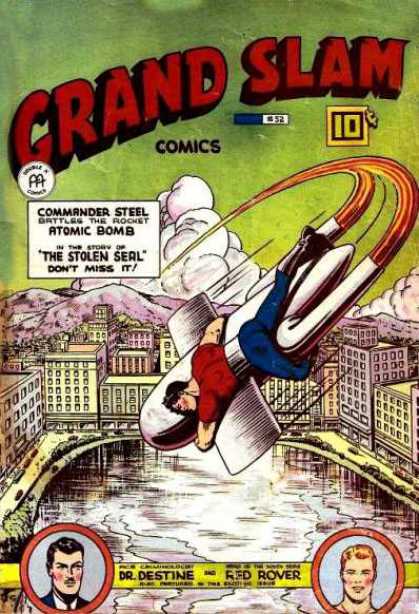
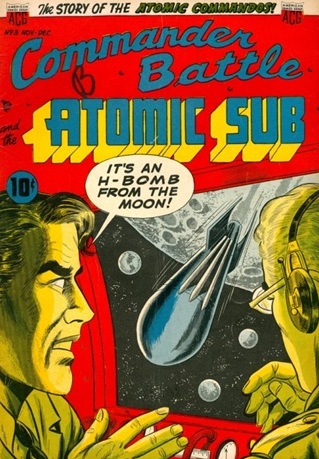
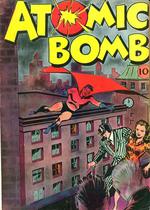
    There were all sorts of comic book adventures dealing withe the atomic bomb, right from the very beginnig (as it seems the earliest of them appears a month after the Hiroshima bombing).  These are just a few examples with the a-bomb on the comic’s cover(s):

    Atomic andy

    Atomic grand slam
     
    Atomic  h bomb from moon

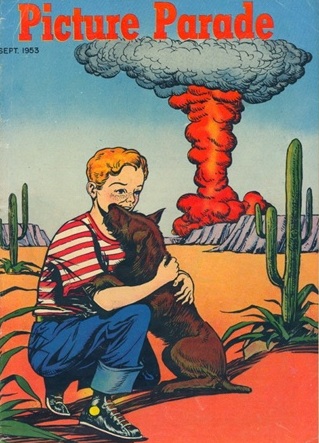
    AtomicbombBizarro–I don’t know the story of this image in Picture Parade, only having the cover graphic–perhaps that’s enough, perhaps we don’t need anything more, perhaps the backstory would spoil a perfectly bizarre image with something perfectly benign.  Or perhaps not. 

    Atomic bomb biazzaro
    Bizarre but for different reasons–a pocket-sized ball bearing patience game. Tokyo is included as a target for this game but in actuality was not considered atomic-bomb-worthy, mainly because it was decimated,  blanketed with a firebombing  that destroyed a host of the city just weeks before the first blast. (On March 9-10, 1945, 339 B-29’s dropped 2000 tons (4 million pounds, about 496,000 bombs) of the incendiary M-69 on Tokyo.  Two initial passes were made on the city, marking a large, burning “X” in the city.  Each plane had the capacity to cover a drop area of 350 feet by 2000 feet, which means a much greater area was affected. The citizens of Tokyo met their ends with buckets of water and brooms in defense. Hours later fifteen square miles of the city were destroyed.  In the months prior to Hiroshima and Nagasaki, 66 cities were bombed with M-69, killing about a million people, and wounding more.)  Fresh cities were needed for the atomic weapons so that there effectiveness could be judged against a palette of a normal. intact city, and not one that had been previously attacked. 

    Atomic Bomb dexterity game
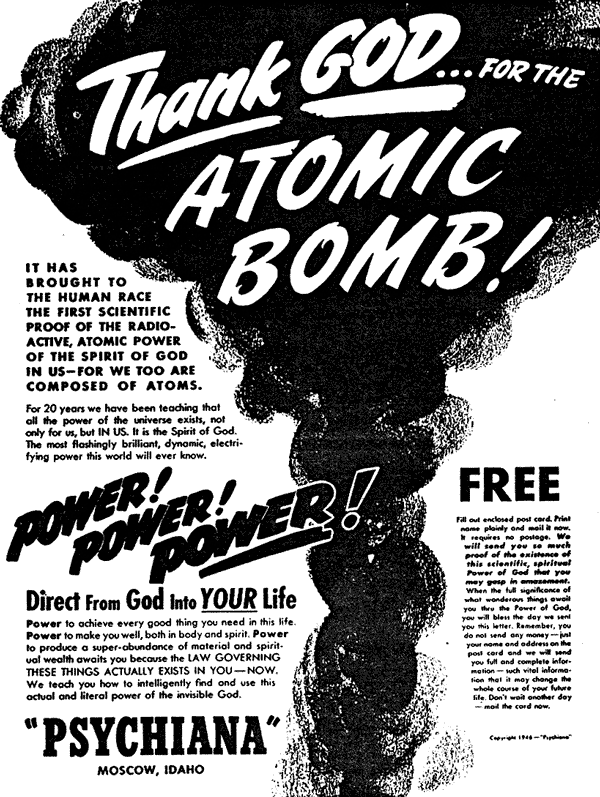
      And still more bizarre, when you combine all of the aspects of the race to the bomb with the race to god and the people who would believe such a thing.  This advertisement belonged to a mail order religico empire builder, Frank B. Robinson, (1886-1948), who claimed himself to be a prophet of god, had conversations with the Creator, and in general used whatever was of interest in the newspapers to drive interest in his ministry by mail.  It looked like his creation–Psychiana–wasn’t much more than a feel-good, self affirming, positive-thinking enterprise driven by a man with a personality big enough to be on speaking terms with the god, who in the ad below somehow was selling “the atomic power of the spirit of god in us”  because we are composed of atoms.

    Atomic bomb thankgod

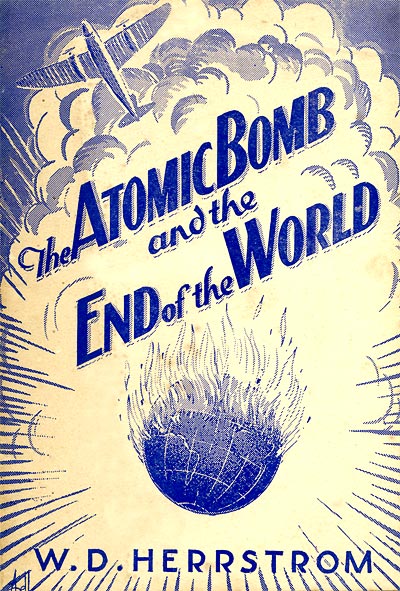
    And of course on the other end of this:

    Atomic_bomb_end_of_world

    This is an example of a host of end-of-the-world, post apocalypse movies (and books, and short stories, and so on) made to scare and entertain.  Judging from the trailer the more-modern television series Jericho owes a lot to Ray Milland. 
    Atomic panic-in-year-zero

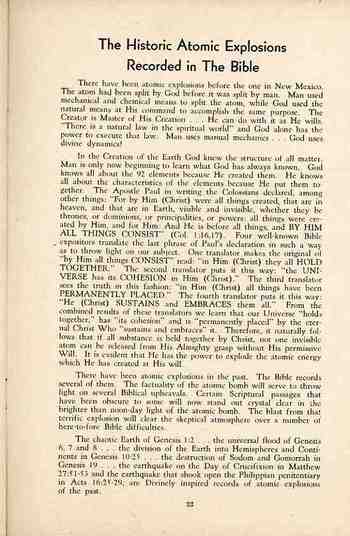
    Mel Morris  published God’s Atomic Bomb  in 1945, which means he must’ve worked a little feverishly to pump up his bible prophesy and history to include the new atomic weapon to replace whatever else he had been using as a prophecy for end of times.  (As it turns out, “God’s Atomic Bomb” was more tempest and disaster in the bible, and not (whew!) the bomb itself.  Though as we’ve learned from scientologists and the sort-of creative mind of Ron Hubbard, a civilization came to the earth thousands of years ago and pummeled it with “atomic bombs” and other nastiness, polluting humans for milennia to come.  But that’s another story–suffice to say that Morris found many dozens of examples of “God’s Atomic Bomb” being used in the deep biblical past, and that the use of the real atomic bomb in 1945 was pre-ordained, and not without its figurative historical counterparts.  I’m not sure why any of this was necessary outside of proving to some small minority that these preachers could at least be contemporary and topical. 

    Blogsept_2_atomic_bomb_god_2txt483

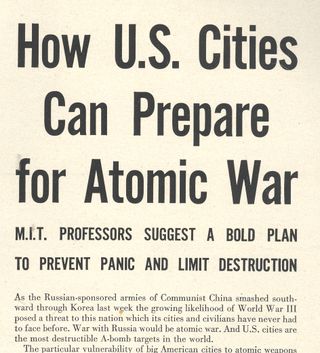
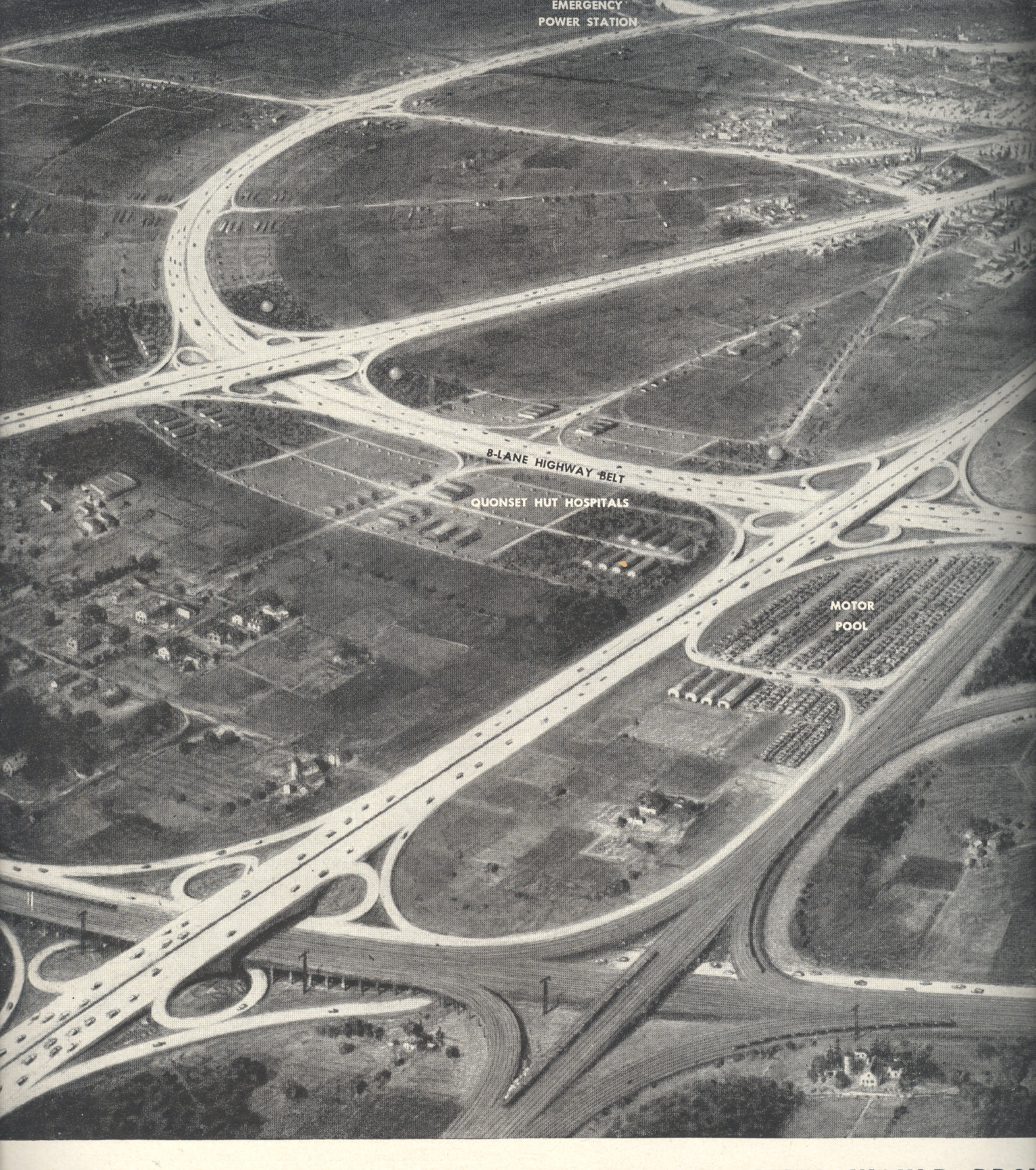
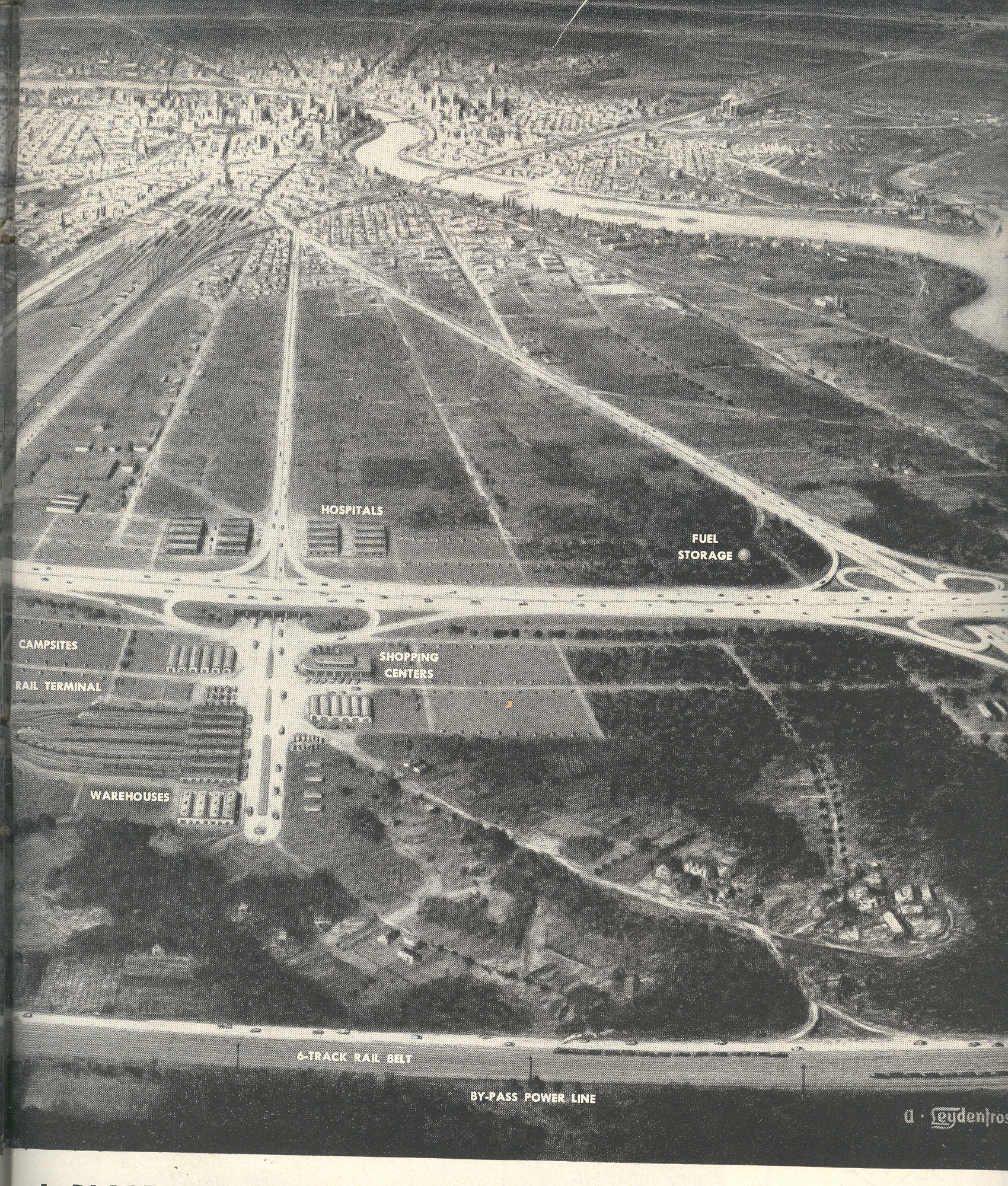
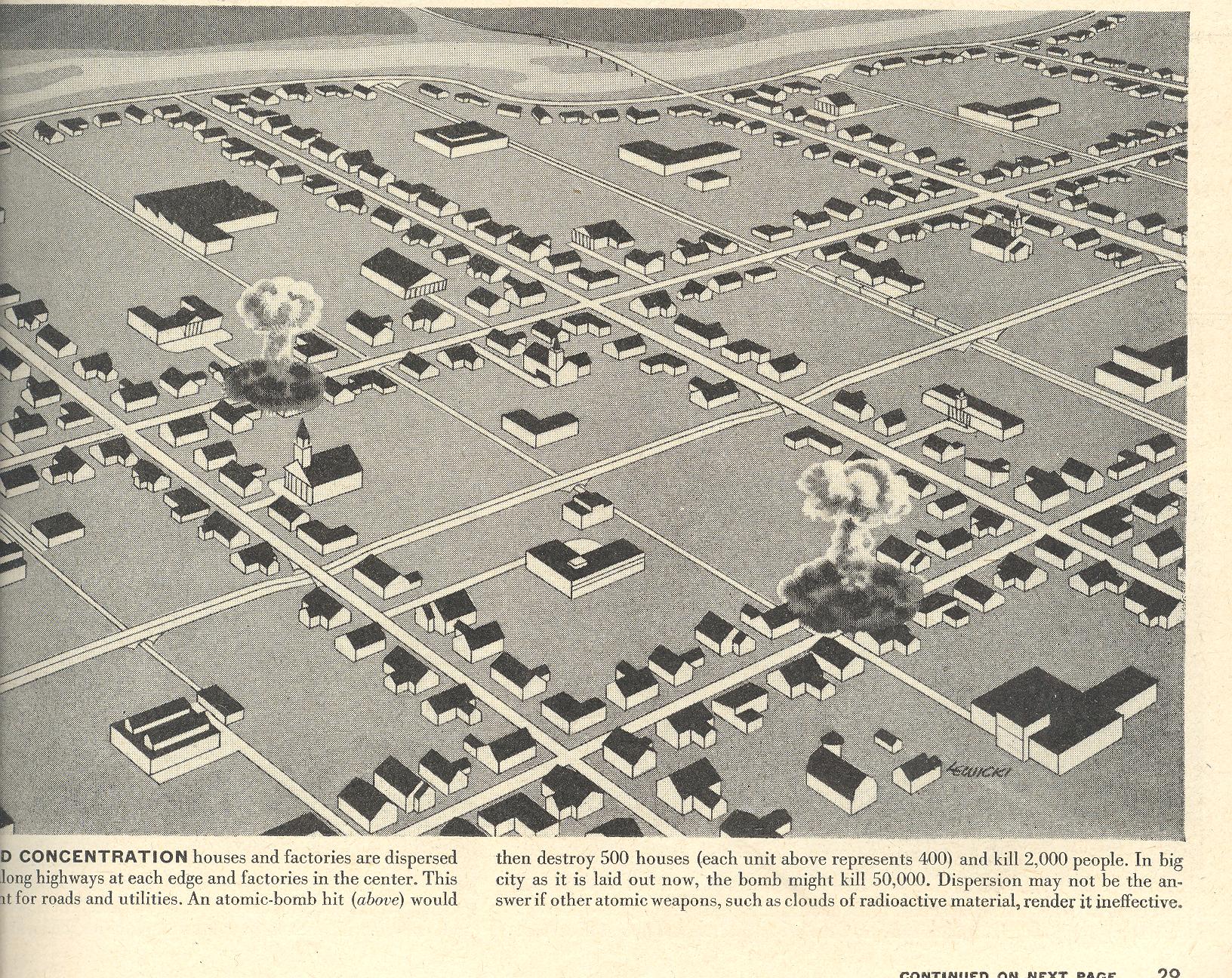
    The following is not the worst idea regarding the survival of nuclear holocaust, though it is an extremely bad one.  (Atomurbia, which makes the entire country a suburb to itself and therefore nothing, and which I write about below, is perhaps the worst idea that I have seen on combating the Soviet menace.)   But this one, which appeared in Life magazine in 1950, does come close, setting up post-attack suburbs (for “refugees”) and which takes some pre-attack city planning into some account.  There is a lot of planning for people in cars to make their way out of the city, which reminds me of the evacuation maps of Washington D.C. (which were still being handed out in the early 1980’s), which sends people on their way east and west depending upon the last digit of their car’s license plate being an odd or even number. 

    Atomic city plan war

    ==Blog July 27=wiener left

    One reaction to impending Doomsday was to construct concentric outer highways around metropolitan areas, “life belts around cities (which) would provide a place for bombed-out refugees to go”. In the birds eye view provided here, we see the plan in action, the main parts of which are an 8-lane “express” highway belt 10 miles away “from the built up edges of the city” , and a 6-track railway belt five miles further out, these accompanied by various feeder arms stretching straight-away from downtown.  In between the two outer rings would be land that would be kept free of development, so that farms and tent cities could be constructed after the attack. There would also be major collections of hospital and fuel depots in the greenbelt area.  Infrastructure would already be in place (gas and electricity, supplied with power from who-knows-where).   Shopping centers and a giant “motor pool:” would also already be in place, waiting for the Doomsday clock to strike midnight. 

    ==Blog July 27=wiener right

    This idea of city planning was one of many offering the prospect of safety from nuclear attack by spacing out the population of the United States so that the Soviet Union wouldn’t have enough nuclear warheads to take everyone out.  It called for the redistribution and resettlement of virtually everyone in the country, and is one of the most spectacularly bad ideas that I have come across in this field.  (I wrote about it earlier in this blog, here.)

    1-may 3-atomic 4

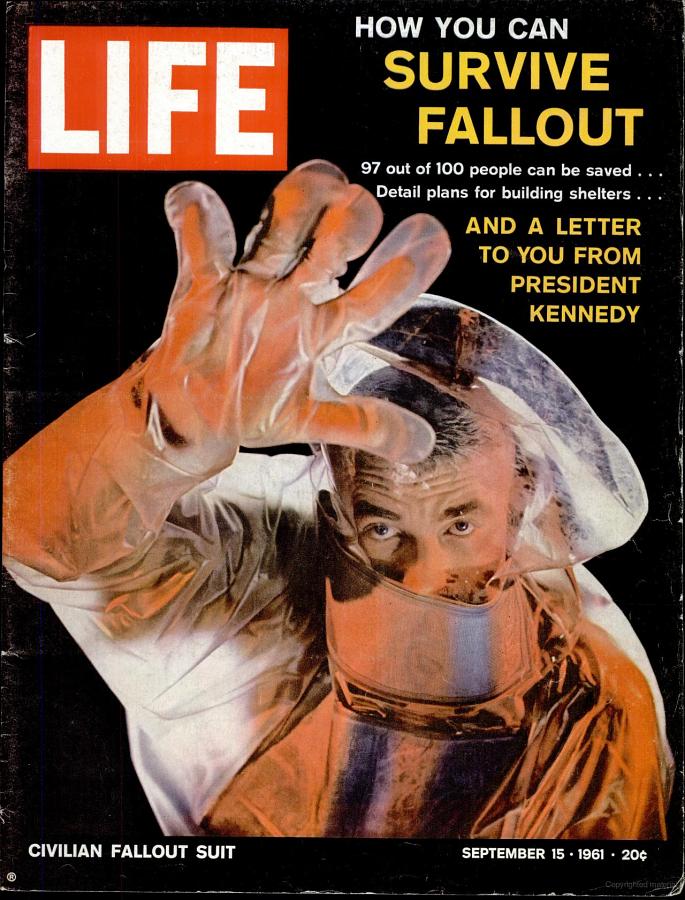
    This issue of Life offered the possibility of hope that 97% of the American population could survive a nuclear attack by the Soviet Union. It was a hard sell of a bad idea of insane optimism.

    Books_004


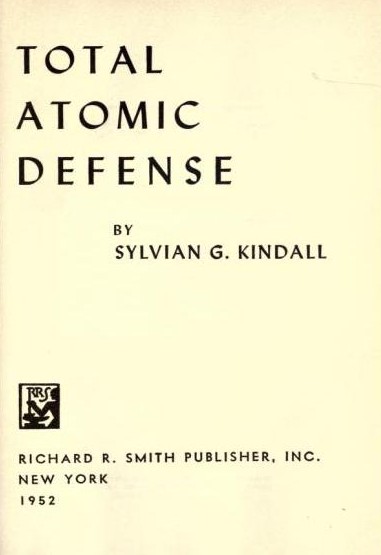
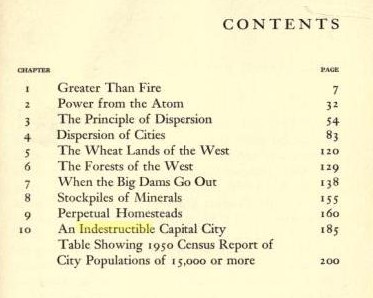
     Sylvian Kindall’s Total Atomic Defense (published by a very severely right-wing publisher in 1952) is one of a series of books made for a deceived American population, offering the general reader both fear and hope, often from the same, exact source. But Kindall has a  somewhat diffident approach, offering his belief that the country and its population can largely  survive an all-out nuclear waBlog--untinkable tpr–intact.  Chapter 10 tells the remarkable story of how to make the captial city of America atom-bomb proof, mostly by digging it into the side of a mountain.

     
    Blog--unthinkable


    Again, this is just the barest touch of the top of a huge pile of such stuff–and I’ve not even mentioned duck-and-cover films.


  • The Old is New Department: Refuting Darwin with Commas, Adjectives, and the Creator (1873)

    JF Ptak Science Books    Post 1423

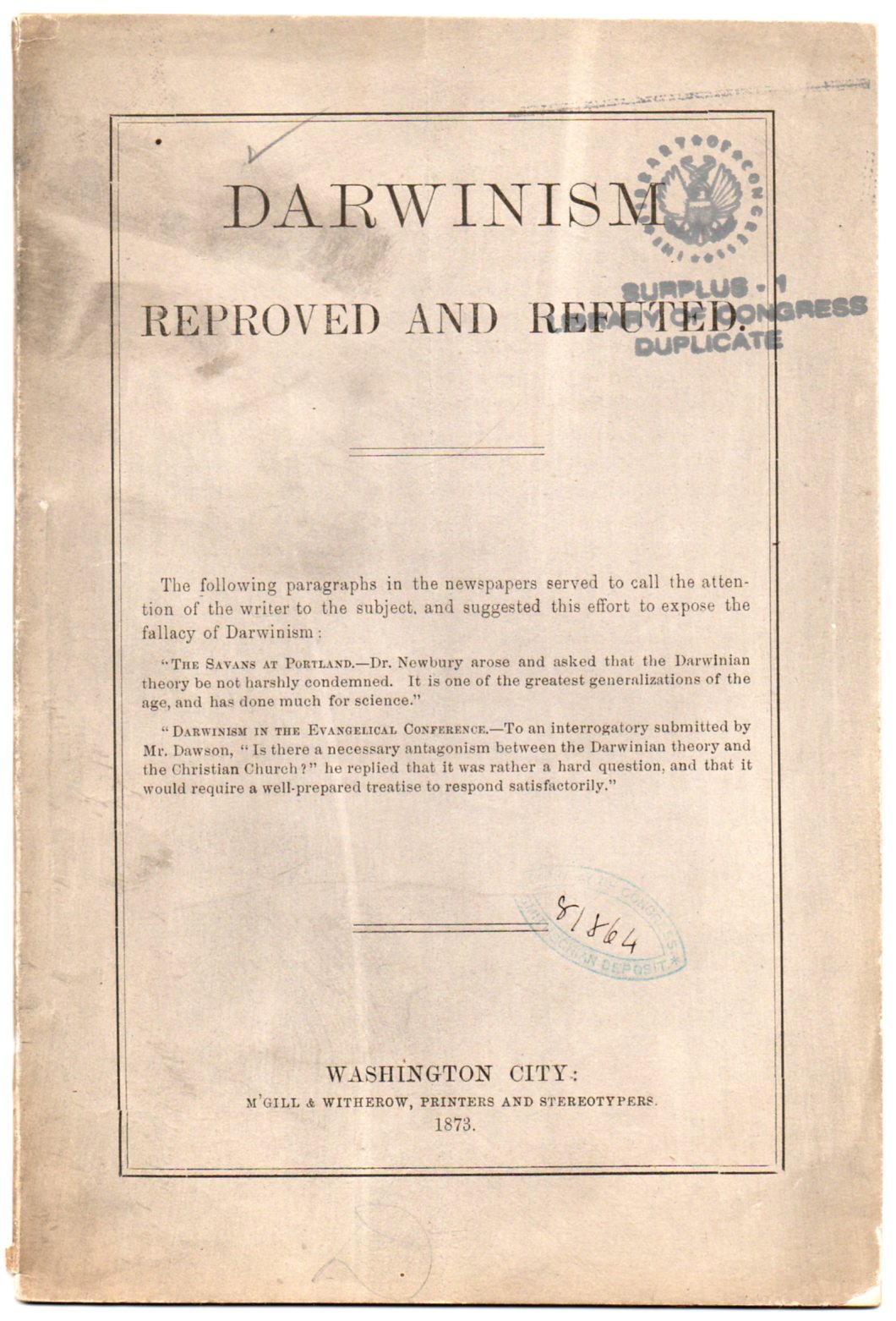
    Darwin refuted296 I wasn’t going to write anything at all about this pamphlet, but the vocabulary was so strong and vehement, and reminded me so much of what we can read in today’s daily press, that I thought to at least pick out some of the choice morsels. 

    Darwinism Reproved and Refuted, published in Washington D.C. in 1873, is left without any attribution to the author, the writer not caring to sign his/her name, not even to use as the wood into which some shingle with a weak social sciences/psych/religious Ph.D. could be nailed.  It is just left to the imagination or indignation that the writer didn’t or couldn’t feel confident enough to actually sign their work.  It is also one of hundreds if not thousnads of anti-Darwin vehemence–there is a chance I guess that there were more of these things written than there are visible-to-the-naked-eye stars in the night sky.  (The original pamphlet is available at our blog bookstore.)

    The author has little room for Mr. Darwin’s work1, clearly on a super-rant over The Descent… and on the theory of evolution, using such colorful words in runny purple prose like “\repugnant, revolting, unsophisticated, outrage, deadening influence, peculiar, fallacious, cunning”–and this coming from the first two paragraphs.  Needless to say, even though  the writer was too weak to sign their name, they did have some strong opinions. 

    “Utterly false, radically and fundamentally wrong, futile in the extreme, unreliable, ungrounded, false, short-sighted (in relation to god), ridiculous…” continues the author. The endowments of the Creator stuff doesn’t work its way in until the third page, when the adjectival and adverbial assault was already on it way, all without the assistance of any scientific counterexamples–but then the rest of the work is dedicated to proving the godless nature of Darwin’s work and its escape from scientific reality.

    We find this:  “Evolution is founded on materialism, which is another term for atheism”….”let this doctrine be compared with the Mosaic account of creation, and then the student of nature determine if he will choose for his progenitors Darwin’s pair of ring-tailled [sic] monkeys, or ‘Adam…’ “

    And so that’s what we get to in the refutation:  the Creator.  Old version of a contemporary complaint to get Darwin tossed out of classrooms to protect the youth of America, replacing it with divination.  The author writes:  “In the investigation of nature which is the proper province of the scientist, the most effectual method of studying it, in order to render this subject clearly intelligible to the human mind, is to regard the economy of nature as a form of government, having God for its founder, its Supreme Ruler, and Law-giver.”

    There’s not too much one can do with that, and even though it sounds antique, isn’t necessarily so, because the philosophy exists today, only with fewer commas. 

    Notes:

    1.  By 1873 Darwin already had produced an epochal body of work, including but not limited to On the Origin of Species by Means of Natural Selection, or the Preservation of Favoured Races in the Struggle for Life (1859),  On the various contrivances by which British and foreign orchids are fertilised by insects (1862), On the Movements and Habits of Climbing Plants  (1865), The Variation of Animals and Plants under Domestication (1868), The Descent of Man, and Selection in Relation to Sex (1871), and  The Expression of Emotions in Man and Animals (1873)


  • Bad Ideas Department: Restructuring the City and the “Terminal Box”, Neopolis, 1938

    JF Ptak Science Books   Post 1421

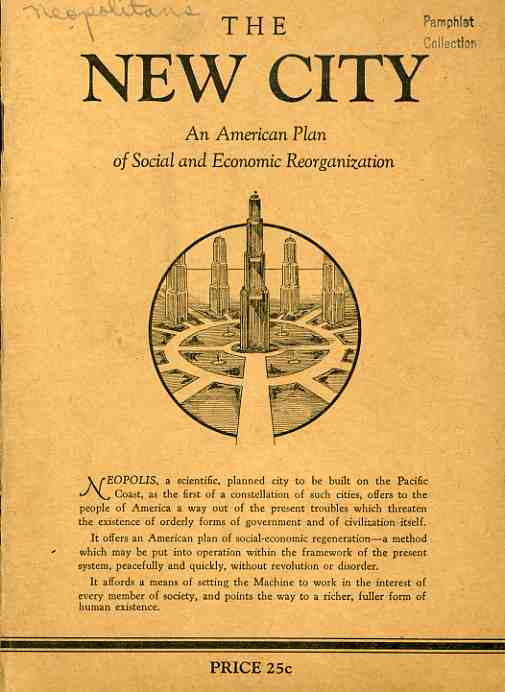
    0-blog---Nov 14 new city075 The unnamed author of The New City, an American Plan of Social and Economic Reorganization (1938), makes a hard-edged plea for the formation of a new American society—and by “new” the author really means it, advocating a different economics, social structure and even the physical development of new cities and abandonment of the old physical and philosophical structures. (The rare original of this deterministic futuristic publication is located at our blog bookstore.)

    Sprinkled among the Swiftian notions of rightness, quixotic lancings of social ills and a general bombardment of the structure of society are some interesting and isolated points: 
    “America is the supreme user of the machine…ravishing the irreplaceable wealth of one of the earth’s richest continents, tearing down forests, looting the treasures of coal and draining the reservoirs of oil and natural gas, by methods scandalously wasteful.” 

    This leads the author to the Depression, “a decade of demonstration of the profit system’s inability to deliver to the people the needs of life, a painful heartbreaking demonstration”.  0-blog---Nov 14 new city076

    It is the profit-deliverers, not the machines or people, who are to blame.  One way of addressing the distribution system, was, unfortunately, Russia—“a form if society set up to overcome this impasse of the capitalistic system of production and distribution”.  Of course the Russians–the Soviets–were just in the middle of their enforced starvation/gulag/brutalization period under Josef Stalin, the gigantic negative parts of which were still in general not known to the great unwashed. 

    The unnamed author dips lightly into Socialism, and then into Fascism and Nazism, though the only thing he/she really has to say about the later two is that “their answer [to economic woe] was in the seizure or control of the means of production by the state”, their own brutal means skipping off unnoticed into a pinkish glow, though the loss of personal freedom is “disdained”. 

    The New City is actually a new world order, a new governmental form to take advantage of technological advancements leading to “nationalized urbanization” The first city in this new order is Neopolis, and this pamphlet was a call to those who would stand as its citizens.  (There’s actually a sort of application form, though all it really is a bill-of-sale for ordering more copies of the New City pamphlet.)

    Even though the pamphlet is easily obtained, membership, the possibility of being a Neopolitan, is something entirely different.  The difference is actually exceptional, perhaps the most extraordinary thing about this whole misguided idea.  “Membership is to be carefully controlled at all times” we read. . “It is not desired to build up a huge and unwieldy membership of poorly-assimilated elements….interesting educational instruction…with tests to determine the fitness of the member for loyal, cooperative activity, leading, necessarily, to the elimination of those who may be found undesirable”. 
    That’s some pretty muscular, steroidal stuff, particularly after such a glancing blow against the Soviets and Nazis. 
    0-blog---Nov 14 new city077
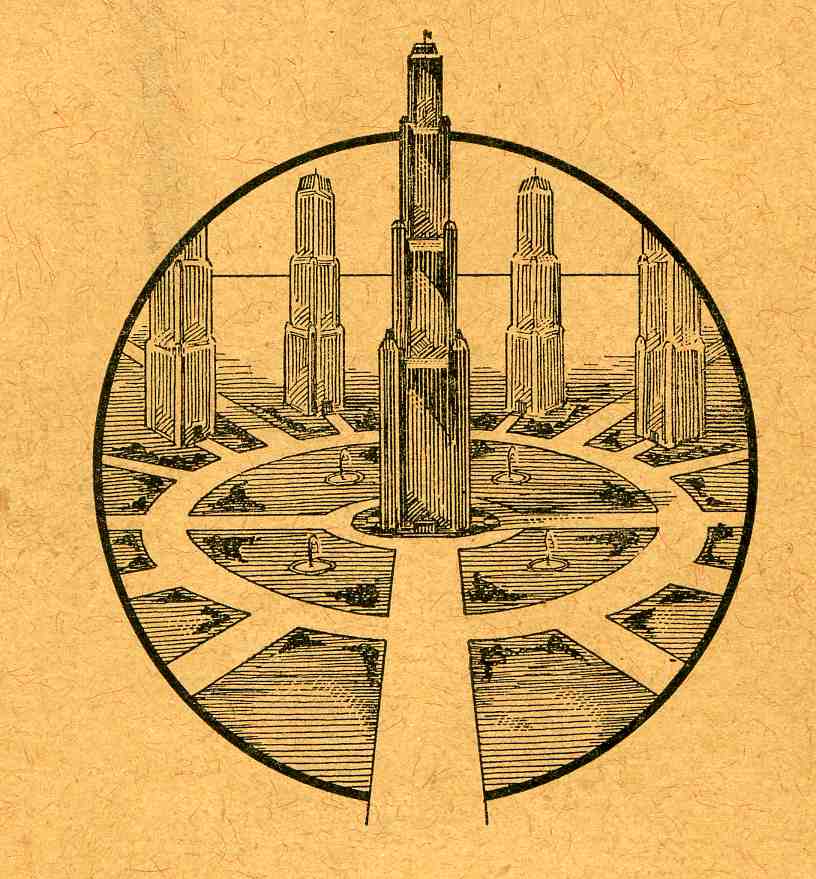
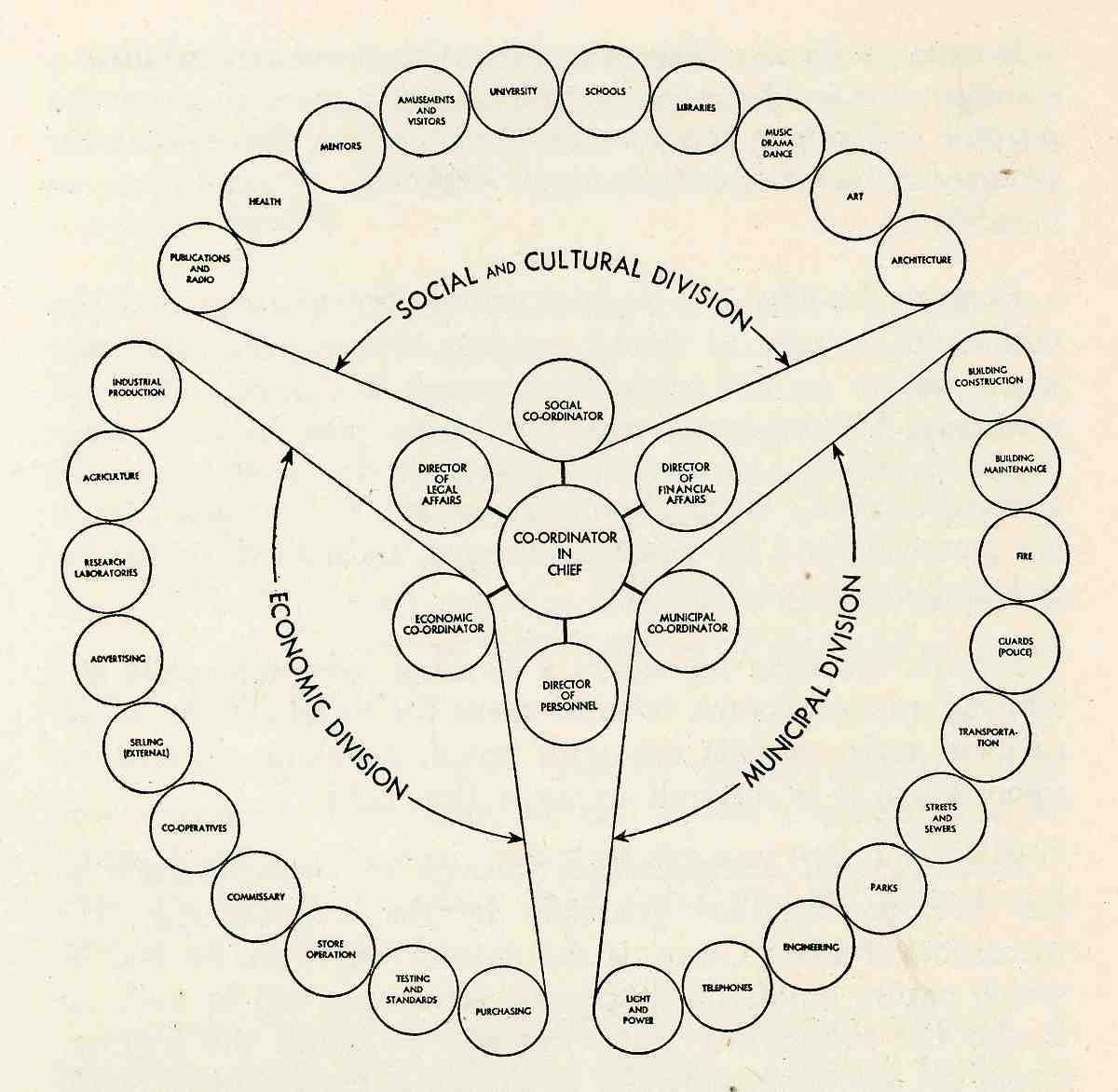
    Since this is just an “abridgment” of a soon-to-be-written 250-page explanation of the concept, the complex and concentric organization of society is left mainly to the drawing of its plan, the physical layout of the city based upon this ideal. 

    The Seattle-based author never did quite make it past page 29, never did name themselves, and never provided a concrete place where all of this heady stuff was being think out.  It is a sort of pretty design in a creepy/queasy way, there on the front cover, but that’s about as far as it goes.  If anyone actually did send any money to this quack thinker, it wound up in a nicely metaphorical place:  at “Terminal Box 3463”. 

    This may be the very best idea to come out of touching this pamphlet—a place where people can send correspondence regarding Bad and/or Dead or Dying Ideas: “Terminal Box ______”.  I guess that box number would be pretty high by now. 

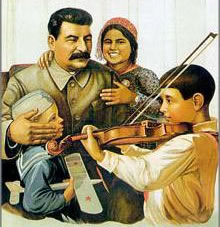
    Stalin20 (Uncle Joe, before he killed the children, and dozens of millions of others.)

  • How YOU Can be One of the 97% of Americans Who Survive Nuclear Holocaust, 1961

    JF Ptak Science Books  Post 1378

    Books_004

    Well, I’d think that this issue of LIFE magazine would’ve sold in the hundreds of millions with the promise it makes here–right on the front cover–that 97 out ot 100 Americans could survive a nuclear slugfest–if only they were to follow the instructions of this article.

    We only get to the marrow of the issue after wading through a few articles and ads for Hires Root Beer, Maiden bras, silk skin girdles, Bayer aspirin, Schlitz beer, Old Taylor Whiskey, Ge “telephone color” night table clocks, scotchguard raincoats, Lanolin Plus Hair Spray Net, Marja bras, Red Rose cologne, nylon carpet, Maidenform girdles, NY Life, Sealy mattresses, Metrecal, Corn Flakes, Hammond organ, John Hancock Life Insurance, Friskies dog food, Cahmpion spark plugs, Budweiser, BF Goodrich tires, Tang, RCA, Anacin, Speedstick deodorant, Castro convertibles, B+W Whiskey, Kodak and  Vista TV.  Probably I missed a few. When you get to the big ad for Royal Crown Colas with the white-hatted BBQ cook getting a kiss with a big wiener on a stick, you’ve arrived at the article on saving the life of your family and your country.

    If only we could build enough shelters–and by “we” I mean “you”, and build them properly, and outfit them, and are able to get to them in the 14 minutes that you might have to get to your destination, and you stay down long enough and the attack light enough, then probably some people will survive.  How these folks got the 97% number is an issue of faith–I think that they must’ve steeped themselves in mystical prayers to secretly reformulate the percentage “23” into “97” without actually telling anyone.  I figure that this was the key to survival.

    I’ve written many times on this theology of survivability (see the series on atomic and nuclear weapons on this blog, here) but seldom does one see such an incredible, indefensible claim such as this, and splashed across the cover of America’s most popular picture magazine, accompanied by a letter of support from Camelot.  Somehow in the great looming nuclear confrontation that actually comes to pass, somehow “only”3% of the population doesn’t make it.  Of course if there was a natural catastrophe in which 3% of the country was killed–that would be about 4.5 million in 1961 population or about 9 million in 2011–it would be an absolutely phenomenal tragedy. (Ofcourse there were many European countries that lost more than 3% of their populations during WWI and WWII, but that’s another story).  But to escape nuclear Armageddon in this country with 3% loss is much better than other government figures published around the same time that predicted casualty rates exceeding 100 million. 

    But hearts and minds are won abroad and at home, so the homefires must have been stoked to prevent a colossal depression from befalling the country, which of course goes hand-in-hand with the policy of Mutually Assured Destruction, with all policies somehow making it possible for the rush to the abyss to be the one thing that was keeping us (in a Zeno-ish paradox) from falling into it. 

    But 97%?  You can read the article here from page 95 for the full story. 


  • Outrageous Analogy Dept: How Hitler Can Help in the Post-Nuclear-Attack USA, 1967

    JF Ptak Science Books  Post 1371

    “Understanding, n.  A cerebral secretion that enables one having it to know a house from a horse by the roof on the house.  Its nature and laws have been exhaustively expounded by Locke, who rode a house, and Kant, who lived in a horse.”  Ambrose Bierce, The Devil’s Dictionary

    “The German experience in reordering an industrial economy for total war in the midst of conflict offers insights into planning for postattack conditions”–Stanford Research Institute, 1967

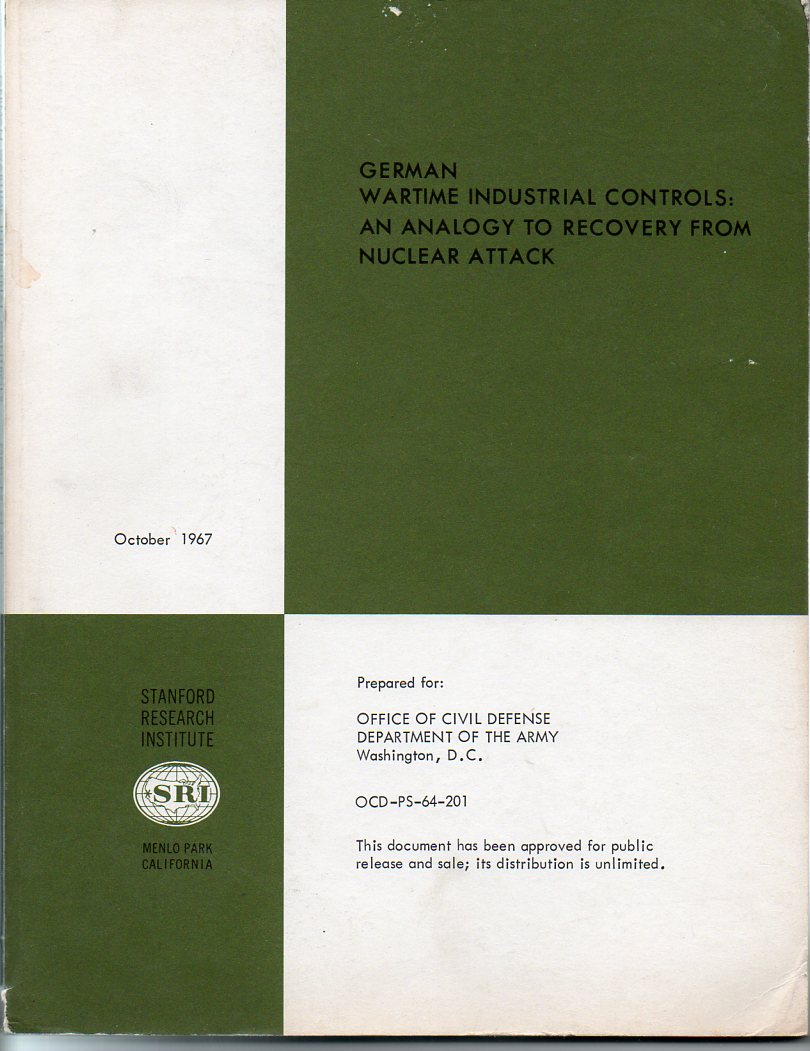
    If such is the case for understanding, then I think that those responsible for the pamphlet German Wartime Industrial Controls:  an Analogy to Recovery from Nuclear Attack intended to ride their house in the Kentucky Derby and upgrade the kitchen in their horse.  After all, ideas are just connections among words, though it seems that here it might be just between words, or suggestions between letters, although the words might all be privately defined. [The original document is available form our blog bookstore, here.]

    This pamphlet is another one of those monuments of living proof showing the impossibility of defining where the “bottom” might be in the well of bad ideas–even when you strangle this Nazi business into its own, narrowly-defined category, trying to extricate the logic of its titanically bad idea, the pamphlet instantly ignites when removed from its ether-y vacuum of under- and over-think and  exposed to oxygen. 

    It was the Stanford Research Institute (Menlo Park, California) that produced this thing, carved whole and with precision from a quivering block of fat and federal dollars.  If the title doesn’t stop time, the first page will.  There we are introduced to Albert Speer (1905-1981), Minister of Armaments and War Production and architectural joyboy for Adolph Hitler.  We are told about the basis for his exceptional achievement in reordering the German economy to all-out war production thus:

        “…a vast armament production would have to be obtained through scrupulous attention to increased production efficiencies and the most effective use of fixed supplies and essential materials and skilled labor.  Speer developed a unique variant of conventional economic planning for a controlled economy and applied it successfully…” (from page 1.)

    Speer, a high-ranking Nazi party member since 1931 and intimate of Hitler, was convicted of crimes against humanity and war crimes at the Nuremberg Trials in 1946, and sentenced to 20 years at Spandau prison, not the least of which was for his broad and acknowledged use of slave labor.  The “P” in the square standing on its edge at the top of this post is the symbol worn by a Polish slave laborer–there were some 12 million people abducted/arrested/stolen by the Nazis to work on various parts of German society. 

    Buna069

    Perhaps this was part of the “scrupulous” detail and the “effective use” of fixed supplies that the author of the Stanford paper was writing about?  Surely anyone studying Speer’s methods would have known this–that the author would chose to ignore this sets every moral compass everywhere into free spin. 

    But such is the realm of the coin in the ugly, a bubbling bulk of post-attack scenario scripting done at the taxpayers’ vast expense in waging the Cold War is littered with vocabulary meant to redirect the attention, essentially to change the meaning of words in discussing the outcomes of vast nuclear war.   For example, we find the phrases “period of fractionation“, “the break in traditional economic time series” and “production degradation” in certain documents  (which I discuss in an earlier post here)  used to describe the breakdown of the American social and  industrial base following a nuclear war.. These are just three of thousands of such examples, not the least of which is nuclear “exchange”, which is a conceit suggesting something less than the U.S. and the Soviet Union blasting away at one another with spectacularly deadly weapons. (Perhaps the thinking is that such a situation wouldn’t necessarily be a “war”, and so it is something less than that, like the Korean War really wasn’t one but a U.N. policing action.)

    But enough of this, were not even a full page into the report, which I remind you tells us we can find useful lessons in Hitler’s monstrosity, particularly about war production–that is producing materials post-attack so that we can either defend ourselves or attack again, all by taking a look at Germany, and particularly  “the improvisation by gifted industrialists driven to the limits of their power and imagination” (page 12 of the report).  It is difficult to want to read this report because everywhere I look there are Orwellian Ghosts–half-referenced facts wrapped in Newspeak, available at random.  For example, on page 31, in discussing oil and rubber production, I find:”The output of the new synthetic Buna-s rubber was increased to 22,000 tons in 1939 and to 69,000 tons ion 1942 by accelerated production of new plant.”  The “new plant” is the think tank version of “new plants” (the plural is left off of many things for unknown reasons but I guess mostly for a form that seems to have more economo-cache than the simple English expedient), which is a very simplistic way of telling of the enormous production battles in Germany to come up with their own, home-brewed (and not foreign-dependent) rubber (the super-necessity of all things military).1 The other part not mentioned here in what seems to be a disingenuous appraisal of Nazi rubber production is the increase in 1943/1944, particularly from the “new plant” at Monowitz, which was also known as the Buna Works, and better known yet at Auschwitz III, where slave laborers were put into work-or-die situations producing Buna-s as part of the overall Auschwitz complex of forty camps and subsidiaries. 

    Here’s another example, tying Hiter and (Fritz) Todt and Speer together–Todt was “one of Hitler’s most important administrators”, who would be replaced by Speer “who had been an assistant to Todt”–though not mentioning that Todt had used millions of slave laborers (Zwangsarbeiter) in doing his “administrating”.  Speer would do the same.  

    ANd so on and on this paper crawls until it reaches its end, which is published on detachable sheets on pages one through three, pullaways for the executive summary so that the text and subsequent documentation and analysis could be discarded.  It seems to have been a waste of detachable paper when the whole thing could be thrown away at once.  The author makes a case for studying the Nazi situation because it was the closest thing in modern times to use as an analogy to the possible scenario in America after nuclear war, and then launches into an analysis of Nazi “competitiveness”.  The author never comes close to making a compelling argument for the closeness of fit for its major assumption, though, and as far as I can tell the logic of it just doesn’t work,which makes the rest of what follows unnecessary.  I guess they could’ve kept their federal grant by identifying ideas that wouldn’t work as America post-attack analogies–which is also useful–and could’ve easily used what they had here for that purpose.   But at that point I’m not sure what is the more ridiculously-titled idea–I couldn’t imagine someone reading the report on why Nazi industrial controls weren’t a good analogy, because it seems tautological and unnecessary; and yet the opposite is what gets thought about and published, in all of its error and omission, swimming in its own turgid muck.  This is what people were thinking about in 1967 when, evidently, houses didn’t have roofs. 

    ______

    1.  Germans were forbidden to import chemicals and food from 1933-1937, forcing Germany industry to come up with their own versions of things like rubber, meaning that there were many new places in which Buna-s (BUtdiane & NAtrium) was produced.  That rubber production increased so much was a function also of not being able to import the stuff. 


  • The Nonsense of Strategically Meaningful Phrases–Finding Pillows in the Post-Nuclear-Attack World, 1968/9

     JF Ptak Science Books  Post 1356

    Caveat: this story is of course forever and best told by Stanley Kubrick’s Dr. Strangelove.

    Researching a study on the usefulness of the actions of Adolf Hitler amd their application to the U.S. government’s planning possibilities for post-nuclear-holocaust existence (German Wartime Industrial Controls: an Analogy to Recovery from Nuclear Attack, Stanford Research Institute, 1968, review coming soon), I came across the following related studies, all of which are available at the Storming Media website, here.

    The titles are incredible, the abstracts more so–but some phrasing in the abs were absolutely, sensationally, bad. 

    I can imagine a play, a scenario leaning heavily on Samuel Beckett’s Krapp’s Last Tape, men sitting in front of reel-to-reel tape recorders, listening to themselves describing the impossible language that they were using to transmit the ideas of surviving nuclear Armageddon–brilliantly lit from single spots directly above the seated figures and with all else absolutely black, they play these snippets, and try to explain what the language actually meant. Perhaps they try to talk over the recordings, only to have the recorded audio get a little louder, and multiply, a la Steve Reich’s Come Out.

    I understand that in order to talk about a complicated and complex landscape that you need to establish certain words and phrases to mean one thing and one thing only so that information can be transmitted and analysis with common denominators can take place.  At the same time these phrases loosen the reality of what they represented, removing the implications of fighting such a war, and thereby making the button-pushing a little easier.  Perhaps the launch business becomes more automated this way, even in considering the theoretical end of the actions of nuclear war.  Like the soldiers who were endlessly trained to turn the keys and punch the buttons at this country’s x-number of launch facilities, trained countlessly and tirelessly, so that when the real call came in they could just do the job, follow the instructions as they had 2,000 times before, and launch the missiles that would kill tomorrow.

    And so in 15 minutes I found these impressive examples of polyprhases that meant both something and nothing:

    Paper 1

    “Period of fractionation”–describing the civil circumstance directly after nuclear exchange.  Found in Scenario for Postattack Social Reorganization, : Raymond D. Gastil; William Schneider Jr; HUDSON INST INC CROTON-ON-HUDSON N Y

    This paper also provides us with “historical disasters that were somewhat comparable to nuclear war” as well as “return to normalcy” as the sixth part of a six-part post-nuclear landscape.  And this is all just in the abstract. 

    “Abstract: This approach to postattack analysis was meant to explore the possible contribution that a documented scenario could make to postattack research on organizational problems. Using knowledge of historical disasters that were somewhat comparable to nuclear war, we divided the scenario into the following periods: Pre-attack, the disaster; period of fractionation; survival and reconstruction; innovation and control; and, return to normalcy. The scenario covers a period of more than two years (1970-1972), and the attack was OCD’s CIV-LOG ’65 in which 2000 megatons were used. [Emphasis mine.] Appendices explore more analytically certain issues raised by the scenario. (Author)”

    Paper 2

    “The break in traditional economic time series…”  Meaning that there were new timetables in how things got done and how we communicate, in business, following a nuclear war.  Found in: Information Needs for Postattack Recovery Management, 1968.  {Actually the entire abstract is worth a quote.]


    Abstract: “The study is concerned primarily with information needed for monitoring the effects of actions taken by governmental bodies at federal, state, and local levels in a postulated postattack period and for providing business management with the overall information it needs for making business decisions in the absence of undistorted indicators of economic developments. The break in traditional economic time series and the need for drastic reorientation of industrial efforts in ..”

     Paper 3

    “interdiction of normal business channels” Found in Institutional Factors in Total Vulnerability,  1968

    and 

    “None of the problems [in surviving nuclear attack] would pose insurmountable difficulties but all would require prompt attention and appropriate resolution within the first two months after a nuclear attack”

    Authors:  Francis W. Dresch; Hazel B. Ellis; STANFORD RESEARCH INST MENLO PARK CA

    “A systems approach was used to identify institutional problems likely to be neglected in analyses of the vulnerability of physical systems at risk from nuclear attack. This report discusses six specific problems (solvency, credit, business organization and management, interdiction of normal business channels, legislative imbalance, and disruption of election machinery) and their implications for the assessment of national vulnerability. None of the problems would pose insurmountable difficulties but all would require prompt attention and appropriate resolution within the first two months after a nuclear attack.

    Paper 4

    “nature of demands for labor in a postattack world” and of course “post-attack economy” found in Preliminary Estimates for Labor Demands in a Post Attack Economy, 1968. Authors:  Stephen Baer; INSTITUTE FOR DEFENSE ANALYSES ARLINGTON VA PROGRAM ANALYSIS DIV

    “Abstract: This is an informal exploration of ways to determine the nature of demands for labor in a postattack world. An attempt is made to determine the needs for labor and the demands of consumers after a nuclear attack based on preattack patterns, community sizes and income levels. (Author)”

    Paper 5

    “using retired boxcars for simulating urban area fires” [ignited by thousands of megatons of explosives] found in Feasbilities and Representativeness of Large-Scale Boxcar Burns, 1968

    Authors:  Frederick Salzberg; IIT RESEARCH INST CHICAGO ILL ENGINEERING MECHANICS DIV

    “Abstract: the study deals with the feasibility of using retired boxcars for simulating urban area fires. Considerations are given to the representativeness of boxcars fires, development of an experimental plan, and a cost analysis. An outline is given of experimental series designed to study various aspects of urban area fires by means of boxcar fires. Included are studies of fire spread, development of group fires, and behavior of mass fires. (Author) “

    Paper 6

    “production degradation” found in Industrial recovery Model Constraints, 1969.

    “Abstract: The vulnerability of a facility to nuclear blast damage is determined by identifying the industrial facility with a structural type and the type of processing equipment contained therein. Equations are extended to estimate production degradation. Damage repair data and analysis are reviewed and a straight-line function is suggested for relating repair effort and elapsed repair time to overpressure. The functional relationships of industrial recovery are analyzed with respect to target …”

    Paper 7

    “problems of debris removal to achieve specified objectives in urban areas” found in Debris Removal in Civil Defence Operations, 1969.  Authors:  George E. Wickham; STANFORD RESEARCH INST MENLO PARK CALIF

    “Abstract: As a part of the Five-City Study, this report examines the problems of debris removal to achieve specified objectives in urban areas. It details the necessary steps for determination, and provides a quantitative value of the total resources required to accomplish clearing operations. It illustrates the application of methodology developed in research report titled ‘Debris Removal Civil Defense Operations: Volume 1’ so as to provide realistic appraisals …”

    Paper 8

    “disorganization inevitably following a nuclear war” found in Capabilities of Fire Services to Limit Damage from Nuclear Attack. Authors:  S. B. Martin; R. W. Ramstad; URS RESEARCH CO BURLINGAME CALIF

    “Abstract: The report emphasizes the dangers to eventual reconstruction that are posed by the disorganization inevitably following a nuclear war. What can go wrong in this reorganization period is examined by the use of scenarios and analogy. It is then suggested that during the crisis period preceding a nuclear war a number of useful actions enhancing the chance of postattack recovery should be undertaken as part of an emergency mobilization for …”

    These are just eight examples–the problem here is that nearly every paper I looked at on this first page of papers from Storming Media could be used as examples of massive underspeak…the real issue being that there were another 100 pages of these things. So its not as though I even cherry-picked these things–they were all in line on the front page.  That’s the scary part–to see how deep the depth was of these things, an infinite depth of finite measurement. Something in nothing. 


  • “My Zombie ‘Phone to Deadville” and Tales of the Infinite Boneyard, by Tom Edison

    This post unexpectedly but now not unexplainably appeared on my blog this morning.  It was written last night by Thomas Edison, and sent from 15 minutes in the past.  He wanted to lay to rest the idea that there is no such thing as the afterlife. This might seem paradoxical that a ghostspirit was writing from the near-past about the impossibility of communicating with the dead, but he makes a strong case.

    In his email Edison writes/wrote:  “It’s kinda like Olbers Paradox in a way:  how can you have a dark night sky when there are so many stars? Well, that’s because the universe is infinite and their light not; that’s what it is like with the dead. As it turns out–surprisingly!–living people are finite but the dead are infinite, because we’re dealing with the past possibilities and former universes.  So the dead are everywhere but just don’t have enough juice to be heard.  Unless of course they have access to the internet, which is sort of like heaven, and which is where I now live, and which also offers the possibility of being dead in the future while being still dead in the past. Its good being multi-dimenional electricity.”

    Edison concluded with a picture: “You know what electricity looks like when you’re inside it?  Here it is1“

    https://historyofideasblog.com/a/6a00d83542d51e69e2011168689fbc970c-500wi

    Thomas Edison did–once upon a time, in a land far far away–spark a world-wide semi-frenzy when he told a reporter that he was making a device that would be capable of detecting and perhaps even communicate with the dead. 

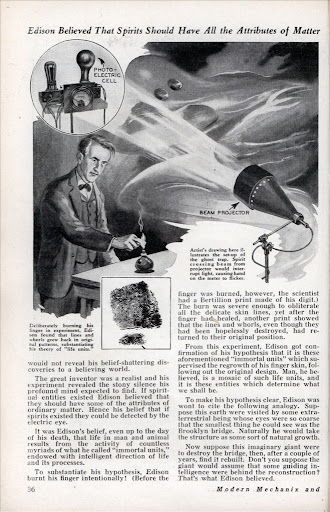
    Edison the agnostic, Edison the non-believer, Edison the anti-spiritual, was hardly poetic on topics of the soul (once referring in 1910 to the brain as a “meat mechanism”1a) and would never have wasted his time on such a thing as a device to detect the dead–unless it was all in fun, which is what this was.  The old man was having a little wicked fun with a reporter, A.F. Forbes (later the founder of Forbes Magazine and father of the father of the  failed and forever failing presidential candidate), who dutifully reported it (“Edison Working to Communicate with the Next World”) in a 1920 issue of American Magazine. He said: “…I am inclined to believe that our personality hereafter will be able to affect matter. If this reasoning be correct, then, if we can evolve an instrument so delicate as to be affected, moved, or manipulated…by our personality as it survives in the next life, such an instrument, when made available, ought to record something.”2

    The story, as they say, had “legs”, and was re-reported many times, reaching even into the Scientific American: in 1921:  “I don’t claim anything, because I don’t know anything…. for that matter, no human being knows”  Edison said.  “But I do claim that it is possible to construct an apparatus which will be so delicate that if there are personalities in another existence who wish to get in touch with us… this apparatus will at least give them a better opportunity.”

    Indeed.

    Later in 1921, A.D. Rothman for the New York Times wrote a story that had Edison constructing a machine that was sensitive enough to detect a bit of the “one hundred trillion” “life units” that pooted away from the body on death, and which evidently were (a) detectable, (b) capturable and (c) meant anything beyond being a+b. 

    I suspect that Edison (who once remarked that he didn’t know what the word “spiritual” meant) was happy with this outcome, the world looking for him to turn the afterlife inside-out, to make it observable, feasible, concretized–to show that it existed.  And who could blame them?  Edison as an inventor and as a master of a group of 50 other inventors and advanced assistants had an enormous track record of  revolutionary successes–why not this?  Some of what he brought to bear on the world–electric lighting, the phonograph, and so on–must’ve seemed almost as deeply science-fictional as weighing the dead.  Perhaps his conceit in this whole episode might’ve been in an attempt to show how similar the belief was in his “invention” to that of any (other) religion.

    ________

    1) This illustration is actually from Praxis Artolleriae Pyrotechnicae, printed in Osnabruck by Tilman Buchholtz for Johann Georg Schwaender, is one of those beautiful books of horrible things; the “arrows” on this device of ear aren’t showing the direction of rotation; they are actually spear tips looking for some flesh to tear.

    1a) In an interview with Edward Marshall in the New York Times, 1910.

    2) Beyond knowing that this was all outside of Edison’s interests, we know it was a prank because he said so, in the New York Times, in 1926: “that man came to see me on one of the coldest days of the year…his lips were blue and his teeth were chattering…I really had nothing to tell him, but I hated to disappoint him so I thought up this story about communicating with spirits, but it was all a joke.” NYT, October 15, 1926, page 11. I’d reproduce the whole thing here but ProQuest seems to be yelling at its readers not to. 

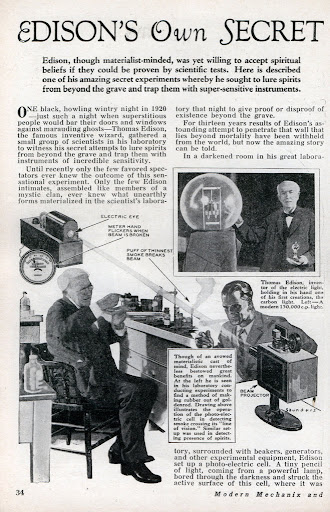
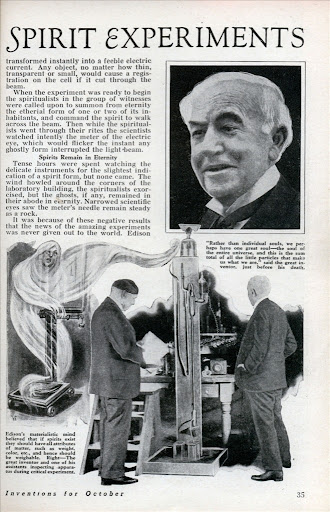
    3) Here’s a bit from Modern Mechanix (1933, two years after Edison’s death):


    ·Posted by :

    ·in:

    —