A Daily History of Holes, Dots, Lines, Science, History, Math, Physics, Art, the Unintentional Absurd, Architecture, Maps, Data Visualization, Blank and Missing Things, and so on. |1.6 million words, 7500 images, 4.9 million hits| Press & appearances in The Times, Le Figaro, Mensa, The Economist, The Guardian, Discovery News, Slate, Le Monde, Sci American Blogs, Le Pont, and many other places… 5000+ total posts since 2008.

Category: Bad Ideas

  • Blank & Empty Things Series: The Militant Christian Patriots, Hitler and Saving Britain from Itself, 1938

    JF Ptak Science Books  Post 1323

    [Part of our series on the  History of Blank, Empty and Missing Things]

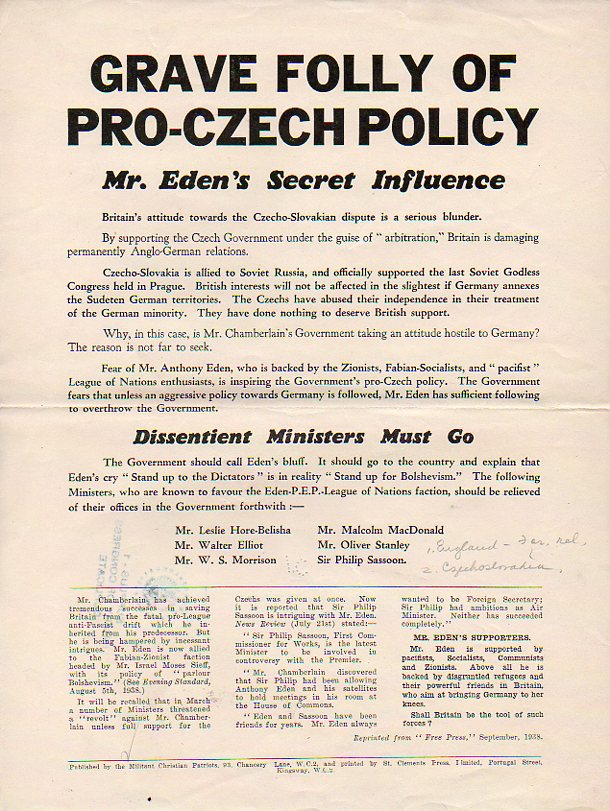
    The flag of the group Militant Christian Patriots may tell you something about them faster than even their name:  it was a large bright red field, with a white circle in the center, in the center of which was a simple black cross.  Drop the horizontal bar to the middle, elongate it, shrink the vertical just a tad, and turn the ends of each bar 90-degrees at 75% of their length,  et voila, you have the Nazi flag. 

    This unsigned circular blasts the “appeasers” from inside the government of the valiant Mr. Chamberlain, who is supported by the Militant Christian Patriots in his stance to keep Britain out of the developing (and developed) trouble brewing between the Nazis and the Czechs.  The piece of paper that Chamberlain held aloft at the airport, claiming victory with his appeasement of the Nazis and happy with the firm trust in Hitler’s signature, was a good document to start with for this extremist group.  Next, they would have Mr. Anthony Eden (who wound up resigning his position until recalled by Churchill when he finally and thankfully took over the office of PM from Chamberlain in May 1940) removed, what with his alliances to Fabian-Zionists and all.  The other ministers targeted by the Militant Christian Patriots were among those others who supported Eden and worked against Chamberlain–undesirables, “pacifists, Socialists, Communists and Zionists”.   The other branch of their unholy alliance were “the disgruntled refugees and their powerful friends in Britain, who aim at bringing Germany to her knees”, because, somehow, members of Parliament were somehow responsive to disgruntled refugees.

      Fascists--czecholosvakia document340
    [The original document is available for purchase from our blog bookstore.]

    File:MunichAgreement .jpg

    This is a photo of Chamberlain at the airport with Hitler’s signature, telling the world, basically,  that “it was up to the Czechs, now”, somewhat confident in the fatal Munich Agreement, trusting Hitler to end his European territorialism .  The occupation of Czechoslovakia came just months after the Austrian Anschluss of March 1938, but, well, the Prime Minister had Hitler’s signature.  It would not take long for this picture, and for the newsreel, and for Mr. Chamberlain’s face and even his very umbrella, to be used as iconic symbols of disastrous failure. 

    The Militant Christian Patriots were faithful to none of the words they used to identify themselves–after all, calling yourself something does lead to some sort of expectation…


  • The Ghetto as a “Threat to Tax Values”–On Missing People

    JF Ptak Science Books   Post 1252 (Rapid Post)

    Part of the series Blank, Empty and Missing Things

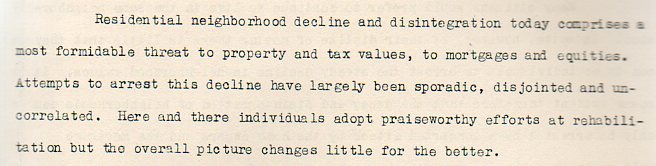
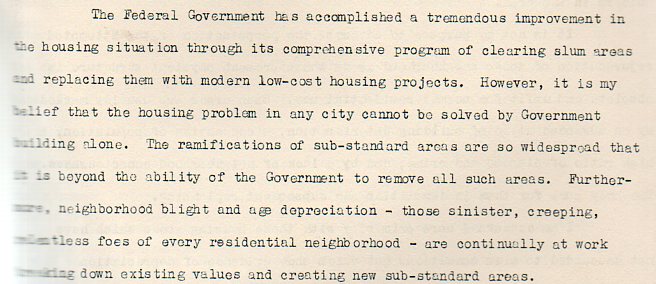
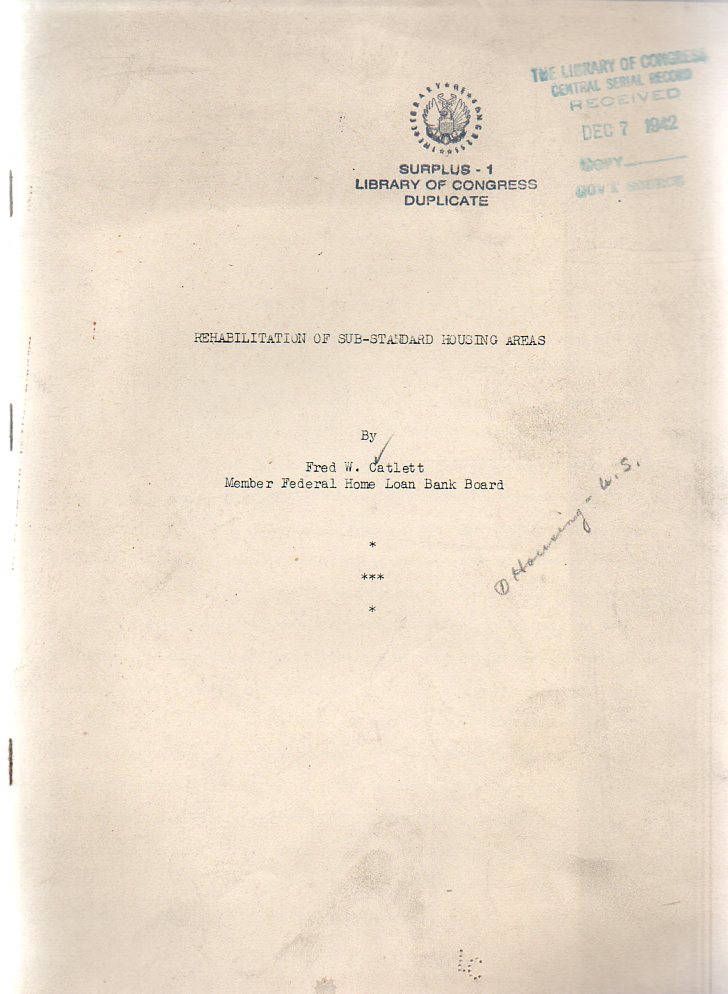
    Fred Catlett’s Rehabilitation of Sub-Standard Housing Areas (1942) isn’t so much about “rehabilitation” of the houses themselves but to their  neighborhoods and surrounding areas–the “inadequate” housing would be demolished, disappeared, replaced, to re-insure the valid tax basis of the larger area/neighborhood.  Nothing is said about where the original people would go while their old neighborhoods were being razed or whether or not they would return to the new housing. 

    Jghetto study b961 The vocabulary here isn’t so surprising in and of itself, but rather with teh overwhelming completeness of it.  I’d suspect that at some point Mr. Catlett  (“Member Federal Home Loan Bank Board”) would throw some sort of bone to the interests of the occupants of those substandard houses, some interest or emphasis to the people involved.  And even though the pamphlet is only 12 pages long, maybe 5000 words, it was certainly long enough to share some concern or kindness to the occupants of those houses.

    Jghetto study c962

    Jghetto study cover963 “Better housing projects break up slums but not until fine homes have decayed and been ruined and many thousands of dolalrs in loses have been suffered”writes the author.  I understand that the man was protecting the material bases of his institution, but ot have the entire document be absent of any consideration to the people being houses I find remarkable. (The original pamphlet is available from our blog bookstore.)


  • Examples of Colossally Bad Ideas–Sterilization, Eugenics and Soviet Racial/Genetic Domination Theory

    JF Ptak Science Books Post 1301

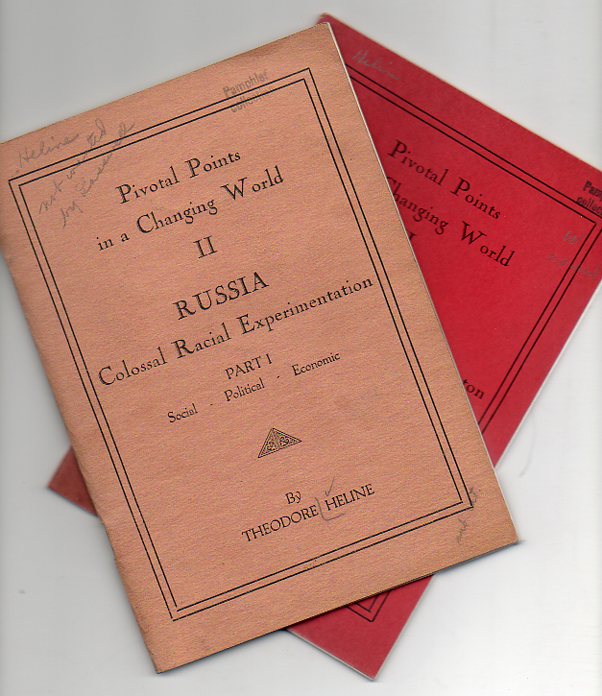
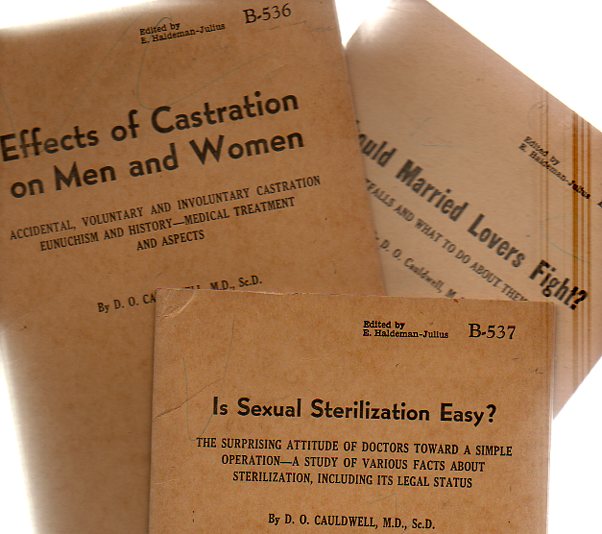
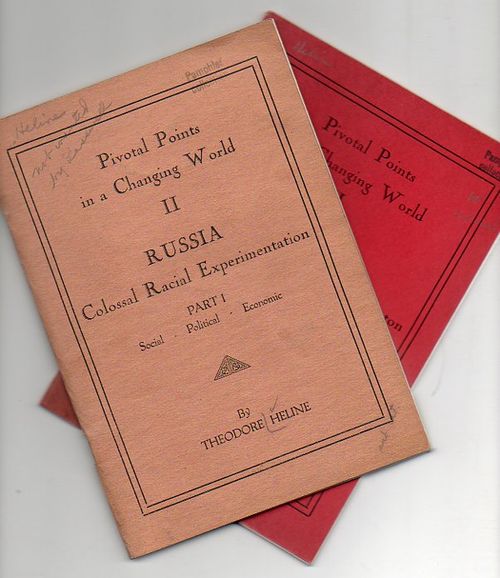
    Sometimes I need to make a post about a book simply to get it out of my system–once I’ve said something about a numbingly bad book, it usually just goes away, falling off the edge of the flat Earth rather than having its mast sink peacefully below the horizon. Such is the case with these pamphlets, one of which is so bad that its badness could not be contained in just one “volume” that it needed another. I almost wrote ” ‘little’ pamphlets” because they are, well, little–but little in size only, their badness easily transcending their size, and the idea of “size” in general. 
    Russia colossal Racial265

    [Note:  all pamphlets pictured here are available at our blog bookstore.]

    I never really liked the word “colossal” in the title of any book other than say a joke or magic book for children–outside that, I think the author is asking for trouble.  And trouble is the seat of reason in this work, which was published in 1939.  It is too painful to quote much from the text, but, right from the outset the reader gets a taste for what is ahead, being told that the New Russia (the Russians being “the most elemental of all white peoples”) is one way of saving the Nordic race, quoting The Rosicrucian Cosmo-Conception as a part-source, saying that “this race will collectively make up the sixth of the seven sub-races tat will constitute the present Aryan or Fifth Root Race” and it will “be expected to develop certain attributes that will contribute toward humanity’s ultimate perfection”.

     The author is enamored of the free voting system in the Soviet Union.  “No one visiting the Soviet’s pictorial Exhibit at the World’s Fair om New York could fail to be impressed by the dignity and attractiveness of the pictured polling places and the freshness and eagerness animating the faces of those figures who entered t perform their civic duty…” An incredible statement, validating the democratic freedom of the Soviet Union at a particular time in it history when millions of people had recently been starved to death, among other things.  The photographs of the coming genetic masters was proof enough of freedom than anything else. 

    The pamphlets grow heavier and more dense with each paragraph, the edges of the pages bending under their own filthy weight of vast stupidity and understated racial hatreds.  God and the superiority of whiteness and the gross disabilities of Catholics and Black people come along after a bit.  Jewish people aren’t even mentioned.   But the author states that it is a genetic “tick”, some sort of “genetic conscience” that comes into play that has prevented the “inferior races” (like Catholics or Blacks) to have come anywhere near attaining the presidency.  It is a spiteful, hateful pamphlet that is completely myopic about the rich, savory goodness that is the highest attainment of spiritualism/intellectualism/modernism and civilization that was the Soviet Union.  There would be little left to say about this work ten years hence, when the real stuff of the Soviet Union became more publicly common knowledge, and it became more difficult–I would think–for the author to reconcile his witches’ brew of Biblical nonsense, genetic debauchery and Cool-Whip history.
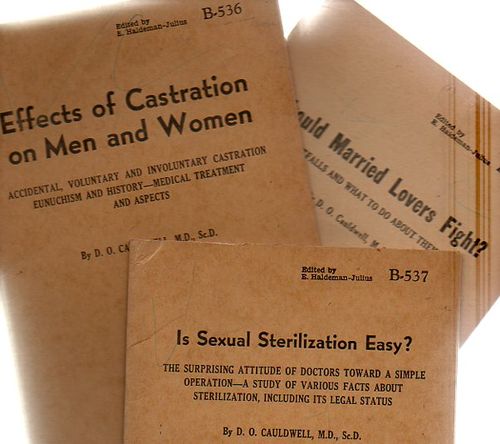
    Sexual sterilization Easy266The next assortment–all written just after WWII–asks some questions that one probably has never heard before.  “Should married lovers fight?” and “Is sexual castration easy?” are probably a pair of interrogatories that would never be heard in conversation in a hundred years of boring parties.  The contents of the pamphlets are a genuine struggle to get through–I picked my way through each for about 20 minutes before declaring defeat, except that I know enough to not have to think about these works again.

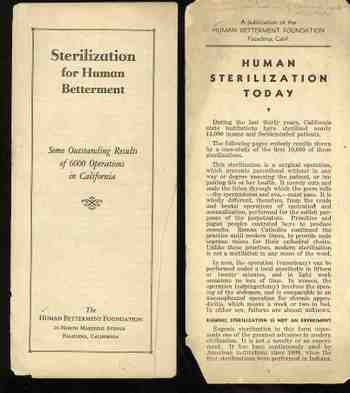
    The pamphlet Sterilization for Human Betterment, published by the Human Betterment Foundation (Pasadena, California),  states that 13,000 people in this category had been “asexualized” between 1909 and 1939 in California. (I should point out that California was the sterilization capital of the United States, with a third of all the national eugenics procedure performed in this state for this period of time) It defends this practice, saying emphatically that “eugenic sterilization is not an experiment”, and that “sterilization in this form represents one of the greatest advances in modern civilization”. 
     

    Blog1sept_10_sterilization538

    It continues:  “(sterilization) has been continuously used by American institutions since 1899, when the first sterilizations were performed in Indians”.  What?

    “Patients, relatives of patients, state officials, physicians,parole and probation officers, social workers, agree on the value of this practice” which was actually the “prevention of producing defective and handicapped children”.  I’m relieved that the probation officers were consulted.

    The Betterment people shed more light on the role of sterilization and sex offenses by women. (My bold.)  “Of 304 feebleminded girls sterilized and paroled, 9 out of every 12 had been sex offenders before commitment.  After sterilization, only one out of every 12 became a sex delinquent on parole”. 

    If this wasn’t such an awful story, “sex delinquent on parole”, a phrase I’ve never seen before, might make for a great 1950’s trashlit title. (It could’ve been a series, too:  all you need to do is take the title “Sex Delinquents on Parole” and add something to it, like “…on Parole from Outer Space” or “…on Parole:  Queenie the Slip Crown Breaks Her Knuckles” and so on.)

    The sorry story that I’ve interrupted with this bit of frivolity is that the “sex offenses” that are being discussed here is actually “prostitution”.  These young women weren’t committing violent acts of sexual savagery, they were just prostitutes, which meant that in most state they were “depraved”.  The “feebleminded” girls I would guess were poor or working poor, without the best education, and didn’t do well on whatever test was being administered to them to determine their test-taking intelligence. It seems to me that if  the goal was to liquidate prostitution that perhaps the men “seeing” these women should’ve been the ones faced with the operation. But that isn’t how the dominant culture viewed the situation, and that the best way to approach the problem was to remove the reproductive capacities from the weakest members of society.

    (Click on this table for a larger, clearer version of the number of forced sterilizations by state.)
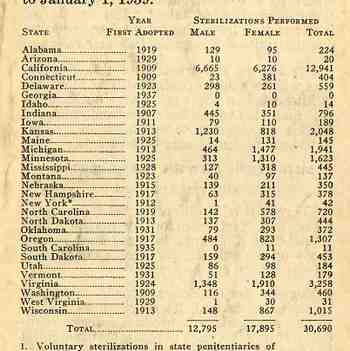
     Blog1sept_10_sterilization539This pamphlet was the co-authored spawn of Paul Popenoe (1888-1979) and E.S. Gosney (1855-1942) while both were on the board of the Human Betterment group. In addition to a strict diet of superior morality and race,  Gosney seems to have been the money behind the organization. Popenoe had a background in agricultural genetics with an overdrive taste for eugenics and race, somehow intersecting them with social hygiene and marriage relations. The “dr.” that Popenoe loved to insist attaching to his name was an honorary, unearned degree, which he must have felt he needed in order to secure the proper amount of intellectual identification necessary to write on intellectual identification. The Nazis wasted little time in translating and publishing this work, adding it to their official publications list in 1939. It was one of a significant number of intellectual imports that came into poor, besotted Germany; the imports came nowhere close to the amount of information banished, exported to the necessarily beautiful non-Aryan non-Nazi inferno. It was just the sort of thinly distributed stain that interested people like the Nazis.

    I wonder what “Dr.” Popenoe thought of this Nazi honor?

    The second pamphlet by the same people, Human Sterilization Today,. is in a swift eight pages in which the Betterment Foundation makes it case to use sterilization to check “the misery spread through the community by the unchecked reproduction of the human unit” (italics mine)..  They are closing in on the Big Picture in this work, aiming at the 5,000,000 “who will be at some point committed to state hospital as insane” and the other 5,000,000 “who are so deficient intellectually (with less than 70% of average intelligence) as to be, in many cases, liabilities rather than assets to the race”.

    This is exhausting reading, but it is a story that shouldn’t be forgotten, and could remind us that what we’re doing or practicing today might look  like the Human Betterment stuff 25 years down the road. 

    What is also deeply unsettling about Popenoe is that from this vast miasmaic idea set of misguided and forced statistics, philosophical racial extremism, “social hygiene”, eugenic sterilization of the enfeebled and socially undesirable, he managed to create the very first marriage counseling service/practice in the United States.  The American Institute of Family Relations opened its doors in 1930 (in L.A.!) with this dizzying philosophical semi-brew of sterilization and marriage talk-therapy, happily correlating the whole thing with exploding axis of divorce, love, social failure, racial impurity and castration.  And somehow it all seemed to make sense to allot of people, back there in the past.


  • Less-than-Optimum Oblivion: Measuring the Bad Side of Advanced Nuclear Exchange, 1956

    JF Ptak Science Books   [Another in a long series of post on atomic and nuclear weapons.]

    Perhaps nothing is obvious unless it is established or labeled so; perhaps the obviousness must be stated at least once before it can be officially, recognizably, the case.  And perhaps the greater the obviousness is, the more the need to make it officially so.  Perhaps nothing is so incredibly obvious that it can be studied and dissected and established.

    This seems to be more the case in more recent history than in time more further removed: that millions of dollars can be spent “proving” that children do not like to be separated from their mothers, or that cars will go faster downhill than up, or that people will respond to proper medication better than not, and so on, so on into the night, just seem not to need a vastly-funded proof.

    And so the case with nuclear warfare, people, and cities.

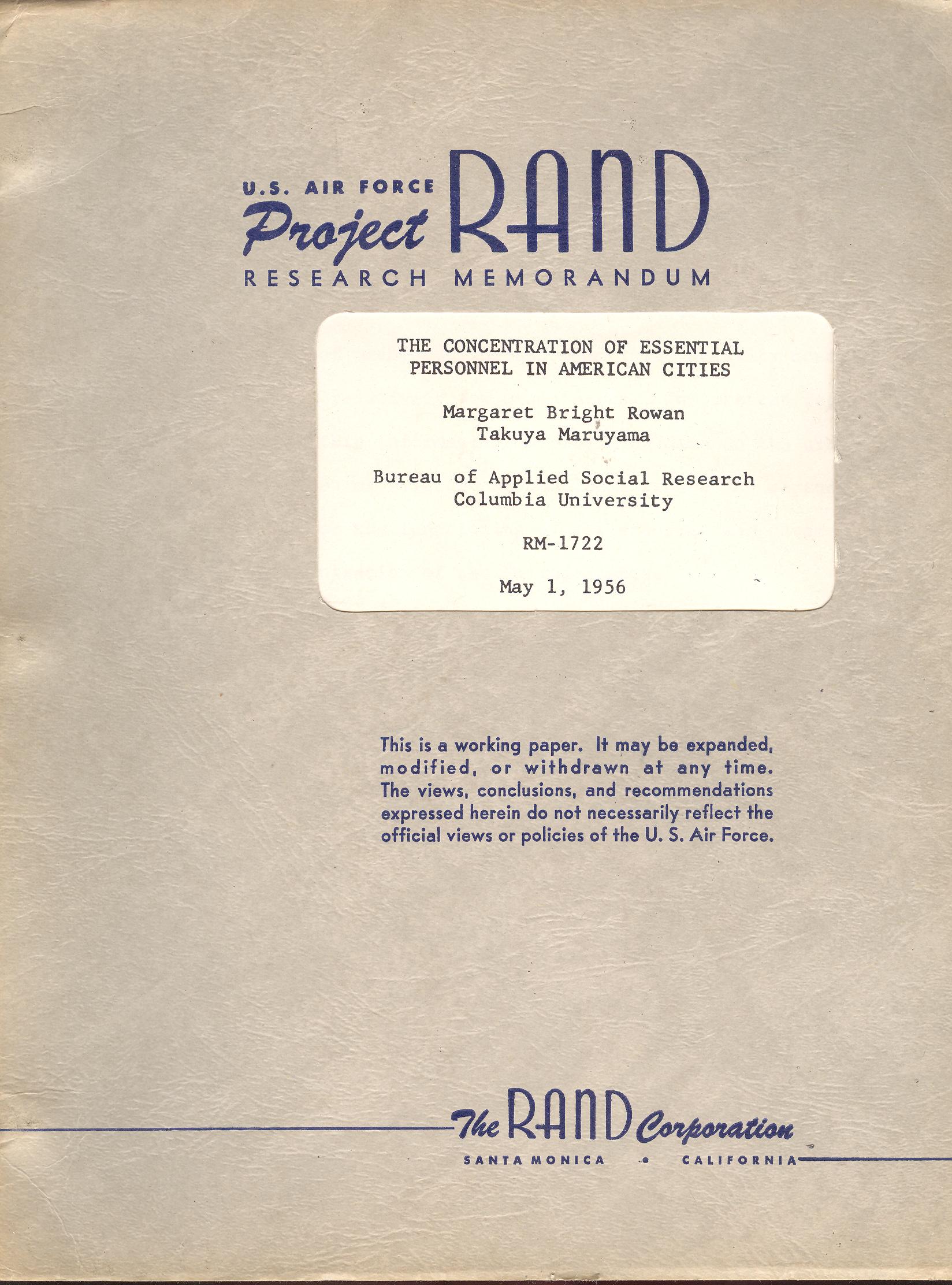
    In this RAND report from 1956, the great issue seems to be laid to rest, once and for all: the problem with nuclear weapons being exploded in/over cities is that since cities are filled with people, people will be killed.  And if those people in the cities are there because of professions that depend on city-settings, then more of those people will be killed than not.  [This rare pamphlet is available from our blog bookstore, here.]

    Rand report

    But what this report was really about was the unfortunate aspect of the impact if nuclear warfare on leadership and working positions in significant and strategic industrial/business/government professions.  And what the report finds is this: since the vast majority of these positions are located in cities (defined as 100,000 population and above), and since cities will be the major targets in a nuclear “exchange”, the overwhelming majority of these people will be killed, thus leading to strategic human resource vacancies post-war. 

    It seems that 95% of aeronautical engineers in the U.S. would be killed in a nuclear war, which I guess would mean that it would be difficult to design new aircraft and such in the post apocalypse world.  Of course these people would be killed because it was their industrial base that was being targeted and they were collateral damage, so there wouldn’t be any industrial base to produce the components necessary to build, say, a B-52.  That part of the equation is not addressed here, though.  Nor is there any sort of recommendation presented to fix the problem.

    The RAND document just painfully points out the obvious, once and for all; no one really knew what to do with the information now that it was there, in black and white. Certain people could be evacuated, saved from the maelstrom; but saved for what?  There were other evacuation plans that were completely doomed from the beginning, sheltering plans, Dr. Strangelove arrangements, but all of that would come into their pitiful being later on.

    First, though, the bitter reality of what everyone already knew–one of the greatest of all obviousnesses–had to be make its appearance in print.  And so it did.


  • The Big Lie–Poland as an Aggressor Against the Reich, 1939

    JF Ptak Science Books  Post  1298      (This is the second post written on this pamphlet–it is a stunner to me every time I see it. The earlier post was written in September 2008 and can be found here.)

    Here’s an interesting entry from the instrumental librarians’ tool WorldCat, a massive 75 million item book database that I use with some frequency, trying to determine whether some obscure-sounding/looking pamphlet or book is actually Not Around, like not in library collections.  (When something just isn’t there, not located, it makes the work even more interesting to me.)

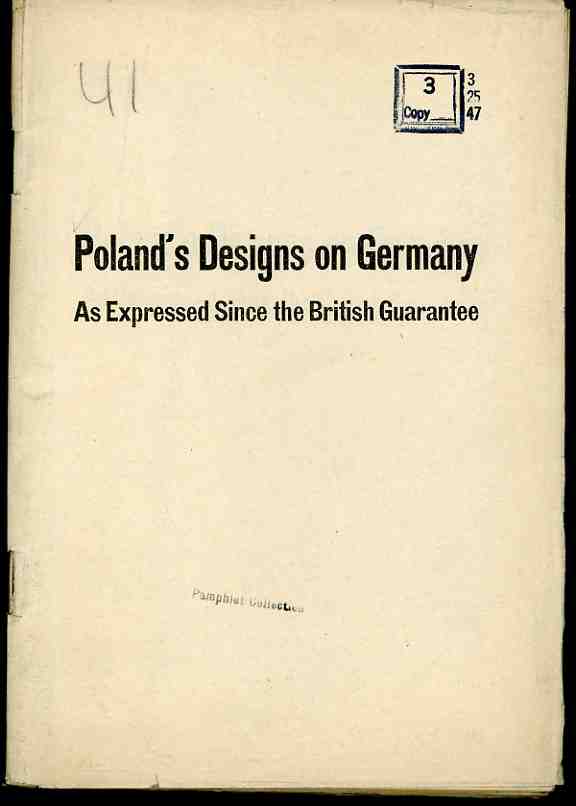
    Poland’s Designs on Germany has the sound and feel of a piece of propaganda, right from the start, just from the supra-obvious title page and the very feel of the production.  Looking for my proof-in-the-pudding–the printing information and source for the information–I found none.  Another strike for the propagandist.  (And another interesting point: the phrase “Poland’s designs on Germany” is a non-starter on Google, not located on the web, or in JSTOR, or in other pay-for web commercial communities.)

    Photo

    (This item is available for purchase at our blog bookstore.)

    Then of course there was the content, which is a simple, serial distribution of The Big Lie, painting Poland as an aggressor, hungry for German land and people. So far as I can tell there is nothing truthful in this work whatsoever, or at least I should say nothing that is assertive to the point of Poland being an “aggressor”. There are seven maps illustrating the points.  These are the great hallmarks of The Big Lie–a lie so vast that no one is supposed to think it possible that someone would tell a lie so fantastic, that no broadcast lie could be so incredibly big as to have been invented and told,  and so the lie must be true.  Hitler wrote about this admiringly in Mein Kampf, expressing an idolotry for the idea in print, recognizing it as a powerfull tool of subversion and propaganda, and then went ahead and followed the instructions. 

    Then comes the entry in the WorldCat–I found that the year was 1939.  It would be in September of the year that Hitler would attack Poland and the war would begin.  Who would have thought that the Nazis were acting in self defense?

    The WorldCat entry:

    Poland’s Designs on Germany as expressed since the British guarantee.  [Berlin W 62, Rauchstr. 27]  [Dt. Informationsstelle],
    1939
    23 S. : 7 gez. Kt. ; 8.
    Other Titles:     Polnische Ansprüche auf deutsches Reichsgebiet. engl.
    Locations    Library    
    Germany    BAYERISCHE STAATSBIBLIOTHEK     
    Germany    BIBLIOTHEK DES HERDER-INSTITUTS     
    Germany    DIE DEUTSCHE NATIONALBIBLIOTHEK   
    Germany    STAATSBIBLIOTHEK ZU BERLIN

    And there it is: “Dt. Infomrationnsstelle” is the Deutsche Informationnsstelle, the German Information Centre.  The  GIC exists today in name only, but during the National Socialist period leading up to the war and during WWII it was an outlet for German propoagandistic works. There are no copies of this particular work, evidently, in libraries in the United States. This is too bad, because this is a tremendously insulting document, an insistent, insinuating, unforgiving document to the ridiculous, perverted manner of thought and logic of the Nazis.


  • The Not-Yet Iconic Hamburger, 1956

    JF Ptak Science Books   Quick Post

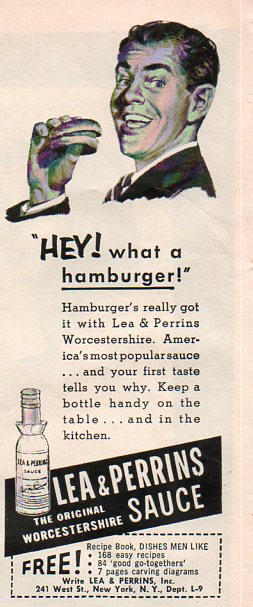
    Hamburger236 I was looking for something completely different when I stumbled over this simple ad for Worcestershire Sauce. What was instant recognizable to me was that the hamburger was just exactly that–a hamburger.  There was the burger and the buns, and that was it.  except of for the fancy Worcestershire sauce, brought to America from the old country.  In the ultra-centrifuge micro-cautionary ads of today, it would seem impossible to show a food product in such simplicity and so remarkably unposed–the buns are uneven, and imperfect, and there’s nothing about the burger to suggest itself as good except for the smiling, suited man. 

    McDonalds was selling burgers at this time, and for 15 cents a pop.  I’ve seen television commercials advertising burgers  for a buck here in the present, cheaper than what the thing was in 1956, that dollar covering only 12 cents of expense then. The current burger is cheaper still if you consider it as part of an hourly minimum wage; the 1956 minimum was 75 cents/hour, while 2010 is about ten times that; that means that the 1956 hamburger was 1/5 of the hourly wage, while the product in 2010 was 1/7 of the minimum wage.  The extreme cheapness of the current hamburger must make it seem a good deal for people working at or below the minimum wage, providing a food-like product to fill the belly for very little money in exchange, and with very little nutritional value. Perhaps that explains why 50 million Americans eat a a hamburger place of some sort every day–it is a vastly successful  business model predicated on delivering an almost entirely valueless version of an essential component of daily life, with constant advertisement duping people with greasy heart clogging goodness delivered by a bouncing clown or a little girl with freckles.  But of course there were worse things–this one just happened to catch my attention this morning.

    The hamburger has maintained its cheapness over the years, and certainly is one of those things from the ’50’s whose back-then price has translated into a more-expensive price with CPI-adjustments over time.  There are other staple-like thingas that were more expensive in 1956 than now: milk/gallon:  92 cents  1956 and $7.44 in 2010 dollars) and coffee,  93 cents (1956) or  $7.52 (2010).  Gasoline was 23 cents/gallon or $1.86 in 2010 dollars. (Gasoline pricing is another, more complicated story, for another time.)

    Don’t forget to order  your copy of Dishes Men Like! It has seven pages of carving diagrams.


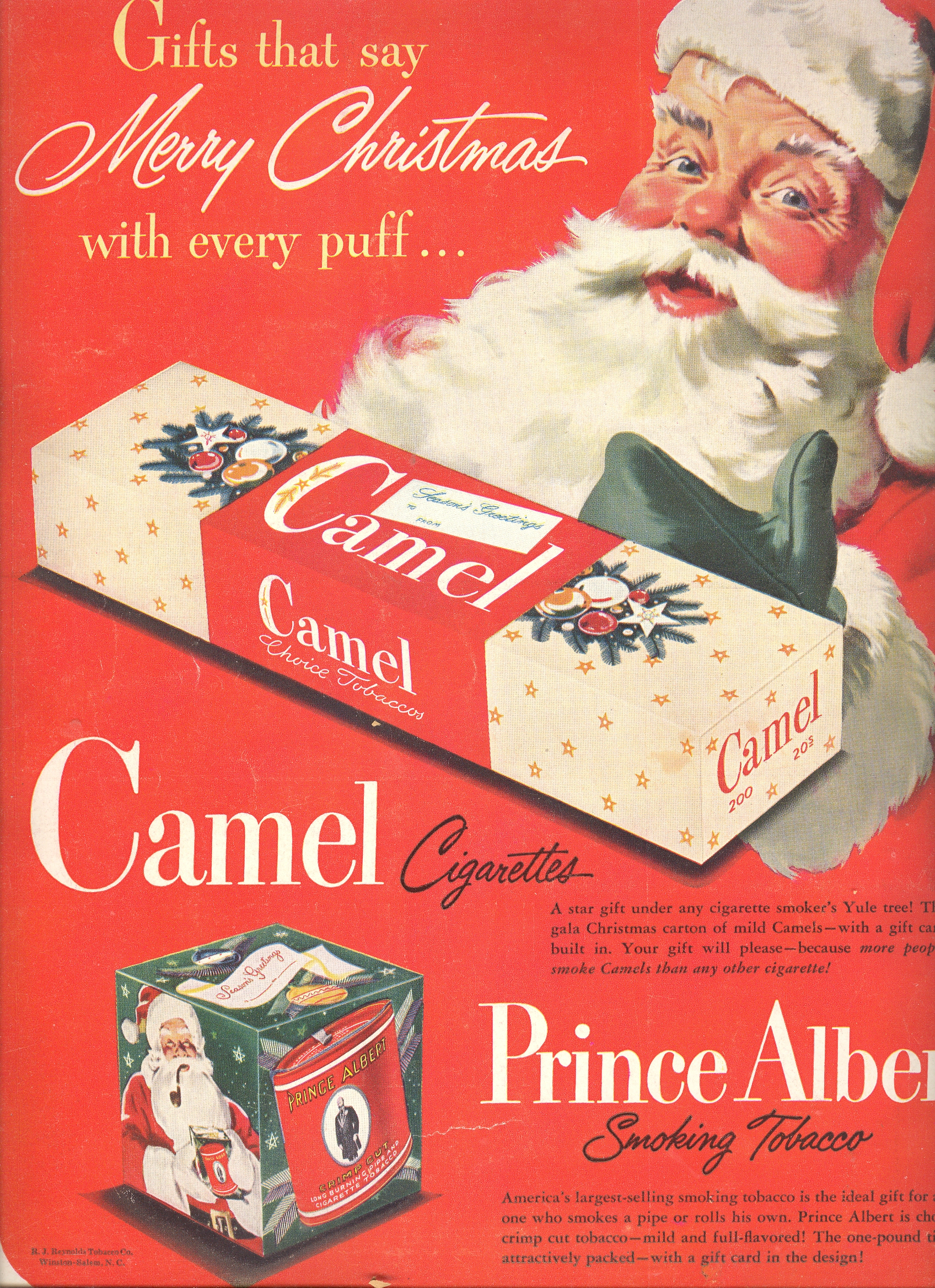
  • Electronic, Santa and Reagan Cancers–Selling Cigarettes at Christmas & the Cigarette Highway

    JF Ptak Science Books  Post 1293

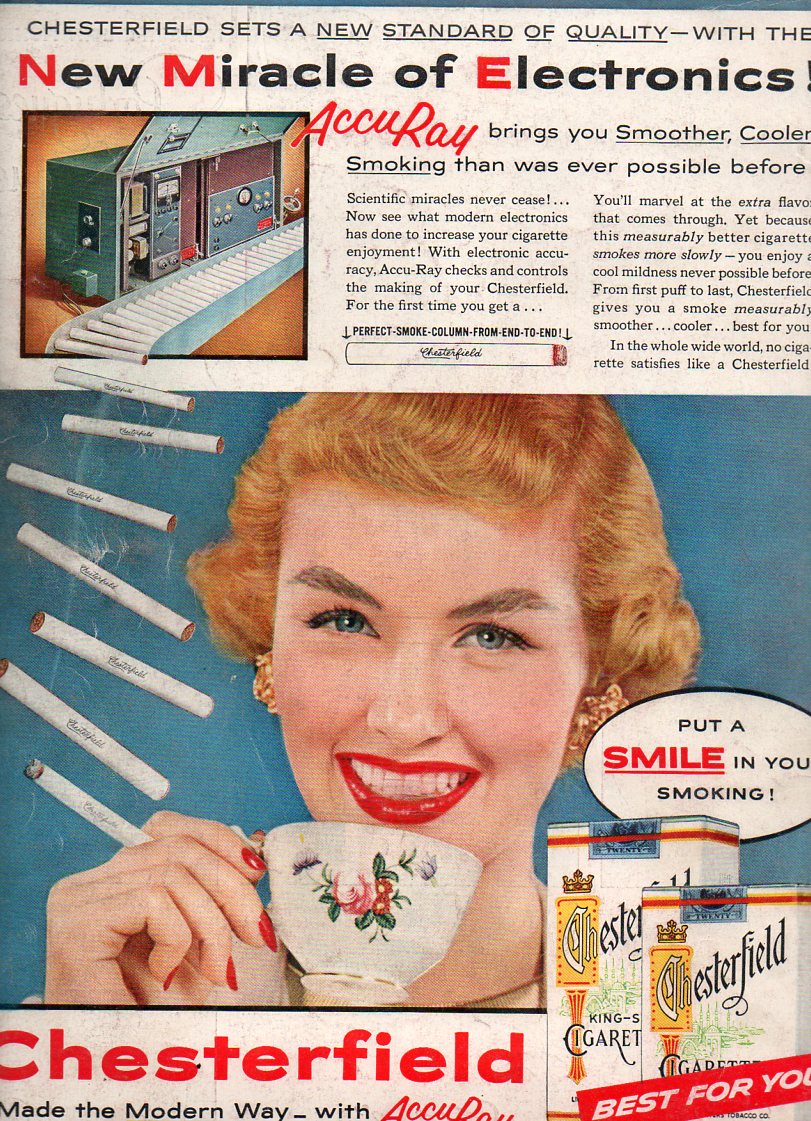
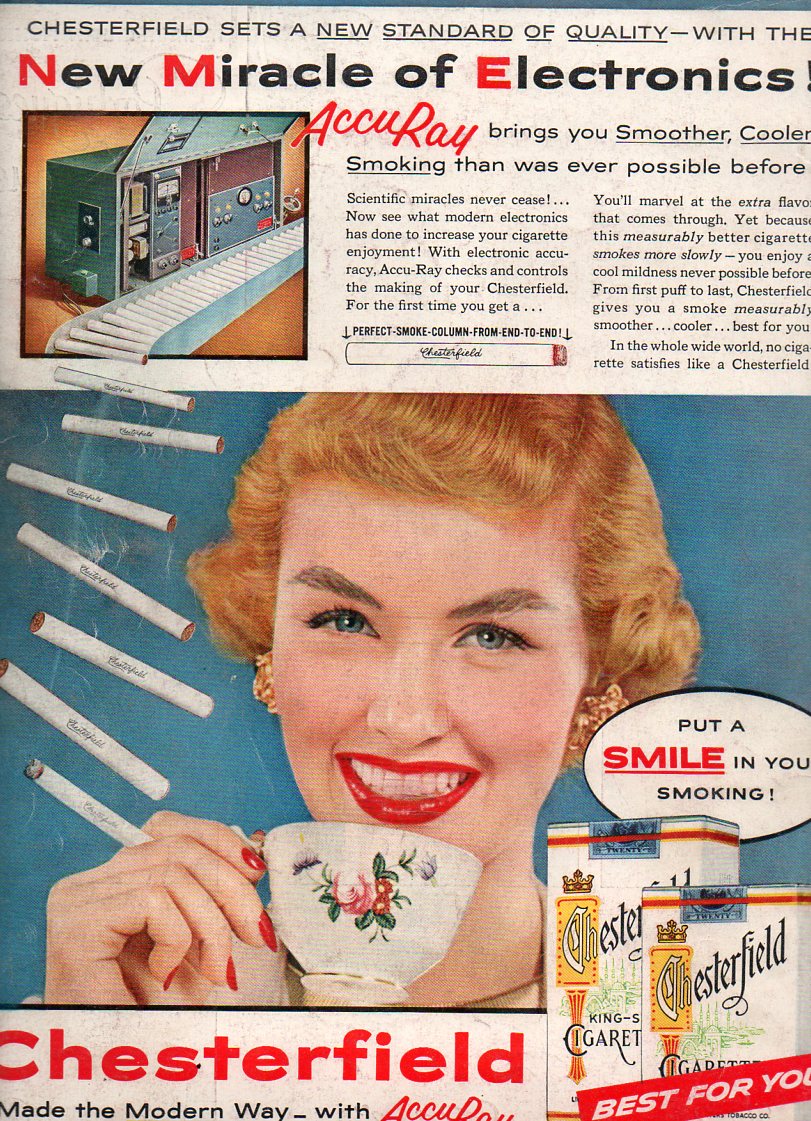
    Mmmmm…Can’t you just taste the goodness, the frivolity, the downright holiness of these seasonal ads?  What an odd set of emotions these images are able to surface on quick-boil.  Who knew (in this first image) that this LIFE magazine ad from 1954 would reveal the true value of electronics–managing cancer sticks?  (These same folks are today working on quantum computing multi-universe porn–stay tuned.)  The model still has pearly-white teeth while smoking and drinking coffee, radiant in her  half-a-halo of cigarettes. The lit cigarette between her fingers is at first almost invisible (or at least it was to me), seeming to be just another of those rolling off the AccRay Electro-conveyor belt, an endless supply for her pleasure. (The “electronic” part of this ad are also Lilliputian; its a nonsensical drawing with no scale, unless the cig company wanted to get across to its potential smoking community how “big” their cigarettes are.)

    . Cigarettes--electronic cancer193

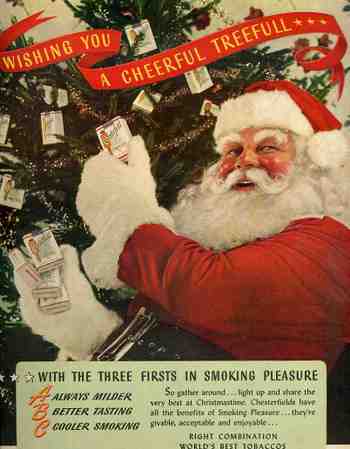
    Blogsanta_cigs317And could poor old Santa get any lower than this?  Out of all the things he has carried in his sack over the years, Chesterfield Cigarettes may very well be the worst of them.  Plus, not only is Santa delivery them as presents, he’€™s decorating the tree with them as well, and hardly acting the camera-shy sort that he is.  Chesterfield (Leggett & Morris Tobacco Co.) combined some of the best loved elements of childhood (the ABC’s “€œAlways Buy Chesterfield”) and Santa Claus to not only convince adults to think of the product as a Gift(ing) Unit, but also to lull children into a sleepy, memory-clouding  impression of Chesterfields being somehow good (what with these two primary associations and all).  “€œChesterfields have all the benefit of Smoking Pleasure (capitalized in the original) “they’re givable, acceptable and enjoyable¦”  I wonder what they, meant, exactly, by using the word “€œacceptable”? 

    I’€™ve seen Santa in other embarrassing poses like this in the pages of LIFE magazine for this period:  €”flying through the air in his sleigh loaded down with boxes of cigarettes, placing boxes of them under the tree, stuffing stockings with cartons, and the like.  I’€™m sure that he regrets it now, though.

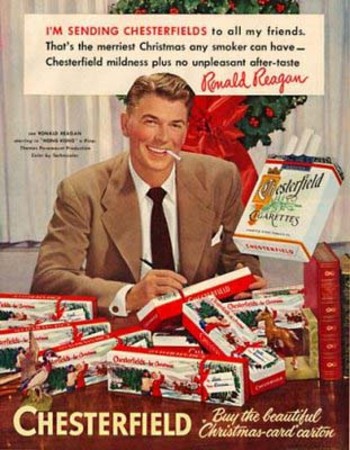
    All sorts of people were pressed into the service of selling tobacco products like this—sports figures, movie stars, doctors, adventurers; an entire alphabet of personalities and personality types got into the act.  A sitting president had never been involved, though a person who would become president was. Blogsanta_lreagan_chesterfield_ad
    I’m sure Ronald Reagan regretted this ad at some point in his life as well (“beautiful Christmas Car Carton” or not), though I suspect that he would’ve kept that close to the vest. 

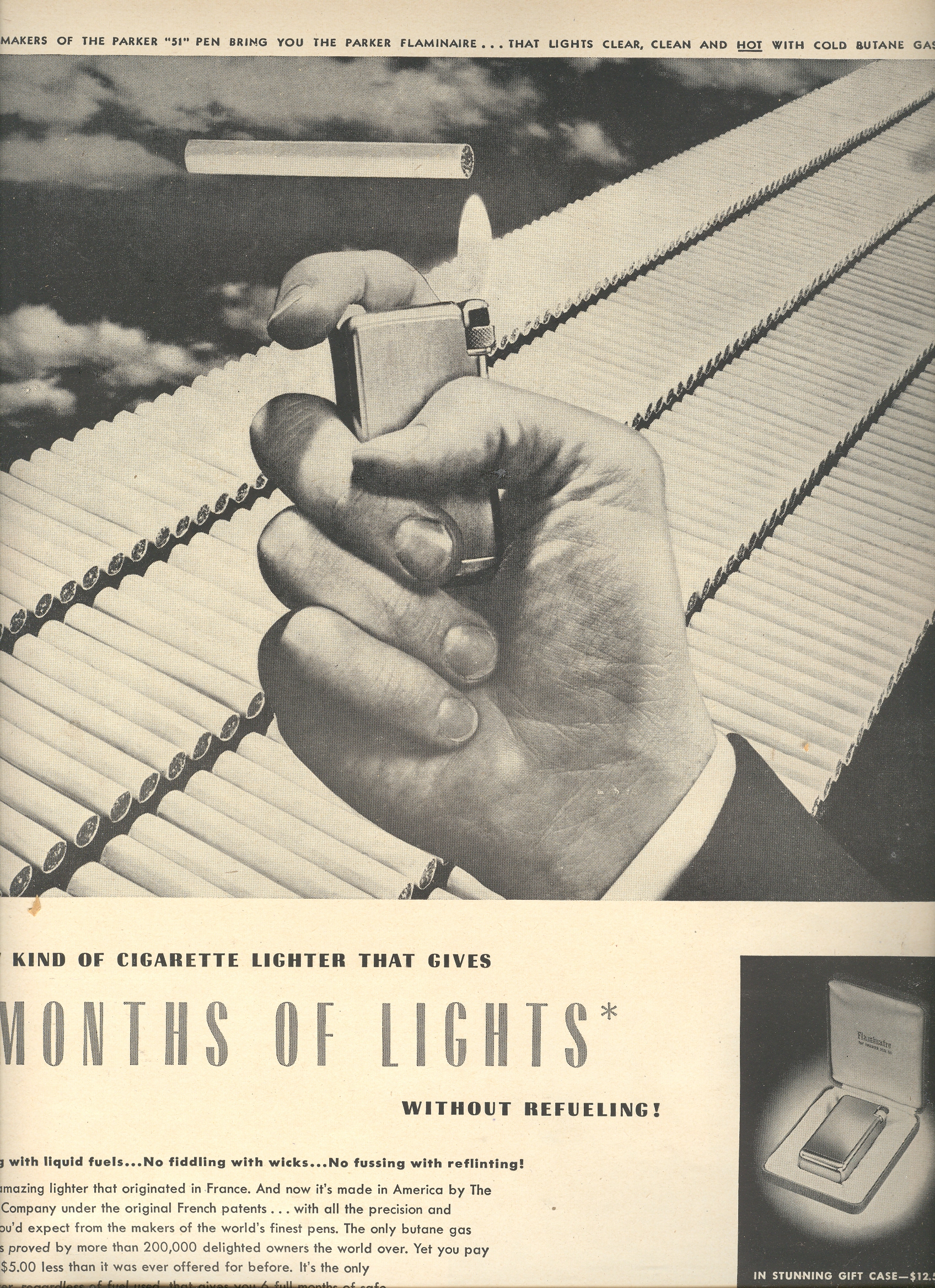
    This is a simple ad for a butane-based lighter (appearing in LIFE magazine for 18 December 1950), lighting the way down Cigarette Road.  Actually, it was more a highway than a road, and a superhighway at that. Government-sponsored warnings about tobacco health issues was still more than a decade away:  medical doctors were part of the advertising machine, as were actors (including RWR), sports figures, and virtually anyone else with a mouth.

    This is a simple ad for a butane-based lighter (appearing in LIFE magazine for 18 December 1950), lighting the way down Cigarette Road.  Actually, it was more a highway than a road, and a superhighway at that. Government-sponsored warnings about tobacco health issues was still more than a decade away. 

    ==Blog July 27=cis It seems to me that there are about 300 cigarettes in this ad, and that looks like a lot—point of fact though is that in 1950, the average American (of 18+ years) smoked about 3,522 cigarettes a year, which means about 10 cigarettes a day for everyone in the country.  Not 10 per smoker; 10 for everyone in the entire country, smoker or not, who was over 18 years of age.

    The average smoker in 1950 smoked about 2.5 packs a day, or 50 cigarettes or so—that’s equal to this line of cigarettes being smoked every six days. 
    There were virtually no brakes.


    Even Santa (a pipe smoker) got into the business. This was a standard, acceptable, vanilla-packaged advertisement.

    ==Blog July 27=cigs xmas


     United States Cigarette Consumption, , 1900–2007

    First number is total consumption in billions; second number is per capita yearly consumption for people 18+.


    1915   17.9   285

    1920   44.6   665

    1925  79.8  1,085

    1930 119.3 1,485

    1935 134.4 1,564

    1940 181.9 1,976

    1945 340.6 3,449

    1950 369.8 3,522

    1955 396.4 3,597

    1960 484.4 4,171

    1965 528.8 4,259

    1970 536.5 3,985

    1975 607.2 4,123

    1980 631.5 3,851

    1985 594.0 3,461

    1990 525.0 2,827

    1995 487.0 2,515

    2000 430.0 2,092

    2005 376.0 1,716

    2007 360.0 

    Source: Tobacco Outlook Report, Economic Research Service, U.S. Dept. of Agriculture. 

    JF Ptak Science Books LLC  Post 699  Blog Bookstore


  • Women Against Women Wanting the Vote, 1909

    JF Ptak Science Books   (Rapid) Post

    One in this blog’s  History of Women series

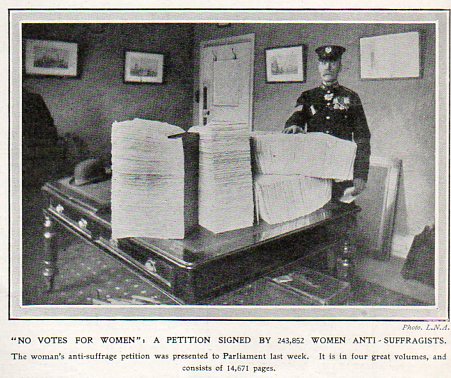
    WOmen--petition against vote121 By the time this photo of petitions against granting the voting to women in Great Britain appeared in The Illustrated London News in 1909, only six other places in the world had given women voting power:  Pitcairn Islands (1838), Isle of Man   (1881) , Cook Islands (1893), New Zealand (1893), Australia  (1902) and Finland  (1906). Admittedly, in the population of nations worldwide this was a very small percentage–smaller still if you considered the figure by population. The idea of universal suffrage was far from being popular, even only 101 years ago, within the lifetime of a few thousand people living today.

    There were no new additions between 1906 and 1913, but after that, from 1913 to 1920, 24 countries1 (including hundreds of millions of people this time) had granted the right,  not the least of which was Great Britain (1918) and the United States (1920).

    WOmen--petition against vote b122

    The complaints and arguments against women getting the vote have a recent ring to them:  the vote for many threatened the home, undermined the scope of the family, would destroy the foundations of marriage, would take women away from their domestic duties, and in general would weaken the nation.  It seems as though you could replace “votes for women” in this series of complaints with any number fof different issues today.


  • Maps of Invasions of Great Britain and the United States

    JF Ptak Science Books  Post 1274–Real and Imagined

    America has almost never been invaded. I should clean that statement up a bit: the United States has almost never been invaded.  America–which included North/Central/South once upon a time long in the dim past–was constantly invaded until the invasions no longer counted themselves as such, which I guess means that the “invasion” forces became  “resupply”. (Perhaps an invasion is over once you surpass a certain ratio of houses : forts.)

    “Invasion” does not include “attacks”.  A few guys getting off a Nazi sub and wandering around until they got picked up (with some (all?) being executed) does not an invasion make.  9/11 was not an invasion, though the subsequent invention of impending and pervading fear was–that’s why we have “storm centers” rather than “weather reports” on broadcast news–but even that fear business was more home-grown than anything else.

    The Japanese Army were on two small islands in the Aleutian chain (which may have been closer to Tokyo than NYC) for a bit in WWII–also does not make for an invasion, even if they were there for a long time.  Or even if they were still there.  Nor does sending hundreds or thousands of paper incendiary balloons across the Pacific an invasion make. 

    UFOs don’t count, either.  (I still find it remarkable that such a large percentage of the hundreds of thousands of “sightings” has the UFO with landing or whatever lights on it. I figured out at one point that there has been a report on one of these critters every ____ minutes since Roswell. And in all of those hundreds of thousands or reports, if you took them all and stacked them one on top of the other, they would reach perhaps the height of a grain of sand.)  The Beatles don’t count, either.   

    What also doesn’t count (but probably should) but which is not military–not really, though it may have the impact of a military force at some time in the future–are Chinese-made imports of, well, everything.   At Thanksgiving I wondered how much of a dinner could be composed of foods that were shipped from China and to no great amazement an almost-complete table of food could be set, plus napkins, flatware, plates, candles, tablecloths, tables, chairs, paper turkey decorations, carpet, flooring, wallpaper, paint for the walls and ceiling, screws for the Chinese-made door hinges, lighbulbs, tubes for the McIntosh preamps, all of the clothing worn by the guests, and so on.  The electricity is still American-made. The fact that Mott’s Apple Juice is coming from Chinese apples is a bad sniff of the future. The country of origin is usually on juice bottle necks-check it out.)  

    Certainly something that does count is the invasion by Great Britain of the United States in the War of 1812–they invaded long and deep enough to burn the White House and cause general havoc.  We won that one.  But of course the Brits were otherwise involved on the Continent.

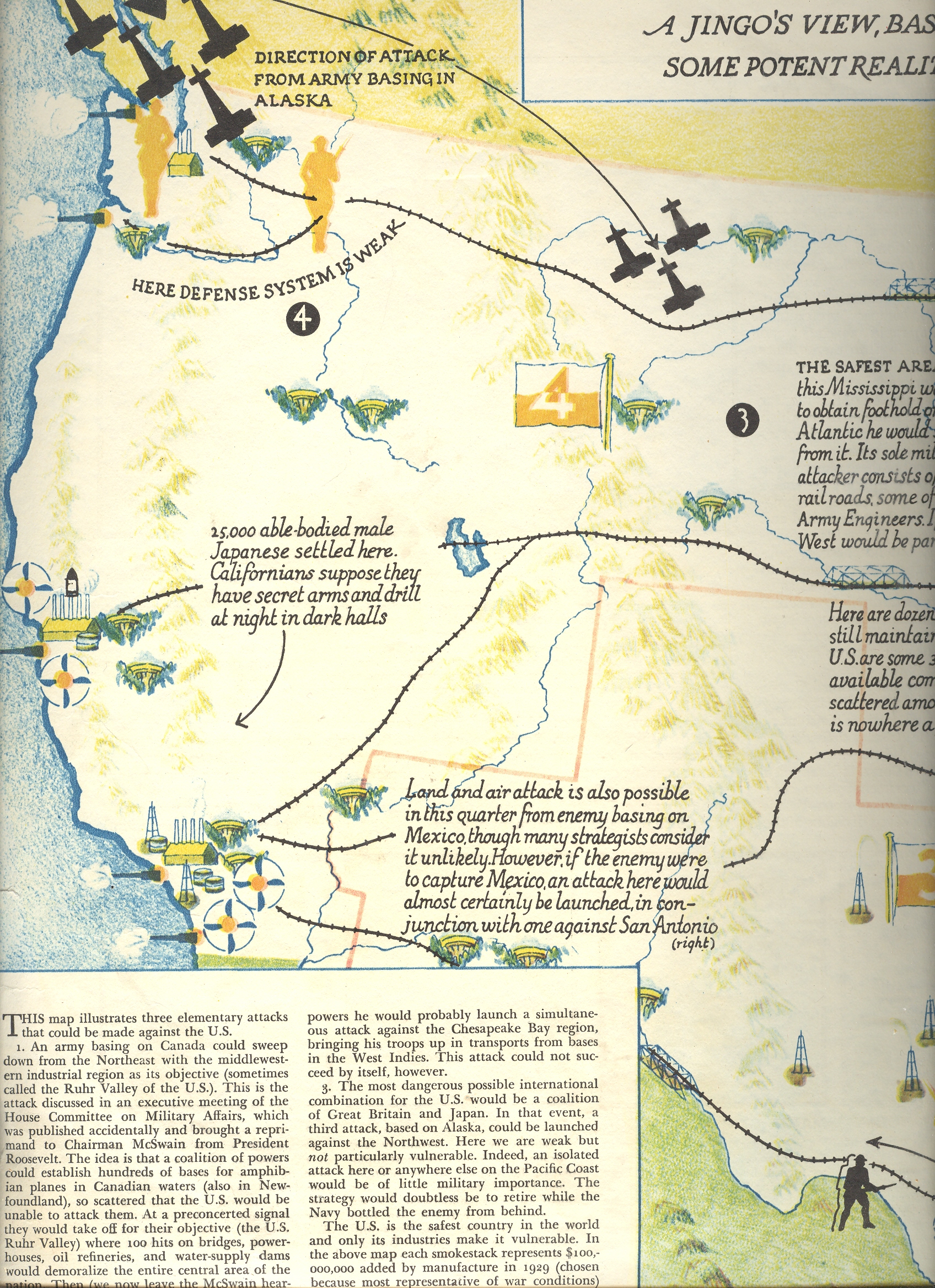
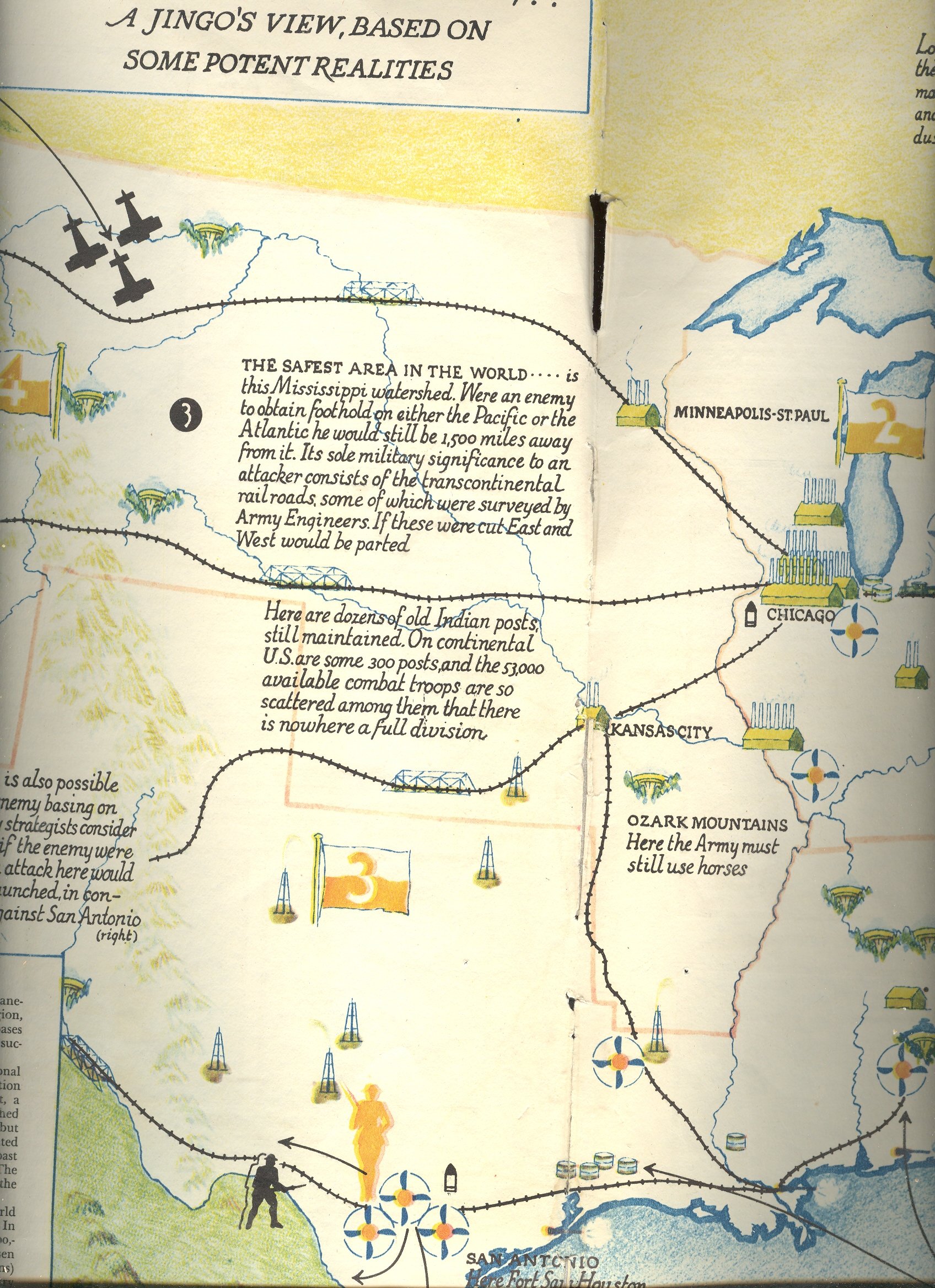
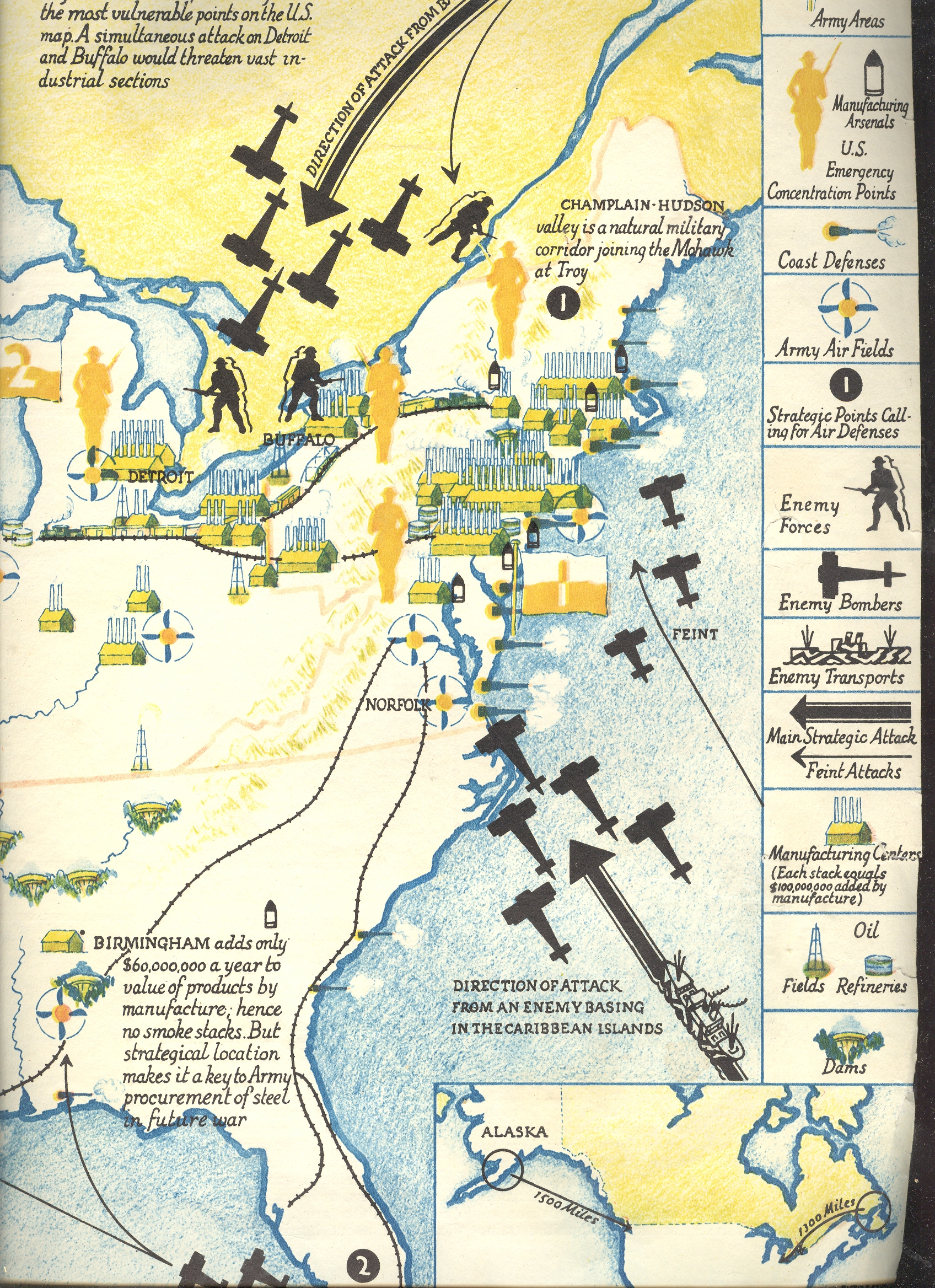
    Perhaps this non-invaded bit explains why the most-viewed post on this blog (with at last count was 400,000 views) was a LIFE magazine article from 1942 on the possible invasion routes to the U.S.  Maybe the volume was driven by war-gamers, though I suspect it was made up largely of the curious who weren’t used to seeing “Invasion of” and “America” together in a military sense.

    https://historyofideasblog.com/a/6a00d83542d51e69e20120a7a3225e970b-pi

    https://historyofideasblog.com/a/6a00d83542d51e69e2012876a5a4b4970c-pi

    https://historyofideasblog.com/a/6a00d83542d51e69e2012876a5a5e4970c-pi

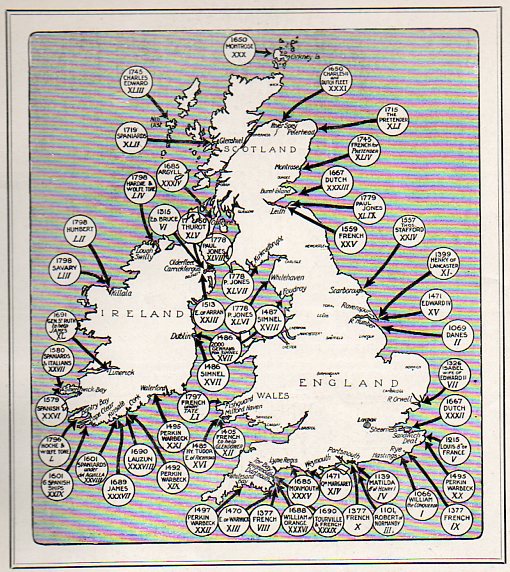
    But now for the  real stuff:  a map of the 54 invasions of Great Britain (and “the places at which foreign troops have landed on British soil since 1066 (and all that), seen in the Illustrated London News for 27 March 1909):

    Invasion--Us and England120

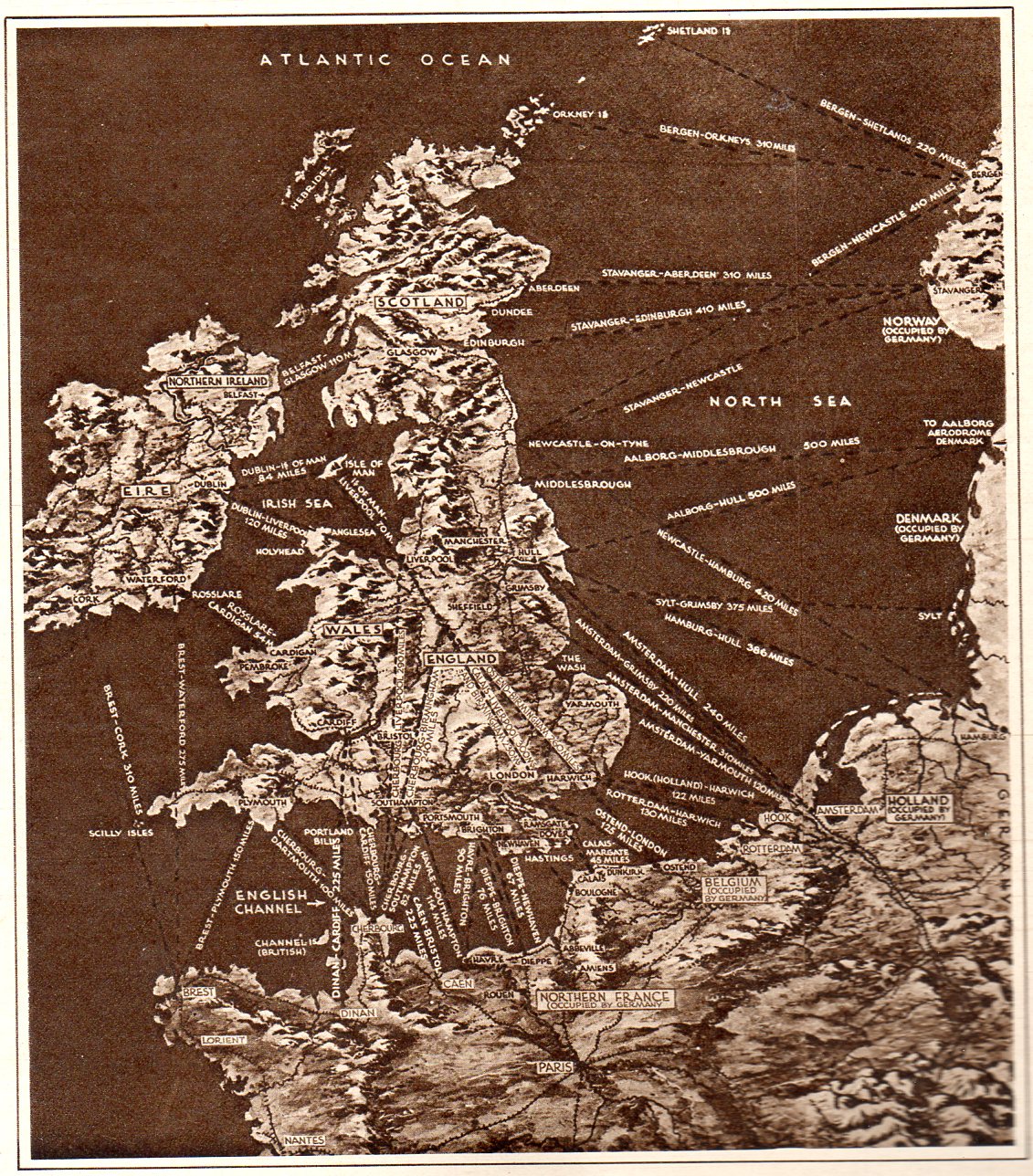
    And then this, where the WWII invasion routes were turned around: 

    Dunkerque124

    This map pretty well tells the story of the perilous situation of Europe and England at the beginning of June, 1940.  It appeared in the Illustrated London News on the heals of Churchill’s “Blood, Soil, Sweat and Tears” speech, and was a very frank presentation of the wearing of the war.  By this point in the war Nazi Germany had successfully invaded Belgium, France, Luxembourg and the Netherlands, sweeping across Europe in a broad westward movement, backing up British and French troops all the way to the sea at Dunkerque, where a monumental rescue operation (“Operation Dynamo”) saved them.  (There was an enormous amount of materiel left there on the beach, a devastating loss for the British Expeditionary Force, nearly crippling it.) This was a bad time for the Allies, this part of the war coined by Winston Churchill in 18 June 1940 in the House of Commons by:  “The Battle of France is over. I expect the Battle of Britain is about to begin”. There was very little good that came of these few months for the U.K and the Allies, though four things do stand out: (1) as I just mentioned, the saving of 300,000+ troops at Dunkerque; (2) the resignation of Neville Chamberlain, (3) the coming of Winston Churchill  as Prime Minister of the U.K., and (4) the first deciphering of the Enigma at Bletchley.  Other than that, the situation was dim, and these invasion routes (published at t he very time that Germany was studying such a feat in its “Operation Sea Lion“, or “Unternehmen Seelöwe”). The endgame at Dunkerque took place almost four years to the day of the invasion of Europe, when the intent (though not placement) all of these arrows were turned around for the Allied operation at the Normandy beaches on 6 June 1944..

    And so, there it is–a presentation of several maps showing invasions, real and imagined 


  • Keeping 1935’s Secretaries Unmarried

    JF Ptak Science Books  Post 1261    Part of the History of Women series

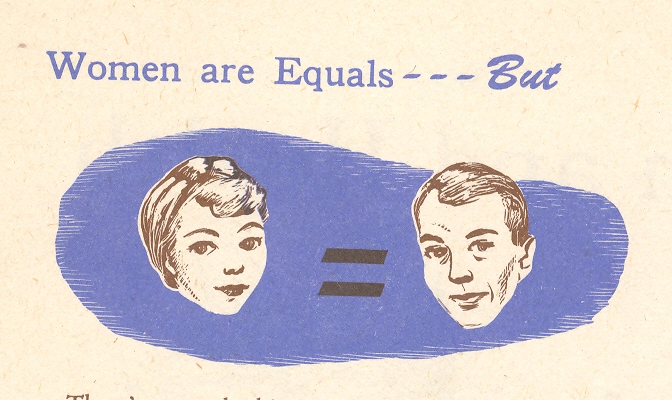
    .Mar 25 women equals but

    It good to remind ourselves of how we got so comfortable here in the present by looking at the uncomfortable parts of the past, and remembering those people who made the sacrifices necessary to ameliorate those differences.  Sometimes that spiked memory looks small but isn’t so, sometimes it’s a tidy and explosive nugget nestled in decent surroundings, but explosive nonetheless.

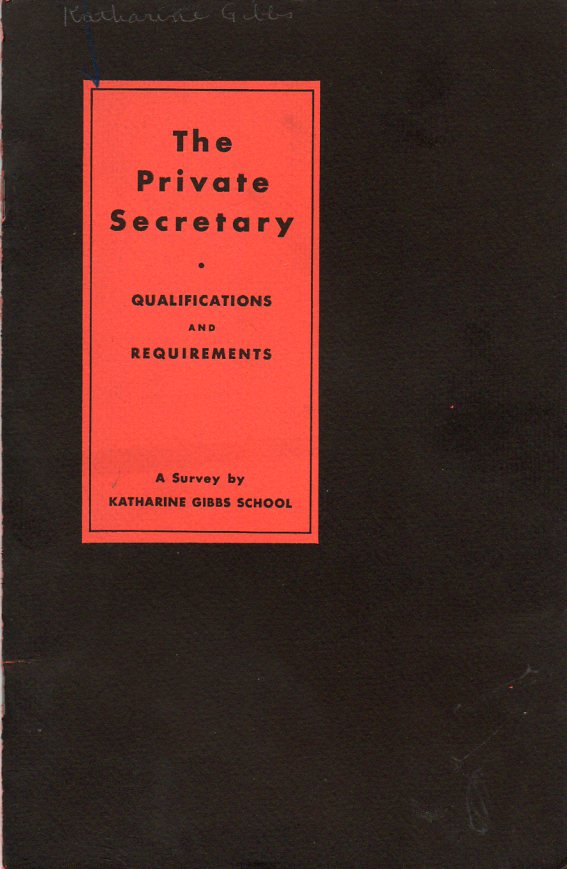
    Secretary marry cvr021 That’s what I found looking through this very considered, nicely designed and well written vocational pamphlet for the Katherine Gibbs School (of New York, Providence, Boston and Bermuda).  The Private Secretary, Qualifications and Requirements (1935) laid out all of the necessaries for the better-placed secretary, many of which no doubt were the teaching specialty of Ms. Gibb.

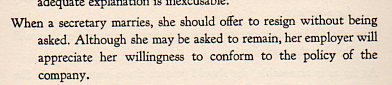
    The pamphlet described plenty of excellent qualities for anyone seeking any sort of employment–then or now–all of which could be supplied to any student of Ms. Gibb–I kept climbing over them looking and waiting for the now-severely-dated practices to appear.  Mainly they didn’t appear in whole so much as in bits and pieces, sprinkled well throughout the work. But on the last page came this nugget, which I think pulls all of the disparate pieces together in a general statement about the position of women in the workplace in 1935:
    Secretary marry det020

    And there you have it. A key to understanding the status of women in 1935.  You’ll notice that the “company policy” is generic, which means that the practice was wide-spread.  And remember too that this is just for marriage–not pregnancy, which is implied in the company’s dissociation with the married secretary, cutting their ties now before any pregnancy begins.

    [This pamphlet is available for purchase from our blog bookstore.]