A Daily History of Holes, Dots, Lines, Science, History, Math, Physics, Art, the Unintentional Absurd, Architecture, Maps, Data Visualization, Blank and Missing Things, and so on. |1.6 million words, 7500 images, 4.9 million hits| Press & appearances in The Times, Le Figaro, Mensa, The Economist, The Guardian, Discovery News, Slate, Le Monde, Sci American Blogs, Le Pont, and many other places… 5000+ total posts since 2008.

Category: Bad Ideas

  • Examples of Colossally Bad Ideas–Sterilization, Eugenics and Soviet Racial/Genetic Domination Theory

    JF Ptak Science Books Post 1301

    Sometimes I need to make a post about a book simply to get it out of my system–once I’ve said something about a numbingly bad book, it usually just goes away, falling off the edge of the flat Earth rather than having its mast sink peacefully below the horizon. Such is the case with these pamphlets, one of which is so bad that its badness could not be contained in just one “volume” that it needed another. I almost wrote ” ‘little’ pamphlets” because they are, well, little–but little in size only, their badness easily transcending their size, and the idea of “size” in general. 
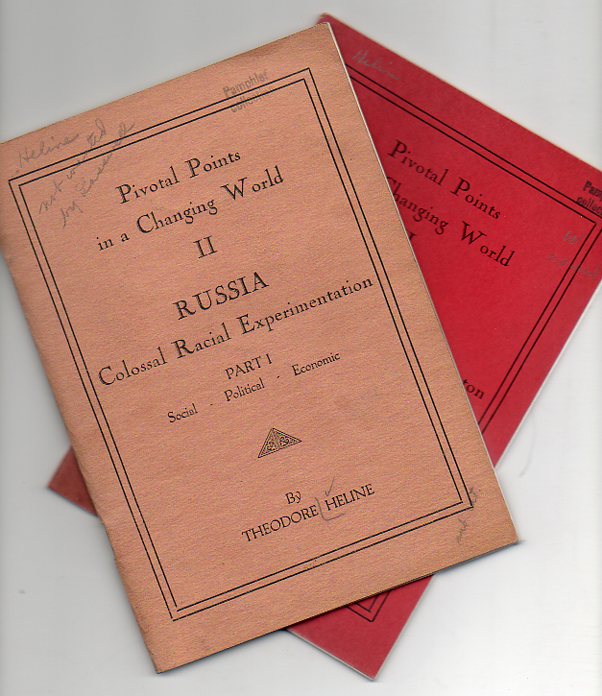
    Russia colossal Racial265

    [Note:  all pamphlets pictured here are available at our blog bookstore.]

    I never really liked the word “colossal” in the title of any book other than say a joke or magic book for children–outside that, I think the author is asking for trouble.  And trouble is the seat of reason in this work, which was published in 1939.  It is too painful to quote much from the text, but, right from the outset the reader gets a taste for what is ahead, being told that the New Russia (the Russians being “the most elemental of all white peoples”) is one way of saving the Nordic race, quoting The Rosicrucian Cosmo-Conception as a part-source, saying that “this race will collectively make up the sixth of the seven sub-races tat will constitute the present Aryan or Fifth Root Race” and it will “be expected to develop certain attributes that will contribute toward humanity’s ultimate perfection”.

     The author is enamored of the free voting system in the Soviet Union.  “No one visiting the Soviet’s pictorial Exhibit at the World’s Fair om New York could fail to be impressed by the dignity and attractiveness of the pictured polling places and the freshness and eagerness animating the faces of those figures who entered t perform their civic duty…” An incredible statement, validating the democratic freedom of the Soviet Union at a particular time in it history when millions of people had recently been starved to death, among other things.  The photographs of the coming genetic masters was proof enough of freedom than anything else. 

    The pamphlets grow heavier and more dense with each paragraph, the edges of the pages bending under their own filthy weight of vast stupidity and understated racial hatreds.  God and the superiority of whiteness and the gross disabilities of Catholics and Black people come along after a bit.  Jewish people aren’t even mentioned.   But the author states that it is a genetic “tick”, some sort of “genetic conscience” that comes into play that has prevented the “inferior races” (like Catholics or Blacks) to have come anywhere near attaining the presidency.  It is a spiteful, hateful pamphlet that is completely myopic about the rich, savory goodness that is the highest attainment of spiritualism/intellectualism/modernism and civilization that was the Soviet Union.  There would be little left to say about this work ten years hence, when the real stuff of the Soviet Union became more publicly common knowledge, and it became more difficult–I would think–for the author to reconcile his witches’ brew of Biblical nonsense, genetic debauchery and Cool-Whip history.
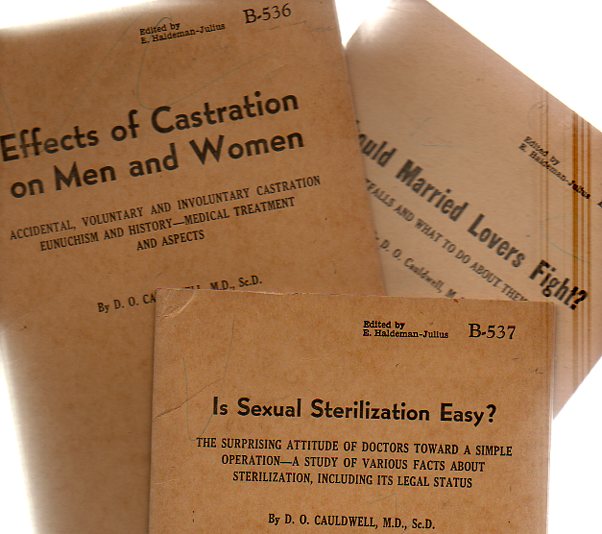
    Sexual sterilization Easy266The next assortment–all written just after WWII–asks some questions that one probably has never heard before.  “Should married lovers fight?” and “Is sexual castration easy?” are probably a pair of interrogatories that would never be heard in conversation in a hundred years of boring parties.  The contents of the pamphlets are a genuine struggle to get through–I picked my way through each for about 20 minutes before declaring defeat, except that I know enough to not have to think about these works again.

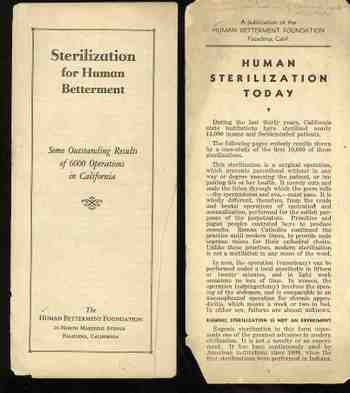
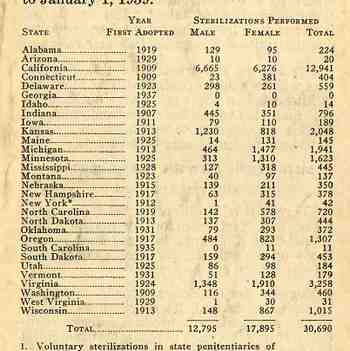
    The pamphlet Sterilization for Human Betterment, published by the Human Betterment Foundation (Pasadena, California),  states that 13,000 people in this category had been “asexualized” between 1909 and 1939 in California. (I should point out that California was the sterilization capital of the United States, with a third of all the national eugenics procedure performed in this state for this period of time) It defends this practice, saying emphatically that “eugenic sterilization is not an experiment”, and that “sterilization in this form represents one of the greatest advances in modern civilization”. 
     

    Blog1sept_10_sterilization538

    It continues:  “(sterilization) has been continuously used by American institutions since 1899, when the first sterilizations were performed in Indians”.  What?

    “Patients, relatives of patients, state officials, physicians,parole and probation officers, social workers, agree on the value of this practice” which was actually the “prevention of producing defective and handicapped children”.  I’m relieved that the probation officers were consulted.

    The Betterment people shed more light on the role of sterilization and sex offenses by women. (My bold.)  “Of 304 feebleminded girls sterilized and paroled, 9 out of every 12 had been sex offenders before commitment.  After sterilization, only one out of every 12 became a sex delinquent on parole”. 

    If this wasn’t such an awful story, “sex delinquent on parole”, a phrase I’ve never seen before, might make for a great 1950’s trashlit title. (It could’ve been a series, too:  all you need to do is take the title “Sex Delinquents on Parole” and add something to it, like “…on Parole from Outer Space” or “…on Parole:  Queenie the Slip Crown Breaks Her Knuckles” and so on.)

    The sorry story that I’ve interrupted with this bit of frivolity is that the “sex offenses” that are being discussed here is actually “prostitution”.  These young women weren’t committing violent acts of sexual savagery, they were just prostitutes, which meant that in most state they were “depraved”.  The “feebleminded” girls I would guess were poor or working poor, without the best education, and didn’t do well on whatever test was being administered to them to determine their test-taking intelligence. It seems to me that if  the goal was to liquidate prostitution that perhaps the men “seeing” these women should’ve been the ones faced with the operation. But that isn’t how the dominant culture viewed the situation, and that the best way to approach the problem was to remove the reproductive capacities from the weakest members of society.

    (Click on this table for a larger, clearer version of the number of forced sterilizations by state.)
     Blog1sept_10_sterilization539This pamphlet was the co-authored spawn of Paul Popenoe (1888-1979) and E.S. Gosney (1855-1942) while both were on the board of the Human Betterment group. In addition to a strict diet of superior morality and race,  Gosney seems to have been the money behind the organization. Popenoe had a background in agricultural genetics with an overdrive taste for eugenics and race, somehow intersecting them with social hygiene and marriage relations. The “dr.” that Popenoe loved to insist attaching to his name was an honorary, unearned degree, which he must have felt he needed in order to secure the proper amount of intellectual identification necessary to write on intellectual identification. The Nazis wasted little time in translating and publishing this work, adding it to their official publications list in 1939. It was one of a significant number of intellectual imports that came into poor, besotted Germany; the imports came nowhere close to the amount of information banished, exported to the necessarily beautiful non-Aryan non-Nazi inferno. It was just the sort of thinly distributed stain that interested people like the Nazis.

    I wonder what “Dr.” Popenoe thought of this Nazi honor?

    The second pamphlet by the same people, Human Sterilization Today,. is in a swift eight pages in which the Betterment Foundation makes it case to use sterilization to check “the misery spread through the community by the unchecked reproduction of the human unit” (italics mine)..  They are closing in on the Big Picture in this work, aiming at the 5,000,000 “who will be at some point committed to state hospital as insane” and the other 5,000,000 “who are so deficient intellectually (with less than 70% of average intelligence) as to be, in many cases, liabilities rather than assets to the race”.

    This is exhausting reading, but it is a story that shouldn’t be forgotten, and could remind us that what we’re doing or practicing today might look  like the Human Betterment stuff 25 years down the road. 

    What is also deeply unsettling about Popenoe is that from this vast miasmaic idea set of misguided and forced statistics, philosophical racial extremism, “social hygiene”, eugenic sterilization of the enfeebled and socially undesirable, he managed to create the very first marriage counseling service/practice in the United States.  The American Institute of Family Relations opened its doors in 1930 (in L.A.!) with this dizzying philosophical semi-brew of sterilization and marriage talk-therapy, happily correlating the whole thing with exploding axis of divorce, love, social failure, racial impurity and castration.  And somehow it all seemed to make sense to allot of people, back there in the past.


  • Less-than-Optimum Oblivion: Measuring the Bad Side of Advanced Nuclear Exchange, 1956

    JF Ptak Science Books   [Another in a long series of post on atomic and nuclear weapons.]

    Perhaps nothing is obvious unless it is established or labeled so; perhaps the obviousness must be stated at least once before it can be officially, recognizably, the case.  And perhaps the greater the obviousness is, the more the need to make it officially so.  Perhaps nothing is so incredibly obvious that it can be studied and dissected and established.

    This seems to be more the case in more recent history than in time more further removed: that millions of dollars can be spent “proving” that children do not like to be separated from their mothers, or that cars will go faster downhill than up, or that people will respond to proper medication better than not, and so on, so on into the night, just seem not to need a vastly-funded proof.

    And so the case with nuclear warfare, people, and cities.

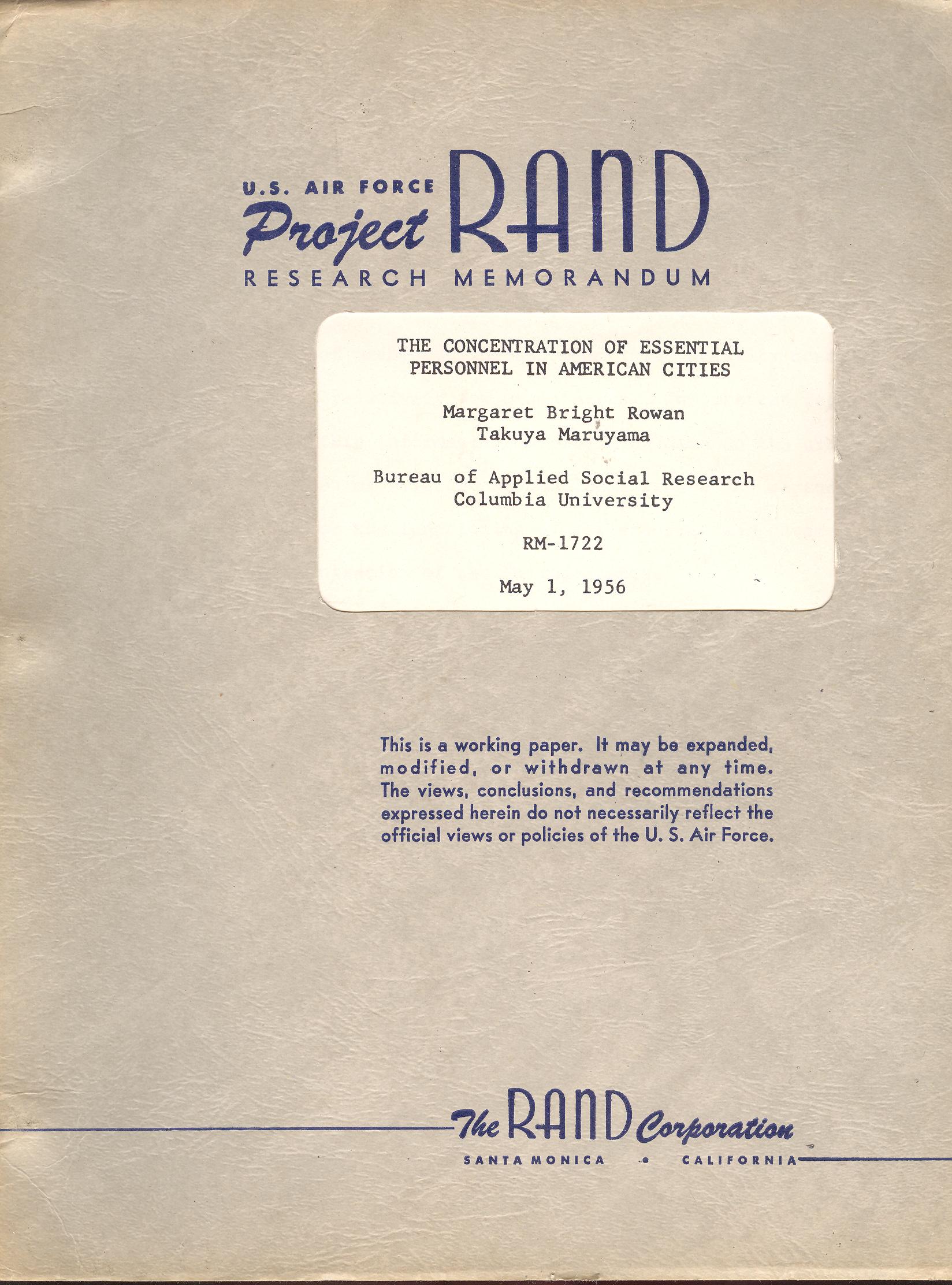
    In this RAND report from 1956, the great issue seems to be laid to rest, once and for all: the problem with nuclear weapons being exploded in/over cities is that since cities are filled with people, people will be killed.  And if those people in the cities are there because of professions that depend on city-settings, then more of those people will be killed than not.  [This rare pamphlet is available from our blog bookstore, here.]

    Rand report

    But what this report was really about was the unfortunate aspect of the impact if nuclear warfare on leadership and working positions in significant and strategic industrial/business/government professions.  And what the report finds is this: since the vast majority of these positions are located in cities (defined as 100,000 population and above), and since cities will be the major targets in a nuclear “exchange”, the overwhelming majority of these people will be killed, thus leading to strategic human resource vacancies post-war. 

    It seems that 95% of aeronautical engineers in the U.S. would be killed in a nuclear war, which I guess would mean that it would be difficult to design new aircraft and such in the post apocalypse world.  Of course these people would be killed because it was their industrial base that was being targeted and they were collateral damage, so there wouldn’t be any industrial base to produce the components necessary to build, say, a B-52.  That part of the equation is not addressed here, though.  Nor is there any sort of recommendation presented to fix the problem.

    The RAND document just painfully points out the obvious, once and for all; no one really knew what to do with the information now that it was there, in black and white. Certain people could be evacuated, saved from the maelstrom; but saved for what?  There were other evacuation plans that were completely doomed from the beginning, sheltering plans, Dr. Strangelove arrangements, but all of that would come into their pitiful being later on.

    First, though, the bitter reality of what everyone already knew–one of the greatest of all obviousnesses–had to be make its appearance in print.  And so it did.


  • The Big Lie–Poland as an Aggressor Against the Reich, 1939

    JF Ptak Science Books  Post  1298      (This is the second post written on this pamphlet–it is a stunner to me every time I see it. The earlier post was written in September 2008 and can be found here.)

    Here’s an interesting entry from the instrumental librarians’ tool WorldCat, a massive 75 million item book database that I use with some frequency, trying to determine whether some obscure-sounding/looking pamphlet or book is actually Not Around, like not in library collections.  (When something just isn’t there, not located, it makes the work even more interesting to me.)

    Poland’s Designs on Germany has the sound and feel of a piece of propaganda, right from the start, just from the supra-obvious title page and the very feel of the production.  Looking for my proof-in-the-pudding–the printing information and source for the information–I found none.  Another strike for the propagandist.  (And another interesting point: the phrase “Poland’s designs on Germany” is a non-starter on Google, not located on the web, or in JSTOR, or in other pay-for web commercial communities.)

    Photo

    (This item is available for purchase at our blog bookstore.)

    Then of course there was the content, which is a simple, serial distribution of The Big Lie, painting Poland as an aggressor, hungry for German land and people. So far as I can tell there is nothing truthful in this work whatsoever, or at least I should say nothing that is assertive to the point of Poland being an “aggressor”. There are seven maps illustrating the points.  These are the great hallmarks of The Big Lie–a lie so vast that no one is supposed to think it possible that someone would tell a lie so fantastic, that no broadcast lie could be so incredibly big as to have been invented and told,  and so the lie must be true.  Hitler wrote about this admiringly in Mein Kampf, expressing an idolotry for the idea in print, recognizing it as a powerfull tool of subversion and propaganda, and then went ahead and followed the instructions. 

    Then comes the entry in the WorldCat–I found that the year was 1939.  It would be in September of the year that Hitler would attack Poland and the war would begin.  Who would have thought that the Nazis were acting in self defense?

    The WorldCat entry:

    Poland’s Designs on Germany as expressed since the British guarantee.  [Berlin W 62, Rauchstr. 27]  [Dt. Informationsstelle],
    1939
    23 S. : 7 gez. Kt. ; 8.
    Other Titles:     Polnische Ansprüche auf deutsches Reichsgebiet. engl.
    Locations    Library    
    Germany    BAYERISCHE STAATSBIBLIOTHEK     
    Germany    BIBLIOTHEK DES HERDER-INSTITUTS     
    Germany    DIE DEUTSCHE NATIONALBIBLIOTHEK   
    Germany    STAATSBIBLIOTHEK ZU BERLIN

    And there it is: “Dt. Infomrationnsstelle” is the Deutsche Informationnsstelle, the German Information Centre.  The  GIC exists today in name only, but during the National Socialist period leading up to the war and during WWII it was an outlet for German propoagandistic works. There are no copies of this particular work, evidently, in libraries in the United States. This is too bad, because this is a tremendously insulting document, an insistent, insinuating, unforgiving document to the ridiculous, perverted manner of thought and logic of the Nazis.


  • The Not-Yet Iconic Hamburger, 1956

    JF Ptak Science Books   Quick Post

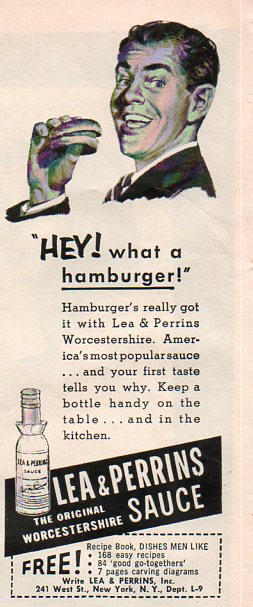
    Hamburger236 I was looking for something completely different when I stumbled over this simple ad for Worcestershire Sauce. What was instant recognizable to me was that the hamburger was just exactly that–a hamburger.  There was the burger and the buns, and that was it.  except of for the fancy Worcestershire sauce, brought to America from the old country.  In the ultra-centrifuge micro-cautionary ads of today, it would seem impossible to show a food product in such simplicity and so remarkably unposed–the buns are uneven, and imperfect, and there’s nothing about the burger to suggest itself as good except for the smiling, suited man. 

    McDonalds was selling burgers at this time, and for 15 cents a pop.  I’ve seen television commercials advertising burgers  for a buck here in the present, cheaper than what the thing was in 1956, that dollar covering only 12 cents of expense then. The current burger is cheaper still if you consider it as part of an hourly minimum wage; the 1956 minimum was 75 cents/hour, while 2010 is about ten times that; that means that the 1956 hamburger was 1/5 of the hourly wage, while the product in 2010 was 1/7 of the minimum wage.  The extreme cheapness of the current hamburger must make it seem a good deal for people working at or below the minimum wage, providing a food-like product to fill the belly for very little money in exchange, and with very little nutritional value. Perhaps that explains why 50 million Americans eat a a hamburger place of some sort every day–it is a vastly successful  business model predicated on delivering an almost entirely valueless version of an essential component of daily life, with constant advertisement duping people with greasy heart clogging goodness delivered by a bouncing clown or a little girl with freckles.  But of course there were worse things–this one just happened to catch my attention this morning.

    The hamburger has maintained its cheapness over the years, and certainly is one of those things from the ’50’s whose back-then price has translated into a more-expensive price with CPI-adjustments over time.  There are other staple-like thingas that were more expensive in 1956 than now: milk/gallon:  92 cents  1956 and $7.44 in 2010 dollars) and coffee,  93 cents (1956) or  $7.52 (2010).  Gasoline was 23 cents/gallon or $1.86 in 2010 dollars. (Gasoline pricing is another, more complicated story, for another time.)

    Don’t forget to order  your copy of Dishes Men Like! It has seven pages of carving diagrams.


  • The Sense and Nonsense of Success–the Pulitzer Prize, A Saturday Mornng Quiz

    JF Ptak Sdcience Books   Post 1198

    Can you spot what the similarity is in these books–besides being published works?  It is a list of Pulitzer Prize winners, but what else?  One work got the prize, the other didn’t.  Can you tell the winner from the loser? 

    Here’s the hint–its not the title whose writer almost everyone can identify.         

    That’s correct–it is a list of famous losers.  All of the winners of the Pulitzer for that year are listed first; the losers (well, those not selected) are second. (Yes I’ve mixed drama in with the fiction–this is a very quick study.)

    1919.  The Magnificent Amerbersons and  My Antonia

    1921.  Age of Innocence and  This Side of Paradise.
                       
    1923   Icebound and The Hairy Ape.   

    1924  Hell-Bent Fer Heaven (by Hatcher Hughes) and No! No! Nanette.

    1926.  Arrowsmith and The Great Gatsby

    1927.  Early Autumn and The Sun Also Rises.

    1929.  Street Scene and Strange Interlude

    1930.  Laughing Boy and The Sound and the Fury and A Farewell to Arms and Sartoris

    1931. Years of Grace and As I Lay Dying

    1932.  Of Thee I Sing and Mourning Becomes Electra

    1933.  The Store and Light in August

    1935. Now in November and Tender is the Night

    1936. Honey in the Horn and Of Time and the River

    1938. The Late George Apley and Of Mice and Men

    1939.  Abe Lincoln in Illinois and Our Town

    1943.  Dragons Teeth and The Moon is Down

    1944. Journey in the Dark and A Tree Grows in Brooklyn

    1946. State of the Union and The Glass Menagerie.

    1952. The Shrike and Requiem for a Nun and Darkness at Noon and The Rose Tatoo and The King and I.

    1959 The Travels of James McPheeters and Lolita.       

    1965. The Keepers of the House and Herzog.

    And so on. 

    I’m not saying that the winners of the Pulitzer for that year are bad works–I’m just pointing out that they just might not be good.  In any case I think that if you were given the chance to be the writer of one or the other, my guess is that 99.9% of folks would chose the work in column #2.

    “The nature of winning and losing is not a win-win situation…” the opening line for one of these winners might have read.  The vagueries of success is a disorganized system but a system nonetheless, and sometimes it just makes no sense; and sometimes when it actually does make sense the sense it is is nonsense.  

    So it goes.

    ·Posted by :

    ·in:

    —

  • War Ads, 1915–Gallipoli and Soap, Tires and Zeppelins, 1915

    JF Ptak Science Books

    [These items are available for purchase on our Blog Bookstore, here.]

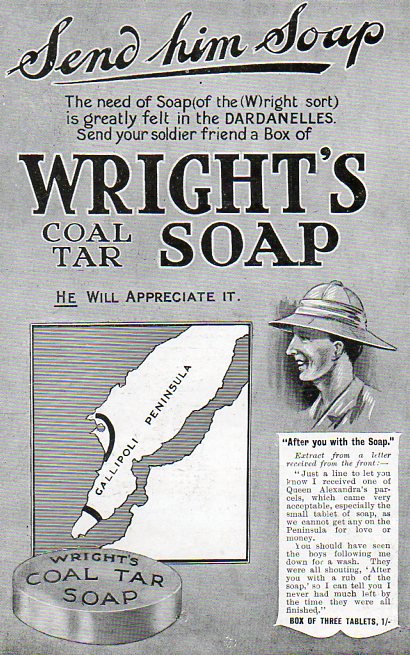
    These ads are interesting and take a bite, both ways.  For example, the first–for Wright’s Coal Tar Soap–uses the background of the enormous struggle in Gallipoli to sell itself.  The ad appears in the 9 October 1915 issue of The Illustrated London News, and stresses the fact that the troops were badly in need of, well, soap, among other things,

    WWI--e---galipolli640

    not the least of which was forward motion, or victory.  But the fact of the matter is that this relatively cheery image of the actions at Gallipoli looks entirely misplaced, especially at this point in the campaign when things were going badly.  The battle took place at Gallipoli peninsula in Turkey from 25 April 1915 to 9 January 1916, and the conditions were deplorable: massive heat, rotting corpses, poor sanitation, dysentery, flooding and then frostbite and bitter cold in the winter–that, plus the killing part, with 392,338 killed and wounded on both sides of this one campaign.  There’s much more to this campaign, of course–especially for my New Zealand and Australian friends– but this is not the place for it.   I was just taken by the spectacularly mundaneness of this ad for selling soap on the back of a terrible campaign.
    WWI--e- german dirigible639

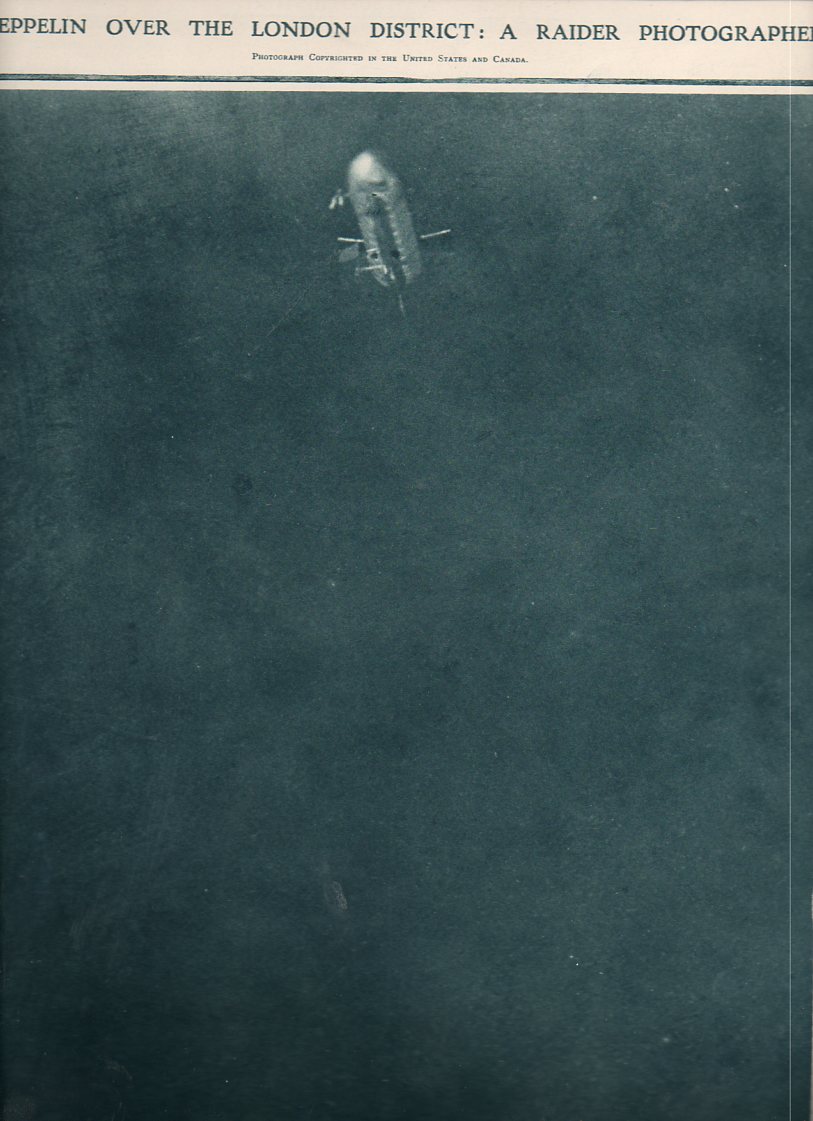
    The second ad sells British nationalism, of course, screaming to its readers to avoid purchasing German rubber tires, “made in the same factory as the fabric for Zeppelins”.   This appeared in The Illustrated London News for 23 October 1915.  The Zeps had definitely appeared over London by this point, and the ad drives the point home by showing an exploding shell over Westminster Clock Tower (from 9 October 1915 issue).

    WWI--e---zeppelin london641


  • Trying Hard Not to See the Jews: American Immigration Practices, WWII

    JF Ptak Science Books LLC  Post 1237

     This pamphlet holds an insight into a period, and also to one of he greatest stains of American foreign policy/humanitarianism of the last seventy years. And somehow this prolonged act is still a semi-secret, still I think not very widely known or acknowledged.

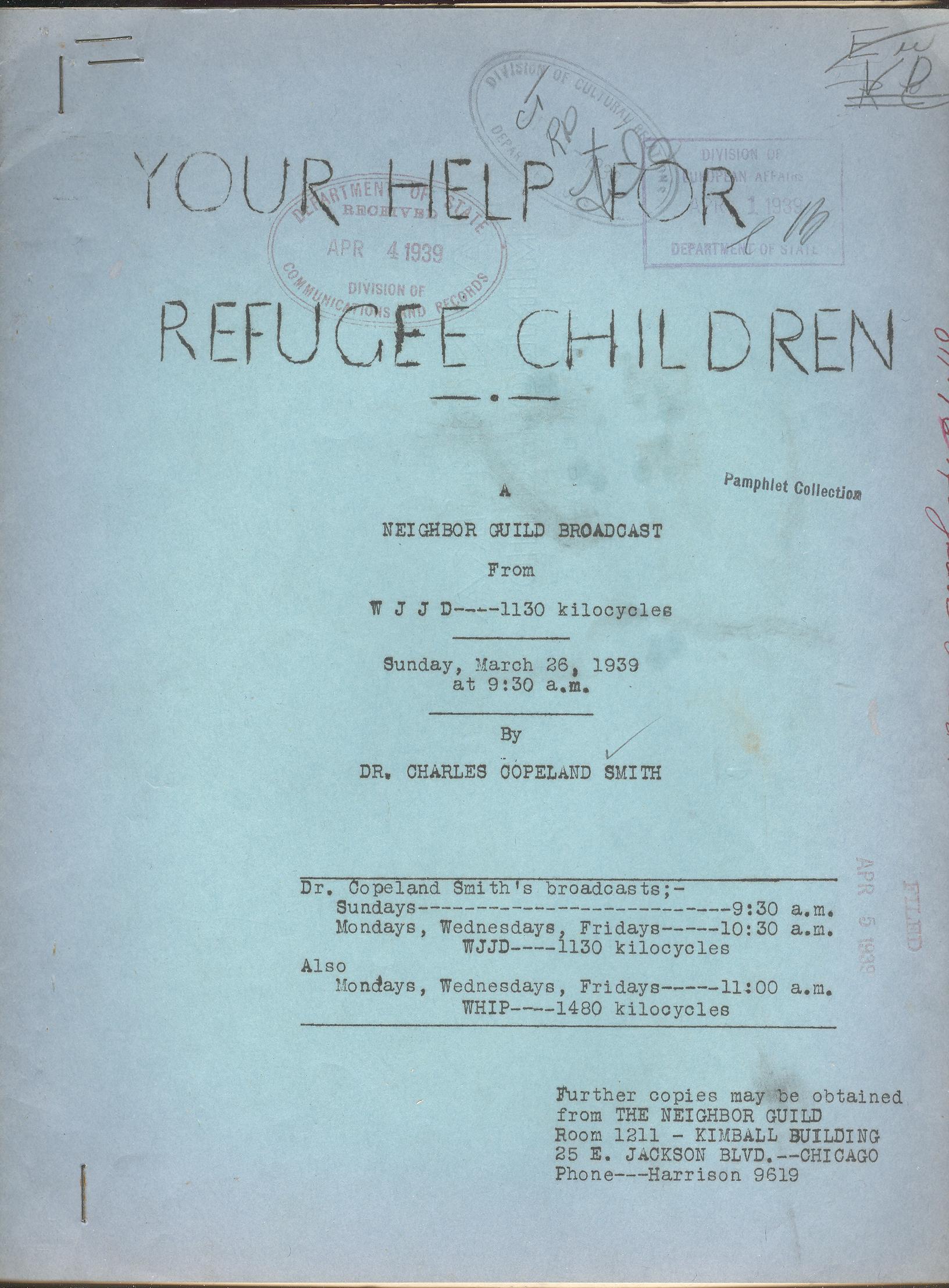
    April 17 jewishYour Help for Refugee Children (March 1939)  is the text for a radio broadcast by Chicago-based Dr. Charles Copeland Smith for his “The Neighborhood Guild” series.  (The document is also available from our blog bookstore.) Actually, Smith gave the broadcast over to his wife (for some reason) to make this appeal– I guess because the subject was children, and that it would best be made by a woman.  Mrs. Smith made the case for the relaxation or extension of American immigration policy to accommodate the newly-minted refugees of Hitler’s Nazi Germany. 

    The European war was just about started by the point–Czechoslovakia and Austria were already done, and Poland and the rest of the beginning of the war was just six months away.  By this point, however, the war was considered a foregone conclusion by most thinking people.  

    I have to give credit to the Smiths, as they did recognize the coming threat of Nazism, and did make the appeal for a more expansive inclusive of the relatively stingy American immigration policy.  They figured that the children of refugees would be their main concern, and that accommodation should be made to accept 10,000 of them per year.  

    That would be 10,000 “extra” children, I’m assuming, since the Smiths make the case that the current levels for allowable immigration was an at “inadequate” 27,000 per year.  In 1938 there were more than 300,000 applications for U.S. visa from German Jews alone, about 20,000 of which were accepted.  In 1939, a smaller number of Jews would find themselves allowed into the United States. From 1933 onwards, the case can be clearly made for the State Department, Congress and the Executive branch actively engaged in restricting immigration to the U.S. by many hundreds of thousands of European Jews.  Even after it became apparent that not only were Jews being sent to concentration camps by the millions, but they were also being exterminated , that the U.S. policy for acceptance of Jewish refugees barely changed.

    It is at the Jewish question that the Smiths got things wrong in their broadcast.  Mrs. Smith made “another attempt” to make the case for the refugee issue was not “predominately a Jewish problem”, the argument being that there were so many more Catholics than Jews in places like Czechoslovakia and Austria.  She went on: “I believe that Nazism is determined to stamp out liberalism.  The movement is political, not racial, not religious.”

    The undercurrent of their argument for saving (“not just”) Jewish children was based on a very selective use of out-of-context statistics, concentrating on numbers of refugees coming out of Austria and Czechoslovakia, and not, somehow, out of Germany.  I’m not sure how they could have gotten to their argument on refugee status for Europeans while ignoring the six years worth of anti-Jewish legal abominations perpetuated upon the German Jewish population.  

    The “Law for the Restoration of the Professional Civil Service” was passed in April 1933 (the first official banishment of the Jewish people as menials, second-class citizens,  banning them Jews from government jobs). The Jews had already been established by the Nazis as being the cause for the loss of WWI, the debacle at Versailles, the ruination of German culture and mortal enemy of the Aryan German. Many hundreds of laws like this would be instituted over the coming few years, establishing the legality of the supposed inferior nature of the Jewish people.  (Also in July 1933 came the underpinning legislation of some future nasty thinking, Ernst Rudin’s “Law for the Prevention of Hereditarily Diseased Offspring”, which established health courts and compulsory abortion and sterilization for a variety of physical and hereditary traits found to be unacceptable for the promulgation of a superior German race.) And this is all before the Nuremberg Laws of 1935/1936, (specifically the “Reich Citizenship Law” 1936)  which basically established the fate of the Jews, removing their citizenship and making them “subjects of the state”.Do I really need reiterate the case for the Nazi subjugation of the Jews, and their making the social and legal basis for the coming extermination policies which were codified at Wansee in 1942?  I think not–though it seems to me that for whatever reason the Smiths decided to not utilize this already well established (even by 1939) information.I think that at the very least they did not want to know.
                                        
    I’d like to focus on this self-deception, the welcoming of not knowing something, of not wanting to know, of stopping: of doing nothing in the face of something needing to be done.

    The destruction of the Jewish people during World War II is a history with many bearings, a complex of actions that seem to have been both elusively unstoppable and eminently addressable.  The psychology of why this occurred is forensically comprehensible; the ultimate question, after everything is said and done, is why the extermination was allowed to continue for years on end. There is a considerable catalog of demons of non-actions and deceits that I just can’t address now in a short post like this. Though I would like to know why was it so difficult/impossible for the British government (and in particular, Anthony Eden) to allow Palestine as a safe haven for desperate Jews, engaging in torturously long non-decisions and bureaucratic inscrutability to emergency situations?  Why did Franklin Roosevelt take so long to come acknowledge the documentation of the Holocaust and then cause almost nothing to be done about it?  Why did Sumner Welles act decidedly against any real action in presenting the full case of the Holocaust to American leaders?  Why would the War Department (represented by Assistant Secretary McCloy) respond in 1944 that  Auschwitz was both beyond the reach of tactical bombers and not be of sufficient military interest to divert Air Force resources away from other areas of interest?  The knowledge of vast extermination of Jews in Europe was known by early 1943, and yet, there was little action taken to do anything to stop it.  Not only that, the issue of emigration for Jews to the United States or any other country that would have them was caustic and slow; it was in short a history of the use of the word “no”.

    Henry Morgenthau (1891-1967), an old-line politician, was Secretary of the Treasury under Roosevelt and was also the only Jew in the cabinet.  It was he who in 1944 produced one of the most compelling, and damaging, documents questioning the American government’s culpability in doing nothing concerning the Holocaust, when “officials dodged their grim responsibility, procrastinated when concrete rescue schemes were placed before them, and even suppressed information about atrocities.”

    Its title left nothing to question:

    Report to the Secretary on the Acquiescence of this Government in the Murder of the Jews (1944).

     It starts so:

    “One of the greatest crimes in history, the slaughter of the Jewish people in Europe, is continuing unabated.

    “This Government has for a long time maintained that its policy is to work out programs to serve those Jews of Europe who could be saved.


  • History of the Federal Minimum Wage and Its Deeply-Past Present

    JF Ptak Science Books   Post 1226

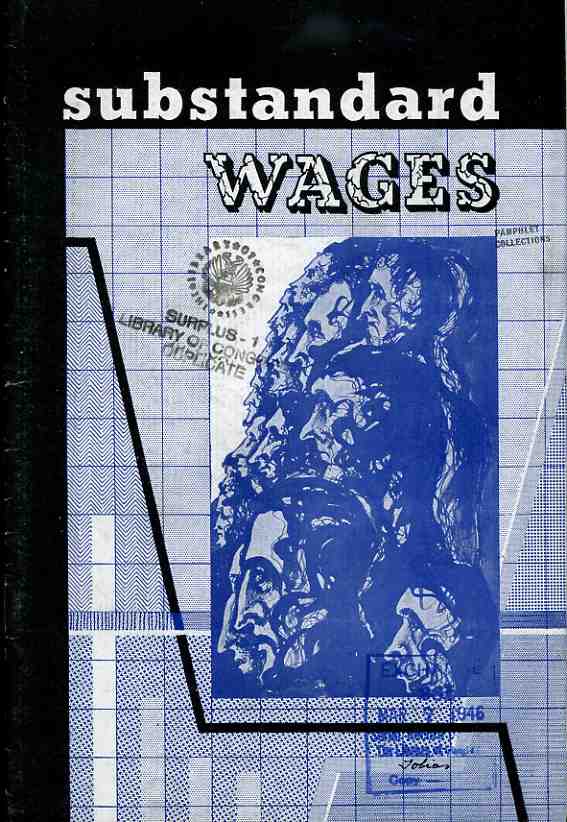
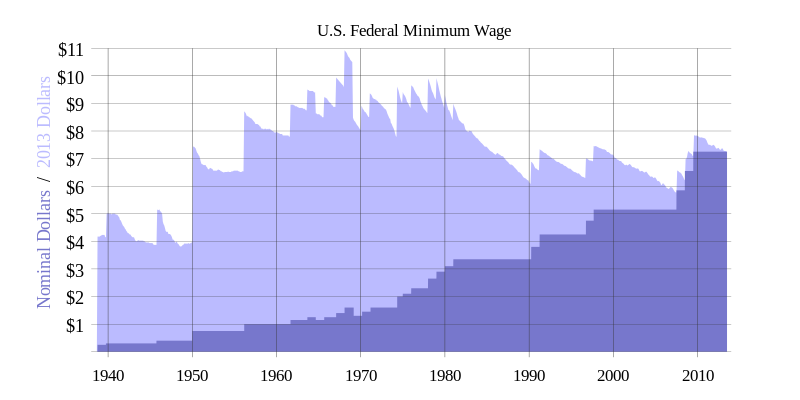
    0 blog jan 30 substandard489I’ve included this post in the Blank/Missing/Empty thread of this blog because the Federal minimum wage has been proportionally increased more so in th e last two years than at almost any time in its history, the increases really only get it up to what it niormally has been, maybe a little higher, with CPI-adjusted. This post is in response to an article in the New York Times today saying that the new minimum wage is equal to that of 1968, which is probably accurate.  The real point is that during the mid- Clinton years and the early Bush yeras the minimum wage languished during a time of tremendous growth for those who already had money–the poor for the years of 1992-2005  were left largely unprotected, unmolested by fortune.

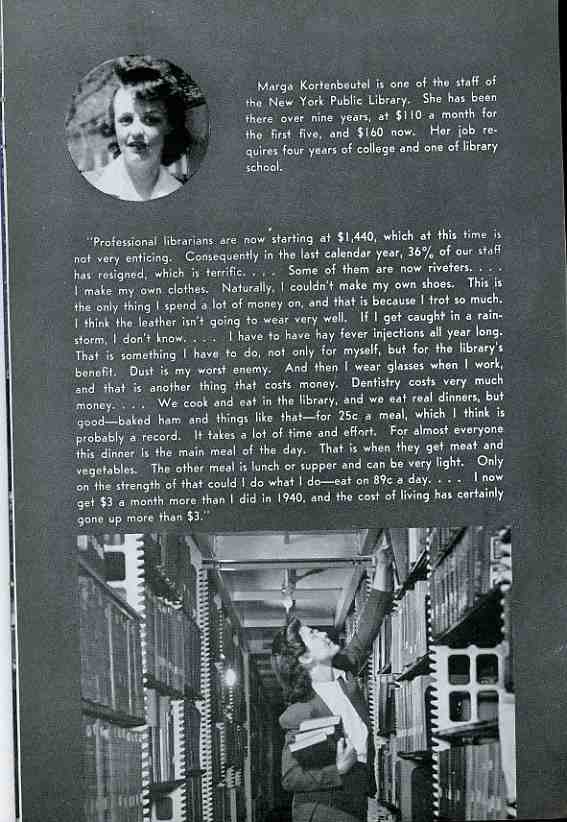
    Leafing my way through this interesting pamphlet, Substandard Wage, an Analysis of their Extent and Effect, and What Must be Done to Establish a Higher Wage Level, design “and presentation” by Abraham Joel Tobias for the Textile Workers Union of America, CIO, and for the Congress of Industrial Organizations, I found some very interesting bits.  First of all, the work was done to aid the working poor, people who were employed and making a wage, but the wage just wasn’t enough necessarily to being them out of poverty.  (The poverty line wasn’t invented as an economic bell weather until 1959.)  The first of the working poor that I read about was a librarian, Marga Kortenbeutel* (of the NYPL) who was working for $1,440.00 a year in 1945, which was just keeping her barely afloat, what with cutting out her 89-cent lunches and all.   That’s the equivalent (CPI adjusted) to about $17,500 a year in 2008 dollars.  Of course, the general economy was not doing well during the war, though it would rebound substantially by the late ‘40’s. The minimum wage, first established in 1938, was equal to about $3.50 2008n dollars in 1945. By 1950 this jumps to $6.25, and from there to about 1988 the minimum wage stays at at least that rate, with the period 1958-1978 soking aqt an average of about $8.hour.  From 1988 forward the minimum wage falls, winding up at about 5 dollars/hour in 2008, with the period 2003-2008 being the lowest level of real wages since World War II.0 blog jan 30 substandard490

    But what was this in terms of the rest of the population; what did these figures for minimum wages mean in the  society at large?  Was this a livable wage?  If we define “livable” as above what the government considered to be the “poverty level”, and “working” is a 40-hour work week and a 50-week working year, the answer is a quick “no”.  In 1959, when the poverty level was established, the minimum wage for the working person brought them to 67% of the income necessary to be “poor”; that left a gap of 33%, and that isn’t good.  That gap continued to close to 1968, when minimum wage go to within 10% of the poverty level, and then it began a slow and steady-ish decline.  The spiral down bottomed out for a bit in 1989, when it hit 52%,   building back up to just a touch over 60% in 1997.  From 1997 until the new minimum wage was instituted in 2006, the gap widened steadily, hitting 50%.  In 2008, with the new minimum wage in place , the gap is still at 41%, meaning that the new wage levels still only come to within 59% of what is supposed to be the poor line in the United States.  59% stops things from being a ridiculous slap in the face of American working poor, but not by much.  And it affects too few:  the minimum wage applied to a high of about 17% of the entire working population in the U.S. in 1979; today, the minimum wage which gets the working poor a little more than half-way to poor, applies to only 2.5% of the population. 

    *As it runs out, I found a little bit about Ms. Koretenbeutel; at the time of the publication of this pamphlet, Margathe was 35 years old.  She married someone named Voorhis in 1960, and died in 1971.  That’s all I’ve got.

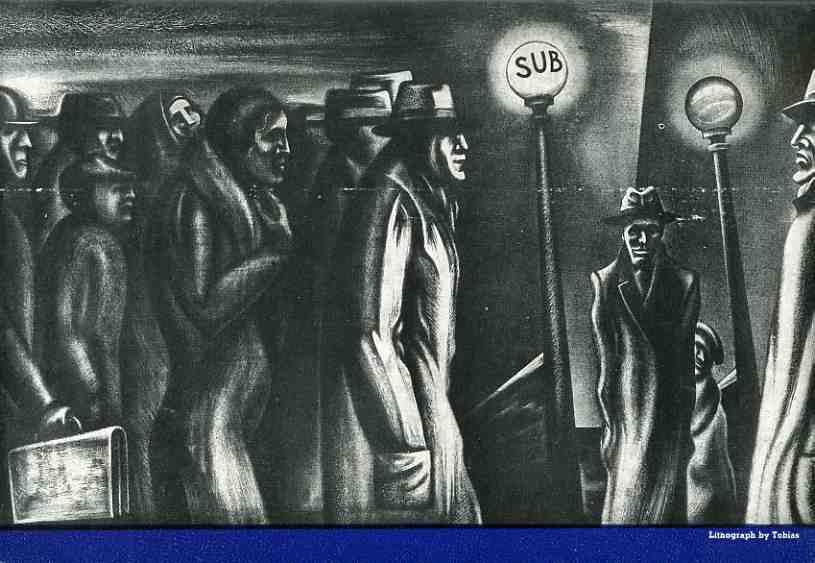
    The image below is from the back cover of the pamphlet, described as a “lithograph by Tobias”. 

    0 blog jan 30 substandard491


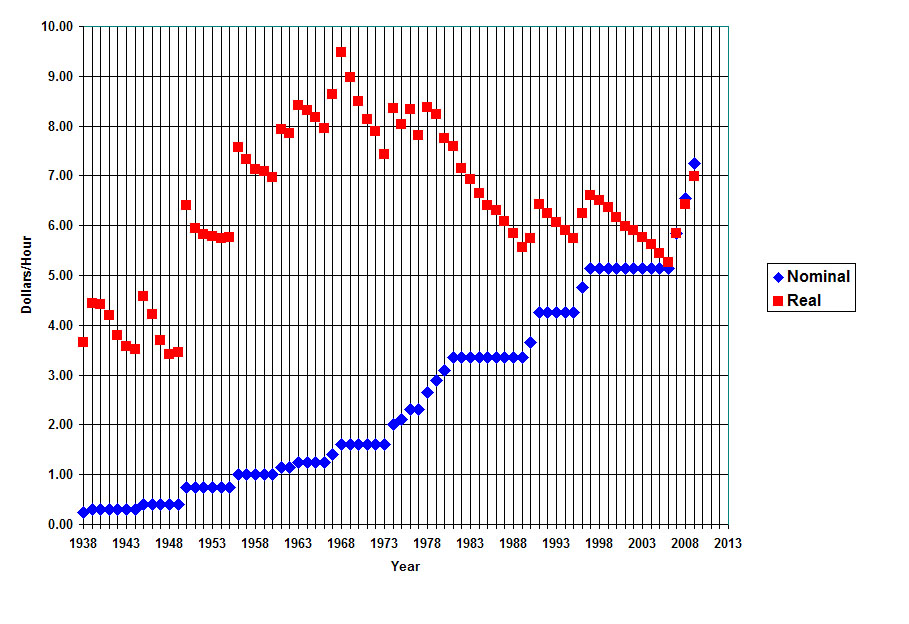
    A Timeline of Minimum Wage Levels, 1938-2009  (in continued reading section)

    Minwage The graph, above, is from Oregon State University website on the history of the minimum wage.  The accompanying text to it is also below.  The graph depicts “nominal” versus “real” minimum wages by year, the red dots (the nominal) showing what the original minimum wage translated to in 2008 dollars.

    A federal minimum wage was first set in 1938. The graph shows nominal (blue diamonds) and real (red squares) minimum wage values. Nominal values range from $0.25/hr in 1938 to $6.55/hr as of July 2008. The graph adjusts these wages to 2007 dollars (red squares) to show the real value of the minimum wage. Calculated in real 2007 dollars, the 1968 minimum wage was the highest at $9.47. The real dollar minimum wage (red squares) falls during periods Congress does not raise the minimum wage to keep up with inflation. The period 1997-2007, is the longest period during which the minimum wage has not been adjusted. The minimum wage increases in three $0.70 increments–to $5.85 in 2007, $6.55 in mid 2008, and to $7.25 in mid 2009. The real values after 2007 are projected for future decline in purchasing power. 

    Minimum wage History_of_US_federal_minimum_wage_increases


    [Graph from Wikipedia on the minimum wage, here]

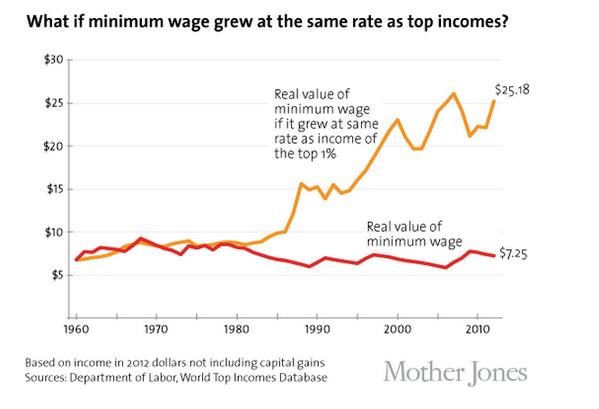
    And this interesting graph from MotherJones, showing what the minimum wage would look like if it had kept pace with the salary increases for the top one percent:


     Minimum wage top income


  • Attacking Darwin’s Descent of Man in The London Times, 1871.

    JF Ptak Science Books   Post 1225

    “But with regard to the material world, we can at least go so far as this—we can perceive that events are brought about not by insulated interpositions of Divine power, exerted in each particular case, but by the establishment of general laws.” W. WHEWELL: Bridgewater Treatise.

    “To conclude, therefore, let no man out of a weak conceit of sobriety, or an ill-applied moderation, think or maintain, that a man can search too far or be too well studied in the book of God’s word, or in the book of God’s works; divinity or philosophy; but rather let men endeavour an endless progress or proficience in both..” BACON: Advancement of Learning.

    The quotes above stand alone, the first things that the readers see, sitting on the half-title page of  Charles Darwin’s On the Origin of Species (first published in 1859 in an almost-immediately sold out run of 1250 copies) an extraordinary, epochal book that was a lightning rod for reception both good and bad, heaven and hell, the Boschian hells of which were clearly not deserved, then or now.  (It is easier to understand a poorly-reviewd Origin in 1859 or through the 1860’s or even through the rest of the 19th century or even somehow through the early twentieth, but not afterwards.)

    Twelve years after the first edition of the Origin (and two years after the appearance of the Origin in its fifth edition) came his elegant and formibible The Descent of Man, and Selection in Relation to Sex

    The Times of London gave such an awful review of the book that a review of this review was published in the April edition of Nature [(Darwin),  Charles.  REVIEW of Review: The Descent of Man.  London:  Nature,  1871, volume 3, 20 April 1871].   It was Thomas Stebbing who wrote the response to The Times‘ incitful, hateful attack upon the Descent of Man. The Times saw Darwin’s work as an attack upon society,  accusing him of undermining authority and principles of morality, opening the way to “the most murderous revolutions”.  A “man incurs a grave responsibility when, with the authority of a well-earned reputation, he advances at such a time the disintegrating speculations of this book.” Stebbing’s review of the review is drippingly sarcastic, pointing out obvious errors in specific and the tone of the article in general in the defense of the book. Darwin’s “facile method of observing superficial resemblances” (says The Times) incites Stebbing to issue the following: “they may fancy that truth is worth discovering , even when it seems to involve some contradictions to our pride and some loss of comfort to our finer feelings…” (What a great line!) The article runs about 1000 words, and is a two-column, 1-page bit. [This issue of Nature may be purchased from our blog bookstore, here.]

    “No one ought to feel surprise at much remaining as yet unexplained in regard to the origin of species and varieties, if he makes due allowance for our profound ignorance in regard to the mutual relations of all the beings which live around us.” Darwin, leading the last paragraphs of the end of the introduction to the Origin, page 7.


  • Buckle-Up for the Nuclear Holocaust–The Fat Man’s Big and Terrifically Bad Idea

    JF Ptak Science Books LLC  Post 1221
    ==Blog July 27=wiener title

    Atomic and Nuclear Weapons   and The History of Bad Ideas series

    This is one of those ideas that just went viciously bad on contact, turning into an enabler of  the very thing that it was supposed to help prevent:  turning the Easter Bunny into Dr. Strangelove.  In the History of Bad Ideas, this one is top-tier. 

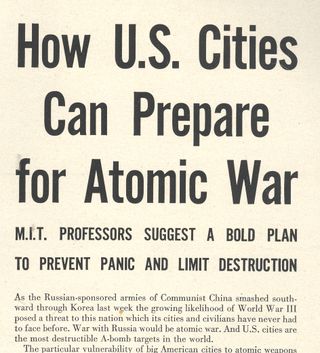
    LIFE magazine published “How U.S. Cities Can Prepare of Atomic War:  How M.I.T. Professors Suggest a Bold Plan to Prevent Panic and Limit Destruction” in their 18 December 1950 weekly issue, just in time for Christmas.  The plan was a partial response to the dire situation faced by the U.S. in Korea and the growing threat of China and of course the Soviet Union’s nuclear arsenal.  The government recognized that there was little planning in place to deal with the outcome of possible nuclear attack, and established the Federal Civil Defense Administration to help deal with the “problem”.  The problem  was how to make U.S. cities somewhat prepared to deal with being bombed with nuclear weapons—given that cities had a hard enough time dealing with 5:30 pm commuter gridlock, throwing a hundred megatons of explosive power into the equation made things more difficult. 

    ==Blog July 27=wiener left

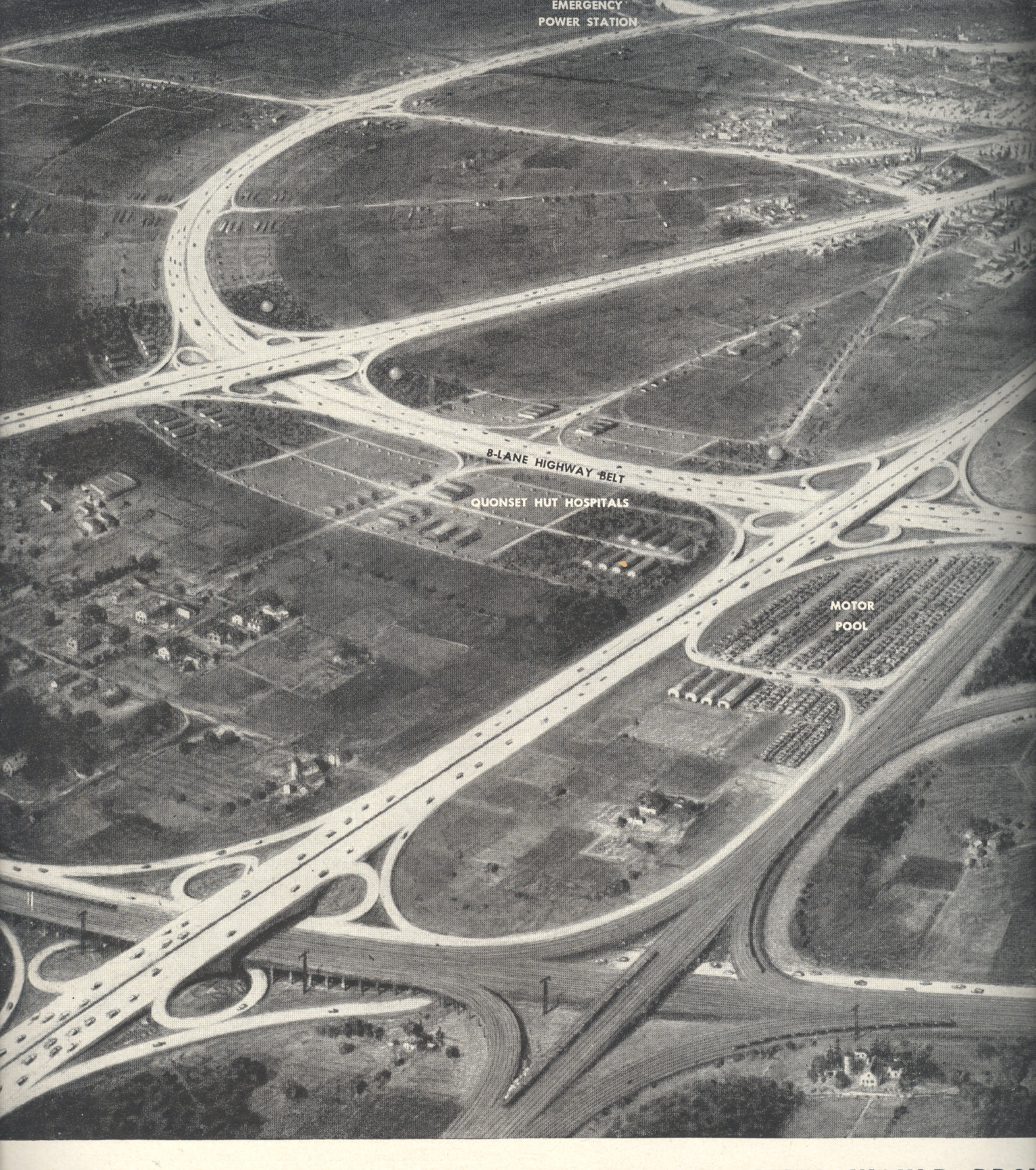
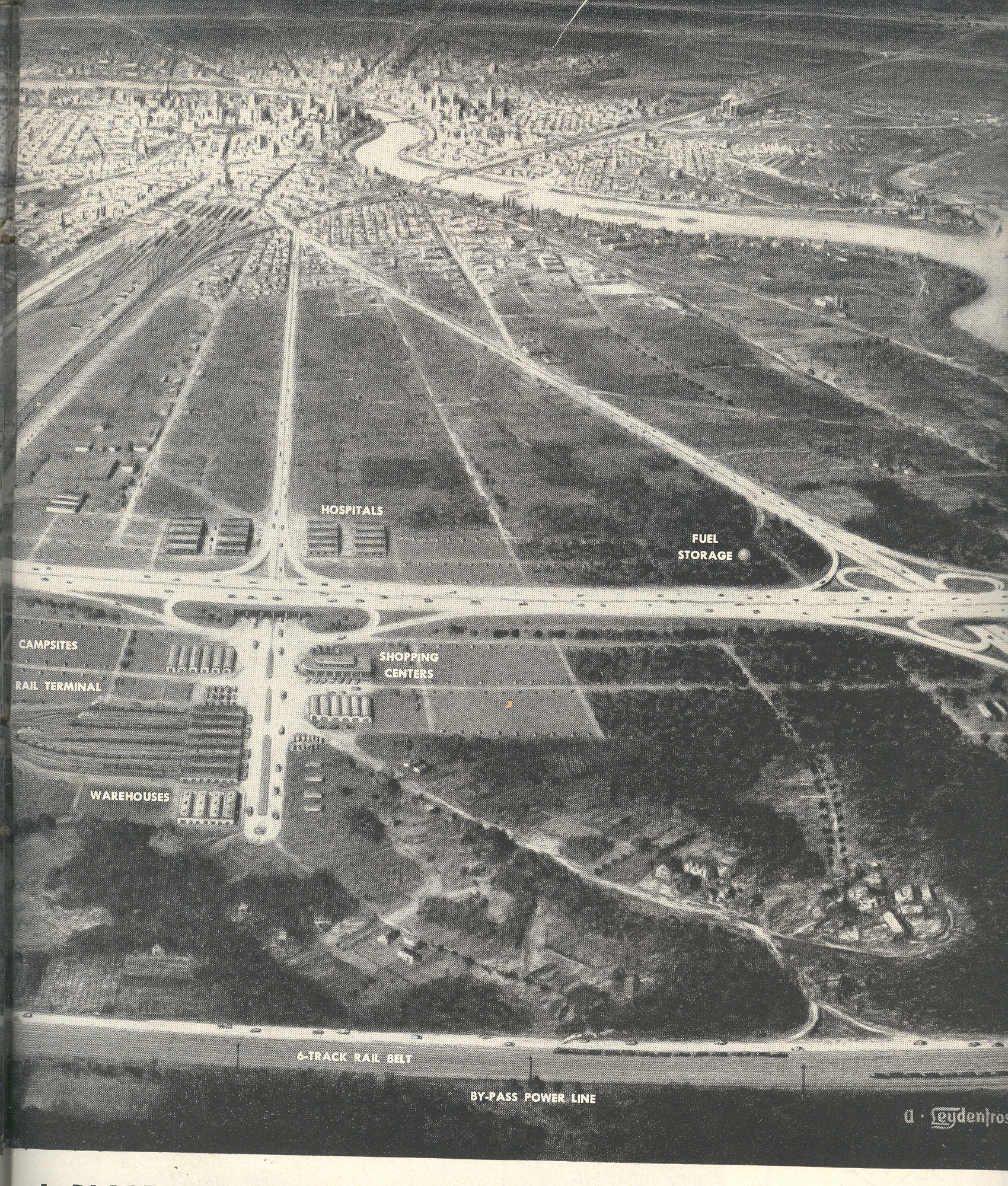
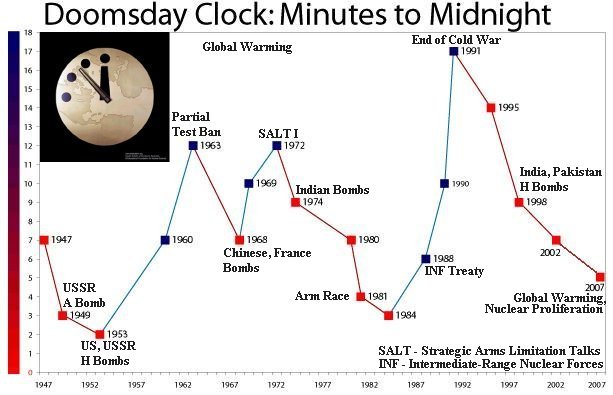
    One reaction was to construct concentric outer highways around metropolitan areas, “life belts around cities (which) would provide a place for bombed-out refugees to go”. In the birds eye view provided here, we see the plan in action, the main parts of which are an 8-lane “express” highway belt 10 miles away “from the built up edges of the city” , and a 6-track railway belt five miles further out, these accompanied by various feeder arms stretching straight-away from downtown.  In between the two outer rings would be land that would be kept free of development, so that farms and tent cities could be constructed after the attack. There would also be major collections of hospital and fuel depots in the greenbelt area.  Infrastructure would already be in place (gas and electricity, supplied with power from who-knows-where).   Shopping centers and a giant “motor pool:” would also already be in place, waiting for the Doomsday clock to strike midnight. 

    ==Blog July 27=wiener right

    One of the overwhelming presumptions here is that the interspersed green life living within the concentric rings of escape and transport routes would survive the attack. As would the highways.  Why on earth wouldn’t that infrastructure be attacked as well? Given the proliferation of weapons, it would seem highly unlikely that The Aggressor would target just downtown areas of major cities—they would of course have to include the safespots as well. Not that there would be that much of a change in targeting parameters:  exploding a series of 1 or 5 or 10 megaton warheads over a city like the one pictured here would pretty much decimate anything within the 15-mile life zone set out for survival.  With weapons in this megatonnage range, we’re talking about an explosive force that would be inconceivable, even using the Hiroshima explosion as a currency.  It is hard to imagine what happens when you deliver 3 or 4 5-megaton weapons to a city like this; when each of them would have the explosive force of 5,000 or so Hiroshimas, it is pretty clear that nothing will be left.

    This planning gap reminds me of the question dealing with UFO running/landing lights:  why are they there?  Even assuming a modest strike in the kiloton range (which simply would not be the case) why would these defensive structures not be a target, particularly, oh dear sweet creator, since they would actually be forming an enormous target, and one that even a half-blind flying pig could find from altitude? Ultimately, it wasn’t a good question to ask because the answer would reveal the helpless, soulless situation for what it was.  It was precisely an adult version of the ‘duck-and-cover” cartoons that showed the good students who got under their (wooden) desks being shielded from the atomic nastiness that just knocked down their school.  And of course these concentric evacuation and mobilization rings, even if they had miraculously survived a purposely modest attack, and even if they actually worked to handle the flow of millions of people in their eight lanes, and even if all of those millions driving these highways didn’t have any accidents that would choke the flow of traffic (and on and on), we still haven’t approached the radiation question.  For it was in the greenspace between the two concentric rings in which tent cities for the evacuees and homeless would come to life, some ten miles from ground zero (if, again, they weren’t themselves directly bombed with weapons in the megaton range). 

    So, in short, the way that these efforts would work is if (a) there was a lot of lead time to the attack, (b) everyone left the city in an orderly fashion, (c) nobody had any traffic choking accidents, (d) there was no radiation, and (e) one and only one “antique” nuclear weapons was used in the attack.  Given these parameters, the plan just might work. 

    One of the authors of this not-particularly well-thought or original idea was in fact a great and original thinker; this enormous and costly and not effective plan was certainly not one of his best moments.  Norbert Wiener (1894-1964), one of the co-conspirators of this idea, was a boy genius who grew into an adult genius, and that growing part didn’t take long at all.  He graduated with a Harvard Ph.D. in 1912 at age 18 and went on to a distinguished early career as a logician, studying under Russell and Hardy and Landau and Hilbert.  He left that part of his life mostly behind by the end of WWI, dedicating  himself to mathematics.  One of Wiener’s great accomplishments was (during the early stages of WWII) designing the capacity for anti-aircraft guns to be self-aiming, improving their accuracy (and effect) immensely.  This was the foundation of his communication theory which became the basis for his creation of cybernetics, a superior creation with vast applications over many fields. 

    By the beginning of the Cold War, Wiener became a pacifist, leading him down a dark and murky road to this “life belt” idea.  Perhaps this approach had precisely the wrong effect:  by lending the idea of sustainable and orderly survivability to nuclear war might have led people top believe that nuclear was survivable; and if there is a game played in which its two players are not necessarily both losers, then the specter of “winning” a nuclear confrontation with the Soviet Union becomes a possibility, making the whole idea of fighting with nuclear weapons feasible. 

    Doomsday

    I’ve not a clue as to what the great Norbert Wiener was thinking when he worked this out; even as a (and perhaps “the”) math guy,  the numbers just don’t add up. 

    When I put on my Jorge Borges x-ray specs the plan looks prettier, and of course involves libraries.  The outer concentric circles are still there, as are the green spaces, and the express/democratic ways of getting there; but what you would find there, on the highway ring, would be a series of libraries and dataports, and endless stream of books, and words, and numbers. 

    Addendum:

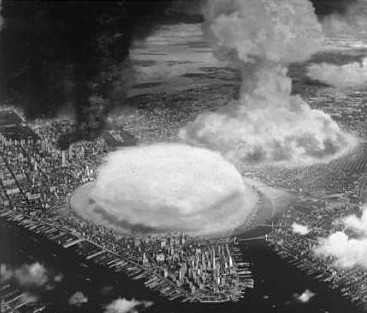
    One of among many things that I didn’t discuss above was the placement of such a greenbelt/lifebelt system for cities like New York, or San Francisco, or Los Angeles.  As we can see in the depiction of a nuclear attack on NYC from Collier’s Magazine (1948) there’s sorry little area for that highway ten miles out from 42nd Street…

    Atomic nyc