A Daily History of Holes, Dots, Lines, Science, History, Math, Physics, Art, the Unintentional Absurd, Architecture, Maps, Data Visualization, Blank and Missing Things, and so on. |1.6 million words, 7500 images, 4.9 million hits| Press & appearances in The Times, Le Figaro, Mensa, The Economist, The Guardian, Discovery News, Slate, Le Monde, Sci American Blogs, Le Pont, and many other places… 5000+ total posts since 2008.

Category: Aviation & flight

  • Airport in the Sky, Airborne Zeppelin Airfield, 1925

    JF Ptak Science Books  Post 1101

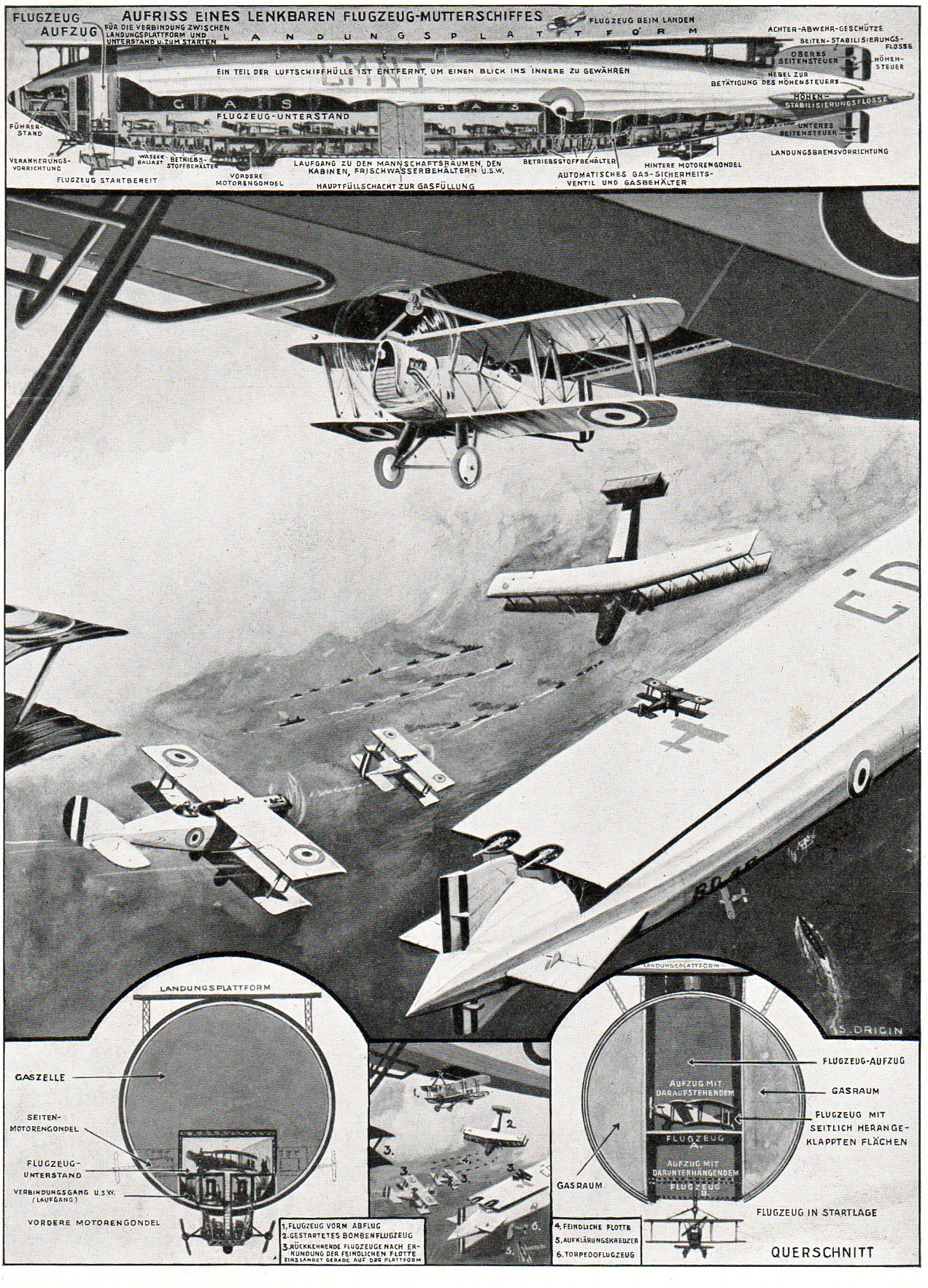
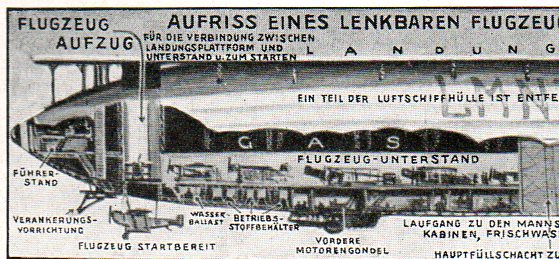
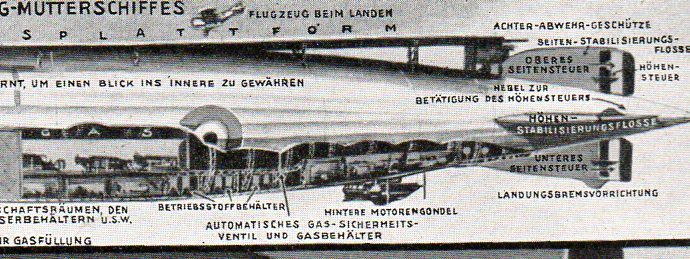
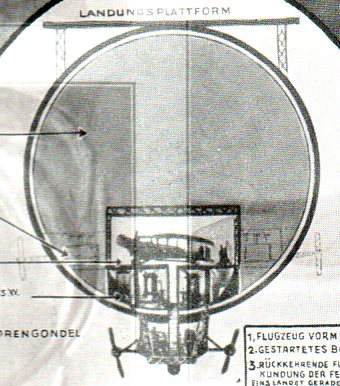
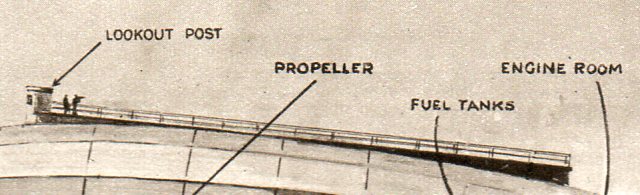
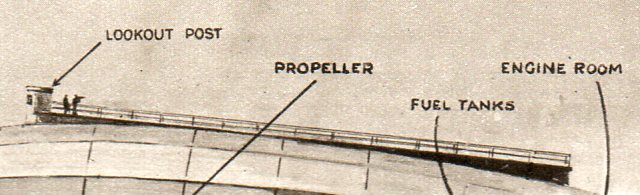
    This interesting image comes from the Illustriete Zeitung (Leipzig) for July 1925 (“Zeppelinsche Riesenluftschiffe” by Dr. Hildebrandt), and shows a British proposal for a dirigible outfitted as a sea-going airborne airport for military planes. 

    Airport--dirigible241

    The aircraft would land aft, and then proceed forward to an elevator that would lower it belowdecks to a hangar (looking as though it could accommodate 11 or 12 aircraft).  Once refueled and re-outfitted, the planes could be lowered from the body of the dirigible and launched into space. 


    Airport--dirigible a243

    Airport--dirigible b244

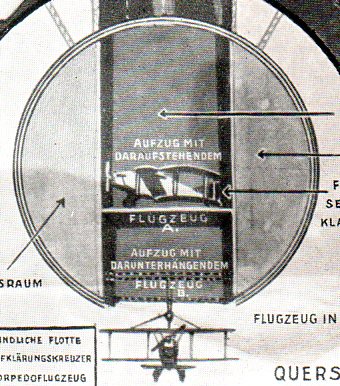
    And of course some cross sections:

    Airport--dirigible c245 

    Airport--dirigible d246


  • Wings Taking over Prayers: Human Flight in 1714

    JF Ptak Science Books  Post 1090

    Valentini216

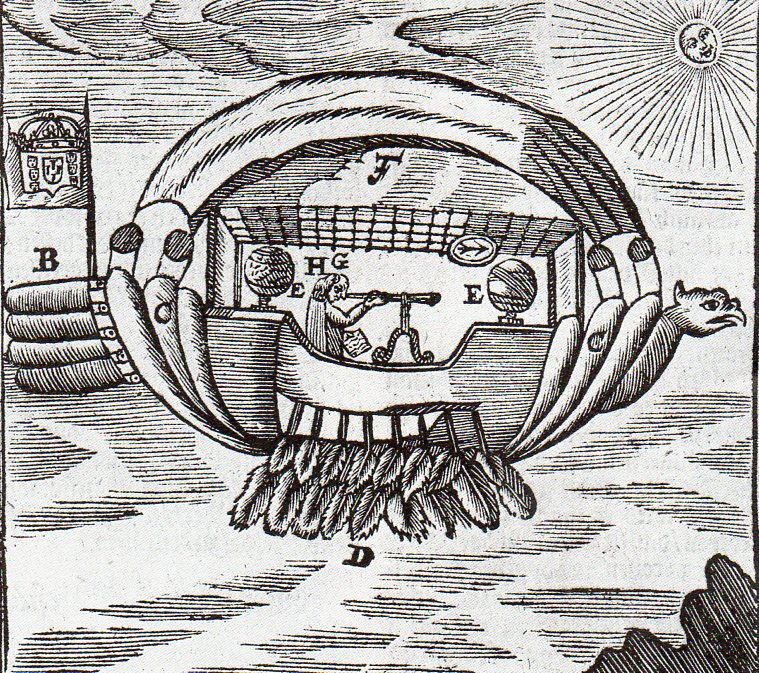
    The esteemed Michael Bernhard Valentini (1657 – 1729), professor of  medicine and of physics at Giessen, Germany and natural history collector, produced one of the century’s   most important works on the state of museums and natural history collections.  Actually, his Museum Museorum1 was much  more than that, its three volumes presenting more descriptions and illustrations of all manner of scientific things than just about anything else of the pre-encyclopedist 17th century. There are many “firsts” to be found in this work, including numerous first-time description of fossils, tropical plants, American botanical specimens, techno items, shells, and on and on, not to mention sections on monsters, dragons and mythical creatures. 

    One image that caught my attention appears in volume two, and seems to me to be a flying machine, though I can’t recover how it is being kept aloft, or what is providing its power.  The pilot is keeping a sharp eye on things with a  telescope, and is reckoning position with a compass2 and two globes.  The canopy of the aircraft seems to be just that, some sort of cloth held in place by pulleys and ropes, though I don;’t know what is providing lift, if anything.  Perhaps the whole thing finds its lift and propulsion with the many feathers on the craft’s keel.  I’m not sure.  But I can say that I don’t recall any other earlier image of a pilot using a telescope and compass.   

    Valentini also assembled an enormous natural history collection of his own, and in addition to his spectacular collection of the state of scientific and technical knowledge at the begininng of the 18th century, he also included in his book a  list of 100+ museums/collections of natural history objects–an extraordinary document for the time and unfortunately one that can’t be reproduced here.


  • The History of Rartity: Helium, Nutmeg, Breadfruit and Pepper

    JF Ptak Science Books   Post 1089
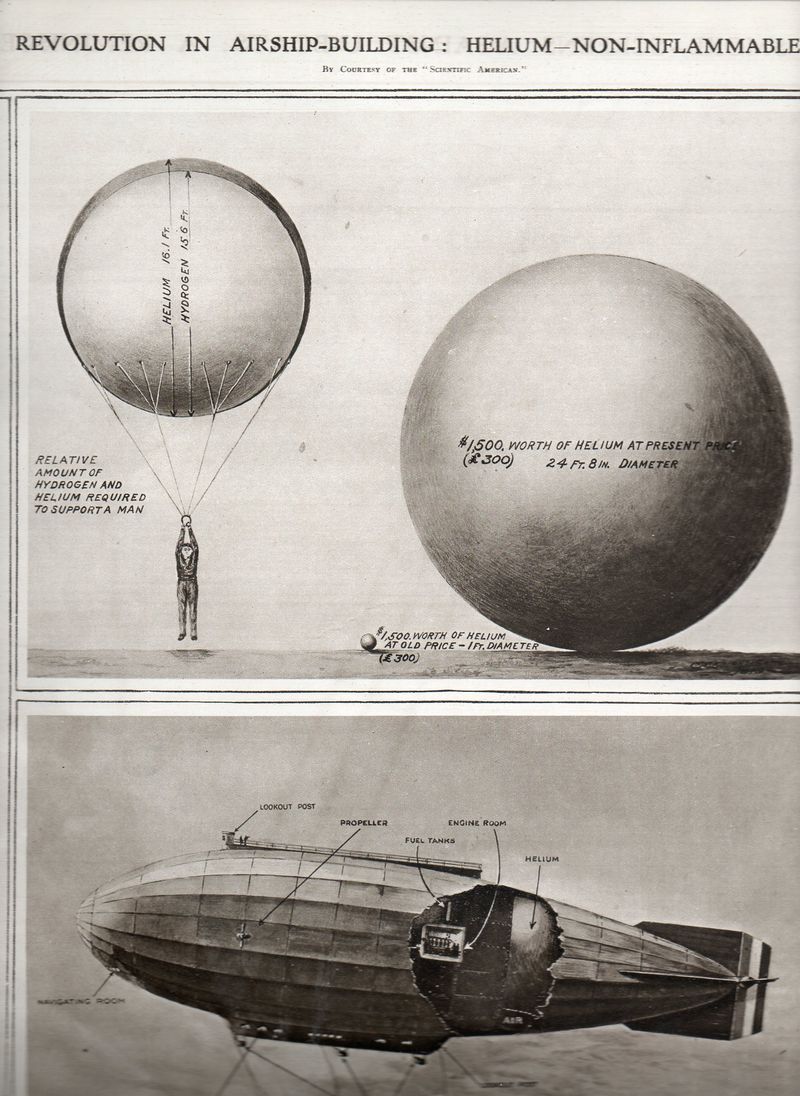
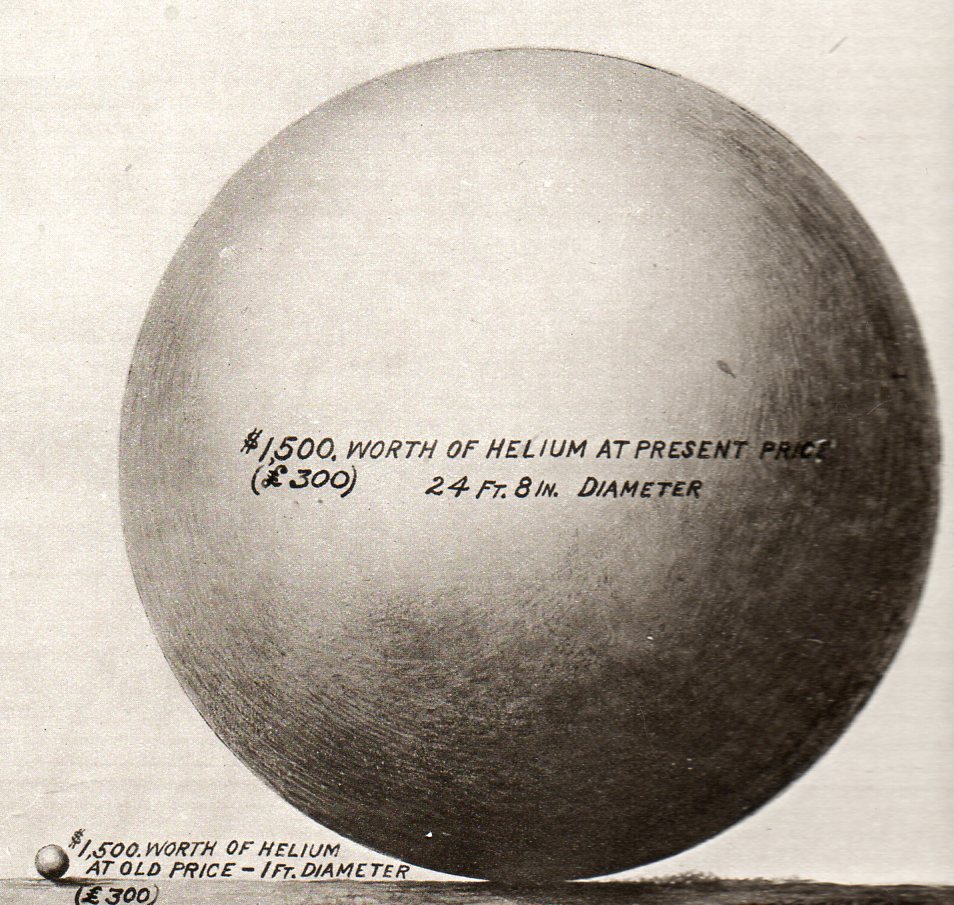
    Display info helium balloon212I guess we don’t think much of the rarity of some things.  Pepper and other spices were at one point quite rare, and the source of invention and exploration, and war.  Nutmeg, for example, a sought-after spice originating from the Banda Island group of Indonesia, once figured in a trade between Holland and England (the Treaty of Breda in 1667) that landed the Dutch the island of Run and control of the nutmeg trade, while the Brits got Manhattan.

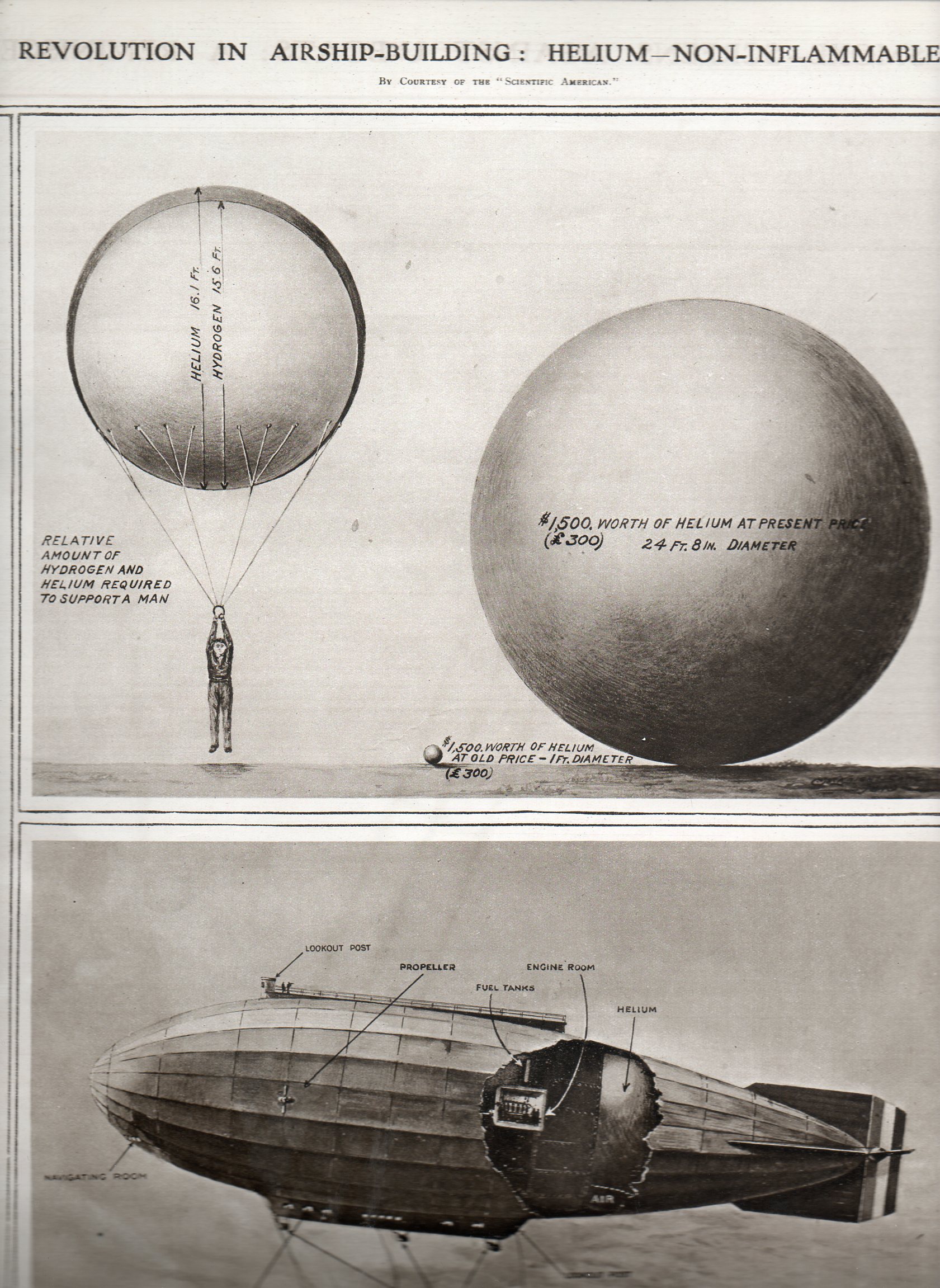
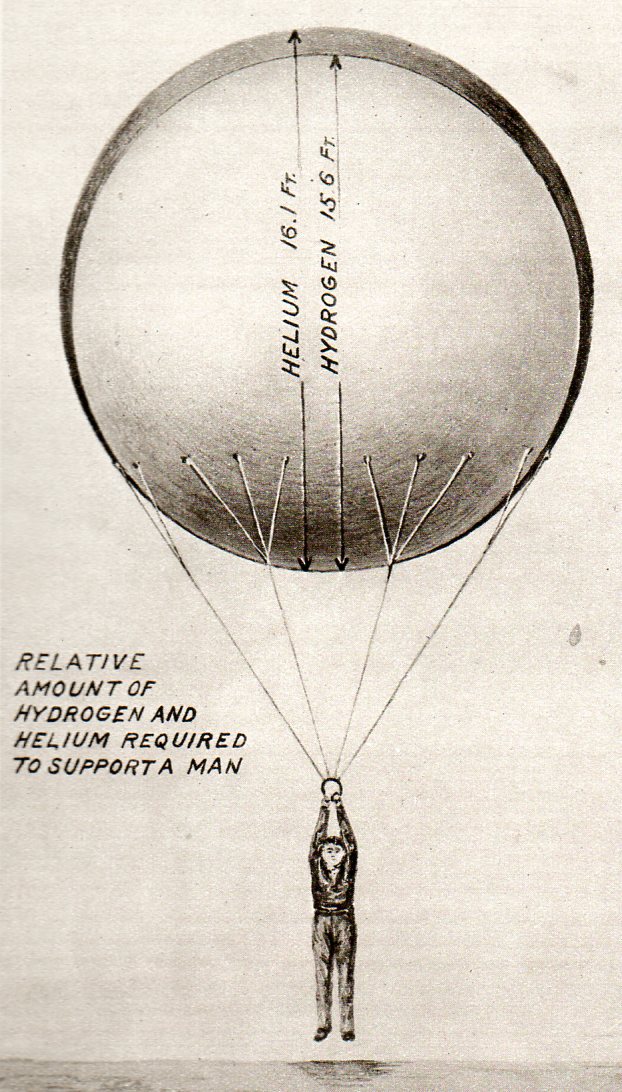
     Another great example is helium. When these images were produced for The Illustrated London News of 15 March 1919, rigid airships were filled with hydrogen, an explosive, not-happy gas that was the fuel of all manner of aerostatic accidents, everywhere.  Helium was still quite rare at this point, a year after the end of WWI and only 54 years after it was first observed1, and replacing hydrogen with helium was still yet a dream–basically because there wasn’t any, yet, to supply a dirigible2.
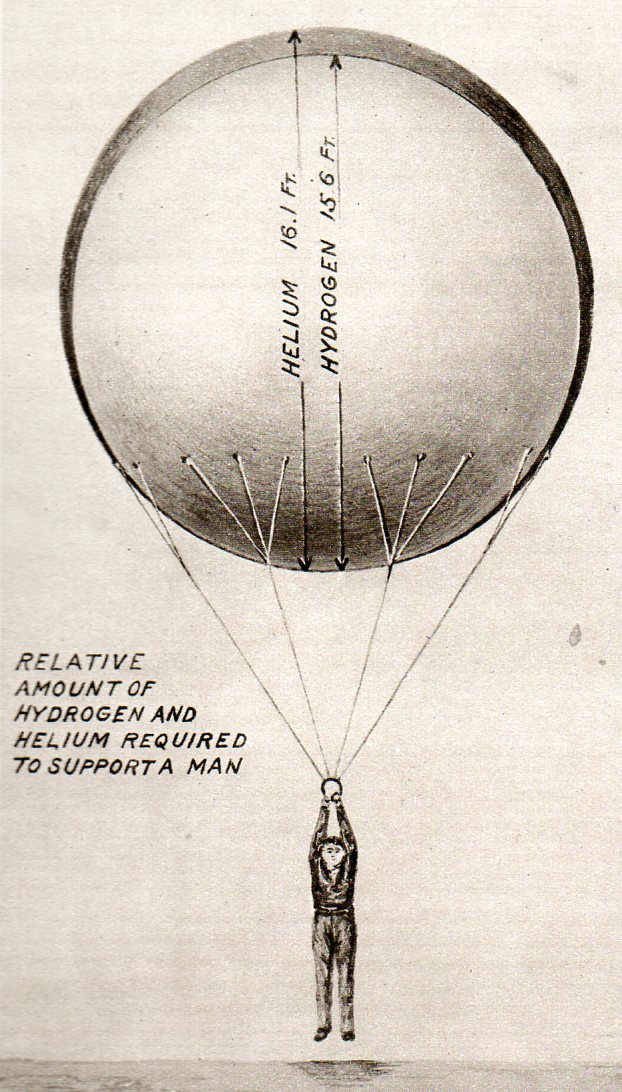
    Display info helium balloon man213

    The first helium-filled airship was still two years away at this point–the U.S. Navy’s great C-7, which made its maiden flight on 1 December 1921.  When the USS Shenandoah flew in 1923, it flew with most of the world’s entire supply of the noble gas helium. Its difficult today to think of pepper, nutmeg, sugar, helium and so on in terms of fabulousness and rarity, but it was so.  Remember, when Capt Bligh was jettisoned from the HMS Bounty, the ship’s precious cargo was also thrown overboard.  And the great treasure that sparked the Tahitian adventure that sparked the mutiny?  Breadfruit. 

    Display info helium balloon comparison214

    Notes
    1.  Observed for the first time by astronomer and early astrophysicist Pierre Janssen, in the spectrum of    the chromosphere of the sun, in 1868; separated for the first time on Earth in1895 by the British chemist Sir William Ramsay.   

    2.  By the way, “dirigible” is from the French, “diriger” (or “to direct “), meaning steerable, pilotable.  This differentiates the dirigible from the balloon, which was not by and large steerable. 
    Display info helium balloon dirigible215


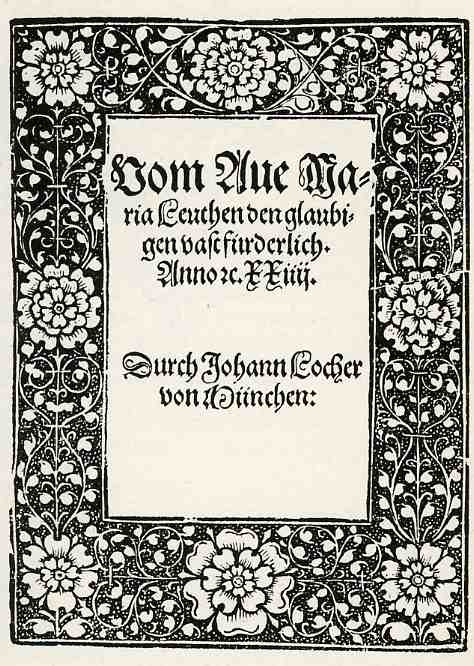
  • Beautiful Title Pages: the Flight of the House of the Virgin Mary, 1524

    JF Ptak Science Books   Post 1086

    00-blog-Oct 25 mary flying919


    This is an interesting,
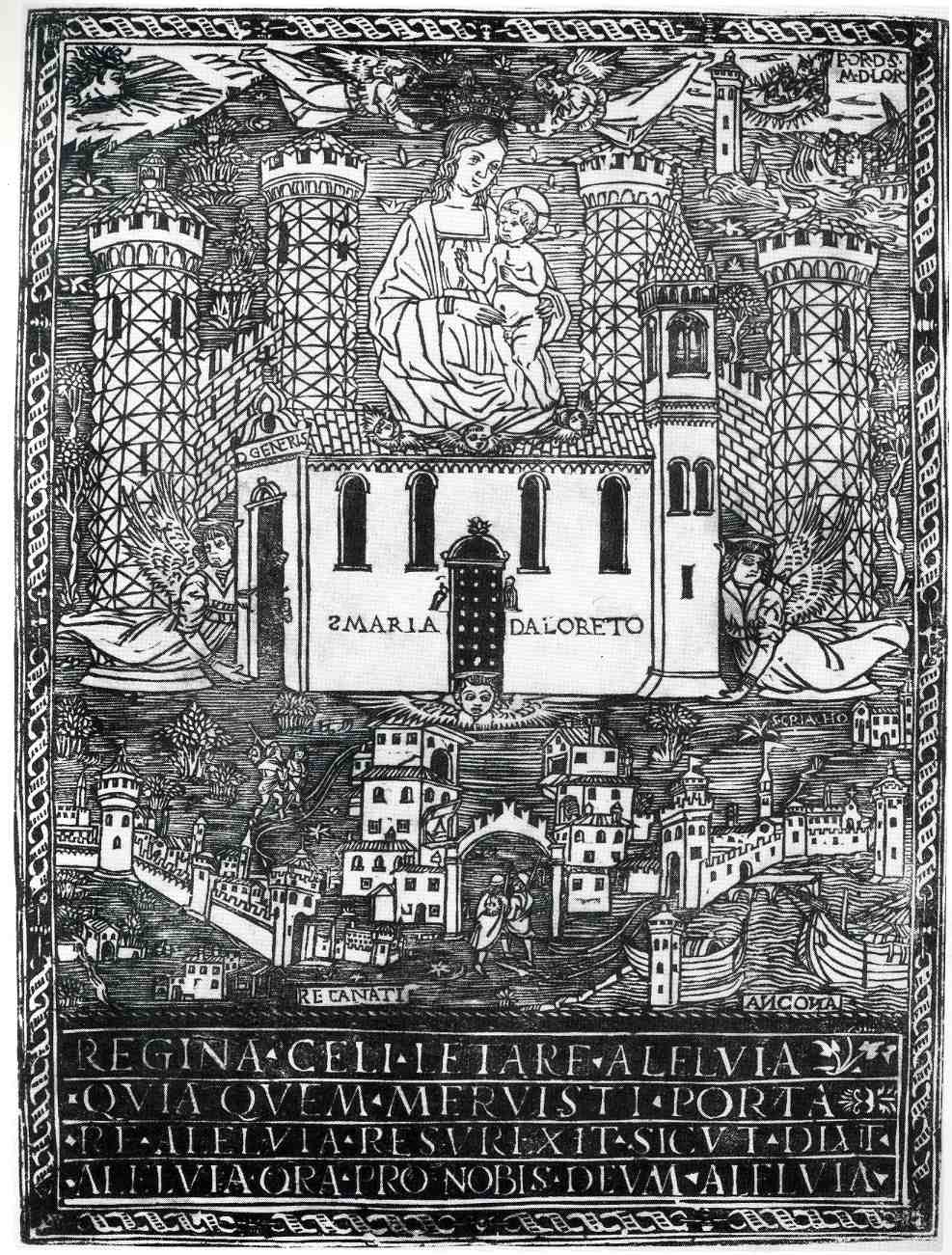
    almost (?)-revolutionary and curious woodcut depicting the flight of
    Santa Maria
    di Loreto, and was printed in 1524.  At the bass of it all the
    print depicts the first of a series of moves of the house of the Virgin
    Mary (mother
    of Jesus) to safe harbors, away from the Moslem/Turkish army that
    invaded
    Nazareth in 1291.  The myth states that
    the structure was picked
    up and moved by angels from
    Nazareth to the Dalmatian town of Tersatto (near Fiume, which is today’s Rijeka, Croatia).  It then made its way to its
    final resting
    place at Loretto, Italy via the two other Italian towns (identified at the bottom corners of the print) of Recanati and Ancona.

    One of the most interesting aspects of
    the print to my eye though is its attempt to display an oblique perspective of the
    town of Loretto, the house being lowered by angels on the other side of the town’s fortifications.

     (In 1854 Pius
    IX consecrated the house as a miracle in his Bull “Inter Omnia” of 26 August 1852, declaring

    “Of all the shrines consecrated to the Mother of God, Immaculate Virgin,
    one is in first place and Shines incomparable radiance: the venerable and most
    August House of Loreto … (…)
    In Loreto, in fact, it venerates the House of Nazareth, so dear to the Heart of God, and
    that manufactured in the Galilee, was
    later (moved) from foundations, and for the divine power, was
    transported
    far beyond the seas, first
    in Dalmatia
    and then to Italy. “
    And it was for this enormous feat of air travel that Pope
    Benedict XV declared St. Mary the patron saint of aviators, on
    24 March 1920.)


    ·Posted by :

    ·in:

    — — —

  • Human Bombs, part II: the Ohka and Jinrai Butai, 1944/5

    JF Ptak Science Books   Post 1080

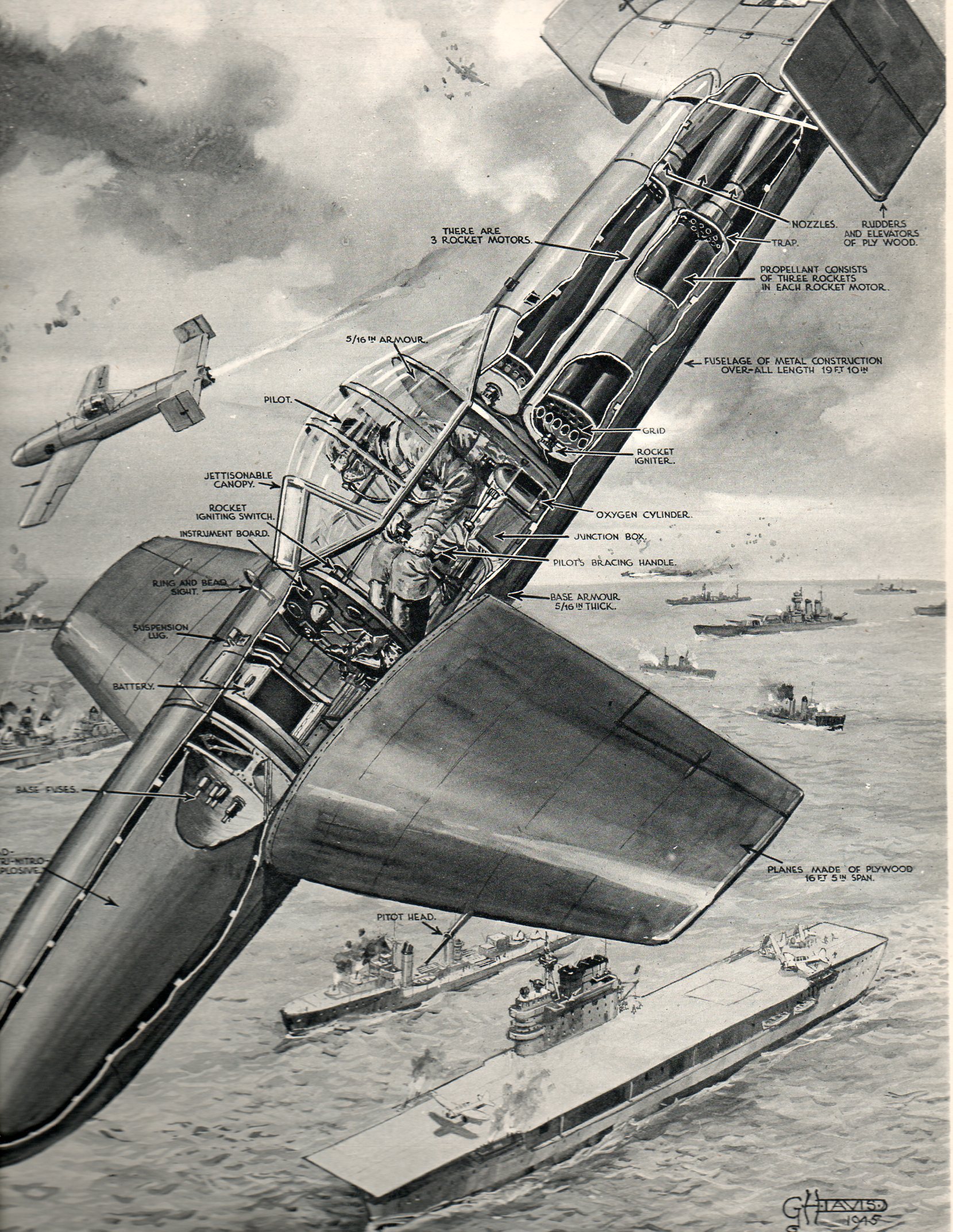
    My favorite mid-century illustrator–G.H. Davis of the Illustrated London News–has provided yet another remarkably clear and well-designed series of images on a difficult topic for a main-line popular audience.  This time (appearing as a two-page spread on 28 July 1945 in the ILN) showed the structure, strategy and deployment of one of the late war’s

    Human bomb japan202

    most feared weapons–the jet-powered human bomb of the Japanese naval air force. (In practice though the weapon didn’t produce that must damage though it did produce the fear: “the operational record  includes three ships sunk or damaged beyond repair and three other ships with significant damage; seven US ships were damaged or sunk by Ohkas throughout the war”1).  The Yokosuka MXY-7 Ohka was a purposefully designed and built rocket powered suicide rocket whose sole purpose was to attack and destroy ships. They were first produced in 1944 as unpowered glider aircraft, and then later in November 1944 the rocket propulsion system was added.  All tolled, the Yokosuka and the Kasumigaura Naval Air Arsenal together built about 850 of them–fewer than 3 dozen survived.

    It was a relatively simple construction and was easily deployed: dropped from a bomber it would glide until near it target and then the rockets would be ignited, powering the thing to a near-unstoppable 500+mph, sending it, its pilot and the 2,300 lb ammonal warhead (an explosive made up of ammonium nitrate, trinitrotoluene (TNT), and aluminum  powder) into its target, detonating on impact.
                                       

    ·Posted by :

    ·in:

    — —

  • Gliders, Flight & Photography in the 1850’s & 1860’s

    JF Ptak Science Books  Post 1075

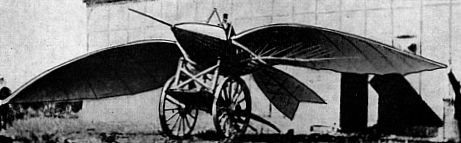
    The field of “photographic firsts” has always been interesting to me–the first photograph of the Moon, the first of a person the first portrait, the first color photo, the first engraving of a photographic image, and so on–and so I came to wonder about the first photograph of an airplane, or aircraft.  What I found was this monster, built by Jean-Marie le Bris, evidently the first image ever made via photography of a fixed-wing aircraft:

    Esterno--first photo

    The photograph (made in 1857, 18 years after the invention of photography) looks very reworked and strains the imagination some, but it shows the glider of Jean-Marie le Bris, who actually achieved gliding flight in the aircraft.  I am sure that the glider used those enormous wheels for land transportation and were not an integral part of the craft. 


    Esterno--1857dutem

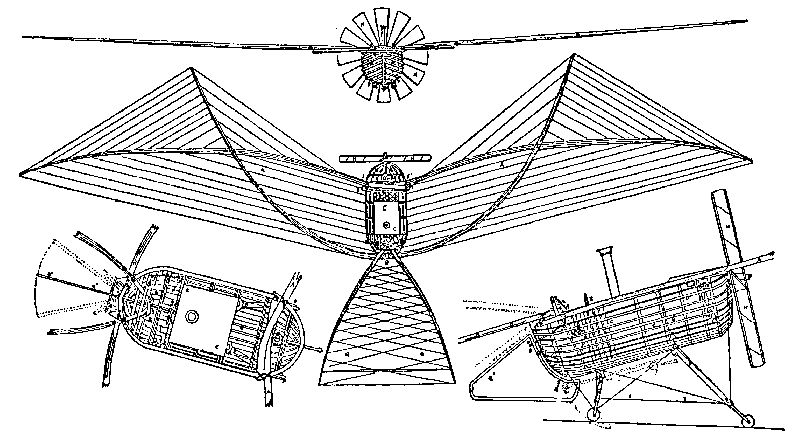
    It was in that same year that Felix du Temple and his brother constructed and flew a small, steam-powered monoplane aircraft model (schematics above), which looked like a bird from the plan perspective and a beetle from the elevation.  The view of the model head-on seems remarkable to me, showing very little in the way of profile.  

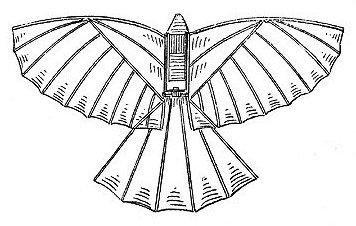
    Ferdinand d’Esterno produced a lovely design of a possible aircraft in his 1867 pamphlet, Du Vol de Oiseaux (“Onthe Flight of Birds”) , a glider that looked manageable and full of possibility, all based on his relentless study of the flight of birds.  Esterno reasoned that all of the heavier birds excelled in soaring flight, and since this was the case, there was hope for man to fly as well. 

    Esterno_Soaring_Machine

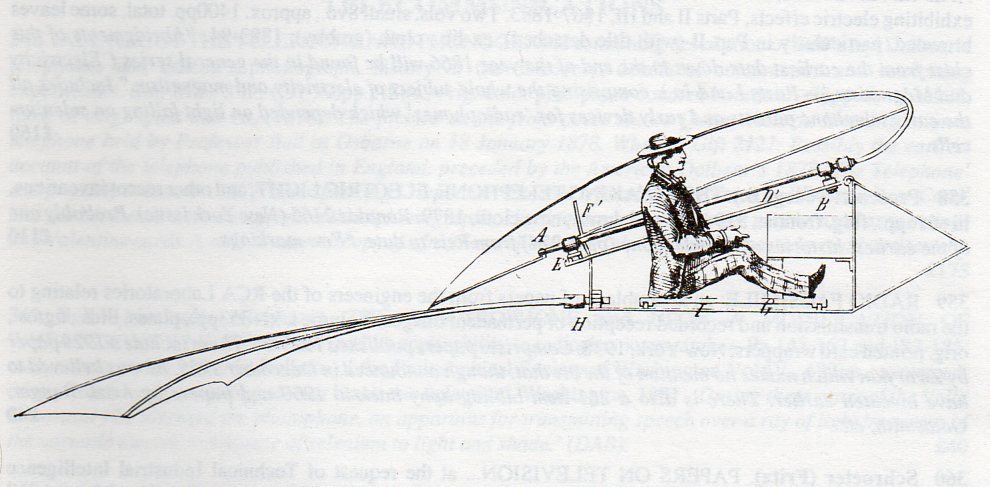
    Esterno’s glider was interestingly outfitted with a movable seat for the pilot–something that would be able to change the center of gravity, the flier’s chair connected to the very broad tail section–controlling a rather elegant, rather light-for-its-era (330 pounds) craft with 215 square feet of wing surface.  (See Flymachines.org for a nice description of this and other early aircraft.)  I think what I like most about the Esterno machine–an idea that never progressed beyond the drawing stage–is its compactness and lovely lines, especially as we can see in the cross-section below:

    Esterno--schematic179

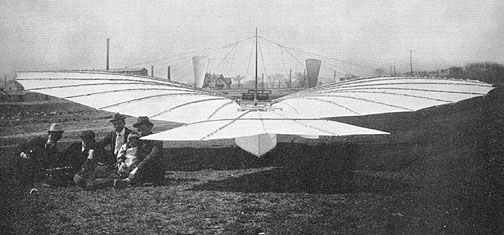
    As the author(s) of Flymachine.org and other sites and books have pointed out, though Esterno’s plans never got out beyond the pages of his pamphlet, he did have an influence on other later fliers, most notably Gustave Whitehead (1874-1927) and the Wright Brothers.  It was whitehead’s work which from my perspective most closely resembles Esterno’s as we can see below in this ca. 1901 photograph, the greatest difference of course being the two engine-driven propellers.

    Esterno

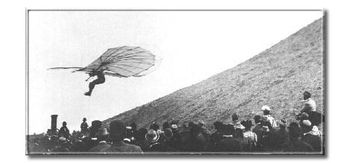
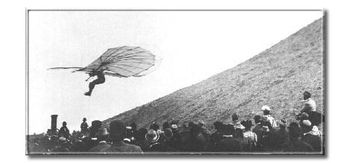
    But it was Otto Lilienthal who was one of the most important figures in the development of
    flight in the nineteenth century, making the first heavier than air
    gliding flights in what looked quite a bit like bird wings.  (Wilbur Wright said of him; “Of all the men who attacked the flying problem in
    the 19th century, Otto Lilienthal was easily the most important. … It
    is true that attempts at gliding had been made hundreds of years before
    him, and that in the nineteenth century, Cayley, Spencer, Wenham,
    Mouillard, and many others were reported to have made feeble attempts to
    glide, but their failures were so complete that nothing of value
    resulted” as found in  The Aero Club of America Bulletin, September 1912, and
    also in the article on Lilenthal in Wiki.)   )  He would die in 1896 in
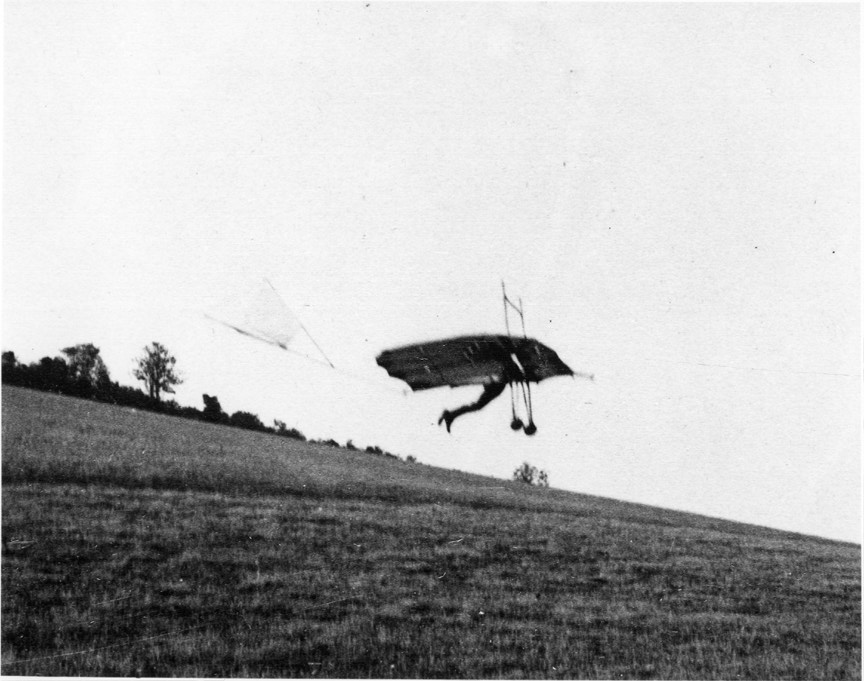
    a gliding accident, falling to a crumpled death.  We see him in a more successful moment in this fantastic photo:

    Esterno--lilienthal

    Lilienthal also influenced the English aviator Percy Pilcher (1866-1899) whose four interesting gliders ( named theBat,
    the Beetle, the Gull, and the Hawk) led to his engine powered glider–a design left not completed due to Pilcher’s own fatal gliding accident in 1899.

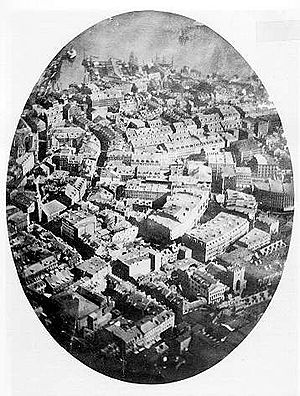
    But getting back to photographic “firsts” and aviation, the earliest surviving aerial photograph was made by James Wallace Black (1825–1896) whose tethered balloon image of Boston (below) is a splendid 160-year-old image of the city; the first first in this category actually belongs to Gaspard-Félix Tournachon (more popularly known as “Nadar”) but that work hasn’t survived.

    Boston 2


  • Visualizing Data: 4890 B-17s, 1944

    JF Ptak Science Books 

    At point point in 1944, there were 4,890 American B-17s in service (as part of an overall artime production of 350,000 aircraft).  This is what 4,890 B-17s might look like:


  • The Message is the Medium–Children and Bombs, London, 1943

    JF Ptak Science Books  Post 1035

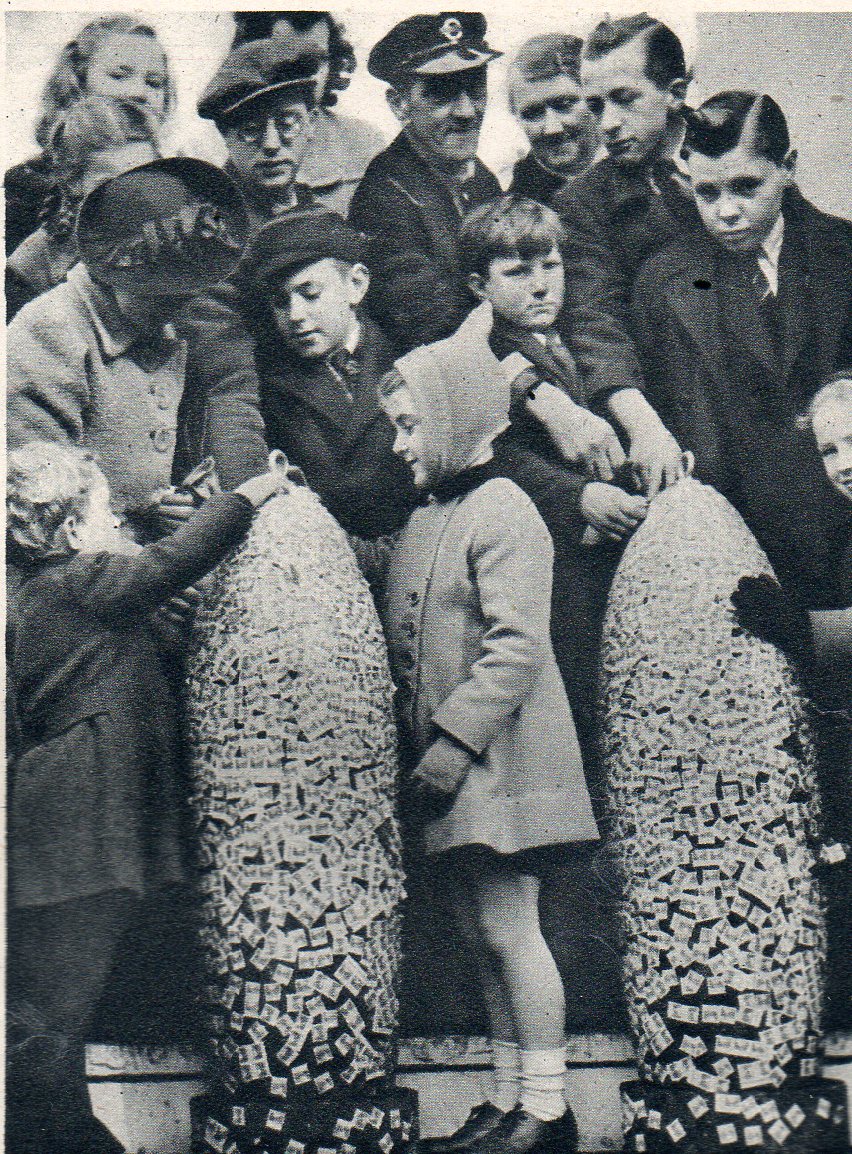
    I have no doubt that the history of decorating “bombs” reaches far back into dim history–decorating launched explosives I guess must be as old as the medium itself, though I’ve gotta say that the earliest photographs of decorated bombs goes back only to WWI.  In “reading” the Illustrated London News for the WWII years I found this image of children in Trafalgar Square fixing savings stamps to 500-pound bomb shells, part of a significant mile-long parade and will-to-win display–the “Wings for Victory” campaign– illustrating the Empire’s aeronautical might hat took place in London on 8 March 1943 and published a week later in the ILN.

    Children bomb003
    The “Wings for Victory” campaign targeted raising 150 million pounds; by this point more than 50 millions had been raised via monies being placed in War Bonds, Savings Bonds, Saving Certificates and Defense Bonds. My guess is that you’d get a sticker saying that you had invested x-pounds–these were the stickers placed on the bombs by the kids, I think. 

    It was pointed out in the accompanying text that the bombs would “at the end of the week…be dropped on Germany”.


  • History of Lines: Circles, Vortices or Tree Rings?

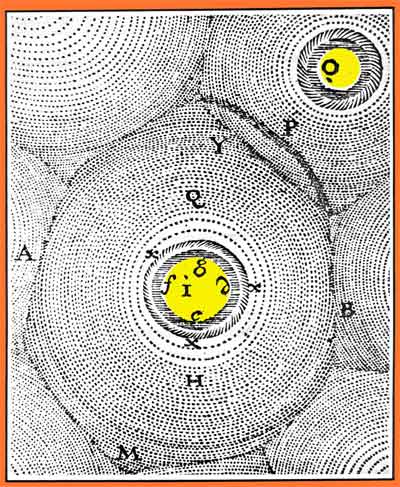
    JF Ptak Science Books   Post 1030Descartesunivab

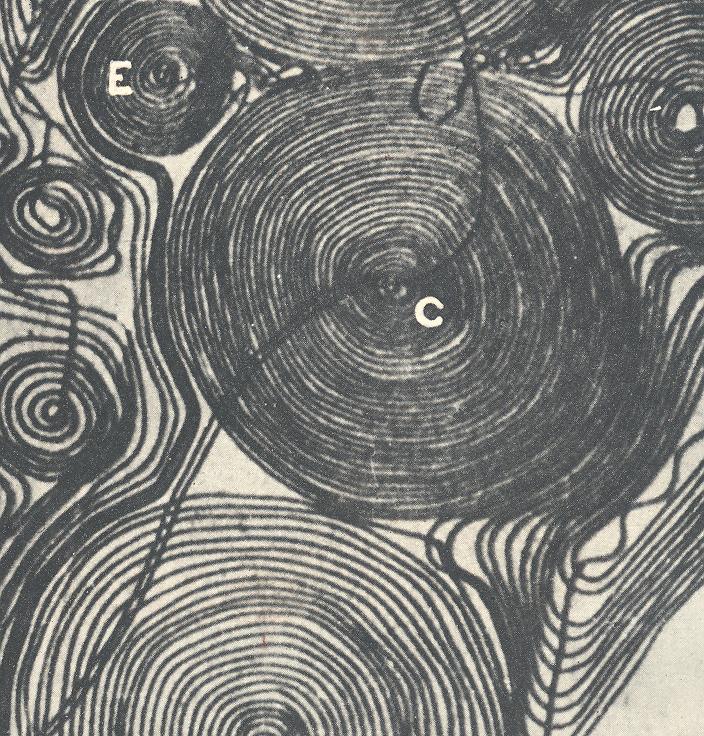
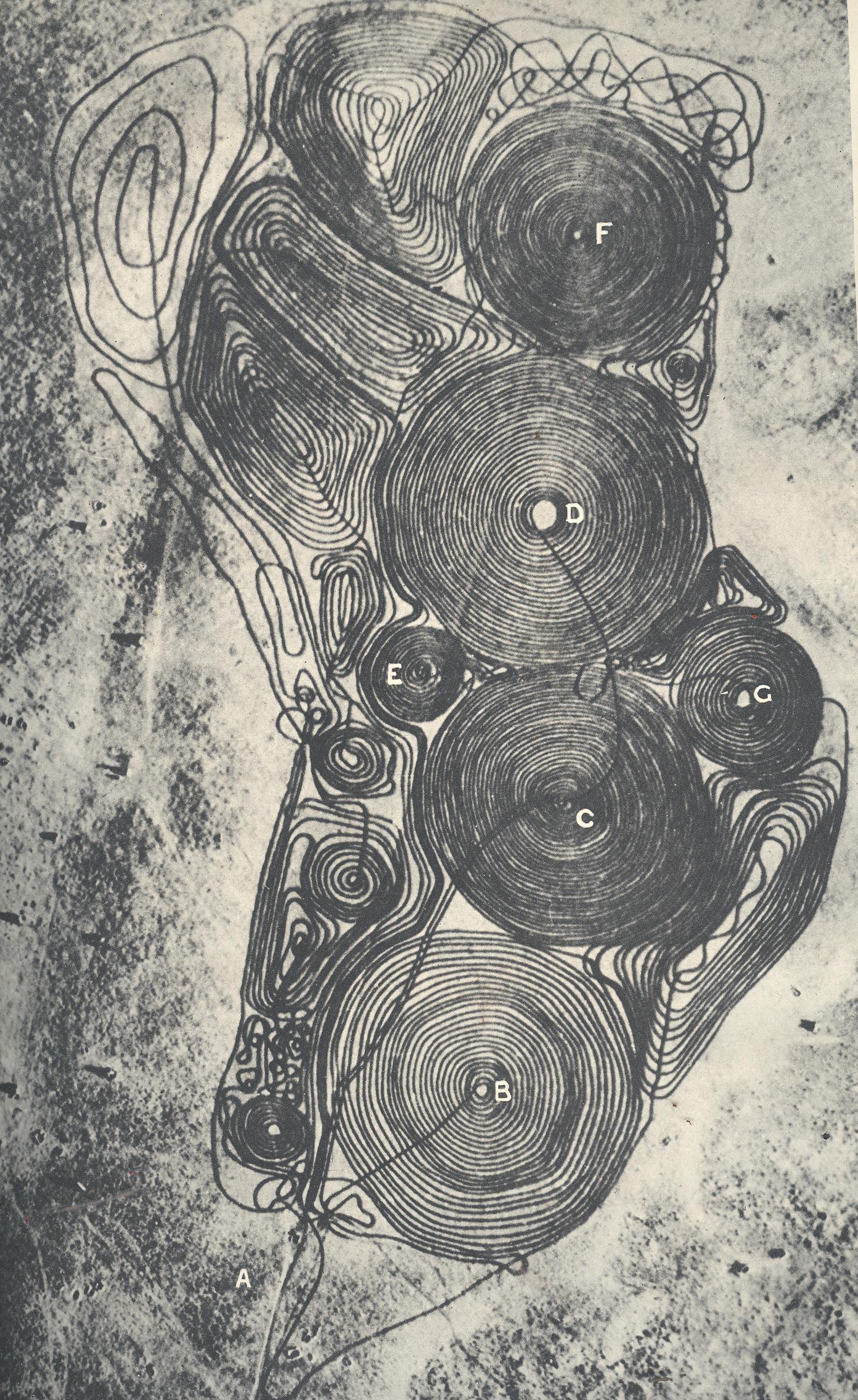
    I thought at first that the detail of the photograph below looked liked Cartesian vortices, as seen in one of these engravings from his (Rene Descarte) Principes de la
    Philosophie
    (1644, basically a treatise on planetary motions).
    :

    1--may 14 circles det

    Well, no, of course, these are not vortex representations writ large in the
    desert of Tunisia by Nazi German plows. They come close, though.  We’re
    looking at a photograph of what is supposed to be an airfield which has
    been beautifully plowed under by German sappers, done so to prevent the
    airfields being used by British forces subsequent to its abandonment by
    retreating German forces.  Looking more closely at the photos though I’m
    not sure what this really is–it just doesn’t look quite right.   On
    the other hand I don’t see offhand what might be gained if this was
    simply a retouched photo used for propaganda

    1--may 14 circles 

    Source:  Illustrated London News, 6 Feb 1943.


  • America Co-opts Canadian Flying Saucer Program, 1954.

    JF Ptak Science Books LLC  Post 997 

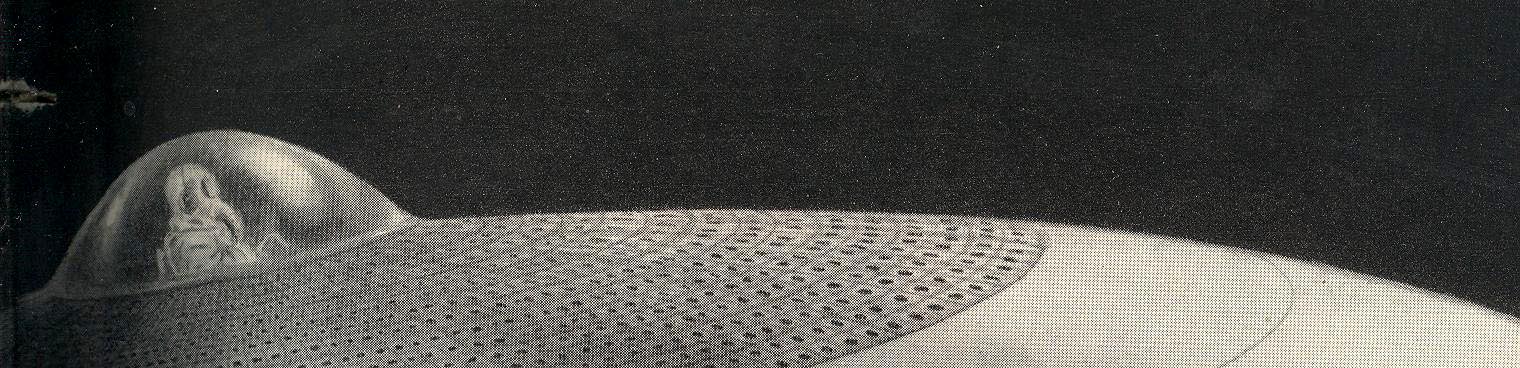
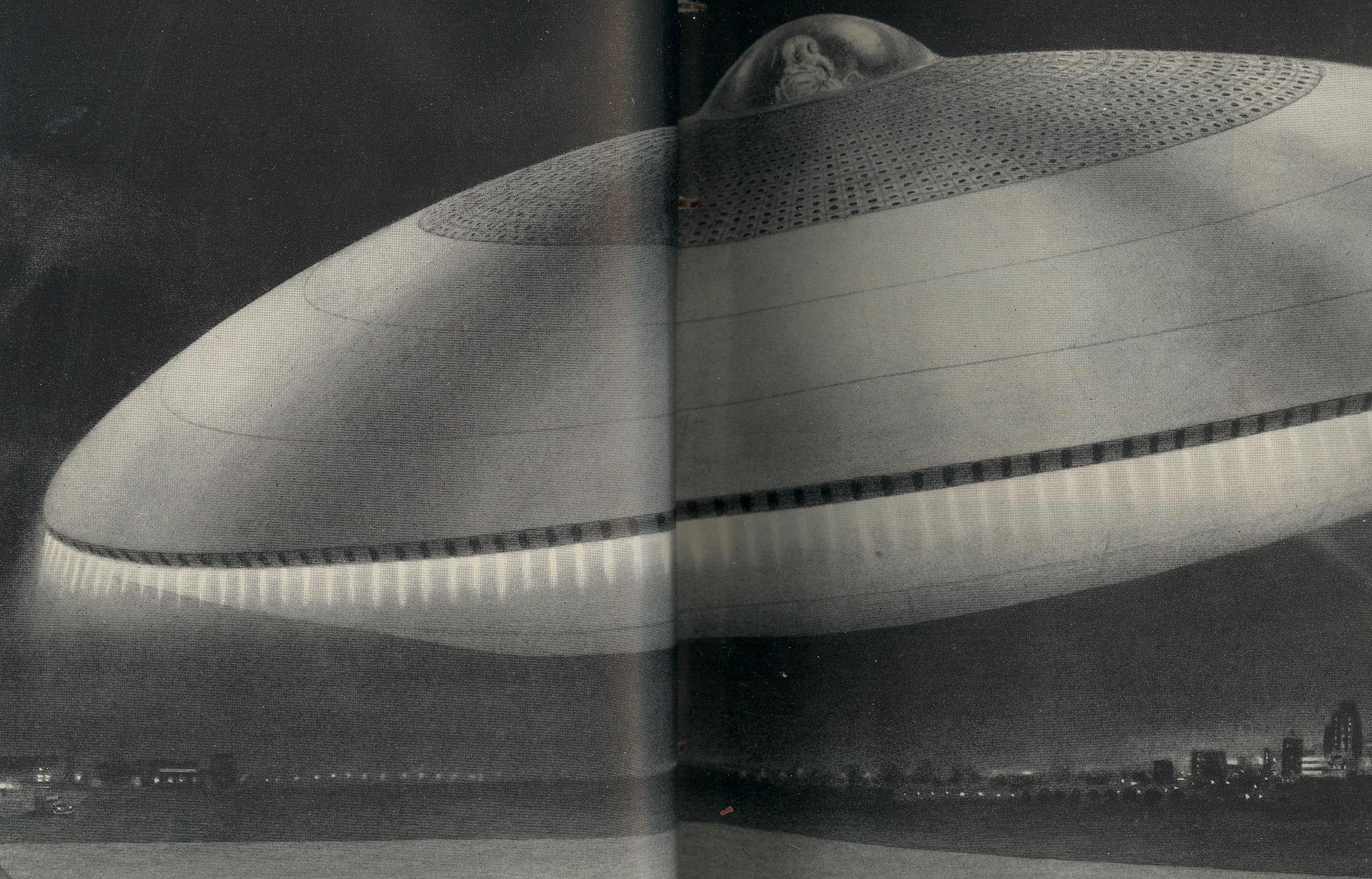
    Blog--april 1--saucer pilot
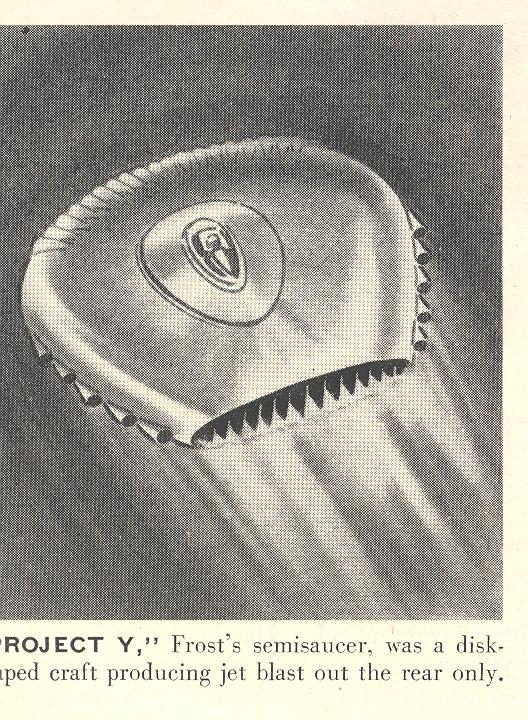
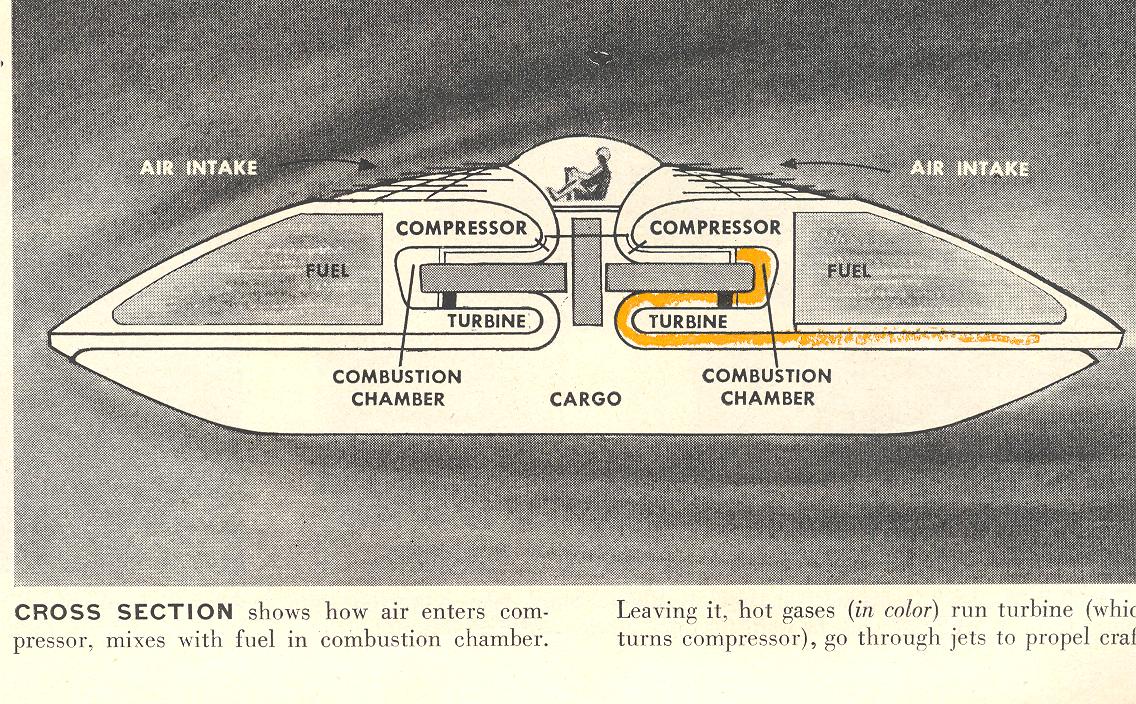
    “Fling Saucers” weren’t ten years old by the time that John C.M. Frost–an engineer from De Haviland–came up with the idea of re-fitting his swooping-shovel shaped idea for a rocket plane with a saucer-shaped one.  He worked hard on his idea, spending some $400,000 on the project–Canadian.  Frost was in Ontario and working for the government before the government stopped working for him, abandoning the undertaking (called “Project Y”) just as the United States became interested in it.  

    Blog--april 1--saucer

    There are numerous reports around the web on this aircraft, so I’ll just provide a couple of starter links here and little commentary.  What I was most intrigued by in this whole affair of producing a 2,500 mph hovercraft was that instead of having a U.S. Air Force star somewhere on the aircraft the thing could’ve been running around with a red Maple Leaf.  

    Blog--april 1--saucer semi

    Don’t get me wrong, I love Canada–went to school there, I did–but the idea of a combat-ready flying saucer with the maple leaf on it is just completely, well, wrong. 

    Blog--april 1--saucer det