A Daily History of Holes, Dots, Lines, Science, History, Math, Physics, Art, the Unintentional Absurd, Architecture, Maps, Data Visualization, Blank and Missing Things, and so on. |1.6 million words, 7500 images, 4.9 million hits| Press & appearances in The Times, Le Figaro, Mensa, The Economist, The Guardian, Discovery News, Slate, Le Monde, Sci American Blogs, Le Pont, and many other places… 5000+ total posts since 2008.

Category: Aviation & flight

  • Flying Wing Aircraft, 1930

    JF Ptak Science Books LLC  Post 919

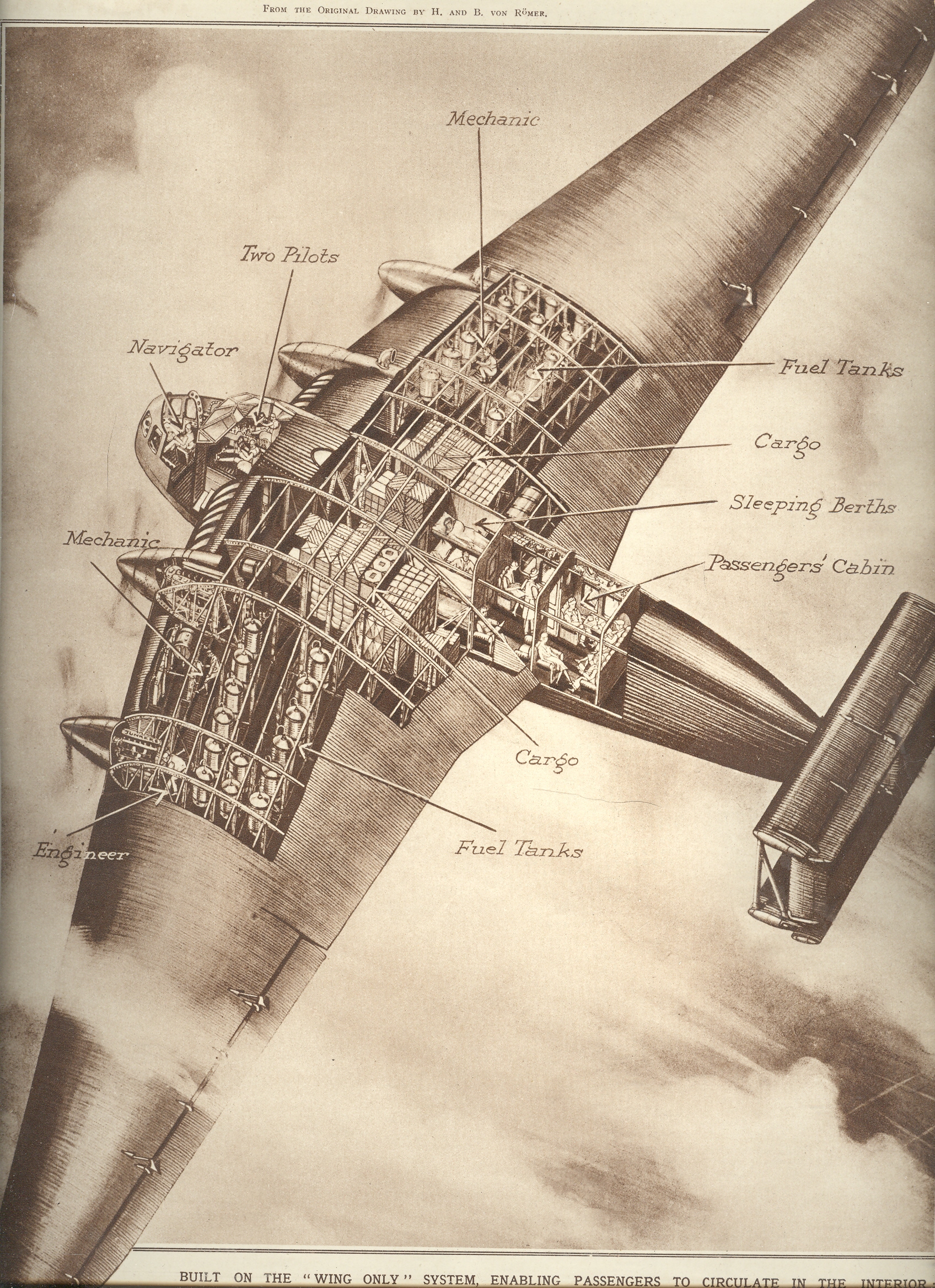
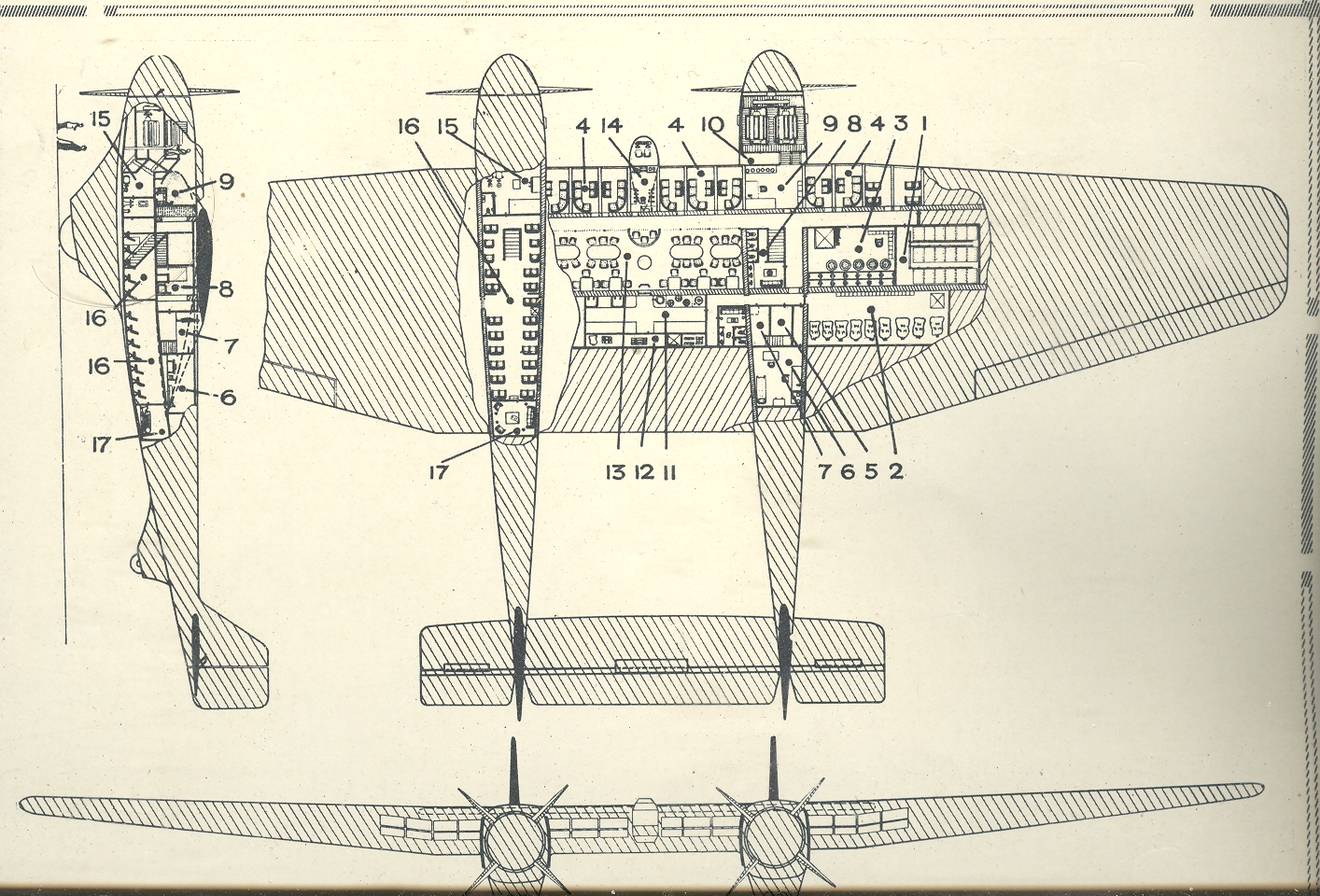
    Blog jan 24 flying wing det title What can I say?  I just like the flying wing. Also I should point out that the Illustrated London News is an excellent resource for schematic cut-aways like this–I think that I have 125 or so of them here for the 1910-1945 period.

    Junkers built this fabulous flying (“inhabited”) “wing only”
    aircraft, sending it up for commercial service in 1929 as the largest airplane
    in the world. Only two were built (though a Japanese military knock-off ran to a production quantity of six), and I imagine that it was quite expensive making the Berlin-London flight, cruising in around at 109 mph.

    Blog jan 24 flying wing

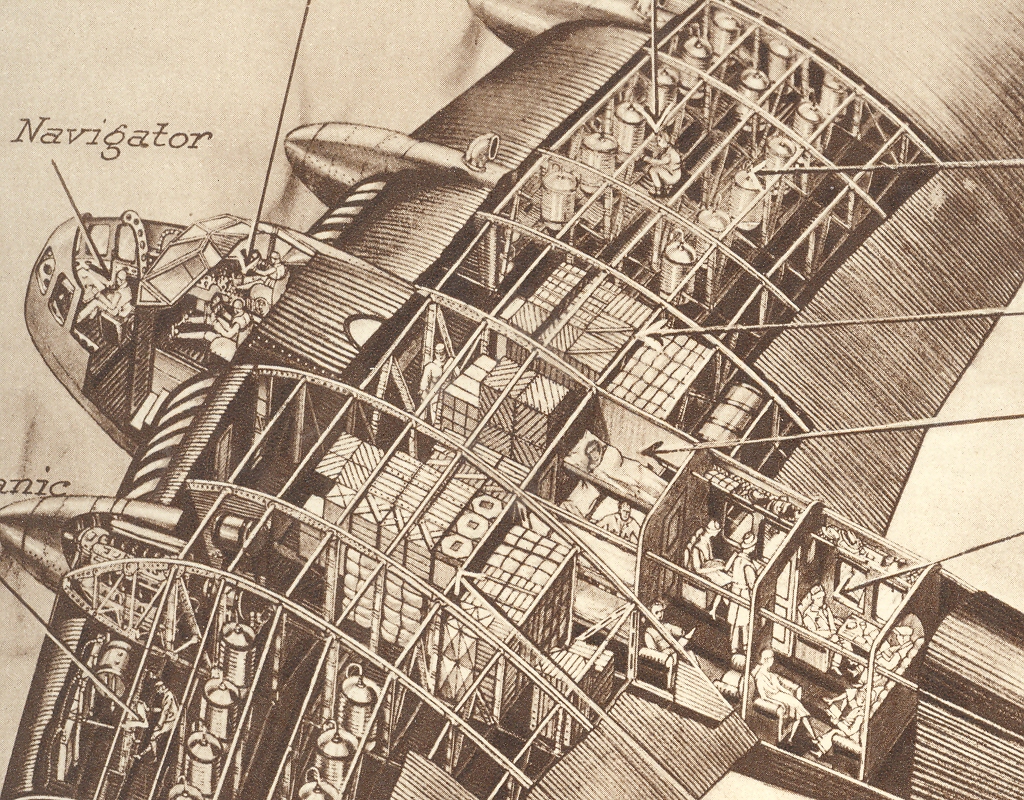
    I would like to know what the artist was thinking about when he decided to draw a standing man in the sleeping compartments. Not only that, the fellow is looking straight at the artist…perhaps it is a sly, tiny self-portrait?

    Blog jan 24 flying wing man

    Blog jan 24 flying wing det


    Notes


    1.  Plane specifications:

    Crew: Seven (including a full-time engineer who could
    service the plane’s four engines from inside the plane).

    Capacity: between 30 and 34 passengers, depending upon
    variation of the aircraft.

    Length:  75 ft

    Wingspan:
    144 ft

    Height: 23 ft

    Wing area: 3,122 sq ft

    Empty weight: 32,893 lbs

    Loaded weight: 52,900 lb

    Max takeoff weight: 46,826 lb

    Maximum speed: 140 mph

    Cruising speed: 109 mp

    Range: 2,150 miles

    Service ceiling: 12,100 ft


  • Missing Things Making Holes: Soviet Bread-not-Bombs in Finland, 1940

    JF Ptak Science Books LLC   Post 917

    [This post is a hybrid category bridging “Blank and Empty
    Things” and “A History of Holes”—it is really an entry for blank and missing
    things making holes]

    1.  The Soviet Union’s foreign minister Molotov1 wanted to make it very clear
    to the rest of the world that his country was not bombing civilian targets in Finland during
    the winter war of 1939/1940.
    Blog jan 23 bomb

    2.  Molotov insisted that targets that were being bombed near
    Finnish cities were actually airbases.

    2.1   Also, since the
    complaining FDR was over 4000 miles away there was no way that he could “see”
    what was being bombed.

    3.  If there were civilian targets that looked as though they
    were being bombed, then

        3.1   they weren’t being bombed; and

        3.2   if anything at all was going on the Union of
    Soviet Socialist Republics was  dropping
    bread on the town’s/city’s starving inhabitants.

    4.   So far as
    undefended, non-military targets were concerned, the Soviet
    Union
    redefined “bomb” as “bread”.

    5.   Therefore, what
    we’re seeing in this image above are not bombs, but bread; that, or the houses
    were airbases, which would turn the bread back into bombs.

    Molotov insisted that no civilians were direct targets of
    Soviet bombing campaigns in Finland.  Also, if there were people being killed in
    these bombing raids they would necessarily and by definition be aircraft
    workers or air bases support staff or other military personnel.  

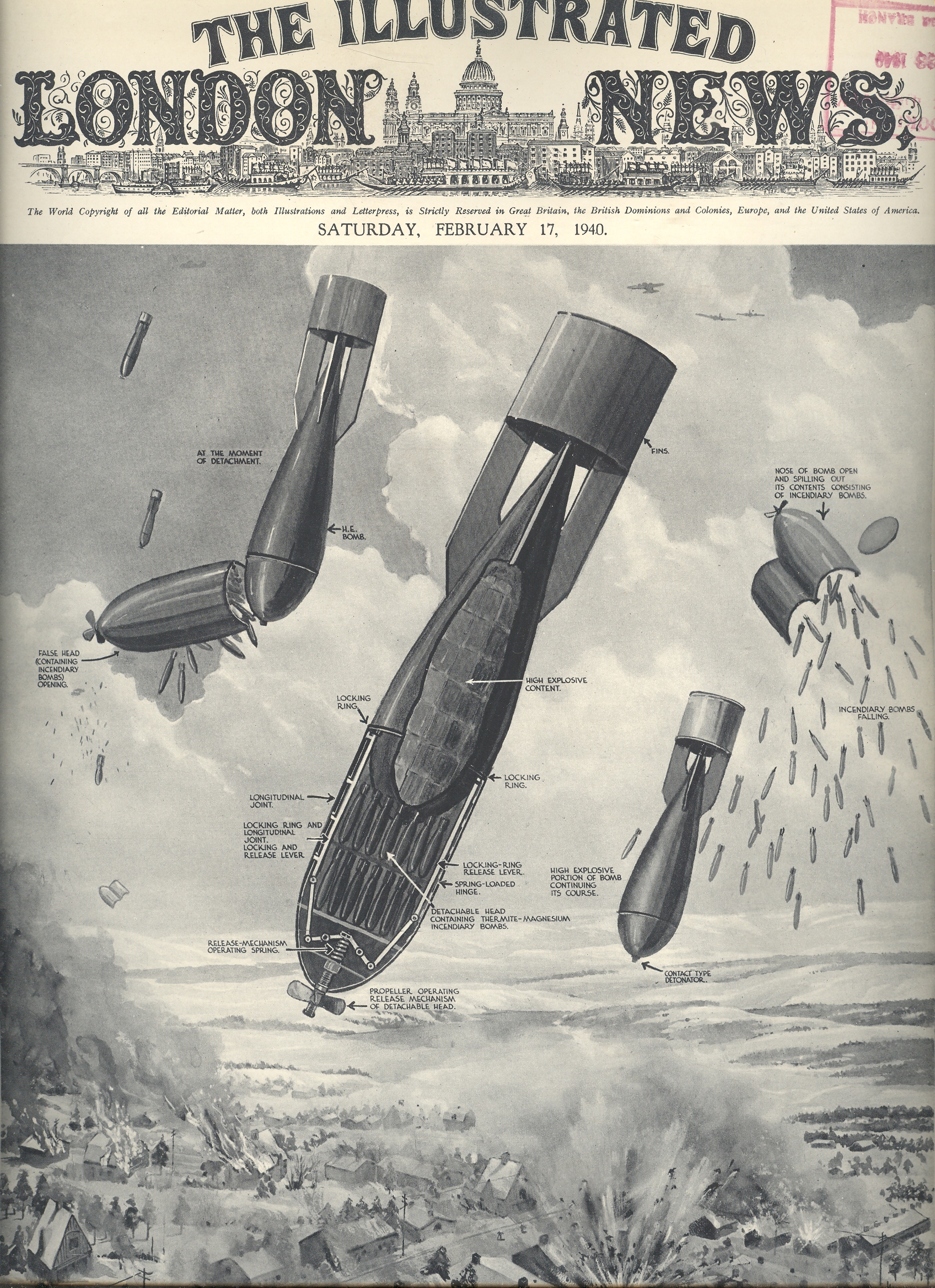
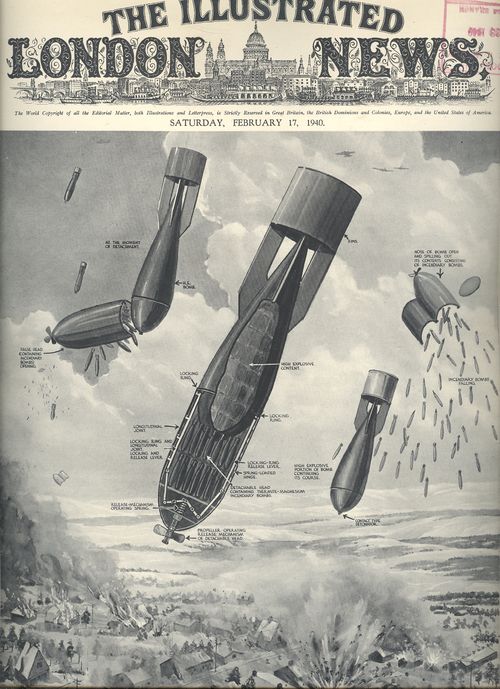
    This strikingly designed image is from the 17 February 1940
    issue of The Illustrated London News;
    the design is by G.H. Davies, the phenomenal ILN draftsman, and elegantly (and forcefully) depicts the innards
    of the bomb and its effect on its target.

    It is a spectacular and brilliant presentation of the
    new(ish) Soviet hybrid terror bomb that was being used in the non-existent
    attacks on Finnish cities.  [The 5’ bomb
    was made to be deployed in two sections: 
    the front end of the bomb inside the false nose cone contains dozens of
    incendiary bombs, released by a revolutions-generated cap propeller, which fall
    away from the main section of the bomb, which contains a high explosive.]

    Since the non-existent bombs that were not being used against
    non-military installations and were actually bread, the Finns gave the weapons
    the nickname of “Molotov’s Breadbaskets”.

    This was just a down-right nasty bomb, and the illustration
    shows it falling on and destroying a quiet town with no visible military
    advantage. The town not being bombed was called Sortavala, which—after numerous Soviet
    attacks in December 1939—was in actuality destroyed by Soviet air power on 2
    February 1940.

    The man ultimately responsible for this campaign and the
    murder of millions of his own countrymen through means of induced starvation,
    disappearances and ruthless killings—Joseph Stalin—was post mortem dispatched
    in much the same manner as the reasoning listed above.  Stalin was ignored to the point of
    non-existence, de-Stalinized and  left
    entirely out of the 50-volume second edition of the Great Soviet Encyclopedia2  published just a few years after his 1953
    death. Stalin executed his brutal and long-time political compatriot Lavrentii Beria, (1899 – 1953)
    right before his own death, ordering that people who owned the GSE to physically cut out the
    Beria entry
    . It is unfortunate that Stalin could not have been denied his
    existence 30 years earlier.

    Molotov, on the other hand, in spite of his enormous sins
    against humanity (as principle architect of the Great Terror, the extermination
    of millions of Ukranians, and etc.) was finally removed from government
    following Khrushchev’s de-Stalinization campaigns (i.e. by 1962)  and managed to live out the rest of his life
    alive, not dying until 1986 at the age of 96.

    (The “Molotov Cocktail” by the way was not named for him by
    Soviet soldiers or freedom fighters or whatever fighting for the USSR—it was
    named for the petrol bomb used by Finnish soldiers and civilians fighting
    against the Soviets invading their country  in 1939/11940 and again in 1943/4)

    Notes

    1. In 1940 Molotov was the foreign minister of the Soviet Union, and had just completed negotiating the
    Non-Aggression pact with Nazi Germany. 
    This gave the USSR free range for its relations (read “occupy/annex”)
    Estonia, Bessarabia, Latvia and the Ukranian/Belorussian-occupied section of
    Poland (to the Curzon Line), and to also conduct its war with Finland.  The fierce Finns never lost their
    independence, though they did lose a part of their country. 

    2. The GSE had a somewhat complicated publishing history,
    winding up with 65 volumes over its two editions, constructed with very
    questionable state-controlled X-Ray communist vision spectacles. There is so much in these volumes that is wrong/sanitized/fiction that I have no idea how a non-specialist might be able to use the thing.


  • Big Planes: Aircraft with Dining Rooms in Their Wings

    JF Ptak Science Books  Post 906

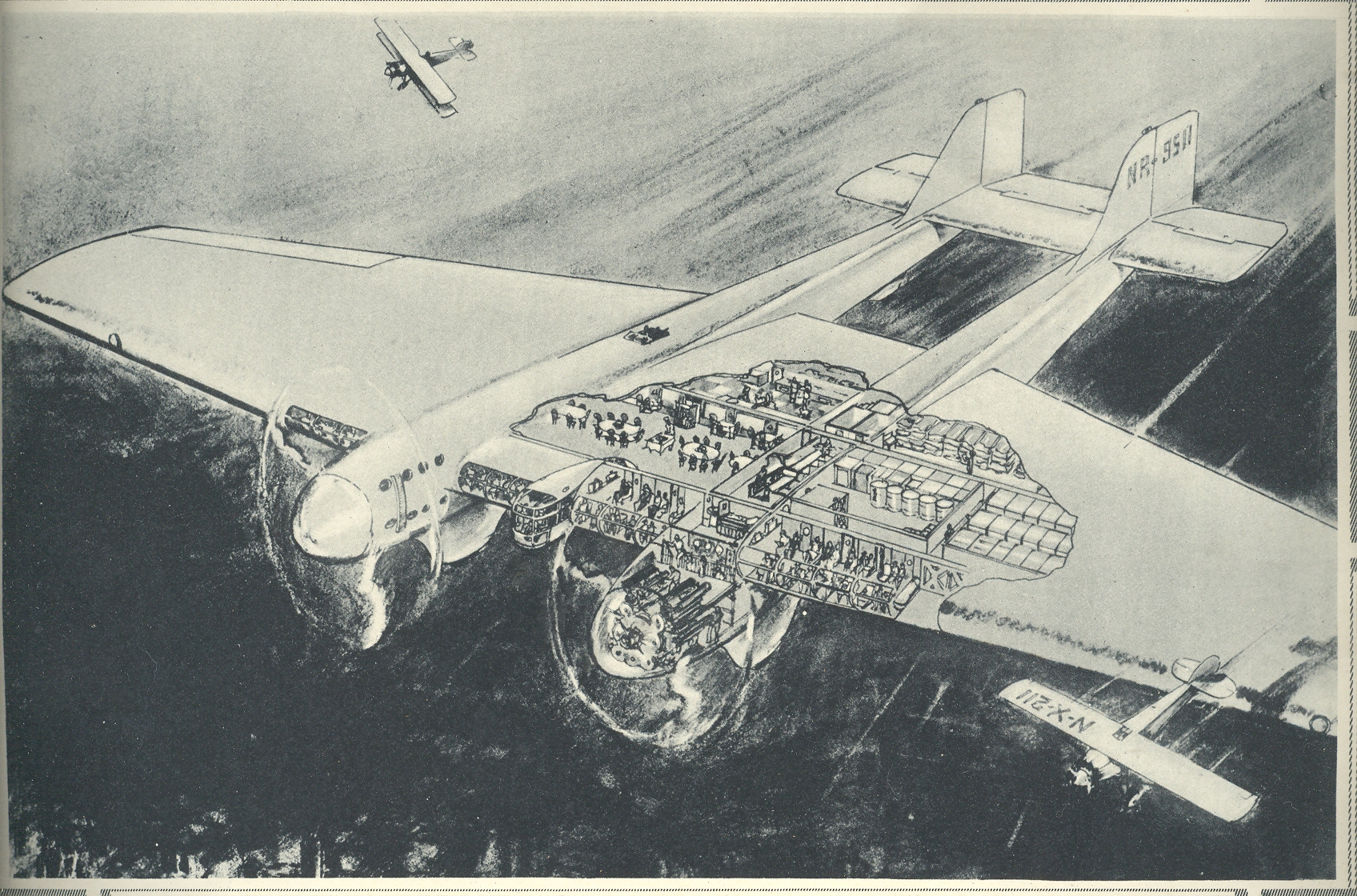
    Is it just me, or do the rest of you see Cary Grant at a teeny-tiny table when looking at this aircraft? There’s just something so horribly wonderful about the excesses washing over the passengers of high privilege in this airplane.[Source: The Illustrated London News 21 Dec 1929.] 

    Blog jan 11 big plane


    And the airplane has a name—Christmas, named for the man who provided its inspiration, Dr. William Whitney Christmas1–and was a paper plan to produce the world’s largest airplane.


    It would’ve been so by leaps and bounds.  The Christmas was to have a 262’ wingspan and a gross weight of 142,000 pounds at the time when one of the largest planes aloft—the Patrician Keystone K-78—had a wingspan of 86’ and carried 18 passenger, 2 pilots and an engineer. It also held the world’s record for hauling the heaviest payload, which for some reason was “33 girls”.  It was bigger still than the largest thing in the air, Lufthansa’s Dornier DO.X –this was an aircraft capable of moving 60-100 passengers (serviced by a crew of 10-14), a flying boat with 12 (Curtiss Conqueror 610hp) engines on wing sections 157’ long. (Was this a mile-a-minute fuel consumer?) The Dornier plane didn’t last long in service due to operating costs (1929 was a bad year to undertake an expense like this, especially in the hyperinflated Germany) and was in an aviation museum by 19342. (This plane—one of three constructed—was destroyed in a RAF bombing raid in 1943.)

    Blog jan 11 big plane 2

    Here’s something extraordinary about the Christmas:  it had a dining room (actually, a “dining saloon”) that took up 15% of the plane’s floor plan.  There was also the spacious smoking room, the crew and officer quarters, the machinist’s shop, engine room balconies (?), and of course the staterooms that seem to run along most of the front of the plane. The side elevation shows not very much space at all allotted to what must’ve been some massive engines, seeing as how there’s only two four-blade props. (The small lateral cross section shows two people against the plane for scale—these folks must’ve been giants; I figure they should be a little more than 75% of the manikins.  I make each prop blade to be about 10 foot (?))

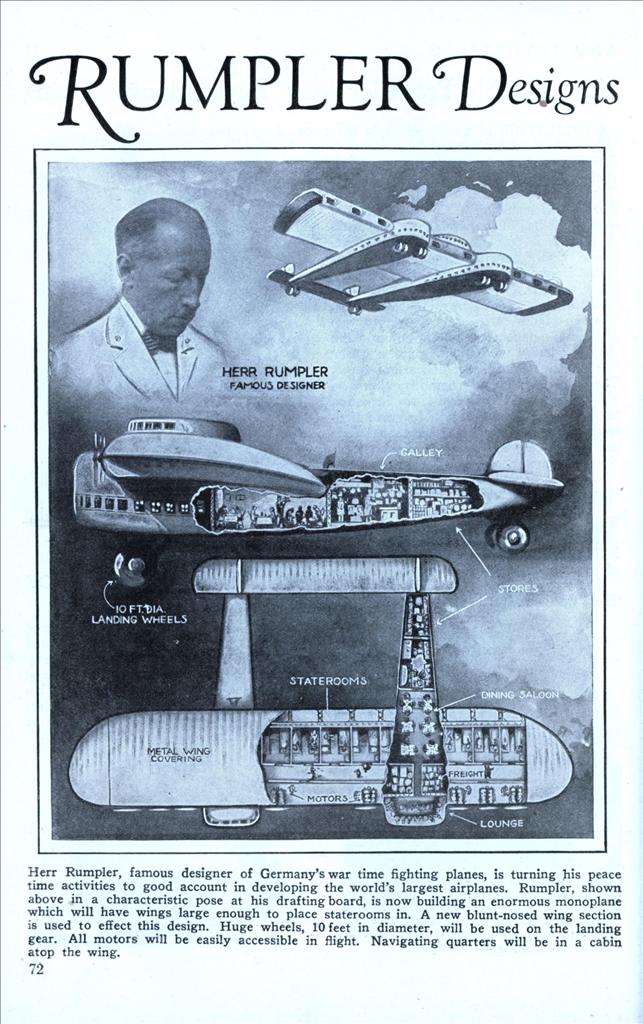
    As it turns out this aircraft looks a lot like Edmund Rumpler’s3 (1872-1940) giant.  Outfitted with a long row of staterooms along the front edge of the large wing and a huge dining room, it doesn’t seem to be equipped with an area for the engines.  Maybe this was an endemic flaw among older fast-thinkers…  

    Notes:

    1. Dr. Christmas (1865-1960) was the third American to fly and was the first to design a plane with aerilons.

    Blog jan 11 rumpler

    2. Compare this to the Antev An-225, a modern very-,limited-production monster that could haul 1.3 million pounds of cargo, and the 747 (hauling up to 900,000 pounds) and the mammoth Airbus A380—all relatively the same size but with fabulous design and power.

    3.Rumpler made very significant aeronautical contributions to the German effort in WWI, as well as designed the first aerodynamic auto—his military planes though during the war were  great triumph, partially because they were also Germany’s first mass-production-possible aircraft.  This didn’t help him much when Hitler came to power—being Jewish, Rumpler was arrested, and then released by Goering who at least could find a small part of himself to save this one Jew who served Germany so well.

    4.  Source for the Rumpler image is the wonderful ModernMechanix site here.


    Interesting comparison chart for big planes: [Source]


    Blog jan 11 aircraft size-comparison


  • Advanced Utopian Martian Communities, 1911

    JF Ptak Science Books LLC  Post 904

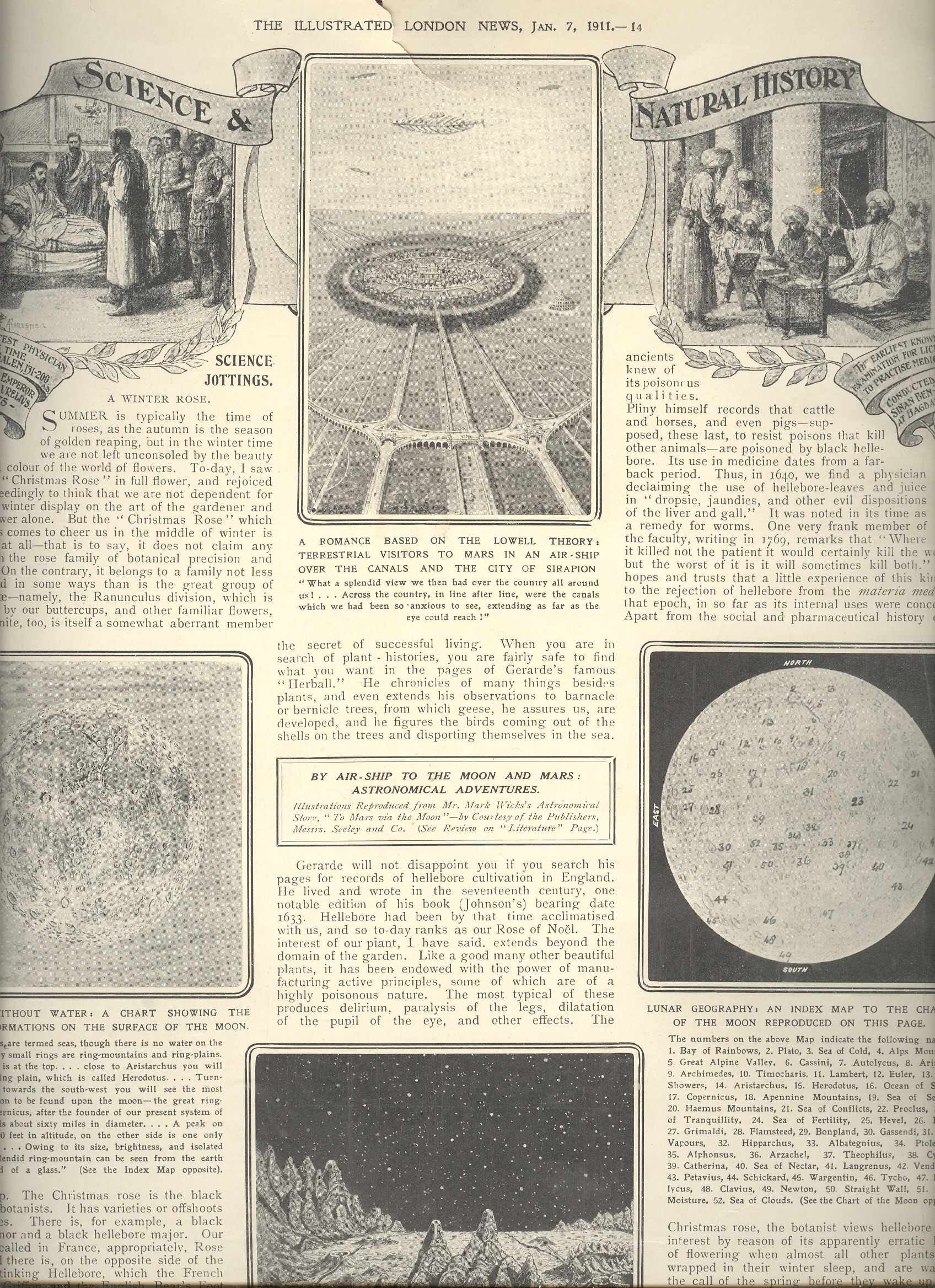
    Blog jan 9 mars This futuro-Utopian homage to
    ET-civilizations and space travel was written just too early to have been
    sucked up by period-appropriate Hollywood
    script raptors.  Reading it is a little
    out of the question and left to the domain of sci-fi archaeologists; the book
    is stuffy and dry  and very stiff
    (brittle !) without being terribly interesting and doesn’t stop for the right
    word when four will do. (See below for an example of the writing.)   The ideas though lurking beneath the surface
    though are pretty good for its time, though they are hardly the great undertow
    that rips you away and out of the clutches of the stuff that make this a pretty
    object rather than a book.
     

    Blog jan 10 mars

    To Mars via the Moon, an
    Astronomical Story
    . written by Mark Wicks
    and published in 1911, left the Moon quite behind in its literary assault on a
    super-advanced civilization that the space travelers find on the red
    planet.  Wicks owes a big nod (and gives
    it) to the astronomer and faded theorist Percival Lowell and his
    Mars as
    an Abode of Life
    (1908)1.  Wicks’ Mars is enormously advanced
    techno-superpower filled with telepaths and mega intelligence, as well as a
    reincarnated version of his own dead son. 


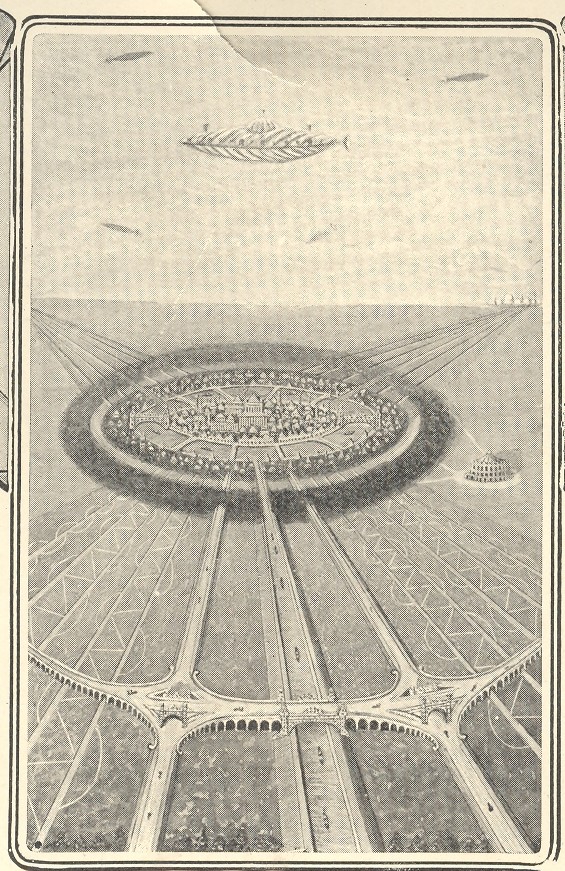
    Okay, enough.  I’m really just stopping here because of the noble
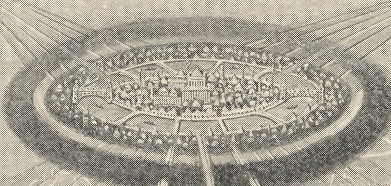
    outsider-like Martian city/landscape, a circular city with canal2-like
    connectors. It’s a busy environment, with the perspective-challenged city
    looking vaguely bathed in a holy halo, car-like objects skimming along the
    canal-roads, and “pre-flying saucers” in the air.  It is lovely in its own way—certainly the
    publishers thought so, as they incorporated the design right on the spine of
    the book. 


    Blog jan 10 mars extra detal

    Notes

     
    1.Lowell’s
    hypothesis was rounding criticized by many, including Alfred Russell Wallace
    ’s 
    Is
    Mars Habitable?.
     Blog jan 9 mars spine
    2. Giovanni Schiaparelli reported these features
    first, in 1877, referring to them as
    canali in his native Italian, which means something more
    like naturally-occurring grooves or channel; English-speakers like Lowell
    stopped just short with the word, lopping of the final “I” and going with
    “canals”,  with its overt implications of
    intelligent design.  And thus are
    religions born
    .
     
    The entire book can be found on the
    Gutenberg site:
    http://www.gutenberg.org/files/2763/27633-8.txt

    The sample of the writer’s ware is below, the final two paragraphs of the book: the penultimate paragraph being one long run-on sentence including four embedded exclamation points, and the final two sentences of the final graph ending in an exclamation point and a dot dot dot question mark:
     
    “Yes, we are doing well–there is no doubt about that; but,
    notwithstanding my present very satisfactory circumstances and the certainty of a brilliant future if I stay here, ideas have long and persistently been running in my mind that it would be far better for me to go back to Mars, and–by Jove! strange indeed that I never thought of it before!–perhaps those very persistent ideas are actually the outcome of Martian influences!!”

    “The wonderful music I heard upon Mars still rings in my ears; and, at times, so thrilling and peculiar is its effect upon me, that I feel as though I were being almost irresistibly impelled to return to that planet. Well, I should very much like to see the dear old Professor and Merna again, and also my many Martian friends. Then there’s Siloni, whom I can never forget, for mentally her image is ever before me. What a nice girl she was! If I were to return to Mars, I wonder whether…?”

    First edition spine source: http://www.sumnerandstillman.com/Catalog/sumner.cgi/9691


  • A War-ready Submersible Aircraft, 1920: the Tessaurian

    JF Ptak Science Books LLC  Post 892

    DARPA
    has had a long-standing Christmas wish—a high-speed, durable, fast, agile tacticly-beautiful
    submersible aircraft.  Such a thing has
    evidently been on the wish list of many agencies in many countries for many
    years. 

    I
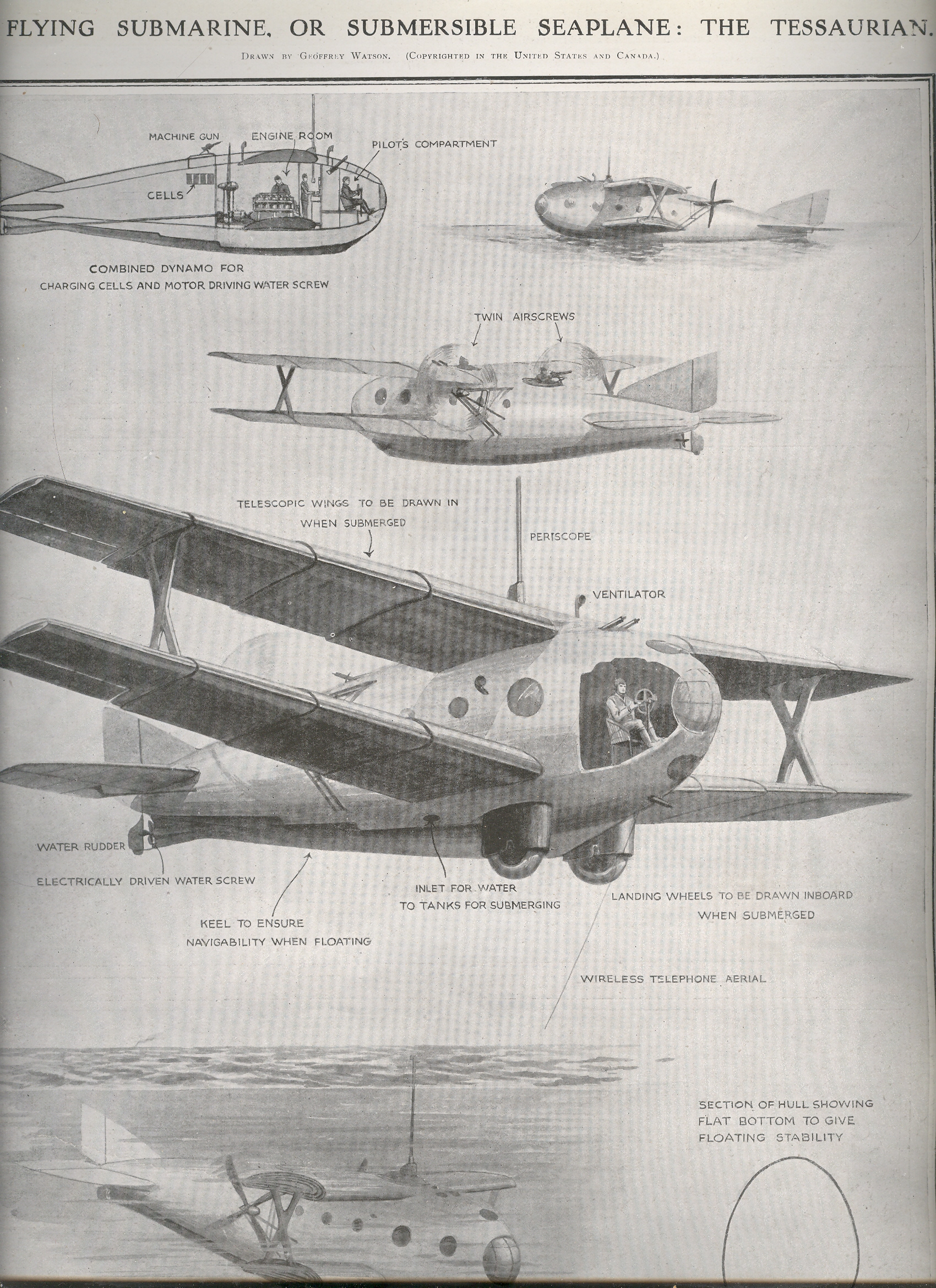
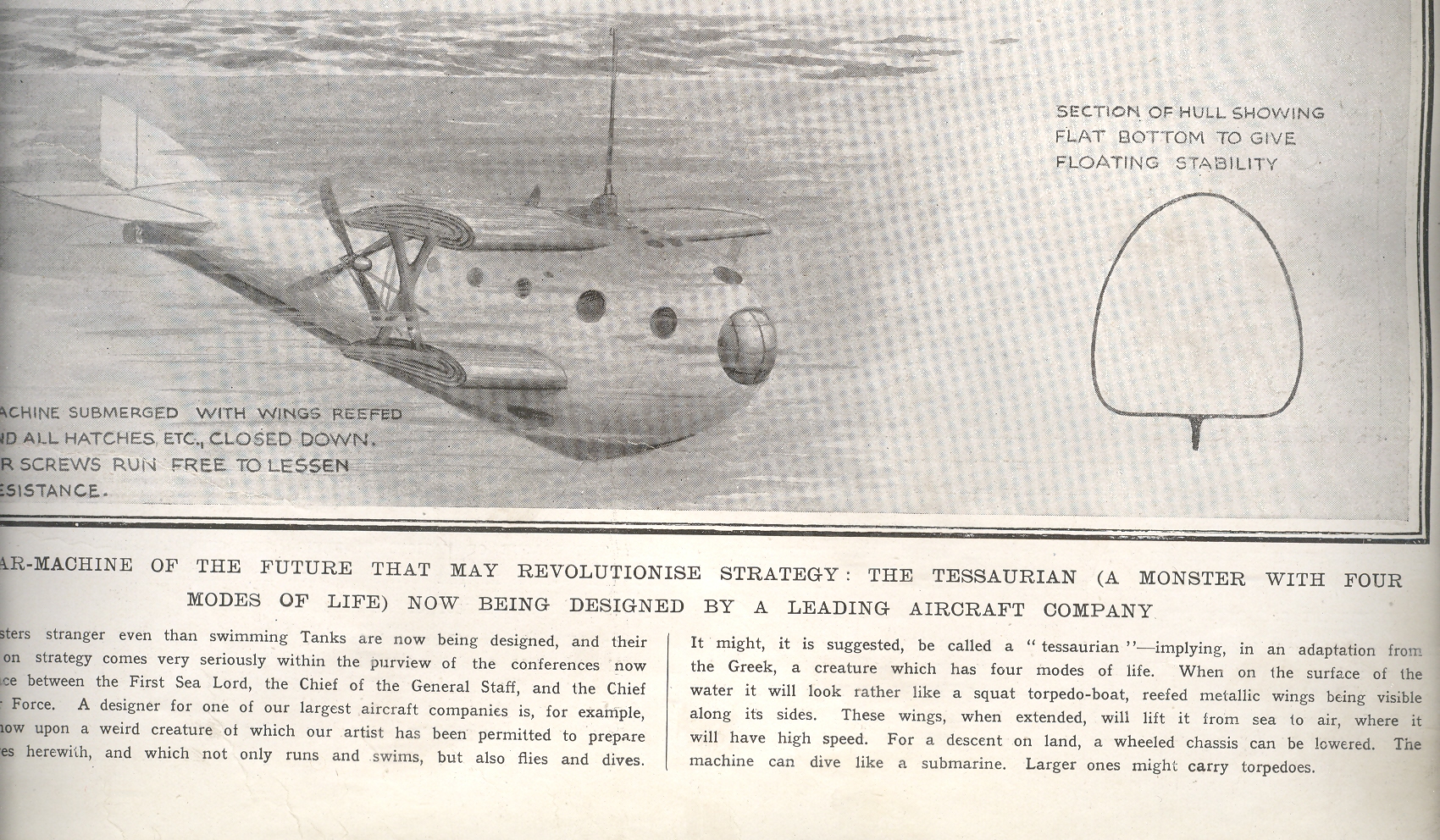
    found the Royal Navy’s version of the DARPA wish in the 24 January 1920 issue
    of The Illustrated London News—the Tessaurian, a dreamable plane capable of
    long flight and long trips under the sea, as well as being able to float on the
    water and land on dry earth.

    Blog dec 30 subplane

    Even the modern Tessaurian has been evasive—certainly
    this 1920 version is nothing short of nothing. 
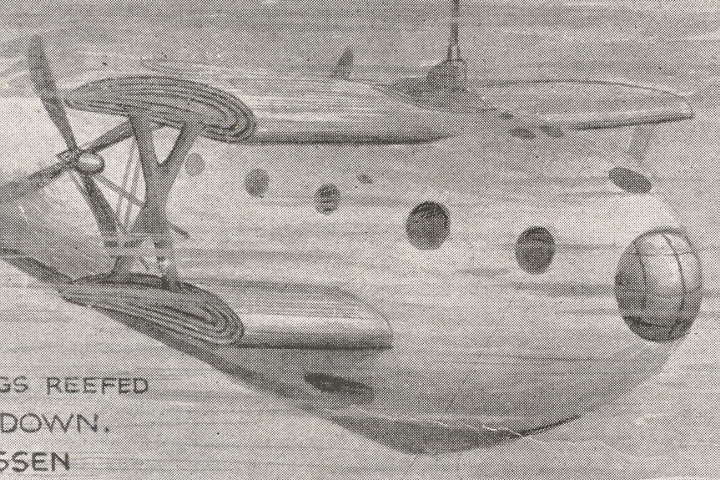
    The craft just looks too bumpy to do well in any sort of fluid environment,
    air or liquid, the thickness of its skin (necessary for the heavy undersea
    pressures) looking just too heavy to lift off the ground.  Of course the powertrain is suspect, and the
    retracted wings don’t look like they would do anything to glide the beast
    further underwater, assuming it got there (on purpose) to begin with.  Even though I doubt that it could fly, it may
    be able to float a bit—I do think that it could sink like a champ.  

    And
    so I reproduce these heady, unacknowledged and unclaimed drawings (“designed by
    a leading aircraft company”), as I can’t find anything offhand online that
    comes remotely close to its age and concept. 

    Blog dec 30 subplane det

    An
    undergraduate (!) team (headed by Daniel B. Coltey et alia )at Auburn came up with
    the following research paper earlier this year: “Conceptual Design of a
    Submersible Tactical Insertion Aircraft” “This…senior design program…the
    creation of a conceptual design for a submersible airplane is being undertaken
    as a response in part to a challenge by the Defense Advanced Research Projects
    Agency (DARPA).” The authors then state the checklist of DARPA’s needs:  “The design is expected to be a clandestine,
    coastal insertion vehicle with specific abilities of an airplane, surface ship,
    and submarine vessel, which would greatly increase the tactical ability of the United States. The
    aircraft is expected to accommodate eight passengers, including any necessary
    equipment and operators, and an additional 2,000 pounds of cargo, and also to
    have an unrefueled range of 1,000 nautical miles in cruise flight, 200 nautical
    miles surface transit or very low altitude flight, and 24 nautical miles of submerged
    travel. The aircraft requirements also include the ability to complete one
    tactical transit (1,000 nautical miles airborne, 100 nautical miles surface,
    and 12 nautical miles subsurface movement) in a time limit of eight hours. This
    concept also addresses challenges in the areas of structural design, effective
    propulsion in dual fluid flow regimes, and control surface duality…”  I’d want one, too. 

    Blog dec 30 subplane det 001

    SOURCE


  • Unusual Aircraft: the Handley Page Harrow, 1938

    JF Ptak Science Books LLC  Post 884

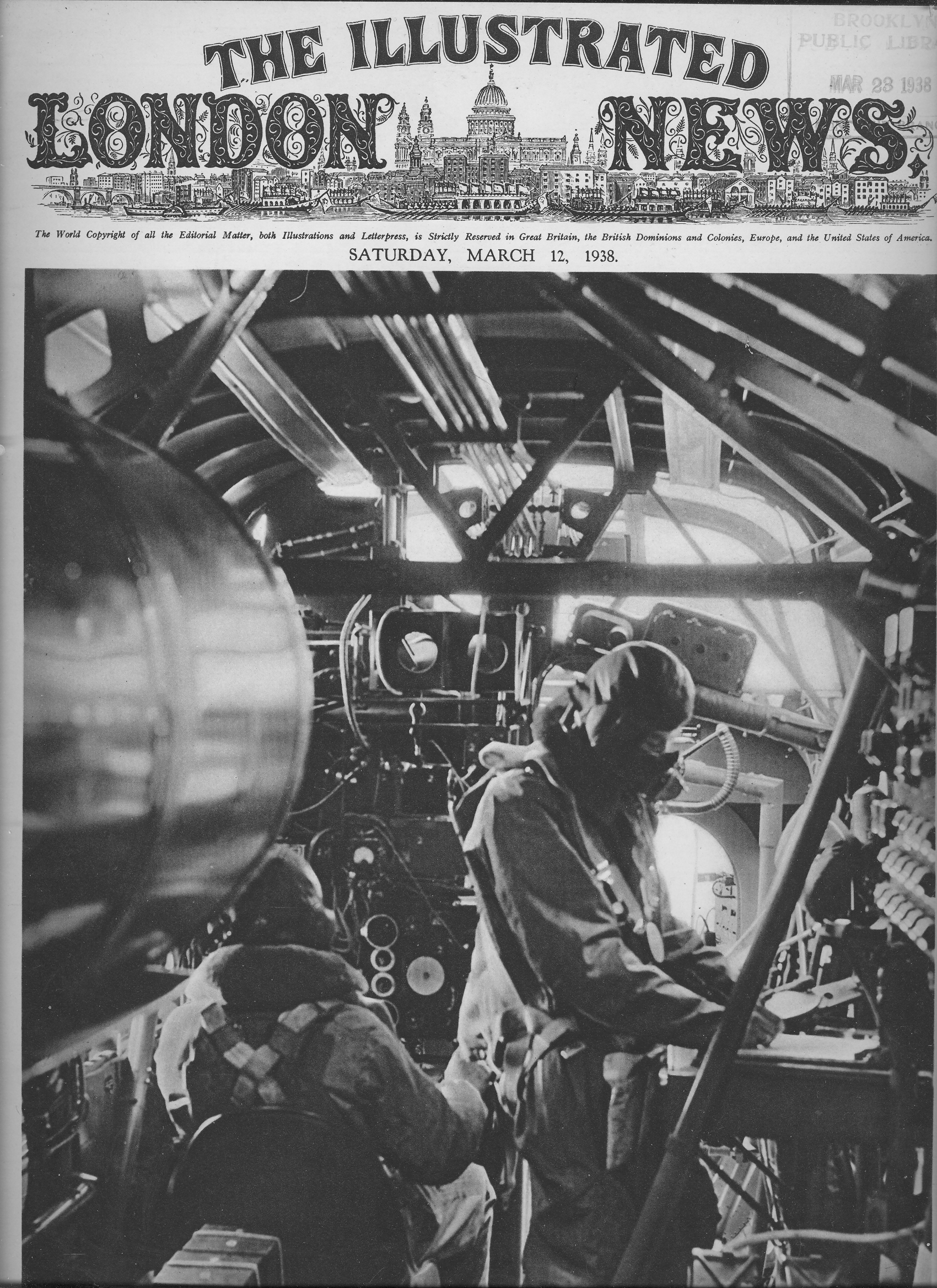
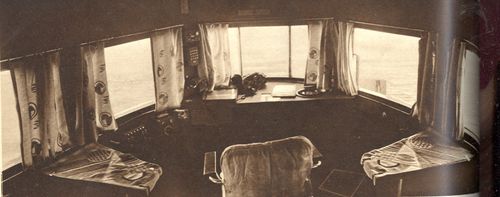
    I don’t have much to connect with this image, save to say
    that it is (to me) an unusual view inside one of Britain’s early heavy bombers, the
    Handley Page Harrow.  It was a beast of a
    plane, 88x82x19, with two 830 hp engines, a big, slowish, wide-turning affair
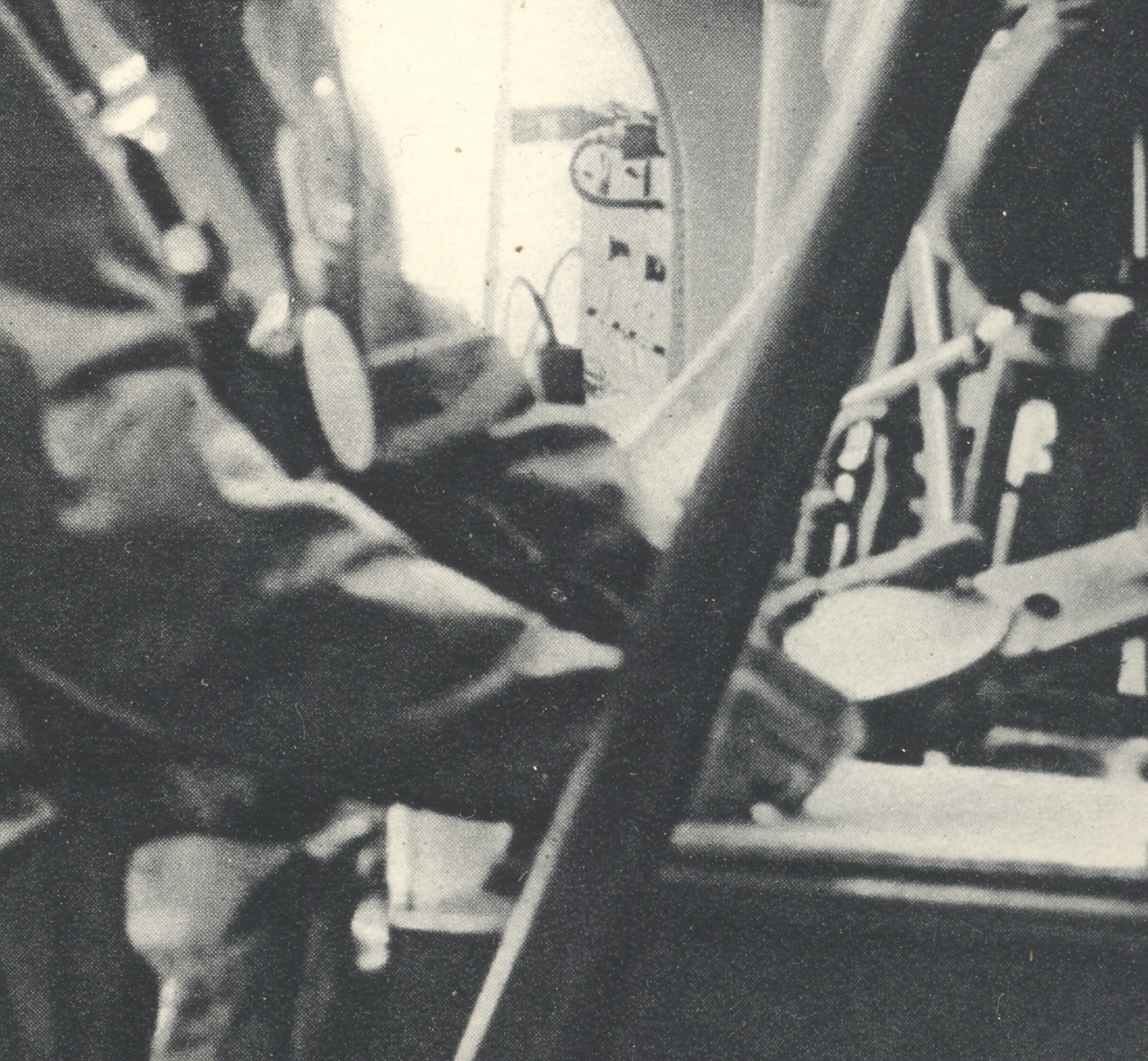
    with 3000 pounds of payload (which doesn’t seem like a lot to me).  The co-pilot is standing straight-up in the
    control area of the aircraft, with plenty of headroom to spare—something that I
    couldn’t do anywhere in the B-17e, and I’m only (just shy of) 6-foot.  He seems, maybe, to be calculating ground
    speed (with a circular slide or ground-speed calculator?) at the navigator’s table, standing there next to the seated radioman.

    Blog dec 22 brit bomber

    It seems that it had a mixed experience during the war.  It was intended to be a troop carrier when it
    was design in the mid-1930’s, and by the end of the war there were only five of
    them left in service, which were removed from the RAF in June of that
    year. I suspect that when this image was published in The Illustrated London News on 12 March 1938, Britain was trying to quickly react the growing and desperate situation with Germany, and the Harrow was meant to plug a few gaping holes in the missing bomber bits of the RAF’s forces.

    I like the plane’s design, though I think it wasn’t
    intended to be a plane seen in combat, necessarily.

    Blog dec 22 brit bomber det

    ·Posted by :

    ·in:

    —

  • Bad Ideas Department: Futurized Obsolescence of an Airport ABOVE the River Thames

    JF Ptak Science Books LLC  Post 879  Blog Bookstore

    Its funny how one can live the future in the present but not
    see any part of that future’s future.  Evidently
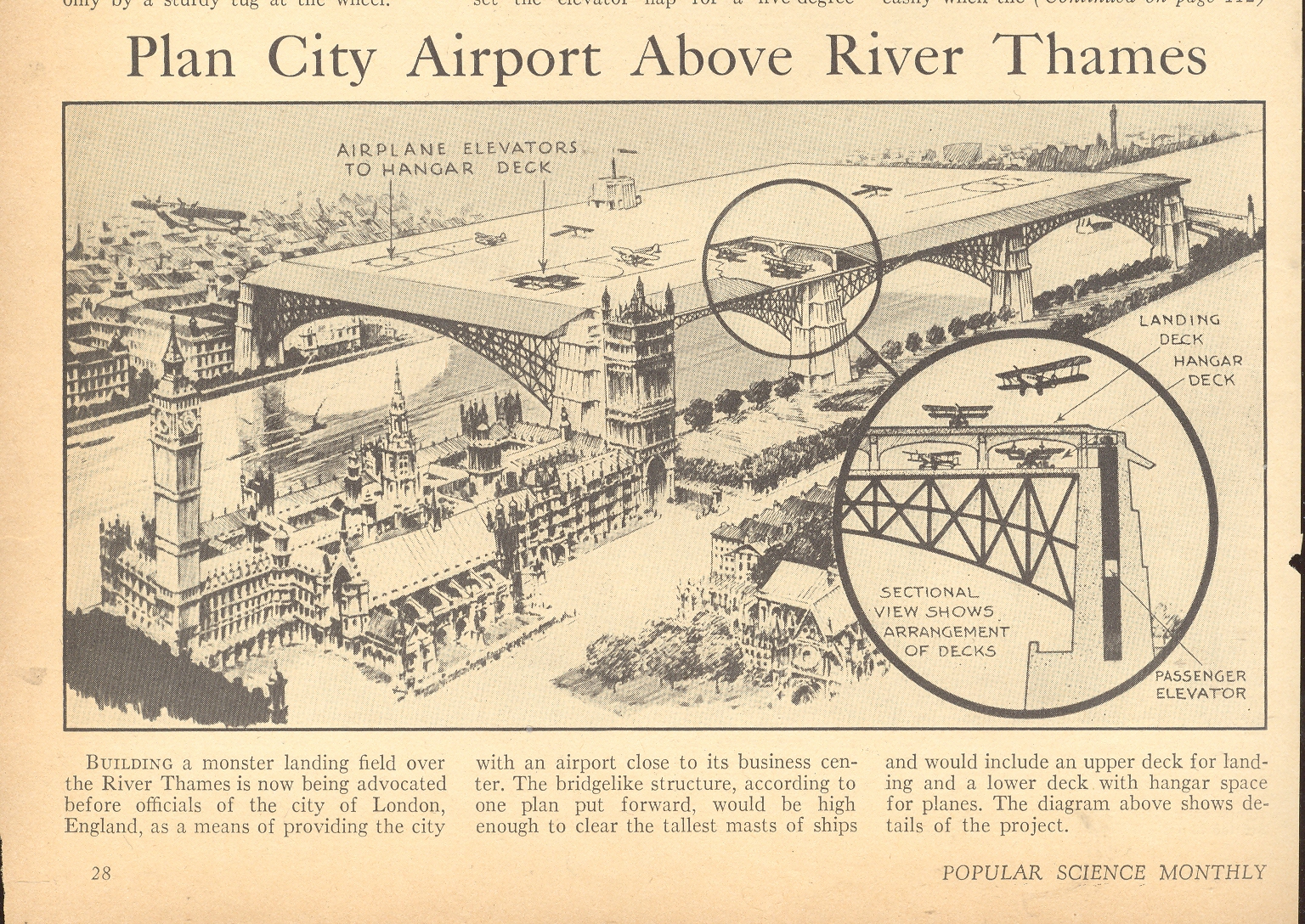
    completely enveloped in the flying frenzy of the 1930’s, planners in London considered constructing
    an airport above the River Thames.  This
    rendition from Popular Science Monthly  (January 1934) shows the beast laid out from
    just above Westminster Bridge to the (newly opened) Lambeth Bridge, covering the
    entire width of the river, with the runways running almost directly into the Victoria
    Tower of Westminster Palace.  

    Blog Dec 17 thames airport

    The
    structure had almost everything going for it to be built in the bad category department:  it was big, ugly, unnecessary, dangerous, a
    hideous eyesore and an architectural atom bomb. 
    It also would have been almost antiquated by the time it was built,
    serving as it did nothing but very small single-prop biplanes, virtually
    useless by the time larger multi-engine propeller planes and jet aircraft would
    appear just a decade and a half into the future. The thing was built high
    enough (the top looking to be at least 300’ high, comparing it to the Victoria Tower) by the forward-thinking planners
    to accommodate “the tallest masts of ships”. 
    No one seemed to take any piece of the future into consideration in planning
    this monster—the planning seemed to take place as a retro event, as though the
    thinking was being done in 1910 rather than 1934. 

    This was a piece of engineering so devoid of the
    possibilities of future development that just as a crew on one end of the airport
    was finishing, it would’ve been just about time for a crew on the first-finished
    end to start demolishing it, an exercise in futurizing obsolescence.  I’d say
    that if you could both build something and take it down in one continuous
    movement, the thing should probably not be built


  • The Invasion of America, 1942, Part II

    JF Ptak Science Books LLC  Post 877

    This is a continuation of an earlier post on mapping the
    invasion of America
    in 1942. 

    [It starts: LIFE
    Magazine issued a wake-up call of sorts to its readership in their 2 March 1942
    issue.  I say “of sorts” because even though this hard article (entitled
    “Now the U.S. Must Fight for Its Life”) must have sorely sobered some of its
    readers, it started on page 15, following big ads for Listerine, Matrix
    (women’s shoes, Bell Telephone, Modess, Clapp’s Baby Food, Dot Snap Fasteners,
    Goodrich Tires, White Horse Scotch, Pompeian Massage (for shaving), Jack
    Benny/Carole Lombard’s “To Be or Not To Be”, Colgate, Yardley powder and
     Mimeograph, and a few interspersed puff pieces—and a Ginger Rogers cover
    photo.  But once LIFE paid its bills, the article got right to business,
    responding to a February article by sci-fi/novelist Philip Wylie on the possibilities
    of the U.S.
    losing the war…]

    The article displayed six maps showing possible invasion
    routes from the east and west.  It was
    also illustrated with four unusual graphic images depicting various parts of
    the U.S.
    attacked and pulverized by Japanese and German forces.  [Images like these—outside the science fiction
    world–were very uncommon.]

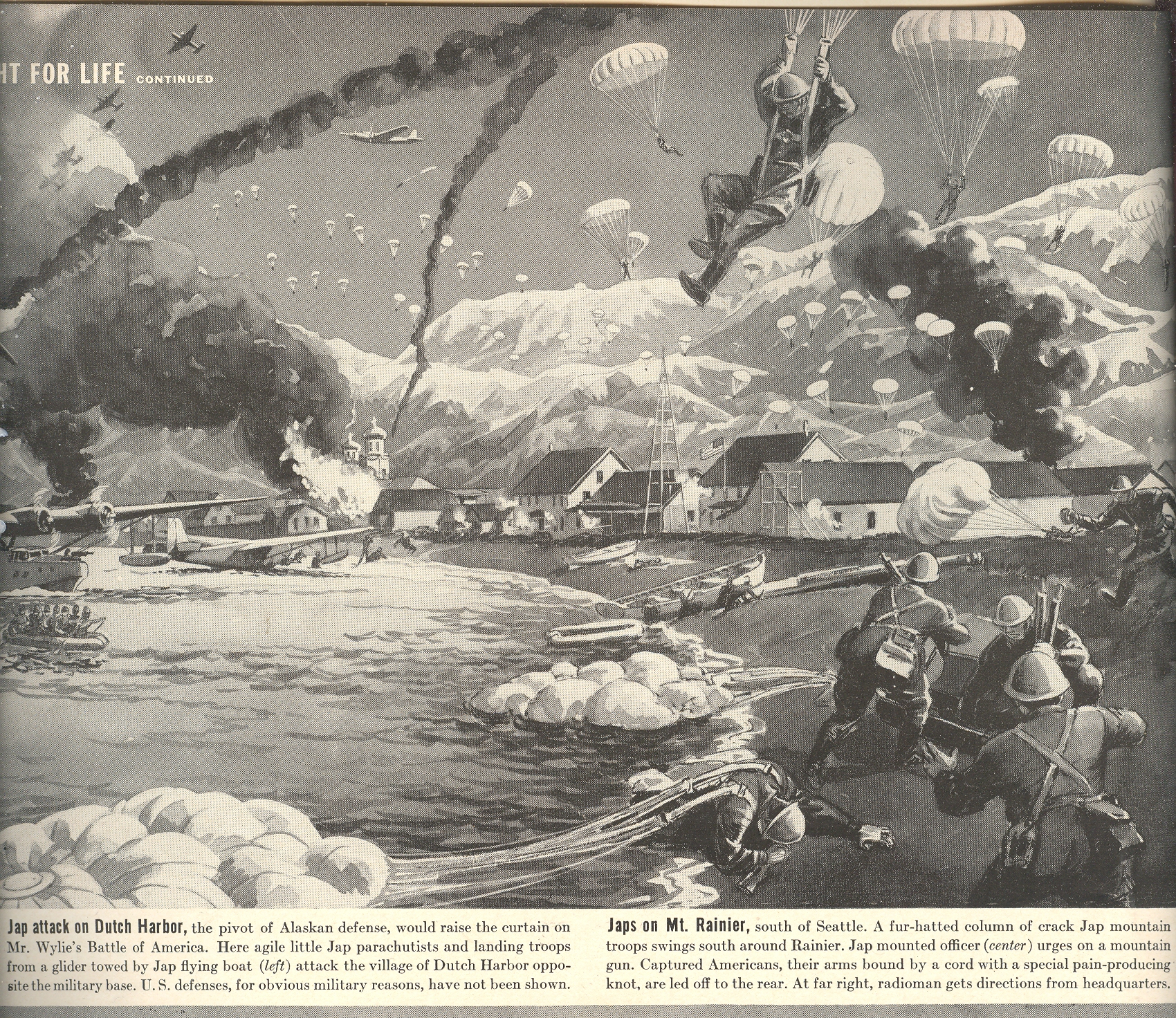
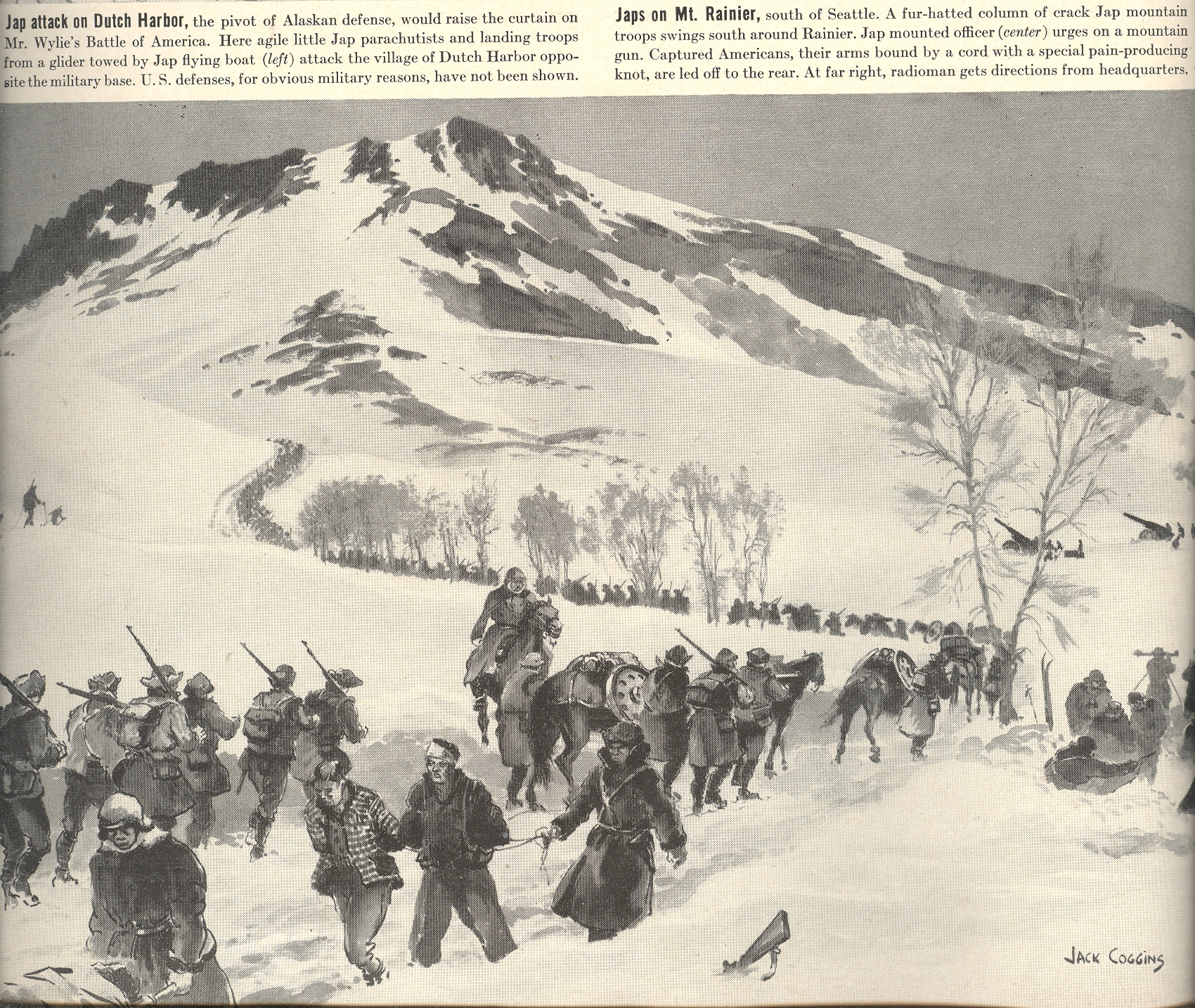
    The first image shows the assault and capture of the town of
    Dutch Harbor,
    “the pivot of Alaskan defense” by Japanese forces.  I guess we’re to assume that the American
    military base on opposite the town has been overtaken already, with the assault
    on the town being a mop-up operation. Odd thing here is that Dutch Harbor
    and Fort Mears were actually attacked n 3 June
    1942 by a Japanese aircraft carrier (and entourage) which inflicted moderate
    damage on the harbor and fort, and killed 78 Americans.  This was a diversionary movement, meant to
    draw away American attention from Midway. 
    It didn’t work.

     Blog Dec 15--attack america 1

    This image shows Japanese mountain troops rounding up the
    locals after their successful attack on Mt. Rainier.  I’m not so sure why the force was here and
    not in Seattle, as (a) there is no port here, and (b) there wasn’t anything
    going on so far as war production goers, which was definitely happening north
    of here.  That’s a very long column of
    Japanese soldiers headed towards Rainier; I’m
    not sure where they were going.  Also
    there are two large cannons (88s or thereabouts) taking aim at the mountain.  Again, I think here that the mountain would
    win in the long run.


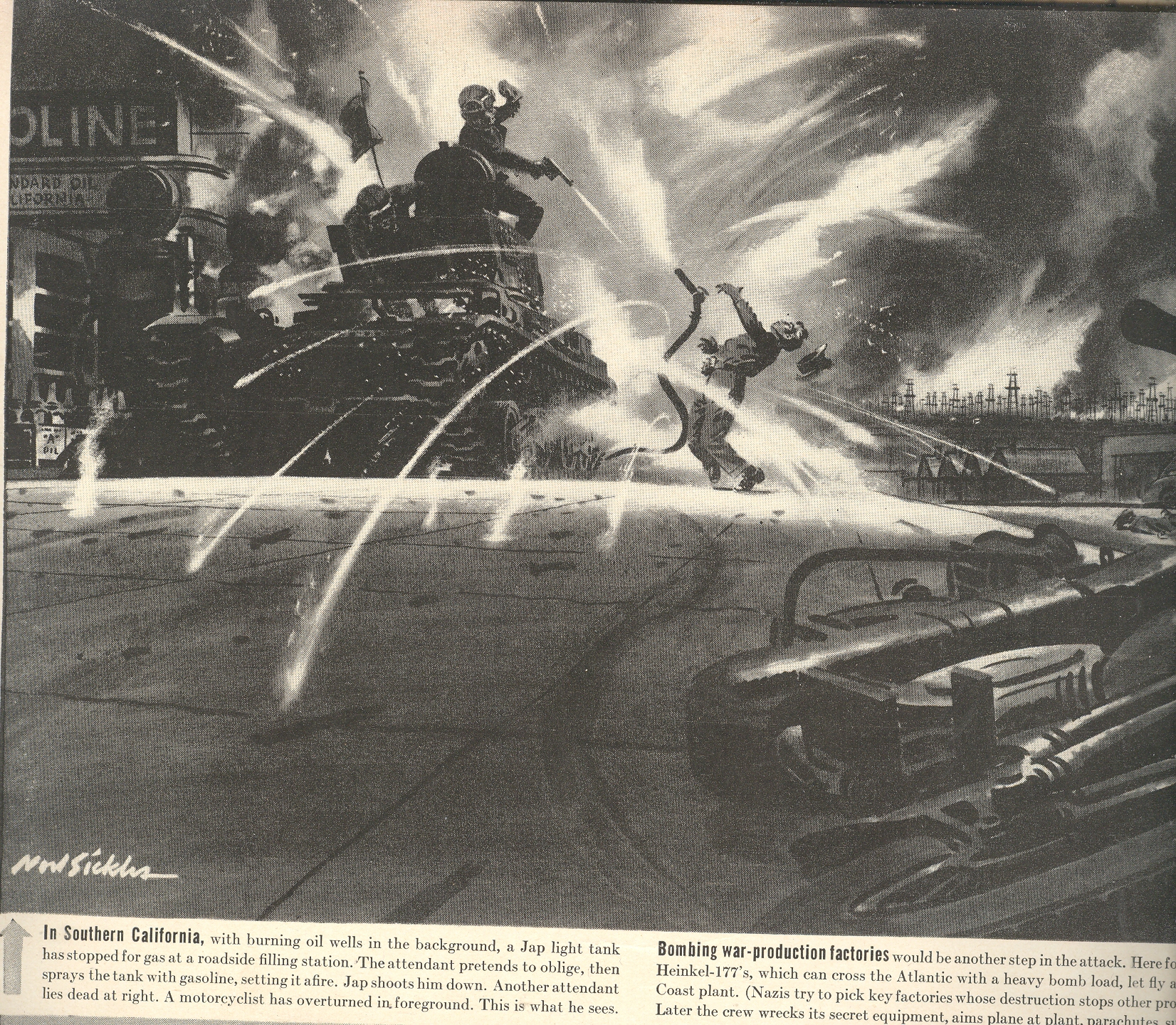
    Blog Dec 15--attack america 2 The petroleum culture is under attack here in southern California.  The Japanese tank commander is shooting a gas
    station attendant who has just sprayed the tank with gas and set it on
    fire.  I’m not sure why the oil
    facilities are on fire, unless we did it. 

    Blog Dec 15--attack america 3

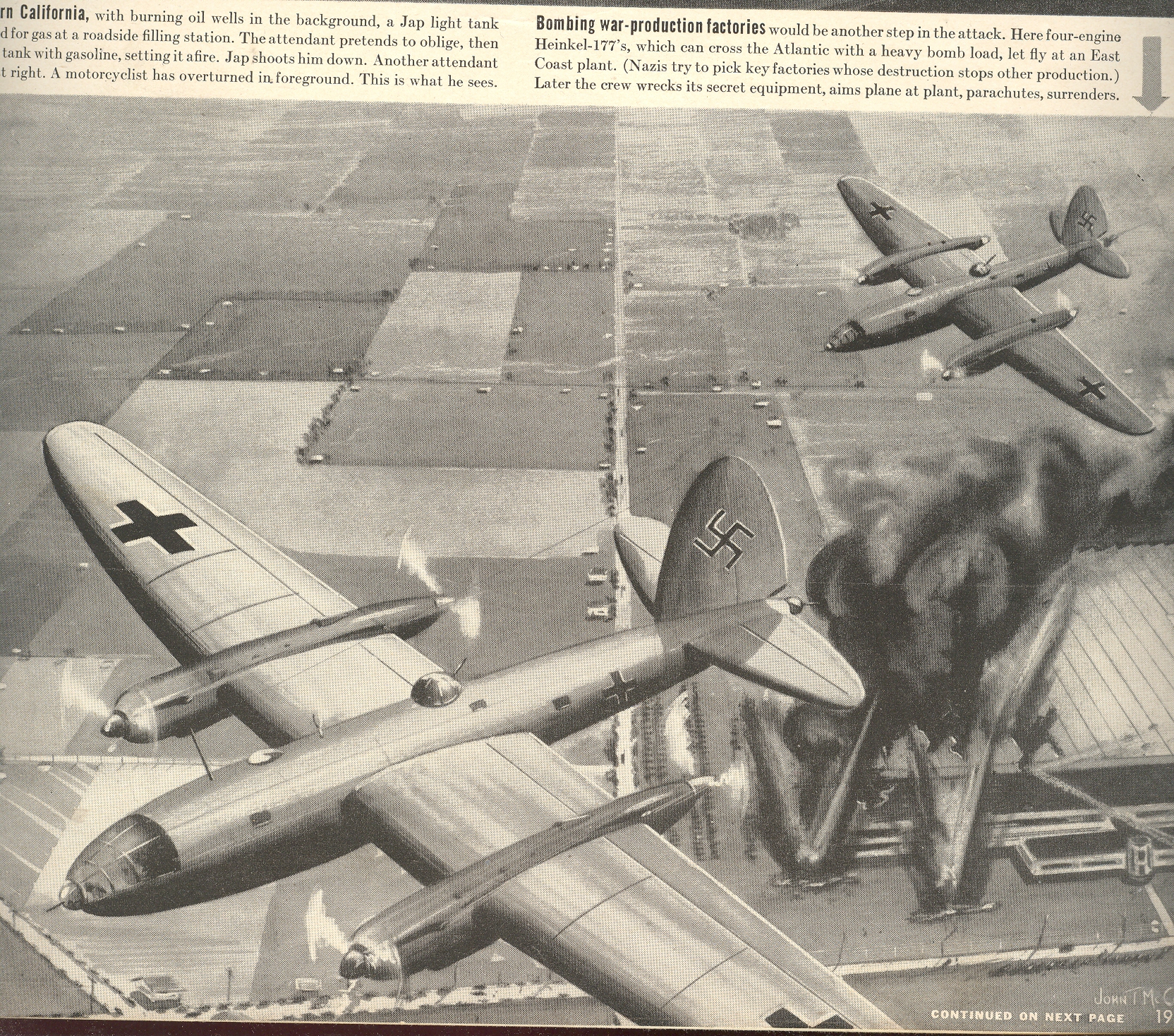
    These Heinkel-177’s are bombing an unnamed East Coast war production
    plant, crossing the ocean straight from Germany ?).  They are presented here essentially as a manned
    bomb—the crew was supposed to drop their load, destroy their secret equipment, then
    parachute and surrender after auguring in their aircraft.   This push-pull
    engine configuration on this LIFE magazine
    version of a bad aircraft—and the only heavy bomber the Luftwaffe ever produced
    in numbers—never was able to drag this aircraft across the Atlantic.
     Its maximum bombing range was about 925 miles,
    which means even if the crew expected not to return it would still only get about
    two-thirds of the way across the ocean. 

    Blog Dec 15--attack america 4


    I’d say that this article might well have established a new
    fear-line in the minds of many of LIFE’s
    millions of readers, introducing them to the possibility of mainline attack
    just  a few short months following Pearl Harbor.


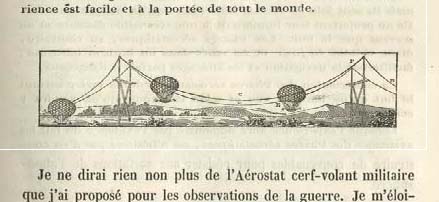
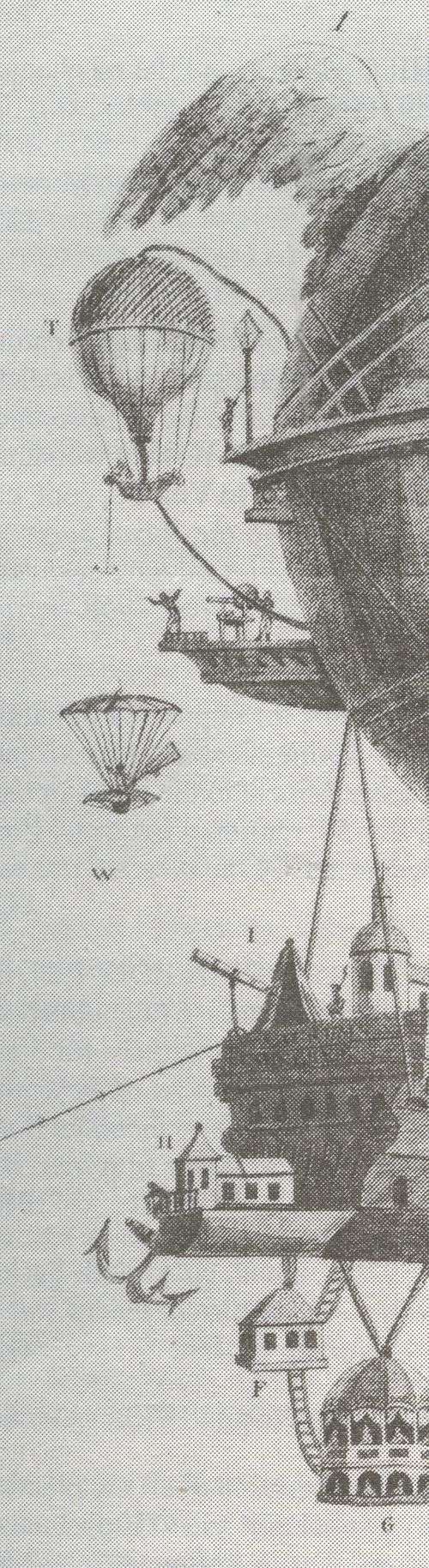
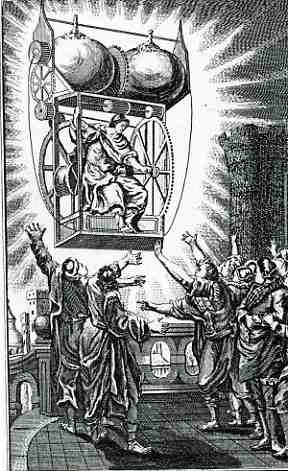
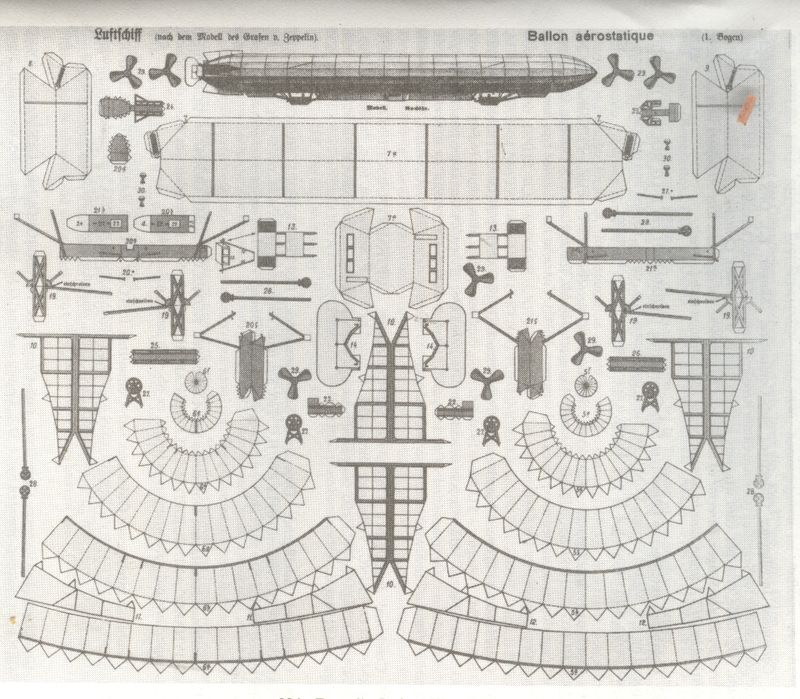
  • Balloons, Zeppelins & Dirigibles: Ideas Fabulous and Not So

    JF Ptak Science Books LLC

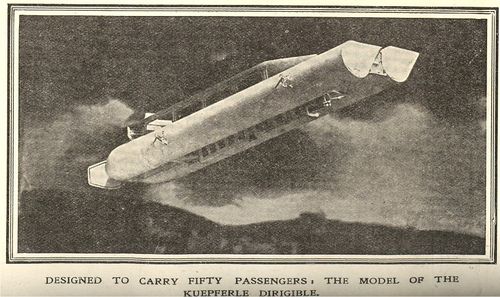
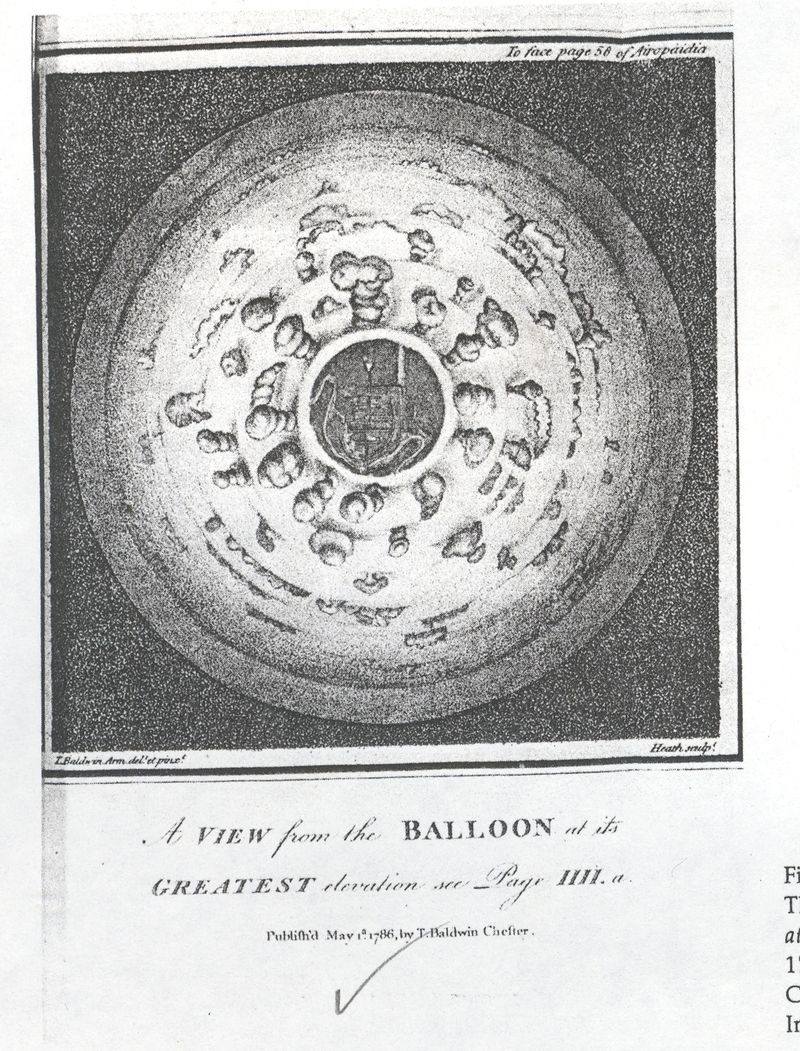
    I should’ve included this list in yesterday’s post about a 1909 zeppelin tramway but it slipped my mind. Here then are most of the posts I’ve made on zeppelins, balloons and dirigibles, mostly having to do with unusual deep-thought applications of their soon-to-be-replaced technologies.

    I like the History of Horses in Flight the most…

    Towards a History of Horses in Flight in the 19th C (here) 

     Balloons--horses

    Balloon Bridges and 600-Foot-Long Airships  (here)  

     Balloon--bridge

    Escape Pods for Women Balloonists, 1820: the Fabulous “Minerve” Balloon (here)

    Balloons--Minerve

    History of the Future: Electric Balloons, Tethered Eagles and an 18th century Space Station  (here)

    Balloons--electric

    Zeppelin paper Model 1924  (here)

    Balloon--paper model

    Advanced Sci-Fi Dirigible Notion, 1909 (here)

    Balloon--scifi dirigib;e 

    Vision: Looking Straight Up, Down, Across and Through–1525-1905  (here)

    Balloon--straight down


  • Joseph Stalin’s Flying Circus: the Maxim Gorky Aircraft, 1934

    JF Ptak Science Books LLC  Post 871


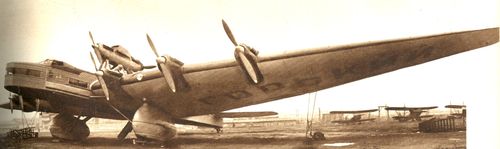
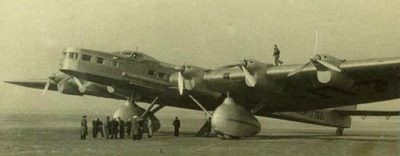
    The Maxim Gorky (Gorkii, ANT-20) was the largest plane of its time, a craft intended to show the world of the vast technical prowess of the Soviet Union.  There is now doubt that the plane was huge–112’ long, 22’ high, with a wingspan of 206’ (and 5,200 sq ft surface area), and weighed in at 59 tons—and was indeed the largest plane in the world. 

    Blog 12 9 Gorky big long


    The reality of the craft was closer to its rear wheel, which was manufactured of metal and filled with cement.

     Blog dec 8 gorky 1

    The plane was built by TsAGI was big—it was also ponderous, pretentious, terrifically slow (cursing speed of 141 mph and top speed of 171), and just a beast.  It was built very quickly, and it showed; it offered nothing new so far as design is concerned, being a cobbled montage of existing blueprints.  It did set world records for lifting stuff, but beyond that, it was a half-dead behemoth..

    Construction on the Gorky began in the midst of the Great Famine, a murderous Stalinist rampage which the result of planning and control on the collectives that killed 7-8 million Russians and Ukranians1 and which also destroyed the Ukrainian resistance, and which was also one of the most disgusting of the 20th century genocides…but there are so many to choose from.  (See Robert Conquest, the Harvest of Sorrow2).

    The Gorky was a magnificent nothing.  It was dedicated, finally, to a serve as a propaganda tool for the inglorious voice of Joseph Stalin, fitted into service with a movie/film, theater, print shop, photo lab, press room, radio station, and other creature comforts.   The Gorky, the “Victory Over the Air”, met its end 18 May 1935 in a crash with two other Soviet planes during maneuvers, crashing near Sokol Station, killing everyone on board and another 35 on the ground.

    Blog 12 9 Gorky Interior front

    I’ve included photos of the interior of the plane which illustrated and article in the 19 January 1935 issue of The Illustrated London News. I could find no other pictures of the inside of the plane online.

    {Photos in the CONTINUED READING section.)

    Notes:

    See:

    http://www.dictatorshipoftheair.com/wp-content/themes/content/excerpt2.pdf

    http://dictatorshipoftheair.com/2007/01/04/the-ant-20-maxim-gorky-in-flight/

    The Great Terror

    1.The Holodomor (the Ukrainian Famine of 1932-1933). http://en.wikipedia.org/wiki/Holodomor

    2.Robert Conquest The Great Terror: Stalin’s Purge of the Thirties (1968) , The Nation Killers: The Soviet Deportation of Nationalities (1970)   Lenin (1972) , Kolyma: The Arctic Death Camps (1978) , Inside Stalin’s Secret Police: NKVD Politics, 1936-1939 (1985) ,The Harvest of Sorrow: Soviet Collectivization and the Terror-Famine (1986) , Tyrants and Typewriters: Communiques in the Struggle for Truth (1989) , Stalin and the Kirov Murder (1989) ,The Great Terror: A Reassessment (1990).