A Daily History of Holes, Dots, Lines, Science, History, Math, Physics, Art, the Unintentional Absurd, Architecture, Maps, Data Visualization, Blank and Missing Things, and so on. |1.6 million words, 7500 images, 4.9 million hits| Press & appearances in The Times, Le Figaro, Mensa, The Economist, The Guardian, Discovery News, Slate, Le Monde, Sci American Blogs, Le Pont, and many other places… 5000+ total posts since 2008.

Category: Aviation & flight

  • Space 1898: Pre-Modern Space Flight

    JF Ptak Science Books LLC  Post 693  Blog Bookstore

    Also have a peek at my post on pre-historic space flight: de Bergerac, Leonardo & Co.

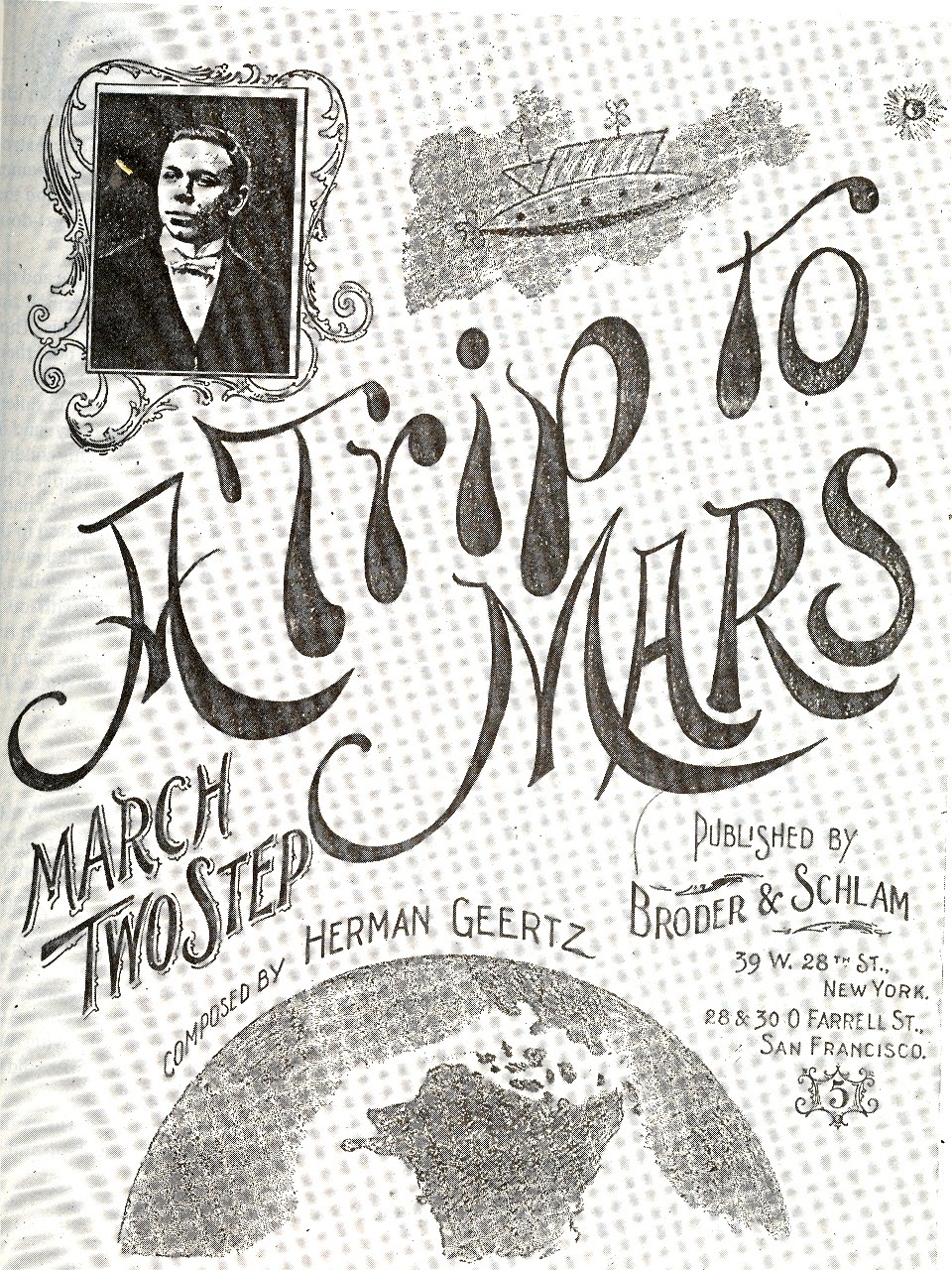
    Herman Geertz, a mysterious, unknown quality of a person to me, made a major contribution to the history of American spaceflight, albeit an unusual, ephemeral one.  In 1898 he published a song—with the firm of Broder & Schlam of San Francisco—called “A Trip to Mars (a March Two Step)”, and is perhaps the first piece of music ever published in the United States about interplanetary spaceflight. 
    ==Blog July 21=mars
    The musician–whose portrait appears in a frame at the upper left—also includes an odd view of the planet Mars, and, most important, an image of a space ship.  It actually took about 20 years for this sort of popularization of Mars to grab a hook in song, even though the interest in the planet and the possibility of life there had been bubbling since Schiapparelli’s  (misunderstood) work on the planet  in which he famously identified its “canalli” (and which was infamously and wrongly translated as “canals”.  Much of this great misunderstanding was rooted in Percival Lowell’s book Mars in which he takes the canalli idea and runs with it to the goal line of Martian civilization).

    One year later, in 1898, Kurd Lasswitz—a professor of math and physics, a Kant expert and philosophe, and an historian of science—published what was to make him the equivalent of Germany’s Jules Verne/H.G. Wells (in importance if not in quantity).  Auf  Zwei Planeten (first published in Leipzig in 1898) was an immediate best seller, as it was Germany’s first work of science fiction, and it made its scientist/historian an instant sensation.  It was an interesting, high-tech-utopian story that describes humans finding and dealing with an isolated Martian colony existing at the North Pole; humanity has its ups and downs, as do the Martians, the species trading moral highgrounds and such, until a peaceful co-existence comes into play between the two planets.  It was pretty heady stuff for the time.  Lasswitz saw into the future in this book, bits here and bits there:  space travel is rather accurately summarized as is a sort of television (that was actually a Martian tele-telescope) and synthetic fuels and foods. 

    This period right before the turn of the century was particularly progressive for the sciences and for science fiction.  In the world of science fiction, for example, in 1895 there was Lowell’s Mars, Williams Morris’ The Wood Beyond the World; for 1896 there was Morris’ The Well at the World’s End, H. G. Wells The Island of Dr. Moreau and The Invisible Man, and Louis Tracy’s The Final War.  1897 saw Lasswitz’ Two planets, Bram Stoker’s Dracula and William Le Queux The Great War in England in 1897.  1898 rounded things out very nicely with Well’s War of the Worlds.

     Frankly though science outstripped the fiction part of the creativity index:   the end of 1895 saw an entirely new world intruded by Roentgen’s X-Rays; 1896 saw Becquerel’s discovery of radioactivity and Langely’s aerodrome; 1897 Thomson’s discovery of the electron; 1898, the discovery of radium by the Curies; 1899, Collin’s invention of the wireless telephone, 1899/1900 the introduction of the quantum theory by Max Planck and also the rediscovery of Mendel’s work by Correns.    It was, in short, a remarkable and remarkably-intense period whose outward reach seemed to be more dominated by the fiction aspect of science (with spaceflight and invading aliens) while the vast  new interior worlds of the previously unseen were totally dominated by the sciences, which was of course the stuff that would stick,  If you stretched this period by just another five years, the Einstein annus mirablis would be included, further deepening this unbelievable period of achievement.  Then again, nearly the whole of modernity is invented during this time:  from 1875-1915 or so nearly every genre of human pursuit entered the modern period.  New methods of writing in literature and for the stage, new ways of painting (from impressionism to non-representational art), through music and the sciences, biology and geology.  Everything changes, except for one field:  political science.  Actually, if you included the invention of the concentration camp during the Boer War(S) then I guess you could throw polysci into this group, though but by screaming and kicking. 

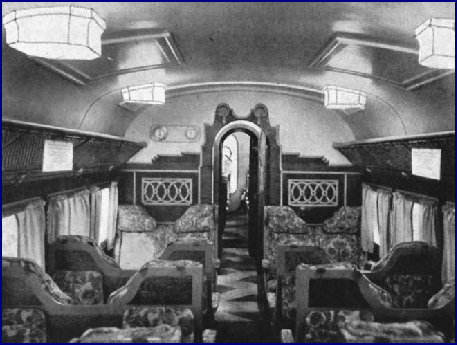
  • The Future-is-Now: Air Travel for the Curious, 1932

    JF Ptak Science Books LLC  Post 664

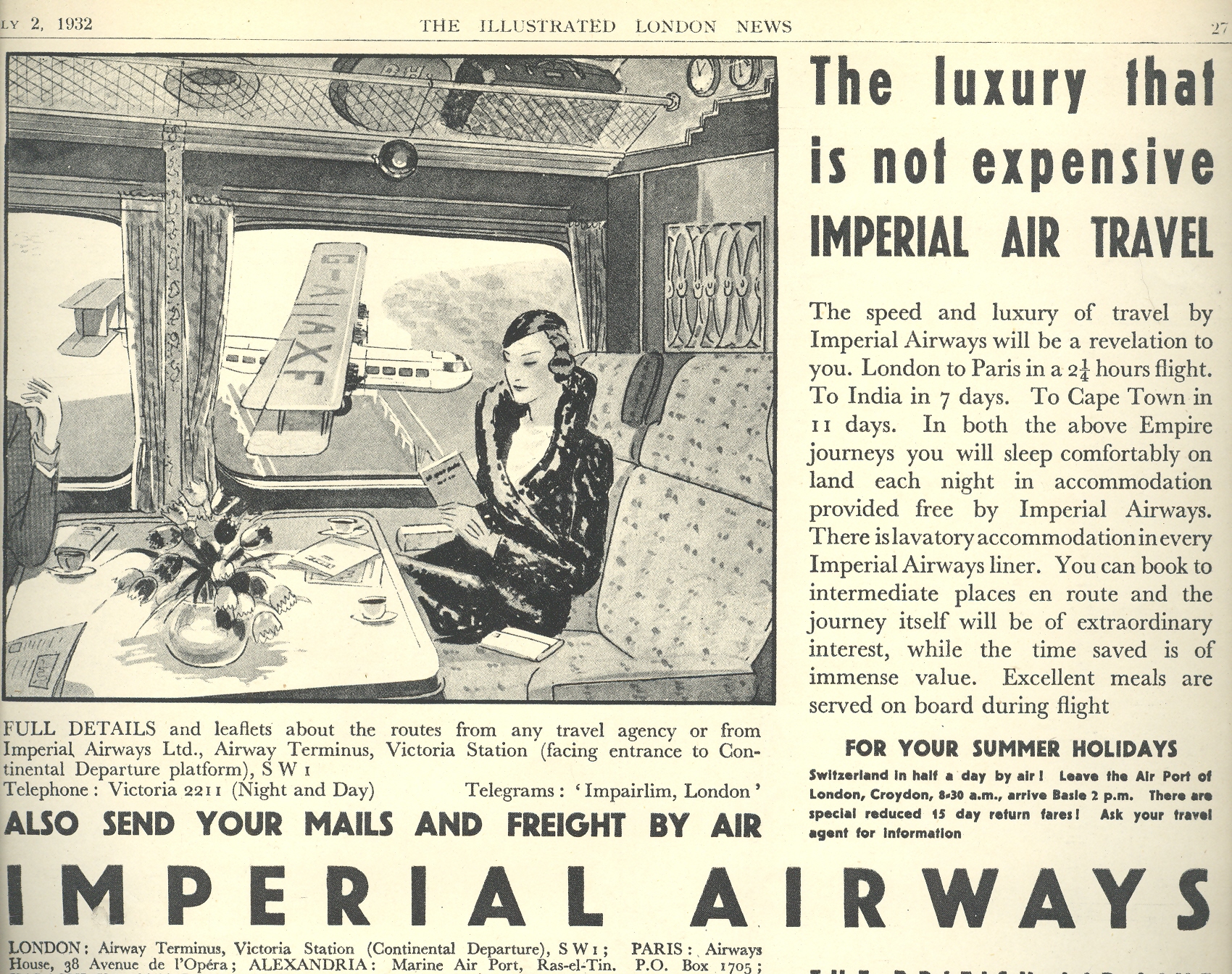
    Blog==june 25 imperial airways I really quite like this image—it has a quality to it that
    looks like a futuristic view of air travel, but it was in fact a
    the-future-is-now image. Imperial Airways offered luxurious accommodation for
    their passengers in the long flights to India (7 days) and Cape Town (11 days). Passengers had a pretty sustained exposure to relative luxury with
    in flight, and landed every evening, the passengers shuttled off to hotels for
    a good night’s sleep.   The passengers in this illustration are enjoying
    a pot of tea at what look like a full-sized table, while through the very large
    viewing window we see another Imperial Airways aircraft passing by *very*
    closely. 


    This advertisement appears in the 2 July 1932 issue of The
    Illustrated London News
    , posted less Blog==june 25-interior than a year after the company started
    offering the London- Cape Town route.   The
    airline flew Handley Page H.P. 42s with four engines
    for these flights—there were eight of these aircraft used for these flights
    over the year, each posting over one million miles.  All without a single injury to a single
    passenger. 


    ·Posted by :

    ·in:


  • Crowds: Servicemen and B-17s at the End of WWII

    JF Ptak Science Books Post 608 

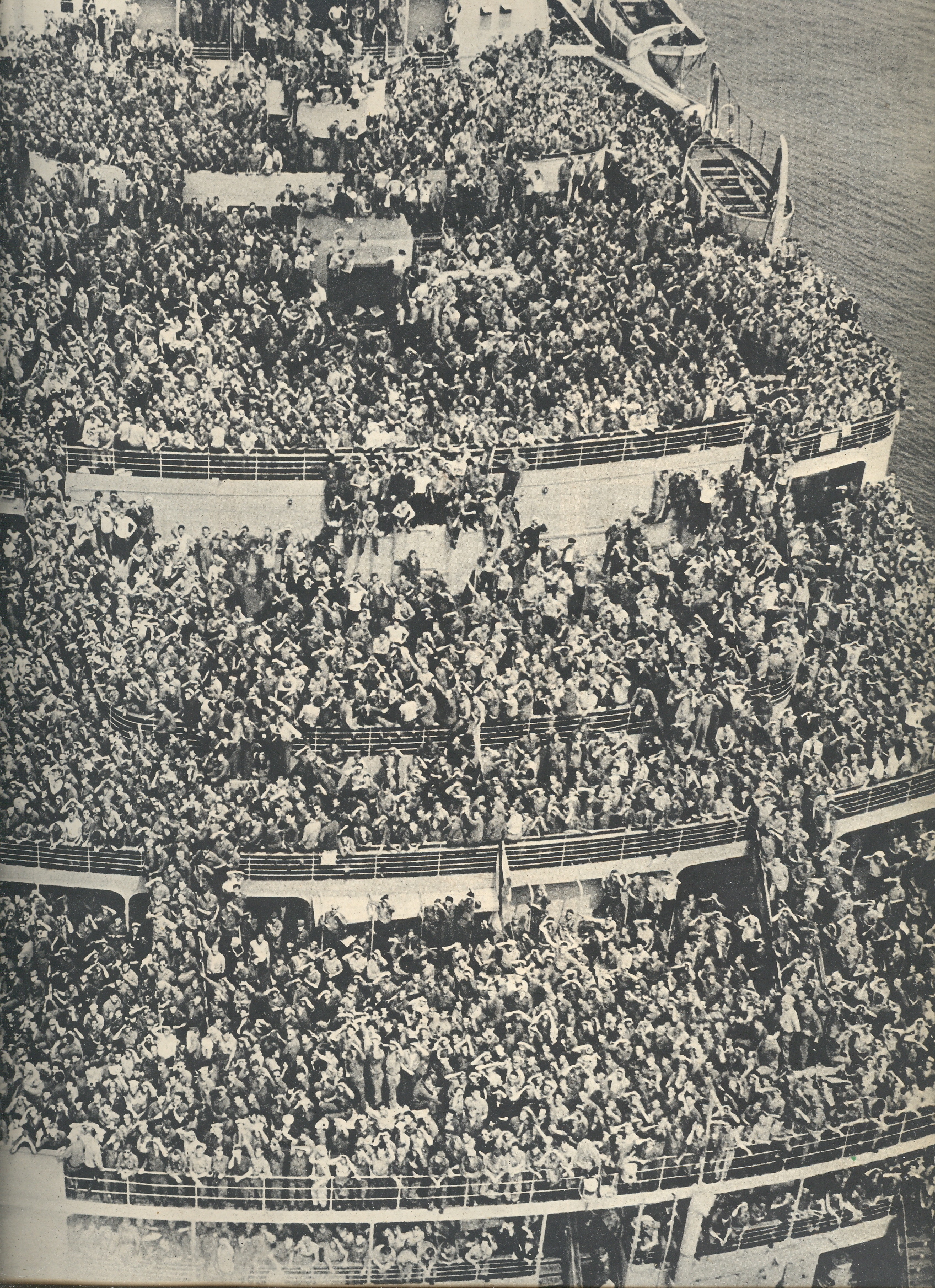
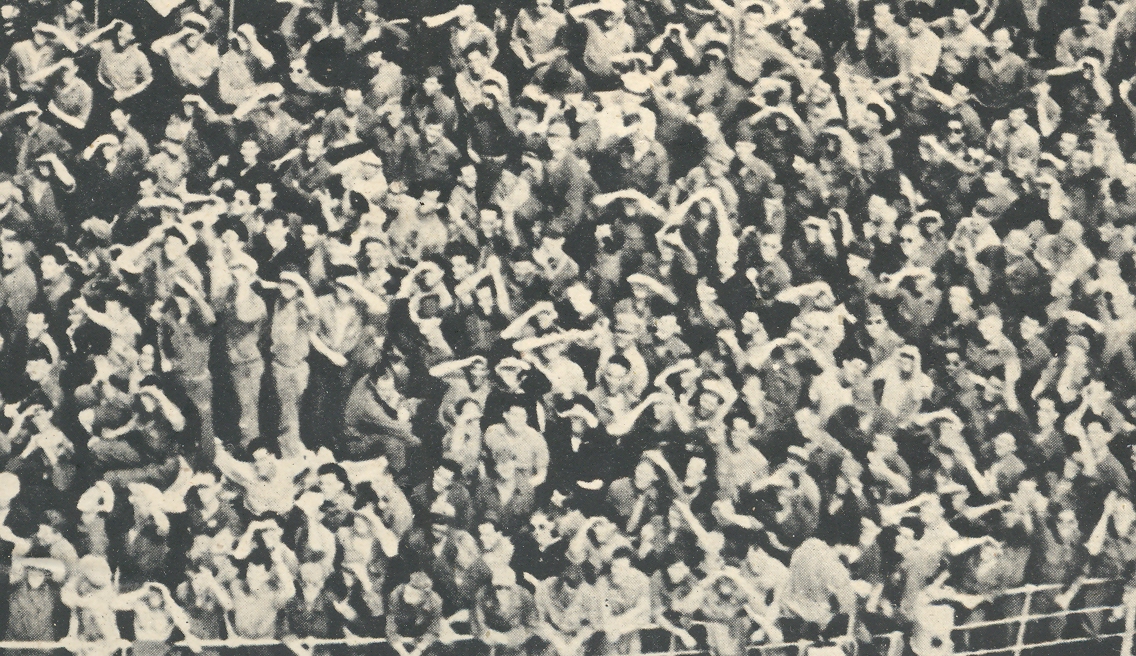
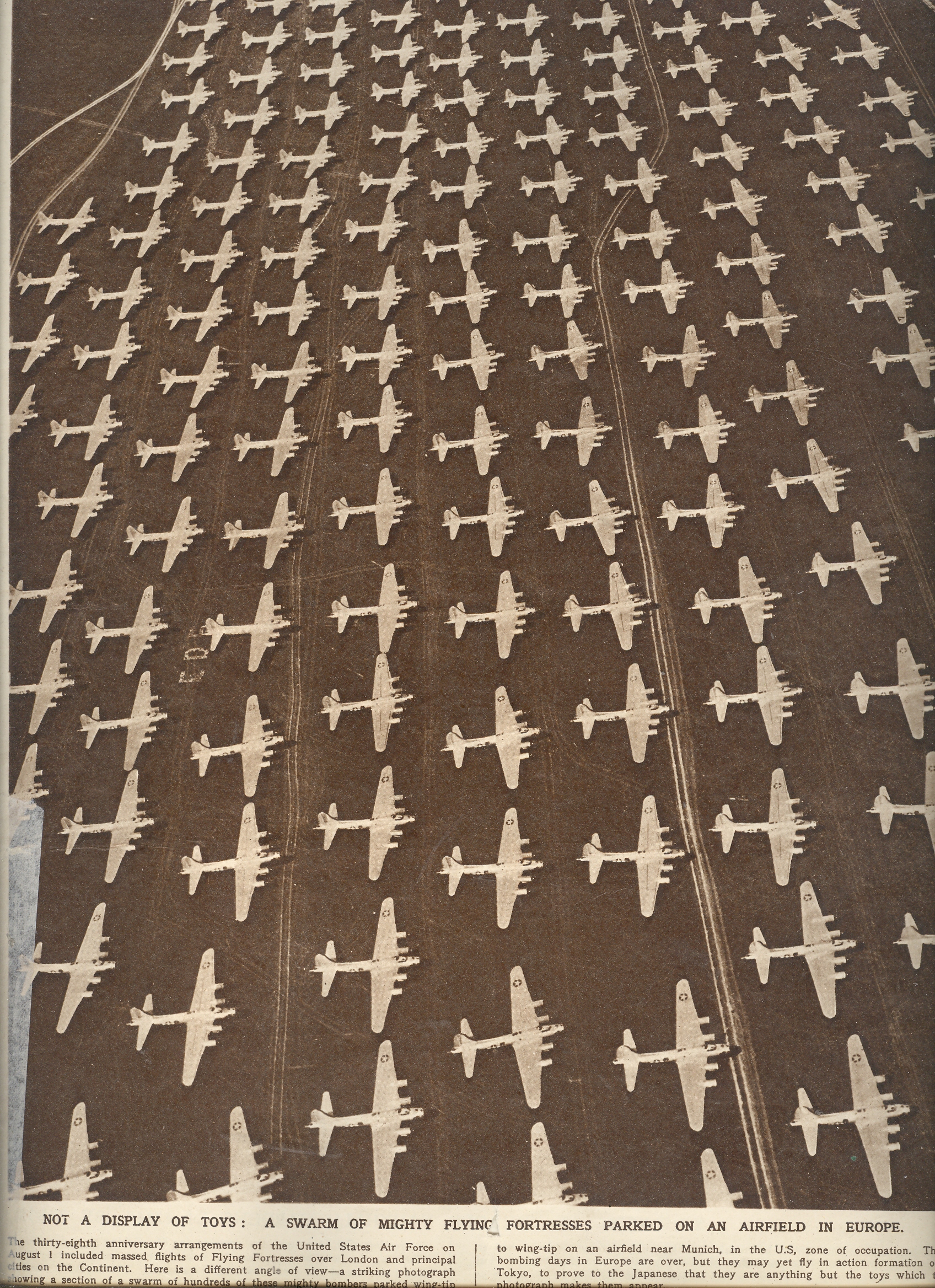
    These two images of crowds come in the same remarkable issue of The Illustrated London News for 4 August 1945—the war in Europe  was over, and the war in the Pacific, for all intents and purposes, would be over in days.

    Blog--may 8--vrowds QE


    The first image shows  passengers on board the “Queen Elizabeth”—a contingent of 14,000 American soldiers beginning their journey home following the defeat of Hitler.  It is a raucous, joyful image, with nearly everyone waving, happy to have arms to wave, happy to be alive to wave their arms, happy to be going home.Blog--may 8--vrowds QE det  


    The second, “Not a Display of Toys”, shows only one section of a large airfield “in Europe” (actually in U.S.-administered Munich).  There’s about 300B-17 (e?) parked wingtip to wingtip, off duty now from the fight in Europe, but (as the caption says) prepared for a fight in Japan. I don’t think anyone in high command had any doubt that these planes had seen their last action.  The atom bomb worked, and would work again (and again, and more so if necessary), and the fear that these planes would make their way East was not a real concern. This photo represents about 7% of the highest number of B-17’s in service in Europe at any given time. 

    Blog--may 8--vrowds


  • Crowds Series: Berlin Expectations. Zeppelin 1909 vs. Springsteen 1988

    JF Ptak Science Books LLC  Post 601   Blog Bookstore

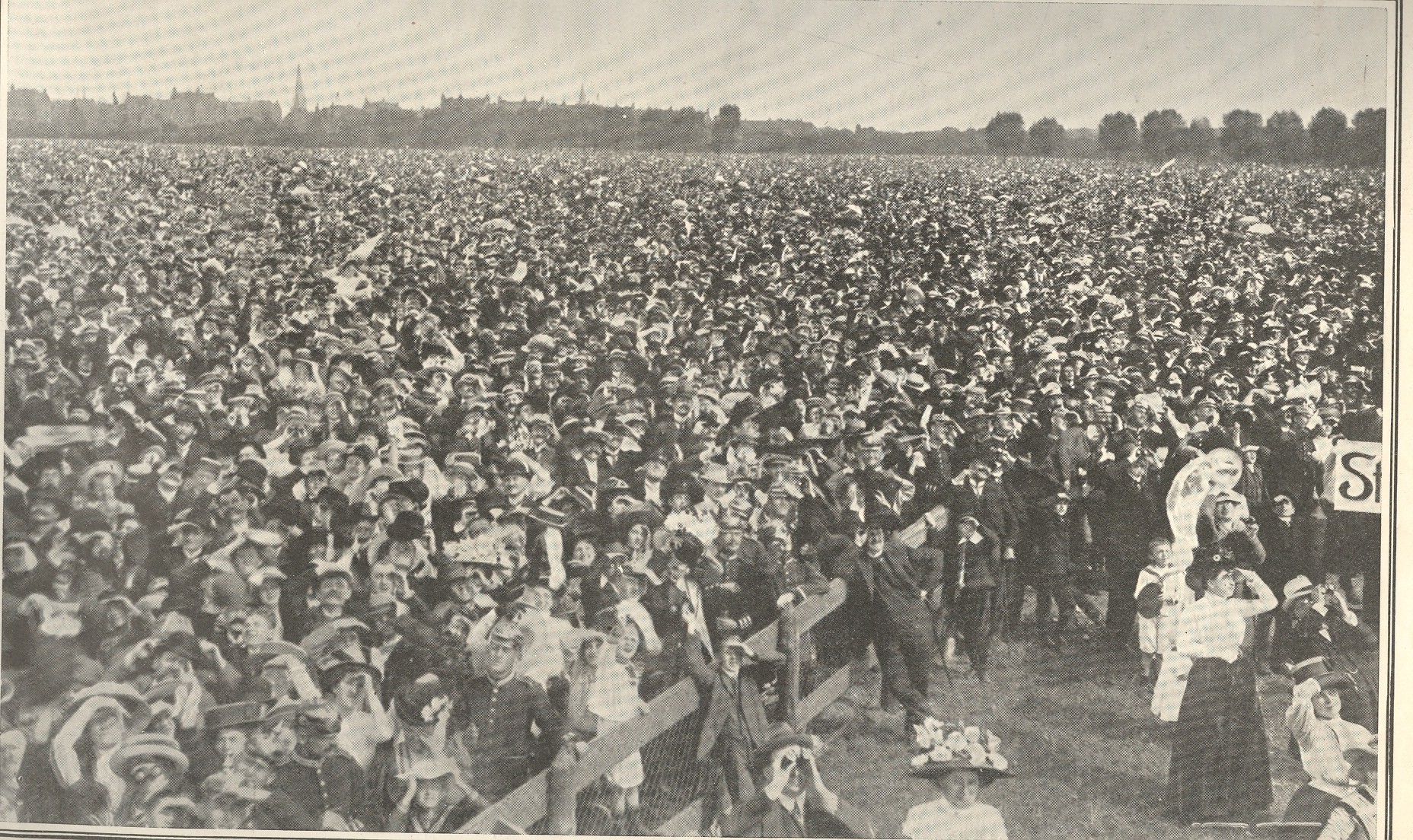
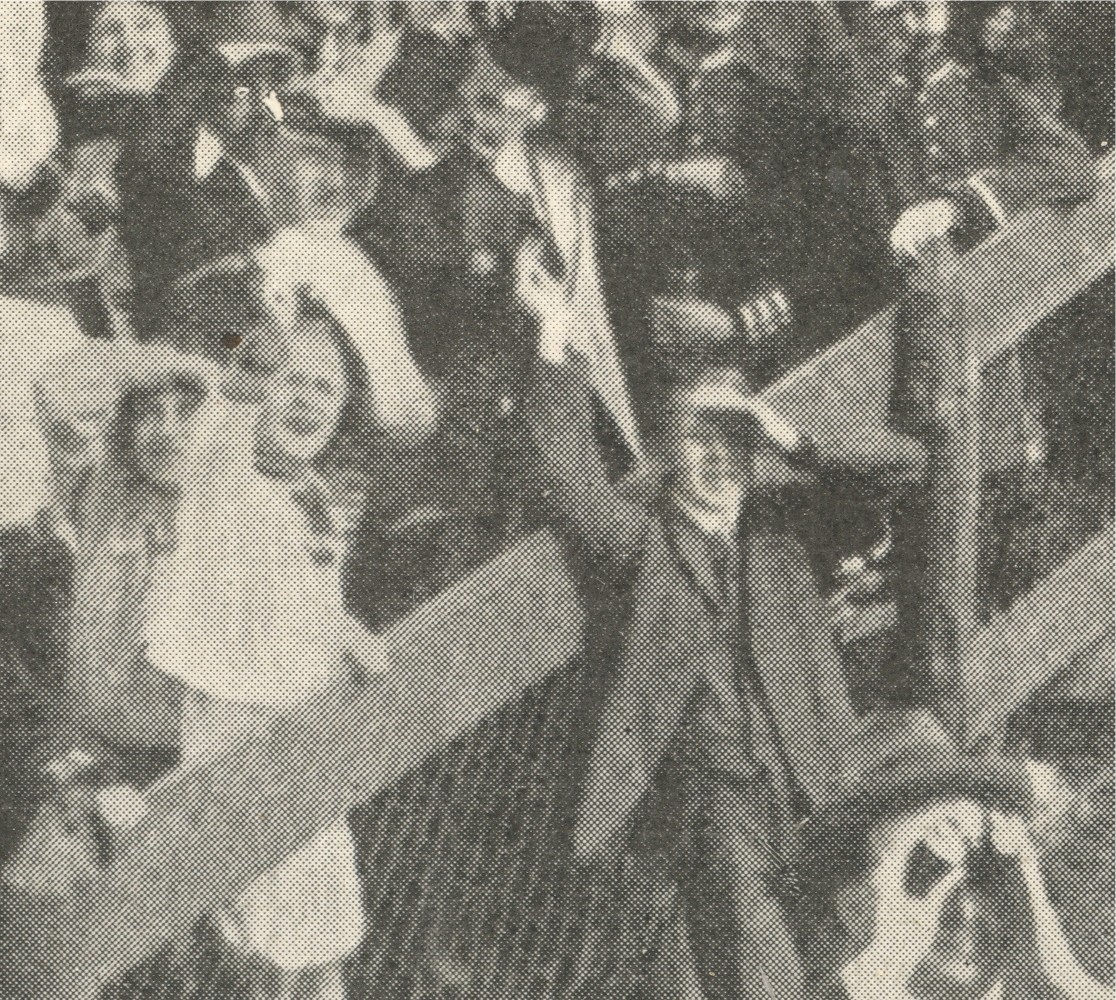
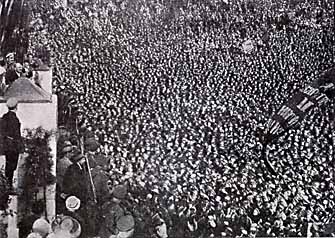
    This image emerged from the pages of The Illustrated London News for 14 September 1909 and shows “nearly the entire city of Berlin” coming out for the arrival of the Zeppelin III.  And, as you can see (click into the image for a larger view) there are at the very least hundreds of thousands of people present. And most of them seem to be waving–it must’ve been extraordinary.  I’ve done a little detail work for the larger image, concentrating on the guy in the front foreground with the binoculars–I love the kid to his upper left waving a handkerchief, filled with every expectation. 

    Blog-may 1--looking3

    Blog-may 1--looking2


    Perhaps a similar sized crowd (some estimates putting the number at a million) showed up to listen to Bruce Springsteen perform in East Berlin in 1988.  I have no idea what the East German government was thinking when they allowed him to perform.  Listening to hundreds of thousands of people singing along to “Born in the USA” is monumental and very emotional–the video stays like that the whole way through, but the crowd really seems to find its voice at 2:52.   Both scenes are pretty ecstatic, all those people seeing something that they’d never seen before…  I guess it woul dbe possible for someone to have been in both crowds in their lives–a little tottering, and watching at the fringes of a brittle-bone-cracking crowd, but certainly possible. (And definitely possible for certain enhanced crowds in that same city in the 1930’s, but I won’t go there.)  Somehow I’ve got a connection going between the kid in the 1909 scene and the kid in the Springsteen video at 5:02

    ·Posted by :

    ·in:


  • History of the Future: Electric Balloons, Tethered Eagles and an 18th century Space Station

    JF  Ptak Science Books LLC  Post 549

    The prehistory of heavier than air flight is loaded with some fantastic ideas, some just generally fantastical and some prescient, or recognizably prescient from some advanced point in the idea’s future.  There was an immediate and relatively massive published reaction to the Montgolfier brothers’ first balloon ascension in June 1783, much of which was useful and applicable, some of which was interesting if not practicable, and a little of which was just deeply problematic, not very considered, and all-around wrong–overall, it was interesting thinking, thinking about this brand-new issue, people trying to get their heads around new concepts and answering them with new- and not-so-new-thinking. 

     blog 16 electric balloon704
     blog 16 eagles705

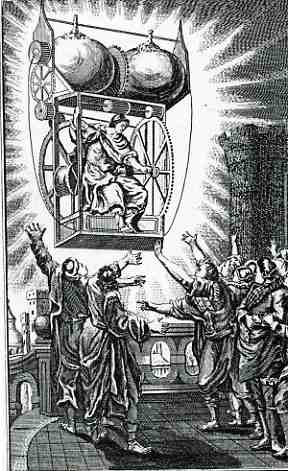
    One lovely pre-Montgolfier  example of fantastical thinking was Louis Guillaume de la Folie’s  (1733-1780) La Philosophe sans Pretension, ou l’homme rare…, published in Paris in 1775.  La Folie’s fictionall adventure is an example of early science-y sci-fi, coming as it did in the midst of the fabulous electric age of the mid-18th century.  He tells the story of a Mercurian, Ormisias, who by his own trivial care winds up flying a chariot fitted with electric balloons from Mercury to Earth.  This was more believable than previous works on space flight, which saw the vehicles powered by whirlwinds, fireworks, horses, beasts, catapults and (hello Johannes Kepler!) demons. 

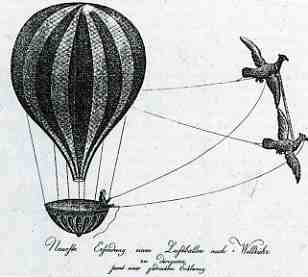
    An example of the very charming and not effectual peep-into-the-future approach to modifying the Montgolfier effort  was by Jakob Kaiserer, who in 1801 published his Ueber Meine Erfindung, einen Luftballoon durch Adler zu regieren. Kaiserer, a bookseller, confronted the issue of steering, featuring s aero-craft by using a pair of tethered eagles.  His was a picturesque

    Montgolfier

    answer to the steering and propulsion issue, meant in a way to be taken seriously, and was not really too far from the ordinary offering.  (Kaiserer really was thinking, because he also had a spare pair of eagles in the gondola, waiting to replace those in flight when exhausted.)  Leashed birds wind up in a number of designs over the years to come, not to mention bird-inspired flying machines designed to function as a bird, the most famous example of which was piloted by Otto Lilienthal to his death.)

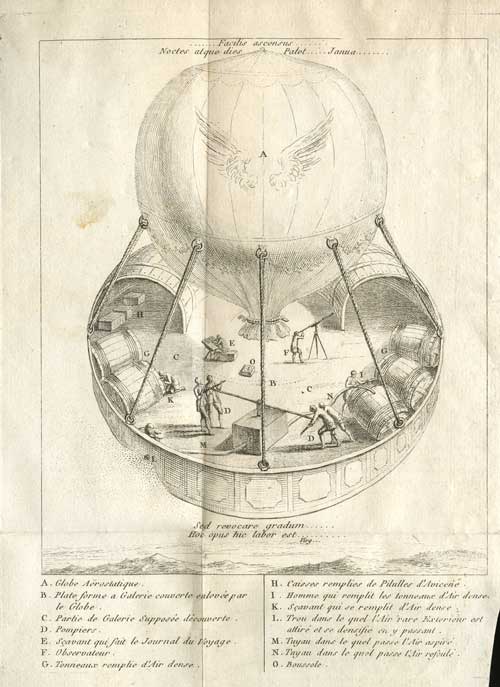
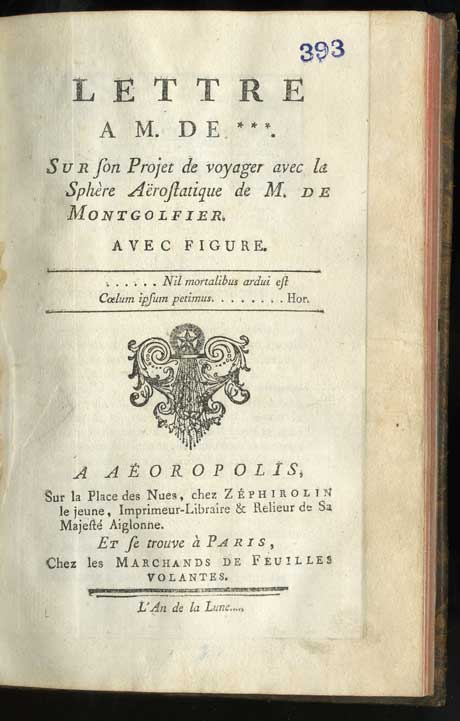
    A more prescient image  was the wonderful flying observation platform shown in Sur son projet de voyager avec la sphere aerostatique de M. de Montgolfier, published in Paris (“Aeropolis, chez Zephirolin”) in 1783.  (The images I’m using at left and below are  from the Lilly Library.) It is perhaps the first such suggestion in print of such a device–the balloon is powered by “dense air” which is evidently being pumped by the four men at the air pump in the foreground, and is host to a myriad of scientific activities, not the least of which is the astronomer and his large telescope.  It really is a remarkable effort, looking into the future of possibilities for the spanking-new invention of flight.  A space station it is not, but it was certainly within the realm of the possible, and for its time must’ve seemed like an impossible bit of fancy brought very close to reality.Aeropolis

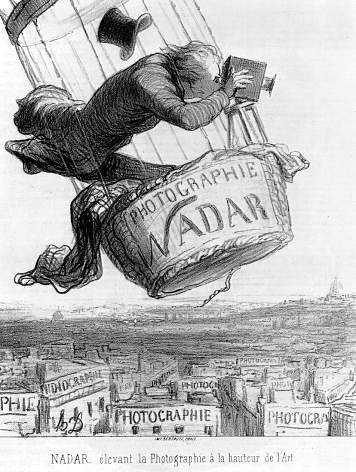
    (This image reminds me of Honore Daumier’s 1862 caricature of Nadar “elevating photography to the condition of art”.) Nadar’s issue here is not only using photography from an elevated platform, but is also using the camera as a tool, and not an artistic element.)

    Nadar


  • Information Bombs: Dropping Stuff from Airplanes, 1911 & 1929

    JF Ptak Science Books LLC  Post 354

    000-ebay--Nov 1 bombing pamhlets971The “information bomb” as an idea is old, but as technology quickened over the centuries so has this particular bomb–it has gotten bigger, larger, more potent, more disasterously visible and more subtle (sometimes at the same time).  Impossibly more effective than could’ve been imagined when these two prints (below) were published; impossible to the best and most creative storytellers. It is interesting to think about how information was released quickly in points in the past, and what that form looked like; and of course what situation perpetuated the release, or “bombing”.

    But for right now I’d like to look at two situations of information bombs that were quite literally so.

    I’ve written about  Sven Lindqvist’s History of Bombing

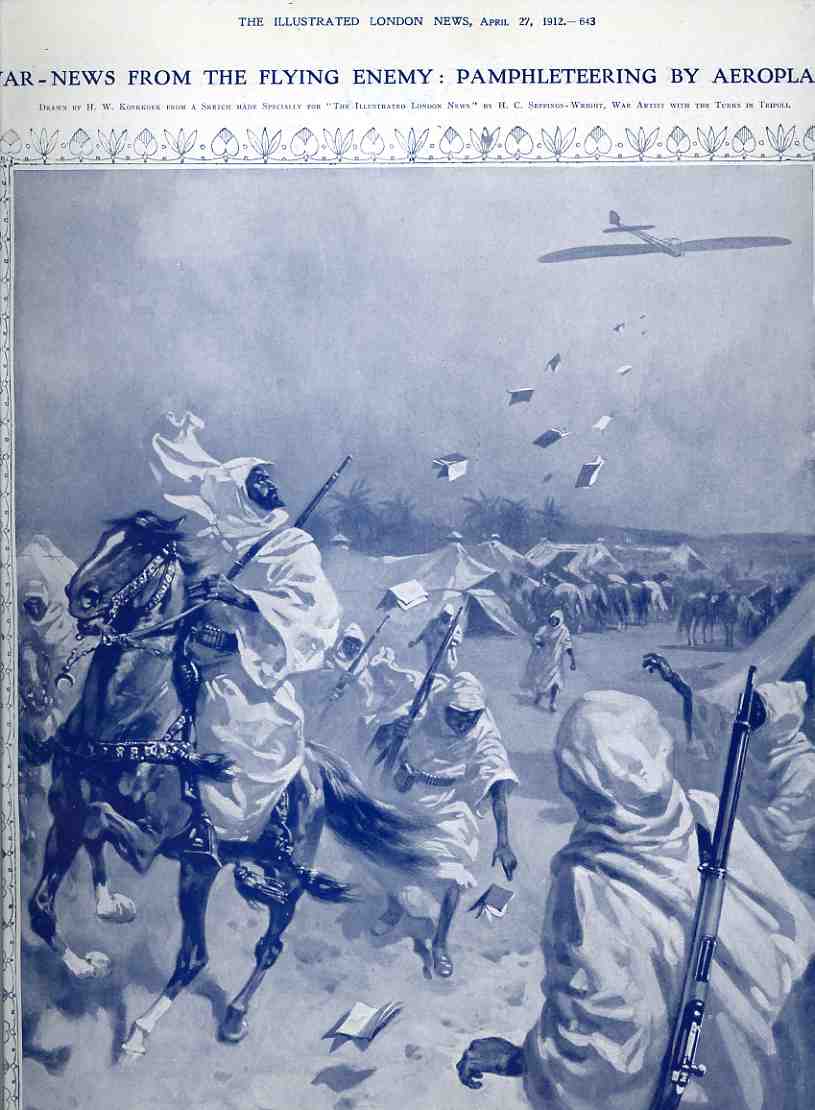
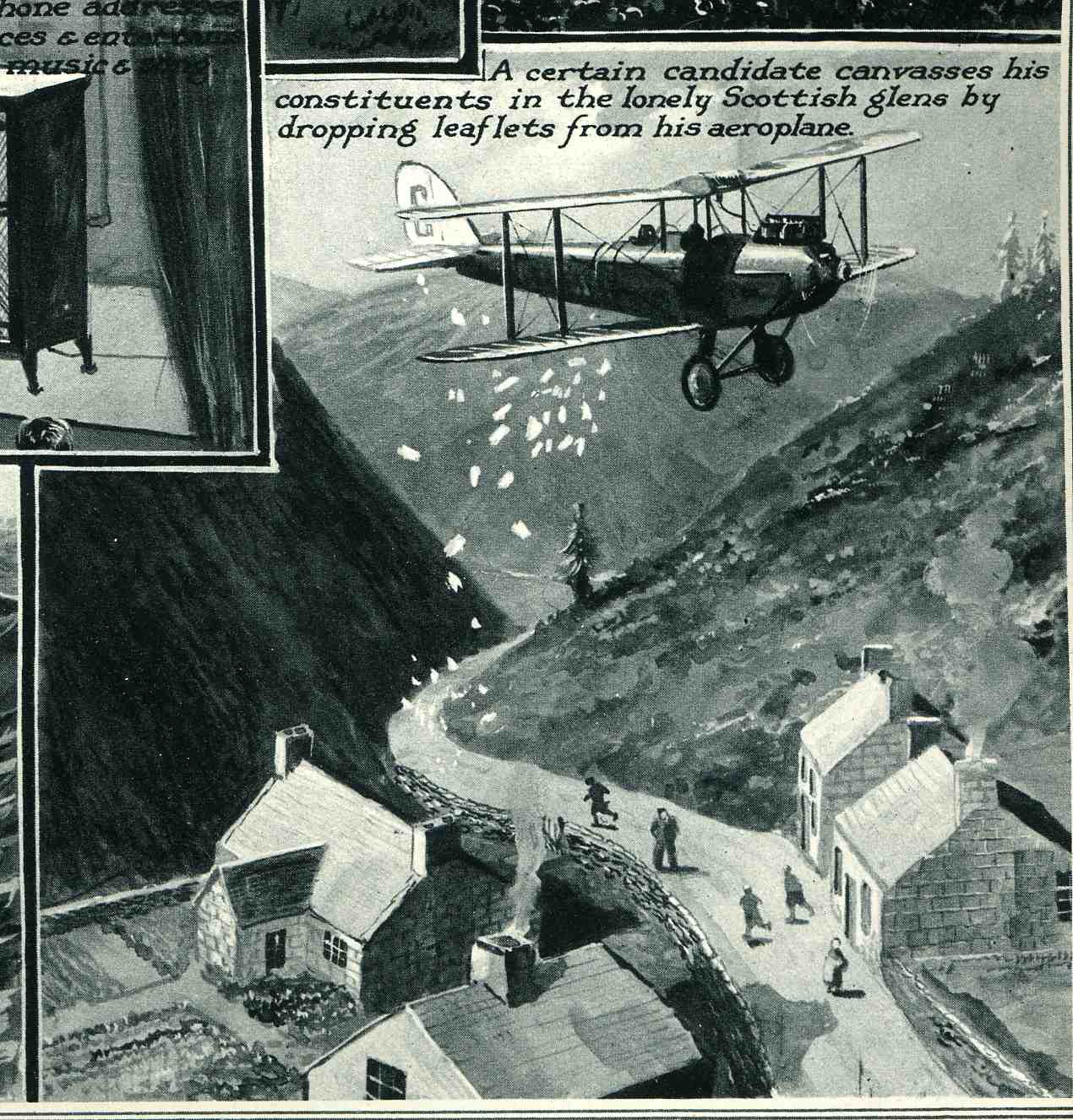
    (published 2000) earlier in this blog, and in it he points to this image as being about the earliest use of the airplane to drop anything at all on its enemies.  In this case it happens to be pamphlets, although the bombs were soon to follow, particularly against brown-skinned people, in 1911 and 1912.  The first image is entitled “War-News from the Flying Enemy; Pamphleteering by Aeroplane–Cirularizing his enemy’s foes; an Italian Airman, who announced that Beirut had been bombarded, dropping political pamphlets to the Turks and their Arab Allies…” and appeared in The Illustrated London News for 27 April 1912.  The Italians waged a nasty war against the Turks, taking to bombing soldiers and civilians alike across all of northern Africa, setting themselves some nasty first-time records for killing civilians from the air.  In this instance, though, the airplane was dropping propaganda, trying to force the resisting Arab allies (in Tripoli) to surrender as Beirut had been bombed.  the pamphlets didn’t do the job; they were soon followed by exclamatory explosives. 

    000-ebay--Nov 1 bombing pamhlets973

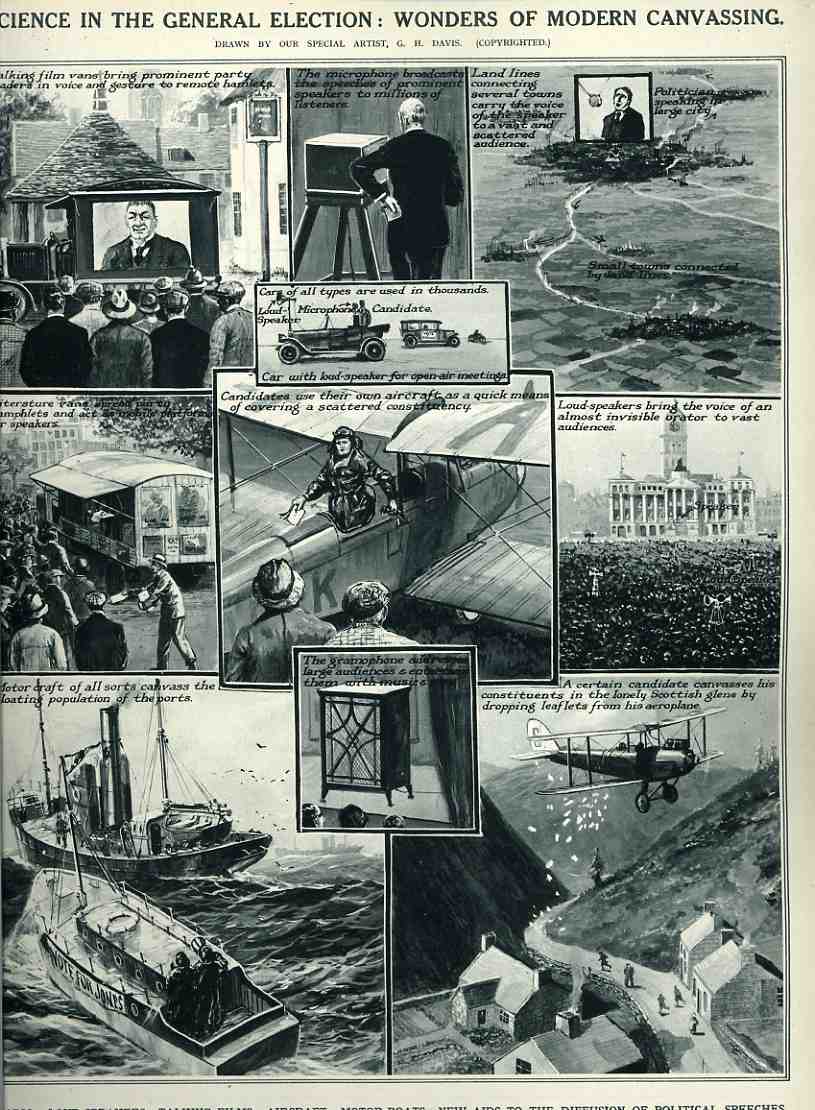
    The second image is an expansion of the first, without the explosive bit.  This one too comes from The Illustrated London News,
    25 May, 1929 (page 895),
    and was entitled “Science in the General Election; Wonders of Modern
    Canvassing” for the British election series in the spring of 1929.  The
    information bomb at that point also took the forms of “radio,
    loud-speakers, talking films; aircraft; motor boats, and the new aids
    to the diffusion of political speeches”, and that included canvassing
    constituents from the air by dropping pamphlets from an aircraft.

    In general though this would be about the limit of bombing people with information, except of course for dropping surrender tickets and propaganda leaflets on fighting forces during WWII. 

    000-ebay--Nov 1 bombing pamhlets972


  • The Department of Understatement 2: the Wright Brothers in the 1902 Scientific American

    JF Ptak Science Books LLC  Post 333

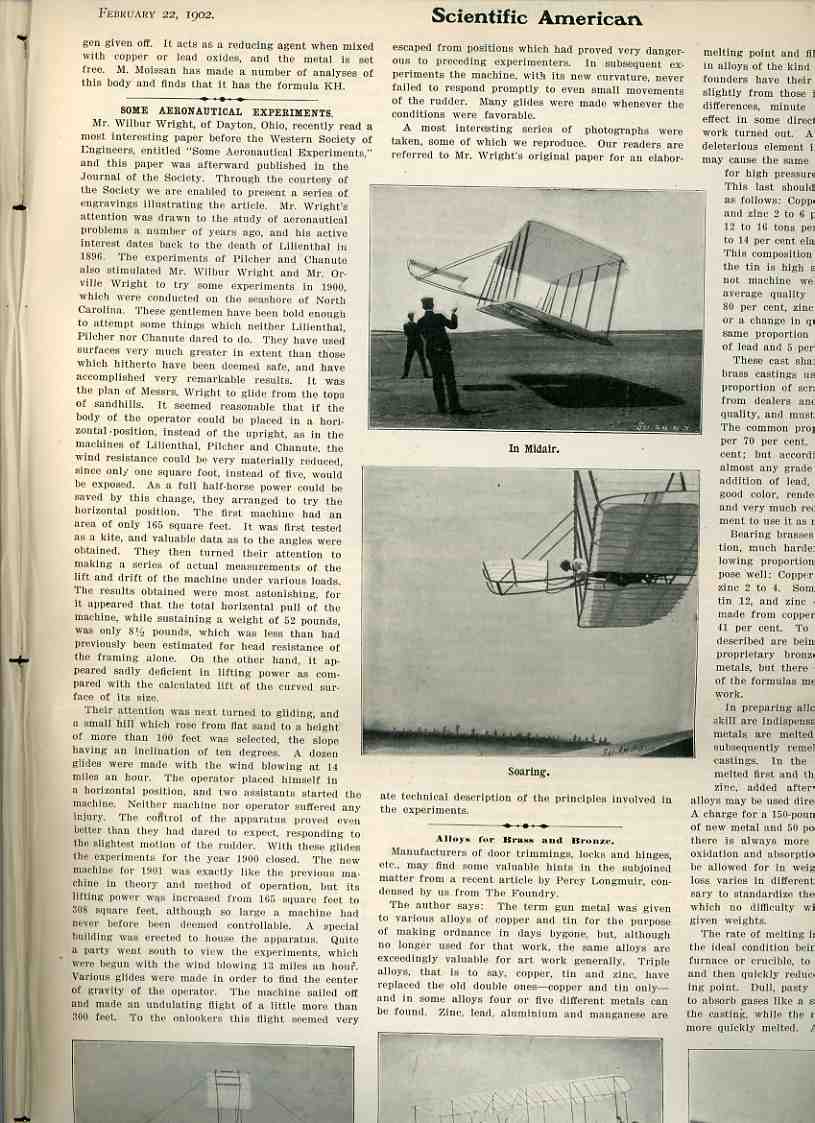
    00-blog-Oct 24--wright bro913
    I’m not
    sure why the Wright Brothers’ experimental gliding flight was so much in
    competition with other pressing scientific news of the day that reports on
    their progress was relegated to the middle of this issuer of Scientific
    American for
    22 February 1902. 
    The report is sandwiched in between “Winter Railroading in
    Alaska”, “Experiments of M.
    Moissan  with hybrids of potassium” and “A
    Garbage-Consuming plant” on the page opposite and “Alloys for Brass and Bronze
    “ just below it.  And as it turns out
    there are more words devoted to the
    Alaska railroading article than to the
    Wrights as well.  There are dozens of
    articles given better placement in this issue: steam boiler inspection, variable
    speed gears for pumps, making photographs with electric headlights, domestic
    manufacturing of Portland cement, assorted announcements of electrical
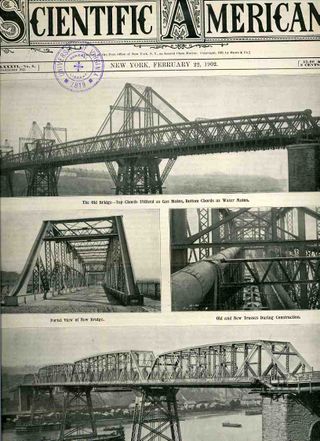
    progress, and other such stuff. The front page of the issue is
    dedicated to the new bridge of the
    Redheugh Bridge at Newcastle-on-Tyne; the Wright article follows on
    page 8.

    Even
    though the brothers had been experimenting with gliding flight at Kill Devil
    since 1900, reports of their activities had been under-reported, if popularly
    reported at all.  And this seems to have
    suited them—they seemed not to need publicity, or recognition.  After all, they had made incomparable strides
    since they first became interested in flight in 1896 following the failure of Samuel
    Langley and the
    Potomac River crash of his aerodrome. (Just for the record, Alex Bell also referred to
    his aircraft as aeromdomes.)

    00-blog-Oct 24--wright brosd cvr912

    This report
    for February seems to be the earliest of the 1902 flights in North Carolina,
    with the principle difference (from what I can see) is that this earlier glider
    didn’t yet have a tail which would make an appearance a little latter in the
    year (followed by a very critical discovery on the need for the maneuverability
    of the tail.) It also seems that the 1902 gliders were as different from the
    1901 gliders as the 1903 glider/plane would be from the 1902 model.

    Still,
    given the competing news of the day, and the importance of the Wrights’
    experiments, and the amount of interest in flight at this time,  it is a little mysterious to me why the report
    on their sandy accomplishments got so gobbled up in the nonchalant scientific
    bric-a–brac of 1902. 

    Notes:

    Since this is outside my area I
    quote liberally from the US Commission on the Centennial of Flight for a more
    exact description of the difference of the gliders between 1901 and 1902:

    “Their 1902 glider had a new wing with a shallow camber
    and high aspect ratio. It was a major departure from their earlier machines. It
    had roughly the same wing surface area as the 1901 machine, but the
    similarities ended there. The wingspan was ten feet (three meters) longer and
    the chord two feet (0.6 meter) shorter than the old machine, making the glider
    look larger and more graceful. It had an overall length of 16 feet (5 meters)
    and weighed 112 pounds (51 kilograms). The wing camber followed a shallow
    parabolic curve, and the elevator
    was extended farther out in front of the pilot. This gave it more leverage,
    which allowed better control. The 1902 glider also had a new rudder that consisted of two fixed vertical surfaces located
    behind the aircraft . Wilbur and Orville calculated that these would help
    prevent the skidding that had occurred when they warped the wings.”

     And the following on the 1902 flights from

    Orville Wright “How We Made the First Flight”:

    “The flights of the 1902 glider
    had demonstrated the efficiency of our system for maintaining equilibrium, and
    also the accuracy of the laboratory work upon which the design of the glider
    was based. We then felt that we were prepared to calculate in advan ce the
    performance of machines with a degree of accuracy that had never been possible
    with the data and tables possessed by our predecessors. Before leaving camp in
    1902 we were already at work on the general design of a new machine which we
    proposed to propel with a motor

    ·Posted by :

    ·in:


  • You are There: Dive Bombing Pilot, 1936.

    JF Ptak Science Books  Post 330

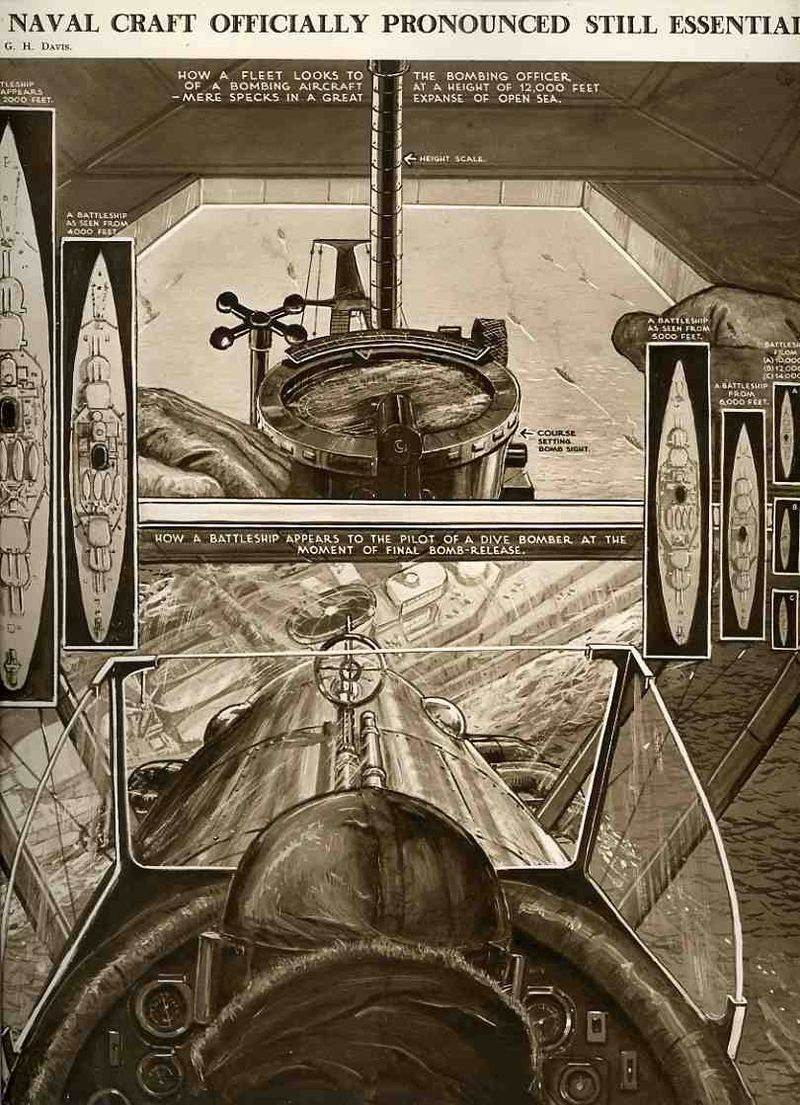
    In my experience popular images prior to WWII that put the reader inside of the picture– giving them the same view as the observing, principle member of the picture–are very uncommon.  Honestly, they just don’t happen very often, and I wish that I had paid more attention to them over the years before I realized they were as rare as they were. Such is the case with this extraordinary and action-packed picture in which the reader is hosted just behind and slightly above the head of the pilot of the aircraft dive-bombing the battleship.  It appears in The Illustrated London News for 7 November 1935, and it must have been captivating for the readers, being given the sense of closing in at great speed on the ship.  There are actually eight other smaller perspective images embedded in the image as well. The largest of these (at top) places the viewer directly inside the subject, giving them the feeling of how it looks like to the bombing officer of the aircraft as it approached the fleet. The other five images shows what the battleship looks like from different height from the inside of the aircraft.  Perhaps this doesn’t look like much to us today, but at the time, I can assure you, these images were exceptionally uncommon offerings of a personal perspective that few readers had ever experienced.

    00-blog-Oct 21--aircarft attack892

    ·Posted by :

    ·in:

    —

  • The Unbearable Wrightness of Being: the Wright Brothers Introduce Europe to FLying, 1908

    JF Ptak Science Books LLC  Post 329

    00-blog-Oct 22-farman904
    In early 1908 the future of aviation in
    Europe was tucked away in a crate in

    France

    .  The hommes oiseaux, the Wright Brothers, were
    about to show the Europeans what flying was—and flying was definitely not what
    the Europeans had been doing.  The
    difference between the Wrights and everyone else was obvious:  the Wrights were flying; they were elegant,
    crafted, flexible, viable, and their movements in their craft were convincing
    that they really did belong there.  The
    European efforts in the air to 1908 were heavy, big and box-y, forced; they
    made things try to fly, rather than fly.

    Henry Farman was perhaps the greatest of the
    early European aviators, owning several of the continental flight duration
    records, though no one in

    Europe

    had been in
    the air for more than one minute prior to 1908. 
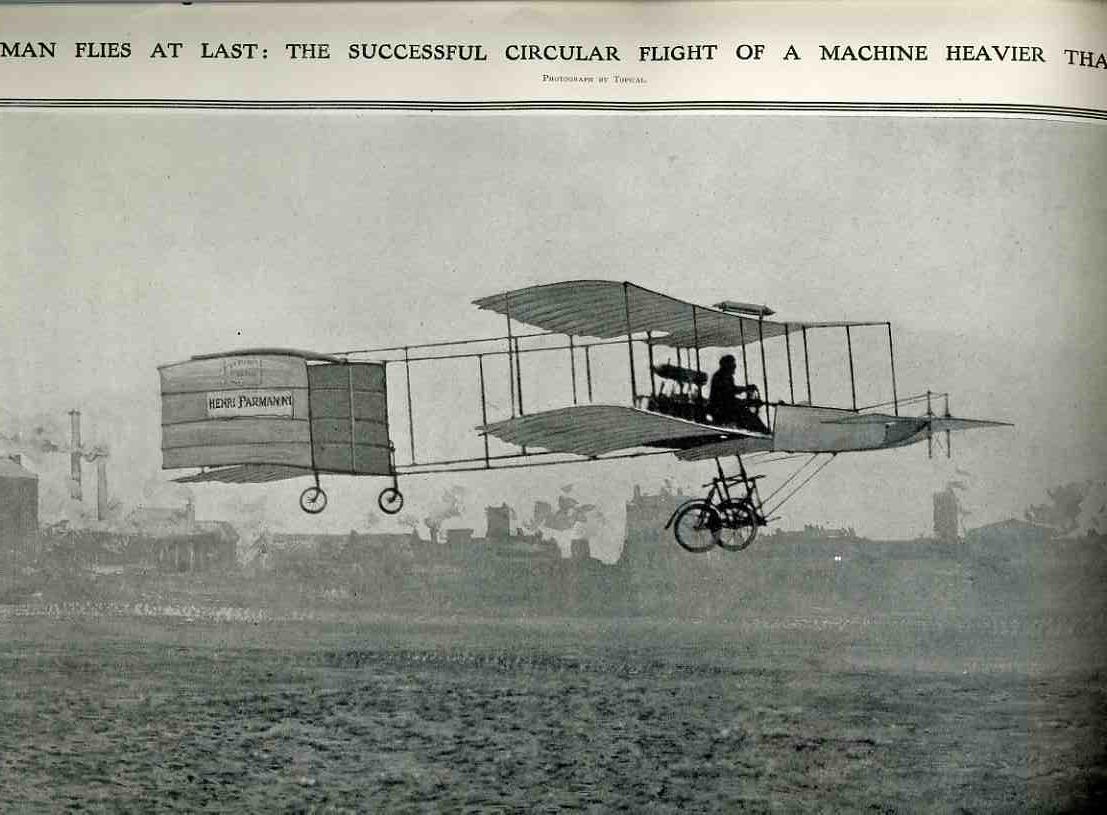
    But Farman achieved a major success in January 1908 that was of a sort of
    monumental stature that is difficult to understand today.  And what he did was this:  for the first time in

    Europe

    he flew an aeroplane in a circle.  On 15
    January he was the only one top complete a one-kilometer circular course,
    taking with him the vaunted Deutsch-Archdeacon prize. What this meant though
    was a huge jump in the control of the flying machine; it became right there no
    longer a flying car, but an aeroplane with more

    00-blog-Oct 22-farman detail905
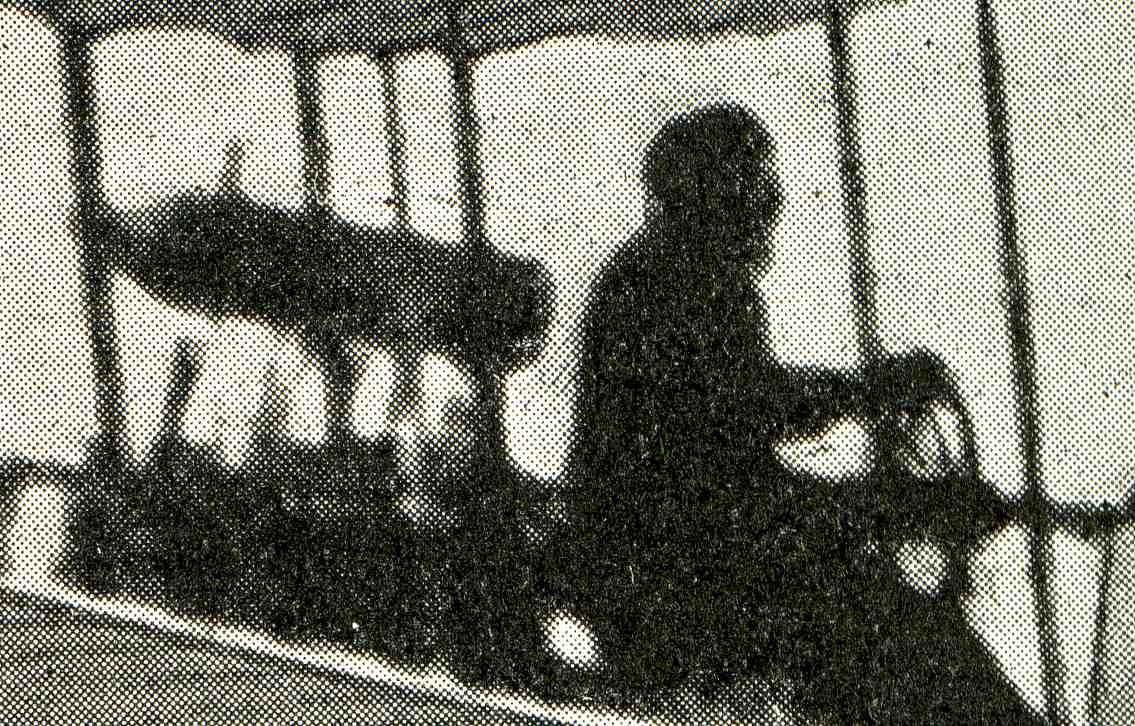
    delicate controls.  [The image above shows Farman in a photo from The Illustrated London News for 18 January 1908, just taking off.  I get the very definite sense of him leaning forward, feeling the tension of the moment.]

    But the Americans were masters of the air,
    having by far the most successes, and traveled further and faster and with
    more élan and capacity than anyone else anywhere—and by wide margins.   But to this point the Europeans had only
    read of their accomplishments, and had seen only still photos.  There was no way for them to appreciate the
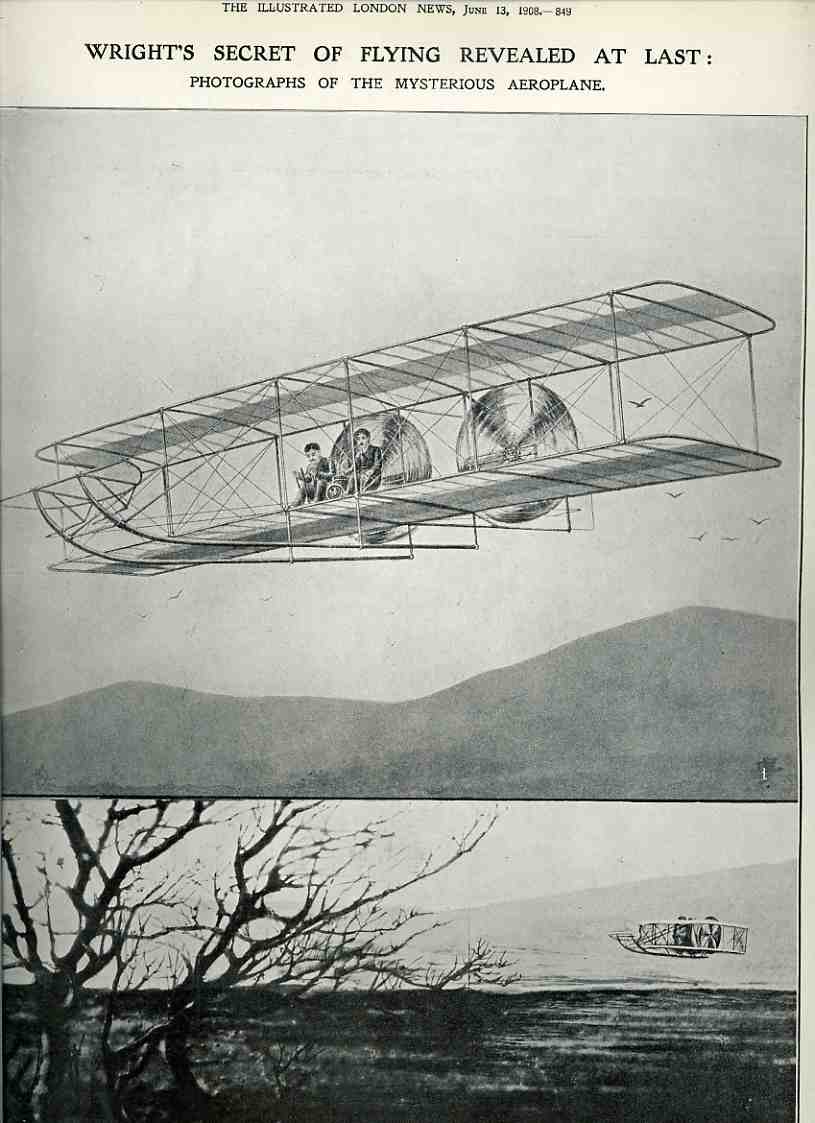
    magnitude of the Wrights’ accomplishments via those media.  Their frustration could be seen in this image
    from The Illustrated London News of 15 June 1908, which screamed “Wright’s
    Secret of Flying revealed at Last: Photographs of the Mysterious Aeroplane”.
    The big page showed an artist’s representation of the two-person flyer along
    with a smaller, smudgy photo of the great machine in flight.

    00-blog-Oct 22-farman wright 907

    This photo would have to suffice for the
    moment, as Wilbur Wright was busy trying to repair his crated plane, which was,
    incredibly, damaged by customs inspectors. 
    The plane was finally ready and on 8 August Wilbur flew—he made tight,
    effortless turns, demonstrated exceptionally able control, flew low and high,
    fast and slow, and made lovely landings. 
    His crowd included the most celebrated flyers on the continent—they were
    all uniformly astonished, leading some to say, for the record, that compared to
    the Wrights, the Europeans had done absolutely nothing.  Wilbur Wright was an enormous hero, feted far
    and wide, making some 200 flights over the next year.  The Wright Brothers’ plane was finally seen
    and inspected,. And all of the claims of greatness seemed to be surpassed by
    their physical demonstrations.

    The most interesting part for me is that, even five years following their first successful heavier-than-air flight in Kill Devil, North Carolina, the astonishing correctness of their accomplishment could not be fully appreciated without their flyer being seen in operation, and in person. 


    ·Posted by :

    ·in:


  • Amelia Earhart: Her Physical Disappearance vs. Lindbergh’s Moral Vanishing

    JF Ptak Science Books   Post 328

    Blog--earheart

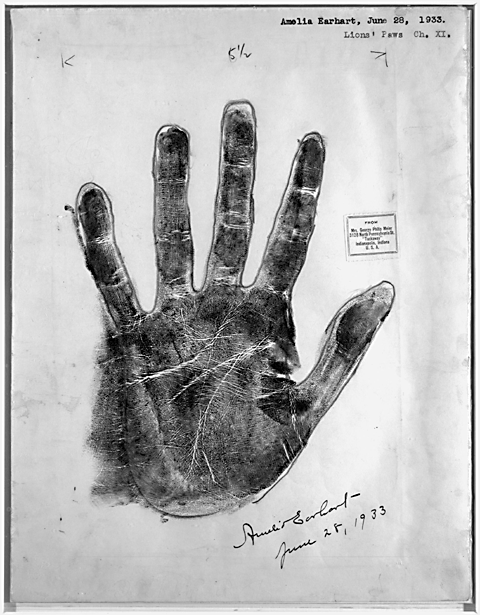
    [Image source: “Amelia Earhart’s palm print and analysis of her character prepared by Nellie Simmons Meier.” June 28, 1933. “Words and Deeds in American History: Selected Documents Celebrating the Manuscript Division’s First 100 Years”,  from the Library of Congress.]

    “KHAQQ calling Itasca. We must be on you but cannot see you…gas is running low…”

    This is I believe the last communication between Amelia Earhart and the rest of creation, as she went flying into the oblivion on low fuel, 2 July 1937.  She was 22,000 miles into her around-the-world trip with her engineer Fred Noonan in a Lockheed L10 Electra, with 7,000 more to go, almost all of which were over the Pacific. That was the last of her, forty years old and world-renowned, and then shrouded in a terrific mystery, and declared dead after massive searches two years later in 1939.  She owned many “firsts” for women in the field of aviation, but still couldn’t seemingly stake them to her own name, burdened with the sobriquet of “Lady Lindbergh”.  It was true enough that being historically coupled with Lindbergh, who was seen by many as the greatest aviator of his day, was a vast compliment; it would have been more complimentary yet to refer to Lindbergh as “Sir Earhart”.  Amelia did, after all, accomplish more overall than Mr; Lindbergh; plus Ms. Earhart did not philosophically spill over into the fascist sphere as did Lindbergh1, who was just a downright embarrassment with his opinions on the war, Hitler, National Socialism, fascism, and the like.

    But I digress.  This image2of her capable and attractive hand just has the quality of disappearing, even though it is right in front of your eyes.  Stare at it long enough and bits of it will go….

    Notes:


    1. Lindbergh’s story during the pre-war period to Pearl harbor is very problematic for people who admire the man for his aeronautical feats; I imagine that they separate his philosophy from his gained famed much in the same way that Poundians concentrate more on that fascist anti-semitic poet’s early years than his treasonous 1935-1945 decade.  It remains terribly visible though that the anti-intervention, America-Firster, race conscious, Germanophile Lindbergh had so much going on in his confused head that it lead even Franklin Roosevelt to think of him as a traitor. (
    Roosevelt said to Treasury Secretary Henry Morgenau in May 1940, “if I should die tomorrow, I want you to know this, I am absolutely convinced Lindbergh is a Nazi.” ) Once America did get into the war, finally, on 8 December 1941, Lindbergh wholeheartedly supported the war effort.  Still it is hard to forget his years of earlier actions and statements and political rallies that called for American appeasement with the Nazis and hi semi-blind admiration for the new Nazi nation.  He wasn’t a fan of Hitler’s, but he did have just very soft pre-1942 criticisms of his actions.  Kristallnacht, almost 70 years ago today, for example, brought out no condemnation from Lindbergh.   He confided to his diary: “I do not understand these riots on the part of the Germans,” he wrote. “It seems so contrary to their sense of order and intelligence. They have undoubtedly had a difficult ‘Jewish problem,’ but why is it necessary to handle it so unreasonably?”  It seems that there should have been a bit more than pursed lips coming from Lindbergh on this occasion, but there wasn’t, even to himself.  There would be another three years of anti-Jewish and other horrific and morally repugnant actions
    from the Nazis, but they all took a giant goosestep back from his principal aim of keeping  America out of the war and being strongly anti-Communist.  Pat Buchanan recently and bizarrely—even for him—defends Lindbergh’s stand during this period as being deeply patriotic.  It is a deeply unreasonable and a bloody mess of historical thinking.

    2. The photostat was made on behalf of a quack  palmist who did all sorts of interpretations of the philosophical chinks in her skin’s armor.  It isn’t worth talking about.