A Daily History of Holes, Dots, Lines, Science, History, Math, Physics, Art, the Unintentional Absurd, Architecture, Maps, Data Visualization, Blank and Missing Things, and so on. |1.6 million words, 7500 images, 4.9 million hits| Press & appearances in The Times, Le Figaro, Mensa, The Economist, The Guardian, Discovery News, Slate, Le Monde, Sci American Blogs, Le Pont, and many other places… 5000+ total posts since 2008.

Category: Aviation & flight

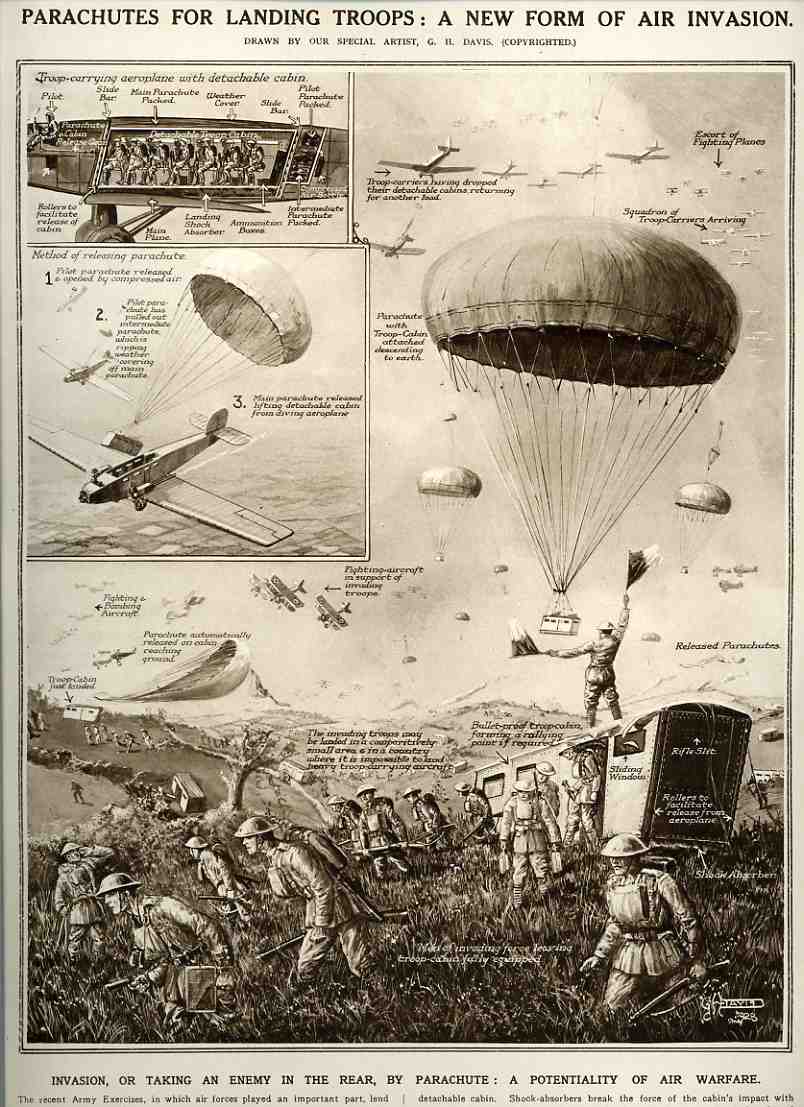
  • UPDATE: Dropping Boxes Filled With Soldiers: a Bad Technical Idea but a Great Strategic One, 1950

    JF Ptak Science Books LLC  (added content to Post for 15 September)

    00-blog--Oct 29 dropping soldiers954
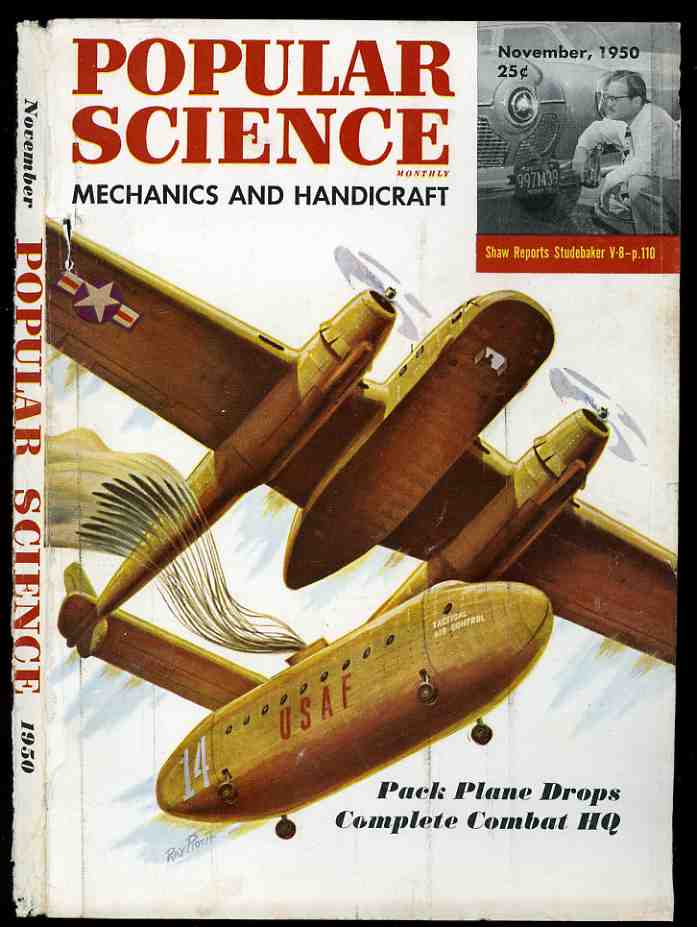
    I happened on this image from the front cover of Popular Science for November 1950 and recognized the idea instantly.  I posted on an earlier version of this idea from 1928 and placed it firmly in the BAD IDEAS Department of this blog.  The update from 1950 is a little improved, but, well, not by that much.  At least this canister leaves the clutches of the plane safely, though from the look of things it seems as though it might not want to land very nicely. 

    Blog-1-sept 15paratrooper553

    ·Posted by :

    ·in:

    — —

  • Trans-Atlantic Crossing by Air, 1910 (?) The Voyage of the “America”

    JF Ptak Science Books LLC  Post 343

    00-blog--Oct 28 airship atlantic946
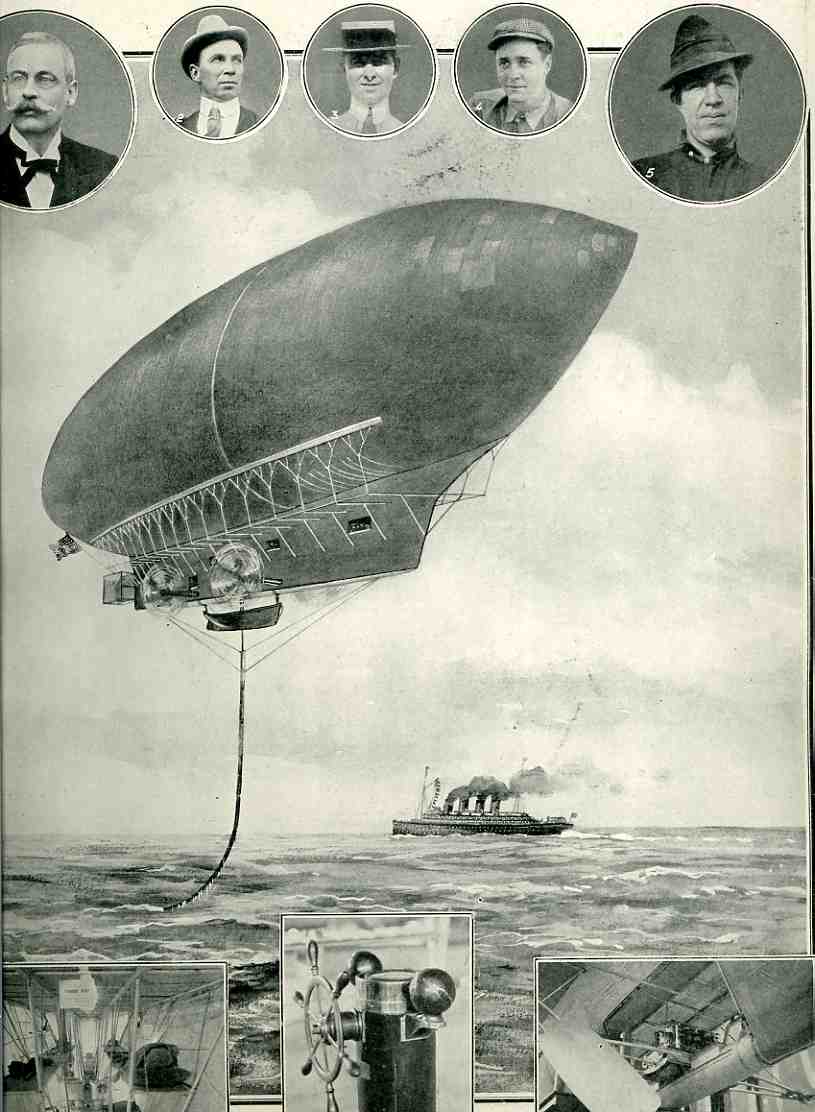
    The airship “America”, under the command of Captain Murray Simon and Walter Wellman (the arctic explorer, set out to cross the Atlantic Ocean on 15 October 1910. The dirigible was 228 feet long with a diameter of 58 feet, had a crew of eight, and was filled with hydrogen gas.  The airship’s four-tons worth of petroleum (to run the four engines on either side of the ship) was carried in the base of the car compartment of the dirigible, with another ton or so of fuel carried in the “equilibraor”, which served to keep the height of the dirigible “equalized” at about 200′.  They set off from New Jersey and flew in a very wide arc for about 1300 miles until engine trouble forced them down near Bermuda.  Although never coming close to crossing the ocean the “America” did set a record for the longest flight of any sort of flying machine.

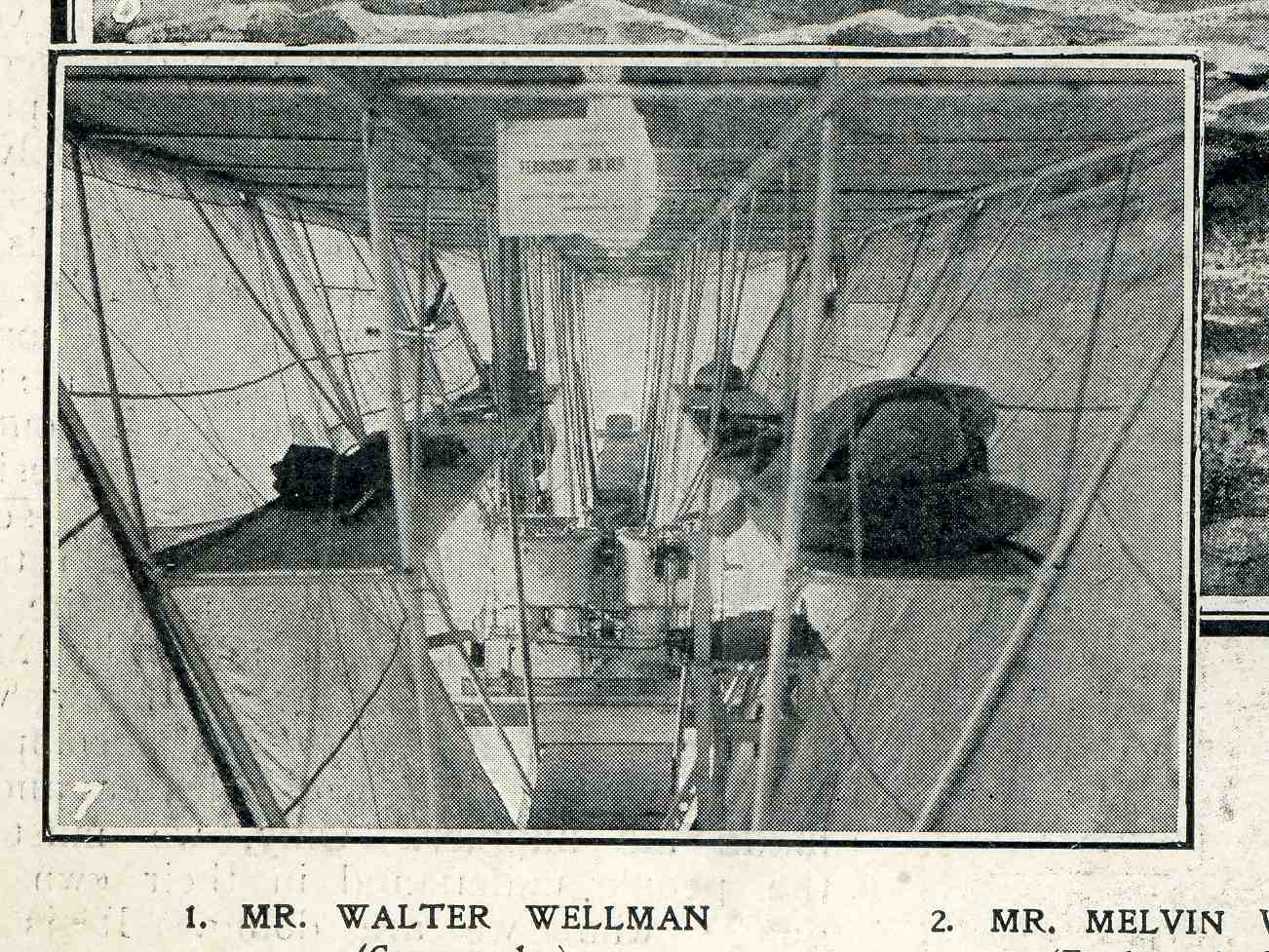
    What drew me to this image though was something far less important: the small inset picture at bottom left, which shows the “sleeping shelves” for the crew. The accommodations, shall we say, are barely so; they looked very narrow, very metal-y, very cold and pretty dangerous, with basically no room for a roll-over.  Then again, no one was there for comfort, but these racks look defiantly un-comfortable.  

    This was the last flight for Wellman, and the crossing of the Atlantic by air would have to wait for the ethically-challenged Lindbergh sixteen years later.

    00-blog--Oct 28 airship atlantic947


  • Achievements in European Flight: Excellent Visual Display, 1913

    JF Ptak Science Books LLC  Post 340     

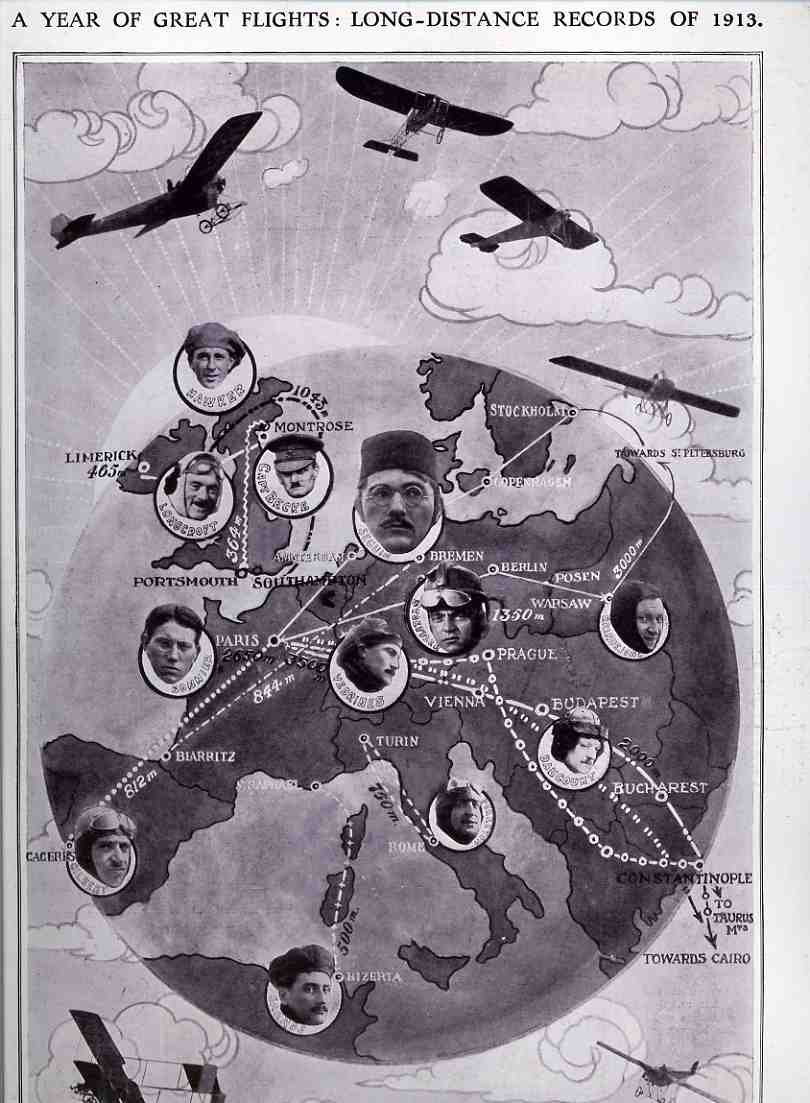
    This excellent (and slightly bizarre-looking) display of quantitative data comes to us from The Illustrated London News for 17 January 1914.  IT shows the great range and capacity of endurance and long-range flight taking place in Europe in 1913.  This portrayal is extraordinary if you keep in mind that (as I wrote about in a post last week) the Wright Brothers had only arrived in Europe in the middle of 1908 to begin their revolutionary re-introduction of the concept of heavier than air flight to the Europeans. Just prior to the Wright’s arrival the combined forces in Europe had barely been able to muster a sustained flight of two minutes, even as late as 1907.  The exhibition of the Wright flyers made an instant and profound impression on all concerned, and the lessons of the Wrights imemdiately put into practice.  Which brings us to this graphic, showing that flight in Europe had advanced enormously, with flights now routinely lasting many hours and taking place over a course of hundreds of miles–all of these changes taking place in five short years.  World War I would be the next gigantic influence on the development of flight theory, airplane construction and the use of the skies, and that would all start taking place in less than a year from now. 
    00-blog-Oct 27aviation flight records 1913931


  • Balloon Bridges and 600-Foot-Long Airships, 1854

    JF Ptak Science Books  Post 335

    00-blog-Oct 25 meller920Often
    the reproduction of a print for popular consumption just doesn’t come anywhere
    near expressing the flavor of the original. 
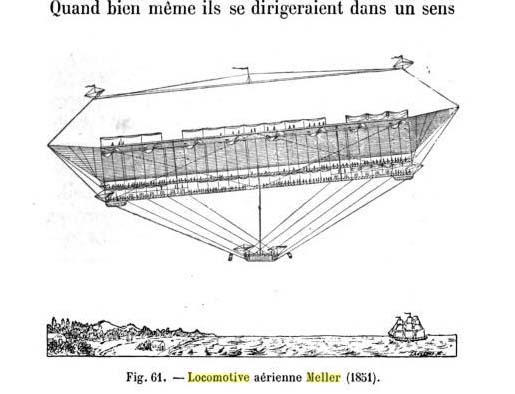
    This is definitely the case with Gaston Tissandier’s Bibliotheque des
    Merveilles la Navigation Aerienne, l’Aviation et la Direction des Aerostats

    (printed in

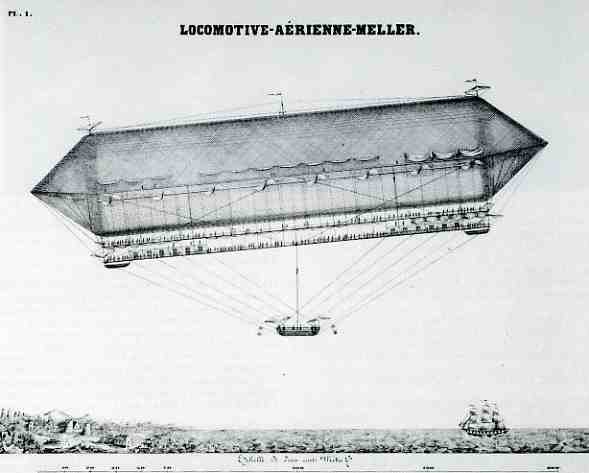
    Paris in 1886), in which enormity of Propser Meller’s (the younger) airship is
    almost entirely lost.  You do get the
    idea of the size of the ship, but “bigness” is a weak constant, especially when
    you look at the original print of the great ship, which turns that concept into
    a more flavorful enormity.

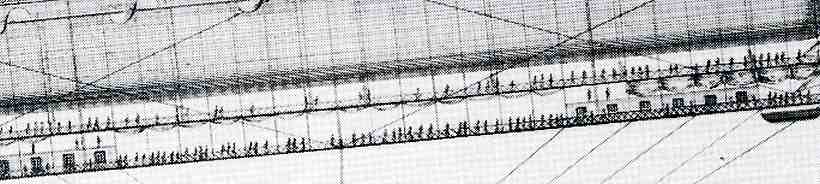
    The Meller balloon–according to the scale at the bottom of the image–would measure a truly spectacular 200 meters/650 feet or so, and when you zoom in on the detail of the people aboard the ship the size becomes overwhelming.  The print appears in Meller’s rare work Des Aerostats, NAvigation areieene, Chemin de fer aerostatique….printed in Bordeaux in 1851, and of course the ship was never built, but it did serve as an intellectual forerunner of the more modern zeppelin.

    00-meller balloon

    But the
    truth of the matter was that Meller was also very busy trying to figure out
    what balloons could actually do:  Planning
    600-foot-long airships (which would have been by far the longest vehicle of any
    sort ever built) is one thing, and one thing that was interesting but not
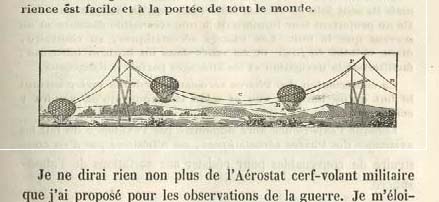
    terribly practicable in 1851; but he wrote elsewhere, in his   Phare aerostatique (1854) that balloons
    could definitely be employed more easily with lesser goals but greater
    utility.   For one thing a fixed balloon could be easily
    employed by the military of harbor control as a means for suspending artificial
    light sources.  More ingenious and
    eyebrow-raising was another idea for a balloon bridge, which would’ve guided
    balloons across unbridgeable waters, shore-to-shore.  It was certainly a bigger piece of thinking
    than a light source, but to me it sounds like a fairly plausible way of getting
    heavy loads and people across problematic bodies of water (and etc.) where
    bridges or boats would not work.  In any
    event it seemed doable; at least far more so than the giant airship

    As you can see, the miunutae detail of the original is lost in the
    reprint, and it is in the detail that the greatness of this airship can
    be found. .

    00-blog-Oct 25 meller det921


      The balloon bridge by Meller:

    00--meller bridge det


    Some other works by Meller:

    Projet de navigation aérienne  (Imprimerie de Pollet …, 1852)
    À la marine  (Typographie Plon frères, 1854)

    Phare aérostatique.Paris:
    Typographie Plon Frères, 1854.

    *From
    Chambers’ Edinburgh Journal,
    28 August 1852 describing his 600’ airship:

     Attempts are still being made towards aërial navigation. M.
    Prosper Meller, of Bordeaux,
    proposes to construct an aërial locomotive 200 mètres in length, 62 wide, and
    60 high, the form to be cylindrical, with cone-shaped ends, as best adapted for
    speed. The outer case is to be varnished leather, which is to be filled with
    gas, and to contain five spherical balloons. A net, which covers the whole, is
    to support sixteen helices by ropes, eight on each side; and to these two
    galleries are to be attached, one for the machinery, the other for passengers.
    The affair looks well on paper; but there is little risk in saying, that the
    days of flying machines are not yet come, neither is the scheme for aërial
    railways—a series of cables stretched from one high building to another—to be
    regarded as any more promising.  


  • The History of Aerial Bombing 2: Zeppelins Attacking London, 1915

    JF Ptak Science Books LLC  Post 334

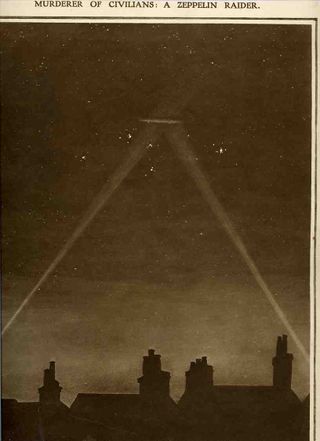
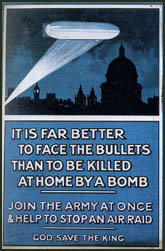
    Dropping bombs from flying machines had lost much of its newish noirness by 1915, even though the whole idea of the practical applications of  dropping explosives on people was only four years old. That sort of high explosive newness can be shed very quickly, given the immediacy of its action. But Londoners were outraged enough in 1915 to label the bombing of populated non-military targets as murder, as the title of this full-page print screams from the 23 October 1915 issue of The Illustrated London News in our second post on the history of aerial bombing.  The subtitle reads: “Like a thief in the Night:  One of the Fleet of Hostile Airships Which Raided this Country on October 13 Over the London Area—Shells from Anti-Aircraft Guns Bursting About It.”  It continues: “lives lost and damage done without the shadow of military excuse” is how it was quietly referred to in the text, the the subtle image is anything but–it is quiet, but it is also cold, and scary, the menacing zeppelin shown floating darkly deadly above the roofs and chimney tops of residential houses.  The point of the picture was crystal clear–the enemy was practicing something new, and that something new was directed at civilians, and that it could be crushing and deadly and a threat everywhere.

    00-blog-Oct 24--zepplin raider914


    The Zeppelins were new to war, having been first brought to development in 1900; by the beginning of the war, in 1914, the Germans had two operational airships that could reach an altitude of about 4500 feet and carry 4400 pounds of bombs.  Their first raid on England came on 31 May 1915 and within the year would kill 550 British citizens, though the costs to the Germans were so high (77 of 115 active Zeppelins would be either destroyed or damaged beyond repair by June 1917) that the air attacks would be suspended in July 1917.

    Blog--zeppelin

    ·Posted by :

    ·in:


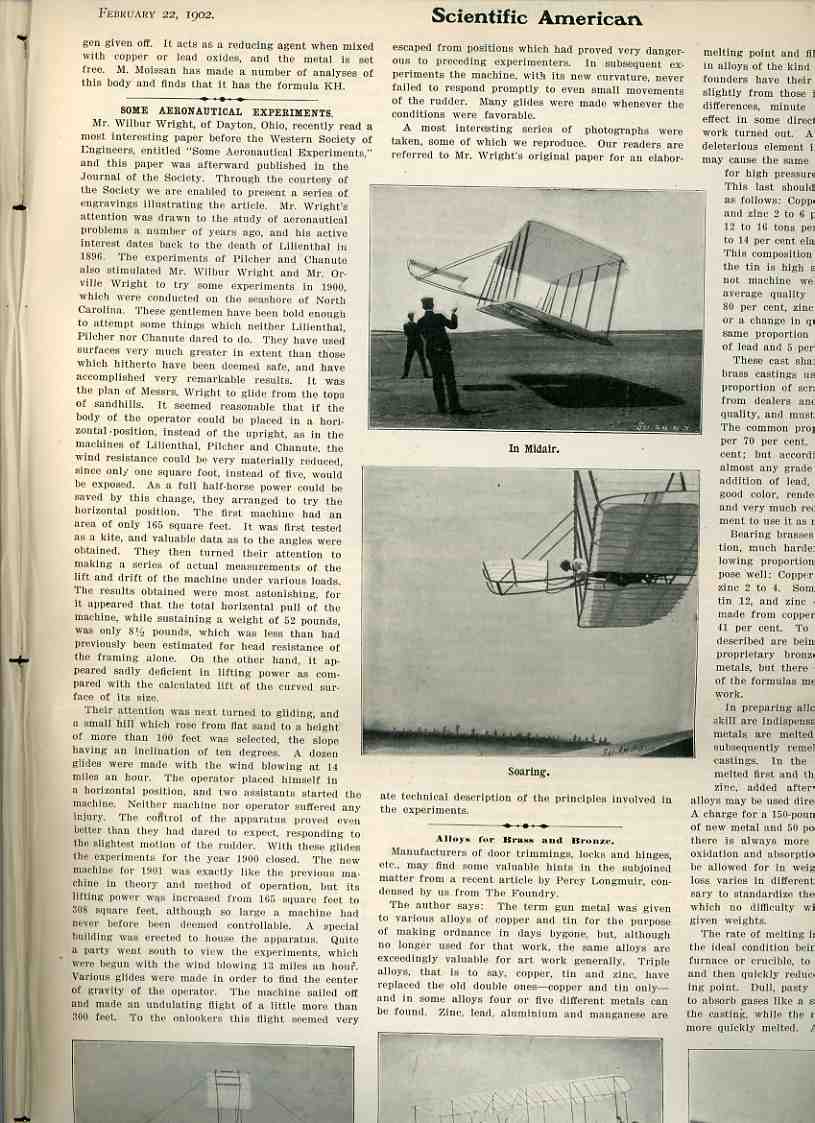
  • The Department of Understatement 2: the Wright Brothers in the 1902 Scientific American

    JF Ptak Science Books LLC  Post 333

    00-blog-Oct 24--wright bro913
    I’m not
    sure why the Wright Brothers’ experimental gliding flight was so much in
    competition with other pressing scientific news of the day that reports on
    their progress was relegated to the middle of this issuer of Scientific
    American for
    22 February 1902. 
    The report is sandwiched in between “Winter Railroading in
    Alaska”, “Experiments of M.
    Moissan  with hybrids of potassium” and “A
    Garbage-Consuming plant” on the page opposite and “Alloys for Brass and Bronze
    “ just below it.  And as it turns out
    there are more words devoted to the
    Alaska railroading article than to the
    Wrights as well.  There are dozens of
    articles given better placement in this issue: steam boiler inspection, variable
    speed gears for pumps, making photographs with electric headlights, domestic
    manufacturing of Portland cement, assorted announcements of electrical
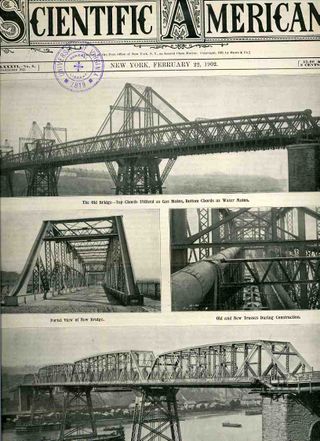
    progress, and other such stuff. The front page of the issue is
    dedicated to the new bridge of the
    Redheugh Bridge at Newcastle-on-Tyne; the Wright article follows on
    page 8.

    Even
    though the brothers had been experimenting with gliding flight at Kill Devil
    since 1900, reports of their activities had been under-reported, if popularly
    reported at all.  And this seems to have
    suited them—they seemed not to need publicity, or recognition.  After all, they had made incomparable strides
    since they first became interested in flight in 1896 following the failure of Samuel
    Langley and the
    Potomac River crash of his aerodrome. (Just for the record, Alex Bell also referred to
    his aircraft as aeromdomes.)

    00-blog-Oct 24--wright brosd cvr912

    This report
    for February seems to be the earliest of the 1902 flights in North Carolina,
    with the principle difference (from what I can see) is that this earlier glider
    didn’t yet have a tail which would make an appearance a little latter in the
    year (followed by a very critical discovery on the need for the maneuverability
    of the tail.) It also seems that the 1902 gliders were as different from the
    1901 gliders as the 1903 glider/plane would be from the 1902 model.

    Still,
    given the competing news of the day, and the importance of the Wrights’
    experiments, and the amount of interest in flight at this time,  it is a little mysterious to me why the report
    on their sandy accomplishments got so gobbled up in the nonchalant scientific
    bric-a–brac of 1902. 

    Notes:

    Since this is outside my area I
    quote liberally from the US Commission on the Centennial of Flight for a more
    exact description of the difference of the gliders between 1901 and 1902:

    “Their 1902 glider had a new wing with a shallow camber
    and high aspect ratio. It was a major departure from their earlier machines. It
    had roughly the same wing surface area as the 1901 machine, but the
    similarities ended there. The wingspan was ten feet (three meters) longer and
    the chord two feet (0.6 meter) shorter than the old machine, making the glider
    look larger and more graceful. It had an overall length of 16 feet (5 meters)
    and weighed 112 pounds (51 kilograms). The wing camber followed a shallow
    parabolic curve, and the elevator
    was extended farther out in front of the pilot. This gave it more leverage,
    which allowed better control. The 1902 glider also had a new rudder that consisted of two fixed vertical surfaces located
    behind the aircraft . Wilbur and Orville calculated that these would help
    prevent the skidding that had occurred when they warped the wings.”

     And the following on the 1902 flights from

    Orville Wright “How We Made the First Flight”:

    “The flights of the 1902 glider
    had demonstrated the efficiency of our system for maintaining equilibrium, and
    also the accuracy of the laboratory work upon which the design of the glider
    was based. We then felt that we were prepared to calculate in advan ce the
    performance of machines with a degree of accuracy that had never been possible
    with the data and tables possessed by our predecessors. Before leaving camp in
    1902 we were already at work on the general design of a new machine which we
    proposed to propel with a motor

    ·Posted by :

    ·in:


  • You are There: Dive Bombing Pilot, 1936.

    JF Ptak Science Books  Post 330

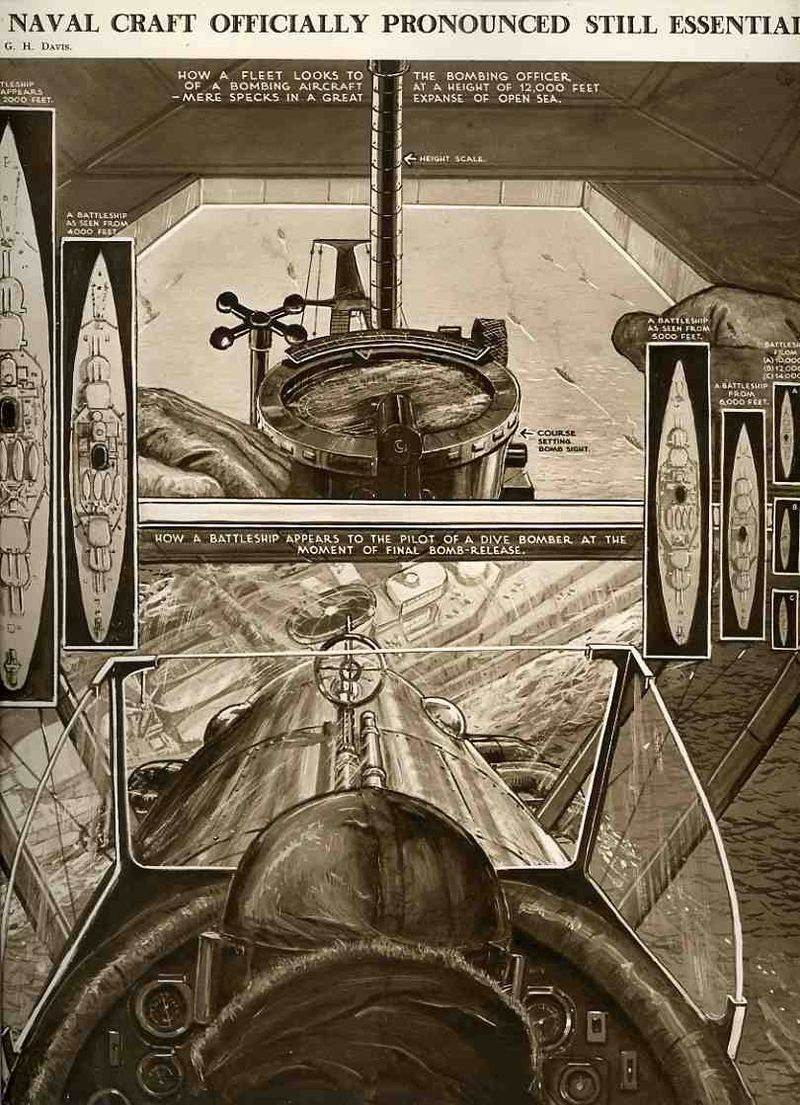
    In my experience popular images prior to WWII that put the reader inside of the picture– giving them the same view as the observing, principle member of the picture–are very uncommon.  Honestly, they just don’t happen very often, and I wish that I had paid more attention to them over the years before I realized they were as rare as they were. Such is the case with this extraordinary and action-packed picture in which the reader is hosted just behind and slightly above the head of the pilot of the aircraft dive-bombing the battleship.  It appears in The Illustrated London News for 7 November 1935, and it must have been captivating for the readers, being given the sense of closing in at great speed on the ship.  There are actually eight other smaller perspective images embedded in the image as well. The largest of these (at top) places the viewer directly inside the subject, giving them the feeling of how it looks like to the bombing officer of the aircraft as it approached the fleet. The other five images shows what the battleship looks like from different height from the inside of the aircraft.  Perhaps this doesn’t look like much to us today, but at the time, I can assure you, these images were exceptionally uncommon offerings of a personal perspective that few readers had ever experienced.

    00-blog-Oct 21--aircarft attack892

    ·Posted by :

    ·in:

    —

  • The Unbearable Wrightness of Being: the Wright Brothers Introduce Europe to FLying, 1908

    JF Ptak Science Books LLC  Post 329
    00-blog-Oct 22-farman904
    In early 1908 the future of aviation in
    Europe was tucked away in a crate in

    France

    .  The hommes oiseaux, the Wright Brothers, were
    about to show the Europeans what flying was—and flying was definitely not what
    the Europeans had been doing.  The
    difference between the Wrights and everyone else was obvious:  the Wrights were flying; they were elegant,
    crafted, flexible, viable, and their movements in their craft were convincing
    that they really did belong there.  The
    European efforts in the air to 1908 were heavy, big and box-y, forced; they
    made things try to fly, rather than fly.

    Henry Farman was perhaps the greatest of the
    early European aviators, owning several of the continental flight duration
    records, though no one in

    Europe

    had been in
    the air for more than one minute prior to 1908. 
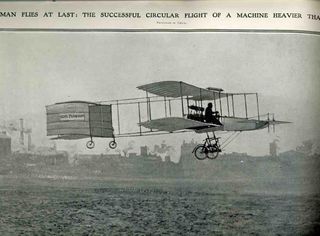
    But Farman achieved a major success in January 1908 that was of a sort of
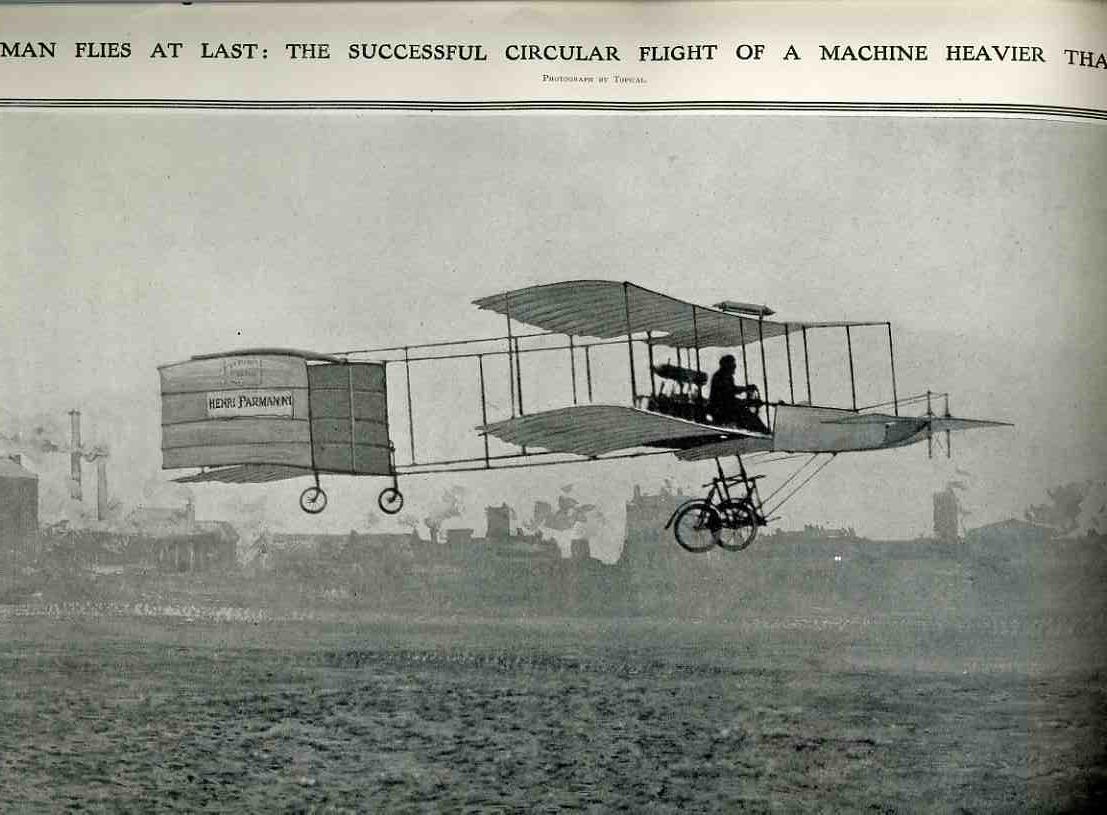
    monumental stature that is difficult to understand today.  And what he did was this:  for the first time in

    Europe

    he flew an aeroplane in a circle.  On 15
    January he was the only one top complete a one-kilometer circular course,
    taking with him the vaunted Deutsch-Archdeacon prize. What this meant though
    was a huge jump in the control of the flying machine; it became right there no
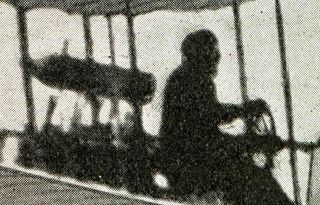
    longer a flying car, but an aeroplane with more
    00-blog-Oct 22-farman detail905
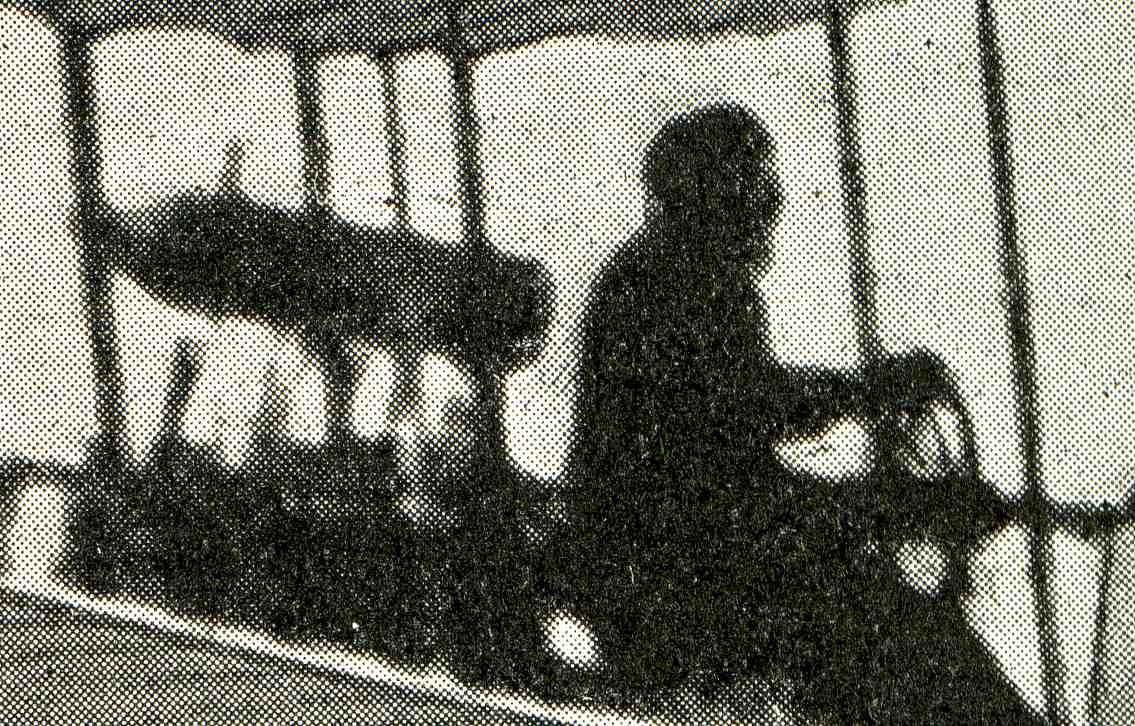
    delicate controls.  [The image above shows Farman in a photo from The Illustrated London News for 18 January 1908, just taking off.  I get the very definite sense of him leaning forward, feeling the tension of the moment.]

    But the Americans were masters of the air,
    having by far the most successes, and traveled further and faster and with
    more élan and capacity than anyone else anywhere—and by wide margins.   But to this point the Europeans had only
    read of their accomplishments, and had seen only still photos.  There was no way for them to appreciate the
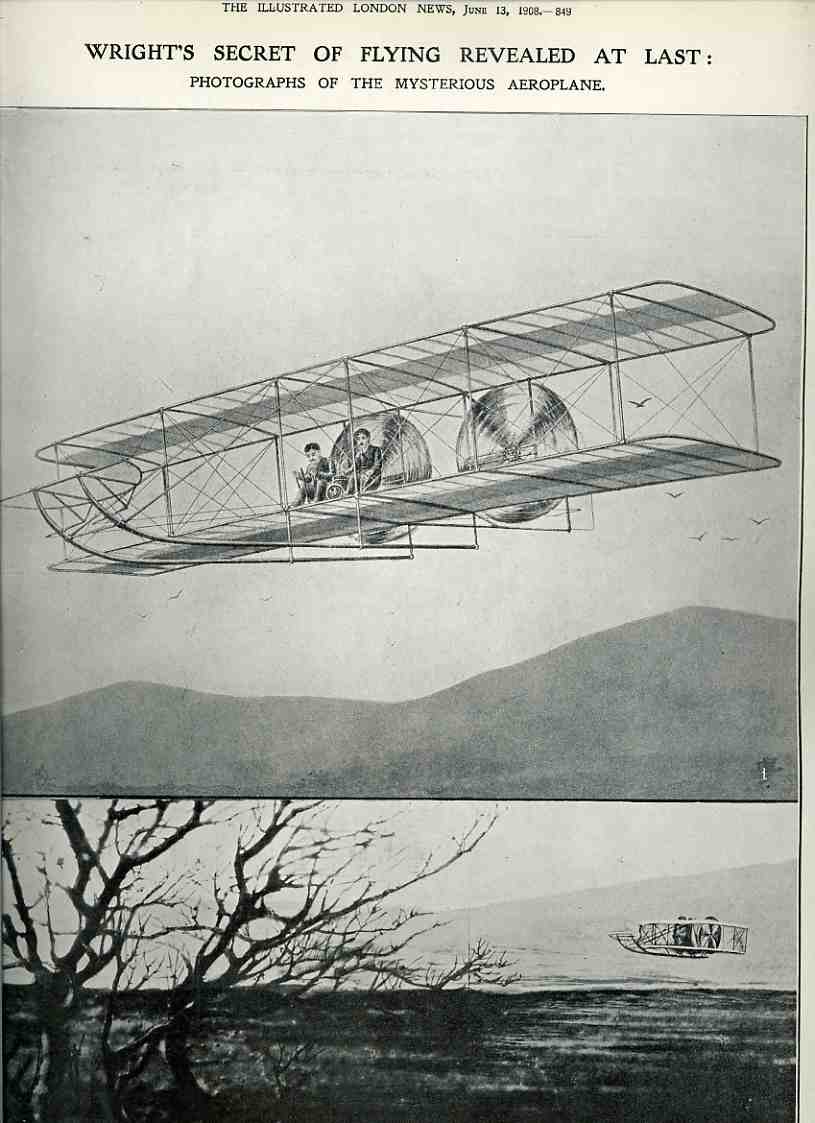
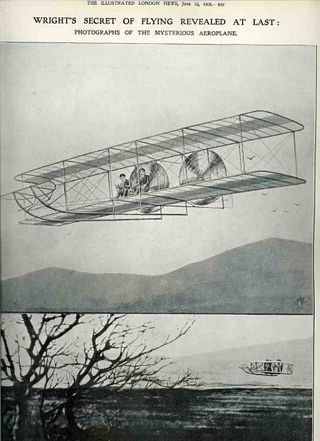
    magnitude of the Wrights’ accomplishments via those media.  Their frustration could be seen in this image
    from The Illustrated London News of 15 June 1908, which screamed “Wright’s
    Secret of Flying revealed at Last: Photographs of the Mysterious Aeroplane”.
    The big page showed an artist’s representation of the two-person flyer along
    with a smaller, smudgy photo of the great machine in flight.
    00-blog-Oct 22-farman wright 907

    This photo would have to suffice for the
    moment, as Wilbur Wright was busy trying to repair his crated plane, which was,
    incredibly, damaged by customs inspectors. 
    The plane was finally ready and on 8 August Wilbur flew—he made tight,
    effortless turns, demonstrated exceptionally able control, flew low and high,
    fast and slow, and made lovely landings. 
    His crowd included the most celebrated flyers on the continent—they were
    all uniformly astonished, leading some to say, for the record, that compared to
    the Wrights, the Europeans had done absolutely nothing.  Wilbur Wright was an enormous hero, feted far
    and wide, making some 200 flights over the next year.  The Wright Brothers’ plane was finally seen
    and inspected,. And all of the claims of greatness seemed to be surpassed by
    their physical demonstrations.

    The most interesting part for me is that, even five years following their first successful heavier-than-air flight in Kill Devil, North Carolina, the astonishing correctness of their accomplishment could not be fully appreciated without their flyer being seen in operation, and in person. 
     

    ·Posted by :

    ·in:


  • Amelia Earhart: Her Physical Disappearance vs. Lindbergh’s Moral Vanishing

    JF Ptak Science Books   Post 328

    Blog--earheart

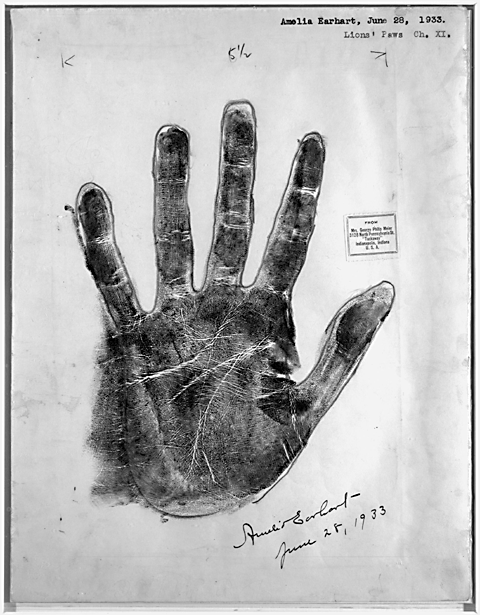
    [Image source: “Amelia Earhart’s palm print and analysis of her character prepared by Nellie Simmons Meier.” June 28, 1933. “Words and Deeds in American History: Selected Documents Celebrating the Manuscript Division’s First 100 Years”,  from the Library of Congress.]

    “KHAQQ calling Itasca. We must be on you but cannot see you…gas is running low…”

    This is I believe the last communication between Amelia Earhart and the rest of creation, as she went flying into the oblivion on low fuel, 2 July 1937.  She was 22,000 miles into her around-the-world trip with her engineer Fred Noonan in a Lockheed L10 Electra, with 7,000 more to go, almost all of which were over the Pacific. That was the last of her, forty years old and world-renowned, and then shrouded in a terrific mystery, and declared dead after massive searches two years later in 1939.  She owned many “firsts” for women in the field of aviation, but still couldn’t seemingly stake them to her own name, burdened with the sobriquet of “Lady Lindbergh”.  It was true enough that being historically coupled with Lindbergh, who was seen by many as the greatest aviator of his day, was a vast compliment; it would have been more complimentary yet to refer to Lindbergh as “Sir Earhart”.  Amelia did, after all, accomplish more overall than Mr; Lindbergh; plus Ms. Earhart did not philosophically spill over into the fascist sphere as did Lindbergh1, who was just a downright embarrassment with his opinions on the war, Hitler, National Socialism, fascism, and the like.

    But I digress.  This image2of her capable and attractive hand just has the quality of disappearing, even though it is right in front of your eyes.  Stare at it long enough and bits of it will go….

    Notes:


    1. Lindbergh’s story during the pre-war period to Pearl harbor is very problematic for people who admire the man for his aeronautical feats; I imagine that they separate his philosophy from his gained famed much in the same way that Poundians concentrate more on that fascist anti-semitic poet’s early years than his treasonous 1935-1945 decade.  It remains terribly visible though that the anti-intervention, America-Firster, race conscious, Germanophile Lindbergh had so much going on in his confused head that it lead even Franklin Roosevelt to think of him as a traitor. (
    Roosevelt said to Treasury Secretary Henry Morgenau in May 1940, “if I should die tomorrow, I want you to know this, I am absolutely convinced Lindbergh is a Nazi.” ) Once America did get into the war, finally, on 8 December 1941, Lindbergh wholeheartedly supported the war effort.  Still it is hard to forget his years of earlier actions and statements and political rallies that called for American appeasement with the Nazis and hi semi-blind admiration for the new Nazi nation.  He wasn’t a fan of Hitler’s, but he did have just very soft pre-1942 criticisms of his actions.  Kristallnacht, almost 70 years ago today, for example, brought out no condemnation from Lindbergh.   He confided to his diary: “I do not understand these riots on the part of the Germans,” he wrote. “It seems so contrary to their sense of order and intelligence. They have undoubtedly had a difficult ‘Jewish problem,’ but why is it necessary to handle it so unreasonably?”  It seems that there should have been a bit more than pursed lips coming from Lindbergh on this occasion, but there wasn’t, even to himself.  There would be another three years of anti-Jewish and other horrific and morally repugnant actions
    from the Nazis, but they all took a giant goosestep back from his principal aim of keeping  America out of the war and being strongly anti-Communist.  Pat Buchanan recently and bizarrely—even for him—defends Lindbergh’s stand during this period as being deeply patriotic.  It is a deeply unreasonable and a bloody mess of historical thinking.

    2. The photostat was made on behalf of a quack  palmist who did all sorts of interpretations of the philosophical chinks in her skin’s armor.  It isn’t worth talking about.


  • Odd-looking Technical Inventions: the Blohm and Voss “141” Surveillance Aircraft, 1942

    JF Ptak Science Books Post 276

    1ebay_sept_24_blohm_voss_141667


    Talk about an unusual-looking aircraft: during the Second World War the Blohm u. Voss “BV 141” may have defined that category.  This image appeared in The Illustrated London News for 23 May 1942,  drawn by the indomitable G.H. Davis, and gives an excellent view of what the editors called “a lop-sided freak”.  Perhaps the editors of the ILN wanted to educate its readers on the plane since it was supposed to be widely employed on the Russian Front, though it looks like only 38 were ever built (and none survive today). Actually, the plane, designed by Dr. Richard Vogt (1894-1979),  was a high-flying three-seater  surveillance aircraft capable of 220 mph at 17,000 feet, powered by a single 1000 hp Bramo Fafnir 9-cylinder radial engine.  The idea for the design was to give the pilot and co-pilot a very wide field of view–and by this, I’m guessing that the field of view most affected and aided by this would be straight down. The rear gunner also had an enormous field of view. 

    As it turns out Vogt survived the war and spent his Golden Years in the U.S., seven of them (1960-1966) with Boeing to evaluate hydrofoils and vertical liftoff systems:  he had built other odd planes during his career, and carried them with them into near-retirement, making this sort of design his metier.