A Daily History of Holes, Dots, Lines, Science, History, Math, Physics, Art, the Unintentional Absurd, Architecture, Maps, Data Visualization, Blank and Missing Things, and so on. |1.6 million words, 7500 images, 4.9 million hits| Press & appearances in The Times, Le Figaro, Mensa, The Economist, The Guardian, Discovery News, Slate, Le Monde, Sci American Blogs, Le Pont, and many other places… 5000+ total posts since 2008.

Category: Anticipation, History of

  • Roman Military TechnoPunk

    JF Ptak Science Books   Post 1959


    Blog--vegetius
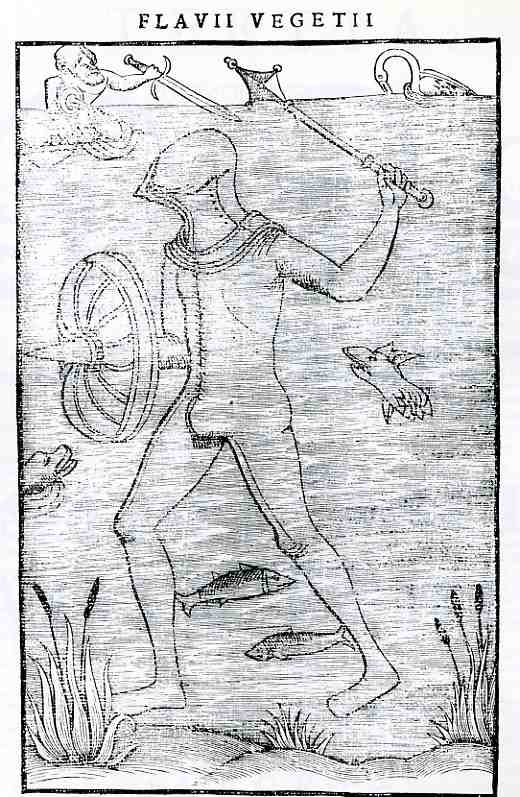
    The name of Flavius Vegetius is not so much popularly known today, though his influence is felt through the hands of other, more famous, writers and thinkers.  He was seen as the most adept writer on the Roman mind in warfare, and his De re militari libri quator… was his masterpiece.  It was reprinted in 1532 by Christian Wechel from sources reaching back to the original, which was written around 390 ACE, and found a wide readership not only for its authority on all things military/Roman but also for his iconic insights and aphorisms on warfare in general.  It was Machiavelli who came under his spell and who adopted some of Vegetius, who became further disseminated through the military followers of Machiavelli, and so on.

    I came to this work much more simply than all of this – I liked this image of the underwater warrior, who was somehow able to breathe while submerged.  I get the importance of this sort of undercover, guerrilla maneuver, but what I really like was the rarity of seeing a Renaissance illustration of human submarine life, which is pretty uncommon.  Also, the use of the lines to represent the underwater quality of the image—giving the woodcut an overall grey tone—is also very scarce in the history of illustration, at least before 1600.  And very neat!  One of the hallmarks of this printing of Vegetius was the liberal use of white space in many of the (119) woodcut illustrations, though it is clearly not on display in the woodcut that I’m sharing here.

    00-blog-Oct 28 vegetius939


  • Beautiful Sprockets: MetalPunk in Space and the Jetsons.

    JF Ptak Science Books    Post 1958

    The birth year of Rosie the Robot is approaching.

    (This beautiful sprocket nest, for a patent for transmitting power (1874), like all of the following patent images, is located at   Google Patents, here)

    Spacely sprocketsFor some odd reason I was thinking about Spacely’s Sprockets, George Jetson’s (of The Jetsons cartoon in the 1960’s) employer.  I wondered if this was a high irony–the “sprockets” part– and if there would be any sprockets in our space-aged future.  Even by the end of the 60’s, just at the end of this cartoon, I wonder if in the tens of thousands of parts that went into the hardware of the Apollo Project to get us to the Moon if there were any sprockets among them. 

    The sprocket was just such an excellent idea in the history of the transmission of power…but in the 15 or so books that are on hand here on the history of technology there’s nothing in between “spring” and “Sputnik” in their indexes. Patents for sprockets seem to begin in U.S. patent history in the late 1860’s.  Sprockets show up in Gatling/machine guns (1878, with the Leland gun), chain propellers (1875), turn tables for railroads (1874), chain saws (1883), holler for printing machines (1882), stump extractors (1878), wind engine engines (1880), window shutters (1879), safety pulleys (1880), traction engines (1881), feathered paddling wheels (1882), potato differs (1883, with very great tank potential), harvesters (1880), hay elevators (1881), horse treadmills (1884), corn planters (1881), grain elevators (1883), and of course in veliocepedes (a very cumbersome device by Emmit G. Latta in 1880). 

    [Bicycle source here]

    I suspect that there were sprockets in space in 1969, and perhaps they’re in a Space X vehicle–I really don’t know. Its just interesting to think of the coming of the sprocket and what an enormous influence it exerted in the history of power transmission–and the device’s beauty. 

    My sneaking suspicion is that Rosie the Robot, the maid for the Jetson family–who was 45 years old in the  beginning of the 1962 series– was loaded with 1965 sprockets–whether sprockets would exist in the year 2062 or whatever year George Jetson was alive in (certainly many centuries post-2062) is another story. But Rosie–the outdated-model mid-life maid of the future and most reasonable character in the series–surely had them.

    Some beautiful sprockets:


  • Geology of Food Lust, 1948

    JF Ptak Science Books  Quick Post

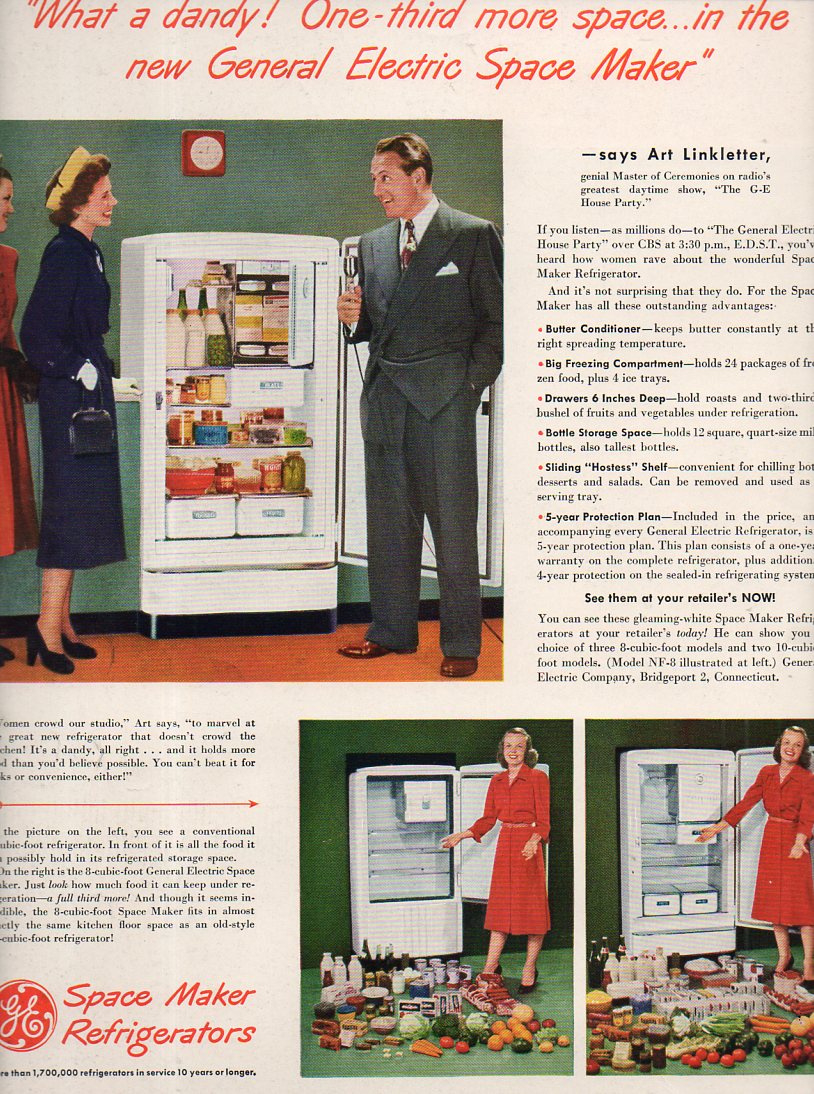
    I wroFood refrig965te earlier in this blog about the geology of meat and want, the last in “States of Perfection: Refrigerated Food & the Archaeology of Meat, 1954” (here).  (“Like Greek statues, orders of architecture, the golden ratio and Vitruvian man, these ads from LIFE Magazine in 1954 measure a sort of highest-attainable-state, though directed at middle class America….”) This is a continuation on that theme, a little, as I found this interesting piece of a refrigerator ad in LIFE magazine for 26 July 1948.  Art Linkletter interviews two women and a refrigerator here, introducing the new G.E. Electric Space Maker, which must’ve used a new motor to make more space available inside the new unit, as it wasn’t much bigger on the outside than the old one.  But seeing the food displayed on the ground in front of the refrigerators shows us what people wanted to have in their house, to eat–and what more of it they could want.  Side-by-side:  normal want, and advanced want. 


  • A Mystopian Alphabet of Newspeak Words: Orwell and Unthink

    JF Ptak Science Books  Post 1953

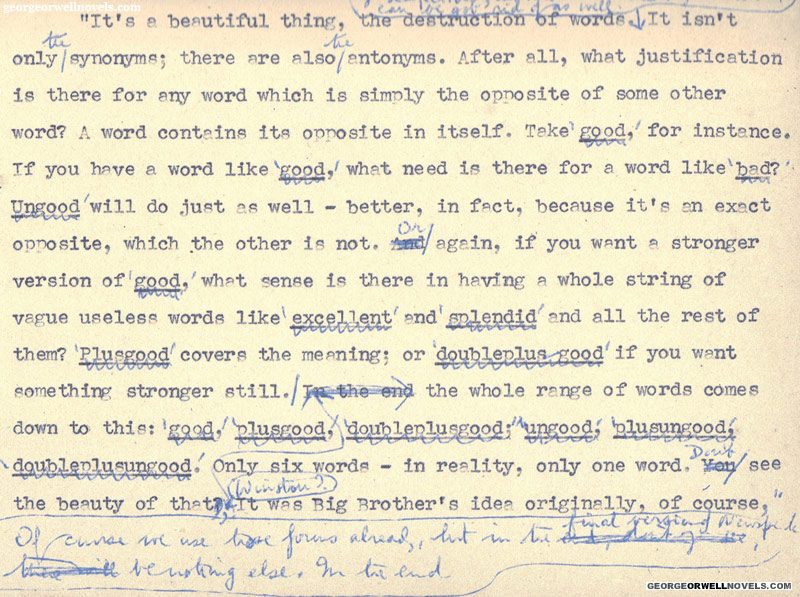
    “It’s a beautiful thing, the destruction of words … what justification is
    there for a word which is simply the opposite of some other word? A
    word contains its opposite in itself. Take “good”, for instance. If you
    have a word like “good”, what need is there for a word like “bad”?
    “Ungood” will do just as well — better, because it’s an exact opposite,
    which the other is not.’”–George Orwell, 1984

    “Orwell and Nabokov wrote nothing like one another and did that to perfection.”–Not H.L. Mencken

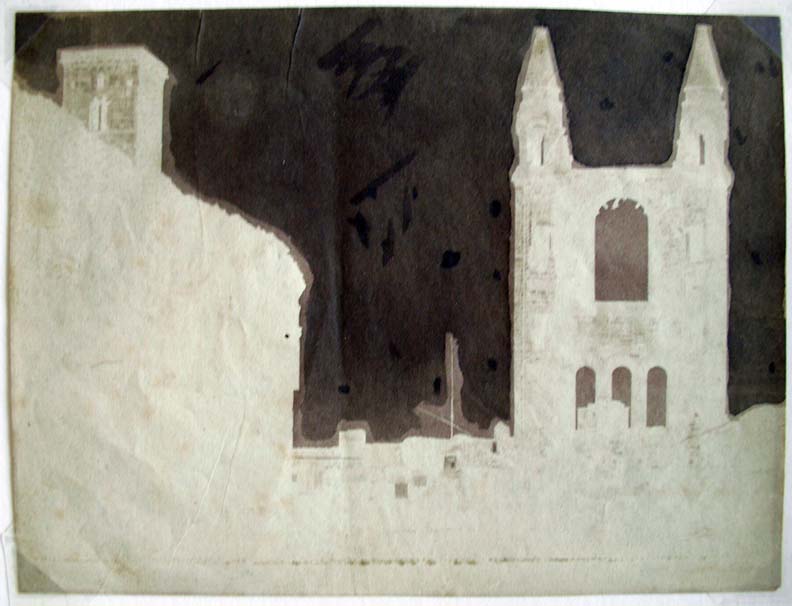
    Hilladamson2[David Octavius Hill (1802-1870) and Robert Adamson (1821-1848), St. Andrews [East Gable End of the Cathedral with Tower of St. Regulus], [1843-1847]. Calotype. Source: Princeton University Library.]

    There is nothing that limits action than the control of the stuff that describes it:  words. Any dictatorship or totalitarian regime can appreciate this thought–many would try to eliminate even the thinking of this thought, let alone limiting the spoken parameters of discussing it. Removing the capacity to respond to what is happening in the world with other human beings by rephrasing the experience through the introduction of new words and the elimination of old ones is an excruciating form of absolute power that can be blatant as well as subtle, though I suspect that accomplishing this word control sotto voce would be the most effective/insidious method. 

    Orwell 1984 ms[A page of Orwell’s corrected Manuscript of 1984; source: GeorgeOrwellsNovels.com here]

    George Orwell describes a terrifying society of just this sort in his book 1984 (with the complete text available here), which was an adventure into a Mystopia of the near-future (of about the year 2050).  He writes about a society, Oceania, that attempts to makes it members into one conforming biological unit for the sake of control it. One of the methods used to accomplish this is the destruction of words and the creation of other state-controlled words to replace them, a sort of single-channel television for the mind, a device using its own vocabulary which audially impregnates the listener with versions of correct thinking, redefining reality by controlling the ways of interpreting it.

    This is a list of some of the words that Orwell’s society creates–some of course do not stand well on there own, their deviousness appreciated in the context of the story, like the first example, “artsem”, which through constancy has come to numbingly replace the idea of what the word represents.  Others, like ‘good”, are old words with a new meaning, making them new words with a bad (or  not-good) meaning. Or “free” of the old (or Oldspeak”) meaning, where even the word “free” is used only to describe an absence, as in “this sentence describing the use of the word “free” is “free from the old meaning of free”, like you’d want a baby to be free from germs.

    See here for an autobiographical note on Orwell; “A Short History of My Life”, by Orwell in 1945, here.

    Airstrip One:  the new word for “England”, which has been reduced to nothing but a terminal for  the society of 1984, Oceania, is composed of the Americas, part of southern Africa, Australia and New Zealand.

    Artsem: Artificial
    insemination, which is the enforced and nearly the only method of reproduction allowed in the society, another brick in a structure that controls the expression of intimacy between people. Big Brother needs new people for the society to continue, but he doesn’t want there to be any emotional connection between them outside of the prescribed feelings that people are supposed to emulate. Artsem further indoctrinates a no-contact policy between people. There was the possibility of sexual intercourse but only for the production of children when artsem was not applicable–this was called “goodsex”, which was the opposite of “badsex”, which was sexual relations for the joy of it. The orgasm was a hunted thing, to be tracked down and eradicated.

    BB: Big
    Brother. 
    The major domo of Oceania, a hitler/g-d, an extreme presence of control.
    “The story really began in the middle sixties, the period of the
    great purges in which the original leaders of the Revolution were wiped
    out once and for all. By 1970 none of them was left, except Big Brother
    himself. All the rest had by that time been exposed as traitors and
    counter- revolutionaries.”

    Bellyfeel: an unfeeling and enthusiastic acceptance of an idea, following without knowing or knowledge.

    Blackwhite:  “… this word has two mutually contradictory meanings. Applied to an
    opponent, it means the habit of impudently claiming that black is white,
    in contradiction of the plain facts. Applied to a Party member, it
    means a loyal willingness to say that black is white when Party
    discipline demands this. But it means also the ability to believe that black is white, and more, to know that black is white,
    and to forget that one has ever believed the contrary. This demands a
    continuous alteration of the past, made possible by the system of
    thought which really embraces all the rest, and which is known in
    Newspeak as doublethink.”


  • Seeing, Sight & Memory: Jevons, Bruno, Borges, Heller and Proust

    JF Ptak Science Books  Post 12 (from 2008, expanded in December 2012)

    Follow Me on Pinterest

    Can We See More or Less than We Used To Be Able To See?

    Jevons
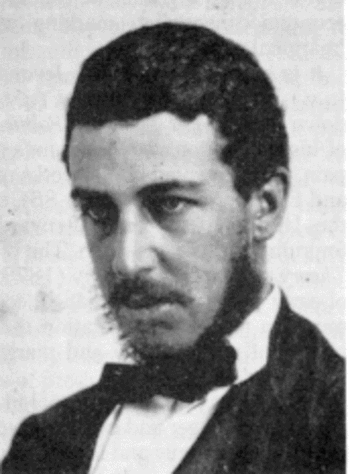
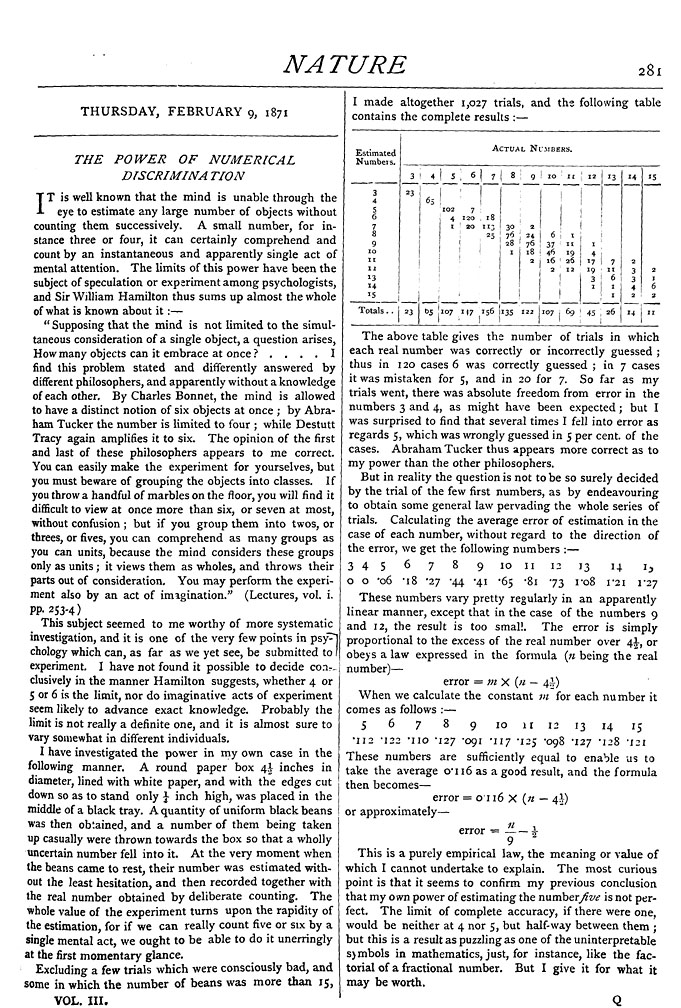
    An early study of attention and perception (or “How Many Items Can it Embrace at Once?”) popped out at me while muscling my way through another year of Nature magazine for 1871.  The article was by the polymatic  W. Stanley Jevons  (“The Power of Numerical Discrimination,” in Nature volume III, 18711)  who contributes an interesting and very early experimental bit on the success of the brain to correctly formulate an accurate memory when in a flash shown a number of items. (That is to say, when shown a certain group of X-number of items instantaneously and then removed, how often will the mind be able to remember the correct number upon recall–and without committing them to memory per se or counting them?) In this fascinating study Jevons records not only right/wrong answers but how “close” the remembered fit is to the original number, and in effect is a pioneering scientific effort towards understanding our abilities and limits in information processing. And as it turns out the ability to precisely recognize and remember groups of objects with success and without counting stops at about four items for the vast number of people texted. (It is another display of a famous four, including the four faces of Brahma, directions, Gospels, minute mile, playing card suits, seasons, corners of a square, virtues, color problem and of course four- letter words, to name a few.)

    Jevons numerical 1
    [Source: University of Wisconsin Digital Collections, here.]

    Its important to distinguish Jevons’ experimental work on apprehension from earlier (and much earlier) philosophicalJevonsbruno_2
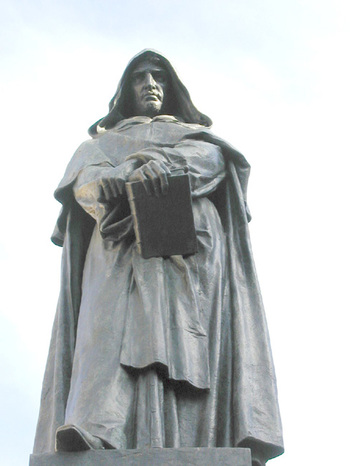
    and semi-scientific work on memory formation and retention.  This of course goes back as far or as deep as you want to go—taking a stab at random we’ll use Simonides who while trying to organize poetry and other data in his head came upon the idea of using Mnemonics and using associative processes in art and poetry to establish his own history of memory. (I should point out that one of the early-modern experimenters in the formation of memory was Giordano Bruno  (at right) who wound up being tortured and burnt at the stake for other offense against The God while trying to formulate a truthful approach to science; evidently the memories that would be threatened by his scientific approach proved to be too much for the righteous in power, and he was removed before he could threaten corrective memory any further.) 

    It is interesting that many of the crimes of science punished by the Catholic Church during this period (1450-1650) were as much crimes against memory than they were crimes against the future—changing and challenging collective memory often proved fatal.

    Getting back to Jevons—who was a very smart guy and who applied himself to a number of fields, not the least of which was constructing a logic machine: his experiment proved to be a springboard for a host of others, some of which didn’t do Jevons justice, misreporting his finding, misrepresenting the stuffy, and so forth.  Perhaps the greatest of these was the greatest of the efforts based on his—Raymond Cattell —who for some reason stated in his very influential textbook of 1907 that humans can remember around 7 things (without counting) when the objects are flashed before their eyes.  And for a hundred years this figure stuck, even though the Jevons report issued a more complex summation, and saying, anyway, that the number was around 10. 

    And what bothered me a bit with the Jevons experiment is what people remembered when shown the objects (beans)—would his results have varied if subjects were asked how many were shiny or odd-colored or deformed or whatever rather than just a simple number, the results could’ve been more interesting.  (I don’t doubt that these issues have been taken up in the 20th century but haven’t looked).  Sometimes people are just looking in the wrong places—for example operant psychology labs tested rats via visual stimuli until it was discovered that rats were olfactory geniuses and that humans were using them wrong all along. 

    It would be interesting to know what the history is of human capacity for image formation.  Considering the growth of distractions and the enormous amount of true and trash stimuli—visual bombardment from television, outdoor advertisements, the sheer amount of  growth of human construction and interaction—have humans enhanced this spatial/memory information processing capacity?  Consider  the growth of (just) eye movements over the last few hundred years, with the visual sense being subjected (for all classes of people) to enormously and fractally-expanded print sources, television, digital communication and so on—has this expanded this neural capacity?  Has “space invaders” aided bean counting? 

    I don’t know, though I do wonder (literally) what the effect exponentially-growing mass input of (mostly junk) data  might be doing to our noggins.  Maybe the effects lean more towards dissolving privacy and reflective time—when does a person think if interruptive stuff is coming into your head at all points of the day, with the brain trying to interpret incomplete and ambiguous strings of sensory inputs? 

    Jevonsyossarian
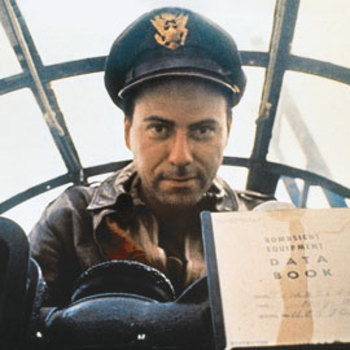
    Seems scary to me.  Maybe memory is affected, maybe it makes it go away, shriveled because recollection is being eliminated.  Or demented like the wonderful Yossarian (his first name is John, btw) from Joe Heller’s beautiful Catch-22 who develops for himself a condition in which he remembers everything twice (whatever that means).

    It would be interesting to see a war of societies in which the sides were a culture that rememberJevonsborges7
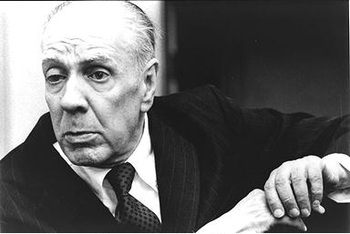
    nothing versus a culture that remembered everything.  The unspeakably lovely Jorge Borges wrote something touching on this in “Fumes the Memorist,” in which the humble narrator is capable of forgetting nothing, being able to recall explicitly everything within eyesight, perfectly—the problem is though that it takes a day to remember the events of another day.  What would happen in such a culture where everyone forgot nothing? 

    Jevonsmadeline2

    And I’ve just been dealing here with visual memory, really—and as Proust makes plainly clear (and Borges and other prove), vision isn’t everything.


  • Is the Mona Lisa Smile Nothing?

    JF Ptak Science Books   Quick Post
    Follow Me on Pinterest 

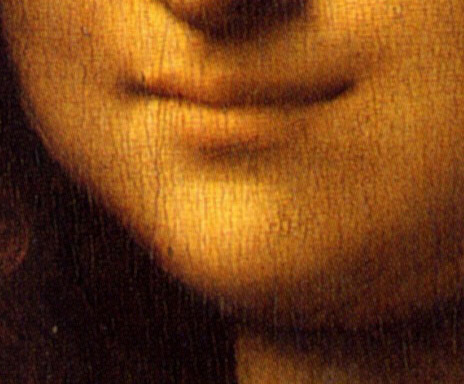
    It is said that the smile of the Mona Lisa says everything to everyone, but in saying all of that so loudly in such a quiet way, is it possible that the smile is saying noting?  That in the vast encyclopedia of emotion that this smile is said to contain, is there really no “there” there?

    Mona_Lisa smile
    It has been pointed out by many that while the male figures in Leonardo’s work have a great diversity, the female figures seem not to, that there is a definite overlapping consistency of charm and image from one figure to the next.  The young Leonardo took his time with la Gioconda1, in a way making the painting his own in spite of the person for whom the work was painted.  Perhaps he did more than that, perhaps he developed the Mona Lisa within an existing framework, and then continued that practice in his painting over the years. 

    It is intriguing, in its way, to think of her like this, a simple solution under the great enigma.  But I think it is probably wrongheaded, and that at base those other folks writing about the sameness in the female figures are incorrect.  Though there is something to be said about a continuing fascination in Leonardo with that smile. 

    So, I think thinking of Leonardo’s women as more-or-less invariant and their smiles tending towards one another, establishing the Mona Lisa’s smile as the apotheosis of the symbol of some sort of glorified, unified, aspect of women might make for an interesting sci-fi adventure, but I believe it doesn’t exist in the real world–or in mine, anyway.  That smile is not nothing. 

    Notes

    1. Like many paintings, this one is known by a number of names: La Gioconda or La Joconde, or Portrait of Lisa Gherardini, wife of Francesco del Giocondo, or Mona Lisa, and so on.


  • Daily Dose from Dr. Odd: Apple Maps of Eating, from the Little to the BIG Eat

    JF Ptak Science Books    Daily Dose from Dr. Odd

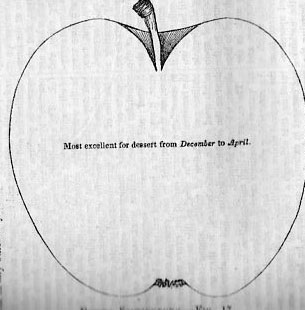
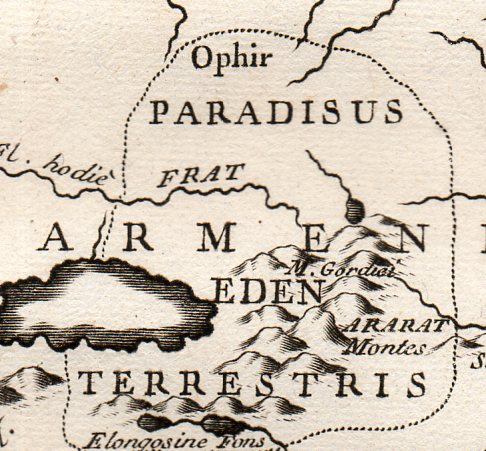
    I’ve made a post here before on the location of the Garden of Eating, um, “Eden”, here, which I guess might be the ultimate of all Apple Maps, The Big Eat; but I’ve found these two (below) that are entertaining and probably not interetsing though they are without the overwhelming consequences of the first map. They’re just about apples, and not what apples might represent (which I think was an unwieldy way for a Creator of the Universe to test the future of humankind with).

    Apple map897 detail[Source:  “Choice Variety of Apples”, in American Agriculturist, New York, 1848, vol VII/no. III, page 79.]

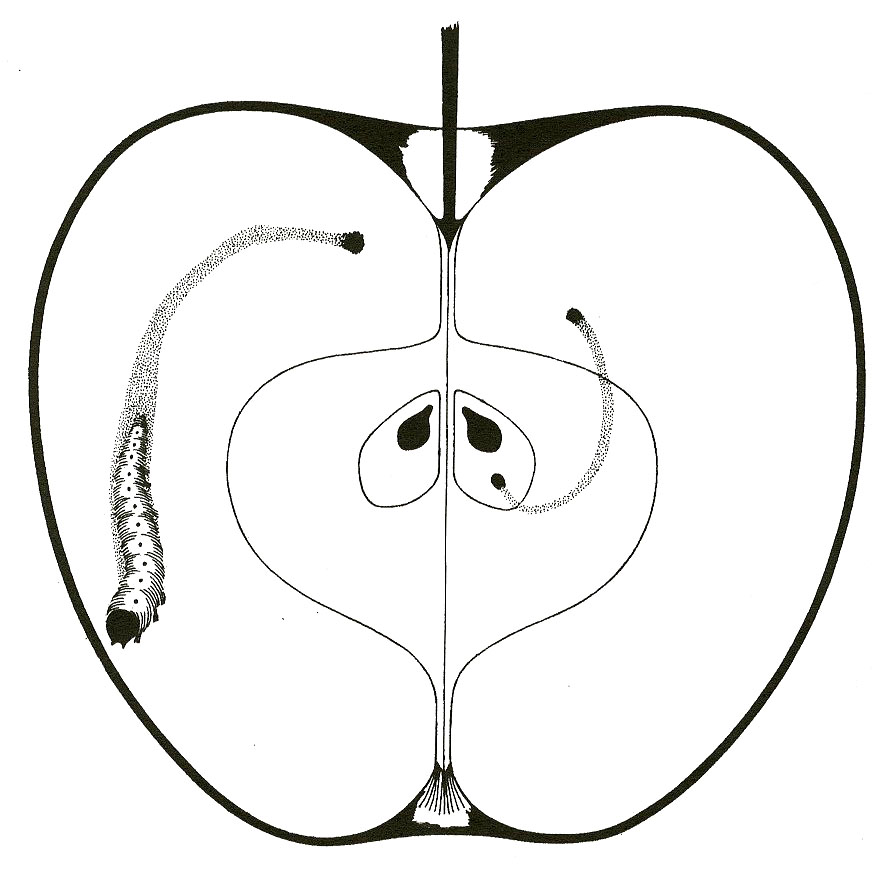
    And of course the route of Small Things Internally Eating Apples:

    Apple map[Source: Maps Incohate, here.]

    Eden 2359
    [Source:private collection, Tabula Paradisi Terrestris justa Systema Auctoris incisa a P. Stark-Man was
    printed late in the 18th century, probably around 1775, and locates the
    GOE far in the north country, near the Dead Sea, deep in old Armenia,
    near Mount Ararat (where Noe and his family were supposed to have landed
    after the creator flooded the world killing everything, where
    everything else, young and old, infant younger, men women children,
    beasts and ants, were killed by a wrathful OT maker.).]


  • Blank and Missing Things: Land (California as an Island)

    JF Ptak Sciene Books    Part of the series on The History of Blank, Empty and Missing Things.

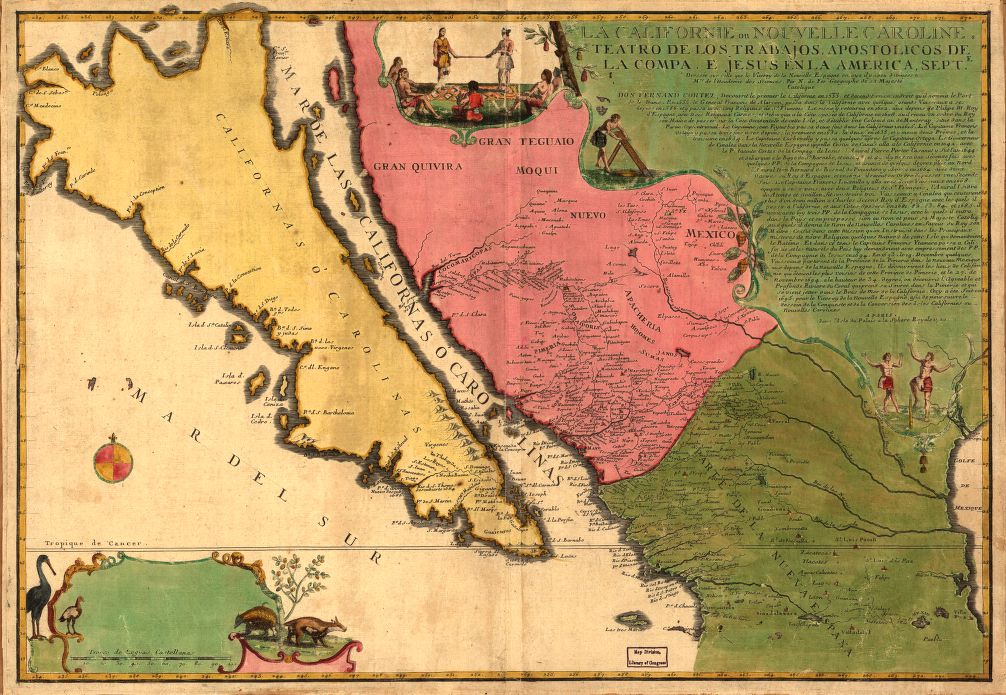
    The influence of economic strategy seems to be the Old Red Sandstone of the geology of life on this planet, and sometimes it reaches right into cartography, expressing itself in unusual ways.  Such may be the case with the creation of the idea of California beign an island.

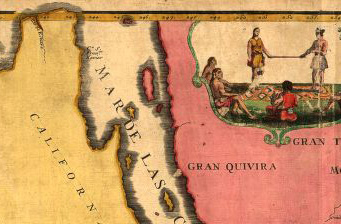
    California as an island det[A detail of a sample map showing California as an island, by Nicolas de Fer, 1720, and depicting the famous missing land at the north end of the Gulf of California.]

    In general, much of the vast expanse of blankness of the continent in the 16th and 17th century was hidden under ornate Baroque cartouches and their encumbrances, which was a tried-and-true method of taking up space on  a map where you didn’t (a) really know what was their and (b) didn’t want to make stuff up to fill in the white space. By necessity most of North America was unknown to cartographers at this time because, well, there was no reliable information to work with.  The far reaches of the middle North American western coastline enjoyed a history of
    connectivity with the large land mass that exists east of the Gulf of
    California, the region known today as “california” being connected to the rest of the continent from the early 16th century.

    About 116 years later, though, cartographic thinking on part of the coast changed.  Antonio de la Ascensíon is credited with first giving flight to the idea that the California Peninsula was in fact an island–and so, beginning in 1620, California would frequently make guest appearances on maps as an island. (Fray Antonio was born in Salamanca in 1573/4 and studied there and at the College of Pilots in Seville; he was ordained in the Order of Discalced Carmelites, and sent off to Mexico. As a cosmographer he accompanied Sebastian Vizcaino (1548-1624) on his expedition to California to find a good port for Spanish galleons coming from Manila, which is when Antonio produced his diaries with the famous island maps1.)  This map was created during a period where there was heavy competition for trade routes and geographical knowledge was actual currency, so there was some amount of cartographic information that was proprietary. When the abbot’s map was lost to/and recovered by the Dutch, the changes that were made to California were codified and published–the Spanish thought it not necessary to correct the misinformation. Perhaps.  In any event, it seems plausible that the Spanish crown had no interest in involving itself with what may or may not have been the loss of proprietary information, and so let the island business slide.  Until1751, when the King of Spain issued a proclamation saying that California was indeed not an island.

    This practice continued to about 1747, when there was more than ample evidence to suggest that the island status of California was erroneous–still, it took several decades for the last of the island-maps to make its appearance. 

     
    California as an island


  • Roentgen, Marey, & Malevich on the Edge of Modernity

    JF Ptak Science Books   Post 1924


    Pleasant_1bertha
    The 1895/1896 issues of Nature magazine are compliantly normal until the first weeks of
    1896 when the first of a flood of articles is published about the astonishing discovery of 50-year-old Wilhelm Conrad Röntgen. The English-language popular science journal announcement of his December 28, 1895  “Ueber eine neue Art von Strahlen” (“On a New Type of Ray”), appeared on 16 January 1896, and began the introduction of a new state of human experience.  Roentgen’s experiments—built upon the work of J. Plucker (1801-1868), J. W. Hittorf (1824-1914), C. F. Varley (1828-1883), E. Goldstein (1850-1931), Sir William Crookes (1832-1919), H. Hertz (1857-1894) and the odious Phil Lenard (1862-1947)—revealed as much to humans as did the experiments and inventions of Hooke and Leeuwenhoek on the invisible worlds revealed by the microscope.  There are more than 150 articles on the Roentgen (and soon to be “X-“) Ray, all published within 12 months of the original announcement, almost all excitedly, trying to comprehend, elucidate, expand, verify, this new world. 
    Blogxraybigads_2
    [The news of the discovery is first and most popularly reported in the January 6, 1896 London Standard:  “The noise of war’s alarm should not distract attention from the marvelous triumph of science which is reported from Vienna. It is announced that Professor Routgen (sic) of the Wurzburg University has discovered a light which for the purposeBlogxrayad
    of photography will penetrate wood, flesh, cloth, and most other organic substances. The Professor has succeeded in photographing metal weights which were in a closed wooden case, also a man’s hand which showed only the bones, the flesh being invisible”. By the end of the month the news was completely absorbed, worldwide.]

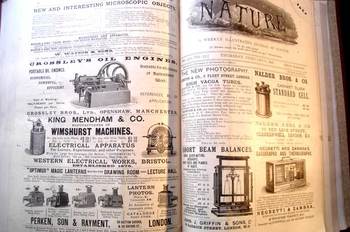
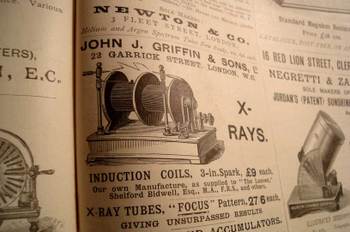
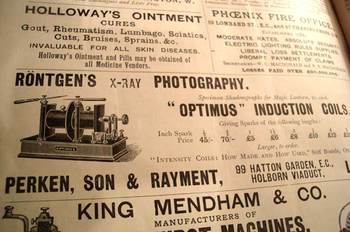
    I looked at the advertising in these issues (my copies of Nature for these decades generally have the original paper wrappers for the weeklies, complete with ad copy), looking for the first time that a Roentgen machine was offered for sale to the general public.  As it turns out, they popped up 12 March 1896 (once), 19 March (twice), and then about once a week for the rest of the year.  A little surprising, I think, a little light to my Monday-morning quarterback’s eye—I expected more; bigger, more, splashier.  But the ads are small and sedate, hardly similar to the discovery they represent. 
    Blogfeb_22marey
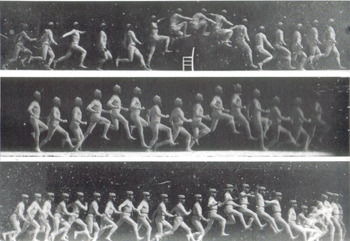
    The rest of the world, the rest of the advertising world, stayed the same–the Roentgen discovery and the enormous possibilities and promises of his “new photography” lived in their own unique sphere, unencumbered by their sassy new brother.   This mild response seems dimmer still when you compare it to that which greeted other (relatively) simple but still major advancements in the world of photography.  Take for example Etienne Marey, who was a technoid and physician who was able to capture motion of all sorts–he was able to develop a picture so to speak of the movement of blood in the body via his instrument to calculate blood pressure, and he also created a shotgun-style camera that made the Blog_feb_22_nude
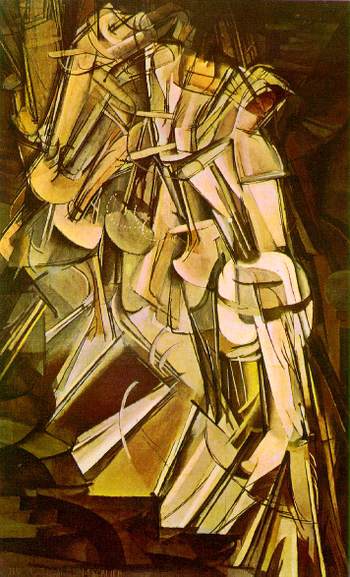
    world’s first high-speed photographs of movement.  And so it cane to pass that in the late 1870’s and early 1880’s people were instantly able to see what a horse looked like when it galloped or what the body did *exactly* when jumping over a chair.  When you couple this with fourth-dimension material one wonders why it took several more decades to bump into these images in the art of 1907+. 

    (Duchamp Nude Descending series, 1915; above, Marey, 1881)

    And what indeed was normal in these pages?  Magic lanterns
    and magi lantern slides appearMagiclantern
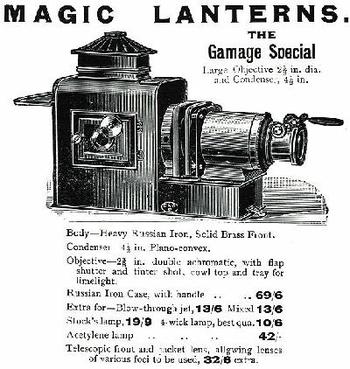
    at all levels; the gorgeous Wimshurst machine gets heavily advertised; the redoubtable Negretti & Zambra advertised all manner of excellent scientific instruments (biographs, thermogrphs.  Nadeer Bros. advertised a pretty standard cell, and the ancient Crossley displayed their “new” oil engines, “suitable for all classes of agricultural work”.  J.H. Stewart was selling their semi-automatic electric arc lamp, while across the page was Newton & Company’s “Newtonian” arc lamps for lanterns (“self feeding and focus keeping”).  Microscopes and prepared slides abound, and Thomas Bolton advertises discretely and effectively for their “living specimens for the microscope”. 

    The Physical Review, the American upstart in the science world advertises that its third volume was available, while its distant cousin, the Psychological Review, advertised its own third volume.  Booksellers seem to take the most space, thank goodness. 
    Blogxrayepps
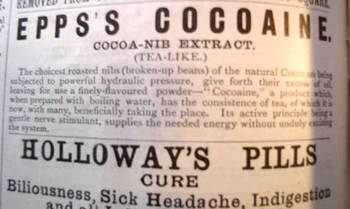
    There are a few medical throwbacks:  Epp’s Cocaine takes out occasional tenth-page ads for their “cocoa-nib extract, tea-like” selling its ‘gentile nerve stimulant”.  Right underneath is “Holloway’s Pills”, promising to cure biliousness, sick headache, indigestion, and all (?!) internal complaints.   These are brilliant simple samples of the skeleton of science in world-dominant Great Britain, in a world dominated at that time by H.A, Lorentz, Ernst Mach , Roentgen, Korteweg, de Vries, Bateson, Jean-Baptiste Perrin, Pierre Curie, Zeeman, Becquerel, Joseph Thomson,  Ernest Rutherford, Marconi, Ramsay, Fitzgerald.  And so on. 

    Nothing offered for sale here offered any significant clue to the pregnant world of modernity that was nearlyBlogxray3
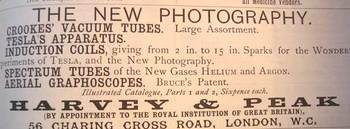
    there—the world would become ‘modern” almost immediately following Roentgen, with revolutionary, epochal changes in art (in non-representational form more so than Impressionism), theater, literature, music.  Just about everything changed (except politics).  But there is no hint to paradigm shift hidden in the ads, just as they were with the machines selling the promise of Roentgen’s “new photography.  There’s something about the fine glass, superb turning of the screw, and a perfectly oiled gear though that makes this sort of perfection seem so lonely in the world of larger change.  Bertha, Roentgen’s wife, sat for 15 minutes while her husband passed his rays through her hand; she ran from the room once she saw the results, revealing her very bones and no doubt a strong sense of the Blog_feb_22_malevich
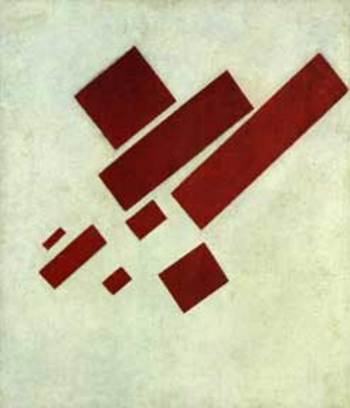
    fragility of life, and the strong presence of death.  Many had the same reaction to the Kandinsky’sBlogxrayad2
    shapes and Malevich’s white circles and red rectangles and Ibsen’s drama and Einstein’s dancing dust and the rogue syncopation of jazz.  It is probably a very natural reaction to try and protect established memory—but memory should be more flexible than that, I think, to keep a healthy mind.

    (Malevich’s 8 Red Triangles, 1915)

  • Patent Drawings for Voting Machines, 1873-1971

    JF Ptak Science Books    Quick Post, Election Day

    I’ve just simply collected a representation of  sixteen patent drawings for voting machines for the decades from 1873 to a very early electronic voting apparatus in 1971. Today I simply filled out a paper ballot with a pencil, which was in turn read by the real voting tabulator.

    I  found very few examples for “ballot boxes” or “ballot ____”  or “vote ___” anything prior to 1850; most of  the patent actions seem to take place after 1875 (perhaps ignited by the very problematical “stolen” election of 1876. 

    I don’t know if it is ironic/prophetic/problematic that the first example is by an inventor named “Doolittle”.

    1873


    1875