A Daily History of Holes, Dots, Lines, Science, History, Math, Physics, Art, the Unintentional Absurd, Architecture, Maps, Data Visualization, Blank and Missing Things, and so on. |1.6 million words, 7500 images, 4.9 million hits| Press & appearances in The Times, Le Figaro, Mensa, The Economist, The Guardian, Discovery News, Slate, Le Monde, Sci American Blogs, Le Pont, and many other places… 5000+ total posts since 2008.

Author: JF Ptak

  • Thomas Hogg, a Curious Man with 700 Varieties of Carnations, 1820

    JF Ptak Science Books   Post 1033

    Garden I just came upon this work1 on gardening and the carnation, by Thomas Hogg, printed in London in 1820.  It was evidently a pre-eminent book of its type for its time, Mr. Hogg occupying a high place in the gardening and flowering world of early 19th century England. (He found some high favorites at court who no doubt were able to help him pursue his vast interest, as we can see by the thesauro-laudatory words in his dedication page2.  I should add quickly that this is by no means an over-the-top dedication–although decorated with high praises, the dedication is not a Liberacesque celebration as some dedications have been, and would rank somewhere in the lower-middle in the ranks of glowing thanks.)

    What is more interesting to me though was the following mention that I found of Hogg in a contemporary British culture book:
                                               
    “Mr. Hogg, was master of an Academy at Paddington, Middlesex, he is now a florist at the same place, where he has a collection of Carnations and Primroses, perhaps the finest in the world. He is celebrated for his successful culture of them. He has more than seven hundred varieties of all prices from two to sixty shillings.”       

     700 varieties of carnations–of anything–is impressive.  I wonder ho wit was that Mr. Hogg was able to amass such an incredible storehouse of carnations? Hogg himself seems quiet on the issue, taking a modest exit with a quote from Shakespeare: “ I have neither the Scholar’s melancholy, which is emulation; nor the Musician’s, which is fantastical; nor the Courtier’s, which is proud; nor the Soldier’s, which is ambition; nor the Lawyer’s, which is politic; nor the Lady’s, which is nice; nor the Lover’s, which is all these.” He does make the point and an unusual argument  that it is his the will of the creator of the universe that humans appreciate, respect and grow flowers:   

    “As the hand of an all-beneficent Creator Has been graciously pleased to strew and decorate the earth with flowers, to gratify the sight by their beauty, and to refresh the sense of smelling by their fragrance, as we proceed from stage to stage along the rugged road of life; and as nothing which he has formed for the benefit of man was ever; designed by him to; perish or exist in vain, it is our duty to receive these pleasing productions of Him, among others, with all thankfulness, and to render them subservient to the purposes of health, pleasure, and amusement; for such no doubt he first bestowed them. In fact, the cultivation of flowers has in all parts, as well as in all ages of the world, engaged more or less the care and attention of a great part of mankind; for the same Being that created them, created in man also a wish and an inclination to cultivate and take charge of them…”   

    I guess that if the Creator was going to make people do something, gardening wouldn’t be a bad thing at all.  Mr. Hogg and his floral religiosity is a mystery to me, but I must respect a man who somehow created such an evidently splendid collection.  

    Notes:                                   

    ·Posted by :

    ·in:


  • Raising Greatness: James Hutton’s Deep View of Time, 1795

    JF Ptak Science Books   Post 1032

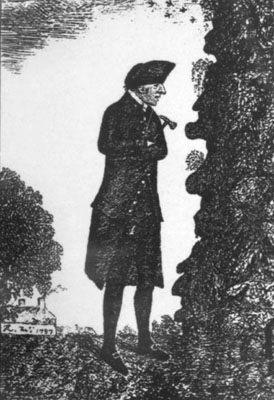
    I think that I’d like to start a series here on significant works in the history of ideas that were originally highly problematic or not accessible due to writing style or place of publication or misplaced appearance or, well, simply bad timing.   The storyline would be one of these great works whose significance suffered as a result of one or more of these issues, and then which was raised above its suffered complications to a place of higher (or more popular) esteem, allowing it to get to a place where the work could generate the new set of ideas that it was intended to help create in the first place. The first of these stories belongs to James Hutton and his revolutionary idea of deep time.  James_hutton
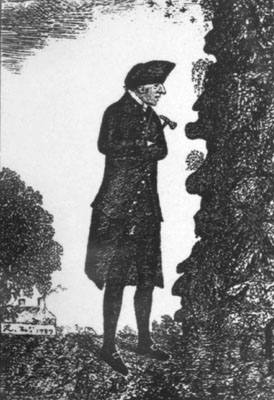
    Seeing more deeply into scientific time than anyone else in history, seeing the entirety of Earth’s history explained  in the sloping  red sandstone at Siccar Point (above the vertical greywacke), James Hutton worked through his theory of the earth in two stout volumes (The Theory of the Earth, with Proofs and Illustrations... in 1795), wrapping up geological evidence with a dogged, comma-ridden and usually-unwieldy prose. He had in fact written a much more elegant paper presenting the main thrust of his theory in outline in 17851, though this paper received a much more limited distribution.  In the long term it really didn’t matter, though, how pretty his writing was–but in the short term, it did.  He made the case for the vastness of time in an elegant way, even without the prospect of being able to know the age of the rocks he was looking at.  The processes of sedimentation, transportation and weathering of solids,  vertical elevation of the Earth’s surface in response to natural causes, and so on, were just not known to him; no matter, as Hutton trusted his theoretical inspiration to tell him that the 6,000-year old earth history clock on the wall was telling a tenth of a tenth of a tenth of a tenth (and on) of the larger, truer story of the age of the earth.  He knew that there were many orders of magnitude of age involved in the telling of the story–he just didn’t know how many. 

    He ended his great work bowing to the enormity of the sight of time:

    “Here are three distinct successive periods of existence, and each of these is, in our measurement of time, a thing of infinite duration. …
    The result, therefore, of this physical inquiry is, that we find no vestige of a beginning, no prospect of an end.”
                   
    Hutton’s work is inestimably important, Archibald Geike (the great 19th century geologist) commenting that it is impossible to praise the work too highly.  But then there was the problem of the density and just flat-out difficulty in reading Hutton’s writing, which restricted the book’s message to a dedicated academic class. Hutton did find his champion in James Playfair, who would strengthen Hutton’s work with new data and who would also help along the troubled Huttonian prose.  Playfair’s work is in of itself2 an important contribution to the history of geology and also of course evolution. His Illustrations of the Huttonian Theory of the Earth (1802), popularized and made the Huttonian work far more acceptable to a larger audience, and as the DNB says “presenting Hutton’s momentous theory in a clear and palatable form (which Hutton himself had failed to do), and in adding materially to the geological knowledge of the time”.

    It was Playfair’s treatment of Hutton that found its way into the mix of genius of Charles Lyell, whose own Principles of Geology3 found its way onto the Beagle and which were voraciously studied by Charles Darwin4 and then put to further use.
               
    Notes

    1. “Theory of the Earth; or an investigation of the laws observable in the composition, dissolution, and restoration of land upon the Globe”, presented in two parts, in Transactions of the Royal Society of Edinburgh, vol. 1, Part 2, pp. 209-304.  An earlier, related pamphlet was written and privately published for a very restricted and private distribution in 1785:   Abstract of a dissertation read in the Royal Society of Edinburgh, upon the seventh of March, and fourth of April, MDCCLXXXV, Concerning the System of the Earth, Its Duration, and Stability. Edinburgh. 30pp.   

    Eventually the book would wind up in a final form as An Investigation of the Principles of Knowledge and of the Progress of Reason, from Sense to Science and Philosophy in 2,138 pages, causing Playfair to remark that “The great size of the book, and the obscurity which may justly be objected to many parts of it, have probably prevented it from being received as it deserves”.
       
    This paper privately printed 1785 paper stated:
    “The solid parts of the present land appear in general, to have been composed of the productions of the sea, and of other materials similar to those now found upon the shores. Hence we find reason to conclude:
    1st, That the land on which we rest is not simple and original, but that it is a composition, and had been formed by the operation of second causes.
    2nd, That before the present land was made, there had subsisted a world composed of sea and land, in which were tides and currents, with such operations at the bottom of the sea as now take place. And,
    Lastly, That while the present land was forming at the bottom of the ocean, the former land maintained plants and animals; at least the sea was than inhabited by animals, in a similar manner as it is at present.
    Hence we are led to conclude, that the greater part of our land, if not the whole had been produced by operations natural to this globe; but that in order to make this land a permanent body, resisting the operations of the waters, two things had been required;
    1st, The consolidation of masses formed by collections of loose or incoherent materials;
    2ndly, The elevation of those consolidated masses from the bottom of the sea, the place where they were collected, to the stations in which they now remain above the level of the ocean.”

    2. Returning again to Geike, who  remarked (1905): “How different would geological literature be to-day if men had tried to think and write like Playfair!”

    3.  The Principles was an enormously influential book, and went through six editions in the first 11 years of its printing (1830-1840), seeing 12 editions during the author’s lifetime (the last edition corrected and added to by Lyell appearing just after the author’s death in 1875). 

    4.  Darwin had volume 1 when he shipped off, receiving volume 2 en route.  A quick look online reveals that there is no mention of Playfair or Hutton in either the Voyages or Origin.; Lyell is noted 14 times in the Voyages and 30 times in the 6th edition of the Origin.

  • History of Lines: Circles, Vortices or Tree Rings?

    JF Ptak Science Books   Post 1030Descartesunivab

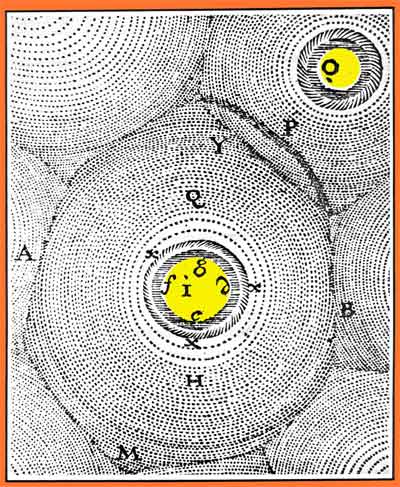
    I thought at first that the detail of the photograph below looked liked Cartesian vortices, as seen in one of these engravings from his (Rene Descarte) Principes de la
    Philosophie
    (1644, basically a treatise on planetary motions).
    :

    1--may 14 circles det

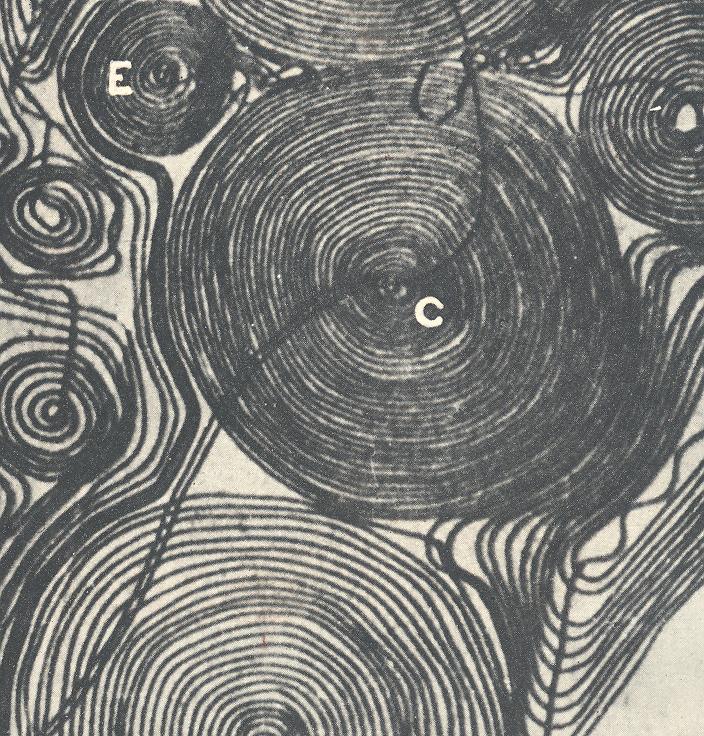
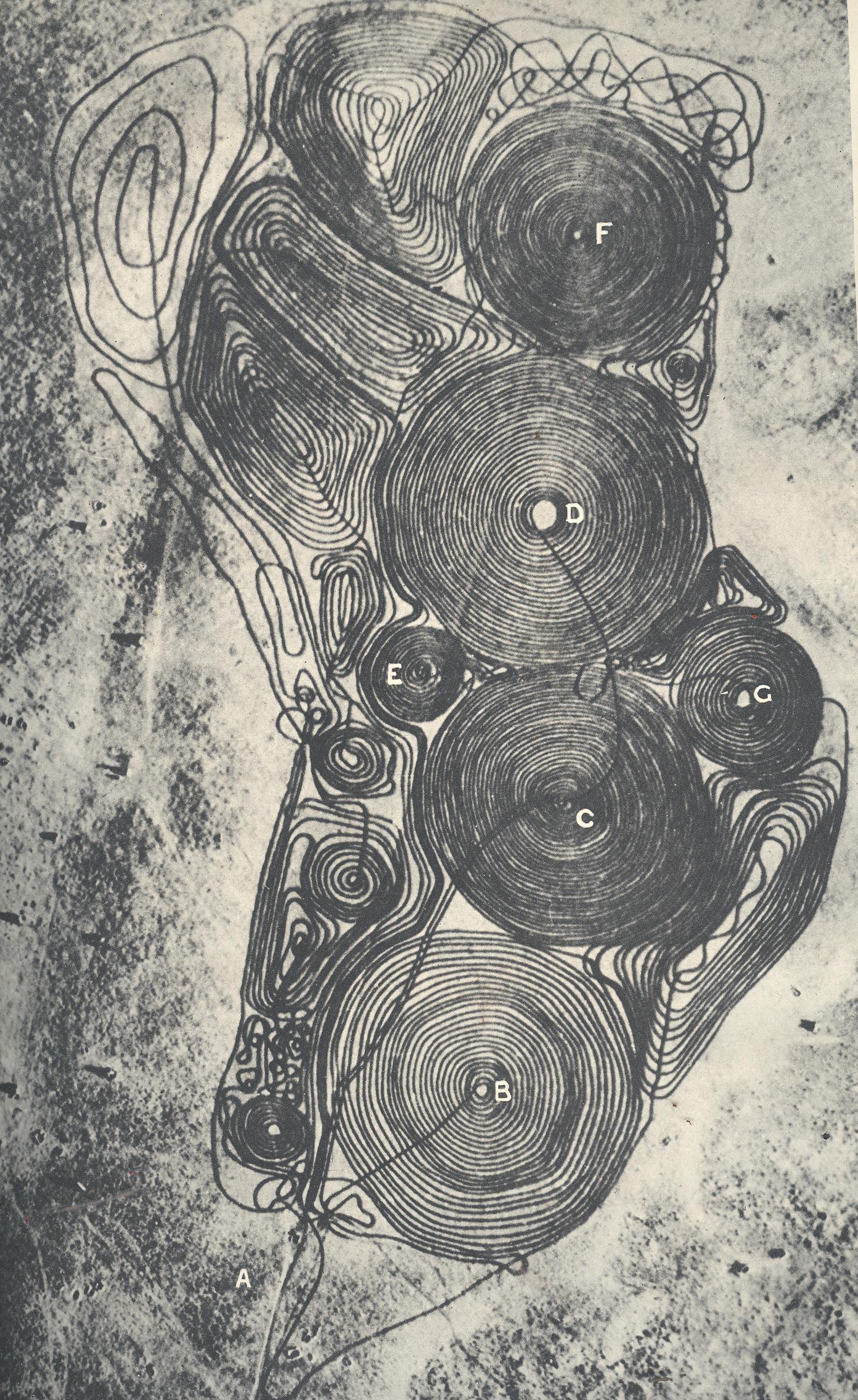
    Well, no, of course, these are not vortex representations writ large in the
    desert of Tunisia by Nazi German plows. They come close, though.  We’re
    looking at a photograph of what is supposed to be an airfield which has
    been beautifully plowed under by German sappers, done so to prevent the
    airfields being used by British forces subsequent to its abandonment by
    retreating German forces.  Looking more closely at the photos though I’m
    not sure what this really is–it just doesn’t look quite right.   On
    the other hand I don’t see offhand what might be gained if this was
    simply a retouched photo used for propaganda

    1--may 14 circles 

    Source:  Illustrated London News, 6 Feb 1943.


  • History of Dots Series: Missing the Beginning of the Stars as Dots

    JF Ptak Science Books     Post 1029

    Dots--hyginus

    [History of Dots series]

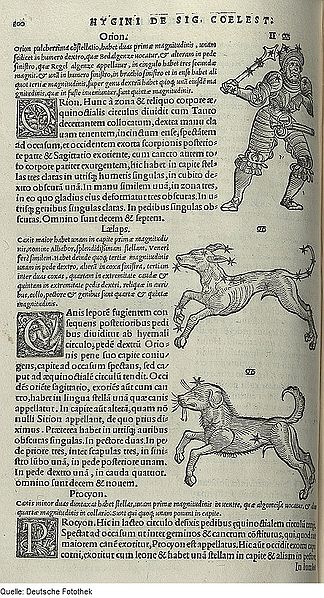
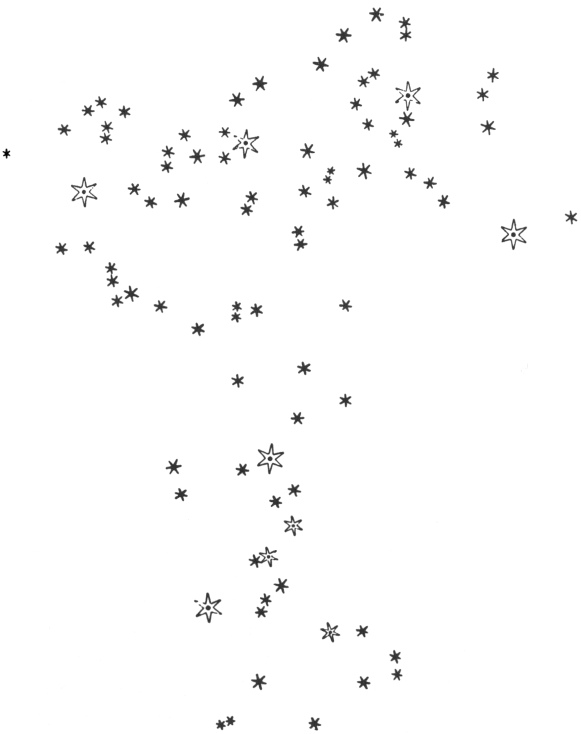
    I was wondering when it was that stars began to appear as dots in celestial atlases or astronomical works–dots rather than starry stars, decorated spheres with crusty circular fire rings about them.
    I felt that at some near point in the history of astronomy that t he conventional antiquarian way of representing a star would fall away with magnification, or clarity, just as has been the opposite case with the magnification of simple dots to reveal complex structures, say with the amplification of the flea eye…even a graphite pencil’s period at the end of a sentence on a piece of paper will turn itself from a dot into something as complex as the coastline of England (given enough magnification).
    Dots--siderus The first star atlas published in 1482 after the work of the first century astronomer and philosopher Hyginius1 contains maps of the constellations composed of such beautiful light-encrusted bits.  There wouldn’t be another work like this one, strangely, for another 75  years. Alessandro Piccolomini’s2 work of 1559 (which would be the first true star atlas), and again we see the familiar representation.  I thought that this would change with the invention of the telescope, so I checked out Galileo’s3 beautiful account (pictured at left) of his discoveries in the Sidereus–again the same complicated, sawblade stars. 
    Dots--hevelius
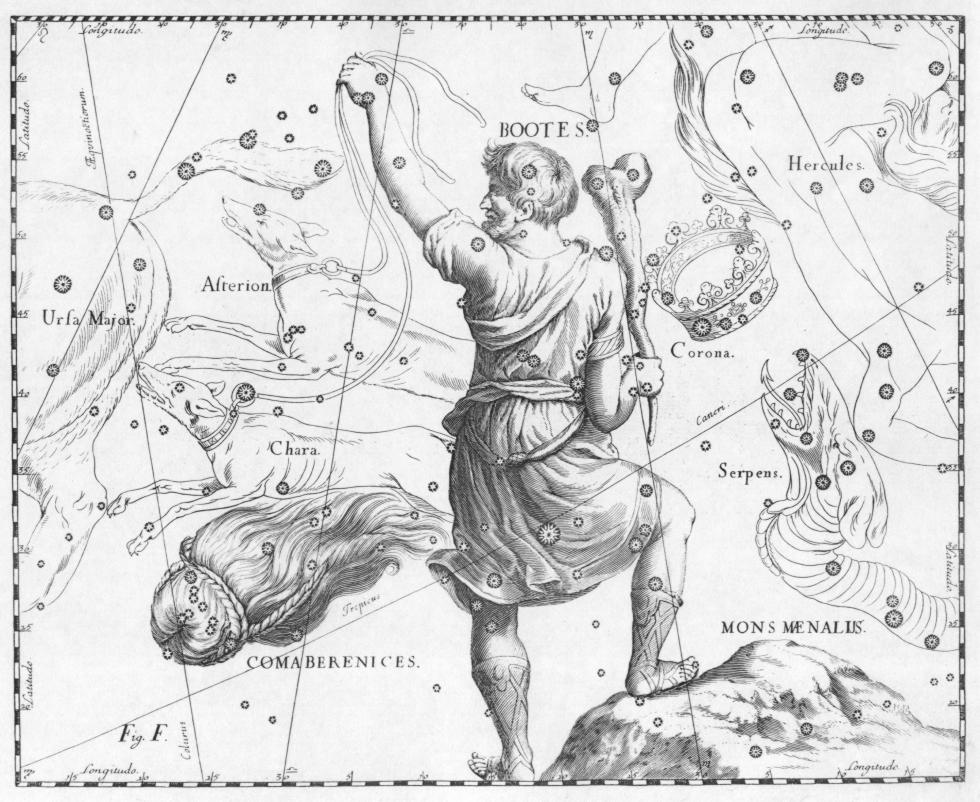
    This has not been a very scientific search thus far, only checking handy notes and images that I’ve made.  But the same result has been true for the star images in Bayer4, Cellarius5, Hevelius6(at right), Coronelli7, Flamseed8,  Doppelmayr9 and Bode10. Even William Herschel’s fabulous map of the galaxy is a collection of these pointed stars.  I think that I’ve just missed what is normally seen by regular folks as a conventional reassignment of star images to something more “modern”–and if that’s the case it has simply passed me by. (It seems though that among all of these that Hevelius comes closest–he inverts the familiar star pattern to the interior of a sphere.)  And I continue to miss it.  I’ve worked my incomplete survey now pretty close to the end of the 18th century, and I simply do not have a close answer..If anyone out there does have it, please let me know.  
    Notes:
    1. Hyginius Mythographus (fl. 1st century A.D.). Poeticon astronomicon. Edited by Jacobus Sentinus and Johannes Lucilius Santritter. Venice: Erhard Ratdolt, 14th October 1482. The first star atlas per se, standing alone in its field for a century.
    2. Piccolomini, Alessandro.  De la Sfera del Mondo.  1559                               
    3.  Galilei, Galilei  Sidereus Nuncius (known in English as Starry Messenger), published 1610
    4.  Bayer, Johann.  (1572 – March 7, 1625) Uranometria 1603, which was the first atlas to cover the entire celestial sphere.
    5. Cellarius, Andreas  (c. 1596 – 1665): Harmonia Macrocosmica (1660, 1661, 1708).
    6. Hevelius, Johannes (1611 – 1687): Firmamentum Sobiescianum, sive Uranographia (1690).
    7. Coronelli, Vincenzo (1650 – 1718):
    8. Flamsteed, John (1646 – 1719): Atlas Coelestis (1729, 1753).
    9. Doppelmayr, John Gabriel (1677 – 1750): Atlas Coelestis (1742).
    10. Bode, Johann Elert (1747 – 1826): Vorstellung der Gestirne auf XXXIV Tafeln (1782).


  • History of Dots: Television, 1947

    JF Ptak Science Books    Post 1028

    Television is composed of dots–or at least for the greatest part of its history it was. I wonder if we measured the amount of televised images entering the eye/eyes of everyone around the world this year if that total numbers of hours is multiples of all television watched by everyone everywhere for the 1928-1995 period?  My gut wonders if it is orders (?) of magnitude more as there are more people, more television, more programming, more everything, everywhere, at any time.  And when you throw in hulu and tvshack and so on, doubt grows that the history of television to 1995 could hold its own against whatever it is people are seeing today. 

    1--may 13 tie dots tv schedule

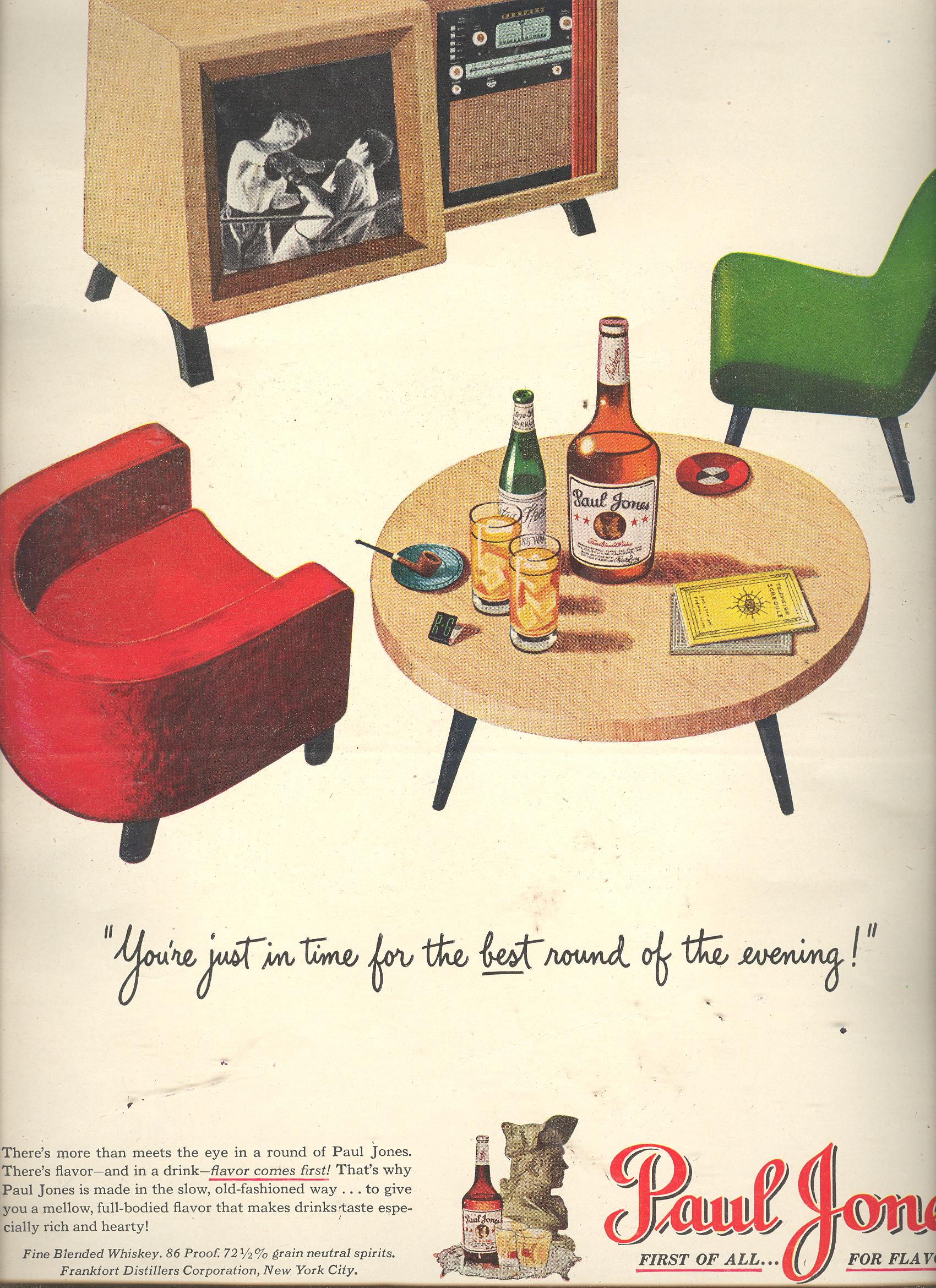
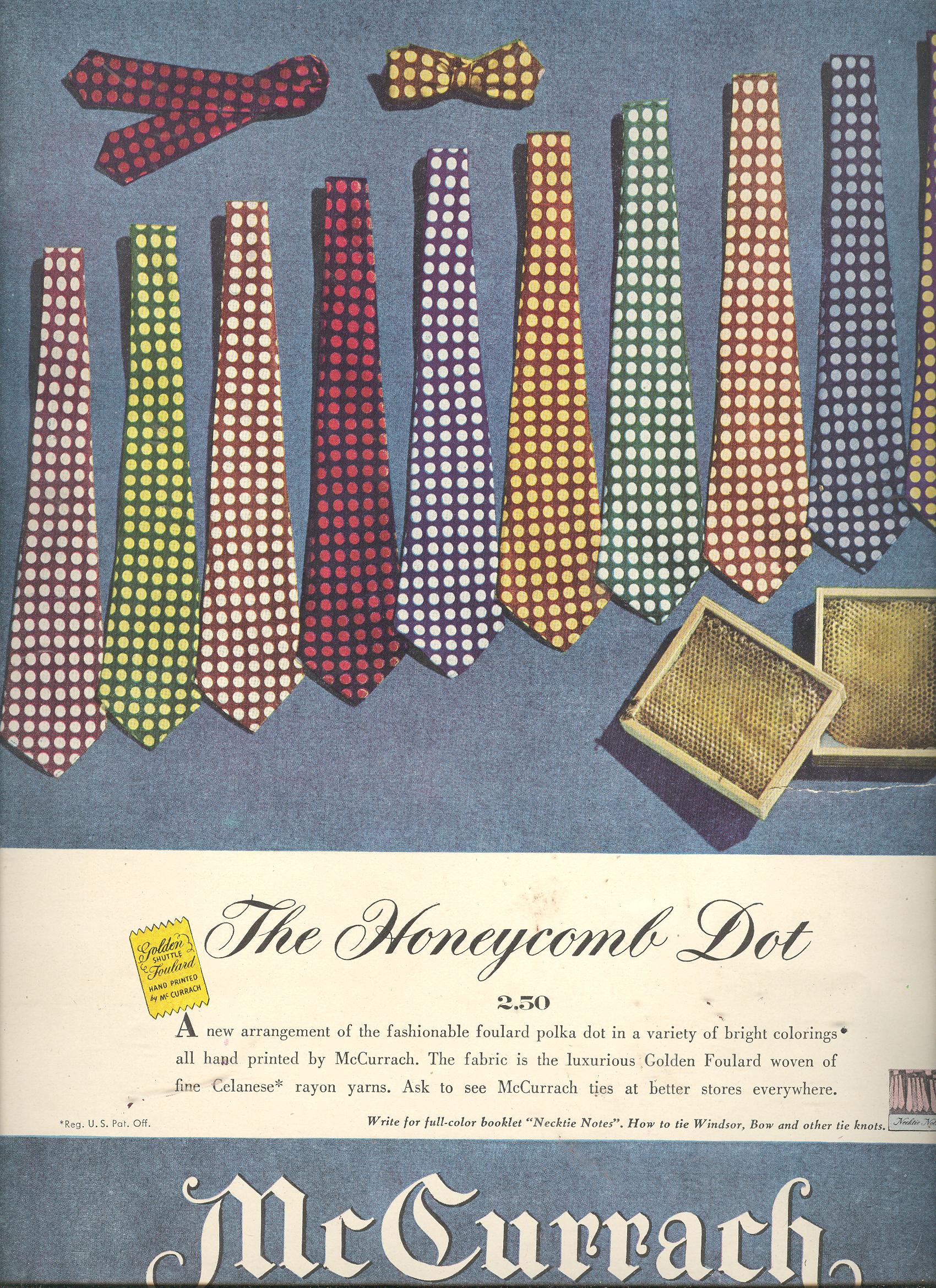
    This comes from seeing this ad (below, from which these details are pulled) for Paul Jones whiskey in a 1947 issue of LIFE magazine.  Big, 15″ screen for the fights on a Friday night, the built-in radio with its 12″ speaker ready to go, a pipe and matches (and no tobacco) at hand, and of course a very over-sized bottle of Paul Jones whiskey:  if we kept a constant perspective that bottle I reckon would’ve been about two feet tall, accompanied by foot-tall glasses.  

    1--may 13 tie dots tv det good

    Television was still in its formative period so far as mass acceptance and affordability goes–there were still only 14,000 sets in the U.S. in 1947. Today there are something like 250,000,000 sets in this country, or about 8 for every 10 people.  Worldwide the figures are pretty different:  on a  list of 209 countries for televisions per capita (where the U.S. is third) only the top 24 have tvs for every other person (the U.K. with 504/1000 is number 24) while countries with tvs for every third person comes in at #53 (Czech republic).  Jamaica, listed at #100, has 168/1000 per capita, which means tv distribution for the rest of the 109 countries on this list gets pretty scratchy–no doubt because a television would represent a sizable chunk of a family’s gross income for the year. Actually,  about 50 countries on that list have a population that survives on One Dollar a day–which doesn’t leave much for Sony and whoever might advertise on the set that these people can’t buy.  (Fox I understand is even now figuring a plan for a programming-over-food venue as a means to domination in a new post-Colonial world–Cuba won over, finally, with reruns of “Dallas”, making the population revolutionary over the stuff that J.R. Ewing has that they don’t but want..)

    The televised world is the thin veneer of the existing world that isn’t.  Anyway, here’s the start of it, all in beautiful black and white dots, selling a bad whiskey.

    1--may 13 tie dots tv

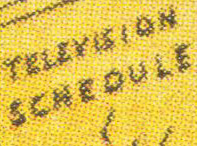
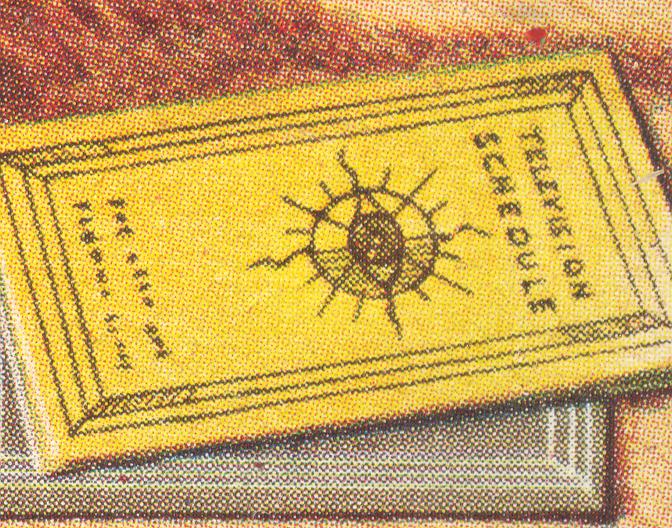
    The “Television Schedule”  is there, with an odd eye-on-compass logo that is barely visible before magnification. 

    ·Posted by :

    ·in:


  • History of Dots Series: Dots of 1947

    JF Ptak Science Books   Post 1027

    {Another in the History of Dots series.]

    The molecular chemistry of dots of 1947 is a beautiful thing, worthy of a powers-of-ten episode, though I can only do a gigantically scaled down version of it (a powers-of-two maybe) given pixelation and its dot-defeating and necessary tendency to relieve roundness and introduce squares everywhere. 

    1--may 13 tie dots det 1 

    1--may 13 tie dots det 2

    1--may 13 tie dots det 3

    1--may 13 tie dots det

    1--may 13 tie dots


  • The History of Lines: Nijinsky’s Secret Shoes (The Most Magnificent Shoe Illustration in the History of Shoe Illustration.)

    JF Ptak Science Books

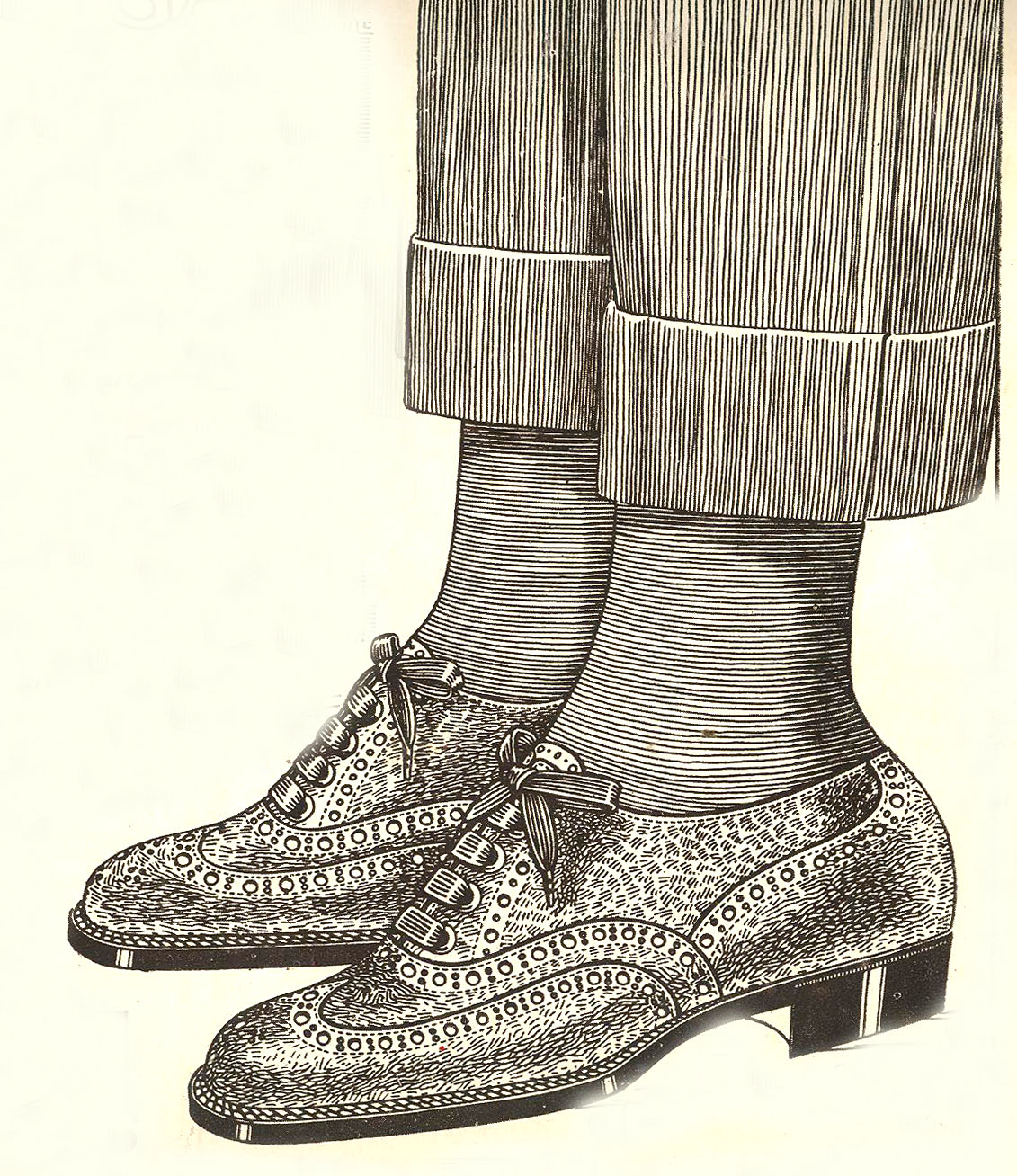
    There are two possible origins of this
    beautiful and quixotic image.

    1--may 11 shoe det

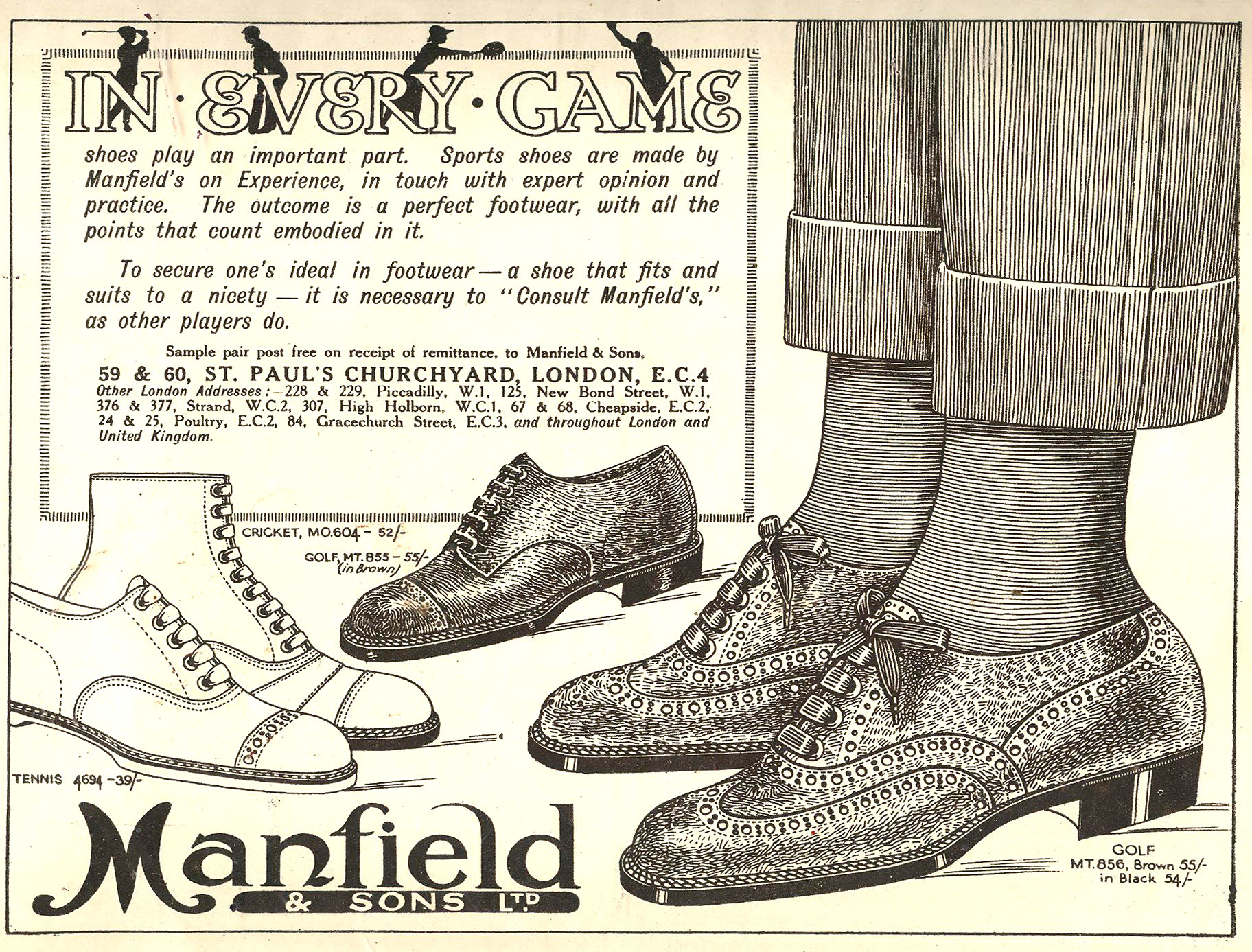
    1)  It is simply an unusual and perhaps hypnotic (?) sales
    illustration for a maker (improbably named Manfield & Sons) of sports shoes–in this case, for golf. There
    is no explanation for its exalted and mysterious overuse of lines or its
    art brut approach. 

    2) It is the sympathetic artwork of shoe adoration by the great dancer, Vaslav Nijinsky (1890-1950), used by his wife and sold to manufacturers to help pay for his decades-long “hospitalization” for schizophrenia. Nijinsky was perhaps the greatest dancer of the first half of the 20th century, a shocking talent who danced for only a dozen years or so before the rest of his not-so-dormant mind caught up to him around 1919.  At that point he was in and out of facilities to care for his metal disease until his death in 1946. 

    (Sigmund Freud was presented with the opportunity to help the mega-star; he declined, because he didn’t “do” schizophrenics.  Freud I think only “did ” people whose illness, treatment and eventual curing could fit snugly within the confines of his own stretchy/made-up vocabulary and diagnostic language.)

    Nijinsky would dance only one time after the beginning of his series of internments that began in 1919–he wound up living in Hungary during WWII, and when the country was “liberated”* by the Soviet Army in 1945, he and the troops did folk dances in the street for celebration. 
    And that was it, so far as any knows.

    1--may 11 shoe

    Truth be told:  the answer of course in #1, though it is difficult to imagine a guy preening his way through this 1920 edition of the Illustrated London New, coming upon this ad, and being overcome by the staggering beauty of the image, deciding in his head (and perhaps even out loud), “I need those shoes”.  

    The stuff I wrote about Nijinsky is all true, unfortunately–all except the shoe illustration part.

    Mark Twain once said that golf “was a good walk spoiled”–and that was without the benefit of having seen these shoes.

    *”Liberated” is the word I see used in regard to the Soviets removing the Nazis from Hungary.  The German dictatorship was simply replaced by a Soviet dictatorship.  The Soviets stayed longer.


  • Fat as (1) Medicine or (2) Jump Rope? [Adventures in Fat Series #4]

    JF Ptak Science Books

    {See also the post Art Made of Fat]

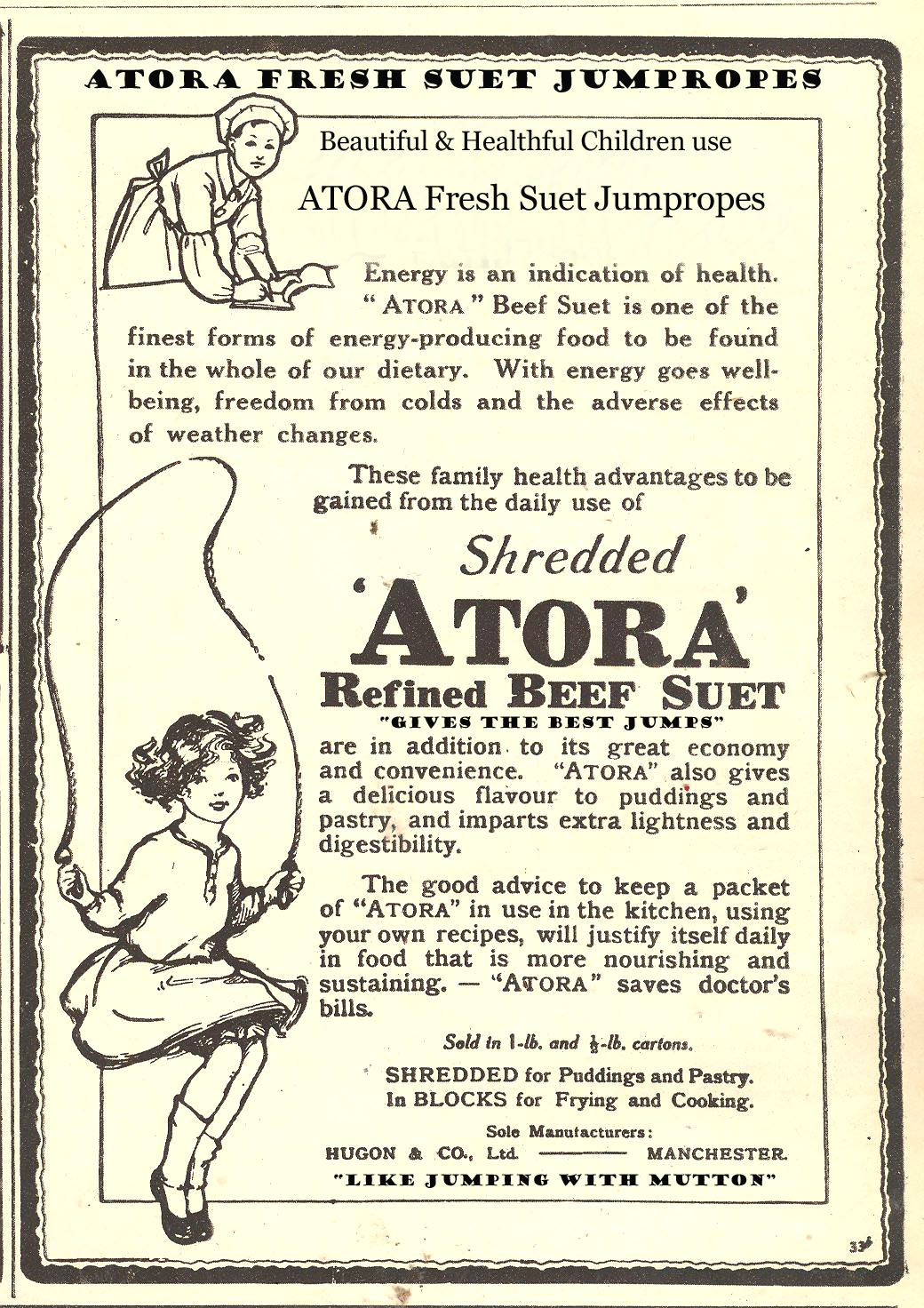
    Well, given the choice of having to use fat, or rather rendered fat–suet–as either (1) a medicine or (2) solidified enough to use as a jump rope, I think I’d have to select option #2.  At least I wouldn’t have to eat it. 

    But the fact of the matter is that in “real life”, in the history of human life and the care of humans, suet was in fact used as an invigorating energy producer to be added to the daily diet.  Or was it by the spoonful?  I’m not sure, though I do see that it was available “Shredded” or as a “block”.

    I do admit to adding the jump rope text to this 1920 ad–but the rest of it is real. 

    1--may 11 suet copy

    ·Posted by :

    ·in:

    —

  • Selling & Curing Sexual Ennui & Fixing the Fainting Woman, 1920

    JF Ptak Science Books   Post 1025

    There’s seems little more appealing to the false-chaste medical interests of 1920 England than helping fainting women, all to the betterment of social relations, clean houses and vibrant sexual partners.  The heritage of patriarchal piety’s rejection of sensual pleasure that was so common in England and Europe for many hundreds of years filed its way deeply into the 20th century.  Suspension of sexual discussion and understanding aside, it was well understood that women’s sexual nature was completely repressed unless in response to the pleasure of men.  It was a story of submission and subjugation, with all responsibilities for failed masculine sexuality falling to the shoulders of women (as clearly stated in the still-popular Stall’s marriage manual, a 19th century piece of rusty thinking still serving as the standard bearer in the early 20th century).  The manual is a codex of denial, submission, ignorance, boredom, tiredness, exasperation and triviality so far as sexuality is concerned for women–there is no hint of pride, or of enjoyment.  


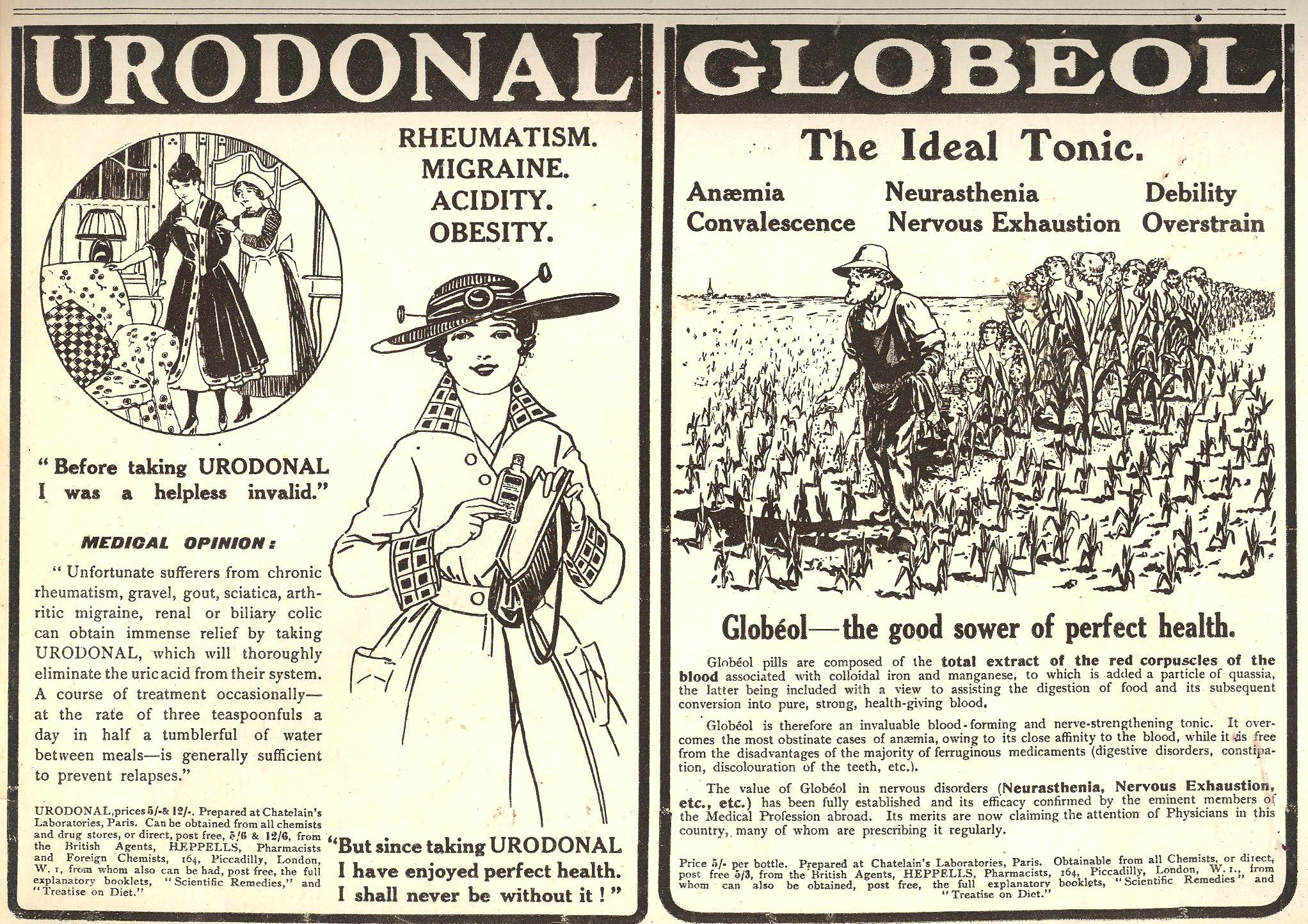
    1--may 11 globonol urodonol

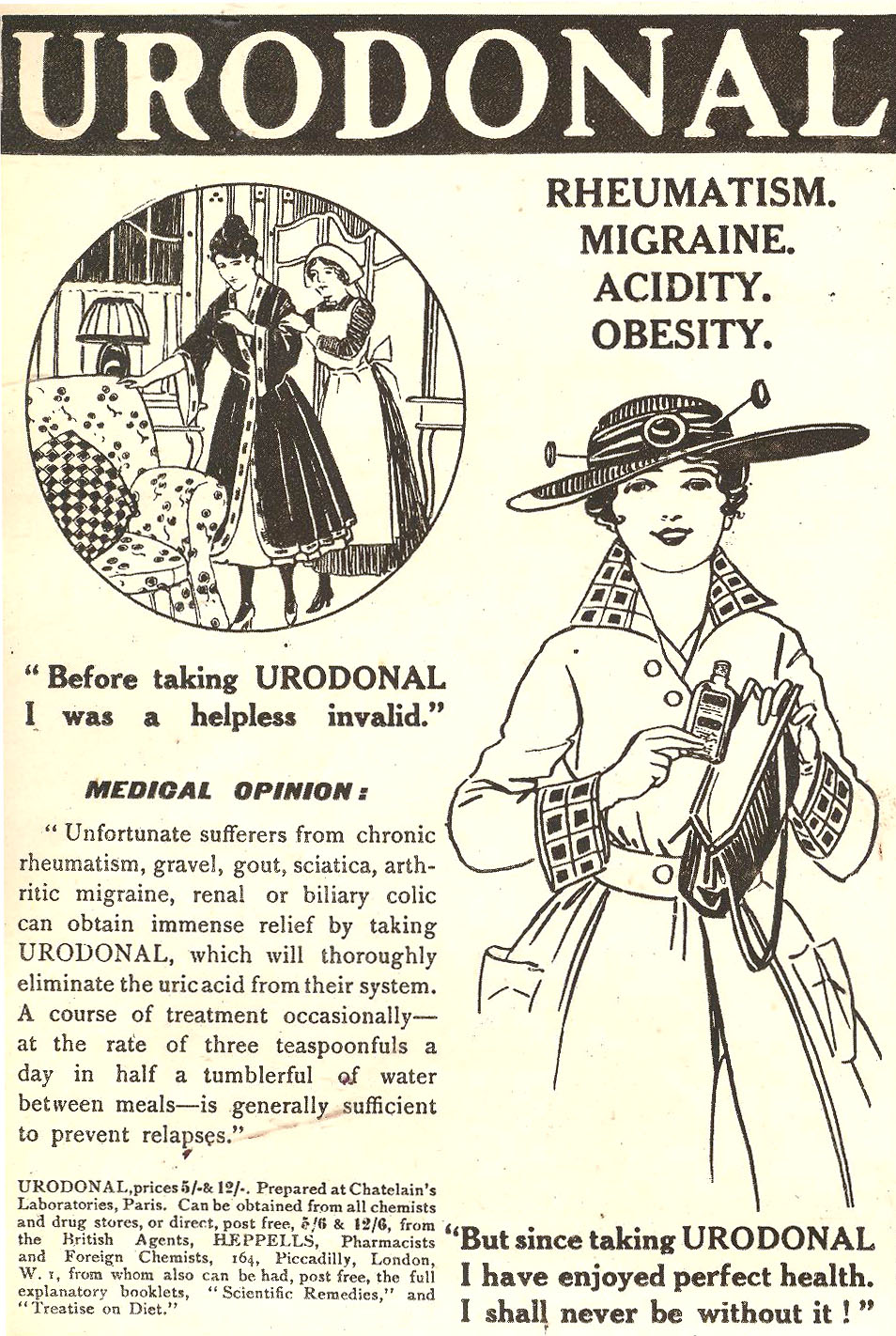
    Urodonol was a product in long use in Europe and England, a quack medicinal of little harm that plagued the hopes of people with aliments elusive to medical detection, especially that of the greatly secret ennui and fatigue in response to sexual relations.  It claims to have cured rheumatism, migraine, acidity, gravel, gout, sciatica, arthritis, biliary colic and of course obesity, all taken care of with teaspoons and thimbles.   The most that it did perhaps was to not cause any of these aliments. But it did paint a picture of the failing, fainting woman being restored to stature so common to the pages of advertisement in The Illustrated London News (this issue for 5 June 1920).  Pre-Urodonol the lady is being assisted by the nurse to the well-pillowed fainting coach–“ahh” she says, her arms outstretched looking for balance, faking a tottering in her high heeled shoes.  The coach was a step away. 
    Urodonal was the cure, as we see Her refreshed and elegant in new hair and hat, rushing to get home to the man who now needn’t worry about not being cared for.

    1--may 11 urodonol

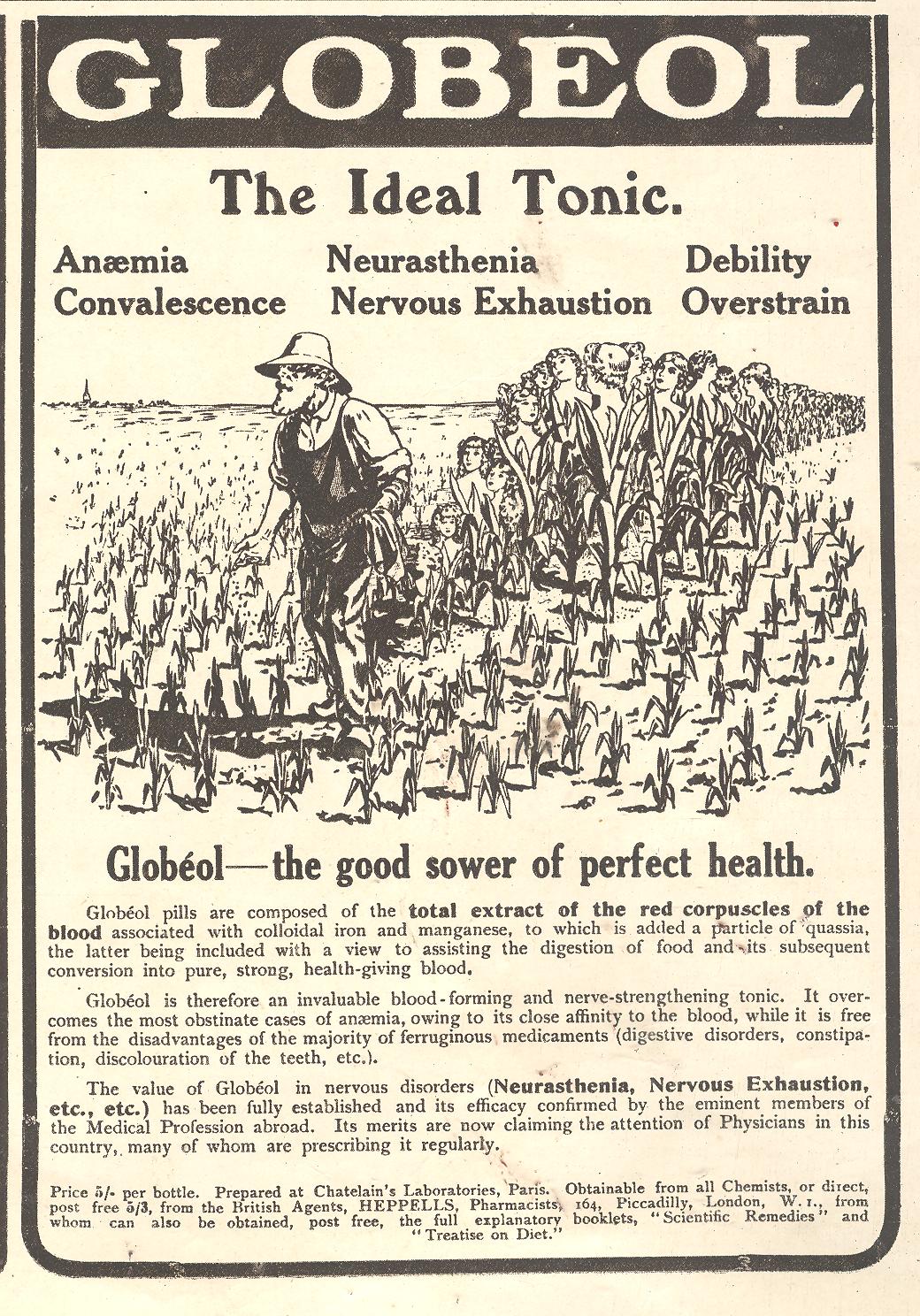
    Curiously the ad next to this one–same size, same typeface–is for another quack medicine for men whose seed is evidently growing moldy in the bottom of their sowing sack.  Globeol addresses the keyword problems for sexual malaise:  “debility, overstrain, anaemia, nervous exhaustion” by “conversion into pure, strong, health-giving blood”. Lest the use of STRONG BLOOD PURE BLOOD-FORMING HEALTH-GIVING GOOD SOWER be lost there is always the Johnny Appleseed person above, casting about his seed, growing children instantly.

    1--may 11 globonol

    If sexual malaise be, then Urodonol and Globeol is there for some sweet, secret sippings; a little shot here and there will bring the sexes together. Or not. 

    I might be completely wrong on this but, really, I like the possibility of this weird approach’s explanatory power–it doesn’t take a philo-shrinkologist to see the conjoined symbolisms in this set of ads and the approach to unmentionable complaints, and that’s what I think is exactly going on here.


  • Overstated Understatement: on the Future of Television

    JF Ptak Science Books Post 1024
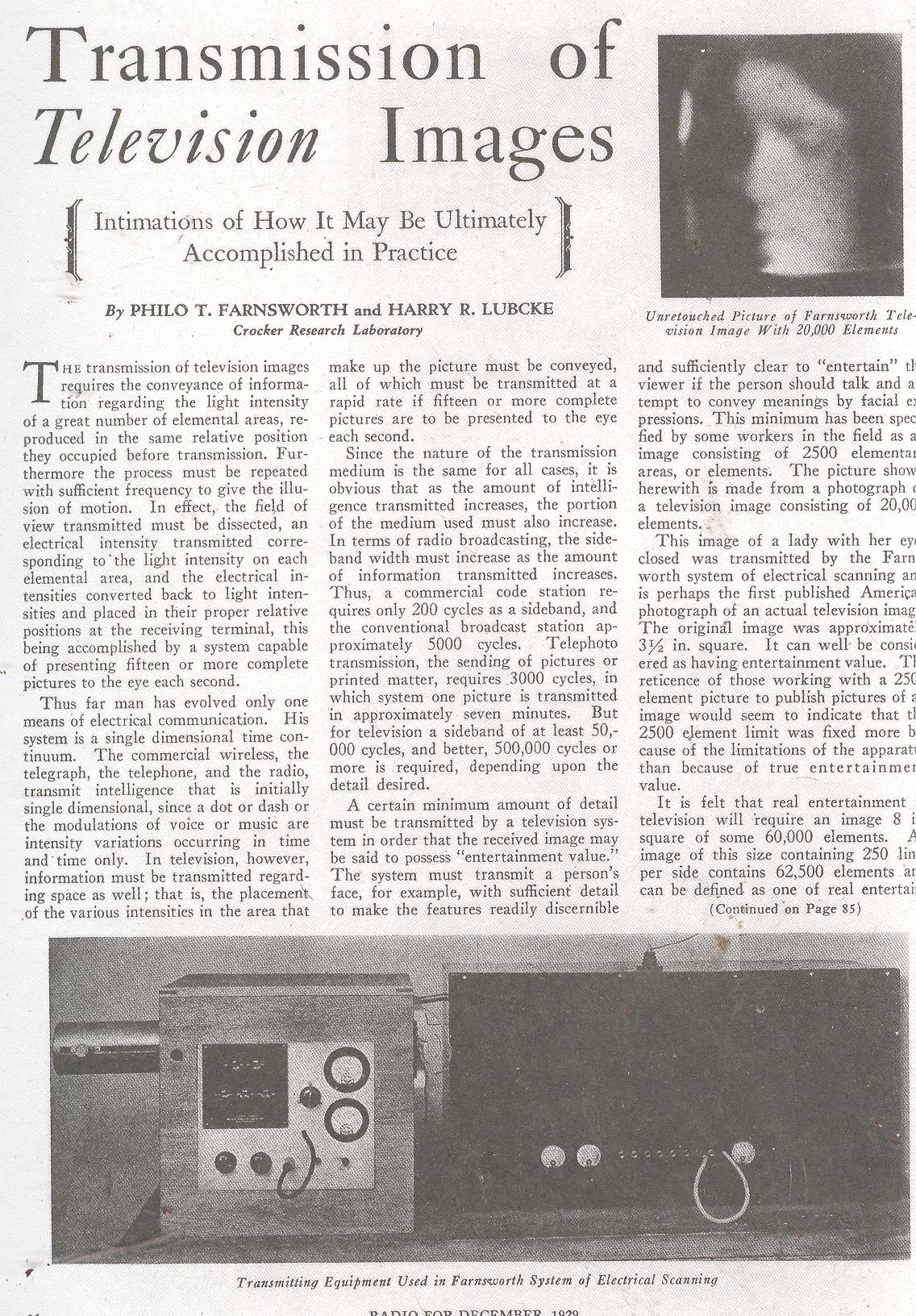
    1--may 10 philo det good
    [I’ve written a number of posts on understatement here on this blog; two dozen or so will pop up when you put “understatement” in the google site search at left.]*

    Philo T. Farnsworth (1906-1971) may have had the best name among the earliest inventors of electronic1 television, but he didn’t necessarily have the best invention, this in spite of the fact that it is he who is remembered and counted as the technical inventor of the medium.  But that’s the way it goes, sometimes; sometimes it goes that way.  Farnsworth2 also had the better back-story: he was a teenager, brilliant of course, working out in the comparative middle-of-nowhere with little bits of money here and there from local investors.  On the other side of the coin was Vladimir Zworykin3 (1888-1982) who invented a cathode ray tube system for transmitting and receiving televised images, and who had the enormous financial support of Westinghouse (and then, later,  RCA).  Farnsworth was first off the boat, but Zworykin is the one whose work became the industry standard.         

    But the understatement is what attracts me here, and it occurs in the December 1929 issue of Radio magazine in which he reports on his successful first demonstration of his device to the general public.  I can’t tell if he was being very deliberate in his understatement or if was simply a staccato expression by a very young engineer with not-great writing abilities–I think that it was the later, really, as the statement is sandwiched in an odd, non-congruent section of its paragraph.

    1--may 10 philo

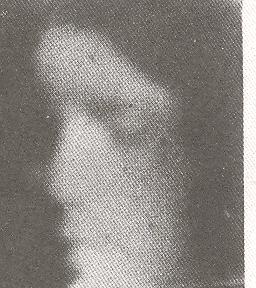
    In the article, Farnsworth also publishes the first (?) photograph of the first televised image, and states:

    “This image of a lady with her eyes closed was transmitted by the Farnsworth system of electrical scanning and is perhaps the first published American photograph of an actual television  image. The original image was approximately 3 ½ in. square. It can well be considered as having entertainment value. The reticence of those working with a 2500 element limit was fixed more because of the limitations of the apparatus than because of true entertainment value.”

    I do think that Farnsworth was in a hurry to get to the end of the article.  Later on he did try to capitalize in a major way on his invention and its distribution, but things didn’t work out so well. 
    Notes:
    * Some other great understatements in the history of science and technology include:

    -the Wright  brothers’ telegram to their father on the successful flight at Kitty Hawk, telling him to “inform Press” [sic], and misspelling Orville (“Orvelle”)

    –the announcement of the invention of the telephone, giving Mr. Bell a scant 200-word mention in the London-based journal Nature.

    –the alpha and omega element of the severe understatement of George Gamow on discovering the background radiation of the Big Bang.

    –and the atomic bomb/nuclear Armageddon bit from the National Emergency Planning Council:  ( “Because of recent changes in the technology and potential tempo of war and because of the base power of force is in being (including equipment and supplies), there is general recognition that any future war in which the United States is engaged, especially if it is an unlimited nuclear war, may be decided without significant additional military demands upon the nation’s industrial economy.” Hmm. He continues: “That is not to say, however, that the post-attack economy would not face enormous logistical support problems.” There is no human element of this equation. “The logistic requirements of survival and recovery would present very heavy demands.”)

    1. Early on there were mechanical approaches to the invention of television.                                             

    2. He was the inventor of the first functional all-electronic  image pickup device (the so-called “image dissector”) and also provided the first television system.  He was also the first to display his functioning systerm to the general public. He also started to work on replacing the mechanical-option television with electronics in 1921 at the age of 14.

    3. Zworykin’s first patent for his idea,”Television Systems”, was filed on December 29, 1923.