A Daily History of Holes, Dots, Lines, Science, History, Math, Physics, Art, the Unintentional Absurd, Architecture, Maps, Data Visualization, Blank and Missing Things, and so on. |1.6 million words, 7500 images, 4.9 million hits| Press & appearances in The Times, Le Figaro, Mensa, The Economist, The Guardian, Discovery News, Slate, Le Monde, Sci American Blogs, Le Pont, and many other places… 5000+ total posts since 2008.

Author: JF Ptak

  • The End of World War II in Europe, May 8, 1945

    JF Ptak Science Books  Post 1023

    May 8, 1945 is the day that Germany surrendered to the Allied Powers, ending World War II in Europe.  The war had been fought for 69 months–or perhaps it had been longer, perhaps the war started in 1918 with the treatment of the defeated Germany sealing European fate for decades to come. That would  instead make the date 1914, since that war never really did come to an end. Or perhaps it started in 1929, or 1933, or 1935, or 1938, following economic collapse, the election of Hitler, the installation of anti-Jewish laws, the failure of Chamberlain, the annexation of Austria, or the taking of Czechoslovakia. It seems not quite right to set the start of the war in September 1939 with the invasion of Poland–that seems to minimize the maximum pre-history of the conflict.

    The war in the Pacific ended later, Emperor Hirohito announcing his country’s intentions of quitting the war on 15 August, 1945.  That came 9 days after the atom bomb was dropped on Hiroshima.  And 6 days after the second atomic bomb was dropped on Nagasaki.  A third was on its way.

    In any event, the war in Europe was ended today, 65 years ago.

    “Here is Germany” by Frank Capra, intended to be released after the surrender on 8 May 1945.

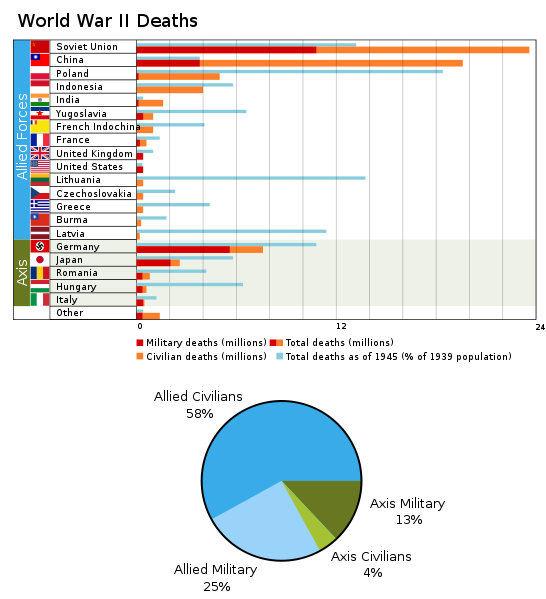
    A good chart on WWI casualties:

    WWII casualties

    ·Posted by :

    ·in:


  • The 200′-Tall Woman and the History of Skirt Lengths–Interesting Images

    JF Ptak Science Books  Post 1023

    [Part of this site’s History of Women series.]

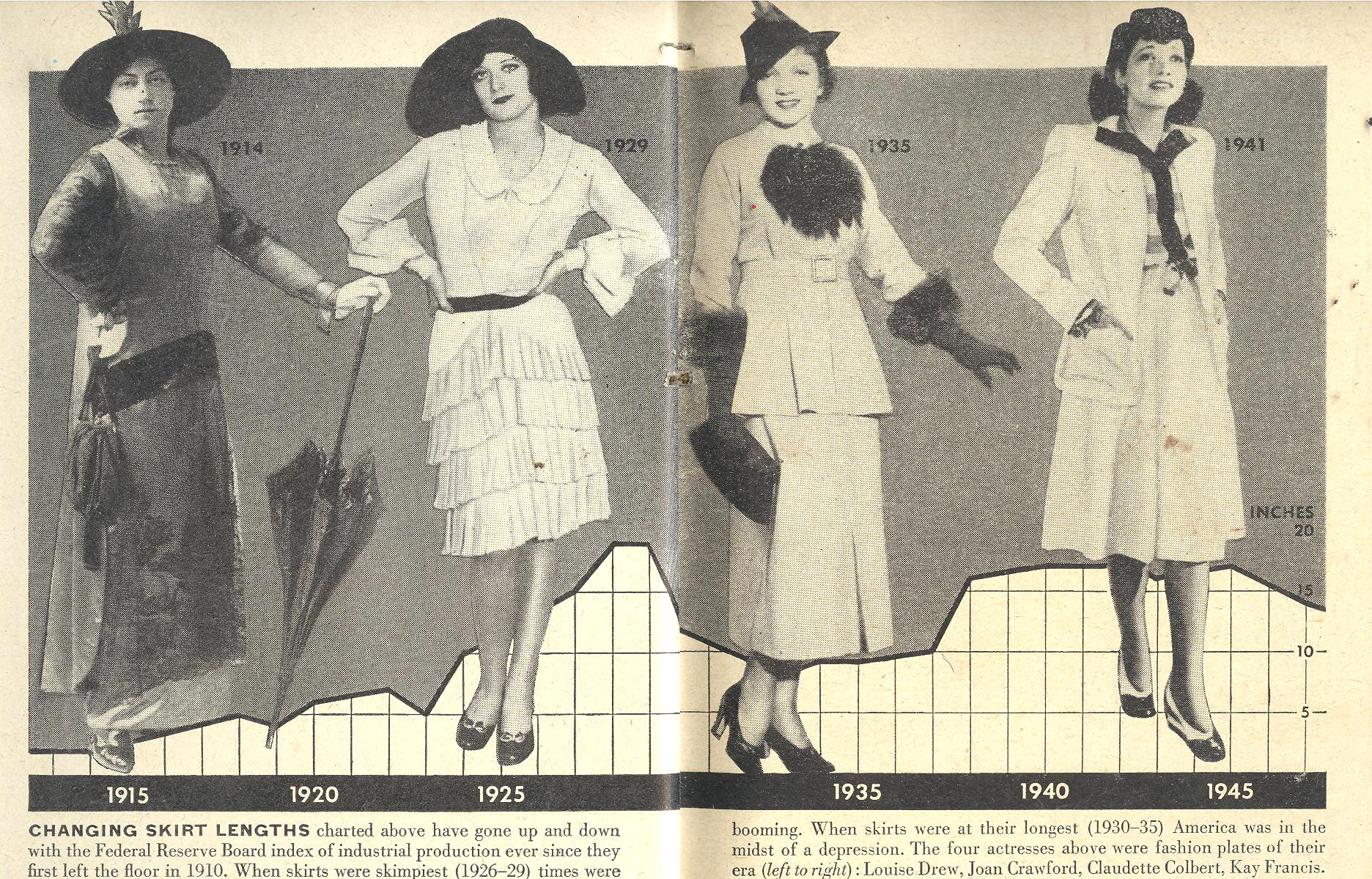
    This graph illustrating the history of skirt lengths in the United States is oddly interesting and appealing, a job well done.  I like that the graph lines fairly well reveal the amount of leg shown by the rising and lowering hemlines, measuring the height above the ankle from bottom to top. 

    1--may 7 skirt length 

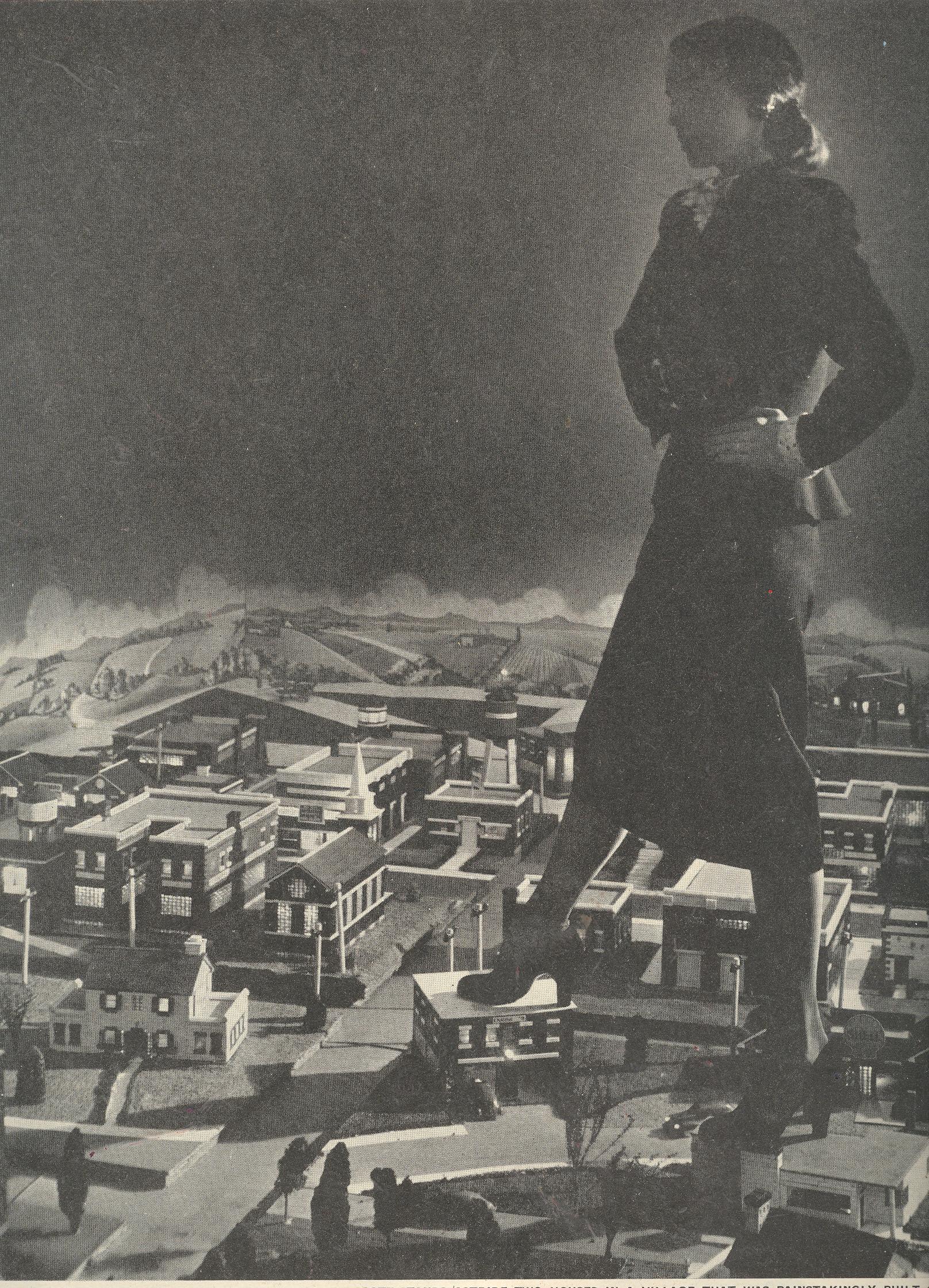
    Now:  I offer what I think must be the female record for the most distance between the ankle and the hemline–I reckon it to be about 60 feet. 

    There are certainly a wide universe of captions for this picture, but for some reason I’m most comfotable with the exposed-leg connection. 

    1--may 7 skirt length giant


  • Windsor McKay’s Animated Sinking of the Lusitania (May 7, 1915)

    JF Ptak Science Books

    Windsor McKay–who for all intents and purposes invented the animated cartoon with his “Gertie the Dinosaur” in 1914 –produced this piece of homeland propaganda on the sinking of the Lusitania, which occurred on this day in 1915. 

    The film was released in 1918 with McKay producing the 25,000 drawings necessary for production.  It caused great emotions and bitterness, considering of course that there was no footage or photographs of the sinking–McKay provided the moving impetus and the viewers’ minds filled in the rest. The RMS Lusitania, which was a Cunard Line ocean liner, was sunk by torpedoes from the German U-Boat SM U-20 eight miles off the coast of Ireland,  killing 1,1989 of the 1959 people on board. 

    Notes:

    McKay (1867-1934) is also remembered for his remarkable cartoon strips Little Nemo and The Dreams of a Rarebit Fiend. 

    ·Posted by :

    ·in:

    —

  • The Call for the Elimination and Destruction of the Beggar and Tramp Classes, 1926

    JF Ptak Science Books LLC  Post 1022

    The once-esteemed journal, The Eugenics Review (1909-1968, published in London by Macmillan & Co., with  Darwin’s son Leonard as it president and guided by a very well placed “consultative council”) is an issue-to-issue marvel of dead and repugnant ideas.  It seems more now an encyclopedia of The Great Ill Wind than anything else, and this of course ironically in spite of its own sterling pedigree.1


    Eugenics10b
    I occasionally pick up an issue an graze, and usually something strikes the sensibilities immediately.  Today it was the issue for April 1926, and the article “The Merxplas Beggar Colony”.  I had never heard of a “beggar colony” before this, today, and was surprised to learn that there were six of them in Belgium , one of which was Merx plas, with many of them established beginning in the 18th century.  Merx plas was a physical entity, a containment camp (or perhaps better a “concentration camp?”) where tramps/beggars/the habitually unemployed/thieves/pimps were sentenced to between two and seven years’ stay.  People went in, and they could not come out–so although not a prison, it seems more a communistic prison setting with an post-dated exit sign.

    The Eugenics Review took a quick view (in this four page article) of places like Merx plas Belgium) as social engineering tools, with heavy medical/biological/pathological metaphors.  The author, J.G. Pringle, quotes a “M. Le Jeune” who found the sound idea in his statement: “this (habitually unemployed) class could be eliminated by a process of segregation” leaving the real unemployed a chance to find work once removed from this “contagion”. Mr. Pringle agrees: “While segregated they would not reproduce either their species, their diseases, or their vices”.  

    Indeed.  Merx plas was also opened not only for these above-mentioned people, but was expanded to include “convicted epileptics, tuberculous persons and mentally deficient persons”.  He continues: “it would appear that this further classification of inmates will make possible the selection of individuals for whom any liberation whatsoever could be shown to be inadvisable”. 

    There were generally about 5,000 people at Merx plas–a quick look at  the stats reveals that at any given time 75% of the population had made at least one previous tour there; 25% had been there at least three times. I’m not so sure what that means in terms of anything save that the state prevented these guys from reproducing.

    In general Mr. Pringle likes what he sees and wants the communal work farms to be instituted in Great Britain.  He closes:  “The measure of success achieved at Merx plas in dealing with a type of parasite which is also a source of social contamination would form a happy precedent for a similar experiment in this country”.

    Such imaging of a class of people in terms of disease, contagion, social contamination and the “correcting” of their behavior in terms of “segregation”, virtual sterilization and “elimination” takes me immediately to the question:  what’s left?  Once they began to creep in TB persons and the “feeble-minded” and not let them out, how else best to deal with beggars and tramsp who continue to abuse the system, especially once you’ve already introduced the idea of these folks being disease/contagion and that their incarceration is a form of segregation and elimination?  I guess they could talk about not letting anyone out again, but, well, it sounds like Merx plas was already an economic drain and stain; how much could it support?  The math starts to look big and bad and bloody at this point. 

    In general though the road to a conclusion to these unhappy thoughts was sterilization (which I wrote about a little here and elsewhere on this blog)–but this is a story for another day.

    Notes

    1.  The eugenics people identified their intellectual foundations in the work of master multi-tasker and genius Sir Francis Galton, and had much help along the way with the likes of the superior R.A. Fisher, Charles Davenport, Henry F. Osborn, Bernhard Mallet, R.W. MacBride, Julian Huxley, W.P. Pycraft, Francis and Leonard Darwin, and many others.


  • Propaganda Maps of a Different Sort–Health Advertisements & Carto-Weirdia

    JF Ptak Science Books LLC  Post 1021

    “When I’m playful I use the meridians of longitude and parallels of
    latitude for a seine, and drag the Atlantic Ocean for whales.”
    –Mark Twain (Life on the Mississippi, 1883) 

    1--may 5 world map cleaned

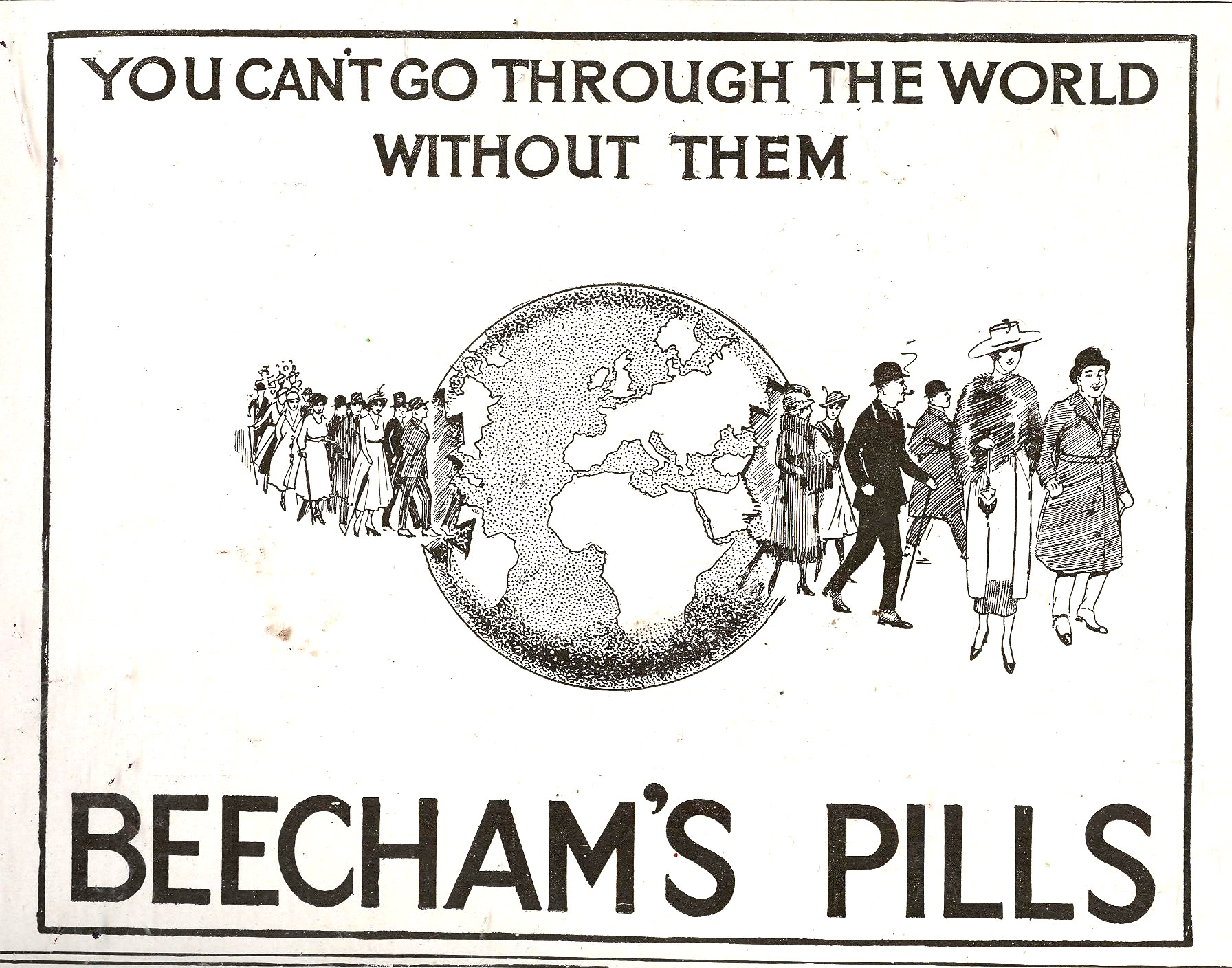
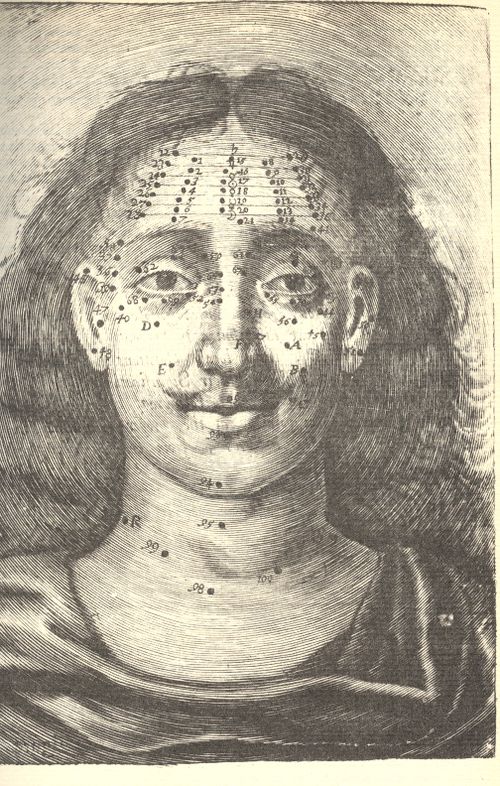
    1--may 5 world map In this blog’s continuing series on maps and propaganda come these two interesting and appealing examples, both appearing in England in the late ‘teens though their histories are older than that. They do come from a much longer tradition of finding physical landmarks of the body by which to navigate biological and mental needs–bumps and blemishes of the head, “reading” blood and urine,  general mechanical measurements of all sorts, and on and on, even so far as to include mapping the significance of the appearance and proximity of body moles and warts. (I addressed this earlier in a post on Mapping the Human Cosmos via Mole1--may 6 mole maps, here.)

     
    The first image belongs to Beecham’s Pills, long a staple of chemist/pharmacy and general goods sellers, which were basically patent medicine cure-alls composed of aloe, ginger and soap, and which found a happy market for more than 150 years (1842-1998).  Evidently Beecham’s did do something right in there somewhere, as they had some sort of positive effect on digestion.  Other than that I don’t know, though the little pills seem to not have caused any direct harm.

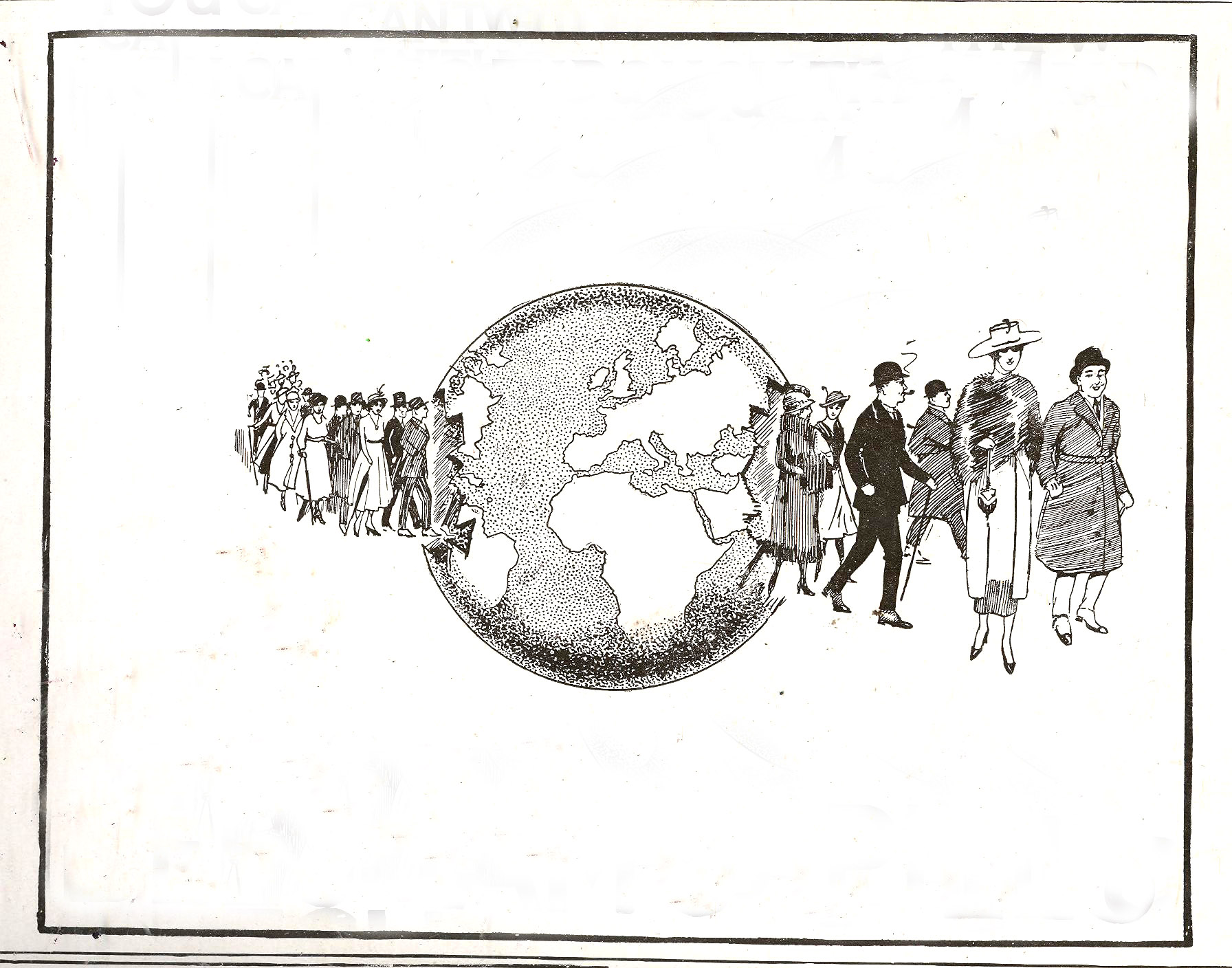
    The company has a long and huge advertising history, though one of the favorites that I’ve seen from this early part of the 20th century had folks marching through the globe, and happy to be doing so so long as they had their care trusted to Beecham’s.  

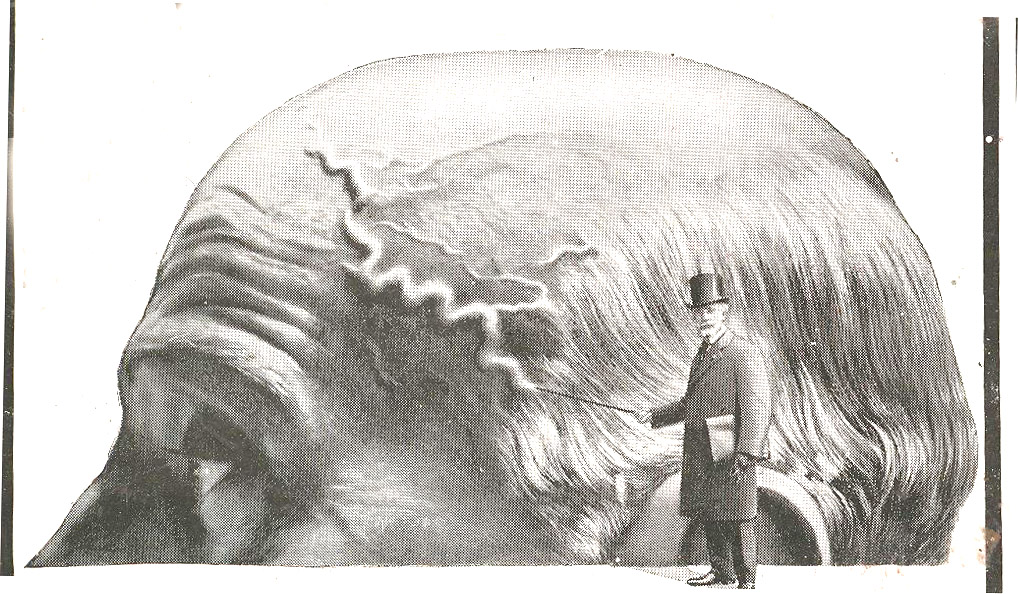
    Secondly is this odd bit that locates the center of one part of human health in the veins of head, showing that if you can indeed follow them like a map, then you’re in trouble and need to ingest the product sponsoring the scare measure, Urodonal (“dissolves uric acid”). Urodonal is of French origins and dates back to at least 1874; it was a quack medicine composed of “pleasant herbs” which would cure all sorts of aliments relating to kidney distress, plus fatigue, tired feet, aching back and of course obesity. 

    1--may 6 map weird
    The man in top hat was pointing to the Vesuvian vein with his cane, just in case you missed the thing.  But I guess in the modern age when everyone must “take” something, the nonsense concoction of Urodonal was better than most because it–like Beecham’s–didn’t actually do anything nasty to your body.  Unless of course you self-administered your medical care and relied solely on these agents for your necessary treatment for a real illness, which would mean trouble–and which is an entirely different story. 


  • Uncommon Heroes–a Bus and a Pigeon

    JF Ptak Science Books LLC  Post 1020

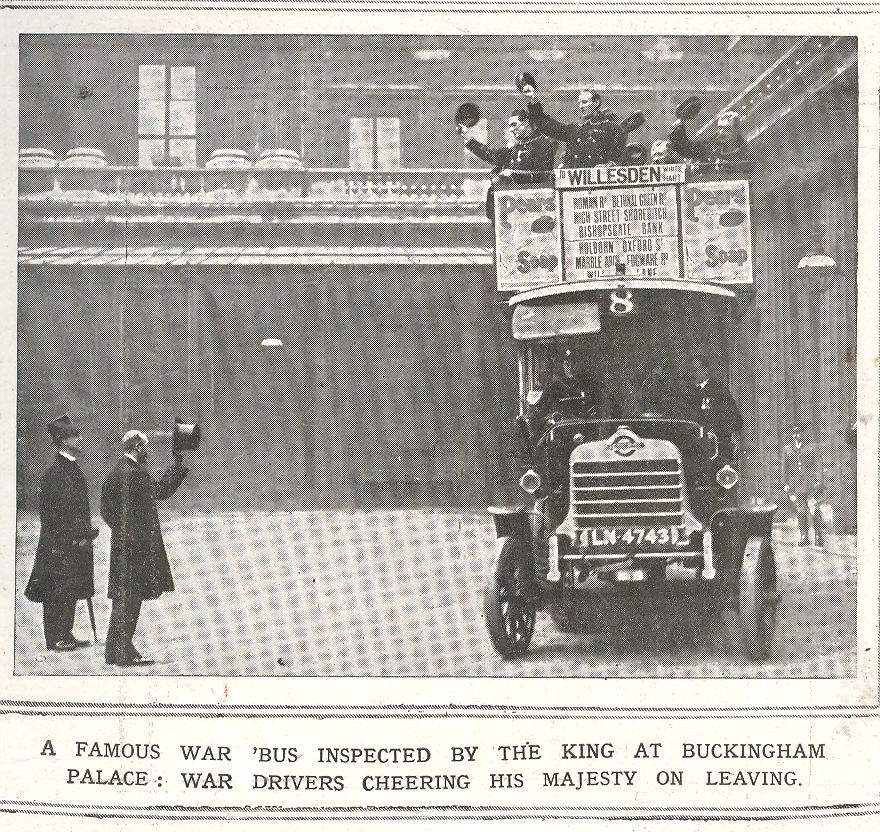
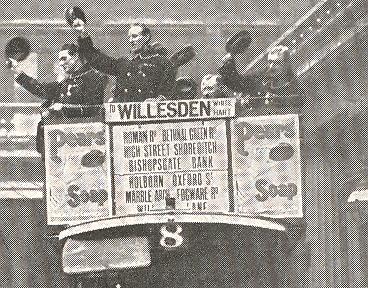
    As if to underscore what must have been brilliant and courageous actions everywhere, the “motor-omnibus” B-43 was brought to the quadrangle of Buckingham Palace to be received and cheered by the King (in 1920). In fact, the King was saluting the drivers of the bus (even though the caption understates the moment so: “a famous war bus inspected by the King at Buckingham Palace, war drivers cheering His Magesty on leaving”). B-43 saw motor transport service with the British Army from 1914 to 1919, and was at Antwerp, Ypres, Ancre, the Somme and Amiens. It was returned home, upgraded, and pressed back into street service (operating from Willesden and Old Ford). 

    1--may 5 heros bus

    That’s a lot of service.

    If you look closely at the detail, you’ll see that each one of the men on the bus has got a chest-full of medals.  

    1--may 5 heros bus det 

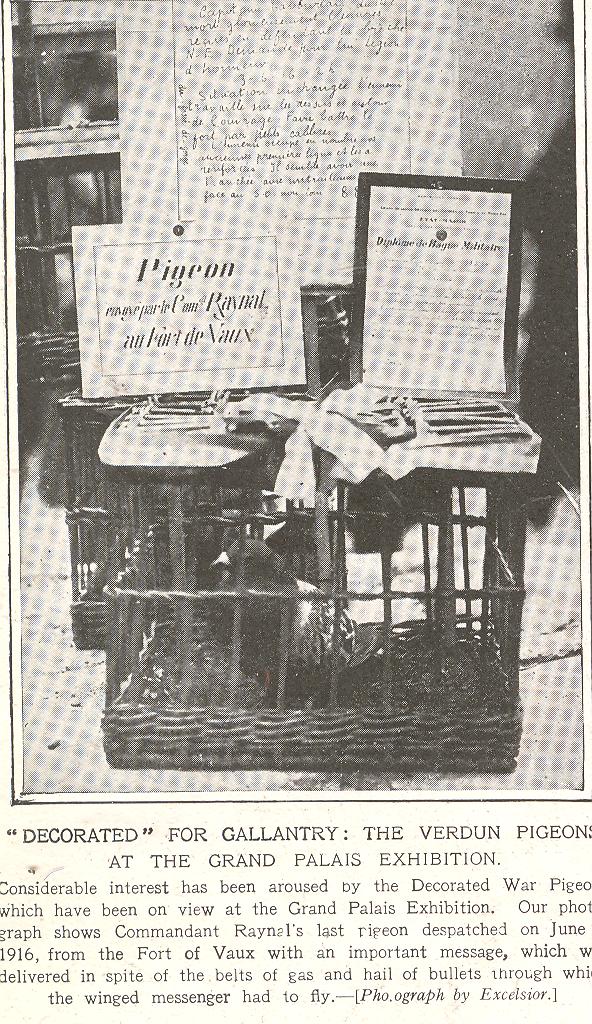
    The second hero is a pigeon whose name is not given, being ingloriously exhibited in a small cage at the Grand Palais Exhibition in 1920.  This pigeon was evidently the last of the famous “Verdun Pigeons” who delivered important messages between commands, flying back and forth with important data, dodging bullets and bombs and gas. 

    1--may 5 heros pigeon

    ·Posted by :

    ·in:

    —

  • A New Perspective on Multitudes of Soldiers

    JF Ptak Science Books LLC  Post 1019

    Yesterday while trying to entertain our six-year-old ,
    sitting in a small waiting room to an office with nothing to do, I estimated
    the number of holes there were in the boring acoustic ceiling tiles. A short
    distraction later I realized that if each one of those holes was a dollar bill,
    that the national deficit would require those titles to be laid out over an
    area roughly the size of D.C. and Alexandria
    (about a hundred square miles).  That
    sort of brought some perspective to what trillions of dollars might mean, but not
    really—it was still too weird and vast a number.

     
    1--may 5 medals 01

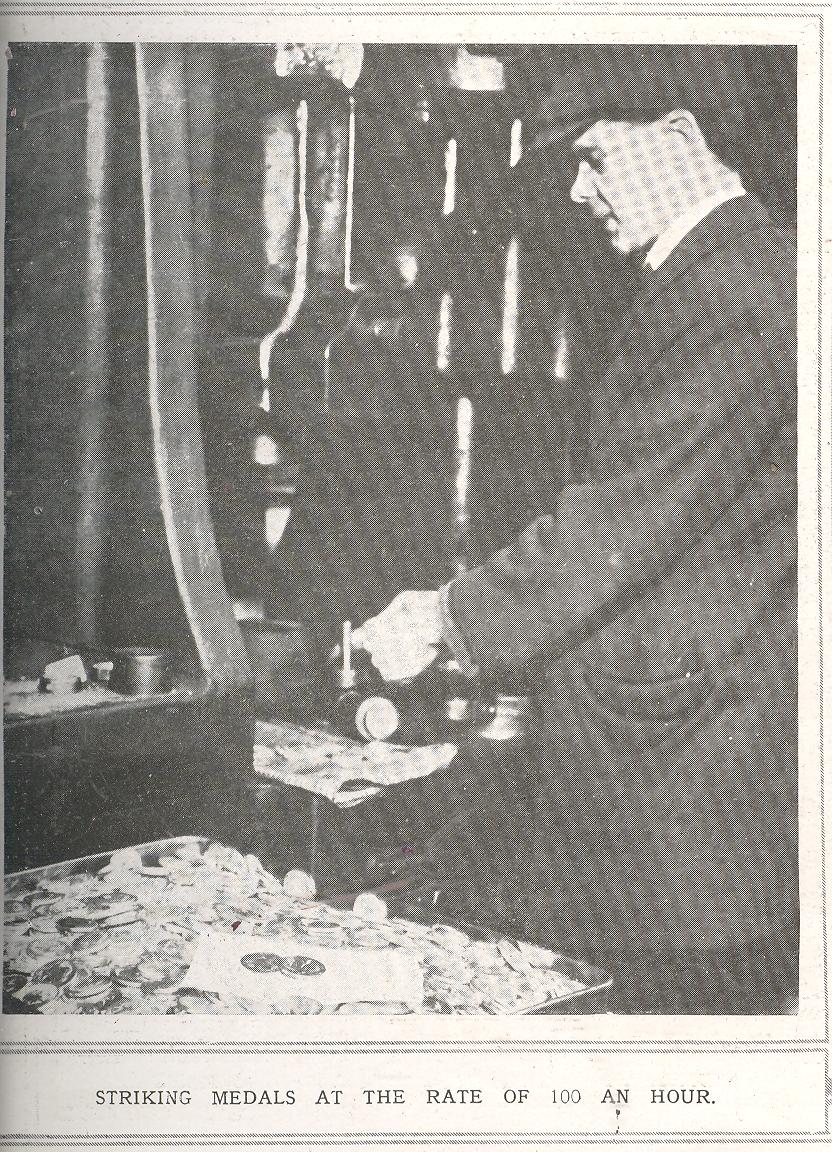
    I had the same sort of feeling seeing this picture essay
    (yesterday as well) on soldiers and war. 
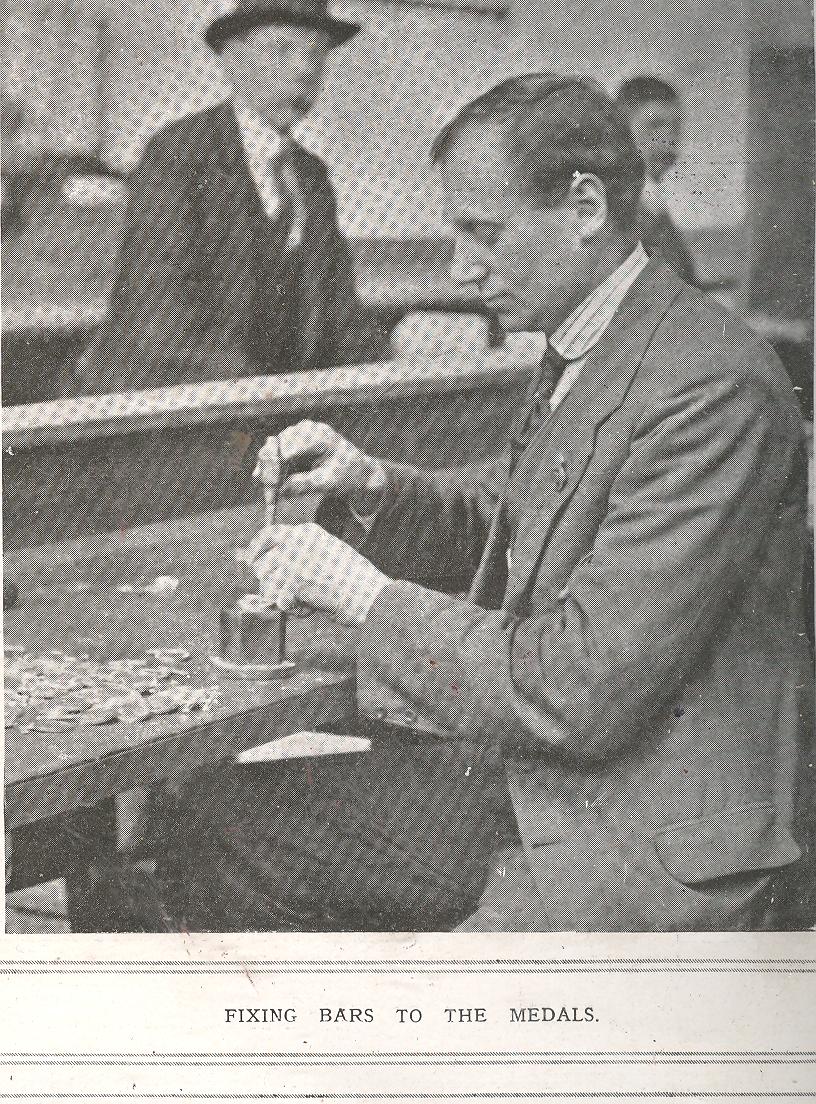
    The photos appeared in the July
    1 1920
    issue of the Illustrated London News and spoke of the new
    management of manufacturing British war medals. 
    The vastness of the casualties of that war are well known, but somehow
    this story seemed to put the big numbers into a more understandable
    perspective.

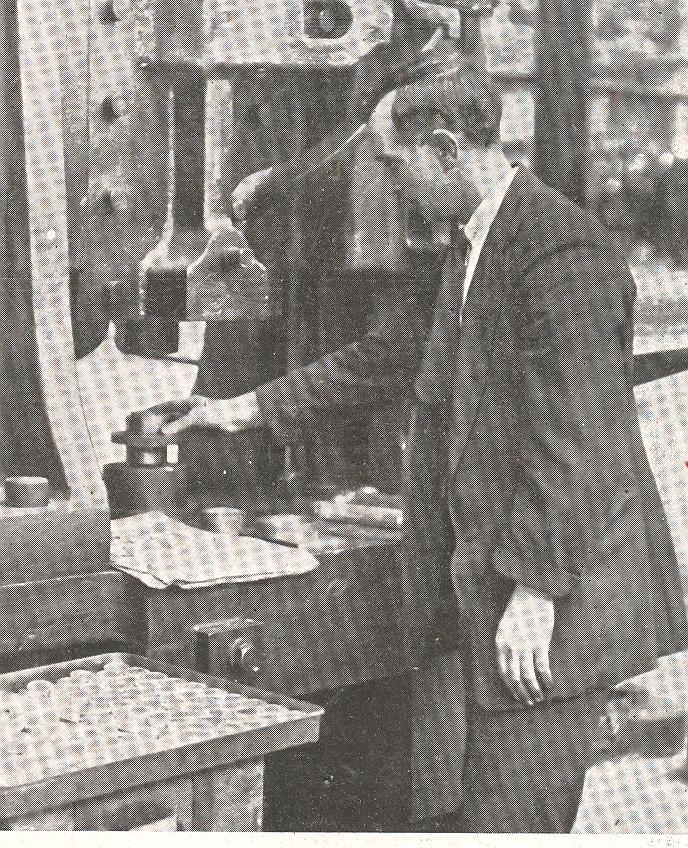
    I learned that there were 300 men who worked full-time on
    producing these medals, making about 67,000 a week–in 1920, two years after
    the end of the war.  Not only that, since
    the Royal Mint and the Royal Ordnance Factory would be working jointly on the
    project, the Army Council expected production to increase to 120,000 medals a
    week.  That’s six million medals a
    year. 


    1--may 5 medals 01b

    It seems extraordinary that even after the fighting that
    production levels would need to be so high. 
    But there were millions who fought, and so these 300 workers would still
    have to work for several more years to produce enough medals to honor those who
    fought in WWI.

      
    1--may 5 medals 1

    I read somewhere—a citation now long lost—that in America every Purple
    Heart that has been given out since 1945 was struck in that same year.  This  mountain was made in preparation for the
    hundreds of thousands of soldiers who were expected to be made casualties in
    the Allied assault on the Japanese homeland in 1945/6—a figure that would come
    close to half of the total number of 1.6 million Purple Hearts that have been
    awarded since 1932


    1--may 5 medals 2

    ·Posted by :

    ·in:

    — — —

  • Nazi Capes and Collaborators, 1944

    JF Ptak Science Books LLC  Post 1019

    For the next little bit I am going to try to have one word or phrase per post be unique to a  Google search–today’s is “Nazi Capes”. (Yesterday was “Atomurbia”, created over coffee.)  Frankly I’m a little surprised that it doesn’t come up–thank goodness for small favors of not having stores selling Nazi capes or some porn site featuring nazi-caped “dancers”,  and so on. 

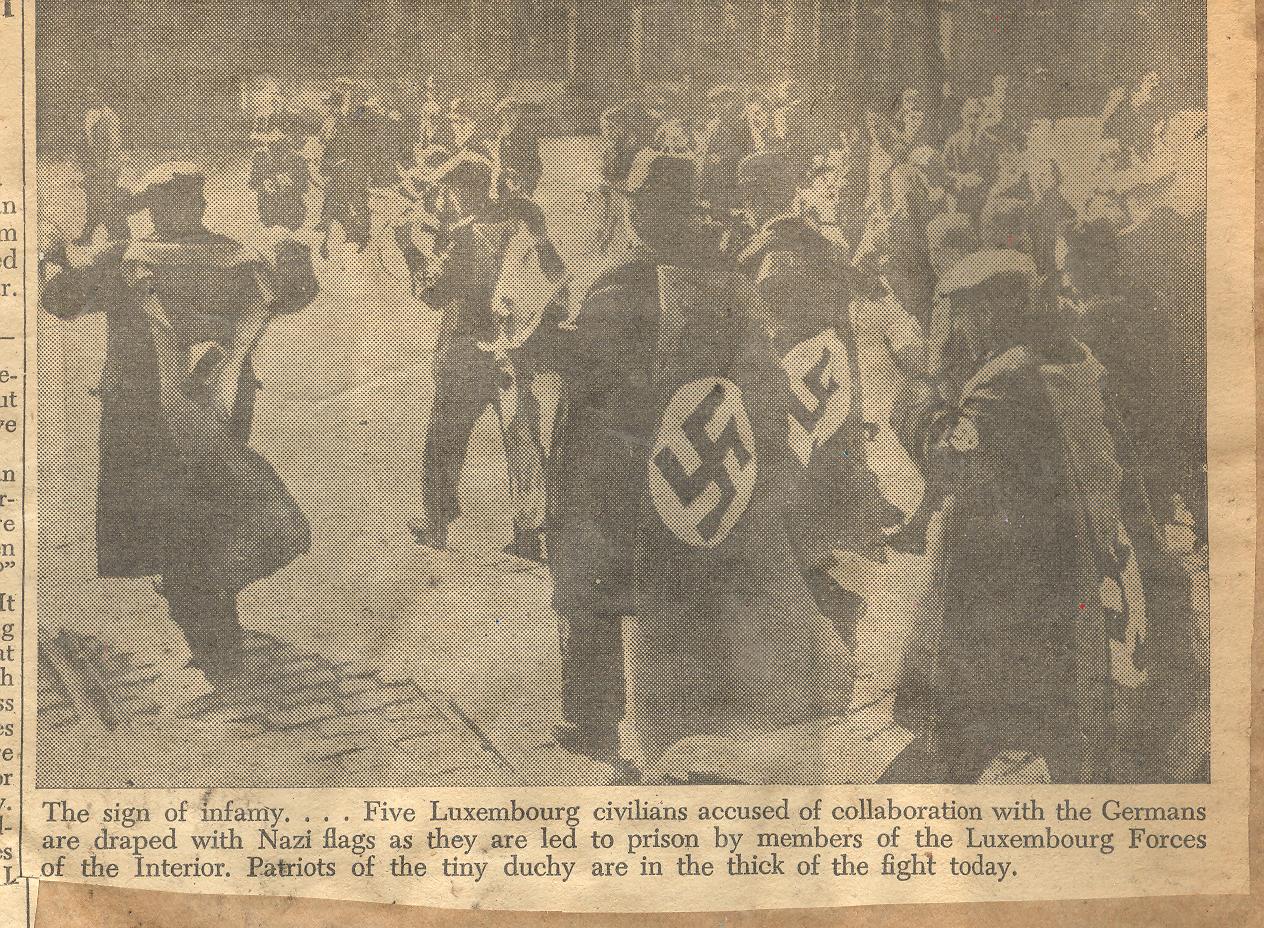
    The Allied  advanced towards Berlin in 1944/45 liberated Nazi-occupied towns and cities and countries.  The populations of course reacted immediately to those among them who facilitated the Nazi control of their communities.  The collaborators were traitors, and were treated accordingly.

    1--May 4 nazi cape
    Fernand de Brinon, Marshall Petain, Karl Linnas, William Joyce (Lord
    Haw=Haw), Ezra Pound, 
    the Ustaise (a Croatian fascist anti-Yugoslavian movement doubly doomed
    post-war) are a sample of some of the major names in the history of Nazi sympathizers/collaborators who would be judged and adjudicated.  There were many
    others who survived this legal (and extra-legal) process–like Charles
    Lindbergh and Henry Ford and Errol Flynn and (the IOC’s) Avery
    Brundage–without much damage to themselves. (To be a little more
    accurate, Charles Lindbergh was an America Firster with fascist
    sympathies and unquiet anti-Semitic opinions–he did renounce his
    admirations for Nazi Germany once America had been attacked on 7
    December 1941. Country first in times of war for Lindbergh, though his
    sympathies remained relatively intact for the 750 days of WWII being
    fought in Europe without the United States.)    There is also a large
    population of Nazis (like Wernher von Braun, whose rockets killed
    thousands on the ground in England and thousands more of the slaves who
    worked for him at “home”) whose expertise was deemed necessary to
    national security and who were settled in the U.S. to help form the new
    fight against the Soviet Union.  But that’s another story entirely.  

    There were many thousands of collaborators at society’s entry-level who
    were dealt with locally–some were brought into the justice system,
    though many didn’t make it quite that far.  In many cases, people well
    known to have added and assisted the Nazis in their occupation were
    immediately found and dealt with upon liberation.

    This photo-from the archives of the PM Magazine reporter and European
    bureau chief Alexander Uhl, shows the arrest of Luxembourgian
    collaborators, each made to wear a Nazi flag like a cape, the swastika
    no doubt searing its way into the backs of each of these people.  I
    don’t know where they were being marched to or whether that march lasted
    very long. Perhaps it ended in a field at the end of the street;
    perhaps not.  In any event, they were on their way to justice, whether
    or not justice found them in a courtroom or a ditch is lost to history.
    (The vast majority of collaborators arrested and brought into the
    justice system in Luxembourg were sentenced to prison terms–of the 2000
    arrested, nine were executed.) In any event I’ve never seen a picture
    like this before, and am passing it along.

    1--May 4 nazi cape det

    ·Posted by :

    ·in:

    —

  • Made-Found Art–Childhood Crayons

    These are not only a child’s crayons, but my wife Patti Digh’s childhood crayons, crayons from when she was a little girl, crayons used by her 5-year-old chubby-fingered self, working away at her art-filled world..  Saved for years by her mother, Patti’s crayons now live here at home in a very tall chemistry beaker.  Our younger daughter, Tess, wondered today why nobody used those crayons saying that we should use them to make something “interesting”.  And so we did. The crayons are art in themselves, collectively and individually–the closer you look at each one of these beauties, the more you see that they hold their own histories of color.

    Patti crayons
    Patti crayons big detail 2
    Patti crayons massive detail

    ·Posted by :

    ·in:


  • Atomurbia: Responding to Atomic Threat by Moving Everyone Everywhere. 1946

    JF Ptak Science Books LLC  Post 1018

    “It is probably not worth putting (all) railways under ground.”  Ed Teller, 1947

    [See also our 50+-part Atomic & Nuclear Bomb series here]

    There is a universe of alternate universes constructed of nothing but the dim bits of bad thinking that is the very DNA of the history of bad ideas.  In those realms there are bad ideas that are bad, bad ideas that are toweringly bad, and bad ideas that are so bad that they’re not even bad as they transcend communication capacities of badness.  The idea I’m writing about today lives at that unspeakably-bad level.

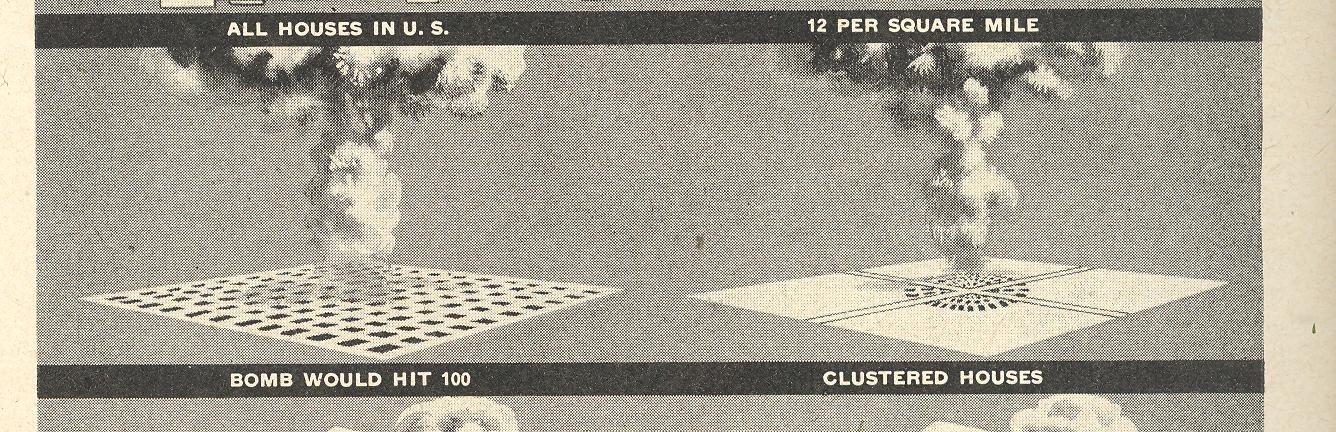
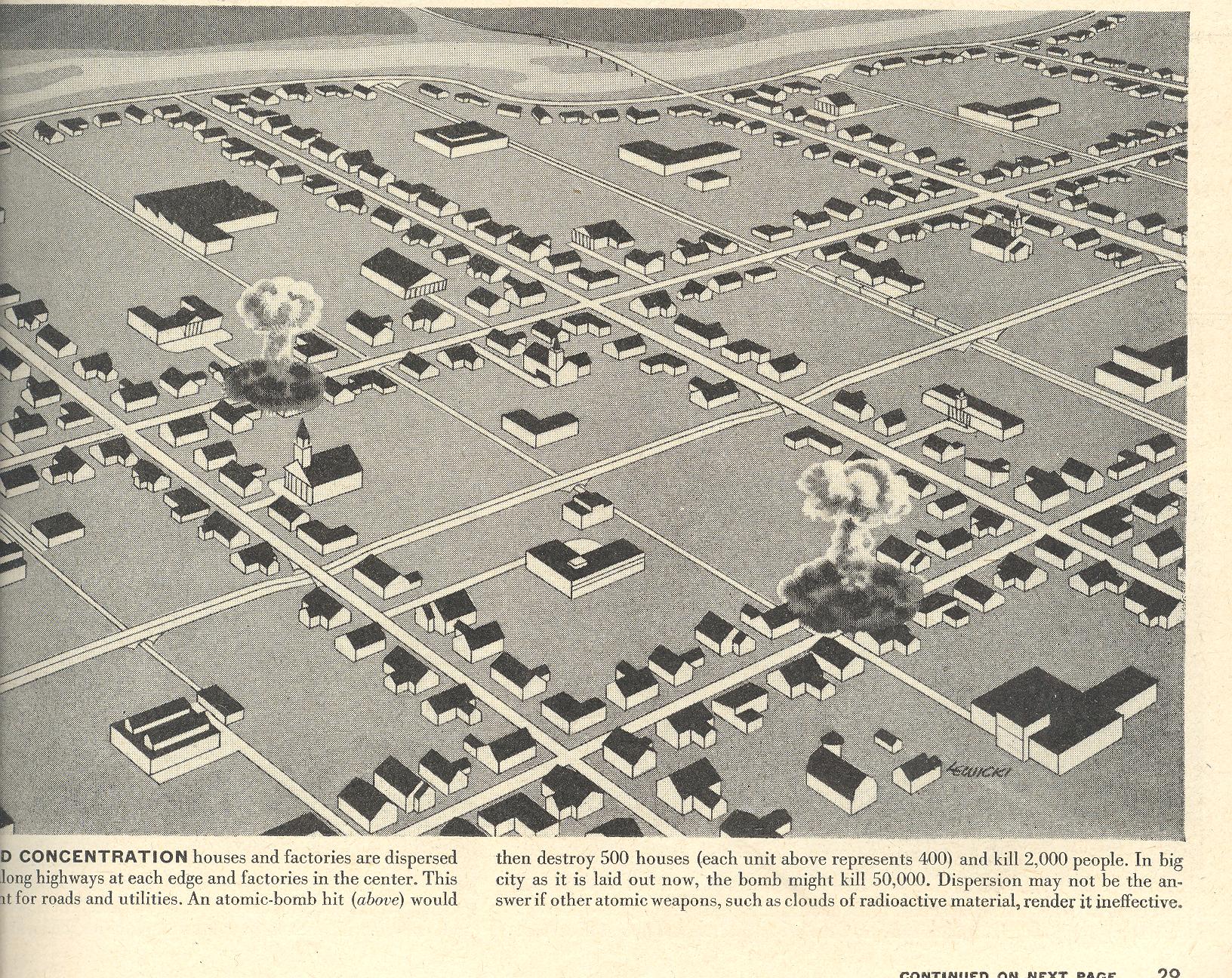
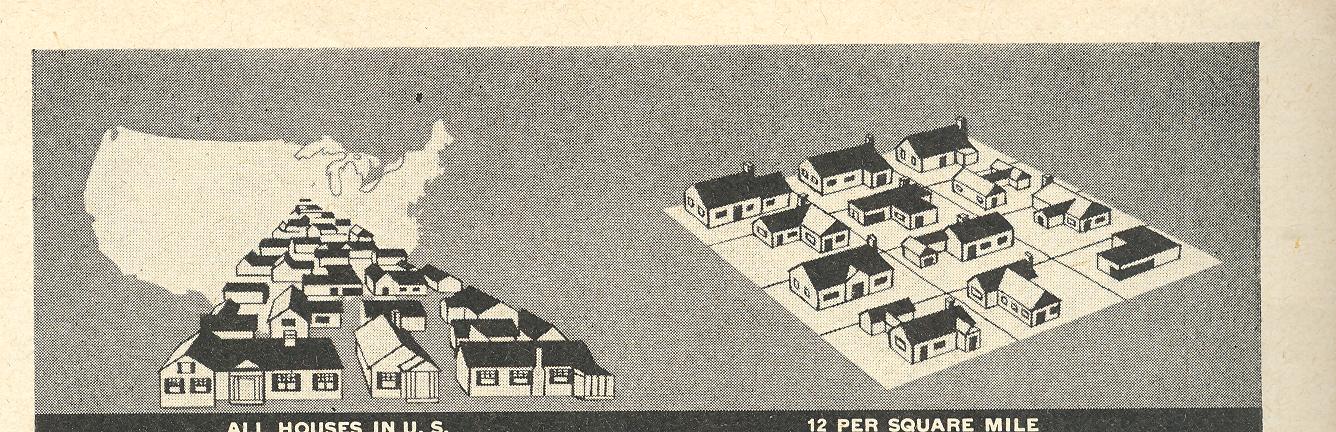
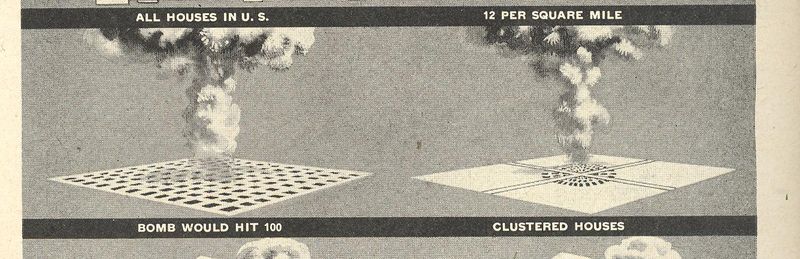
    And that bad idea is this: relocating and dispersing the entire population of the United States into a geometric grid-work covering all parts of the country, emptying all American cities into a vast nothingness of exurban Atomburbs. 
    1-may 3-atomic 2

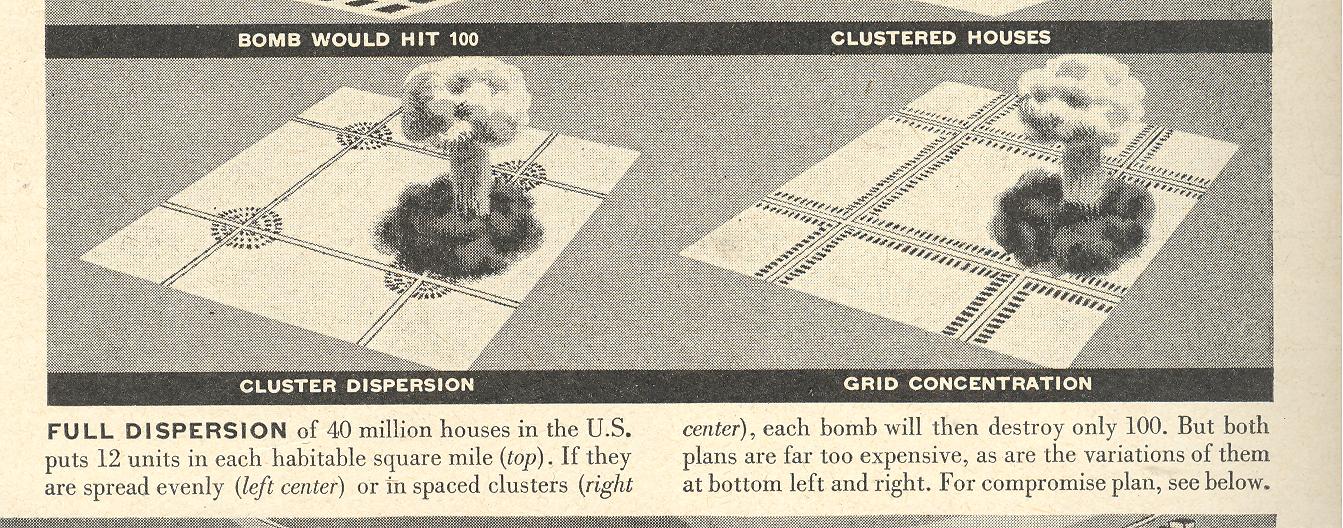
    There.  I said it.  Unfortunately, the thoughtfully blank idea was “real” and  was worked out by three smart guys, the result published in the Bulletin of Atomic Scientists in 19461.  The kernel of the proposition was republished for the masses in LIFE magazine in (15 June) 1947, complete with maps which stand on their own as being spectacular and peculiar examples of visual propaganda.         

    Listen: the crux of the issue was to remove everyone from any American city with a population greater than 50,000 people and place them in newly-built communities set out across the country’s landscape (mostly) like a chess board, the towns existing on all of the connecting lines. [As weird as this sounds, the great Norbert Wiener came up with a similarly astounding, untouchable idea using circles.]. The authors proposed to build 20,000,000 new homes, relocate industry (preferably underground), reallocate and redistribute energy supplies and natural resources, and recreate the very fabric of social and economic life in America.  
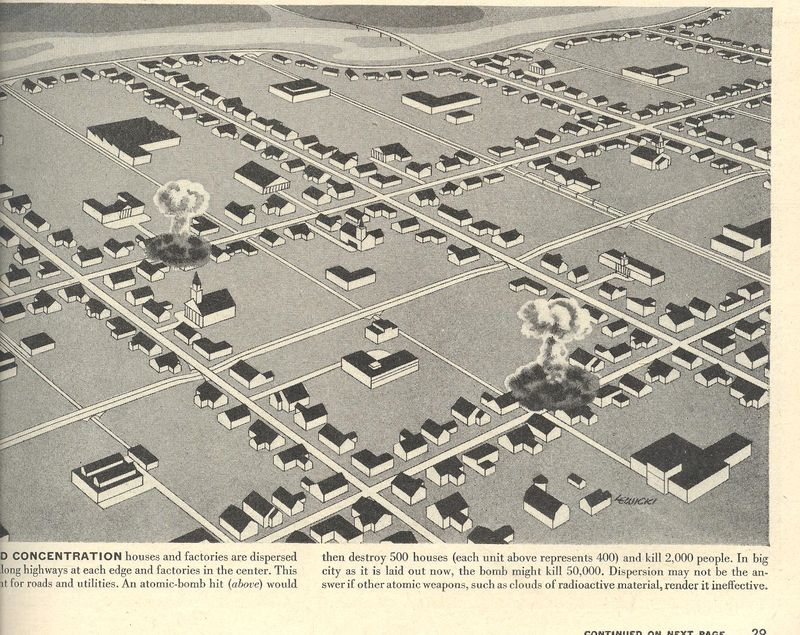
    1-may 3-atomic 4
    The governor of this thinking was the coming arms race and the American susceptibility to clouds laced with Soviet atomic weapons–and worse.[The calculations for destruction being used here were for the Hiroshima atomic bomb; in 1952 the U.S. would detonate the first hydrogen bomb, followed by the Soviets the next year.  These bombs would be measuring explosive force in terms of hundreds of thousands–and then dozens of millions–of pounds of explosives.]  How does this idea get thunk in a group and not abandoned?  And then how does it manage to be published by a a reputable organization?  These are smart men, these authors, and I just cannot think of how they could’ve come to these conclusions–though Teller, who was part of the genius flotilla of superb and essential Hungarian scientists, was undoubtedly mentally affected by his supernova hawkishness. I didn’t know this about Marshak, and I really am not very familiar with Klein.  They were all University of Chicago, and the Bulletin was originally published as the Bulletin of the Atomic Scientists of Chicago. 

    There are deeper, more disturbingly anti-spectacular ideas laced through the short article, some of which are so soaringly and diligently insane that it is difficult to address them.  For example, the authors suggest that the “ribbon cities” wouldn’t necessarily have to be “laid out in exactly straight lines” and that the lines could be adapted to the terrain.
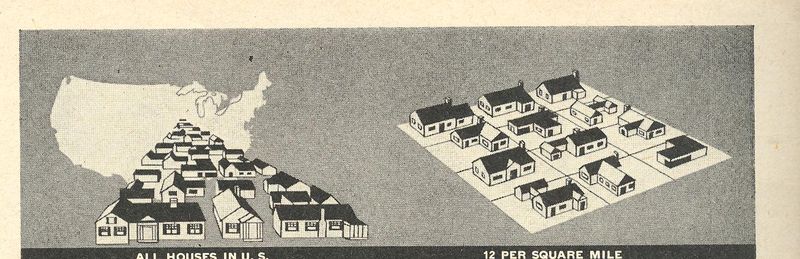
    1-may 3-atomic 1

    Even though the authors propose moving and rehousing 20 million people (and so on), this was not what they really wanted to do.

    They wanted to put everything in lines and underground. 

    “We shall have to forgo elaborate schemes of underground cities” because of expense, they write.  And what of the cost, as long as we’re at it?  Somehow a figure of 200 billion is floated around–200b in 1947 dollars, which is 5 trillion in 2010 dollars (or so), which really doesn’t seem to be a figure that is in any way near to what an undertaking of this magnitude would cost.  (The odd thing about this figure is that $200 billion is about the same percentage for a single year of 1950 GDP as the $5 trillion is of the 2010 GDP.) [It seems unfair to take things out of context like this, but, well, it isn’t–the entire article is filled with almost nothing but these statements.  In a way I’m doing the authors a service by taking things out of context so that the entirety of their madness isn’t revealed as the ugly road-kill thinking it is.]

    Of course, g_d knows where all of this building material was going to come from.  Or the people who would actually do the work.  Were there 3 million construction/building folks in the 1950 census?  I don’t think so.

    And so in spite of the overwhelmingly underestimated cost, and the rerouting of the infrastructure of the entire country, and moving everyone in the country, and building 20 million houses, and finding the material to do so, and finding the workers to build them all and reconstruct all of the infrastructure and build all industry underground and have the tools to do it all with, the authors felt as though the whole thing could be pulled off in 10 years.

    Someone, somewhere, was certainly going to be working late.
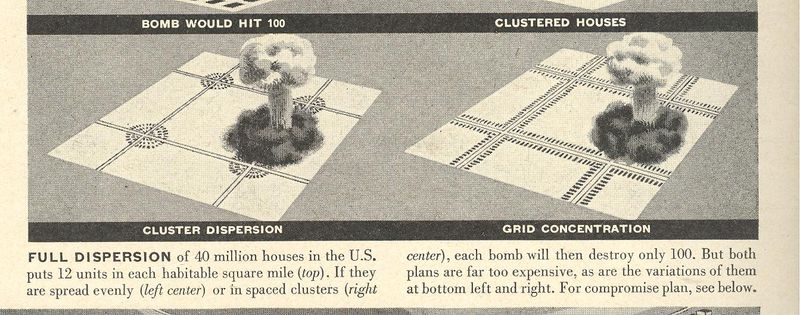
    1-may 3-atomic 3

    And so the interesting part of this thought-tragedy for me is–what is the equivalent idea of this going on right now?  I know there is one, and there will be a new one tomorrow. 

    Notes
    1.. Jacob Marshak, Edward Teller, and Lawrence R. Klein. “Dispersal of Cities and Industries.” Bulletin of the Atomic Scientists 1, April 15, 1946, 13.

    See also:
    “Naked City.” Time. Nov. 28, 1949, 66. Also at.  Also see .The City Under the Bomb.. Time, Oct. 12, 1950

    Charles Grutzner. “City folks‘ fear of bombs aids boom in rural realty.. “ New York Times. August 27, 1950, 1.

    Michael Ray Fitzgerald.  Sitcoms and Suburbia. The Role of Network Television in the Deurbanization of the U.S., 1949-1991.
                   
    Molella, Arthur P. “The City as Communications Net: Norbert Wiener, the Atomic Bomb, and Urban Dispersal” Technology and Culture – Volume 45, Number 4, October 2004, pp. 764-777