A Daily History of Holes, Dots, Lines, Science, History, Math, Physics, Art, the Unintentional Absurd, Architecture, Maps, Data Visualization, Blank and Missing Things, and so on. |1.6 million words, 7500 images, 4.9 million hits| Press & appearances in The Times, Le Figaro, Mensa, The Economist, The Guardian, Discovery News, Slate, Le Monde, Sci American Blogs, Le Pont, and many other places… 5000+ total posts since 2008.

Author: JF Ptak

  • The Emptiness of Gun Porn: Burlesque Dancers as Game, 1947

    JF Ptak Science Books   Post 1051

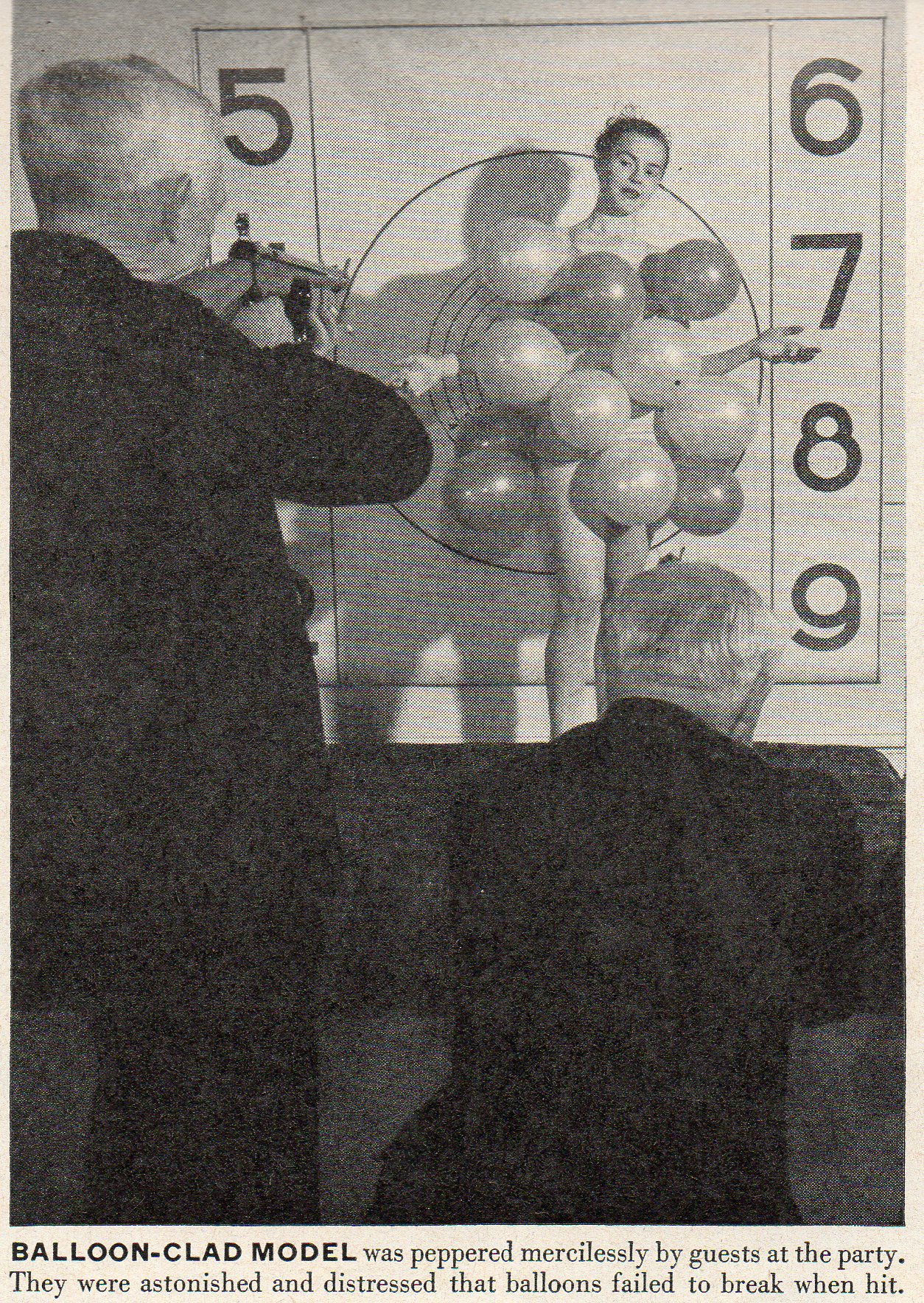
    It is unusual for me to find provocative photos that are more unusual in context rather than out.  But this is certainly the case here, with these photos of gun porn from Life magazine of 1947. This photo spread was meant to celebrate the launch of a “harmless” toy gun, the manufacturer demonstrating this point by having two dozen dinner quests shell dining room targets with imitation Tommy Gun-ish pellet guns. 
    00--shooting strip teas dinnere043

    Perhaps appropriate in more ways than one are these two older men shooting “ineffectually” at a model dressed in balloons–the point being to break the balloons to reveal her nakedness.  But the ejected pellets hit and dribble away, the rubber balloons remaining intact, with the foiled men left feeling “astonished and distressed”.  You can almost smell their impending failure in this picture (as well as the relief of the model).    
                                                   
    00--shooting strip tease042

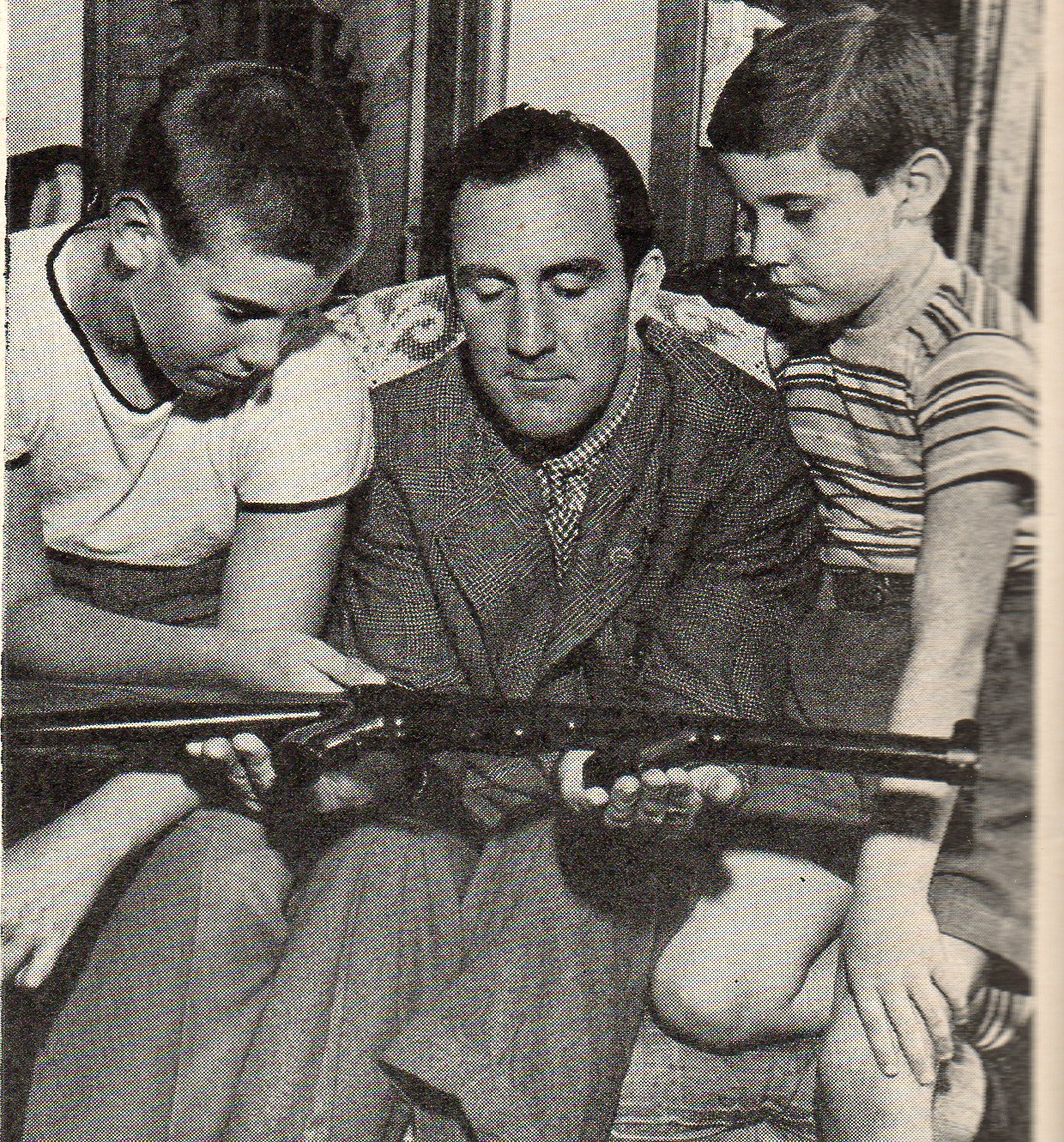
    Then there’s the Holiness of the Gun moment, a father holding the toy gun in flattened palms., making himself a portable altar for his respectful sons, a deep reverence for the object present in the man’s face.     
     

    00--shooting strip holy grail044


  • The Coming Sameness of Beauty–Lessons from a Soda Bottle of 1947

    JF Ptak Science Books  Post 1050

    The great beauty of beauty is its great unidentifiable qualities–unidentified that is until they are identified, quantified, signified, geometized, libeling the concept of beauty until it is nothing but a soured criminal contempt.
    Barbie-history-2
    In an antiquarian sense one way of establishing what “beauty” meant in a particular time is by looking at painting or sculpture, the idealized form representing gods and goddesses of strength and beauty and grace. For more recent times of less idolatry and more commercialization advertisements using images of women to sell whatever product the seller was trying to push on the viewer could also be used as a certain standard of attraction and beauty. (Assuming of course that we are talking about the recent past when images other than the product itself were being used to try and establish a desire and loyalty to the product. In the history of publishing, this is a relatively recent innovation that I think belongs to the 19th century and not before.)   In the case of using pretty women, the advertiser was trying to associate their product with a certain sense of beauty, or to at least attract the attention of a lazy reader to look at their coal tar soap because a pretty face was lined up next to it.

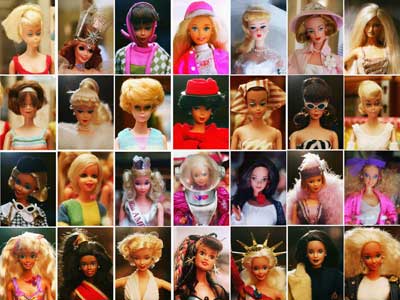
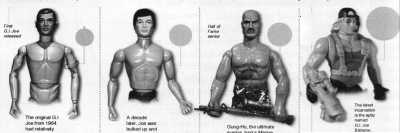
    Another interesting way of evaluating beauty could be found in the evolution of Barbie Dolls or GI Joes.  Or you could consult William Hogarth’s Analysis of Beauty.  And many other things of course, that deal with beauty in the human form (and more, or orders of magnitude more, that deal with beauty outside of ourselves, beauty in the forms of architecture or mathematics or the arrangement of sand or whatever). 
    00--beauty--gi joe
       
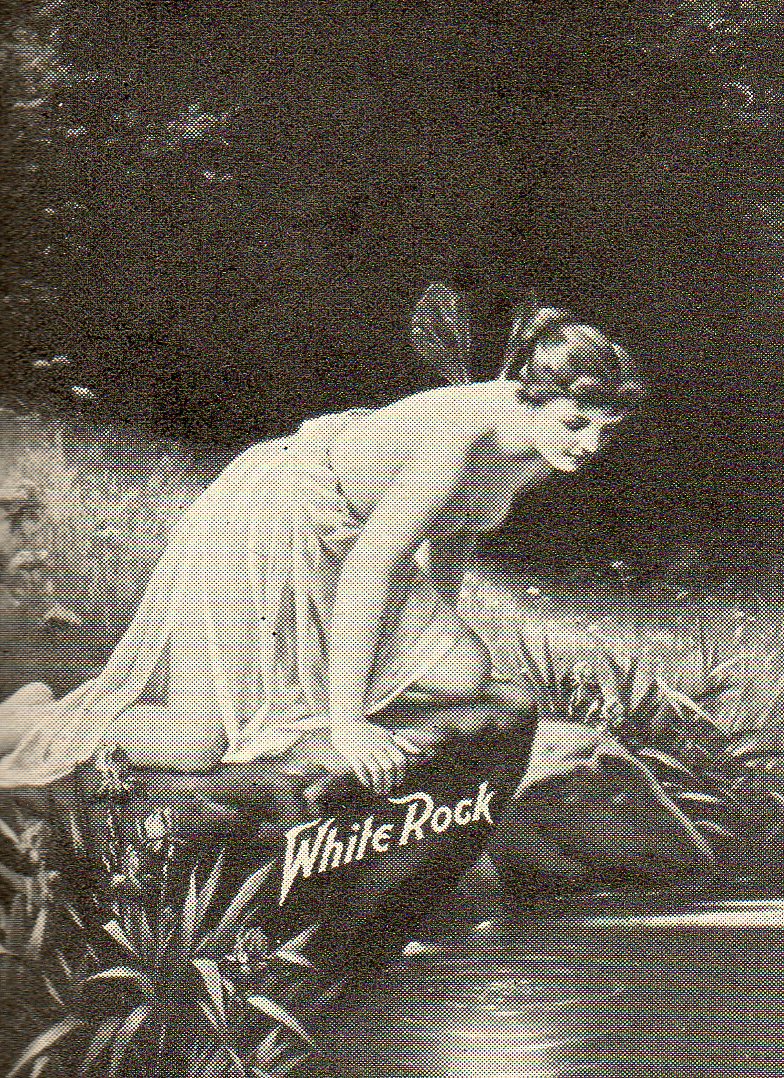
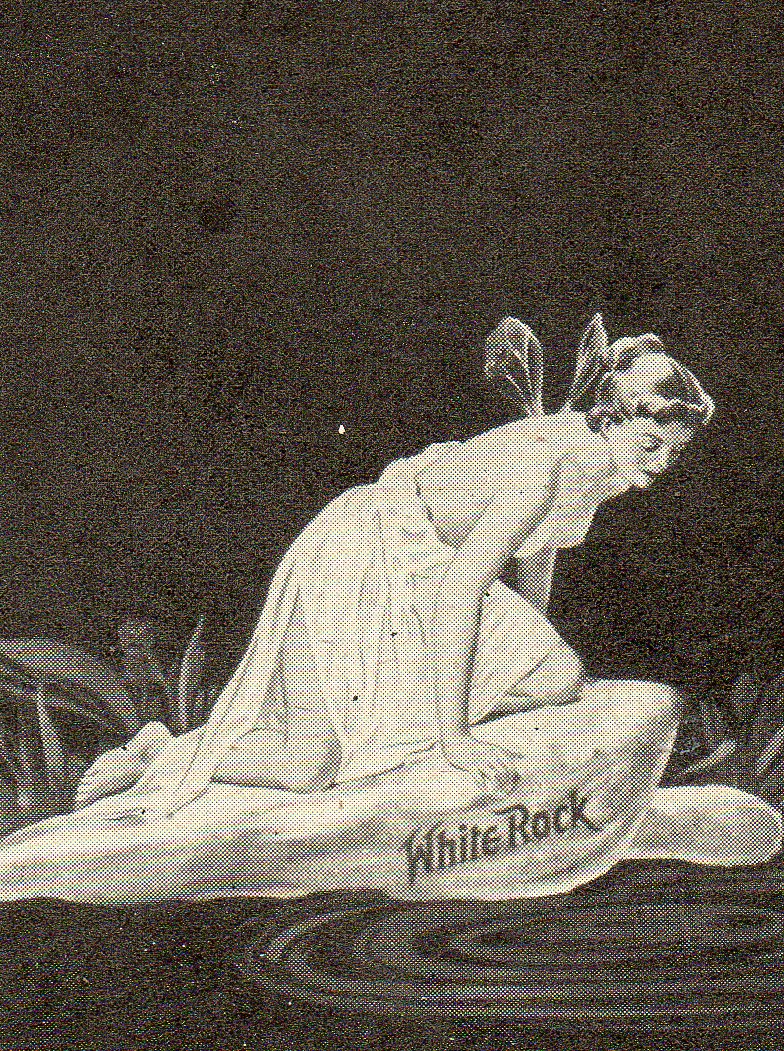
    I’m just going to give beauty 700 words here, or so, and so I’ll concentrate on just one picture of comparative beauty. (I guess that there have been 100 billion words written about beauty, though if you loosened up the definition of what ‘writing about beauty” mean, the number could probably be squeezed up to a trillion, which would mean 4 million books of 250k words each.  Probably the 10^10 is a better guess.)  As it turns out it is a picture from a story in Life magazine for 30 June 1947 of Psyche–the Greek goddess of the soul–used as the logo for White Rock soft drink company’s mineral water.  In general it’s a poor depiction of the goddess, and I’m not so sure that they even had the goddess in mind when the whole thing came into the bottler’s mind (she is after all described as a “sprite” in the LIFE magazine article).

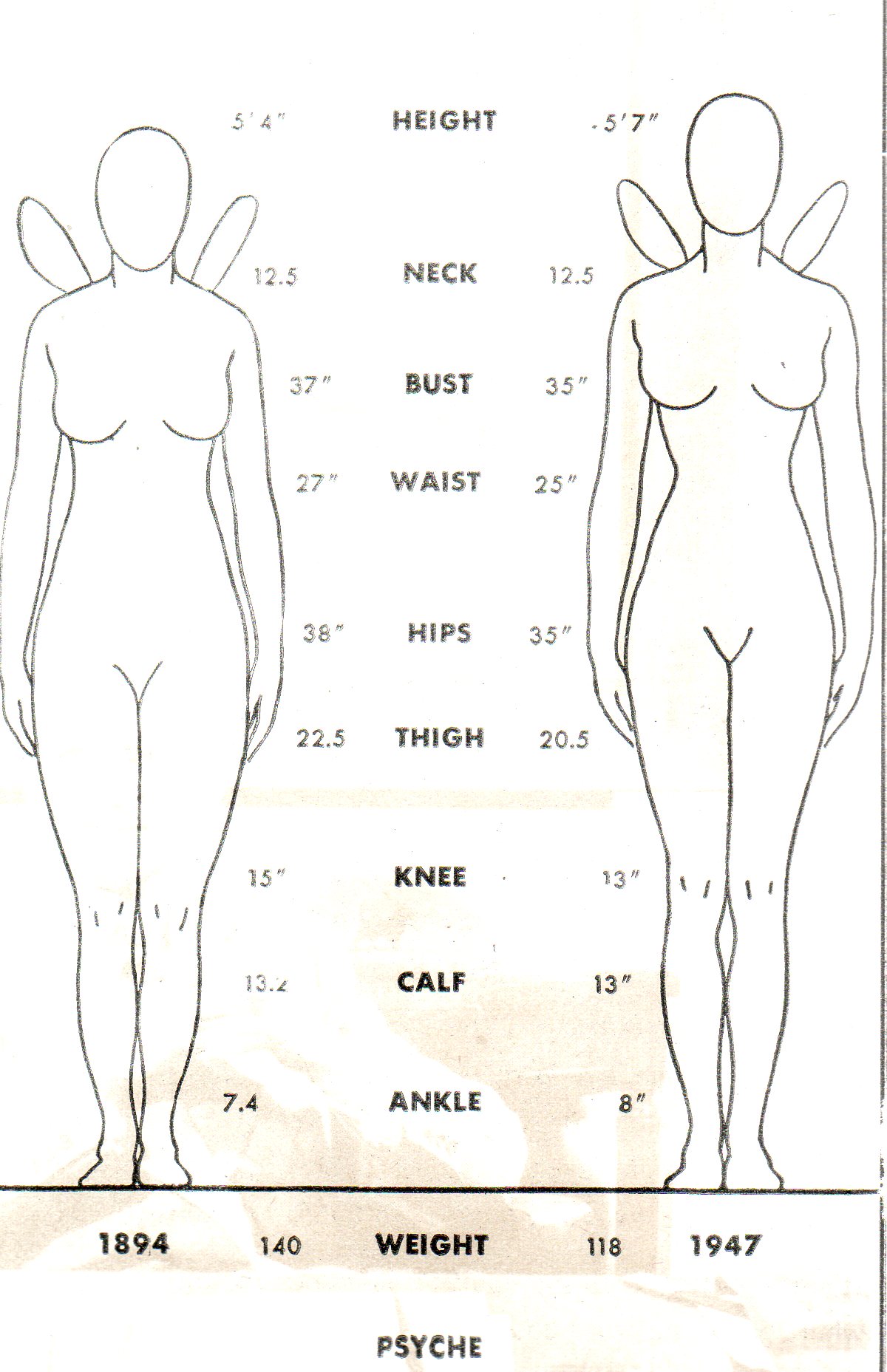
    What is of interest is the change in the image of Psyche on the face of the bottle over the years (shown here for 1893, 1924 and 1947) which is graphically depicted with measurement appraisals.
    00--beauty psyche 1038
    Psyche simply buffed up a little, getting taller, slimming down and generally made to be a little more common.  She did loose her nipples in 1947, or at least they became obscured, trailing away from their depiction in 1893.  (I once attended a U.S. Supreme Court argument on a case dealing with nipples and pasties and strip clubs.  It was a little bizarre, and as my mind wandered I took an interest in the court’s decoration, and particularly the frescoes–which of course included a full-nippled woman, staring down at the court from her height.)   
    00--beauty psyche 3040
    But it struck me that Psyche was simply becoming a more-generic depiction of beauty, which reminded me of this odd bit of beauty sanitizing prevalent among the wealthy of today, or at least among those–actors and advertising types–whose image helps set the stage for the beauty standard.  Now it is possible to vastly augment your appearance via surgical procedures to the common standard of what has been established as “beautiful”.  And the end result of this is that there is merging a certain sameness among the people whose faces everyone seems to know, and whose appearances change the way people think of beauty.  I find it striking that someone (for example)  like the actor Sharon Stone would turn her face into a common mask of someone else entirely, closing the ranks of differentiation in what is presented to mass market audiences as “beauty”.  Everyone is starting to look like everyone else, or so at least among movie actors. 

    And so it is perhaps finally appropriate that I chose Psyche to discuss here, because if the actors tend towards these procedures more and more, they’ll all be wearing the same sort of frozen mask that their ancient Greek precursors used to wear when in performance.  

    00--beauty psyche comp041


  • Boredom and the Re-Fencing of the American Frontier: Highway Billboards, 1930

    JF Ptak Science Books    Post 1049

    The West, the American West, had the foundations for effective an grid delivered by the late 1870’s, in the early-middle of what I guess people would consider the high Cowboy days of westward expansion.  But the exploration part had been mostly done by this point, as had the expansion bit, the exterior sections of the compartmentalization of the frontier taking place in ever-smaller concentric squares.  As I wrote earlier in this blog, it was the introduction of lines that really did the whole Wild West thing in–the introduction of the railroads, of course (followed by the refrigerated railroad car, which did in the great cattle drives and established needed-to-be-peopled rail heads all over the place), telegraph lines, and of course barbed wire.  Barbed wire meant barbed wire fences, fences that could be constructed for a small fraction of the cost of wooden fences and which replaced of course no fences at all, dividing the great open plains into more manageable units of owned and regulated land. (Barbed wire fences also needed far less maintenance than wooden fences, which means fewer cowboys riding fences for upkeep and so on.)

    By the time the eulogy on the American Frontier was famously delivered by Fred Jackson Taylor in 1893, the fate of the West had already been sealed for perhaps two decades, though the notion of its “closedness” was received with considerable shock. It was time for the truly great equalizer and innovative settler of the West to makes its appearance–boredom. 

    I think it might be that it was the Boring Frontier that nailed the coffin shut on the Western Frontier.  Once all of the lines had been delivered–barbed wire, telegraph, railroads, good maps–the greatest thing left to do was the settling.  And nothing quite spells settlement than boredom. Or comparative boredom.  Once the essentials of conquest had been delivered in terms of the civilizing lines, it became time to wait for the rest of it, surviving through cold Nebraska winters and hot Panhandle summers, waiting for the rest of America to come and settle.  It was the Boredom Frontier that spelled out the intent that the changes brought to that country were there to stay. 

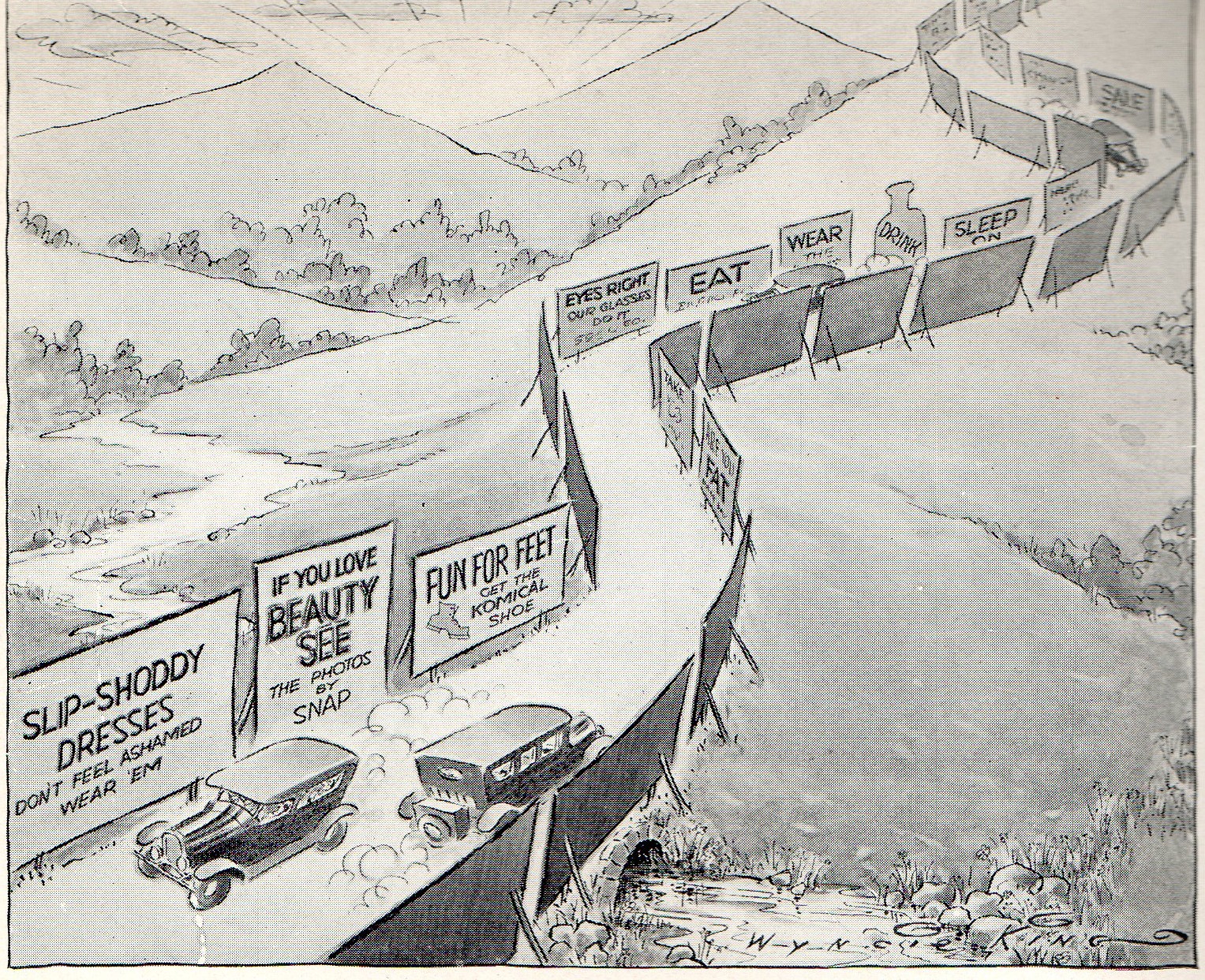
    And barely three decades after the announcement of the closing of the frontier, automobiles were making their way across the land on new roads., which snaked their way deeper into the last-reached parts of the country.  It was very soon after the car and the road that the roadside billboard appeared, and appeared in such great quantity that legislation prohibiting banner display like this was introduced into the legal system during the teens.

    Roads provided the last assault on the West, and brought with them their singular colonizing irony of billboards, which prohibited the view of the country through which their roads snaked and pulled.  And there’s something terribly wrong with that, as witnessed in this 1931 illustration tucked inside this almost-provocatively-named pamphlet, Billboards ad Aesthetic Legislation, New Applications of Police Power (published by the St. Louis Public Library).It is astonishing to think of the vast changes that took place in the remaining American frontier, taking place so quickly–two generations separated the last of the great cattle drives to billboard legislations along auto routes in the western states. 

    00--billboards036

    It seems to me that I’ve seen a similar illustration of the senseless explorer from the ‘teens, though I cannot find it now.  


  • Emma at the Podium, White House Press Briefing Room

    I just wanted to post this for the sake of posting it, and to make sure that I’ll never have these photos misplaced again. 

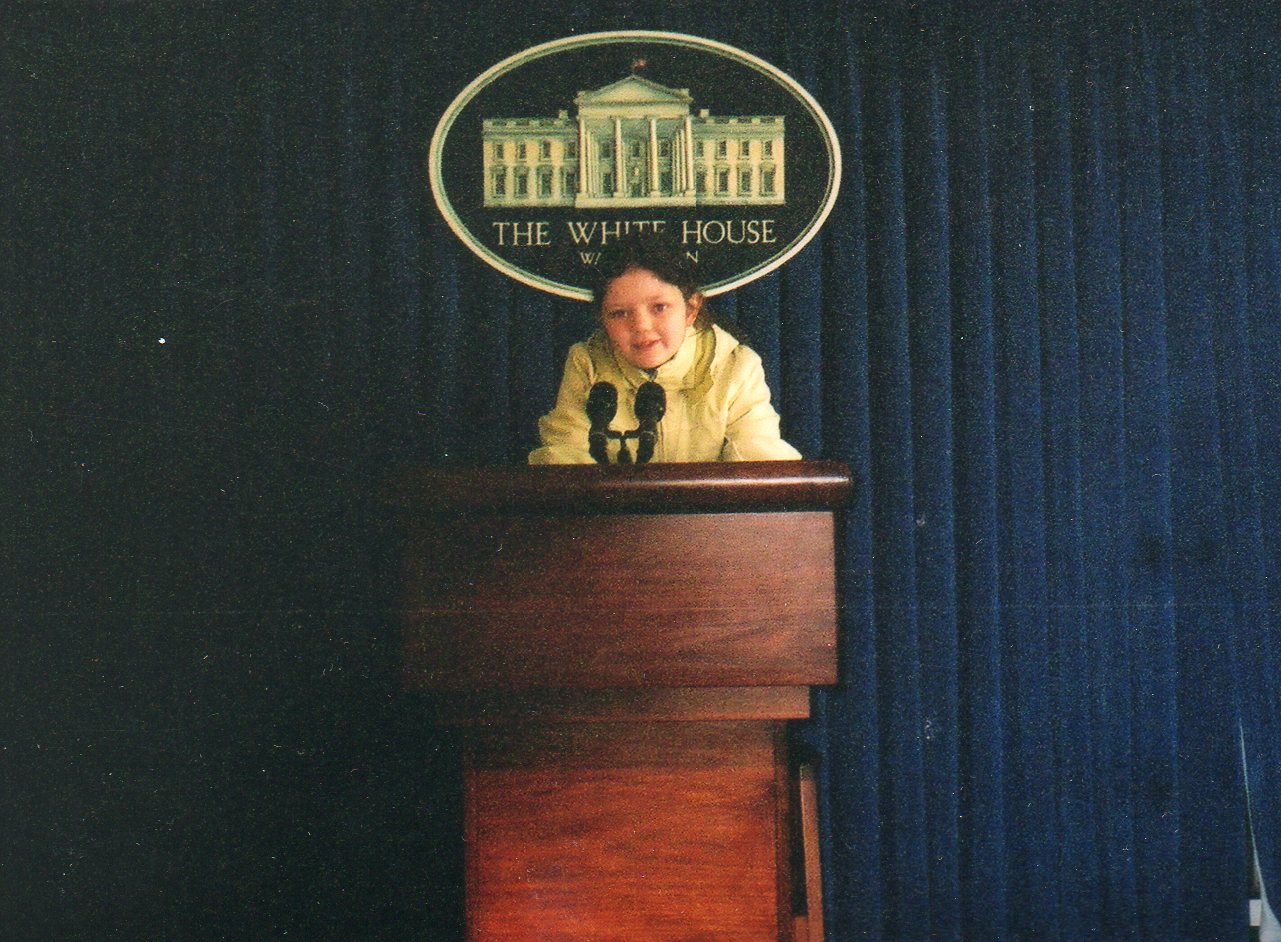
    These pictures were made in 2002 just before we left DC for Asheville and show our older daughter, Emma, then 10, romping around the WH and Press Corps Room with a friend.  We were there courtesy of a friend of our’s, and the kids were given a long leash to move around.  Emma at white house podium033

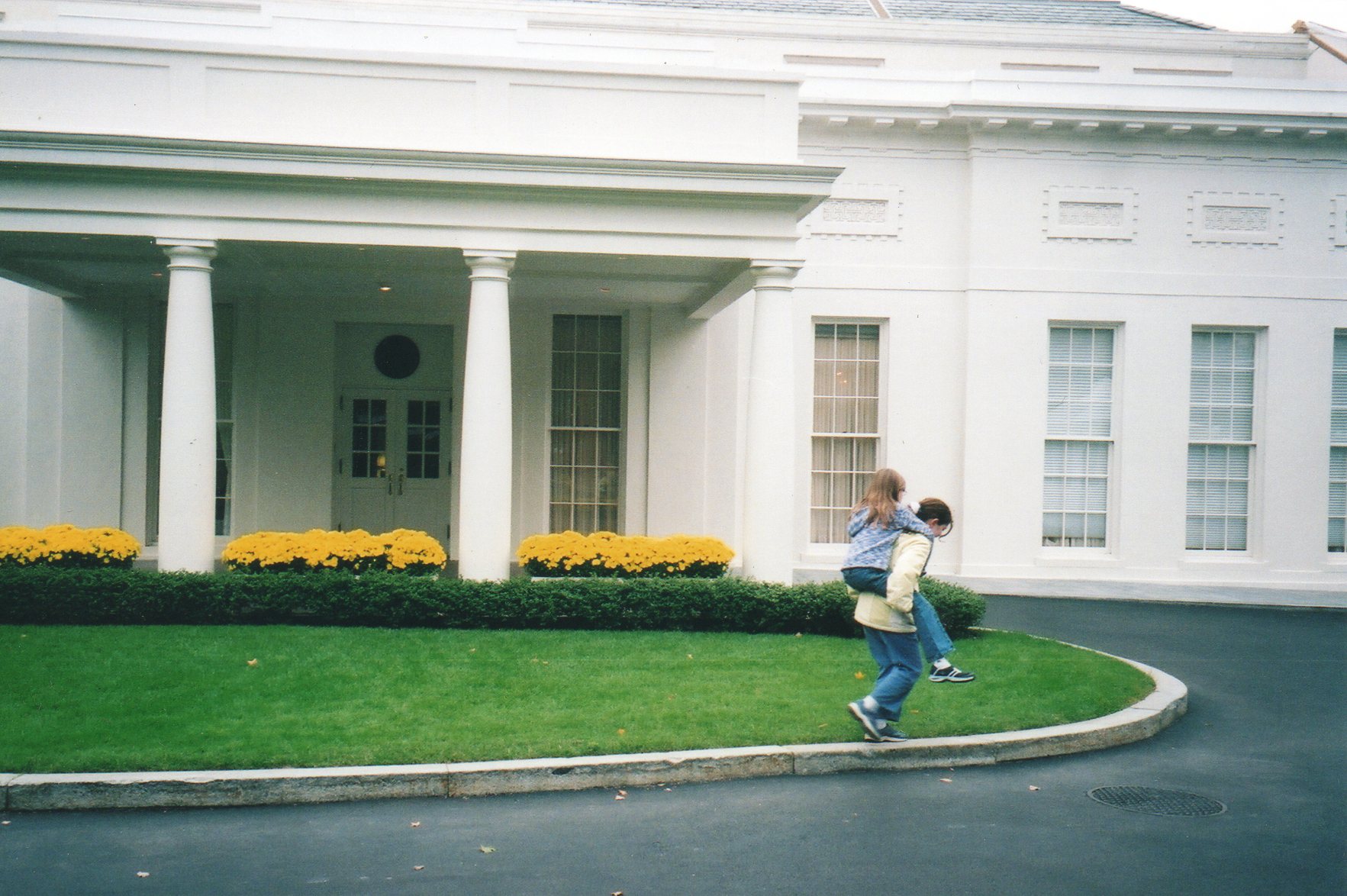
    After a bit of posing Emma and her friend started running/skipping, and soon were out of the side door of the press room and on their way to the Oval Office, which as it tuns out is not all that far away. The children found it by accident and very easily–almost instantly there was an enormous voice that yelled, “you there, HALT” (just the thing I guess you would not want to hear while skipping towards the Oval Office), and the children did a sort of turn-while-in-mid-air cartoon turnaround sorta thing and came running back down the hall, pretty well put out, a 
    memory made.

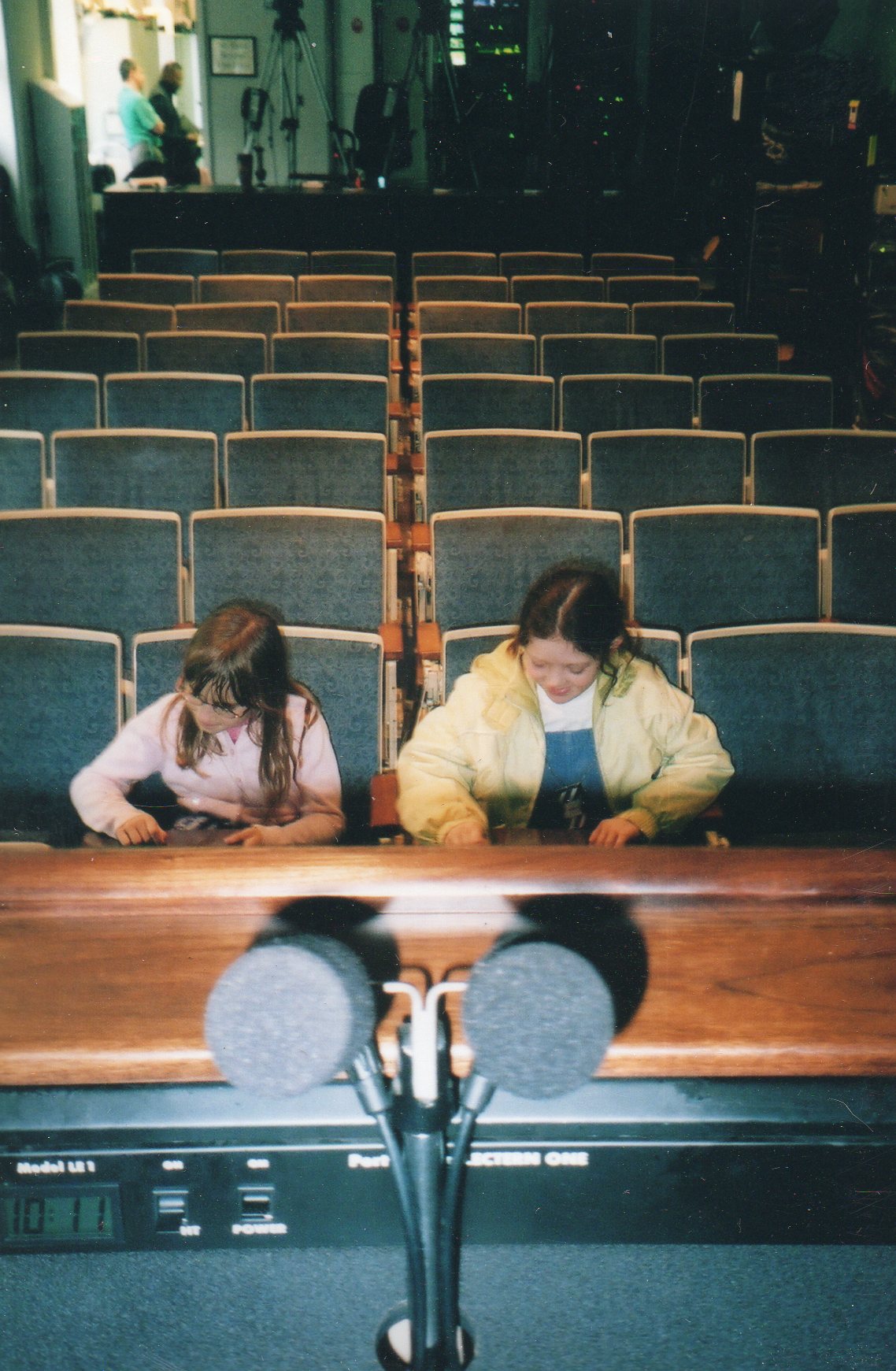
    Emma at white house seated034

    It was a fun time had by all.

    I’ll tell the story at another time of when Emma slapped Bill Clinton. True.

    (And yes this was the pre-renovation Briefing Room).

    Emma at white house outside035
    The West Wing.

    ·Posted by :

    ·in:


  • World Trade Center as Optical Canvas, 1973.

    JF Ptak Science Books  Post 1047

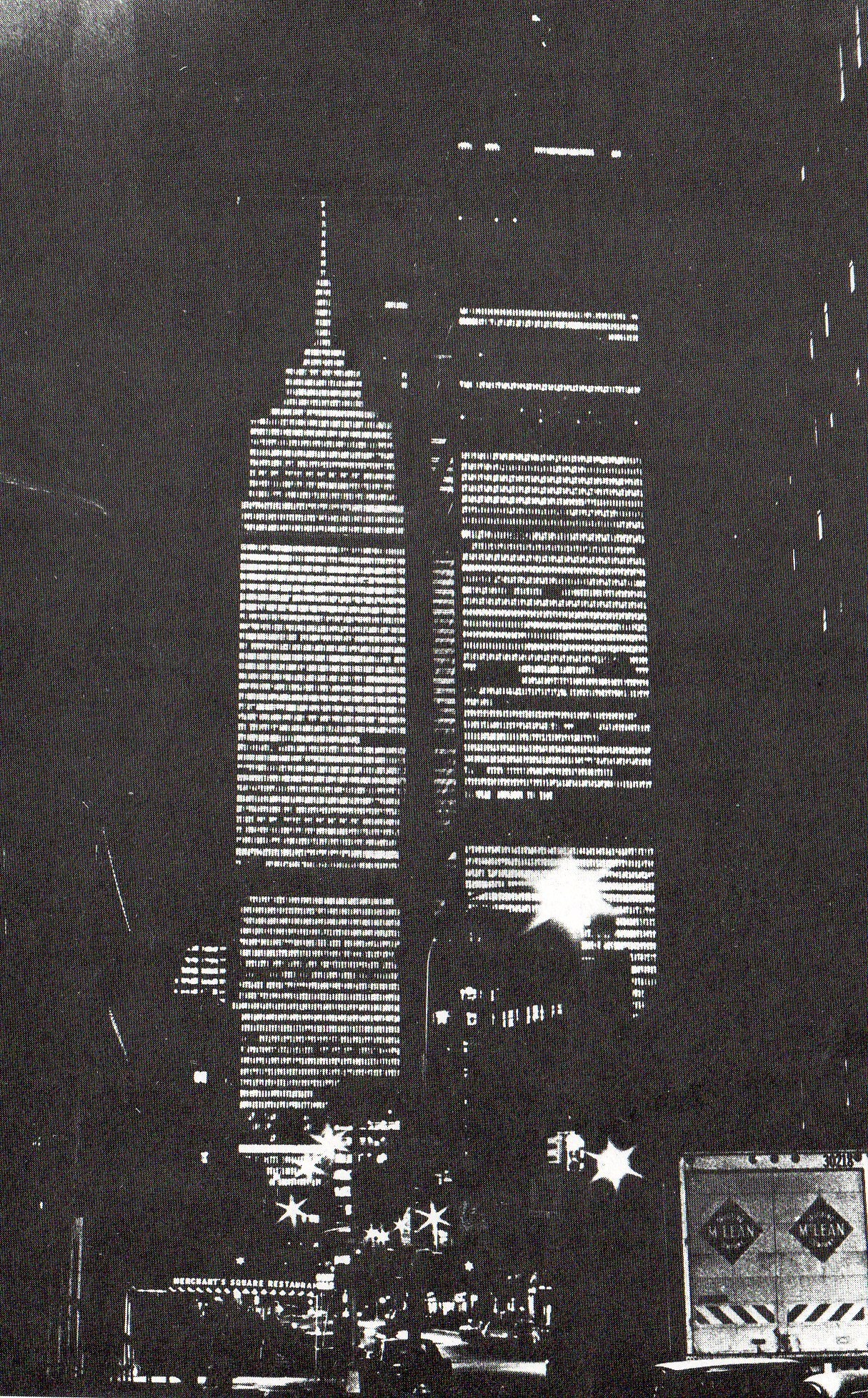
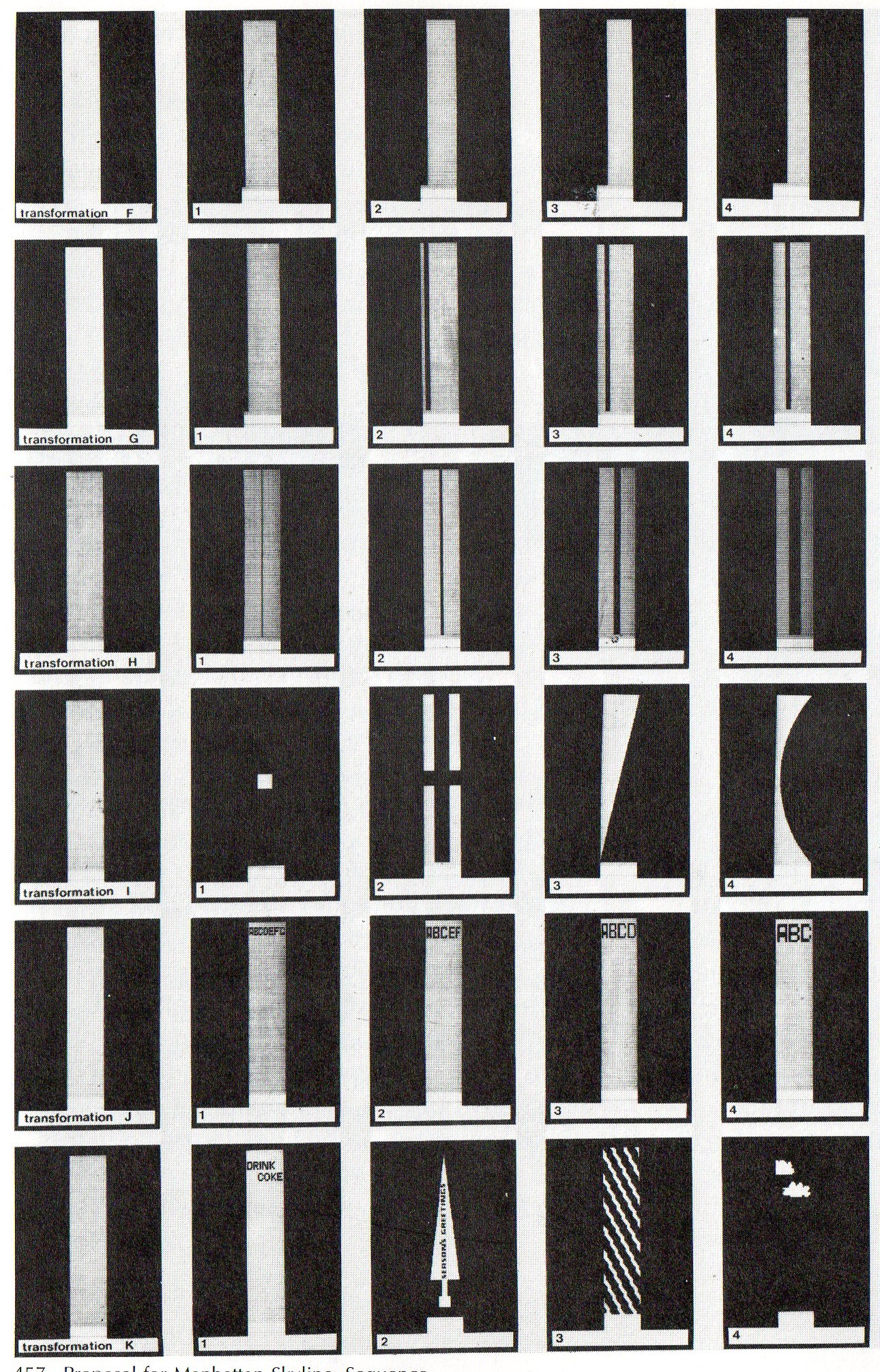
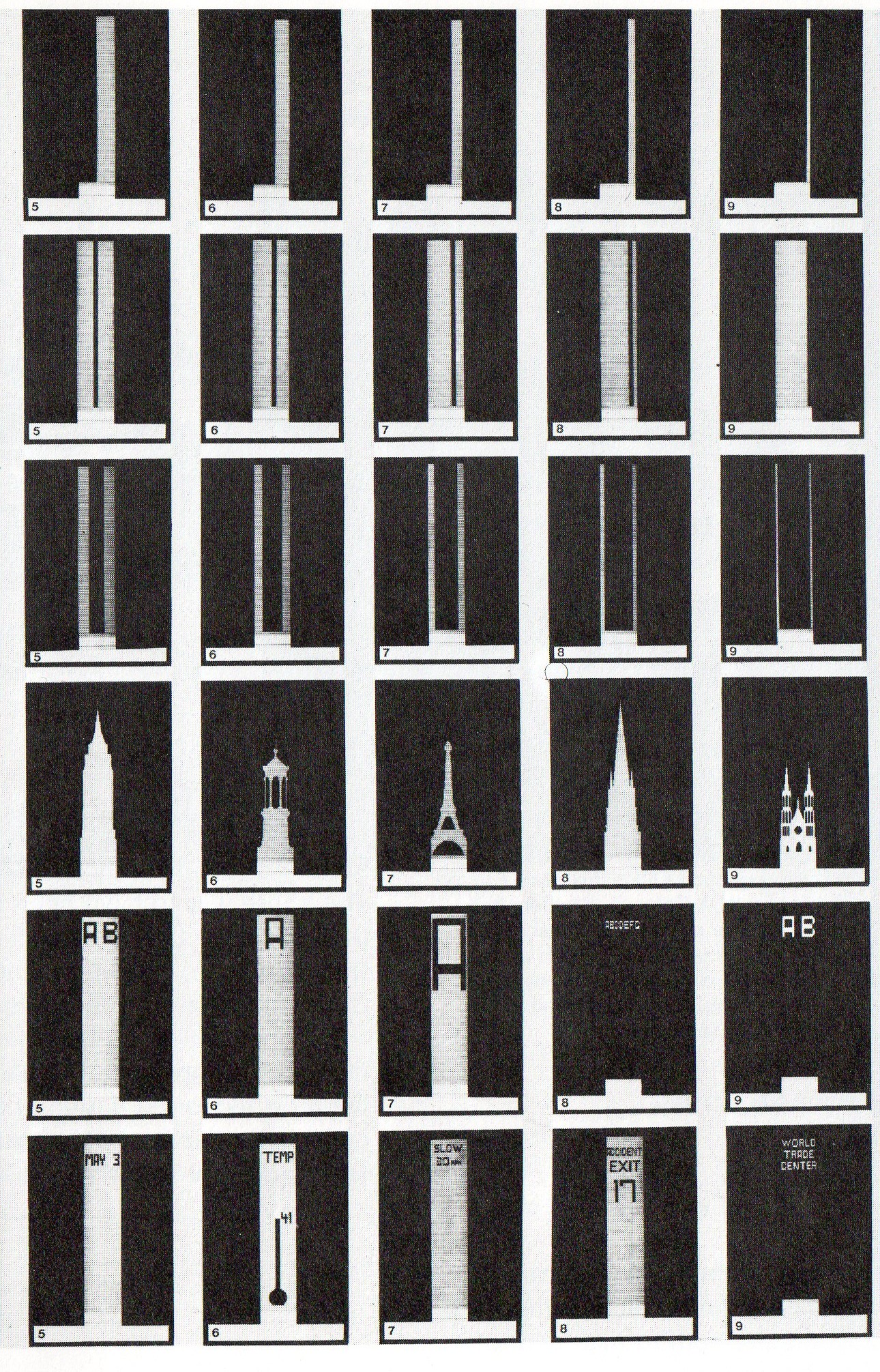
    Allan Wexler (b. 1949), a conceptual artist, came up with a splendid idea for using the newly-completed WTC as a canvas for optical art.  The buildings–which were far from being universally admired in its early life–would be used to illustrate the outlines of other famous nearby structures, the lighting being coordinated with the offices to leave slights on or off (whatever was appropriate) to construct the massive 100-story -tall displays. 

    00--WTC 3027

    [Source: Unbuilt America, McGraw Hill. 1976, edited by Alison Sky and Michele Stone.]

    Tall structures have certainly been used as billboards in the past–the Eiffel Tower, for example long displayed electrically-lighted ads for Citroen)–but using the interior sources of illumination in a building as part of an exterior artistic display is very uncommon. (Architect Richard Haas has created faux surfaces using images of buildings, and perhaps none more famous than his idea to paint the full-scale  shadows of the Chrysler Building and the Empire State Building right there on the facade of the WTC towers.)   It was a lovely idea, really, but the whole of it was struck down during the great gas crunch and economic crisis of that year.  It would’ve been a great cooperative effort to produce monumental works of art but conspiring elements of uncontrollable economic problems and controllable painterly ones kept the project from happening. 

    00--WTC 1025
    00--WTC 2026


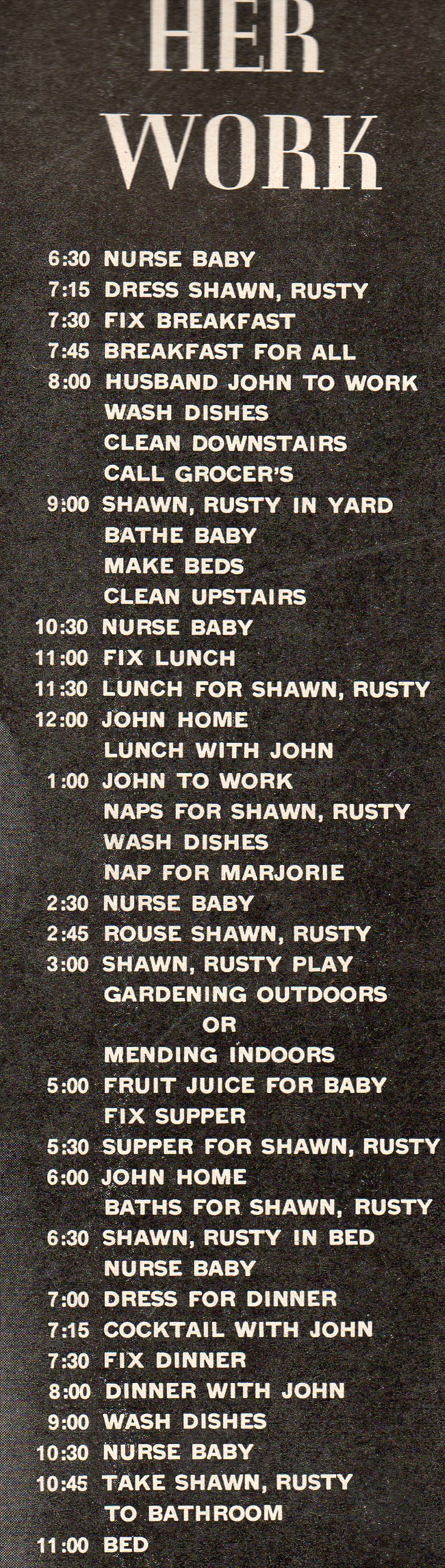
  • “Her Work” Visualizing the100-Hour Work Week of the 1947 Housewife.

    JF Ptak Science Books  Post 1047           Part of our History of Women Series

    “Like most busy young housewives, however, she gives little thought to
    the future–to satisfactory ways of spending the important years after
    her children have grown up and left home.” [See below.]
      
    00 marjorie

    0000 woman chores list024

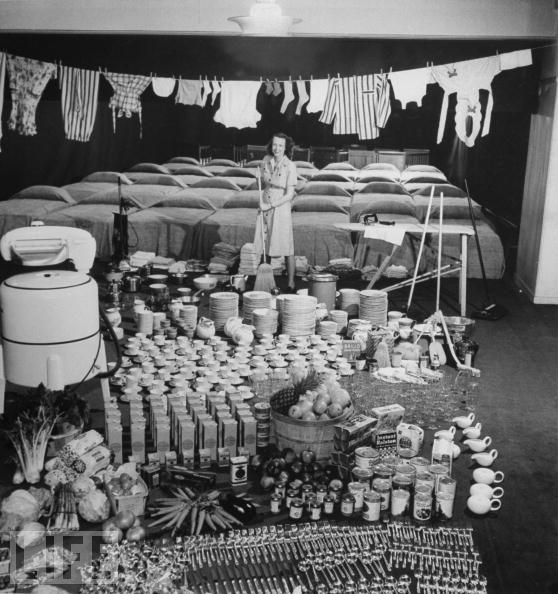
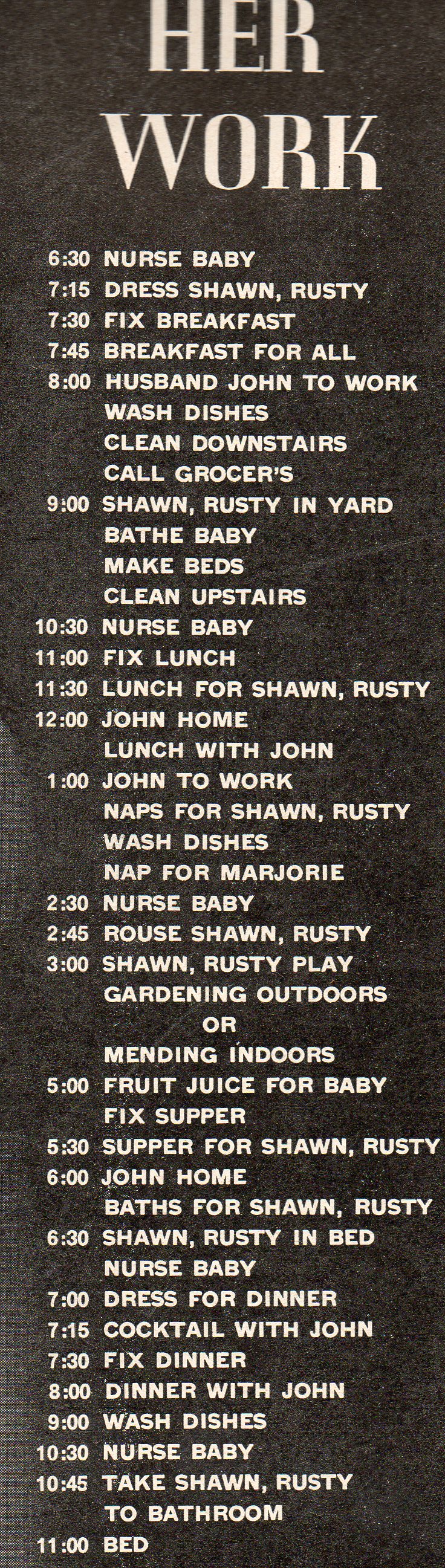
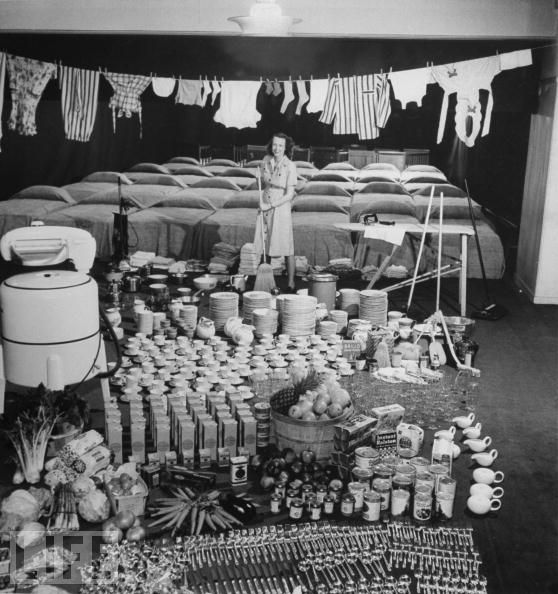
    This photo by Nina Leen [“Housewife Marjorie McWeeney amid symbolic display of her week’s housework” in “Woman’s Dilemma,” Life, June 16, 1947, p. 105] depicts part of the housewife-y stuff of attention in the course of her 100-long-week.  The remarkable part of the photo is that  all of this was displayed in a window display at Bloomingdales.

    Part of Ms. McWeeney’s average work week included “35 beds to be made, 750 items of glass & china, 400 pieces of silverware to wash, 174 lbs. of food to prepare, some of 250 pieces of laundry.on a line, & a ringer washing machine”–that plus paying attention to her children during  the 70+ hours a week in which they are awake.

    In the listing of Ms. McWeeney’s routine (“Her Work”) I see no evidence of Mr. McWeeney’s contribution to the daily chores. We see that he spends 15 minutes eating his breakfast before leaving for work at 8; returns home at 12 or a one-hour lunch before bolting at 1; and then returns at 6 for cocktails at 7:15 and then an hour long dinner at 8.  Perhaps he was helping bathe the kids before cocktails, perhaps not.  I can’t find evidence for Mrs. McWeeney’s present telephone number, so perhaps we’ll never know. But my sneaking suspicion is that Ms. McWeeney ran the house and kids solo, as was the general custom of the day, basically.

    Notes:

    From the LIFE magazine issue:

    “A nice husband, three fine children keep her busy 100 hours a week.

    “Mrs. John McWeeney of Rye, N.Y. has a big, good-looking husband who works in a nut and bolt company, and three children, Shawn, a grave little 4-year-old; John, called “Rusty,” almost 2, and baby Mark, 4 months old. She lives in a bright new seven-room house that has a safe backyard for Shawn and Rusty to play in and a number of modern machines to help her with her household chores. She uses a diaperservice and she can afford a cleaning woman once a week who does the heavy laundry.

    ” But even under these better than average circumstances Marjorie McWeeney’s hours are long and her work demanding. She must keep an eye on her children during their 70 waking hours a week and also watch over them when they are supposed to be in bed but may actually be popping down the stairs to ask for water or an extra goodnight kiss.

    “The picture [above] shows the household tasks that Marjorie must accomplish every week. She has a crib and four beds to make up each day, totaling 35 complete bed-makings a week. She has hundreds of knives, forks and utensils to wash, food to buy and prepare for a healthy family of five and a whole house to dust and sweep. . . .

    “Actually Marjorie’s chores are much lighter than they would have been a few generations ago. She cleans with machinery propelled by electricity, she uses food prepared in canneries, she buys clothes factory-made to fit every member of the family. But her jobs, though relieved of old-time drudgery, have none of the creative satisfactions of home baking, home preserving, home dressmaking. And, because her family unit is small with no aunts or cousins in the household, all the time she saves from housework must go into supervision of her children. Unless she makes special arrangements with a baby-sitter, she has no relief from child care.

    “Many women in Marjorie’s position feel that this is a life of drudgery, that it is not good for Marjorie, a graduate of a junior college, to stay with small children long, continuous hours. Marjorie herself has no desire to work outside. Because as an individual she likes the job that she does, she has no problem right now. Like most busy young housewives, however, she gives little thought to
    the future–to satisfactory ways of spending the important years after
    her children have grown up and left home.”

  • Relief in Capture: Churchill in Carthage and what 230,000 POWs Looks Like

    JF Ptak Science Books   Post 1046

    [Continuing my series on Crowds–see here for example of WWI German prisoners in crowds; also search “crowds” in the google site search at left.]

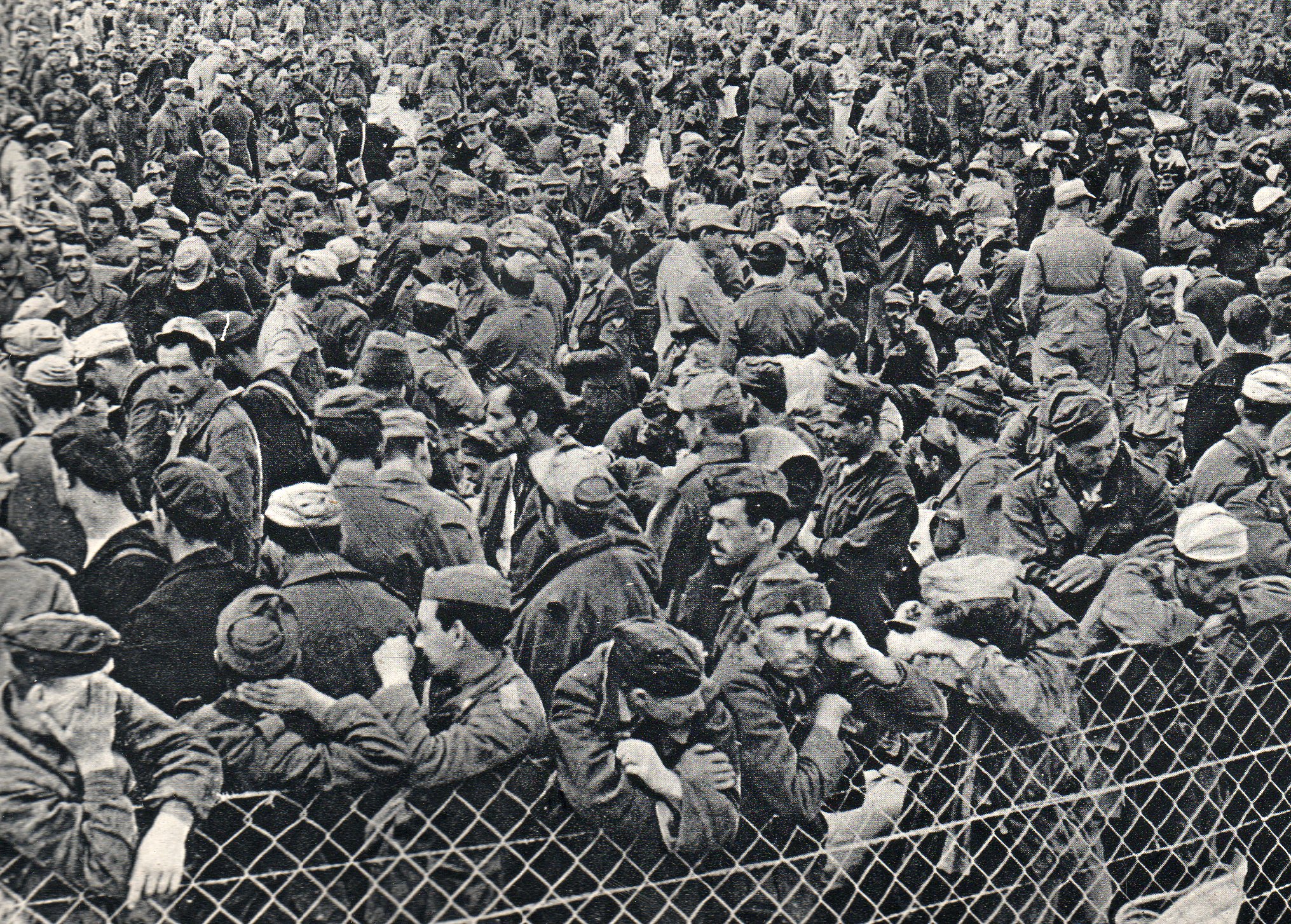
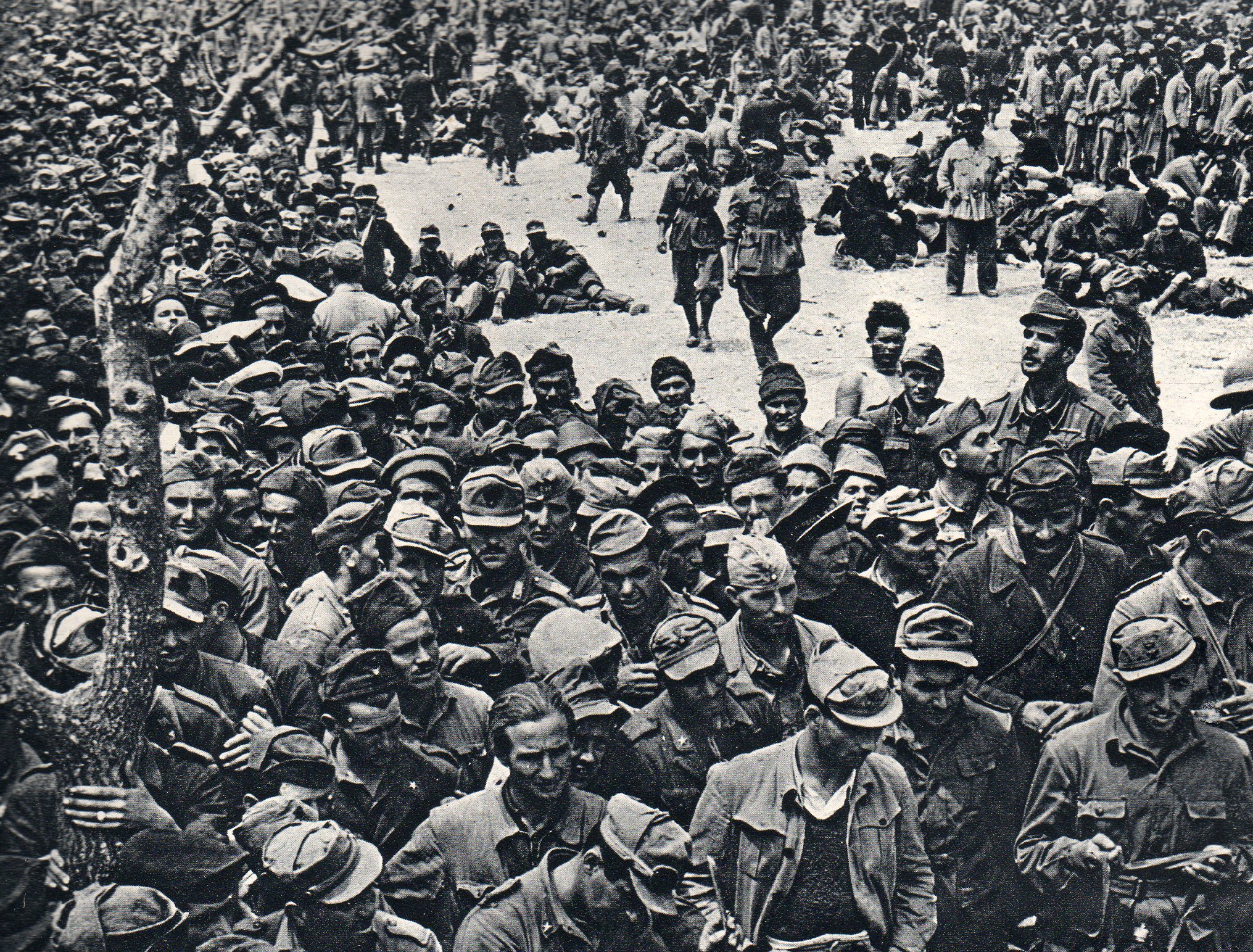
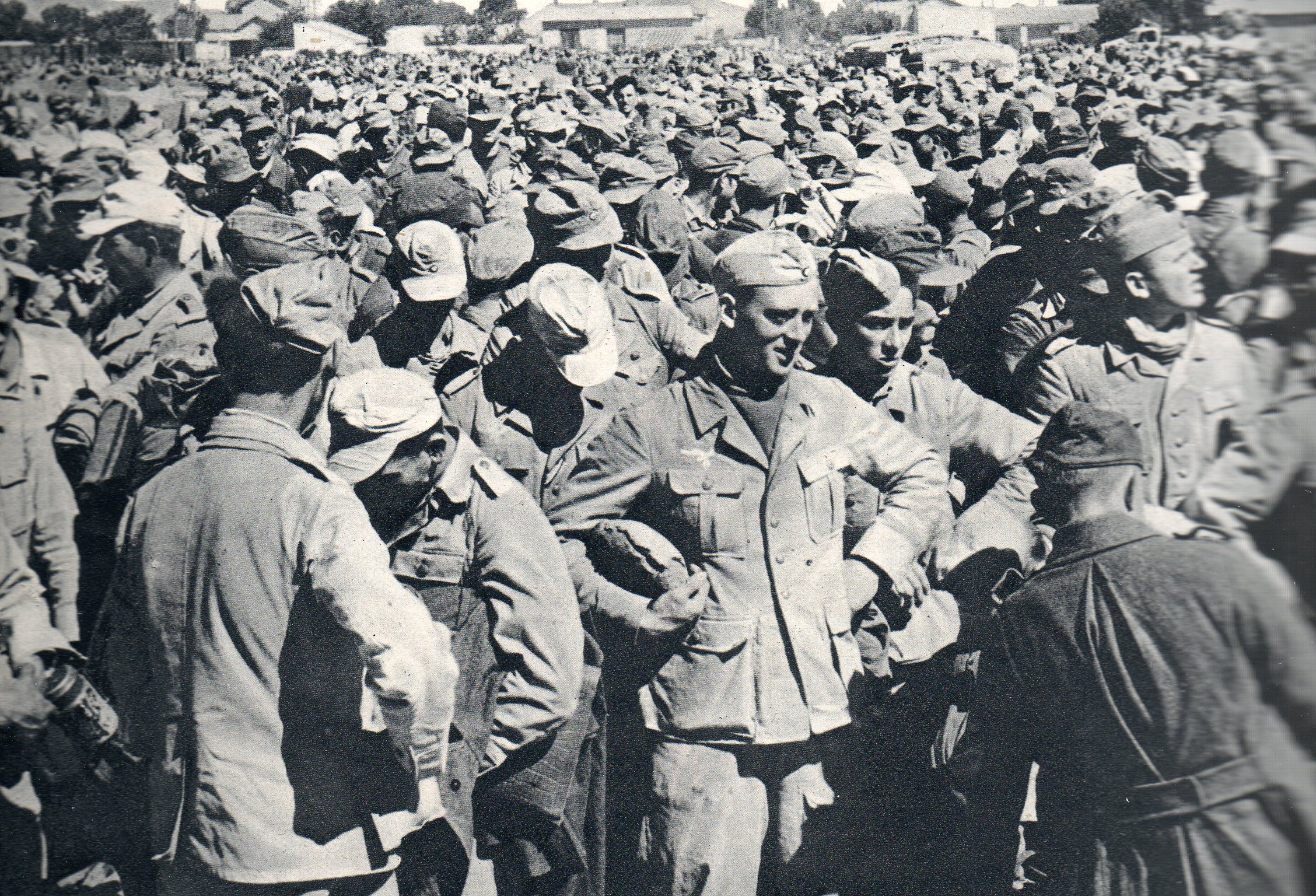
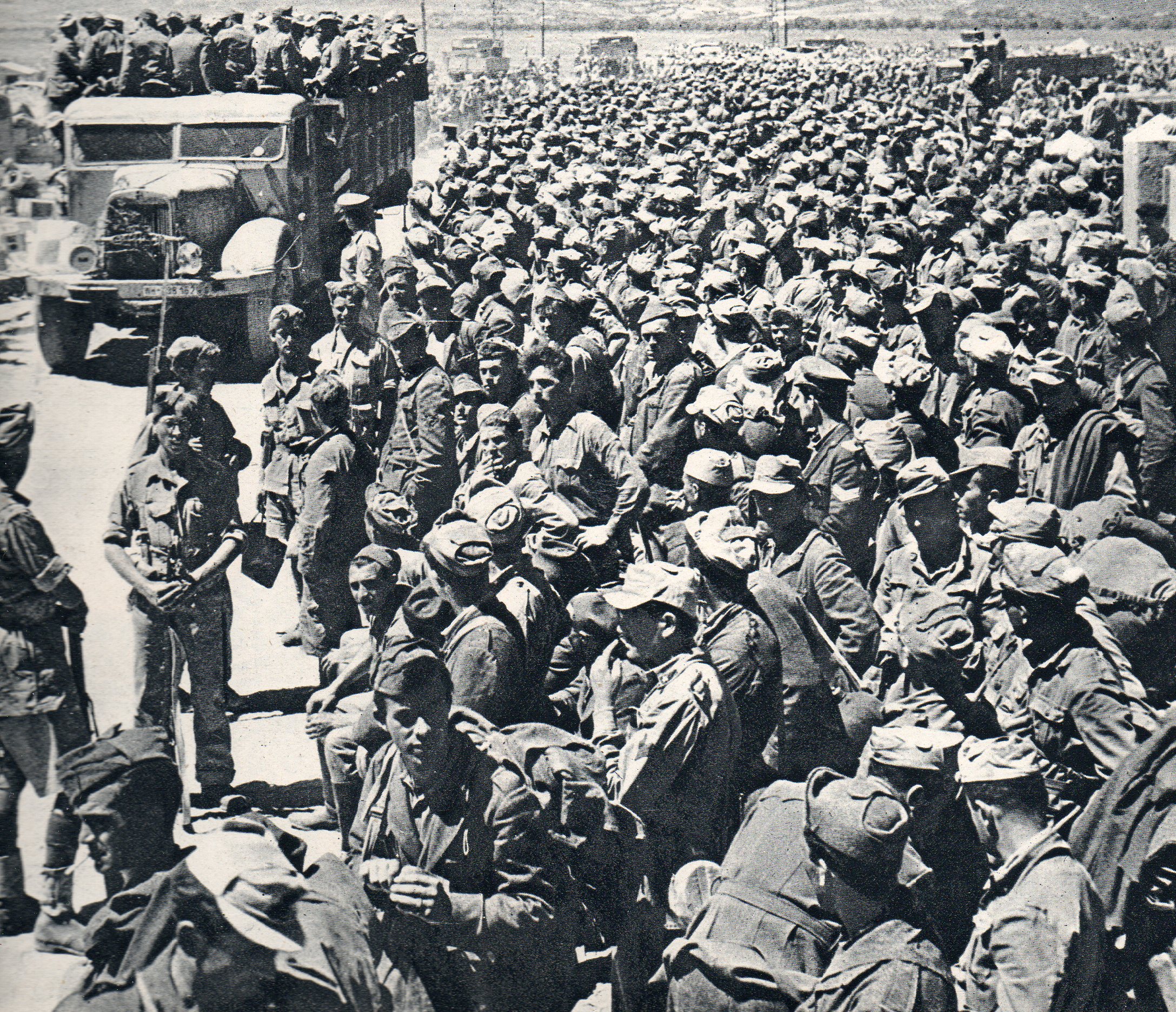
    Part of the campaign in North Africa during WWII was decided by a series of battles known as the Battle of Tunisia, or the Tunisia Campaign, fought from November 1942 to May 1943.  It was a long endgame for the Axis forces in Africa, Hitler losing hundreds of thousands of men, vast amounts of materiel, crapped out the Luftwaffe, spent tons 000 crowds tunisia 1018

    of oil, all in an effort that seemed to be a foregone conclusion save for the fighting.  It was not possible for the Germans (and Italians) to survive there, let alone win, given the great superiority of numbers and resources controlled by the Allies. Plus of course there was the whole Ultra Secret thing, which–though necessarily unknown to the Germans-–in great measure helped to deliver the North African victory.  The Allies were destined to win.

    000 crowds tunisia 2019
    000 crowds tunisia 3020

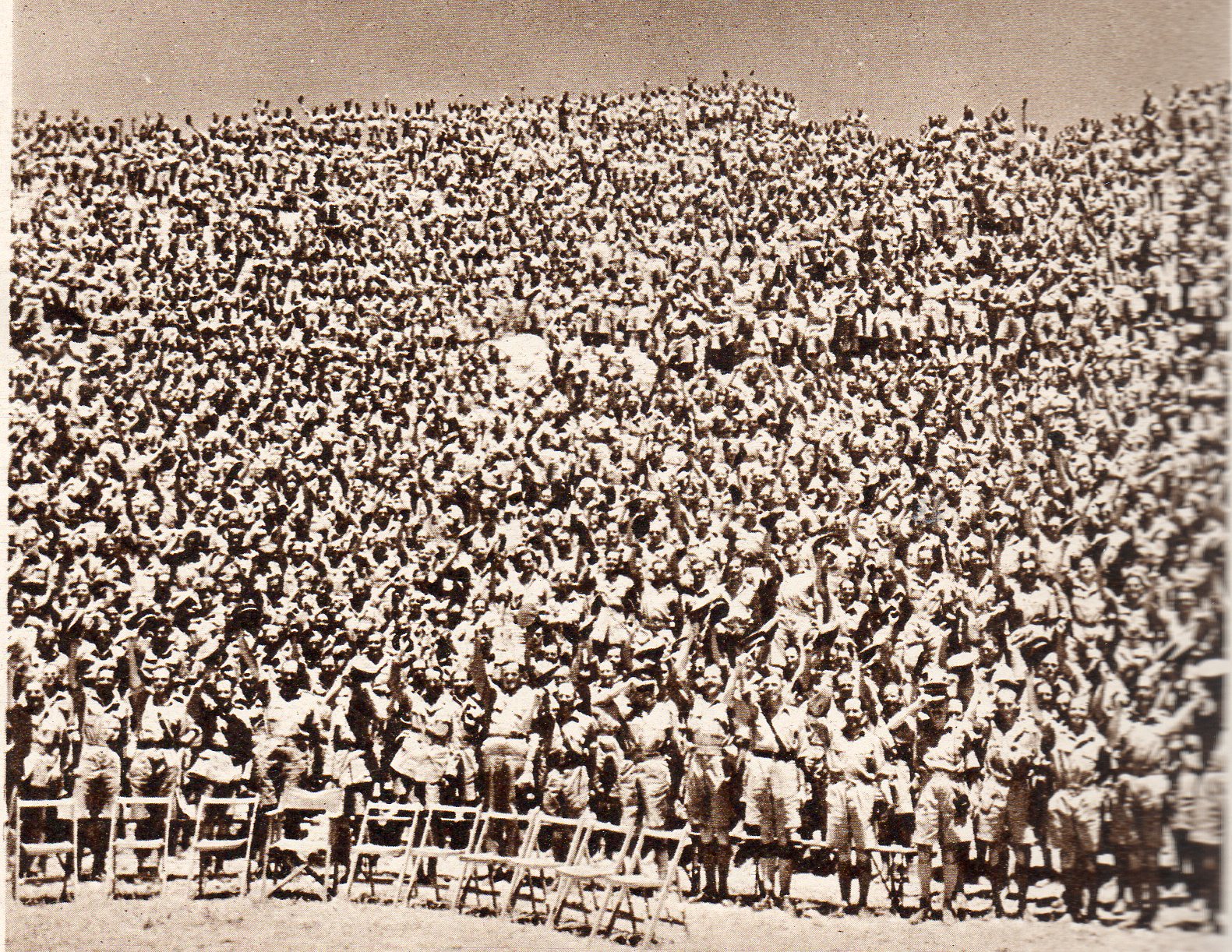
    And in the last picture we see a far different crowd–the victorious Allies waiting on Winston Churchill to speak to them in an amphitheater in the ancient city of Carthage, just down the road a piece from Tunis.  Carthage has seen it fair share of winners and losers of the centuries (or the millenia), what with the Phoenicians and Hannibal and the Punic Wars and Roman conquest and rebuilding and on and on.  The amphitheaters of Carthage were renowned–great structures for what was perhaps the greatest metropolis of North Africa–bu they suffered from defeat as well, their fine fittings and metal and ornate sculpture looted with successive control. When Churchill rolled in there in 1943, there was little left to the structure save for the stone.

    The stone, and all of those victorious soldiers.
    And Mr. Churchill, of course.
    000 crowds tunisia 4021

    The result of this series of battles ended up in May, these pictures showing what defeat looked like to 230,000 German and Italian prisoners, though the vast majority were German.  Its really a curious display of facial expressions in the  many dozens of details that can be lifted from these mass portraits. I’ll make an semi-reasonable statement–nobody really likes/wants to be taken prisoner in war, though I guess time and place and circumstance are factors that can loosen up that observation.  (Germans were much more interested in being captured by the Allies as they fled westward in Berlin and the rest of the country as the Soviets began making their own way towards the heart of Germany, for example.) Perhaps what looks like an element of relief in the close-ups of these prisoners really was that; that their time in the desert was simply expended, and that the prospect of their surviving the war had just been decided, positively.

    [Brits raising their helmets at Carthage, waiting for Mr. Churchill.)

    000 crowds tunisia brits022

    ·Posted by :

    ·in:

    —

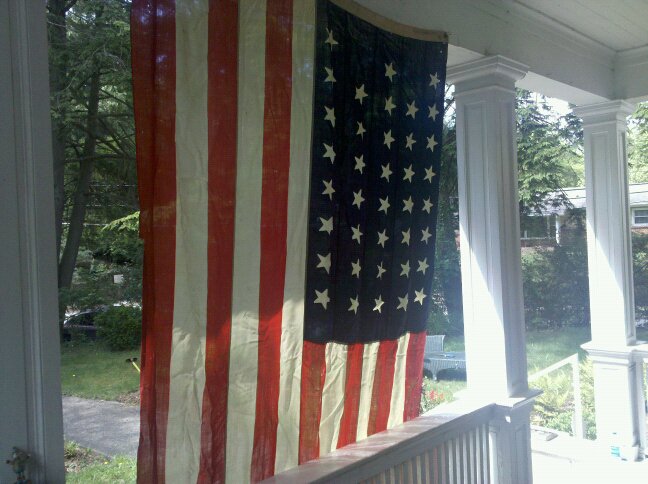
  • The 38-Star (1876) Displayed for Memorial Day

    Flag 38 star

    That’s a big one, 12’x8′ or so. Its beautiful. 

    ·Posted by :

    ·in:


  • Rubber Fabulosity, Continued: Rubber Joy of 1947

    JF Ptak Science Books  Post 1045

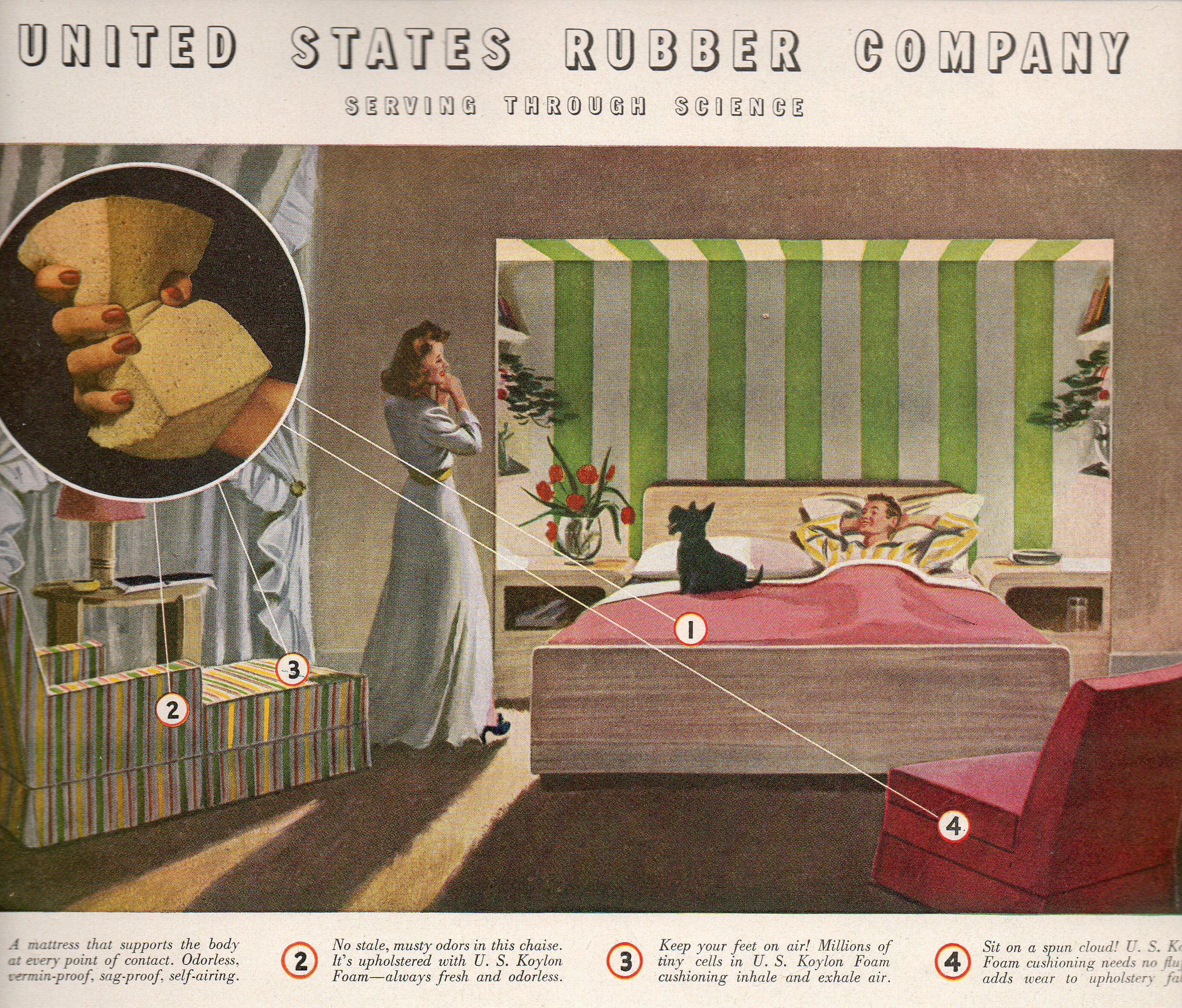
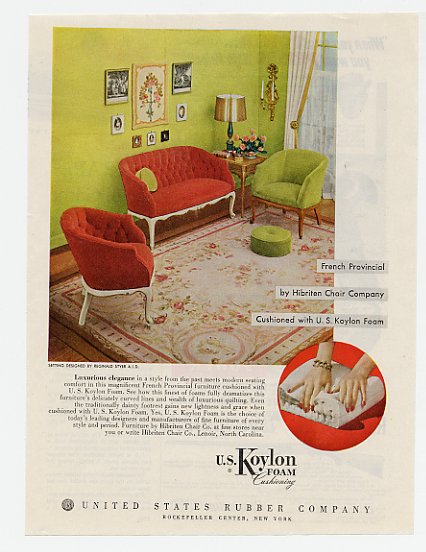
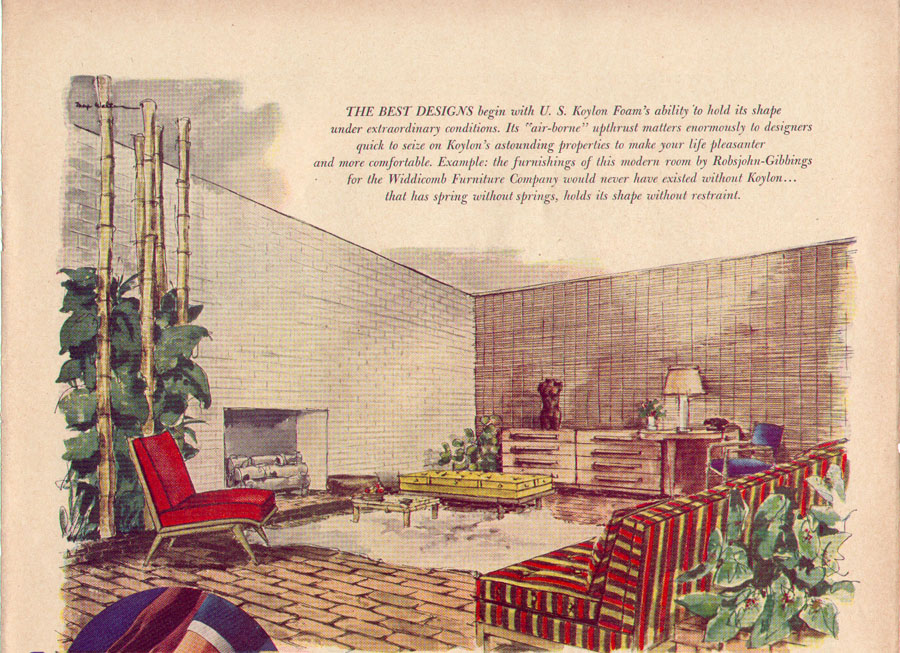
    In 1947 the American course of empire evidently led  directly to a rubber-sheeted bed on rubber mattresses surrounded by spectator chairs made of rubber.  Rubber here and rubber there, all brought to you by the United States Rubber Company1 and their foam rubber product star, Koylon, whisking everyone into their spongey, foamy future..  All of this seems a little other-worldly, from the massive window treatments to inset bed to the color combinations to the weirdly-drawn woman making her way to an improbably-depicted double (rubber) bed.  Perhaps nothing spelled “comfort” more indignantly than the possibility of hosing down your bedroom every morning. 

    It all looks a little scary to me, perhaps more for the lady (what is she holding behind her head?) than for the unexpected color usage.

    (Have a look too at an earlier post here, “There Was A Rubber Lady in a Rubber Kitchen in a Rubber House…”)

    Notes

    1. The  U.S. Rubber Company was one of the original twelve companies listed by Charles Dow in the very first iteration of the Dow Industrial Averages (26 May 1896).  USRC became Uniroyal in 1961.

    000 rubber LIFE016

    000 rubber room 2

    000 rubber one


  • Unintentionally and Quietly Absurd Images: Twilight Zone Advertising for 7Up

    JF Ptak Science Books Post 1043

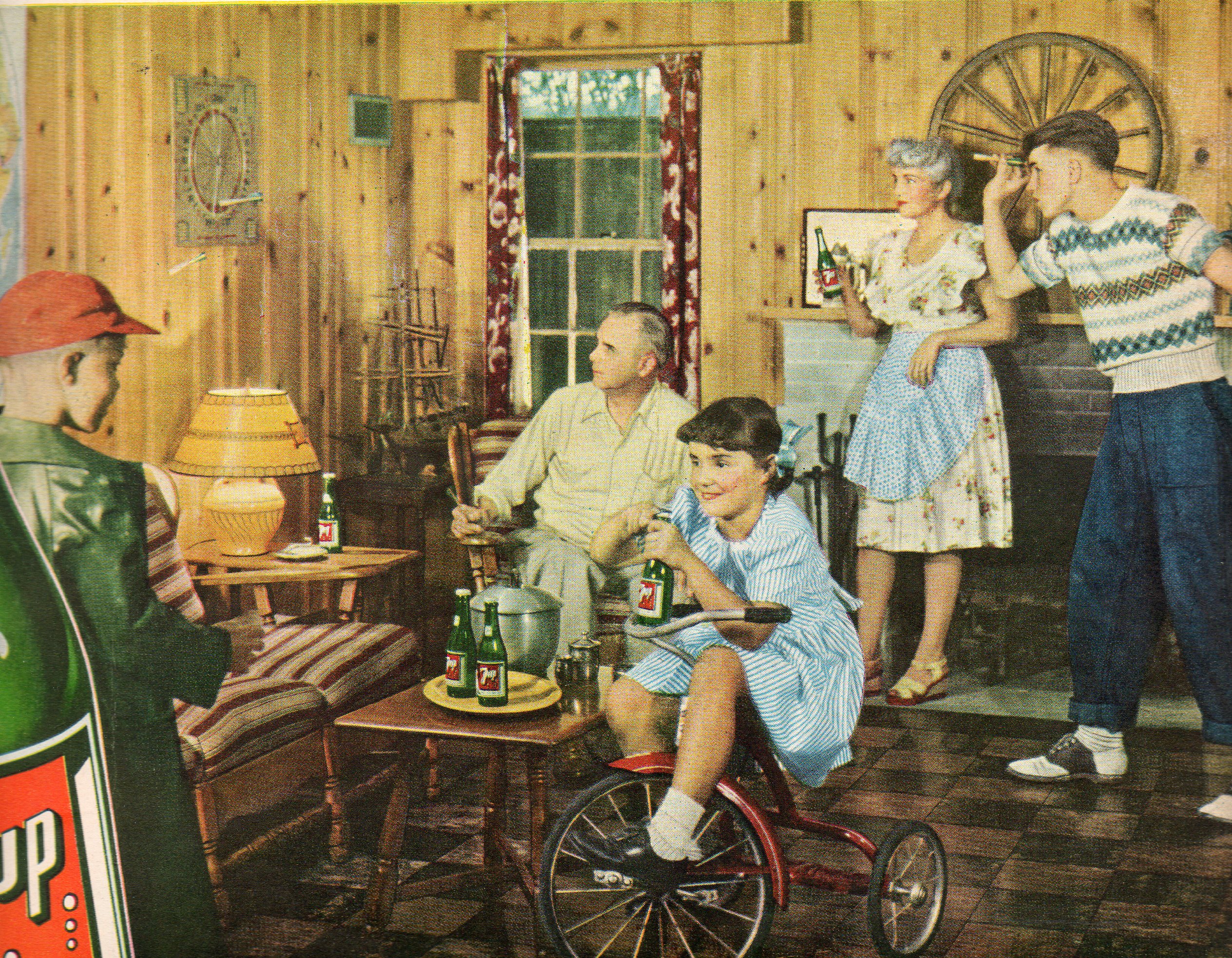
    What,exactly, is going on in this photo?  Yes they’re all helping to sell the delightful and refreshing pop soda called “7 Up”, but there’s something just off with each and every element.  

    000 7 up absurd017

    What is the story with the girl/woman on the trike, holding her bottle of pop as though it was the sudsy stuff?  She also must be at least 16 years old and looks a little possessed in having to wear those clothes in that pose.  She’s staring into the chest of the kid at left, who for some reason is wearing a heavy and shiny green coat there in the basement rumpus room.  Manchild Junior takes careful aim with his big dart as dad sits staring at the dartboard, waiting for his eyes to collect the darts as though they were magnetic dust in his eyeball magnet.  Mom seems to be plasticized and propped up against the fireplace, her bottle at an odd angle used only for toasting.  In All of this extends to the bottle, which hasn’t a single word on it, unless you cleave away the “up” from “7up”–there’s just truncated words and an incongruous woman in a bathing suit on the label.

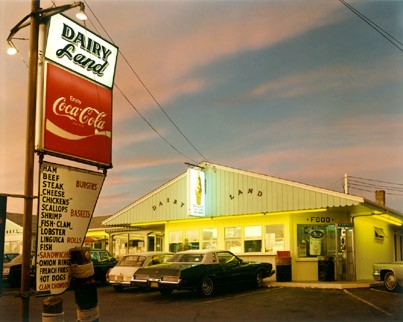
    In short:  the photo has a low-suburban mid-creep distant-color affect, kind of like a human landscape version of a Joel Meyerowitz photograph.

    Meyerowitz07