A Daily History of Holes, Dots, Lines, Science, History, Math, Physics, Art, the Unintentional Absurd, Architecture, Maps, Data Visualization, Blank and Missing Things, and so on. |1.6 million words, 7500 images, 4.9 million hits| Press & appearances in The Times, Le Figaro, Mensa, The Economist, The Guardian, Discovery News, Slate, Le Monde, Sci American Blogs, Le Pont, and many other places… 5000+ total posts since 2008.

Author: JF Ptak

  • Dr. Strangelove as Dr. Merkwürdigliebe, 1930

    JF Ptak Science Books   Quick Post

    Strangelove517

    Well, maybe not,but there aren’t too many candidates that pop out of magazines all by themselves and get anywhere near approaching the original.

    http://www.portlandmercury.com/binary/80b9/mwbw-drstrangelove.jpg

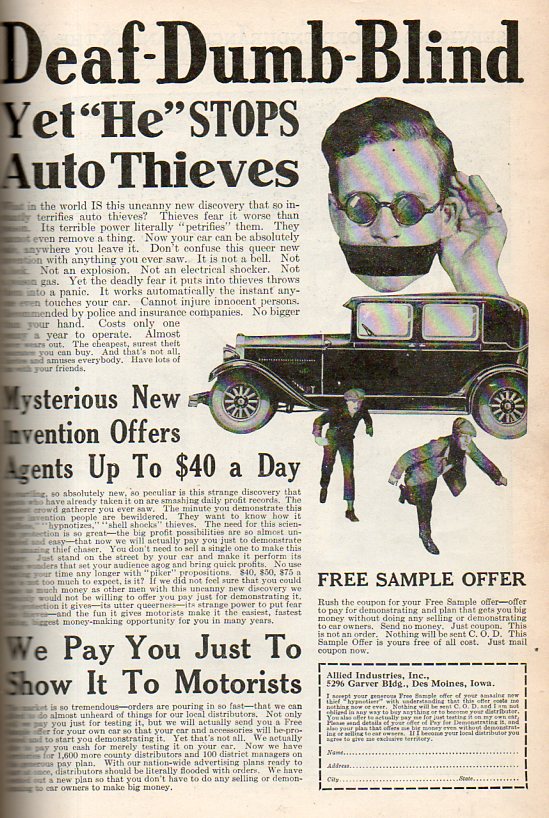
    This fellow, the first one, illustrated a not-described revolutionary device that somehow and magically prevent auto theft, and appeared in Popular Mechanics in September 1930:

    Strangelove516

    We read what it is not (no electric shock or flamethrower device, hello Johannesburg), but you wouldn’t find out what it was until you sent in your name to apply to sell the thing, which I bet was a key.  They generated lists then too to sell other stuff, just like today.

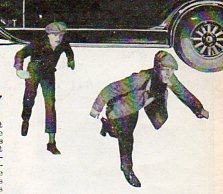
    And then there are these two guys, who I guess are badly dressed car thieves who are scrambling away as best as their replacement stick legs could carry them–stick stump legs with silk stockings, they seem to be running very carefully, as though on iced eggs or something:

    Strangelove518


    ·Posted by :

    ·in:


  • Fun with Fat: Lard.

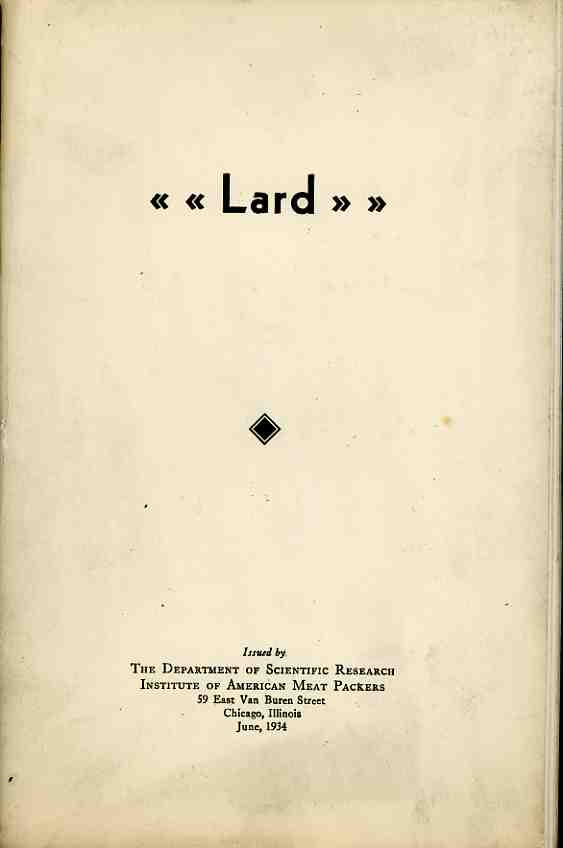
    JF Ptak Science Books Post 1780

    0-blog---Nov 22 lard093

    I didn’t think that this could be a continuing post , but, well, here’s another quietly understatedly magnificent cover in the Fat series. (Post #100, on Fat Art, is perhaps the most-viewed of all posts made here.)  This one, published in 1934 by the Department of Scientific Research of the Institute of American Meat Packers (Chicago, 59 East Van Buren street), has little or no fun in it once you get by the cover.  It is 70 pages worth of scientifiana on lard (though the sub-chapter heading on page 31 is a delightful and probably never-to-be-repeated “With Five Lards”, following the sub-head on page 30 of “Using 44% of Each Fat”.  The whole of it though is some pretty essential work on the use of lard and fat in shortening and the like; I’ll just stay with the cover. 

    ·Posted by :

    ·in:


  • A Note on Overcoming Hindsight: on Sending Japanese “evacuees” Home, 1945/6

    JF Ptak Science Books   Post 1779

    On Evacuees, Excludees, and “Segregees”: Closing an Ugly Chapter in U.S. History–the Japanese Internment Camps, 1942-1945

    As of April 30, 1945, the U.S. government allocated a total of $39 million to relocate 120,000 or so Japanese “evacuees” from “evacuation centers” back to their “normal homes”.  That comes to about $275.00 per person:  but that is mostly allocated to payment for personnel, because, really, all that was happening was that these people were being sent back home somewhere, or if their homes/farms had been undersold from under them, to somewhere not-their-home.  Of course the figure is slightly inflated, because of all of those Japanese interred during this time nearly 10% of them volunteered to fight in the U.S. Armed Forces, so for those who survived after serving in some of America’s most highly-decorated units of all time, Uncle Sam was paying the bill to send those young men home.  But offsetting the Americans of Japanese decent who fought in the war were about another 10,000 babies born in the “segregation centers”, so the numbers stay fairly-well the same.  (I cannot offhand find any numbers on the numbers of people who died in the camps, or for that matter what happened to their remains after the camps (and camp cemeteries) were closed.  I do not know if that was a government expense–to move the coffin and pay for reburial–or if that expense became a private affair.)

    Dillon Myer, who was the director of the War Relocation Authority,  testified in Congress on 30 April 1945 that it was time for the “relocation centers” to be closed, and for the “evacuees” to go home.  And to go home on schedule. 

    “Not later than 15 months, after revocation of the general exclusion orders, all evacuee property services to persons other than excludees (including segregees) will terminate, and all evacuee property warehouses not utilized for the property of such persons will be emptied…”

    I expect that few of the American Japanese wanted to linger. 

    ·Posted by :

    ·in:

    — —

  • On a Quality of Being Indistinct–Melville and Turner

    JF Ptak Science Books  Post 1778

    For a painter to make a point of looking for poetry in the conception of a picture is the surest way for him not to find it.–C. Baudelaire.

    The qualities of being indistinct certain have their places, though those places are relatively rare in areas like the engineering of dam or bridge building, or in the rules of a game like chess.  Over time these qualities have certainly changed and manifested in different fields, say, for example, in literature and art–particularly in art.

    This brings us to Melville and Turner. It is a curious thing to see Herman Melville’s collection of J.M.W. Turner engravings, to see what the man collected and what might have drawn him to those particular pieces. After all, Melville was a necessary collector–he needed things, sometimes needing them more than his family needed things, like food–and so to see the visual items that were “necessaries” is very interesting.

    And when you look at the engravings of the Turner paintings in most cases they bear little resemblance to the original.  As a famous and respected, highly admired artist for more than 40 years, Turner’s early works can also be considered famously ‘indistinct”.  As a matter of fact,  that was a major concern of some of the great artists and critics of the time,  viewing some of Turner’s beautiful pre-pre-Impressionist works. (His very highly Impressionist works reaching back to just before 1800, very well in advance of Boudin and Manet, Corot and Millet, Daubigny and Courbet, and the rest.) People didn’t quite know what to do with the “indistinct” shorelines in his naval/maritime works, or the suggestions of people, or the fantastic mystical skies of deep foreboding and threat communicated with emphasis on color and suggestion more so than accurate physical representation. 

    Robert K. Wallace takes on the issue of this relationship between the literary and artistic giants in Melville and Turner, Sphere of Love and Fright (University of Georgia Press, 1992) and discusses it very fully over 635 pages.  I was interested to see the list of the Turner engravings collected by Melville and of course everything else that went along with that.  Wallace notes John Landseer’s reaction to one of Turner’s earlier and not tremendously impressionist works (Sheerness as Seen from the Nore, which is a great title in and of itself)  was very guarded, saying that the shorelines “are little more than threads in the distance”, and writing in 1808 of The Confluence of the Thames and the Medway of the painting’s “indefinity”, and of his doubtfulness of the “indistinctness” of Richmond Hill and the Bridge“. After all, even the pre-impressionists really wouldn’t begin to make a full appearance for a few more decades, and the subject of suggestion of form in painting rather than their depiction was a very major issue.

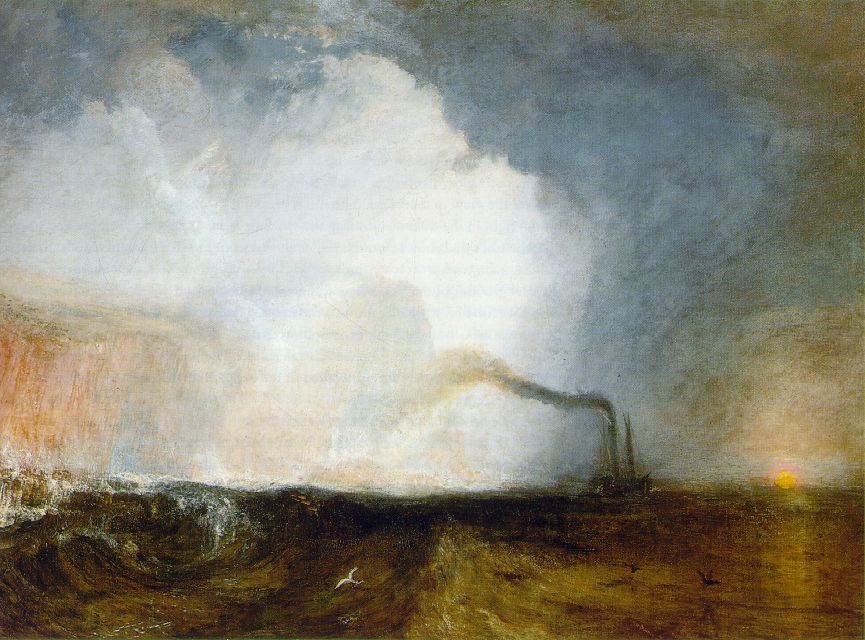
    Turner would move more deeply into his expressive creativity as he grew older, producing work after work of high impressionist qualities, such as, for example, Death on a Pale Horse (1825-1830), Staffa, Fingal’s Cave (1832) and


    [Staffa, Fingal’s Cave.]

    Death on a Pale Horse by J.M.W. Turner

    [Death on a Pale Horse.]

    Rain, Steam and Speed (1859).  Wallace relates a great story of the first Turner painting making its way to the United States, coming by way of a purchase by James Lenox of the Staffa painting, arriving here in 1845, already very deep into the career and life of Turner (1775-1851). When it arrived and unboxed, the new owner Lenox was extremely surprised by the suggestive qualities of the painting, which to him “appeared so indistinct throughout” (Wallace, page 74).  Lenox wrote Turner with his observations, when he wondered if the trip by sea had actually done something to the paint of the picture, rendering its detail obsolete.  Turner replied that the “indistinctness is my fault”.  Lenox was certainly seeing something new–it was something revolutionary in art and vision, and not a spoilation by salt and sea.

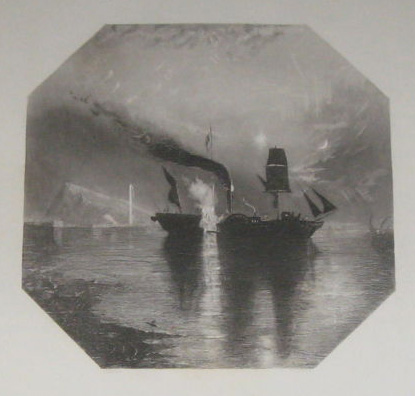
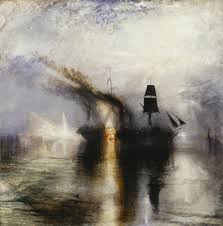
    So I wondered about Melville’s collection of Turner, and how the engravings might differ from the paintings, and how in general the work would be more tailored for a general audience, with the great “indistinctness” of the works lost in incised lines on copper and steel.  Did Melville know the of the differences between the mass produced item and the original painting?  Or did that matter, at all, particularly if Melville was looking at the ships and other parts of the images that reminded him of his own experiences real or imagined, and that his brain would fill in the detail as necessary?  (And there are certainly differences, as we can see below:)

    An engraving of Turner’s Burial at Sea as it would have existed in Melville’s collection:
    Melville turner burial at sea
    And Burial at Sea, as a painting:
     
    Turner--burial at sea
     
    Source; http://www.tate.org.uk/art/artworks/turner-peace-burial-at-sea-n00528

    Another question is whether or not Melville would have known the difference, or if he was even aware of the great idea of indistinctness existing in Turner’s originals, and what this new way of painting would come to represent.  At this point, I’m not sure, and I’m not sure that I need to be sure, at all.  Perhaps the issue is best left to question, being left to its own indistinctness, left for interpretation and imagination.  I think that is good enough for me, right now. 

    Other examples of Melville’s collection of Turner images compared to the originals:


  • From our Jell-O Department: The Staggering Un-Beauty of Gelatin

    JF Ptak Science Books  Post 1777  [Part of the Bad Ideas series.]

    Jello440“Gelatin is a protein substance derived from collagen, a natural protein present in the tendons, ligaments, and tissues of mammals. It is produced by boiling the connective tissues, bones and skins of animals, usually cows and pigs.”

    Gelatin of course is still around, present in all sorts of things, the Old School equivalent of the coming New School use of cellulose filler in everything–except of course that cellulose isn’t the leftover stuff on the slaughterhouse floor.  Lots of kid foods are made with it–gummy bears are just about all gelatin, all the time, with the exception of the shelf-life lengtheners and coloring.

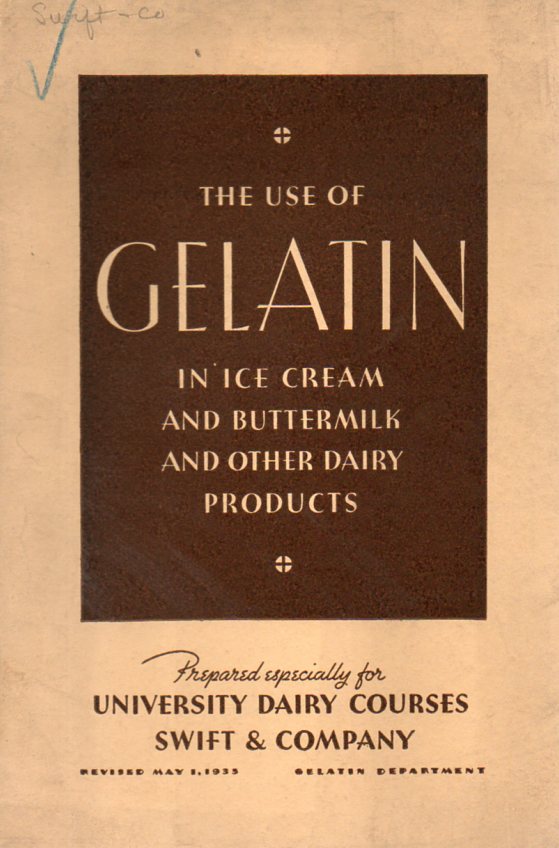
    Jello439The first lively hard-sell pamphlet, The Use of Gelatin in Ice Cream, and Buttermilk and other Dairy Products (1935) was assembled by the “Gelatin Department” of Swift & Company.  Swift (purchased in 2008 by JBS S.A.) used to be the world’s largest processor of cows and pigs and other things with eyeballs and veins and brains, making them into food for human beings.  The company (started in 1855) expanded into other things in the mid-19th century, getting into the insurance and petroleum fields.  It used to own Peter Pan peanut butter, too.  And Playtex, makers of bras and etc.

    I have to give Swift credit though for stating exactly what gelatin is, right there on the first page, in  no-nonsense language. The short (12-page) pamphlet is then given over to a quick sales talk on the uses of gelatin–in chocolate milk, sour cream, cottage cheese, ice cream, sorbet and buttermilk–and how to prepare it.  At first a reader might think that the use of gelatin in the pre-WWII days was not so widespread, until they remembered that this pamphlet was directed at just dairy products.  There was a whole other world of gelatin use besides this one.

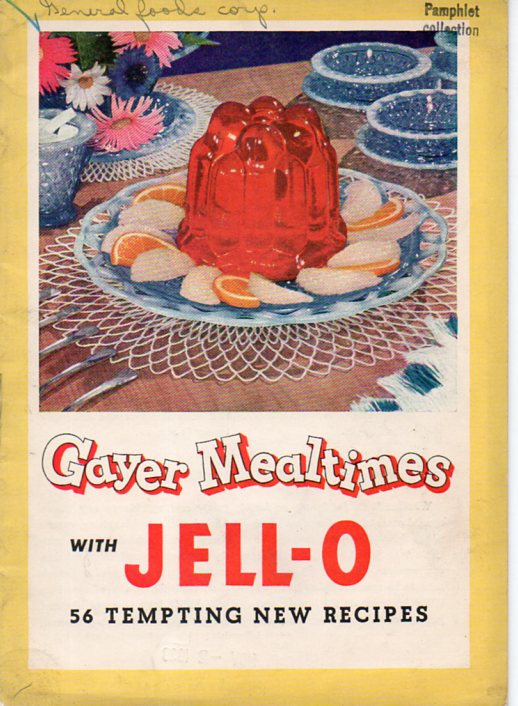
    And that’s been the story of Jell-O, a product of extraordinarily modest and not-pretty means, morphing itself and Jello434the Postum Company over a relatively short period of time (from 1895 to 1925) into the megamonolth:  the General Foods Corporation.  “America’s Most Famous Dessert” got its third (or better) start on life in Le Roy, New York, under the creative hands of Mr. & Mrs. Pearle B. & May Wait (true!), who took sugar, powdered gelatin and artificial fruit flavors to make a concoction May called “Jell-O”.  But her reach was none-too-grand compared to that of Frank Woodward, who bought the company from her and created the demand for this ‘food” and who ultimately created General Foods with it.  (Its an old story:  consumable and saleable product with no consumers:  Marlboro cigarettes started out as a specialized cig for “ladies” and failed; the same cigarette was then re-marketed as a testosterone-laden product and then succeeded beyond all wild expectation, killing millions of its consumers in the process.)  In any event Ms. Wait trumped another New York state resident, Charles Knox,  in the race to develop a pretty and tasty  granulated/[powdered gelatin desert mix.  “Knox’s Gelatine”, originally made with calves’-foot jelly, was a little earlier to the table than Mrs. Wait, but failed to properly develop his product. It also suffered its own “purity” by not having any sugar in it.  

    Jello438
    Plus, there’s the entire aspect of colors-not-normally-found-in-nature inherent in the spectacular nature of gelatin:


  • Imaginary and Empty Space in Imaginary and Empty Maps

    JF Ptak Science Books  Post 1776  [Part of the Series on Blank, Empty and Missing Things.]                                                                                                           

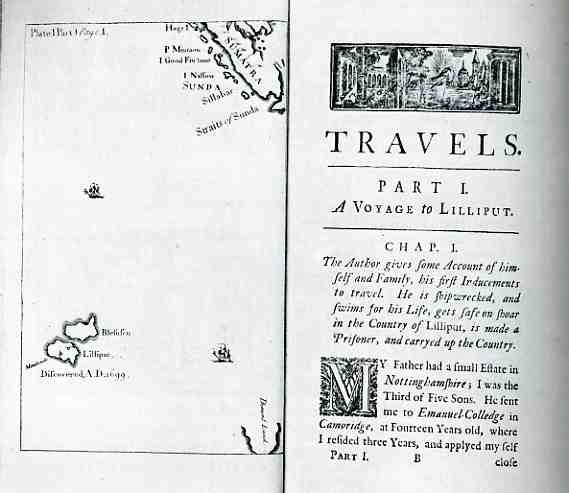
    000-ebay--Nov 4--gulliver996 Jonathan Swift’s Gulliver’s Travels (1726, amended 1735), or Travels into Several Remote Nations of the World, in Four Parts. By Lemuel Gulliver, First a Surgeon, and then a Captain of several Ships, is a great work that spills over into many different categories, being a forerunner to the modern novel, a sort-of children’s book that was for adults, as prototype of science fiction story, and of course a brilliant satire.  The satiric nature of the book is pervasive and extremely visible, but yet the whole thing works splendidly, exposing and investigating the nature of corruption (of mind/soul), perception, value, the naming of things, the nature of judgment, and, of course, the soul of political intrigue.

    Everyone remembers the voyage of Gulliver to Lilliput, but there were other voyages as well, the book including: “A Voyage to Lilliput (May 4, 1699 — April 13, 1702)”; “A Voyage to Brobdingnag (June 20, 1702 — June 3, 1706)”; “A Voyage to Laputa, Balnibarbi, Glubbdubdrib, Luggnagg and Japan  (August 5, 1706 — April 16, 1710)” and  “A Voyage to the Country of the Houyhnhnms (September 7, 1710 – December 5, 1715)”.   But what I’d like to concentrate on here is the emptiness of the space around the empty non-existent (sorry) islands of Lilliput and Blefusco, which I think fits as a subcategory in this blog’s continuing series of posts on empty and blank spaces.  The islands are well away from just about everything, being unfindable only if you’re a youngish sea captain blown off course, far to the south of remote and removed Sumatra.  

    File:Athanasius Kircher's Atlantis.gif

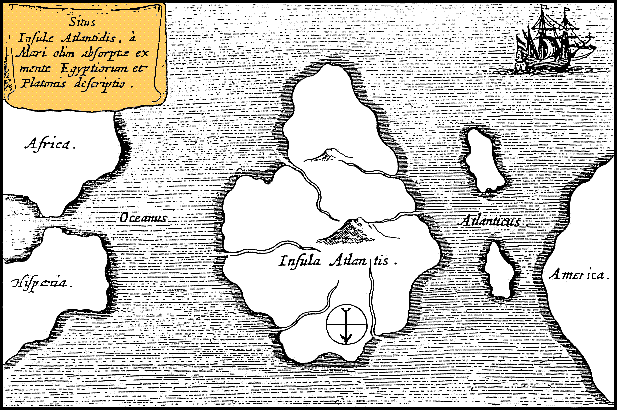
    [Map of Atlantis, from Athanaseus Kircher’s Mundus Subterraneus, 1669, with north situated at the bottom of the map, as indicated by the arrow.  It is doubtful that anyone believed Atlantis could have been the size of half of the Atlantic Ocean, as we see above; but if we look at teh relation in size of  Spain to Atlantis the possibility for that size grows brighter.]

    Even maps of Atlantis seem to make that place less removed than Lilliput, and there’s more detail to the interior of that island than Swift’s almost-entirely blank pair.  But Lilliput, as an imaginary place, looks particularly blank in a sea of blank, punctuated by two lonely little boats.  There’s just an awful lot of blank, white space in this map…  


  • Bad Ideas of Great Timelessness: Basball Bat, 1890

    JF Ptak Sciene Books   Quick Post

    Some ideas are bad enough to stay that way, possibly forever. Impervious to the future, nothing anywhere ever catches up to them to make them unbad.  The design for this baseball bat fits snuggily into that category. Not only is this a bad idea, it is an ugly one, too.  I have to say that there is an intrinsic beauty to a baseball bat–its angularity, its diameter-to-length ratio, its color (for the most part), its patina, and even the applied non-Brettian pine tar–that just should not be trampled. (I’m sorry, but baseball bats really need to be the original color of the ash wood–not brown, or black.  I’m of course not talking about metal bats which are also in and of themselves a bad idea, “wrong”, somewhat like monster golf drivers,  not to mention that they can be made in a variety of colors, which simply deepens their wrongness.)

    Caveat–none of what I’ve just said applies if any of these bats are being used by children. Any kid with any bat at any time is perfectly fine.  And natural.) 

    I’m happy that no one felt any particular need to need Mr. Kinst’s (patented) bat.

    A nice history of bats can be found here.

    Mr. Kinst as he appeared in 1924.  The image is found in the American Memory Project of the Library of Congress, and the caption to the photo is as follws: “SUMMARY: Head and shoulders portrait of Emile Kinst, inventor of a baseball bat, looking toward the camera, sitting in front of a light-colored backdrop in a room in Chicago, Illinois.”

    ·Posted by :

    ·in:

    —

  • Playing the Money Card–What it Really Looked Like

    JF Ptak Science Books   Quick Post

    We’ve all heard of the saying, “playing the money card”  but until this morning I’ve never actually see it, so far as I know.  While looking for WWI aerial combat games in the patent records I stumbled across “Capture the Kaiser”, a card game created by Charles Hopkins  (which was entered into the register at the Patent Office in November 1917 and received the patent less than three weeks after the end of the War)–it was a game of pursuit/capture using 45 cards in which players used the various strengths of nations (airplanes, submarines, battleships) to secure the outcome.  It seems pretty much like a standard game of “War” with a few exceptions, one of which was the “finance card”.  It was one of the strongest cards in the deck, or so it seems, rivaling that of another interesting bit, the “fate card”.  In any event, it was interesting to see the root of power portrayed so in a card game for kids.


  • Visualizing the Normally-Unseen: Roentgen, Marey, Malevich

    JF Ptak Science Books  Post 1775

    Pleasant_1bertha The 1895/1896 issues of Nature magazine are compliantly normal until the first weeks of 1896 when the first of a flood of articles is published about the astonishing discovery of 50-year-old Wilhelm Conrad Röntgen. The English-language popular science journal announcement of his December 28, 1895  “Ueber eine neue Art von Strahlen” (“On a New Type of Ray”), appearing 16 January 1896, began the introduction of a new state of human experience.  His experiments—built upon the work of J. Plucker (1801-1868), J. W. Hittorf (1824-1914), C. F. Varley (1828-1883), E. Goldstein (1850-1931), Sir William Crookes (1832-1919), H. Hertz (1857-1894) and the odious Phil Lenard (1862-1947 and who didn’t die soon enough)—revealed as much to humans as did the experiments and inventions of Hooke and Leeuwenhoek on the invisible worlds revealed by the microscope.  There are more than 150 articles on the Roentgen (and soon to be “X-“) Ray, all published within 12 months of the original announcement, almost all excitedly, trying to comprehend, elucidate, expand, verify, this new world. 
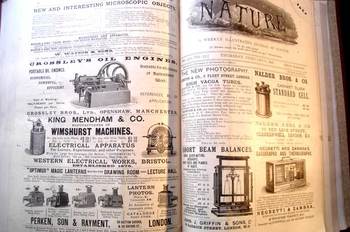
    Blogxraybigads_2 [The news of the discovery is first and most popularly reported in the January 6, 1896 London Standard:  “The noise of war’s alarm should not distract attention from the marvelous triumph of science which is reported from Vienna. It is announced that Professor Routgen (sic) of the Wurzburg University has discovered a light which for the purposeBlogxrayad of photography will penetrate wood, flesh, cloth, and most other organic substances. The Professor has succeeded in photographing metal weights which were in a closed wooden case, also a man’s hand which showed only the bones, the flesh being invisible”. By the end of the month the news was completely absorbed, worldwide.]
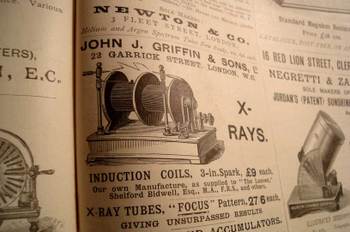
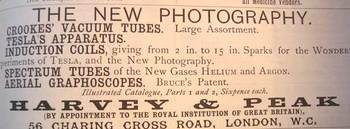
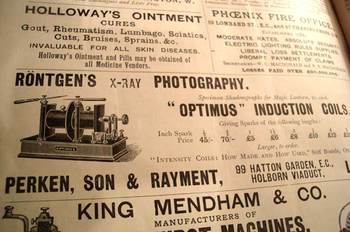
    I looked at the advertising in these issues (my copies of Nature for these decades generally have the original paper wrappers for the weeklies, complete with ad copy), looking for the first time that a Roentgen machine was offered for sale to the general public.  As it turns out, they popped up 12 March 1896 (once), 19 March (twice), and then about once a week for the rest of the year.  A little surprising, I think, a little light to my Monday-morning quarterback’s eye—I expected more; bigger, more, splashier.  But the ads are small and sedate, hardly similar to the discovery they represent. 
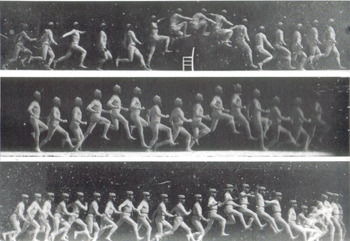
    Blogfeb_22marey The rest of the world, the rest of the advertising world, stayed the same–the Roentgen discovery and the enormous possibilities and promises of his “new photography” lived in their own unique sphere, unencumbered by their sassy new brother.   This mild response seems dimmer still when you compare it to that which greeted other (relatively) simple but still major advancements in the world of photography.  Take for example Etienne Marey, who was a technoid and physician who was able to capture motion of all sorts–he was able to develop a picture so to speak of the movement of blood in the body via his instrument to calculate blood pressure, and he also created a shotgun-style camera that made the Blog_feb_22_nude world’s first high-speed photographs of movement.  And so it cane to pass that in the late 1870’s and early 1880’s people were instantly able to see what a horse looked like when it galloped or what the body did *exactly* when jumping over a chair.  When you couple this with fourth-dimension material one wonders why it took several more decades to bump into these images in the art of 1907+. 
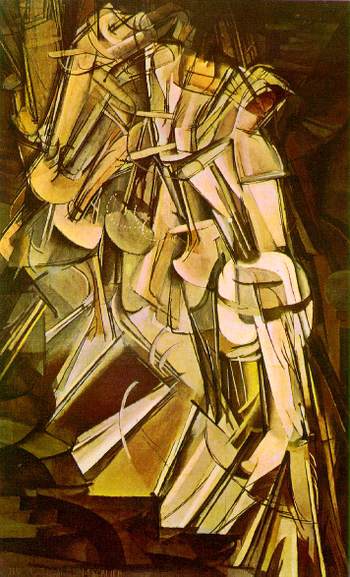
    (Duchamp Nude Descending series, 1915; above, Marey, 1881)

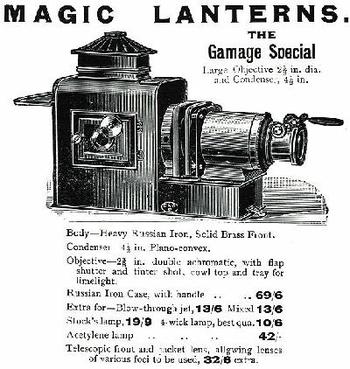
    And what indeed was normal in these pages?  Magic lanterns
    and magi lantern slides appearMagiclantern at all levels; the gorgeous Wimshurst machine gets heavily advertised; the redoubtable Negretti & Zambra advertised all manner of excellent scientific instruments (biographs, thermogrphs.  Nadeer Bros. advertised a pretty standard cell, and the ancient Crossley displayed their “new” oil engines, “suitable for all classes of agricultural work”.  J.H. Stewart was selling their semi-automatic electric arc lamp, while across the page was Newton & Company’s “Newtonian” arc lamps for lanterns (“self feeding and focus keeping”).  Microscopes and prepared slides abound, and Thomas Bolton advertises discretely and effectively for their “living specimens for the microscope”. 
    The Physical Review, the American upstart in the science world advertises that its third volume was available, while its distant cousin, the Psychological Review, advertised its own third volume.  Booksellers seem to take the most space, thank goodness. 
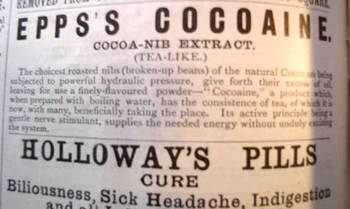
    Blogxrayepps There are a few medical throwbacks:  Epp’s Cocaine takes out occasional tenth-page ads for their “cocoa-nib extract, tea-like” selling its ‘gentile nerve stimulant”.  Right underneath is “Holloway’s Pills”, promising to cure biliousness, sick headache, indigestion, and all (?!) internal complaints.   These are brilliant simple samples of the skeleton of science in world-dominant Great Britain, in a world dominated at that time by H.A, Lorentz, Ernst Mach , Roentgen, Korteweg, de Vries, Bateson, Jean-Baptiste Perrin, Pierre Curie, Zeeman, Becquerel, Joseph Thomson,  Ernest Rutherford, Marconi, Ramsay, Fitzgerald.  And so on. 

    Nothing offered for sale here offered any significant clue to the pregnant world of modernity that was nearlyBlogxray3 there—the world would become ‘modern” almost immediately following Roentgen, with revolutionary, epochal changes in art (in non-representational form more so than Impressionism), theater, literature, music.  Just about everything changed (except politics).  But there is no hint to paradigm shift hidden in the ads, just as they were with the machines selling the promise of Roentgen’s “new photography.  There’s something about the fine glass, superb turning of the screw, and a perfectly oiled gear though that makes this sort of perfection seem so lonely in the world of larger change.  Bertha, Roentgen’s wife, sat for 15 minutes while her husband passed his rays through her hand; she ran from the room once she saw the results, revealing her very bones and no doubt a strong sense of the Blog_feb_22_malevich
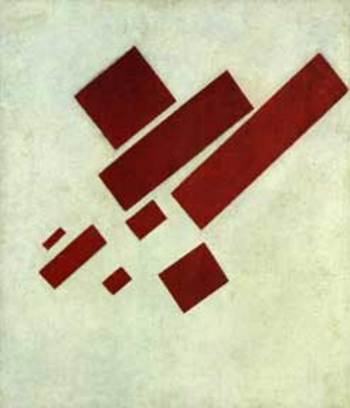
    fragility of life, and the strong presence of death.  Many had the same reaction to the Kandinsky’sBlogxrayad2 shapes and Malevich’s white circles and red rectangles and Ibsen’s drama and Einstein’s dancing dust and the rogue syncopation of jazz.  It is probably a very natural reaction to try and protect established memory—but memory should be more flexible than that, I think, to keep a healthy mind.

  • A Game by Any other Name: Chess as Not-Chess, 1873-1922

    JF Ptak Science Books   Quick Post  [Part of the History of Patents series.]

    Looking for (workable) patent models/templates for folding paper chess piece carriers (there are such things) I found these game patents, all of which are based to some degree on chess. I’m not sure why you’d play them if you could simply just play chess, but, well, they do seem like an interesting diversion, though from the little I read on actually playing each of the games they seem somewhat hollow. They are, however, pretty-looking things if not pretty-playing.

    Each image is clickable back to the U.S. Patent and Trademark Office where there is an accompanying text which sometimes gives enough information so that you could play the game. 

    ·Posted by :

    ·in:

    —