A Daily History of Holes, Dots, Lines, Science, History, Math, Physics, Art, the Unintentional Absurd, Architecture, Maps, Data Visualization, Blank and Missing Things, and so on. |1.6 million words, 7500 images, 4.9 million hits| Press & appearances in The Times, Le Figaro, Mensa, The Economist, The Guardian, Discovery News, Slate, Le Monde, Sci American Blogs, Le Pont, and many other places… 5000+ total posts since 2008.

Author: JF Ptak

  • Mobile Robot Car Doc, 1930

    JF Ptak Science Books  Quick Post 


    Follow Me on Pinterest 

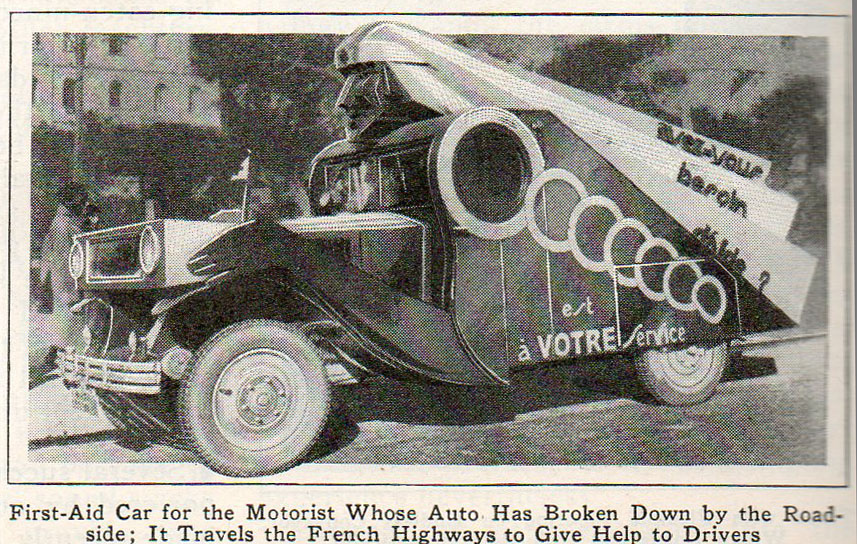
    Car ambulance012
    This small techno-snipet was found in the August 1930 issue of Popular Mechanics and describes what must be a solitary expedition onto the French highways in search of broken autos.  The “ambulance” would troll the roads looking for stranded motorists, and then would stop and employ its mobile garage to set things right. 


  • An Alphabet of Great Works in the History of Science

    JF Ptak Science Books    Post 1964

    This is a short and developing list of 36 principal works in the history of science, a list of integral and indispensable thinking. Its just the beginning of the list, really, and for the most part I’ve selected only one or two examples for each letter–the process has been pretty quick and without too much need for deliberation, what with selecting the obvious and all.  Nearly all are selected from the collection of the University of Adelaide, which has more full text works across the fields of intellectual history.
     

    Edwin A.
    Abbott, 1838–1926

        Flatland

    Aristotle
    (384–322 BC)

        Physics (or Physica); On the
    Heavens (or De Caelo)
    ; On Generation and Corruption (or De
    Generatione et Corruptione)
    ; Meteorology (or Meteorologica);
    On the Soul (or De Anima); Parva Naturalia (or Little
    Physical Treatises):
    ; On sense and the sensible (or De Sensu
    et Sensibilibus)
    ; On memory and reminiscence (or De Memoria
    et Reminiscentia)
    ; On sleep and sleeplessness (or De Somno
    et Vigilia)
    ;  etc.

    Archimedes,
    ca.287–212 BCE

        On the Sphere and Cylinder;
    Measurement of a Circle; On Conoids and Spheroids;
    On Spirals; On the Equilibrium of Planes; The
    Sand-Reckoner
    ; The Quadrature of the Parabola; On
    Floating Bodies
    ; Book of Lemmas; The Method
    Treating of Mechanical
    Problems


    ·Posted by :

    ·in:


  • Pale Horse and the Lake of Fire: a Map of End Times

    JF Ptak Science Books

    Blog--jun 13 end of the world


    There are, in my experience, very few antiquarian images
    depicting the end of the world in which we see the entire globe exploding or in
    pieces or in flames. This sort of image gets more play in the 20th
    century, especially after 8 August 1945, but prior to that it is really very
    scarce.  I own a few images that appear
    in the 17th and 19th centuries, and another from 1929 (Das Weltbild which show a “giant ice
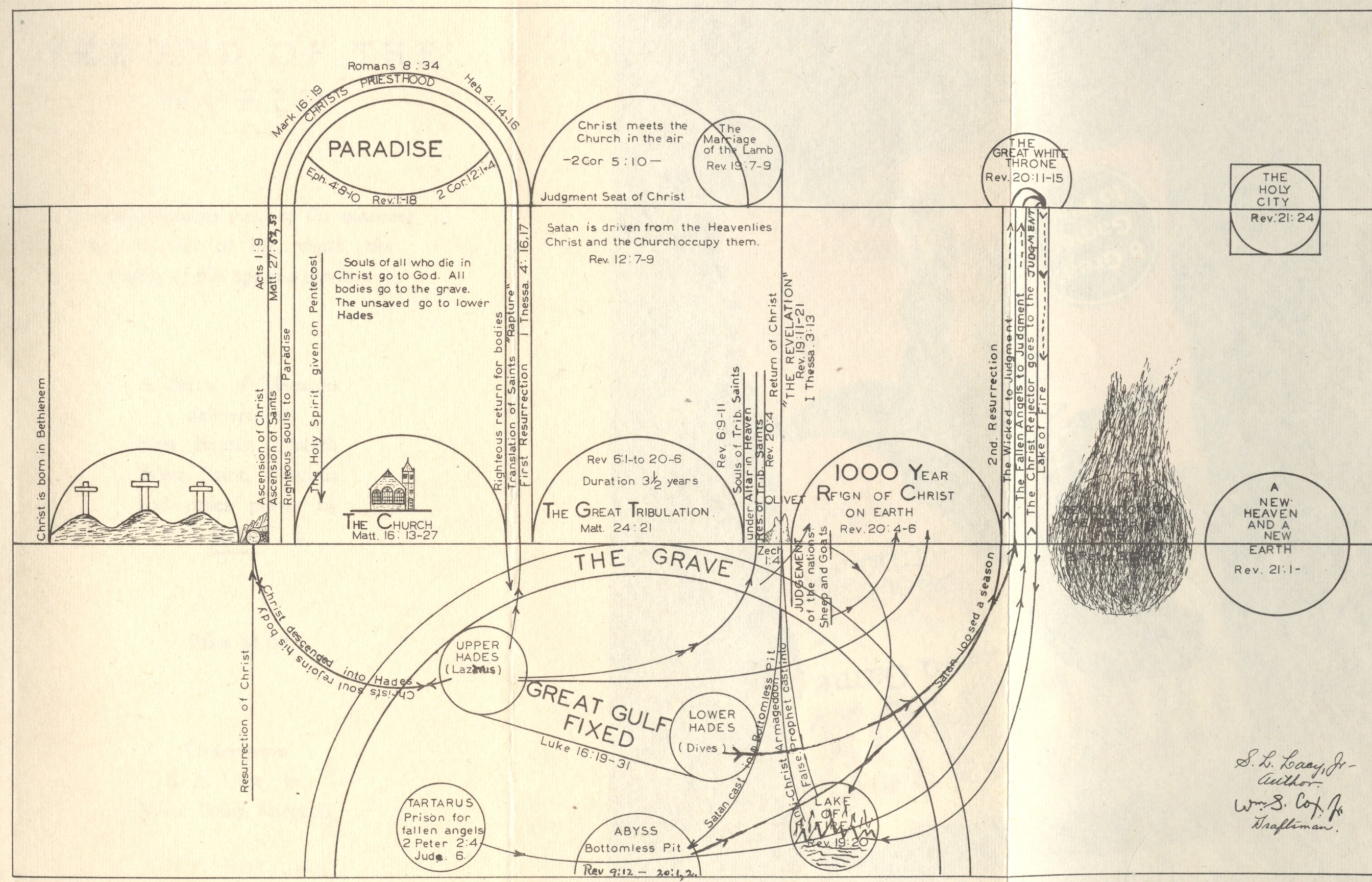
    ball” colliding into and completely destroying the earth). .  Then there is this new find, S.L. Lacy’s The End of the World, (necessarily) self-published
    in West Point, Virginia, in 1941.  It is a short and stocky, and bound in orange
    wrappers—its spine title (The End of the
    World
    ) begs the casual reader to pull it from the shelf. It’s a simple
    book—studying the Bible prophecies and revelations on the end of all things—and
    it annoys and is insulting but doesn’t disappoint.

     I started to breeze through the book (back-to-front as always) and opened the
    book to Chapter XIII, finding this delicious chapter heading:  “The Chronological Order of Final Things”,
    this being a full page pre-PowerPoint summation of the time-shrinking fireball
    that is rolling inexorably towards us all. 
    To say that one is able to put a period at the end of the world’s flow
    of time, that someone is able to identify the point in the future where the
    future is no more, is “presumptive”–this in the most understated
    fashion as to offend even the highest of high-Victorians’ sense of restrained
    propriety.  Wrapped in a comfortable
    Christian chrysalis of pre- and post-apocalyptic religious certitude, Mr. Lacy
    delivers his interpretation of biblical prophecy for the coming of the end,
    hustling it to the front of the religious line of things to come.

    It seems that in 1941 the end was beginning, and Lacy saw
    all of the images implied by prophecy that were necessary to announce the
    glorious final days of broad retribution. This includes the list if the ten
    things indicating “the sign of The Times”, one of which (Number 5)
    was “The Automobile” and another (Number 7) was “Increased
    Knowledge and Travel” (announced by Nathum 2: 3,4 and old dependable
    Daniel. 12:4, respectively.  There’s
    nothing that doesn’t fit into Daniel’s visions or revelations, though Mr. Cash
    has certainly made a lovely song of them.) 
    When everything fits perfectly into a predictive model with no possibility
    of falsification (or of proof or disproof), then the model has no validity
    outside of a belief system in itself. Very tidy.

    Blog--jun 13 end of the world det

    It is an annoying, cloying minor treatise, promising little
    more than The Lake of Fire awaiting almost all of us, even the sleeping dead,
    who would be scraped from their graves to be spit into this burning
    tragedy. 

    Lacy does a lot of inspired interpretation and
    philosophizing, much of which he doesn’t seem to bother separating from
    biblical quotations—I don’t think it is intentional, just bad writing.  A random
    find in Lacy’s thinking dislodges the following  nugget:

    “Satan is in the atmosphere above the earth, with access to
    heaven and earth with a circumscribed power over the atmospheric elements and
    the earth including the inhabitants”. 

     Oh dear.

    But enough of this nonsense. What brought me to this work is
    the folding schematic map at the front of the book.  It is a slightly complex jumble of
    semi-circles and circular reasoning, and I have no interest in straightening
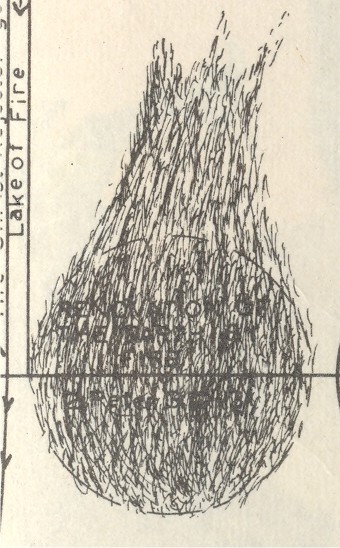
    out this jumbled linguine. What has my interest is the dissolving Earth part of
    the diagram, a part of the dead earth that comes between Calvary 
    and Heaven-on-Earth.  What makes this
    image different from the others though is that the Earth reappears—different from
    its former self having been vanquished and cleansed by all consuming fire, but
    the Earth nevertheless.  Or something
    like it.  Or nothing like it. 


  • Japanese American Citizens Respond to Internment and Removal, April, 1942.

    JF Ptak Science Books   Post  1964

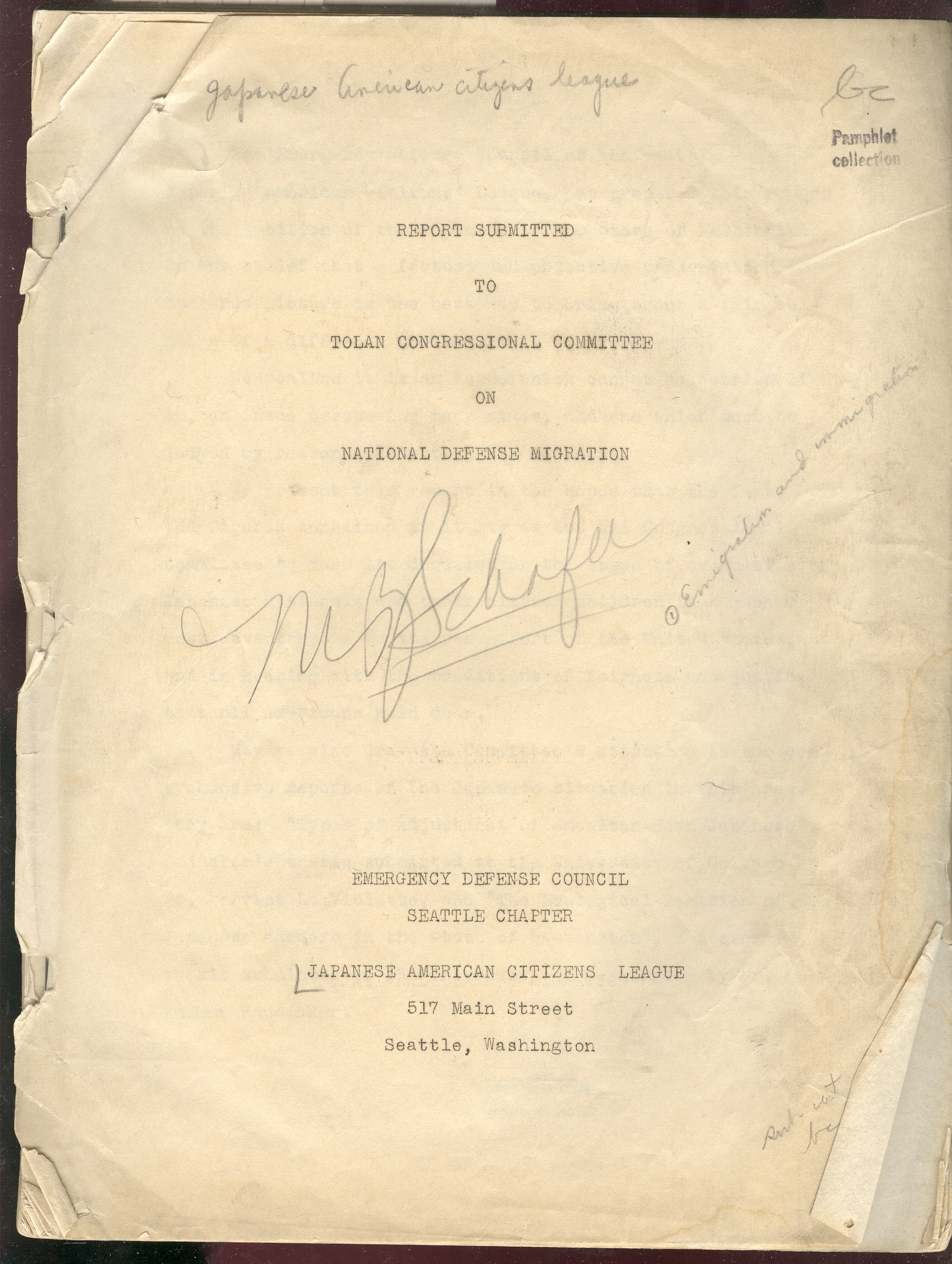
    I’ve unearthed another rare and exceptional document from the “collection” (read “heap”) here, a 38-page mimeographed document that is a logical and reasonable response of the Japanese-American community in Seattle to their impending removal and impundment of via Executive Order 9066 (1942):

    Report submitted to Tolan Congressional Committee on National Defense Migration Emergency Defense Council Seattle Chapter Japanese American Citizens League.

    000--tolan

    “….there must be a point beyond which there may be no abridgement of civil liberties and we feel that whatever the emergency, that persons must be judged, so long as we have a Bill of Rights, because of what they do as persons We feel that treating persons, because they are members of a race, constitutes illegal discrimination, which is forbidden by the fourteenth amendment whether we are at war or peace.”– A. L. Wirin, Counsel for the Southern California Branch of the American Civil Liberties Union, speaking on the internment of Japanese-Americans, 1942

    “We make these statements, not because we fear evacuation, but because we believe, to the bottom of our hearts, that the best interests of the United States, our nation are to be served by being permitted to stay, work, fight, and die for our country if necessary here where we belong.“–Response by the Japanese American Citizens League to Internment Camps, 1942

    This excruciating, heart-rending 1942 document was submitted by the Japanese American Citizens League (of Seattle, Washington) to the Tolan Congressional Committee with recommendations, proposals and requests in the event of the removal of Japanese citizens from “sensitive” areas in western America.  It is an exceptional report, a well-reasoned response to the developing and calamitous American fear of Japanese fellow-citizens; a fear which was swiftly leading itself to xenophobic actions the result of which was the internment of 120,000 American citizens in non-lethal concentration camps. 

    ·Posted by :

    ·in:

    —

  • Perhaps the Earliest Psychological Report on Adolf Hitler, 1941/2

    JF Ptak Science Books   Quick Post

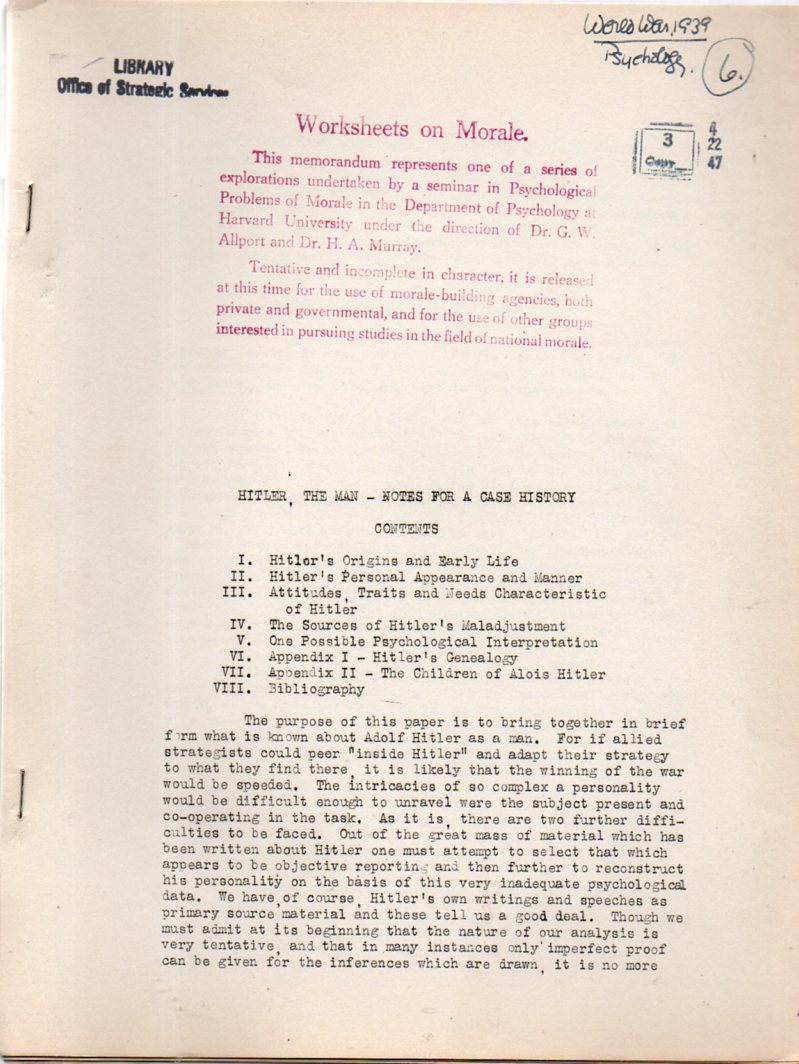
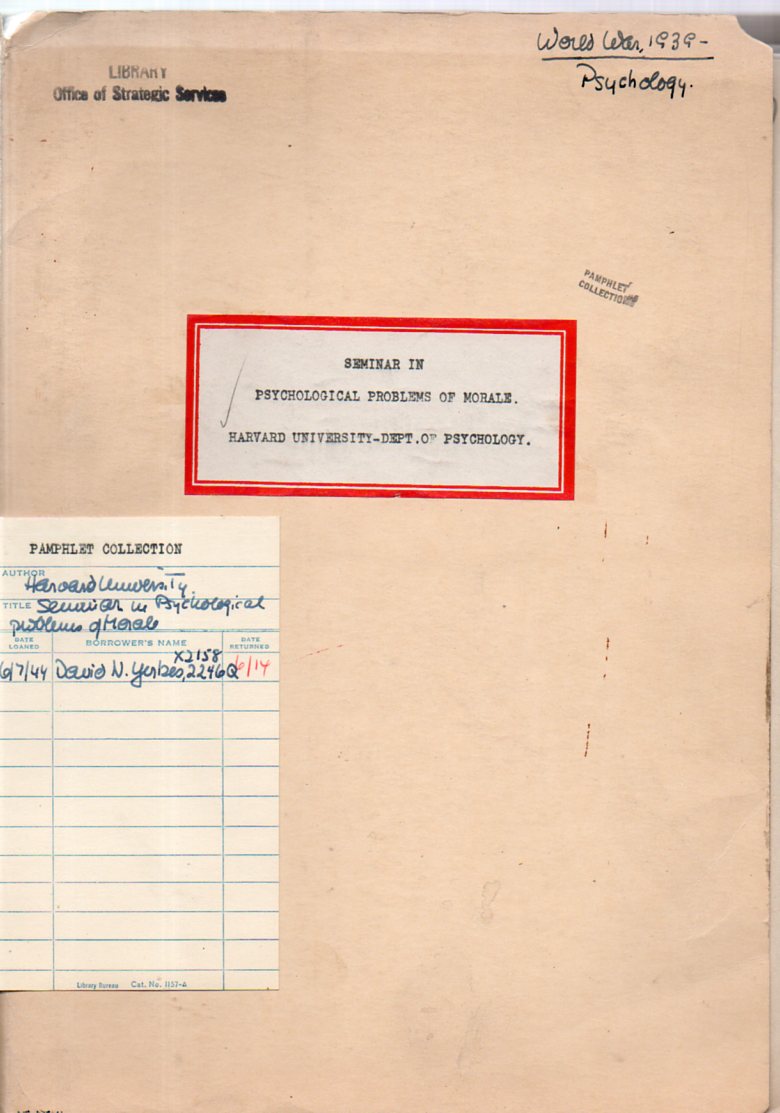
    I wanted to take a moment and post something from the bookselling section of this blog, something that’s pretty interesting and scarce in its own right.  It is a work produced at the Harvard University Department of Psychology by Henry A. Murray (1893-1988), the Worksheets on Morale. Seminar in Psychological Problems of Morale which was published in 1942 and contains a section which turns out to be the first psychological profile of Adolf Hitler–this copy was formerly in the library of the Office of Strategic Services, the precursor and incubator of the CIA.

    Allport696

    Allport697

    See more below:

    • This item may be purchased from the blog’s bookstore, here.

    ·Posted by :

    ·in:

    —

  • A Note on the History of the Blot: Writing on Clouds, 1785-1921

    JF Ptak Science Books    Post 1963

    Sometime we see a Cloud that’s dragonish,
    A Vapour sometime like a Bear, or Lion,
    A tower’d citadel, a pendant Rock,
    A forked Mountain, or Promontory,
    With Trees upon’t, that nod unto the World
    And mock our Eyes with Air.–Anthony and Cleopatra (Act IV Scene II) from the title page of Cozens’ A New Method…, 1785

    This blog maintains a longish thread on the History of Dots, but no where in there yet is any appreciation or discussion of the blot (the “blot” being “the unhappy and rejected love of the Dot” not according to Ambrose Bierce). 

    Cloud-writing is difficult work, mostly because it involves making the invisible visible in an imaginary landscape. This is I think exactly what Alexander Cozens (1717-1786) had in mind when he wrote about using ink blots for inspiration in preparing a landscape, writing about it in  his A New Method of assisting the
    Invention in Drawing Original Compositions of
    Landscape
    .  In 1785. He had the idea in mind and was using it in lessons for decades before that, but the work only found its way into print at the end of the century, a year before his death–and more than a century before such thoughts began to enter the early archaeology of the social meme. In a way he wrote about implementing a sort of simple calculus of discovery, of seeing the impression of possibilities in, well, anything, but particularly in the memory and sensation of forms. 

    These weren’t literally what we would think of today as ink blots–they were suggestive forms that sort of looked like blots from which more determined and refined images could be made.  He suggested that landscapes be generated as instinctively as possible, with  blots being used to arouse memory and curiosity and to be incorporated into or suggestive of natural forms in constructing the landscape. [Although the word “blot” reaches back into the 14th century according to the OED, the version that Cozens had in mind I think was the verb “blot”, which appears around 1440, and which means “to spot or stain with ink or other discolouring liquid or matter; to blur” (emphasis mine). It seems to me that the blot art that Cozens had in mind was both a blurring and a refining method, something that could release the artist and allow the mind to roam freely around the blot’s inspiration and the artist’s landscape memory. as Simon Schama says about the blot in Landscape and Memory, “there blots were deliberately random impressions meant to express, rather than to slavishly outline, the natural heaping of rock forms.  The impulsiveness and spontaneity of their production served to reinforce the new idea…that mountains were dynamic, even turbulent things…” (page 461).]

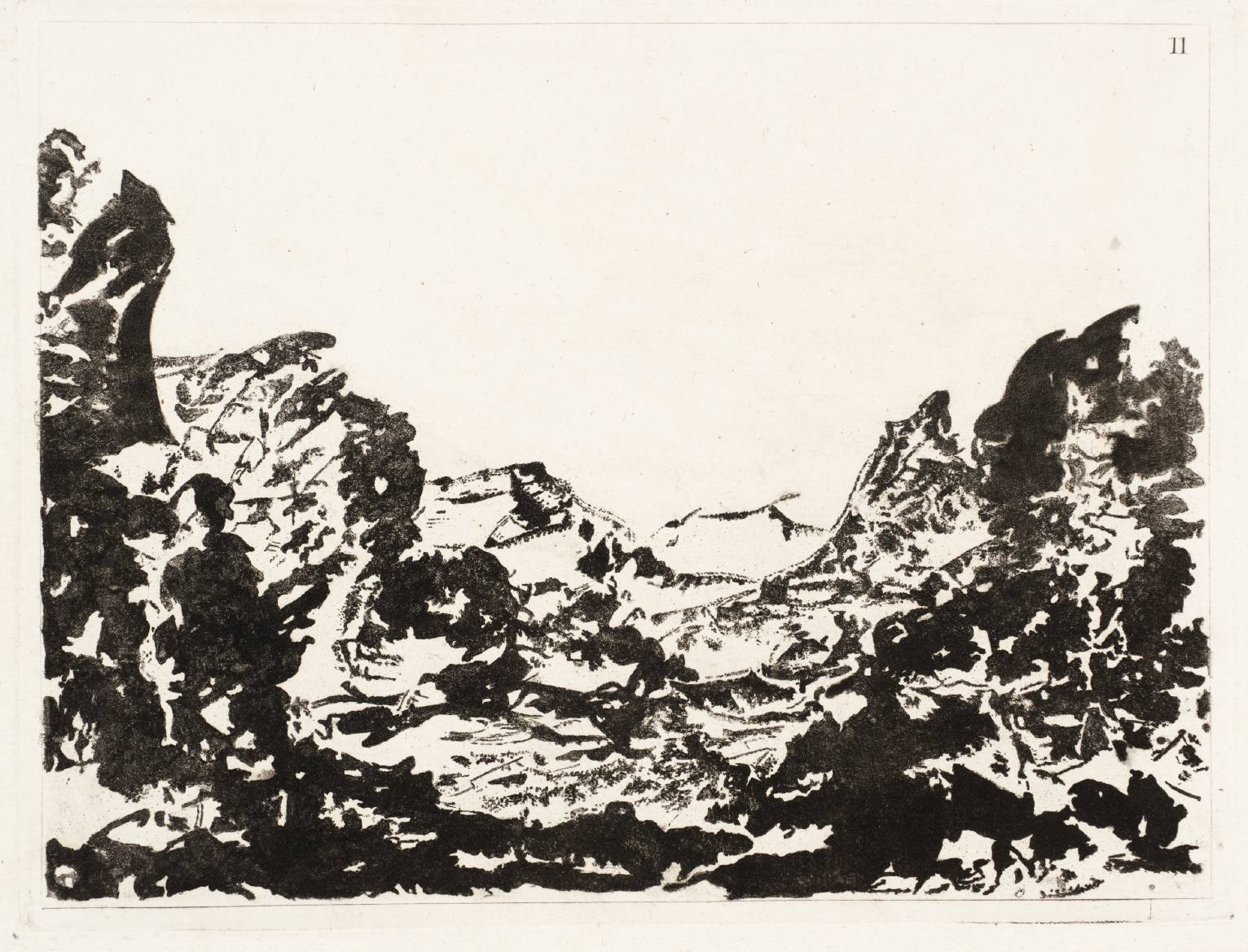
    Cozens was working on imagination and discovery, a way to make an improvisation in art, a riff on whatever the ink blot might suggest to the viewer.  On page seven of his pamphlet he describes The Blot:

    ‘A true blot is an assemblage of dark shapes or masses made
    with ink upon a piece of paper, and likewise of light ones produced by
    the paper being left blank. All the shapes are rude and unmeaning, as
    they are formed with the swiftest hand. But at the same time there
    appears a general disposition of these masses, producing one
    comprehensive form, which may be conceived and purposedly intended
    before the blot is begun. This general form will exhibit some kind of
    subject, and this is all that should be done designedly’ (p.7, from The Tate description),

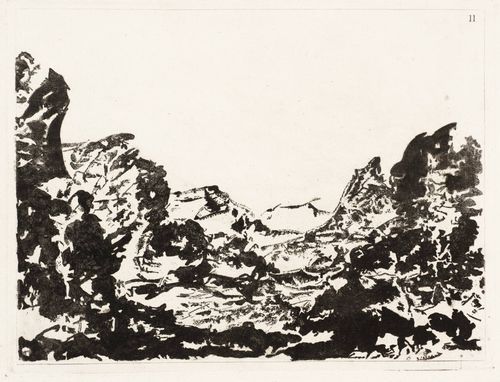
    • Cozens blot[An example of Cozens’ work with the blot, source: the Tate http://www.tate.org.uk/art/artworks/cozens-plate-11-t03179]

     In a way it Cozens reminds me of Leonardo’s cracks and shadows:

    “…if you look upon an old wall covered with dirt, or the odd
    appearance of some streaked stones, you may discover several things like
    landscapes, battles, clouds, uncommon attitudes, humerous faces,
    draperies, &c. Out of this confused mass of objects, the mind will
    be furnished with abundance of designs and subjects perfectly new”.–Leonardo Treatise on Painting (in the English translation published in 1721), pp 5-6

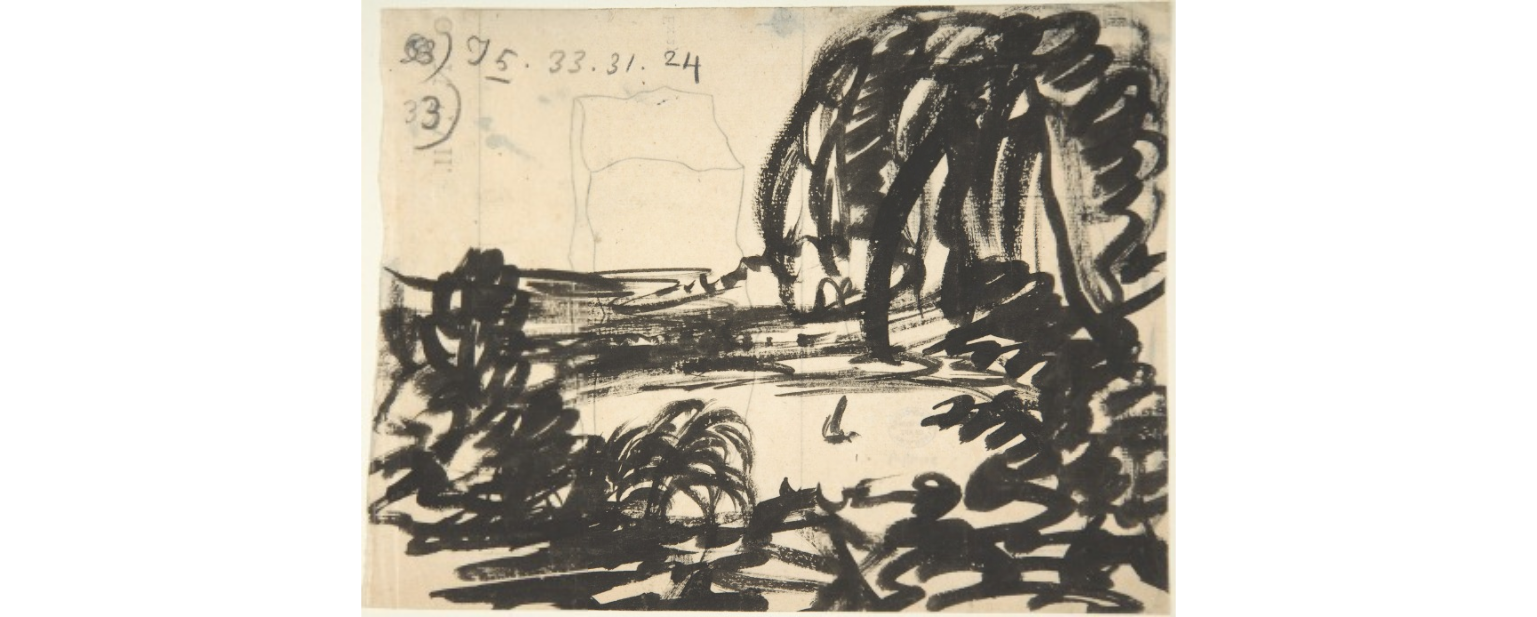
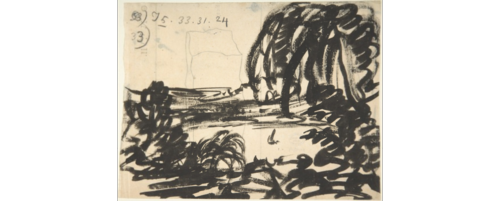
    Another example from the Metropolitan Museum of Art of Cozens’ “A Blot-Lake with Boat, Surrounded by Trees”:
    Cozens blot art lake
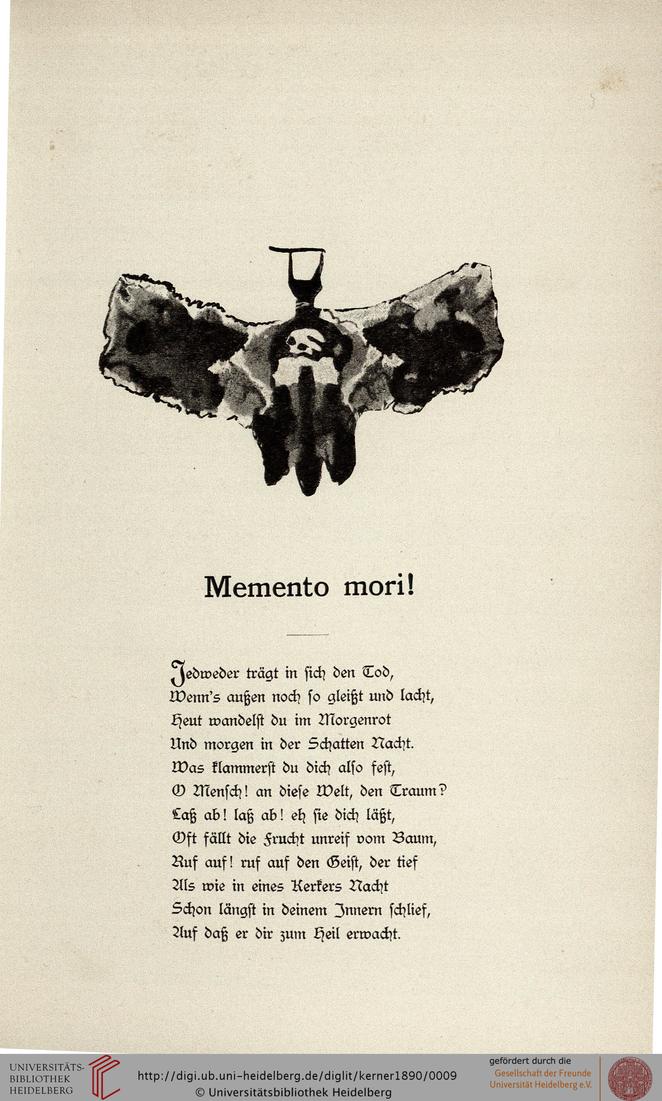
    Cozens worked for insight, for “the art of seeing properly”, for surprise, the discovery of forms. IT was an extraordinary work, especially given its time, ten and more decades and more away from the work of Redon and ernst and the rest of the suggestive painters, and even seven decades out from Courbet.  It was slightly closer in time to the quizzical work of Justinus Kerner, whose Kleksographien of 1890 used ink blots in a parlor-game fashion for his readers to fashion stories and narratives with. (A full text with illustrations of the 1890 edition of the work is found here, in the digital collections of the University of Heidelberg).

    An example of Kerner’s work:
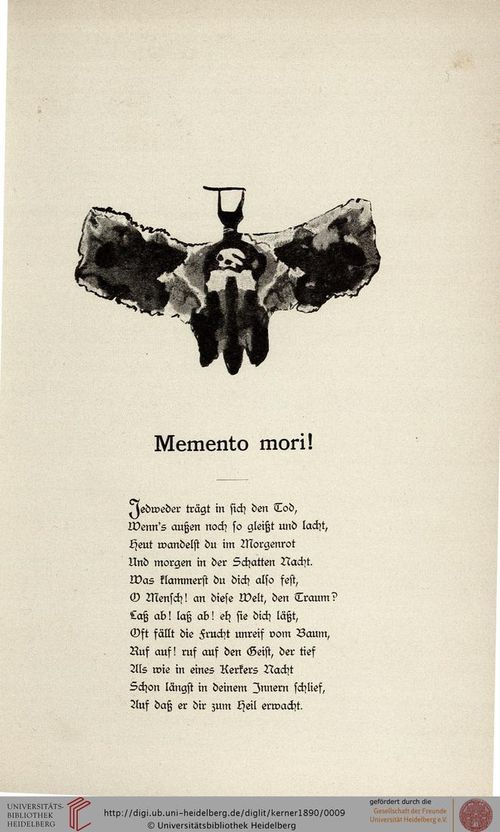
    Kerner i,age

    And well in advance of Hermann  Rorschach’s 1921 book Psychodiagnostik, which employed the use of ink blots to help him diagnose schizophrenia, the predictive and diagnostic aspect of the idea coming in 1939, not as a result of Rorschach’s doing). 

    What these blots might all have in common was their pre-modern earliness. their anticipation of something that would become a standard framework in the decades–or centuries–to come. 

    ·Posted by :

    ·in:

    —

  • Writing on the Clouds: a Musical Compositional Recording Machine, 1753

    JF Ptak Science Books    Post 1963

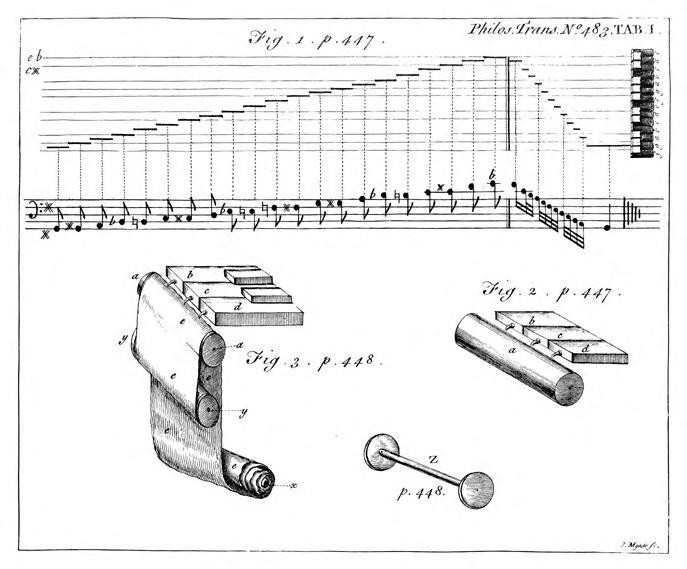
    Here’s a interesting piece of thinking communicated on the construction of  a rapid recorder for musical composition, written by John Freke in 1753 to the Royal Society, and published as  A
    Letter from Mr. John Freke F. R. S. Surgeon to St. Bartholomew’s
    Hospital, to the President of the Royal Society, Inclosing a Paper of
    the Late Rev. Mr. Creed, concerning a Machine to Write Down Extempore
    Voluntaries, or Other Pieces of Music
    ( on January 1, 1753) in the
    Proceedings of the Royal Society of London; Philosophical Transactions
    of the Royal Society,
    volume 44, pp 445-450. (John Freke, 1688-1756, was a prominent and important early surgeon, served at St. Barts from 1729 to 1755 and was a Governor of the hospital from 1736 to 1756, and was perhaps the first ophthalmic surgeon). The device was proposed by the Rev. John Creed, a machine that was supposed to catch the delicacy and greatness of improvisation, of the moments of creation of music that would could normally be lost to memory or inexactitude.  It was not the first of its kind, though it was an early attempt at finding the box of aether.

    Music machine graphic
    It was a very interesting idea, especially given the time 260 years ago. I wonder if this was influenced at all by the construction of mathematical machines?  Blaise Pascal (1623-1662–I don’t have any idea how he did what he did and live to be only 39) constructed his machine that was capable of doing addition and subtraction problems more than 110 years before this machine, and perhaps there was this hopefulness in the mechanically-reasoned approach to saving lost memories of composition.   Perhaps there was the belief that since calculations seemingly so impossible as the Earth’s (periodic 304-day that turned out to be 428-day) wobble (by Leonhard Euler, or the illustrated collection of human knowledge in the vast and controversial Diderot/d’Alembert encyclopedia, or the capturing of nature iin the systematic binomial nomenclature of the Swedish Carl Linnaeus–all taking place in this year or so brought something to bear on this seemingly inescapable problem of recording quick and complicated thought? 


  • Pre-Darwin Darwin, Without the Post-Darwin

    JF Ptak Science Books   Post 1962

    “…something might perhaps be made out on this question…”

    “WHEN on board H.M.S. ‘Beagle,’ as naturalist, I was much struck with
    certain facts in the distribution of the organic beings inhabiting South
    America, and in the geological relations of the present to the past
    inhabitants of that continent. These facts, as will be seen in the
    latter chapters of this volume, seemed to throw some light on the origin
    of species—that mystery of mysteries, as it has been called by one of
    our greatest philosophers. On my return home, it occurred to me, in
    1837, that something might perhaps be made out on this question by
    patiently accumulating and reflecting on all sorts of facts which could
    possibly have any bearing on it.”–from the introduction to On the Origin of Species…, fourth edition, 1866

    Maupertuis detail
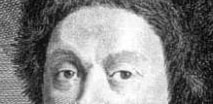
    These eyes belong to Pierre-Louis Moreau Maupertuis  (1698-1759),  a French mathematician/philosophe who worked himself wide and deep across many fields, from mud to blood (geology, physics, math, bio).

    But what he saw particularly in regards to Darwin was the matter of relationship in bi-parental inheritance, that there was genetic basis for the inheritance of physical traits. Now he didn’t use these terms of course ,  but he made this sexual generation argument in his Dissertation Physique a l’Occassion du Negre Blanc written in 1744 (and published in Leiden).   There is an expanded version of this thought in his Venus physique (printed in 1745, and which is translated as The Earthly Venus), which was a direct confrontation with the belief and theories of the preformationists, who claimed that a being was preformed in either the spermatozoa or the egg. Maupertuis argued that the only way for the characteristics of both parents to be inherent in offspring was for the material to be a combination of the mother and father, and that the preformed theory did not allow for the equal distribution of hereditary characteristics1.  Maupertuis is now generally seen as having anticipated the theory of nutation (according to the standard history of medicine bibliography by Garrison and Morton2, appearing in that work as number 215.1).

    Darwin published the Origin of Species in a hurry in 1859–after having the idea in his head for 20 years, he was suddenly in the need to quick-publish given the fact that the very young Alfred Russell Wallace was about to scoop his great idea.  Part of that quickness evidently resulted in Darwin leaving out his debt to history, not addressing the precursors to his idea, leaving out the bibliographic part.  He heard about that very quickly upon the very successful publication of the Origin, which was sold out almost immediately upon publication.  Over the next few months he heard from a number of quarters about those who came before whose ideas may well have presaged his own–which of course was the case, and Darwin made basically no mention of work that had come before his own, even though it seems as though he had made am effort to do so at least in notes more than a decade before the publication of the great book.  This is a much longer story than I want to deal with right here, but Darwin set to work on addressing this issue and published an “Historical Sketch” which appeared in the authorized first American edition and the first German edition of the Origin in 1860.  As Rebeccca Stott points out in the first chapter of her surprisingly good popular history of evolution, Darwin’s Ghosts (2012),  Darwin included 18 names in his intellectual legacy. Six years later in the fourth edition of the Origin of 1866, the list had expanded to 37  names.  The vast majority of those included in the survey were modern to Darwin; generally all of the ancients were left out with but a scant nod to Aristotle, and there were two mentions of works before the 19th century, (which includes  Geoffroy Saint Hilaire (1744-1829), who dips just slightly into the 18th century and Darwin’s own grandfather, Erasmus Darwin, with his great two-volume work of semi-revolutionary poetry medico-philosophico-botanico 

    Zoonomia; or the Laws of Organic Life, which was published in 1794 though formulated decades before). 

    ·Posted by :

    ·in:

    —

  • History of Squares: Squares Big and Little in Infographics, 1890

    JF Ptak Science Books   Quick Post


    Follow Me on Pinterest


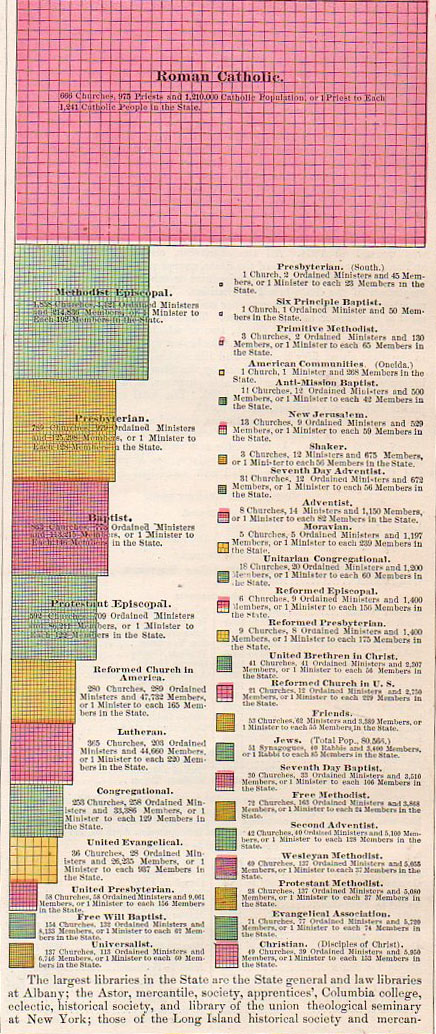
    This display of quantitative data appeared in the Rand McNally atlas of 1890, and details the various religions as practiced and reported in New York state for the census of 1880.  The work certainly gets it point across.  See also: Fantastic Sqaure(s), 1840 and the blog series, Quantitative Display of Information.

    Information--religion006
    This is the most detailed detail in the detail of the full infographic:

    Information--religion005


  • World War I Photograph of a Small Kindness

    JF Ptak Science Books   Quick Post  [Part of the series of World War I Photographs]


    Follow Me on Pinterest


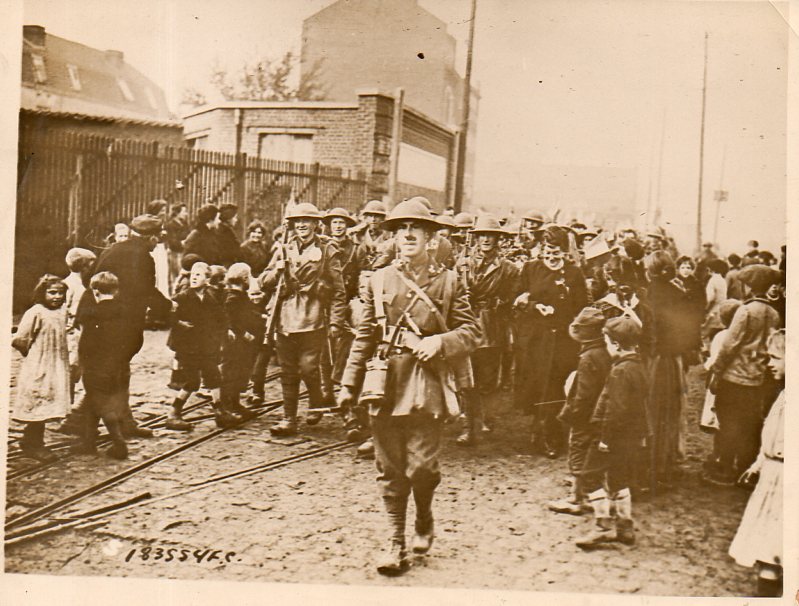
    This image shows one of the happy moments during the First World War–rather, a happy moment right before the end of the war,  just a few days after the Armistice (11-11-1918, on the 11th minute of the 11th hour).  The image shows the British army being welcomed into the city of Lille on October 17, 1918–the city  had been occupied by the Germans right at the beginning of the war in the middle of October, 1914, and was severely punished for a deception perpetrated in its defense, with the German army burning down an entire section of the ancient city in revenge. 

    WWI  Brit Soldier reception001
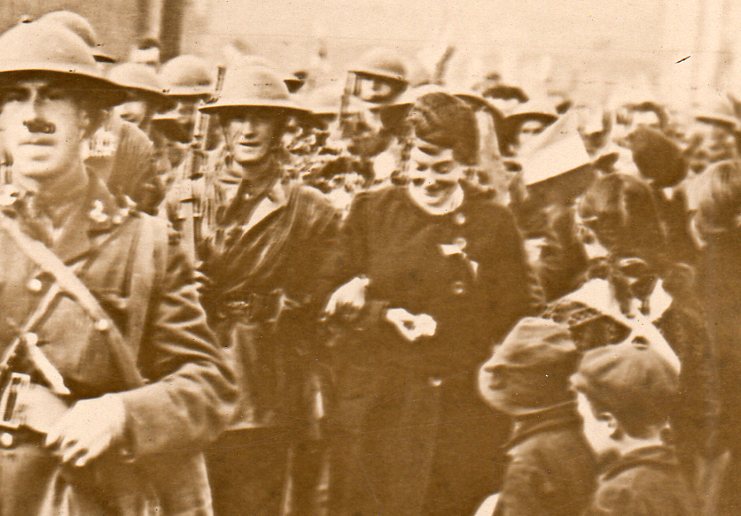
    The picture was published on 15 November 1918, a few days after the end of the war.  In the detail of this photo is revealed a small and unexpected kindness:

    WWI  Brit Soldier reception002

    ·Posted by :

    ·in:

    —