A Daily History of Holes, Dots, Lines, Science, History, Math, Physics, Art, the Unintentional Absurd, Architecture, Maps, Data Visualization, Blank and Missing Things, and so on. |1.6 million words, 7500 images, 4.9 million hits| Press & appearances in The Times, Le Figaro, Mensa, The Economist, The Guardian, Discovery News, Slate, Le Monde, Sci American Blogs, Le Pont, and many other places… 5000+ total posts since 2008.

Author: JF Ptak

  • On Inferred Narratives of the Last Word in Novels

    JF Ptak Science Books  Post 1968  Follow Me on Pinterest

    I was reading the ending of Vladimir Nabokov’s Lolita and found it a highly unusual occurrence that the novel ended on its single-word title.  It doesn’t seem to happen very often at all (though it also occurs in Toni Morrison’s Beloved).  And so I set to check out the last words of some significant works of fiction that are on the shelves here at home and see what these books ended on, and to give this project an hour of search.  Nothing comes very close to Nabokov, though Dalton Trumbo’s Johnny Got His Gun ends with “gun”, and Italo Calvino’s  If on a Winter’s Night ends with the entire title, along with the author’s name: “Just a moment, I’ve almost finished If on a winter’s night a traveler by Italo Calvino.” (Thomas Pynchon’s The Crying of Lot 49” ends with the title of the book, as well). But on my hour’s journey into ending, that was about it.  It all seems a little useless, except that there were a few nice bits that broke away from this time-hole.

    First, when you read the words and their books, they sorta/maybe suggest the essence of what came before–I think if you squint your eyes a little and connect the last word to the title, the word occasionally feels like a micro-summation.  Second, I found that when taken together and in order, the last word of each of the short stories in the beautiful Jorge Luis Borges’ Ficciones (edited by Kerrigan for Grove Press in 1962 with a number of different translators) presents themselves as not-bad found poetry/musical word arrangement. Third, it might be a fun idea to set up a chess set of pieces composed on the one side by Last Words in Great Fiction and on the other the Last Words in Famous Scientific Papers. 

    Another interesting bit is a challenge to write a paragraph using the following last word from the accompanying list of novels (you can have your choice of punctuation and prepositions and whatever else is necessary).  Dr. Seuss managed to create a great classic with a 236-word allowance from his publisher and somehow managed to write The Cat in the Hat, so there is a precedence for such things.  Taken as a random group, the words aren’t necessarily a collection of momento mori, but could make a nice beginning for something. 

            Found Poetry in the Last Word of the Short Stories in Borges’ Ficciones:

    Burial memempschosis

    counsel him,

    chance ruins, hope, heart

    congestion me foreseen,

    fired morning evil,

    man

    infastructure

    plain.

                          –I added punctuation and the spacing.


  • A Mall of Skeletons

    JF Ptak Science Books  Post 1968


    Follow Me on Pinterest

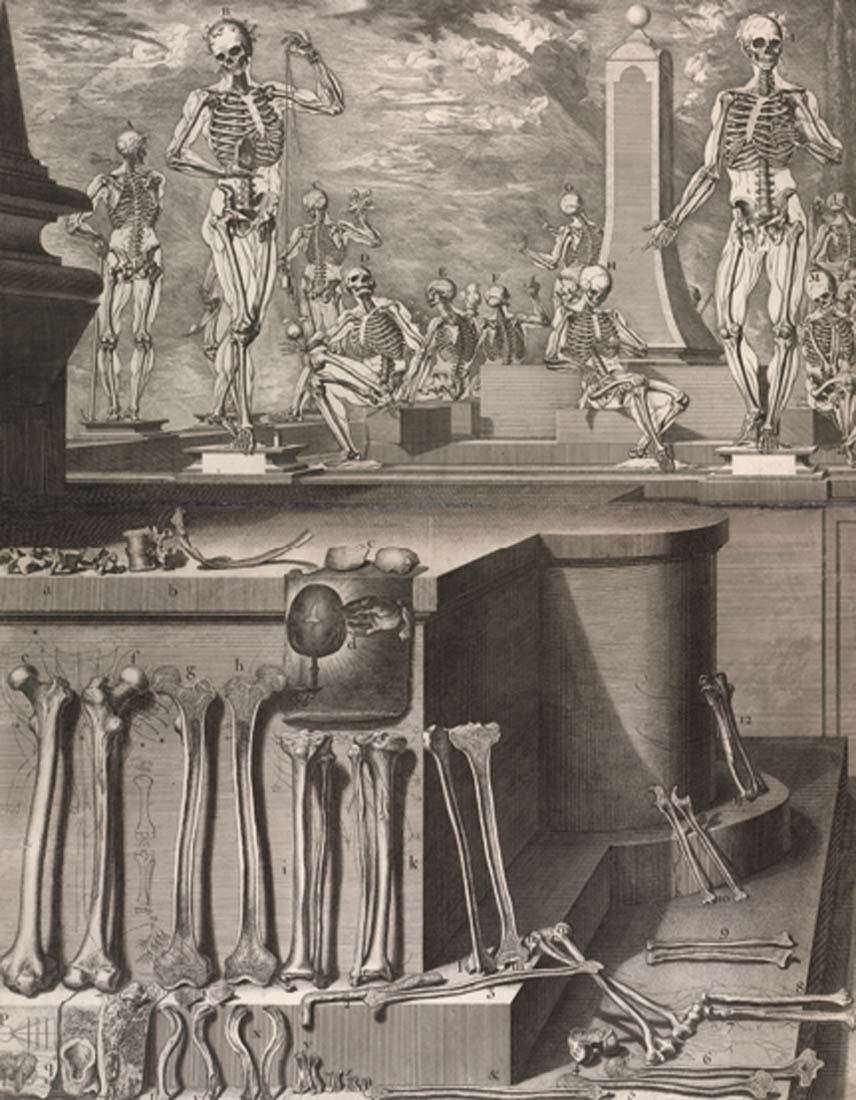
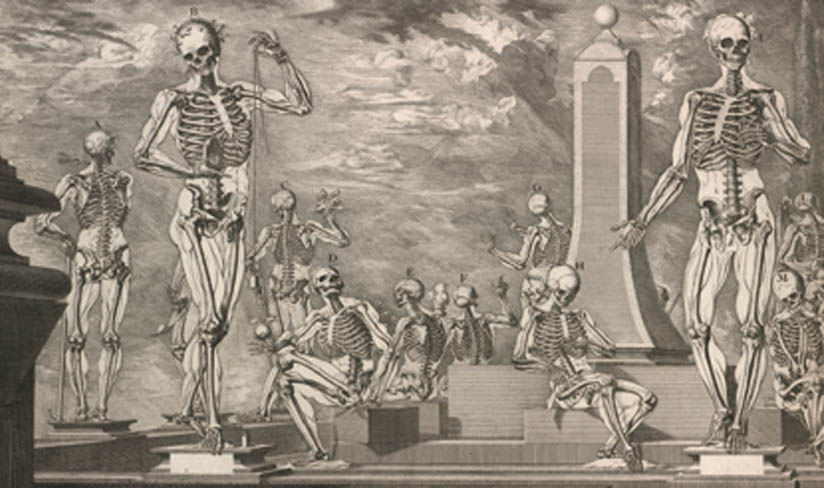
    There is a murder of crows, a congress of owls, a charm of finches, a convocation of eagles, a labor of moles, a murmuration of starlings, and so on, but there is nothing for a group (“knot”?) of lawyers, or a collection (a “slick”?) of politicians…or for that matter a grouping of skeletons. Perhaps when you have a grouping of ten or more skeletons (standing and non-interred) they could be called a “Mall”.  They should be called something, I guess. But of course one wouldn’t have many opportunities to describe a mall of skeletons, though one opportunity presents itself right now:  in my experience of looking at antique scientific and medical images it is not very often that I have seen such an assembly as in the following image. 

    Anatomy  Crisostomo_martinez-atlas detail

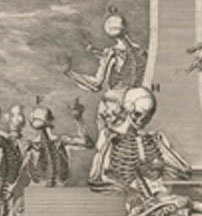
    The skeletons are mostly in poses of some sort of relaxation, appearing in candid stances, far away from that of being in the anxious state of being a skeleton.  Most of the skeletons have some degree of skin-in-outline, and a few entertain themselves with a casual object, like an apple or a plumb bob.  (The two figures in the rear seem to be having an “I told you so” sort of conversation, with the sitting person making the point and the standing refusing it:)

    Anatomy  Crisostomo_martinez-atlas detail_edited-1
    The engraving (which is the top half of the full plate engraving seen below)  is from Crisostomo Martinez (1638-1694), an Enlightenment figure from Valencia who produced a lovely anatomical atlas that really wasn’t terribly “Enlightenment-y”, what with a deluge of unnecessary characterizations and Baroque decoration serving as miniature cartoons from one anatomical image to the next. That said, the images are quite beautiful, and creative, and imaginative, and clear, and concise…but perhaps not as detailed as they could be from the anatomical side. 

    Anatomy  Crisostomo_martinez-atlas
    The assembly of loose bones on the bottom half of the engraving is interesting but not as useful as it could be–close-ups would be nice for the details in the nicely-sectioned bones.  But the purpose in these illustrations wasn’t necessarily just the presentation of anatomical information, otherwise we would have had less nothing and more something.  Making visions of thinly-skin-clad skeletons certainly had its use and a good purpose, but a lot of the utility of these investigations is lost in the artful and beautiful presentation. 


  • Good Thinking on One Sheet of Paper

    JF Ptak Science Books  Quick Post

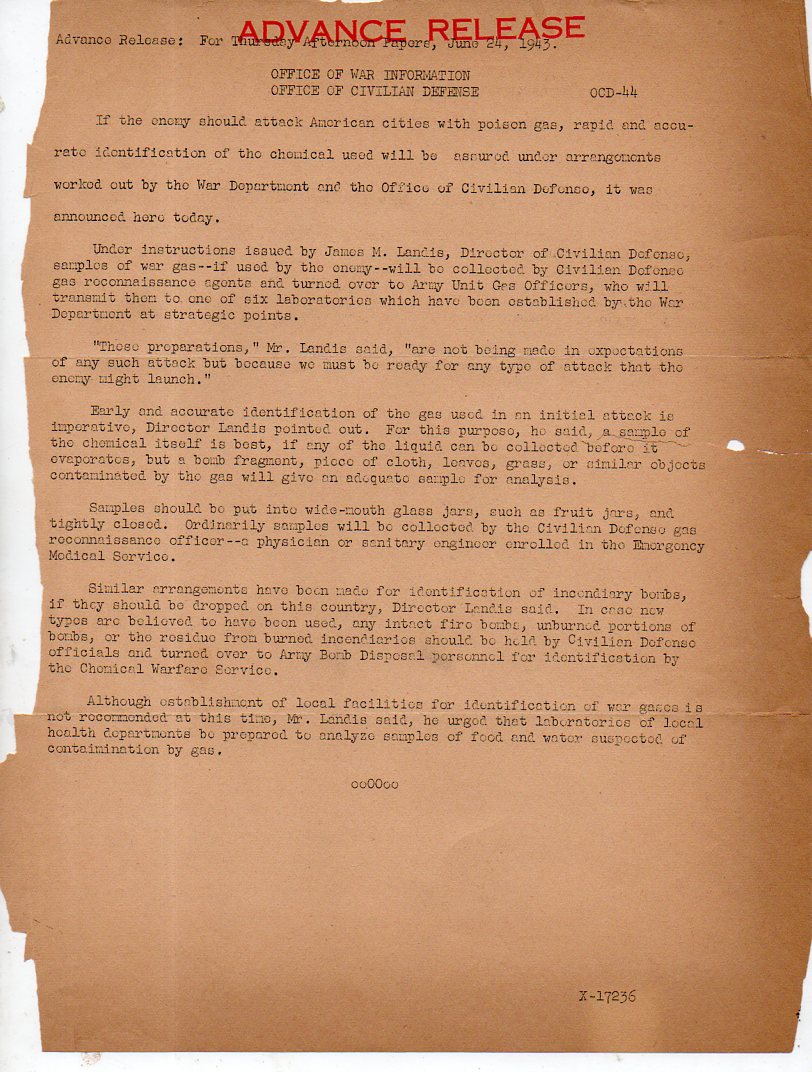
    These are two good examples of reasonable thought,. easily presented, and conveyed on a single piece of paper. A good job, well done.

    (I’ve written a number of times on gas attack in warfare on this blog, all searchable in the Google-box. But the two that come quickest to mind are the post on the one-page summary of America’s position on gas warfare, written in 1917, here, and the other on a “filmstrip” I put together from an Italian pamphlet on protecting civilian populations from bomb and ga attack, 1943, here.)

    Gas Attack037


  • An Alphabet of Illness, 1895

    JF Ptak Science Books  Quick Post  


    Follow Me on Pinterest

    Manuscript 1895055
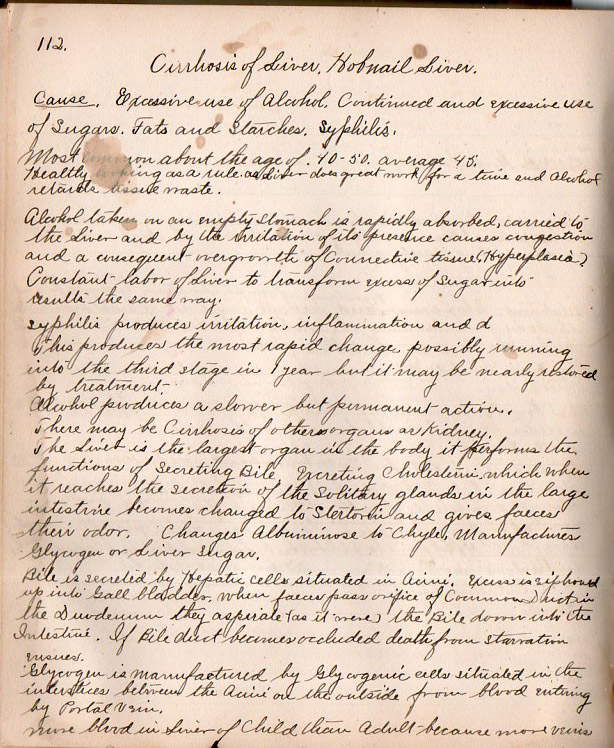
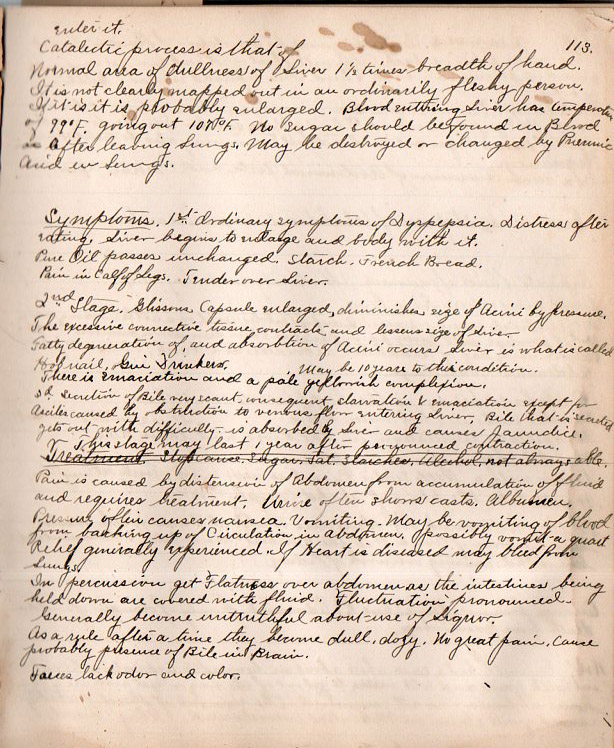
    I uncovered an interesting manuscript, a student’s set of observations and notes, written in America at the end of the 19th century.  The notebook–and I think clearly not a lecturing book–is interesting for what it has to say about its subjects, and in the selection of the subjects themselves.  There are 223 pages, with approximately 22 lines per page, 8 words per line, making 176 words per page or about 25,000 words in the manuscript.

    Manuscript 1895056
    [This manuscript is available for purchase at our blog bookstore, here.]

      The categories included here are

    Asthma

    Bright’s Disease

    Bronchitis, capilary

    Catalepsy

    Cholera morbus

    Coma

    ·Posted by :

    ·in:

    —

  • Nixon’s Speech for an Apollo 11 Disaster on the Moon

    JF Ptak Science Books   Quick Post

    Say what you will about the man–I have said a lot in my time since 1970–Richard Nixon was ready to appeal to compassionate hearts in America and around the world had the Apollo 11 lunar mission ended in tragedy on the Moon. The speech (“In the Event of Moon Disaster”) was written for Nixon by speechwriter William Safire (1929-2009, later NYT columnist and social recorder and lexicographer) and delivered to presidential assistant H.R. Haldeman (1926-1993, and White House Chief of Staff, 1969-1973) a few days before the lunar landing, 18 July 1969.  It was the contingency address, written for Nixon to address the nation in the event that Apollo 11 had a fatal accident on the Moon or couldn’t return to Earth.  Its a very good speech.

    Fate has ordained that the men who went to the moon to explore in peace will stay on the moon to rest in peace.

    These brave men, Neil Armstrong and Edwin Aldrin, know that there is
    no hope for their recovery. But they also know that there is hope for
    mankind in their sacrifice.

    These two men are laying down their lives in mankind’s most noble goal: the search for truth and understanding.

    They will be mourned by their families and friends; they will be
    mourned by their nation; they will be mourned by the people of the
    world; they will be mourned by a Mother Earth that dared send two of her
    sons into the unknown.

    In their exploration, they stirred the people of the world to feel as
    one; in their sacrifice, they bind more tightly the brotherhood of man.

    In ancient days, men looked at stars and saw their heroes in the
    constellations. In modern times, we do much the same, but our heroes are
    epic men of flesh and blood.

    Others will follow, and surely find their way home. Man’s search will not be denied. But these men were the first, and they will remain the foremost in our hearts.

    For every human being who looks up at the moon in the nights to come
    will know that there is some corner of another world that is forever
    mankind.


    ·Posted by :

    ·in:


  • 19th Century Smart Sticks: Calculating Pencils

    JF Ptak Science Books  Quick Post 


    Follow Me on Pinterest

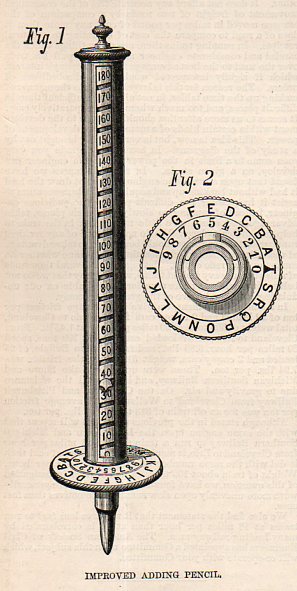
    This thinking stick comes to us via the courtesy of the Scientific American Supplement (19 August 1876, page 542), and shows a lovely Victorian non-SteamPunk answer to on-the-run calculation. It is an almost-elegant device, and seems as though it should work just fine. Its utility as a writing instrument seems a bit limited, as seems the calculator part, but the whole of it seems to be full of possibility–and a very nice piece of dedicated thinking. 

    Pencil052
    [Text describing the invention below.]

    Other nice examples of adding/writing found in the U.S. Patent Office via GooglePatents are seen below:


  • On Stability and Observation in the Earliest Microscopical Worlds

    JF Ptak Science Books  Post 1967  


    Follow Me on Pinterest

    Instrument seller Yarwell[Image source: Science Museum Group http://collectionsonline.nmsi.ac.uk/detail.php?type=related&kv=8015861&t=objects]

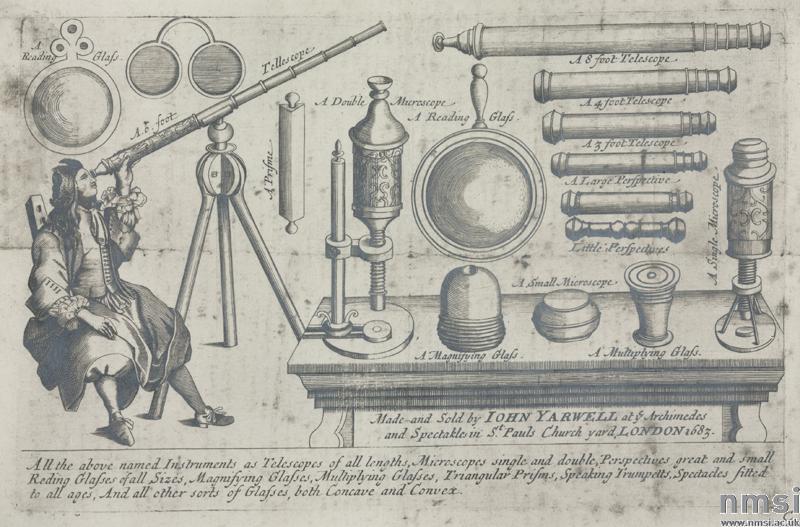
    Instrument seller Yarwell detailI was looking at this trade card for the optical instrumentalist John Yarwell (“Traded at Ye Archimedes & Spectacles in St. Paul’s Church Yard
    (1671-92), North Side of St. Paul’s (1672), St. Paul’s Churchyard
    (1676-96) & Archimedes in Ludgate St.(1697) & Archimedes &
    Crown (1698-1712), all London, England”) and was struck by something a little bit “odd”. For as many times that I have seen early images of compound microscopes I don’t think I’ve ever looked at how the instrument was attached to its stand.  Now that I am seeing it, it is remarkable how efficient and careful the early users were. Basically, the microscope was attached bya hair to its stand–well, not really, but just about. 

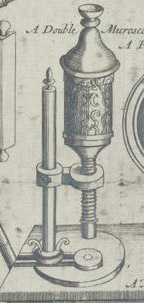
    Yarwell features spectacles, looking glasses, microscopes and a variety of telescopes.  Here’s a detail of a compound microscope from the Yarwell image (left), and it is remarkable how potentially unstable the attachment makes the instrument. Just a slight bit of turmoil, or a bump near a table leg could upset the image. 

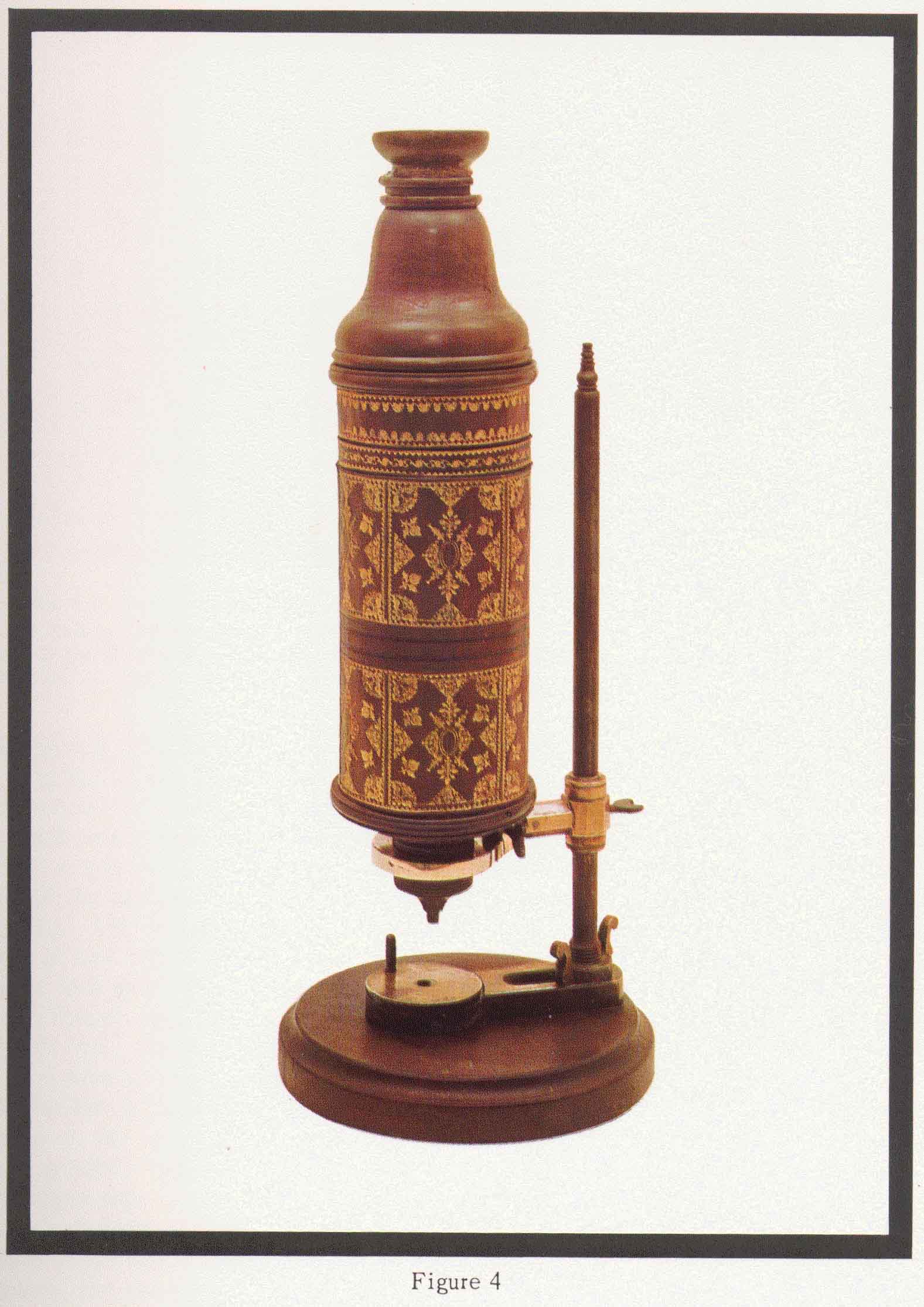
    Take for another example this very famous compound microscope made by Christopher Cock  for the great Robert Hooke (1635-1703):

    Hooke microscope

    [Image of the Hooke microscope via the Billings Collection at the National Museum of Health and Medicine, Armed Forces Institute of Pathology]

    This famous instrument was evidently the one with which Hooke first observed living cells (25 March 1663, nearly 350 years ago) and which he used for the first investigation and of cork and the naming of the “cell” (13 April 1663), and which was the basis for the images gathered for his masterpiece of investigation and exploration, the Micrographia (1665).

    It seems even less stable than the Yarwell instrument.  The astonishing thing about this fish-skin-covered instrument, this gateway to a completely undiscovered miniature world, is that so much of it depended upon such a little bit of engineering…it just seems as though taking the next little step could have been taken for a more basic base, a heavier mount, a more stout connection from stand-to-microscope, just to make the instrument more stable.  But it didn’t happen just then for Hooke, and it evidently didn’t matter. 


  • History of Hard Right Angles in Human Workers–Prehistoric Illustrations of the Technical Singularity, Part I

    JF Ptak Science Books    Post 1966  


    Follow Me on Pinterest 


    See also Cyborgs and Robots Man as Machine and Machine as Man

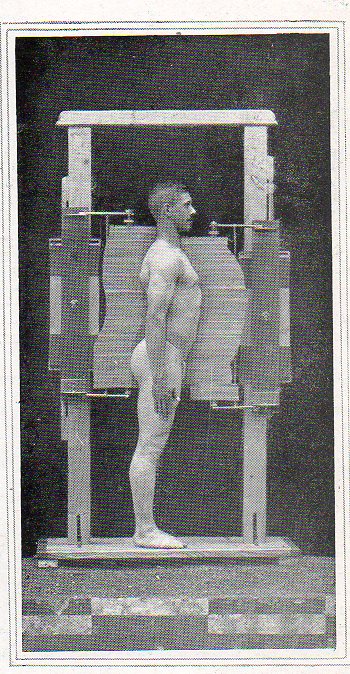
    Some images are sleepily iconic, instantly recognizable, symbols of something bigger than themselves. This is the case with the photographs below–this image of athletic posture makes me think of the development of human-robot (and then robot-human) interaction.

    Dr odd out of context042This series of images–which seem to be a celebration of straightness, of flatness in the human body, breathing at right angles–were actually (simply but not-so-simply) displays of physical tests given athletes in France to determine whether they had a higher physical capacity for their sport, identifying (they hoped) those with indelible gifdts that could be squeezed out via medical/physical instrumentation.

    ·Posted by :

    ·in:


  • Alice Disappeared

    JF Ptak Science Books    Quick Post

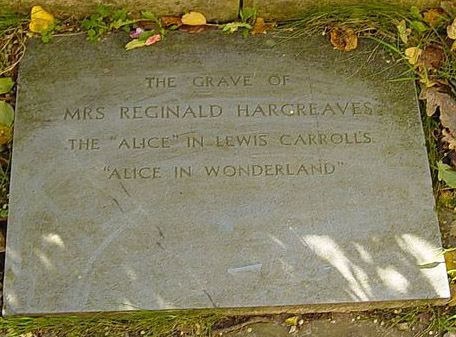
    Having just read a notice from Brainpickings on the 181st anniversary of Lewis Carroll’s/Charles Dodgson’s (1832-1898)  birth, I thought a little about the Alice who excited his interest in telling the story that became the 1865 book, Alice’s Adventures in Wonderland.  Alice (1852-1934) was born Alice Pleasance Liddell, but the epitaph for her ashes in the graveyard of the church of St. Michael & All Angels, Lyndhurst doesn’t bear her name, per se, leaving her last mortal footprint as Mrs. Reginald Hargreaves.  I know that this is a production of the times and a long-practiced practice, but for a person who may be one of the most famously-known people by their given names in the West should have had it in their name on their marker, instead of the Cheshire-like one that she wound up with:

    ALice's grave

    A better epitaph at least in the imagination could be something like the acrostic from Through the Looking Glass:

    A boat beneath a sunny sky,
    Lingering onward dreamily
    In an evening of July–

    Children three that nestle near,
    Eager eye and willing ear,
    Pleased a simple tale to hear–

    Long has paled that sunny sky:
    Echoes fade and memories die.
    Autumn frosts have slain July.

    Still she haunts me, phantomwise,
    Alice moving under skies
    Never seen by waking eyes.

    Children yet, the tale to hear,
    Eager eye and willing ear,
    Lovingly shall nestle near.

    In a Wonderland they lie,
    Dreaming as the days go by,
    Dreaming as the summers die:

    Ever drifting down the stream–
    Lingering in the golden gleam–
    Life, what is it but a dream?

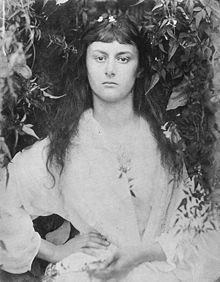
    My favorite picture of Alice:

    Alice

    ·Posted by :

    ·in:


  • Daily Dose from Dr. Odd: Diving Archery Water Sports

    JF Ptak Science Books   Quick Post  Part of the series Daily Dose from Dr. Odd  

    Follow Me on Pinterest

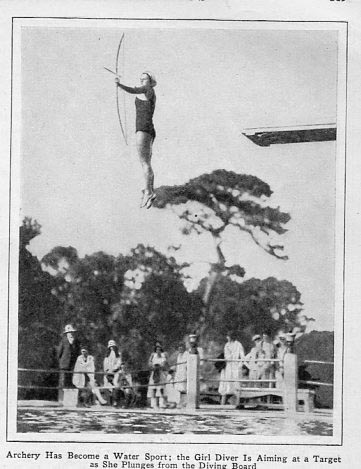
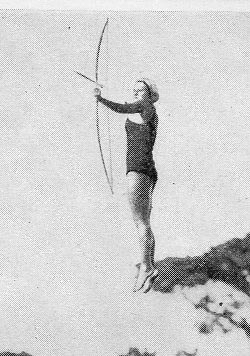
    What could possibly go wrong?  from Popular Mechanics, November 1930.


    Dr odd diving arrows049


    Dr odd diving arrows047
    Dr odd diving arrows048