A Daily History of Holes, Dots, Lines, Science, History, Math, Physics, Art, the Unintentional Absurd, Architecture, Maps, Data Visualization, Blank and Missing Things, and so on. |1.6 million words, 7500 images, 4.9 million hits| Press & appearances in The Times, Le Figaro, Mensa, The Economist, The Guardian, Discovery News, Slate, Le Monde, Sci American Blogs, Le Pont, and many other places… 5000+ total posts since 2008.

Category: Social History

  • Vast Understatement Department: Re-crushing the Crushed “Indian Problem”, 1887-1934

    JF Ptak Science Books   Post 1405

     “This might seem like a somewhat rapid reduction of the land of Indian estates”–Thomas Morgan, Commissioner of Indian Affairs, on the sale/disposition of 15% of all Indian Lands over the period 1887-1891.

     Indian Affairs Commissioner Thomas Morgan had a commanding view of the situation regarding the American Indian at the end of the 19th century, considering that he was king of the hill, surveying the scene from his commanding height, in control of the affairs of all American Indians from the relative security of knowing hardly anything about them. It so happens that during the period 1887 through 1903, the Indians suffered about as much loss to their way of life and their lands than about any other time in their history, and this at a time when almost all Indian resistance to federal control had already been eliminated by force or terror or hunger or the sheer weight of the impossibility of fighting the United States1.

    Most of the problems with the loss of land and the approach of the near-end of their tribal system occurred with what federal representatives referred to as the “Indian Emancipation Act”, which was formally known as the Dawes Act (and also the General Allotment Act) of 18872. The general fatal thrust in this Congressional action was to relieve the Indians of their reservation system and then their land, to enforce their assimilation into American (white) society, and then to become individual property owners and then tax payers, making the Indian self-reliant and independent. The underlying philosophy here is that it was the reservation system was the cause of the Indians’ problems—that it kept the Indians from fulfilling themselves by excluding them from American society, segregated them from “self-improvement”.

    “The Indian may now become a free man; free from the thralldom of the tribe; freed from the domination of the reservation system; free to enter into the body of our citizens. This bill may therefore be considered as the Magna Carta of the Indians of our country.” –Alice Fletcher, one of the Architects of the Dawes Act

    The Act not only managed to give the Indians the lands that they already owned, but it also took the land away at the same time, making it available to heads of households in 160-acre plots. It was supposed to make the Indians into useful members of the white community, and to teach them to be farmers, and to “properly use” the lands which they were given. According to Ronald Takai3, Morgan saw the Indian land as going fallow, and that if they didn’t use their land to a good end, then they should lose it. AS Commissioner of Indian Affairs, Morgan said that most of the land that was taken by the government was not being “used…for any purpose whatsoever” with “scarcely any of it….in cultivation”. Hence if the Indians didn’t farm the land then the land was being wasted, and if the land was being wasted then the Indian had no right to keep it. Thus the circularity of the Indian’s problem was complete—they would be given land if they were using it “properly”, which meant to break off chunks of tribal land and deed it to individual families, which at the end of the life of the head of the household the land would more than likely have to be sold4; and if the land wasn’t being cultivated, then the government would take steps to seize it via its system of aggravated purchase.

    “The sooner the tribal relations are broken up and the reservation system done away with, the better it will be for all concerned. If there were no other reason for this change, the fact that individual ownership of property is the universal custom among civilized peoples of this country would be a sufficient reason for urging the handful of Indians to adopt it.”

    In the four years following the passage of the Dawes Act, something on the order of 17.4 million acres of Indian land was sold or re-allocated, which was about 15% of all Indian lands.

    The Burke Act of 1906 was the second time the Dawes Act was amended, and was also perhaps the most devastating change yet made to the tribal ownership system. It gave the government the right to determine which Indians were “competent and capable” to own land, though by design the definition of “competency” was left vague, though it often meant that there was a certain amount of European blood in the Indian being judged. This meant that the “competent” Indian would have their land taken out of trust status, and then become subject to taxation and could be sold by the owner. This also meant that communally owned tribal lands could be divided into individual plots which may then top sold to the highest bidder, If the person was deemed to be “not competent”, though, something entirely different happened:

    “…the Secretary of the Interior may, in his discretion, and he is hereby authorized, whenever he shall be satisfied that any Indian allottee is competent and capable of managing his or her affairs at any time to cause to be issued to such allottee a patent in fee simple, and thereafter all restrictions as to sale, encumbrance, or taxation of said land shall be removed. “

    Given the situation that the Indian’s per capita income was so low, and that most of that was coming from the sale of land and from government stipends, it was almost entirely assured that the Indians, who were in desperate straights, would almost assuredly sell their property once it was within their individual capacity to do so. It was also the case that some Indians were actually judged to be “competent” but weren’t informed of it—this wouldn’t matter except for the critical part of that Indian’s lands now being subject to taxation; and if you didn’t know that the lands were being taxed, after come years Uncle Sam came by to collect on the back taxes, and since the Indian would have no money5, the land would then have to be sold to pay for the taxes that the landholder didn’t know was accumulating.

    The result of the complex story of the Dawes Act and its aftermath was that by its end (which came to an explosive halt in 1934) the Indians lost about 90 million acres of their 1887 land base., amounting to about 66% of all of their land. Plus the dozens of land-grants that were awarded to the railroad companies.

    The Indian Reorganization Act of 1934 stopped these practices, offering a “New Deal” to the Indians, empowering the new commissioner of Indian Affairs, John Collier, with a sensical approach to the institutional/bureaucratic Indian problem(s) created by U.S. Government with the Dawes Act. It stopped much of the bad craziness of the previous forty years, though the effects of that time are felt to this day.

    Notes:

    1. There was still the Ghost Dance to come in 1890, but this was a limited action of desperate people, ending in American soldiers of the 7th Cavalry standing over a trench filled with the bodies of 150 frozen Lakota Sioux (men, women and children) following their massacre at Wounded Knee Creek. There were another 51 Sioux wounded, including 47 women and children.

    2. Opening text of the Dawes Act: “….the President of the United States be, and he hereby is, authorized, whenever in his opinion any reservation or any part thereof of such Indians is advantageous for agricultural and grazing purposes, to cause said reservation, or any part thereof, to be surveyed, or resurveyed if necessary, and to allot the lands in said reservation in severalty to any Indian located thereon in quantities as follows: To each head of a family, one-quarter of a section; To each single person over eighteen years of age, one-eighth of a section; To each other single person under eighteen years now living, or who may be born prior to the date of the order of the President directing an allotment of the lands embraced in any reservation, one-sixteenth of a section.  The full text is here. 

    3. Ronald Takai, A Different Mirror, Little Brown, 1995, page 236-7.

    4. Under a new law in 1902 at the death of the head of the household the family was required to purchase the land or it would be sold at auction. Since most of the per capita income was made via federal distribution or payment from the government for earlier purchase of tribal land, it was in general the case that only a small percentage of the $200/year was made through farming. Basically, few Indians had the cash to actually buy their land, and so it went to sale, bought in the overwhelming majority of cases by white speculators.

    5. In 1907, the combined income of the Cheyennes and Arapahoes was $217,312, of which some $5, 312 resulted from farming. Of the 78 dollar per capita for these two tribes, about 78 cents came from working the fields.


  • The Discovery of the “Obvious”–Joseph Lister and J.N.L. Durand and their Major Discoveries

    JF Ptak Science Books   Post 1400

    Bloglisterwash Sometimes things that we take for granted—the “of course” kinds of things that were seemingly always here because they’re just, well, so obvious—that one needs to take a step back to appreciate their discovery, or invention, and to mind the fact that someone did have to actually bring these things to some sort of birth.Bloglisterdurand
    These two (seeing and touching) would make great entries in our fictional encyclopedia–who was the first person to see (“ah, it was Nem Teff in 8211 BCE, in an area very close to the teeming slum of today’s Bagdahd; he of course was a disciple of the Shenta-kra philosopher Boot Strap, who only four generations earlier came up with the idea of “touching”. What people did to get around before Mr. Strap invented touching and before people could see is a matter for wide conjecture“–Pastor Steng “No Stink” Pallor, writing in the volume “I” of The Great Encyclopedia of Unknown, Non-Existent and Ficticious Things, published in New York City by Phantom Touch Press, 1972.)

    But we’re dealing with new applications of sight and touch here, although by and large these applications had a huge impact on the rest of civilization on their own merits. 

    Take for example the lovely Jean Nicolas Louis Durand.  He was a radical rationalist, an advanced thinker in the field of architecture and one of the most influential instructors and writers on architectural history and theory of first half Bloglisterboullee of the nineteenth century.  Durand also had his wild side, as well, but that took place when he was in his carefree (read: “adventurous”) thirties—this period of enormous and unusually creative work in architectural design also took place during the French Revolution, which was a bad time to be thinking this stuff up, let alone building it.  (Some of the other French visionary architects of this time nearly lost their heads because of their non-revolutionary creativeness, but that’s another story.)

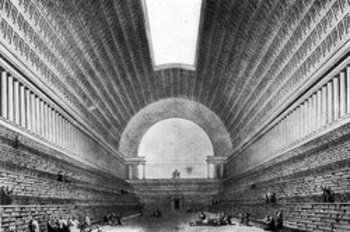
    (This is Boullee’s design of the megamonumental library for the king, 1784)

    Durand came about this intuition naturally and also because he was a draftsman for the great Etienne Boullee, who we mentioned a few posts ago.  (Durand would he execute a series of drawings entitled Rudimenta Operis Magni et Disciplinae, which are probably a pictorial representation of Boullée’s theories.)

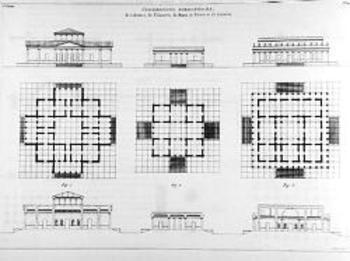
    What Durand introduced however that was so revolutionary and so much his own was this—he was the very first architect to publish a work of comparative architecture in which all of the buildings were drawn on the same scale. 

    That means that previous works—all previous works—of comparative architecture compared one piece of architecture to another on different scales.  That would seem to be a truly bad idea, given the nature of the comparative beast and all, but there you have it.  I really have no explanation for why this was the case, or why it took until Durand’s Recueil et parallele des edifices en tout genre…(1832)  to make it so in the fourth century of the publication of works on architecture, but it did.

    Another example of what would seem to be sublimely obvious was the innovation of a Scottish surgeon in 1867Bloglisterine_2 .  People today I think intuit his surname from exposure to television commercials for a certain mouthwash, but this would be like knowing the importance of Isaac Newton from those figgy cookies—and that just isn’t right.  Joseph Lister (1827-1912) figured out—through exposure to ideas by Ignaz Semmelweiss and Louis Pasteur, among others—that the infections in wounds that caused so many surgical deaths was not caused by the miasma in the air, but by something entirely different. 

    In his article in The Lancet of 21 September 1867 (and in his subsequent publication in book form later that year called Antiseptic Principle of the Practice of Surgery he explained what he thought was the cause—microorganisms that traveled (at least) from the surgeon’s hands onto the wound, and not by something floating around in the air.  He began treating wounds with a solution of carbolic acid (which had been used Bloglisternewton previously to remove the stinking stench from sewerage), and saw immediate results in the prevention of infection and gangrene.  His next big step was to have surgeons wash their hands with the solution and wear gloves during surgery—because, up until then, surgeons went from dinner to intestines without the necessary benefit of having clean hands or wearing gloves.  This seeming minor change in surgical procedure resulted, I think, in saving more lives than any other procedure ever invented.  And it was mainly, really, from washing your hands before putting them into someone else’s body.

  • The Children’s Parade: Liberation of Ostende, 1918

    JF Ptak Science Books   Post 1393

    WWI children's parade175

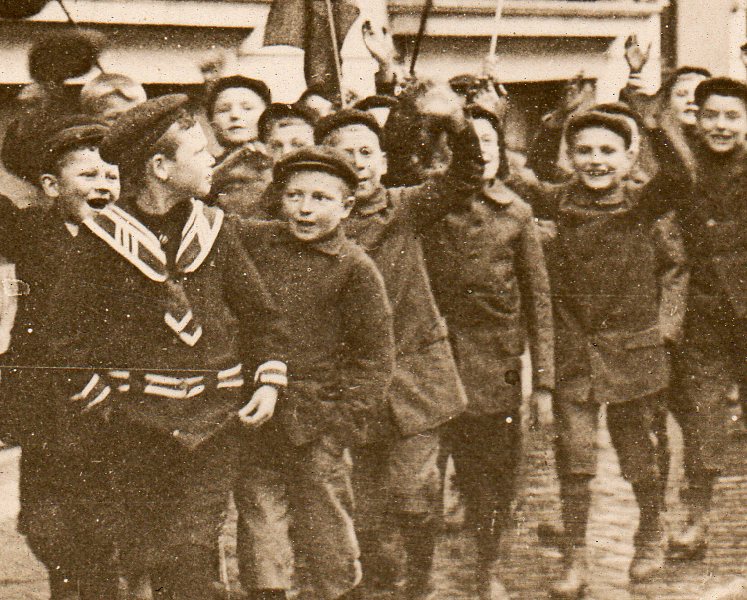
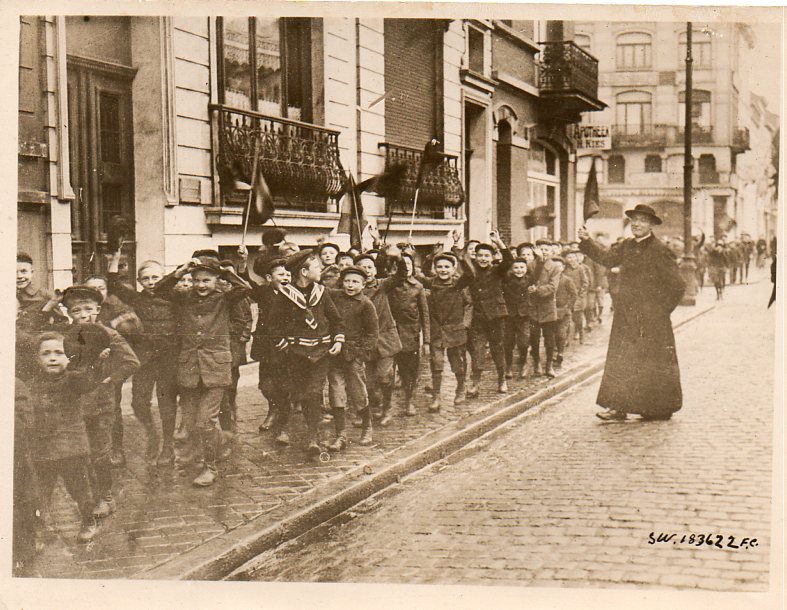
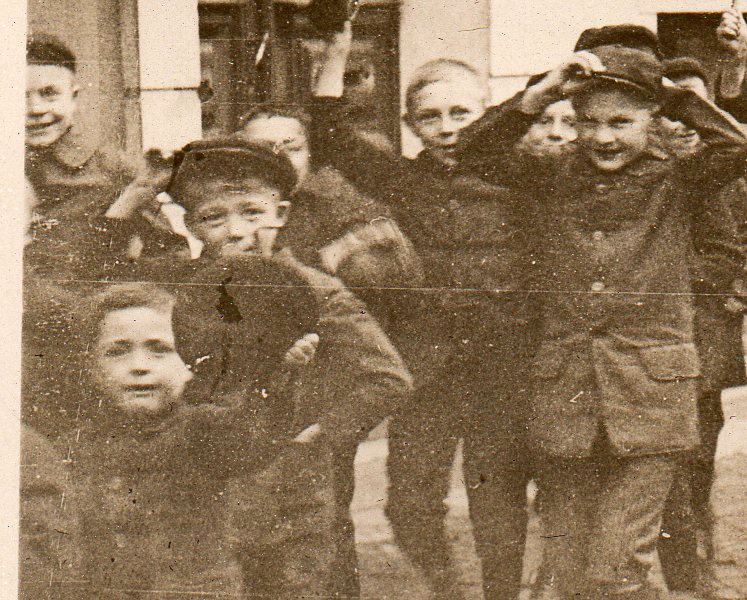
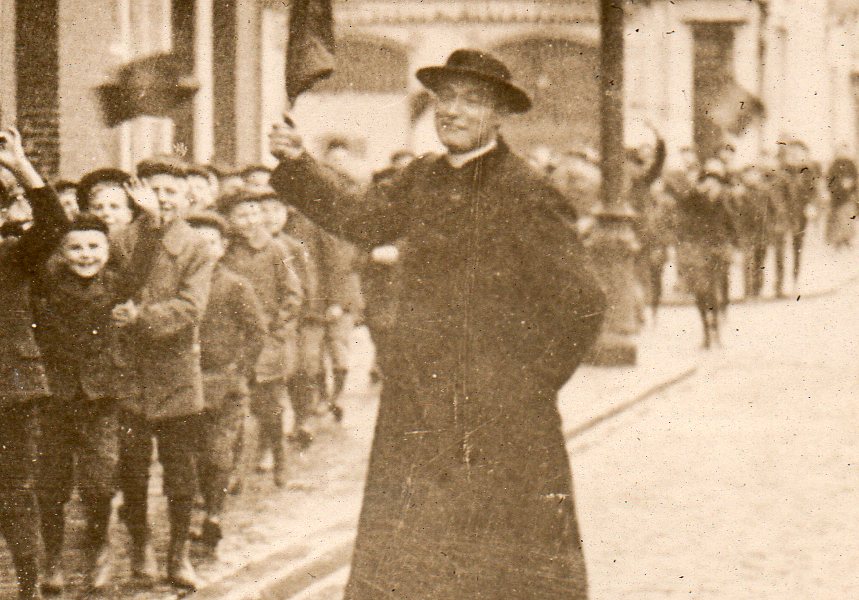
    Ostende, a port city of West Flanders on the North Sea in  northwestern  Belgium, was an important stronghold and also a  key to holding the inland port of Bruges, which is something that the Germany Army was able to do until the very end of World War I.  Under constant occupation by an invading force, the city was only liberated by the armistice signed two days before this photo was made, on the eleventh hour of the eleventh day of the eleventh month of 1918. (The original photo is available for purchase via our blog bookstore, here.)

    Some of these children might still be alive, though all but two of the soldiers of this war are all dead.  I remember talking to my grandmother ten years or so ago, asking her about what she did to celebrate the end of the war.  She laughed, and then told me that she and her sisters and brothers went out to the street (in their small town of Housatonic, Massachusetts) and danced and danced.  She then said that a few other children went to their kitchens to come out with pots to bang with wooden spoons–and then it struck me, taking away my breath, that what she was talking about was celebrating the end of WWI, not WWII, which is what I thought she was going to talk about. 

    WWI children's parade176
    WWI children's parade177
    WWI children's parade178

    ·Posted by :

    ·in:

    — —

  • Found: Children’s Advice for Life, 1825

    JF Ptak Science Books   Post 1383

    Manuscript Vanity det151

    Manuscript Vanity det148

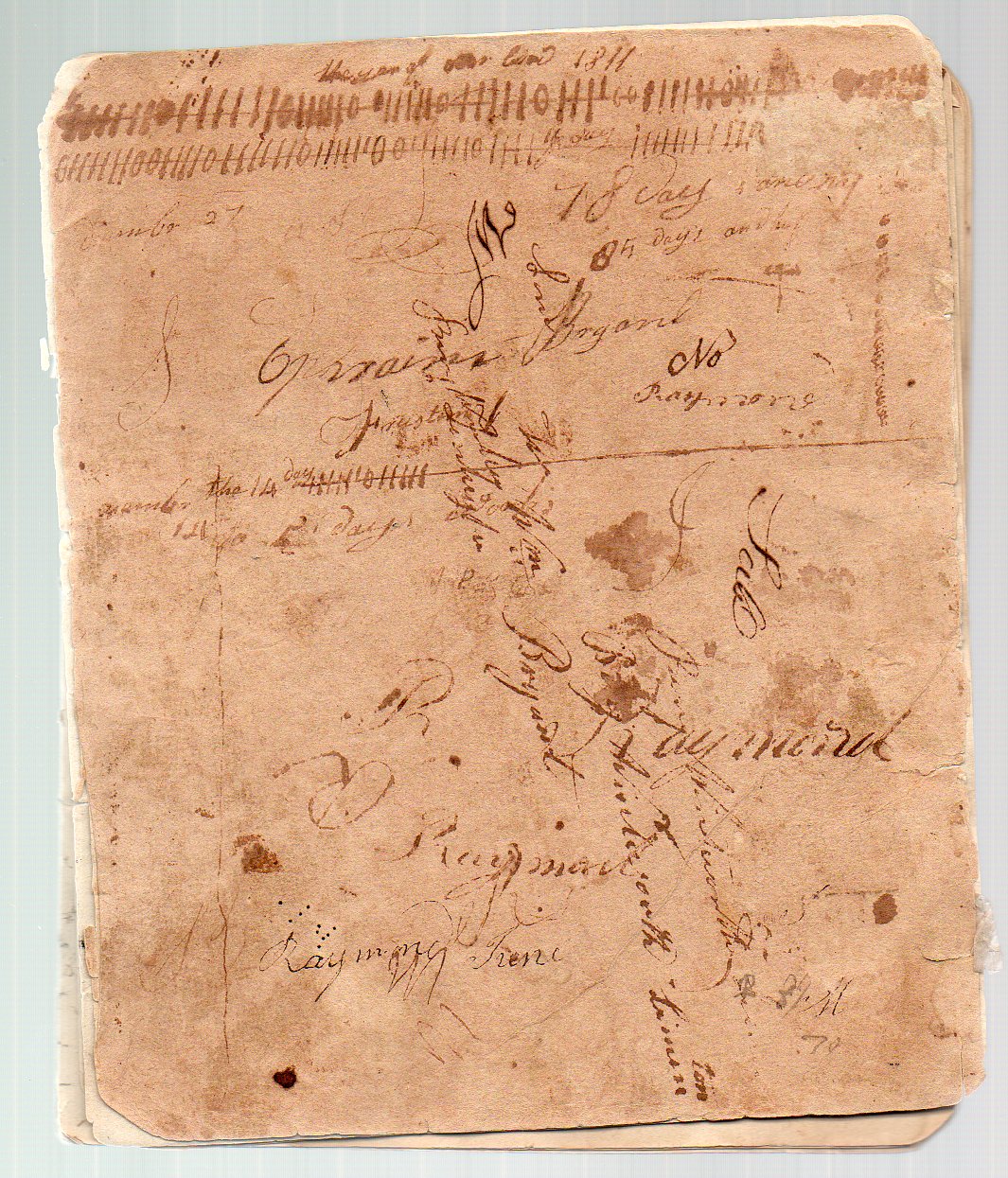
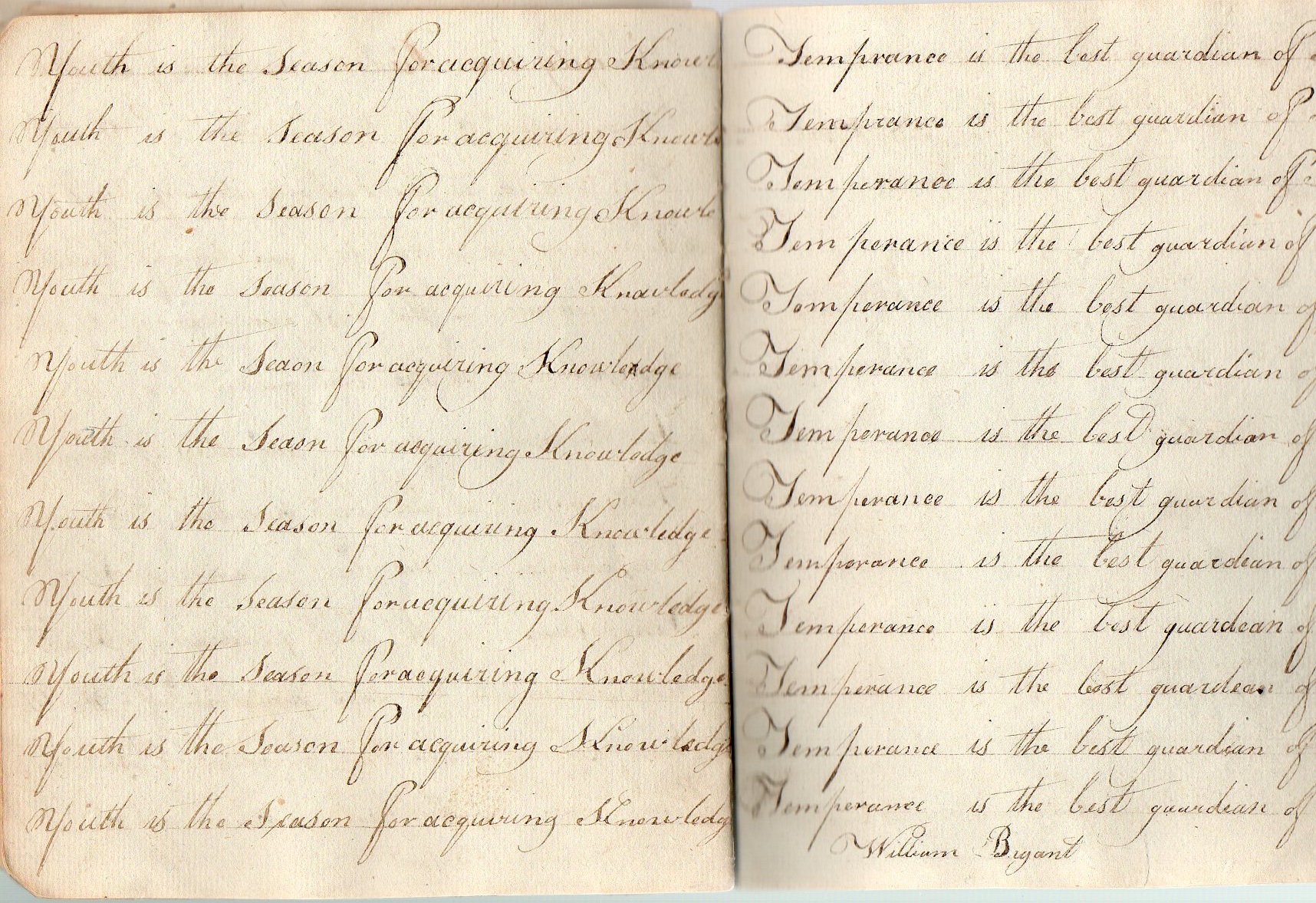
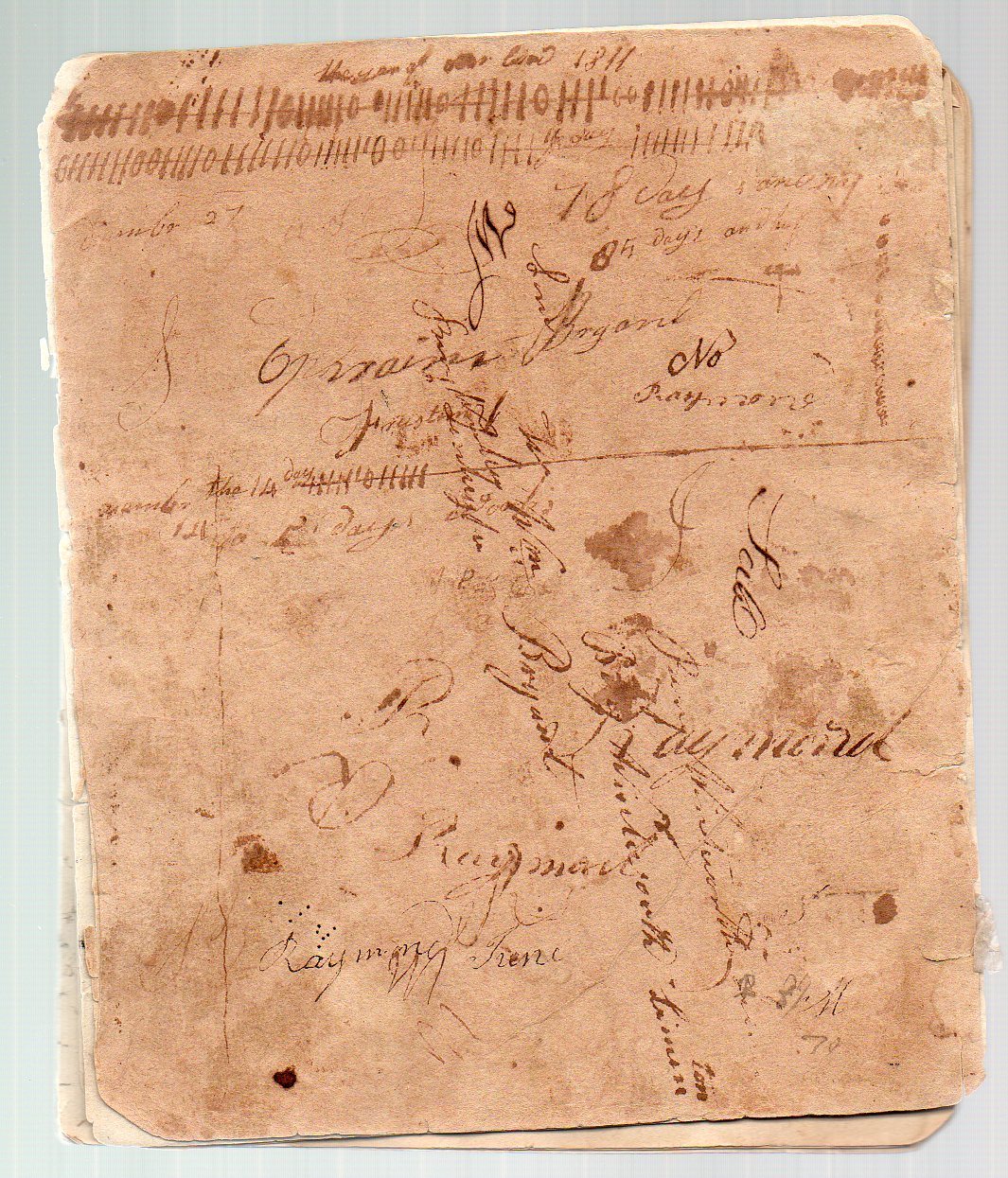
    I have a small collection of 18th and 19th century notebooks–ciphering books, tally books, keepsakes–kept by children and young adults.  These books are remarkable for their contents, empty scratchbooks filled with whatever was necessary, whatever was important, whatever was trivial.  There are notes about who-owes-what, provisions purchased, goods borrowed; mathematics problems, poesie, miniature observations, memorized bits.  Signatures made over and over again, looking exactly like what children do nowadays, practicing writing their names, perfecting a signature, identifying themselves to themselves in private.  These notebooks are far less formal say than a diary–they caught all sorts of ephemera of the day, stray information, all manner of stray bits. (This notebook is also available from our blog bookstore, here.)

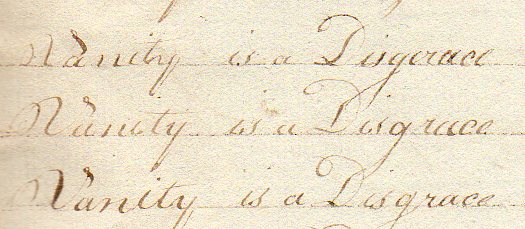
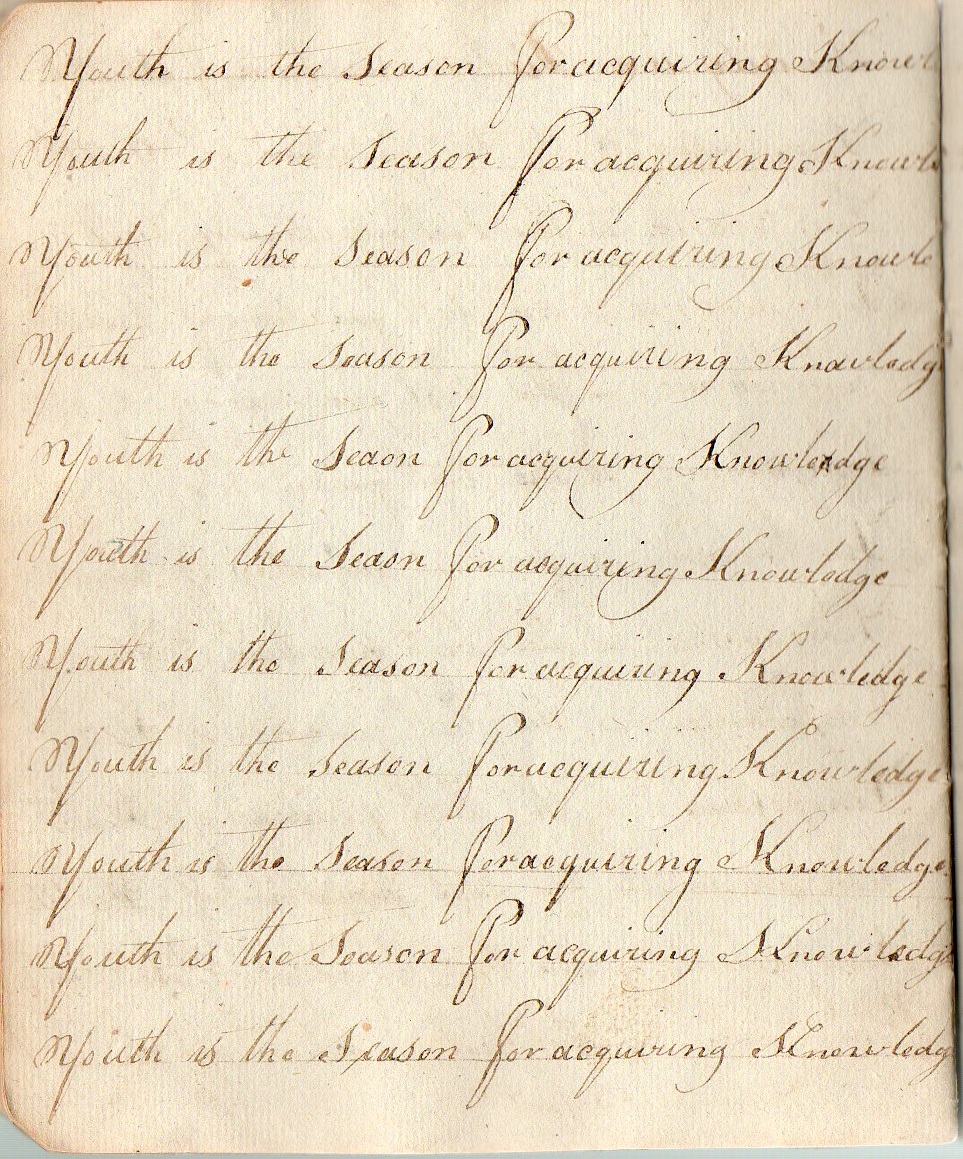
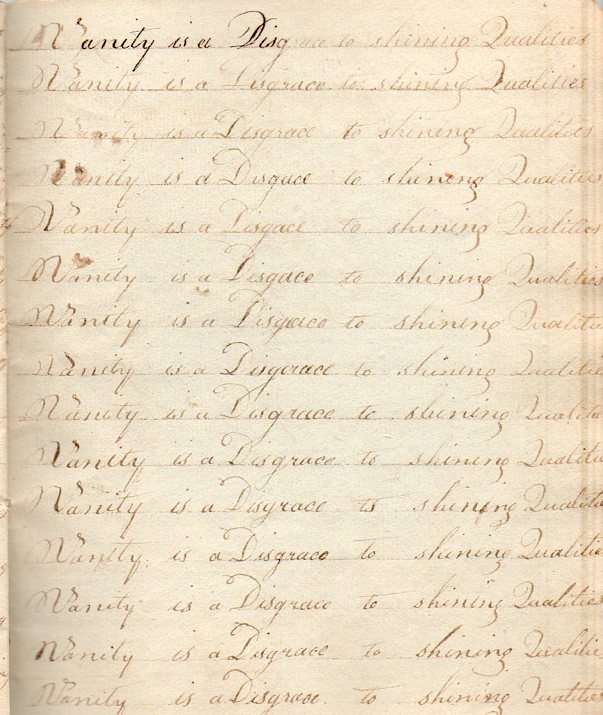
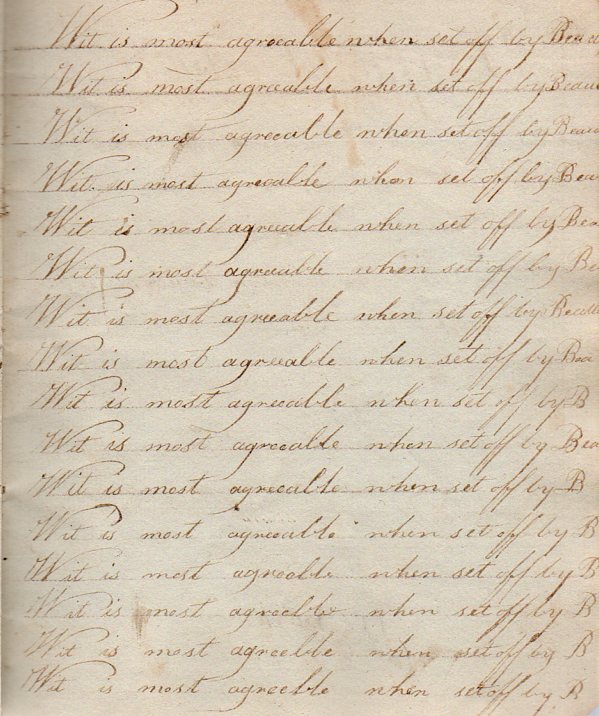
    In this notebook, used between 1811 and 1836, there are also repeated personal lessons and life’s aphorisms, generally one page each, written over and over,  practicing penmanship by repeating the advice, 

    “Youth is the season  for acquiring knowledge” and “Temperance is the last guardian of health”:

    Manuscript Vanity det149
    Manuscript Vanity det150

    I find it remarkable that this small item–about 8×5 inches, and having no more than 30 pages–survived in somewhat haphazard and occasionally directed use for more than 25 years.  Then again, paper wasn’t all that terribly common among the working poor in the United States at this time, so it is very understandable that this notebook would’ve been kept, and carefully so, as an important household object–and possibly a significant family-history document.  For those of us today this looks like disposable information, ephemeral knowledge–evidence would say that this was definitely not the case when this book was still being used. 

    “Vanity is a Disgrace to shining Qualities”:

    Manuscript Vanity147

    “Wit is most agreeable when set off by beauty”:

    Manuscript WIT146

    And the cover:, which is a curious thing, as someone kept track of “days” on a number of occasions here, not the least of which ran across the top of the book:
    Manuscript Vanity det151

    The record of items purchased, of money charged for labor, allows us a peep into the daily working life during the first part of the 19th century:

    Purchases made included 2 pounds of butter (15 cents), six pounds and a half of veal ($2.00), a gallon of molasses (30 cents), “half a berril of flower” (3 dollars), a pound of wool (12 cents), plus pork, potatoes, tea, salt, corn, rye

    The labor is also of interest:  renting the services of two yoke of oxen for one day seems to have cost one dollar, “tapping in a pair of boots” (30 cents), “one day’s work on shaving hoops” (50 cents), and then many entries for “one days work a planting” and “a mowing” which seems to have been 50 cents; “hauling wood one day” was also 50 cents.  It seems as though you could exchange a day’s labor for two pounds of butter, a pound of wool, and two pounds of potatoes–at hose rates, I suspect that these people would’ve considered the veal to be a luxury meal. 


  • Miss Atomic Bomb: the A-Bomb in Popular Culture–Comics, Cakes and the Will of God

    JF Ptak Science Books   Post 1425 
    Follow Me on Pinterest


    I’ve written dozens of posts on this blog about atomic bomb history and where the bomb has shown up in popular culture.  This installment is on the bomb in very popular culture

    Miss Atomic Bomb is an icon of some sort for the relationship of the bomb with society, or, perhaps the bomb and Vegas, which is where this picture was taken. I guess there are reasons to put pretty women in front of computers (in the 1950’s/60’s), cigarettes and automobiles–why not with The Bomb?

    Atomic Bomb Miss
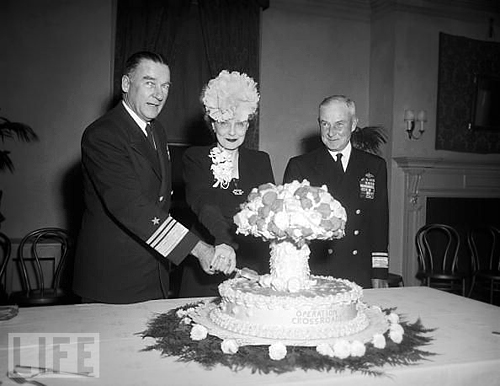
    The atomic cake (with matching headware):

    Atomic cake

    The caption to this story from Life magazine (1946) reads: “U.S. Navy Vice Admiral William H. P. Blandy, his wife, and Rear Admiral Frank J. Lowry cut a cake made in the shape of a mushroom cloud at a reception for Operation Crossroads, November 6, 1946.”  Actually Blandy was an early (August 1945 or thereabouts) forward thinker about how to deal with the U.S. owning the bomb and  international control.  I have little doubt that he probably thought that the cake was a bad idea, but, well, he did what he needed to do.

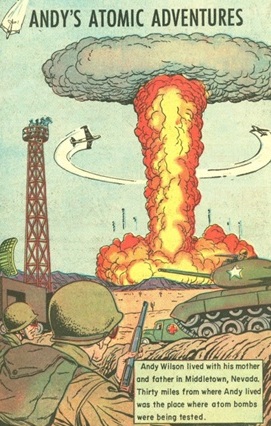
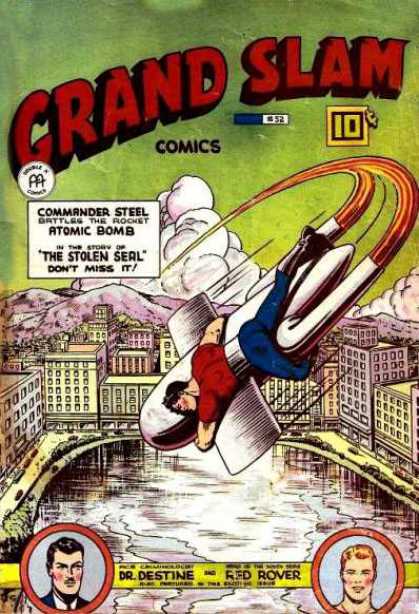
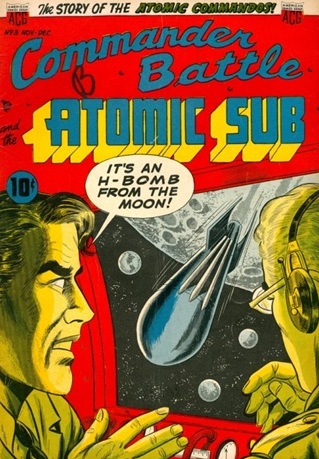
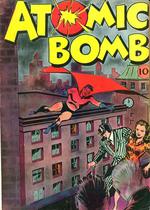
    There were all sorts of comic book adventures dealing withe the atomic bomb, right from the very beginnig (as it seems the earliest of them appears a month after the Hiroshima bombing).  These are just a few examples with the a-bomb on the comic’s cover(s):

    Atomic andy

    Atomic grand slam
     
    Atomic  h bomb from moon

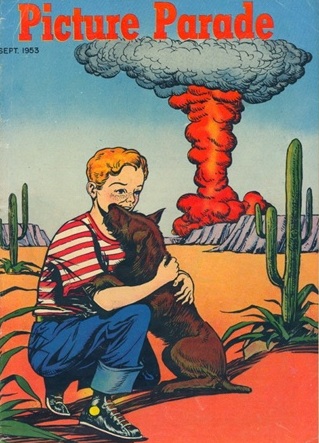
    AtomicbombBizarro–I don’t know the story of this image in Picture Parade, only having the cover graphic–perhaps that’s enough, perhaps we don’t need anything more, perhaps the backstory would spoil a perfectly bizarre image with something perfectly benign.  Or perhaps not. 

    Atomic bomb biazzaro
    Bizarre but for different reasons–a pocket-sized ball bearing patience game. Tokyo is included as a target for this game but in actuality was not considered atomic-bomb-worthy, mainly because it was decimated,  blanketed with a firebombing  that destroyed a host of the city just weeks before the first blast. (On March 9-10, 1945, 339 B-29’s dropped 2000 tons (4 million pounds, about 496,000 bombs) of the incendiary M-69 on Tokyo.  Two initial passes were made on the city, marking a large, burning “X” in the city.  Each plane had the capacity to cover a drop area of 350 feet by 2000 feet, which means a much greater area was affected. The citizens of Tokyo met their ends with buckets of water and brooms in defense. Hours later fifteen square miles of the city were destroyed.  In the months prior to Hiroshima and Nagasaki, 66 cities were bombed with M-69, killing about a million people, and wounding more.)  Fresh cities were needed for the atomic weapons so that there effectiveness could be judged against a palette of a normal. intact city, and not one that had been previously attacked. 

    Atomic Bomb dexterity game
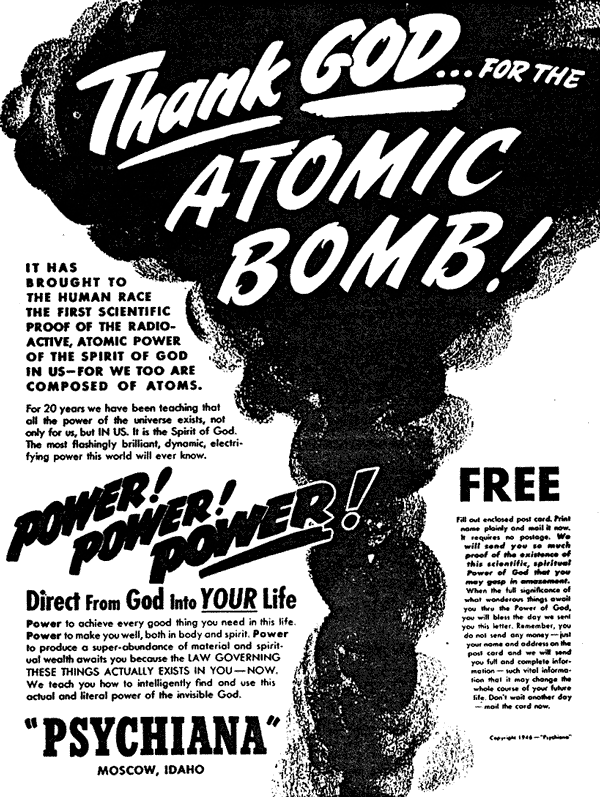
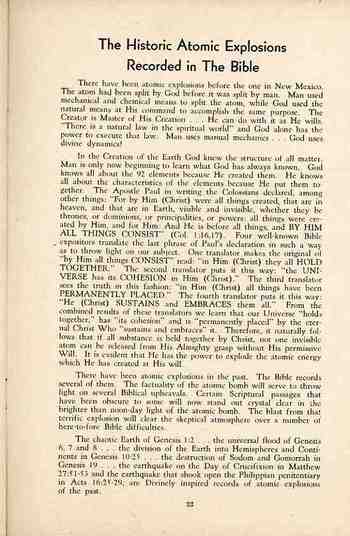
      And still more bizarre, when you combine all of the aspects of the race to the bomb with the race to god and the people who would believe such a thing.  This advertisement belonged to a mail order religico empire builder, Frank B. Robinson, (1886-1948), who claimed himself to be a prophet of god, had conversations with the Creator, and in general used whatever was of interest in the newspapers to drive interest in his ministry by mail.  It looked like his creation–Psychiana–wasn’t much more than a feel-good, self affirming, positive-thinking enterprise driven by a man with a personality big enough to be on speaking terms with the god, who in the ad below somehow was selling “the atomic power of the spirit of god in us”  because we are composed of atoms.

    Atomic bomb thankgod

    And of course on the other end of this:

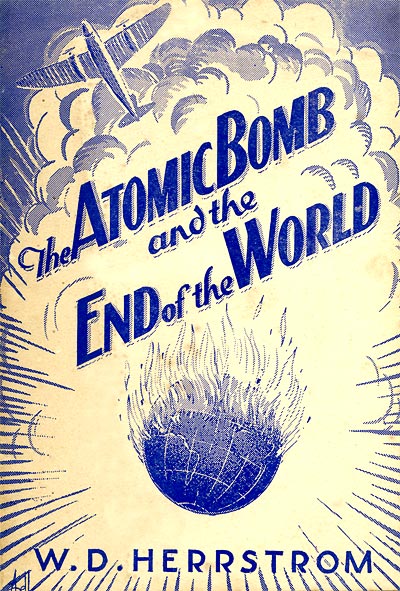
    Atomic_bomb_end_of_world

    This is an example of a host of end-of-the-world, post apocalypse movies (and books, and short stories, and so on) made to scare and entertain.  Judging from the trailer the more-modern television series Jericho owes a lot to Ray Milland. 
    Atomic panic-in-year-zero

    Mel Morris  published God’s Atomic Bomb  in 1945, which means he must’ve worked a little feverishly to pump up his bible prophesy and history to include the new atomic weapon to replace whatever else he had been using as a prophecy for end of times.  (As it turns out, “God’s Atomic Bomb” was more tempest and disaster in the bible, and not (whew!) the bomb itself.  Though as we’ve learned from scientologists and the sort-of creative mind of Ron Hubbard, a civilization came to the earth thousands of years ago and pummeled it with “atomic bombs” and other nastiness, polluting humans for milennia to come.  But that’s another story–suffice to say that Morris found many dozens of examples of “God’s Atomic Bomb” being used in the deep biblical past, and that the use of the real atomic bomb in 1945 was pre-ordained, and not without its figurative historical counterparts.  I’m not sure why any of this was necessary outside of proving to some small minority that these preachers could at least be contemporary and topical. 

    Blogsept_2_atomic_bomb_god_2txt483

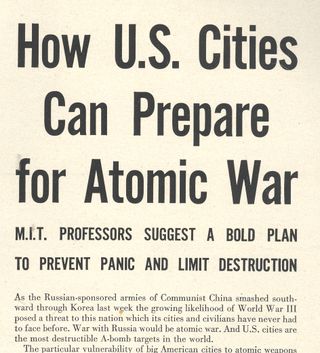
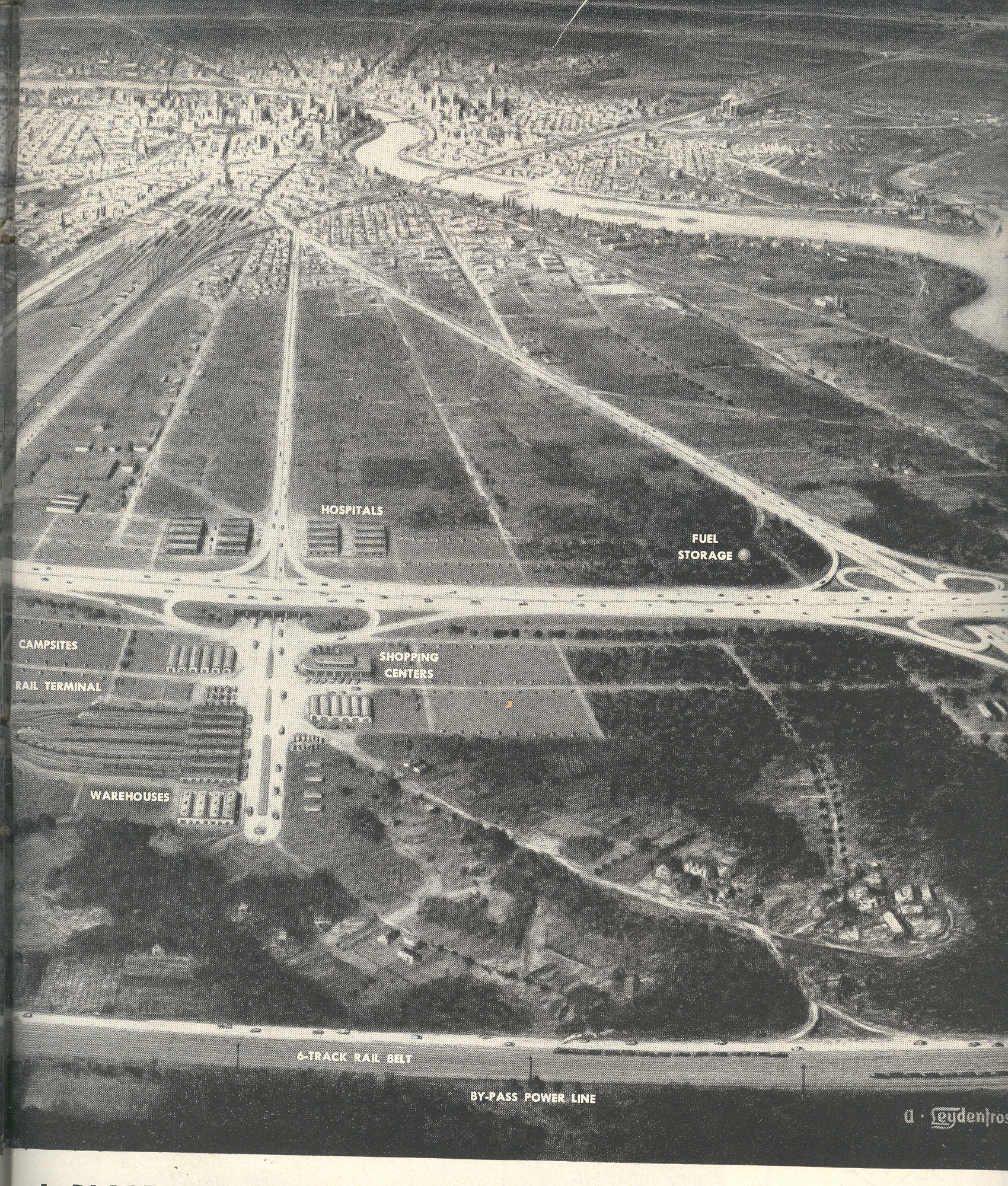
    The following is not the worst idea regarding the survival of nuclear holocaust, though it is an extremely bad one.  (Atomurbia, which makes the entire country a suburb to itself and therefore nothing, and which I write about below, is perhaps the worst idea that I have seen on combating the Soviet menace.)   But this one, which appeared in Life magazine in 1950, does come close, setting up post-attack suburbs (for “refugees”) and which takes some pre-attack city planning into some account.  There is a lot of planning for people in cars to make their way out of the city, which reminds me of the evacuation maps of Washington D.C. (which were still being handed out in the early 1980’s), which sends people on their way east and west depending upon the last digit of their car’s license plate being an odd or even number. 

    Atomic city plan war

    ==Blog July 27=wiener left

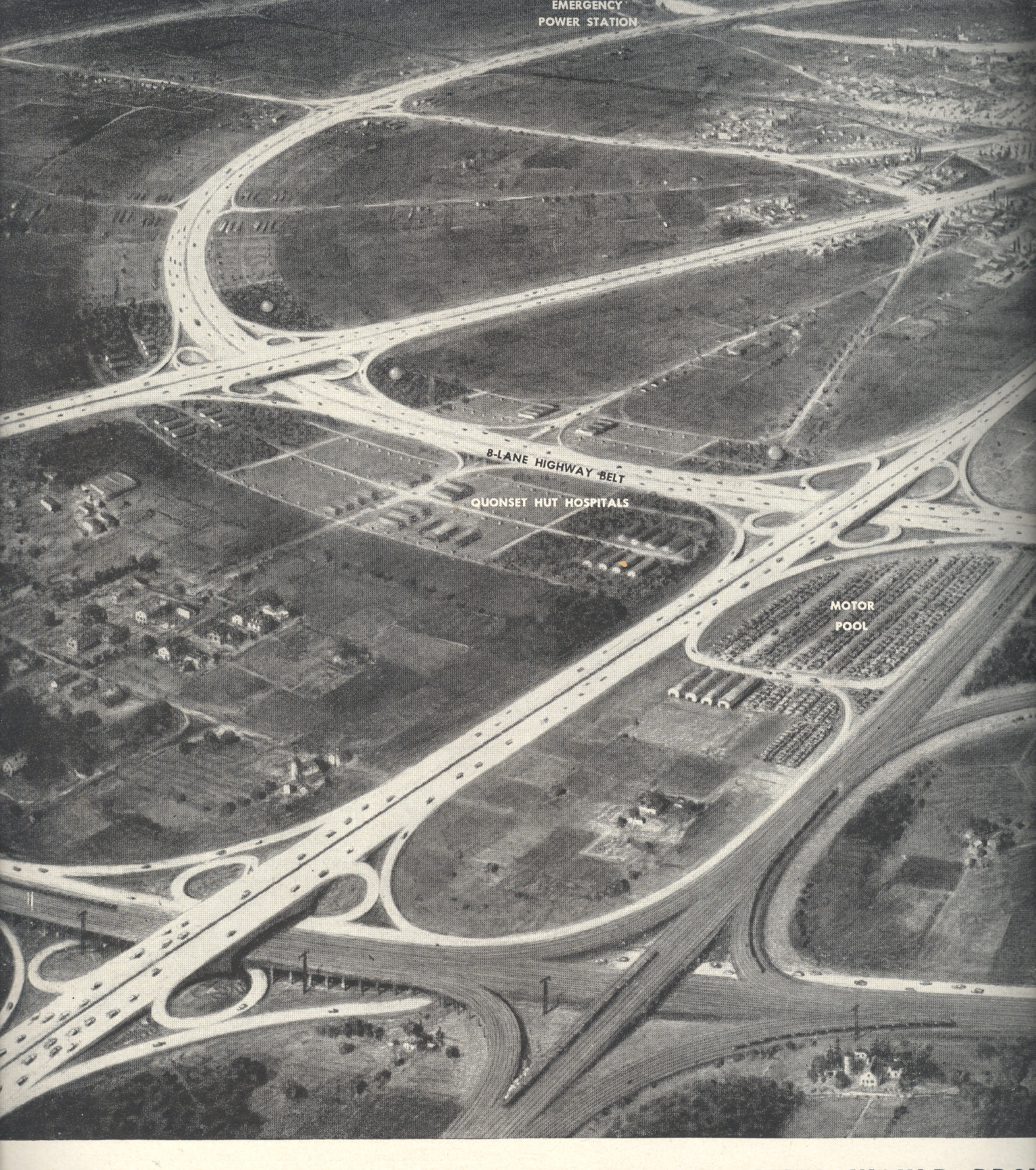
    One reaction to impending Doomsday was to construct concentric outer highways around metropolitan areas, “life belts around cities (which) would provide a place for bombed-out refugees to go”. In the birds eye view provided here, we see the plan in action, the main parts of which are an 8-lane “express” highway belt 10 miles away “from the built up edges of the city” , and a 6-track railway belt five miles further out, these accompanied by various feeder arms stretching straight-away from downtown.  In between the two outer rings would be land that would be kept free of development, so that farms and tent cities could be constructed after the attack. There would also be major collections of hospital and fuel depots in the greenbelt area.  Infrastructure would already be in place (gas and electricity, supplied with power from who-knows-where).   Shopping centers and a giant “motor pool:” would also already be in place, waiting for the Doomsday clock to strike midnight. 

    ==Blog July 27=wiener right

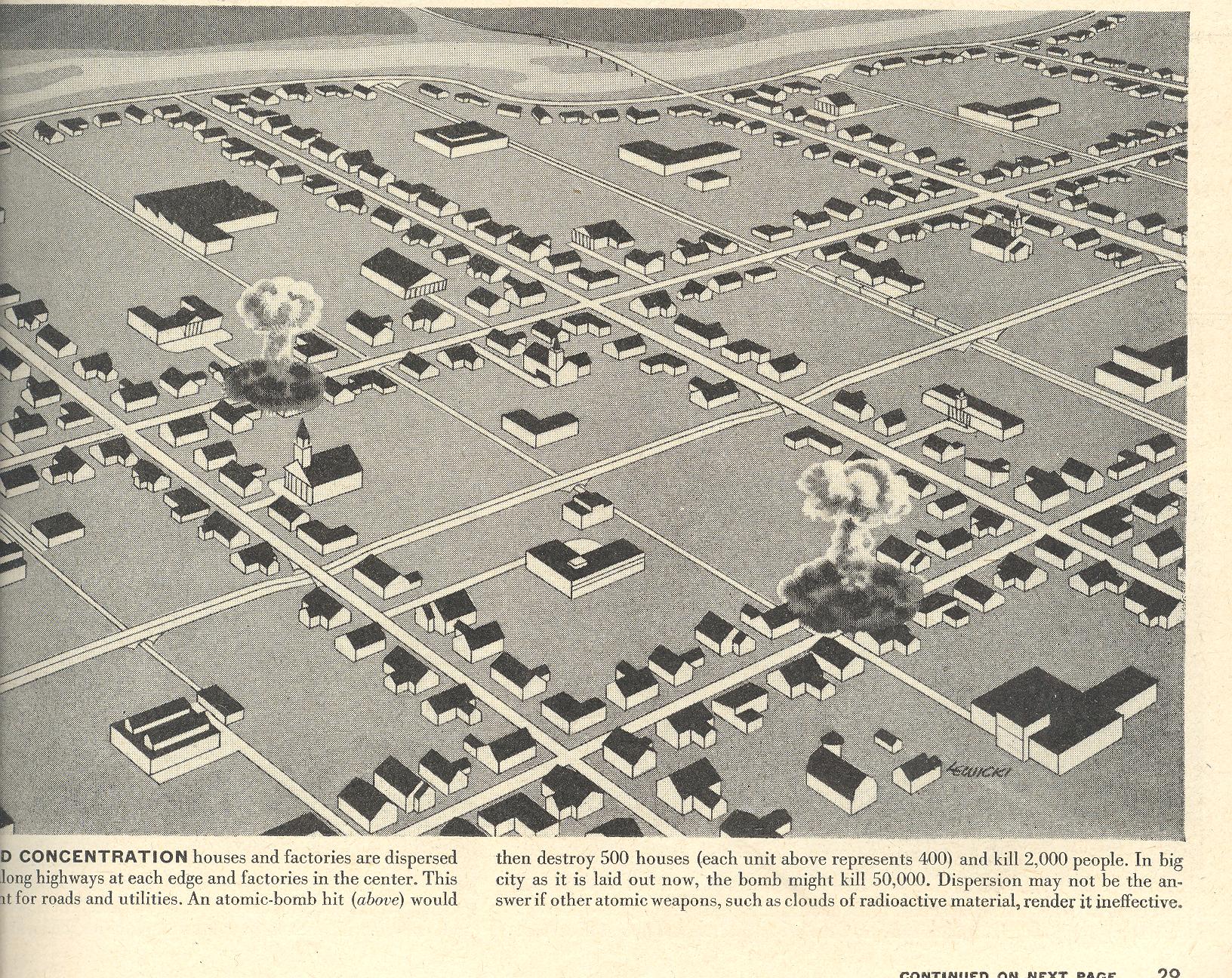
    This idea of city planning was one of many offering the prospect of safety from nuclear attack by spacing out the population of the United States so that the Soviet Union wouldn’t have enough nuclear warheads to take everyone out.  It called for the redistribution and resettlement of virtually everyone in the country, and is one of the most spectacularly bad ideas that I have come across in this field.  (I wrote about it earlier in this blog, here.)

    1-may 3-atomic 4

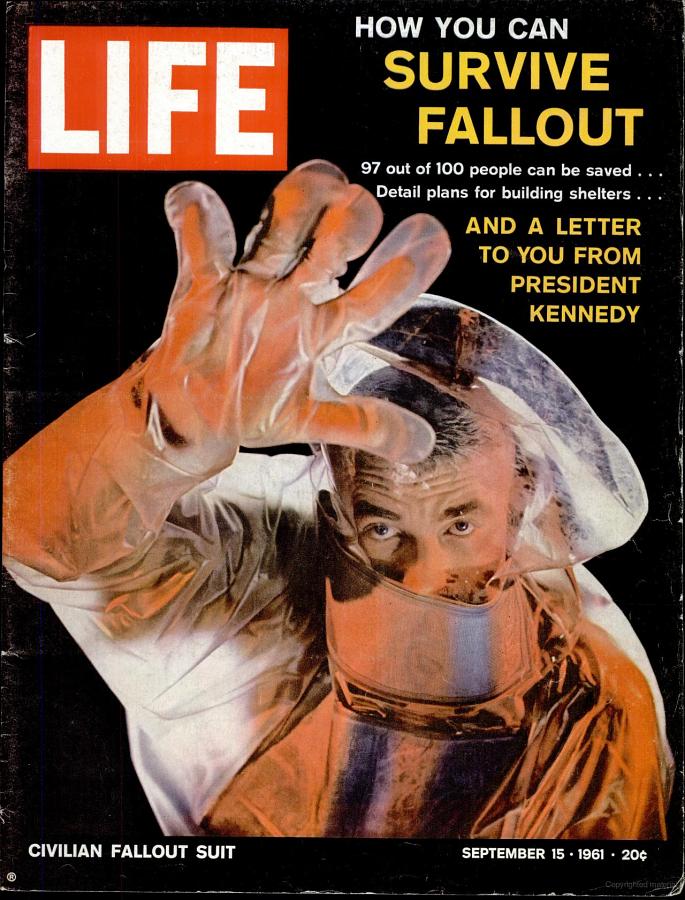
    This issue of Life offered the possibility of hope that 97% of the American population could survive a nuclear attack by the Soviet Union. It was a hard sell of a bad idea of insane optimism.

    Books_004


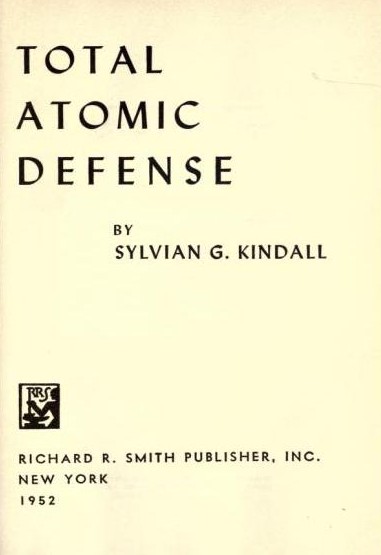
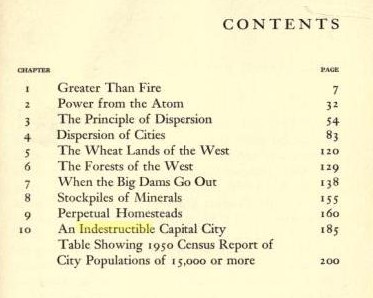
     Sylvian Kindall’s Total Atomic Defense (published by a very severely right-wing publisher in 1952) is one of a series of books made for a deceived American population, offering the general reader both fear and hope, often from the same, exact source. But Kindall has a  somewhat diffident approach, offering his belief that the country and its population can largely  survive an all-out nuclear waBlog--untinkable tpr–intact.  Chapter 10 tells the remarkable story of how to make the captial city of America atom-bomb proof, mostly by digging it into the side of a mountain.

     
    Blog--unthinkable


    Again, this is just the barest touch of the top of a huge pile of such stuff–and I’ve not even mentioned duck-and-cover films.


  • Bad Ideas Department: Restructuring the City and the “Terminal Box”, Neopolis, 1938

    JF Ptak Science Books   Post 1421

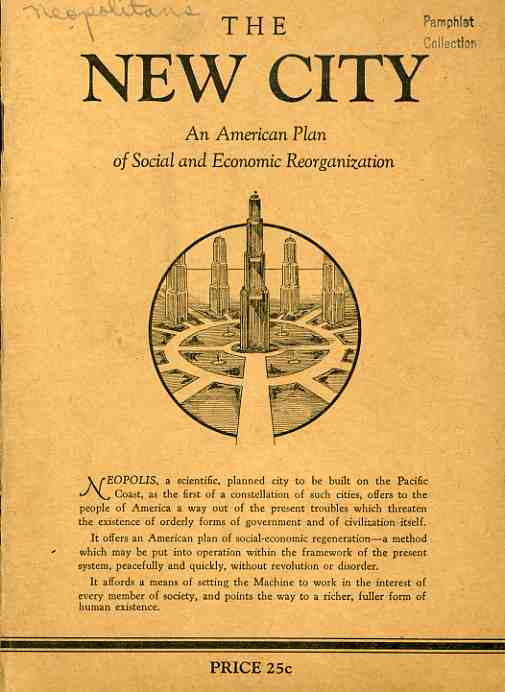
    0-blog---Nov 14 new city075 The unnamed author of The New City, an American Plan of Social and Economic Reorganization (1938), makes a hard-edged plea for the formation of a new American society—and by “new” the author really means it, advocating a different economics, social structure and even the physical development of new cities and abandonment of the old physical and philosophical structures. (The rare original of this deterministic futuristic publication is located at our blog bookstore.)

    Sprinkled among the Swiftian notions of rightness, quixotic lancings of social ills and a general bombardment of the structure of society are some interesting and isolated points: 
    “America is the supreme user of the machine…ravishing the irreplaceable wealth of one of the earth’s richest continents, tearing down forests, looting the treasures of coal and draining the reservoirs of oil and natural gas, by methods scandalously wasteful.” 

    This leads the author to the Depression, “a decade of demonstration of the profit system’s inability to deliver to the people the needs of life, a painful heartbreaking demonstration”.  0-blog---Nov 14 new city076

    It is the profit-deliverers, not the machines or people, who are to blame.  One way of addressing the distribution system, was, unfortunately, Russia—“a form if society set up to overcome this impasse of the capitalistic system of production and distribution”.  Of course the Russians–the Soviets–were just in the middle of their enforced starvation/gulag/brutalization period under Josef Stalin, the gigantic negative parts of which were still in general not known to the great unwashed. 

    The unnamed author dips lightly into Socialism, and then into Fascism and Nazism, though the only thing he/she really has to say about the later two is that “their answer [to economic woe] was in the seizure or control of the means of production by the state”, their own brutal means skipping off unnoticed into a pinkish glow, though the loss of personal freedom is “disdained”. 

    The New City is actually a new world order, a new governmental form to take advantage of technological advancements leading to “nationalized urbanization” The first city in this new order is Neopolis, and this pamphlet was a call to those who would stand as its citizens.  (There’s actually a sort of application form, though all it really is a bill-of-sale for ordering more copies of the New City pamphlet.)

    Even though the pamphlet is easily obtained, membership, the possibility of being a Neopolitan, is something entirely different.  The difference is actually exceptional, perhaps the most extraordinary thing about this whole misguided idea.  “Membership is to be carefully controlled at all times” we read. . “It is not desired to build up a huge and unwieldy membership of poorly-assimilated elements….interesting educational instruction…with tests to determine the fitness of the member for loyal, cooperative activity, leading, necessarily, to the elimination of those who may be found undesirable”. 
    That’s some pretty muscular, steroidal stuff, particularly after such a glancing blow against the Soviets and Nazis. 
    0-blog---Nov 14 new city077
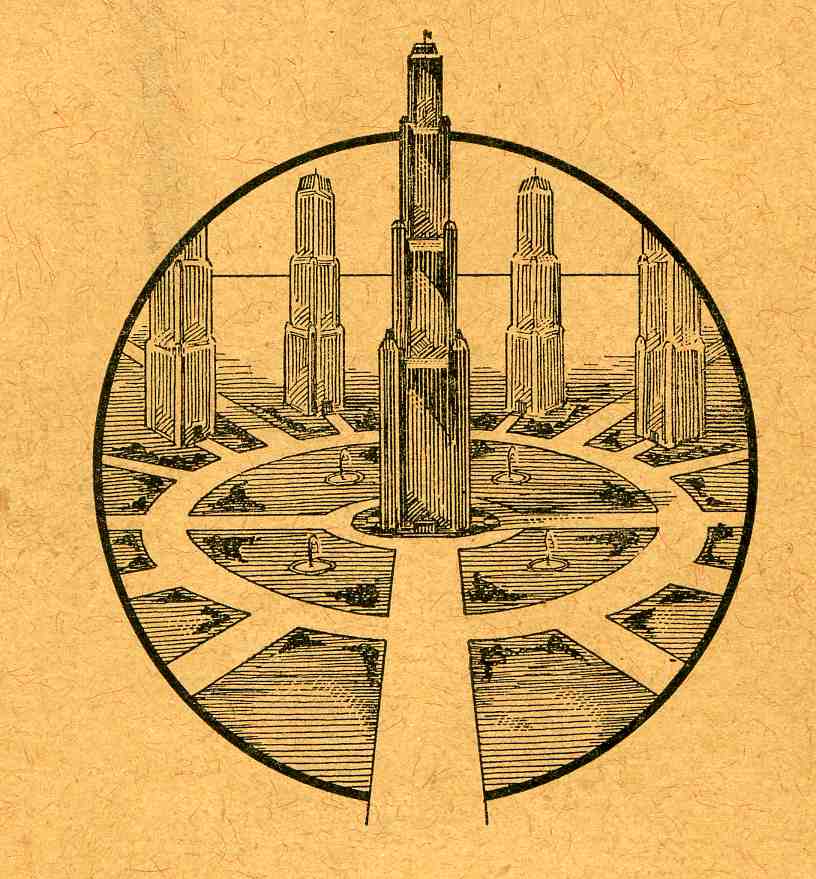
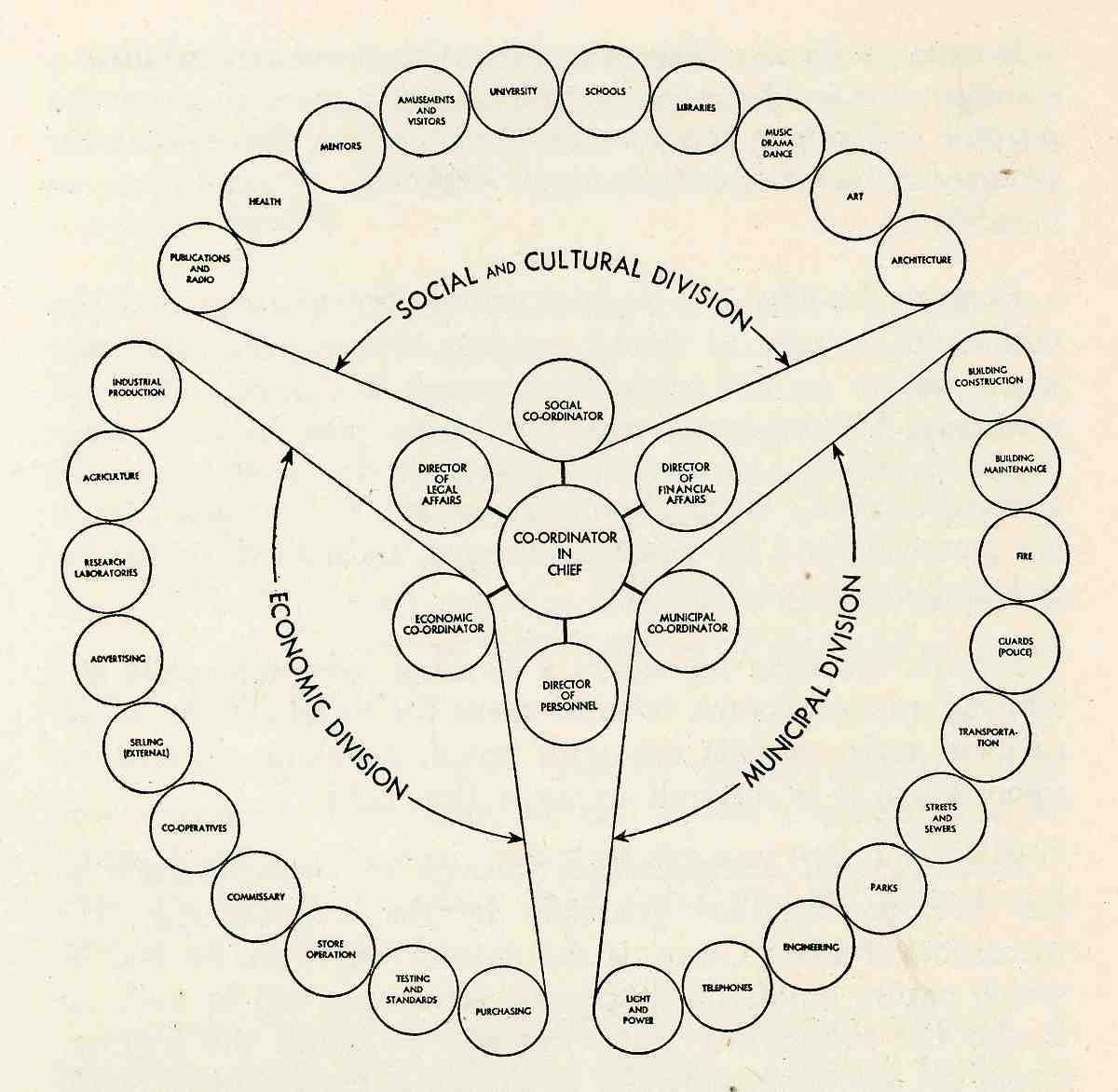
    Since this is just an “abridgment” of a soon-to-be-written 250-page explanation of the concept, the complex and concentric organization of society is left mainly to the drawing of its plan, the physical layout of the city based upon this ideal. 

    The Seattle-based author never did quite make it past page 29, never did name themselves, and never provided a concrete place where all of this heady stuff was being think out.  It is a sort of pretty design in a creepy/queasy way, there on the front cover, but that’s about as far as it goes.  If anyone actually did send any money to this quack thinker, it wound up in a nicely metaphorical place:  at “Terminal Box 3463”. 

    This may be the very best idea to come out of touching this pamphlet—a place where people can send correspondence regarding Bad and/or Dead or Dying Ideas: “Terminal Box ______”.  I guess that box number would be pretty high by now. 

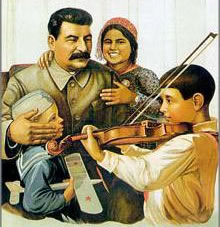
    Stalin20 (Uncle Joe, before he killed the children, and dozens of millions of others.)


  • Films from U.K. National Archives, 1940. Winning the War for Hearts and Minds at Home.

    JF Ptak Science Books   Post 1412

    Interesting films produced by the Office of Information, mostly 1940 and 1941, and found at the (U.K) National Archives. 

    London Can Take It!  (Battle of Britain, 1941)

    “This film, in which the American journalist, Quentin Reynolds pays tribute to London and its people under fire, conveys the spirit and atmosphere of the 1940 blitz on the capital. Its impact at the time, especially in U.S.A., makes it historically one of the most important of the war films.”

    “The production file in the National Archives – TNA: INF6/328 states that the film was to be ‘distributed throughout U.S.A, Canada and Latin-America by Warner Bros’ and was to be shown in ‘at least 15,000 American cinemas’.”  Relseased 1941.

    Hitler Takes Command

    “Cleverly edited montage footage taken from German propaganda films, including Leni Riefenstahl’s Triumph Des Willens, which shows Hitler and his marching Soldiers of the Reich, synchronised to the tune of ‘The Lambeth Walk’.”  Relseased 1941.

    Dig for Victory

    “An appeal to everyone during wartime to ‘Dig for victory’ by cultivating vegetables for the good of the country and their own better health.

    Words for Battle.

    “The production file held at the National Archives – TNA: INF 6 / 507 states that ‘a re-edited version was made by Spectator for inclusion in the fortnightly reels for Russia’ and that material was used from other Ministry of Information Films including ‘How to dig’, ‘Sowing and planting’ and ‘Cultivation’.”

    “Words for Battle evocatively sets to film passages of quotation from poetry and prose including works by: Milton, Blake, Browning and Kipling. The famous “we shall never surrender” speech by Winston Churchill and Abraham Lincoln’s Gettysburg Address are also quoted in the Film. It powerfully associates these passages and music by Handel and Beethoven with images of everyday life in Britain at war.

    The Crown Film Unit file held in the National Archives: TNA: INF 6/338 synopsis reads: ….“A call to arms through images and words of Britain’s countryside, people and poets”.

    Released 1941, and read by Lawrence Olivier.

    Workers’ Weekend (A Tribute to the Workers of the British Aircraft Industry)

    ‘A tribute to the workers of the British Aircraft Industry’. Men and women in a factory in the North-West of England set themselves the task of building a Wellington bomber in the record time of 30 hours. Constructing in their own time, the workers donate the bonus they got to the Red Cross ‘Aid to Russia Fund’.

    The cameras capture the whole process of the construction in record time through to the test pilot taking off in the plane, ahead of schedule.”

    ·Posted by :

    ·in:

    —

  • Coal Boys, 1895

    JF Ptak Science Books   Post 1406Coal boys230

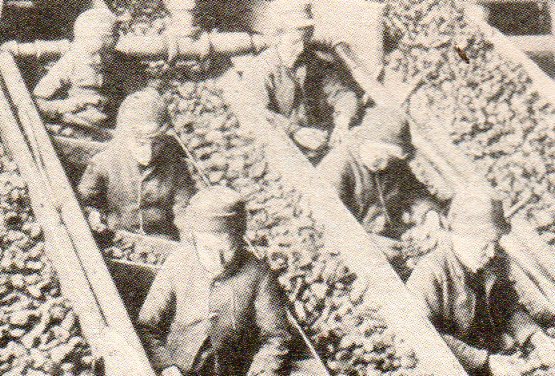
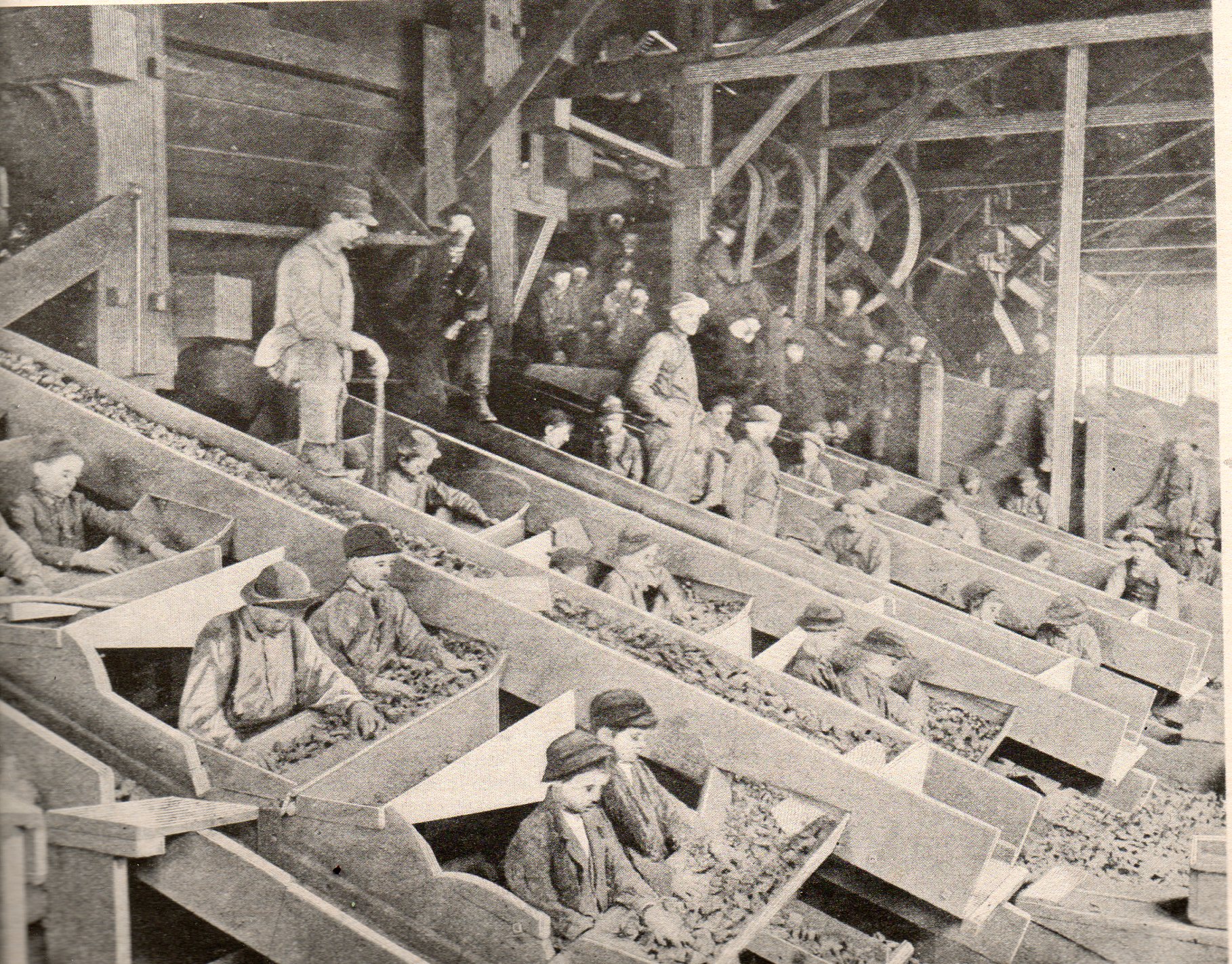
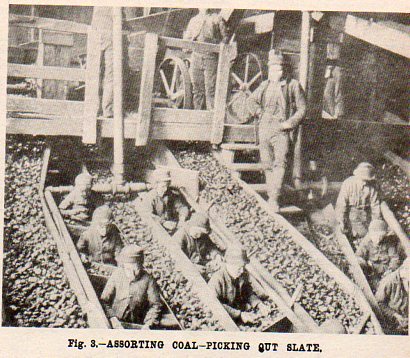
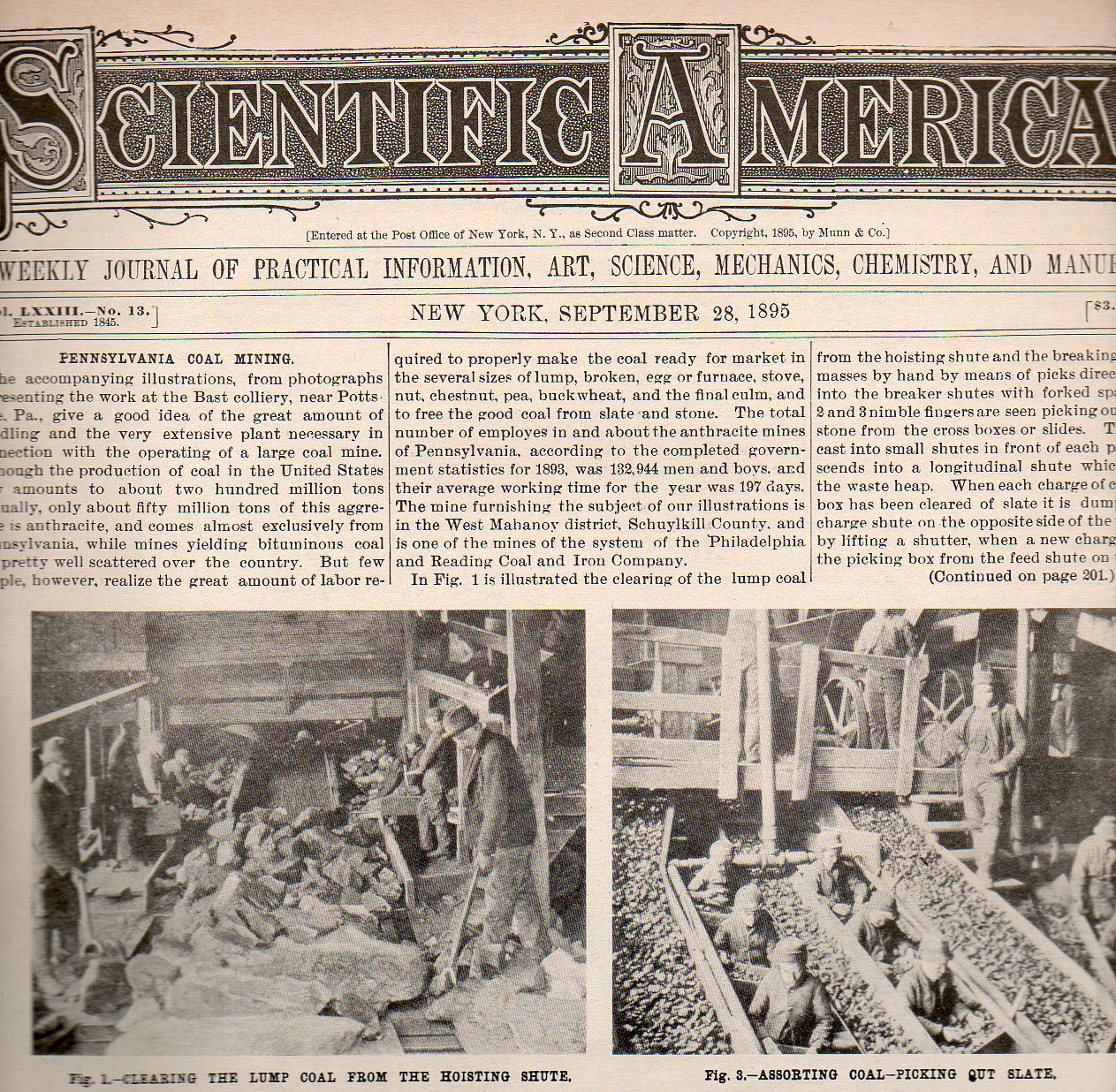
    Here’s a series of social documentarian photographs that partially illustrate the true position of the “coal boy” out in Pennsylvania in September, 1895.  Somehow it sounds, perhaps, a little romantic, summoning images of small children running around with sacks of coal as though it was a newspaper or marshmallows or something.  That such a chore was left to children in the 40-million-ton anthracite coal industry in Pennsylvania is a testament to something–the savings of cents-per-hour for the kids to do the task rather than  an adult, or, well, is there an “or” to this?  I don;t think so.  I think that it all came down to shaving hog hairs from the paychecks of adult workers. 

    The story appeared in the Scientific American for 28 September 1895–it was not an investigative journalism piece on the working conditions of children, just a simple report on what the children were doing.  We’re still years away in 1895 for any real legal assistance to protect children as workers or to require them to be in school. 

    Coal boys231

    Coal boys229

    Coal boys227


  • The Great French Wine Strike of 1907

    File1190detail

    What would be more intractable to the public mind in general than a wine strike in France?  I think that it trumps by far a yellow cab strike in NYC (or anywhere), a beef strike in Buenos Aires, and maybe even a rice strike in Tokyo.  It seems unthinkable.

    But this fabulous image shows  the event in full force, with “Marcelin Albert, the Napoleon of the South” up to his elbows in a sea of French wine producers and suppliers, drawing the group together in a very solid and unified strike front, demanding more of the French government back there in 1907.  Albert is administering an oath of allegiance to the Wine-Growers’ Federation at Montpell, the listeners’ outstretched arms showing their acceptance of whatever it was Albert was preaching.  The picture  was printed in  London by the Illustrated London News on June 22, 1907, months into the wine-grower’s striking reign. M. Albert certainly had the attention of the French legislature at this time,  speaking in small towns and cities across the breadth of the south of the country,   getting huge crowds–at the fabulous Medieval fortress city of Carcassonne, for example, which had a population of about 30,000, more than 200,000 people came ro support the strike.  Albert  (b. 1851 and looking a little like a thin Castro) is shown speaking to a part of a dense crowd estimated in the hundreds of thousands; the crowds of growers (labeled “agitators”)  in front of  raised ALber to a person of high importance in France.  I have no idea how the idea of a wine strike was tolerated by the people of France, in general.

    Note:  Marcelin Albert led campaigns for the defense of vine growers in 1900, 1903 and 1905. He headed an association of Languedoc vine growers in the great agitation of 1907 (against restrictions on home distillers, taxes on sugar, etc) that led to his distinctions and high social position as representative of hundreds of thousands of working Frenchmen.

    ·Posted by :

    ·in:


  • A Note on the History of Bad Beds (Bedlamia 2): the Utica “Crib” and Putting the Insane to Sleep, 1880.

    JF Ptak Science Books  Post 1349

    Following an earlier post that I made here on the History of Bad Chairs (including a contrivance made by Declaration-signer Dr. Benjamin Rush that immobilized the body, dulled the senses and kept the feet of its mental-patient-occupant in cold water for “treatment”) I’d like to start a short series on bad beds.  This part was excited by another historic psychological/shrinkological tool from the arsenal of doctors who treated the insane: an instrument of torturous treatment called the “Utica crib”. 

    It was a device used, obviously, to constrain the person placed in it–so that they could be controlled during the day if drugged and still not controllable, and to be used at night if the patient wouldn’t stay under their covers.  It looks pretty terrible, a squashed baby bed with a prison door for a top.  It comes as one in a long line of bad beds, including psychiatric hospital”tumbling beds”. centrifugal beds, and of course spiked beds of the inquisition, stretching beds form the same, Aushwitz  “beds”, and on and on, devices of torture made from places of rest.

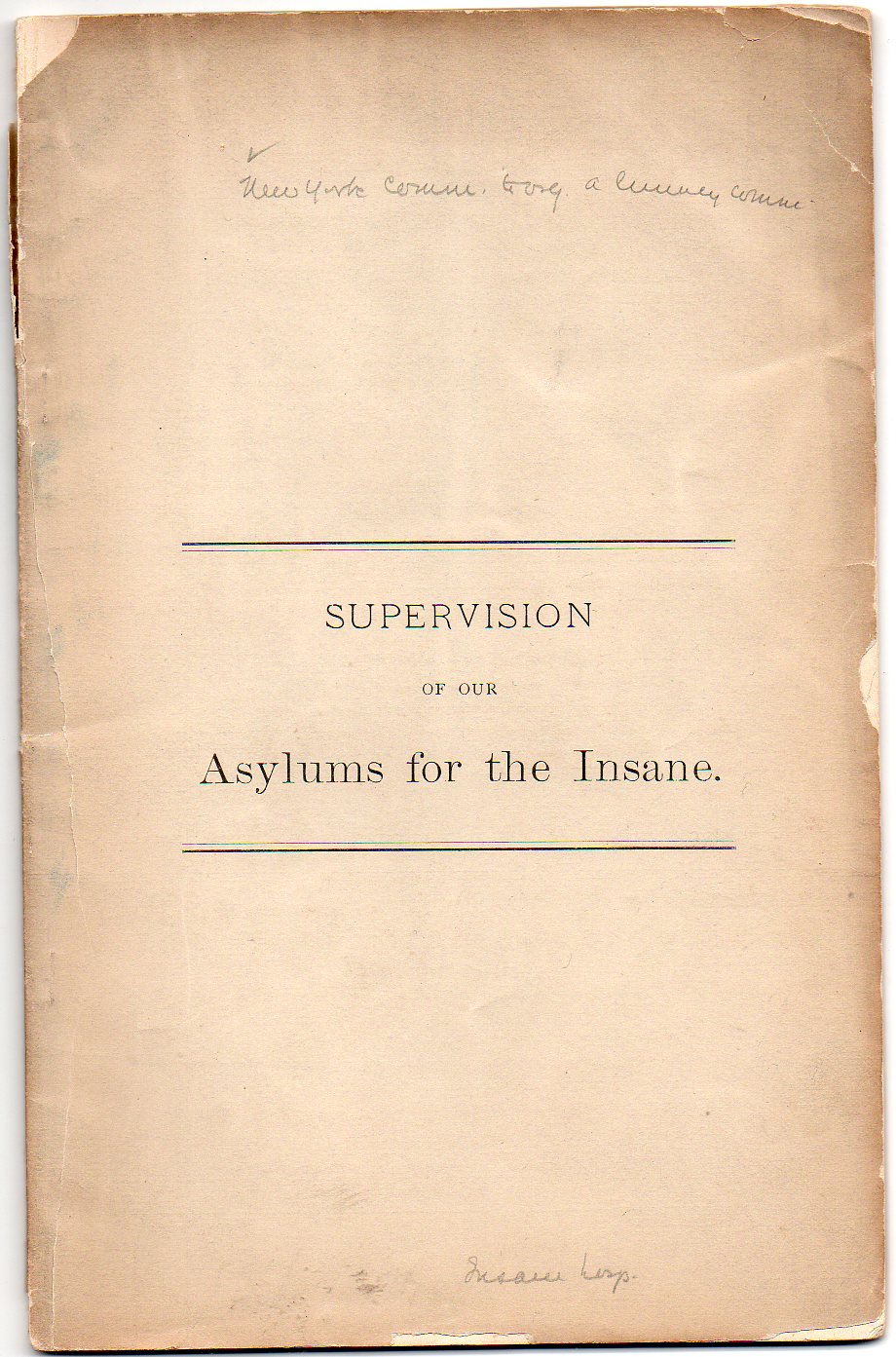
    Insane supervision453 The Utica Bed of the New York State Lunatic Asylum at Utica–if not actually constructed in Utica it was popularized  there–was put into use at about the same time that the facility was opened in 1843.  According to the numerous reports of New York State asylums directors in Supervision of our Asylums for the Insane1, it was about time (in 1880) that folks in control of the state institutions start to deal with their charges in a medical, treatable, fashion; to try and remedy the effects of mental illness rather than just use the asylums to warehouse societal outcasts.  And it was in this paper that the Utica Crib (and other retraining devices) came under very severe criticism. (The original pamphlet is available at our blog bookstore.)

    Edward C. Spitzka makes the point that the institutional that use devices like the Utica Crib–which was supposed to prevent patients from injuring themselves–actually had far more incidences of  patient injurious than those institutions which–with a similar clientelle–didn’t use them at all.  Spitzka made a very compelling case the the Utica Crib and other devices were archaic remnants of an earlier and darker time in the treatment of cases outside mental health, and they they were far more injurious to patients than not having them at all.  They also, he said, demoralized the staff of the hospital and depressed the medical supervision, making a mockery of treatment. All in all, Spitzka’s insights were accurate and prescient. 

    Notes:

    1.  Report of the Proceedings for Establishing a Board of Commissioners in Lunacy for the State of New York, published by Sherwood & Co., NYC, in 1880.  55pp.