A Daily History of Holes, Dots, Lines, Science, History, Math, Physics, Art, the Unintentional Absurd, Architecture, Maps, Data Visualization, Blank and Missing Things, and so on. |1.6 million words, 7500 images, 4.9 million hits| Press & appearances in The Times, Le Figaro, Mensa, The Economist, The Guardian, Discovery News, Slate, Le Monde, Sci American Blogs, Le Pont, and many other places… 5000+ total posts since 2008.

Category: Social History

  • Geometrical Design in 1930’s Soviet Book Dustjacket Design

    JF Ptak Science Books   Quick Post

    Russian dj art

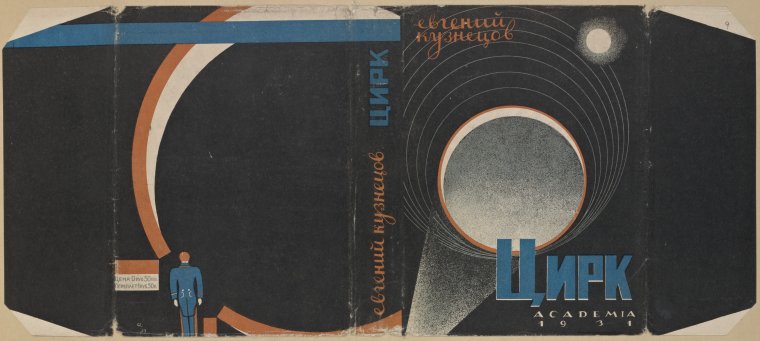
    [Kuznetsov, E. Tsirk. [Circus.] Moscow: Academia, 1931; Cover design by N. Akimov.; 8 v., [655] leaves of plates : col. ill. ; 32 x 57 cm.]

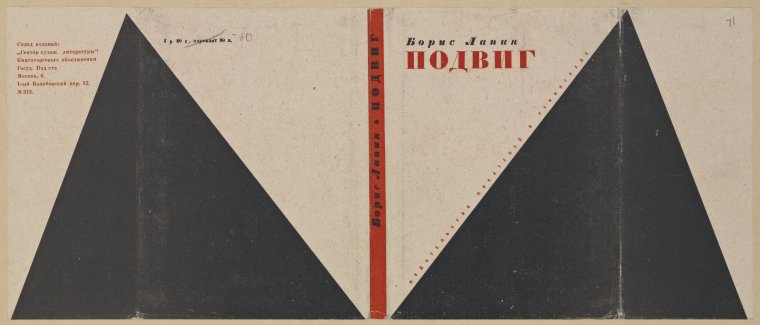
    I found this dustjacket art of Soviet-era books (all from the 1930’s save one)  in the New York Public Library collections (here) and was struck by the geometrical objects in many of the designs. They have a sense of warmth to me, somehow, like softer work coming from the tail end of the Constructivist period, having elements of Dada but really just having some of the hard edge of Constructivism without the scorching/awakening images that might have been embedded in the geometrical design. 

    Russian dj triangle

    ·Posted by :

    ·in:

    —

  • On Describing the Jobs of the Working Poor, Part 1: George Orwell and Mining

    JF Ptak Science Books   Quick Post

      OrwellGeorge Orwell’s description of the underground work-life of a miner is extraordinary, as were those workers and the work that they did under grave conditions and for a long period of time.  The first extract from his The Road to Wigan Pier (1937), chapter three, describes the world of the miner.  Another extract2 is a blistering description of how the miners got to the coal face after their 60 m.p.h. decent in their tiny elevator, walking like crabs for a half-mile or longer in hot and dusty conditions, in near blackness, with a roof four feet over the ground.  I read this many years ago and the image painted by Orwell remains a vivid and haunting one. Orwell’s work was superb in describing the conditions and efforts of these outstanding men.

    “When you go down a coal-mine it is important to try and get to the coal face when the ‘fillers’ are at work. This is not easy, because when the mine is working visitors are a nuisance and are not encouraged, but if you go at any other time, it is possible to come away with a totally wrong impression. On a Sunday, for instance, a mine seems almost peaceful. The time to go there is when the machines are roaring and the air is black with coal dust, and when you can actually see what the miners have to do. At those times the place is like hell, or at any rate like my own mental picture of hell. Most of the things one imagines in hell are if there– heat, noise, confusion, darkness, foul air, and, above all, unbearably cramped space. Everything except the fire, for there is no fire down there except the feeble beams of Davy Lamps and electric torches which scarcely penetrate the clouds of coal dust…1

    ·Posted by :

    ·in:


  • Television Field Trials, the Beginning of the “Networks”, and the First T.V. Dinner (1936)

    JF Ptak Science Books     Post 1632

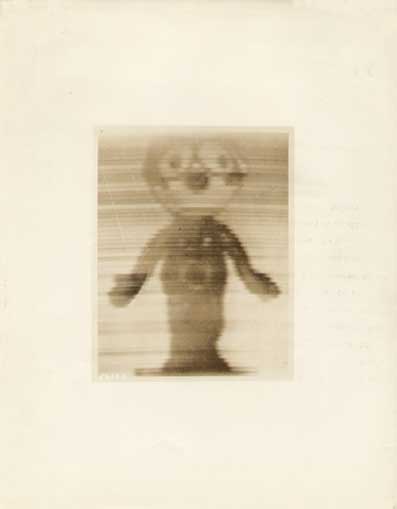
    The first broadcast images in the history of television transmission were revolutionary if not very interesting.  Beginning in 19028 the first experimental Radio Corporation of America (RCA, via the National Broadcasting Company, NBC, its broadcasting division) images were of Felix the Cat, and something that would be received with 60-line clarity on a two-inch display.  For the most part, the daily two-hour broadcasts consisted of Felix or test patterns, broadcast from NYC, until 1931.  

    Image quality increased markedly by the 1932 field trials with the use of iconoscope cameras, which allowed for 240-line reception though still with very noticeable flickering. The 1934 trials were improved further to 343 lines and with some less amount of flicker. 


  • Polling for Opinions on the Japanese, 1944

    JF Ptak Science Books   Post 1627

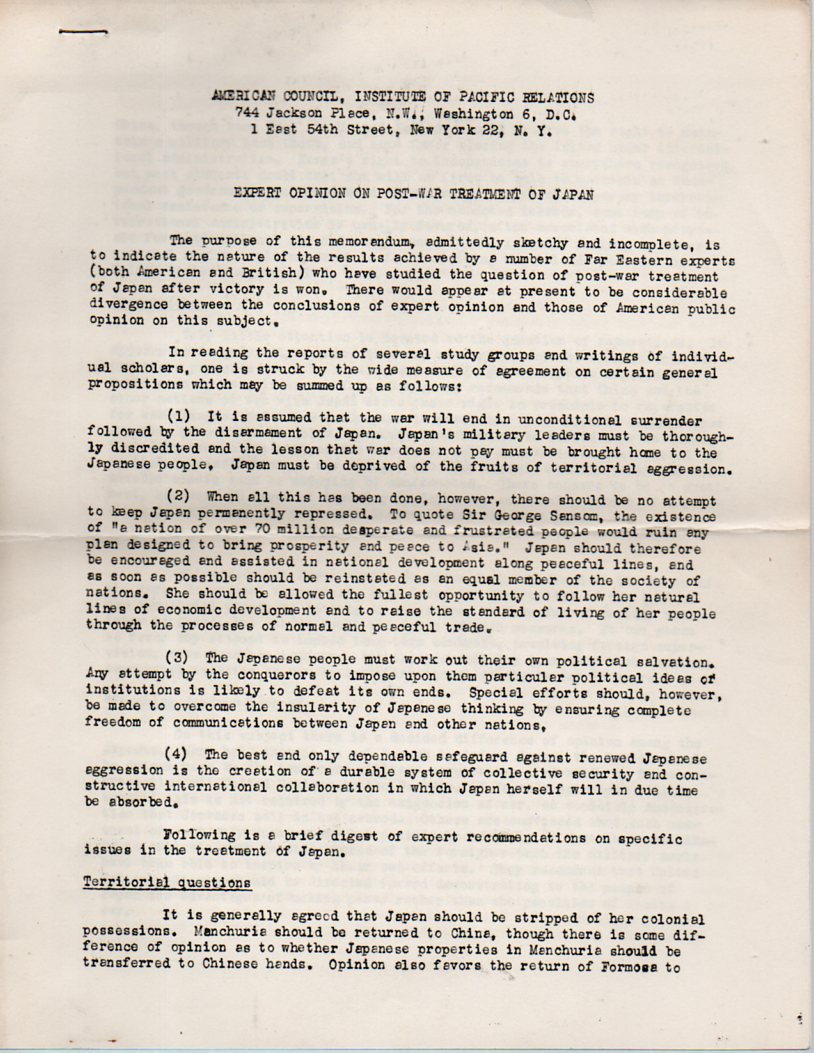
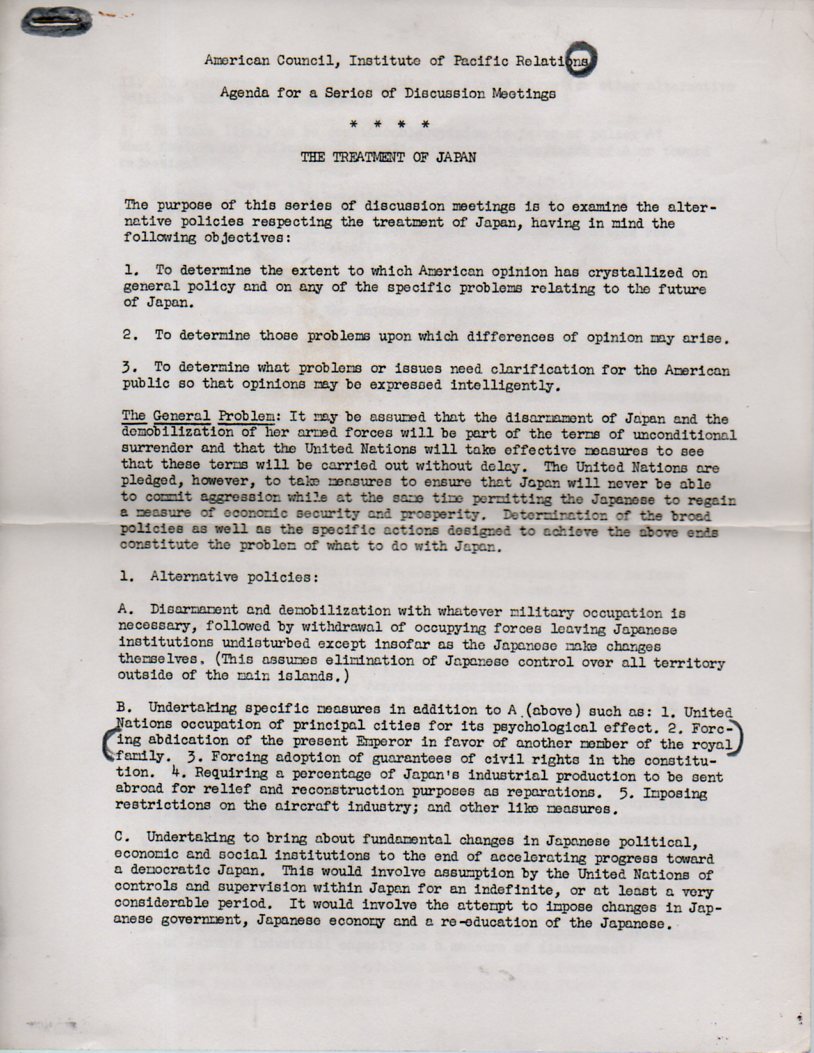
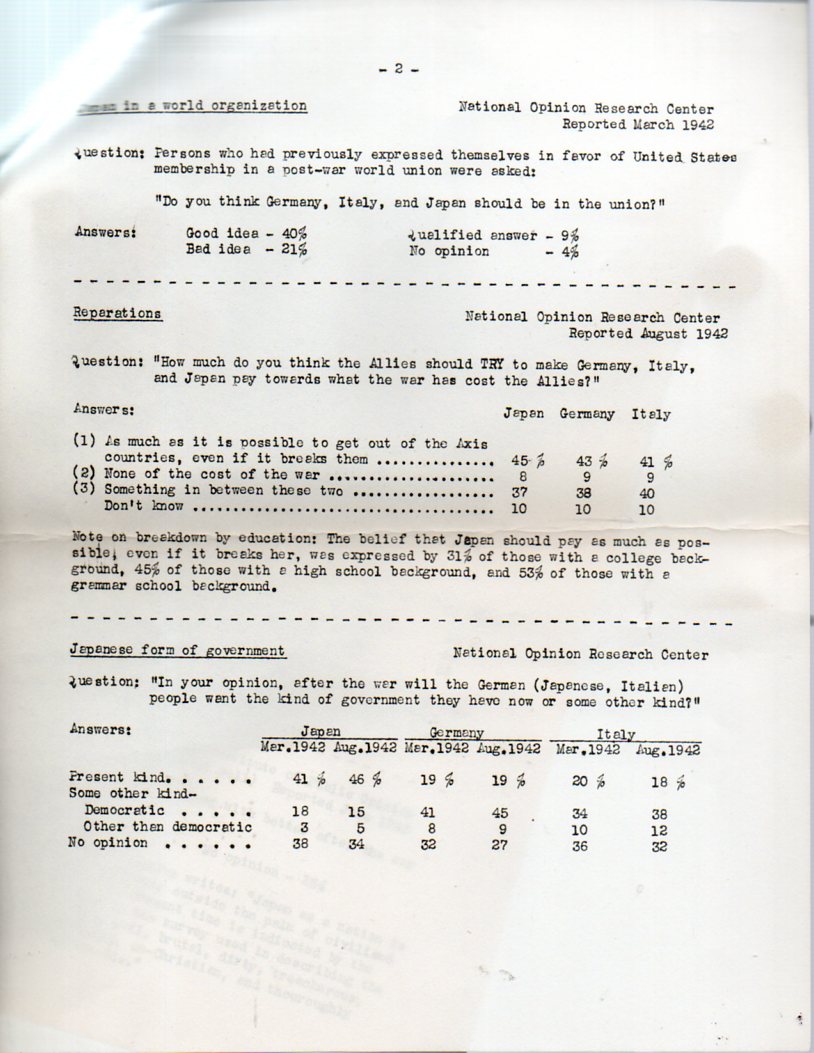
    I uncovered a few interesting documents this morning from The American Council, Institute of Pacific Relations (in 1944 at the address 744 Jackson Place, N.W., D.C.) relating to collecting opinions on Japan and the Japanese, right at the height of the war.   And this is what the American Council was doing–prep work to assess the extent of public opinion on the treatment of Japan post-war, which entailed reviewing existing polling data (from Gallup) was well as conducting their own original research. [These documents are available from our blog bookstore, here.]

    Japan Public Opinion treatment after891
    The “first” issue (so far as I can determine)  was perhaps the most aggressive:

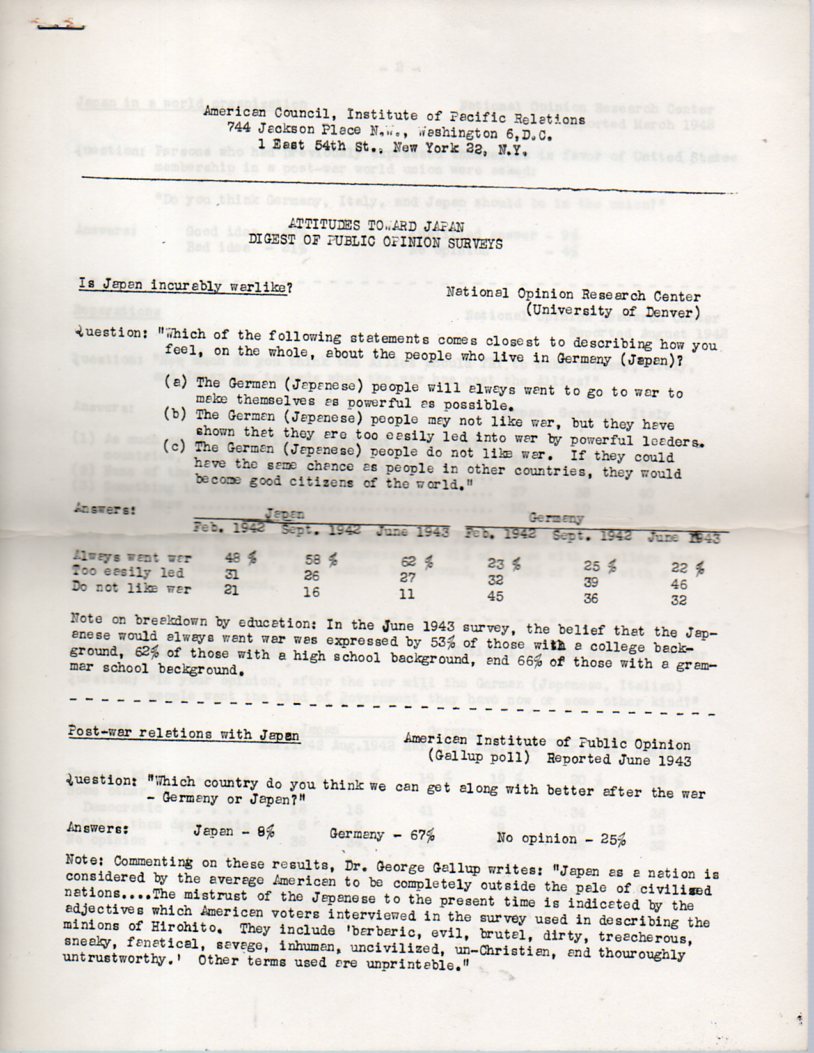
    Is Japan incurably warlike?

    The question was asked of an undefined group over three periods of time  (February 1942 to June 1943) for both Japan and Germany, the statements the respondents having to choose from being: “always want war”, “too easily led” and “do not like war” at three different times, from February 1942 to June 1943.  From Feb ’42 to June ’43, people’s opinions that the Japanese “always want war” went up from 48% to 62%, while for the same time the same question regarding the Germans stayed about the same, 22%.  The Gallup Poll for June 1943 reported that for 75% of the respondents only 8% of the folks thought that “we can get along” with the Japanese, while 67% favored our chances with the Germans. 

    Get along with them or not, or feeling that they are war-like or not, had little to do with the opinions of people (reported by the National Opinion research Center, August 1942) who thought that reparations should be paid, and paid hard, by the Axis powers across the board, “as much as it is possible to get out of the Axis countries, even if it breaks them”.

    Japan Public Opinion treatment after892

    The following two papers came a little later, closer to the realization that victory was coming, that the war would be over, that victory would be taken–probably at the end of 1944 or the beginning of 1945, when position statements were more circumspect than the earlier public opinions.  “Expert Opinion on Post-War Treatment of Japan”  was more understanding when speaking to the post-war existence of Japan, stating in a number of different ways that “there should be no attempt to keep Japan permanently repressed” and “the Japanese people must work out their own political salvation”.  Also that there would be no “continuing burden of reparations payments…as done with Germany after the last war”. 

    Japan Public Opinion889
    The overall feeling of this and the following document (“The Treatment of Japan”) can be found in the section “Teaching Japan a Lesson”:  “United Nations effort should be directed toward demonstrating to the people of Japan the advantages of making peace rather than the penalties of losing a war”.  The issue regarding the Emperor and whether or not he should or could stay–an issue that would stay with high command right through the second week of August 1945. 

    Japan Public Opinion890

    ·Posted by :

    ·in:

    — —

  • The Great Farm Security Administration (FSA) Photography Series, in Color: Japanese Internment Camps

    JF Ptak Science Books   Quick Post

    The following images were made by Farm Security Administration/Office of War Information photographers during World War II and are part of the famous FSA photography series that I  have written about here.  The color photographs–which were made in the first decade or so of the use of this new medium–represented only about 1,600 of the collection of 160,000 images in the FSA archive, and are far less known than their black-and-white complements, many of which are new iconic symbols for this period.  The color images are beautiful works, and somehow seem to bring these historic images a little closer to the present.

    This series are some of the few color images made of daily life in the Japanese Relocation Camp at Tule Lake in 1942/3.  The internment (“relocation”) of American citizens of Japanese heritage in “reservations” is a result of Executive Order 9066, signed into power by Franklin Roosevelt on 19 February 1942.  I’ve written about this episode in several places on this blog, including here. 

    Japanese-American camp, war emergency evacuation,[Tule Lake Relocation Center, Newell, Calif.] 1942 or 1943.

    http://memory.loc.gov/service/pnp/fsac/1a35000/1a35000/1a35014v.jpg

    ·Posted by :

    ·in:

    — —

  • The Great Farm Security Administration (FSA) Photography Series, in Color: Grocery Stores, 1940-1943.

    JF Ptak Science Books   Quick Post

    The following images were made by Farm Security Administration/Office of War Information photographers during World War II and are part of the famous FSA photography series that I  have written about here.  The color photographs–which were made in the first decade or so of the use of this new medium–represented only about 1,600 of the collection of 160,000 images in the FSA archive, and are far less known than their black-and-white complements, many of which are now iconic symbols for this period.  The color imahes are beautiful works, and somehow seem to bring these historic images a little closer to the present.

    General store, Chacon, N[ew] Mex[ico] Collier, John, 1913-1992, photographer, 1943.

    Image, Source: digital file from original transparency

    ·Posted by :

    ·in:

    —

  • Signs of Discrimination: Photographs from the Library of Congress FSA Collections

    JF Ptak Science Books  Quick Post

    Negro drinking at "Colored" water cooler in streetcar terminal, Oklahoma City, Oklahoma

    All of the photographic material below comes from the U.S. Library of Congress website for its prints and photographs division, and is a very small sample of what is offered from its online holdings of Farm Security Administration/Office of War Information (FSA and OWI) photographs. It is not ancient history–most of the images are 75 years old or so, a part of our near-past which still shadows our near-future.

    “Photographers working for the Farm Security Administration Historical Section (later transferred to the Office of War Information) were encouraged to document continuity and change in many aspects of life in America during the years the unit was in operation. They were particularly encouraged to photograph billboards and signs as one indicator of such developments. Although no documentation has been found to indicate that photographers were explicitly encouraged to photograph racial discrimination signs, the collection includes a significant number of this type of image, which is rarely found in other Prints and Photographs Division collections.”

    Beale Street, Memphis, Tennessee

    On of the great innovations in a sea of great things accomplished during the Franklin Roosevelt administrations was the formation of the FSA, a division of the government established to help farmers through the devastating Dust Bowl and Great Depression.  A subset of the FSA was a photographic unit which was set up to document the progress made by the FSA (and provide, I am sure, for some much-needed good news, a hearts-and-minds campaign).  This division was headed by Roy Emerson Stryker, who wound up hiring a collection of dream-team photographers unlike any ever assembled for a single purpose.  Esther Bubley, Marjory Collins, Mary Post Wolcott, Arthur Rothstein, Walker Evans, Russell Lee, Jack Delano, Gordon Parks, Charlotte Brooks, John Vachon, Carl Mydans, Dorothea Lange and Ben Shahn were sent out all across the country and wound up with the greatest and most beautiful photographic history ever assembled.  There were about 77,000 images made, and I recall reading (somewhere) that the total budget for the Stryker group for the years 1936-19421 was about $100,000, meaning that each completed image cost just over a dollar apiece.

    Rex Theatre for colored people. Leland, Mississippi Delta

    1) Bethlehem-Fairield shipyards, Baltimore, Maryland.
    May 1943.
    Arthur Siegel, photographer.
    “A drinking fountain.” [Sign: “White.”]
    Location: D-90666
    Reproduction Number: LC-USW3-26442-E
    [view catalog record]


    A drinking fountain labeled with a sign 'White.'
    1
    2) Memphis, Tennessee. October 1939.
    Marion Post Wolcott, photographer.
    “Secondhand clothing stores and pawn shop on Beale Street.”
    [Sign: “Hotel Clark, The Best Service for Colored Only.”]
    Location: E-2185
    Reproduction Number: LC-USF33-30637-M3
    [view catalog record]
    Secondhand clothing stores and pawn shop on Beale Street labeled with a sign: 'Hotel Clark, The Best Service for Colored Only.'
    2

    3) Durham, North Carolina. May 1940.
    Jack Delano, photographer.
    “A street scene near the bus station.”
    Location: E-255
    Reproduction Number: LC-USF33-20522-M5
    [view catalog record]

    A street scene near the bus station.
    3
    4) Durham, North Carolina. May 1940.
    Jack Delano, photographer.
    “At the bus station.”
    Location: E-5153
    Reproduction Number: LC-USF33-20522-M2
    [view catalog record]


    At the bus station.
    4


    ·Posted by :

    ·in:

    — — —

  • Songs of the Streets, in Two Parts (and an Obscure Reference to an Important Anti-Darwinist)

    JF Ptak Science Books  Post 1600  {Appropriate musical accompaniment that can be listened to under the reading of this post, Carl Orff’s Gassenhauer, can be found here and minimized.]


    I found these two interesting images over the course of a hundred pages or so in the profusely illustrated weekly magazine, Punch, or the London Charivari, for early 1865.  The first image, published 18 March 1865, “A Song of the Streets”, drawn by “C.H.D.” (Charles Henry Bennett, 1828-1867), displays the general thoroughfare of sidewalk life in a place like London, people being blown about by late winds and snow.

    It is in the upper right-hand corner of the engraving that we find our “important Anti-Darwinist”, which seems like an illogical statement, except that it isn’t  The man in question is the fellow with the bellows, who seems to be the one instigating the weather, blowing so had and cold that it moves people off their feet and off the page.  The bellows is labelled “Fitzroy”, and the likeness is that of the man with the same name, Vice-Admiral Robert Fitzroy (b. 1800), who at this time was serving as the chief of a weather department for the Royal Society, the Meteorological Statist to the Board of Trade, appointed by the president of the society, and was basically a meteorologist, except that the title had yet been invented.  (It is also interesting that Fitzroy is depicted in captain’s (?) uniform, and surrounded by a floating telescope, book, thermometer and self-registering drum.) So even then, even with the first person in this position of authority, complaints for foul weather were being launched at the person “in charge”, even though that person created an extraordinary new tool for detailing the possible changes in weather.1

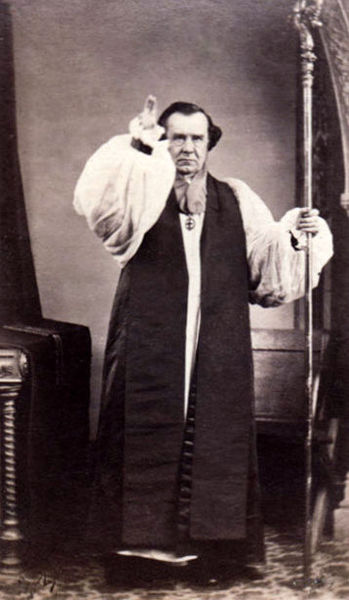
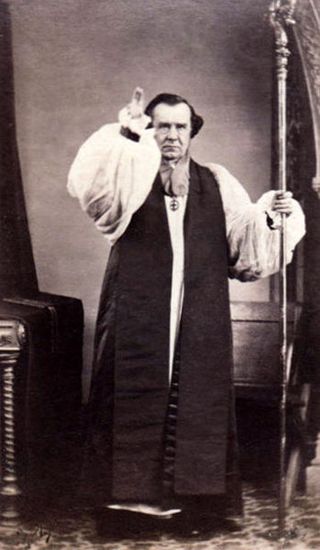
    It happens that this is the same Robert Fitzroy who was the captain of the HMS Beagle on its second voyage (1831-1836), when he approved of the addition of an added gentleman to help keep his sanity on the long adventure, a naturalist named Charles Darwin.  It was also Fitzroy who gave Darwin a copy of the first volume of Lyell’s Principles of Geology, a book integral to Darwin’s development into Charles Darwin.  The voyage was personally rocky for the two men, but ultimately highly successful.  Years later, Fitzroy was shocked and  dismayed with the result of young Darwin’s adventures–with the publication of On the Origin of Species…, Fitzroy felt a sense of personal guilt for Darwin’s theory, and felt shame and bitterness towards it, as in his mind the theory went against his bible and his religious beliefs.   Fitzroy and the Rev. Samuel Wilberforce were at the evolution debate meeting of the British Association for the Advancement of Science (1860) in which Rev. Soapy Sam challenged Darwin’s theory on “scientific” grounds, and against which Thomas Huxley (and other Darwin supporters) made his well-remembered defence2.  In the middle Samuel_Wilberforce_by_Mowbray_of_Oxfordof all of this was Robert Fitzroy, who cried for the crowd of onlookers–with his Bible held aloft–to reject man’s interpretation of nature and stay with that of God.   He was booed down.  Darwin was not in attenddance. [Image: Wilberforce, threatening.]
    So, in a way, Fitzroy proved to be important in the formation of the theory of evolution but also turned out to be an anti-Evolutionist, though not an important one.  Oddly enough this may be the last published image of Fitzroy during his lifetime, as he would die 42 days after the appearance of this issue.

    In the second image of the streets the view from the pages of Punch (for 27 May 1865), “The Banishment of the Beggars, a New Tramp Chorus”, we see a different type of street “cleaning”.  In this case, it. Charles Villiers (1802-1898, and for 63 years a sitting MP) and his Homeless Poor Bill of 1865 sweeping the “sham poor” from the city streets, the legislation designating that the capable poor actually be put to work and removed from their begging positions on the streets.  The complaints in the chorus against the highly visible poor of Metropolitania were considerable,


    finding among the beggars (“who disturb our peace”) a litany of fakes, many of who are featured in the illustration:

    “sham injured workmen (who display their wounds from door to door)”, the lame (who clap their crutches on our toes), the blind, sham paralytics, sham widows (with hired babies and brats), “artistic tramps” (who will no longer chalk on the sidewalk “I am Starving”), and the fake veterans of wars. 

    The way to salvation for these people was “the Mill”, provided by the Villiers bill, and a compulsory spot in a workhouse (work-house) where labor is exchanged for room and board. 

    London-Workhouse.jpg


    Notes

    1. Fitzroy was actually the person who coined the term “weather forecast”, or at least he was the first to use it who had any real chance of being correct or accurate, given how much data he was able to assemble and interpret. He was really a very important person in this regard, as well. 

    2. This is not the place to debate whether Huxley’s famous remarks were famnous at teh time.  In a letter to Darwin J.D. Hooker wrote this of the exchange: 

    “Well, Sam Oxon got up and spouted for half an hour with inimitable spirit, ugliness and emptiness and unfairness … Huxley answered admirably and turned the tables, but he could not throw his voice over so large an assembly nor command the audience … he did not allude to Sam’s weak points nor put the matter in a form or way that carried the audience”. ^ “Letter 2852 — Hooker, J. D. to Darwin, C. R., 2 July 1860”. Darwin Correspondence Project 

    On the other hand, another cotemporary of the exchange between WIlberforce and Huxley wrote:

    Alfred Newton wrote:

    In the Nat. Hist. Section we had another hot Darwinian debate… After [lengthy preliminaries] Huxley was called upon by Henslow to state his views at greater length, and this brought up the Bp. of Oxford… Referring to what Huxley had said two days before, about after all its not signifying to him whether he was descended from a Gorilla or not, the Bp. chafed him and asked whether he had a preference for the descent being on the father’s side or the mother’s side? This gave Huxley the opportunity of saying that he would sooner claim kindred with an Ape than with a man like the Bp. who made so ill a use of his wonderful speaking powers to try and burke, by a display of authority, a free discussion on what was, or was not, a matter of truth, and reminded him that on questions of physical science ‘authority’ had always been bowled out by investigation, as witness astronomy and geology.

    A lot of people afterwards spoke… the feeling of the meeting was very much against the Bp.” _Wiki on the 1860 debate.
  • History of the Future–Advertising in Yellowstone, 1905

    JF Ptak Science Books  Quick Post

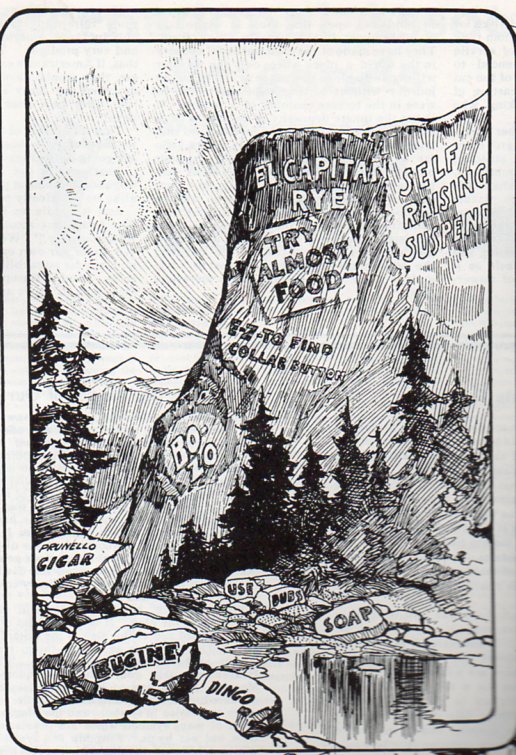
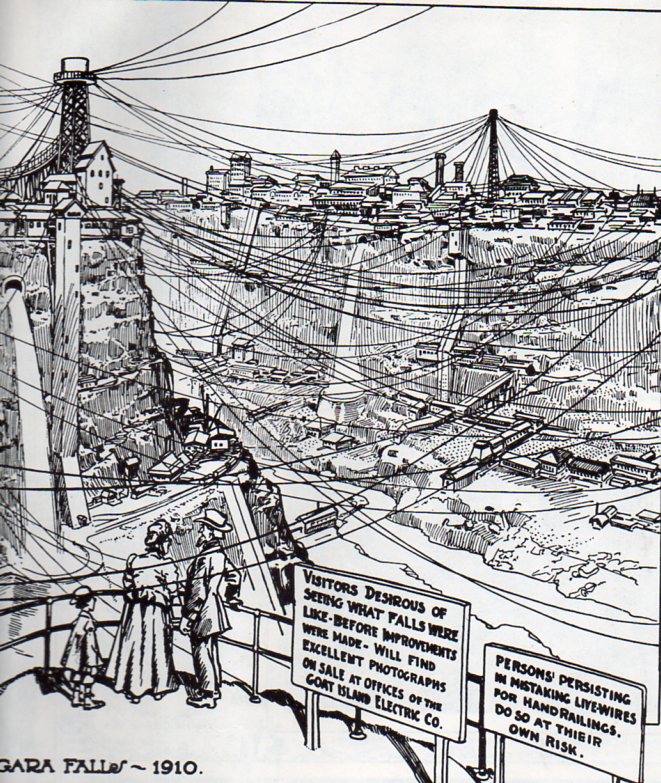
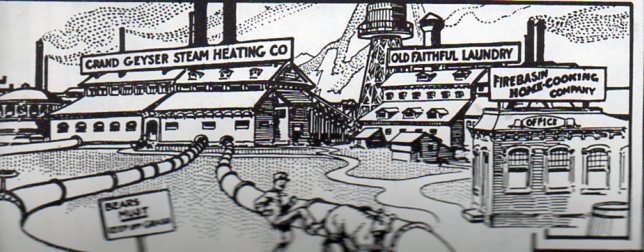
    Ads future662

    The way of the new world, the spread of commercialism and of consumerism, the increase in the size of a middle class that was actually approaching what we today would think of as a middle class, the wanting rise of places for disposable income to go from millions of new people with spare money to spend, led the sellers of stuff-immemorial to start advertising their bits on the side of out-of-doors everything. The fight for the attention span of the new consumer went from the newspapers and magazines to the side of buildings and then, as the motor car began to proliferate, to thousands of miles of roadway. 

    But when these cartoons appeared in (the first) Life magazine in 1905, the car was still a distant image so far as common ownership was concerned, so the competition for the visual space of the new buying market was center on outdoor displays wherever people might happen to be outdoors.  (Remember, there’s no radio or television to absorb advert money and viewer attention, so efforts were magnified on billboards.)

    So Life took a peep into the future and didn’t like what it saw: the possible vast expansion of ugliness in the pursuit of whatever dollar might fall out of whatever pocket.  Just a little warning to America is all–the future of the country might not look as pretty it used to be, what with millions of new billboards to place. 

    The future Niagra Falls, five years hence:

    Ads future660
    Old Faithful, Yellowstone, as it could be in 1910:

    Ads future661


  • History of Normalcy and the Fluidity of “-isms”, 1867

    JF Ptak Science Books   Post 1578

    My wife, Patti Digh, and I have long talked about the history of normalcy—a history of what looks to be “normal”, or standard, or acceptable at one time that became not so over the course of time.  Buying and selling human beings, women and their children being property of her spouse, and Chinese immigrants not having (any) legal rights, are three good candidates (among thousands) for this history in the fluid mechanics of socially-accepted thought and practice.  It is an interesting proposition to think about—what things around you, or better yet, what thing you think or say or do, that look good and acceptable today might look embarrassing and unacceptable thirty years hence. What is today’s ridiculed or reviled _______ may be tomorrow’s standard practice.

    This small slug of a story (below) appeared in the 23 March 1867 issue of Punch, or the London Charivari, and takes all manner of French legal reasoning to trial. It is a good example of the changeability of the porous borders of rank belief, centered in this case on Catholicism–and it might as well have been virtually any other -ism that you can think of.   Evidently the editor, manager and even the printer of Libre pensee were hauled into court,subjected to prosecution, tried and convicted of what seemed like hate literature.  In a series of articles appearing in several issues of the journal in February and March 1867 the author launched particularly sharp criticisms at some religions, including Catholicism, which he described it as  “a rotten trunk, a receptacle of death whose fatal emanations spread all around desolation and solitude”.

    But that’s not why the editor and manager were thrown into jail for a few months, not really–the judge in the case took issue with the magazine bringing the issue to light and exposing the shortcomings of Catholicism–which he believed were many–and which could be believed by many (“if not all”) people who read the article.  It was also found that the rant against Catholicism was not without merit (“too much of it could be apparently proved”), and that it would receive little rescue in a refutation that was not conceivable (“Let us not, therefore, contemptuously leave it to meet with a refutation which it will not receive.”).  The complaint was that the editor and manager allowed the thing to be printed, a thing which could in the eyes of the court lead to unrest–jailed for printing what the judge considered a incendiary truth even though it was bound in deceit and defamation.

    The judge wrote:

    “It is not obvious. It is not manifest. There is too much verisimilitude in that description of Catholicism. There are too many people who are likely to believe a good deal of it, if not all. The truth, moreover, is that, if any argument about it were permitted, too much of it could be apparently proved. Let us not, therefore, contemptuously leave it to meet with a refutation which it will not receive. Our wisest plan is to silence its promulgators. Accordingly we will sentence the manager and editor of the Libre Pensee to fine and imprisonment.” This is logic.

    I think what Punch was responding to was “stupidism”:  “Here, in England, Papists and Protestants are free to abuse each other’s respective isms as much as they please, so long as they refrain from libeling one another or any one else. John Bull cannot see who is wronged by the abuse of an ism. Of course that blindness is owing to his want of logic.”

    There was no mention of what happened to the author, unless the author was the editor.