A Daily History of Holes, Dots, Lines, Science, History, Math, Physics, Art, the Unintentional Absurd, Architecture, Maps, Data Visualization, Blank and Missing Things, and so on. |1.6 million words, 7500 images, 4.9 million hits| Press & appearances in The Times, Le Figaro, Mensa, The Economist, The Guardian, Discovery News, Slate, Le Monde, Sci American Blogs, Le Pont, and many other places… 5000+ total posts since 2008.

Category: Architecture and Building

  • Elements for a Whiskey Alphabet Drawn from the Bible of Booze Names

    JF Ptak Science Books  Post  1363
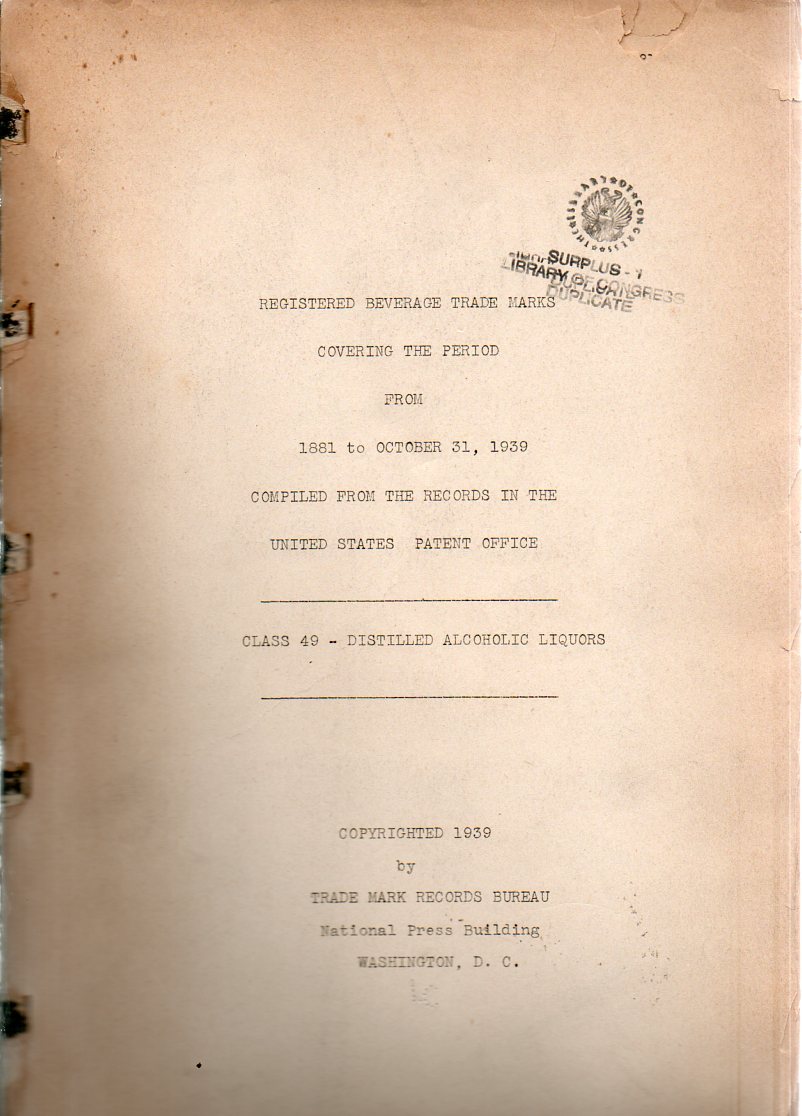
    Booze alphabet532 It may or may no be the case, but this large, flaking book that is balanced on top of a petulant pile of paper, Registered Beverage Trade Marks Covering the Period from 1881 to 1939 Compiled from the records in the United States Patent Office (Distilled Alcoholic Liquors) may be the keys to the kingdom of names of booze(s) trademarked in this country.  15″ tall, and inch thick, and 296 sheets big, this work (copyrighted y the Trade Mark records Bureau (in the National Press Club Building in DC, the one with the problematic parking garage) lists some 7,500 names of whiskey, cordials, gin, rye, bourbon and who knows what else.  I cannot find the book in any online database, big or small, and I’m not sure where this info might be housed and housed in one spot.  I have no doubt that people somewhere need this data, unwieldy and unusable as it might be–you see, it is organized only according to a six/seven digit number which I guess is the trademark filing number, or something; there is nothing else useful about the thing, the data floating around without regard to year or place or liquor type. [The book is available from our blog bookstore, here.]

    So I sat down with the book for an hour pulling out interesting, odd, out-of-place, from-another time and bizarre names, including all manner of expected animal names like bull and elk, and then unicorn; and lots of sunny this-and-that, sloping/sunny/grassy hills, mountains, clubs; and of course the Old _____  category seem fairly filled up. 

    If I spent a little more time on this entire alphabets could be produced relating to nothing but names from the animal kingdom, flora, the sciences, professions, religion, states of mind, altered states,  literature, and the labels that suggest a possible medical benefit.  One of my favorite categories is the “conversational liquor label”, the label that speaks to you, invites you, tells you what to do with the bottle of booze:  Hava Cocktail and Uneeda Whiskey are good examples of that, as are You’re Lookin Good, Uvanta and Yugeta whiskeys. Another is the liquor name ending in “o”, like the beautiful Famo, from St. Jo, MO, which unfortunately wasn’t trademarked in ’00.  The label of suggested promise and outcome is another good one:  Kentucky Courage, Pleasant Dreams, Invincible Rye, Solace Whiskey and Ready Money are all good examples of the implied end-of-bottle pillow-fluffer…maybe, especially, The Old Solution whiskey.

    And then of course, there are those where the (creative) spirit has just flown away, like the lumpily-named Standard Spirits Whiskey, its hometown of New Orleans embarrassed by the lack of effort–especially in the light of some many hundreds of imaginative creations, like the fabulous Bone Factor Whiskey (1903), which like som many other great names  (Yellow Hammer Whiskey) comes from Louisville, Kentucky.

    Antediluvium Whiskey, NYC, 1898; Anti-Grippine Whiskey, Philadelphia, 1906; Ash Cake Whiskey, Lynchburg, VA. 1899, Auto Crat Whiskey (St. Louis, MO), 1905

    Bank Check Whiskey, Boston, 1900; Bone Factor, 1903;

    Caloric Whiskey, 1904; Cremo Whiskey, 1902; and the confusing Chickencock “potable spirits”, 1929

    Devil’s Island Benefactor Gin, 1905; Daily Mash Whiskey, 1935; Dandilyon Whiskey, Columbus, OH, 1906;

    Electric Whiskey, Cincinnati, 1890;

    Flow Whiskey, Pittsburgh, 1908; Famo Whiskey, St. Jo, Mo 1894; Faust’s Own Whiskey,  Phila, 1900.

    Gopher Gin, St. Paul, 1902; Gas Away, Columbus OH, 1902; Galoxy Whiskey, NYC, 1905; Gong “ethyl alcohol, etc,” 1932′ Georgia Watermelon, 1911

    Hen Bolt Whiskey, 1889;  Hava Cocktail, NYC, 1933; Hospitality Gin, Louisville, KY, 1900

    Index Whiskey, Cincinnati, 1906; Invincible Rye, 1900

    Jupiter Gin, Boston, 1905; Judge’s Preference, Boston, 1905;

    Kentucky Courage Whiskey, Lexington, 1900

    Marconi Whiskey, Birmingham, 1903

    Old Tom Gin, 1887 (There are any number of Old ____ labels: Old Crow, Old Man River, Old Count, Old Court, Old Coon, Old King Cole, Old Rock, Old Moss, Old Soldier, and so on–there’s a specialized sub-alphabet in this category, alone.)  Perhaps my favorite “old” is The Old Solution, Baltimore, 1900.

    Peeper Whiskey, Lexington, KY, 1880; Pen and Pencil Club Rye, Phila, 1894; Pleasant Dreams Whiskey

    Radium Whiskey, Terre Haute, 1905; Rolling Fork Whiskey, Lexington, KY, 1876; Ready Money Whiskey

    Sun Shot Cordial, Birmingham, AL, 1901; [SWASTIKA emblem, no name] Whiskey, Frankfort, KY,  1902; Suburban Whiskey, Boston, 1909; Solace Whiskey, Balto, 1900

    Tidal Wave Whiskey, Houston, 1905

    Uncle Tom Whiskey, Cincinnati, 1905; Uneedda Whiskey, Davenport IA, 1899;  Uvanta Whiskey, Louisville, KY, 1905

    Vitoline Brandy,  St. Paul, 1897

    Yugeta Whiskey, Plymouth, PA, 1906; You’re Lookin Good Whiskey, D.C., 1902; Yellow Hammer Whiskey, Louisville, 1905

    Zeno, Ace of  Clubs Whiskey

    And to sew up the specialty market in school-named liquors, Lawrence McCormick of Baltimore trademarked whiskey names for Brown, Yale, Harvard, Princeton, Cambridge, Cornell, Swarthmore, Chicago, Oxford and of course Lehigh University, not to mention various label designs that featured books and “philosophical instruments” emblazoned on shields and rocks and such, all perhaps for those in search of higher education.

    Unfortunately there are no images of the labels in the book, though I guess if someone could find 200 or so they’d have themselves a snappy coffee table book of their own. 
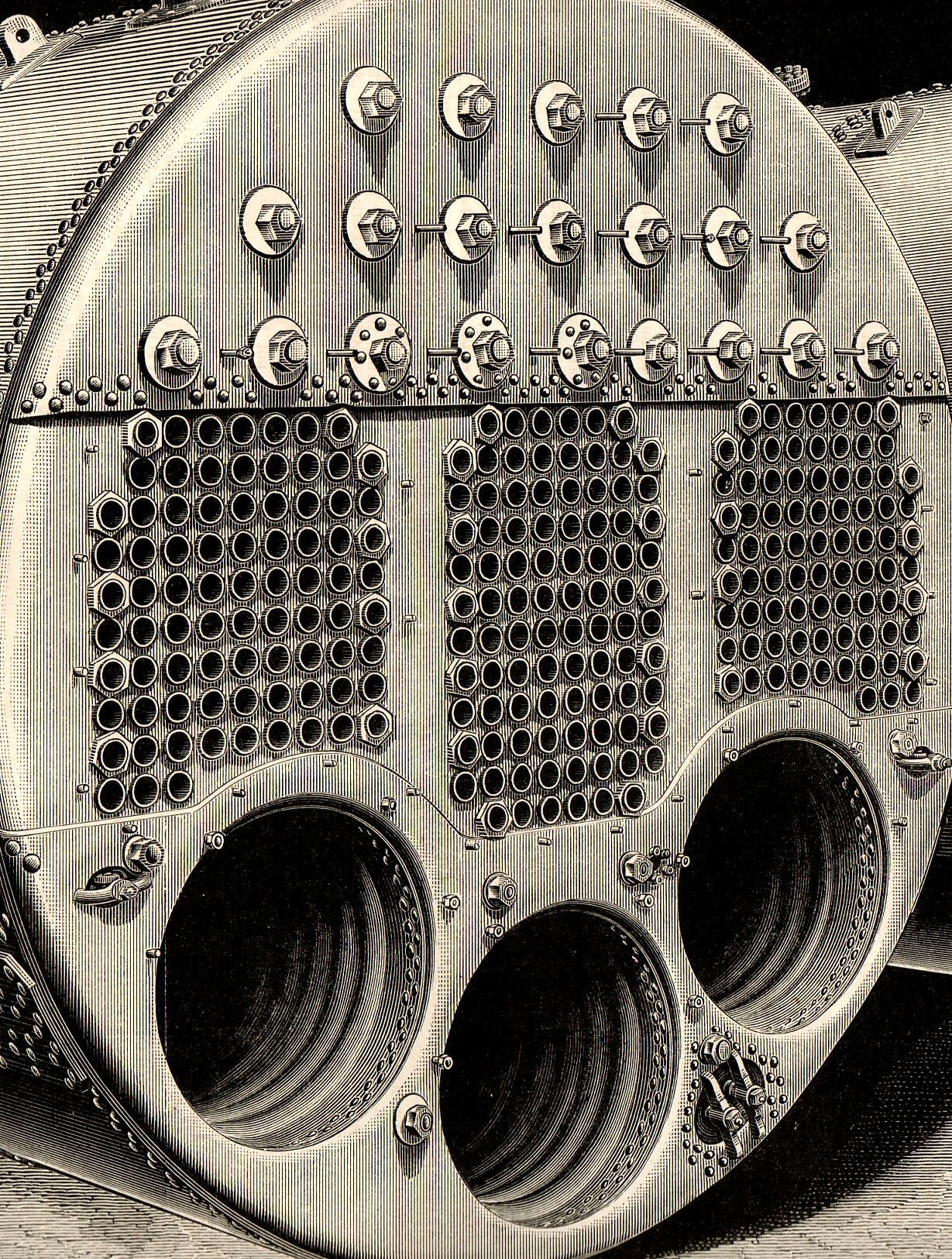


  • Technical Drawing–Superb Shadowing, Steamship Boilers, 1880.

    JF Ptak Science Books  Quick Post

    Boiler511

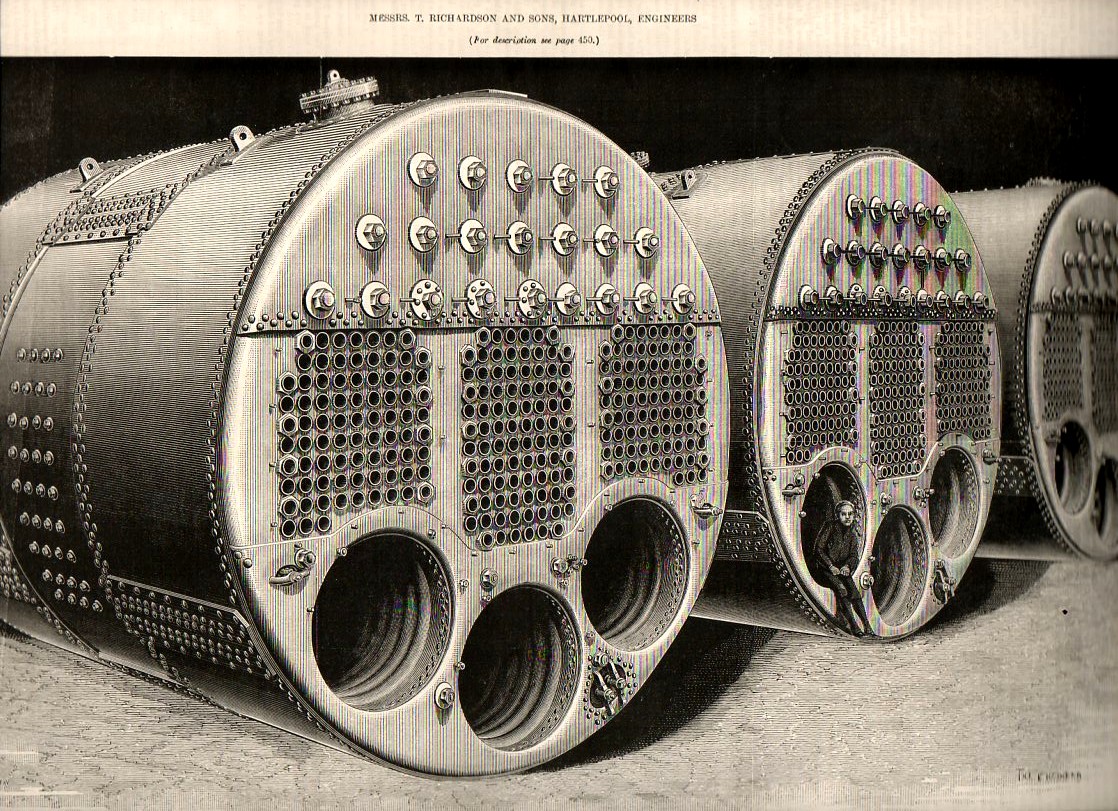
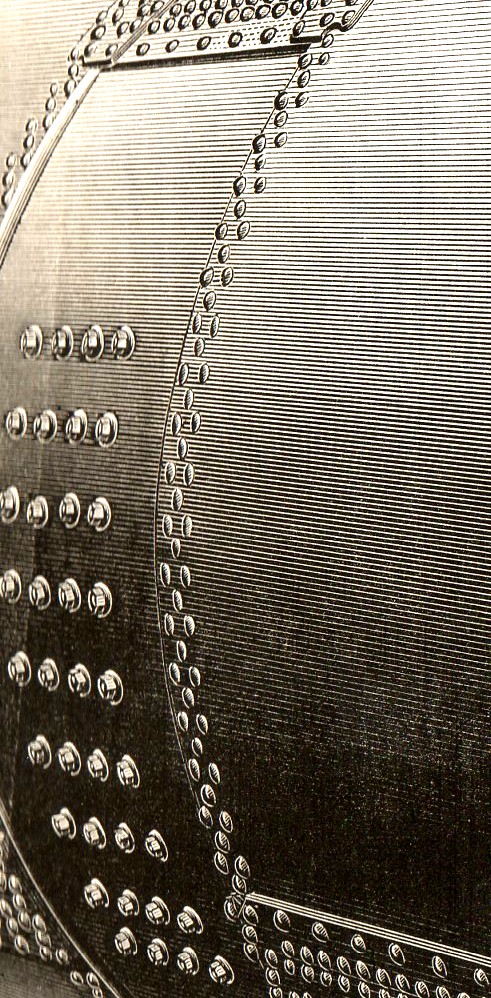
    This is another in a beginning series on superior draftsmanship in rendering technical, physical and biological objects.  The image–boilers for the RoyalMail  Steamshp Roslin Castle, published in The Engineer on 30 November 1880–is a very contained complexity, beautifully shadowed.  [The original is available for purchase at the blog bookstore.]

    Which is a detail from this:

    Boiler510

    And from which also comes this detail:

    Boiler512


  • The Future of Sucking: Vacuum Express Train, NYC to Philly, 1945

    JF Ptak Science Books    Post 1315
    Follow Me on Pinterest


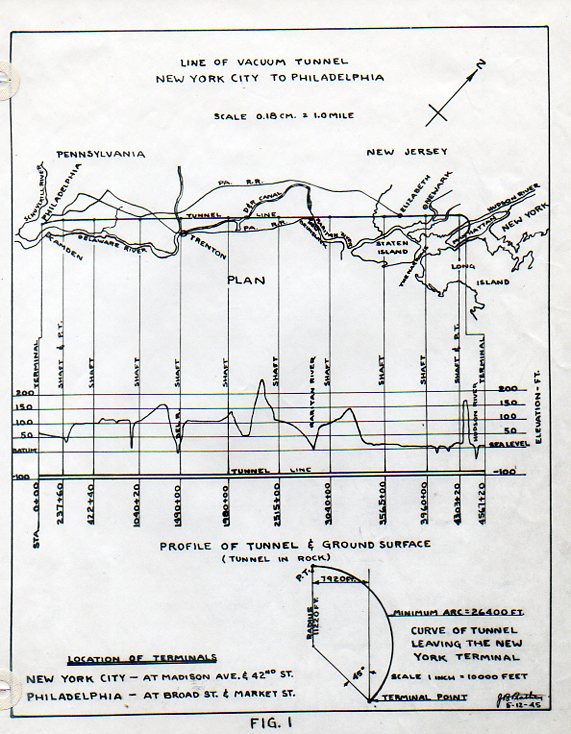
    John B. Prather launched an idea in 1945 for building a high-speed pneumatic passenger/freight train connecting New York City to Philadelphia.  His New York-Philadelphia Vacuum Tunnel, Preliminary Design Features and Economic Analysis (the original available on our blog bookstore) was exceptionally hearty. The idea is interesting in a removed, lets-not-do-it way because, well, it just doesn’t seem to make sense in the long run, at least beyond the building of the thing to show that it could be done.  And I don’t doubt that could be the case–I just don’t know why it was necessary. 

    Vacuum tunnel318 Mr. Prather’s approach seems to be the work of an engineer, or at least he had some help.  I doubt though that he had any help from a structural engineer or site geologist–his proposal was to build this tunnel 100′ down through bedrock when it could be found, a level hundred-feet  below the surface, from NYC to Philadelphia.   The tube would accommodate an aluminum-shelled  400′-long train that would be hauling 350 people and 175 tons of freight at speeds of 400-600+ mph, making the run between the two cities in about 20 minutes.  Not bad.  He figures too that all of the freight could be offloaded in 7.5 minutes.  This would make for  a very busy train, though Prather doesn’t tell us how many runs a day it would be making. This was all preliminary.

    The 16.2′-wide  tunnel would be 456,720 feet long, and would cost $173 million to excavate and $41 million to line with cement–according to the author.  The total cost for the ordeal would be about $334 million and would take 6 years, start to finish–that includes all of the tunneling, which would swallow/excavate/face 300′ per day. 

    I don’t see, really, how this could be so narrow a tunnel–I’m not an engineer but it would seem that wear, heat and the abuse and so on that a massive and dense 400′-long missile going 400+mph would require something that was more than 125% of the width of its trains. 

    There is however  precedence for a massive tunnel of something like this size being built in something like this time–the Delaware Aqueduct is 82 miles long and 13 feet wide, and was built during the Second World War (1939-1945) , so, perhaps if enough people and money were thrown at a project like the vacuum tunnel could actually be built (barring geological problems). 

    But it would all be worth it:  Prather suggests that the overall revenue from the operation of the train to be $196 million/year with $32 million in yearly operating expenses.  Which means that the whole thing could be paid for in three years or thereabouts.  So if the things was started in 1946, it would all be finished and paid for by 1956.

    I can understand his thinking, though, especially when you consider the impact of the year (1945) in which this paper was written.  The U.S. was came away from WWII by far more strong than any country on Earth, with its GDP being about 50% of that of the entire world–on the other hand, the federal deficit was 125% of the GDP, so perhaps in addition to being in an extraordinary position, investment was also somewhat gunshy.  And of course there’s the problem of whether Prather’s idea made any sense at all.  But I can understand the high times during which his project was announced. 

    I’ve looked at a number of proposals like this over the course of this blog–like almost filling up the Narrows between Staten Island and Manhattan with an airport and seaport, and making a series of transoceanic airports for flights between the continents, and dropping a gigantic shell filled with people from the top/interior of the Eiffel into a narrow hole filled with water, and covering Midtown Manhattan with a rooftop airport, and covering Midtown Manhattan with a glass-ish dome, and so on–and I know that it is good for at least one thing:  superb classroom discussion fodder of why something like this does or doesn’t make good physical/economic etc. sense.


  • A Short Note on the History of Indoor Stink: Buffalo Flaps vs. Perfume

    JF Ptak Science Books   Lucky Post 1313    

    For sweetest things turn sourest by their deeds, Lilies that fester smell far worse than weeds–Wm Shakespeare

    In the long history of indoor stink,  few things have succeeded (prior say to the year 1800) in eliminating odor like a piece or  two of Buffalo hide.  Actually its a piece of metal tubing that probably gets top billing for stink-eliminator, but that’s getting ahead of the story.

    And the story is an easy one:  people for thousands of years have been living indoors, and in climates where you need to keep warm in the winter, and to be able to see stuff in the dark, people have needed to burn things for their heat/light sources that basically emit rotten odors.  This is a gross generalization*, but there have been many nomadic cultures whose housing consisted on things like tents and yurts, simple structures with people living inside and burning a fire with nowhere for the smoke to exist. Tens of  millions of people–maybe hundreds of millions–have lived this way, in a small, contained space, living with their sooty smoky fire, and the rancid fat or whatever that was burning in their lamps, all of which was mixed with cooking and living smells, all heated up and kept in the small space.  Like an oven of sorts.  (Dante commented frequently on the smell of Hell in the Inferno, and it wasn’t a pretty thing, what with the heat and the decay.  I don’t think he had much to say about the ‘taste” of place, but definitely had other things to say about how they felt, and looked, and sounded. Probably people coul drelate quite closely to the smells portion.) 

    I’m not saying that this is a global assertion, but it certainly applied to a lot fo people. Some of this unpleasant odor was masked with perfume, but I would say that this was probably not terribly effective, especially when compared to the methods that were effective. 

    Many Indian tribes in the North American Plains had tepees that were vented, holes in the tepee skin that were covered with Buffalo hide (or some sort of leather) that would allow smoke to escape; also there would be lower vents to allow air to come in.  Fires in enclosed spaces do consume oxygen, just like people, and so at some point the fire and the people would compete for O2.

    Kivas in New Mexico also were vented , and many would also have an under-the-structure tunnel devised to allow air to come and feed the fire from underneath.  Great, workable ideas that were healthy, not to mention very effective in combating stink. 

    Perfumes and scents, herbs and the like just didn’t stand a chance against the overwhelming odors that were produced by internal fires and lamps, but it really wasn’t until the invention of the proper (and lined) chimney that relief was found.  Well, that and the Franklin Stove–it was Benjamin Franklin’s idea to have an iron stove with a roaring fire, the smoke being captured in pipe above the heating element and vented immediately outdoors.  That was really one of the earliest methods by which nominally-monied people could afford to heat their environment in a healthy way, removing smoke form the environment as well as other nasties that were the direct consequence of unvented and tight indoor living.(“fish and visitors smell after three days”)

    _____

    *really, this is a roomy approximation.  Romans (with the hypocaust), Chinese, and Koreans, among others, used  sophisticated systems in antiquity.  This is just a general conversation.


  • The Lost Memories of Things in the Way of the Horizon–Ugly Roads, 1922

    JF Ptak Science Books   Post 1303

    “There’s nothing so perfect as imperfection.”–Somebody.

    “The great unconquerables in the geography of human thoughts and ideas are the bad ones.”–Nobody.

    Bad ideas don’t so much go away as they get recycled. They can be replaced by good ideas or bad, but the ”original” bad ideas seem to linger on and on.  They are perhaps the indomitable inheritance of society, real and imagined.   

    Bad human-produced landscapes are an outgrowth of bad ideas, calamities large and small that come and go, the old replaced by something new that is good or bad or indifferent. With the landscape, the original landscape itself–apart from the idea that brought it about–is generally lost forever once it has been replaced.  There is no Bad Idea Spirit that brings it back whole again, unlike the generic Bad Idea, which can live on and on, unencumbered by history, like a Greek play or some deeper mythology.

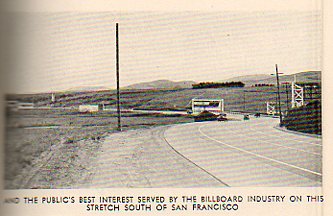
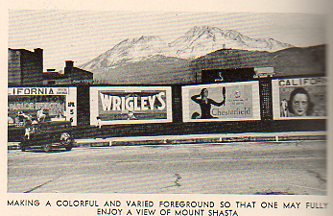
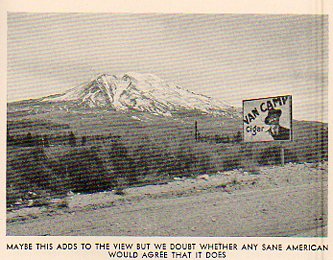
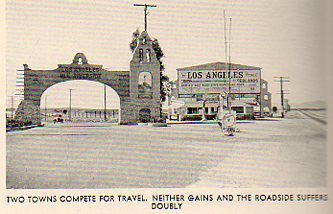
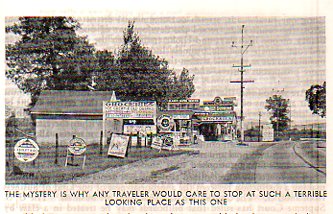
    Roadside billboards 273 Theoretically society is supposed to learn from recognized bad ideas, so as to not repeat them etc., which is one reason why we keep track of them, in the vain hope that someday someone somewhere in the history of our future will kill particular bad ideas off one by one. 

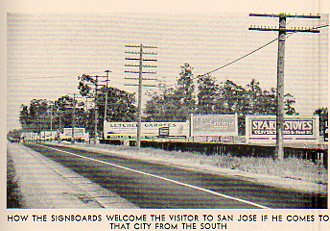
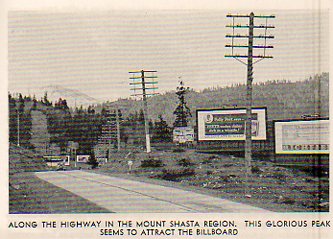
    Roadside billboards 274 In the meantime we can dwell on what we have, though with the removed bad idea landscape, it is more difficult.  That’s why it is important every now and then to familiarize ourselves with them when the opportunity arises, which is just what happened with this innocuous-sounding pamphlet, The Roadsides of California, a Survey1 (1922, and available for purchase at our blog bookstore)  Its not like it’s Pandora’s box–we can open this one and just a few, limited baddies come out, and fall limply to the floor.  But what we see is interesting, a slice of our memory of the horizon–a part of our “progress” that we’ve tried to excise–and what we can see now are the removed and forgotten things. 
    Roadside billboards 275 Roadside billboards 276

    Roadside billboards 278
    Roadside billboards 280 Roadside billboards 281 Notes

    1. This is actually an interesting pamphlet, an early attempt at removing the quickly generated ugliness that was cluttering new roads for the explosion of automobile travelers.  As quickly as cars were made in the new decade of the automobile, billboards and roadside attractions followed.  This pamphlet identified this phenomenon as a problem.


  • Verticals and Lead-Spewing Gargoyles: Spires, Rifles, Bayonettes. Reims, November 27, 1918.

    JF Ptak Science Books  Post 1267

    Verticals and Anticipation after Four Grueling Years

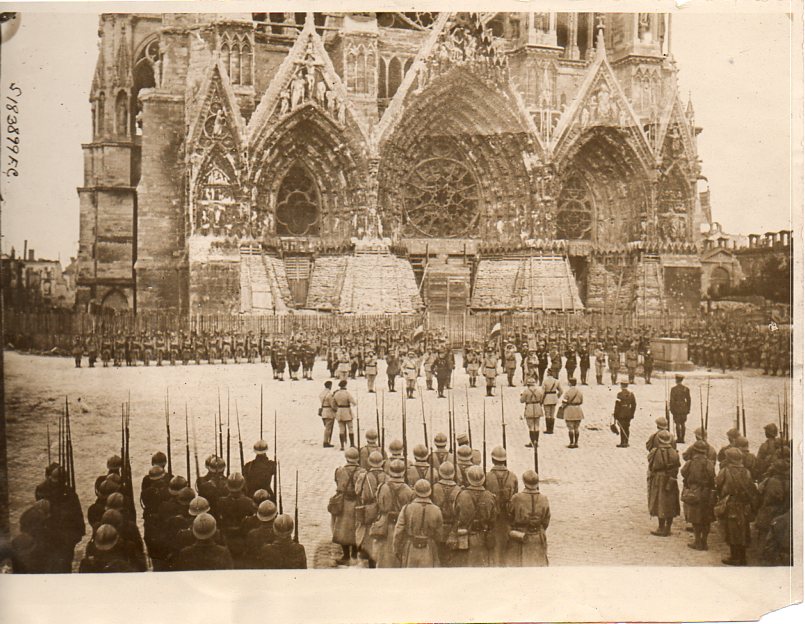
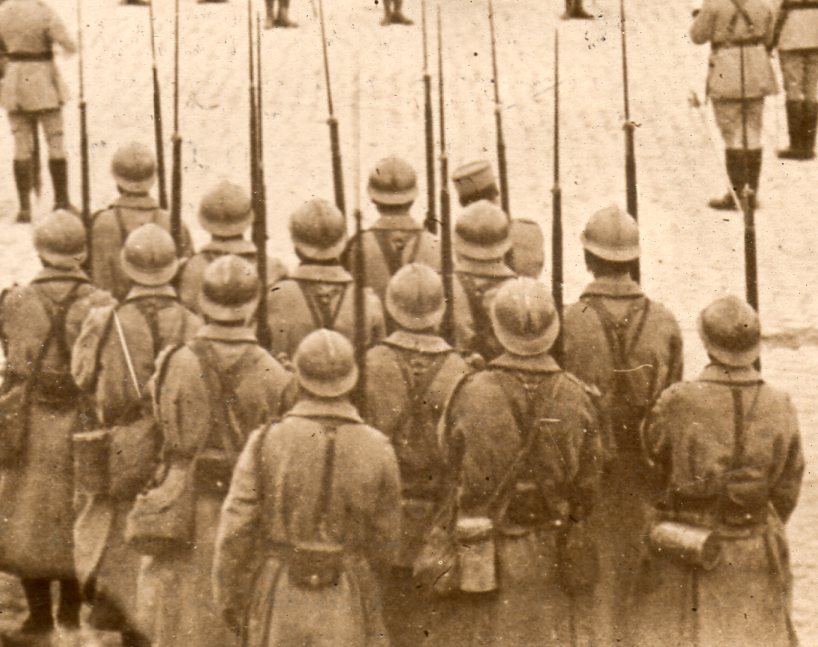
    In developing a history of vertical lines I thought that I would look at single vertical lines, but having just stumbled across this in our WWI News Photo Service archive, I just could not resist.  There is of course plenty of vertical arrangement here–just orders of magnitude more than what I was setting out to find.  So it goes.

    WWI photograph--spires071

    (The image is available from our blog bookstore, here.) And the detail:

    WWI photograph--spires det072
     And another:

    WWI photograph--spires det073

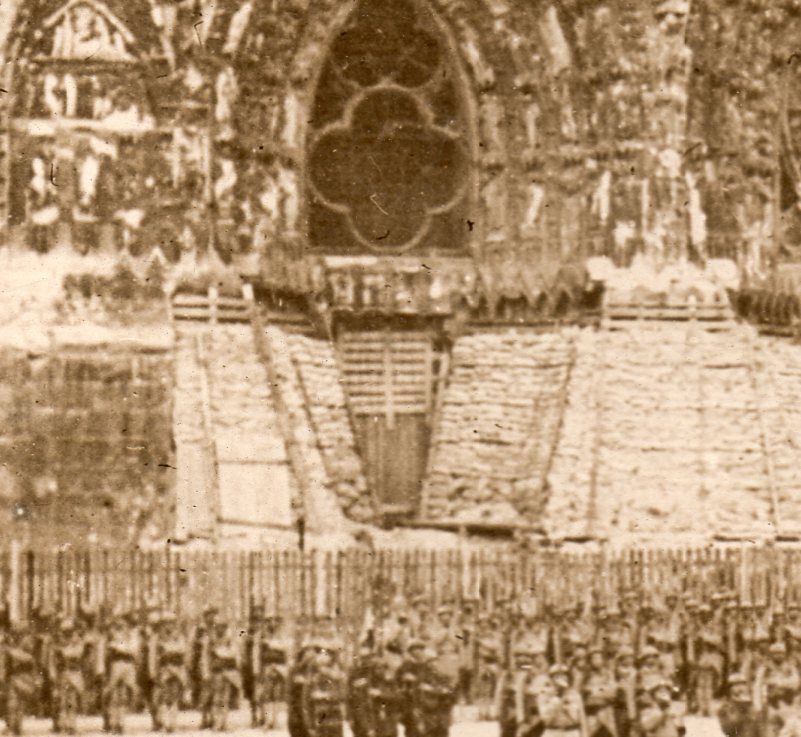
    I find this a soaring image, in its own odd way–this is a celebration scene, after,all, a decoration exercise, a military display of French forces that liberated the town of Reims, all taking place in front of the battered cathedral. Notre-Dame de Reims was the place of the coronation of French kings, and was a spectacular 13th century structure built on top of other buildings stretching back the site’s inhabitation to at least the 5th century.  

    But German artillery shelling caught the cathedral right at the beginning of the war and very nearly wrecked it.  The building was badly damaged by fire, a fire caused by the Germans, which spread along the scaffolding on the building which fed the wooden supports and superstructures, the flames finding its way throughout the building.  The fire was hot enough to melt the lead in the roof, which poured down as molten rain and out of the mouth-spouts of the building’s gargoyles. 

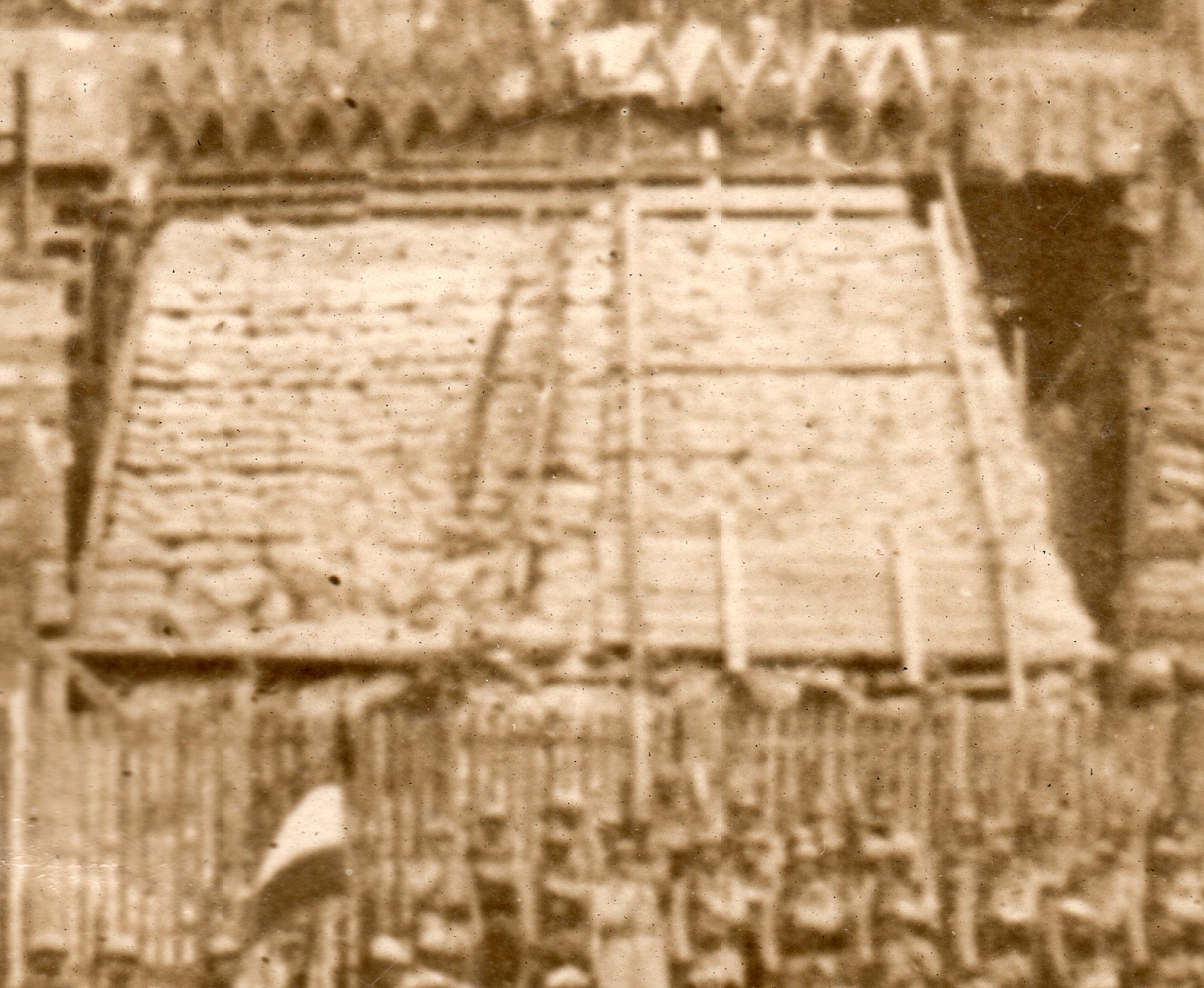
    As I brought out the further figures against the base of the cathedral one can clearly see the enormous stands of sandbags, the piles stacked up twenty feet or so behind the makeshift wooden fence.  IT was some sort of protection for the building, but not muc. 

    WWI photograph--spires det074

    This was yet another battle for the city, this one taking place 1550 years or so after the first, the Alemanni defending against the Romans; and then 104 years after the next major encounter, this between Napoleon and a Russian/Prussian force.  The liberating battle (the Battle of Reims, or the Second Battle of the Marne) took place 15 July 1918 to 6 August 1918, and it was a major failure for the German army, and spelled the collapse of the Spring Offensive, opening the door to the end of the war.  There were more than 135,000 Allies killed or wounded in this campaign (including 95,000 french troops), plus another 130,000 German troops.

    The process of victory in front of the wounded church seems exhausting and exhilarating, bu tnot without a good sense of anticipation.


  • The Ghetto as a “Threat to Tax Values”–On Missing People

    JF Ptak Science Books   Post 1252 (Rapid Post)

    Part of the series Blank, Empty and Missing Things

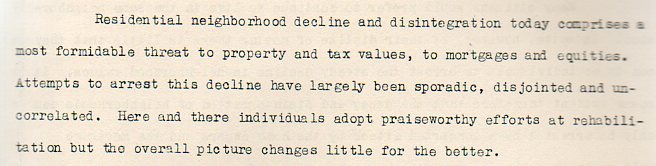
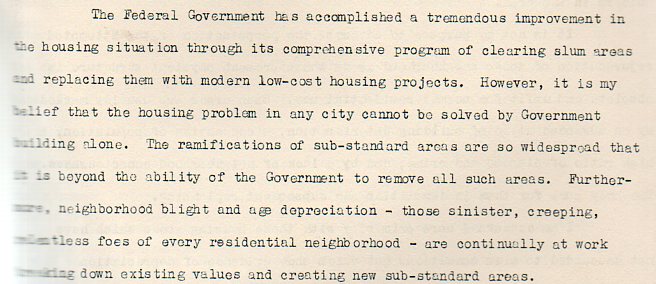
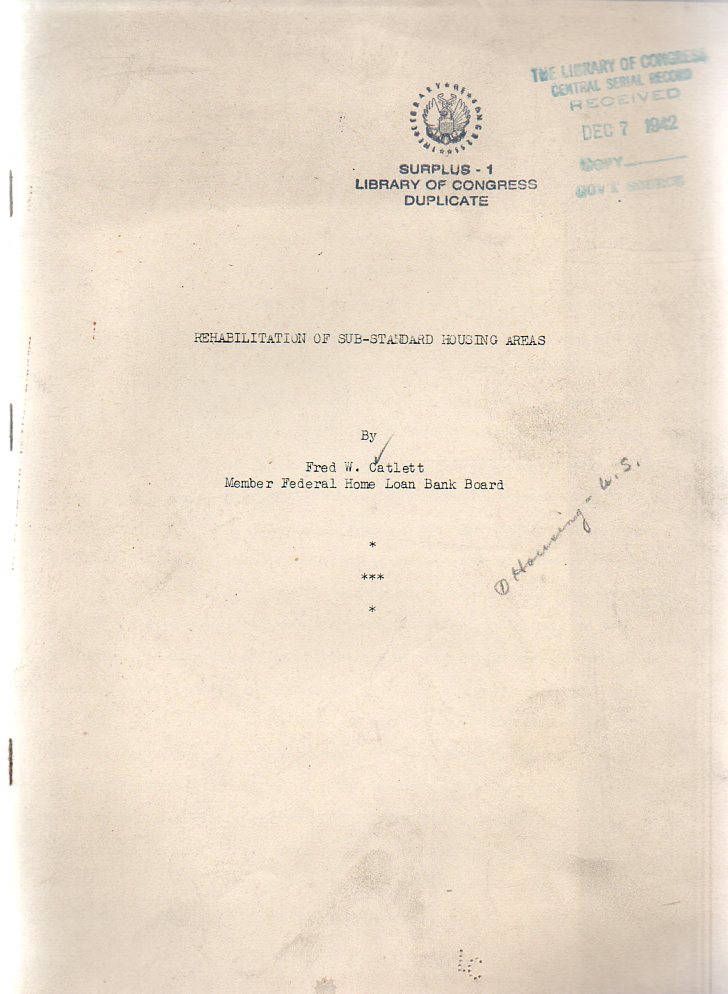
    Fred Catlett’s Rehabilitation of Sub-Standard Housing Areas (1942) isn’t so much about “rehabilitation” of the houses themselves but to their  neighborhoods and surrounding areas–the “inadequate” housing would be demolished, disappeared, replaced, to re-insure the valid tax basis of the larger area/neighborhood.  Nothing is said about where the original people would go while their old neighborhoods were being razed or whether or not they would return to the new housing. 

    Jghetto study b961 The vocabulary here isn’t so surprising in and of itself, but rather with teh overwhelming completeness of it.  I’d suspect that at some point Mr. Catlett  (“Member Federal Home Loan Bank Board”) would throw some sort of bone to the interests of the occupants of those substandard houses, some interest or emphasis to the people involved.  And even though the pamphlet is only 12 pages long, maybe 5000 words, it was certainly long enough to share some concern or kindness to the occupants of those houses.

    Jghetto study c962

    Jghetto study cover963 “Better housing projects break up slums but not until fine homes have decayed and been ruined and many thousands of dolalrs in loses have been suffered”writes the author.  I understand that the man was protecting the material bases of his institution, but ot have the entire document be absent of any consideration to the people being houses I find remarkable. (The original pamphlet is available from our blog bookstore.)


  • Structure for Wide Thinking–Walter Gropius’ 1942 Design/Exercise Book

    JF Ptak Science Books  Post 1247

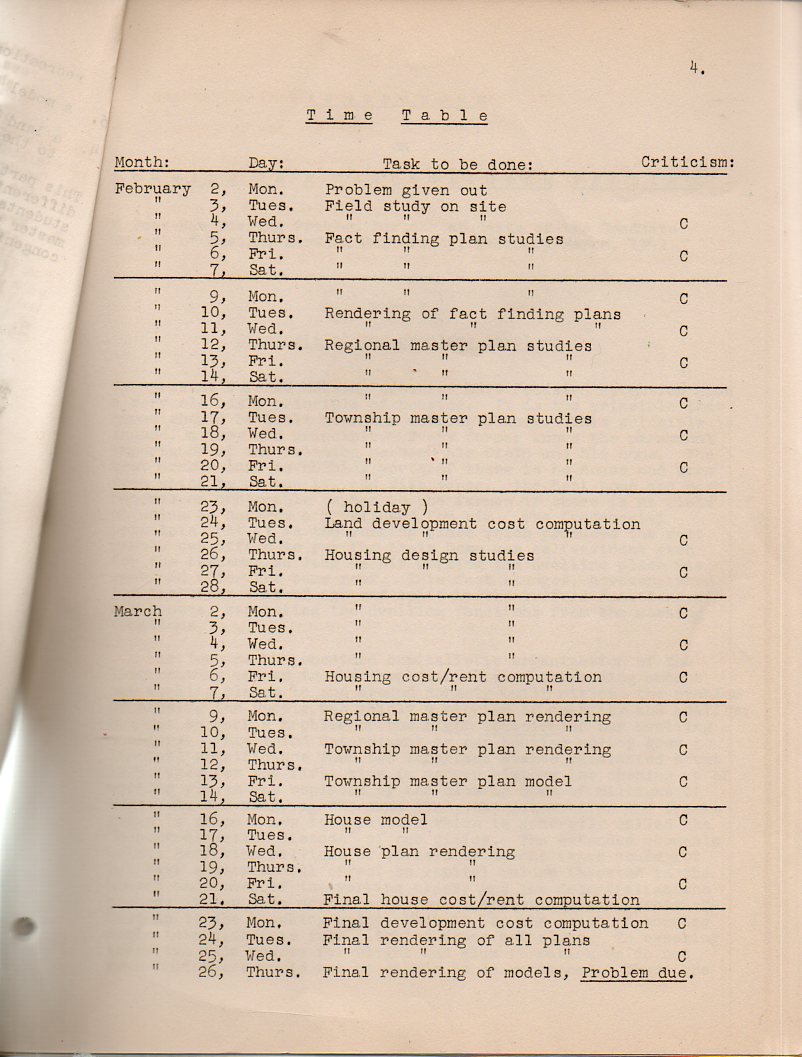
    Walter Gropius (1883-1969, founder of the Bauhaus School and one of the principle builders of modern architecture) and Martin Wagner (1888-1957) were thinking of a new type of “town”, of a different sort of settlement for people, when they wrote this exercise instructional for their Harvard course. Housing as a townbuilding1 problem, written during the war in 1942, was intended to be an exercise (or  “problem”), a case to be studied by the students in the departments of landscape architecture and the graduate school of design at Harvard. The class opened with this rare2 pamphlet as a basis for course work, given to the students on 2 Feb 1942, with the problem’s answers expected to be on Gropius desk five weeks later.  Gropius and Martin put a tough, wide-ranging, landscape-changing question and expected answers in a very short period of time, though they definitely had a very structured plan and approach to dealing with massive implications of their exercise.  The theory was outlined there in the paper, of course, and was expanded much more fully in class.  And then there was this: a full page of datelines and expectations, a way of dealing with a large problem in logical chunks, adding up the answered bits, and then delivering a larger answer at the end and on time. 

    Gropius table899
    [The original work is available at our blog bookstore.]

    I’m not an architecture or design historian, so much of this paper was a little lost on me–but I could definitely appreciate the way in which the great Gropius outlined the process of problem-thinking and solution for his students.  This may be the part of this paper that I liked the most. 

    In  “The Walter Gropius House Landscape: A Collaboration of Modernism and the Vernacular”3 (published in the  Journal of Architectural Education, 1984, 57 (3), p. 39) Eric F. Kramer wrote:

    “Sounding similar themes in a 1942 joint studio problem for landscape and architecture, Walter [Gropius] wrote of the inspiration of the vernacular landscape and of integrating with existing systems: ‘Such a landscape invites the artist planner to observe and preserve its variety of aspects, and to invent a settlement pattern that .ts into its natural beauty. Fortunately our forefathers have already traced out a settlement pattern that fits very well into the landscape.’ Gropius–the grand master builder and master teacher–set out the problem and the solution”.

    There are of course major statements in city-building and human resettlement in this work, but for now, I’m still concentrated on the Bauhaus-founder’s outline for problem solving.   

    Notes

    1.  The full title: Housing as a townbuilding problem; a post-war housing problem for the students of the Graduate School of Design, Harvard University, February-March, 1942.

    And in that publication Gropius writes: “When we speak of ‘new townships’ we think of a new type of human settlement “, with a redefined vision of what a “town” means, using an idea of “reception basins” for spheres of cities as centers of culture, art and commerce “and our open country as furtherer if an industrialized agriculture and of forestry and recreation”. (page 21).  And all of that to be manufactured along the lines of “planned super-highway systems, one branch of which is to go through New England region and will supposedly cut through the towns of Weston and Weyland”.–Gropius and Martin.

    2. This copy was in the Office for Emergency Management; only  six other copies have been found and these in excellent collections: MIT, Harvard Special Collections, Harvard College of Design, Cornell, Columbia and the NYPL (Special Collections).  So the publication is pretty scarce, and given its method of printing and distribution, it looks like not many survived, though it is difficult to say how many were actually printed.  In any event, few survived.

    3. The abstract of this paper is helpful: “The Walter Gropius House Landscape A Collaboration of Modernism and the Vernacular”. “The Gropius house landscape is a potent physical manifestation of the design debates of its era. The landscape is an element of both mediation and integration forging a reciprocal and evenhanded relationship between architecture and site. Shaped by modern architectural sensibilities translated to the landscape and developed at a moment when landscape architecture was struggling to .nd a modernist inspiration and voice, it is an object lesson in the development of a modernist landscape architecture in America…”   
    “In these studio problems, Gropius consistently encouraged students to find new form in the functional requirements of modern times and yet to integrate with existing systems through an understanding of their own functionally driven evolution.”


  • Stuff Blocking the Horizon–the Architecture of Christopher Wren

    JF Ptak Science Books    Post 1332

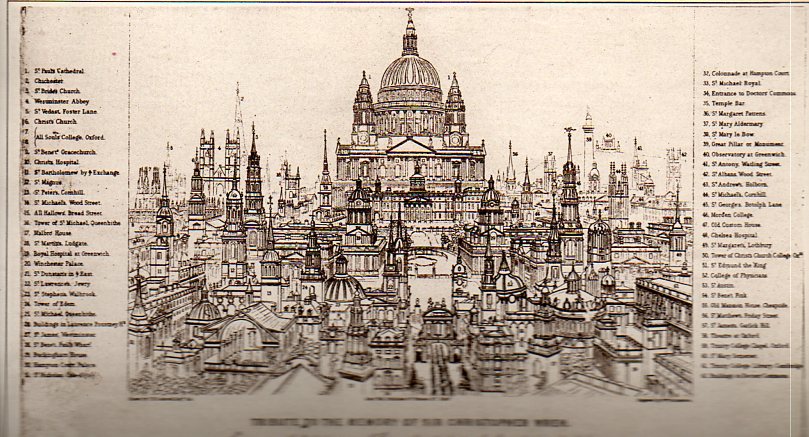
    In a short line of my favorite English Baroque architect/masters, there is no superior to Sir Christopher Wren, and there is no second.  Granted my interest in him comes ‘round the back door, through the almost-eternally-fabulous Robert Hooke (one of the great master British scientists of the 17th century and to whom nearly everyone owes some debt, a genius of great difficult and whose maligned reputation is somewhat deserved) who assisted/worked with Wren for a time after the Great Fire. 

    Wren860 Hooke (1635-1703) and Wren share a big Something–they were both capable of great thinking across many fields and disciplines  As a matter of fact Wren (1632-1723) received a formal scientific training and was a gifted astronomer and mathematician in addition to being perhaps the most-gifted architect in the history of England.  To give the devil his due, though, few people could touch the depth and breath of Hooke’s incredible interests, or match the phenomenal diversity of his productions. (He has been referred to, justifiably, as “England’s Leonardo” by Alan Chapman in his 2005 book o the same name. If it wasn’t Hooke as Leonardo, I don’t know who else it might be.) Wren as it turns out was also a founder of the Royal Society and acted as its president from 1680-1682–a Society to which Hooke was deeply devoted, and which was probably kept alive by his efforts.

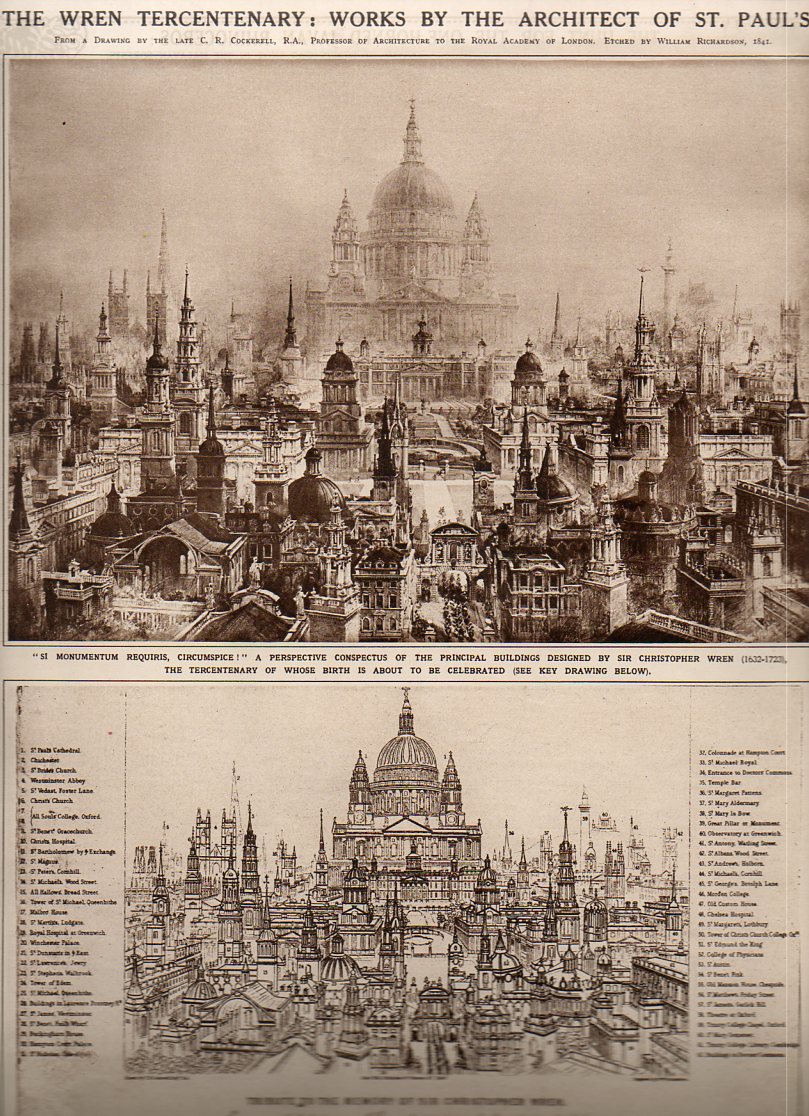
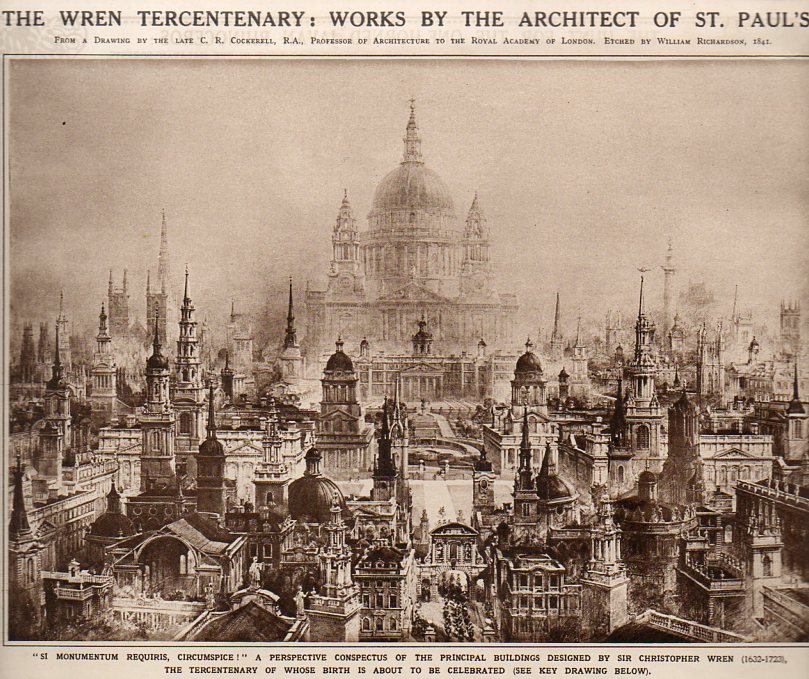
    When you look at Wren’s accomplishments writ large, all drawn together  in this reproduction, you can really appreciate the great spectrum of his building career–not the list of which includes the iconic St. Paul’s, featured, looming, in rear center.  Some people are able to place their accomplishments in great bumps on the horizion; some give you the opportunity to see or visualize them; some help you understand how those things are held together; and some give you the horizon.  Wren’s accomplishments are definitely very pretty horizon-blockers. [This image is available for purchase from our blog bookstore.]

    Wren det861
    Wren det b862

    ·Posted by :

    ·in:


  • A Paper Mirror and the History of Blank Things–Illusory (Sea) Power

    JF Ptak Science Books  Post 1228

    [This is a part of our History of Blank, Empty and Missing Things series.]

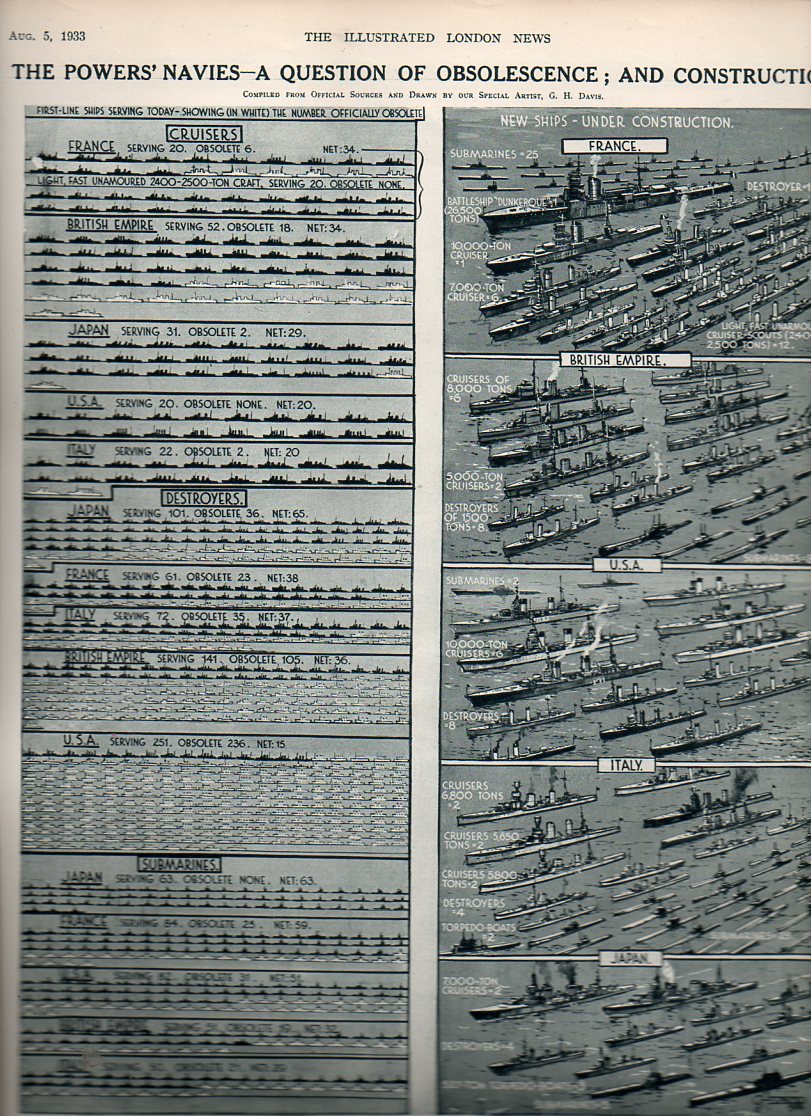
    Mirrors don’t necessarily have to reflect something to show  reflection–they merely need to offer you a picture of something that can show the difference of something real versus a false image of that same thing.  “Through a glass darkly” (1 Corinthians 13:12) isn’t necessarily a reflecting surface though it is a reflective one; neither is the painting in The Picture of Dorian Gray.  Harry Potter’s Erised mirror does act like a mirrorish mirror, and Narcissus does come to a bad and wasted end in front of his pondside reflection (the “perilous mirror”of the Romance of the Rose).  The queen’s mirror in the tale of Sleeping Beauty doesn’t reflect but does give advice, and Alice’s Adventures…  in 1871 begin with wondering what was on the other side of a mirror (“looking-glass”) above her mantel–in a similar vein Kurt Vonnegut introduces a mirror as a “leak” into another dimension rather than a reflection.   Sometimes you get a hand-held thing with glass, and sometimes you just get a piece of paper.

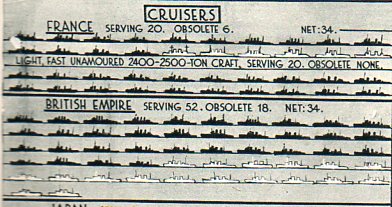
    Navy obsol818 This graphic from The Illustrated London News (5 August 1933, and available for purchase here) is an interesting case in point for a paper mirror.  It is interesting in how it presents a reported state of affairs and its actual condition.  In this case, the artwork shows the supposed/reported strength of the navies of the five major seafaring powers (France, British Empire, Japan, United States and Italy) and what those navies wpuld look like if the outmoded and obsollete ships were removed.  The modern and servicable ships are shown in black silhouette; the numbers of obsolete vessels were shown in white.  The dipiction of blank or empty of missing ships was a very convincing tool depicting the actual state of the major powers’ navies compared to a more romantic means of reporting naval strength. It must have been an excellent wake-up  to thopse with the capacity to see the truth, presented on one piece of paper, a mirror by any other name.

    Navy obsol cruisers819