A Daily History of Holes, Dots, Lines, Science, History, Math, Physics, Art, the Unintentional Absurd, Architecture, Maps, Data Visualization, Blank and Missing Things, and so on. |1.6 million words, 7500 images, 4.9 million hits| Press & appearances in The Times, Le Figaro, Mensa, The Economist, The Guardian, Discovery News, Slate, Le Monde, Sci American Blogs, Le Pont, and many other places… 5000+ total posts since 2008.

Author: JF Ptak

  • Things that Are and Aren’t Dept: the Names of Colors


    JF Ptak Science Books                                          Part of the series Naming Things
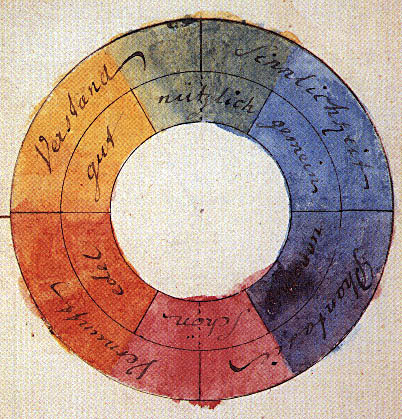
    GoetheFarbkreis

    (Almost) in the beginning were monsters.  The epic battle that Moses wages early on is not with Pharaohs, but with the dragon(s?) that the creator itself had fought on the opening whisper of creation (Book of Job 26:12, Psalms 89:10) and who would again meet at the very last bits of the closing days.  Behemoth, Leviathan, Rehab may all well have been monsters to these ancient folks, but they very well might look like rhinoceros or crocs or hippos to us.  Monster demons like Rehab (Psalm 87:4), a slaughtering beast who would be reintroduced to a different part of the world as Tiamar who would or could also be known as the Red Sea,  lifted straight from Mesopotamian mythology and placed directly into that of the Old Testament among the rest of the borrowed stories and beliefs, a problem by any other name.

    Following names and their cyclonic twists, and absences and sudden  re-emergence through the history of storytelling is dizzying—just consult your Robert Graves on myths  if you want to have  your memory plumbed (the great poet and writer doing not such a poetical or writerly job in this effort in my opinion though most people love it).  Keeping an eye on the mix and mash of gods and goddess and associated super beings from thousands of years ago, the god of the Old Testament makes it very clear and precise about just who he is in his self-introduction to Moses:  “I am the God thy Father, the God of  Abraham, the God of Isaac, and the God of Jacob” (Exodus 3:6)

    Equally almost in the beginning, again so far as the Bible is concerned, are colors—before that maybe everything was black and white, or just white, or maybe just black, depending on your epistemological concept of everythingness or nothingness.  (It looks like green may be the first color mentioned in the bible, (Gen 1:30 And to every beast of the earth, and to every fowl of the air, and to every thing that creepeth upon the earth, wherein there is life, I have given every green herb for meat: and it was so) though the mixing up of meat and veggie is a little confusing to me.))

    Over the years color names themselves have creepethed among themselves like a vocabularic ocean, a fluid dynamic of naming.  Names have flowed across their individual spectra, some names sticking, some not; the originator of the concept of the naming of “red”, the original namer of the color, lost to the earliest and deepest part f the collective human memory.

    I don’t know where many of the names of colors come from, or why.  Index to Color Names and Color Numbers of the Standard and Season Color Cards of America (published and created by the Textile Color Card Association), and published in 1923, is filled with color names whose meaning and origin are a mystery and whose necessity seem to hinge on sunspots.  Which is fine, though it might be interesting to have had color names more dependent on that which went before. Like the names of the streets on most of Connecticut Avenue in D.C. are alphabetical, and once the first 26 letters or so are monosyllabicly employed, the second set starts with two syllables, and then three.  It is a system that usefully indicates where long the long avenue you might be. It might be useful to employ such a method in color names; or not. 

    And I suspect it would be “or not”, unless the poetry and art and music inherent in these formulations would be imaginatively employed

    But on to the color names:  Ambulance, Basketball, Bosom,  Cowboy,  Squirrel, Chit, Old, Nymph, Old mephisto, Pelt, Racket are examples of some of the mystery colors.                             

    Some names which were part of institutionalized racism I’m sure are now gone:  Arab, Negro, African; Bagdahd (?), Bombay Brown,  Coolie Yellow, Coolie, Congo Brown, Egyptian Husk, Hankow (yellow), Kyoto Yellow, Korea Yellow, Mandarin Yellow, Punjab Brown, Kafir, Tar Baby.
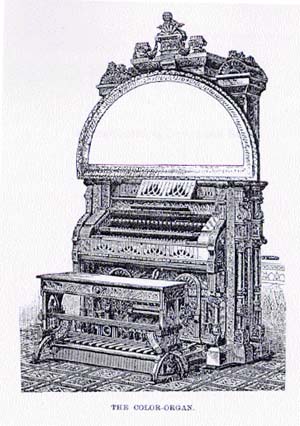
    Colororgan But I’ve got to say, even though the names may not have much to do with the colors, most of the names in the pamphlet sound quite lovely, and many are yummy: London Smoke, Log Cabin, Leadville, Madonna, Naked, Pitchpine, Pompeii, Prelate, Smoked Pearl, Swamp, Lucky Stone, to name a few. Overall I doubt that this is what Newton, Goethe, Chevreul, Rood, Maxwell and the rest had in mind when they were figuring out what color *is*, but I do think that all of them had large enough poetic natures (Newton the weakest and Goethe by far the strongest) to appreciate the occasional beauty of naming.  The unbelievable Shakespeare seems not to have spent that much time on color (so far as I know, and I don;’t much about the Bard), but (in a dear-sweet-god understatement) other people did:  people like Richard Feynman synesthesically thought in mathematical color terms, others created musical  instruments which would produce color from music while most of the rest of the world produced music which conveyed color, and on and on.  And then of course there’s the whole world of art.

    But I won’t go there now–I just wanted to follow this loose thread in what seemed to be a pretty inert pamphlet–in the end it opened itself to a lot of possibilities with just a little thinking. 
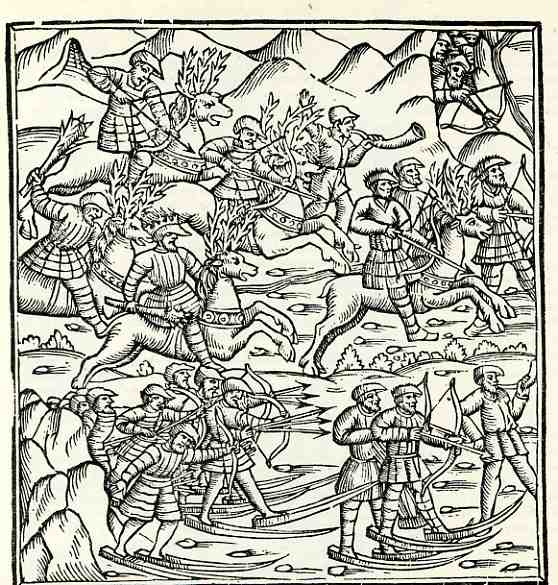

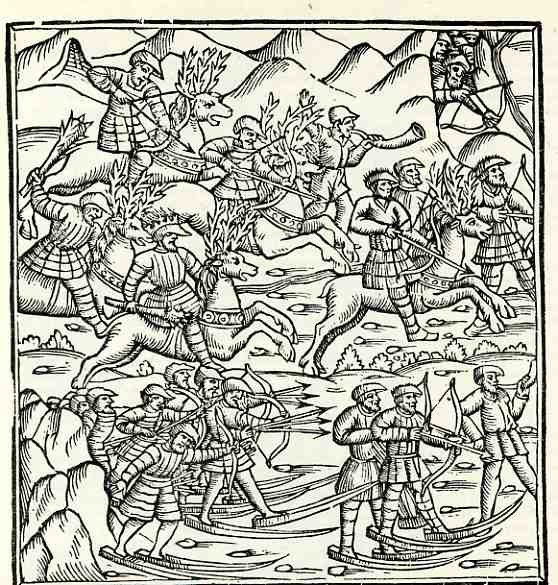
  • Highpoint of Northern Renaissance History and Cartography: Olaus Magnus, 1565

    JF Ptak Science Books LLC  Post 467


    0 blog jan 08 magnus366
    Olaus Magnus
    (Swedish historian and geographer,
    born. at Skeninge, Sweden, 1490; and died at Rome., 1558) wrote the legendary
    and Renaissance-high-point  Historia
    delle genti et della natura delle cose setentrionale…
    (“Historia de
    gentibus septentrionalibus”, and translated as  “Olaus Magnus Gothus’, the Upsala Archbishops’, history of the nordic
    people’s different manners and camps, also about the wonderful
    differences in customs, holy practices, superstitions, bodily
    exercises, government and food keeping; further on war, buildings and
    wonderful aids; further on metals and different kinds of animals, that
    live in these neighbourhoods “) published in Rome,
    1555 (as well as Antwerp, 1558; Basle,
    1567; Frankfort, 1618, and also in translation
    in German (Strasburg and Basle,
    1567); Italian (Venice ,
    1565); English (London,
    1658); and Dutch, (Amsterdam, 1665)).  It was mostly a response to earlier histories
    treating the geography, fauna, flora and general history of Scandinavia, which
    Magnus found to be wanting, wrong and fanciful. (The image to the left,  a mixture of fact and fiction, does depict snowshoes for about the very first time in a printed book.) 
    His own book, the Historia, corrected and strangled many earlier wrongs and
    fanciful affronts committed by other authors.  It is still seen as a useful book on Scandinavian mythology and folklore, along with some interest in the origin of the material that Magnus contributed from his own imagination when sources went wanting.  

    Blog--magnus

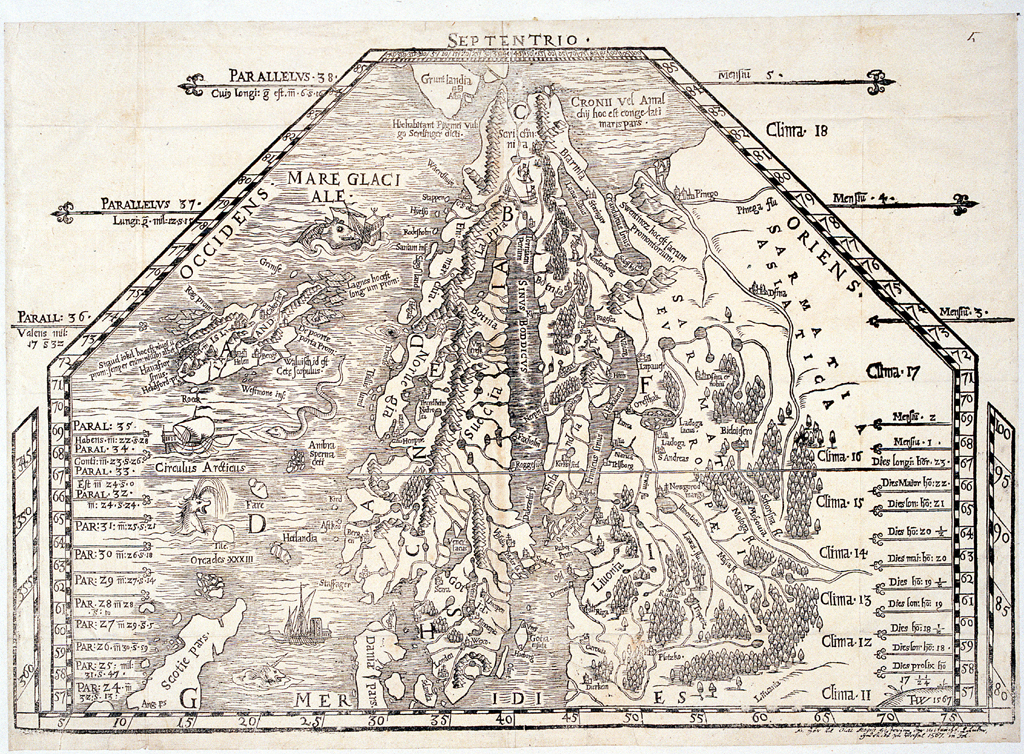
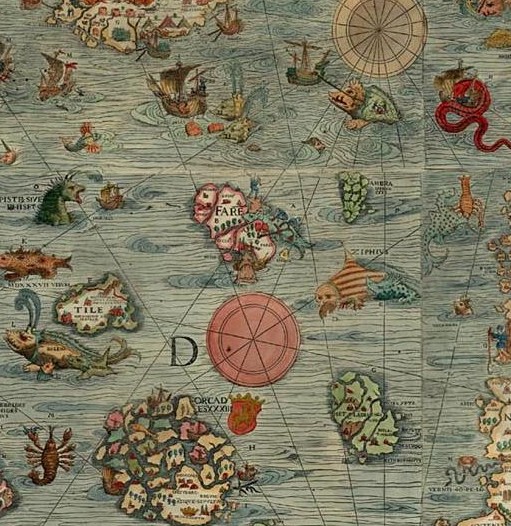
    Magnus’ map of the great northland was a fantastic achievement, its
    stature undeterred by the liberal use of sea monsters and other
    fanciful creatures.  The detail in the coastlines (as well as the depiction of currents between Iceland and the Faroe Islands) as well as interior
    features make these among the most detailed maps of the north yet
    printed in the 16th century.

    Blog magnus map


  • Looking Deeply at Group Portraits from World War I

    JF Ptak Science Books LLC Post 467

    0 blog jan 12baker377

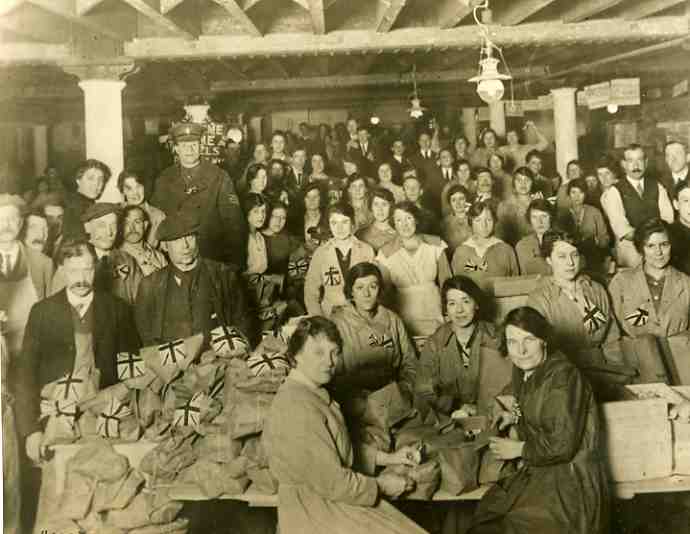
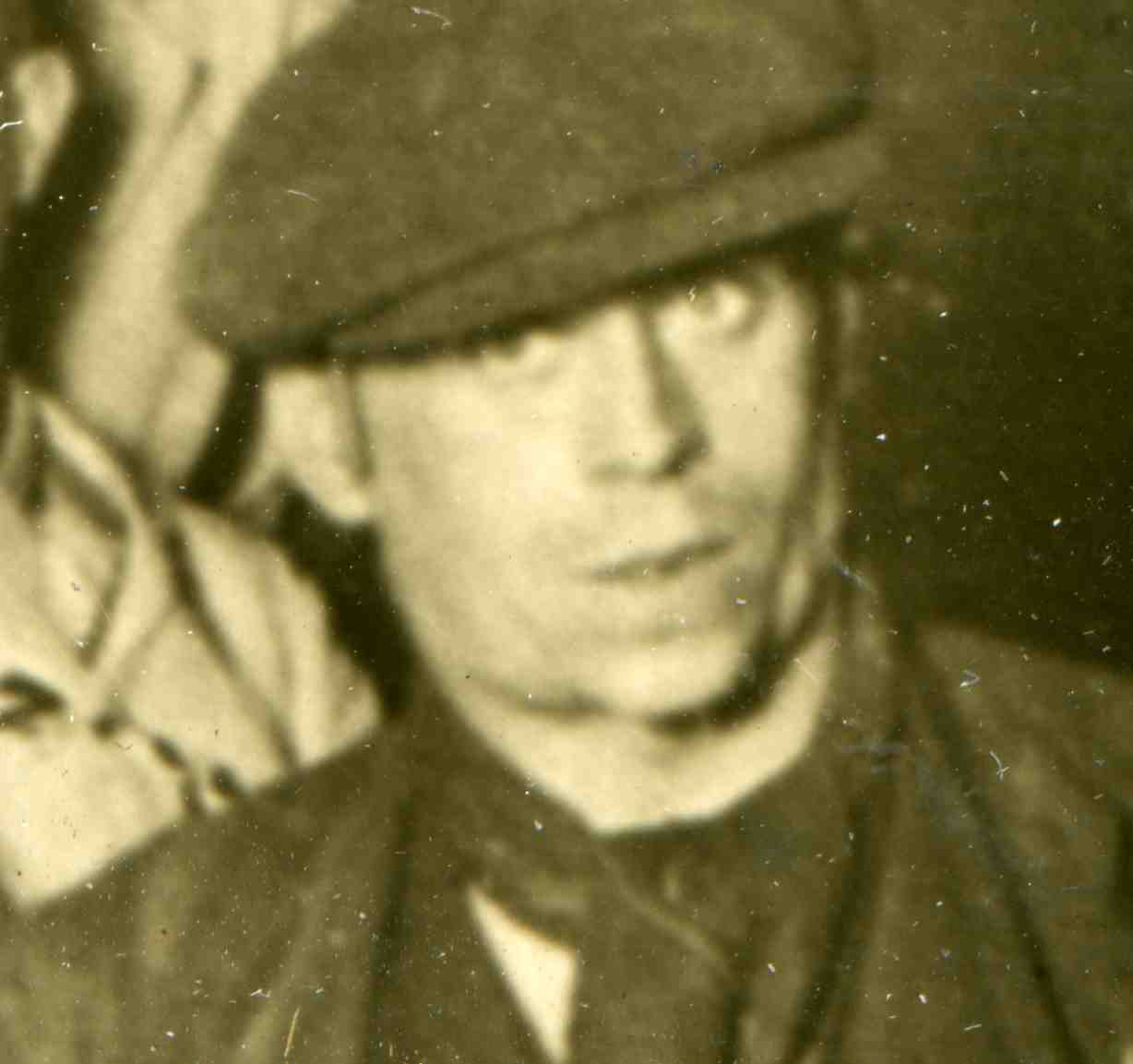
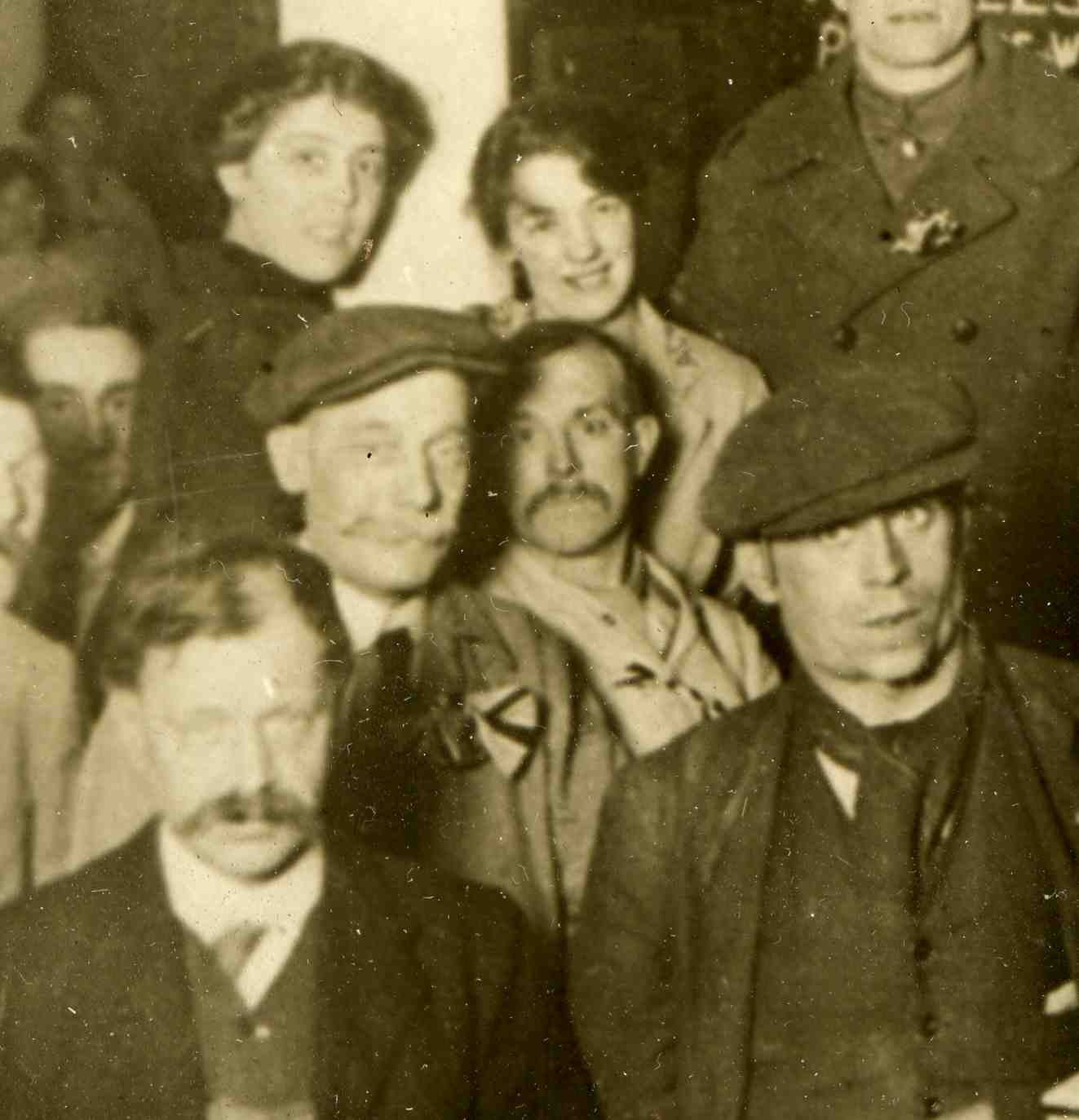
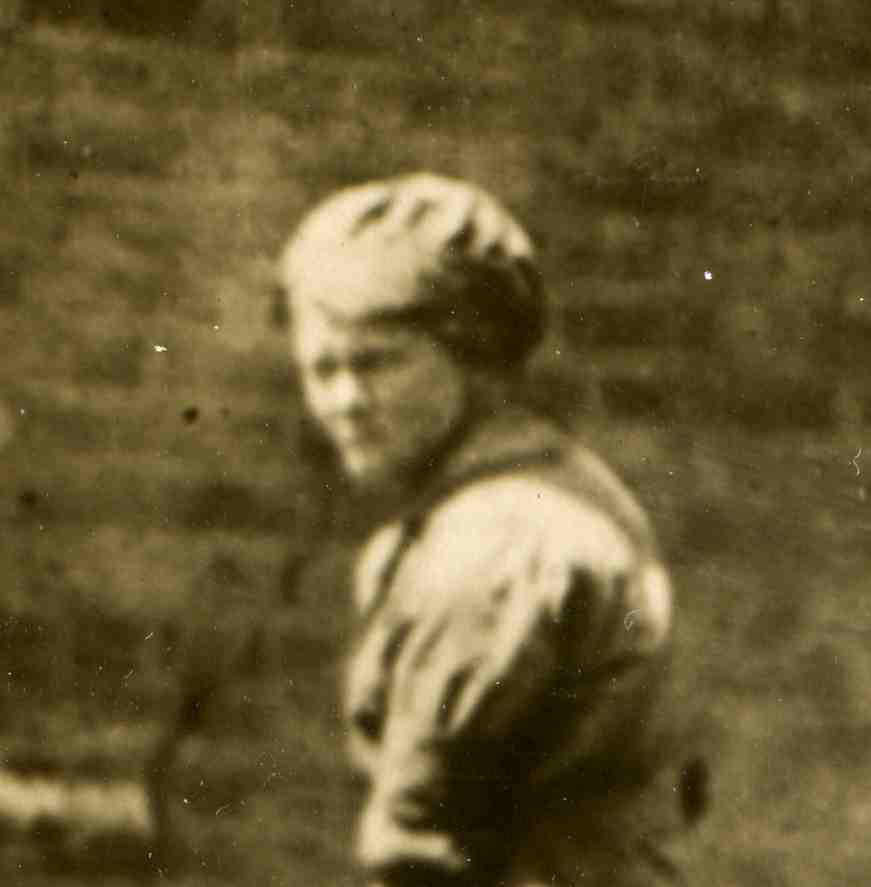
    This is another magnificent group portrait from my collection of News Service Photographs from World War I.  This is image is from mid-1918 and depicts nurses, wounded and recovering soldiers and an assortment of volunteers preparing relief packages for other wounded soldiers in filed hospitals.  My experience with these images is that are many levels of portraits within the larger group portrait–looking at them under magnification is an addictive process, and quite often there are some lovely surprises. 
    0 blog jan 12baker379

    0 blog jan 12baker378


  • Things that Are Just Simply Wrong: War Gases and Babies; Protective Suits for Children and Babies, 1943

    JF Ptak Science Books LLC  Post 466

    0 blog jan 12 baby gas380

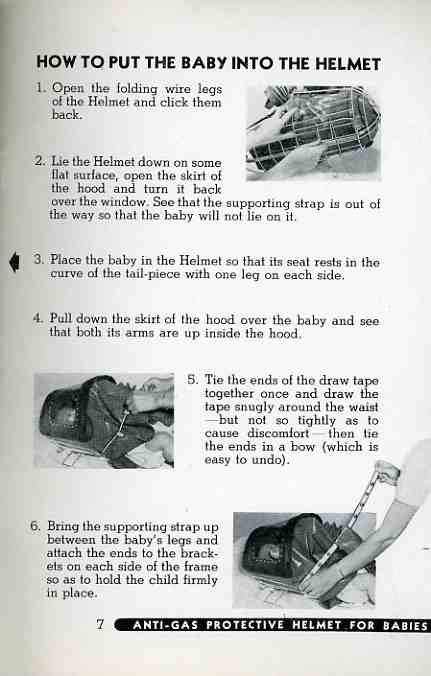
    There’s nothing that shouts “WRONG” with greater voice than images like this.  Like pornography and art, things that are just plain wrong are instantly recognizable.  And this, my dear reader, is a fine example of that thinking. Anti-Gas Protective Helmet for Babies, Manual of Instructions was prepared for the Office of the Director of Civil Air Raid Precautions of Ottawa, Canada, and published in 1943.  I’m not sure that the image of the nurse in the gas mask isn’t as disturbing, but the two of them together is just too much.  

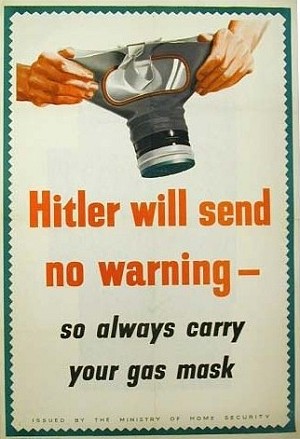
    I wasn’t aware of the gas attack preparations in Canada–the situation was entirely different in Britain, where everyone was required to own one, and by 1940 more than 38 million had been distributed to the population.  But the planning was underway in Ottawa in ’43 for the worst, as removed and distant from the war as just about any other place on earth–but the Air Raid Precautions people pulled no punches in their hearts and minds campaign, and I’m sure that it was very effective.  This little pamphlet certainly caught my attention.

    0 blog jan 12 baby gas381

    Blog gas poster

    ·Posted by :

    ·in:

    —

  • Looking into the Future, a Little: the Edge’s Survey for 2008

    JF Ptak Science Books LLC  Post  465
    Wordle--the edge future JPG

    This is a list of wide-thinking thinkers
    ideas about revolutionary scientific changes will come in the next 20-50 years,
    an outline list of the author and subjects appearing below.  There are 157 entries, and I’ve included a
    link to the full text HERE so that the full entry can be read.  I haven’t read them all—the full text runs
    about 150k words—though what I’ve picked around so far looks not terribly inspired
    in spite of the high-pop value of the assembly. 
    I think that if you placed yourself back in time somewhat and viewed these
    from a 1980’s mindset (and upping the 20-50 year timeframe to 40-70 years) the
    ideas start to look very sharp.  But we
    aren’t in the ‘80’s and the ideas for the most part aren’t very big, and some
    of them (I hate to say) are just goofy (and some of these come tagged along
    some very big names). A bit on the project is taken from Newsweek, below  

    I’ve also constructed a Wordle of the entire document to see if anything interesting popped out, though the secret of interest remained hidden.

    NEWSWEEK  Crystal-Ball Time  Newsweek, 31 december 2008 
    By Sharon Begley

    Every December the
    online intellectual salon called Edge, presided over by literary agent John
    Brockman, asks a select (virtual) assembly of scientists to ponder a question,
    such as what they are optimistic about (2007), what “dangerous” ideas
    they have (2006) and what they believe is true but cannot prove (2005). As the
    bell tolls on 2008 and rings in 2009, Edge is unveiling this year’s: “What game-changing scientific ideas and
    developments do you expect to live to see?”


    *KEVIN KELLY
    Editor-At-Large, Wired; Author, New Rules for the New Economy
    A NEW KIND OF MIND
    _____

    *HOWARD GARDNER
    Psychologist, Harvard Graduate School of Education; Author, Five Minds for
    the Future
    CRACKING OPEN THE LOCKBOX OF TALENT
    _____

    TIMOTHY TAYLOR
    Archaeologist, University of Bradford; Author, The Buried Soul
    CULTURE
    _____

    JOHN GOTTMAN
    Psychologist; Founder of Gottman Institute; Author (with Julie Gottman),
    And Baby Makes Three
    LABORATORY EARTH COLONIES
    _____

    ED REGIS
    Science Writer, Author, What Is Life?
    MOLECULAR MANUFACTURING
    _____

    ·Posted by :

    ·in:


  • Women in the War Effort: London, 1918

    JF Ptak Science Books LLC  Post 465
    0 blog jan 10 brit women strt371

    In England,
    women were welcomed to the (paid) workforce during the years of the First World
    War (1914-1918)—their employment in traditionally male positions enabled those
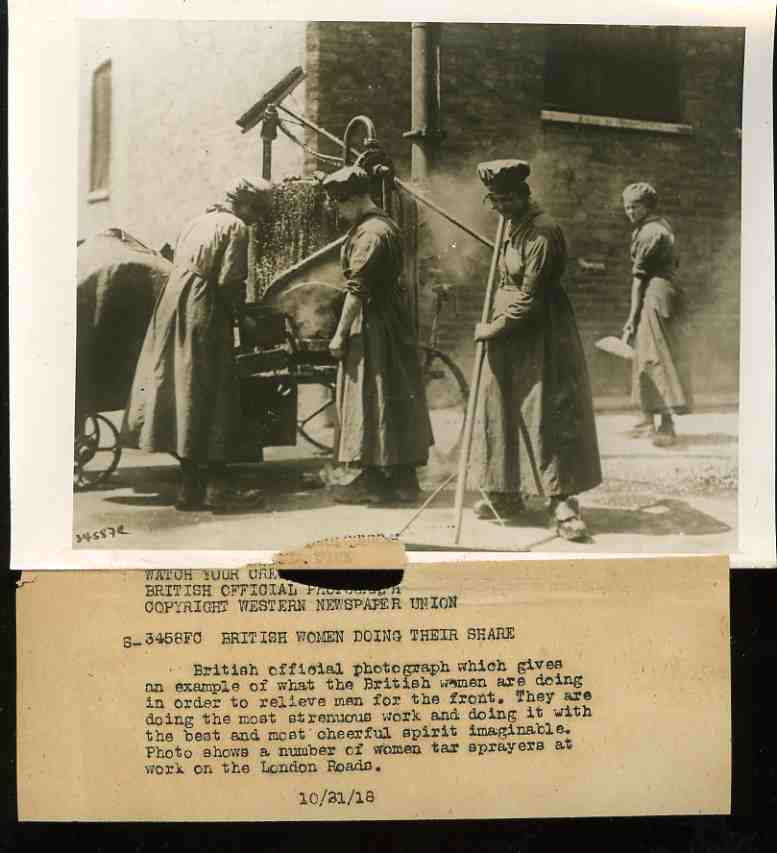
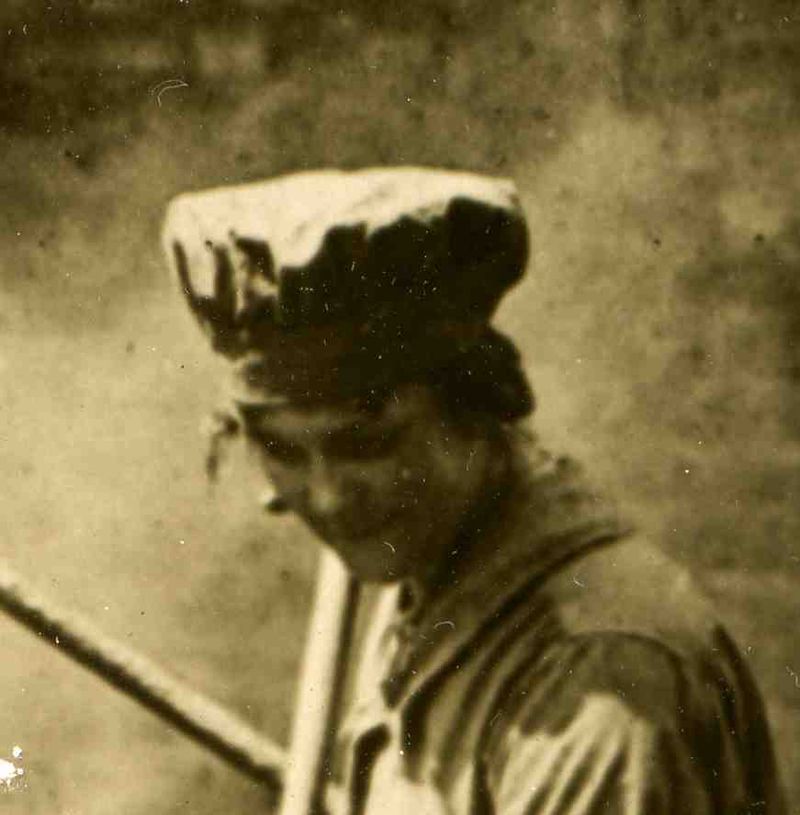
    they replaced to go out to the front and die for their country.  Thus the women seen here in the News Photo
    Service Agency photograph (taken in 1918), working at spraying tar in the
    streets of London,
    were appreciated, and tolerated.  For
    women in England the War
    blasted away the contrivances of formally scheduled employment:  something like 12% of fall women in England were
    working as servants and house cleaners.  
    Come the War, women were offered jobs of revolutionary stature in a wide
    range and variety of work.  The Civil
    Service employment for women went from 33,000 in 1911 to 102,000 in 1921, and trade
    union membership rose 160% (357,000 in 1914 to 1,000,000 in 1918 (with men
    showing a 44% increase at the same time); for the most part, though, employers
    took advantage of the situation, and the women still generally earned less than
    half of the salary as comparable male workers did (or the men they
    replaced). 

    0 blog jan 10 brit women strt372

    When the end of the War came,
    so did the appreciation for the women replacement workers—there was bitter feelings
    in the post-war period because of the weak British economy and a scarcity of
    jobs.  So the women who took the jobs of men
    to help the country’s war effort and free up hundreds of thousands of men for
    war service became an atavistic action, “taking” the jobs of men who had gone
    out to fight for their country. This of course cost many women their jobs, but
    the damage had already been deeply done to the pre-1914 British world of the
    sexual politics of business-being-done, though it would take World war Ii to
    really ingrain the appearance of women in the workforce into the national
    psyche.

    (Madonna of the tars, right)

    0 blog jan 10 brit women strt373


  • Lethal Teeth & Causes of Death in London; Milk Leg, Breakbone Fever and Eel Thing. The Death List for 1665

    JF Ptak Science Books LLC  Post 464

    Blog--bills of mortality
     Coming on the heels of the only post that I’ve made on teeth is this happy
    element, a brief mention of lethal teeth in London in 1665. The listing of the death and
    its introduction (if not the actual dead themselves) comes in the form of a
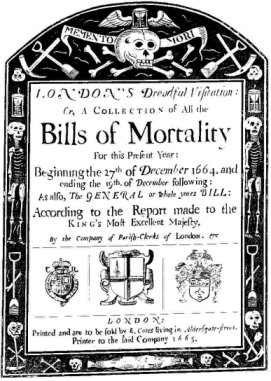
    publication called The London Bills of Mortality, which was begun (so it seems)
    in 1538.  As an instrument of society the
    Bills were more for legal ramifications than for compiling medical
    information.  The Bill was a necessary
    element for legal burial and the transfer of an estate, composed to make sure
    (or for extent possible at this time) that death had indeed occurred and that
    the legal course could be enacted to disassemble the accumulated physical life
    of the decedent.  The weekly reporting
    and compilations must’ve been wearying, and I imagine that this was not the
    most auspicious or desirable job to have, wringing in the newly dead.  Death’s accounting procedure grew more
    systematized as time wore on, getting a more formal approach as early as
    1603.  And it was not in every English parish
    that the cause of death was recorded, and the recorders were hardly a army of medical
    experts—causes of death were sometimes accurate, sometimes not, sometimes
    whimsical and sometimes all or none of the above.

    The list below attests to a somewhat poetical bent in the naming of lethal
    afflictions; of course most meant something immediate and understandle to the
    reader in 1665, though today many of the names seem quire airy and adventurous,
    hardly things to actual die of.  The list
    comes from the groundbreaking work of London haberdasher and man of
    semi-science, John Graunt, who in 1662 published Natural and Political
    Observations … on the Bills of Mortality
    (1662):  it was a tremendously important work and a
    foundation stone in statistical applications in health and epidemiology, as
    Graunt tried to organize and interpret the collected data. 

    Again, my attraction to this all stems from yesterday’s post on the question
    of the existence of teeth in the Renaissance—“teeth” is listed as a cause of
    death in 39 of these cases, the 6th leading cause of death among the
    39 causes listed.  I guess death might’ve
    been caused by a systemic infection caused by a rotten tooth ; or  perhaps the tabulator observed a dead body,
    saw a mouthful of bad teeth and nothing else obviously wrong with the body, and
    thus dubbed the cause of death as the most heinous looking thing that could be found.


    Abortive
    Aged
    Ague
    Apoplexy
    Asthma
    Bloody Flux
    Cancer
    Childbed
    Chrisoms
    [1]
    Colick
    Consumption
    Convulsion
    Dropsie
    Evil
    Fever
    French-Pox
    Gangrene
    Gout
    Griping in the Guts
    Headmouldshot
    [2]

    3
    52
    12
    1
    2
    1
    4
    4
    2
    2
    78
    112
    26
    1
    76
    2
    1
    1
    14
    2

    Jaundies
    Imposthume
    [3]
    Mortification
    Plurisie
    Rash
    Rheumatism
    Rickets
    Rising of the Lights
    [4]
    Rupture
    Small-Pox
    Stilborn
    Stone
    Stoppage in the Stomach
    Suddenly
    Teeth
    Thrush
    Tissick
    [5]
    Twisting of the Guts
    Ulcers

    1
    2
    7
    2
    1
    1
    1
    1
    1
    54
    9
    2
    2
    1
    39
    1
    5
    6
    1

    A few of the obscure terms explained:

    Ague: 
    deep fever
    Body Flux: sepsis? 
    Childbed: 
    a baby or mother who dies during childbirth
    Crisoms: 
    refers to a white baptisimal robe worn by an infant, meaning that this
    was a very young baby born    before baptism occurred.
    Dropsie: 
    lethal inflammation or edema
    French-pox: 
    syphilis (called “French” because of a decimating outbreak of teh
    disease in the French army.  That, or the
    prescribed treatment, which was the ingestion of mercury. 
    Headmouldshot: edema of the brain
    Imposthume: Abcesses or cysts
    Rising of the Lights:  inflammation of the lungs or general lung
    problesms
    Thrush—an infection of the mouth (especially
    in babies).
    Tissixk: 
    tuberculosis

    According to the website Magic-Nation “other causes of death included affrighted, bladder in the throat, breakbone
    fever, canine madness, commotion, eel thing, frogg, gathering, grocer’s itch,
    hectic fever, kink, milk leg, screws, stranguary, stuffing, rag picker’s
    disease, St. Anthony’s fire, tympany, worm fit, wolf, and being planet struck”.
    Most of these I have little  insight on,
    and even though they caused someone’s death, they still have a lilting, lyrical
    quality about them.  I particularly like
    and am curious about “eel thing”, “milk leg”, and “Stuffing”


  • Did Teeth Exist in the Renaissance? Art and the Toothy Smile, 1300-1600

    JF Ptak Science Books LLC  Post 463

    Blog--teeth giorgione
    Did teeth exist in the Renaissance?  Well, while breezing through a bunch of art monographs for that period, it struck me that the tooth wasn’t making its way from the artists’ palettes to the canvas.  Not only that, it also occurred to me for the first time that people—in the large part—weren’t even opening their mouths.  I don’t know how that escaped me; perhaps it is because there are other more interesting things to look at in paintings and consider—even looking at the found flora or table settings is far more useful and interesting than choppers.  Oh yes, and there’s all that color and perspective stuff too.

    But in looking at Big Names in the early and late Renaissance I wasn’t finding teeth.  Fra Filippo Lippi’s “Vision of St. Bernard”, the “Madonna and Child with Angels”, the “adoration of the Magi”, feature subjects with not a single tooth.  Paintings by (earlier) Masaccio have the same result, as does Benozzo Gozzoli.  Pollaioulo’s features numerous saints with very tightly closed mouths, as does Ghirlandaio’s massive fresco of the “Life of St. John the Baptist”, straight-lipped all. Piero de Franscesco (‘Baptism of Christ”), Domenico Veneziaio “Madanno and Child with Saints”, Pietro Perugino (“Lamentations over the Dead Christ”), the beautiful Fra Angelico (“Descent from the Cross”, 1453) Lorenzo di Credi (“Adoration of the Shepherds”0, and on and on, vast canvases filled with people with nothing but lip.  Even the lamentations of the group in Raphael’s “Entombment” are done with nothing but closed mouths, teeth hidden even under the vast experimentation in pigment and paint of the quattrocento and cinquecento.  Earlier works, as in Giottos’ “Betrayal of Christ” (1305), the “Lamentations over the Dead Christ” (ca. 1305), the “Nativity” and soon there exist barely a parted lip, just as in Simone Martini’s “St. Louis of Toulousse” (1317). 

    What comes first to mind though in all of this, apart from very straight mouths, are the very famous closed mouth portraits of Leonardo (“Mona Lisa” and one that I used to see all the time, “Ginevra de Benci”).

    It wasn’t as though tooth health wasn’t unknown in the Medieval or Renaissance periods.  For example, we have the following recipes for tooth and mouth (and breath) care, beginning with Trotula’s  wine rinse and herbal chew found in his 11th century On Women’s Cosmetics (book 3); Hildegarde of Bingen’s water rinse  (Physica, 1158); Gilbertus Anglicus’ 11th century wine washes and tooth rubbing recipe; the Rosemary charcoal tooth rub found in Bankes’ Herbal (1525); Gervase Markham’s (,The English Housewife 1615) sage tooth whitening scrub (using an abrasive of salt, chlorophyll of herbs freshen the breath, and sage is a somewhat astringent/antiseptic); and Plat’s anise, caraway, fennel “comfits” in  Delightes for Ladies (1602), just to name a few. (A very interesting website testing these notions can be found HERE.)  That said, it doesn’t mean that people actually took care of their teeth, and that, maybe, people simply had really bad teeth.  On the other hand, the unsmiling folks presented in this artwork were being shown in created or mythological or supposed scenarios anyway, so the artist could have as easily granted a good smile as not.

    The more I looked around a few of the first monographs, the less I saw of teeth—how is this possible?  Were teeth so unimportant to the painters?

    It took another dozen or so books to start to even out the dental playing field, although the math of teeth versus non-teeth was still 20:1 in my coca cola-driven search.  I was determined to keep the thing to under an hour of poking around, so this is hardly an academic consideration.  But, all in all, it is curious how few toothsome smiles/grimaces are found in these hundreds and hundreds of images.

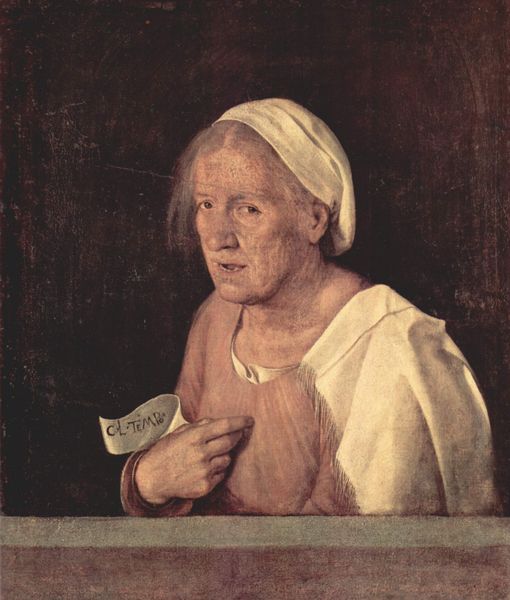
    I did find a very exposed, realistic portrait painted by Giogione  (Giorgio Barbarelli da Castelfranco) of “La Vecchia”, (“The Old Woman”), who holds a rolled paper with the words “Col tempo”, translated as “with age”,  written on the paper.  Her smile is like a skyline more than anything else and is beautifully realistic.  There’s also Lucas van Leyden, Pisanello’s “Saint George” fresco, a number of later Mantegnas, some Leonardos, Beccafumi, and of course a whole lot of big and usually broken teeth in the Bruegels and Caracci.   

    All in all, I guess that observations on teeth in paintings of the Renaissance doesn’t really contribute anything to anything, and is probably just a real old-fashioned mud-caked wheel-spinner.  Thinking about it though does make me think about the Encyclopedia of  Stuff that I’ve Missed and Don’t (and Will Never) Know; but it does make for some good practice in looking for something that I don’t know I’m looking for.

    NOTE:

    The most elegant explanation for not smiling has come to me from my friend and my wife’s business partner, Seattle-based artist/director/writer David Robinson.  I asked him his opinion of the issue and he immediately said that the lack of smiles was caused by the same reason that early photographic portraits generally show unsmiling, Lincoln-lipped people:  the smile was too hard to hold for a long period of time.  In photography, the exposure was long and the person who didn’t keep their same smile for a period of a minute or more chanced the ruining of the portrait.  David says that this principle could be applied to models not having the stamina to hold a smile for a long period of time for the artist.  This is an explanation that I can live with:  short, sweet, simple. And probably correct. 


  • Dead Letter Department #1: LIFE Magazine Subscription from 1940

    JF Ptak Science Books LLC 

    0 blog jan 09 dead letter369
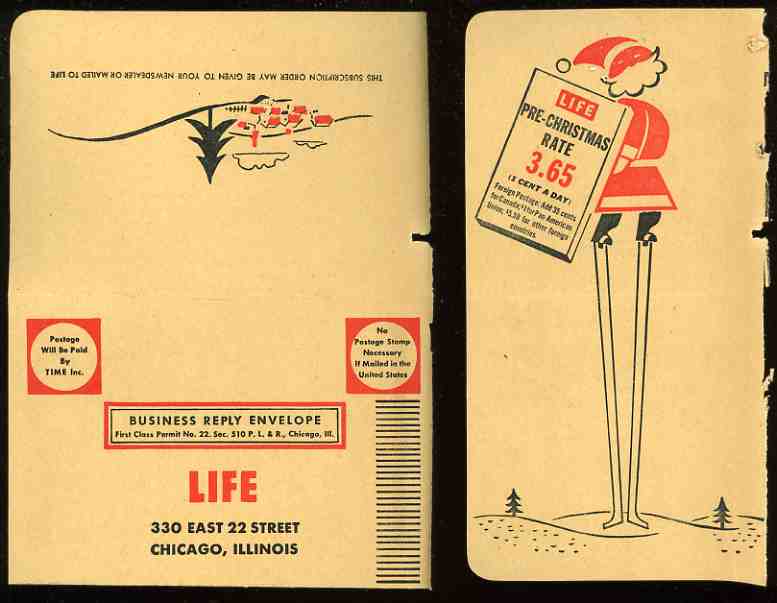
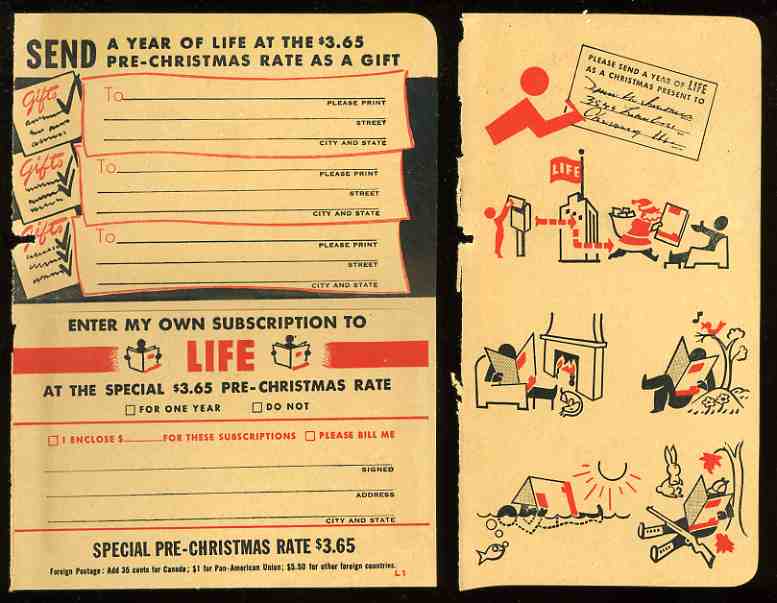
    It seems to me as though I have quite a few of these old subscription or mail-back forms from the 1930’s, ’40’s and 1950’s.  In the spirit of Don Novello (aka Father Guido Sarducci) I thought that I’d start sending some of these little buggers back out, just to see what happens with them on the other end.  I have my doubts that there are very many pieces of antique mail making their way through the labyrinth of the U.S. Postal System, so perhaps it will give some of those folks in blue a little something to talk about.  Or not.  And so I put my $3.65 in the little envelope for a year’s subscription to the fine LIFE magazine–if I could get into the Wayback machine, I’d enjoy 52 issues of LIFE in 1940 for just a few dollars.  Unfortuantely LIFE stopped being a weekly in 1972 and then sputtered along as a much-changed monthly for several decades until it completely left the track in 2007. 

    0 blog jan 09 dead letter370
    It was an interesting magazine to be sure, though not without its
    problems.  For example, I looked through every page of LIFE from 1939
    to 1945 and my impression was that there wasn’t all that much war
    reporting in the thing until everything heated up (including America, finally) in
    mid-1942. (And by “very much” I mean, well, that I just expected more in the magazine about the World War than I was seeing, space being taken up by nonsense and Liliputian interests rather than the global conflict.) Up to that point there seems to have been far more non-war
    words/images than war-related. Even in 1942 there was more adveritising
    using men-in-uniform than there were actual stories depicting fighting
    men.  Things changed quite a bit in the magazine as the war became more
    “real” for the U.S. in 1943; still, the reporting didn’t come close to
    that of the London-based Illustrated London News, where the war was
    real since 1940.  This is hardly scientific, only an impression, but
    having looked at the entire war coverage in LIFE and Illus London News I am left with a lingering impression of a remarkable difference between the two (similar) magazines.  More still for the Illustrirte
    Zeitung
    (Leipzig), but that’s another story.  Still the use of
    men-in-uniform to sell cigarettes or steel or whatever is pretty
    bothersome to me–there was a lot of that going on in LIFE, not so much
    at all in ILN, and almost none in the Illustrite Zeitung.

    ·Posted by :

    ·in:


  • The 18th Century Bible on Dutch Canal and Dam Construction: Tileman Horst Theatrum Machinarum, 1737

    JF Ptak Science Books LLC  Post 461

    0 blog jan 08 horst368

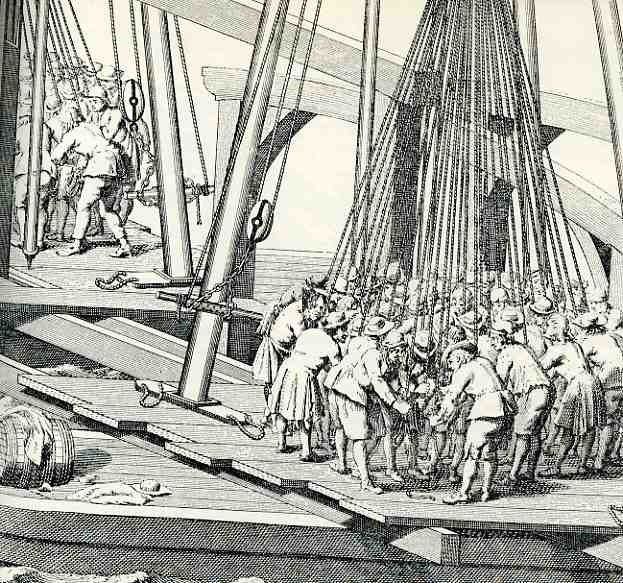
    Tileman van der Horst and Jan Schenk produced the Theatrum Machinarium
    Univesale
    *, one of the most celebrated works on the construction of all those
    elements so necessary to keeping life dry in Amsterdam 9the place of the book’s
    publication).  It was perhaps the most
    important work then produced on dikes, sluices, dams, weirs, canals and
    swing-bridges, the very elements of existence in Holland.  Jan Schenck was the engraver of this work,
    which may also be the most accurate and the most sumptuously illustrated book
    of its type in Holland in the 18th century—the technical aspects of the
    rendering was just superb. In the image (which is a detail of a detail of a
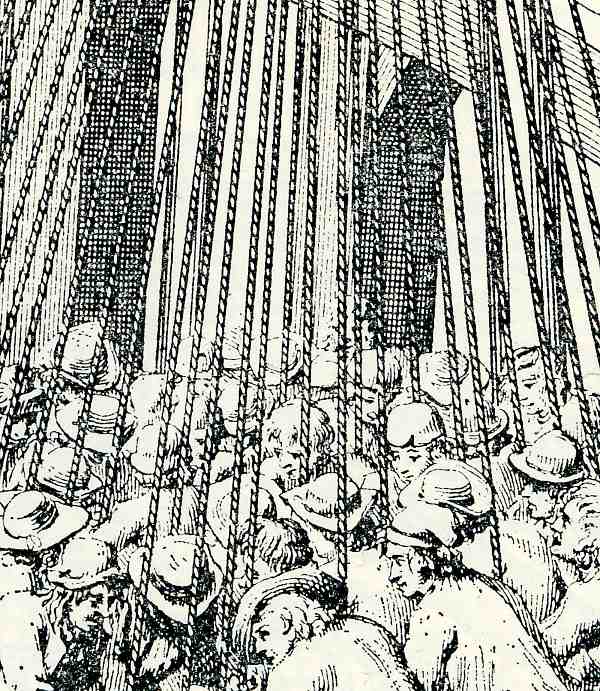
    larger folding plate) I reproduced at left and below we see that Schenk and Horst weren’t kidding around in their treatise:  what we see here is the elevation for a plan
    showing the laying-in of pilings for a larger structure.  This is still tricky business today in Amsterdam, given the soil
    structures on which the city is built, some of these pilings go down hundreds
    of feet.  This group of about fifty men
    is certainly struggling with something big; but just how big it is I do not
    know.  (They do look rather well-dressed
    for being about to muck around in the foundation area of a structure.) And this
    draws my attention to the planks on which they all stand; the boards seem just
    enormous, looking to be two feet wide and several inches thick, and long.  I’d be very curious to know where this lumber
    was coming from, as I feel it certainly wasn’t local.

    0 blog jan 08 horst367
    *Theatrum Machinarum Universale.. of
    Keurige Verzameling van .. Waterwerken, Schutsluizen, waterkeringen, ophaal- en
    draaibruggen
    . Printed in Amsterdam., by Petrus Schenk en Zoon, 1757-74.  Illustrated with 50 engravings on 47 partly folding plates.