A Daily History of Holes, Dots, Lines, Science, History, Math, Physics, Art, the Unintentional Absurd, Architecture, Maps, Data Visualization, Blank and Missing Things, and so on. |1.6 million words, 7500 images, 4.9 million hits| Press & appearances in The Times, Le Figaro, Mensa, The Economist, The Guardian, Discovery News, Slate, Le Monde, Sci American Blogs, Le Pont, and many other places… 5000+ total posts since 2008.

Author: JF Ptak

  • Using Nuclear Weapons in the Vietnam War: a Perversion of Logic in a Top Secret CIA Report, 1966

    JF Ptak Science Books LLC  Post 492

    I cannot remember ever thinking about this, or reading about it, or havng any serious consideration of the use of any sort of nuclear weapons against the North Vietnamese or the Chinese at any time during the Vietnam War.  Or after it, for that matter.

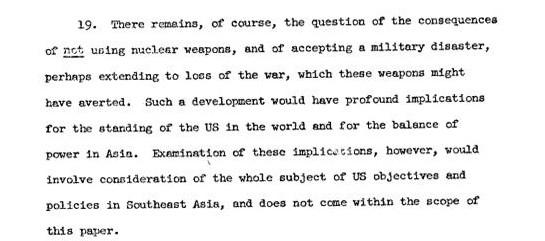
    But it makes sense that the issue was discussed and analyzed and vetted, if for no other reason than to dismiss it.  And here it is, in small part, on the CIA website of declassified materials.  What makes this document so uneasy to me is that even though it addresses the issue of the war not quite being winable and the use of nuclear weapons being (basically) not acceptable and perhaps tactically irrelevant, the idea, at the end of it all, isn’t completely let go.  It wasn’t the idea that you whisper into a helium balloon and then set free–it was tethered in a final “what if” circumstance and let stand for further thought. 

    What happens at the end though, is this:  there is a consideration for what would happen if the U.S. DID NOT use nuclear weapons, which is on page 12, section 19–it is the “aha” part of this paper and the foot-in-the-door to Armageddon.  And what the CIA report from 1966 tells us is this, overall–it doesn’t look good if the U.S. used nuclear weapons; but it also doesn’t look good, perhaps, if we didn’t.  Dr. Strangelove didn’t have anything over these guys.  Finally, these astonishing folks throw up their hands and admit that the non-use wasn’t, somehow, “within the scope of the paper”. 

    Nuke weapons Vietnam


    This is the cover sheet for the twelve-page report; click to enlarge.  The full text is below in the “continue reading section”. 
    Image of document. Alternative text version is not available.


  • Very Literal (and Persuasive) Images–Christ in a Winepress

    JF Ptak Science Books LLC  Post 490

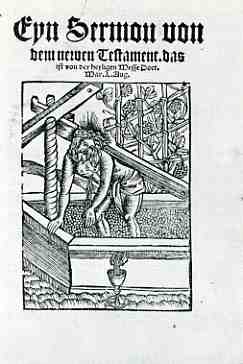
    0 blog jan 24 christ wine420Seldom are images less equivocal than this fantastic woodcut dominating the title page of Martin Luther’s Eyn Sermou von dem newen Testament das ist von der heyligen Messe…, a tallish, 14-page pamphlet printed in Leipzig in 1520.  We see the Christ of Luther (1483-1546) being pressed, crushed under the weight of the crucifix which is also a part of the wine press in which Christ stands–the screw to the press passes through the cross which applies the weight, spilling Christ’s blood which collects in a sacramental chalice.  For Luther, the covenant of Christ’s blood is everlasting, connecting his redemption to man without the need of priests.  And by 1520, Luther certainly had no need of priests.  He was filled with a reforming rage against the papal machine, becoming especially annoyed (in 1517) with the putrifing effects of the funding of the building of St. Peter’s Basilica, which bowed under the flatulent weight of Pope Leo X, who was very busy selling indulgences* from sin to those who could afford to.  So between 1517 and the publication of this pamphlet in 1520, there was the Papal indulgence issue, whose appalling nature led to Luther’s 95 theses on the door at Wittemberg; then came the Diet of Augsberg in October 1518, and then the excommunication of Luther in 1520.  A very busy three years.  

    * (from the Wiki biography on Luther)  “A Dominican monk named John Tetzel was assigned to the sale of
    indulgences in Saxony. A talented and unscrupulous salesman, Tetzel was
    willing to make any claim that improved sales. He thus promised not
    only a reduction in punishment for sin, but complete forgiveness of all
    sin and a return to the state of perfection enjoyed just after baptism.

    “He added that if one would generously purchase indulgences to speed
    the release of a deceased loved one from Purgatory, no actual
    repentance on the part of the giver was even necessary. Marketing
    genius that he was, Tetzel employed a memorable jingle to make his
    offer clear and simple:  “As soon as the coin in the coffer rings, a soul from Purgatory springs.”


  • Unpublished Atomic Bomb Documents, 1945: the Proliferation of Nuclear Energy and Bombs, 1945

    JF Ptak Science Books LLC  Post 489

    0 blog jan 27 hiss446
    This paper is one from a small archive of background and draft papers and
    proposals by the Vannevar Bush group working on the question of the control of
    atomic weapons and the formalization of the American position regarding the use
    and control of atomic weapons, October 1945-February 1946. This archive
    consists of 38 documents relating to the development of U.S. atomic policy,
    with  contributions by President Harry Truman, Secretary of State James Byrnes, Dr. Vannevar
    Bush, (future AEC director) Carroll Wilson, Alger
    Hiss, I.I. Rabi,
    William Shockley,
    Frederick Dunn, Joseph E. Johnson, Leo Pasvolsky, Philip Morrison, Col.
    Nichols, William McRae, Admiral W.H.P. Blandy, George L. Harrison, and
    others.

    I have written elsewhere
    on this site
    about Vannevar Bush (not related to the outgoing) and the coming atomic/nuclear arms problem–as
    perhaps one of the pre-eminent scientific minds in the Roosevelt/Truman
    administrations, Bush and others foresaw the development of the atomic arms
    race in 1943, and by 1945 Bush became a  fundamental thinker and advocate
    on the problem. The items in this archive are low-formal background papers,
    drafts of proposals, informal studies, as well as mature statements of thought
    that would become implemented in the core of U.S. policy regarding the spread
    and control of atomic weapons. They are generally carbon typescripts and
    necessarily of extremely limited distribution, generally have no letterheads,
    occasionally carry the authors’ full names (although sometimes only initials
    are used).

    The former owner of this framework, Alger Hiss (Baltimore-born, 1904-1992) is primarily known for one generation as being accused of being a Soviet spy, and by another generation (mine) for defending himself for the rest of his long life against those charges.  (As it turns out in the small-world department, during WWII Hiss lived six doors away from my Georgetown store on Volta Street–the street so-called because Alex Bell’s “Volta Bureau” was perched at its head.)  I suspect that the current generation doesn’t know his name at all–his crime belongs to another time, but the execution of his prosecution is one of those botched and troublesome things that long outlive the subject as an example of how not to do things, and also about things that just shouldn’t be done.   He was tried (twice) for espionage right after WWII and spent 44 months in Lewisburg Federal Prison from 1949 to 1952–he wasn’t convicted on espionage charges, though; he was found guilty of some relatively serious perjuries, but nothing really to convince a reasonable jury that he was a Soviet tool.  His principal accuser, Whittaker Chambers, is at best problematic element, pulling himself in many different ways through his curdled memory of Hiss’ affairs.  The post-Soviet record (according to former KGB agents’ testimonies, project VERONA and the like) of Hiss’ story are also confusing and somewhat misleading and work at odds, some of the sources confirming his existence as a spy, others offering exculpatory evidence and pointing to another man.  It seems that after everything is said and done that he was probably not guilty of the espionage charges, and that he was a victim of the forces feeding the ravenous appetite of HUAC (House Un-American Affairs Committee), a sensory-blunted beast that consumed many people through little more than fear.  (The loathsome Richard Nixon was one element of this drama–he was a young Congressman from California who used the skulls of the people he wantonly bullied and ruined to reach the lowest rungs of his political ladder to success.  Yes, the man was rotten all the way down.)

    0 blog jan 27 hiss447

    Back to the paper–in 1945, when this paper was written, Hiss was a delegate to the Yalta Conference, which was also primarily involved in the planning of postwar Europe.  The main concern of the Bush group was to create an environment in which the coming development of nuclear weapons by the Soviet Union could be at least understood–the greater goal in this work was the control of the proliferation of these weapons,m but I think that everyone involved knew that this was a hopeless issue.  To this end the group looked at different ways in which newly-created agencies in the brand-new United Nations could somehow serve as a distiller of information and also, improbably, as a policing force.  Again, it was very widely recognized by the members of the Bush group that the Soviet Union would have the Bomb in short order:  the educated guess by the members was from three years following the war, to ten (somewhere between 1948 and 1955). 

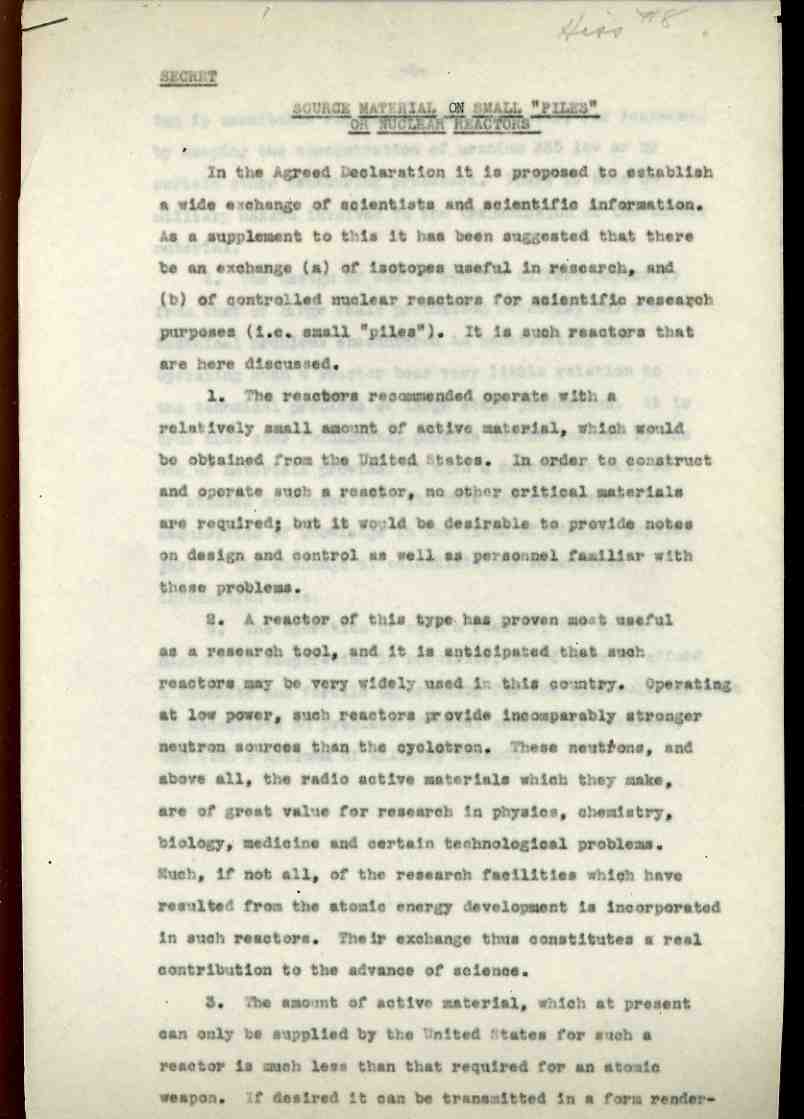
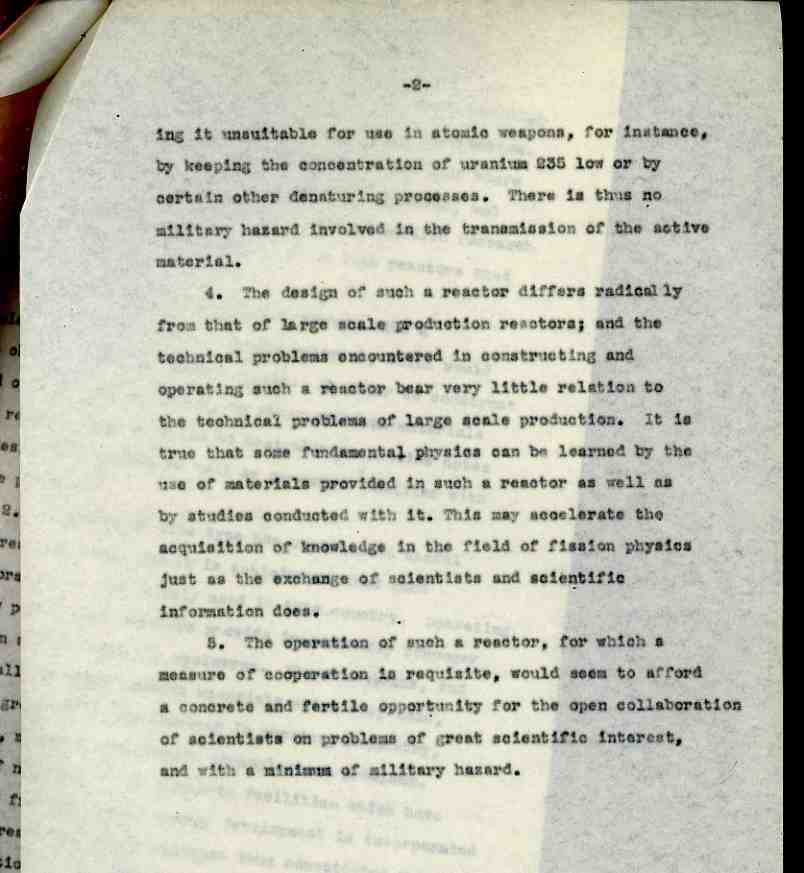
    The authorship of this paper, “Source Material on Small ‘Piles’ or Nuclear Reactors” is not acknowledged, though there are two reasonable guesses about who this might be. FIRST:  my guess is that it may be the work of Philip Morrison. This guess is good if and only if (“iff”) we limit the possible authorship to only those people in the Bush group; if not,  my bet is off.  SECOND:  if this paper was written by an ‘outside” member, then it may very well be the paper referenced in the American Philosophical Society’s Henry DeWolf  Smyth (who I’ve written about earlier) archive as an unpublished work by Smith himself–there is a paper there by the same very uncommon title, and said to have been intended for the State Department, and dated December 1945.  Hiss was working for State at the time, so this very well may be the best fit.And of course Smyth is the author of the official history of the making of the atomic bomb, Atomic Energy for Military Purposes; The Official Report on the Development of the Atomic Bomb under the Auspices of the United States Government, 1940-1945.  Smyth is definitely the best fit but for the exception of there being no others papers in this archive that were not the product of a Bush group member.  (This could be simply solved if it was possible to here the first sentence of the APS paper but I have not been able to do so. This material also doesn’t seem to be in the Smyth book, though the prime candidate for its inclusion would’ve been in chapter four, the entire text located at the excellent Atomicarchive.com site.) The odds-on favorite here though is for Smyth.  The paper is a carbon copy of the typed original; Hiss’ name (along with #8) is written in pencil at the top right; it is possible to pound your way through eight layers of onion-skinned carbon paper, but probably not much more. Hiss was probably one the bottom of the list to receive this summary–at least that’s my guess.  the paper is only two pages long so it is reproduced in full and from what I can determine for the first time. 

    For the topic it covers and for the brevity of the paper, it is a very well-written account of the military value of small nuclear reactors (or “piles”)–that is to say the author correctly identifies the military threat value for a research-grade reactor as low (“a minimum of military hazard”) while the consequences for advancing scientific knowledge as a result of the use of these reactor would be quite high.  In short this little paper outlines what would be the general opinion of teh U.S. government regarding the proliferation of small nuclear reactors, and would function in much the same way as the large Smyth report, settin gthe limits of acceptable and prohibited information and technology. 

    ·Posted by :

    ·in:


  • First Anniversary

    January 26th  marked the end of the first year of this blog.  This has been the best writing exercise I’ve ever had–it has taught me a lot about the discipline of writing and how to arrange my bouncing thoughts.   I’ve made 488 posts public with 75 or so that are in various stages of completion or exasperation, and have written about 300k words. 

    My inspiration for all of this is found in my brilliant wife Patti Digh, who as usual is instrumental in pointing out new and interesting Things That Should Be Done, and then leads by example.  Thank you, Patti. 

    ·Posted by :

    ·in:


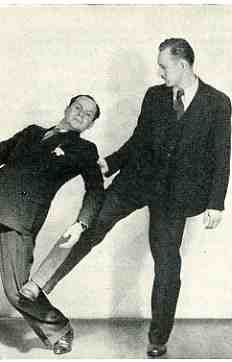
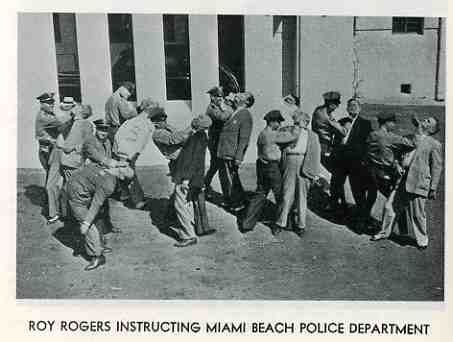
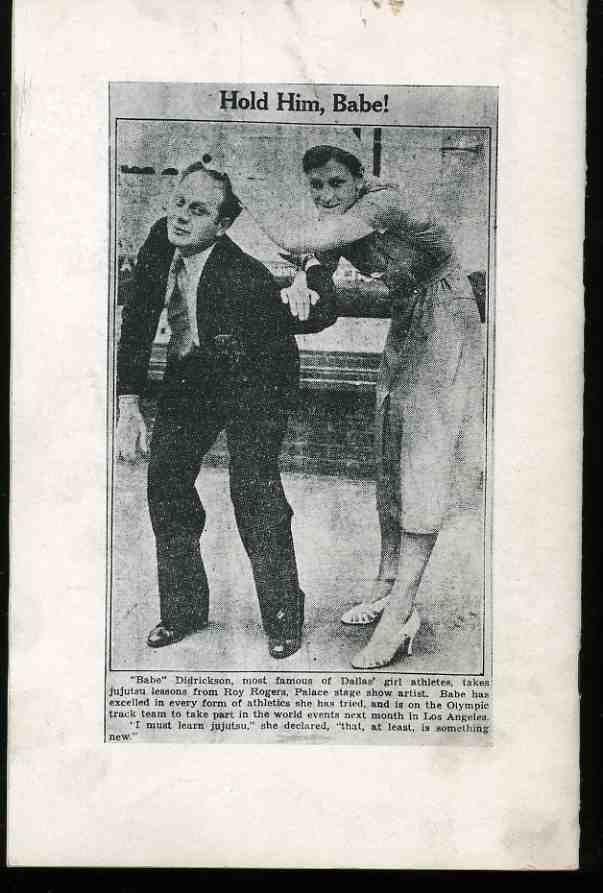
  • Naive Combat and the Romance of Secret Death Holds: Utopiaic pre-Gore Imagery of Intentional Violence

    JF Ptak Science Books    Post 487
    0 blog jan 26 roy rogers443


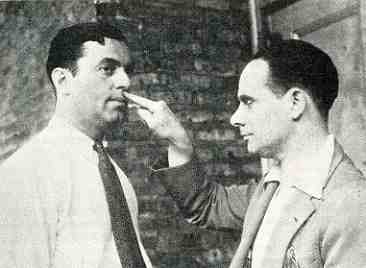
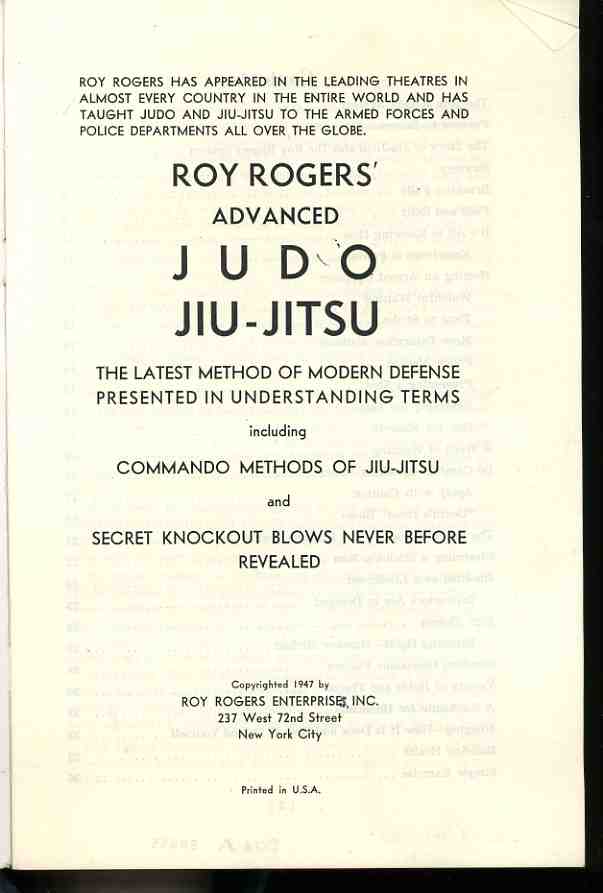
    Roy Rogers–not the singing cowboy but a black-shirted, black-suited, white-bow-tied private slickee cop–shows us here all of the secret and impossible moves from those fast-fighting sequences in those hundreds of 1930’s movies in which men would fight furiously and not lose their hats.  Or, the same guys would have no hats but would have wildly whipping grease-hair and would be knocked down with an open-fisted shot the chest, collapsing on conveniently-placed collapsing-couches.  But Mr. Rogers, who claims to have taught these methods “in leading theatres in in almost every country in the entire world” was serious about his craft, even though the images used to illustrate his serousness look naive and sweetly quaint to our 2009 eyes.  In a series of images that almost never show anyone with an open or grimacing mouth, Mr. Rogers tried to show his grasping audience the tricks of his trade, or the trade of his tricks,

    0 blog jan 26 roy rogers444


    with various methods of restraint, and head butts, and finger holds, and balance-upsetters, and, yes, even the “death” blow.  It is remarkable, really, how far things have progressed in the way of savage fighting in the last 62 years–things have gotten so ultra-modern, so (in the words of the lovely Anthony Burgess) ultra-violent, that these secret combat doings from 1947 look like baby-room wallpaper compared to the nastiness of today.  And yet teaching this stuff kept Mr. Rogers in white ties and jet-black clothing.

    0 blog jan 26 roy rogers445

    If only this sort of combat packed the modern nightmare with dread, what a better place we would wake to–for me, these are pre-gore images of violence which look strangely removed when viewing them from our post-gore world.  Blood as a result of violence in the movies of the 1930’s and 1940’s (and even into the ’50’s) was a rare commodity; blood after the late 1960’s was delivered by the buckets-full, and then by torrent. The delivery of the visual birth of administered violence is relatively new in the history of “entertainment”, and we might’ve moved a little beyond that, as well, as almost nothing is shocking anymore in our pictures of advanced and sometimes impossibly-violent violence.  I imagine that the thought of depicting violence in the movies via 2009 standards to Mr. Rogers back there in 1947 would’ve seemed as remote to him then as the possibility of a computer smaller than an automobile.  

    In any event, I find this to be a remarkable and quiet piece of Americana, capturing some of the stuff of life not normally captured. 

    0 blog jan 26 roy rogers441 0 blog jan 26 roy rogers442

    ·Posted by :

    ·in:

    —

  • The Urgent Normalcy of Nuclear Weapons Training: 1966

    JF Ptak Science Books  Post 487

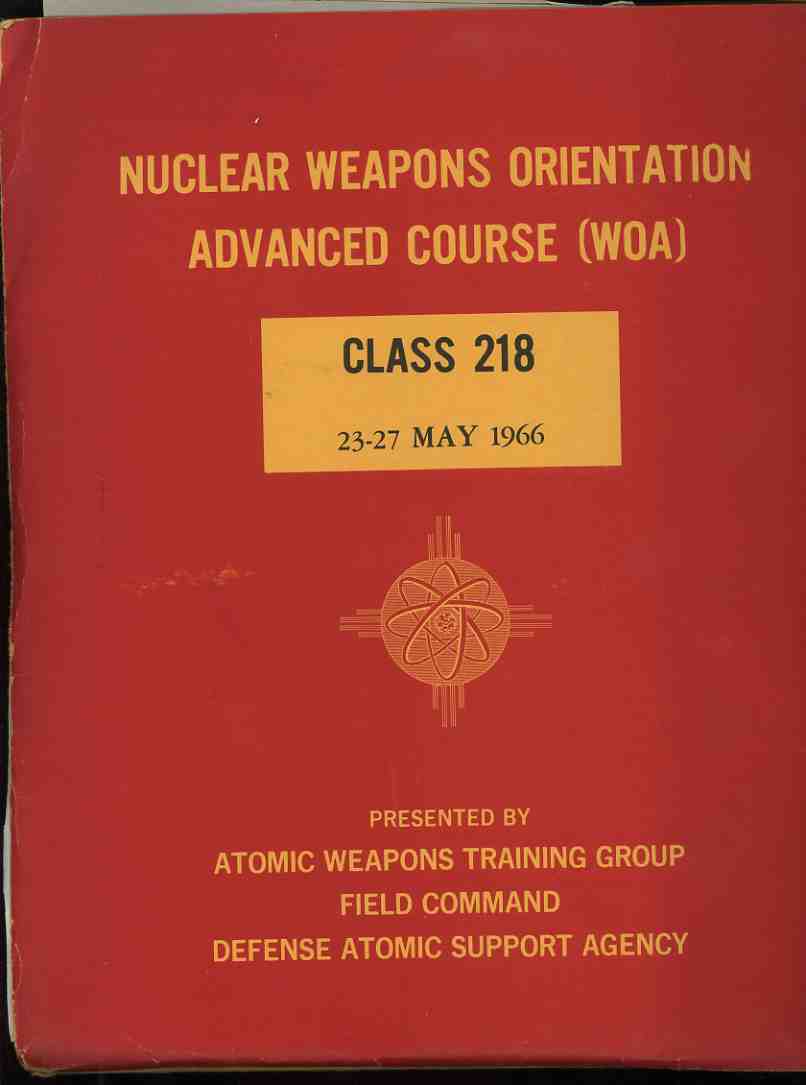
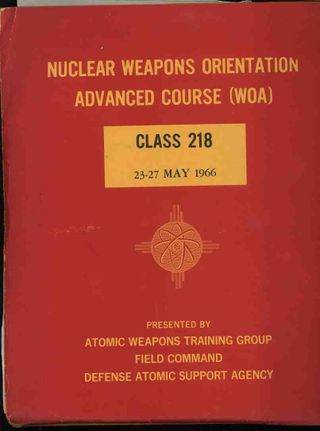
    0 blog jan 05 nuke weapons course360 This folder, colored in the bright colors of New Mexico, contained a number of small pamphlets intended for the new-comers working in the filed of nuclear weapons construction and deployment.  It is an “advanced” course, and I’m not so sure why.  Most of the material in it was pretty elementary, which makes you atop and think some.  Like, for  example, what would the “elementary” course look like when these efforts stop just shy of being Classic Comics Illustrated?  This was not a confidence-builder, this simple approach to getting to the end of the world, but then again it wasn’t intended to be so.  There were a number of references to test observation, which was perhaps the most glaring oddity (with the exception of the overall ordinariness) in these pamphlets.  There were perhaps tens of thousand of these military veterans who suffered unspeakable radiation sickness and were largely ignored and abandoned by the federal government.   An excellent book on this topic was written by Robert del Tredicci, At Work in the Fields of the Bomb (the images from which can be found here.)

    I’m posting a simple list of some of the first series of nuclear tests and their observers, as follows:


    Timeline of Atomic Tests, 1945-1962

    This data is taken from the  Naval historical Center of the Department of the Navy (805 Kidder Breese SE, D.C., the Washington Navy Yard).  Almost all of the data here is presented on the website for the NHC and re-arranged by me for easier use here.  The research and thinking had already been done by the good people at Navy History. 

    1945-6.  Project Trinity, 1945-1946.  . Detonation of the world’s first nuclear device during July 1945, in New Mexico.Witnesses, participants and human experimental subjects:  1000.

    1946. Operation Crossroads.  “2 detonations conducted by JTF-l during June-July 1946, at Bikini Atoll, Marshall Islands,Pacific Ocean.” At least 36,262 Navy and 550 Marine Corps personnel, as well as 251 ships, participated.Witnesses, participants and human experimental subjects:  36,262 Navy and 550 Marine Corps personnel, plus 251 ships. 

    1948.  Operation Sandstone.. “3 detonations conducted by JTF-7 during April-May 1948, Enewetak Atoll, Marshall Islands.” Witnesses, participants and human experimental subjects:   At least 7,759 Navy and 182 Marine Corps personnel participated.

    1951. Operation Ranger: Shots Able, Baker, Easy, Baker-2, Fox, 25 January-6 February Witnesses, participants and human experimental subjects:  “5 detonations conducted at the Nevada Proving Ground, involving at least 6 Navy and 1 Marine Corps personnel.”

    1951  Operation Greenhouse. “4 detonations conducted by JTF-7 during April-May 1951, at Enewetak.”  Witnesses, participants and human experimental subjects:   At least 2,900 Navy and 80 Marine Corps personnel were involved.

    1951. Operation Buster-Jangle. “7 detonations conducted from October-November 1951 at Nevada Proving Ground.”  Witnesses, participants and human experimental subjects:  involving at least 319 Navy and 188 Marine Corps personnel.

    1952.  Operation Tumbler-Snapper. “8 detonations conducted during April-June 1952 at Nevada Proving Ground.” Witnesses, participants and human experimental subjects:  At least 556 Navy and 2,042 Marine Corps personnel participated.

    1952.  Operation Ivy. “2 detonations conducted by JTF-132 during October-November 1952, at Enewetak. One of the events, designated Mike, was the first thermonuclear or hydrogen bomb.” Witnesses, participants and human experimental subjects:   At least 5,258 Navy and 178 Marine Corps personnel participated.

    1953. Operation Upshot-Knothole. “11 detonations conducted during March-June 1953 at Nevada Proving Ground.” Witnesses, participants and human experimental subjects:   At least 773 Navy and 2,275 Marine Corps personnel participated.

    1954.Castle Series. “6 detonations conducted by Joint Task Force (JTF) 7 during March-May 1954, at Enewetak.” Witnesses, participants and human experimental subjects:   At least 8,633 Navy and 303 Marine Corps personnel were involved.

    1955. Operation Teapot. “14 detonations conducted during February-May 1955 at Nevada Test Site.” Witnesses, participants and human experimental subjects:   At least 541 Navy and 2,305 Marine Corps personnel participated.

    1955. Operation Wigwam. “A  single deep underwater detonation conducted by JTF-7 during May 1955, in the Pacific Ocean, approximately 500 miles southwest of San Diego CA.”  Witnesses, participants and human experimental subjects:   At least 6,567 Navy and 110 Marine Corps personnel as well as 30 ships participated.

    1956. Operation Redwing. “17 detonations conducted by JTF-7 during May-July 1956, at Bikin
    and Enewetak.”  Witnesses, participants and human experimental subjects:   At least 5,654 Navy and 253 Marine Corps personnel were involved.

    1957.  Plumbbob Series.  “24 detonations conducted during April-October 1957 at Nevada Test Site.” Witnesses, participants and human experimental subjects:   At least 574 Navy and 2,148 Marine Corps personnel participated. Naval aircraft included 4 model ZSG-3 airships, an HSS-1 helicopter and fixed-wing aircraft.

    1958. Operation Hardtack I.  “35 detonations conducted by JTF-7 during April-August 1958, at Bikini
    and Enewetak.”  Witnesses, participants and human experimental subjects:   At least 9,736 Navy and 219 Marine Corps personnel were involved.

    1958.  Operation Argus. “3 high-altitude detonations conducted by TF (Task Force).” 88 during August-September 1958. over South Atlantic Ocean.

    1958.  Operation Hardtack II. “19 detonations conducted during September-October 1958 at Nevada Test Site.” Witnesses, participants and human experimental subjects:   At least 33 Navy and 2 Marine Corps personnel were involved.

    1961. Projects Gnome and Sedan : The Plowshare Program  “27 nuclear detonations conducted between 1961 and 1973 at Nevada Test Site, Colorado, and, New Mexico.”  Witnesses, participants and human experimental subjects:   At least 82 Navy and 1 Marine Corps personnel participated.

    1962.  Operation Dominic I.  “36 detonations inc. Polaris and ASROC tests conducted by JTF- 8 during April-November 1962, in Johnson and Christian Island areas, and a single detonation 371 nautical miles southwest of San Diego CA.” Witnesses, participants and human experimental subjects:   At least 18,163 Navy and 659 Marine Corps personnel participated.

    1962.  Operation Dominic II. Shots Little Feller II, Johnie Boy, Small Boy, Little Feller I “4 detonations during July 1962, at Nevada Test Site.” Witnesses, participants and human experimental subjects:   At least 81 Navy and 89 Marine Corps personnel participated.
    ·Posted by :

    ·in:


  • The “Huh?” Department: Pig Graphs, Pig Checkers and Other Small Confusions. Naive Surreal Advertising Art

    JF Ptak Science Books   Post 485


    “Always remember, a cat looks down on man, a dog looks up to man, but a pig will look man right in the eye and see his equal.”–W.S. Churchill

    0 blog jan 24purina425

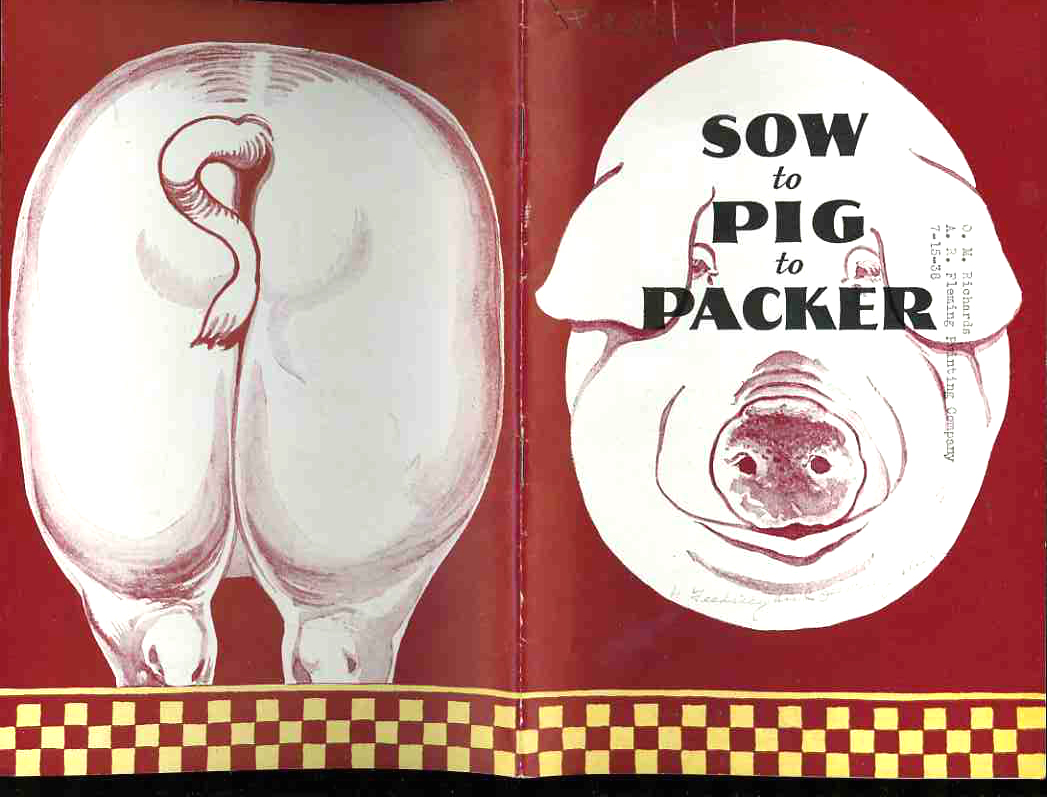
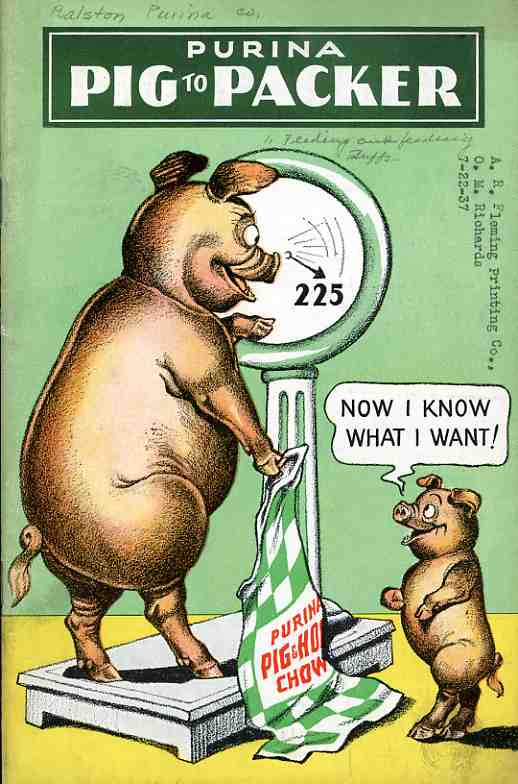
    Well.  Some things can just speak for themselves, as in the case(s) of these curious images brought to you by the graphic design folks working to push feed for Purina Company.  There were still tens of millions of farmers in the U.S. when this pamphlet was printed in 1935, and most of these farms were quite small, and so the Purina Company was reaching out with a broad stroke, right down to the neighborhood guy with 6 pigs on a half acre.  Of course what makes these images so appealing now is that they seem other-worldly, from a time that we have very little connection to even though it existed in the lifetimes of my parents.  The images are discordant, off-centre, not-quite-right–which places them perfectly into my Naive Surreal category.  The images are in their own accidental way quite surreal in that they look to be intentionally bizarre, when the opposite is true.
    0 blog jan 24purina graph426


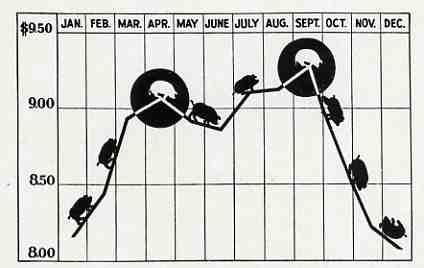
    Nestled snuggly away though is this remarkable graph of pig value versus time–its interest has nothing to do with the data which I suspect was accurate and universally known to be so (at the time), but for the PIG MARKERS at the X/Y interface.  That is something I’m sure I’ve never seen before, and I pay very close attention to the history of the display of quantitative data.  It is a small jewel.  a pearl among, well you know.


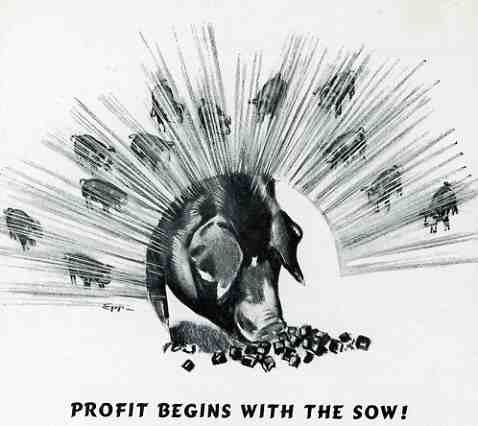
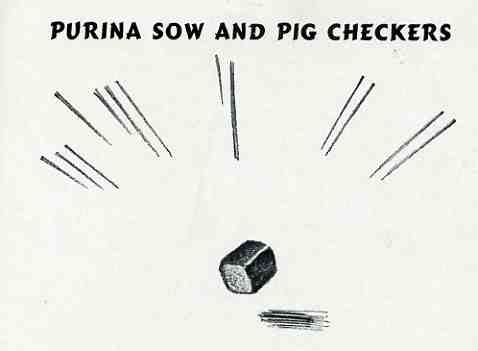
    As for some of the other images and their pig-centeredness, I can only speculate.  “Profit begins with the sow” is a solar porcine sunrise with little pig radiances.  “Purina Sow and Pig Checkers” I thought at first and continue to wrongly think that the cube in the middle was a loaf of bread (complete with shadow!), beautifully confounding the image-heading dichotomy; but it isn’t.  It is still a small magnificance of confusion, thank goodness.

    0 blog jan 24purina profits 428 0 blog jan 24purina graph427

    0 blog jan 24purina profits 429

    ·Posted by :

    ·in:

    — —

  • Finding Hidden Images in Antique Prints: 18th Century Forensic Social X-Rays

    JF Ptak Science Books   Post 484


    Even though I truly enjoy the intimate pathology of antique prints, finding “hidden” images within images within images, it seems as though I’ve only made 25 or so posts about them, and this in spite of thousands of such images to choose from.  Posts like “Hidden Children: Found Art and Social Vignettes Inside Art“,  “Revealing the Worlds Inside of Prints: Finding Hidden Human Geography in Old Prints” and “Finding Hidden Images in Antique Prints: 18th Century Forensic Social X-Rays” are good representatives of this genre.  

    0 blog jan 23 vickers412

    Images hold selective secrets for different people of divergent interests.  Sitting through a motion picture, for example, shows a series of still images flashed before us—in a single scene people bring to bear their own ways of experience and observation.  A forensic pathologist will see things shown within their specialty different from someone with a chemical explosives background who will see a bomb differently from an ER doc who would respond to an emergency room differently from a bookseller who might notice in the scene that the paperback edition of a tree Grows in Brooklyn being read by an American G.I. in 1944 didn’t exist yet, and so on.  A single image can hold a tremendous variety of depth and interpretation depending on the observers’ perspective. 

    0 blog jan 23looking hard surrey414

    Most of the time when I look at prints now in the antique map shop that I own (and now my only public venue now that the history of science bookshop has been alive solely online now for the last 6 years) I am looking at the extraneous “stuff” that is used as filler to the print’s purpose, and I find the uncommitted art just fascinating, sort of like “loose” unnecessary snapshots of common life, everyday life, of people walking by.

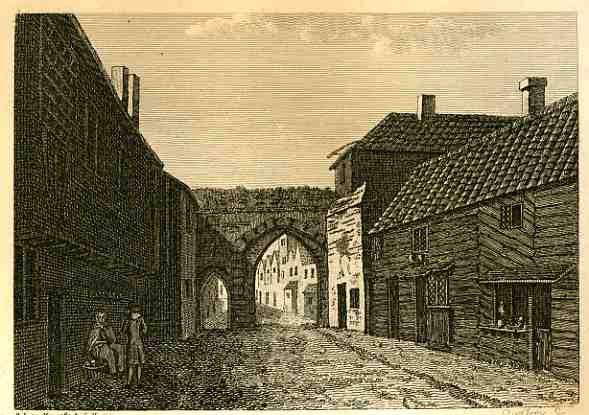
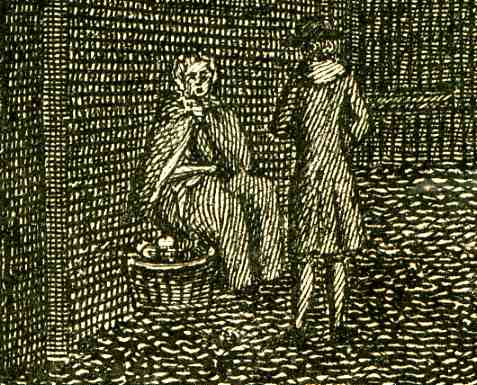
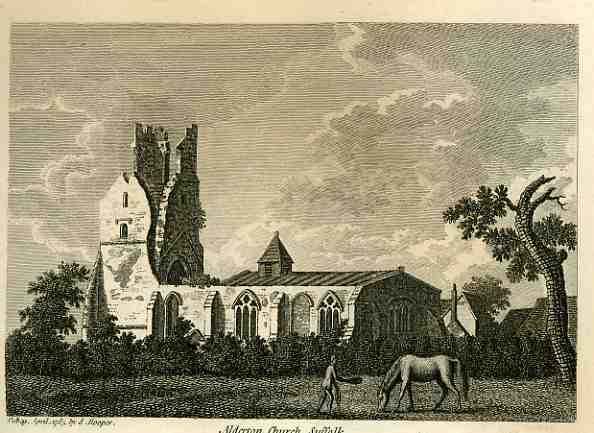
    These two images are from a series of etchings done by S. Hooper in 1785 of ancient and semi-ancient ruins in Surry and Sussex.  The first is of Bermondsey Abbey, Surry, a 12 th century English Benedictine monestary with precursors reaching back another 500 years.  I’m pretty sure that it is the central archway(s) that are the remnants of the structure in this print,

    0 blog jan 23looking hard surrey415


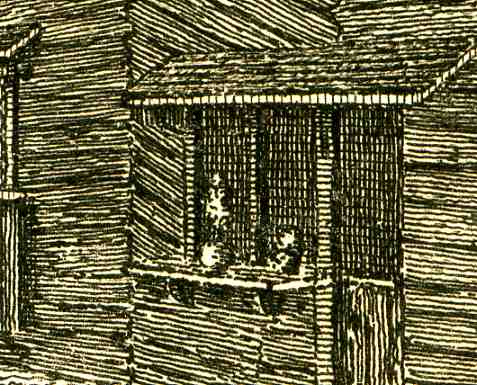
    with Renaissance-era occasional buildings sprouted up around it.  I find the old shopkeeper’s window (i.e. “store”) at the right to be very interesting, someone selling their services or wares from a location that I would bet was hundreds of years old even by 1785.  The shop would be ready for business by opening the shutters and flipping down the table/ledge.  I wonder too about the woodworking on the second floor of this curious structure, placed in an unconventional diagonal.  The shaded feature of the shawled woman selling her goods from a basket to what seems a well-dressed man is another curious addition. 

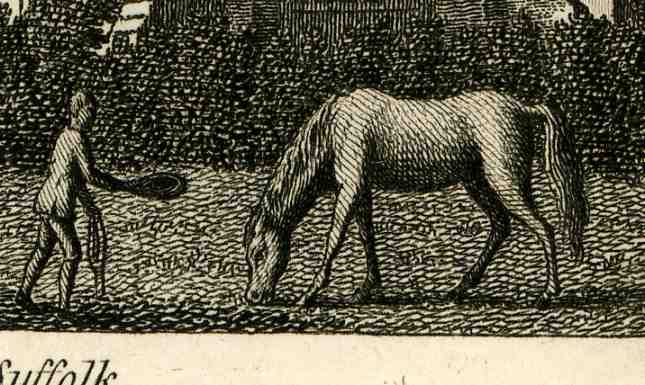
    The second image is of Alderton Church, Suffolk, and the feature of itnerest here this time not so  hidden at all, though it is incidental and it is sweetly odd.  the ruins of the church are

    0 blog jan 23looking hard surrey417

    adequately rendered, but the horse in the foreground is just beautifully done, far more so than required by its half-inch appearance in the full-size original.  Also, the man approaching the grazing horse does so slightly hunched, with a hat outstretched (offering a treat inside?), and doing so I’d say in a kind, respectful manner, trying as he was to put a halter on the horse.  It is just a lovely, quiet sub scene that is unnecessary to the architecture of the ruin but probably very necessary to the artist or etcher who wanted just a tiny flight of fancy now-and-again, and so placed something of artistic merit in a dead space of the print. 


    0 blog jan 23looking hard surrey416


  • Looking Straight-On at Things in Antique Prints, Part 2

    JF Ptak Science Books LLC  Post 483 (continuing Post 20)

    0 blog jan 23 vickers411
    In one of my earliest posts on this blog I wrote: I’ve always been intrigued by antiquarian images
    that looked straight down, or up, at things–90 degree, perpendicular, real
    straight-on stuff, giving a feel for depth (or height) and perspective. 
    Funny thing is that in the wide world of scientific images, they really don’t
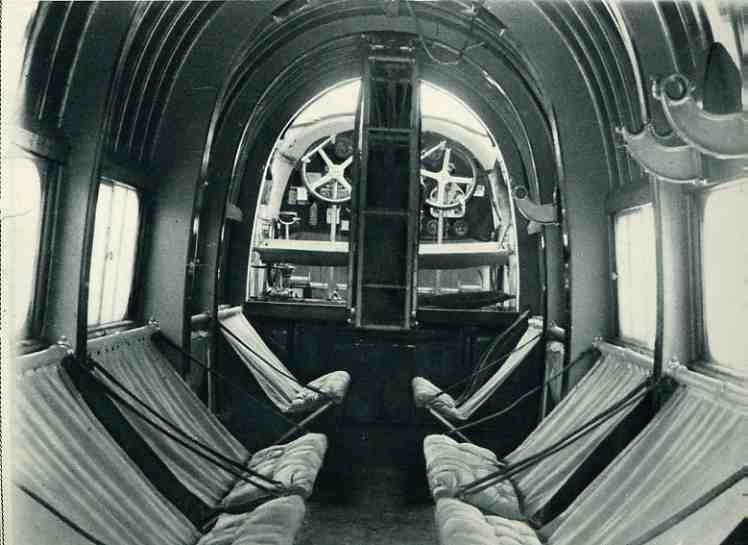
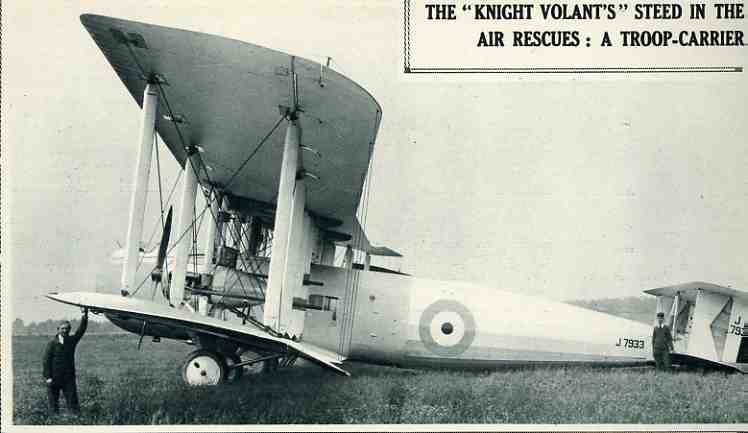
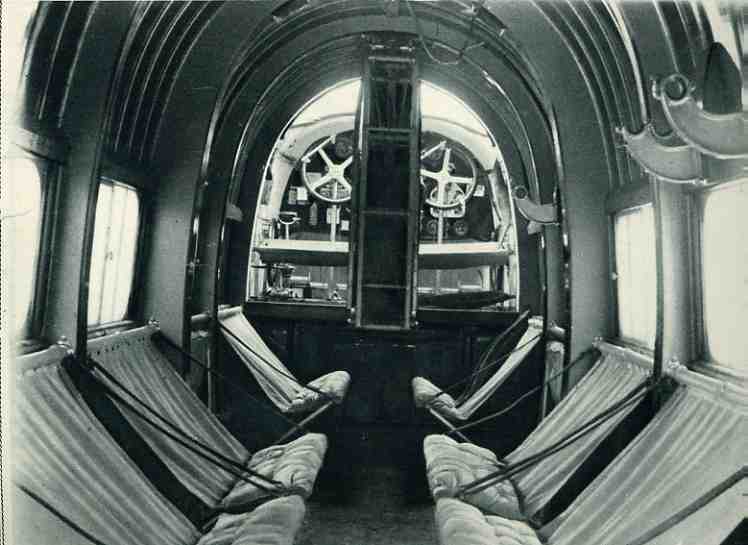
    show up very often.”  Still rue.  I really haven’t noticed that many straight-on images–perhaps the paucity of these things is as simple as them not being “as pretty” as other views.  I have found another, today, showing the interior of the “spacious RAF” Vickers “Victoria” troop carrier aircraft for (January 5) 1929.  It was indeed spacious for the time, and was one of the largest planes in the air. 

    The Vickers Victoria first flew in 1922—this 1929 monster
    was powered by two 570hp engines which allowed it to cruise at a modest 110 mph,
    taking it 11 minutes to climb to 4900 feet. 
    It had a crew of two and carried 22 troops—it looked as though it might
    do more than that, but this was quite a load given the time and the altitude at
    which the plane would function.  As you
    can see by the fellow standing in the foreground, it was a very tall plane—17 feet tall, with a 59’ long body on a massive  87’ wingspan (that made even more impressive
    by the wings’ 2,178 square foot surface). 


    0 blog jan 23 vickers410


    The view here is from the rear of the aircraft looking
    straight forward, and I notice that the pilots didn’t have any backrest for
    their seats.  The interior, even though
    fairly threadbare and essential, did have upholstered seats for the folding
    chairs. 


  • Material Things Out-of-Context: the Statue of Liberty in Paris, 1884

    JF Ptak Science Books LLC  Post 482

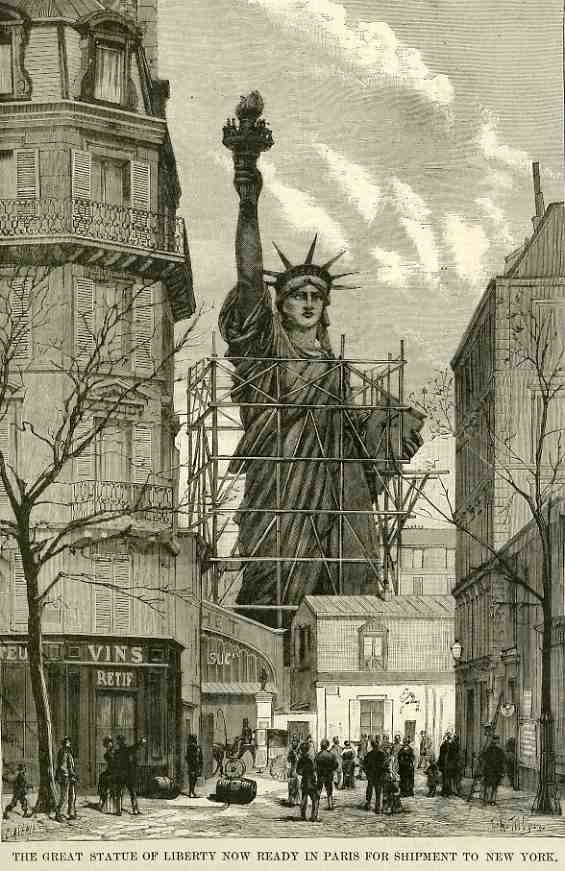
    0 blog jan 22 statue409


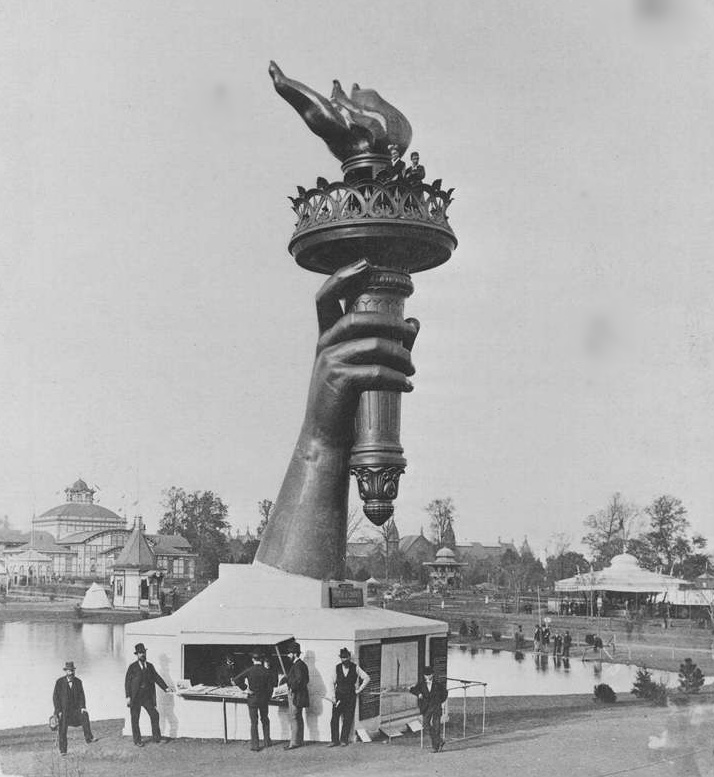
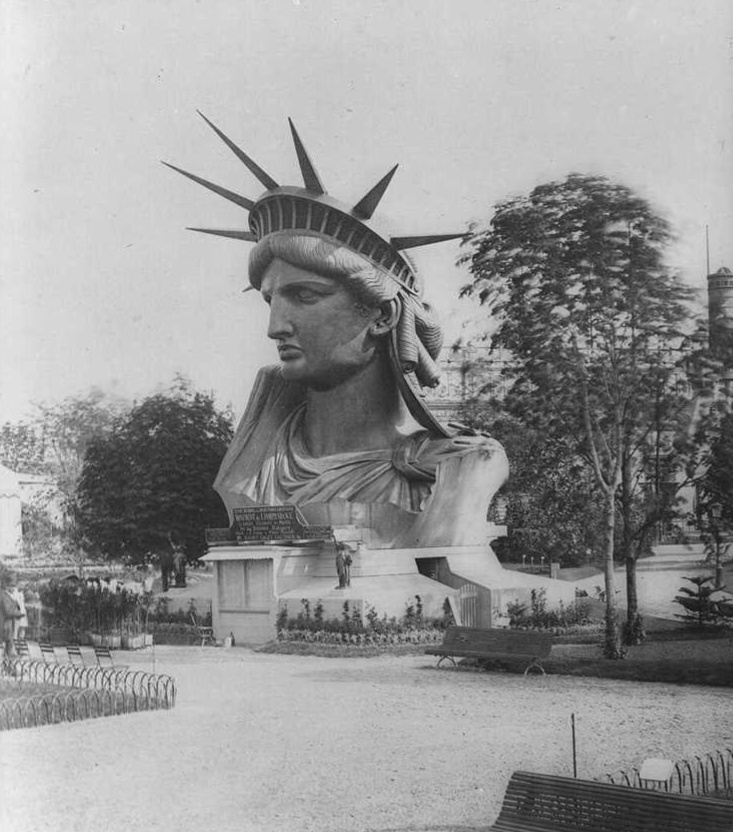
    “The colossal statue of Liberty, which is to be placed as a pharos in New York Bay, is at last finished.” So leads this front-page story of the Scientific American for May 10, 1884 (published in its Supplement section #413).  The image reminds me of many that I have seen over the years of familiar objects being found in unfamiliar places.  In this case, the statue loomed over the warehouses as it was assembled in the courtyard of Gaget et Gauthier, rue de Chazelles, Paris, prior to its shipment to the United States. (It was shipped in 350 pieces and packed away in 315 crates, bouncing its way to America in the French frigate Isere.)  The arm of  the statue made an appearance all on its own at the Centennial Exhibition in Philadelphia in 1876, and then rested at Madison Square in NYC until joined by the rest of the body in 1886.  The head of the statue was also separately exhibited in Paris until 1885.


    Liberty arm

    Out-of-context is interesting and dissonant and anything but normal; and anything-but-“normal” is good, seconding the claim of Mme. Curie that “dissymmetry causes phenomena”, which means that something happens that is not part of the ordinary, and that in turn means that something new can be discovered. 

    Liberty head


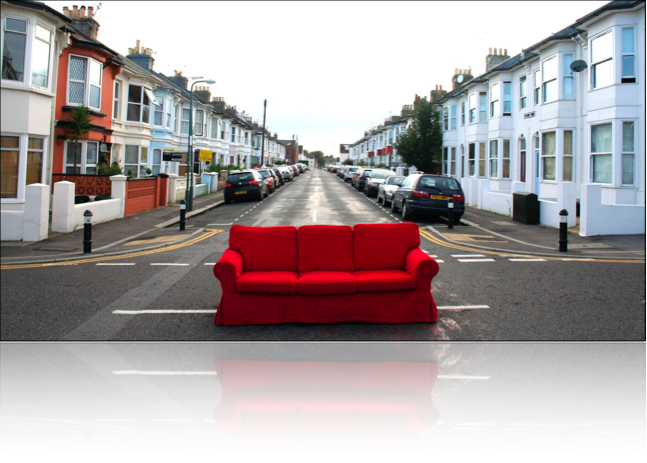
    There are some interesting and purposeful collections of instituted disturbances like this: for example, there’s the red Couch Project, a continuation of a photographic odyssey of a large red couch that has been moved many thousands of miles across the world, finding itself in situations entirely unexpected of a piece of furniture. Then too there is Philippe Halsman’s The Jump Book (1959), in which he simply asked (famous) people to “jump”. Red couch

    He semi-seriously (probably not seriously at all)  interpreted their efforts, fitting their jumps into what he saw as his subject’s personality.  Peter Ustinov (shown here) tries hard to look as though he is not jumping, while Richard Nixon jumps a very careful, self-conscious  and studious jump.  

    Jump


    In any event, in spite of liking thee last two works immensely, I prefer the unintentional out-of-context molestation of required memory.  (Though anything else that can get me to the not-normal stage of being is welcome.)