A Daily History of Holes, Dots, Lines, Science, History, Math, Physics, Art, the Unintentional Absurd, Architecture, Maps, Data Visualization, Blank and Missing Things, and so on. |1.6 million words, 7500 images, 4.9 million hits| Press & appearances in The Times, Le Figaro, Mensa, The Economist, The Guardian, Discovery News, Slate, Le Monde, Sci American Blogs, Le Pont, and many other places… 5000+ total posts since 2008.

Author: JF Ptak

  • The Zero Minus Zero Department: David Lynch Marionette Explains Surviving a Nuclear Holocaust

    JF Ptak Science Books LLC  Post 512

    Rural_civil_defense_tv_spots_1965_000210
    I wouldn’t look at this linked video if it is bedtime where you are.  It is a singularly creepy experience, at least for me, to watch this exceptionally bad marionette go through the paces of explaining how rural folks should/could prepare for the consequences of Atomic Armageddon.  Delivered to god knows where by the Department of Defense in  1965, this cretinous, bunch-crotched, simian-fingered, dead eyed, helmet haired, waxy marionette with a Joker mouth that goes from ear-to-ear wants to help in ways that make you want to run into the flames to drink a flaming glass of Pure Radiation.  As we watch the ten or so shorts unfold, the creepiness grows denser and bolder, watching the shaky walls behind hay bales in the basement fortress, collecting the errant cow to stuff it into the bomb shelter with a pat on the butt, the deeply disturbing profile of Marionette Man watching tv, the fully-dressed-wide-eyed-shocked-into-consciousness-zombie sleep, the black mirror, and on and on. 

    These films are bizarre, errant, meaningless masterpieces, sugar coating the End of Things with flippant advice from a scary man moved with shining string–could such an important message be delivered with less care and still be delivered? Well, yes, of course, as anyone who can still remember “duck and cover” exercises can tell you. These supposedly “uniquely” stupid messages bombed onto the American population were basically part of an entire genre of visual seduction that induced an intellectual collitis that enabled such broadcast monologues to be delivered in the first place.  The best way to lie and have your message be believed is Lie Big, and these public betterment messages were among the Biggest Lies of the decade. 


  • Darwin and Lincoln and the Emancipation of Thought

    JF Ptak Science Books LLC  Post 511
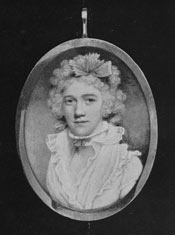
     

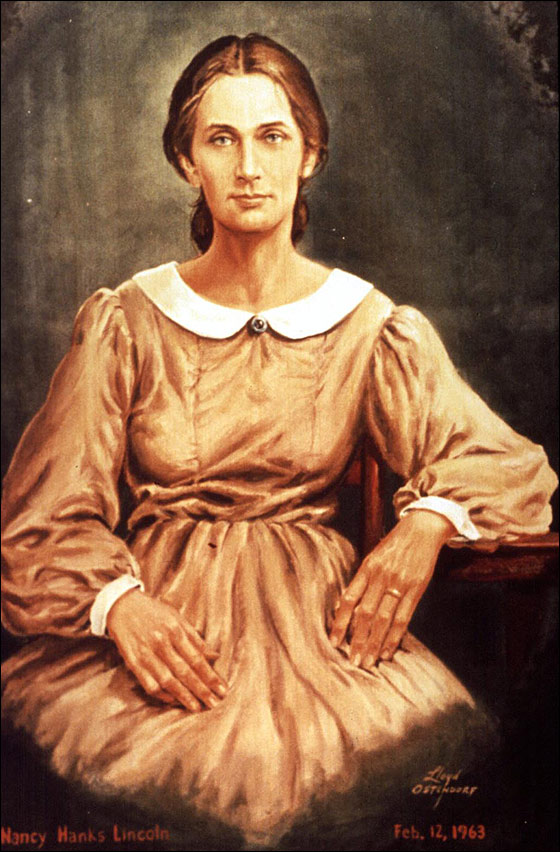
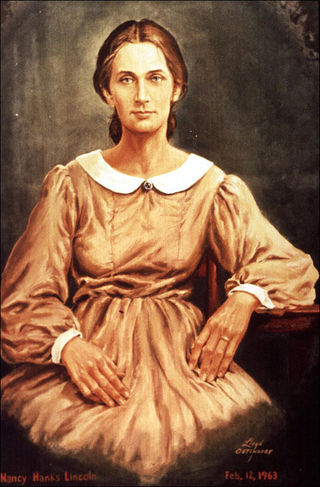
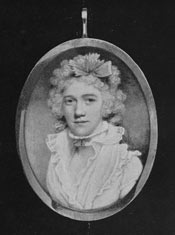
    0 blog feb 12 darwin mom Today is a much-loved day for Abraham Lincoln and Charles Darwin, born within a few hours of one another 200 years ago on this day in 1809.  I’m not so sure that we should celebrate them on their birth dates—it has always seemed a bit off to me; perhaps we should celebrate their mothers (Darwin’s left, Lincoln’s below) instead, leaving another date of importance/accomplishment for the celebration of the birthday boys.  Darwin would be an easier pick for this than Lincoln—23 November 1859 being the red-letter day, for the publication of his On the Origin of Species, which is also up for a big 150th anniversary this year.  The book was an instant best seller, selling out of the first printing almost immediately (at least for the publishing world of 1859) before going on to a life of its own, with five more editions being published before Darwin was finally sem0through with it (and that in the wake of at least a dozen other influential works to his credit).  Lincoln is harder in this respect—there’s Juneteenth, of course, but finding one particular day for his monumental and successful task of not letting the country fizzle away is a bit hazy; perhaps the day of his beautiful second inaugural address, or Gettysburg?  Dates like this would make their celebration much more specific, with a great idea in mind, rather than just a foggy celebration of a birth date celebrating the span of a big life.  (Also, we combine Lincoln and Washington into a Lincington Day, and barely recognize Darwin at all, unless we’re busy throwing him out of the schools [like, say, in Kansas] to better protect our children from the man with the big white beard.  Darwin, not god.)

    23 November seems like a good choice for Mr. Darwin.  He did write much else of course, but Natural Selection was his paramount idea.  As ideas go, in the entire history of ideas, it is about as good an idea as anyone has ever had—big, muscular, profound, explanative, correct.  (There are many big ideas that are harmful but whose idea-ness stretches/breaks the social fabric of societies:  the Big Lie, Slavery, Compound Interest, Inferiority, to name a few.  I’m not so sure about how good an idea heaven might be.) 
    0 blog feb 12 lincoln mom
    Darwin came to the idea of Natural Selection 20 years* or so before he actually published on it, though there was a chosen circle of friends and correspondents who formed a mesh through which Darwin passed some of his ideas.  Listen:  I heard a “science” report on NPR this morning talking about why it took “so long” for Darwin to actually publish.  And what the science commentator came up with—so far as I could listen—was something about a bubbling god/marriage/love/embarrassment/social debate curative, that Darwin was somehow saving his wife-to-be the retribution of society as Charles did away with the creator.  In this porridge of lint I see nothing.  Darwin didn’t publish because, for almost all of those years, he wasn’t ready; rather, the theory of natural selection wasn’t ready for presentation.  Darwin was still putting together the evidence for his case; and when he was ready, his case was superb.  He knew the implications of what he was saying, and he needed to have This Most Beautiful Theory ready, spending 20 years building a castle.  He was finally convinced/cajoled into writing a bit about it in 1858 with the young Alfred Russell Wallace (Charles Darwin and Alfred Russell Wallace “On the Tendency of Species to Form Varieties; and on the Perpetuation of Varieties and Species by Natural Means of Selection.”  Journal of the Proceedings of the Linnean Society, III, 9, (1858). —a man who like Darwin’s younger self aboard the Beagle in South America  made his way around the Malay Archipelago collecting, analyzing, theorizing, until he too came up, independently, with the theory of natural selection.   Priority in this case was not in question.

    Perhaps we should also recognize the people who were important to the development of the greatnesses of these two men.  Speaking to Darwin, there are many, but to make a few examples, we have Thomas Burnet (whose The Theory of the Earth, 1684-90 was the first critical investigation of the implications of geological change, and that in spite of his religiosity and biblical foundations).  James Parkinson’s  Organic Remains of a Former World, (1804-1811),  was an important interpretation of the fossil record albeit with an evolution in favor of god’s continuous actions.  Charles Lyell’s Principles of Geology was perhaps the greatest influence on Darwin’s thinking, the young Charles taking a copy of it aboard the Beagle (after being told by friend Henslow not to believe in the book) where it was studied and devoured, being scientifically introduced to the idea of actions over long periods of time. 

    Seldom mentioned in groups like this, though, is a great scientist and physician, the polymathic Hermann von Helmholtz.  This man is principally remembered for experimentally determining what was thought to be impossible—the rate at which the nerves in the body function, and as the inventor of the ophthalmoscope, and as a leading color theorist, and for major contributions to mathematics and physiology, and for his independent discovery of the conservation of energy, the second law of thermodynamics (On the Conservation of Force, 1847).  (This is a little problematic, as Joule and Mayer came up with the same thing at about the same time, but the 26-year-old physician figured it out at the same time on his own.) There is much else, but what concerns us here is his Darwin-related bit, an epochal discovery that Darwin must’ve known about—the discovery of the age of the sun, when the sun would expend all of its energy, and then, the age of the universe.  These were enormous ideas in 1854—that the impervious sun could actually have a life span, and that by extension so too could the earth and the universe writ large, and that the universe was on the order of hundreds of millions of years old (at least), were shocking revelations.  And Helmholtz was more correct than not, giving another verification of massive time that was so necessary to the function of natural selection. 

    And so I wish good tidings to Mrs. Darwin (Wedgewood), Mrs. Lincoln (Hanks), Alfred Wallace, Charles Lyell, Thomas Burton, and  James Parkinson—and also of course to Abraham Lincoln and Charles Darwin.

    _______

    *Darwin was undoubtedly an evolutionist by 1837, and probably earlier.  As Francis Darwin points out that this date may be as early as 1832, pointing out that Darwin, in his Autobiography, wrote:

    “During the voyage of the Beagle I had been deeply impressed by discovering in the Pampean formation great fossil animals covered with armour like that on the existing armadillos; secondly, by the manner in which closely allied animals replace one another in proceeding southward over the Continent; and thirdly, by the South American character of most of the productions of the Galapagos archipelago, and more especially by the manner in which they differ slightly on each island of the group; none of the islands appearing to be very ancient in a geological sense. It was evident that such facts as these, as well as many others, could only be explained on the supposition that species gradually become modified; and the subject haunted me.”
    ·Posted by :

    ·in:

    —

  • Odd Things in the Sky Department: Der Herr Gott in a Cape, and Bombs Away

    JF Ptak Science Books LLC Post 510

    Blog--brunswig
    What upsets people is not things themselves, but their theories about things.
      —Epictetus, quoted in the epigraph to Laurence Sterne, The Life and Opinions of Tristram Shandy, Gentleman (1759)

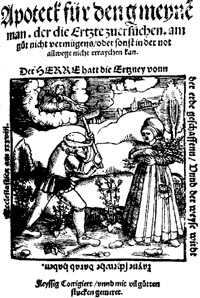
    Continuing a minor thread on “Odd Things in the Sky”, which also joins up nicely with another odd thread, “Things Out of Place”,  come these two interesting, just-remembered images, showing a stiff-armed god and a big old bomb coming out of the sky.  The first, left, is the title page of the Strassburg-born army surgeon  Hieronymus Brunschwig’s Apoteck fuer den Gmeine man der die Ertzet.  Published posthumously in 1530, the good dead doctor offers wide and varied instructions and ruminations on medicine (per se) and health care to the average person–meaning, basically, the person with enough money to buy a book but who could not afford a doctor (probably a slim margin).  the book was filled with reasoned and reasonable approaches to taking care of health and illness, with cures and recipes for everything from itchyness to syphilis.  Presumably the Der Herr Gott of Einstein is doing a little more than throwing dice, taking a very prescribed interest in the hoeing man and gathering woman.  It is interesting to see that the man emerging from the cloud, somehow needs a cape. Blog--blondel_title

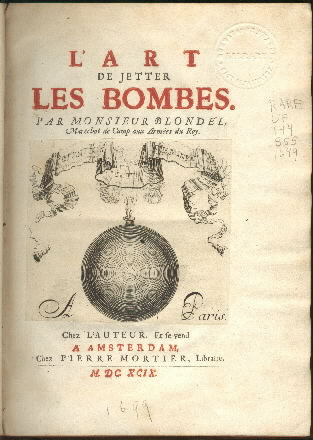
    Coming from the sky next is a bomb, the creation of  Francois Blondel, (1618-1686) in his L’art de jetter les bombes…, published 1699.  Blondel was as good in building as he was in un-building, being in charge of the public works of Paris (and appointed so by Louis XIV, being perhaps one of the
    most important architectural/engineering positions that could be
    imagined by the French mind), as well as being an expert in the
    construction of forts and fortifications.  His work on bombs and
    artillery was ready to be published 15 years or so before 1699, but the
    King saw that even though there was a lot of interest and use to his
    military in seeing the treatise published, the same was also true of
    his enemies.

    But of interest to me here is the title page and the bomb not only falling from the sky, but  falling from the bannered heavens.  There’s nothing soft or spooky about the book itself, which is all business, of course, as important to the military man of 1700 as, say, Robert Coles’ book on underwater explosions was in 1965 or Urbanski’s Chemistry of Explosives a decade earlier.  And even though Blondel certainly built on Galileo’s work on the parabolic flight of such weapons, the bomb on the front cover is falling straight down. 


  • Ars Memoria–Giordano Bruno and the Art of Memory

    JF Ptak Science Books LLC  Post  509
    0 blog feb 9 bruno memory545

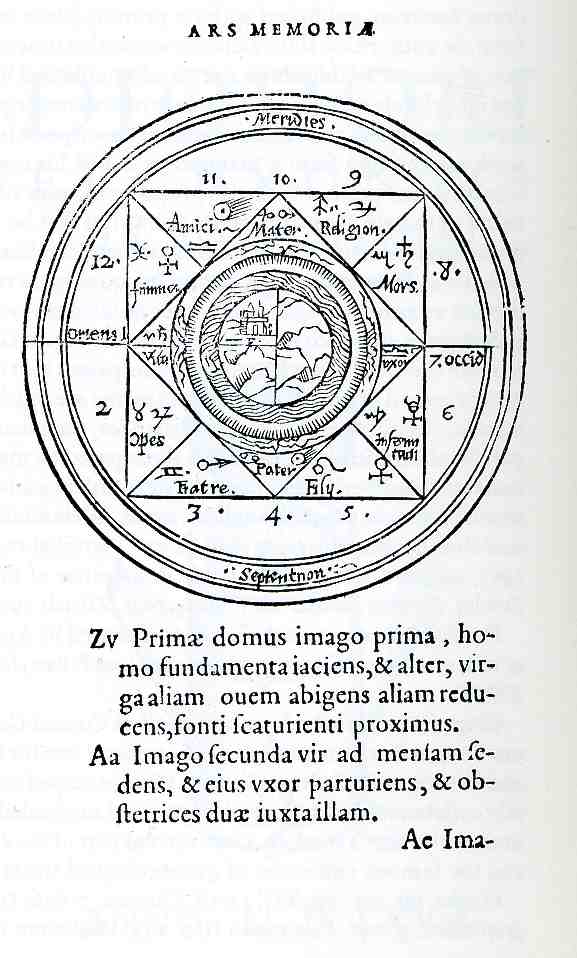
    The images presented here today are related to graphical memory, ars
    memorativa
    , the technique of aiding the storage (and retrieval!) of info in the
    human brain.  This was accomplished  by mnemonic devices that associated the
    location of the data with a striking or jarring or geometric image, all
    structured in such a way that the correlation of the continued image would
    relate to more and deeper remembered information, one bit leading to the next,
    expanding into other bits, and so on, in a kind of fractal way.  The visual tools held a space for the data;
    they were a constant structure into which information could be poured, allowing
    for chains of info to be formed and retrieved. 
    And so by the effort of visualizing the structure of where the memories
    where (supposed to be) the user would be able to recall them by simply
    remembering their placement, and since the structure built on itself, one
    memory would lead to the next, and so on, a cascade of rushing memories.

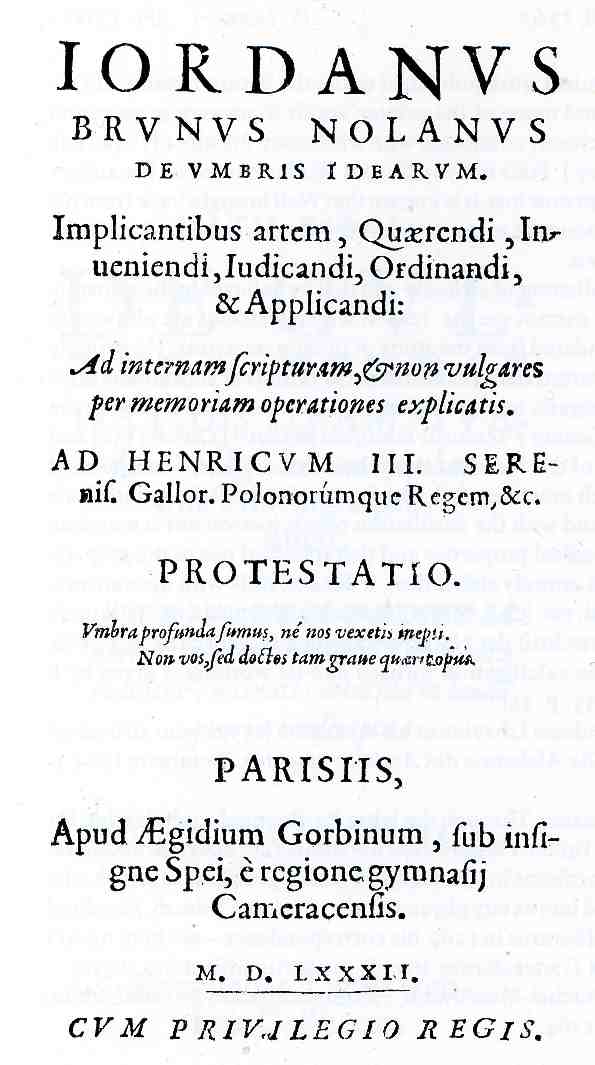
    Giordano Bruno (who I wrote a little about here some time ago) established
    his system in 1582 based upon the concentric circles of Raymond Lull, grouping the
    circles with symbols and letters and other designs,. Forming tighter cells of
    memory, much in line with the long practices of the later Hermeticists. 

    0 blog feb 9 bruno memory546

    Part of the goal, it seems to me, was to be able to not only recall this
    information, but to be able to get it out of the way, so to speak, to be able
    to put all of the factual stuff necessary to think in a safe place so that real
    thinking could be done.  Bruno was one of
    those who tried to go beyond the veil of the known by having a clear,
    orerdly mind.  Also, the process of
    getting there—to the point where you have a lot of info loaded into these
    memory spaces—involved lots of quiet time, or meditation, or deep thought, or
    something, which also led in that inexorable way to a finer modality of
    thinking.  (Jeff, Laura?) Perhaps it was
    a mode of composition that could only come after long, deep meditation and
    memory exercises.

    Certainly this approach to though/logic/rhetoric/composition is nothing
    new.  Ancient it is, really.  This sort of process reaches way back to the Egyptians,
    and to
    Cicero‘s
    De oratore
    (Bk II 350-360), and the
    Rhetorica
    ad Herennium
    , (ca. 90 BCE), and Quintilian‘s
    Institutio Oratoria (Bk XI), and (of
    course)
    Aristotle
     
    On The Soul
    and
    On Memory and
    Reminiscence
    ; to the delightful Matteo Ricci
     
    A Treatise On Mnemonics
    and to
    Simonides of Ceos, Saint Thomas Aquinas and Cosmos Rossellius
    Theasurus artificosae memoria (1579).;
    to Jacobus Publicius,
    Oritoriae artis epitome,  Peter of Ravenna, Phoenix, sive
    artificiosa memoria
    ,  and to Johannes
    Romberch,
    Congestorium artificiose memorie. 
    And
    these are examples that don’t get us even out of the 16th century. 

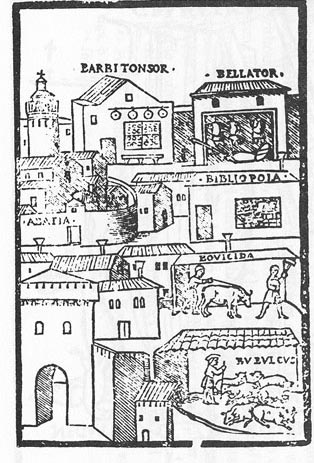
    0 blog romberch

    Some of the writers listed above used memory devices that were architectural in style, or showed levels of the heaven and earth as memory place-holders, or used the human body and body parts to elegantly display to the mind where the memory was hiding on the body.  I’ve included one example from Johannes Romberch–who used city and architectural images in addition to a wide assortment of astronomical, alphabetical and geographical devices–because it is an extremely early depiction of a bookstore (in the upper right, “bibliopola”).

    The practice of the art of memory was taken by some groups as a sort of religious experience–as a matter of fact even in the late 18th century the Quakers thought enough of the practice to want it banned, leading as it did to too much thought on matters that were far strewn from religious tolerances.  Some of the ars memoria practices, like those of Lull, were too far removed into the spheres of the esoteric and astrologic to do much good for the Straight & True believer.  The great historian of memory, Frances Yates in The Art of Memory, says the following about Lull:

    “Lullism had a vast diffusion which has only recently
    begun to be systematically studied. Owing to the core of Platonism, and
    of Scotist Neoplatonism, within it, it formed a current which, not
    acceptable to many in the ages dominated by scholasticism, found itself
    in a much more welcoming atmosphere at the Renaissance. A symptom of
    the popularity that it would gain in the full Renaissance is the
    interest accorded to it by Nicholas of Cusa. In the full Neoplatonic
    stream of the Renaissance, stemming from Ficino and Pico, Lullism took
    a place of honor. Renaissance Neoplatonists were able to recognize in
    it notions very congenial to them and reaching them from mediaeval
    sources which, unlike the humanists, they did not despise as barbarous.

    “There is even, at the heart of Lullism, a kind of interpretation of astral influences
    which would have aroused interest in the age of Ficino and Pico. When
    the Art is done on the level coelum, it becomes a manipulation of the
    twelve signs of the zodiac and the seven planets, in combination with B
    to K, to form a kind of benevolent astral science, which can be worked as astral medicine, and which, as Lull points out in the preface to his Tractatus de astronomia,
    is a very different matter from ordinary judicial astrology…. Lullism
    thus establishes itself at the Renaissance as belonging with the
    fashionable philosophy, and becomes assimilated to various aspects of
    the Hermetic-Cabalist tradition. ”  (p. 187-8)

    Be that as it may, I do have a soft place for Bruno, the defrocked Franciscan who met his end in flames*.  He may have actually been of great value to the birth of modern science, perhaps not–he did seem to have the idea of the infinite universe and the idea of the fluidity of time and space, along with some other stuff (see extended reading) that rubbed the Catholic fur in the wrong direction.  Needless to say, the Church’s foundation felt threatened by Bruno’s cosmological beliefs, and found that the best thing to do about dealing with superior and scientific thinking to their own was to burn the author. 


  • Things out of Place Department: a Cloud of Magnetism in the Sky Poked by the Needle of God

    JF Ptak Science Books LLC  Post 508

    0 blog feb 9 missing magnet543“And even though I’m sitting waiting for Mars

    I don’t believe there’s any future in cause

    Hole in the sky, gate way to heaven

    Window in time, through it I fly…”

    Black Sabbath, “Hole in the Sky”, 1975

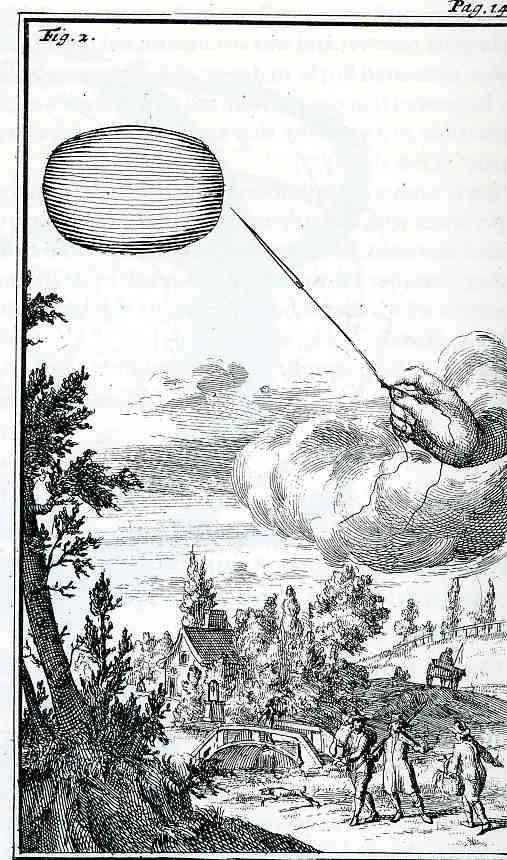
    Well, there were many liberties taken with this title, though on the face of it, the title is correct (sort of).   This image comes from a relatively obscure (or at least quite rare) copy of  Joachim Dalance’s work Traite de l’Aiman, divise en deux parties, la premiere continent les Experiences et la seconde les raisons que l’on en peut rendre... which was printed by Henry Weinstein in Amsterdam in 1687 (just across the waters in London Isaac Newton’s fantabulous Prinmcipa Mathemtica was being printed in the same year).    This important work on magnetism featured a number of good and useful observations on magnetism, interspersed with some semi-useless bits:  the magnetically floated coffin of Mohamets is mentioned and disproved, the origin of magnetism is asserted by hypothesis and is not pretty, along with some “fanciful conception(s) of the magnet’s potential”*; on the other hand, there is a mention of the invention of the compass, the real use of magnets, a mention of declination, and the orientation of a compass needle in a magnetic field is shown.  All pretty good stuff, considering the time.  (The magnum opus on the magnet was published in 1600m by William Gilbert and was called De Magnete, Magneticisque Corporibus, et de Magno Magnete Tellure (On the Magnet and Magnetic Bodies, and on the Great Magnet the Earth), though folks have been writing on magnetism since Aristotle and Thales)

    M. Hofer, the author of the quote above, mentions that the pamphlet’s images “are particularly good scientific illustrations”, though doesn’t mention this, figure 2, as being anything significant.  Trying to dissect the phenomenal imagery, which purports to depict the origins of the sources of magnetism, we see something like a “magnetic cloud” in the sky, about to be pricked by a needle held by the primum mobile.  That, or it is a missing piece of sky, a gapping hole, though not in the sense of what we’re getting now in the ozone layer, or in the fantastic billion-light-year wide swath of nothingness in the foamy universe.  Perhaps it is more like the Black Sabbath lyrics after all, a hole in the sky, pricked by the creator, to loosen the fabric of magnetism and getting a glimpse of heaven.    Or something.  

    [I should point out that Dalance was an out-and-about guy, with high-level correspondence, and who seemed to be at the right places at the right time.  Among many contributions to the sciences, Dalance–who was a friend of Henry Oldenbourg, helped introduce Huygens to the Royal Society as well as to the French Academy of Sciences, acting as an intermediary for the most part.  He seems to be an interesting guy.]

    *–Ph. Hofer, Baroque Book Illustration, page 42


  • Bad Ideas: Advertisers in Your House and in Your Head, 1939

    JF Ptak Science Books LLC  Post 508

    Scan0006
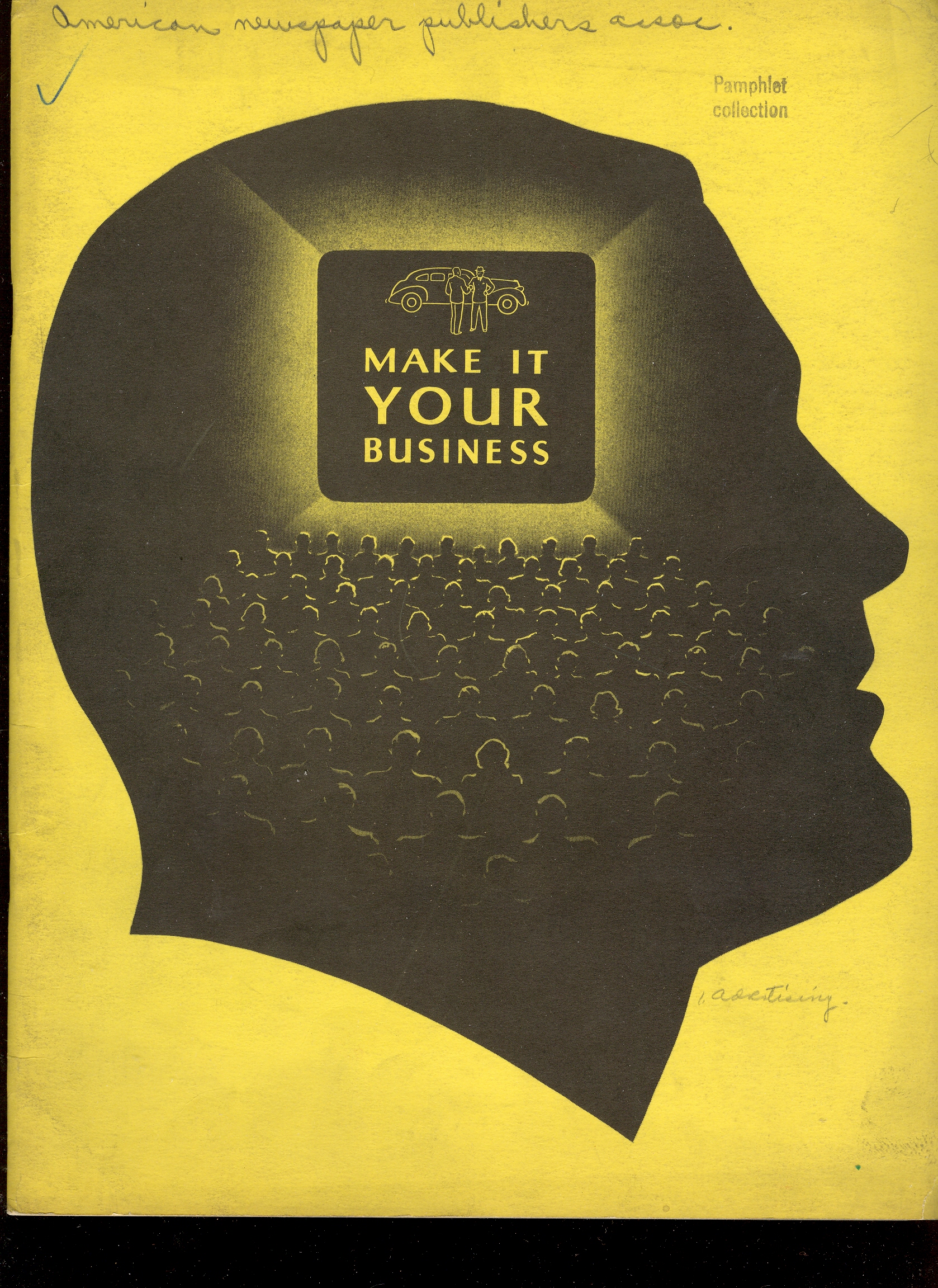
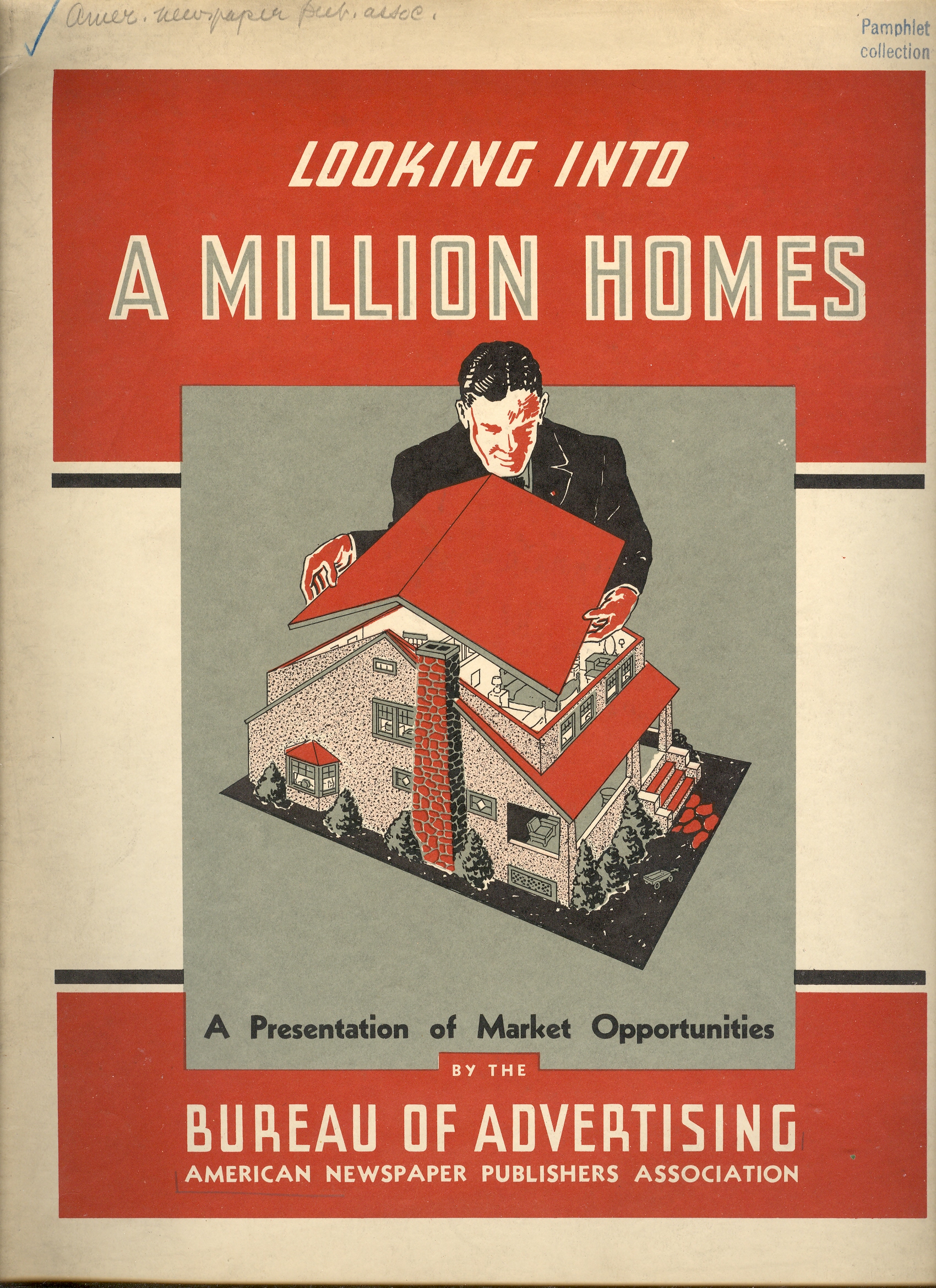
    I have little doubt that in the near future we will be deluged with advertisement at any time and in any place, the ads made exactly for you, found for you by little crevices occupied by digicams with facial recognition software powered by the next 50 years of programming research, perhaps reaching into what has been defined as your genetic soul….and there will probably be no escaping it, unless you’re able to pay somehow for the privilege of obscurity or silence.  The genre of force-feeding and creating need in the buying public for various bric-a-brac started was for real in the 1920’s (this being in no small part the shrinkological efforts of the “father” of American behavioral psychology, John B. Watson) and cranked up considerably and with major dollars in the 1930’s, when it was absolutely determined that ‘proper” advertising could sell anything.  (Watson showed this with great effect when he determined that people didn’t buy a “type” of cigarette more than they purchased the cigarette’s image–and to determine the image what was improved was the walk-away catchphrase that purchasers could quickly identify with the product.  And so a lowly and failed cigarette brand structured for women was renamed and given a catchy sales tag–the cig was Marlboro and the phrase was of course “I’d Walk a Mile for a Camel”.  Watson’s contention was of course that people didn’t buy the thing as much as they bought its promise, and the promise had to be delivered and reiterated to them endlessly, for years.) 

    These two pamphlets naively displayed what the advertisers were really after, the continual search for the GoldenScan0007
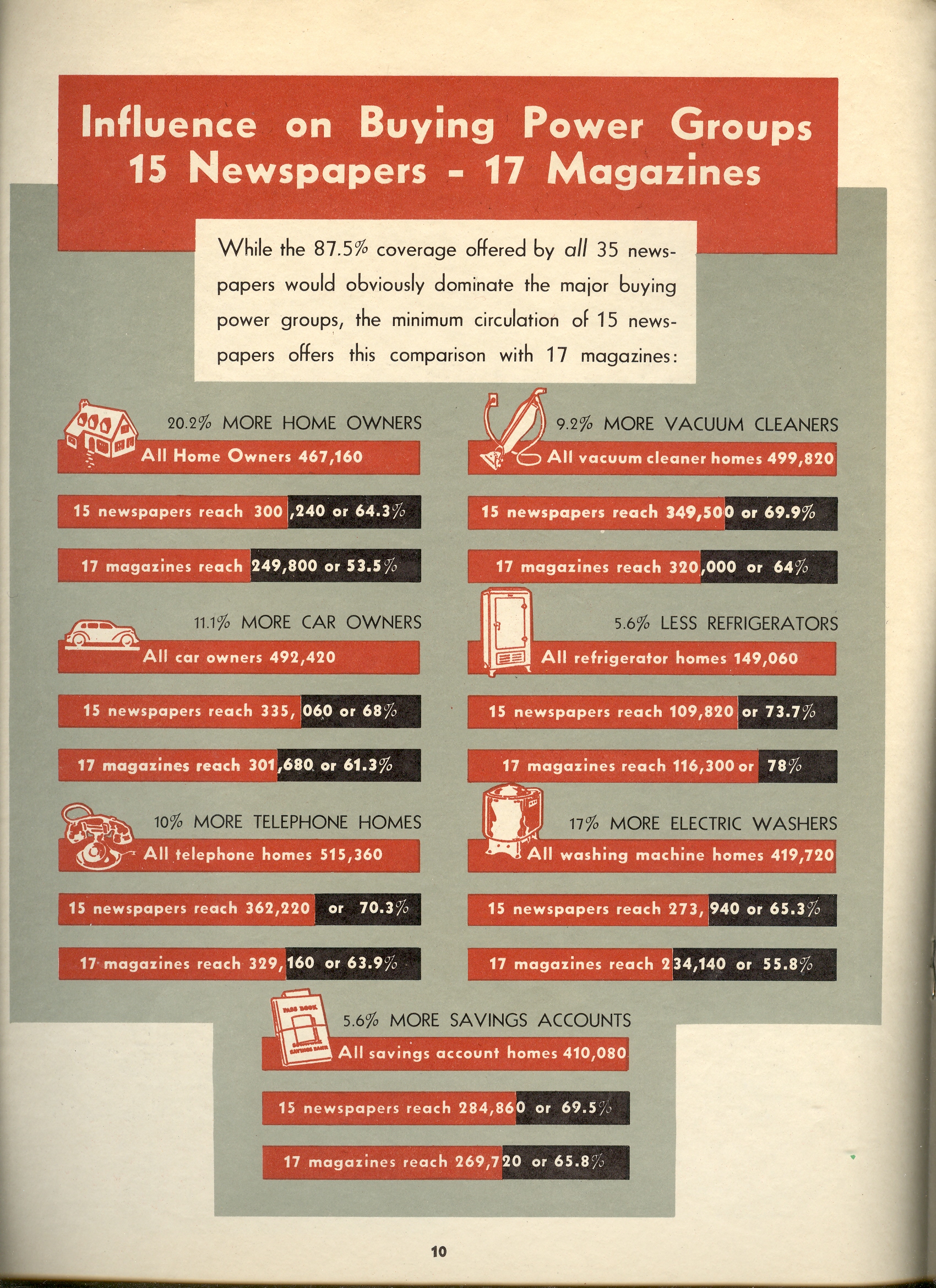
    Chalice–and that is to be in the head of the consumer, and then to be in their house, from initiating the desire to facilitating the purchase.  Both pamphlets were published in 1939 by the American Newspaper Publishers Association, and were a sales presentation for making sales presentations, an advertisement for the advertisers.  And they really did want to get into the mind of the public and insinuate them selves within the home. And both rate VERY high on the Creepy Scale.  

    I should point out that the graphical representation of the statistical data in the second pamphlet is quite terrible–these efforts aren’t in the top-99th percentile-bad category, but certainly are in the top 90%.  Easy. 

    Scan0008


  • Rare and Possibly Unique Presentation Department: Dead Murdered Brothers and the (Second) War of the Three Henries

    JF Ptak Science Books LLC  Post 507

    Scan0005
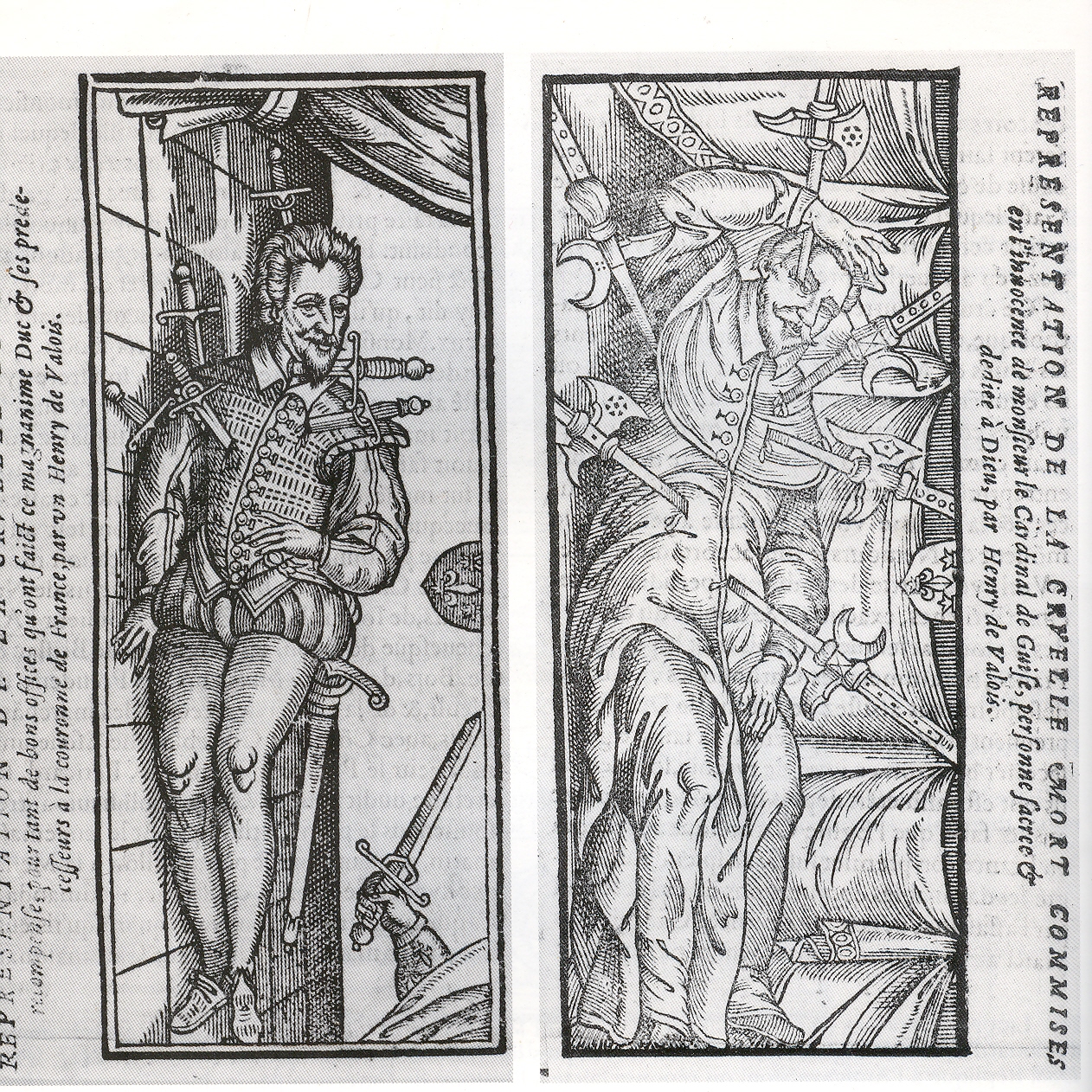
    I’m not sure where this image falls in the classifying scheme of this blog–I knew that I had to save it before it disappeared into the memory hole, lost forever.  These are a remarkable, a pair of full-page images depicting the murder of two brothers, two famous brothers, in very much the same way.  They appear in a popular pamphlet written by “Ligue” (Jean Boucher) called La Vie et faits Notables de Henry de Valois… which is innocuous enough as a starting title, then gets peppered up quite a bit, continuing ou sont contenues les trahisons...et hontes de cest Hypocrite, Apostat, ennemy de la relgion Catholique, which was pretty strong stuff uttered against a former monarch, Henry III (1551-1589), and which was published in the year of the king’s death. .  Boucher intended to lance the king, and did so very successfully, his small pamphlet outlining and cataloging the various shames and travesties of the problematic Henry reaching at least six editions.   The two images here are victims of Henry:  the first is Henry de Guise, who was murdered in Blois on 23 December 1588; the second is of his brother, the Cardinal de Guise, who was murdered the previous day, invited as they were to visit with the king at his palace.

    Their murders was one of the final acts of the final bit of
    the last of the religious wars in France: 
    this was part of the closing curtains of the War of the Three Henrys
    (1584-1589), involving Henry III of France (Catholic), Henry of
    Navarre
    , eventually Henry IV of France (Protestant), and Henry of
    Guise
    (Catholic)). This confusing bit is not to be confused with an
    earlier war of Henrys, the War of the Three Henries (977-978).  Henry and his Cardinal brother were put down under direct royal
    order by the Forty-five, (a hit team operating exclusively at the please of
    Henry III, 15 of which were always attending the person of the King) for his mis-allegiance to the monarch. The war would come toppling down with  King Henry’s own assassination in the next year,  put down by a blade to the belly by a Franciscan.

    The two brothers were exhibited in their last states in adjoining woodcuts in the Boucher pamphlet, comparing their cuts side-by-side…I cannot remember seeing such an image like this before.


  • A History of Blank & Empty Dots: the Discovery of (Smooth) Muscle, 1700

    JF Ptak Science Books LLC  Post 506

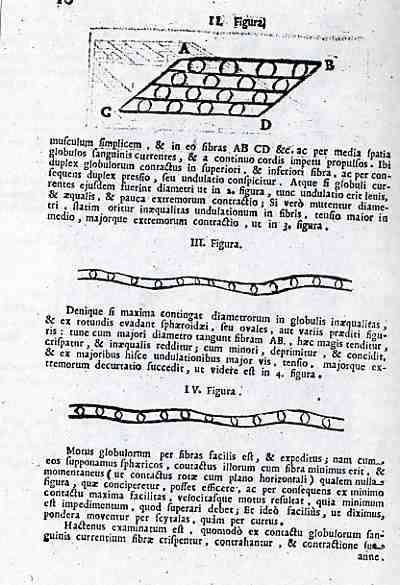
    0 patti horse533In a rare confluence of odd bits, today’s post joins the categories of Blank and Missing Things with A History of Dots to form a probably-not-to-be-used-very-often category of A History of Blank and Missing Things:  Dots.  These text illustrations come from (page 10) of the great Girogio Baglivi’s De Fabra Motrice et morbosa..., a 58-page section found in Alessandro Pascoli’s Il Corpo-Umano o Breve storia…., all published in Venice in 1700.  Baglivi (1668-1707) was an ethnic Armenian raised in Italy who rose to the rank of physician to Pope Innocent XII, and who was also a distinguished author and professor of anatomy at the Sacred College at Rome.

    In spite of living only 39 years (dying,  probably, from the consequences of a severe malarial attack) Baglivi had a long list of accomplishments, primary among these was his description and distinction of the smooth and striped muscle, the subject of the engraving at left.  This is one of the giant milestones in the history of physiology in general, also making crucial contributions to medical/clinical education.  It is the illustration of these muscle types that display the “empty dots”, not so much empty, of course, but just devoid of detail for the sake of illustration–but for my purposes, these simple empty spheres signify so much with so little.  Nothing, really. 

    Some sort of interesting and perhaps overall numbing quotes of Baglivi:

    Let the young know
    they will never find a more interesting, more instructive book than the patient
    himself. …

    The doctor is the
    servant and the interpreter of nature. Whatever he thinks or does, if he
    follows not in nature’s footsteps he will never be able to control her.

     De
    Praxi Medica
    (1696).

    The origin and the causes
    of disease are far too recondite for the human mind to unravel them.
    — Giorgio Baglivi  Praxi Medica (1696).

    The two fulcra of medicine
    are reason and observation. Observation is the clue to guide the physician in
    his thinking.
      — Giorgio Baglivi Praxi
    Medica
    (1696)


  • Things out of Place Department: the Moon

    JF Ptak Science Books LLC  Post 505

    Blog--things out of place
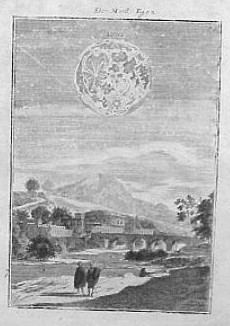
     This is a short entry in the “Things out of Place”
    department.  The image is lovely enough,
    and the depiction of the Moon is excellent, especially given the time of publication,
    which was 1683.  The Moon though, of course,
    is enormously out of proportion with the setting—I’m not sure why it needed a
    setting at all, but it has one, and it is odd. 
    The work is that of the prolific Manesson Mallet, who published this
    engraving as one of 677 in his massive Description de l’Univers, which appeared
    in five volumes.  I’m also not sure of
    how Mallet came to such greatness and capacity, as he started out his life
    (1630-1706) as a simple foot soldier under Louis XV, rising and rising in
    promotion and ability over the years until he became the chief inspector of
    forts.  He also wrote military books,
    including the three volume Les Travaux de Mars ou l’Art de la Guerre
    (1684), which he was somehow able to accomplish in the year after publishing
    his magnum opus.

    I really couldn’t figure out where to put his image, categorically speaking that is–it sort of fits into the small Extra Earth series, simply because the extra earths are big and way out of proportion.  But this is not “extra”, and not the earth, but it is out of proportion and belongs in the sky; and, taken out of context, the image is very unusual, in a naive surreal kind of way…


  • Blank and Missing Things #31: Missing Earth

    JF Ptak Science Books LLC     Post 504


    Scan0001
    In 1830 when Amos Eaton, filling up his chair and burning
    the  midnight oils in his home in Albany New York, was figuring out the
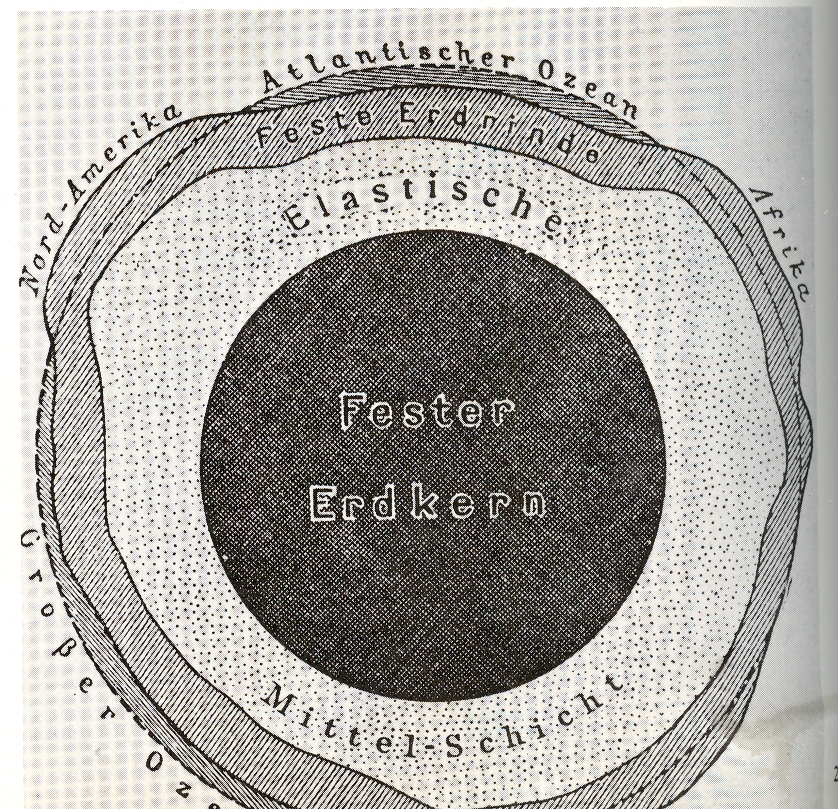
    insides of the earth  He had but little direct evidence to go on, and the publications on the topic of the center of the earth were left to speculation not much better then than science fiction (a term which had not been invented yet; neither for that matter had the word “scientist”).  
    A  very careful  observer, Eaton applied what he knew about the strata
    of the earth to a theory of how the landforms of the upper/outer mantle
    were formed. (Eaton (1776-1842) was as influential a teacher as he was a
    theorist and observer:  some of his
    students include the following Big Names (for which many buildings on university
    grounds are named for ):  James Dwight
    Dana
       (geologist, zoologist), James Eights
     (Antarctic
    explorer), Asa Gray
    ( greatest 19th c American botanist), James Hall 
    (first New York State Geologist), Joseph Henry
    (developed electromagnetism, all-around smart guy who
    communicated with everyone, secretary of the Smithsonian and so on.)

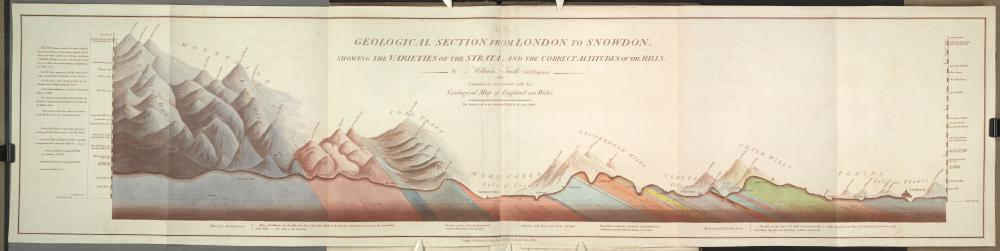
    He applied the discoveries of stratum of William Smith (1759-1839, the “father of English Geology”) drawing on a number of maps of his, such as “Strata
    Identified by Organized Fossils. : Containing Prints on Coloured Paper of the
    Most Characteristic Specimens in each Stratum” of 1815  and “Geological section from London to Snowdon; showing the varieties of the
    strata, and the correct altitude of the hills” of 1815 (pictured below), plus much else.  

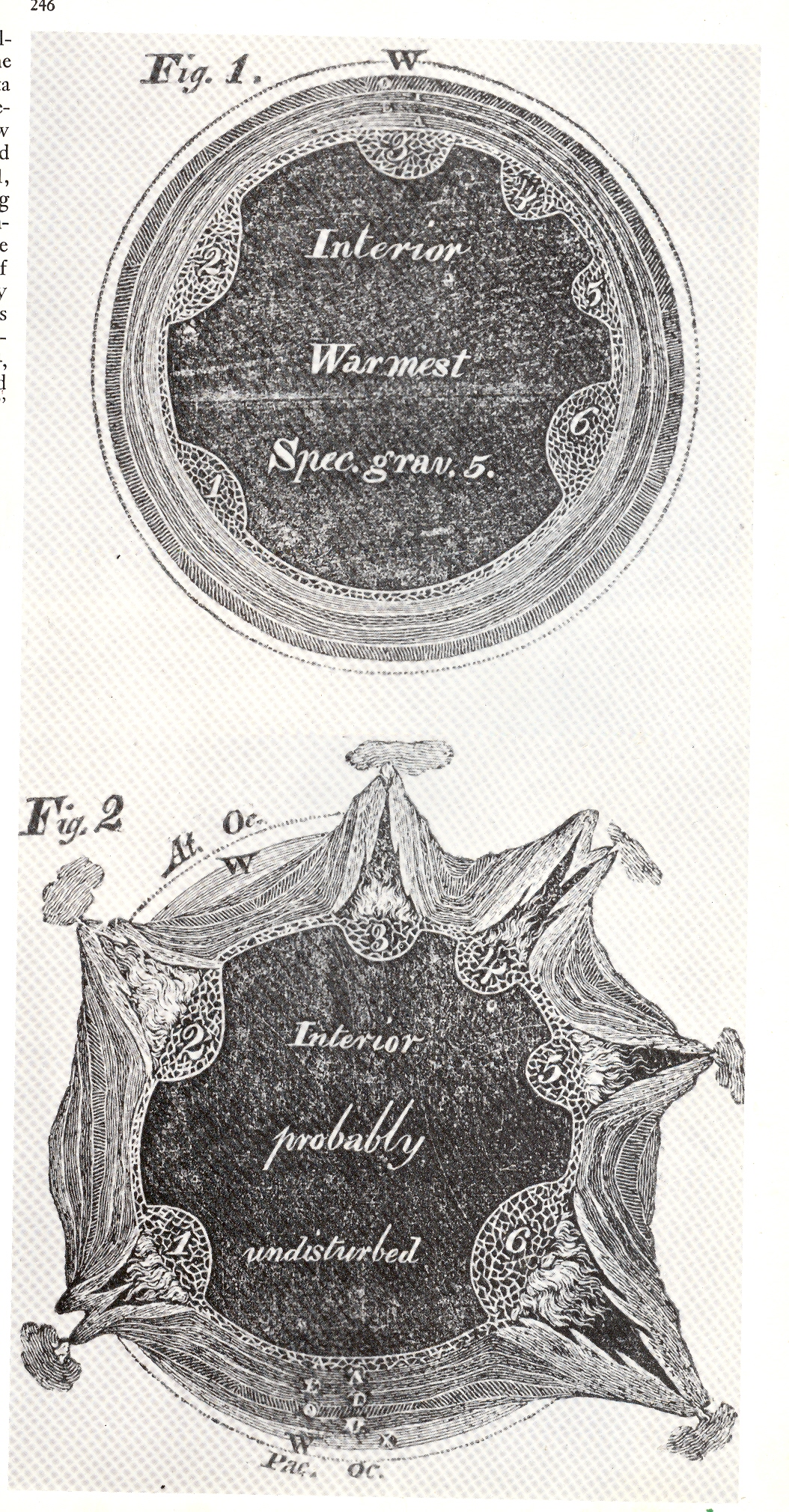
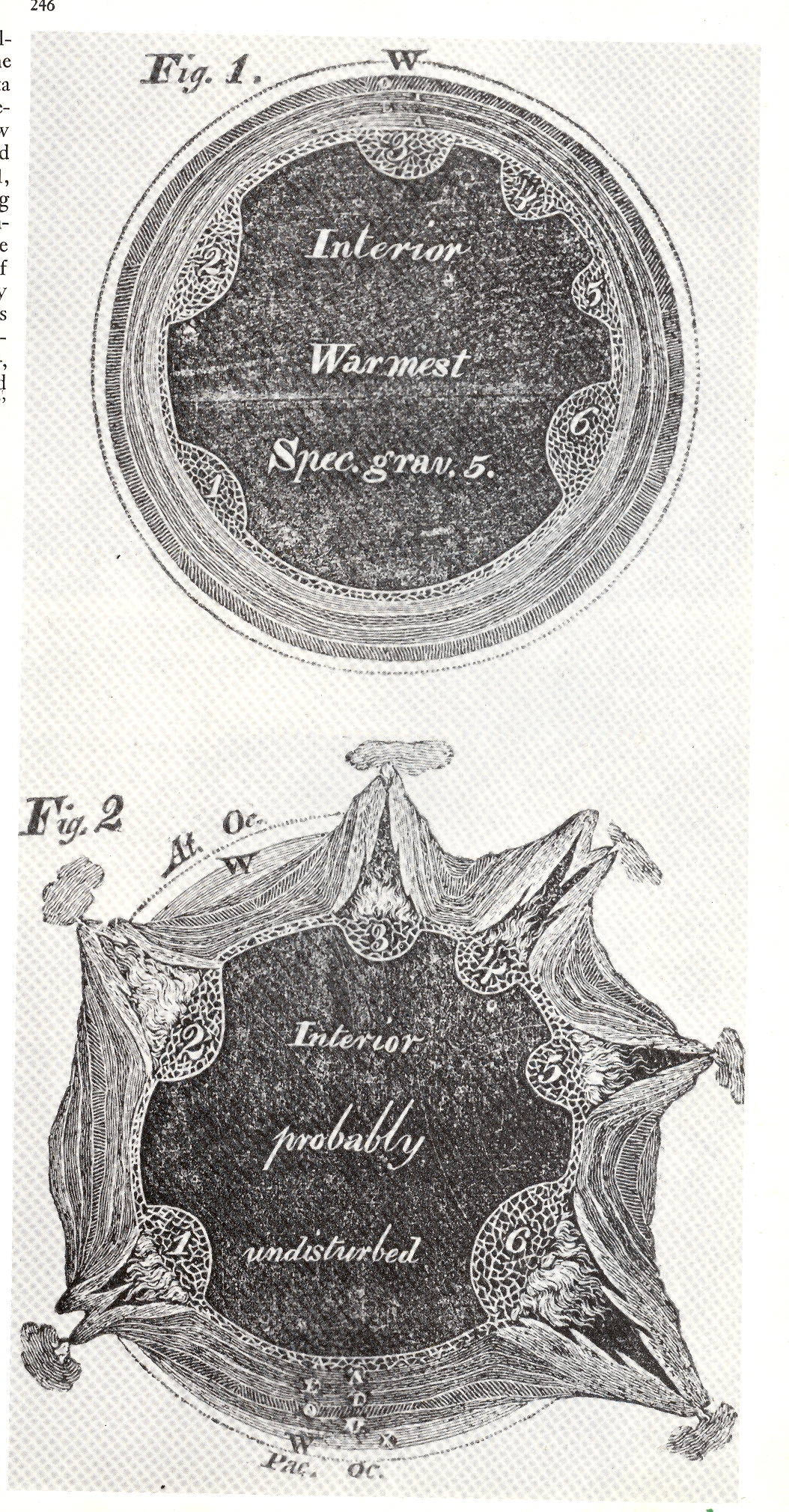
    These two images (left) of cross-sections of the earth appeared in Eaton’s Geological Textbook, (1830). The top shows the earth in perfect harmony and in cross-section, depicting the strata in six layers beneath a calm and palcid ocean.  There was trouble though located inside the six bulbous bulbs on the interior of the innermost strata:  as we see in the second image, the six bulbs, filled with
    Scan0003
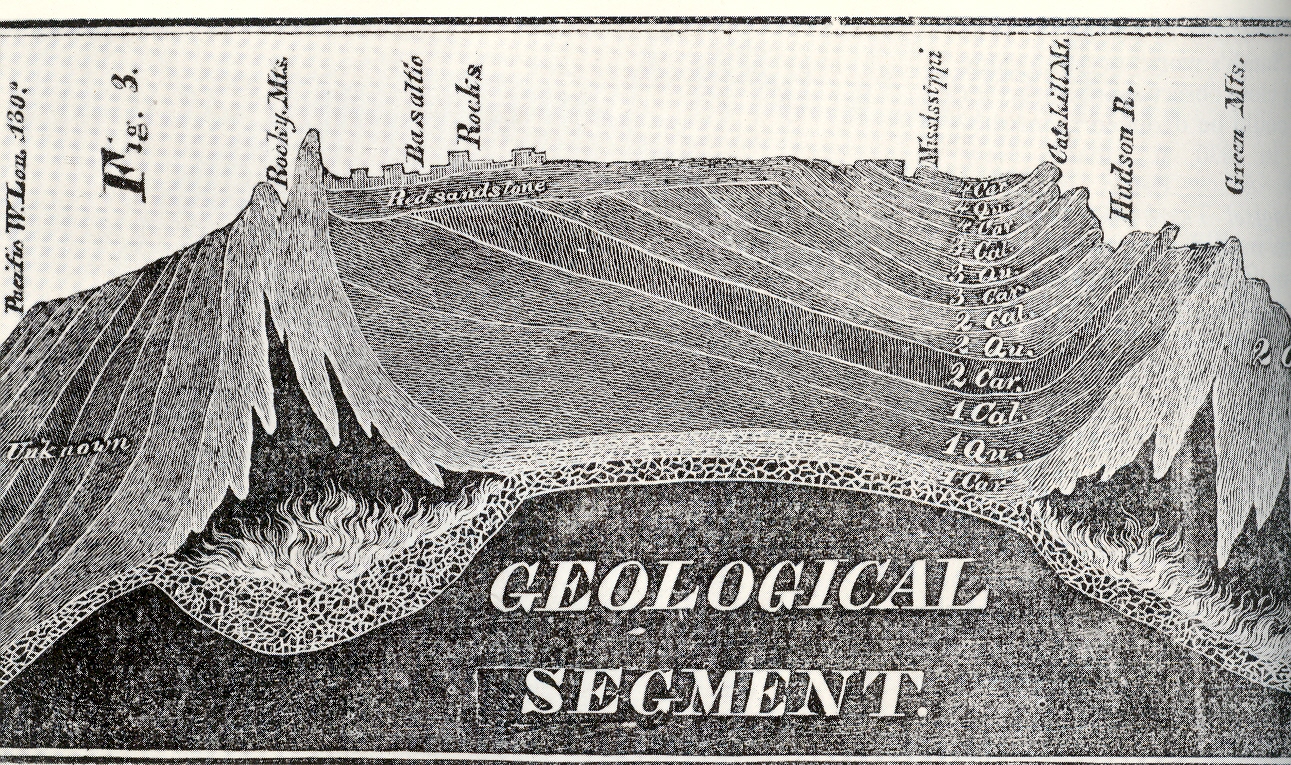
    “combustible material”, combusted, forming volcanoes and such, thereby parting the waters and forming the continents. It was some pretty  good thinking for the time.  But what attracted me to these images was the labeling of the interior of the newly-exploded earth, “interior probably undisturbed”, and blank beyond that point.  a dark, blackish mass, unknown and from where Eaton sat, unknowable.  But Eaton did do an extraordinary job in trying to imagine this stuff, piecing things together from the geological record in those pre-Darwin, pre-Lyell days.  The woodcut at right appeared in the same publication as that above–this incredible rendering depicts the entirety of  North America  in profile, which was a vast leap of faith, an image so severe in its accomplishment that it is difficult today to realize how shocking it must’ve seemed to the readers of 1830.  I believe this was the first time a true geological cross-section like this was attempted–again to see an X-ray (pre-dating that discovery by 65 years by the way) of the earth and to have it be not so terribly bad (compared to today) was just a phenomenal achievement

    ________

    Just for the record, Smith’s map of the London area–which presages the Eaton map somewhat–appears below:

    Blog--earth nothing smith