A Daily History of Holes, Dots, Lines, Science, History, Math, Physics, Art, the Unintentional Absurd, Architecture, Maps, Data Visualization, Blank and Missing Things, and so on. |1.6 million words, 7500 images, 4.9 million hits| Press & appearances in The Times, Le Figaro, Mensa, The Economist, The Guardian, Discovery News, Slate, Le Monde, Sci American Blogs, Le Pont, and many other places… 5000+ total posts since 2008.

Author: JF Ptak

  • Children’s Games in Art in the 16th & 17th Centuries: van de Venne and Brueghel

    JF Ptak Science Books LLC  Post 503
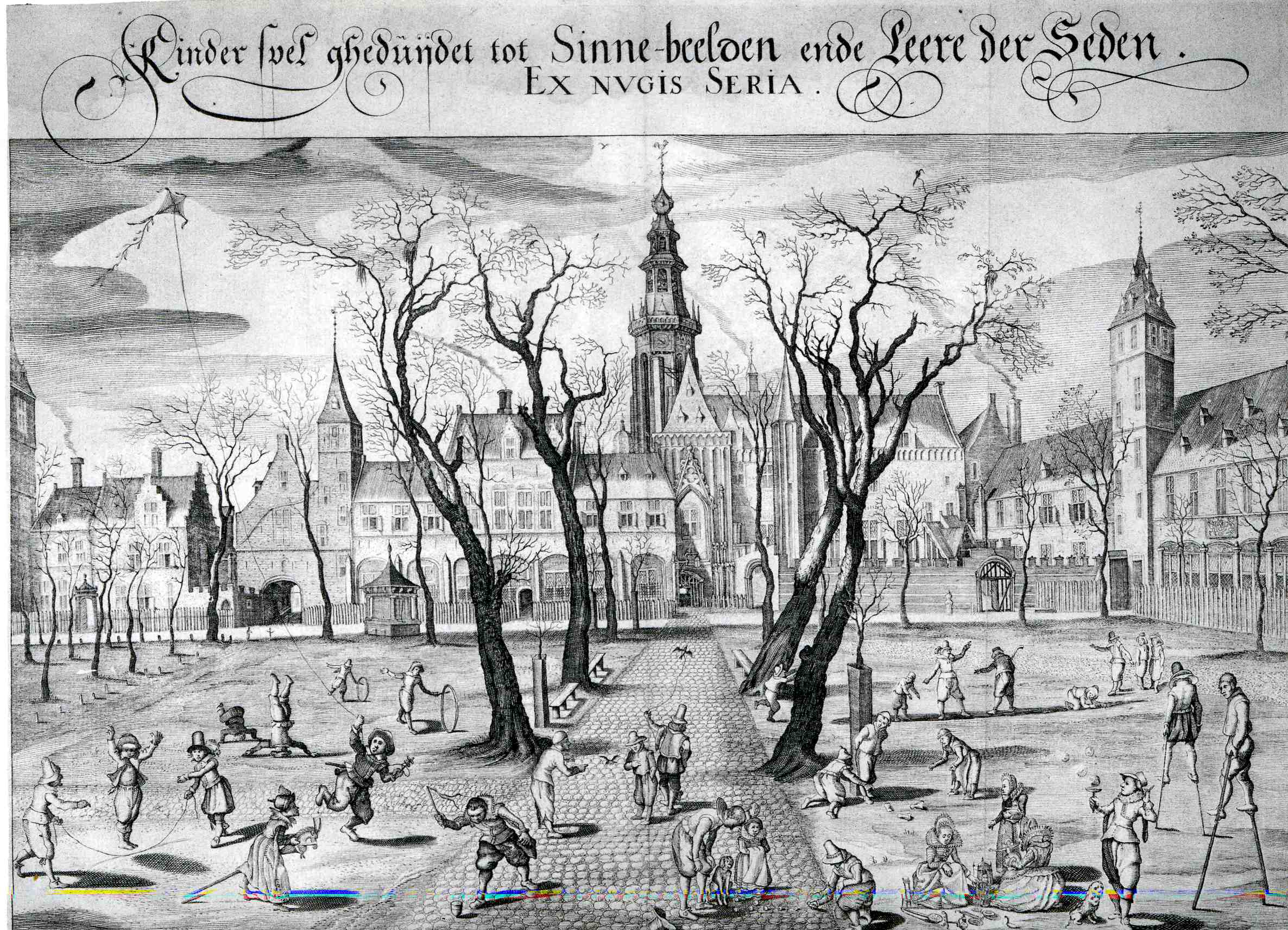
    0 blog feb 5 van de venne537
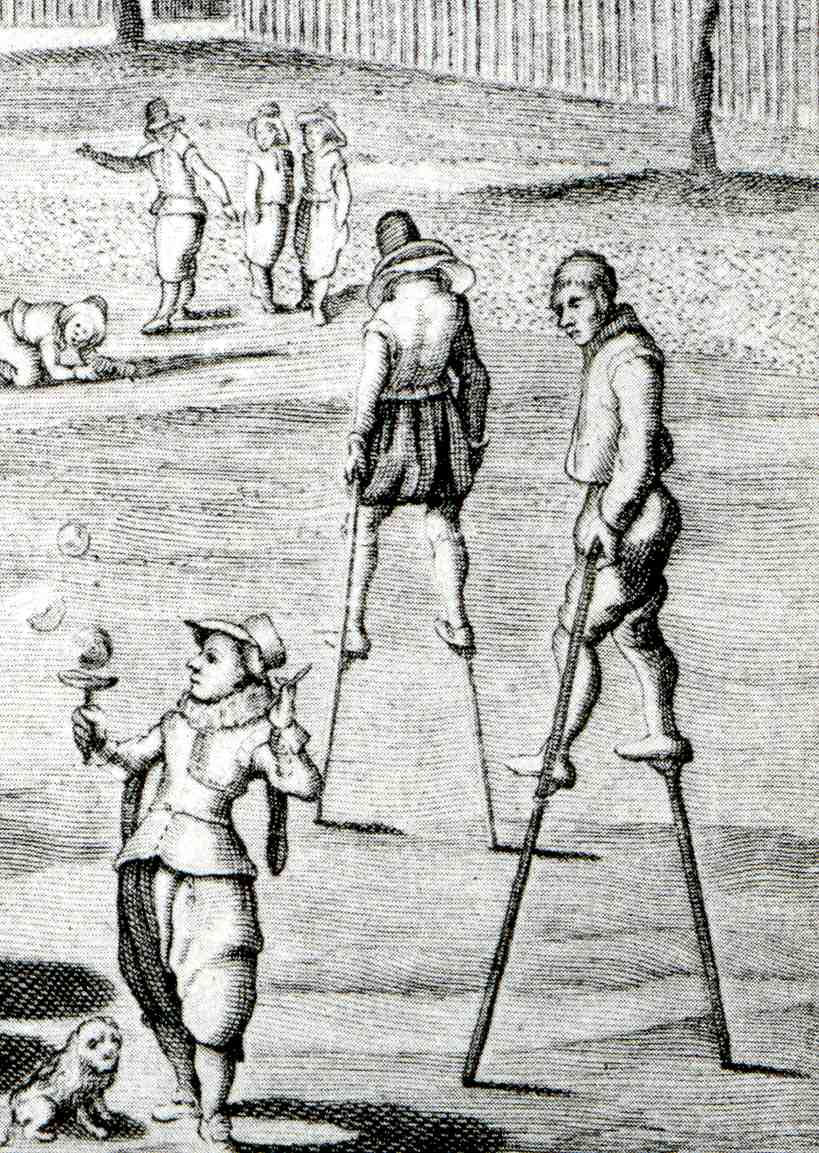
    Adrieaen Pietersz vasn de Venne, must’ve been familiar with
    the work of Peter Brueghel.  I’m not
    saying that Brueghel owned the genre of vernacular allegory, but he certainly
    comes pretty close to that.  In any
    event, van de Venne (1589-1662), a Delft artist who produced this illustration which so much reminds me of Brueghel worked
    a hundred years after the great master—(the elder Brueghel belonged to the
    Netherlands Renaissance, and died in 1569). 
    Having been raised in Deflt, studied in Leiden and died in the Hague, I
    suspect it would’ve been impossible not to come under the influence of Peter or
    the others in the Brueghel family collective, though it would’ve been Peter
    (the elder, who was also known as “the Peasant”) who it seems to me lays the
    greatest claim to some of van de Venne’s thinking.    

    The subject of van de Vene’s painting (shown here above)  of children’s game is as much a
    parable as it is a recording of games that kids played in the Netherlands in the
    early 17th century.  The
    children are occupying themselves with supreme simplicity, allowing their
    imaginations to form the areas that the physical toy could not; around them we
    see older folks, walking on stilts, seemingly above all of the childish
    bric-a-brac of living.  I think too that
    the spare trees decorating the walk in front of the square of churches in the
    background are there to illustrate what he saw as the lack of imaginative
    fertility of the churches’ reach into the world of the living.  It seems a pretty harsh painting to me once
    you get beyond the fantastic depiction of children at play.  (This genre, of kids playing, is not a very
    wide one in the history of art, believe me.) 

    I think that when you look at the works of van de Venne and
    then at those of Peter Brueghel, there is a close 0 blog feb 5 van de venne538
    connection, as though the
    later painting was simply an intellectual descendant of Brueghel  This is especially true when you look for
    example  at such Brueghel paintings
    as  Ass at School, 1556, Parable
    of the Sower
    , 1557, Landscape with the Fall of Icarus,
    c.1554-55,  Netherlandish Proverbs, 1559,The Fight Between Carnival and Lent,
    1559, Portrait of an Old Woman, 1560, and Temperance, 1560.  This becomes especially, easily clear when

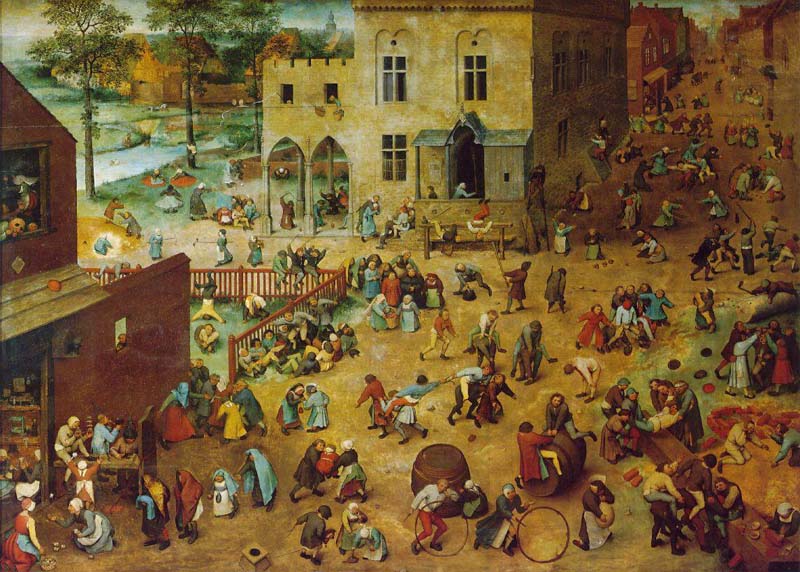
    you see the Children’s Games, Brueghel’s spectacular
    1560 achievement in which 250+ children are shown at play at some 80+ games,
    seemingly taking over the square of this small town.  This is a painting of enormous importance in
    the preservation of time spent at play. Evidently the experts have identified
    almost all of the games being played and toys being used;  the toys are all known, but there are a few
    games that remain a mystery to 21st century eyes. 

    Van de Venne seemed not to have had followers in his footsteps,
    exactly.  He went on in the later quarter
    of his career to specialize in depicting his subject matter in painting in
    various forms of gray, with his principal subjects in his genre paintings being
    peasants, the poor, the maimed, the ugly, the infirmed, the out-of-place, and
    children.  Seems as though this approach
    did not lend itself to the glorious revival of sumptuousness and color that was
    coming to the Netherlands just at the time of van de Venne’s death.  

    And, just  for the record, the Brughel painting:
    Bruegel_games 

    Richard Muhlberger, in What Makes A Bruegel A Bruegel? (New York: Metropolitan Museum of Art and Viking, 1993, pages 15-16)
    tells us that:

    “Brueghel painted an entire town inhabited by about two
    hundred fifty children. At first the image seems to capture a
    holiday, but soon it becomes clear that the painting is meant to be an
    encyclopedia of children’s games. Because most of them are still
    played today, eight-four have been identified, while others not known
    to the twentieth century have yet to be recognized.”

    “Brueghel did not want to emphasize one game above the others. Not
    able to crowd them all up front, he painted them as if looking down at
    them from above so that none is blocked from view. While the distant
    children are smaller than the ones up front, their costumes are still
    bright. No matter where the children are, even in the shadows, Brueghel
    painted them as if they were in the noonday sun… At first it looks as
    though the boys and girls are scattered at random, like jacks thrown on
    the ground. Brueghel knew how to organize large crowds into patterns.
    The figures in the foreground of the painting are arranged in lines
    that fan out from the lower left corner and catch the viewer’s eye
    first. Of course, being formed of children, the lines refuse to be
    exactly straight! The youngsters in the street behind them are placed
    in small groups that form a back-and-forth curving line… Brueghel
    made all of the children’s faces similar. Differences in clothing are
    slight, and not many colors are used. But each child looks like an
    individual because of the way the artist painted bodies: No two are
    alike. After all, it is in the figures’ movements that the viewer can
    tell what games are being played. By focusing not on personalities but
    on the games, Brueghel gave them a universal meaning.”

  • Blank and Empty Things, XXX: Maps of Lunar Nothingness; or, When Nothing is Something

    JF Ptak Science Books  LLC  Post 502

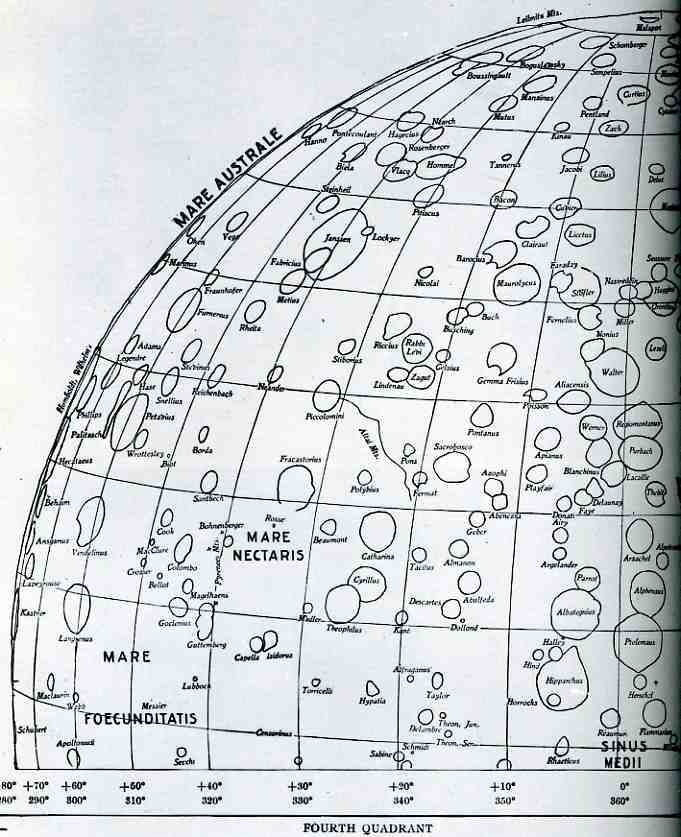
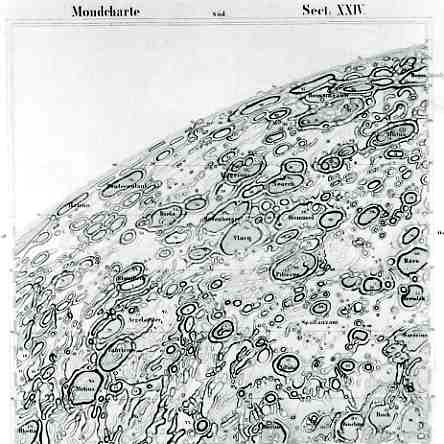
    0 blog feb 3 nothing scmidt515Actually, these maps are hardly maps of lunar nothingness–on the contrary, they are among the most detailed  maps ever produced (to their times)  of the lunar surface. The first, to the left, is by J.F. Julian Schmidt (1825-1894), who produced his monumental  opus to close observation and ultra-tidy detail in Mondkarte in 1878, a spectacular map of the Moon in 25 contiguous sections, which surpassed all other earlier maps–it shows riles, contours, valleys and thousands of new craters, not to mention the fact that Schmidt also calculated the heights of more than 1000 mountain peaks.  The map was produced with enormous precision by this careful observer, the lunar features presented in such a way as to be easily readable and extraordinarily detailed. It is this representation that gives the map an initially curious appearance of emptiness, when in fact the opposite is true.  (For a very useful and illustrated timeline of lunar history, see the blogsite of Chuck Wood.). 

    0 blog feb 3 nothing scmidt516

    The second example of nothingness is from William Pickering’s (1858-1938)  1903 index map of the Moon, which was constructed from his careful photographic surveys, and offers a very precise rendering of the major features of the lunar surface. It was made to accompany his exhaustive The Moon : A Summary of the Existing Knowledge of our Satellite, an atlas published in New York in 1903. The outline map is another example of something that appears to be somewhat empty while holding a vast amount of information.

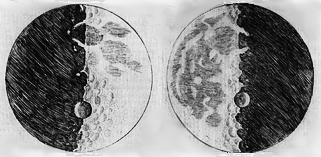
    A little beyond the scope of these two maps is that of Galileo Galilei (1564-1642), who in 1610 produced the first drawings* of the Moon made with the benefit of a telescope.  It was a shocking revelation for all those who saw it (when published in his Sidereus Nuncius, or “The Starry Messenger”, which was also the first published treatise on the Moon)  and I can only imagine what the common person with an average amount of scientific curiosity could’ve felt when seeing the image for the first time.  It was mostly a map of nothing, but the details present were extraordinary and fantastic–they revealed undisputed features of the Moon, images of contours that had been only rendered via considerable eyestrain for thousands of years. It also showed peaks and mountains and other jagged stuff, which disproved the running theory that the Moon was a perfect sphere devoid of such things. And then here, in 1610, was the first “close-up” vision of this complex object that had been followed by billions of eyes for thousands of years–it just had to be shocking. It was mostly nothing, but the bits of something that were present were a phenomenal vision.  

    1610-GalileoMoon *(Before people start writing in about the chronology of Galileo and the “first” claim, I know that the issue is a little knotty and a little more complex than old Galileo being the first on the scene.  William Gilbert–ultra-famous for things outside astronomy–drew an odd, wrong and surprisingly non-detailed map of the moon in 1603, though this wasn’t published until after his death and a lot of other lunar-related stuff happened in 1651.  There’s also some recently re-discovered telescopic renderings of the Moon made in 1609/10 or so by the Englishman Thomas Harriot which are of the same quality as Galileo’s. Within three years of the Galileo publication came the work of two astronomers on mapping the Moon: G. C. La Galla (publishing in Venice in 1612) and  P. Christoph Scheiner (in Germany) between 1611 and 1613.)


  • A History of Dots: Microscopical Embryology, 19th Century

    JF Ptak Science Books LLC   Post 501

    0 blog feb 3 dots518

    0 blog feb 3 dots517

    In 1837 the hemispheric frontal lens for the compound achromatic
    microscope developed by Giovan Battista Amici (1786-1863) vastly
    improved magnifying power to open an entirely new submicrospic
    world–this somewhat on the order of the introduction of Robert
    Hooke’s (1635–1703), investigation in Micrographia (1655).  G.C. Ehrenberg (Die Infusiontheirschen als volkommene Organismen,
    Leipzig 1838) was among the first to use this new development, showing
    almost immediately that infusoria was not what was seen to be as
    Buffon’s “organic molecules” (or unified wholes) but something far more
    complex.  Theodor Schwann and Jacob Mathias Schleiden  in just the next
    year, using this same new technology, put forward the cell theory, with
    images produced in Schwann’s Microscopical Researches
    (1847)–according to Pearce Williams this development of cell theory
    “did for biology what Lavoisier’s definition of chemical elements had
    done for chemistry”.  The bottom line here was that the cell theory was
    the best, basic element in biology. 

    All of this to get at dots.  My goodness.  Before Amici (who by the way
    as an astronomer and microscopist, working both ends of the optical
    visual field like few before him had), most of these elucidated
    complexes seemed to even the slight magnification of earlier
    microscopes as dots.  Unexplained, seemingly inexplicable, dots.  (And
    the same could be said too of the planets and stars, and our moon and
    sun, before the introduction of Galileo’s introduction of the
    telescope).  Some of the most famous of these post-cell-theory dots
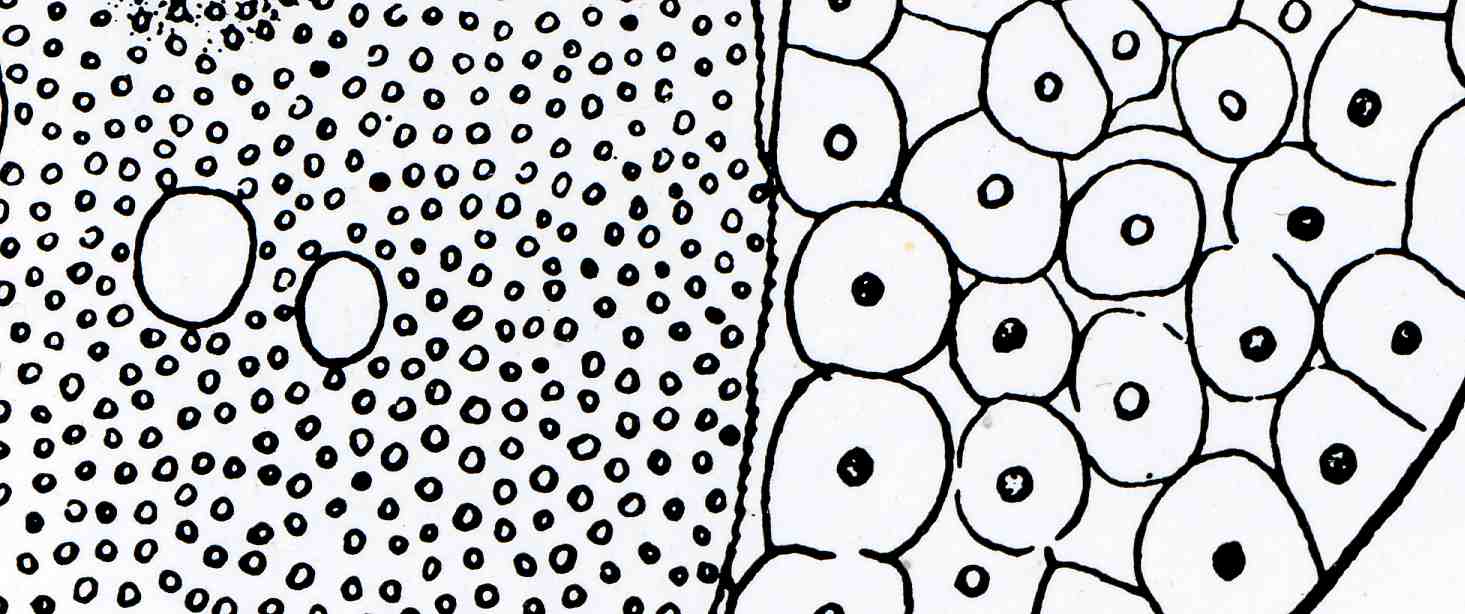
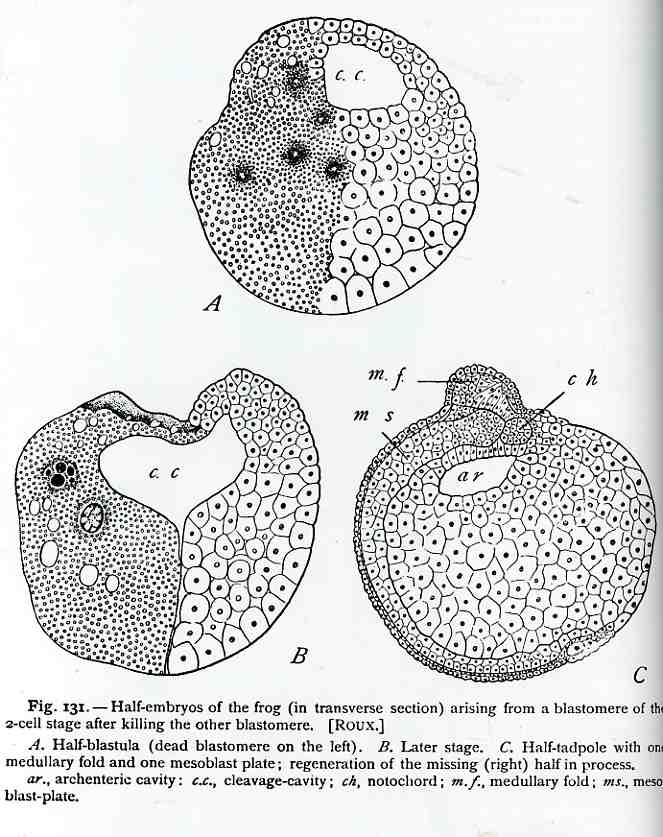
    belong to Wilhelm Roux (1850-1924) who in his Über die Entwicklungsmechanik der Organismen (1890)
    offered the first experimental intervention and experimentation at the
    embryological level.  The “dots” here are frog cells, half of which
    Roux destroyed in his attempt to influence the development of the
    embryo.  The experiment resulted in some results that would be abandoned within two decades, but the methodology employed by Roux (but not his reductionism) would be one of the most significant biological events in the 19th century. 


    ·Posted by :

    ·in:


  • Points of View: Inside Looking Out, Outside Looking in, and in-Between

    JF Ptak Science Books LLC  Post 500

    0 blog feb 2 outsdide in512

    One of the exercises I’ve undertaken in this blog is to try and see stuff from a different perspective, or from an uncommon point of view, which can give a little bit of fire to the common bit.  And so that brought categories of posts like Blank and Empty Things, History of Smallness, Outsider Logic, Naive Surreal, the History of Dots, Bad Ideas, and the like.  One small category (with only a few posts) is Looking Straight at Things, where the point of view for the observer is directly in front of the object, giving it a flat perspective–from my experience, this is an uncommon antiquarian  viewpoint, especially when one looks straight up or straight down at something.  Another small posting is


    0 blog feb 2 outsdide in513

    You Are There, where the observer is placed inside the body of the subject of the print, so that “you” can see “your” hands drawing the first map ever drawn in an aeroplane, and that sort of thing.  Following on the heals of these last two is a new category, Inside Looking Out & Outside Looking In, where the viewer is rewarded with a similar you-are-there experience, as we see in these three examples.  The first (above)  is by Charles Rossiter (1827-1890), whose painting To Brighton and Back for 3/61 done in 1859 (almost exactly at the mid-point of the artist’s life), puts the viewer on the opposing bench of the open-windowed railway car, with an oddly blank view of the passengers in the opposing section of the car.  I can almost see my knees in the bottom of this panting, as I sit, sandwiched between a big-thighed someone and a big-armed someone-else, watching the small trials of human destinies unfold before my squinty-closed eyes, trying to enjoy the memory of the beach as we jostled our way back to London.  (I would hope that I was decent enough to stand and allow the young mother and her baby standing there in the middle of the painting to have my seat, but it looks like this viewer is as unmoved as the rest of the semi-gentlemen of the car.)

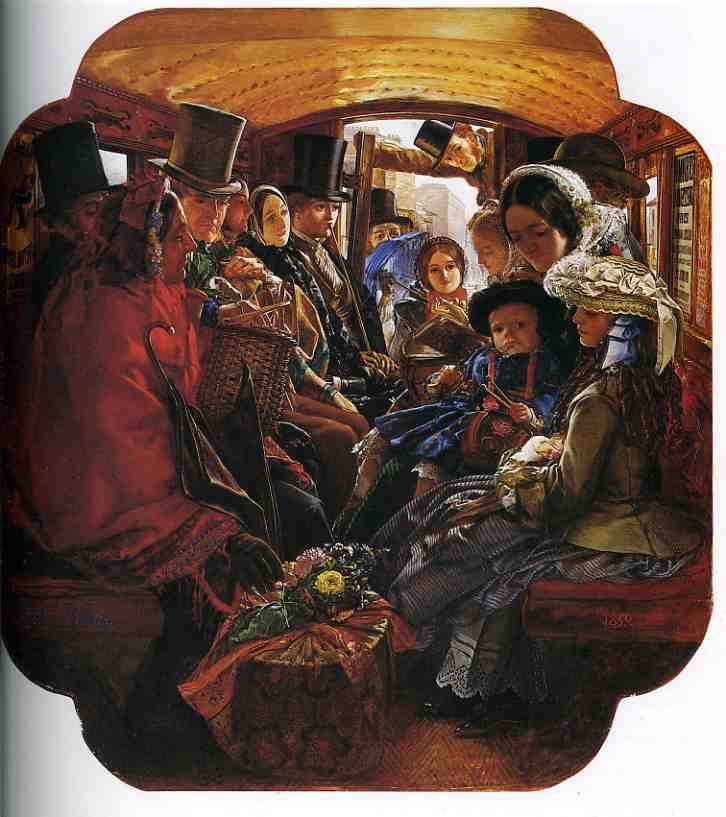
    Next is William Maw Egley (1826-1916), whose Omnibus Life in London2, also published in 1859, gives a wonderful view from beyond the back of the cab/bus, giving a very colorful overview of flouncy and mega-dressed inner-city mass transit.  The red shawl business woman in the front-left definitely seems a little at odds with the rest of her traveling companions, though most are taking an interest in her beautiful basket of flowers. 


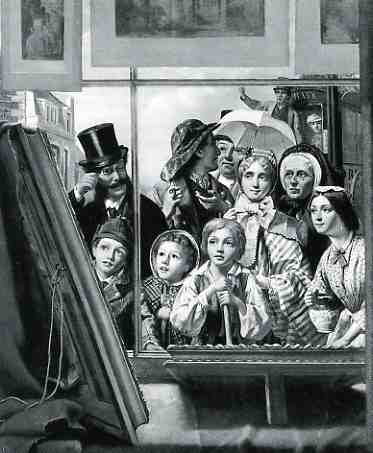
    0 blog feb 2 outsdide in514 The next and last image is a little odd, showing a view from the inside of a print shop looking out at people who are looking in.  The print, One Touch of Nature Makes the Whole World Kin (1867)  by Thomas P. Hall, is otherwise semi-satisfying in a mid-Victorian kinda way, what with the luminous and wondrous eyes filled with the beauty of the painting at left.  Hall’s work does live up to its name, though, the artist interestingly including a silk-hatted fob connoisseur with a monocle, some few children, a child laborer (a street sweeper, I guess, not unlike The Last Picture Show),  three generations of women, a drayman with a pipe, and an omnibus driver–a good assortment and spectrum of people in such a small group.  

    There are no doubt collections of such images, not the least of which is a vast array of 17th century Dutch artists (like Gerard Dou) whose metier is of people looking through/resting on windows/windowsills.  But I just happened upon these three in the course of my day, and liked them, and tried somehow to string them together  so that they could be strung along with other like-positioned images some time in the future. 

    Notes:


    ·Posted by :

    ·in:


  • Elements of Social Delinquency, 1947: Books and Records as Faithless Elements of the Decline of Morality

    JF Ptak Science Books LLC  Post 499

    0 blog jfeb 2deliqunency502
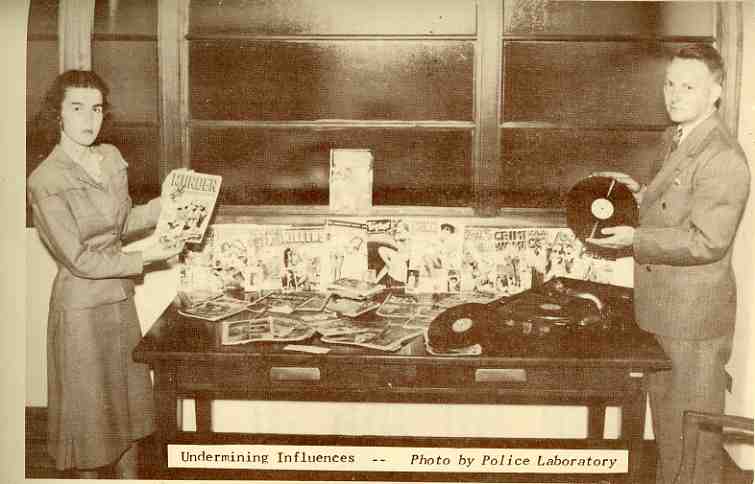
    Only 62 years ago the basic contributors to the delinquency of American youth were recklessness, idleness, books and records, and this helpful pamphlet, Delinquency Prevention, the City’s Future, published unattributed in 1947 for the Youth Protection and Delinquency Prevention Program for the city of San Diego, California, had many of the basic answers to the knotty questions of raising good-spirited anti-corrupt young folks.  This young woman, appearing on page 27 in the photo captioned “Undermining Influences–photo from Police Laboratory” stood before a neatly laid table packed with expediencies of social decay, and from the looks of it, she could barely stand to be there, even though she was protected by a mighty and invisible cloak of superiority.  (It seems that she is caught in mid-sentence, gingerly holding her MURDER magazine, jaw thrust forward, fixing the camera with a sharp left eye which was fortressed by a mighty and disproportionately-sized eyebrow.) 

    0 blog jfeb 2deliqunency503

    0 blog jfeb 2deliqunency501
    Unfortunately, given the large-grain halftone of the original, I can’t quite make out all of the titles of the offending magazines and records–most of the “men’s journals” seem to deal with murder-kill-bang-bang-stockings and god knows that the records in 1947 were probably by Johnny Mercer (as I can hardly believe the SDPD could even acknowledge anything like the fantastic bluesy music on so-called “race labels”).  Anyway the message here was that “wrong” reading and listening were corrupters and would lead to the end of society, inhabiting the young with “social ill” found “outside the hours of school and work”. 

    0 blog jfeb 2deliqunency500
    This program sought to remedy this invasion of “untoward influence” by more fiercly regulating the idle time of children, which meant filling that up with more school or workl or church or other fulsome and halo-inducing activities.  The city council also sought to diminish the capacity of the “juvenile hang out” of the soda fountain–who knows how many future SDS-ers were born right there in the Rexall on Main Street of Great Barrington, Massachusetts? Nursing a 10-cent coke and a 25-cent hamburger for as long as possible doesn’t seem like sedicious activity from here in the future–and as a matter of fact, the soda fountain looks to me to be one of the first places where American teenagers could go socially to enjoy food and drink and spend money solely (or sort of) with members of their own age group.    This must’ve been a radical change from the other regulated avenues that teenagers could frequent in the earlier decades of the century. In any event, the soda fountain was a place where social callousness was begging to happen, waiting to be unleashed in its youthful fury to cripple The City.  I’m sure that San Diego was not alone its its 1947-American-desire to get crooked-standing girls and short-sleeved-sweater boys to go to school, “do activities related to school”, go to church, and then stand *almost* holding hands in a problematic setting of shade and brightly dappled sun.  If these two are the final successful products of juvenile delinquency prevention and naive social engineering,, what is it that their very distinctive body language is saying? 

    ·Posted by :

    ·in:


  • The First Book about Books about Books

    JF Ptak Science Books LLC  Post 498

    0 blog jan 29 books488
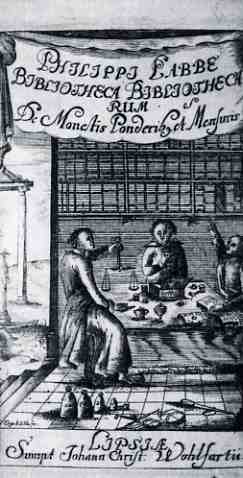
    Phillippe Labbe (1607-1677), a contemporary of the savant’s savant, Athanasius Kircher, and was himself a prodigious polymath, produced this fantastic piece of scholarship, the Bibliotheca Bibliothecarum…accedit bibliotheca nummaria.  He was a member of the Society of Jesus, like Kircher (which whom he also shared similar birth and aeath dates, Kircher’s being 1601-1680); and was born in the town of Borges, France, which gives him an almost invisible connection to one of the 20th century’s most imaginative/flexible writers in the great blind librarian of Argentina.  This book, published in Leipzig in 1682 as the second edition of the 1662 first,  is the earliest extant work of bibliography of bibliographies (it also has a very useful work on numismatics, as we can see from the last part of the title.)  Gathering the data necessary to produce this work was a prodigious undertaking–Labbe needed to have had access to fine libraries to assemble the data, then of course he needed the brain to handle all of the disparate and erudite areas of learning, and then be smart enough to organize it all.  This was an enormous accomplishment in 1682–with the stuff that Labbe had floating around in his brain and the reasonable aspect of disseminating it, Labbe would’ve been a National Treasure to whichever country he would call “home”. 

    I haven’t seen the title page of this book for many years, and my memory of it had these three bibliophiles holding drinks in the air–but I’m wrong, unfortunately.  The scholar on the left is weighing something, the scholar o the right is pointing to a book, and I not exactly sure what scholar-middle is doing.  One thing for certain though is that these men are not drinking.  Somehow I’d’ve preferred a few rounds with all of that scholarly/scientific bric-a-brac strewn on the table, but it was not to be. 

    Some of Labbe’s selected works include:

    • Trirocinium Linguæ Græcæ etc. (1648)
    • La Géographie royale (1646)
    • De Byzantinæ historiæ scriptoribus, etc. (1648)
    • Concordia sacræ et profanæ chronologiæ annorum 5691 ab orbe condito ad hunc Christi annum 1638 (1638)
    • Bibliotheca antijanseniana (1654)
    • Bibliotheca bibliothecarum (1664)
    • Sancrosancti Oecumenici Tridentini Concilii . . . canones et decreta (1667)
    • Sacrosancta concilia ad regiam editionem exacta

  • Looking at Things Straight On, Part 3: Perspective Books in the 16th Century

    JF Ptak Science Books LLC  Post 496

    0 blog jan 24rodler'422

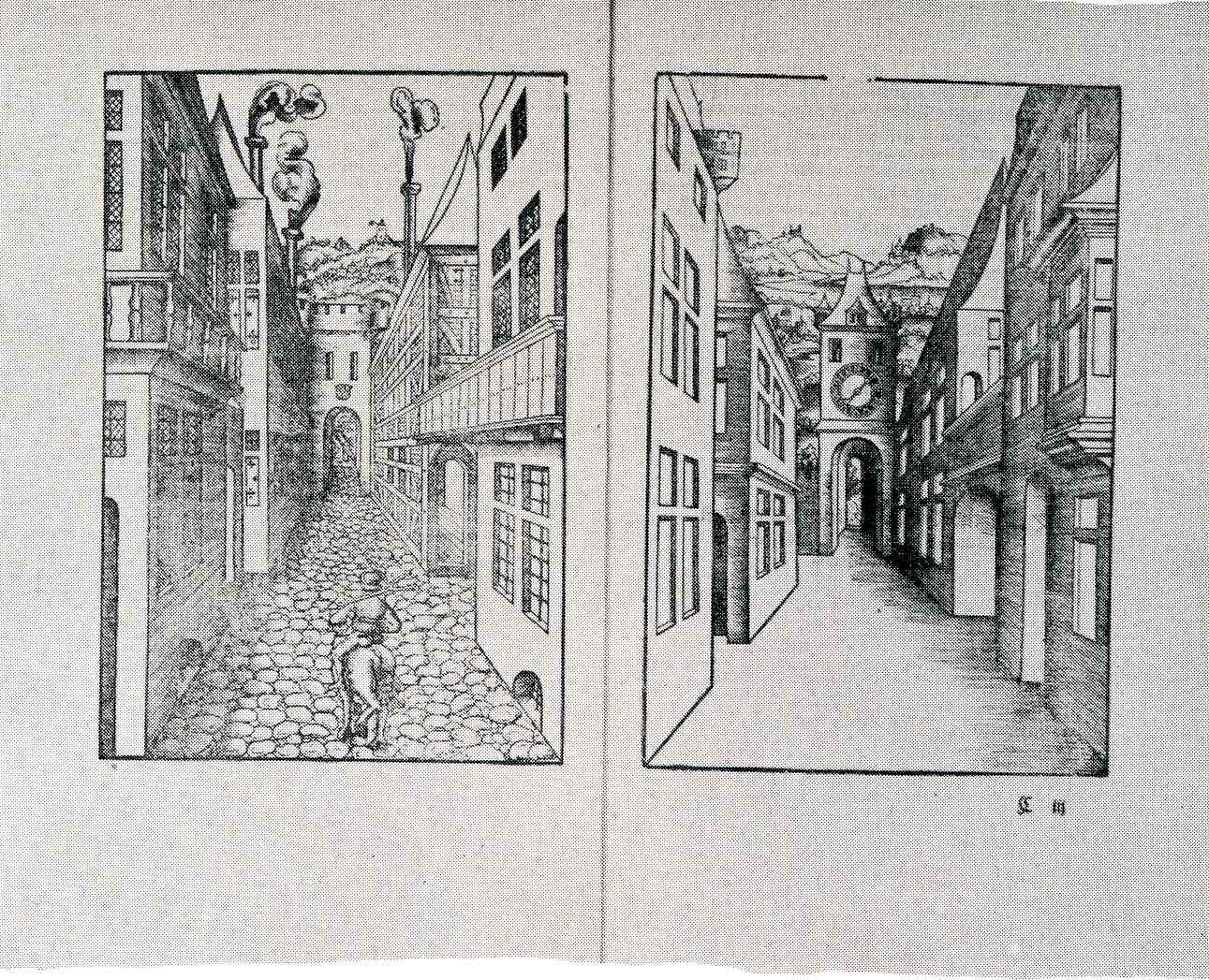
    Hieronymus Rodler (who died in 1539) wrote one of the greatest books of the Renaissance on the use and care of the relatively-newly-discovered practice of perspective. Perspectiva, Eyn Schon nuetzlich buchlin und underweisung der Kunst des Messens...(Useful Booklet and Instruction in the Art of Measurement), published in Frankfurt a.M. in 1546 (as a second edition following the 1531 first). I say “newly” because Rodler wrote his book to help explain, or at least somewhat simplify, the 1525 Underweysung der Messung (Instruction in Measurement)  by Albrecht Durer, a great work of some substantial complexity and difficulty.

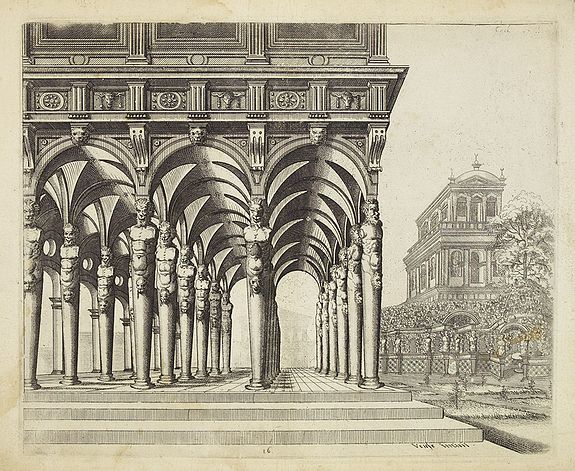
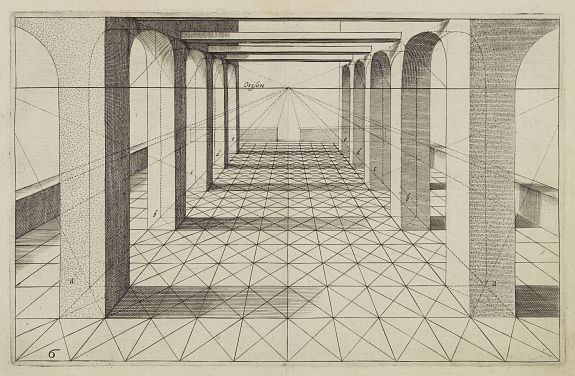
    The works of Wenzel Jamnitzer  (1564 and 1568), Heinrich Lautensack (1564) and Hans Lencker (1567), all fine examples of earlish work in perspective and al quite lovely–but it is  Hans, or Johannes Vredeman de Vries (ca.1527-1604, “The King of Architects” among the Dutch, at least), whose Perspective of 1604 rises to the greatest heights, a book filled with superb copperplate engravings of the master’s work, vanishing points into which all the lines of the engraving converge, sucked as it were into a perspective Black Hole.   That, and of course there are so many of them that look exactly at the center of a receding horizon.  (And this continues two earlier posts written along the same vein, here.)

    Perspective de vries

    In his dedication to the reader (“To the Studious Viewers of Optics”), Vredeman de Vries writes that 

    “My eyes and mind took pride
    In Sacred Optics. Thereunto allied
    was a fructifying labor,  forty years
    I plied this art devoutly, Here appears
    a doctrine worn by time. That art is famed
    For trustworthiness which trusty rules have framed…
    This art, which guides the eye and soothes the brain,
    with images, but never cheats the sight
    with lying views…”

    I have purposely not said anything about early artists (like  Uccello, Filippo Brunelleschi, Leone Alberti (Optics),  Piero della Francesca, Piero della Francesca, Federico Commandino, Jan van Eyck, Leonardo, and Serilo and Vignolla, Raphael, and so on) and the development of perspective in painting because, well, I can’t figure out how to do it in a paragraph.  But you can certainly consult fine books like Samuel Edgerton The Renaissance Rediscovery of Linear Persepctive (1975)  and Hubert Damisch The Origin of Perspective  (1994) for a bigger taste of teh issue. Me, I just wanted to look straight-on at some 16th century perspective  illustrations…

    Perspective de vries2


  • Some Vintage, Interesting, Declassified CIA Reports–Nuclear War and the Coming of the Communists

    JF Ptak Science Books LLC

    Following up on a few posts over the last two days on some striking CIA reports on such topics as the tactical employment of nuclear weapons in Vietnam are the following (the links taking you to the full documents), all taken from the CIA-Freedom of Information Act website of declassified reports:

    Cia-seal
    Soviet Capabilities for Attack on the U.S. through mid-1955  

    The Strategic Value of the U.S.S.R.  the Conquest of Western Europe and theNear East
    (to Cairo) 

    1948 

    Probable developments in China,. 
    1949 

    Probable Effects Soviet Union Atomic Bomb on the Security of the United States,
    1950

    Prospects for the Defense of Indochina
    against a Chinese Communist Attack
    ,
    1950

    Prospects for Survival of the Republic of Korea,
    1948


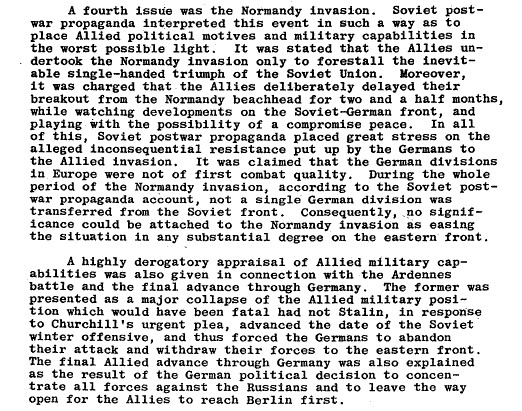
  • Things That Weren’t Department: the Stalinist Take on WWII and How Nobody but the Soviets Mattered

    JF Ptak Science Books LLC  Post 494

    Sometimes things that people deem to be necessary to be just aren’t, no matter how much they are needed:  WMD, attacks in the Gulf of Tonkin, the Lone Sniper, the Protocols of the Elders of Zion, Heaven, racially-based inequalities, Virgin births, free will, intelligent design, and so on. 

    This is part of a recently declassified CIA briefing on a 1959 Soviet history of World War II, told in only the way that a ruthlessly dogmatic entity could tell it, all found on the CIA site, with the full 61-page text Current Intelligence Staff Study; the Soviet History of World War II, (Reference Title: Caesar X-59),   here.

    There is a lot in this thinking that is entirely new to me, stuff that I’ve never thought of before, all brought about by a structured and corrupted historiographic establishment bent on controlling the past.  The CIA report discusses the ways in which the Soviet history excised the importance of all non-Soviet intervention of any kind; and, basically, that the actions of the non-Soviet Allied forces throughout the course of the war merely served to forestall the inevitable, single-handed dominance of the Soviet Union in winning World War II.  The breadth and depth of this incoherent and savagely twisted history is staggering.  For example, D-Day, the Normandy Invasion, the Invasion of Europe, did absolutely nothing, had no significant effect whatsoever on the outcome of the war–it, again, served only to lengthen the time of the war so that the Soviet Army could eventually finish it.  The Battle of the Bulge meant nothing.  The dropping of the two atomic bombs on Japan meant nothing.  The two years’ worth of supplies sent by the United States to the struggling soviet Union in 1941 and 1942 meant nothing.  Early Soviet defeats in ’41-’42 meant nothing.  The inability of the Soviet Union to determine the coming attacks from Germany in Operation Barbarossa meant nothing.  If the effect was extra-Soviet, then there was no cause–in this line of reasoning, the storytelling was so devastated that in the end, not even nothing was nothing. 

    Yes it is true that the Soviet end of the war is undertold and that the Soviet Union suffered tens of millions of soldiers and civilians killed, but their response to telling the story of the war is so far beyond wrong that it isn’t even that.  It is nothing, except of course that there are millions of people who believe it.  And in the wars of propaganda, that is a victory, and that is when nothing becomes something.

    • (Excerpt from page 11 of the CIA report)

    Soviet propaganda WWII history

    ·Posted by :

    ·in:

    —

  • Nuclear Weapons and Vietnam, Part II: Richard Nixon & Henry Kissinger

    JF Ptak Science Books Post 493

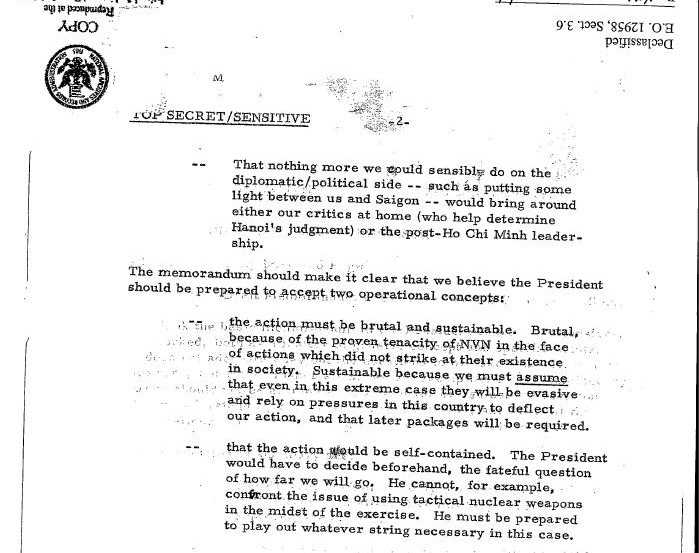
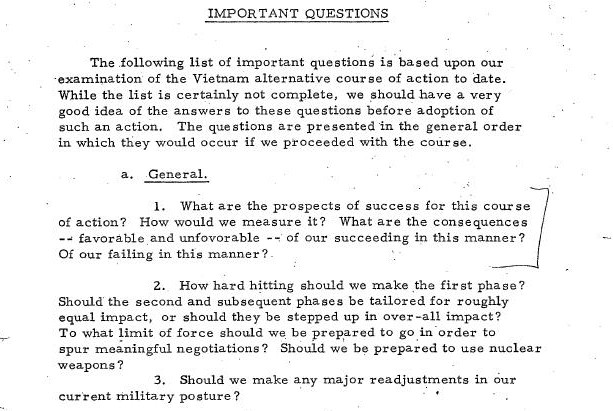
    Richard Nixon continues a post from last night on the Executive Branch and the considerations for using nuclear weapons in the Vietnam War.  Yesterday’s document related to the Johnson administration in 1966, Richard Nixon took up the issue in the first year of his failed presidency, in 1969, brainstorming the idea of first strike to end the war.  This of course was a an early decision of his on the war, before it became much more politically expedient for him (in 1971/2)  to prolong the war so that he could run for re-election to end the war in his second term–a more repugnant decision unmatched and unchallenged until he was nearly checked by the embarrassment who just left office.  As part of a study codenamed “Duck Hook” the following memorandum (Tony Lake“Memorandum from and Roger Morris, NSC Staff, to Captain [Rembrandt] Robinson, Subject: ‘Draft Memorandum to the President on Contingency Study’, 29 September 1969, Top Secret/Sensitive. Source: folder 4: VIETNAM: (General Files), Sep 69-Nov 69, box 74, National Security Council Files: Subject Files, Nixon Presidential Materials Project, National Archives.”) concerning “military expediency” was introduced into the thought pool, stating that the President should at bottom-line have considered the use of nuclear weapons against the North Vietnamese.  Melvin Laird, the Seretary of Defense at the time, thought the proposal for the tactical use of nuclear weapons to be “laughable” and completely off the table.  However, he also said that for Henry Kissinger, nothing was off the table:  “(for Kissinger) Laird recalled, “nothing was out of consideration” with respect to Vietnam; the nuclear threat was “always . . . there as an option.” That was “not my approach,” and he said that he had told Kissinger at the time, “just forget it.”(–George Washington University website, National Security Archive Electronic Briefing Book No. 195, Edited by William Burr and Jeffrey Kimball.)

    Nuclear weapons Vietnam 1969

    In typical fashion, Henry Kissinger was not necessarily “for” the use of nuclear weapons against North Vietnam, but was in favor of using massive, brutal force against military targets–he said that he had ruled out the use of a “nuclear weapon”, but had not ruled out the use of a “nuclear device”. 


    Nucelar weapons VN kissinger


    In a summary of the issue (in another of this series of Top Secret-Eyes Only declassified documents) of the bombing of North Vietnam by Kissinger and addressed to the President (though, as the editors at GWU point out, there is no evidence that this was actually read by Nixon), retains the question about the use of nuclear weapons–the editors reaching the conclusion that the documents were “implying that the matter was still up in the air or on the table”.

    Nuclear weapons Kissinger 2