A Daily History of Holes, Dots, Lines, Science, History, Math, Physics, Art, the Unintentional Absurd, Architecture, Maps, Data Visualization, Blank and Missing Things, and so on. |1.6 million words, 7500 images, 4.9 million hits| Press & appearances in The Times, Le Figaro, Mensa, The Economist, The Guardian, Discovery News, Slate, Le Monde, Sci American Blogs, Le Pont, and many other places… 5000+ total posts since 2008.

Author: JF Ptak

  • Graphical Display of Quantitative Data: Anti-Submarine Warfare, 1973

    JF Ptak Science Books LLC  Post 661

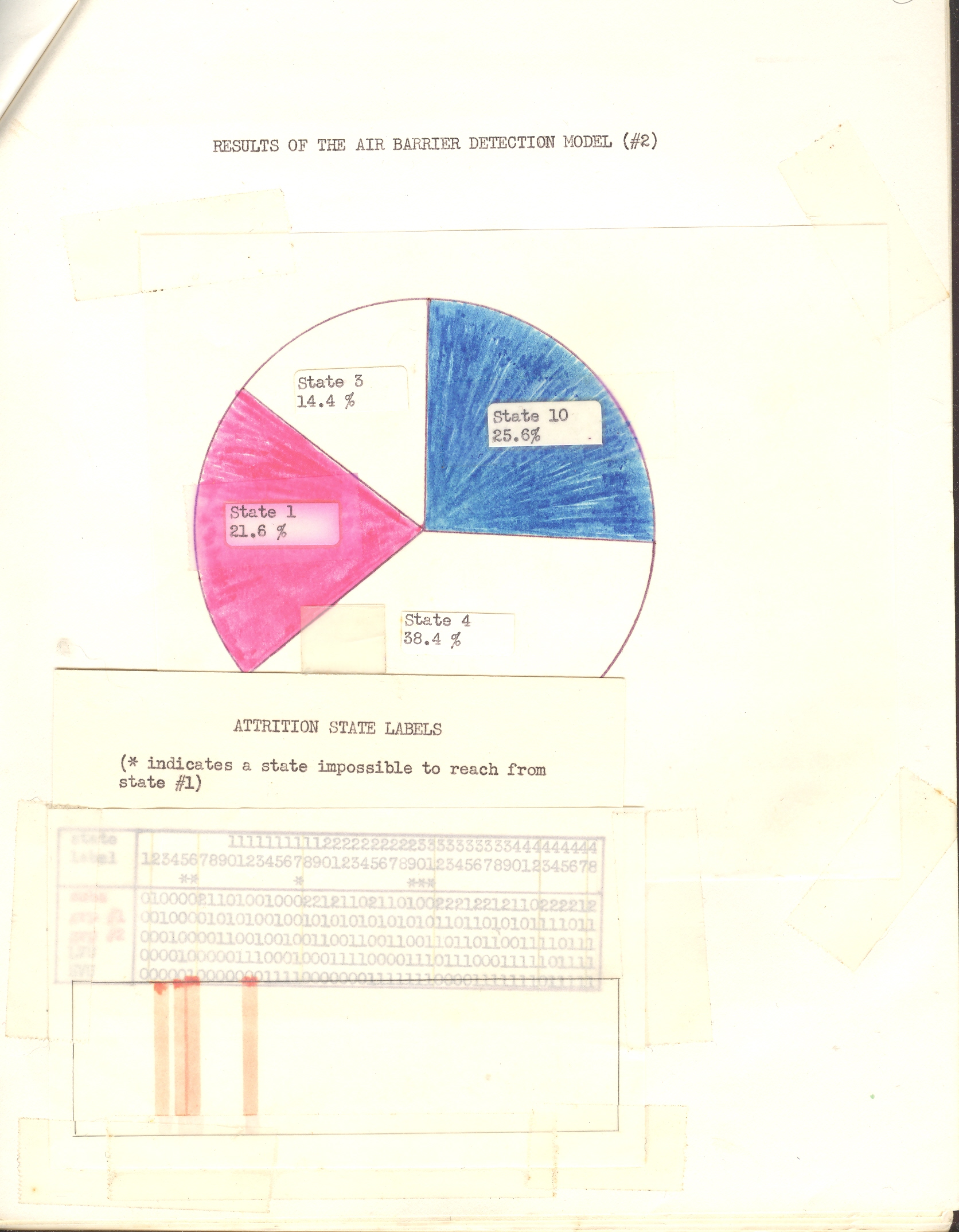
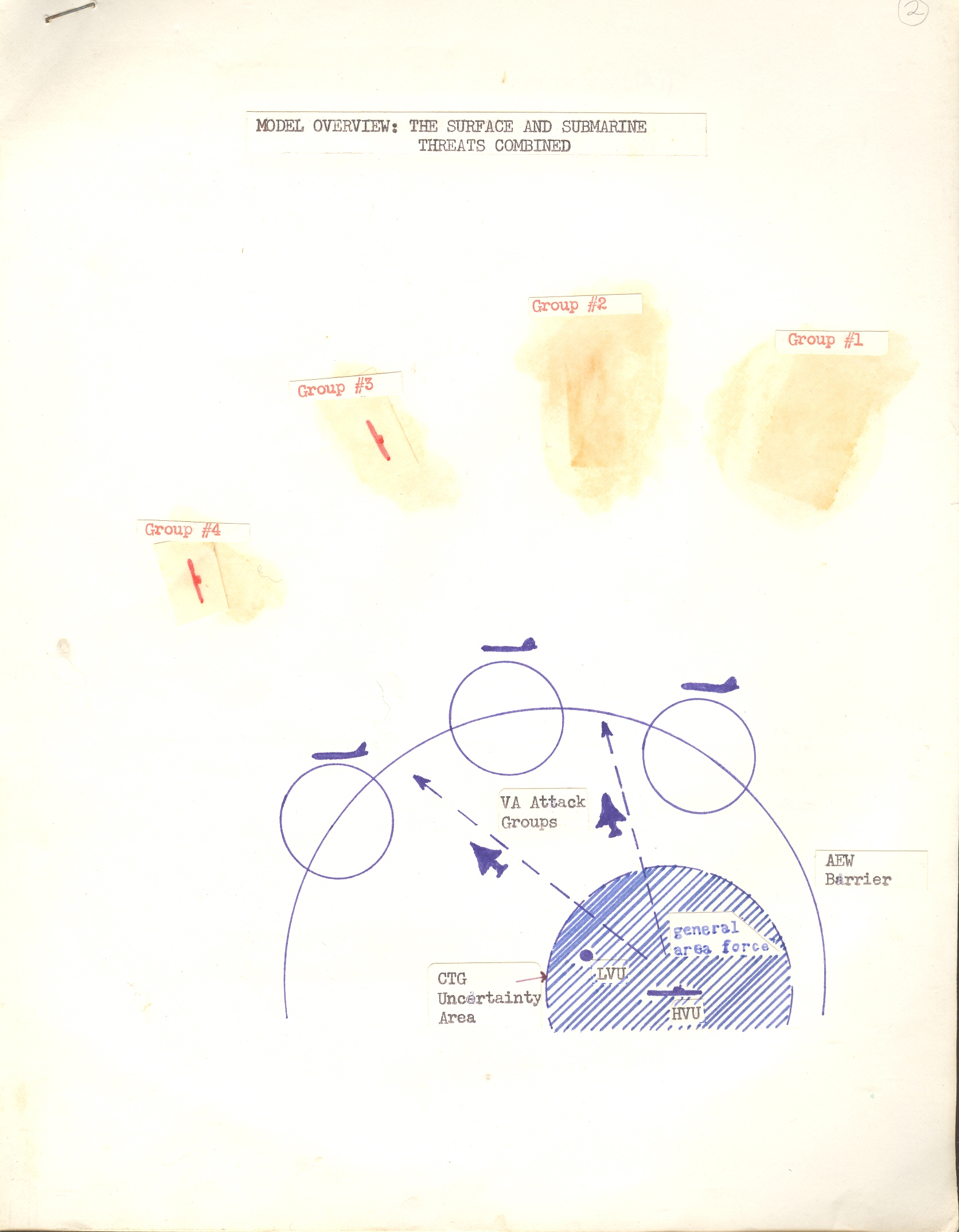
    These original sheets were, it seems, prepared for an illustrated (1973) talk on a statistical model for the detection of anti-submarine warfare threats—unfortunately I’m at a loss to distinguish much of importance here, though I’m sure that someone who is the least bit familiar with defense modeling and simulation would instantly and easily interpret theserelatively simple images.  I’m presenting them here because they are to me an example of excellent presentation, design and logic—a fine symbol for the presentation of graphical information in a pre-PowerPoint past.

    Blog--june 23 luster 1


    The work is that of [redacted], an analyst who seems to have worked in the 1960’s and 1970’s for the thinktank John D. Kettelle Corp of Alexandria, Virginia, a defense contracting firm.  (I’ve included titles  and abstracts of some of his published works in the “continued reading” section, below.)


    Blog--june 23 luster 3  

    These seem to comprise something like author/speaker’s notes for overhead illustrations for a presentation on a computerized system for the receipt and processing (and summarizing?) of tactical intelligence data on the enemy’s intent on locating and destroying submarines.

    What strikes me is the number of cut-outs and paste-ups and such that are part of each slide–every data point, and virtually every notation on each page has been pasted in.  There’s much more to this but these certainly give you a decent idea of the analyst/statistician/programmer/engineer bent over his desk doing surgery on his data. 


  • Odd Images Department: Submerged, Miniature, 19th Century People

    JF Ptak Science Books LLC  Post 660

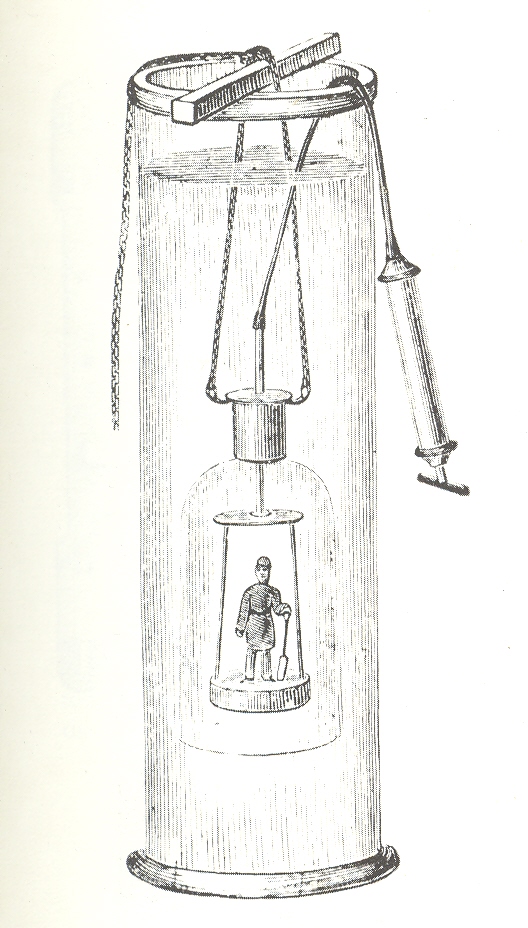
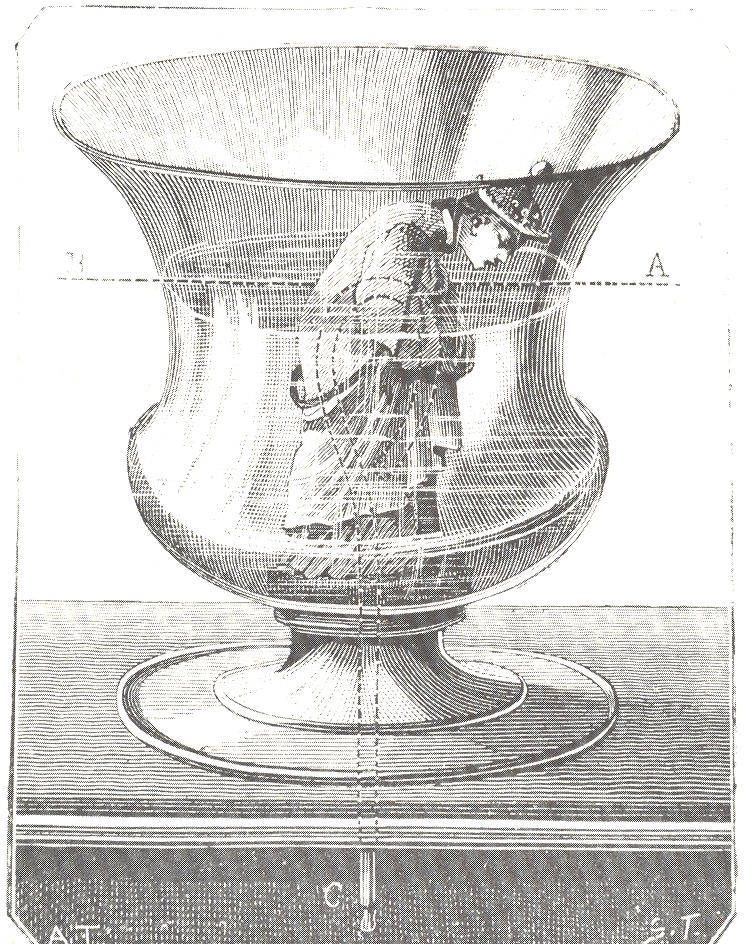
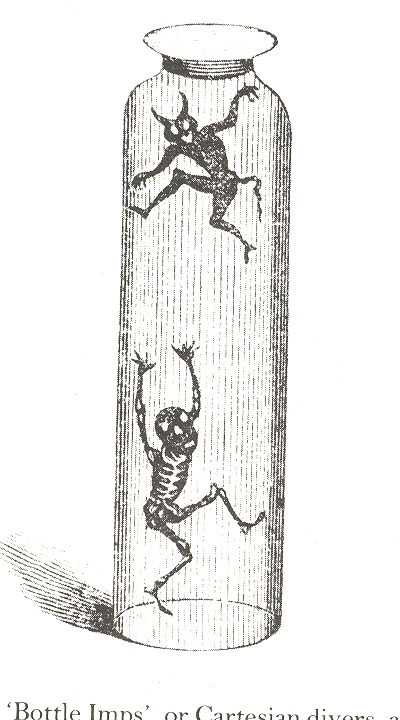
    Blog--june 22--people in glasses diver Oh, all right–these aren’t really miniature people–they just look like it. (And I’ll be interested to see how people come to this post via Google!)  What these images display are physical science laboratory demonstration tools and toys. (People have been swimming in fomalin and formaldehyde for a long time, hundreds of years–but I’m not dealing with the biological preparations today, I’m only after found, out-of-context oddness.)

    This first image, lovely and odd as it seems, is a simple demonstration device showing how a diving bell operates and was manufactured around 1910.  This would’ve been used in a classroom for a three dimensional learning tool , a standard approach to help elucidate phyical principles.  Classrooms would’ve had cabinets stuffed with these sorts of instruments–if the school had any money–and were in vogue for hundreds of years.  In this case we see the worker with his shovel being lowered into water, encased in a glass dome, with a line attached top a syringe which delivers oxygen.  (The image is from the catalog of John J. Griffin & Sons, Scientific Handicraft… London, 1910.)

    Blog--june 22--people in glasses tantalus The second image is a pretty high-end cup of tantalus–a vessel that cannot be filled because of pressure and siphoning and an exit port. It is named for the Greek bad boy Tantalus, who was the son of Zeus and Plouto, and by whose various misdeeds was cast away in Tartarus, the lowest strata of Hades in a place reserved for evildoing evildoers.  Tantalus lived a life of theft and flippant care:  for example, he was the one whom invited to dine with the gods, stole their ambrosia and gave it to the people.  In another example we see Tantalus offering his son to the gods by preparing him, thinnly dicing the boy, and chopping that, serving him to the gods for luncheon–not everyone was fooled, and no one was amused.  Part of his trials in the Underworld gives us the term “tantalzing”:  desire without fulfillment. His position in the afterlife, such as it was, was not pretty: Tantalus was to stand in perpetual hunger in a stream beneath fruiting trees; the water though would prevent him from reaching anything to eat, every time, and forever. . Every time he grew thirsty, the water level would lower itself, and he couldn’t reach anything to drink.  Pretty bad stuff to do for eternity.  This cup was called a Tantalus Cup because it would siphon itself off (through a tube in the bottom of the glass) so that the glass would always only get about half-way filled.  Why a “Chinese-like” figure was chosen for Tantalus, I don’t know. 

    Blog--june 22--people in glasses imps Lastly is a Jar of Sinking  Imps–I’ve seen this before with Mother/Father figures, regular humans–but this device contains non-humans.  This image comes from Aryton Paris, Philosophy in Sport (1853), and was a scientific toy demonstrating what happens to air-filled items immersed in water (and where they are nearly the same specific gravity as water), when pressure is applied to a rubber bladder on top of the filled jar.  The pressure from the weight applied to the rubber bladder causes the air in the imps to compress; and when the air is compressed, the imps sink to the bottom.  Not exactly hours of fun, unless there was nothing else around,  though I must confess I’ve seen my daughters have long periods of uninterrupted fun with slimmest of found objects….


  • Sacred Mountains Series: Tai Shan, China.

    JF Ptak Science Books LLC  Post 659

    The Chou dynasty Shu-ching (“the History Classic”, “the Book of History”, “the
    Book of Documents”) is one of the world’s oldest historical documents, relating
    vernacular, religious and legendary drama of China.  According to this sixth century BCE history,
    the the legendary Chinese third milenium BCE ruler, Shun (2255-2206 BCE),
    would pilgrimage* every five years to the points marking the extent of is
    realm, stopping and extolling virtue and leaving gifts at the peaks of five
    mountains at these five points.  The one mountain
    of these five that was named was Tai Shan, which remains the principal of what
    is called “the five sacred mountains**”, and which is still after thousands of
    years a point of veneration and pilgrimage. 

    Blog--june 22--tai shan 001

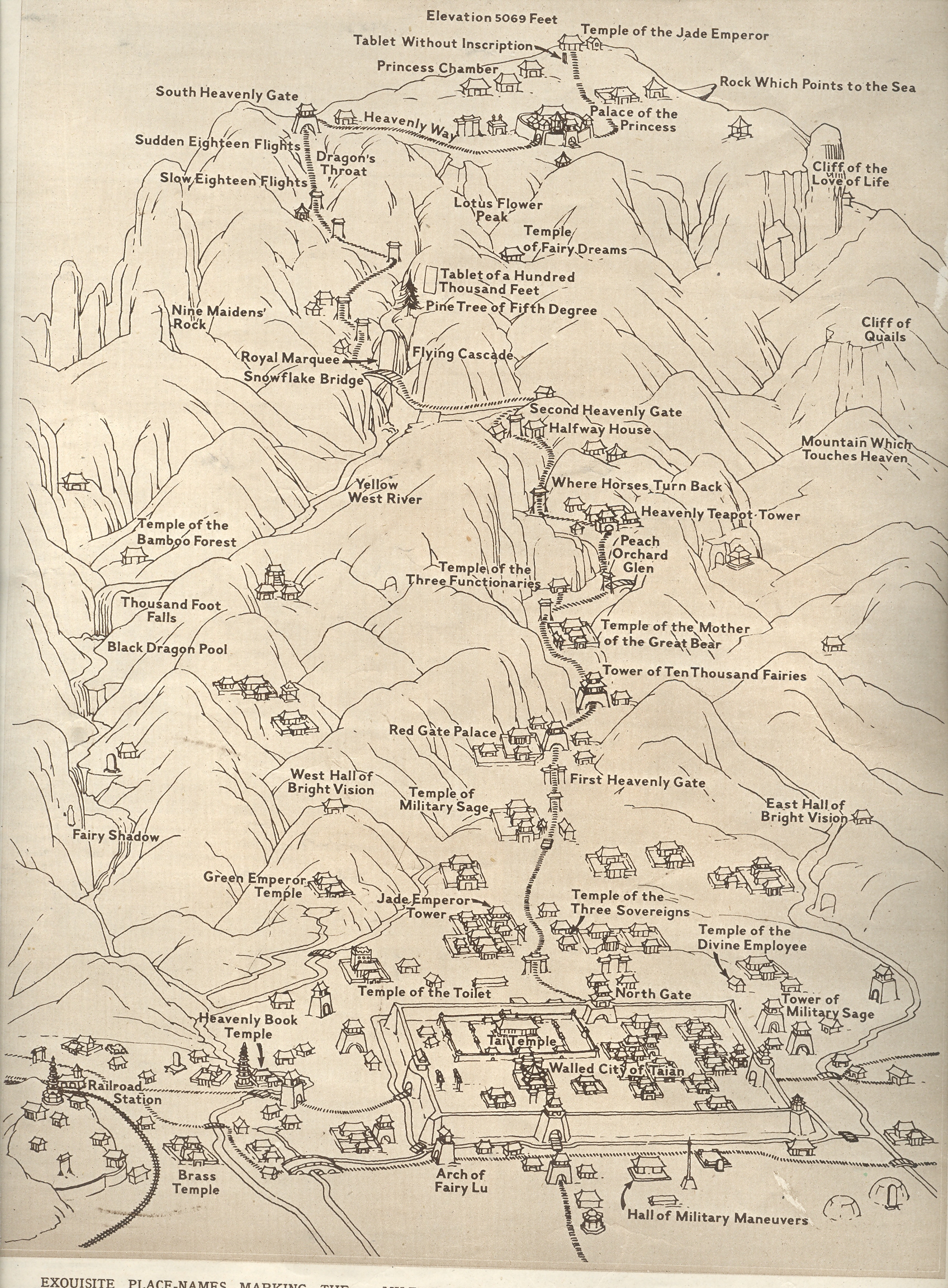
    The map of the pilgrim’s paths in this mountain was published in The
    Illustrated London News
    for 20
    October 1945.  It is a nicely
    designed skeleton map of the mountain, scaled down to reveal temples and
    principal interests, and done in such as 
    way as to look a bit naïve. 

    There’s too much not-known history here for me to make much of a comment
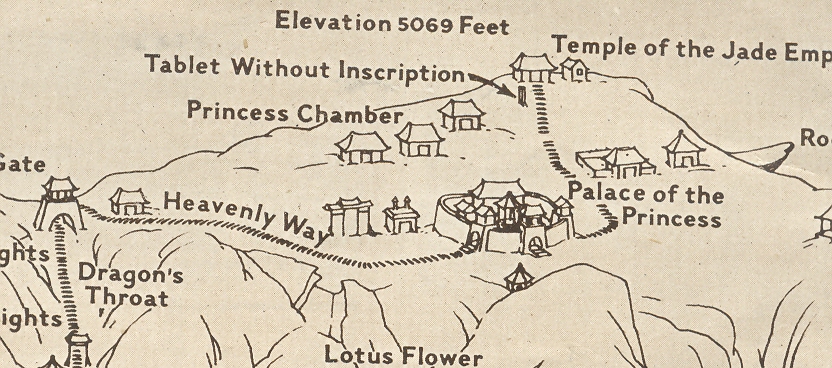
    on this map.  One item that did catch my
    interest though is found near the peak, the “tablet without Inscription”.  It is evidently a massive monolith put in
    place around 110 AC.  It has but one work
    incised in it:  the ideogram for “Lord”.

    Blog--june 22--tai shan 002

    *pilgrimage – ch’ ao-shan chin-hsiang – means ‘paying one’s respect
    to a mountain’

    **The  five sacred mountains include:

    • Tai Shan, Taoist mountain of the east, Shandong province, 1545 meters.

    • Heng Shan Bei, Taoist mountain of the north, Shanxi province, 2017 meters.

    • Hua Shan, Taoist mountain of the west, Shanxi province, 1997 meters.

    • Heng Shan Nan, Taoist mountain of the south, Hunan province, 1290 meters.

    • Song Shan, Taoist mountain of the center, Henan province, 1494 meters.

    Blog--june 22--tai shan 3
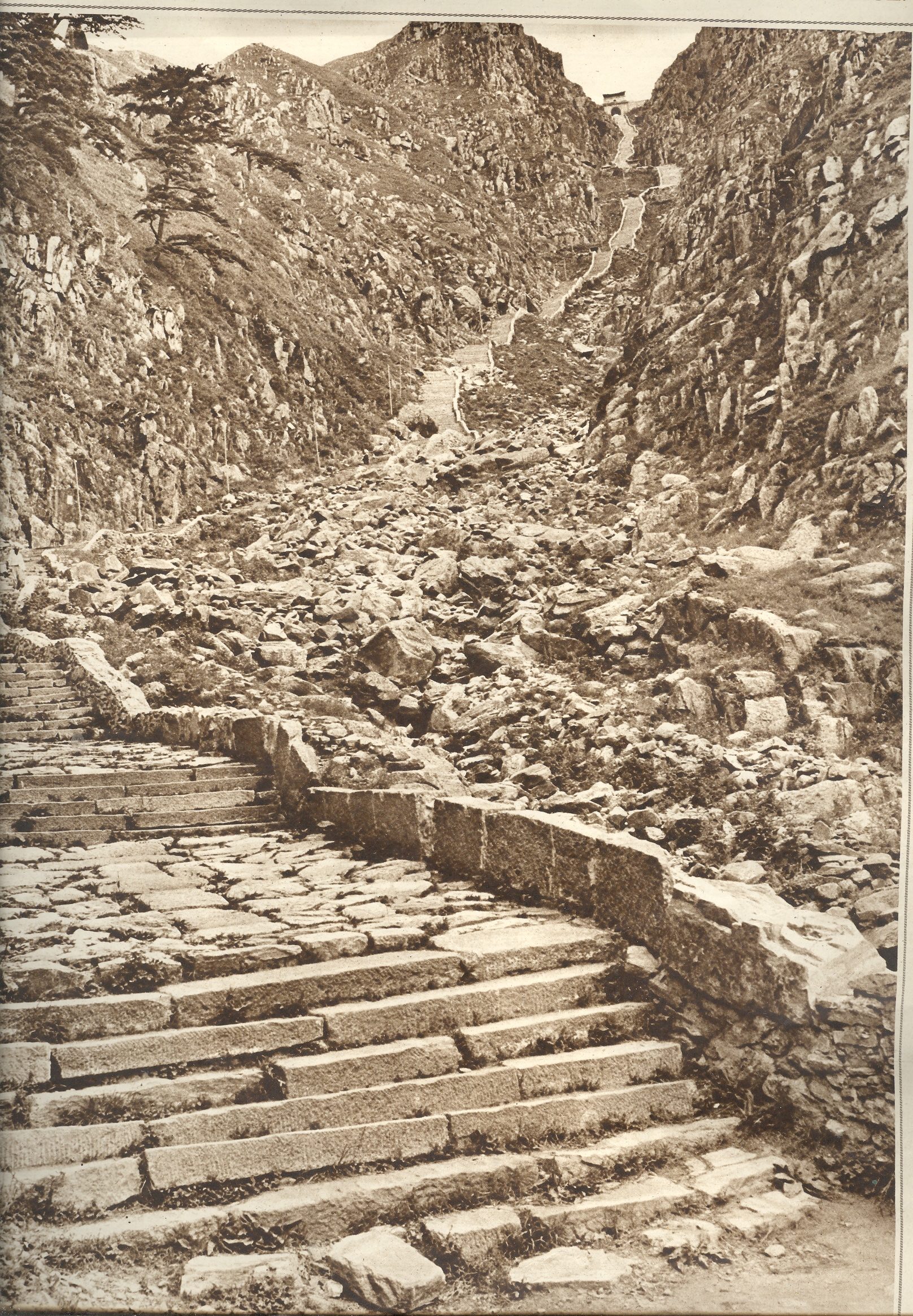
    This interesting image was made by none other than Gilbert Grosvenor (1945), the chair of the National Geographic.  These stairs–1000 of them–lead to the South Heavenly Gate near the summit.  At the time, these were still one of the world’s longest stairways.


  • Animal Imitation, Tight Corsets, and Perdition: Physiognomy, 1873

    JF Ptak Science Books LLC  Post 658  Blog Bookstore

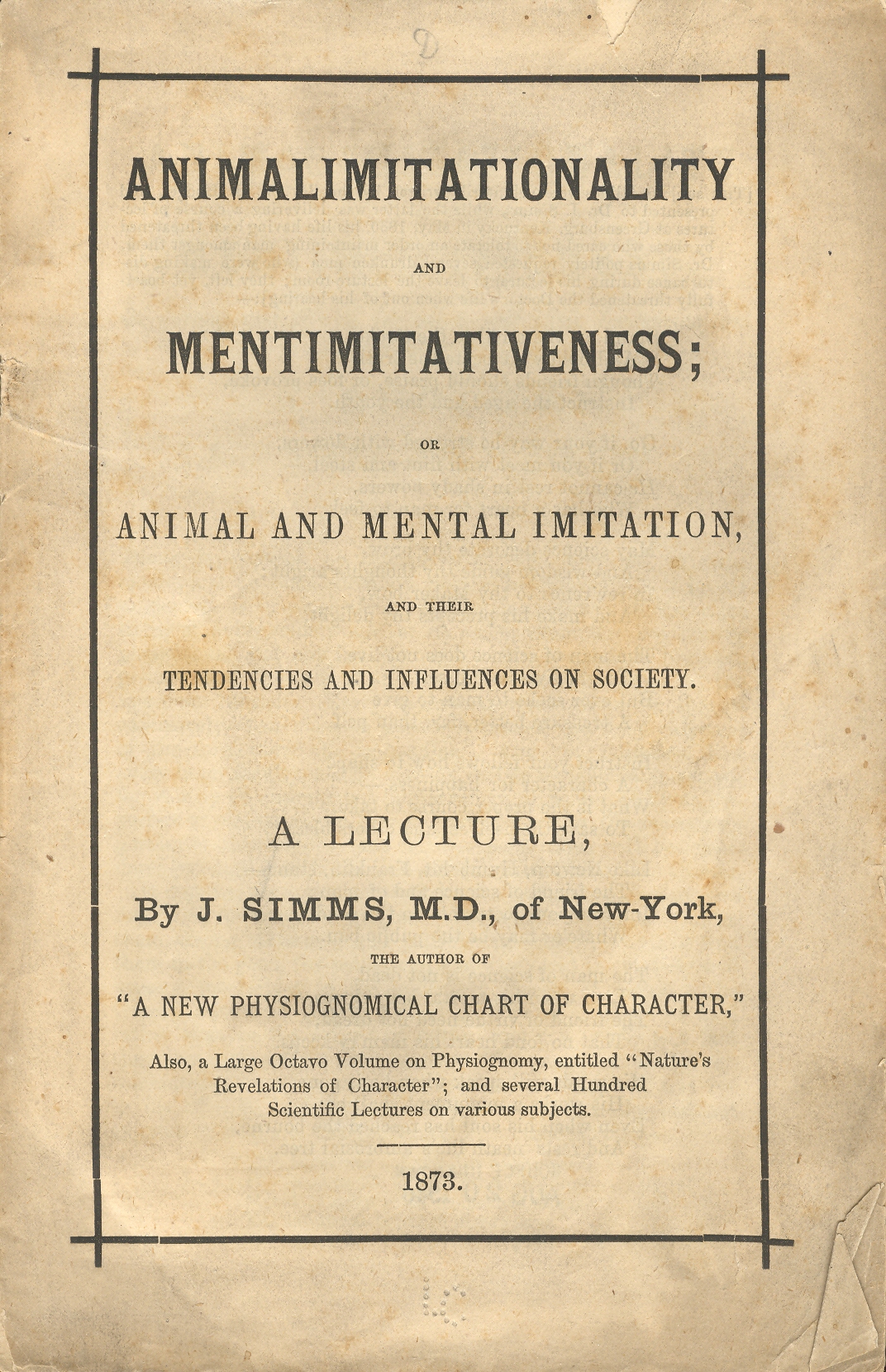
    Blog--jun 16--simms The fabulouslessness and learned foolishness of J. Simm’s horribly-named Animalimitationality and Mentimitativeness; or Animal and Mental Imitation and their Tendencies and Influences on Society, a Lecture, seems a poor-man’s ramble in a polysyllabic scribble.  At it base, J. Simms (listed as “M.D”., and who was also the author of A New Physiognomical Chart of Character) presents a two-paragraph idea and published it over twelve pages that seem twelve pages too many.  The idea is basically so:   humans at time resemble animals because animals imitate what they see, as do humans.  That is principally the entire deal, though it evidently was the cause of numerous lecture bookings for Mr. Simms.  And what Mr. Simms talks about are the problems of imitation, the results of which are found in tight shoes, tight corsets, big hats, and bad walking, all leading to debauched society and wrecked personal dreams. 

    There are many things the Simms work is not.  It is not a work that encompasses the social geometry found by other people later in the century–those who came across the study of people and immitation and the like legitimately, such as Gebriel Tardem Emile Durkheim, Scipio Sighele and Gustave Le Bon, for example.  These folks worked with capable data and reasonable assumptions in looking at how the transmission of data and knowledge takes place between people, and sought to explain the construction of the social membrane in logical and scientific ways.  They were trying to address what Marcel Proust would call (somewhat later) “a new distance between ourselves and things”. 

    Simms was interested in did this too, but did so in terms of how people imitated animals, and how that imitation spread to imitating people, and then fashions, and then resulting in too-tight corsets and too-tight shoes, and wanton neediness, all eading to advanced imitation and, finally, to perdition.  The man had an odd vision which obviously appealed to some. And so it goes.  There’s not that much difference in the set of assumptions of Simms and those of Dr. Freud, is there?


  • The Shotgun in the Service of Natural History–Shooting Flowers

    JF Ptak Science Books  LLC  Post 657

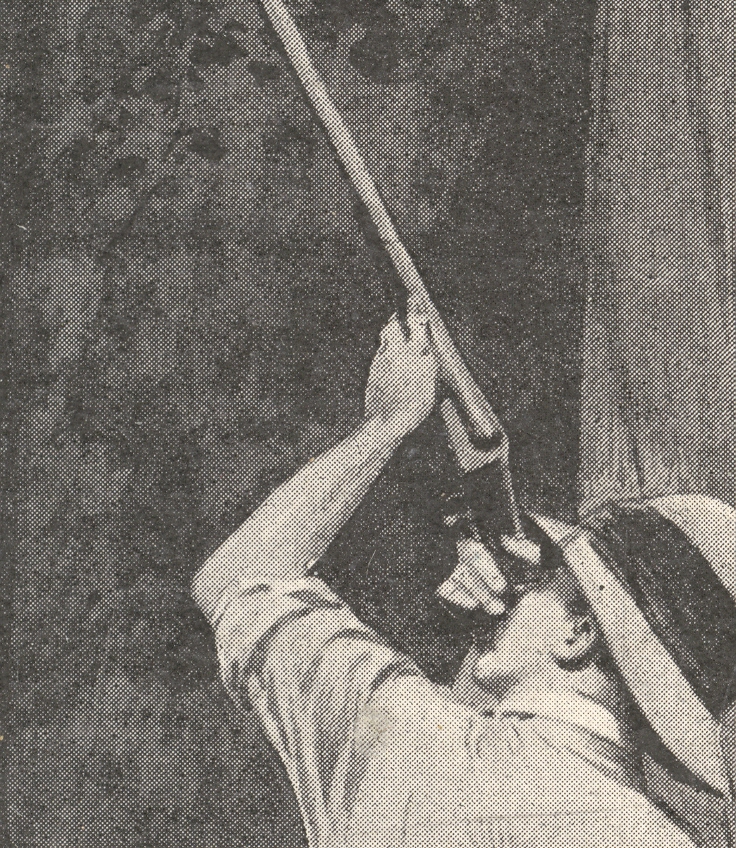
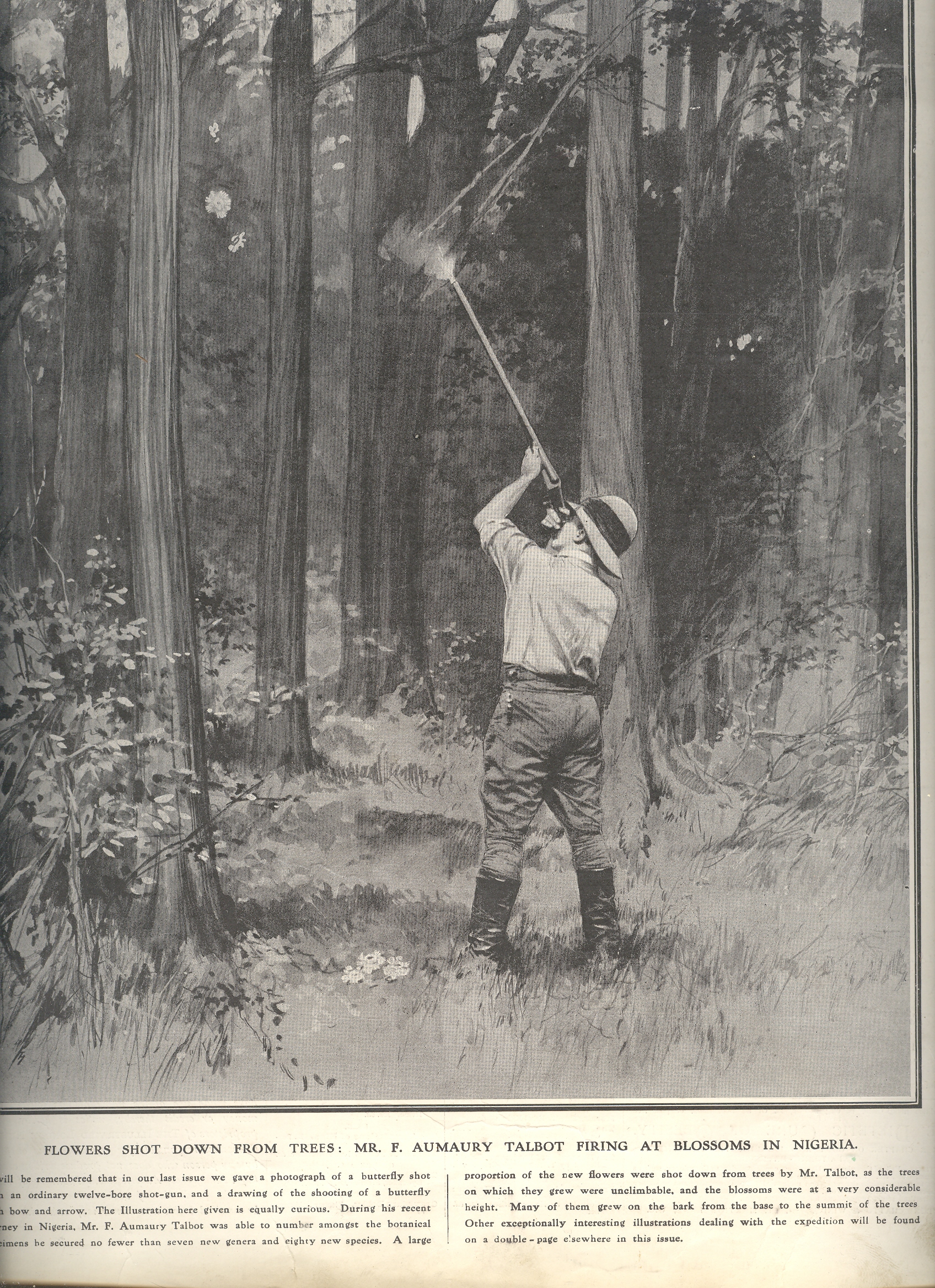
    In the always summery days of summer of 1912  , Mr.  F. Aumaury Talbot  went hunting in the wilds of Nigeria–not horribly unusual of course, except that the man was shooting flowers from trees.  

    Blog--june 19--detailBlog--june 19--detail 2

    I’ve never seen a picture like this, nor have I read anything about shotgunning blossoms from on-high in a tree canopy. And that’s what the man is doing–right down to the shotgun.   Mr. Talbot (for whom an estimable cash prize for academic work in anthropology is still named) was able to collect eighty (!) new species of flowers on this trip to Nigeria, many collected in this fashion. 

    We read in the story about this image (from The Illustrated London News of 8 June 1912) that in the 2 June issue appeared another shotgunning-in-the-service-of-Understanding-Nature:   this time shooting butterflies.  With a shotgun. 

    Blo--june 19--shooting flowers


  • Curious, Impracticable and Useless Inventions: Gun Hats and Steel Fish, 1920

    JF Ptak Science Books LLC  Post 655

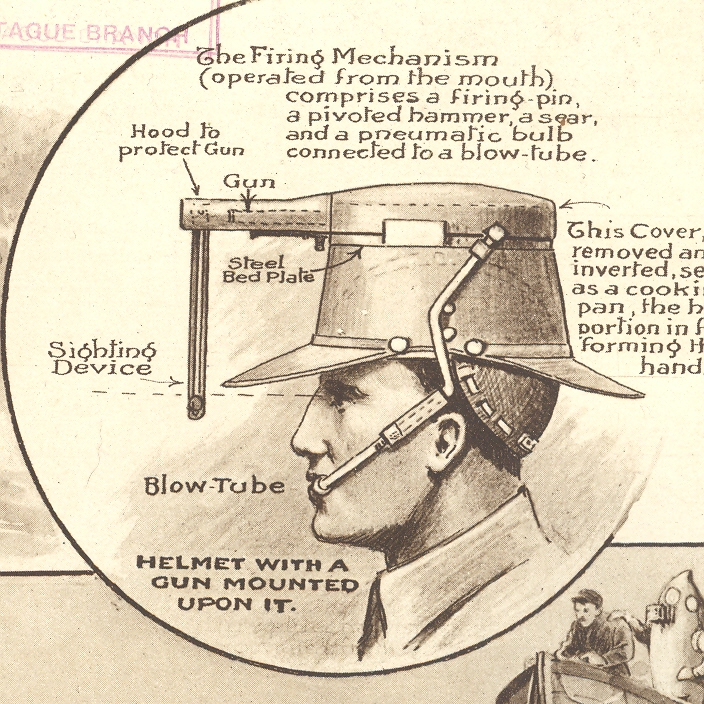
    Blo--june 17--hat gun I had started out to write this post about the Sham Paris,
    the False Paris, that was being built outside Paris to deceive German bombers in WWI.  Now, that wasn’t a particularly bad
    invention, per se—a bit like the
    Maginot Line in is way—just too much, over-the-top, short-distanced and muddied
    sight. 


    But on the way to the images of non-Paris I came across
    these few inventions as reported in The
    Illustrated London News
    of Christmas Day, 1920.  These innovations look older than 1920, to
    tell the truth, but here they are. 

     First is the hat gun—or, rather, the helmet gun.  It look as though the whole affair would be aimed
    and fired hands-free.  By the look of the
    barrel, the thing in the helmet looks like 50-calibre, which might have an ill
    effect on the neck of the shooter.

    Blo--june 17--stubby

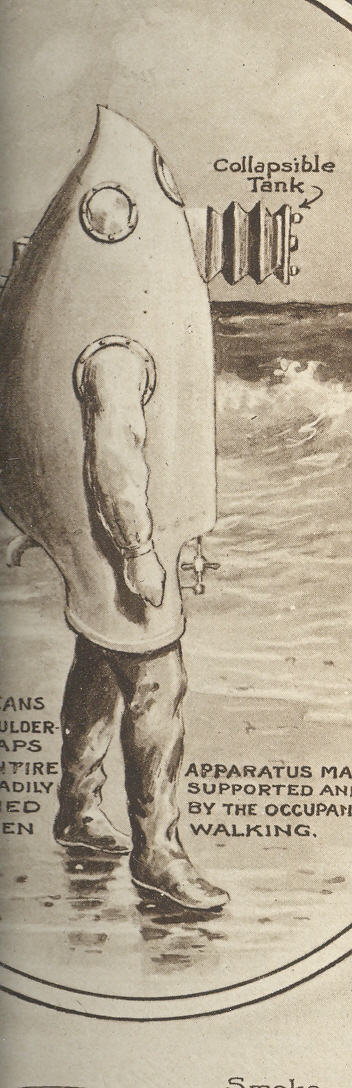
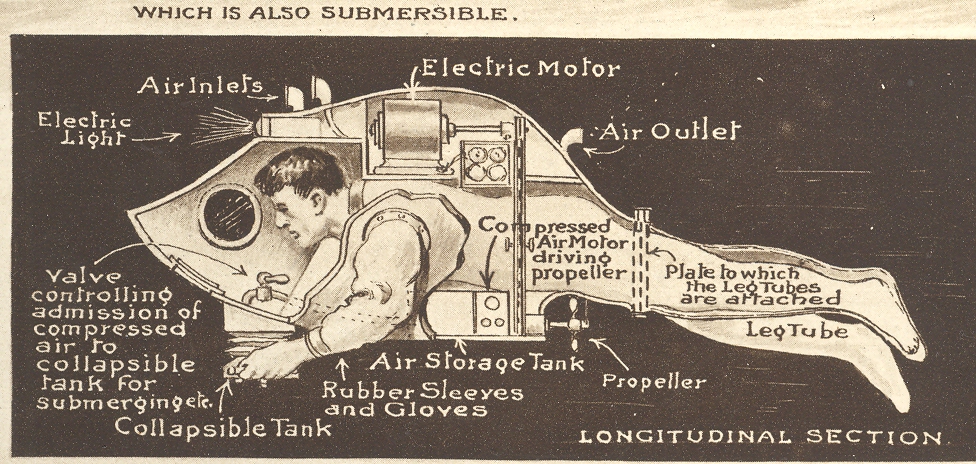
    The next few images illustrate an improbable, cartoon-like
    device for swimming in the high seas.  It
    is a ticklish-looking thing, with air outlets and propellers and such being in
    the rather tender areas of the internalized man. 

    Blo--june 17--horizontal


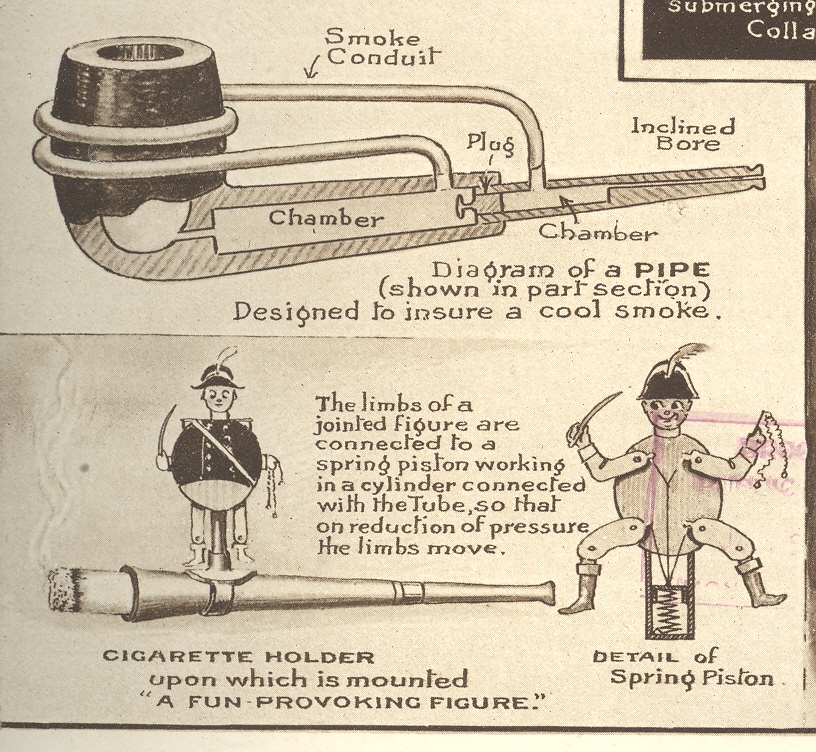
    Lastly we come to a pipe designed with too much duct work (a
    la the movie Brazil)
    to deliver a cool smoke from a hot bowl. 
    The device below that tries to bypass the entire hot smoke issue by
    distracting the smoker with a movable whirligig. I’m not so sure that Bogart
    would’ve been taken very seriously as Phi Marlowe had he been (a) smoking a
    ciggy with a holder, and (b) if that cig holder had a movable figure on it
    that raided a sword every time he drew smoke. 

    Blo--june 17--smoling


    ·Posted by :

    ·in:

    —

  • Eat Me, Please: Simplifying the Message in Advertising

    JF Ptak Science Books LLC  Post 654  Blog Bookstore

    Soon her eye fell on a little glass box that was lying under the
    table: she opened it, and found in it a very small cake, on which
    the words ‘EAT ME’ were beautifully marked in currants.
    ‘

    Well, I’ll eat it,’ said Alice...

    Lewis Carroll, Alice’s Adventures in Wonderland

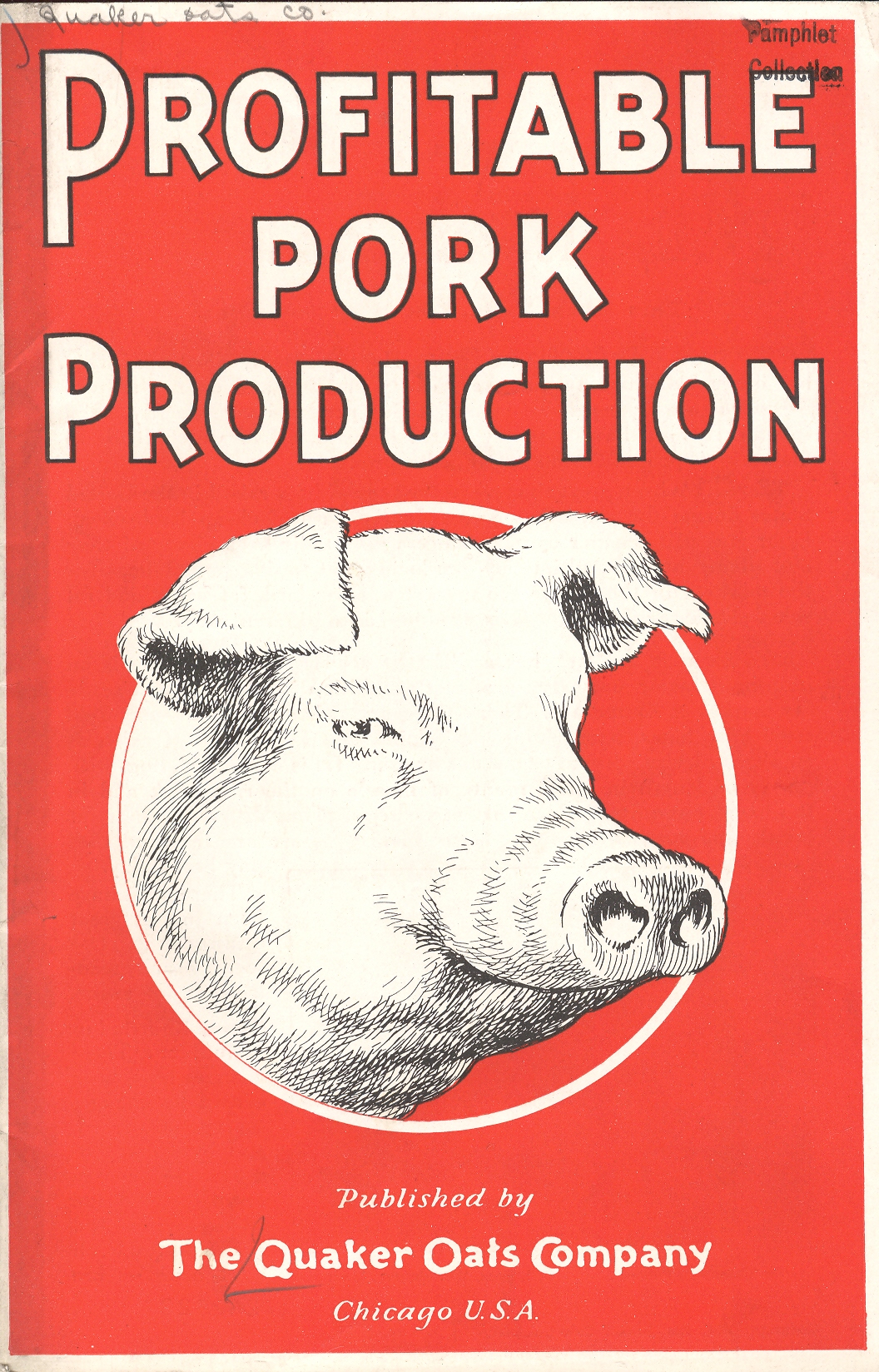
    In the annals of advertisements whose aim it was to beseech its readers to consume its subject, Profitable Pork Production (published by the Quaker Oats Company in 1938) is perhaps the most successful in making its eatable the happiest and most contented of all the lot of Things to Be Eaten.  Elevating need past the knowing eyes of the poor porker, making him/her both the object of being eaten while satisfied with that option is the ultimate and (in this case) attained goal of the pamphlet.  Blog--jun 16--pork

    I’ve seen very few other pamphlets like this whose subject says “Eat Me!” with greater disregard for their own life.

    What this pamphlet was really doing was selling (“delectable”) food pellets to farmers to feed to their pork to get them to market plumper than other non-Quaker Oaks pellet eaters. 

    ·Posted by :

    ·in:


  • What Things Are Not Department: Freeing Sex from Sin in A. Niphus, 1549

    JF Ptak Science Books LLC    Post 652   Blog Bookstore

    Blog--jun 15--love I suppose that one could write about virtually anything in
    terms of what that subject is not:  everything
    that is tangibly matter or energy could be something else, and everything not
    (like shadows and thought) are the stuff of being what they are and aren’t at
    the same time. 

    In 1549 Augustinus Niphus wrote a beautiful, not-so-little
    work on the subjects of beauty and love. Niphus (or Agostino Nifo,
    or Niphus Suessanus, or Niphus
    and sometimes  Nyphus) was born in the Kingdom of Naples

    around 1473, and was around 55 or so when he died in
    1538-1540.  He was a philosopher and
    historian of medicine in the high-Renaissance sense, was a great Aristotlean
    and Averroist,  and proved to be an able
    antagonist to the Christian churches on the subject of the blessed
    interpretations of millennially-dead Aristotle. 
    There are some who claim that Niphus was a little incoherent on the
    subject of Aristotle because, well, he taught the corpus aristotlelicum at university—but Aristotle at this point in the
    Renaissance was incredibly deeply ingrained in the curricula of all
    universities all across Europe, and was opne of the great basics of education. There
    was no escape.

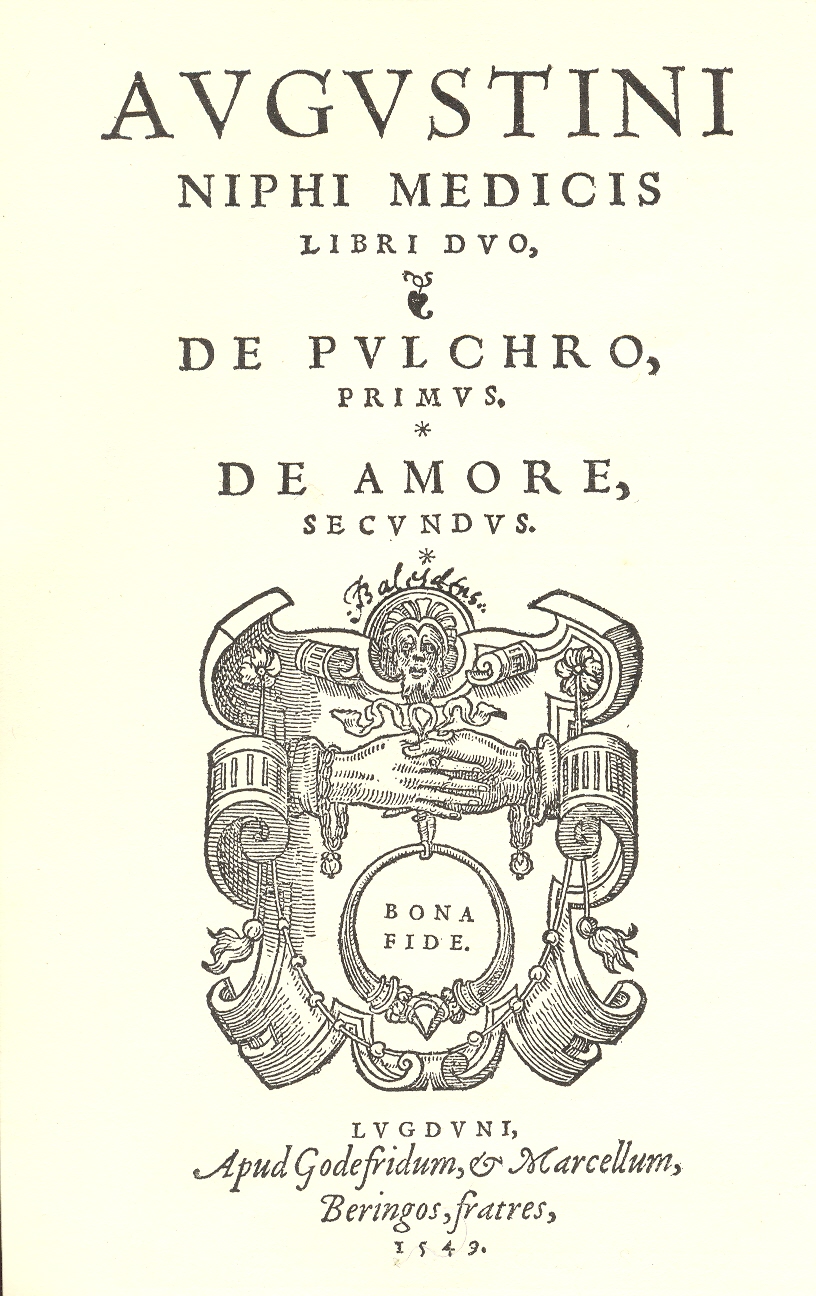
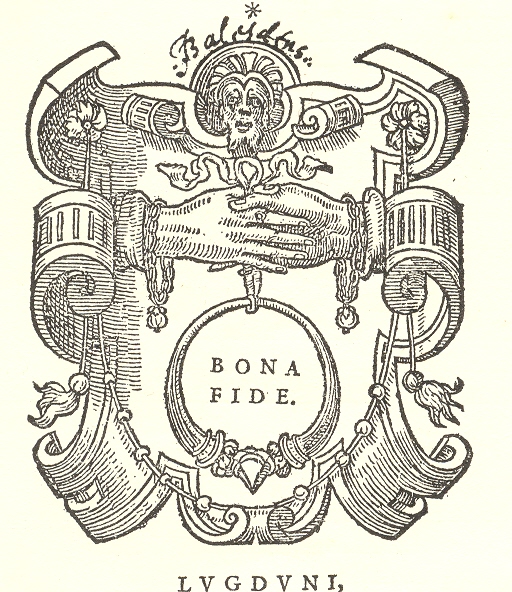
    But back to love.  Niphus’ Libri duo, de pulchero liber primus, de amore liber secundus was a
    277-page work printed at
    Lyon (Latinized as “Lugduni”) by the Berigens.  The publishers also provided Niphuis with a
    beautiful title-page device showing the joing on hands under the watchful eyes
    of Christ, a love signified with an emblem announcing “bona fide”.  The book was about beauty (“pulchero”) and
    love (“amore”).  The first part of the
    two books deals with all levels of beauty and shows derivations on the subject
    from the most ancient philosophers./  The
    second part, on love, begins innocently enough on the philosophical and moral
    aspects of the emotion and institution, but then goes further, treating love in
    all of its aspects, including psychological and physical.  It is an enormously full treatment of the physiological
    side of sex, which was something that just wasn’t often encountered at this time.  

    Blog--jun 15--love det

    The main contribution of
    Niphus on love/sex was this—humans have a certain psychological and physiological
    disposition to sex, and how sex could not be considered sinful.  Not content with controlling the poor
    believing people’s thoughts with fear of eternal damnation, the church reached
    right into the very bedroom, specifying that sex was sinful, an abomination,
    dirty, laced with the potential of Satan himself, if not used for the purposes
    of procreation.  All other fruit was
    forbidden under dire threat of the
    Lake of Fire.  (And still
    is:  driving to the bagel store
    yesterday, Sunday morning, I tuned the radio to one of the preaching shows—an easy
    thing to do and sort of hard-to-miss on Sundays as I live in the Bible belt—and
    someone was railing away at “Satan’s fornicators”, which was “the basis of the
    Original Sin”, and on and on.  I don’t
    know how he got to the Original Sin part because the bagel shop is only a
    5-minute drive.) So the case made by Niphus was not popular in the minds of the
    social controllers—who knows what structurally-threatening powers might be
    unleashed in the libidinously un-hellish enjoyments of two people?

    I found this illustration in an old E.P. Goldschmidt (bookseller) catalog, and the old bookseller recognized the medical value of the work and wondered aloud why it hasn’t turned up in the major medical book collections.  I wonder about that, too. Be that as it may, Niphus should really show up as one of the great educators on the function of sex, and to physiologically and psychologically announce that sex was not the sin the church would have you believe it was.  Perhaps in a way, too, Niphus was among the earliest of those to release woman from thousands of years of blame as the proprietesse of selfish Satanic fornication–at least with Niphus, if sex were to be insisted upon as being a sin, there is the possibility of having two actors in the process, rather than having woman carry the blame for the entirety of the sin.

    ·Posted by :

    ·in:

    — —

  • Spectacular Gravitational Sculpture in the Rings of Saturn, 2009

    JF Ptak Science Books LLC  Post 651  Blog Bookstore

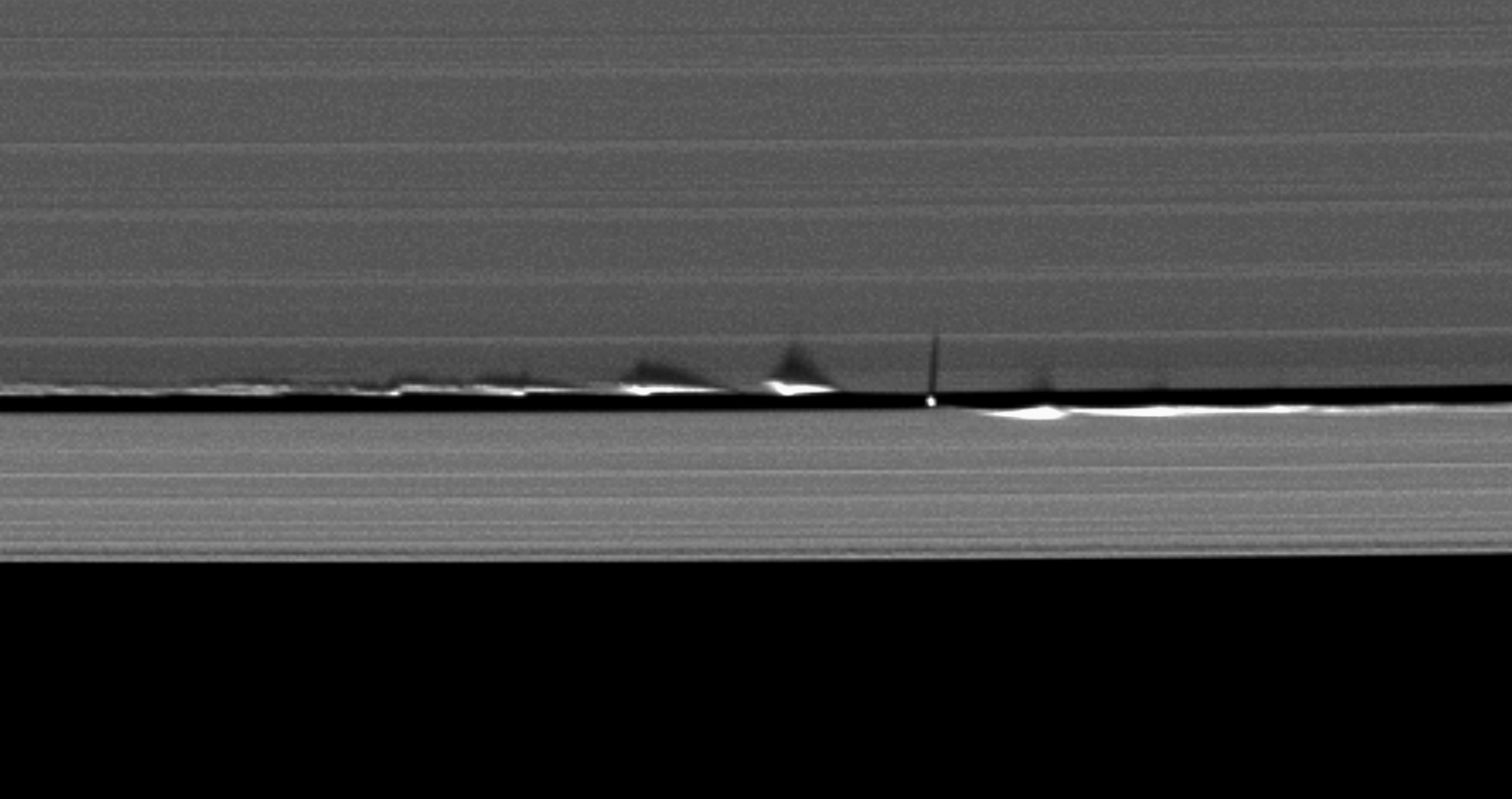
    These images, released on 9 June 2009, are from the Cassini Orbiter Imaging website (here for the press release of the photo) and were made by the international-effort Cassini voyager, launched 10 years ago in August.  The vertical structures (waves) that we see here in the rings of Saturn are cause dby the gravitational pull of Saturn’s 5-mile diameter moon Daphnis, which makes its home in orbit within the Keller Gap in Saturn’s outer A ring.  The news relsease says that the enormous strucutres–these bumps being beween 500-10,000 feet high–are the result of the gravitational pull of the moon perturbing the ring-edge partciles as it swings by.
    Blog--june 15--saturn rings det

    The photos are just stunning.  They are also the first evidences showing waves in the ring structure.  I think that they’re simply gorgeous. The little “ball bearing” type figure with the long shadow is Daphnis.  The JPL-managed spacecraft has produced remarkable photos throughout its long life–particularly in the cases of Jupiter and Saturn, where in my opinion no sci-fi or speculative artwork has ever come close to depicting the impossible beauty of those two planets as has Cassini.


  • Damaging the Gentle Nature of Nazism: German anti-British Propaganda. 1940

    JF Ptak Science Books LLC Post 650  Blog Bookstore

    Virtue itself scapes not calumnious strokes. Hamlet
    Prince of
    Denmark (Laertes at I, III)

    A man calumniated is doubly injured – first
    by him who utters the calumny, and then by him who believes it.

    Herodotus
     

    Blog--jun 14--calumny

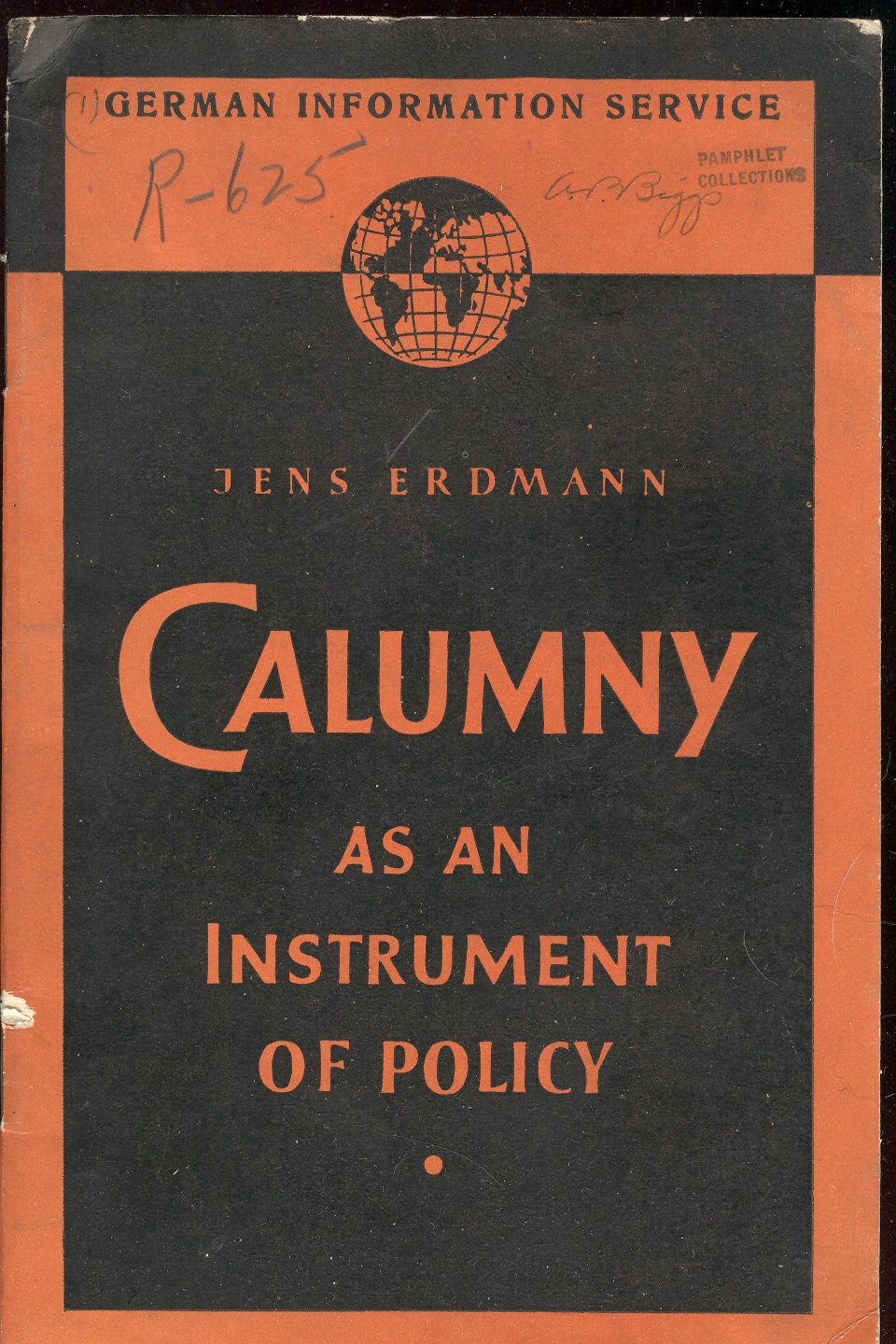
    This small
    pamphlet, written by the German Information Office (“
    Deutschen
    Informationsstelle”)  in 1940, wraps the good name of Nazi Germany in
    a double cloth of virtue, protecting itself against  the maligning and shriveling propaganda of the
    British Ruling Class.  At least that’s what
    Josef Goebbels & Co. would have you think. 
    The pamphlet was printed in English by Wilhelm Greve in
    Berlin, and in its 28 pages outlined the history of
    British “terror” propaganda in general, and of the recent “total defamations”
    against Germany
    in particular.

    Erdmann and etc.
    write:  “It is no mere chance that the British,
    who lag rather far behind the older artistic peoples such as the Italians,
    Germans and French in regard to the fine arts, nevertheless are conceded to
    excel them all in one form of portrayal—namely malicious political caricature.
    Presently the pamphlet was concerned with the general attack against the Nazi government
    overall, but took great offense in the British attack on the “Hausfrau”, a “shameless
    attack on the reputation of the women in the enemy camp…”

    The pamphlet does make
    its way around to “the atrocity lie”, which “so thoroughly ruins the good name
    of the enemy that all possibilities of companionship with him are paralyzed”.  The German propaganda office takes a very
    high and imaginary high road on this one,. Claiming that it is impossible for
    Germany to commit acts of violence and cruelty
    against innocent and defenseless people. 
    By the time this pamphlet was being distributed in 1940, the systemic
    extermination of the Jews had begun.  As
    had the war. 

    But the Nazis were
    concerned with the capacity for friendship after the war—or at least that is
    what Erdmann wrote—but that was now being made impossible by members of the “campaign
    of total defamation” which was mainly comprised of the members of the British
    ruling class, not the least of which was Winston Churchill. 

    “It is impossible”
    Erdmann writes of the imaginary damage done to the good name of the Nazis, “here
    to form an even approximate estimate of the extent to which all the European peoples
    have been poisoned by British propagandas…”

    Its hard to say for whom this pamphlet was intended–perhaps everyone.  The main intention was to separate the British ruling class (“caste”) from the rest of the British government–there is no mention whatsoever of the British people.  Now there were pro-fascist groups alive and well in Britain (the British Union of Fascists, The Link*,  and the Anglo-German Fellowship to name just a few).  Of course America was far from immune to pro-Nazi feelings and political parties. (I’ve written earlier here about Henry Ford and his Nazism, and there was also no end to American-Nazi business arrangements through 1944…but that’s a different story for another time.) But the main need of the Nazis in this pamphlet was to deny all of the calumny toosed its way by the rest of the world.  They just said, simply, “no”.

    The pamphlet ends with a plea for decency for teh world at large following the end of the present war:  “In the interest of political decency in Europe, it is hoped that the end of the present war will bring with it the possibility of such measures as will induce the ruling class in Britain to abandon once and for all their tradition of calumny.  That is an essential condition for the peace and the for the political and spiritual health of Europe”.

    The Nazis intended that this business of peace would be easier once the war was over, what with their elimination of the Jewish people, and tearing apart and murder of millions of Russians and Poles, and the subjugation of everyone else.  At that point they would write the history, and the British calumny would simply disappear.

    * “The Link boasted two dukes, the 11th Duke of Bedford, and the 2nd Duke of
    Westminster. Members of the Anglo-German Fellowship included 16 peers of the
    realm and the Governor of the Bank of England, Frank C. Tiarks. Many members
    were also former MPs. Lord Stamp was a director of the Bank of England. Another
    Fellowship member, Lord McGowan, was chairman of ICI, Britain’s
    trading partner with IG Farben. Lord Nuffield, chairman of Morris Motors Ltd,
    was a member of both the Link and the Anglo-German Fellowship. Perhaps the most
    disturbing name among the fellowship’s members was that of Sir William Strang,
    Chief Political Adviser to the Foreign Office.”
     

    ·Posted by :

    ·in:

    —