A Daily History of Holes, Dots, Lines, Science, History, Math, Physics, Art, the Unintentional Absurd, Architecture, Maps, Data Visualization, Blank and Missing Things, and so on. |1.6 million words, 7500 images, 4.9 million hits| Press & appearances in The Times, Le Figaro, Mensa, The Economist, The Guardian, Discovery News, Slate, Le Monde, Sci American Blogs, Le Pont, and many other places… 5000+ total posts since 2008.
It is interesting to think of the importance of dots in the first revolutionary changes in 500 years in the history of art. Honestly, there wasn’t anything epochal that happened between the re-discovery of perspective (ca. 1330-1400) and the arrival of Impressionism (and just afterwards of non-representational art) in the 1872/3/4-1915 period.
Dots aren’t brought to bear formally in the revolutionary movement until the early 1880’s. Impressionism for all intents and purposes is formed with the Societe Anonyme in 1872 (whose members included Monet, Pissarro, Degas, Sisley, Morisot and eleven others), and perhaps more realistically in 1874 when the Societe exhibited its first salon. (The first show held at the Nadar Studio in Paris in April 1874; a tiny, one month long affair, compared to mammoth exhibitions like the Universal Exposition in Paris in 1867.)
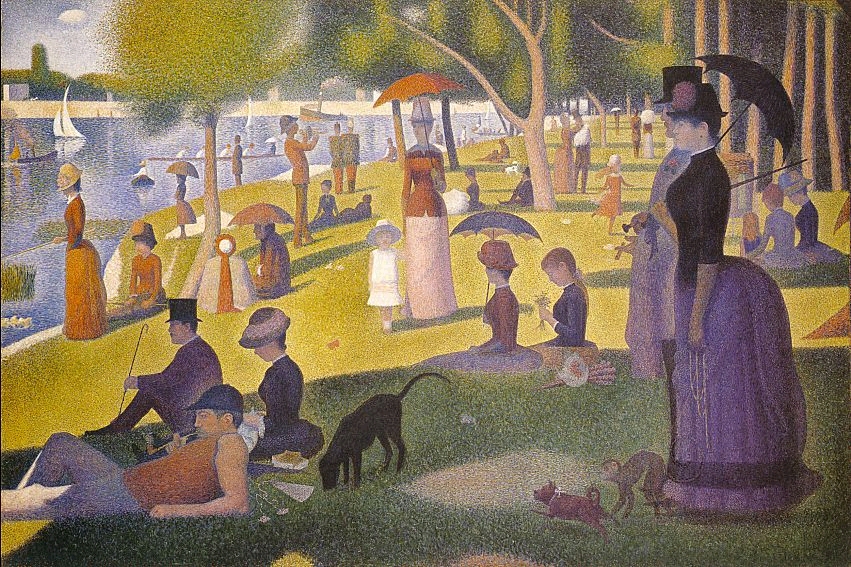
It was Georges Seurat who brought the whole world to the dot experience with his artisitc method of Pointilism, in particular with his magnificent Un dimanche après-midi à l’Île de la Grande Jatte, an enormous work given its composition—dots. The dots replaced the brushstroke, and their placement in relation to their color was an absolutely brilliant innovation, establishing a perfect result for the viewer when examining the work as a whole. (It may well be that the French chemist an designer Michel Chevreul made this discovery a few decades earlier, noticing the effect and changes in color depending on placement and—in his case, with fabric—color in the dyes for his material.)
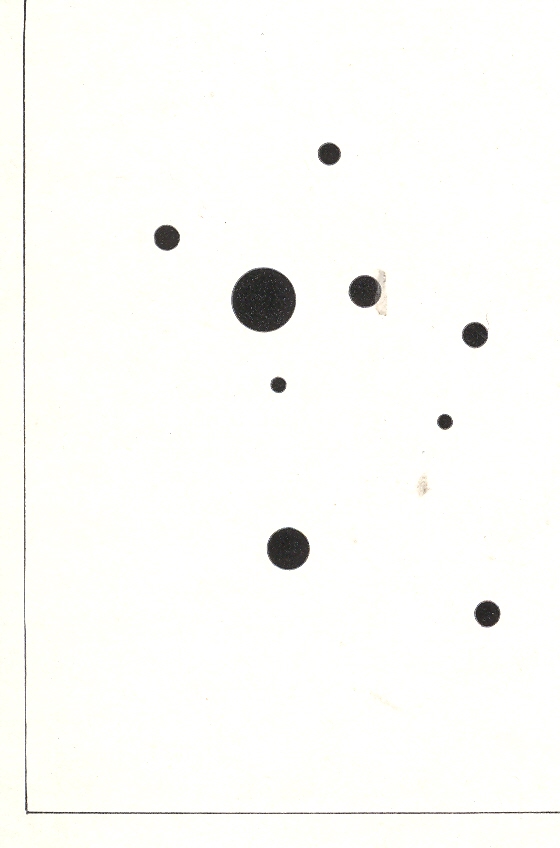
Wassily Kandinsky (1866-1944), the discoverer of nothingness in art and the introduction of the first non-representational paintings in art history (1913) used his fair share of dots in his exploration of the previously invisible. One good example is his 9 Points in Ascendance (1918), which is nothing but black dots, an impossible composition just two decades prior to its creation.
In the middle of this appeared the half-tone illustration, the great liberator of photographic illustration in popular publication. Invented in the late 1870’s by Stephen Henry Horgan and used in the Illustrated London News for the first time in 1881, it made the publication of accurate images much feasible and economical. No longer were readers dependent on the accuracies of artists interpreting photographs or photographed scenes—the photographs themselves were now publishable at little cost and in high quality, vastly increasing the veracity of published reports dependent upon images. This was revolutionary in its own way, democratizing the sharing of images and icons.
And so in just thirty years the lowly dot availed itself of some of the most spectacular achievements in modernism. Of course we can say the same of the line, but this is, after all, a history of dots.
Driving through Forks of Ivy, topping Sam’s Gap, crossing the Nolichucky, passing through Unicoi County and into the Watauga watershed, I found myself in Bristol, Tennessee, in the north-east part of the state at corner of southwest Virginia. Bristol is actually on the state line, with half of the city in Tennessee and the other half in Virginia. The dividing line is the main thoroughfare, State Street, a tight avenue lined with early-ish building that hint of the age of the place, but not nearly so. This used to be frontierland, the area surrounding being largely found in the 1750-1775 or so, at a time when the Blue Ridge and the Southern stretches of the Appalachians were the Far Western frontier.
I was after a different sort of frontier adventure on State Street today—a musical one. State Street was the home of the “recording studio” for the renowned “Bristol Sessions”, which is recognized far and wide as the veritable Big Bang of country music.
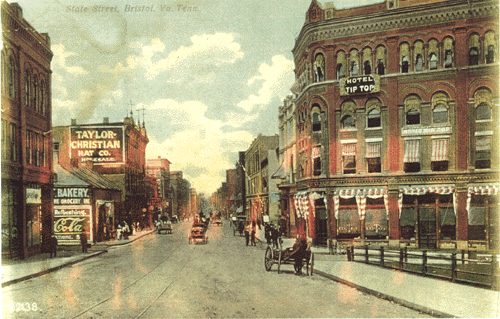
Ralph Peer (of Okeh Records fame), an entrepreneur/musical spelunker, came to Bristol in July1927 looking for local music played by its hidden talent. There was a large interest in original American music—gospel and blues–from the far reaches of the country at this time, and Peer sought those genres in addition to secular music tat fit neither category–that would be “country music”. He was alerted to the area by his friend, the musician Ernest Stoneman (of an equally musically-rich area in Galax, Virginia), guided by the assertion that the Bristol/Johnson City/Kingsport area was a magnet for the musical talent of the region. He set up a temporary recording studio, renting the top two floors of the Taylor-Christian Hat Company (seen in the postcard image below, just beyond the Tip Top Hotel) at 412 State Street. The initial react to his advertisement was underwhelming, but when an article appeared in the local newspaper in the second week of his two-week stay touting the $3600 that Stoneman received in royalties in 1926 for his recorded music, the floodgates opened, and suddenly Peer was completely booked.
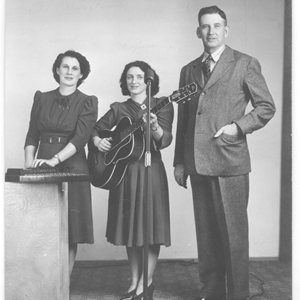
The recordings that Peer made at 412 State Street were spectacular. Among those who showed up was the young Jimmie Rodgers. And Uncle Eck Dunford and Ernest & Hannah Stoneman. And A.P., Sara and (Mother) Maybelle Carter, who recorded their oh-dear-god-beautiful “Single Girl, Married Girl” (and “Bury Me Under the Weeping Willow”, “Little Log Cabin By the Sea”, “The Storms are on the Ocean”, “The Wandering Boy”) there on the second floor.
There were 19 performers who recorded 76 songs in an altogether singular moment.
And so, being near Bristol today I went looking for 412 State Street. I must say that it looks as though Bristol was prosperous at some pre-WWII point in the past, the city looking like it needed a scrubbing, with lots of store-front vacancies on its most famous street. Also there seemed to be no 400 block. Having the postcard image of where the hat factory was, I started comparing the buildings on the 500 block to those in the picture, and I had half-convinced myself that the city must’ve changed the numbering system for the street to accommodate what my brain was telling me was the missing building. The match looked pretty good, except for the number of windows.
There were only a few businesses open that I could see, and I popped into one—a music store, its open door allowing the loud rock music from the inside, out—and asked the young woman where the Bristol sessions building was.
She instantly looked sad. “Come with me, I’ll show you” she said, as we walked out to the sidewalk. It was not a good feeling. She looked north on the street, towards the open area of State Street that seemed to have been urban blighted, and I tried to get her to look south, to where I hoped the building was.
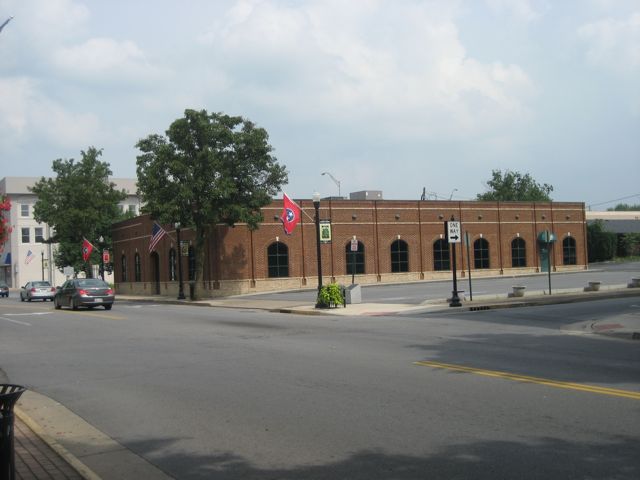
“No, no, I’m sorry to say. She pointed north, to a bad 1970’s brick single-story building about 20 0feet away. “That’s it. Or that’s where it used to be. Actually that’s the second building that got built on the site. The one that replaced Taylor-Christian got torn down too.”
She had told the story before, a lot of times. I think that she watched my eyes closely as I tried to focus on the foul building—maybe she saw my eyes get smaller and smaller, trying to size the three story hat factory down to this speckly brick thing. She had to have seen the disappointment, and then the wincing reaction to the building that replaced the iconic structure. I wondered to the woman if it was hard for her to break the news to the folks that came to finds the building. “Used to” she said, “but now I’m used to it”.
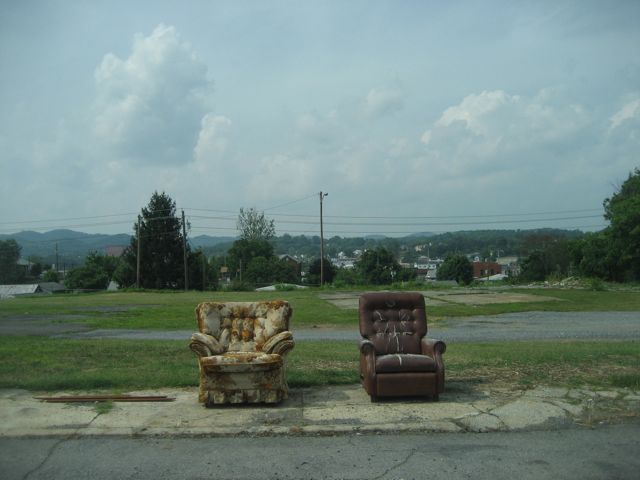
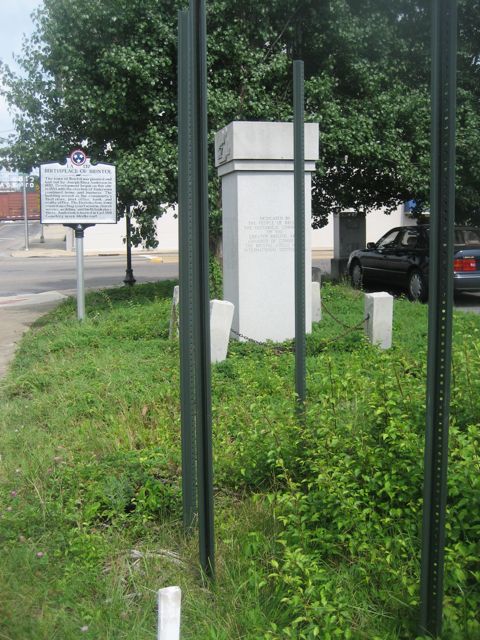
It’s a sad end. Especially when I found the little monument erected by the Oddfellows nearby, commemorating the Sessions. It sits on a funny little piece of land, badly overgrown. For some reason there’s a half-dozen sign-less traffic sign utility poles haphazardly placed bizarrely next to it. There’s a parking lot ten feet away. It looks hot and unwanted, like a small graveyard scooped out of its pleasantness and surrounded by traffic (like the Fitzgeralds up in Maryland).
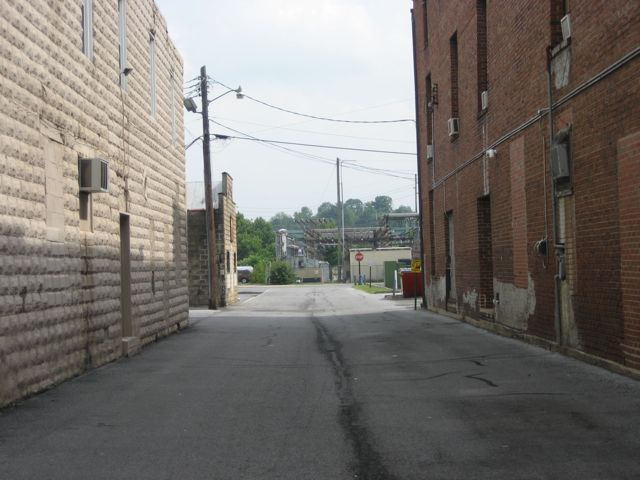
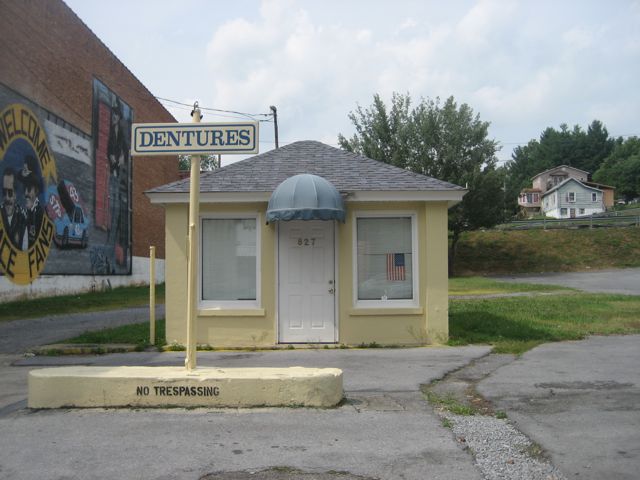
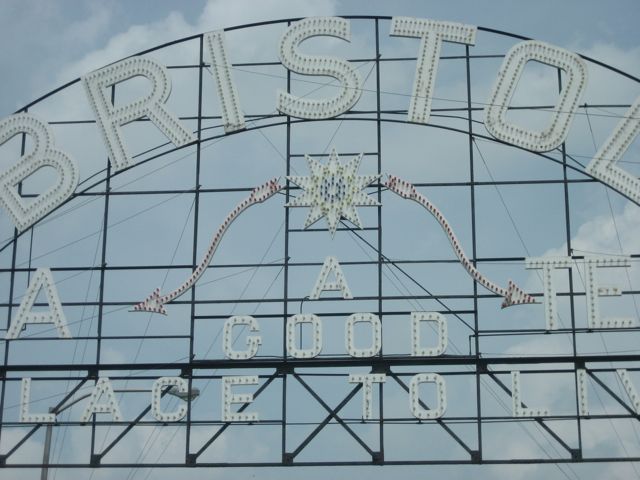
As I drove out and away from the city, I took a few pictures of buildings that were probably once happy and visited. I should point out that once Peer was done, so too was the recording business. The fact that this music was recorded and brought out to the world from Bristol left no real shadow on the city, until recently.
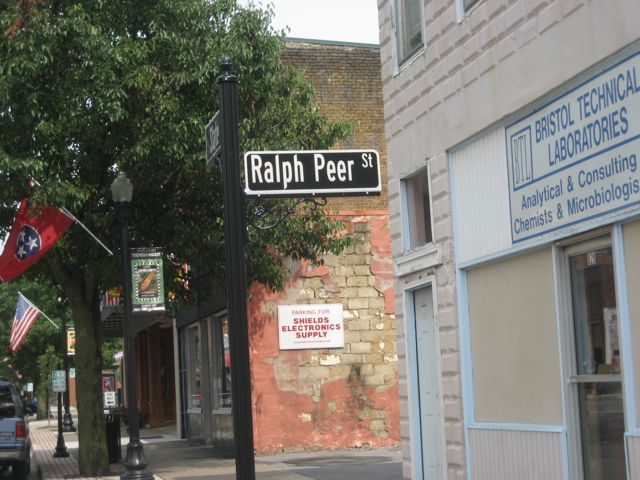
Fitting, unfortunately, tightly with the end of 412 State Street is the street named for Mr. Peer. It has a lovely, old-timey street sign (off State), but the street itself, well… This is just not right.
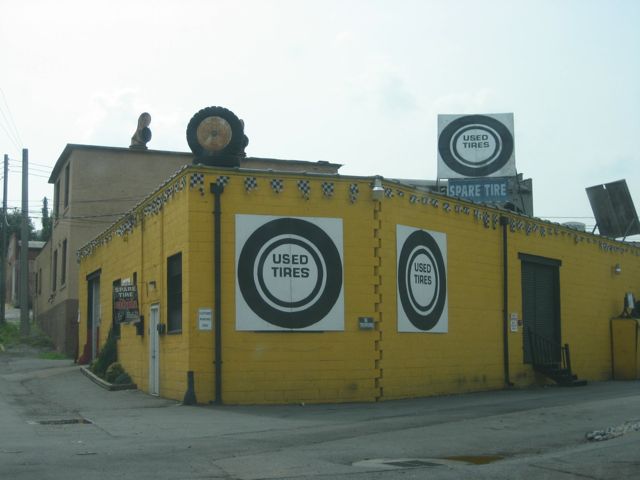
I was shocked by the unbearable beauty of this little business:
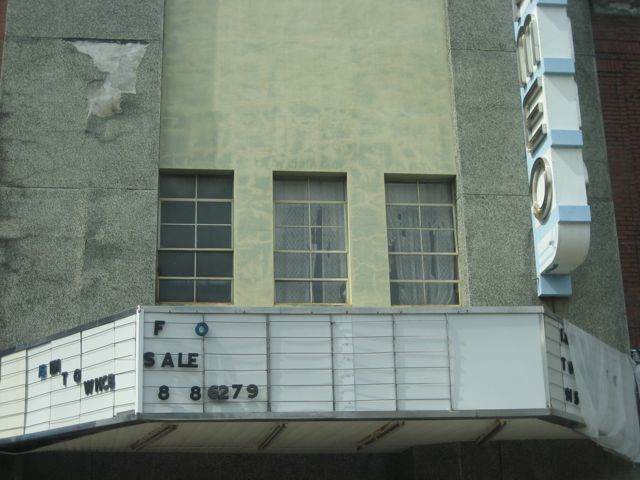
One of the three movie theatres in a two-block span:
“Vision: a device that belongs to those who have it. Far-reaching and fore-shortened, it is something that works best when used closely, loosely, finely and not at all. A gift-and-a-half and a half-a-bother.” The imagined Devil’s Dictionary of Ambrose Bierce
There is a small series of posts on this blog that deal with the perspective of looking at things straight-on: straight up, straight down, straight across. As it turns out, in my many years of looking at prints and images, view that look directly up and down are pretty uncommon. Some of the earliest straight-on images actually offered a new vision to people who were so long accustomed to not looking at things in this way.
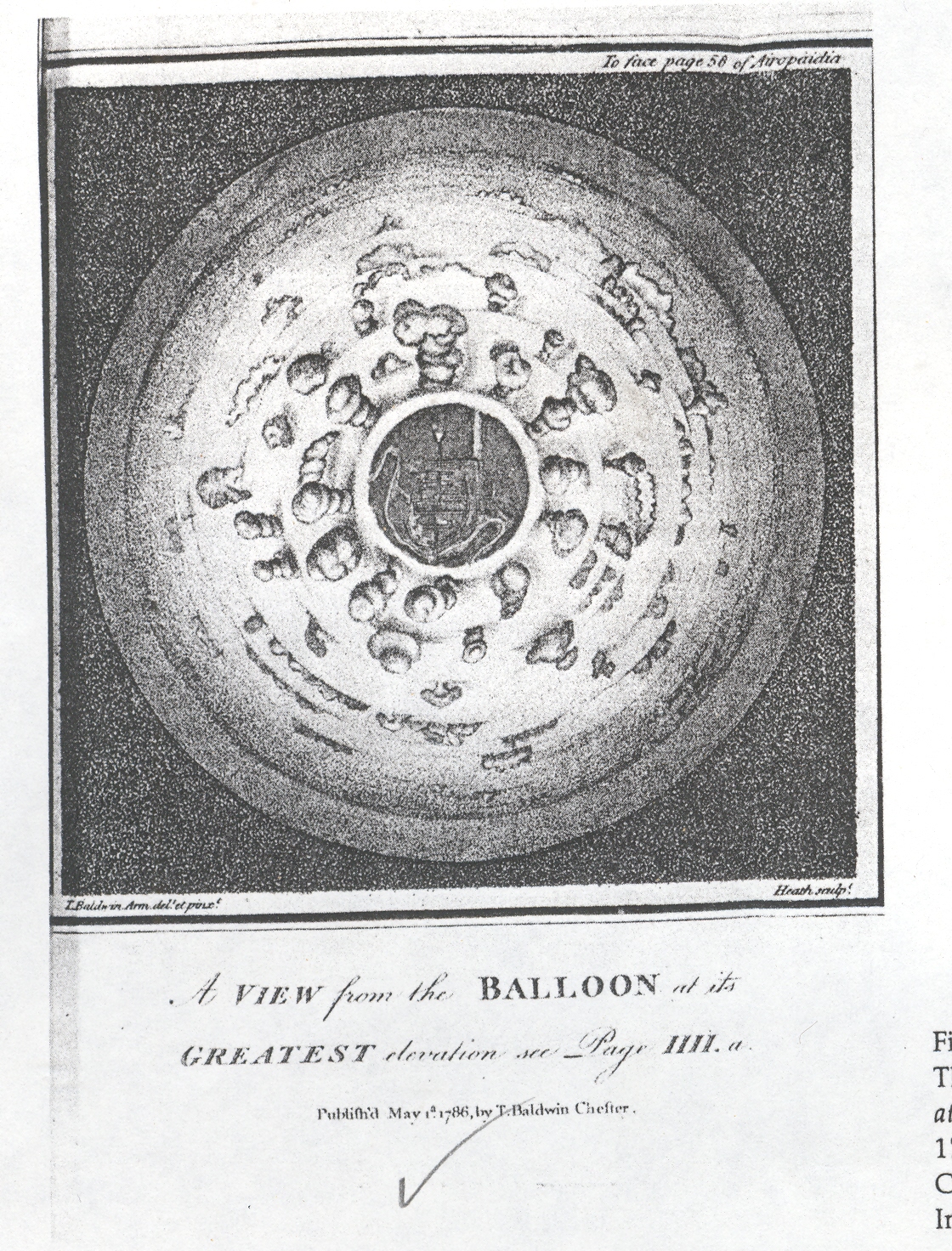
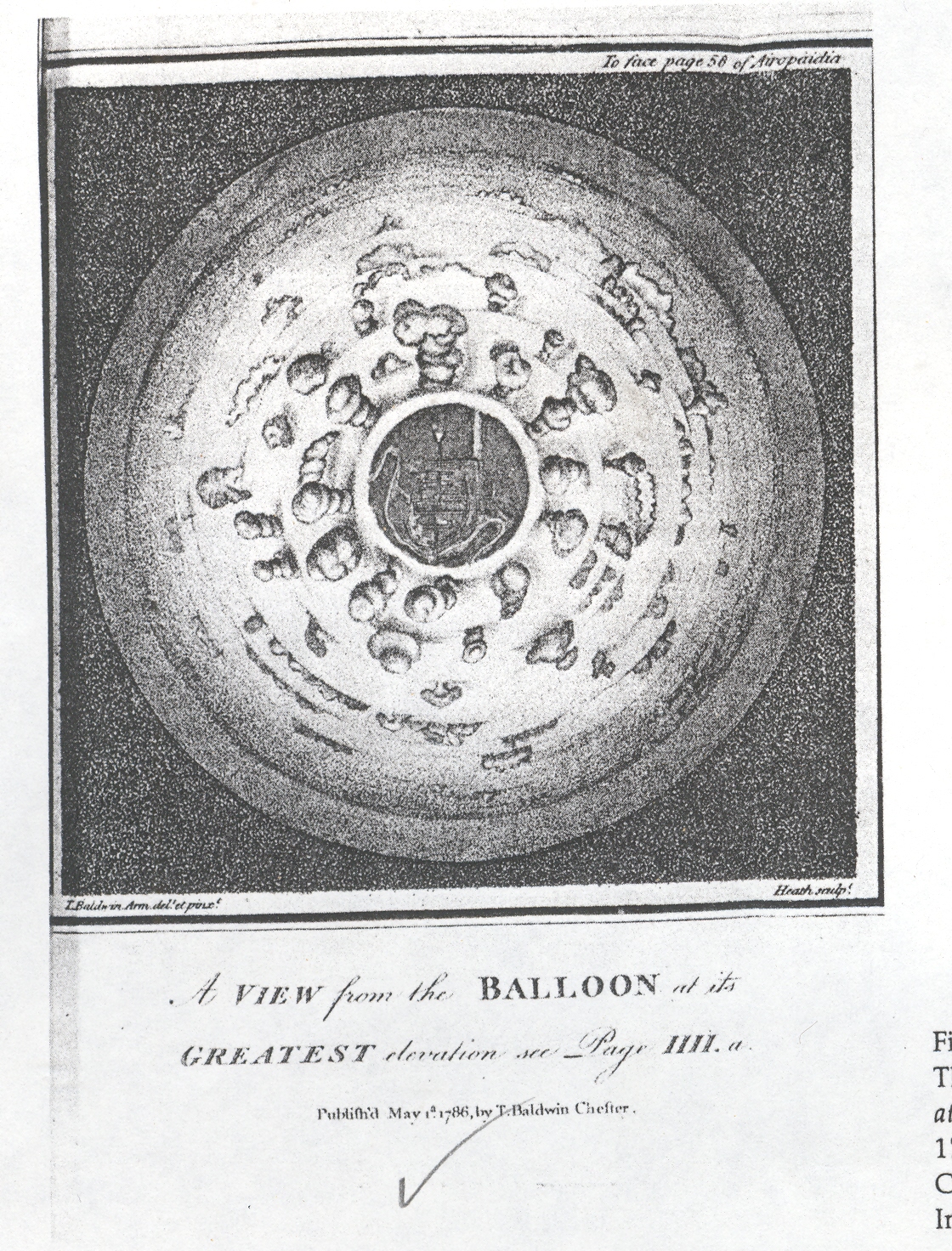
And for a long time it was just not possible, not really, to look straight down at something from a height, or at least until the invention of flight at the hands of the Montgolfier brothers in 1783. This first image offers a view looking straight down from a balloon through a bank of clouds and onto a town, and was drawn and published in 1786. It must have been shocking to see this for the first time in that year, the image so unexpected and mostly not imaginable. One of the other aspects here is that the viewer is looking obliquely down from the tops of clouds, the first time that this was ever done—so far as I can determine—with a scientific vantage point.
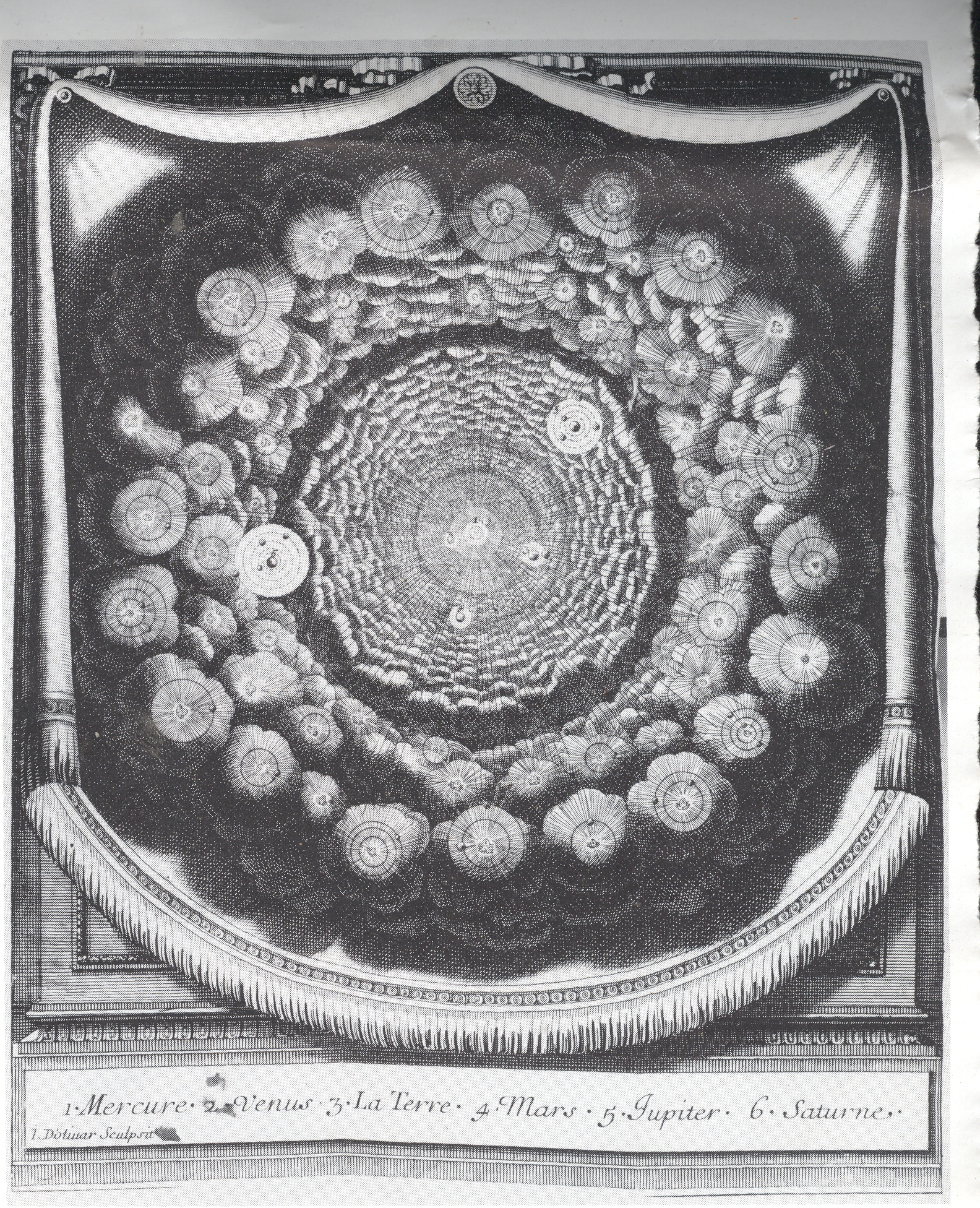
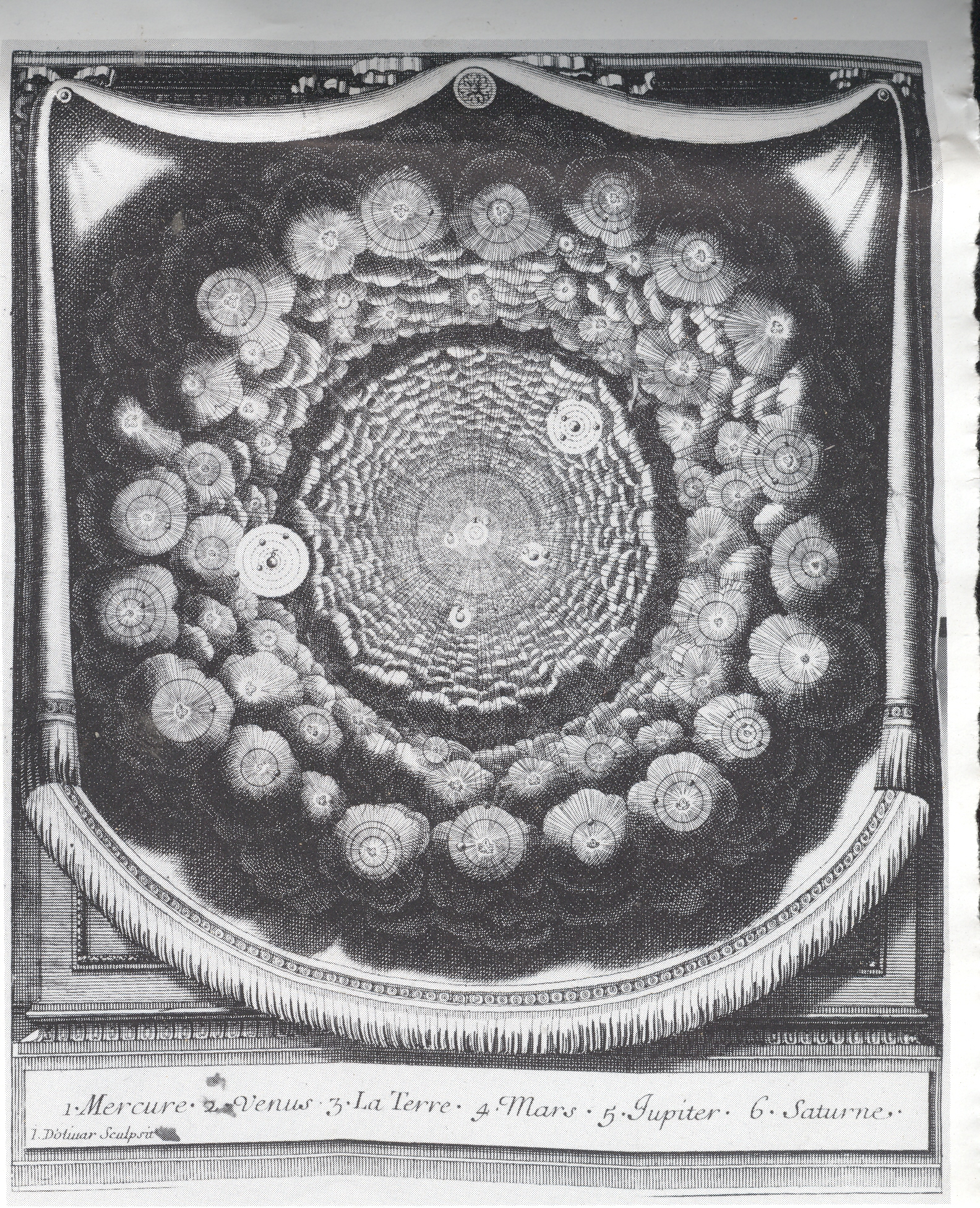
The seeming complement to this image is from Entretiens sur la Pluralitie de Mondes (Conversations on the Plurality of Worlds), written by the great French philosophe Bernard le Bouvier de Fontenelle in 1686 (just a year before publication of perhaps the greatest work in the history of science, Newton’s Principia Mathematica). The Plurality was a best-seller by the best-selling Fontenelle. An excellent attempt by a rather restricted writer to engage the population-at-large, writing a high-pop book on what was basically the history of astronomy and cosmology of the preceding century. Copernicus was a major feature of his imaginary conversations with a muse as he wandered through a metaphorical garden of questions, with the observations of Galileo and Cassini also very prominently featured. But what interests me here is the great similarity between the two, the view from the balloon looking down, and the Fontenelle, looking up. (Or what would pass for “up” in space.) Except that the cloud-y looking things in Fonetenelle aren’t clouds at all, but solar systems. This was a radical, church-pounding idea at the tiem, displacing the unique centrality of the human condition, offering the possibilities of other lives on other solar systems and other planets
.
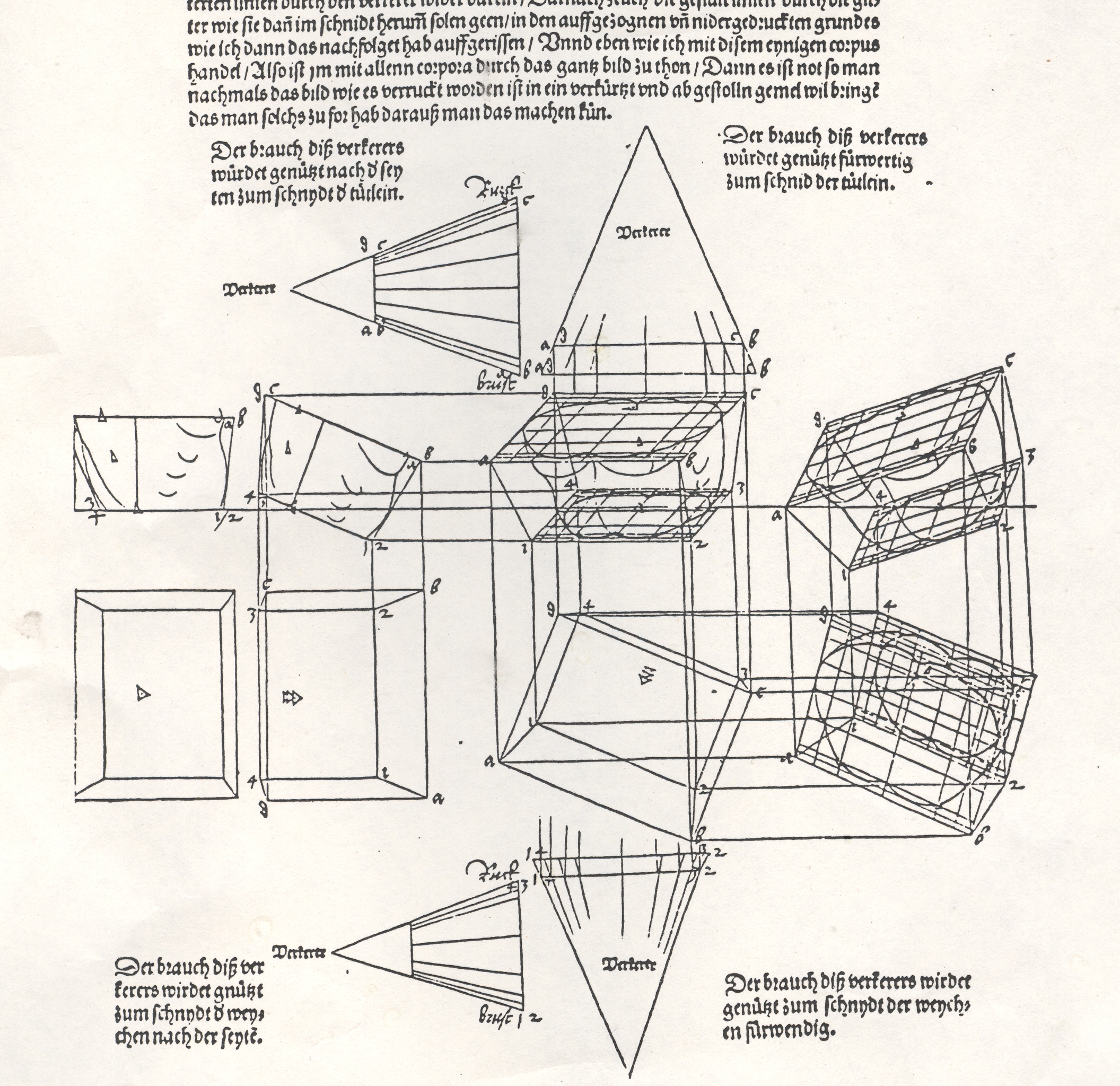
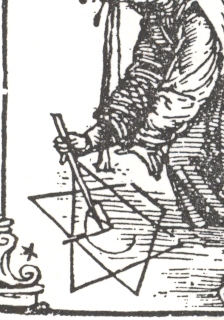
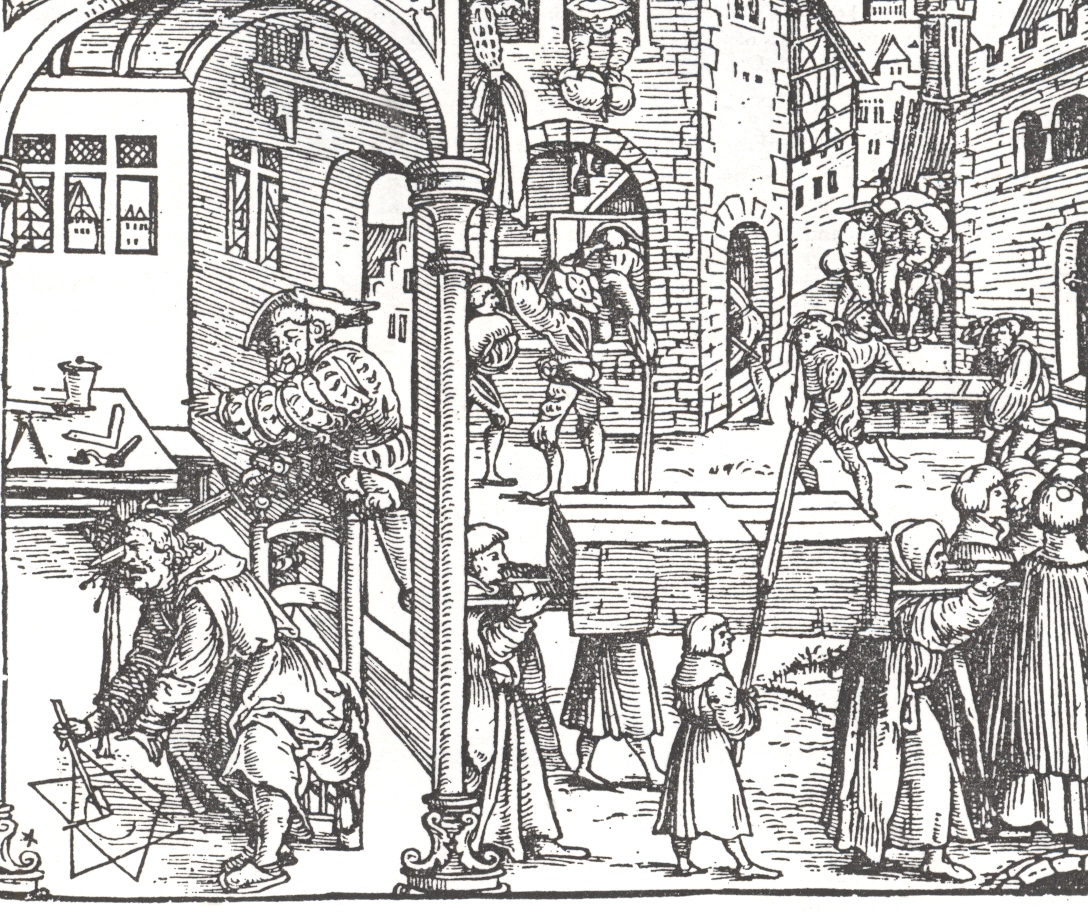
Albrecht Durer’s (1471-1528) drawing of a geometrical man was an amazing–startling, even–object to the early 16th century consciousness. His Underwysung der Messung (“Treatise on Measuring”) written about 500 years ago (in 1525) set the stage for this next work–it is here that we find some of the most recognizable of Durer’s illustrations of the instruments that he employed to do his perspective work: his …Symmetria partium…humanorum corporum (1537) was a masterpiece, and a key piece of revolutionary visionary thinking. Durer–so far as I can tell–created an orthographically rotating human figures in three-dimensional trapezoids, creating incredibly human-like non-human forms. Supra-human, perhaps; mechanized, calculated, structural. His use of stereometry, the science of measuring volume, was adapted to this study of human form and the relationship between that and movement.
By doing this one could rotate the figures, pinch them, stretch them, and the proportions would remain exactly the same.
They were in a sense a CAT scan. And in this way the person in 1525, seeing this for the first time, would be experiencing something like the sensation of seeing an X-Ray for the first time in 1895 or a magnified flea in 1626. It was a spectacular effort an a major key to understanding movement, and anatomy, and of course map making.
This was a new way of thinking about the body, challenging the god-grace and ubiquitous church-inspired revelation of the body and how it worked. This was not a necessarily easy time in which to picture humans in such a scientific way. (In 1553 the physician and theological scholar Michael Severtus would be burned at the stake by John Calvin for his views on the Trinity, Nicean Creed and other related things, though his undeniably revolutionary idea of cardiopulmonary circulation was in itself a direct challenge to church teachings).
Durer’s innovation accommodated empirical observation and allowed for proportional change. Its importance in relational drawing, anatomical and technical, cannot be understated, which I think trumped it as a subversive agent to orthodoxy.
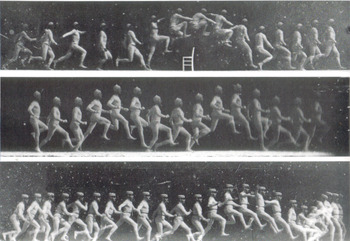
Fast forwarding a bit there are the images of arrested time by Etienne Marey (who was a technoid and physician) and who was able to capture motion of all sorts–he was able to develop a picture so to speak of the movement of blood in the body via his instrument to calculate blood pressure, and he also created a shotgun-style camera that made the world’s first high-speed photographs of movement. And so it cane to pass that in the late 1870’s and early 1880’s people were instantly able to see what a horse looked like when it galloped or what the body did *exactly* when jumping over a chair. When you couple this with fourth-dimension material one wonders why it took several more decades to bump into these images in the art world of the earliest part of the twentieth century.
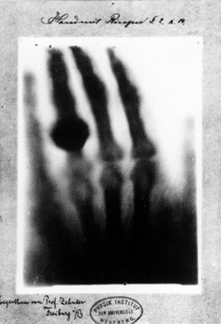
In 1895 50-year-old Wilhelm Conrad Röntgen’s ephochal discovery was announced (“Ueber eine neue Art von Strahlen”. “On a New Type of Ray”), built upon the work of J. Plucker (1801-1868), J. W. Hittorf (1824-1914), C. F. Varley (1828-1883), E. Goldstein (1850-1931), Sir William Crookes (1832-1919), H. Hertz (1857-1894) and the horribly odious Phil Lenard (1862-1947 and who didn’t die soon enough). The experiment revealed as much to humans as did the experiments and inventions of Hooke and Leeuwenhoek on the invisible worlds revealed by their microscopes. Bertha, Roentgen’s wife, sat for 15 minutes while her husband passed his rays through her hand; she ran from the room once she saw the results, revealing her very bones and no doubt a strong sense of the fragility of life, and the strong presence of death. Many had the a similar reaction to the Kandinsky’s shapes and Malevich’s white circles and red rectangles and Ibsen’s drama and Einstein’s dancing dust and the rogue syncopation of jazz—these newnesses were threatening to all of the established ways of looking at physics, and art, and theatre, and listening to jazz. It was a new perspective which challenged the firmly established vision of these things, upsetting the nature of comfort and acceptance. It is probably a very natural reaction to try and protect established memory—but memory is made all of the time, and so should be relatively flexible…at least it is mechanically healthier to allow a little bending than to be rigid and brittle.
“…with his blood he confused the lines of his art” On the death of Archimedes, in Valerius Maximus
[The excellent website dedicated at Drexel is the source of all of the quotes below] I’ve had this image in the back of my head for quite some time now–the image of the great Archimedes having his head cleaved in two by an attacking Roman soldier during the Battle of Syracuse
Seldom do we see a maxim so vividly depicted as with these lines from Valerius Maximus: Archimedes trying to hold a thought in his head while a roman soldier comes tugging at him, Archimedes pushing the soldier away to protect the geometrical work that he was scribbling in the sand, and then having his head full of thoughts spilled onto the drawing he was trying to protect. What we see in the detail is almost exactly (or on the verge of being exactly) from the Valerius quote fragment “…with his blood he confused the lines of his art”: Archimedes has spoiled his geometry in the moment before his cleaved head releases the control of his muscles. It is a nasty image, the pissed-off Roman soldier—who theoretically was just looking for spoils in the looted city of Syracuse—having had enough of the three-second hesitation by the old man and reacts badly, beheading him the hard way.
I include the following few quotes from classic sources relating this final scene:
“But as Archimedes was drawing diagrams with mind and eyes fixed on the ground, a soldier who had broken into the house in quest of loot with sword drawn over his head asked him who he was. Too much absorbed in tracking down his objective, Archimedes could not give his name but said, protecting the dust with his hands, “I beg you, don’t disturb this,” and was slaughtered as neglectful of the victor’s command; with his blood he confused the lines of his art.” Valerius Maximus (c. 20 BC-c. AD 50 ), Memorable Doings and Sayings, Book VIII.7.ext. 7
“Many brutalities were committed in hot blood and the greed of gain, and it is on record that Archimedes, while intent upon figures which he had traced in the dust, and regardless of the hideous uproar of an army let loose to ravage and despoil a captured city, was killed by a soldier who did not know who he was.” Livy (59 BC-AD 17 ), History of Rome from its Foundation, Book XXV.31
“a Roman soldier, running upon him with a drawn sword, offered to kill him; and that Archimedes, looking back, earnestly besought him to hold his hand a little while, that he might not leave what he was then at work upon inconclusive and imperfect; but the soldier, nothing moved by his entreaty, instantly killed him.” Plutarch (AD 45-120), Parallel Lives: Marcellus
“a Roman came up and began to drag him away to take him prisoner. But he, being wholly intent at the time on the diagram, and not perceiving who was tugging at him, said to the man: “Stand away, fellow, from my diagram.” John Tzetzes (circa twelfth century AD), Book of Histories (Chiliades), Book II, Lines 136-149
“He was constructing some figure or other, and hearing that the enemy were at hand, exclaimed: “Let them come at my head, but not at my line!” John Zonaras (circa twelfth century AD), Epitome ton Istorion, 9, 5
“The death of Archimedes by the hands of a Roman soldier is symbolical of a world-change of the first magnitude: the Greeks, with their love of abstract science, were superseded in the leadership of the European world by the practical Romans”. Alfred North Whitehead (1861-1947), An Introduction to Mathematics
“. . . he was a callous, obdurate, conceited midshipman, intent on his own discoveries, and caring as little for what went on about him, terrestrially, as Archimedes at the taking of Syracuse.” Charles Dickens (1812-1870), Dombey and Son, Chapter 19, (1846-48)
Here’s a very abbreviated overview to a vast literature of the end of times/apocalypse/technocaust/end of the world themes. This is just a short working list, really, and includes only short stories or novels. In many cases there is just one example (where there could be hundreds). There are no movies or television shows listed, though I think that they must be enormously outnumered (and the scale of ordersof magniutue) by the print media.
Monsters: Skeletons,
(1992) by Al Sarrantonio.The Earth is
ravaged by a raised-from-the-dead society of super monsters comprising all
animals that ever lived, ever, but in super-skeleton form. Yikes!
This is a continuation of a series of posts relating to the development of the atomic bomb.
Park Avenue. 1600 Pennsylvania Avenue.
10 Downing.112 Mercer. Institute for
Advanced Studies. The Cavendish Lab. All pretty good addresses. I have a hard time though coming up with a single best address that
beats POB 1663, Santa Fe, New Mexico. For the sheer breadth of those represented by this simple location, I
just can’t think of anything more specific or more inclusive.
Oppenheimer lived there. So did Fermi. And Feynman. And Teller. And Bohr. And thousands of
others.
Post Office Box
1663, Santa Fe hid
something very important—at the time, it was so important that the place that
it was hiding didn’t even have a real name, just a moniker: Site Y.
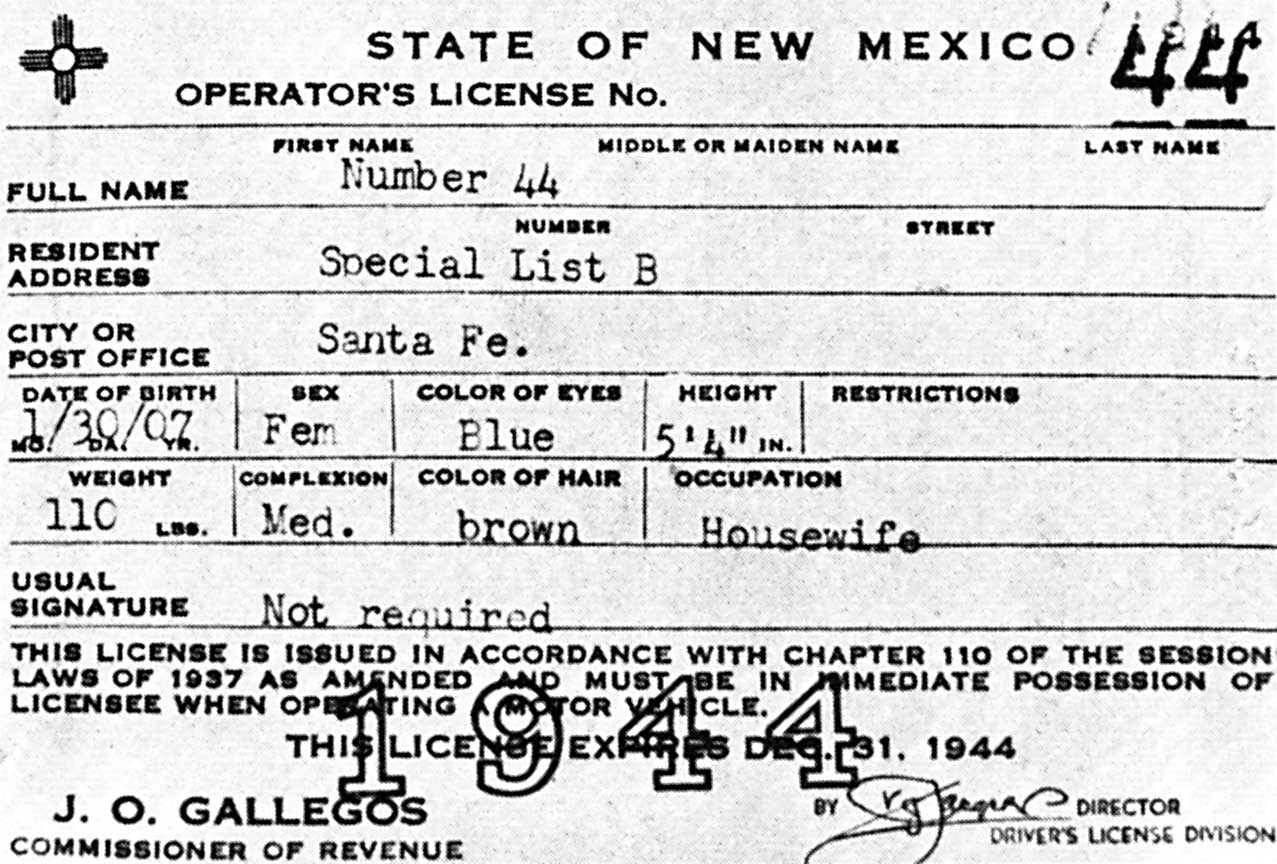
Many of the people who lived there didn’t have the use of
their real names outside of Site Y. Driver’s licenses were issued with numbers, and people paid taxes
according to code numbers and weren’t allowed to vote.They were as invisible as their address, or
as invisible as thousands of people could be in 1942.Being a place filled with mostly quite-young men
and women, there were natural tendencies followed leading to a spike in birth
rates, responded to famously by the facility’s chief to direct that actions be
taken to stem the flow. Or perhaps not*. A radio station popped up featuring
live performers, everyone identified by given name only. And to confound things
further it was nestled within the range of the Blood of Christ (the Sangre de
Christo) Mountains, all the while working with matter that was literally
hotter than hell. That was plutonium, and the “hot” was radioactivity.
Site Y (begun in June 1942) was of course the location of Los Alamos, a major cog in the machine of the Manhattan
Project, a gigantic, secret project that actually stayed secret, which was
remarkable given the wide swath and numbers of people involved and the
relatively simple security. But it was really important stuff (as Richard
Feynman would say),
and there was a life-and-death war on, a fight to the finish1, a death
struggle, so the importance of security—given the staggering consequences of
its breach—was paramount.2.
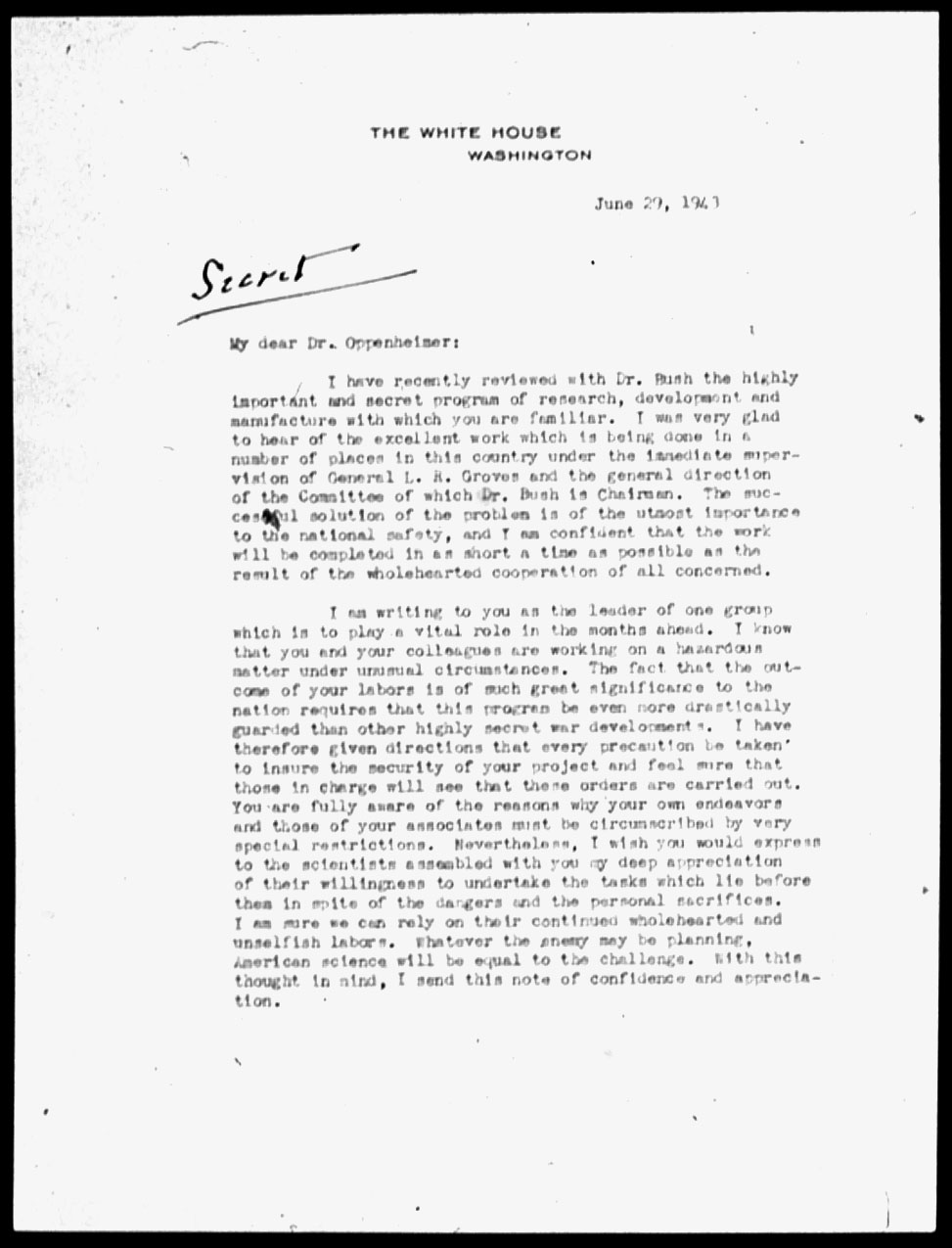
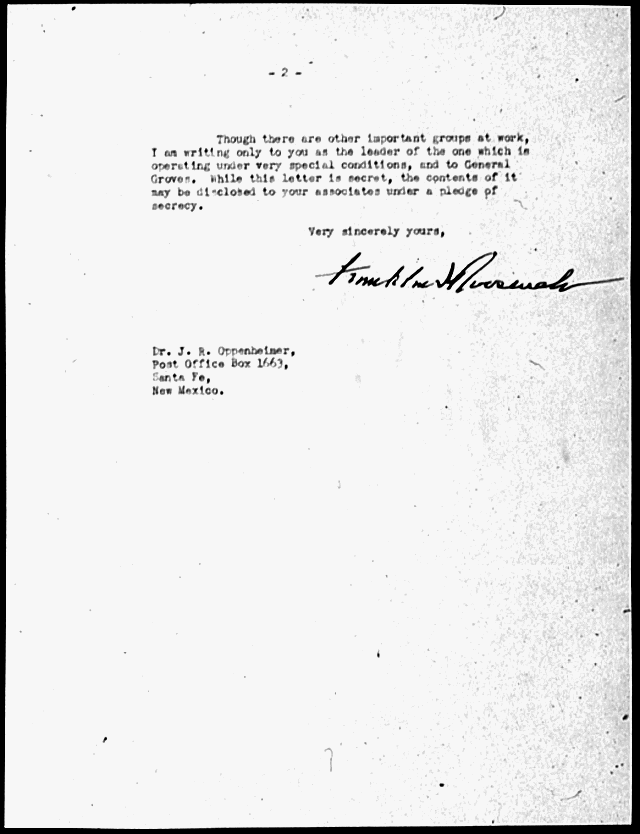
This letter of congratulation and support was written by
President Franklin Roosevelt to J. Robert Oppenheimer, and sent to The Address
of POB 1663.It is an odd letter full of
sleight, though it is obvious that Roosevelt
knows exactly what is going on, and is just not acknowledging the elephant in
the room.And that “room” was at Oppenheimer
& Co., Santa Fe,
Box1663.No scientific project had ever been bigger,
then or (perhaps) since.That’s a lot to
cram into one post office box.
______
1. By the way, in describing this item from their collection the
Library of Congress website understates WWII in a way that I don’t think I had
ever seen before:
“In the midst of World War II when the United States was engaged abroad in a major
conflict with Germany and Japan, it was also working furiously at home
toward the completion of the Manhattan
Project..” A “major conflict”? I should say so, though “major conflict
just doesn’t quite cover it, doesn’t nearly come close to describing what kind
of “conflict” was going on.Odd.A very odd description.
2. Given the vast, extraordinary amount of the resources
consumed by this effort, I don’t think that the atomic bomb could’ve been
produced by any other country at this time—I think that, materially speaking,
it was an impossibility.
*The fact was though that the place did seem to be a
baby-maker, surpassing national averages, with roughly a fifth of all the married
women on the base being pregnant in 1944. See John Hunner’s Inventing Los
Alamos for an interesting discussion of the baby topic. Babies and bombs and radioactive hell-mush in the foothills of the Sangre de Christo.
The idea of the frontier in American history
has been around for quite some time, made famous and mostly-invented (and
closed) by Frederick Jackson Turner in 1893, and expanded, imagined, enticed,
magnified, micro-analyzed, and generally messed with ever since.There have been all sorts of frontiers
introduced into the study of the birth, expansion and filling-up of this
country, from the very earliest colonial periods of Indian frontiers, “far-western”
river frontiers of the Connecticut, Delaware, Hudson (!) and Susquehanna, to
the Appalachian frontier of the early western reaches of the colonies, to the
transportation frontier, the slavery frontier, the gold and mining frontier,
the gun frontier and so on.
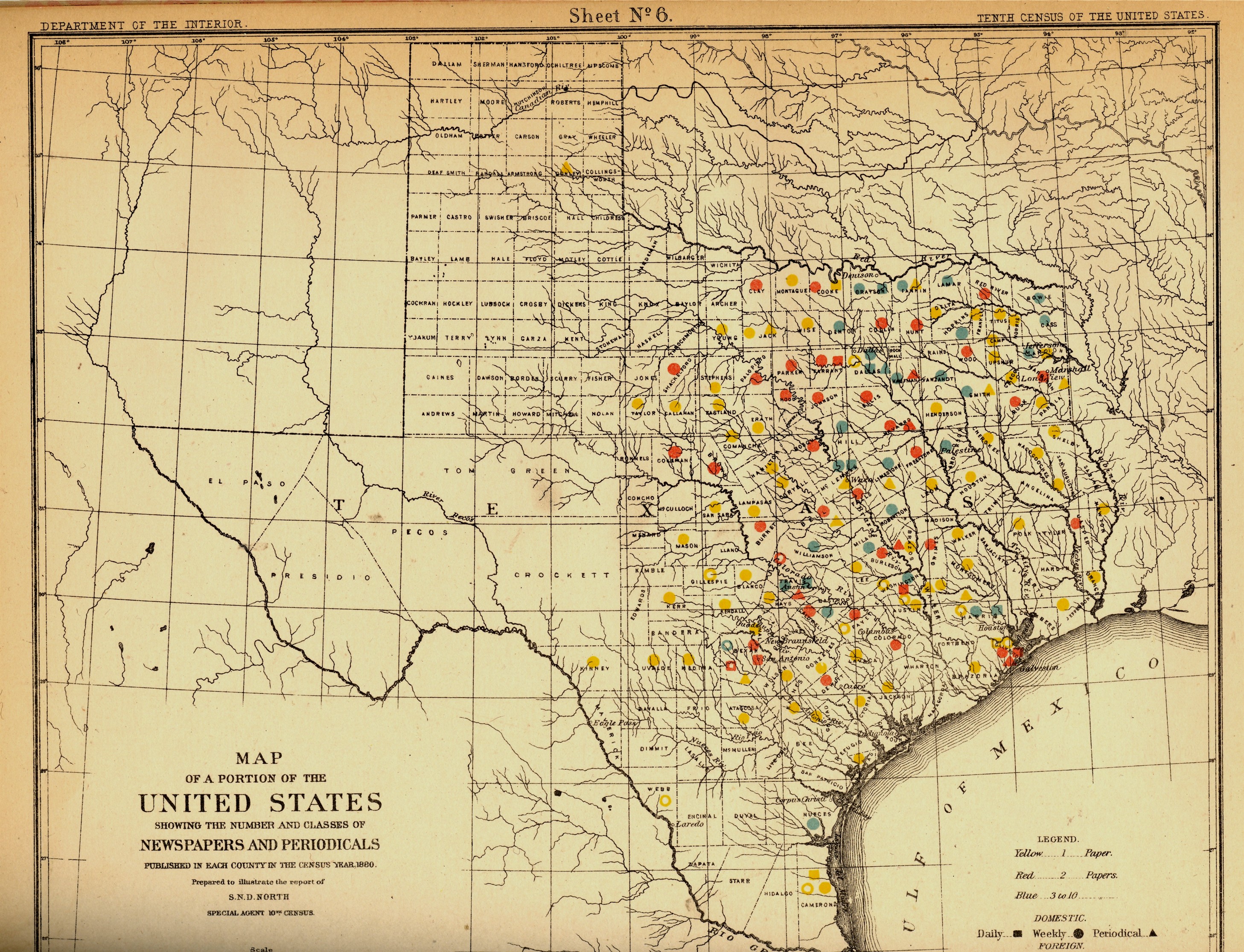
I’ve got another bit to add:the newspaper frontier.
I just happened upon a volume of the US
Census of 1880, with a special report by S.N.D. North entitled History and Present Condition of the
Newspaper and Periodical Press of the United States…and published in
1882.What provoked me was the map of Texas newspapers for
1880.It very clearly, and like no other
map of its kind, delineates a fantastic line/frontier between the Texas with newspapers and the Texas without newspapers. We see very
clearly that the frontier of the newspaper stops fairly abruptly and
wonderfully at the 100th meridian, with only two newspapers in all of
the rest of Texas found beyond that point (and those just barely beyond the 100th. And it’s the 100th meridian that
mostly marks the vertical middle of the country, running through North and South
Dakota, Kansas, Nebraska, the Texas/Oklahoma borders, and so into Texas—if you
folded this map vertically in half it folds virtually on the 100th meridian.An odd bit, it is, half of the country and
then half of Texas.
Of course the population and easier-natural-resources
are located east of this point, I know, but it is still quite a jolt to see the
line of newspapers get drawn in the sand so vividly.There isn’t anything else quite like this so
far as the newspapers go, except, a little, for Florida, where the line gets
drawn north and south, splitting the peninsula roughly in half, the southern
part holding only five counties at this point.. But it is a much more robust image for Texas given the number of
newspapers that were being published—280 periodicals and newspapers for Texas
versus 45 for Florida, with 11,374 in the entire country*—so that the
difference between the have-newspapers and haven’t-newspapers in Texas is that
much more vivid.
Texas needed more papers:there were 1.5 million people living in the
massive state in 1880, almost twice as many as there were in 1870, and almost
half of what there would be there in 1900.
Florida was another story, entirely—even in 1880, which is only 130 years ago, there
were only 270,000 people living in the entire state, not even close to half of
the county population of Pinelas today.
I’m just enjoying the surprise of the
straight-edge frontier in Texas.
*Just for the sake of comparison, the number
of periodicals per state for 1880 was as follows: Illinois,
1017; New York, 1411; Pennsylvania,
973; Ohio, 774; New
Jersey 215. Also, oddly, the average circulation of the Florida and Texas papers was roughly the same: 1,282
for Texas and 1306 for Florida (with an average for the country at
4137).
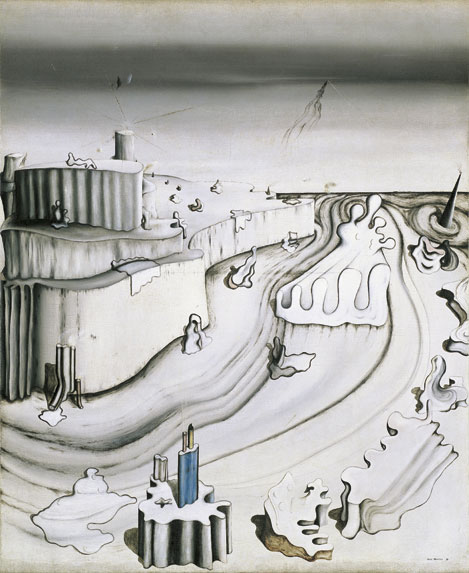
Surrealist, spider-eating, red-ink-drinking, bohemian template
Montparnassian Yves Tanguy (1900-1955) is perhaps the blankest, loneliest,
emptiest painter of the Surrealist movement. It seems odd to mare that statement, even to me, what with the
tremendously lonesome images of the somewhat-earlier Giorgio de Chirico (1888-1978), but
Tanguy has a different lonesomeness/empty quality to him partially because of his very restricted color palette.Whereas de Chirico’s
(pictured just below) paintings are alive with color, Tanguy seems to put the unused
colors back into
their tubes, painting in his all-white and unblemished studio.He gives his paintings an odd quality, milky
somewhat—especially in his skies, which to me look particularly empty, even
though they have substantial texture.(This is differentiated from earlier posts in this blog that deal with blank skies in Renaissance prints, which were truly, completely blank and without any detail whatsoever.) The
play and wash of it all in his paintings gives me the sensation of a taste, and
not a good one—seeing some of his work elicits a metallic, coppery taste, high
in the back of the mouth.I don’t get
any of that sensate confusion form the others like de Chirico, or Magritte, or Francis Picabia, or Marcel Duchamp, or Max Ernst, or Jean Arp, or Man Ray, and etc (though De Chirico does come close).
Tanguy was undoubtedly influenced by de Chirico early on in
his life, even before his painting career began.The standard story is that in 1923 while
riding a bus Tanguy saw an unusual, arresting image in the window of a store—he
jumped form the bus, rushed back to the image and saw that it was a painting by
de Chirico in the window of Paul Guillaume’s gallery.He was much taken by it, and very soon
afterwords began his painting career in earnest, becoming recognized and
semi-established within a few years.(It
is interesting to note that the critic who first gave him positive feedback, F.
Fels, very soon thereafter wrote to Tanguy “You’re finished.You’re going to wind up a surrealist.” ) He
did “wind up” a Surrealist, but he was hardly “finished”.
And what I’m talking about here with the Big Lonely is just limited to the Surrealists–there are plenty of other operating in this millieu (intentional or not), not the least of whom (and painting at about the same time) is the sensationally lonely Edward Hopper, the man who invented shadwos for shadows. But that’s another story.
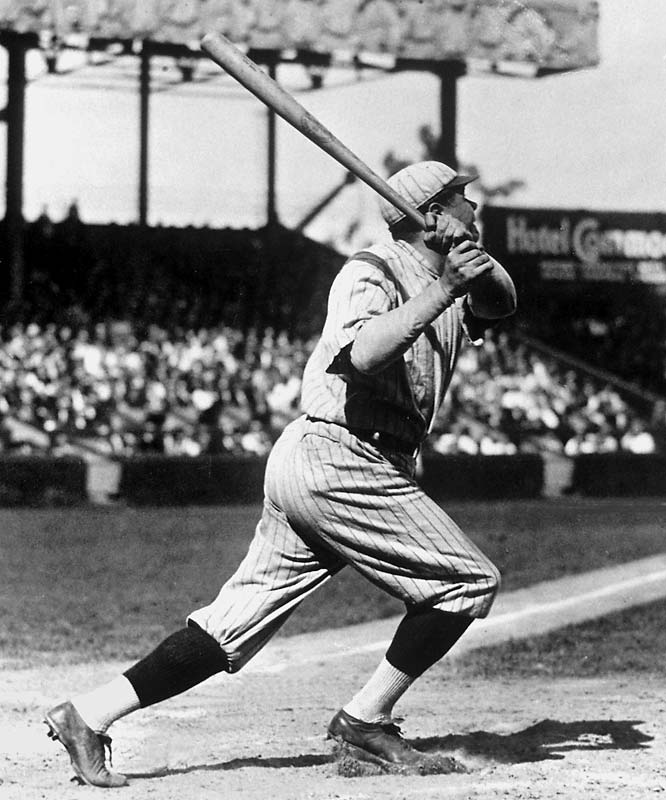
Did Ho Chi Minh (Nguyen Tat Thahn,
1890-1969) ever wonder why the Boston Red Sox turned down a trade of Shoeless Joe
Jackson AND $60,000 for Babe Ruth and go for the Yankee’s 100k instead?No, probably not. But Ho did actually live in
NYC in 1912/13 and again, maybe, in Brooklyn in 1918/1919—he also lived in
Boston at about the same time, and also saw some of the other major American ports
during the same time, tramping as he was around the world—so at least the
physical possibility exists, if nothing else.
I’d like to think that he somehow
met up with George Herman Ruth, the boy from Pigtown, when he made an imaginary
stop in Balto in 1912.Ho would’ve been working
scruffy food jobs and Ruth was a 17-year old scruffy food-aholic, Ho listening
to the loud rants of the soon-to-be-great player, starting Ho’s lifetime
interest in the sport. Ruth could’ve wondered why the league leader had 36 triples
and incredulously asking to no one in particularwhy they “hadn’t just gone all the way for a home run?”. He could’ve been on hand to witness pistol-packing,
money laden, socially-challenged and fantastically gifted Ty Cobb (batting
.410) attack a heckler in the stands in NY and wind up suspended (for a bit)
from the game. He could’ve marveled at how Walter Johnson achieved an impossibly
heroic 33-12 with a 1.39 era (!) record for a lazy Washington Senators team..Ho was in fact working at the Palmer House in Boston when that city’s team won the
World Series, the same year that Fenway way opened.So Ho was there,
at least.
But alas I can find no evidence that Ho was interested in baseball
or had met Babe Ruth or dreamed any of this other fantastic and ephemeral stuff.—though
it would certainly make for a good story. As a matter of fact he was tooling around the world during the birth of
most things modern in this traveling period of 1912 through the early 1930’s. In
NYC and Boston in 1912/13, back in Brooklyn (maybe) in 1918/19, in and out of London 1913-19, in France 1919-1923, then on
to the Soviet Union and China.Monumental
happenings in literature, art, music were defining the new world; there was the
World War, a revolution in Russia, the Depression, the birth of Chinese Communisum,
the Japanese war in China, and Ho was
certainly around not only when but where
all of the stuff was happening. For the
scant biographical materials at hand (albeit one is the fantastic biography by William
J. Duiker Ho Chih Minh, a Life) I can’t
see any reference to art or lit or music, not that this really matters, not
really.And this can also be said of Einstein (and most
other physicists) working during this same period—Einstein was surrounded by
newness in the arts and would’ve been approached by every last strand of it but
he remained unaffected by the great majority, preferring classical versions of
whatever, instead.Except for his
politics.)
Ho was a busy, dedicated guy during this early period, trying
as he was to come to a point where he could rid his country of the French and their
repressive colonial ways.He became a
communist but before that wasn’t—he tried in unconvincing ways to interest Woodrow
Wilson (employing the vocabulary and deep ideas of the American Constitution
and Declaration) in helping the Vietnamese loosen the grip of the French, but
to no avail. Later, as a dedicated and war-weary revolutionary he tried a
similar tactic with FDR—and this after fighting the piggish Vichy and occupying
Japanese forces in his country, waging an OSS-supported guerrilla campaign
against them for years—with similar results, getting sold out (much like the
Kurds were sold out by Bushs I and II) after the war was over.
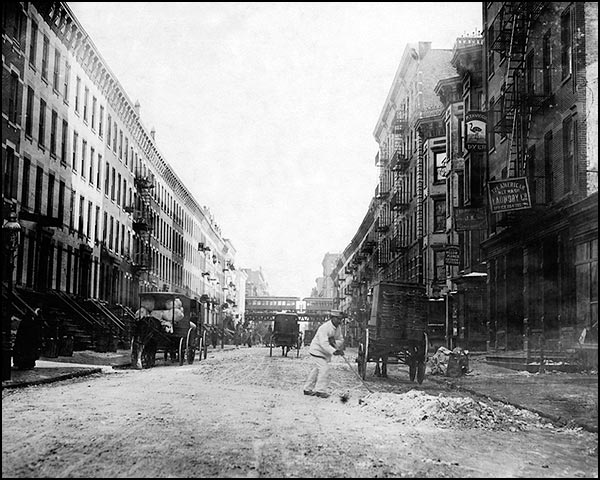
I wonder about those New York years, of working as a cook’s aide,
a pot scrubber, a photo touch-up artist, a busboy-intellectual, and wonder what
in the hell he was thinking about up there in Harlem in the summer of
1912.
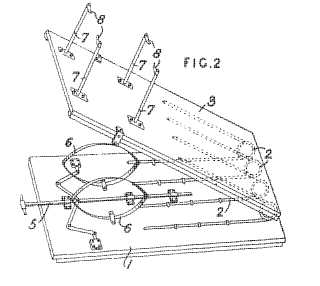
Last week I made a post regarding a fish-throwing apparatus installed at a zoo–honestly I didn’t anticipate that there would be a follow-up post on another animal-throwing machine, but, well, unfortunately, here it is.
Eduard Wulff, a circus manager and resident of Bruxelles,
was granted this patent in 1904 for a device that would “project horses,
elephants, monkeys etc into the air” so that they would perform a sommersault.
Elephants?Flying, somersaulting,
elephants?
The abstract from the British Intellectual Property Office is reprinted below:
 Dots aren’t brought to bear formally in the revolutionary movement until the early 1880’s. Impressionism for all intents and purposes is formed with the Societe Anonyme in 1872 (whose members included Monet, Pissarro, Degas, Sisley, Morisot and eleven others), and perhaps more realistically in 1874 when the Societe exhibited its first salon. (The first show held at the Nadar Studio in Paris in April 1874; a tiny, one month long affair, compared to mammoth exhibitions like the Universal Exposition in Paris in 1867.)
  non-representational paintings in art history (1913) used his fair share of dots in his exploration of the previously invisible. One good example is his 9 Points in Ascendance (1918), which is nothing but black dots, an impossible composition just two decades prior to its creation.