A Daily History of Holes, Dots, Lines, Science, History, Math, Physics, Art, the Unintentional Absurd, Architecture, Maps, Data Visualization, Blank and Missing Things, and so on. |1.6 million words, 7500 images, 4.9 million hits| Press & appearances in The Times, Le Figaro, Mensa, The Economist, The Guardian, Discovery News, Slate, Le Monde, Sci American Blogs, Le Pont, and many other places… 5000+ total posts since 2008.

Author: JF Ptak

  • The Illustrated London News *WAS* Deliberately Funny (in 1908)

    JF Ptak Science Books LLC  Post 862

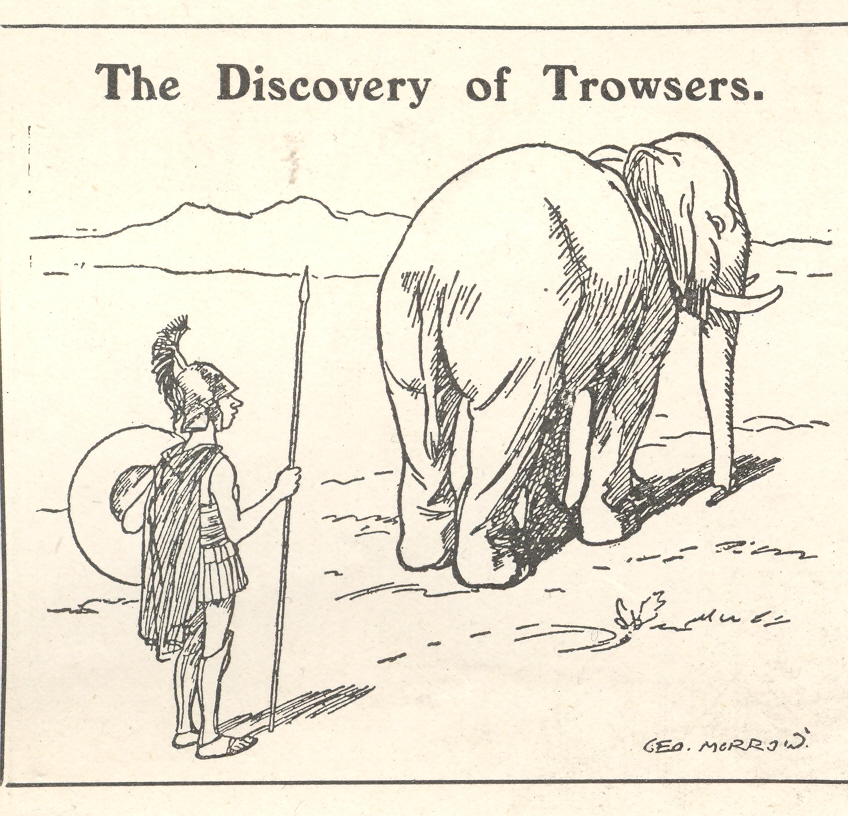
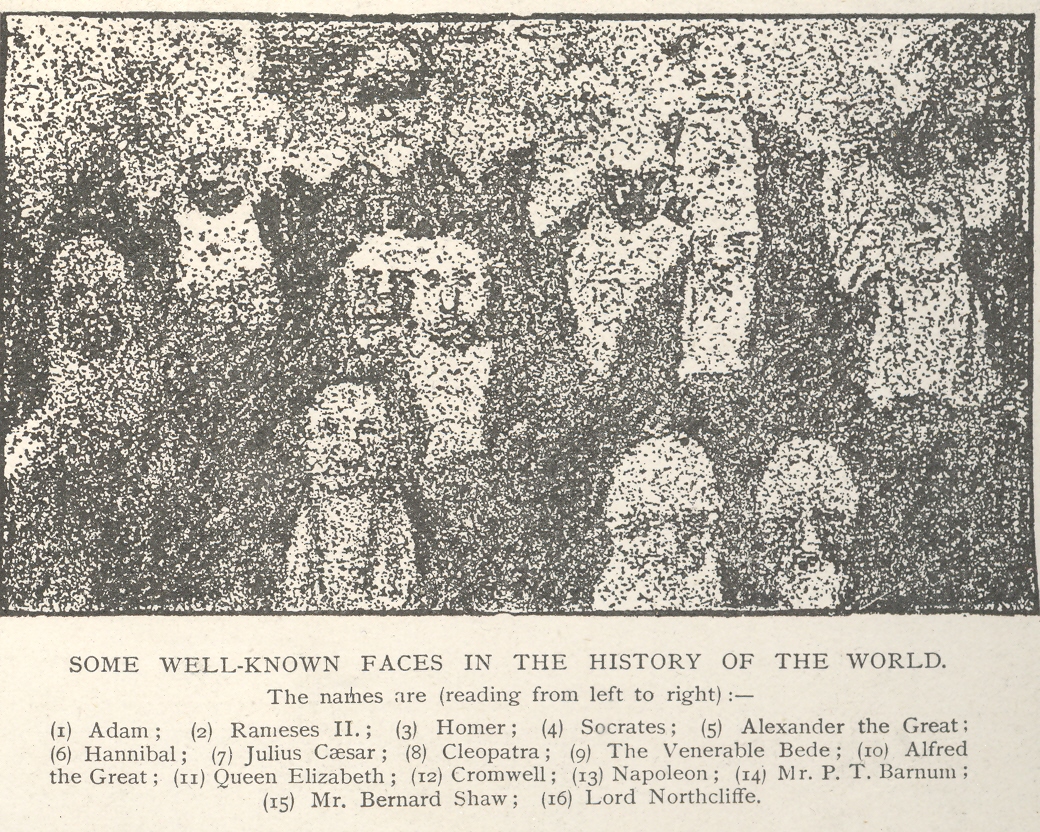
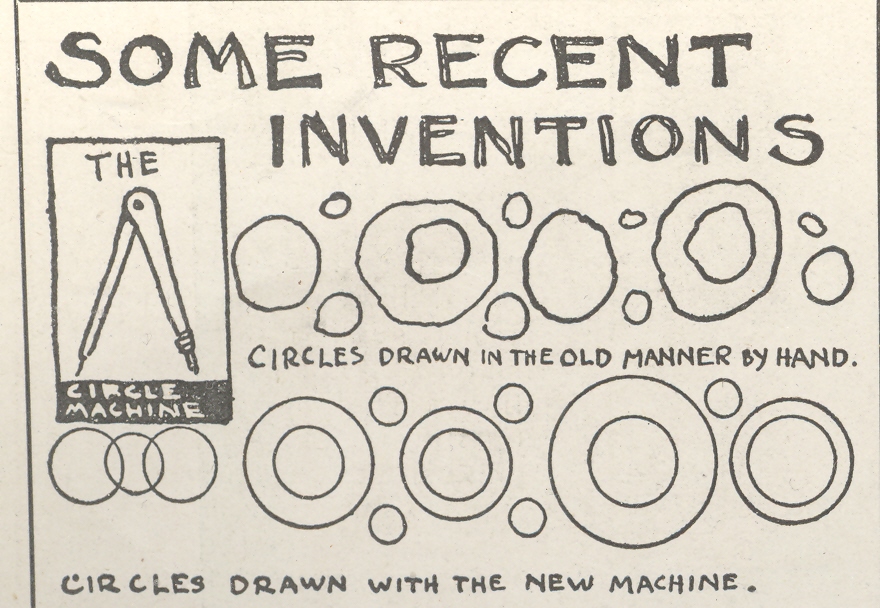
    I have more-or-less browsed the Illustrated London News for the 1890-1945 period now, and I can safely say that it was usually very interesting, almost always well written, beautifully illustrated, and almost never funny. I’ve mined many things from it over the years, and have posted dozens of things to this blog on the bits and pieces of interesting material present in–literally–every issue.  (It has endless info and unusual pictures on early aviation, fantastic coverage of WWI, and aspects too nunerous to mention.)  Again, humor was not a consideration or intended, even when it was–it was usually so stiff-lipped that you couldn’t move your mouth for fear of breaking it off.

    And then I stumbled upon the page 134 of the June 25th, 1908 issue which has FIVE funny things on it!  At least I think so–the funny shines like an avant garde nova.

    For example:

    + Dec 2 ILN shakes

    + Dec 2 ILN funny elephant 

    + Dec 2 ILN weird 

    + Dec 2 ILN circle

    + Dec 2 ILN cynics

    ·Posted by :

    ·in:


  • Einstein in the Phone Book

    JF Ptak Science Books LLC  Post 859  Blog Bookstore

    Some time ago—for reasons not clearly remembered—I looked up
    prominent names in the history of science in a national (perhaps) telephone
    database for their frequency of occurrence. 
    It tells me nothing, really, but it was sort of interesting to see the
    meaningless results.  The first number is
    for the number of people with telephones with that surname; the second is for
    its rank (though I have no idea what the last/bottom number was). 


    Einstein: 
    2,751/27,842

    Dirac:  6/489,377

    Bohr:  577/14490

    Tesla:  58/100,064

    Born: 2284/4,422

    Rutherford:  8,759/1124

    Planck:  338/23.480

    Feynman:  4/614,750

    Oppenheimer: 856/10,746

    Schwinger: 50/70,178

    Wheeler:  39,000/206

    Maxwell:  20,700/428

    Galileo:  3/712,622

    Heisenberg:  5,
    550,000


    And so there you have it. Now that I’ve posted it I can throw the scrap of paper away.

    ·Posted by :

    ·in:


  • History of Blank & Empty Things #22: God in a Hole in the Sky

    JF Ptak Science Books LLC   Post 858  Blog Bookstore

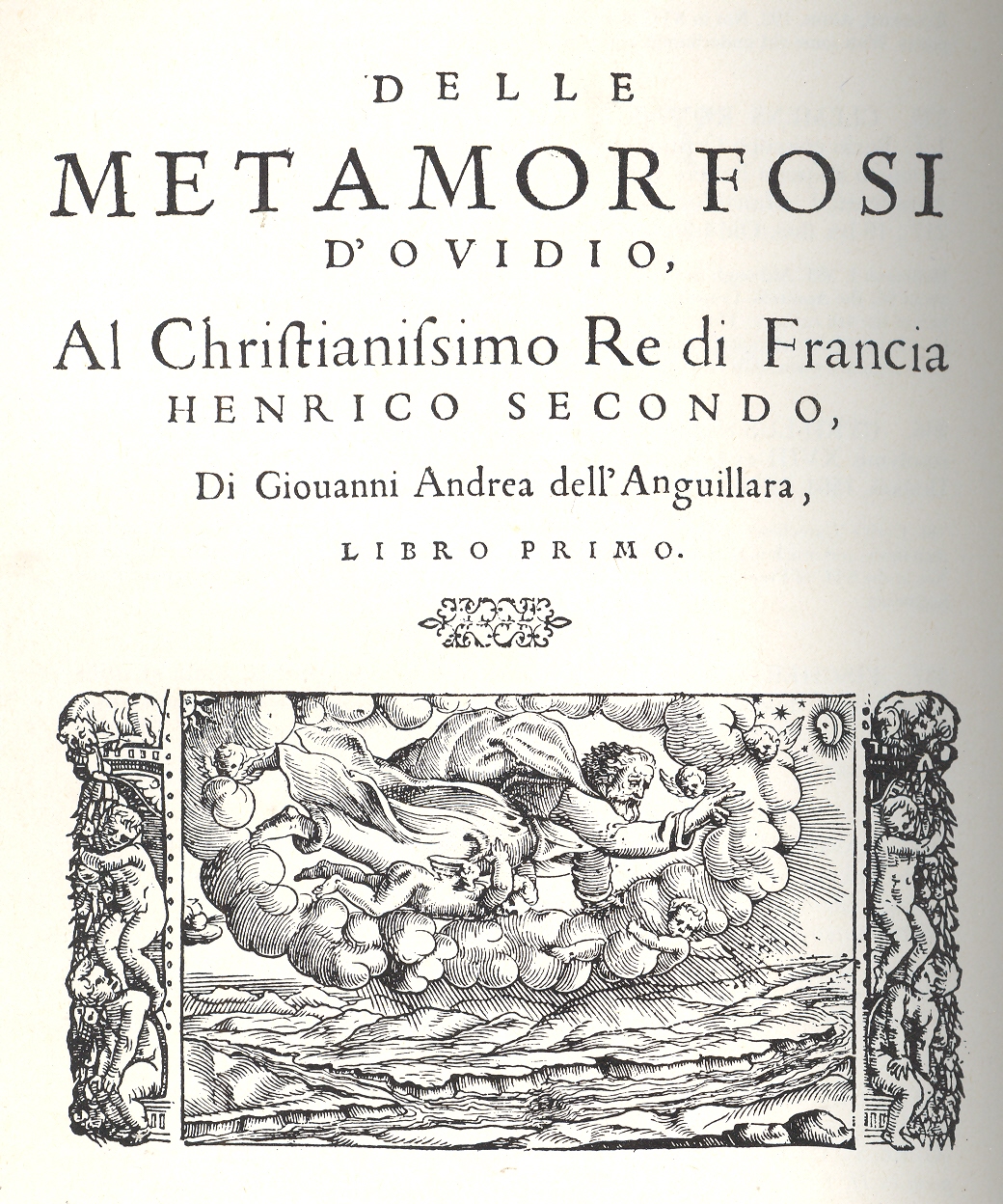
    I think that I’ll start a thread on The History of Holes–which this post would secure nicely–though it will have to be differentiated from The History+ Dec 2 god hole of Dots and The History of Blank and Empty Things somehow.  Still, I like the idea.
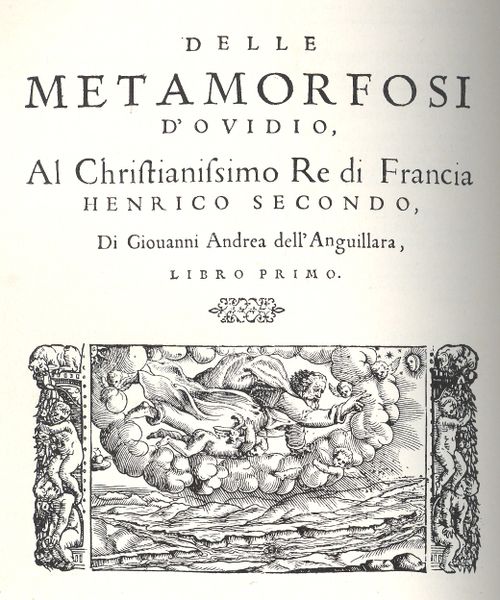
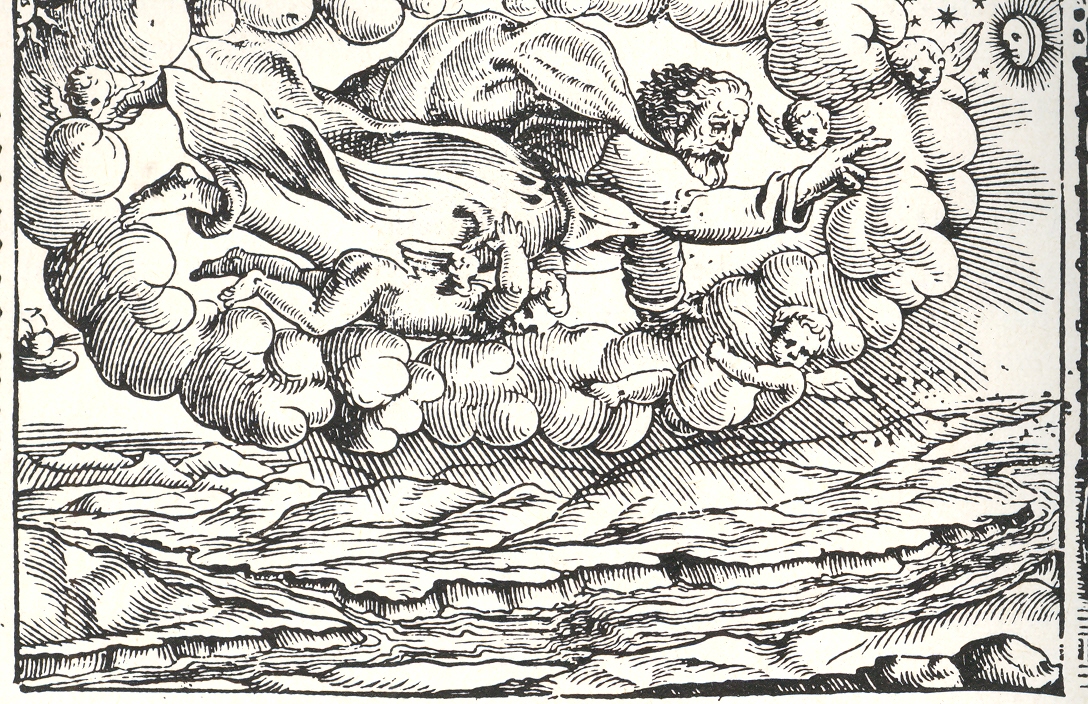
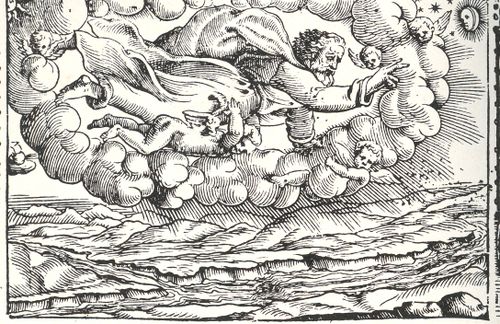
    These title page illustrations may or may not reveal a hole
    in the sky, a glimpse into a blank heaven. 
    God knows that Heaven awaits its geology from Charles Lyell or cartography from Jed Hotchkiss, so this iconography that
    I’m creating for these two Renaissance views of the blank canvas of the universe
    may well be incomplete or completely wrong—but it is intriguing that there isn’t
    even a suggestion of what God’s environment might be.  This assumption that one might possibly be
    shown the celestial surroundings may also be enormously presumptive and
    unknowable/unseeable by human eyes, but since we are being shown a corporeal form
    of the Creator I thought that the  logic
    was also there to portray the Creator’s milieu, but it is not to be.  
    + Dec 2 god hole 2

    The first title page is for the narrative poem Le Metamorfosi, Ovid’s  Metamorphoses,
    translated into Italian by Gioseppe Horologgi, and published in Venice in 1563.  It is certainly appropriate that God appears
    on the title page of this work, as Ovid tells the story of creation of all
    things and the history of man in the book’s 151 chapters—appropriate more so as
    this was one of the most popular intellectual biblio-tools of philosophers and
    writers right through the Middle Ages (having wide effect on Chaucer and Shakespeare on down).

    The image seems to catch the Creator in the act between the
    fourth and fifth days, floating in a cloud-framed hole in the sky.  Beyond the hole there is a white emptiness—which
    makes me think that there is something; if there was nothing, I guess we’d have
    the absence of all color, or blackness. 
    Or perhaps not.  In any event I
    find the opening in the fabric of creation and its blankness/emptiness somehow
    restful. 

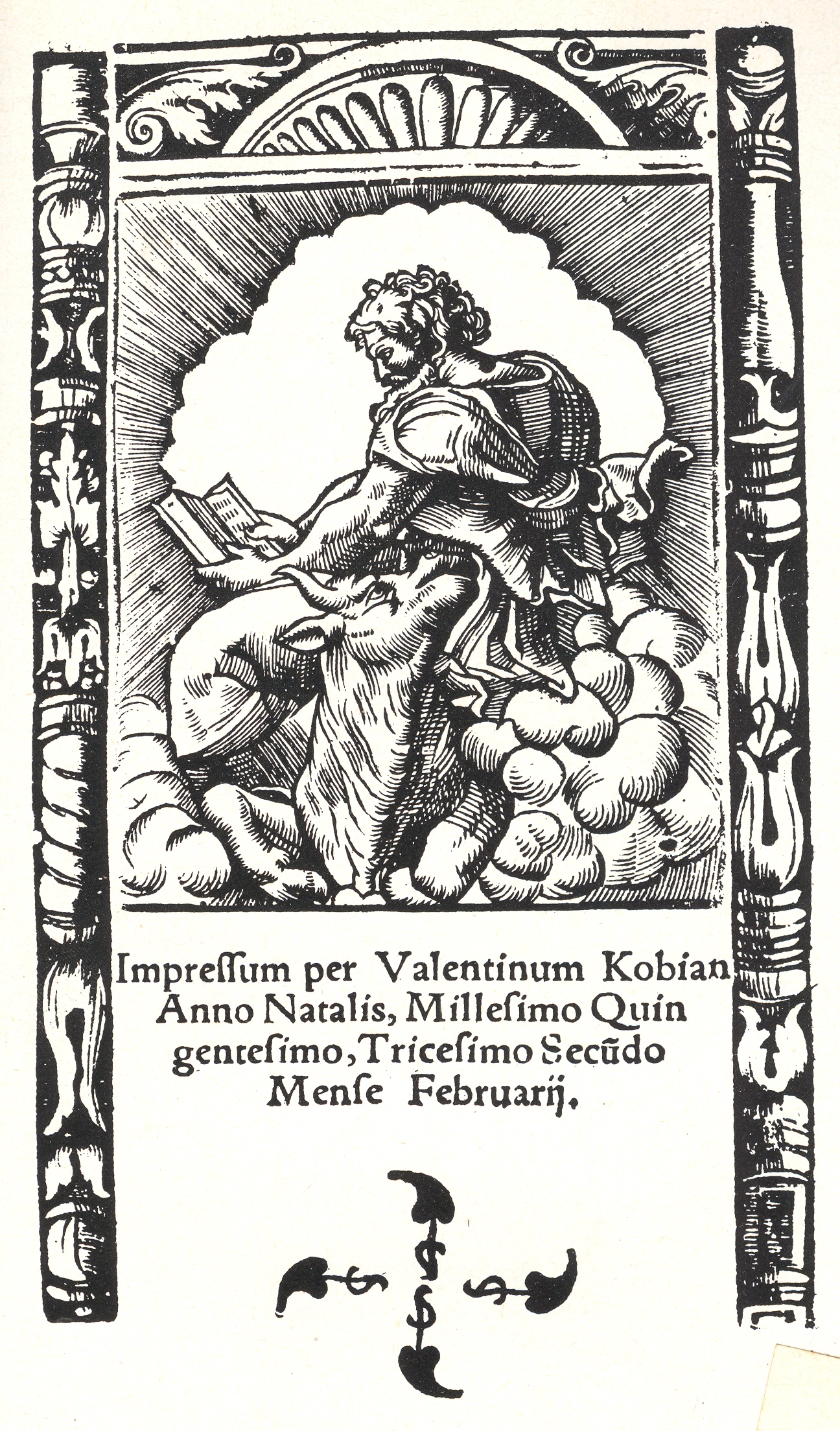
    The second image is a little more open to debate as to
    whether that is God in the cloud, reading, or not; I prefer to believe it
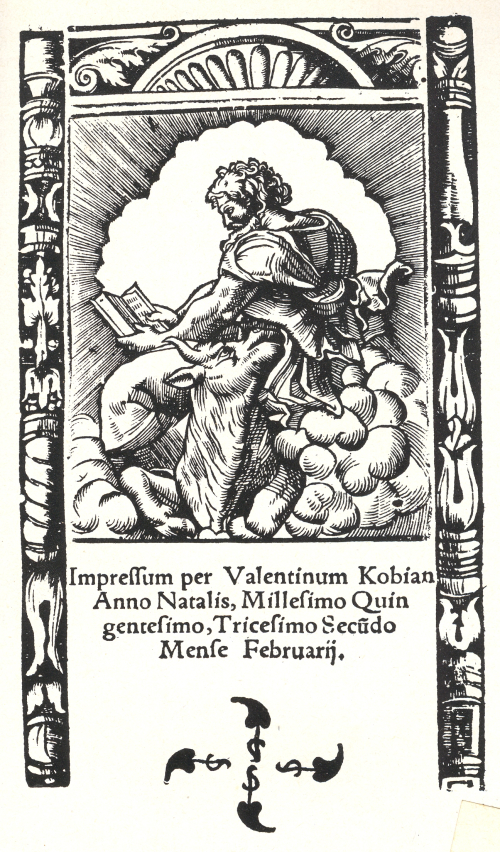
    so.  The image is the colophon for Johann Virdung’s2 (ca. 1465-1535, of Hassfurt0 Nova medicinae methodus…3, an astrological-medical book written by
    a celebrated astrologer, professor and correspondent of Joahnnes Trithemius.
    + Dec 2 god hole 3

    If this is to be the Creator in the clouds, reading a book,
    then I would take the white blankness behind him to be another opening in the
    sky.   The small interesting bit about the title page
    is that it spells out the year and the month and the day on which the book was
    printed, which was not very common at all, not a bit.

    I’ve certainly noticed white/blank/empty skies in prints,
    but I’m not so sure that the celestial hole has registered with me before
    today.  It has the potential for an
    interesting idea, in the opposite-of-a-black-hole category. Maybe. 

    Notes:

    1. The contents of the work, as follows:  Book I: Cosmogony, Ages of Man, Gigantes, Daphne, Io;; Book II: Phaëton, Callisto, Jupiter and Europa;;Book III: Cadmus, Actaeon, Echo and Pentheus;; Book IV: Pyramus and Thisbe, Perseus and Andromeda.;Book V: Phineas, the Rape of Proserpina;Book VI: Arachne, Niobe, Philomela and Procne; Book VII: Medea, Cephalus and Procris; Book VIII: Nisos and Scylla, Daedalus and Icarus, Baucis and Philemon; Book IX: Heracles, Byblis; Book X: Eurydice, Hyacinth, Pygmalion, Adonis, Atalanta, Cyparissus; Book XI: Orpheus, Midas, Alcyone and Ceyx; Book XII: Iphigeneia, Centaurs, Achilles; Aesacus; Book XIII: the Sack of Troy, Aeneas; Book XIV: Scylla, Aeneas, Romulus; Book XV: Pythagoras, Hippolytus, Aesculapius, Caesar.

    2. Lynn Thorndike:  Johann Virdung of Hassfurt again Isis
    25, 1936, p. 363; Faust and Johann Virdung of Hassfurt, Isis 26,
    1936/37, p. 321

    3.  Full title:
    Nova medicinae methodus, nunc primum & condita & aedita, ex
    mathematica ratione morbos curandi
    . 
    Available here!

    Other Virdung and astrology titles located at this marvelous
    site, here.   



  • Found Dadaist Art–Floating Eyes and Ears, 1650 & 1807

    JF Ptak Science Books LLC Post 857

    Dada found--tp I’ve
    written a few times in this blog (here, here and here) about what I think is
    found/unintentional antiquarian Dadaist art and would like today to continue
    that thread with the following two unusual pieces of art.

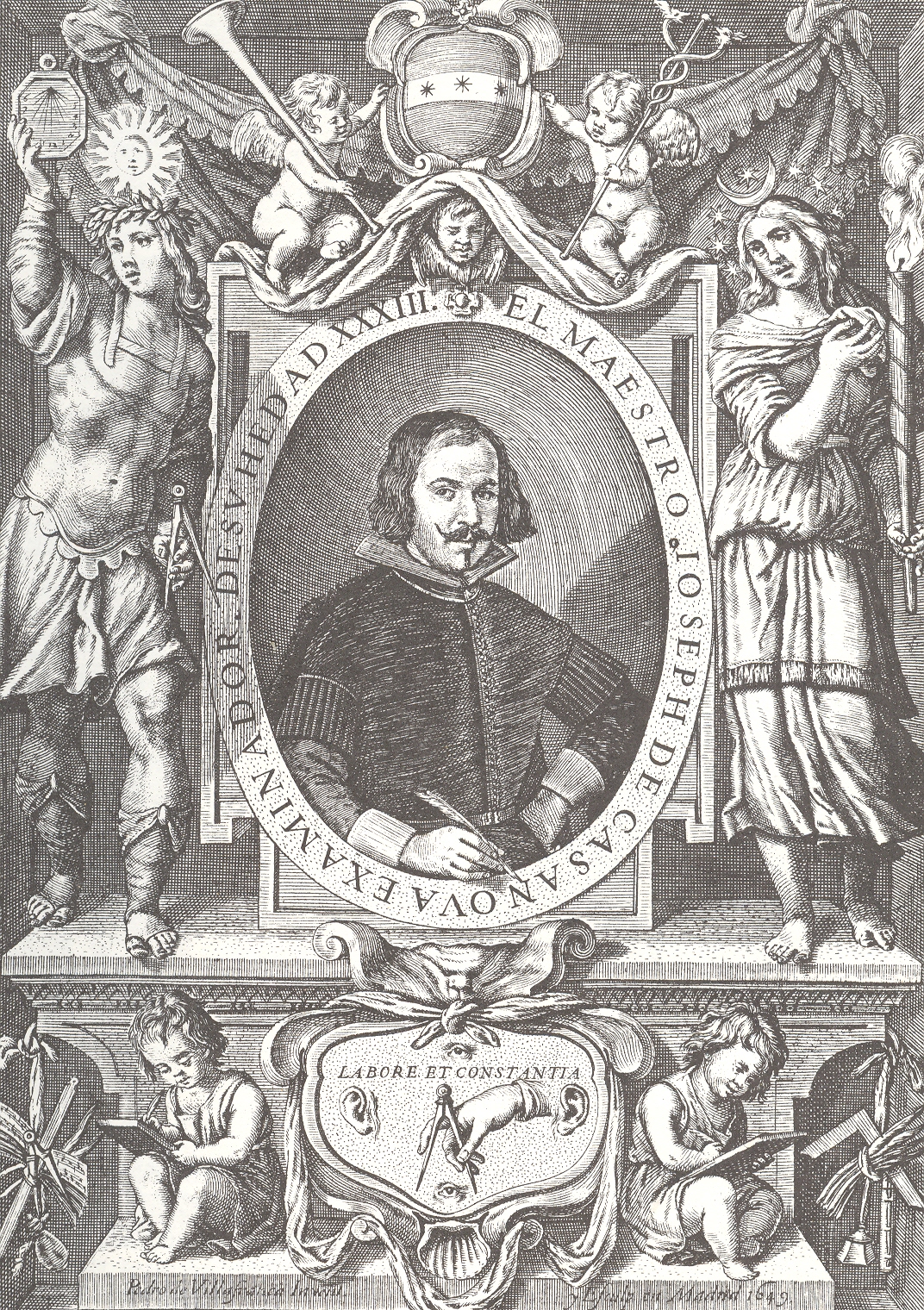
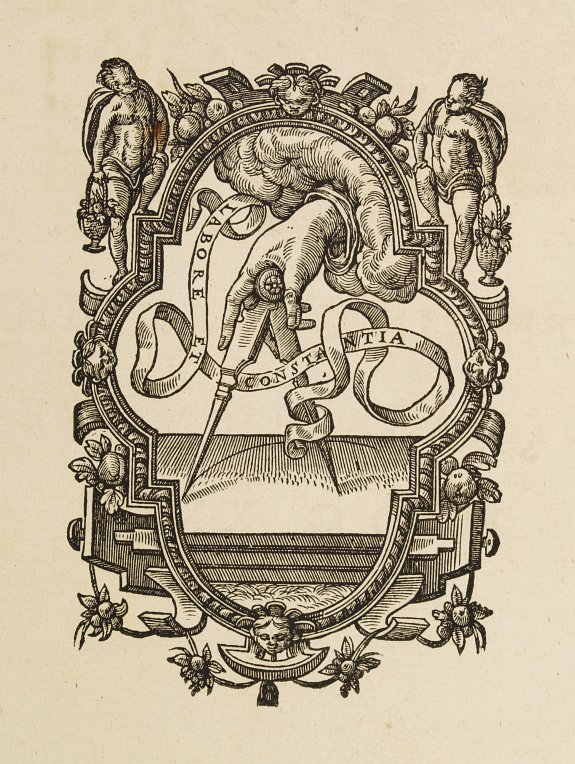
    The first
    is a detail from the title page of Joseph de Casanova’s Primera parte del
    arte de escrivir todas formas de letras
    (1650). This is not the Casanova (Giacamo,
    1725-1798) who most people would initially think of—the seductive womanizer of
    the 18th century—but another, earlier, Spanish Casanova (1613-1692)
    who was important in the history of round hand script and the lettera bastarda.  Joseph Casanova ‘s evolutionary handwriting
    style was considerably lighter and easier than most styles, and his influence
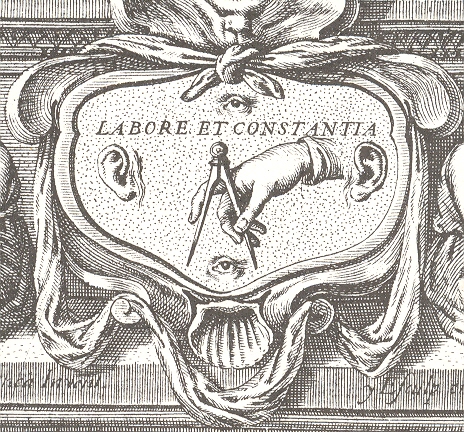
    in changing handwriting practices was substantial.  What is interesting for me is the detail at
    the bottom of the engraved title page for his book, the emblem containing  “Labore et Constantia”.  Labor and consistency, decorated with a hand
    and compass, ever watching and listening with ears and eyes above and below.Dada found--tp detail

    [This
    design comes from (at least) one earlier source—the printer’s device for Christoph
    Plantijn (Antwerp,
    1583), though without the eyes (below).] I like the floating aspect of the disembodied
    body parts, floating in their little sea of constancy, ruled by a compass. 

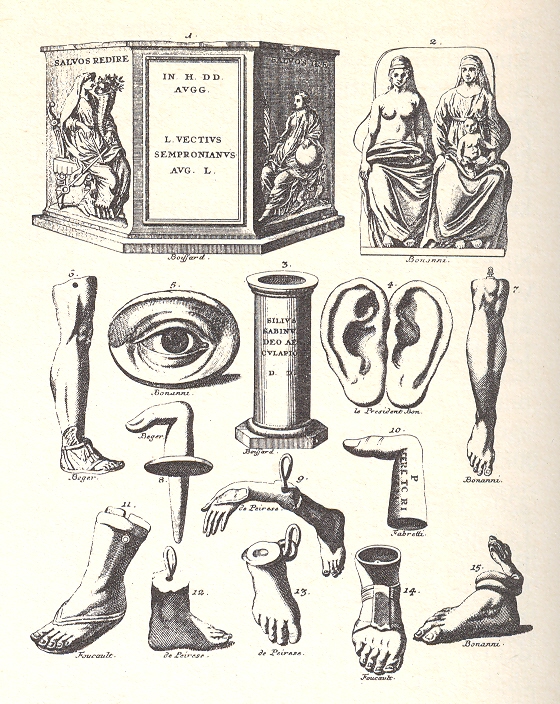
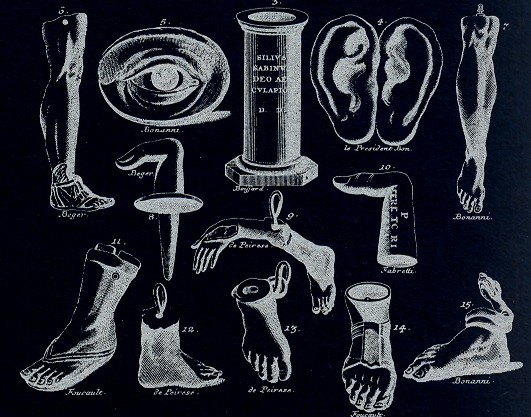
    Dada found--multiples  The
    second image has another set of disembodied eyes/ears (among other things) and
    has all the flavor of the dada/surrealist flourishes of the frammenti of Piranesi.
    This comes from Bernhard von Montfaucon’s Greichische,
    Romische und andere Alterthuemer…
    (Nurenberg, 1807). When taken out of
    context, as a disembodied image, the von Montfaucon certainly has a dadaist taste
    for me, especially if you edit the image a little.

    Dada-found labore 

    Dada found 2--multiples


  • Anatomical Reminders of Passing Time

    JF Ptak Science Books LLC  Post 860 

    + dec 2 skull hole  

    I have been
    paying attention recently to anatomical figures studying other anatomical
    figures (a post soon to come).  But in
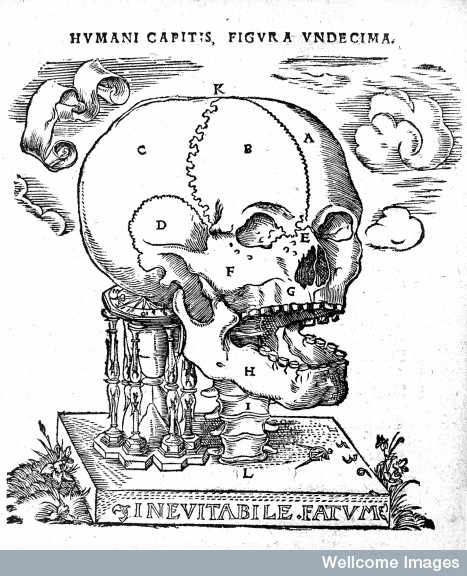
    the midst of this came this great woodcut reminding us all of our impending and
    ever-looming end of days, and found in Johann Dryander’s (1500–1560) fabulous pre-Vesalian
    anatomy (or pre-1543)
    Anatomiae, hoc est, corporis humani dissectionis pars prior…(published in Marburg by Eucharius Cervicornus in 1537).  One of the reasons for the book’s great importance
    was that it was about the first anatomy to focus and specialize on one part of
    the body, and it was also one of the first few where the anatomist worked on
    his own dissections. 

    You’d
    think that seeing anatomies and dissected bits of body would quickly remind the
    reader of the grave, but this was not quite enough for Dryander’s artist, who
    though to add the depleted hourglass to prop up the gap-mouthed skull—just in
    case you weren’t already paying attention to obvious symbolism. 

    Note:  image from the Wellcome Institute website which also has many other images from the book, including successive images of the dissection of the head. 

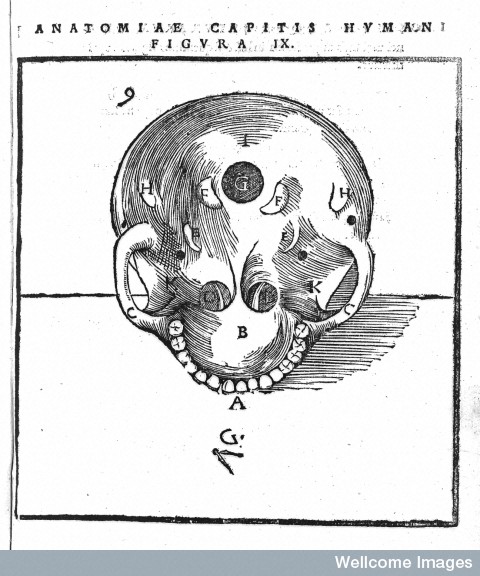
    Oh, here’s another, just an unusual perspective of the skull, seen from the bottom up.

    + dec 2 skull bottom


  • Return to Land Ships–Really Big, Really Bad Ideas: the 1,500 Ton Truck

    JF Ptak Science Books LLC  Post 856

    Ship--kinski

    Nothing
    quite gives me the rumbles as seeing pictures of Great
    Heavy Land Things on the move.  The NASA launch crawler is one of the biggest,
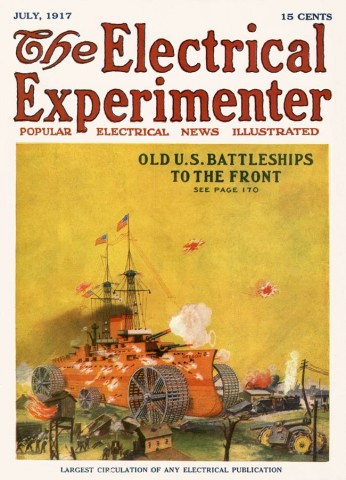
    though it doesn’t come close to this impossible LandClad pictured in Brett
    Holman’s excellent AirMinded blog:  the
    terrestrially-motorized and tankified version Dreadnought of obsolete ironclad (and I guess
    pre-Dreadnought) battleships.  I doubt
    that there would be more things more fearful than seeing something like this
    coming over the rise, Martian tripod death machines notwithstanding. The
    ironclad/pre-dreadnought would certainly have some problems moving around on
    the land, considering the huge power sources needed to move them while they
    were floating in water.  The giant tank also
    looks pretty pervious, all things considered, and (among many other things)
    looks as though it probably wouldn’t do so well in rainy weather—it looks like
    it would generate its own Operation Barbarossa
    mud wherever it went.  My guess too is
    that if got stuck, it was, well, stuck.Ship--teheuntatpec  

    The
    pursuit of sea-land machines has always had a huge ‘wow” factor, if for no
    other reason than it was just out-of-place and big.   I’ve written earlier here on
    Elmer
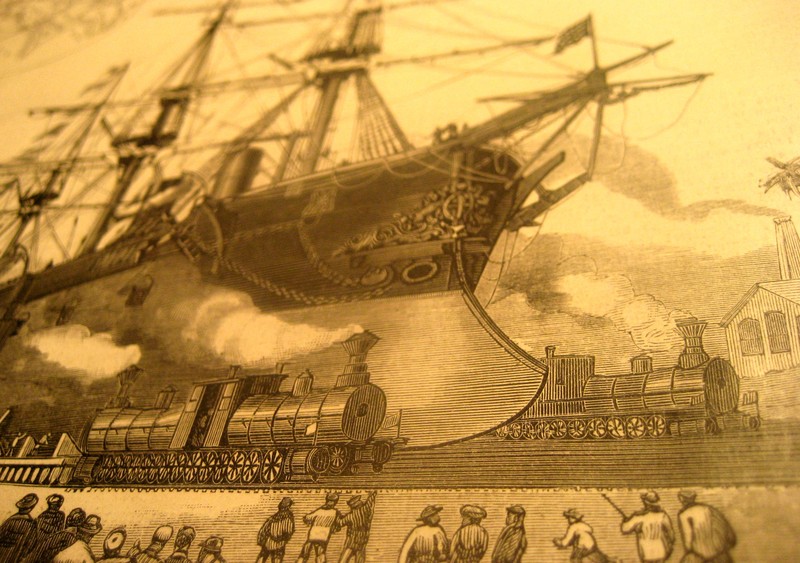
    Cotherell and James Eads proposal to build a combination railroad ship canal
    across the Tehuantepec isthmus in Nicaragua, hauling ships up and out of the
    water and transporting them across land on six railroad tracks pulled by juggernaught
    teams of locomotives.  In the
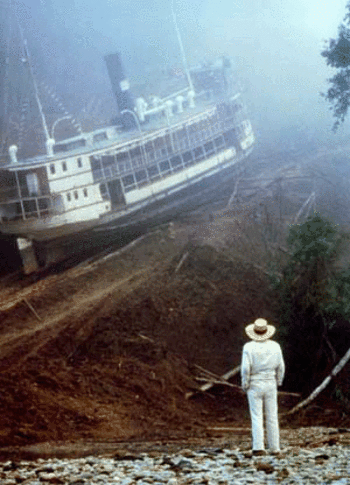
    fiction-made-fact world, Werner Herzog hauled a real steamship up and over a mountain for
    the filming of his quixotic Fitzcaraldo,
    which was simply a fabulous thing to see. (The film is a glory as is the film made on the making of the film.)


    Truck

    Getting
    back to Holman’s landship—I remembered something similar to this, and actually
    found a picture of it right here in my bizarre-archive.  Popular
    Science
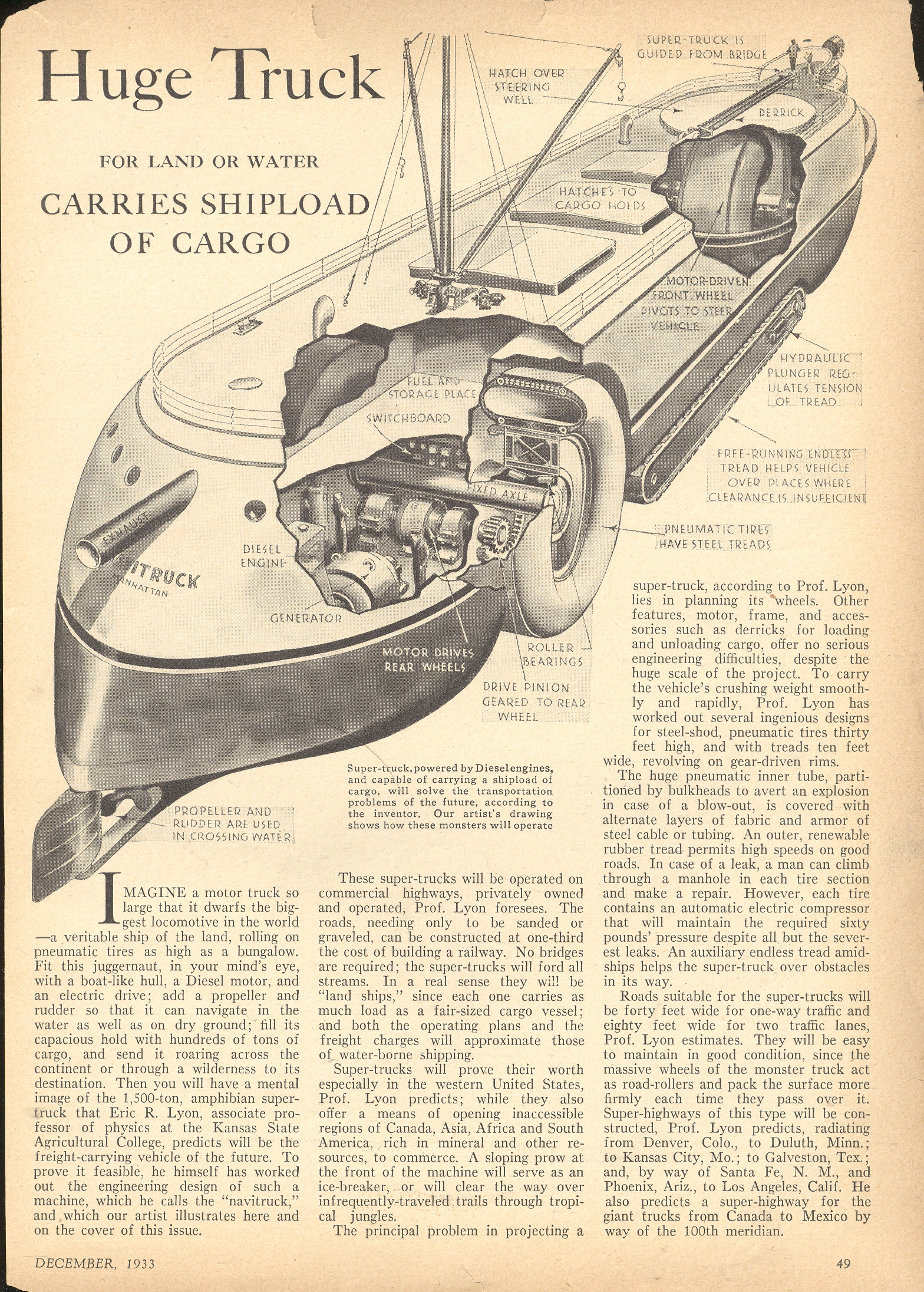
    (December 1933) published this account of professor Eric R. Lyon’s1
    conception of the Diesel-powered “Navitruck” (its name looking like quite
    something different and not so pretty at the thing’s stern), a 1,500-ton
    amphibious truck with (what Lyon states to be ) 30’-tall (and 10’-wide) tires. Given
    this I approximate the monster would be 40’ wide and 100+’ long, and I guess at
    least 35’ tall.  A flattening tire on
    land would be a problem; I guess a blowout would be catastrophic. 

    Did I
    mention that this thing could float?

    Anyway
    Prof. Lyon envisioned a veritable Western ribbon of these things radiating from
    Denver to Duluth,
    to Kansas City (MO) and Galveston, and to Phoenix and on to Los
    Angeles
    .  Special
    gravel roads would be built for his trucks (cutting down on construction costs
    for more permanent roadways), and in the case of no roads, Lyon saw that the
    bow of his ship could both cut through impenetrable South American jungles as
    well as break ice in frozen Arctic waters. 
    Somehow the roads are seen as being 40’ wide for single lane traffic,
    and 80’ for double lanes, which doesn’t leave much room for error.

    There are
    some real mammoth trucks rumbling around
    mining operations, the Caterpillar 797e and Terex trucks, being two of the world’s
    biggest.  They are 22’ and 24’ high and
    300 and 280 ton machines, respectively, and although they begin to approximate
    the brutishness of the Lyon machine, it would still take five (or ten) of these
    beasts to fill the shoes of the “Navitruck”.   Also, a big point which isn’t addressed with the Lyon’s machine is fuel.  The thing would have to have something like a 10,000-gallon fuel tank–which means the fuel alone would weigh 60 or 80 tons–to avoid having fuel stations spread like flies along the landship byways.  Fuel consumption wouldn’t be measured by the gallons/mile with something as monumentally heavy as this–it would be measured by the gallons/minute.  Since the Caterpillar 797e drinks about a gallon a minute with a modern efficient engine, I’ll make the wild iterative guess that the Navitruck would gulp 20/gallons a minute (?!), which would be a very hard rate of pumping at the gas station this afternoon.  That means that this trucks would be filling-up twice a day after getting 225 miles/tank.  At 15 cents a gallon (in 1933) that would make a $3,000 fill-up, which means it would cost about six thousand 1933 dollars to make it from Denver to L.A. Provided it didn’t break down.  [The wheels were on a fixed axle.  Yikes.] The average salary in 1933 was a little more than half the cost of this fill-up, or about $72,000 in 2009 dollars.  On the other hand, if these things hauled 3 million pounds the fuel costs for moving each pound would be about 2 (2009) cents. Or maybe not.  (All of this scratch-pad reasoning might be wrong, but not horribly so, I don’t think.)

    There were definitely more convenient and already-exiting ways of hauling freight at this time, and the system had  a much more robust delivery system and reach.  That system was called “railroads”.

    All in
    all, I’ve come to the conclusion that ship should stay in the water.

    Note:

    1.  Professor Lyons (Kansas State
    University
    physics
    department), was no stranger to big ideas, appearing frequently in popular magazines
    like this and the Electrical Experimenter,
    among others.  


    ·Posted by :

    ·in:

    —

  • Roadtown, Linear Cities, and Living in a Line: Edgar Chambless and Michael Graves

    JF Ptak Science Books  Post 855 


    I wonder what our human world would be like if we had evolved living in horizontal linear cities?  

    ++ Nov 29 roadtown chambless 1

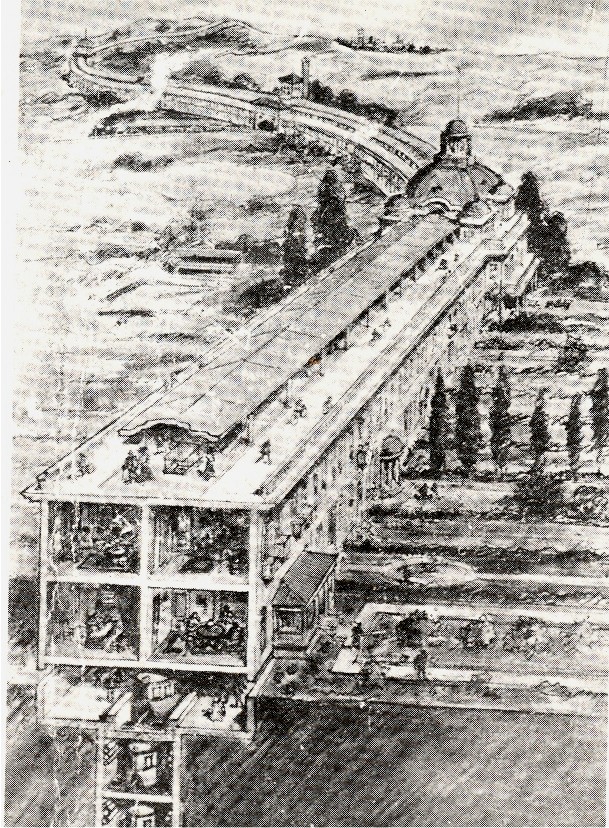
    The idea had never occurred to me before seeing the work of Edgar Chambless, whose Roadtown (the entire 172pp of the 1910 work located here) projected the idea of super long linear road-cities.  Actually it was the illustrations that attracted me more than Chambless’ pamphlet, though I’m surprised to admit, there’s some interesting bits and pieces in that exceptionally odd work of city/future planning. 

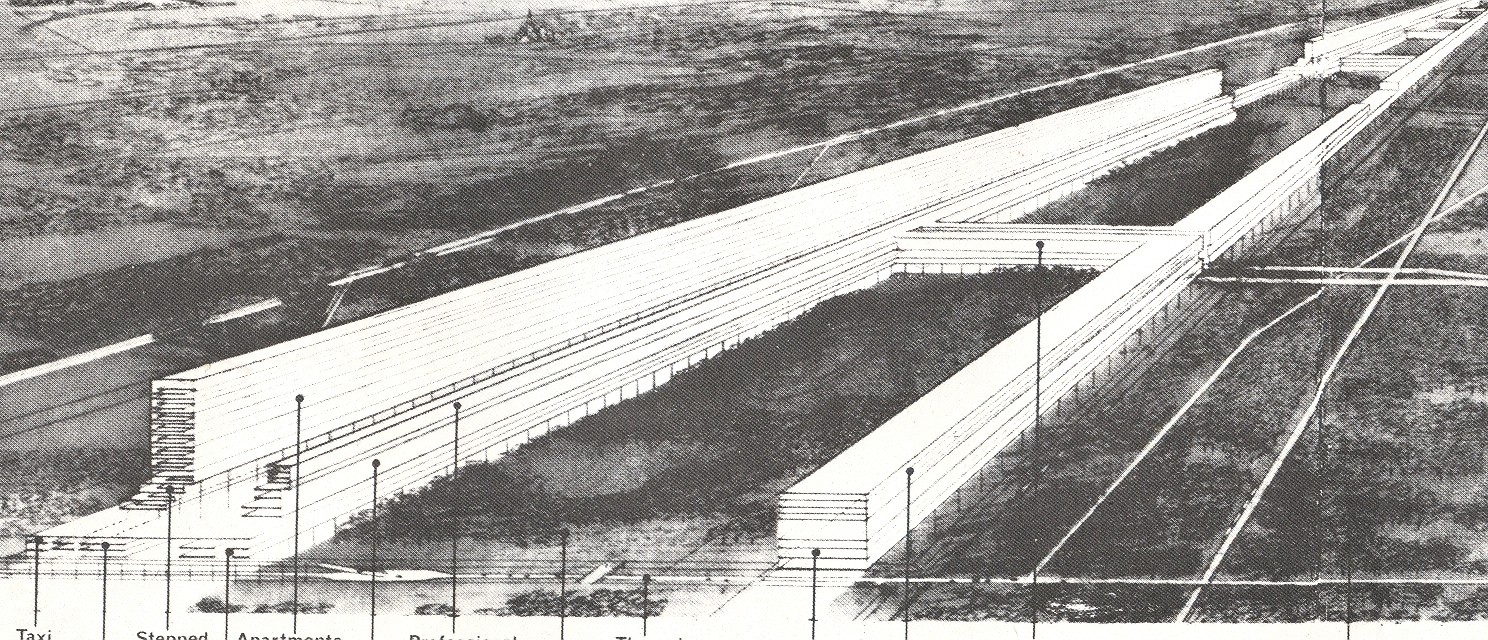
    Michael Graves also proposed a linear city [aerial perspective below] to form a contiguous, living corridor between New Brunswick and Trenton, and alluded to the development of “consequent new patterns of life” though doesn’t say what they might be.  

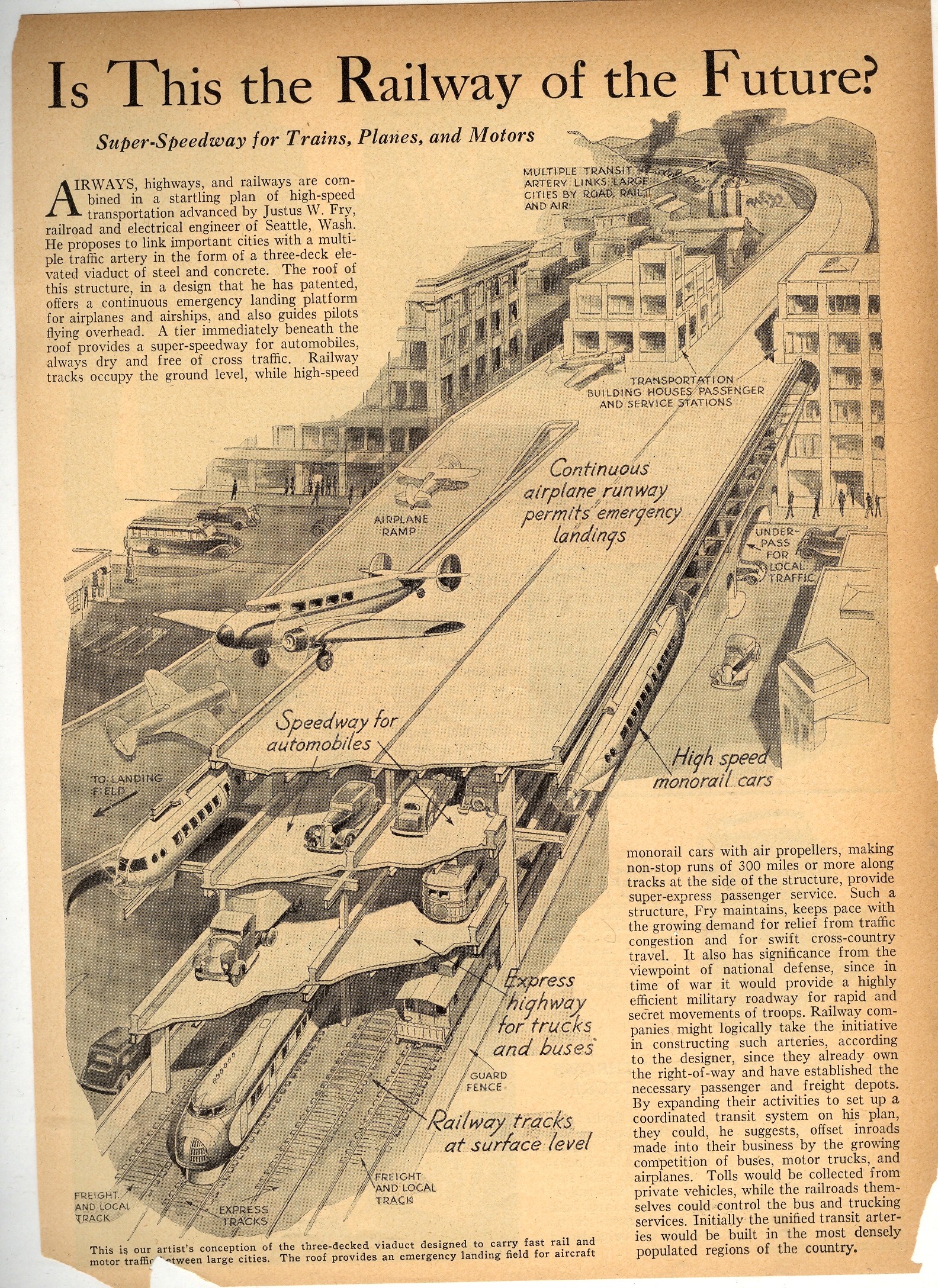
    And certainly there have been many plans for incorporating, engulfing, transportation systems into the very fabric of a city (as seen in the “Is This the Railway of the Future” image that ran in Popular Science in 1932), though the idea of combining transportation and the city itself into a linear creation is far more uncommon. 

    ++ Nov 29 roadtown graves


    But getting back to this living-in-a-line part:  according to some rough napkin-logic, I figure that in order to house 300 million Americans in one long structure, it would take something like a building 400′ wide, 12 storeys high and 3000 miles long (not including infrastructure and so on) to allow 400 square feet of living space for every person.  Oddly enough I randomly chose an individual unit of 400x800x120 feet to work with, which is within just a percent of two of the total volume of the Empire State Building (bizarre!), meaning that it would take about 20,000 Empire State Buildings placed end-to-end to perform the housing of every American in this straight J.G. Ballard-like world. 

    Now Chambless offered an architectural-something  much less complex1 than this notion I just imagined, though his philosophy of life and living in such a city was developed well enough to get the interest and attention of major movers and shakers (including Tom Edison).  There was evidently quite a buzz about Roadtown though that’s all that ever happened–buzz and no sting, meeting after meeting, happy attendees, then off to another meeting with apparently nothing to show for it all in the end, an interesting idea that took a decade or two to die. 


    ++ Nov 29 roadtown underground

    Notes:

    Edgar Chambless and Michael Graves images from the wonderful book, Unbuilt America, by Alison Sky and Michele Stone. (Sky and Stone–very close to sky above/mud below.)

    1. (From The People’s Almanac, 1981):  “In cross section, Roadtown would, beginning at the top, consist of: (1) a roof promenade–a glassed-in sun parlor in winter, shaded walk in summer, with bicycling and skating paths and towers housing schools, nurseries, recreation facilities, stores, and power plants; (2) a two-story, above-ground house, with a workroom at street level, a living area above it, and utility lines (electric wires and gas and water pipes) enclosed in a runway beneath the house; and (3) three below-ground levels of railroad lines for expresses and locals, to carry both passengers and freight”


  • Advanced Sci-Fi Dirigible Notion, 1909

    JF Ptak Science Books LLC  Post 854

    ++ Nov 28 dirigible

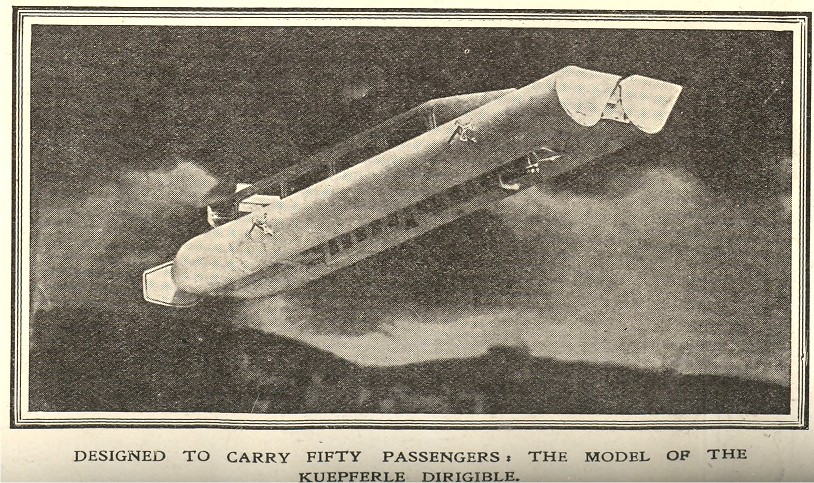
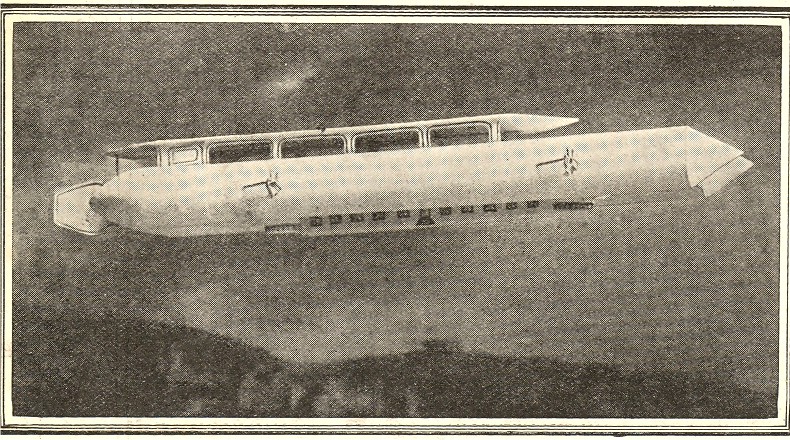
    Just a short post this evening on what looks to be an amazing futuristic vision of he dirigible, found lurking in the “science Jottings” page of the 14 August 1909 issue of The Illustrated London News. (This section has provided more than its fair share of entertainment, a consistent pleasurama of sciency bits all confined to a single page.)  The airship was noted as being designed by “Kuepferle”, unfortunately  without a first name, who was associated somehow with “authorities at Frankfurt”.  The ship was to be a fantastic 100 metres long, and was set to hold fifty passengers (with, I guess, a crew of 25?)  The structure on the the top of the aircraft was a screen to prevent the sun from heating the helium elements too much, which, somehow, were to be turned into a parachute in the case of a disaster.  The unnamed artist made his drawings from a model, while the “dirigible proper would be available before very long”. 

    ++ Nov 28 dirigible 001 

    ZR1couv

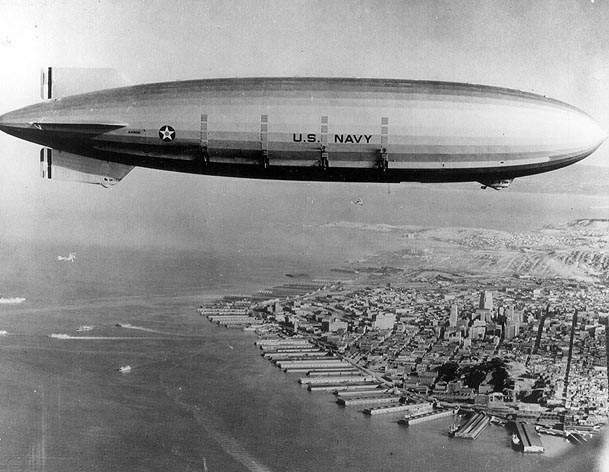
    The magnificent possible length for the airship–100 metres–was huge for 1909, but was eclipsed (in relatively short order) by the American Akron, a 1931 monster which came in at over 240 metres.  Still, the Kuepferle machine had a rich sci-fi design with a big Buck Rogers feel, a lovely thing.

     It was certainly far prettier than this flying aircraft carrier decorating the cover of La Science et la Vie for January 1924.  I’m not sure what the efficacy was for this idea, this enormous beast catering to one airplane at a time…but it all sure looked pretty in blue. 

    The real thing, the Akron, below:

    Akron


  • Foot of God, Pt 2: Continuing Thread on Odd Things in the Sky

    JF Ptak Science Books LLC  Post 853  Blog Bookstore

    ++ Nov 26 foot god

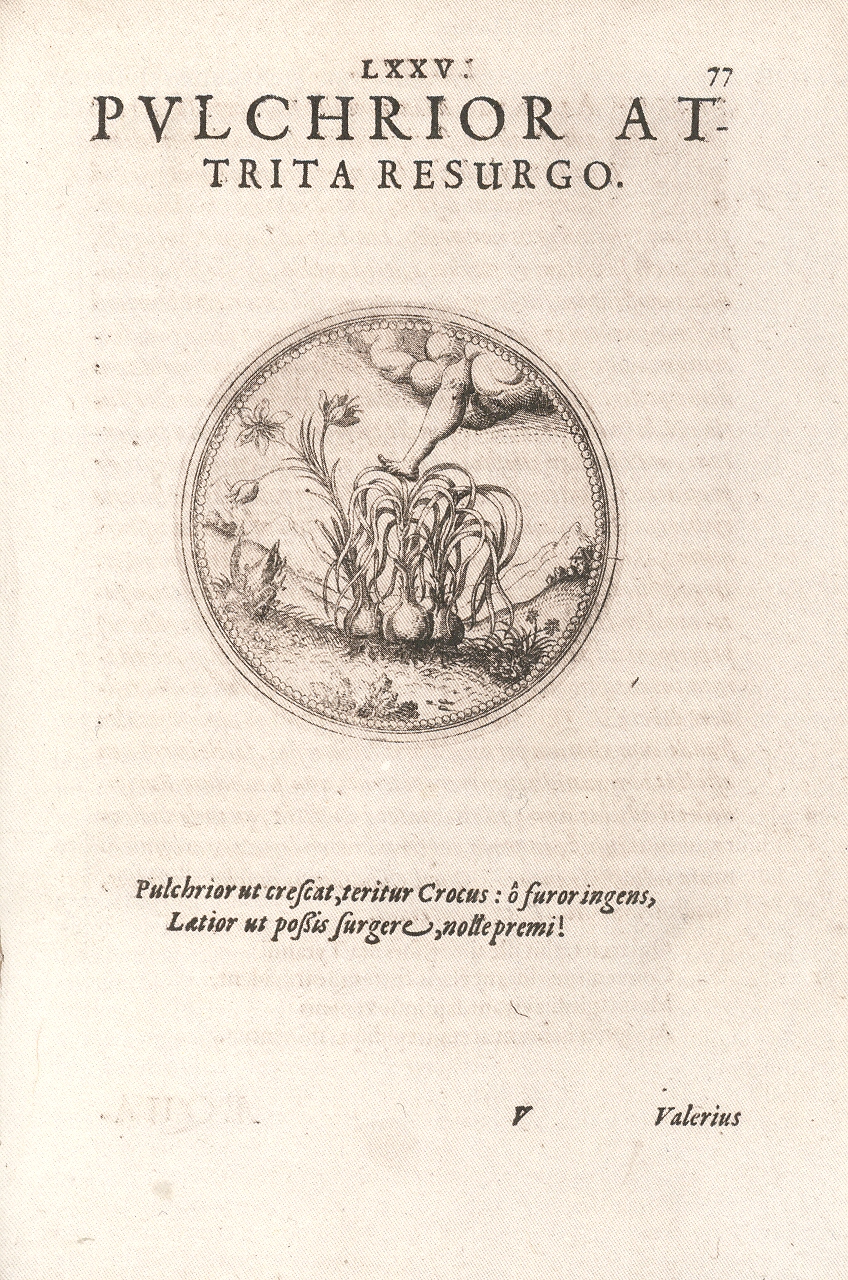
    I am going to indecently
    add to my “foot of god” series with this metal engraving from the accomplished
    Joachim Camerarius1’ Symbolorum et
    Emblematum…
    (published in four volumes at Nuremberg from 1590 to 1605).  There is so much to offer from these books, I
    freely admit, but I’m afraid that I’m stopped at this foot-from-the-sky
    image. 

    ++ Nov 26 foot god

    The engravings, executed
    by Hans Sibmacher, were among the first executed in metal, and the book itself
    was the first of its kind to present botanical emblems. (The other three
    volumes contained emblems for animals of land-sea-air.) They are splendid and
    concise, and filled with soft detail. 
    And still I’m left with the foot. 

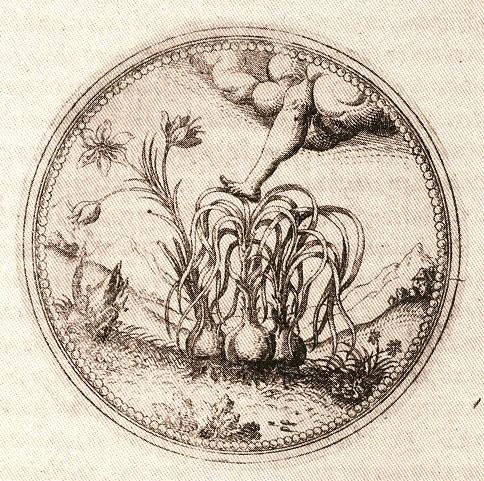
    The legend is mostly a
    mystery and doesn’t help me with the foot—it says something about beauty and
    growth and madness and reward—and the saffron crocus.    This plant has been a commodity for
    thousands of years, used for therapeutics and dyeing and spice.  It takes quite a lot of these plants to
    produce a gram of powder—about 150. 60,000 plants are necessary to produce a
    pound of saffron, which is getting to be quite pricey.  Given this, saffron was very often imitated
    and counterfeited—a crime taken quite seriously in many places, and perhaps
    none more so in Bavaria where (in 1444) a conviction meant death.

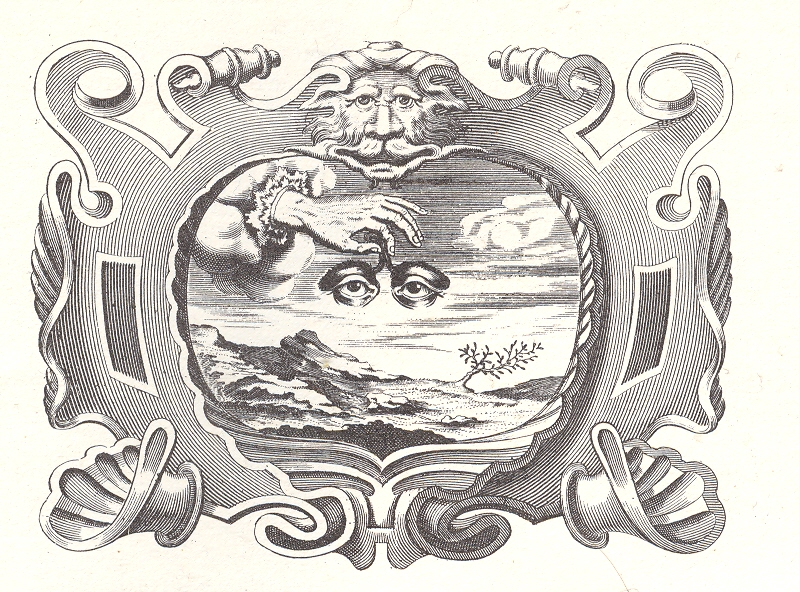
    ++ Nov 26 eyes in sky

    And as long as we’re
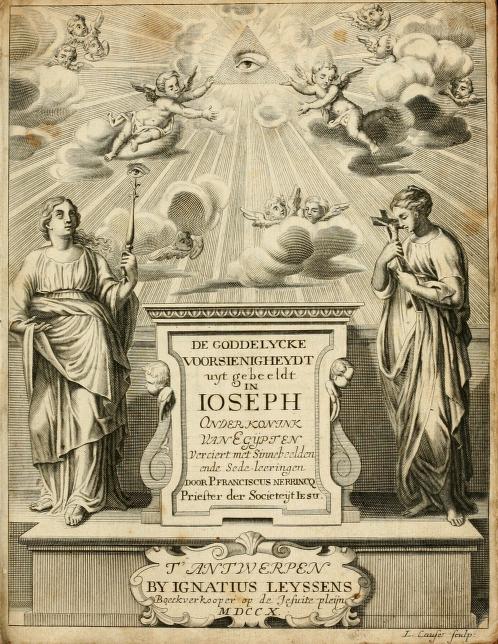
    talking about odd antiquarian images the sky, I’d like to point out the work by
    the Jesuit Franciscus Nerrincq
    (1638-1712), De goddelycke voorsienigheydt2, in which there
    are several odd eyes that burn their way through the atmosphere.   Eyes/eye of the creator occur frequently in
    religious presentations and emblems, but not so very often as hands holding a
    pair of eyes.  I know all of this is very
    heavy stuff in the history of Christian iconography and the progression of
    emblemata, but I’d rather deal with the images out of context here and have
    them stand on their own without interpretation. 
    ++ Nov 26 eye title page

    NOTES

    1.From the Encyclopedia Britannica, 11th
    edition, volume 5:  JOACHIM CAMERARIUS
    (1534-1598), German botanist and physician, son of the
    classical scholar of the same name, was born at Nuremberg on the 6th of November 1534. After finishing his studies in Germany he visited Italy, where he graduated as doctor of medicine. On his return he was invited to reside
    at the courts of several princes, but preferred to settle in his native town of Nuremberg, where he had a botanical garden and formed extensive collections. He
    wrote a Hortus Medicus (1588) and several other works. He died at Nuremberg on the i 1th of
    October 1598.

     2.  De goddelycke voorsienigheydt uytgebeeldt in Joseph
    onder-coninck van Egypten : verciert met sinne-beelden ende sede-leeringen
    .  The entire book can be seen here.
    The University
    of Utrecht
    emblem
    collection
    is extensive and easy to navigate—there is drop-down box for
    available titles, and once selected, the book comes up with biblio info on the
    right and a drop-down of thumbnails for the entire book at left.  It is a joy to navigate. 


  • Objects from the Last Full Measure, 1944

    JF Ptak Science Books LLC  Post 852

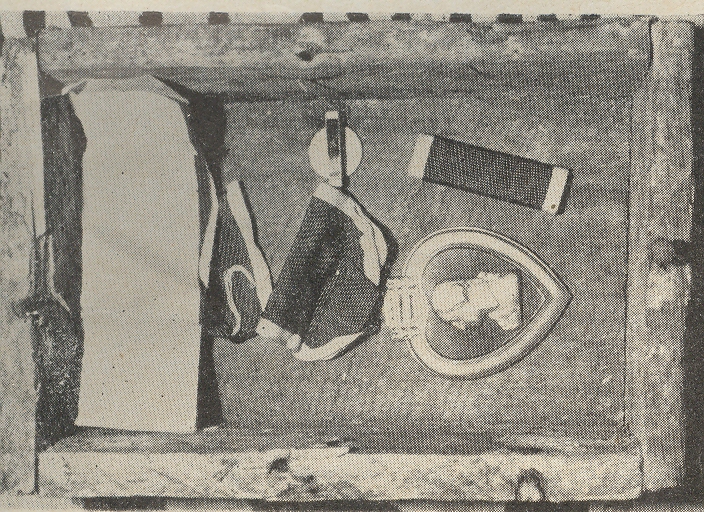
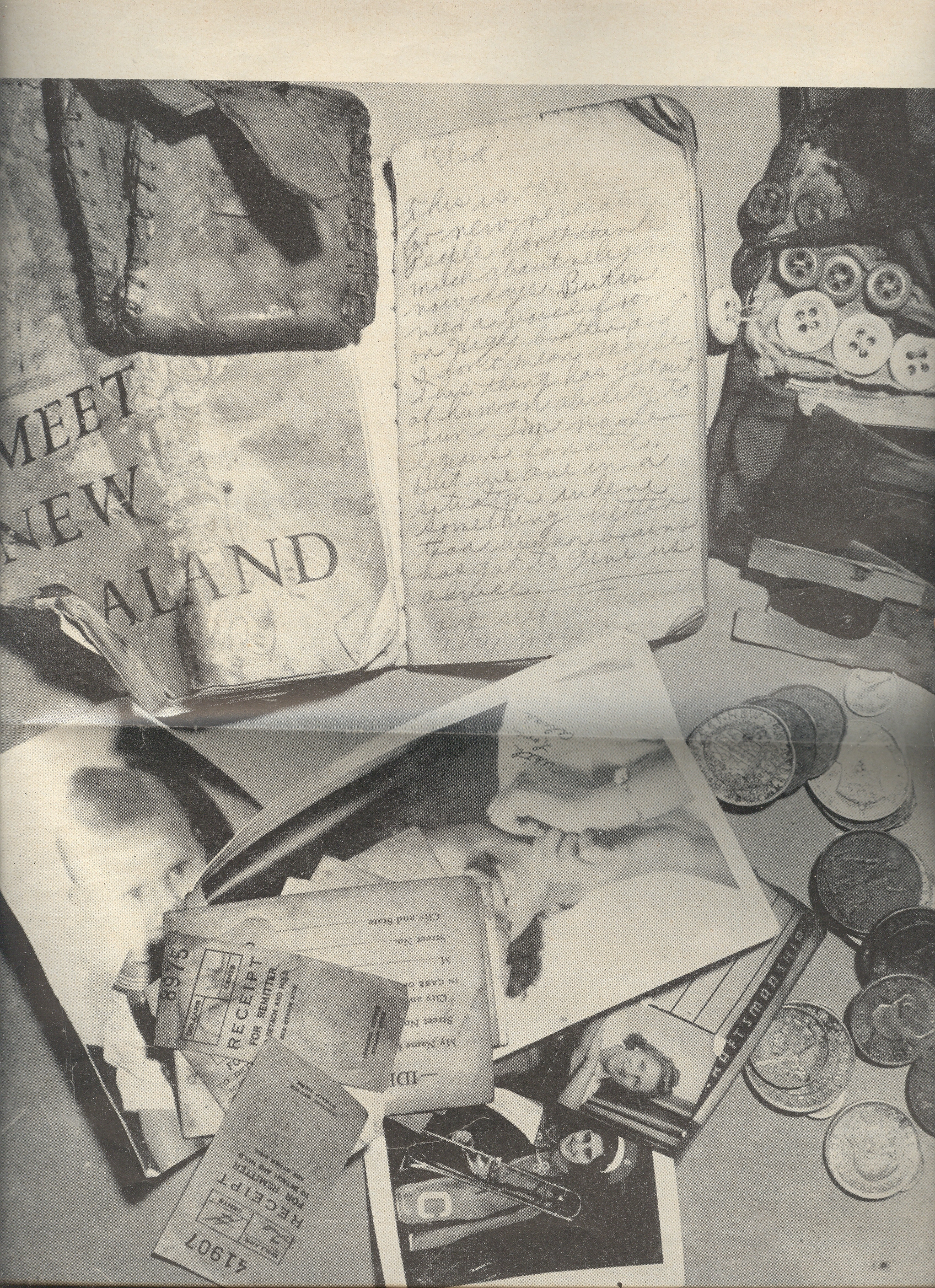
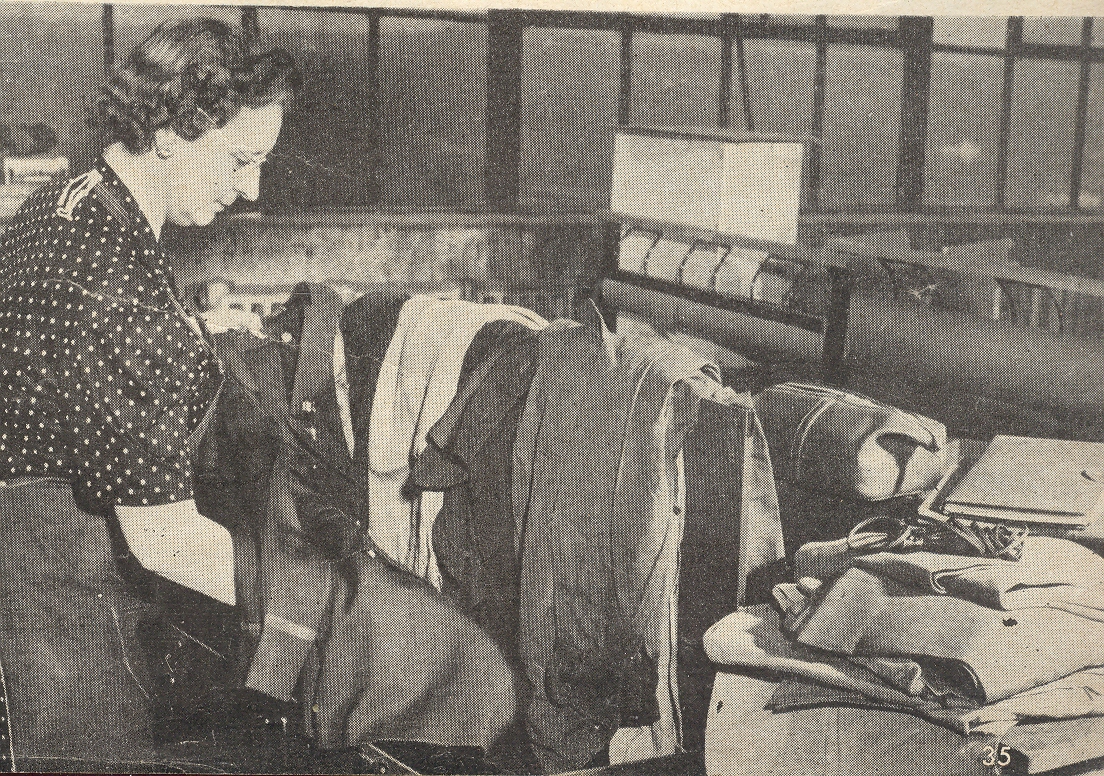
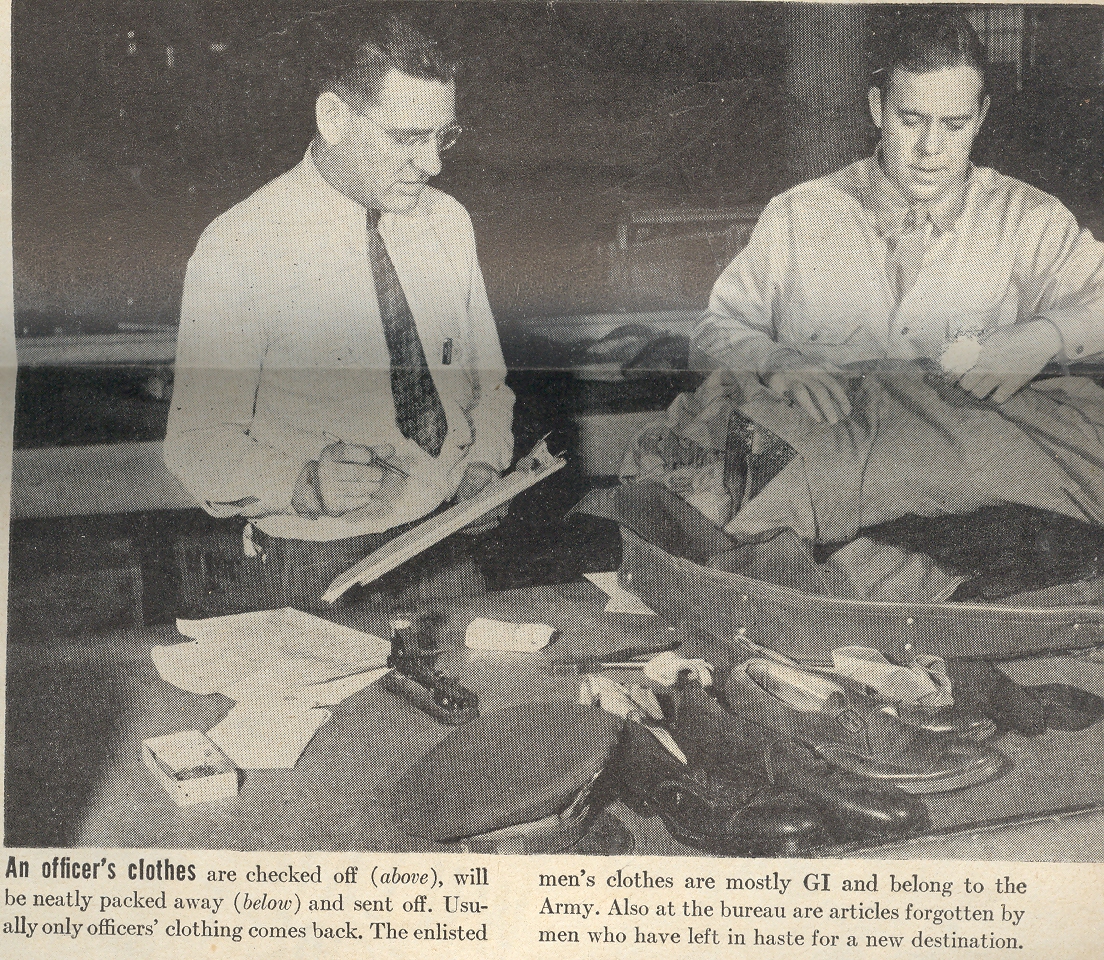
    ++ Nov 25n purple The material documented in this 17 April 1944 LIFE magazine article are the effects
    of dead soldiers.  It was surprising to
    see this sort of coverage, given the place and the time: I do not think that we
    will see photographs like this for our currents wars.  The title of this short photo essay—the
    shockingly stunted and bald “Dead Men’s Things”—should certainly have been
    something else with more dignity than a movie title for a schlock Hollywood
    B-production of the ‘50’s.The article is weirdly disjointed and heavy handed
    considering the great and respectful duty at hand. ++ Nov 25n lady I’m not saying that the writer didn’t
    understand the enormity of the situation, as the article puts it quite
    well:  “To the people who go there, it
    seems a more sacred place than a cemetery and the ordinary things it handles
    seem the best kind of memorials to men who will never return…”  The clumsy manner in which the whole deal is
    presented was probably a series of unfortunate errors by a time-pressed
    editor. 

     ++ Nov 25n dead men big

    The story of the belongings of the killed servicemen goes
    like this: the effects were collected by the quartermaster corps in a small village
    in France, stored in 11
    buildings and 150,000 square feet of storage, and then sent to the Army Effects
    Bureau1 in Kansas City, Missouri. 
    From there the material was further sorted and checked and
    double-checked, and checked again, and then sent on to the next of kin. 

     ++ Nov 25n 2 guys

    It sounds like an overwhelming job, helping in the attempt
    to deliver the high honor of restoring the last objects carried by a dead son
    into battle to his parents.  The thing I
    can’t get out of my mind is the continuous rising tide of bags and boxes coming
    in from Europe, all intimate reminders of
    great loss.

    ++ Nov 25n 2nd lady  

    1.  “The job of the Commanding Officer, who is
    the Effects Quartermaster (Continent), is to receive and safeguard thousands
    of’ packages of irreplaceable
    personal property until they can be returned to the owner or forwarded to the
    Army Effects Bureau at Kansas City for disposition. Q-290 serves as a holding
    and reconsignment depot in transmitting the property of casualties from the
    unit in the field back to the owner, or in forwarding property of deceased to
    the U. S.”

    ++ Nov 25n luggage

    “When a soldier becomes a casualty (either
    deceased, hospitalized, captured, interned, or missing), his unit commander
    collects all personal property, inventories it, removes government property,
    and forwards all the personal items to Q-290, marked with the owner’s
    identification and status. If the owner is deceased, the property is documented
    and forwarded immediately to Army Effects Bureau, Kansas City, for transmission to the next of
    kin. If the owner is hospitalized, the property is placed in storage
    indefinitely, subject to disposition instructions from the owner. If the owner
    is missing, captured, or interned, the property is stored so that he may claim
    it upon return to duty.”– From documentation on the website of the Army Quartermaster
    Museum
    .