A Daily History of Holes, Dots, Lines, Science, History, Math, Physics, Art, the Unintentional Absurd, Architecture, Maps, Data Visualization, Blank and Missing Things, and so on. |1.6 million words, 7500 images, 4.9 million hits| Press & appearances in The Times, Le Figaro, Mensa, The Economist, The Guardian, Discovery News, Slate, Le Monde, Sci American Blogs, Le Pont, and many other places… 5000+ total posts since 2008.

Author: JF Ptak

  • Wings Taking over Prayers: Human Flight in 1714

    JF Ptak Science Books  Post 1090
    Valentini216

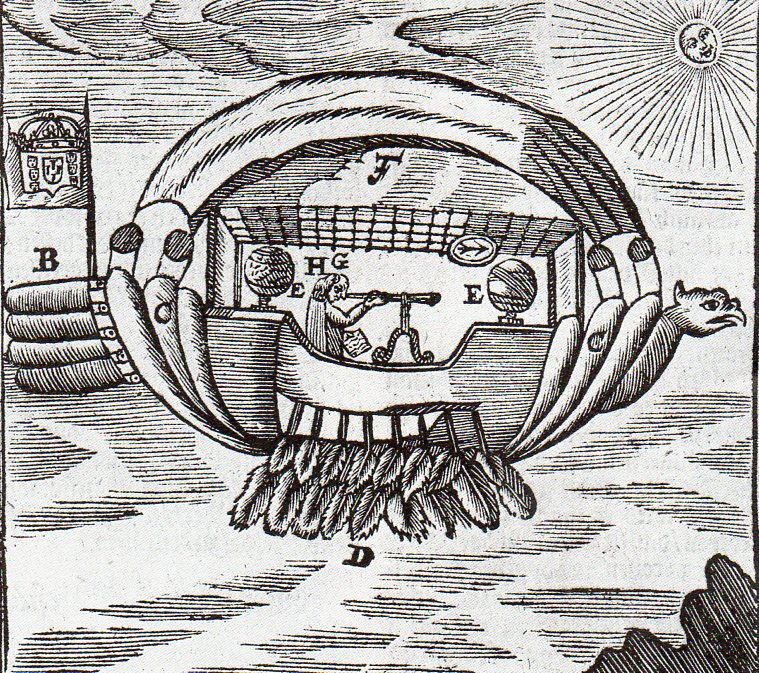
    The esteemed Michael Bernhard Valentini (1657 – 1729), professor of  medicine and of physics at Giessen, Germany and natural history collector, produced one of the century’s   most important works on the state of museums and natural history collections.  Actually, his Museum Museorum1 was much  more than that, its three volumes presenting more descriptions and illustrations of all manner of scientific things than just about anything else of the pre-encyclopedist 17th century. There are many “firsts” to be found in this work, including numerous first-time description of fossils, tropical plants, American botanical specimens, techno items, shells, and on and on, not to mention sections on monsters, dragons and mythical creatures. 

    One image that caught my attention appears in volume two, and seems to me to be a flying machine, though I can’t recover how it is being kept aloft, or what is providing its power.  The pilot is keeping a sharp eye on things with a  telescope, and is reckoning position with a compass2 and two globes.  The canopy of the aircraft seems to be just that, some sort of cloth held in place by pulleys and ropes, though I don;’t know what is providing lift, if anything.  Perhaps the whole thing finds its lift and propulsion with the many feathers on the craft’s keel.  I’m not sure.  But I can say that I don’t recall any other earlier image of a pilot using a telescope and compass.   

    Valentini also assembled an enormous natural history collection of his own, and in addition to his spectacular collection of the state of scientific and technical knowledge at the begininng of the 18th century, he also included in his book a  list of 100+ museums/collections of natural history objects–an extraordinary document for the time and unfortunately one that can’t be reproduced here.
  • The History of Rartity: Helium, Nutmeg, Breadfruit and Pepper

    JF Ptak Science Books   Post 1089

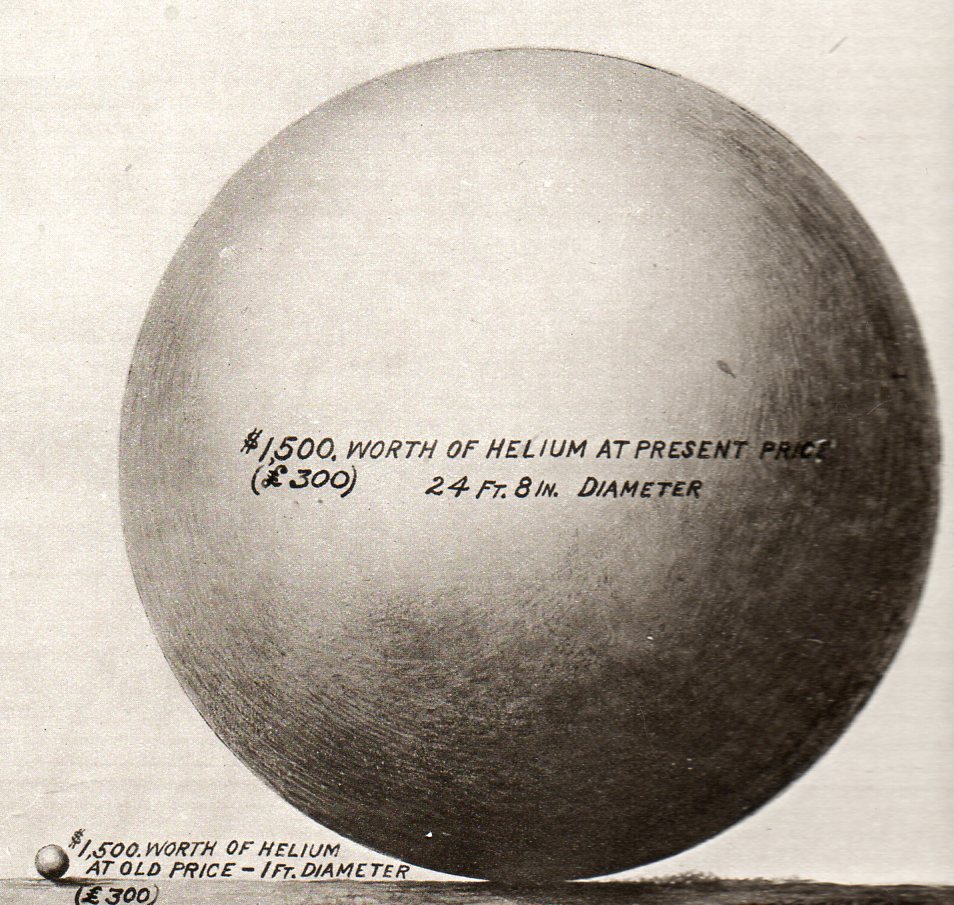
    Display info helium balloon212I guess we don’t think much of the rarity of some things.  Pepper and other spices were at one point quite rare, and the source of invention and exploration, and war.  Nutmeg, for example, a sought-after spice originating from the Banda Island group of Indonesia, once figured in a trade between Holland and England (the Treaty of Breda in 1667) that landed the Dutch the island of Run and control of the nutmeg trade, while the Brits got Manhattan.

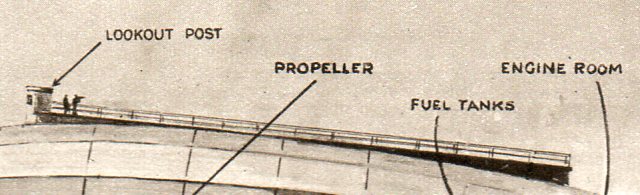
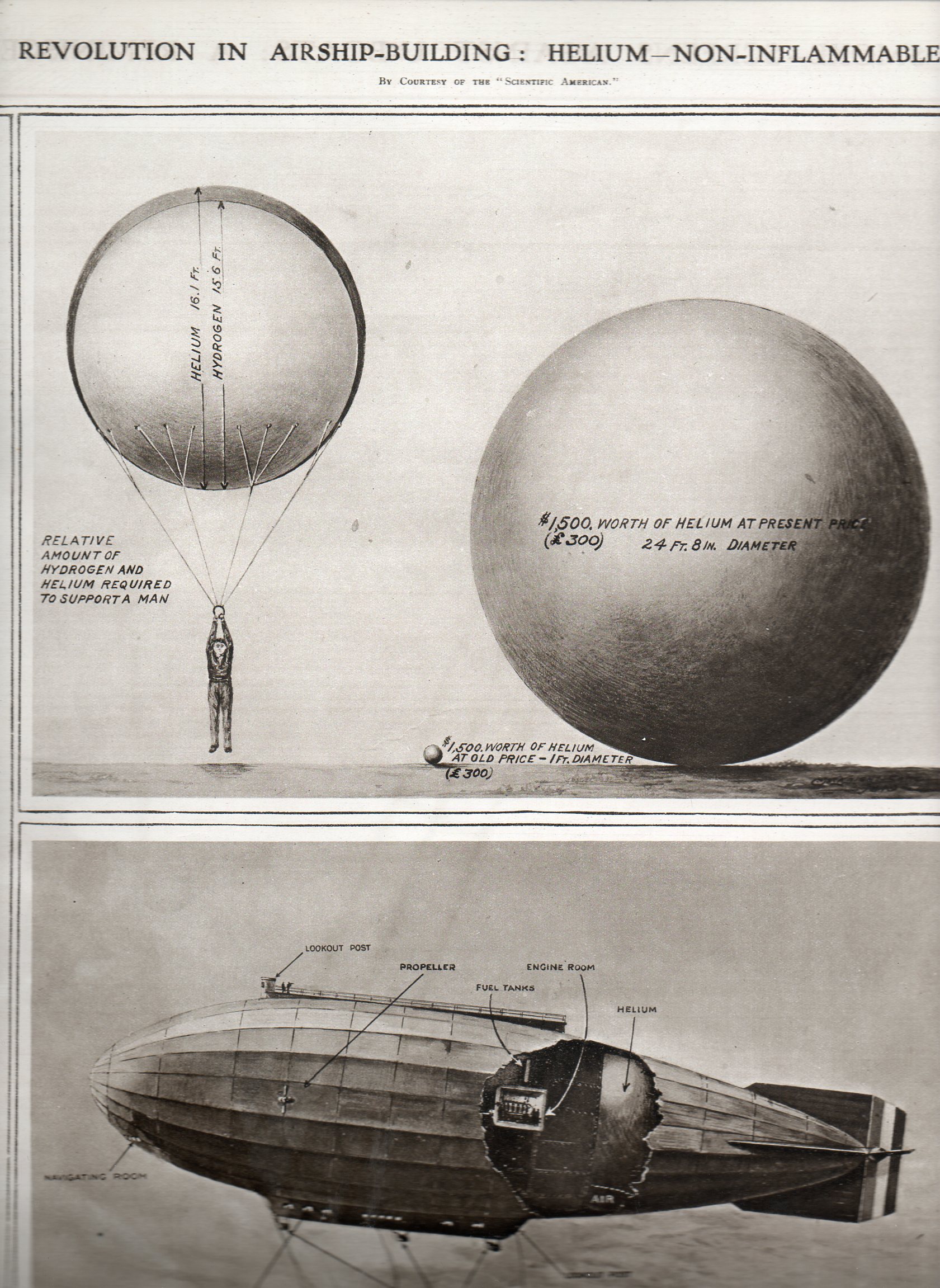
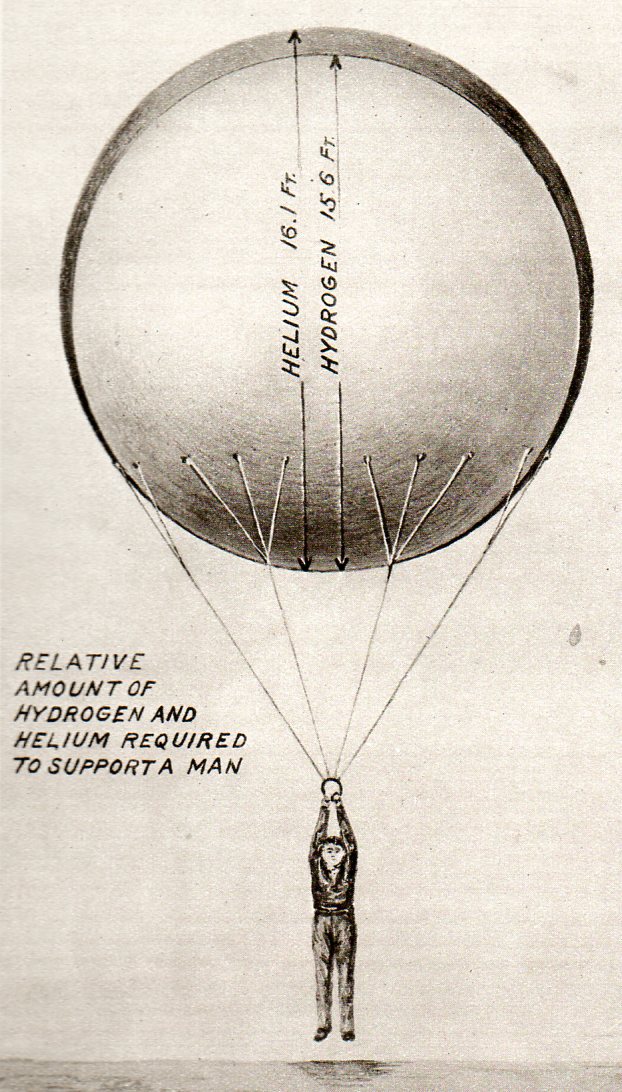
     Another great example is helium. When these images were produced for The Illustrated London News of 15 March 1919, rigid airships were filled with hydrogen, an explosive, not-happy gas that was the fuel of all manner of aerostatic accidents, everywhere.  Helium was still quite rare at this point, a year after the end of WWI and only 54 years after it was first observed1, and replacing hydrogen with helium was still yet a dream–basically because there wasn’t any, yet, to supply a dirigible2.

    Display info helium balloon man213

    The first helium-filled airship was still two years away at this point–the U.S. Navy’s great C-7, which made its maiden flight on 1 December 1921.  When the USS Shenandoah flew in 1923, it flew with most of the world’s entire supply of the noble gas helium. Its difficult today to think of pepper, nutmeg, sugar, helium and so on in terms of fabulousness and rarity, but it was so.  Remember, when Capt Bligh was jettisoned from the HMS Bounty, the ship’s precious cargo was also thrown overboard.  And the great treasure that sparked the Tahitian adventure that sparked the mutiny?  Breadfruit. 

    Display info helium balloon comparison214

    Notes
    1.  Observed for the first time by astronomer and early astrophysicist Pierre Janssen, in the spectrum of    the chromosphere of the sun, in 1868; separated for the first time on Earth in1895 by the British chemist Sir William Ramsay.   

    2.  By the way, “dirigible” is from the French, “diriger” (or “to direct “), meaning steerable, pilotable.  This differentiates the dirigible from the balloon, which was not by and large steerable. 

    Display info helium balloon dirigible215


  • Shadowlands in the History of Technology–the Sewing Machine, ca. 1838

    JF Ptak Science Books  Post 1088

    The anniversaries of two famous legal cases bumped me into thinking about the shadows of what things might be.  Aticus Finch (from To Kill a Mockingbird) and Thomas Scopes (of the “Scopes Trial”, the famous or infamous “Monkey Trial”) celebrated their 50th and 85th anniversaries (respectively) this past week.  Finch the lawyer lost his case, and Scopes, the defendant, lost his as well. 

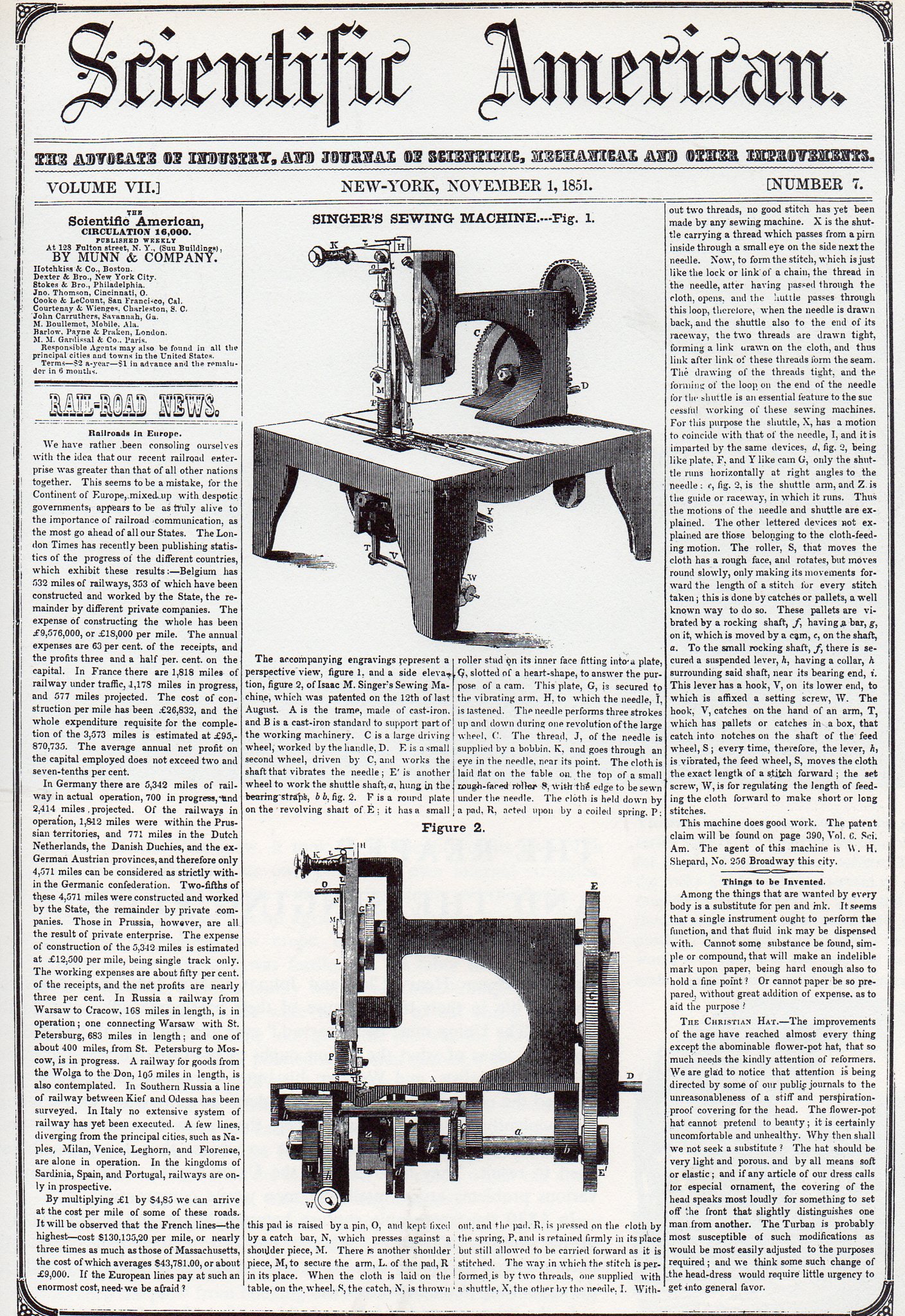
    This reminded me of the shadowland stories of roads not taken, or illustrious events whose outcomes didn’t quite coincide with the fame and interest of the way  things started out.One example from Shadowlands that springs to mind is that of the sewing machine, and the case of William Hunt.  Hunt was a remarkable person, an inventor of ingenious and remarkable things, some ubiquitous–and of these, one good example is the safety pin.  The “could’ve been” part was the sewing machine.  Eight years or so before the battle for precedence and patent began between Isaac Singer and Elias Howe began, Hunt had arrived at the principle solutions for an automatic sewing machine.  

    Sewing machine211 He decided not to seek a patent for the machine. Now, in and of itself, this is not terrifically uncommon in the history of invention.  As a matter of fact Thomas Jefferson, the inventor of the standard American moldboard plow (tinkering with it from the 1780s to the 18-teens), did not seek a patent for his invention. By 1814 he came closer to the iconic and revolutionary plow by producing his in iron.  The steel, self scouring plow would take another two decades to be introduced by John Deere. (Decades latter Abraham Lincoln would apply for and receive a patent for a boat/buoy lifting device, making him the only president to ever receive a patent.)

    The reason that Hunt didn’t pursue his sewing machine was based in deep morality–he chose not to patent the thing so that this new advancement in technology would not make seamstresses obsolete, pushing them out of work and costing them their jobs.  Of course the machine was introduced a few years later by Singer and Howe, and then the rest is history–just about every invention is going to annoy somebody.

    But the irony here is that even though Mr. Hunt chose the high road out of the sewing machine quagmire, saving the jobs of seamstresses for another few years, he didn’t have any moral hesitations about his next invention–an improvement to a steel-cased cartridge for rifles.  Evidently he was more comfortable with killing machines than he was with protecting the jobs of the working/suffering classes. 


  • Beautiful Title Pages: the Flight of the House of the Virgin Mary, 1524

    JF Ptak Science Books   Post 1086

    00-blog-Oct 25 mary flying919


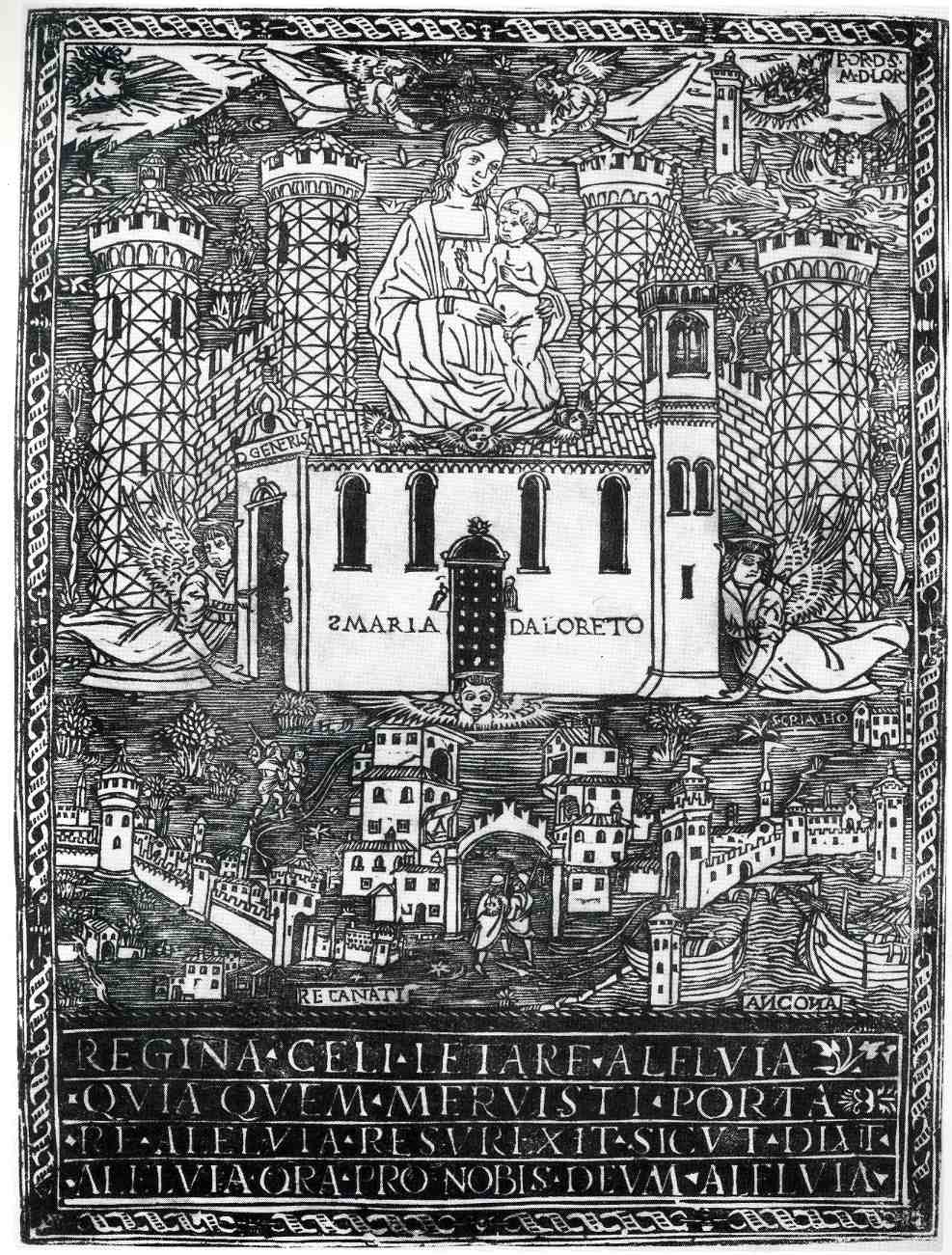
    This is an interesting,
    almost (?)-revolutionary and curious woodcut depicting the flight of
    Santa Maria
    di Loreto, and was printed in 1524.  At the bass of it all the
    print depicts the first of a series of moves of the house of the Virgin
    Mary (mother
    of Jesus) to safe harbors, away from the Moslem/Turkish army that
    invaded
    Nazareth in 1291.  The myth states that
    the structure was picked
    up and moved by angels from
    Nazareth to the Dalmatian town of Tersatto (near Fiume, which is today’s Rijeka, Croatia).  It then made its way to its
    final resting
    place at Loretto, Italy via the two other Italian towns (identified at the bottom corners of the print) of Recanati and Ancona.

    One of the most interesting aspects of
    the print to my eye though is its attempt to display an oblique perspective of the
    town of Loretto, the house being lowered by angels on the other side of the town’s fortifications.

     (In 1854 Pius
    IX consecrated the house as a miracle in his Bull “Inter Omnia” of 26 August 1852, declaring

    “Of all the shrines consecrated to the Mother of God, Immaculate Virgin,
    one is in first place and Shines incomparable radiance: the venerable and most
    August House of Loreto … (…)
    In Loreto, in fact, it venerates the House of Nazareth, so dear to the Heart of God, and
    that manufactured in the Galilee, was
    later (moved) from foundations, and for the divine power, was
    transported
    far beyond the seas, first
    in Dalmatia
    and then to Italy. “
    And it was for this enormous feat of air travel that Pope
    Benedict XV declared St. Mary the patron saint of aviators, on
    24 March 1920.)


    ·Posted by :

    ·in:

    — — —

  • “Woman Bagatelle”, ca. 1905

    JF Ptak Science Books   Post 1085

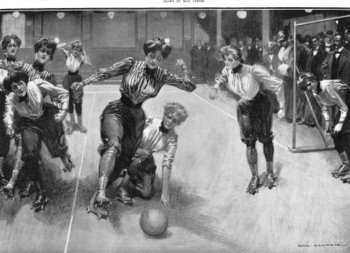
    I’m not sure why these women needed roller skates for this sport, but I guess that they were necessary for the good of this cross-“sport” between soccer and hockey.  The women put their hair up and got down to business, pushing the ball forward to the somber delight of the male audience.  I must say that I was attracted to this image because of the word “bagatelle”, which was nomrally reserved at this time to describe table-top marble game, a sort of passive pinball.  And perhaps that’s all this was, to the spectators, men rarely getting a chance to see women in such exertions, wearing so little. 
    File0180


  • The Road to the Economic Abyss: Visual Display of Quantitative Data, 1909

    JF Ptak Science Books  Post 1084

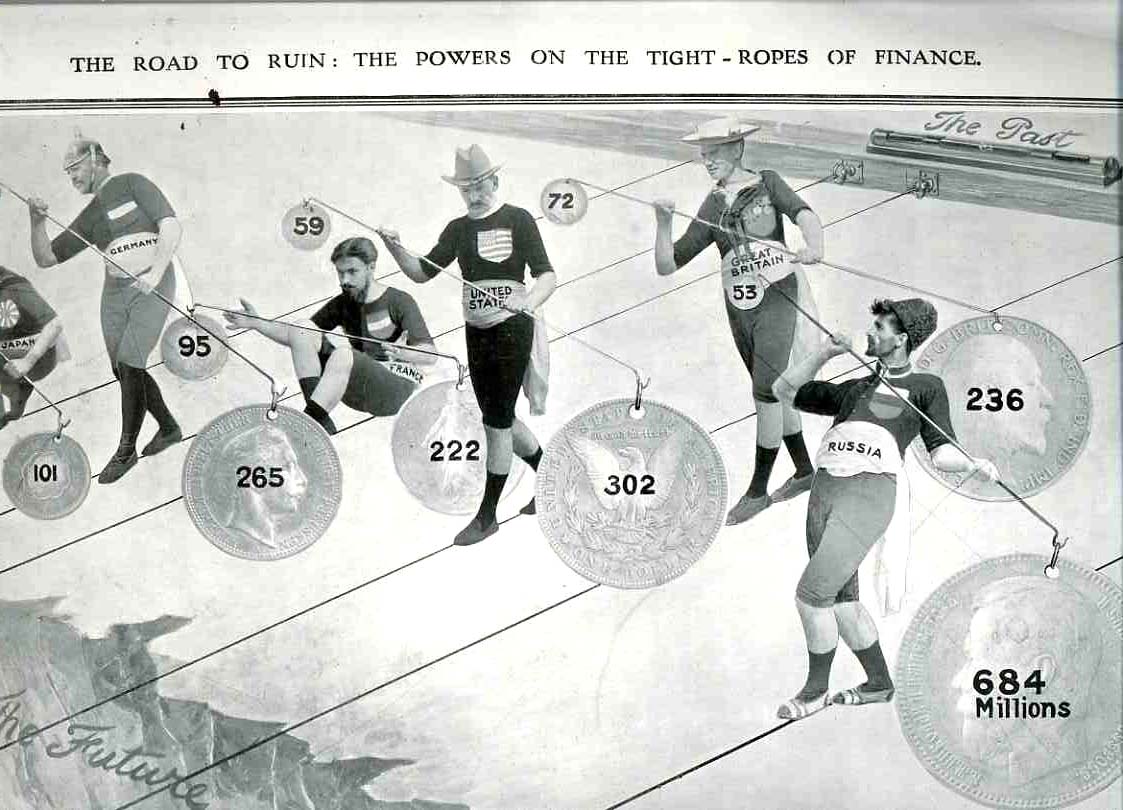
    The road to ruin is one of the oldest roads known to humanity; and, come to think of it, it was probably a road before roads existed, just an idea waiting for something concrete to show up and claim for its metaphor.  But certainly ever since the creation of money came (1) the need to have more, (2) the need to get it, in some fashion and (3) the possibility of losing it (though not necessarily in this order).  This image from the 4 September 1909 issue of The Illustrated London News is one in a long, ancient series of appreciating the way to financial doom, although this one happens to be a relatively early attempt at showing this idea via popular metaphor in the visual display.  And its pretty effective, too.
    00-blog-Oct 27 economic road to ruin938


  • Curious about Our Books?

    Don’t forget that we sell most of what you see here in this blog, plus many thousands of things more.
    + book guys reading
    See our Blog Bookstore (which has selected items with longer, illustrated description) and the general bookstore (which has much, much more). 

    ·Posted by :

    ·in:


  • 50,000 Watt Design: WLS Station Catalogs, 1938

    JF Ptak Science Books     Post 1084 

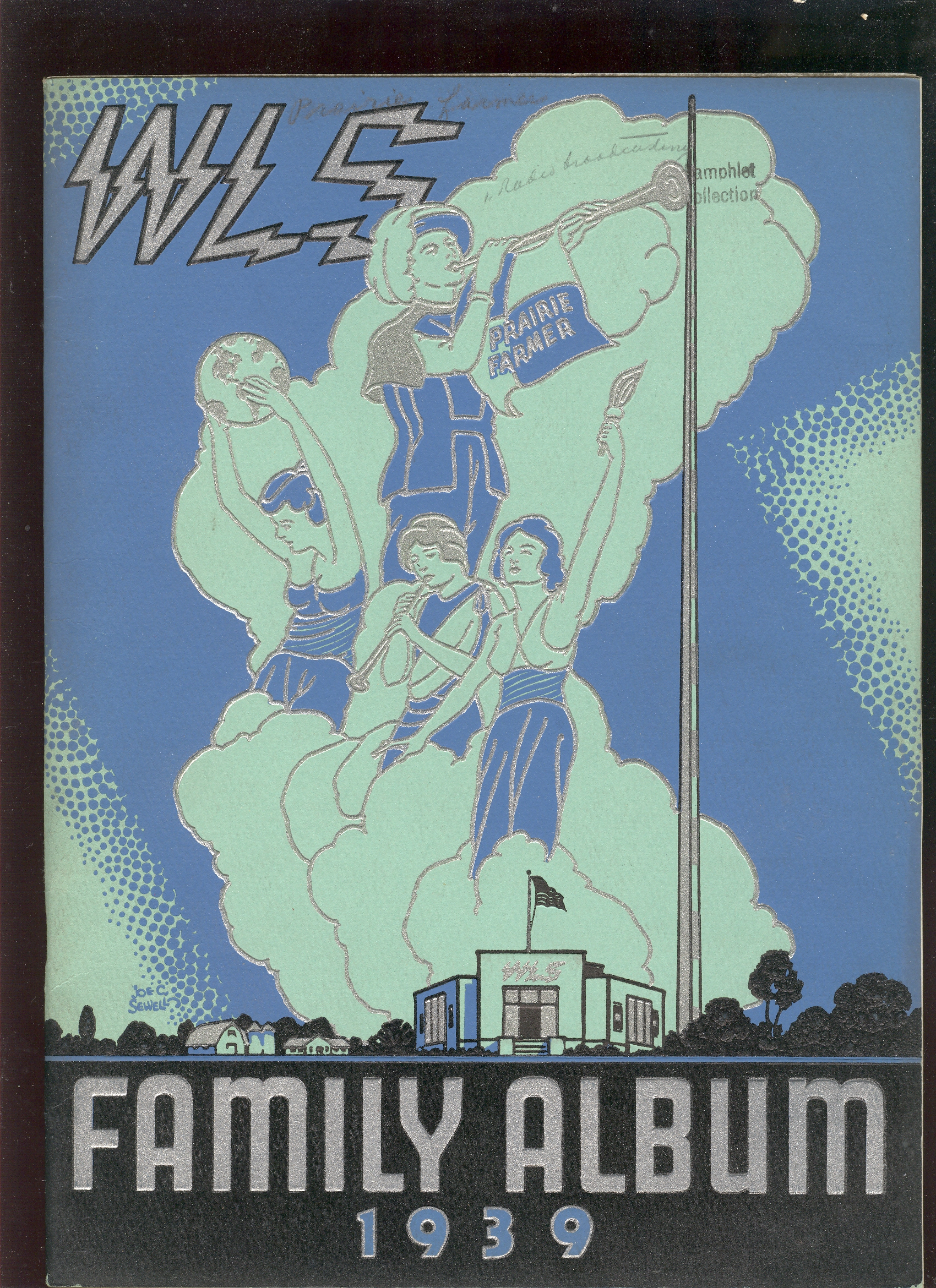
    Radio station WLS of Chicago, the home station of Sears, Roebuck and Company, and named for it (“WLS” is “World’s Largest Store”) is an old, famous station, home of ideas  burnt into the memories of folks within the broadcasting range of the station, stretching west to Colorado and southeast to North Carolina.

    I just wanted to share these four annual “family albums” published by the station between 1938 to 1941–they are lovely and elicit a certain hopefulness of those great high days of radio.

    ++00++ 9.23 wls 1938

    ++00++ 9.23 wls 1939

    ++00++ 9.23 wls 1940

    ++00++ 9.23 wls 1941

    ·Posted by :

    ·in:


  • Quantitative Display of Information: What was Left of the Japanese Navy, 1945

    JF Ptak Science Books  Post 1082

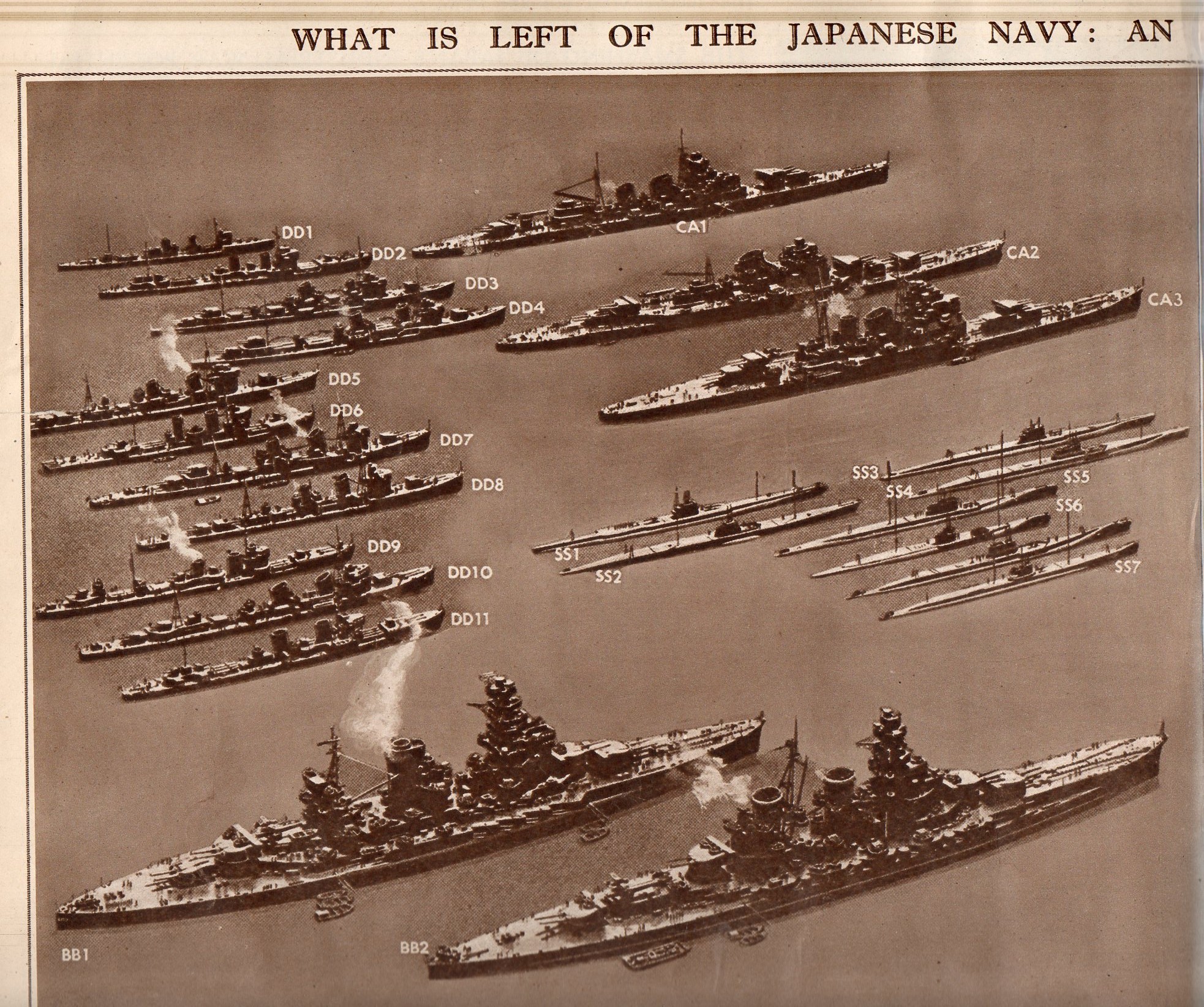
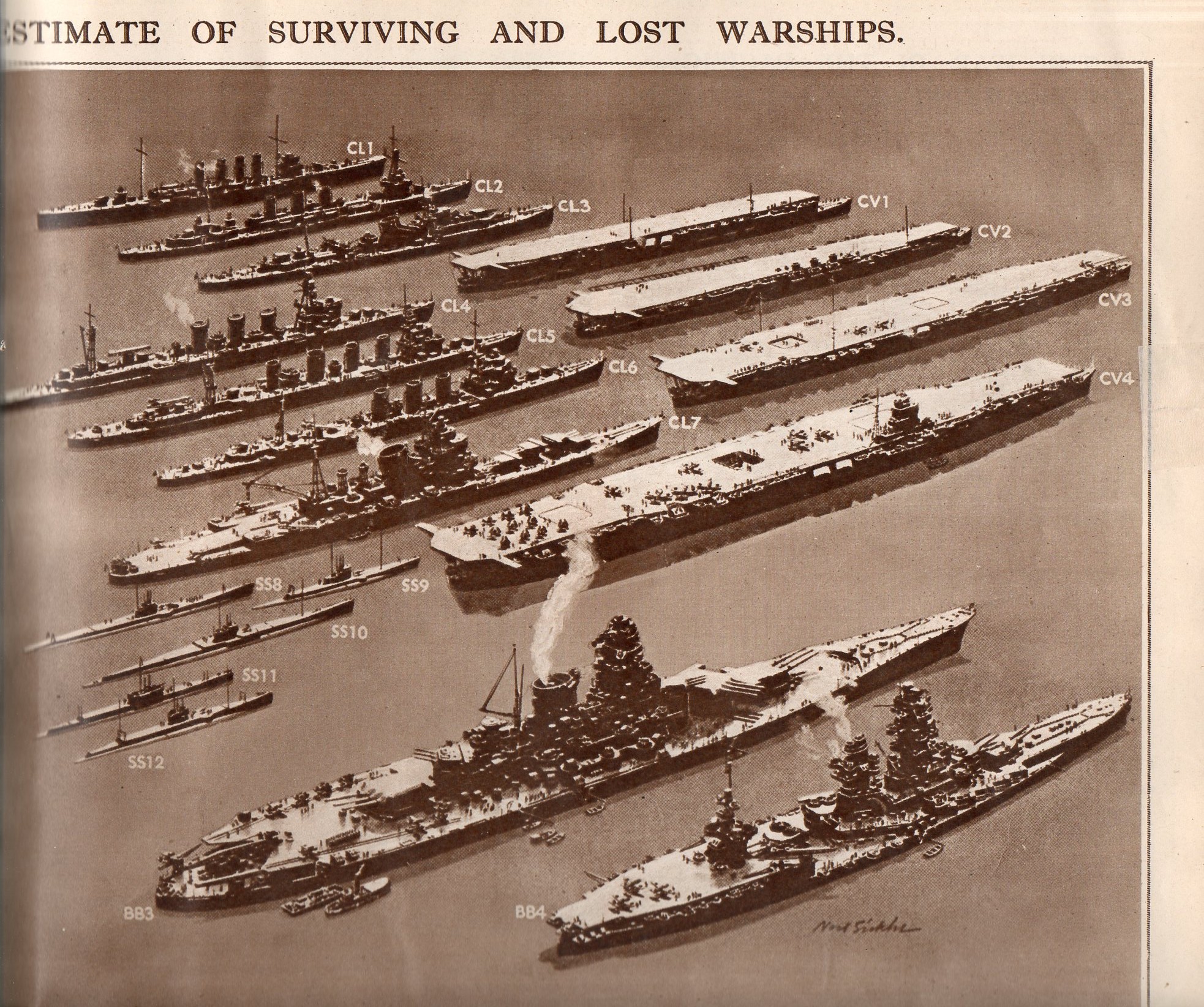
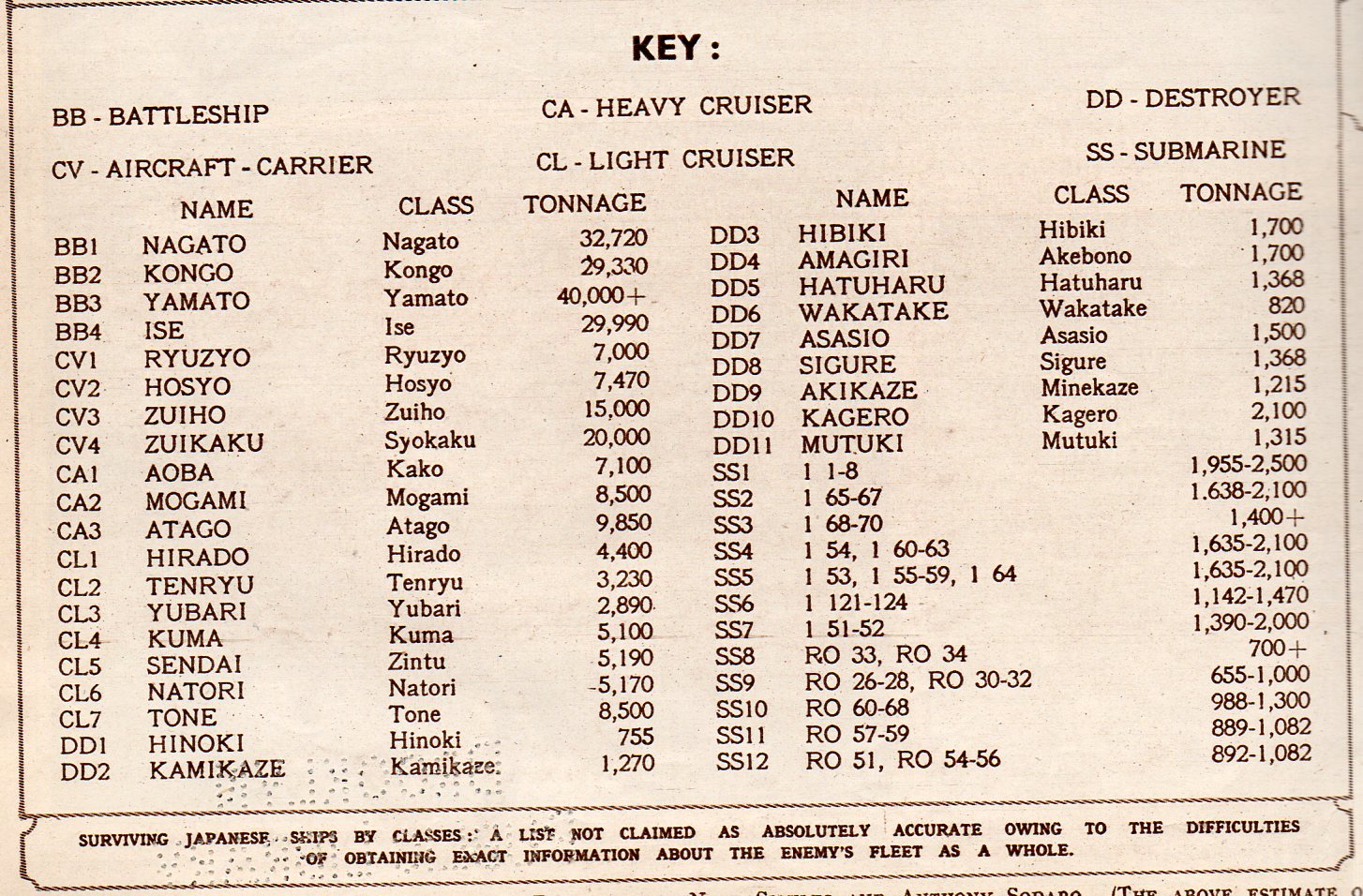
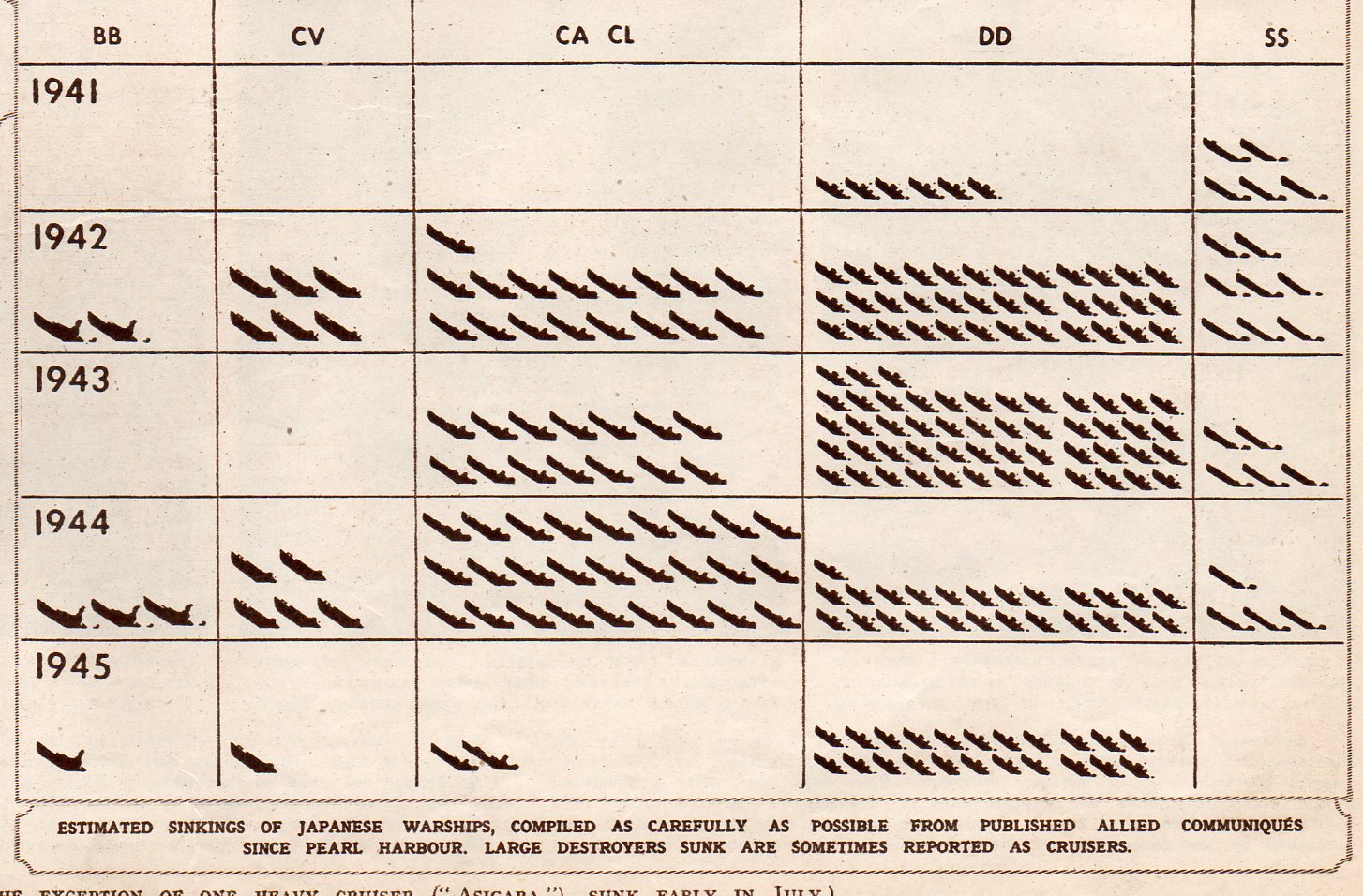
    This double-page spread in the Illustrated London News for 28 July 1945 displays what was left of the Japanese Navy.  Originally appearing in LIFE magazine a few weeks earlier, the image represents classes of Japanese naval ship, multiplied by the estimated number of ships in that class.  Even after all of the great  losses of 1942/3, the Japanese Navy was still the third largest afloat. 

    The navy consisted of an estimated 10 battleships, 6 carriers, 15-30 cruisers, 60-80 destroyers,and an not-estimated number of subs (though there were at this point use din patrol and to accompany the fleet.  

    This is an excellent display of a significant amount of historical data, made quickly understandable to even a quick reader, or even to a non-reader.  Two weeks from this date would find this information moot.

     Japanese Navy 1205 

    Japanese Navy 2206

    Japanese Navy 3207

    This chart shows the numbers of each class of vessel sunk by year:

    Japanese Navy 4208


  • Human Bombs, part II: the Ohka and Jinrai Butai, 1944/5

    JF Ptak Science Books   Post 1080

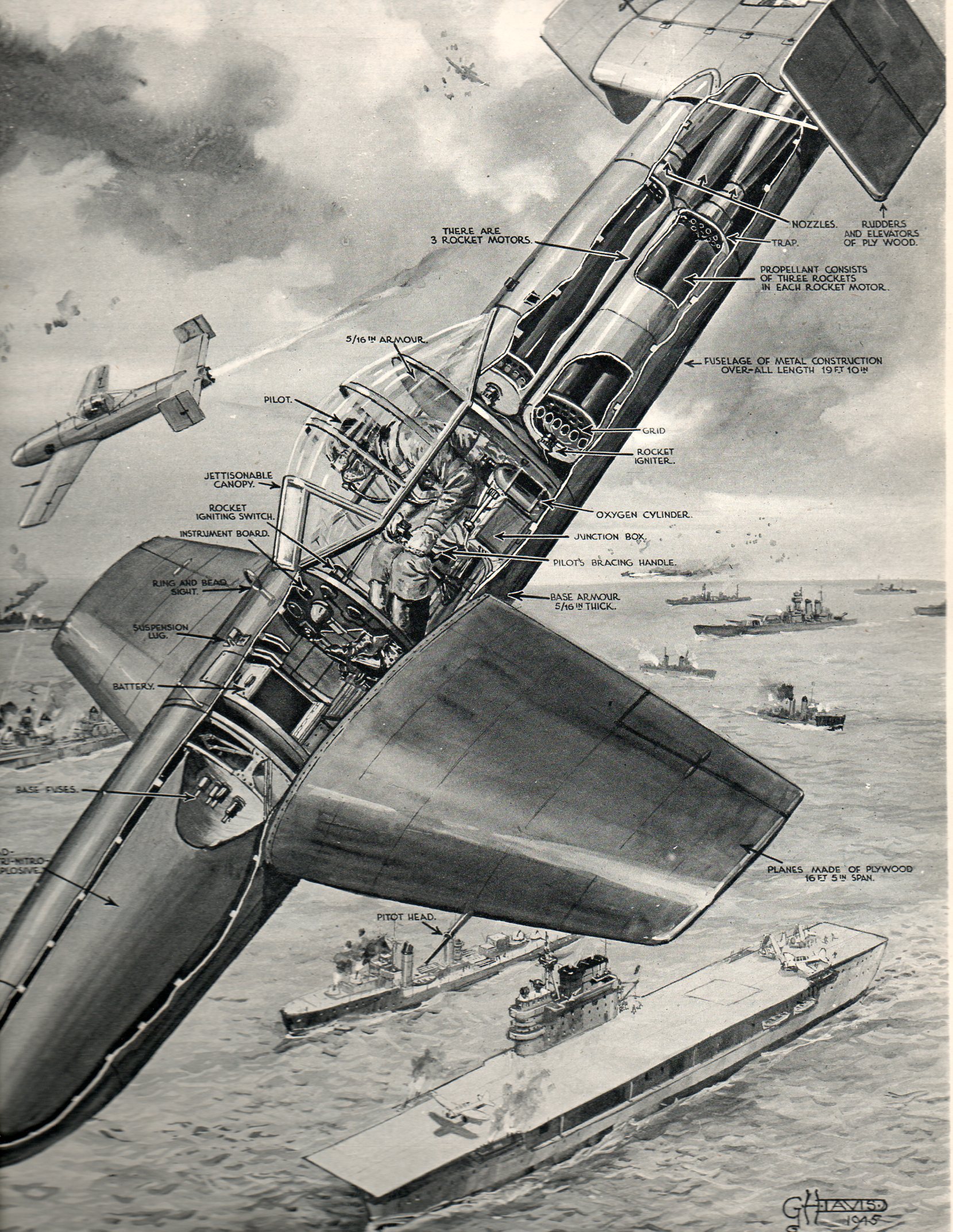
    My favorite mid-century illustrator–G.H. Davis of the Illustrated London News–has provided yet another remarkably clear and well-designed series of images on a difficult topic for a main-line popular audience.  This time (appearing as a two-page spread on 28 July 1945 in the ILN) showed the structure, strategy and deployment of one of the late war’s

    Human bomb japan202

    most feared weapons–the jet-powered human bomb of the Japanese naval air force. (In practice though the weapon didn’t produce that must damage though it did produce the fear: “the operational record  includes three ships sunk or damaged beyond repair and three other ships with significant damage; seven US ships were damaged or sunk by Ohkas throughout the war”1).  The Yokosuka MXY-7 Ohka was a purposefully designed and built rocket powered suicide rocket whose sole purpose was to attack and destroy ships. They were first produced in 1944 as unpowered glider aircraft, and then later in November 1944 the rocket propulsion system was added.  All tolled, the Yokosuka and the Kasumigaura Naval Air Arsenal together built about 850 of them–fewer than 3 dozen survived.

    It was a relatively simple construction and was easily deployed: dropped from a bomber it would glide until near it target and then the rockets would be ignited, powering the thing to a near-unstoppable 500+mph, sending it, its pilot and the 2,300 lb ammonal warhead (an explosive made up of ammonium nitrate, trinitrotoluene (TNT), and aluminum  powder) into its target, detonating on impact.
                                       

    ·Posted by :

    ·in:

    — —