A Daily History of Holes, Dots, Lines, Science, History, Math, Physics, Art, the Unintentional Absurd, Architecture, Maps, Data Visualization, Blank and Missing Things, and so on. |1.6 million words, 7500 images, 4.9 million hits| Press & appearances in The Times, Le Figaro, Mensa, The Economist, The Guardian, Discovery News, Slate, Le Monde, Sci American Blogs, Le Pont, and many other places… 5000+ total posts since 2008.

Author: JF Ptak

  • Lost in Translation Dept: Uneasy Moments in the History of Underwear Ads

    JF Ptak Science Books  Post 1108

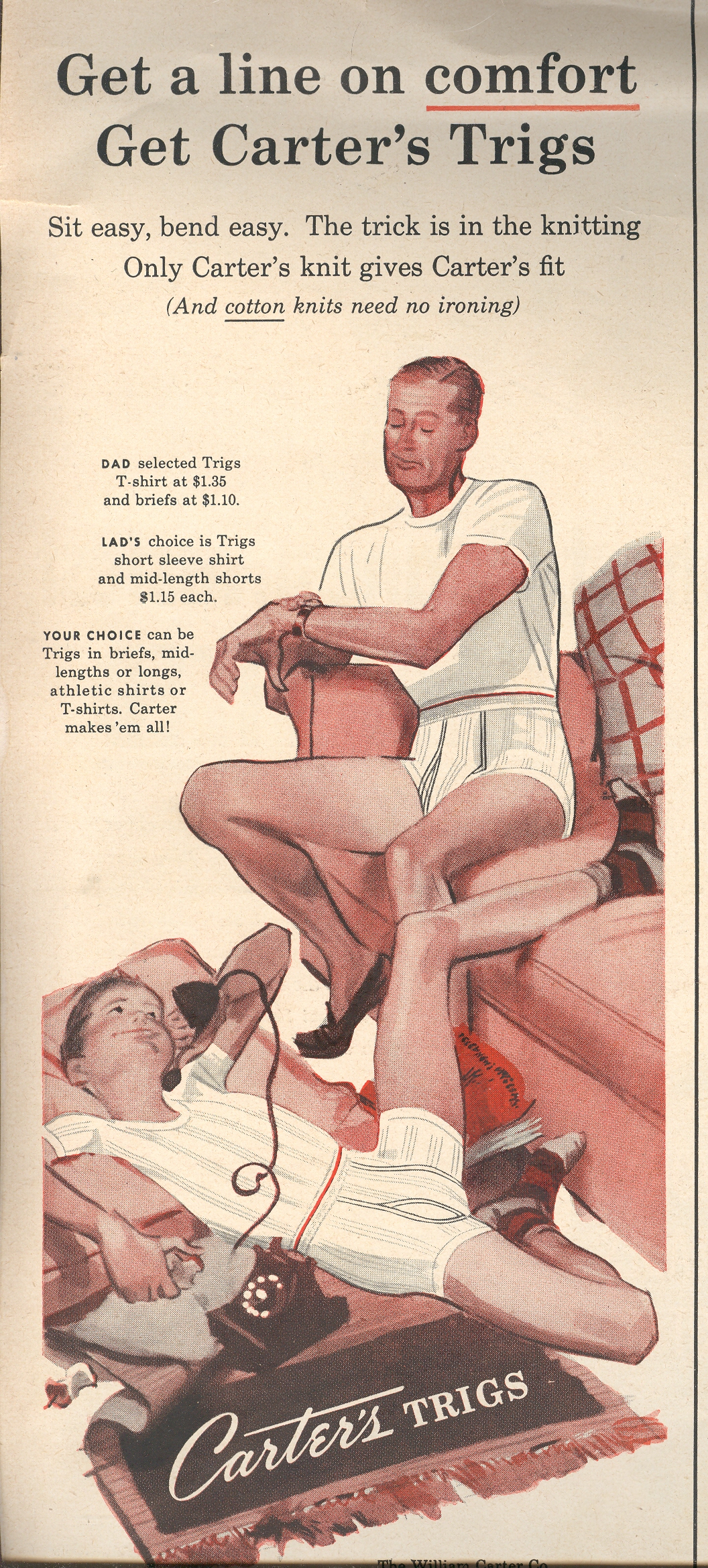
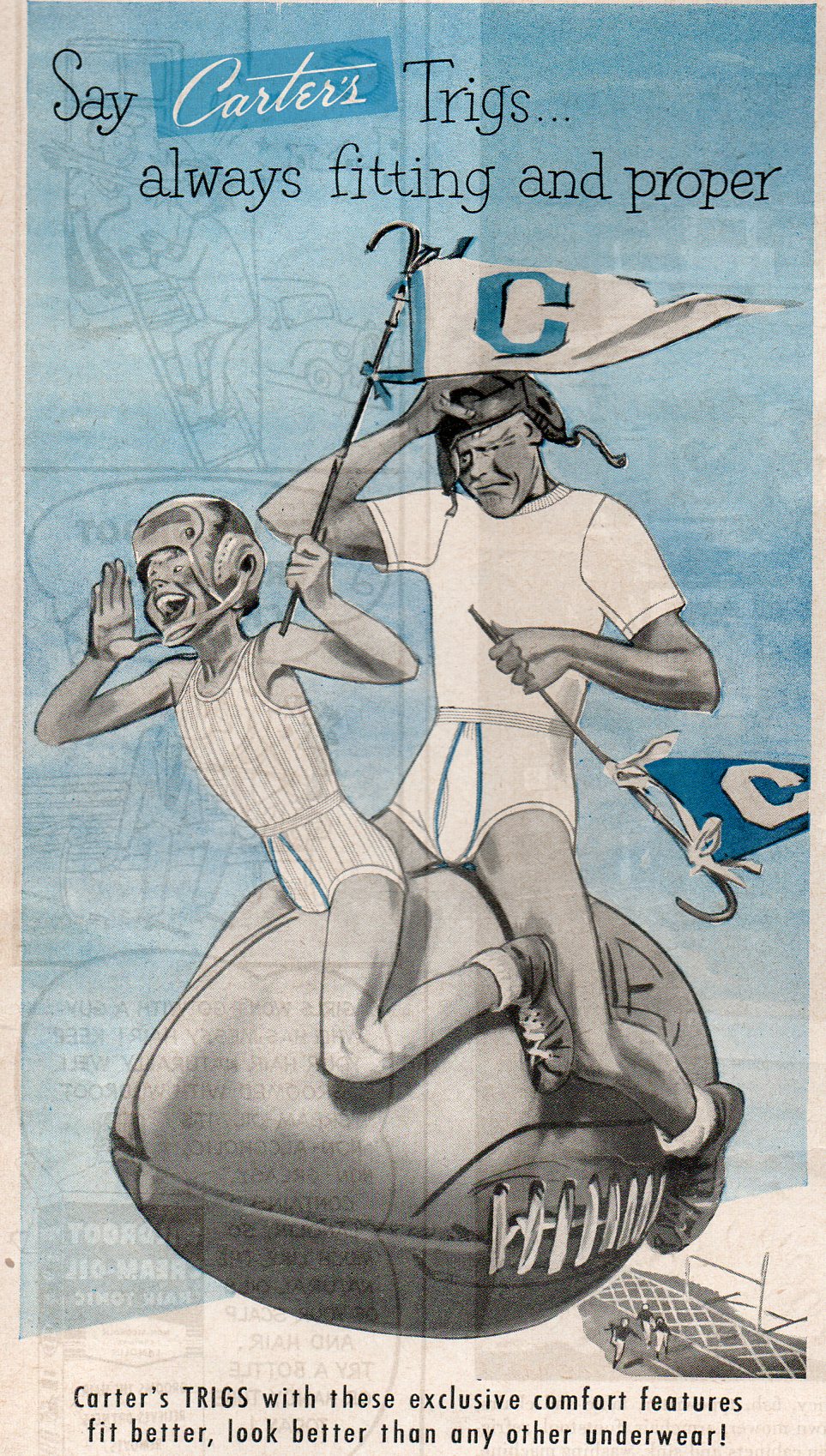
    Underwear--carter NAMBLA252 There’s really not much to say, I think, about these two ads.  The first is one I stumbled on just this morning, one in what seems now to be a long series of advertisements whose initial appeal has not only been lost to time but which now seem to wear very thin in the socially-acceptable category.  The ad is from Life magazine for July 1955, and features Carter underwear for men and boys–and for some reason, it features the happy boy/cranky man too-close combo riding a football out of a stadium.  I don’t know what any of that has to do with underwear–especially the unhappy older man.

    There are a number of these ads by Carter’s, I recall, and many of them have this deep, pit-of-your-stomach sense of wrongness about them, a high, first-order branding of their original meaning completely lost in translation, the sense of their time now completely gone. 

    + boy 


  • Vannevar Bush, Robert Oppenheimer, and Belief

    JF Ptak Science Books   Post 1107

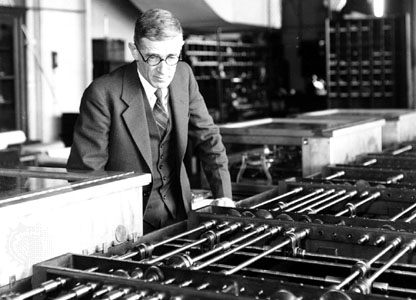
    Bush I’ve written a number of times about Vannevar Bush in this blog.  He was a brilliant, practical, deep-sighted Yankee of an old school, capable of selecting the correct course of action and getting to it, his quiet resolve apparent to everyone.  He also had a large part in the winning of WWII, being in charge of scientific and technical development for military and war-related affairs,  deciding  how to spend time and effort and money for the best possible result to win the war (That would be the OSRD, the Office of Scientific Research and Development, which he headed, and created–actually he outlined the whole thing on one sheet of paper and had the mammoth idea approved by President Roosevelt in a quick 10-minute session in 1942.)
                   
    He had a brilliance to him in choosing the important stuff that was necessary and the important stuff that could wait.  For example, he told Norbert Wiener that the war needed to be won before investing in the challenge to develop the digital computer–it just wouldn’t be developed quickly enough, he felt, to do the jobs necessary to substantiate its time and effort before war was won.

    He also could say “no” to Einstein, a man who he admired and respected, but also a man who he thought he could not trust with the development and construction of the atomic bomb.  As much as he wanted to share the project with Einstein, he couldn’t, and wouldn’t, and didn’t.  And he had a point. 

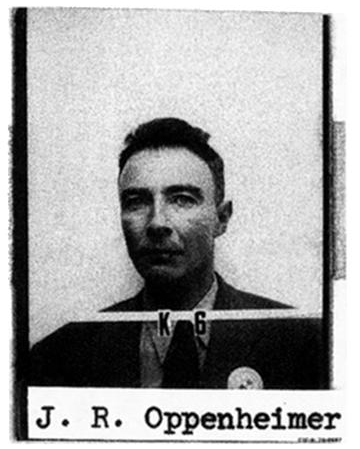
    He stood on tall ground in regards to Oppenheimer when the witches went to gather Oppenheimer’s soul.  At a time when major forces decided that Oppenheimer must go, that he should be excluded from Q clearance and from being involved with the development of the thermonuclear bomb–and that he must go because he was seen as a security risk because of a series of minor incidents (like light associations with the Communist Party in the 1930’s), Bush would have none of it.  Mostly, Oppenheimer represented a threat to political desires for the development of new weapons, not so much, really, as a possible Soviet agent.  Bush supported Oppenheimer, and questioned the entire legitimacy of the hearings themselves. 
     
    “Here is a man who is being pilloried because he had strong opinions, and had the temerity to express them”, Bush said, ending his testimony with this forceful statement:

    “I think this board or no board should ever sit on a question in this country of whether a man should serve his country  or not because he expressed strong opinions.  If you want to try that case, try me…”

    Many of course stood by Oppenheimer; Bush’s support seems to me to be among the strongest. Perhaps even more pissed than Bush was I.I. Rabi, who in disgust of the proceedings said: “”He is a consultant, and if you don’t want to consult the guy, you don’t consult him period…We have an A-bomb…and what more do you want, mermaids?” 
    Oppenheimer_Los_Alamos_mugshot

    There was also John Lonsdale, chief of security for the Manhattan Project and who investigated Oppenheimer thoroughly, as he said during the hearings:  “We kept him under surveillance whenever he left the project. We opened his mail. We did all sorts of nasty things”.  Lonsdale firmly believed in Oppenheimer, thought him innocent in this ‘non-trial”,  and defended the man throughout the rest of his long life (dying at age 95 in 2003).

    Others of high importance questioned Oppenheimer’s integrity, patriotism and trustworthiness:

    ·Posted by :

    ·in:


  • “Atomic Bomb Art” Economics by WIlliam Shockley, 1945–Hiroshima +65

    JF Ptak Science Books  

    This is a reposting of   from 5 August 2008, one of a continuing series on the development, use and control of
    atomic and nuclear weapons
    . 

    • Background Documents on the Control and Proliferation Issues of the Atomic Bomb
    • Vannevar Bush Group, October 1945-January 1946
    • Paper 1:  William Shockley

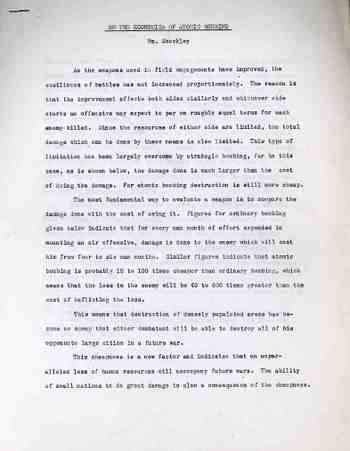
    Blogaug_6shockley_1361 (Click image to enlarge; the other four pages are located in the “Continue Reading” section, below.)

    This paper is one a small archive of background and draft papers and
    proposals by the Vannevar Bush group working on the question of the
    control of atomic weapons and the formalization of the American
    position regarding the use and control of atomic weapons, October
    1945-February 1946. This archive consists of 38 documents relating to
    the development of U.S. atomic policy, with  contributions by President
    Harry Truman, Secretary of State James Byrnes, Dr. Vannevar Bush, (future AEC director) Carroll Wilson, Alger Hiss, I.I. Rabi, William Shockley, Frederick Dunn, Joseph E. Johnson, Leo Pasvolsky, Philip Morrison, Col. Nichols, William McRae, Admiral W.H.P. Blandy, George L. Harrison, and others.

    CONTINUE READING

    ·Posted by :

    ·in:


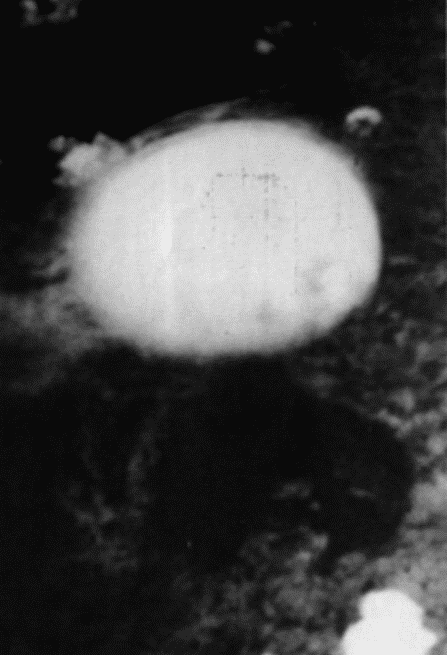
  • A History of Holes: the Hole in the Clouds over Nagasaki

    JF Ptak Science Books   Post 1106   [Atomic and Nuclear Weapons Series]

    This post is one in a continuing series on the history of holes–the appearance of this particular hole meant the difference of life and death for hundreds of thousands of people, and it killed almost as many people as it didn’t kill. 

    The hole was in a cloud.  It was a corollary cloud to missing clouds from a few days earlier. 

    NagasakiCloud1Large


    On 6 August, 1945, the primary target of the first atomic bomb to be dropped on Japan was Hiroshima1–had there been unfavorable weather conditions, had the target been obscured by clouds or haze, a second target would be engaged–that was the Kokura Arsenal on the north shore of  Kyushu.  But conditions were bomb-favorable on that day, and Hiroshima was the city that was killed. Little Boy, the U-235 bomb dropped by Paul Tibbets from the Enola Gay  exploded 1,900 feet above Hiroshima. The bomb detonated and–with blast and shock wave and the ensuing damage and conflagration–70,000-80.000 people were killed (and at least double that number within five years).       

    It was a day before the news of the bombing was verified for Tokyo, and another day before the Big Six leaders of the Japanese army and government decided that they couldn’t decide in what to do with the Potsdam declarations and order of surrender.  It was a raging debate among those leaders, and it was a failure.           

    The second bomb, the plutonium Fat Man, was to be dropped by Major Charles Sweeney from Frederick Bock’s  B-29  Superfortress Bock’s Car on the next target, which was decided to be the  Kokura Arsenal.  And so Fat Man was taken over Kokura on 9 August, but by the time Major Sweeney (who had piloted the Great Artiste behind the Enola Gay on the Hiroshima bombing)  had arrived the previously comfortable atmospheric conditions had turned cloudy, overcast, the target obscured. Sweeney made three runs over the target, but it stayed hidden from the bombardier, and so the people of Kokura were spared. Major Sweeney tuned to his secondary target, Nagasaki.  With fuel running out, the clouds were also running thick over Nagasaki, until the last moment, when a hole opened in the canopy and the bomb was released through it,  exploding  with the impact of 22,000 tons of TNT at about 1640 feet above the city, killing 70,000 people (by the end of the year, 140,000 by 1950).

    The hills around Nagasaki confined the blast and protected those on the other side of them.  Kokura had no such terrain, which means that had the bomb been dropped there, even more people would have been killed outright and many more so over time. 

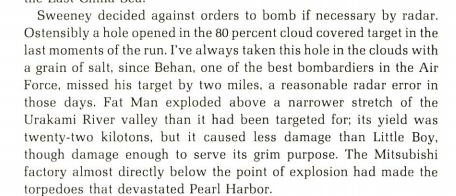
    The hole theory though is not necessarily complete–there may not have been a hole. Nobelist (physics) Luis Alvarez, who made major contributions to the firing mechanism for the weapon and a genius-in-general, and who flew as part of an Aerial Observation Team to assess the yield of the bombs, thought that perhaps there was a hole in the clouds and perhaps there wasn’t–“ostensibly” there was a hole, he wrote. Perhaps the bombardier saw the target, and perhaps not. In his Adventures of a Physicist (1989), Alvarez writes about the misery and the snaufedness of the mission, the clouds over Kokura and the multiple runs, the very low fuel which allowed only for one run on the Nagasaki secondary, and the growing accuracy of the flak from below. On page 145 he states that pilot Sweeny had decided against orders to attempt a radar-guided bombing of the 80% cloud-covered target–until suddenly the famous hole appeared, and bombardier Kermit Behan found the target and released the weapon.  Alvarez records that the bomb detonated about 2 miles off-target, which he said would have been an acceptable margin of error for a radar-controlled drop, which would fit nicely with the his claim that Behan was Air Forces’s “best bombardier”.  Alvarez said that he took the report of the hole “with a grain of salt”2.  (See extract below.)

    In any event, some sort of hole opened for Nagasaki, and closed for Kokura.

    Notes:

    New York Times correspondent William L. Laurence flew in the Great Artiste, following the   that delivered the bomb 1640 feet over Nagasaki. His report on Nagasaki appeared a month later in the newspaper, and the full text is available via the Atomic Archive blog here.  

    1. The targets discussed  by the Targeting Committee (“Minutes of the second meeting of the Target Committee, Los Alamos, May 10-11, 1945″) on 10 and 11 May 1945 included the following:
    (1) Kyoto (the former capital with one million people, a center of religious and intellectual life in Japan This target is an urban industrial area with a population of 1,000,000. It is the former capital of Japan and many people and industries are now being moved there as other areas are being destroyed. From the psychological point of view there is the advantage that “Kyoto is an intellectual center for Japan and the people there are more apt to appreciate the significance of such a weapon as the gadget”;  (2) Hiroshima (listed as an Army depot though “due to rivers it is not a good incendiary target”; (3) Yokohama (one of the largest remaining untouched industrial centers in Japan); (4) Kokura Arsenal (one of the largest in Japan and situated by urban industrial sprawl); (5) Nigata (port on Honshu) and (6)the Emperor’s palace (which was discussed  as a possible target but dismissed almost immediately).[Yawata was also considered (as an industrial center) (during the preliminary meeting of the targeting committee on 2 May 1945) (along with Tokyo, Nagoya, Osaka, Kyoto, Kobe, Hiroshima and Nagasaki.]
    .
    The members of the targeting committee (source for this material is Gene Dannen at Dannen.com, transcribing targeting material of the U.S. National Archives, Record Group 77, Records of the Office of the Chief of Engineers, Manhattan Engineer District, TS Manhattan Project File ’42-’46, folder 5D Selection of Targets, 2 Notes on Target Committee Meetings) included (on 10 May): “General Thomas  Farrell,  Dr. Charles C. Lauritsen, Colonel L.E. Seeman, Dr. Norman Ramsey, Captain Parsons,  Dr. Robert L. Dennison, Major John A. Derry, Dr. John von Neumann, Dr. Stearns, Dr. Robert R. Wilson, Dr. Richard C. Tolman, Dr. William G. Penney, Dr. Robert Oppenheimer.”  In attendance for the 11 May discussion was  Dr.Hans Bethe and Dr. Brode, plus: Colonel Seeman,  Dr. Stearns, Captain William S. Parsons, Dr. John von Neumann, Major Derr, Dr. Robert L. Dennison, Dr. Richard C. Tolman, Dr. Penney, Dr. Oppenheimer , Dr. Ramsey and Dr. Wilson.”

    2.  Alvarez on the hole:

    Alvarez nagasaki[Source, Luis Alvarez, Adventures of a Physicist, 1989, p 145.]


  • The Future of Women–Helicopter-Delivered Paper Clothing for Woodsy Frolics

    JF Ptak Science Books   Post 1105

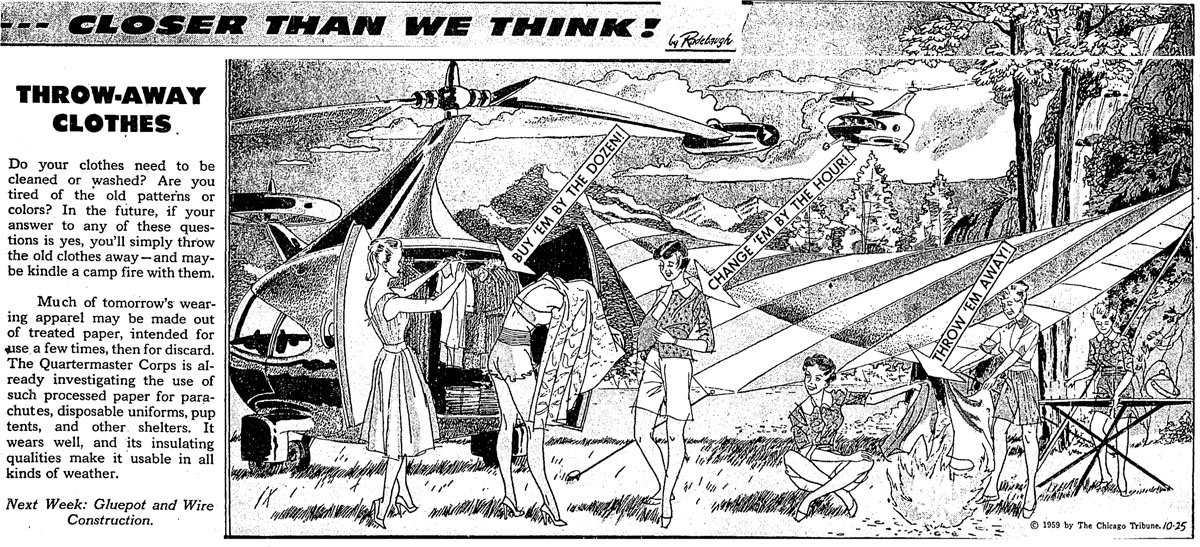
    Future--throw away clothing

    The artist of this perspective of the future offers us a little too much of his personal dreamcastle, I think.  Perhaps the future is filled with paper clothing to be thrown away at a whim, or if not paper then something else besides that, like paint.  Painted clothing might make more sense than natural disposables.  But what makes this image special to me is that none of it makes sense, but for semi-noxiously-underwear-filled reason, it did find its way into publication, even if it was only in the Chicago Tribune.  

    The artist shared a very personal vision of the future which reminded me in a way of a reverse Reclusorium.  Monks and recluses filled out their fair share–men and women alike–of Anchorages and Reclusoria, living down in tiny cells sometimes dressed in chaffing (or worse*) clothing, sometimes being permanently caged (or even walled in), spending their lives devoted to their own unworthiness and penitence and glorification of a private conversation with a god of salvation. 

    This picture offers us a group of non-recluses, living far from any sort of St. Jerome-y existence. For some reason these women are living out in the wild in high heels, enjoying The Nature, and having their disposable clothing delivered to them via helicopter(s).  They choose their paper outfits, and change into them right there, right in front of the helicopter, the artist enjoying their wreckless abandon. Find the clothing, take off old clothing, dress languidly, and then sit down and throw the old paper rags into the fire. Just in case, the lady in the background is serving refreshments.

    Seems to me that the women in this scene are developing a public demonstration of a little private fetish of the artist more so than delineating a vision of a hellfire future filled with semi-naked women frolicking  in the woods.  Or rmaybe I’m being too cranky and seeing things too hard–maybe not…


  • Darkpunk City Architecture: Psycho-Noir Cityscapes of Hugh Ferriss

    JF Ptak Science Books   Post 1104

    The work of architectural delineator Hugh Ferriss (1889-1962) gives me the same sort of feeling that I get from Martin Scorsese’s  Gangs of New York–a blistering, gritty, taut film that doesn’t really add up to anything but it really doesn’t matter; getting there being all of the fun…we know its just made up, even by Marvelous Marvin.  We know that Mr. Ferriss wasn’t going anywhere with these designs, that he wasn’t going to kill us, trapped  in his  psycho-noir cityscapes. These designs are beautiful, and a wonderful background for something, so long as no one has to live in them.  (Much more on Ferriss here.)

    Why didn’t I use Fritz Lang’s Metropolis?  The emotional (and not necessarily visual)  metaphor just didn’t work as well as The Gangs does for me; makes little sense, I know, because Ferriss knocked pretty loudly on Lang’s door.  It just didn’t work for me.

    In a way these designs could fit in my Blank and Empty Things category, lacking life, inspiration–even in their solitude these images have an advanced emptiness to me, moving well beyond simple solitude.  Edward Hopper’s 1942 Nighthawks  is a painting of solitude, but it isn’t necessarily empty.


  • Pictographic Messages to the Year 12,010: the Medium is the Mess.

    JF Ptak Science Books  Post 1103

    Talking to the Future: a Note of Pity to Ourselves in 300 Generations
    Nuke waste--dead251

    In the history of words I’ll take a wild guess and say that fractions of 1% of everything communicated is directed at ourselves in the future–or at least it has the possibility of being directed to someone else when our deeds are long, long since forgotten. 

    And by writing to the future I don’t mean in an off-hand way, our words being read in 12,010 by chance, idea archaeologists looking at what people were talking about 10,000 years earlier; and I don’t mean via “reconstructing” our radio or tv broadcasts (in the not-right Jodie Foster Contact kinda way).  I mean intentional messages to be read a long time from today.   

    A more problematic entry would be images and symbols design to be read by future generations, in the deep future.  This is not a very deep category, though a famous (if not well designed) example being the one associated with Carl Sagan that was attached to the 1972 Pioneer 10 and 1973 Pioneer 11 spacecraft, which attempted to explain what humans were should either vehicle  in any eon come into contact with other-than-Earth life.
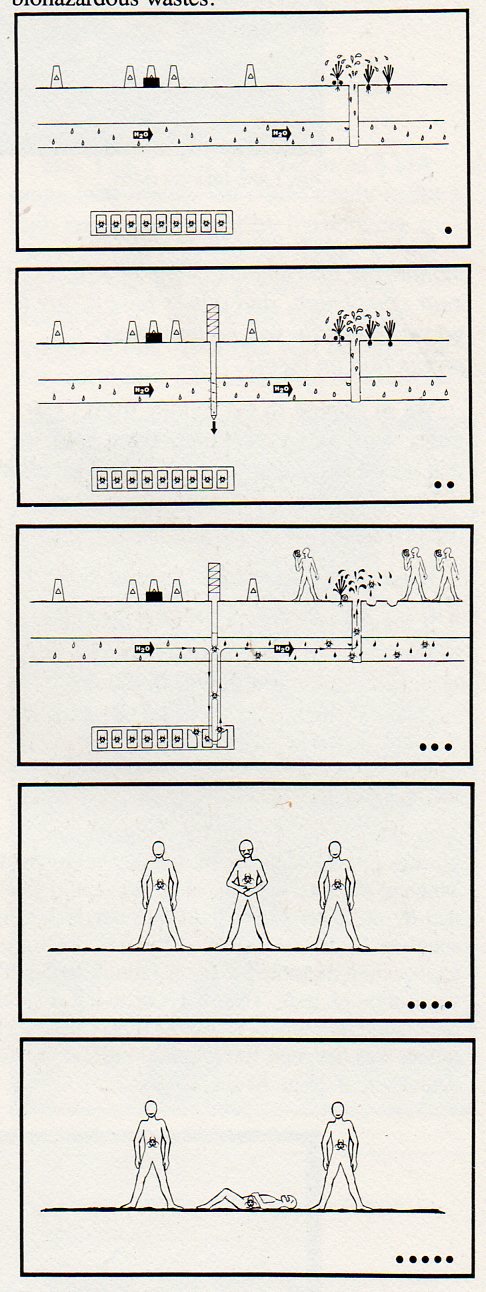
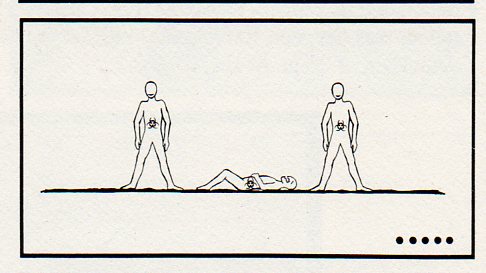
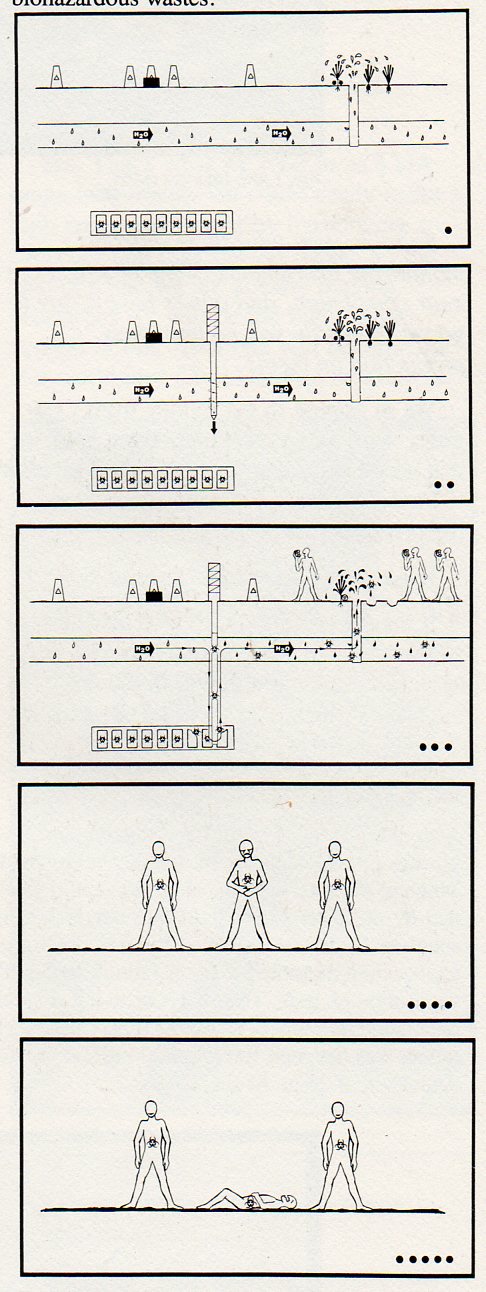
    Nuke waste--overall250 Another is the pictograph presented here, which appeared on page 117 of the ironically and extraordinarily-titled Reducing the Likelihood of Future Human Activities That Could Affect Geologic High-Level Waste Repositories1, the first half of which (bolded above) could make a nice departure for some other science fictiony type story.    But what these folks were talking about, plain and simple, was how to prevent future generations from digging into or other disturbing in any way buried masses of nuclear waste. 

    This pictograph is meant to be a non-linguisitc, universally-understood  warning to future generations that the ground they are standing on is above a nuclear waste storage site.  The plan was that nuke waste would be solidified and buried in rock hundreds of meters below the surface in an effort to keep in line with governmental policy of waste disposal2. The pictograph relates to the restricting of future human activities part of the title of the work in question–that is, folks in the future who might muck around, drilling, into the nuclear waste site.  This pictograph tells them why they shouldn’t do so, because of all of the terrifically lethal mojo underground. 

    As one might guess by the title, the report has its own communication problems–it is dense, turgid and not a particularly clear document.  It is a fine document illustrating the problems of communication, but not in the way it would have wanted to be, celebrating a reverse triumph in a Darwin Award/IgNobel type of way. And all of this in spite of/or because of a healthy slice of linguists, semioticians, logicians, artists, graphic designs, politicians,. sociologists and so on constructing the thing.

    The sign basically says that if you drill at this spot (to some unspecified depth) through aquifer or underground stream or water source or something that some point you may reach the biohazard nasty, which will then get into the water supply and into humans, which will then kill them.

    The sign was designed for 10,000 years hence, and depended upon pictures to convey the message rather than words (except for H20, and the biohazard symbol).  Of course the radioactive nastiness will be there for millions of years, which would be an entirely different story in terms of imaging.  Perhaps. 

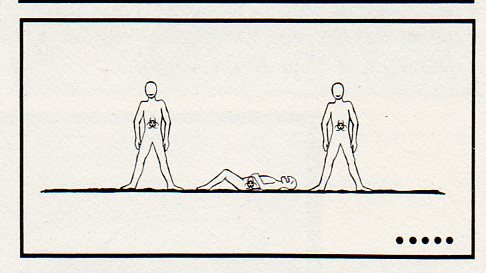
    The one thing the design of the pictograph has in its favor is that it is read top to bottom–no language on Earth (so far as I know) is read bottom to top, though there are many differences in reading right-left/left-right.  Beyond that, the pictograph stumbles over itself–except for the last two images, which may or may not tell someone that something bad is happening. 

    There are plenty of time capsules and idea-vehicles to the future–I’m saddened that this was seen to be one of the essentials that we would pass on to our future selves.

    Notes:

    1. Reducing the Likelihood of Future Human Activities That Could Affect Geologic High-Level Waste Repositories (Technical Report prepared for Office of Nuclear Waste Isolation, Battelle Memorial Institute; BMI/ONWI-537; May 1984)

    2. “Present society’s responsibility is to dispose of radioactive wastes in a manner that is safe, is environmentally acceptable, and does not require long-term maintenance or surveillance. This ground rule is consistent with the objectives in the U.S. Department of Energy.”Reducing…, page 2.

    The pictograph, explained,  pp 115-116 from Reducing….

    The pictograph…was developed using the concepts and guidelines discussed by Givens (1981). The objective is to convey to the reader the sense that if the area below the markers is disturbed, toxic substances will enter the ground water and lead t o severe consequences. relies on several visual images acting in concert to relay the message.

    The ground surface exhibits peripheral markers and a central monument to denote relevance to the site where those markers and monument exist.

    The ground-water system is indicated by water-drop shapes and by the chemical symbol for water (the only departure from icons, used as a redundant measure).

    A repository far below the surface is depicted with the biohazardous symbol. The fact that the object portrayed below the surface is a repository may not be at all evident to a future reader from the first frame; however, the movement of the dark material from the repository through the aquifer and into the vegetables in the third frame, coupled with the movement of the biohazardous symbol, should imply the burial of biohazardous materials below the surface.

    The pictographic sequence exaggerates reality with regard to the rapidity of contaminant transport and uptake, and with regard to the severity of the consequences. However, exaggeration is necessary because both the clarity and the relevance of the message may suffer if.the pictograph attempts to indicate contaminant transport time of thousands of years. Similarly, the consequence portrayed, a painful death, over-exaggerates the cause-effect relationship and the rate of the individual’s demise (one out of three suffer death in the pictograph, whereas a
    to chance would be more representative).

  • Elevated, Rooftop Inner-City Circular Airports, 1919

    JF Ptak Science Books  Post 1102

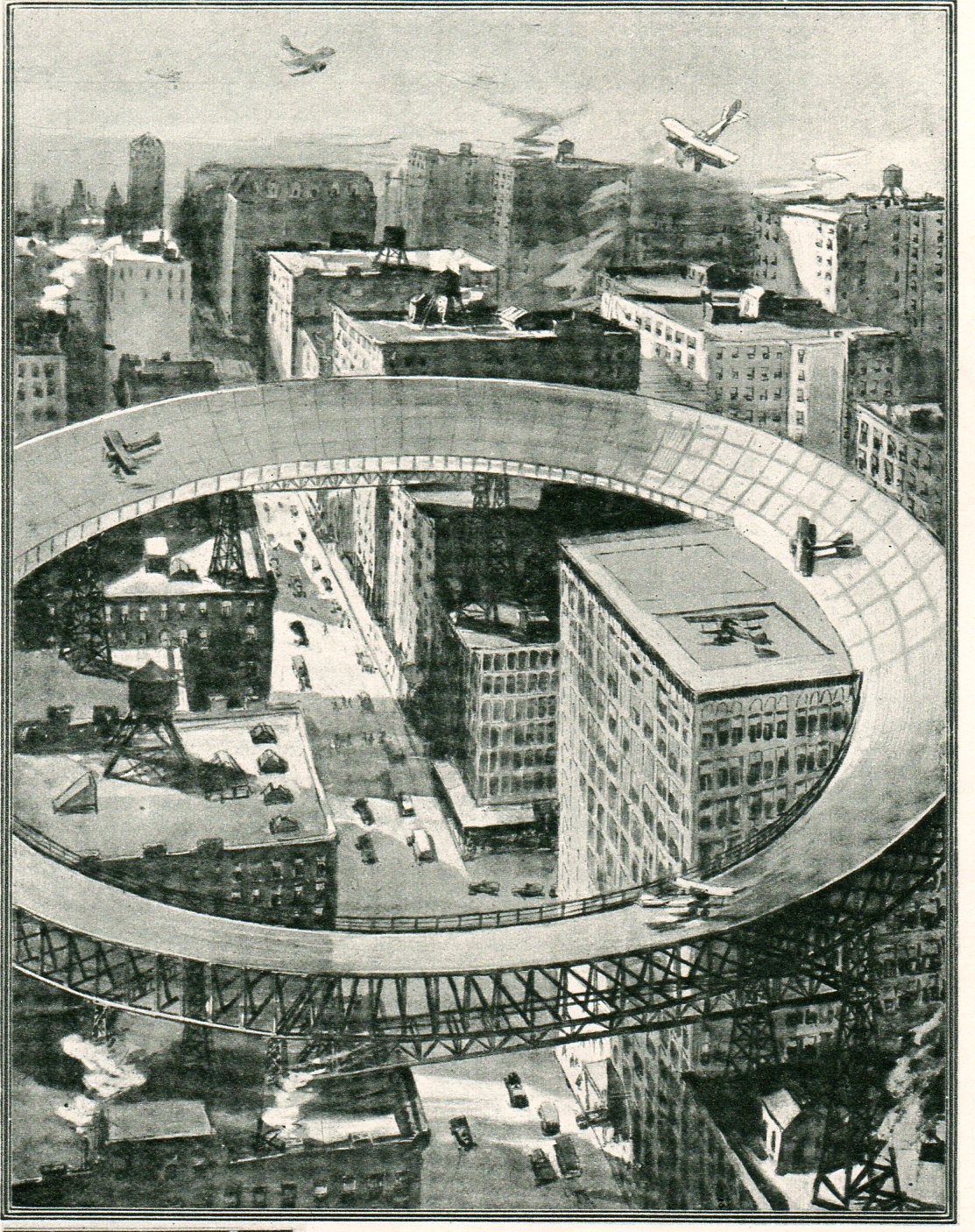
    The presumption of this Illustrated London News article (“On the Impulse to Fly Commercially”, 18 October 1919) on the growing popularity of commercial flying for business and pleasure was correct, but the placement of the airports to service the growing community of flyers was, well, not.  

    Airport--round 247

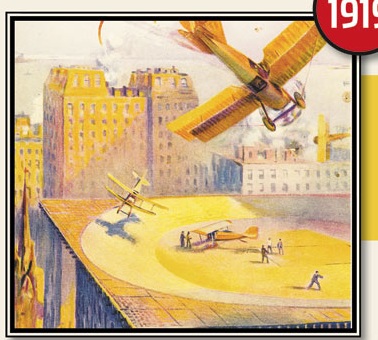
    This is a prototype, of sorts, for many dozens of proposals that would appear in magazines like  Science and Popular Science and Popular Mechanics and so on, suggesting inner-city airports that could be easily accommodated by the city bustle by placing the airport on top of buildings (as above), and these other closely-related ideas (below):

    [Picture source: Paleofuture.com]

    and this:

    Aircraft
    [Picture source, again, from Paleofutue.com]

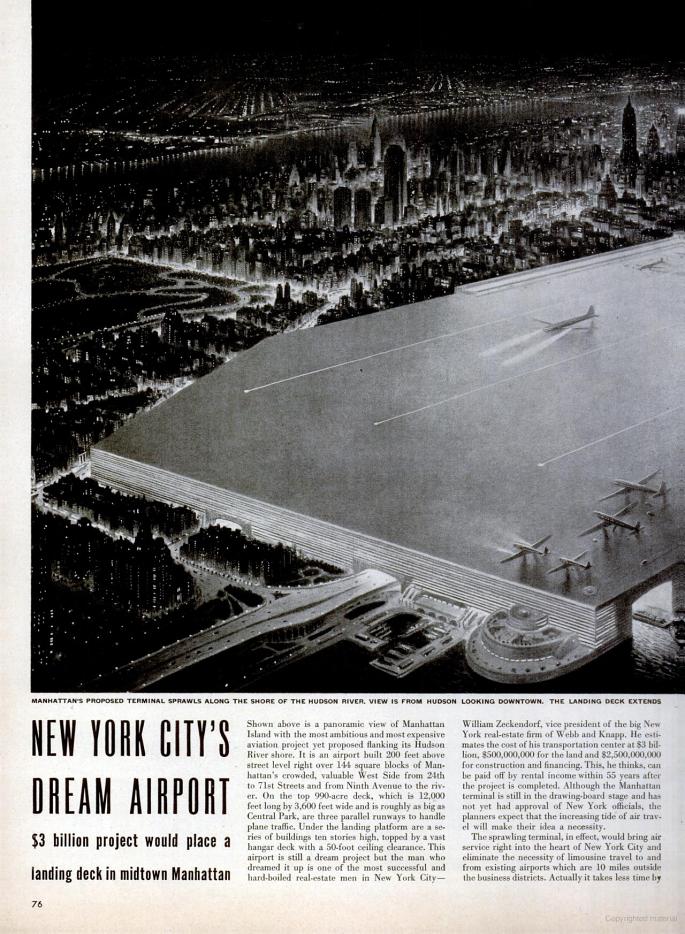
    These terrible ideas were also seen in building enormous platforms over entire sections of the city (like Zecendorf’s massively bad 1946 idea)

    Books

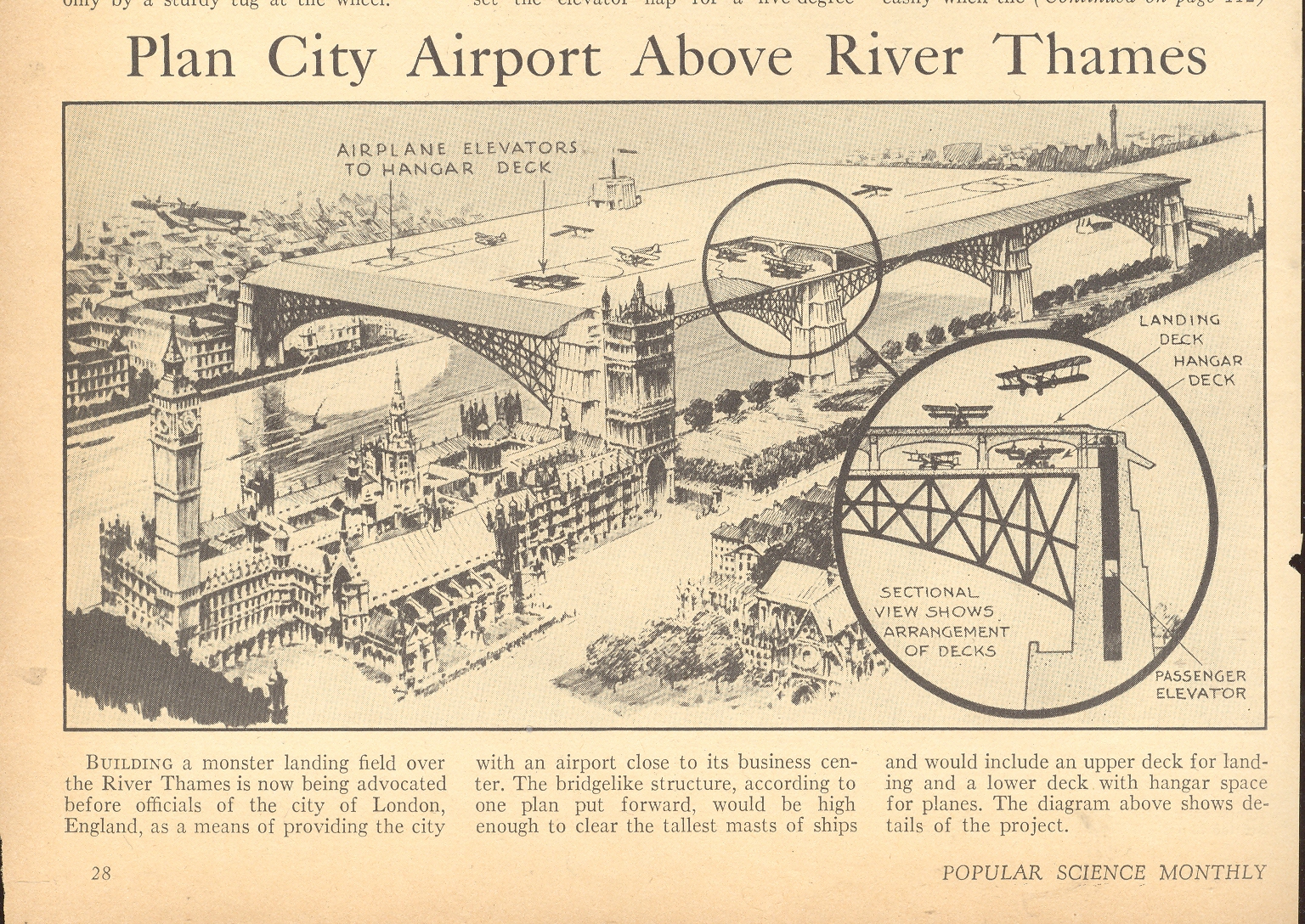
    or massive flyovers on rivers (which I also wrote about here),

    Blog Dec 17 thames airport

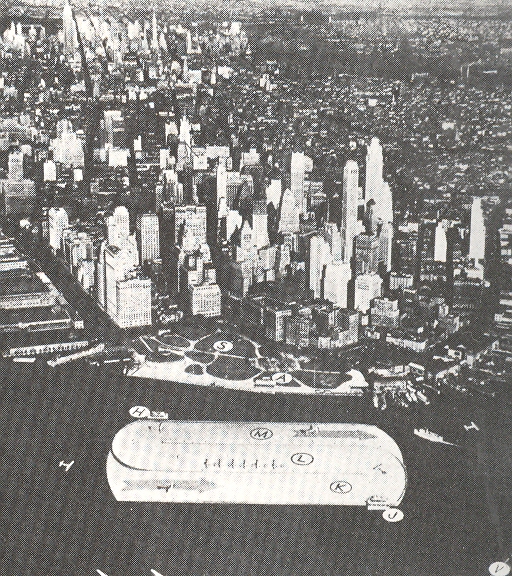
    or enormous floating airport islands (like that proposed by Norman Bel Geddes at the tip of Manhattan,  

    1--bel geddes airport 2 

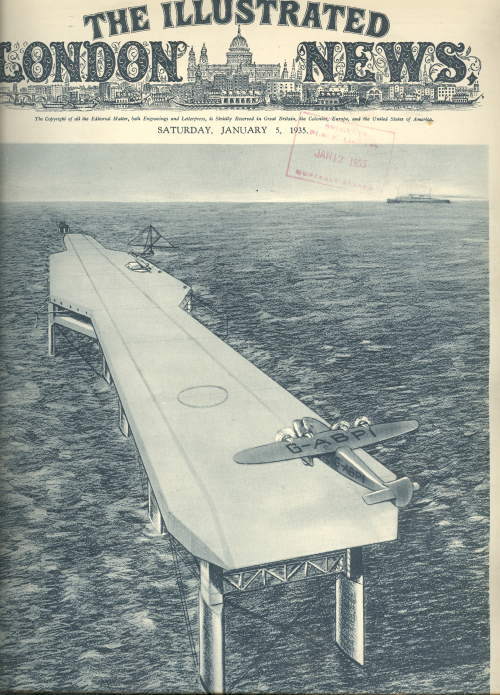
    and of course a series of airports that stretched across the Atlantic.

    https://historyofideasblog.com/a/6a00d83542d51e69e2012876bef533970c-500wi

    But they all had to start somewhere, and perhaps this Illustrated London News entry for 1919 was among the first wave of these proposals. 


  • Airport in the Sky, Airborne Zeppelin Airfield, 1925

    JF Ptak Science Books  Post 1101

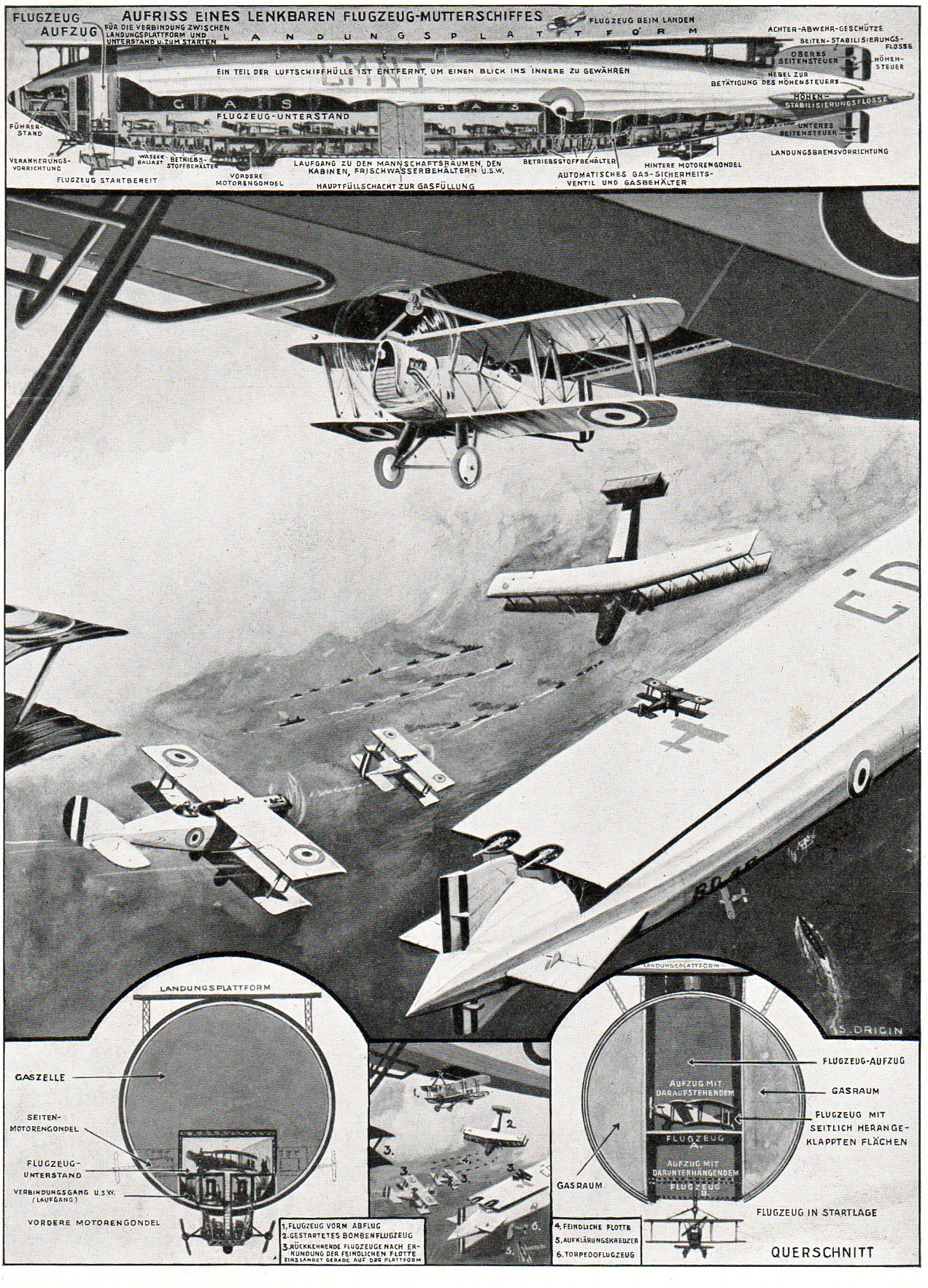
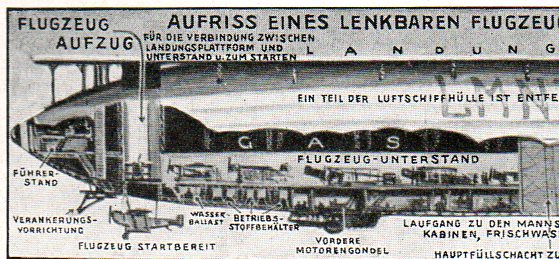
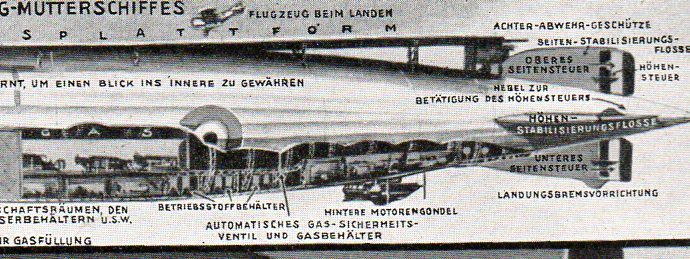
    This interesting image comes from the Illustriete Zeitung (Leipzig) for July 1925 (“Zeppelinsche Riesenluftschiffe” by Dr. Hildebrandt), and shows a British proposal for a dirigible outfitted as a sea-going airborne airport for military planes. 

    Airport--dirigible241

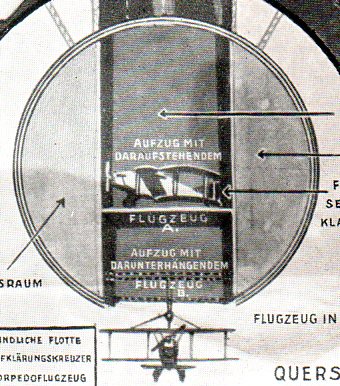
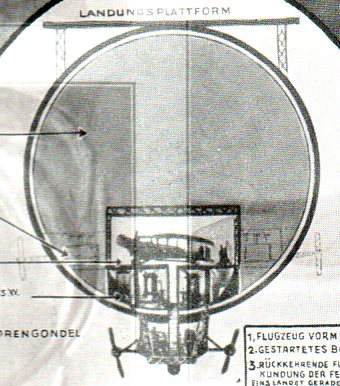
    The aircraft would land aft, and then proceed forward to an elevator that would lower it belowdecks to a hangar (looking as though it could accommodate 11 or 12 aircraft).  Once refueled and re-outfitted, the planes could be lowered from the body of the dirigible and launched into space. 


    Airport--dirigible a243

    Airport--dirigible b244

    And of course some cross sections:

    Airport--dirigible c245 

    Airport--dirigible d246


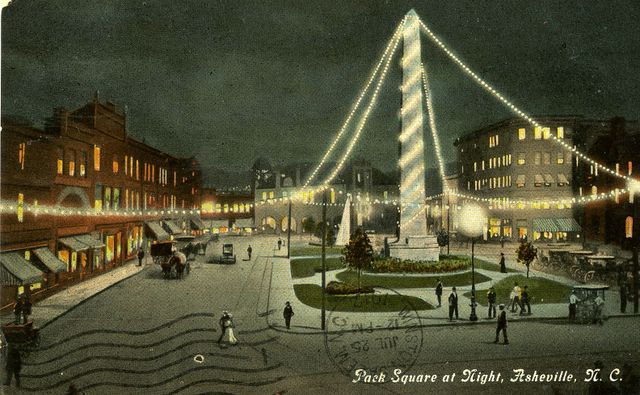
  • Asheville, North Carolina: Pack Square Development in Postcards

    I’ve collected several postcards showing the development of Pack Square from 1880-1950 or so. For six years my store was located about 200 feet north of the obelisk, so I felt some attachment to the place, and collected a number of different images showing its development.  Postcards are easier to find, less expensive (by leaps and bounds than original photos and such) to purchase, and actually add up to something in a short time.  So I post them here for my Asheville friends and readers–the images might actually be useful and interesting to an Ashevillean.

    ·Posted by :

    ·in: