A Daily History of Holes, Dots, Lines, Science, History, Math, Physics, Art, the Unintentional Absurd, Architecture, Maps, Data Visualization, Blank and Missing Things, and so on. |1.6 million words, 7500 images, 4.9 million hits| Press & appearances in The Times, Le Figaro, Mensa, The Economist, The Guardian, Discovery News, Slate, Le Monde, Sci American Blogs, Le Pont, and many other places… 5000+ total posts since 2008.

Author: JF Ptak

  • The War of the Diagonals: Mondrian, Van Doesburg and Star Trek

    JF Ptak Science Books  Post 1079

    In a world constructed of nothing but right angles in horizontals and verticals,  how would a diagonal fare?

    Would it be like extraordinary confusion and then recognition of a sphere in a flat two dimensional world (as in Edwin Abbott’s Flatland), or would it be an astonishing moment of discovery like Robert Hooke’s Micrographia images, or a creeping, sweeping acknowledgment of first-seen perspective in Paolo Uccello? 

    De Stijl Mondrian_CompRYB
    In the case of the cubist Piet Mondrian, it would be revulsion and disgust.  Mondrian helped establish1 De Stijl (1917or thereabouts), with a philosophy of using lines to transform artistic thought onto canvas, and the lines were all horizontal or vertical, with square and rectangular shapes. These would represent the pure harmonies of expression, along with the primary colors as well as black and white. 
     

    Mondrian wrote “:… this new plastic idea will ignore the particulars of appearance, that is to say, natural form and colour. On the contrary, it should find its expression in the abstraction of form and colour, that is to say, in the straight line and the clearly defined primary colour.”

    Stijl co-founder, popularist, artist and editor of the movement’s journal, Theo van Doesburgh and his work (1924) introduced diagonals into the horizontal/vertical field in his painting “Arithmetische Compositie” and Mondrian quits the group.Van Doesburgh felt that the diagonal was more vital and important than the vertical and horizontal.  Mondrian felt that this was wrong, and clearly raked the original ideals of De Stijl, and so quit the movement, which he felt to be compromised by one of its co-founders.
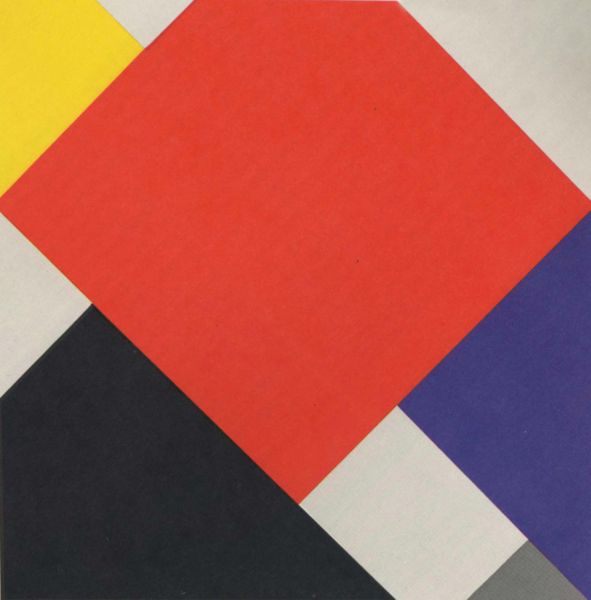
    De Stijl van_Doesburg_Counter-CompositionV_(1924)
    I can certainly appreciate Mondrian’s need to go; though, honestly, what the debate and reticence reminds me of is an episode from the original Star Trek series, “Let That Be Your Last Battlefield” (1969).  The story is about an intractable difference between two seemingly identical factions of the planet Cheron2–it turns out that the differences between the two sides is a physical one that was inconsequential to the crew of the Enterprise, but of all-consuming importance to the Cheronites.  They were both white and back, their skin color cleanly halving  their bodies on the vertical.  But the “inconsequential” difference was that one person was black on the right side and white on the left; the other was the opposite.  It was this difference that led to their planet-wide schism and abandonment of each other. 

    Its no wonder that the writers of that episode chose the name “Cheron”, which is another accepted spelling of “Charon”, the Greek ferryman who transports the dead to Hades.
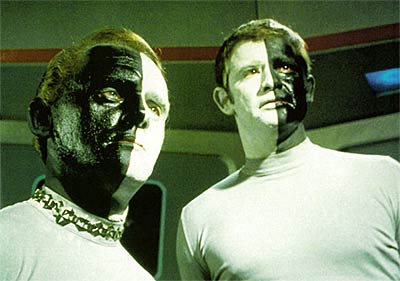
    Bele_lokai That’s where this particular schism falls to me, though to those involved I’ve no doubt that the differences were as significant as 2D vs. 3D and flat perspective vs. real perspective, the blatant if not micrographic differences looming mighty small to everyone but those involved. 
    ______
    Notes

    1. In 1917 it was Mondrian who coined the term Nieuwe Beelding (“the New Plastic”) , or Neo-Plasticism, from which De Stijl took its meaning.  He set out the philosophy of the group in that same year in a series of twelve articles in the group’s journal, De Stijl

    2. From Wikia Entertainment:  “Cheron is a Class M planet located in the southern region of the galaxy near the Coalsack, which once supported a humanoid civilization of Cheron natives. In the 23rd century, the area of space was largely unexplored by Starfleet, so the race was previously unknown to the Federation.”

    ·Posted by :

    ·in:

    —

  • Welcome (Again!) Jezebel Readers! (On the History of Women)

    I’m happy to report that one of this blog’s “History of Women” bits has  been posted on one of  the top-25-popular websites, Jezebel.  I thought that this was the ninth post from here that they’ve shared, but I can only find six. Jezebel is a wide, varied site with considerable interest.  Have a look and have fun!

    The
    Hidden, Mysterious Kisses In Vintage Comics


    Over on John F. Ptak’s site, there’s a post about what

    kisses looked like in the Golden Age of Comics.
    Hint: Lipless and faceless!  Views: 3,8413,841 views on this post, 60 new visitors 
    Comments: 62


    Girlie
    Shooting Gallery Is A Terrible Party-Game Idea


    An innocent Life magazine photo of dinner guests aiming
    harmless toy rifles — so nostalgic, so quaint! Actually, no. Not at all.
    More » Views:5,4115,411 views on this post, 87 new visitors Comments: 30


    The
    Average Housewife’s Workweek: Staggering Since 1947


    “35 beds to be made, 750 items of glass/china and 400 pieces of
    silverware to wash, 174 lbs. of food to prepare, some 250 pieces of
    laundry” — it added

    up to some 100 hours of joy per week. [PtakScienceBooks] Views:3,508 Comments: 69

     
    Click here
 to read A History Of
 Fainting Spells, Headaches, And Sexual Indifference


    A
    History Of Fainting Spells, Headaches, And Sexual Indifference


    “The manual is a codex of denial, submission, ignorance, boredom,
    tiredness, exasperation and triviality so far as sexuality is concerned
    for women—there is no hint of pride, or of enjoyment.” It’s a vintage
    medical hard sell!Views: 4,9654,965 views on this post, 240 new visitors Comments: 23 


    Giant
    Woman Sets Hemline Record!


    We’re not arguing with the

    claim that this image demonstrates “what must be the female record
    for the most distance between the ankle and the hemline.” But the nifty
    hemline chart has us sold.

    Views: 5,1635,163 views on this post, 74 new visitors Comments: 4


    Click here to read "Did You Give Him A
 
Chance To Impress You?"


    “Did
    You Give Him A Chance To Impress You?”


    Writer John Ptak has
    posted 1940s Ladies

    Home Journal piece that instructs young women on date conduct.
    The response of Ptak’s 17-year-old daughter? “It was simply beyond
    listening to…and certainly not anywhere near worthy of a response.”Views:3,9893,989 views on this post, 14 new visitors Comments: 34


  • History of Dots #29: Making Things Abstract and Concrete at the Same Time

    JF Ptak Science Books   Post 1078

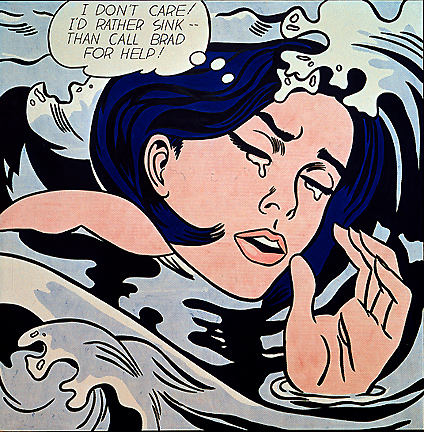
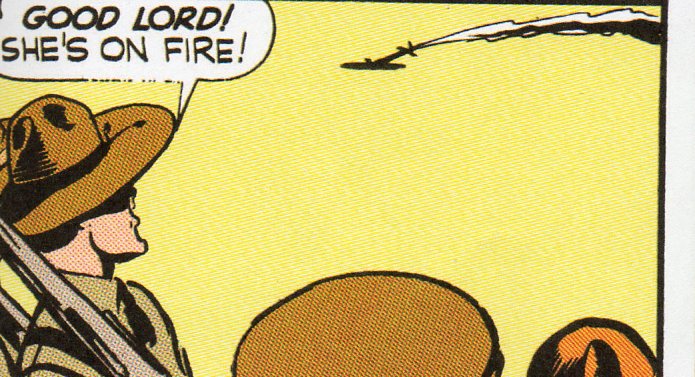
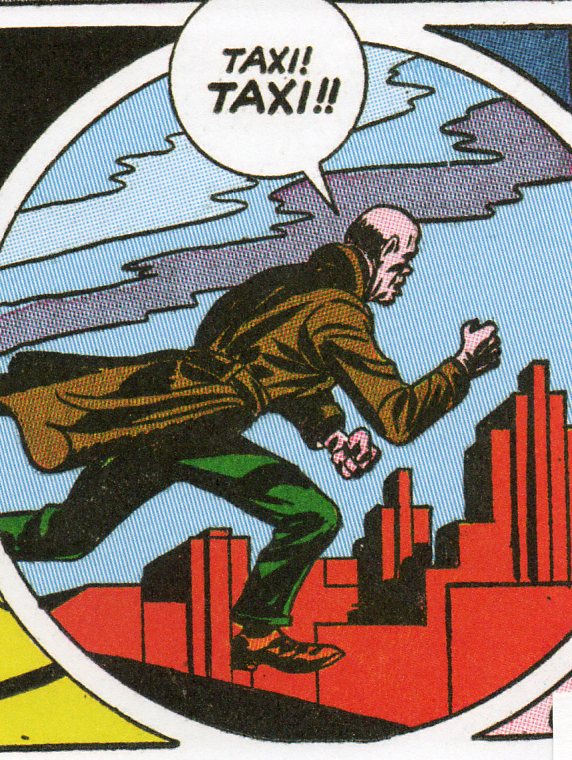
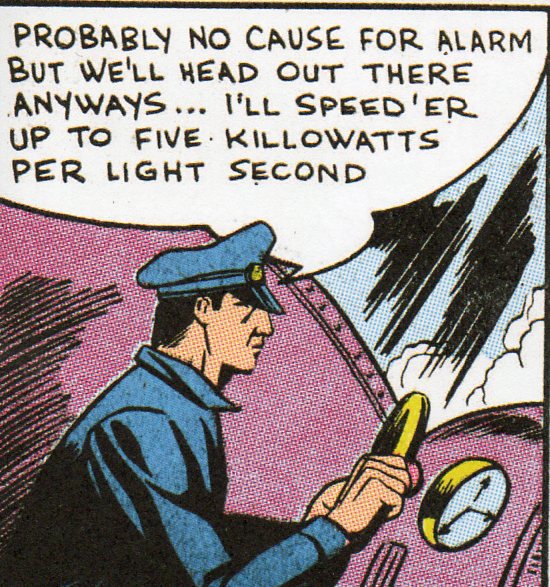
    [History of Dots series #29//Note: all images below except for Lichtenstein’s “Drowning Girl” are from Simon & Kirby comic books.]

    How are deep abstractions visualized?  Science and art were becoming
    more densely abstract at about the same time, the new modern age for
    both beginning 1905-19301 or thereabouts, when so many of the
    revolutionary advancements were made.

    Non sequitor193

     The representational world of art was slipping and disappearing (with the beginning of Cubism(s), Dadaism, De Stijl, Abstract and so on), replaced by forms and shades and colors, the subject of the art becoming less and less recognizable  as “things” until, finally, the recognition of the general stuff of nature (except for color) was gone.  Light, the interaction of molecules, the motion of atoms, were all becoming less comfortable as visual images and were being represented in terms of mathematics 

    How do we get to Roy Lichtenstein from here? I think that it is via abstraction and his connection to  the found non sequitor2 of the speech balloons in comic book images.  Lichtenstein’s style is very heavily derived from comic books and strips, except that he painted his images based on Ben-Day dots, strong lines and ultra-vibrant primary

    Lichtenstein_drowning_girl colors of Golden Age era comics.  And I must say that his work–in images and in captions–seem much less non sequitor than the enormous amount of these things that you can pull out at random from the history of comic books–that is, one can still see where the frames that he was painting came from in the sequence of the comic book story.  It seems more interesting to me if the one frame being depicted could mean absolutely anything, and that the story line was completely obliterated, sop that this one frame out of context really had no context at all.

    Lichtenstein’s style came about around the time that he started teaching at Rutgers, and in short order–in less than five years–he had a solo show at Leo Castelli Gallery (1962). His work was instantly recognizable, a true Popular Art, almost everyone having some sense of recognition for the origin of his artwork.  Beyond that, and whether his art was seen as art, is another story3.

    Non sequitor191

    But what I’m trying to get at here is this: did  Roy Lichtenstein create a template of  an abstract dialogic equivalent in a concrete, non-abstract way of the non-representational creation of Kandinsky and Braque and Mondrian?  Are the Ben-day dots that are the foundations of Lichtenstein’s style–and the images that can be simply found in comics from the Golden Age–the very concrete bits that compose a very concrete, non-abstract image-with-text that is totally recognizable but without any apparent meaning?  Just decades after dots–the compositions that were normally used to visually introduce ideas in physics and astronomy and chemistry and biology–were abandoned as the visual signifiers of enigmatic and increasingly-abstract domains, they were adopted as the foundation stones for an art that moved in the opposite direction from abstraction, except that its message was anything if not abstract.    

    I think that it is in this way that images of Schroedinger’s cat should’ve been illustrated using the Ben-day dot method, plucked from the pages of a Golden Era comic, all basic red, yellow and black, the uncertain image never at rest, always with the possibility of being the same and not the same, its great and simple representation having not necessarily anything at all to do with its message, a concrete thing that is totally abstract.
    ____________

    Notes

    1. You could break this period out a bit, expanding it from, say the pre-Impressionists (1860 or so) to the period just after Abstract art and the introduction of the new quantum theory (again, say 1930). Epochal changes took place across the sciences, medicine, the arts, literature….virtually everything. I cannot think of any period in intellectual history that approaches this 70-year period. Actually, the gargantuan changes can be shaved down to the period of Einstein’s living memory beginning with the stunning discovery of Roentgen’s x-rays in 1895 to the invention of non-representational painting in 1911. But for the larger piece, the longer time reference, we have Roentgen, Poincare, Boltzmann, Planck,  Strindberg,  Schoenberg, Cezanne, Seurat, Picasso, Braque, Leger, Joyce, Woolf, Malevich, Duchamp,  Kandinsky, Klee, Bohr, Heisenberg, and. Einstein–to name just a few–of the folks making monumental changes in their field. 

    2. By “non sequitor” I simply mean to say that the image, or text, or both, when pulled out of context, when removed from the story line, are almost entirely without reference to what happened before the panel or what would happen next.

    3.  Maybe Lichtenstein is art, maybe not.  Another art, Art Spiegelman,  commented that “Lichtenstein did no more or less for comics than Andy Warhol did for soup”.  Maybe so. :ichtenstein did say this about his own art:”I think my work is different from comic strips- but I wouldn’t call it transformation; I don’t think that whatever is meant by it is important to art”.http://en.wikipedia.org/wiki/Roy_Lichtenstein#cite_note-rlf-Coplans-1

    This might all seem terribly wrong, and maybe–worse yet–it might seem like nothing at all.  Perhaps if it were nothing it would be more appropriate, in keeping with what Lichtenstein said about his own work, what seems to me to be an inscrutable nothingness: “”The closer my work is to the original, the more threatening and critical the content. However, my work is entirely transformed in that my purpose and perception are entirely different. I think my paintings are critically transformed, but it would be difficult to prove it by any rational line of argument”.

    Non sequitor192 


    Non sequitor194
    Non sequitor195

    Non sequitor196

    Non sequitor197 Non sequitor198


  • A History of Blank, Empty & Missing Things: Lipless Kissing in the Golden Age of Comics

    JF Ptak Science Books   Post 1077

    [A History of Blank, Empty & Missing Things, #78]

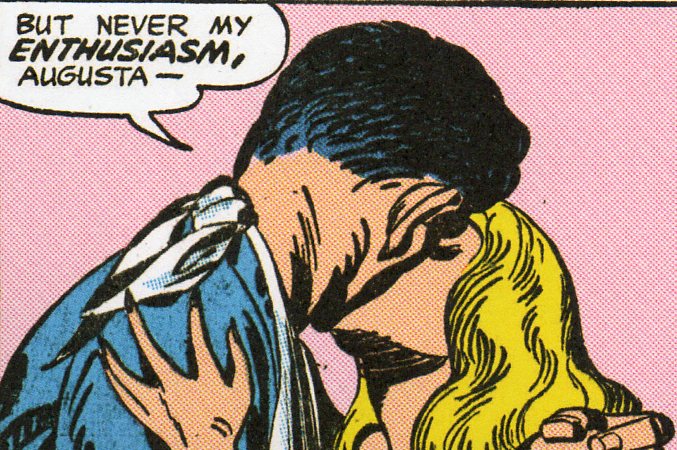
    Kiss 185
    The indefatigable team of Joe Simon and Jack Kirby (Joseph H. Simon, born 1913 and still going and Jacob Kurtzberg,1917-1994, respectively) produced some of the enduring heroes and ideas of the Golden Age of Comics. In capacities as comic book writers, artists, editors and publishers they knocked the bottom out of the creativity bin, affecting all manner and aspects of that industry, as well as  introducing the genres of horror and modern romance comics.

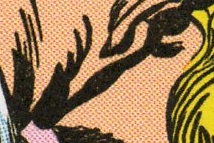
    And as necessary as it is scary, the nearly unrecognizable forensic pathology of the kiss in pink (above):

    Kiss--pink kiss det

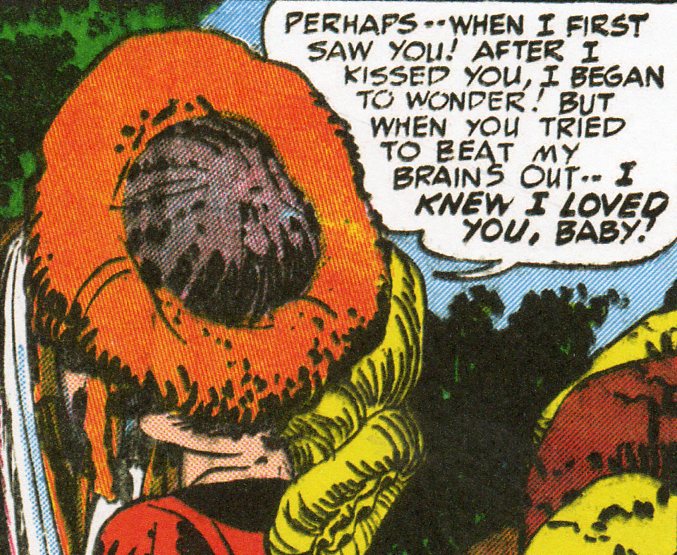
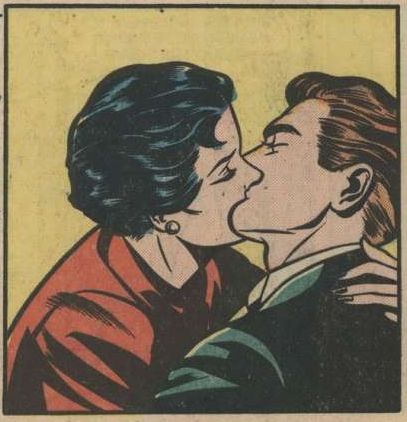
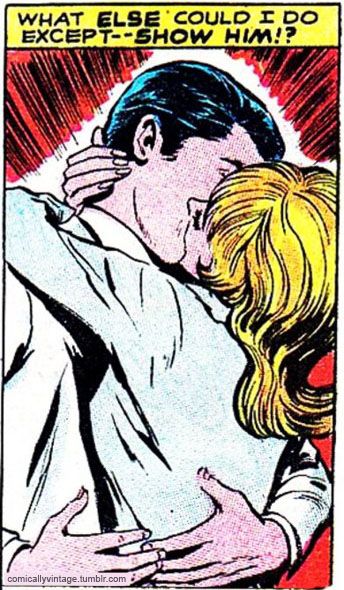
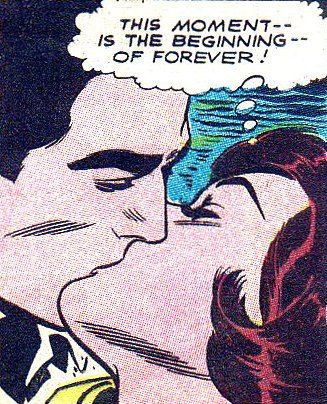
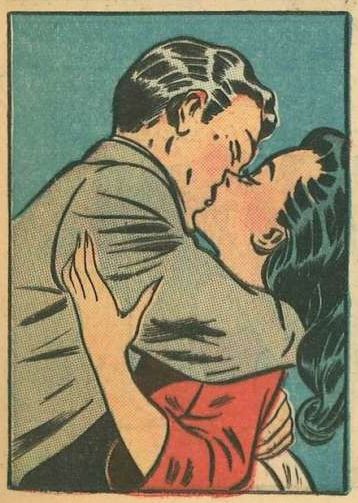
    I was initially drawn to their harsh colors,  blocky characters and un-magnificent dialog looking for wonderbits of non sequitor images and thought/word balloons populated with broken english.  They’re marvelous and easy to find, though I did get distracted by the unexpected part that I’m posting about right now–the missing, blank kiss.  Since they started the romance comics angles there’s plenty of 1940’s kisses to be found, but what I found was that although the kissing aspect wasn’t missing, the act of kissing was.  There’s plenty of heads smashed together that don’t leave a lot of room for faces, and in general it might be the sensitivities of the Golden Age’s age that cast away the kiss itself, their characters rushing face first into bad screen kisses. 

    Kiss 186

    There’s nothing wrong with this, and perhaps the kids never really noticed this, rushing to get ahead to the end of the confusing romantic interests.

    Kiss 187


    Kissing--comic book kiss

    Kissing--what else could I do

    Kissing--begining of forever

    There is a hint of a lip in this one, below, though it wasn’t supposed to be a passionate cheek kiss.

    Kissing in teal

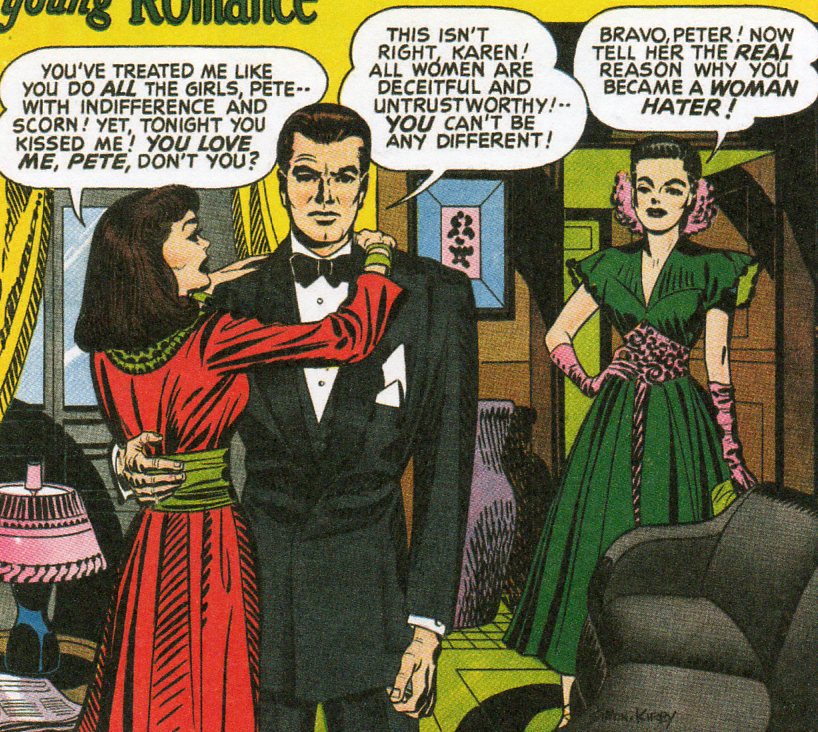
    This one has more to do with anti-kissing than anything else; I’m sorry that I don’t know what the “real reason” was….

    Kiss 189
      

  • Human Weapons: Torpedo-Driven Torpedoes, 1944/45

    JF Ptak Science Books   Post 1076

    Torpedo bomb 3182

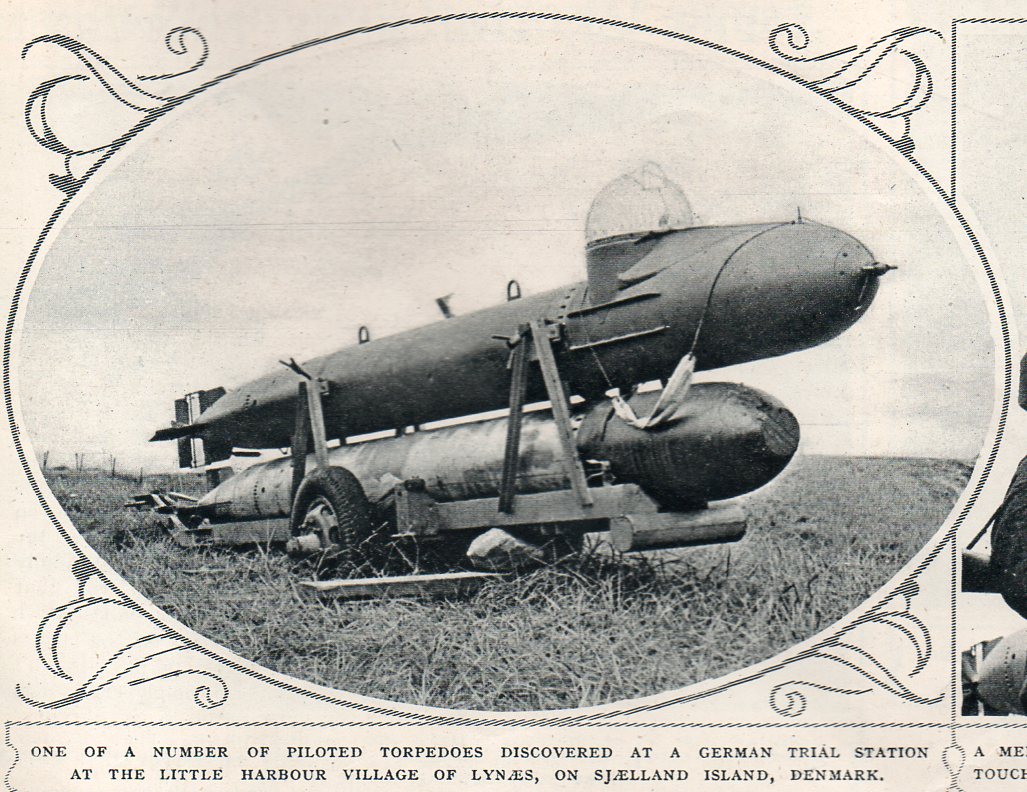
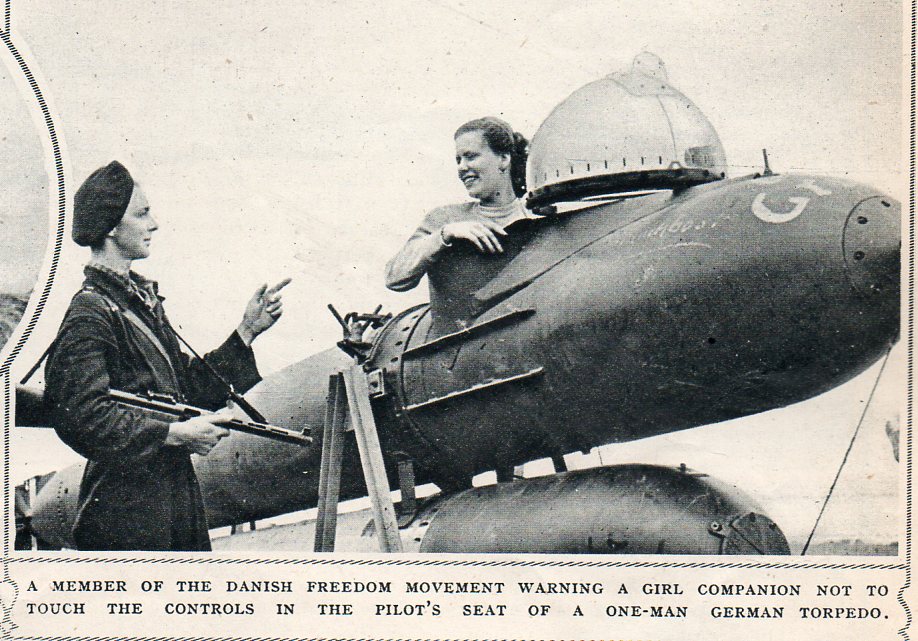
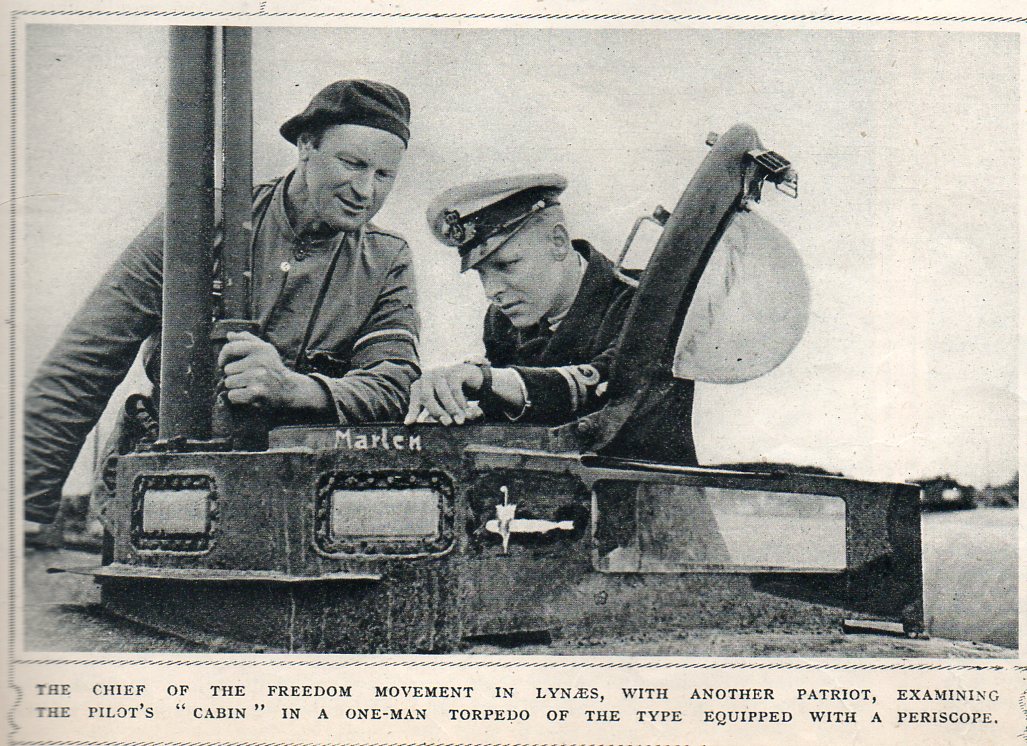
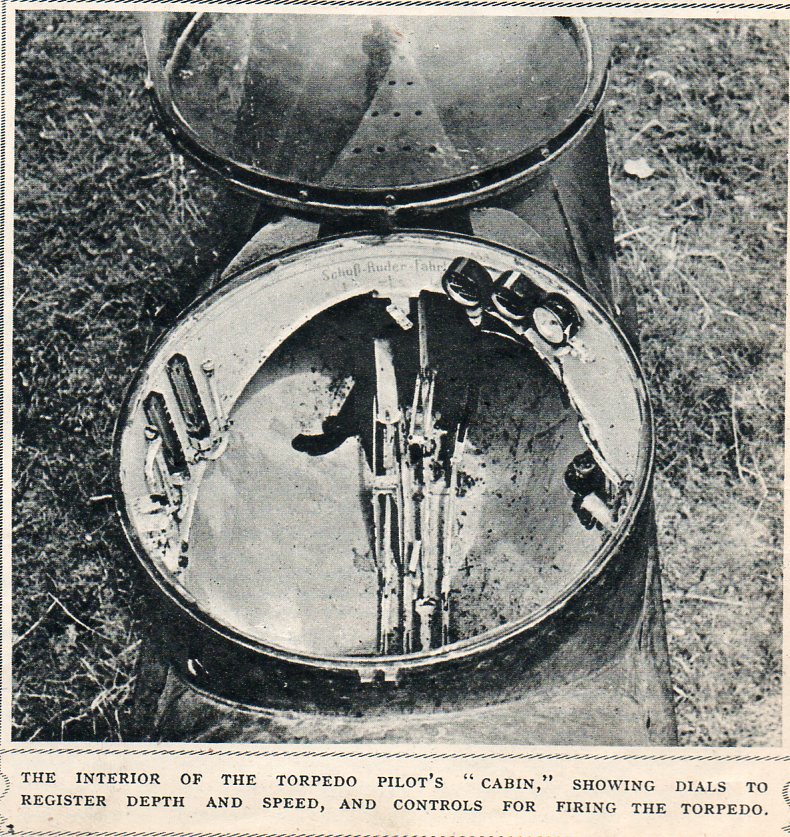
    These are some interesting images of a German 1944/5 human-guided torpedo known as the Marten.  It was an interesting idea, built on hundreds of  years of previous thinking along these lines–a one- or two-person submersible boat.  The Marten took this another step, attaching a 21-inch torpedo to the body of the boat.  The idea could’ve been a tide-turner had these things been anywhere near functional, but the fact of the matter was that they were poor sea craft and ineffectual at delivery their weapon.  

    Torpedo bomb 1180

    The Marten was an improved version of a slightly earlier boat called the Neger.  It made 3 knots on a good day and had a range of 30 nautical miles.  It was difficult to maneuver, evidently took the pilot’s full attention, and when submerged could stay underwater for 30 minutes and did not have a periscope. So after all of this, the captain would release the torpedo, and then steam away at low speed.  Evidently of the 300 produced only a relatively few found targets*   

    Torpedo bomb 2181

    This photo spread from The Illustrated London News of 11 August 1945 shows the disposition of about 10% of that force, on dry land on the small village of Lynes, Denmark.

    These aren’t on the order of my next post–on the human weapon–but it is getting close.  The German Navy did, after all, expect the pilot of the craft to survive. 

    Torpedo bomb 4183

    *There were many missions by these boats–most famous among them launched against British ships during the D-Day invasion on 5/6 June 1944–but overall they were rarely effective in a strategic sense.  I in no way mean to lessen the sacrifice of the sailors who were killed by the torpedo-launched torpedoes.

    Torpedo bomb 5184


    ·Posted by :

    ·in:


  • Gliders, Flight & Photography in the 1850’s & 1860’s

    JF Ptak Science Books  Post 1075

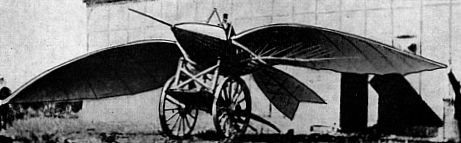
    The field of “photographic firsts” has always been interesting to me–the first photograph of the Moon, the first of a person the first portrait, the first color photo, the first engraving of a photographic image, and so on–and so I came to wonder about the first photograph of an airplane, or aircraft.  What I found was this monster, built by Jean-Marie le Bris, evidently the first image ever made via photography of a fixed-wing aircraft:

    Esterno--first photo

    The photograph (made in 1857, 18 years after the invention of photography) looks very reworked and strains the imagination some, but it shows the glider of Jean-Marie le Bris, who actually achieved gliding flight in the aircraft.  I am sure that the glider used those enormous wheels for land transportation and were not an integral part of the craft. 


    Esterno--1857dutem

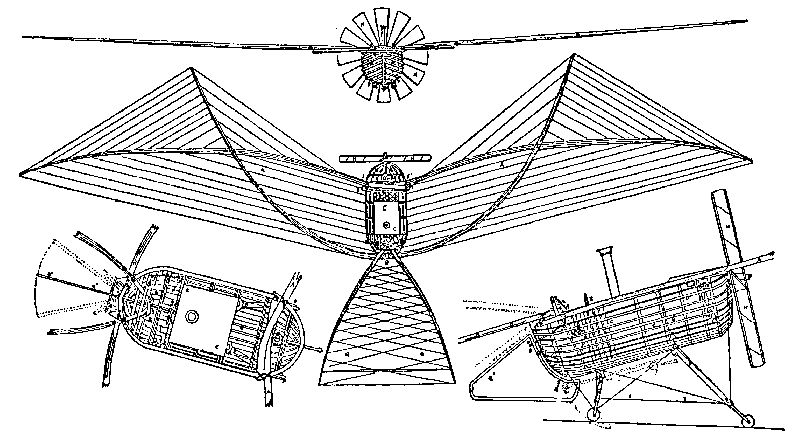
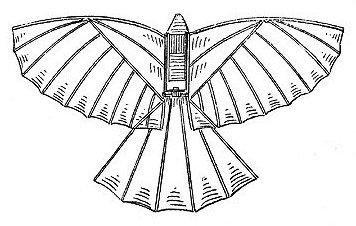
    It was in that same year that Felix du Temple and his brother constructed and flew a small, steam-powered monoplane aircraft model (schematics above), which looked like a bird from the plan perspective and a beetle from the elevation.  The view of the model head-on seems remarkable to me, showing very little in the way of profile.  

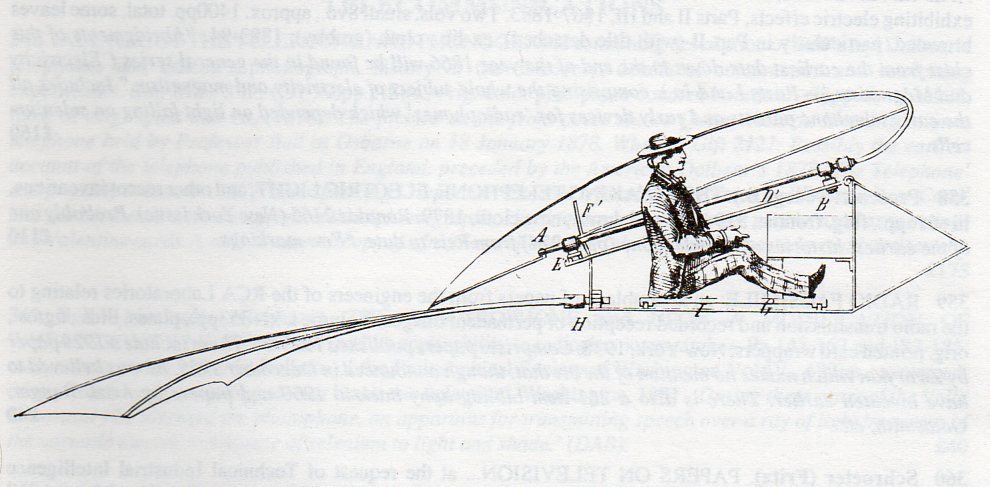
    Ferdinand d’Esterno produced a lovely design of a possible aircraft in his 1867 pamphlet, Du Vol de Oiseaux (“Onthe Flight of Birds”) , a glider that looked manageable and full of possibility, all based on his relentless study of the flight of birds.  Esterno reasoned that all of the heavier birds excelled in soaring flight, and since this was the case, there was hope for man to fly as well. 

    Esterno_Soaring_Machine

    Esterno’s glider was interestingly outfitted with a movable seat for the pilot–something that would be able to change the center of gravity, the flier’s chair connected to the very broad tail section–controlling a rather elegant, rather light-for-its-era (330 pounds) craft with 215 square feet of wing surface.  (See Flymachines.org for a nice description of this and other early aircraft.)  I think what I like most about the Esterno machine–an idea that never progressed beyond the drawing stage–is its compactness and lovely lines, especially as we can see in the cross-section below:

    Esterno--schematic179

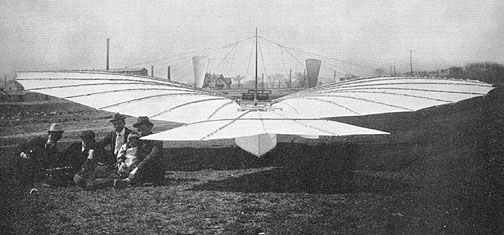
    As the author(s) of Flymachine.org and other sites and books have pointed out, though Esterno’s plans never got out beyond the pages of his pamphlet, he did have an influence on other later fliers, most notably Gustave Whitehead (1874-1927) and the Wright Brothers.  It was whitehead’s work which from my perspective most closely resembles Esterno’s as we can see below in this ca. 1901 photograph, the greatest difference of course being the two engine-driven propellers.

    Esterno

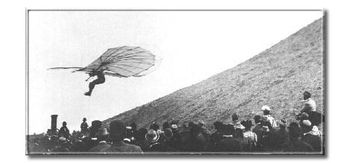
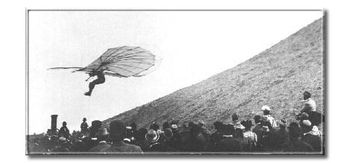
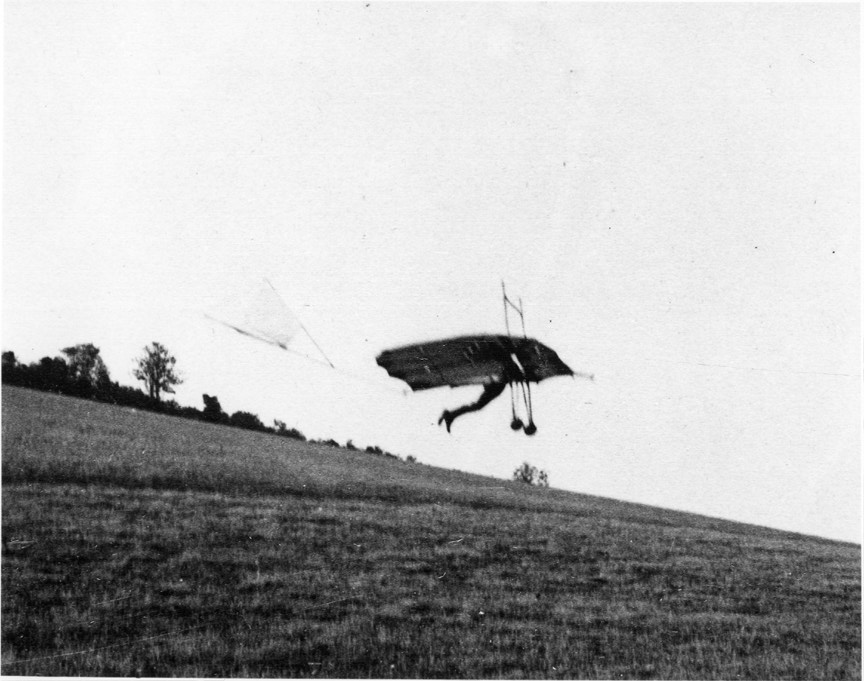
    But it was Otto Lilienthal who was one of the most important figures in the development of
    flight in the nineteenth century, making the first heavier than air
    gliding flights in what looked quite a bit like bird wings.  (Wilbur Wright said of him; “Of all the men who attacked the flying problem in
    the 19th century, Otto Lilienthal was easily the most important. … It
    is true that attempts at gliding had been made hundreds of years before
    him, and that in the nineteenth century, Cayley, Spencer, Wenham,
    Mouillard, and many others were reported to have made feeble attempts to
    glide, but their failures were so complete that nothing of value
    resulted” as found in  The Aero Club of America Bulletin, September 1912, and
    also in the article on Lilenthal in Wiki.)   )  He would die in 1896 in
    a gliding accident, falling to a crumpled death.  We see him in a more successful moment in this fantastic photo:

    Esterno--lilienthal

    Lilienthal also influenced the English aviator Percy Pilcher (1866-1899) whose four interesting gliders ( named theBat,
    the Beetle, the Gull, and the Hawk) led to his engine powered glider–a design left not completed due to Pilcher’s own fatal gliding accident in 1899.

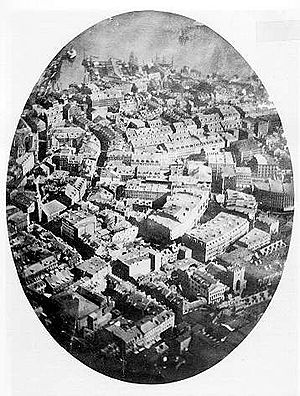
    But getting back to photographic “firsts” and aviation, the earliest surviving aerial photograph was made by James Wallace Black (1825–1896) whose tethered balloon image of Boston (below) is a splendid 160-year-old image of the city; the first first in this category actually belongs to Gaspard-Félix Tournachon (more popularly known as “Nadar”) but that work hasn’t survived.

    Boston 2


  • History of Dots #28: Cellular, Topical and Astronomical (1512-1888)

    JF Ptak Science Books  Post 1074


    Dots--koch175 This is  the 28th installment in the history of dots series, looking at dots big and small, existent and non-existent, cute and level, individuals and groups.  This selection looks at some dots on the micro/cellular level, the tactile visible level and the astronomical level. 

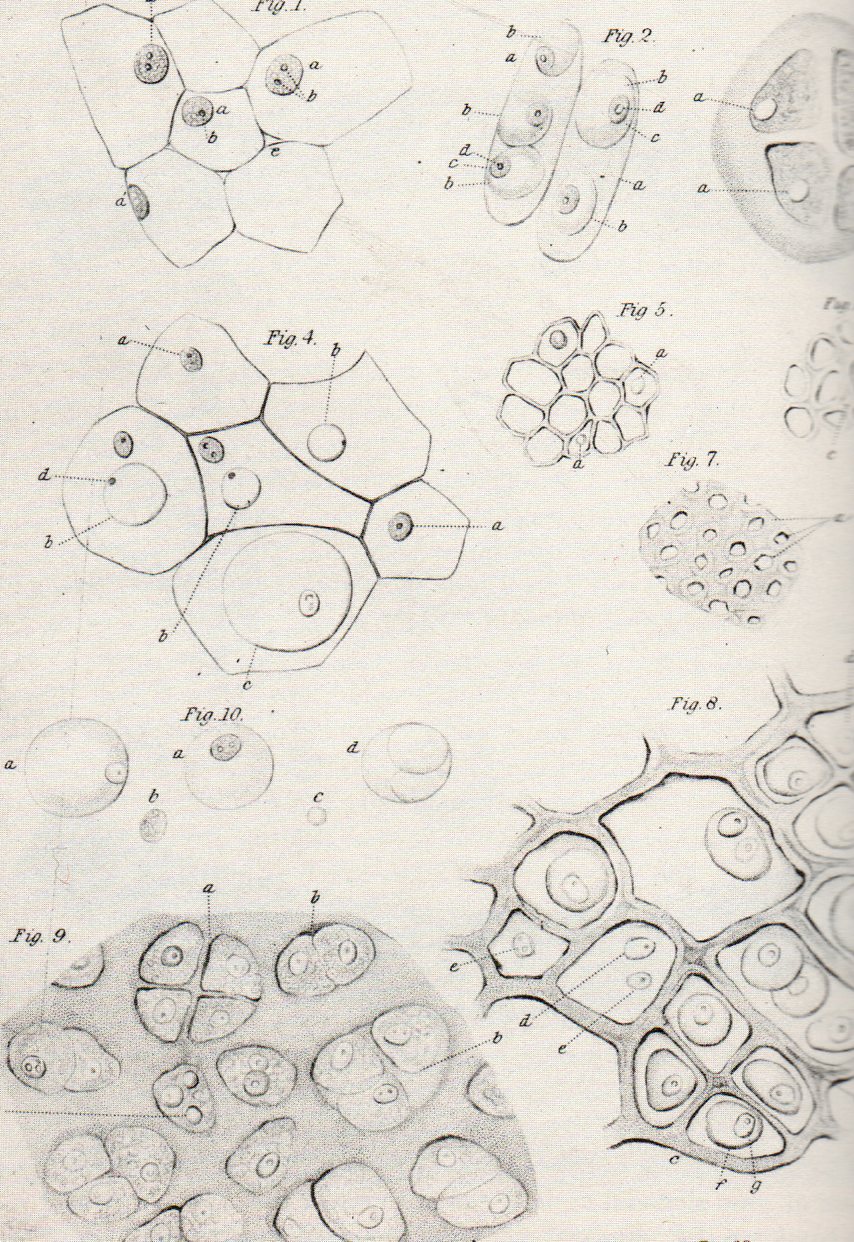
    Theodor Schwann (1810-1882) entered his contribution to the history of dots with his Mikroskopische Untersuchungen ueber die Uebereisnstimmung in der Struktur und dem Wachstum der Thiere und Pflanzen1 published in 1839, the same year as the announcement of the invention of photography by Daguerre.  Schwann–a young experimenter and theorist and former pupil of the great physiologist Joahannes Peter Mueller– generalized Matthias Schleiden’s general and evolutionary-necessary idea of cell-formation2 and developed it into an overall theory for the basis of life. 

    Dots--schleiden178

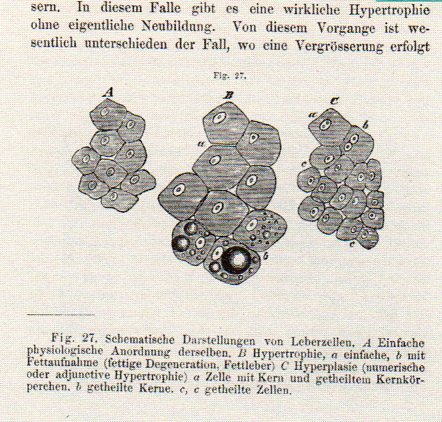
    Rudolf Virchow (1821-1902) looked at cellular dots and determined (with enormous interest) that they were very significantly altered with the introduction of disease.  These images from his Die Cellularpathologie (published in 1858)–a major work which basically founded the field of cellular pathology and introduced a rigorous new approach to scientific medicine–show the differences between normal and abnormal liver cells after having been subjected to disease. 

    Dots--kelendar176

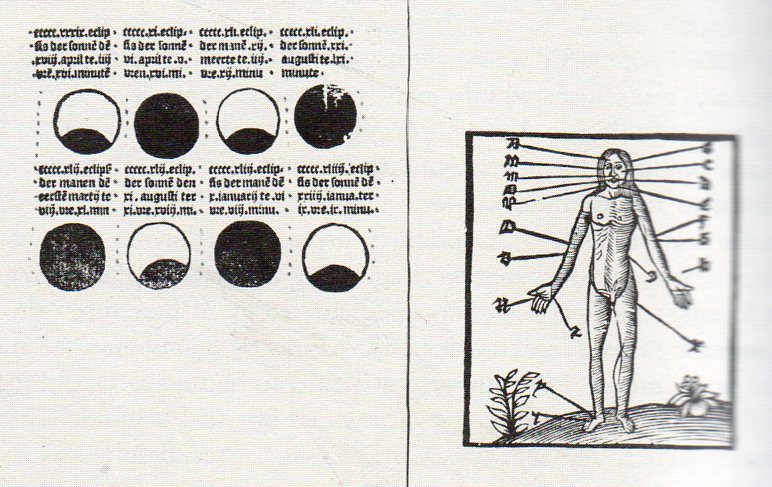
    A less-necessary but much larger dot that filled in the spaces of medical service to humanity is found in Der scaepherder Kalengier (“The Shepherd’s Calendar”), a beautifully-designed book printed in 1512.  The book was an encyclopedic compendium of contemporary medicine, but it also contained s little less than that, having a section of zodiacal dots and semi-dots in relations to principal points on the body that could be used for bloodletting. 
    Dots--jenner177
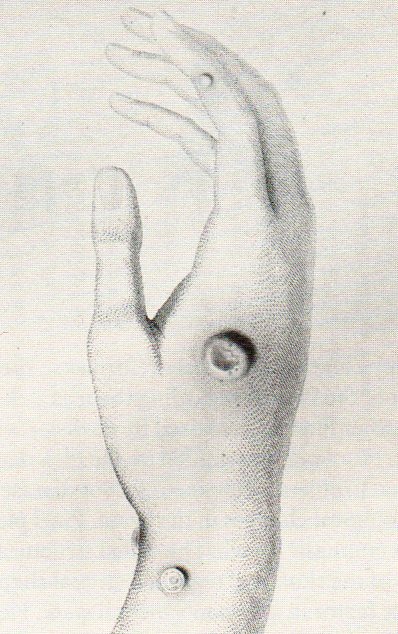
    Between the images of the sun/moon and the cell fit the dots of cowpox blisters on the hand and fingers of Sarah Nelmes, famously and inspirationally observed and understood by the Edward Jenner (1749-1823)3.  He extracted fluid from the blistered hand of Sarah the milkmaid and injected them into a very young “assistant” named James Phipps–essentially it was human experimentation carried out by a country doctor far removed from the culture of London, but who had a brilliant idea.  He continued extracting the injecting the pus from the blister until it came one day that Jenner tried the efficacy of his anti-small-pox innoculations with the real thing, exposing the boy to the dreaded disease.  Phipps did get sick but recovered in a few days4, documenting the revolutionary idea of Jenner and taking a great step forward in the treatment of disease. (It took years, by the way, for Jenner’s discovery to be recognized by the medical elite, whose opinion of Jenner was low given his simple medical life as a country doctor.)

    Notes

    1.  An English edition was published in London in 1847 under the title Microscopical Researches into the Accordance in the Structure and Growth of Animals and Plants
    2. For example, a plant is a community of cells and the cell is the essential unit of the individual plant.

    3. Famously reported in his 1798 publication An inquiry into the causes and effects of the Variolae Vaccinae, a disease discovered in some of the western counties of England, particularly Gloucestershire, and known by the name of the cow-pox.
    4. Described by Jenner so: “On the seventh day he complained of uneasiness in the axilla, and on the ninth he became a little chilly, lost his appetite, and had a slight head-ache…..” but on the 10th day he was perfectly well….    In order to ascertain whether the boy, after feeling so slight an affection of the system from Cow-pox virus, was secure from the contagion of the Small-pox, he was inoculated the 1st of July following with variolous matter (Small-pox matter, ed.) immediately taken from a pustule……No disease followed…. Several months afterwards, he was again inoculated with variolous matter, but no sensible effect was produced on the constitution.”


  • History of Dots 27: Killing Bacteria–Human Experimentation with Conscientious Objectors, 1955

    JF Ptak Science Books  1073

    Medical and scientific experimentation on humans has a long and painful history.  In the early days it seemed much more acceptable to perform tests on people while they were alive more so than to cut up and autopsy their bodies when they were dead. 

    Human experimentation174

    William Beaumont–the “father of gastric physiology” –was also perhaps a very early leader in the field of bioethics.  Beaumont’s most famous series of experiments1 were performed on a living subject, but only with the patient’s full knowledge of the procedure and consent (and also with te ability to terminate the procedures).  (Part of the defense of the Nazi concentration camp doctor-monsters brought Beaumont into their courtroom as an example of early American compliance to their bestialities, but purposely failed to mention the pertinent rights of Beaumont’s patients, whereas their thousands and thousands of human subjects were in concentration camps and were treated without regard to any moral, ethical or humanitarian consequences.)  Claude Bernard–one of the 19th century’s leading experimental medical researchers and physiologists–reported in his monumental 1865  Study of Experimental Medicine… that a physician must  “… perform an experiment on man whenever it can save his life, cure him or gain him some personal benefit.”  Hopkins’ great William Osler (in 1907)  was entirely on board with the Bernard appraisal of the duties of the physician, saying that any new procedure or pharmaceutical must be used on humans before general release.         
    Then of course three’s the other side of the coin: the STD experimentation in the infamous Tuskegee case (1932), the widespread studies of the U.S. Army’s Chemical Warfare Service, the Cornell Medical School’s wincingly bad study that gave the name to the placebo effect, th e1942 Chicago malaria studies on inmates, the long series of atomic and nuclear weapons tests with passive involvement of sailors and soldiers, and on and on, back into dim history. (The experiments by the Nazi doctors and their Japanese Unit 731 counterparts  deserve their own categories.)

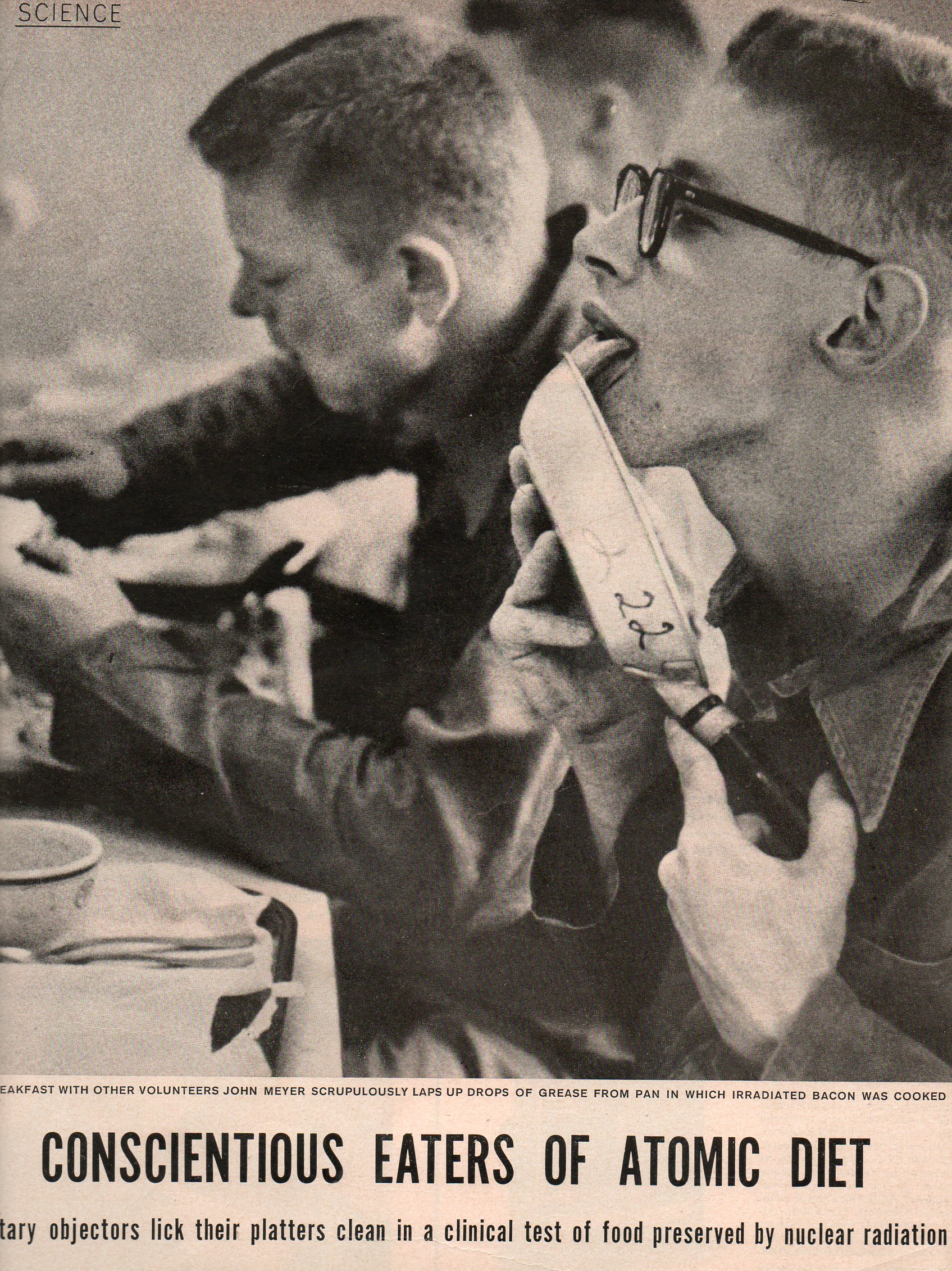
    This photo from Life magazine on the story (“Conscientious Eaters of an Atomic Diet”) of 1955 must be among the most wholesome general cover stories in the history of the idea of human experimentation.  These young conscientious objectors2 declared (for whatever reason, ethic, moral or religious) their inability to serve in the armed forces, and were sent to a different task to replace military service.  Their exchange would be to test the effects of nuclear radiation on food products. (This was the process of using radiation to kill bacteria and insects and whatever other living badie in food that might cause disease or illness of cause the food to spoil.  The long-term result for the military could be enormous, allowing for more inexpensive and less difficult ways to keep food for longer periods of time for troops, and could also keep troops healthier by eliminating certain food-borne illness that could spread from one person to another.)

    Still, what was being asked of these young men was far beyond the “debt” implied by their CO status. The effects of this sort of exposure were still not well known, and these men were absolutely being place in harm’s way, and for the cameras of Life.  The ideas of “Radiation sickness” and “Acute Radiation Syndrome”–created by the two atomic bombs detonated in Japan in August 1945–were only about ten years old at the point where these young men were licking the irradiated grease form their plates. (As a matter of fact there was no immediate medical research team in place to study the biological effects of the bombs in those two cities; after a few weeks and by the end of August there was a organization in place, headed by Colonel Ashly Oughterson.) These men weren’t going to suffer any radiation poisoning from the process (the ionizing radiation used by irradiators “was not strong enough to
    disintegrate the nucleus of even one atom of a food molecule”) , but the effects of irradiating food at this point were still not known.

    Notes:

    1. Published in his 1838 Experiments and Observations on the Gastric Juice, and the Physiology of Digestion.

    2. The business of conscientious objection to military service is milennia old; in the United States it goes back easily to the Revolutionary War.  It becomes a little less defined in the Civil War, where a CO or anyone else faced with military service could purchase a stay of service for $300 or provide someone in his place.   (In the CSA the same could be done but for a little more–$500.)    The whole business got considerably tightened up by WWI, and in WWII–when there was a spike in declarations by Cos–the code for declaration of objection to military service was considerably clarified, though not making it any less painful experience for the CO to endure.      In 1948 the worldwide  issue of the right to “conscience” was addressed by the United Nations General Assembly  in Article 18 of the Universal Declaration of Human Rights, part of which reads:  “Everyone has the right to freedom of thought, conscience and religion; this right includes freedom to change his religion or belief, and freedom…”
         
    During WWII the CO declaration form/questionnaire DSS 47 asked these ten questions:

    1. Describe the nature of your belief which is the basis of your claim.
    2. Explain how, when, and from whom or from what source you received the training and acquired the belief which is the basis of your claim.
    3. Give the name and present address of the individual upon whom you rely most for religious guidance.
    4. Under what circumstances, if any, do you believe in the use of force?
    5. Describe the actions and behavior in your life which in your opinion most conspicuously demonstrate the consistency and depth of your religious convictions.
    6. Have you ever given public expression, written or oral, to the views herein expressed as the basis for your claim made above? If so, specify when and where.
    7. Have you ever been a member of any military organization or establishment? If so, state the name and address of same and give reasons why you became a member.
    8. Are you a member of a religious sect or organization?
    9. Describe carefully the creed or official statements of said religious sect or organization as it relates to participation in war.
    10. Describe your relationships with and activities in all organizations with which you are or have been affiliated other than religious or military.

    For human experimentation, see also:

    Hoerni B. [Medical ethics. Evolution century after century] Hist Sci Med. 2003 Jul-Sep;37(3):331-8.

    Lyon J. Experimenting with humans. Part I: History and context. Second Opin. 1987;6:63-89

    Numbers RL. William Beaumont and the ethics of human experimentation.  J Hist Biol. 1979 Spring;12(1):113-35.

    For more on radiation studies at Hiroshima and Nagasaki:

    Archives: Atomic Bomb Casualty Commission. Issues in Science
    and Technology. Spring 1997. FindArticles.com. 21 Apr. 2008. http://findarticles.com/p/articles/mi_qa3622/is_199704/ai_n8759128.

    Atomic bombings of Hiroshima and Nagasaki. (2008, Apr 19). In Wikipedia,
    The Free Encyclopedia
    . 21 Apr. 2008.

    ABCC Collection at John P.
    McGovern Historical Collections and Research Center (Houston
    Academy of Medicine-Texas Medical Center Library
    ).

    Radiation
    Effects Research Foundation
    Home website in English and Japanese


  • Duchamp, the Empty Value of Words, and Bra Dreams 1955

    JF Ptak Science Books   Post 1072

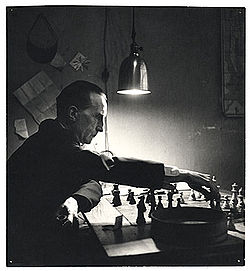
    There is absolutely no chance for a word ever to express anything. As soon as we start  putting ourDuchamp thoughts into words and sentences, everything goes wrong.– Marcel Duchamp

    Which is worth more, wind or stone?  They’re both priceless.  Alexksie Kruchenyh

    This is one of the defining Duchamp quotes for me, the thing that most closely gets at what he was trying to do in his art.  Ultimately I think that he didn’t care about words to define the result of what he was thinking about–or what his art represented.  Or the outcome of a chess game.  To me he was all about the process of getting there, the results not mattering all that much–and certainly not a description of the result.  

    Or perhaps not.  My opinion on Duchamp is that the whole deal for him was a performance, whether he was writing about or discussing or making art, the most important issue was the movement associated with trying to move from place to place.  The destination itself didn’t matter. The message was the thinking, and so identifying it as the same for everyone when the process was so individualized was senseless for him, the message a dynamic thing communicated with images.
    Bras maidenform171
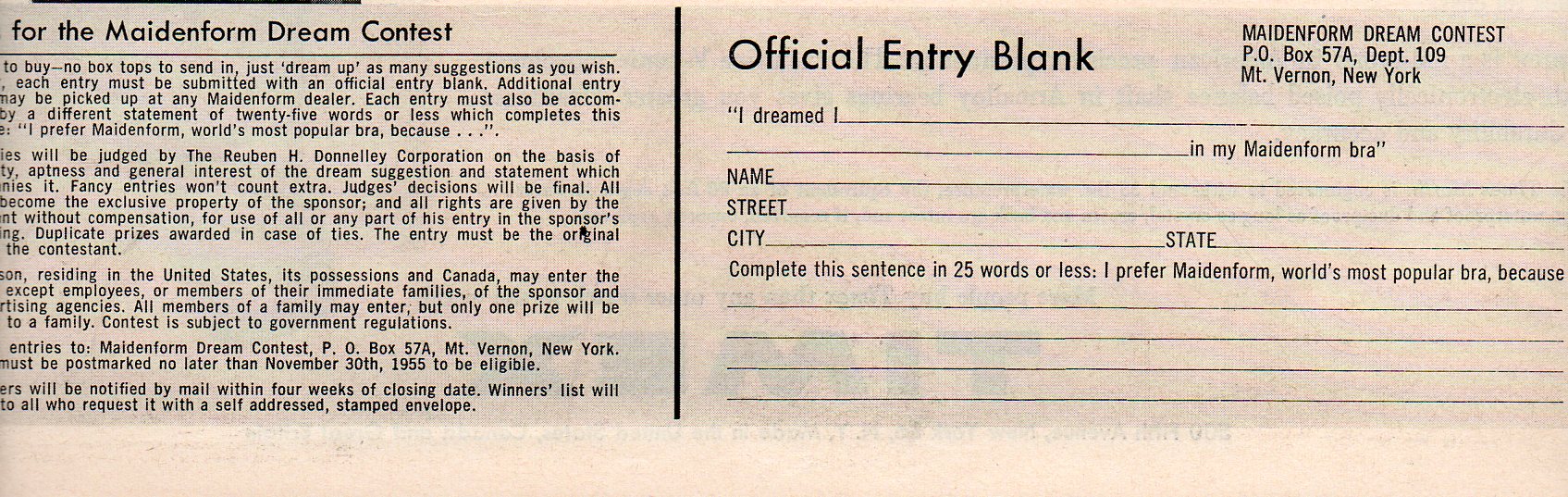
    When trying to use this Duchampian interpretative tool with this odd combination of words and images in this 1955 LIFE magazine ad I still come up a little short on  what was going on.  Maidenform was looking for dreams that women had in Maidenform bras, paying $13,000 for three juicy/saucy/odd samples.  The manikin-like pose, the expressionless face, and the few bits of clothing this woman is modeling apply some sort of robotism on which  rocket-y wire-circled bosoms are encased in a steely industrialism.  On the other hand the bra maker wanted women to share their bra-encrusted dreams.  The central interest is of course making money on bra sales, but underneath that I’m not sure what I come away with as the message in the images outside the obvious peek-inside-the-machine stuff. 
    Bras maidenform form173

    A little further in the magazine and we find an ad from Exquisite Form (“brassieres give you X* appeal”) that gets to a simpler message instantly.  The instantaneous is lacking in the Maidenform ad, but the inescapability isn’t.

    Bras pearls170


  • The Theory of Multiple Creations: a Modest Proposal for Creationists

    JF Ptak  Science Books   Post 1070

    For a little while I was collecting antique maps featuring the location of Eden–almost none of the maps showed Eden in the same place, and as a matter of fact, the Garden’s location was quite dynamic through the history of its cartographic representation.  The it occurred to me that instead of these maps being mostly incorrect or inaccurate or widely interpreted, perhaps they were all correct. 

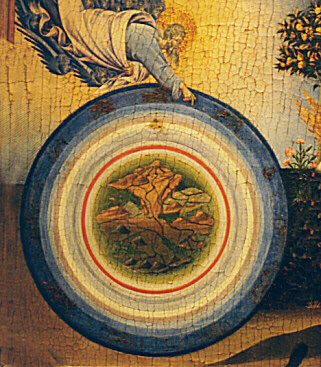
    Dante_primum_mobile It seems that one problem in the encyclopedia of problems that comprise the entirety of creation scienze is the distribution of the races–a difficult thing to achieve in an excruciatingly short period of geological time and from one location.  There were some 18th century thinkers (like Candolle, for example) who solved problems like this sort of population distribution and sporadic speciation with concepts of multiple points of origin.

    If there were multiple Edens then perhaps the issue of population differences over impossibly short periods of time would make the entire Eden idea less logically compromised.

    If this was the case, why stop here?  Why not an idea of multiple creations, occurring over periods of unspecified time and in unspecified ways and numbers?  Then we could have some very interesting philosophical issues of creation magnitudes, durations, locations, and of course size.  Perhaps there were micro/mini .025 second creations occurring spontaneously over the course of time.  Perhaps an “essential creation” which gave birth to regional and minor creations.  Perhaps there is an as-yet geological strata that could be specified in terms of layers of past creations rather than simple geological explanations.  Astrophysical theories could be bolstered by Multiple Creation Theory (MCT), identifying Dark Matter as vestigaliana of creations large and small.

    I mean, if you’re going to believe in Creationism and creation scienze and intelligent design, why stop there?  If you’re going to believe in a simple, single creation theory, how much more intellectually burdensome would it be to believe in more-than-one creations?                
    I wonder if there is a Lobachevskian or Bolyiaian approach to this issue, a creation version of non-Euclidean geometry?
                           
    In for a penny, in for a pound, I say.

    ·Posted by :

    ·in: