A Daily History of Holes, Dots, Lines, Science, History, Math, Physics, Art, the Unintentional Absurd, Architecture, Maps, Data Visualization, Blank and Missing Things, and so on. |1.6 million words, 7500 images, 4.9 million hits| Press & appearances in The Times, Le Figaro, Mensa, The Economist, The Guardian, Discovery News, Slate, Le Monde, Sci American Blogs, Le Pont, and many other places… 5000+ total posts since 2008.

Author: JF Ptak

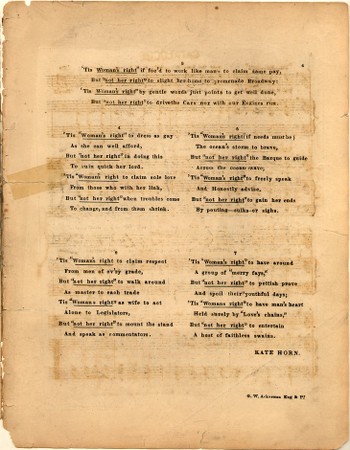
  • Equal Rights for Women–NOT a Good Idea. Redefining “Equality”, 1863

    JF Ptak Science Books LLC   Post  1158

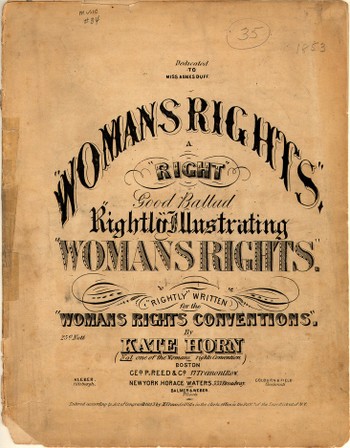
    Womensrights_1

    “Can a woman be said to have a right to life, if all means of self-protection are denied her….Can she be said to have a right to liberty, when another citizen may have the legal custody of her person ….Can any citizen be said to have the right to the pursuit of happiness, whose inalienable rights are denied; who is disenfranchised from all the privileges of citizenship…?” –Elizabeth Cady Stanton, speaking to the Tenth National Woman’s Rights Convention, The Cooper Union, New York, N.Y., May 10 and 11, 1860

    A Good Woman is “not an equal of man” or so we are told in this peon to the status quo of 1863.  This  semi-sugary attack upon the “Womans Rights Conventions” found the appeal of equal rights to be almost mostly unappealing–no

    t that women should not have “rights”, just not “equal” rights.  Jut rights enough–some of which for 1863, as it turns out, were pretty liberal. [The song was probably addressed in general to the series of ten conventions for women’s rights that had been held in this country beginning with the first–at Seneca Falls, New York–in 1848. Between then and 1860 there were ten conventions, plus one in 1863 that was called the First Woman’s National Loyal League Convention.] 

    The song–Woman’s Rights, a “Right” Good Ballad, Right of Illustrating Woman’s
    Rights, Rightly Written for the Womans Rights Convention…
    –and published in Boston in 1863 was written by composer Kate Horn (emphatically self-stating to be “NOT of the woman’s rights convention”).  She was annoyed with the prospect of overall equality impinging upon traditional womanhood, or at least the current tradition of the feminine, and convinced the publisher Geo. P. Reed to publish her complaint in song. 

    She had many supporters, evidently–the equal rights part not really coming partially true, until, well, not even now.  I guess that this is certainly a debate platform, and I could probably argue a good but wrong response from the republican point of view, but I won’t–differences in pay scales, access to corporate power, under- and mis-representation in government and so on is not evidently enough of a scare to entice the necessary number of state to endorse the ERA.   In any event, women didn’t get a big push towards equal rights until they got the vote in the USA  in 1920 (the legislation which became the 19th Amendment was introduced in 1878; a majority of women didn’t exercise that right until, I think, after WWII), and really didn’t enjoy much power until the 1960’s.  

    As it turns out, Ms. Horn was lyrically resolved to demand some equality–but definitely not the brand of people like Elizabeth Cady Stanton.  The greatest surprise from Horn (at least to me) makes the demand for equal pay for equal work, though women should not be allowed to operate machinery and such.  There are a number of calls to decency and modesty which sound like basic ethics, but they’re also peppered with subservient overtone rejoinders.  Its hard for her to recover from the call to household “pretty trouble(s) brave”, but there are elements of forward thinking in the song.  Horn doesn’t absolutely  reject the ideas of “equality” of the rights conventions, but by taking her stance against universal equality she makes her’s less so and those of Stanton more.

    Woemnsrights2

    ·Posted by :

    ·in:

    —

  • Food and Not Having It: Visual Displays of Data, Britain and Germany, 1918

    JF Ptak Science Books    Post 1157

    00-blog--Oct 29 starvation germany953
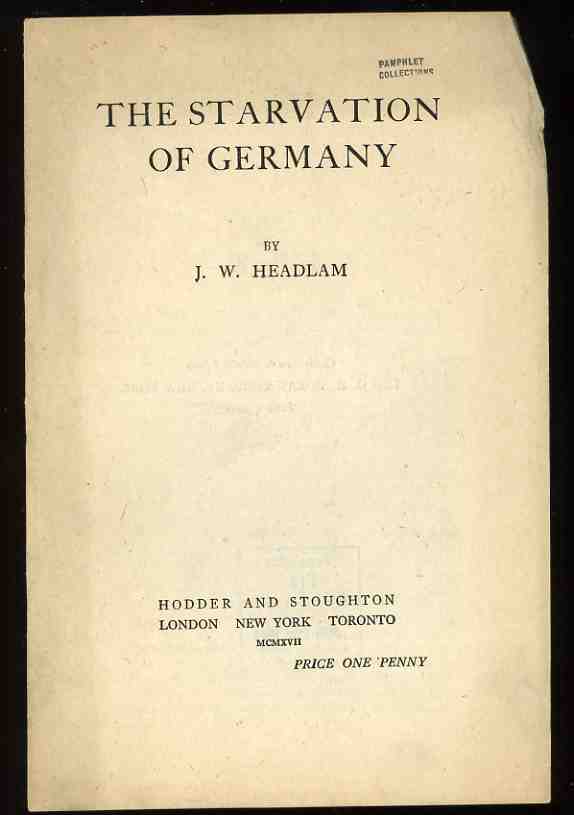
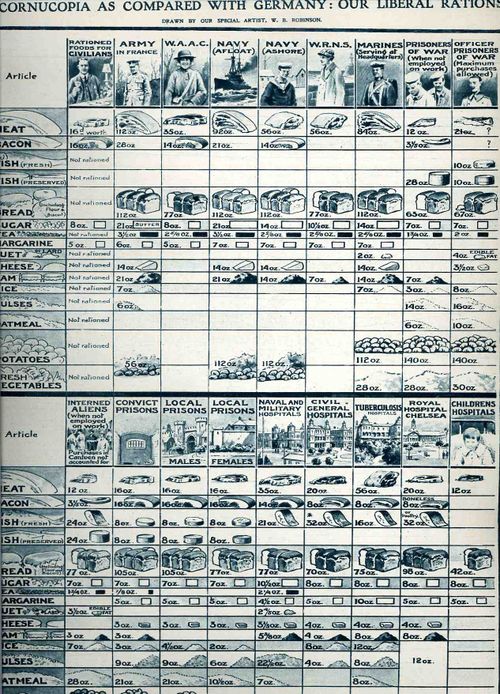
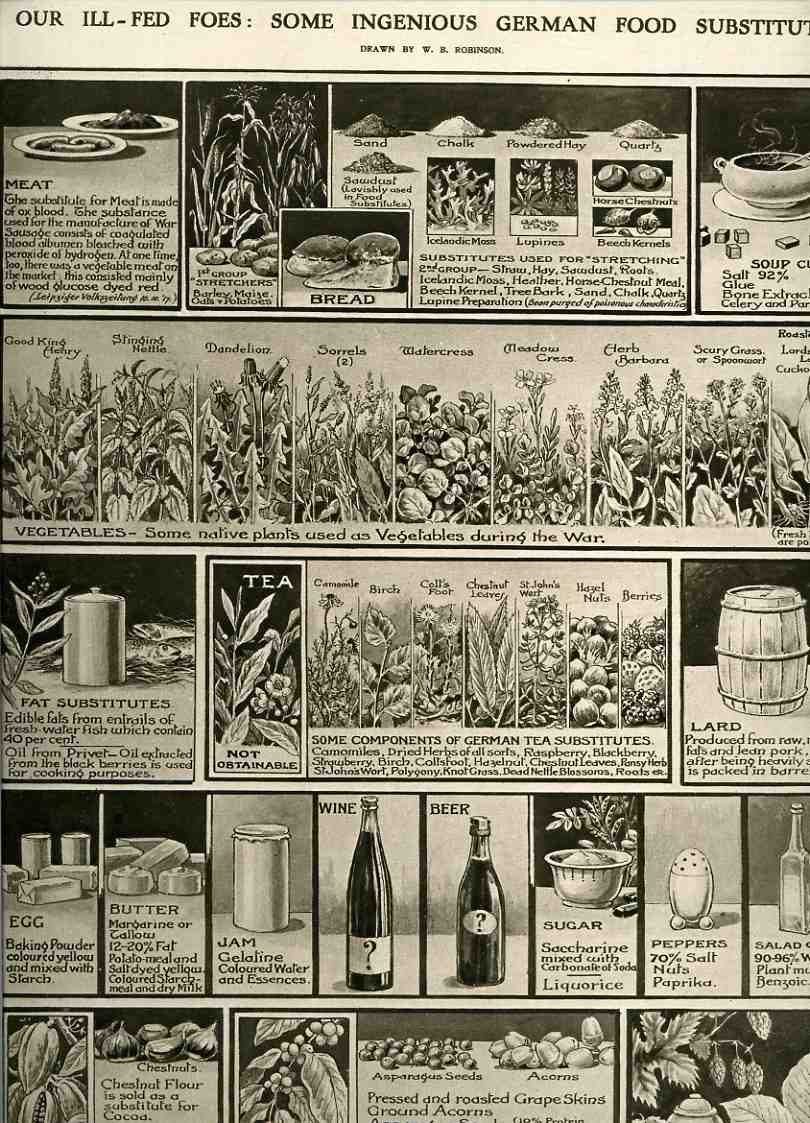
    The idea behind these three images was part of a hearts-and-minds home-front propaganda campaign by the British government to instill fortitude and a feeling of general good in the population, trying to get the message across that British citizens were far better off (in regards to food and staples at least) than their German counterparts.  Even though the situation wasn’t exactly standard in Great Britain in the last year of the First World War, the situation was far more dire in Germany–there was after all an embargo against ships going into Germany or its allies, making it a very difficult to receive food, whereas that problem did not exist in Britain, which pretty much controlled the seas at that point, and could therefore receive food and other material from the Colonies and allies.

    The first graphical display, appearing in The Illustrated London News on June 12, 1918 (and just four months from the end of the War), showed the “ample weekly rations for various classes of the population”.  18 classes, actually, that were enjoying more food than the Germans, the “U-Boat having failed to starve” them. In all of this what comes to my attention first are the allowances for male/female prisoners in England; each getting similar amounts of meat, bacon fish, margarine and fresh vegetables, though for some reason the women are given lesser shares of bread, rice and oatmeal.  The other bit is that the food allotted to the “childrens hospital” is less by far in all categories than everything else.  I’m hoping that this is due to size and consumption differences more than anything else.  I also notice that the officer prisoners of war are given more rations than the enlisted POWs.  Interned aliens are also given short rations, except for fish (Fresh and preserved)  and potatoes, when they get substantially more than anyone else. 

    Unfortunately we do not see what the Germans had to eat, though in the next graphic (same source, though 23 March 1918) we see the “ingenious” ways in which the German people got around not having certain foodstuffs.  The means look more desperate than anything else: meat/sausage for example is replaced by “War Sausage”, which was coagulated ox blood bleached with peroxide, and also by a “vegetable” meat, which was dyed glucose.                                                                                                                          

    00-blog-Oct 27 foes food part II937

    00-blog-Oct 27 ill fed foes 1918935


  • Nazi Propaganda to the French–Leave France Behind and Join Us

    JF Ptak Science Books   Post 1156
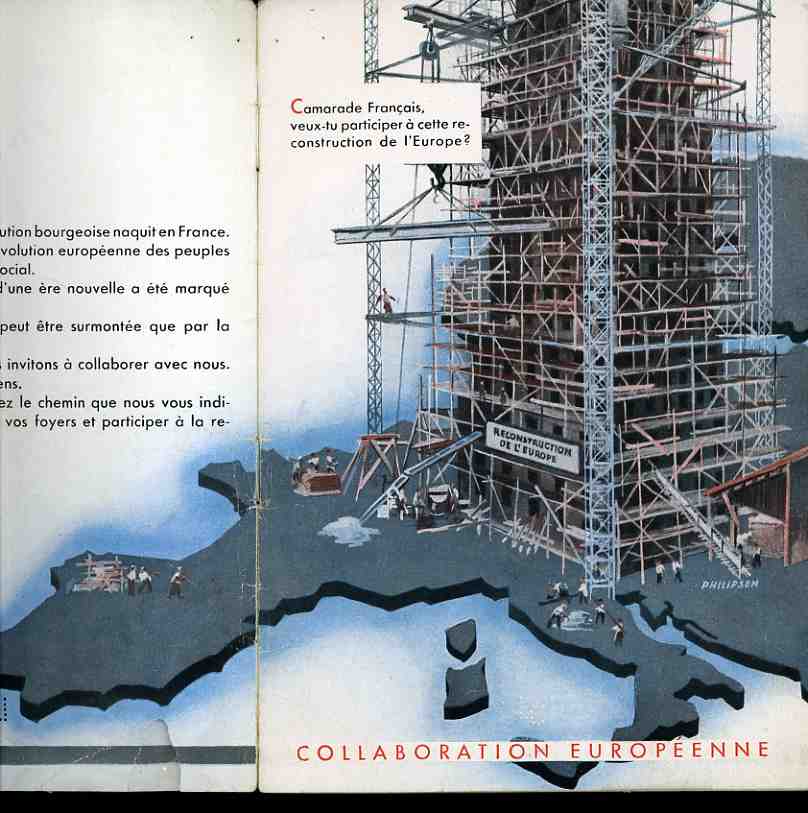
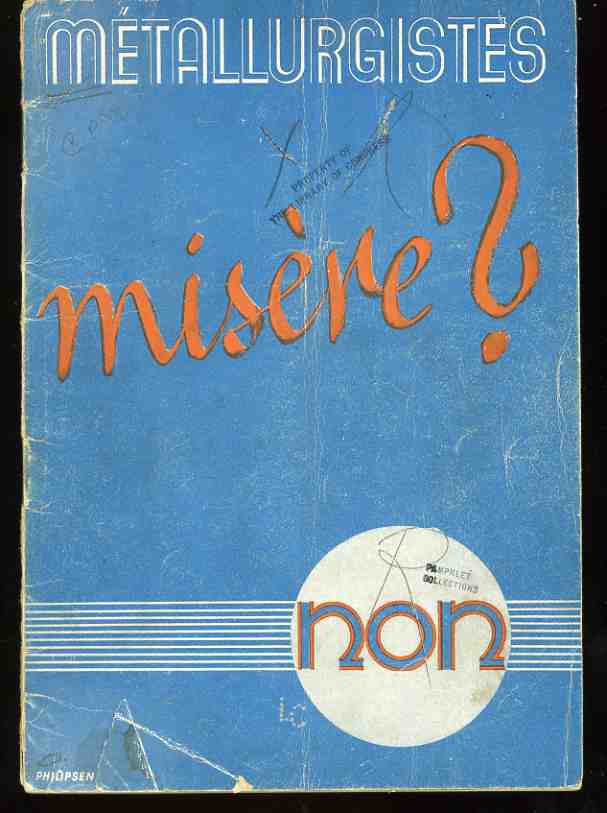
    0--blog-dec 9 vichy cvr220This appeal to practicing French metallurgists by the Nazi occupying force (Metallurgistes misere? Non 1943.) promised good wages, a clean place to sleep, and a livable future.  This included a life for professional metallurgists with a family, as well.  The Nazis were (blood) thirsty for practically-trained “help”, desperate for people with an expertise in occupied France to help contribute to their war effort, and this pamphlet was one means of trying to persuade (via propaganda) or purchase the tacit approval of these professionals.  The Nazis were promising a place to all of those who followed the call, a place in the resurrection of Europe, in the rebuilding of the European community under German/Nazi rule. 

    There was one very odd problem in this pamphlet.  The map shows the creation of this very large allegorical structure, which naturally centers on Germany;

    0--blog-dec 9 vichy cvr219

    but strangely enough, none of the structure seems to touch French
    soil–so much for the “New Europe”.  As a matter of fact it looks as though there is a table with
    three men standing around it at just about the exact place that Paris
    would be.  I’m not convinced that this was intentionally represented
    this way, showing the French reader that France was not going to be
    part of the rebirth–not having France as a part of this new empire
    would seem to be unthinkable–perhaps.  Maybe the issue was to show the inductees that should they decide to stay at home they and their family and the rest of the country will be part of a destitute agrarian Medieval future, that France would not be part of the New Europe, rather than someone screwing up in the Nazi propaganda offices. The screwup is possible though–they were, after all, only Nazis.

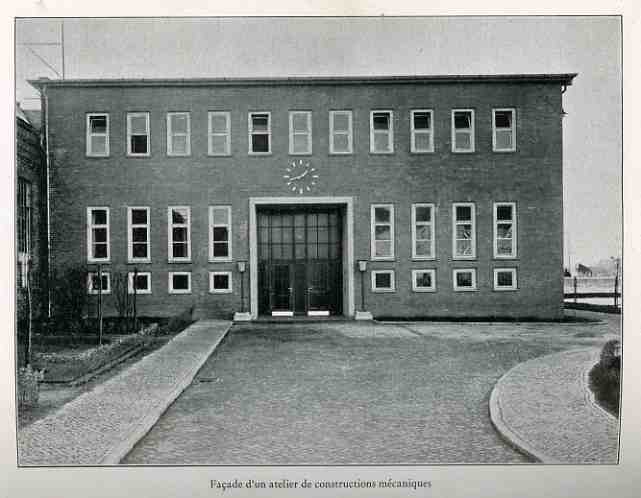
    Photos of the promised facilities:

    0--blog-dec 9 vichy clock222


  • Footnotes in the Future–Swift, Lull, Borges and the End of Writing

    JF Ptak Science Books   Post 1155

    “The most ignorant person at a reasonable charge, and with little bodily labor, may write books in philosophy, poetry, law, mathematics, and theology, without the least assistance from genius or study.”   Jonathan Swift, in Gulliver’s Travels

    “Hell is the kingdom of the animal that swallows up the memory of all things… Between life and death there is no destiny except memory. Memory weaves the destiny of the world..”  Carlos Fuentes, Terra Nostra

    “A people without history/ is not redeemed from time, for history is a pattern of timeless moments” — T.S. Eliot, Four Quartets.

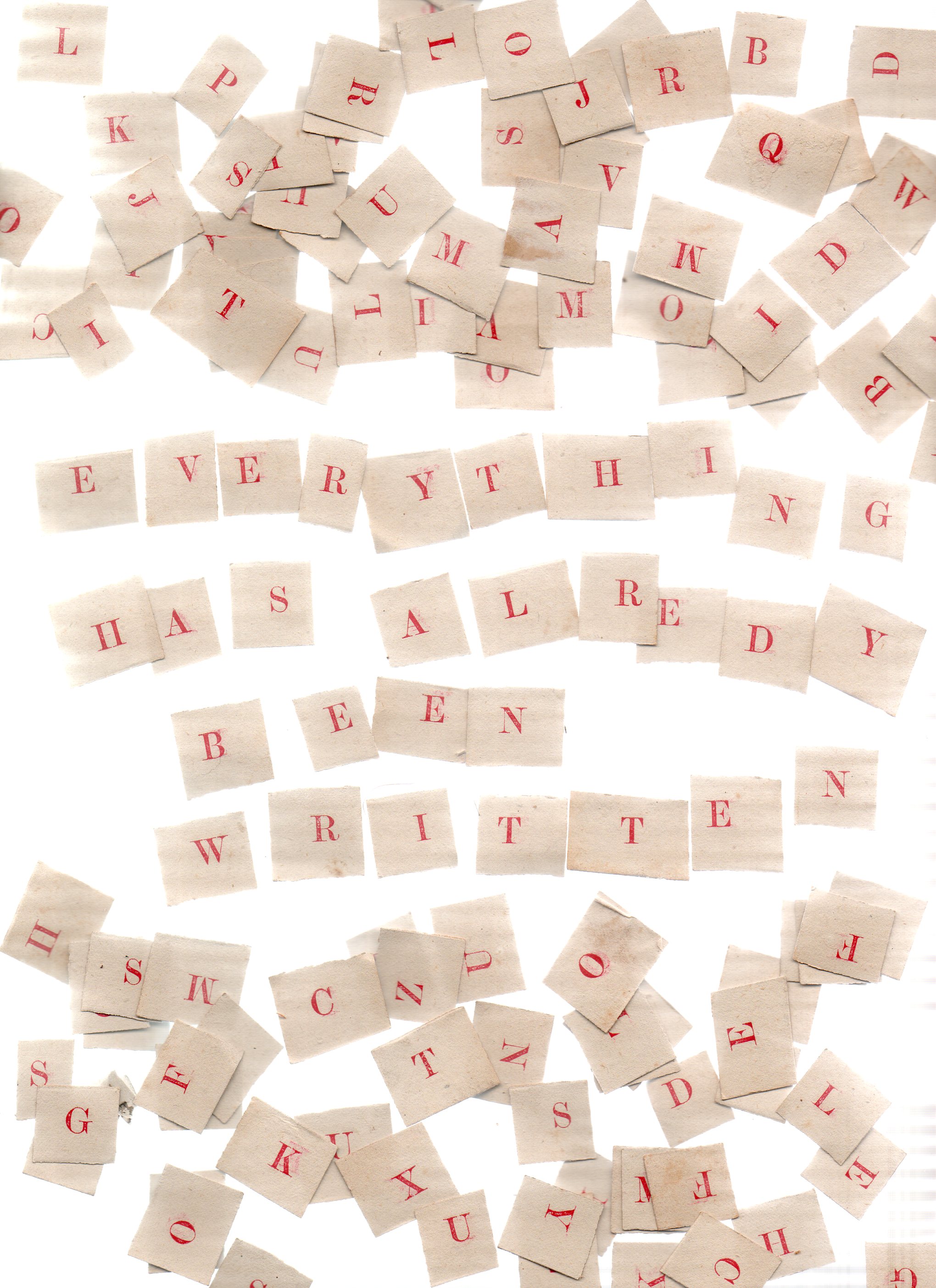
    The future history of writing–it will tell us–was already written before it was written.   In the future, when everything that can be written has been written and everything spoken has already been spoken, perhaps the first footnote in the history of already-done things will be to Jonathan Swift.  The experience belongs to us through Lemuel Gulliver1, who after surviving two trips (one to Lilliput in which Gulliver is twelve times the size of

    Written468

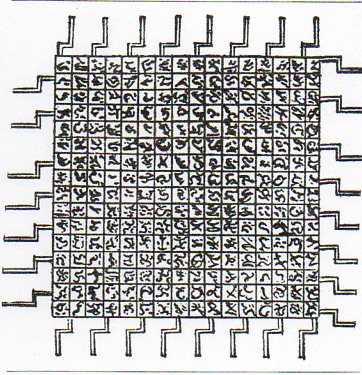
    everything else, and the second to Brobdingnag where he is one-twelfth the size of everything) comes to a third (of four2) in the land of Laputa.  It is here where he encounters a conversation machine that, when cranked, produces anything and everything, the known and unknown, the original and the copied, and have the thought and spoken
    word belong to the manipulator of the machine.  Everything that can be said is in that box, waiting to come.  The 20′ square was occupied by cubes with words on their sides, with 40 cranks and 40 handles and 40 operators to manipulate the mechanical vocabulary and associated scribes to record anything that made sense, and would be the springboard of “knowledge”operating without a manual or an intelligent primum mobile. (The image of the machine–which bears some resemblance to an integrated chip–appears in the third edition of Swift’s book, and as you can see is not a well-drawn thing, missing a row and a column and a crank here and there. A fuller description is found below.)

    Writtenc machine470

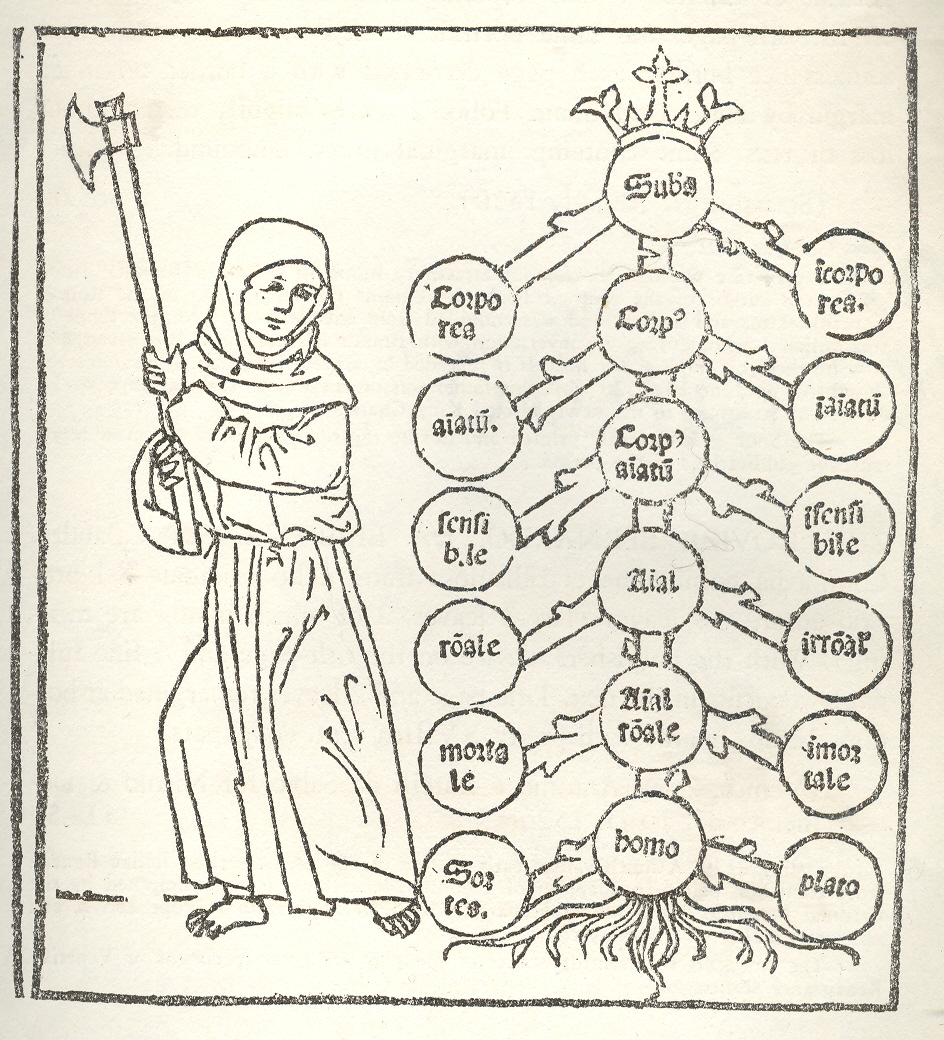
    The idea of a universal knowledge or an expanding, forever-library is very old, particularly if you expand the concept a bit to include Aristotle and the Tree of Porphyry3.  While not exactly a generator in the sense of Jorge Borges’ Library of Babel or the Swiftian machine, the ancients did 1--logic treeproduce very interesting, elegant, beautiful ways of story information and ordering information.  The Tree of Porphyry is far more concise–an abbreviation-compared to the infinitely expanding hexagonal rooms filed with books and attendant librarians in the Borges’ universe.  Or the Ars Magna/Thinking Machine of the 13th century Ramon Lull (also known as Ramon, Raimundo and Raymond, Raimundus and Raymundus Lull, Lully and Lullus and Lulio), the ultimate organizer of how sentences can be made and knowledge produced/uncovered (particularly if you want to please the logic of the church and the Creator), and which was almost certainly known to Swift (and which was also written about, described and worried-over by Borges4).  There are many other early figures in this category to be sure (Lewis Carroll, William Jevons, and even in a way Mr. Venn, not to mention Leibniz and his calculator,  and the changes in scientific method and (English/Dutch) mathematical concentration on applied mathematics of the 17th century that made thinking about the industrial revolution possible)), but that would be left to (at least) a longer post.  (The Lull wheel, below.)
                               

    How long will it take to digitize everything that has ever been written, or recorded, or composed? Several generations? Ten?  It may well come to pass in shorter time than we think; and when you compare this control of recorded human history to the centuries that will follow in developing “computers”, how can we possibly know what will become of all of it?  In the coming centuries and their attack on intelligence, when in the future the brain is a harvest of the computer, perhaps intelligence finally submits, and everything that can be done has been done, the progress of humanity snubbed to a stub. Or expanded exponentially.  It is such a tough call to make…

    Notes:

    1.  Jonathan Swift, Travels into Several Remote Nations of the World, in Four Parts. By Lemuel Gulliver, First a Surgeon, and then a Captain of several Ships.  1726.

    2. The third voyage was Part III. A Voyage to Laputa, Balnibarbi, Luggnagg, Glubbdubdrib, and Japan. The fourth finds humans as pets/inferiors in the island of the Houyhnhnms, a land of intelligent horses.

    3. The “tree” was a diagrammatic creation of a 3rd century Syrian mathematician/logician/philosopher named Porphyry who– much taken with Aristotle (and with the Categories in particular)– developed a systematic approach to the organization of thought in diagrammatic form.

    4. Borges J. L. (1999) ‘Ramon Lull’s thinking Machine’ in The total library: non-fiction 1922-1986 (Edited by) Weinberger, E., trans. Allen, E. Levine, S. J., and Weinberger, E. London, Penguin, on pp 155-160.

    It is interesting to note that Lull, who gave up everything to follow his calling into the church (and who was antagonized by the belief that his very act of missing his left-behind life to be a sin against god’s choice of him to follow his “career path”) was demonized by the church soon after his death, his works prohibited reading for hundreds of years.  He was resurrected in 1958 though on a path towards sainthood, a doctor of the church.  

    A description of the Swift machine:


  • Bad Ideas Department: Pool Vodka and Cigarette Wallpaper 1947-1953

    JF Ptak Science Books   Post 1153

    Things we dont need vodka swim464 I just can’t leave this week’s string of five posts on stuff that I found in Life magazine without adding a little to the Bad Ideas category.  Generally this is the place  to collect the really odd, little material that I stumble upon that is noteworthy but not necessarily a good  fit for a general, stand-alone post.  So comes this installment to Bad Ideas–Things We Don’t Need.

    For example I just couldn’t wrap any sort of integrating or creative bow around this image (left) to present it as anything more than what it is.

    I could think of almost no other thing that I’d rather drink after a swimming workout than a glass of vodka with no ice. 
    I mean, really–it gives me a headache to just think about popping out of a cold pool, a little out-of-breath, and grabbing four fingers of room-temperature Smirnoff. I get that it is a “dry” juxtaposition, but all this looks like to me is a man with a pretty big problem.

    Things we dont need underwear dog463

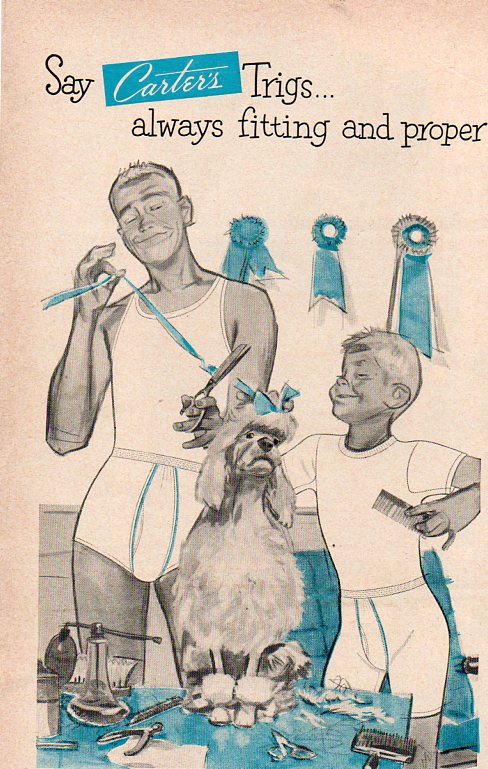
    And then the next picture–there’s simply  no good need to be posing in your underwear with a small boy in his underwear while grooming a French poodle.  There’s just no conceivable need to do it, period, especially with such oddly satisfied smiles.

    And then  there’s this ad that is utterly demeaning to almost everyone–a wall of Old Gold unfiltered ciggies that are about life-sized with a vague suggestion that you smoke them for fun rather than some sort of medical benefit (?)  With a little editing you could construct a wallpaper out of this photo–and I mean a wallpaper for a room rather than a computer, a wallpaper composed of cigarette butt ends..  Just for the record, I figure that a 1.5 pack a day smoker would smoke the equivalent of this image spread over the four walls of an average-size bedroom in about four years.  Its conceivable that you could paper a decent-sized house with the wallpapered equivalent of every cigarette smoked by the smoker in a lifetime, or for as long as the cancer could be tricked to stay away.

    And so this is the beginning of this category–I hope it will be entertaining.

    Things we dont need cigs462

    ·Posted by :

    ·in:

    —

  • Zippers, Part Two: a Big Lesson from the Humble Zipper

    JF Ptak Science Books   Post 1154

    Blogaugust_28zipper469_2

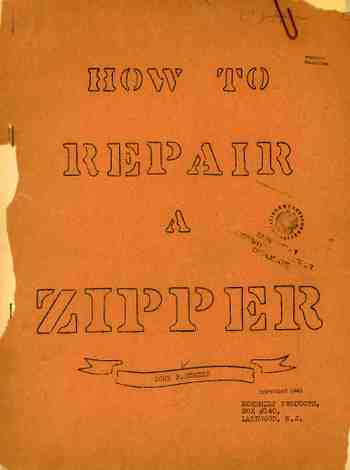
    Earlier in this blog I made a post about the Ulysses of zipper repair.  How to Repair a Zipper was one of those great, unknown classics of American technolit that stands the test of time, a great manual on how to approach n-problems with a faulty zipper–if only there were zippers worth repairing.  There are different grades of zippers, just as there are different grades of any other fastening device or automobile or wine.  Of course the zipper seems a ridiculous subject unless the lives of people–say the lives of soldiers–are dependent on their zippers working when the going got tough, 
    when soldiers’ jackets really needed to stay closed, tight, protecting them from the rain or cold.  Just ask the soldiers in 
    Zipper trouble465

    the Napoleonic army when their coats refused to stay closed because the threads that held on their  buttons that held their jackets closed failed, leading to the death of many due to exposure and cold.  Suddenly, fasteners are a big deal.  Just try it the next time you’re out on the frigid trail–unzip your jacket and try to keep the thing closed and you warm.  Its a bad story. 

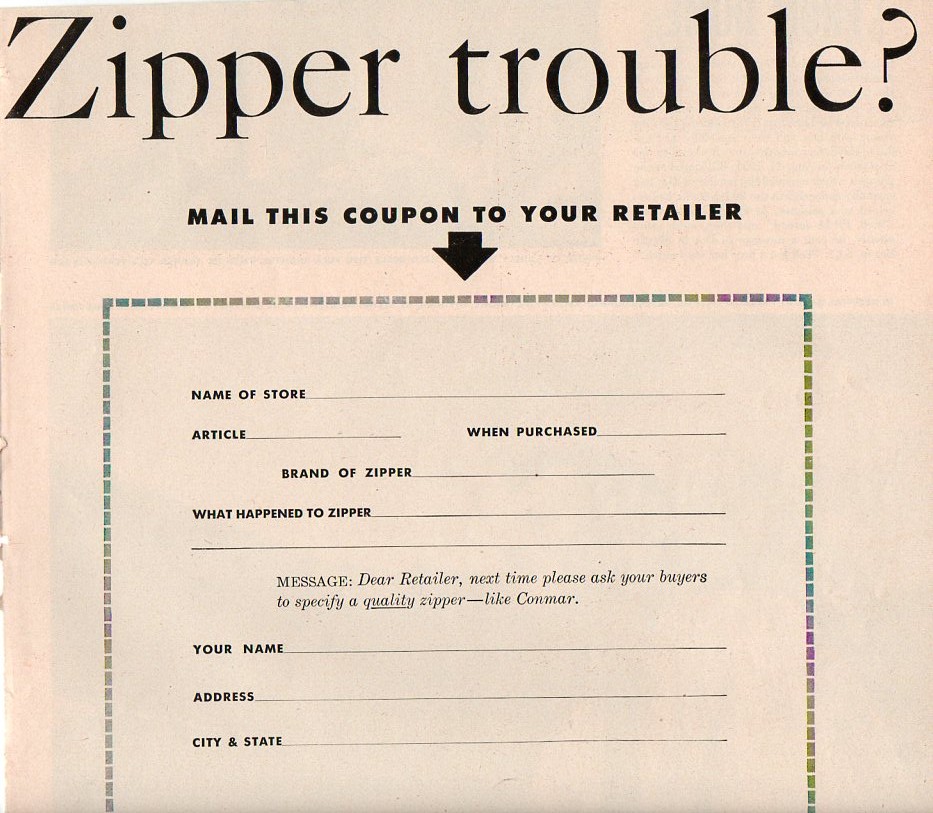
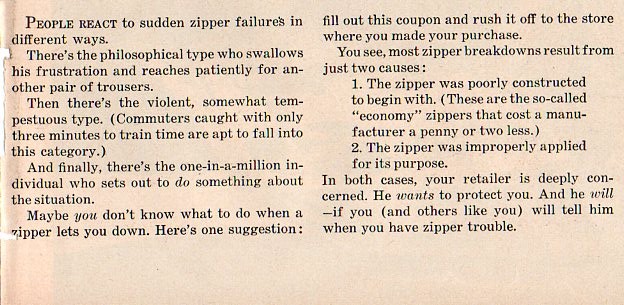
    So the initial reaction to this ad that appeared in Life magazine in 1953 is some laughter to a non-sequitor, but once you gave it a little thought, it can be appreciated just like any other piece of good craftsmanship.  In this ad, the manufacturer of Conmar Zippers (located in the once-mighty, once-leading American city of Newark, in New Jersey) plead with the reader of the full-page ad to pay attention to the zippers on their apparel.  If the zippers fail , they should use the blank form to send to their appropriate retail in complaint, and to replace the zipper with a high-quality, unconditionally guaranteed Conmar zipper, made to never fail. 

    This is attention to the small detail that would do us a world of good today. I love the idea of the Conmar Zipper.

    Zipper trouble 2466


  • 1947 Anatomy of Womanly Desire–Aprons, Plastics and Meat

    JF Ptak Science Books  Post 1152  {Part of the History of Women series.]

    Looking at just one week’s worth of advertising directed at women in America’s most popular magazine.

    One of the great custodians of American popular desire in the 1940’s and 1950’s was Life magazine, a picture-heavy chronicle of social history and needs and dreams.  I enjoyed the issue of Life for 12 May 1947 because it had an article on the history of skirt lengths (something I wrote about earlier in this blog here), and looking at it a second time I realized that I had entirely missed the ad content that drove the magazine.  The poetry of expectation flavored by the ads directed at women were rive ting to me here in 2010, partially because of their narrow aim, and partially for the simple and simplistic urges that were addressed.
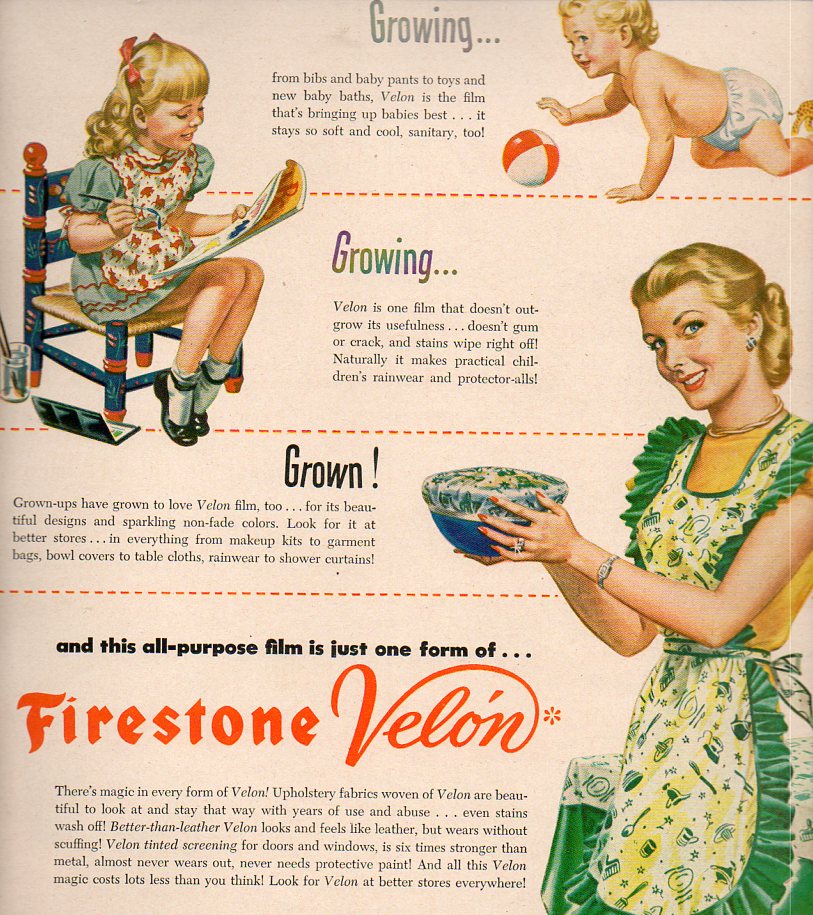
    Women--growing grown451

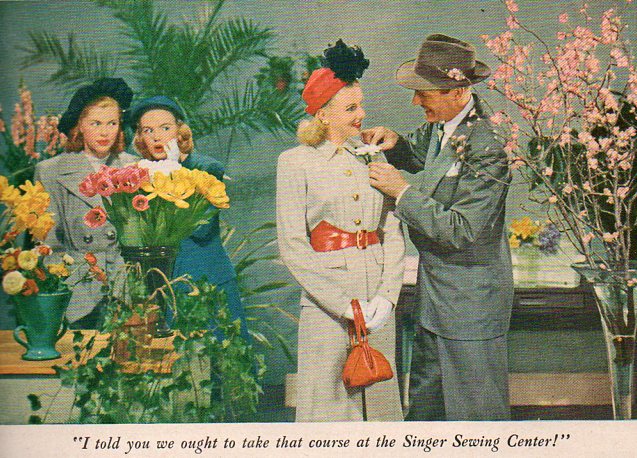
    The basic messages were lace, timid street crossing, plastic conveniences, bendy girdles, smart shoes, refrigerator hope chests, instant coffee, machine made clothes by Singer, DuPont combs, artificial fabrics and diamond-centered bedroom window covers by Textron, “shoes to catch his eyes”,  various flavor secrets, baby insomnia aids (“to help your husband sleep”),  dreams of meat, and some other vaguely painful things.

    The ad that first caught my attention was the life cycle of woman, seen above, picturing the grown woman in a petroleum-product apron  gleaming as she worked  her way through her Firestone-provided kitchen, emerging from babyhood to childhood to womanly-aprony-adulthood. 

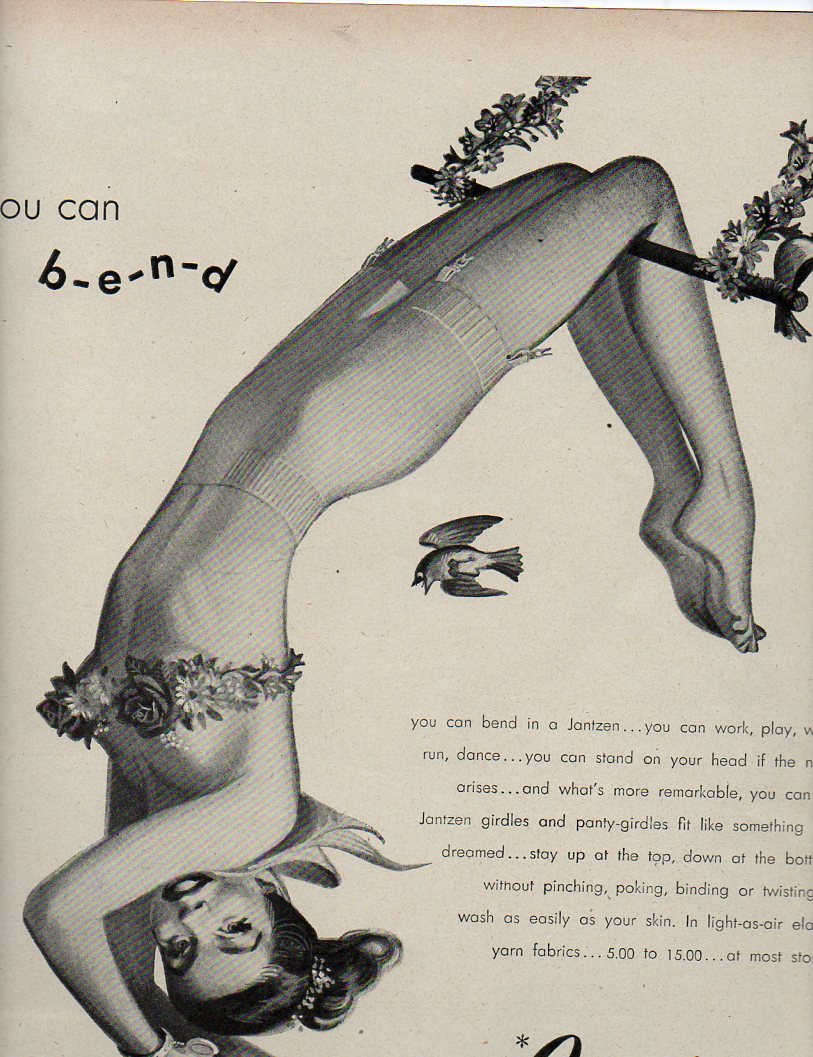
    And an impossible position for girdle wears to participate in the wearer’s girdle’s allowances, complete with fluttery Disney-esque birds:

    Women--growing bendy454
    The clustered desire over the another woman’s success in snagging a man’s interest because she could sew:
    Women--growing singer460

    And just one of three ads exalting various refrigerators, though this one had a newly-minted bride inspecting a model that for all the world could’ve been her hope chest, though this version was filled with food and meat (and a whole hell of a lot of potatoes) and introduced by a version of herself in the next chunky-shoed decade:
    Women--growing Kelvinator453

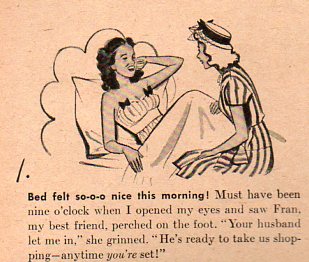
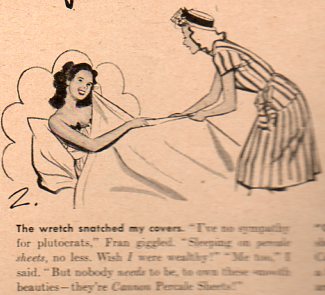
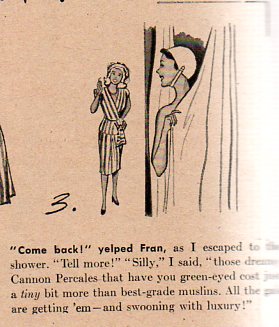
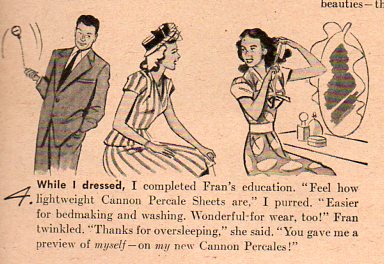
    There were ads for percale sheets, though the segment has a rather odd, vaguely proto-sensual feel to the thing (hardly I think what was intended in 1947).  It plays out a little better when the ad is rearranged in filmstrip style, reading top-to-bottom, rather than side to side:

    Women--growing overslept `455
    Women--growing overslept 2456 

    Women--growing overslept 3457
    Women--growing overslept 4459 

    Women--growing overslept 5458
    Hm.

    Not all of the womanly attention of the magazine was focused on girdles and bras and wedding meat–there was an article on Dorothy Shaver, the President of Lord & Taylor, America’s “No. 1 Career Woman”.  She made $110,000 a year  and was widely successful, but still  “carried a lace handkerchief and cross(ed) streets timidly”, and lived with her younger sister–in an earlier time Life tells us that Ms. Shaver would simply be called a “spinster”, “but now she is called a career woman”.  There was no change in the description or definition of a “spinster” or a “career woman”–they just changed the name, the result being the same, even in describing the first American woman to ever lead a multi-million-dollar international business.  (This in spite of the fact that there were plenty of working women at the time who were married and had families, no to mention the fact that we had just finished a war during which a  near-majority of women were in the workplace.  None of that seems to have come into play here in 1947, when those same war-working women were summarily replaced and sent packing, and the careerist was defined for one and all to be a spinster.)

    I am sure that I will be called to task one day i n the not-too-distant future by my daughters, asking what it  was, exactly, that people were thinking in the year 2000 in regards to women–so strange to them in their version of looking back on their equivalent of my 1947 Life magazine, a version in which I actually lived.

    In any event, these ads weren’t necessarily what women wanted, of course–they were what advertisers wanted women to want. 


  • Prescience of a 1953 TV Ad: the Speed of Isolation, and the Post-Forgetting Future

    JF Ptak Science Books   Post 1151 [Part of our History of the Future series]

    The History of the Speed of Things is an interesting category for a history of odd things: the speed of exploration, of curing someone with a gallbladder problem, of flashing across the White Sands desert in a rocket car, of the pulse of a human neuron, of the time it takes to go from 10 microns to 1000000 microns, of how long it takes to get to Tybee Island from Asheville North Carolina, of insurance information to tall ships coming over the horizon, of gravity, of light, of computing a billion place of pi, of calculating where to aim your anti aircraft guns at the incoming Luftwaffe, of diving to the greatest depth in a submarine, of running 100 metres, of a drop of mercury falling 1/1000 of an inch, of the speed of nightfall on the Moon, and so forth. 
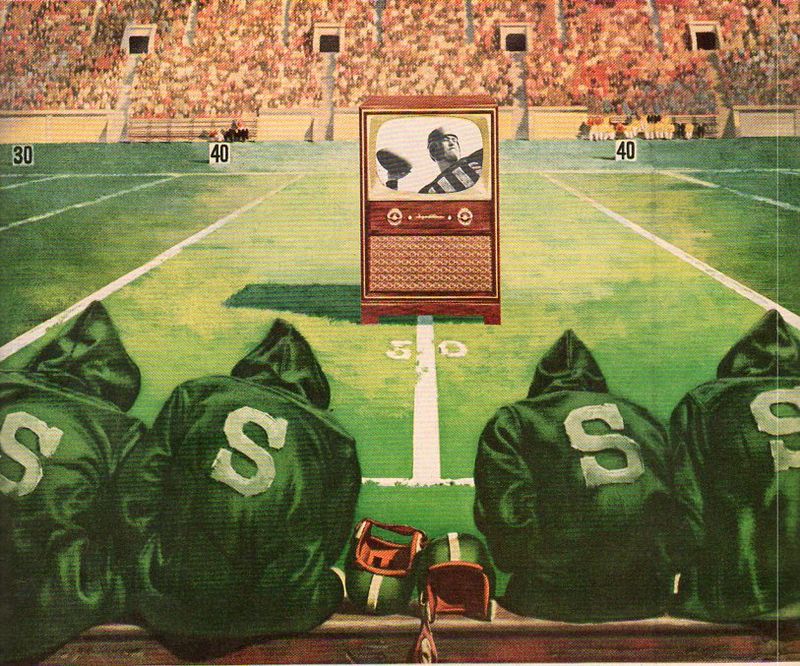
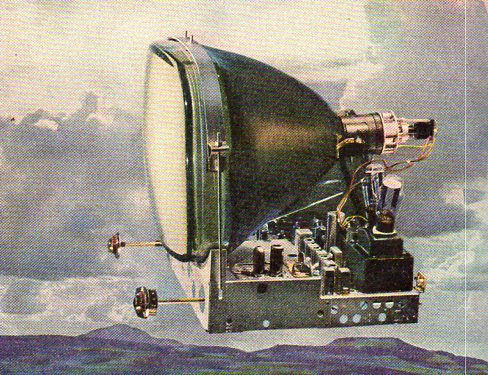
    Future of thinking sparton 2449
                                                                                                                                                                 
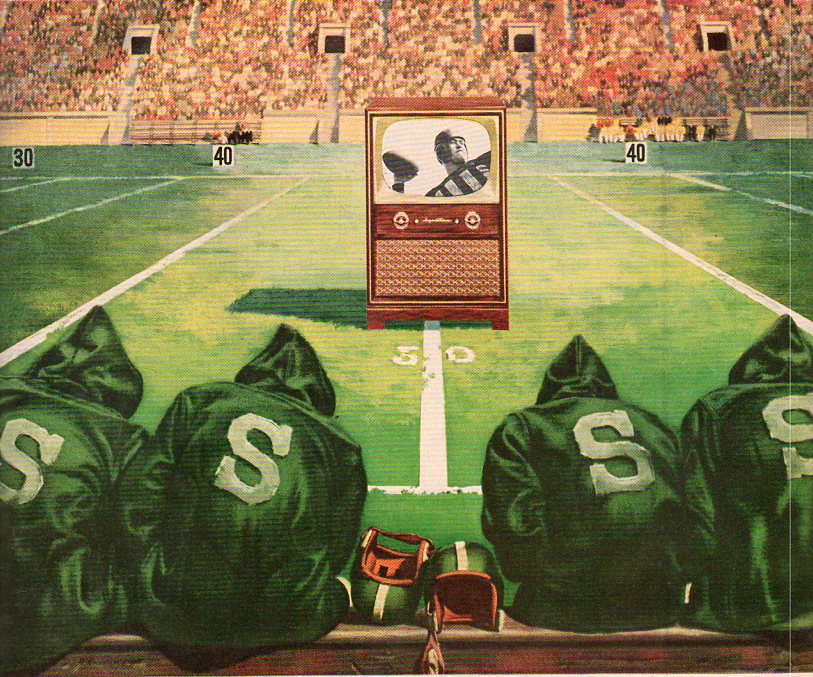
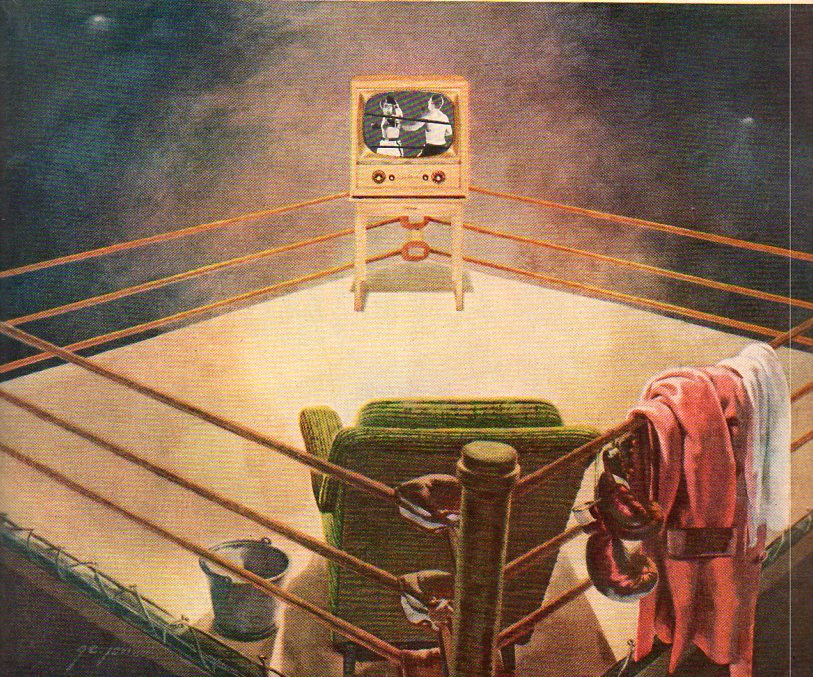
    The Speed of Things’ subcategory is the History of Speed of Knowing Things, with its interesting and proportional  subcategory of the The History of the Speed of Forgetting Things, both of which are associated with the point of today’s post, which was the sneak-peak of the future offered in a series of ads in Life magazine in 1953.  The full-page ads were formatted by Sparton Television Company to grab the attention of even the laziest semi-monied reader of the magazine, selling the promise of entertainment at home.  The cost for admission for this product was fairly luxurious and a little extreme once you translate the $400 entrance fee into its percentage of the average monthly salary (which was about equal) or of a new (general) Ford (about 25%) or of the average monthly rent (125%). The television as something to be reckoned with.              
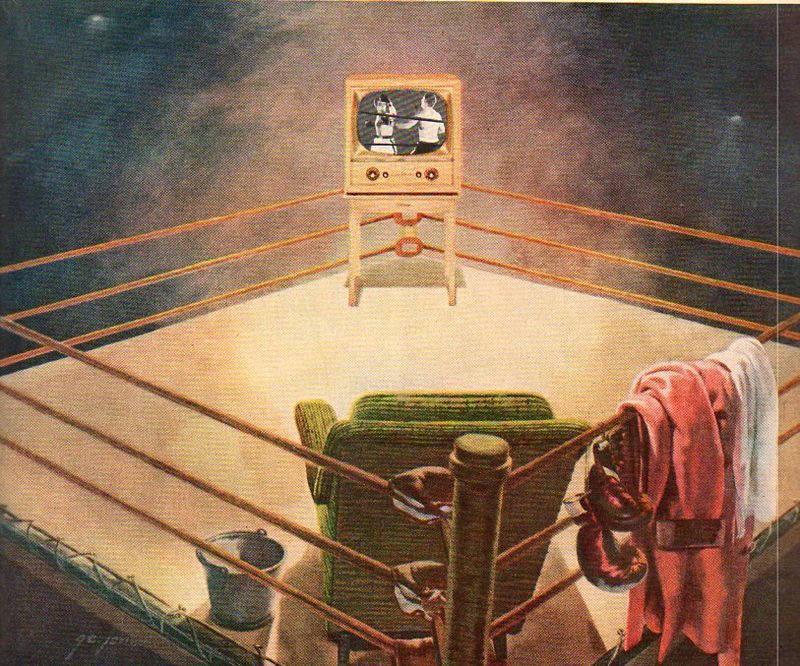
    Future of thinking sparton boxing450
    There’s something more to the ads that the designers and readers couldn’t have known at the time, though.  In the ads, the tvs are shown replacing the action that it is supposed to be transmitting–it has become the thing itself, a passive replacement to an action.  Rather than watch a baseball player at bat swinging at a pitch, we see a television with a batter in it, moving just as the pitcher is moving,.  The barcolounger in the ring of the prizefight is presented with the fight on a tv in the opposite corner, and the football players have been replaced by a black-and-white image on a television tube on a field of green. 

    The message then of course was that television was putting you into the scene, that the viewer was part of the action and not just a casual observer.  I guess.  Sitting here in 2010 though the ads seem to play to a greater truth, and might be more prescient for the coming future than the original advertisers could’ve possibly imagined.  All throughout the history of communication, I am certain that there was a  percentage of the population that viewed the newest invention as  not necessary and an affront to privacy and free time, of more deeply removing a person from the act of communicating–the semaphore, telegraph, telephone, wireless, airmail, overseas calls, email, bluetooth, twitter, and so on all presented this similar problem.  Just as these improvements were adding to the flow of information, they were also isolating the recipient from the sender.  The more access to info and data, the more it was accessed; the more access, the more time spent accessing; the more time spent accessing, the more time theoretically spent responding. And so on ‘tll you get to the so-called modern time, when there is data presented to us all of the time, inescapable info flows, gargantuan landslides of numbers and images and words and fluff, available at all times, and almost at all places.  The technology making it possible for people to more freely communicate is, in a way, replacing the person, allowing communication nodes to have a human interface connecting them.

    Now this might be a little extreme, at least for the present.  I’ve little doubt that some people feel as though they are simply connecting word threads to other word threads and passing it along, seeming as though the are piecing together the floating bits in an enormous flood of floating bits.  As my wife Patti Digh quotes the Buddha in her book Life is a Verb, “What is the appropriate behavior for a man or a woman in the midst of this world, where each person is clinging to his piece of debris? What’s the proper salutation between people as they pass each other in this flood?”

    I’m guessing that people would be uploading pictures of themselves googling the question, or receiving an image of someone in front of them, waving to them, as they are swept along in the flood waters.

    These pictures from Life tell the coming story, and I think can remind us that as foreign as they might seem then, and as uncomfortably true that they might seem to some now, that they could very well seem painfully/obviously true at some near point in the future.  The computer for all intents and purposes is only 65 years old; home computing is three decades old; the internet, two.  The changes brought on by all of this were almost invisible 25 years ago.  The coming of the future in regards to communication, even a future that is only 25 years from now,  may very well wind up being as difficult to see from 2010 as it was to see our year in 1985. 

    I wonder if in the future we’ll have to pay for silence, pay to be relieved of data, pay for relief from advertisements from a flood of products and services that we don’t ad will never actually “need”, pay for time for the silence to actually think?  When people are smoking and talking on a cell while riding a bike or texting while plasticizing their dog’s environmental offerings, when is it exactly that there will be quiet moments for extended thinking?   Where will our consumption of information be in 25 years from now, or 50? It is only too bad that the process of consuming info didn’t lead to some sort of generation of energy, like tidal power, because at least then there would be one certain positive outcome of data access. 

    And I know that accessing things will be much smarter even in the near-future than it is now, Google searches will look as quaint four-digit phone numbers.  But still there is the data, and at that point the data will be more pertinent, which means there will be more of it to spend more time on.  Its a Catch-22–we’ll waste less time, probably, on what we weren’t looking for, which means we’ll have more time to look at more things that we were looking for, except that there will be too much of it, and there won’t be enough time to read all of that, let alone to give it some thought.

     In all of this, the thing that might take more time to deal with than actual thinking might be the process of forgetting.  Perhaps in the deeper future we’ll just be born with all of this information, or have instant access to it, and then in that future where there is no forgetting we’ll just have to imagine that we’re imagining quiet time. 

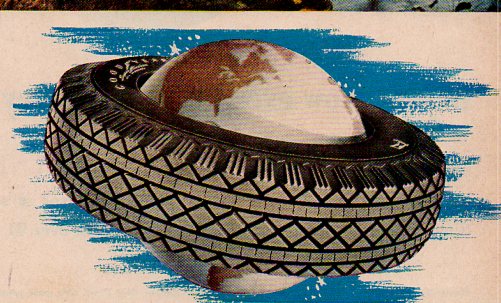
  • TV and Liquor, the Modern Colossuses–Visualizing the New SuperSize for the Masses

    JF Ptak Science Books  1150

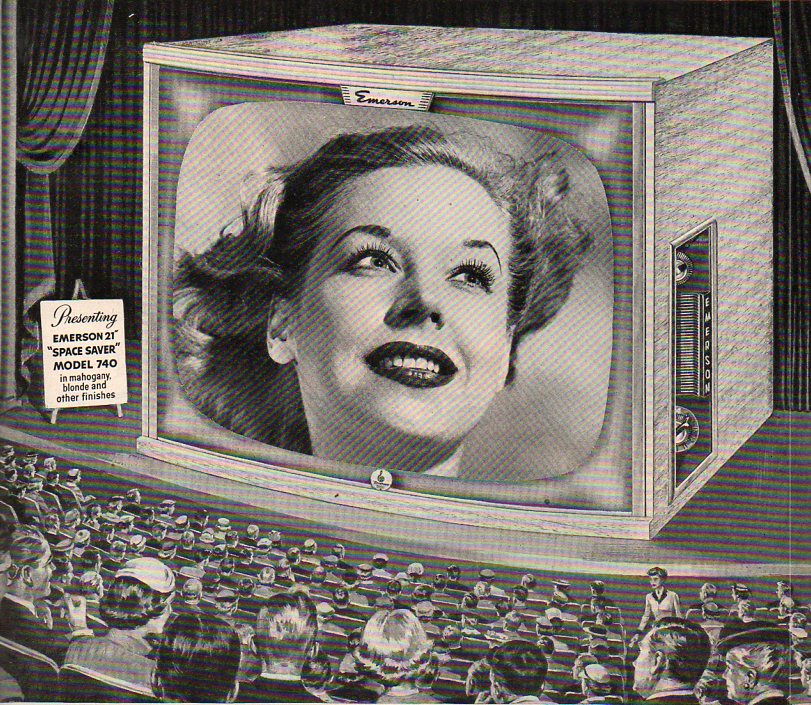
    Rabelais’ Gargantua and Pantagruel, Hobbes’ Leviathan, the Buddha at Yungang (Shanxi) and Melville’s whale were all pushed to their competitive monsterous edges in the 1950’s, when you were more likely to think of The Bomb and creeping Communism before thinking back to any of these great representations.  And it is also my general impression, having been paging through Life magazine for the 1950’s, that there are some other major, lesser heralds of gigantism, especially if you paid attention only to the advertisements. There were 1950’s colossal characters who were pale imitators of their earlier counterparts–the Amazing Colossal Man and Colossal Woman being two minor mirrors of older ideas–but they hardly contained the colossal ideas that were resident in the earlier creations. (Perhaps part of that is due to having just witnessed the demise of two enoromities in Hitler  Stalin.)

    Monumental television theatre446

    The new Pantegruels seem to have been television (completely victimizing
    and nearly eradicating radio in its day), giant cars, liquor,
    cigarettes, breasts, and, television, followed by television.  There was
    also the movies, with films filmed in super-spectro-pano-fabulism; and
    of course there were the computers (the 1943 machine at Bletchley Park
    was actually called the “Colossus” with Mark 1 and Mark 2 varieties,
    which were actually less colossal than the other period  colossi such as
    the Harvard Mark I/IBM ASCC and ENIAC), which just now turning the
    corner on “big” and getting faster/smaller/more powerful, and also
    fulfilling the “Giant Brains” dream.

    Monumental television flying445
    I’m not sure, but it feels right to say that there is a direct correlation to things getting both bigger and smaller as things got faster.
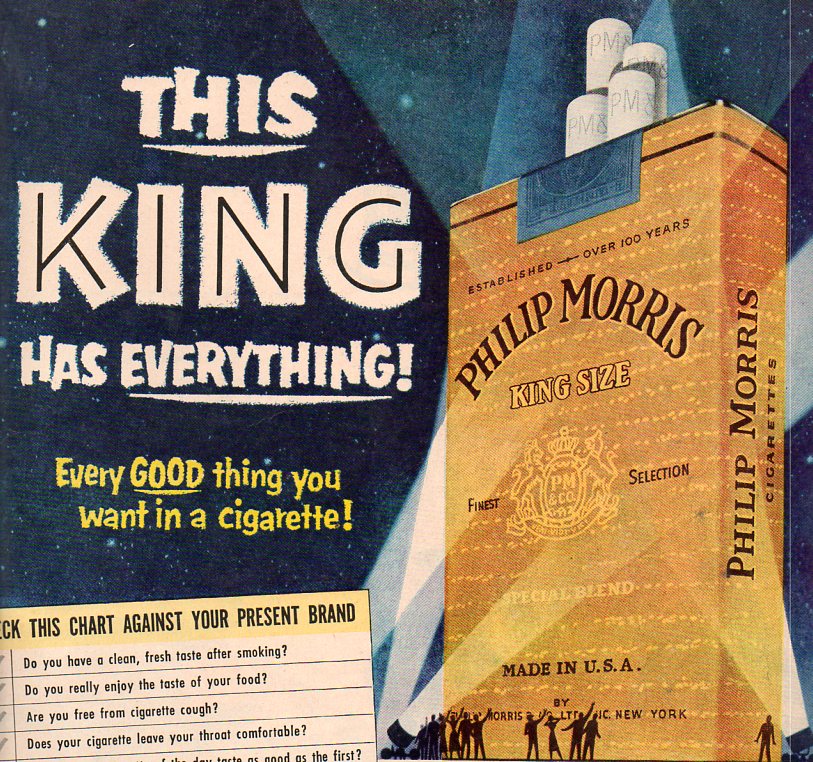
    Monumental cigs the king444

    Anyway the new Colossuses/Colossi  were hardly as attractive and had
    virtually no literary value compared with their earlier Rabelaisical
    counterparts or the giant 4th century BCE statue bearing that name in
    the harbor at Rhodes.  It is certainly true that the big things that
    were imagined in the 20th century were beyond any conception of “big” in
    the Western Canon of Big.  (There are certainly great big things in
    other cultures, say, in India for examples, where there are entities and
    numbers so vast that there was nothing to compare them with in the
    West.  But that’s another story.)

    Monumental whisky world442

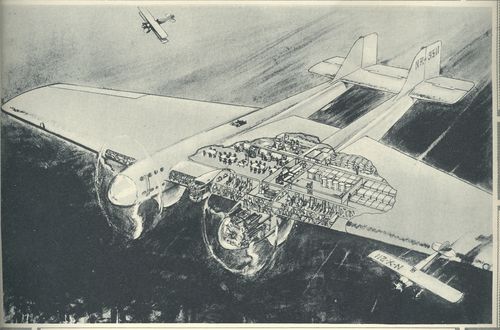
    Monumentalism--airplane
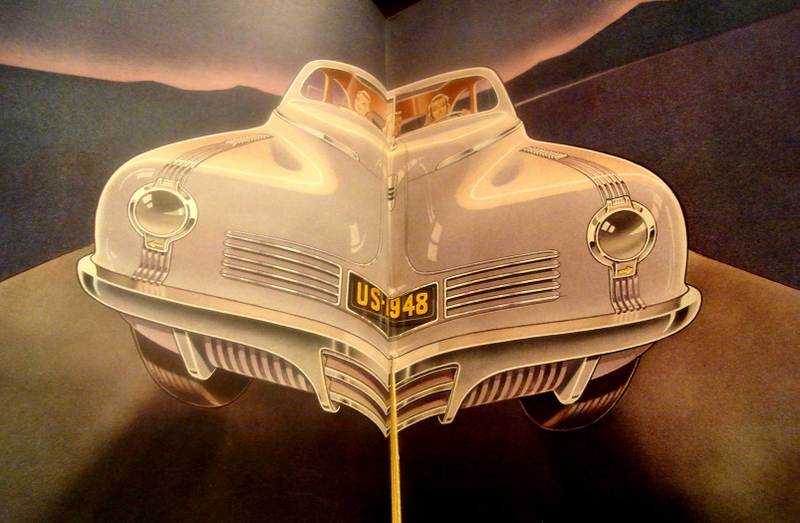
    Monumentalism--car

    Monumental world tophat447

    Monumental world tire440 

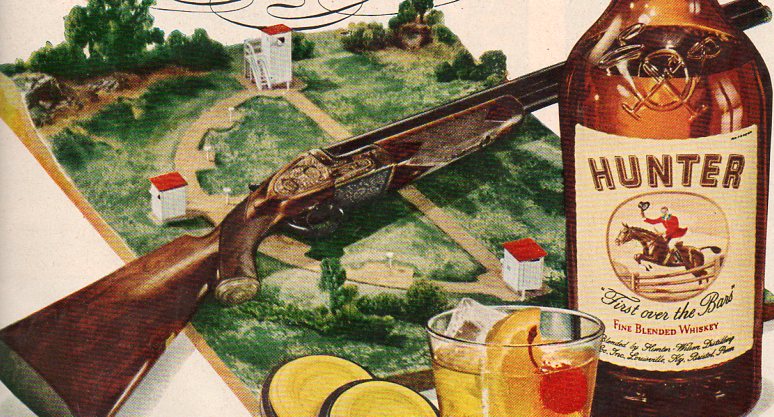
    And of course joining the gigantic cultures of guns and booze:
    Monumental gun farm441

    ·Posted by :

    ·in:

    — —

  • Women–Muzzle Her, Mask Her and Turn Her into a Cigarette. 1953 Ads

    JF Ptak Science Books   Post 1149

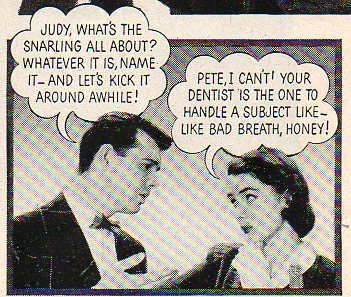
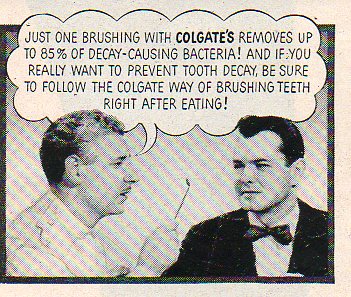
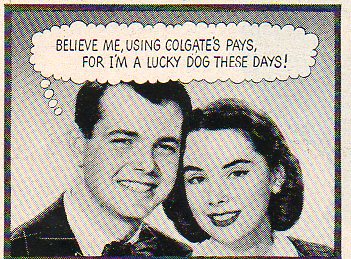
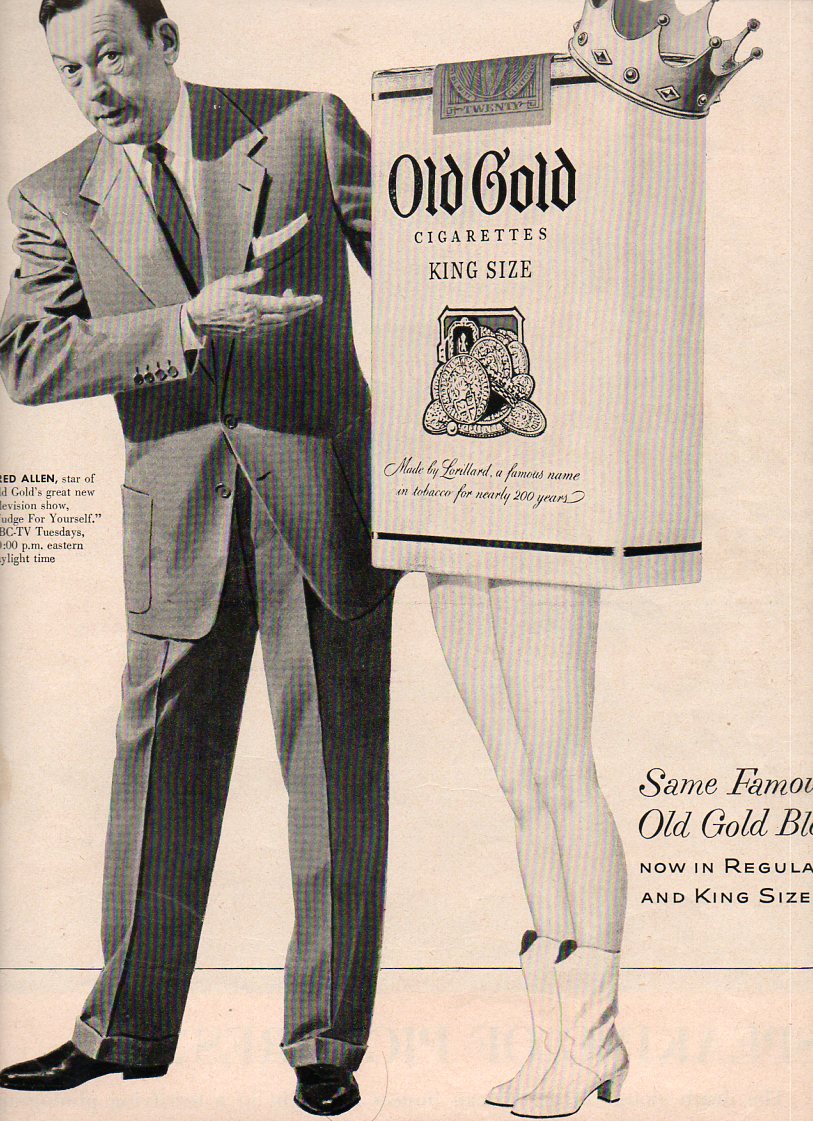
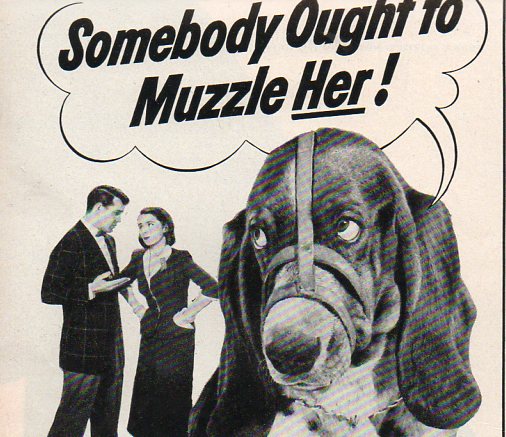
    Three ads disappearing women– first with a muzzle, then with a full head mask, and then there’s nothing left but legs–part of this blog’s History of Women series.

    There’s nothing quite like objectifying women than objectifying them, making their objectification so wide and gross and visible that it is almost impossible to imagine that it was done–but, then, there it is.   And that’s part of what we see as standard operating procedure here in these ads in Life magazine for a four week period in 1953,   I started out on this foray looking for an article about US aid to Vietnam, but kept bumping into these advertisements.  The images today have certainly changed and have become more subtle, but the message is still the same. 
    The first series
    Muzzle 1430 

    Muzzle 2431

    Muzzle 3432

    Muzzle 4433

     Muzzle 5434 

    is so odd; I’m not so sure why the dog was barking to muzzle the woman–she has hardly said anything…but perhaps that’s the entire message.  There there’s this approach:
    Muzzle C helmet436
    keeping a beautiful, manicured and jeweled body while getting rid of the face and head and personality.
    And then

    Muzzle b old gold435

    Old Gold makes a final assault on womanhood, replacing her upper half with another oral fixation, keeping the booted lower half for whatever.  I think that there was a refrigerator with high heels in that year, somewhere, but I can’t find it.