A Daily History of Holes, Dots, Lines, Science, History, Math, Physics, Art, the Unintentional Absurd, Architecture, Maps, Data Visualization, Blank and Missing Things, and so on. |1.6 million words, 7500 images, 4.9 million hits| Press & appearances in The Times, Le Figaro, Mensa, The Economist, The Guardian, Discovery News, Slate, Le Monde, Sci American Blogs, Le Pont, and many other places… 5000+ total posts since 2008.

Author: JF Ptak

  • Hitler Youth Diary for Girls, 1937

    JF Ptak Science Books   Overall Post 5134

    Hilterjunge diary008There’s a bookcase in the house that has a top shelf for small books, most of which I haven’t written about, though there is a clutch of them that have gotten some exposure here on the blog, with most of them being unused diaries, and most of those being Nazi-oriented.  I’ve wondered about the people who would have sat down with those things blank-ish books, thinking about scheduling their time, or recording events, and then deciding not to. Maybe they didn’t want to be reminded of Nazi holidays and/or the birth of Hitler, or the right of duty and the proper way to respond to current events based on the policies of the NSDAP. The diaries are all pretty much like-new, and aren’t even all that old in the scheme of things, though their distance in time doesn’t match their distance in historical “space” (so to speak). 

    This diary was for German girls who were members of the Young Girls League (Jungmädelbund), which in the German stratification of Nazism was part of the League of German Girls (Bund Deutscher Mädel), which in turn operated under the broader gender-divided organization of Hitler Youth.

    It is difficult as a father of two daughters–one of whom is of the correct age to have been using this diary had circumstances been enormously different–and it is painful to imagine her looking through these pages, at the red-letter days and inspiration photographs, filling in the book and responding to these enormous and not necessarily subtle social pressures.

    “Wir folgen!” states the cover of the diary, and it meant it. “We follow”. 

    Hilterjunge diary009

    ·Posted by :

    ·in:

    —

  • Recovery to Normal Existence, 1960

    JF Ptak Science Books   (Expanding an earlier post  #2499 from July 2015)

    Nuclear Attack LIVE230
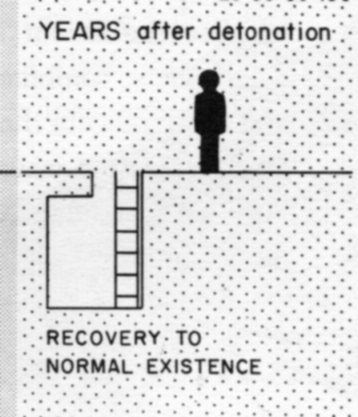
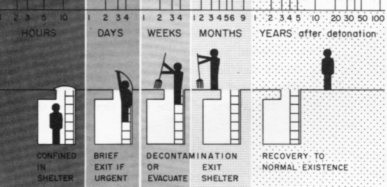
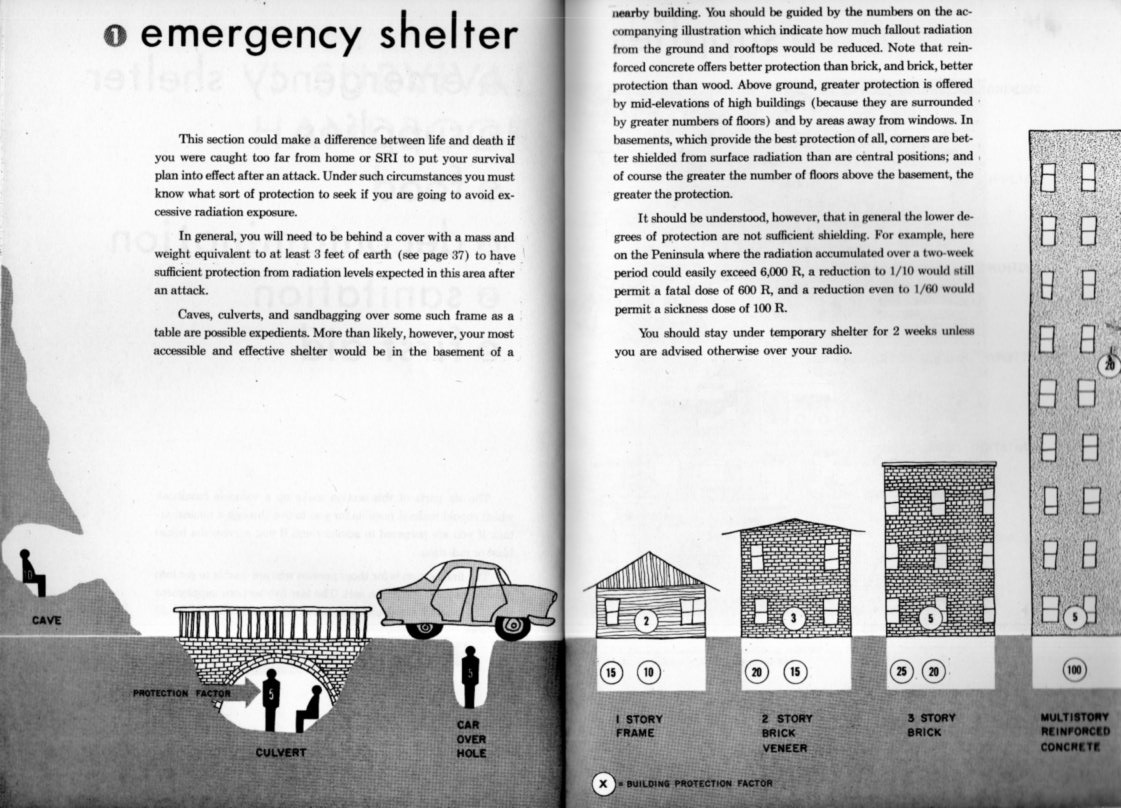
    In the not-modest stream of thin paperback  nuclear holocaust survival literature in the 1950’s and 1960’s appears this effort: LIVE, Three Plans for Survival in a Nuclear Attack. It was published by the Stanford Research Institute in 1960, and was part of nuclear health physics pioneer Lauriston Taylor’s donation to the National Council on Radiation Protection and Measurement, where I bought it some time ago when they were thinning out their stuff.  It is an unusual publication to me for its illustrations, some of which are odd, and a few of which are positively semi-surreal when view out of context.

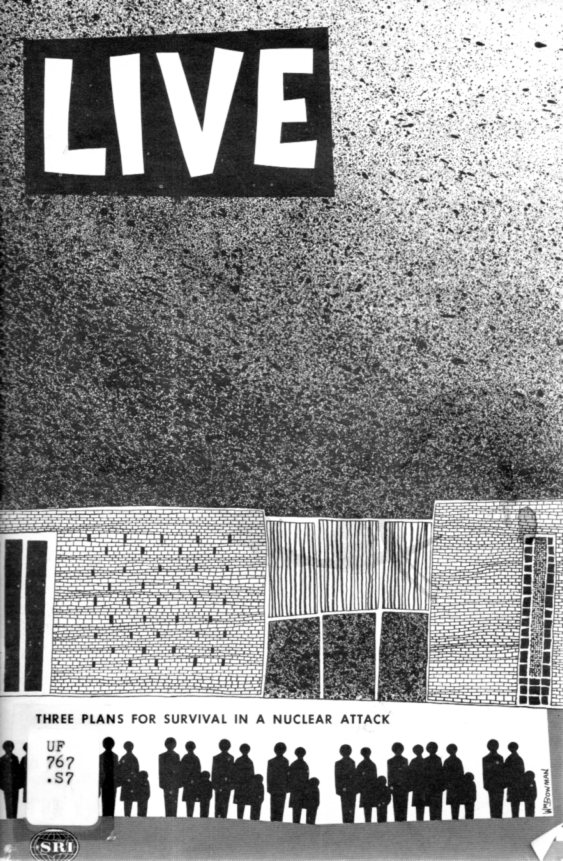
    The pamphlet overall is fairly helpful, assuming that you had as much time to get yourself together in an impending attack, and that is a major assumption.  But I’m sharing this tonight for some of those images–and the cover, which is an unusual design in itself, not the least of which is the heavily-borrowed part from LIFE Magazine.

    So the first of the few that I’ll post here (above) is a detail from this illustrated graph, a march of the intellect and survival from being in a dark hole to a rather stiff return to normal existence:

    Nuclear Attack LIVE229

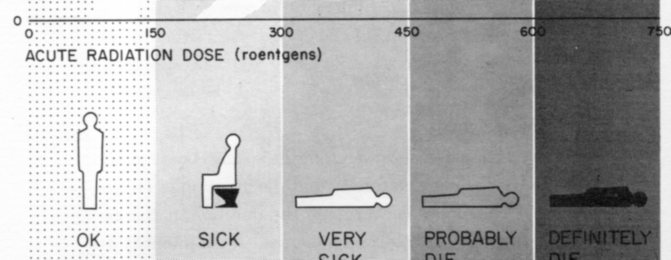
    Here’s another sobering bit, showing a progression of NOT-recovering to normal existence:

    Nuclear Attack LIVE231

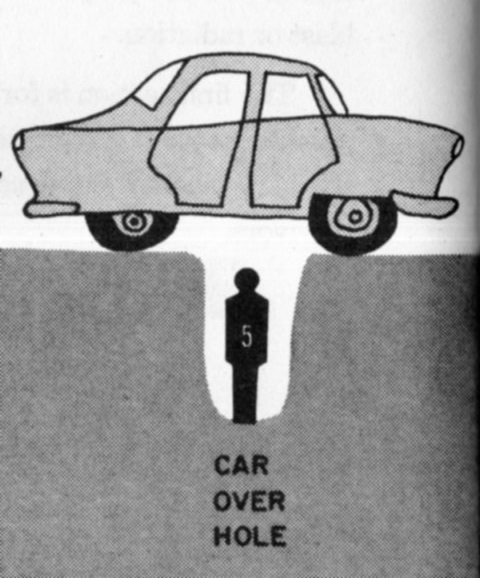
    And of course the hole:

    Nuclear Attack LIVE233

    Which is a detail from:

    Nuclear Attack LIVE232

    And the cover, which has some blotchy Ralph Steadman-y elements:


    Nuclear Attack LIVE228

    And so, there are some of the major themes.  I found the work unsettling in general for using mostly dark silhouettes for the people, that profile having been sort of established to represent dead folks. 


  • A Plate Full of Eyes (1851)

    JF Ptak Science Books   Quick Post   Overall Post  2529

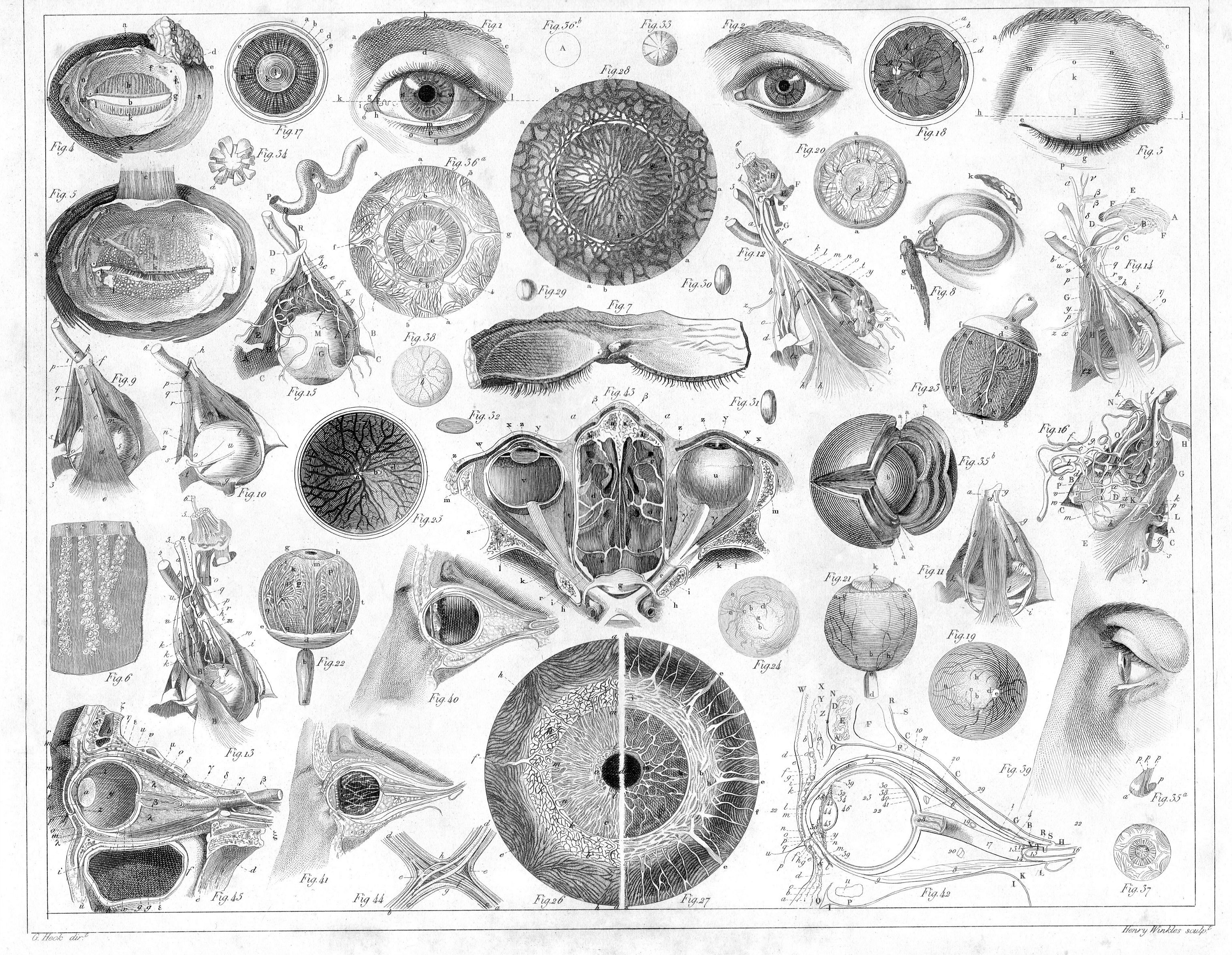
    J.G. Heck wrote and compiled a fascinating and complex work entitled The Iconographic Encyclopedia of Science, Literature and Art, which was published in the U.S. for the first time in 1851 in Spencer Baird’s translation from the German.

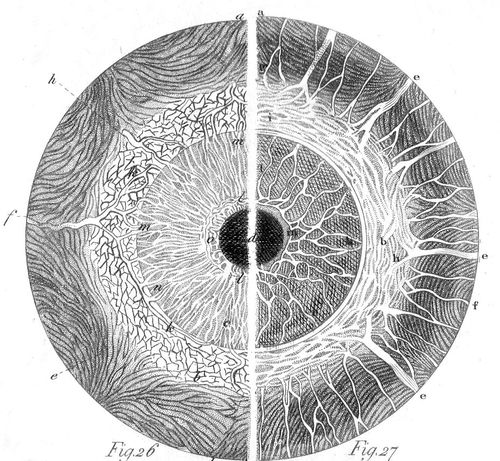
    EYEs _1_

    [Detail–60mm in the original.]

    The key to his work is the amount of data displayed on each of the 500 engraved plates illustrating this work and the way in which it is arranged.  The design and layout of the 30,000 items on these 500 plates was a work of genius, and for my money it is easily the best-presented complex means of the display of data and objects that was published in the 19th century.  

    The image above is from one engraved plate featuring 43 aspects of the human eye–beautifully arranged, and somehow fitting perfectly on the 9×11″ sheet of paper.  It is a work of real design engineering.  

    The image above is a detail from:

    EYe_2_


  • “Whether Slavery was Right or Wrong…” On the Future of the Freed Slaves in the U.S. (Nashville, 1867)

    JF Ptak Science Books  Post 2528–expanded 

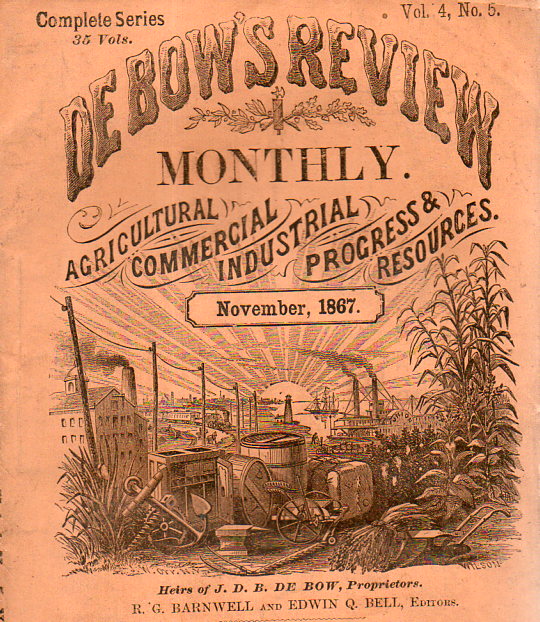
    De Bow’s Review in 1867–in the dire straights of the antebellum South, in the doom and despair of the just-finished war–lashed out like a wicked Alex Jones conspiratorial wingnut against the Northern states and anyone who comforted them.  Published in Nashville, all I have of the magazine presently is this loose issue for November 1867, and in spite of the energetically positive view depicted on the cover of the magazine had little to do with what you found in the writing inside.  

    De Bow175

    The leading article is an odd one, yelling about Great Britain manufacturing the cause of anti-slavery in the United States, which pretty much is made abundantly clear in the title,  “Black Republicanism, the Dupe and Agent of British Policy in Respect to American Interests”. The “scheme of so-called Negro Emancipation…is a British Invention” crushing the U.S. which “suffered immeasurably” under the Abolition Program, “the fatal deadfall of the abolition trap“, all of which in the end will “crush the innards out of the “Black Republican Yankee”.  It was the Brits according to the writer of this article who FORCED THE UNITED STATES TO ABOLISH SLAVERY” [caps in the original]. 

    ·Posted by :

    ·in:

    —

  • “Small Target Bombing Probabilities”–Bombing Calculator, 1944

    JF Ptak Science Books  Expansion of an earlier post from  2011 

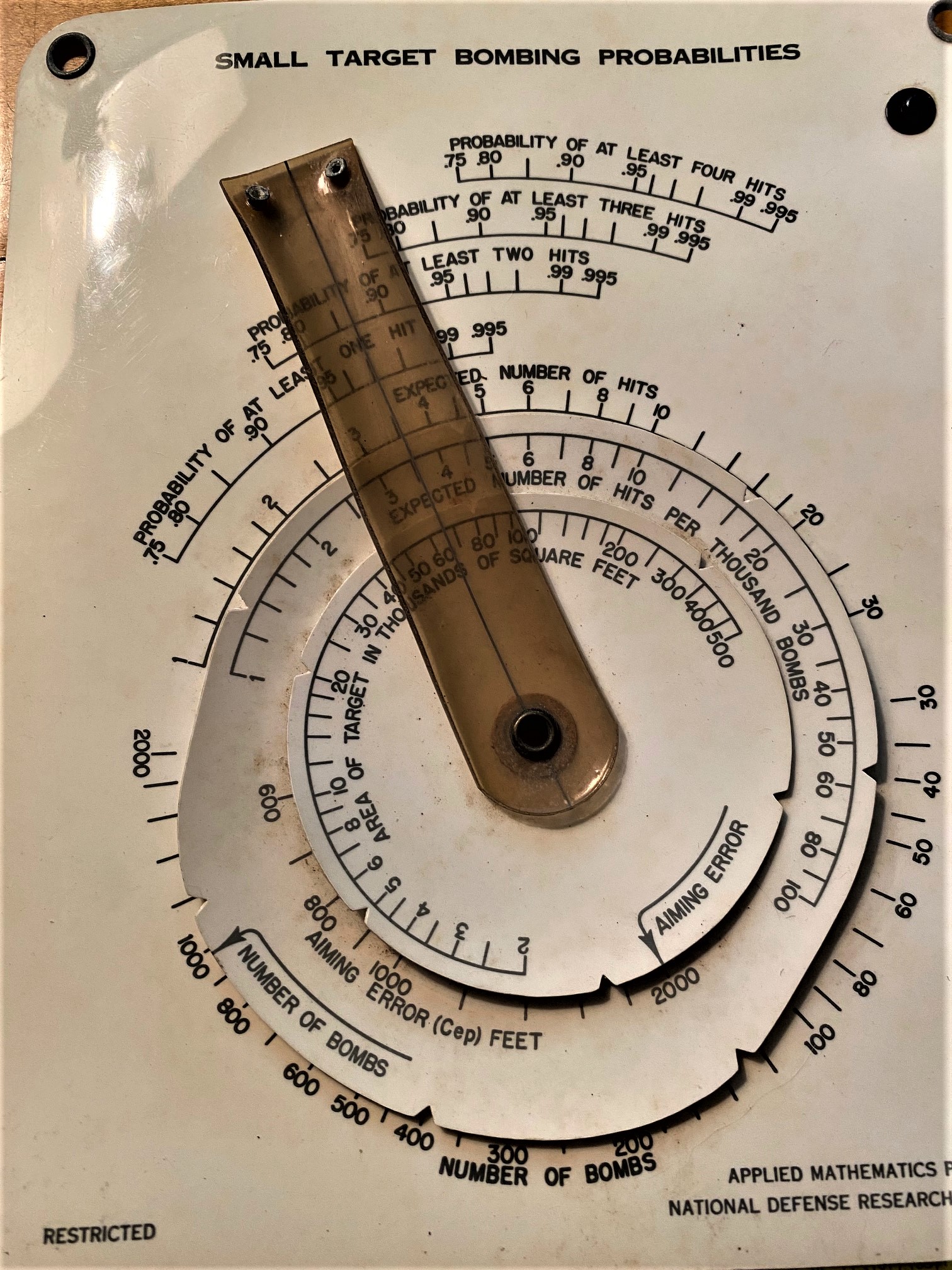
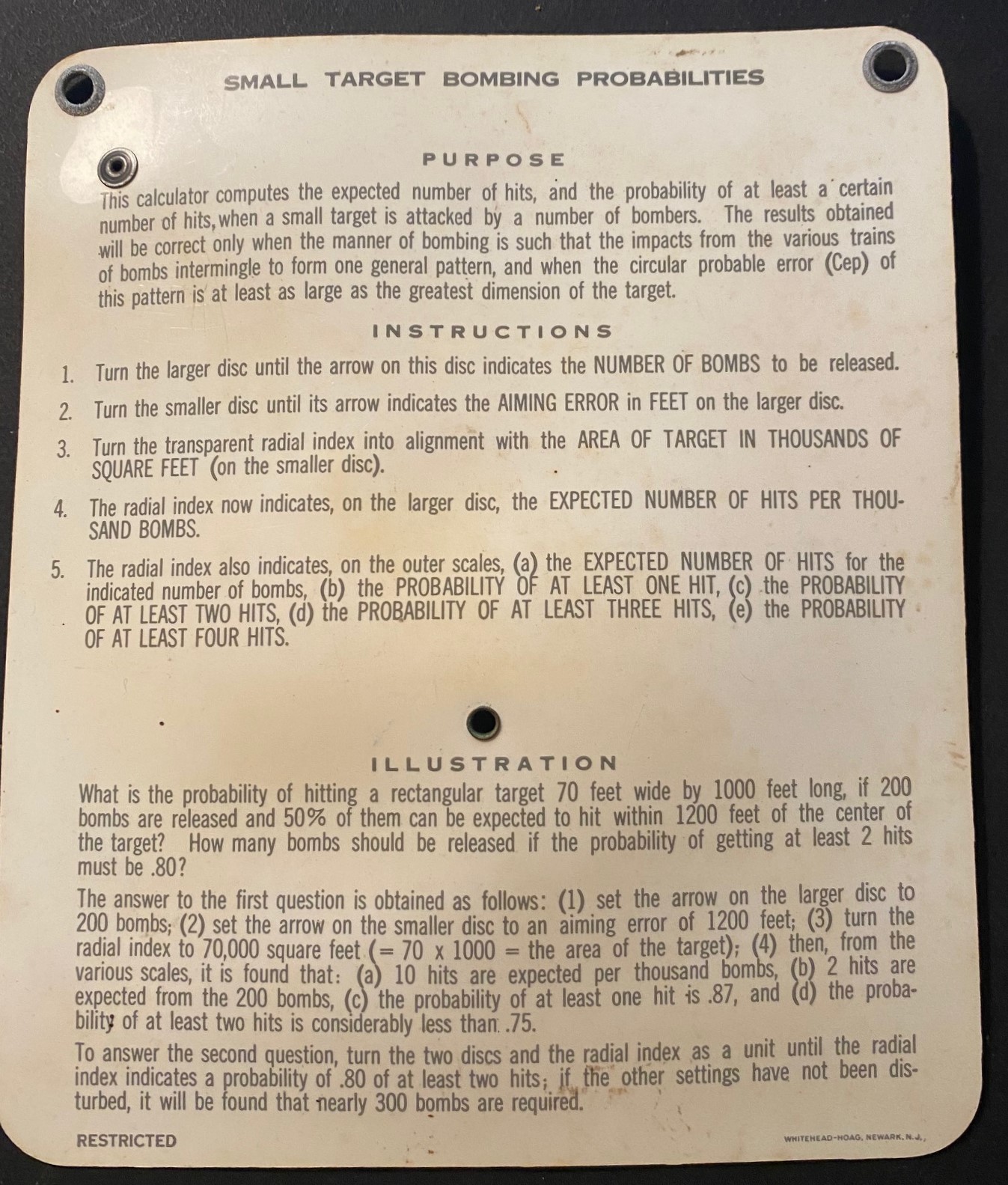
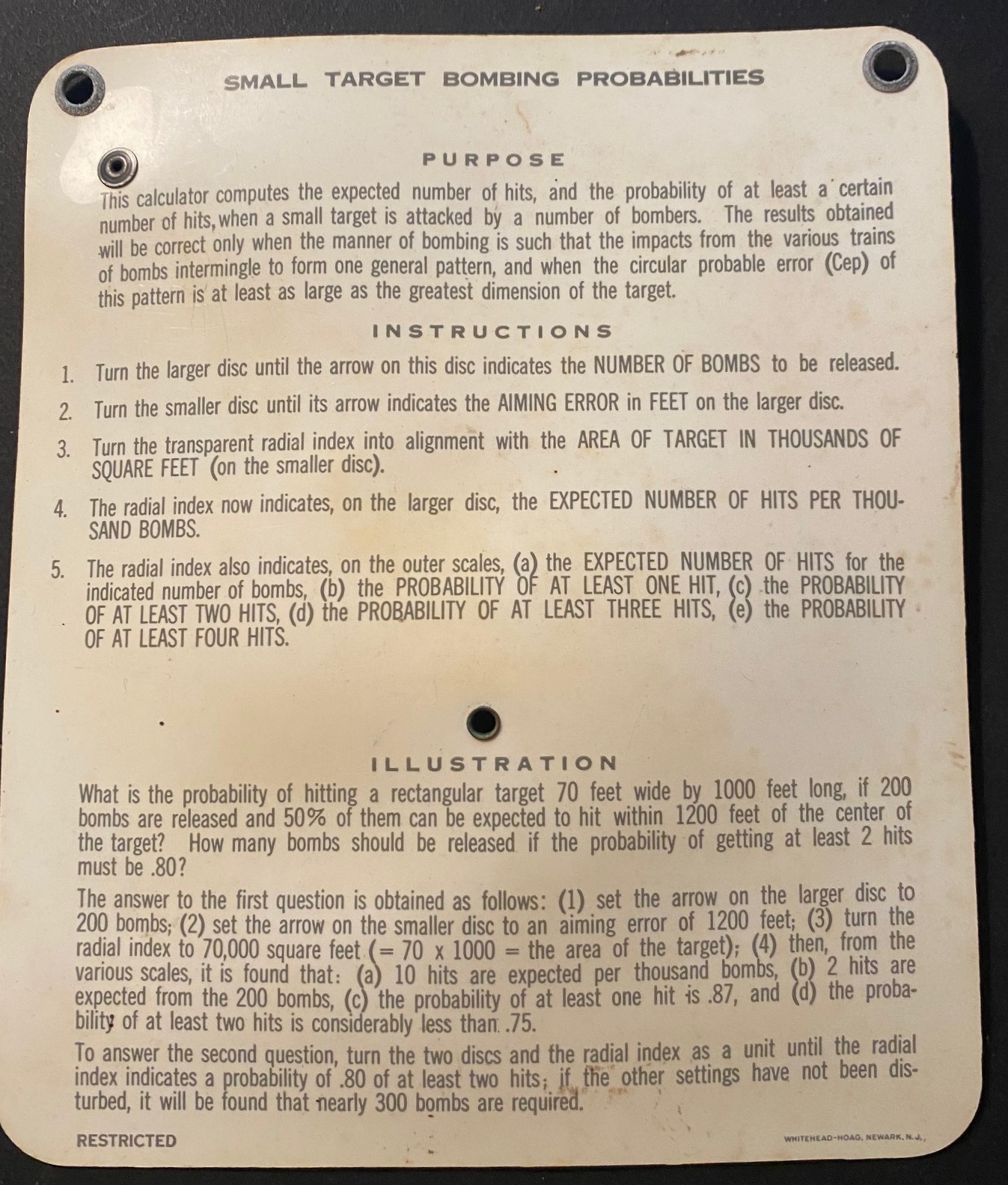
    IMG_5402I found this object in my paper-calculators box (moveable disk calculators made of paper, two going back to  Fr. A. Kircher in the 1680’s)—I’m not sure why it was there as it is not paper, though it is an interesting calculator.

    [Images are greatly expanded in click mode.]

    You can learn or re-learn an interesting lesson from it on bombing accuracy.

    The “Small Target Bombing Probabilities” calculator was issued by the little-known (in the popular sense) Applied Mathematics Panel of the National Defense Research Council (NDRC)1 in the early 1940’s during WWII. 
    IMG_5403Marked “Restricted”, it calculated the number of bombs that would successfully be delivered given (1) the number of bombs, (2) the “aiming error”, and (3) target size. It would then generate results for “(a) the expected number of hits for the indicated number of bombs”, (b-e) the probability of at least one hit to four hits.

    What is a little surprising to me was the number of bombs that didn’t find their target. For example, a 65,000 square foot target bombed with 1000 bombs and an aiming error factor of 2000 feet could expect to land 3-4 bombs on the target, with an 88% chance of landing at least two hits, 75% chance of landing three hits, and about 50% of landing at least four hits.  And so the necessity of large numbers of planes dropping a large number of bombs.  

    Notes

    1. The establishment of the NDRC was announced so: “It is announced by Science Service that the following committee has been appointed in the United States to correlate “scientific research on the mechanisms and devices of warfare”: — Nature 146, 191-191 (10 August 1940).

    “Members included: Dr. Vannevar Bush (chairman), president of the Carnegie Institution of Washington, formerly dean of the faculty of engineering at the Massachusetts Institute of Technology; Prof. Richard C. Tolman (vice-chairman), dean of the graduate school and professor of physical chemistry and mathematical physics at the California Institute of Technology; . Dr. Irvin Stewart (secretary), formerly Federal Commissioner for Communications and chairman of the Committee on Scientific Aids to Learning; Rear Admiral Harold G. Bowen, director of the Naval Research Laboratory, Anacostia, D.C.; Conwiy P. Coe, U.S. Commissioner of Patents; Dr. Karl T. Compton, president of the Massachusetts Institute of Technology, formerly professor of physics at Princeton University; Dr. James B. Conant, president, formerly professor of organic chemistry, Harvard University; Dr. Frank B. Jewett, president of the Bell Telephone Laboratories; Brigadier General G. V. Strong, assistant chief of staff, U.S.”

    ·Posted by :

    ·in:

    — —

  • Found Graphic Novel Art in (of all places!) the Annalen der Physik (1885)

    JF Ptak Science Books  Quick Post  Overall Post 5135

    There are some sub-categories on this 2-million (!?) word blog presented in the vernacular of FOUND items, like FOUND Poetry, or FOUND Science Art, or FOUND Outsider art, or TechnoNaive, and so on. The “Found” prefix simply notices that there is an appreciation of something beyond the use for which it was intended, being removed from context bringing on a new life/meaning for whatever it was that was “Found”. I guess that there are a few dozen of these posts, like “Found Poetry in Lost Plankton”(1872), “Euphonium: Found-Poetry of Recorded Soundwaves” (1897), and “Found-Poetry in a Technical Work on Bubbles” (1896), where by simply poetizing the structure of some of the text the piece can read like a bit of poetry…sometimes this is a bit strangled, but the point comes through.

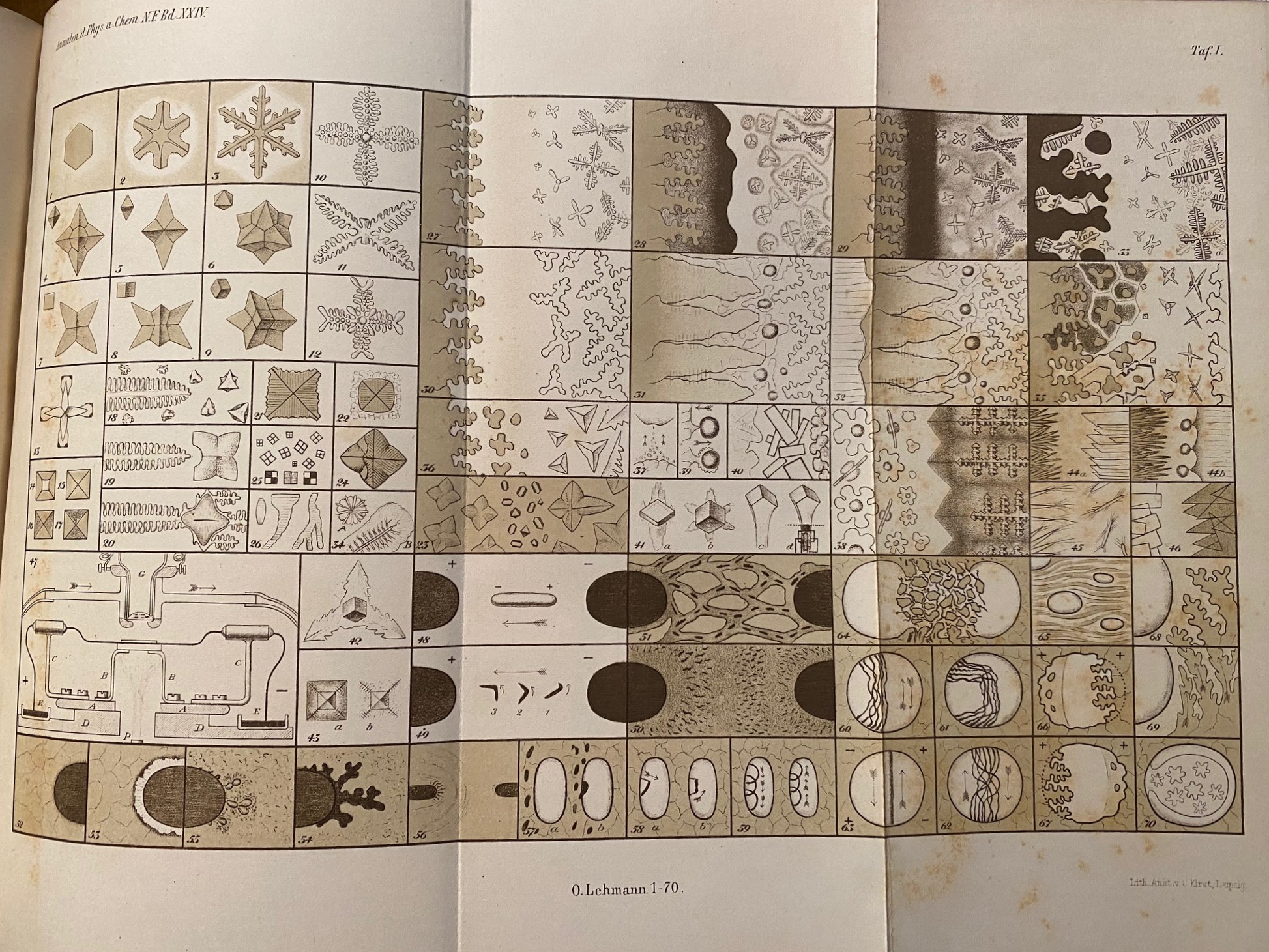
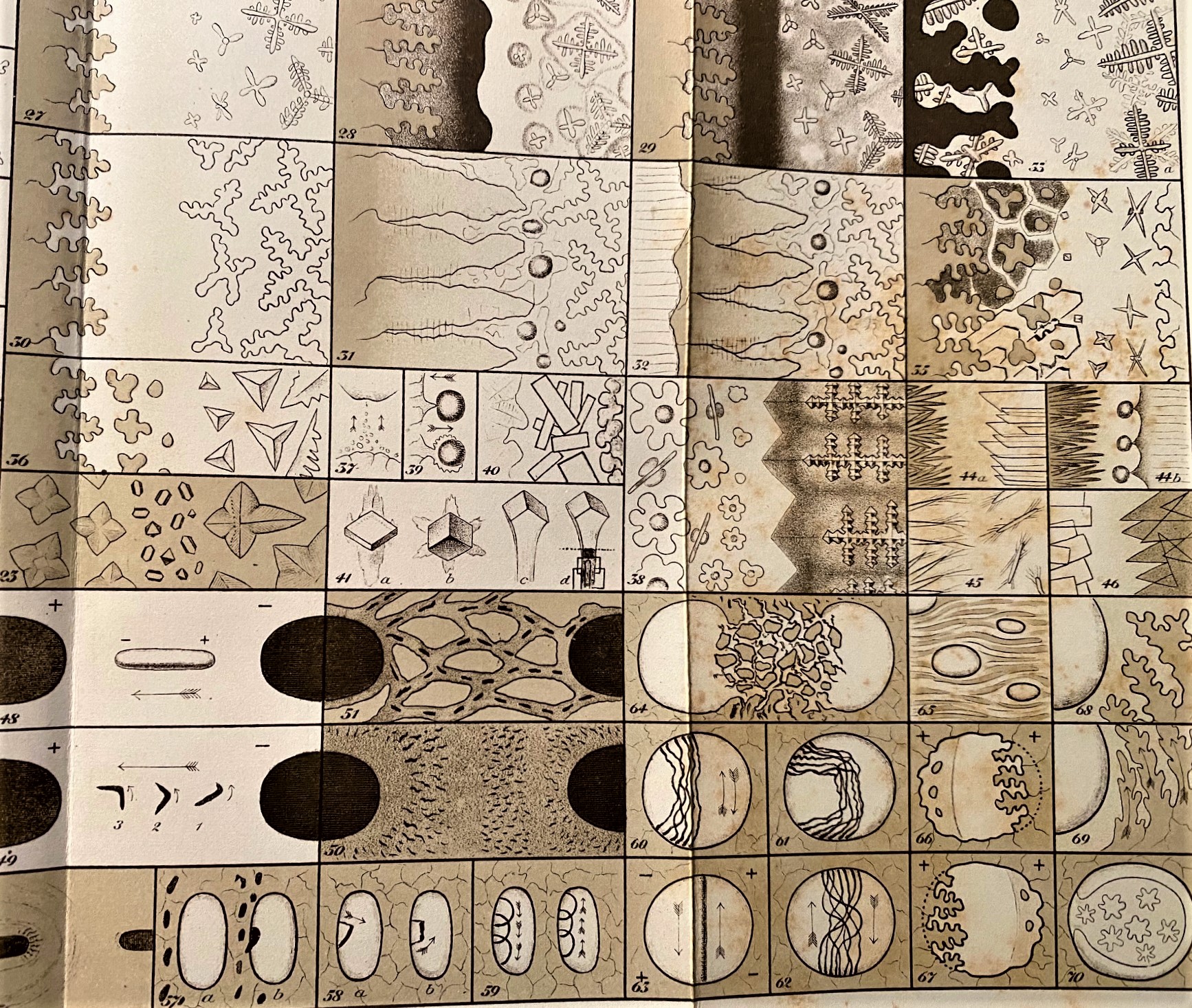
    Tonight’s Found bit is in the art field, and located in the great physics journal, the Annalen der Physik. There are some other instances of Found Art in the Annalen (these can be found by searching “Found” and “Annalen” in this blog’s Google box), but this is the first time I’ve ever found Found Graphic Novel Art—for all the world this looks to me like a very orderly story board for something like the brilliant Chris Ware’s work. It is a highly unusual de-abstraction abstract when removed from the original context, and I really do like it.

    Source: “Ueber den Schmelspunkt in contact befindlicher Korper und die Electrolyse des festen Jodsilbers” Annalen der Physik, series III, vol 24, 1885.

    IMG_5172

    IMG_5178


    ·Posted by :

    ·in:


  • Your Daily Dirigible (1913)

    JF Ptak Science Books  Quick Post  Overall Post 5129

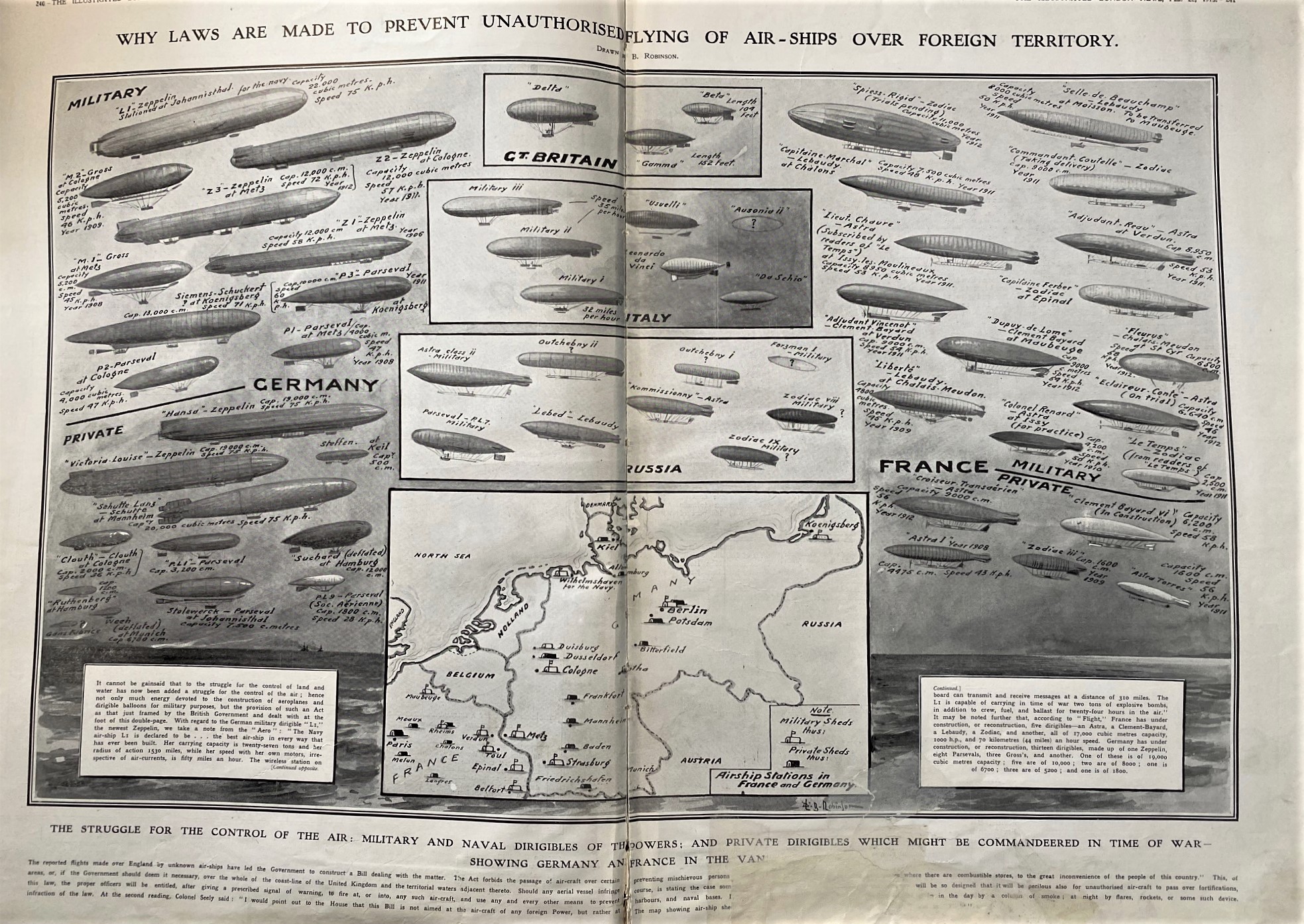
    Well, no, this is not really a “daily” dose of dirigibles, though it is a nice display of the airships. This double-page display is found in the Illustrated London News  from 22 February 1913, illustrating a short article addressing the need for legal reform in the flight of dirigibles, particularly in regards to the airships being used in possible combat.  WWI wasn’t far off at this point, and the ILN takes its readers on a quick tour of who-had-what in regards to the airships, depicting German and French airships and aerodromes. If you click on the images and then click again you’ll see that there is info on individual airships as well.  

    Click to Expand


    IMG_3862

    Details follow:


  • “Children Who Work on the Nation’s Crops” (1942)

    JF Ptak Science Books  Quick Post   Overall Post 5128

    IMG_5329

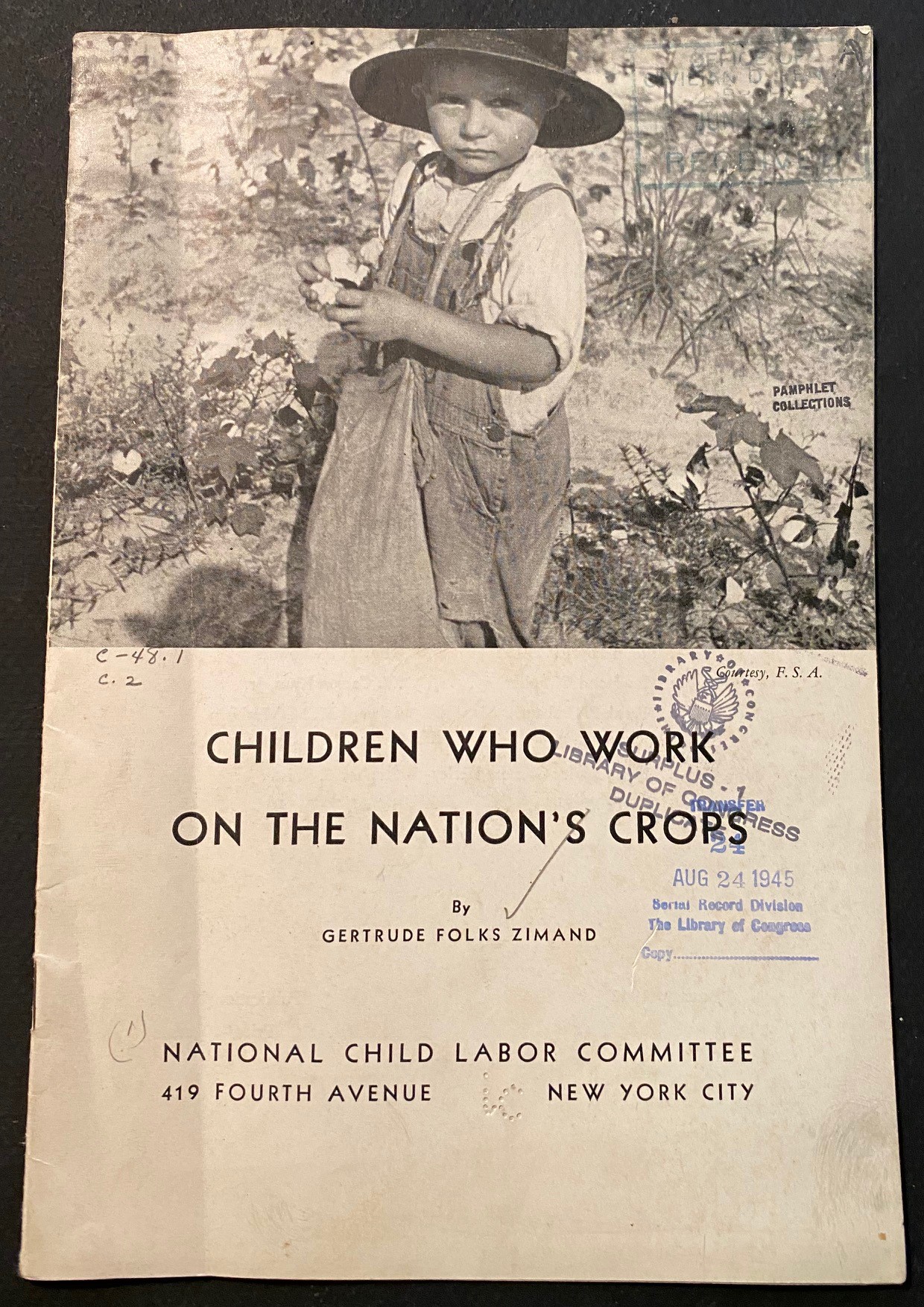
    This is a substantial indictment and attack on the loose laws (where they actually existed) regarding child labor in the United States, specifically regarding kids working in the fields.  If you scroll down you can see what laws were applicable to what states, and there were plenty of states that had virtually no regulations on children laboring in the fields, being part of a migratory family.  I’ve reproduced here some of the most significant bits from the pamphlet as well as all of teh photos–the photo images aren’t exactly Jacob Riis, but they’re getting there. In any event Ms. Zimand was making a very strong case and presenting an embarrassing expose on the use of child labor in the U.S. just at the beginning of the U.S. overt military involvement in WWII.  


    [Source: ZIMAND, Gertrude Folks. Children who work on the nation’s crops. New York City, National Child Labor Committee [1942] [National Child Labor Committee. Publication no. 384., 9″x 6″, 19pp. Photo illustrations.]


    IMG_5331


  • Found Poetry in Use of the Infinite and Imaginary in the Service of the Finite ad Real (1885)

    JF Ptak Science Books   Quick Post  Overall Post 5127

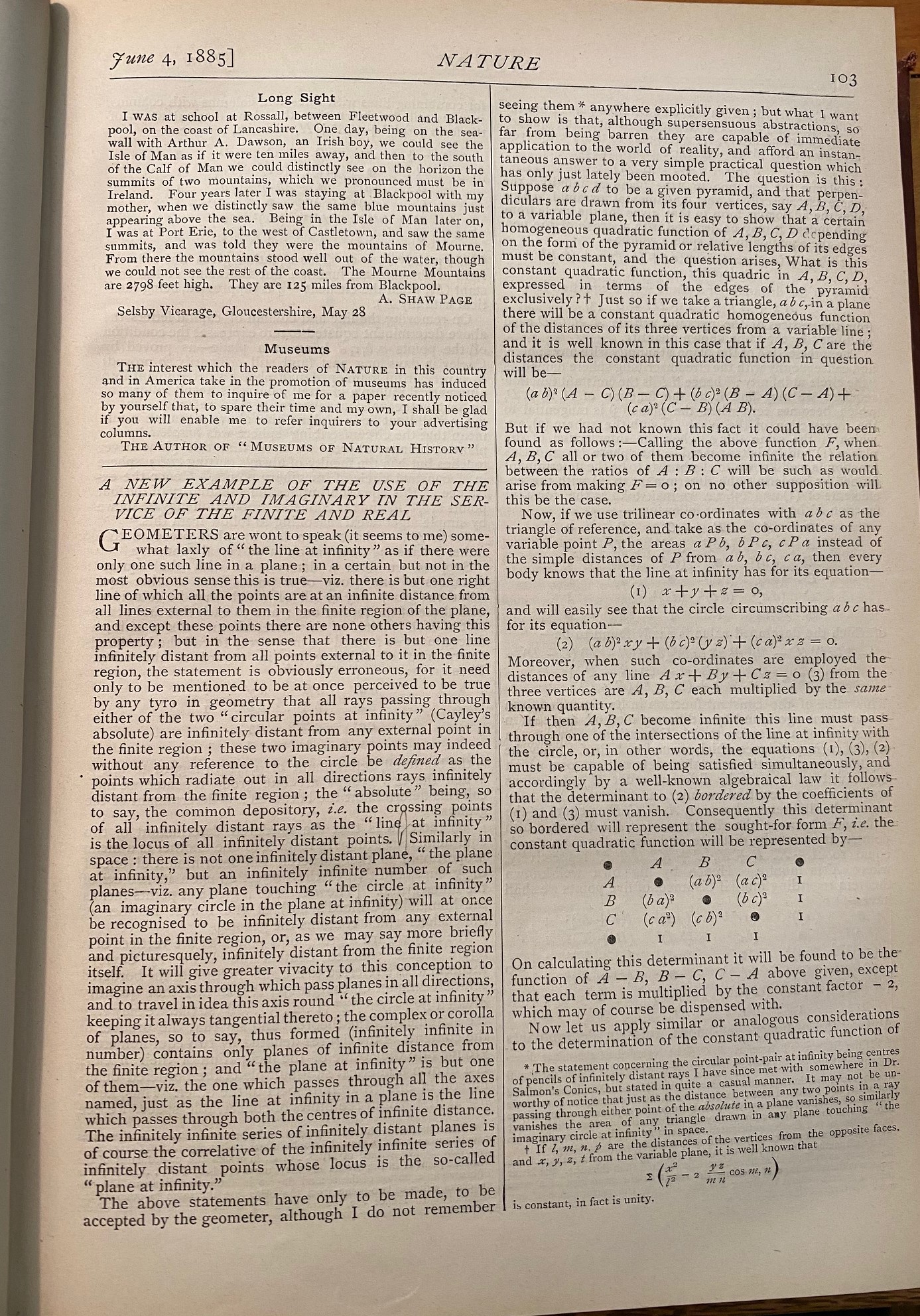
    IMG_5160Over on my blog I’ve made a number of posts on “Found Poetry”–phrases and constructions of interesting structural images that when removed from a narrative form and subjected to a different display find a sort of light art form in themselves. The phrases and sentence are in their original order—spacing and delineation have changed a bit to focus their attractiveness. There have been posts on “Found Poetry” in the (sometimes very extended) titles of Renaissance books, recipes and instructions on cooking dainty sardines, a disintegrating machine from 1877, descriptions of clouds from 1726, and well, you get the picture. “Found art is where you don’t find it”, as M. Duchamp didn’t say—sometimes the found poetry is pretty obvious, sometimes not. Today’s entry has a terrific title, though the text lets us down a little, but then closes up very strong in the last paragraph. And so, from NATURE, volume 32 number 814, 4 June 1885, by the great and prolific J.J. Sylvester,  “A New Example of the Use of the Infinite and Imaginary in the Service of the Finite ad Real”:


    “GEOMETERS are wont to speak 

    (it seems to me) somewhat laxly of ” the line at infinity ” 

    as if 

    there were only one such line in a plane; 

    in a certain but not in the most obvious sense 

    this is true —

           viz. there is but one right line of which all the points are at an infinite distance from all lines external to them in the finite region of the plan

                 and except these points there are none others having 

                        this property; but in the sense that there is but one line infinitely distant from all points external to it in the finite region, 

                               the statement is obviously erroneous, for it need only to be mentioned to be at once perceived to be true by any tyro in

                                      geometry that all rays passing through either of the two “circular points at infinity” (Cayley’s absolute) are infinitely

          distant from any external point in the finite region ; these two imaginary points may indeed without any reference

                 to the circle be defined as the points which radiate out in all directions rays infinitely distant from the finite  region…

    the “absolute” being, so to say, the common depository,

    i.e. the crossing points of all infinitely distant rays as the  “line at infinity”

    is the locus of all infinitely distant points.

    ·Posted by :

    ·in:


  • The Garden of Eden at the North Pole

    JF Ptak Science Books   Quick Post  Overall Post 5126

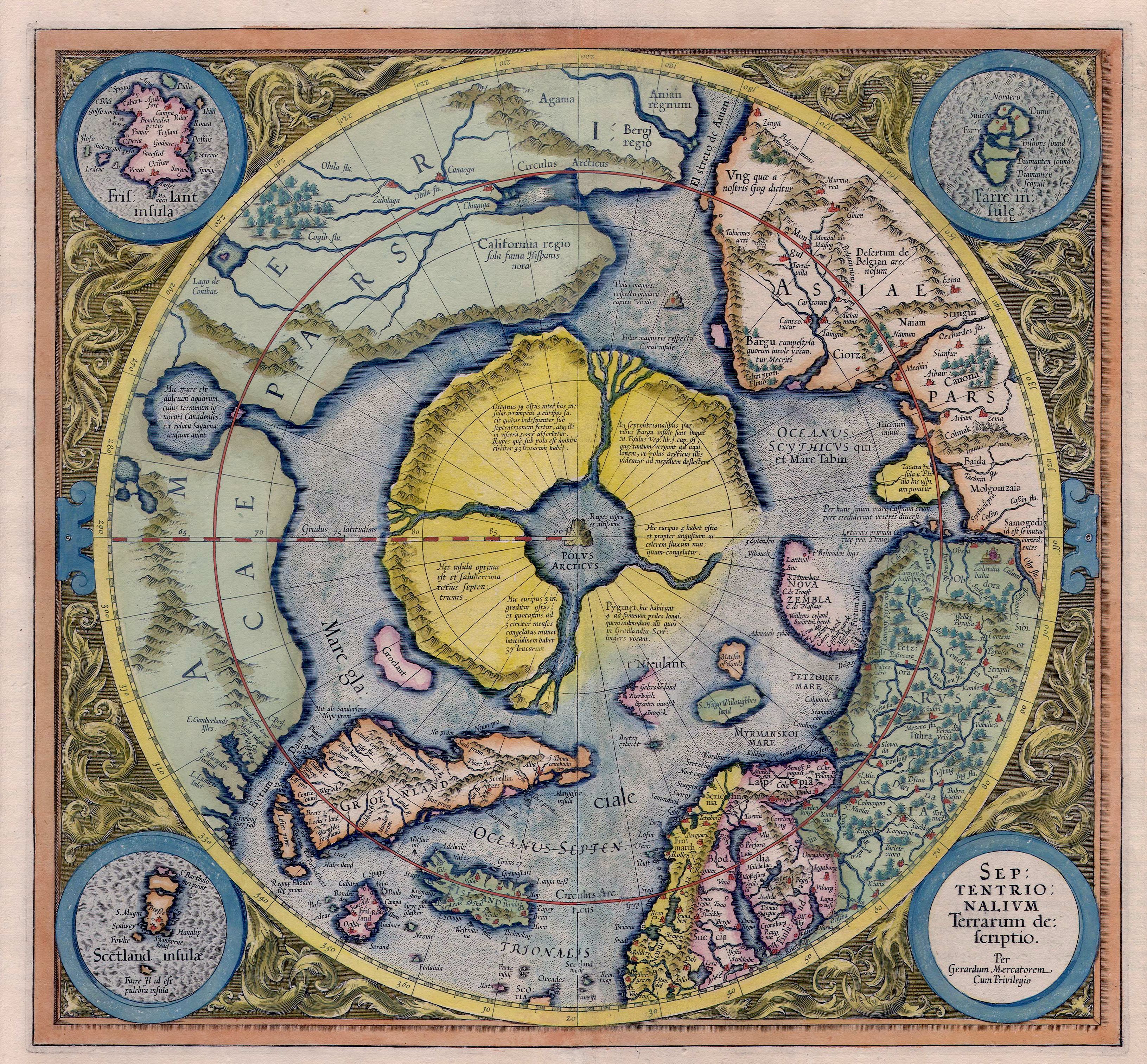
    Artic

    (Gerald Mercator, 1596)

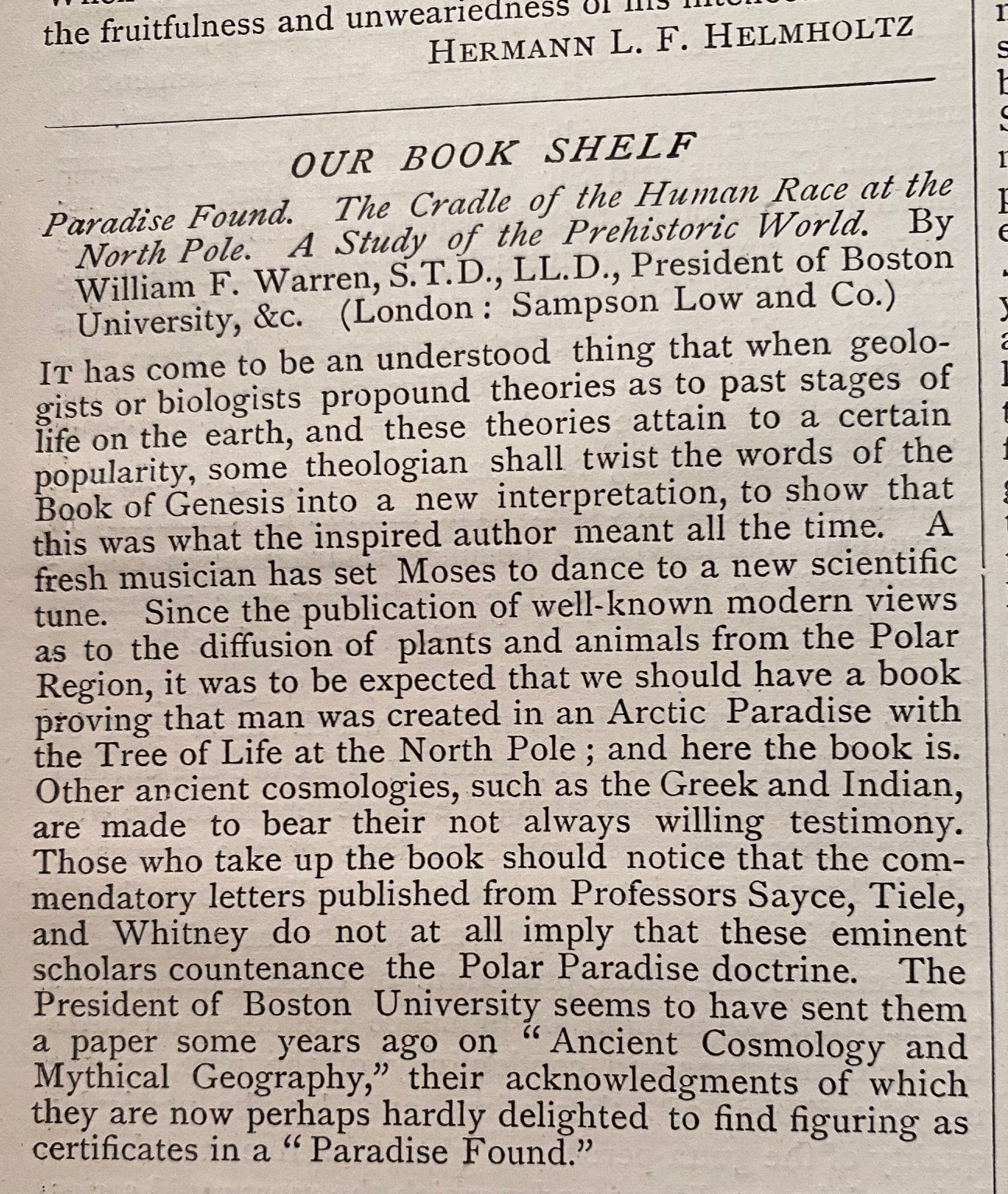
    IMG_5158This is a short, dismissive, stabbing review of a book by a theological and long-established scholar and administrator, William F. Warren (1833-1929). I remember his name from his interesting work on ancient cosmologies (1882), illustrated with examples of the history of all things according to various belief systems and religions. This quick-and-dead arrow of a review (which appeared in Nature on 14 May 1885 p, 28), was directed at his new work Paradise Found, the Cradle of the Human Race at the North Pole..., which as you can guess tries to establish the origin of humans at the North Pole, along with the Garden of Eden and the Tree of Life. And, for that matter, also establishes the Pole as the home of Mt. Maru, the Arthurian Avallon, and so on. There’s a lot that can be said but not by me—there is an attraction to hunting up other mythologies placing some part of great importance to the North Pole as the Navel of the Earth, but I just don’t have the time or inclination. As a matter of fact, I hadn’t known about this work by Warren, and I doubt I’ll know much more than what I am communicating right now—one thing the reviewer doesn’t mention is that the book runs about 500 pages, which is just too much of an investment for yours truly.

    ·Posted by :

    ·in:

    — — —