A Daily History of Holes, Dots, Lines, Science, History, Math, Physics, Art, the Unintentional Absurd, Architecture, Maps, Data Visualization, Blank and Missing Things, and so on. |1.6 million words, 7500 images, 4.9 million hits| Press & appearances in The Times, Le Figaro, Mensa, The Economist, The Guardian, Discovery News, Slate, Le Monde, Sci American Blogs, Le Pont, and many other places… 5000+ total posts since 2008.

Author: JF Ptak

  • The Costs of Television Sets, 1946

    JF Ptak Science Books   Quick Post  Overall Post 5144

    • Q: “What kinds of programs will there be on television?
    • A:  “All kinds” (“The commercials will be unlike radio.”)
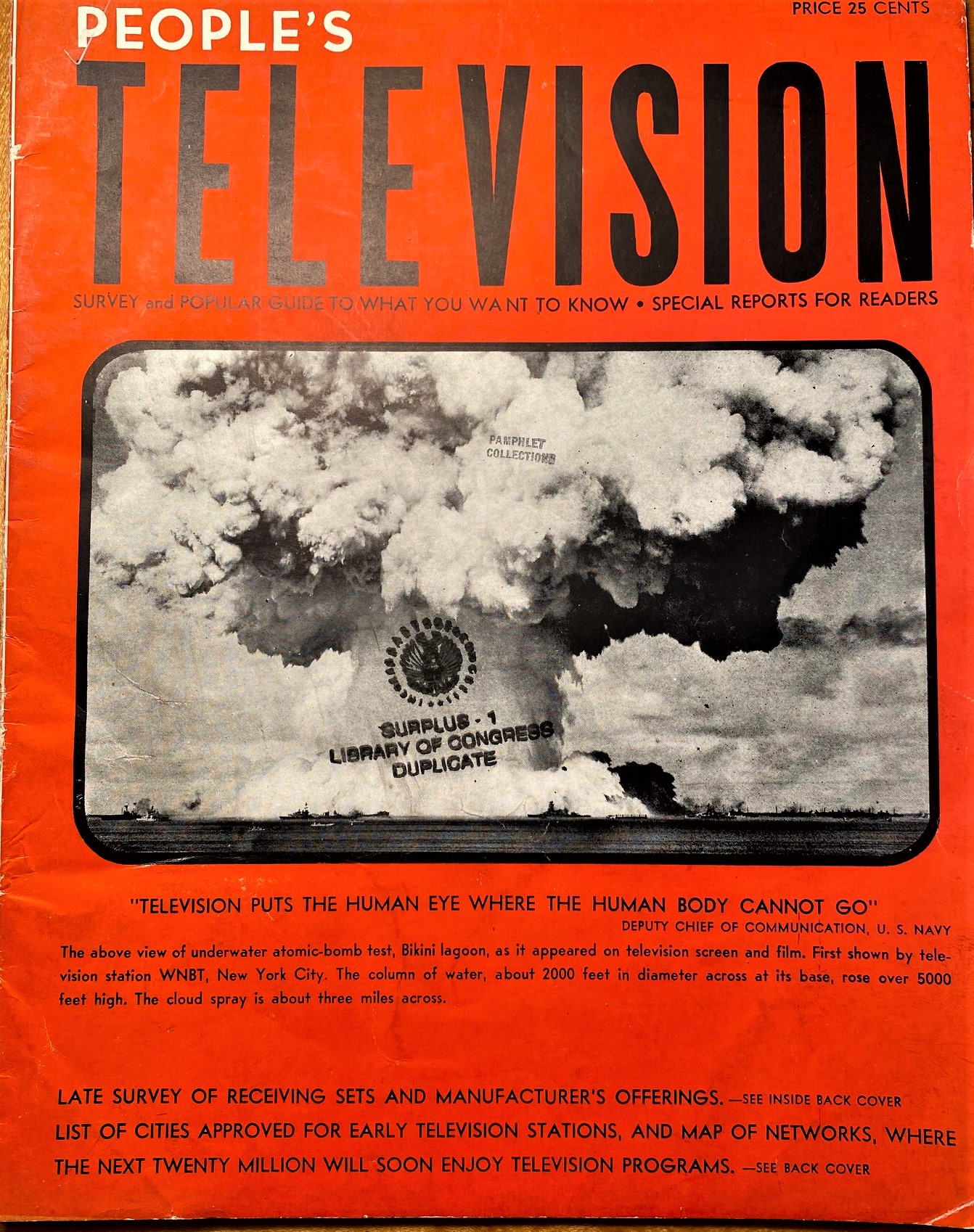
    IMG_7485I was initially attracted to this oversized pamphlet for its A-Bomb cover–using this sort of imagery was a thing in advertising in the Cold War years…pervasive, even. It was not uncommon to see this sort of image used to sell bubble gum, kids’ toys, motel rooms, laundry cleaners, and just about everything else (plus, of course, firecrackers).  This pamphlet though was a bit different from the others, as I expected that given its contents it would’ve been published around 1950. Wrong!  This work hit the streets in 1946, about a year after Hiroshima and Nagasaki, and very early on in the history of public television. Television (and facsimile transmission) exited around the edges of public awareness for a few decades, but television as a relatively common form of amusement with not-terrible accessibility was very new in 1946.  So I wanted to share a few of the useful bits that I found in this short (24pp) and oversized pamphlet, the primary one being a survey of costs of television sets listed by manufacturer.
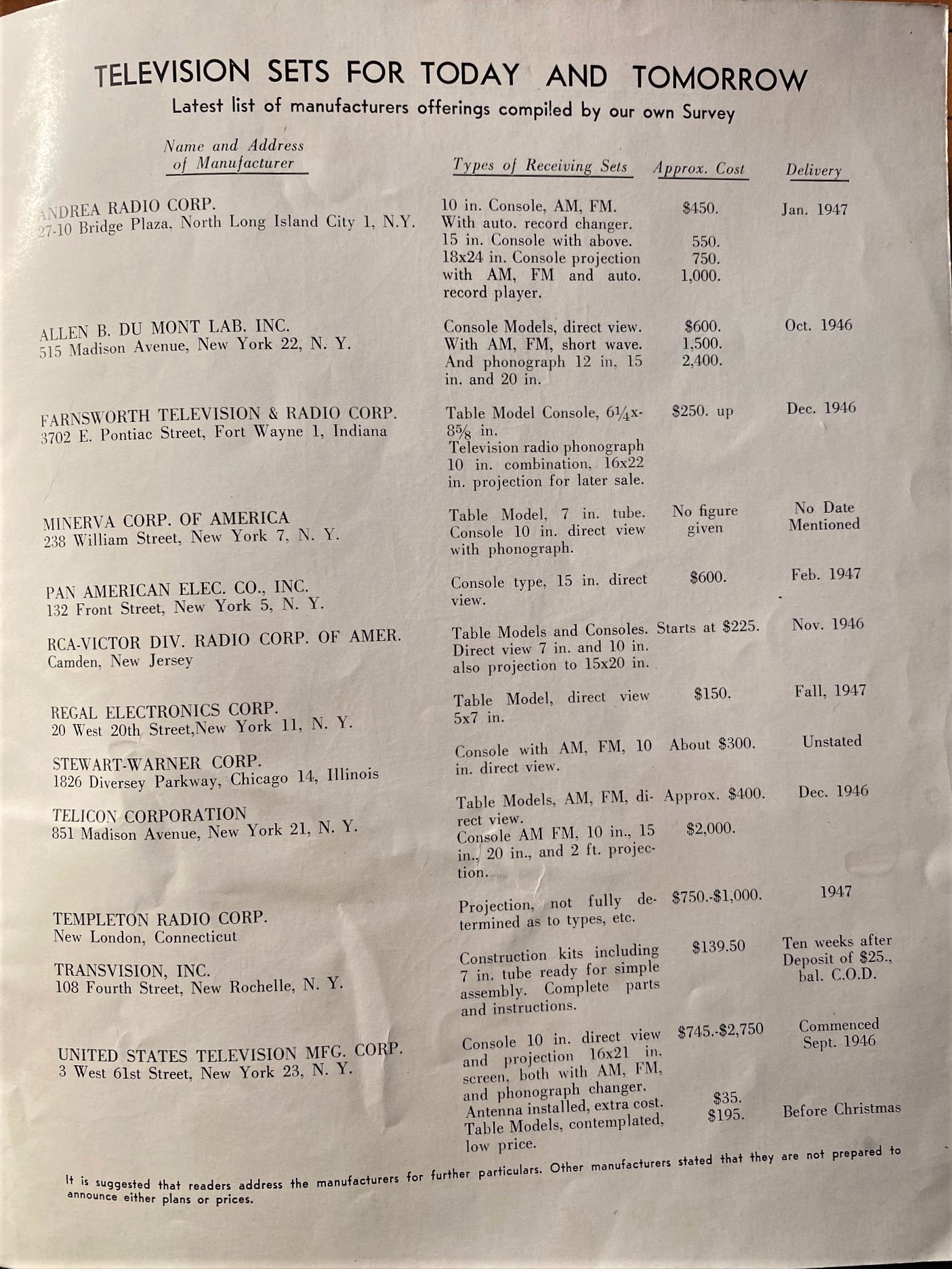
     

    IMG_7483As you can see, the tv was not a purchase to be taken lightly by the average US citizen in 1946.  There’s only a couple of sets listed here under $200,  with the average cost (not including the relatively substantial fee for the aerial and aerial placement) coming in at more than 10% of the average yearly income. (The average income in 1946 was about $2600, or about $39k adjusted for inflation using the Bureau of Labor Statistics inflation calculator as a base.) The average salary in 2020 was about $56,000, or about $7k in 1946 dollars. That isn’t as rosy as it might seem, given that the average person could expect to spend about double their income on a house–a standard that does not carry forward to today. Toss in healthcare and education, and that 7k comes rambling down. Hm. Another way of looking at this relative costliness of a tv set in 1946 is that it was about 10% of the cost of the average new car–given that the new car cost today in 2021 has jumped over the $50,000 mark (?!), 10% of that would buy a boatload of television sets.  

    And there you have it–a little peep into the history of the future of television. (I should mention one interesting paragraph in which David Sarnoff reveals the remote-controlled bomber, outfitted with “television eyes” that would only be used in not-peacetime.)
  • Statements by the Editor of Nature on Equality in the Sciences (1910).

    JF Ptak Science Books  Overall Post 5143

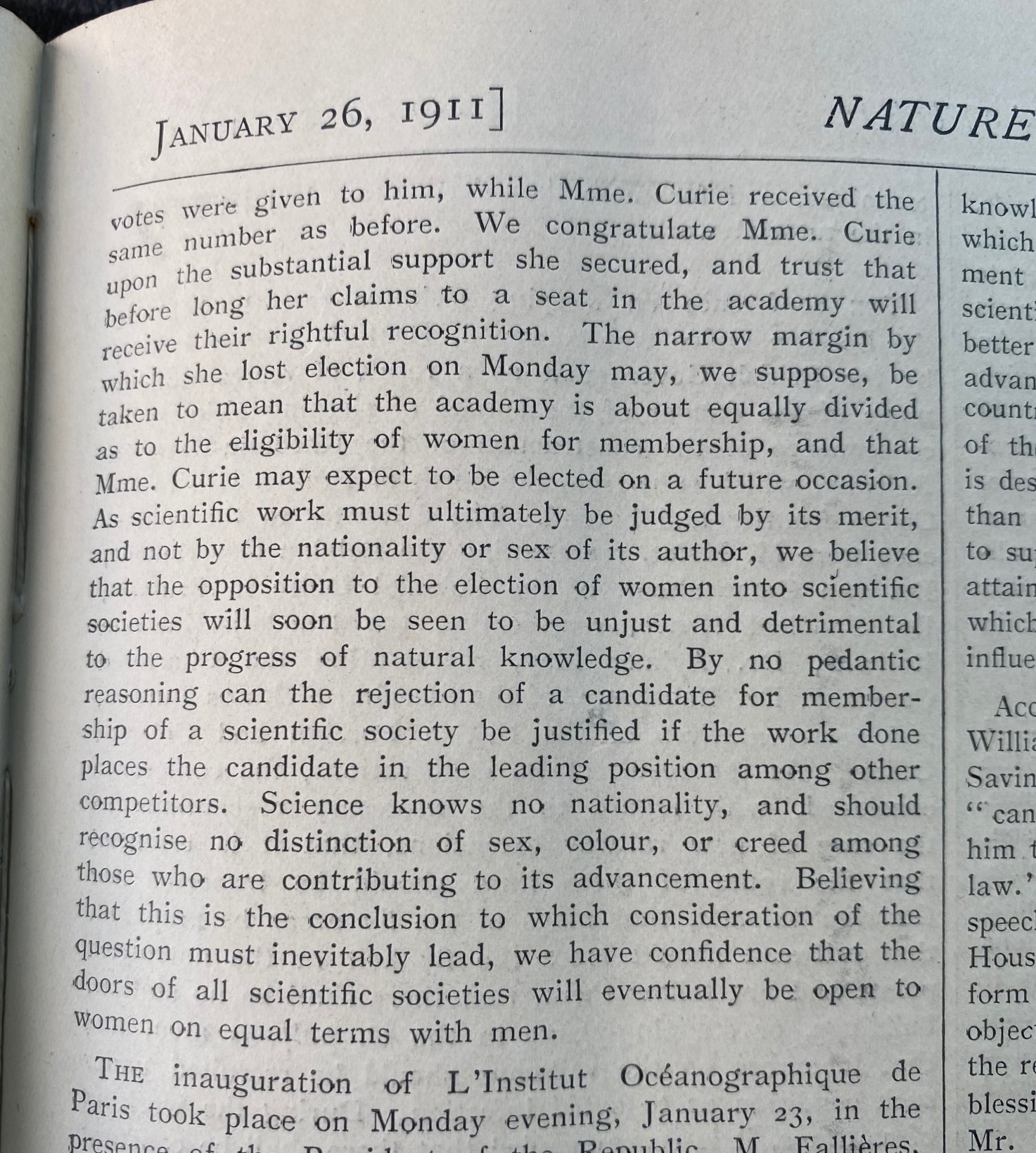
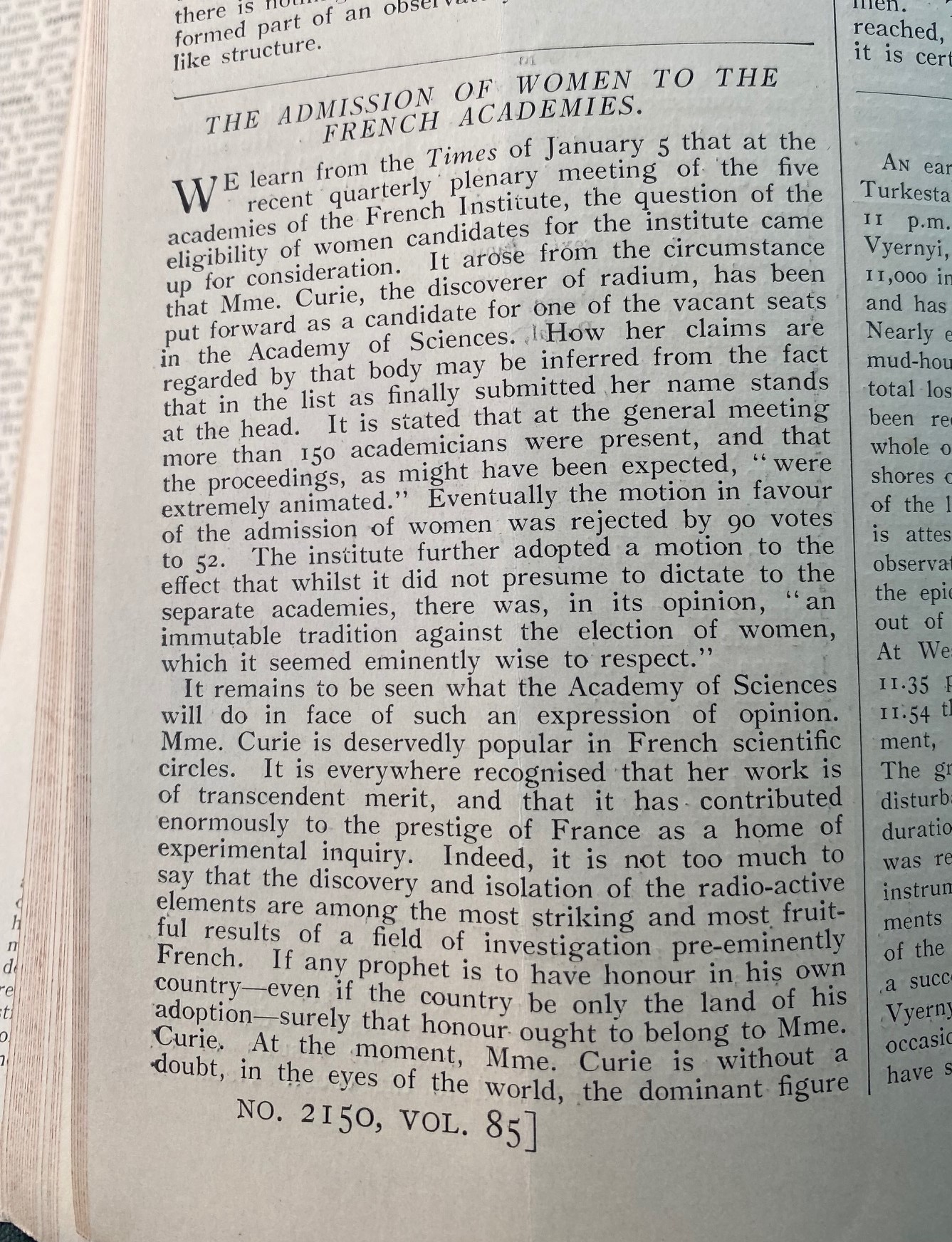
    IMG_7448This is a short note on an interesting series of reports in the venerable journal Nature (1911) regarding the status of women in the sciences.  These are three short articles (about 1750 words total) on the recent elections to a seat at the French Academy of Sciences in which Mme. Curie–one of two candidates–was not elected, her candidacy lost by vote to Edouard Branly. (Branly is an important figure in the history of wireless communications and inventor of the Branly coherer, but Curie was, well, far advanced of that.) The editorial staff of Nature took exception, reporting on the issue and the vote’s unfortunate outcome. Being fairly familiar and having worked in Nature (for the 1869-1950 period) I was a little surprised by the summation of this short note in the 26 January issue. It is a strong message, at least so far as scientific and other intellectual endeavors are concerned. (Women will not get the full vote in G.B. Until 1928, achieving partial victory in 1918, though the vote was limited then to women 30+ with adequate property.) Still, I take this as a significant statement from Nature, even if it is limited to a short article in the “Notes” section of the weekly. I cannot recall other early pro-equality stances like this outside of a few articles here and there in support of women being able to attend classes at major universities, though not being able to receive academic credit for them. All caveats included, I find the Nature article to be a remarkable statement for the time. Perhaps someone out there with experience in this field will be able say whether these statements are actually as early as I think they are.  

    Here’s the conclusion of the 26 January article:

    “As scientific work must ultimately be judged by its merit,

    and not by the nationality or sex of its author, we believe
    that the opposition to the election of women into scientific
    societies will soon be seen to be unjust and detrimental
    to the progress of natural knowledge. By no pedantic
    reasoning can the rejection of a candidate for member-
    ship of a scientific society be justified if the work done
    places the candidate in the leading position among other
    competitors. Science knows no nationality, and should
    recognise no distinction of sex, colour, or creed among
    those who are contributing to its advancement. Believing
    that this is the conclusion to which consideration of the
    question must inevitably lead, we have confidence that the
    doors of all scientific societies will eventually be open to
    Women on equal terms with men.”

    By the way, Curie was never elected to the French Academy of Science, though she did receive membership to the Academie Nationale de Medicine…in 1922. She had already received the Nobel Prize in physics in 1903, and would be awarded the prize again in chemistry a few months after she lost this 1911 vote to the Academy. (Perhaps the “creed” part of the “sex. colour, or creed” pronouncement above referenced certain elements circulating the story that Curie was Jewish?)

    IMG_7450

    Notes:

    Three issues of  Nature, London, Macmillan & Co., 1910, volume 85.  Including: “The Admission of Women to the French Academies”, pg 342 (full column, about 800 words), 12 January, in the issue #2150, pp 329-362. WITH: “The Admission of Women to the Paris Academy of Sciences”, in 19 January, pp 372-373 pp 363-396, issue 2151. AND WITH: [Women’s Rights], a 400-word contribution to the “Notes” section of 26 January issue no. 2152 pg 412-413 in the issue of pp 397-430. It is in the third contribution, the “Notes” section, that contains the strongest statement by the editor of Nature on the equality (at least in the sciences and intellectual pursuit) of sex, race, and religion. 

    ·Posted by :

    ·in:

    —

  • Unusual German WWI Book Reviews, 1936

    JF Ptak Science Books   Overall Post 5142

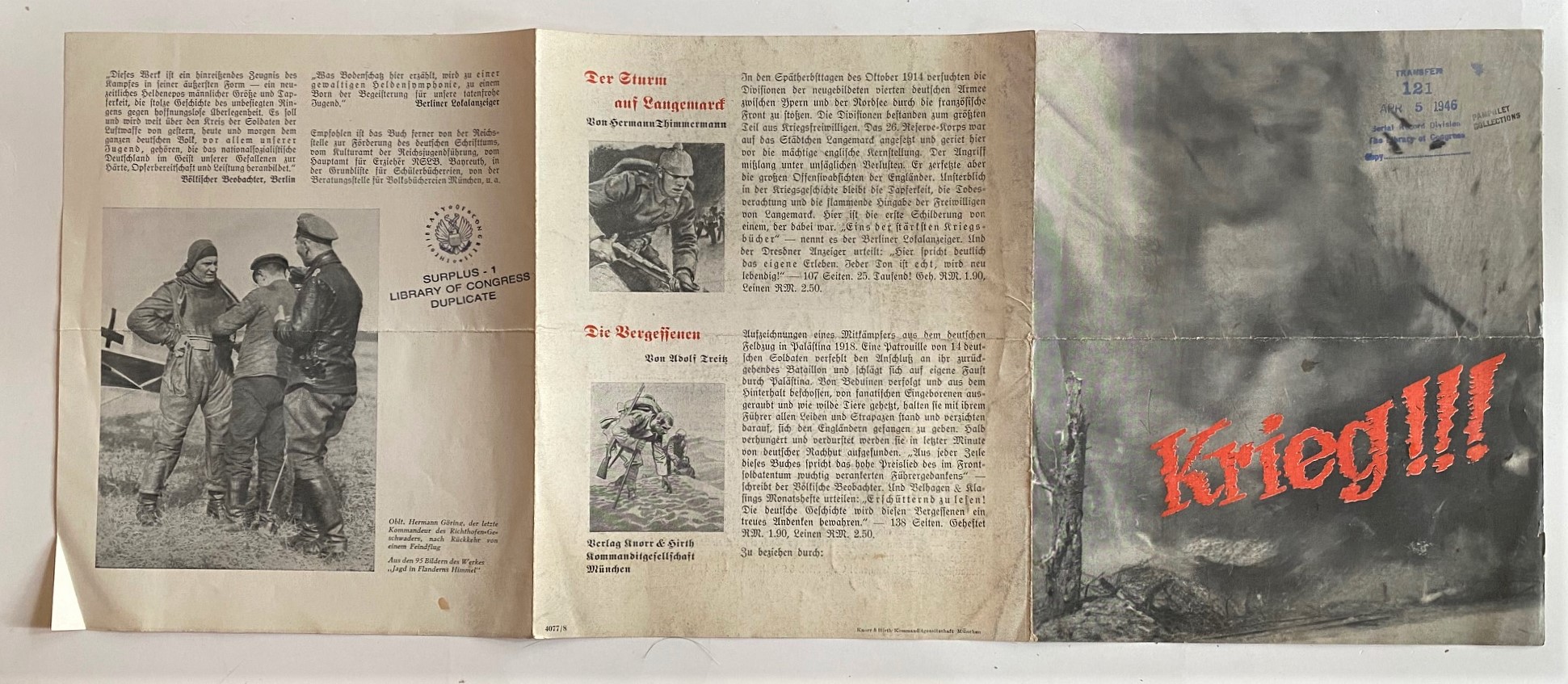
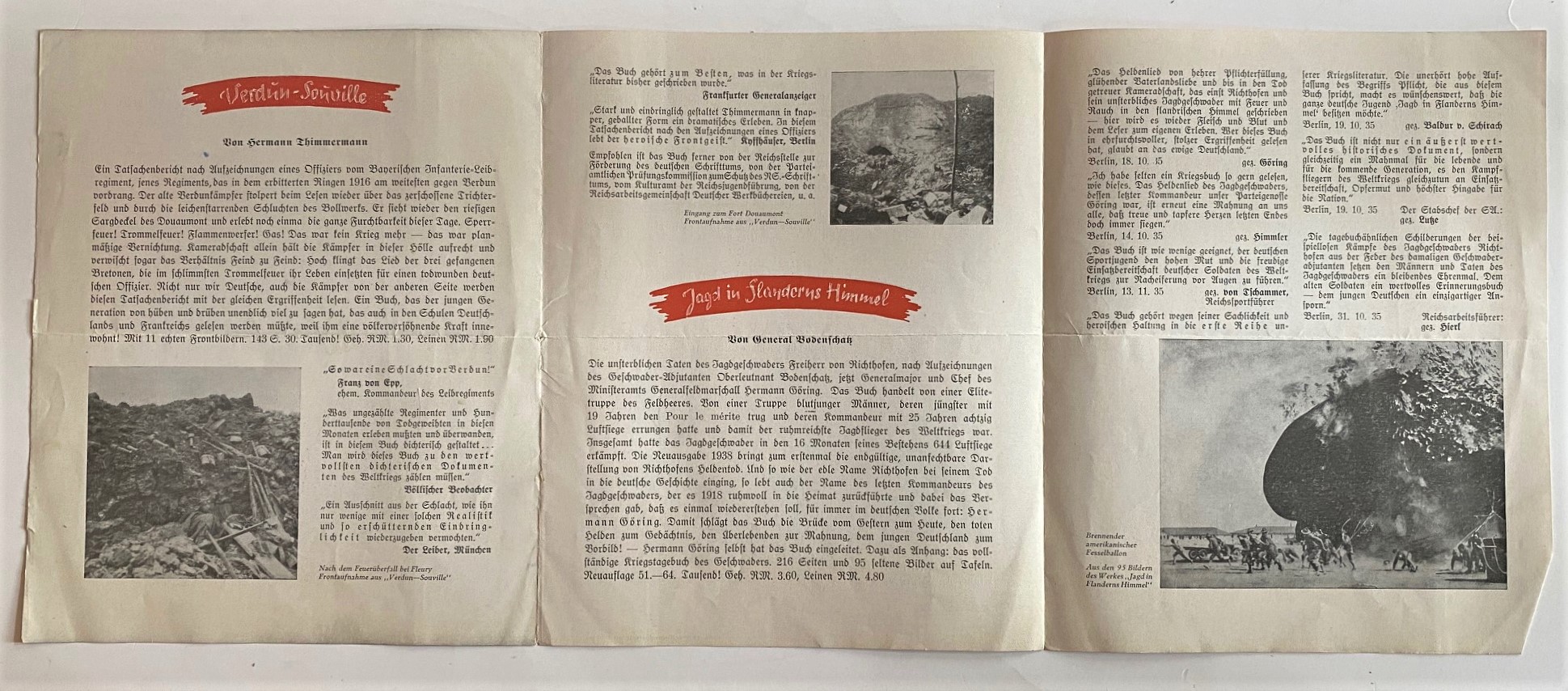
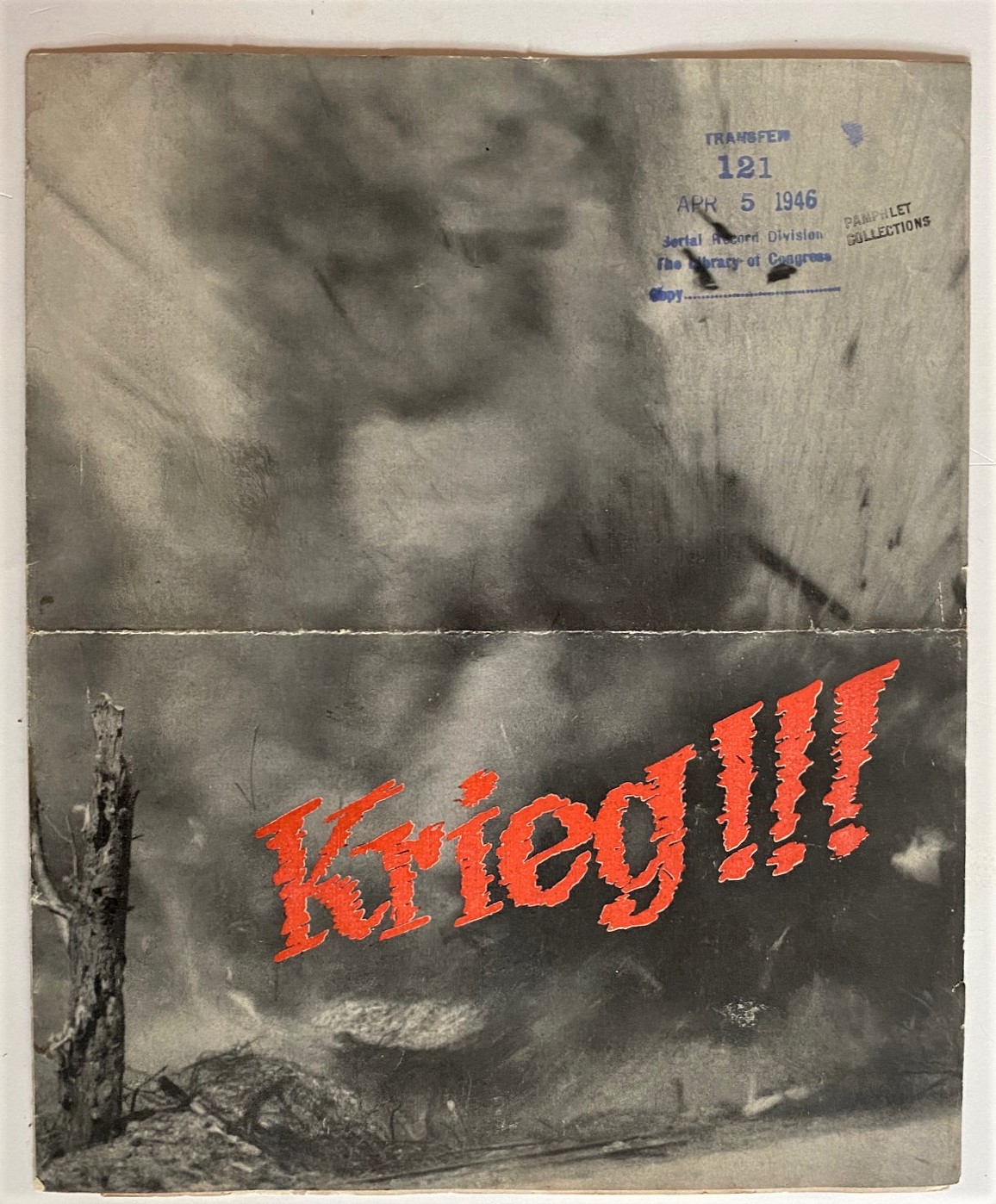
    IMG_7074Earlier today I catalogued a small tri-folding World War I-related leaflet printed in 1936 and emblazoned Krieg!!! The cover is striking, partly because in addition to the graphics it also shows something being blown-up in real time, which was a pretty uncommon thing to make a photograph of in WWI. It turns out that this little six-page pamphlet was a collection of eight book reviews written by German military about the war. And it wound up being surprising—to me, at least—because most of the reviews seemed as evocative as the cover art.

    A number of the reviews were surprising to me because, in some way, they seemed to be a little on the unglory of war and the suffering—not anything like Johnny Got His Gun, or All Quiet on the Western Front, but different and diffident enough to make an impression. For as short as this work is there’s a fair amount of discussion of the horrors of war as experienced and then shared by both sides.

    For example, in a review for Verdun-Souville, by Hermann Thimmermann, we find the work described as “A factual report based on the notes of an officer from the Bavarian Infantry Regiment, the regiment that advanced the furthest against Verdun in the bitter struggle in 1916…he stumbles again over the shot-up field and through the corpse-staring gorges of the bulwark…and once again experiences the whole horror of these days. Barrage! Flamethrower! Gas! It was no longer a war – it was planned annihilation. Comradeship alone keeps the fighters in this hell upright and even blurs the relationship between enemy and enemy…Not only we Germans, but also the fighters from the other side will read this factual report with the same emotion. A book that has an infinite amount to say to the young generation from here and there, which should also be read in schools in Germany and France, because it has a power to reconcile people!”

    Perhaps this was not unusual to post-WWI German renditions of the war, but to my experience it certainly seemed so, especially three years into Hitler’s Germany.

    Here’s part of the review for Sowar eine Schlacht vor Verdun, by Franz von Epp, former commander of the Leibregiment: “What countless regiments and hundreds of thousands of those doomed to death had to experience and overcome in these months is poetically told in this book …This book will have to be counted among the most valuable poetic documents of the world war.”–Volkischer Beobachter And: “An excerpt from the battle that only a few were able to reproduce with such realism and such shocking urgency.” Der Lieber, Munich.

    Of particular and unusual interest is a “lost patrol” story in the review for The Forgotten, by Adolf Treib: “Notes from a fellow combatant from the German campaign in Palestine in 1918. A patrol of 14 German soldiers missed the connection with their retreating battalion and made their way through Palestine on their own. Chased by Bedouins and shot at from ambush, robbed by fanatical natives and chased like wild animals, they and their guide withstand all suffering and hardships and refrain from giving themselves prisoner to the English. Half starved and dying of thirst, the German rearguard found them at the last minute.” and continuing: “From every line of this book speaks the high price song of the leader idea, which is powerfully anchored in the soldiers at the front…Shattering to read! German history will keep a loyal memory of these forgotten people.” – Völkische Beobachter

    That said, there are some glories celebrated here, particularly for the book Jagd in Flanderns Himmel, which is mostly about German aviation, where Himmler and Goering shower the book with praise “I have seldom enjoyed reading a war book as much as this one. The hero song of the fighter squadron, whose last commander was our party comrade Goering, is another reminder to all of us that in the end, loyal and brave hearts always win” wrote Himmler. Goering heaps praise as well, concluding “Whoever reads this book with awe and proud emotion believes in eternal Germany”.

    In any event, this is an interesting document, and I’ve reproduced it all, below, if you’d like to see it for yourself.

    IMG_7076
    IMG_7076

    ·Posted by :

    ·in:


  • An Odd Perspective Looking Through the RAF Wellington Bomber (1941)

    JF Ptak Science Books   Overall Post 5141    

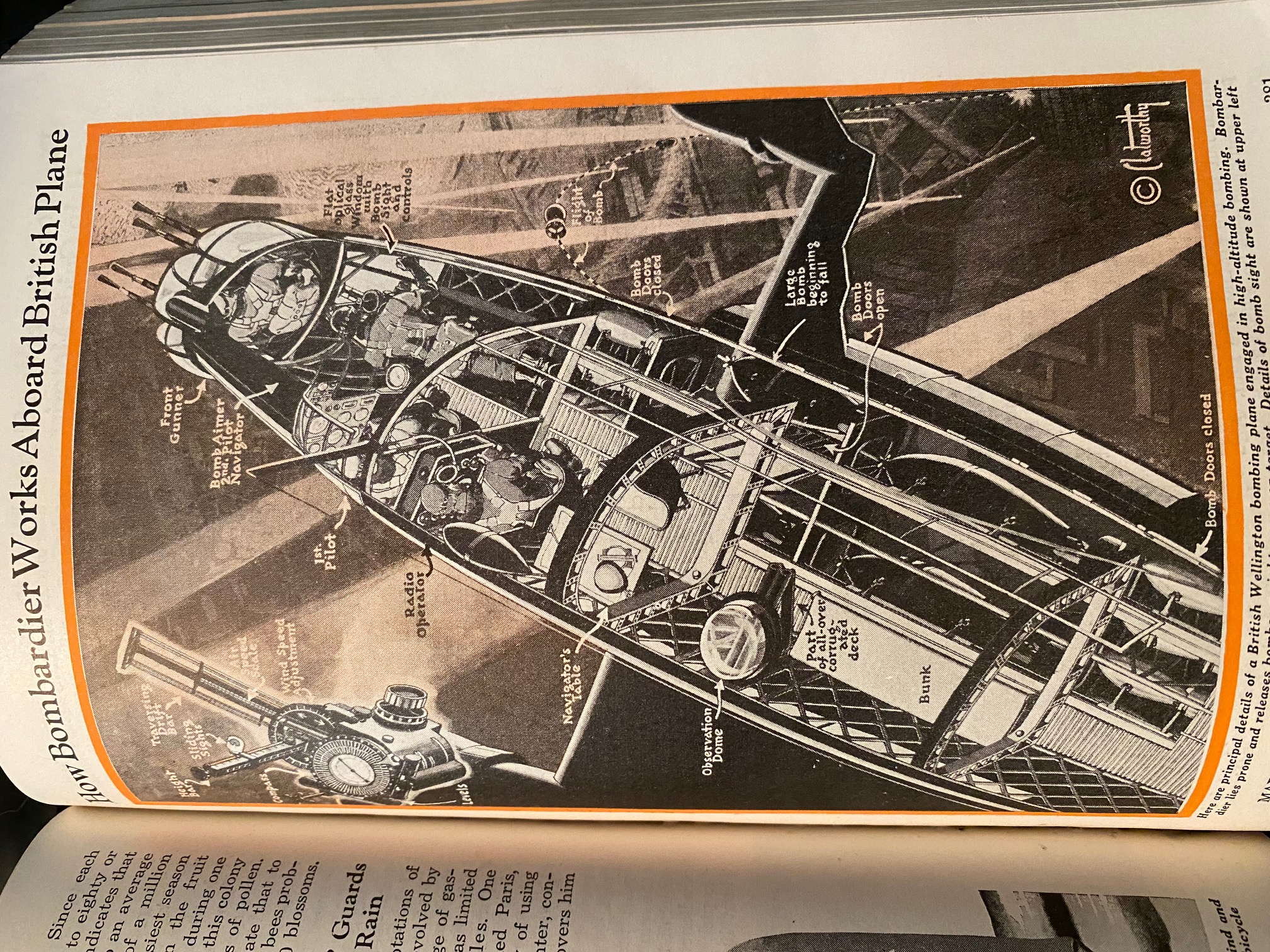
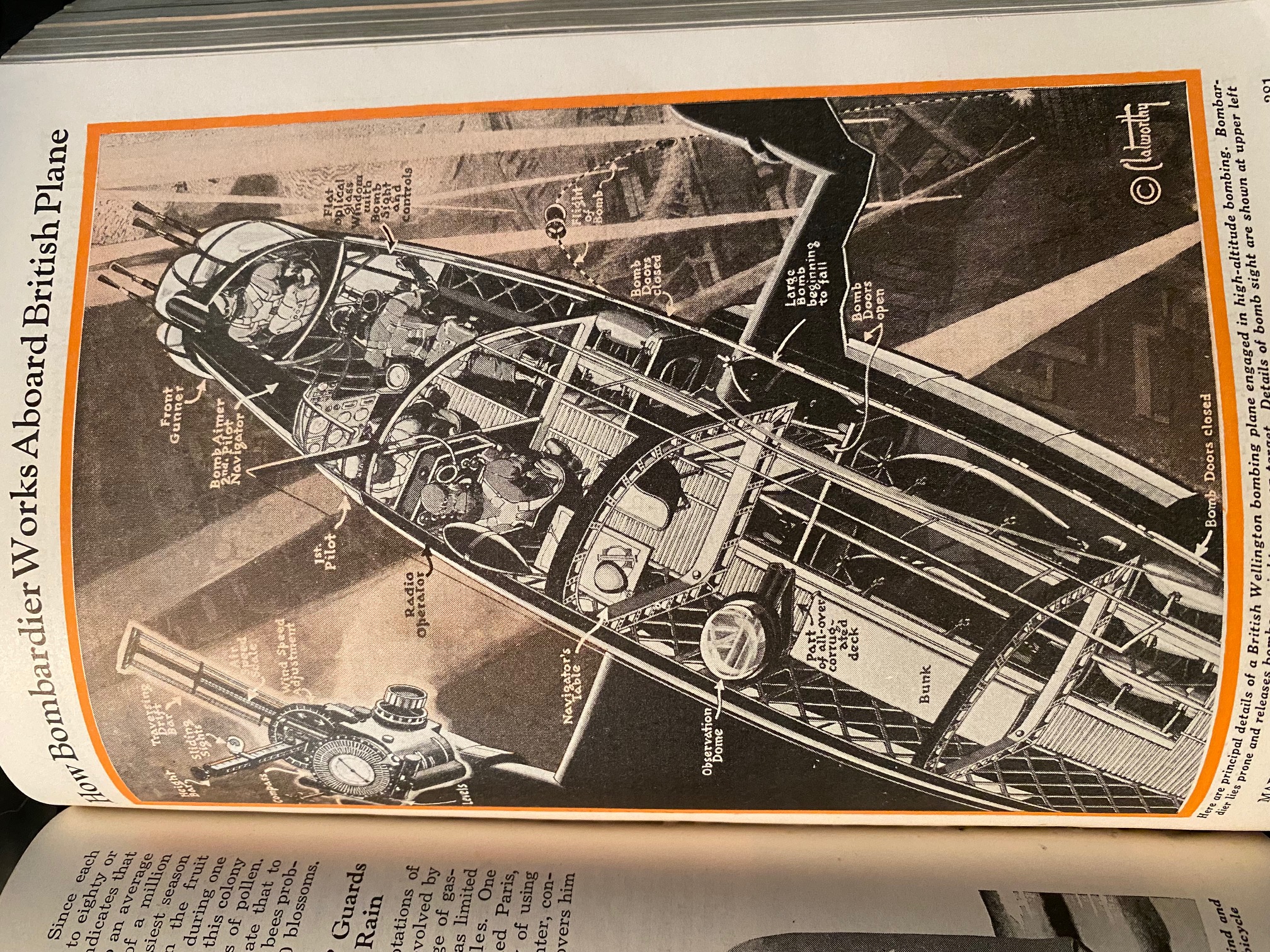
    Here’s a short notice on an unusual perspective in the combined categories of cutaway diagrams and looking-straight-down:  the (almost)-looking-straight-down bird’s-eye cutaway view!  I rarely see these two categories combined…and as a matter of fact I cannot recall the last time I posted something like this. So here it is, direct from the March 1941 issue of Popular Mechanics, showing a very oblique view from above looking through the fore section of a British Wellington bomber:

    IMG_6689

    There is an inset diagram of the sighting instrument, which I was a little surprised to see in a popular magazine published during the war.

    [Note: if you click through on the image it becomes more clear in magnification.]

    ·Posted by :

    ·in:

    —

  • The U-Boat Captain’s First-Person Account of Sinking the RMS Lusitania (1915)

    JF Ptak Science Books  Overall Post 5318

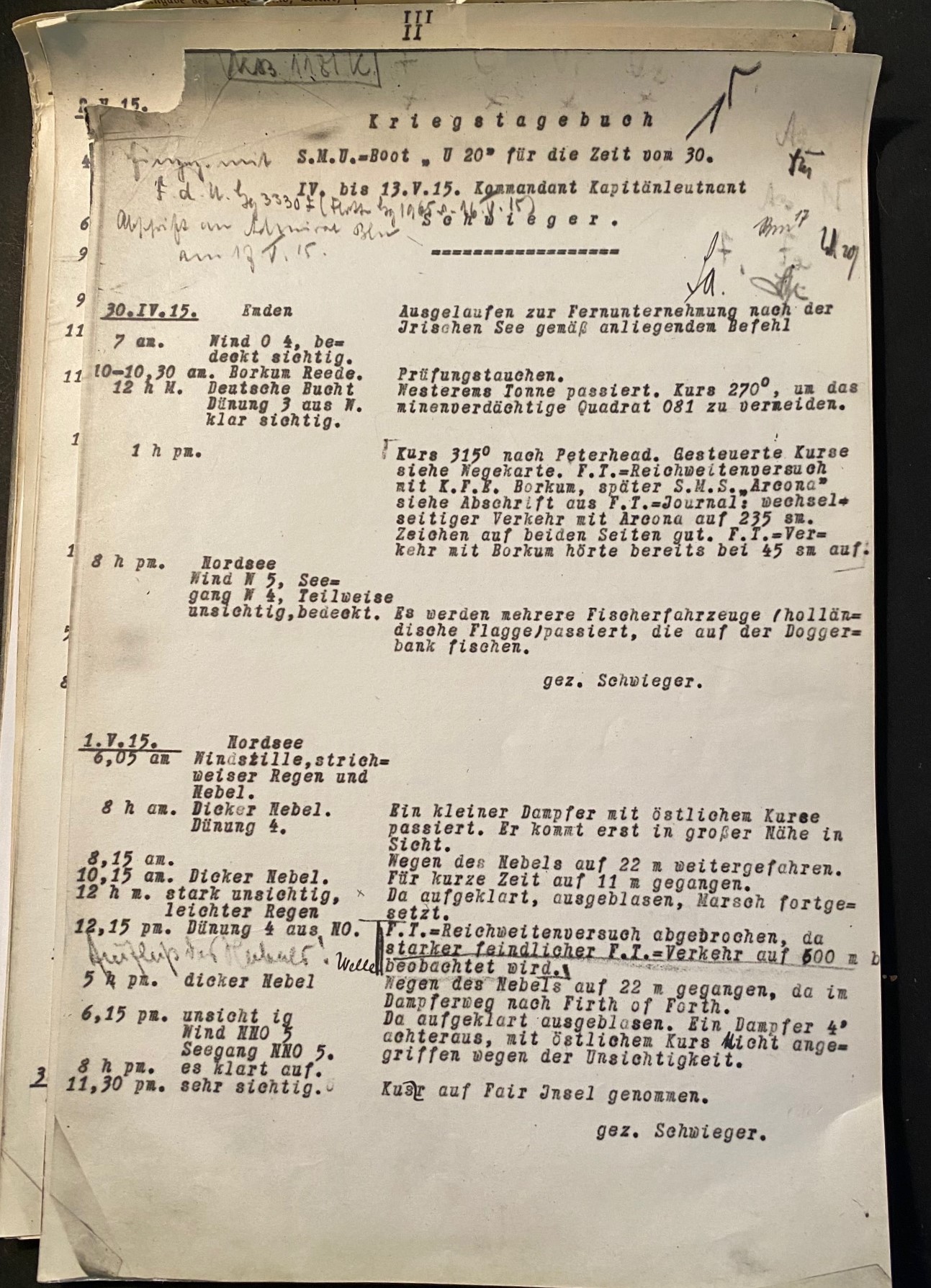
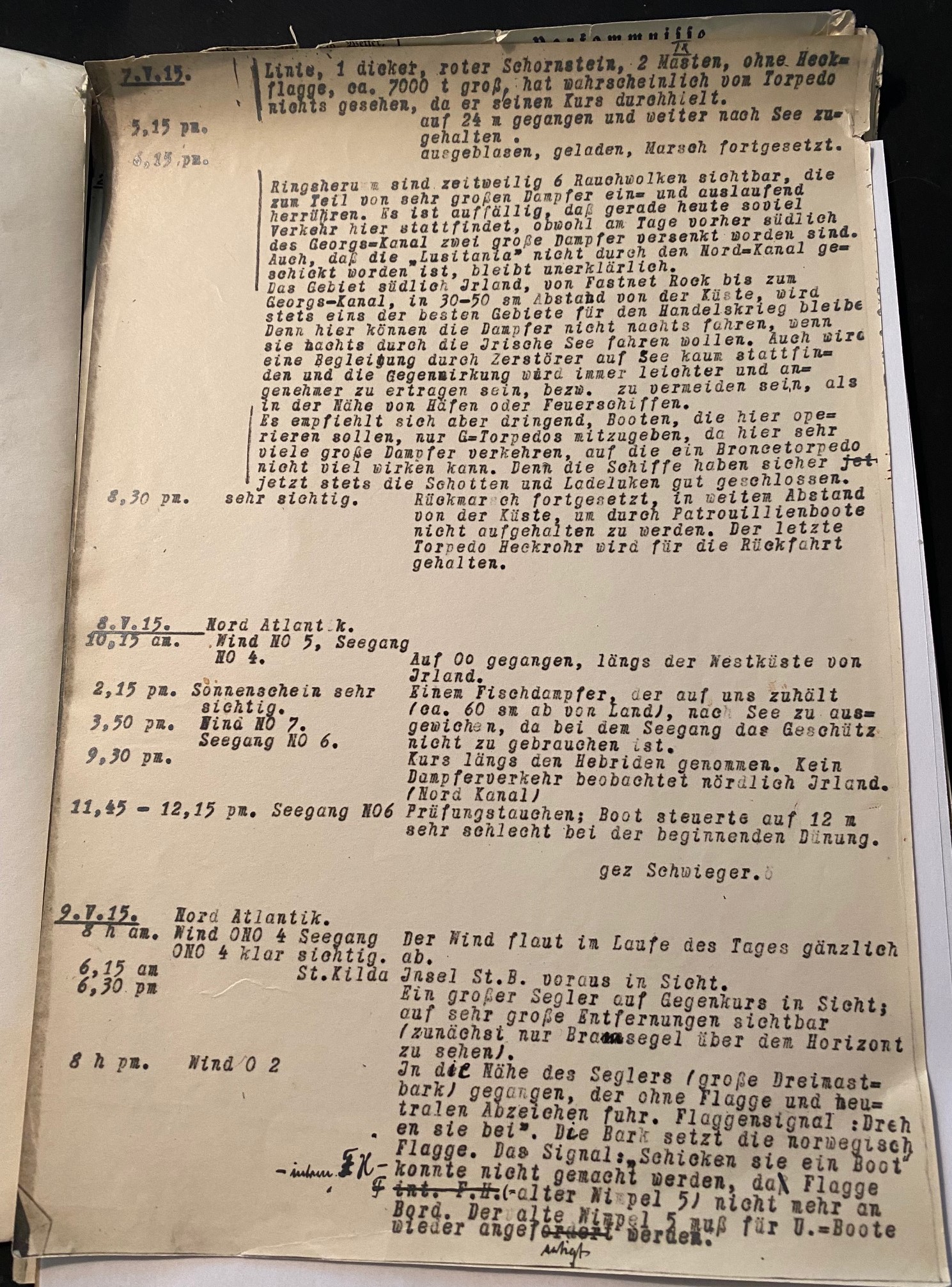
    IMG_5874The sheets presented here1 are very early photographs of the original war diaries of Captain Walter Schwieger, the captain of the German submarine SM U-20 who sank the RMS Lusitania in 1915.

    The period of coverage for these leaves extends from 30 April 1915 to 13 May 1915, the attack on the Lusitania coming on 7 May (which receives 1.5 leaves of coverage), and delineates the action by the hour. The periods before and after the Lusitania attack are highly documentary, well written, and descriptive. The story of the Lusitania itself is forensic but not without some reserved excitement, including the decision of not launching a second torpedo for the sake of not sending through many hundreds of survivors already in the water.

    A summary of the attack day—7 May—details that at 2:20p.m. Schwieger reports on tracking a possible target and then sees “four funnels” (“Schornsteine”), identifying the target as a large passenger steamer. Schwieger positions his boat and fires one torpedo “in the side close behind the bridge” followed by an “extraordinarily” large detonation, stopping the ship immediately and causing a severe listing. Schwieger then states that he sees “Lusitania” written in gold on the side of the ship.

    And then, at the end of the description of the attack on the Lusitania, when the ship was foundering, Schwieger writes that he could’ve sent a second torpedo to absolutely finish the ship, but didn’t because he didn’t want to shoot through a sea with survivors. “I would not have been able to shoot a second torpedo in this crowd of people who were saving themselves.” (“Auch hätte ich einen zweiten Torpedo dies Gedränge von sich rettenden Menschen nicht schiessen können.” pg viii 3:25 pm.)

    The Lusitania sunk in 18 minutes, with a loss of 1198 of the 1995 on board.

    The U-20 was launched 1912 and grounded in November 1916 when her crew attempted to destroy her. Their efforts were not complete, and I assume that Schwieger’s war diary was retrieved by the Royal Navy at that time. Schwieger commanded another boat—he met his fate against a mine, the boat sunk and the crew killed in 1917.

    The interpretation of the sinking of the Lusitania has been studied for a hundred years and the story is well known—it really isn’t necessary to repeat it here.

    I do not know who made the annotations—they appear on the documents that were photographed and not the photos themselves. Perhaps this will be useful for someone.

    Notes:

    1. (LUSITANIA) Schwieger, Walter, Kommandant Kapitanlieutenant (1885-1917), U-20. Kriegstagebuch S.M.U.-Boot “U-20” fur die Zeit vom 30.IV bis 13.V.15. 9 leaves, image on one side only, early photographs of the diary pages (ca. 1920’s-1030’s?). A copy of photographic sheets of Schwieger’s diary appeared in a traveling show of “Eyewitness, American Originals from the National Archives”, and also appears in a catalog for the show.

    IMG_5876

    ·Posted by :

    ·in:

    —

  • The Loneliness of Linoleum and the Psycho-Weaponization of Polygons (1924)

    JF Ptak Science Books   Quick Post   Overall Post 5137

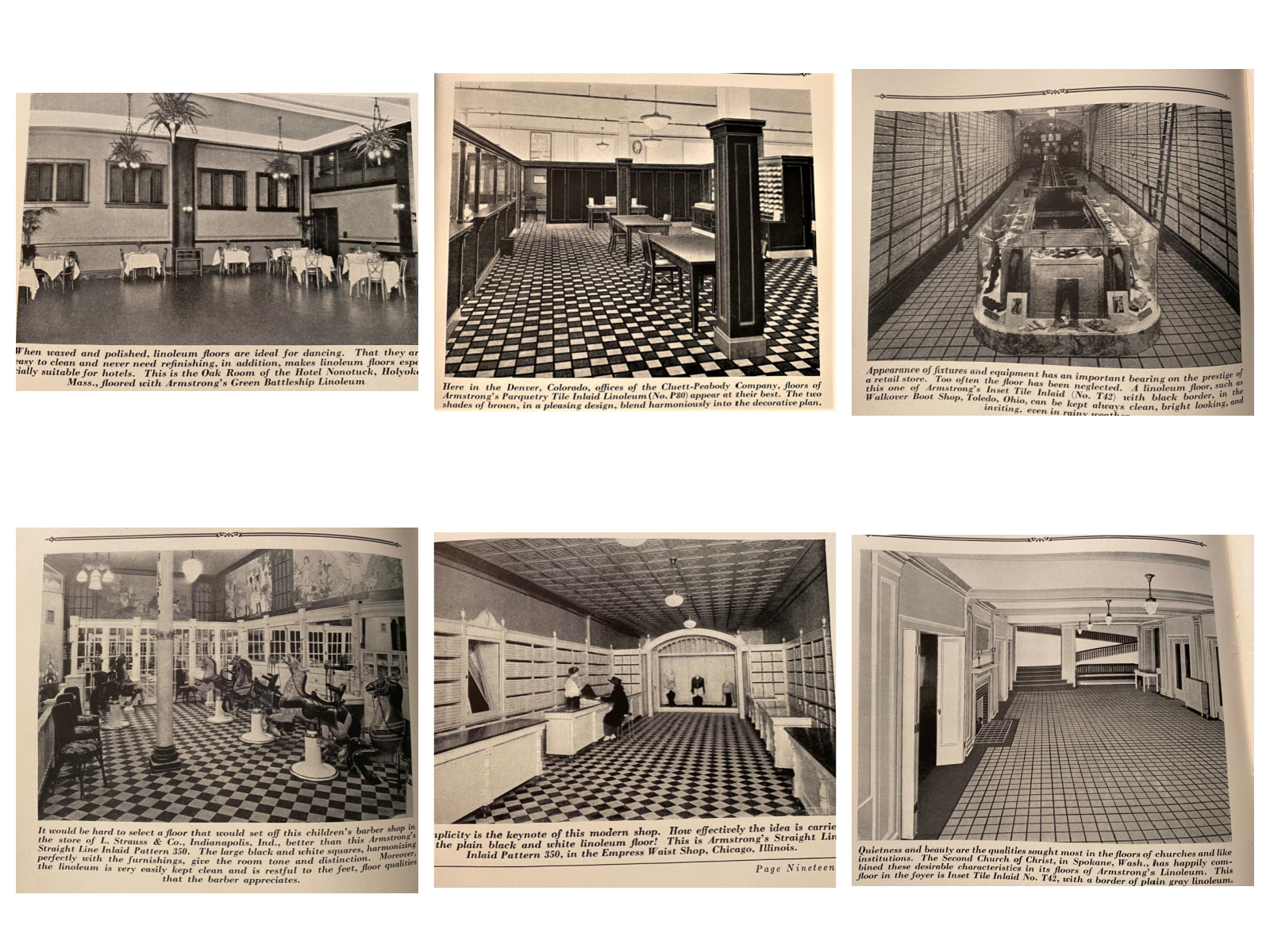
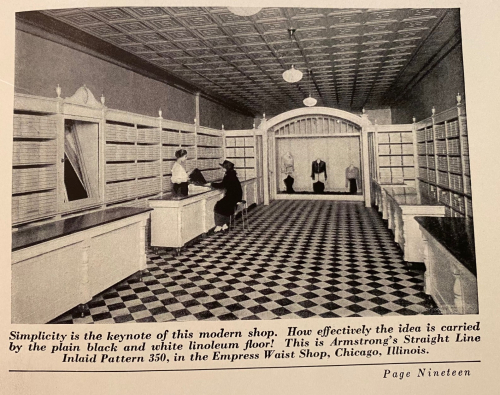
    This is a pretty unassuming pamphlet, judging from outward appearances (see below)1. It is an advertising promotional published in 1924 for Armstrong Cork Company of Lancaster (PA) pushing their extensive selection of linoleum flooring. (Linoleum, by the way, was created in the 1850s and was a constant source for durable and inexpensive floor covering for about 100 years…the first linoleum factory established in the U.S. was on Staten Island, NYC, with the company settled into a town they called Linoleumville, which was later renamed “Travis”. Anyway, I digress…)  I’m drawing attention to the publication because of the illustrations, which are no doubt standard for the time and made to be complimentary, though they look a lot different from their intentions looking at them today–at least to me.  There’s a LOT of distortion in the perspective, some of it from the camera angle and some of it, well, from the highly repetitious designs in the flooring, as you can see here:

    As you can see below in the montage (larger images follow) the rooms seem to be distant, cool/cold, removed, surgical.  Neat and clean, of course, but elegantly perfunctory.  And then there’s the polygons, the advancing retreating squares and rectangles that number in the hundreds and thousands, and are headache-invoking.  I can’t tell if these images would be more or less of what they are if the photos were in color.  (Keep in mind some of those colors were bright red, bright yellow, shout-out-loud blue…)                    Facebook ShopIMG_6065


  • “To the Knights of all Nations” June, 1945.

    JF Ptak Science Books   Overall Post 5136

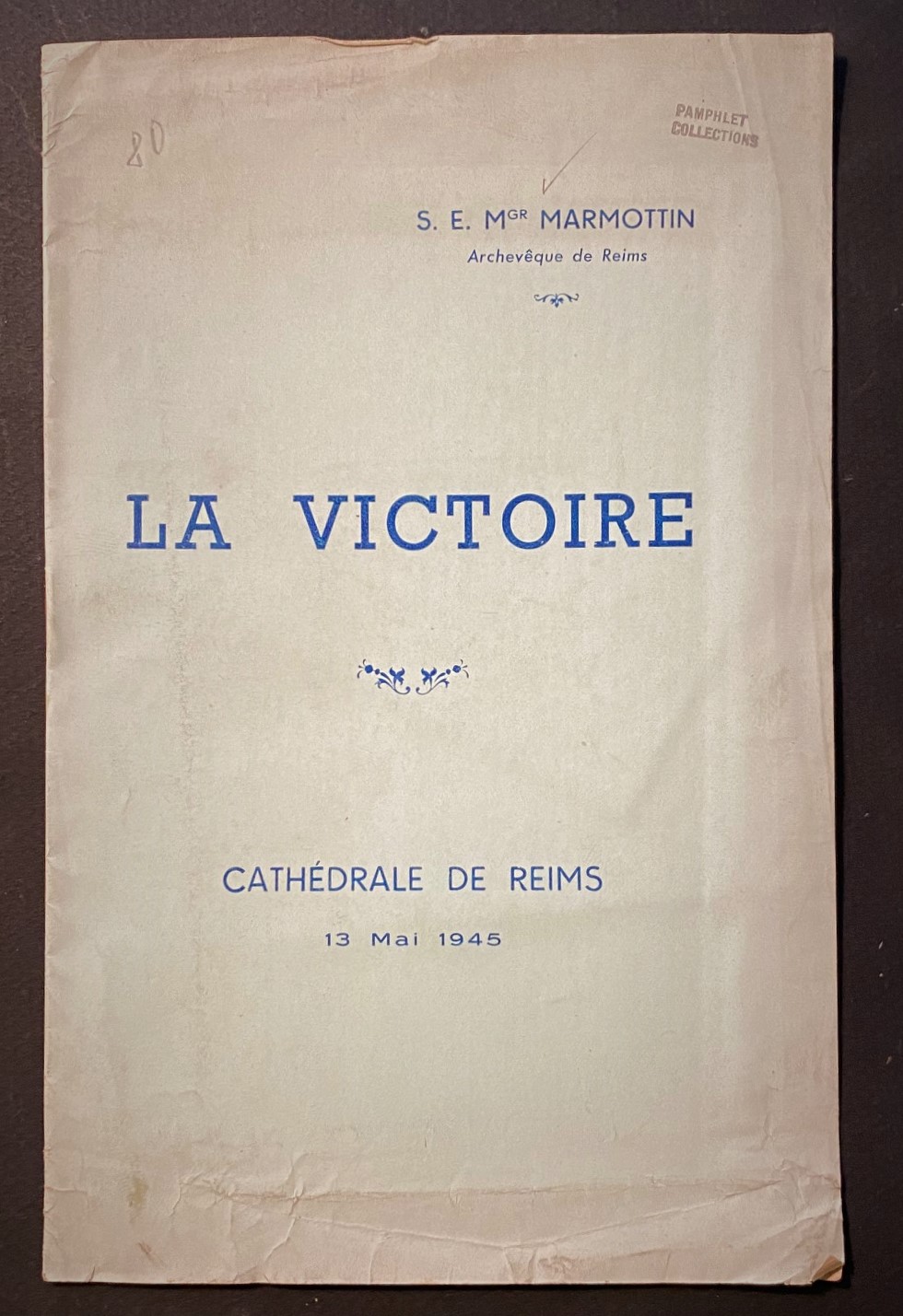
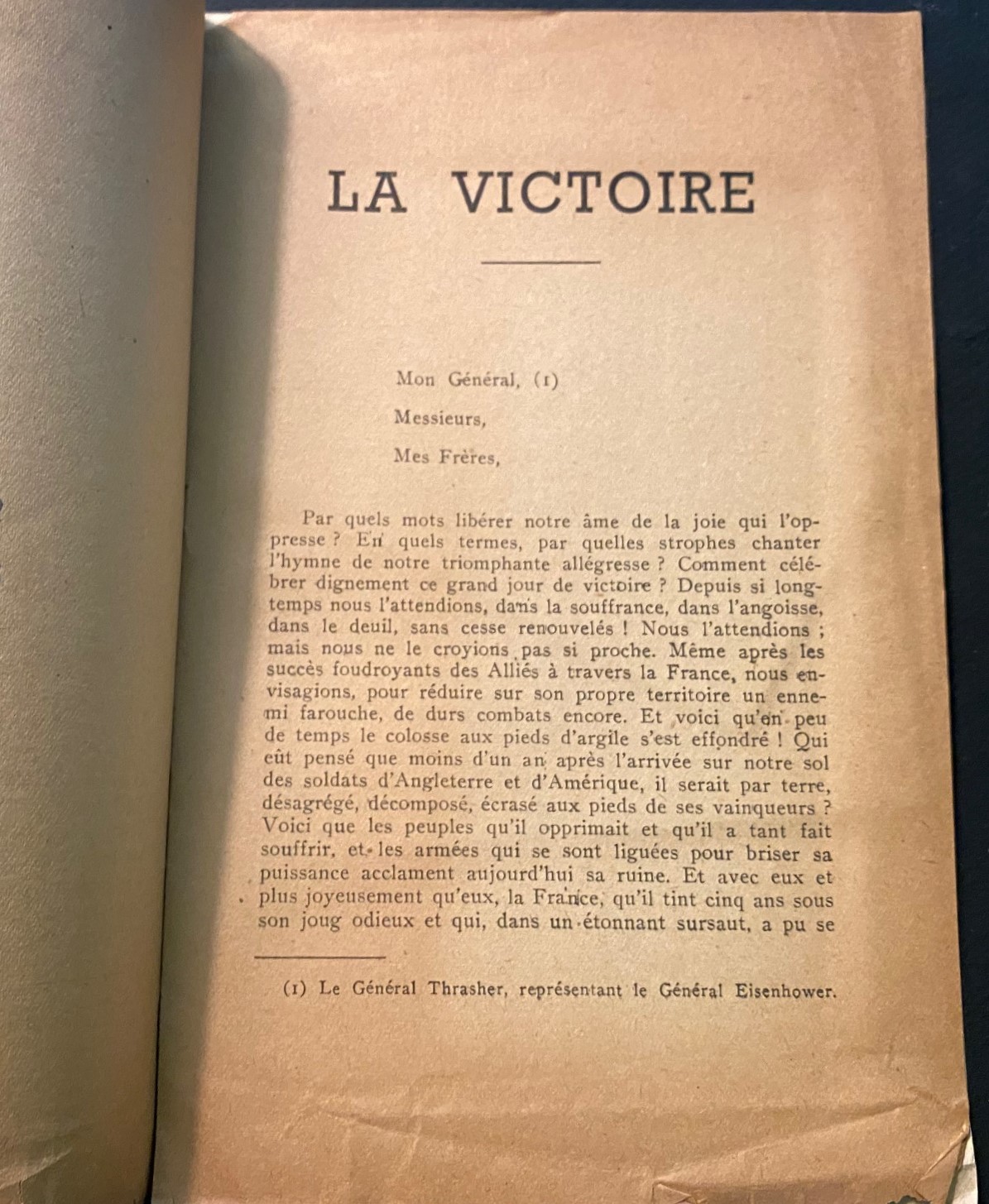
    IMG_5728“La Victoire”1 is a moving address from the archbishop of Reims, Louis-Augustin Marmottin, celebrating the end of the war, and was printed in June 1945. The monsignor  in particular notes the sacrifices and millions of deaths of “knights of all nations” on the feast of St. Joan: “Knights of all skies, sailors of all oceans, soldiers of all battlefields…” in the fight against Hitler. He writes: “Chevaliers de tous les ciels, marins de tous les océans, soldats de tous les champs de batailles. Il faudrait les saluer tous, les héros de la Pologne et de la Belgique, de l’Alsace et des Ardennes, qui soutinrent le choc initial, terrible, ceux de Stalingrad, des plaines ukrainiennes et des monts du Caucase qui les premiers connurent la victoire, ceux de l’Egypte et de la Tunisie, ceux de l’Italie et de la Normandie et de la Provence, de l’Alsace encore et de l’Allemagne, et tant d’autres dont le sacrifice a fait notre salut”–(from page 4). [““Knights of all skies, sailors of all oceans, soldiers of all battlefields. We should salute them all, the heroes of Poland and Belgium, Alsace and the Ardennes, who sustained the initial, terrible shock, those of Stalingrad, the Ukrainian plains and the Caucasus mountains who were the first to achieve victory. , those of Egypt and Tunisia, those of Italy and Normandy and Provence, Alsace again and Germany, and so many others whose sacrifice made our salvation.”] It should be noted that the cathedral’s construction began in the 13th century (followed by a complicated history of construction and renovation) and is the traditional site for the coronation of French kings, and also contains a statue to St. Jeanne d’Arc in full armor.

    IMG_5729

    Notes:

    1. MARMOTTIN, Louis-Augustin, Msgr. (1875-1960) “La Victoire. Cathedrale de Reims, 13 Mai 1945.” Printed in Reims (Imp. Du Nord Est), 1945. Original wrappers 7″x 5″, 6pp. Provenance: Library of Congress with their rubber stamp on rear wrapper. Condition: Good. The paper is somewhat browned and weakened and there are old folds here and there in the wrappers. Acceptable condition, overall. [Note: WorldCat states two years of publication—1945 and 1946—though this copy has a rubber stamped date at the foot of the title page stating “21 6 45”, or 21 June 1945.] WorldCat locates only THREE copies, all in France.

    ·Posted by :

    ·in:


  • “Talking Photographs” (1878)

    JF Ptak Science Books  Overall Post 5135 (Updating and revising an earlier post from 2011)

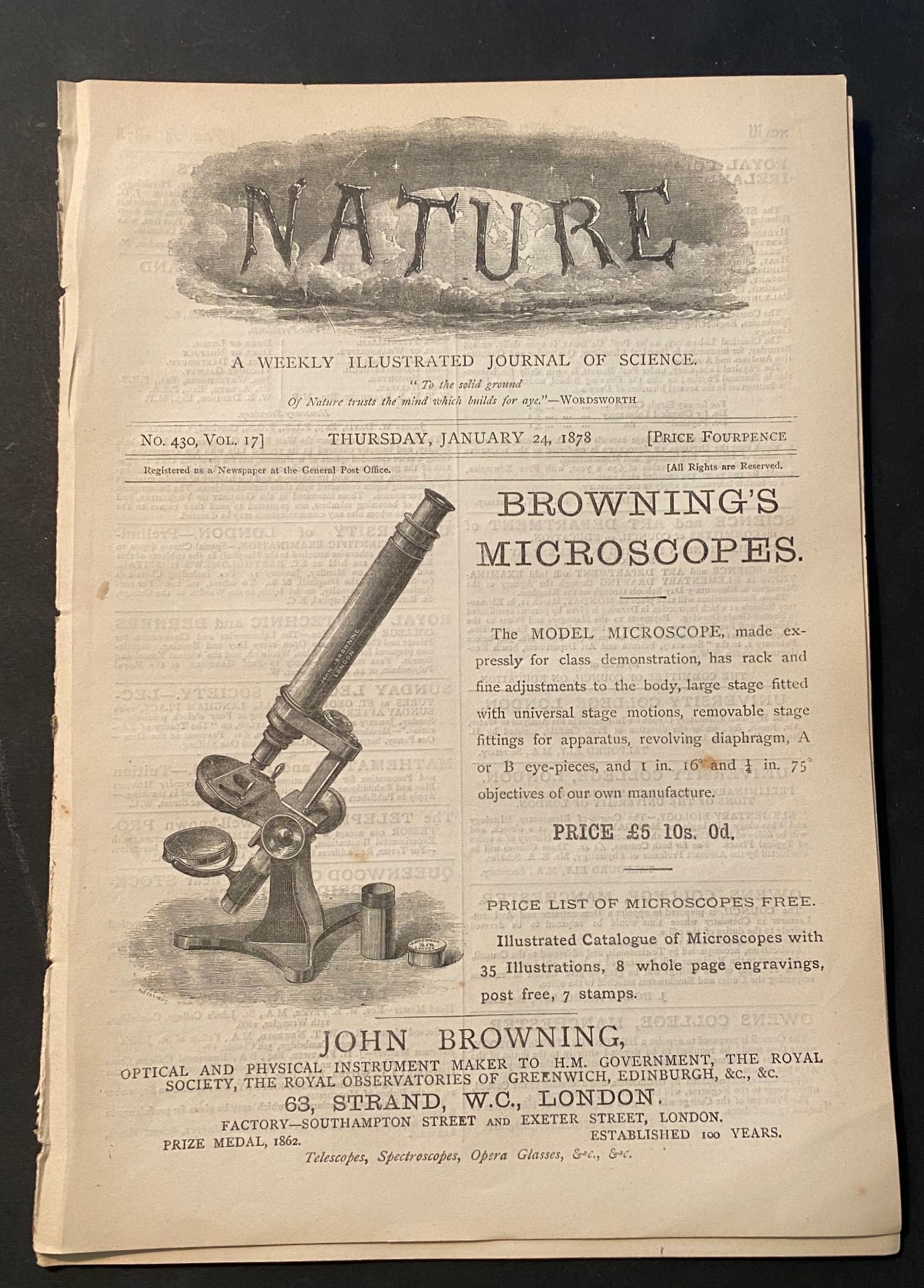
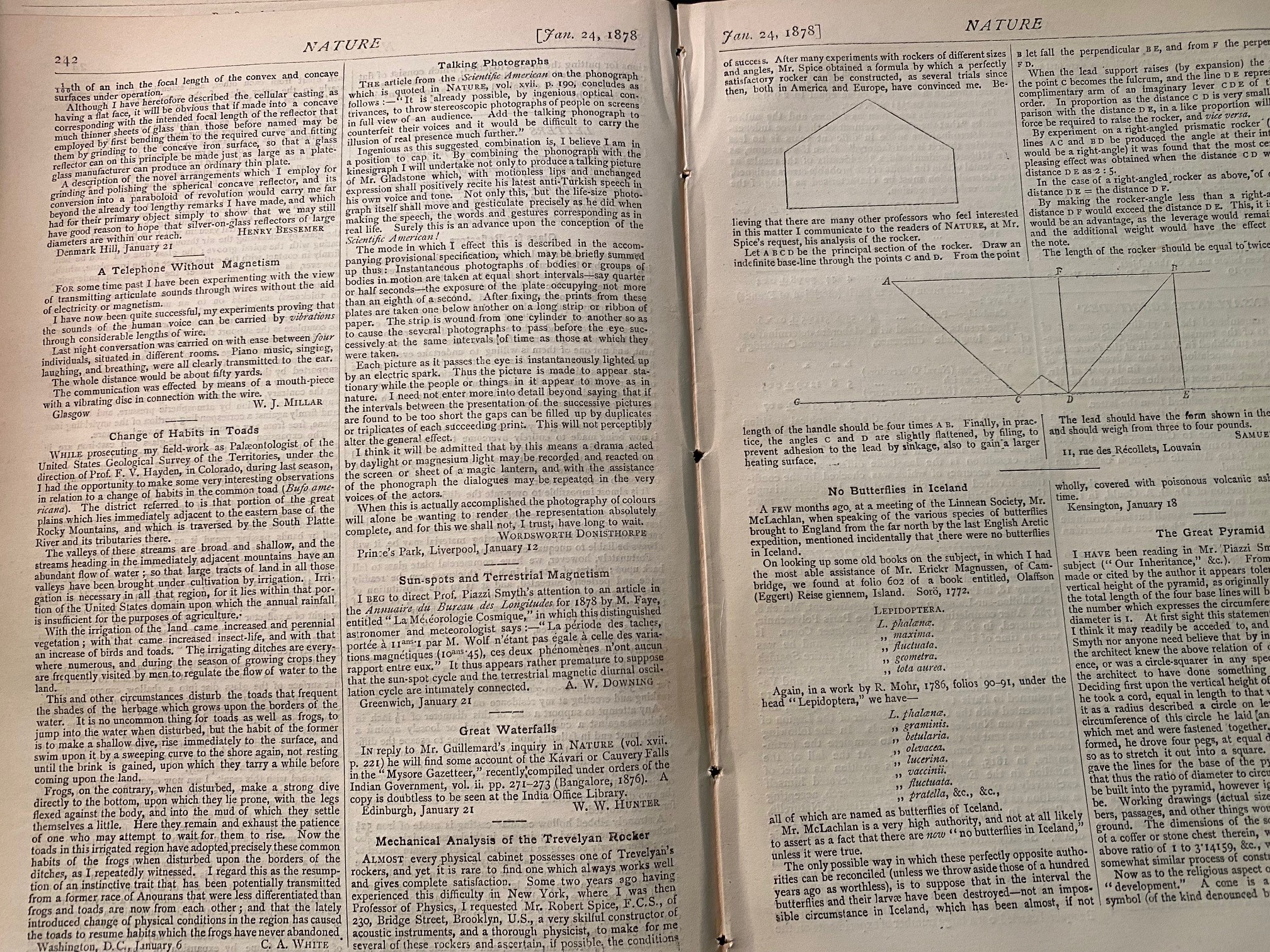
    IMG_6041There appeared in the wonderful pages of Nature (for 24 January 1878) a short but interesting technical communication from the probably/improbably-named Wordsworth Donisthorpe (1847-1914): “Talking Photographs”.1  It is a letter to the editor, really, about an invention that is deeply related to the earliest stages of motion pictures–it was among the first papers that coupled sound with the moving images, appearing eleven years before the first successful demonstration of a motion picture (1889).  

    “…Donisthorpe was an English individualist anarchist and inventor, pioneer of cinematography and chess enthusiast…” (Photography News). He invented a language (“Uropa”), was an ardent Darwinist, maths wrangler Trinity 1882, non-practicing Barrister, political fringe-elementist, and helped to found the British Chess Association, among much else. 

    With his device called the “Kinesigraph” (patented with his cousin William Crofts who whose sister was married to Darwin’s son Francis) which was based somewhat on the wool-combing machines that their fathers helped to invent and improve, the pair stepped into the instant future of the motion picture.

    IMG_6042

    As I said, Donisthorpe introduces a lot in this very short letter. He states:

    “By combining the phonograph with the kinesigraph I will undertake not only to produce a talking picture of [Prime Minister] Mr. Gladstone which, with motionless lips and unchanged expression shall positively recite his latest anti-Turkish speech in his own voice and tone. Not only this, but the life-size photograph itself shall move and gesticulate precisely as he did when making the speech, the words and gestures corresponding as in real life.” He states further: “It is already possible, by ingenious optical contrivances, to throw stereoscopic photographs of people on screens in full view of an audience.” And then, taking advantage of the newly invented Edison phonograph, continues: “Add the talking phonograph2 to counterfeit their voices and it would be difficult to carry the illusion of real presence much further.”

    *Lastly, I’ve included this in the “history of Memory” category because of the vast amount of memory that these inventions were able to store. Up to this point, before the introduction of the means to record sound and motion, people depended on static portrayals of these memories that were also subject to change and interpretation. With the phonograph and motion picture cameras continuous motion and audio sources are saved for as long as the media survives.  

    Notes:

    1. DONISTHORP, Woodsworth. “Talking Photographs”, in Nature, volume 17, no. 13. 24 January 1878, page 243 in the complete weekly issue of pp 237-256.
    2. What Mr. Donisthorpe is talking about in the pages of the Scientific American is really the back-door entry to an even bigger topic: the first announcement of Thomas Edison’s phonograph as it appeared on the back of the first  page in the last issue for the year, 29 December 1877.  “A Wonderful Invention–Speech Capable of Indefinite Repetition from Automatic records” was the article by Edward Johnson on the introduction of Thomas Edison’s phonograph. It is one and a half columns long, but contains a very compact 1500 words.  

  • Hitler Youth Diary for Girls, 1937

    JF Ptak Science Books   Overall Post 5134

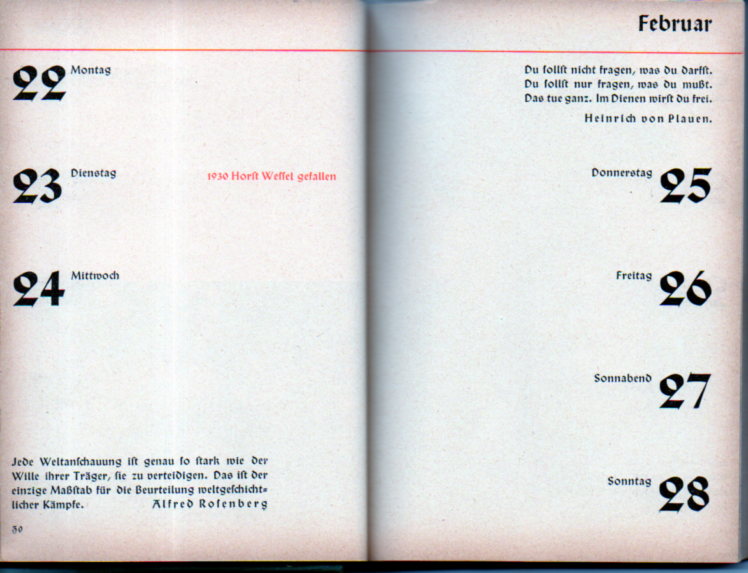
    Hilterjunge diary008There’s a bookcase in the house that has a top shelf for small books, most of which I haven’t written about, though there is a clutch of them that have gotten some exposure here on the blog, with most of them being unused diaries, and most of those being Nazi-oriented.  I’ve wondered about the people who would have sat down with those things blank-ish books, thinking about scheduling their time, or recording events, and then deciding not to. Maybe they didn’t want to be reminded of Nazi holidays and/or the birth of Hitler, or the right of duty and the proper way to respond to current events based on the policies of the NSDAP. The diaries are all pretty much like-new, and aren’t even all that old in the scheme of things, though their distance in time doesn’t match their distance in historical “space” (so to speak). 

    This diary was for German girls who were members of the Young Girls League (Jungmädelbund), which in the German stratification of Nazism was part of the League of German Girls (Bund Deutscher Mädel), which in turn operated under the broader gender-divided organization of Hitler Youth.

    It is difficult as a father of two daughters–one of whom is of the correct age to have been using this diary had circumstances been enormously different–and it is painful to imagine her looking through these pages, at the red-letter days and inspiration photographs, filling in the book and responding to these enormous and not necessarily subtle social pressures.

    “Wir folgen!” states the cover of the diary, and it meant it. “We follow”. 

    Hilterjunge diary009

    ·Posted by :

    ·in:

    —

  • Recovery to Normal Existence, 1960

    JF Ptak Science Books   (Expanding an earlier post  #2499 from July 2015)

    Nuclear Attack LIVE230
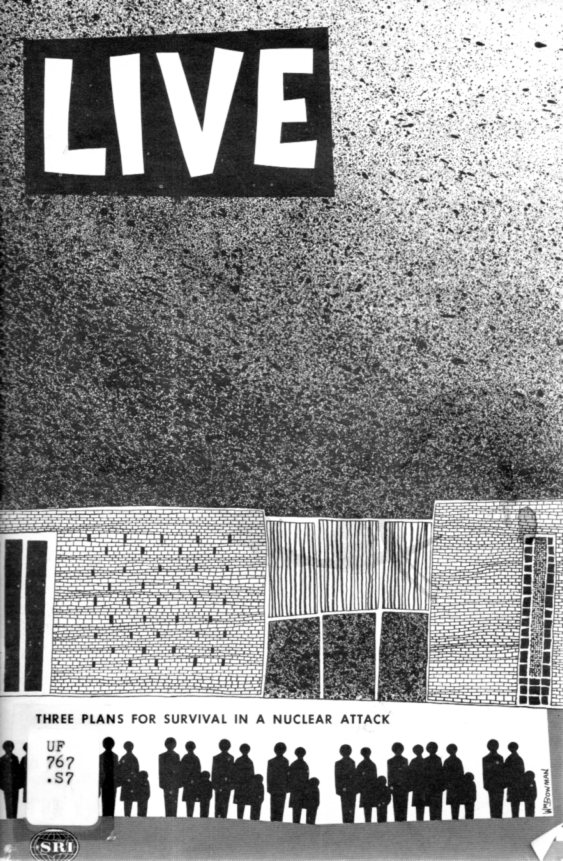
    In the not-modest stream of thin paperback  nuclear holocaust survival literature in the 1950’s and 1960’s appears this effort: LIVE, Three Plans for Survival in a Nuclear Attack. It was published by the Stanford Research Institute in 1960, and was part of nuclear health physics pioneer Lauriston Taylor’s donation to the National Council on Radiation Protection and Measurement, where I bought it some time ago when they were thinning out their stuff.  It is an unusual publication to me for its illustrations, some of which are odd, and a few of which are positively semi-surreal when view out of context.

    The pamphlet overall is fairly helpful, assuming that you had as much time to get yourself together in an impending attack, and that is a major assumption.  But I’m sharing this tonight for some of those images–and the cover, which is an unusual design in itself, not the least of which is the heavily-borrowed part from LIFE Magazine.

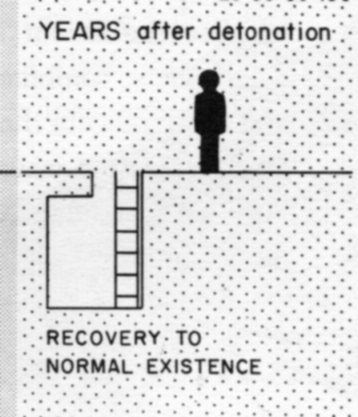
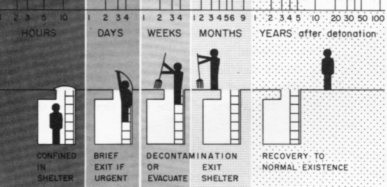
    So the first of the few that I’ll post here (above) is a detail from this illustrated graph, a march of the intellect and survival from being in a dark hole to a rather stiff return to normal existence:

    Nuclear Attack LIVE229

    Here’s another sobering bit, showing a progression of NOT-recovering to normal existence:

    Nuclear Attack LIVE231

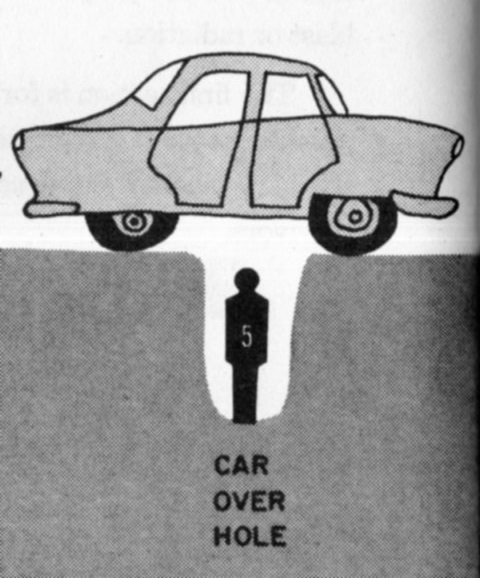
    And of course the hole:

    Nuclear Attack LIVE233

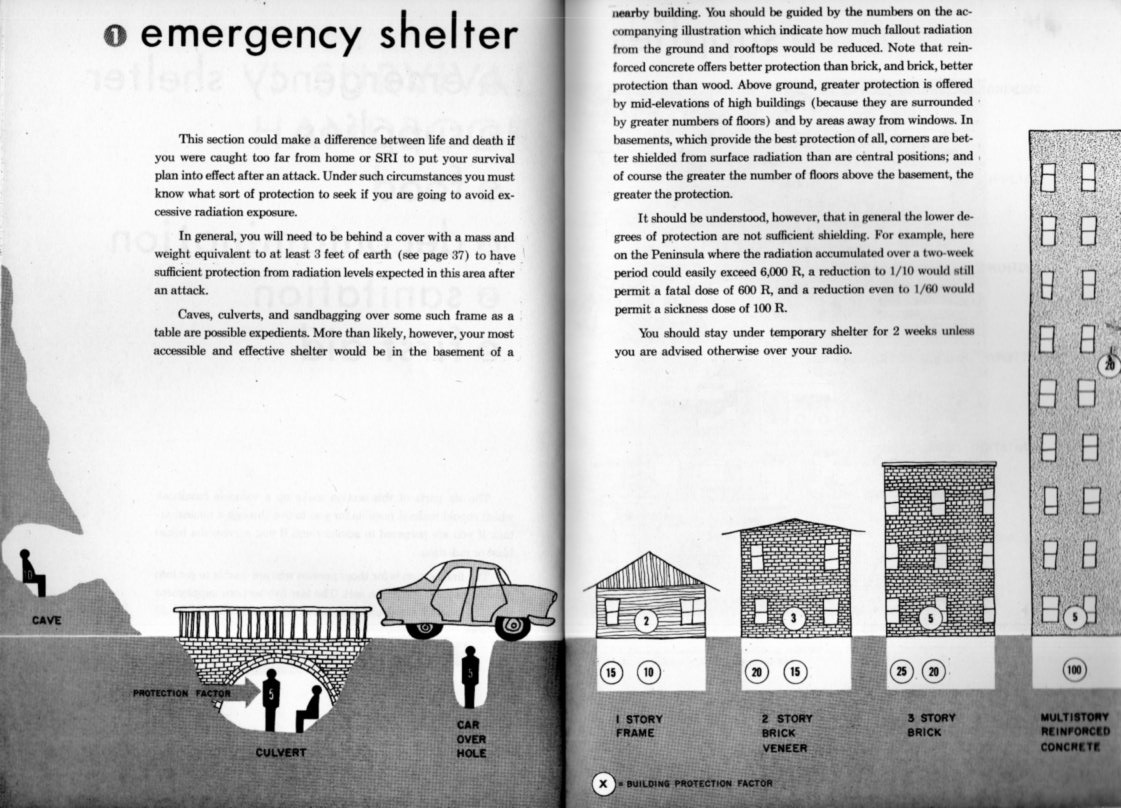
    Which is a detail from:

    Nuclear Attack LIVE232

    And the cover, which has some blotchy Ralph Steadman-y elements:


    Nuclear Attack LIVE228

    And so, there are some of the major themes.  I found the work unsettling in general for using mostly dark silhouettes for the people, that profile having been sort of established to represent dead folks.