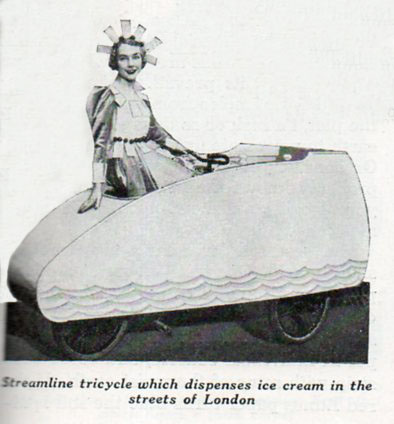
JF Ptak Science Books Very Quick Post
Some things just don’t need to be streamlined, especially when they’re designed to be very slow.
 May, 1936 issue of Popular Mechanics

A Daily History of Holes, Dots, Lines, Science, History, Math, Physics, Art, the Unintentional Absurd, Architecture, Maps, Data Visualization, Blank and Missing Things, and so on. |1.6 million words, 7500 images, 4.9 million hits| Press & appearances in The Times, Le Figaro, Mensa, The Economist, The Guardian, Discovery News, Slate, Le Monde, Sci American Blogs, Le Pont, and many other places… 5000+ total posts since 2008.
Contact johnfptak at gmail dot com
JF Ptak Science Books Very Quick Post
Some things just don’t need to be streamlined, especially when they’re designed to be very slow.
May, 1936 issue of Popular Mechanics
JF Ptak Science Books Quick Post
Quid enim mihi est in caelo & a te quid volui super terram?
(For what have I in heaven, and from thee what thou shalt do I desire upon earth?)
Hermannus Hugo, Pia desideria (1624)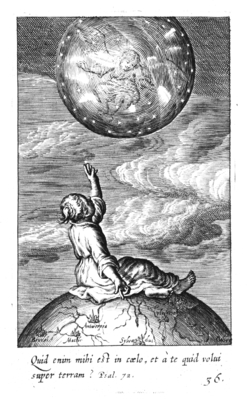 Evidently, there’s plenty left open to desire and want while still here on Earth–not the least of which was Heaven, or the Heavens, as we can see in this playful engraving from Hermanus Hugo’s Pia Desideria (printed in 1624). With the Earth as a given, why not want more from the Heavens?
On the other end of this equation is being on Earth and wanting it–all of it. Charlie Chaplin, in his great and enormously insightful and satisfying film, The Great Dictator, styles the film’s title character after Adolf Hitler, and delivers a performance of great depth.

THe film was released in October,m 1940, when most of the world had been at war with Hitler and Germany for more than a year. The United States was not, not yet (for another 14 months) though we participated in programs that meant assurance for the delivery of materiel and other materials necessary for the Allies to continue the war. Chaplin was a savage in his attacks on Hitler, relentlessly so–and as such this was the first major American film to take such a stand against Germany in WWII. One of the great scenes of the film and perhaps of all films in the 1940’s was Chaplin’s dancing Hitler and his love affair with world domination:
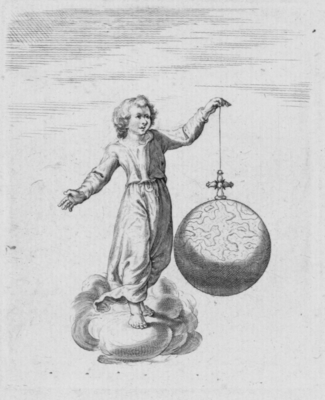
In Jan Suderman’s De godliebede ziel (printed in 1724) we see yet another rendition of the Earth and its favor with humankind, as as ort of balanced bit at the end of a fragile connection
While in Otto Vaenius’ Amorum emblemata (printed in 1608) we find a cupidesque emblem shooting the Earth with his arrows, all of which takes place under the motto “Love Keeps Everything in Essencve”, or “all Depends upon Love”, or some other variation:
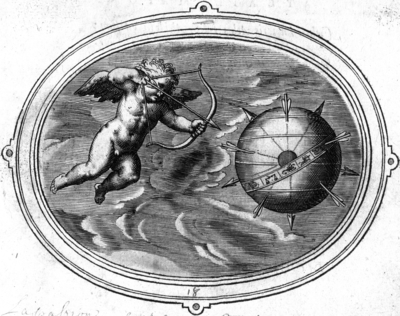
The litle God of loue transpearseth with his dartes; The heauens and eke the earth in musicall accord; For without loue it were a chaos of discord; Thats fastned now in one of well conioyned partes.
JF Ptak Science Books Post 1666
The depiction of the anthropomorphic Sun featured with a broad toothy smile seems a commonplace fixture in modern times–at least in the very popular media–but it seems to me that the Sun was an impressively dour character in the most misty and moldy past. Its a much harder issue for me to locate a happy Sun than a phlegmatic one, as we can in the coming examples. Here, for instance, the Sun is actually disappointed, and dark:
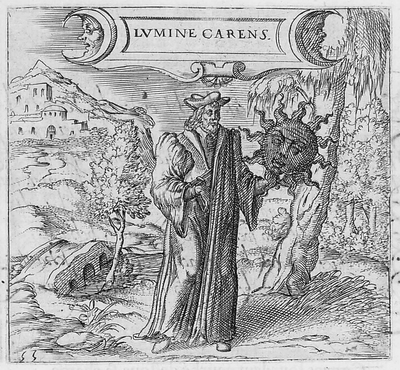
[Georgette de Montenay/Anna Roemer Visscher, Cent emblemes chrestiens (c. 1615)]
The Sun (representative in this case of the Christian god) disavows the heavily robbed false philosopher, finding nothing but fault in the erroneous thinking and pronouncements, so much so in fact that it distances itself from the phonylogian by turning itself black and devoid of light, absenting the light that was supposed to be shone via the heretic’s teaching.
Feigning to be a philosopher with your long cloak
You bring forward all false theories about the pure Sun.
First learn to recognize what is the true light.
The balmy day does not shine in obscure night
Conversely, the sun would also shine to dispel the false teaching of other philosophers, as so, though this time without any face at all:
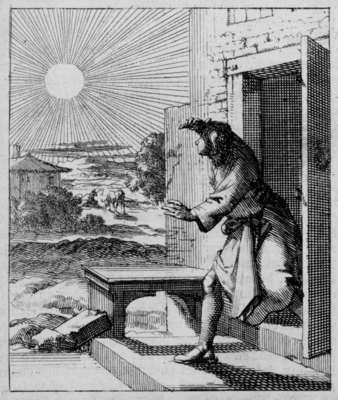 [Source: Pieter Huygen, Beginselen van Gods Koninkrijk (1689)]
But mostly it seems the Sun appears to those who came before with a mostly blank expression:
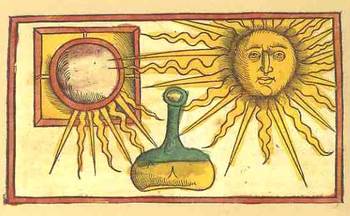 Where was the smilign Sun hundreds of years ago? Anthropomorphic images of the Sun have appeared in books in the West for several hundred years, and in almost every case where the Sun has a face, it is usually expressionless, its mouth drawn into a mid-Western farmer/Abe Lincoln horizontal, a tightly drawn nothing. Two thin lips, firmly repulsing all emotion. The face of the Sun was insurmountable, a tabula rasa, showing perhaps that there was nothing there at all inhabiting this iconographic image of The Creator to give the poor observer a glimpse into the depths of the future.

This observation seems to stand for Sun Gods and Goddesses as well, even the ones who are being tugged or pulled or charioted a cross the vaults of the heavens—the Nordic Sól, Greek Helios , Roman Sol Invictus, Vedic Surya and of course Elijah ascending to Heaven in a Chariot of Fire, all seem pretty intractable. But in general images that we see of Sun deities like Apollo, Greece and Rome; Freyr, Norse; Garuda, Hindu; Huitzilopochtli (Uitzilopochtli), Aztec; Inti, Inca; Liza,West African; Lugh, Celtic and Re (Ra) and Isis, and on and on, show a small, set pair of lips, if they have a mouth at all, and this going back beyond the Sumerians (Shamash).
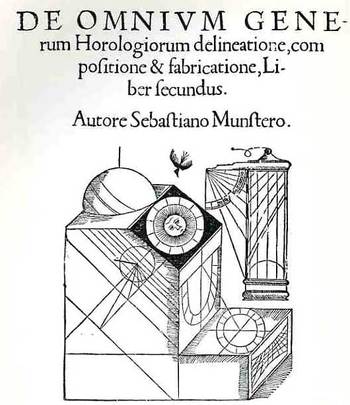
When the Sun really loses its human personae in the 17th century (the scientific sun and stars beginning much earlier, as in for example Allessandro Piccolomini’s Della Sfera del Mondo, 1552, with simple star maps unadorned by icons and written in the vernacular), it is replaced with starry images which seem to somehow have more emotional authority than the sun images with faces. Perhaps the sun was meant to have this Delphic, blank-mirroring quality, given its importance as a giver (and taker) of things,

and that it was not within human capacity to understand it as an emotive entity, especially during bad times. But in those times of Good and Bad it wasn’t necessary to see a frown or a smile on an image of the Sun, I guess because of the complaints of redundancy.
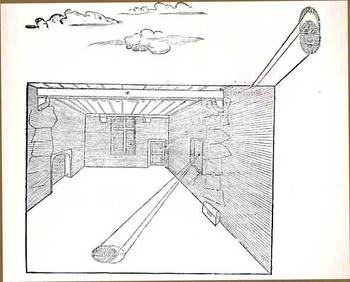
No matter, though, as the modern astronomical text took care of the Sun and its missing buckets of smiles in due course—until more modern times, when the Sun is made to have a matching disposition, a result of kinder modern artists.
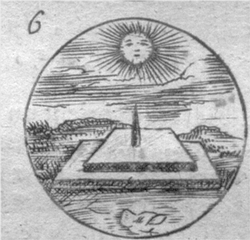
This Sun seems to rule with an ennui Daniel de la Feuille, Devises et emblemes (1691); and then again, in the following superbly engraved work by Jacob Cats, Sinne- en minnebeelden (1627):
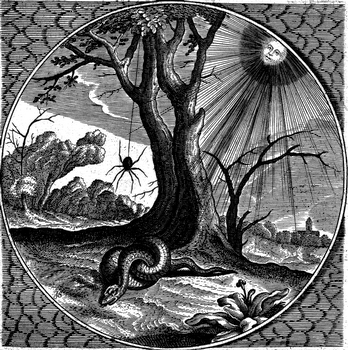
The Sun here seems to have a knowledge-worn expression, a sense of having-seen-it-all, in this beautiful work by Georgette de Montenay/Anna Roemer Visscher, in Cent emblemes chrestiens (c. 1615)
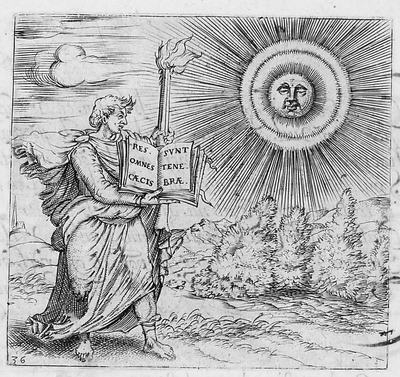
And again from the Montenay we see a smirking Sun (definitely not a smiling one) judging the efforts of humans once again, and finding them coming up far to short:
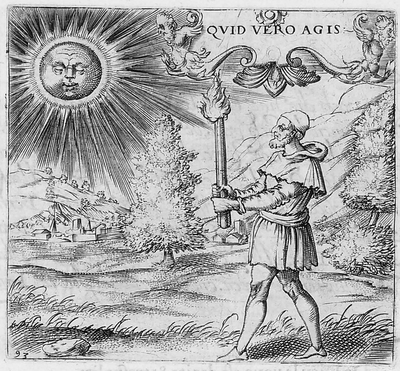
I guess you could make a case for an “amused” Sun in the Montenay, though in a third-person sort of Royal way of being removedly amused. Here–in a rare and very important work in the history of alchemy–we see a rising Sun in an amused state, welcoming the book’s author, on his alchemical pilgrimage.
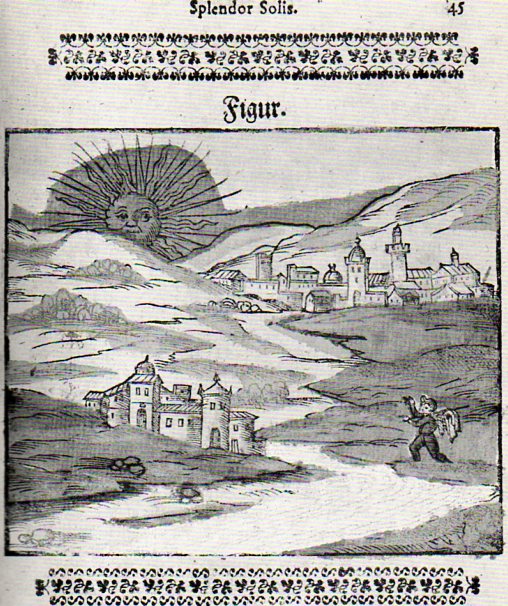
In another illustration from this book (by Salomon Trismosin, Auretum Velius oder Guldin Schatz und Kunsthkammer, printed by Georg Straub at Lake Constance in 1598/9, and also known as “Splendor Solis”) we find the following expected facial posture:
![[trismosin, salomon (?pseud., fl. 1473?). <i>aureum vellus, oder guldin schatz und kunstkammer.</i> rorschach: 'gedruckt in des f. gottshausz s. gallen reichshoff' leonhard straub, 1598-99.]](http://www.christies.com/lotfinderimages/D54552/trismosin_salomon_aureum_vellus_oder_guldin_schatz_und_kunstkammer_ror_d5455284h.jpg) |
And so on and on this continues, this presentation of the Sun as both removed and judging, until–in some cases–the business of representing the Sun anthropomorphically disappears altogether, even in allegorical representation, like so:
The Man in the Moon will just have to wait his turn, though I can’t resist the following couple of images, the first of which shows the Moon in a phase of nothingness and a nil expression:
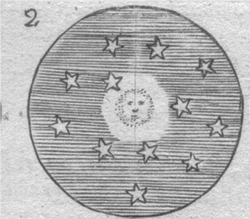
[Source: Daniel de la Feuille, Devises et emblemes (1691)]
And then this classic image from an iconic and early science fiction film:

And from the 1905 motion picture version of Jules Vernes From the Earth to the Moon called A Trip to the Moon–upon the approach, the Moon’s surface was blank, but quickly developed a face, which was sort of smiling–until struck in the eye by the Verne capsule.
Offhand, though, my memory doesn’t offer too many smiling-Moon expressions.
JF Ptak Science Books Post 1665
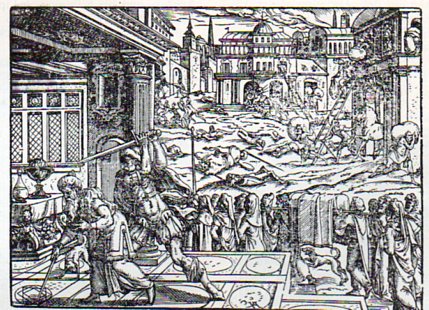
Earlier in this blog there appeared an entry on the death of Archimedes–actually, it was a piece on an image depicting the killing of the great mathematician. It is a pretty gruesome affair, even by the very early 18th century standards under which the engraving was made–gruesome still by today’s standards, what with the man’s head being cleaved laterally in two by the summoned Roman Centurion. I’m not an historian of these images of Archimedes, but I can say that for whatever I am, I have not seen anything quite so graphic dealing with the man’s death.
The usual images of Archimedes coming to his end show him working a problem in his dust/sand/earth “chalkboard”, absorbed to such an extent in his thinking that he doesn’t hear the chaos outside his rooms, and doesn’t sense the approach of the soldier who finds Archimedes unresponsive to his calls and therefore a threat, and so kills him.
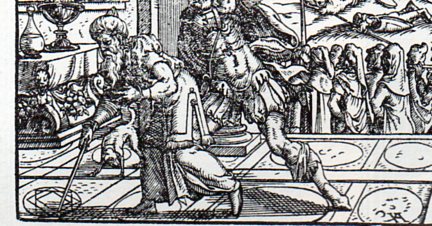 [Image source: Titus Livius, Romanae historiae principia, libri omnes. Printed in Frankfurt by Feyerabend, 1578.]
Looking at this image (above) brought to mind another in the history of anticipation–not knock knock knocking on Heaven’s door, but the opposite, and the opposite of that, the opposite of knocking on Death’s door, or at Death’s door: Death knocking at our door.
The title of this emblem–Cunctos mors una manet/death is all that remains–is meant to remind us
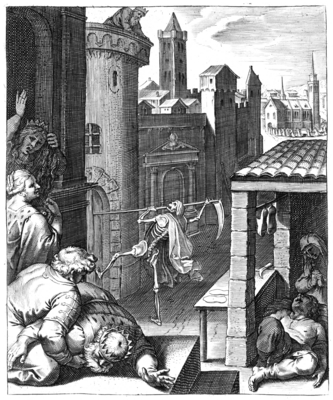
of our common foe. It is the work of one of the great engravers of his time, Otto van Veen (teacher of Rubens), and appears (along with next image and 100 others) in his Q. Horati Flacci emblemata. Imaginibus in acs incisis notisque illustrata, printed in Amsterdam in 1607 by H. Verduss.
–All images and most translations courtesy of the splendid work at The Emblem Project/Utrecht, here.–
Part of the legend (which appeared in four languages) of the image leaves us with the following reminders, choice bits on the folly of forgetting our common end:
La terre embrasse tout comme mere commune –Mother Earth embraces us all
Moritur sutor eodem modo ac Rex.–The King died the same as the shoemaker
Death is the thing that sucks the rivers of lives, “Del rico al pobre, del soldado al Papa”, From rich to poor, soldier of the Pope.
and so in image and word telling us that death will seek us out, whether king or shoemaker, rich or poor–and that in the coming end the Earth will take us all. Archimedes didn’t hear that one coming; nor did he care, I think.
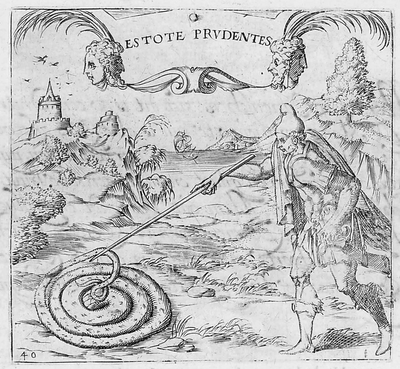
THis last image brings to mind Archimedes’ work in the dust, though the intent of teh emblem (“Estote prudentes” //Be ye therefore wise // Be Cautious) wouold have been completely lost on him.
The legend translates (Thanks to the Emblem Project for this):
|
When the serpent sees that it is going to be attacked with,
Lethal wound, it protects its head with artful care. Here lie the dwellings of the soul, the sanctuary of the truth. Hence comes life that is to be hoped for by every body. |
Surely Archimedes could relate to his lines and the expressions of his thought as the dwellings of his soul (if he actually believed in a soul), though I guess you could say that the artful deception of the serpent’s head finally wound up killing him via the Roman soldier.
Letali serpens cùm se videt esse petendum
Vulnere, sollicita contegit arte caput.
Hîc animæ sedes positæ, verique recessus: (here placed the seat of the soul, in artful covering…)
Hinc spiranda omni corpore vita venit
JF Ptak Science Books Quick Post Addition to the Extra-Earth Series

Today a reader of this blog forwarded a lovely image for the series on Extra-Earths that appears here–one installment of which (with links to the others) appeared just this morning.
The Wonderful World–the Adventure of the Earth We Live On (by James Fisher, and with art editor F.H.K. Henrion, and published by Hanover in 1954) is a clunky title even for expressing its idea to juvenile audiences. And speaking of which, if the intended reader was eight years old, the cover art might be a little confusing: what is that bubble-Earth doing there, and why is there a T-Rexy thing standing there on a mountaintop overlooking a city and observing the whole Earth-emergent process?
But when we look inside the book (at the images provided by our reader, Kevin, from his own 2006 blog (“The Balloonist”) entry on this book, we can see the elements of the cover’s montage, and which would I guess alleviate a young reader’s consternation with the confusing image:

JF Ptak Science Books LLC Post 1664
See the other Extra-Earth posts: Mondo Bizarro, Science Afflictions and the Dubious Mind—Bad Science, Part 1. NYC in Space (?!) here and Extra-Earth Humano-Alien Souls From Outer Space Repopulate Earth-Hell!!(??) here.
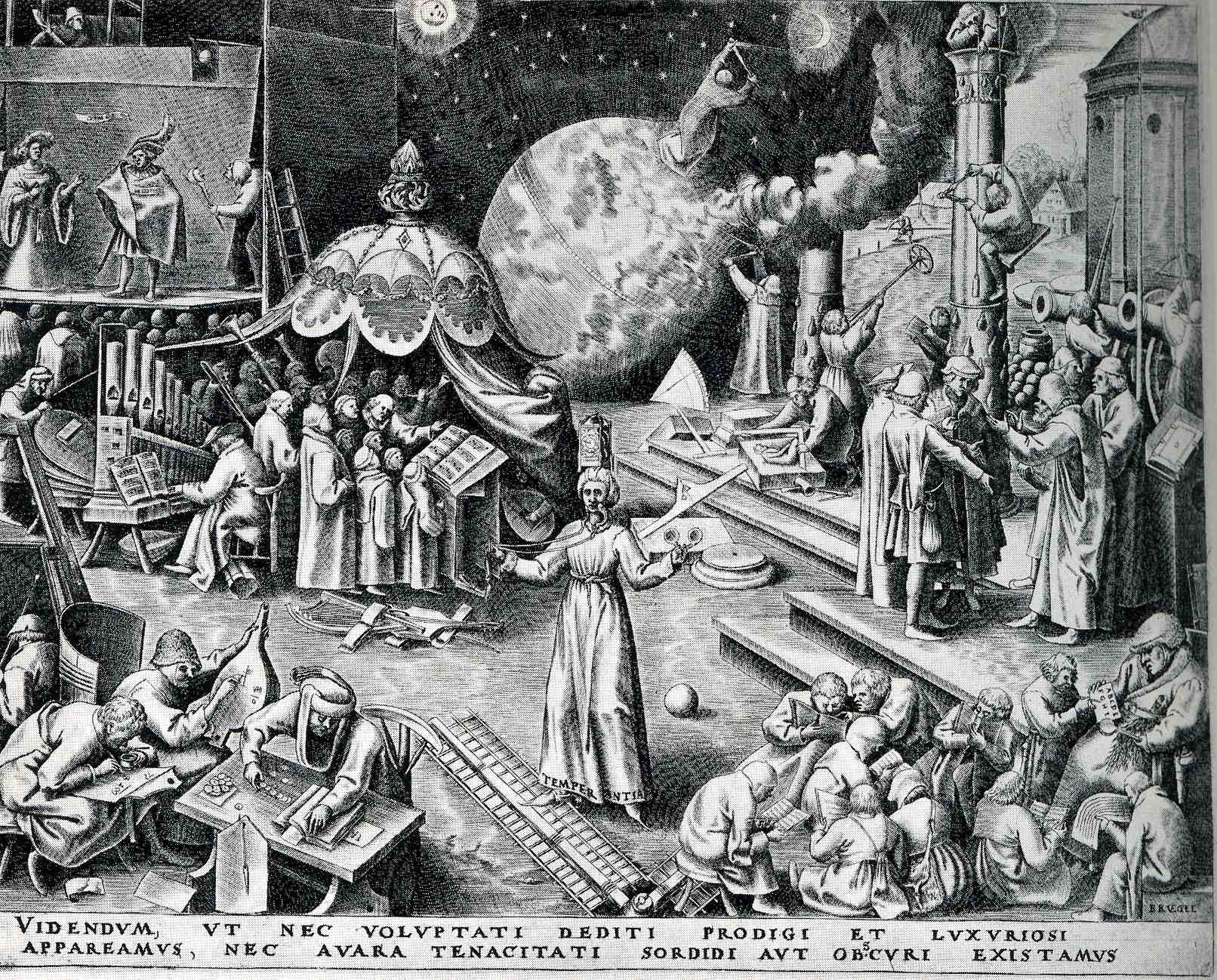
Peter Brueghel (the elder, born ca. 1525 and dying in 1569), was the Dutch semi-discoverer and king of “normality” of Renaissance art–and by “normality” I mean that he depicted non-royal things that were generally off the palette for almost everyone else, finding subjects in peasants and small life (hunting, meals, working at agriculture, festivals, dances, and so on). Brueghel was also perhaps the first painter to depict a landscape for the sake of its own beauty, without being a backdrop for a religious study or building or historical scene. He was extraordinarily prolific in his skimpy 45 years, fully populating his scenes with suites of busy and evolving life.
Browsing through some of his work, I came across the print called “Temerpance”, which in general I think was supposed to warn us against excessive pleasure, but which really just confused me a little.
(TEMPERANTIA; and then, VIDENDVM, VT NEC VOLVPTATI DEDITI PRODIGI ET SVXVRIOSI//APPAREAMVS, NEC AVARA TENACITATI SORDIDI AVT OBSCVRI EXISTAMVS. “We must look to it that, in the devotion to sensual pleasures, we do not become wasteful and luxuriant, but also that we do not, because of miserly greed, live in filth and ignorance”.)
To me, it looks like people here are pretty industrious, mostly engaged in scientific or musical pursuits: lots of books, musical instruments, people writing and reading. But I guess that these were sensual pleasures, pleasures of the mind and heart, and not a pleasure devolved from the godhead. Perhaps the complete opposite is true: the print showing the triumph of the pursuit of the mind over sensual graft, lifting mankind above the filth and ignorance of the body. Sheesh.
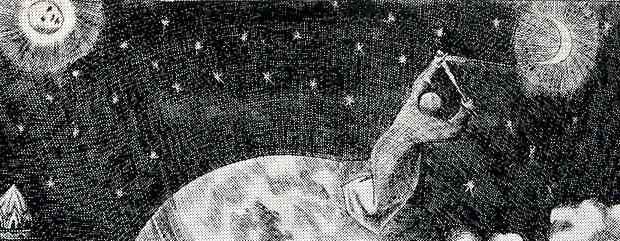 But the real grit of my interest is the action lurking in the background, the man, the astronomer, making measurements in the sky, triangulating the Moon and the Sun (perhaps). What on earth is he standing on? He does seem to be standing on earth in the background of the earth on which thee people in the foreground are standing–which means, with a stretch, we have the fourth entry in this blog’s short “Extra Earths” category.
The more I think about it, and the more closely I look at the print, this confusion must be my own–this must be Brueghel’s way of showing the possible worlds that exist outside the sensual and self indulgent. He shows children (and adults) learning their ABC’s at the feet of teh schoolmaster at bottom right, a theatre scene at upper left, a large musical ensemble (complete with choir). An industrious man measures his fields, while builders to his right measure their progress and trueness on a column; at bottom right we see an “accountant” of the times working his tables and figures, while another to his right works on a math problem, clutching his pot of ink. The figure in the middle (with “temperance” written in the hem of his garment), reminds us of our mortality, with a sword in one hand and a clock on his head. All in all, it is a delightful scene of industry and invention–and it has an extra earth.
Of course the extra-earth is allegorical, but, still, it is an unusal thing to see.
JF Ptak Science Books
In another adventure in infographics and the artistic display of quantitative data we find this pair of very distinctive images that seems to work, a little:
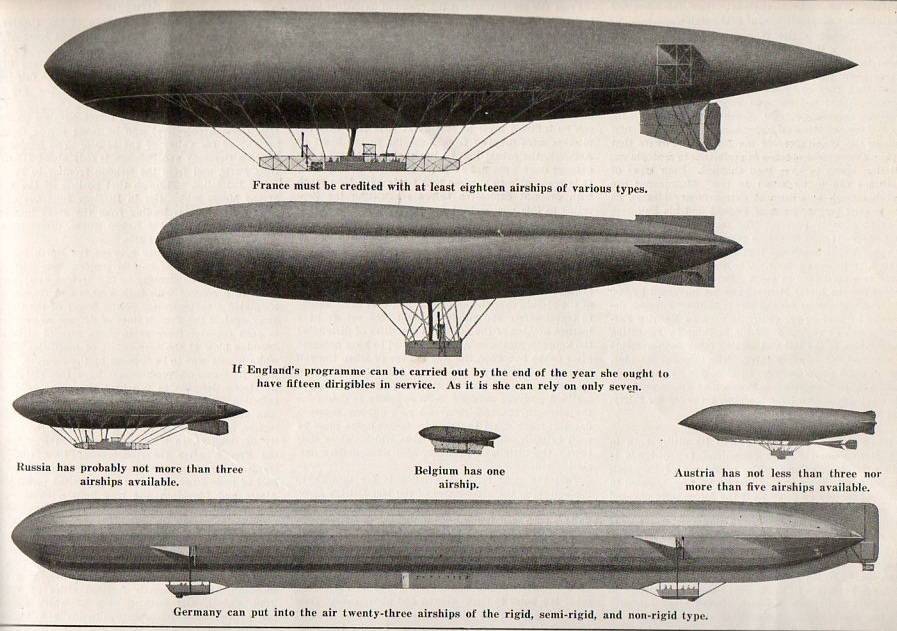
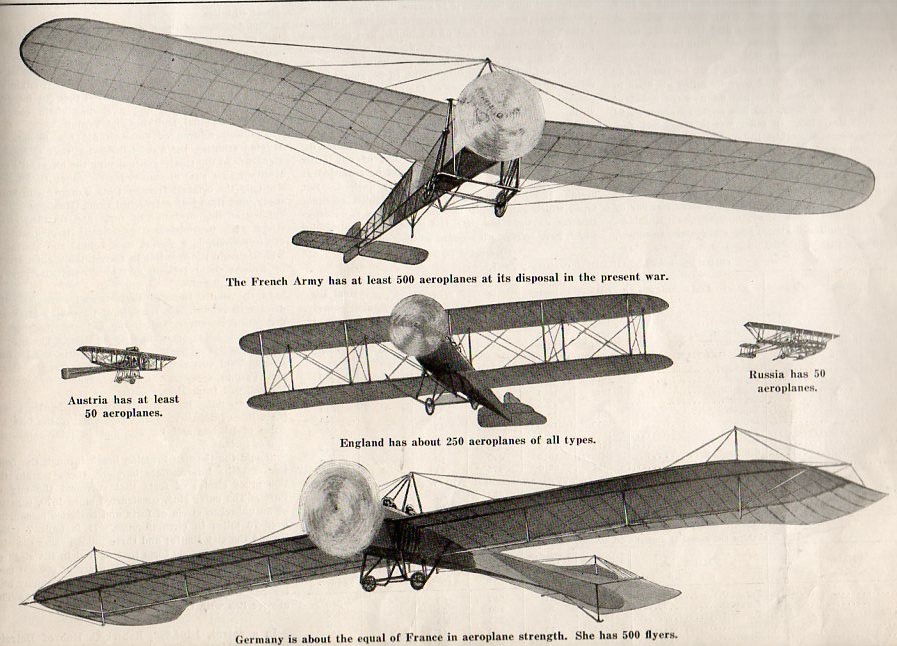
[Image source: 5 September 1914, vol 112, #10, Scientific American.]
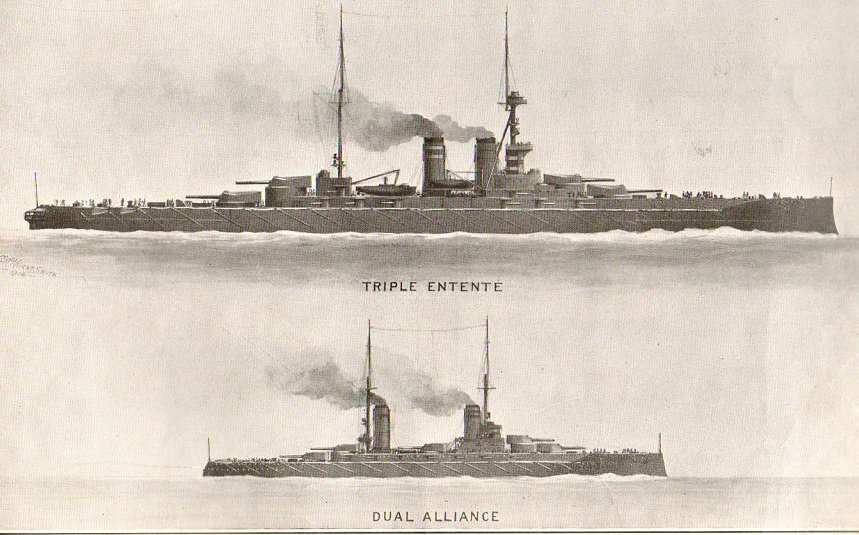
The graphics are mostly good if not a little clunky–they can be viewed as “scary”. Mostly, though, these images are reproduced today because I find it hard to pass up an interesting airship illustration, though they do present their case more clearly than a slightly earlier attempt at data display seen last week on this blog.
The images for the distribution of naval power are very defined:
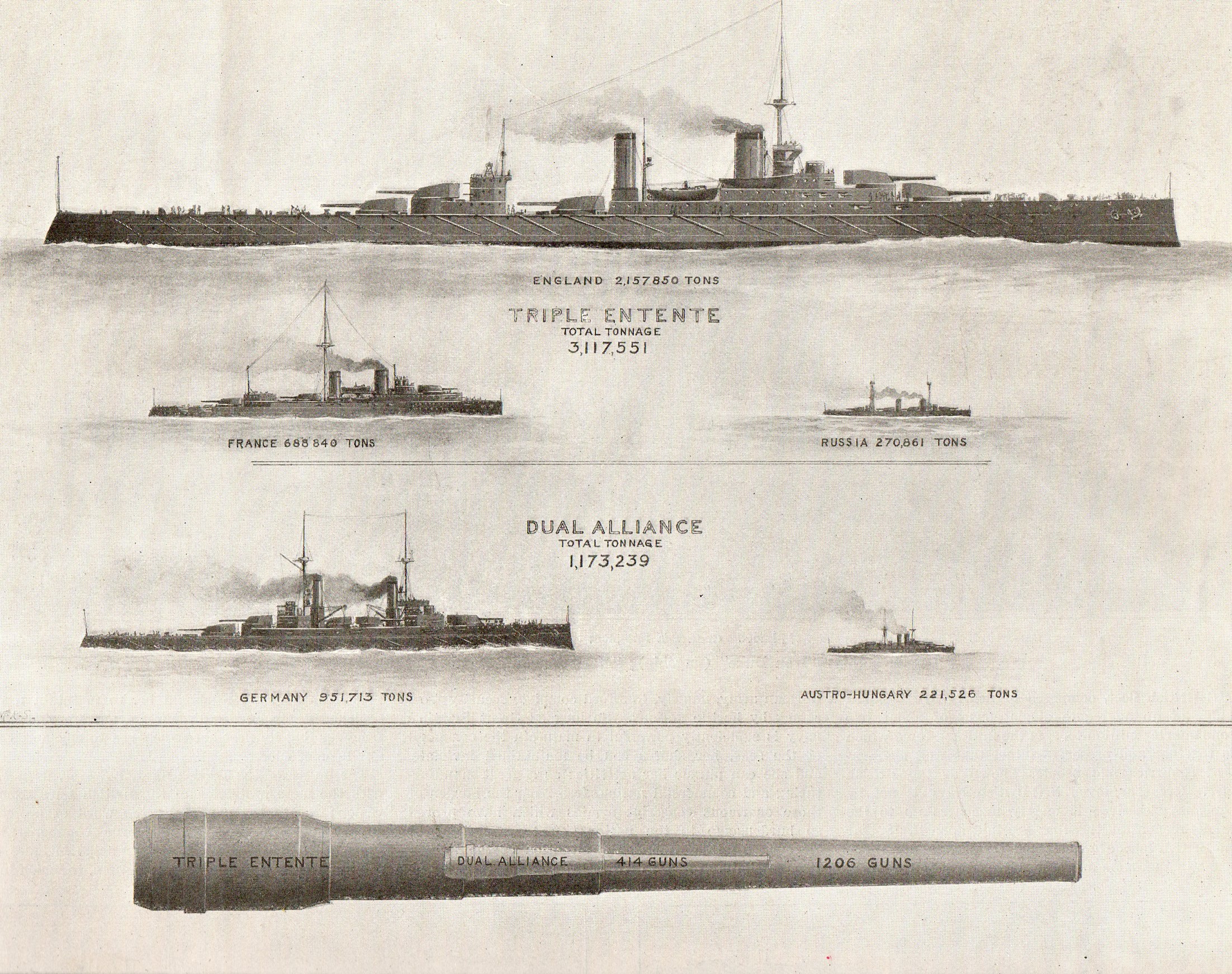
(I especially enjoyed the comparison of naval guns, with the cannon-within-a-cannon.)
JF Ptak Science Books Quick Post, expanded

(One in a series on the preihistories of famous things, one of which is: Mandelbrot and the Pre-History of the Fractal, 1967-1975.)
I’ve written here earlier on the 236 different words used to create The Cat in the Hat (Dr. Seuss and the 236 Words That Changed reading Forever), a book which I found to be a major accomplishment, a very difficult undertaking with superb outcome. [The detail above is picked from the cover, below.]
That is why I was struck seeing the cover of volume 1 of this rare two-volume set illustrated by the not-yet-famous Dr. Seuss (Theodor Seuss Geisel, 1904-1991, and son and grandson of brewmasters). There is no question in my mind that the small head on the large-bodied serpent is that of The Cat in the Hat (TCITH, which sounds like an Egyptian deity).
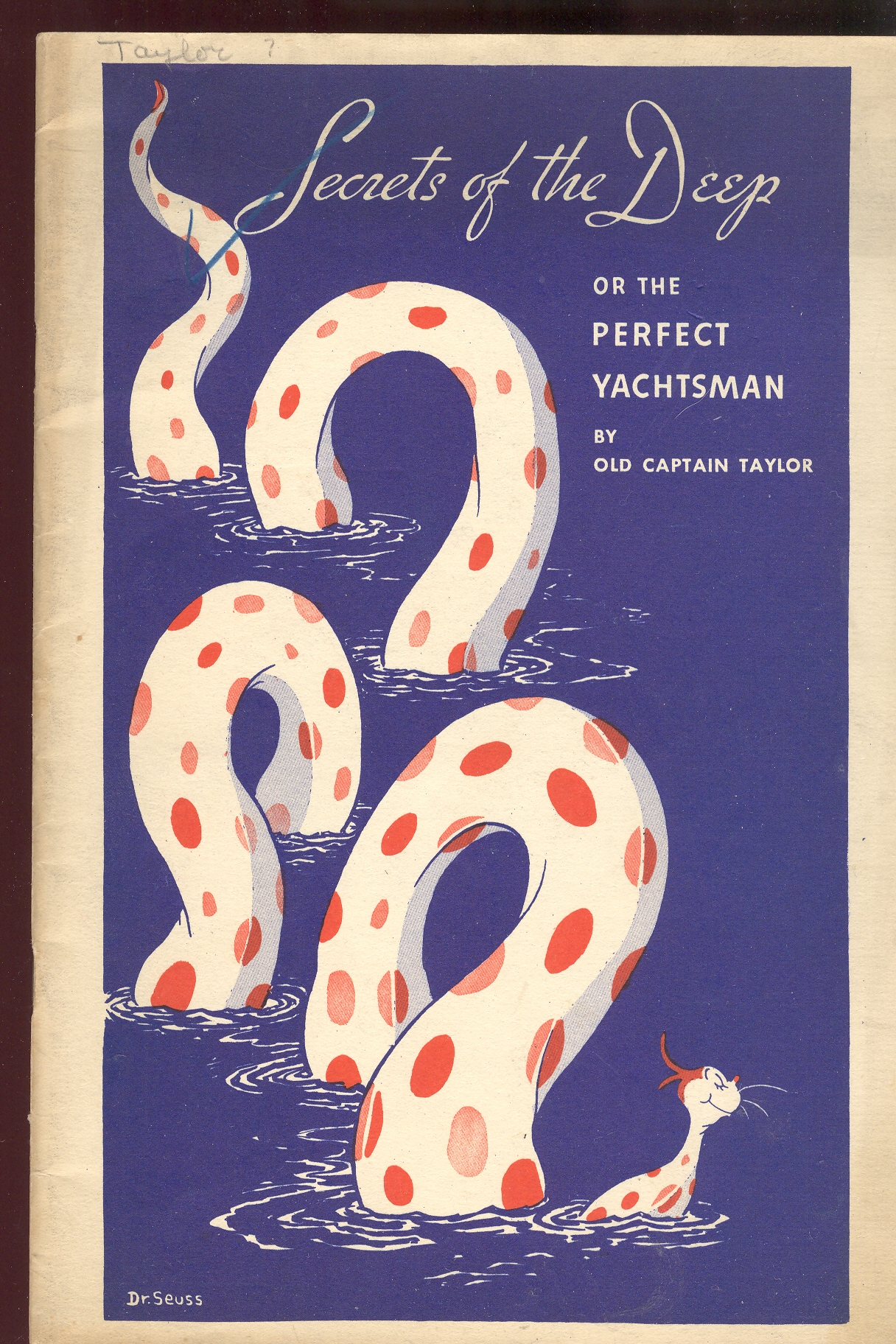
TCITH might very well make its first forensic appearance here. Seuss busily illustrated these two slim pamphlets for Esso Oil and Grease—they presented the rules of the water, and Seuss responded with funny inset illustrations and delightful chapter-ending slugs. He also provided a number of Seussian/Rube-Goldbergian machines which mechanically overcomplicated (or “too-complexified” in Bushisms, (true)), which are both complex and simple, delightful.
JF Ptak Science Books Post 618–expanded 26 Nov 2011
See also States of Perfection, the Archaeology of Refrigerated Meat, 1954.
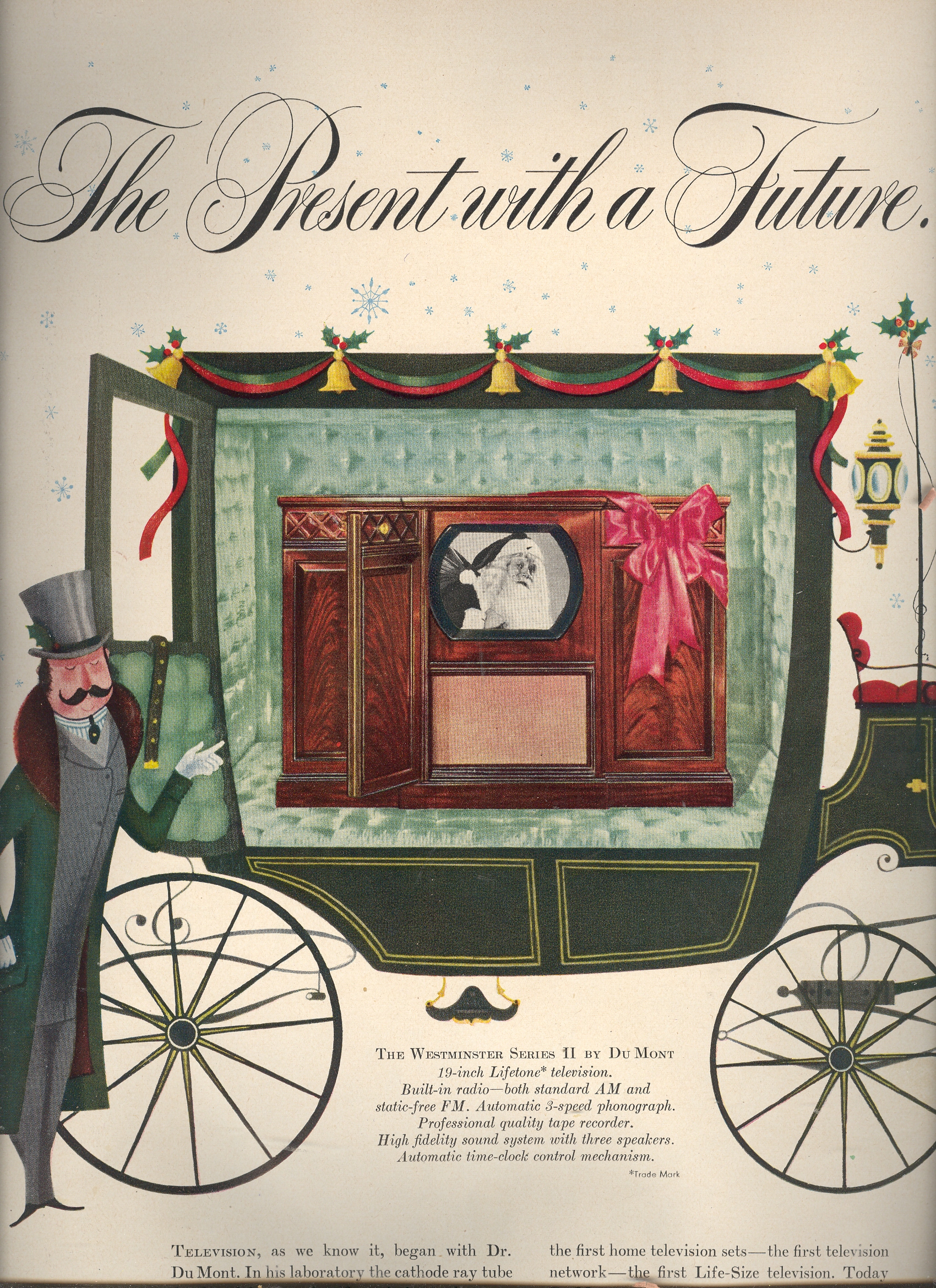
The concept of the television started pushing its way obliquely into the literature as far back as the 1880’s (with Paul Nipkow’s 18-line resolution “electric telephone”), bumping up again with Arthur Korn in Germany around the turn of the century, and making its way through the ‘teens and early ‘twenties until hit it big in 1927 with Phil Farnsworth’s “image dissector”. (Baird promised a hope with a mechanical version of the television, complete with a 30-line vi ewer, but it would very soon be replaced with electronic boxes with ten times the resolution.) There were little or no stations available for viewing even though sets were manufactured and sold. It wasn’t until the end of WWII that the television industry took off—the increase in home-ownership of tvs exploded, beginning in 1950.*(A decent timeline of the development of tv is here.)
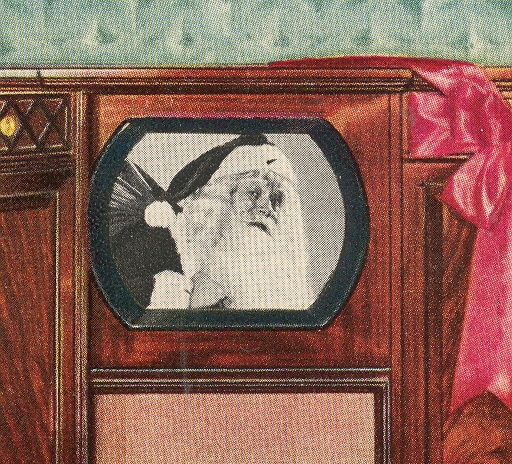
While looking through a year’s worth of LIFE magazine for 1950 I was struck by the number of ads and the number of different companies selling televisions in the major print market. But the creeping surprise for me were the images that were used in the tv sets that were pictured in the ads—images within images. The pictures in the tubes were meant to be enticing, imaginative, imagery of the possible, displaying the possibility of entertainment–the possibility of losing yourself in the new medium. It was an idea of fabulousness, of great expectations, of the promise of being swept away by the new convenience—and all of that rolled up in the pictures used in the ads.


To me, sitting here 59 years in the future, it is hard to imagine getting excited by any of these images—except Santa. Even with the benefit of having looked at millions of images and having an historian’s occasional perspective on stuff, I just can’t appreciate these pictures in the ways that the advertiser meant them to be savored—and they were meant to be savored, as they were the libidinous bait to make the reader jump into the Hudson and buy the advertised set.
There are vocabularies for defining the breadth of fabulousness across difficult genres, like describing the fineness of a wine or the scent of a good desert rain. Difficult perceptions to quantify and describe, but it is done and successfully so. I can’t find the words fort these pictures.
Their fabulousness to the viewer in 1950 must not have been very long lasting—the images seem so contrary to being interesting, as they seem to project almost nothing at all. I do get the overall effect of polite culture and a race at the occasional arts, but by and large the pictures were vanilla headshots of women.
JF Ptak Science Books Quick Post

I don’t know the Illustrated History of Santa and Gun Gifts, but I guess that a book could be written if one already doesn’t exist. Well, that or something associating Santa with unusual, or questionable, gifts in his bags of joy could be made into something, something disappointing. I’m not that person to collect those sorts of images because I have always held Santa in very high esteem, and I don’t care to have too many of those images floating in my mind, exploiting some dark corners of unknown memories, disturbing the happy bits with unneeded and unwanted visual info. But, well, these pictures below, found in the December 1916 issue of the uncommonly-seen journal, Illustrated World, provides a little glimpse into the manufactured desires of kid-wishes for toys during wartime, and so I’ll pass them along. These things do tell us something about the period–like the famous multiple images of Santa hanging cigarette carton Christmas ornaments (seen here in the post on Gift Porn, 1954), or a smoking Santa stuff a stocking with a box of Lucky Strikes–so it makes sense to make sense of them.
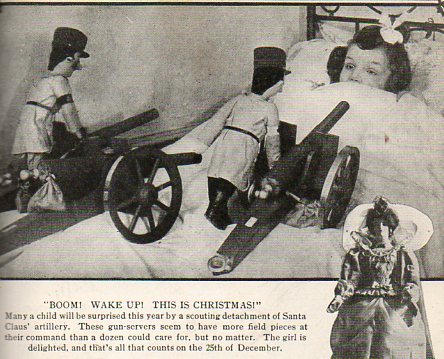
I guess kids have fairly well always wanted toys (or not) guns for Christmas, gifts from Santa, or at least so long as Santa has been around or identified as so, and to see Santa with a rifle would not be so unusual, especially given that this was deep into the second year of the bloody Great War. (I have another interesting image here, somewhere, showing Santa distributing presents to British troops in trenches, riding a tank, but presently I can’t find its stack in a stack of stacks.)
Perhaps the issue of playing with guns and cannons and so on was a way of easing fear and distress during wartime; perhaps it meant something soothing for the developing mind of a child. I don’t know.