A Daily History of Holes, Dots, Lines, Science, History, Math, Physics, Art, the Unintentional Absurd, Architecture, Maps, Data Visualization, Blank and Missing Things, and so on. |1.6 million words, 7500 images, 4.9 million hits| Press & appearances in The Times, Le Figaro, Mensa, The Economist, The Guardian, Discovery News, Slate, Le Monde, Sci American Blogs, Le Pont, and many other places… 5000+ total posts since 2008.

Author: JF Ptak

  • Earth Squared and Halved and Shrunken and Invisible and Doubled and Miniaturized–the Astounding “Mystery in Space”

    JF Ptak Science Books   Post 1936

    Follow Me on Pinterest

    This post is a part of overlapping categories, including:

    • Duplicate Earths (including Mondo Bizarro, Science Afflictions and the Dubious Mind—Bad Science, Part 1. NYC in Space (?!) here and Extra-Earth Humano-Alien Souls From Outer Space Repopulate Earth-Hell!!(??) here)

    Earth strange half earth
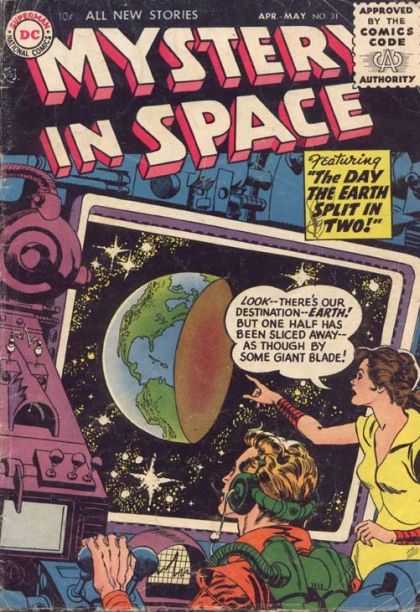
    In the five years or so of collecting information and stories for the odd-bits section of this blog  I have never encountered so many choice visual examples in one place for strange/weirdly-imagined/impossible/high-SciFi of the Earth than with the comic book, Mystery in Space. The very dedicated keepers of Coverbrowse.com website have reproduced thousands (?) of covers of pulpily-published science fiction and exotic-thinking comics books, including the home base in which all sixteen-plus years of Mystery in Space live.

    I’ve just found another Earth-halved image, this from the comic Strange:
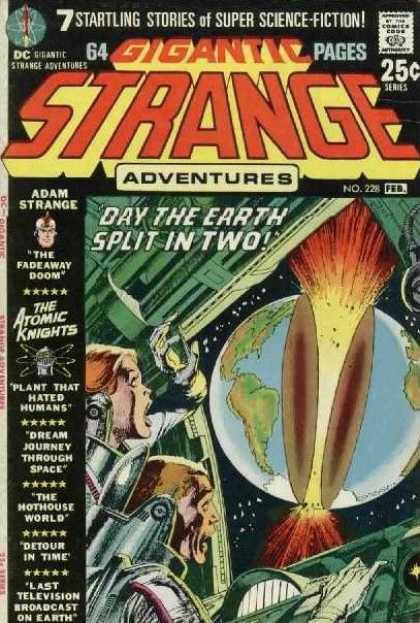
    Earth split in two!

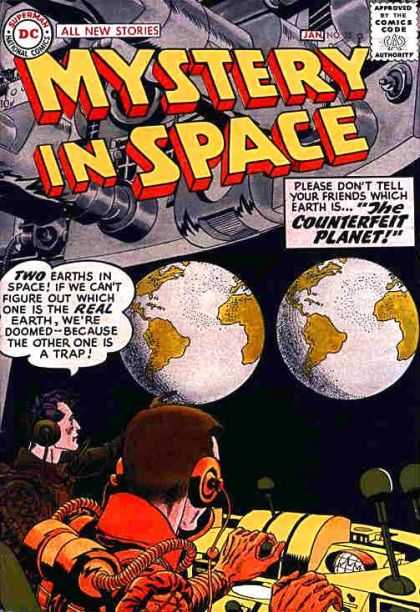
    Earth strange duplicate
    Written from 1951-1966, Mystery in Space very freely uses words like “astounding” and “astonishing” and “amazing” and “strange” to describe itself–on its cover (!)–and then lives up to it in so many astounding/astonishing/amazing/strange ways.  Keeping simply to odd representations of the Earth, we find it halved, duplicated,cubed, miniaturized, dragged, tugged, targeted, canaled, and bullseyed; it is also the background to a WWI biplane attacking a spaceship in space, a flying skyscraper, and an alien craft lifting the United States from its geological moorings–in short, a very high and filling feast. And this, again, is just judging this book by its cover, which might actually be the best thing to do as the covers tell enough of the story to let your imagination tell the rest of the adventure. The covers tell fabulous stories of such highly unexpected ideas that they may be the only part of the book that we need to bother with, the cover doing away with the need for the printed narrative; and it may be the case that it saves the reader from the interior eye-splitting out-of-time writing.
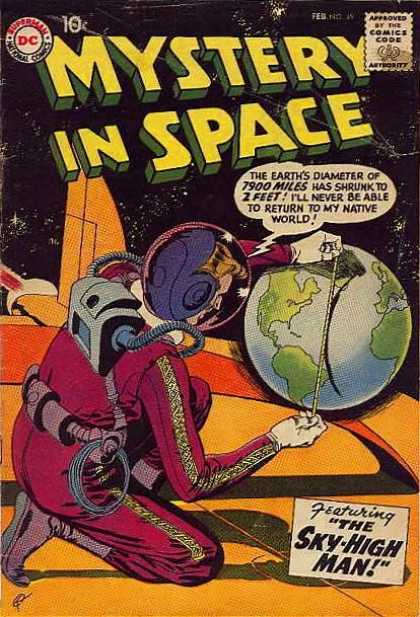
    Earth strange mini earth
    The artwork and promise of the story are almost always (issue-after-issue) compelling, and there are a number of superb examples of simple jaw-dropping, belief- suspending, flabbergasting and mostly bad but very unexpected science fiction. But this is so potentially high-bad that the “bad” looks good, a tried-and-true badness the content of which is so surprising that its high degree of creativity and difference transcends everything else.  And since we’re just looking at pictures/cover art, there is no time-sink involved wading through turgid/florid/bad-bad prose for hours to only discover that the story is only getting simpler and lost and the writing even worse (worser). So Mystery in Space is a great visual luxury, a bookmark for ideas rendered in artwork that is obviously deadline-dependent, swirling in bad color and modest skill seemingly steeped in smoke and alcohol, and which delivers joyful incredulous surprises time after time.
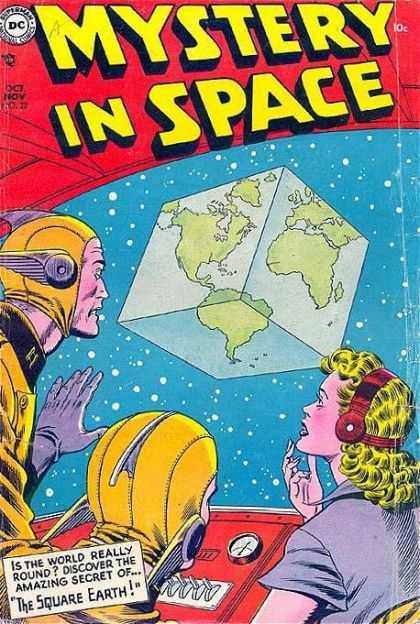
    Earth strnage cubed earth


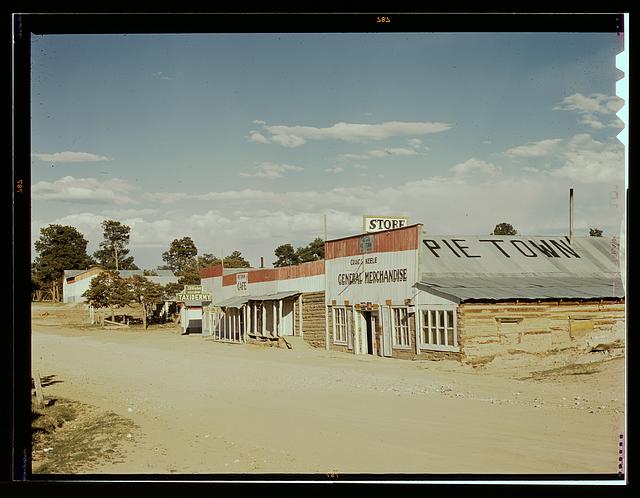
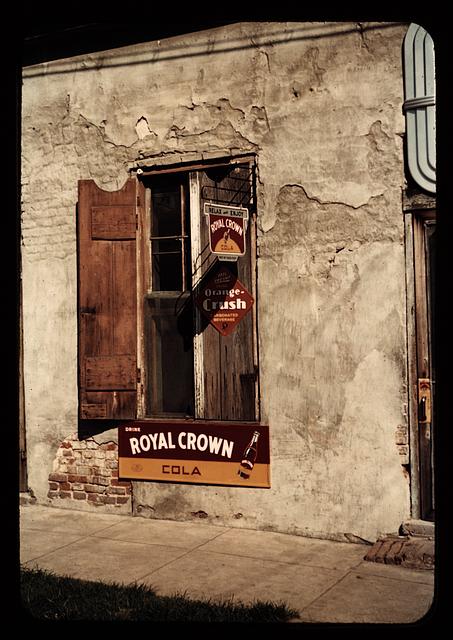
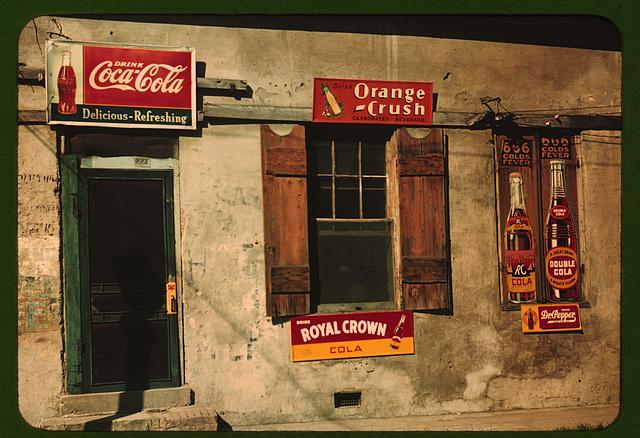
  • General Stores and Juke Joints: FSA Photographs in Color, 1942-1945

    JF Ptak Science Books  Quick Books   

    Follow Me on Pinterest

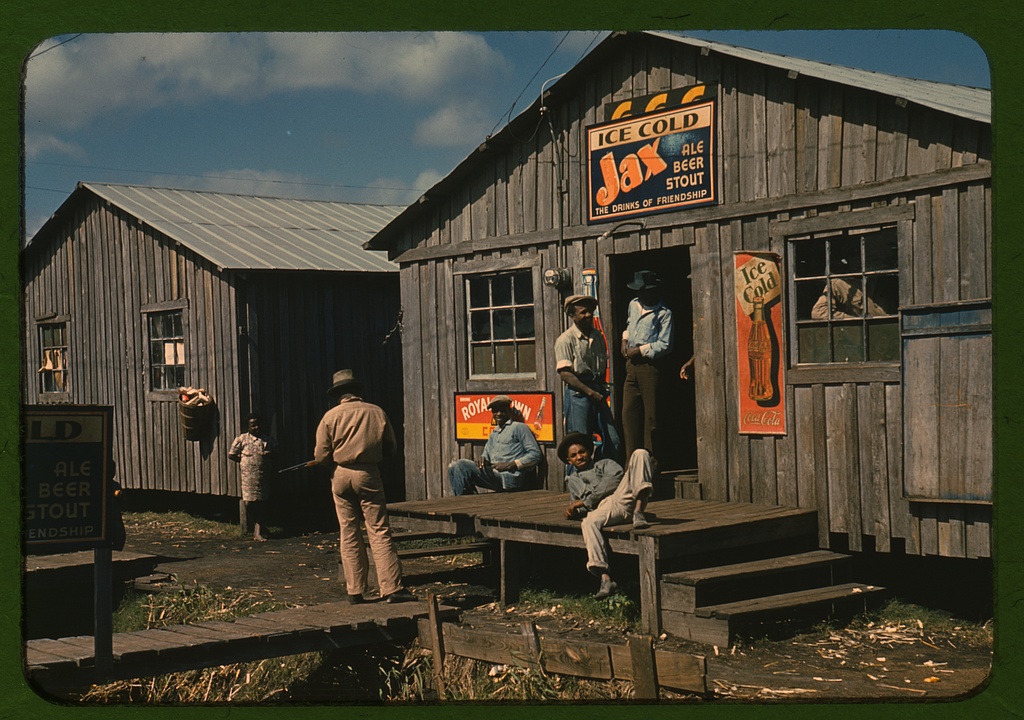
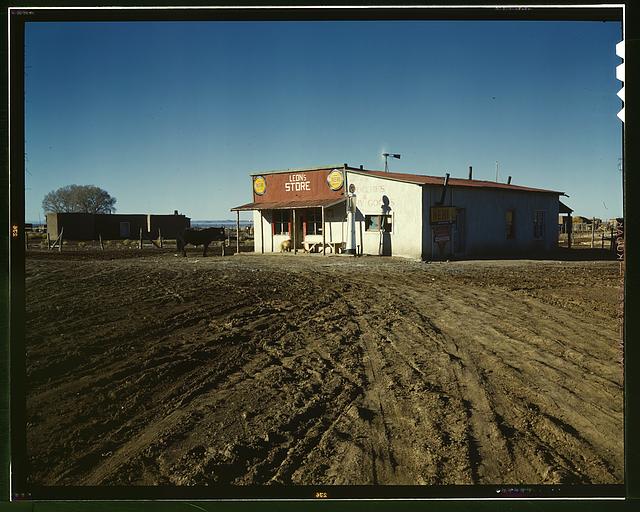
    The following images were made by Farm Security Administration/Office of
    War Information photographers during World War II and are part of the
    famous FSA photography series that I  have written about here. 
    The color photographs–which were made in the first decade or so of
    the use of this new medium–represented only about 1,600 of the
    collection of 160,000 images in the FSA archive, and are far less known
    than their black-and-white complements, many of which are new iconic
    symbols for this period.  The color images are beautiful works, and
    somehow seem to bring these historic images a little closer to the
    present.

    [Source: the Library of Congress,  
    http://memory.loc.gov/ammem/fsachtml/fabout.html]Fsa color negro juke

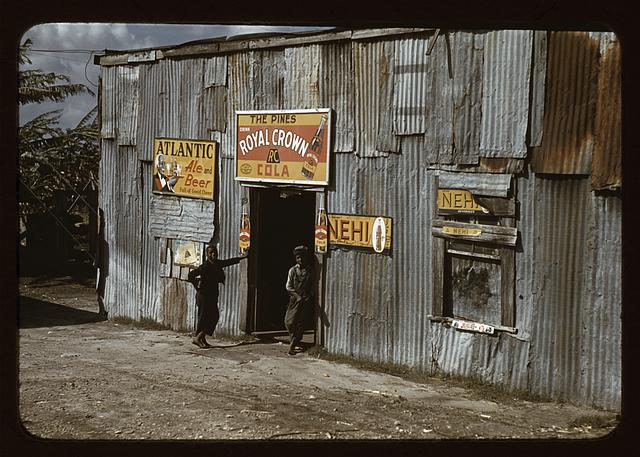
    Negro migratory workers by a “juke joint” (?), Belle Glade, Fla.

    Wolcott, Marion Post, 1910-1990, photographer.


    Fsa negro color juke 2
    Living quarters and “juke joint” for migratory workers, a slack season; Belle Glade, Fla. Wolcott, Marion Post, 1910-1990, photographer.

     Image, Source: digital file from original slide

    A cross roads store, bar, “juke joint,” and gas station in the cotton plantation area, Melrose, La.


    Image, Source: digital file from original transparency

    General store, Chacon, N[ew] Mex[ico] Collier, John, 1913-1992, photographer.

    Fsa color general store 3

    General store, near Questa, Taos County, N[ew] Mex[ico]

    Collier, John, 1913-1992, photographer.

    Fsa color pie town

    General Merchandise store, Main Street, Pie Town, New Mexico

    Lee, Russell, 1903-1986, photographer.

    Fsa color plumbing store

    Brockton, Mass., Dec. 1940, second-hand plumbing store   Delano, Jack, photographer.

    Fsa color stores natchez
    Natchez, Miss.    Wolcott, Marion Post, 1910-1990, photographer.

    Fsa color store natchez 2
    Natchez, Miss.  Wolcott, Marion Post, 1910-1990, photographer.


    Natchez, Miss.

    Natchez, Miss.

    A cross roads store, bar, “juke joint,” and gas station in the cotton plantation area, Melrose, La.


    [Grand Grocery Co.], Lincoln, Neb.

    A store with live fish for sale, vicinity of Natchitoches, La.


    ·Posted by :

    ·in:

    —

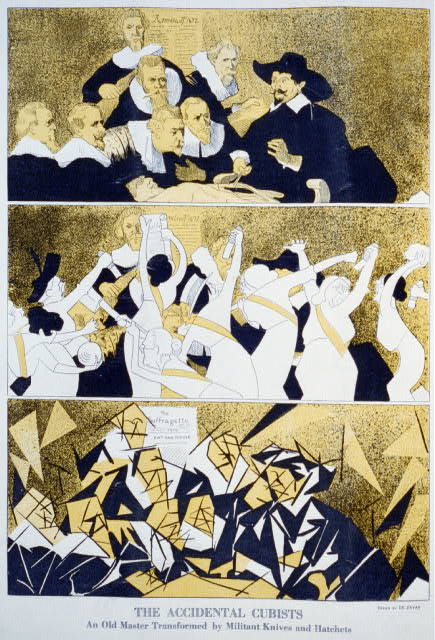
  • Accidental Cubism, 1914

    JF Ptak Science Books   Quick Post    Part of the Accidental Absurdist series

    Marisu de Zayas  had a little fun with the origins of Cubism, producing this satire in 1914 during the first decade of the new movement’s existence. He has a group of Suffragists (still five years away from the vote at this point) transform Rembrandt’s Anatomy Lesson of Dr. Tulp with the tools of the trade of the folks in the painting:

    Cubism

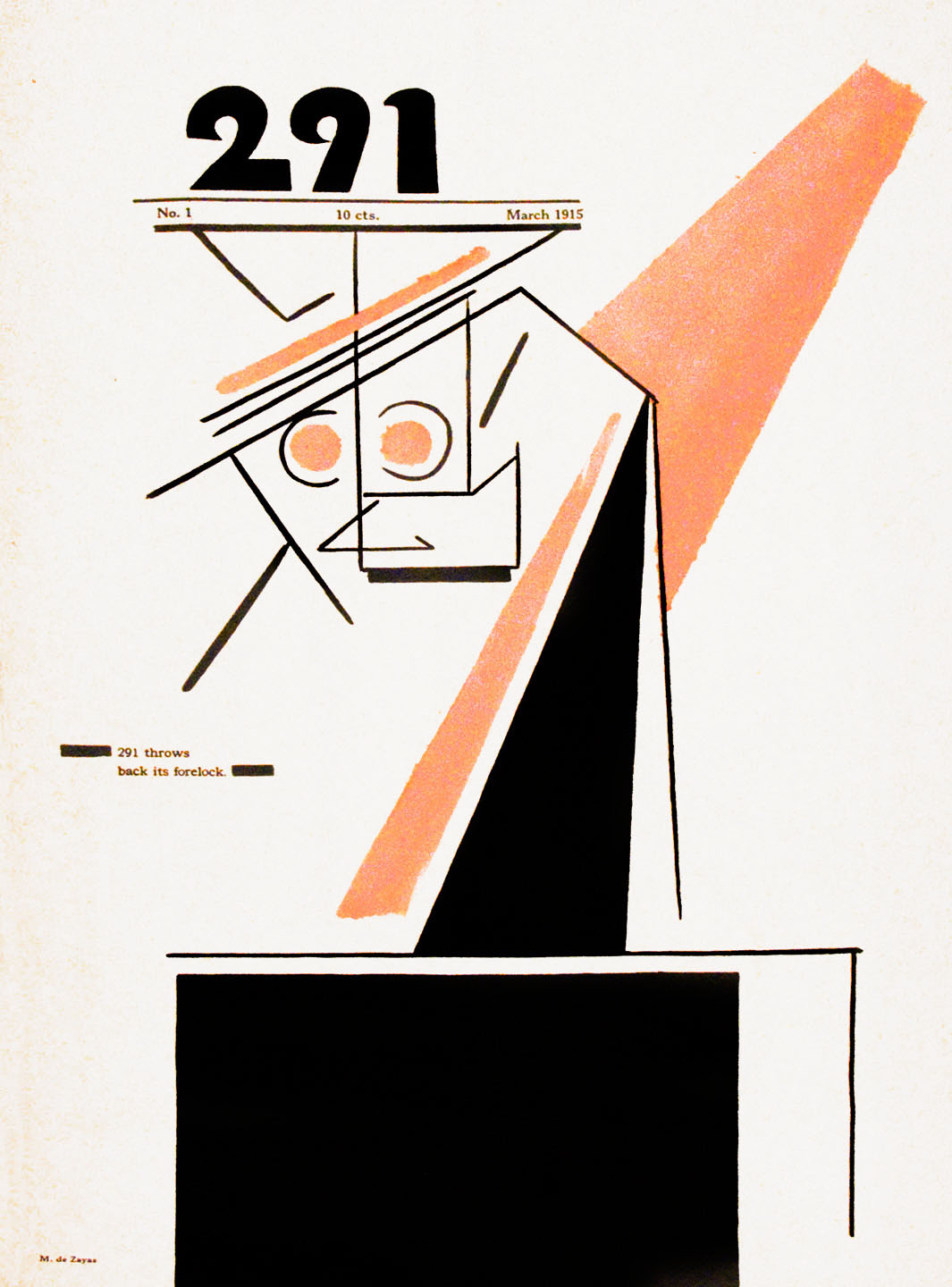
    Its not as though de Zayas was anti-Cubist or a traditionalist or a morality figure or a cow-in-the-field artist–hardly.  He was a modernist with a sense of humor, though I am sure that there were millions of people who agreed with a literal interpretation of his satire. Perhaps his name is a little misty at this point, but his artistic contributions are not–here’s his cover for the very first issue of Alfred Stieglitz’s 291:

    De zayas
    This was the Little Magazine born of Stieglitz’s pioneering art gallery of the same name, which held the first exhibition in the U.S. for the works of Matisse (1908) and the first American one-person shows of Cezanne and Picasso (both in 1911) and championed the work of modernists like Duchamp, John Marin, Marsden Hartley, Arthur Dove, Max Weber, Clarence White,  Auguste Rodin, Constantin Brancusi, Francis Picabia, Henri Rousseau, and, well, the list goes on and on. (And de Zayas.)

    ·Posted by :

    ·in:


  • Child Labor Street Trades, 1908-1924

    JF Ptak Science Books  Quick Post


    Newsboy
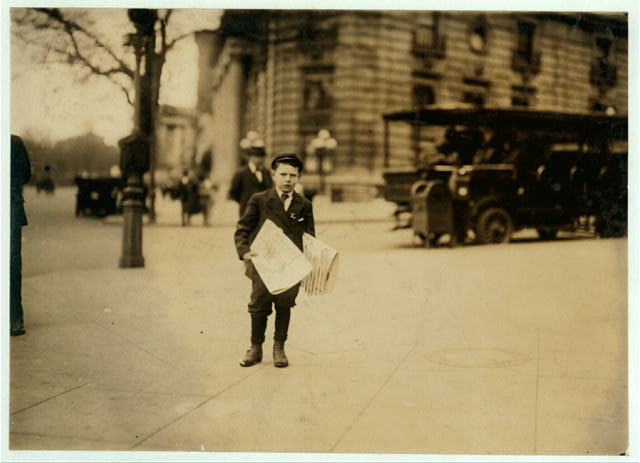
    I’ve posted a number of times in this blog on child labor in the U.S. Today’s post is a simple display of images made by the great Lewis Hine (1874-1940) that are housed at the Library of Congress (findable here) showing the state of the child worker in the first quarter of the 20th century.  The children are chauffeurs, bootblacks, delivery boys, messengers, food vendors, shuttle runners (and all sorts of mill work activities), miners (coal handlers, underground mule guides, etc.) and many other jobs, including of course the most iconic and visible reminder that children were working–the newsboy. Hine’s documentary evidence shows the children working in all manner of weather, at all times of day and night, in all sorts of working conditions–and of course showing how little and frail and open-to-abuse the children were.

    Each of the images below is expandable and linked to the original at the Library of Congress site; shown below are two of the ten pages of images. 


    digitized item thumbnail

    digitized item thumbnail

    digitized item thumbnail

    digitized item thumbnail

    digitized item thumbnail

    digitized item thumbnail

    digitized item thumbnail

    digitized item thumbnail

    digitized item thumbnail

    digitized item thumbnail

    digitized item thumbnail

    digitized item thumbnail

    digitized item thumbnail

    digitized item thumbnail

    digitized item thumbnail

    digitized item thumbnail

    digitized item thumbnail

    digitized item thumbnail

    digitized item thumbnail

    digitized item thumbnail

    digitized item thumbnail

    digitized item thumbnail

    digitized item thumbnail

    digitized item thumbnail

    digitized item thumbnail

    digitized item thumbnail

    digitized item thumbnail

    digitized item thumbnail

    digitized item thumbnail

    digitized item thumbnail

    digitized item thumbnail

    digitized item thumbnail

    digitized item thumbnail

    digitized item thumbnail

    digitized item thumbnail

    digitized item thumbnail

    digitized item thumbnail

    digitized item thumbnail

    digitized item thumbnail

    digitized item thumbnail

    digitized item thumbnail

    digitized item thumbnail

    digitized item thumbnail

    digitized item thumbnail

    digitized item thumbnail

    digitized item thumbnail

    digitized item thumbnail

    digitized item thumbnail

    digitized item thumbnail

    digitized item thumbnail

    digitized item thumbnail

    digitized item thumbnail

    digitized item thumbnail

    digitized item thumbnail

    digitized item thumbnail

    digitized item thumbnail

    digitized item thumbnail

    digitized item thumbnail

    digitized item thumbnail

    digitized item thumbnail

    digitized item thumbnail

    digitized item thumbnail

    digitized item thumbnail

    digitized item thumbnail

    digitized item thumbnail

    digitized item thumbnail

    digitized item thumbnail

    digitized item thumbnail

    digitized item thumbnail

    digitized item thumbnail

    digitized item thumbnail

    digitized item thumbnail

    digitized item thumbnail

    digitized item thumbnail

    digitized item thumbnail

    digitized item thumbnail

    digitized item thumbnail

    digitized item thumbnail

    digitized item thumbnail

    digitized item thumbnail

    digitized item thumbnail

    digitized item thumbnail

    digitized item thumbnail

    digitized item thumbnail

    digitized item thumbnail

    digitized item thumbnail

    digitized item thumbnail

    digitized item thumbnail

    digitized item thumbnail

    digitized item thumbnail

    digitized item thumbnail

    digitized item thumbnail

    digitized item thumbnail

    digitized item thumbnail

    digitized item thumbnail

    digitized item thumbnail

    digitized item thumbnail

    digitized item thumbnail

    digitized item thumbnail

    digitized item thumbnail

    digitized item thumbnail

    digitized item thumbnail

    digitized item thumbnail

    digitized item thumbnail

    digitized item thumbnail

    digitized item thumbnail

    digitized item thumbnail

    digitized item thumbnail

    digitized item thumbnail

    digitized item thumbnail

    digitized item thumbnail

    digitized item thumbnail

    digitized item thumbnail

    digitized item thumbnail

    digitized item thumbnail

    digitized item thumbnail

    digitized item thumbnail

    digitized item thumbnail

    digitized item thumbnail

    digitized item thumbnail

    digitized item thumbnail

    digitized item thumbnail

    digitized item thumbnail

    digitized item thumbnail

    digitized item thumbnail

    digitized item thumbnail

    digitized item thumbnail

    digitized item thumbnail

    digitized item thumbnail

    digitized item thumbnail

    digitized item thumbnail

    digitized item thumbnail

    digitized item thumbnail

    digitized item thumbnail

    digitized item thumbnail

    digitized item thumbnail

    digitized item thumbnail

    digitized item thumbnail

    digitized item thumbnail

    digitized item thumbnail

    digitized item thumbnail

    digitized item thumbnail

    digitized item thumbnail

    digitized item thumbnail

    digitized item thumbnail

    digitized item thumbnail

    digitized item thumbnail

    digitized item thumbnail

    digitized item thumbnail

    digitized item thumbnail

    digitized item thumbnail

    digitized item thumbnail

    digitized item thumbnail

    digitized item thumbnail

    digitized item thumbnail

    digitized item thumbnail

    digitized item thumbnail

    digitized item thumbnail

    digitized item thumbnail

    digitized item thumbnail

    digitized item thumbnail

    digitized item thumbnail

    digitized item thumbnail

    digitized item thumbnail

    digitized item thumbnail

    digitized item thumbnail

    digitized item thumbnail

    digitized item thumbnail

    digitized item thumbnail

    digitized item thumbnail

    digitized item thumbnail

    digitized item thumbnail

    digitized item thumbnail

    digitized item thumbnail

    digitized item thumbnail

    digitized item thumbnail

    digitized item thumbnail

    digitized item thumbnail

    digitized item thumbnail

    digitized item thumbnail

    digitized item thumbnail

    digitized item thumbnail

    digitized item thumbnail

    digitized item thumbnail

    digitized item thumbnail

    digitized item thumbnail

    digitized item thumbnail

    digitized item thumbnail

    digitized item thumbnail

    digitized item thumbnail

    digitized item thumbnail

    digitized item thumbnail

    digitized item thumbnail

    digitized item thumbnail

    digitized item thumbnail


    ·Posted by :

    ·in:

    —

  • Daily Dose from Dr. Odd: The Geo-Cube Durer Plastic Man of 1942

    JF Ptak Science Books     Daily Dose from Dr. Odd

    Plastic war899
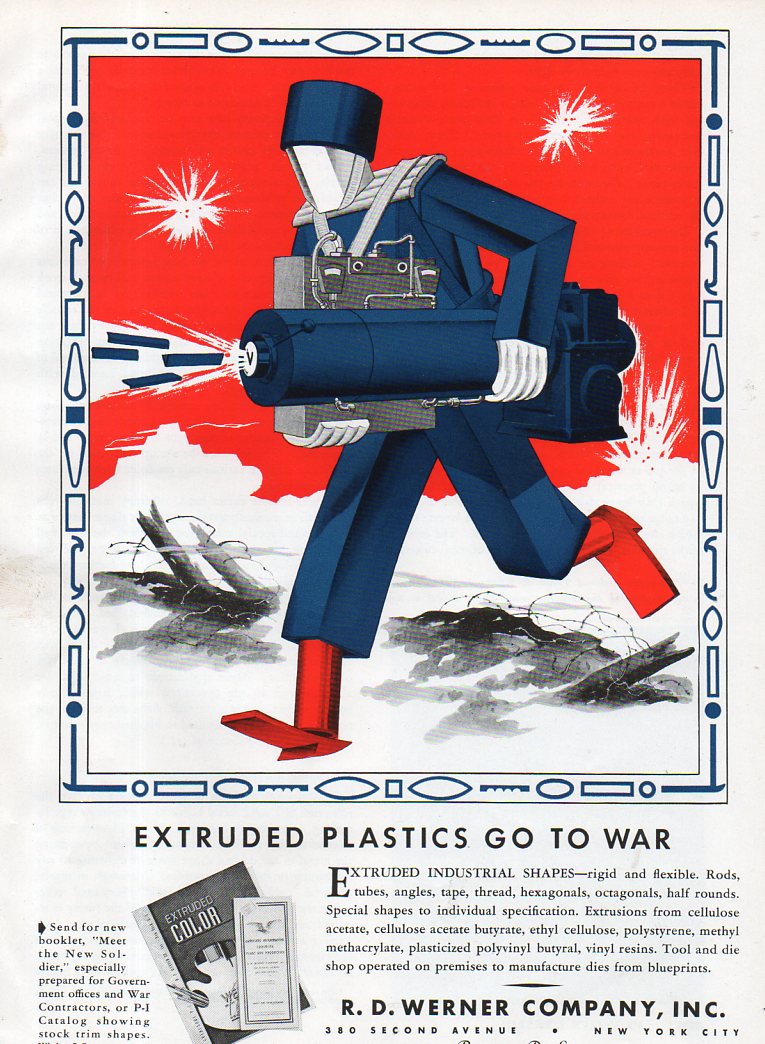
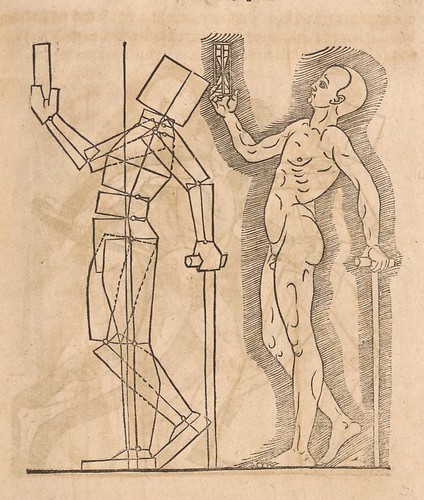
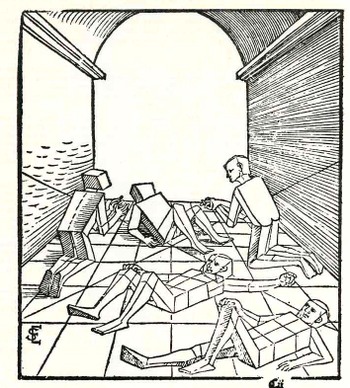
    This puts me in mind of the work of Albrecht Durer’s (1471-1528) revolutionary drawing
    of a geometrical man, compartmentalizing the body into distinct
    chunks–these and other woodcuts appeared in his Symmetria partium…humanorum corporum
    and must have been an amazing, startling site for the new reader to
    such things in 1537.

    . 

    Perspectiva (Lautensack) 1564 e

    To me this looks like visionary thinking in trying
    to understand the motions of living beings with no actual way of
    capturing the image in motion.  There’s also Erhard Schoen who published Unnderweissung der proportzion unnd stellung der possen, liegent und stehent…,which showed that the human form was reducible to connected but discrete Euclidean solids. This must’ve been an intriguing concept in the 16th century, this associate of form and function and the geometry of substance, all wrapped around the still-developing European re-discovery of perspective.  (A post on this subject appeared earlier in this blog here.)

    I really just like the red background of the Plastic Durer Man.

    Blogmissing_peopl_2e077_2


  • Outsider SciFi Comic Noir in Color: the Very Disturbing “Stardust” of Fletcher Hanks

    JF Ptak Science Books    Post 1935

    Stardust earth detail[Source: J Blog, here.]

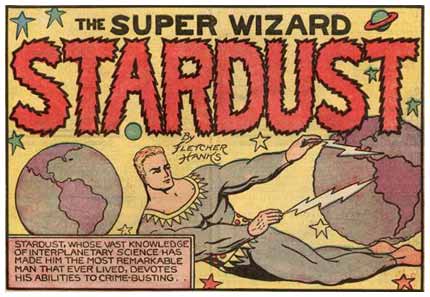
    The Golden Age comic creations of Fletcher Hanks (1887-1976) have an Eraserhead, biological badness feel to them, for me.  They are extraordinary and interesting without being necessarily good, or even enjoyable.  They are definitely a high order of something, but what that is, exactly, I don’t know.  OF his many accomplishments is a comic hero named Stardust, a scary god-like superhero of brutal intent, something that appears on Earth one day to fight crimes like a very grim crime-fighting undertaker. There isn’t much emotion or feeling outside of some amount of fear and loathing–even when heads are being torn off and flung deep into space, there’s not much concern.

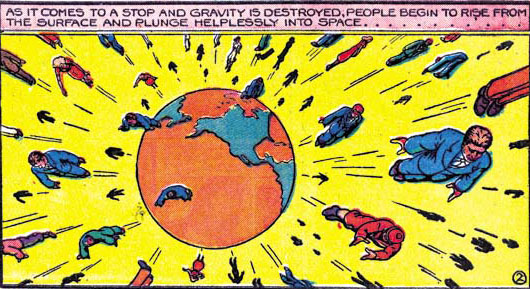
    The work is disturbing and maybe brilliantly crude. The use of color is grating and has in some very bizarre way a feeling of high-contrast noir black & white quality–it is very off-putting, as in the image above, with a yellow space and oddly-colored non-spinning Earth that a criminal mastermind has masterminded in order for humans to float into space

    Stardust him/it/self is also a pail of wriggling trouble–he is a living thing of some sort, a god-ish type creature, that can change matter with thought, and can fly through air and space on brain/ether waves, can manipulate shapes of any object and turn into a star, among other things.  Stardust is also disproportionate to what we think of as properly proportioned, and can bloodlessly rip off a head or stuff a man-monkey into a small place with brute force when it seems a deforming ray would do.  Stardust also makes a rather bizarre appearance with a duplicate/extra Earth–a sub-category for this blog and the thing which brought my attention to Stardust in the first place:

    Stardust double earth[Source: Lambiek Comiclopedia, here.]

    Even the name “Stardust” just feels wrong, like the strip on the whole. 

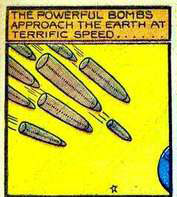
    The Stardust adventure has it all so far as upset and disturbance goes–even the composition. For example, this panel showing the impending impact of explosive shells finding their mark on Earth, closely cropped in a silent stillness, making their way through yellow space to an Earth that is just barely included in the scene…and of course the one quickly drawn star.  It is definitely a very distinctive mind thinking this stuff up–and as others have pointed out, that thinking was probably done on a drunken stretch of deadline.

    Stardust bombs det
    [Source here, single panel detail from full page below.]

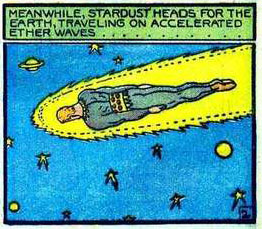
    Here’s Stardust on his “accelerated ether waves” making his way through a blue space–I’d voe to know why Hanks saw the need from the dashed line inside the ether-fire:

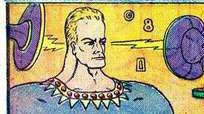
    Stardust flying detA portrait of Stardust–other people have mentioned Henry Darger in relation to Hanks, and its a relation that I do not see most of the time, except for images like the following, which have a very high-scented montage cleanliness to it:

    Stardust portrait

    Perhaps it is just the color theory aspect that puts people in mind of Darger.

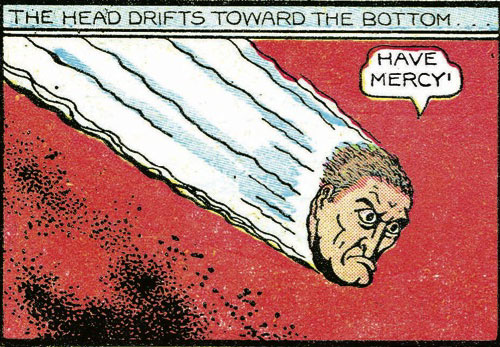
    The odd thing is that Stardust is mostly a mask-like character, and the villains–even when their head is detached and rocketing through space–have more approachable and believable faces:

    Stardust head i-shall-destroy-all-the-civilized-planets2
    [Source: Pop Matters, here.]

    “Have Mercy” indeed.  The embedded and troubled brilliance of Mr. Hanks did not. In roaming the internet for Mr. Hanks I’ve found some comparisons for him and William Burroughs, which is another connection I just do not see. At the base of it all Burroughs seems a  comic in a very dark sense; Hanks just seems very dark, in a hurried but very different way.

    Here’s a very interesting read on Hanks and his publisher: Graphic NYC.


  • Zoomology: Looking into the Heart of 40th St & 6th Ave, 1940.

    JF Ptak Science Books  Quick Post

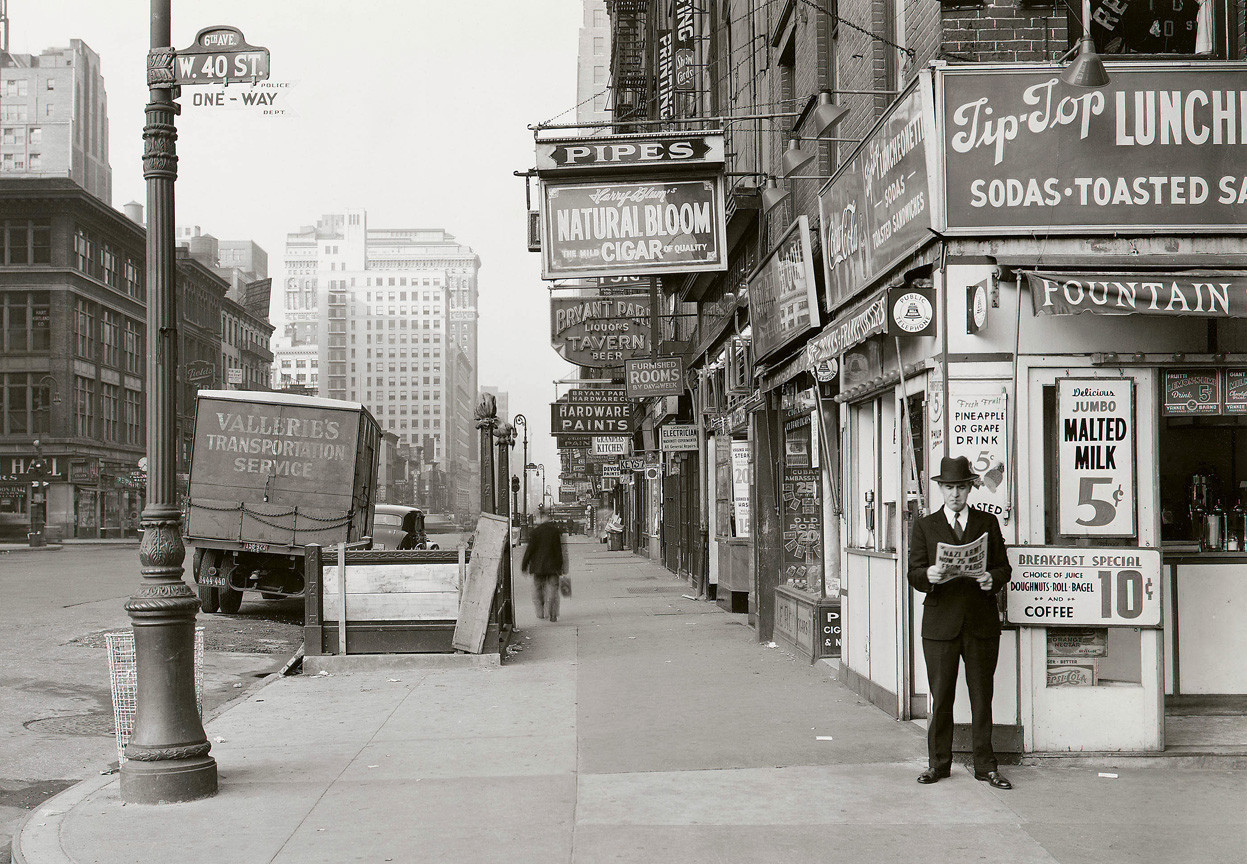
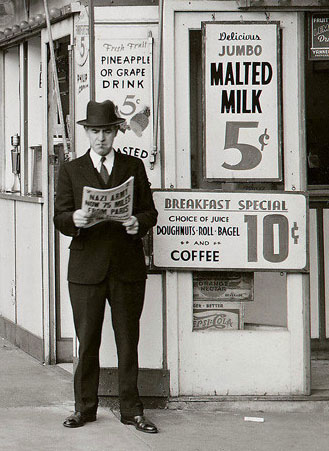
    I feel that this is an extraordinary photo, full of deep detail with many stories.  The narrative take place on the corner of 40th Street and 6th Avenue, Manhattan, in 1940.

    Historical-photos-pt3-new-york-ww2-nazi
    [Source: iliketowastemytime.com, here]

    In the image above the man reading the paper is just some guy reading a paper–with Zoomology he becomes what he was on that after in 1940: pissed off.  The news was not good (“Nazi Army Now 75 Miles from Paris”) and probably not all that imaginable, following the German victories in the rest of Europe its assault on the U.K. Though since he is reading the New York Daily News and he’s on the back page, that means he is reading the sports, which is where his pissed-offedness might come from.  

    Historical-photos-pt3-new-york-ww2-nazi 1


  • Inside Looking Out, Part II: From Inside the Eye, Nostril and NYC.

    JF Ptak Science Books  [Extending Post 1813]

    Machbook

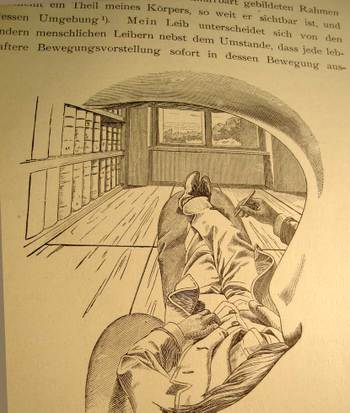
    I cannot think of another illustration by a scientist or philosopher who attempts to explain their own, literal, view of the world and then offer what this looks like to the reader from inside his own head, looking out through his own eye.  That’s exactly what Ernst Mach is doing right here on page 15 of his influential book Die Analyse der Empfindungen,  the fourth German edition (“The Analysis of Sensations and the Relation of the Physical to the Psychical”, published in Jena in 1903).

    There is nothing in this world for Mach that is not admissible to the human brain that is not empirically verifiable–that is, the world is nothing but awash in sensation and that sensation itself forms part of the experience of, well, experience. I’ve actually never been interested in the philosophy of science, and this is one of the reasons why.  Nevertheless I boldly break through my own prejudices to enjoy this phenomenally original image, drawn from the inside of Mach’s working mind, looking out through his eye socket, over his mustache, under his eyebrow, around his nose, out across his body and then leaping into the rest of the world.  I think he does make his point about the essential.

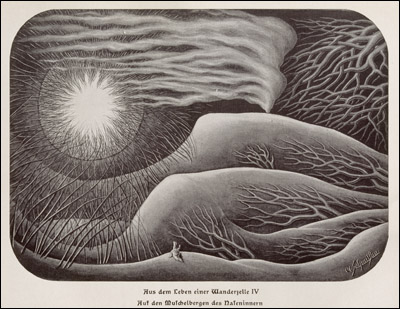
    Another interesting perspective is achieved by the one-and-only Fritz Kahn in 1926 with his imagery of viewing the world from deep within a human nostril. 

    Kahn, fritz nostrill
    This is a different sort of interpretation (from his Das Leben des Menschen/”The Life of Man”, printed in Stuttgart in 1931, volume 5, and found at the National Library of Medicine site section “Dream Anatomies” here https://www.nlm.nih.gov/dreamanatomy/da_g_IV-A-06.html) from the Machian view,  Dr. Kahn’s (1888-1968, a gynecologist and a renowned popular science communicator) being more of a landscape with the solar apogee of the nostril opening to the outside world. 

    Steinberg_352

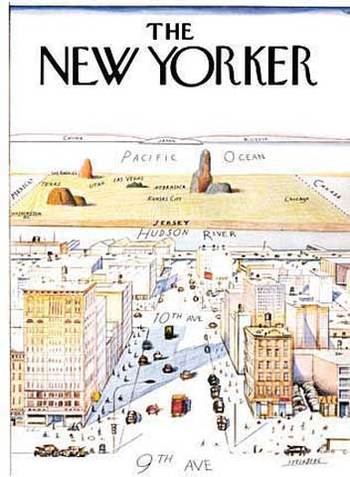
    And similar in a way to the Mach’s internal view of the outside world is this classic Saul Steinberg New Yorker cartoon of the world view of the New Yorker (and of course this includes only Manhattan). I know some number of people who have transposed their bodies much like Herr Mach into the Steinberg map–except that their worldview ends basically at the Hudson River (Mach’s feet) with the rest of the world being the sliver out there beyond the river (Mach’s window) until you go 359 degrees around the world to get back to the East River (and back inside Mach’s noggin).  It is an unusual world view to have, but someone has to have it so that we can at least identify it so. 

    I just like the picture. 

    Notes 


  • Blank and Missing Things: Life. An Example in the Discovery of the Obvious

    JF Ptak Science Books    Post 1934

    An entry in the series on the History of Blank, Empty and Missing Things.

    Anatomy--before and after
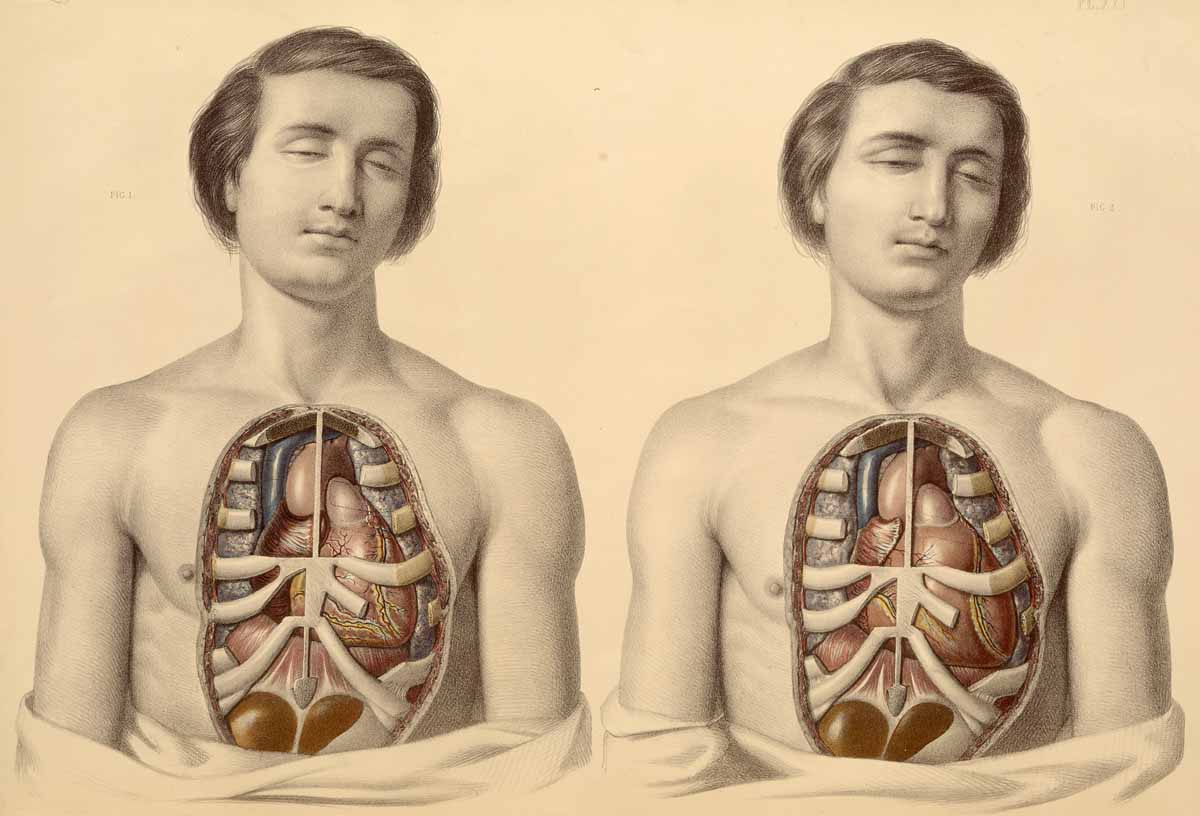
    This is fascinating–the anatomist Francis Sibson (1814-1876) in his Medical Anatomy  (London, 1869) provided descriptive/illustrative examples of what the body’s internal organs look like in cadavers and in living patients.  Offhand I am not aware of such a comparison being done before this date, and as he clearly demonstrates (and which you can see more clearly by expanding the above example) there is of course a huge difference in the anatomy of the living and the deceased. 

    This is an enormous observation that seems as though it should have been made earlier, but perhaps it wasn’t–though it must be admitted that “the obvious” isn’t until it is.  For example, Etienne Durand was the first architect to include examples of plans of different buildings on the same scale side-by-side, and that wasn’t until the mid-19th century–clearly this would be pro forma for just about describing two elements of anything, but it just simply wasn’t done until 160 years ago or so.  This also applies in a way (though there are more complexities involved as to why this is different) to the antisepsis practices of Joseph Lister who in simply washing surgical tools between use on different patients (and hand-washing and the use of surgical masks and so on) increased the chances of surviving surgery by at least 50% (though I think that number is much bigger than that), and these practices weren’t begun until the mid-19th century. 

    So the business of identifying “the obvious” is very tricky, because, well, something isn’t obvious if it hasn’t been done/seen before.  Or, if it has been seen, it hasn’t been seen seen.  As in clouds–as present as they have been for the whole of human history they basically escaped classification by the great human natural history classifiers until the very early 19th century. 

    And when I looked at the history of the word “obvious” it seems to have made its first appearance in print in 1603, so I went naturally to William Shakespeare for a quote using the new word.  Evidently, the great wordweaver never used “obvious”. (See here for an index of all the words of Shakespeare.)

    [Image printed by chromolithography after the artwork of William Fairland, 1869. Source: the National Library of Medicine.]


  • Civil War Sheet Music: Confederate Flag Covers

    JF Ptak Science Books   Quick Post

    A selection of Civil War sheet music featuring Confederate flags on the covers, all from the Library of Congress sheet music collection:

    Beauregard

    ·Posted by :

    ·in: