A Daily History of Holes, Dots, Lines, Science, History, Math, Physics, Art, the Unintentional Absurd, Architecture, Maps, Data Visualization, Blank and Missing Things, and so on. |1.6 million words, 7500 images, 4.9 million hits| Press & appearances in The Times, Le Figaro, Mensa, The Economist, The Guardian, Discovery News, Slate, Le Monde, Sci American Blogs, Le Pont, and many other places… 5000+ total posts since 2008.

Category: Prints–looking HARD/deeply at

  • Zoomology: a Paper Microscopic Look at Prints.

    JF Ptak Science Books   Quick Post

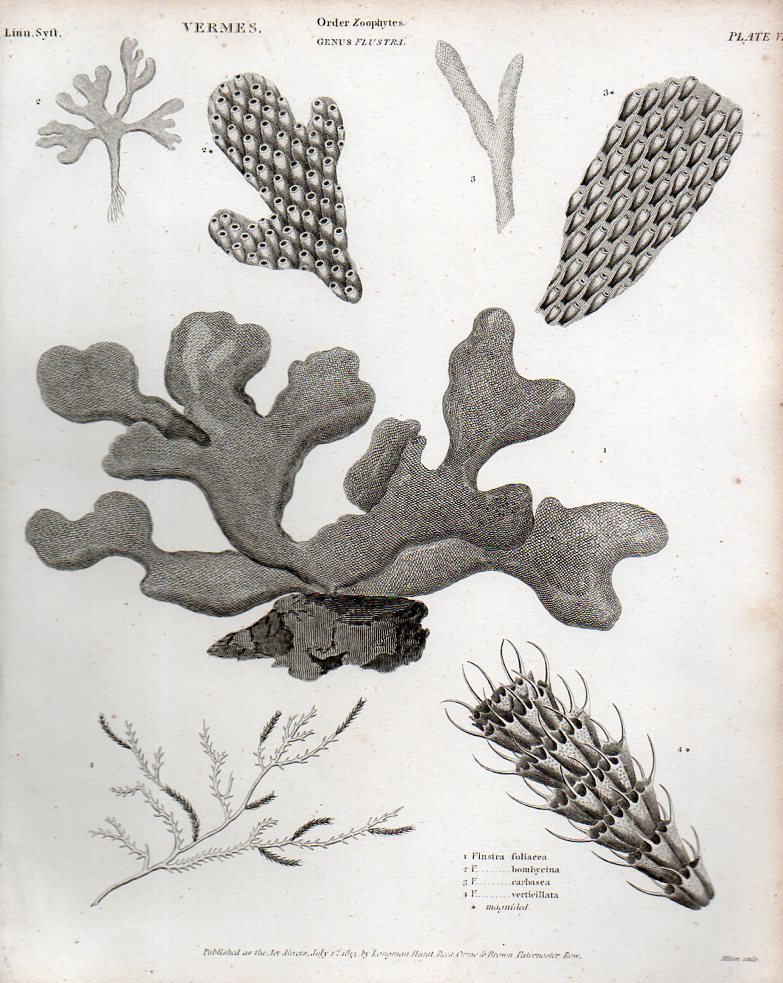
    Zoomology--vermes b032


    There’s a track on this blog located in the feebly-named category “Looking Closely/Deeply at Prints” were tiny bits and pieces of engraved artwork are exhumed for closer story, like passing a paper microscope over the image to draw out the semi-invisible and show the secret life of prints.  Often what this entails is some very curious work by the artist and/or the engraver as they sought to spice up a rudimentary architectural assessment of Salisbury Cathedral, or the town hall in Munich, or some sort of ruin in Surrey, or a street scene along old Broadway in NYC–and they would do this sometimes by including something artful and small, and completely unnecessary to the primary image on which they were working.

    See this post for a good example (with other links) of this.

    So, instead of having a few people in the street outside of Cathedral X to show the building to some sort of scale, the artist/engraver might include in their very tiny detail images of children fighting, or a legless beggar, or a pocket-thief, or a tripping aristocrat.  Or a man rounding a corner with a baby coffin on his shoulder. 

    Zoomology--vermes b034
    What happens here then is an intended-unintentional, sort of like an 18th century snapshot of Something that captures stuff of the daily grind in the process–and as it happens it is this stuff, the activities and the people doing the mundane chores of the 18th century that turn out to be the very interesting bits of the artwork.  After all, it was this sort of invisible activity that would tend not to be preserved in artwork or other visual documentation–but here it is, locked away in an architectural appreciation of some building Y in some city Z.  And we are lucky for the contrivances of those long-asleep artisans.

    But the Zoomology posts are something a little different than this–they simply are a deep observation of an interesting detail in an antiquarian print or photograph that shows an artwork in and of itself, a sort of descending fractal of appreciation.  And simple.

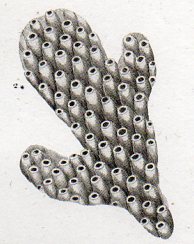
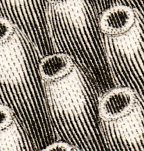
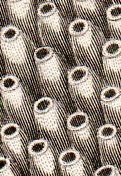
    The first sample in this quick-posting category is the sea anemone, or Zoophyte (old school classification), that we see in this series of images (above and below) from the great and prolific Abraham Rees (who must have had a team Rees, a group of scholars like the Bourbaki who worked together mostly anonymously save for the (in this case real) man whose name is given credit for the entire work) and engraved in 1813.  The image in question is a flustra bombycina, a Verme (according to the obsolete Linnaen taxonomy), and it just called out for deeper inspection:

    Zoomology--vermes b033

    And the zoom-out to the full image:

    Zoomology--vermes031


  • Prehistories of Famous Things series: the Cat in the Hat

    JF Ptak Science Books   Quick Post, expanded

    Ebay 12 3 seuss 1 closeup

     (One in a series on the preihistories of famous things, one of which is: Mandelbrot and the Pre-History of the Fractal, 1967-1975.)

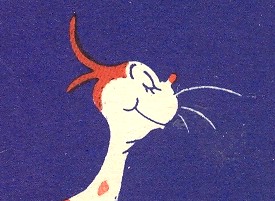
     I’ve written here earlier on the 236 different words used to create The Cat in the Hat (Dr. Seuss and the 236 Words That Changed reading Forever), a book which I found to be a major accomplishment, a very difficult undertaking with superb outcome. [The  detail above is picked from the cover, below.]

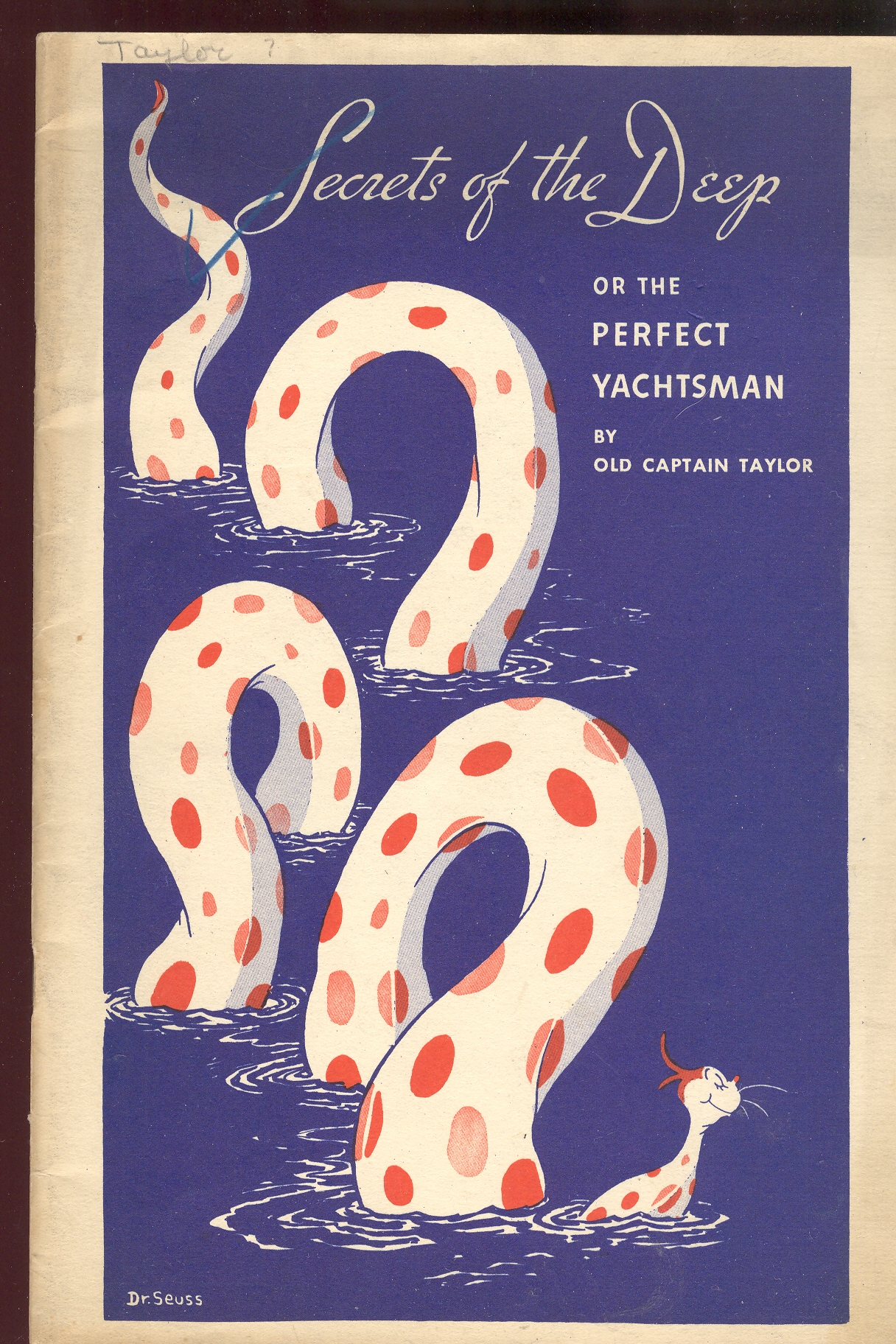
    That is why I was struck seeing the cover of volume 1 of this rare two-volume set illustrated by the not-yet-famous Dr. Seuss (Theodor Seuss Geisel, 1904-1991, and son and grandson of brewmasters).  There is no question in my mind that the small head on the large-bodied serpent is that of The Cat in the Hat (TCITH, which sounds like an Egyptian deity). 

    Ebay 12 3 seuss 1

    TCITH might very well make its first forensic appearance here.  Seuss busily illustrated these two slim pamphlets for Esso Oil and Grease—they presented the rules of the water, and Seuss responded with funny inset illustrations and delightful chapter-ending slugs.  He also provided a number of Seussian/Rube-Goldbergian machines which mechanically overcomplicated (or “too-complexified” in Bushisms, (true)), which are both complex and simple, delightful.  


  • The Weight of Humanity in Images on Book Covers

    JF Ptak Science Books  Post 1651

    Blogaugust_27_crowds_stand456

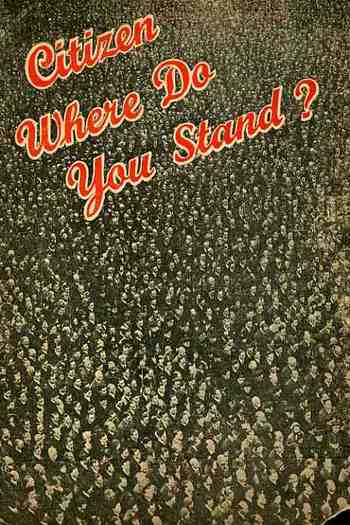
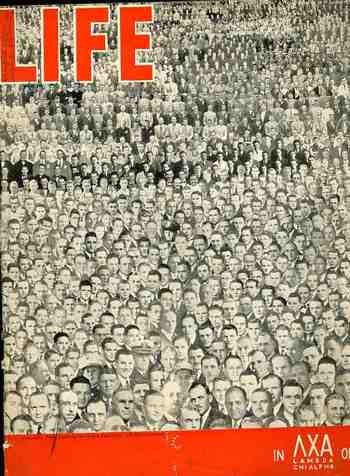
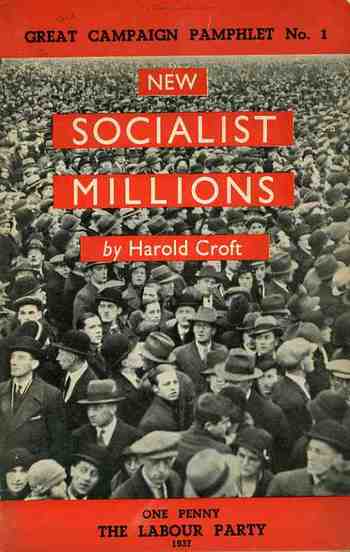
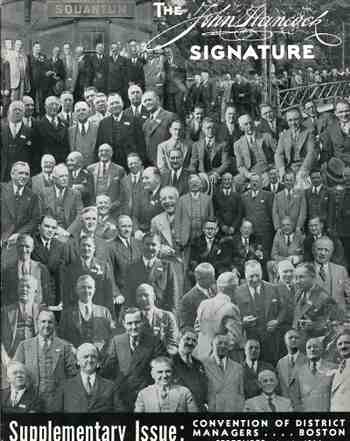
    I don’t often see covers of pamphlets featuring hundreds–or thousands–of people as a part of the design.  In my continuing role as finder and re-finder of things found I have re-surfaced four of these designs, and I feel I should post them before they’re captured in the un-finding process.  Again. Back to the design:  these are very striking, persuasive images, unavoidable in many ways, completely intriguing, beguiling.  People just have to look at these things.  Look:  I made a little experiment today placing ten  very interestingly-designed pamphlets on display, all with compelling and distinct merits, and including one with a big spread of humanity on the cover (the “Life” pamphlet. The very unscientific results is that people were generally first drawn to the complex people image, and stayed longer looking at it–by far–than any other image.  Perhaps its the same sort of reaction going on when you watch people walking in front of a mirror or reflective surface, with the vast majority of folks checking themselves out in it.  Maybe its just people looking for something familiar.  Maybe the faces are simply, strictly more interesting than just points o the page.  I’m not sure. 

    The first image is a one penny Labour Party publication coming from the National Executive Committee of the Labour Party, published in London in 1937; second is Life, the story of the fraternity lamda chi alpha, published around 1935; third, a program for the Liberal Party, published in London in c. 1938; lastly, fourth, a program for some course of semi-statistical study with the John Hancock life insurance company.  These beautiful designs were much more interesting than the very casual contents they covered, at least to me.

    Blogaugust_27_crowds_life459

    Blogaugust_27_crowds_socialist_mil4

    Blogaugust_27_crowds_hancock460


  • Anguissola and her Game of Chess, 1555

    JF Ptak Science Books   Quick Post

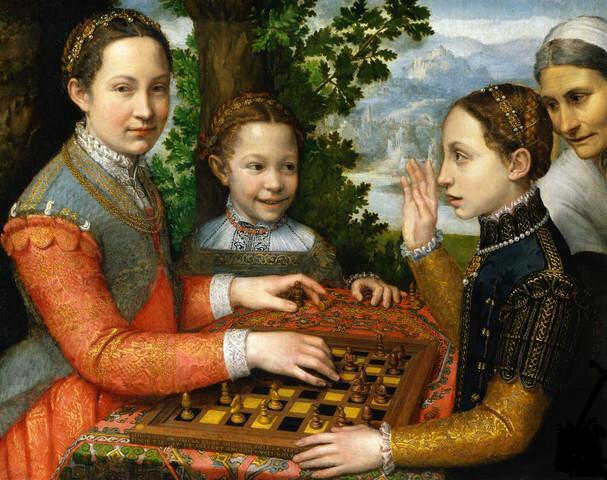
    “Anguissola has shown greater application and better grace than any other woman of our age in her endeavors at drawing; she has thus succeeded not only in drawing, coloring and painting from nature, and copying excellently from others, but by herself has created rare and very beautiful paintings.”–G. Vasari

    Chess game
    Sofonisba Anguissola is recognized as one of the leading women painters of the Renaissance, an interesting humanist who succeded in the face of restraint of prejudice.  She had great talent, obviously, and it seems as though that she gave a certain life to happy, common expressions in her subjects.  But what I focused on her in this chess game was how the player on the left got her bishop into the position at H1 with her pawn at G2. And why is the black square at H1?

    Also this:

    In his Libro de Sogni published in 1564, Lomazzo presents this following imagined conversation between Leonardo da Vinci, representative of modern painting, and Phidias, the artist from Antiquity:

    “I bring to your attention the miracles of a Cremonese woman called Sofonisba, who has astonished every prince and wise man in all of Europe by means of her paintings, which are all portraits, so like life they seem to conform to nature itself. Many valiant [professionals] have judged her to have a brush taken from the hand of the divine Titian himself; and now she is deeply appreciated by Philip King of Spain and his wife who lavish the greatest honors on the artist.”–An imaginary conversation between Phidas (representing the deep antiquity of art) and Leonardo da Vinci (as representative of the modern).  As seen in Giovanni Paolo Lomazzo (1534-1594), a busy mannerist painter and author of at least six books, including early and significant art criticism, in his  Libro de Sogni (1564, “The Book of Dreams”.


  • Songs of the Streets, in Two Parts (and an Obscure Reference to an Important Anti-Darwinist)

    JF Ptak Science Books  Post 1600  {Appropriate musical accompaniment that can be listened to under the reading of this post, Carl Orff’s Gassenhauer, can be found here and minimized.]


    I found these two interesting images over the course of a hundred pages or so in the profusely illustrated weekly magazine, Punch, or the London Charivari, for early 1865.  The first image, published 18 March 1865, “A Song of the Streets”, drawn by “C.H.D.” (Charles Henry Bennett, 1828-1867), displays the general thoroughfare of sidewalk life in a place like London, people being blown about by late winds and snow.

    It is in the upper right-hand corner of the engraving that we find our “important Anti-Darwinist”, which seems like an illogical statement, except that it isn’t  The man in question is the fellow with the bellows, who seems to be the one instigating the weather, blowing so had and cold that it moves people off their feet and off the page.  The bellows is labelled “Fitzroy”, and the likeness is that of the man with the same name, Vice-Admiral Robert Fitzroy (b. 1800), who at this time was serving as the chief of a weather department for the Royal Society, the Meteorological Statist to the Board of Trade, appointed by the president of the society, and was basically a meteorologist, except that the title had yet been invented.  (It is also interesting that Fitzroy is depicted in captain’s (?) uniform, and surrounded by a floating telescope, book, thermometer and self-registering drum.) So even then, even with the first person in this position of authority, complaints for foul weather were being launched at the person “in charge”, even though that person created an extraordinary new tool for detailing the possible changes in weather.1

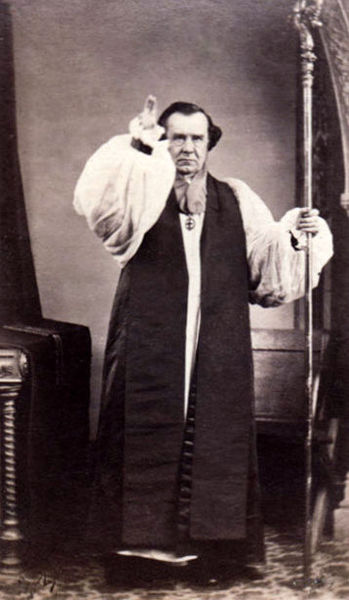
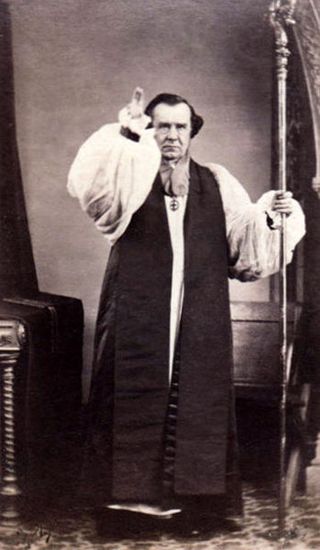
    It happens that this is the same Robert Fitzroy who was the captain of the HMS Beagle on its second voyage (1831-1836), when he approved of the addition of an added gentleman to help keep his sanity on the long adventure, a naturalist named Charles Darwin.  It was also Fitzroy who gave Darwin a copy of the first volume of Lyell’s Principles of Geology, a book integral to Darwin’s development into Charles Darwin.  The voyage was personally rocky for the two men, but ultimately highly successful.  Years later, Fitzroy was shocked and  dismayed with the result of young Darwin’s adventures–with the publication of On the Origin of Species…, Fitzroy felt a sense of personal guilt for Darwin’s theory, and felt shame and bitterness towards it, as in his mind the theory went against his bible and his religious beliefs.   Fitzroy and the Rev. Samuel Wilberforce were at the evolution debate meeting of the British Association for the Advancement of Science (1860) in which Rev. Soapy Sam challenged Darwin’s theory on “scientific” grounds, and against which Thomas Huxley (and other Darwin supporters) made his well-remembered defence2.  In the middle Samuel_Wilberforce_by_Mowbray_of_Oxfordof all of this was Robert Fitzroy, who cried for the crowd of onlookers–with his Bible held aloft–to reject man’s interpretation of nature and stay with that of God.   He was booed down.  Darwin was not in attenddance. [Image: Wilberforce, threatening.]
    So, in a way, Fitzroy proved to be important in the formation of the theory of evolution but also turned out to be an anti-Evolutionist, though not an important one.  Oddly enough this may be the last published image of Fitzroy during his lifetime, as he would die 42 days after the appearance of this issue.

    In the second image of the streets the view from the pages of Punch (for 27 May 1865), “The Banishment of the Beggars, a New Tramp Chorus”, we see a different type of street “cleaning”.  In this case, it. Charles Villiers (1802-1898, and for 63 years a sitting MP) and his Homeless Poor Bill of 1865 sweeping the “sham poor” from the city streets, the legislation designating that the capable poor actually be put to work and removed from their begging positions on the streets.  The complaints in the chorus against the highly visible poor of Metropolitania were considerable,


    finding among the beggars (“who disturb our peace”) a litany of fakes, many of who are featured in the illustration:

    “sham injured workmen (who display their wounds from door to door)”, the lame (who clap their crutches on our toes), the blind, sham paralytics, sham widows (with hired babies and brats), “artistic tramps” (who will no longer chalk on the sidewalk “I am Starving”), and the fake veterans of wars. 

    The way to salvation for these people was “the Mill”, provided by the Villiers bill, and a compulsory spot in a workhouse (work-house) where labor is exchanged for room and board. 

    London-Workhouse.jpg


    Notes

    1. Fitzroy was actually the person who coined the term “weather forecast”, or at least he was the first to use it who had any real chance of being correct or accurate, given how much data he was able to assemble and interpret. He was really a very important person in this regard, as well. 

    2. This is not the place to debate whether Huxley’s famous remarks were famnous at teh time.  In a letter to Darwin J.D. Hooker wrote this of the exchange: 

    “Well, Sam Oxon got up and spouted for half an hour with inimitable spirit, ugliness and emptiness and unfairness … Huxley answered admirably and turned the tables, but he could not throw his voice over so large an assembly nor command the audience … he did not allude to Sam’s weak points nor put the matter in a form or way that carried the audience”. ^ “Letter 2852 — Hooker, J. D. to Darwin, C. R., 2 July 1860”. Darwin Correspondence Project 

    On the other hand, another cotemporary of the exchange between WIlberforce and Huxley wrote:

    Alfred Newton wrote:

    In the Nat. Hist. Section we had another hot Darwinian debate… After [lengthy preliminaries] Huxley was called upon by Henslow to state his views at greater length, and this brought up the Bp. of Oxford… Referring to what Huxley had said two days before, about after all its not signifying to him whether he was descended from a Gorilla or not, the Bp. chafed him and asked whether he had a preference for the descent being on the father’s side or the mother’s side? This gave Huxley the opportunity of saying that he would sooner claim kindred with an Ape than with a man like the Bp. who made so ill a use of his wonderful speaking powers to try and burke, by a display of authority, a free discussion on what was, or was not, a matter of truth, and reminded him that on questions of physical science ‘authority’ had always been bowled out by investigation, as witness astronomy and geology.

    A lot of people afterwards spoke… the feeling of the meeting was very much against the Bp.” _Wiki on the 1860 debate.
  • Uncomfortable Recognitions, 1932 and 1933

    JF Ptak Science Books

    Grazing through a couple of weekly issues of the documentarian’s dream, The Illustrated London News, for April 1932, I stumbled upon a few images that really set me back.  The one below is one of them, but we’ll get to that in a moment. 

    Blog--air hitler detail 3

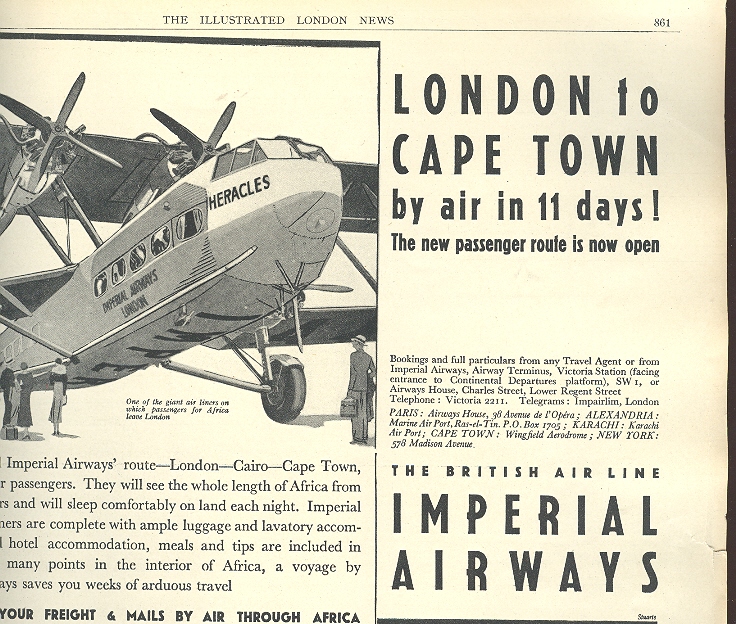
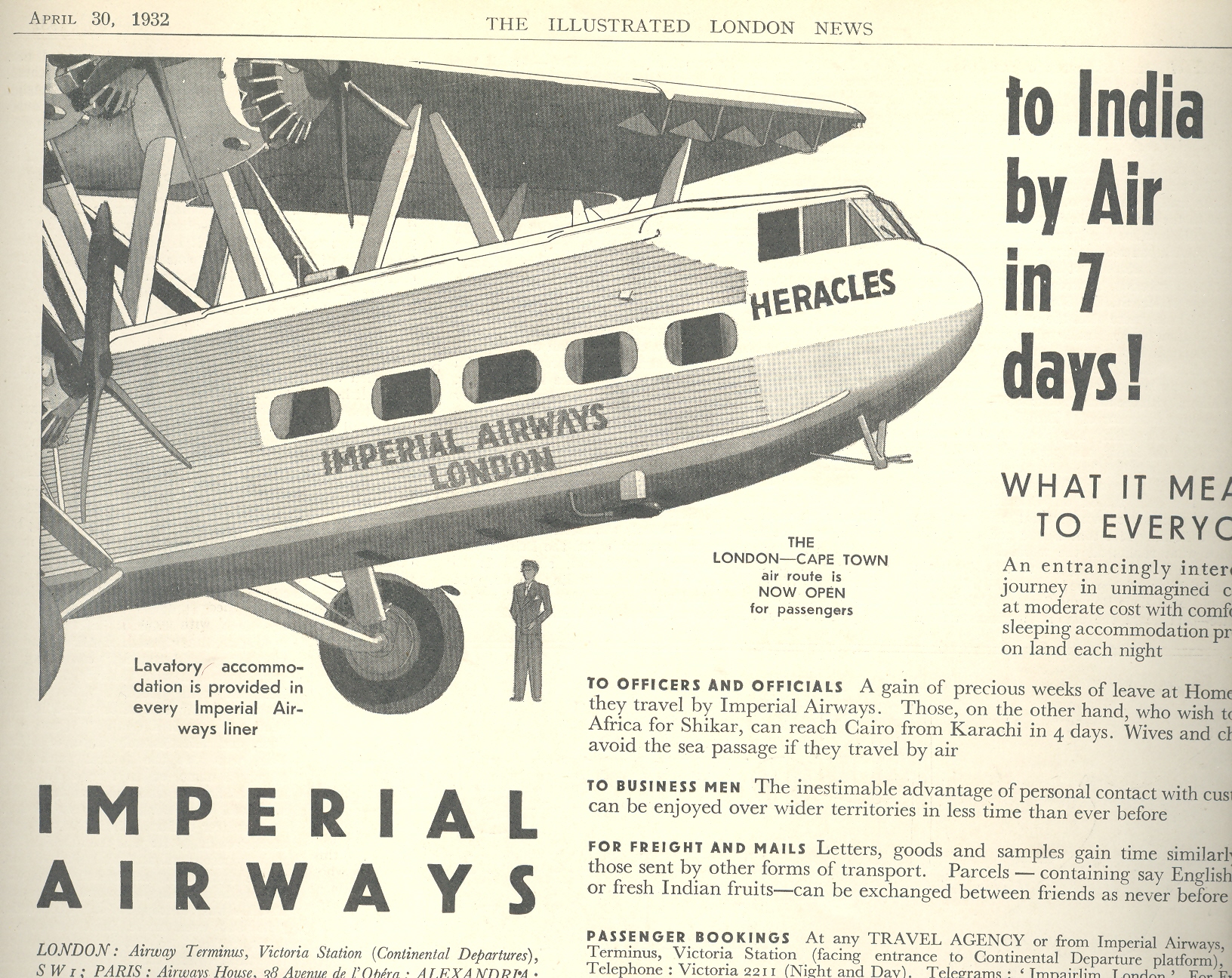
    Blog--air cape town What stopped me first was this advertisement for air travel from London to Cape Town, taking  somewhat less than two weeks.  Even though I know something about the history of aviation, I was still shocked to see the 11-day schedule.  I knew better, I expected it, but still, to see this remarkable statement in print snapped me to attention. Same too for air travel to India–7 full days of travel.  This is the same year that my father was born, so it isn’t as though these times are a hundred years old.  Perhaps this is the shock of recognition.


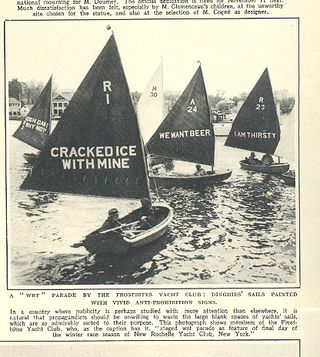
    Blog--air indiaA few pages later came this lighthearted image depicting a convoy of the New Rochelle (NY) Yacht Club, “the Thirsty Crew”, protesting in their small sailboats against Prohibition, and suggesting that they could go for some number of stiff ones–“propagandists unwilling to waste their large blank spaces…”.

    Blog--air drinking


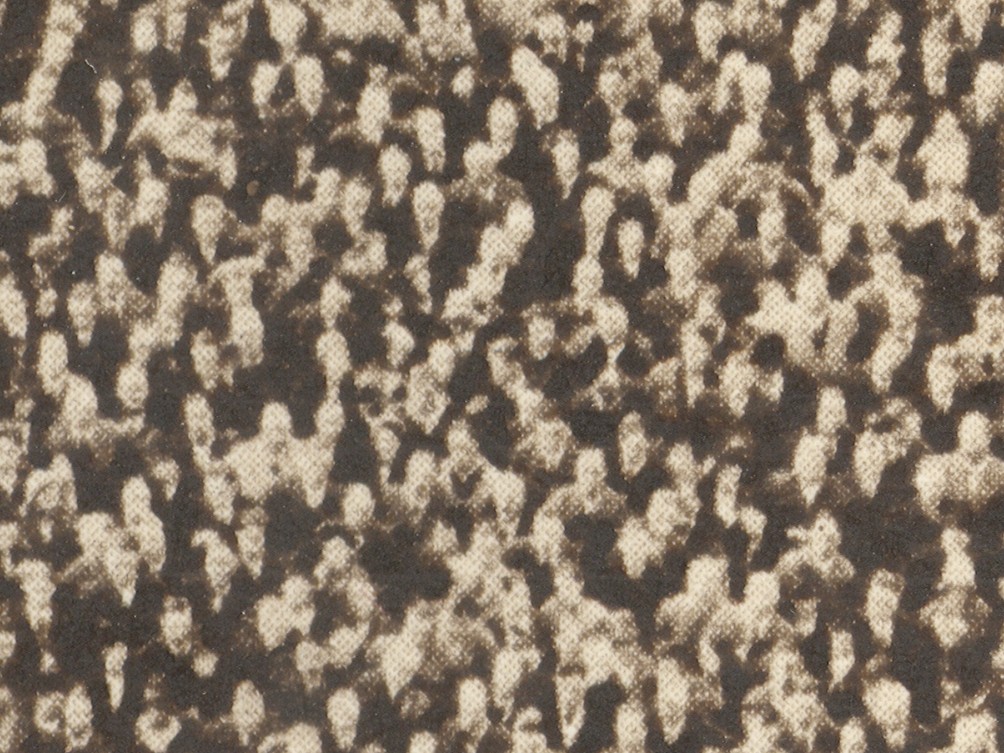
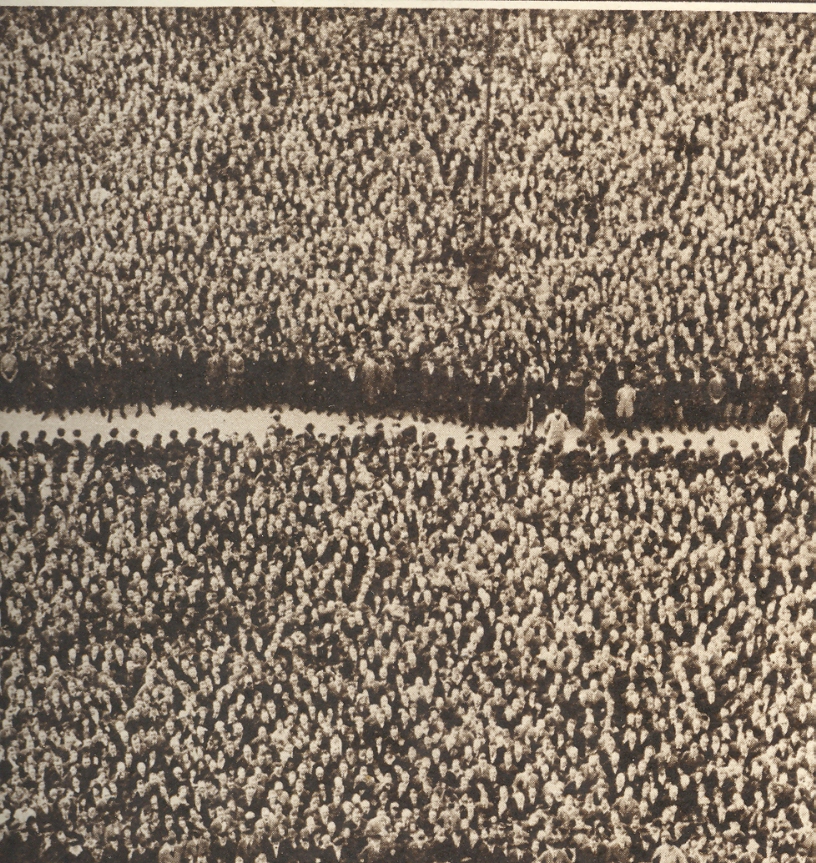
    I flipped through another few dozen pages, enjoying the ads, the small stories, the domestic intrigues, the human follies and triumphs.  Then came the issue for 9 April, 1932, and the lightheartedness was drained by the reality that was to come.  The first picture in this series is a small detail from a larger crowd gathered in Berlin’s Lustgarten (“Pleasure Garden”), on 4 April, listening to several speeches by a candidate for the Germany presidency, Adolf Hitler.  The election–and the very beginning of the end for 60 million people–was a week away.

    In February, 1933, more than 200,000 people massed there to protest the new Nazi leadership.  Hitler was defeated by von Hndenburg in the second round of the election on that April 10th (Hitler receiving 36% of the vote to von Hindeburg’s 51%), but he was appointed Chancellor in January 1933, which was really the beginning of the totality of Nazi power.  Soon afterwards, political demonstrations like that were banned, overtaken by Nazi spectaculars, with Hitler addressing more than a million people there at a time. By the end of the war, much like the rest of Berlin, the Lustgarten–whose grass had been replaced by pavement by Hitler for parades–was a bombed-out skeleton.

    Blog--air hitler detail


  • Crowd Series–Find the Hat, NYC, WWII

    JF Ptak  Quick Post

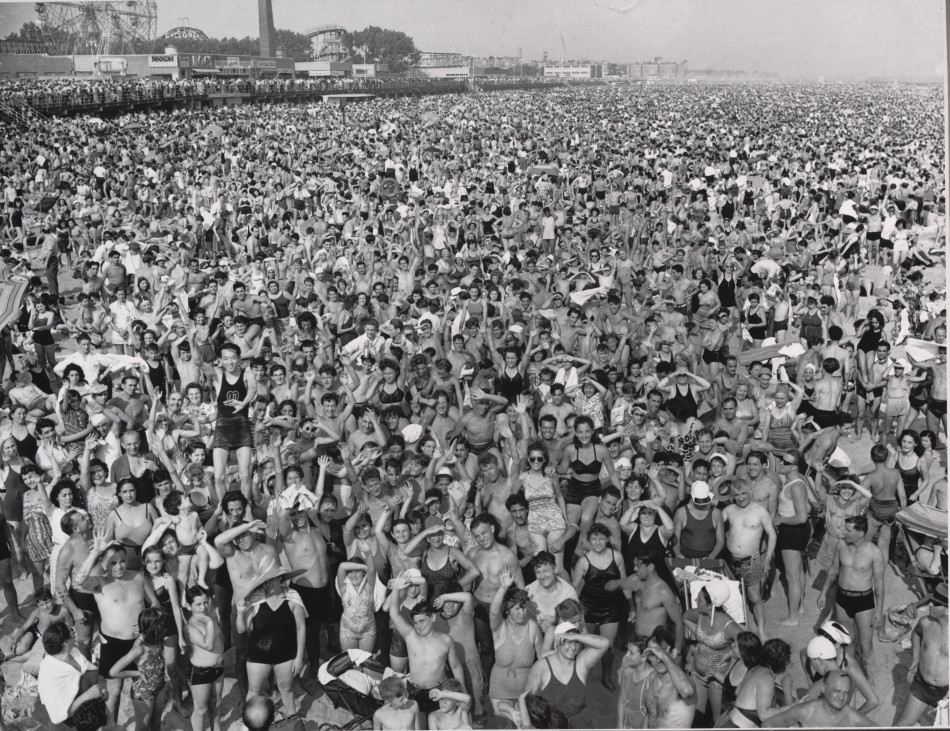
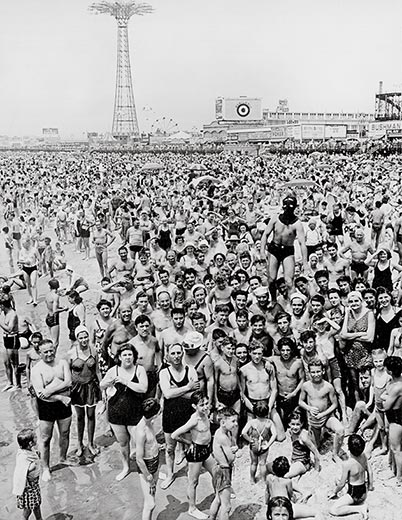
    Funny how in so many of these big crowd picture that I’ve performed surgery on that hats seem to be an issue.  For example, there’s this iconic photograph by Weegee (Arthur Felig, born Usher Felig in the Ukraine, 1898-1909, a man who lived for “the shot” and got it over and over again, evidently at the cost of just about everything else in his life) of the crowds at Coney Island. (“Weegee” was the phonetic spelling of Ouija, a moniker given to the man because he seemed be able to intuit the location of a crime or action of some sort.  It helped that he was the only journalist/photographer given a license to have a police-band radio receiver at home and in his car. 

    Weegee_-_Coney_Island-big
    Weegee_-_Coney_Island-big hat So far as I can tell there is only one man in a hat–the guy in the bottom right corner of the image, and he’s wearing a fedora at that.  The person at 10:00 from him–white-hatted with a plastic visor–may be a man, too, in which case I’ll have to amend this a little to restrict hats to fedoras.  And wearing it, too, at the time of the photo–there’s another man in there somewhere who is doffing his boater to the photographer.  And that’s about it.  Not much sand in this picture.

    It is a little unusual, this hat business–but Weegee at least has captured hats in unusual places.  Finding his bread buttered by crime photography and the gritty aspect of late-night city life, Weegee documented all manner of criminal activities in NYC during the 1930’s-1950’s, including more than his fair share of Mafia slayings.  I recall several of this photographs featuring the “hit” face-down on the pavement or on the table-clothed tabletop, hat still firmly in place. MOMA bought several of Weegee’s works in the 1940’s for an exhibit called “Action Photography”–which I guess would describe Weegee’s work, though if the action was starkly captured by a flash at night in tough surroundings, the description might be better. 

    Weegee-masked-man-Coney-Island-520
    This photograph by Weegee captures a few sailors in their caps, which I’m not sure count.  Primary in this photo though is the man in the middle, wearing a mask (for reasons unknown). 


  • Searching for Structure: Triangles and Trees

    JF Ptak Science Books  Post 1494

    Structure512

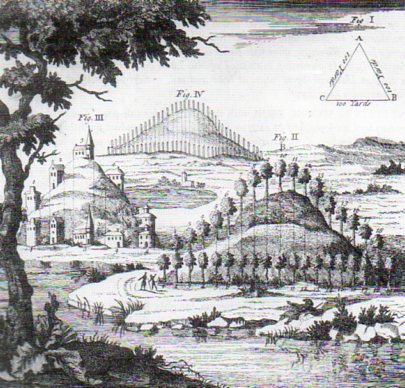
    It was this lovely engraving from Richard Bradley’s A General Treatise of  Husbandry and Gardening..., printed in London in 1721/2, that brought up the issue of structure in creation, and how that issue was in one way approached by the new tool in the scientific toolchest, the microscope. 

    “…the Contrivances of the Almighty Creator is as visible in the meanest Insect of Plant, as in the greatest Leviathan or the strongest Oak.  To touch upon all the Wonders this Instrument shews us would be infinite”–William Molyneux, on the microscope, in his A Treatise of Dioptricks in Two Parts (1692, quotation fro the second edition of 1709 via Marjorie Nicholson’s Science and  Imagination, Cornell, 1956.

    The question that the microscope—newly introduced and popularized by Robert Hooke in 1665 and Anton van Leeuwenhoek in 1674–was so able to address at this time was the question of the structure of things, and whether the Almighty Creator allowed for unrestrained creativeness or if the cosmos was subject to patterns and forms.  The microscope was so tremendously nimble that it allowed its observers the luxury of finding “correct” answers on either/both sides of the issue, that arguments could be well made and sustained for variety and regularity. But of course all found the reason for either end of the argument deeply seated in the e hands of god, as seen in the lovely quote below by the great early microscopical popularizer, Henry Baker1. 

    But this is just the tiniest bit of a nod at the question of structure in the history of science, a search for the relationships between, well, things small and large:  atomic, molecular, cellular, organism, population, ecosystem,solar system, universe.  The issue of structure may be the only issue–perhaps if you were made to select one question to have answered, automatically, an answer for everything, it might be this issue of how things stand in relations to one another.

    Which gets us to this 1721 engraving of a tree-covered hill, following the designs of a human creator, a re-animator of the natural landscape according to a theory of beauty, part of which hangs in the form of a triangle  in the right-hand upper corner.  A three-sided strategy of the relationships in nature, provided by a human vision. A very small  appreciation of an attempt to recognize the relationships between things, and in this case, the beauty of trees and hills. 

    Notes:

    1.  “The first Part of this Treatise discovers in the Particles of Matter composing Salts and saline Substances, Properties whose amazing Effects would surpass all human Belief or Conception, were we not convinced of their Truth by the strongest ocular Demonstration. That beautiful Order in which they arrange themselves and come together under the Eye, after being separated and set at Liberty by Dissolution, is here described and composed but one kind of figure, however simple, with Constancy and Regularity, we should declare it wonderful: What must we then fay, when we see every Species working as it were on a different Plan, producing Cubes, Rhombs, Pyramids, Pentagons, Hexagons, Octagons, or some other curious Figures peculiar to itself; or composing a Variety of Ramifications, Lines, and Angles, with a greater Mathematical Exactness than the most skilful Hand could . draw them?”

    “Sensible of my own Ignorance, I pretend not to account how this is done: all I know is, that Chance or Accident cannot possibly produce Constancy and Order, nor inert Matter give Activity and Direction to itself. When therefore these Particles of Salts are seen to move in Rank and File, obedient to unalterable Laws, and compose regular and determined Figures, we must recur to that Almighty Wisdom and Power which planned out the System of Nature, directs the Courses of the Heavens and governs the whole Universe.”  — Original, shorter quote of Henry Baker in his Employment of the Microscope (1753) found in Nicholson’s book; the above, longer version is from the 1764 (and second) edition, found here.


  • The TSA, 1914

    JF Ptak Science Books   Quick Post

    Years ago, around 1995, I was at Washington’s National Airport, flying at a time of much laxer security precautions in the history of air traveling the U.S., when you were able to walk right up to the gate from your car by passing through only one metal detector, and then not having to show a boarding pass.  I went through the detector just fine; the person behind me set it off.  I was only paying a little attention to the scene as the metal-man was asked to stand to the side and be inspected by a detector wand.  In my peripheral vision I noticed that the man raised his arms parallel to the ground while still holding his attache, which was a little odd, so I turned to watch what was going on.  The person turned out to be Mike Wallace, who stood their stoically, as the security personnel went over his entire body, very thoroughly, for perhaps a minute, perhaps a little more.  He never said a word, never moved after raising his arms.

    Here was a person who spent perhaps more time in the public eye, who had been on television more often than almost anyone in history, being given a metal detecting bath without uttering a word, which I though to be splendid behavior.

    In that entire procedure, the security officers didn’t wand his briefcase.

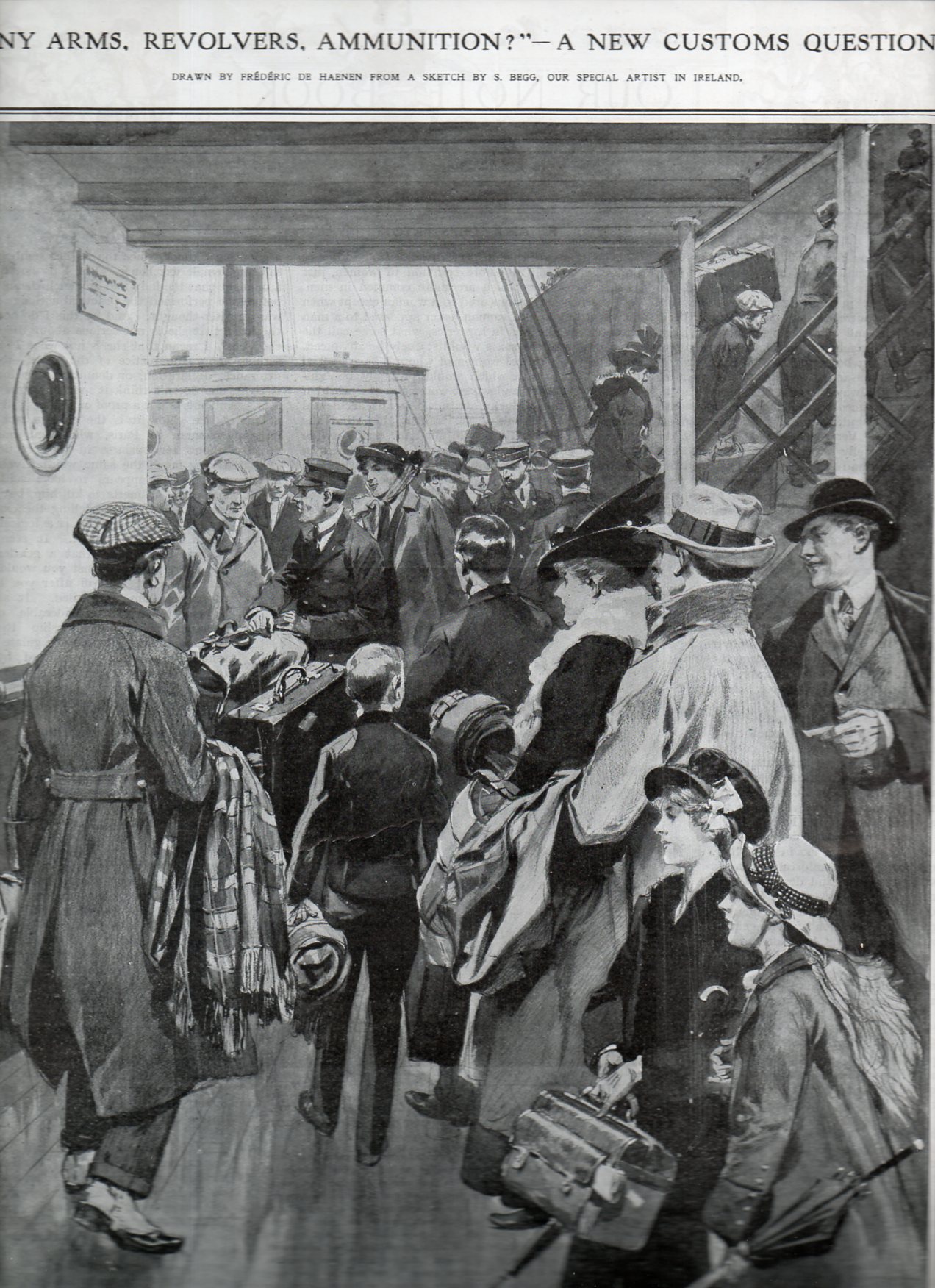
    The Illustrated London News ran this print in their 28 March 1914 issue, entitled  ” ‘Any Arms, Revolvers, Ammunition?’–a New Customers Question!” with the sub-title “In search of weapons destined for Ulster Volunteers1, customs officers are asking passengers if they have any arms to declare on their arrival at Greenore” [75k north of Dublin, on the coast]. 

    Arms or ammo504
    Notes:

    1. “The original Ulster Volunteers were formed by Edward Carson and James Craig as Unionist militias in the tensions surrounding the potential success of the third Irish Home Rule Bill. At the start of 1912, Unionists and members of the Orange Order started drilling and on 9 April (Easter Tuesday) Carson and Conservative Andrew Bonar Law reviewed 100,000 Ulster Volunteers marching in columns.[1] On 28 September 237,368 men signed the Ulster Covenant pledged to “using all means which may be found necessary to defeat the present conspiracy to set up a Home Rule Parliament in Ireland”, with the support of 234,046 women.“–Wikipedia.


  • Tree Rings of Soldiers’ Uniforms, 1918

    JF Ptak Science Books   Quick Post

    WWI german uniforms500

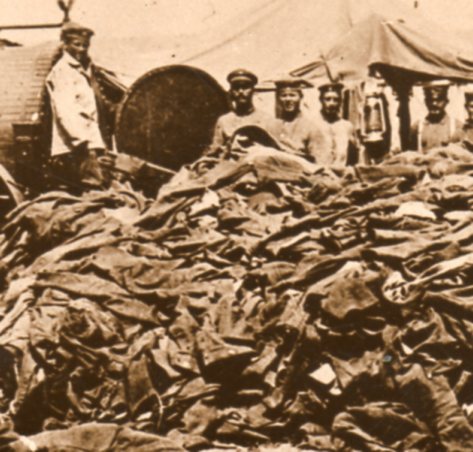
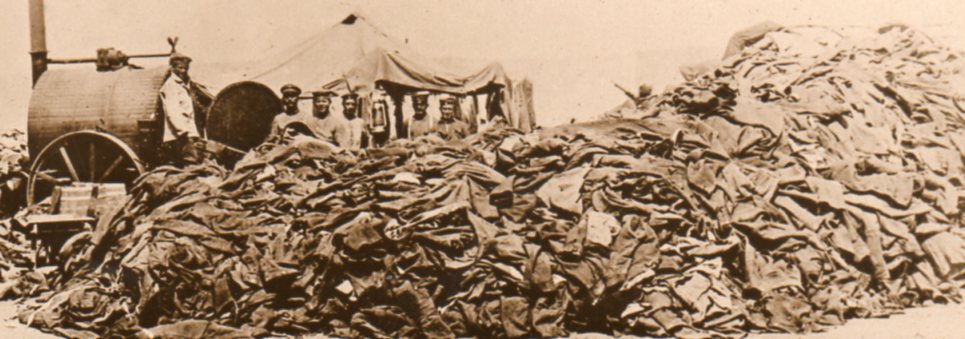
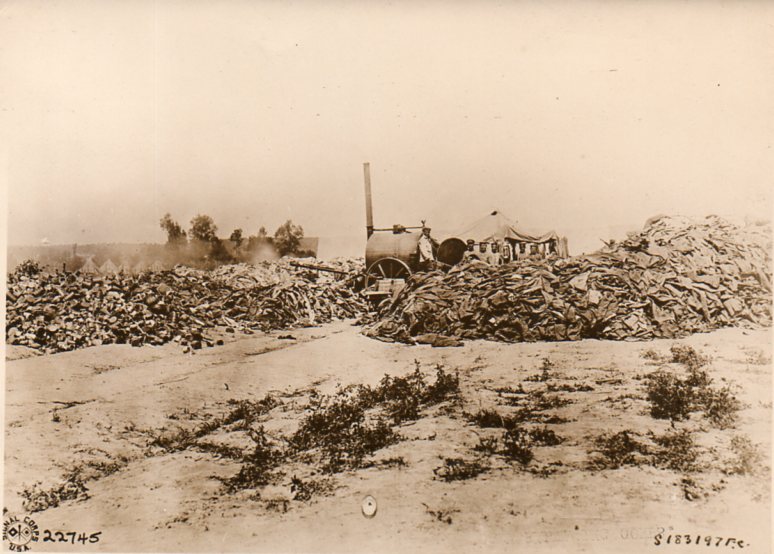
    Aside from the strong impact that this 1918 image [the original available at our blog bookstore, here] makes, the enormous mounds of clothing of captured German solders that were routinely handled as part of their processing, it struck a deeper chord to an older image still (that we’ll see below).  The photograph seems threatening to me, even though the action taking place in it wasn’t, it was mundane–the men, who I believe are German POW’s, are processing the clothing for disinfection and cleaning.  But the size of the mound reminds us of the magnitude of the numbers of the dozens of millions who were killed during WWI, as well as the millions who were taken prisoner.  What remains to be said about this image is how often that pile of clothing was replaced:  is it a monthly, or weekly, or daily pile?  My guess is that it was more daily than anything else, if for no other reason than there is an enormous oil lamp in the background of the photo, suggesting that the process went on all day and into the night.  My initial reaction is that this pile was replicated often during any given month….

    WWI german uniforms499
     
    WWI german uniforms498

    And the image it reminds me of are those made of the enormous mounds of buffalo hides, piles readied for shipment away from the Plains by rail. 

    Buffalo-Hides-lg

    I am in no way suggesting that the prisoner were skinned like the buffalo, not in any way.  But they do bear a resemblance in the way that thousands of men or buffalo could be represented in such a compact space, flattened husks of the living thing, gross representations of big numbers.