A Daily History of Holes, Dots, Lines, Science, History, Math, Physics, Art, the Unintentional Absurd, Architecture, Maps, Data Visualization, Blank and Missing Things, and so on. |1.6 million words, 7500 images, 4.9 million hits| Press & appearances in The Times, Le Figaro, Mensa, The Economist, The Guardian, Discovery News, Slate, Le Monde, Sci American Blogs, Le Pont, and many other places… 5000+ total posts since 2008.

Category: Naming Things

  • A Single-Page DSM? (1886)

    JF Ptak Science Books  Quick Post

    Statistics of the insane _1_503


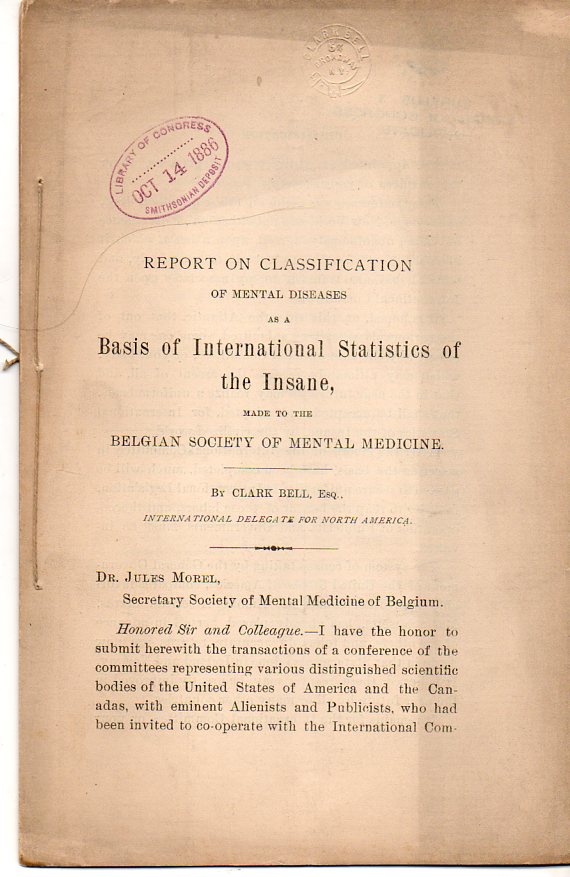
    At the end of the 19th century it was recognized that international data collected on mental illness would be highly useful. Unfortunately there was no real possibility of applying a series of great common denominators to the vast majority of  mental illnesses–the classification of mental diseases lacked general consensus and clarity for not understanding the pathology of the disease, therefore having to fall back on classification according to symptology, which is open to interpretation, and individual experience, and occasional faith, with the apparent mental conditions judged by exterior behavior and appearance. This pamphlet below is the sum of the efforts of international institutions to come up with a plan for this classification that might make disparate data more refined and so more useful to communities around the world.  It seems as though this was done with a simplicity that was also useful, as there was a common language to describe those conditions that are marked for classification.  

    Full text can be viewed of Yale’s copy, here:https://archive.org/details/39002086346195.med.yale.edu   

    Clark Bell. Report on Classification of Mental Diseases as a basis of international statistics of the insane, made to the Belgian Society of Mental Medicine. 23x15cm,  14pp. Wrappers. Provenance: Library of Congress Smithsonian Deposit (received in 1886) from Dr. Bell (with a tiny 1.5cm embossed stamp bearing his name and address at top-center front page).  I suspect that this is a separate printing of this article that appeared the Medico-Legal Journal, volume 4, 1886, as it has the same exact appearance–Bell was also the editor of that journal.  

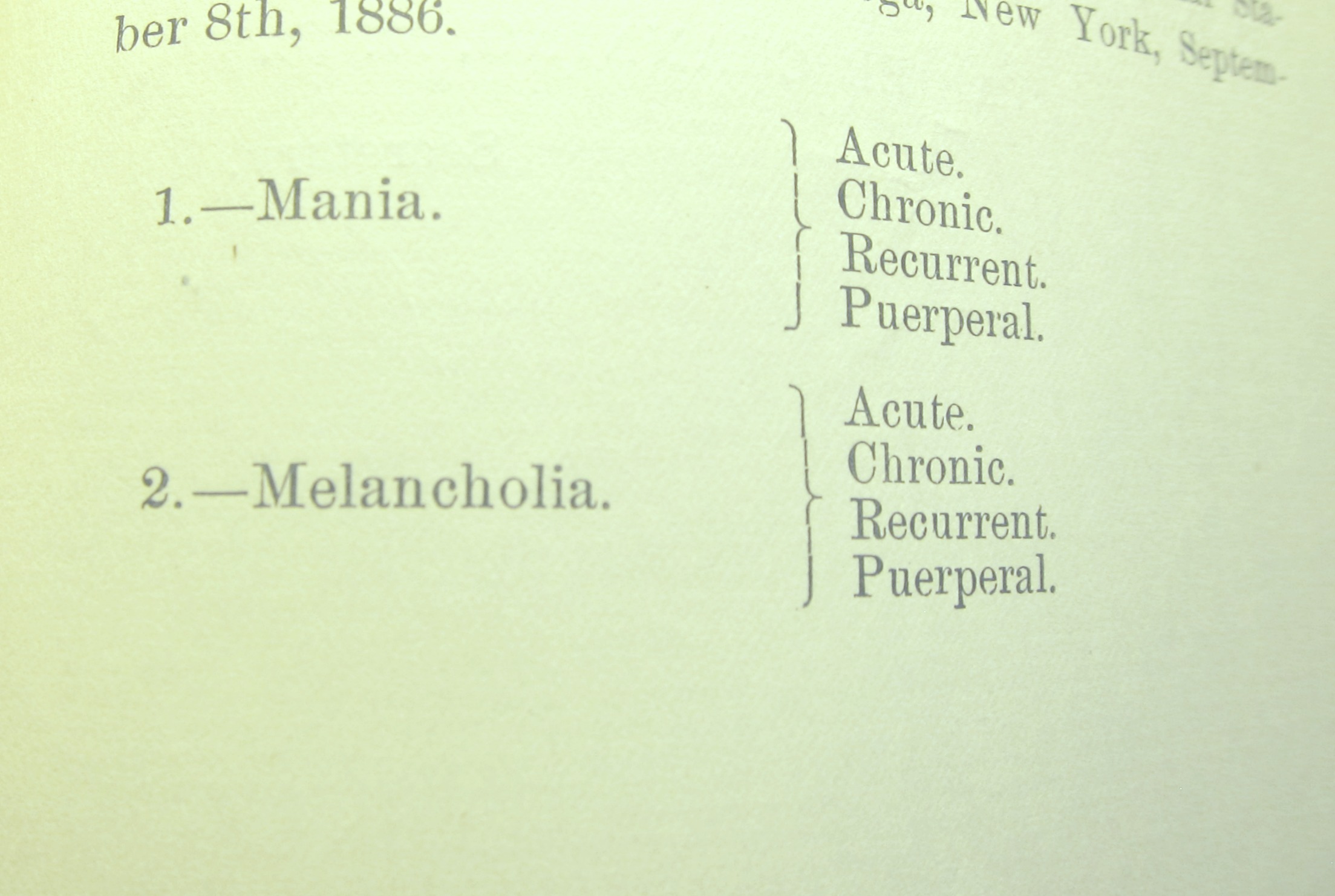
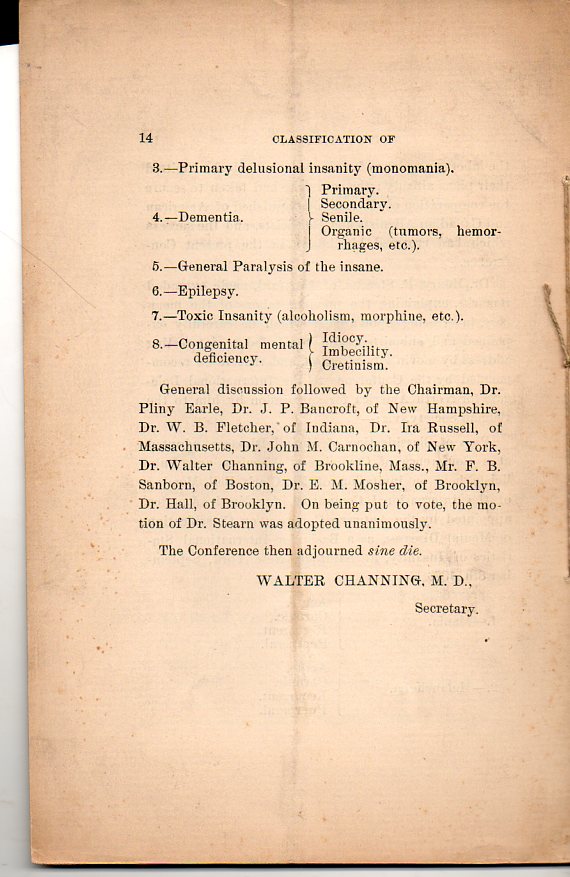
    And the classifications, which appeared on the last two pages of the document:


    Insanity DSM


    Statistics of the insane _1_504


  • The Distance-to-Hospital Usage Law (1866)

    JF Ptak Science Books  Quick Post


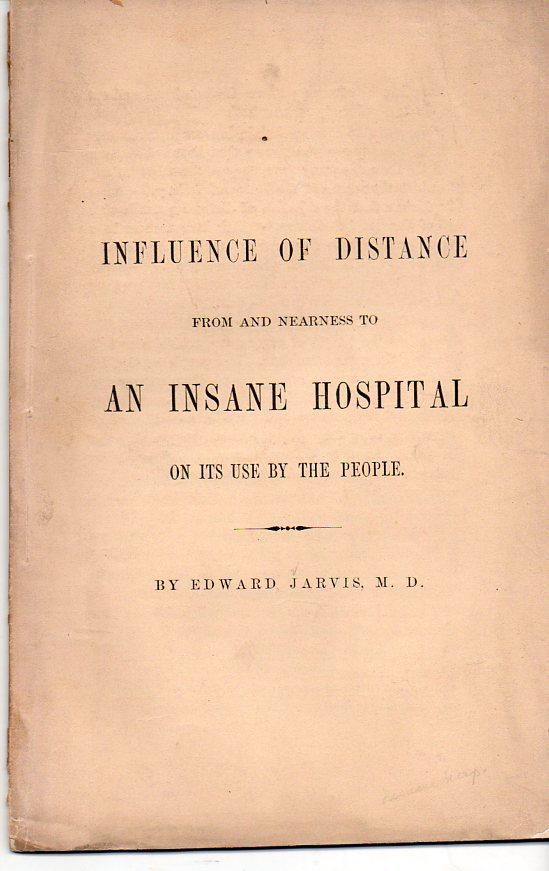
     Dr. Edward Jarvis (1803-1884) conducted a study1 in 1866 to determine how much a factor distance from an “insane hospital” was in regards to people using the facility. It sounds like an obvious-enough question with a probably-obvious answer, but these things are really never so until someone actually looks at the data and extracts an answer. And so Dr. Jarvis performed this function, answering the question once and for all that yes, indeed, the further away you are from a facility the less likely you are going to be to use it, and thus we have Jarvis’ Law.

    “Mental health researchers have long considered the importance of distance on psychiatric service use. Systemic analyses regarding the relationship between distance and the use of mental health care can be traced back to the mid nineteenth century, when Edward Jarvis identified inverse associations between home-to-hospital distance and the rates of admission to Oneida County Hospital of New York and the Kentucky Lunatic Asylum in Fayette County. He claimed that people living near psychiatric hospitals send more patients there for admission than do those living far away (Jarvis’s law).The study also revealed urban–rural differences in the prevalence of insanity, and high admission rates to psychiatric hospitals among people residing near the city center. Jarvis’s law has been identified in numerous studies since the mid-twentieth century.”–Kuon-Chiao Tseng, et al, “Travel Distance and the Use of Inpatient Care among Patients with Schizophrenia”, Adm Policy Ment Health. 2008 Sep; 35(5): 346–356, published online 2008 May 30

    Notes:

    1. Edward Jarvis, M.D.  “Influence of Distance from and Nearness to an Insane Hospital on its Use by the People.”  Published by Separately printed from the American Journal of Insanity, XXII, January 1866, pp 361-406. This publication paginated 1-46. (1866).  


  • Extraterrestrial Views of the Sun, 1870-1875

    JF Ptak Science Books  Post 2615

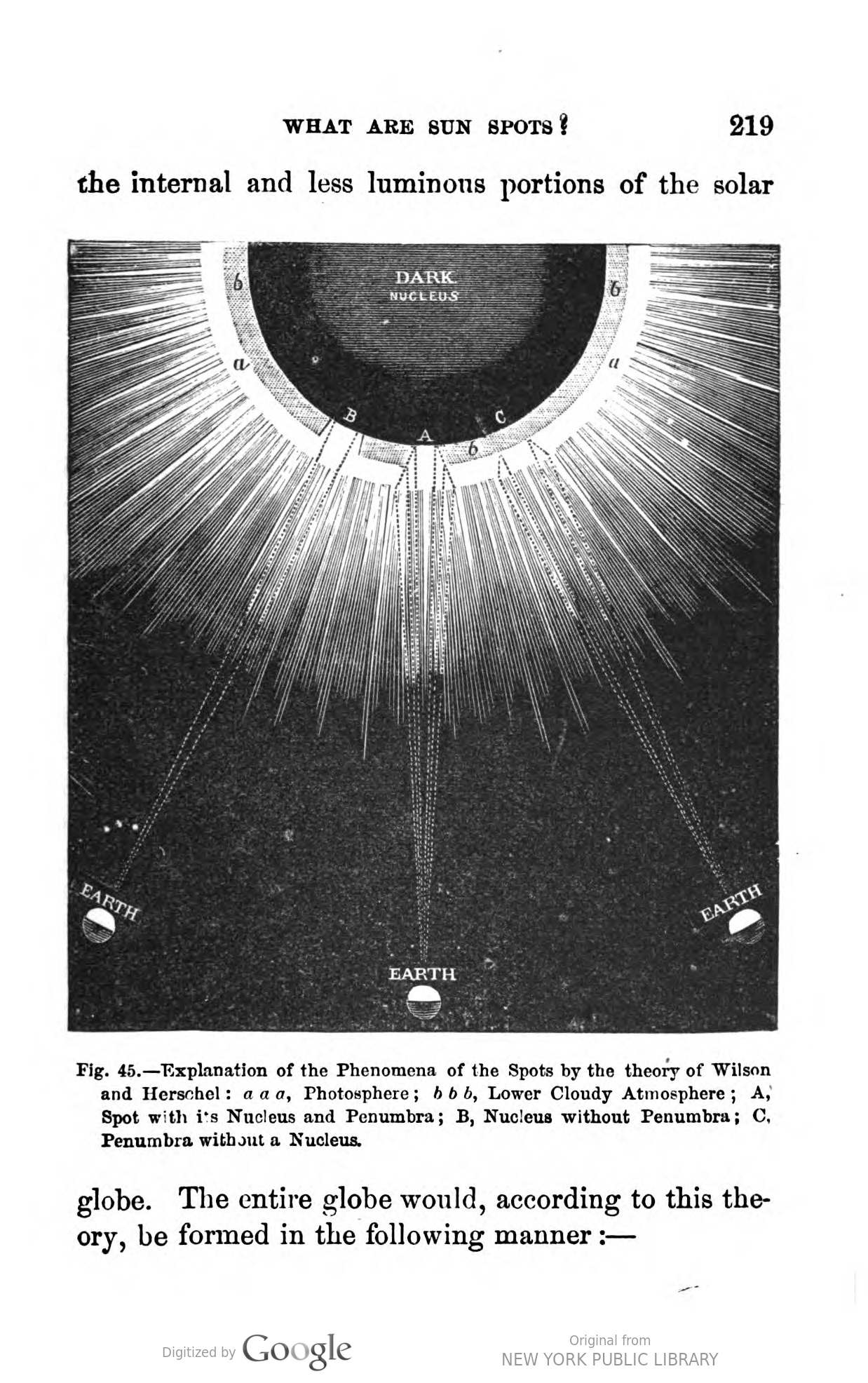
    This beautiful illustration displays the 1774 sunspot theory of Alexander Wilson (1714-1786) of the University of Glasgow, who hypothesized that they were “holes” in the surface of the sun.  The holes or cavities (A and B in this case) were an opening in the shining brilliance of the supposed surface of the sun, and revealing the true surface of the sun underneath the floating layer. This image is found in Amedee Guillemin’s The Sun (1870 and 1875), found in Google Books/Hathi Trust (https://babel.hathitrust.org/cgi/pt?id=nyp.33433057659199;page=root;seq=224;view=plaintext;size=100;orient=0)   

    • Wilson, Alexander (1774) “Observations on Solar Spots”, Philosophical Transactions of the Royal Society of London 64, part I.

    ‘Others,’ continues Cassini, ‘have imagined that the centre of the Sun is an opaque dark nucleus, entirely covered by luminous fluid matter; that in this opaque body there exist volcanoes similar to Vesuvius and Etna, which throw out, from time to time, masses of bituminous matter, which find their way to the surface of the Sun, where they produce the effect of spots, in the same manner that a new island was formed in the Archipelago near Santorin and another near the Azores; that this bituminous matter is altered or decomposed by that which covers the surface and which gradually consumes or dissolves it, forming those nebulosities and transformations which are remarked in the spots; the latter disappearing when this bituminous matter is completely consumed or destroyed; that they appear again, however, at the same points of the solar disc, when the volcanoes throw up another lot of bituminous matter.”


    SUn guillemin Wilson

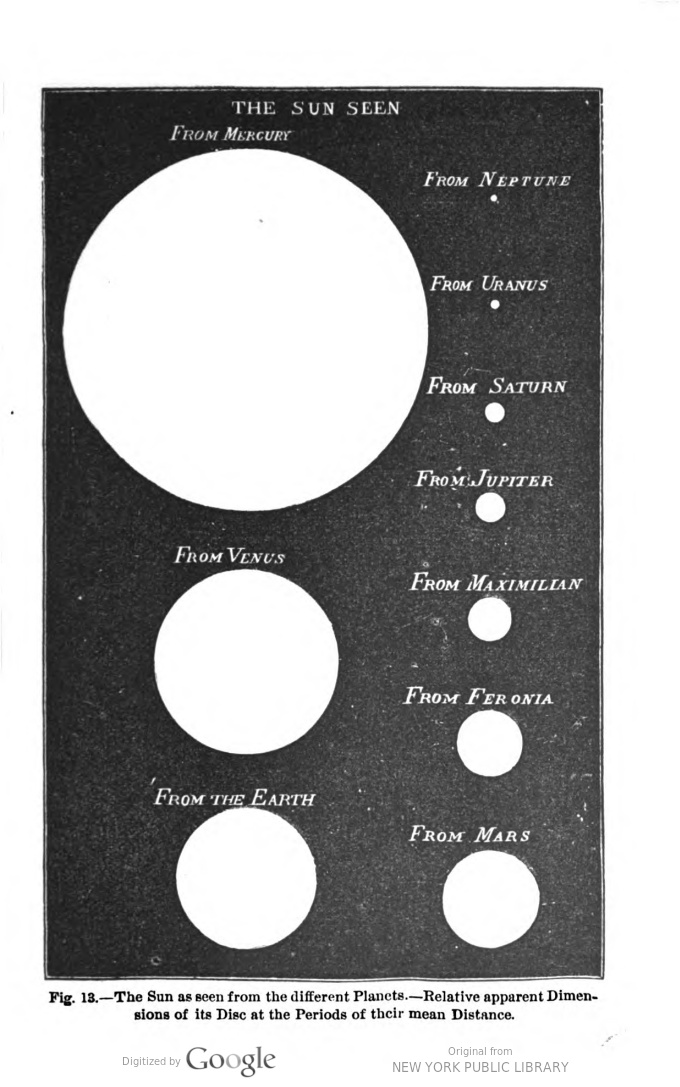
     And just for good measure (and from the same source) here is an unusual comparison of what the Sun looks like from the surface of eight planets as well as asteroid Feronia (which I imagine must be the asteroid 72 Feronia discovered by CHF Peters in 1861) and from “Maximillian”, which I have to admit escapes me.  The interesting part here is that “Maximillian” and Feronia and Sylvia and Flora are all named in images or data boxes but are not mentioned or identified in the text, which means that they were known well enough in 1870 to not need any explanation, and were simply a part of a popular astronomical conversation on minor planets and asteroids.  I’m not sure what the minor planet count was in 1875 or so but today the number is nearly 500,000 (numbered), of which about 20,000 have names.

    Sun Guillemin


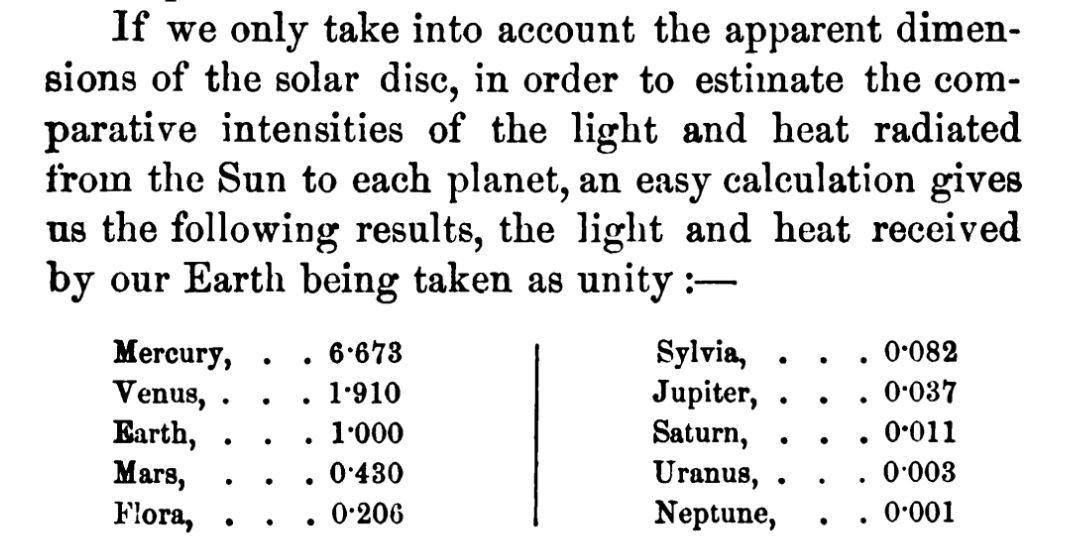
    And also the following, listing “Flora” and “Sylvia” in a planets list though they are 8 Flora and 87 Sylvia, asteroids in the main asteroid belt:

    Sun minor planets Guillemin

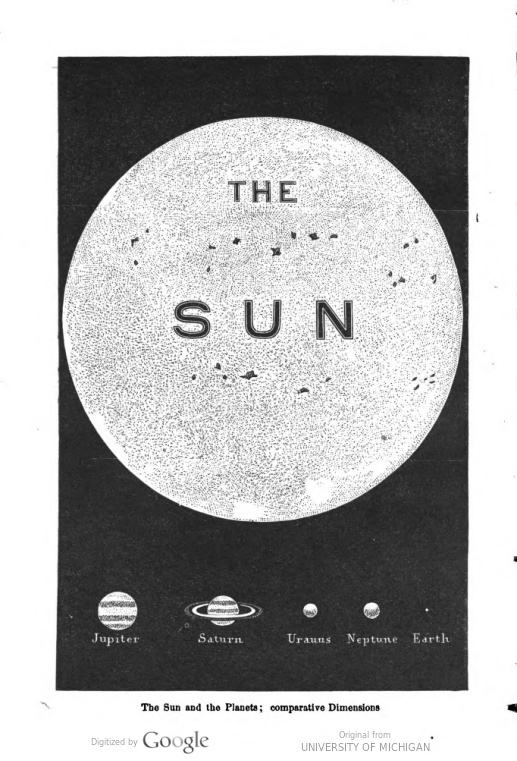
    And the frontispiece, which names the Sun very non-marginally, as though it needed such an identifier:

    Sun THE SUN Guillemin

    Source: Amedee Guillemin’s The Sun (1870 and 1875), found in Google Books/Hathi Trust (https://babel.hathitrust.org/cgi/pt?id=nyp.33433057659199;page=root;seq=224;view=plaintext;size=100;orient=0)   


    ·Posted by :

    ·in:

    —

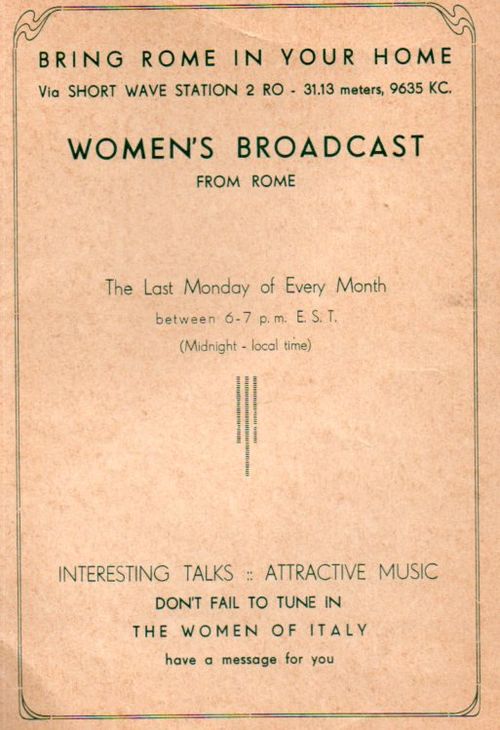
  • “Bring Rome in Your Home”–Fascist Women of Italy Radio Broadcasts, 1937

    JF Ptak Science Books   Post 2603

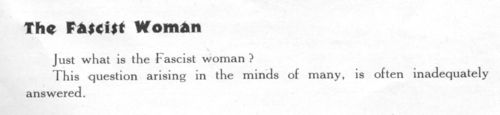
    Women of facism103

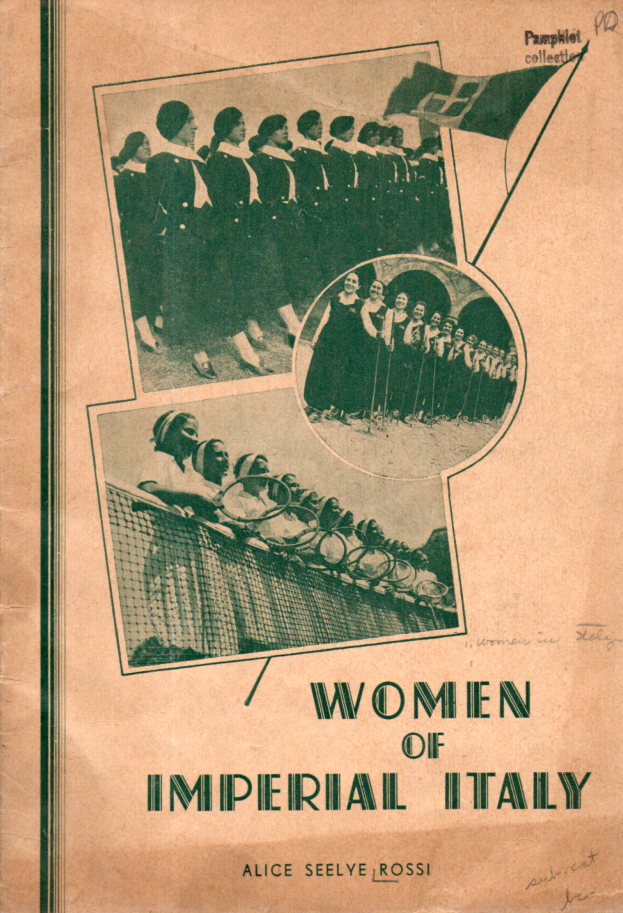
    [Source: Women of Imperial Italy, by Alice Seelye Rossi; printed in Rome, 1937.]

    Not anymore. Probably not so much in 1937, though I am sure that the picture of the “fascist” in the “fascist Woman” was prettier and rosier than what people would come to know by 1942.  In 1937, when this pamphlet was published, the “women” were broadcasting far and wide–one aspect of radio propaganda from the Fascists in Italy, a hearts-and-minds attempt at a part of the coercion of Italia imperiale that occupied the years 1935 until the end of the war. By 1937 Mussolini’s National Fascist Party (in power since 1922) had extended itself by occupying Libya and by invading Ethiopia; Albania, Greece, and Yugoslavia would come between 1939-1941, as would France, when Italy entered the war in 1940 and entered into the country at the tail-end of the German invasion. So the broadcast heard here in 1937 was the beginning of Italy looking for the “Fourth Shore”, and deep into Mussolini’s Fascist state. (Ezra Pound would also do his level best to look the part of traitor that he was, lobbying the Italians for years before being allowed to get on the air to broadcast to the Allies on his misunderstood and inscrutable economics, vicious and virulent anti-Semitism (offhandedly addressing the U.S. president as “Franklin Delano Jewfeld/Jewsevelt”), and general attempts to tell the U.S. population to not support the war effort against the Fascists and that instead they should be down on their knees praising Mussolini, who he saw as another Thomas Jefferson. And so on.)  

    I’ve shared the few pages in this brief pamphlet on the Fascist Woman as it appears in the pamphlet. For the great majority of people living in the U.S., Europe, Great Britain,  Australia, New Zealand, Canada, and many other places, the idea of the “fascist” would change dramatically in about a year, and then spin its grinding way downward until the start of the war in 1939. 


    Women of facism102


    Women of facism101


    ·Posted by :

    ·in:

    — —

  • On The Flood, Comets, and a Recantation (1823-1831)

    JF Ptak Science Books   Post 2592

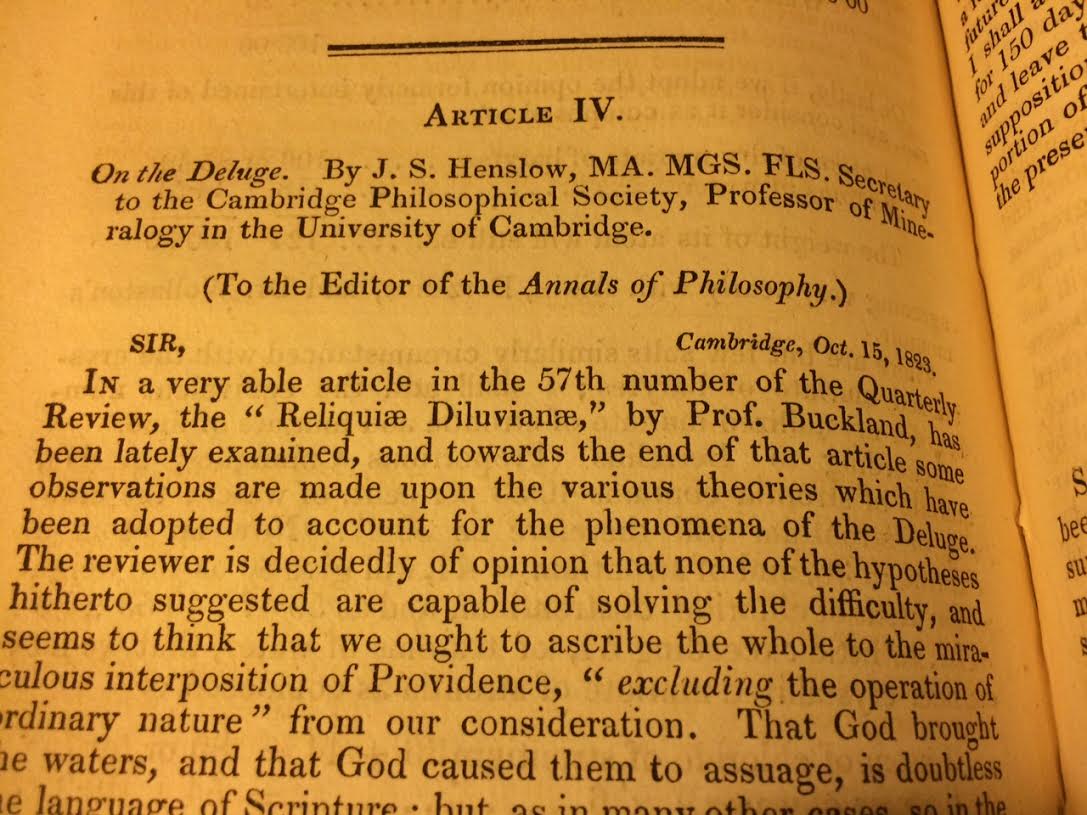
    I pulled a volume at random of the Annals of Philosophy from the shelves–it was volume VI (new series) from 1823. Trying to think of what might be a hot-button issue (in English) for that year, I started flipping through the pages, reading the page headers: Humboldt on volcanoes, Beaufoy’s astronomical observations, Mr. Moyle on the temperature of mines, Prevost on the blood, Pond on some astronomical topic, Ramond on the barometer, book reviews, scientific society announcements, and so on. Nothing really drew me in–until in the back, at page 344, this running header: “Prof. Henslow on the Deluge”. That was a “something” that I was looking-but-not-looking-for.  

    Flood

    This was a late-ish contribution to the history of the geology of the Great Flood, and in it, John Henslow (a great naturalist and botanist, 1796-1861) postulates that the flood was caused by the near-passing of a comet that disintegrated and contributed its enormous aequeous “nebulae” to the Earth’s atmosphere producing the Noachic flood.  He quickly sites a contemporary (one of many), William Buckland1, in this, who was one of the late leaders in the geological response to the flood, and who theorized a natural history of the flood and a production of an Ice Age.  The belief that there was some scientific basis in the divinely-induced flood was buoyed by the general flavor of the mythology of the flood, which turns up in more than 100 cultures–so part of the Noahic flood argument as being true is the broad cultural base for it. Commonality across cultures like this doesn’t necessarily make something real–there are many many parallels between the Bible and other sacred books besides this, like for example the savior descending into Hell for three days before resurrection, and that in stories that precede the New Testament. So common story bases make them popular, though not necessarily correct.

    So Henslow thinks about the comet in a long tradition of Genesis geology, like Buffon and his comet. But what is more interesting to me in this issue is another contemporary, Reverend Adam Sedgwick, Woodwardian Professor of Geology at Cambridge University, who at the end of several decades in theorizing on catastrophic flood geology decided that he had taken a wrong turn.  What happened then, in 1831, was a remarkable refutation of his earlier work. It was an enormous thing, a statement of real courage and conviction to the scientific process.  


  • Gears, Teeth, Minie Bullets, Cloth Bindings (1864)

    JF Ptak Science Books   Post 2575

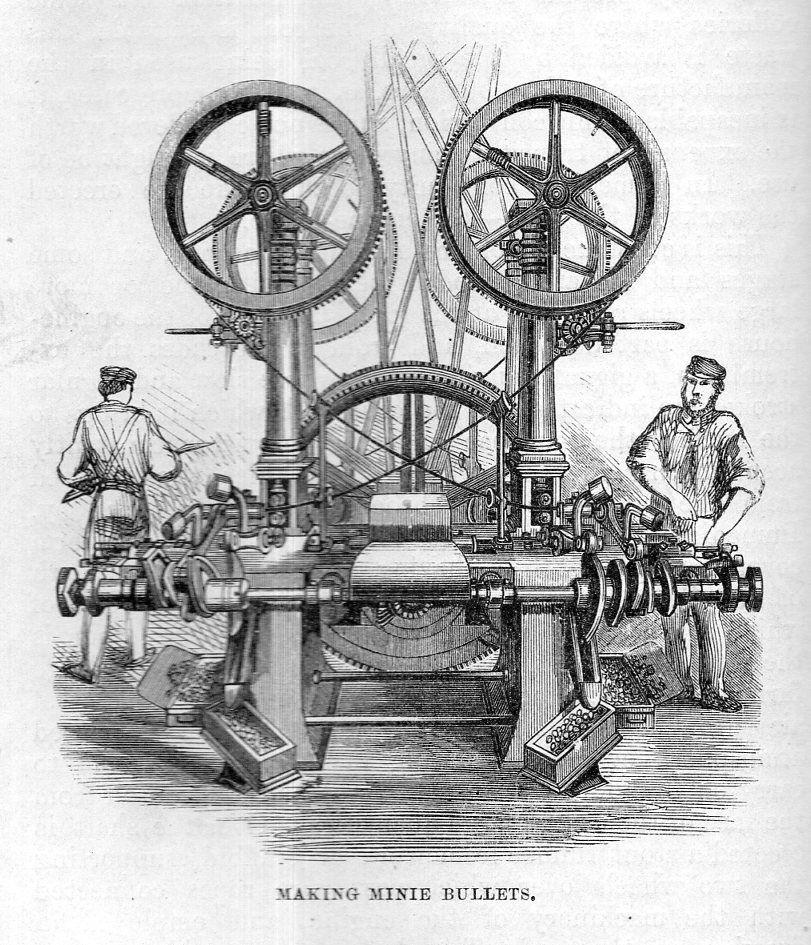
    Claude-Étienne Minié (1804-1879) was an influential military designer and French officer who designed what was to become know as the “Minie ball”. This was a cylindrically-shaped conical-pointed bullet the design of which greatly increased fire at long ranges. The bullet was designed in 1847 and soon became standard issue in Europe and (especially?) in the U.S. during the Civil War.  I’m taking notice of these projectiles after having made this very accidental discovery of the machine that formed them in the Victorian review of technology and invention, Great Inventors, the Sources of their Usefulness and the Results of their Efforts, printed in London in the rockingly good year of 1864.  It makes me think about the fabulous machinery that produces stuff like bubble gum–glorious metallic ideas for production and packaging, all combined in effort to produce a piece of fluff that you chew on and then discard.  With the Minie Ball, though, you have a massively-geared machine used to produce little bits of metal meant to pass more efficiently and with more accuracy through a body. (Also it is another representative of a genre of illustration of looking at the object straight on.)  

      Minie balls318

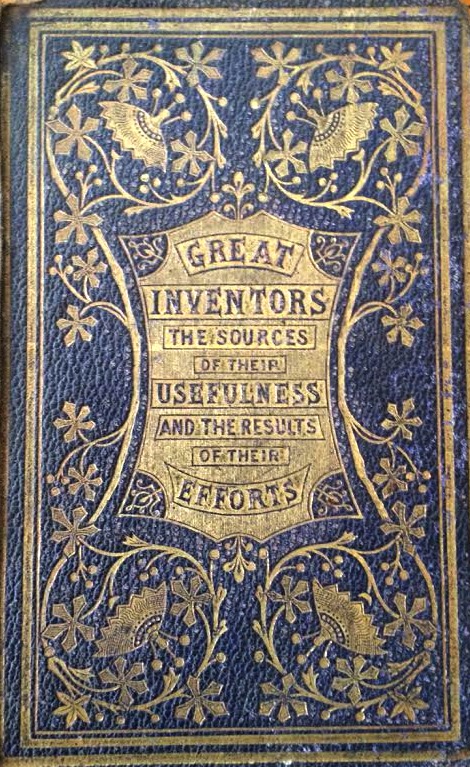
    The cover of the book is interesting in its own right, being bound in an elaborate publisher’s cloth with gilt-stamped decorations.  Books before, say, 1800, were almost entirely bound according to the wishes of the customer, who would/could purchase the sheets and have them bound according to their wishes.  That, or booksellers would offer the book for sale in a small election of available bindings.  The cloth binding that we would recognize today really didn’t start to make an appreciable appearance until the 1830s, when a simple cloth cover replaced its more-elaborate brethren, making things much easier for the publisher and the bookbinder, allowing for much less expensive production and a quicker turn-around time.  It also brought in a far greater distinction in the now-divergent industries of bookselling and publishing–and of course bookbinding.  So the entry of the semi-standard plain cloth binding also brought in the possibility for design and art in standard book production, with less to the introduction of the decorated cloth cover.  

    The cover for the book described here comes from about the second full decade of a standardized-luxury of decoration in cloth-bound books.  Over the years I’ve paid only a little attention to the decorated cloth bindings of scientific books, but never collected them, something I somewhat regret at this point. In any event, Great Inventors… is a good example of a relatively inexpensive but nicely-designed book cover.  

    Binding great inventors


  • The Illogical in Pursuit of a Logical End–a Note on the Snark.

    JF Ptak Science Books   Post 2537

       "Just the place for a Snark!" the Bellman cried,
              As he landed his crew with care;
         Supporting each man on the top of the tide
              By a finger entwined in his hair."

    So opens the semi- and fully-immortal The Hunting of the Snark. an Agony in Eight Fits, by the fully-and-not-partially-immortal Lewis Carroll, which (if it can said what the book is about) is about eight guys whose professions all begin with a letter “b” plus a beaver in search of a Snark.   In the second of eight Fits that comprise this lyrically nonsensical poem, we encounter a map of the route of possibilities taken by the group, this being in the charge of the Bellman. This is not only the finest map illustrating a Fit that exists, it is also (as I’ve stated earlier in this blog) one of the most beautiful maps ever published. It is a beautiful map of nothing, showing nothing, and marking the route of nothing.  Perfect for the Snark story.

    The Bellman himself they all praised to the skies-
    Such a carriage, such ease and such grace!
    Such solemnity too! One could see he was wise,
    The moment one look in his face!

    He had bought a large map representing the sea,
    Without the least vestige of land:
    And the crew were much pleased when the found it to be
    A map they could all understand.

    “What’s the good of Mercator’s North Poles and Equators,
    Tropics, Zones, and Meridian Lines?”
    So the Bellman would cry: and the crew would reply,
    “They are merely conventional signs!

    “Other maps are such shapes, with their islands and capes!
    But we’ve got our brave Captain to thank”
    (So the crew would protest) “that he’s bought us the best-
    A perfect and absolute blank!”
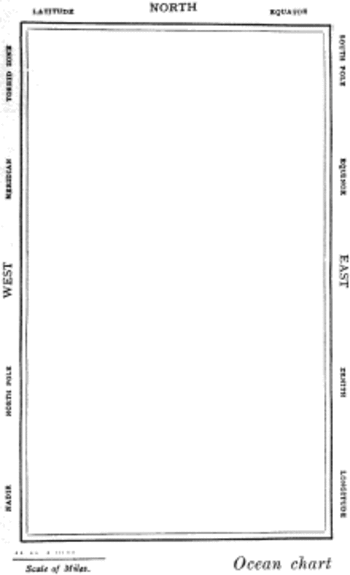
    Snarkmap

    Sometimes there is nothing so fine as something that beautifully illustrates the nothing that isn’t there, and this lovely map, unencumbered of all of the elements and details that define the mapness of something,  perfectly explains the origin of its need.

    The Snark evidently occurred to Carroll while he was out walking on one bright summer day, on a hillside–actually, it was one line of poetry, and it wound up being the closely line of the book.

      In the midst of the word he was trying to say,
              In the midst of his laughter and glee,
         He had softly and suddenly vanished away—-
              For the Snark was a Boojum, you see.
    
                       THE END

    So we had those eight guys and a beaver, setting out from points unknown and going to places not seen.  

    This was all started by that string of poetry that entered Carroll’s head on his walk.  He didn’t know what it meant, and didn’t know where it was going; he did however set out to figure it out for himself.  (“I know not what it meant, the; I know not what it means, now…”1) I find it such a lovely thing that Carroll would spend so much time trying to retrieve the intellectual evidence of where this line came from.  And what his investigation revealed was The Hunting of the Snark.  And at the end of the day, Carroll was no closer to knowing what a Snark was, in spite of all of the writing and commentary and criticism.  Throughout the rest of his life Carroll insisted that he didn’t know what the poem meant, though it could have meant something.  It was supposed to have been a work of nonsense and illogic, but I think it fits with the rest of his work on nonsense and the logic of it, so my best guess is that there was nothing quite so logically in his works as the reach of the illogical in pursuit of a logical end.  

    • Full text of the Snark, here, via Project Gutenberg. http://www.gutenberg.org/files/13/13-h/13-h.htm  Also a pdf with illustrations:  http://www.archive.org/stream/huntingofsnarkan00carruoft#page/n27/mode/2up

    Notes:

    1.  This line occurs in Morton Chase’s Lewis Carroll, a Biography, published by Macmillan in 1995, p 404.
  • Mars Misspelled & Cleveland as Canada! (1908)

    JF Ptak Science Books   Quick Post

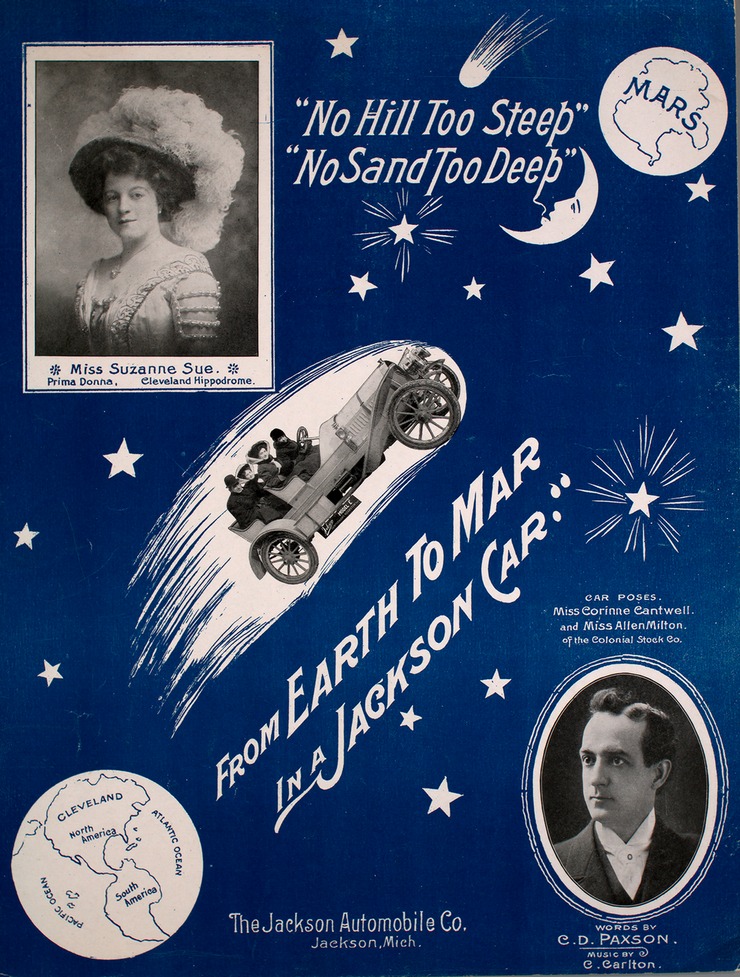
    In my big, old, sloppy cruiser that is this blog, I have misspelled may things, even after “editing” and forcing my way through squiggly spell-checks (sp?). I am not a good editor, so I appreciate one when I see it, And generally I squint m way through misspellings in others, until they get to be (1) very simple, (2) very obvious, and (3) published. The sheet music shared here is a great example of a something-I-cannot-identify:  first, it is pretty though not well designed; second, Mars is misspelled, somehow; and thirdly, “Canada” has become “Cleveland”.  

    I’m fairly certain that I have never heard anyone ask/wonder, “Is there life on Mar?”, or utter “Mar, the red planet”, or “we’re being invaded by aliens from Mar!”.  “Mar” looms large in the copy for the sheet music, and I just don’t know how that was missed–which means it probably wasn’t, and was made so to rhyme with “car”, though it would’ve been easy to spice up the slogan and make it all correct if “car” was plural.  

    The “cleve” part of  “Cleveland” (at least in the very earliest roots of the word) was no doubt applied to Canada because of the Cleveland to the featured/endorsing singer, Miss Suzanne Sue, of the Cleveland Hippodrome. Otherwise the Jackson car was made 100 or so miles away, in Jackson, Michigan, which means I guess that the Cleveland/Canada designation should’ve been “Jackson”. In any event it seems as though there is something for everyone in this sheet music cover.  

    MArs jackson auto

    [Source: Levy Sheet Music Collection, Johns Hopkins, http://levysheetmusic.mse.jhu.edu/catalog/levy:060.062]

    ·Posted by :

    ·in:

    —

  • The Not-so-Sunny Aspect of Easter Island

    JF Ptak Science Books   Post 2509

    Easter043

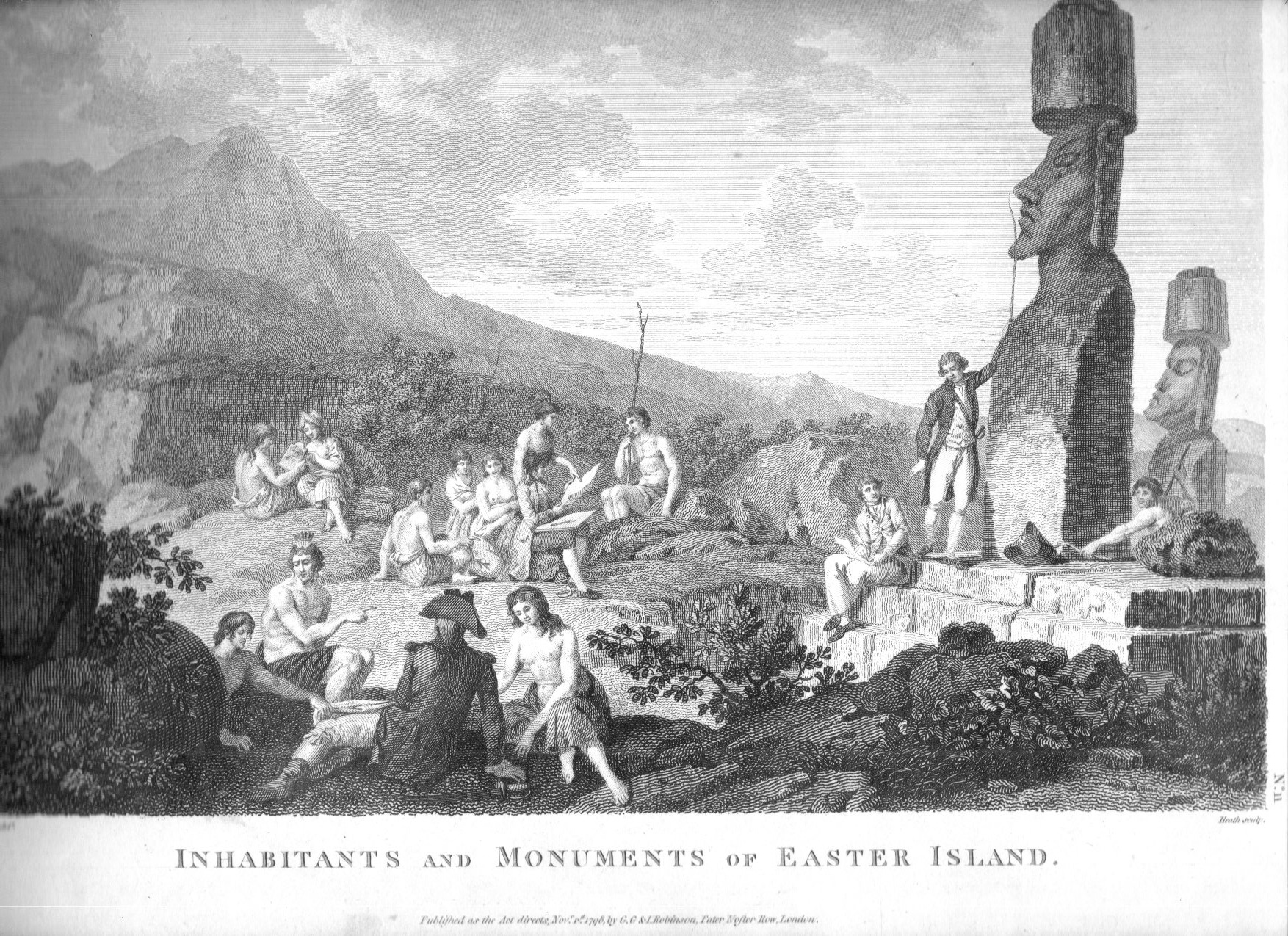
    The “Easter” part of Easter Island is fairly ironic–new, rising, hopeful connotations packing something not-so-joyful.  I was looking at this engraving from the bookstore, an image from a famous exploration journal of  Captain Jean-François de Galaup, comte de La Pérouse, showing a landing party and very western-looking Polynesians. La Perouse was off on a journey that would take him along the trail of Captain Cook, a scientific/ethnographic/cartographic expedition (along with the appropriate trailing or leading religious/economic benefits of such a thing) that landed him on the island 9 August 1786.  He left Brest on 1 August the previous year, and he would venture round-the-world, or almost, as he would never make it home, disappearing along the northwest coast of North America in 1789.  His journals did complete the voyage, however, being taken back to France by a British ship in Australia.

    • [The original print is available for purchase at the blog’s bookstore, here.]

    The island is so-named because it was first recorded by a European, Captain Jacob Roggoveen, Easter 5 April, 1722. La Perouse was there 64 years later, when things were already quite heated, in a most unfortunate way, for the two clans who shared the island, each already suffering substantial losses, as la Perouse found the place sparely inhabited. 

    Easter044

    As you can see there are a few shrubs in the foreground and some other bits, but there are no trees.  Easter Island was by that point largely denuded of trees, making it impossible for the islanders to build boats to fish, and their crops ultimately failing because of the attendant problems erosion and wildlife, making it difficult for much to survive on the island.  The clans set at each other, and had bitter fights, resulting later on in the clans toppling in spite the great  stone figures of the opposite clan. Easter Island became a port of call for slavers, and the population began to disappear into greed and economic lust. 

    This was still decades in the future from the la Perouse expedition, his work being published posthumously nearly ten years after the captain’s death.

    Easter045

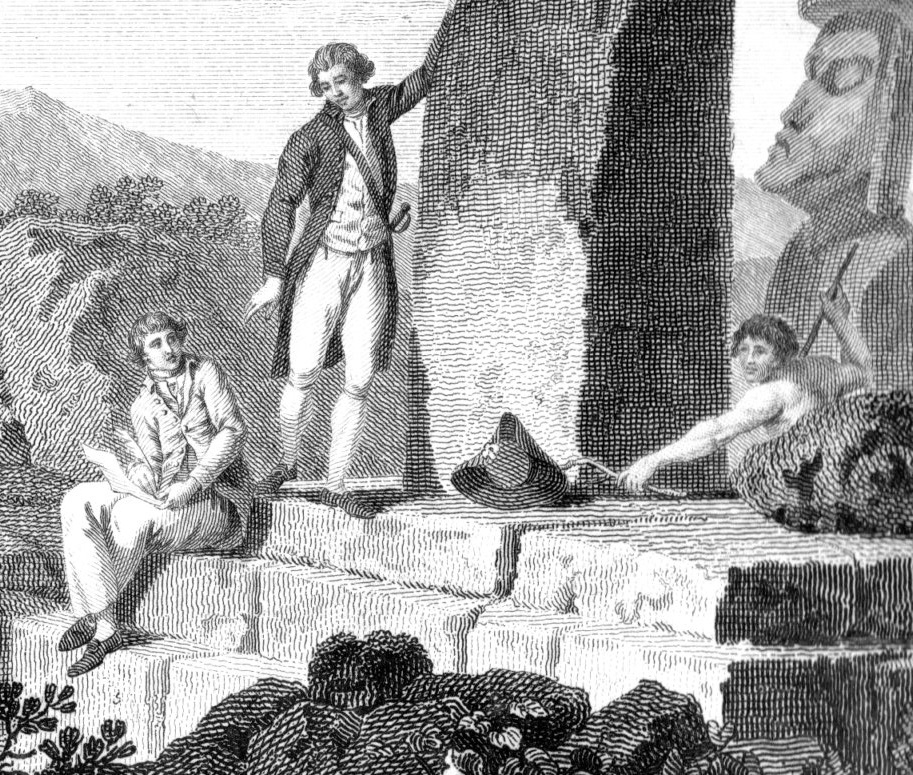
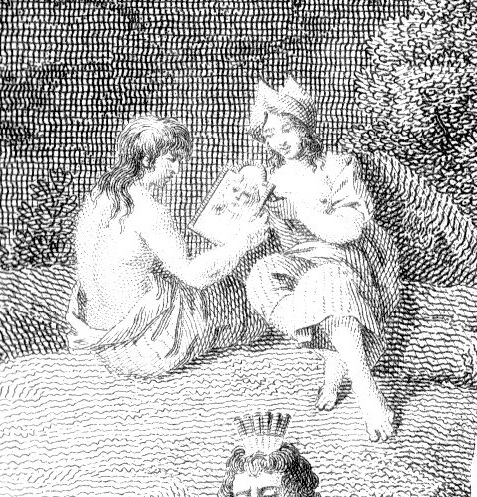
    In this  image, though, we see a rather playful interaction between the sailors and the islanders.  In the foreground-center we see an officer with two men and a woman, one of the men fingering a piece of cloth while the officer is no doubt otherwise distracted. In their background two women are seen using a mirror; to the right of them is a small group watching one of the officers draw an image of one of the Moai.  At right, around the Moai, two officers make observations for the ethnographic record, while around the corner at the monument’s base an island uses a stick to try to steal one of the officer’s hat.

    The Maoi were still standing in 1798.  Later in the 19th century, though, after devastating attacks on one another, every monument was toppled. As were the people.  There’s really not that much to the Easter-y history of the European part of the island’s history, and so the irony of its naming. 

    ·Posted by :

    ·in:


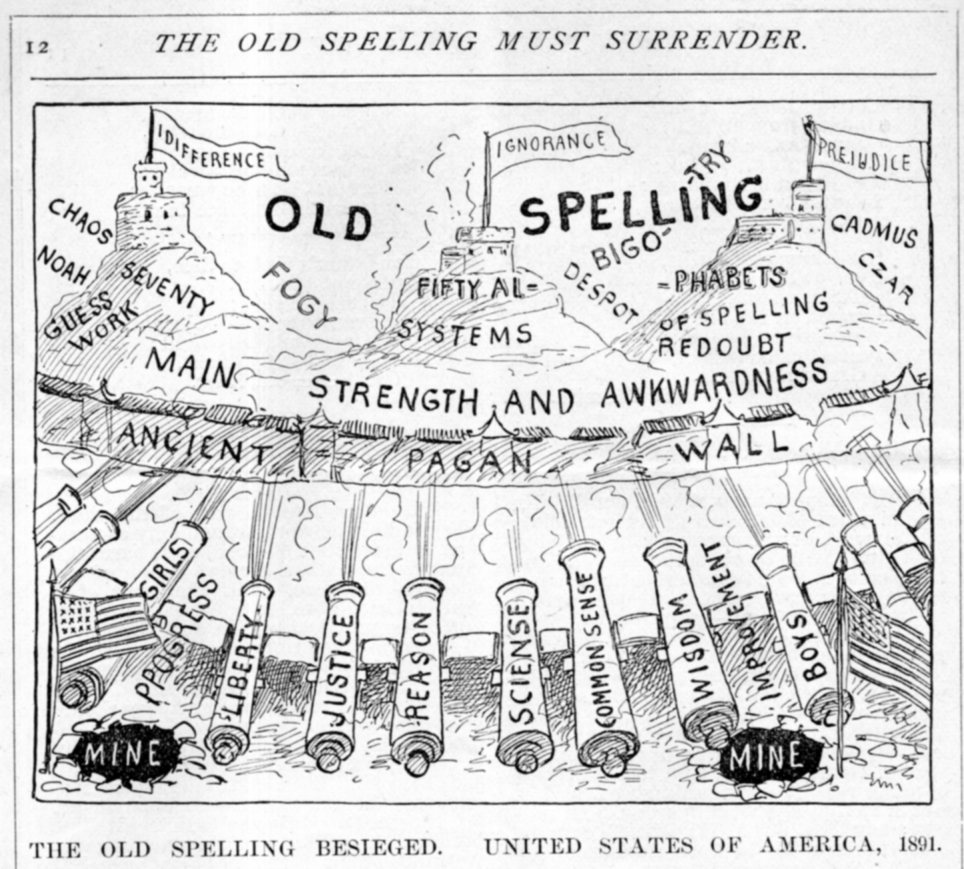
  • The $5,000,000 Powur Fonetic Alfabet (1890)

    JF Ptak Science Books   Quick Post

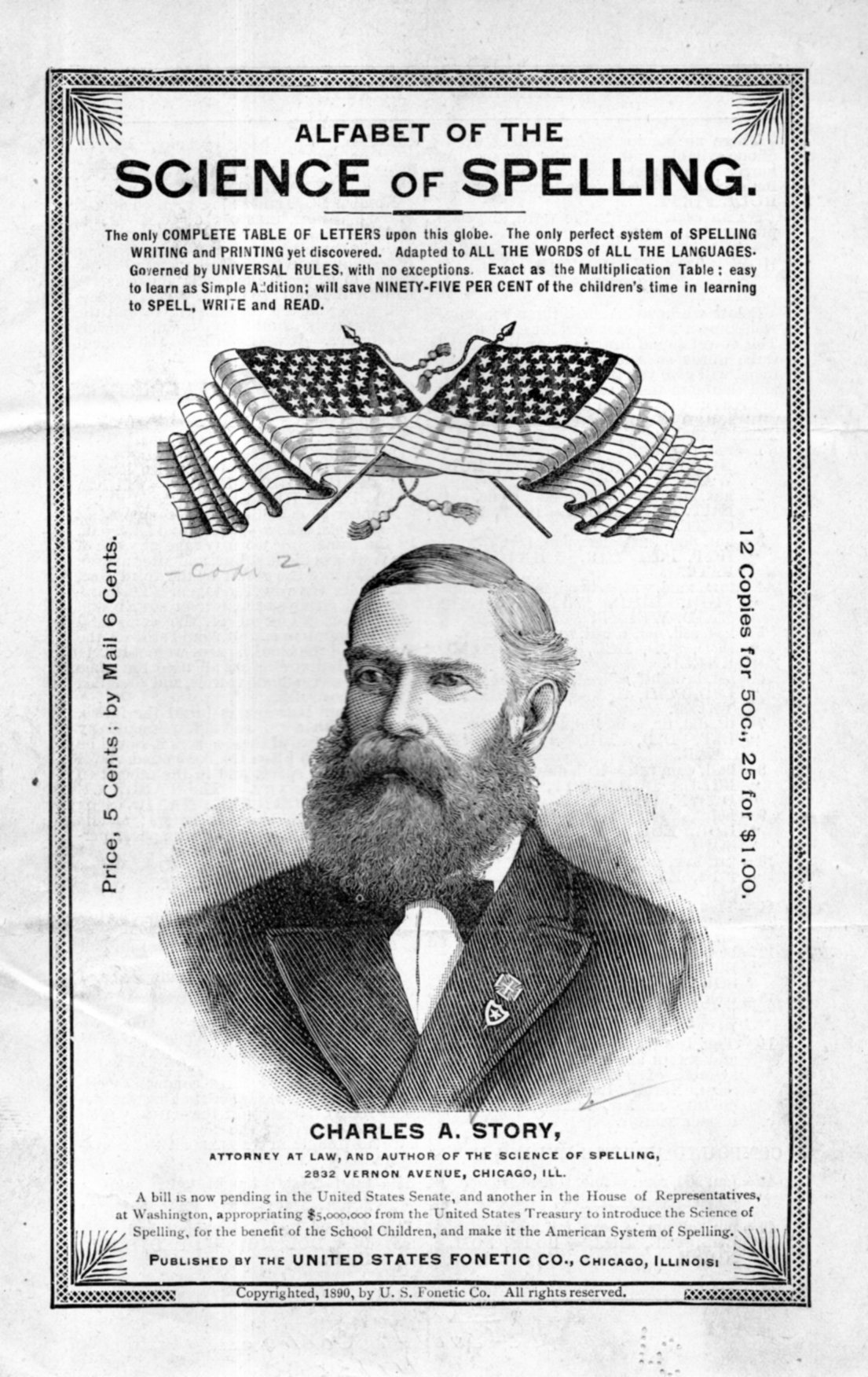
    Just two years before the 400th anniversary celebrating Columbus, and in the city celebrating it with a world’s fair (Columbian Exposition) of 1892, Charles A. Story set out on his own voyage, seeking support to change the way the United States wrote in ts native tongue. It seems high in the century for this sort of expedition, and Story was not nearly the first to get that, not even the first of 1890, as spelling reform has been a subdued meme in this country for a long time.

    Phonetic alphabet017

    What make’s Story’s story so momentarily interesting is that he sought government intervention to make his dream come true. He was preceded in this strategy by Robert Fulton (who received $300K+) and Samuel Morse ($30k), which was money well spent by  as usually very tight Congress; Story sought $5,000,000 1890’s dollars to change the alphabet, at the end of which you would get an alphabet of 66 letters of which only 45 were really necessary.  And 100 schools to teach the new alphabet. And so on.

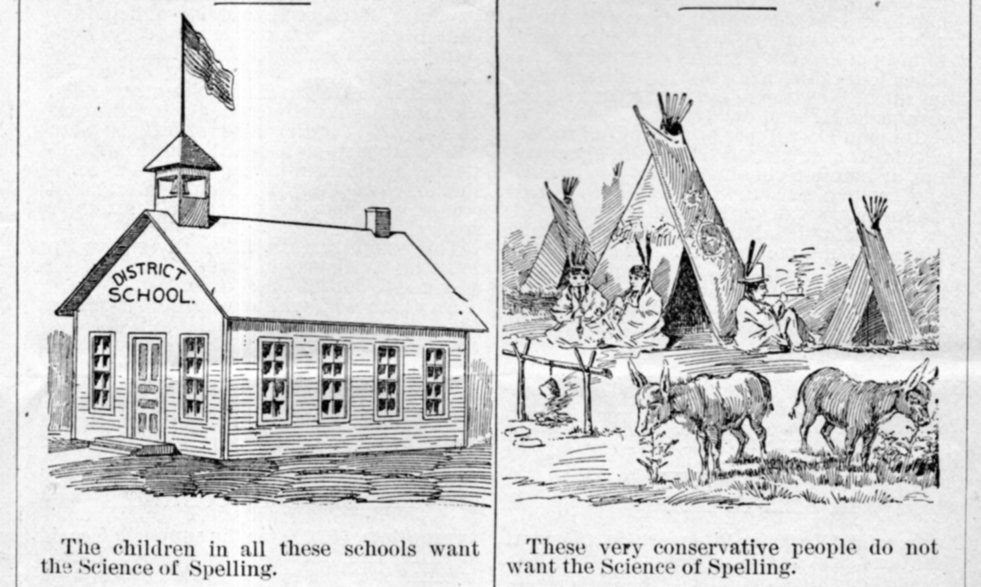
    A curious and Outsidery text illustration illustrative of some misty point:

    Phonetic alphabet016

    $5,000,000 was a h of a lot of money back then, and could have been spend of better things and maybe on some worse things (though perhaps not on the latter). 

    Mr. Story had a nicely designed cover for his plea; he didn’t do quite so nicely on the text illustrations. 

    Here’s another unfortunate text illustration; this one isn’t so much like an Outsider as it is just plain creepy:

    Phonetic alphabet018

    How this was supposed to enhance the language, or create new words, in the fine tradition of the development of the English language from the languages of the Aryan, Persian, Sanskrit, Greek, Latin, and so on, is a $500,000  mystery.