A Daily History of Holes, Dots, Lines, Science, History, Math, Physics, Art, the Unintentional Absurd, Architecture, Maps, Data Visualization, Blank and Missing Things, and so on. |1.6 million words, 7500 images, 4.9 million hits| Press & appearances in The Times, Le Figaro, Mensa, The Economist, The Guardian, Discovery News, Slate, Le Monde, Sci American Blogs, Le Pont, and many other places… 5000+ total posts since 2008.

Category: History of Nothing

  • Enormous Title of Visionary Work Utterly Defeats Library Cataloguer

    JF Ptak Science Books  Post 2076   Outsider Logic  Daily Dose from Dr. Odd


    Follow Me on Pinterest

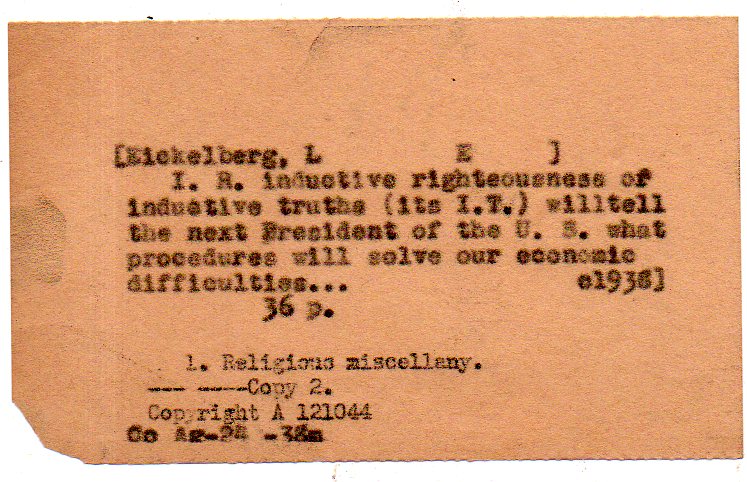
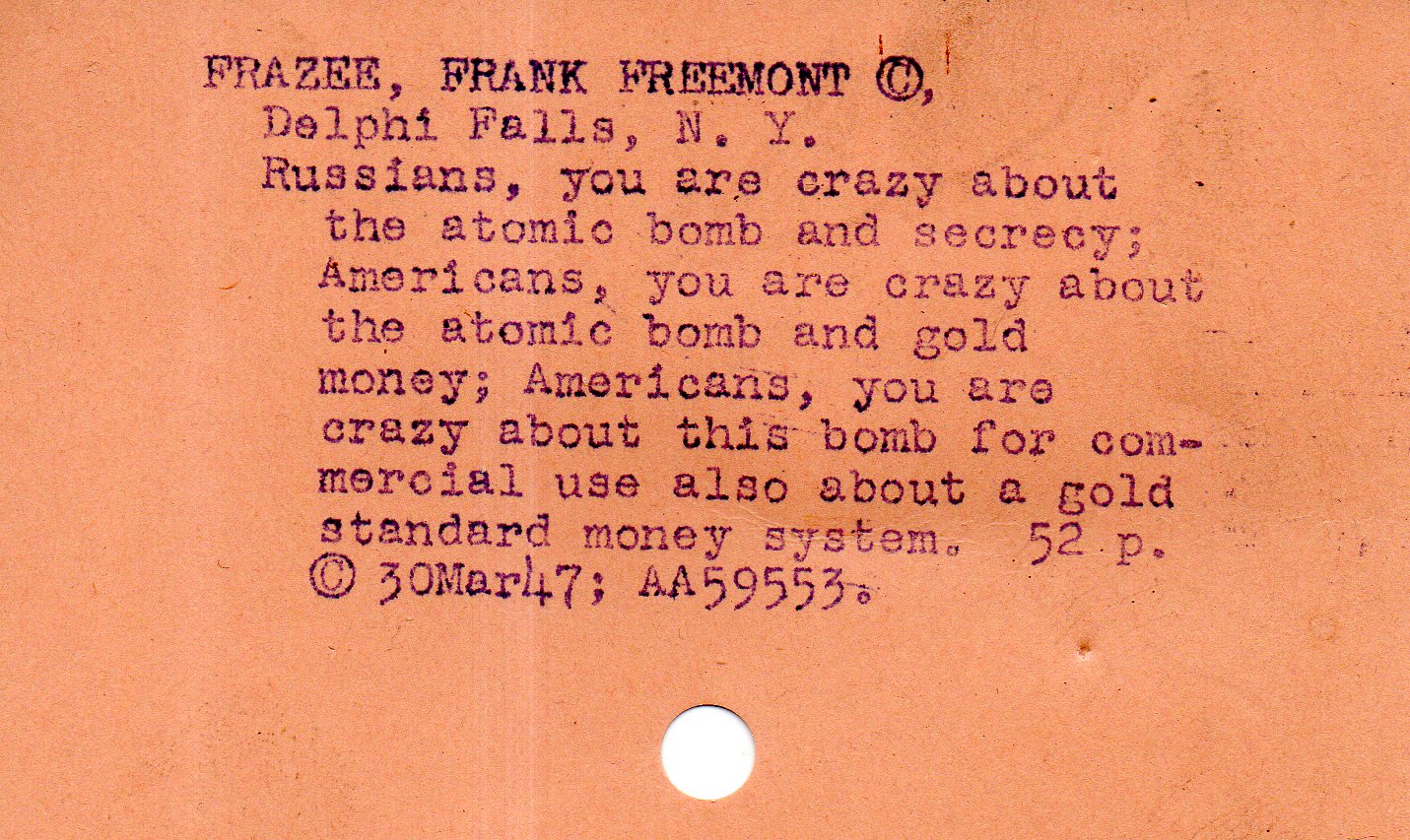
     There appeared on this blog last week a post regarding a library cataloguer who was not threatened or defeated by a work with an enormous and meandering title. The good librarian got right to it, recorded the deed, and moved on. Today’s installment of card catalog magic presents a Library of Congress librarian who decided that enough-was-enough, and that there was simply too-much-title to record, and so simply left the rest of it to dots and to the imagination.
    Title--gigantic424
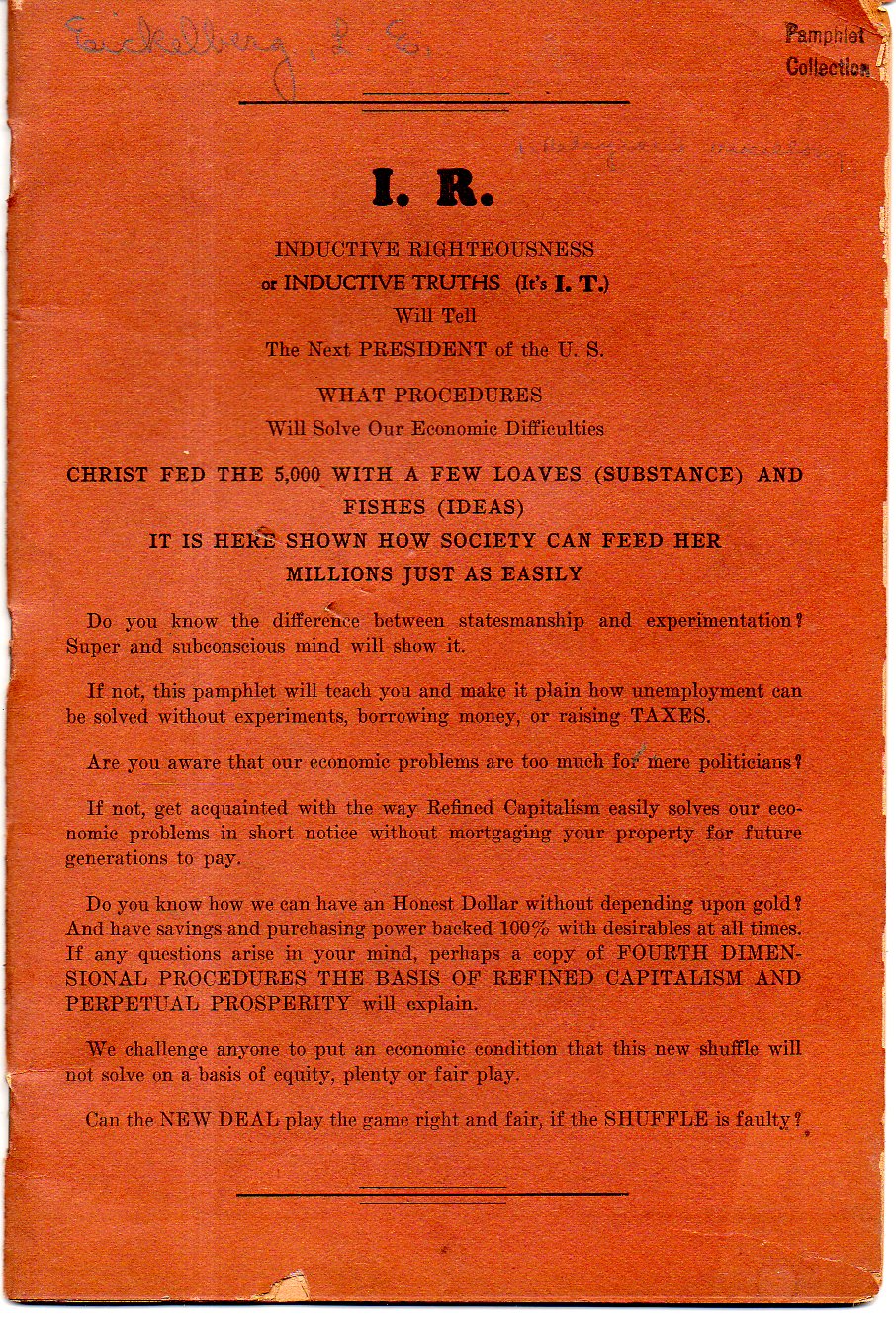
    Now for the pamphlet itself and the rest of the title:
    Title--gigantic423
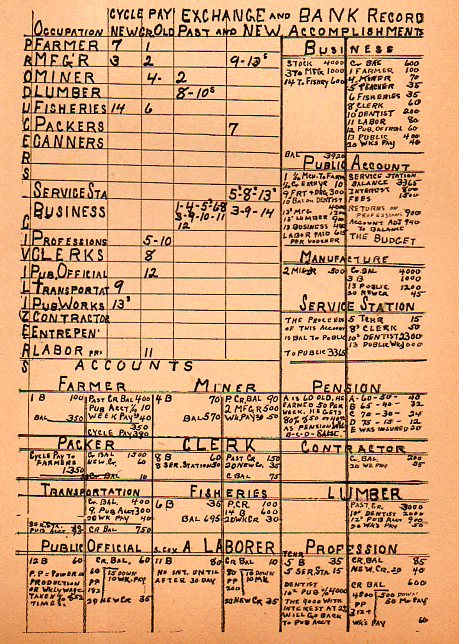
    The author of this 1938 pamphlet simply started to write on the cover and continued through the rest of the work, and ended on the back cover.  There was no title page, no chapter headings, just a collection of ideas with lots of lists and seemingly nowhere to go.  For a short work (36 pages) the author could’ve dedicated another quire to some blank space, which really doesn’t exist in the pamphlet but which is surprisingly helpful even if the message you are trying to deliver is somewhat, well, outre.  There is a lot of very compressed talk about multi-dimensional spirit and conscience and bank deposits and replacing the dollar and tax collection with “circulation of values”, and so on, deep into itself and a closed system of interpretation of the existence of the universe, harmony of spirit, and economic interpretations of “radio bulbs” and the (often misspelled) fourtth [sic] dimension.  The writing is exhausting and enumerated, and even though by its colossal subject matter and the complex brevity it should be a reliably porous document, it is fairly rigid and brittle. It is a visionary work that somehow worked its way into print, and I’m happy for that, and even it is impossible to keep up with its runaway logic it is still a good ride.

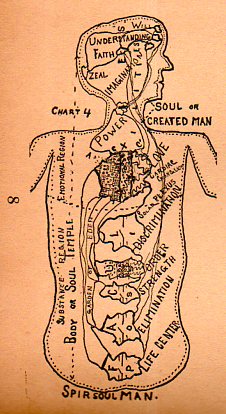
    The author’s representation of a semi-vitruvian spiritual anatomy of humans, called Spirisoulman:
    Title--gigantic426
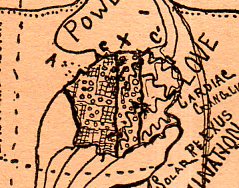
    A detail of the fabulously-decorated heart region:
    Title--gigantic427
    And of course part of the plan for universal economics which somehow wraps up the theory of in I.R., or the Inductive Rightousness of Inductive Truths:
    Title--gigantic428
    Early on in the history of printed books there was a practice of extended title pages, where there would be the title, and then “support literature” further explaining the title to sometimes some great detail, occasionally winging its way into a title 200 words long.  But that was pretty much before the 18th century and mostly before the 17th and mostly a not-common practice.  The gigantic title in the 20th century seems to be mostly relegated to the less-traveled-road variety of public thinking.

    And the card catalog for the undefeated librarian mentioned above:


    Card catalog409 


  • A Census of Everything Bartleby Said (“Who Never Spoke but to Answer”)

    JF Ptak Science Books    Post 2043    
    Follow Me on Pinterest

    [This post is included in the History of Blank, Empty and Missing Things series.]

    “Bartleby the Scrivener, a Tale of Wall Street”, is a well-known, much-loved and magical/dark short story written by Herman Melville in 1853 (in two installments in Putnam’s Magazine). For a major figure in the history of American literature, Mr. Bartleby has generated a lot of scholarship, in spite of the briefness of the piece, and the very scant information we have from Bartleby himself.  He never lets us into his mind, himself, and we have just the barest glimpse into what drives him through his spoken words–we find out what we know of him through his self-appointed-friend and employer, who writes:

      “I now recalled all the
    quiet mysteries which I had noted in the man. I remembered that he
    never spoke but to answer; that though at intervals he had
    considerable time to himself, yet I had never seen him reading—no,
    not even a newspaper; that for long periods he would stand looking
    out, at his pale window behind the screen, upon the dead brick wall;
    I was quite sure he never visited any refectory or eating house;
    while his pale face clearly indicated that he never drank beer like
    Turkey, or tea and coffee even, like other men; that he never went
    any where in particular that I could learn; never went out for a
    walk, unless indeed that was the case at present; that he had
    declined telling who he was, or whence he came, or whether he had any
    relatives in the world; that though so thin and pale, he never
    complained of ill health. And more than all, I remembered a certain
    unconscious air of pallid—how shall I call it?—of pallid
    haughtiness, say, or rather an austere reserve about him, which had
    positively awed me into my tame compliance with his eccentricities,
    when I had feared to ask him to do the slightest incidental thing for
    me, even though I might know, from his long-continued motionlessness,
    that behind his screen he must be standing in one of those dead-wall
    reveries of his.”

    For all of his influence, Bartleby spoke only 32 times, and used 246 words, only 55 of them are unique carriers–the the rest are repetitions, especially in the first half of the story, and then particularly with the use of the word ‘prefer” in the famous “I would prefer not” and “I prefer not” phrases. (I looked at this earlier in this blog in the post “A Census of “Prefer” in Bartleby.)

    IT would be an interesting exercise to write in the spirit of Bartleby and use only those words that he spoke in the story. To paraphrase Mark Twain, “if I had more time I would have written a shorter letter”–it would take a bit of an effort to turn out a good story using just these words; after all, Dr. Seuss used 236 to produce A Cat in the Hat (and brilliantly so). 

    The Different Words Spoken by Bartleby:


  • Mapping a Timid Whispered Revolution, 1938

    JF Ptak Science Books  Quick Post 


    Socialist New Party180


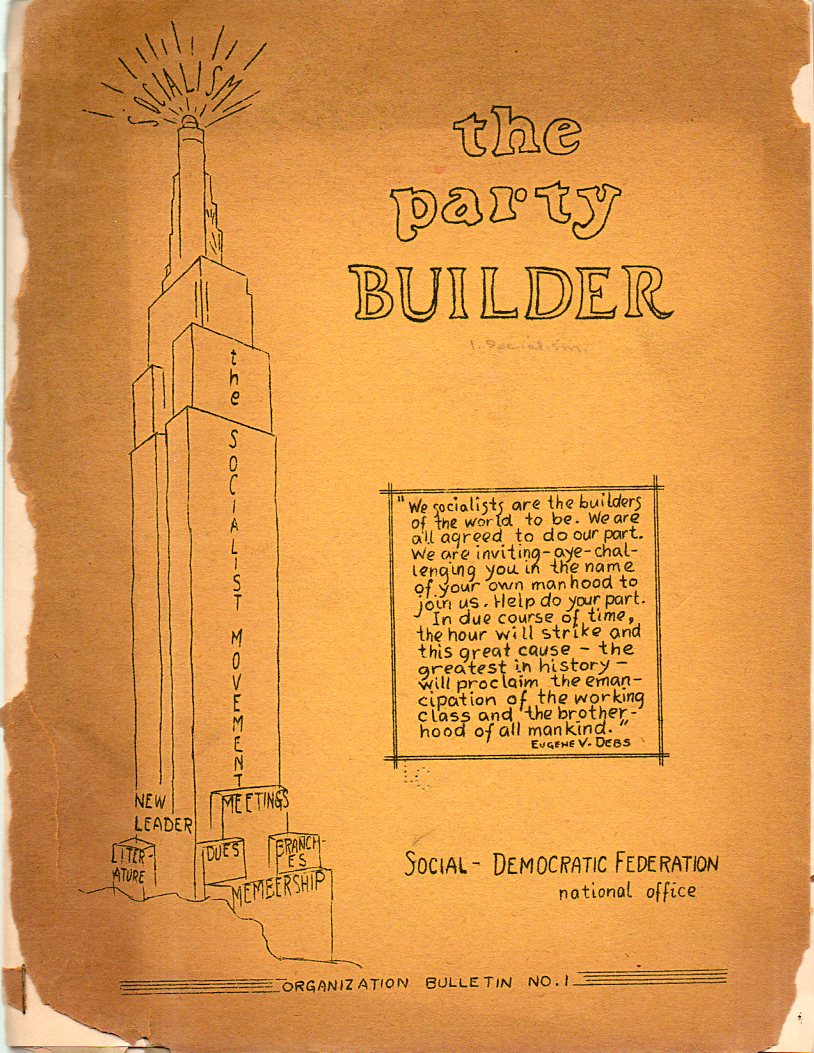
    Socialist New Party179The Part Builder, Organization Bulletin No.1  
    published inn 1938 by the Social-Democratic Federation’s “national office”, is an odd, semi-Outsider kind of publication, a skinny ingenuous cluster of littleness and naivete and homemade hope.  “Socialism” is a beacon of something (light or radio/television waves?) at the top of the Empire State Builind-like structure of the formation of the movement, as we can see in the quick-crude drawing on the left side of the pamphlet’s cover.  

    Maybe it an odd thing to use the new Empire State Building as a symbol for the movement, maybe not–the SDF was a splinter group that cleaved itself away from the Socialist Party in 1936 because it seems that the SP was too revolutionary/pro-Communist for the old line folks who formed the SDP. So maybe the building stood for something that the Communists and parties didn’t–I don’t know, and I’ve never been very good in following the histories of smallish political parties down their rabbit holes of formulations and re-constitutions and inter-tribal micro-warfare, so I really have no great insight into the symbolism. And perhaps given the rudimentary nature of the publication, maybe the symbolism went only so far as it was a thing that the artist/illustrator could actually sort-of draw.

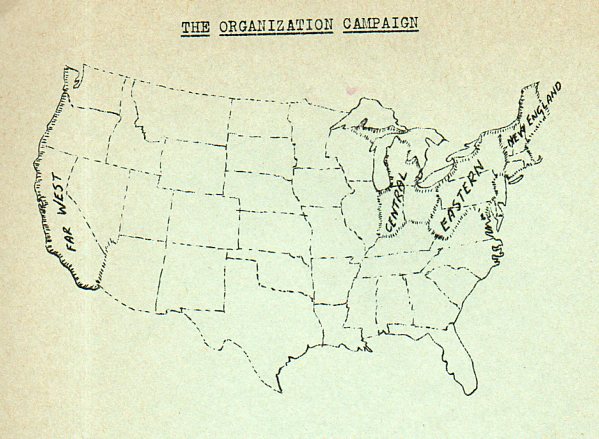
    The main object of interest in this sad little pamphlet though was the U.S. map that appears on page two–it is striking in its way, a silent stab at making claim to potential SDF members in a very quietly outlined American map.  The regional labels are so small and tentative, and the vast inner ocean of undefined America is so, well, vast, that the map seems more one of timidity than anything else, a whispered revolution. 


  • On Varieties of Dead Forests: the Inverted Forest at the NYC World’s Fair, 1939

    JF Ptak Science Books   Post 1986Follow Me on Pinterest

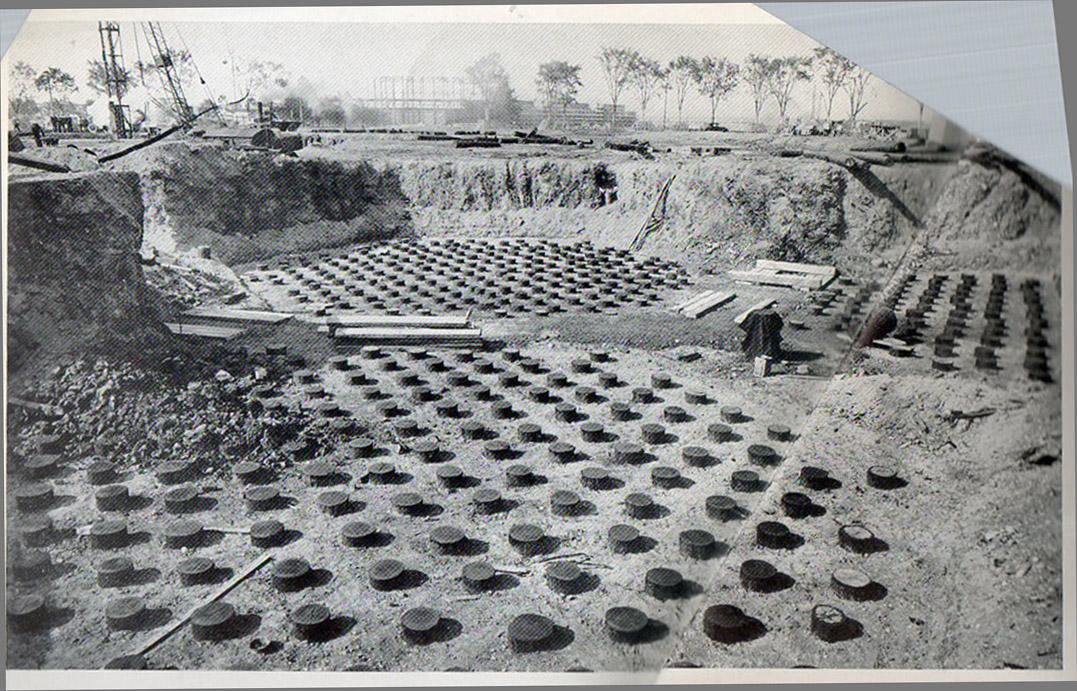
    I’ve noticed a number of different varieties of unusual forests, though mostly they’re repurposed, and stand above or on the ground, rather than the one seen in the image below, where the trees are inverted like roots. There’s the massive forest that we see every day in the United States, the backbone of our digital culture is strung along the carcasses of dead trees, wires and cables hanging from  tree corpses, an enormous chunk of our social interaction and economy dangling above us, moved by the wind and rain. Then of course there’s neat and orderly forest, forests that have been cut down, stripped, and the elements stacked in sequences so that people could live inside of them. There are stockade fences, and picket fences. There are old roads from Colonial times and into the 19th century there were made sections of felled trees, and then others that were made from milled lumber (as in Plank Roads).  There are forests that have been cut, and then milled all to one size, and laid next to one another in parallels and connected with heavy steel ribbons that stretched for hundreds of thousands of miles, their enterprises given ironic and commodious names with words like “Atlantic” and “Pacific” in them (like the “Union Pacific Railroad”).  Dead Wood is everywhere, some of which was simply cut down, stacked, and then slowly burned. 

    Inverted forest106
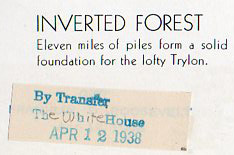
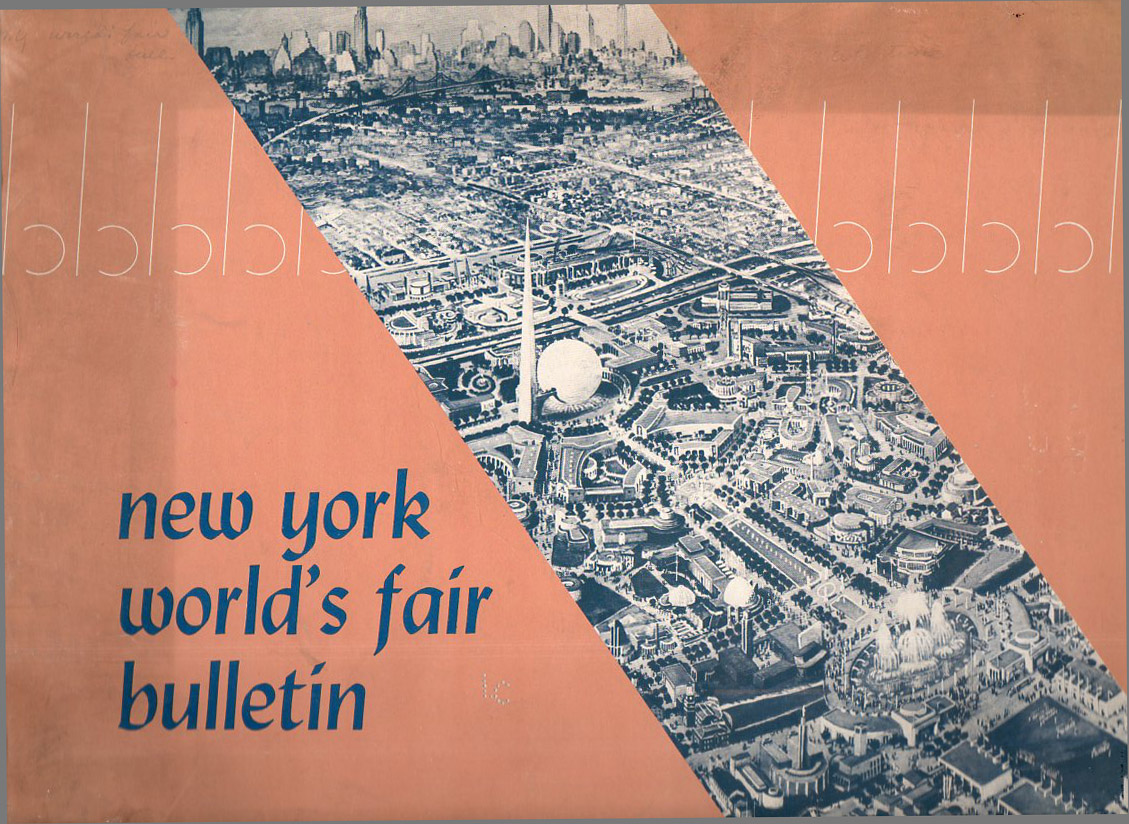
    Before being replaced by steel, foundations like this were made of lumber and/or stone, and was hardly uncommon–what is uncommon, to me at least, was to see a picture of finished footings, and then to be given such a creative name like “inverted forest”. But this is what they were, as we can see here in the New York World’s Fair Bulletin in 1937:  11 miles of forests pounded into the soil to support the weight of the iconic Trylon.

    Inverted forest caption107

    The Trylon is the spire in the middle of the image, next to the sphere–they were both enormous.  The spire rose some 600′, while the sphere was 180′ in diameter–both were gone by 1941, razed at the end of the Fair (1939-1940), their materials used for the war effort.  Both stood on the inverted forest.
    Inverted forest caption108

    [From a private collection, via the Library of Congress, from the White House in 1938.]

    In the Alphabet of Inverted Things, forests may be the most unusual: inverted chords, melodies, voices, pyramids, river deltas, microscopes, personality.  Forests seem so awful in their way. Inverted.


  • Comet, Meteors, Aristotle, and Astrological Nothingness

    JF Ptak Science Books   Post 1977 

    Follow Me on Pinterest


    It seems to me that in the history of astrology–or at least for what seems to be most of it, at least through the late antiquarian publishing aspect of it–that comets and meteors were basically not utilized.  Perhaps it was because in that world these entites didn’t really effect anything–perhaps they were simply mysterious, spurious, and incongruent, and not a subject for installation in the astrological night sky.  Comets (from the Greek, kometes,  “long-haired”) and meteors (Greek again, from meteoran, a “thing in the air”) and bolides (exploding meteors, from the Greek bolis, or “missile”), holosiderites, siderolites, aerolites uranolites, and so on, have a long and complex story in the history of astronomy, at least in some ways; perhaps the most influential thinker on comets held thinking at bay and did so for two milennia: Aristotle’s Meteorology made the case that comets were not a planet or associated with planets or even necessarily part of the heavens–rather they were a phenomena of the atmosphere.  So perhaps their use as astronomical/astrological objects was limited by their very Aristotlean obviousness of being near-Earth objects. 

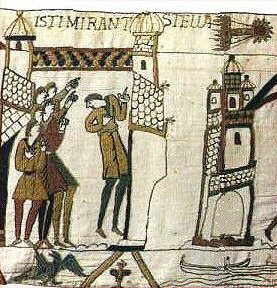
    The Comet of 1066 (later named Halleys’ Comet), as depicted in the Bayeux Tapestry (completed in the 1080’s)

    Comets bayeux

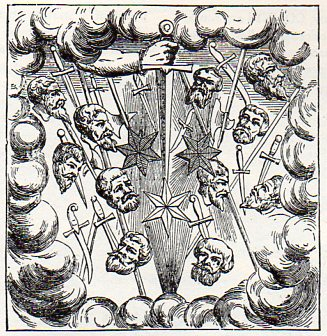
    The fear aspect of comets–the Comet of 1528–was depicted in Ambrose Pares Livres de Chirurgie (1597), and shows what part of the concern was (the coming demise of nations, the death of rules) with the appearance of decapitated heads and a large sword and raining daggers:

    Comet pare

    Comets 1560
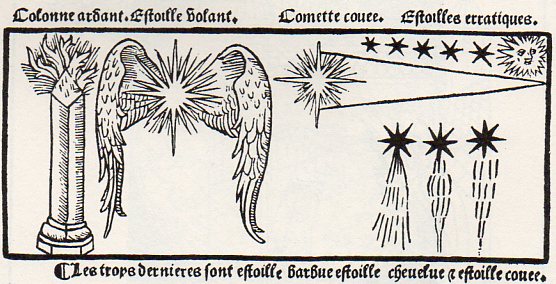
    [Nicolas Le Rouge, Le Grand Kalendrier et Compost des Bergieres, published in 1496 in Troyes.

    The night sky is a mnemonic device, a place to store memory and a holder of the alphabet of myths and beliefs of all, a culture written large across the sky. Meteors and comets were not predictable, and could add nothing insofar as a consistent bit of storytelling was concerned, though they certainly created their own stories in each observed appearance; they could also add punctuation and exclamation to whatever constellation they appeared in. For example if one appeared in a juncture with Jupiter, a major event for royalty would possibly be foretold.   But as a permanent element to the visualization of the night sky, they had little power even though they seemed to be displays of fantastic energy and power in themselves.

    Comets 3562
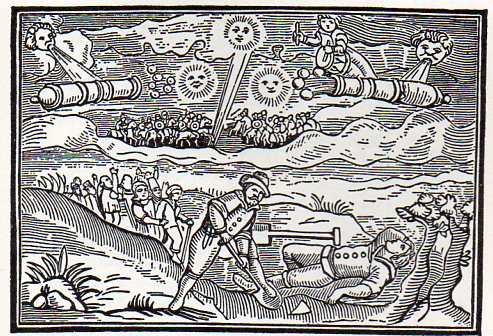
    [For some reason the celestial court, divided by sunlight and flanked by two other sources of light, have ofund it expedient to issue comets from the mouths of Heaven Canon.  I’m not sure what’s going on in the forground with the fellow working his spade next to the triangular blankness.  the man to his right seems to have been overtaken in fear (as have the group of people visible to the left over the shoveler’s shoulder).]

    Comets 4563

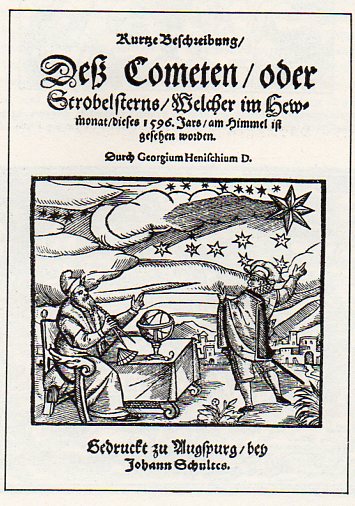
    [Halley’s comet appears again on the title page of this work by the Hungarian George Henischius, a professor of rhetoric, mathematics and medicine at Augsberg.]


  • A History of Nothing: Creating a Creation Myth. On Hoaxes.

    JF Ptak Science Books  Post 1881  [Part of the series on The History of Blank, Empty and Missing Things.]

    The history of hoaxes is a long one–especially the history of the intentional host.  There have been creations like the farcical report on the Nacirem Tribe of North America (in 1956, by H. Miner, who simply spelled “America” backwards and loaded his tribe up with all sorts of geegaws), the Piltdown Man, the chess-playing “The Turk” automaton (by Wolfgang v. Kempelen in 1770), the fabulous Moon Hoax of 1836, the Cardiff Giant, Piltdown Man, and so on. Some were done for fun and amusement (like the Moon Hoax), some were perpetuated to prove a point (like Alan Sokol’s quantum gravity nonsense paper published as a rub against Jacques-Derridon’t and triblings), and some were scientifically vicious (like Piltdown). There are others that are larger than themselves, started perhaps as a hoax but then turned mysitcally into a belief system like, say Scientology (though its possible to make a case for this with most any other such thought-organization system). Some of course weren’t intended to be hoaxes when they began but remain intact even after their great shortcomings and displayed ill-logic have survived in the face of scientific refutation and common sense–like astrology. 

    Then there are complications, like Constantine Samuel Rafinesque (1783-1840) and the Lenape Indian creation myth. 

    It is uncertain whether this autodidact genius intended to fabricate his description of the creation myth, or whether he pieced bits and pieces together in a busy schedule that semed as though they were correct, or whether he was just getting stuff wrong.  It seems that, at the least, the drawings he conveyed as part of the story were all entirely his, and they may or may not have been derived from something that was ancient and real-enough.  In any event, all of what Rafinesque wrote was his fiction that may have been pulled together from other pieces of mythology (or not) rather than a scientific treatise.

    It is interesting to think of perpetuating a hoax whose result is a fabrication of an entire people’s belief system–basically constructing a religion from the ground-up. 

    Mark Hofmann, a convicted multiple cold-blooded killer psychopath serving a life sentence in Utah for bombing people to bits while trying to camouflage his deteriorating forgery empire, very nearly went the last mile to write the missing section of the Book of Mormon.  His great specialty was Mormon history, and he had been successful for several years in convincing the leaders of the Church of Latter Day Saints that his forged documents were the real thing, many of which put the church in an unpleasant light, and so he managed to create a ready market for his uncomfortable creations. In the meantime for the documents that did surface in public he actually managed to change the debate in the church community about its basis in belief–which is an extraordinary and foul commission. 

    It is not possible to say what was in Rafinesque’s head when he committed his own story of creation to paper. 

    I’m including it below as an interesting story, because, well, it reads well.

    The Walam Olum (or “Red Score”, also spelled Walum Olum, Wallum Olam, and several other ways.) of the Lenape.

    (“This Creation and Deluge story of the Lenape or Delaware Indians is taken from Dr. Daniel G. Brinton’s The Lenape and Their Legends (The Library of Aboriginal American Literature, Vol. V, 1885). Since  “walam” means “painted,” particularly “painted red,” and “olum” signifies the scores or marks or notches or figures used on tally-sticks or record-boards, the sense of Walam Olum is variously rendered by “Red Score” (Dr. Brinton’s choice), “Painted-engraved Tradition” (the translation left by Constantine Rafinesque, original copyist of these  Algonkin pictographs), or “Painted Bark-Record.” The pictographs or glyphs or signs were “notches” designed to keep the long chant in  memory.”

    The very beautiful translation is Dr. Brinton’s”–quote and text from the Sacred Texts of the World site, here.) 


    1. At first,   in that place, at all times, above the earth,


    2. On the   earth, [was] an extended fog, and there the great Manito was.


  • Images of Shadows in Storytelling

    JF Ptak Science Books   Post 1836

    ‘There is seldom in shadow a mystery less hidden”–Ombra Nichts Schatten, The Non-Mystery of the Shadow, London, 1842

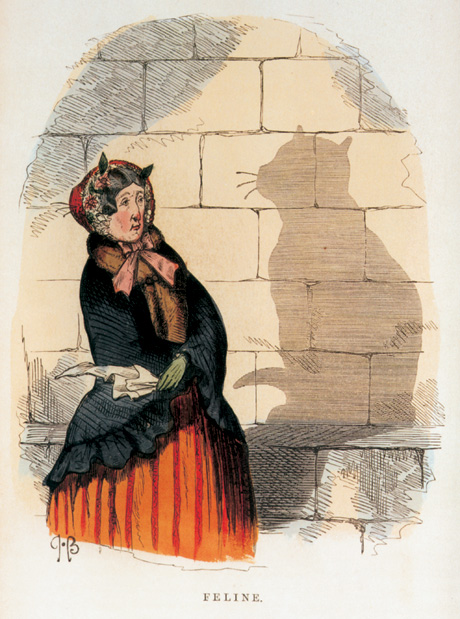
    Shadows have long played havoc in the imagination, for good and for evil, for elucidation and of mystery–they have hidden nothing and everything, and displayed as little as possible and as much as can be imagined. A simple shadow in a hole had proved the circumference of the Earth twenty centuries ago, and before that the Earth’s shadow on the face of the Moon showed us to be a sphere; the shadow allowed us to measure the heights of mountains on the Moon before we could do so (accurately) on Earth; we measure shadows in X-rays, and follow the trails of subatomic particles, and on and on.  Shadows are particularly interesting in story telling, whether they be suggested  aurally or in text, or of course in illustration: 

    Chalres H. Bennet, Shadow and Substance, London 1860.

    A superior example of shadow-art is seen in Indonesian shadow puppet theatre, “Wayang Kulit”, where the shadows of Javanese-Indonesian characters are projected onto a cloth screen by a strong light from behind.

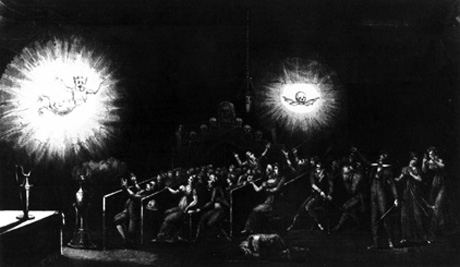
    Audiences were bathed in direct and brilliant light while being swamped in shadow in the early 19th century as part of an early form of non-cinema cinema, as we see here in the frontispiece from Robertson’s Mémoires récréatifs, which depicts a phantasmagoria of lantern projections:


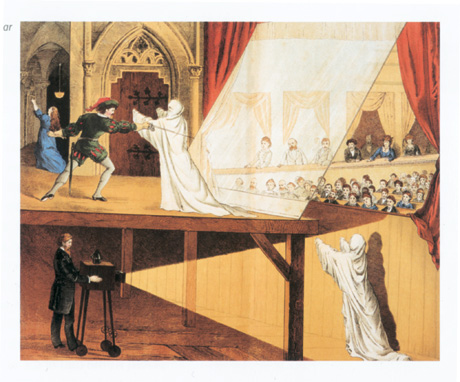
    And more forthright illusions as seen in this engraving showing the spectre “Dr. Pepper’s Ghost,” from Theodor Eckardt, Die Physik in Bildern Eßlingen, 1881:


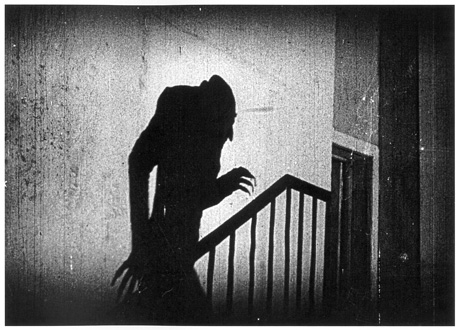
    The shadow may have been invented in cinema by the German Expressionists, with  Friedrich Wilhelm Murnau’s Nosferatu (1919) as a shining example:

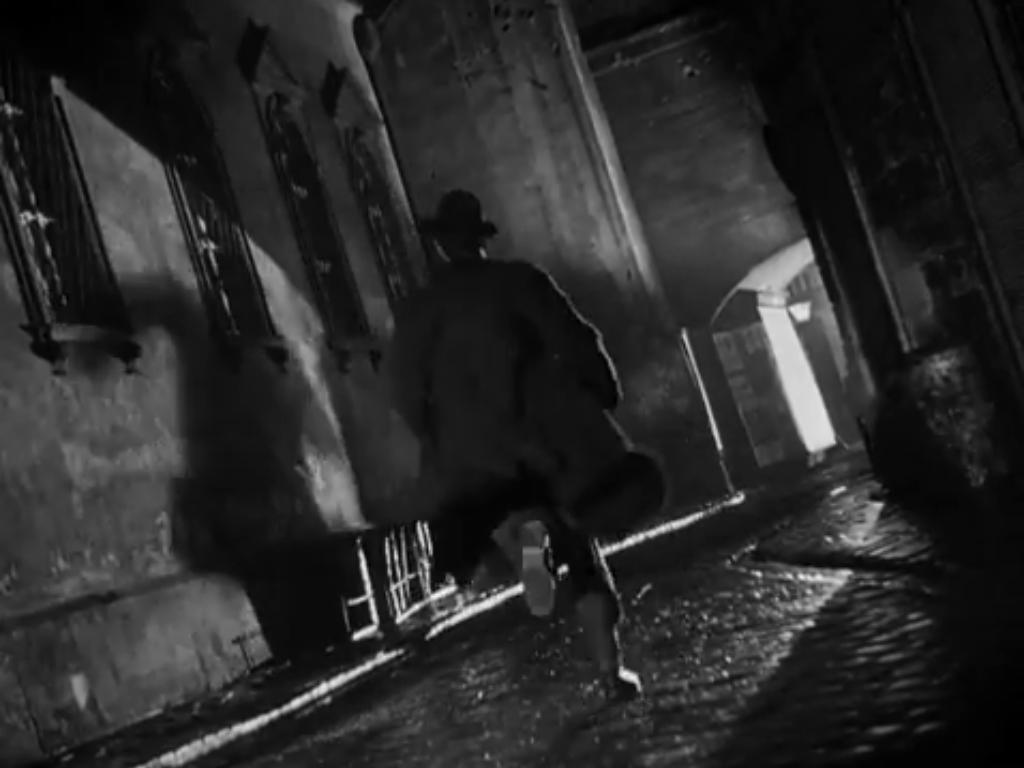
    And of course the shadow is used with great effect in the  very black-and-white and no-gray-tones Film Noir world, particularly in the hands of a master like Mr. Welles in films like The Third Man:

    And in Fritz Lang’s diabolically-bad M, earlier, in 1931 (featuring an impossible shadow in the movie still below):

    Thank heaven for little girls... or would that be hell?


    Shadow has been used to given questionable dimensionality in addition to giving perspective to dimensions that we are familiar with:


    And the artificial shadow made for the geographical clock dial to tell the story of passing time:

    And also for shadow puzzle toys:


    And on and on, deep into the night…


  • Imaginary and Empty Space in Imaginary and Empty Maps

    JF Ptak Science Books  Post 1776  [Part of the Series on Blank, Empty and Missing Things.]                                                                                                           

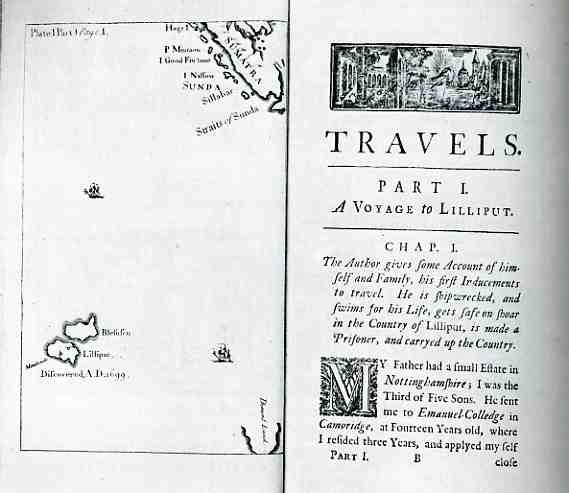
    000-ebay--Nov 4--gulliver996 Jonathan Swift’s Gulliver’s Travels (1726, amended 1735), or Travels into Several Remote Nations of the World, in Four Parts. By Lemuel Gulliver, First a Surgeon, and then a Captain of several Ships, is a great work that spills over into many different categories, being a forerunner to the modern novel, a sort-of children’s book that was for adults, as prototype of science fiction story, and of course a brilliant satire.  The satiric nature of the book is pervasive and extremely visible, but yet the whole thing works splendidly, exposing and investigating the nature of corruption (of mind/soul), perception, value, the naming of things, the nature of judgment, and, of course, the soul of political intrigue.

    Everyone remembers the voyage of Gulliver to Lilliput, but there were other voyages as well, the book including: “A Voyage to Lilliput (May 4, 1699 — April 13, 1702)”; “A Voyage to Brobdingnag (June 20, 1702 — June 3, 1706)”; “A Voyage to Laputa, Balnibarbi, Glubbdubdrib, Luggnagg and Japan  (August 5, 1706 — April 16, 1710)” and  “A Voyage to the Country of the Houyhnhnms (September 7, 1710 – December 5, 1715)”.   But what I’d like to concentrate on here is the emptiness of the space around the empty non-existent (sorry) islands of Lilliput and Blefusco, which I think fits as a subcategory in this blog’s continuing series of posts on empty and blank spaces.  The islands are well away from just about everything, being unfindable only if you’re a youngish sea captain blown off course, far to the south of remote and removed Sumatra.  

    File:Athanasius Kircher's Atlantis.gif

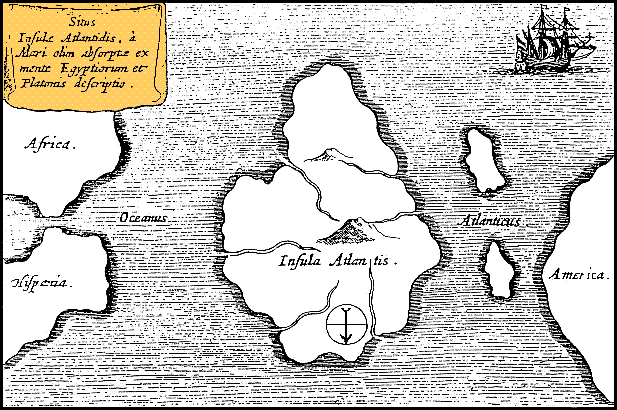
    [Map of Atlantis, from Athanaseus Kircher’s Mundus Subterraneus, 1669, with north situated at the bottom of the map, as indicated by the arrow.  It is doubtful that anyone believed Atlantis could have been the size of half of the Atlantic Ocean, as we see above; but if we look at teh relation in size of  Spain to Atlantis the possibility for that size grows brighter.]

    Even maps of Atlantis seem to make that place less removed than Lilliput, and there’s more detail to the interior of that island than Swift’s almost-entirely blank pair.  But Lilliput, as an imaginary place, looks particularly blank in a sea of blank, punctuated by two lonely little boats.  There’s just an awful lot of blank, white space in this map…  


  • Anti-Prediction: On Being Horribly Wrong in Predicting Next Year’s Future (1938)

    JF Ptak Science Books   Post 1773 [Part of the History of the Future series.]

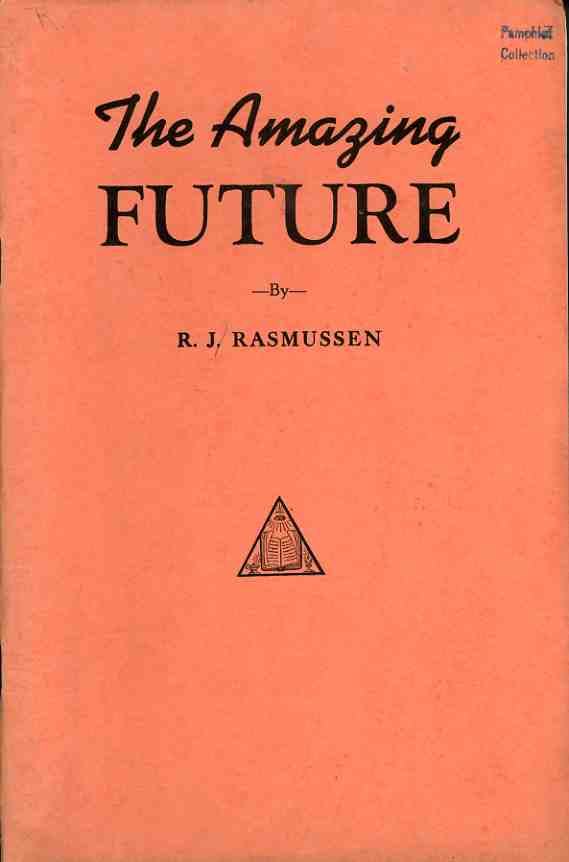
    Sometimes as the saying goes a bad answer isn’t right; and sometimes it isn’t right so much that it isn’t even wrong.  Here we have a collection of not-even-wrongs, tidily collected in one pamphlet.  It is a booklet of “predictions” that are so deeply off the mark that I suspect the author would not even be able to make post facto predictions. 

    0 blog jan 16 future388Had  author R.J. Rasmussen (The Amazing Future, 1938) real powers of diving the future he should’ve been able to see that choosing to be so dreadfully wrong about the events of 1939 was a truly bad thing to do–of course, if there was some sort of unknown and spectacular power in his brain to see what was coming, the least he could’ve been was right.  But he wasn’t, and he wasn’t right very widely, and very widely not right almost all of the time.  To give the devil his due, Rasmussen did get some broad images correct–like in 1939 a world leader will get sick and die.  (Actually, the world leaders dying in 1939 weren’t current leaders, but that is a particular that escapes detail when thinking about stuff that will come to pass.) And then there’s the bold “a high ranking officer in the U.S. army will pass away”. But those broad brushes are about as close as it gets to “prediction”.  He was right that there would be a year 1939.

    The rest is “anti-prediction”:  “I want to advise all pilots and their aides in the United States…to use utmost good judgment in flying your planes”.  And “again I say that no war will be declared on or with Germany”, cancer will be cured on or before August 26, 1939, and there will be an increase in textile production in the U.S.  The Japanese war against China “will be over by August 21, 1941”, though the cost will be monumental to the Japanese, somehow; Germany “will continue to forge ahead” (?),  the map of Africa “will be completely and totally changed” by 1942, and “during this period there will be increased interest shown in higher lines of thought”. And so on, on and on–by the hundreds.

    Finally, among everything else that the author didn’t see was the following:  “the persecution of the Jewish people in Germany will gradually grow less and less that they have ever know in the past thirty years, and before the year 1939 has passed it will have practically ceased in Germany”.  I must say that of all the minor pamphlets like this that I have seen Mr. Rasmussen made the most detailed and incorrect predictions of anyone that I have ever seen–the only further step backward he might’ve been able to make was to have written this book in 1941 and gotten all of the history wrong. 


  • Humanitarian Propaganda II–POWs and the Hope for Those at Home, 1943/1944

    JF Ptak Science Books  Post 281 (from 2009) Extended [Part of the History of Nothing series.]

    Propaganda Red Cross383War propaganda is distributed across all levels of society during a time of conflict.  I’ve made a number of posts concerning Nazi and Japanese propaganda but no so much on the Allies’ side.  These pamphlets come from a small stash of mine relating to Red Cross activities and prisoners of war (POWs), and they fall chiefly I think in The History of Nothing series, mainly because of the chances that all of these packages wouldn’t stop and be used by German troops rather than going all the way through to POWs.  The expectations of the Home Front concerning the disposition of their loved ones as prisoners of the Nazis were clearly illusory, what with steamed and pressed trousers and clean sharp shirts.

    ·Posted by :

    ·in:

    —